


Finding a hairstyle that survives a high-intensity workout while keeping your edges intact is a battle most of us lose on a daily basis. You finish a solid hour of lifting or cardio only to look in the mirror and realize your hair has morphed into a frizzy, tangled mess that requires a complete redo before you can even think about heading back to the office or meeting friends. Most people settle for a basic, pulling-at-the-roots ponytail, but that is a quick way to cause traction alopecia and breakage over time. This is why incorporating a satin bonnet—or more accurately, styles designed to be worn under or alongside one—is the secret to maintaining your length, moisture, and sanity.
When you invest in a quality satin bonnet, you are protecting your hair from the friction of gym equipment, the drying effects of sweat-wicking synthetic fabrics, and the constant tugging of hair ties. The goal is to secure your hair in a way that minimizes movement while keeping your scalp accessible for ventilation. Below, we look at twenty-two specific styles that balance security, hair health, and the sheer practicality needed to get through a heavy session without losing your edges or your style.
1. The High-Volume Pineapple and Bonnet Combo
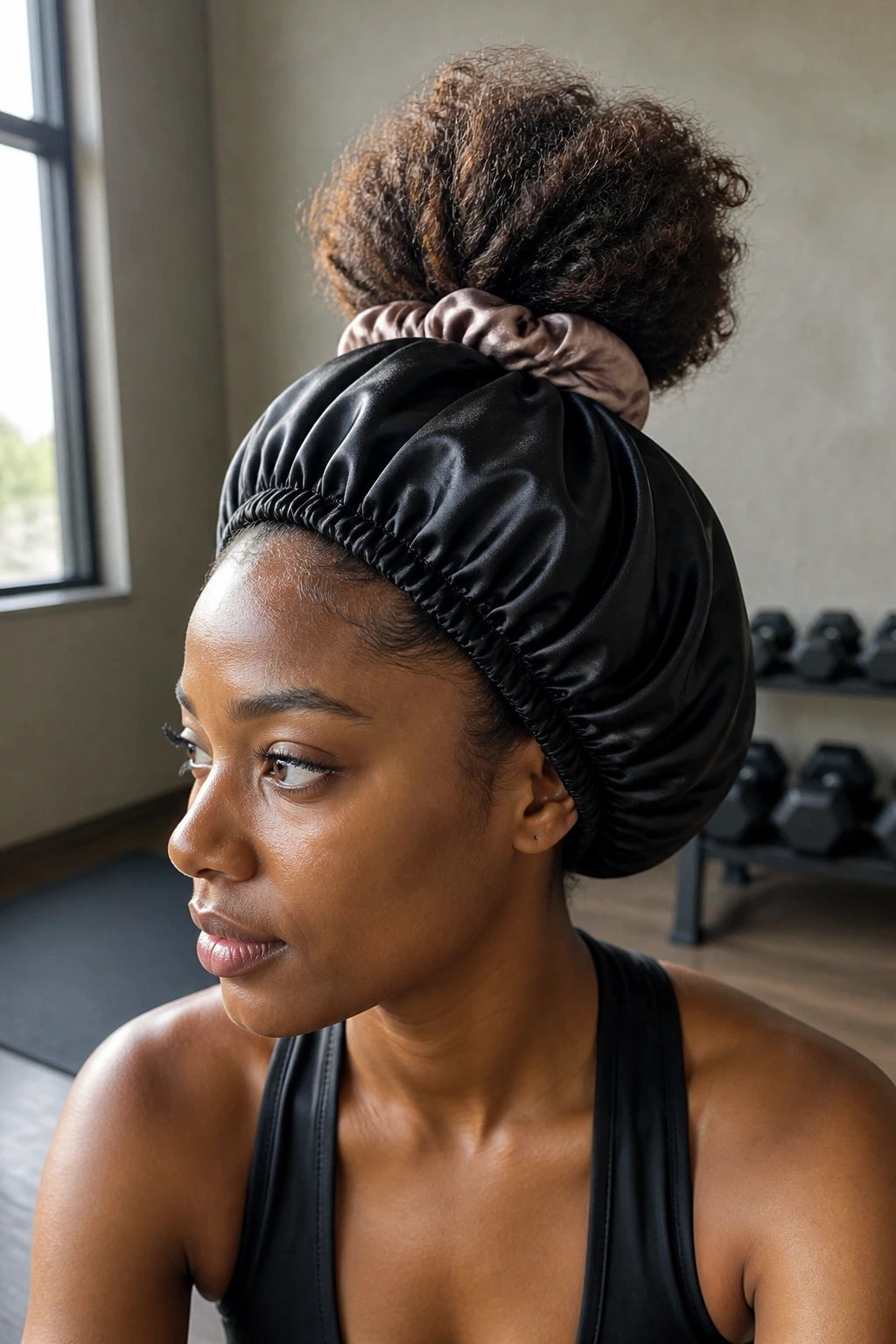
The classic pineapple is the holy grail for preserving curls, but it often shifts during jumping jacks or burpees. By gathering your hair at the very crown of your head and securing it with a silk scrunchie, you create a loose anchor that prevents your curls from getting crushed. The trick here is to keep the pineapple high enough so that your bonnet can slip over the top without flattening your roots. Once the bonnet is on, the fabric provides a secondary layer of security that keeps the pineapple from migrating toward your forehead during floor work.
2. Low-Tension Loose Braids Under a Satin Liner
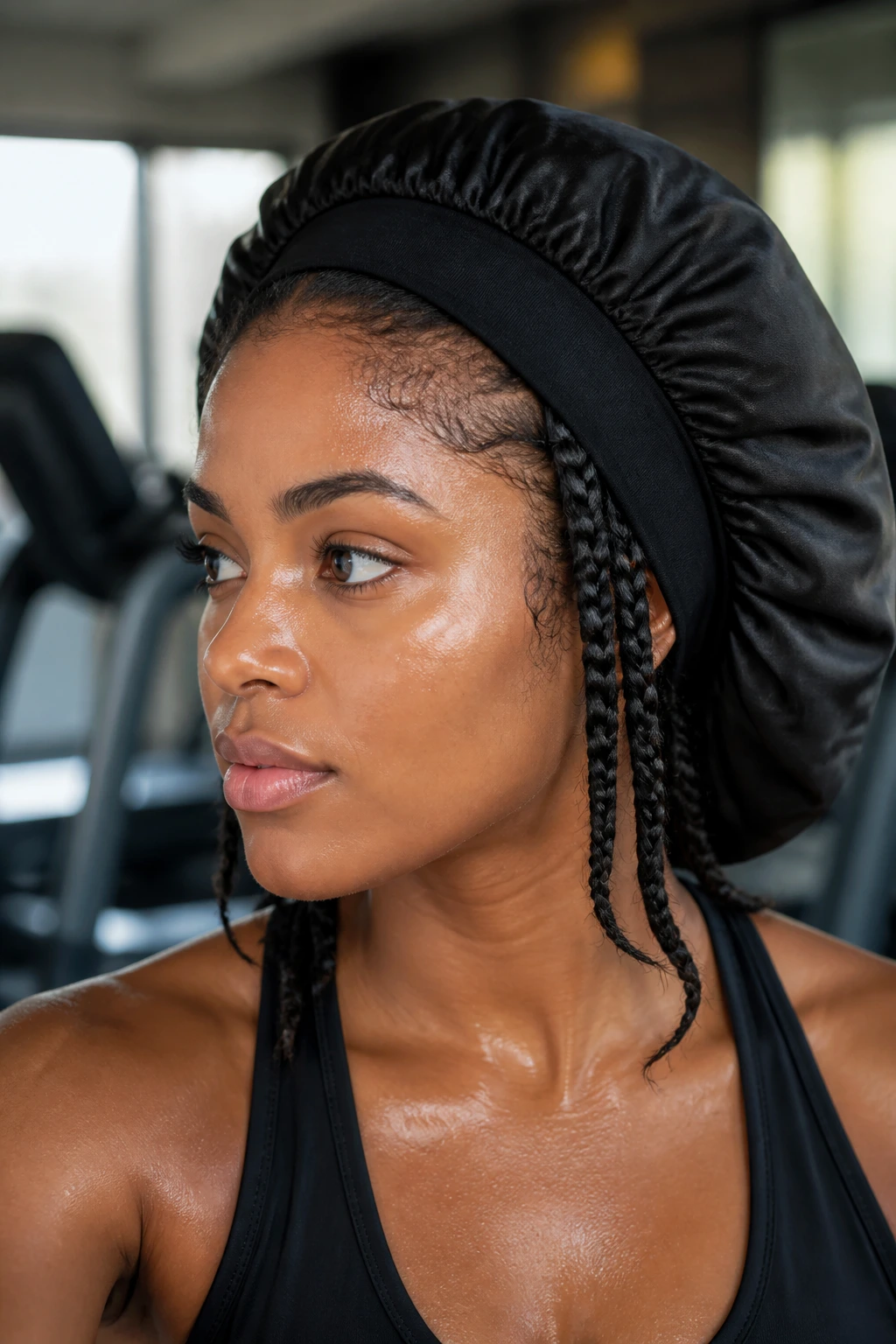
If you prefer not to have a heavy bundle of hair on top of your head, loose two-strand twists or braids are your best defense. You want these to be loose—tight braids at the gym create too much tension on your scalp when your hair is damp with sweat. By keeping them loose, you allow air to circulate between the braids. Slip a satin-lined gym headband or a full bonnet over the top to prevent the braids from snagging on your gym clothes or getting frizzy from ambient humidity.
3. The Front-Twist Crown Wrap
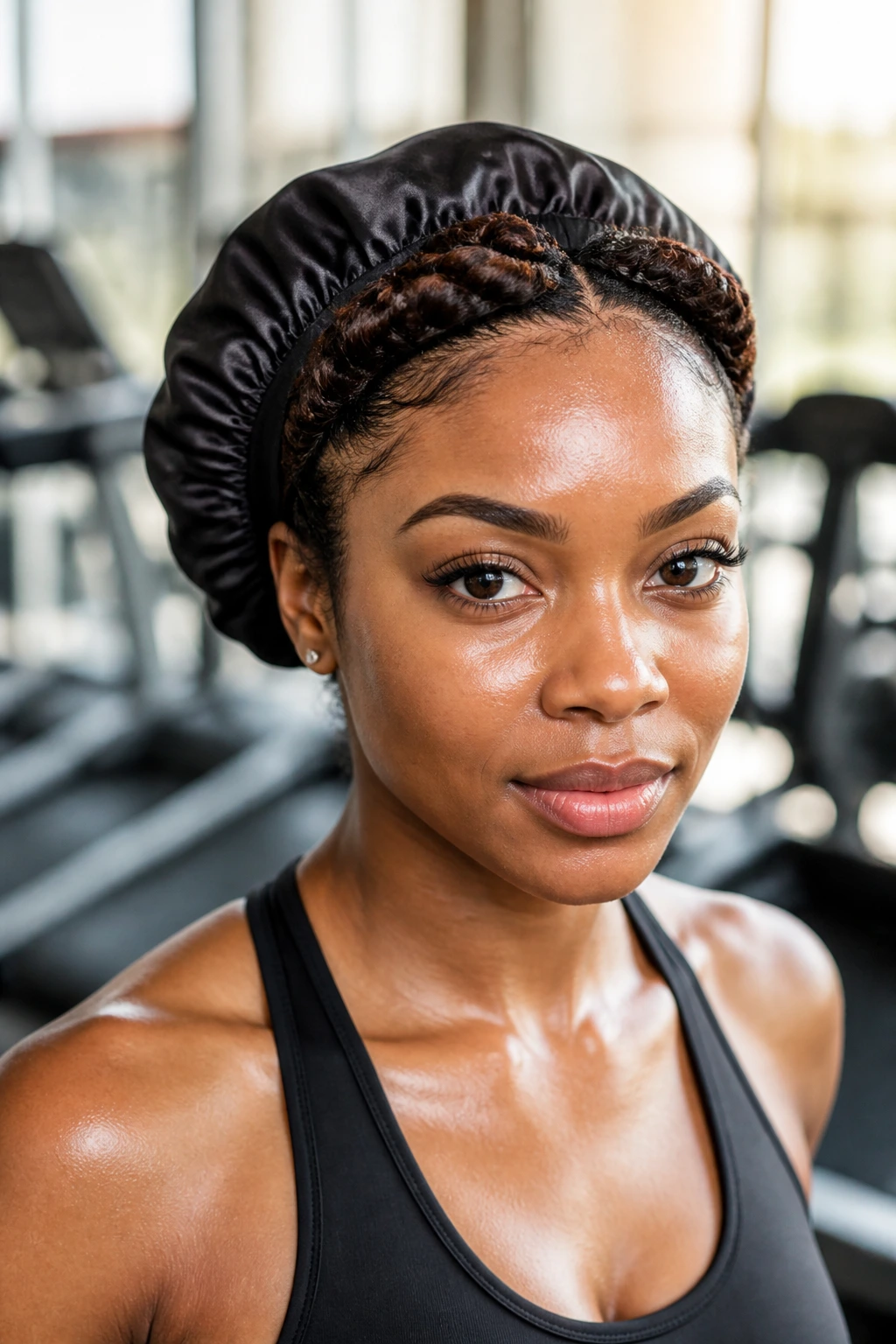
This method involves parting the front section of your hair and twisting it back toward the nape of your neck to create a “crown” effect before putting on your bonnet. It keeps hair away from your eyes during rowing or cycling sessions where you are leaning forward. Because the front is secured in twists, you do not have to worry about loose strands poking through the sides of your bonnet. It is a protective style that looks surprisingly intentional if you decide to take the bonnet off immediately after your cooldown.
4. Double Bun Knots for Maximum Stability
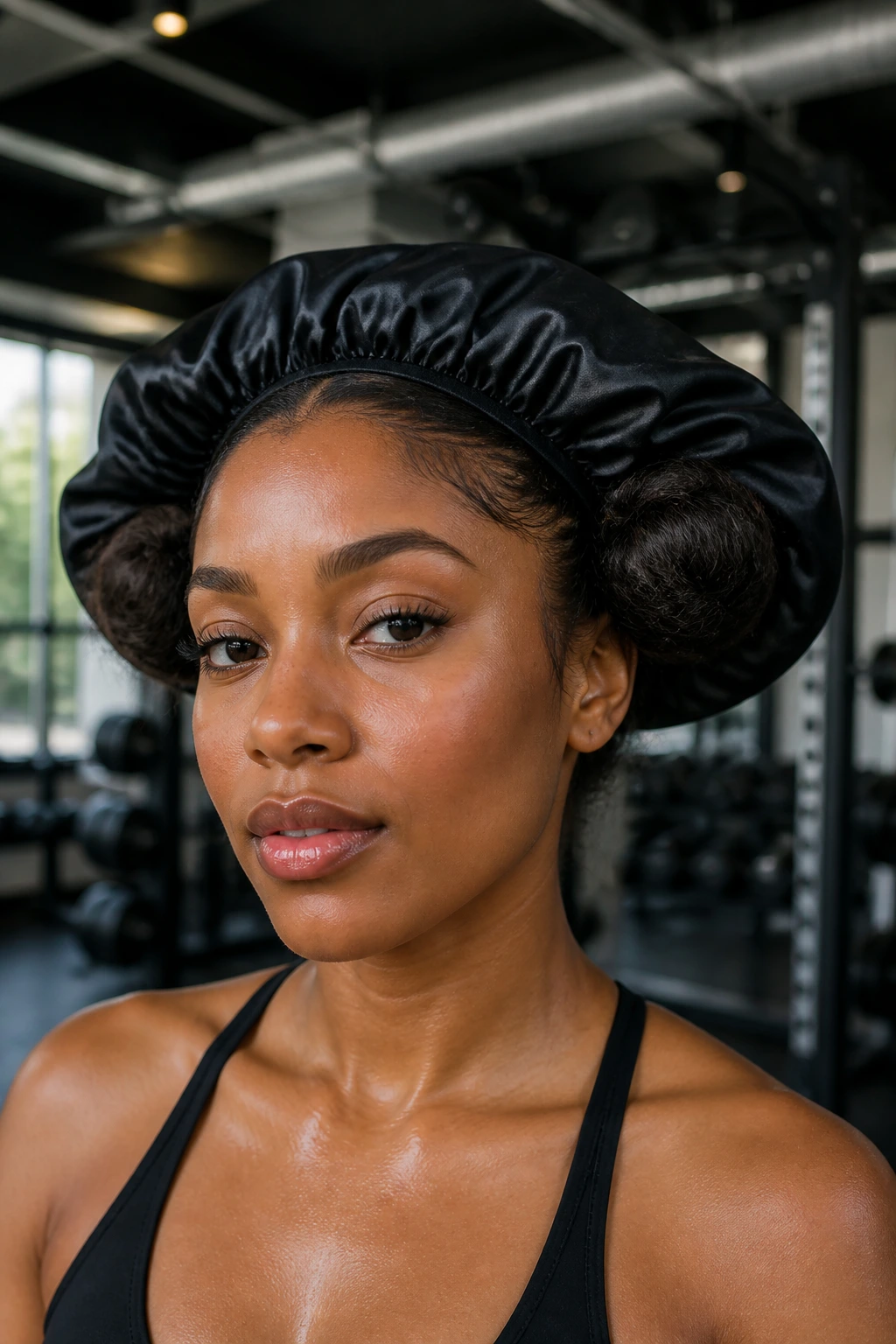
For those with thicker hair, a single bun often wobbles during high-impact training. Split your hair down the center and create two loose buns on either side of your head. This distribution of weight prevents the “bobblehead” effect while you are running. Use a satin scrunchie for each bun to avoid the harsh breakage caused by standard elastic bands. A large-capacity bonnet can then be pulled over both buns, ensuring that your ends—the oldest and most fragile part of your hair—are tucked safely away from sweat.
5. The Scarf-Bonnet Hybrid Secure
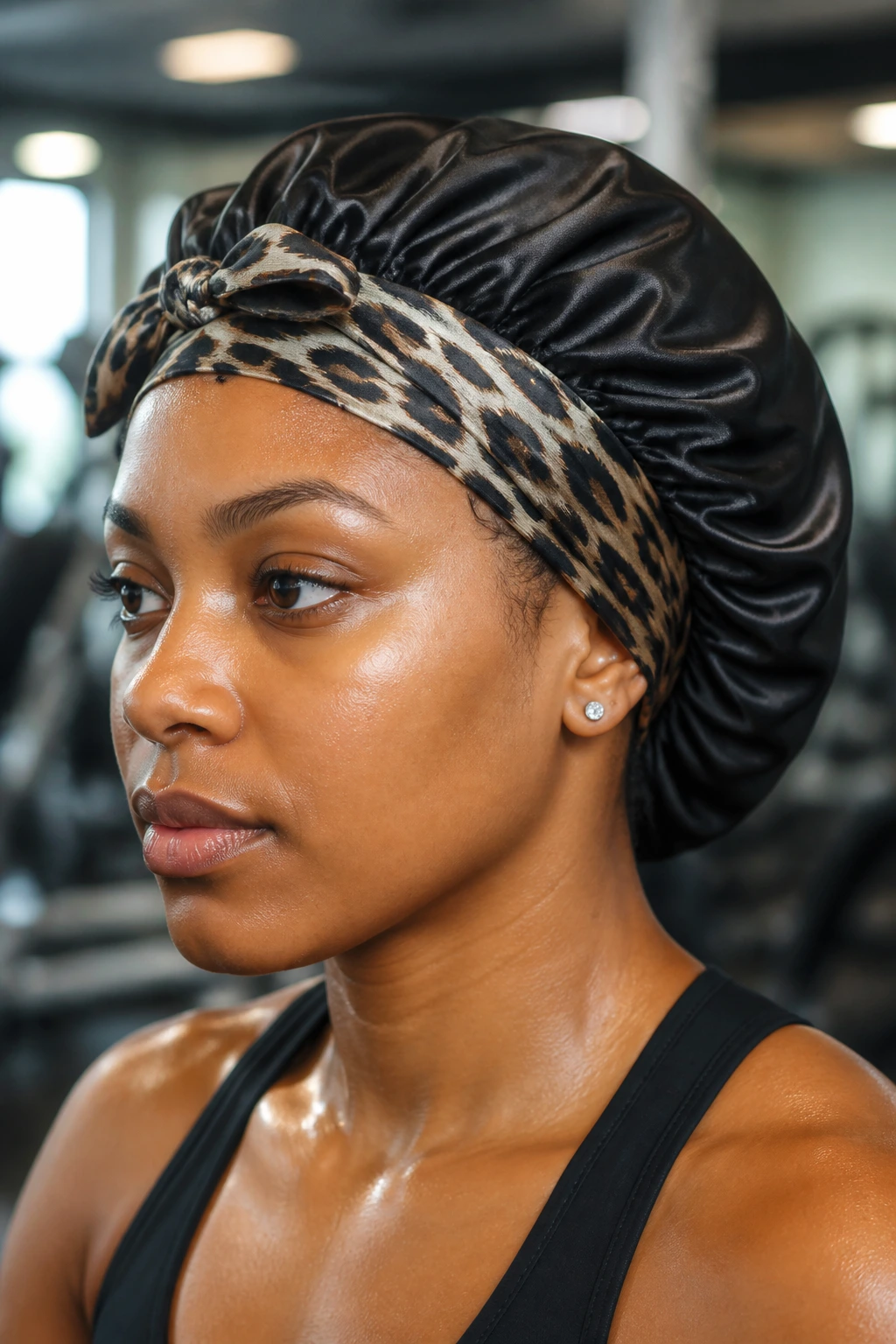
Sometimes a standard elastic band on a bonnet is not enough to stop it from sliding off during a particularly vigorous HIIT class. Tie a satin scarf around the perimeter of your head—right over the edge of your bonnet—to lock it in place. This does double duty: it keeps the bonnet firmly pinned against your scalp, and it absorbs any perspiration that might otherwise trickle down into your hair. It is a foolproof method for those of us who tend to be “active sleepers” even while awake at the gym.
6. Loose Rope Braids for Length Retention
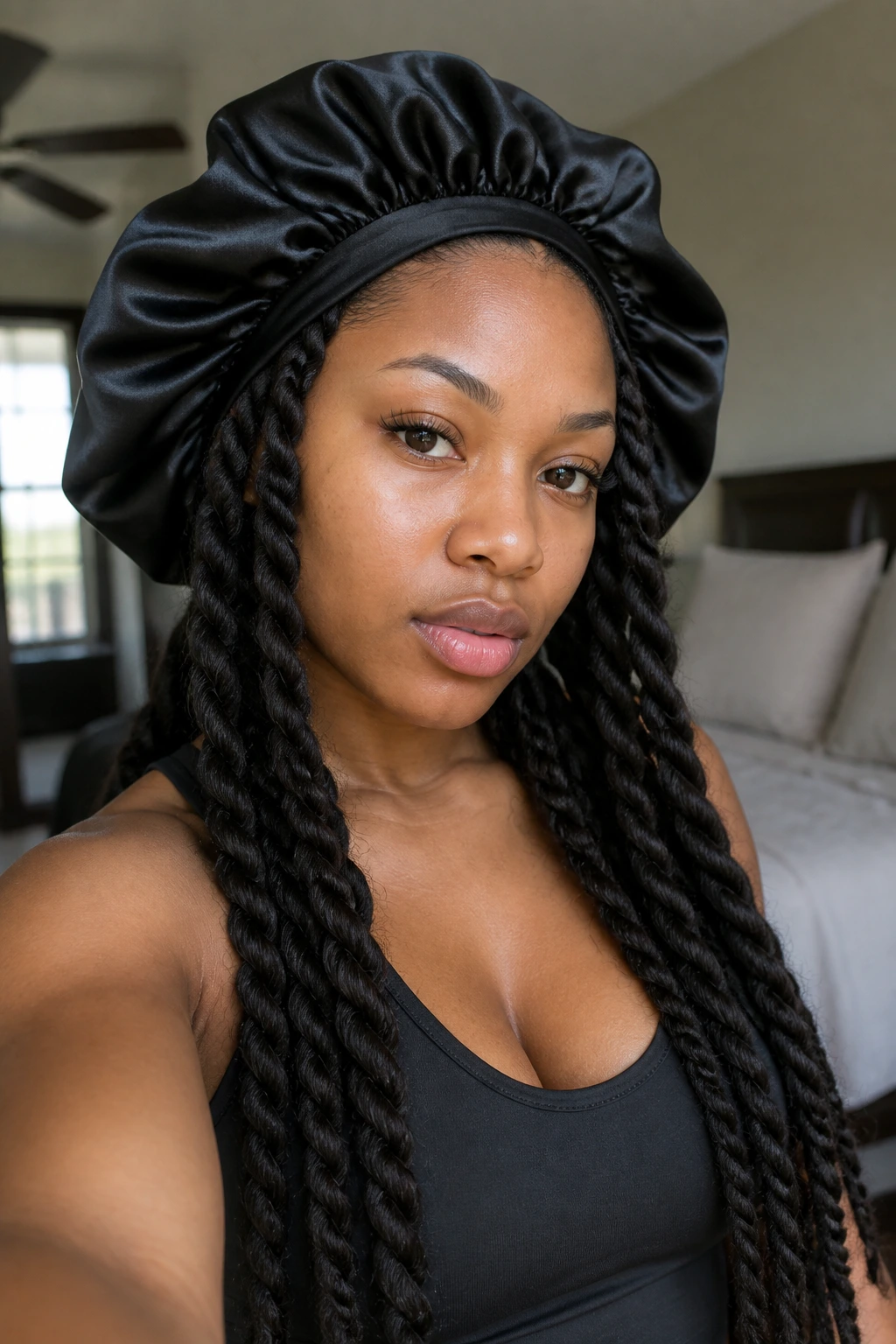
If you have long, chemically straightened or natural hair, rope braids are less taxing on the cuticle than standard three-strand plaits. These braids rely on twisting two sections of hair around each other, which minimizes the mechanical friction that happens when you tie a standard knot. When you place these under a bonnet, the smooth surface of the satin ensures that as you move, your hair glides rather than rubs. This is essential for preventing the mid-shaft breakage that often happens when long hair is caught under a heavy gym bag strap.
7. The Bantu Knot Foundation
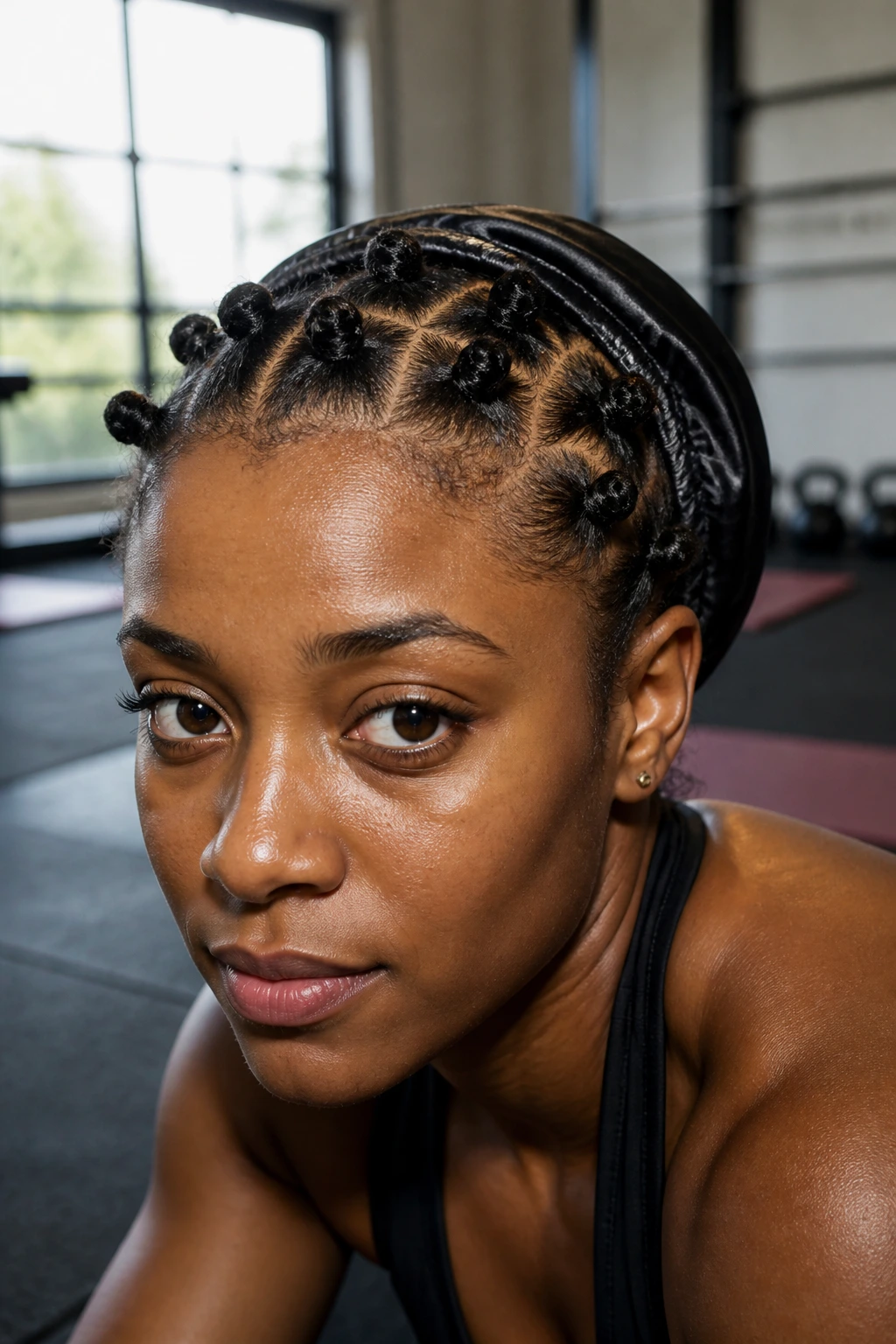
Bantu knots are a fantastic way to section hair so that it does not slide around while you are working out. By knotting your hair into small, manageable sections, you create a structure that stays put regardless of how much you move. If you are doing floor work, these knots are low profile, so they won’t bump against the floor or your mat. Cover them with a lightweight, breathable satin cap designed for athletic use, which provides the necessary protection without making your head feel like it is overheating.
8. The Half-Up, Half-Down Protective Tuck
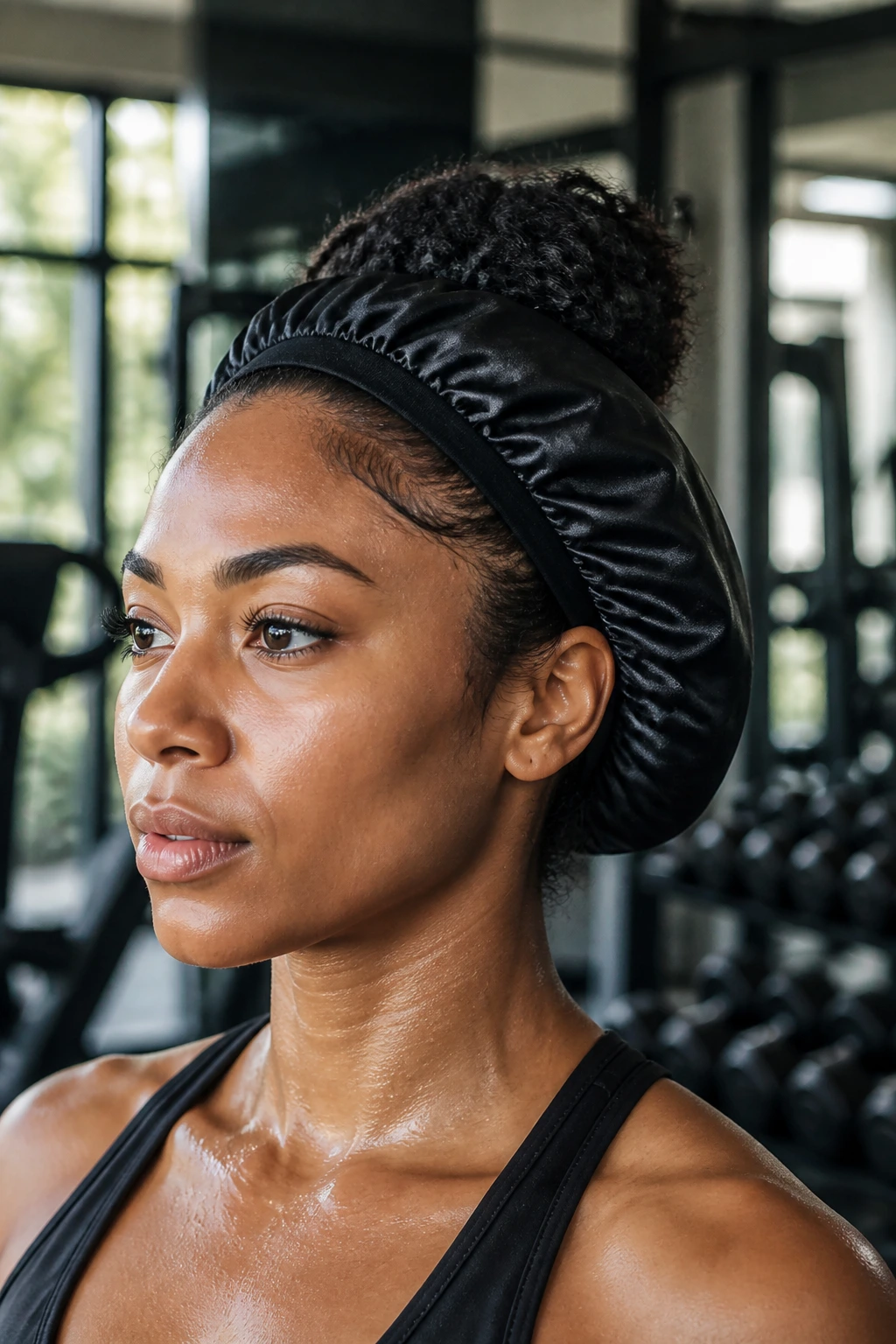
Sometimes you need the security of a ponytail but want the aesthetic of wearing your hair down. The half-up, half-down approach allows you to secure the bulk of your hair off your neck while leaving the bottom portion free to breathe. To make this workout-ready, tuck the loose bottom section into the base of your bonnet. This keeps your ends protected from your damp gym shirt—which is a major culprit in causing tangled, knotted ends—without pulling your entire hairline back.
9. The Messy “Space Bun” Wrap
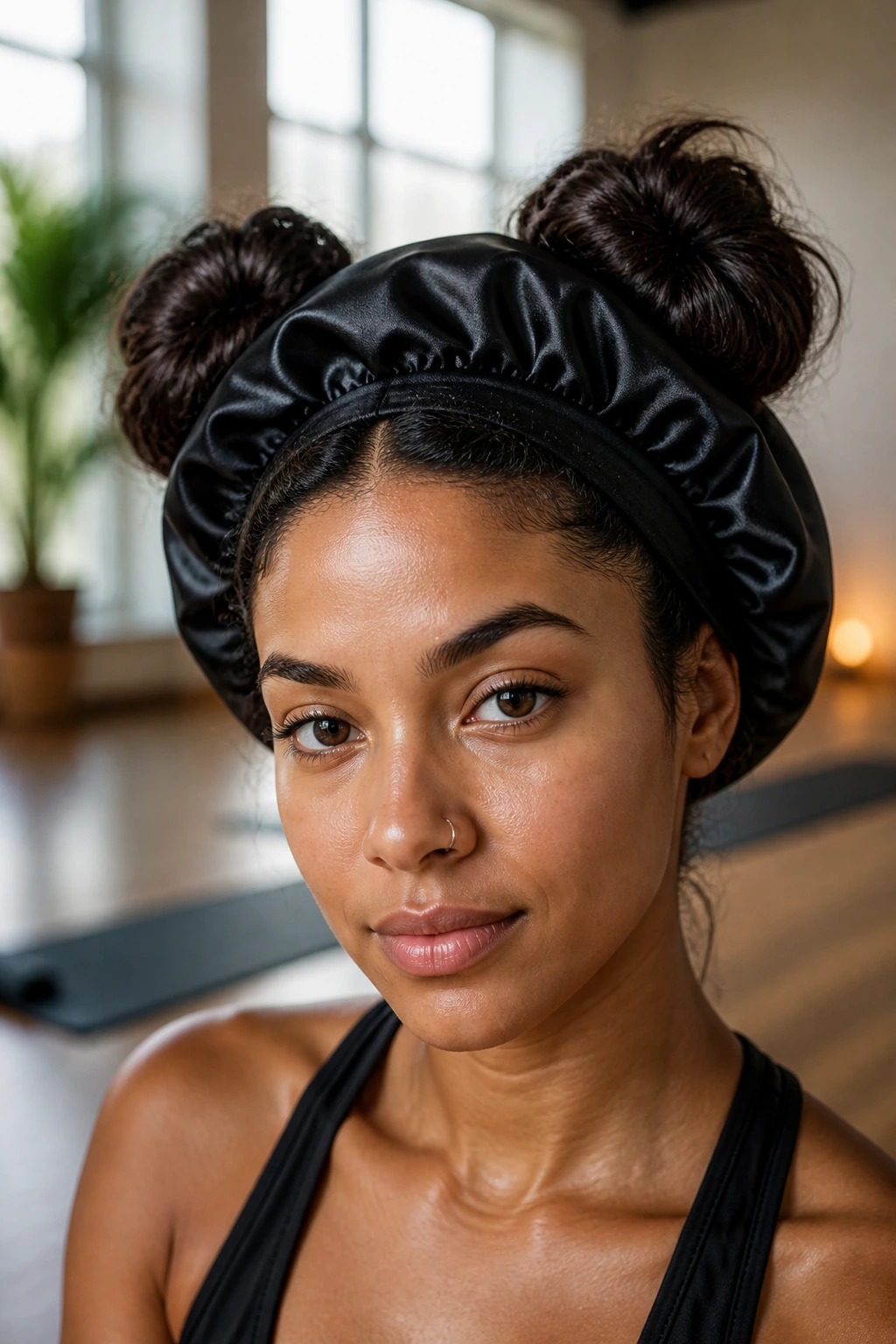
Space buns are not just for festivals; they are perfect for high-impact activities because they keep the weight of your hair balanced. Create two high buns, but leave them slightly loose. Once your hair is bunned, pull your satin bonnet over both buns. The extra room in a deep-capacity bonnet will accommodate the volume of the two buns without squashing the texture. This style is particularly effective if you are someone who likes to do yoga or Pilates, as it keeps your head flat against the mat during core work.
10. The Side-Swept Plait for Floor Work
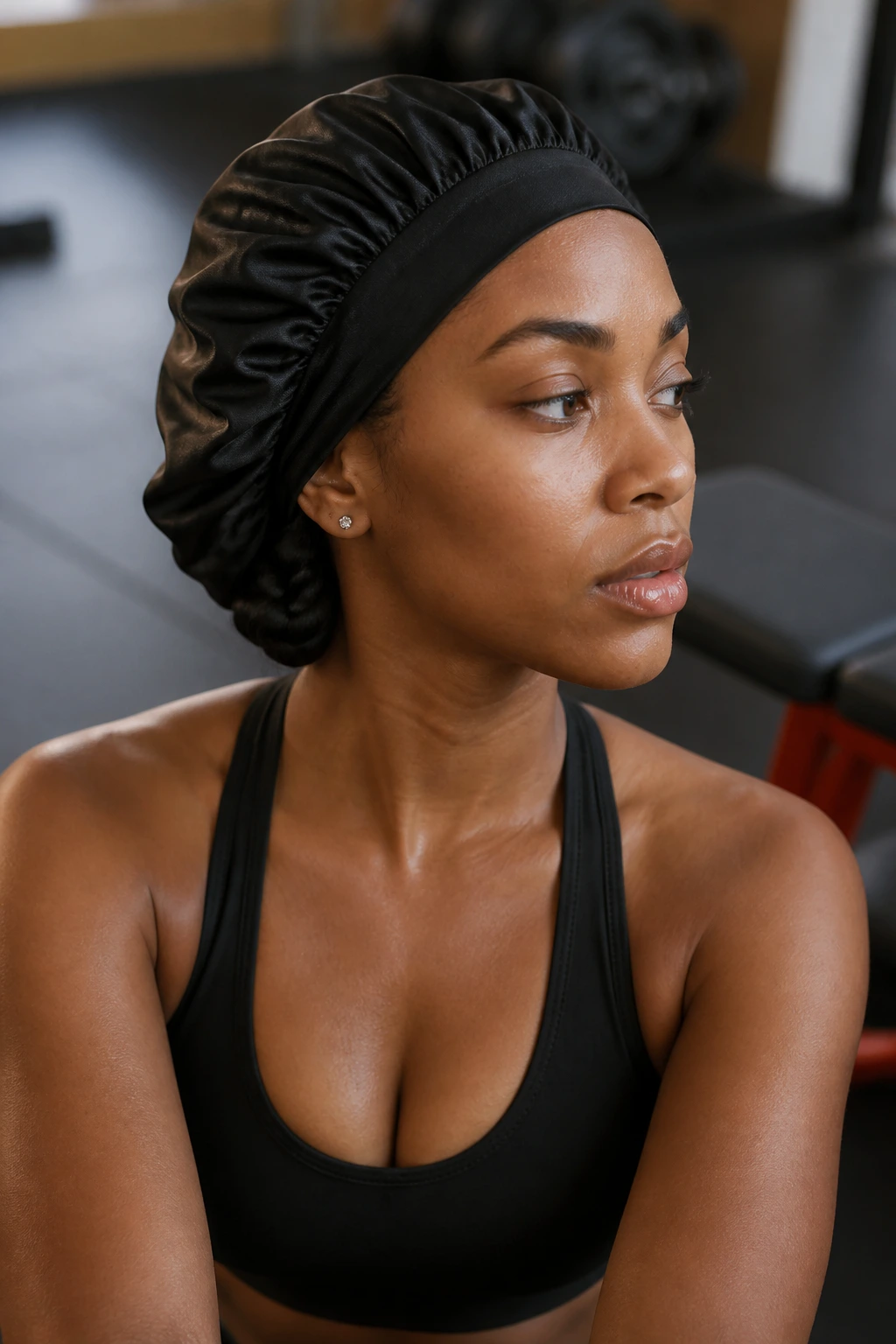
For those who do a lot of weight training, a ponytail can get in the way when you are doing bench presses or lying on a mat. A single, loose side braid tucked inside a bonnet allows you to move your head freely without catching your hair on the bench or mat. The side position means there is no central “lump” on the back of your head, which is much more comfortable for any exercise involving a flat bench.
11. The Silk-Lined Headband Technique
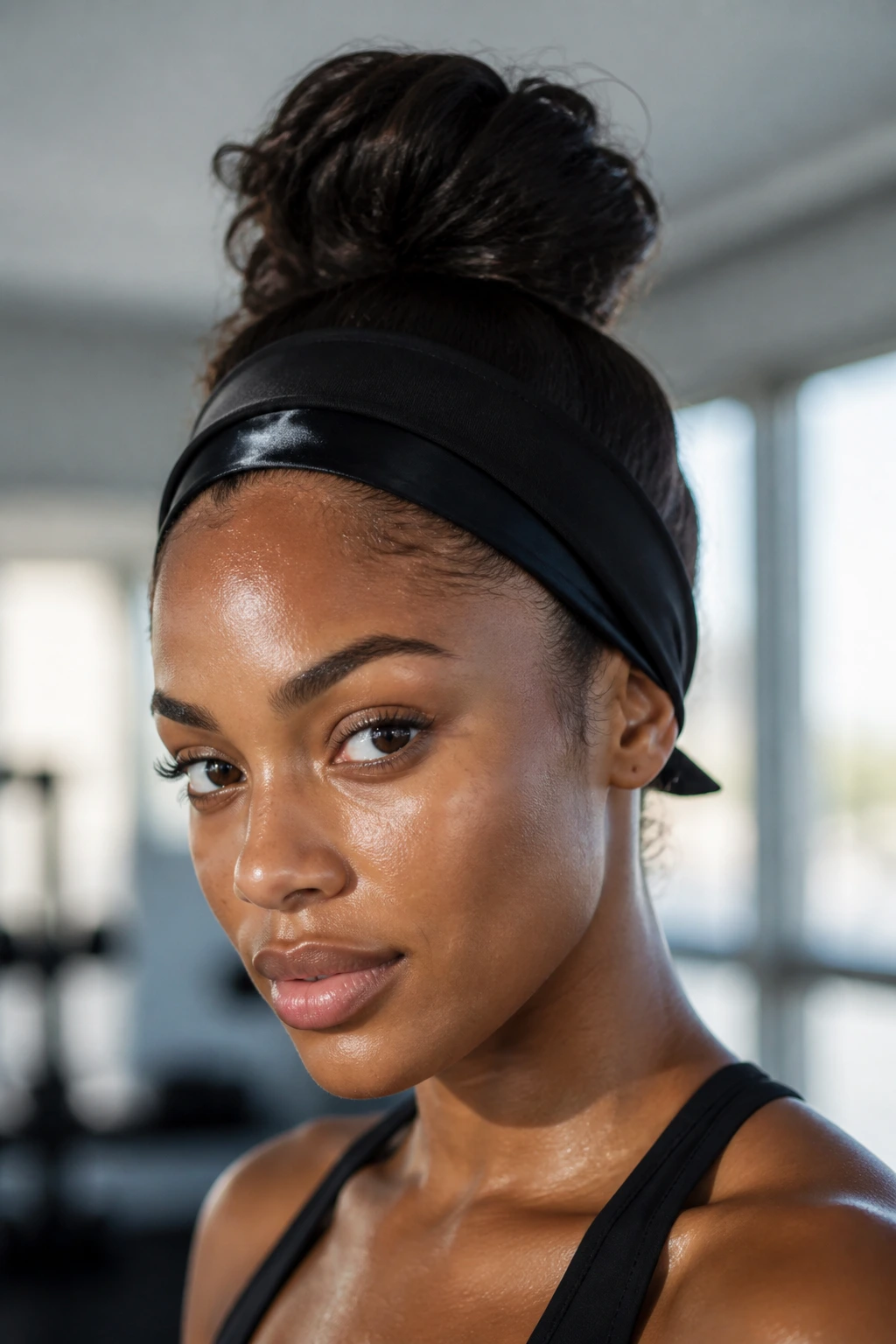
Not every workout requires a full-coverage bonnet. Sometimes, a satin-lined headband is all you need to protect your edges. This is ideal for quick, thirty-minute workouts. If you have edges that are prone to breakage, this style keeps the hair swept back without the use of a plastic comb or a tight elastic band. Pair this with a high bun to ensure that the rest of your hair is kept away from your sweat-drenched neck.
12. The “Tuck and Roll” Under the Cap
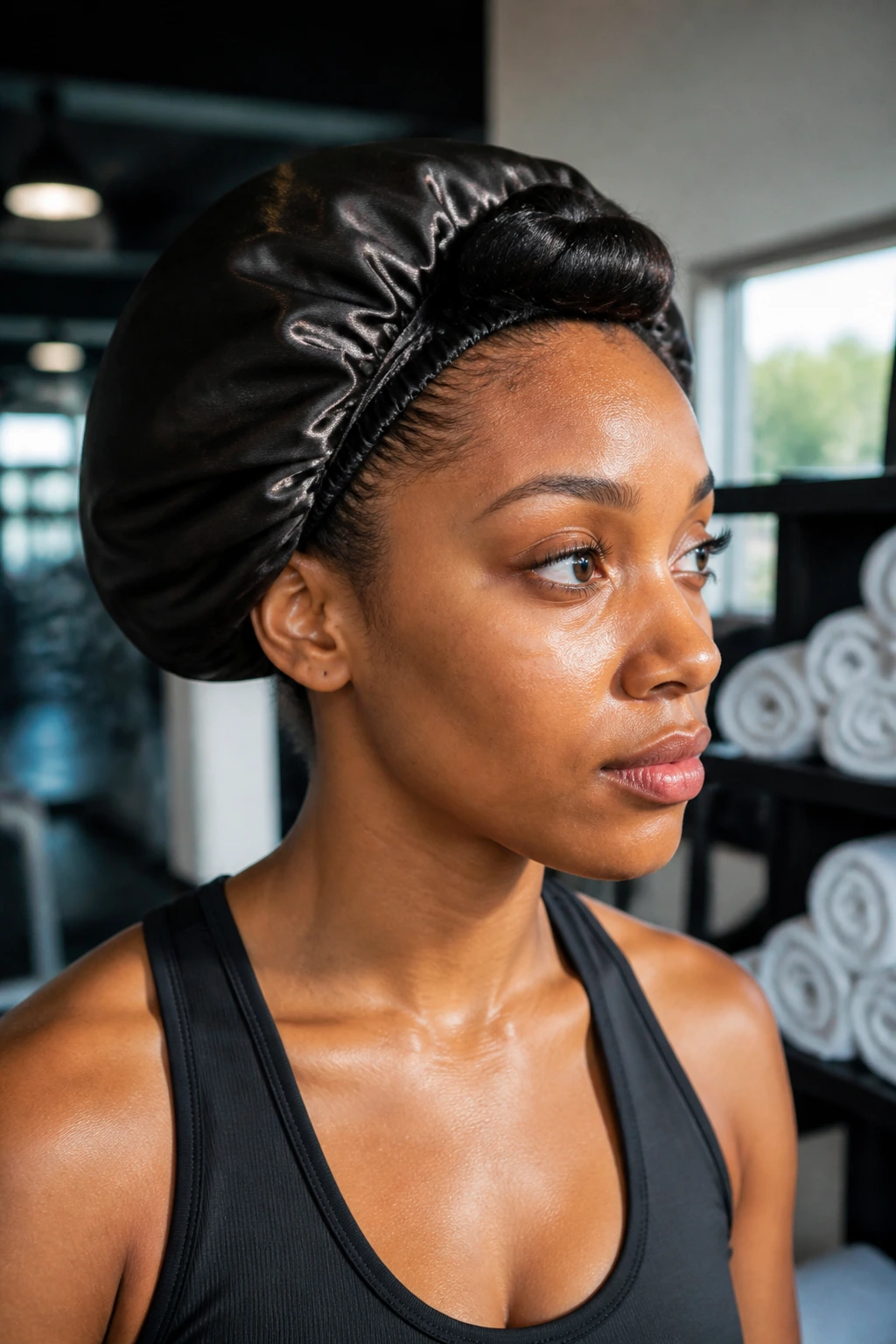
This technique involves rolling the front of your hair into a small, tight roll along your forehead before sliding a bonnet on. It effectively mimics the look of a vintage style while keeping your hairline completely covered and protected from gym towels. The roll acts as a barrier; if any sweat beads up, it hits the hair at the base of the roll rather than soaking directly into your roots.
13. The Flat-Twist Perimeter
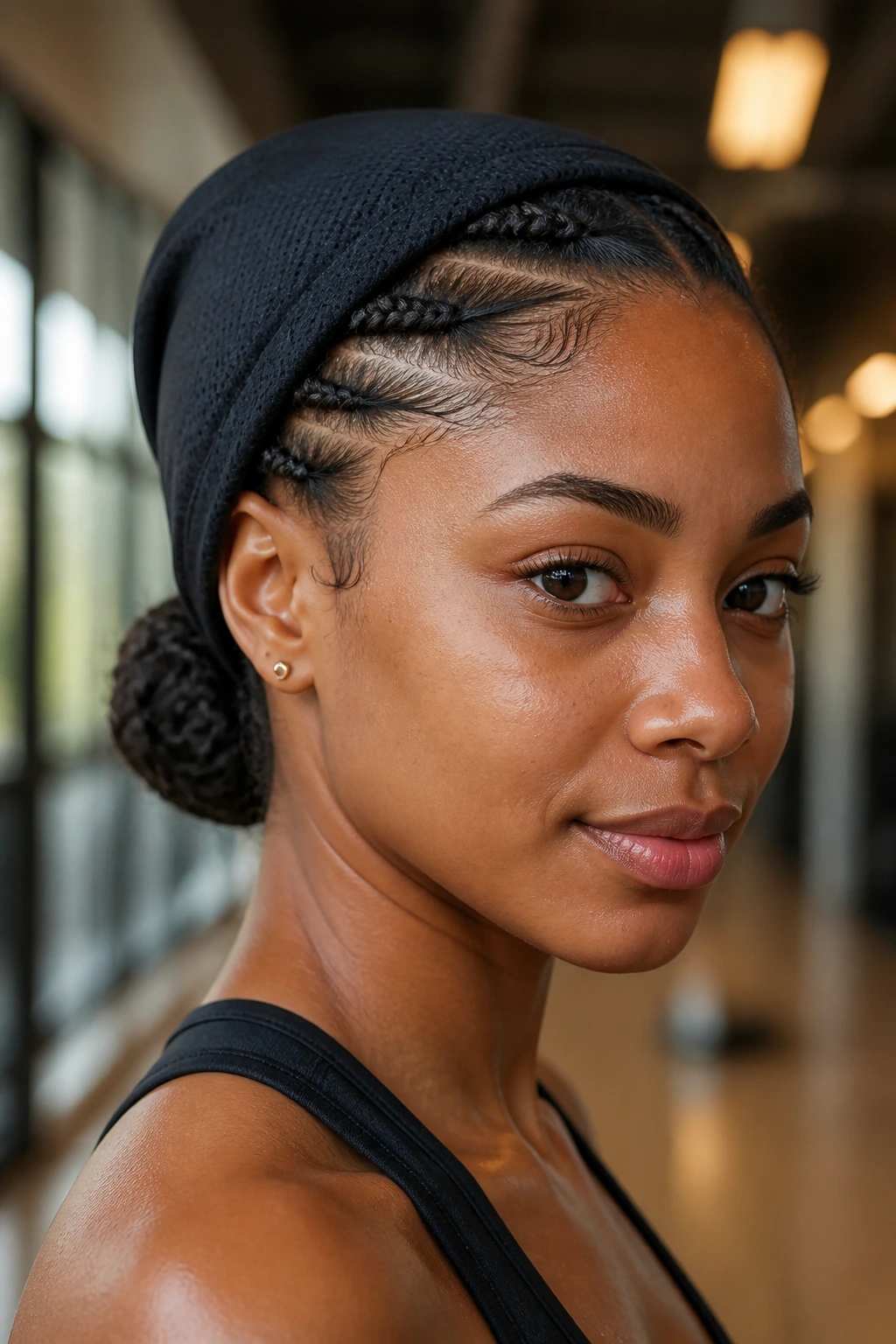
If you are worried about your edges during a heavy sweat session, flat-twisting the front section of your hair is your best bet. Unlike a ponytail that pulls everything toward one point, flat-twisting anchors the hair in small, manageable paths. This reduces tension significantly. Simply twist the perimeter, then secure the back in a low bun or loose ponytail before covering the whole thing with a satin-lined athletic beanie or bonnet.
14. The Low Chignon for Minimal Movement
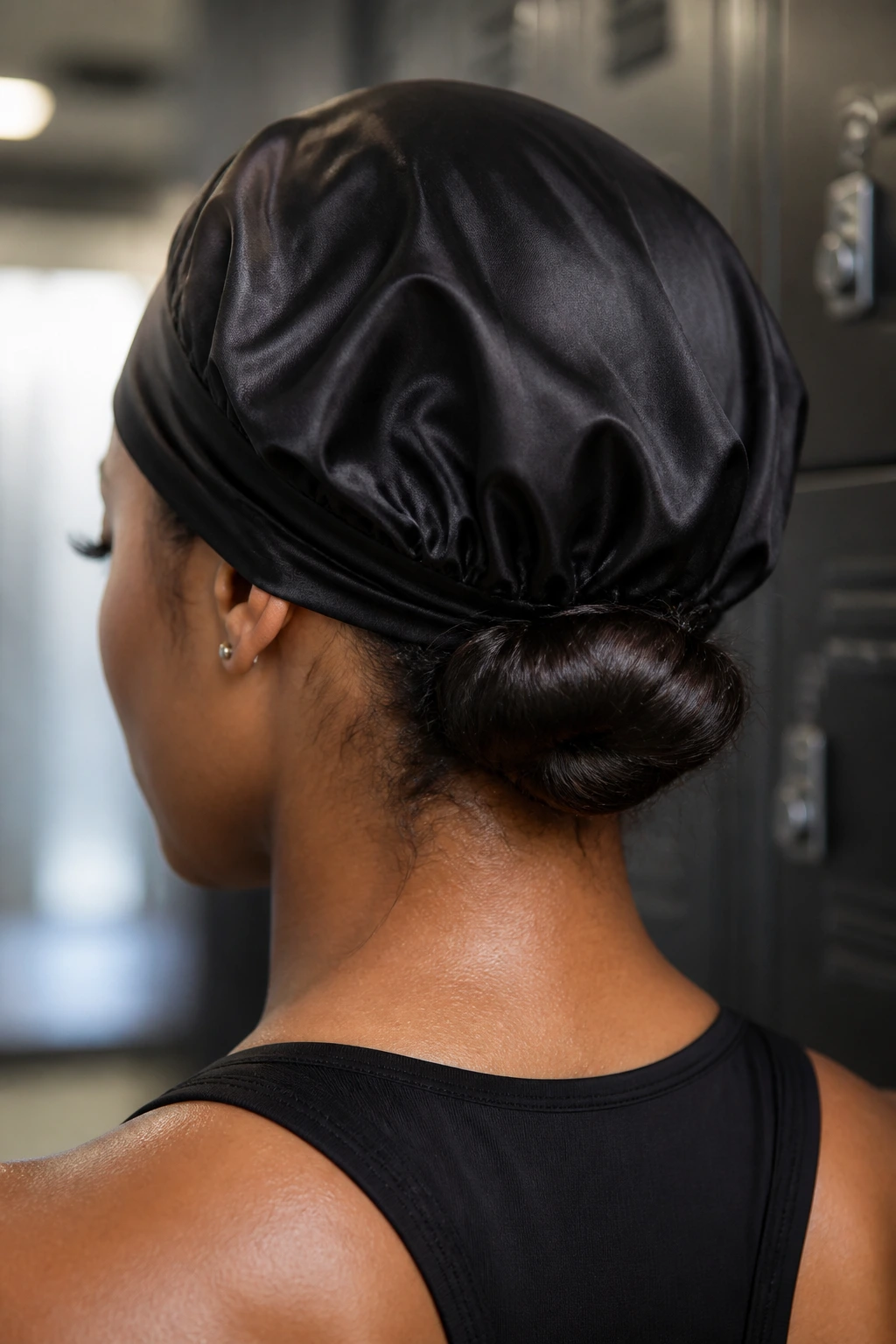
A chignon at the nape of the neck is the most stable place to keep hair during a high-impact cardio session. Because it is low, it does not sway or bounce with your body. Once the chignon is secured, cover it with a form-fitting satin cap. This combination is virtually invisible under a gym hoodie, making it a great option if you want to go straight from the squat rack to running errands without feeling like your hair is everywhere.
15. The “Puff” Method with a Wide Band
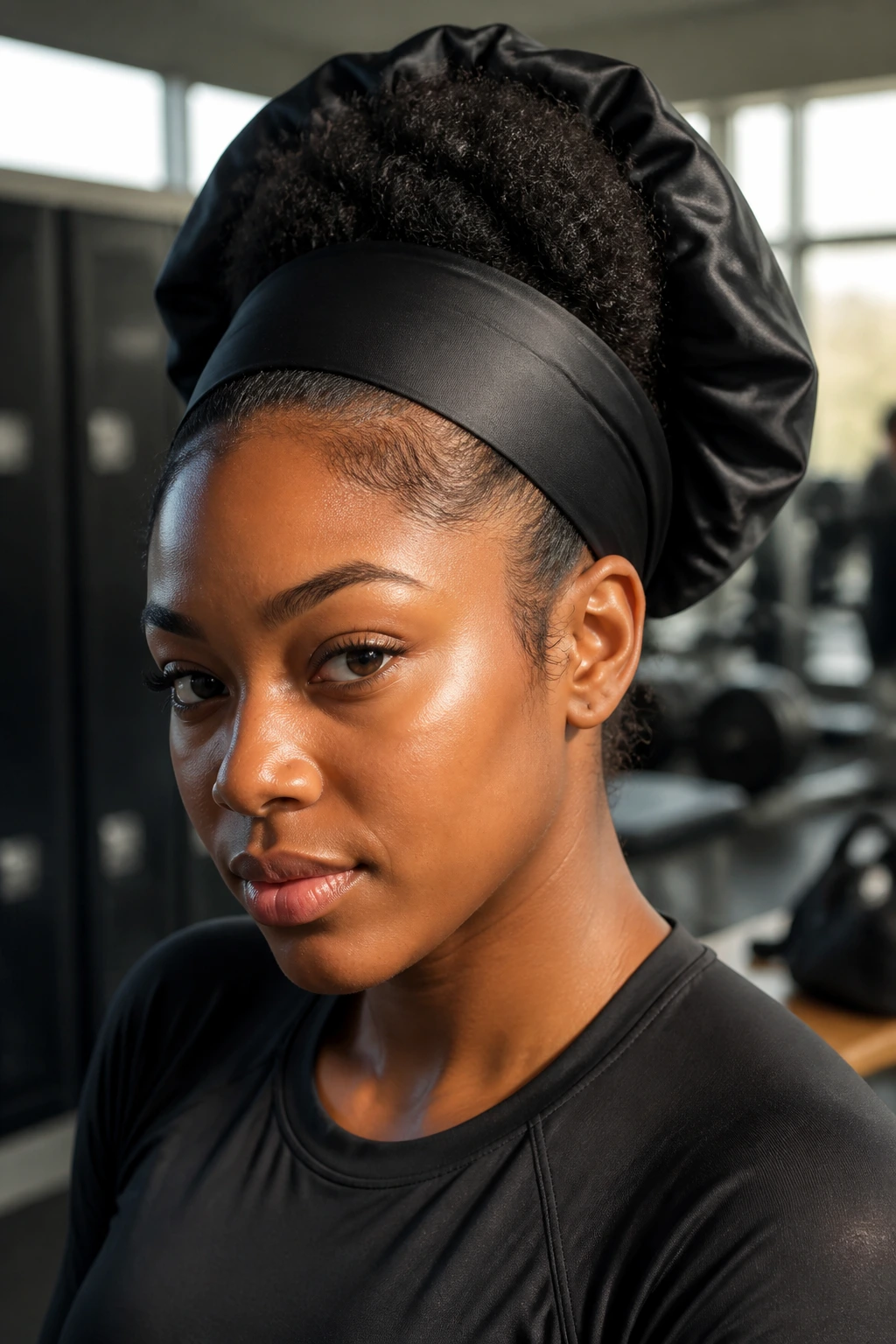
For natural hair textures that are prone to shrinking, a high puff is often the only way to keep hair off the shoulders. To make this workout-appropriate, use a very wide, satin-wrapped band. This distributes the pressure across a larger surface area of the hair shaft rather than a single point, preventing that nasty crease that ruins your texture. Slip a loose-fitting bonnet over the puff to keep the perimeter from frizzing due to the humidity of a crowded gym.
16. The French Braid Anchor
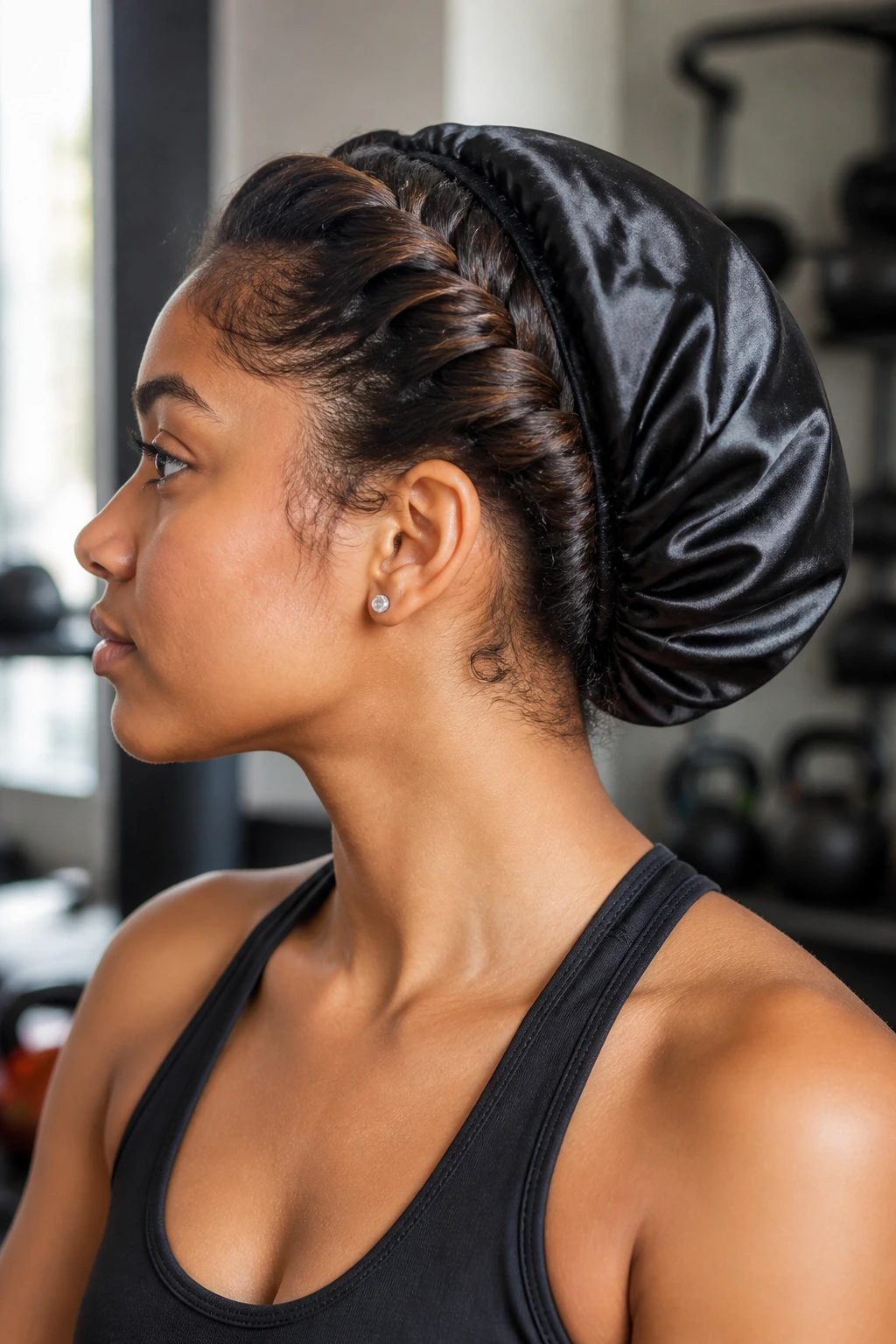
A single, tight French braid is too harsh, but a loose, “pancake-style” braid is perfect for gym use. By pulling slightly on the sides of the braid to loosen the loops, you create a style that is soft on the scalp but secure enough to handle a run. Tuck the tail of the braid into the base of a bonnet. This ensures that the ends—where hair is typically most dry—are protected from the rough fabrics of your gym gear.
17. The Sleep-Cap Hack for Morning Workouts
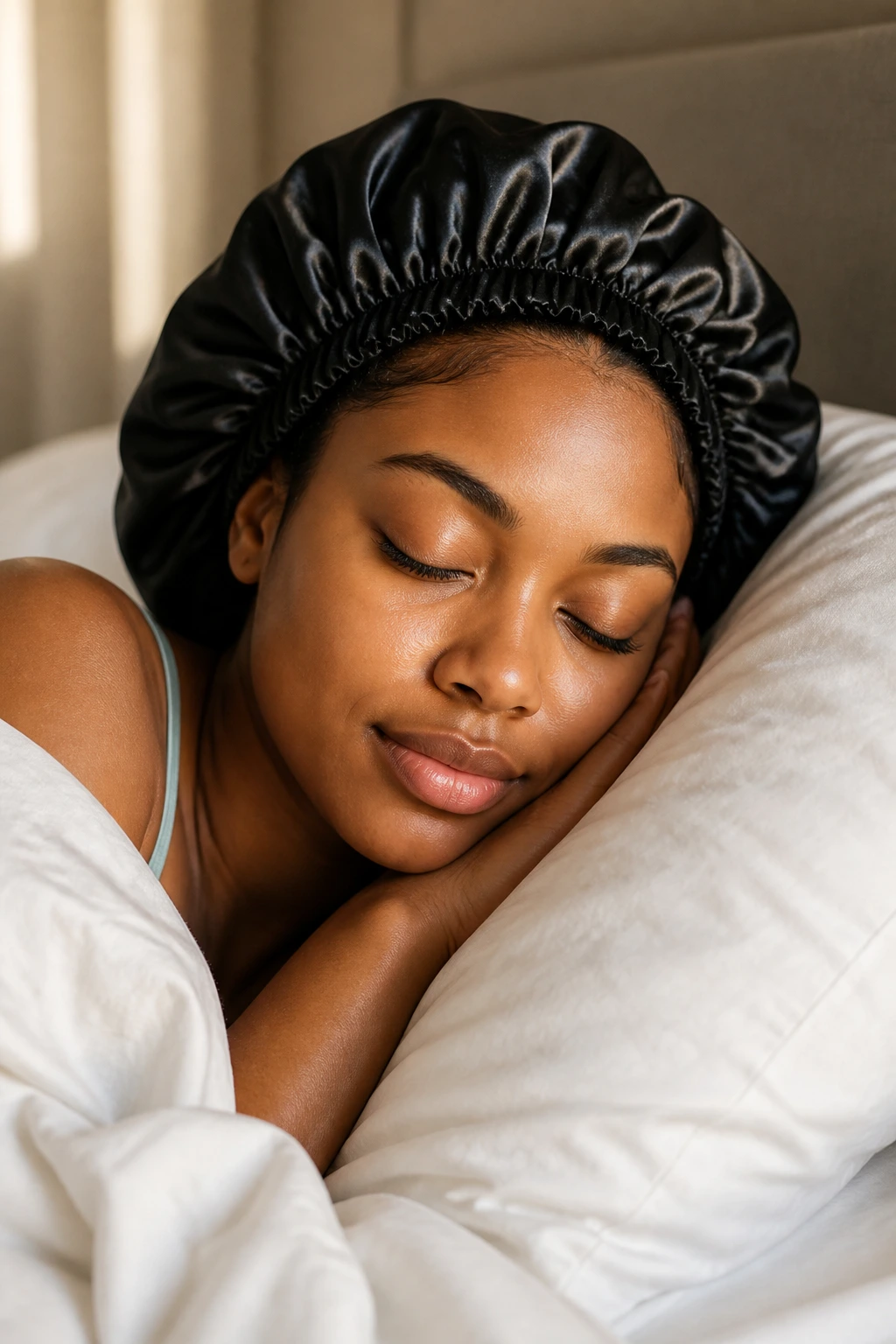
If you are one of those people who works out first thing in the morning, sleep in your bonnet. Do not take it off until you are actually at the gym. By keeping your hair in the same protective style you slept in, you minimize the “handling time” where hair is most likely to break. Just be sure to swap out your nighttime bonnet for a fresh, clean one specifically for the gym, as you do not want to subject your scalp to the residual oils from your pillowcase while you are sweating.
18. The “Donut” Bun for Long Hair
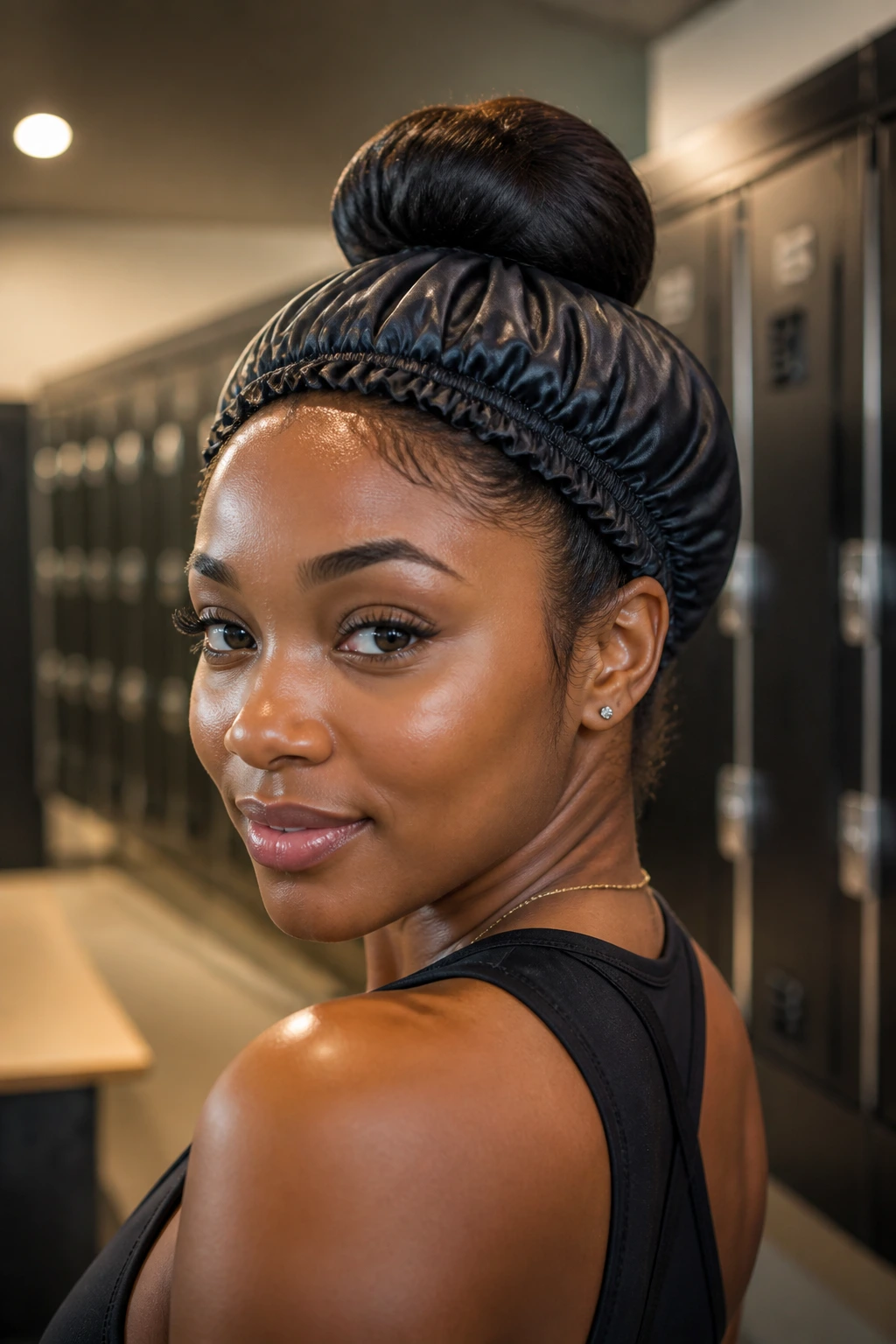
If you have very long hair, a donut bun creates a perfect, circular shape that is easy to cover. Place the donut at the crown of your head and wrap your hair around it. This is a very secure style because the donut itself provides a base that your hair clings to. Once covered by a satin bonnet, this style is virtually indestructible. You can do burpees, box jumps, or sprints, and the bun will remain exactly where you put it.
19. The Knotted Scarf Crown
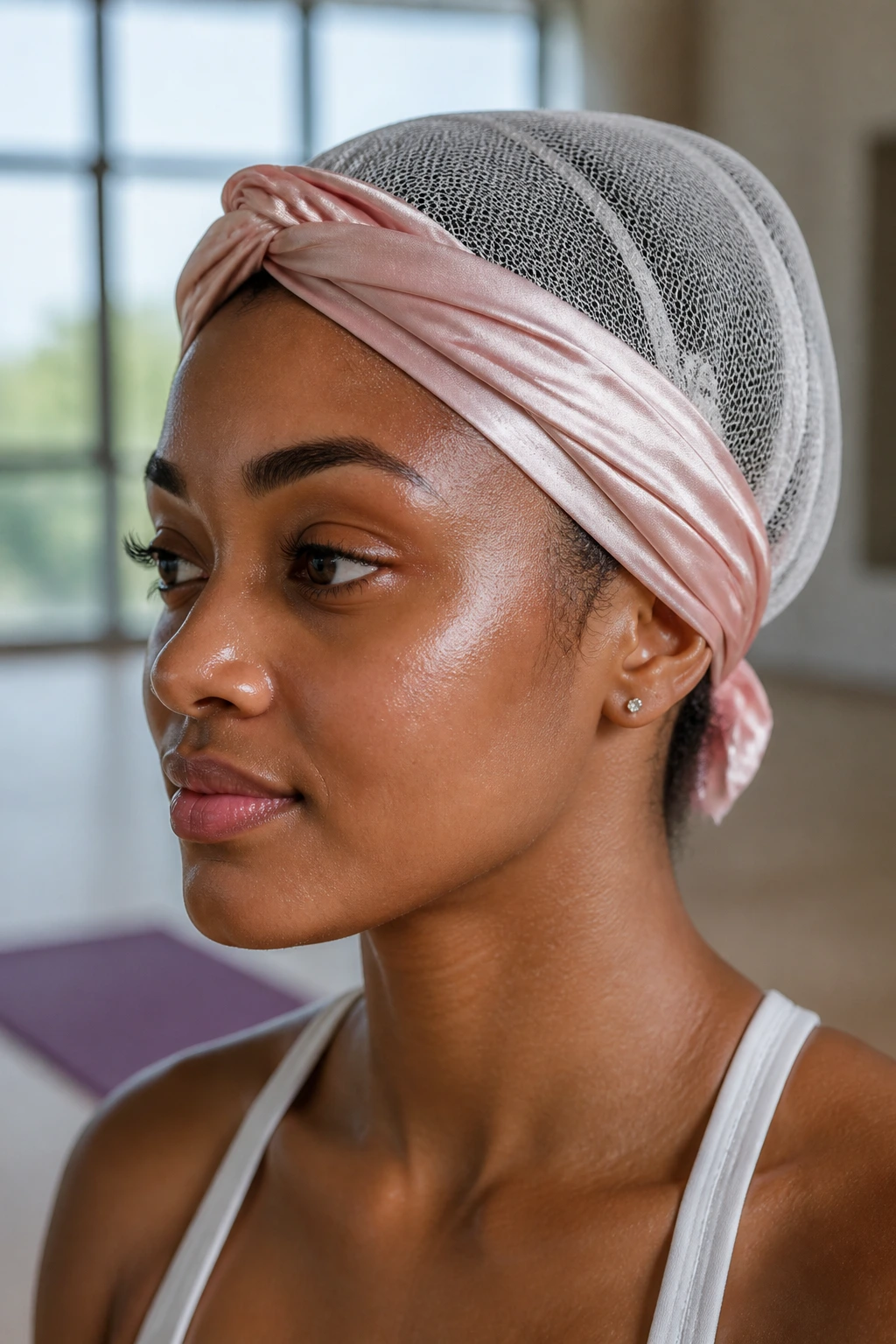
This is a more creative approach for those who want their style to look a bit more “finished.” Wrap a long, satin-material scarf around your head like a crown, tying it at the back. This style is excellent for keeping hair away from the face during yoga, where you are constantly shifting positions. It provides a secure, flat profile that sits perfectly under a light mesh bonnet, allowing for maximum airflow to the scalp.
20. The Low-Braided Ponytail
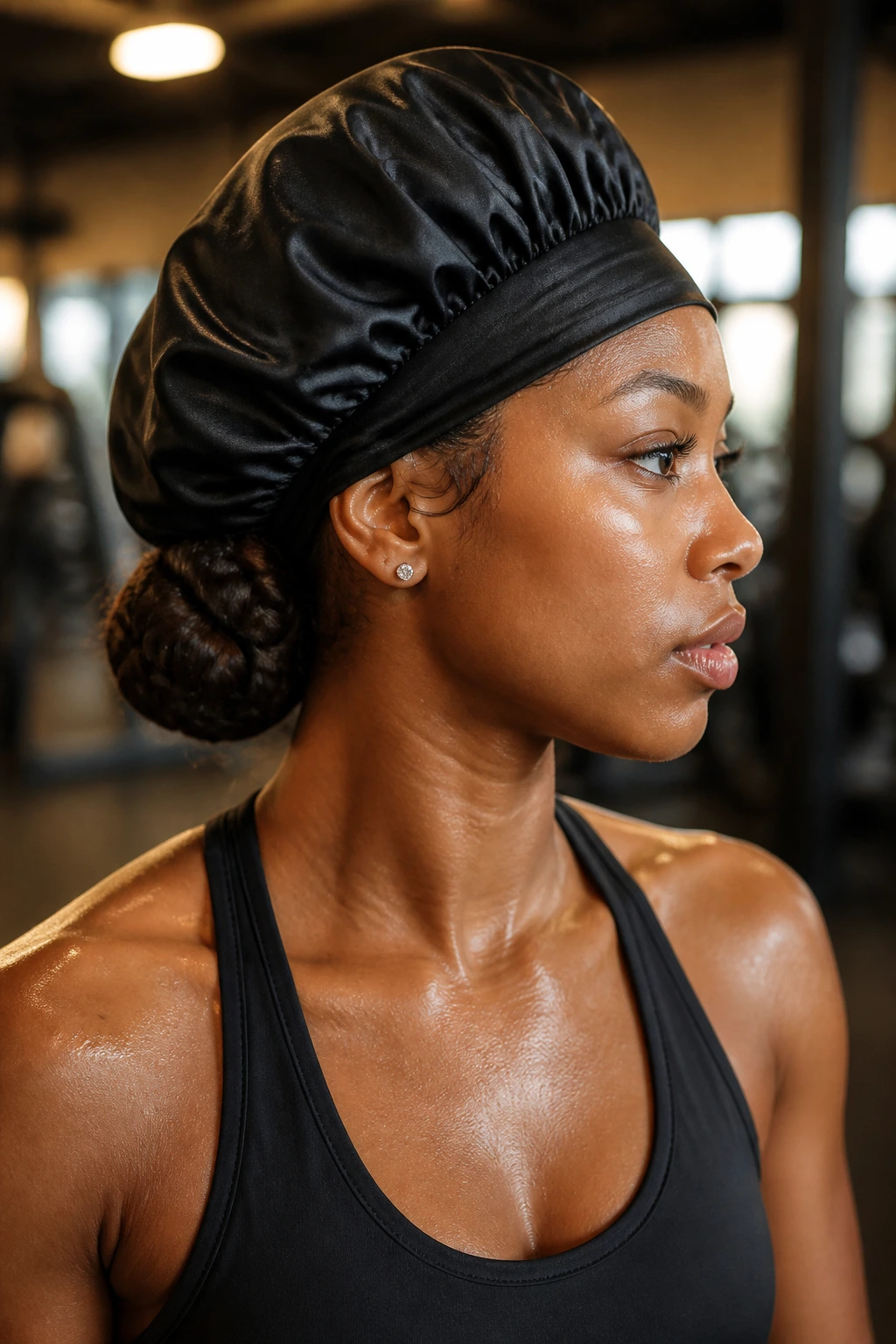
Combine the best of both worlds by braiding your ponytail. A simple ponytail is prone to whipping around, but a braided one is heavy and stable. Once you have braided your ponytail, loop the tail around the base to turn it into a braid-bun hybrid. This reduces the length of the hair, keeping it away from your back and shoulders during intense sweating. Cover with a bonnet, and you have a style that will stay put for an hour of hard training.
21. The “Loose Twist” Crown for Short Hair
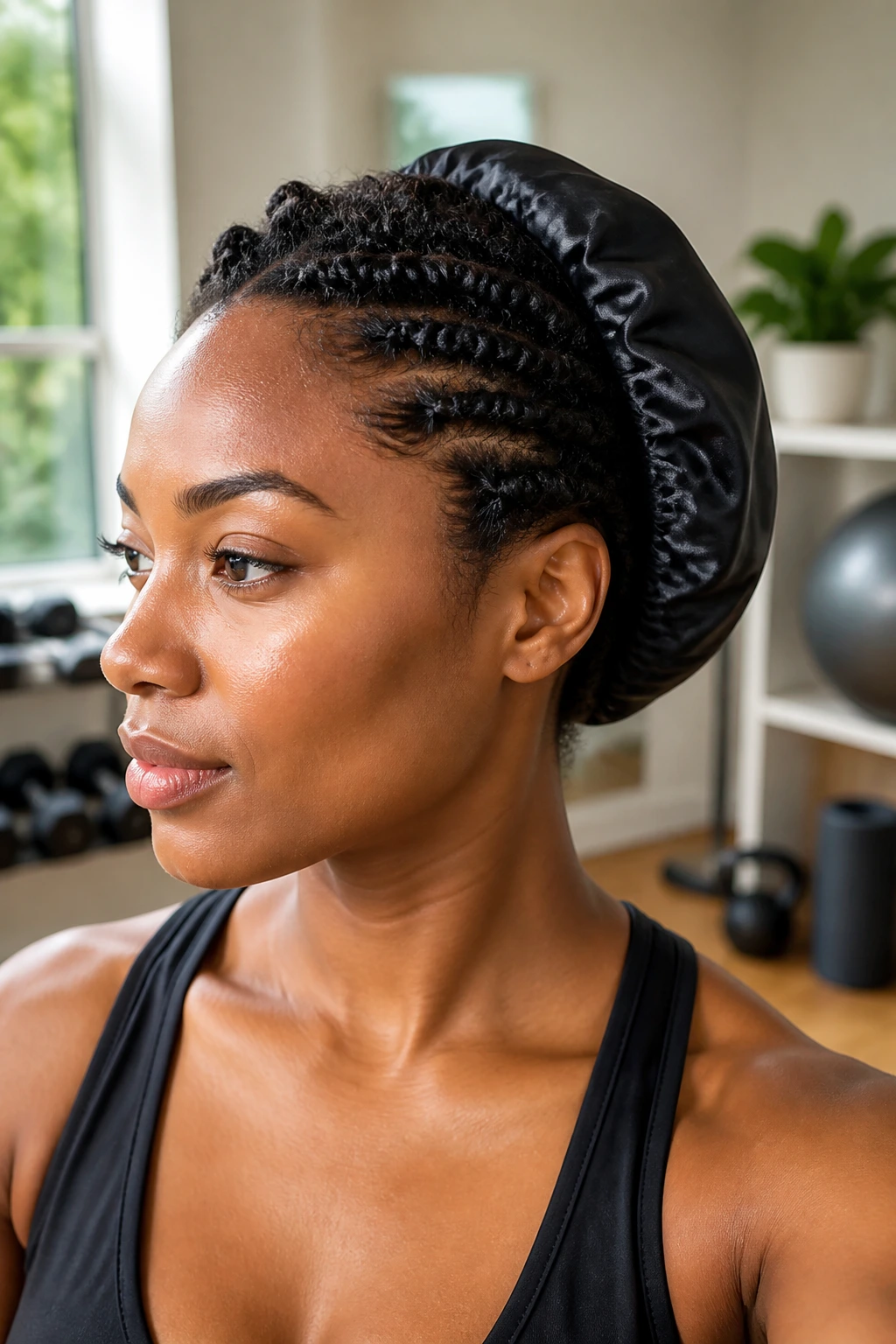
For those with shorter, natural hair that doesn’t quite reach for a high pineapple, small twists all over the head are a great option. These twists keep the hair compact and prevent the individual curls from tangling with each other during movement. Since the hair is already in a protective state, a lightweight satin bonnet just acts as a dust and sweat barrier. It is arguably the most low-maintenance option on this list.
22. The Minimalist Satin Liner
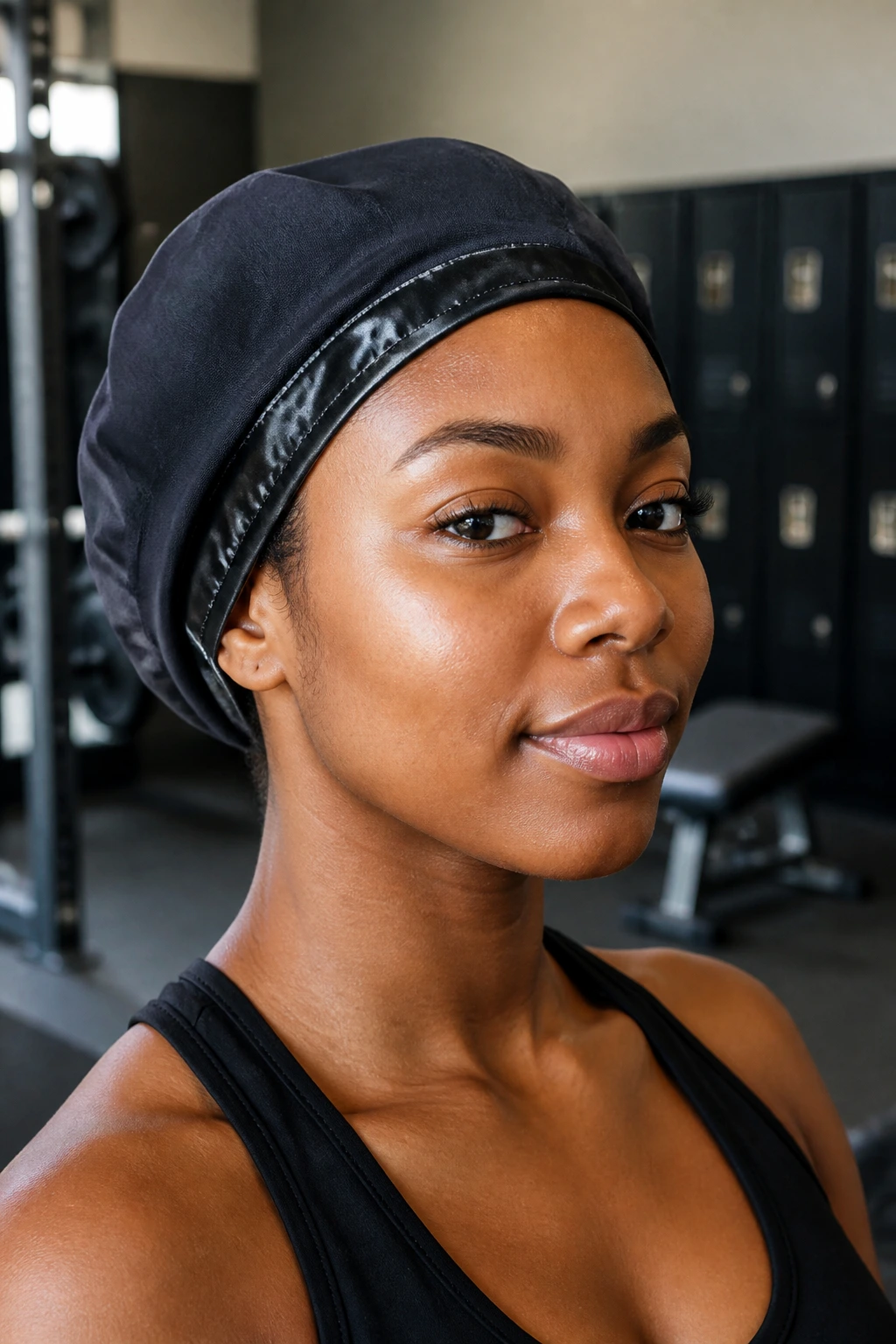
Sometimes the best hairstyle is no style at all, provided the protection is right. If your hair is short or you have a protective style like braids or locs, simply wear a high-quality satin-lined gym cap. This gives you all the benefits of a bonnet—friction reduction, moisture retention, and edge protection—without the need to manipulate your hair into a specific style. It is the ultimate choice for a quick gym session where you want to spend zero time on hair prep.
Final Thoughts
The biggest mistake people make at the gym is forgetting that hair is at its most vulnerable when it is damp with sweat. Salt and minerals in your perspiration can strip moisture from the hair shaft, leaving it brittle and prone to snapping. By using these styles in conjunction with a satin bonnet, you are creating a micro-environment that keeps your hair hydrated and protected from the harsh realities of athletic training.
Remember that consistency is the key to length retention. Whether you opt for a high pineapple or a low-slung braid, the goal remains the same: keep the tension low and the friction lower. Choose the style that works best for your specific hair texture and the type of activity you are doing, and you will find that your hair health starts to match your physical fitness. Protective styling is not just for bedtime—it is for every moment you are moving.