


Wavy hair is often treated like a problem to be solved—a frantic race to straighten, smooth, or tame it into submission. If you have spent your life fighting your natural texture, you have likely been told that a short haircut is out of the question, that your hair will turn into a triangular puffball the moment the scissors hit. This is, quite frankly, outdated advice. When cut correctly, wavy hair is not a liability; it is an incredible asset that provides effortless movement, volume, and texture that people with stick-straight hair spend hours trying to mimic with expensive curling irons and texturizing sprays.
The bob is the ultimate test of a stylist’s skill, but for wavy textures, it is also the most rewarding. A great bob creates a frame for your face that looks intentional and polished, even when you wake up and have only thirty seconds to get out the door. The key lies in understanding that wavy hair behaves differently once the weight is lifted from the ends. Instead of a uniform blunt line, you need strategic layering and weight distribution to ensure the hair collapses inward rather than exploding outward.
1. The Classic French Bob
The French bob is perhaps the most iconic variation for those with a natural wave. It typically hits right at the jawline or even slightly higher, near the cheekbones, which serves to lift the face and highlight your features. Because it is meant to look a bit messy and lived-in, your natural waves are actually the perfect companion for this cut. You do not need to aim for perfection here; the slightly shorter length removes enough weight that your waves will likely spring up into a tighter, more defined pattern.
Why This Style Works for Waves
The secret to the French bob is the internal layering. A skilled stylist will carve out weight from the interior of the hair, allowing the ends to turn under naturally. If you have fine-to-medium wavy hair, this is a game changer. It prevents that dreaded “pyramid” shape by ensuring the bulk stays at the roots and mid-lengths, keeping the ends lighter and softer.
Styling for the Authentic Look
- Air-dry your hair with a small amount of sea salt spray to enhance the wave pattern.
- Avoid using a brush once the hair is dry, as this will disrupt the waves and create frizz.
- Use a lightweight pomade or styling cream on the very tips of your hair to add a bit of definition and weight where the hair might want to fly away.
- Pro tip: If you want a slightly more “done” look, use a 1-inch curling iron on just the front sections to mimic your natural wave pattern exactly where you want it to frame your face.
2. The Textured Blunt Bob

If you love the look of a sharp, clean line but worry about your waves turning into a frizzy mess, the textured blunt bob is your middle ground. The perimeter is cut straight across, which gives the style a heavy, modern appearance, but the interior is heavily point-cut. Point-cutting involves cutting into the ends of the hair vertically with the scissors to create a jagged, softened edge rather than a perfectly horizontal shelf. This allows your waves to nestle into each other rather than pushing each other apart.
The Benefit of a Blunt Perimeter
The bluntness at the bottom actually acts as an anchor for your waves. When the ends are thinned out too much, wavy hair can look straggly or “ratty.” By keeping the perimeter dense, you give the eye a clean line to follow, which makes the overall aesthetic feel intentional even on your most humid, frizzy hair days.
Maintaining the Line
- This cut looks best when it hits just above the collarbone.
- Because it is a blunt cut, you will need to trim it every 6 to 8 weeks to maintain that crisp edge.
- If the ends start to feel “heavy,” ask your stylist to dry-cut the interior layers rather than thinning the ends themselves.
3. The Lob with Invisible Layers

The long bob, or “lob,” is the gateway drug for anyone nervous about committing to a shorter length. By keeping the length grazing the collarbone, you maintain the ability to tie your hair back if you are having a particularly stubborn hair day. The “invisible layers” approach is a technique where the stylist cuts shorter pieces underneath the top layer, creating support and movement without sacrificing the appearance of a one-length cut.
Why It’s the Safest Bet
For those with thicker wavy hair, weight is the primary enemy. Invisible layers essentially build a hidden scaffolding into your hair. It allows the wave to fold in on itself, reducing the overall width of your hair while keeping the length you crave. It is a subtle change that yields a massive difference in how the hair feels and moves.
Daily Care for the Lob
- Focus your products on the mid-lengths.
- Using a moisturizing leave-in conditioner is vital here, as the longer ends of a lob can become drier than the hair closer to the scalp.
- If you find your hair going flat at the crown, flip your head upside down and use a texturizing spray, then flip back and gently shake your hair into place.
4. The Shaggy Bob

The shag has made a major comeback, and it is arguably the best way to embrace highly textured, messy waves. It is defined by shorter, choppier layers around the crown and throughout the lengths, often paired with a soft, wispy bang. This style relies on imperfection, so you can essentially roll out of bed, run your fingers through your hair, and be ready to go. It leans into the natural chaos of wavy hair rather than trying to suppress it.
The Mechanics of the Shag
The shag works by creating volume at the top and letting the waves taper off toward the ends. Because the layers are disconnected, there is no risk of the hair forming a single block of texture. This is a high-movement cut that looks dynamic in motion and requires very little styling effort.
Styling the Messy Look
- Start with a volumizing mousse on damp hair.
- Scrunch the hair upwards toward the scalp to encourage the wave to form.
- Critical: Do not use a comb. Ever. If you encounter tangles, detangle while you are in the shower with a conditioner in your hair, using only your fingers or a very wide-tooth comb.
5. The Curly-Cut Bob

If your waves lean more toward actual curls, a dry-cutting technique is essential. Instead of cutting the hair wet and assuming how it will bounce up, a stylist will cut your hair dry in its natural state. This allows them to see exactly where each wave sits and how much it shrinks. This ensures your bob is the perfect length the moment you leave the salon, rather than shrinking two inches shorter after it dries.
Why Dry-Cutting Matters
When hair is wet, it is elongated and heavy. A stylist cutting wet hair might accidentally take off too much length, leaving you with a bob that is far shorter than you intended. By cutting dry, they can “sculpt” your waves, ensuring that the volume is balanced correctly around your head.
The Maintenance Factor
- This style requires a specialist, so do not just walk into a random salon. Look for stylists who advertise “curl-by-curl” or “dry-cutting” techniques.
- Expect to pay a premium for this service, but remember that the precision of the cut will make your daily styling routine significantly faster and easier.
6. The A-Line Bob
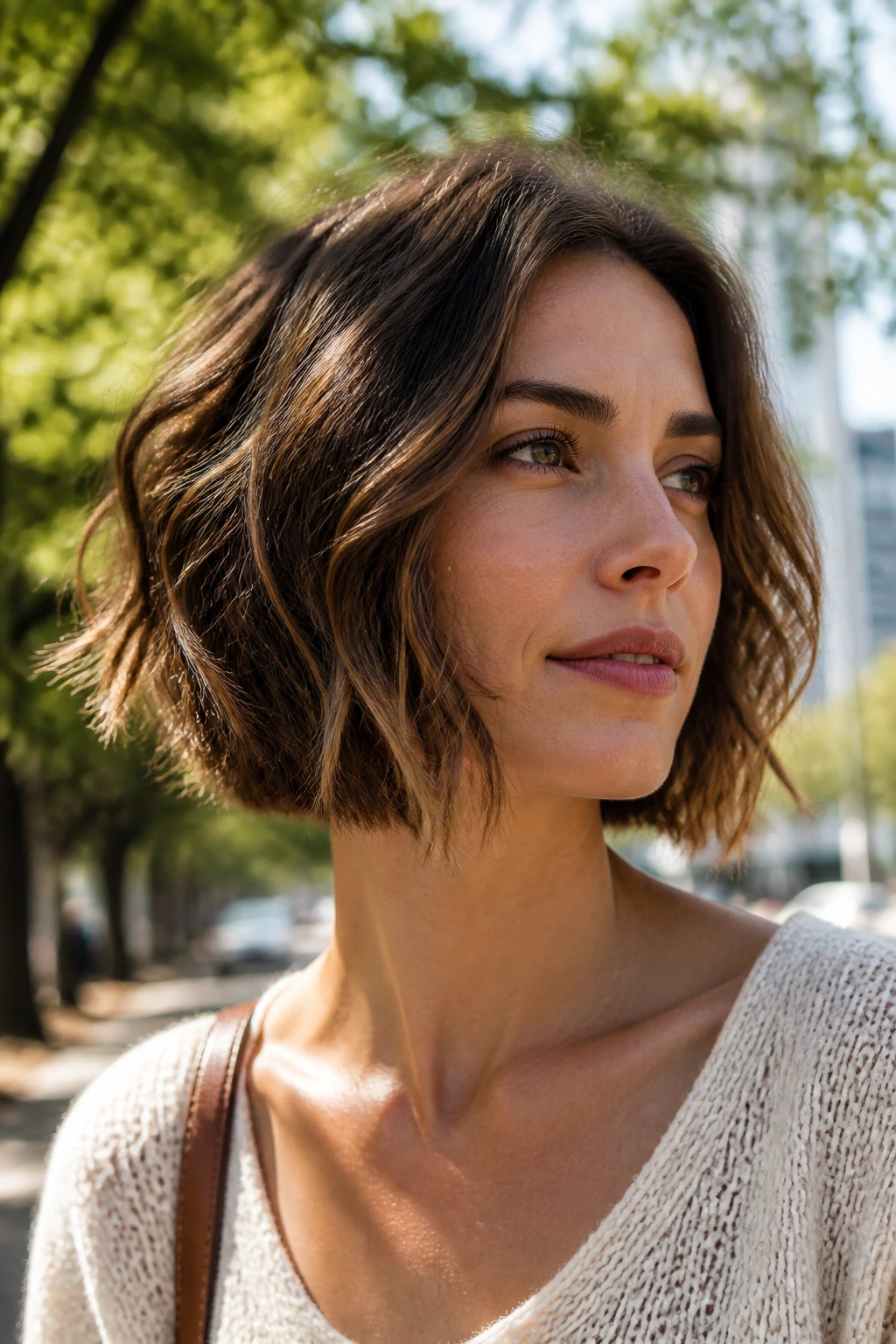
The A-line bob is longer in the front and shorter in the back, which is a classic silhouette that works wonders for wavy hair. By leaving the front pieces longer, you frame the face and draw the eye downward, which can be very flattering if you have a rounder face shape. The shorter back prevents the hair from getting caught on your collar and becoming a tangled mess throughout the day.
The Volume Balance
This cut is brilliant for distributing volume. Since the back is shorter, the hair there stays closer to the scalp, while the longer front pieces allow the wave to lengthen out and display its pattern. It is a sophisticated, clean-cut look that manages to feel edgy without being too high-maintenance.
Tips for Success
- Ensure the transition from the back to the front is gradual. A sharp, dramatic “wedge” can sometimes look dated, but a soft, subtle angle feels modern and chic.
- Ask for “soft edges” during your consultation to keep the lines looking natural rather than harsh.
7. The Deep Side-Part Bob
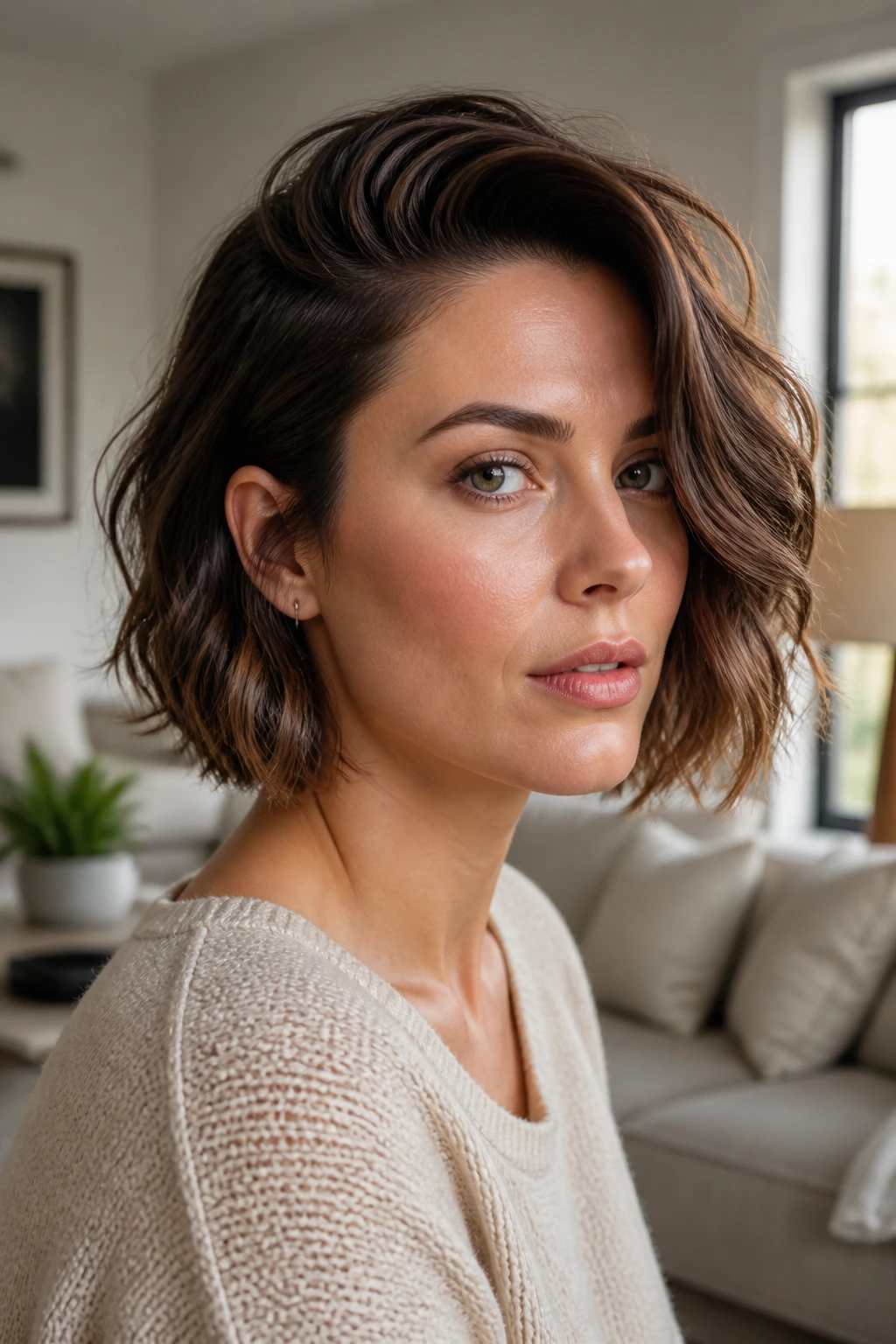
Sometimes the haircut isn’t just about the length; it is about the geometry. A deep side-part bob is an excellent way to fake extra volume, especially for those with finer, wavier hair. By sweeping the majority of your hair to one side, you create an instant lift at the roots. When paired with a bob length, this creates an asymmetric look that feels intentional and high-fashion.
How a Side Part Affects Wavy Hair
Wavy hair often tends to fall flat at the center part because of the weight of the hair on both sides. Moving that weight to one side forces the roots to stand up. If you are struggling with a bob that feels “limp,” simply shifting your part can completely change the way your waves behave.
Making It Stay
- Use a small amount of root-lifting spray right at the part line while the hair is damp.
- If your hair insists on flopping back to the center, use a clip to hold the hair in place while it air-dries, then remove the clip once the hair is fully dry.
8. The Bob with Curtain Bangs
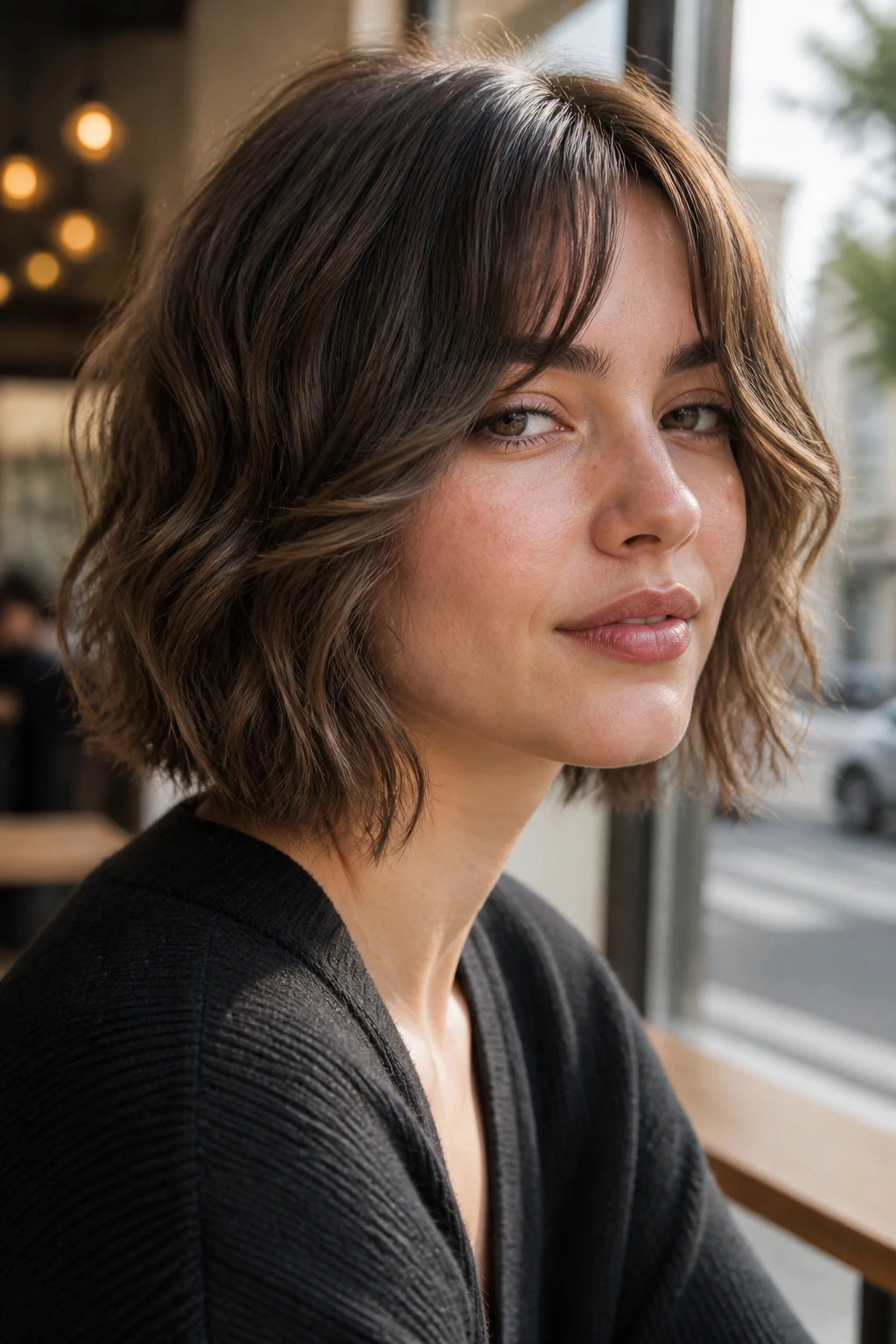
Curtain bangs have become a staple for a reason: they are incredibly versatile. When added to a wavy bob, they act as a bridge between your face and your hair. The bangs can be styled to blend seamlessly into the rest of your layers, or they can be worn slightly tighter to frame your eyes. For wavy hair, curtain bangs should be cut a bit longer so that when they shrink up, they still hit in the right spot.
The Softening Effect
Bangs can be intimidating for wavy hair, but curtain bangs are the safest entry point. Because they are not a harsh, straight line across the forehead, they don’t require the constant maintenance of a traditional bang. They naturally move with the rest of your hair.
How to Style Them
- Use a round brush to blow-dry the bangs away from your face for a sleek look.
- Or, let them air-dry with a bit of texture cream for a more relaxed, “cool girl” aesthetic that matches the rest of your waves.
9. The Rounded “Mushroom” Bob

Wait, do not let the name put you off. A rounded bob is designed specifically to follow the head’s natural shape. This style is excellent for those who want a very polished, retro look. It is short, stacked in the back, and rounded through the sides. If your waves are on the subtler side, this cut will encourage them to curve inward, creating a soft, bell-shaped volume that looks incredibly healthy and shiny.
Achieving the Shape
This cut relies heavily on the quality of the layers. You need a stylist who is comfortable with stack-cutting—where the hair in the back is cut in short, overlapping layers to create a “shelf” of volume. This is perfect if you have naturally flat hair at the crown that needs a little extra encouragement.
Daily Maintenance
- This style often benefits from a quick pass with a round brush to really emphasize the shape.
- If you don’t have time for a blowout, use a bit of volumizing powder at the crown to keep that rounded shape throughout the day.
10. The Asymmetrical Bob

If you are bored of traditional styles, the asymmetrical bob is a bold, artistic choice. One side is noticeably shorter than the other, creating a look that is inherently modern. This works surprisingly well for wavy hair because the asymmetry draws the eye to the cut rather than the texture. It is a fantastic way to display your waves in a way that feels intentional and deliberate.
Why It Works for Waves
The asymmetrical cut takes the focus off the overall “puffiness” of the hair and puts it on the silhouette. If you have an abundance of hair, this style can make it feel more manageable by effectively halving the amount of hair that needs to be “tamed” on one side of your face.
The Commitment Factor
- This is a more dramatic cut, so be prepared for a bit more maintenance.
- You will need to keep up with trims more regularly because once an asymmetrical cut starts to grow out, the balance gets thrown off very quickly.
11. The Soft, Wispy Bob
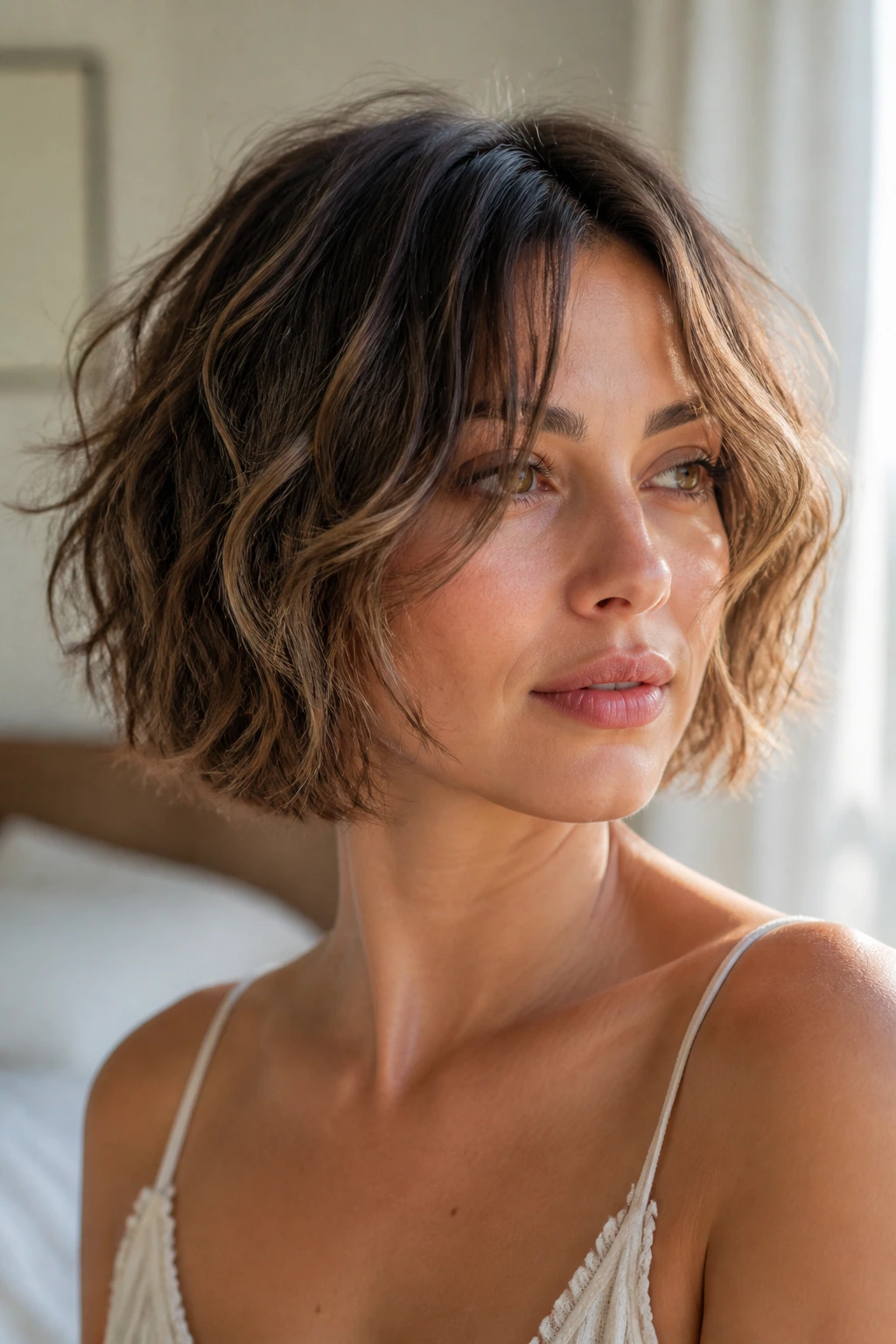
This is the “I woke up like this” haircut. It is heavily layered and kept very soft at the edges. Unlike a blunt bob, which feels heavy and defined, a wispy bob is light, airy, and full of movement. It is ideal if you have very fine wavy hair and you are constantly struggling with the weight of your hair dragging your waves down.
The Power of Layers
Layers are the most important part of this cut. They should be cut in a way that creates gaps for the air to pass through, keeping the style light. By removing the bulk, your waves will likely become more defined and less “fuzzy.”
Styling Strategy
- Use a lightweight, airy texturizing spray—nothing oily or heavy.
- You want to maintain the “flick” of the ends, so avoid pulling your hair straight when drying.
12. The Chin-Length Bob

If you are truly ready to go short, the chin-length bob is the classic standard. It stops right at the chin, which is a very flattering length for most face shapes. With wavy hair, this length creates a lot of bounce. Because the hair is short, it loses a lot of weight, which often causes the wave pattern to tighten up.
Why This Length Bounces
The shorter the hair, the less gravity acts upon it. If your waves have been looking loose or limp, chopping them up to your chin can give them the freedom to curl more tightly. It is a total transformation that requires a bit of bravery but pays off in volume.
Finding the Right Chin Length
- Your stylist should hold the hair up to your face before cutting to ensure the length hits exactly where you want it.
- Remember that your hair will look shorter once it is dry, so start slightly longer than the chin and work your way up.
13. The “Un-Done” Bob

Sometimes the most beautiful cuts are the ones that don’t look like they were cut at all. The un-done bob is all about natural texture. It is essentially a one-length cut with just a few face-framing layers to give it some life. It is the ultimate low-maintenance hairstyle for people who just want to wash their hair and let it air-dry.
Keeping it Natural
The secret here is the product. You need to find a styling cream that offers just enough hold to keep the frizz away but not enough to make your hair crunchy. Look for products labeled as “air-dry creams.” They are formulated specifically to control the hair while it dries naturally.
Why It’s Timeless
- This cut never goes out of style.
- It is easy to grow out if you ever decide you want length again.
- It looks just as good in a messy top-knot as it does worn down.
14. The Blunt Bob with Micro-Bangs

This is not for the faint of heart, but it is incredibly chic. Micro-bangs are bangs that hit well above the eyebrows, paired with a sharp, blunt bob. For wavy-haired individuals, this can be an amazing look if you have the right hair texture. The contrast between the severe, straight-edged bangs and the natural, chaotic waves of the rest of the hair is striking.
The Contrast Factor
Wavy hair can sometimes look a little bit “soft” or “messy.” Pairing it with a sharp, blunt bang adds a level of intentionality that signals you know exactly what you’re doing with your style. It is edgy, modern, and very memorable.
Considerations
- Micro-bangs require a commitment to trimming. They grow out into an awkward stage very quickly.
- If your hair is prone to cowlicks at the hairline, make sure your stylist knows before they start cutting.
15. The Stacked Bob
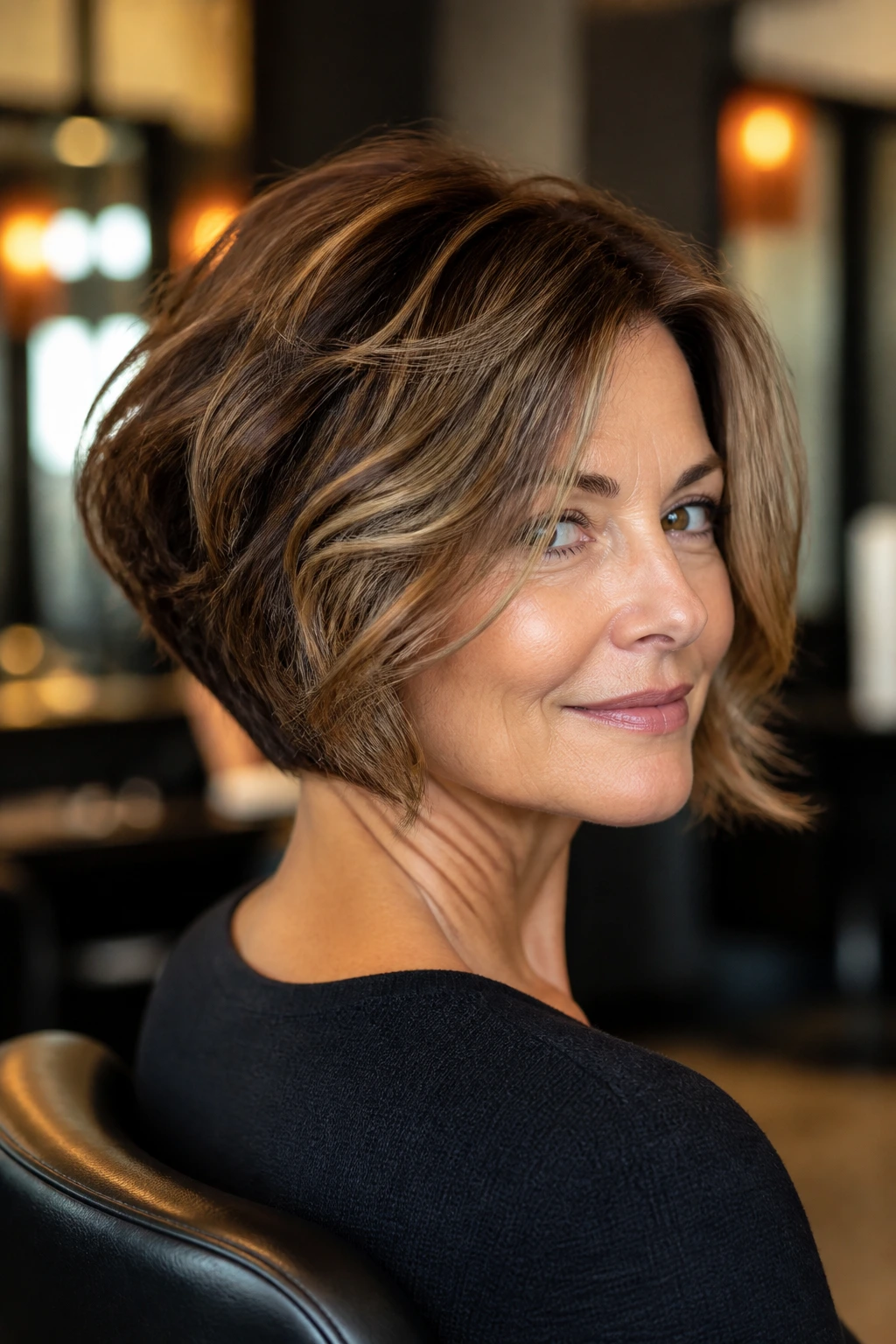
If you have fine hair that struggles to hold volume at the back, the stacked bob is your best friend. It features short, graduated layers at the nape of the neck that “stack” up to create a massive amount of volume at the crown. The front is kept longer, providing that classic bob face-frame. This style works beautifully with waves because the stacked layers provide a foundation for the hair to build upon.
Volume Building
The stacked back is essentially a shortcut to big hair. It doesn’t rely on products to create volume; it relies on the architecture of the cut itself. This is an excellent choice for those who are tired of spending twenty minutes teasing their hair every morning.
Maintenance
- This cut looks best when the layers are precise.
- You will need to visit the salon every 6 weeks to keep the stacking looking crisp and clean.
16. The Wavy Mullet Bob

Yes, the mullet is back, and when adapted for a bob length, it is actually incredibly flattering. It features shorter layers at the front and crown with a slightly longer, piece-y section at the back. It sounds unusual, but on wavy hair, it creates a very cool, rock-and-roll vibe that is incredibly easy to style.
Why It Works
It combines the ease of a short bob with the length of a lob, giving you the best of both worlds. The waves lend themselves perfectly to the “shaggy” aesthetic of the mullet, making it look much softer and more approachable than the traditional, severe versions.
Styling the Mullet
- Use a sea salt spray to enhance the wave and create that beachy, unkempt texture.
- This is a style that truly thrives on texture, so don’t be afraid to use a dry shampoo or volumizing powder at the roots.
17. The Blunt “No-Layer” Bob
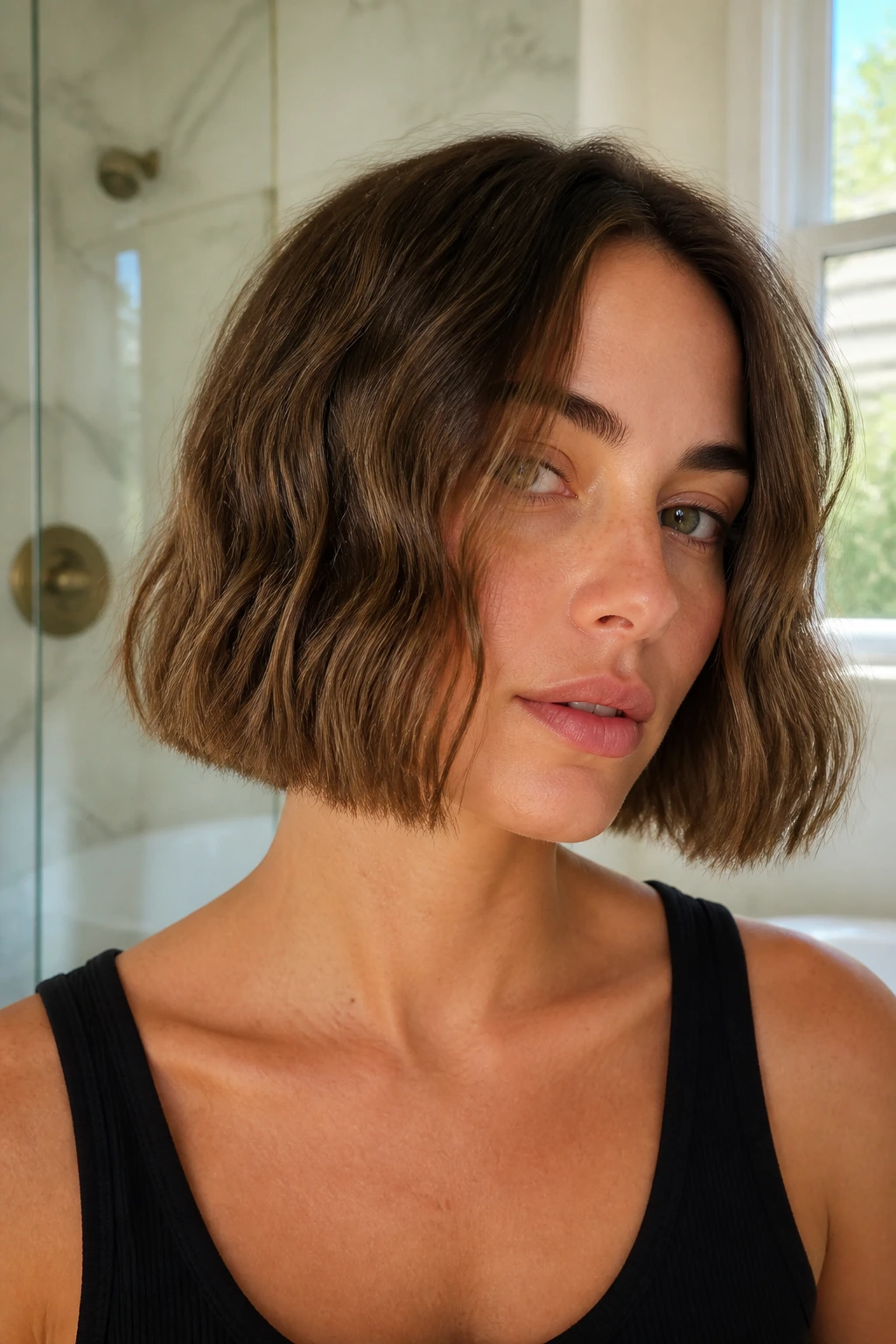
If you want to maximize your wave pattern, sometimes the best move is to remove the layers entirely. A blunt, one-length bob creates the most weight at the bottom of the hair, which helps to pull out the wave and make it more uniform. If you have “frizzy” hair that looks like it has too many layers, a one-length cut can be a revelation.
The Weight Advantage
By keeping the hair one length, you are forcing the waves to clump together into larger, more defined shapes. This creates a sleeker, more polished look that is much easier to manage than a layered cut. It is a bold, modern look that screams confidence.
Styling the Blunt Bob
- Use a heavy oil or serum on the ends to keep them hydrated and smooth.
- If you find your hair gets too “triangular,” use a flat iron on just the very top layer of the hair to smooth it down, while letting the waves underneath do their own thing.
Final Thoughts

Choosing the right bob for your wavy hair comes down to one thing: embracing the texture you have rather than fighting for the texture you wish you had. Wavy hair is inherently beautiful, and the right bob should act as a frame for your face while celebrating that natural movement. Don’t be afraid to experiment with different lengths and layering techniques; it is just hair, and it will always grow back if you decide you want to try something else.
Before you sit in the chair, take a moment to look at your hair in its natural, air-dried state. That is the texture your stylist needs to see. If you go to the salon with your hair straightened, your stylist is essentially flying blind. Show them your natural wave, tell them what bothers you about it—whether it’s the volume, the frizz, or the way it sits—and then trust them to use their tools to find the balance. A great haircut is a partnership between you and your stylist, and with the right approach, you will never feel like you have to battle your hair again.