

Thick hair is a blessing, but it often feels like a full-time job. When you have a high density of strands, managing weight and texture becomes the primary hurdle. If you have ever tried to grow your hair out only to find it turning into a pyramid of frizz, you already know why short, cropped styles are the ultimate solution. A spikey cut doesn’t just look sharp; it removes the excess bulk that usually drags your style down, allowing your natural volume to work for you rather than against you.
Finding the right shape is where the magic happens. For thick hair, you need a cut that incorporates texture-heavy layers. Blunt cuts on thick hair can easily look chunky, but when you introduce deliberate, choppy points throughout the crown and sides, the hair gains movement. We are talking about looks that lean into your natural thickness instead of trying to flatten it out. These styles are about control, confidence, and cutting down your morning routine to a fraction of the time.
1. The Classic Textured Faux-Hawk
This look is the gold standard for anyone with thick hair who wants an edgy vibe without committing to a full-blown mohawk. The sides are kept significantly shorter than the top, creating a clean frame that emphasizes the height of your hair. Because your hair is naturally dense, you barely need any product to get that central ridge to stand up—the weight of your own locks provides all the structural integrity required.
Styling the Faux-Hawk
You only need a pea-sized amount of high-hold matte pomade to lock this into place. Focus on pulling the hair toward the center as you apply the product, using your fingers to twist small sections into spikes. Don’t worry about perfect symmetry. The charm of this cut lies in the slightly undone, “I just woke up looking this cool” aesthetic.
2. Undercut With Spiky Quiff
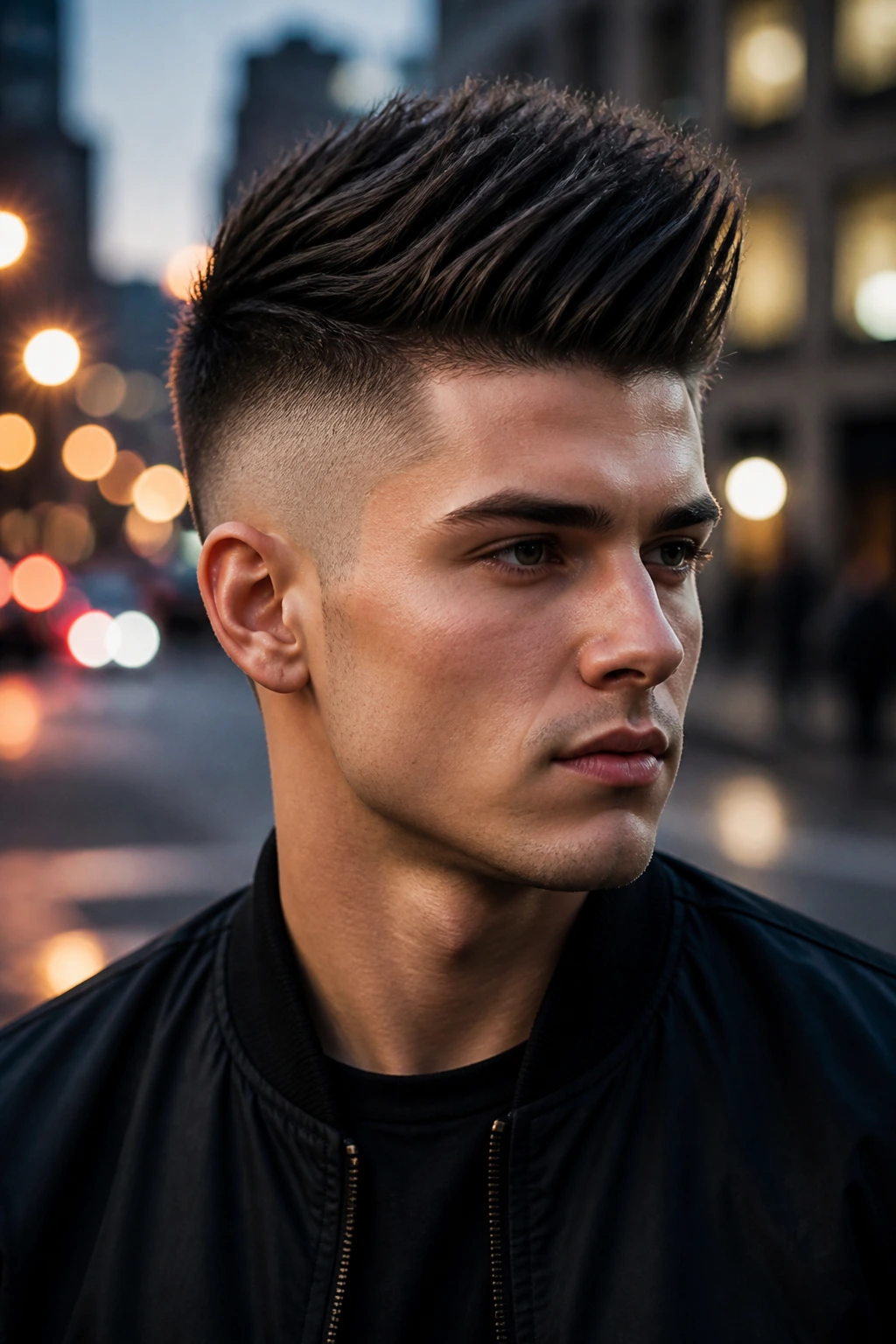
If you want to remove as much weight as possible while maintaining a high-fashion silhouette, the undercut is your best friend. By shaving the hair on the sides and back down to the skin or a very short guard, you leave all your thickness concentrated on the top. The quiff is then swept up and back, providing a sleek, professional look that can transform into something more rebellious with a bit of texturizing spray.
Managing the Regrowth
Since this cut relies on a sharp contrast, you will need to trim the sides every three to four weeks. It is a commitment, but the payoff is a haircut that looks crisp and intentional. Use a light grooming cream for the top section to ensure it stays in place without looking greasy or weighed down by excess oil.
3. Choppy Layered Crop
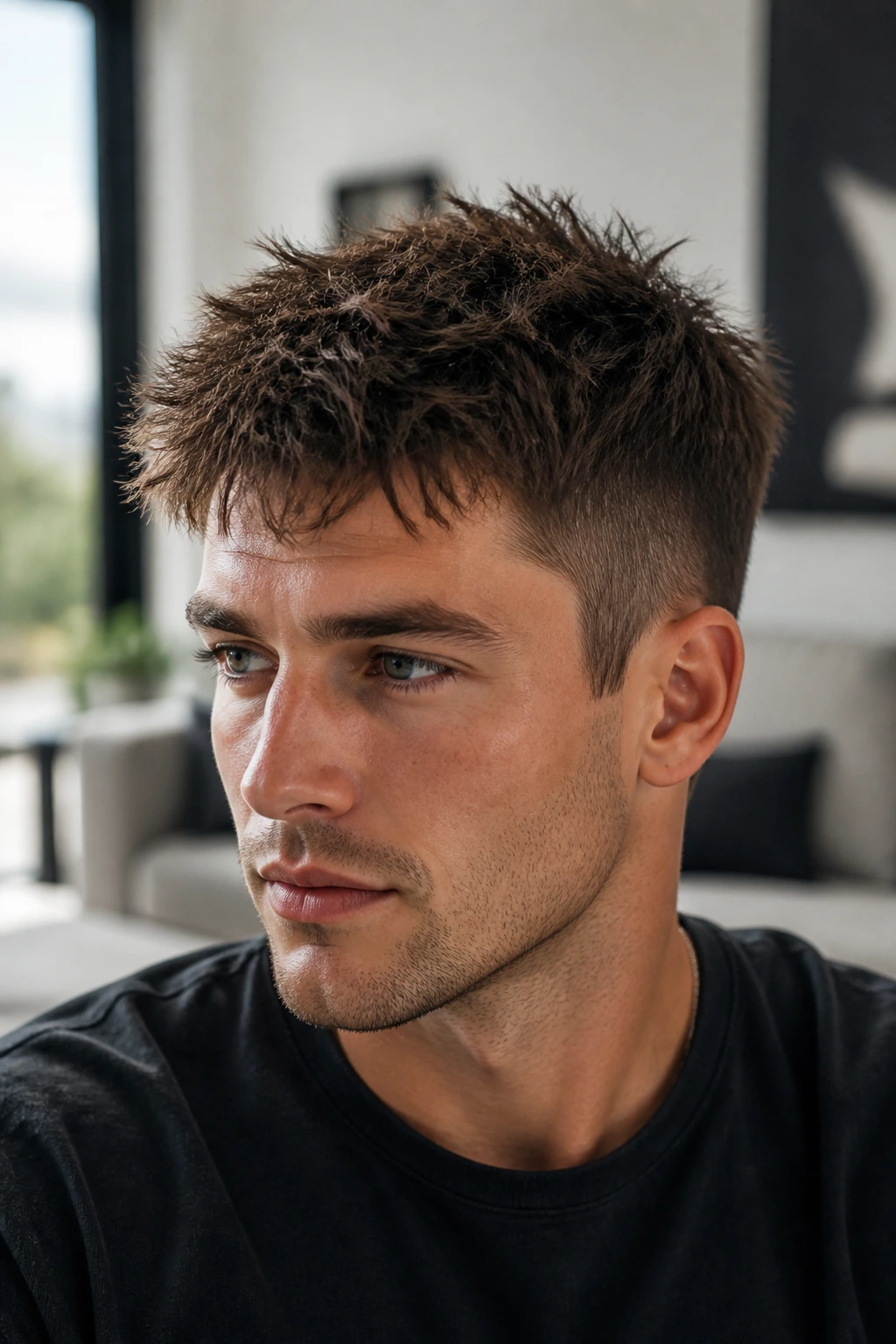
For those who prefer a more relaxed approach, the choppy layered crop is incredibly forgiving. This style features shorter, disconnected layers throughout the top, which allows your hair to sit naturally in a spiky, tousled formation. It’s perfect for wavy or straight hair that has a tendency to look poofy; the internal layers literally take the fluff out of the equation.
Why It Works for Thick Hair
The density of your hair acts as the foundation for the spikes. Unlike fine hair, which might fall flat after an hour, your thick locks will maintain these “spikes” throughout the day with minimal effort. Simply run some sea salt spray through damp hair and let it air dry. The salt provides enough grit to make the texture pop without requiring a heavy wax or gel.
4. The Short Spiky Buzz Cut
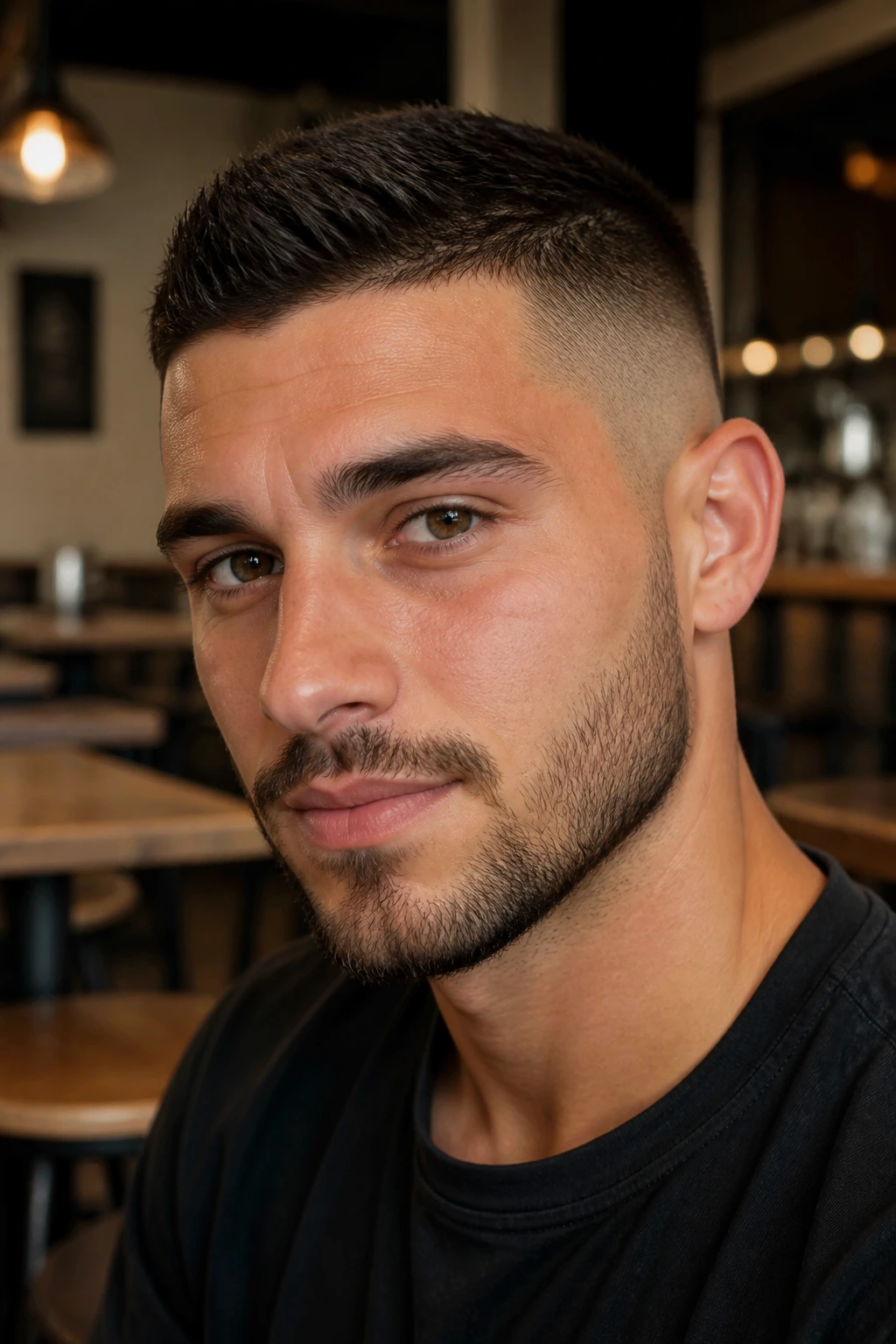
Who says a buzz cut has to be boring? By leaving about an inch of length on top and fading the sides, you create a canvas for a very subtle, sophisticated spike. This is the ultimate “wash and wear” style. It is ideal for warmer weather or for anyone who just wants to reclaim their time in the morning.
The Detail Matters
The key here is the fade. A skin fade at the temples and around the ears keeps the style looking modern, while the slightly longer top provides just enough versatility to spike it up with a tiny dab of styling clay. If you have a rounder face shape, this style helps balance your features by adding vertical height.
5. Messy Spiky Fade
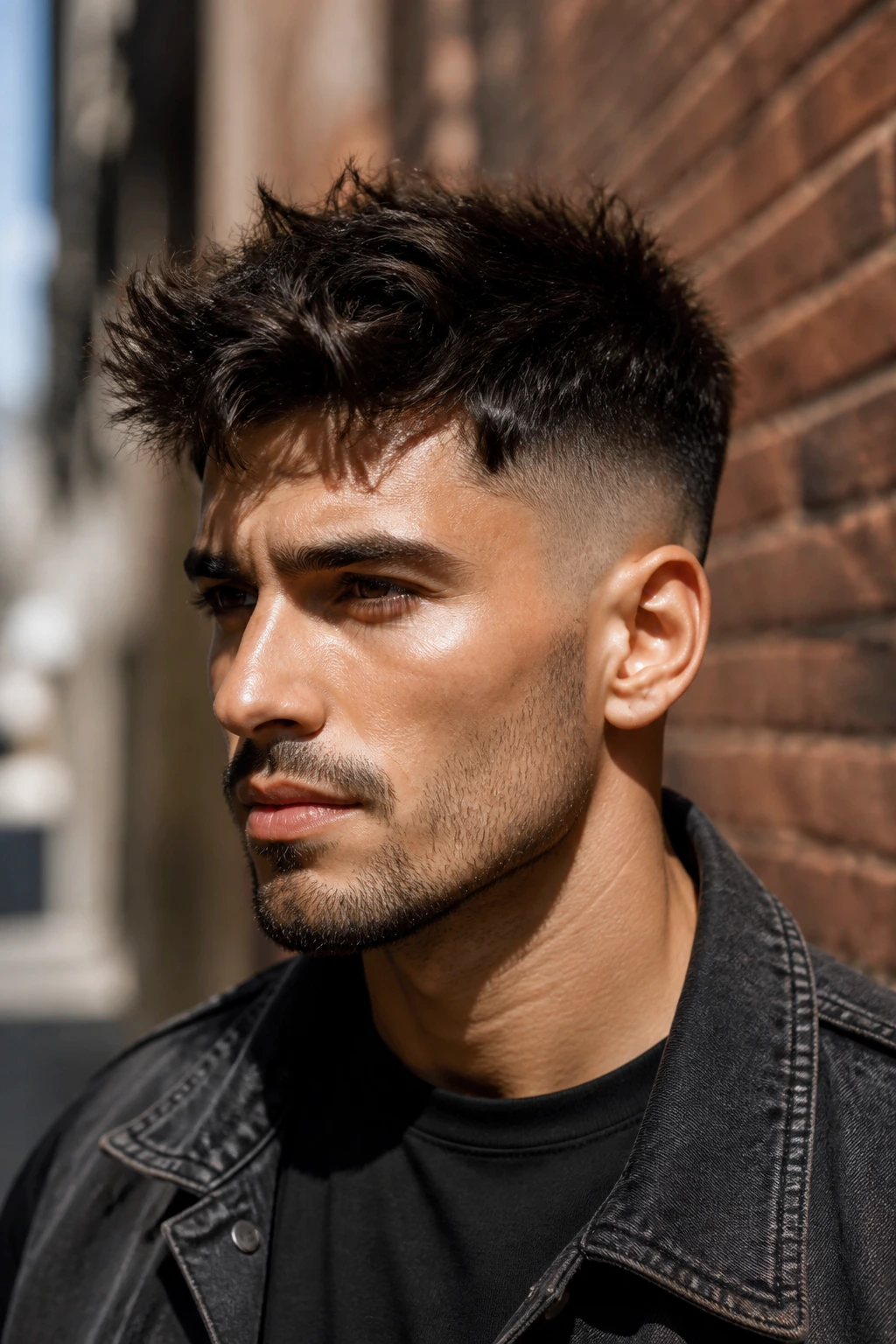
If you love a clean line but hate the feeling of being too “done,” the messy spiky fade is the perfect middle ground. You keep the sides tight—maybe a number one or two guard—and leave the top long enough to move. The goal here is to use your fingers to create multidirectional spikes rather than a uniform row.
Achieving the Texture
Use a matte paste when your hair is about 80% dry. Rub the product between your palms until it’s warm and spread it thin. Then, use your fingertips to lift sections of your hair upward. If a spike falls, leave it. The more chaotic the spikes look, the better the final result.
6. Asymmetrical Spiky Top
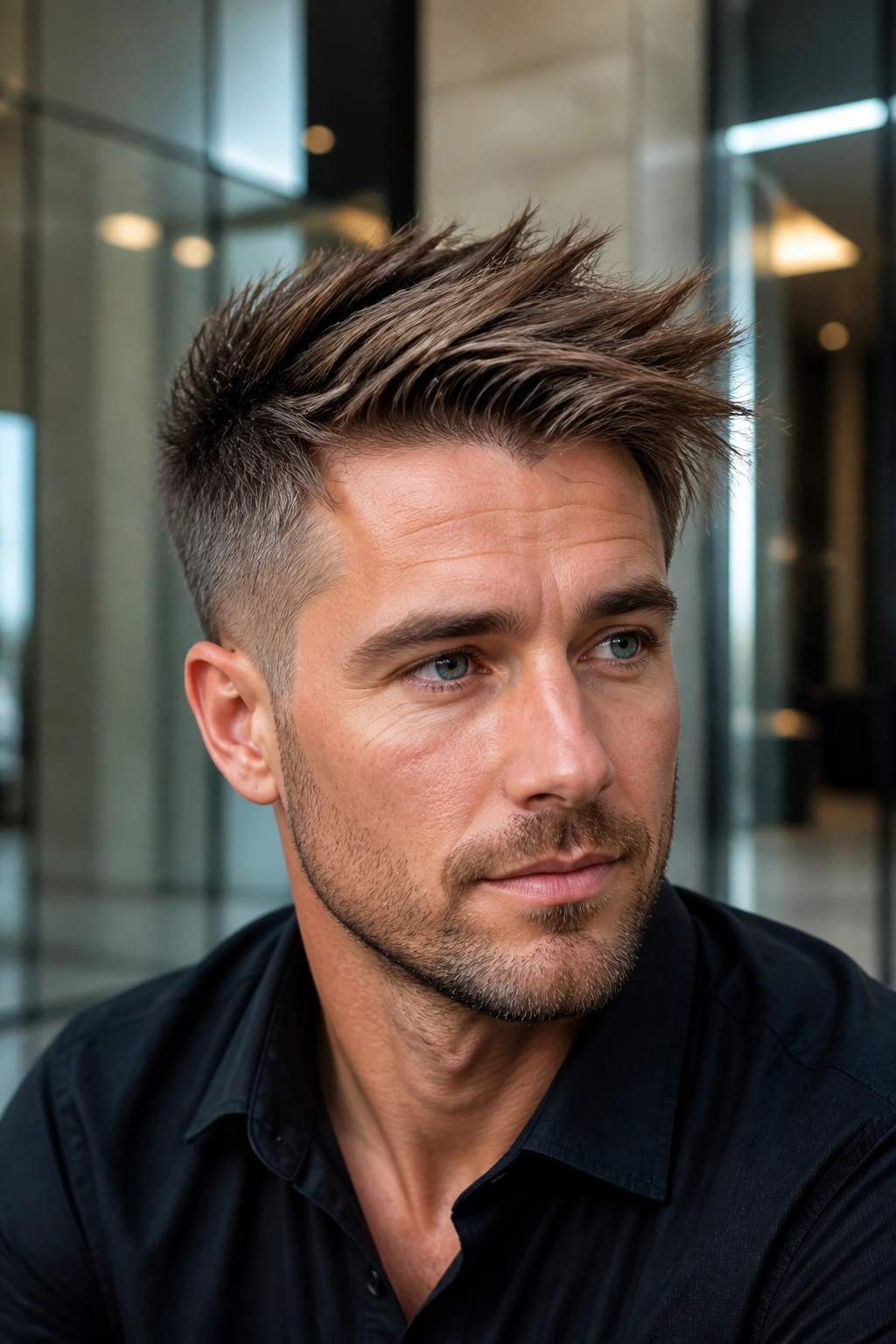
Adding an asymmetrical element to a short cut is an instant way to add personality. By keeping one side slightly longer or having the spikes sweep toward one direction, you create a focal point that draws the eye. This is fantastic for thick hair because the directional flow prevents the “pouf” that often happens when thick hair is cut too uniformly.
Who Should Choose This
This cut works exceptionally well for oval and heart-shaped faces. The asymmetry breaks up the symmetry of the face, making your jawline appear more prominent. Because the length is varied, you’ll find that it grows out more gracefully than a standard crew cut, meaning you can stretch your time between barber visits by an extra week or two.
7. Spiky Pixie for Thick Tresses
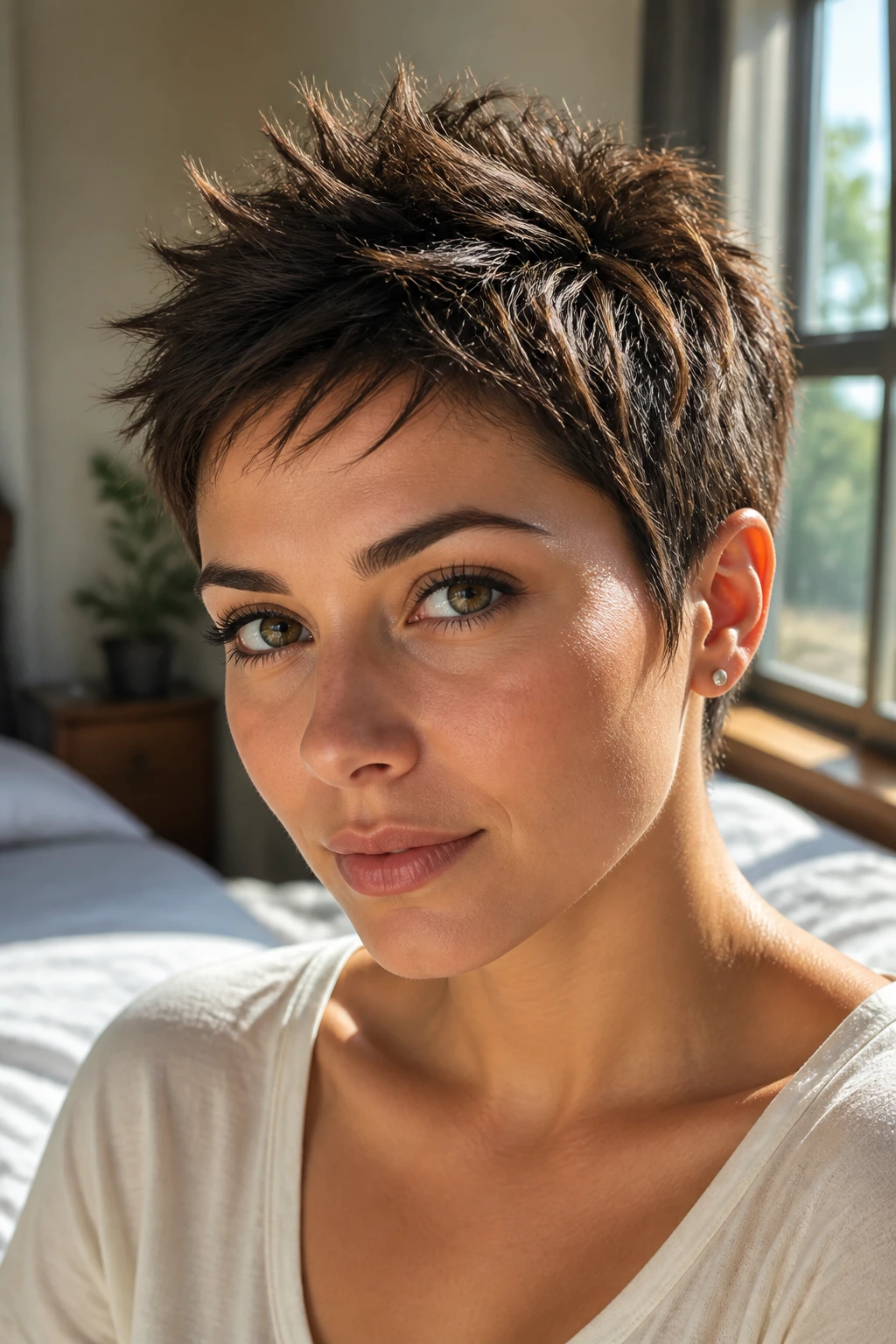
Short hair isn’t just for men’s cuts. A spiky pixie on thick hair is a statement look that highlights your bone structure. The trick is to keep the nape of the neck tight and the crown heavily texturized. By thinning out the internal weight, you ensure the hair doesn’t puff out at the sides, maintaining that sleek, angular shape that makes a pixie so iconic.
Maintenance Tips
Avoid heavy conditioners that can make your hair feel heavy or limp. Instead, opt for lightweight, volumizing products that keep the strands separate and airy. When styling, start with a light mousse on damp hair to provide a bit of control, then finish with a texture pomade once it’s dry to define the individual spikes around your forehead and ears.
8. High-Contrast Pompadour Spikes
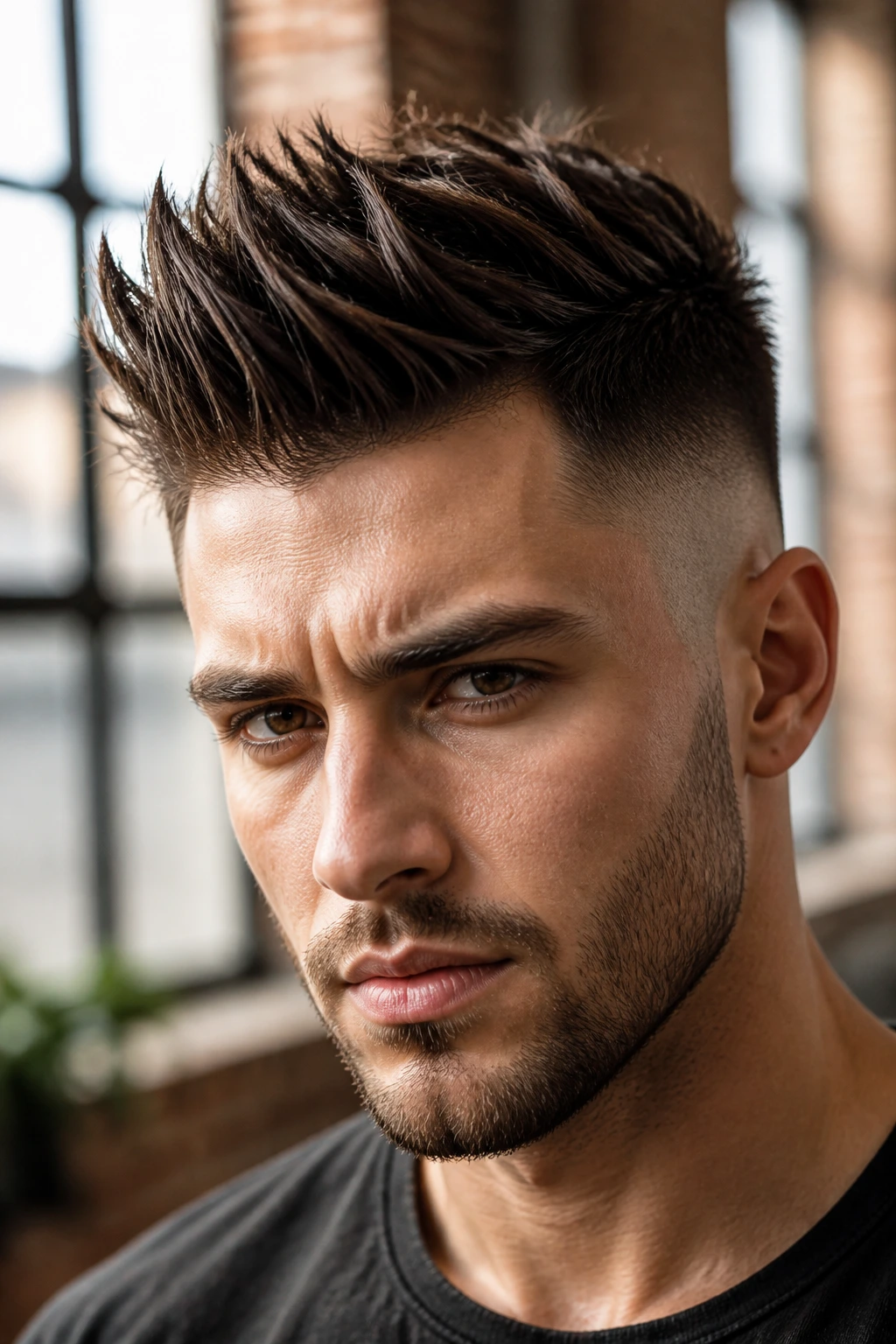
This is a modern evolution of the classic pompadour, updated for someone with thick, unruly hair. You have the height of a pompadour, but instead of the sleek, gelled-back finish, you opt for a spiky, textured front. It’s a bold look that demands attention and looks fantastic with a sharp beard or a clean-shaven face.
The Role of Heat
You will likely need a blow dryer to get the initial height. Use a round brush to lift the hair at the roots while directing the airflow upward. Once you have that volume set, use a strong-hold hairspray to lock the shape. Thick hair has a “memory” for volume; if you train it with the dryer, it will naturally want to stand up on its own.
9. Layered Spikes With Tapered Sides
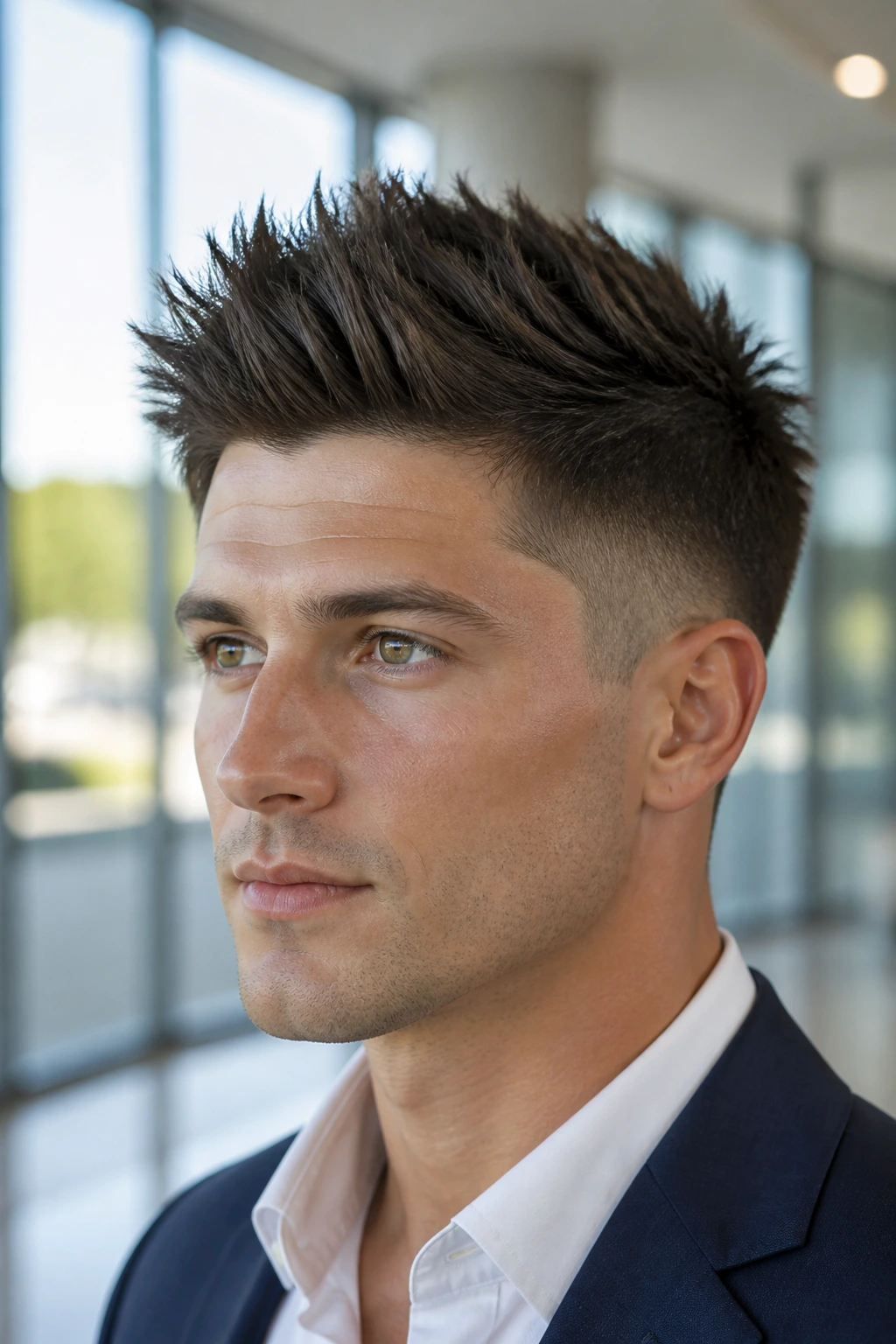
A taper fade is a more conservative take on the undercut. It’s perfect if you want to keep the hair around your ears and neck clean, but you aren’t quite ready for the high-contrast shave. The transition from short to long is gradual, allowing the thick hair on top to blend seamlessly into the shorter sides.
Why Tapering Helps
Tapering reduces the visual bulk around your hairline. If your hair grows in thick and dark, a clean taper prevents that “hair-helmet” look. It makes the transition from your skin to your hair look soft and deliberate, providing a high-end, polished finish that looks great in a boardroom or at a casual weekend brunch.
10. Mohawk-Inspired Short Spikes
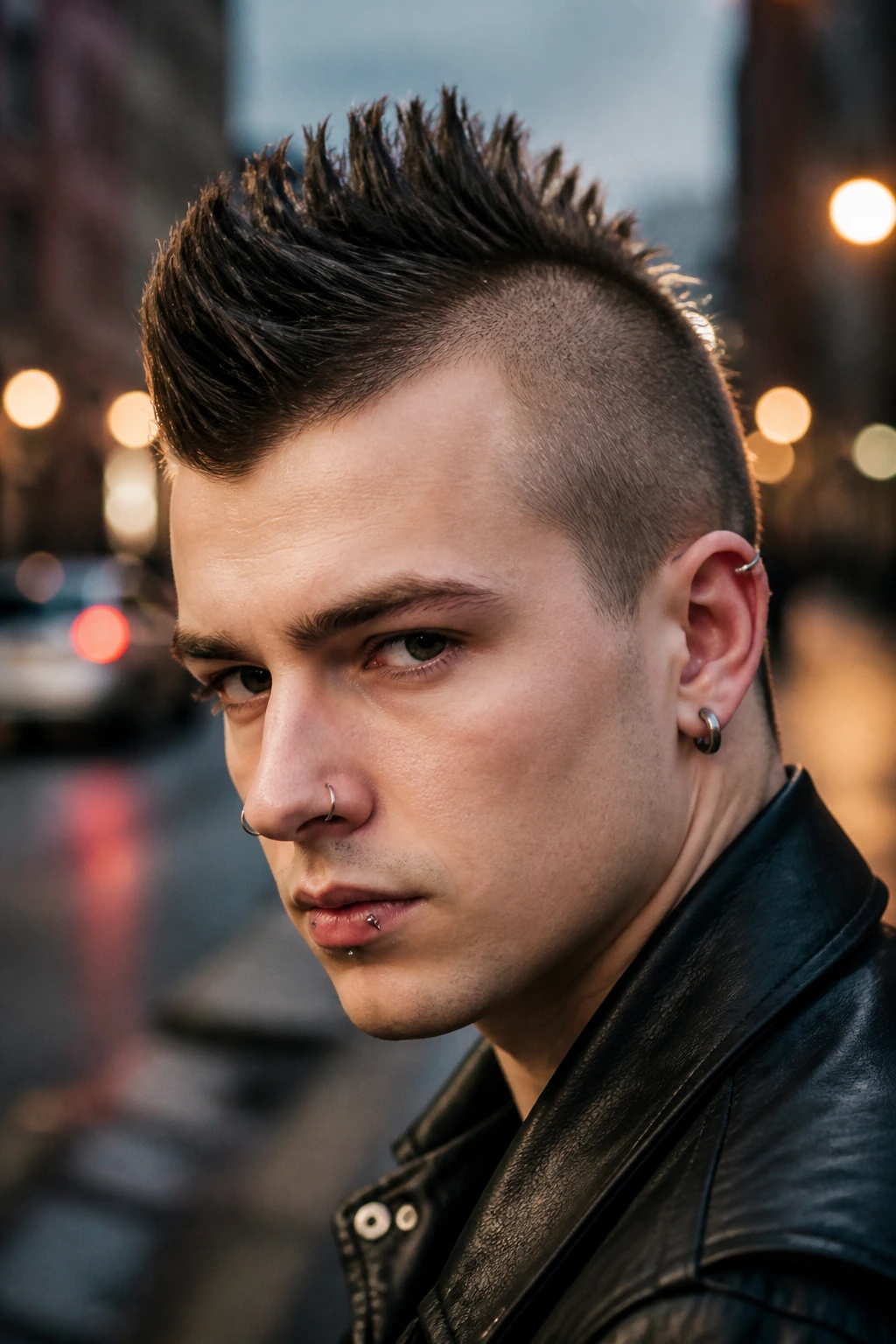
This is for the person who wants to lean into the punk aesthetic without the maintenance of a full-scale mohawk. You effectively create a narrow strip of length in the center that is heavily layered and spiked. The sides aren’t shaved completely; they are just cut short enough to keep the focus entirely on that central, spiky crest.
Customizing the Width
You can play with the width of the “mohawk” section. A narrower strip is more aggressive, while a wider section is more wearable for everyday life. Talk to your stylist about “point cutting”—a technique where the scissors are held vertically—to ensure the ends of your spikes are wispy rather than blunt, which is vital for keeping this look from appearing too heavy.
11. Textured Crew Cut With Spiked Front
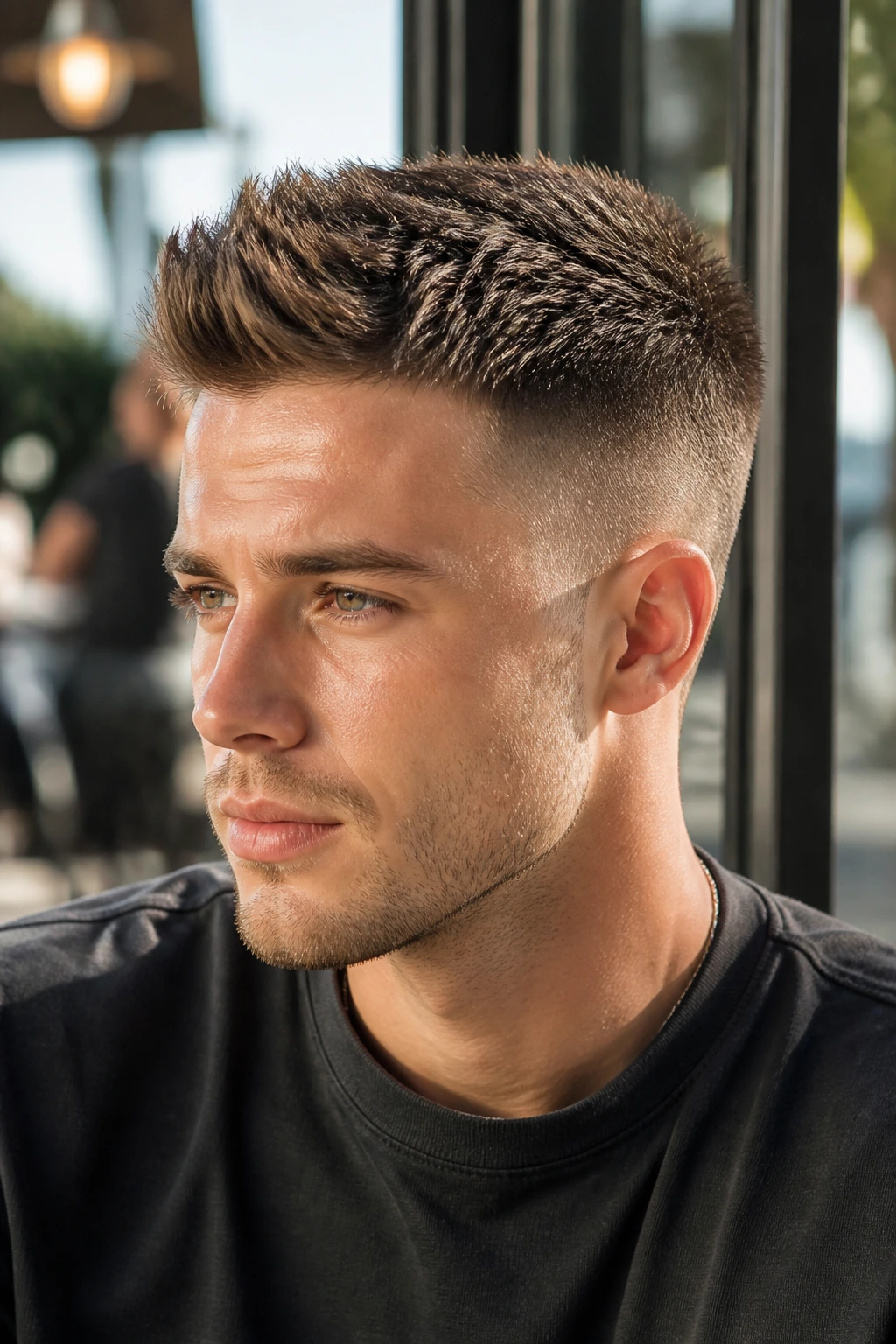
The crew cut is a timeless staple, but by adding a slightly longer section at the front, you introduce a world of styling options. You can sweep it to the side or, better yet, spike it upward. It is the ultimate low-maintenance look that doesn’t sacrifice style for convenience.
The Power of Product
Since this is such a short style, your choice of product is everything. Stay away from gels—they leave thick hair looking stiff and plastic. Stick to matte clays or fiber pastes. These products provide a “dry” hold that allows for movement. If you touch your hair during the day, it won’t feel like you’ve dipped your hand in glue.
12. Spiky Fringe With Fade
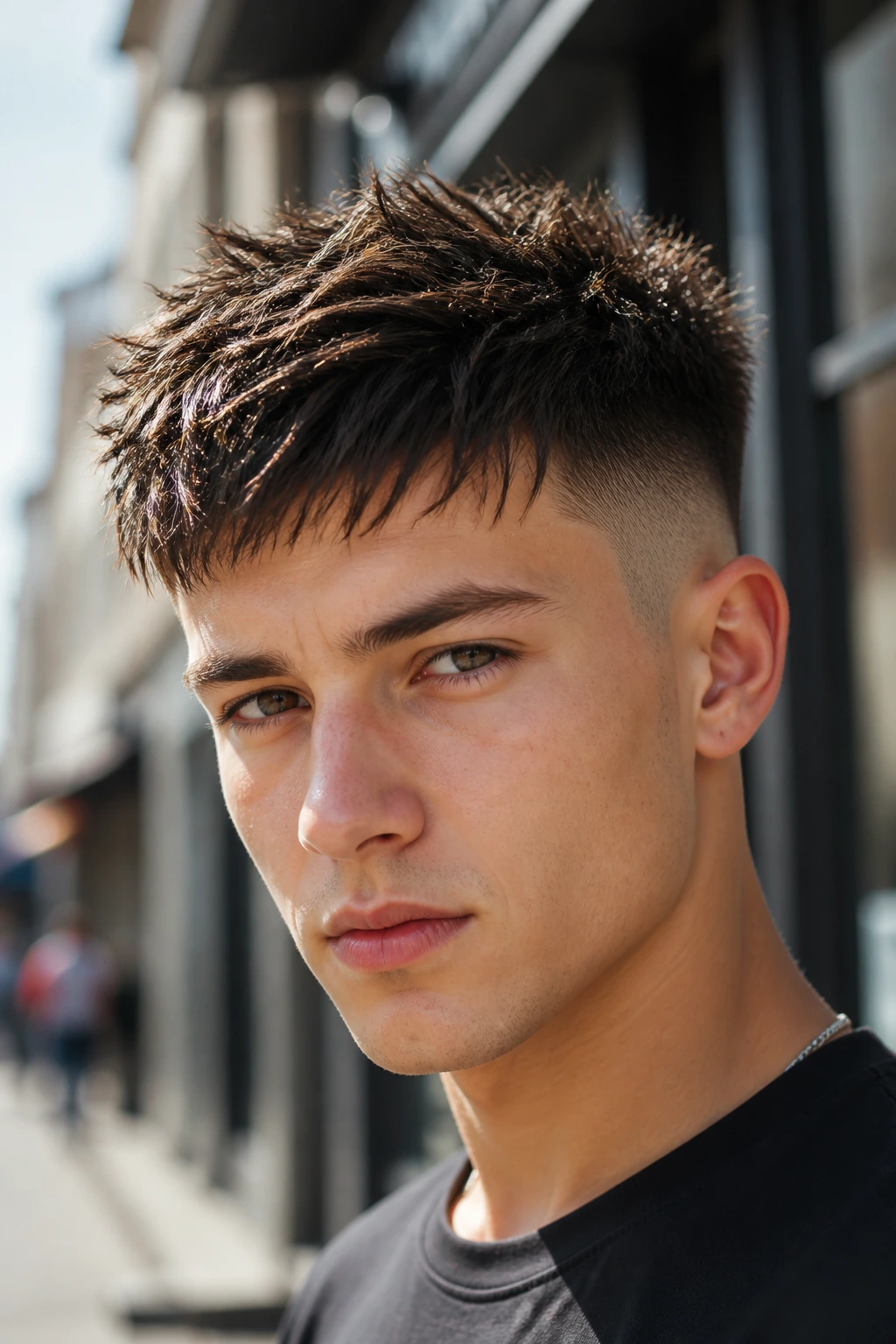
Fringes are usually associated with longer hair, but a short, spiky fringe can frame the face beautifully. This cut keeps the hair on top short and forward-leaning, with the front section spiked slightly upward. It creates a modern, youthful look that works especially well for those with a high forehead.
Balancing the Length
The fade on the sides grounds the look. Without a fade, a fringe can easily become overwhelming on thick hair. By taking the sides down, you contrast the “weight” of the fringe with a sharp, clean perimeter. It creates a balanced, intentional look that is incredibly easy to style in under two minutes.
13. Windswept Spiky Layers
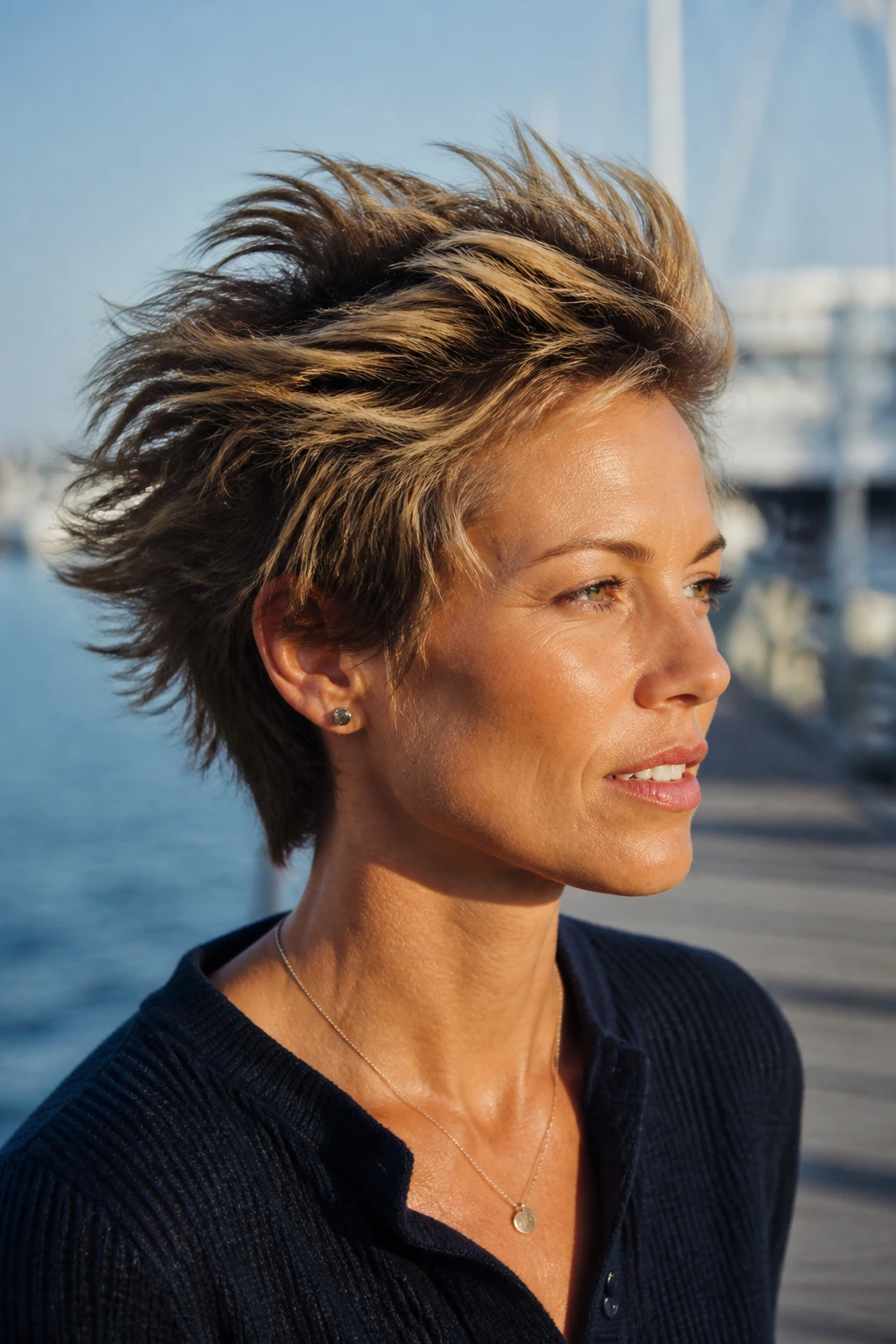
This style is designed to look like you’ve just stepped off a boat. It’s all about creating movement through the crown. The hair is cut into varying lengths, and the spikes are directed toward the back of the head. It’s less of a “spiky” look and more of a “lived-in” texture.
Getting the Look
Apply a texturizing foam to towel-dried hair. As you blow dry, use your fingers to rake the hair back and upward. You aren’t trying to make it stand perfectly straight—you want a natural, chaotic flow. Once dry, use a bit of dry shampoo to add grip and volume, which helps the hair stay lifted rather than falling flat against the scalp.
14. Modern Shag-Spike Hybrid
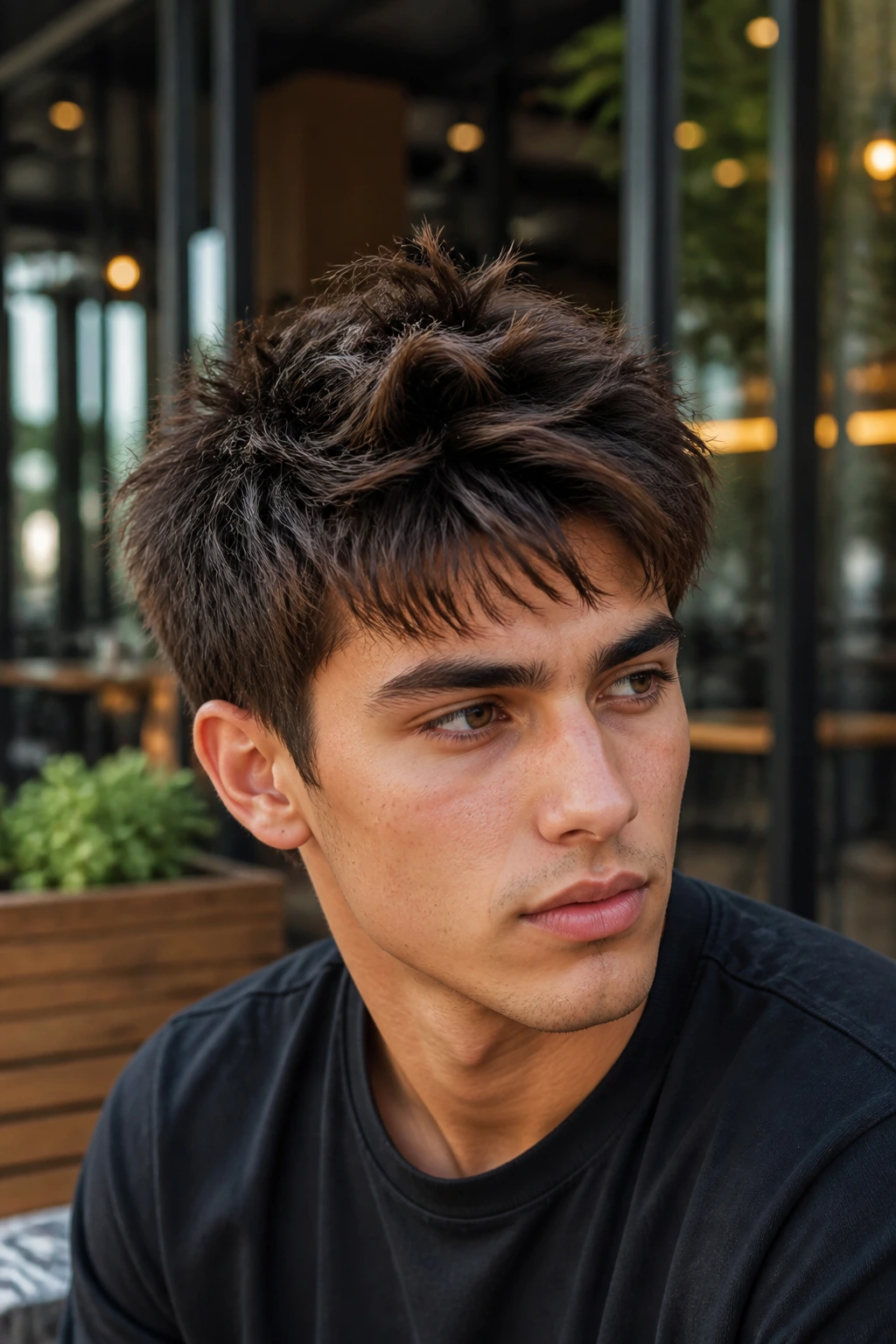
Yes, the shag is back, but in a much shorter, more manageable form. This style features choppy, disconnected ends that create a spiky effect when styled with a light pomade. It works brilliantly for thick hair because the varied lengths hide the density, making the hair look lighter and more agile.
Styling the Ends
The goal of this cut is the texture at the tips. Use a razor or thinning shears on the ends of your hair to take away the “blunt” look. When you apply product, focus only on those ends, twisting them to create a jagged, shaggy appearance. It’s a very effortless look that pairs well with vintage-inspired clothing or a relaxed, artistic vibe.
15. The Spiky Caesar
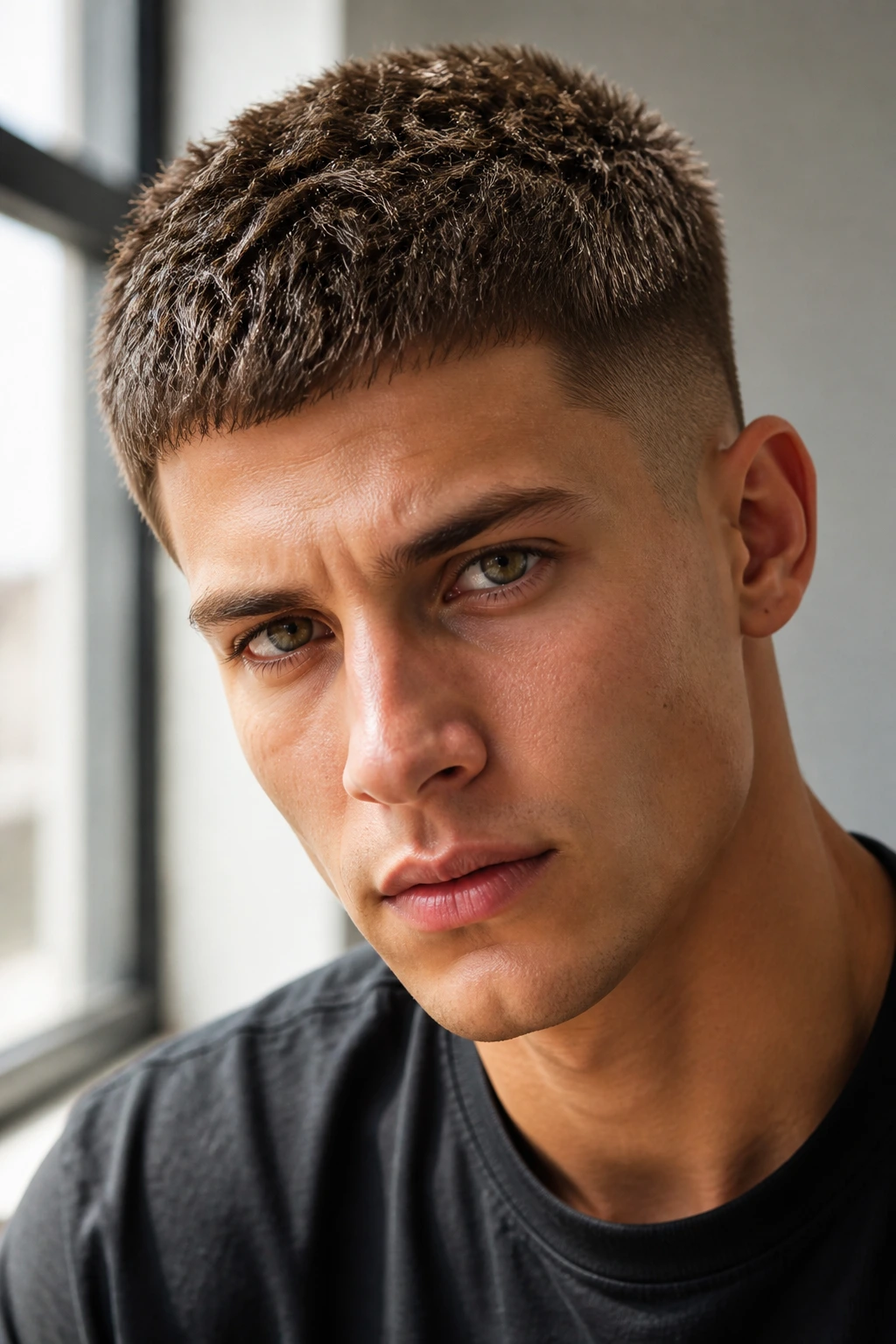
The Caesar cut is a classic that has been updated for the modern era. By keeping the length uniform across the top and spiking the entire surface, you get a clean, geometric look that is incredibly structured. It’s one of the best ways to manage extremely thick hair because the hair is cut short enough that it doesn’t have the room to puff out.
Why It’s Unique
Most spiky cuts focus on the center or the front. The Caesar focuses on the entire head. It’s like a field of uniform spikes. It’s sharp, masculine, and very low maintenance. If you have a square jawline, this cut will highlight that structure perfectly by framing your head in a clean, cropped circle.
16. Spiky Top With Temple Fade
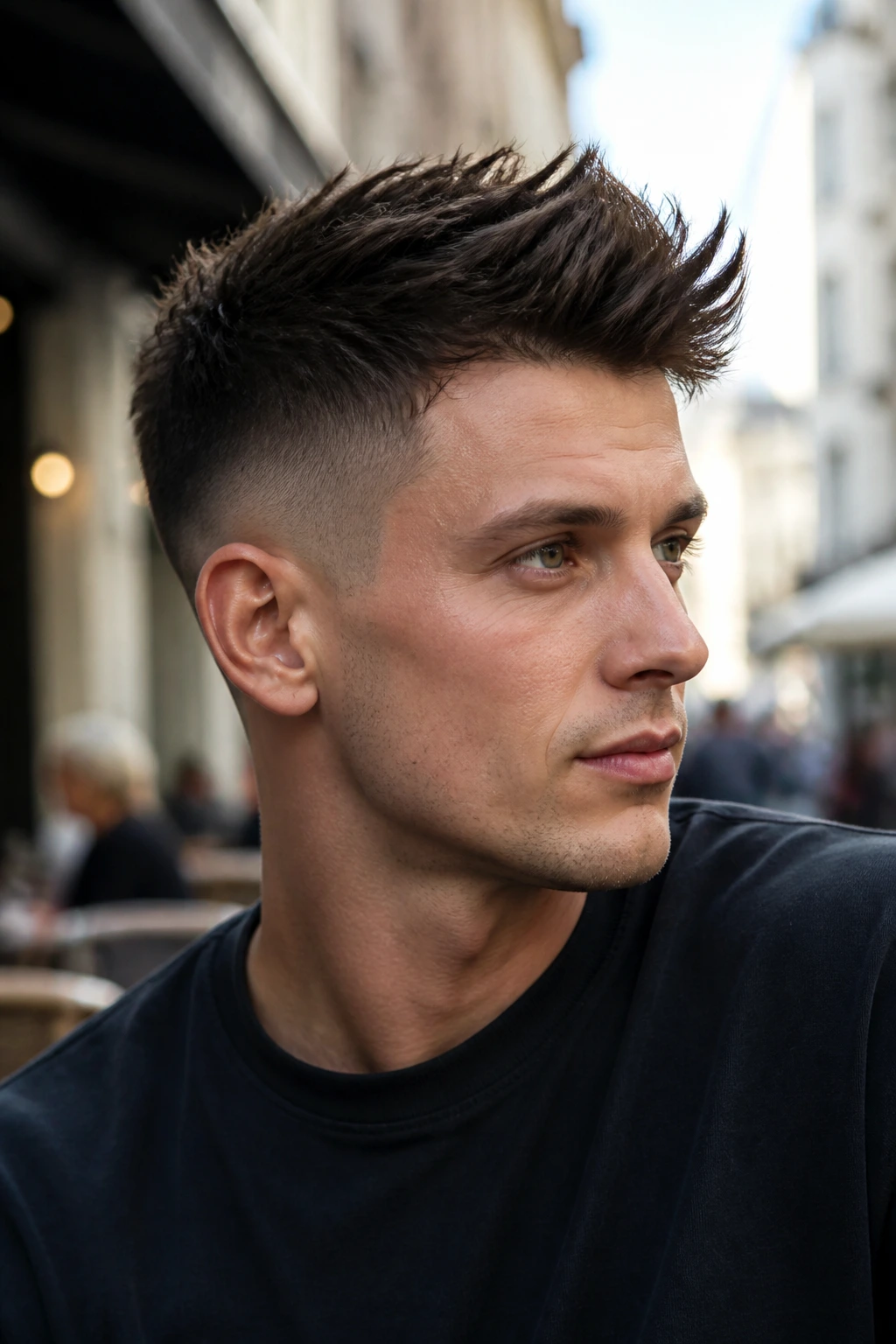
A temple fade is a subtle but effective way to make your haircut feel intentional. It keeps the hair at the corners of the forehead tight, which prevents the look from becoming too round or boxy. The top remains long enough to spike into a messy, textured quiff.
Who It Suits Best
This is a fantastic option for anyone with a triangle-shaped face. By keeping the temple area tight, you avoid adding unnecessary width to the sides of your face, while the spiky top adds the height needed to keep things looking proportional. It is one of the most flattering cuts for thick-haired individuals who worry about their head looking “wide.”
17. The Brushed-Up Spiked Quiff
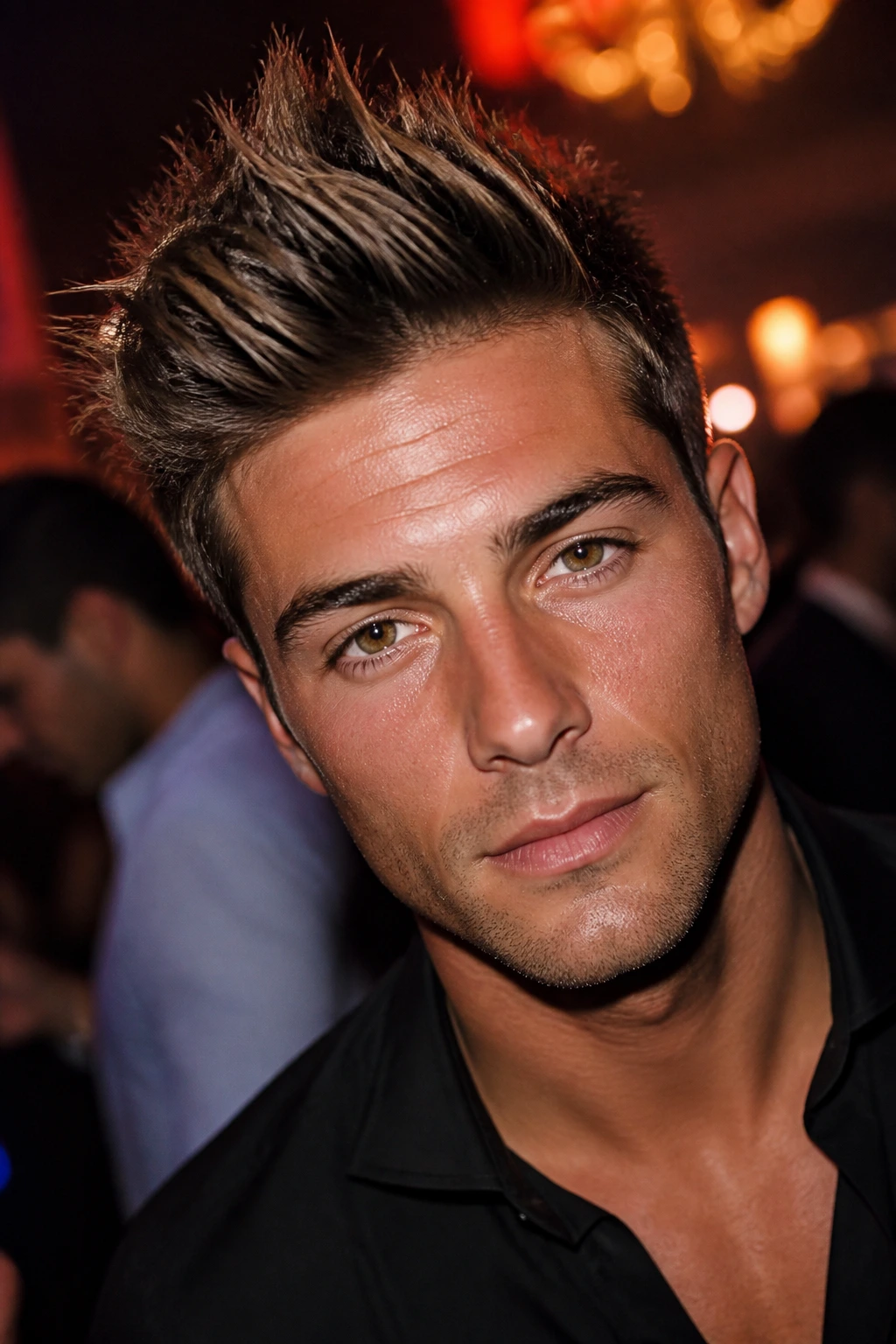
This is essentially a high-volume quiff that’s been broken up with texture. Unlike a traditional quiff that is brushed back smooth, this version uses individual spikes to create a “broken” surface. It’s dynamic and fun, perfect for an evening out or a creative workplace environment.
Managing the Volume
If your hair is very thick, you need to use a round brush to get the hair to stand up initially. Blow-dry the front section up and away from your face. Once it’s dry, apply a high-hold clay to keep those individual spikes standing tall. If you don’t blow-dry first, the weight of your hair will inevitably pull the quiff down within the hour.
18. Spiky Crown With Shaved Sides
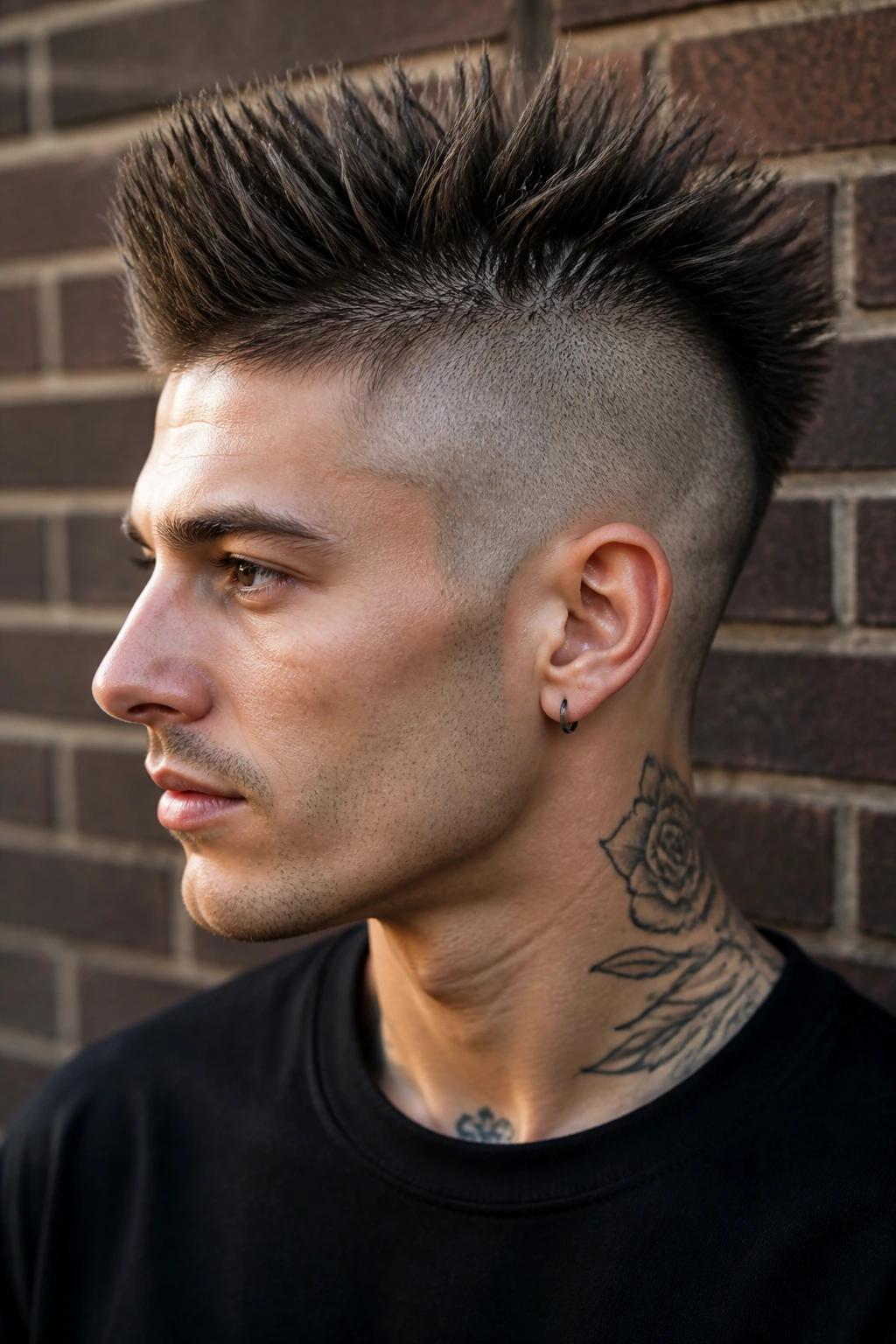
If you have a strong growth pattern on your crown, this cut works with it rather than against it. By leaving the hair on the crown slightly longer and spiking it into a “starburst” pattern, you embrace the natural movement of your hair. The shaved sides provide the contrast needed to make the crown look deliberate.
Dealing With Cowlicks
Many people with thick hair struggle with aggressive cowlicks on the crown. Instead of trying to train your hair to go the opposite way, find a barber who can cut the layers to encourage that natural swirl. When the hair is spiked, the cowlick simply becomes part of the texture rather than a nuisance you have to fight.
19. Textured Spikes With Disconnected Sides
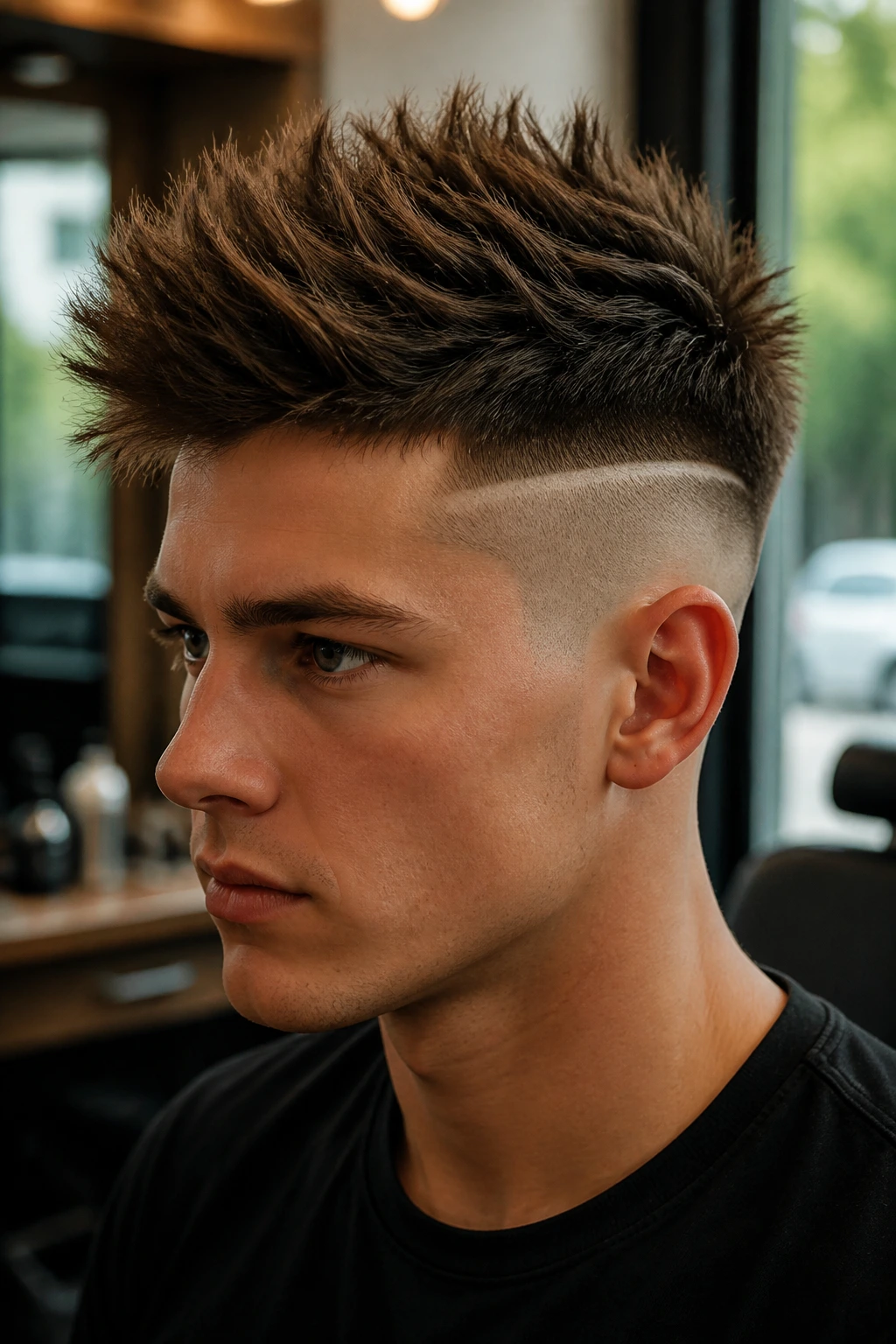
Disconnected sides mean there is no blending between the short sides and the long top—a clean, sharp line separates them. This look is inherently modern and very popular for thick hair because it removes all the weight from the transition zone.
Styling Note
Keep the line of the disconnection sharp. If the hair grows out, the “clean” look disappears, so this style requires frequent touch-ups. It’s not for the low-maintenance crowd, but if you value a sharp, graphic haircut that makes a statement, this is arguably the most impactful cut on the list.
20. Short Spiky Mohawk (The “Faux” Hawk)
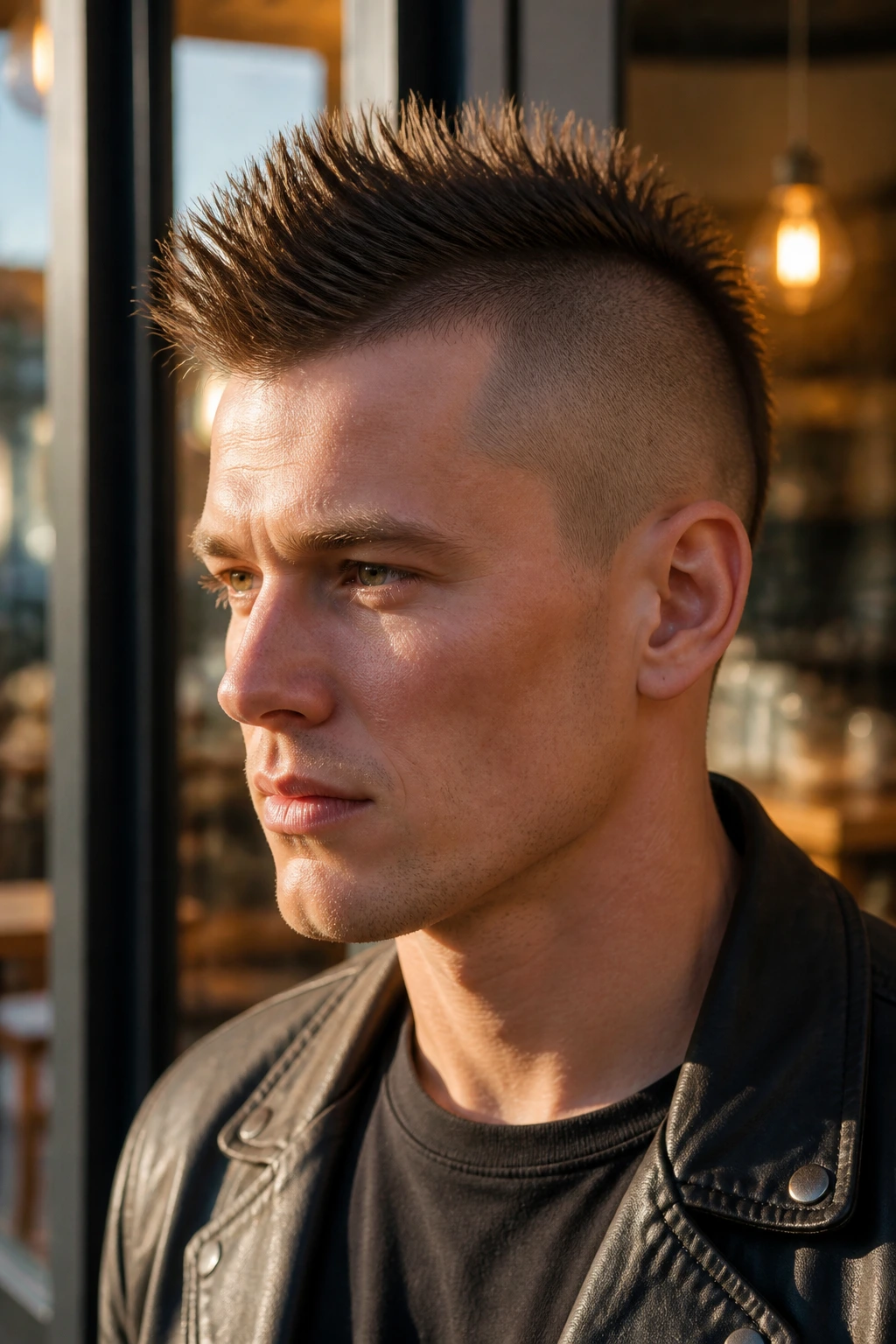
This is a slightly wider, more wearable version of the mohawk. It’s not just a thin strip of hair; it’s a generous section of the crown that is heavily spiked. It offers all the visual appeal of an edgy cut while remaining sophisticated enough for most social situations.
The “Star” Technique
To get the best spikes, avoid clumping your hair. Instead, take very small sections—think a quarter-inch wide—and apply a tiny amount of product to the tips. Twist them slightly as you pull up. By working in small sections, you avoid the “greasy glob” look and instead get that clean, sharp, individual spike appearance.
21. Undercut With “V” Shaped Nape
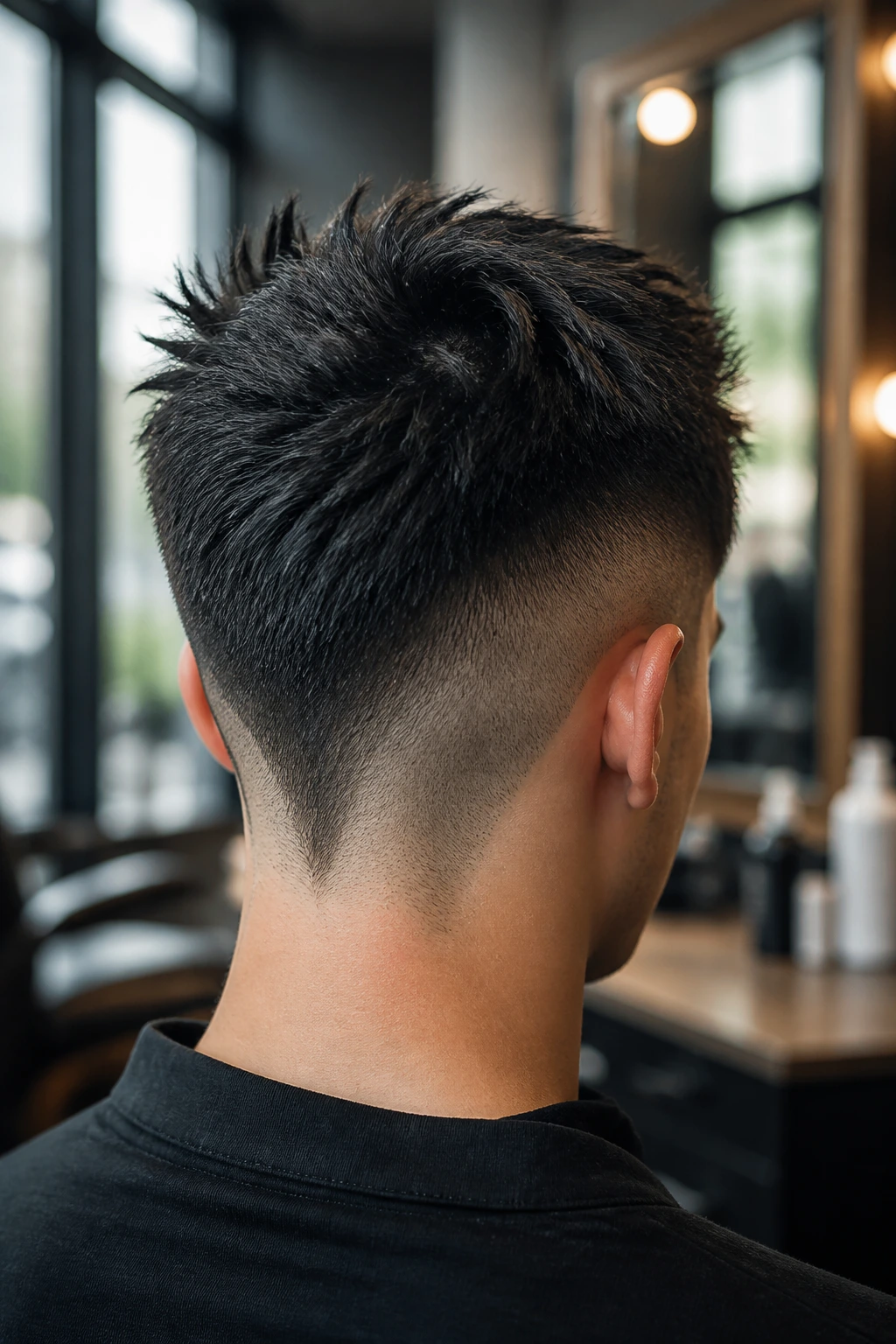
If you want a hidden detail, ask your barber for a V-shape at the nape of the neck. It’s a small, stylized touch that elevates a basic undercut. The hair on top is then styled into spikes that flow forward toward the forehead.
Why It’s Great
It adds an architectural element to your haircut. When you look in the mirror, the front looks cool, but when you walk away, the back looks intentional. It’s these small, personalized details that make a standard short cut feel like a custom style.
22. Messy Spiky Quiff With Tapered Sides
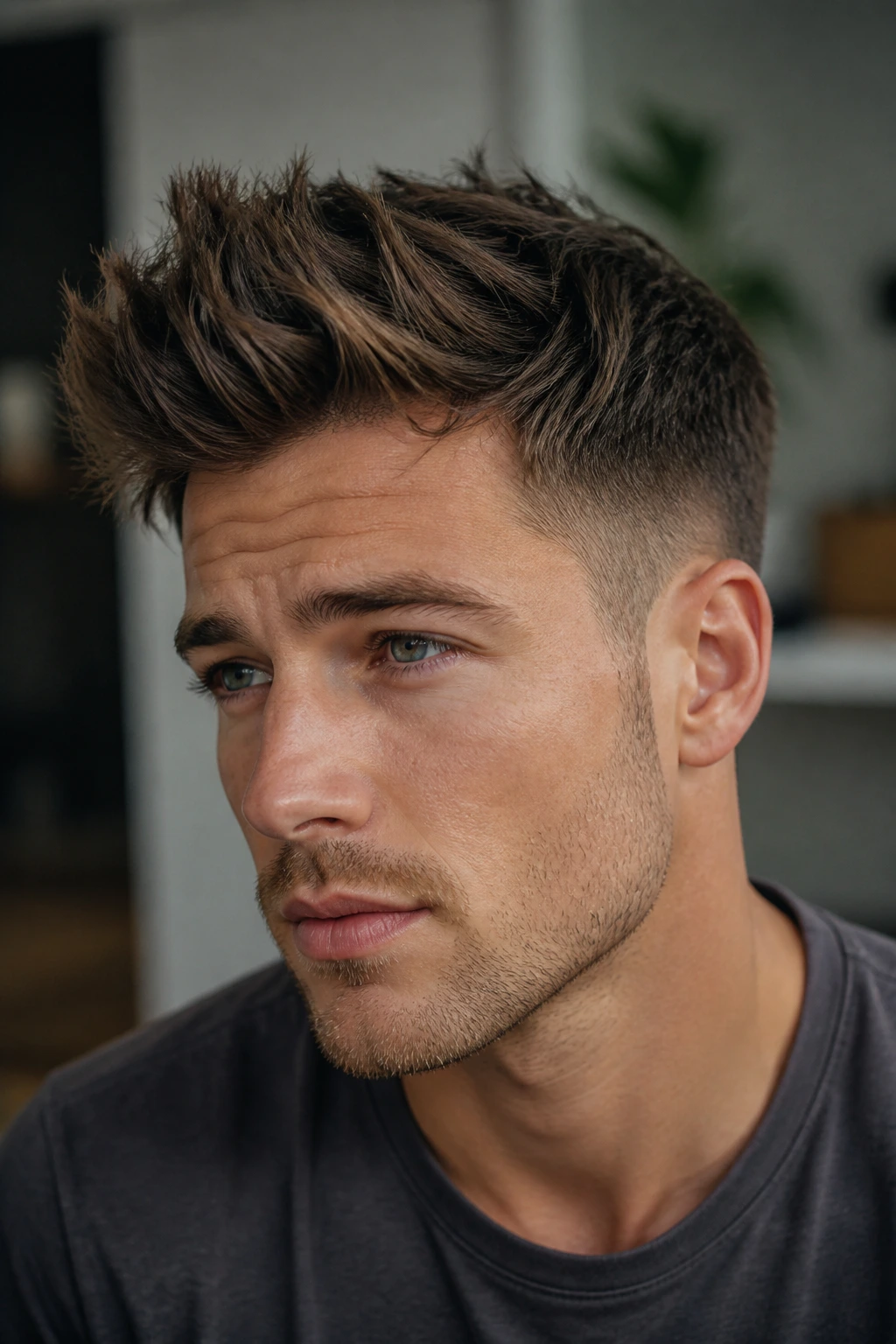
This is the “everyday hero” cut. It’s long enough to play with, short enough to manage, and looks good regardless of the occasion. The tapered sides keep it professional, while the messy, spiky top keeps it youthful and relaxed.
Finishing Touches
Finish the look with a light mist of texture spray rather than heavy hairspray. Texture spray adds a bit of grit, making the spikes look fuller and thicker without any stiffness. It’s the perfect way to conclude your styling routine, giving you that salon-quality finish in your own bathroom.
Final Thoughts
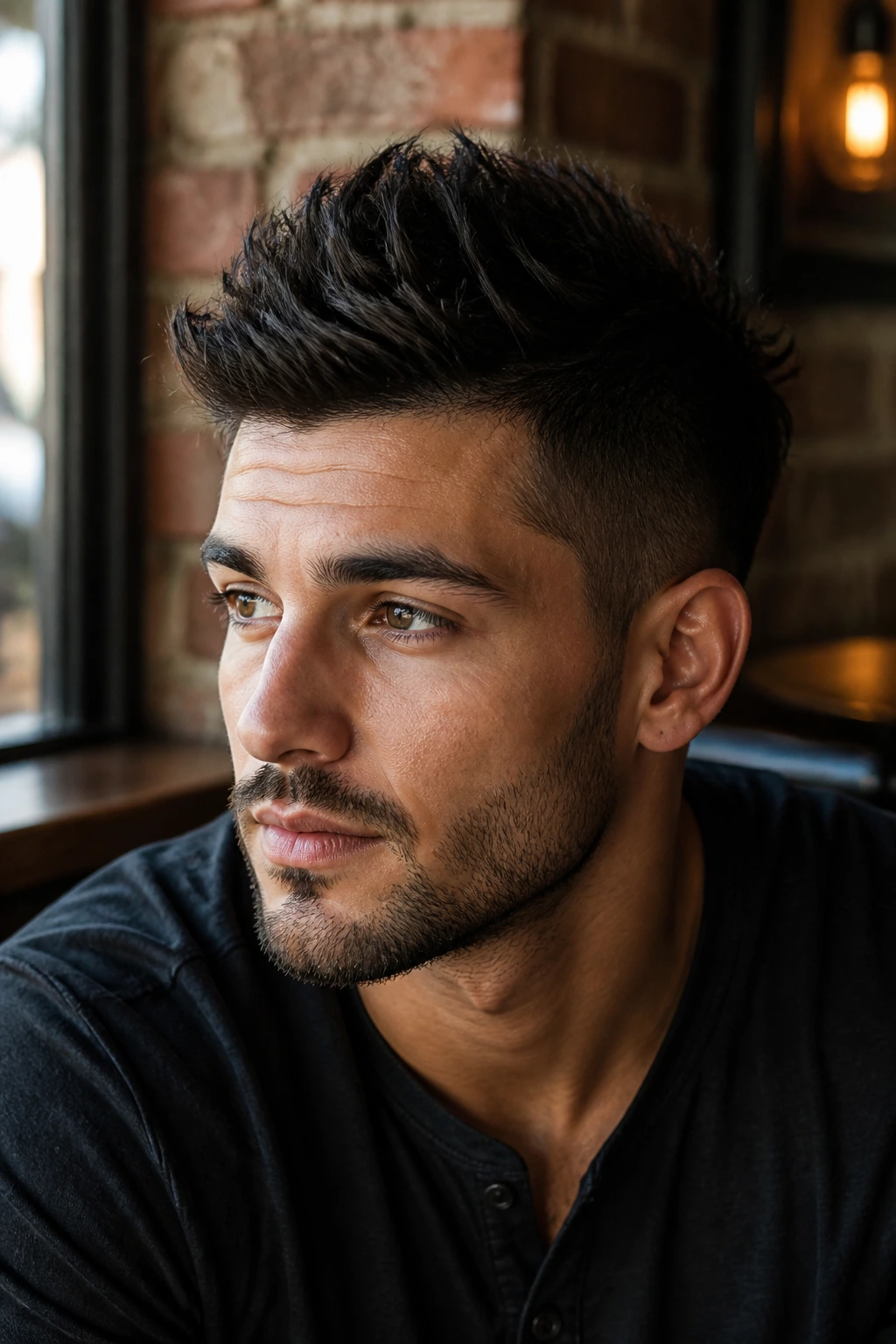
When it comes to thick hair, the secret is in the layering. Never be afraid to tell your barber to “take the weight out”—a phrase that is truly music to the ears of anyone with heavy, dense hair. Whether you go for a tight fade or a choppy, layered crop, remember that the right cut does most of the heavy lifting for you.
Ultimately, these styles are about finding the balance between control and your natural volume. Don’t be afraid to experiment with different products until you find the texture that feels most like “you.” Thick hair takes a bit of work to master, but once you find that perfect spiky cut, your morning routine will change for the better.