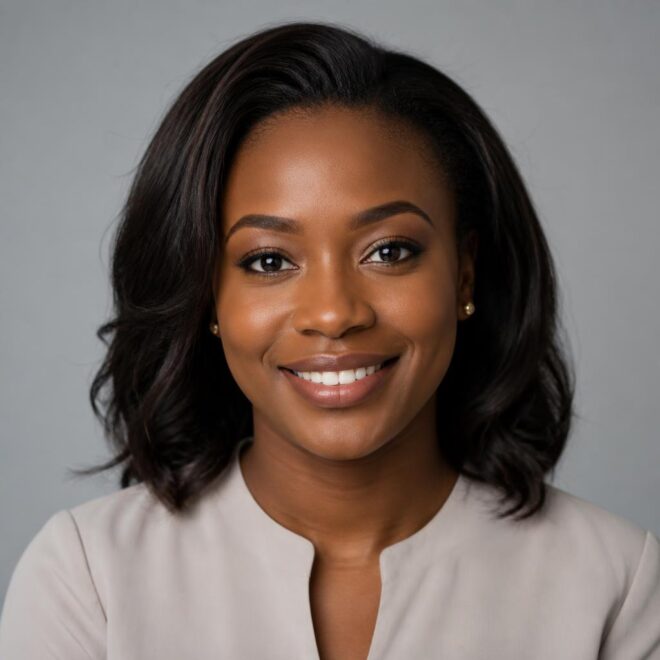


Fine, wispy strands often feel like a curse when you are staring into the mirror, wondering why your hair lacks the volume you see in magazines. You might have tried heavy mousses, backcombing until your scalp hurts, or even expensive thickening sprays, only to find your hair falling flat by noon. The secret isn’t just in the product; it is in the geometry of the cut itself. When you remove weight from the ends and build it up at the nape, you change the entire physics of your silhouette. This is where the stacked bob earns its reputation as a structural marvel for fine hair textures.
Moving beyond simple layers, a stacked bob creates a graduated, angled look that forces hair to lift rather than drag. By cutting the back into shorter, graduated sections, you build a “shelf” of hair that pushes the layers above it outward, creating a rounded, full shape that lasts from morning until night. It is a precise architecture that relies on clean lines and consistent maintenance, but for anyone struggling with hair that lacks “oomph,” the transformation is worth every bit of the effort. Let’s look at how these cuts translate into real-world styling for thin hair.
1. The Classic Precision Stacked Bob
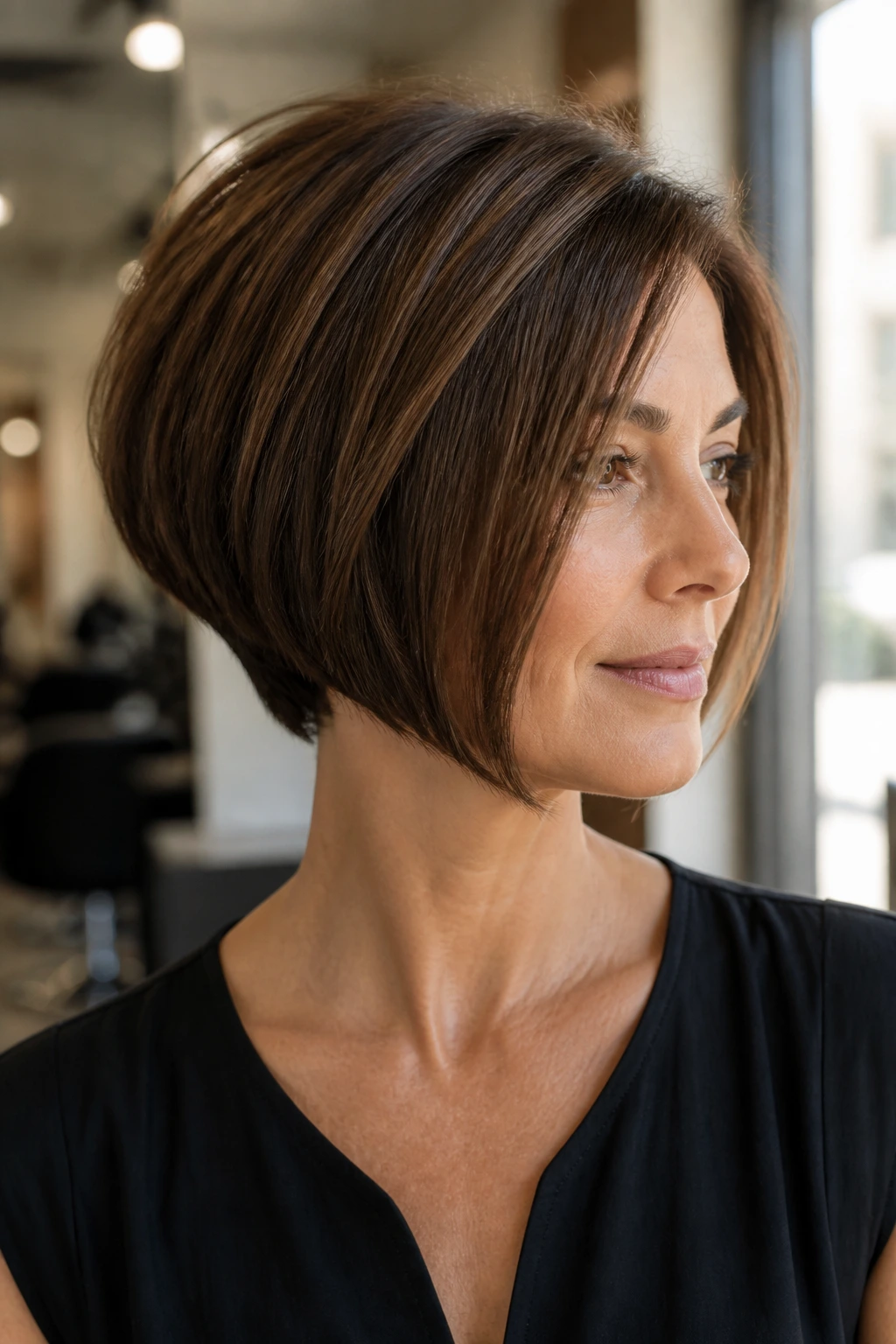
This is the gold standard for anyone who wants a sophisticated, clean silhouette without excessive styling time. By keeping the nape extremely short and layered, you force the hair to sit upward and outward, providing an instant illusion of density where there was previously a gap.
Why This Works for Fine Strands
The key here is the blunt perimeter at the jawline. When the ends are cut sharply rather than razored or textured to death, they look thicker. You avoid the “see-through” look that often happens with thin hair when the ends are too wispy.
Styling Tips for Maximum Impact
- Use a volumizing mousse on damp hair, focusing specifically on the roots at the crown.
- Blow-dry the back section using a small round brush to encourage that signature “stack.”
- Avoid heavy oils or waxes; a lightweight texturizing spray will keep the hair feeling airy.
Pro tip: Keep the length at the front just grazing your chin to ensure the weight doesn’t pull the top volume flat.
2. Inverted Stacked Bob with Soft Layers
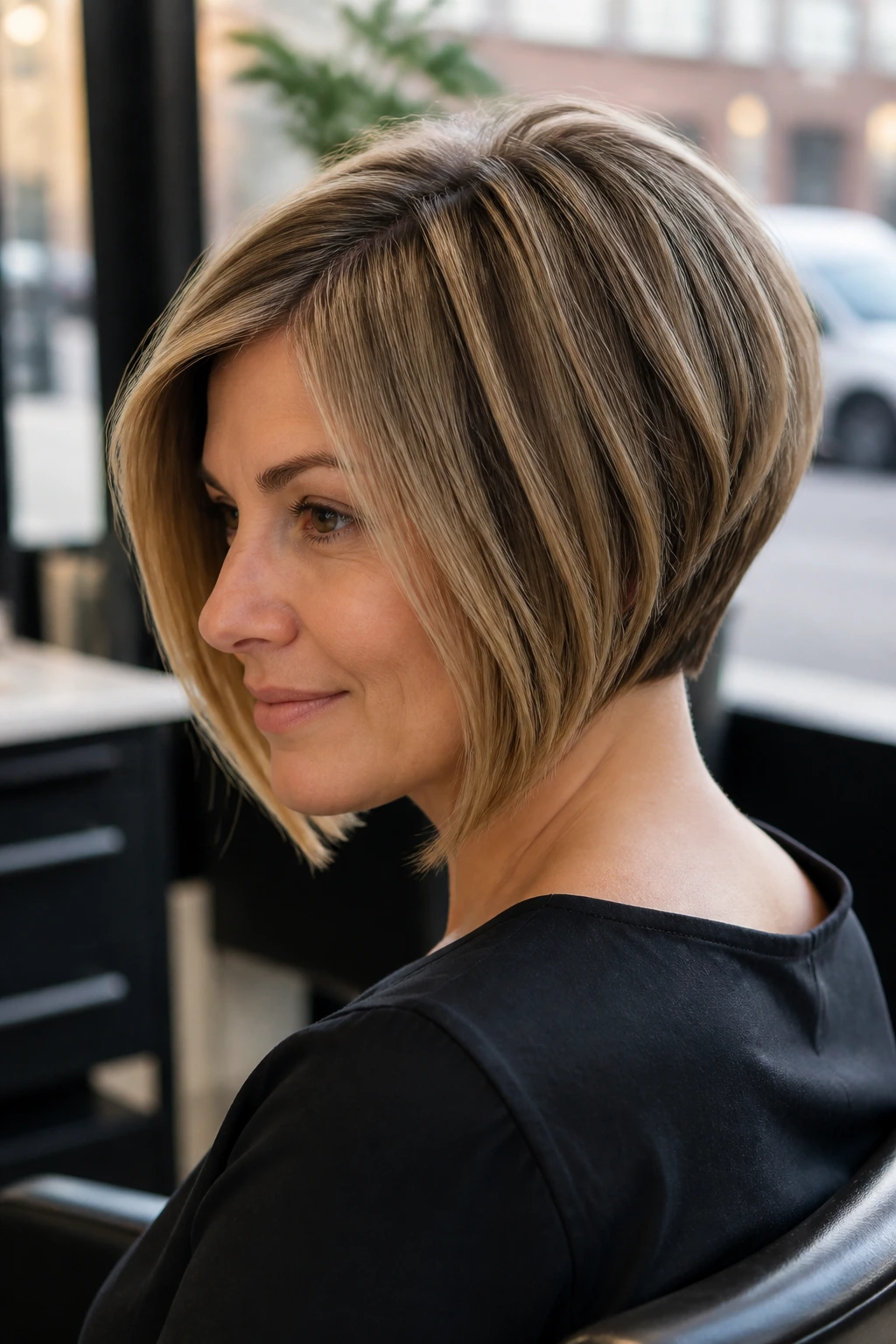
An inverted bob takes the concept of the stack and tilts it, making the front section longer and the back significantly shorter. For fine hair, adding soft, hidden layers inside the stack prevents it from looking too rigid or “helmet-like,” which can happen if the hair is too uniform.
Balancing the Length
When you have fine hair, you might be tempted to keep it long to hold onto what you have. This style is the perfect bridge, allowing you to keep some framing pieces around the face while the back does the heavy lifting for volume.
Maintaining the Shape
- Visit your stylist every 6 weeks; because the back is cut so precisely, it grows out into an uneven mess quickly if left too long.
- Ask for “invisible layers” at the crown to add internal support.
3. The Textured Angled Bob
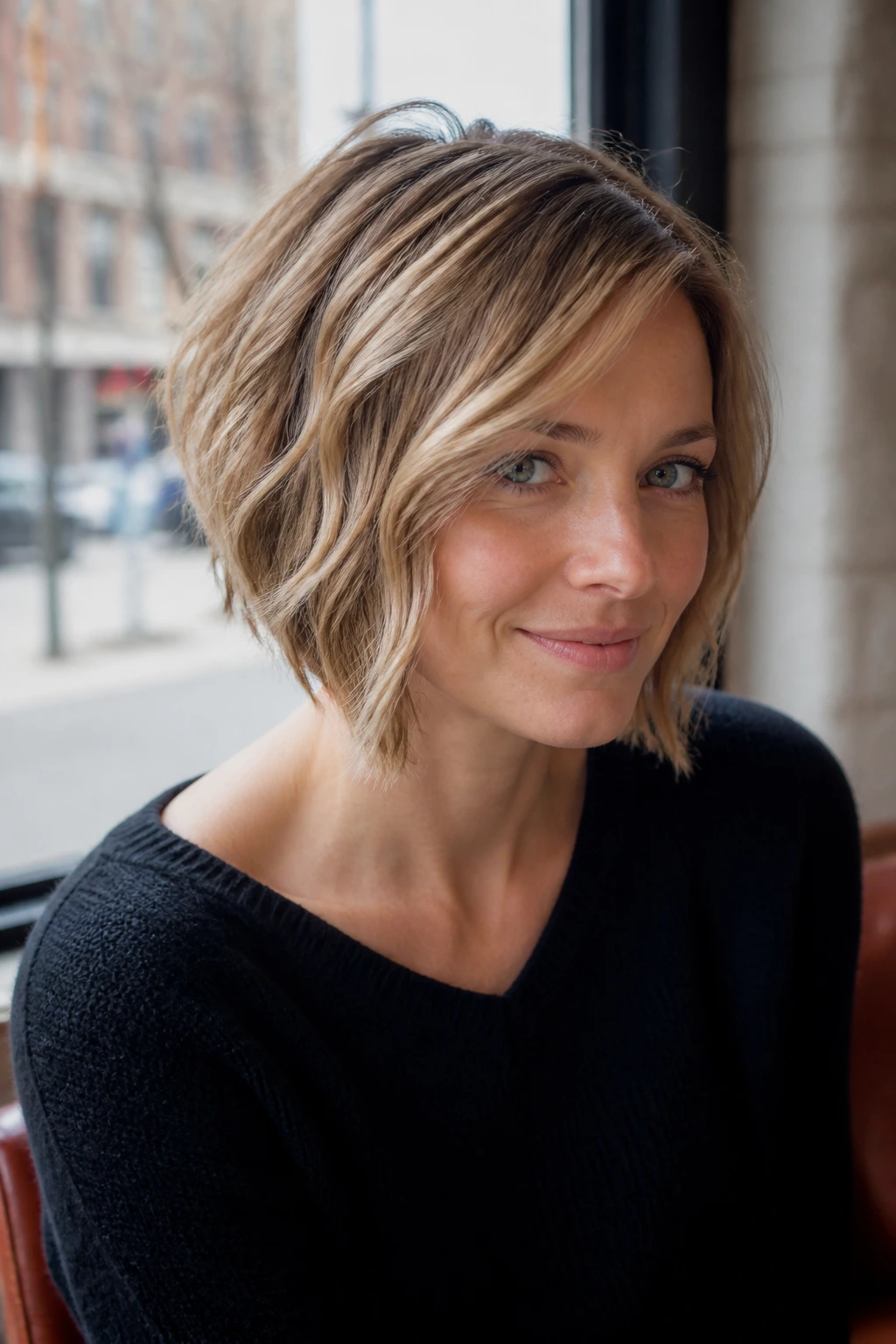
If your hair is thin but you have a bit of a wave, this cut is your best friend. Instead of relying on a sharp, blunt finish, the ends are lightly point-cut to encourage movement and separation.
Adding Visual Weight
Separation is a trick of the eye. When individual strands are clumped together by a light pomade or texture cream, they appear as a thicker “piece.” This style mimics that, making the hair look intentionally styled rather than just flat.
How to Style
- Apply a sea salt spray or texturizing lotion.
- Scrunch the hair as it air-dries, or use a diffuser for extra lift.
- Finish with a dry shampoo at the roots to maintain lift throughout the day.
4. Short Graduated Bob with Deep Nape Undercut
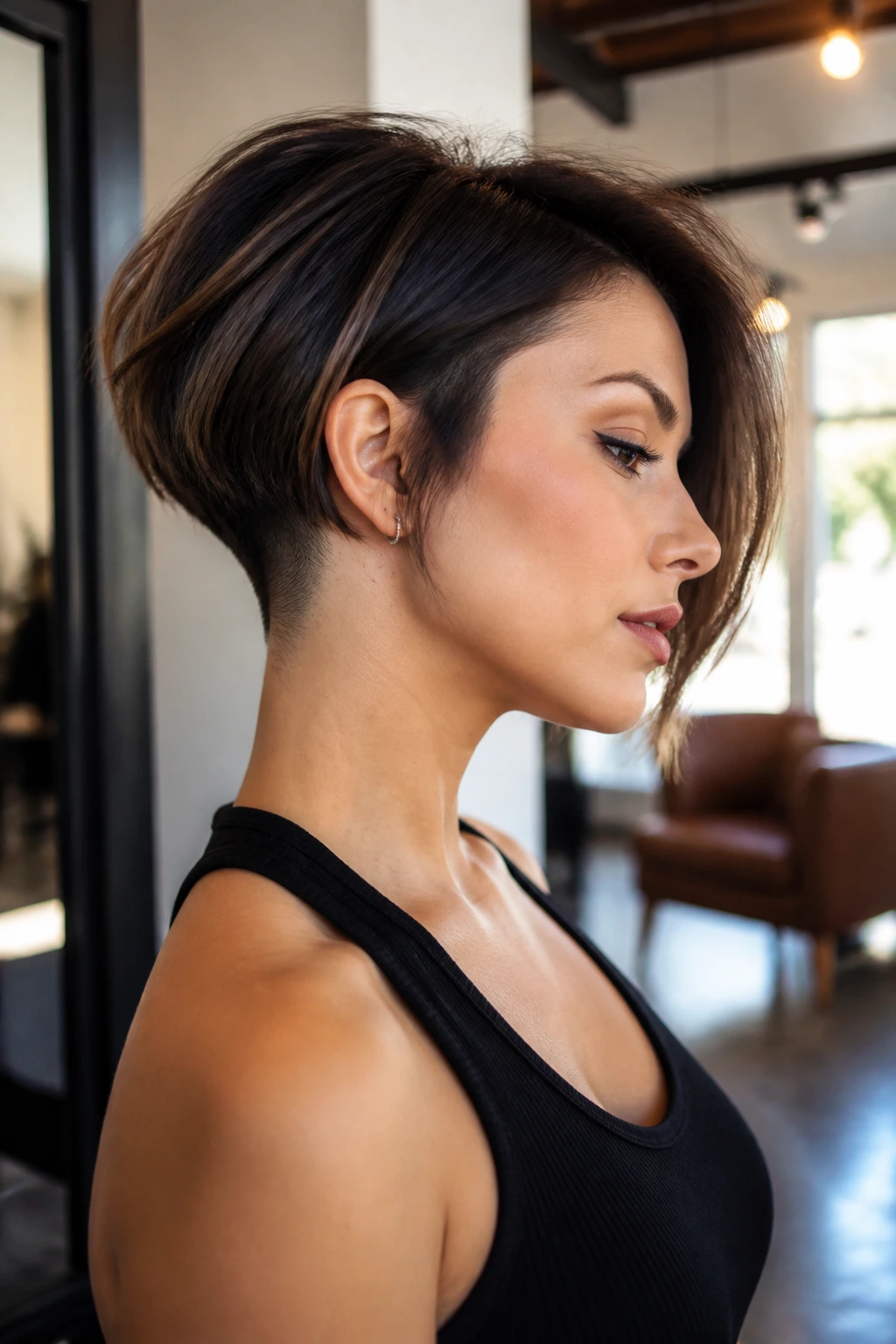
For those who want the most dramatic lift possible, an undercut at the very nape of the neck is a game-changer. By shaving or tapering the bottom half-inch of hair, you eliminate the section that usually curls under or goes limp, leaving only the “stacked” part visible.
The Science of the Lift
This removes the “weight” that drags the back of your hair down. Without those lower, thinner hairs to compete with, the hair directly above them has nothing to hold it back from puffing up into a rounded shape.
Is It Right for You?
- This style requires frequent neck trims.
- It is incredibly low maintenance regarding blow-drying, as there is less hair to manage.
5. Blunt-Cut Stacked Bob with Face-Framing
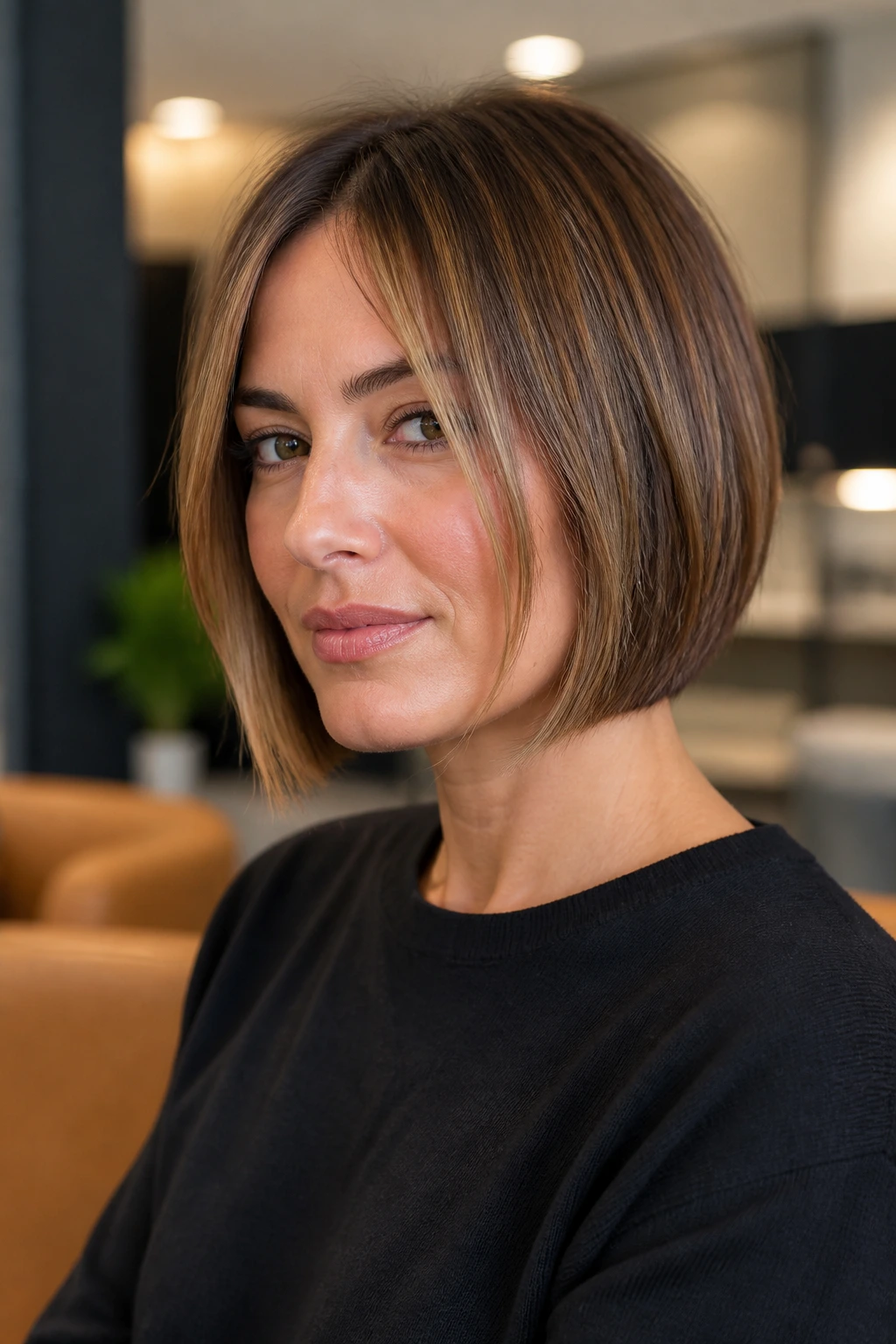
Sometimes the simplest approach is the most effective. A blunt-cut bob that is stacked only at the very center of the back keeps the majority of your hair length uniform, which maximizes the appearance of thickness.
Why Blunt Wins
When you layer thin hair too aggressively, you end up with wispy bits that make it look thinner than it actually is. By keeping the majority of the hair at one length, you maintain a dense, healthy appearance.
Who Should Choose This
- People with very straight, fine hair who struggle with hair looking “stringy” when layered.
- Those who want a professional, polished look for the office.
6. The Choppy Layered Stack
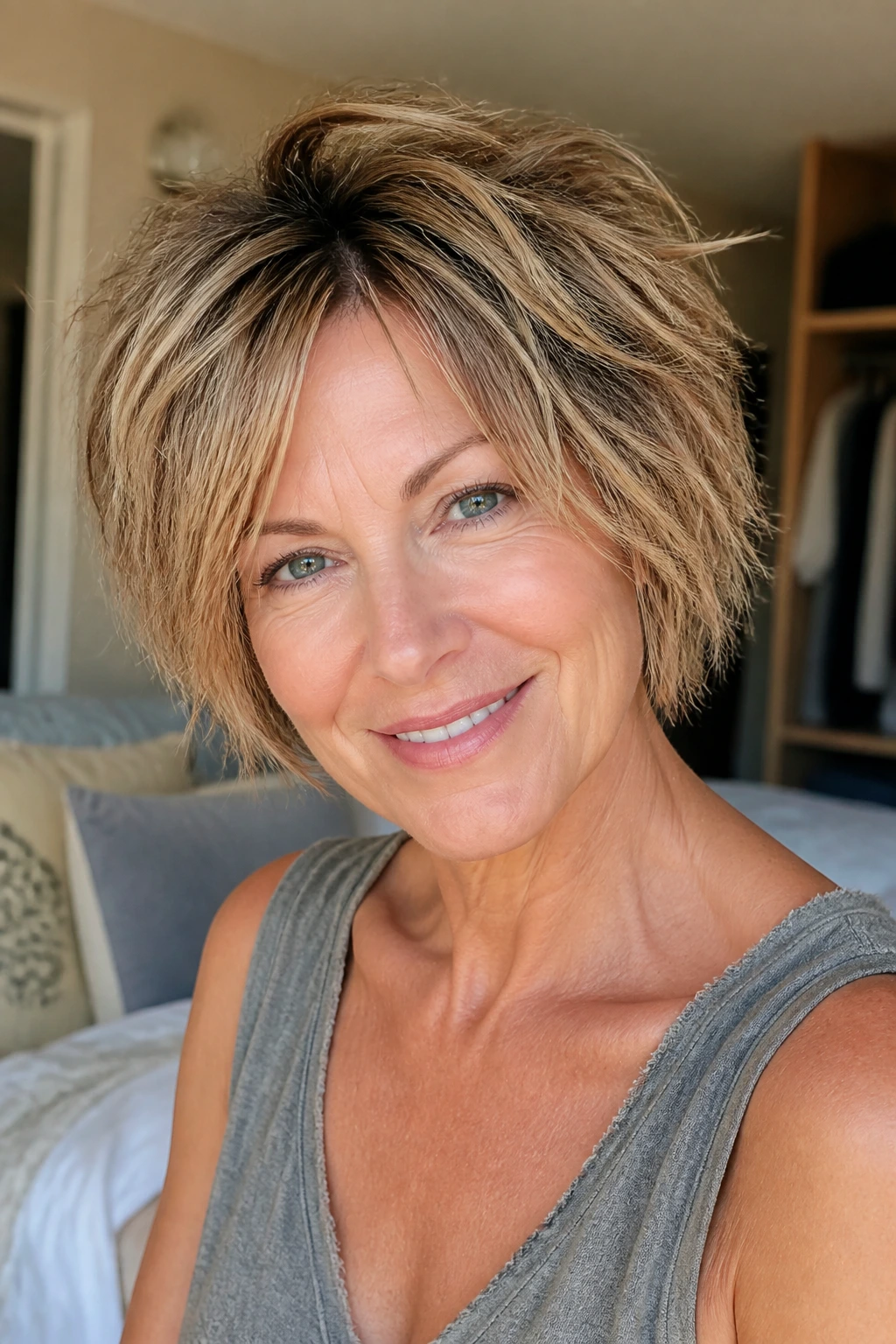
If you love a messy, bedhead look, the choppy stack incorporates shorter, piecey layers throughout the entire head. It’s a bit more “undone” than the classic precision bob, but it excels at hiding thinning spots at the crown.
Strategic Choppiness
By cutting layers at different lengths, you create a “staircase” effect that adds internal volume. This style relies heavily on styling products—without a good grit paste, it might just look messy rather than stylish.
Pro-Level Advice
- Use a styling powder at the roots for instant, matte-finish volume.
- Run your fingers through your hair with a tiny amount of pomade to define the choppy edges.
7. Asymmetrical Stacked Bob
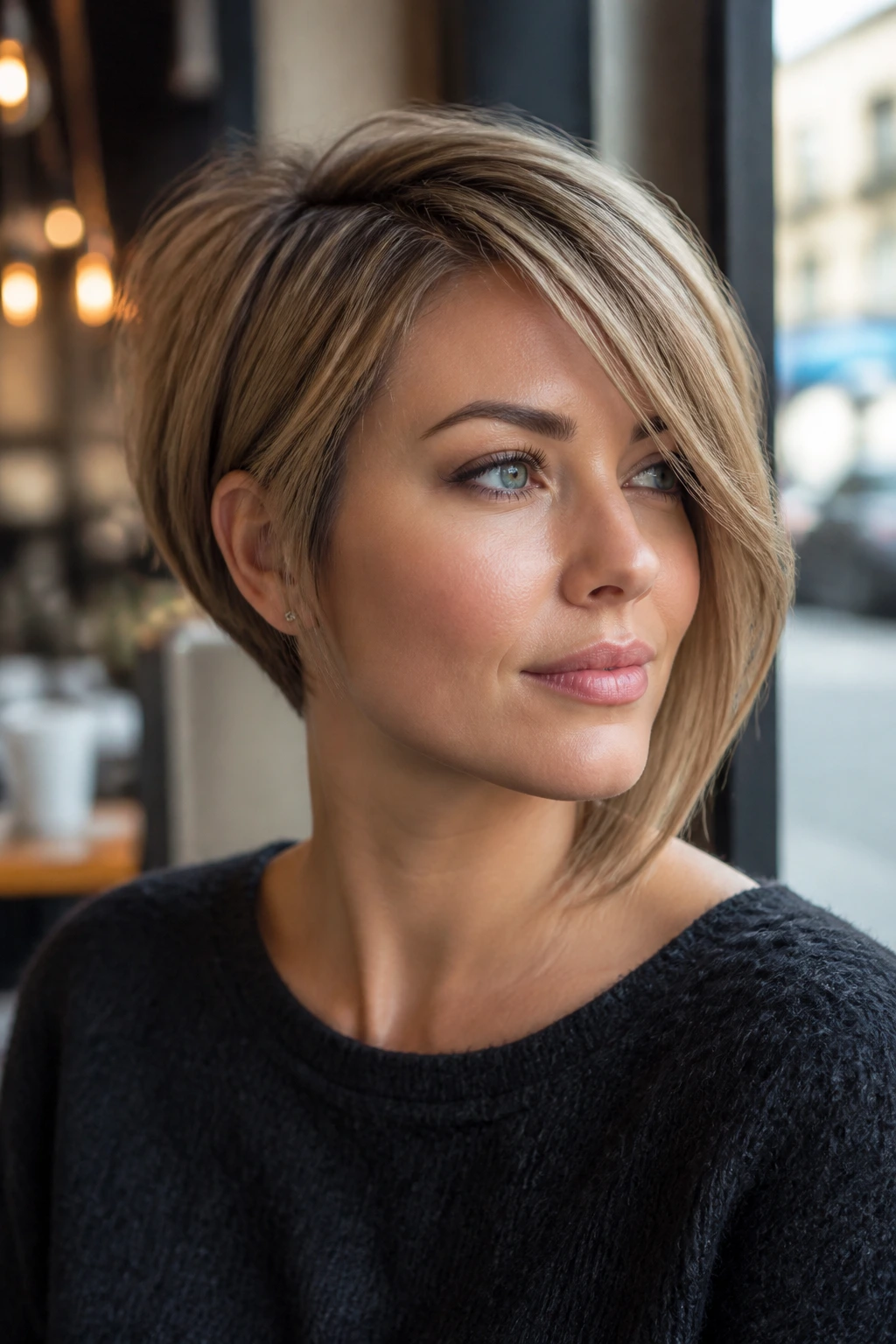
An asymmetrical cut forces the eye to focus on the shape rather than the density of the hair. One side is kept shorter, while the other maintains a bit more length near the jaw.
Creating the Illusion
The dramatic angle of this cut automatically draws the eye away from the crown, which is often where thin hair is most visible. It creates a bold, fashion-forward statement that makes thin hair look like a conscious choice rather than a struggle.
Styling Considerations
- Blow-dry the longer side toward your face.
- Use a flat iron to smooth the edges for a high-gloss finish.
8. Rounded Stacked Bob with Blunt Bangs
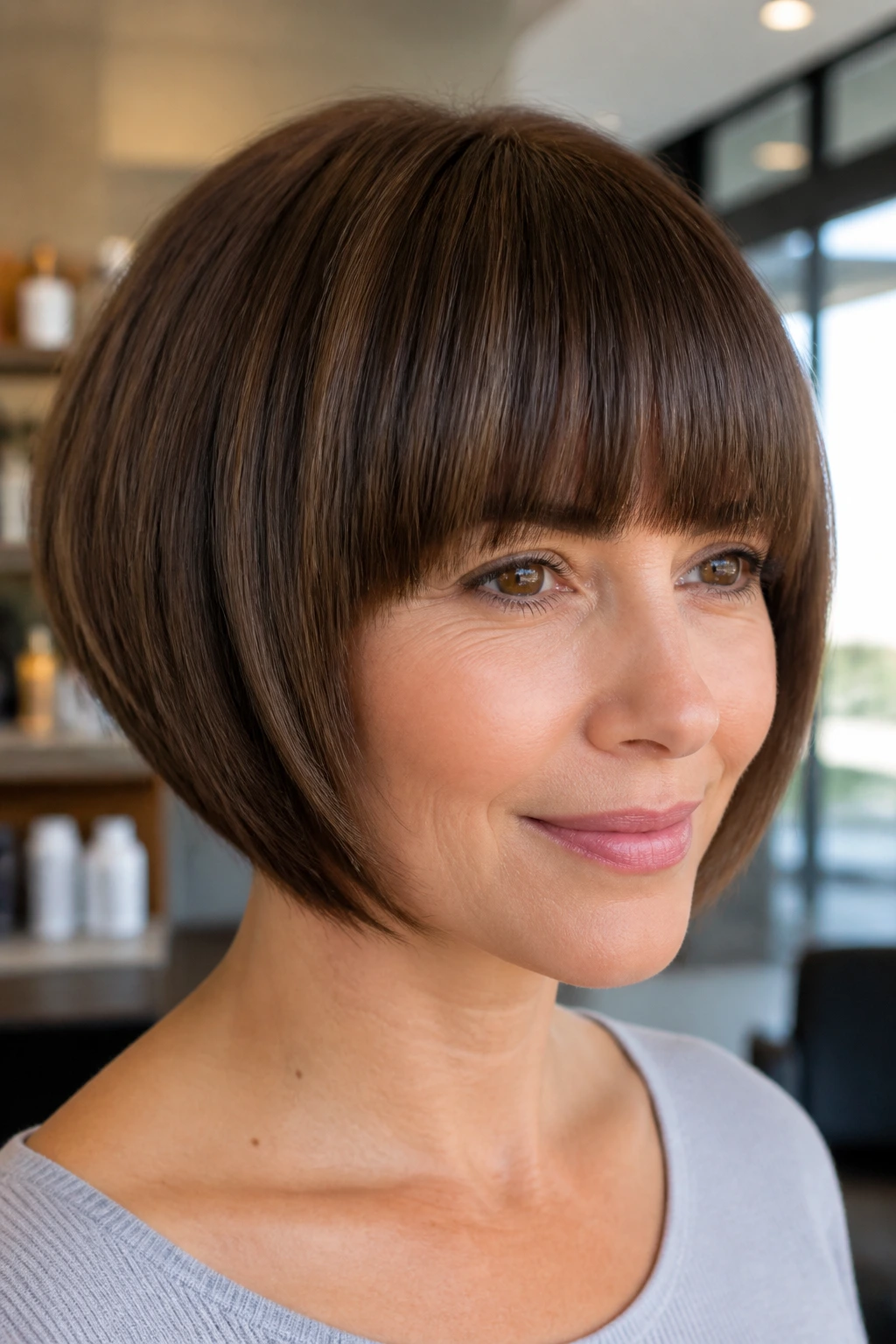
For people with fine hair, bangs can be a risky move. However, if you have a high forehead or want to shift focus, a blunt, heavy-fringe bob can work well. The thickness of the bangs adds visual volume to the front, balancing the height you gain in the back.
Balancing the Volume
Ensure the bangs are cut from a deeper section of hair, starting further back on the crown, to give them real substance. If you take too little hair for the fringe, it will look sparse.
Maintenance Requirements
- Bangs need a trim every 3 weeks to keep them out of your eyes.
- Keep a round brush on hand to ensure the fringe has that gentle, voluminous curve.
9. Soft, Wispy-Ended Stacked Bob
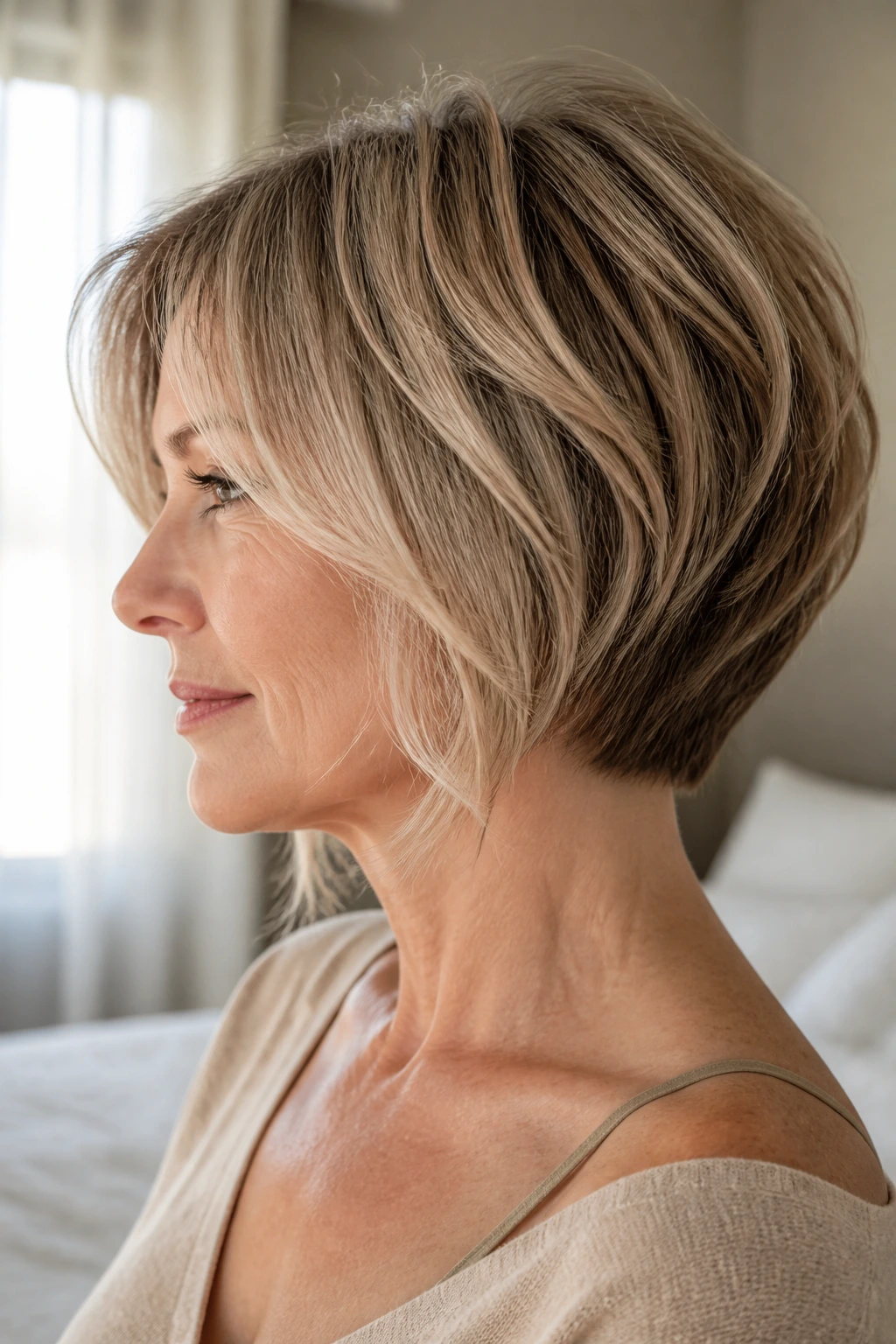
Not all thin hair needs a blunt edge. Sometimes, you want a softer, more romantic feel. By keeping the stack at the back but leaving the front ends slightly textured, you get a movement-heavy look that feels light and airy.
Softening the Perimeter
Use point-cutting shears to create a softer edge. This prevents the “heavy” look that blunt bobs can sometimes have, which might highlight the thinness of your hair texture if it is extremely fine.
Styling for Softness
- A light-hold mousse is essential here.
- Avoid any product that makes the hair stiff; you want this to move when you turn your head.
10. The Pixie-Bob Hybrid
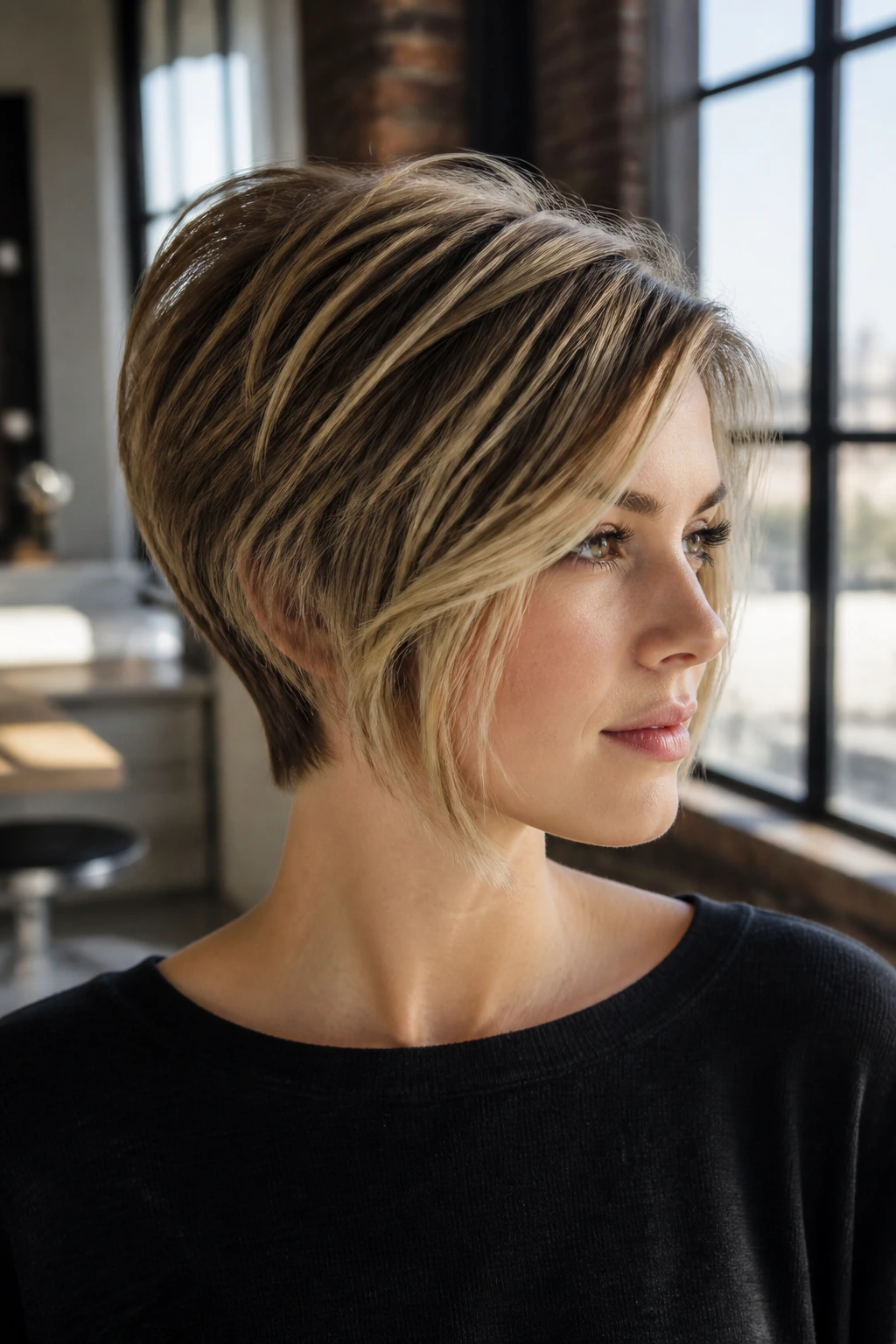
If you are tired of fighting your hair entirely, this is the shortest version of a stacked bob. It’s essentially a pixie cut in the back with a little more length left around the ears and chin.
Extreme Volume
Because the hair is so short, gravity loses its battle. Your hair will naturally stand up and out, giving you the maximum possible volume a cut can provide for thin hair.
The Daily Routine
- This style requires almost no drying time.
- A little bit of wax or texturizing paste is all you need to define the layers.
11. Retro-Inspired Rounded Bob
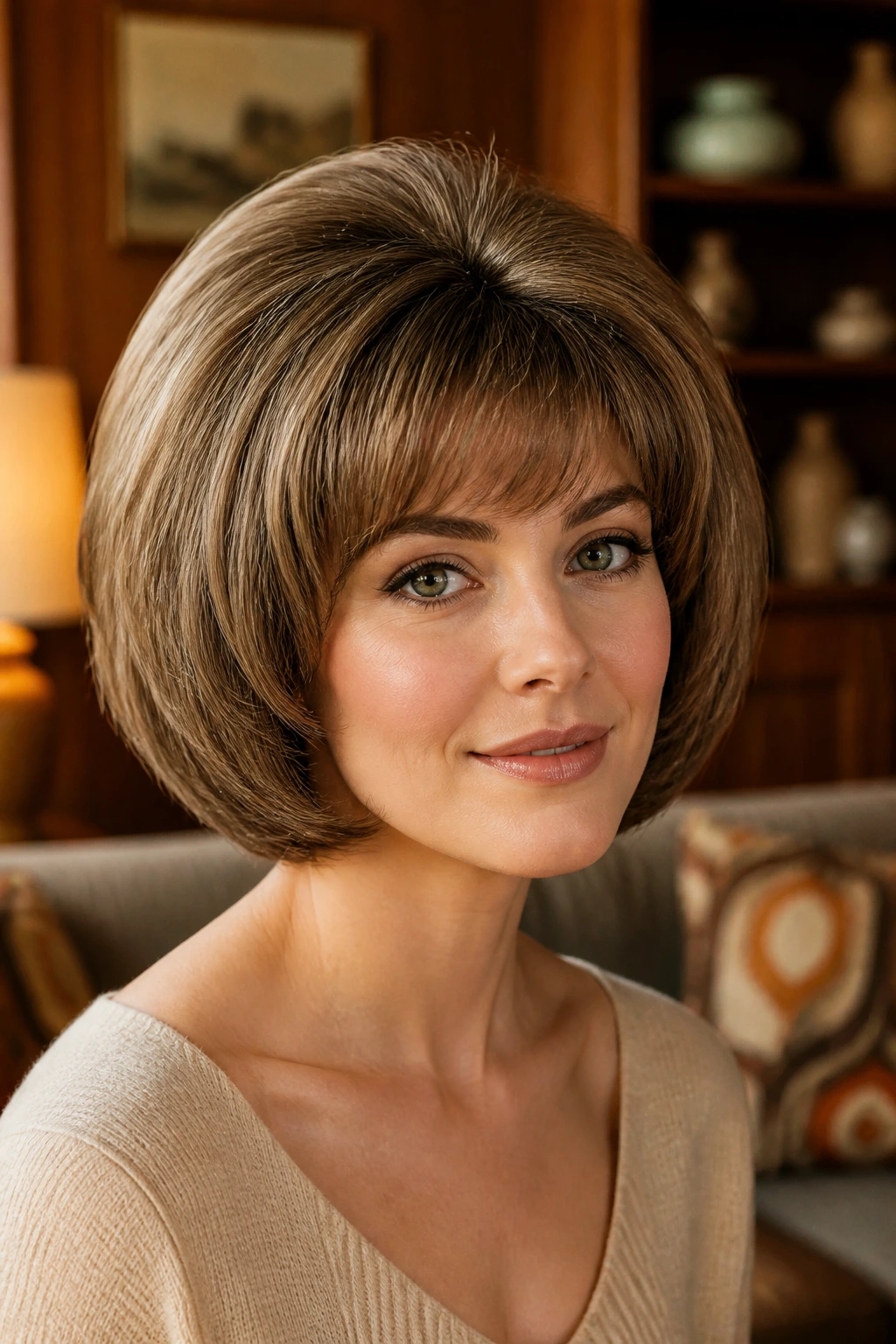
Drawing inspiration from mid-century styles, this cut features a very high, rounded crown and a tucked-under end. It is classic, chic, and built specifically to maximize the circumference of your head shape.
Mastering the Shape
The trick is to use a large-barrel round brush while blow-drying, pulling the hair straight up and then curving it inward at the bottom. This creates a “bubble” effect that looks incredibly thick.
Finishing Touches
- A flexible-hold hairspray is vital to keep the shape from drooping in humidity.
- Avoid heavy conditioners, which will weigh down the crown volume.
12. Tapered Back Stack with Side-Swept Fringe
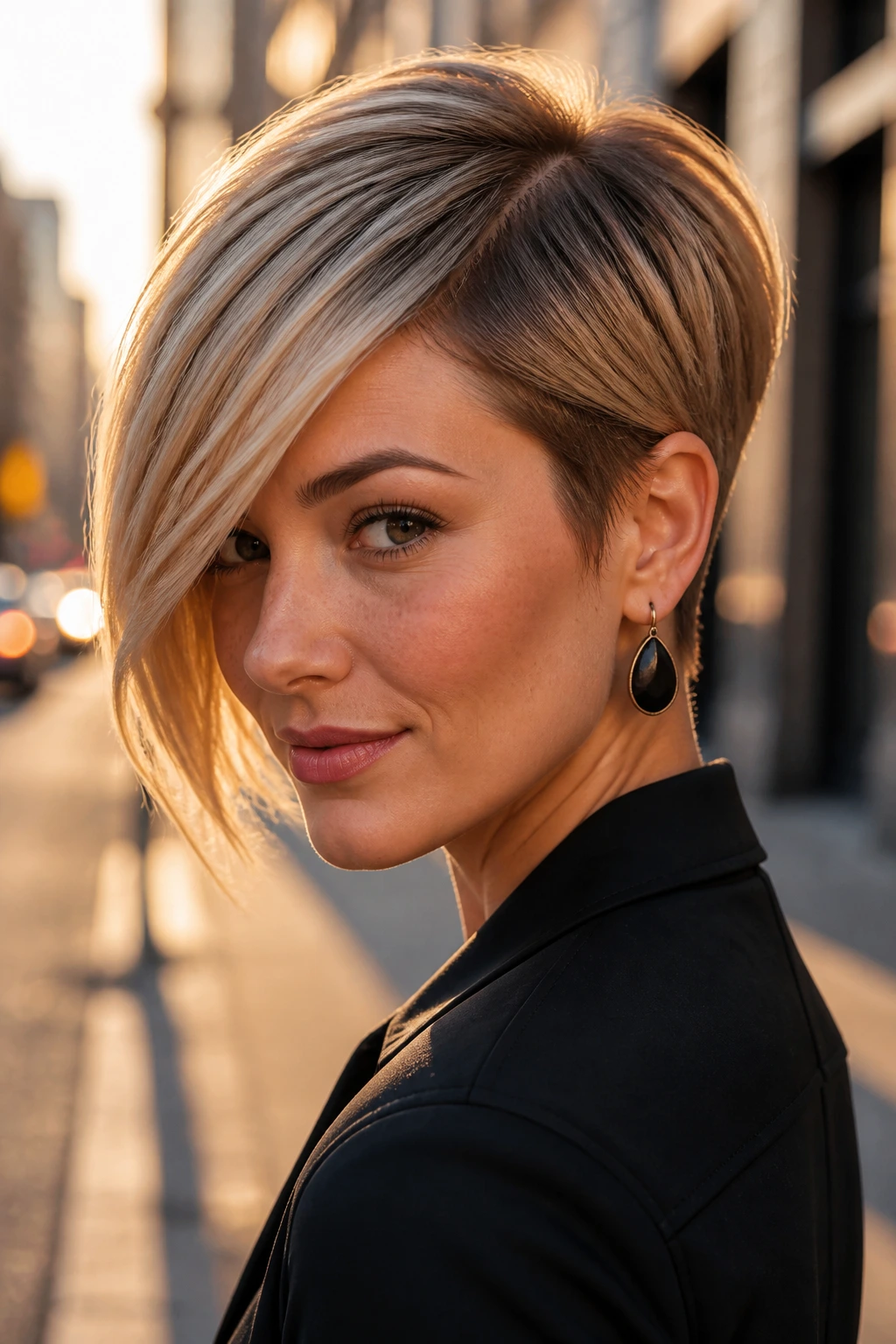
This style emphasizes the contrast between a very tight, tapered back and a long, sweeping front. The side-swept fringe provides a sense of width, which is helpful if you have a narrow face and struggle with hair looking “stuck” to your head.
The Power of Contrast
By keeping the back almost shaved or very tight and the front fluid, you create a “silhouette” that feels dynamic. It isn’t just a static shape; it looks like it’s in motion.
Why It Works for Thinness
- It breaks up the monotony of the hair, making it impossible to tell exactly how thin or thick the hair is because the focus is on the contrast.
13. Sleek, Straight-Edge Stack
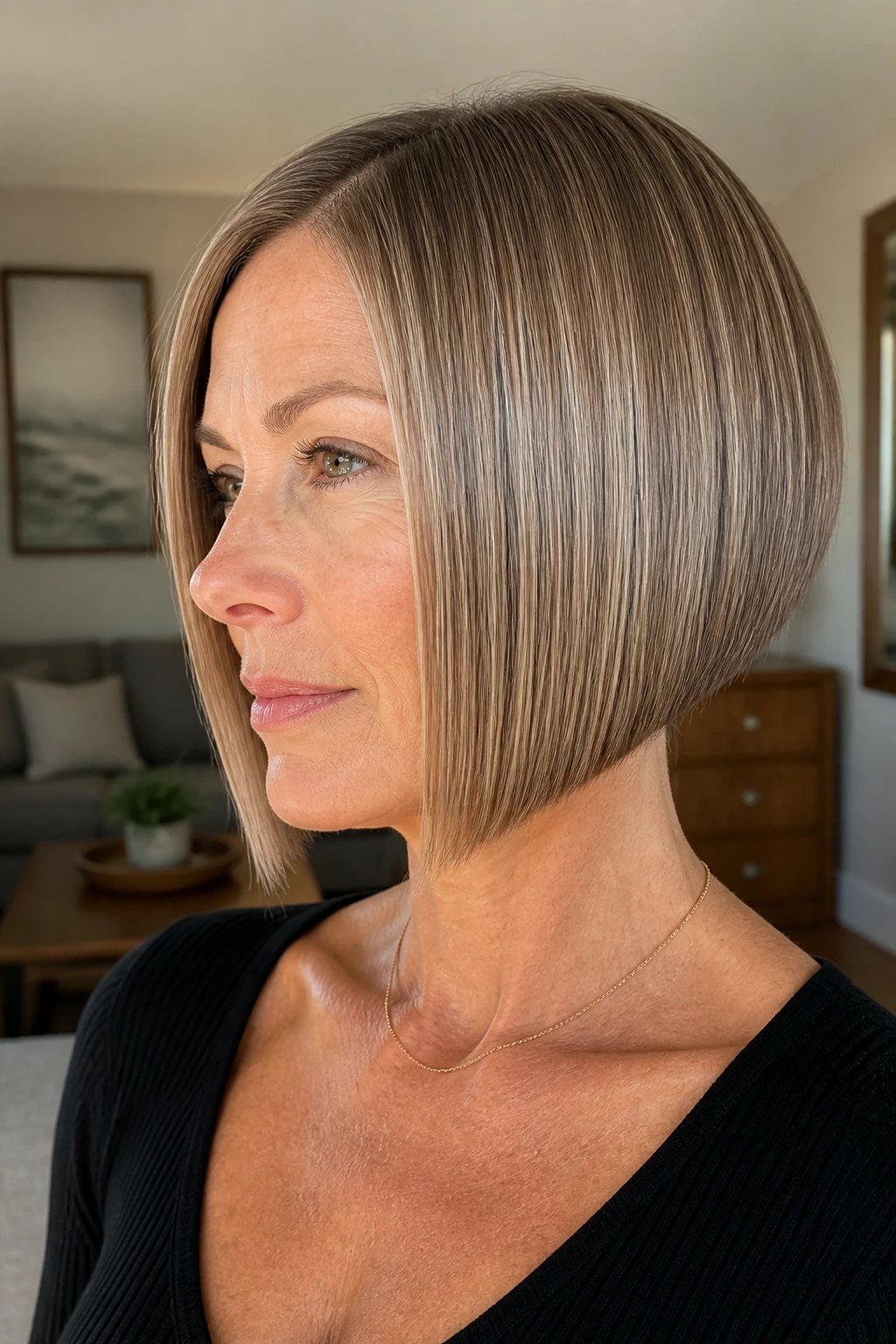
For those with pin-straight, fine hair, leaning into the sleekness is often more effective than trying to add faux waves. A sharp, precision-cut stack that looks almost metallic is incredibly elegant.
Achieving the “Sleek” Look
Use a smoothing cream while damp, and then use a flat iron with a heat-protectant spray to get that glass-like finish. When hair is smooth and aligned, it reflects light better, which makes it look healthier and denser.
Essential Gear
- A ceramic-plate flat iron.
- A high-quality shine spray (use sparingly!).
14. The Layered Shag-Bob Mix
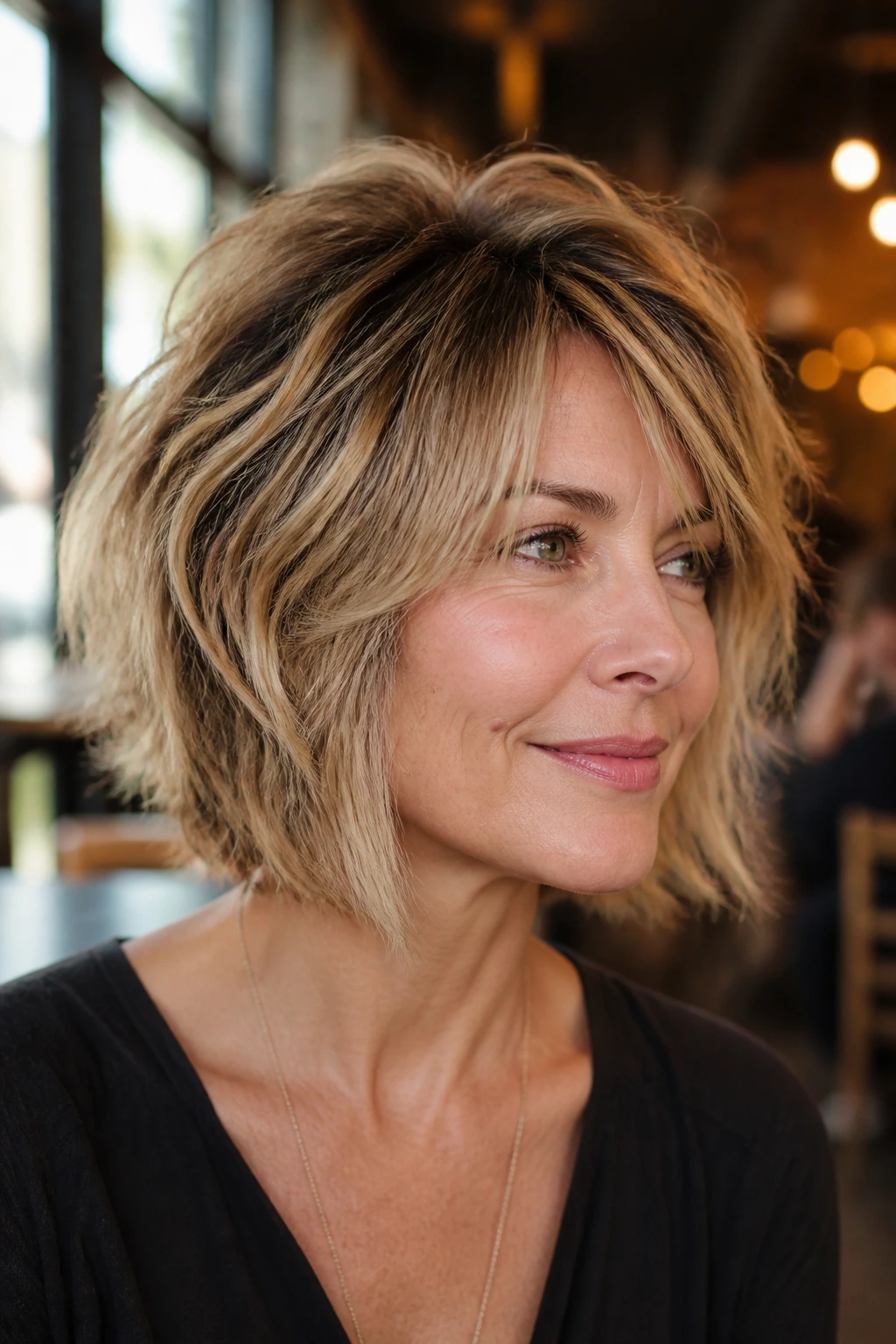
If you love the “shaggy” aesthetic but don’t want a long, heavy cut, the shag-bob is a hybrid that uses plenty of internal layers to fluff the hair up. It’s perfect for thin hair that is prone to flyaways.
Creating Volume from Within
The layers are shorter than the overall length, creating internal weightlessness. This allows you to “scrunch” volume into the hair using only your hands and a little bit of root-lifting product.
The “Bedhead” Philosophy
- Do not over-style.
- The beauty of this cut is its imperfections, so embrace the mess.
15. The “Lob” Stack (Longer Bob)
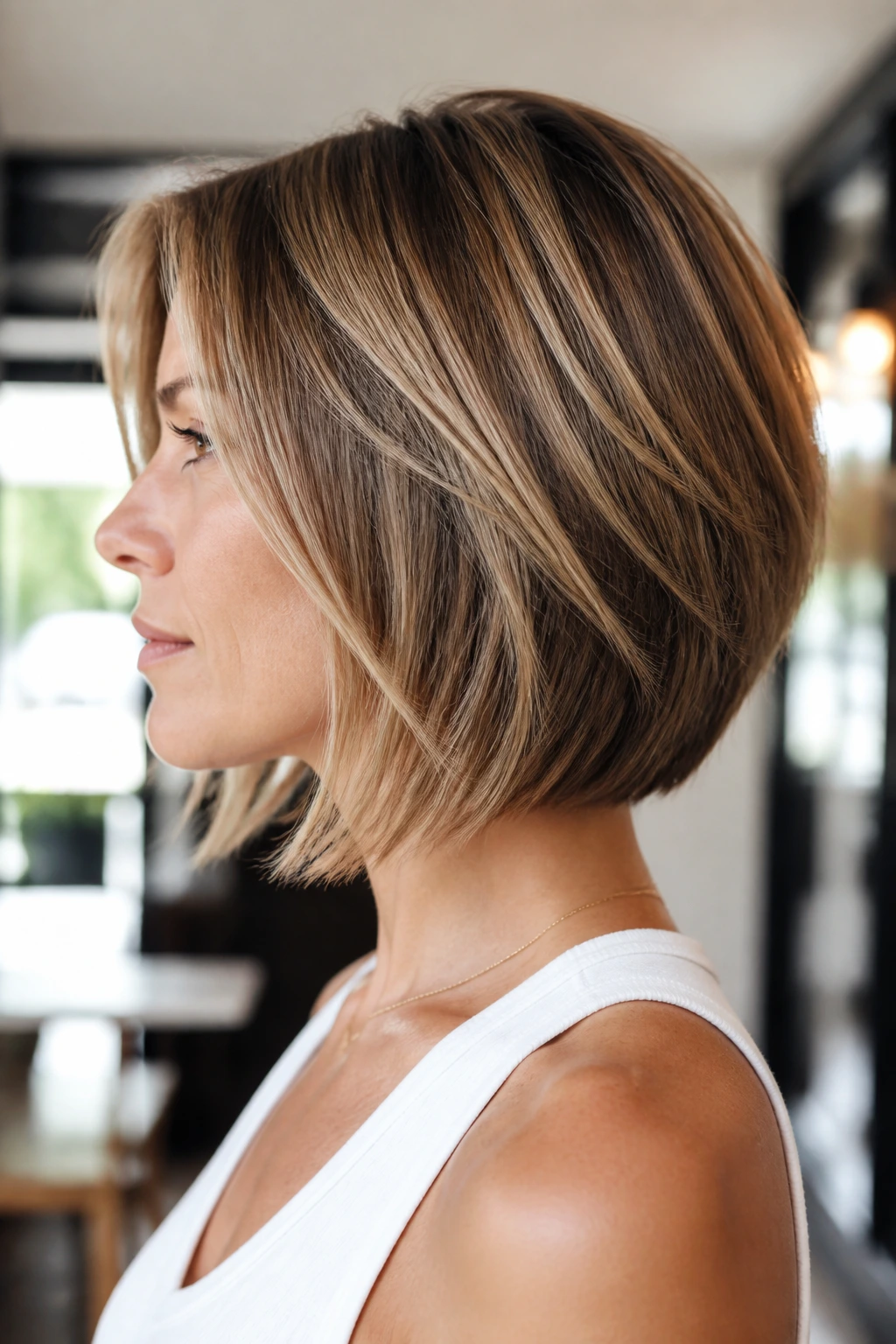
If you aren’t ready to chop your hair off, a longer, shoulder-skimming stacked bob still provides that essential lift in the back without sacrificing your length. It’s a great way to transition if you’re nervous about going short.
Maintaining the Stack
A longer stack is harder to sustain than a short one. You will need to make sure your stylist is aggressive with the graduation at the nape to ensure you get that lift effect; otherwise, it just looks like a standard haircut.
Styling Tips
- This length allows you to tuck hair behind your ears, which can actually make the back volume stand out more.
- Avoid layering the front too much, or the ends will look wispy.
16. The Volume-Dense Bob with Deep Side Part
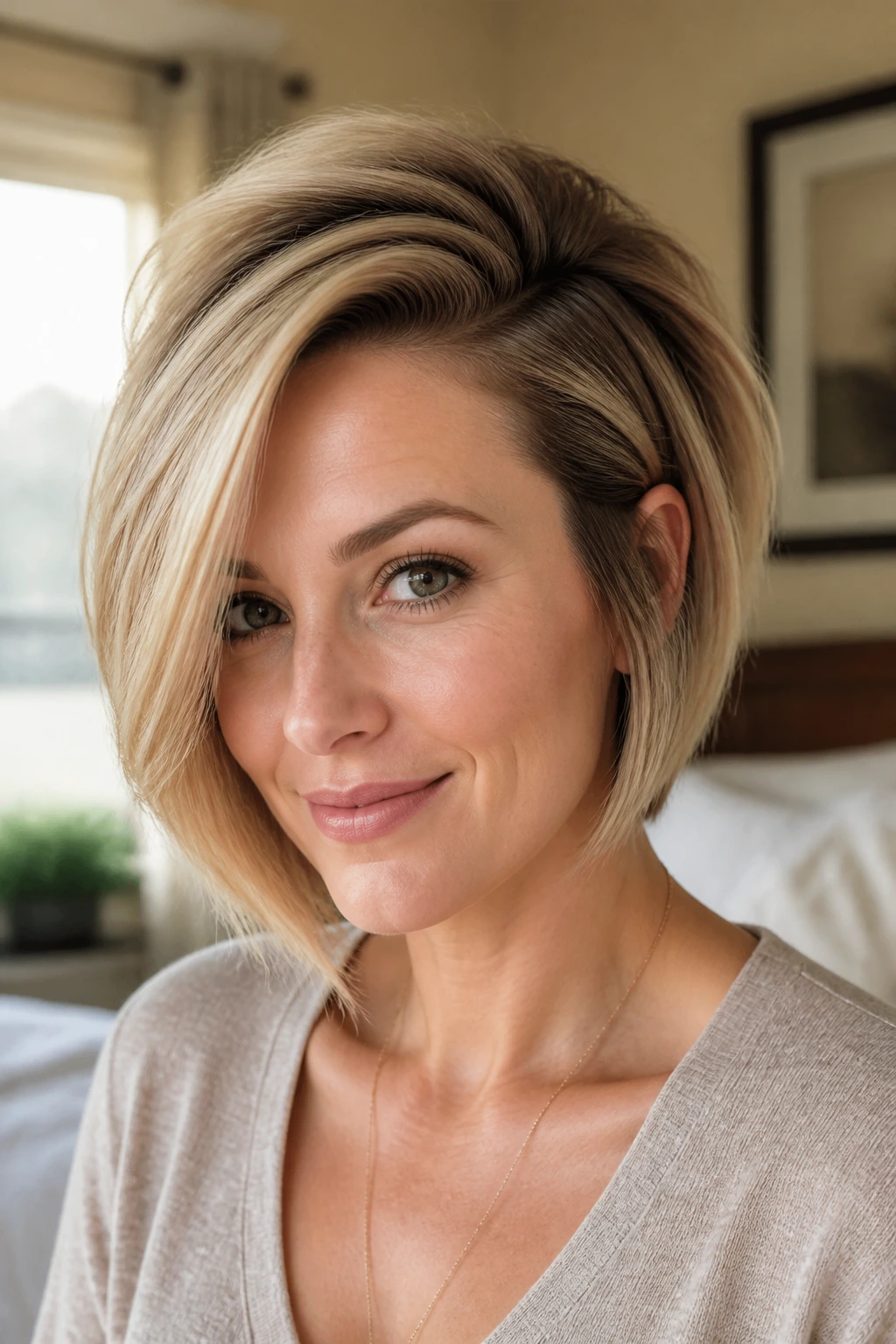
The side part is the oldest trick in the book for fine hair. By moving your part from the center to a deep side, you instantly increase the amount of hair on one side of your head, creating an illusion of thickness.
Why It Pairs with a Stack
When you have a deep side part and a stacked back, you are attacking the problem from two angles: the crown lift and the front volume. Together, they create a balanced, full-looking head of hair.
Pro-Level Styling
- Change your part while your hair is damp so it sets that way.
- Use a volumizing spray at the roots of the “big” side of the part.
17. The Minimalist Stack
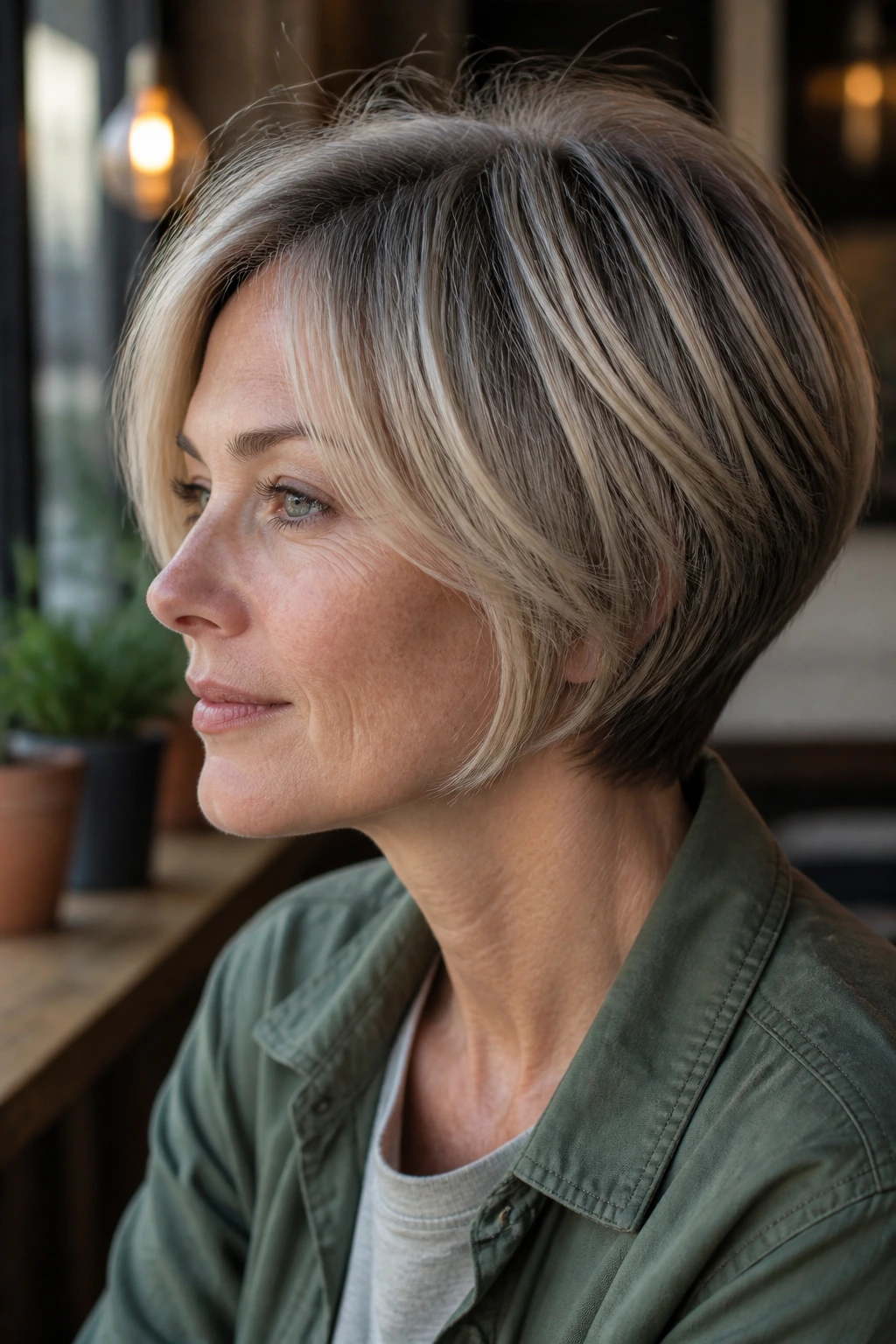
For a very subtle look, the minimalist stack uses only a few graduated layers at the very bottom of the nape. It doesn’t look like a “stacked bob” from the front, but from the back, it provides just enough of a rounded shape to stop the hair from falling flat.
Who Needs This
- People who want an easy, everyday look that doesn’t scream “hairstyle.”
- Those with fine hair that is just starting to thin at the ends.
18. The Perm-Textured Bob
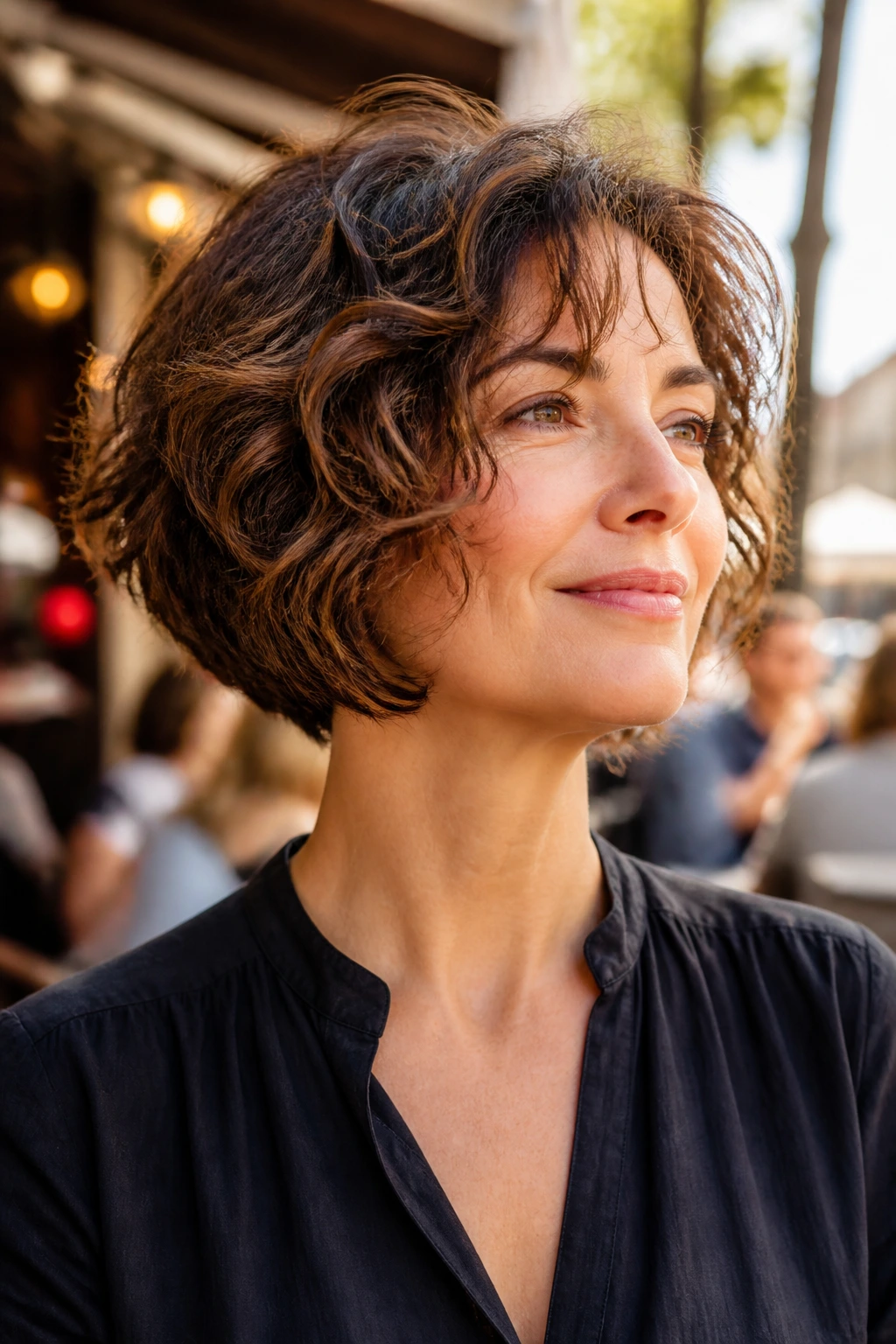
If your hair is extremely fine and you are open to chemical help, a very soft, loose perm on a stacked bob can provide permanent “body” that makes the hair look three times thicker.
Modern Perms
We are not talking about the tight curls of the past. Modern “body waves” are loose and focus on texture, not tight ringlets. It creates that “I just stepped off a beach” volume that lasts for months.
Cautionary Note
- Talk to a stylist who specializes in perming fine hair, as it can be drying.
- Use deep conditioning masks once a week to maintain moisture.
19. The “A-Line” Stacked Bob
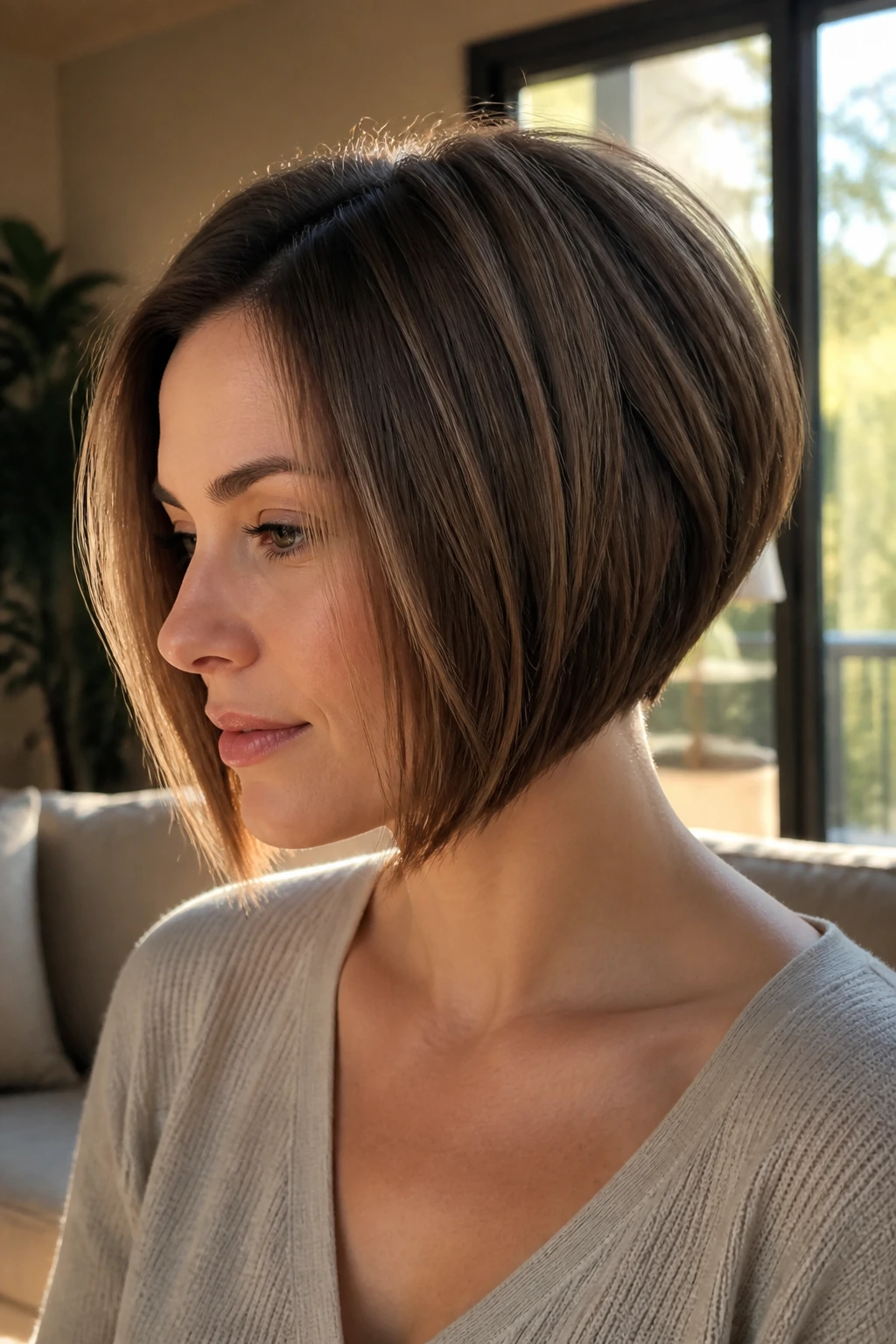
The A-line refers to the front of the hair being significantly longer than the back. It’s a classic, sharp silhouette that frames the face beautifully and allows you to keep some length near the chin.
The Silhouette
The dramatic drop in length from back to front is visually interesting and distracts from the hair’s fine texture. It’s a shape that looks good on almost everyone, regardless of face shape.
Maintenance Tips
- Because the front pieces grow faster, you will need to pay attention to your chin-length edges.
- Keep these sections smooth to ensure the “line” of the A stays crisp.
20. The Crown-Lift Bob
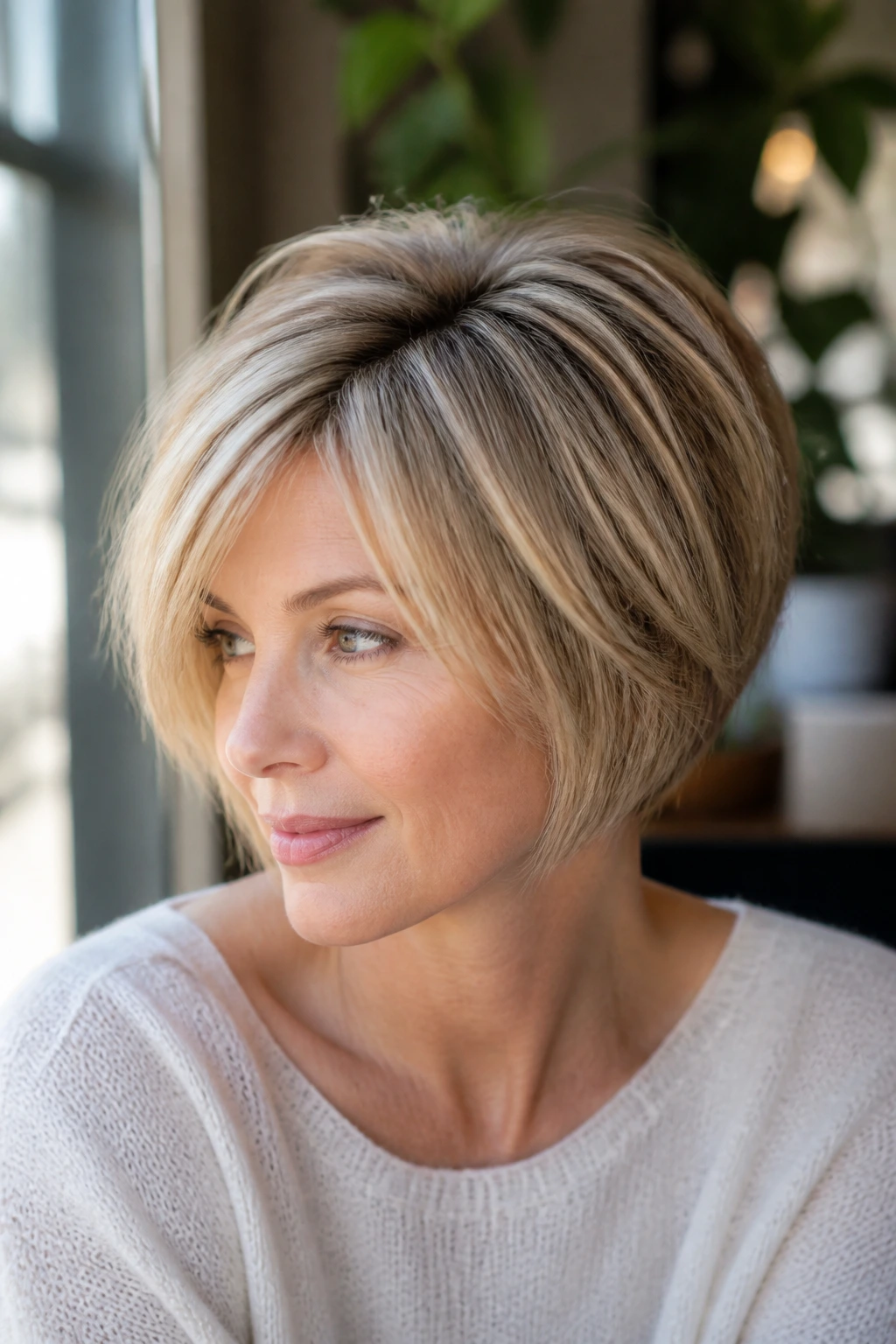
This specific cut focuses all the layering on the top of the head (the crown), rather than just the back. By layering the top, you create a soft “poof” of hair that covers any thin spots right at the vertex.
Internal Support
You can ask your stylist to cut the crown layers slightly shorter than the rest. This creates a cushion of hair that supports the top layer, stopping it from laying flat against your scalp.
Styling for the Crown
- Focus your dry shampoo or texture spray right on the crown, not just the roots of the back.
- Use a boar-bristle brush to gently tease just the underside of those top layers.
21. The Pastel or Bright-Tone Stacked Bob
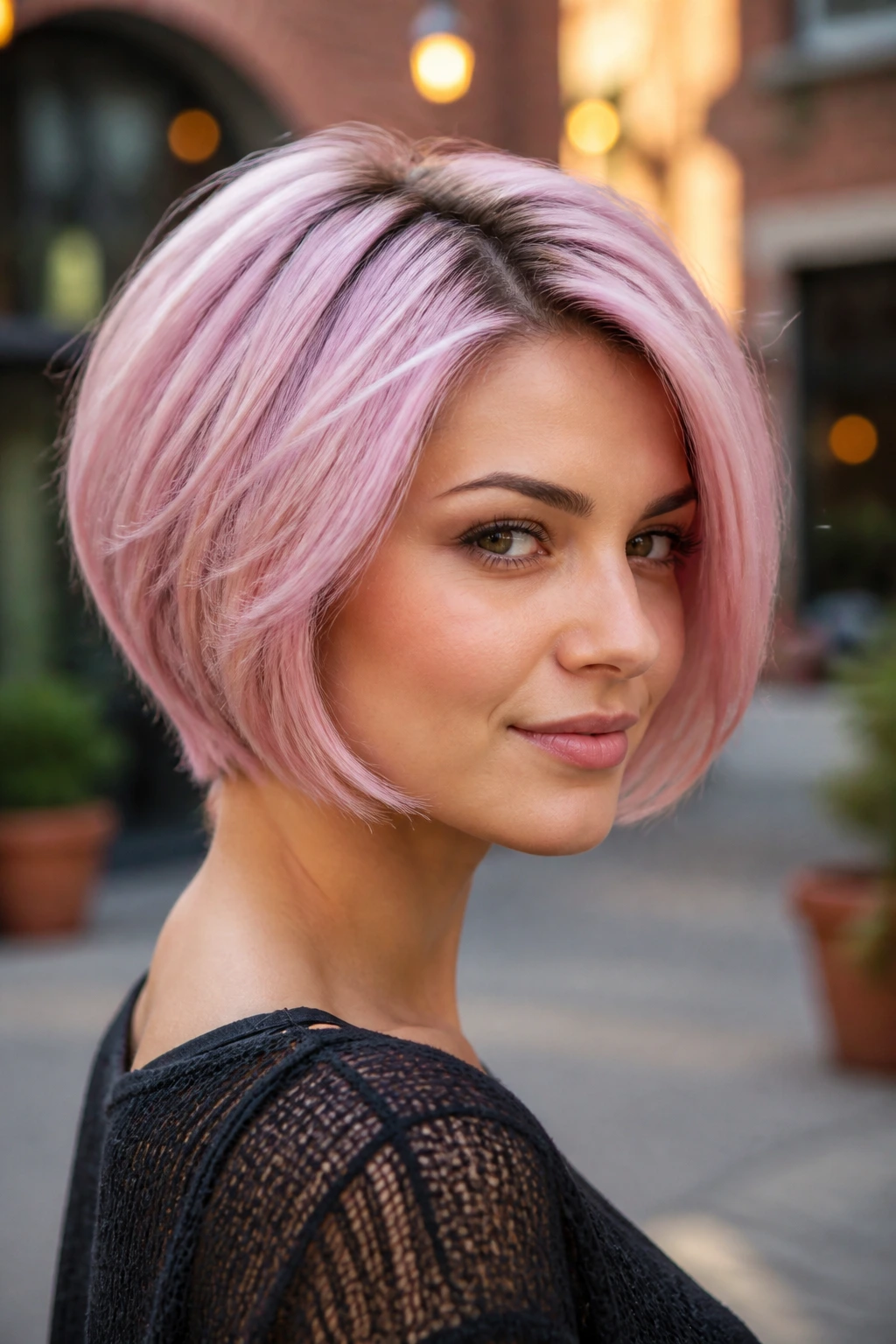
Sometimes, volume is about color. Lighter colors or high-shine, vibrant tones can make hair look thicker because they change how light bounces off the strands.
The Illusion of Thickness
Blonde highlights, for example, create “depth” through color variation. Dark hair with lighter pieces creates a 3D effect that makes the hair look much more substantial than one solid, flat color.
Color Care
- Use color-safe shampoos to maintain the vibrancy.
- Avoid over-lightening, which can make fine hair brittle and prone to breakage.
22. The “Feathered” Stacked Bob
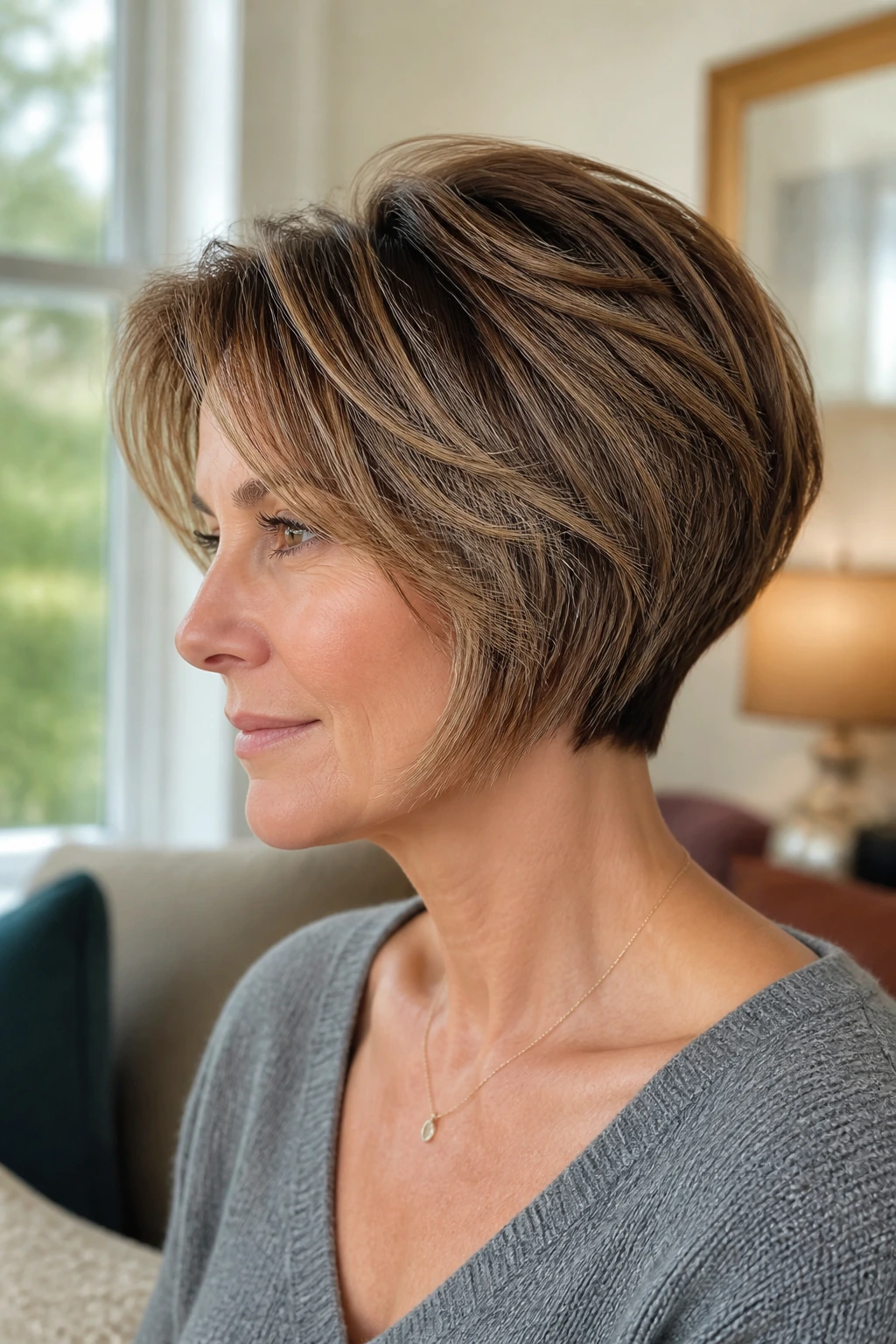
If you remember the feathered looks of the past, this is a refined, updated version. By feathering the hair around the face and the back, you create a lightweight, airy look that feels like you have a massive amount of hair, even if you don’t.
Why Feathering Works
It allows for maximum movement. When your hair moves, it catches the light, and when it catches the light, it looks fuller. This is the opposite of the heavy, “weighted-down” look that fine-haired people usually end up with.
Final Styling Advice
- Blow-dry the feathering away from your face for an open, airy appearance.
- Use a tiny amount of hair oil on the very ends only to define the feathers.
Final Thoughts
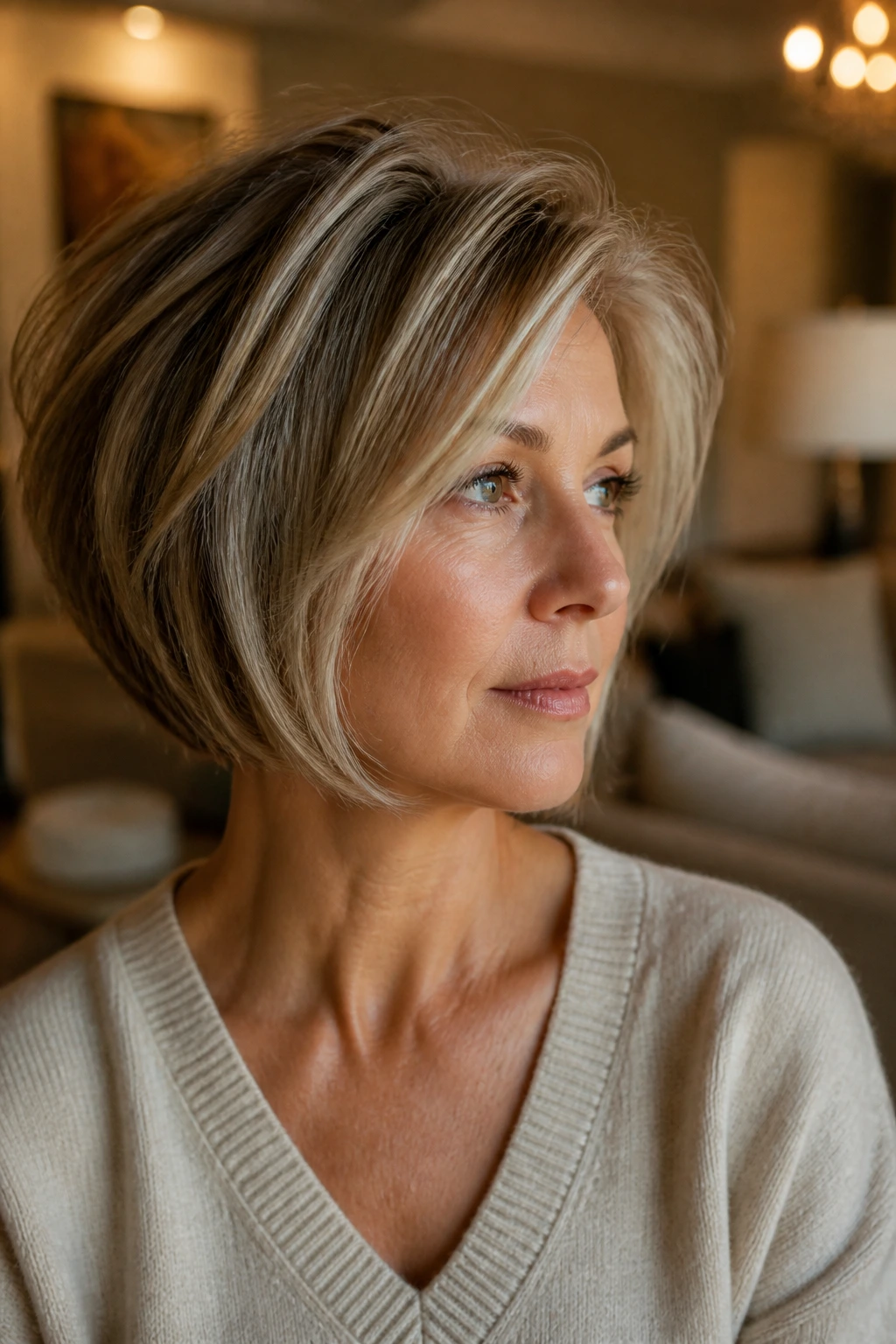
Finding the right stacked bob for thin hair is about understanding that your hair texture isn’t the problem—the cut is the tool you use to solve it. Whether you go for a dramatic, short-naped undercut or a soft, longer lob, the goal remains the same: lift the roots and minimize the weight at the ends. Remember that these styles require a bit more dedication in the chair than a “wash and wear” long cut, but the trade-off is a consistent, voluminous shape that finally gives you the hair confidence you deserve.
Don’t be afraid to bring these examples to your stylist and discuss your specific concerns about your hair’s density. A skilled stylist will know how to adjust the degree of the “stack” to best suit your head shape and hair quality. Once you find that perfect angle, you will realize that fine hair is not a limitation—it is just a matter of choosing the right architecture for your look.