


The morning gym rush is a frantic dance of finding your matching socks, grabbing a water bottle, and—most crucially—figuring out how to keep your hair from becoming a sweaty, tangled hazard. If you have ever reached the middle of a set of burpees only to have a loose strand of hair slap you directly in the eye, you know the specific, infuriating frustration of a poorly secured hairstyle. We aren’t looking for red-carpet perfection here; we are looking for tension, hold, and the ability to survive high-intensity movement without you needing to pause your workout to re-tie everything.
1. The High-Voltage Top Knot
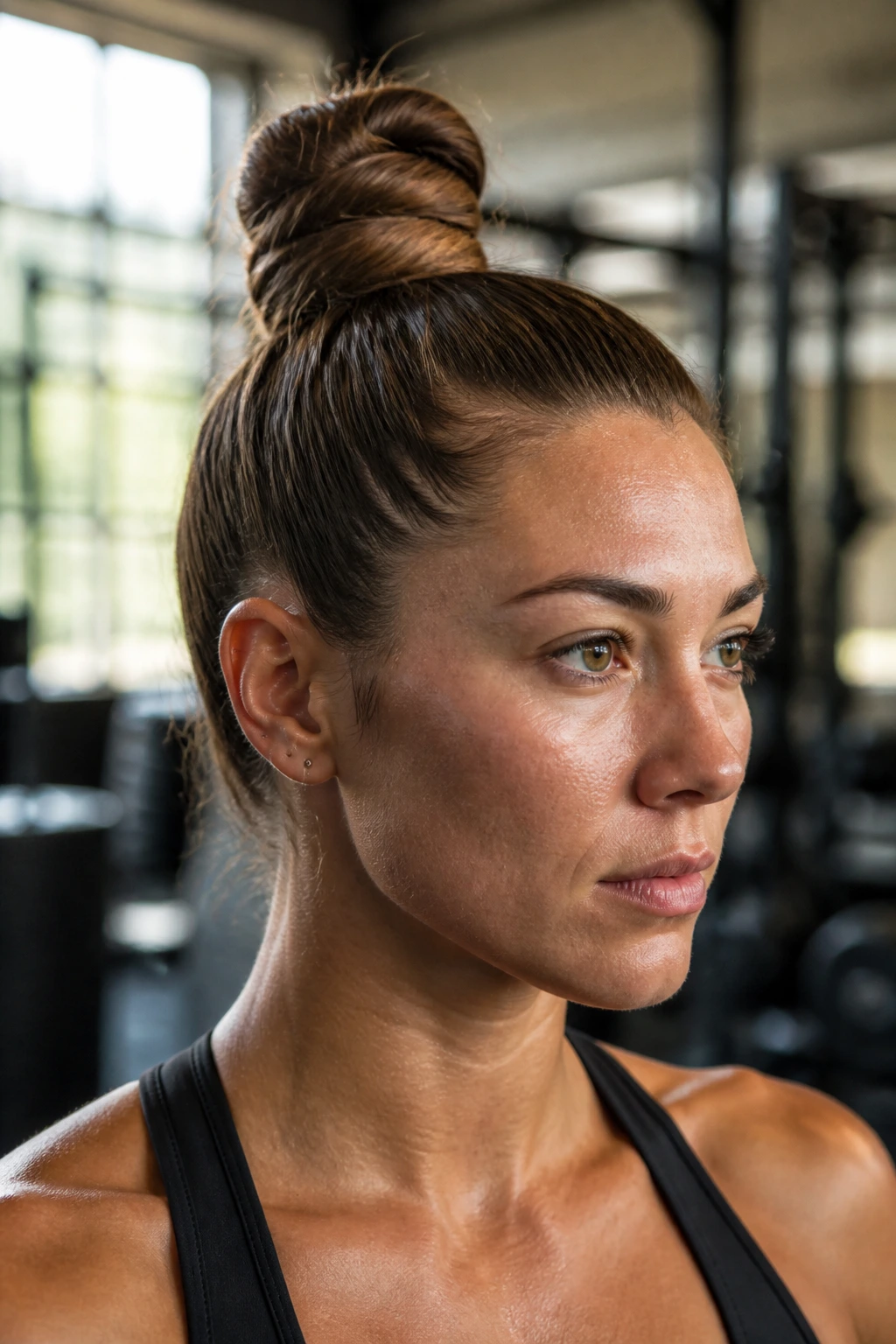
This is the workhorse of athletic hairstyles. By gathering every single strand at the crown of your head, you remove the hair from your neck entirely, which helps prevent that sticky, damp feeling that happens when perspiration starts to pool against your skin during an intense session. It is the ultimate “get it done” look that stays put regardless of how much you move.
Securing Your Knot
To get the longevity you need, start by creating a high, tight ponytail at the very peak of your head. Once your base is secure, twist the length of your ponytail into a tight rope before coiling it around the base of the elastic. Use a second, thicker hair tie to lock the entire bun in place, or secure it with a few sturdy, matte-finish bobby pins if you want a more streamlined aesthetic that won’t snag on your hoodie while you transition between exercises.
Why It Works for High-Intensity Training
- Keeps the hairline completely clear of sweat buildup.
- Prevents the hair from whipping around during plyometric movements.
- Provides a stable foundation that doesn’t migrate downward during inversions or floor work.
2. The Multi-Section Bubble Braid
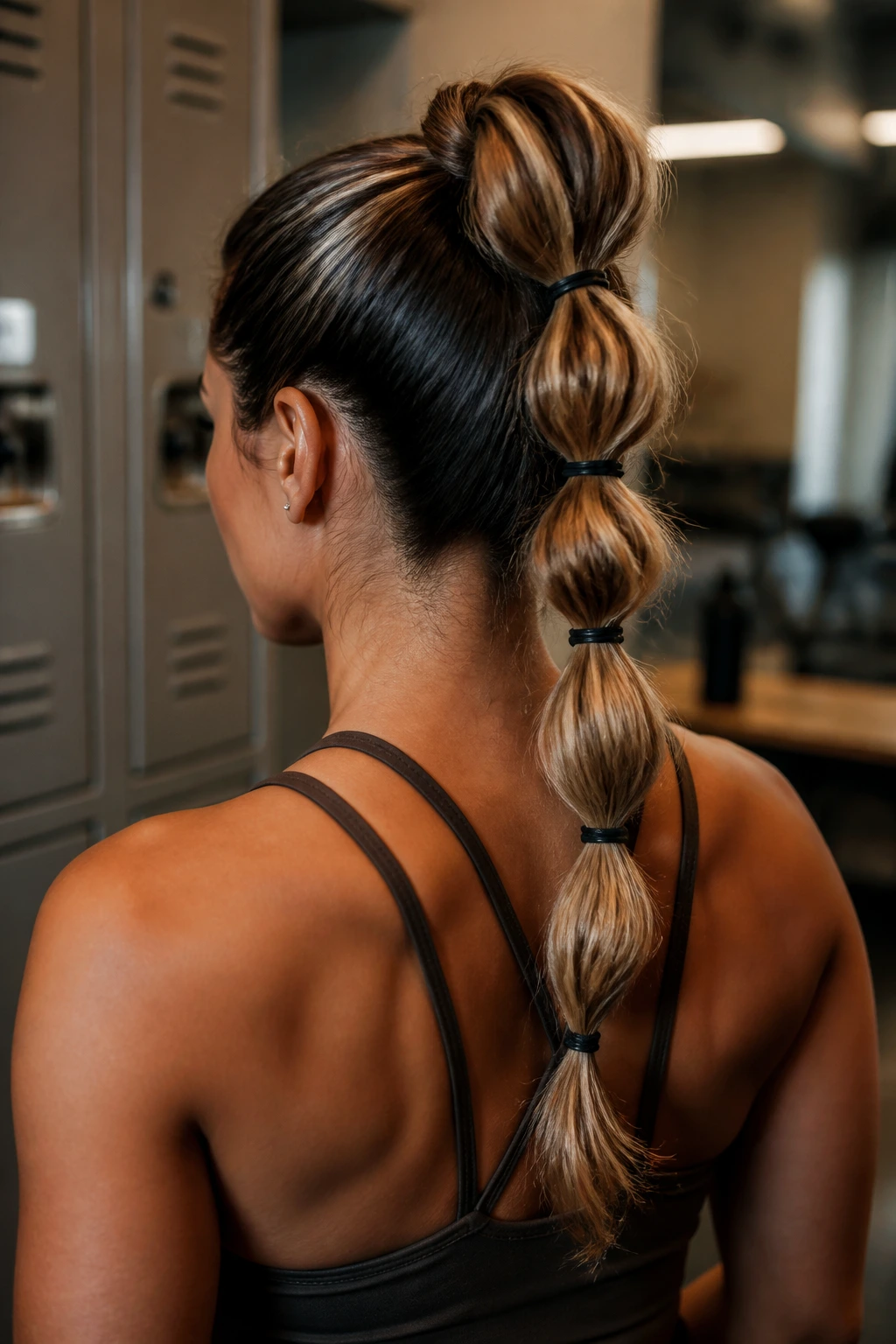
If you have longer hair, a single braid can sometimes become heavy and swing against your back, which is annoying during mountain climbers or push-ups. Dividing the ponytail into sections creates a “bubble” effect that keeps the hair contained and distributed evenly. It looks intentional and styled, but it functions as a highly secure restraint that minimizes flyaways.
The Mechanics of the Bubble
Start with a high ponytail and secure it firmly. Every two inches down the length of your hair, place another small, snag-free elastic band. Gently tug on the hair between these bands to “fluff” them outward into the bubble shape. This technique keeps the weight of your hair anchored at the top, while the bubbles prevent the lower lengths from whipping around your face or shoulders when you are moving quickly.
3. The Double French Braid Power-Look
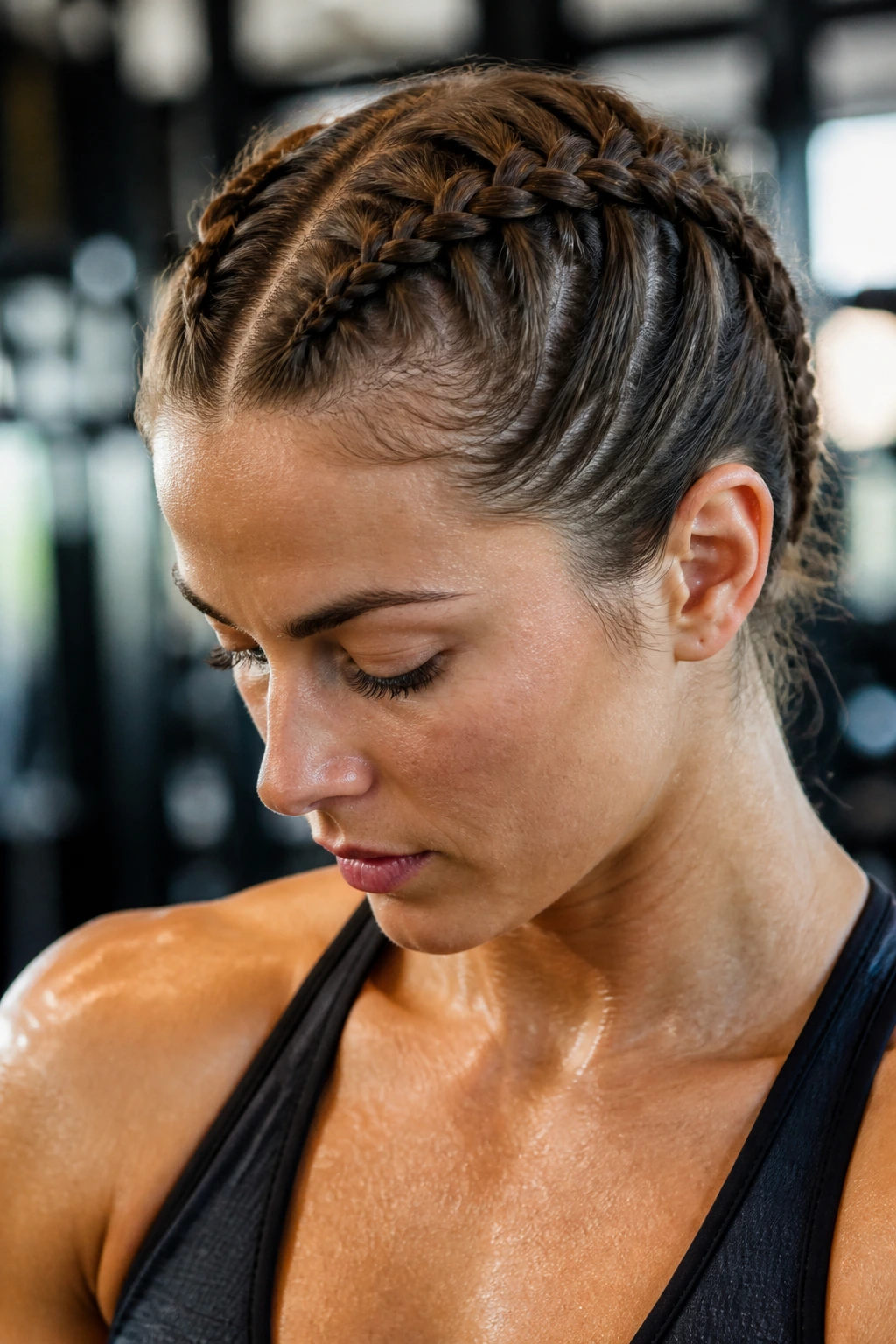
French braids are arguably the most secure way to handle hair for any movement-heavy activity. Because the braid is woven close to the scalp from the very beginning, it prevents the sections from pulling or loosening as you move. This is my personal favorite for outdoor running or HIIT classes where the ponytail pendulum effect is simply too distracting to ignore.
Why This Style Stays Put
The beauty of the double French braid lies in the tension you create while weaving the hair into the scalp. As you pick up new sections of hair with each pass, you are effectively pinning the hair down against your skull. By the time you reach the nape of your neck, your hair is essentially locked in place, making it impossible for strands to escape and tickle your cheeks or neck mid-workout.
4. The Half-Up Mini Bun
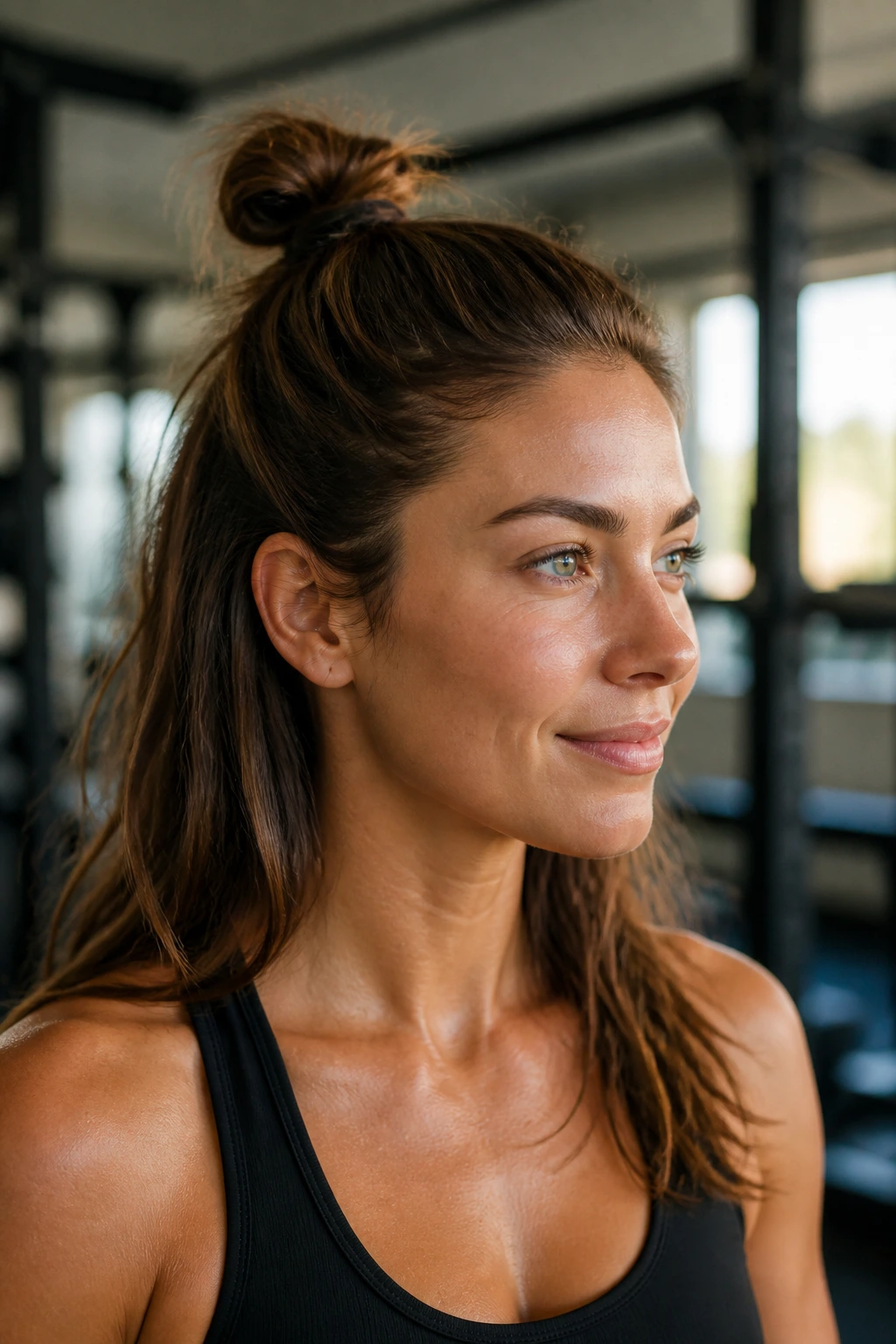
Some days, you want the freedom of having your hair down, but you need your vision to be crystal clear. The half-up top knot gives you the best of both worlds. It pulls the dense weight of the hair away from your temples and forehead, which is where sweat tends to gather most during a warm-up, while letting the rest of your hair flow naturally.
How to Style It
Divide your hair horizontally from the top of your ears upward. Gather this top section into a small, tight bun right at the crown. Using a small, high-grip scrunchie or a rubberized elastic ensures that the bun doesn’t slide down as you begin to heat up. If you find your hair is too slippery, a quick spritz of texture spray before you begin will give your strands the “grip” they need to stay within that top section.
5. The Low, Tight Boxer Braid
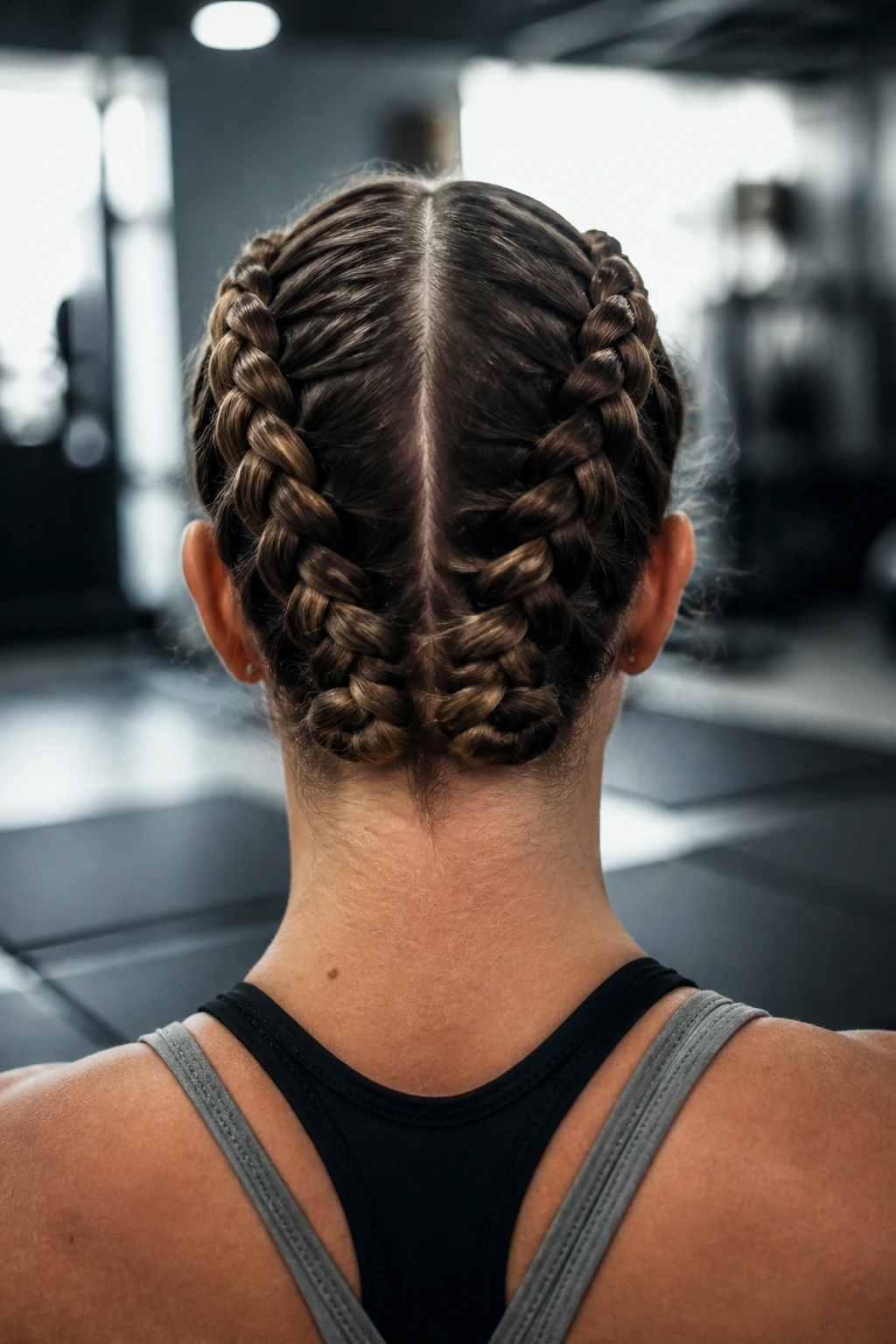
When a high pony isn’t quite right for the movement you’re performing, look toward the nape of the neck. Boxer braids—or Dutch braids, where you cross the strands under rather than over—are incredibly secure because they sit flat against the scalp. They are remarkably comfortable if you are planning to spend a lot of time on your back, such as during mat work or heavy bench presses.
Tips for Success
- Keep the tension even throughout the braid to avoid loose, sagging loops.
- Use a small amount of pomade on your fingers to smooth down any stubborn baby hairs before you start braiding.
- Secure the ends with clear, medical-grade elastics that won’t snap when under stress.
6. The Rope-Twist Ponytail
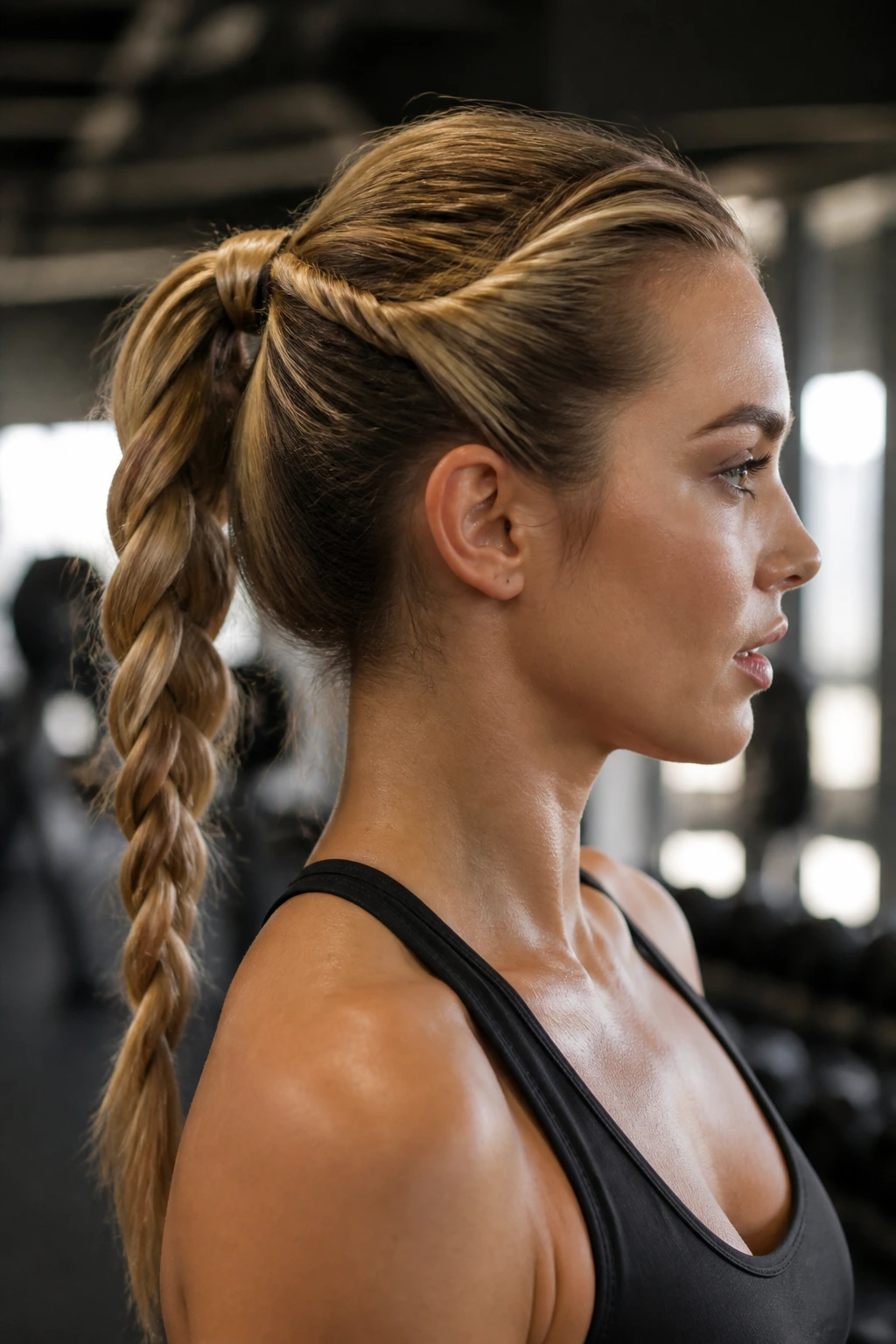
If you are tired of standard braids, the rope twist is a faster, cleaner alternative that looks sophisticated but acts like a high-performance restraint. It works by taking two sections of hair and twisting them in the same direction before wrapping them around each other in the opposite direction. The result is a dense, cord-like braid that holds its shape through the most grueling training sessions.
Why It’s Perfect for Strength Training
Because the rope twist has very little slack, it doesn’t expand or lose its structure when you get sweaty. Unlike traditional three-strand braids that can expand and loosen with moisture, the rope twist stays tight. It is an excellent choice for lifting sessions where you want to keep your hair out of the way of your barbell or cables.
7. The Slicked-Back Low Pony with a Twist
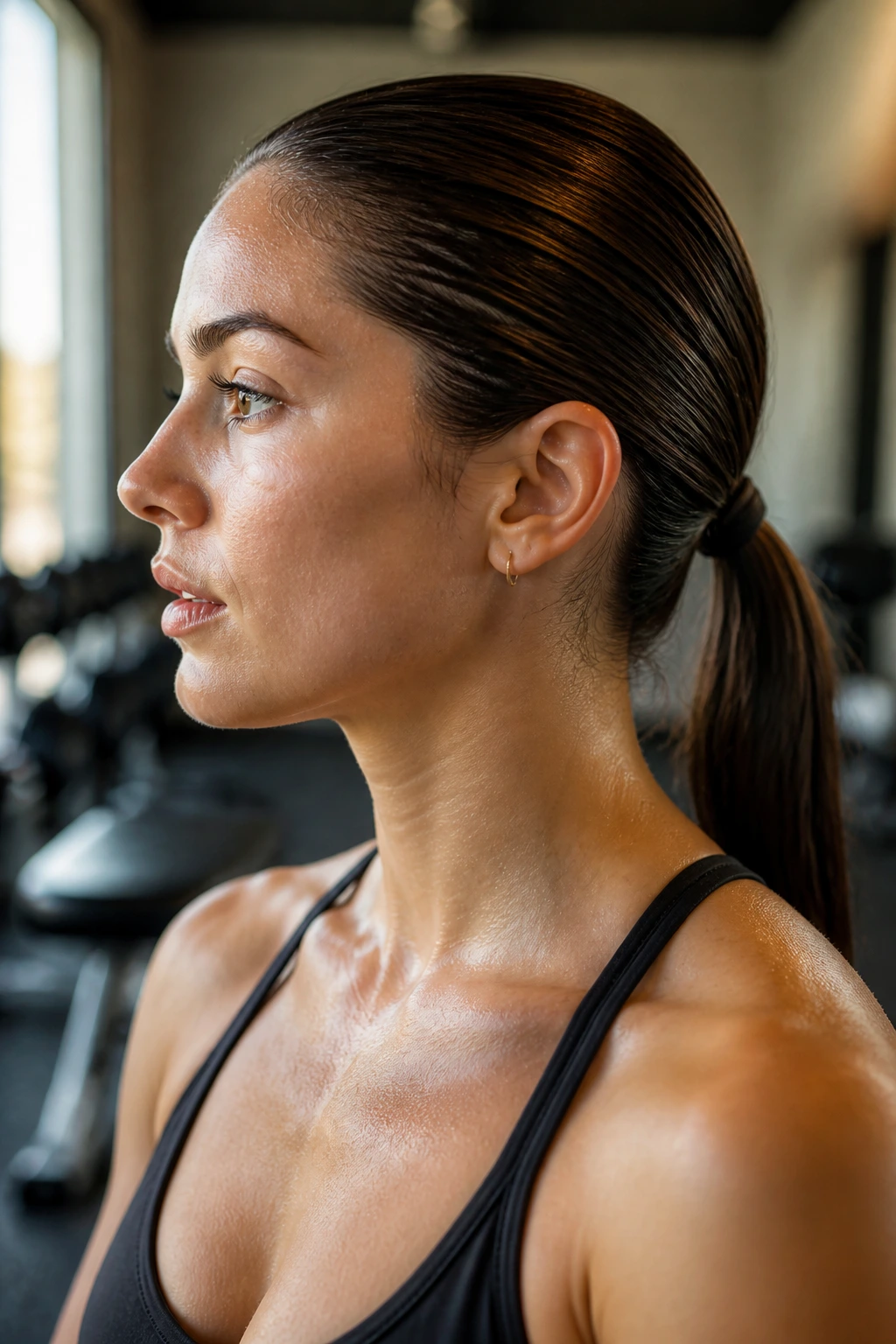
There is something inherently professional about a slicked-back look. To turn this into a workout-ready style, apply a light, non-greasy hair oil or a firm-hold gel to your roots. Brush the hair back tightly toward the nape of your neck and secure it with a spiral-style hair tie—these are specifically designed to reduce pressure while maintaining a vice-like grip on the hair shaft.
Adding the Twist
Once your low ponytail is secure, take a small section of hair from the pony itself, wrap it around the elastic to hide it, and pin it underneath. This prevents the hair tie from snagging on your equipment and keeps the look sleek from start to finish. It’s a clean, minimal, and highly effective way to handle medium-length hair during steady-state cardio or yoga.
8. The Crown Braid Halo
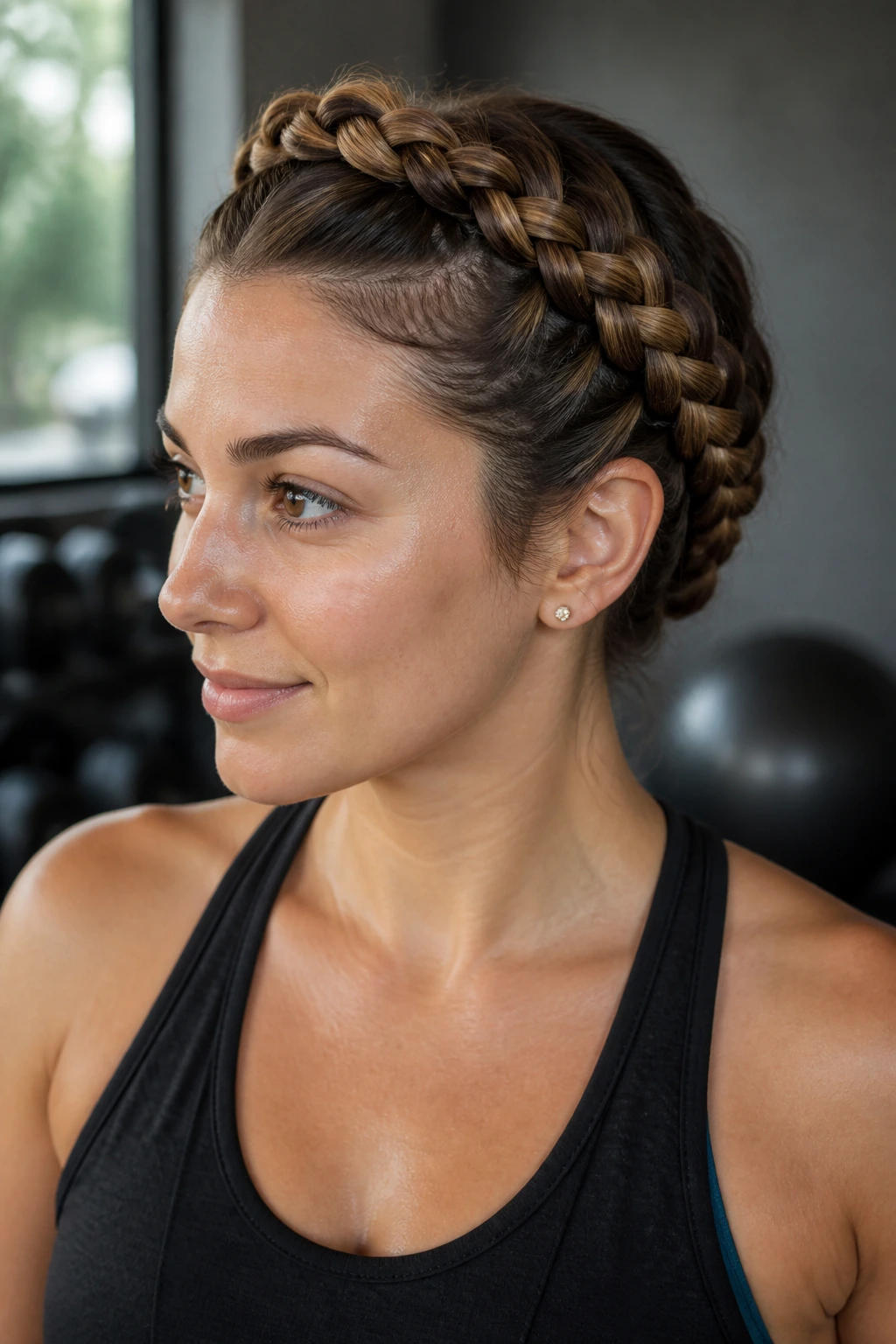
For those who really dislike hair touching their neck, the halo braid is the ultimate solution. By braiding the hair in a circle around the head and pinning the ends underneath, you create a self-contained unit that requires zero readjustment. It is essentially an updo that thrives on a bit of grit and texture, making it perfect for a day where your hair isn’t quite freshly washed.
How to Maintain the Halo
- Use plenty of bobby pins that match your hair color.
- Make sure to braid the hair tightly so that the halo doesn’t sag as the day goes on.
- If you have layers, use a lightweight finishing spray to keep the shorter pieces tucked neatly into the braid.
9. The Wrapped-Elastic Ponytail
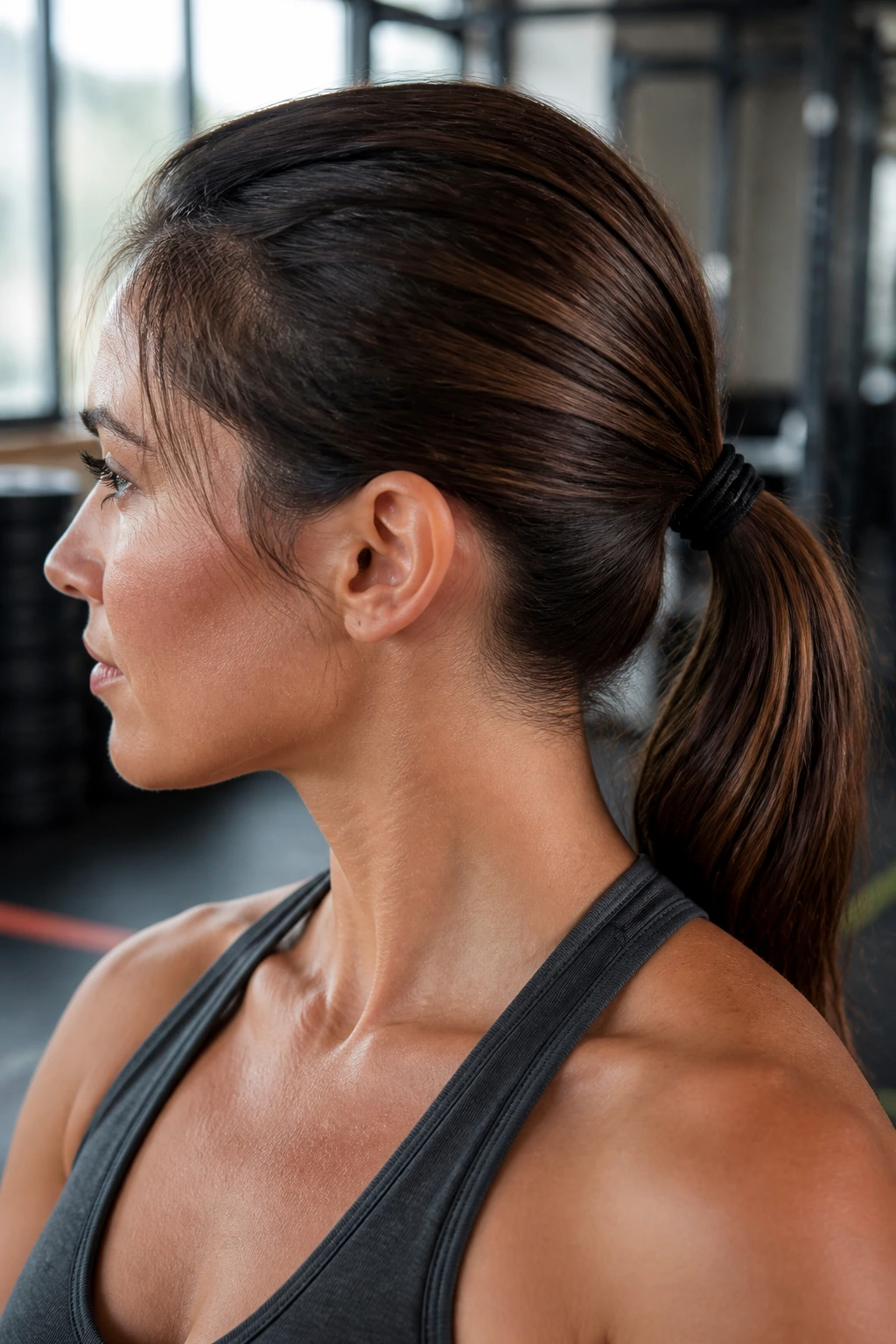
A single ponytail is often the first thing people reach for, but it’s also the first thing to fail. To elevate a standard pony for intense activity, you need to ensure the elastic isn’t fighting against the weight of your hair. The trick here is to use two elastics—one stacked directly on top of the other—to create a “shelf” for the ponytail, which prevents it from sliding down.
Why This Matters
One elastic often stretches out within the first fifteen minutes of high-impact movement. By doubling up, you provide twice the resistance. If your hair is particularly thick or heavy, look for heavy-duty, fabric-covered elastics that won’t cause breakage. This small change in hardware is the difference between a high-performing pony and one that feels limp by the end of your warm-up.
10. The Braided Side-Sweep
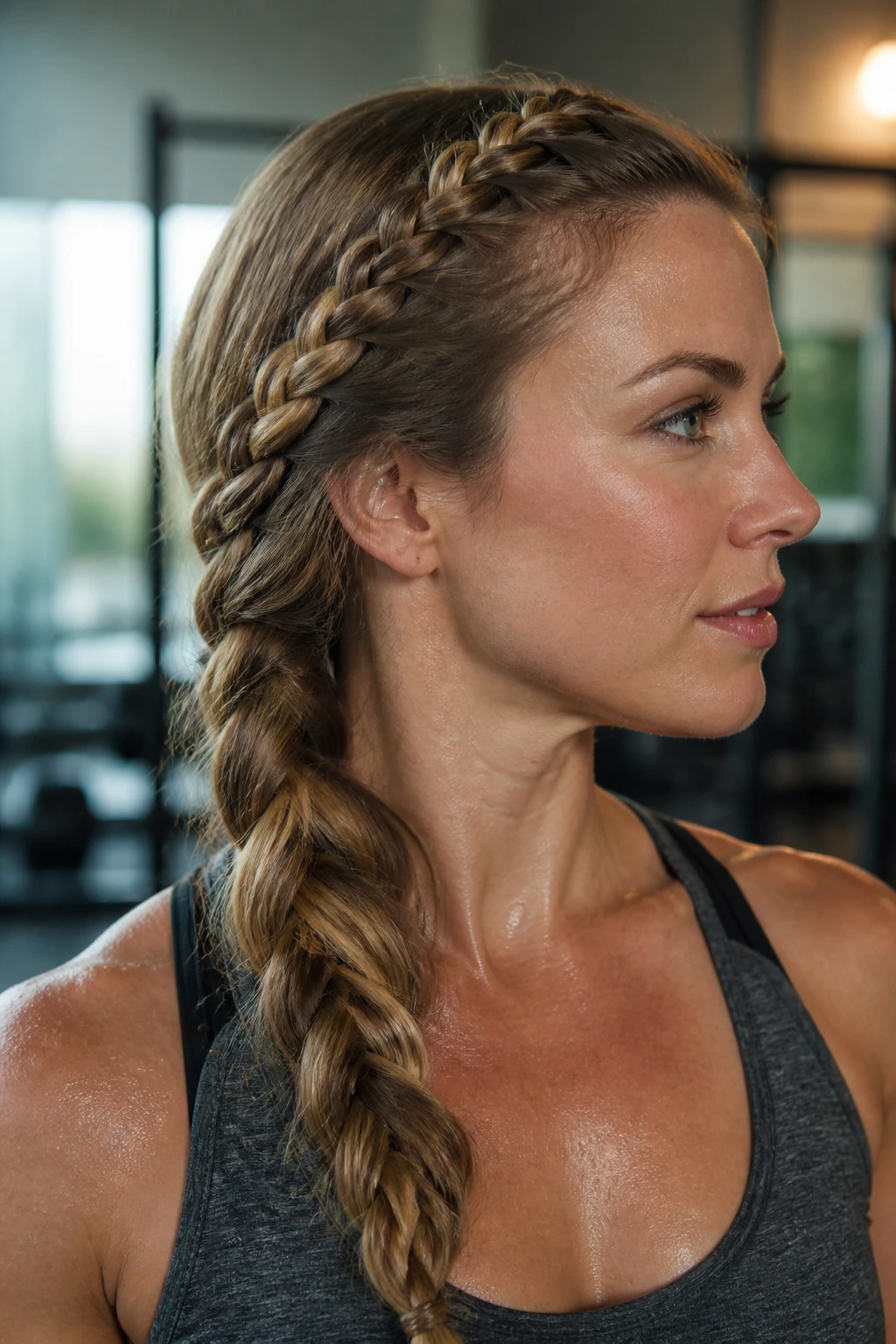
If you are doing side-lying exercises or want something that looks good without being perfectly centered, a side-swept braid is a fantastic option. By pulling all your hair to one side and beginning a tight Dutch braid starting near your temple, you keep your face clear while allowing the weight of the hair to rest securely against your shoulder.
Making It Secure
The key here is starting the braid high at the hairline. By gathering the hair from the front and weaving it toward the side, you eliminate the risk of hair falling into your eyes when you look down. It is a stylish, functional, and very reliable way to keep your hair contained without needing a complicated updo.
11. The Double-Bun (Space Buns)
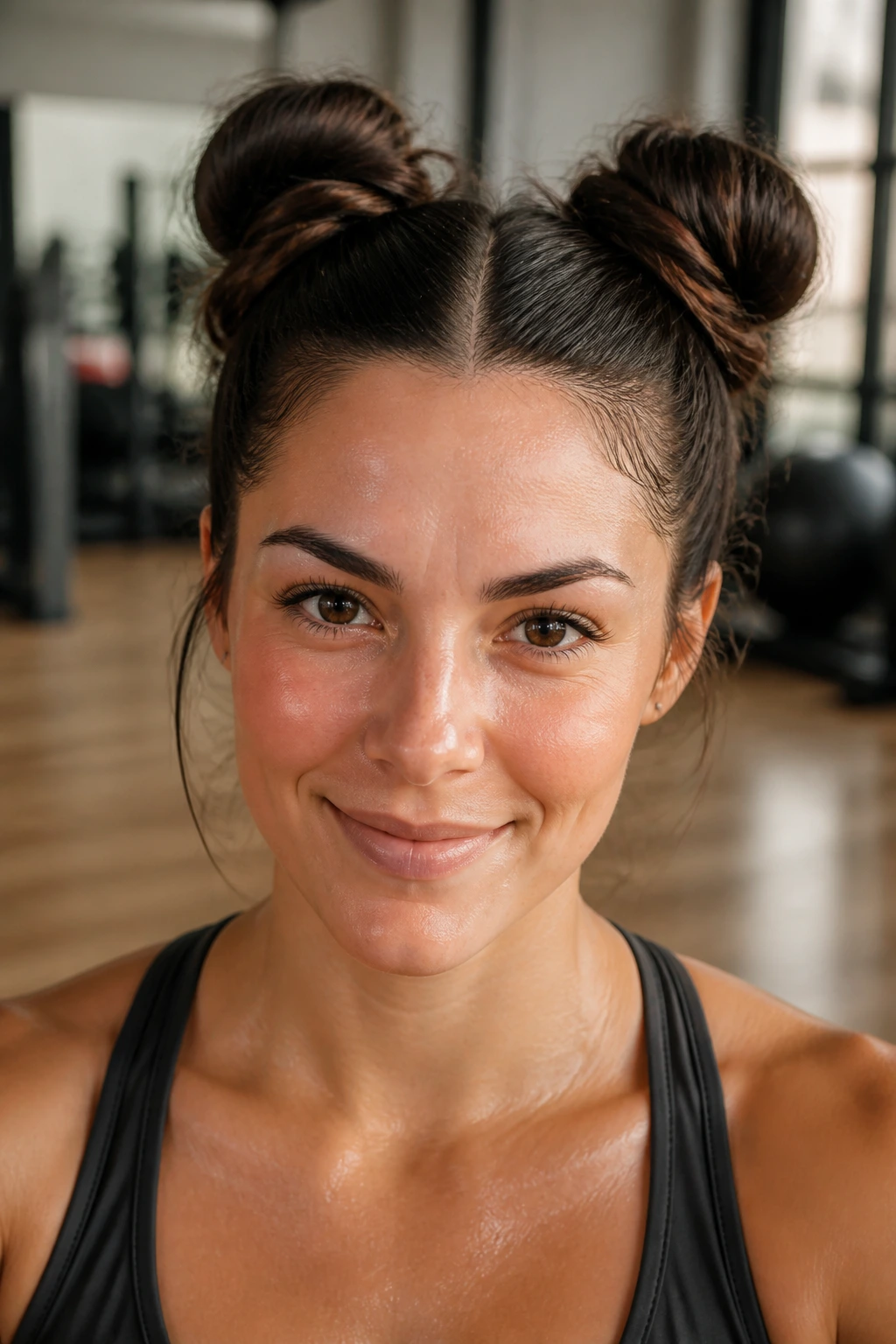
Space buns are not just for festivals; they are actually an incredibly stable way to manage hair for floor work. By splitting your hair into two equal sections and creating two buns, you distribute the weight evenly on either side of your head. This prevents the “heavy ponytail headache” that some people get when wearing one high bun for too long.
How to Create the Look
- Divide your hair down the center with a clean part.
- Create two high pigtails and secure them with firm elastics.
- Twist each pigtail into a bun and secure it with a second elastic.
- If you are doing floor work, position the buns slightly higher on your head so they don’t get in the way when you are lying flat on your back.
12. The Knotted Low Chignon
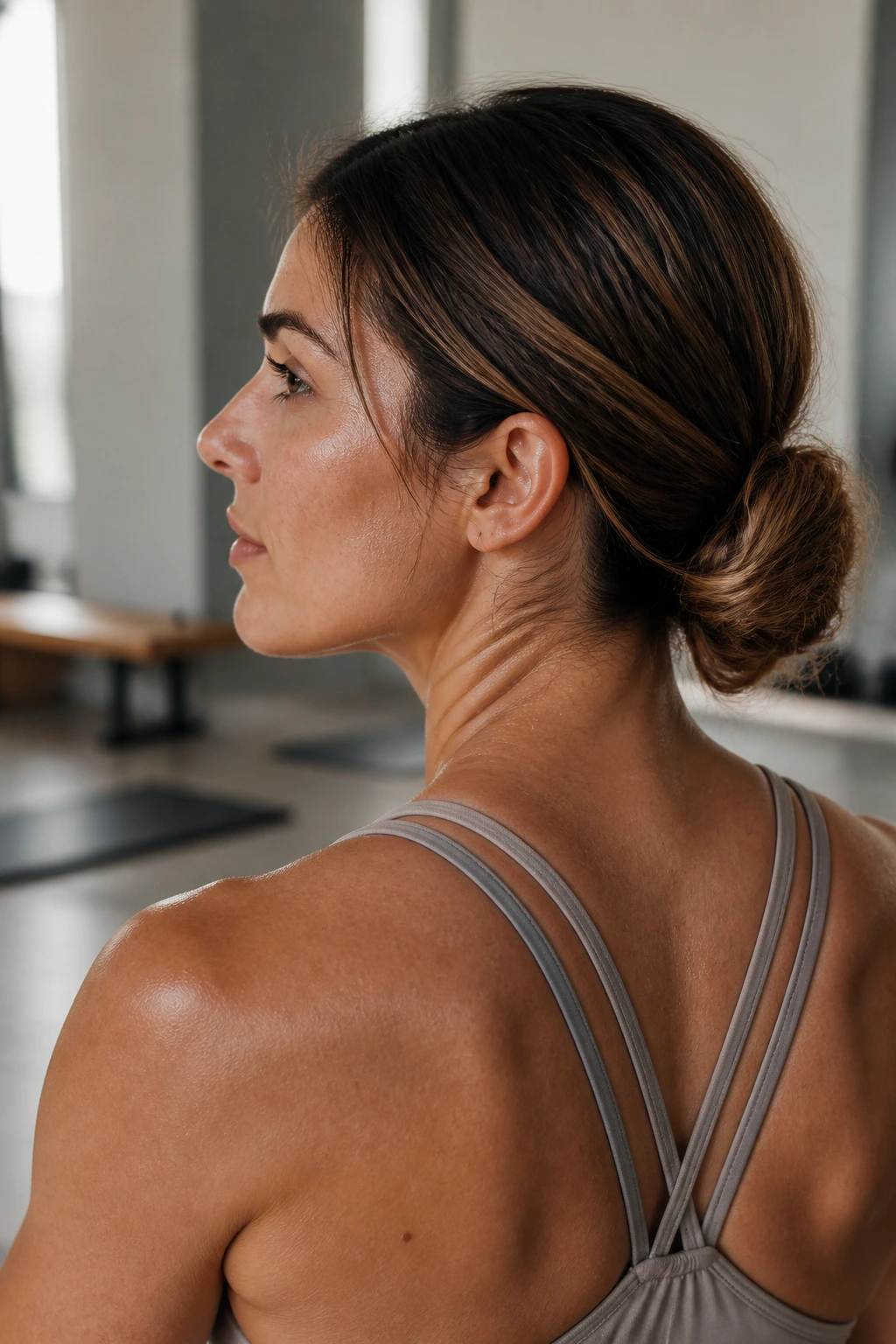
For a more understated look that transitions well from the office to the gym, the knotted chignon is ideal. It involves pulling the hair back into a low pony, splitting the base, and pulling the length of the pony through the gap to create a soft, elegant knot at the nape. It keeps the neck free and the hair secure without being overly aggressive.
Practicality in Motion
This style is best suited for low-impact workouts like Pilates, Barre, or weightlifting where you aren’t doing excessive jumping or rapid head movements. It is secure, but the knot can eventually loosen if subjected to intense impact. If you find it slipping, add a few hairpins at the base of the knot to lock it in place.
13. The Headband Braid Integration
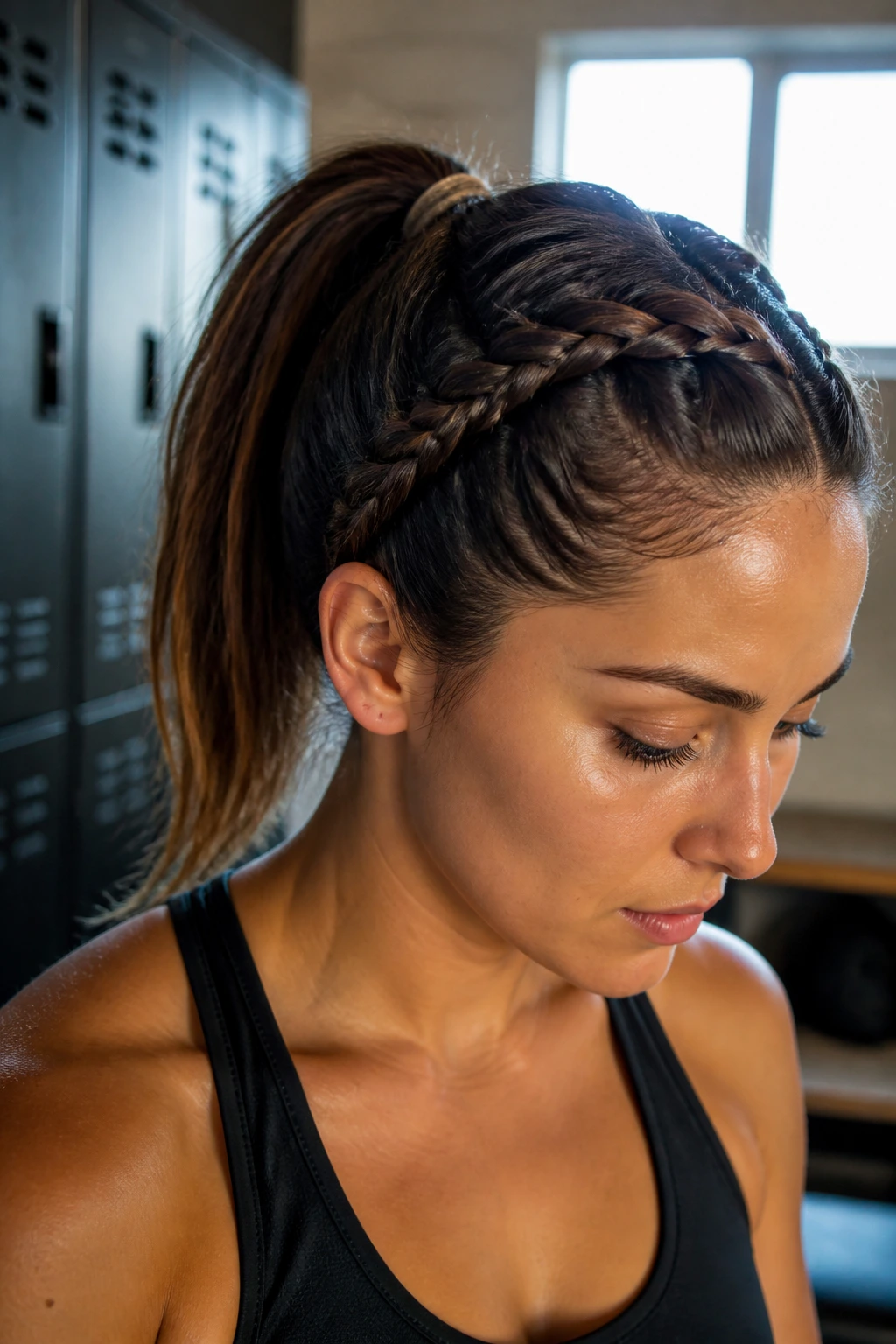
Sometimes the most annoying part of working out isn’t the ponytail, but the shorter hairs around the hairline that refuse to stay back. A headband braid solves this by incorporating the “danger zone” of hair—the bangs and face-framing layers—into a small Dutch braid that travels along your hairline.
The Technique
Start at the part and braid along the forehead toward your ear, picking up small sections of hair as you go. Once you reach the ear, tie it off with a small elastic and incorporate the rest of your hair into a ponytail or a larger braid. This completely removes the need for constant tucking and prevents sweat from soaking into your bangs.
14. The Scarf-Secured High Pony
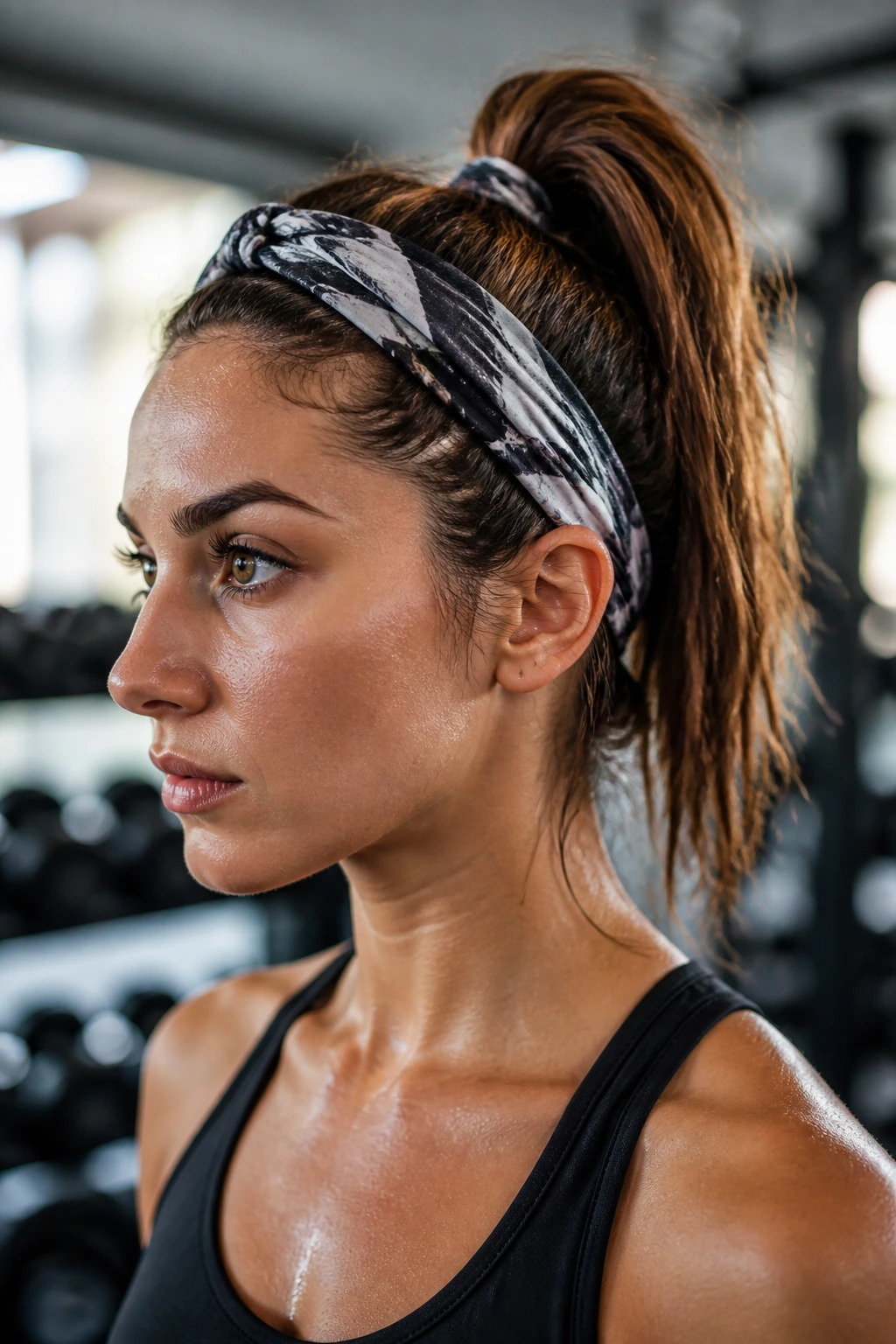
Using a patterned gym-appropriate scarf is an excellent way to add tension and style to a workout. By folding a thin, athletic-fabric scarf into a headband and tying it around your head, you create a “grip” that holds your hair back. You can then gather the rest of your hair into a pony over the scarf, or weave the scarf into the braid itself.
Why It’s a Game Changer
Scarves made from moisture-wicking materials are fantastic for workouts because they absorb sweat before it reaches your eyes. They also provide extra friction, which means your hair is less likely to slip out of its elastic. Plus, it adds a touch of personality to your gym wardrobe, which never hurts when you are five minutes away from your final set.
15. The Fishtail Braided Pony
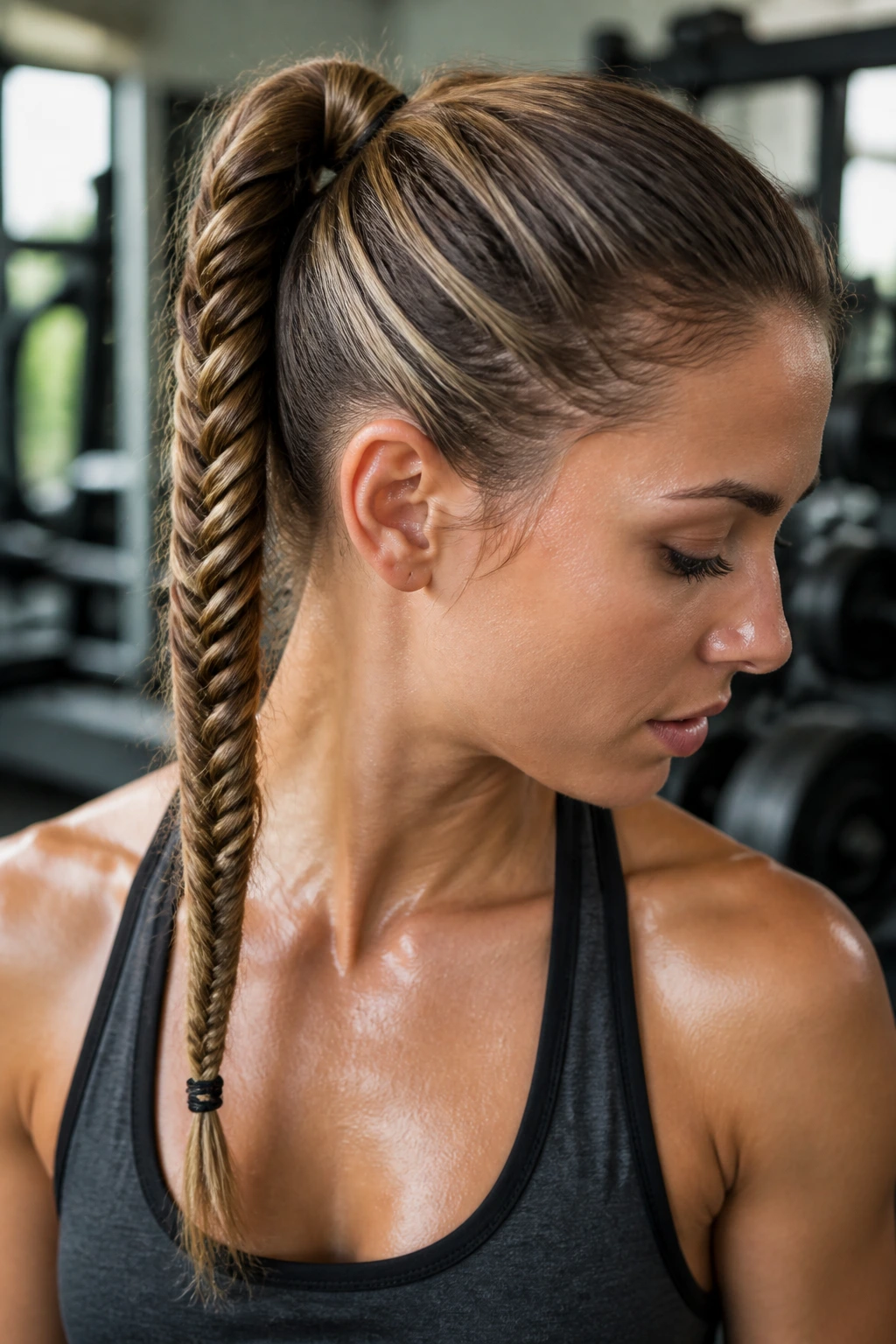
The fishtail braid is deceptively strong. Because it uses many small sections of hair, it holds its structure much better than a traditional three-strand braid, even when you are moving quickly. It creates a tight, rope-like braid that doesn’t expand or fray during a heavy cardio session.
Tips for a Better Braid
- Start with a tight ponytail base.
- Keep the sections small for a tighter, more secure hold.
- If you have layers, use a tiny amount of styling cream on your palms before braiding to smooth down any rogue ends.
16. The Half-Down With a Twist
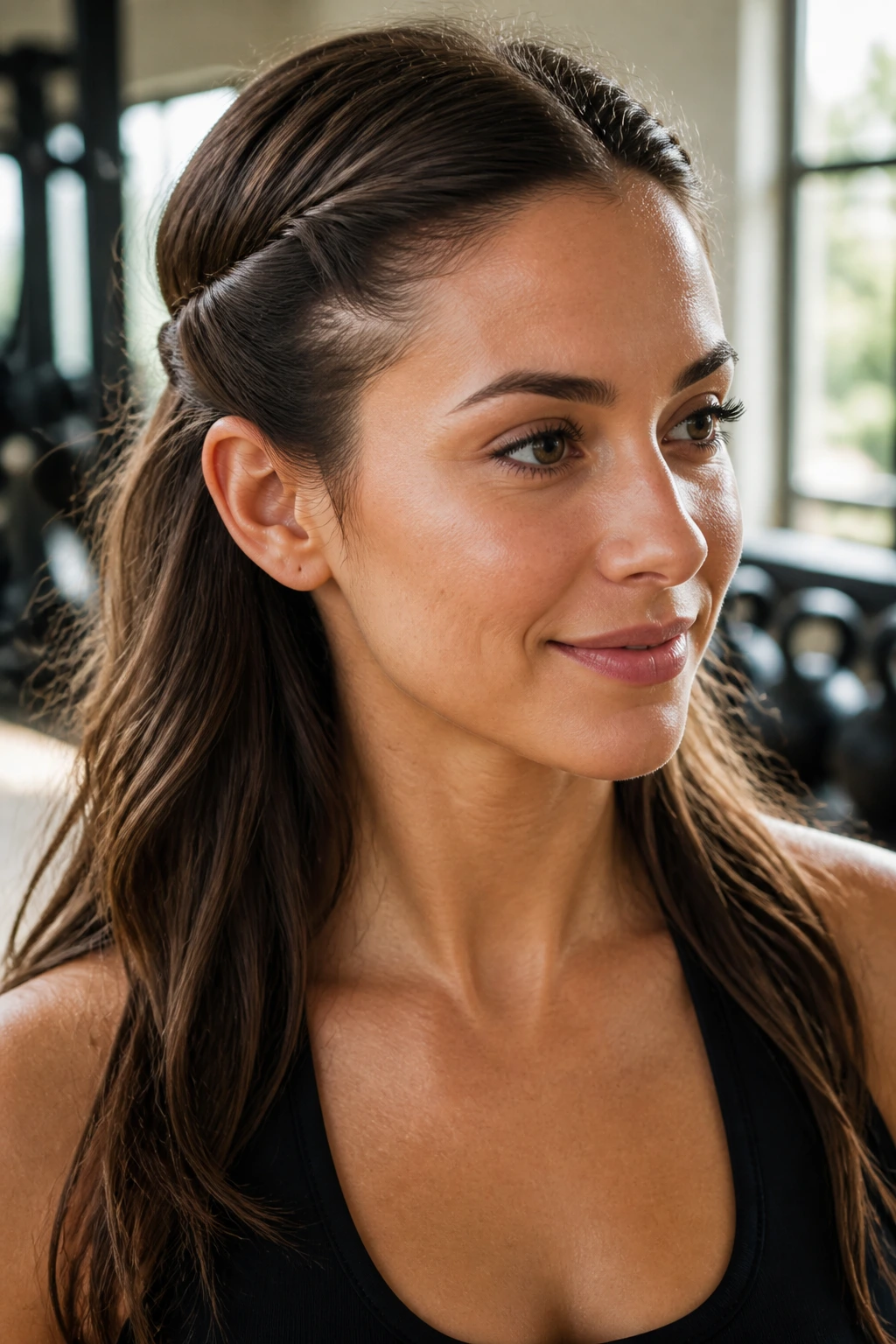
If you have thick hair and don’t want to deal with the bulk of an entire updo, a half-down style with side twists is a great compromise. By taking two small sections of hair from your temples, twisting them toward the back, and pinning them together, you keep your hair off your face while maintaining some length.
Managing the Movement
To make this work for a workout, secure the twists with a small, clear elastic at the back rather than just a pin. A pin will eventually slide out, but an elastic will hold those twists in place for the duration of a weightlifting session. It is simple, effective, and very quick to put together before you hit the weight room floor.
17. The Sleek Low Braid
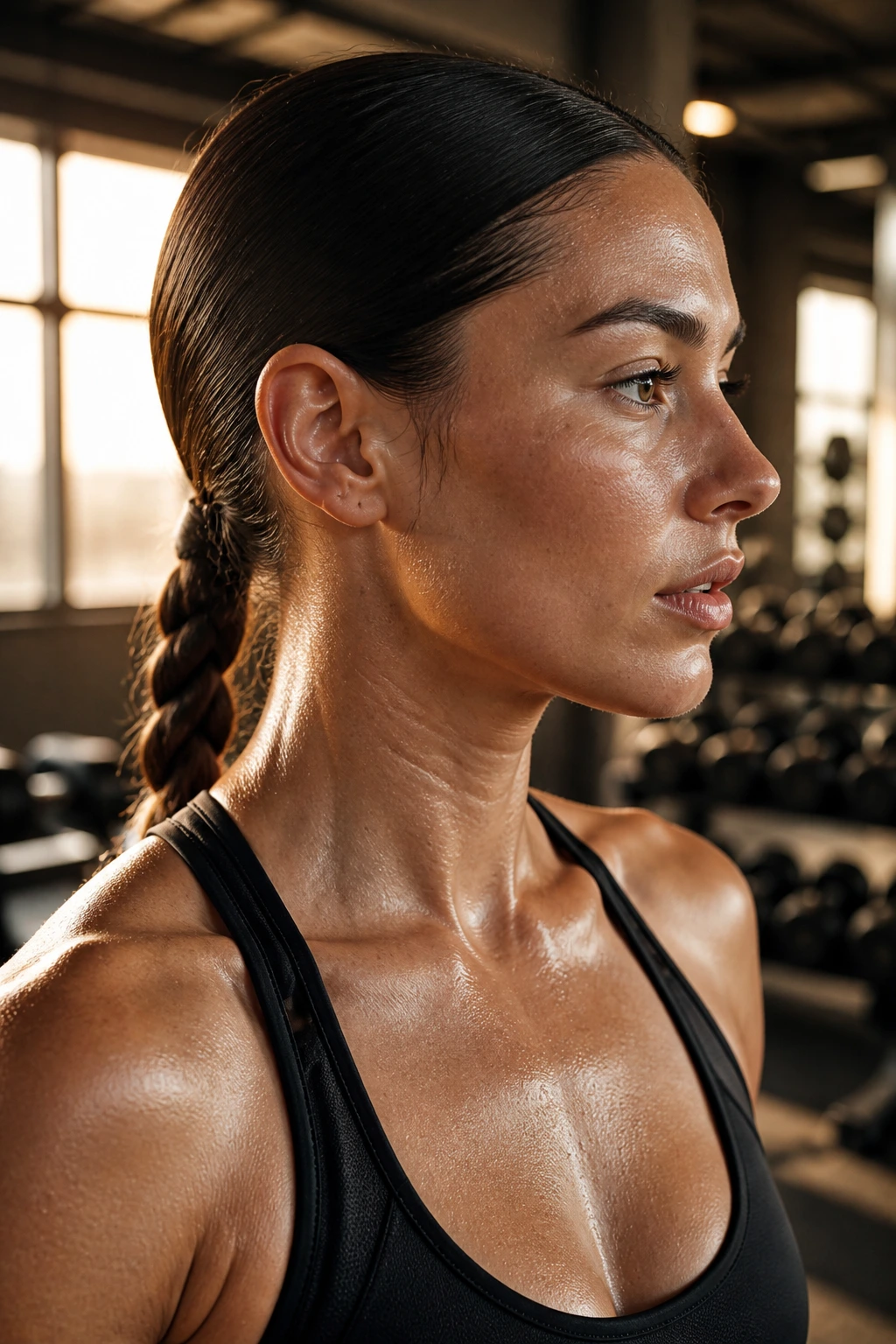
A single, low, tight braid is the ultimate “no-nonsense” style. It is easy to achieve, requires minimal equipment, and stays perfectly in place during long-distance runs or cycling classes. By braiding the hair all the way to the very tips and securing it with a sturdy band, you prevent the end of the braid from whipping against your clothes.
Why This Style Succeeds
It is minimalist and functional. There are no buns to get in the way of a bench, no high ponies to create tension at the crown, and no loose ends to manage. It is a clean, secure choice that allows you to focus entirely on your form and your breathing without distraction.
18. The Waterfall Ponytail
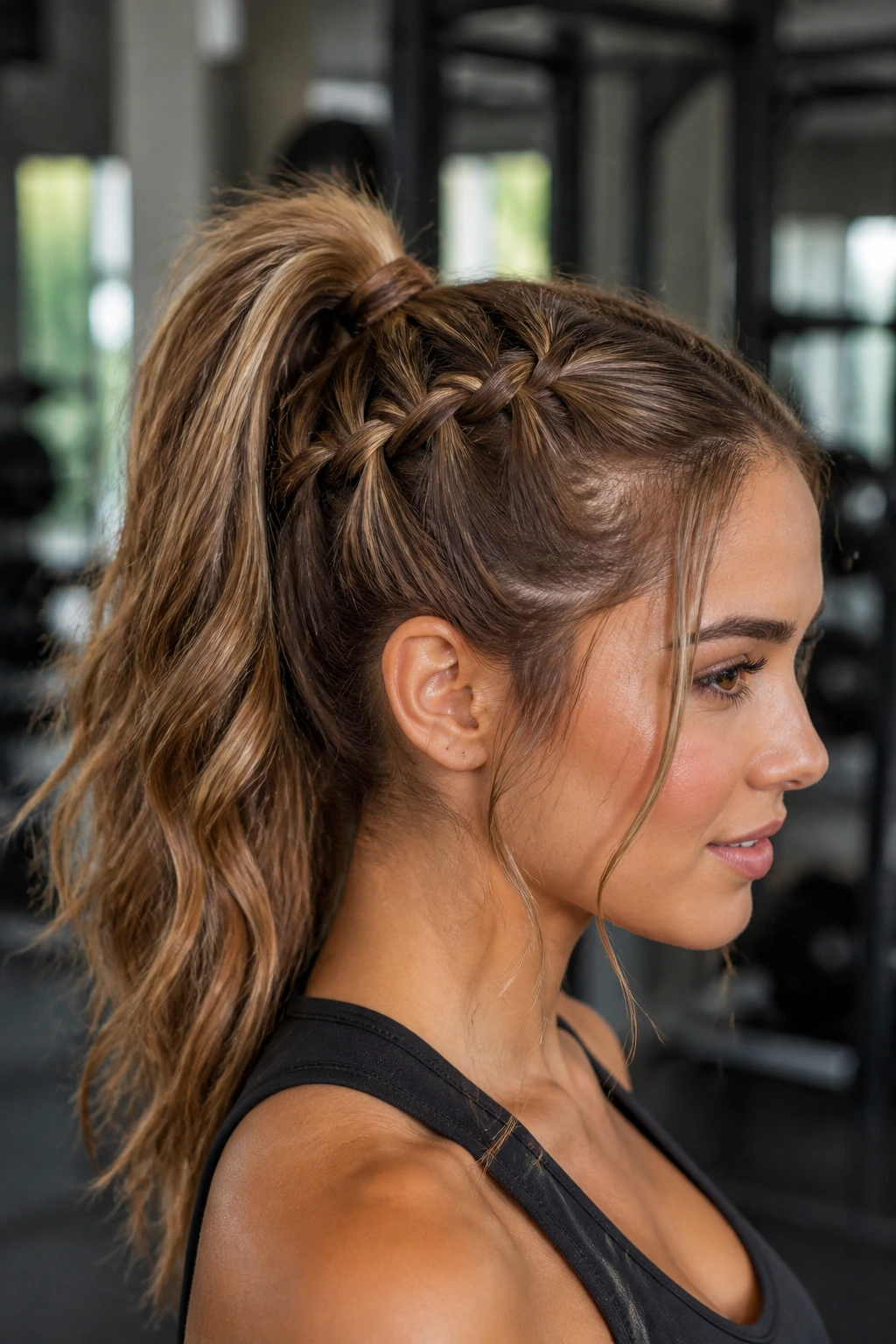
If you want to keep the hair off your face but don’t want it all pinned back, try a waterfall ponytail. This involves creating small braids that lead toward a central point at the back of your head, which are then combined into one central, high-tension ponytail.
The Benefit of the Design
The braiding provides the structure and keeps the front hair back, while the ponytail provides the necessary clearance from your neck. It’s a slightly more intricate look that holds exceptionally well because of the combination of tension from the braids and the security of the high ponytail.
19. The “Pinned-Up” Messy Bun
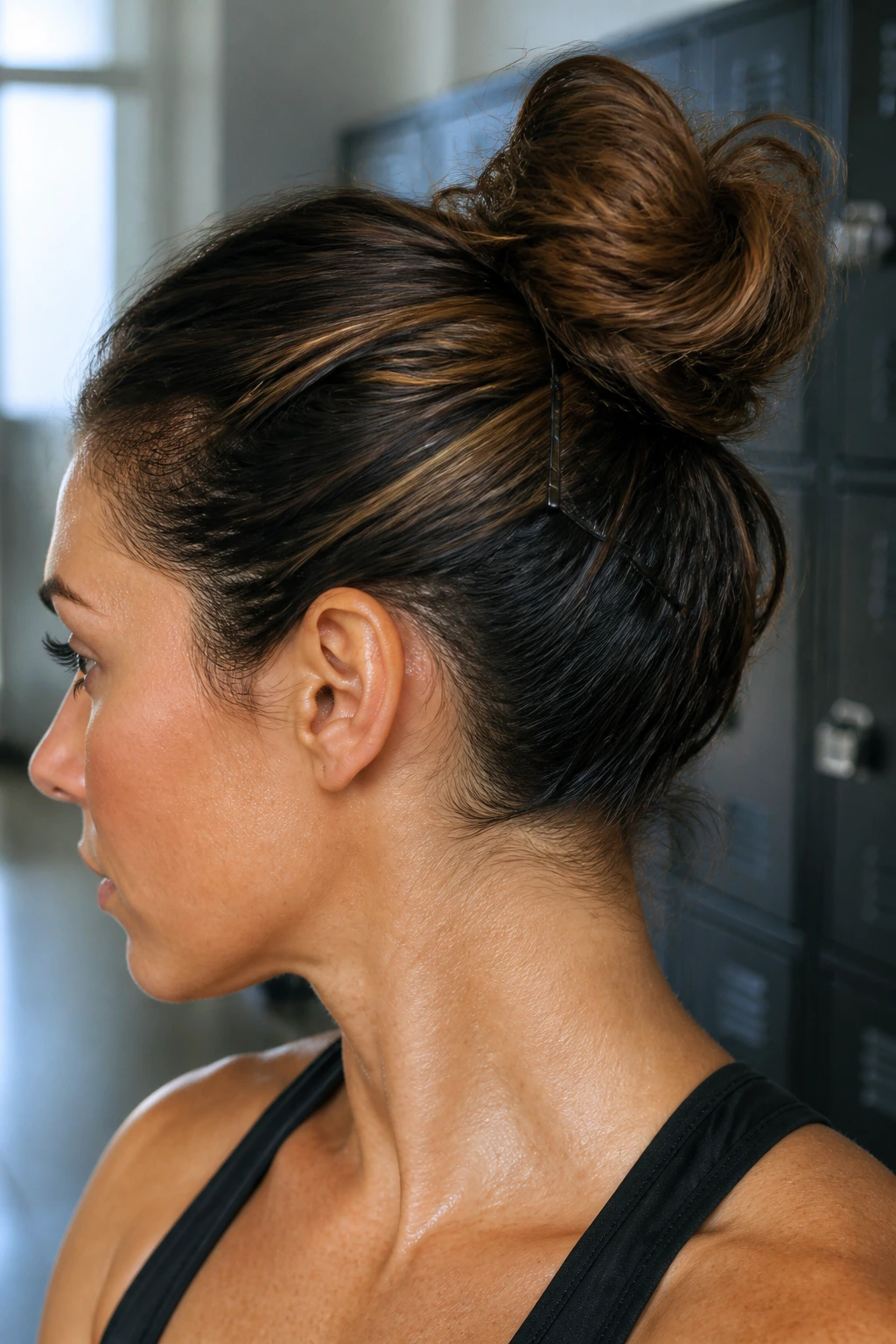
When you need to get your hair up in ten seconds flat, a messy bun is the obvious choice. However, to make it hold for a real workout, you need to swap the flimsy scrunchie for a firm-grip hair tie and use bobby pins to “anchor” the bun to the base of your scalp.
Securing the Mess
Once you have pulled your hair through the elastic a final time, use three or four bobby pins to secure the perimeter of the bun to the base. This effectively turns a loose, “lazy” bun into a locked-down, high-performance updo that won’t bounce when you jump or move.
20. The Zig-Zag Part Ponytail
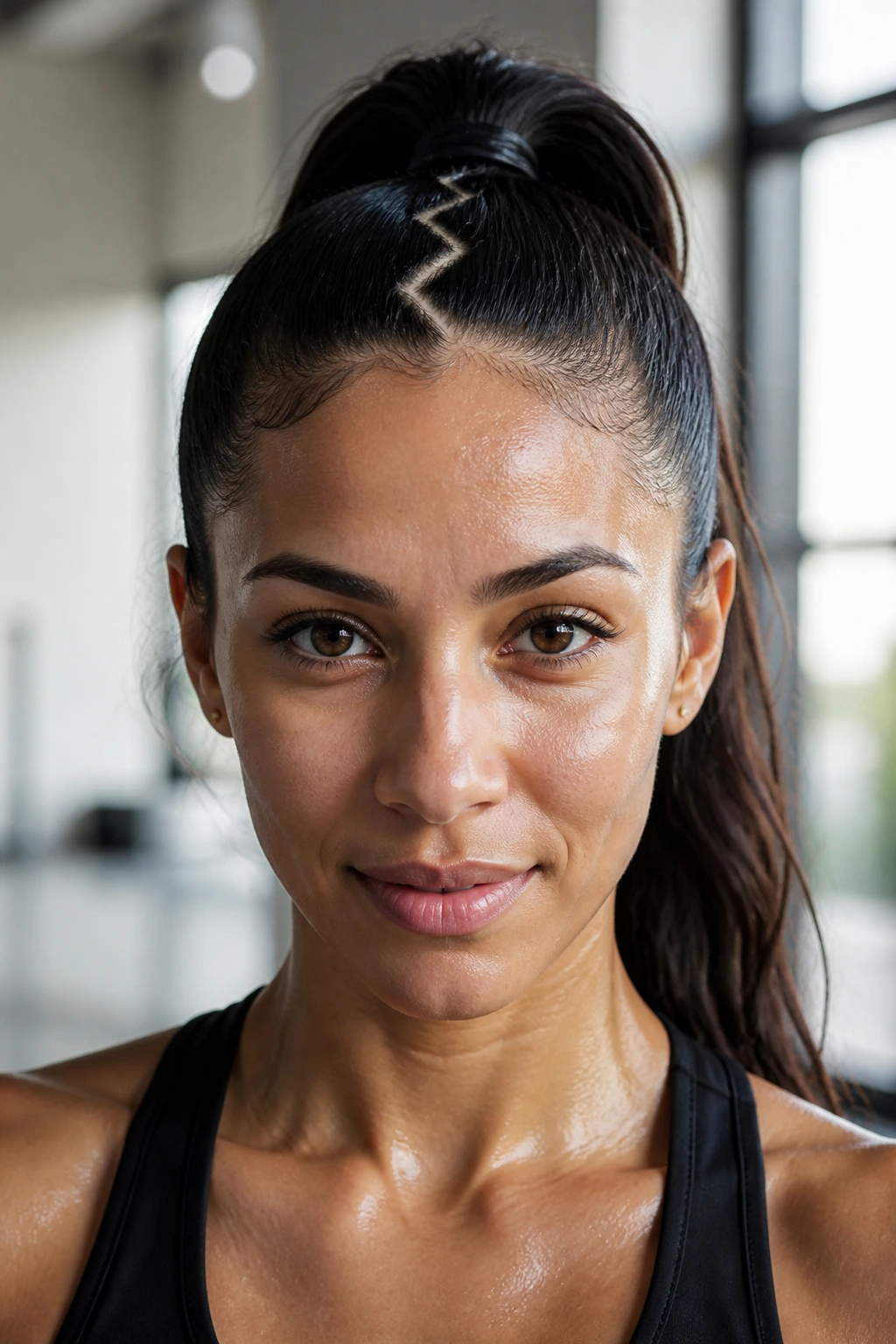
Sometimes, the issue isn’t the length of the hair, but the way it is parted. A zig-zag part is not just an aesthetic choice; it actually helps to break up the tension across the scalp, which can make a tight ponytail feel slightly more comfortable during long workouts.
Getting the Look
Use the tail of a comb to create a clean zig-zag line from your forehead to the crown of your head. Gather the hair into a high, secure pony. The zig-zag keeps the hair flat against the scalp in different directions, preventing the “pull” that happens when all your hair is forced in one uniform direction.
21. The Inverted Braid Pony
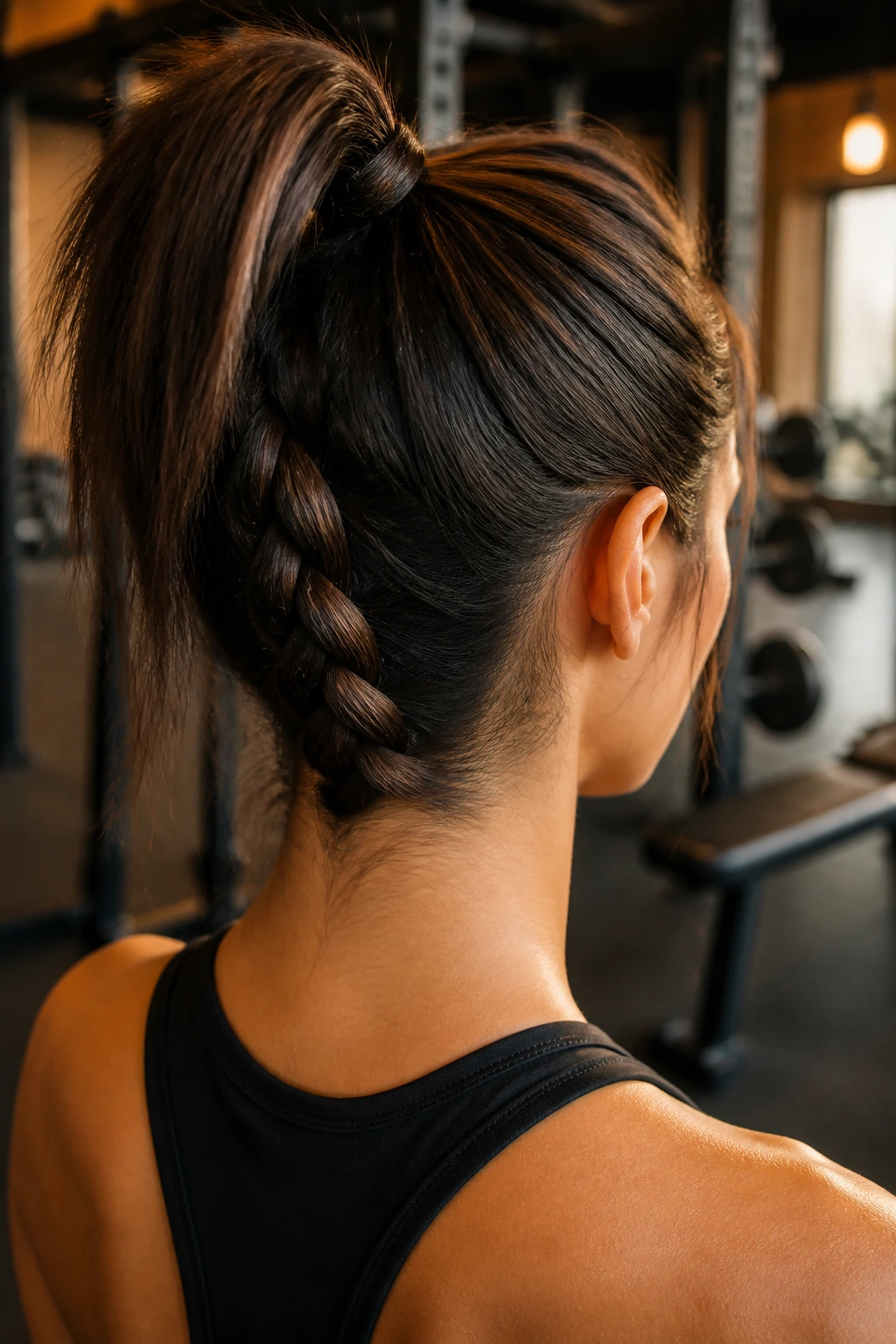
An inverted braid involves braiding your hair upside down, starting from the nape of your neck and working your way up to the crown, where you then secure it into a ponytail. This is a pro-level style that takes a bit of practice but offers the ultimate security for the back of your hair.
Why It’s Effective
By braiding the hair at the nape of the neck, you are actively preventing any strays from falling down your back. It is arguably the most secure way to handle hair that is prone to frizz or tangling. Once you reach the crown, the rest of the hair is already elevated and ready for a ponytail, making it a complete, locked-down system.
22. The High-Performance Pigtails
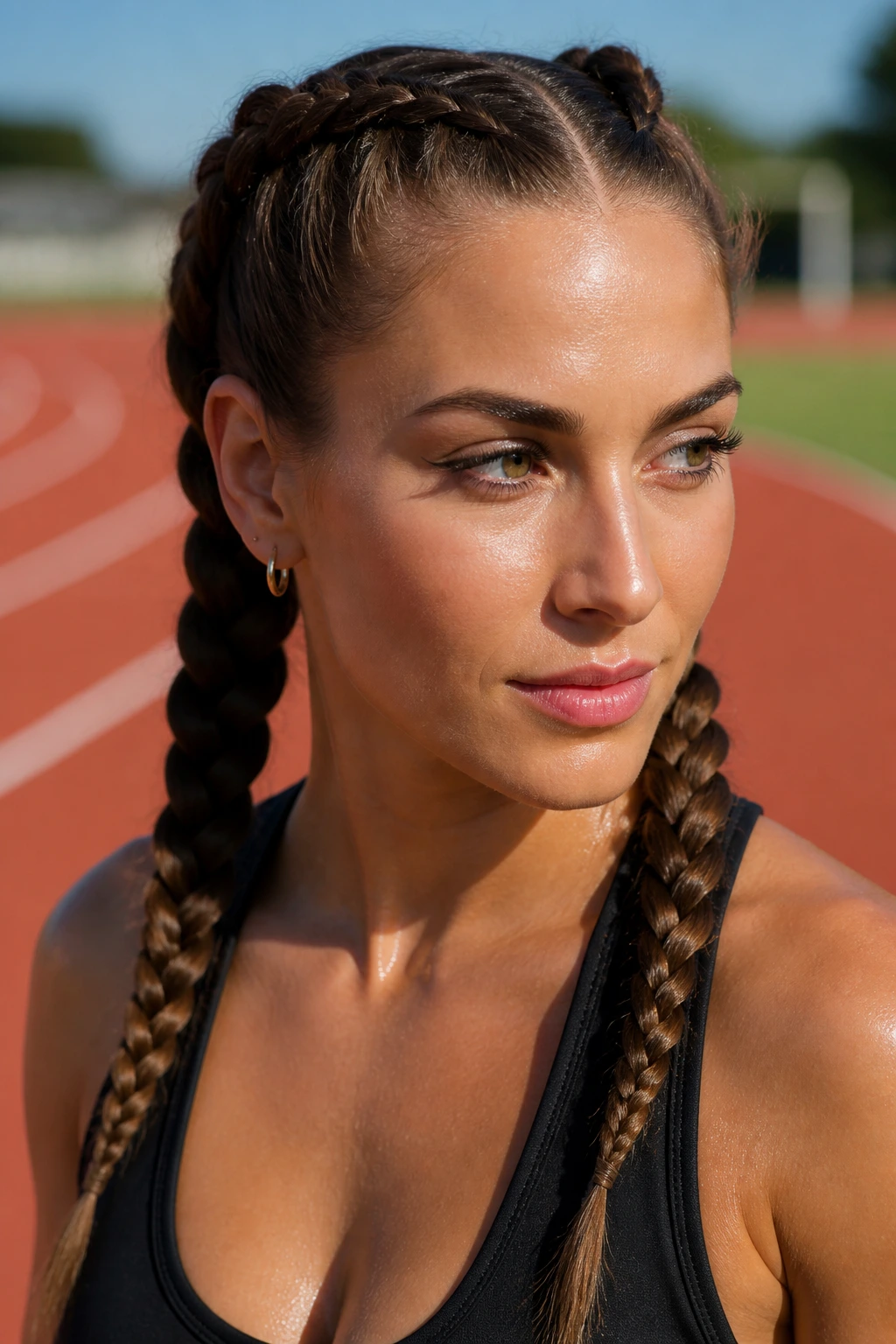
Pigtails aren’t just for children; they are an incredibly practical way to distribute hair weight for high-intensity training. By splitting your hair into two, you have less volume to contend with on each side. Two Dutch braids or two tight rope twists are far more secure than any single-pony style.
The Final Verdict
If you are doing heavy cardio or HIIT, pigtails are superior to a single ponytail because they don’t bounce. They lie close to the head and stay out of your peripheral vision. They are a functional, highly secure choice that allows for maximum movement without any hair-related interference.
Final Thoughts
Finding the right hairstyle for your workout is often a matter of trial and error. The goal isn’t necessarily to look like you’re heading to a photo shoot, but rather to remove the physical obstacle of loose hair so you can focus on your performance. Whether you prefer the absolute lock-down security of a double Dutch braid or the quick, functional ease of a high-tension top knot, the most important element is the quality of your elastics and the tension of your starting point.
Take a few minutes to experiment with these styles during a lighter day, such as a steady-state walk or a gentle yoga session, to see which ones hold best for your specific hair texture and length. Don’t be afraid to add a bit of texture spray or a touch of firm-hold pomade; these tools are your best friends when it comes to keeping everything in place. Once you find the two or three styles that work for your routine, you will find that your training sessions become significantly more focused and comfortable.