

Texture is a powerhouse in the world of men’s style, yet it is so often ignored in favor of the flat, slicked-back looks that dominate mainstream media. If you were born with coils, waves, or ringlets, you are working with a distinct structural advantage that straight hair simply cannot mimic. The right cut does not just manage your hair; it highlights the natural geometry of your face, adding volume and character where others have to use a bottle of product and a blow dryer to fake it. Whether you are dealing with a tight, gravity-defying afro or a loose, beach-blown wave, the goal is always to find the balance between wild and refined.
Finding the perfect style requires you to move past the idea that “curly” is a single hair type. Your specific curl pattern—be it Type 2 waves, Type 3 spirals, or Type 4 zig-zags—dictates how a cut will sit against your scalp and how it will move throughout the day. Some cuts require a dedicated morning routine involving leave-in conditioners and diffusers, while others are built for the “wake up and go” aesthetic. We are moving away from the era of trying to tame curls into submission. Instead, we are leaning into them.
1. The Modern Textured Taper
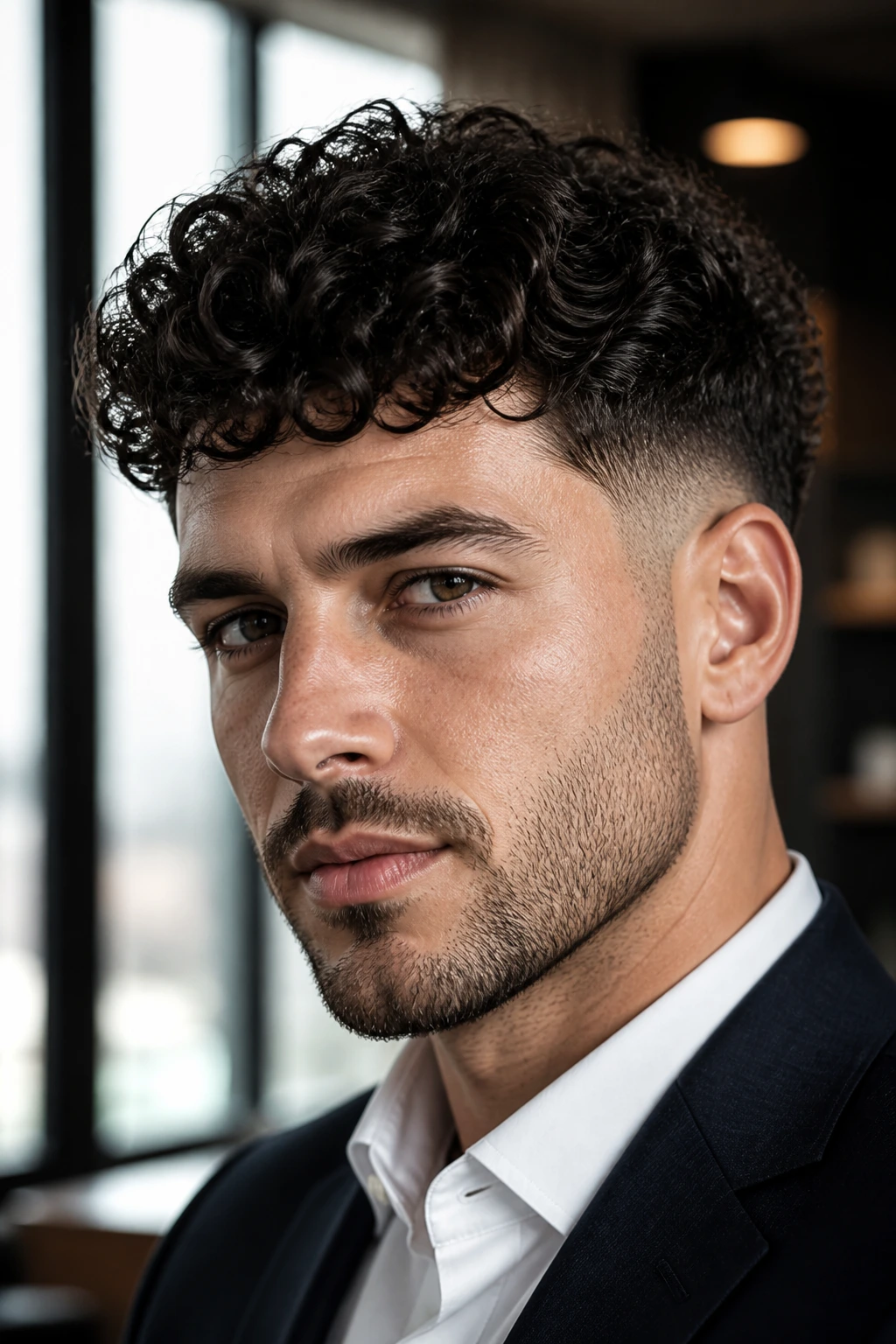
This is the entry point for almost any man looking to bring order to his curls without losing their signature personality. By keeping the hair on the sides short and gradually fading it into a longer, more voluminous top, you create a sharp silhouette that contrasts with the softness of your curls. It is a work-horse style because it looks just as good in a boardroom as it does on a weekend trip.
Why It Works for Most Curl Patterns
The taper creates a clean border that frames the face, ensuring the hair does not look unkempt. The longer top allows your natural curl pattern to fully develop and bloom.
Maintenance Tips
- Use a light-hold cream to define curls while the hair is still damp.
- Ask your barber to taper the neckline high to keep the look crisp for weeks between visits.
- Pro tip: If you have fine curls, avoid heavy gels, as they will pull the hair down and make it appear flatter than it actually is.
2. The Curly Undercut
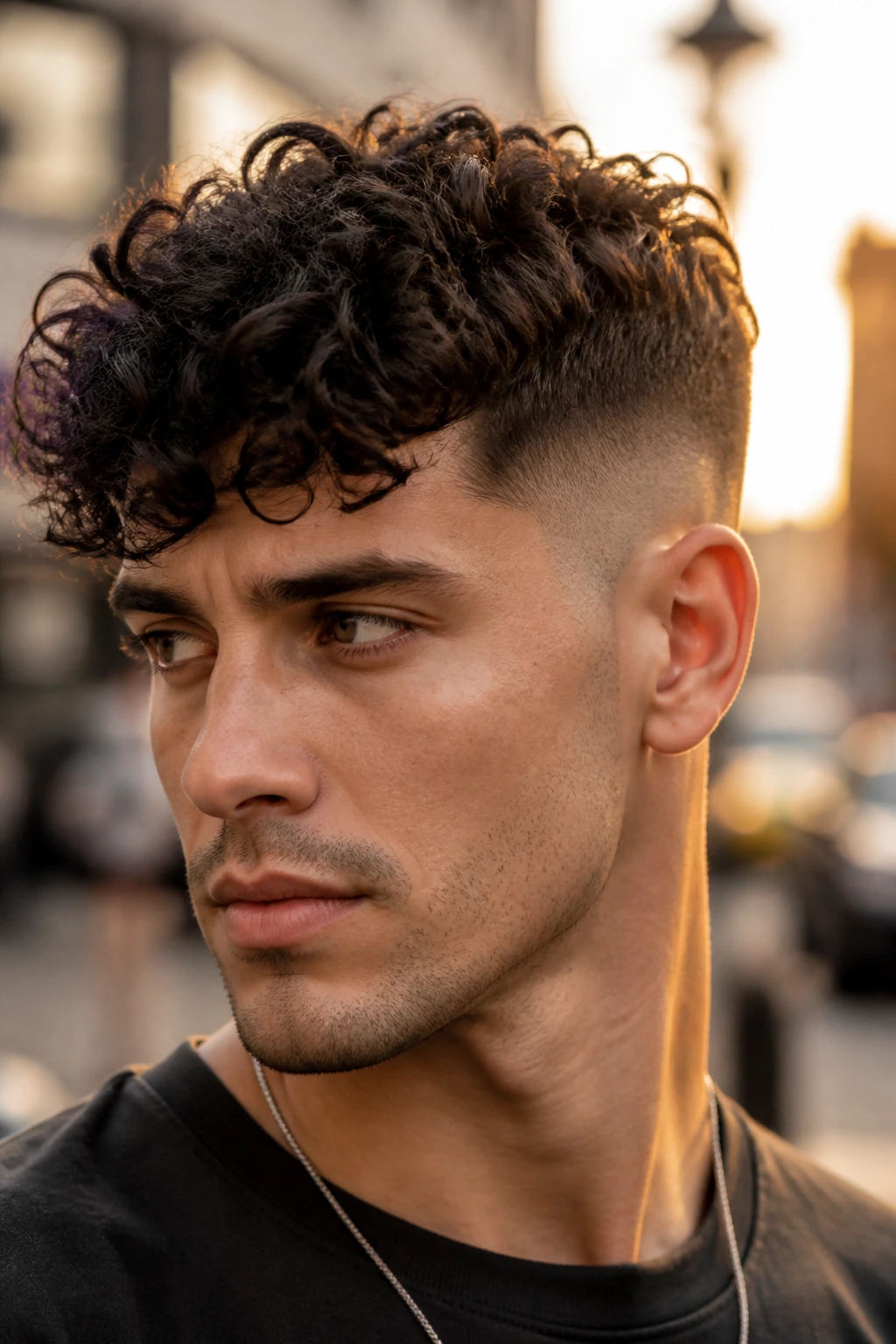
If the taper is about subtle transitions, the undercut is about bold contrast. By shaving the sides down to the skin—or a very short guard—the hair on top becomes an island of texture. This style is exceptionally popular because it eliminates the “bulk” that often plagues thick curly hair, making it far easier to manage in humid environments.
Achieving the High-Contrast Look
The key here is the disconnect between the sides and the top. You want a sharp line where the buzz ends and the curls begin. This isn’t a blended fade; it’s a deliberate, architectural drop-off.
Styling for Maximum Volume
Since the sides provide no support, you have to ensure the top stays lifted. Use a volumizing mousse on damp hair and scrunch it upward toward the crown. This provides the lift necessary to prevent the hair from lying flat against your head, which can ruin the geometry of an undercut.
3. The Classic Curly Shag

The 1970s are back, but with a refined edge that feels intentional rather than accidental. The shag is defined by varying lengths that are cut to emphasize the natural shape of your curls, often resulting in a messy, carefree look that lands around the ears or mid-neck.
Who Should Choose This Style
If you have looser, Type 2 or early Type 3 curls, this style is ideal. It frames the face and works best for men who want a lower-maintenance, slightly rebellious look that doesn’t require daily styling with product.
The Importance of Pruning
You might think the shag is “lazy,” but it requires the most precise cutting. Your stylist needs to point-cut the ends to remove weight, preventing the dreaded “triangle head” effect where the hair gets wider and bushier toward the bottom.
4. The Short Curly Crop
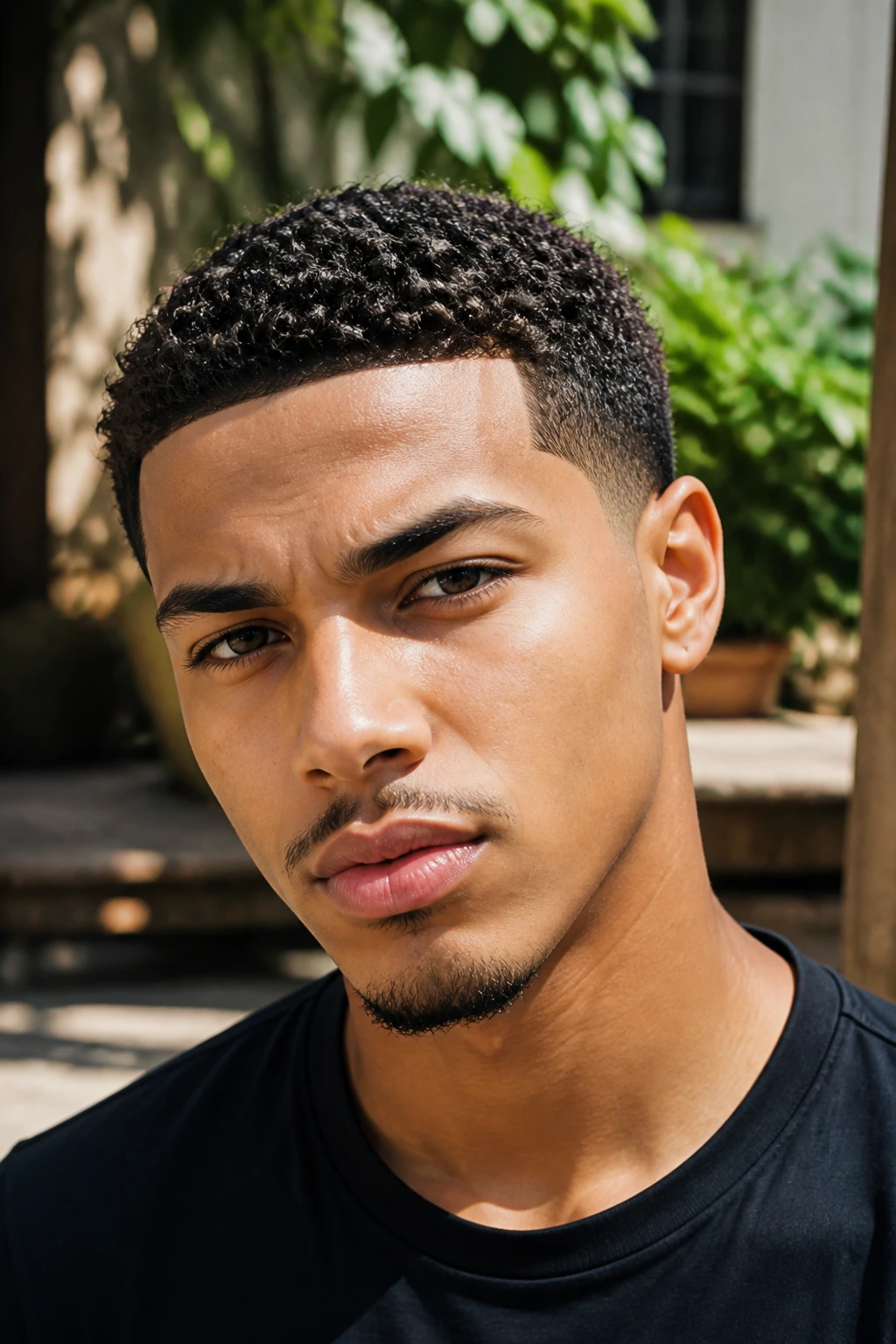
Think of this as the refined younger brother of the buzz cut. It’s a very tight style, usually kept under an inch or two in length, that focuses on keeping your curls short enough to be manageable while still showing off their texture. It’s perfect for men with Type 4 hair who want to avoid the time-intensive process of growing and styling longer coils.
Why It’s Great for Summer
Heat and humidity are the natural enemies of defined curls. By keeping the crop short, you eliminate the surface area that usually ends up frizzy.
The Barber’s Secret
Because the hair is so short, the shape of the cut is everything. A high-quality edge-up or “line-up” along the forehead and temples is essential. Without those clean lines, a short crop can quickly look like a shaggy, overgrown buzz cut.
5. The Curly Pompadour
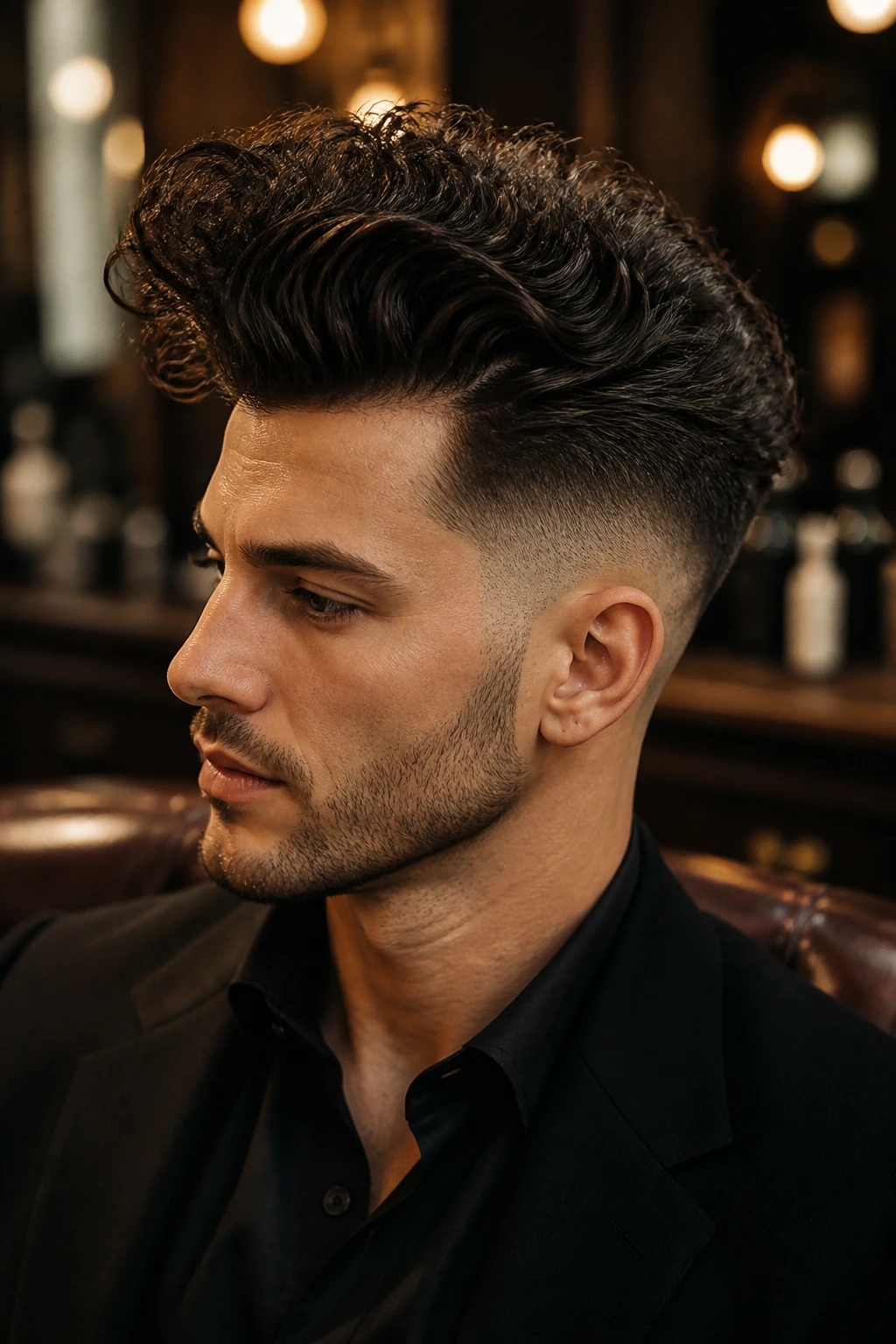
This is a daring style that uses your hair’s natural volume to create a towering, swept-back appearance. It requires a bit more effort than most, but the result is a sophisticated, vintage-inspired look that commands attention.
Building the Structure
- Start with damp hair and a strong-hold pomade.
- Use a blow dryer with a diffuser attachment to lift the roots while combing the front section upward and back.
- Once the hair is about 80% dry, stop touching it to avoid breaking up the curl clusters.
Handling the Sides
A pompadour relies on the contrast between the high volume on top and the tight sides. Stick to a fade or a classic taper on the sides to ensure the focus remains on that dramatic, sweeping crest of hair.
6. The Mid-Length Curly Fringe
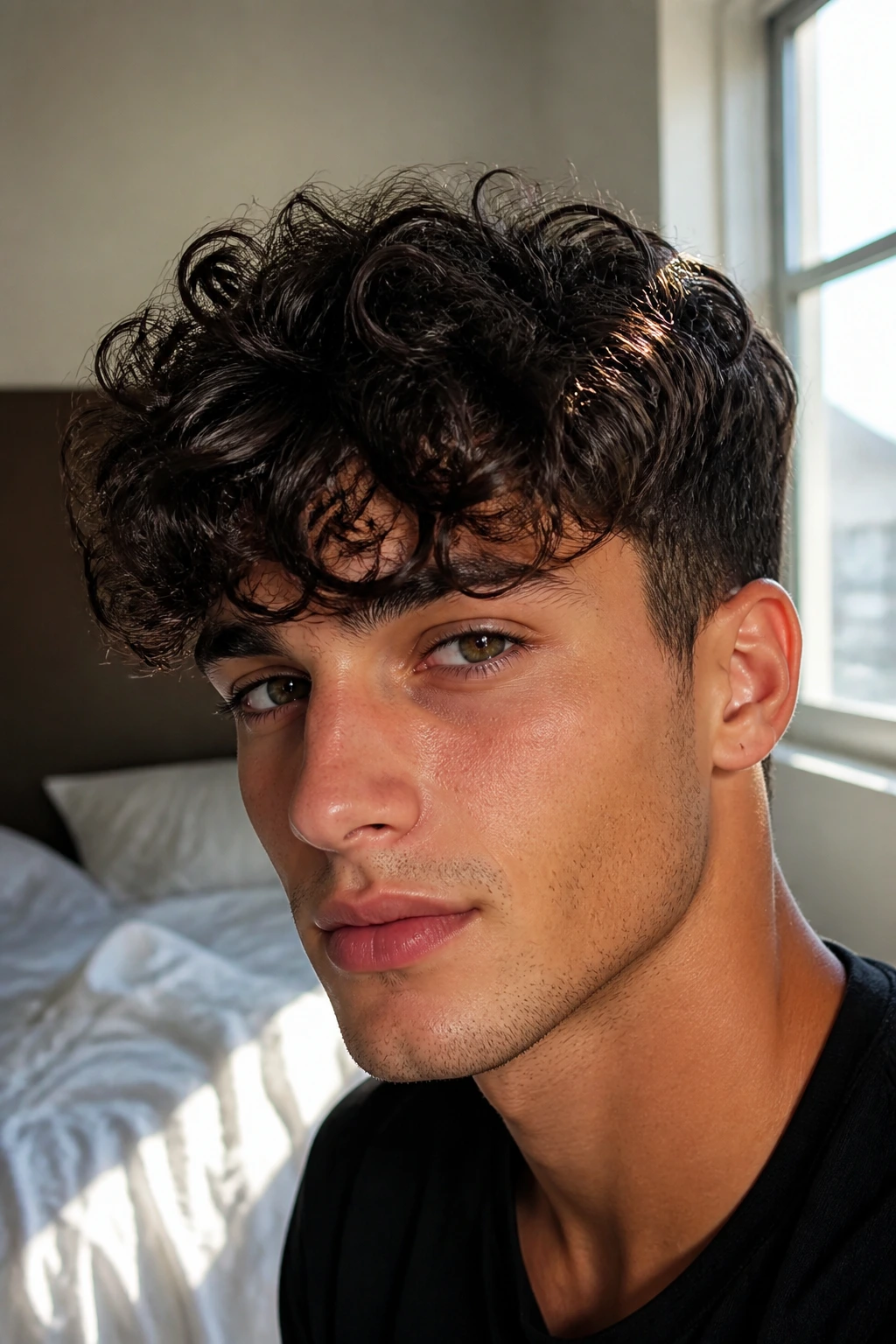
If you are tired of pushing your hair back or up, consider bringing it forward. The curly fringe works by letting the hair grow longer in the front so it naturally hangs over the forehead. It’s a softer look, often paired with a fade on the sides to keep it modern.
Styling the Fringe
- Use a leave-in conditioner to ensure the fringe stays soft and doesn’t get crunchy.
- Let it air dry whenever possible to keep the curls healthy and bouncy.
- Warning: If your hair grows very quickly, your fringe will start to get in your eyes within a few weeks. Keep a pair of scissors handy for small trims, or plan for monthly visits to the barber to tidy the ends.
7. The Natural Afro Taper
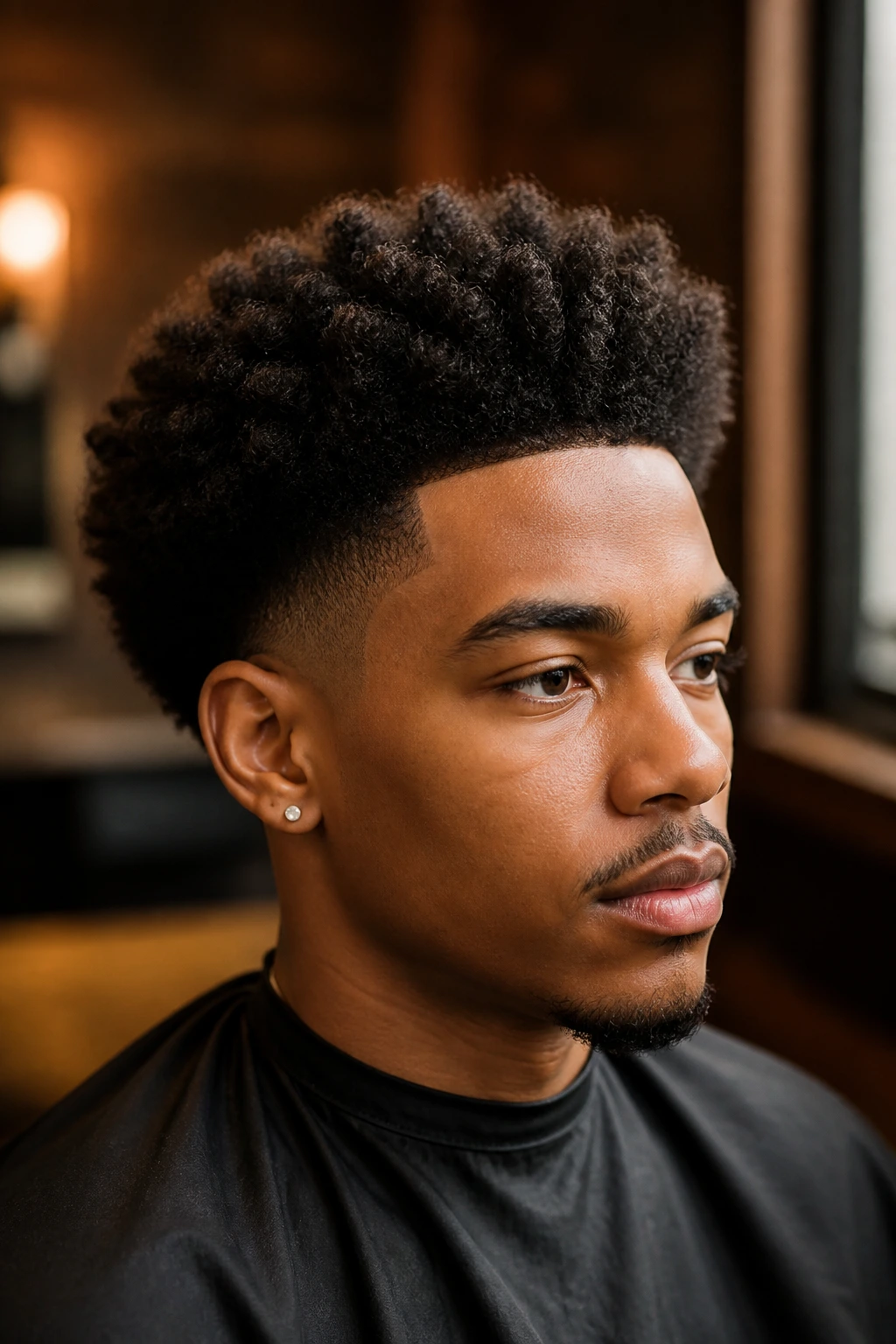
There is a specific pride in a well-groomed afro, and adding a taper makes it look more tailored. You keep the classic rounded shape on top, but you carve away the edges to give the style a polished finish that doesn’t look like you just rolled out of bed.
Maintaining the Shape
The shape of an afro is all about consistency. You need a wide-tooth comb or an afro pick to pull the roots out, ensuring the volume is distributed evenly. Do not over-pick; you want to maintain the integrity of the curl clusters.
Nutrition and Moisture
Type 4 hair, which is most common for afros, is prone to dryness. Invest in a high-quality oil-based moisturizer or shea butter mix. Apply this to the hair when it is damp to seal the moisture in, as this is the only way to keep the hair from snapping or becoming brittle.
8. The Curly Top Knot
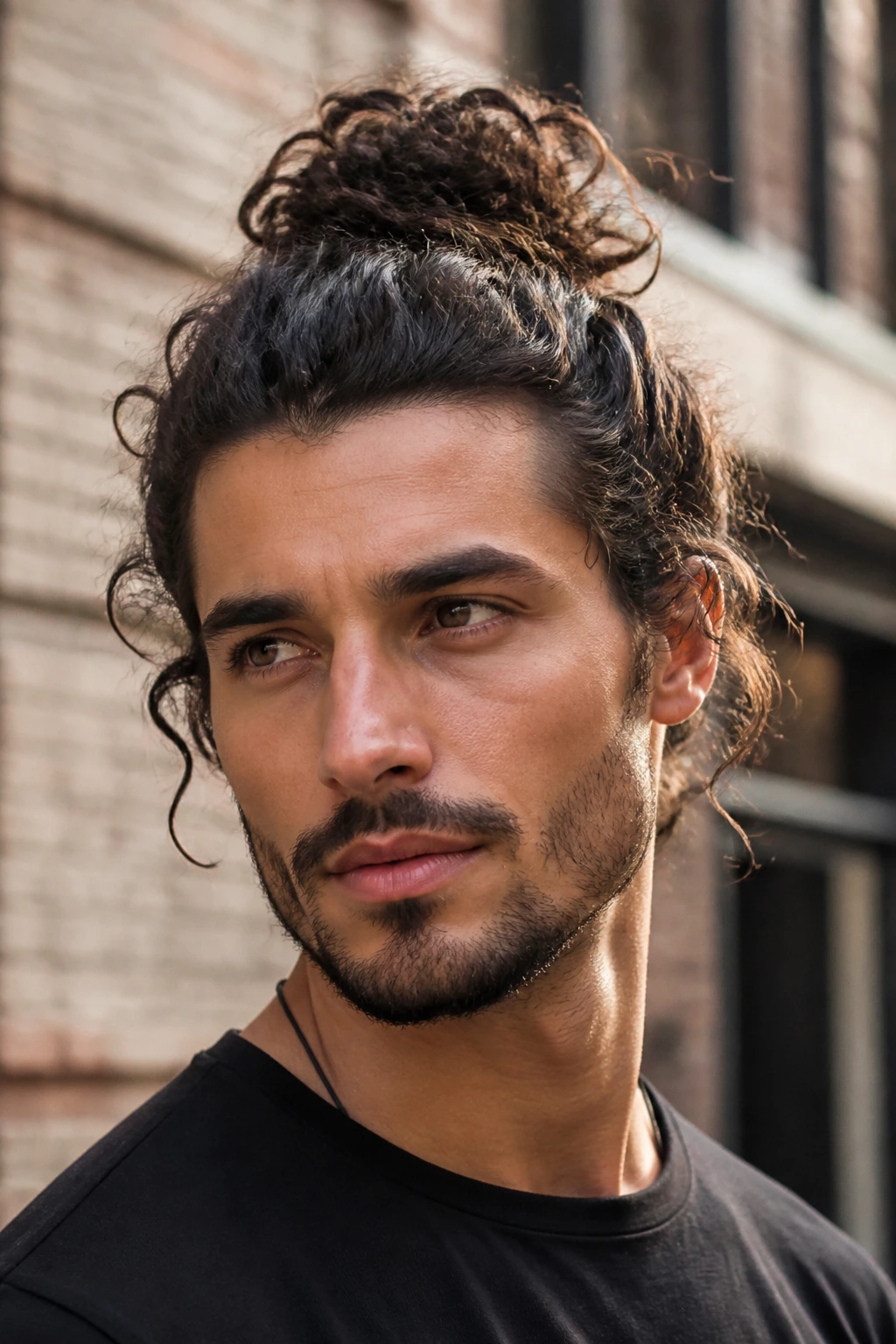
The man bun often gets a bad reputation, but when it’s done with curly hair, the texture adds a level of complexity that straight-haired buns lack. The messiness of curly hair gives the knot a more natural, organic feel that sits well above the collar.
Constructing the Knot
- Use a soft hair tie that won’t pull on your roots.
- Don’t try to pull it into a tight, slick ball.
- Let a few curls escape around the temples and the back of the neck to soften the silhouette.
The “Half-Up” Alternative
If you aren’t ready to pull all your hair back, the “half-up, half-down” style is a great compromise. It keeps the hair out of your face while still allowing you to show off the length and volume of your curls.
9. The Curly Mohawk
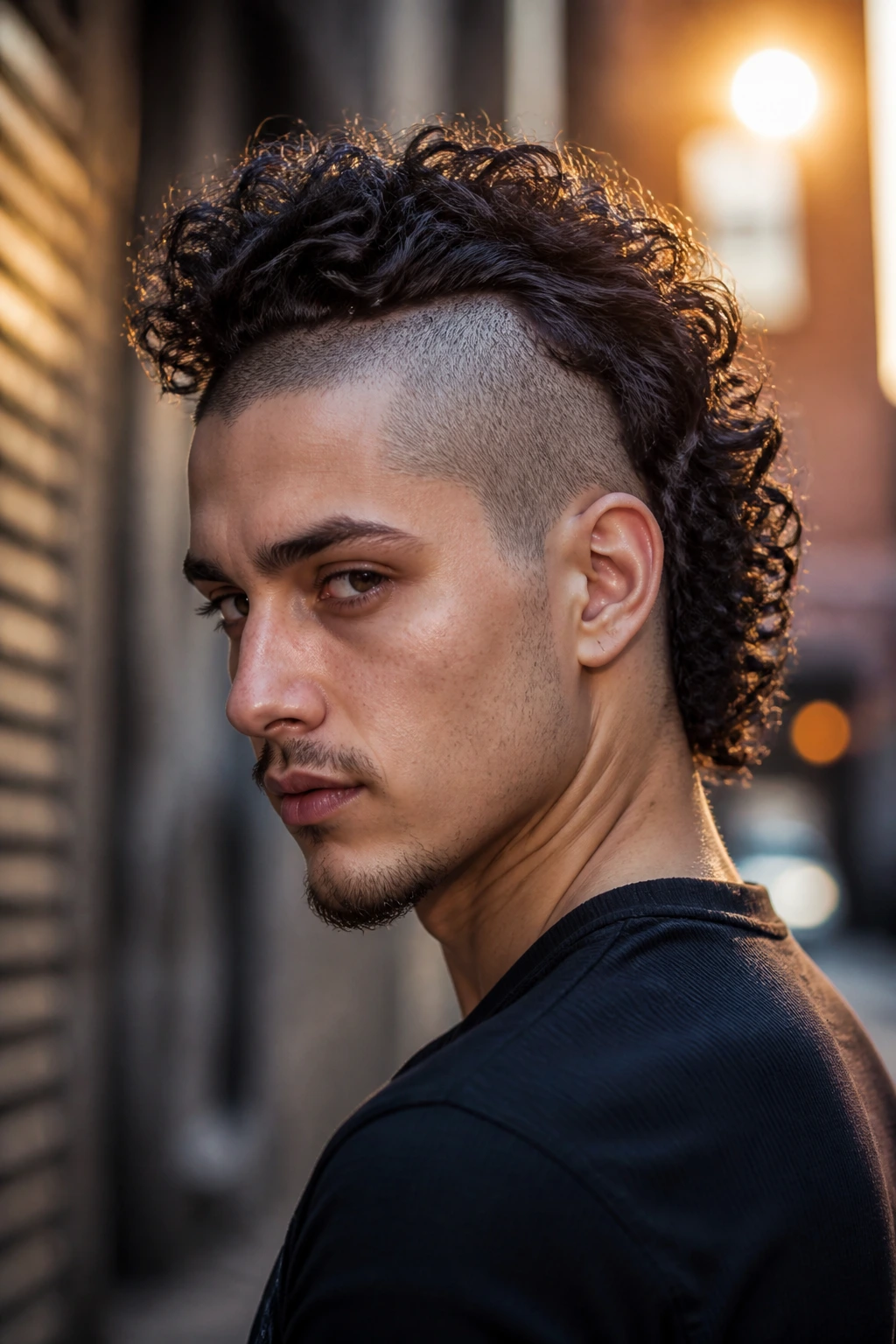
This is for the man who wants to make a statement. It involves shaving the sides down to the skin and leaving a strip of hair running from the forehead down to the nape of the neck. With curly hair, the Mohawk takes on a much more architectural, sculptural quality.
Why Curls Change the Dynamic
Most Mohawks rely on spiking the hair up with glue. With curly hair, the natural buoyancy of your ringlets does the work for you. You don’t need a heavy product; you just need a cut that encourages the hair to stand tall.
Maintenance Considerations
This is the highest maintenance cut on this list. Because the contrast is so extreme, even a few days of regrowth on the sides will significantly alter the look. If you choose this path, be prepared for bi-weekly trips to the barber.
10. The Side-Swept Curls
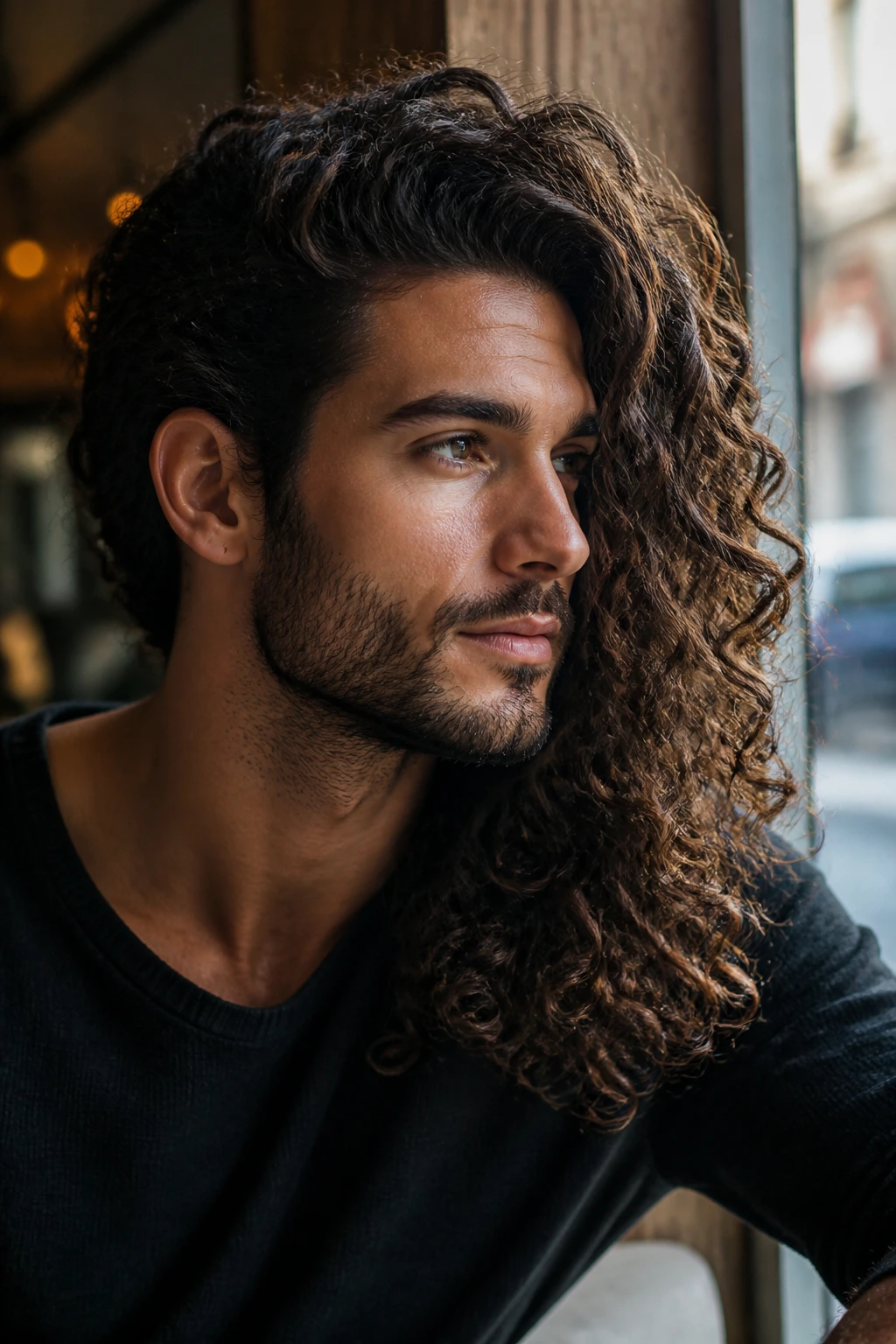
Sometimes the best styling technique is simply finding your natural part and working with it. For men with longer curls, pushing the hair to one side creates a dramatic, cascading effect that frames one side of the face while leaving the other open and clean.
Why This Style Succeeds
It’s effortless. Unlike a pompadour or a knot, this style doesn’t require fighting your hair’s natural growth direction. You are simply guiding it to where it wants to go anyway.
Managing the Part
If your hair tends to fall forward, use a small amount of sea salt spray on your roots. This adds grip and texture, helping the hair stay swept to the side without flopping back over your forehead by lunchtime.
11. The Curly Quiff
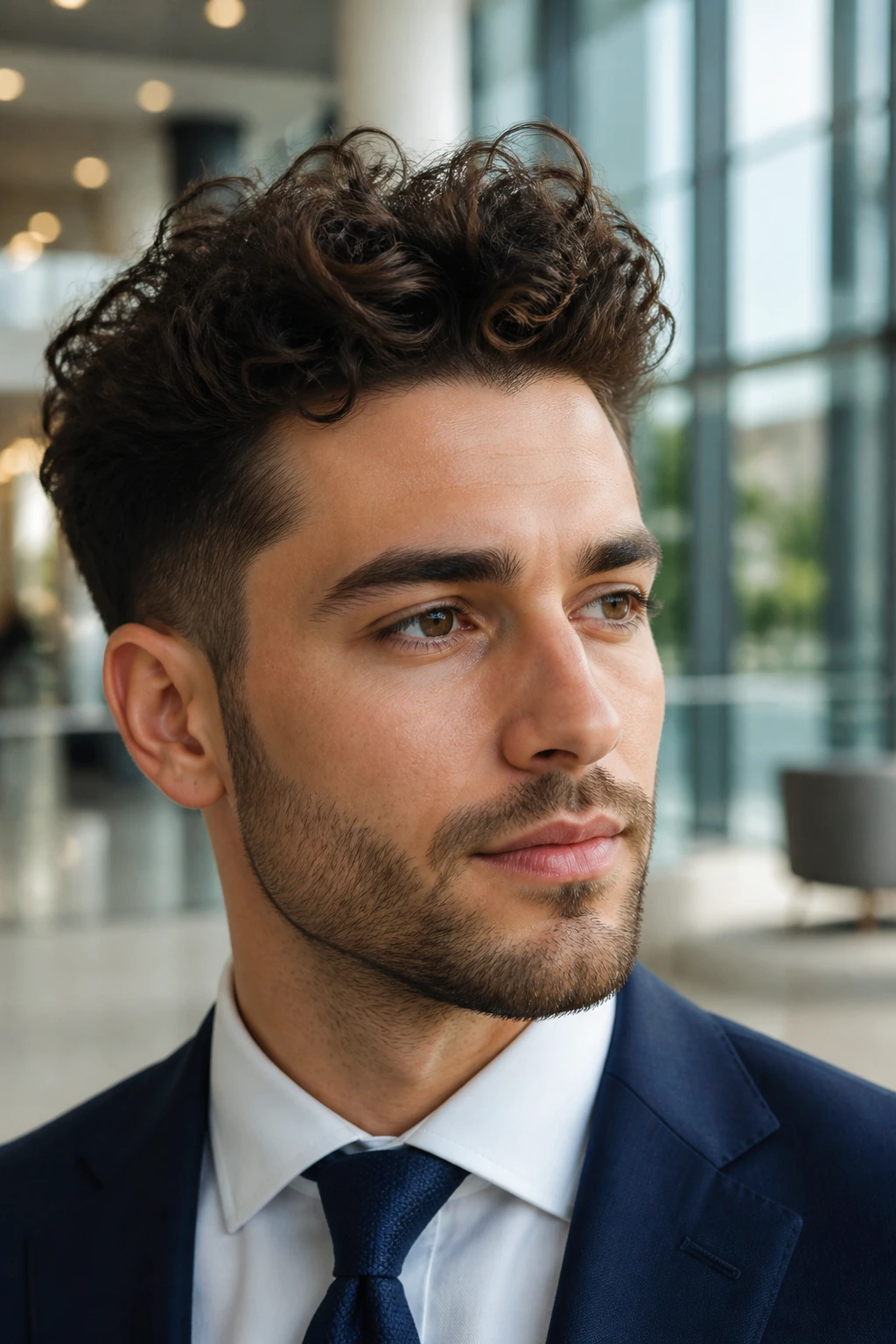
The quiff is a quintessential men’s style, but in the curly world, it becomes much more interesting. It’s basically a shorter, less extreme version of the pompadour. You want volume at the front that tapers off toward the back of the head.
The Styling Process
- Use a small amount of sea salt spray on damp hair.
- Focus your blow-drying on the front section, pulling it upward and slightly back.
- Finish with a matte-finish styling paste to hold the shape without adding unwanted grease.
Comparing to Other Styles
Unlike the fringe, which hides the forehead, the quiff highlights it. This is a great way to open up your face, making you look alert and clean-cut. It’s a versatile choice for anyone who works in an office but wants to keep their natural curls.
12. The Messy Textured Layers
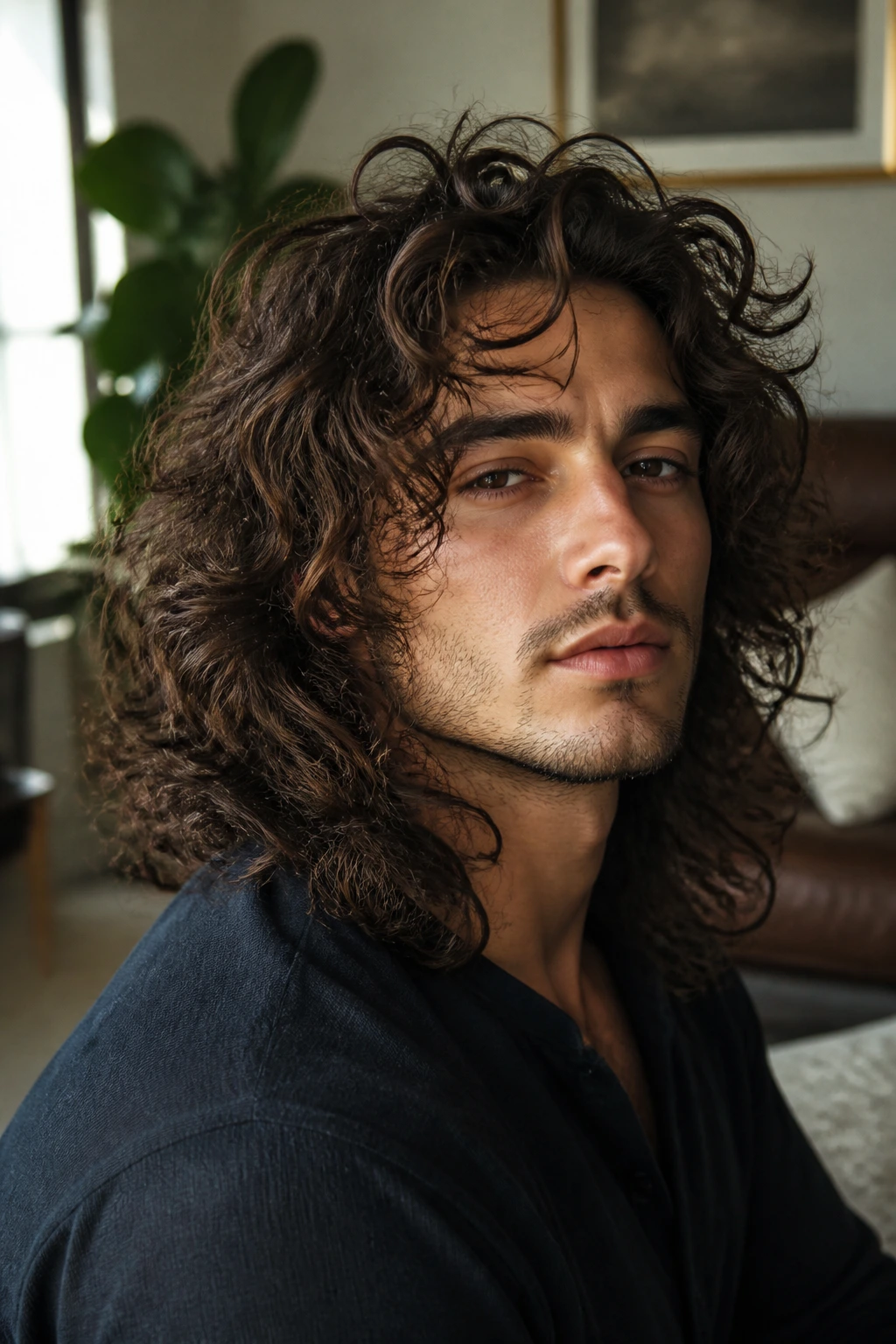
If you have long, unruly hair that you aren’t quite ready to chop, layers are your best friend. A good stylist can cut “internal” layers into your hair, removing the weight that makes curls clump together into a heavy, triangular mass.
The Benefits of Layering
Layers allow the top curls to sit lighter and more independently. This increases volume at the crown and reduces the “flat top” look that many men with long curly hair struggle with.
How to Dry Your Hair
To get the best out of layers, you must stop using a traditional towel. The rough fibers cause friction, which creates frizz. Use an old cotton t-shirt or a microfiber towel to gently squeeze the water out, then let it finish air-drying. The layers will respond by creating a more natural, voluminous shape.
13. The Curly Mullet
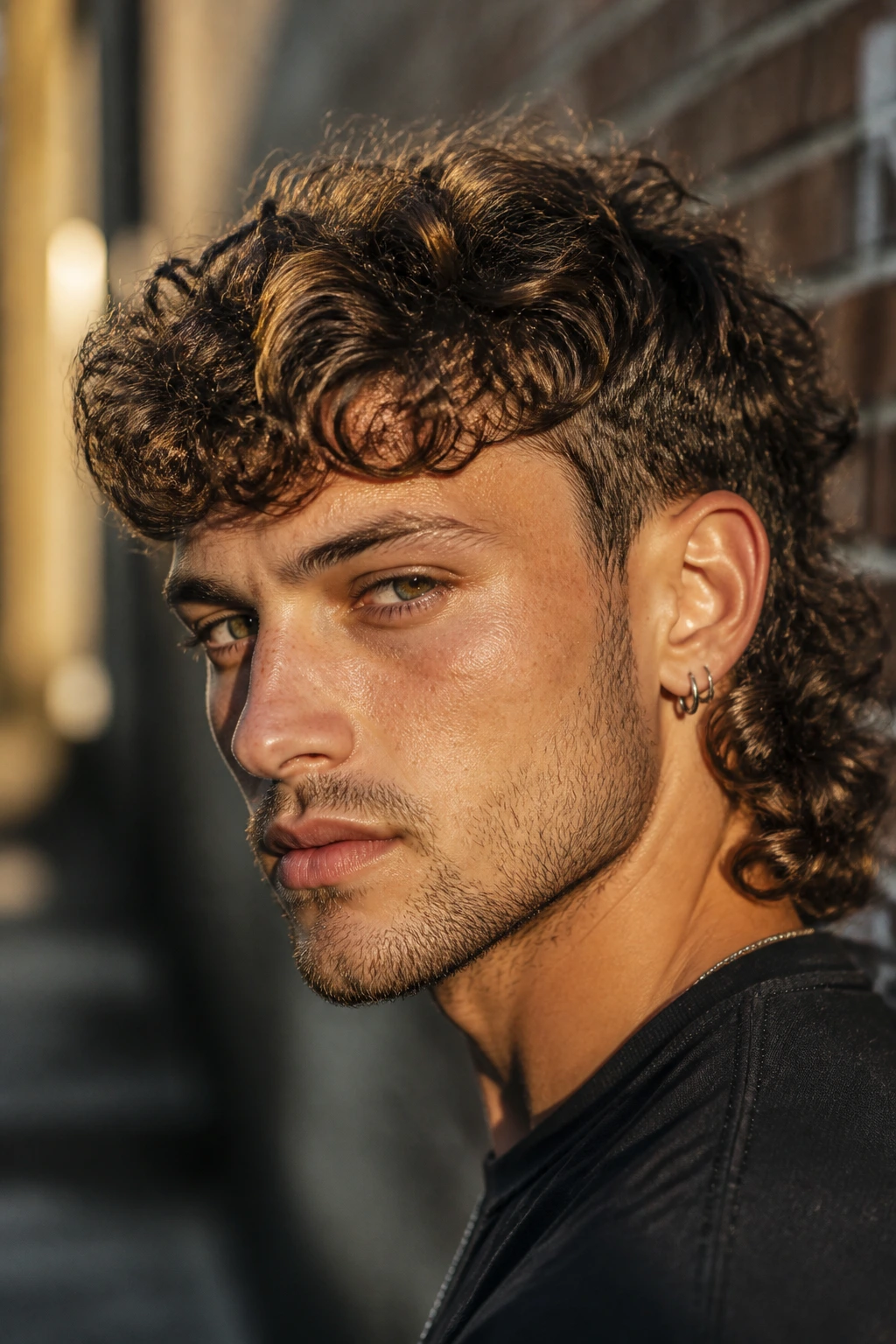
Yes, the mullet is back, and it looks remarkably good when paired with curls. The short top and sides contrast with the longer back to create a look that is part retro-revival, part modern-cool.
Why It Works for Curls
The hair in the back gets to curl and twist in its natural pattern, while the front remains tidy. It’s a surprisingly practical way to wear long hair without dealing with the frustration of having strands constantly falling into your eyes.
Styling the Mullet
Don’t over-product this. The mullet relies on a “rock and roll” aesthetic. Let the curls in the back get a little wild. Use a curl-defining cream, but avoid the temptation to make it look too polished or perfect.
14. The Curly Caesar Cut
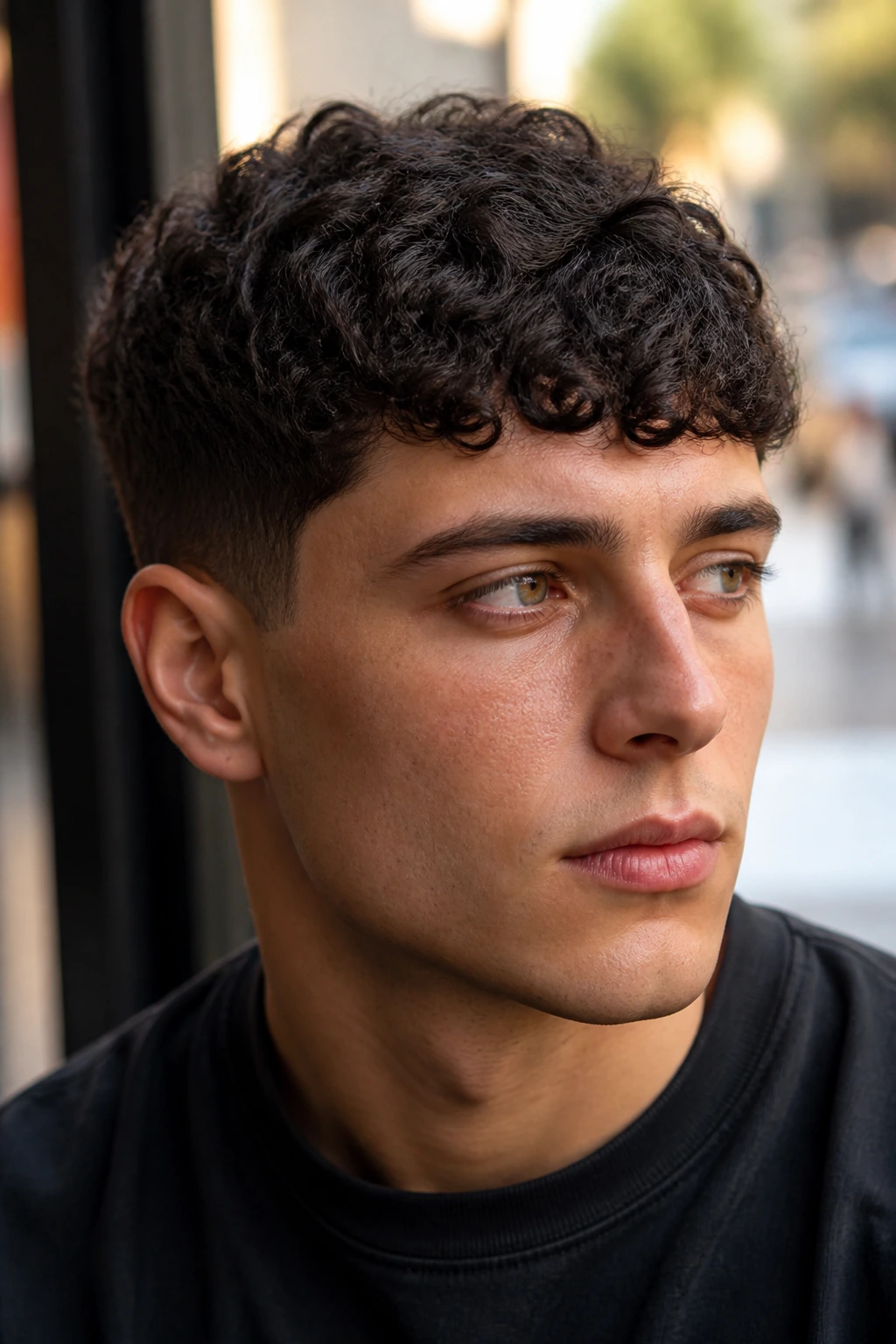
The classic Caesar is a short, layered cut with a horizontal fringe. When you apply this to curly hair, you get a textured, sophisticated look that is incredibly easy to manage. It’s a great option for men who want a style that looks intentionally cropped but doesn’t feel like a military-grade buzz cut.
Benefits of the Caesar
The fringe is very short, meaning you never have to worry about it growing into your eyes. It’s a very masculine style that draws attention to the jawline and brow.
Essential Care
Because the hair is kept relatively short, you’ll want to ensure the scalp is hydrated. Use a gentle, sulfate-free shampoo to avoid stripping the natural oils from your scalp, as an itchy scalp is far more visible when your hair is cropped close.
15. The Curly High Top
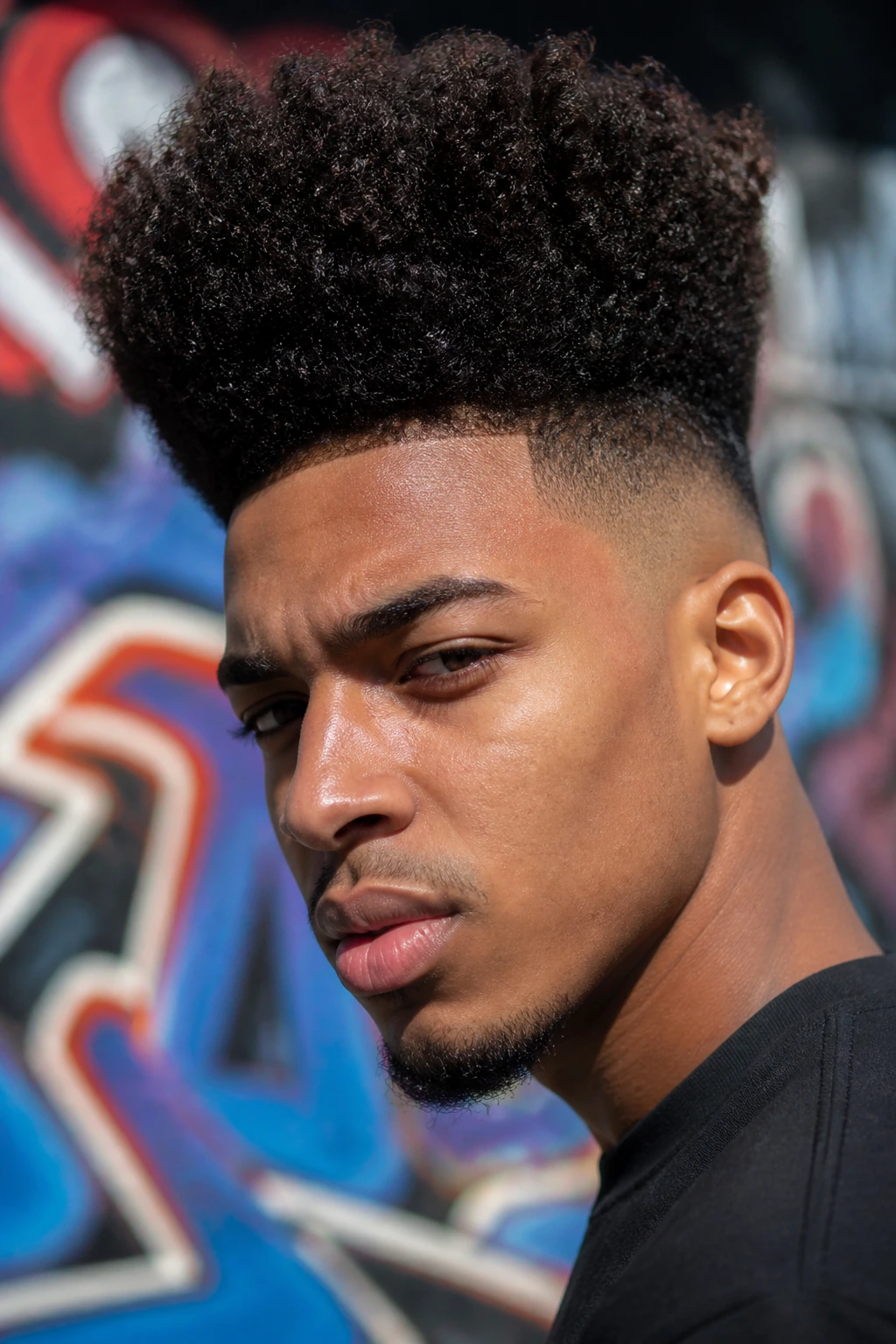
Inspired by the golden age of hip-hop, the high top is a bold, vertical style. It keeps the sides very tight—often with a fade or a design shaved into the temple—while allowing the hair on the very top to stand up and out.
Building the Height
To keep the hair standing vertical, you need to keep the hair healthy and light. If the hair gets weighed down by product, it will collapse. Use a light, water-based gel and a fine-toothed pick to gently pull the curls upward from the roots.
Design Elements
This style is the perfect canvas for a custom shave design. Since the sides are so short, you have a blank slate to add geometric patterns or crisp lines, which provides a nice contrast to the soft, rounded top.
16. The Curly Taper with Part
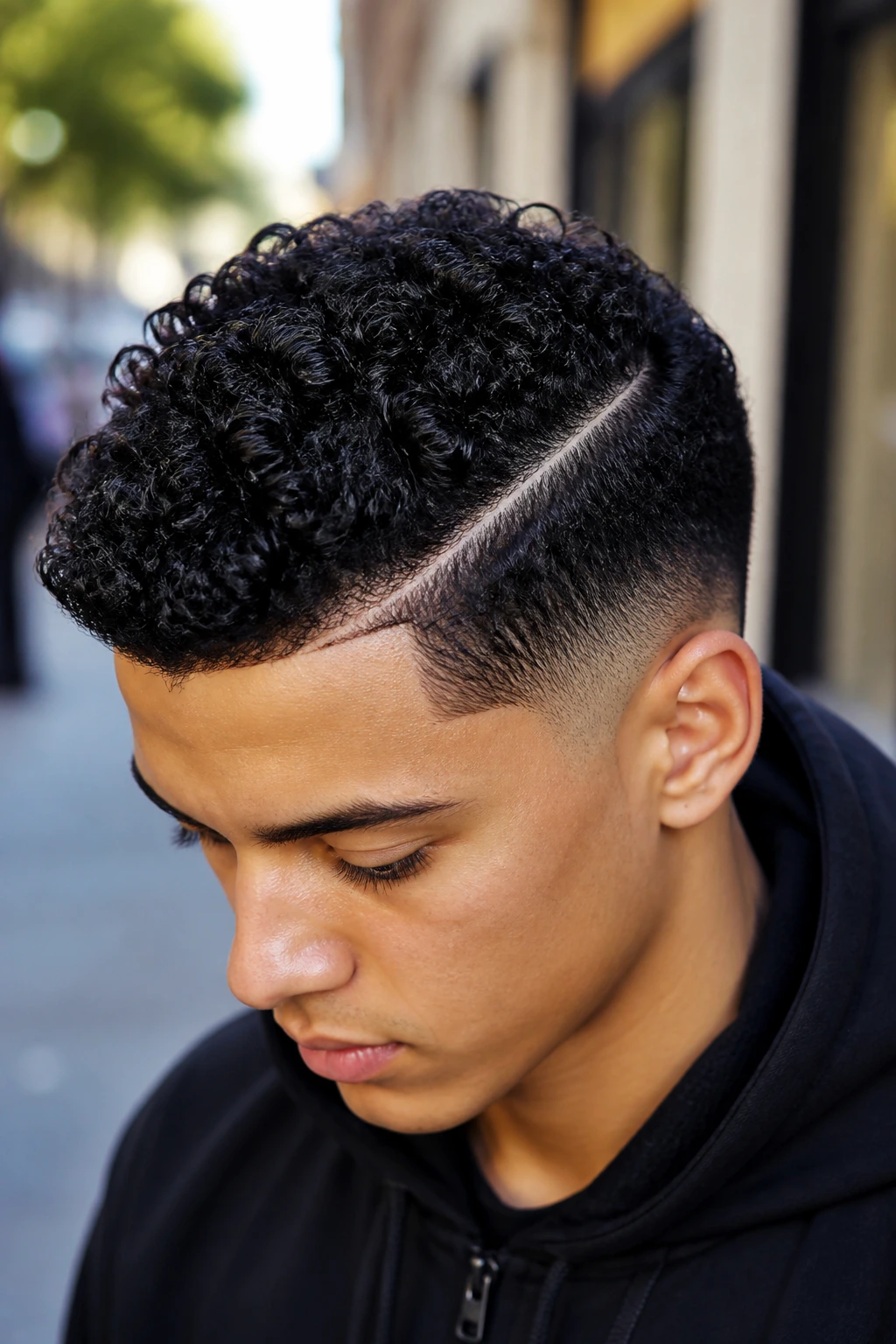
Adding a hard part to a curly haircut instantly makes it look more professional. It creates a structured focal point that directs the eye. You can achieve this by having your barber shave a fine line into the scalp where your natural part sits.
Why This Matters
Curly hair can look chaotic. A hard part forces a sense of order on the head. It tells the world that the “messy” curls are a style choice, not a lack of grooming.
Maintenance
You will need to have your barber touch up the line every 10–14 days. If the line starts to grow out, it loses its crispness. If you don’t want to commit to the maintenance, simply use a styling product to “train” a deep part manually without the shave.
17. The Curly Bro Flow
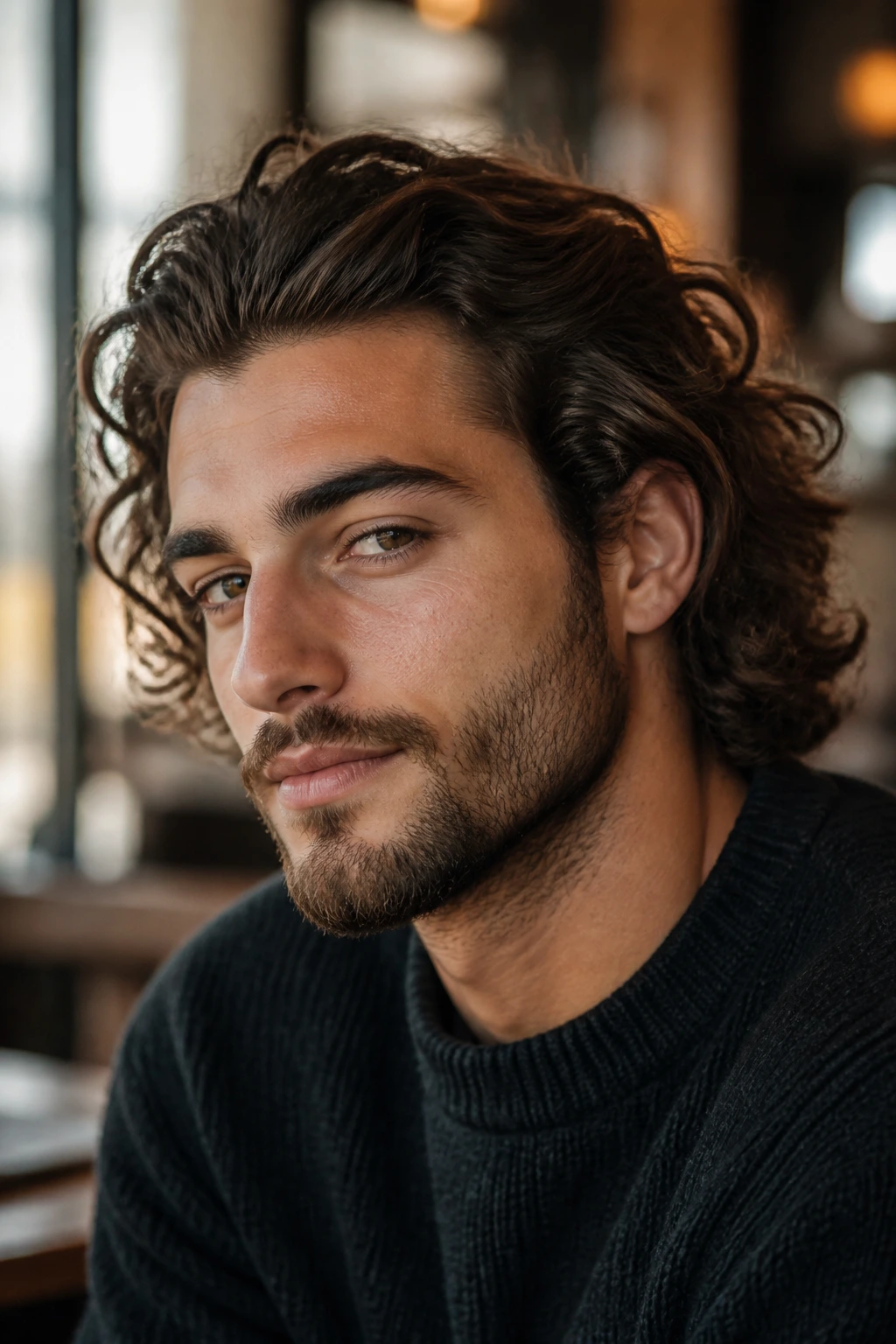
The “bro flow” is a medium-length style where the hair is pushed back in a way that suggests it was just swept through with a hand. On curly hair, this looks less “surfer” and more “classic artist.” It’s a sophisticated, relaxed look.
Achieving the Flow
You need at least three or four inches of hair on top. Use a light cream and push your hair back while it’s still damp. Let it air dry, and avoid running your hands through it once it’s set, as the movement will create unwanted frizz.
Pairing with Beards
This look pairs exceptionally well with a full beard. The flow creates a softness on top that balances the structured, sharp lines of a well-groomed beard, creating a very balanced, masculine overall appearance.
18. The Curly Bowl Cut
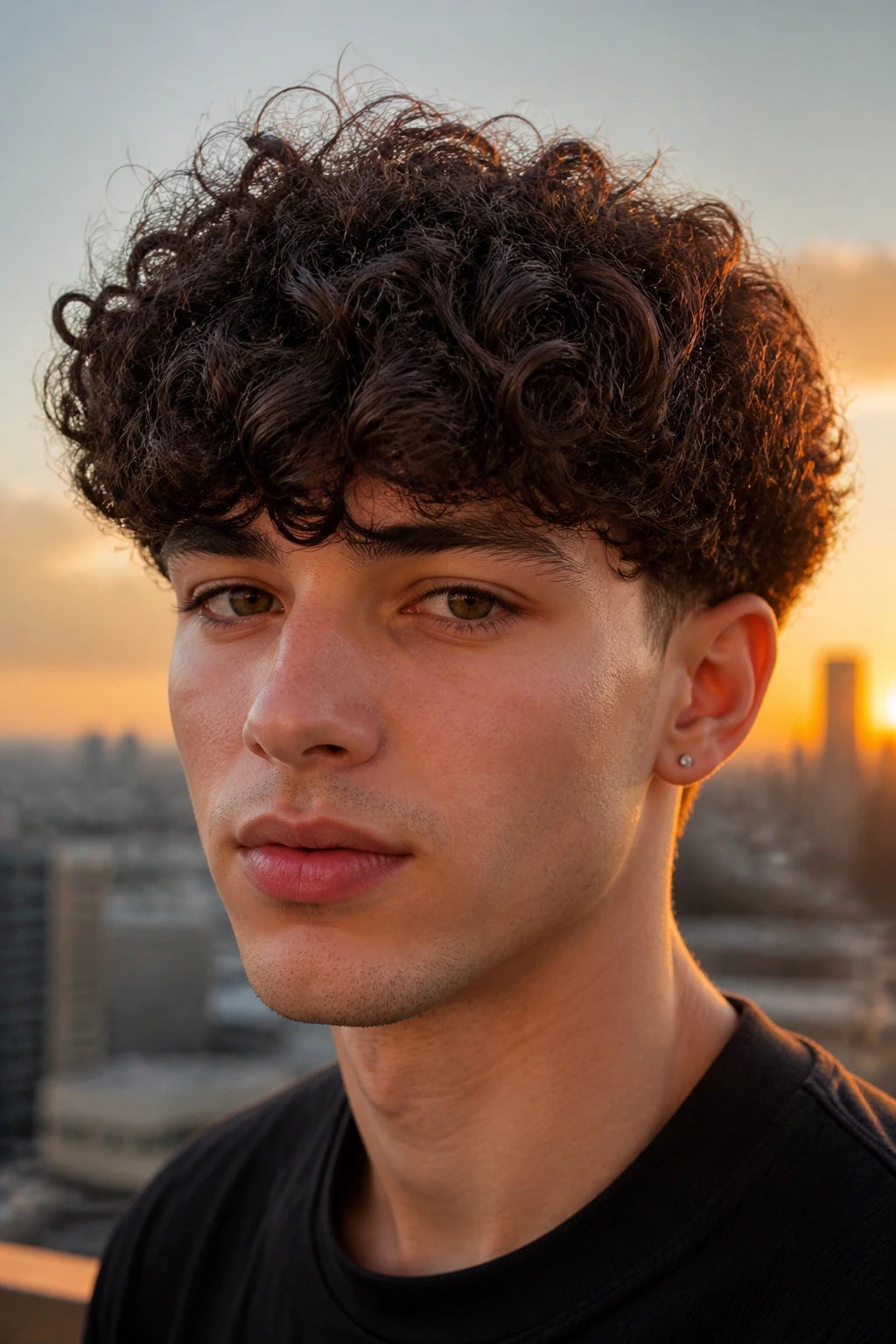
We know what you are thinking—the bowl cut? Hear us out. When modern barbers update the bowl cut, they add texture, shorten the sides, and taper the edges. It’s no longer the childhood nightmare, but a trendy, high-fashion look.
The Modern Twist
The key is the texture. A flat, straight bowl cut is difficult to pull off. A curly bowl cut, however, has volume and movement. It looks like a structured mushroom of curls that hangs just above the eyebrows.
Who Should Wear It
This is a bold, stylistic choice for men with Type 3 hair who want something avant-garde. It’s not for the faint of heart, but it is certainly one of the most unique ways to showcase curls.
19. The Curly Mohawk Fade
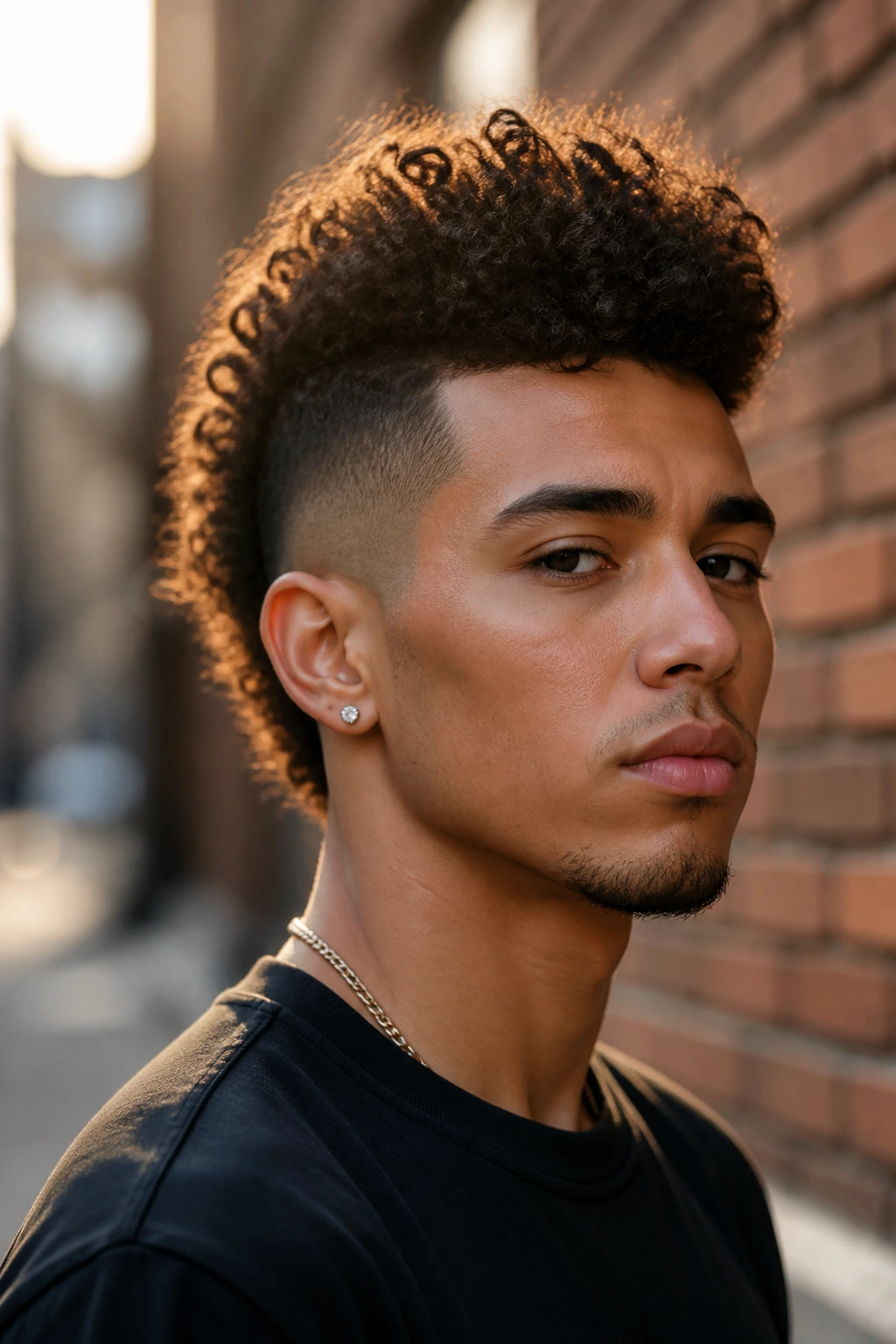
This is a cleaner, more modern take on the traditional Mohawk. By fading the sides rather than shaving them to the skin, you create a softer transition that is much more wearable in everyday life.
Visual Balance
The fade provides a gradual transition that makes the hair on top seem even more voluminous. It’s a great way to manage a lot of hair without looking like you’re starring in a punk rock movie from 1982.
Styling for the Fade
Use a matte clay on the curls on top. You want them to look textured and dry, not wet or greasy. This gives the style a more contemporary, gritty edge that fits well with streetwear or casual styles.
20. The Curly Flat Top
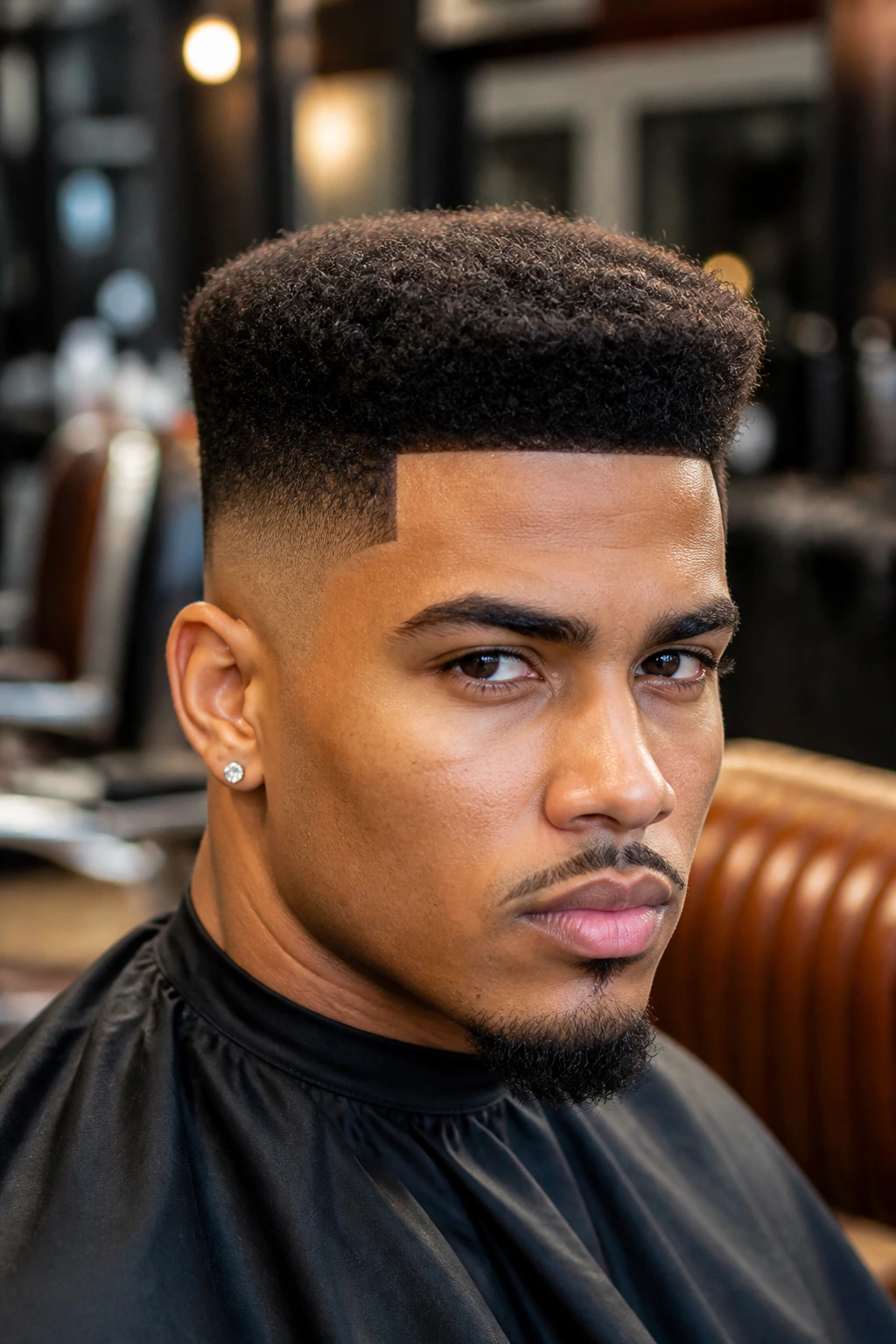
While the high top stands straight up, the flat top is cut level across the top of the head. It’s a clean, geometric style that requires a very talented barber to execute.
Why It’s Impressive
Seeing a perfectly level, square flat top on curly hair is a testament to precision cutting. It frames the face and gives the head a sharp, boxed-in look that looks incredibly strong.
Maintaining the Flatness
You will need to visit the barber frequently to keep the top level. If your curls grow at different rates—which is common—the flatness will disappear quickly.
21. The Curly Ponytail
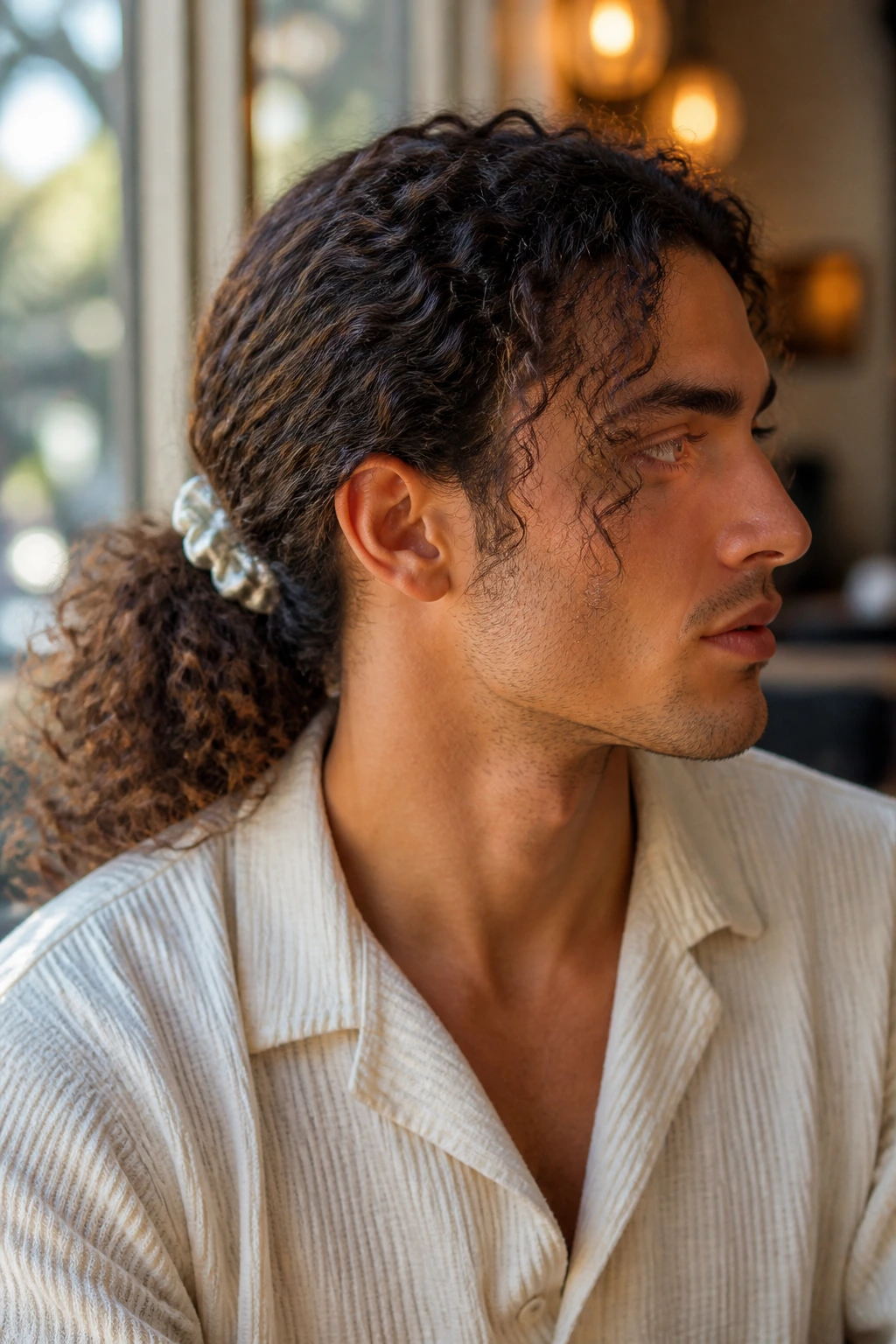
Sometimes you just want the hair off your neck. A low-slung ponytail is a very practical, minimalist way to wear long, curly hair.
The Low Profile
Pull the hair back to the nape of the neck. Don’t worry about getting it perfectly smooth—the curls should stick out of the band in a loose, cascading way.
Comfort
Use a silk-covered scrunchie. Traditional rubber bands cause breakage on curly hair, which can lead to thinning spots near the ponytail base over time.
22. The Curly Spiky Crop
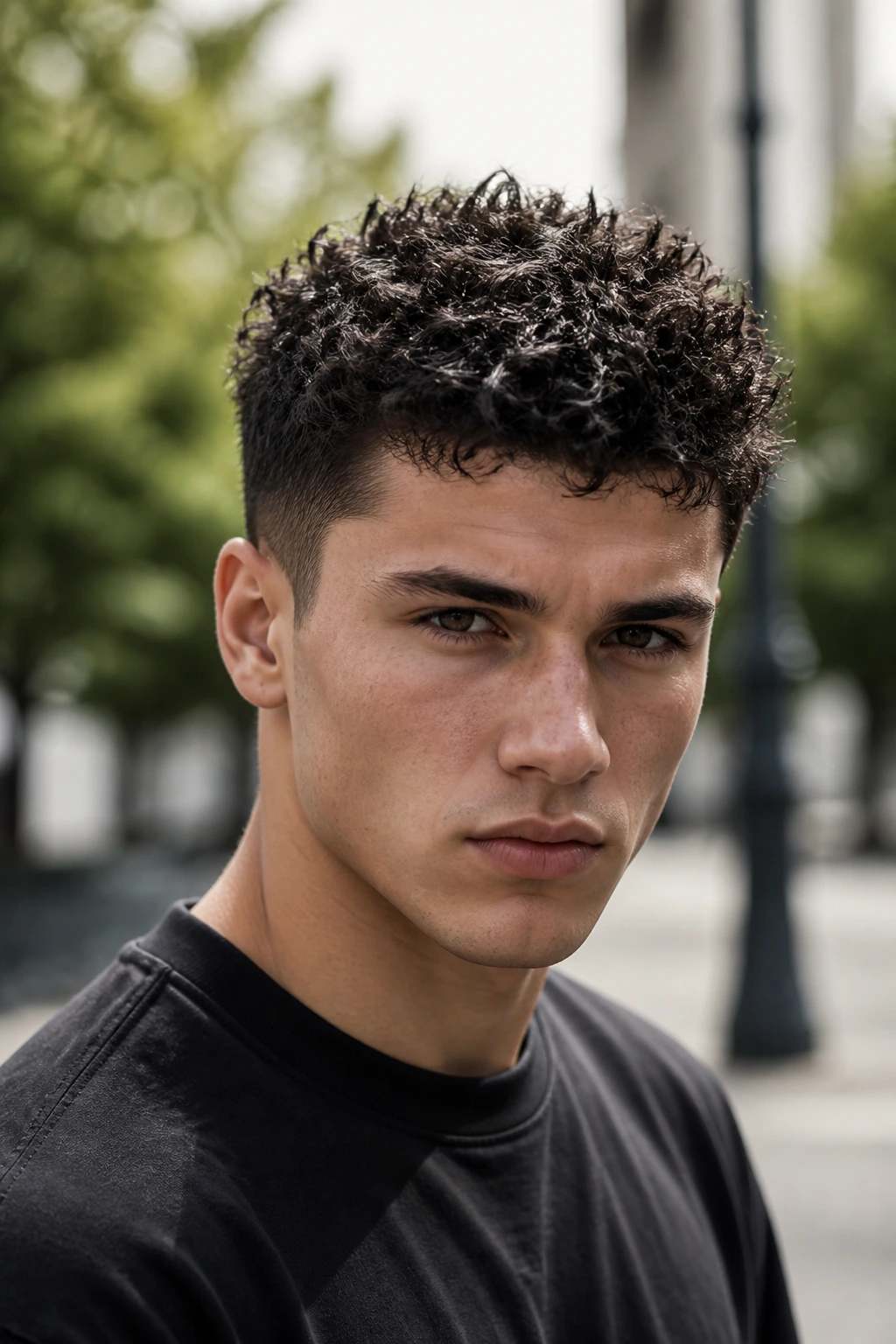
This style uses a texturizing product to pull the curls into distinct “spikes” all over the head. It’s reminiscent of 1990s trends but feels much more modern when executed with current techniques.
The Texturing Process
- Start with towel-dried hair.
- Use a small amount of heavy-duty styling wax.
- Rub it between your palms, then scrunch the hair into small clumps or “spikes.”
- Let it set. The key is to keep the clumps distinct.
Why It’s Unique
It breaks the rule that curls must be “soft.” This is an aggressive, sharp look that is surprisingly easy to achieve if you have the right wax.
23. The Curly Ivy League
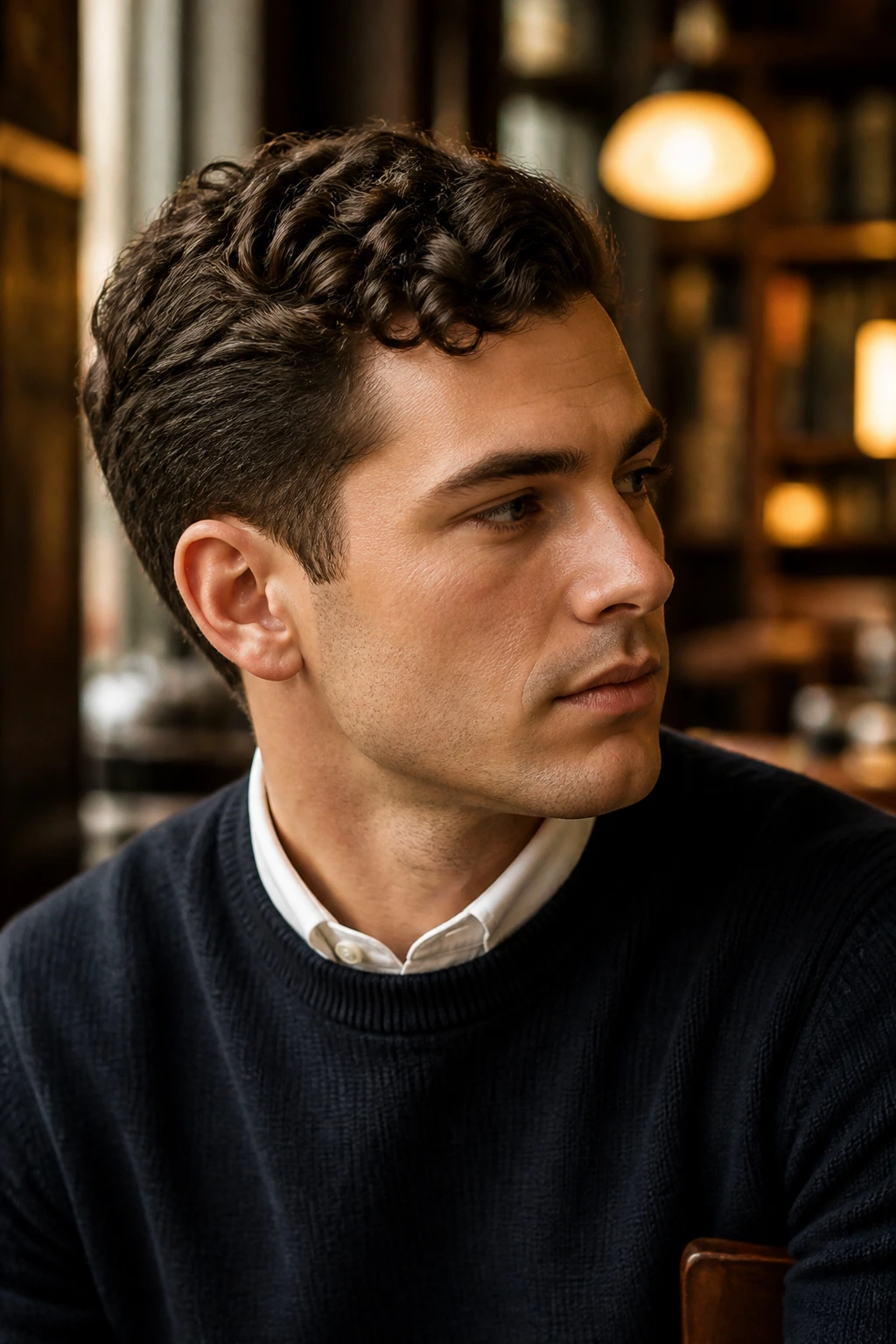
The Ivy League is a classic, side-parted short cut. Applying it to curls keeps the side part and the short sides but leaves just enough length on top for the curls to pop.
Sophistication
It’s the most “gentlemanly” cut on the list. It shows you care about your appearance and understand the value of a classic silhouette, while still acknowledging your natural texture.
Product Selection
Use a light pomade. You want shine, but not a lot of weight. This helps the curls look healthy and deliberate.
24. The Curly Pompadour Fade
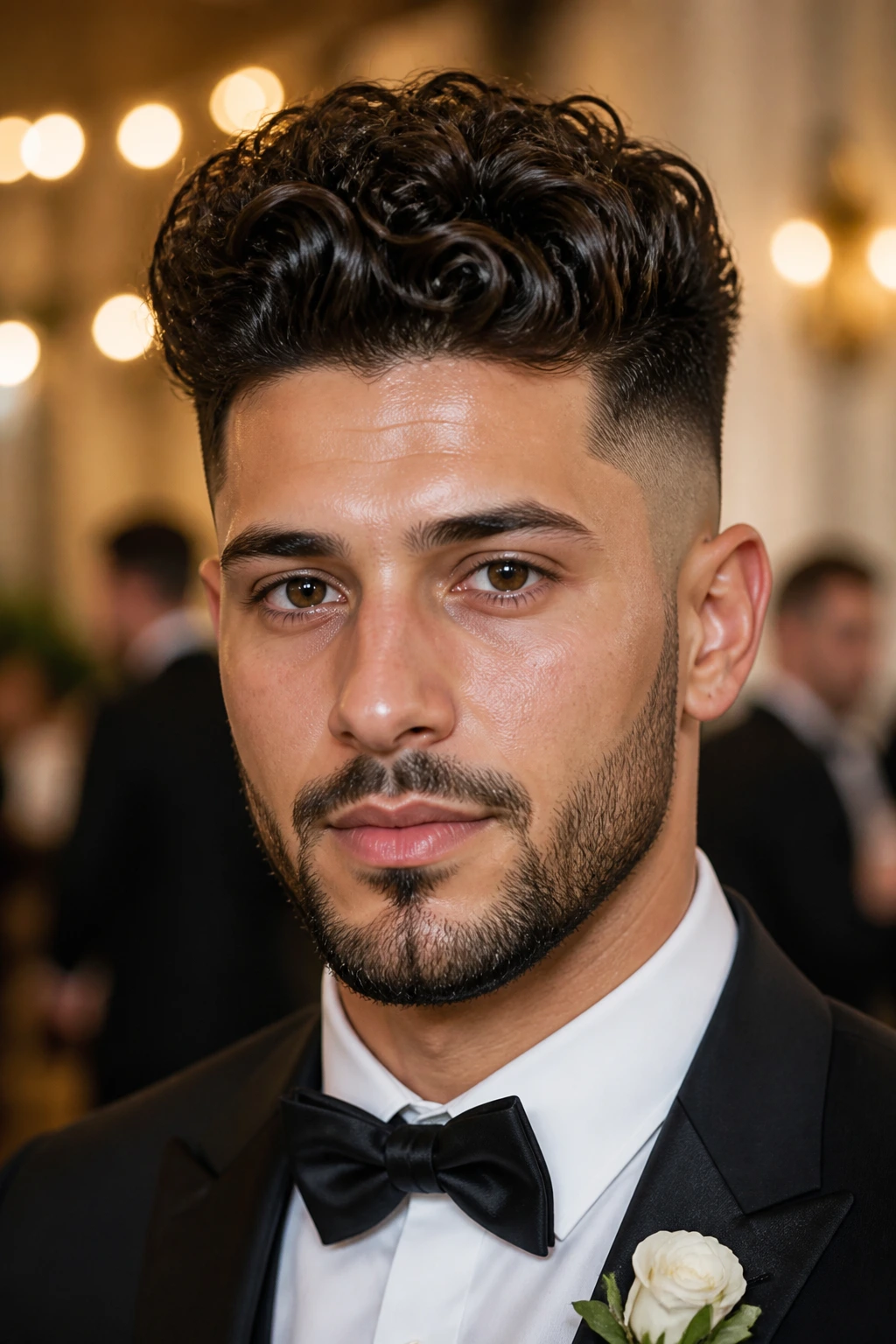
This combines the volume of the pompadour with the cleanliness of a fade. The fade on the sides gives the height on top a much stronger visual presence.
The Visual Pop
Because the fade is so crisp, the curls on top look like they are floating. It’s a very high-contrast style that works well for formal occasions and weddings.
Grooming Requirements
This is a “high-maintenance” style. If the fade grows out, the illusion of the floating pompadour vanishes. Be prepared to hit the shop every two weeks.
25. The Curly Surfer Shag
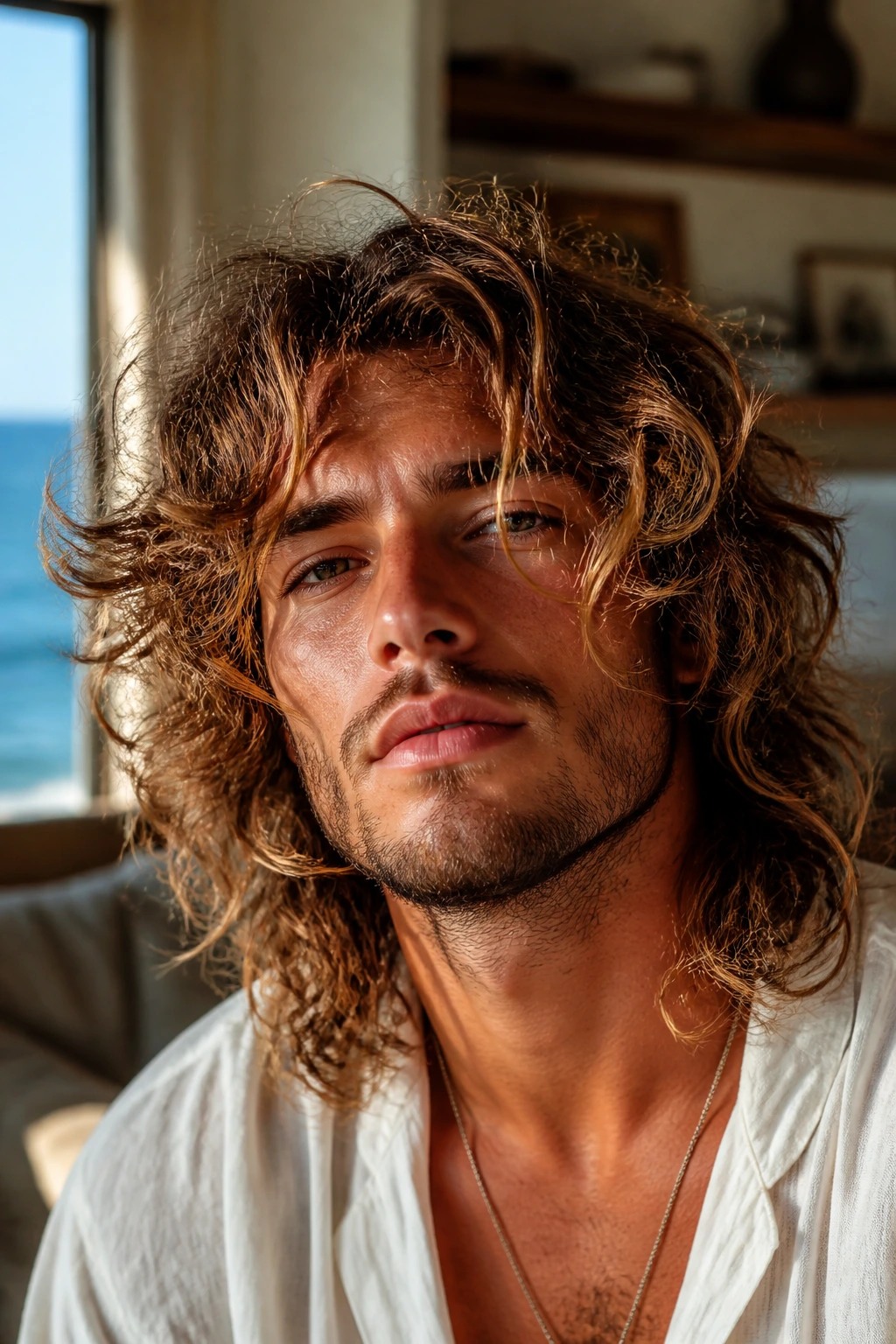
Finally, for the guy who never wants to spend more than 30 seconds on his hair, the surfer shag is the ultimate choice. It’s long, it’s messy, and it gets better the longer you go between washes.
The “Beach” Factor
The key here is sea salt spray. If you aren’t living on a beach, spray your hair down with a saltwater-based product to replicate the “grit” and wave that occurs naturally in salty air.
Living with It
This style is supposed to look lived-in. Don’t fight the frizz. Embrace the volume. It’s a look that feels authentic and untamed.
Final Thoughts
The most important lesson in choosing a curly hairstyle is realizing that you are working with a material that has a mind of its own. You shouldn’t be fighting your hair’s natural inclination to coil or wave. Instead, find a cut that respects those tendencies. A professional barber who understands the physics of curly hair—specifically how it shrinks when dry—is your best asset.
Beyond the cut, remember that moisture is the currency of curly hair. Whatever style you choose, ensure you have a routine that keeps your strands hydrated and healthy. A great cut is wasted if the hair is brittle, dry, or frizzy. Start small, talk to your barber about your curl pattern, and do not be afraid to experiment with lengths until you find the shape that feels like your own. Your curls are not a problem to be solved; they are a signature part of your look, and they deserve to be styled with confidence.