


Leopard print is an undisputed heavy hitter in the fashion world, but its translation into hair art—specifically through the use of precisely placed dye and stenciling—is a different animal entirely. We have moved past the era where leopard spots were reserved for edgy, once-a-year Halloween costumes. Today, incorporating animal patterns into your daily rotation is a bold, high-contrast way to define your personal style. Whether you are rocking a close-cropped pixie or cascading waist-length waves, these spots can be subtle enough for a creative office or loud enough to stop traffic.
The secret to pulling this off isn’t just about the execution; it is about the geometry of the pattern. Real leopard spots are not perfectly circular or uniform. They are organic, shifting shapes that possess a sense of depth through a dark perimeter and a lighter, warmer center. When you translate that to your hair, you are essentially creating a mosaic. It takes patience, a steady hand, and a genuine understanding of how color moves across different hair textures. Let us walk through the most wearable, stylish ways to bring this trend into your everyday life.
1. The Subtle Nape Undercut
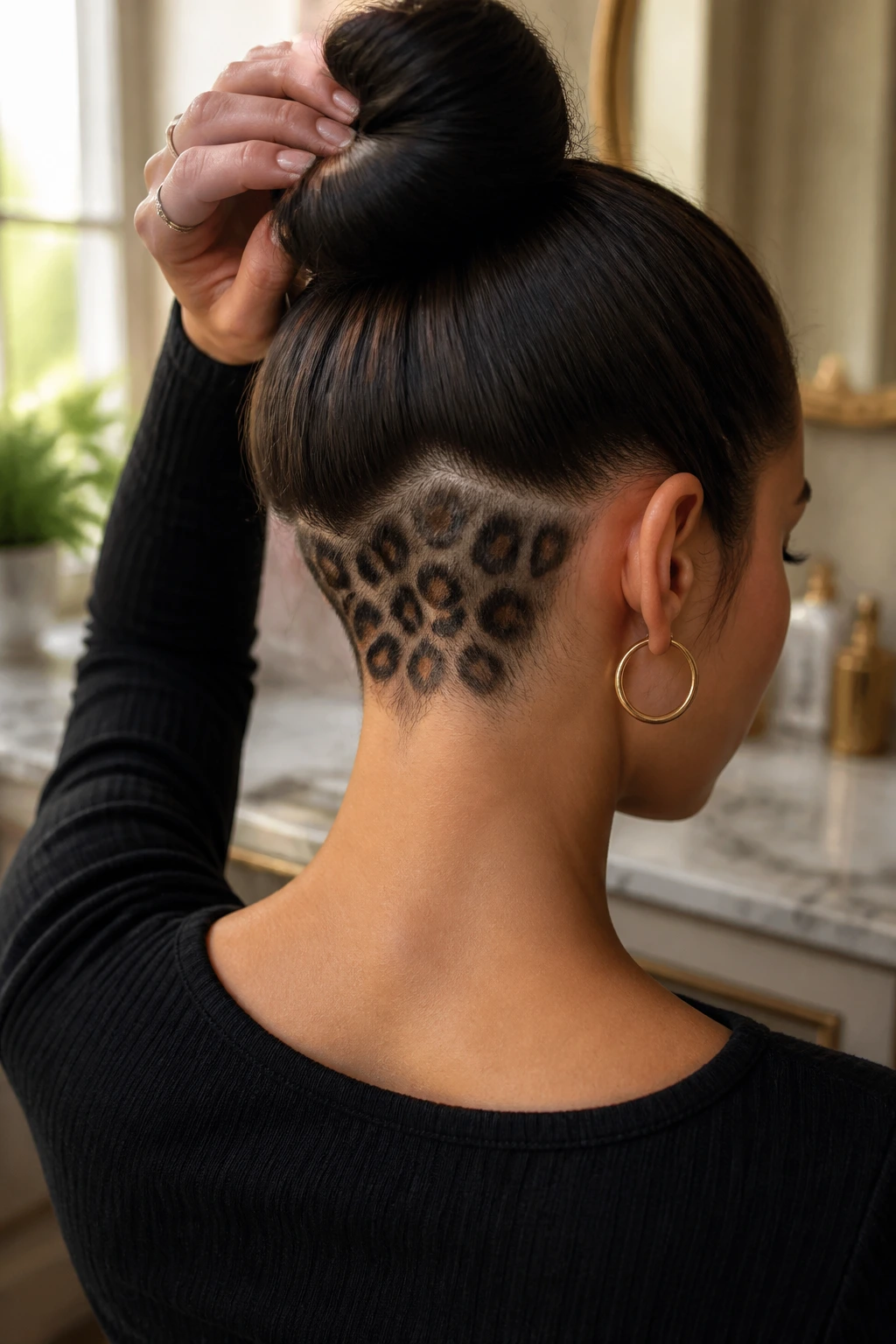
If you want to test the waters without committing to a full-head makeover, look to the nape of the neck. This section of your hair is the perfect canvas for a hidden, high-impact design. You can keep the rest of your hair in a natural or solid tone and simply drop your ponytail or lift your hair when you want to reveal the pattern.
Why This Style Works
The nape area is naturally dense and provides a stable surface for detailed work. Because the hair here is often slightly coarser, it holds semi-permanent color well, meaning your spots won’t bleed into each other after a single wash. It is the ultimate “business in the front, party in the back” aesthetic.
How to Style It
- Keep the hair surrounding the undercut styled in a clean, sleek bun to frame the design.
- Use a high-shine pomade to make the dark borders of the spots pop against your natural hair color.
- Coordinate your outfits with high necklines to ensure the design remains a special detail rather than an everyday accessory.
Pro tip: Use a flexible-hold hairspray to prevent “flyaways” from obscuring the sharp edges of your stenciled spots throughout the day.
2. Caramel and Espresso Classic Blend
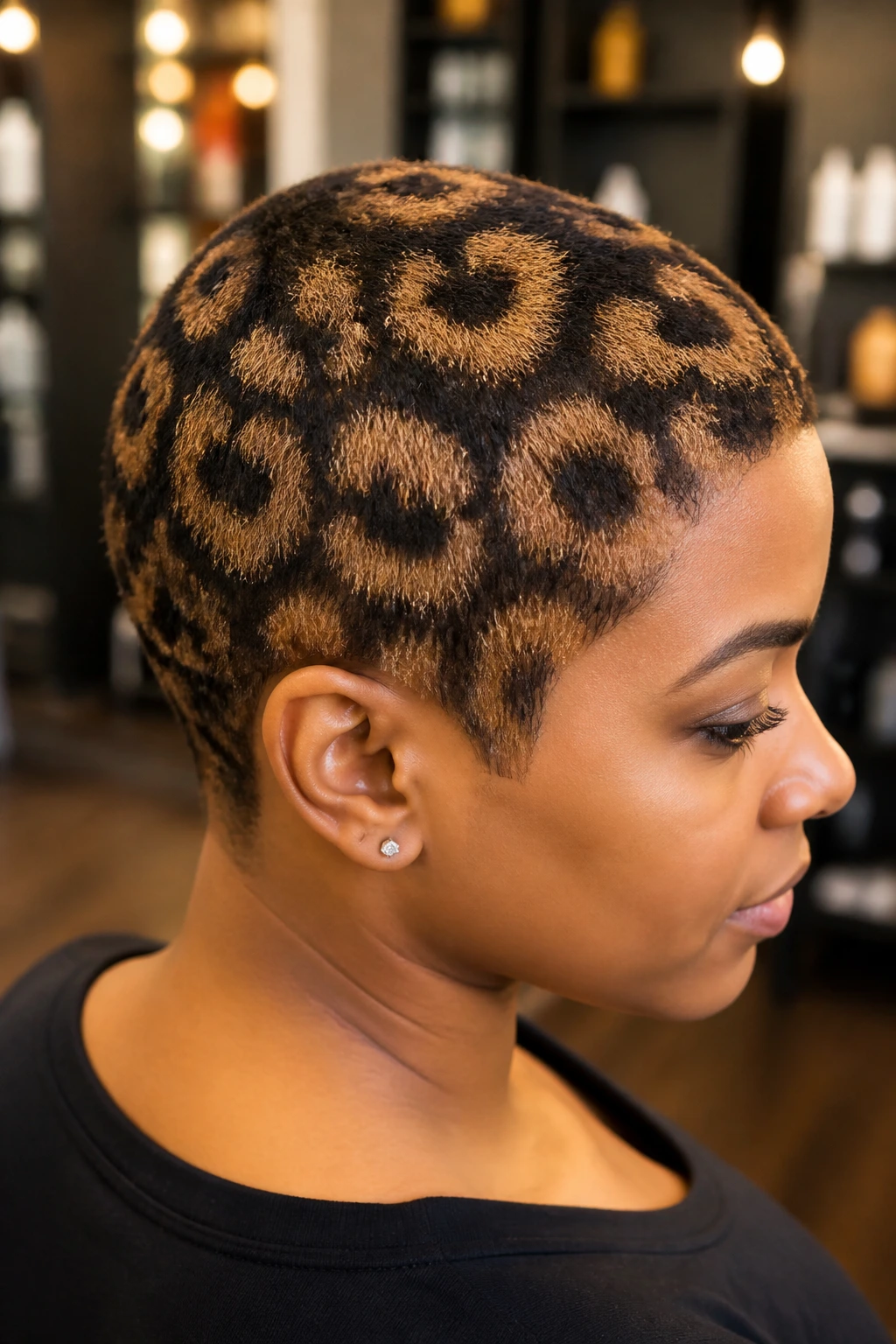
This color palette mimics the authentic fur of a leopard almost exactly. By utilizing a deep espresso brown as the base for the borders and a warm, honey-caramel shade for the centers, you create a look that feels incredibly natural yet undeniably striking.
The Science of the Look
By using two shades within the same color family, you avoid the harsh contrast that often makes DIY animal print look like a messy accident. The key is in the blending—you want the transition between the dark espresso and the caramel to look seamless, like ink fading into leather.
Application Strategy
- Apply the espresso base as a series of open, irregular rings rather than solid circles.
- Fill the gaps with the caramel dye, feathering the edges so they don’t look like stickers.
- Ensure the hair is fully saturated; patchiness is the enemy of a realistic spot pattern.
3. Pastel Punk Pixie
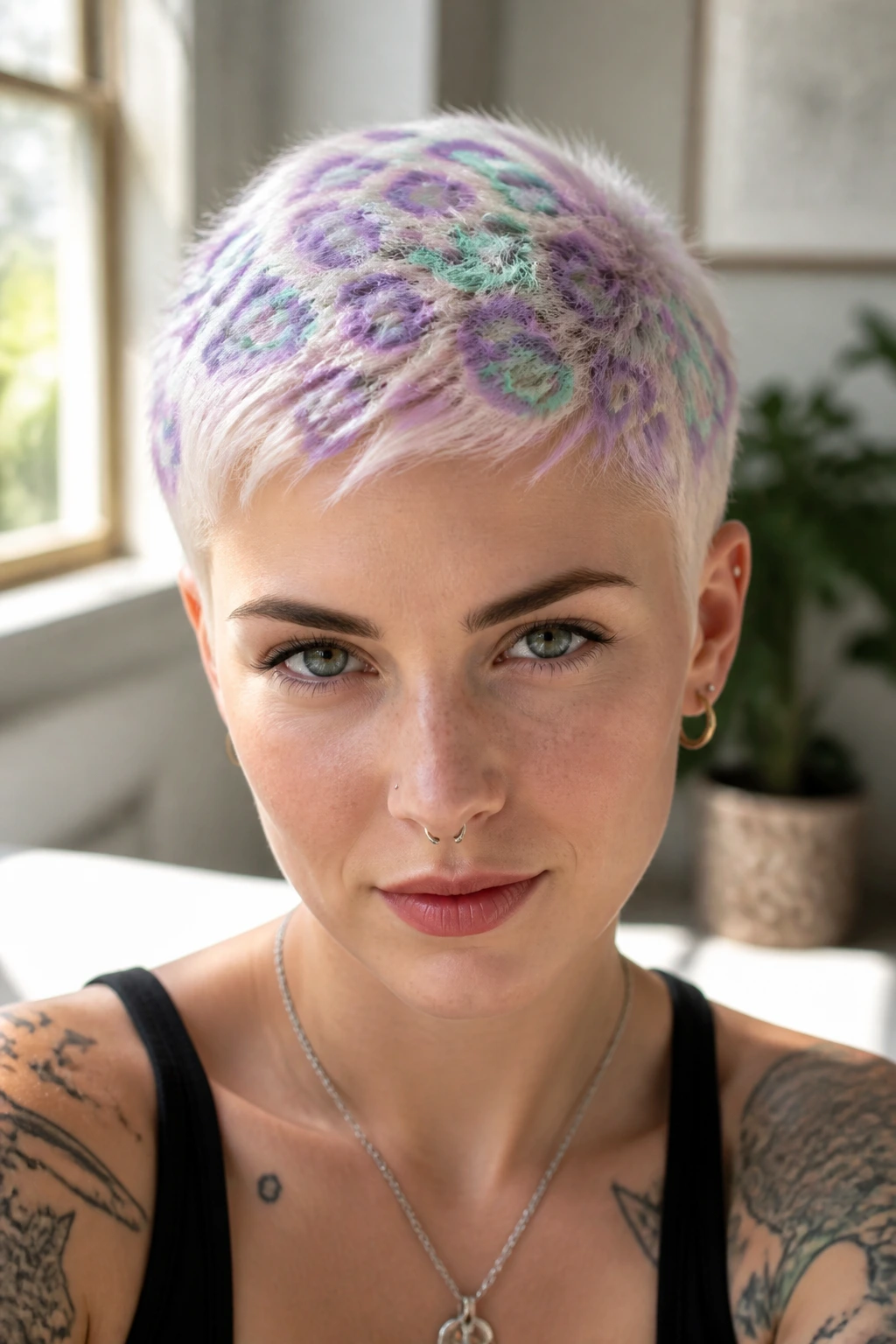
Taking a traditional pattern and rendering it in unconventional colors creates a look that is entirely futuristic. Think soft lilac rings with mint-green centers or baby pink spots over a platinum base. This style is best suited for those who already keep their hair at a shorter length, where the geometry of the head allows for a tighter, more concentrated spot pattern.
Why It Makes a Statement
Short hair naturally demands more attention, and when you pair it with a high-contrast pattern, you are signaling a deliberate, artistic choice. It is soft, it is unexpected, and it removes the “feral” connotation that animal print sometimes carries.
Care for Pastel Spots
- Use color-depositing conditioners every second wash to keep the pastels from turning muddy.
- Minimize heat styling; bleached hair with pastel patterns is prone to breakage if you overwork it with a flat iron.
- Opt for texturizing clays instead of oils, which can cause lighter colors to look dull or greasy.
4. The Face-Framing Leopard Chunk
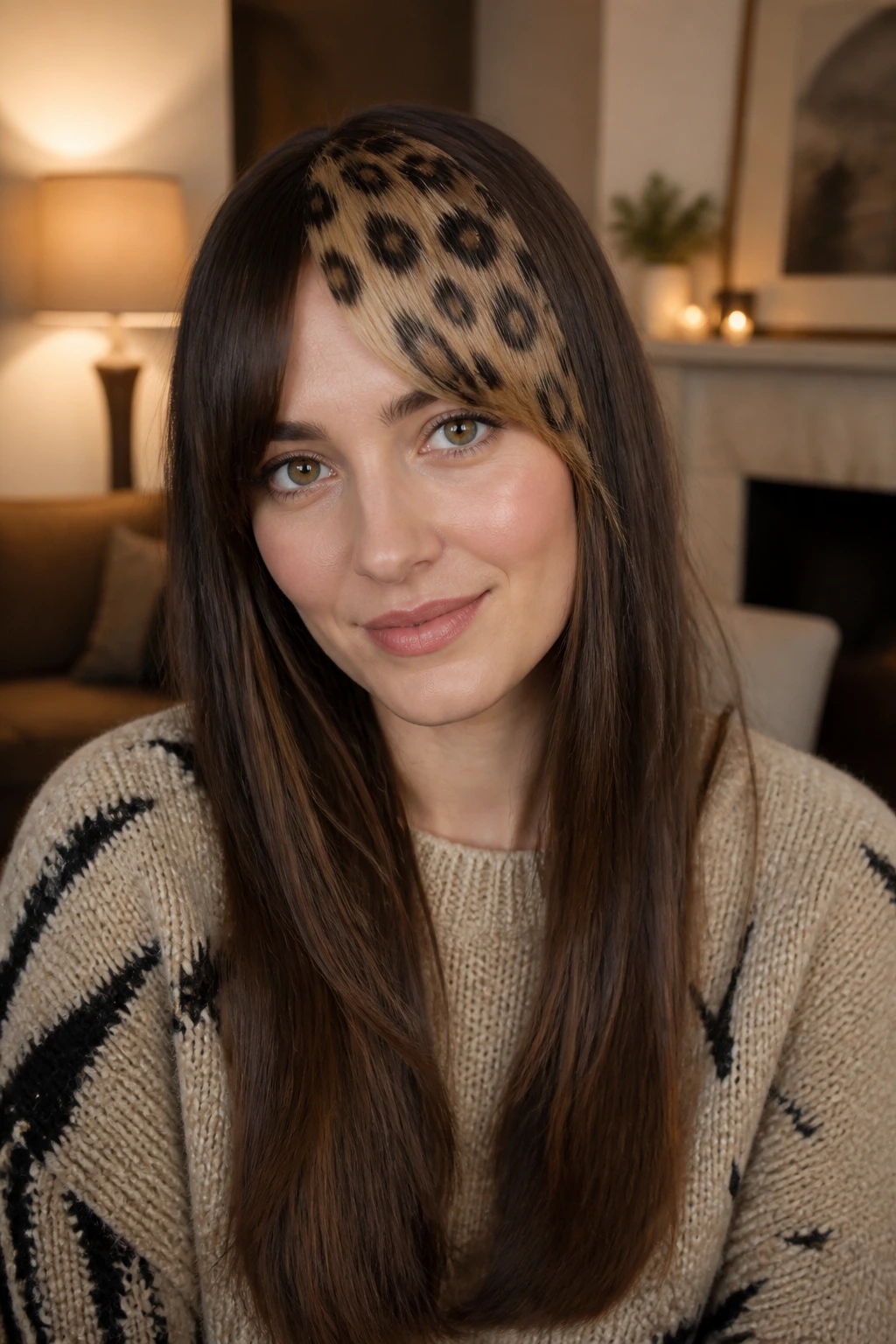
Placing a single, large-scale leopard pattern on your front-facing bang or side section acts like an accessory. It is a bold way to frame your features. Instead of putting spots everywhere, you are focusing the eye exactly where you want it.
Placement Matters
If you choose to place this on your bangs, keep the rest of the hair a solid, neutral tone. This anchors the look. Think of it like a printed silk scarf worn around the face—it draws attention to your eyes and cheekbones, making the spots feel like part of your overall makeup and style routine.
Maintenance Tips
- Treat this section with a weekly deep conditioning mask, as the hair around the face is often damaged by daily heat styling.
- Avoid using heavy serums near the spots, as they can cause the precise edges of the print to blur over time.
- If you have thin hair, opt for slightly smaller, more delicate spots to avoid the pattern looking too heavy or overbearing on your face shape.
5. Sunset Ombré Spotted Ends
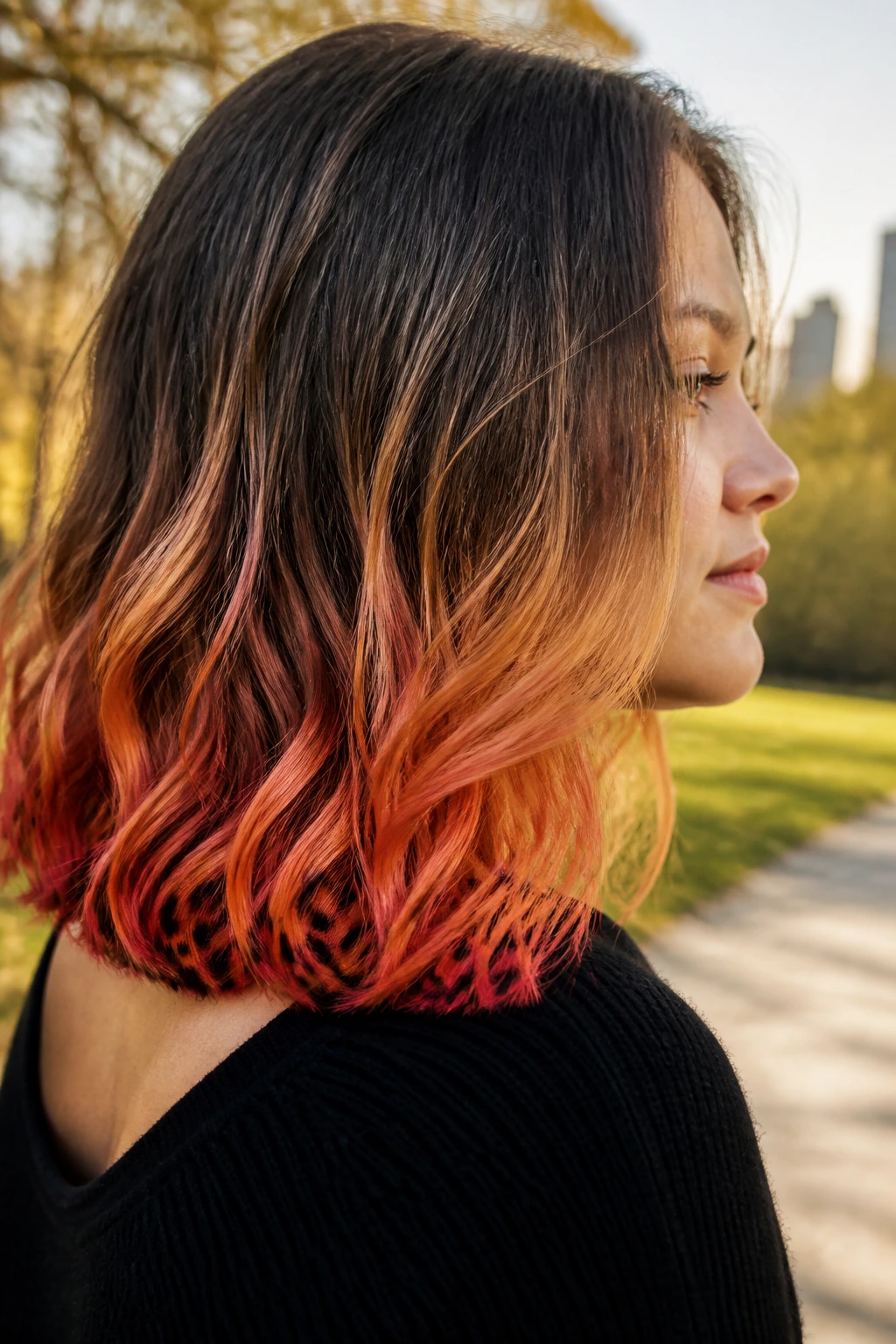
If you are hesitant to bring the pattern to your roots, start at the ends. An ombré effect where the tips of your hair fade into a brighter, bolder color—like copper or deep auburn—provides the perfect base for black leopard spots to really stand out.
Why This is Low Commitment
Since the spots are concentrated on the bottom three inches of your hair, you have the freedom to trim them away if you decide you want a change. It is a fantastic entry-level approach for someone who loves the look but isn’t ready to spend hours in a chair every month.
Creating the Visual Depth
- Use a sponge brush to dab the black border color on, which gives it a slightly jagged, organic texture.
- Leave the centers of the spots the natural color of your hair to add contrast.
- Focus the spots more heavily at the very tips, letting them dissipate as they move upward toward the mid-lengths.
6. Monochromatic Shadow Spots
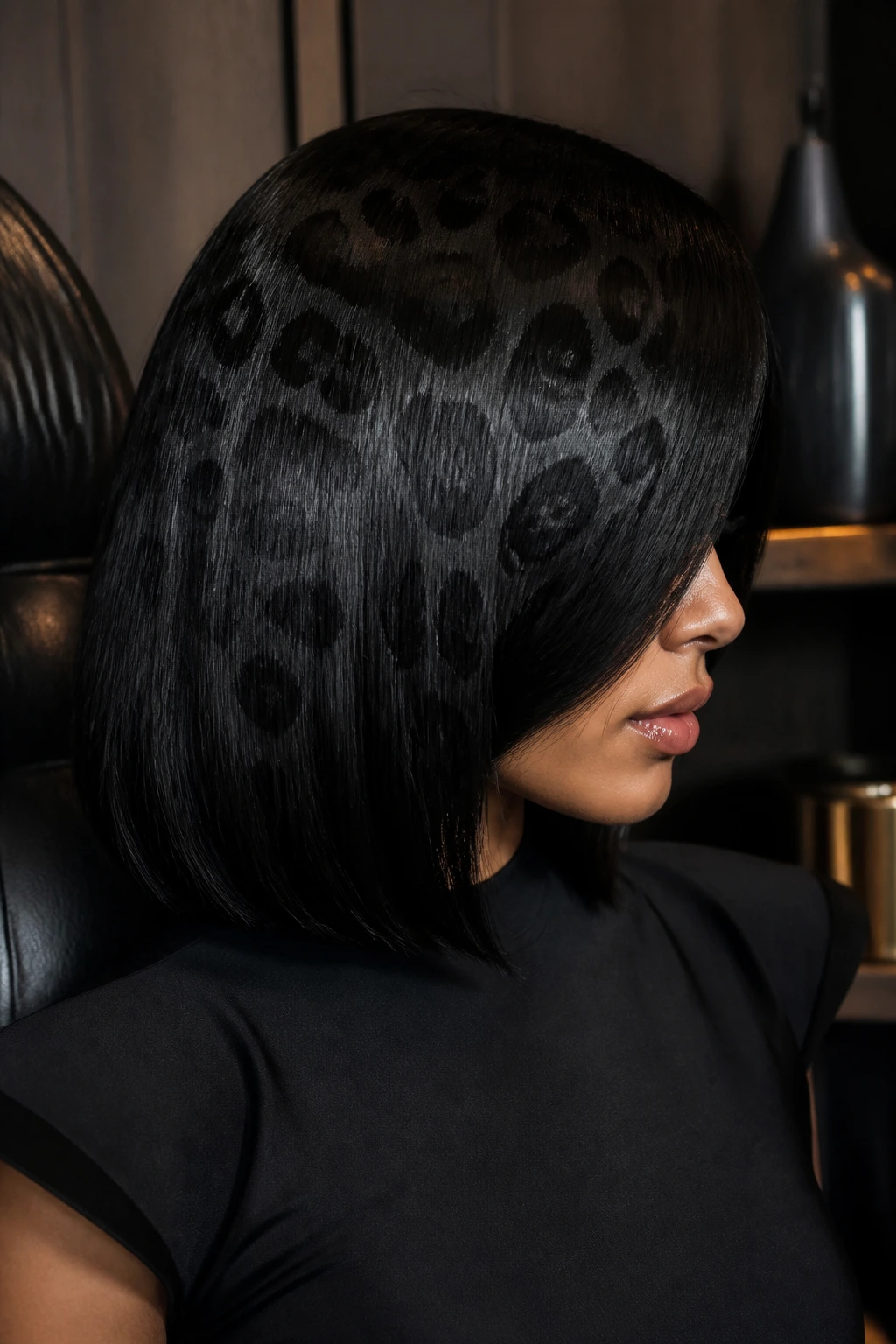
Sometimes the loudest way to be seen is by being quiet. Monochromatic leopard print uses two different finishes of the same color—usually a glossy black over a matte black base. It is subtle, chic, and only reveals itself when the light hits your hair from specific angles.
The Beauty of Texture
Because you aren’t playing with high-contrast colors, this style relies entirely on the interplay of light and shadow. It is sophisticated enough for a corporate environment, yet it maintains that edgy, individualistic spark that makes you feel like yourself.
How to Achieve the Effect
- Apply a semi-permanent clear gloss over the spots to heighten the sheen.
- Leave the background hair dry or use a matte texturizing spray to ensure the matte-to-gloss ratio is obvious.
- This works exceptionally well on jet-black hair that has been treated with a high-shine finish.
7. The Mohawk Ribbon
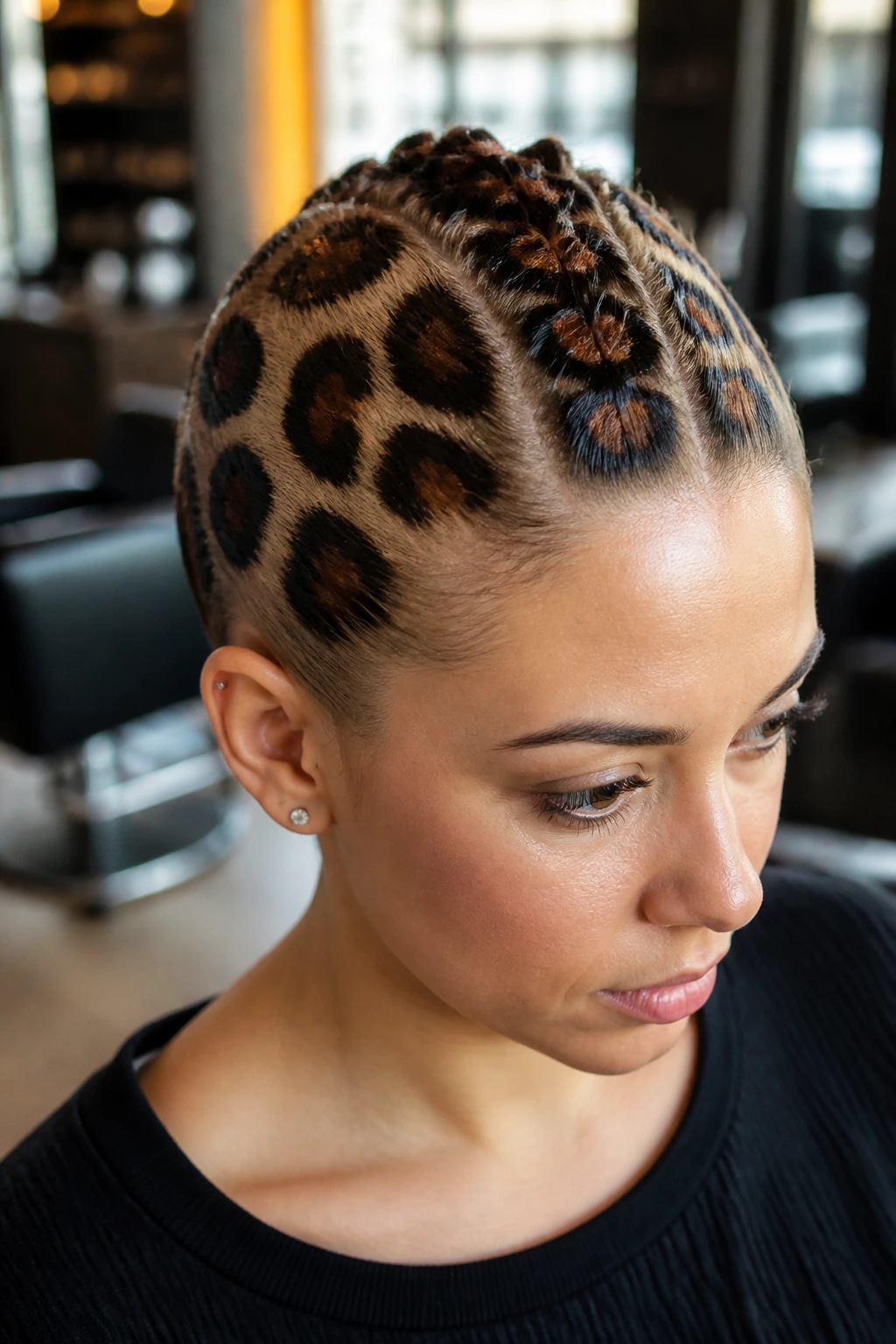
A central stripe of hair—whether you have an actual mohawk or just a very deep, dramatic part—can be turned into a running leopard path. By keeping the sides of your head clean or naturally colored, the central “ribbon” of spots looks like a deliberate mohawk of fashion-forward color.
Style Dynamics
- This look is all about symmetry. Ensure your spots are placed evenly on either side of your part.
- Use a small, precision-tip brush to ensure the spots on the left mirror the intensity and size of those on the right.
- This creates an elongated effect, making the head look taller and the face more structured.
Pro tip: If you aren’t ready for dye, use temporary hair chalk to sketch the pattern for a single night out.
8. Neon Jungle Glow
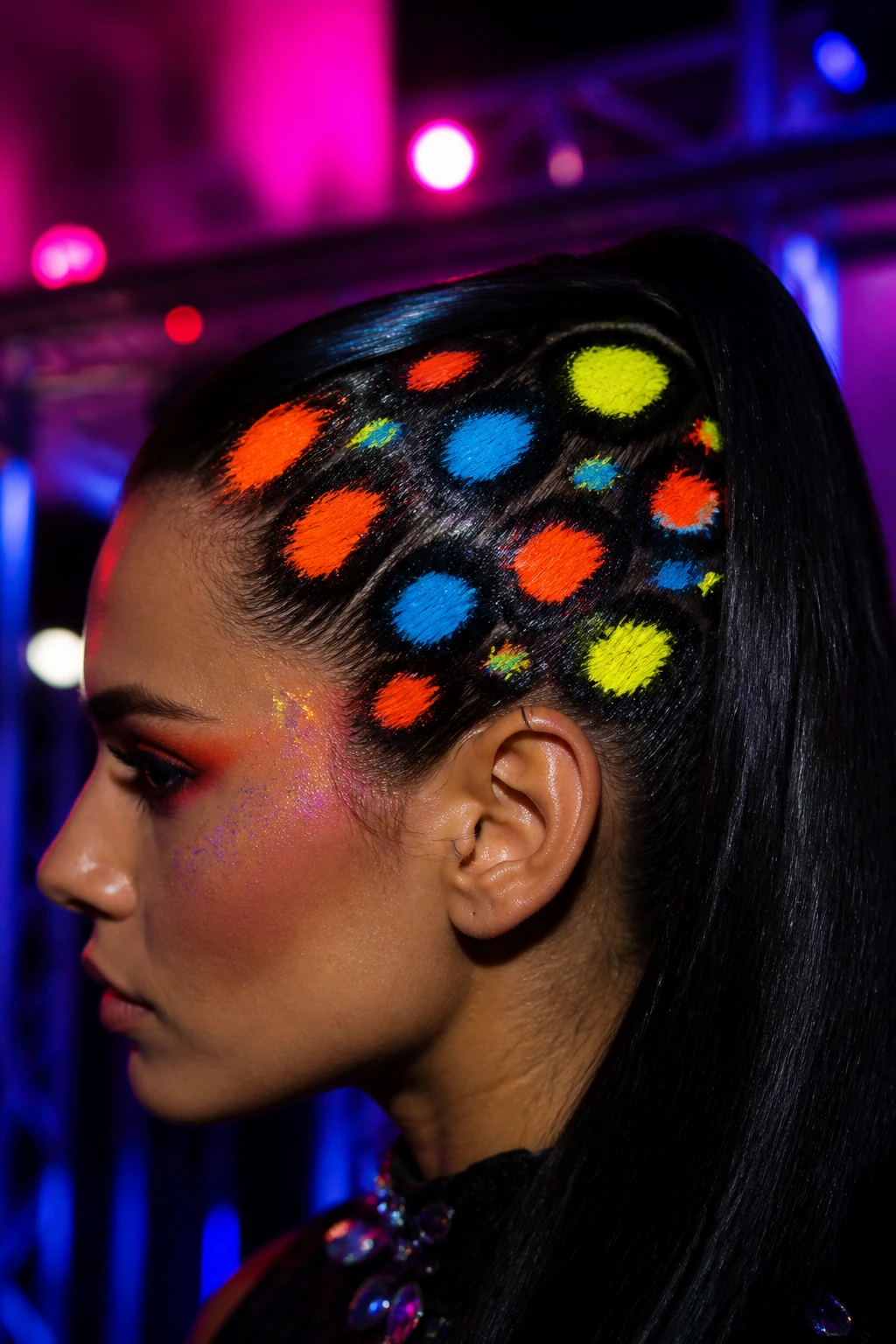
For those who frequent festivals or just want to brighten up a dreary Tuesday, neon pigments are the way to go. Combining bright orange, electric blue, and neon yellow in the center of your spots while keeping the borders deep black makes the colors feel like they are vibrating against your natural hair tone.
Making It Last
Neon colors are notoriously fickle. They fade faster than standard dyes. To keep them looking “electric,” you must use cool water when you wash your hair and avoid products containing sulfates, which strip color rapidly.
Styling for Impact
- Use high-shine sprays to enhance the neon quality.
- Keep the rest of your hair sleek to allow the neon spots to shine as the clear focal point.
- Consider using a UV-reactive dye if you spend time in environments with blacklights.
9. The Subtle Grey-Scale Spots
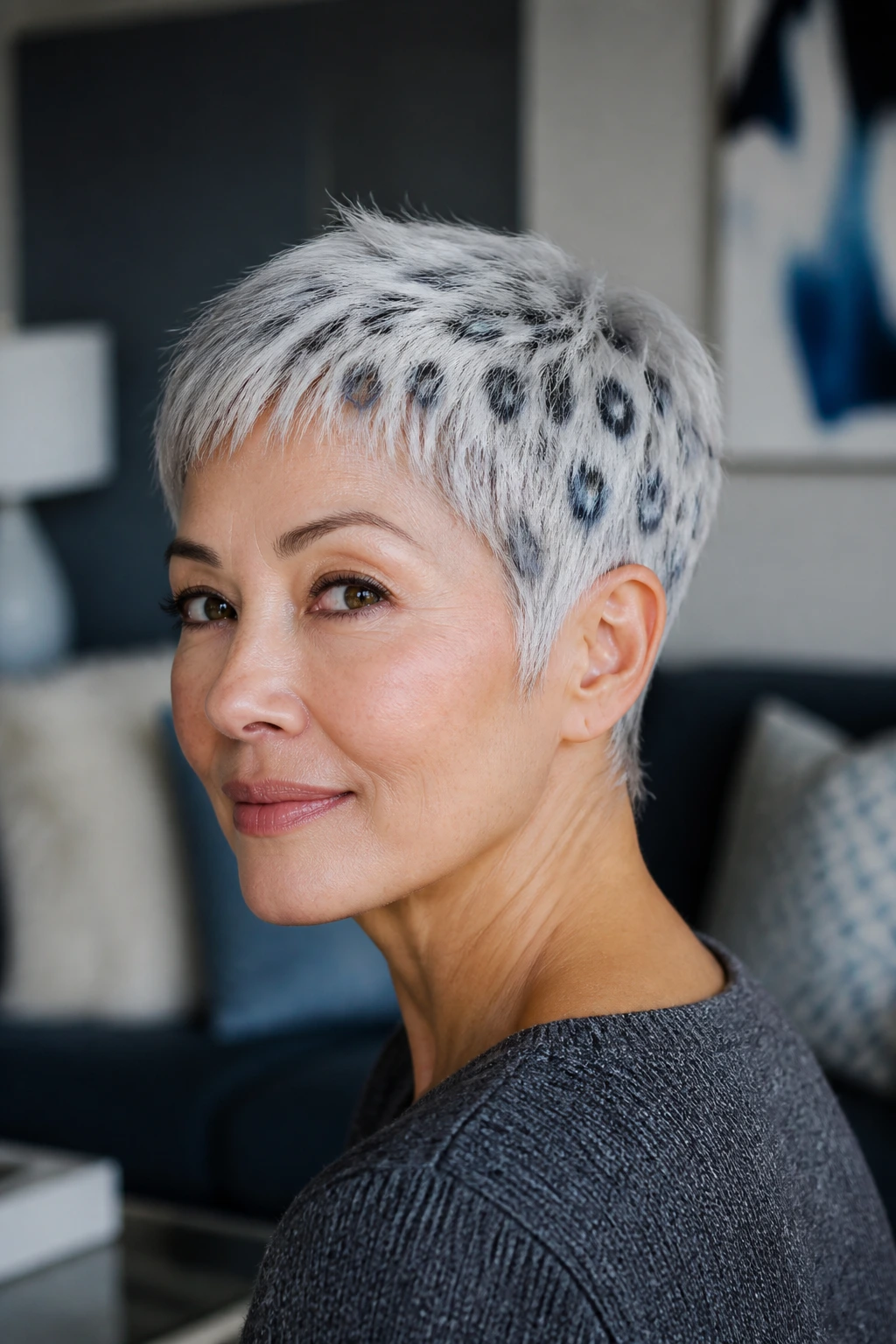
If you have natural silver or grey hair, you don’t need to dye it a bright color to make the pattern pop. Using charcoal grey and slate blue on a white or silver base creates a mature, elegant version of the animal print trend.
Sophistication in Simplicity
This look works because it respects your natural color trajectory rather than trying to fight it. It feels intentional, artistic, and entirely “you.” The key is to keep the spots small—about the size of a dime—to mimic the natural movement of grey hair.
How to Style
- Avoid brassy shampoos that might turn the silver into yellow; keep your hair cool-toned.
- Use a lightweight oil to maintain a healthy, natural luster.
- Let the spots grow out naturally; they will look just as good faded as they do fresh.
10. The Braided Leopard Crown
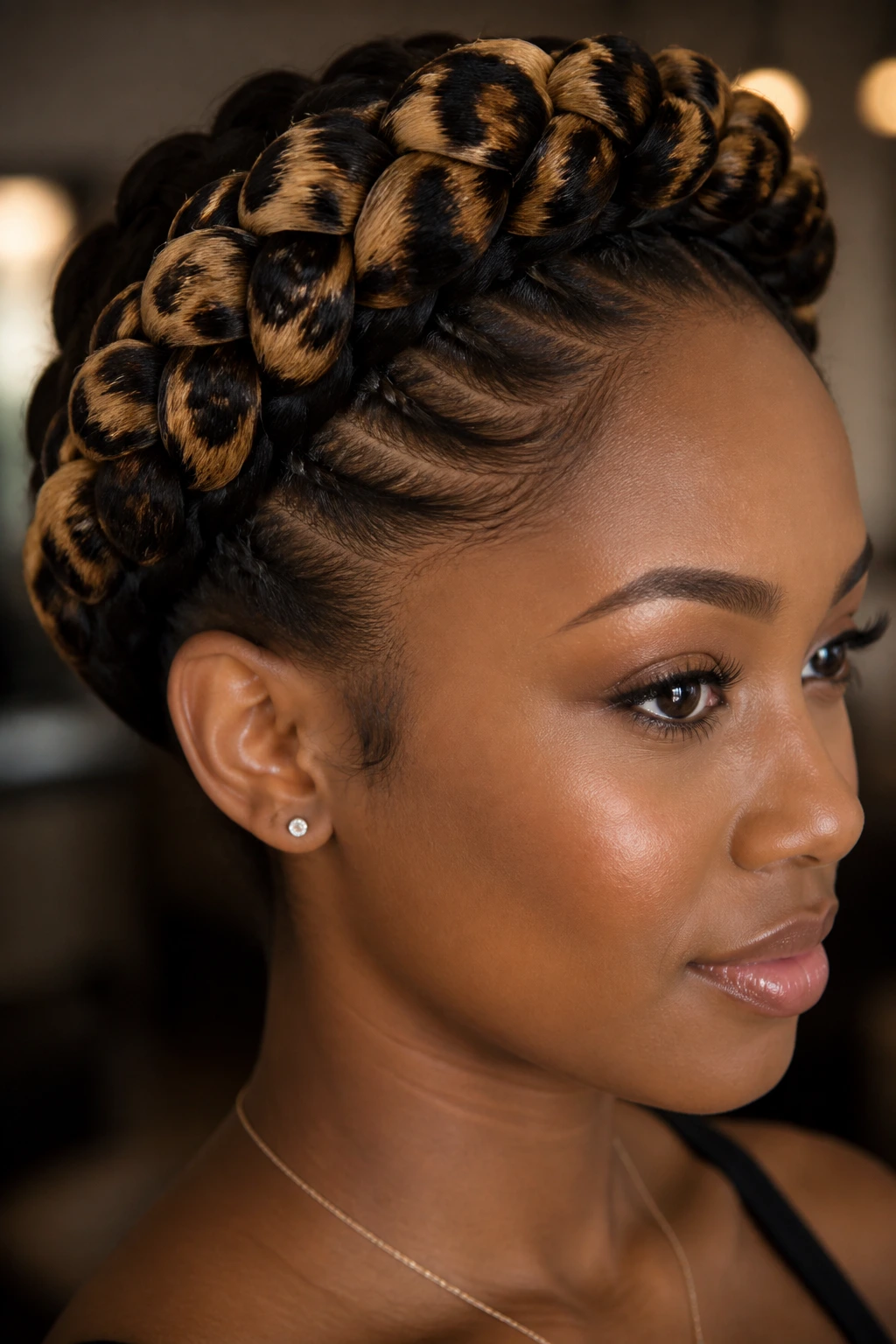
This style is best if you use extensions or temporary color sprays. If you have thick, long hair, you can section off a specific area and braid it, applying the spot pattern to the braid itself. This makes the look appear woven, which adds a layer of depth that painted hair sometimes lacks.
Why Braids Add Texture
The structure of a braid forces the leopard pattern to wrap around the hair, creating a three-dimensional visual effect. It is a stunning way to incorporate the print for a special event or a long-term protective style.
Maintenance During the Wear
- Spray the braid with a light-hold setting spray to prevent the pattern from shifting or “unravelling” visually.
- Use a silk scarf when sleeping to protect the pattern from friction-based fading.
- You can touch up the spots with a precision marker or dye pen between washes.
11. Minimalist Leopard Accent
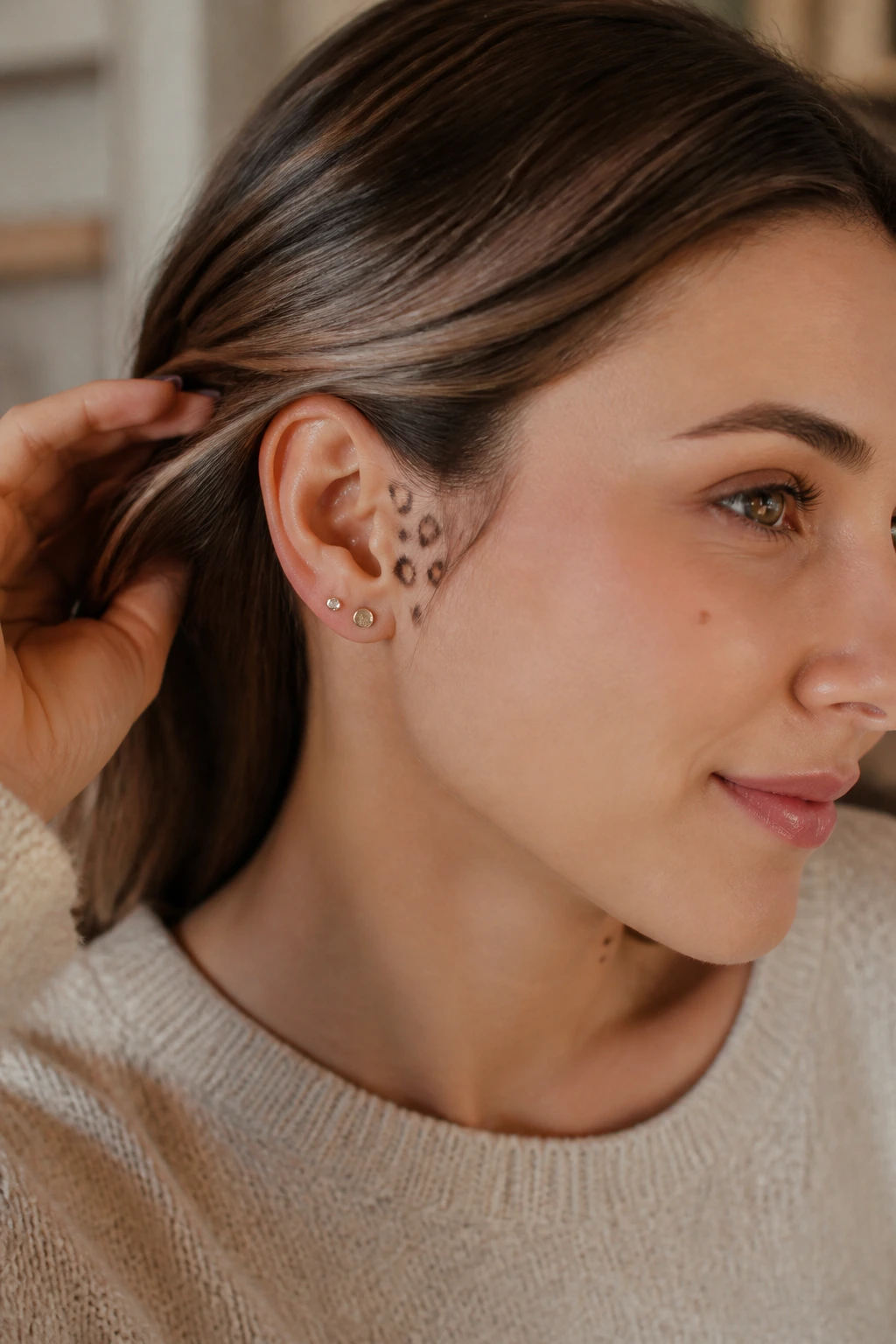
Sometimes, you only need three or four spots hidden behind your ear or at your temple to feel like you’re carrying the trend. This is the “secret tattoo” of the hair world. It’s for the person who loves the look but doesn’t want their entire identity to be wrapped up in it.
Discreet Placement
Choose a spot that is only visible when you tuck your hair behind your ear. This gives you total control over when the pattern is visible and when it remains hidden. It’s a fun, personal detail that you can share with people as you get to know them.
Technique for Small Patterns
- Use a stencil cut from thin plastic to ensure your three spots are perfect.
- Apply the dark border with a tiny, artist-grade paintbrush.
- Keep the centers natural to maintain a sense of organic subtlety.
12. The Geometric Pattern Mashup
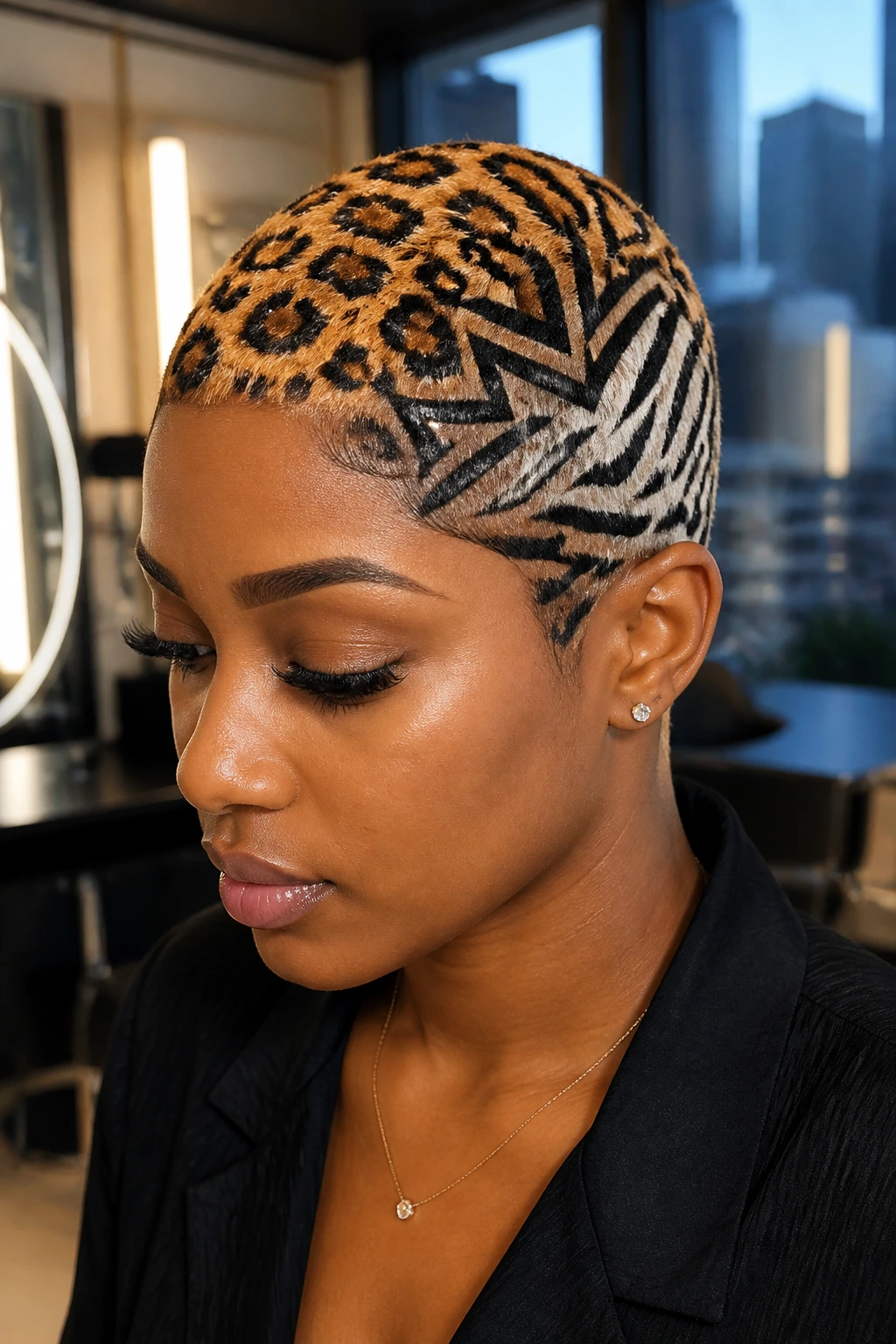
Why stick to just leopard? You can combine your leopard spots with zebra stripes or even cow-print patches in the same section of hair. By breaking up the leopard spots with a sharp, geometric line or a different pattern, you turn your hair into a curated gallery.
Balancing the Chaos
- Ensure one pattern remains dominant (the leopard) while the others are secondary accents.
- Use consistent colors across the patterns so they don’t clash visually.
- This style requires a professional stylist; it is incredibly difficult to map out correctly on your own head.
13. How to Choose the Right Leopard Print Style for Your Hair Type
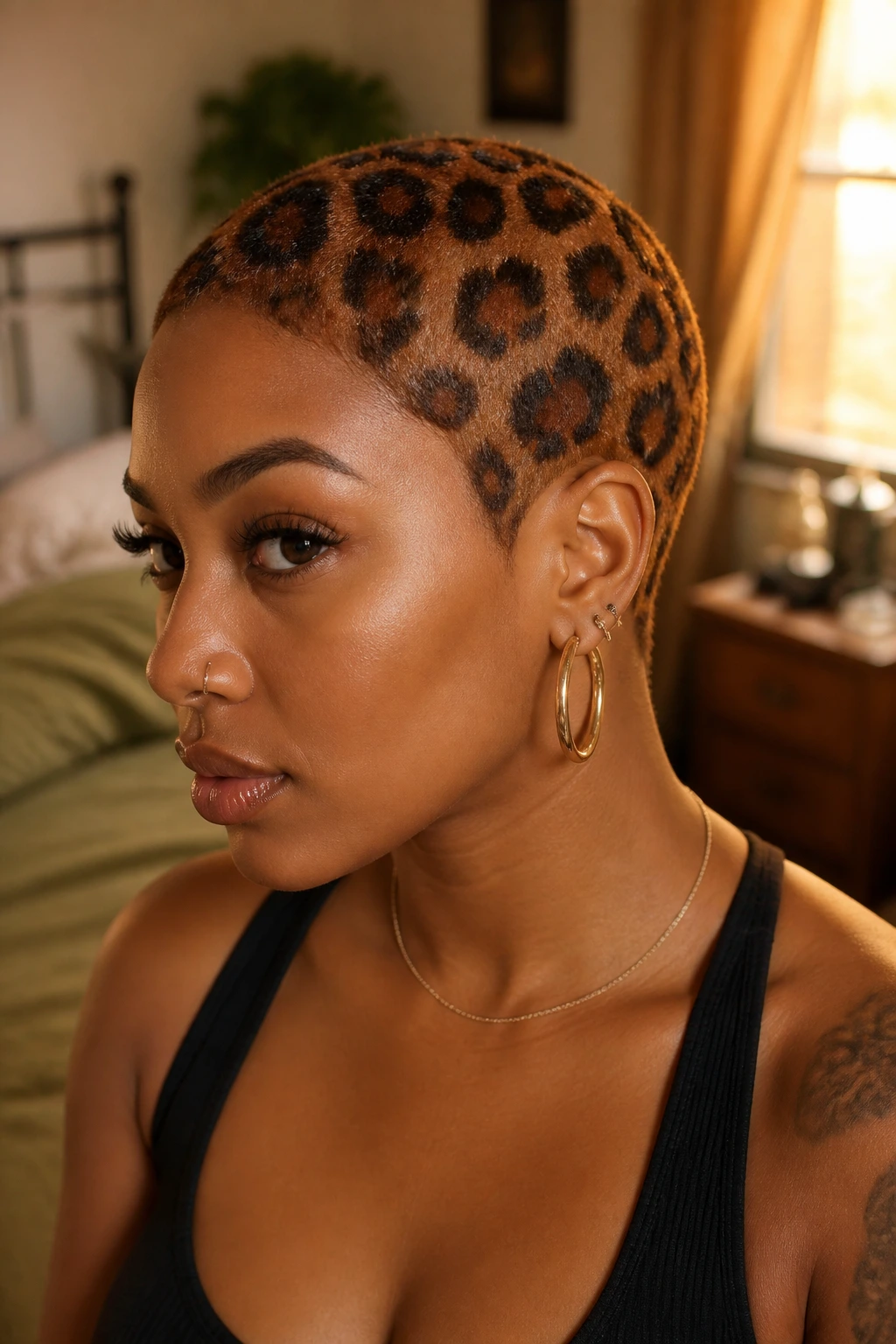
Choosing the perfect pattern depends heavily on the density and texture of your hair. If your hair is fine, large patterns can make your scalp look visible, which is rarely the goal. Stick to small, dense clusters. If your hair is thick and coarse, you have the canvas to support larger, more abstract spots that look like authentic cat fur.
Considering Texture and Flow
- Curly hair: Spots will be distorted by the curls, so focus on the borders. Don’t try to make perfect circles; let the pattern bend with the curl.
- Straight hair: You have a clear, flat plane to work with. Precision is your best friend here—keep your lines crisp and clean.
- Wavy hair: This is the most forgiving texture for leopard print. The waves add a natural “movement” to the spots, making them look even more realistic.
14. Essential Tools for DIY Leopard Print Success
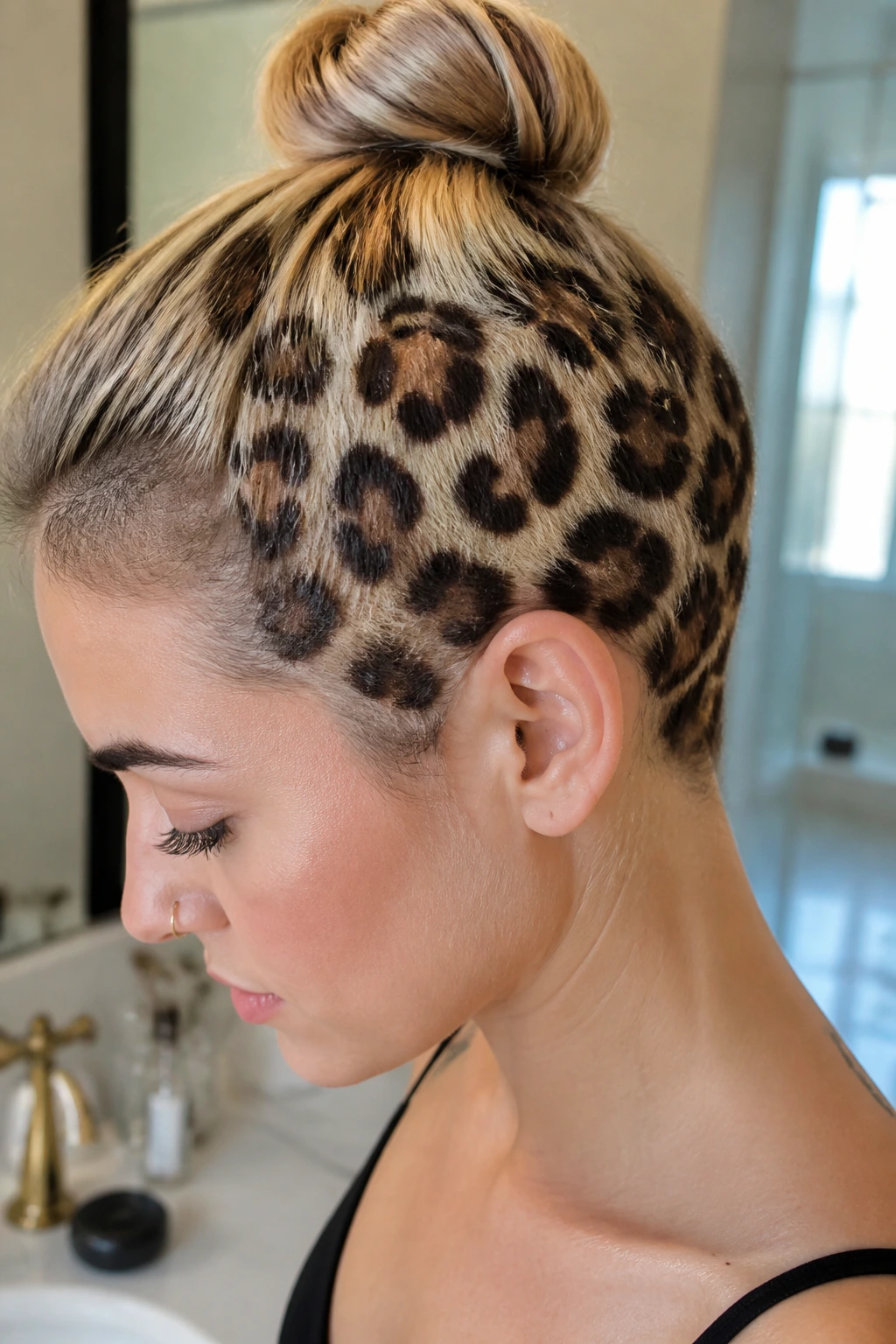
You do not need to head to the salon to get professional-looking results. With a few specific items, you can achieve a clean pattern at home. The most important tool isn’t the dye—it’s the applicator. A fine-tipped eyeliner brush or a sponge-tip eyeshadow applicator is essential for creating the irregular, jagged borders that define a high-quality print.
The Toolkit
- Plastic stencils: If you aren’t confident in your freehand, these are lifesavers. You can cut them yourself from a stiff, thin plastic folder.
- Sectioning clips: Keeping the non-patterned hair out of the way is half the battle. Use at least 6-8 clips to ensure a clean work zone.
- Barrier cream: Apply this to your ears and forehead to prevent the dye from staining your skin, which is common when working with dark, pigmented black dyes.
- Color-safe gloves: Do not skip these. The dark dye required for the borders will stain your fingers for days.
15. The Importance of Border Contrast in Realistic Patterns
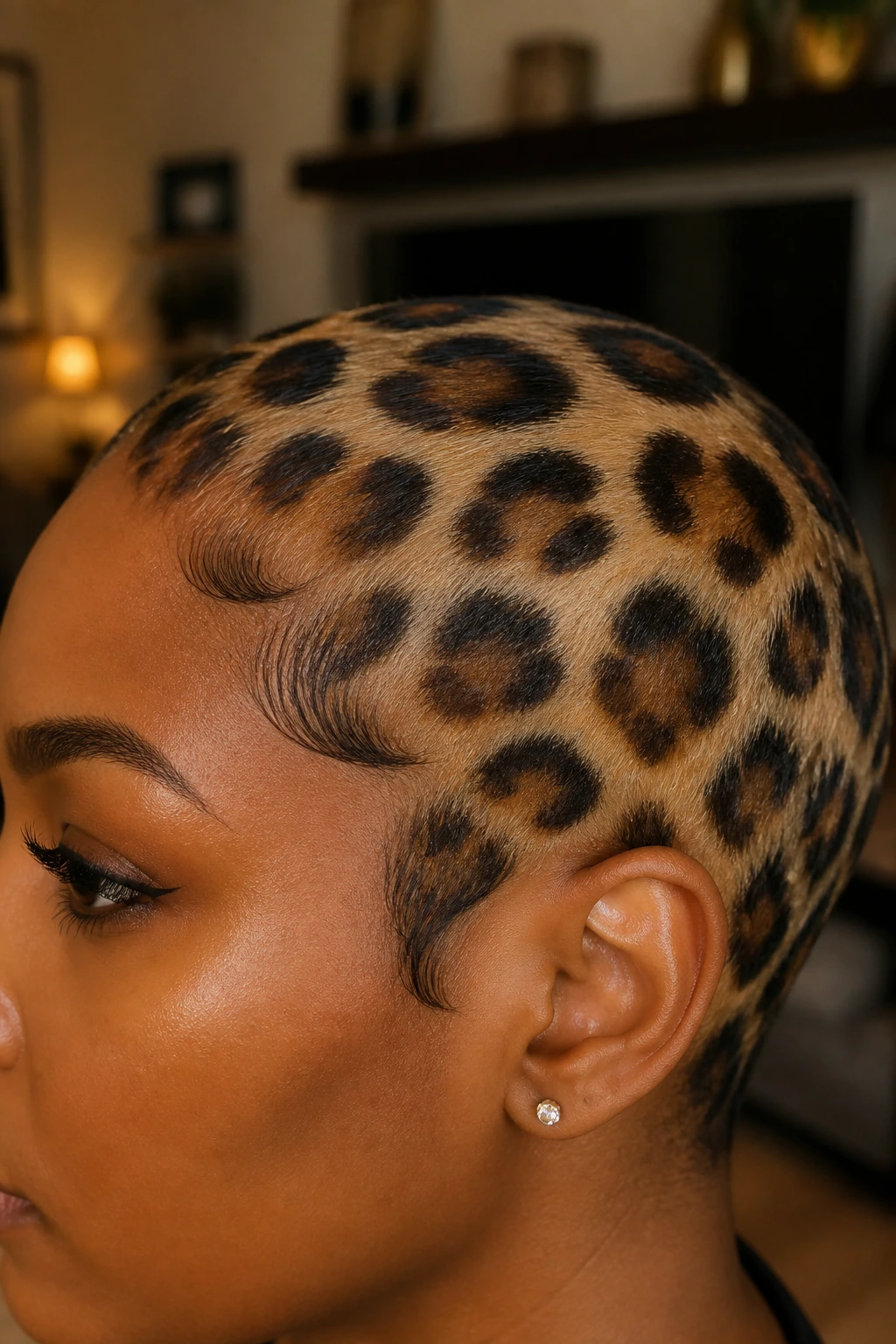
The defining feature of a leopard spot is the dark, slightly broken boundary that surrounds a lighter, warmer interior. If you paint a solid black circle, it looks like a polka dot, not a leopard spot. To make it look realistic, you must “break” the circle. Leave a tiny sliver of space in the border, or make one side of the border thicker than the other.
Why “Broken” Borders Matter
The eye perceives these small imperfections as “natural” rather than “man-made.” When you mimic nature’s asymmetry, the brain accepts the pattern more readily. It stops looking like a print on fabric and starts looking like the organic markings of a wild animal.
16. Maintaining Your Pattern Through Proper Washing
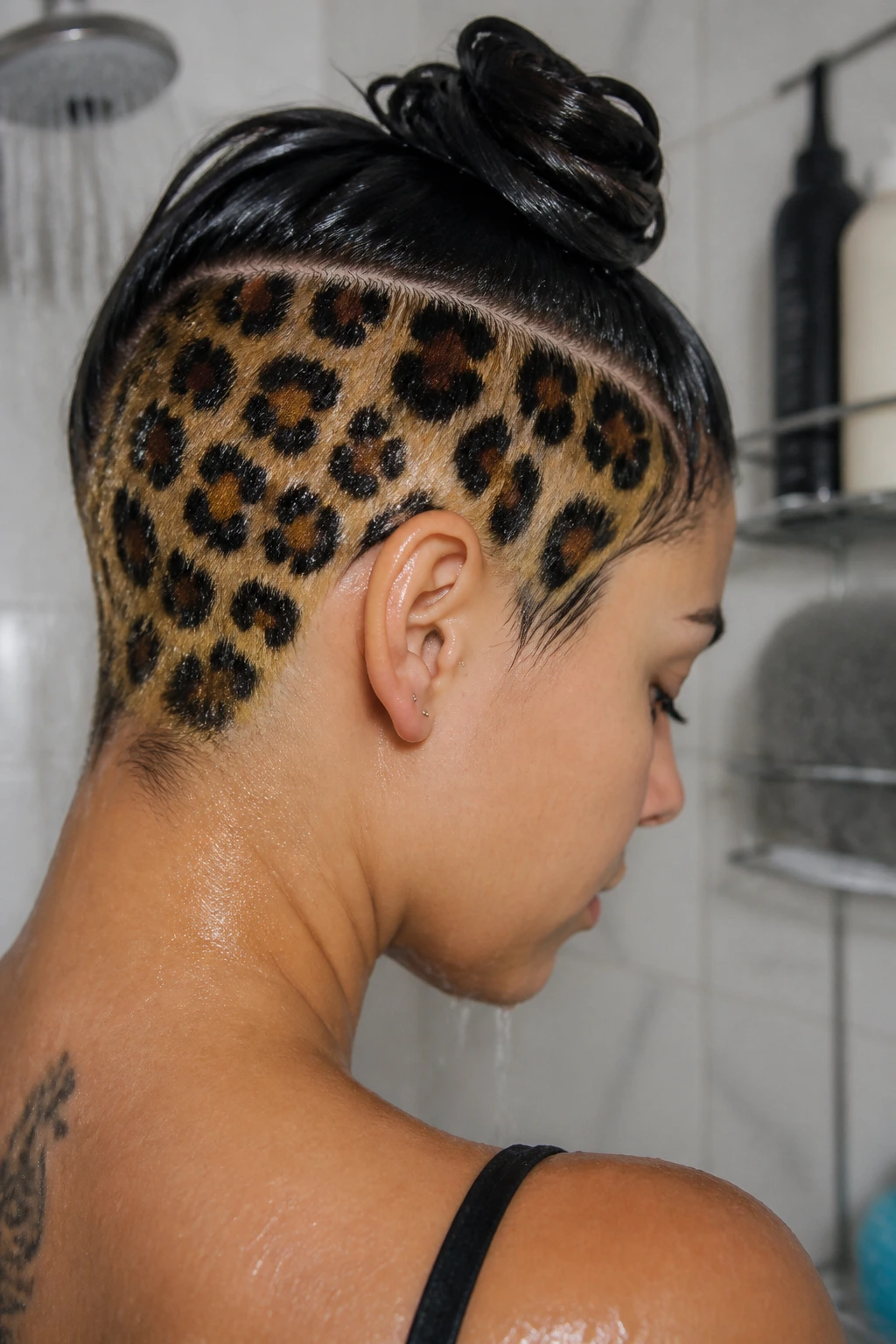
Once you have invested hours into your spots, the last thing you want is for them to fade or bleed in the shower. The cardinal rule of patterned color is temperature control. Cold water is your best friend. It keeps the hair cuticle closed, locking the color inside the strand and preventing the bleed that turns crisp borders into fuzzy, muddy blobs.
Washing Strategies
- Use dry shampoo to extend the time between wet washes.
- If you must wash, apply a deep conditioner to the ends first, which creates a protective barrier for the dye-heavy sections.
- Never let the water run directly onto the pattern; tilt your head to rinse the soap away without saturating the printed sections more than necessary.
17. Styling Tips for Making the Spots Pop
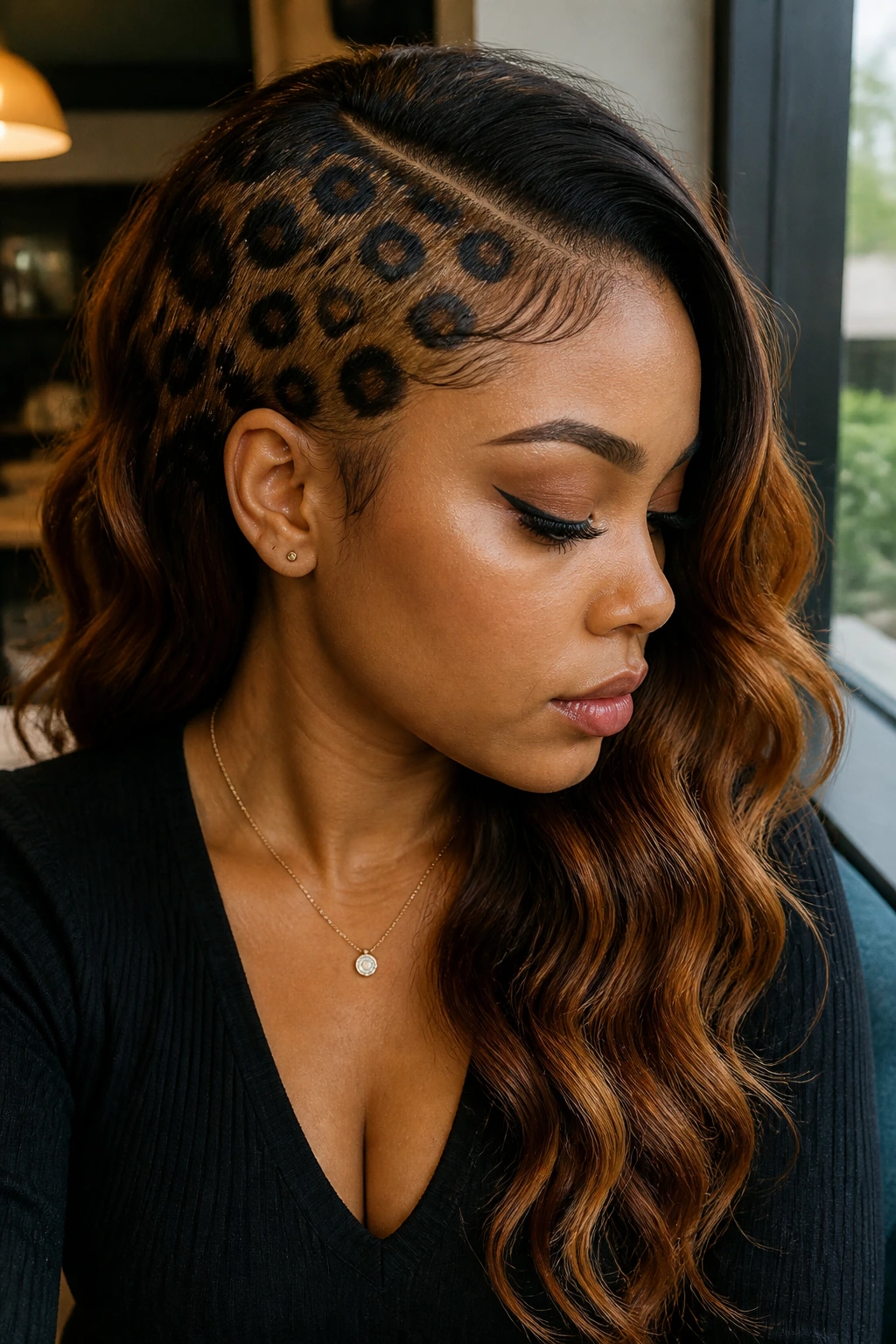
When you’re ready to showcase your leopard spots, your styling choices should complement, not distract from, the design. If you have the pattern on the side of your head, a deep side part on the opposite side helps “push” the hair over, creating a volume that frames the pattern beautifully.
Accessories and Patterns
- Avoid busy hair accessories like patterned headbands that will compete with your spots.
- Stick to solid-colored bobby pins or clips that match your hair color so the design remains the hero.
- Use a light-reflecting spray for an instant gloss boost that makes the pattern look “expensive.”
18. Troubleshooting: Fixing Blurred Edges
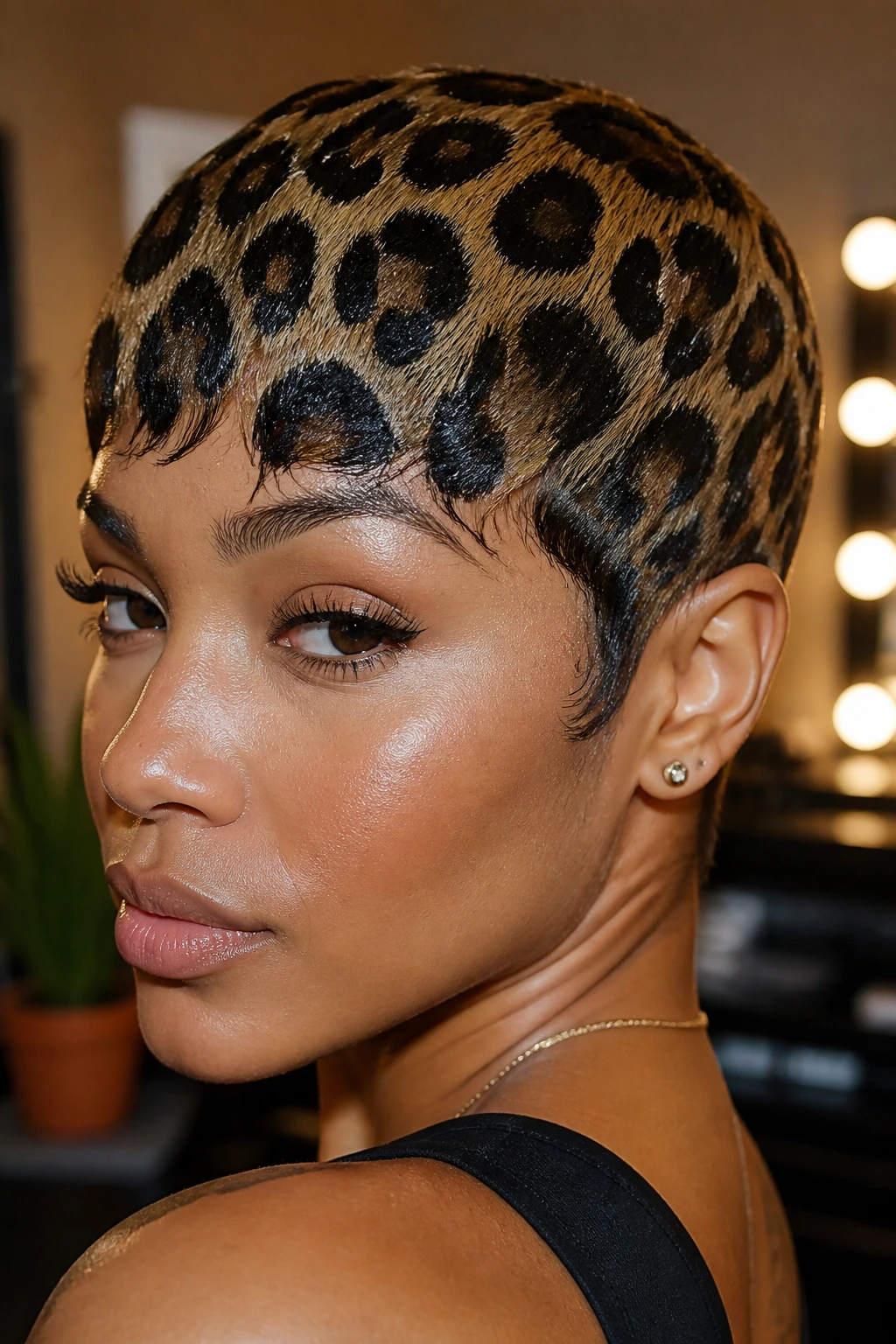
Even the most careful application can result in a little bleeding. If your borders start looking fuzzy, you can “sharpen” them up with a little bit of root touch-up spray in a darker shade. Use a small, angled brush to dab a tiny amount of the spray onto the edge of the spot, effectively re-drawing the line where it blurred.
When to Consult a Professional
If you find that the dye is consistently bleeding within 24 hours of application, you likely have a porosity issue. Your hair is absorbing too much liquid too quickly. A stylist can apply a porosity-balancing treatment before the color, ensuring the dye stays exactly where you put it.
19. Pairing Leopard Hair with Your Wardrobe
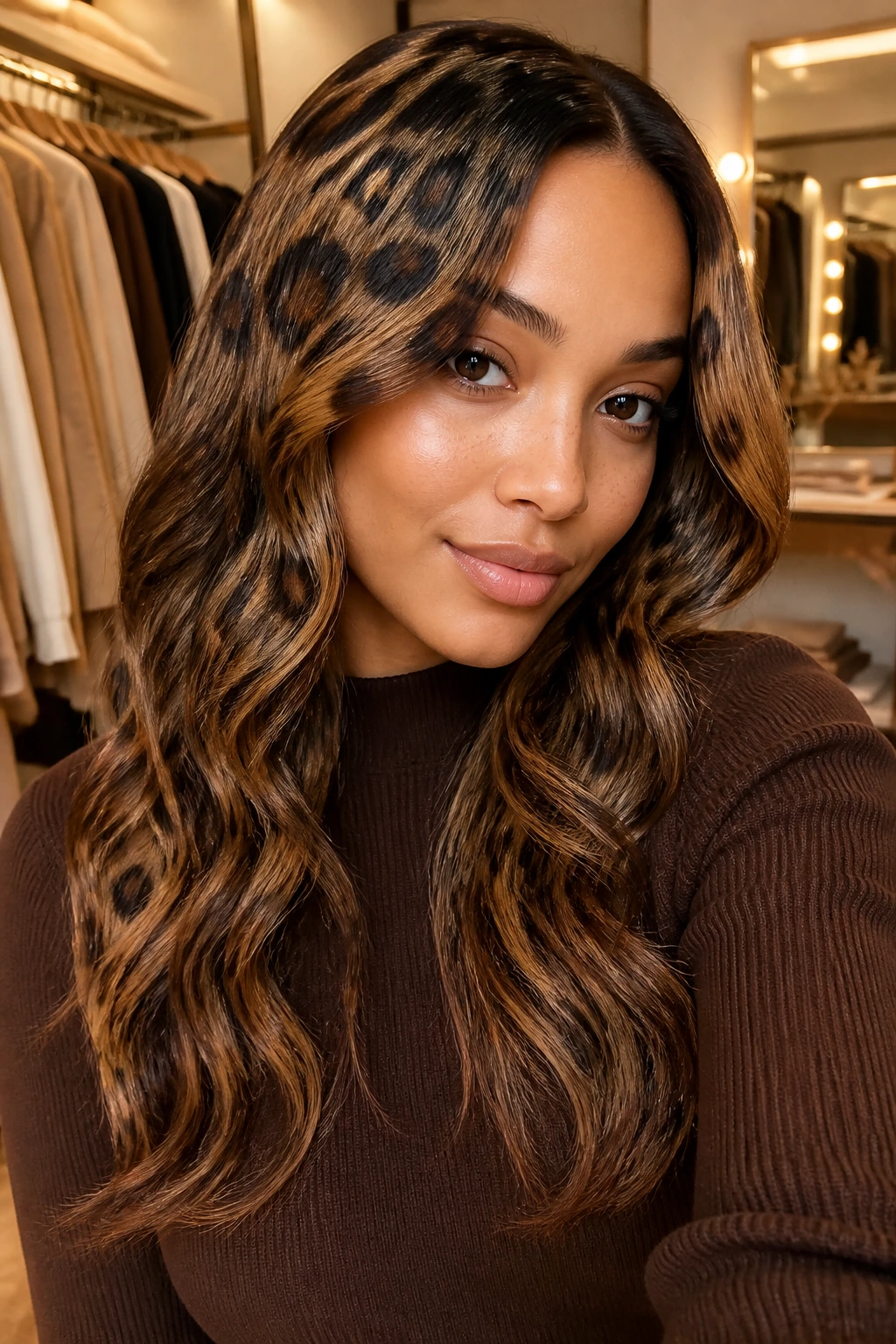
It might seem intuitive to wear more animal print when you have leopard hair, but this is usually a fashion trap. To let your hair shine, try wearing solid colors that appear in the print itself. If you have espresso and caramel spots, a chocolate-brown sweater or a camel-toned blazer will make the hair pattern feel like part of a cohesive, intentional outfit.
Styling for the Office
- Pair your leopard accents with neutral, classic silhouettes—a white shirt or a charcoal suit.
- This creates a contrast between the “wild” hair and the “structured” clothing, which is a very high-fashion look.
- Keep makeup clean and minimalist to ensure the hair remains the standout feature of your look.
20. The Longevity of the Look
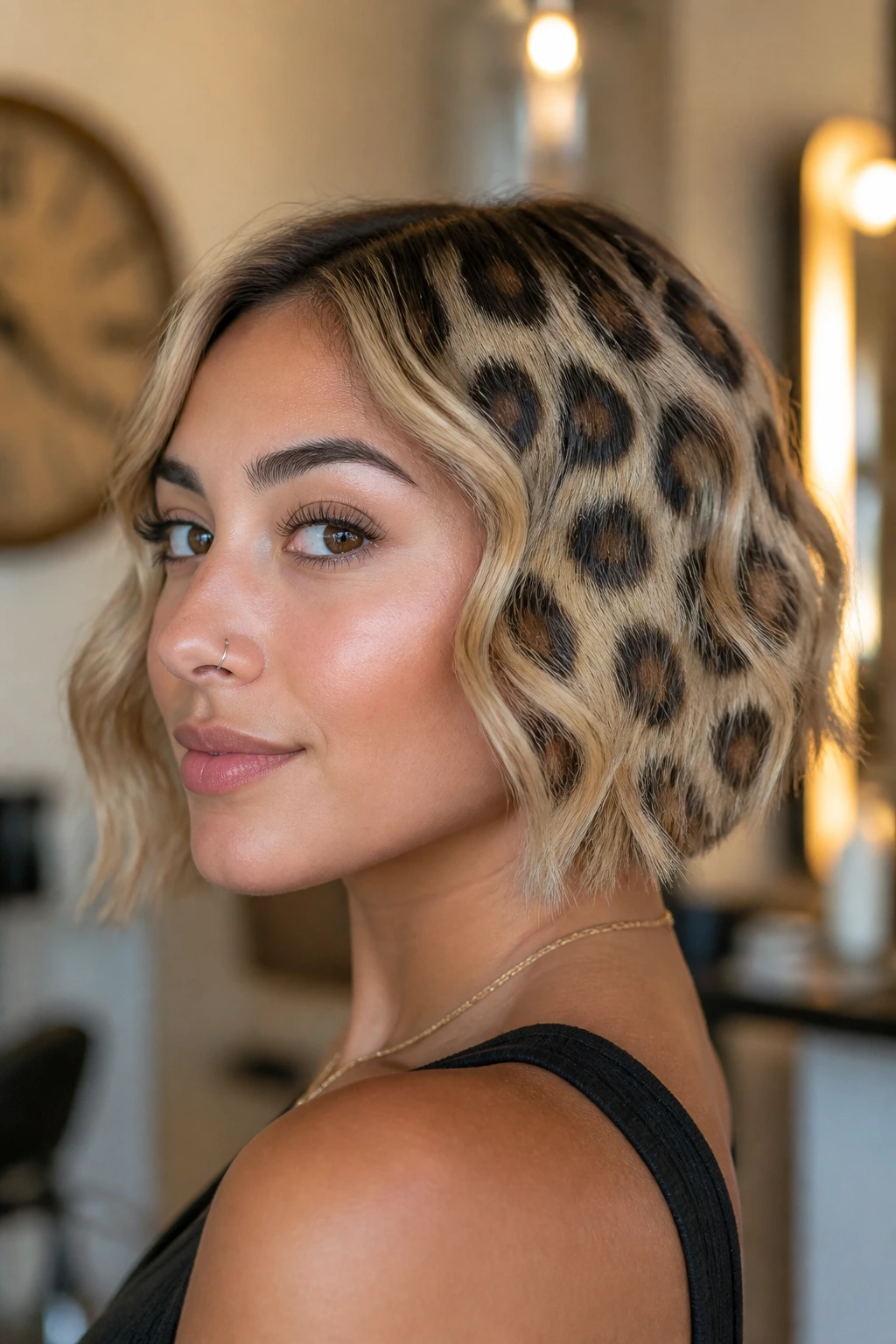
How long you can keep these spots looking good depends entirely on your hair’s growth rate and the quality of the dye. On average, you can expect a sharp look for about four to six weeks. After that, the roots will begin to show and the edges will naturally start to soften.
Planning for the Grow-Out
- Embrace the transition; as the spots fade, they often take on a “vintage” look that is quite stylish in its own right.
- If you prefer a fresh look, book your touch-up appointments every five weeks.
- If you’re ready to move on, consider a semi-permanent gloss in a single, dark shade to mask the pattern once it begins to look uneven.
21. Seasonal Variations for Leopard Spots
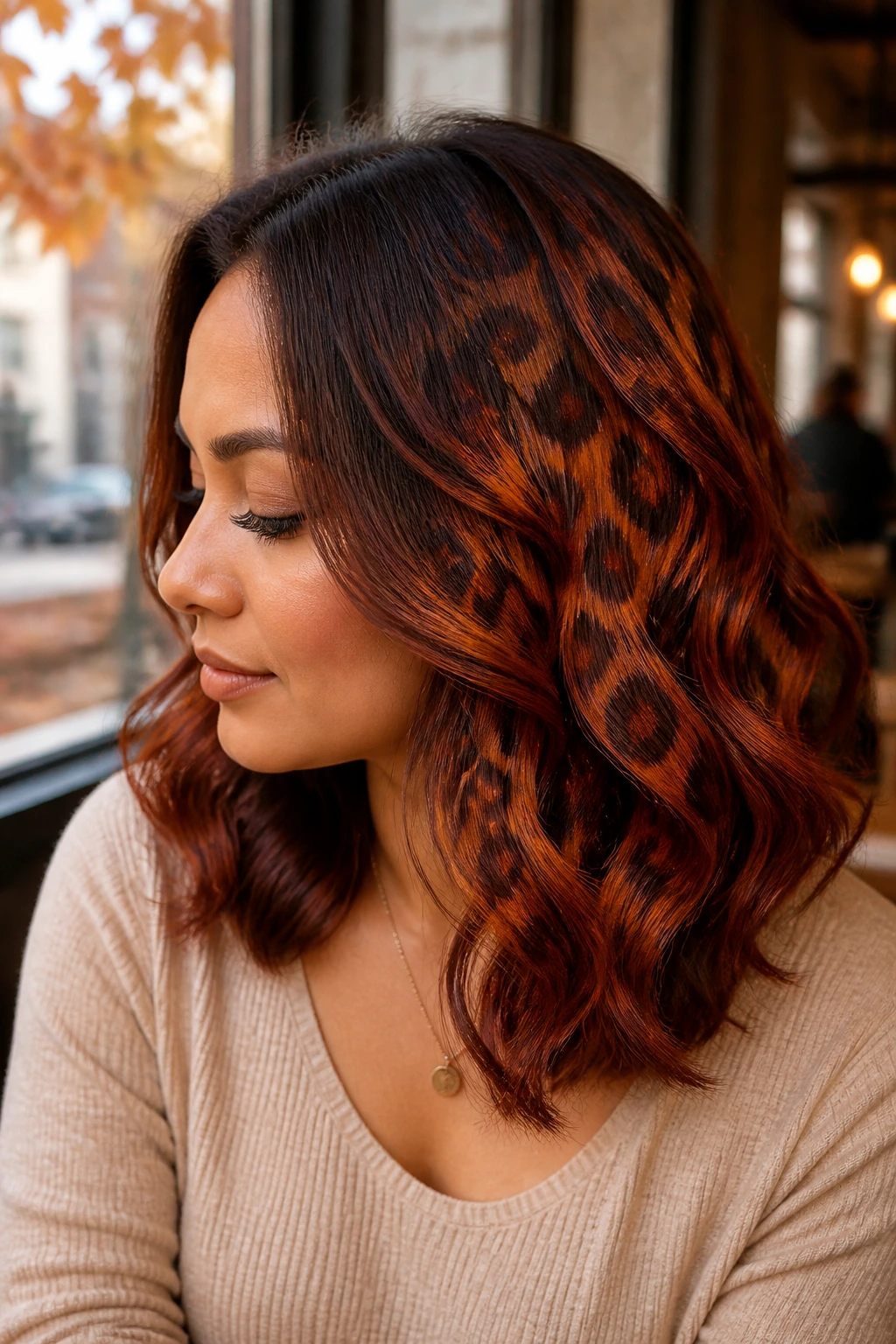
You can adapt your spots for different times of the year. During cooler months, move toward warmer, richer tones like mahogany and burnt orange. During warmer, brighter times, play with high-contrast, cool-toned palettes like silver, white, or pastel blues and pinks.
Adapting to the Light
- In bright summer sunlight, neon patterns tend to glow, which is great for outdoor events.
- In lower autumn light, deeper, matte patterns look more sophisticated and grounded.
- Always match the “temperature” of your hair dye to the seasonal color palettes you wear most frequently.
22. Why This Trend Is Here to Stay
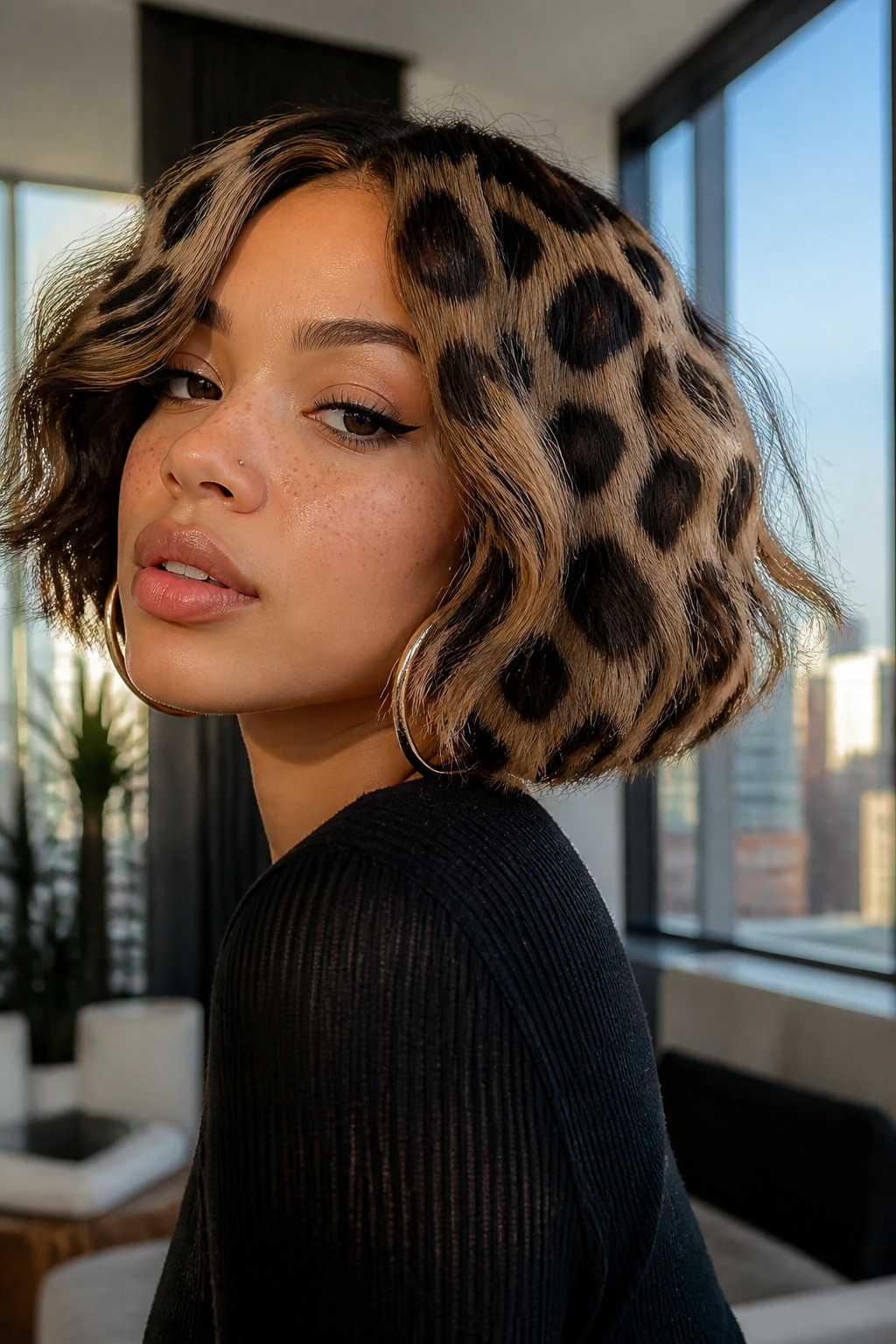
Leopard print has existed as a fashion staple for decades because it represents a balance of luxury, danger, and playfulness. Bringing it to your hair is simply the latest evolution of that history. It’s an easy way to express personality without needing to change your entire wardrobe or commit to a drastic haircut.
The Psychological Aspect
There is a sense of confidence that comes with wearing a bold pattern on your head. It’s a way of saying you don’t take life—or your hair—too seriously. It invites conversation, shows an eye for detail, and most importantly, it’s just plain fun to look in the mirror and see something that feels like a personal work of art.
Final Thoughts
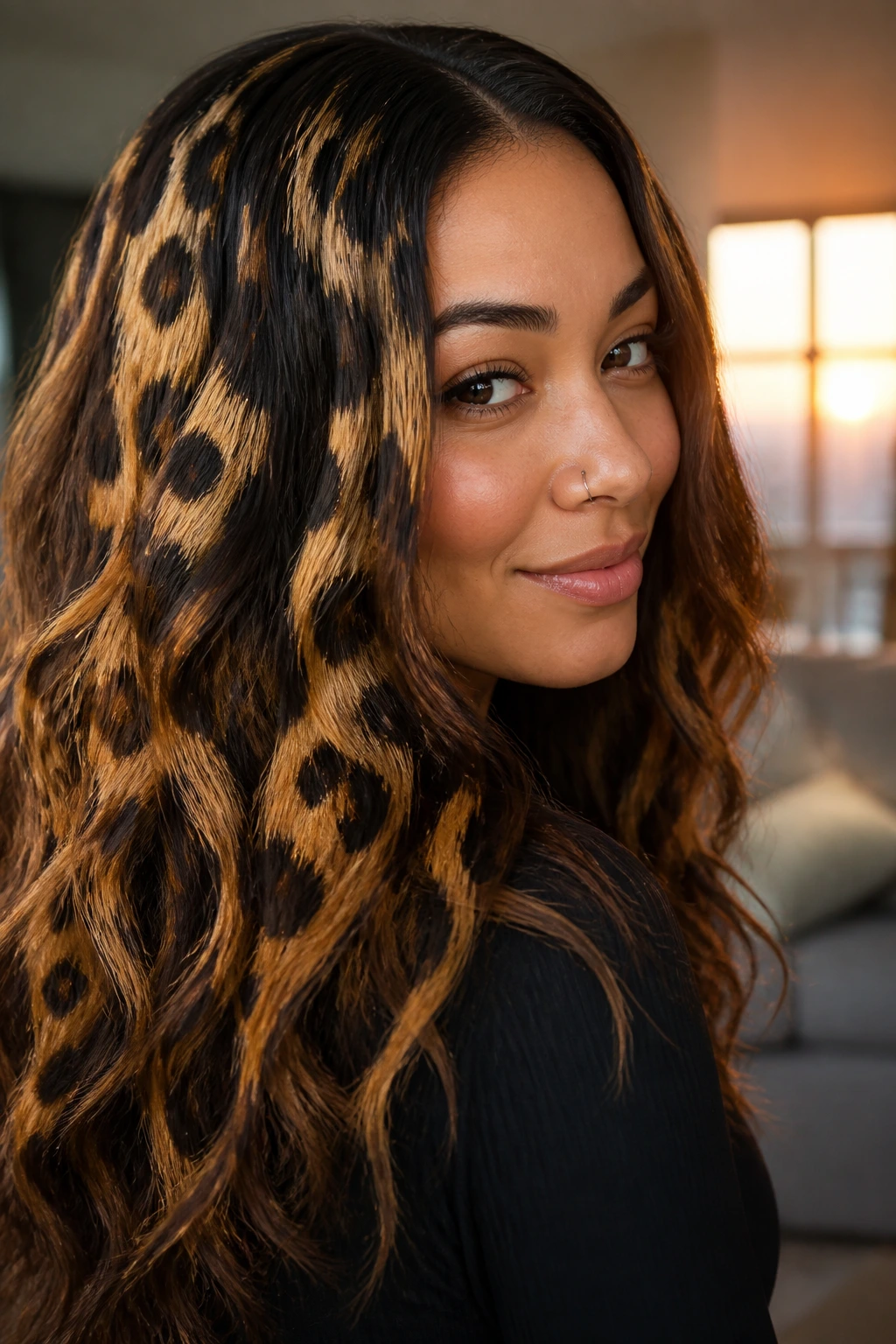
Whether you opt for a hidden nape design or a full-blown neon masterpiece, the key to leopard spots is confidence. This is not a look that stays quiet; it is a look that leans into its own complexity. By taking the time to understand your hair’s texture, choosing a color palette that suits your style, and staying disciplined with your care routine, you can turn your hair into a signature accessory that never goes out of season. Don’t be afraid to experiment, start small if you’re nervous, and remember that, at its heart, this is about celebrating your own unique version of a timeless, wild pattern.