
Hair ties and bobby pins are the silent casualties of a high-intensity workout. There is nothing more frustrating than mid-burpee when your ponytail begins to unravel or your bangs start slapping against your sweaty forehead. We have all been there—fumbling with an elastic while trying to maintain our heart rate, eventually giving up and just tolerating the tangled mess. This is exactly why Ghana weaving—a protective, intricate cornrow style—has become a non-negotiable favorite for those who prioritize both high-performance fitness and a polished, put-together appearance.
Ghana weaving, often recognized by the way the braid starts tight to the scalp and gradually grows in size, offers a foundation that stays completely immovable. Unlike a traditional ponytail that relies on gravity and tension to stay put, these braids lock your hair against the scalp. They eliminate the “swing” factor that causes breakage and frizz. Whether you are hitting a spin class, running a 10K, or pushing through a heavy lifting session, these styles remain completely untouched by sweat or motion.
Choosing the right style is about balancing tension and weight. You want something that holds firm but does not strain your edges. The beauty of these braids lies in the addition of synthetic hair, which provides the length and density required to wrap, tie, and tuck your hair into various athletic configurations. Let us look at twenty-two specific ways to adapt this versatile technique for your training sessions.
1. High-Volume Crown Braid
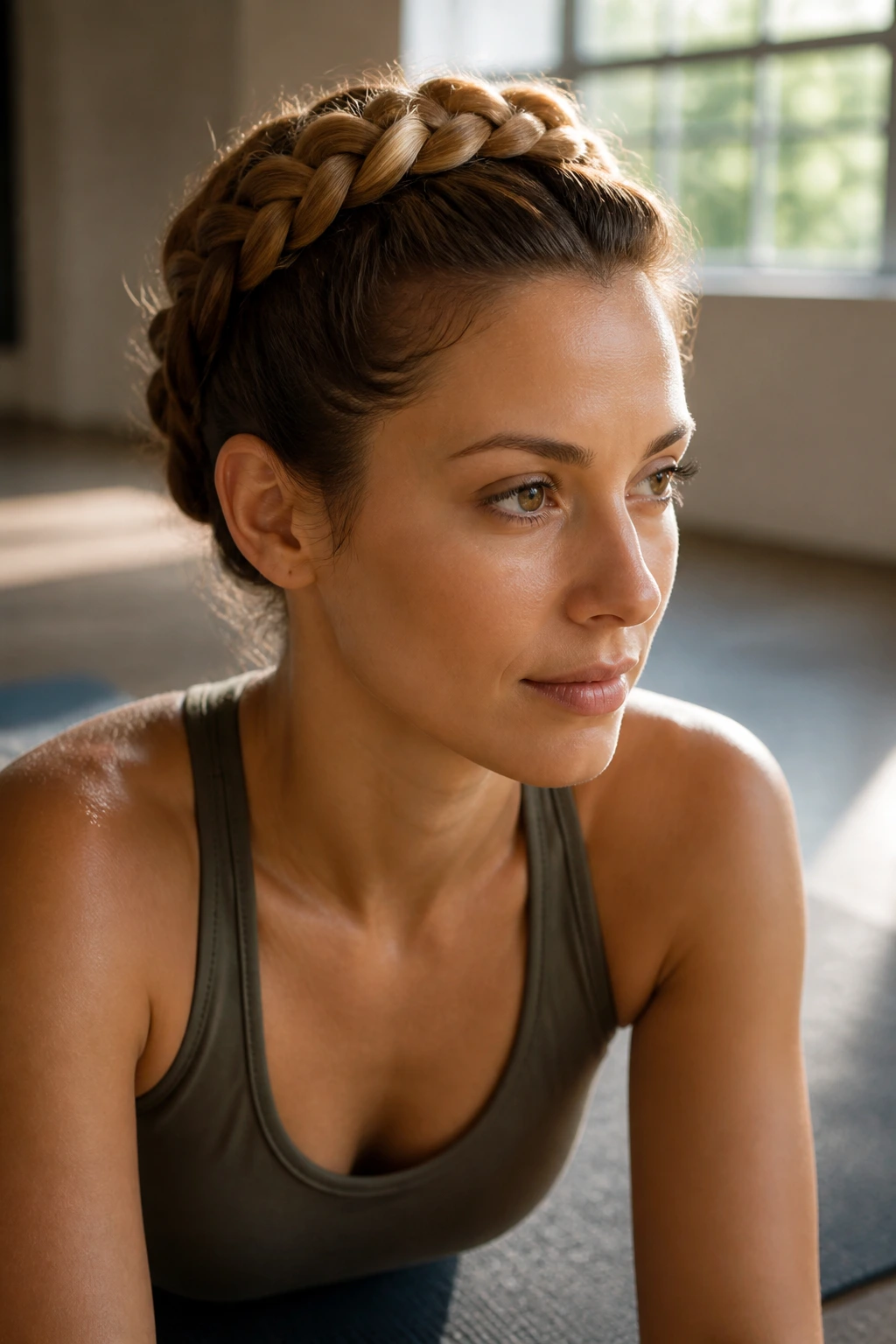
This style is a masterclass in keeping hair off the neck while looking intentional. By braiding the Ghana cornrows toward the center of the head, you create a natural anchor point for a crown-style wrap. It is perfect for yoga or Pilates because it sits flat against the back of your head, meaning you can lie down on a mat without feeling a hard bump digging into your skull.
Why It Works for High Impact
- The braid distribution is even, preventing localized pulling.
- It stays secure regardless of how much you move your head.
- The ends are tucked away, so they cannot tangle with your gear.
Pro tip: Use a lightweight edge gel to keep the hair around your hairline smooth, but avoid anything too heavy or oily; you want it to grip, not slide, once the sweat kicks in.
2. Sleek Side-Swept Ghana Ponytail
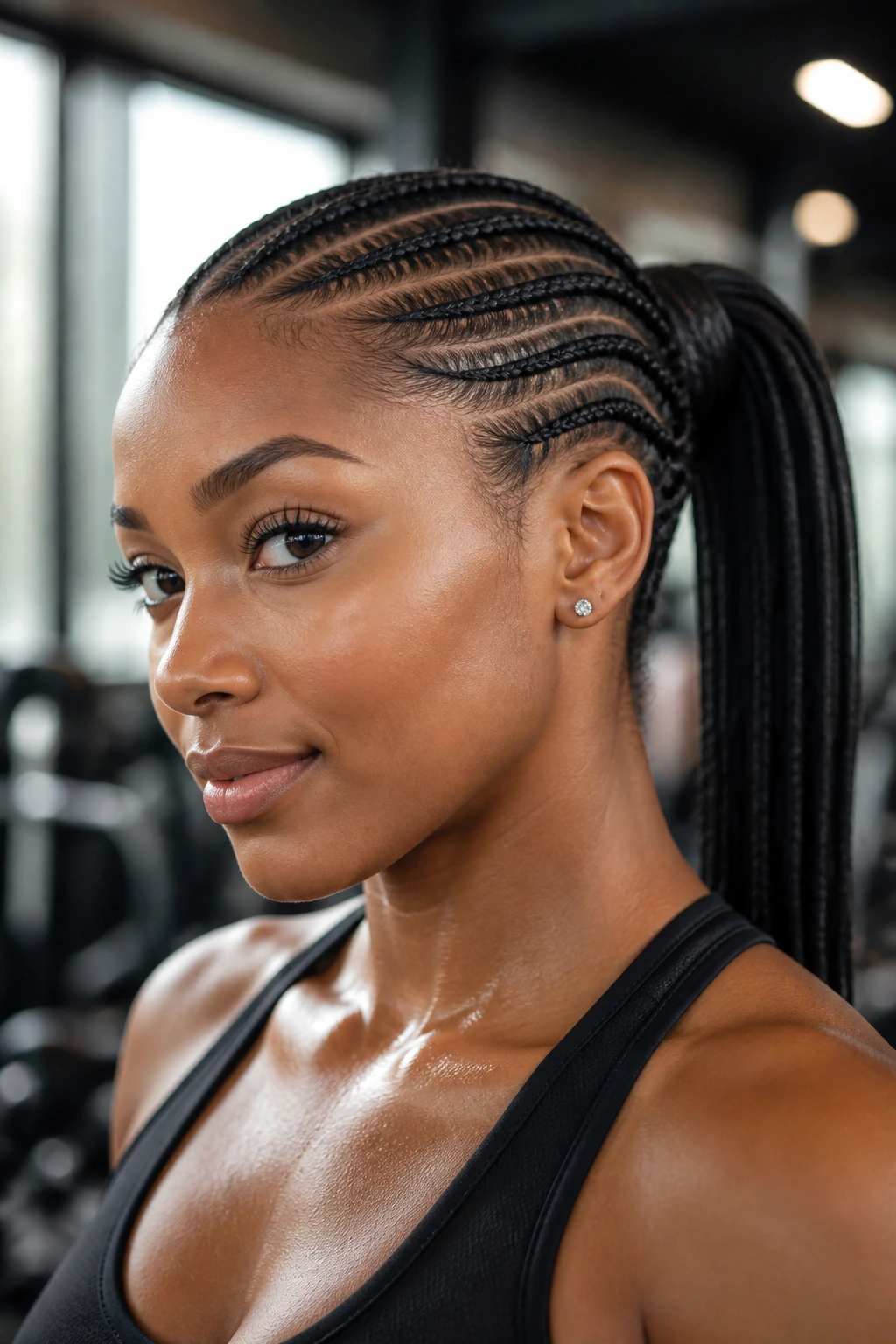
Sometimes you just need the reliability of a ponytail, but you want to avoid the typical hair-fatigue that comes with constant readjusting. This style features cornrows that all angle toward one side, meeting in a tight, high-tension point just behind the ear. It keeps your neck completely clear, which is a major comfort boost during high-intensity interval training.
How to Style It
- Part your hair in a deep side part.
- Braid the Ghana cornrows in a curved pattern toward the anchor point.
- Wrap a small section of the added hair around the base to hide the elastic.
- Use a snag-free hair tie to secure the tail.
3. The Double-Bun Updo
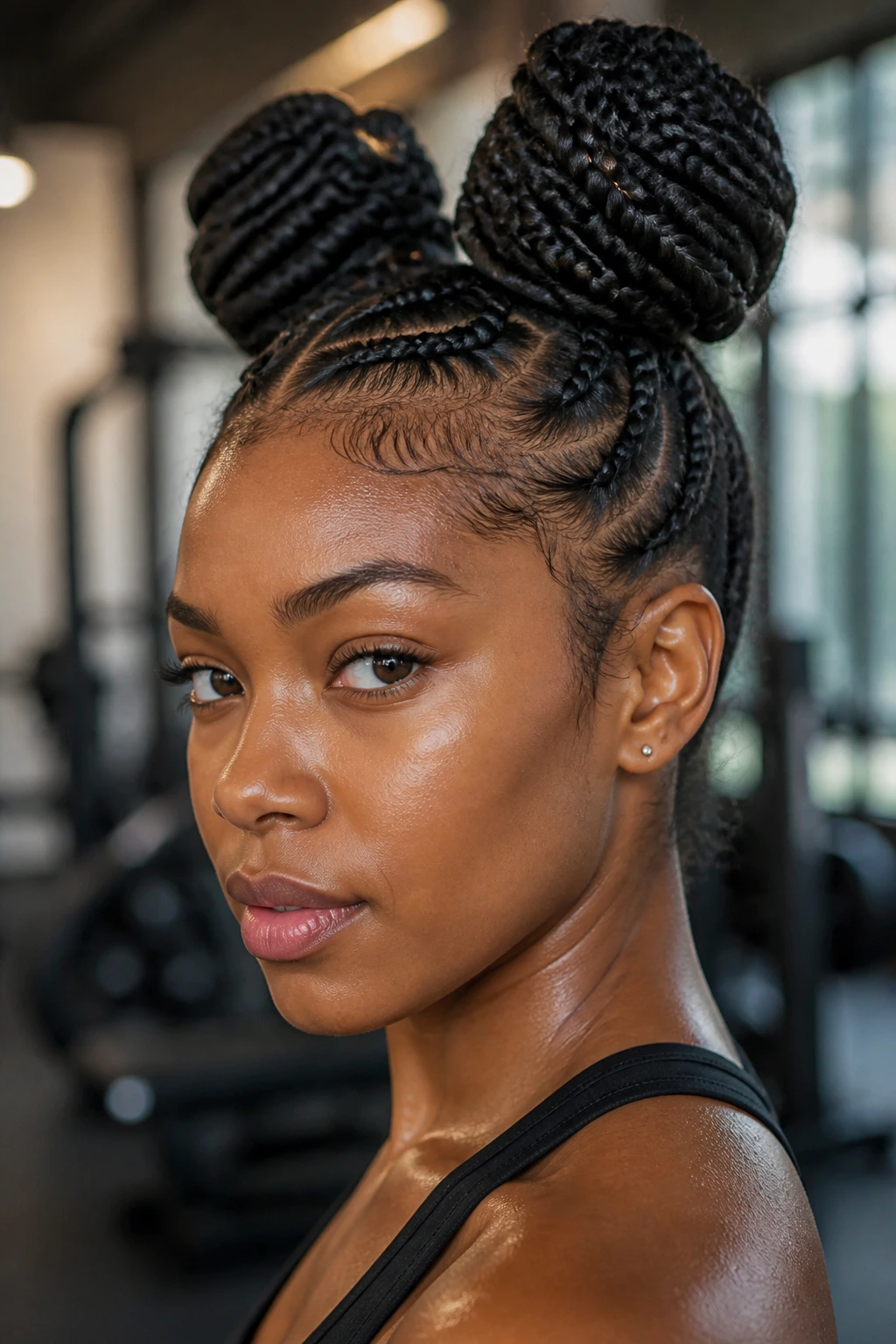
If you are a fan of weightlifting, you know the frustration of a single ponytail dangling right where your barbell needs to rest on your traps. A double-bun configuration using Ghana weaving allows you to distribute the weight of the braids across two separate points on your head. This setup is incredibly stable for movements that involve jumping or rapid changes in direction.
4. Half-Up, Half-Down Athletic Knot
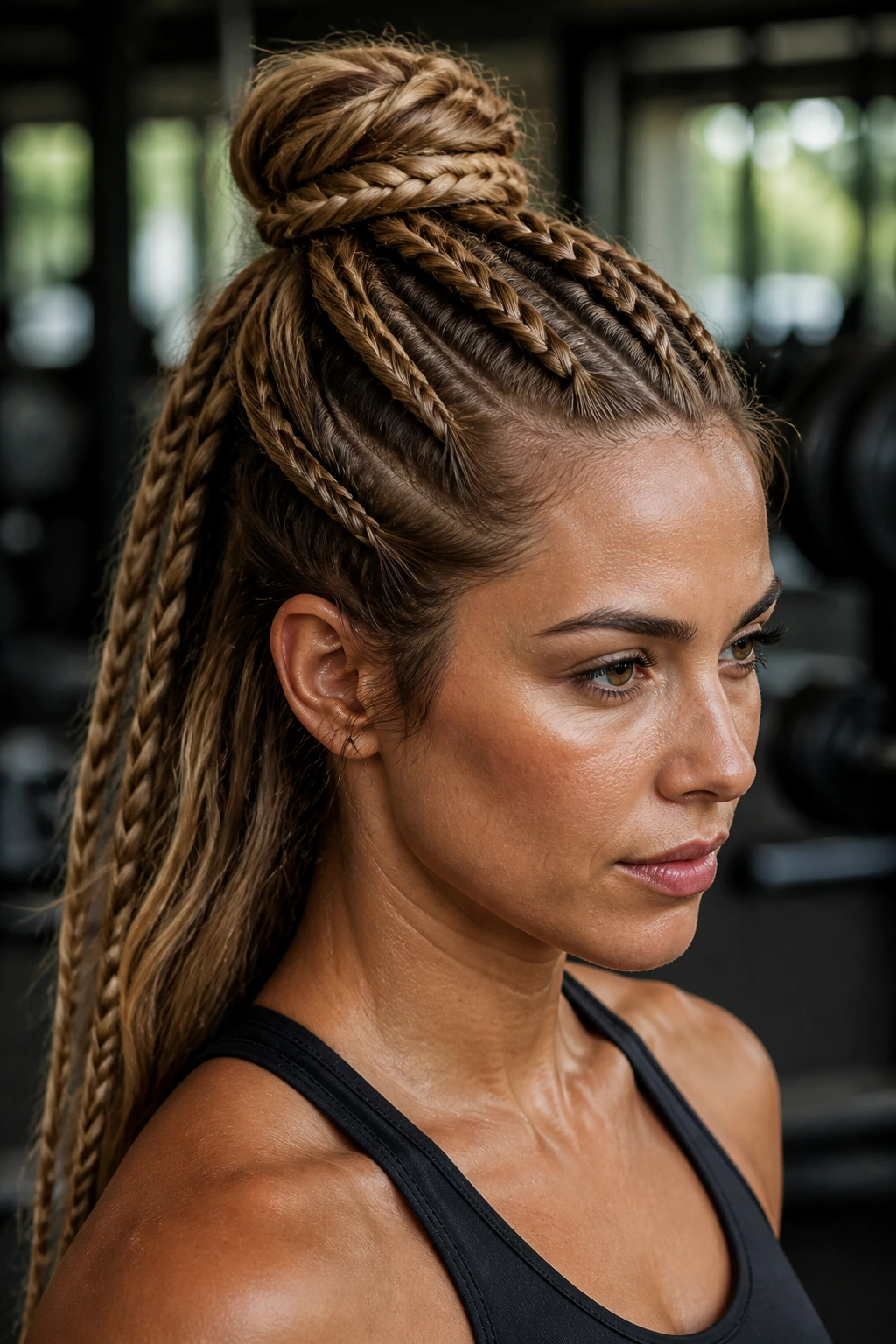
This is for the days when you want a bit of freedom but still need your vision clear. The front and top sections are woven back into a neat, firm base that gathers into a top knot, while the remaining braids flow naturally down the back. It is arguably the most versatile look for gym-to-street transitions.
Key Benefits
- Keeps front-facing strands out of your eyes during floor work.
- Allows for better ventilation around the neck compared to a full updo.
- Looks sophisticated enough for a post-workout smoothie meeting.
5. Reverse Braided Low Bun
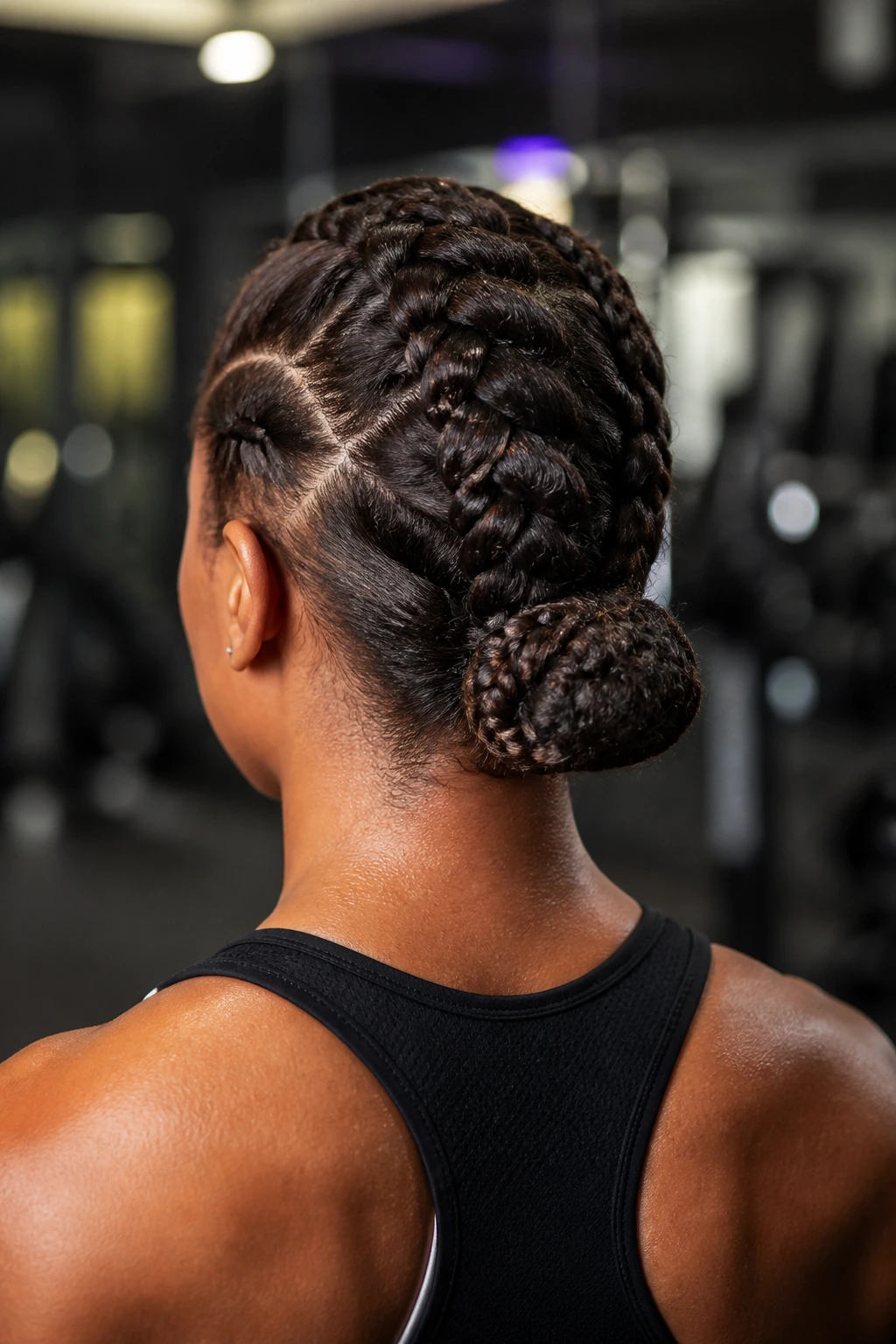
Many people find that high ponytails cause headaches during long-duration cardio. A reverse braid—where the cornrows are woven from the nape of the neck toward the crown—allows you to pin the bulk of the hair at the nape. This keeps your center of gravity low and prevents that annoying “tugging” sensation on your scalp when you are doing push-ups or rowing.
6. The Multi-Directional Fishtail Braid
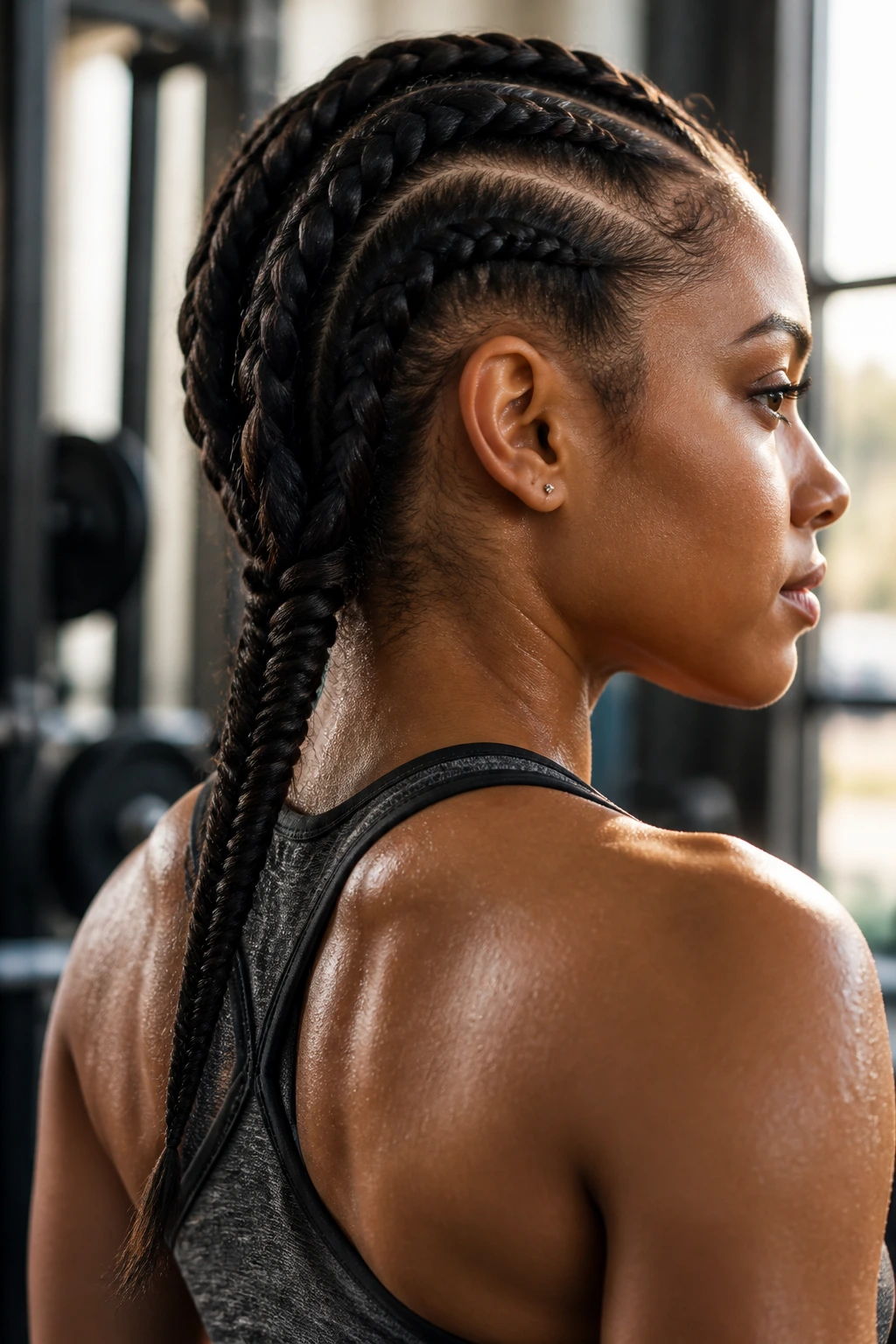
Ghana weaving is famous for its straight-back look, but mixing that with a fishtail finish adds significant structure. Once your hair is braided to the nape, you gather all the extensions into one singular, tight fishtail. This locks the style in place so effectively that even the most intense sweat session won’t cause the hair to “fluff up” or lose its shape.
7. Geometric Parting High Bun
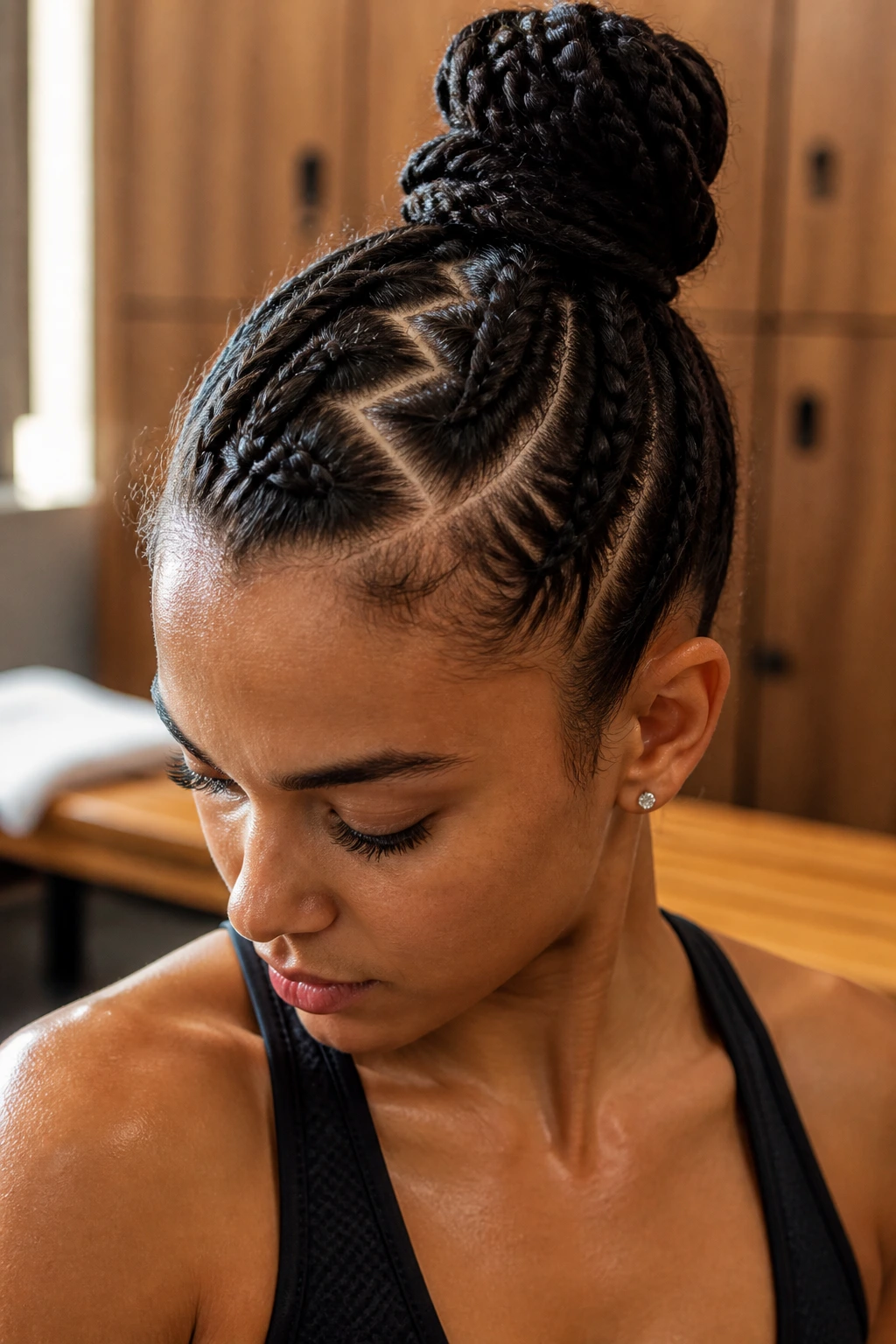
Precision is the hallmark of a great Ghana weave. By using geometric, zig-zag, or curved parts, you increase the surface tension of the braid. This makes the style feel virtually glued to your head. When finished in a high, tight bun, it is the ultimate “don’t-mess-with-me” style for a heavy squat day.
Maintenance Note
- Cleanse your scalp with a diluted tea tree oil spray.
- Avoid heavy moisturizing creams that attract dust.
- Keep the bun tight using a thick, fabric-covered band.
8. The Waterfall Ghana Ponytail
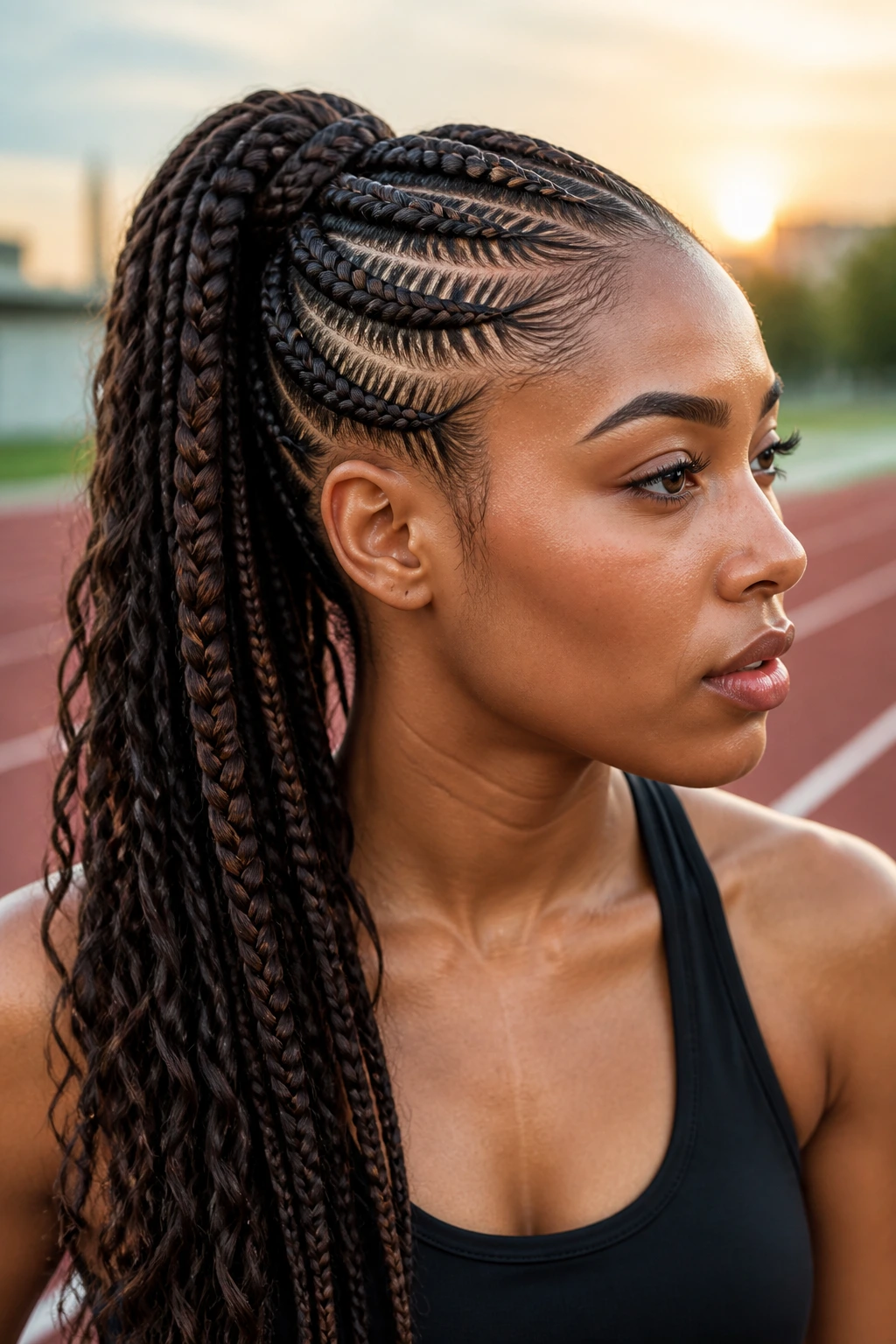
This style uses varied braid sizes—a signature of the Ghana technique—to create a cascading effect. Because the braids start small and thicken toward the back, they create a natural weight distribution that keeps the ponytail from pulling forward into your face. It is an excellent choice for runners who need their headgear to stay balanced for long periods.
9. Triple-Row Low Ponytail
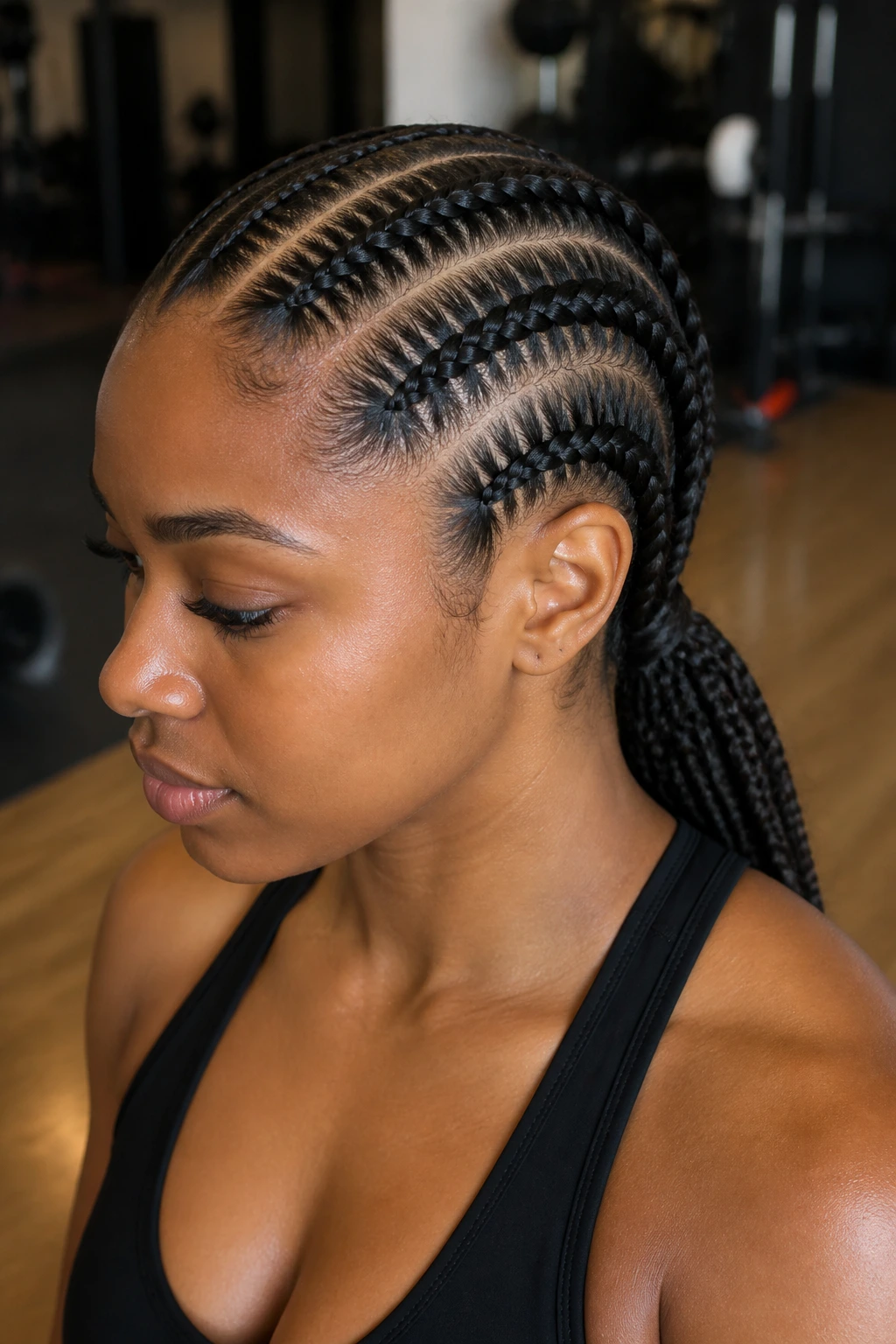
Three distinct, thick Ghana braids running from front to back are simple, effective, and require very little maintenance. Because the hair is divided into three distinct segments, it is much easier to manage if you need to quickly re-tie it mid-workout. It is the definition of a low-maintenance, high-performance hairstyle.
10. The Wrapped Top Knot
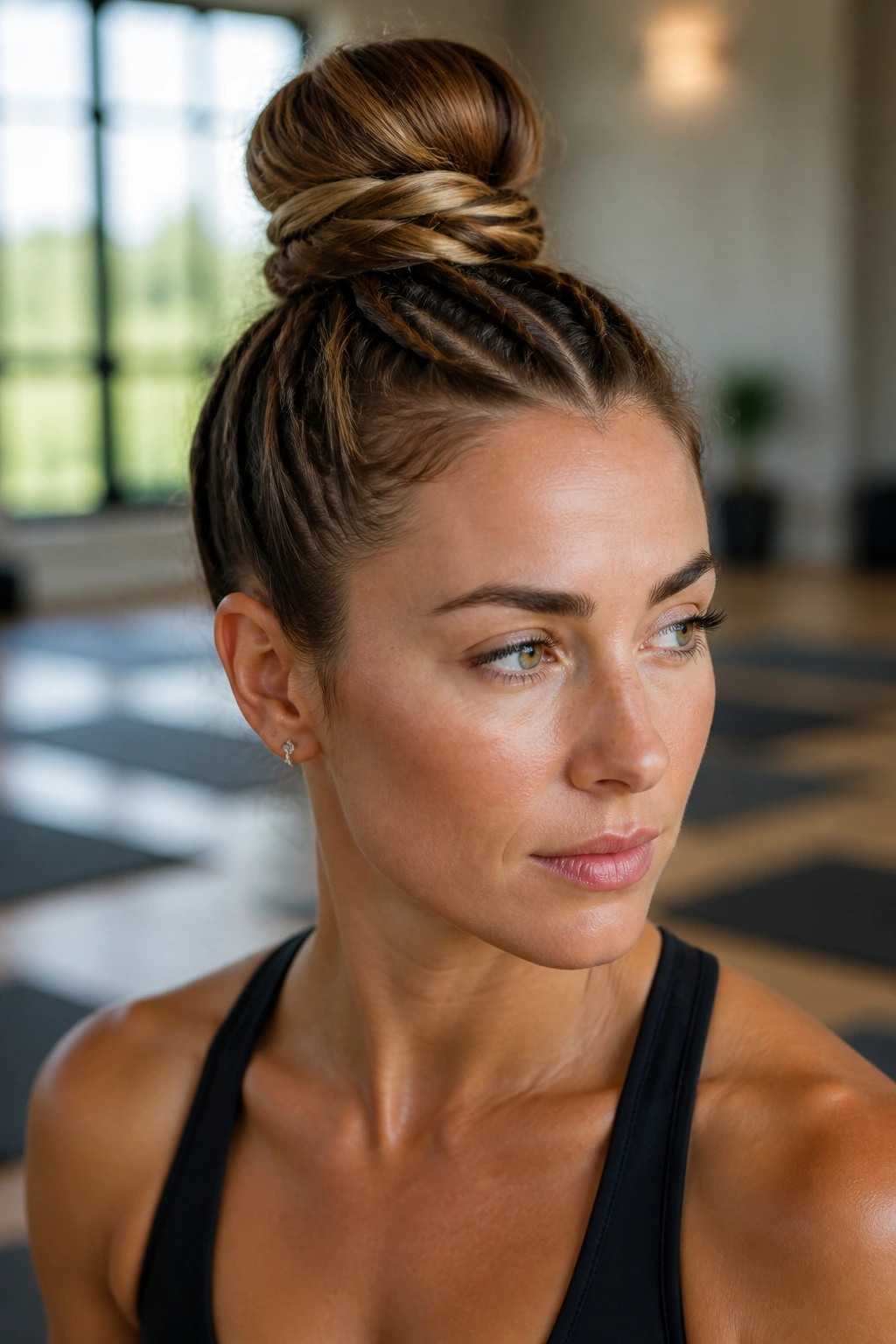
You have likely seen top knots, but a Ghana-woven top knot is different because the base is built into the scalp. It will not sag. It will not flop. It is the perfect style for gymnastics or any sport that requires headstands, as the flat foundation ensures there is no loose hair to get in the way of your balance.
11. Side-Parted Feed-In Braid
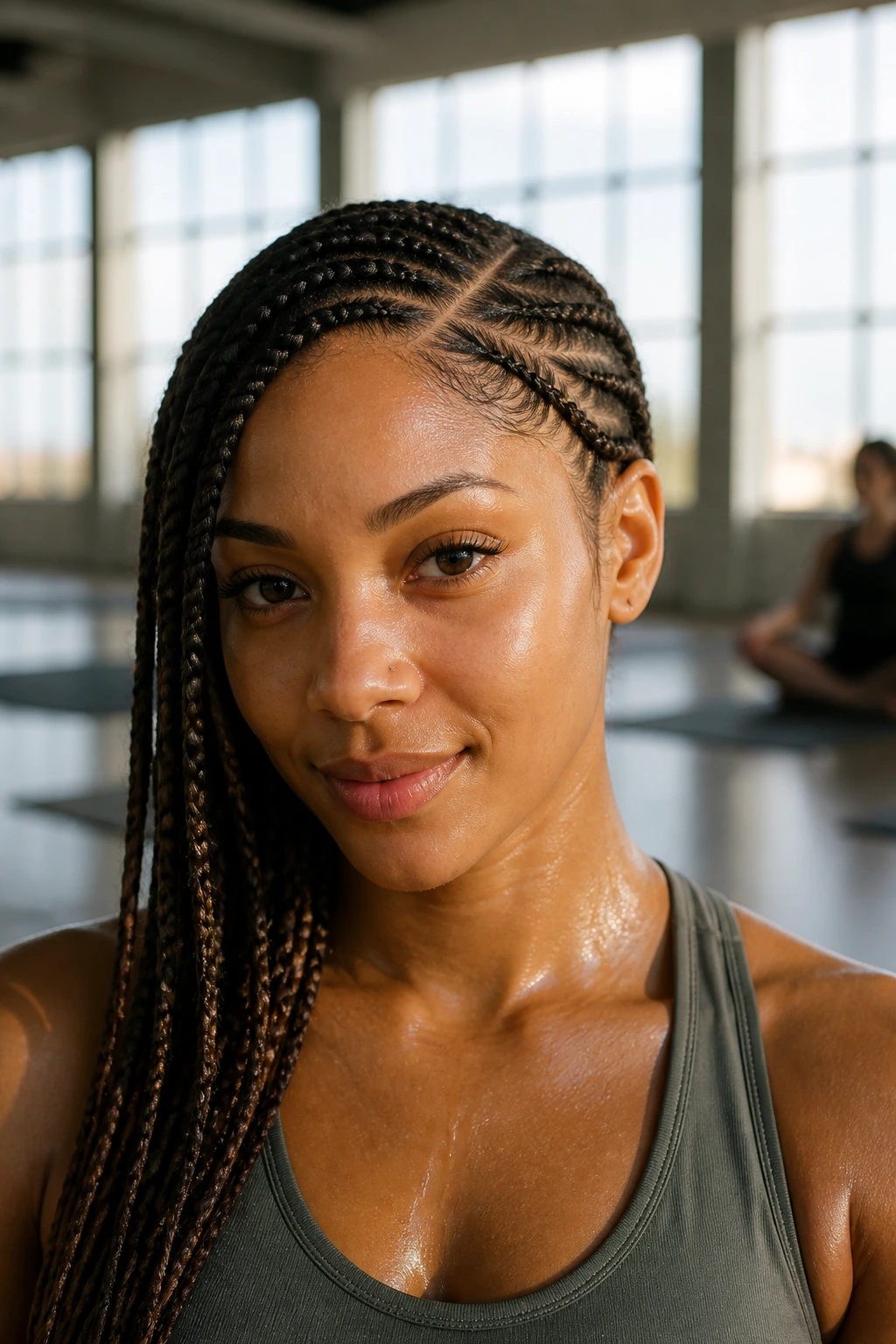
This look utilizes the “feed-in” method, adding hair gradually to ensure the base is not too bulky. By angling the braids toward the side, you keep the back of your neck free from heat, making this a top tier choice for hot yoga or high-humidity environments. It feels incredibly light despite the length.
Why It’s Efficient
- Fewer braids mean less time in the stylist’s chair.
- The tension is distributed evenly across the side, preventing scalp soreness.
- It’s very easy to bundle the ends if you suddenly need them off your back.
12. Zig-Zag Ghana Parting
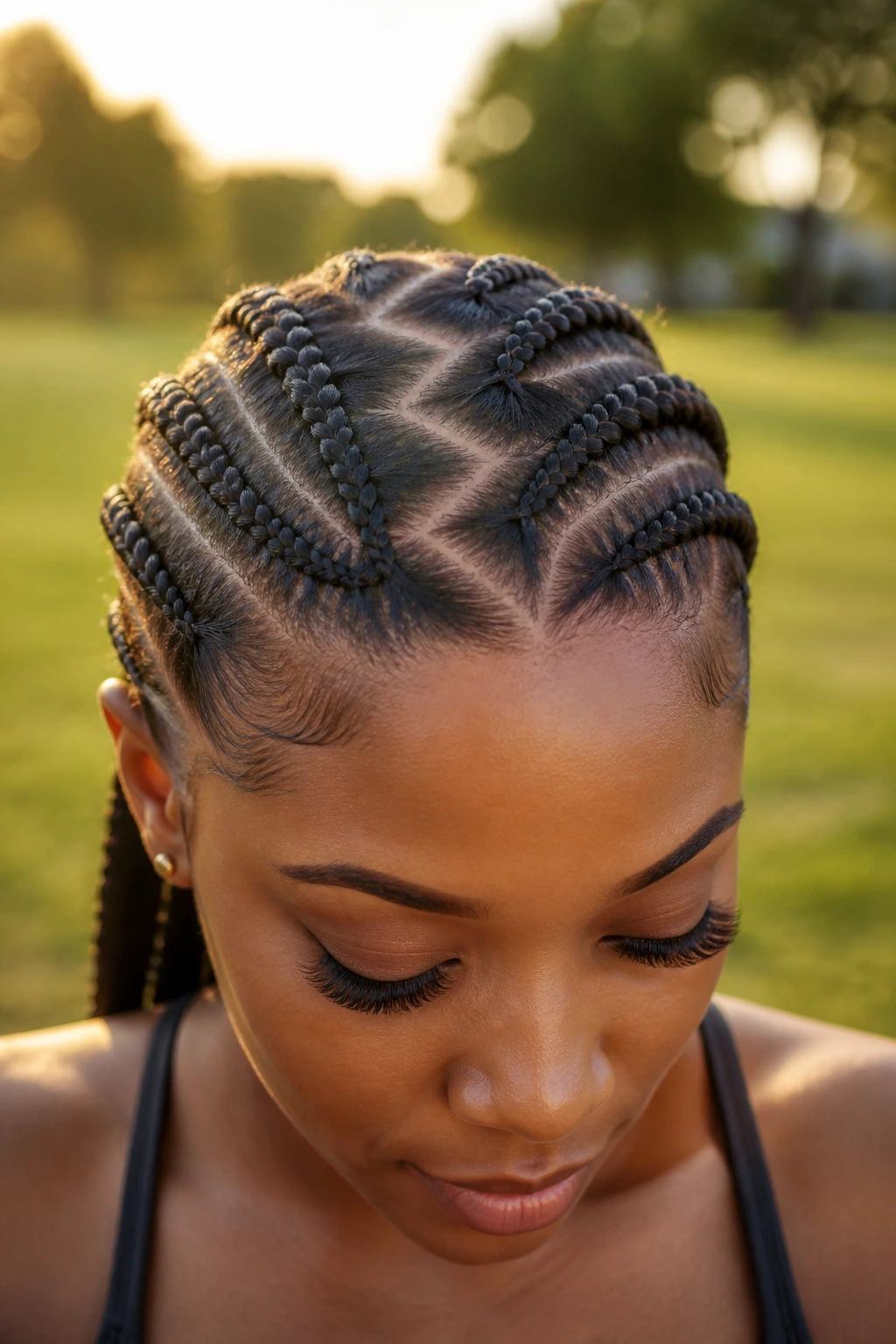
The zig-zag part is not just for aesthetic appeal; it serves a functional purpose by breaking up the straight lines of the scalp. This creates a stronger weave that holds up better to moisture, as the hair is effectively woven in a way that resists sliding. It is a fantastic choice if you tend to have a very active, sweaty head during cardio.
13. The Headband-Style Braid
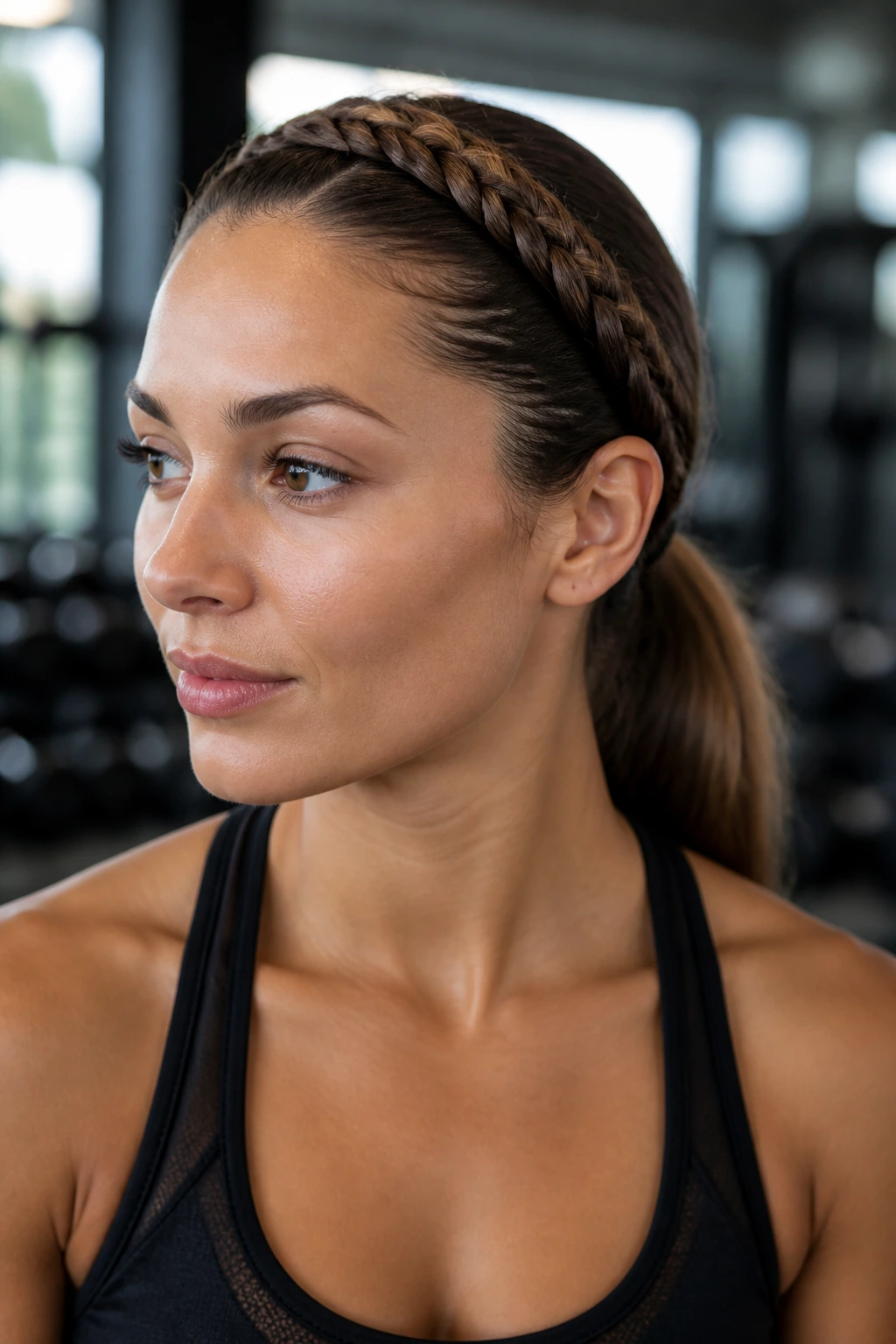
Imagine a wide, woven band that runs horizontally across your hairline, feeding back into a sleek low ponytail. This keeps all your edges secure—no need for extra headbands or clips. The braid acts as your gear, holding everything in place while the rest of the style stays tucked away.
14. Criss-Cross Ghana Weave
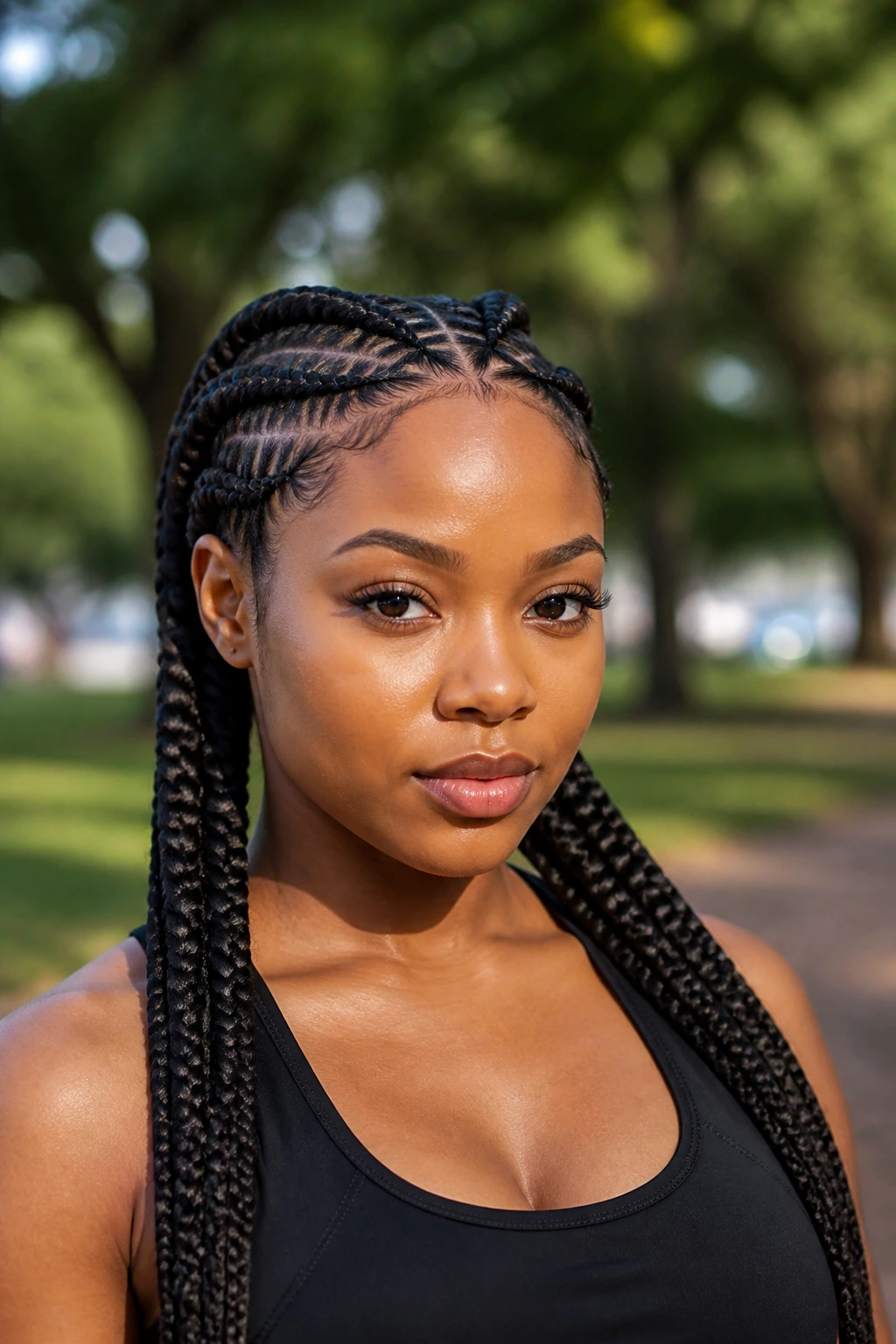
This style involves braids that cross over each other before meeting at the back of the head. The crossing action creates a locking mechanism, making it nearly impossible for the style to come loose. It is arguably the most durable choice for combat sports or activities where your head might come into contact with mats or equipment.
15. The Half-Top Knot with Loose Ends
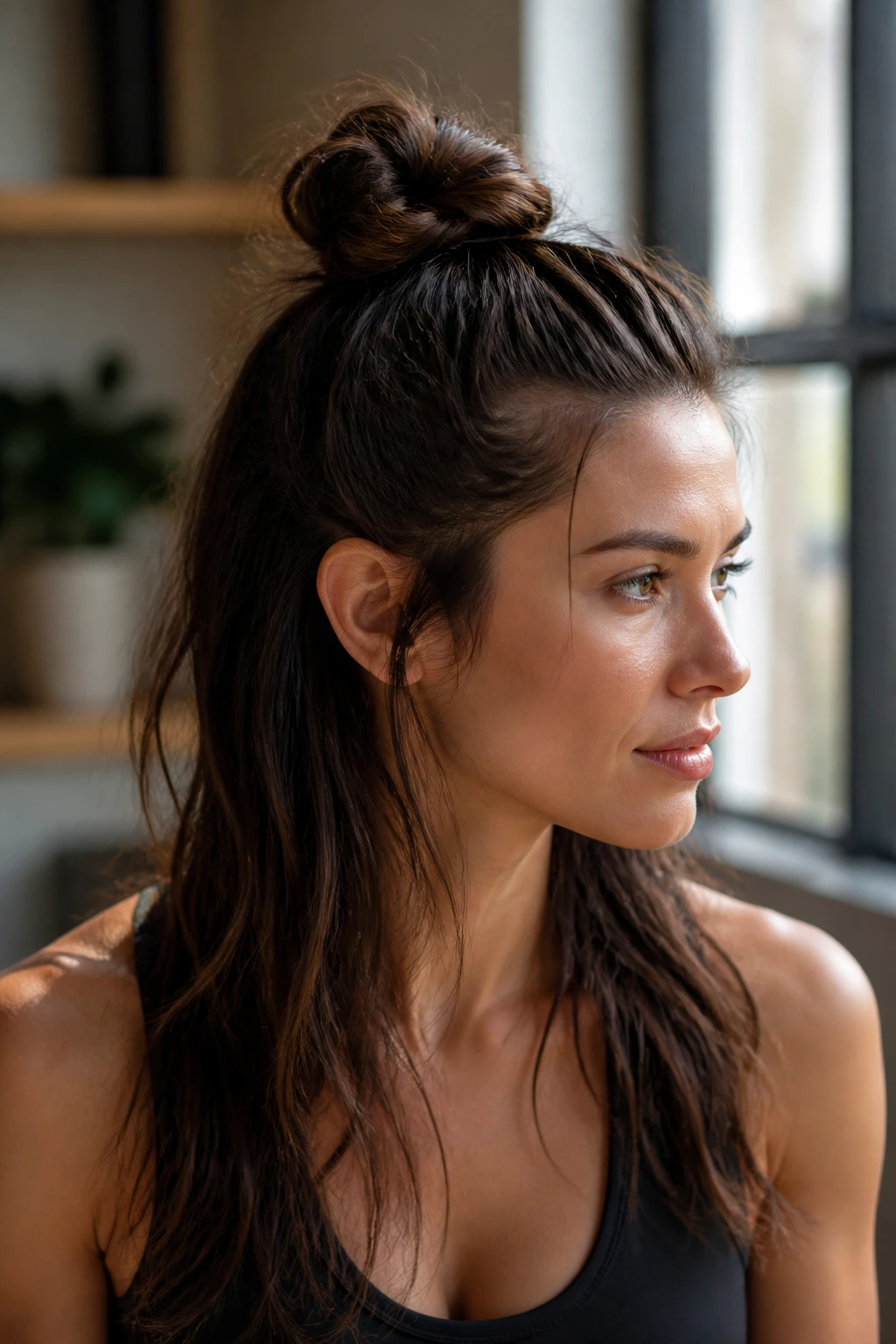
If you like the idea of a top knot but prefer having some length, this hybrid style is perfect. It pulls the front and side hair into a secure, woven knot at the crown, leaving the back section free to flow. It offers the best of both worlds: total facial clarity and aesthetic length.
16. Chunky Braid Ponytail
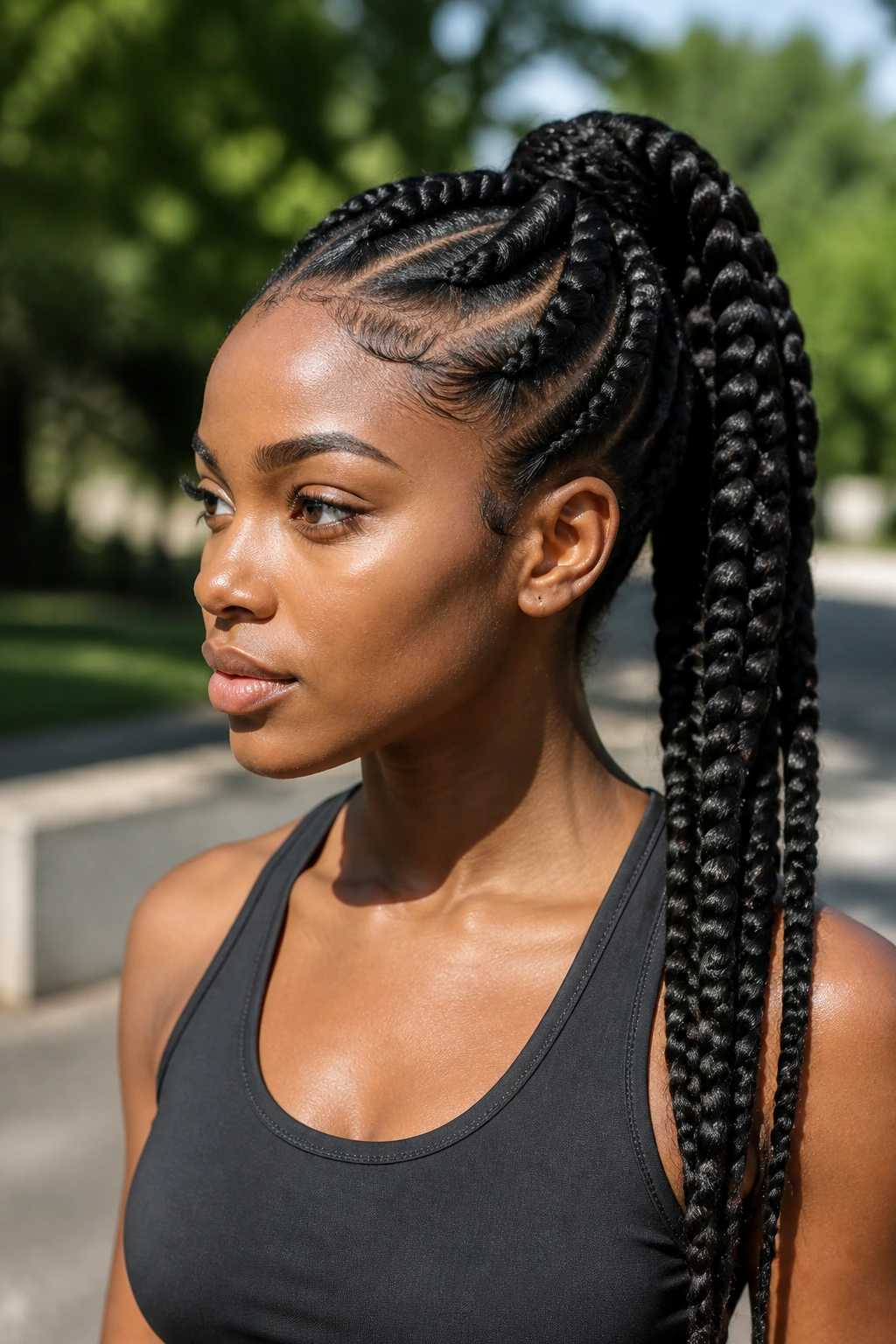
Size matters in Ghana weaving. Opting for fewer, larger “chunky” braids means less total tension on the scalp compared to a dozen micro-braids. This is a great choice if your hair is sensitive. When these are gathered into a ponytail, they offer a very sturdy, thick structure that can handle heavy movement without shifting.
17. The Nape-Knot
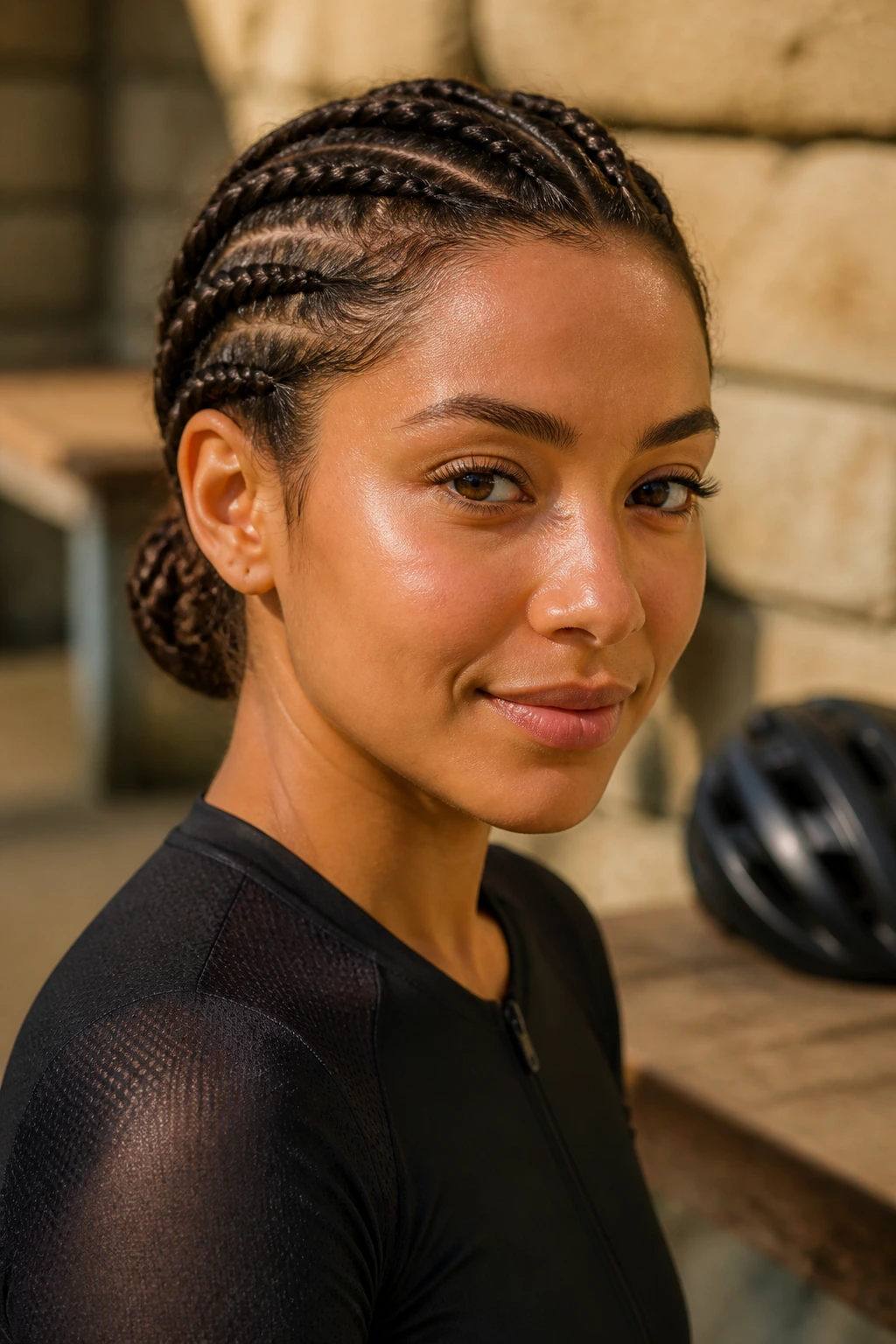
This is a very understated, professional-looking option. The braids are woven tightly toward the center of the nape, then coiled into a flat, wide bun. It stays well below your neckline, making it ideal for sports that require wearing a helmet, like cycling, as the bun won’t interfere with the helmet’s fit.
Important Considerations for Helmets
- Keep the bun flat; do not build it upward.
- Ensure the braids are tight so they do not catch on the helmet lining.
- Use a silk scarf under the helmet if you want to avoid friction.
18. Double-Braid Pigtails
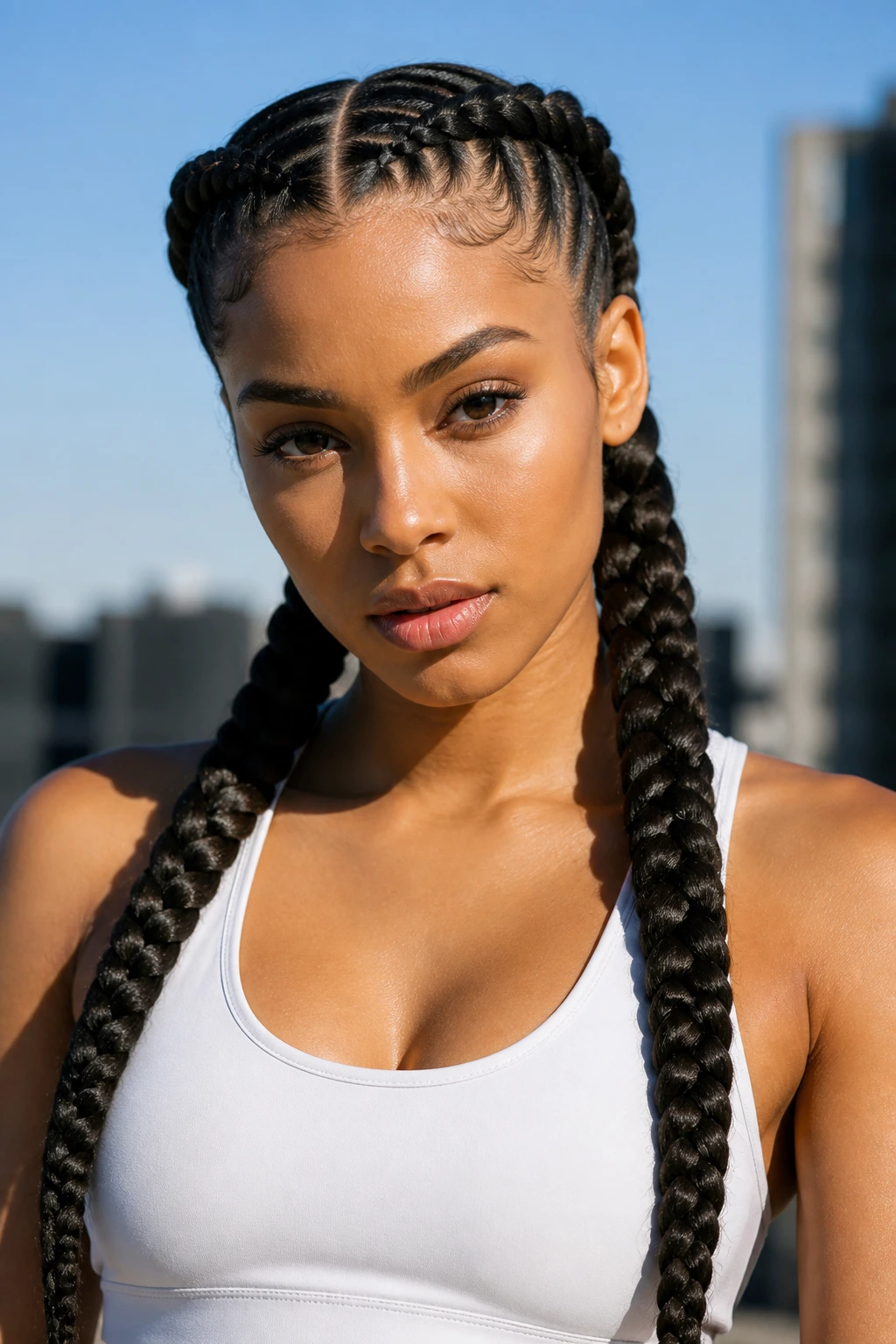
Do not let the “pigtails” name fool you; this is a very mature, performance-ready style. By parting the hair down the center and braiding two thick Ghana cornrows, you create a balanced weight. This style is excellent for high-intensity movement because it prevents the hair from pulling on one side of your head more than the other.
19. The Wrapped Side-Braid
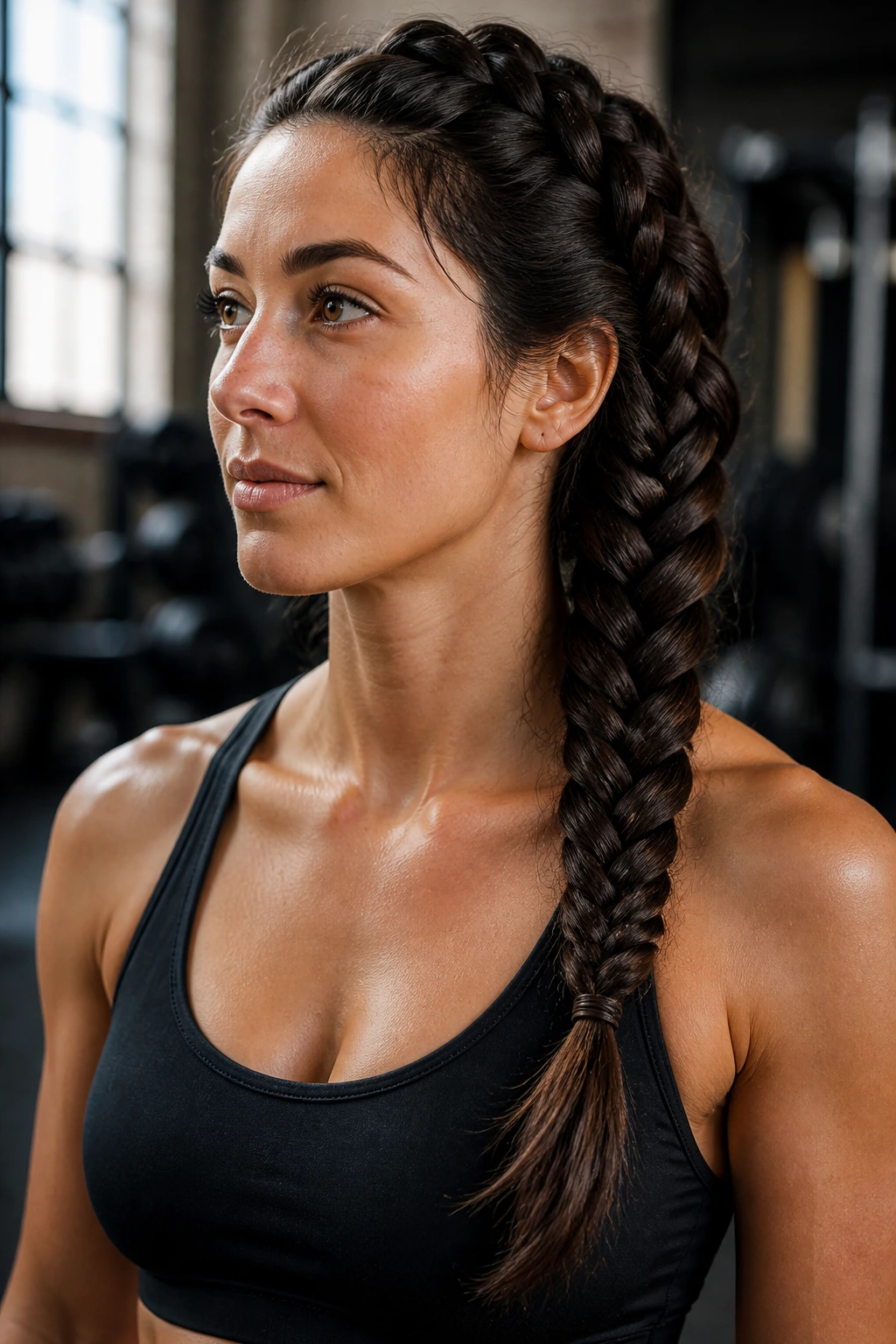
This look starts with a side part and weaves all the hair into a single, thick side-braid. It stays tucked over one shoulder, which is great for activities that don’t involve a lot of shoulder-shrugging or arm-swinging. It is elegant, secure, and keeps the back of your neck free.
20. The Mohawk-Inspired Braid
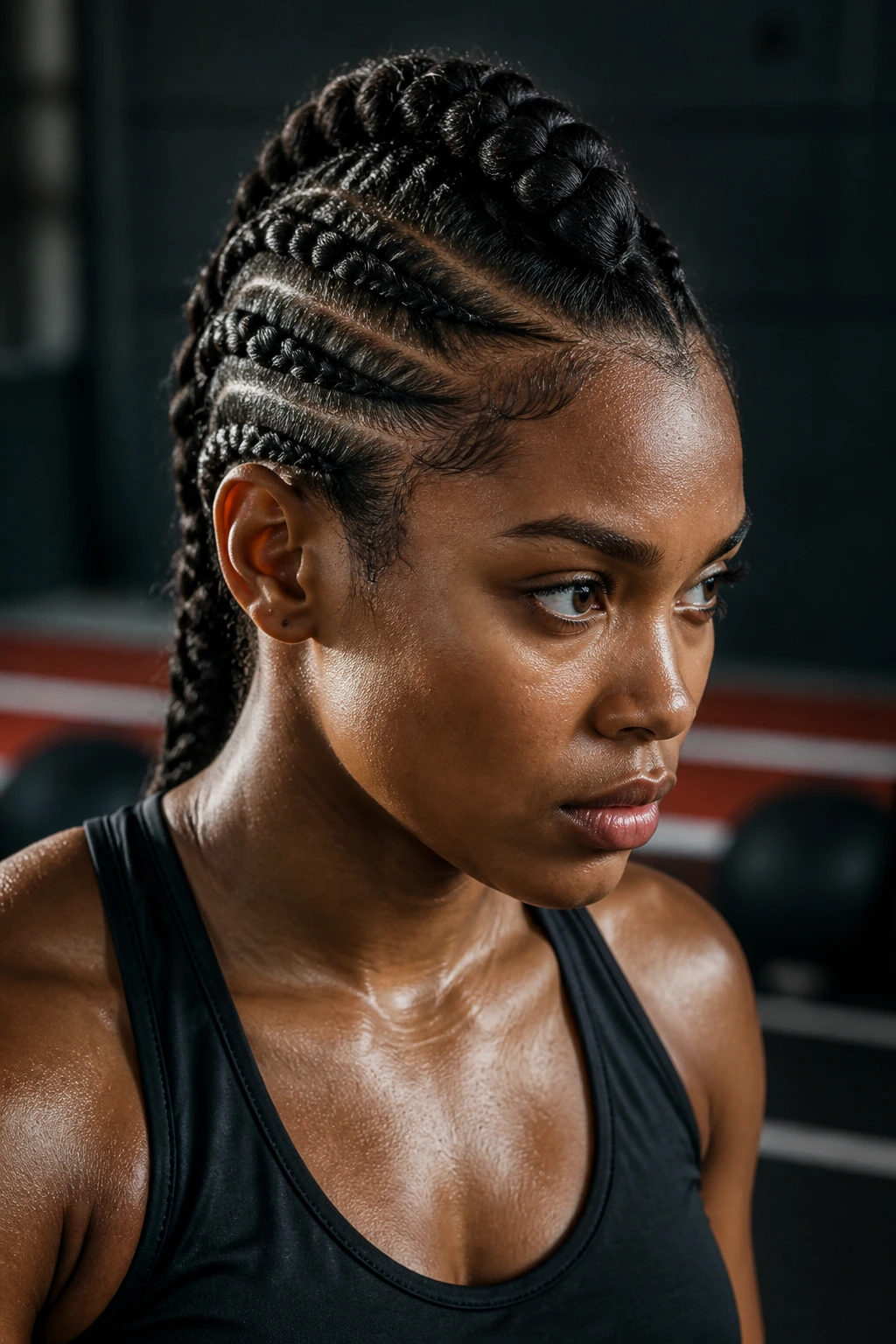
If you want to feel powerful, a Mohawk-style Ghana braid is the answer. The sides are braided upward toward the center, creating a raised ridge of hair. It is not only striking to look at, but it also provides an incredibly secure base that stays put through any kind of movement—sprinting, jumping, or flipping.
21. Ghana Braids with Beaded Ends
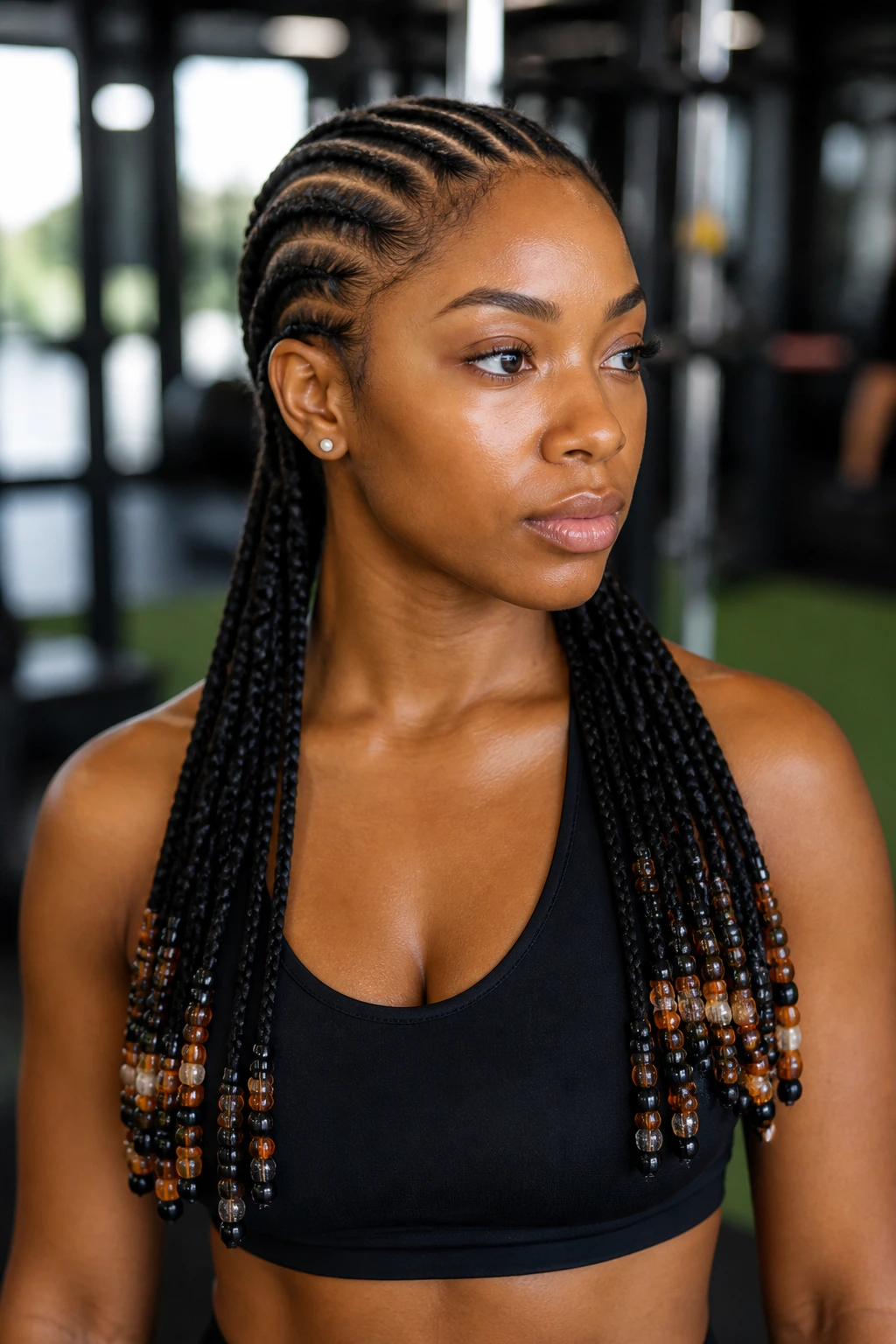
For those who want a bit of personality in their gym style, adding beads to the ends of your braids provides a weighted finish. This weight helps the braids stay straight and prevents them from flying all over the place when you are running or doing jumping jacks. Just ensure the beads are made of a lightweight plastic or wood to avoid clacking against your skin.
22. The Sleek Low Chignon
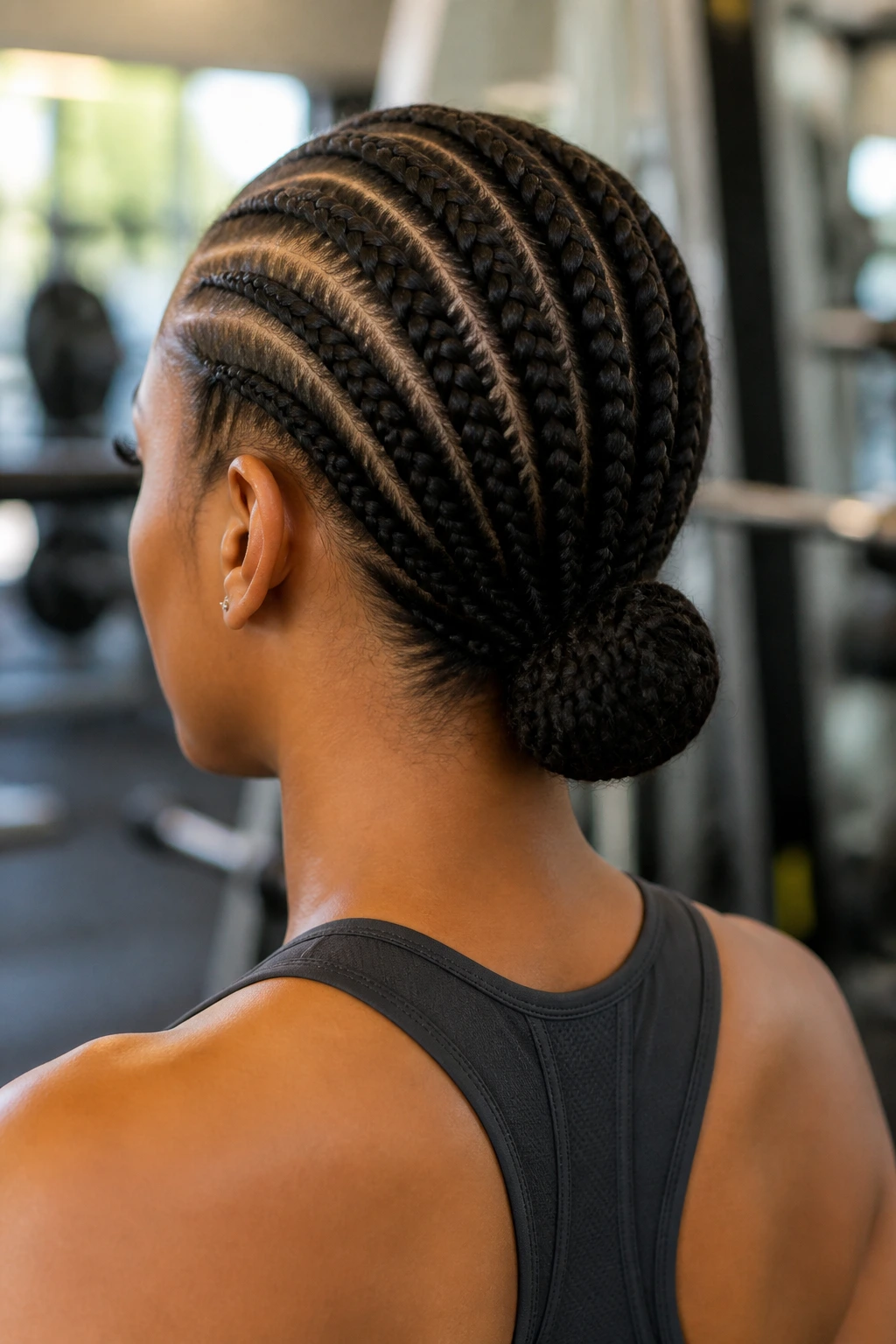
A chignon is typically seen as a formal hairstyle, but when done with Ghana cornrows, it becomes a rugged athletic look. The tight, low placement at the base of the skull ensures that your hair doesn’t bounce, sway, or get in your face. It is the most minimalist and disciplined look on this list, ideal for focusing entirely on your form.
Final Thoughts
The key to choosing the right Ghana weaving style for your workouts is understanding the specific demands of your training. If you are doing floor work, you want flat, low-profile styles like the nape-knot or the double-bun. If you are running or doing high-impact cardio, weight distribution is paramount—center-parted or multi-braid styles work best to keep the hair from shifting.
Remember that these styles are, by nature, protective. They give your natural hair a break from daily heat styling and chemical manipulation. However, the weight of the extensions can be taxing. If you find your scalp feeling tender after a workout, try a simple scalp massage with light oil once you have removed your gear.
Consistency is your best friend when it comes to maintaining these looks. Keep your scalp dry after sweaty sessions by using a light mist of water mixed with a drop of peppermint or tea tree oil, and always wrap your hair in a satin or silk scarf at night to prevent frizz. With the right foundation, you can turn your hair into just another piece of gear—completely reliable, entirely out of the way, and ready for whatever you throw at it.