

Finding the right hair setup for a high-intensity session feels as important as picking the right sneakers. We have all been there—mid-burpee, only for a loose strand to slap across your face, or halfway through a long run, feeling the weight of a ponytail dragging on your scalp. You need a style that stays put without pulling, one that survives sweat, movement, and the occasional post-workout shower transition. When your hair is secured, you can actually focus on your form rather than constantly adjusting a falling bun or a slipping headband.
1. The High-Performance Classic Top Knot
The top knot remains the gold standard for a reason. It clears your neck completely, which is a blessing when you are working up a serious sweat. Start by gathering your hair into a high ponytail, then twist the length around the base. Secure it with a spiral pin or a snag-free elastic. If you have layers that tend to escape, a light mist of texturizing spray before you tie it up gives your hair enough grip to stay in place without needing a gallon of hairspray.
Why This Works for Cardio
Because the weight is centered at the crown, the hair does not swing back and forth as you move. It is perfectly balanced.
Quick Styling Tips
- Avoid using metal-clasp elastics that snag your hair when you pull them out.
- For thin hair, a slightly messy top knot holds better than a perfectly slick one because the friction keeps the hair in place.
- If you have bangs, pin them back with two crossed bobby pins so they stay flat against your forehead.
2. Dutch Braid Into a Low Pony
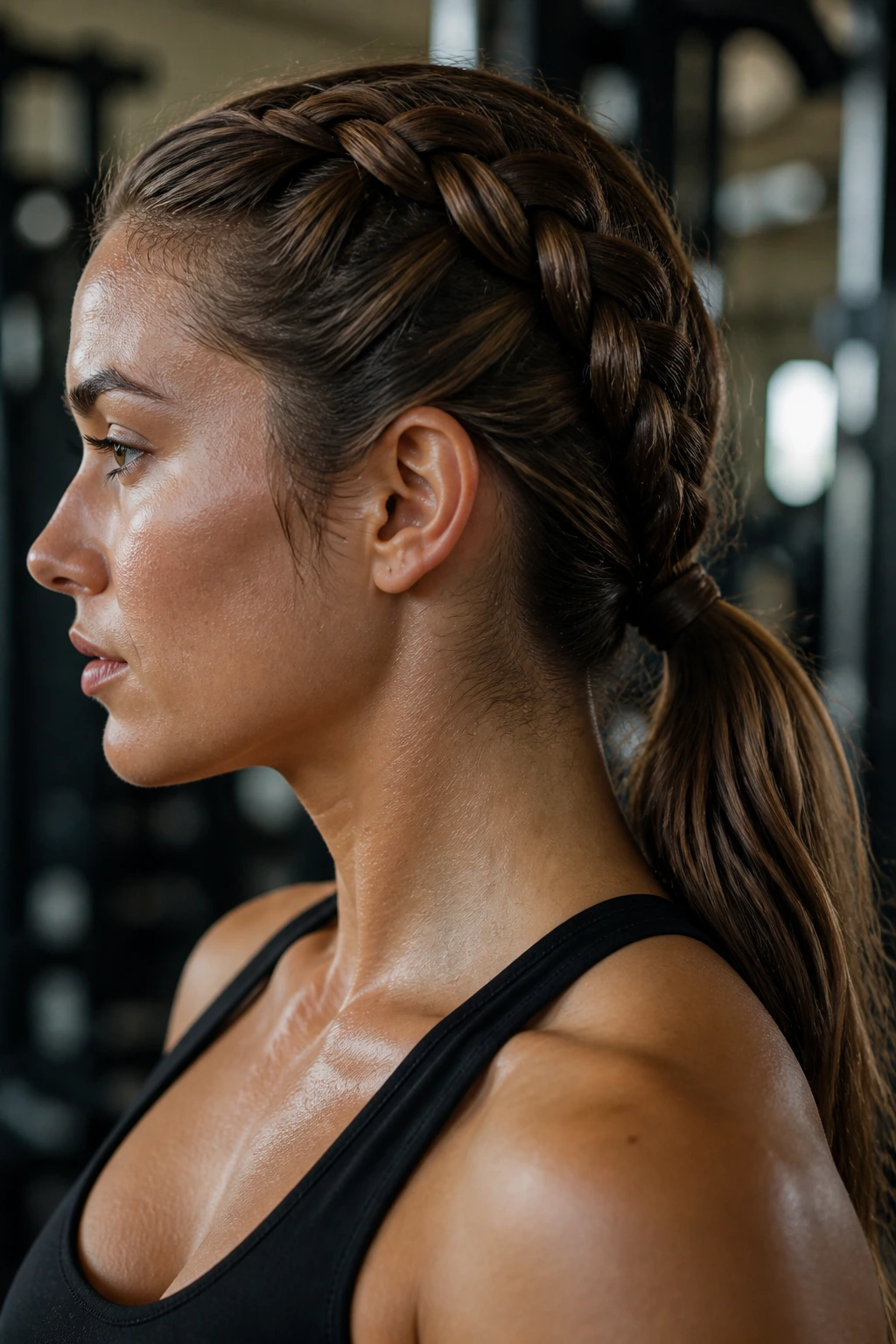
Braiding your hair close to the scalp acts like a corset for your strands. A Dutch braid, where you cross the sections under rather than over, creates a sturdy, raised look that keeps even the shorter pieces of hair locked in. You can take the ends of the braid and feed them into a low ponytail, or keep the braid going all the way to the ends if you prefer a secure, streamlined shape.
The Benefit of Braiding
Braiding adds structural integrity to your hair, meaning it cannot slide out like a regular ponytail can. It also helps prevent tangles during long gym sessions.
Maintenance Notes
If you work out during lunch hours, a braid is the best option because you can undo it afterward to reveal soft, heatless waves for the rest of your day. Just make sure to braid it tightly while your hair is slightly damp or use a little leave-in conditioner to keep frizz at bay.
3. The Double French Braid Sport Look
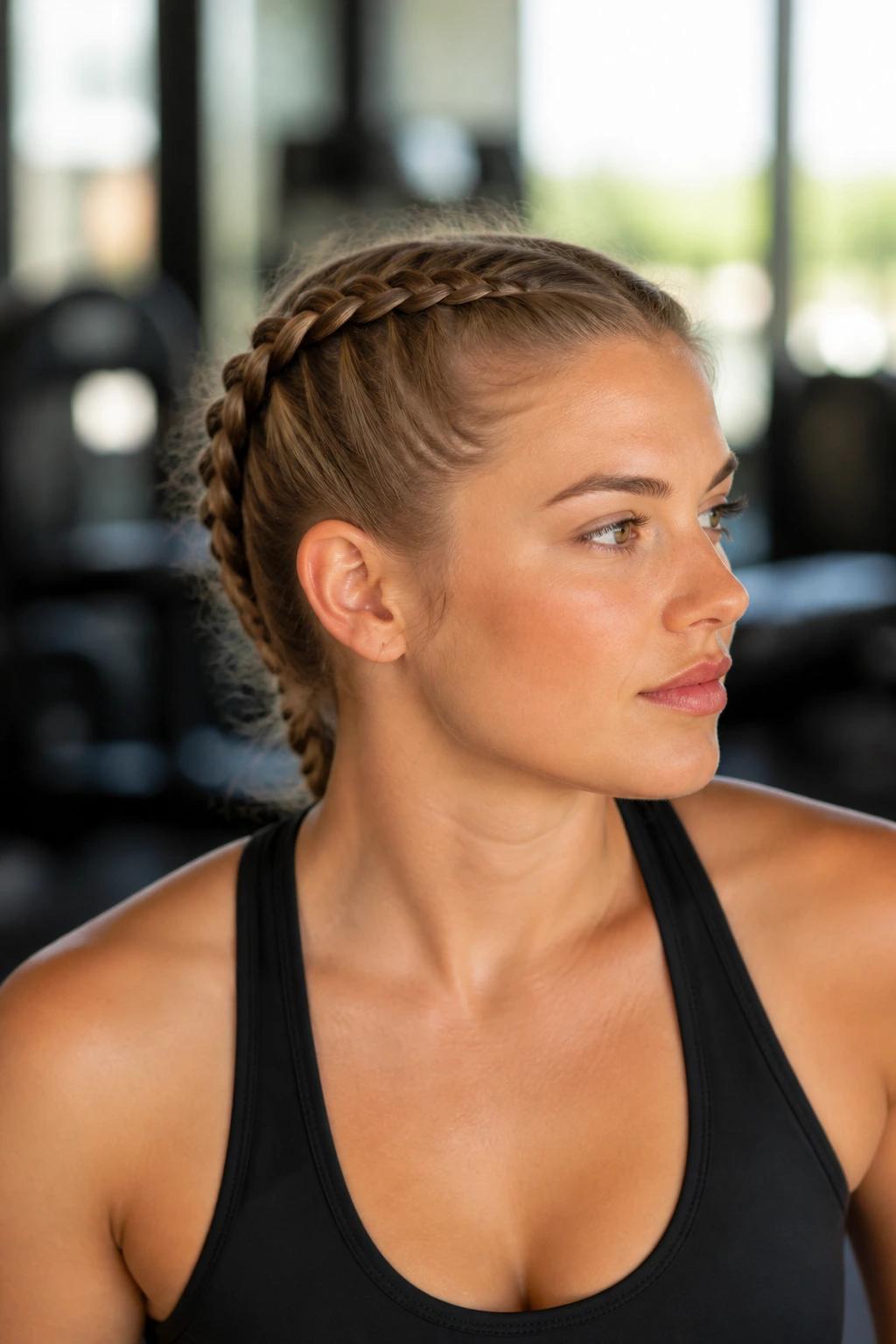
If you are doing ground-based work—like yoga, Pilates, or heavy lifting where you spend a lot of time on your back—a single ponytail can be a massive annoyance. Double French braids solve this. They lie flat against the sides of your head, meaning you never feel like you are laying on a lump of hair.
How to Execute This Properly
- Part your hair down the center from your hairline to the nape of your neck.
- Clip one side away so you can focus on the first braid.
- Start small at the hairline and incorporate more hair as you work backward.
- Secure the ends with small, clear silicone elastics that won’t slip.
Pro tip: Use a small amount of pomade or styling cream on your palms before you start braiding to keep your flyaways controlled during the entire workout.
4. The Messy Low Bun
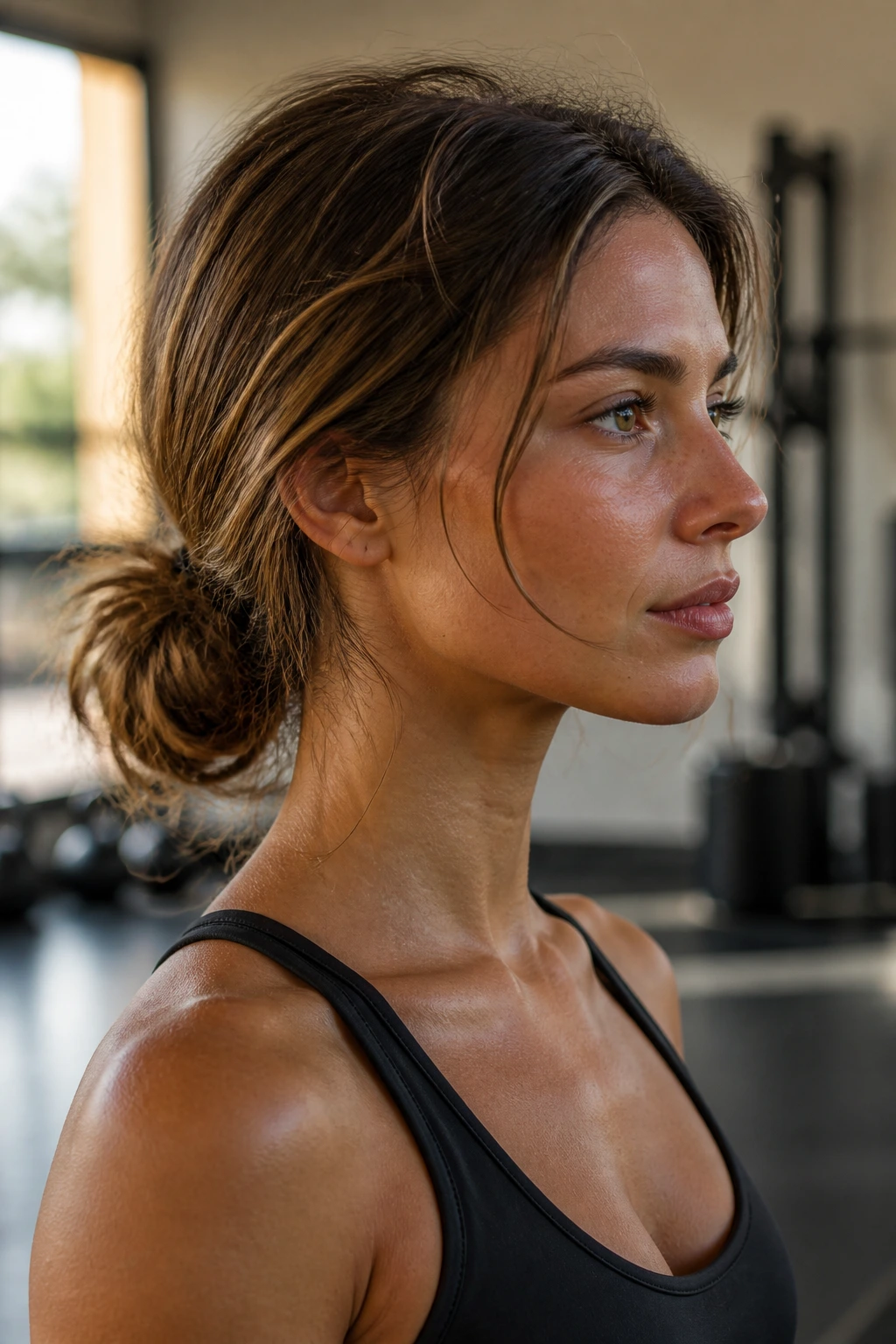
Sometimes you do not want the tension of a high ponytail pulling on your hairline. A low, loose bun at the nape of your neck is much gentler on your scalp while still keeping hair off your neck. It is the perfect choice for low-impact workouts like stretching or light yoga where you want to feel relaxed but tidy.
Balancing Comfort and Security
The trick here is the placement. Aim for the very bottom of your hairline. If you go too high, the bun will migrate upward as you move. If you go too low, it will hit your collarbone.
Essential Gear
Use a scrunchie for this. It is softer than standard elastic bands and puts less pressure on the hair shaft, which helps prevent breakage if you work out every single day.
5. The Sport Headband and Ponytail Combo
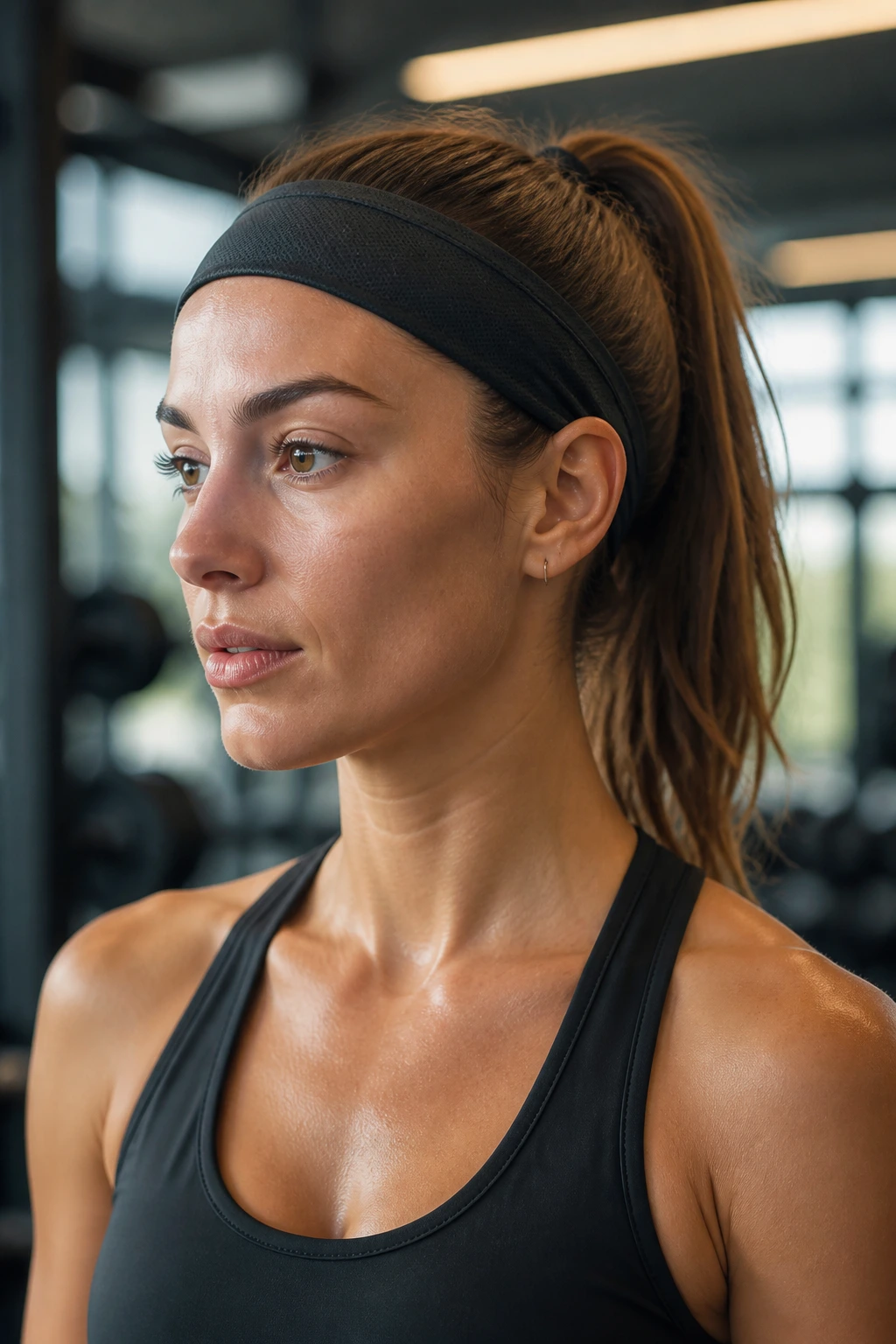
Some of us have baby hairs that absolutely refuse to stay in a ponytail. A fabric, moisture-wicking headband is your best friend here. It acts as a physical barrier against sweat, preventing the salt from dripping into your eyes and keeping those tricky front pieces of hair pushed back.
Matching Your Headband to Your Workout
- For high-intensity, sweaty sessions: Look for silicone-lined headbands that grip the hair so they do not slide backward.
- For low-intensity movement: A simple cotton or jersey band works perfectly.
Troubleshooting Slip
If your headband keeps sliding, try to position it so it covers half of your hairline and half of your forehead. The slight texture of your skin provides more grip than the hair itself.
6. Half-Up Top Knot
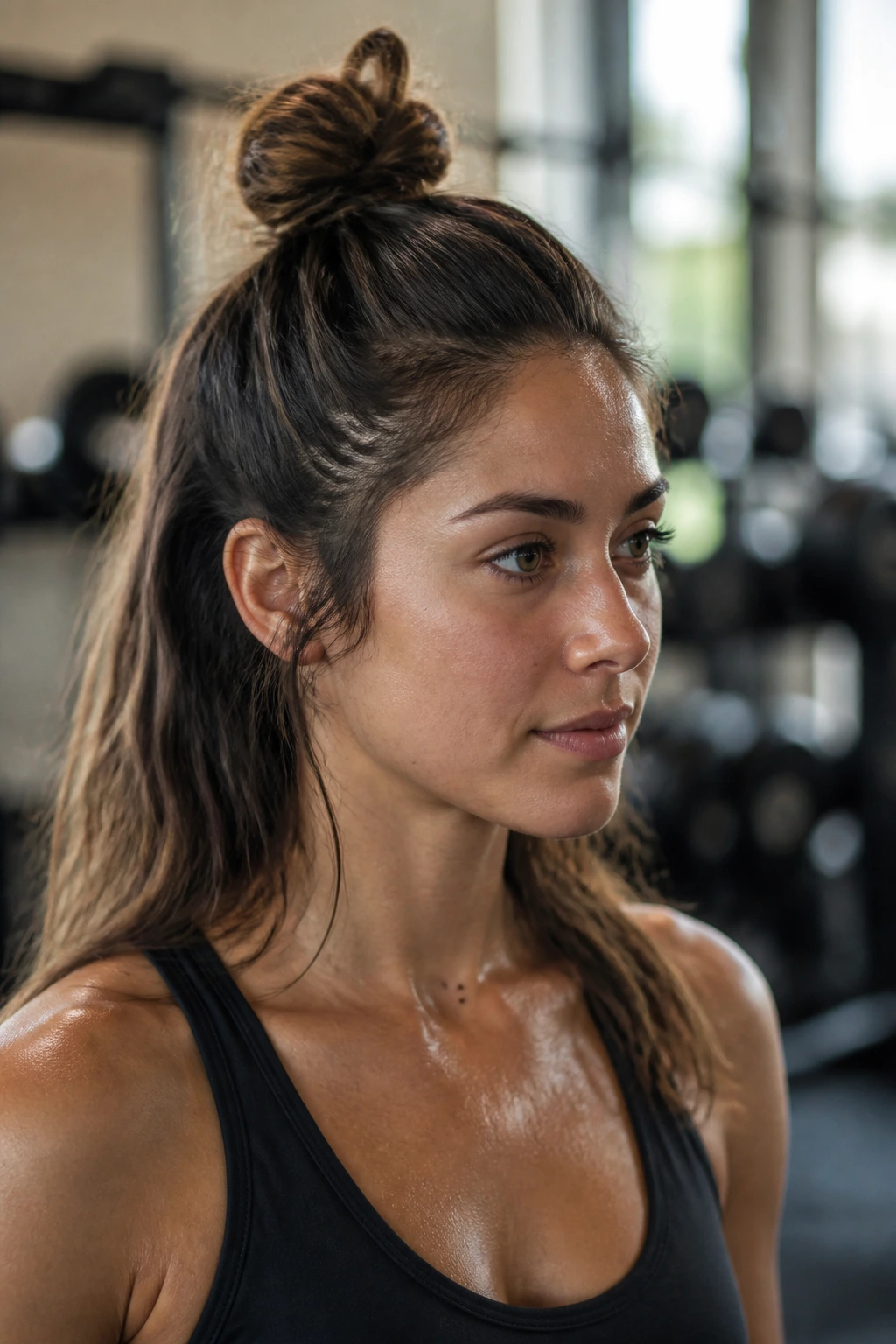
If you want to keep hair out of your face but don’t love the feel of a full ponytail, the half-up, half-down top knot is a great middle ground. It gives you that bit of volume and face-clearing performance, but you keep the weight of the rest of your hair loose. This is ideal for weightlifting or cycling where you are upright and don’t need your hair fully contained at the back.
Why This Is A Favorite
It feels a little less “serious” than a full bun. Plus, it’s much quicker to style if you are rushing to the gym.
Quick Styling Fix
If the top knot feels too small, backcomb the section of hair before you twist it into the bun. This adds the necessary bulk to make the style look intentional rather than sparse.
7. The Sleek Low Braid
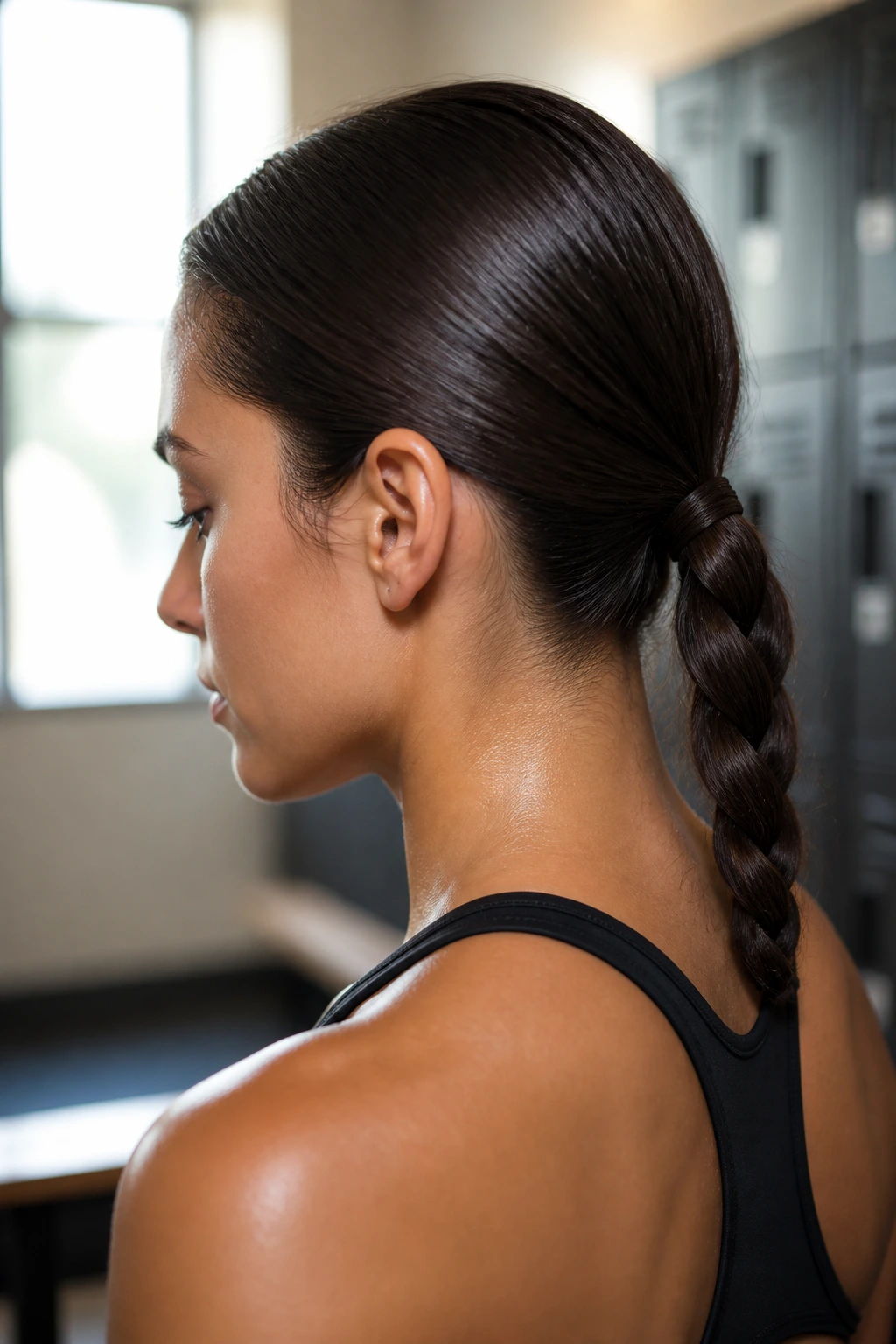
A single, tight braid starting from the nape of your neck is incredibly simple and rarely requires adjustment. It is a fantastic option for longer hair that tends to whip around during jumping or running. By keeping it low, you minimize the amount of tension on your scalp, which is great for those who suffer from workout-induced headaches.
Why It’s Great for Running
Since the hair is braided, there is no loose ponytail tail to tangle in the straps of your sports bra. It stays completely clear of your shoulders.
Finishing Touch
Secure the end with a small elastic and tuck the tail upward into the braid itself. This creates a neat, finished look that looks just as good at the grocery store as it does at the gym.
8. The Pull-Through Braid
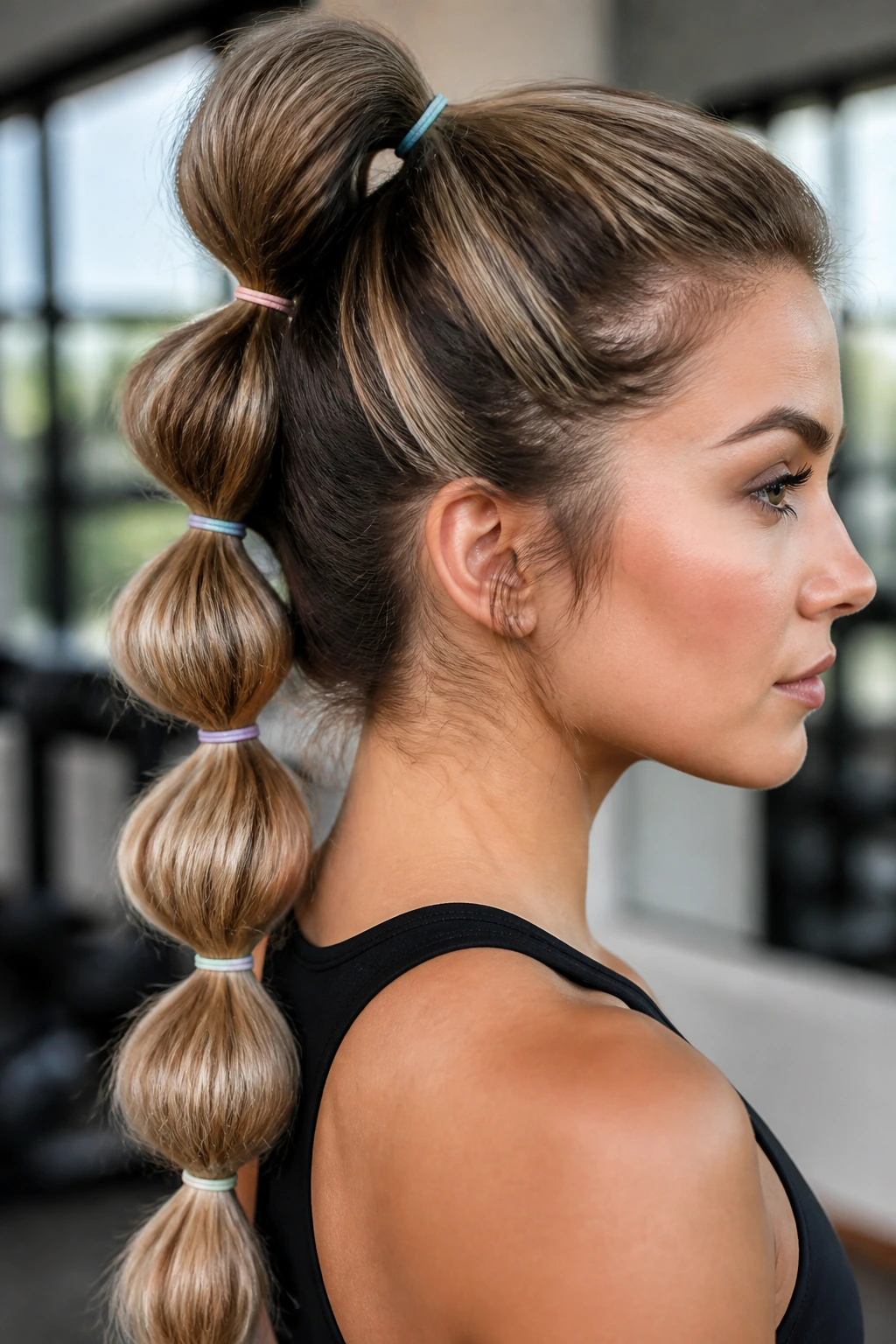
This looks much more complicated than it actually is. You start with a ponytail, then add another elastic an inch down, split the hair, and pull the top section through. It creates a voluminous, bubble-like effect that is remarkably secure. It’s perfect for someone with fine hair who wants the aesthetic of a braid without the struggle of actually braiding.
Why This Style Works
It is essentially a series of small, secure anchors. Because it’s held together by multiple elastics, one piece of hair snapping or pulling loose won’t cause the entire style to fall apart.
Tips for Success
- Use multiple colors of clear elastics to make it fun.
- Don’t worry about perfect sections. The “pulled-through” look is supposed to be slightly textured and voluminous.
9. The High Side Braid
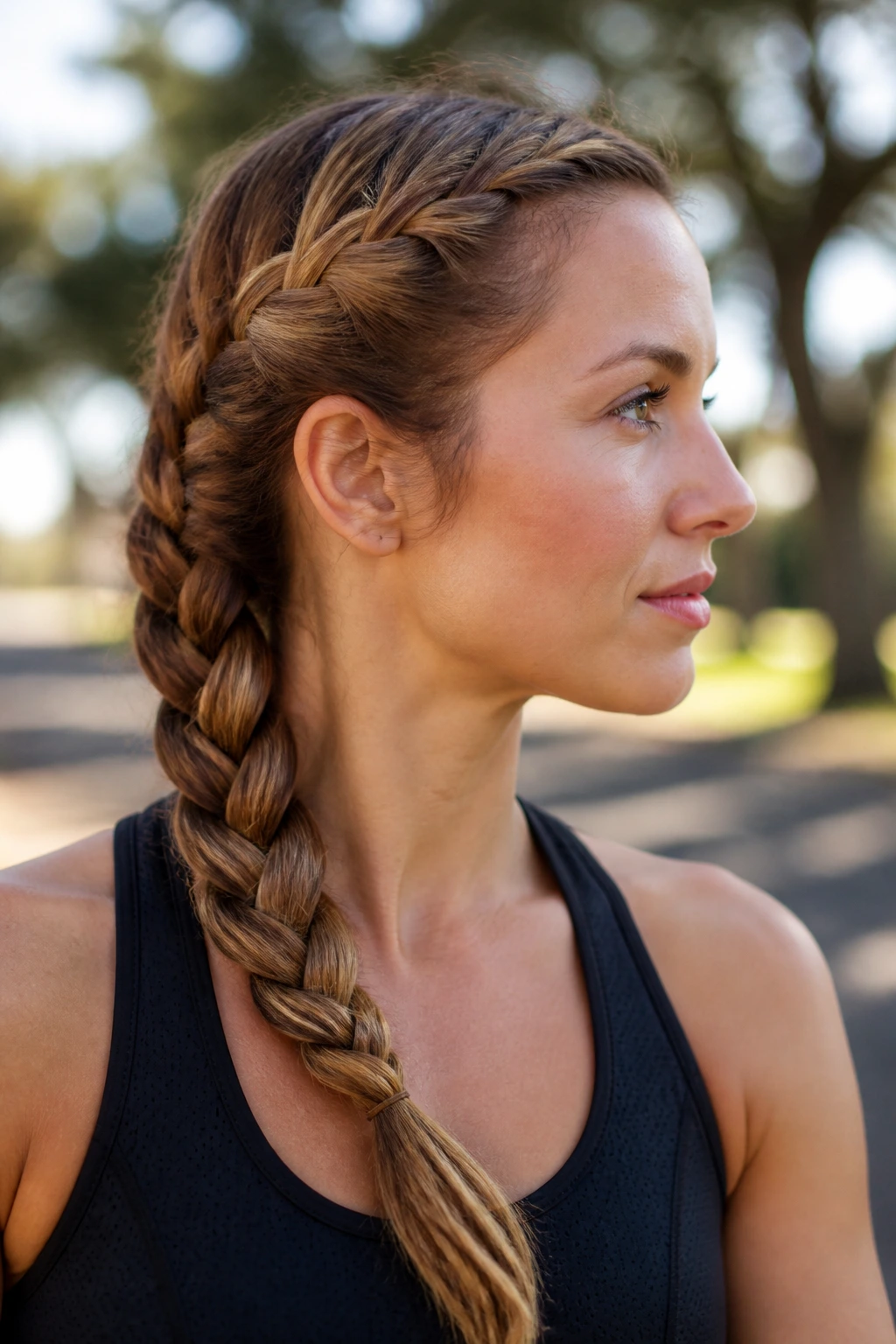
A side braid is an excellent alternative if you struggle with braiding your own hair on both sides of your head. Bring all your hair to one shoulder and create a tight French or Dutch braid starting from behind your ear. It’s a stylish way to keep hair controlled while staying very easy to undo when you are finished.
Who This Suits Best
This is a lifesaver for people who have layered hair that struggles to stay in a ponytail. The braid traps the shorter layers, keeping them from poking out during your workout.
Styling Tip
After you finish the braid, gently pull at the edges of each section to loosen it slightly. This makes the braid appear thicker and gives you more of a “sport-chic” look.
10. The Bubble Ponytail
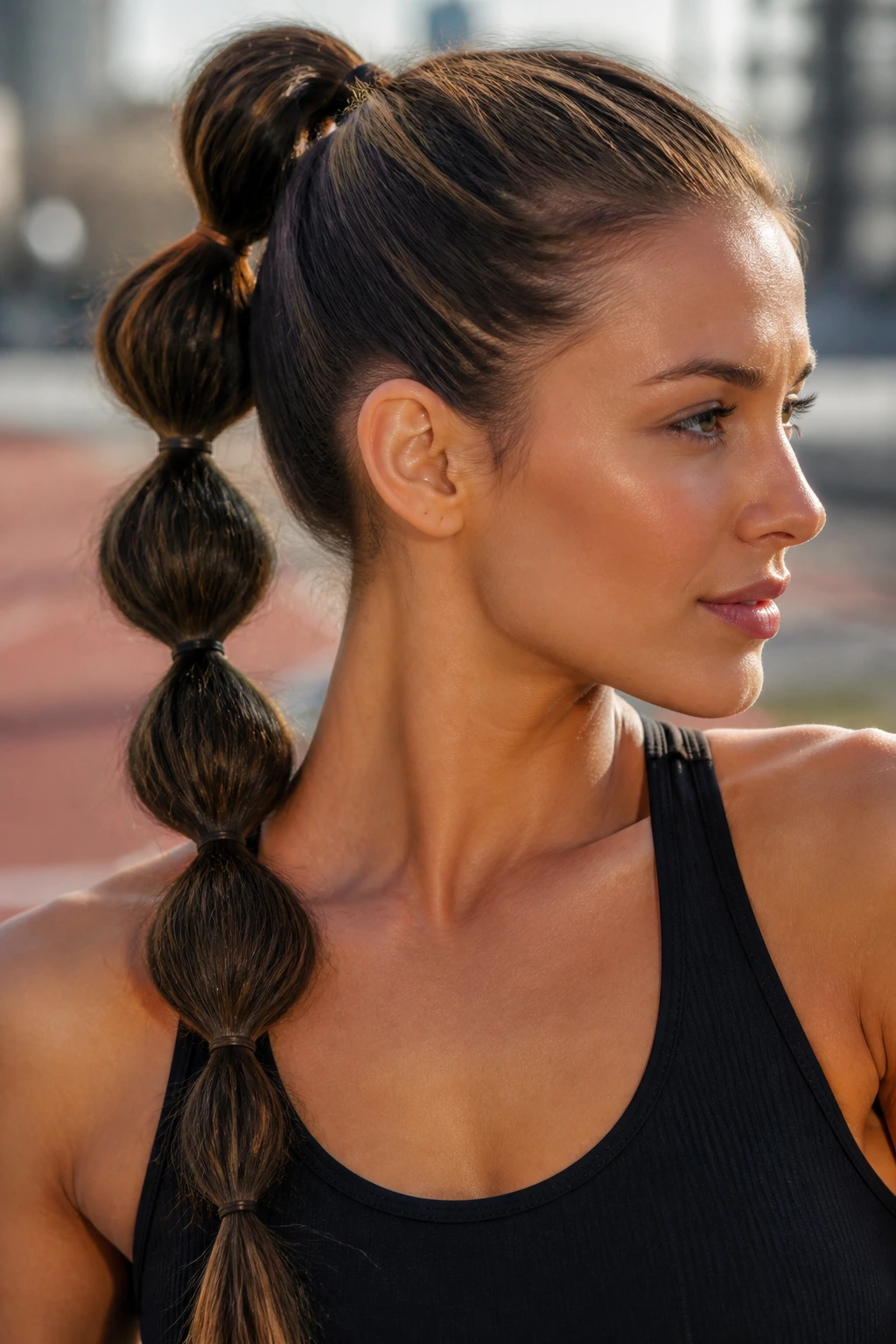
Bubble braids are the ultimate solution for medium to long hair. After securing a high ponytail, add an elastic every two inches down the length. Gently tug at the sides of each section to create the “bubble” effect. It is incredibly secure and keeps the hair from flying around while you are on the treadmill.
Why It Works for Athletes
It creates a rigid structure that cannot whip against your skin. It stays in place regardless of how fast you move.
How to Style It Quickly
If you are in a rush, don’t worry about the spacing between bubbles being perfectly even. The messy, slightly uneven look is popular right now and still functions just as well during a workout.
11. The Wrapped Pony
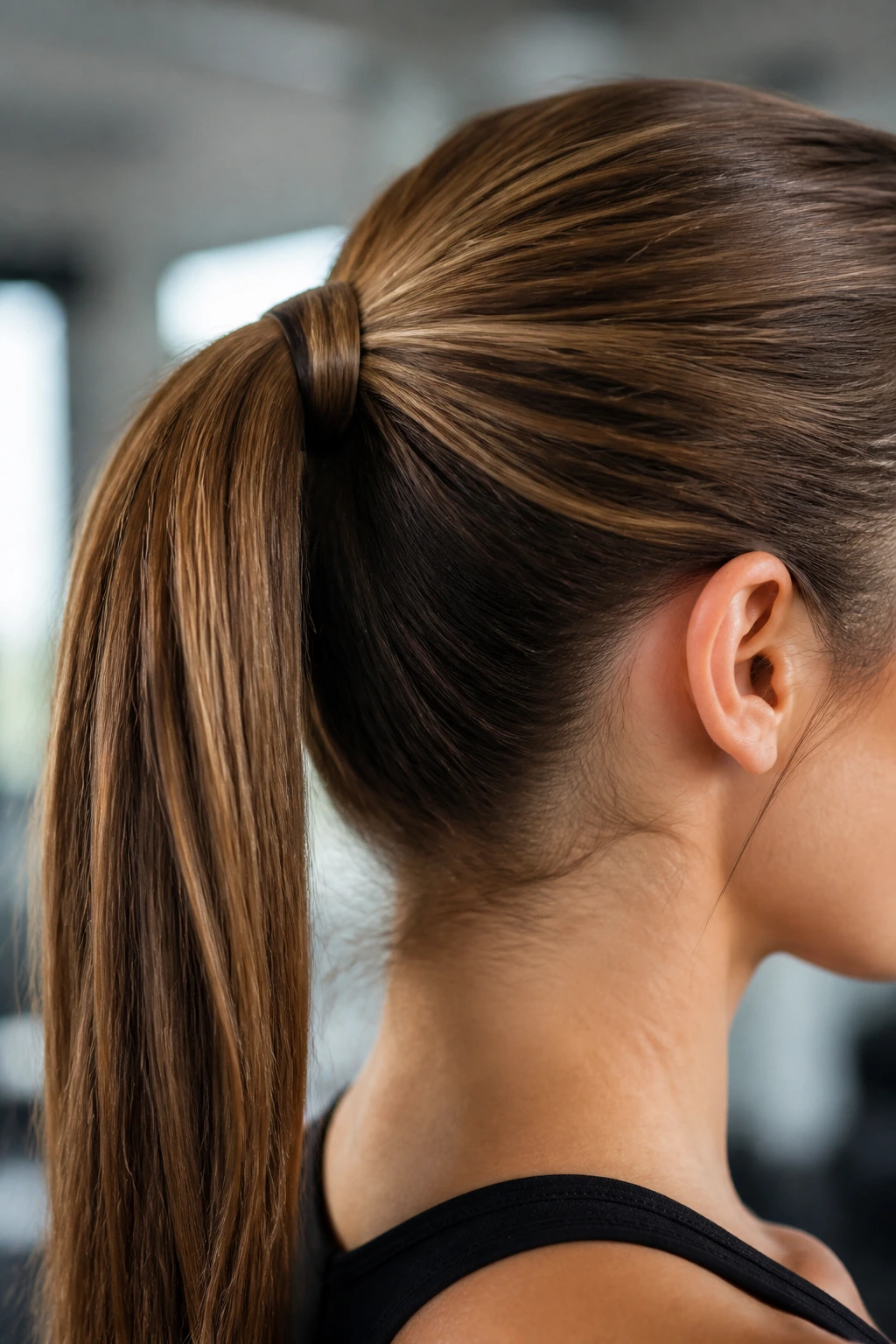
Sometimes you just want a standard ponytail, but you want it to look a little polished. After securing your ponytail, take a thin section of hair from the underside, wrap it around the elastic, and pin it underneath. This hides the band and gives your hair a slightly more professional appearance.
Is This Secure Enough?
For light activity, yes. If you are doing burpees or box jumps, you will want to add a bobby pin or two to ensure that wrapped piece of hair stays hidden.
Pro Adjustment
If you find your ponytail sagging after 20 minutes, try using two elastics stacked on top of each other. The extra friction makes a huge difference in staying power.
12. The Space Buns
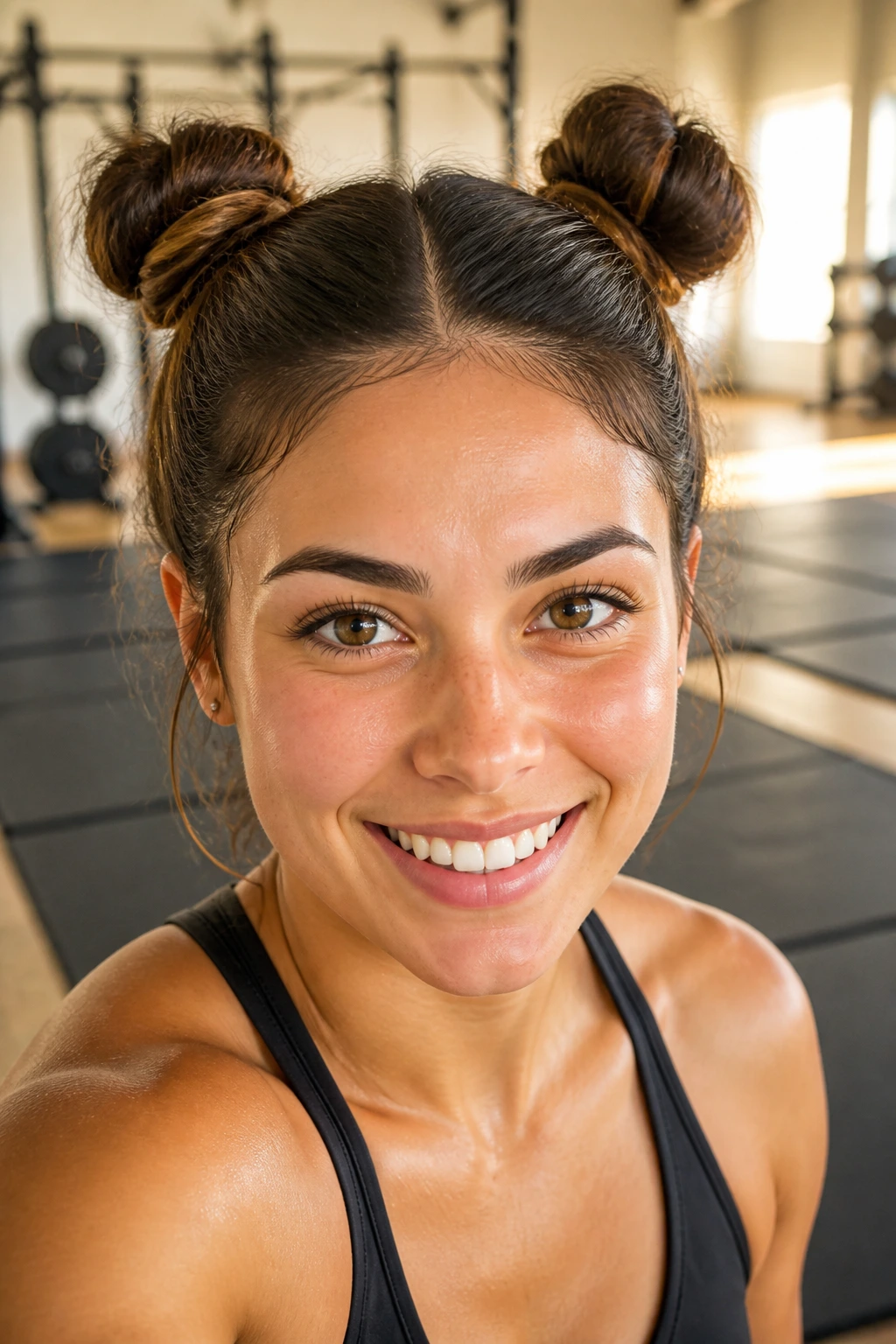
Space buns are fantastic for floor work and high-intensity training. By dividing your hair into two separate, high buns, you keep everything off your neck and face. They are playful, secure, and stay out of the way regardless of how much you roll on a yoga mat.
Why They Are So Functional
You can tighten each bun individually, which allows you to customize the tension. If one side feels too loose, you can just give it an extra twist.
Styling Variation
Try braiding your hair before putting it into the buns. This makes them even smaller and tighter, which is ideal if you have very thick or long hair that tends to feel heavy in a single bun.
13. The Scarf-Tied Ponytail
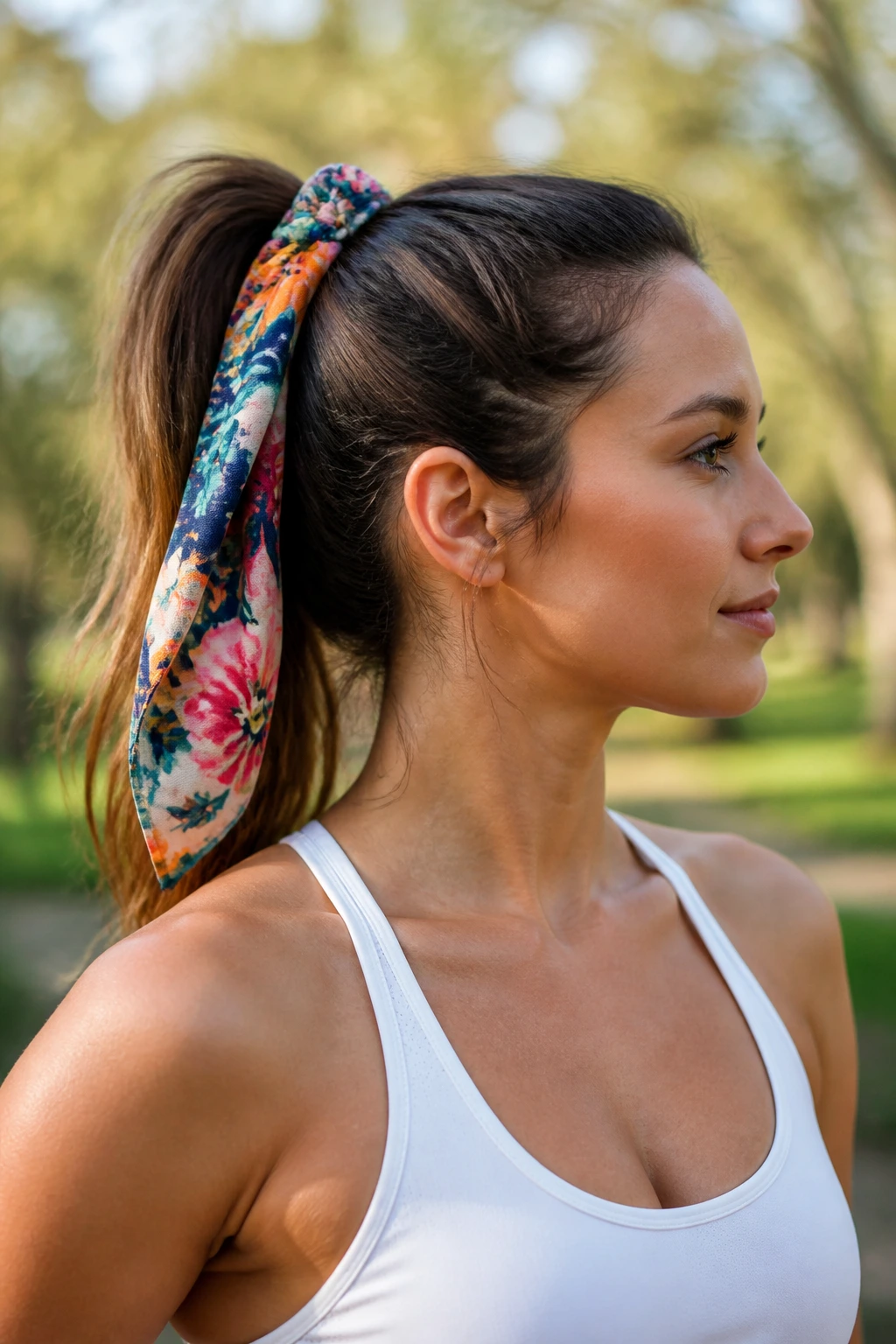
If you are doing lower-impact activities like walking or hiking, tying a silk or cotton scarf around your ponytail base is a stylish way to add support. The knot of the scarf provides extra tension, keeping the ponytail from slipping down as you walk. It also adds a nice pop of color to your gym gear.
Materials Matter
Stick to cotton-based fabrics. Silk can be a little too slippery and might end up falling off mid-workout.
Storage Tip
Keep a small pack of hair ties in your gym bag so you don’t have to worry about finding one right before you start your session.
14. The Pinned-Back Pixie
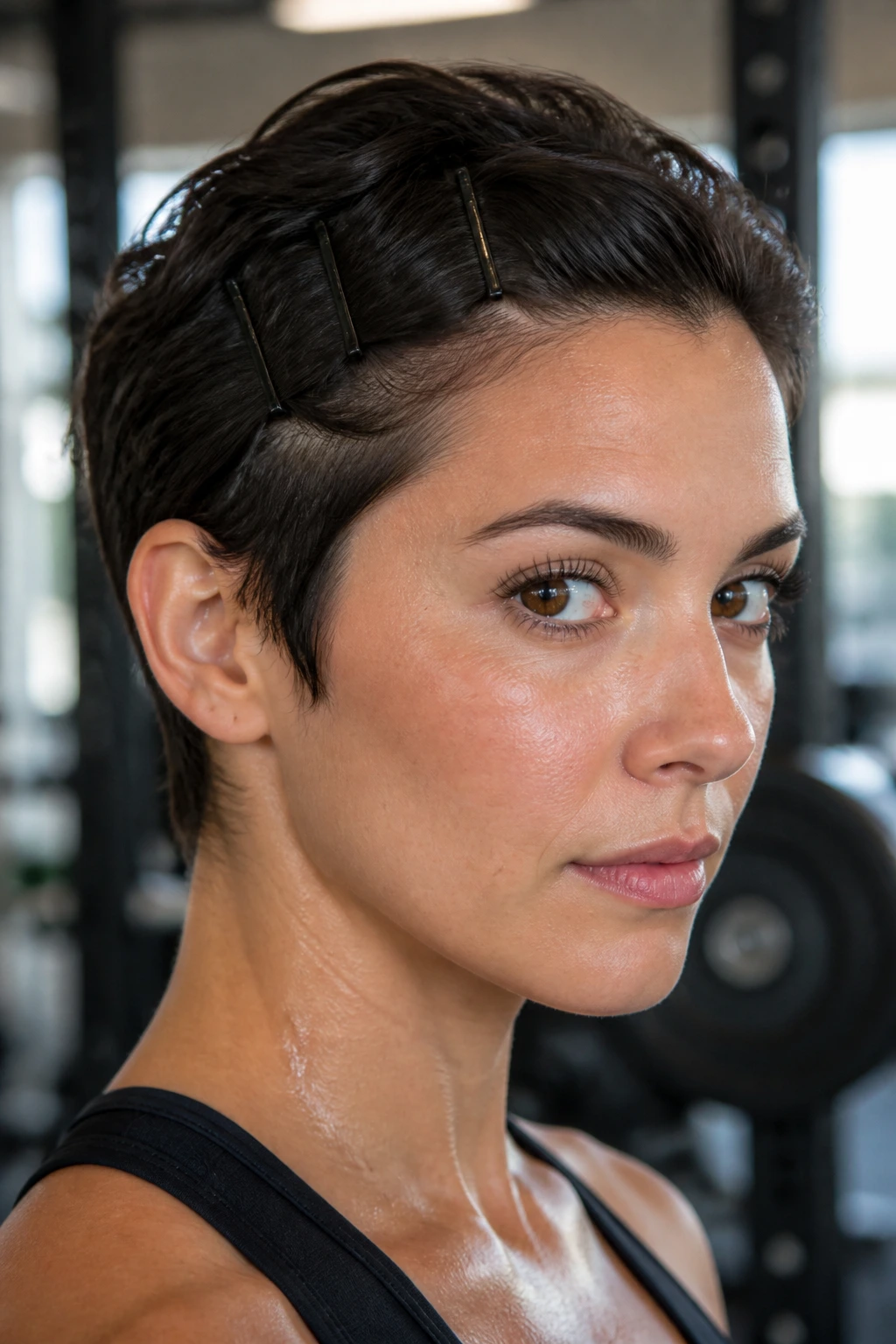
If you have short hair, you know the struggle of keeping hair out of your eyes during a workout. Bobby pins are your best friend. Use a generous amount of pins to secure your fringe or front layers back against your scalp. You can even use them to create patterns or simple lines, turning a functional requirement into a bit of style.
How to Keep Pins Secure
Slide the pin toward the roots, then flip it over and slide it back in toward your face. This “lock” technique ensures the pin does not slide out as you sweat.
The Best Type of Pin
Use coated bobby pins. The rubber tips prevent the metal from scratching your scalp or snagging your hair.
15. The Claw Clip Half-Up
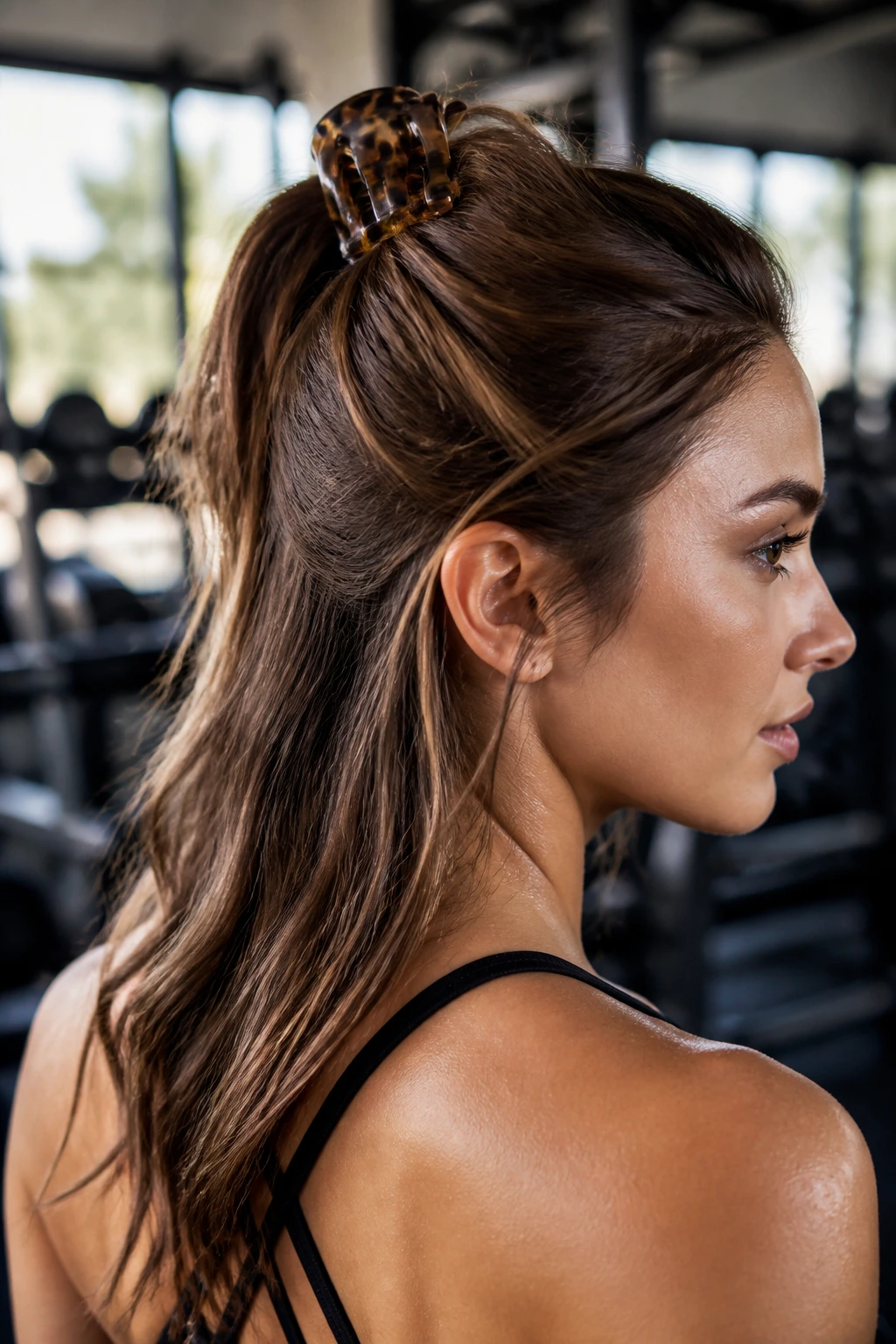
Claw clips have made a huge comeback, and they are surprisingly great for workouts where you are mostly upright. By gathering the top half of your hair and clipping it back, you keep your eyes clear without the tension of a tight elastic. Just be sure to pick a sturdy, medium-sized clip that won’t snap under pressure.
Why This Is A Relaxed Choice
It is one of the only styles that doesn’t cause a headache after an hour. It feels like you are barely wearing anything.
Cautionary Note
Avoid using claw clips for floor-based workouts. A plastic clip can be uncomfortable to lie on, and it might break if you put too much weight on it.
Final Thoughts
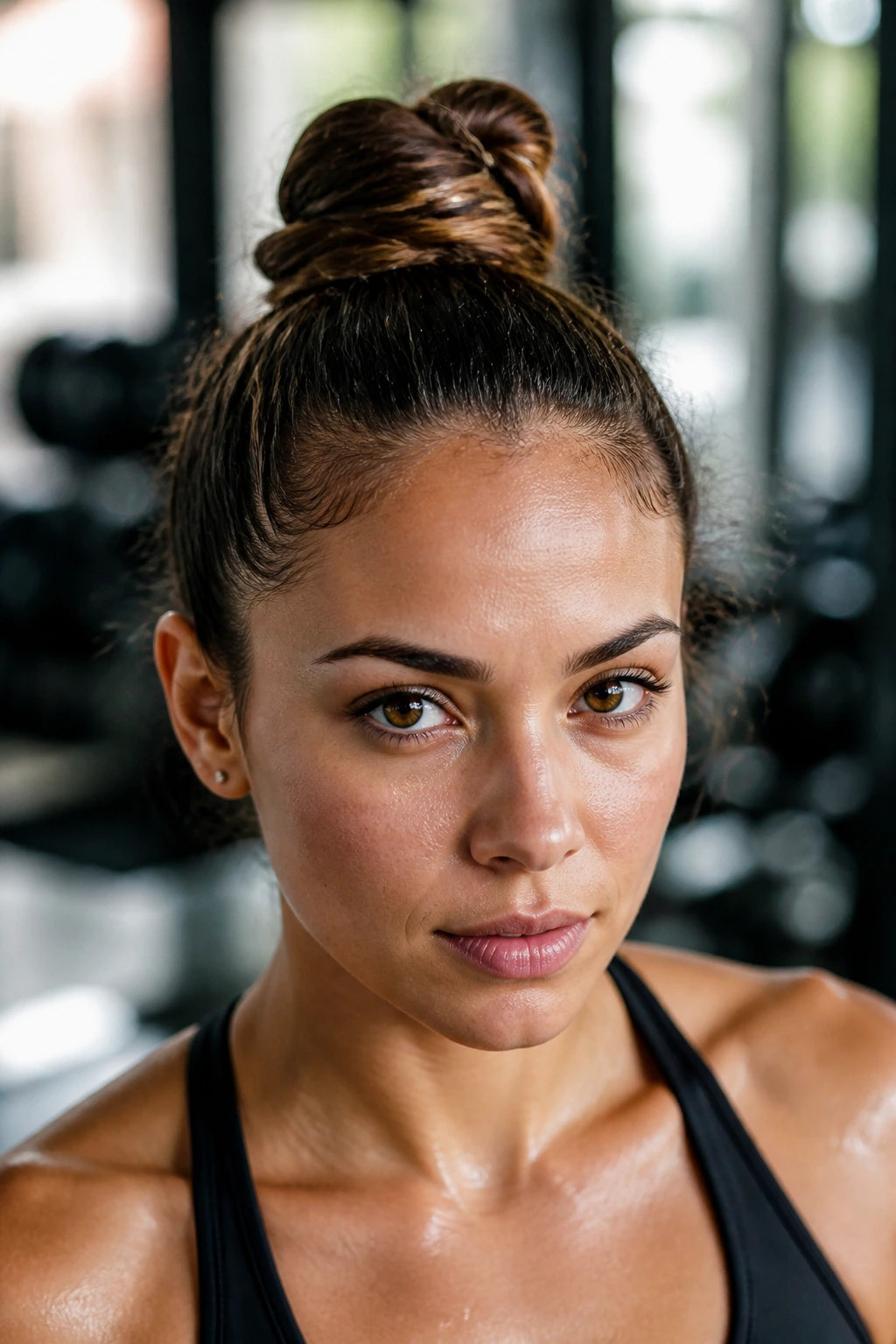
At the end of the day, the best workout hairstyle is the one that allows you to finish your session without thinking about your hair once. It is not about perfect styling—it is about containment, comfort, and confidence. Whether you prefer a sleek braid or a messy top knot, the goal is always to create a foundation that survives the movement.
Experiment with these styles to see which ones offer the right tension for your specific hair texture. You might find that a high-intensity session requires the locked-in security of a Dutch braid, while a restorative yoga class is perfectly suited for a low, soft bun. Take the extra thirty seconds to secure your style properly at the start; it is the simplest way to keep your head in the game.