

If you have ever tried to hold a high-intensity interval training session while your hair slowly unravels into a sweaty, tangled mess, you know the frustration. It is even worse when you identify with the dark, whimsical, and romantic aesthetic of Goth Fairy fashion. You want your look to reflect your inner intensity, but you also need gear that can survive a deadlift or a three-mile run.
Finding the middle ground between lace-up corsets and spandex, or between gothic elegance and moisture-wicking functionality, is not impossible. The best workout hair is practical, secure, and—if you play your cards right—incredibly striking. We are talking about styles that leverage height, texture, and clever braiding techniques to keep your locks away from your face while maintaining an aesthetic that feels entirely your own. Forget the basic, uninspired ponytail; these styles prioritize durability without sacrificing the moody, ethereal vibe you love.
1. High Tension Triple-Braided Top Knot
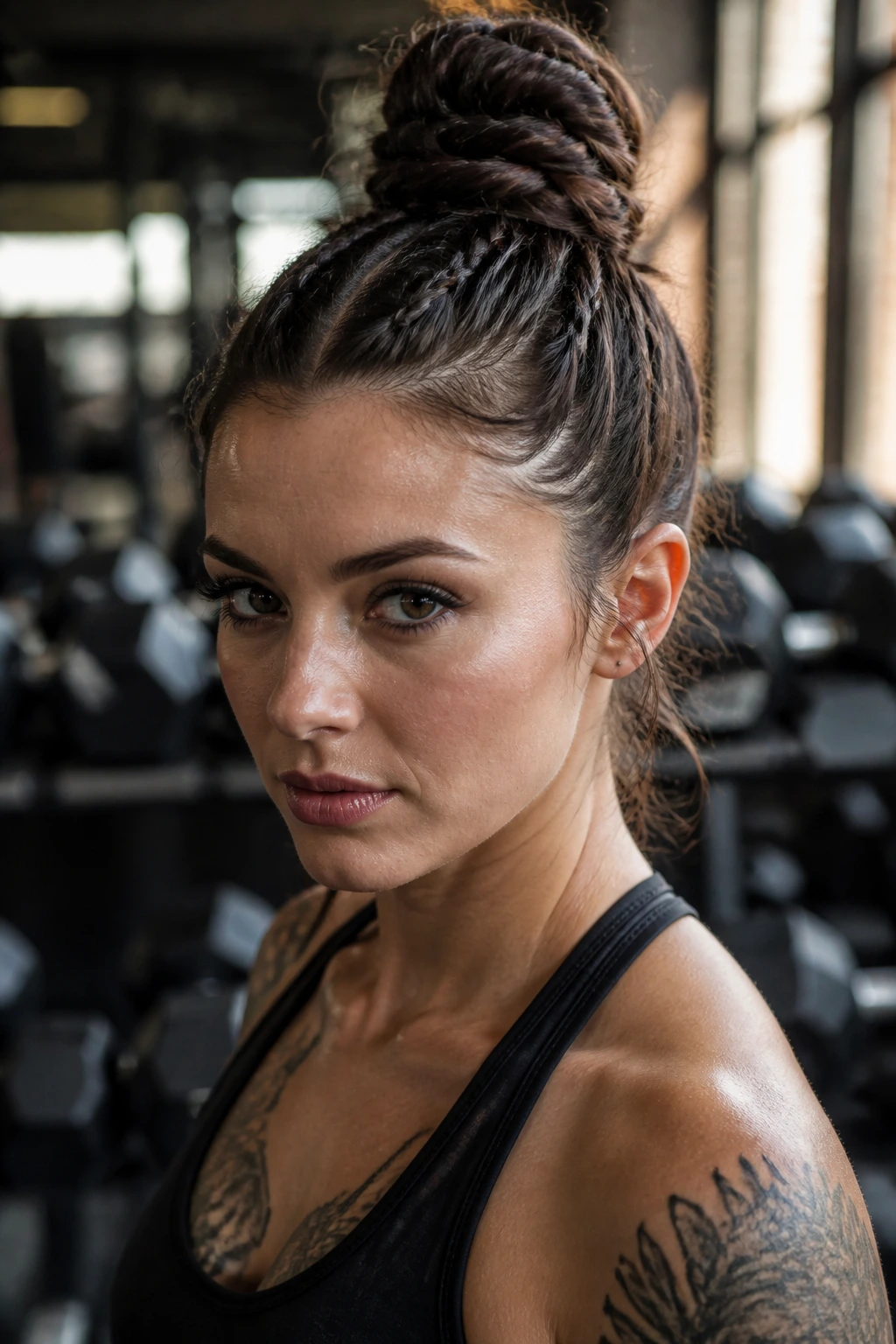
This style is all about containment. By incorporating three distinct braids into a single, high-mounted bun, you create a structure that will not budge, even during burpees or box jumps. The key here is to use a texturizing spray before you start to ensure the hair has enough “grip” to prevent the braids from slipping loose mid-session.
Why This Works for Intense Movement
The primary advantage of the triple-braided top knot is the distribution of weight. By securing the hair in three smaller sections before pulling it into the final bun, you eliminate the single heavy point of tension that often causes a standard ponytail to sag. This structure essentially anchors the hair to your scalp from multiple angles, ensuring that no matter how much you jump or pivot, the center of gravity remains fixed.
Execution Tips for Maximum Security
- Always work on hair that has a little bit of second-day texture; clean, silky hair is often too slippery to hold tight braids.
- Use small, clear silicone elastics to secure each of the three braids before gathering them into the final bun.
- If you have layers, use a light-hold styling pomade to tame flyaways near the nape of the neck.
- Secure the final bun with a heavy-duty, snag-free hair tie and reinforce it with two large bobby pins placed in an ‘X’ pattern.
2. Spiked Mohawk Braid
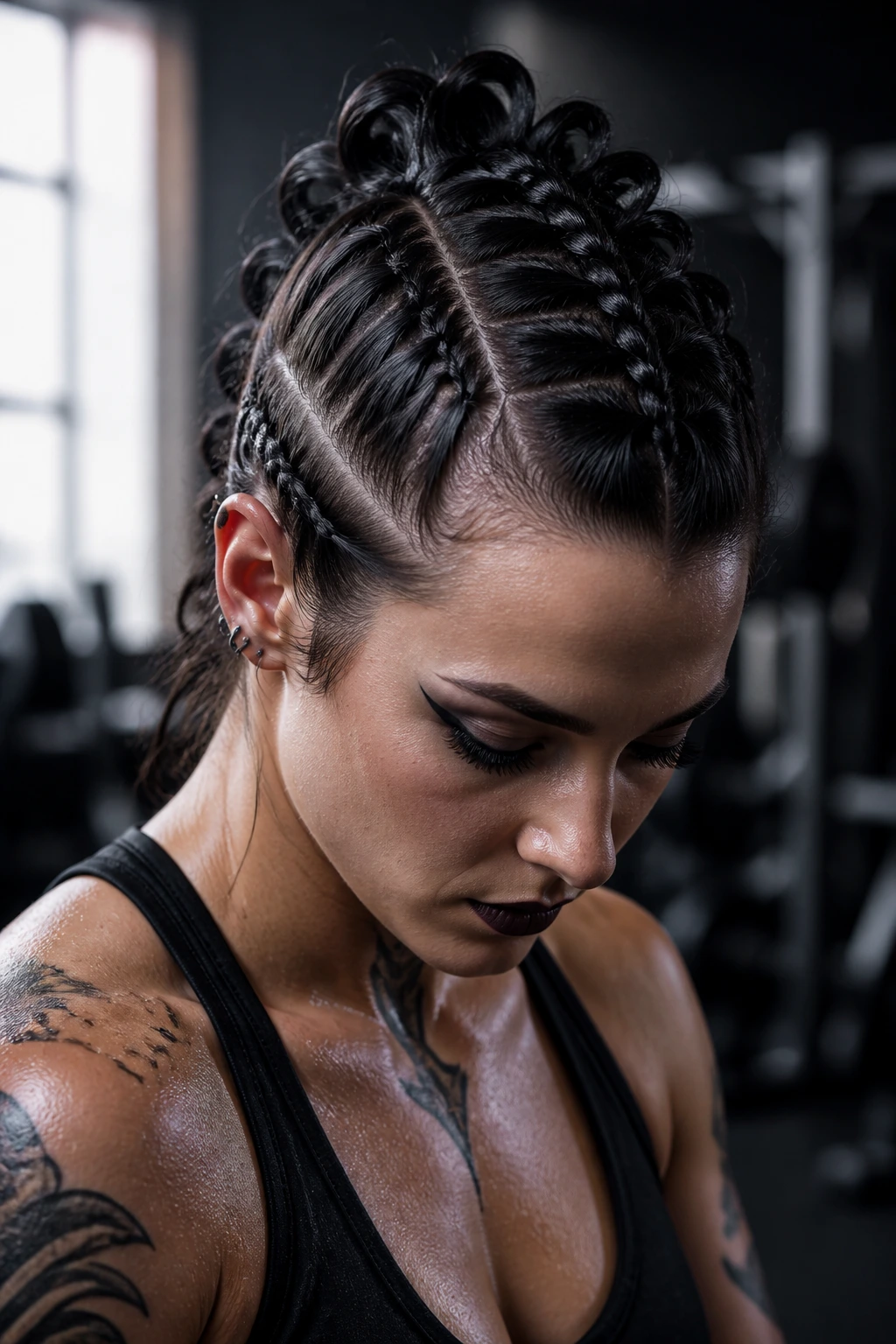
A mohawk braid is the ultimate fusion of punk-goth energy and athletic utility. By pulling the hair toward the center of your scalp and braiding it snugly against the head, you create a streamlined look that is perfect for weightlifting, where you do not want your hair catching on equipment or obstructing your view.
Creating the Visual Impact
The secret to this look is “pancaking” the braid—gently pulling on the loops of the braid once it is secure—to give it width and dimension. When you use dark, matte hair ties or pins that match your natural hair color, the focus remains entirely on the shape of the braid rather than the hardware holding it together.
Tactical Advantages During a Workout
- Keeps the entire crown of the head completely clear of hair, which is a massive help when you are lying back on a bench for chest presses.
- The tight tension keeps hair away from the eyes, preventing the common distraction of strands sticking to your sweaty forehead.
- It is highly durable and can easily transition from a morning HIIT class to a full day of activity without needing a re-do.
3. Webbed Side-Part Micro Braids
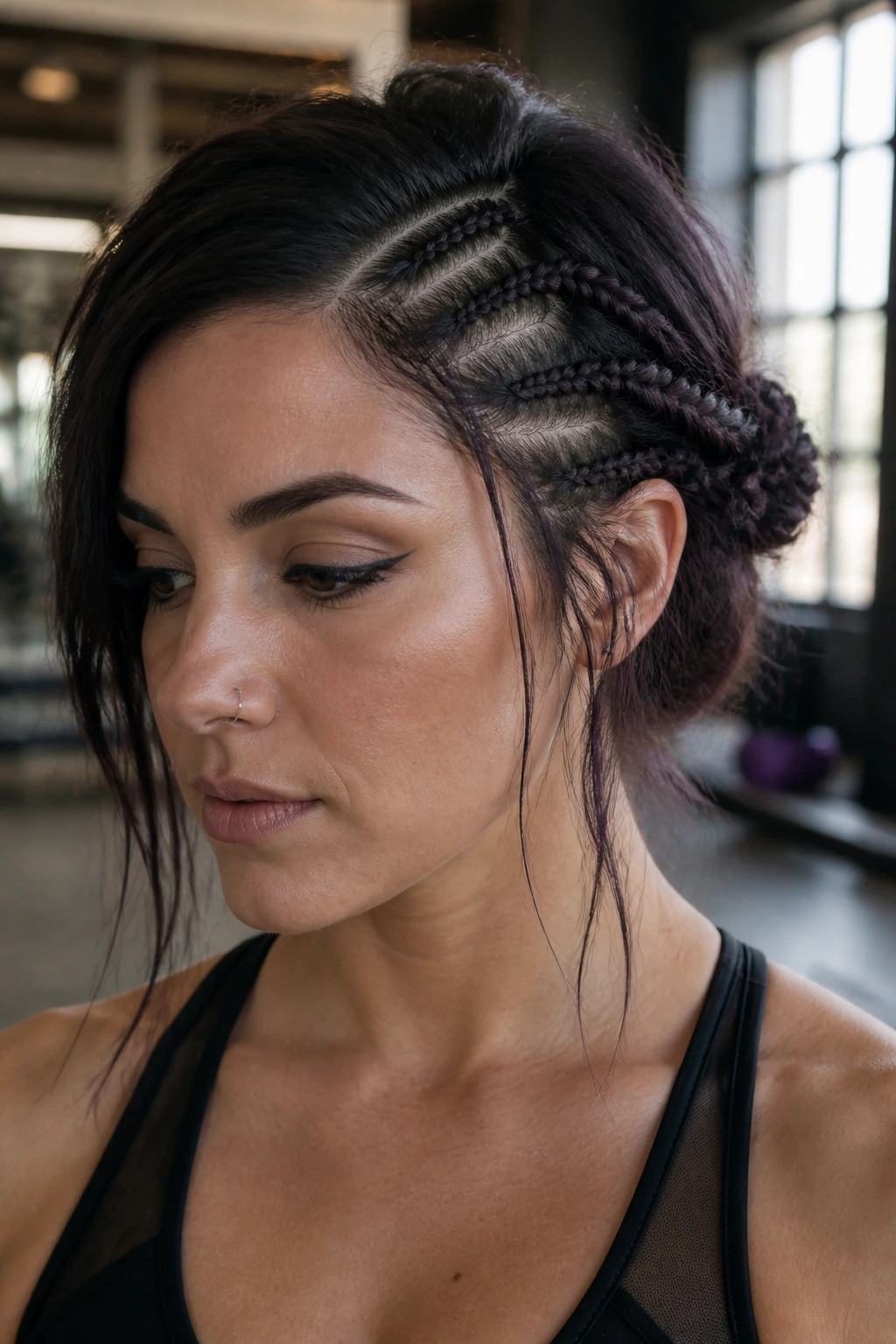
If you prefer to wear your hair down but find it gets in your way, this is your solution. By creating a series of micro-braids along one side of your head and pinning them back, you achieve a delicate, spider-web-like effect that feels very on-brand for a goth fairy. It keeps the hair tight against the temple, so you do not have to deal with strands whipping across your face during movement.
How to Style the Webbing
You will want to start with a deep side part. Take thin sections of hair—no more than a half-inch wide—and braid them tightly from the hairline toward the back of the crown. Once you reach the back, secure them with small, discreet elastics, then tuck them under your remaining loose hair or pull them into a partial tie-back.
When to Choose This Style
This is an excellent option for low-impact workouts like yoga, Pilates, or barre, where you might want to feel a bit more “dressed up” even while sweating. Because it relies on tension across the side of the head, it is less secure than a full bun, but it offers a far more creative, artistic aesthetic that stands out in a crowded gym.
4. The Victorian Lace-Up Ponytail
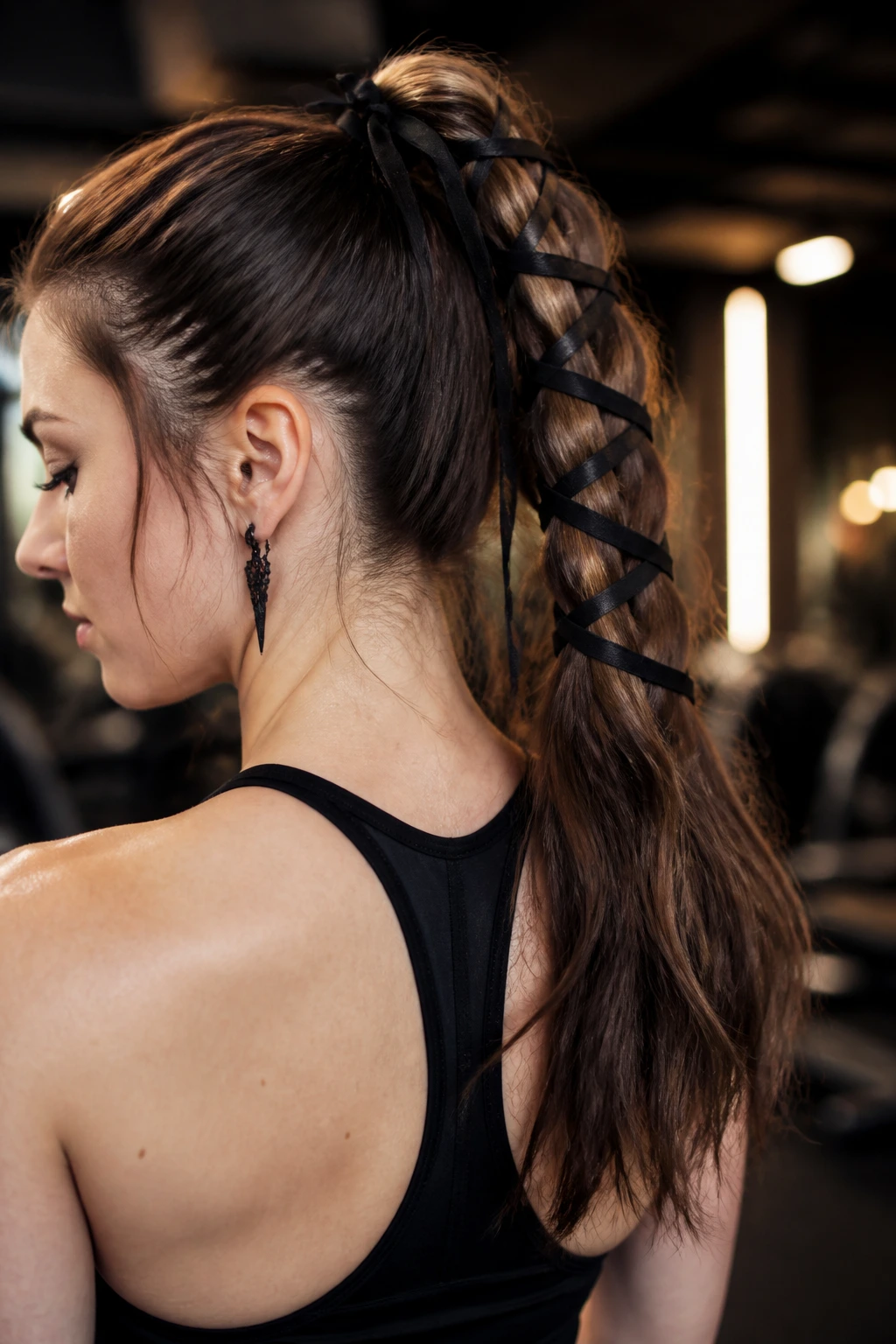
Think of this as a regular ponytail, but with a structural upgrade. By weaving a thin, black ribbon or an extra-long piece of elastic thread through your hair before and after tying it off, you mimic the look of a corset lacing. It is visually complex but remarkably simple to execute with a bit of practice.
Achieving the Lacing Effect
- Start with a high, tight ponytail.
- Take a thin strip of black velvet ribbon and pin it to the base of your ponytail holder.
- Wind the ribbon around the length of the ponytail at even intervals, looping it tightly as you go.
- Finish by securing the end of the ribbon with a small, hidden bobby pin or by tucking it into the final elastic.
Why It’s Great for Gym Aesthetics
The ribbon acts as a secondary structural element, effectively “bundling” your hair so it does not splay out while you move. This prevents that messy, frayed look that long ponytails often develop after twenty minutes of cardio. Plus, the gothic lace-up detail looks incredible against a black athletic top, bridging the gap between workout gear and dark fantasy fashion perfectly.
5. Double Fishtail Crowns
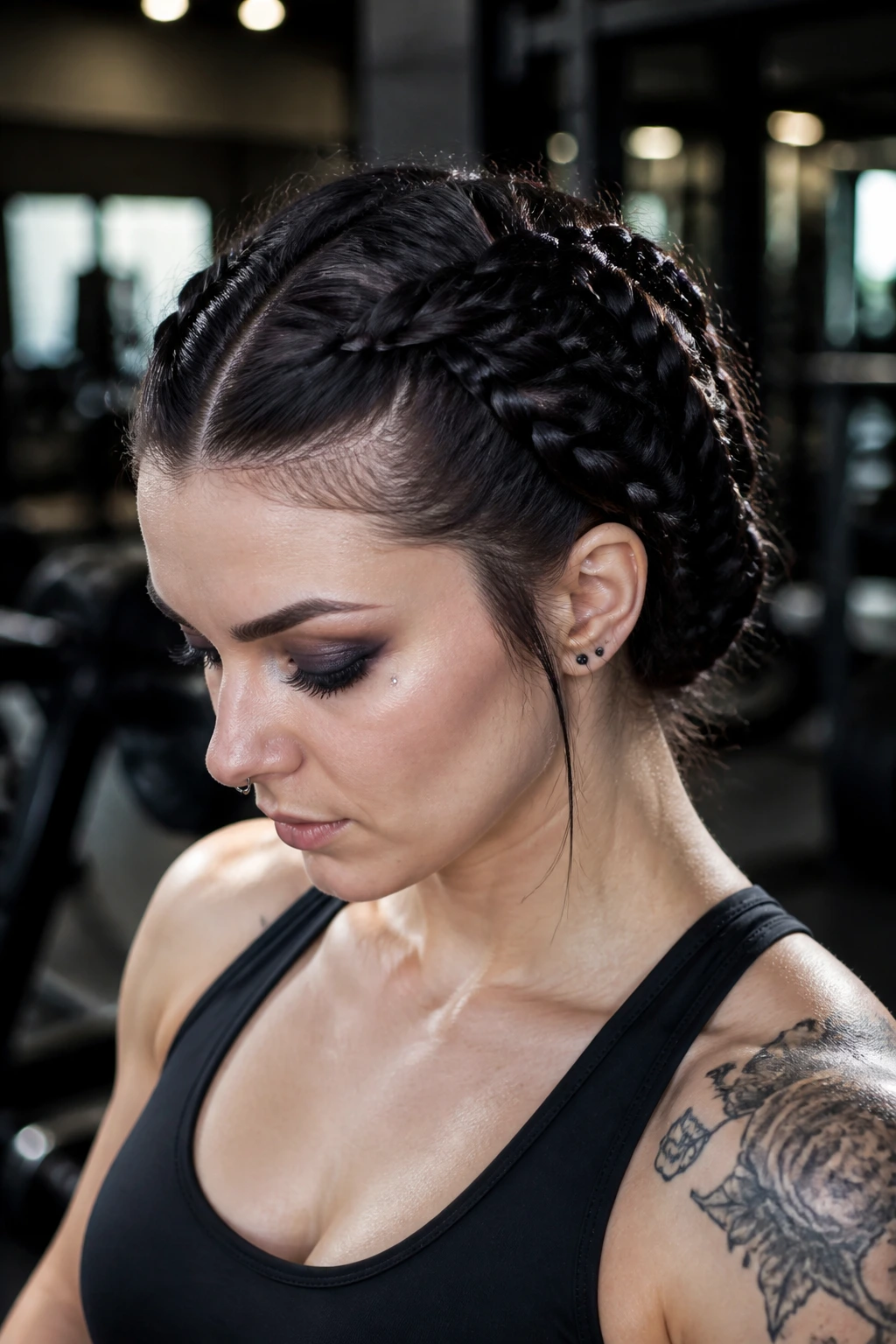
Fishtail braids are synonymous with fairy-tale aesthetics, but a double-crown version provides the kind of lockdown hold you need for a rigorous workout. By starting two braids at the front of your hairline and weaving them back toward the nape of the neck, you create a stable frame that keeps all of your hair securely positioned.
The Physics of the Fishtail
The fishtail braid is naturally tighter than a standard three-strand braid because it uses smaller sections of hair. This creates a denser, more woven structure that is less likely to loosen up as you move. It is a fantastic choice for people with longer, thicker hair who struggle to keep their mane contained during dynamic movements.
Pro-Tip for Better Hold
Always mist your hair with a sea salt spray before beginning the braid. The salt adds a gritty texture that prevents the strands from sliding past one another. If you find your arms getting tired while braiding, simply lean your head forward—this automatically tightens the braid at the base of the neck, making the whole style more robust.
6. Under-Braided Space Buns
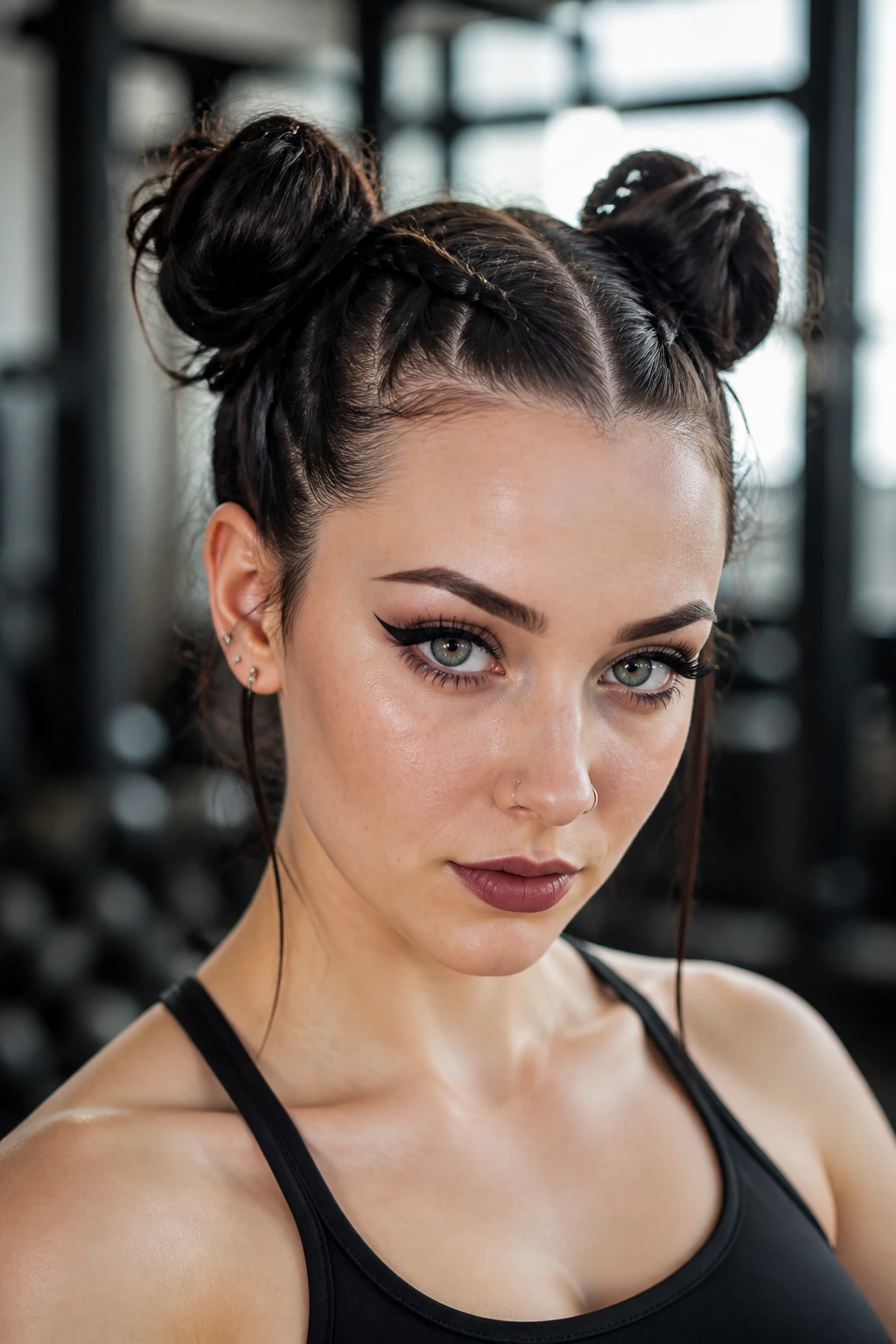
Space buns are iconic, but they are notorious for being floppy and unstable. The trick to keeping them in place through a heavy squat set is to add a Dutch braid leading up to each bun. By braiding the hair toward the crown of your head before winding it into the bun, you create a secure anchor that prevents the buns from flopping or sagging.
Constructing the Perfect Anchor
- Part your hair down the center from your forehead to the nape of your neck.
- Invert your head and begin a Dutch braid at the nape of your neck, working upward toward the crown.
- Once you reach the top, secure the braid with an elastic, then wrap the loose ends around to form a bun.
- Repeat on the other side.
Why This Beats Standard Buns
Standard space buns are held by the elastic alone; under-braided buns are held by the entire weave of the hair at the back of your head. This means the weight of the bun is supported by the braid itself, so you do not need to pull the elastic painfully tight to get them to stay.
7. The Sleek Low-Neckline Plait
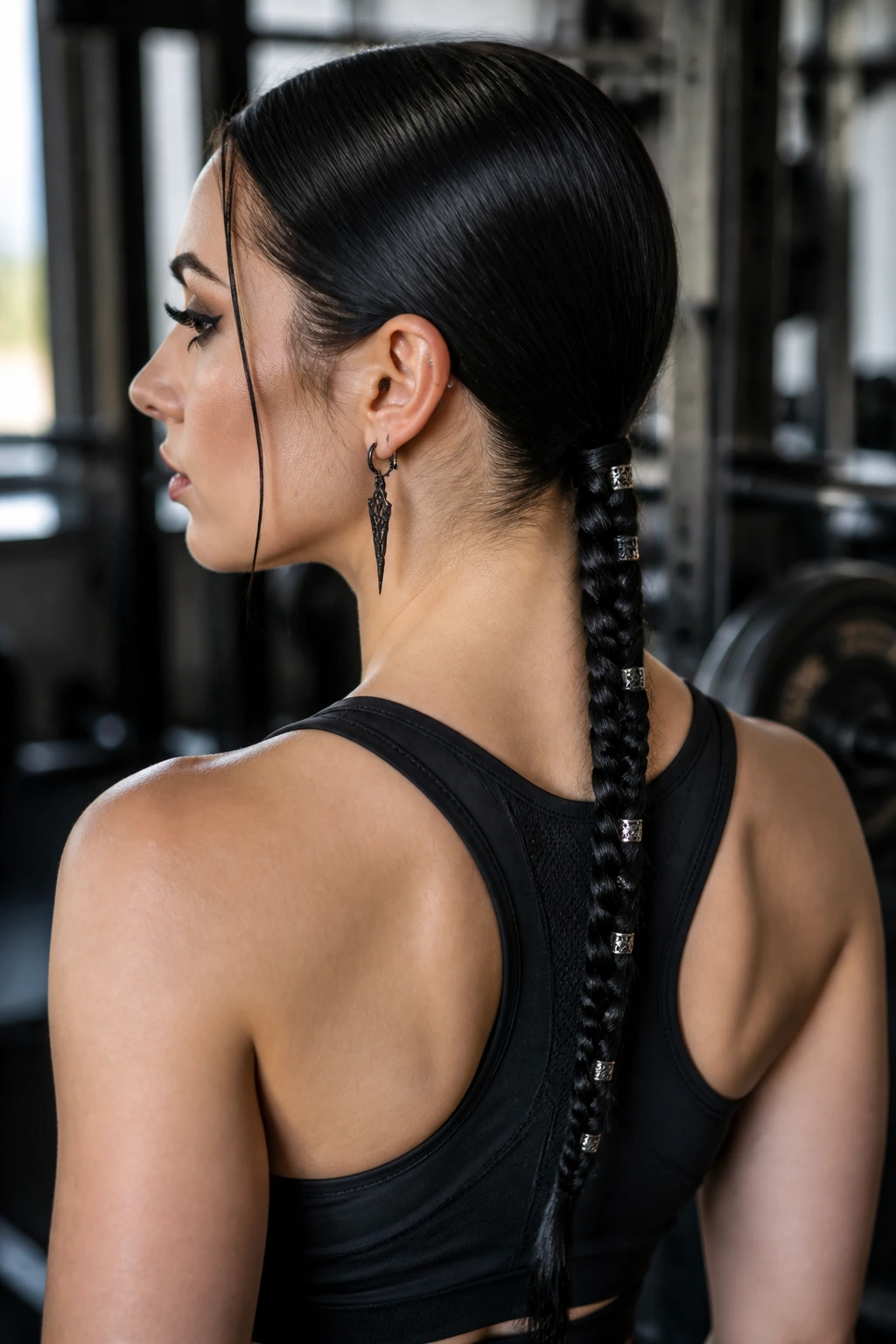
Sometimes you want something that feels grounded and minimal. A single, super-tight plait starting at the nape of the neck and running all the way to the ends is a classic, no-nonsense style. It is refined, dark, and entirely distraction-free, making it ideal for activities where you need to keep your focus on your breathing or your form.
Stylizing for the Goth Fairy Vibe
To ensure this doesn’t look like a basic schoolgirl braid, focus on your part and your accessories. Use a center part to give it a more “eldritch” appearance, or incorporate small, silver-toned metal hair cuffs throughout the length of the braid. These subtle metallic accents provide that fairy-tale edge without being heavy enough to interfere with your workout.
Best Workouts for This Look
- Cycling: Because it stays flat against your back, it won’t hit you in the neck or get stuck in your gear.
- Weightlifting: The flat profile ensures it won’t interfere with your head positioning on a squat rack or bench press.
- Stretching or Yoga: The braid is soft and comfortable to lie on during floor work.
8. Gothic Crown Braid with Hidden Pins
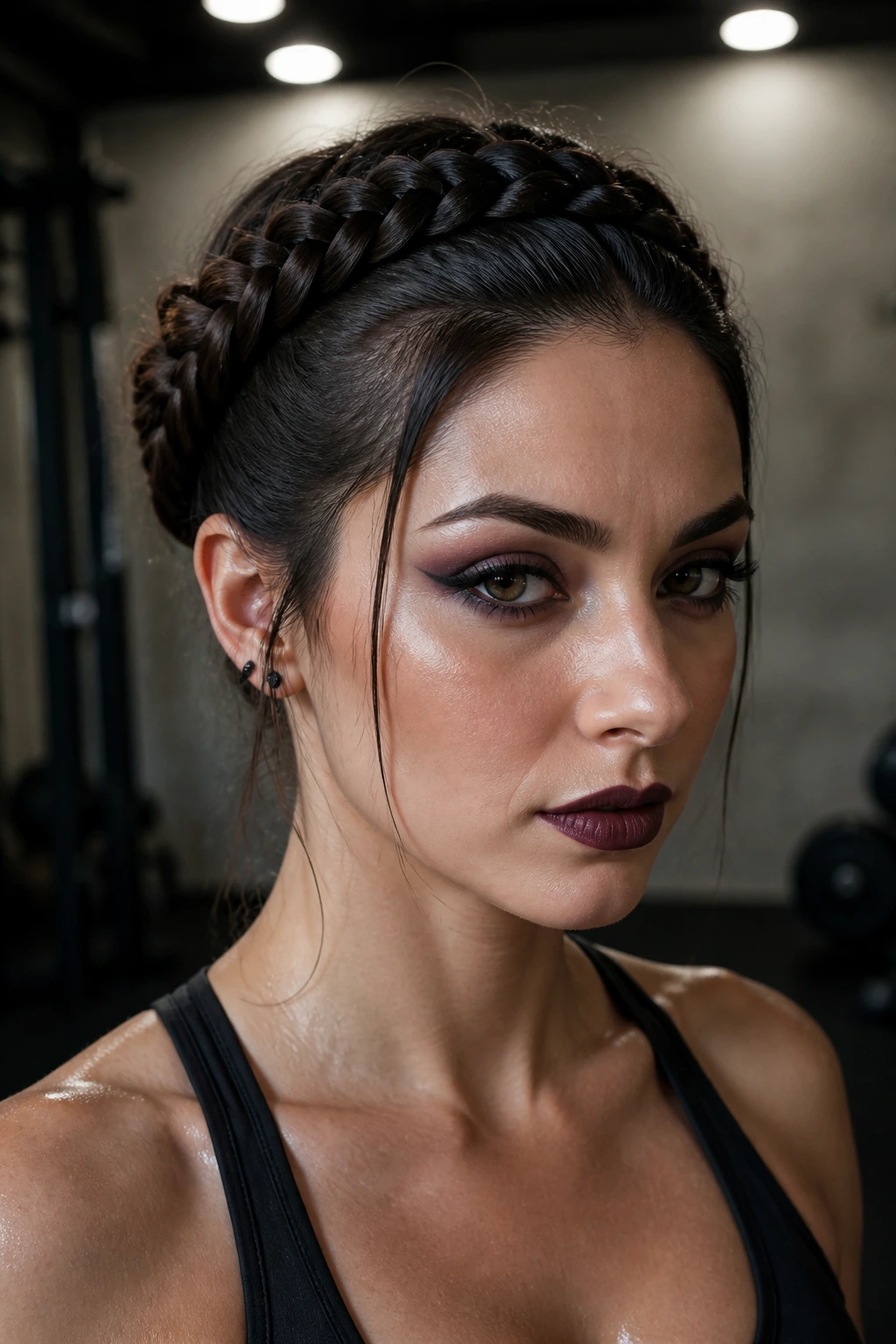
A crown braid is sophisticated, but it is often reserved for special occasions. To make it workout-ready, you have to use a “locked-in” technique. This involves using U-shaped hairpins (also called hair forks) rather than standard bobby pins, which provide a much firmer grip on thick sections of hair.
The Secret to Longevity
Most people fail at crown braids because they try to wrap the hair too loosely. For a gym-appropriate version, you want the braid to be pulled quite tightly against the scalp. Think of it as “tethering” your hair to your head. If you have fine hair, use a light dusting of dry shampoo to increase the volume and provide enough friction for the pins to bite into.
Visual Benefits
This look clears your entire face and neck, providing a cooling effect during high-intensity sweat sessions. It has a slightly ethereal, otherworldly quality that pairs perfectly with monochromatic gym wear, especially if you accessorize with small, dark-colored hair rings hidden in the braid.
9. Waterfall Braids with Secure Ends
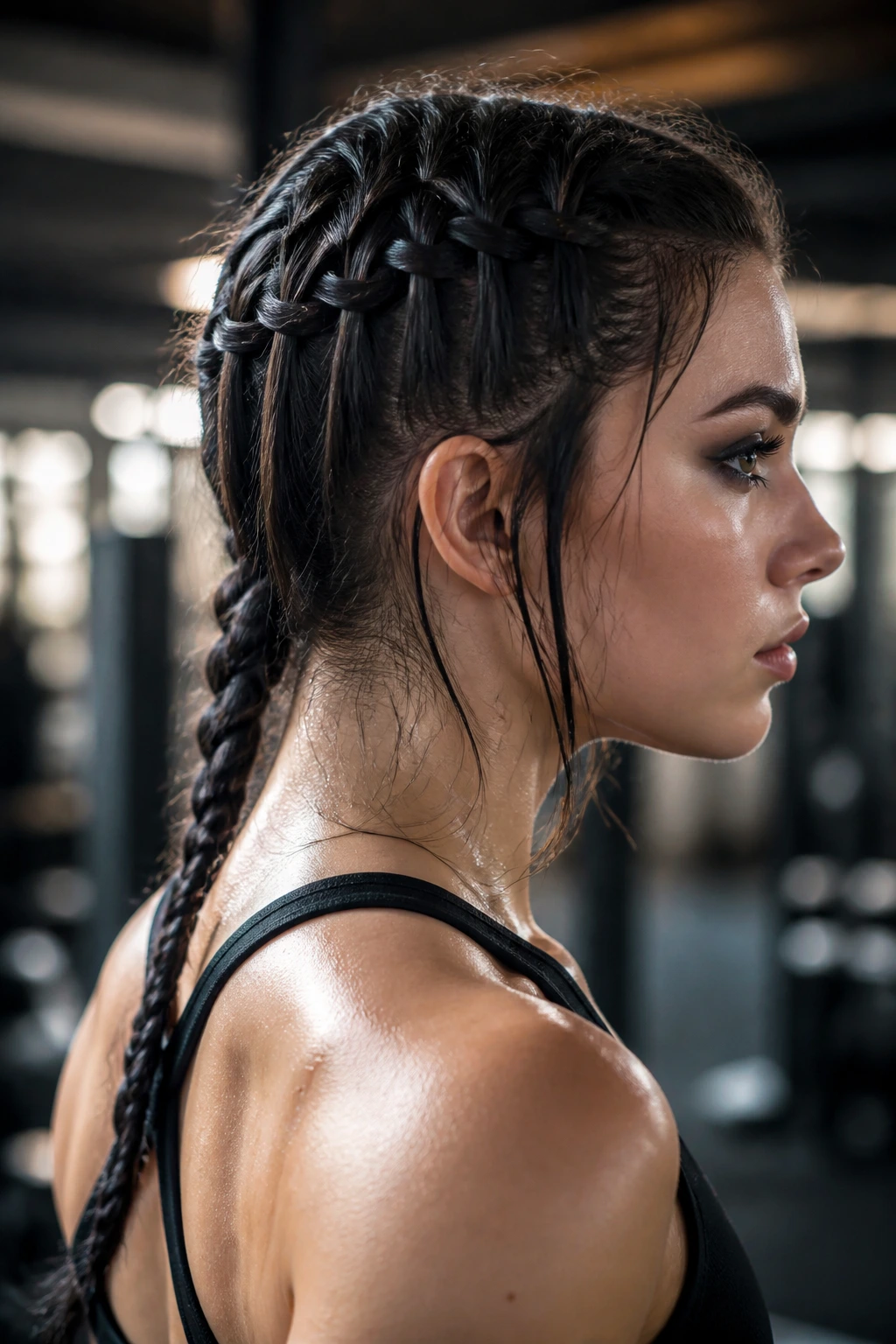
The waterfall braid is arguably the most “fairy-like” style out there, but it is rarely associated with high-impact movement. To adapt it for the gym, modify the ending: instead of letting the waterfall strands hang loose, gather them and feed them into a secondary, tight braid at the back of the head.
Why This Transition Matters
Leaving hair loose is a recipe for disaster during a workout; it will get tangled, sweaty, and stuck to your skin. By “catching” the waterfall sections into a secondary braid, you keep the flow of the style while ensuring that no loose strands are flapping around. It creates a complex, intricate look that stays completely secured against your head.
Expert Advice on Texture
If you are doing this style, use a light mousse while the hair is damp before braiding. This gives you the control you need to ensure the waterfall strands are perfectly uniform. Once you finish the secondary braid, give it a quick spritz of flexible-hold hairspray to ensure the integrity of the look throughout your session.
10. The Tied-Back Faux-Hawk
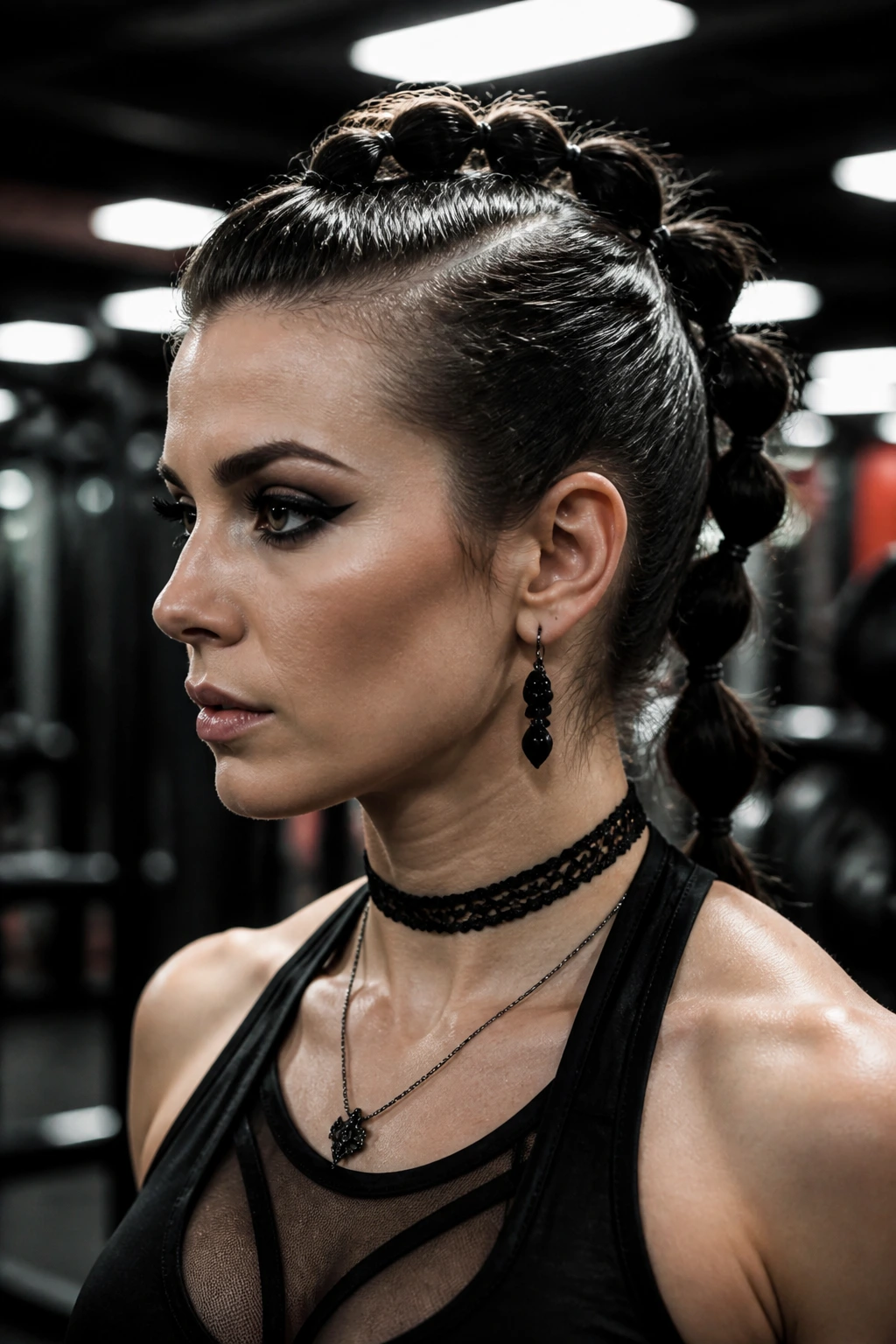
This style uses a series of small, individual ponytails along the center of the head, each one looping into the next. It creates a sharp, spiked appearance that looks like a mohawk but is actually just a series of secured elastic segments. It is incredibly secure and holds up perfectly during fast-paced movements.
Why It’s a Functional Powerhouse
- It creates individual segments of tension, so if one elastic pops, your entire hairstyle does not fall apart.
- It is much easier to perform on yourself than a traditional braid, especially if you have shorter layers.
- The “spiked” look of the segments adds a gothic, industrial flair that looks bold and aggressive in the weight room.
How to Style
Simply make a small ponytail at the top, move down an inch, make another, and pull the previous one into it. Continue this all the way down to the nape of the neck. You can adjust the tightness of each segment to control how much volume you have at the crown, giving you the ability to customize your look for your specific face shape.
11. Cross-Stitch Ribbon Plait
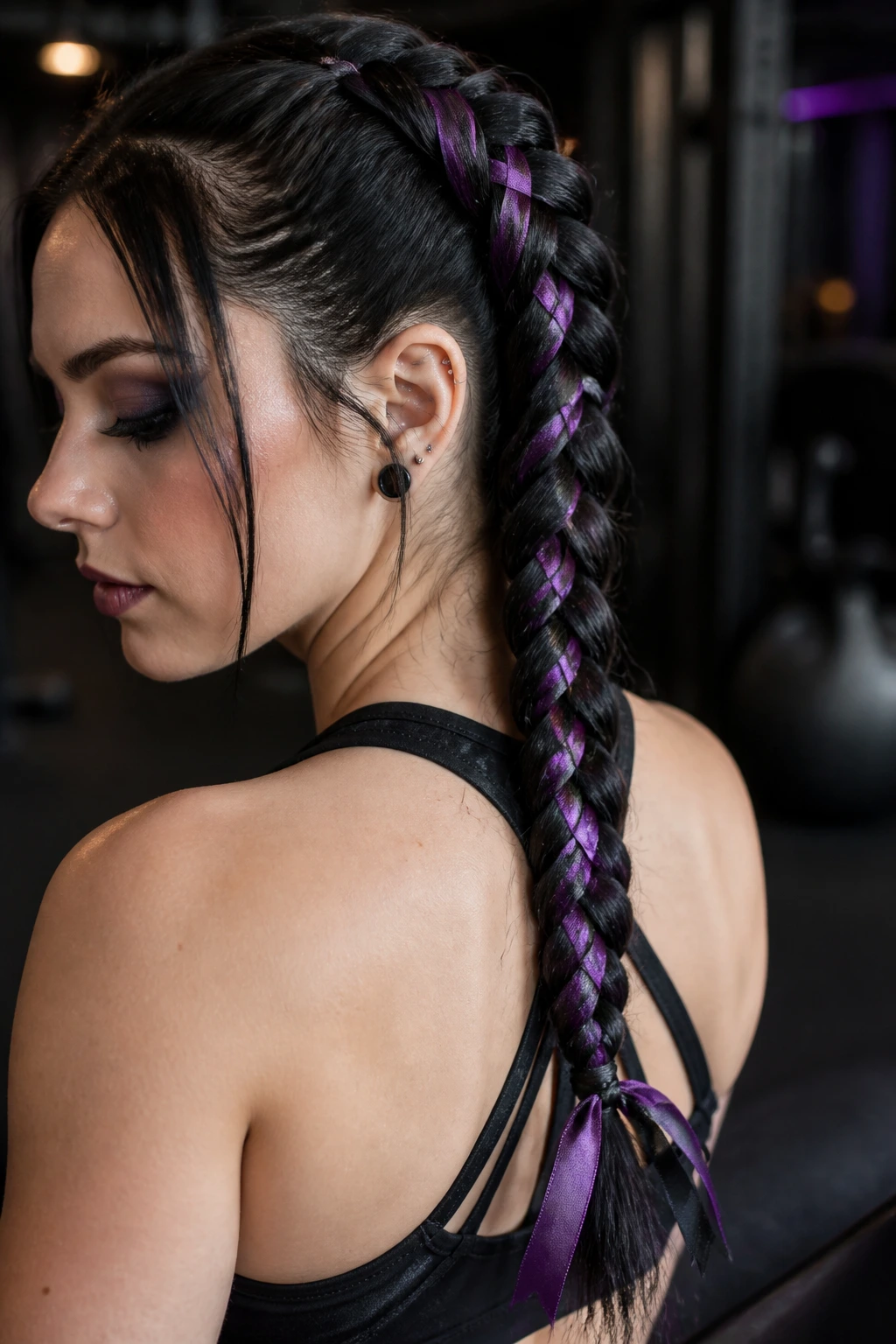
Take two strands of ribbon—deep purple, black, or blood-red—and weave them through a Dutch braid as you go. The ribbon adds both color and structural stability. When you secure the ribbon into the final elastic, it prevents the braid from unraveling, acting almost like a structural ribbing for your hair.
Why Ribbon Adds Value
Ribbon creates an extra layer of friction. In a standard braid, hair against hair can sometimes slide. Ribbon against hair provides a much higher level of “lock,” making it a brilliant hack for those with very silky or straight hair who find that braids usually slip within minutes of starting a workout.
Creative Styling
- Try using two different ribbons for a layered, textured look.
- Use a ribbon that matches your gym outfit for a polished, intentional appearance.
- If the ribbons are long, tie them into a bow at the very bottom of the braid to finish the look with a classic fairy-tale flourish.
12. Pin-Back Twisted Crown
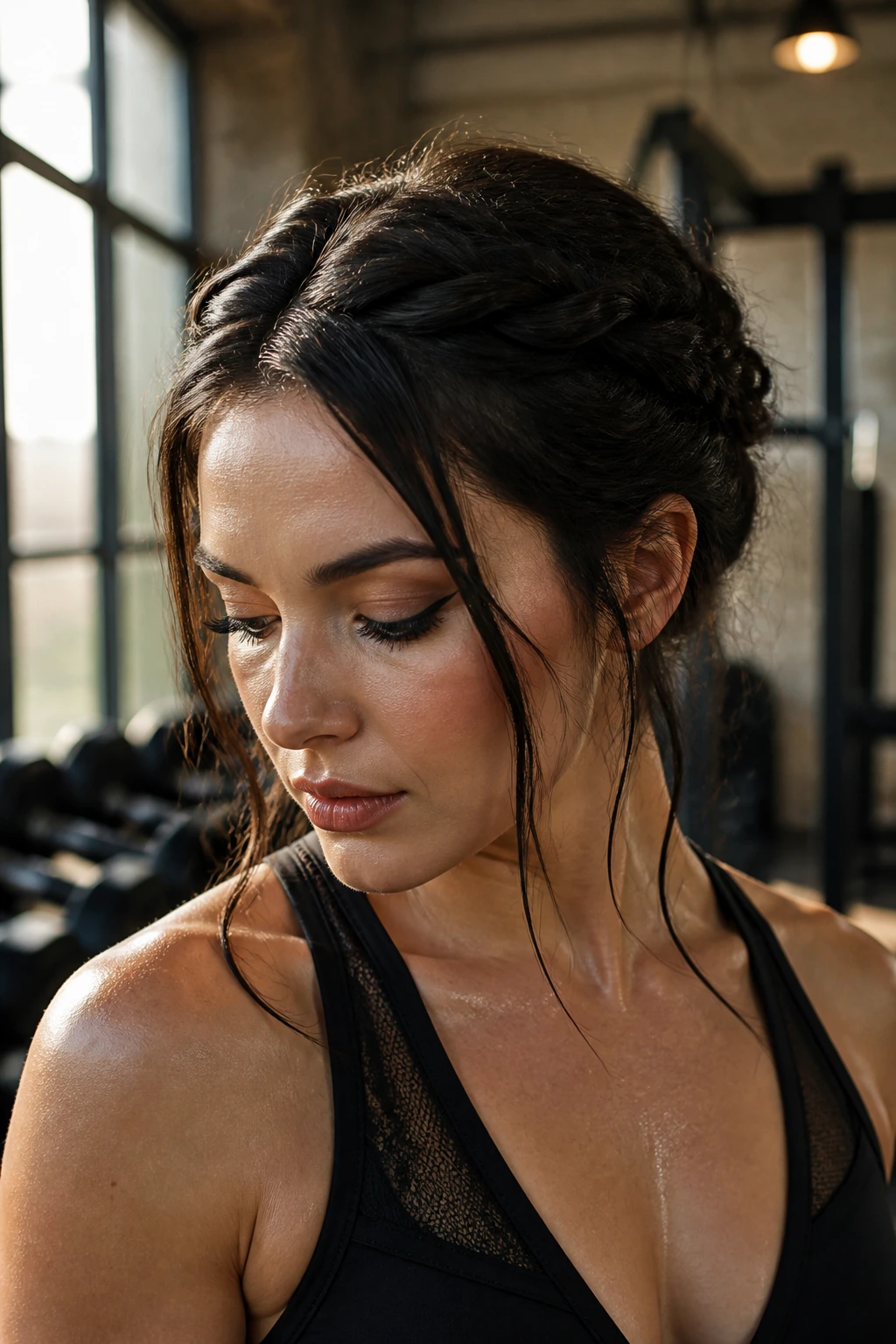
Sometimes you don’t want the complexity of a braid. A twisted crown is essentially two simple ropes of hair twisted tightly and pinned back. It offers a slightly softer, more romantic silhouette than a braid, but it is just as functional for keeping hair out of your face.
Construction Steps
- Part your hair in the middle.
- Take a section from the front and twist it away from your face.
- Add more hair as you move back, similar to a French braid.
- Once you reach the center, pin the two twists together using heavy-duty bobby pins.
Why It Holds
The twist naturally tightens the hair fibers. When you combine this with the pinning technique, you create a very firm hold. This is a particularly good style if you have shorter hair that is prone to popping out of standard braids; the twist is easier to control and pin in place than a three-strand weave.
13. The Half-Up Spider Braid
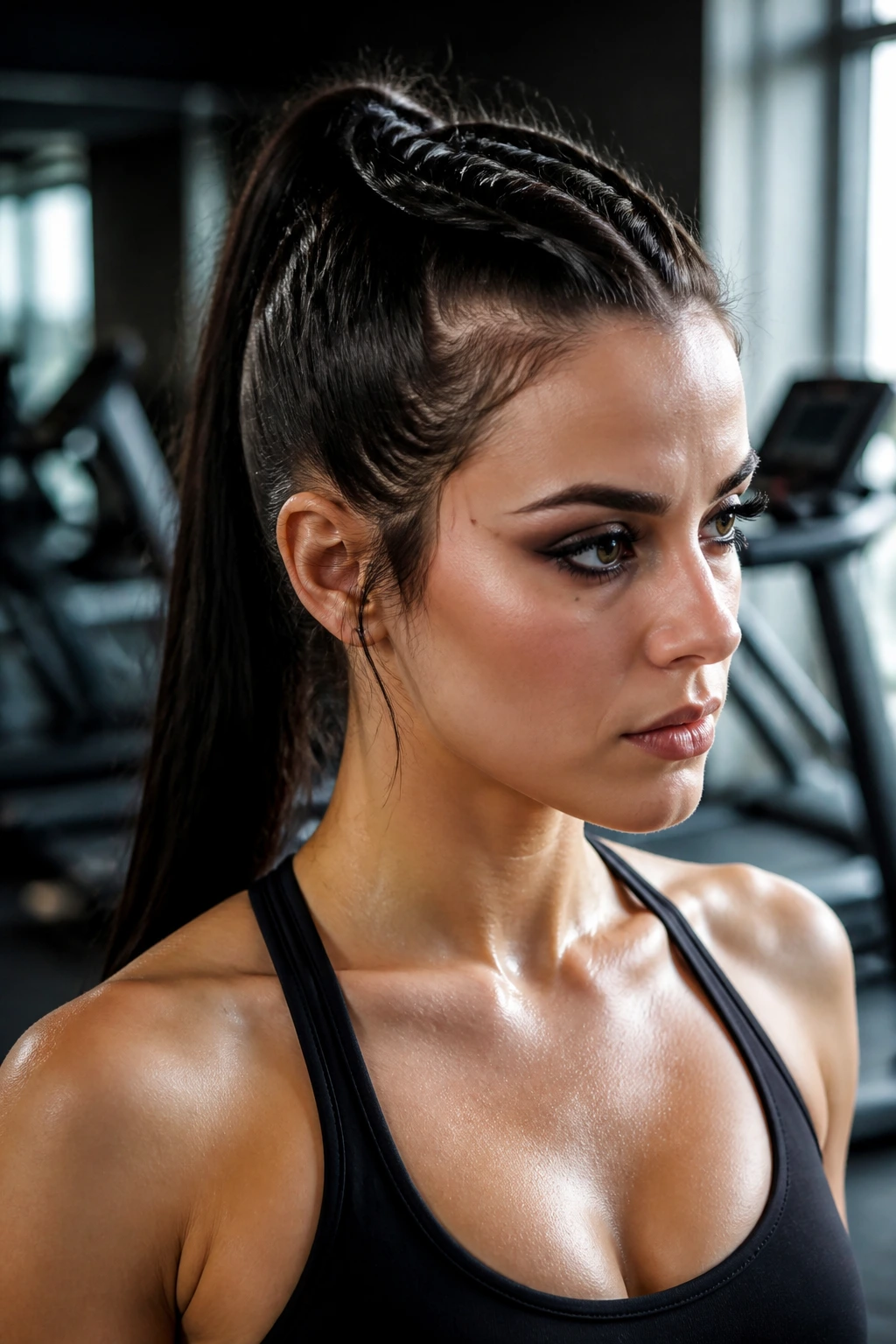
A spider braid involves creating a small braid and then pulling small sections of hair into it at intervals, which creates a webbed look along the surface of your scalp. By keeping this to the top half of your head, you get the aesthetic benefit of the “goth fairy” look while keeping the rest of your hair in a secure ponytail.
The Best Use Case
This is ideal for cardio-heavy days where you need the hair to be pulled back tightly at the front but don’t want to deal with the bulk of a full-head braid. It is a very “high-fashion” way to manage hair that would otherwise be flying everywhere, and it looks particularly striking if you have a high-contrast hair color.
Maintenance During the Session
If you start to notice wispy bits pulling out, a small bottle of travel-sized hair gel in your gym bag is your best friend. A tiny dab of gel smoothed over the surface of the spider braid will keep everything looking crisp and clean throughout the entire session.
14. Dual-Wrapped Low Buns
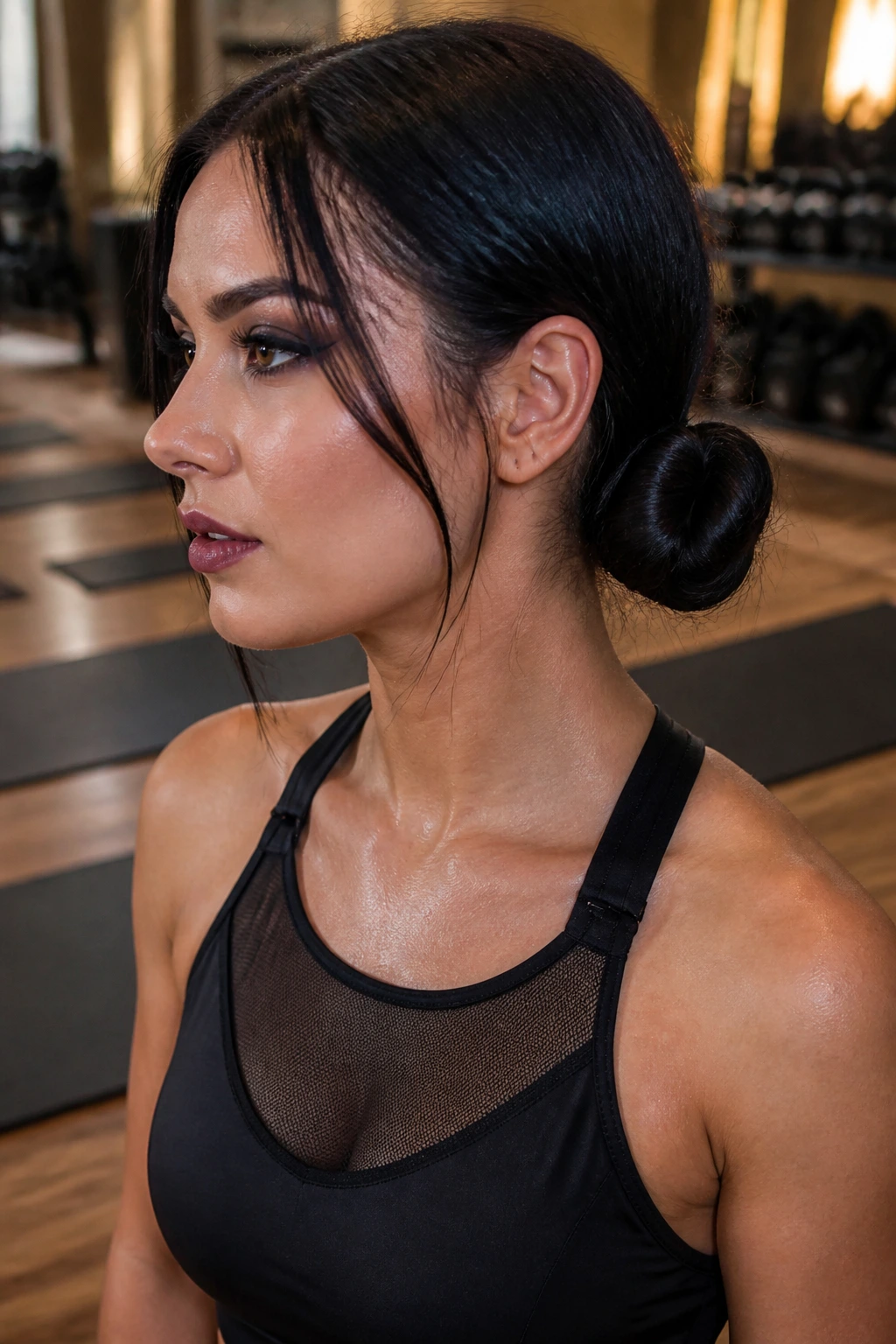
Instead of one bun at the nape of the neck, try two. Wrap each one with a thin strip of hair to hide the elastic, giving the look a more polished, “done” appearance. The dual-bun setup keeps the weight balanced on either side of your head, which is surprisingly comfortable when you are doing floor work.
Comfort Considerations
Dual buns are often the most comfortable style for floor-based movements, like crunches or planks, because there is no single “lump” of hair at the base of your skull. You can lay your head flat against the floor without your hairstyle pushing your chin toward your chest.
Aesthetic Touches
The low placement gives off a grounded, earthy fairy vibe. If you add small, dark-colored hair charms or silver pins to the base of the buns, it adds a touch of personality that feels very “forest floor.” It’s an easy, reliable style that never looks out of place, whether you’re lifting weights or taking a brisk walk.
15. The “Dragon Scale” Braid
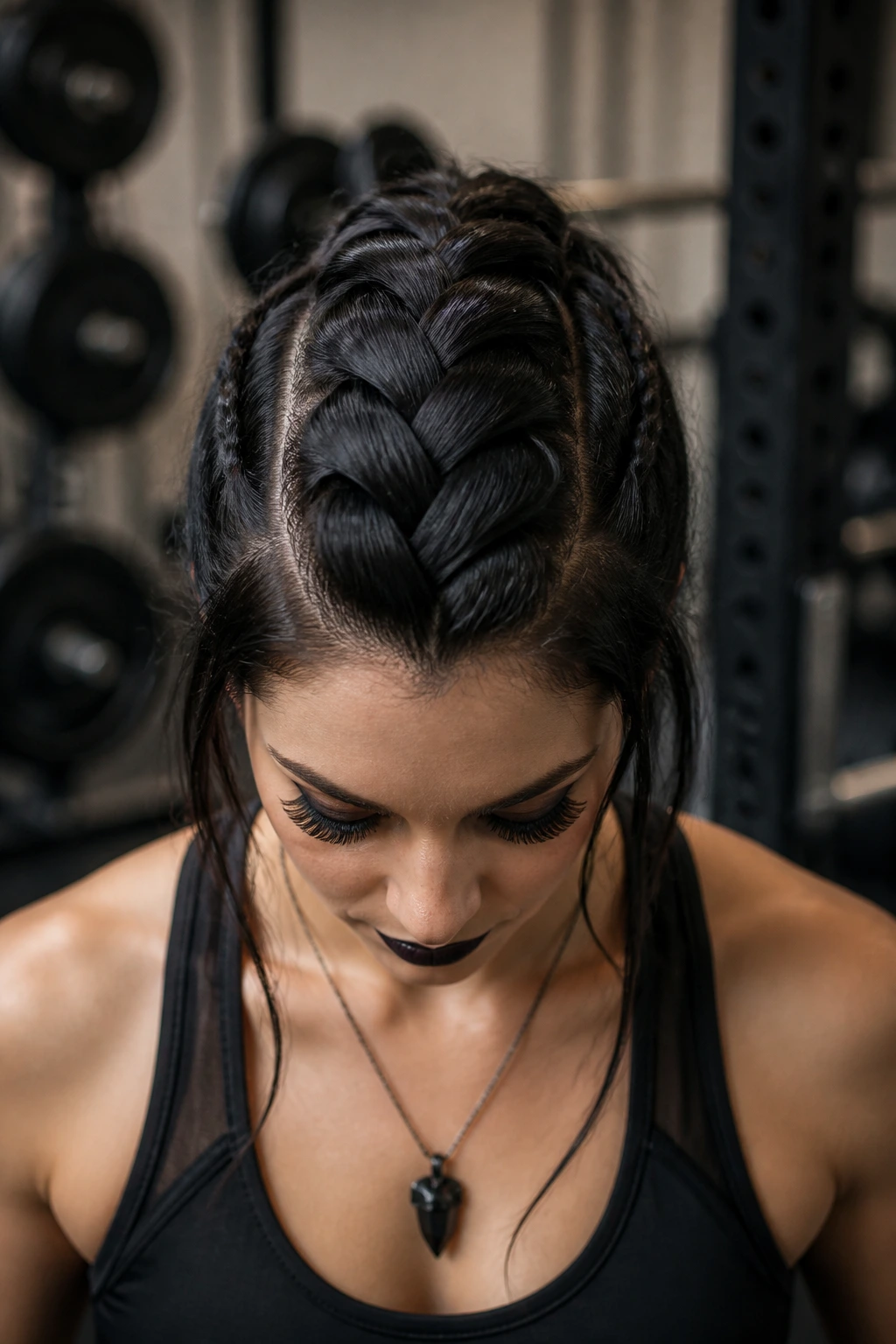
This is a variation of the fishtail braid, but you pull the loops much wider. By pulling the outer edges of the braid significantly, you create a scale-like appearance that runs down the center of your head. It is visually dramatic, highly textured, and incredibly strong.
Why It Works for Athleticism
The “scales” actually create a bit of extra grip. When you work out, the braid can sometimes stretch; the scale-like structure of this braid accommodates that stretch without losing its shape. It’s a great style for people who have long, heavy hair that usually pulls on their scalp, as the distribution of weight along the entire braid is much more even.
Pro-Tip
Use a light hair oil on your ends before you braid. This prevents the hair from snapping or breaking under the tension of the scale-pulling technique. It makes the final braid look much glossier and healthier, which is a nice aesthetic touch after a long, intense session.
16. Pull-Through Mohawk
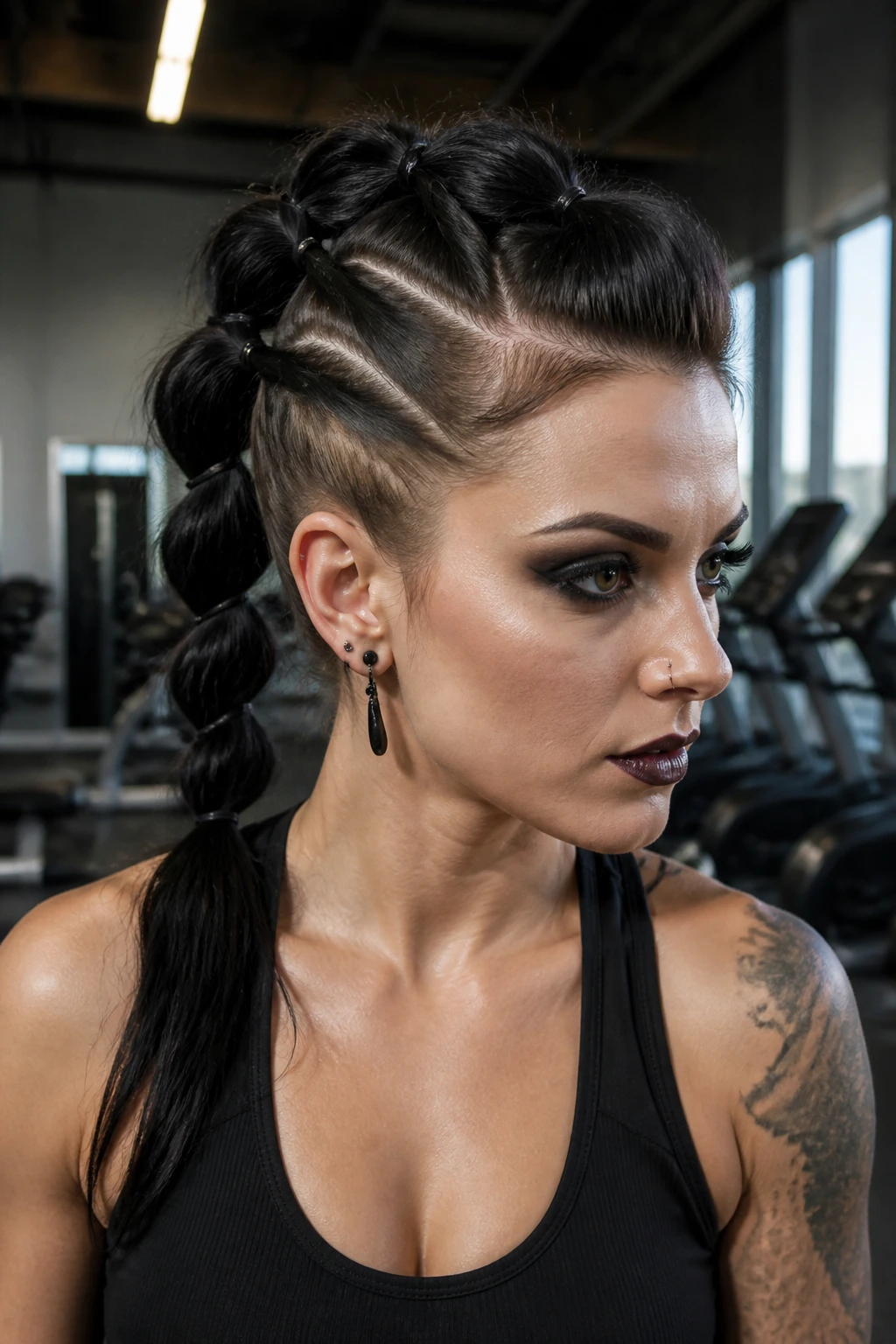
If you struggle with braiding, the pull-through technique is a total lifesaver. You are essentially creating a series of ponytails and pulling the previous one through the middle of the next. It looks just as intricate as a complex braid but is much faster and stays significantly tighter throughout high-impact movement.
The Pull-Through Advantage
The beauty of this style is that it does not require any “plaiting” motion. Because it is all held together by small elastics, you can keep the tension very consistent from top to bottom. It is virtually indestructible and can easily survive a mountain climber or a jump rope session without shifting a millimeter.
Finishing the Look
Since this style relies heavily on elastics, make sure you use high-quality ones that won’t snap. You can also experiment with alternating the colors of the elastics—using black and deep silver, for example—to create a subtle, dark, fairy-inspired color palette that matches your aesthetic perfectly.
17. The Twisted Top-Knot with Cuff
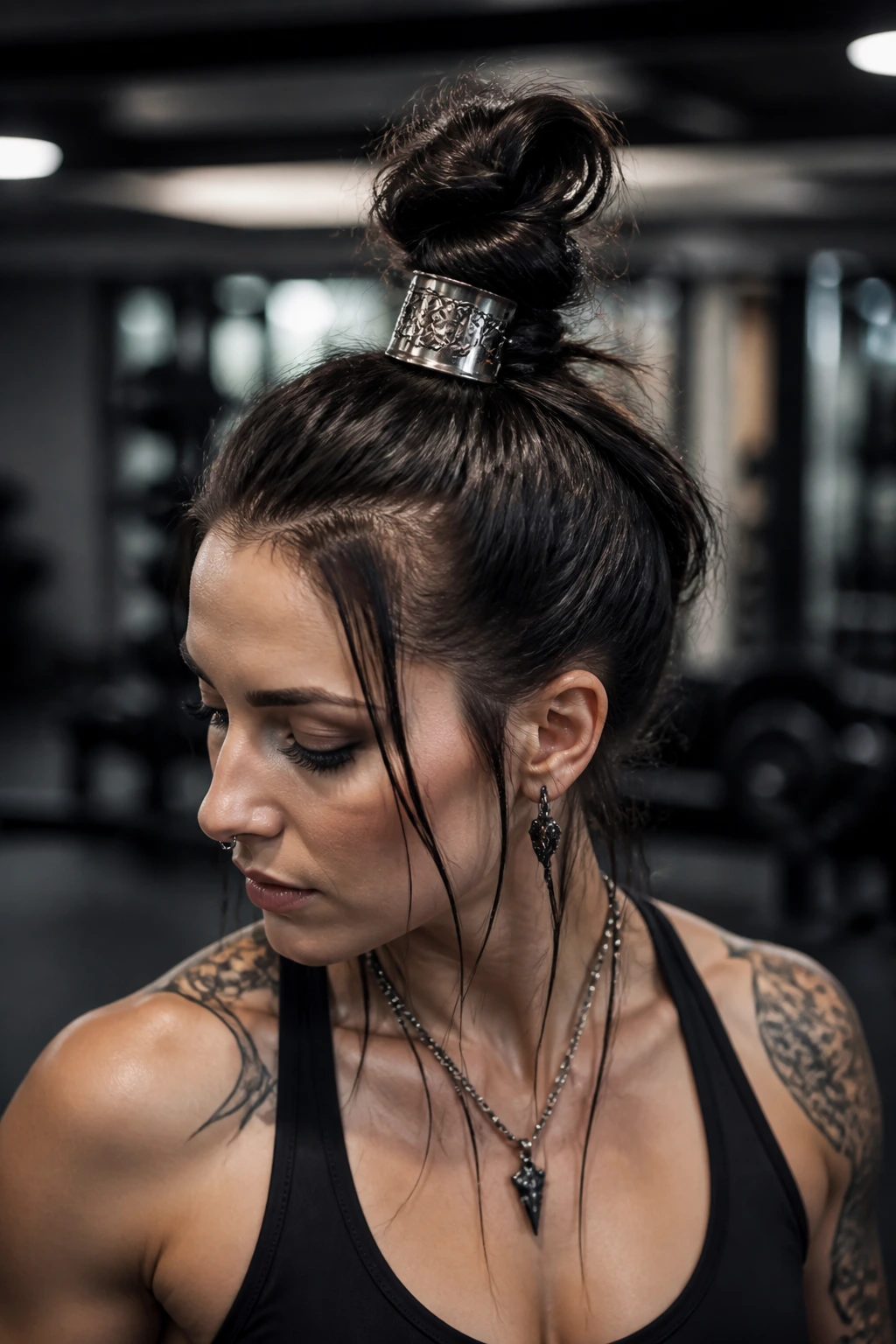
A simple top-knot is too plain, but a twisted version with a metal cuff adds the perfect amount of goth-fairy edge. Take the hair you are about to put into a bun and twist it into two separate ropes before wrapping them around the base. Secure with a decorative silver or black metal cuff instead of a standard elastic.
Why Use a Cuff?
A cuff provides a much firmer grip than a standard hair tie. It acts like a clamp, holding the base of the bun tightly against your head. This prevents the “drooping” sensation that often happens with top-knots as they get heavier from sweat and gravity.
When to Wear It
This is the ultimate “heavy-lifting” hairstyle. Because the bun sits right at the top of your head, it stays completely out of the way of your neck and shoulders, allowing for a full range of motion. It looks intentional, polished, and just edgy enough to remind you that your workout is an act of self-discipline.
18. Braided Headband with Loose Ends
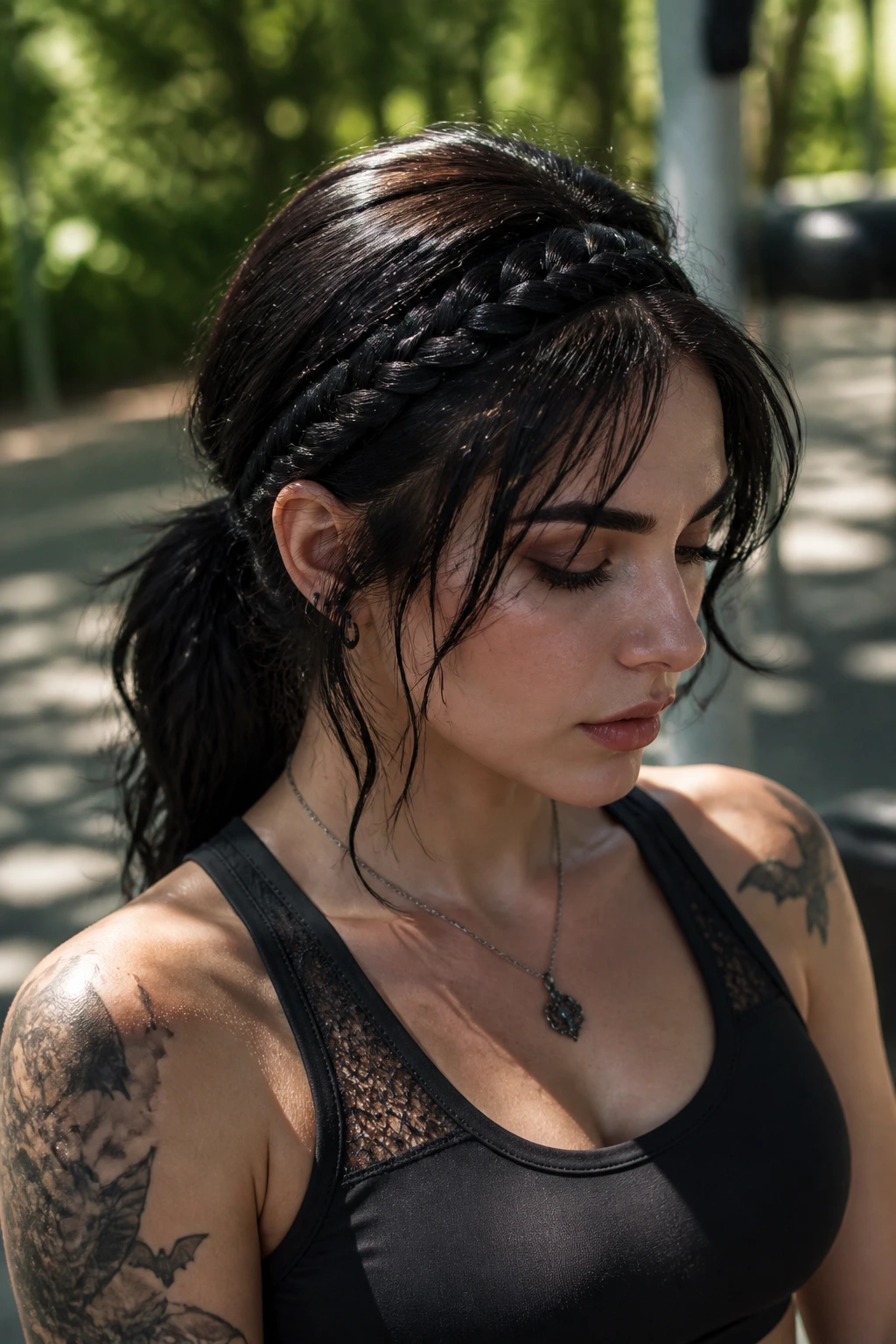
If you have bangs or shorter face-framing layers, a braided headband is the only way to keep them contained. Start a braid at your temple and feed small sections of your fringe into it as you move toward the other side. Secure it behind your ear with a discreet pin, and let the rest of your hair sit in a secure low ponytail.
Controlling the Flyaways
The braid acts as a structural barrier. Even if your layers are quite short, the act of braiding them into the headband essentially “seals” them against your head. This is much more effective than hairspray or clips, which often fail once your skin starts to sweat.
The Aesthetic Hook
This style feels like a crown of thorns or a woodland wreath, depending on the tightness of your braid. It’s deeply romantic and fits the gothic-fairy aesthetic to a tee, all while being one of the most functional ways to manage difficult, shorter hair sections during a workout.
19. The Knotted Low-Tail
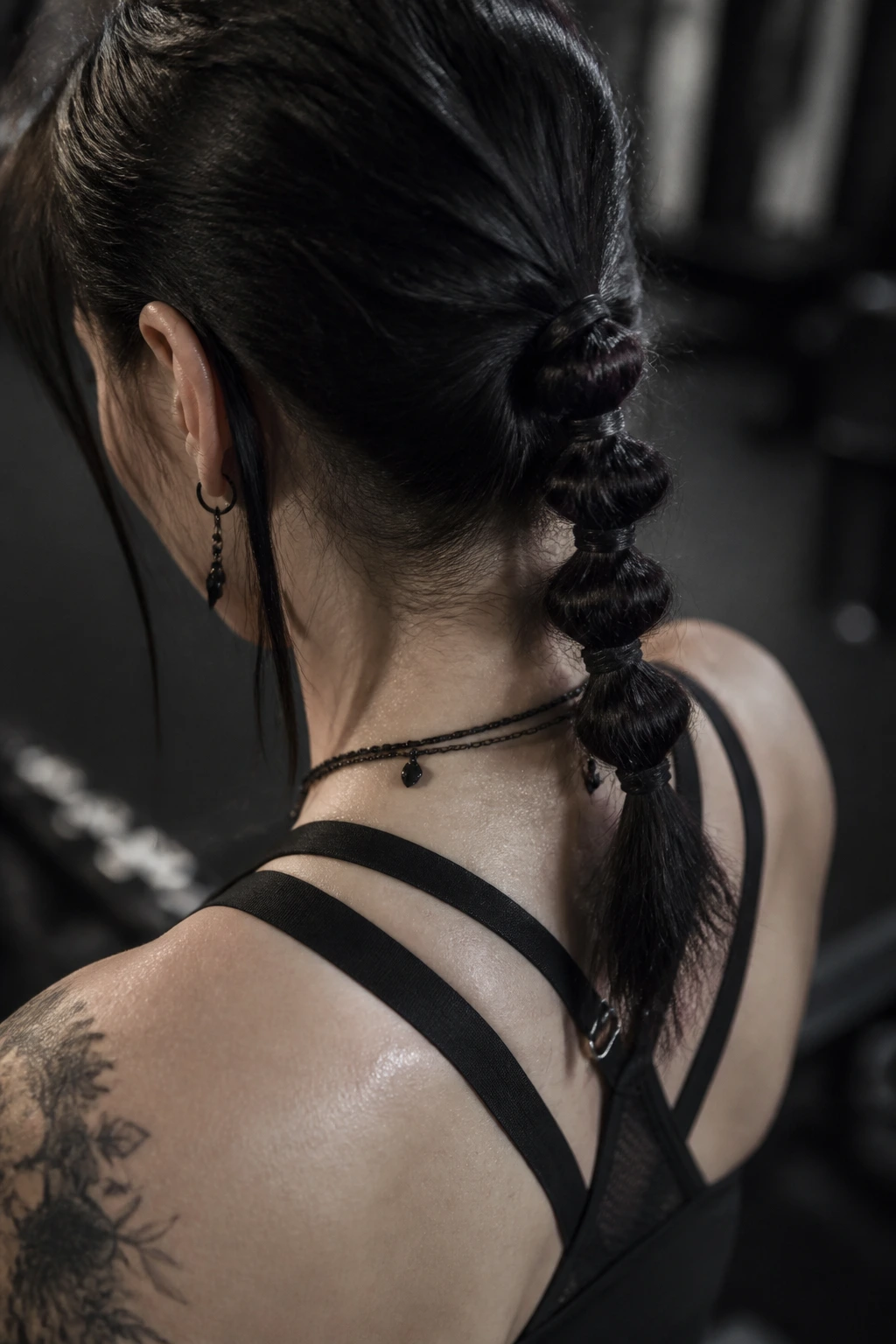
For a quick and effective style, partition your hair at the nape of the neck into two sections and tie them in a literal knot. Repeat this until you run out of hair and secure the bottom with an elastic. It looks like a complex weaving of hair, but it takes less than thirty seconds to do.
Why Knots Stay Put
The friction created by the hair knots acts as a natural lock. Unlike a braid, which relies on the tension of the plait, a knot relies on the physical structure of the hair wrapped around itself. This makes it an incredibly robust style for endurance activities where you don’t have time to stop and fix your hair.
Personalizing the Look
You can add small dark charms or metal rings to the “nooks” of the knots. These sit securely within the structure of the hair and won’t fly off during movement. It’s a subtle, creative way to lean into the goth aesthetic without needing expensive hair accessories.
20. Double Dutch-Braided Pigtails
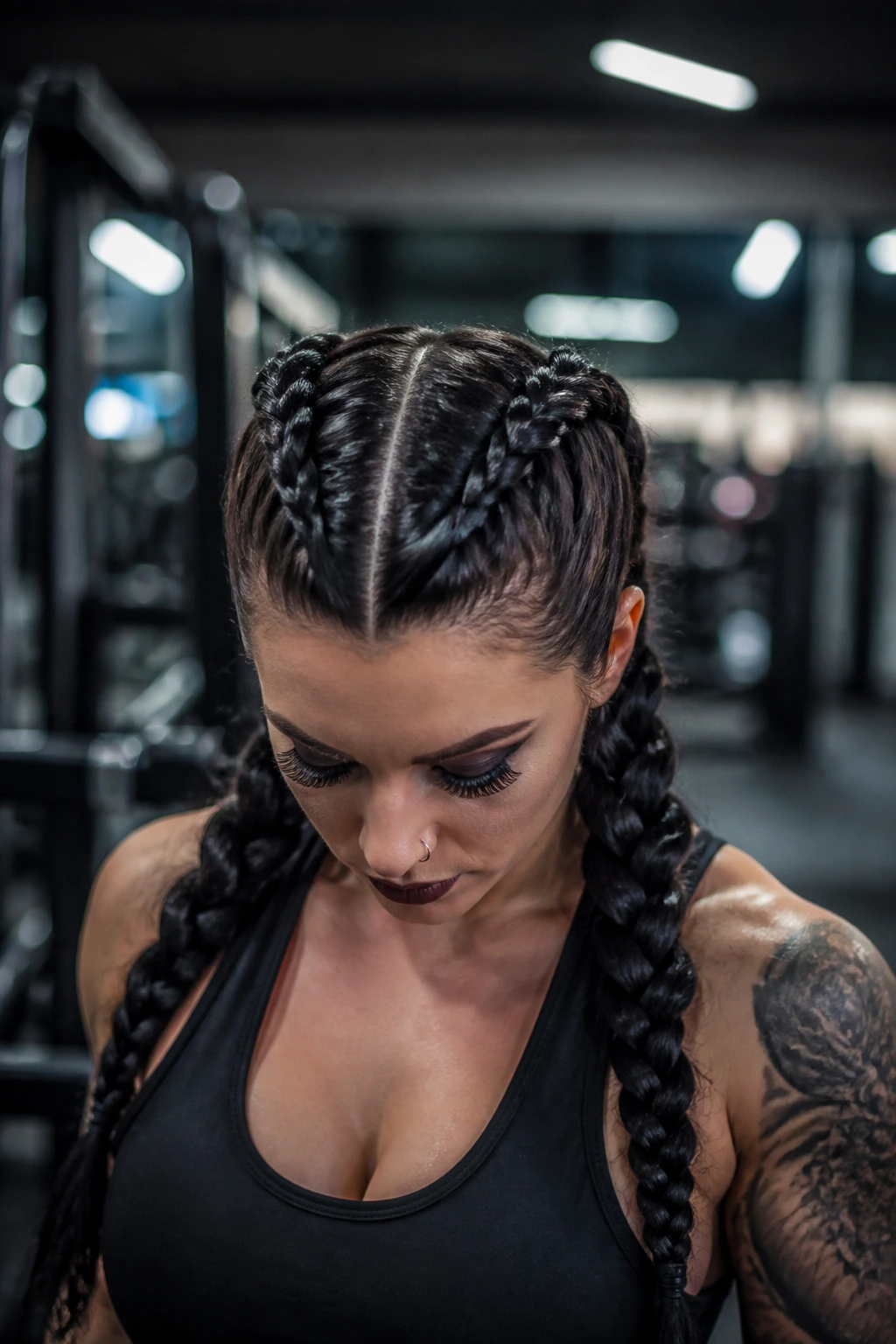
Pigtails are often dismissed as childish, but Dutch-braided pigtails are a staple in high-performance sports for a reason: they are arguably the most secure hairstyle you can choose. By keeping the tension tight against the scalp, you effectively “glue” the hair to your head, ensuring it doesn’t move regardless of your activity.
The Power of Dutch Braiding
Dutch braiding involves crossing the sections under rather than over. This makes the braid sit on top of the hair, giving it a much more pronounced, textured appearance. It is an ideal look for gothic styling because the braid becomes a dominant part of your silhouette.
Tips for Success
- Keep your head tilted downward while braiding; this ensures the braid is tight at the nape of the neck.
- If you have trouble seeing what you are doing, braid in front of a mirror and verify the tension every two inches.
- Don’t be afraid to pull the braid tight. You want it to feel slightly firm against the scalp; that’s what provides the long-term hold during movement.
21. The Crown Twist with Hidden Elastic
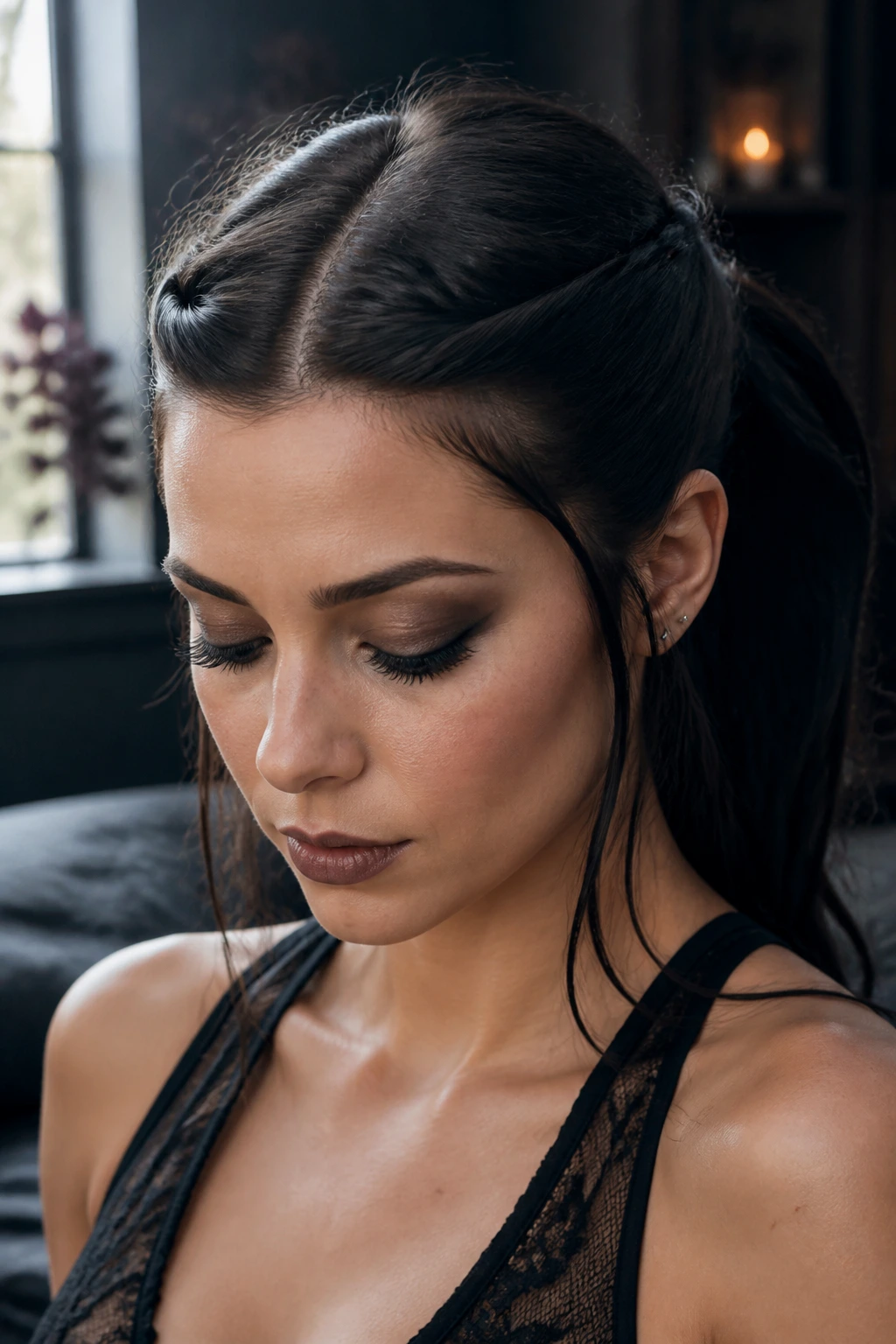
This is a simpler version of the crown braid. Simply take two front sections, twist them loosely, and bring them back to the center of your head. Secure them with an elastic, then tuck the end of the ponytail back through the loop you just created. It looks elegant, moody, and stays tucked away for the duration of your workout.
Why It Works for Beginners
If you aren’t an expert at braiding, this is a lifesaver. The twisting motion is intuitive, and the tuck-through step provides a much more secure hold than just pinning the hair back. It creates a “lived-in,” slightly romantic look that holds up well for moderate cardio or strength training.
Adding Gothic Detail
You can make this look much more intense by adding dark ribbon to the twist. The contrast of the ribbon against your hair, especially if it’s a deep blood-red or dark plum, provides that fairy-tale aesthetic you’re looking for, all while keeping your hair anchored to your head.
22. The Wrapped Fishtail Pony
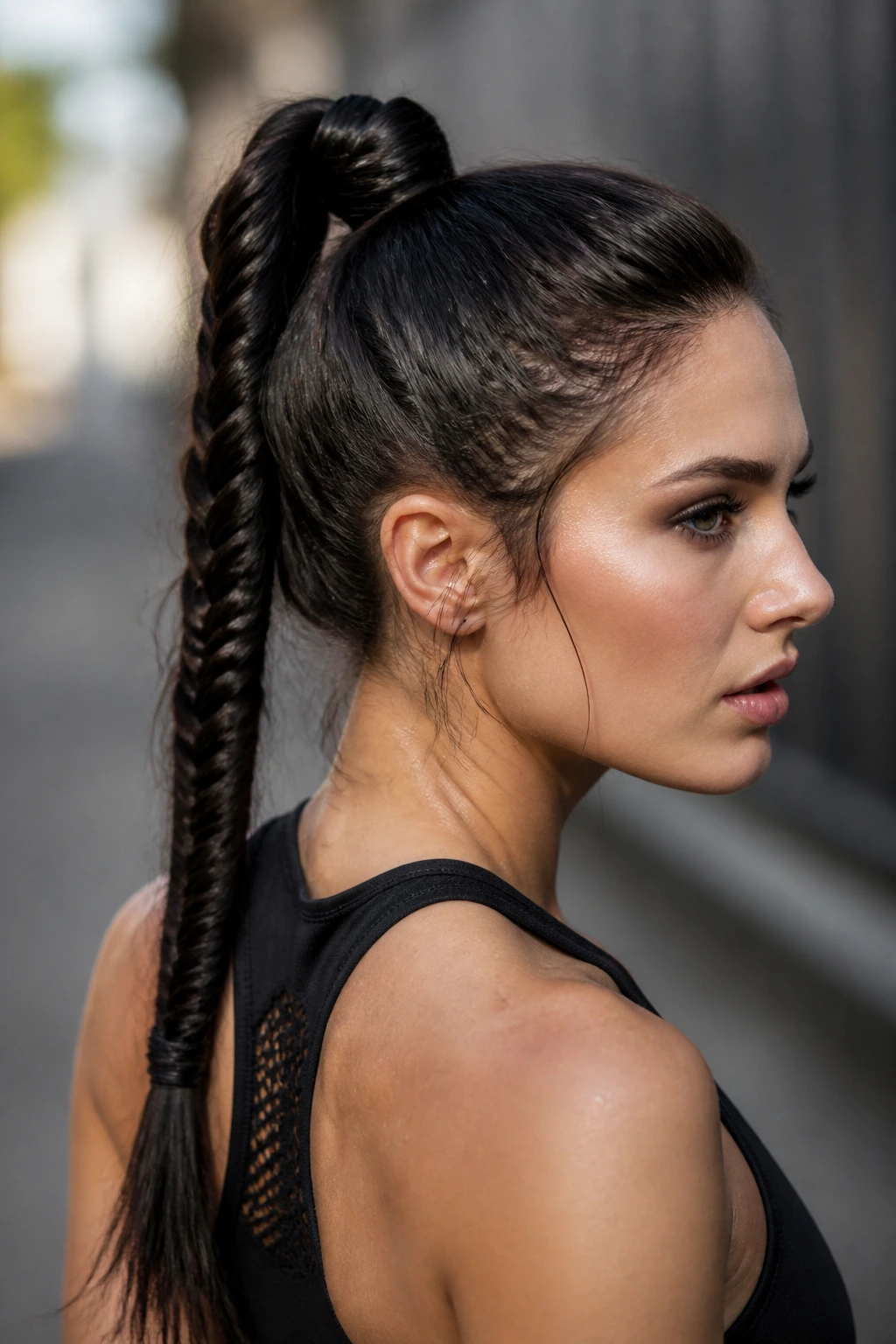
Combine the durability of a high ponytail with the visual complexity of a fishtail braid. Put your hair into a high ponytail, then fishtail the length. Wrap the very bottom of the braid around the base of the ponytail holder to create a “looped” effect. It’s a very clean, structured look that emphasizes your profile and keeps your neck free.
The Structural Benefit
Wrapping the braid around the ponytail holder creates a secondary anchor. It pulls the weight of the ponytail closer to your scalp, reducing the bounce that usually happens when you jump or run. It’s a subtle mechanical fix that makes a massive difference in how stable your hair feels during a tough workout.
Final Thoughts
Choosing the right workout hairstyle is about balancing your personal aesthetic with the mechanical needs of your activity. You don’t have to sacrifice your love for the dark and ethereal just to get through a gym session. Whether you prefer the tight structure of a Dutch braid or the artistic flow of a webbed side-part, the key is to use texture sprays, secure elastics, and firm anchoring techniques. Experiment with these 22 styles to see which ones hold up best for your specific training, and don’t be afraid to add those small, gothic-inspired details—like metal cuffs or dark ribbons—that turn a functional gym style into a reflection of your own unique, fairy-like intensity. You’re there to move, after all, and you might as well look powerful doing it.