

You sit in the salon chair, staring at your reflection while the stylist combs through your damp, chest-length hair. If you have a round face shape, you might have felt a lingering sense of hesitation about keeping your length long. There is a common misconception floating around that long hair inevitably drags down a circular face, making it look wider or lacking in structure. This is simply not true. Long hair actually offers an incredible canvas for creating vertical lines, framing features, and adding the illusion of height and structure where you want it most.
The secret lies entirely in how the weight is distributed. A round face is characterized by soft, symmetrical curves, where the width of your cheekbones is roughly equal to the length of your face. When you leave your hair long and uniform in length, the weight pulls everything down flat against the scalp, which can unintentionally emphasize the widest part of your cheeks. To make round face hairstyles long look incredibly flattering, you have to break up that symmetry. You need angles, movement, and a strategic play of light and shadow.
By introducing elements like tapered face-framing pieces, deep parts, or strategically placed internal layers, you can visually stretch your face shape. The goal is not to hide your face behind a curtain of hair, but to use the length to create beautiful vertical panels that guide the eye up and down. Let us break down the absolute best long hairstyles for round faces, showing you exactly how they work, how to style them, and what to ask for at your next salon visit.
1. Long Choppy Layers with a Deep Side Part
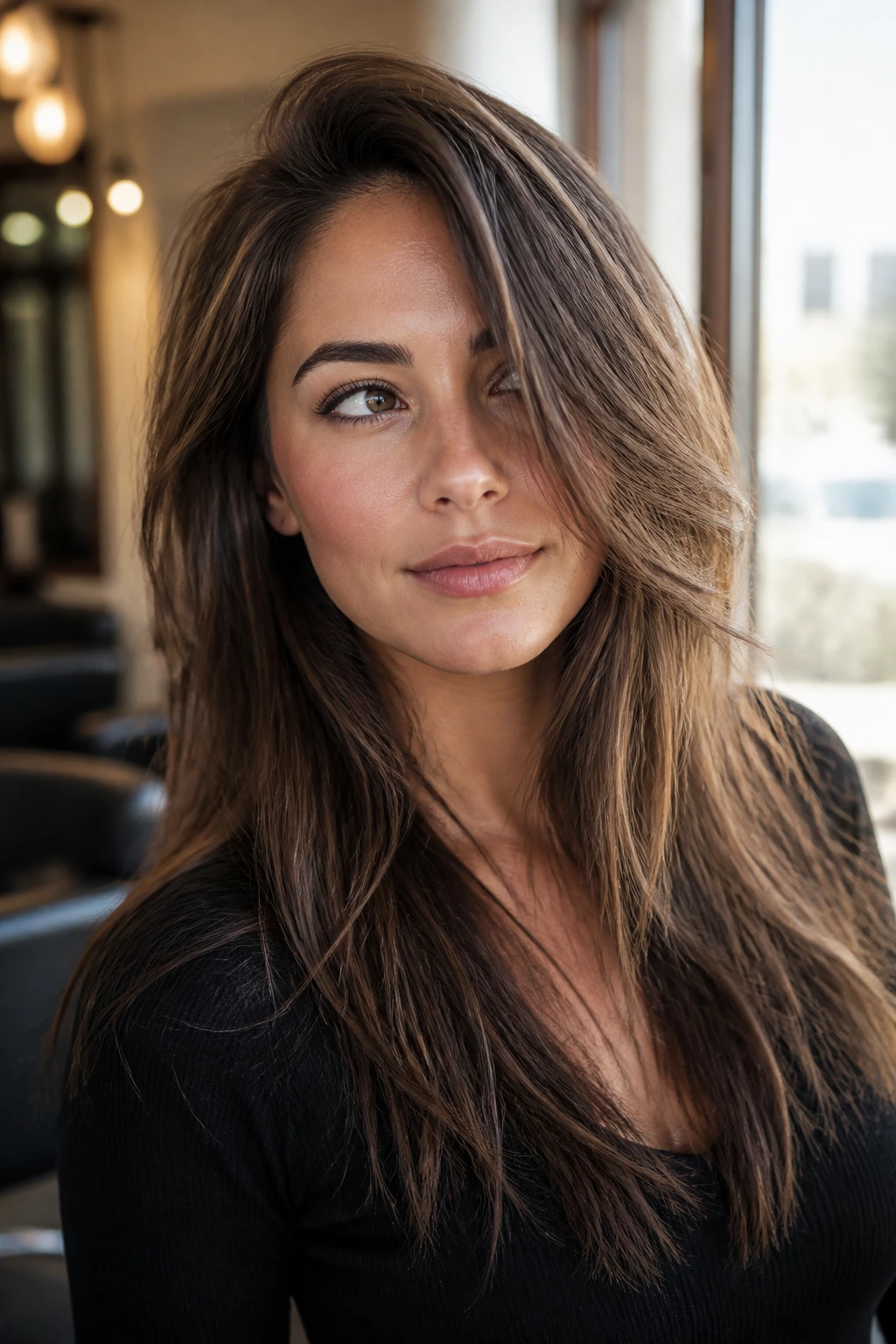
A deep side part is one of the easiest ways to instantly disrupt the symmetry of a round face. When you pair this parting style with long, choppy layers, you create a dynamic look that shifts the focus of your face diagonal. The heavy side-sweep creates a diagonal line across your forehead, which immediately breaks up the circular silhouette and gives the illusion of a longer, more oval shape.
Why This Cut Works to Elongate
Choppy layers are cut with a slide-cutting or point-cutting technique rather than a straight blunt slice. This leaves the ends textured and airy, preventing a heavy buildup of hair around your collarbone. By starting the shortest choppy layers just below the jawline, you create a downward-sweeping path that draws attention away from the fullness of the cheeks.
Quick Hair Facts and Mechanics
- Best hair density: Medium to thick hair that can support textured, choppy ends without looking sparse.
- Ideal styling tool: A medium-sized flat iron or a 1.25-inch curling wand to bend the layers away from your face.
- Maintenance level: Low to medium; you only need a trim every eight to ten weeks to keep the layers piecey.
- Key product: A dry texturizing spray to add volume at the roots on the deeper side of the part.
Pro tip: When styling your deep side part, blow-dry the root area in the opposite direction of where you want the hair to lay first, then flip it over to create natural, long-lasting lift without using heavy styling products.
2. Middle-Parted Curtain Bangs with Seamless Face-Framing
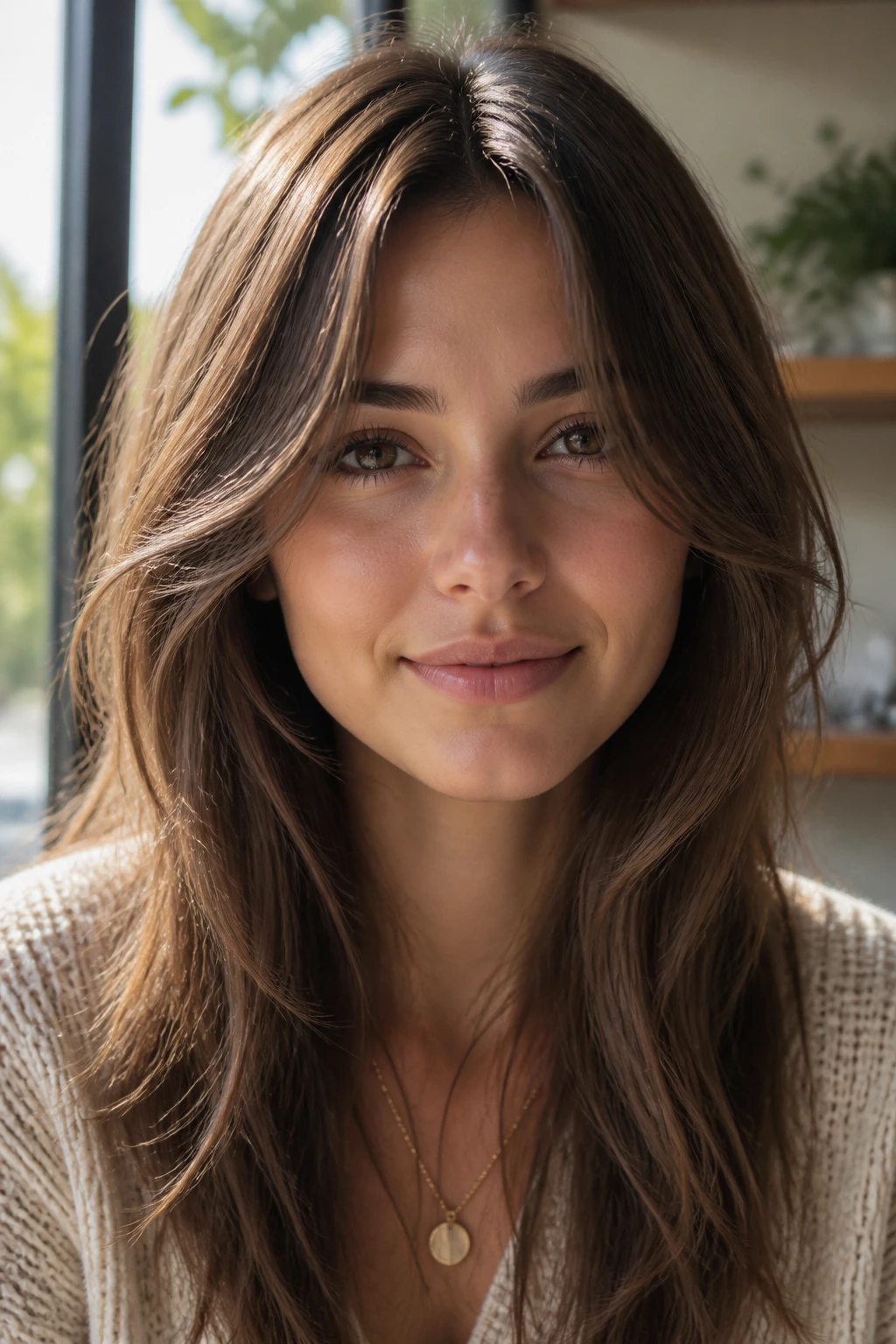
Curtain bangs are a classic style that works beautifully on long hair, especially for those with rounder facial features. Unlike straight-across bangs, which cut your face in half and make it look wider, curtain bangs split down the center and sweep outward. This sweep creates an inverted “V” shape at your forehead. This open shape visually elongates your face by exposing the center of your forehead while softly draping over the sides of your cheekbones.
The key to making curtain bangs work on long hair is ensuring they blend seamlessly into the rest of your lengths. The shortest part of the bang should start around the tip of your nose, curving gently outward and downward until it meets your longer layers around the collarbone. This creates a vertical border that frames your face, slimming the outer edges of your cheeks while showing off your chin and smile.
When styling this look, avoid curling the bangs too tightly inward, as this can create a round shape that mimics the very curves you want to balance. Instead, use a large round brush to blow-dry the bangs backward, away from your face. This creates a soft, wind-blown wave that opens up your eyes and keeps the volume focused at the top and back rather than at the sides.
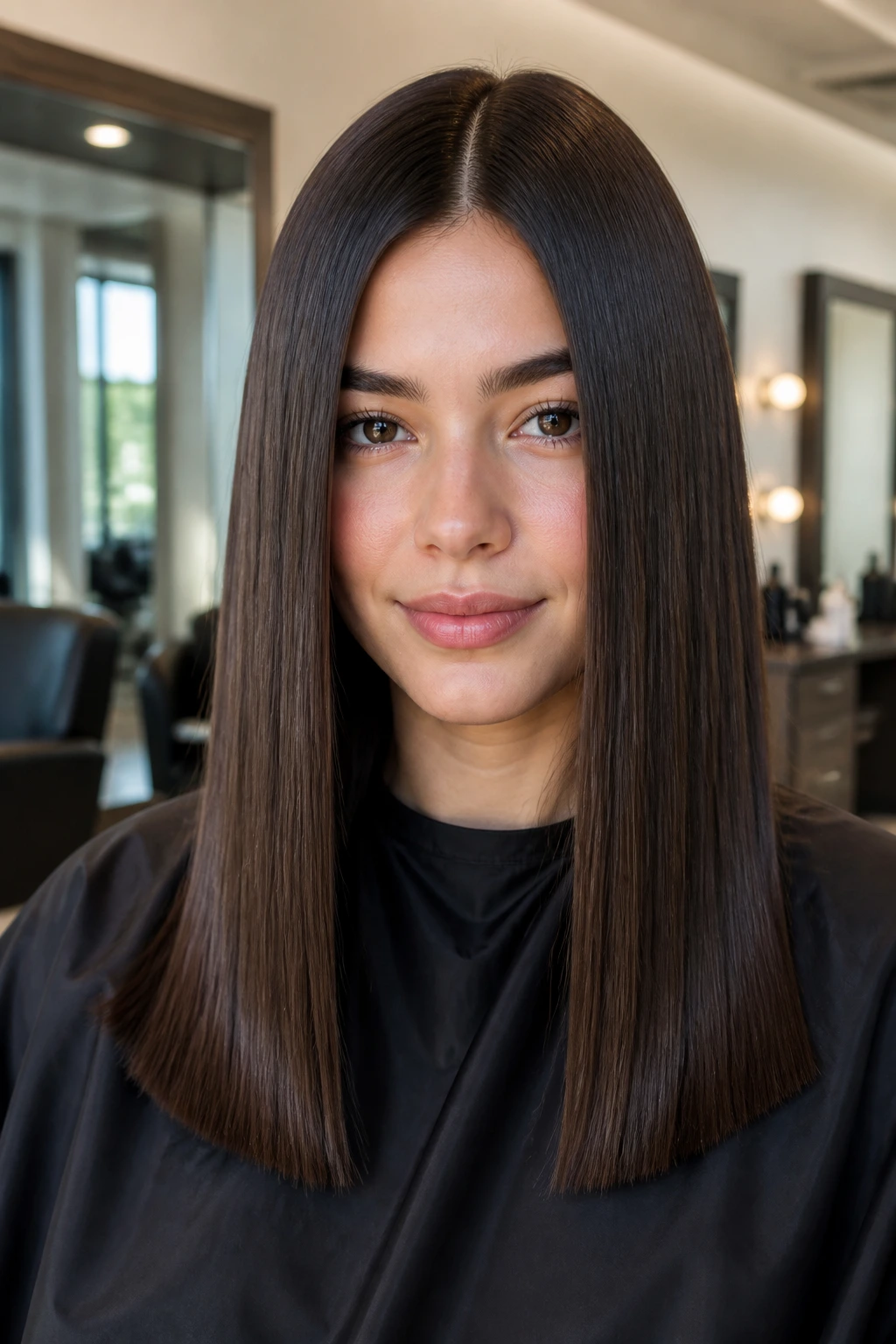
3. The Sleek Straight Cut with Blunt Ends
Why does a ultra-straight style work on a round face?
Many people assume that straight hair makes a round face look rounder, but the opposite is true when the style is executed with precision. Extremely straight, long hair acts like two vertical columns on either side of your face. These vertical lines create a strong frame that visually clips the sides of your face, making the overall silhouette appear narrower and more balanced.
How to Style and Wear This Sleek Look
To get this glass-like finish, start by applying a heat-protecting smoothing cream to damp hair. Blow-dry your hair downward using a paddle brush to keep the cuticle lying as flat as possible. Once dry, use a high-quality flat iron with ceramic plates to straighten your hair in small, horizontal sections.
Styling Elements to Keep in Mind
- The Part: A sharp, clean center part works best here, as it divides the face into two equal, narrow columns.
- The Ends: Keep the ends cut bluntly; a crisp, horizontal line at the very bottom provides a solid anchor that pulls the eyes downward.
- The Shine: Use a lightweight laminating serum or hair oil on the bottom half of your hair to maximize light reflection and emphasize the straight lines.
4. Textured Shag with Long Wispy Fringe
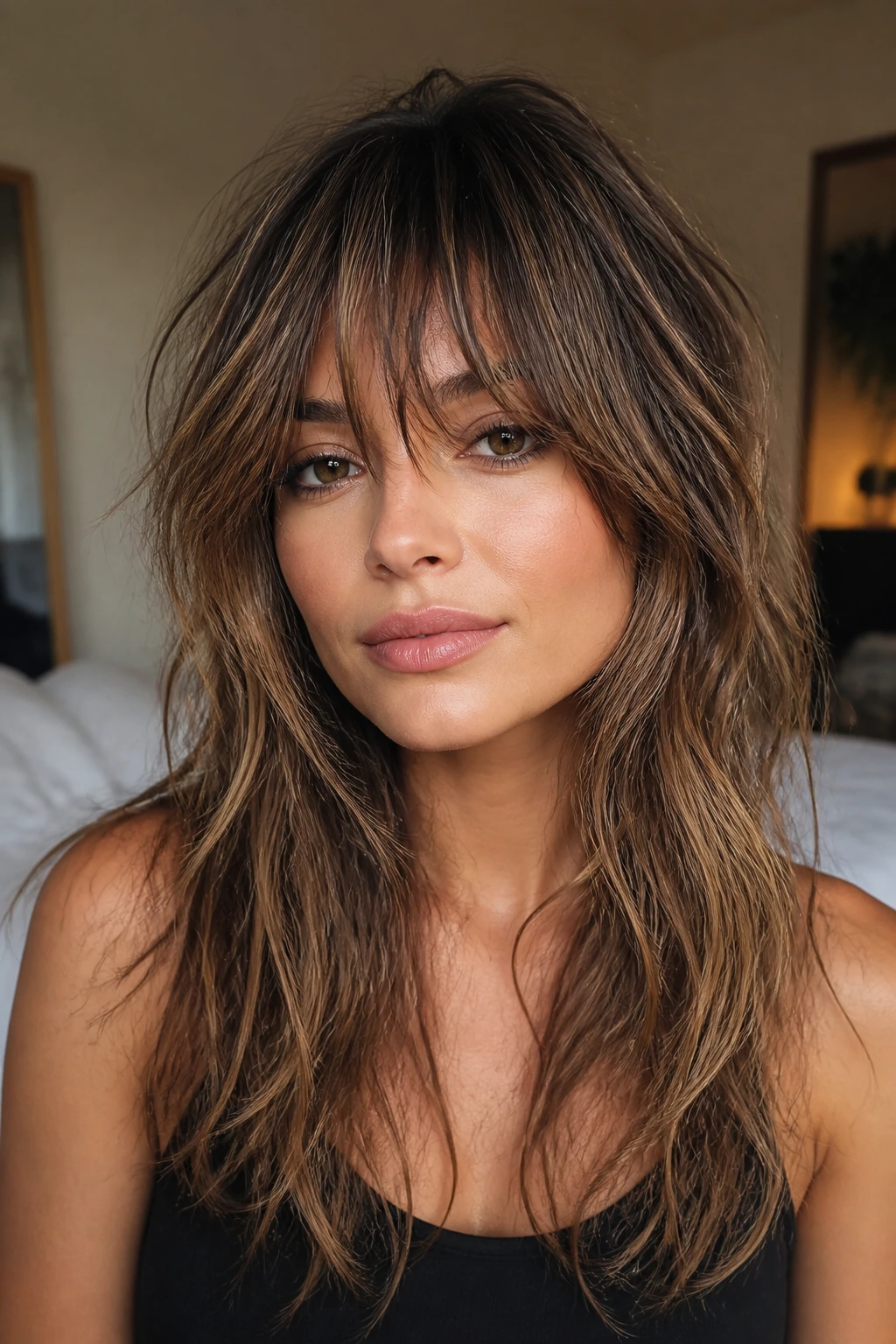
A shag is all about texture, crown volume, and messy movement. If you want a style that feels incredibly lived-in and effortless, a long shag is a wonderful option. The shag works for a round face because it concentrates the volume at the top of your head, near the crown, while keeping the sides relatively flat and shaggy. This vertical height helps to stretch your facial structure upward.
The Science Behind Shaggy Volumizing
By cutting shorter, highly textured layers throughout the top and middle sections of your hair, the weight is lifted from your scalp. This allows your natural waves or curls to bounce upward, creating height. The lower portions of your hair remain long and thin, which avoids adding bulk around your neck and jaw.
Key Structural Details
- The Fringe: Soft, wispy bangs that are slightly longer on the outer temples help to blend the crown layers into the long sides.
- Internal Thinning: Your stylist should use texturizing shears to carve out weight from the sides of your head, keeping the profile narrow.
- Air-Dry Friendly: This cut works exceptionally well with your natural texture, requiring minimal heat styling.
- Recommended Length: Keep the overall length past your collarbones to maintain a long, vertical line.
No matter your hair texture, a shag is incredibly forgiving and requires very little morning maintenance, making it a dream for anyone with a busy schedule.
5. Voluminous Crown Blowout with Soft Waves
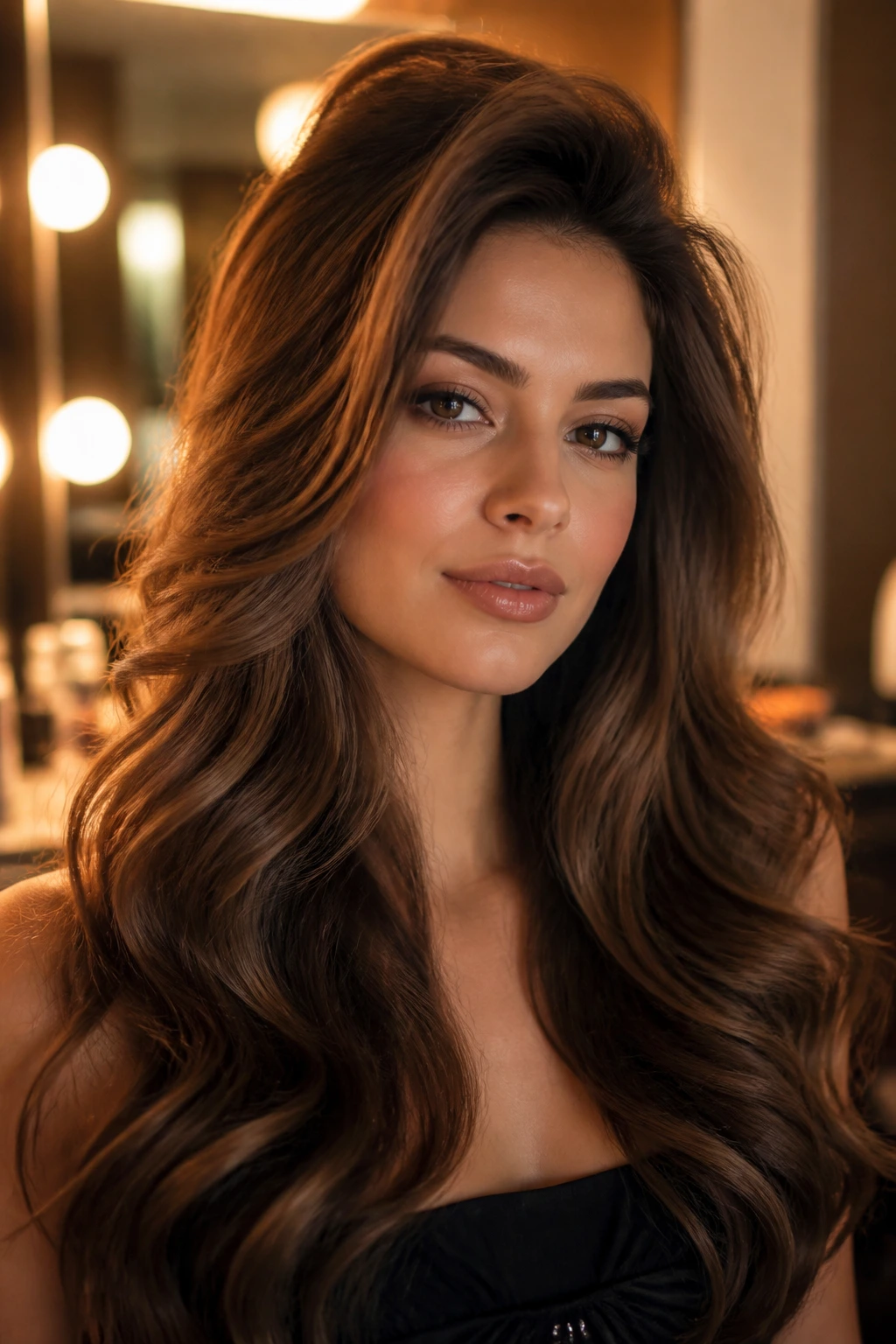
This style is all about channeled, classic glamour. Think of the big, bouncy blowouts that feel timeless and full of life. By focusing the lift and volume at the root of your hair—specifically around the crown and top of the head—you create the illusion of a longer skull structure, which naturally balances a round jawline.
To achieve this, you need to use a high-quality volumizing mousse on damp roots before blow-drying. Work with a large, two-inch ceramic round brush, pulling each section of hair straight up toward the ceiling as you apply heat. Once a section is dry, roll it down and clip it into a pin curl, allowing it to cool completely before releasing. This cooling phase is what locks in the height and prevents your hair from falling flat an hour after you finish.
The waves themselves should be soft and loose, tumbling down past your shoulders. It is critical that these waves do not start bubbling outward at your cheeks. Keep the hair closest to your cheekbones relatively smooth, letting the waves cascade and blossom from the collarbone downward. This ensures the widest part of your face is flanked by clean, vertical lines, while the ends enjoy all the drama of the bounce.
6. Asymmetrical Long Bob (Lob) with Angled Layers
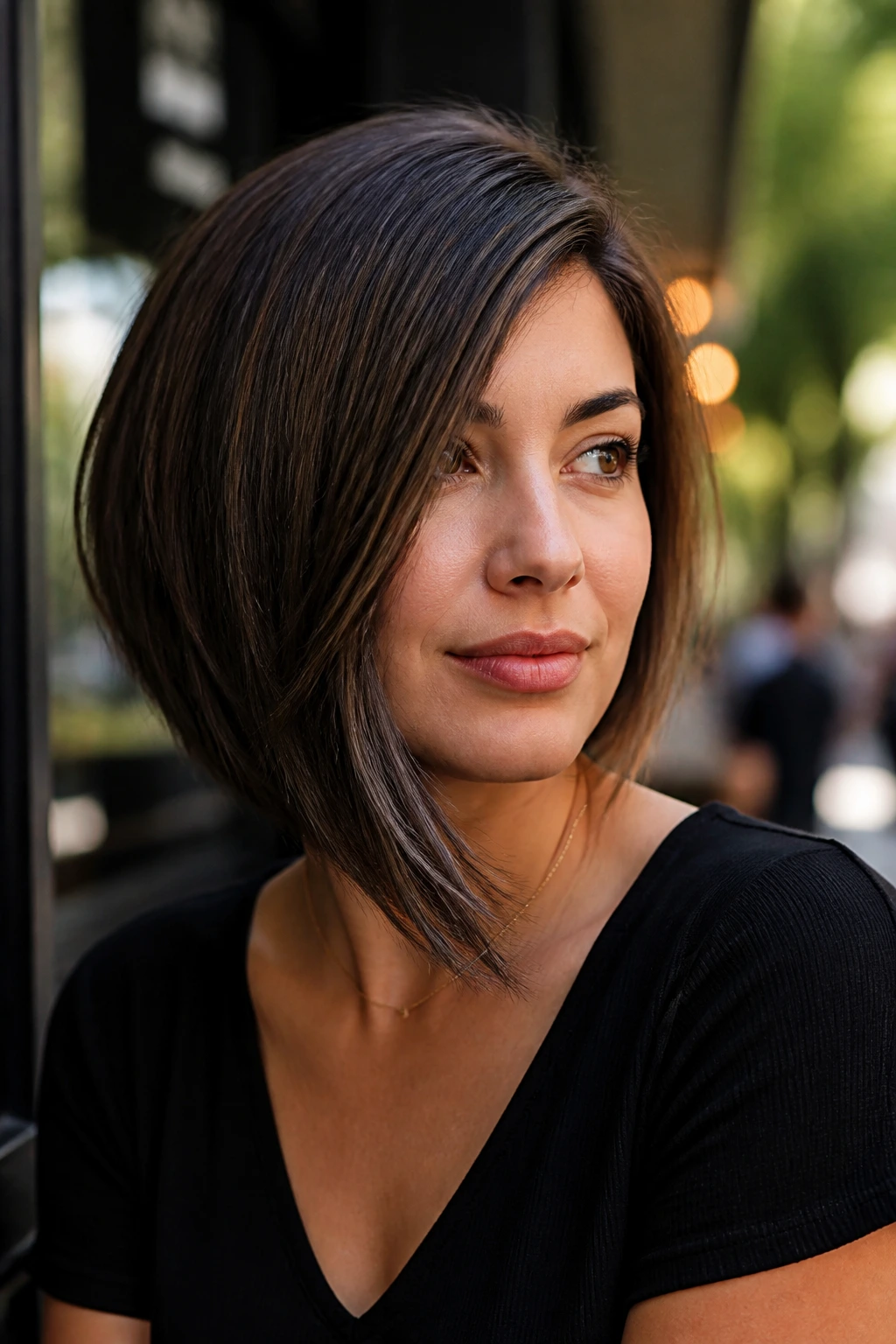
How This Slanted Cut Redefines Your Jawline
The asymmetrical long bob—or “lob”—is a gorgeous compromise for someone who wants the illusion of great length but prefers a structured, modern cut. By keeping one side significantly longer than the other, you create an uneven line that keeps the eye moving. This asymmetry breaks up the roundness of your face, making your features appear more defined and your neck longer.
What Makes It Different From a Traditional Lob
Unlike a standard bob that sits straight across your shoulders, the angled asymmetrical lob is cut shorter in the back and slopes down toward the front. The longer front pieces should fall well past your collarbone to ensure it counts as a long style.
This dramatic angle draws a sharp diagonal line along your jaw, cutting through the soft curves of a round face. It is a fantastic option for someone with fine or medium hair density, as the structured perimeter of the cut makes the hair look thicker and healthier without requiring a massive number of layers.
7. Gently Tousled Mermaid Waves with a Center Part
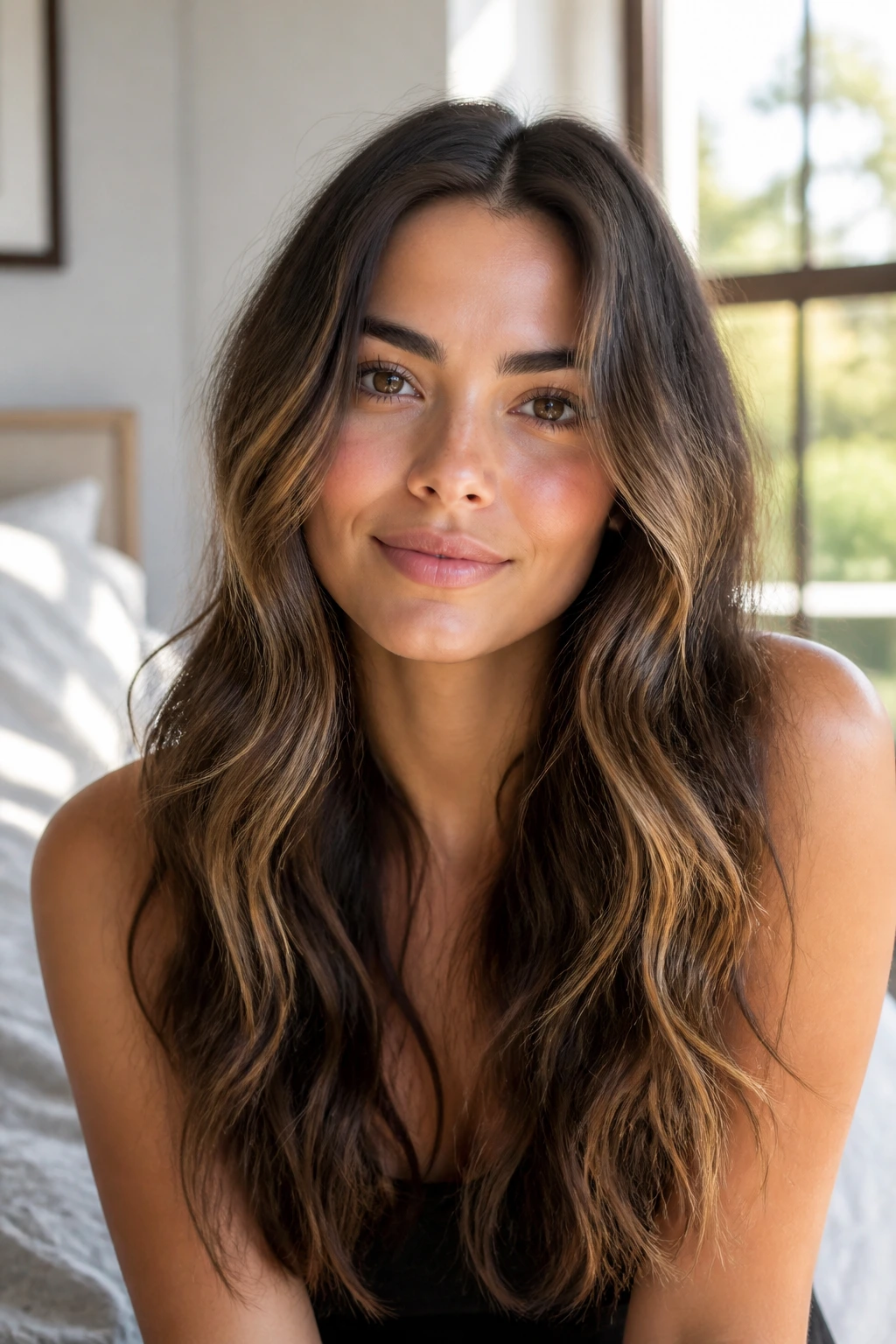
There is something incredibly beautiful about long, undone waves that look like you just stepped off a beach. If you love a bohemian, relaxed aesthetic, mermaid waves are an excellent choice for a round face, provided you set the part down the exact middle of your scalp.
The Mechanics of Elongating with Waves
To prevent mermaid waves from adding unwanted width to the sides of your face, the waves must be flat at the roots and through the temple area. You want the texture to start roughly level with your jawline. This draws the eye down the length of your hair, keeping the upper portion of your face clean and narrow.
Quick Styling Steps and Tips
- Prep: Apply a light sea salt spray or wave enhancer to damp hair from the ears down.
- Technique: Use a three-barrel waver tool, holding it horizontally. Start crimping at jaw level, leaving the top section smooth.
- The Part: Use a metal rat-tail comb to create a perfectly straight center part, splitting your hair evenly.
- The Finish: Shake out the waves with your fingers and apply a drop of styling oil to keep the ends looking healthy.
Pro tip: Avoid using heavy gels or waxes for this style, as they can weigh down the top of your hair, making it look greasy and flat, which highlights facial roundness.
8. Wispy See-Through Bangs with Long Interior Tiers
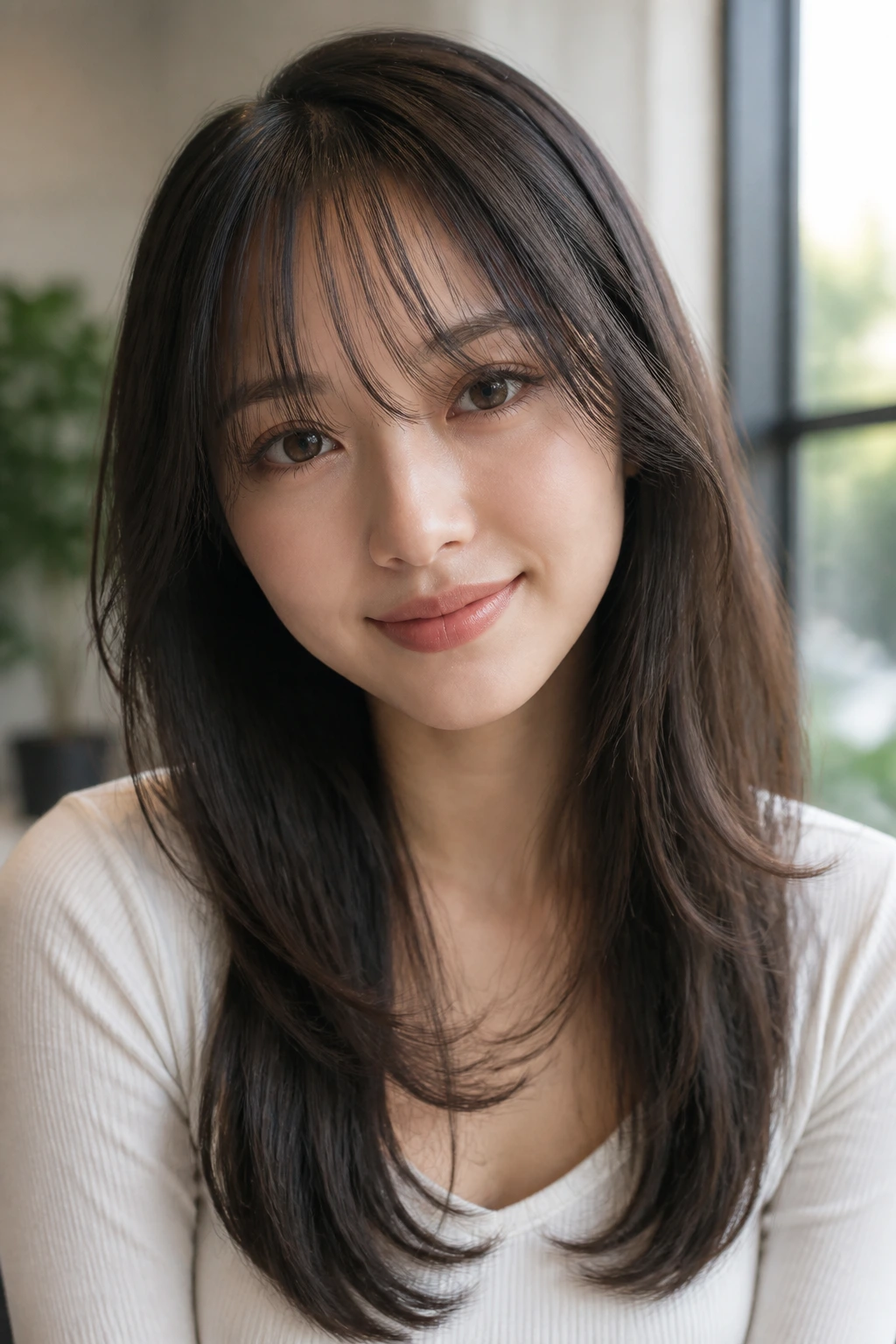
If you have ever been told that round faces cannot wear bangs, you have been given poor advice. While heavy, blunt bangs can overwhelm a round face, wispy, see-through bangs do the exact opposite. These bangs are cut so thinly that your forehead is still visible beneath them. This creates a soft vertical window that lets light through, preserving the natural length of your face.
By pairing these airy bangs with long, interior tiers, you get a beautiful balance of movement and length. Interior layering is a technique where the stylist cuts shorter pieces inside the bulk of the hair rather than on the surface. This removes weight from the interior, allowing the hair to swing and move naturally around your shoulders without expanding outward.
To style this, use your fingers to blow-dry your bangs back and forth, ensuring they do not clump together. Let the rest of your hair air-dry or give it a quick pass with a blow-dryer for a soft, natural finish. The result is an incredibly wearable, effortless style that softens your features while keeping your face looking beautifully elongated.
9. Deep Side-Swept Bangs with Cascading Spiral Curls
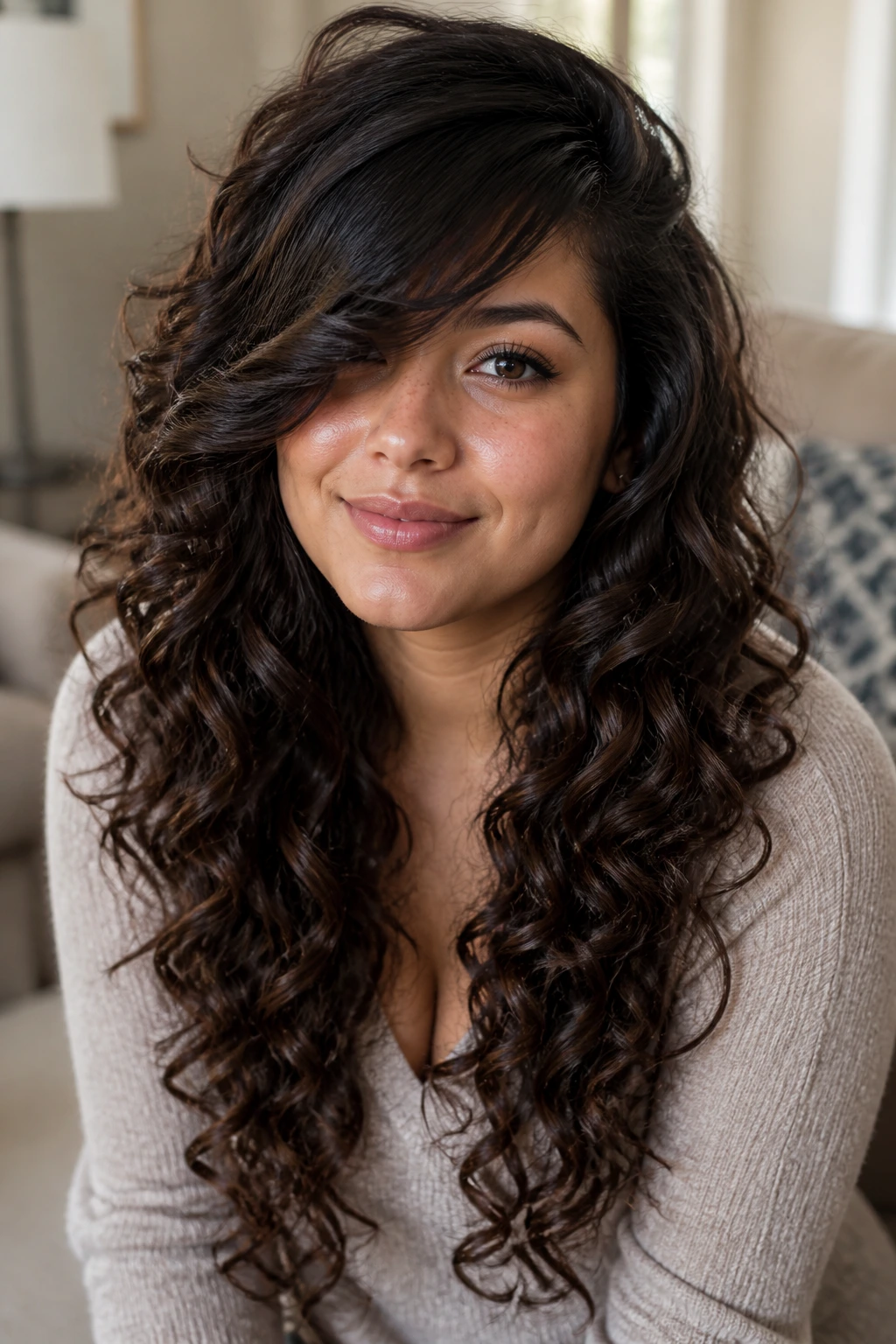
Can you wear big curls with a round face shape?
Many people with natural curls feel pressured to straighten their hair to avoid making their face look wider. However, natural texture is incredibly flattering when cut with the right shape. By introducing deep, side-swept bangs that cross over your forehead, you create a beautiful focal point that breaks up the symmetry of your curls and your face.
The Secret to Cutting Curls for a Round Face
The key to this style is a technique called dry carving. Your stylist should cut your curls while they are dry and in their natural state, ensuring that each curl pattern is respected.
Styling Rules for Ringlets
- Side-Swept Bang: The bangs should be cut on a diagonal, falling gently over one eye before blending into the longer side.
- Avoid the “Triangle” Shape: The layers must be cut in a way that avoids a wide pyramid shape. The hair should be layered closer to the head at the temples and expand lower down.
- Diffusing: When drying with a diffuser, tilt your head forward to get volume at the roots, rather than tilting side-to-side, which can create too much volume at the cheekbones.
10. The Classic 90s Butterfly Cut with Bouncy Tiers
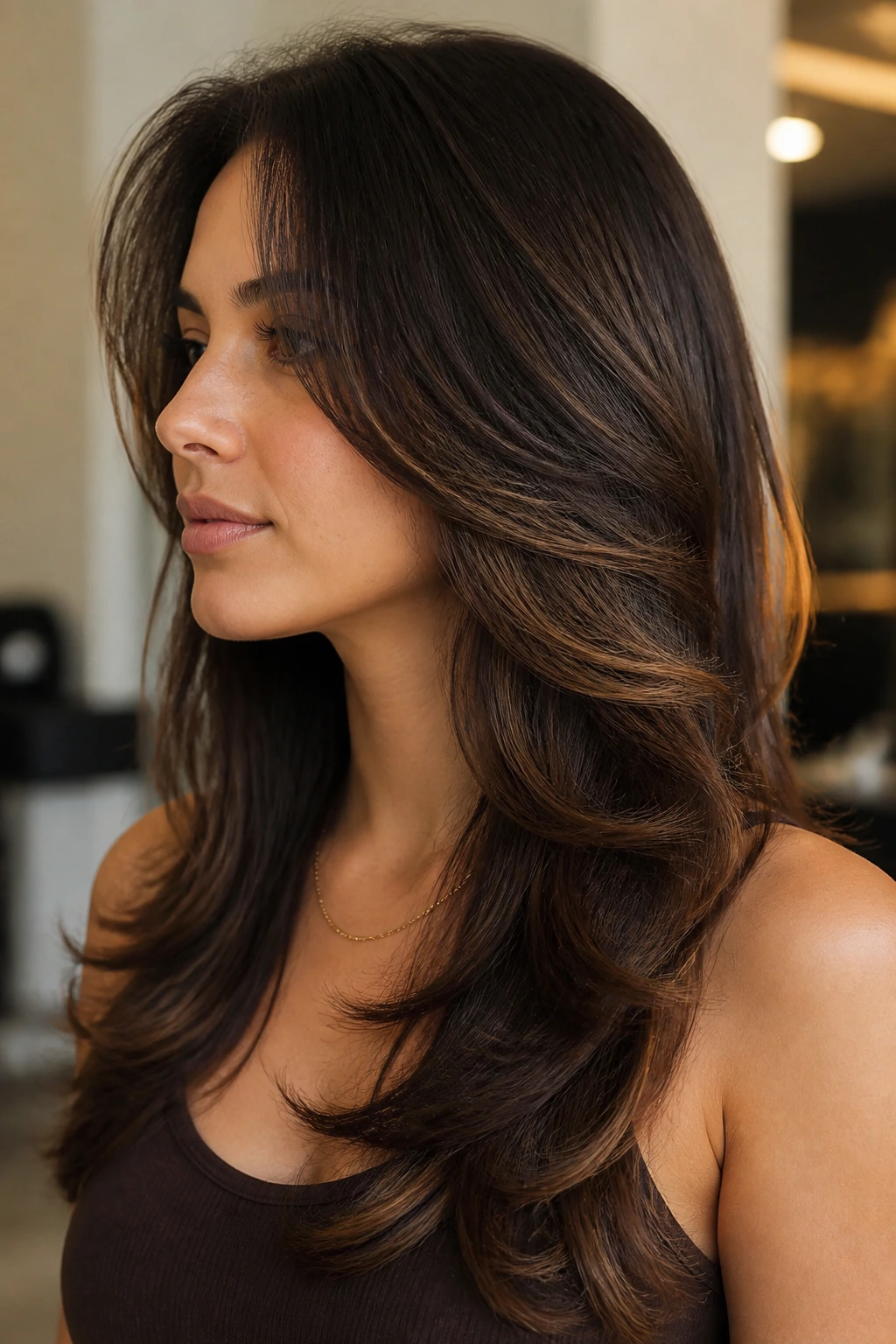
The butterfly cut has taken the world by storm, and it is easy to see why. This style features a dramatic contrast between short, voluminous layers on top and long, cascading layers underneath. It is called the “butterfly” because the shorter layers wing out around the face, creating a soft, fluttering movement that is highly customizable.
This cut is exceptionally flattering for a round face because the shortest layer is typically cut to chin length. This creates an immediate visual anchor point, defining your jawline and framing your chin. The longer tiers sweep down past your chest, giving you all the drama of long hair while the top layers keep things light, airy, and full of bounce.
To style the butterfly cut, you will want to use a large round brush or a hot roller set. Roll the shorter, face-framing layers away from your face to create that signature wing effect, while rolling the lower layers under or out. The incredible volume at the top and chin level helps to break up the circular lines of your cheeks, giving you a gorgeously sculpted look.
11. Feathered Face-Framing Layers Starting Below the Chin
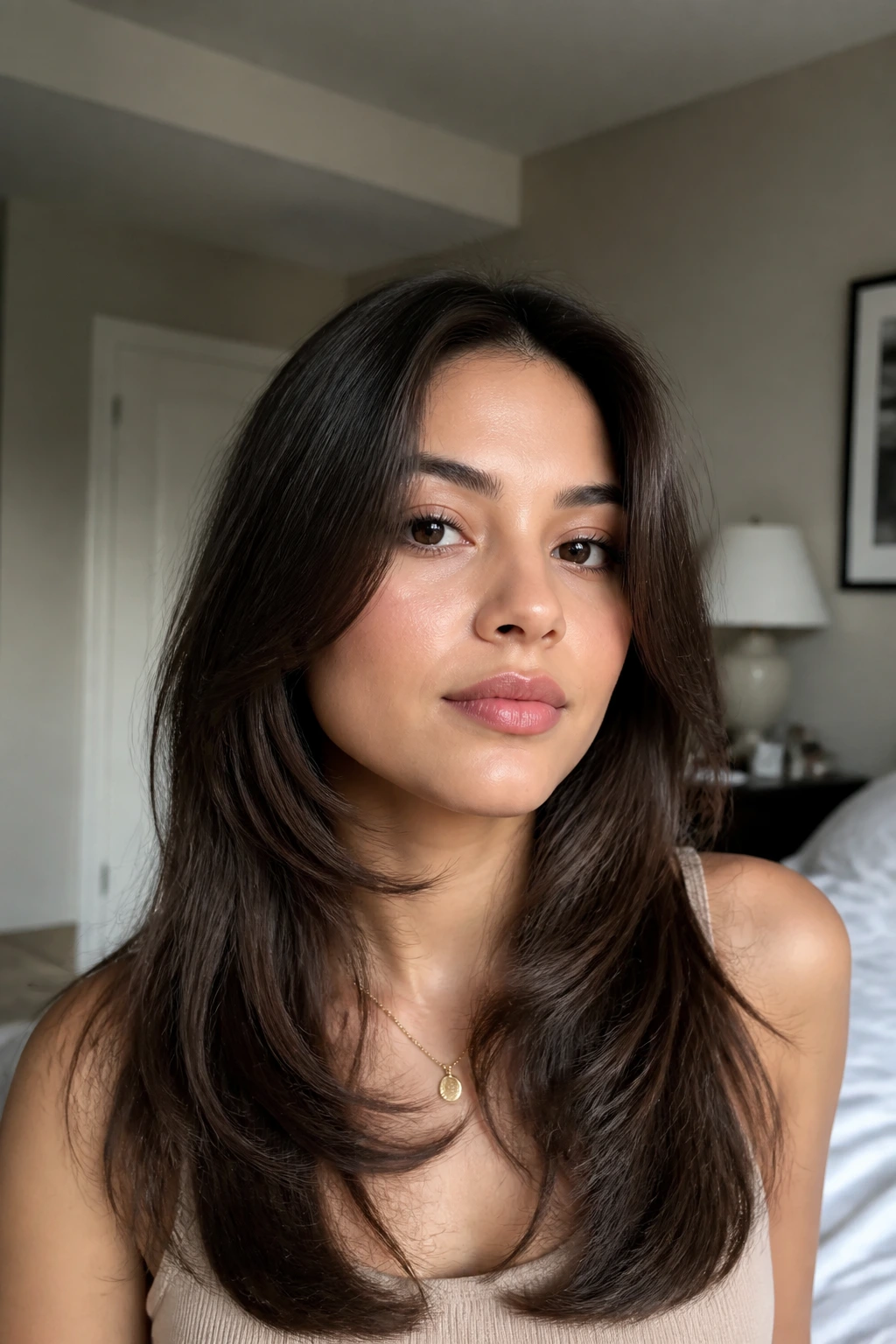
If you prefer a sleek, classic look without the messy texture of a shag or a butterfly cut, feathered face-framing layers are an elegant alternative. This style keeps the bulk of your hair long and uniform, but features delicate, backward-sweeping layers right around the front of your face.
It is absolutely crucial that the first layer starts below the chin. If the shortest layer starts at your cheekbones, it will highlight the widest part of your face. By starting the layers below the chin, you draw the eye downward, visually lengthening your neck and throat.
To style this look, use a medium round brush to blow-dry the front sections backward, rolling the brush away from your nose. This creates a beautiful, feathered effect reminiscent of classic Hollywood styles. The rest of your hair can be worn straight or with a very slight bend at the ends, keeping the overall silhouette clean, elongated, and incredibly sophisticated.
12. Long Invisible Layers for Fine Hair Thickness
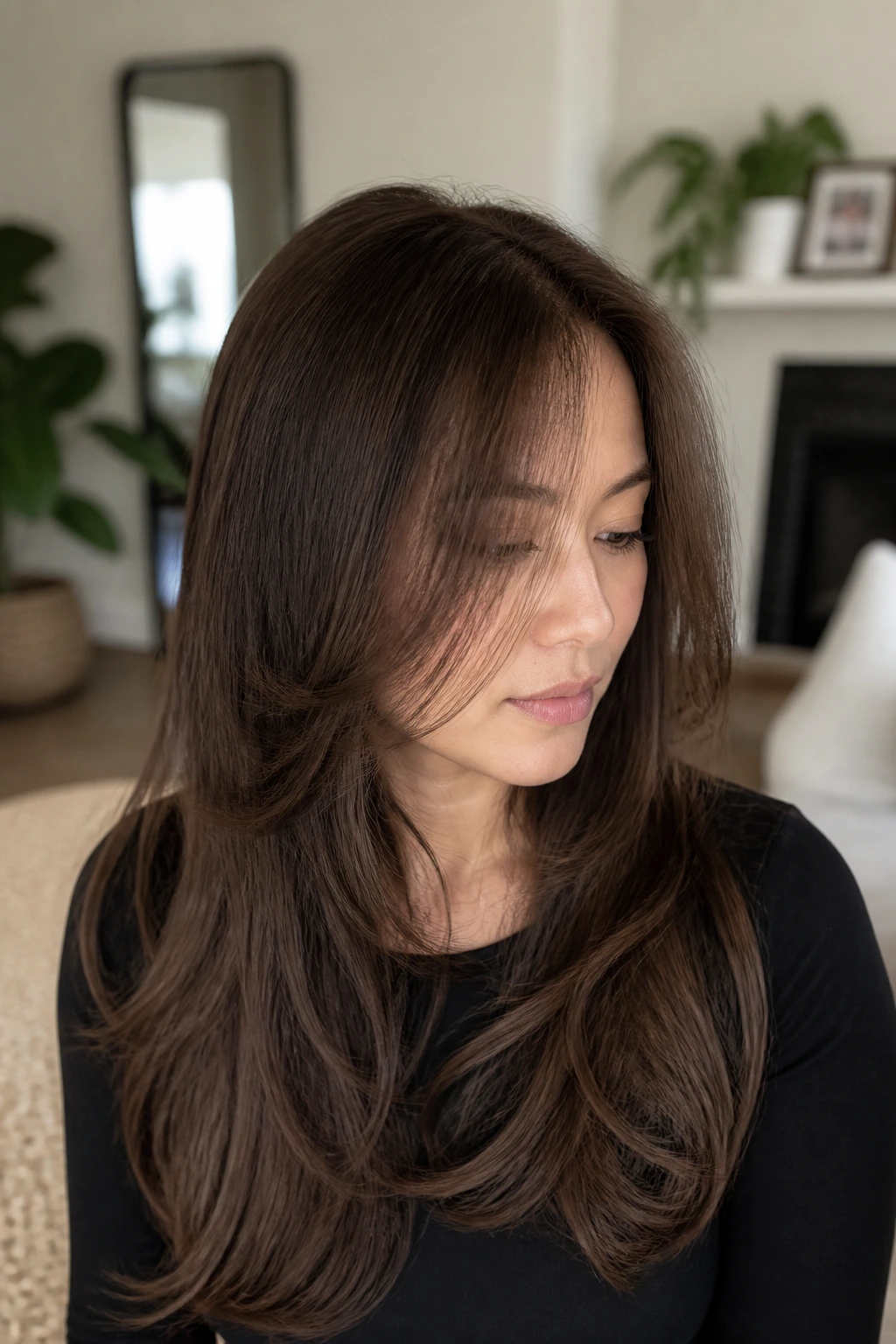
Why invisible layers are a lifesaver for fine hair
If you have fine hair, you might worry that adding layers will make your ends look thin and see-through. This is where invisible layers—also known as ghost layers or internal layers—come into play. This cutting technique involves lifting sections of hair and slide-cutting the interior layers, leaving the top canopy of hair completely solid and uncut.
What Makes This Different From Traditional Layering
Traditional layering is visible on the surface of your hair, which can sometimes create horizontal lines that widen a round face. Invisible layers are hidden underneath, creating a secret support system that lifts your roots and adds movement without sacrificing the blunt, thick appearance of your perimeter.
This interior movement prevents fine hair from clinging to the sides of your head, which can make your face look rounder by comparison. It gives you the volume and swing of a layered cut while keeping your hair looking thick, healthy, and beautifully structured.
13. Angled Front Layers with Bright Money Piece Highlights
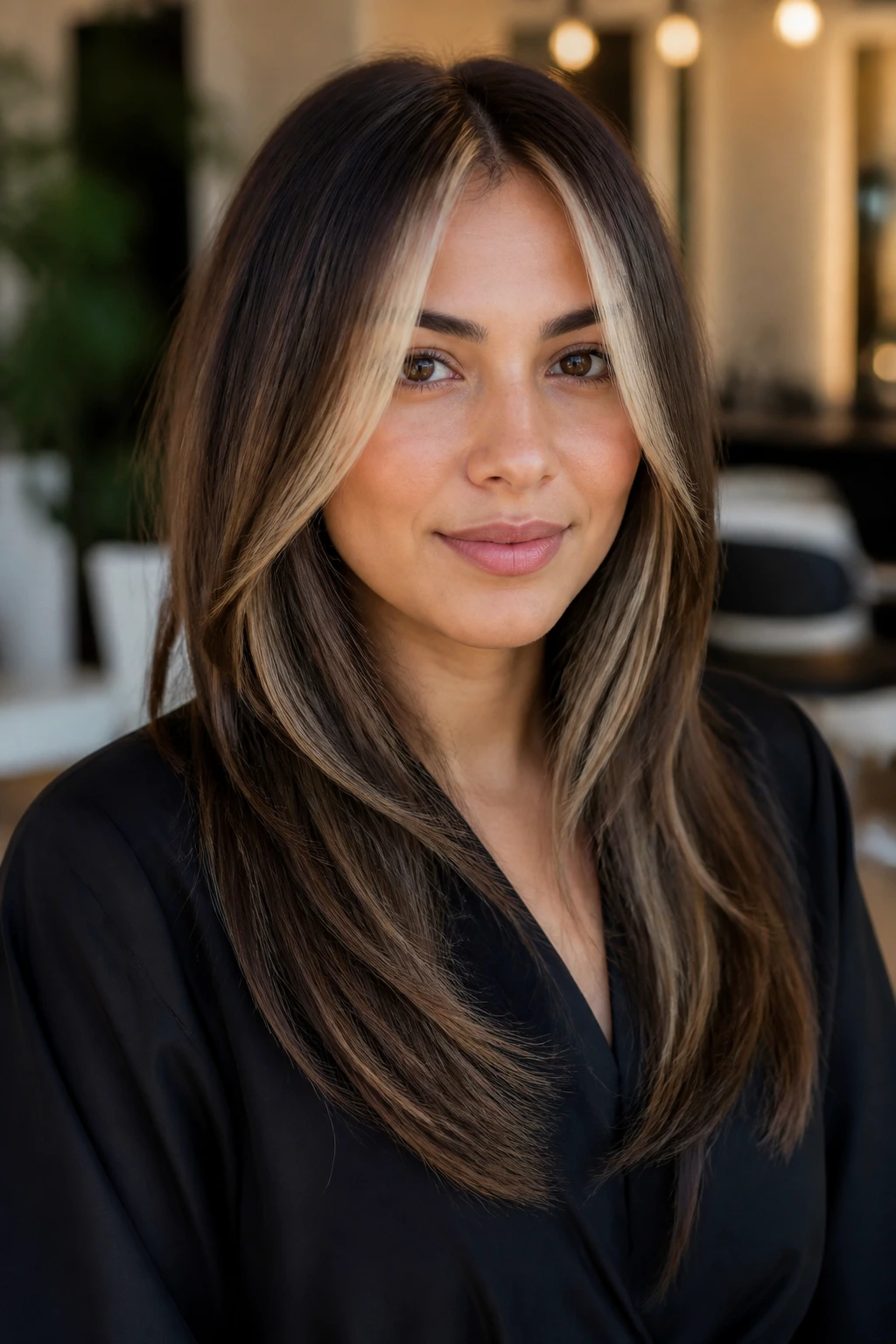
Combining a great haircut with strategic color placement is a brilliant way to sculpt your face shape. This style features long, angled front layers paired with a color technique known as “money pieces”—two bright, highlighted sections of hair right at your hairline.
The Power of Light and Shadow in Hair Styling
The light-colored money pieces draw the eye directly to the center of your face, while the darker, longer layers behind them act as a shadow. This contrast visually slims the sides of your cheeks, creating a gorgeous contouring effect using nothing but hair color.
Quick Styling Tips for Color Contrast
- The Angle: Ensure your front layers slope downward from the chin to the chest, following a clear diagonal line.
- The Color: Keep the highlights one to two shades lighter than your base color for a soft, natural look that isn’t too harsh.
- The Parting: This style looks incredible with a middle part, as it distributes the bright panels evenly on both sides of your face.
- Maintenance: Use a color-safe shampoo and a weekly deep conditioning mask to keep your highlights looking bright and healthy.
Pro tip: When styling, use a flat iron to give the highlighted pieces a very slight outward flick at the jawline, creating a beautiful frame for your lower face.
14. High Half-Up Ponytail with Face-Framing Ribbon Tendrils
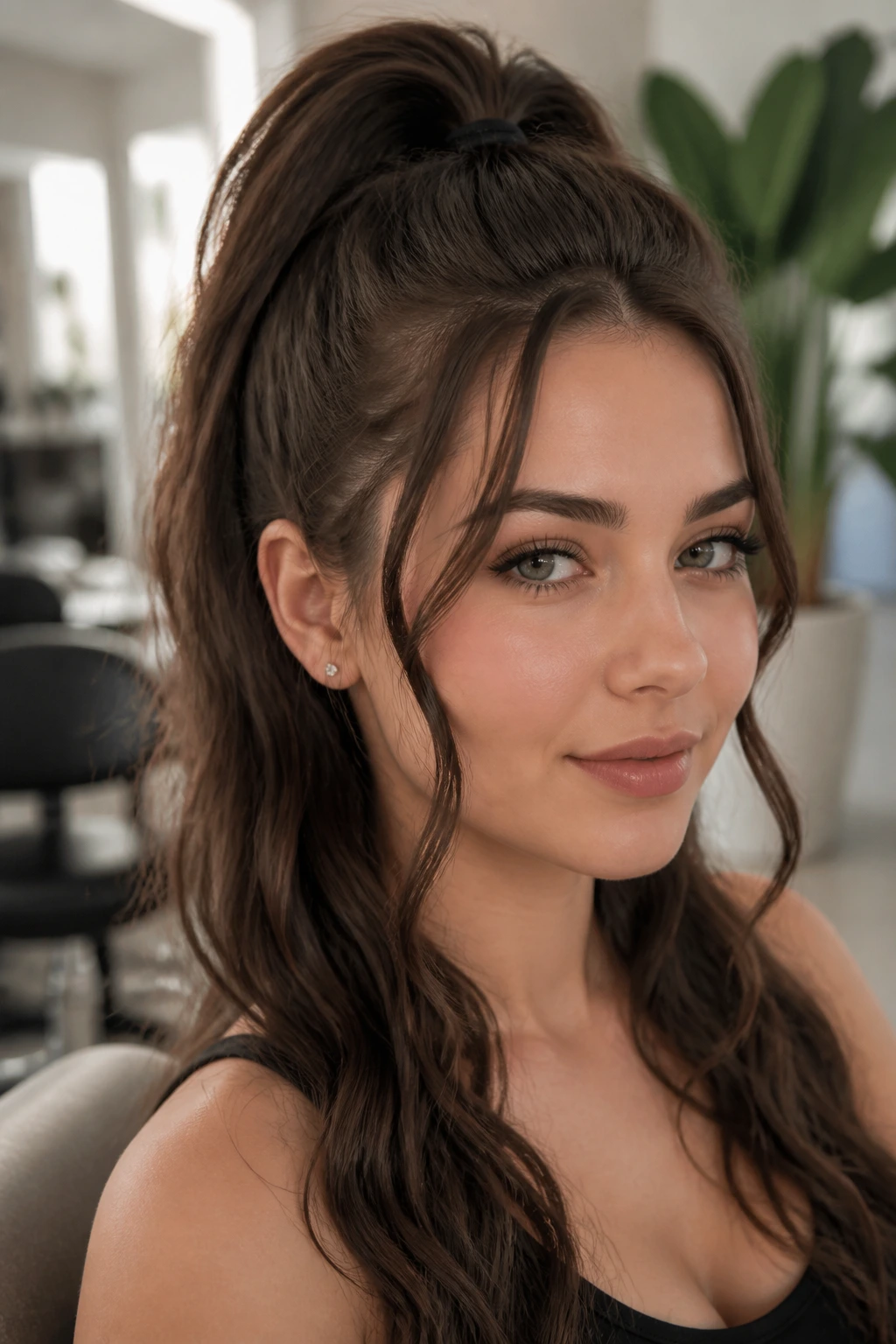
For a style that is both highly practical and incredibly flattering, the high half-up ponytail is unmatched. This look involves sectioning off the top third of your hair—from the ears up—and securing it into a high ponytail right at the crown of your head, while letting the rest of your long hair cascade down your back.
Pulling the top half of your hair upward creates a direct vertical lift, physically pulling the eye upward and giving your head a longer, more oval appearance. To keep this look from feeling too severe, leave two thin, delicate tendrils of hair out of the ponytail to frame your face.
These tendrils—often called ribbon pieces—should fall past your jawline. They act as soft, vertical lines that drape over your temples and the sides of your cheeks, breaking up the roundness of your face while adding a touch of romance to the style. It is a fantastic option for second-day hair or when you want a polished look with minimal effort.
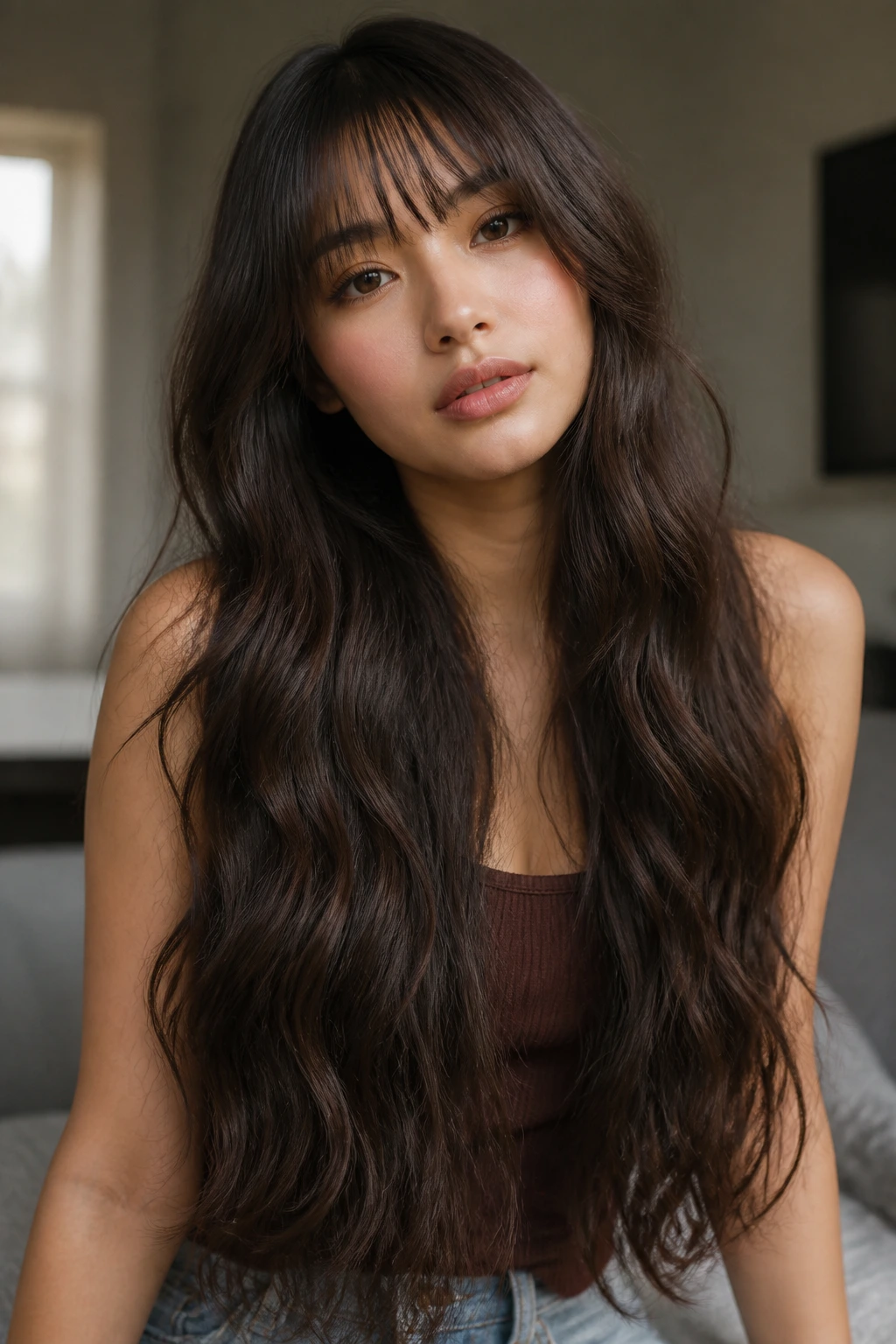
15. Soft Blunt Bangs Paired with Cascading Waist-Length Waves
Why this combination breaks the traditional hair rules
It is often said that those with round faces should avoid blunt bangs at all costs. However, when you pair soft, textured blunt bangs with incredibly long, waist-length waves, you create a striking contrast that is highly flattering. The key is in the details of how the bangs are cut and the sheer length of the hair behind them.
How to Style and Balance This Dramatic Look
The bangs should not be cut as a solid, heavy block of hair. Instead, have your stylist point-cut the ends so they look soft and slightly wispy, allowing some of your forehead to peek through.
The bangs should also curve slightly downward at the temples to blend into the sides. The incredible length of waist-length waves provides a massive amount of vertical visual weight, which completely balances out the horizontal line of the bangs.
Styling Elements for Perfect Balance
- The Bangs: Blow-dry them flat using a paddle brush, avoiding a round “bubble” shape.
- The Waves: Use a 1-inch curling iron to create long, loose waves starting from the collarbone down.
- The Length: This style works best on very long hair; if your hair isn’t quite waist-length, high-quality clip-in extensions can help you achieve this look.
16. The Modern Wolf Cut Lite with Internal Thinning
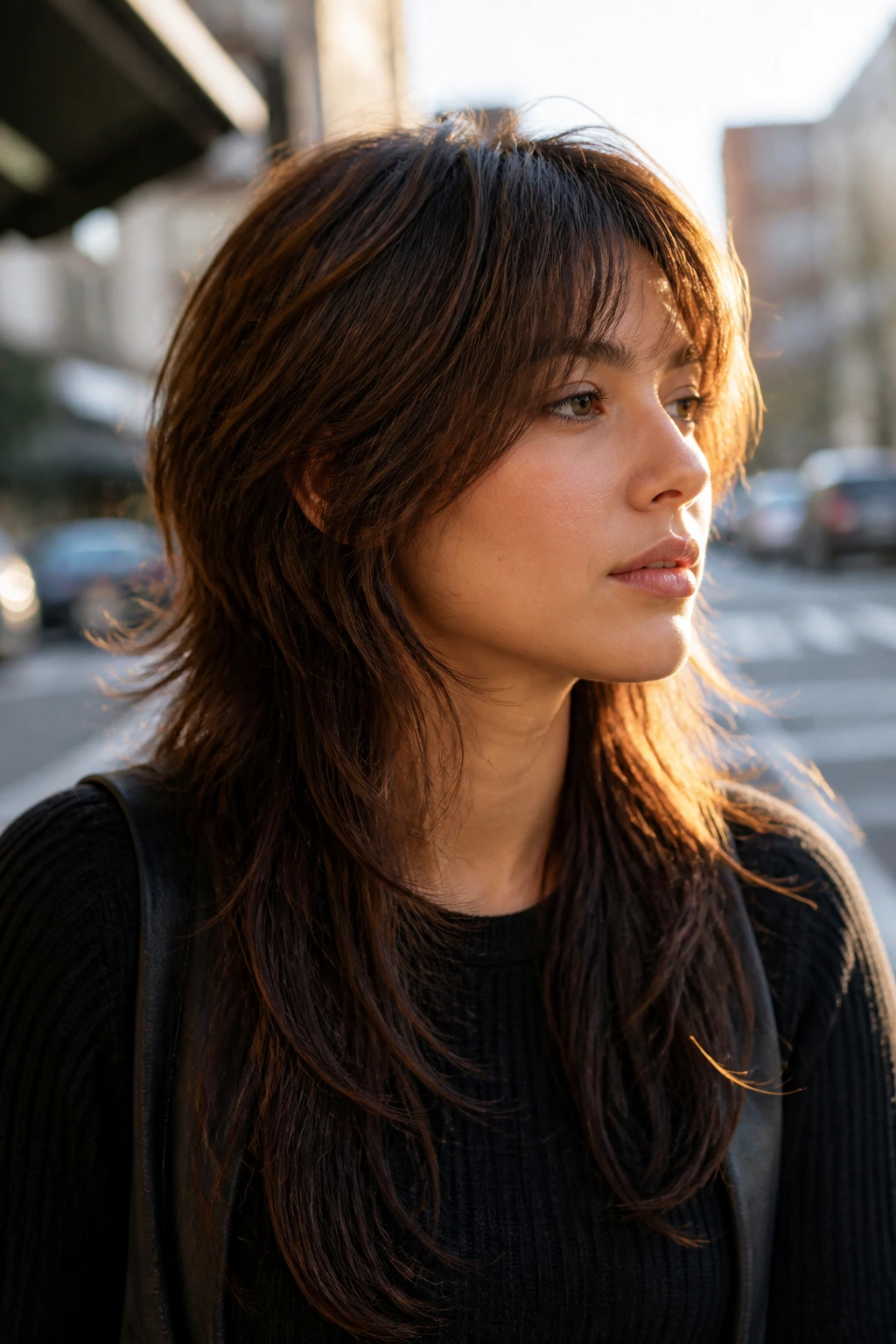
The wolf cut is a wild, highly textured hybrid of a shag and a mullet. While the classic wolf cut can sometimes be a bit too dramatic for everyday wear, the “wolf cut lite” is a softer, more wearable version that is perfect for round faces.
This cut features the signature choppy layers and face-framing texture of a wolf cut, but keeps the transitions between layers much softer and the overall length much longer. It works for a round face by concentrating the textured layers around the top of the head and temple area, while keeping the sides of the hair relatively flat and close to the face.
To achieve this, your stylist should use a slide-cutting technique to thin out the hair internally around the ears and jawline. This prevents the hair from poofing outward at the sides, which can make a round face look wider. It is a incredibly cool, edgy style that is full of movement and requires very little daily styling to look fantastic.
17. Side-Parted Hollywood Waves with One-Sided Volume Sweep
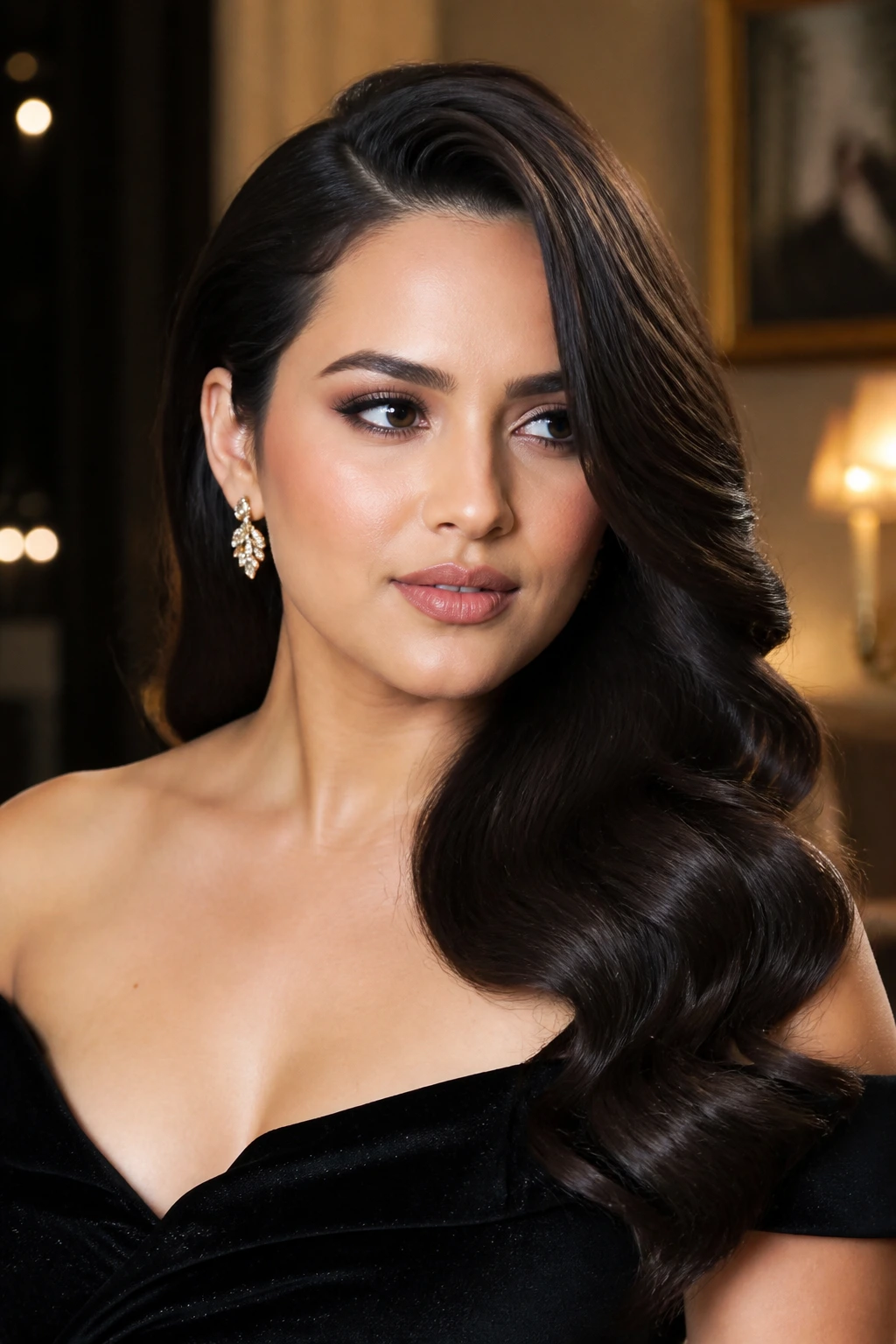
For the ultimate in glamour and sophistication, nothing compares to classic Hollywood waves. This style features a deep side part, with the hair on one side swept smoothly behind the ear, while the other side cascades down in large, uniform, glossy waves.
This asymmetrical styling is incredibly flattering for a round face. By tucking one side of your hair behind your ear, you expose your jawline and cheekbone on one side, which breaks up the circular silhouette of your face. Meanwhile, the voluminous, structured waves on the opposite side provide a beautiful, dramatic frame that draws the eye downward.
To create Hollywood waves, use a 1-inch curling iron, wrapping all sections of your hair in the exact same direction. Once the curls have cooled, brush them out thoroughly with a boar-bristle brush. The curls will miraculously lock together into one continuous, glossy wave. Use a flexible-hold hairspray and a high-shine serum to finish the look, keeping it looking polished and red-carpet ready all night long.
Choosing Your Ideal Long Style
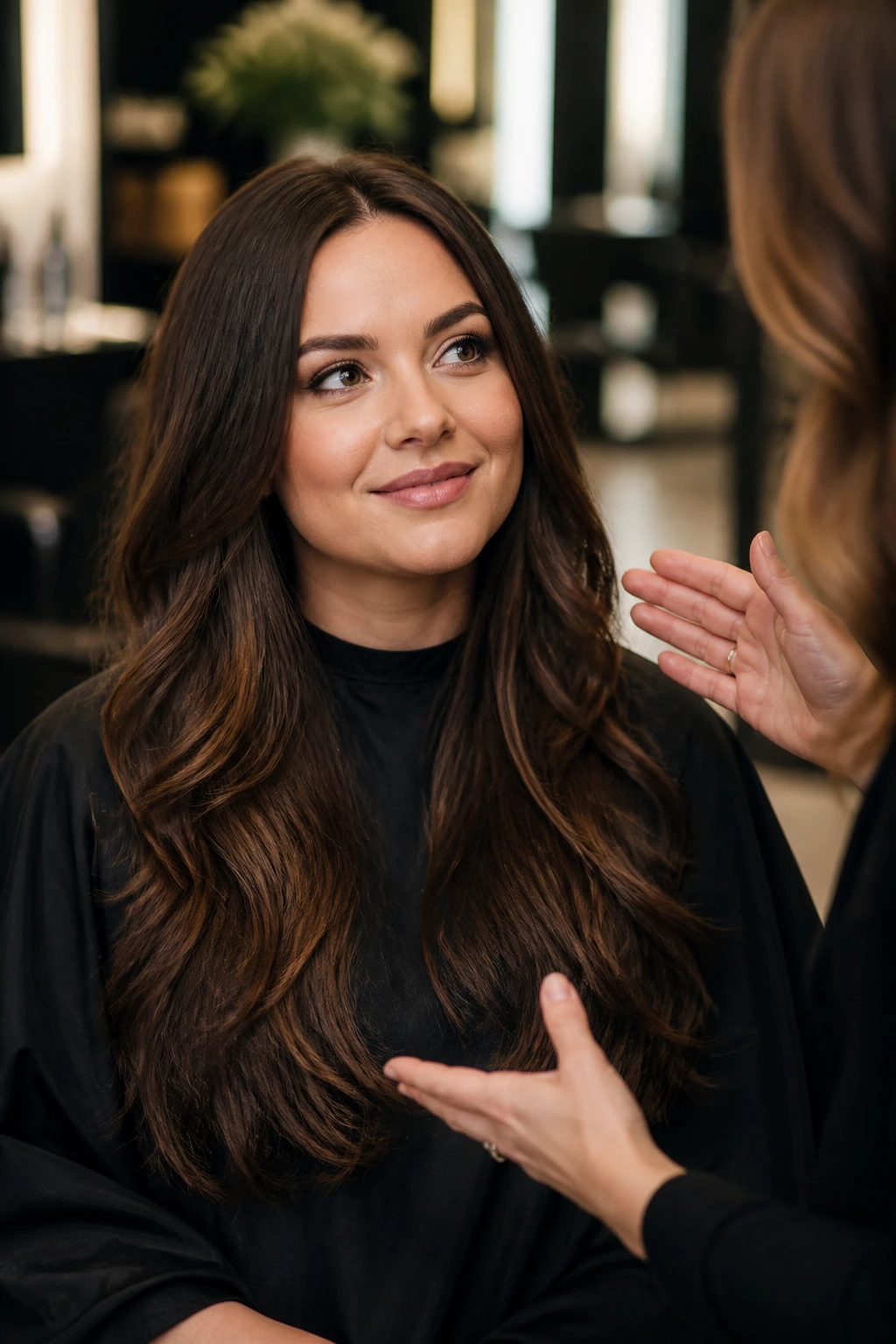
Finding the perfect long hairstyle for your round face is all about understanding how to work with lines, volume, and movement. The goal is never to hide your natural face shape, but to complement it by creating beautiful vertical paths for the eye to follow. Whether you prefer the dramatic volume of a butterfly cut, the modern edge of a wolf cut lite, or the clean lines of a sleek straight style, there is a long haircut that will make you feel confident and beautiful.
When you head to the salon, remember to talk to your stylist about where you want your layers to start. Keep the shortest face-framing pieces below your chin, avoid heavy bulk at the sides of your face, and don’t be afraid to experiment with deep parts or textured bangs. With the right cut and a few simple styling techniques, long hair can be one of the most flattering, versatile, and stunning choices for a round face shape. Play with your texture, embrace your natural volume, and enjoy the beautiful frame that long hair provides.