


Imagine walking out of a heavy strength session or a high-intensity cardio class, catching your reflection in the locker room mirror, and liking what you see. No hot blow dryer blasting your damp neck. No frantic styling with round brushes while your face is still flushed. Learning how to air dry hair for workouts is one of the smartest shifts you can make to reclaim your morning schedule and protect your scalp from heat exhaustion.
Sweat consists of water and natural salts, which can act like a built-in texturizer when handled correctly. But when you blast sweat-dampened strands with high heat, you bake those salts directly into the hair cuticle, stripping away moisture and causing stubborn, rough breakage. Leaving your heavy blow dryer at home is a direct investment in the long-term health of your scalp.
The secret to this transition lies in the tension you apply to your hair during your workout. By prepping your hair with the right structures, using sweat to shape your texture, and choosing styles that encourage natural drying patterns, you can walk out of the gym with soft, touchable hair. Let us look at the practical, heat-free styling methods that work with your movement and leave you looking polished by the time you reach your desk.
1. The Double French Braid Wave Maker
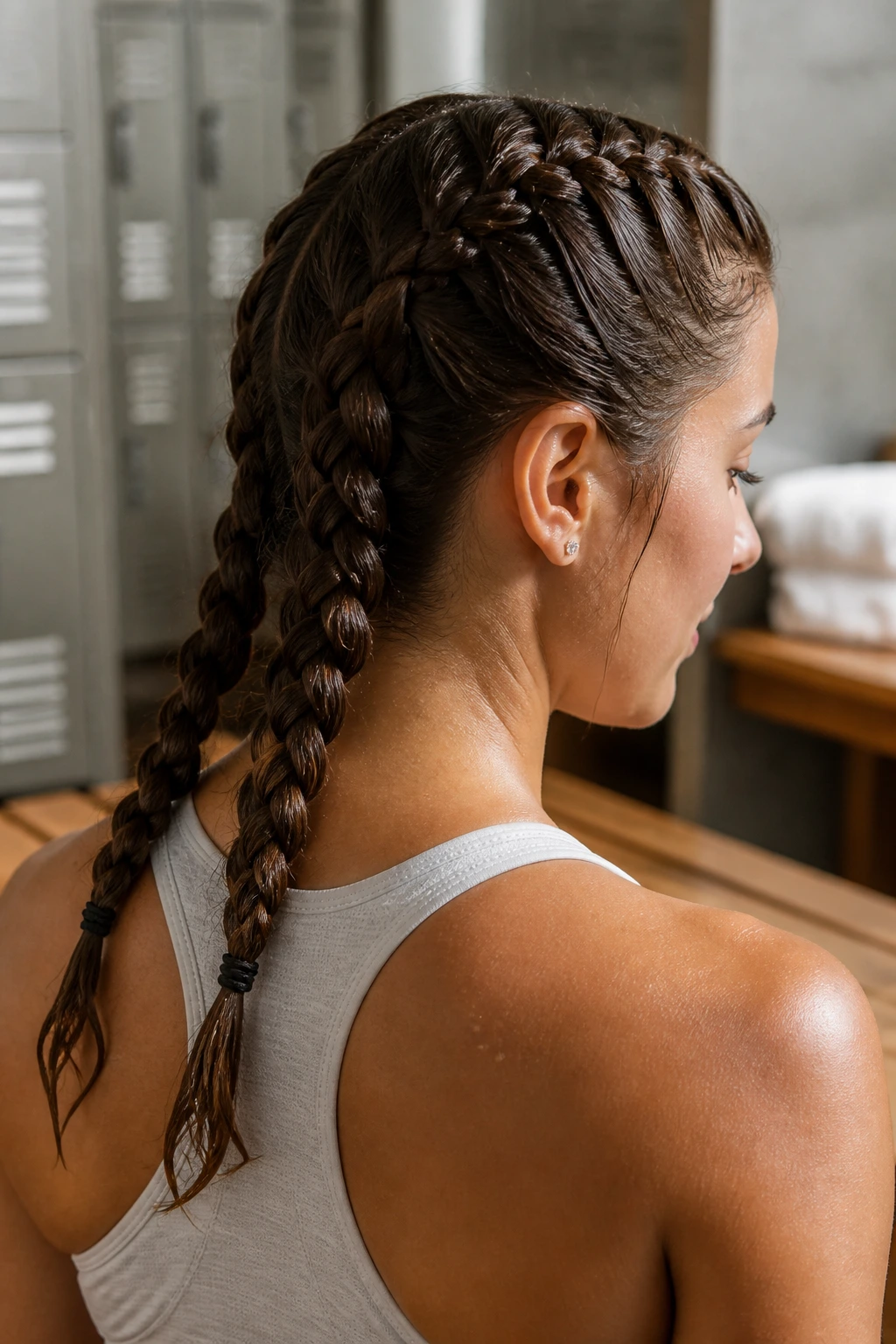
Plaiting damp hair before a workout is a classic technique for a reason. By running two French braids down the back of your head, you secure every flyaway while setting a uniform wave pattern from your roots to your ends. As you move, your body heat works like a gentle diffuser, drying the hair from the inside out.
Why It Shapes Waves While You Sweat
The over-under crossing pattern of a French braid compresses the hair shaft, which helps lock in moisture while preventing the friction that causes frizz. When you sweat, the moisture helps set the braided shape, creating a crimp-free wave once the hair dries.
Quick Prep Facts
- Best hair starting state: Damp, pre-treated with a light leave-in conditioner
- Braiding tension: Medium—too tight restricts airflow; too loose falls apart during jumps
- Ideal hair type: Fine to thick, straight or wavy textures
- Post-workout drying time: Roughly two hours after taking them down
Pro tip: Spritz your roots with a lightweight botanical scalp mist before braiding to keep your scalp smelling clean and fresh throughout your workout.
2. The Silk Scrunchie High Topknot to Air Dry Hair for Workouts
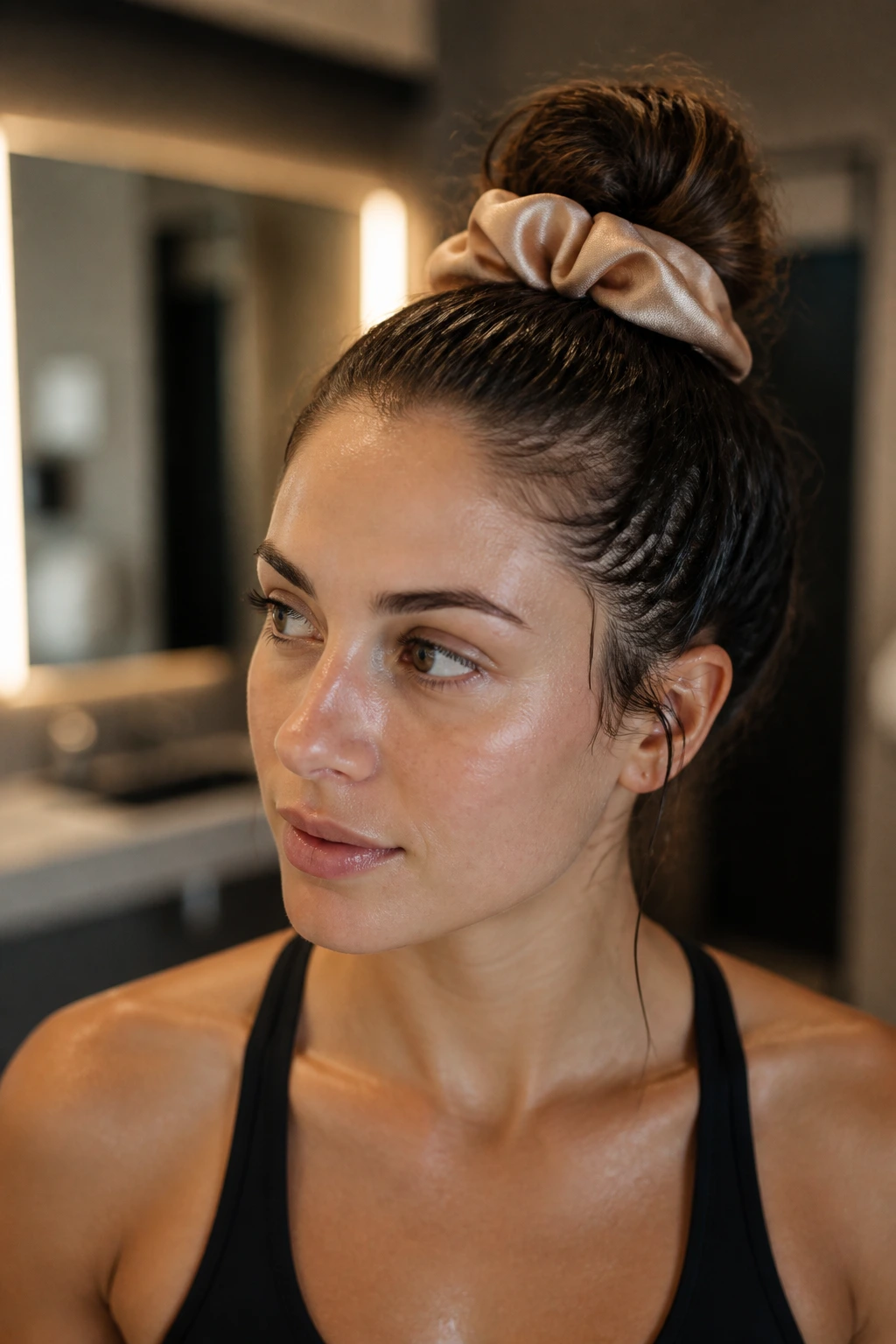
Heavy plastic elastics are the enemy of healthy hair, especially when wet. They pinch the hair shaft and leave deep, stubborn creases that are nearly impossible to remove without re-wetting. Switching to a wide silk scrunchie allows you to pile your hair on top of your head to air dry hair for workouts without leaving a single dent.
Gather your hair at the very crown of your head, twisting it loosely into a soft bun. Wrap the silk scrunchie around the base only twice. This keeps your ends tucked away and protected from the sweat on your neck, while the high placement keeps your roots lifted.
When you release the scrunchie after your workout, your roots will have dried with natural volume. The mid-shafts and ends will fall into a soft, undone wave that looks intentional rather than messy.
3. The Low-Tension Twist with Claw Clip
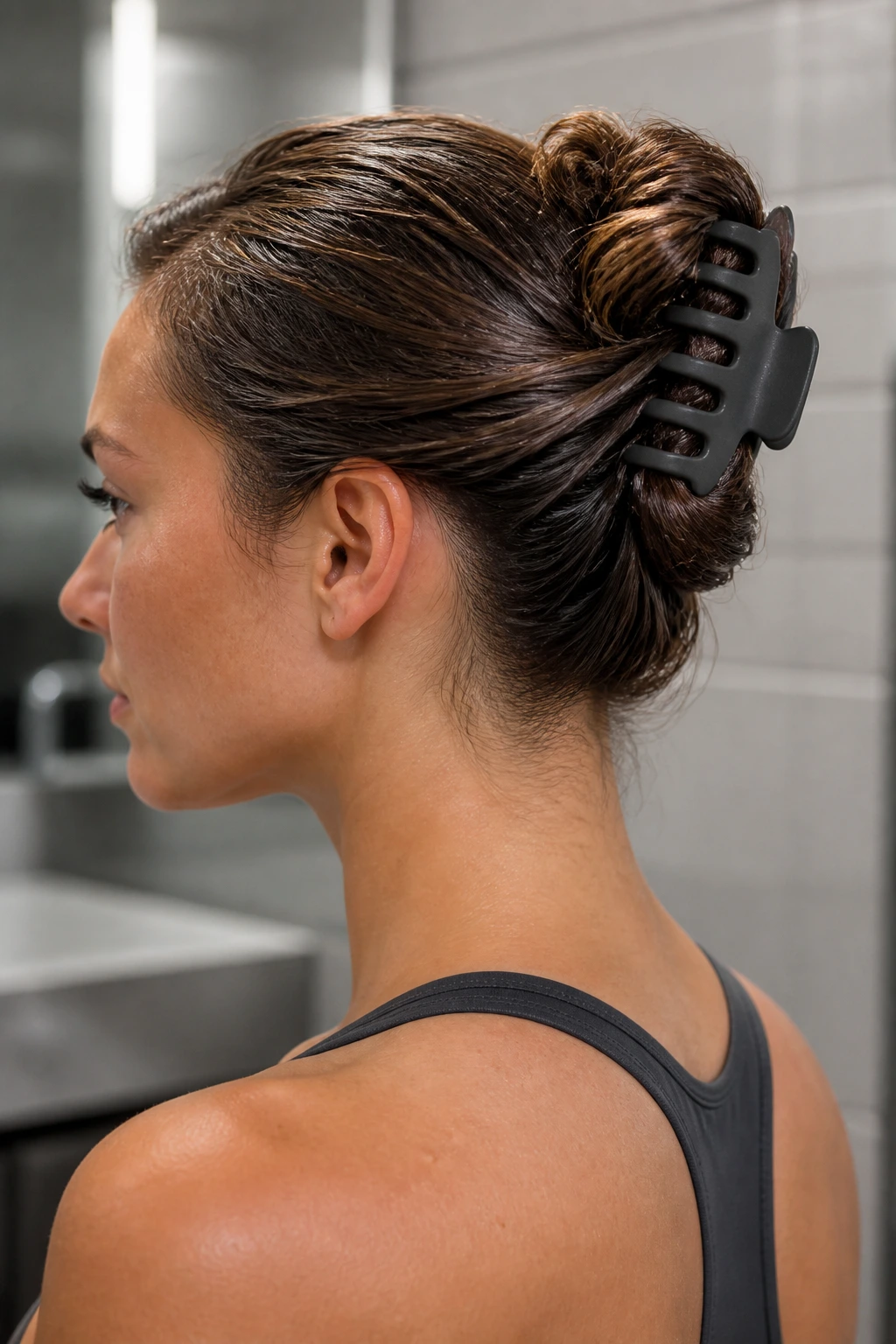
Are you tired of the headaches caused by tight ponytails pulling on your scalp? A large, matte claw clip is the perfect solution for low-impact workouts like pilates, walking, or weight training.
Why Does This Twist Work?
A claw clip distributes the weight of your hair evenly across your scalp instead of centering the pull on a single band. This reduction in tension prevents traction damage along your hairline, where sweat-weakened follicles are most vulnerable to snapping.
How to Style It
Gather your damp hair at the nape of your neck and twist it upward toward the crown. Secure the middle of the twist with a sturdy claw clip, letting the damp ends cascade over the top of the clip. If your ends are long, fold them back down under the teeth of the clip. After your workout, remove the clip and shake your hair out; you will find soft, loose curls with no flat spots.
4. The Boxer Braids for Natural Coils
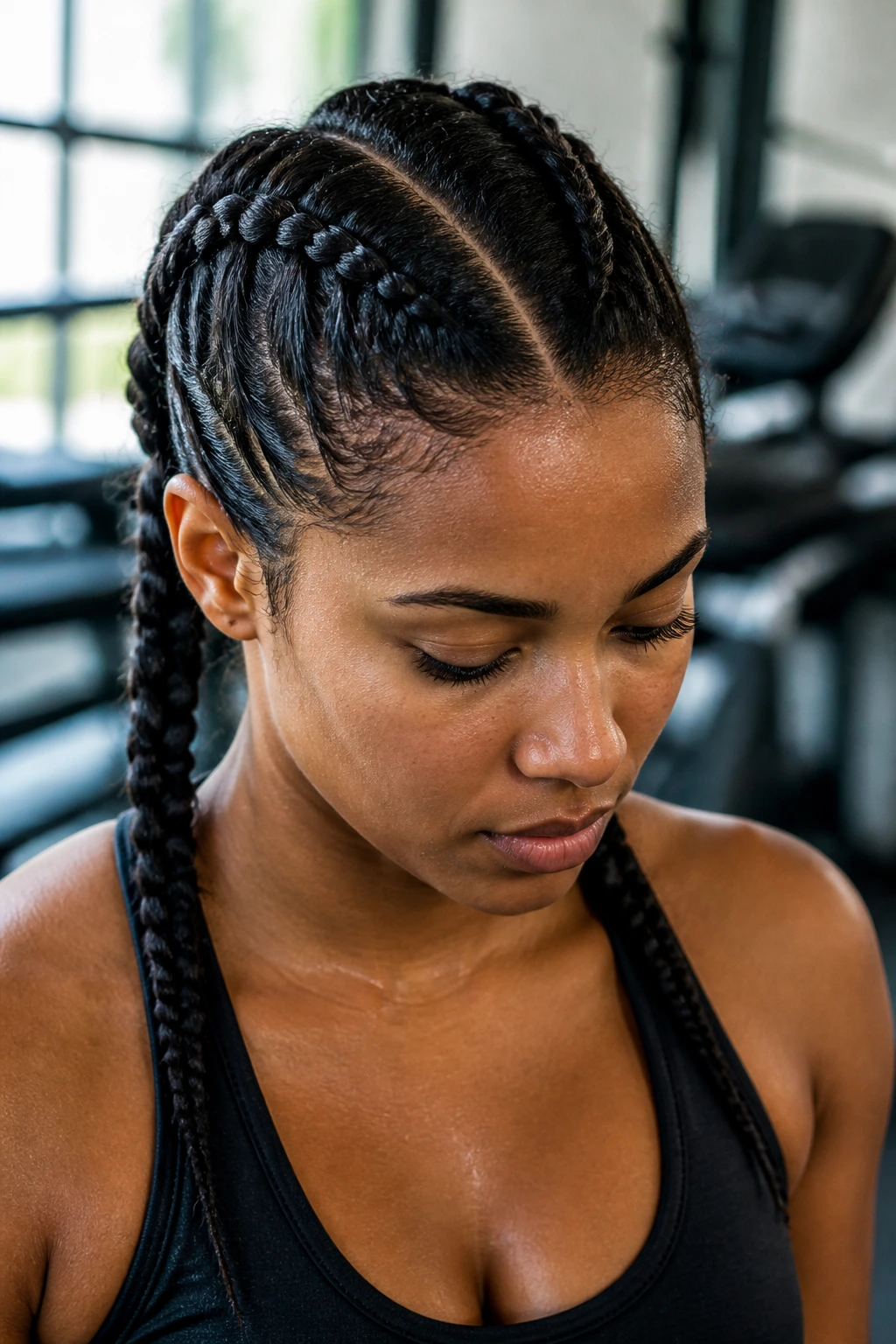
For dense, coily textures, keeping hair organized during a workout is essential for avoiding post-sweat tangles. Boxer braids, which are dual underhand Dutch braids, sit flat against the scalp and keep your natural coils perfectly aligned while you move.
During a cardio session, your scalp produces sweat that can cause natural hair to shrinkage or frizz. Underhand Dutch braids lock your pattern in place, preventing the individual coils from tangling around one another.
- Apply a rich shea butter or coconut oil cream from root to tip.
- Section your hair down the center into two equal parts.
- Dutch braid each side tightly, keeping your hands close to the scalp.
- Secure the ends with a soft silicone band that won’t grab or tear.
Once your workout is complete, leave these braids in to dry completely. When unraveled, you will have defined, elongated curls with zero shrinkage.
5. The Pineapple Method for Curly Textures
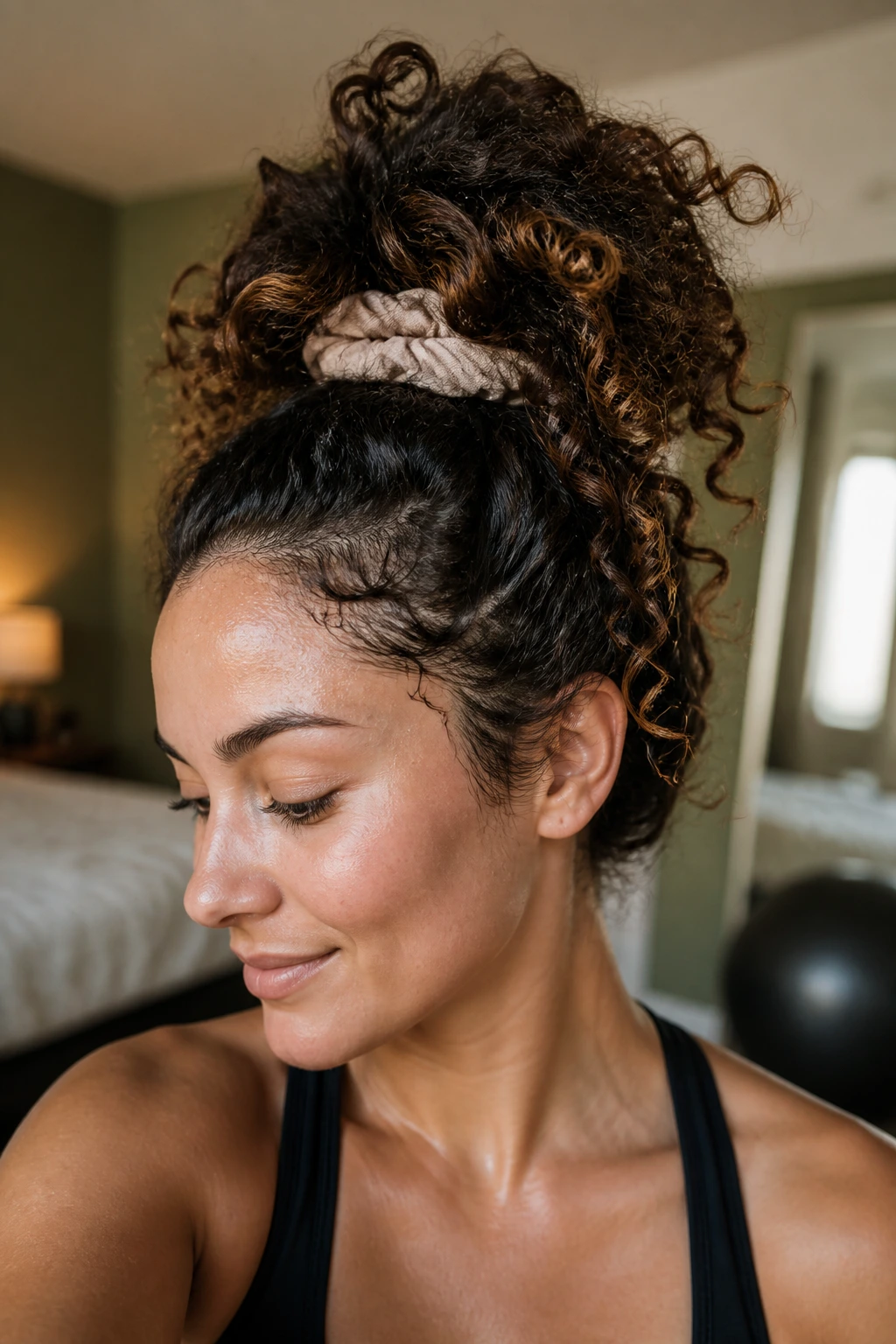
If you have type 3 curly hair, preserving your ringlets during a workout can feel like an uphill battle. The pineapple method is a simple way to keep your curls intact and out of the way.
To create a pineapple, bend forward and gather your curls at the very front of your hairline, near your forehead. Loop a seamless fabric band around the base once—just enough to keep it from falling forward. This high, loose pile keeps your curls from rubbing against your shoulders or neck where sweat collects.
During your workout, your curls remain free of compression, allowing air to pass through the ringlets. Once you finish your training, slide the band off and let your curls drop back into place. Give your head a gentle shake at the roots, and your curls will bounce back into their natural shape without any frizz.
6. The Three-Strand Rope Braid
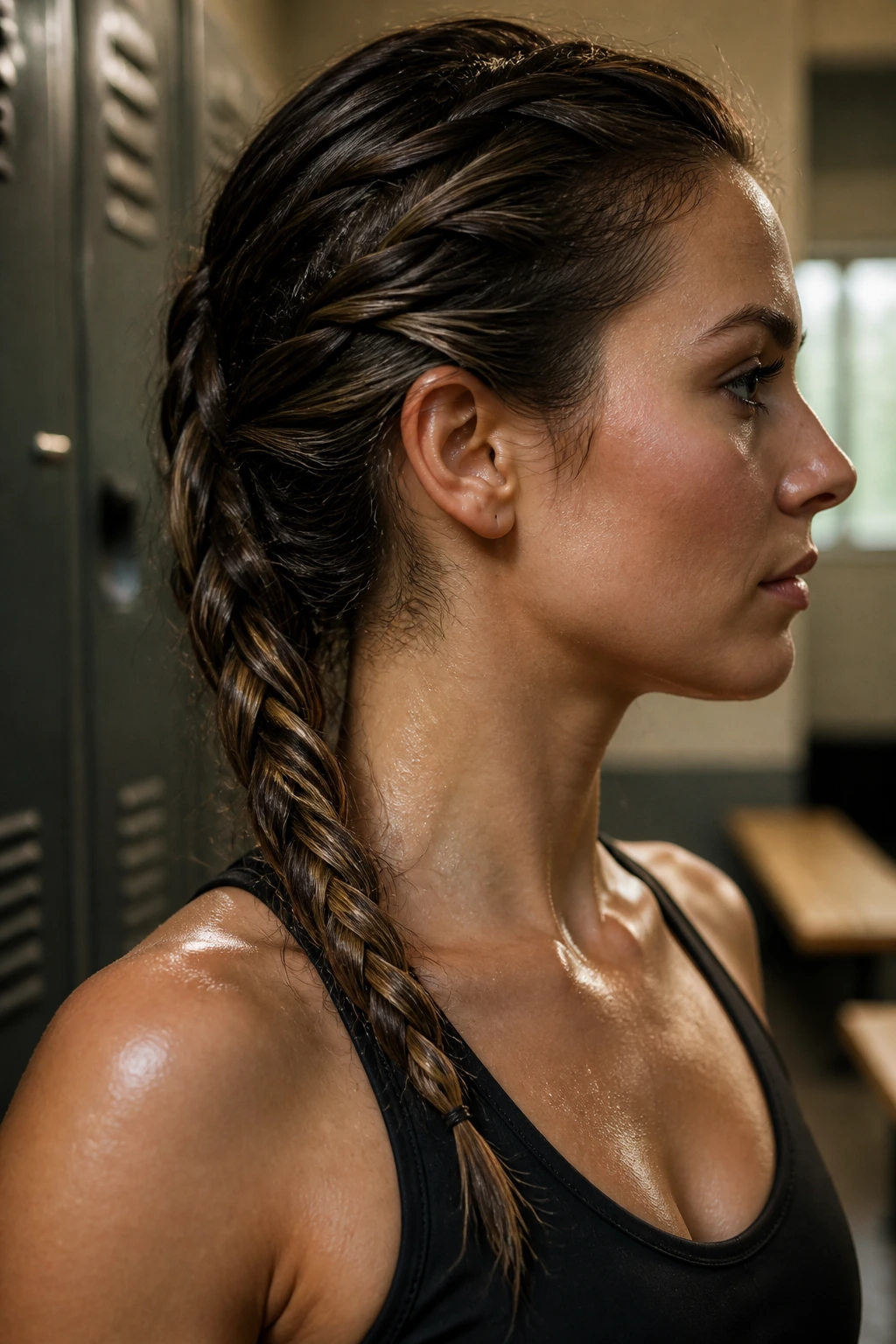
Unlike a standard three-strand braid, a rope braid uses only two sections of hair twisted in opposite directions. This twist creates a smooth, cord-like appearance that keeps your hair secure during heavy movement.
What Makes It Different
A rope braid compresses the hair differently than a traditional plait, resulting in a sleeker look. By twisting each individual strand before wrapping them together, you create a barrier that prevents sweat from penetrating the core of the hair shaft.
Who It Is Best For
- Medium to thick hair lengths
- Long layers that tend to slip out of standard braids
- Wavy or straight hair seeking deep, uniform waves
For the best results, twist the left strand to the right, and the right strand to the left before crossing them over. This opposing tension locks the braid in place without the need for a tight elastic at the top.
7. The Creaseless Flat-Twist Crown
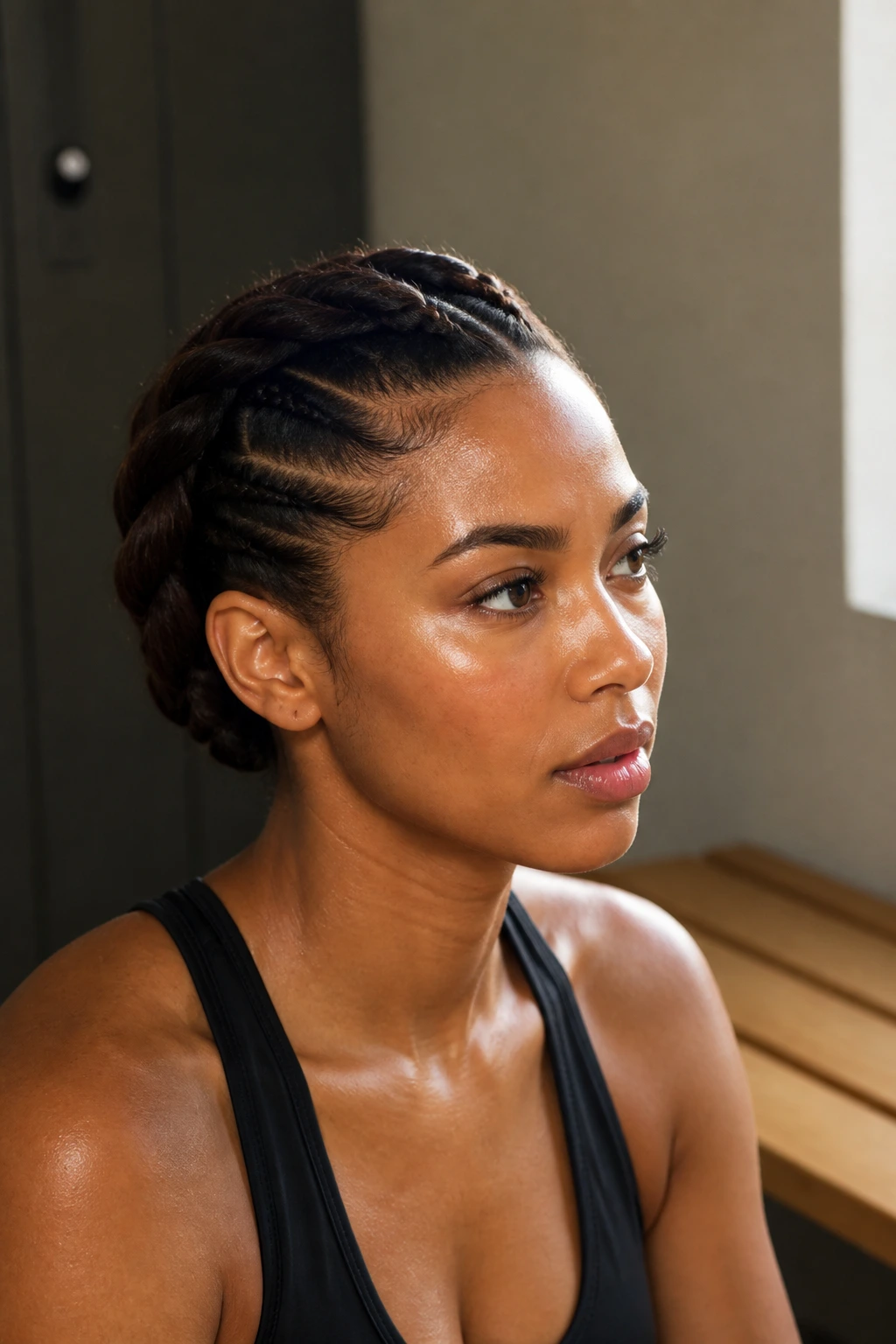
Keeping your hair off your face during a hot workout is a priority, but headbands can often leave a flat, dented line across your forehead. A flat-twist crown offers a practical alternative by twisting your hair along your hairline to create a natural shield.
How It Keeps the Hairline Smooth
By flat-twisting the hair along your temples, you lift the front sections away from the sweat-prone areas of your forehead. The twist acts as a natural barrier, absorbing moisture before it can travel down the length of your hair.
Quick Styling Steps
- Part your hair down the middle or slightly to one side.
- Start at the part and take a small section of hair near your forehead, dividing it into two.
- Twist the front section over the back section, adding a bit of hair to each pass.
- Work your way down to the nape of your neck and secure the end with a small bobby pin.
Pro tip: Keep the twists relatively flat to your head so they dry into a smooth, face-framing wave once they are unraveled.
8. The Double Space Buns
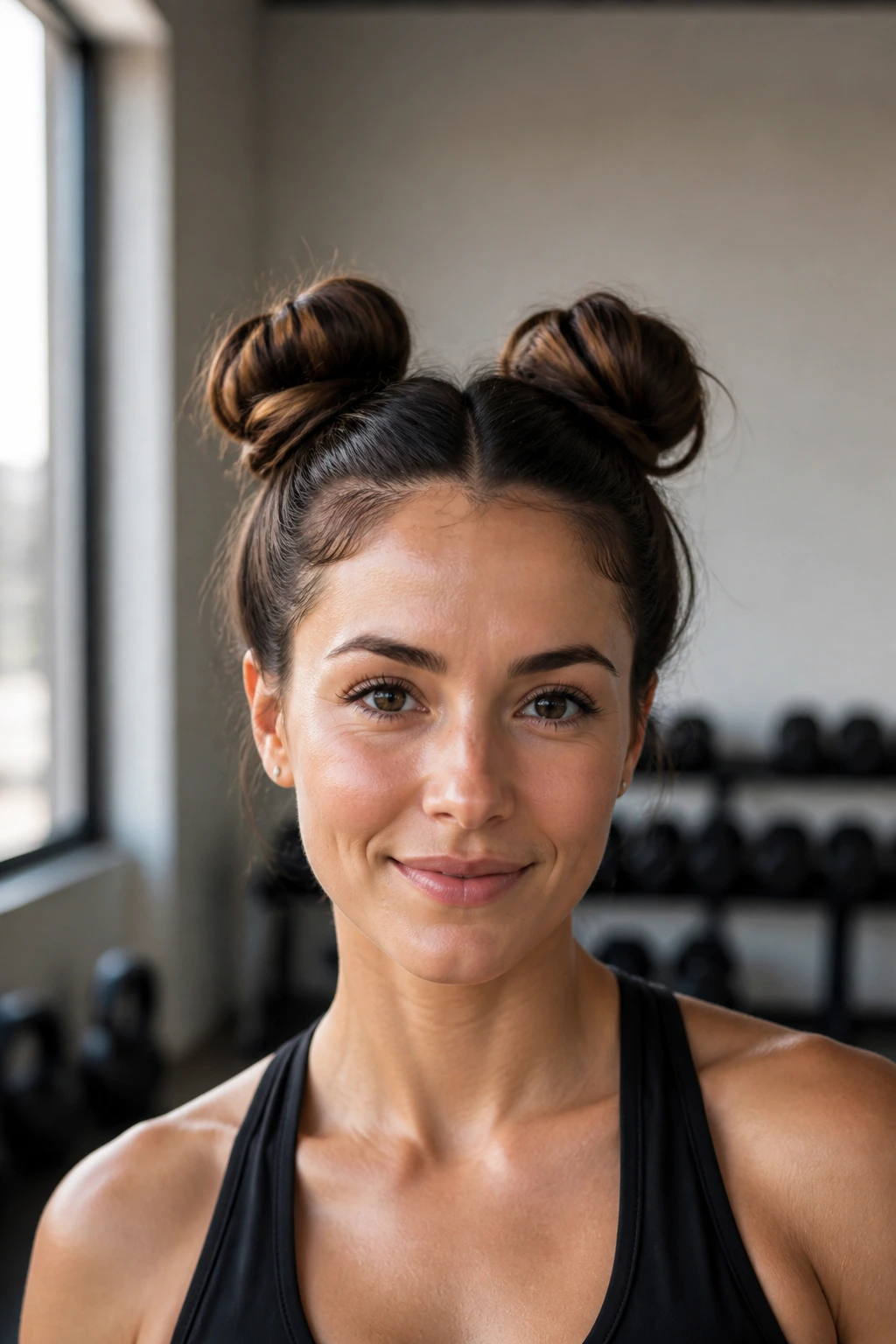
Double space buns are not only fun to wear to your favorite fitness class, but they also serve a practical purpose for your post-workout hair routine. By splitting your hair into two sections, you double the airflow to your scalp, which helps your hair dry much faster.
Divide your hair down the middle and tie each section into a high ponytail using a soft microfiber band. Twist each ponytail into a loose bun and tuck the ends under the band.
As you move through your workout, the two separate buns allow your scalp to breathe, reducing the amount of sweat that accumulates at your roots. When you release the buns after your workout, you will have soft, voluminous waves that start high on your head.
9. The Absorbent Microfiber Headband Guard to Air Dry Hair for Workouts
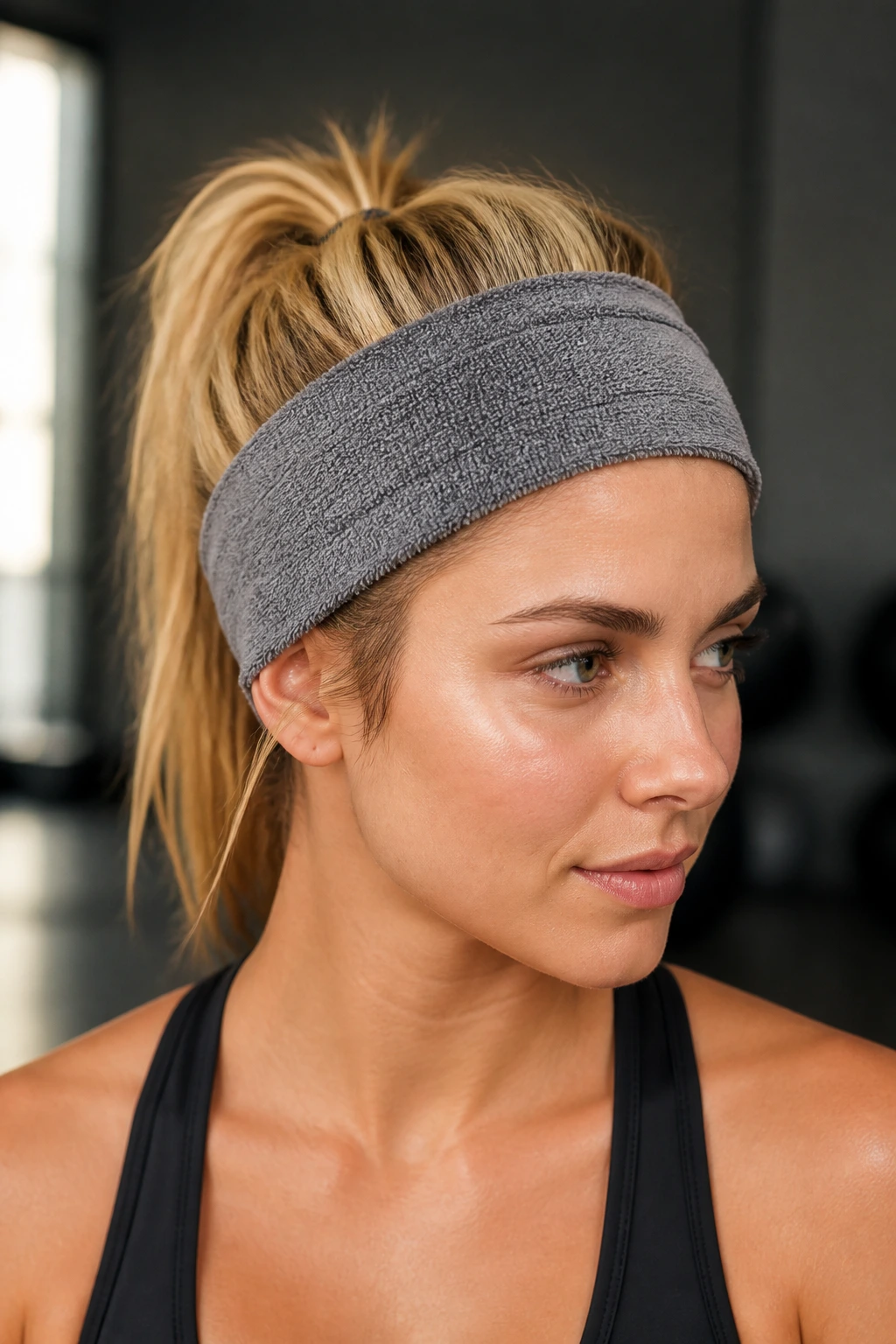
If you are a heavy sweater, protecting your hairline is key to achieving a successful air dry hair for workouts. A wide microfiber headband is a great accessory to add to your workout gear, as it absorbs sweat before it can soak into your hair.
Position the headband so it sits right along your hairline, covering your forehead and the top of your ears. As you train, the microfiber material draws sweat away from your scalp, allowing your hair to dry without becoming damp and frizzy.
+-------------------------------------------------------------+
|               HOW MICROFIBER HELPS AIR-DRYING               |
+-------------------------------------------------------------+
|   Standard Cotton Headband   |   Microfiber Headband Guard  |
| ---------------------------- | ---------------------------- |
| - Holds moisture against skin| - Wicks moisture away quickly|
| - flattens hair at the root   | - Keeps root area lifted     |
| - Promotes frizz and tangles | - Keeps hair cuticle smooth  |
+-------------------------------------------------------------+
After your workout, slip the headband off and gently massage your roots with your fingertips. Your hairline will be dry and lifted, ready for a quick shake-out.
10. The Bubble Ponytail Wave Set
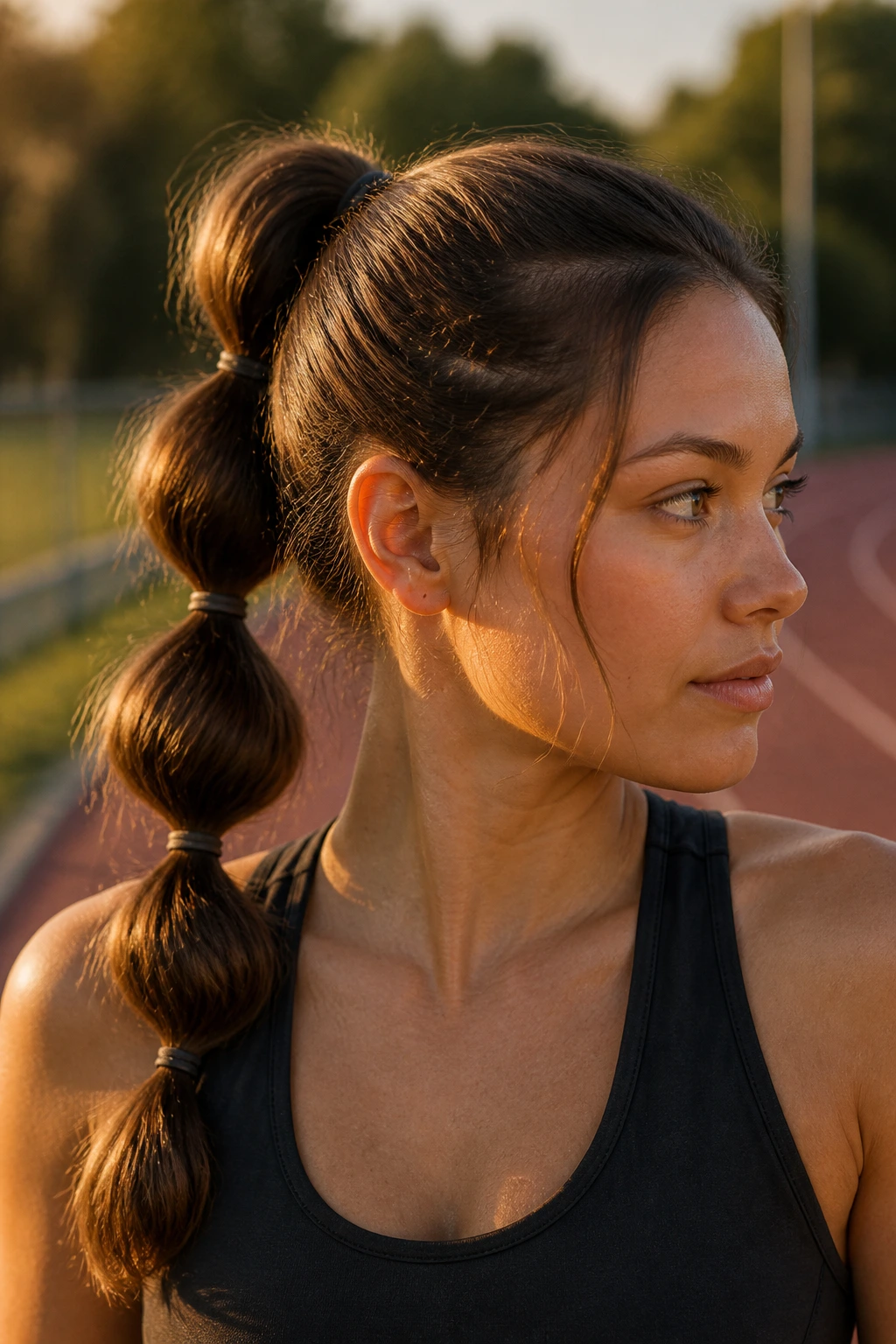
If you want the benefits of a braid without the effort, a bubble ponytail is a fantastic option. This style uses several soft elastics spaced along the length of your ponytail to create a series of “bubbles” that dry into soft bends.
How It Works
Gather your hair into a loose ponytail at the nape of your neck. Secure it with a soft band, then place another band a few inches down. Gently pull at the sides of the section between the bands to create a bubble shape, and repeat this pattern down the length of your hair.
Quick Facts
- Best hair length: Medium to very long hair
- Elastic type: Seamless, high-stretch fabric bands
- Style results: Soft, loose bends with great movement
- Ideal workout: Running, spinning, or high-impact training
The separate bubbles keep your hair from tangling while you move, and the resulting wave pattern is soft and natural.
11. The French Twist with a Matte Grip Slide
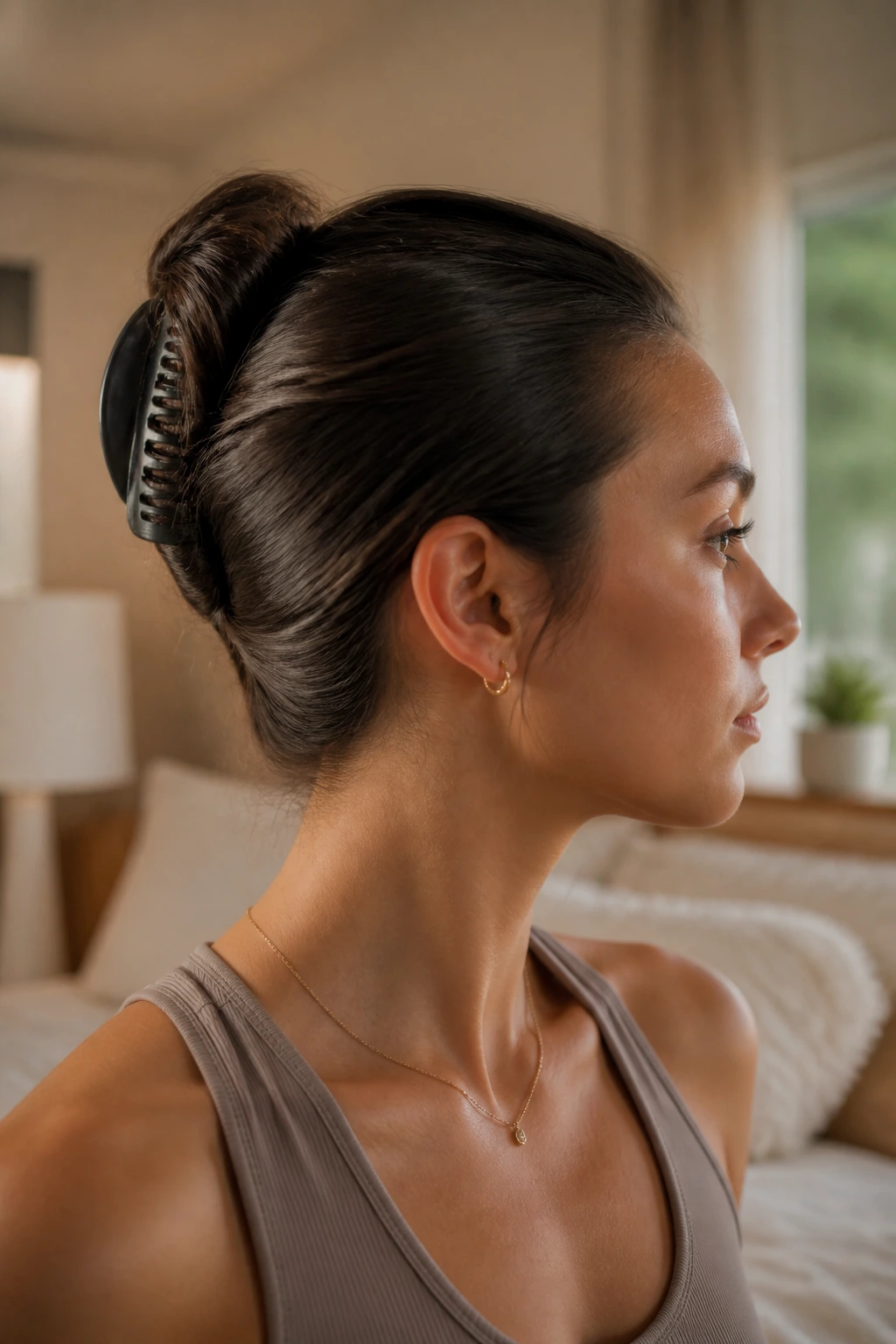
For those who prefer a sleek look both during and after their workout, a classic French twist secured with a matte grip slide is an excellent choice. This style keeps your hair securely in place while you train, and unravels into a smooth, blowout-style finish.
To style, gather your hair at the base of your neck and twist it upward, tucking the ends inside the fold. Insert a matte grip slide along the seam of the twist to secure it flat against your head. This setup prevents your hair from swinging or getting in the way during your workout.
Because the hair is rolled inward, the inner layers remain protected from sweat, while the outer layers dry smoothly against your head. Once you remove the slide, your hair will have a soft, polished curve that looks like you spent hours with a round brush.
12. The Loose Halo Braid
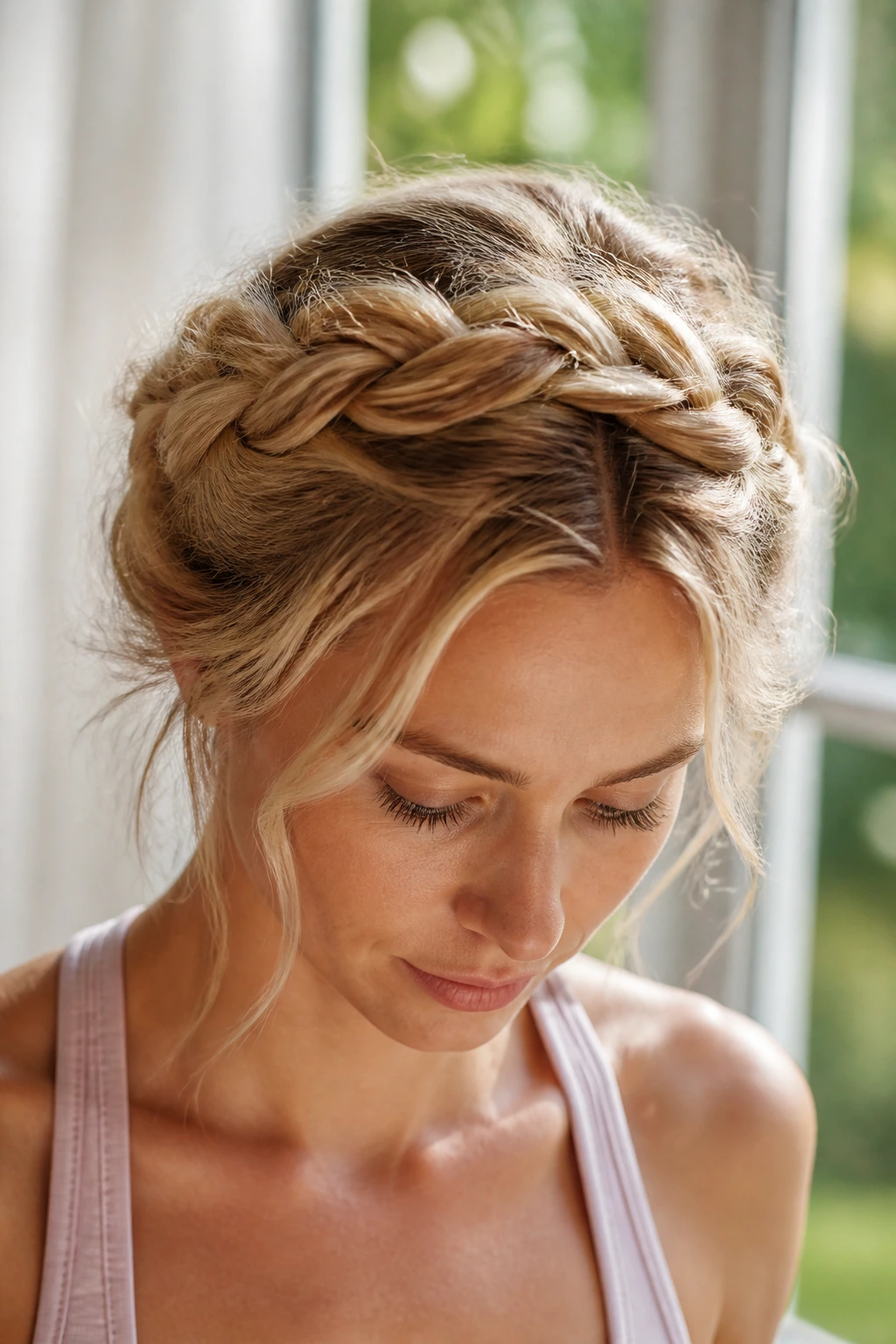
A halo braid is a beautiful style that works well for low-to-medium impact workouts. By wrapping a loose braid around the crown of your head, you keep your hair off your neck while creating a romantic, wavy texture as it dries.
Why It Works Differently
Unlike tight French braids, a halo braid sits loosely around your head, allowing more airflow to reach your scalp. This extra ventilation speeds up the drying process and prevents sweat from building up at your roots.
Best Hair Types
- Long hair with minimal layers
- Naturally wavy or curly textures
- Fine hair looking for volume at the crown
To style, create a single braid starting behind one ear, then wrap it over the top of your head and secure the end with a bobby pin. Once dry, you will have a soft, halo-like wave pattern.
13. The Half-Up Topknot with Wet-Look Gel
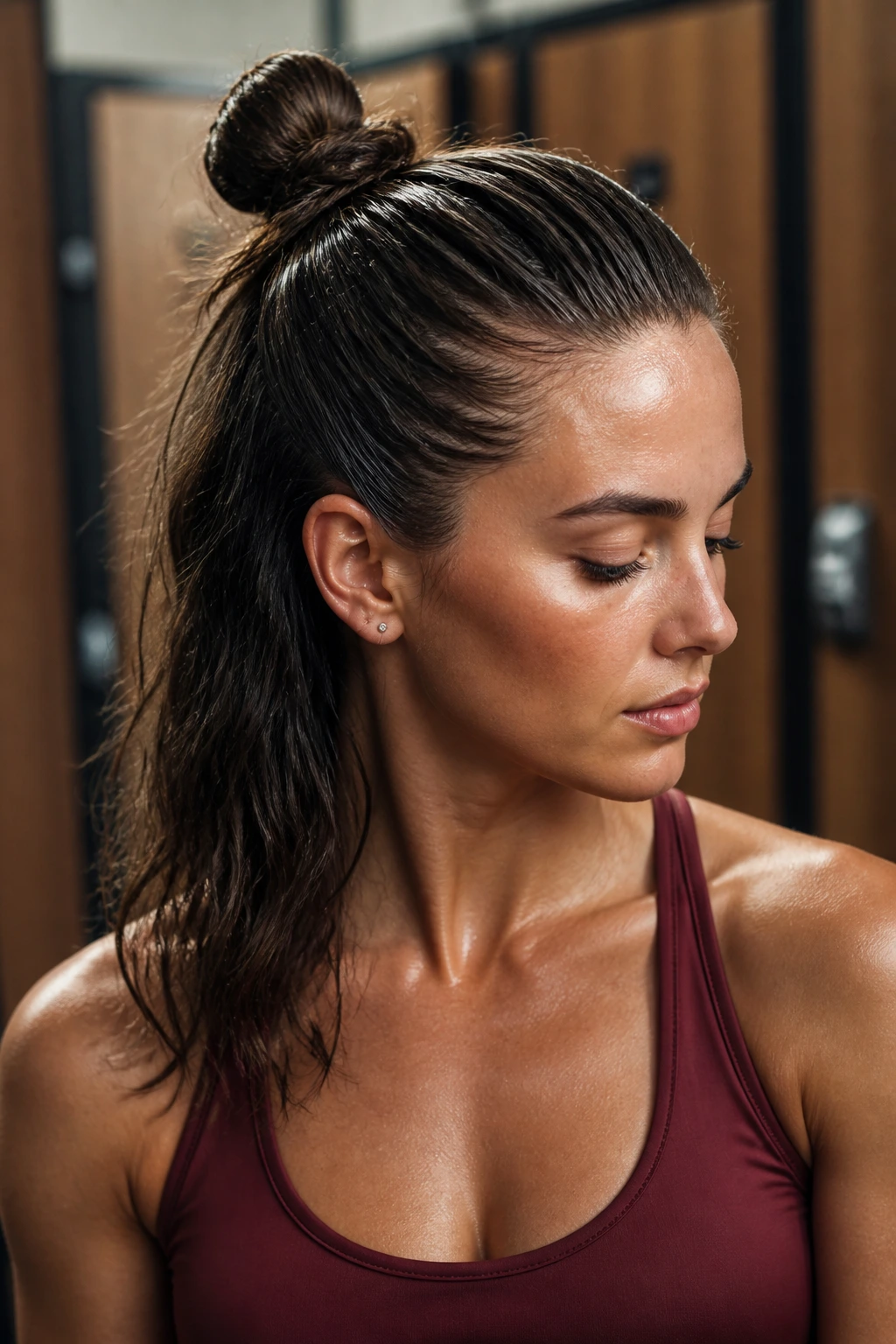
If you have short-to-medium length hair, keeping the front sections out of your eyes during a workout can be a challenge. A half-up topknot secured with a touch of wet-look gel keeps your hair out of your face while letting the back section air dry naturally.
How to Style It
Apply a small amount of lightweight, flexible-hold gel to the front section of your hair, from your forehead to the crown. Pull this top section into a small, tight bun at the crown of your head, leaving the bottom half of your hair loose.
What to Expect
- The top section remains neat and sleek throughout your workout.
- The bottom section dries naturally with your hair’s natural texture.
- The gel keeps flyaways tamed without feeling stiff or crunchy.
- Perfect for medium lengths, bobs, and lobs.
This style provides a clean, polished look that transitions easily from the gym to your daily activities.
14. The Low Dutch Braid for Fine Hair
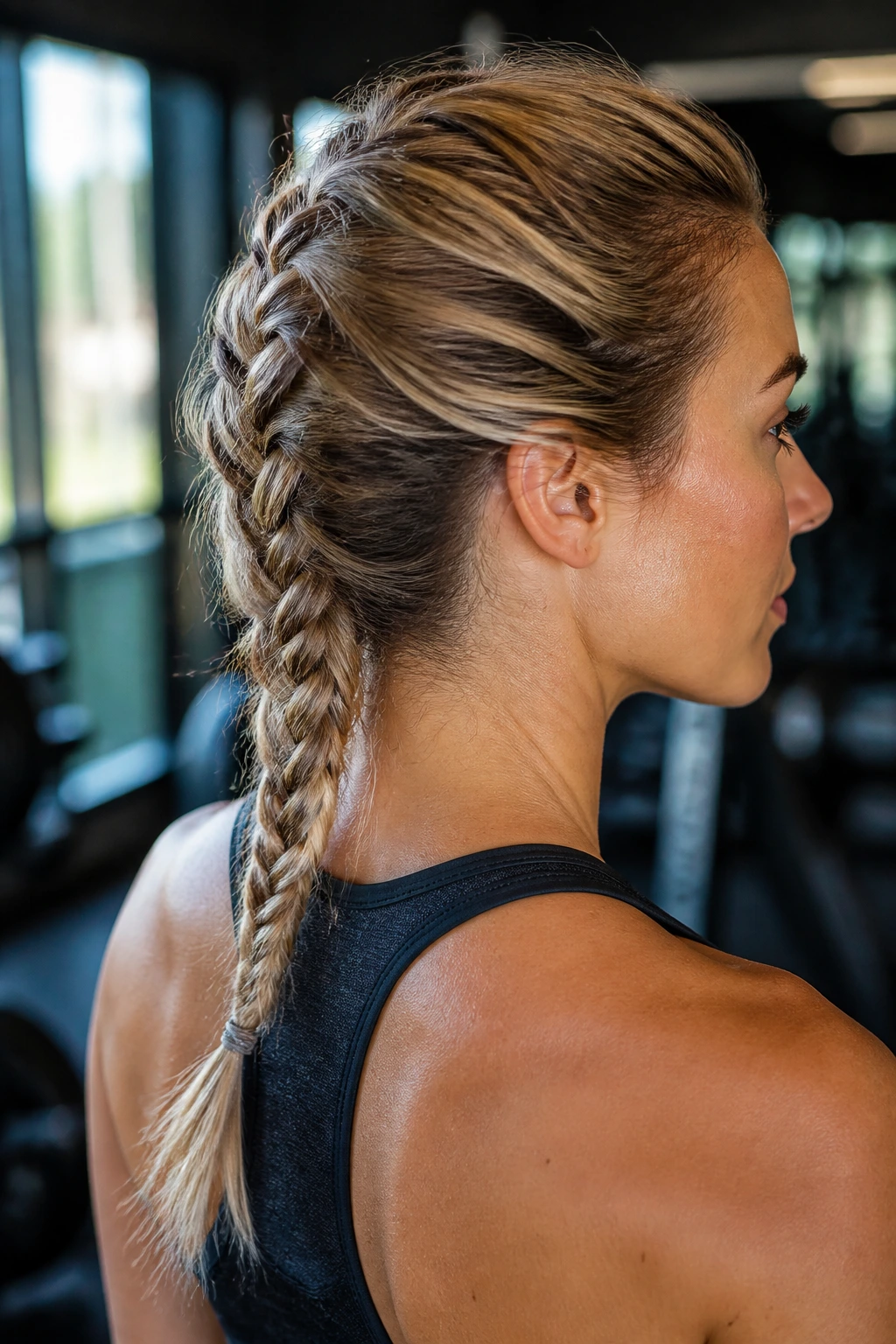
Fine hair can easily look flat and lifeless after a workout, especially if it has been tied back tightly. A low Dutch braid is an excellent way to add volume and texture to fine hair without risking damage.
To create a Dutch braid, cross the strands under the middle section instead of over. This technique lifts the braid away from your scalp, creating a thicker appearance and allowing more air to circulate around your roots.
As you workout, your body heat helps set the braid, creating a voluminous wave pattern. When you undo the braid, your fine hair will have extra body and a natural-looking texture that lasts all day.
15. The Triple Twisted Low Bun to Air Dry Hair for Workouts
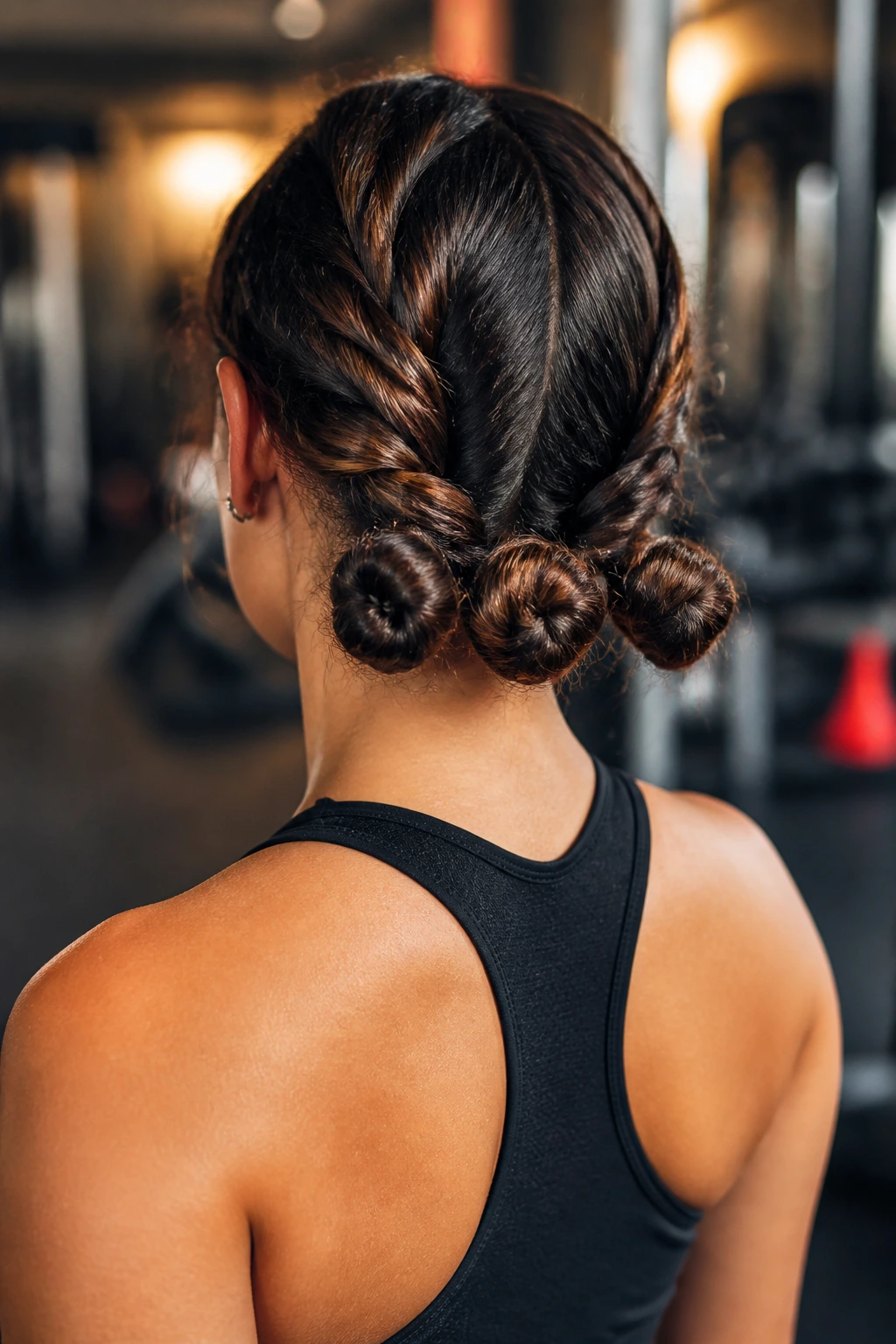
If you have thick, heavy hair, a single bun can often feel too heavy and pull on your scalp during a workout. Dividing your hair into three separate twists helps distribute the weight and allows you to air dry hair for workouts more comfortably.
Why Does This Prevent Headaches?
By splitting your hair into three smaller sections, you reduce the tension on any single area of your scalp. This weight distribution prevents the pulling that can cause headaches during high-movement exercises like jumping or running.
How to Style It
Divide your hair into three equal sections at the nape of your neck. Twist each section individually from root to tip, then roll each twist into a small, low bun. Secure each bun with a soft, creaseless band.
When you release the twists after your workout, your thick hair will fall into beautiful, soft spirals with no flat areas.
16. The Sides-Pinned Flat Twist
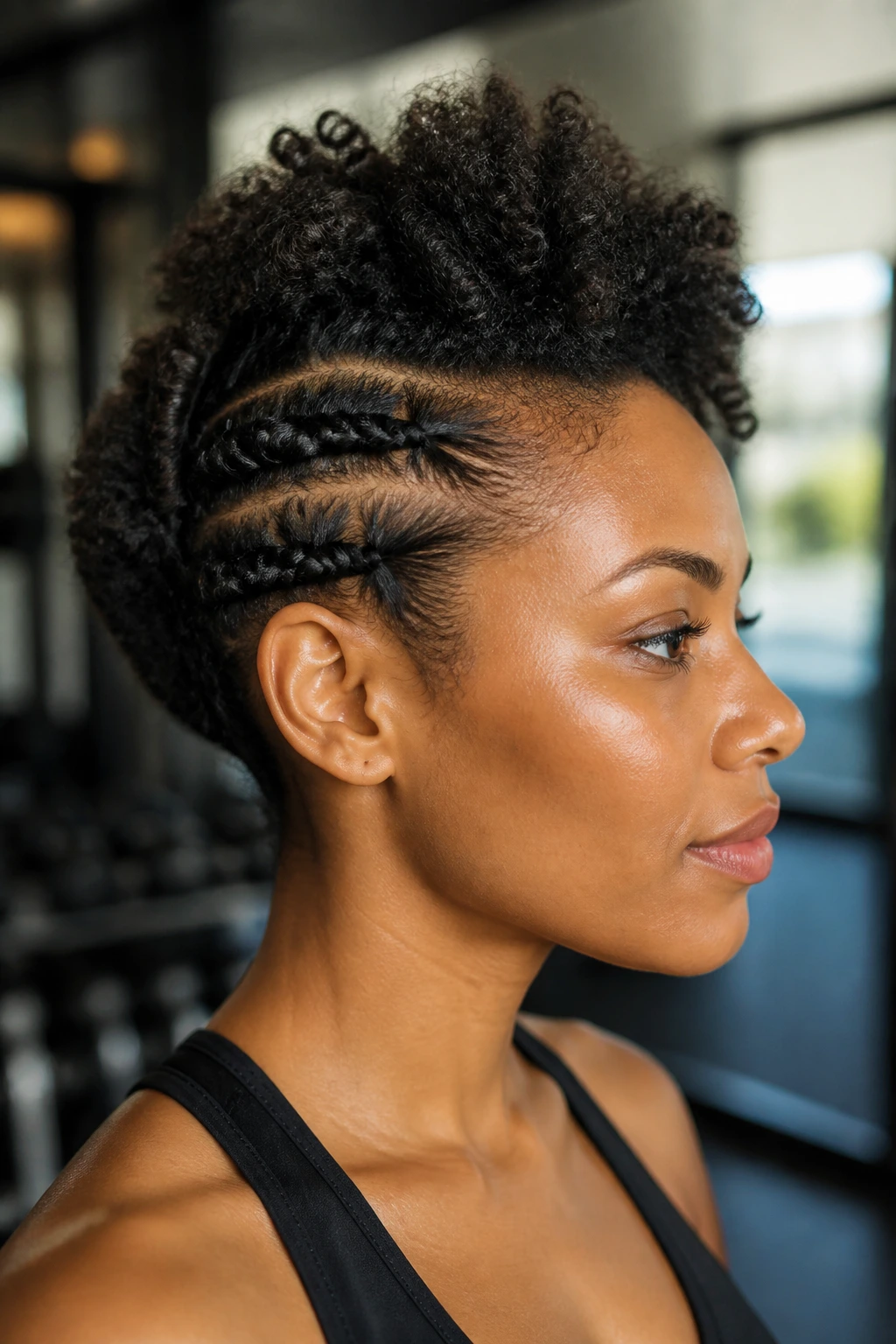
For those with short or layered hair, keeping the sides secure during a workout is often the hardest part. A sides-pinned flat twist keeps your hair neat and tidy while allowing your natural texture to dry freely on top.
The Mechanism
Flat-twist the side sections of your hair back toward your crown, securing them with a pair of sturdy bobby pins. Leave the top and back sections loose, allowing them to dry in their natural pattern.
Quick Facts
- Best hair length: Short cuts, pixies, and layered bobs
- Pin type: Matte, non-slip bobby pins
- Results: Slicked-back sides with a voluminous top
- Ideal workout: Weightlifting, yoga, or cycling
This style keeps the hair away from your temples where sweat tends to pool, while keeping your natural volume intact.
17. The Sleep-to-Sweat Silk Scarf Wrap
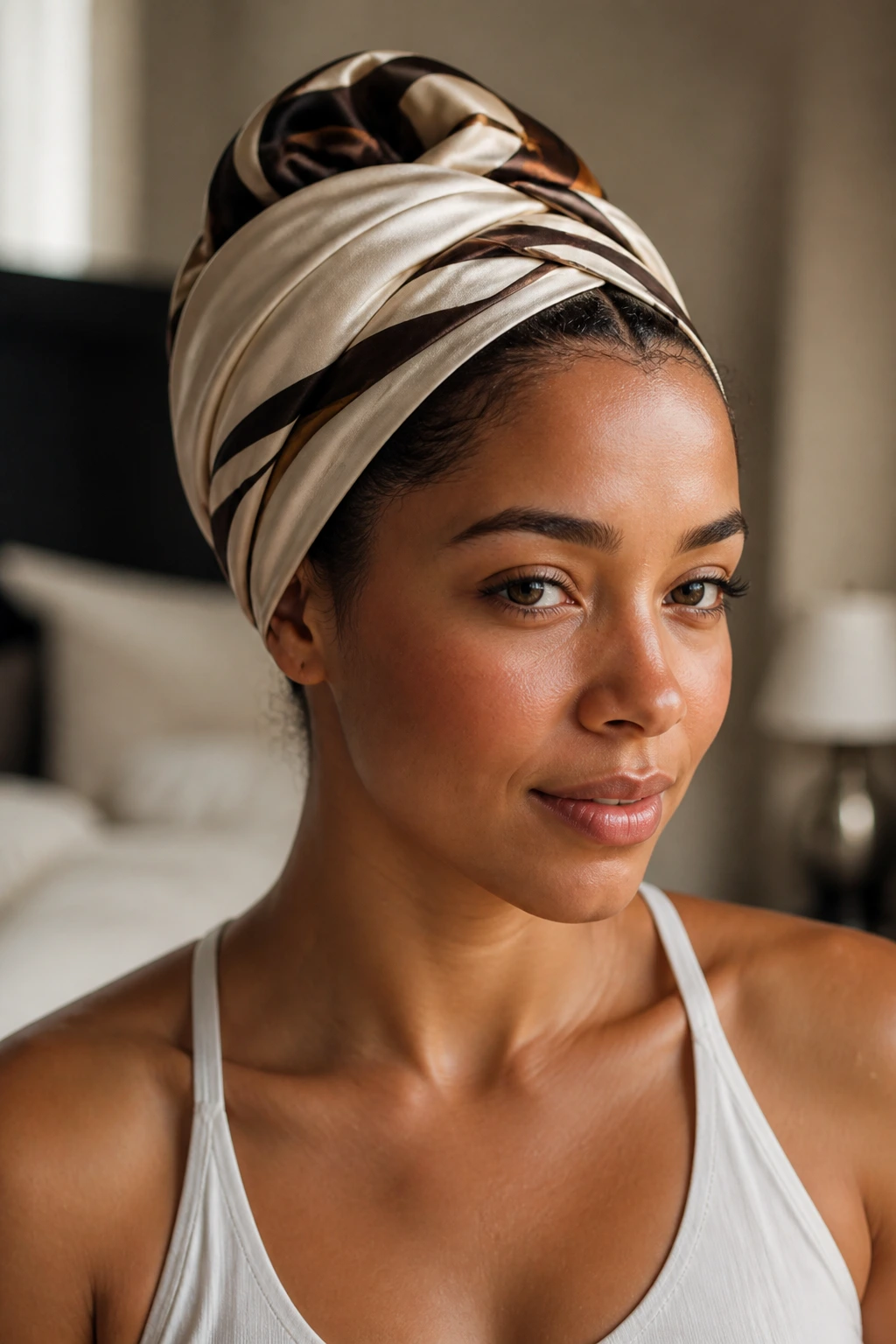
If you prefer to workout in the morning but do not want to wash your hair afterward, a silk scarf wrap is a lifesaver. This method allows you to protect your styled hair while you train, keeping it smooth and frizz-free.
Wrap a large square silk scarf around your head, tying it securely at the nape of your neck. The silk fabric barrier protects your hair from the friction of your movement, while also absorbing any sweat along your hairline.
During your workout, the scarf keeps your hair flat and smooth, preventing it from frizzing or losing its shape. Once you finish your session, remove the scarf and let your hair settle for a few minutes; you will find your style has been preserved with minimal effort.
18. The Shaken-Out Pixie with Matte Clay
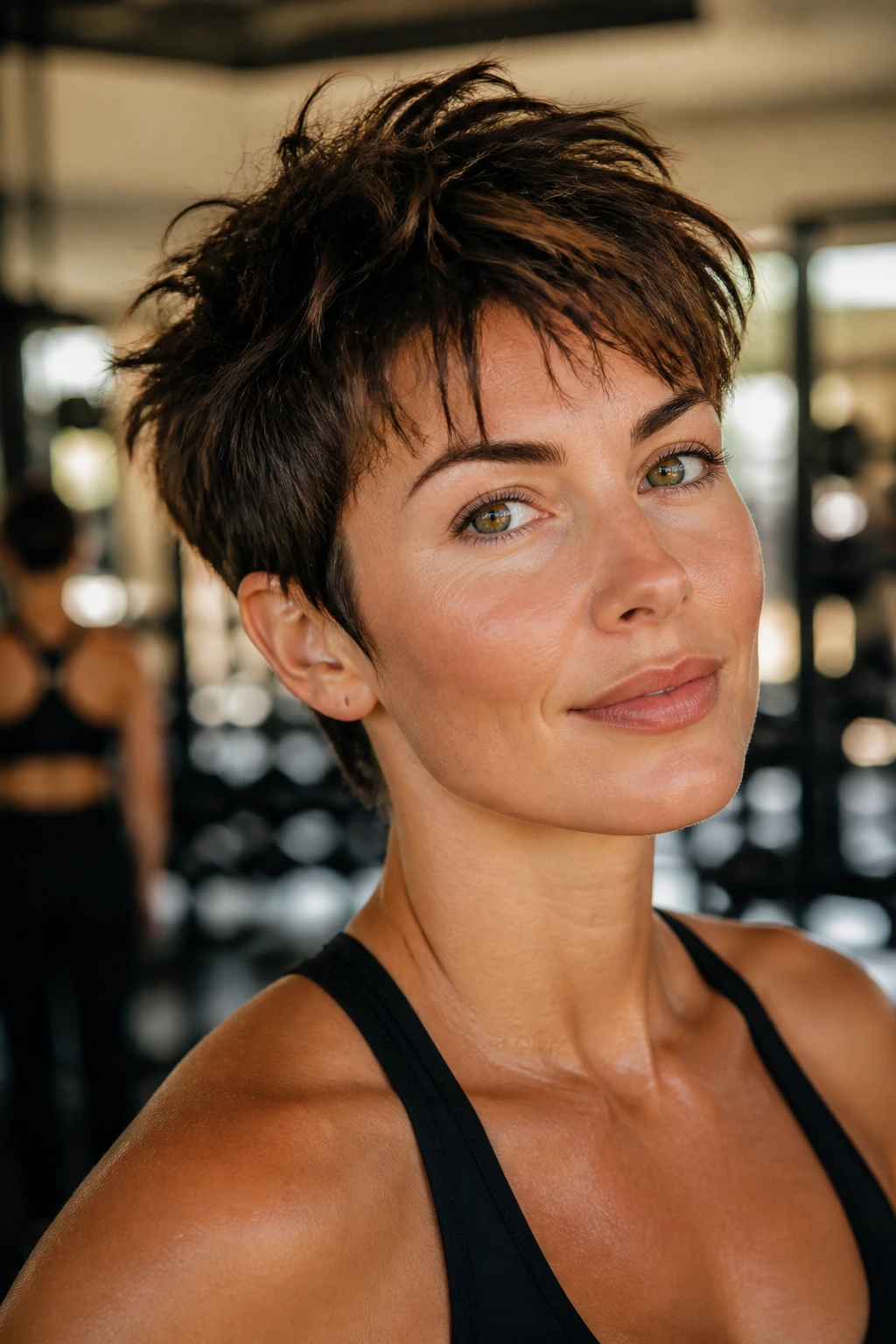
For those with short pixie cuts, air-drying is often the quickest and easiest option. Adding a touch of matte clay before your workout can help shape your hair and give it a textured, lived-in look as it dries.
What Makes This Different
Unlike creams or gels, a matte clay provides a flexible hold that does not look greasy or wet when it dries. The clay works with the sweat from your workout to create a natural, textured style with plenty of movement.
Who It Is Best For
- Very short pixie cuts
- Textured, layered styles
- Those seeking a matte, natural finish
Apply a pea-sized amount of clay to your fingertips and work it through your damp hair before you start your workout. Once your session is done, simply shake your hair out with your fingers for a textured, effortless look.
The Bottom Line
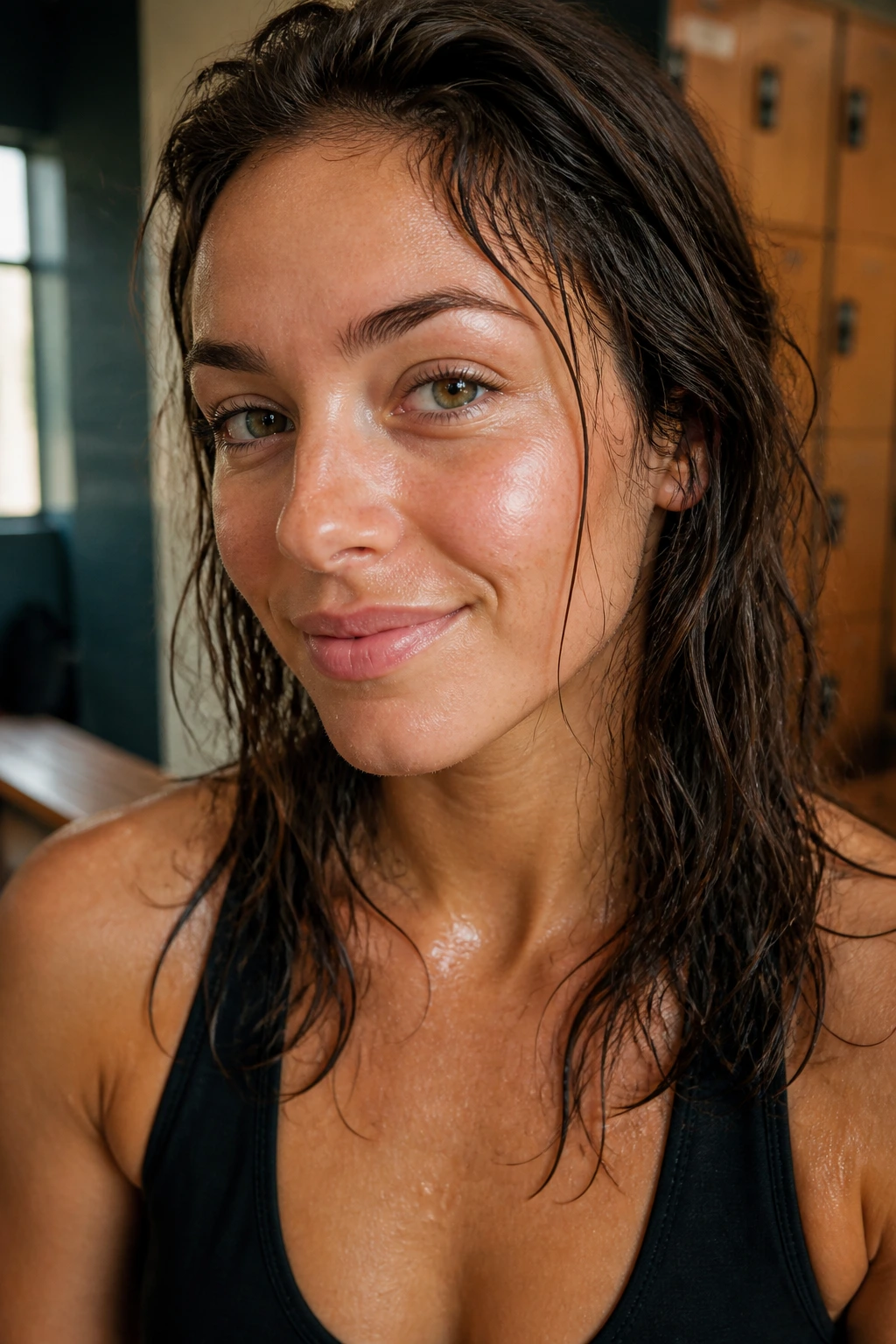
Achieving a great air-dried style after a workout does not require a lot of time or effort. By choosing the right style for your hair type and workout intensity, you can protect your scalp from heat damage and save valuable time in your daily routine.
Remember to choose accessories that are gentle on your hair, such as silk scrunchies, microfiber headbands, and seamless fabric bands. These tools help prevent the creasing and breakage that often occur when wet hair is tied back tightly.
With a little practice, you can find the perfect air-dry style that works for your hair and your active lifestyle. Give these methods a try and enjoy the benefits of healthy, beautiful, heat-free hair.