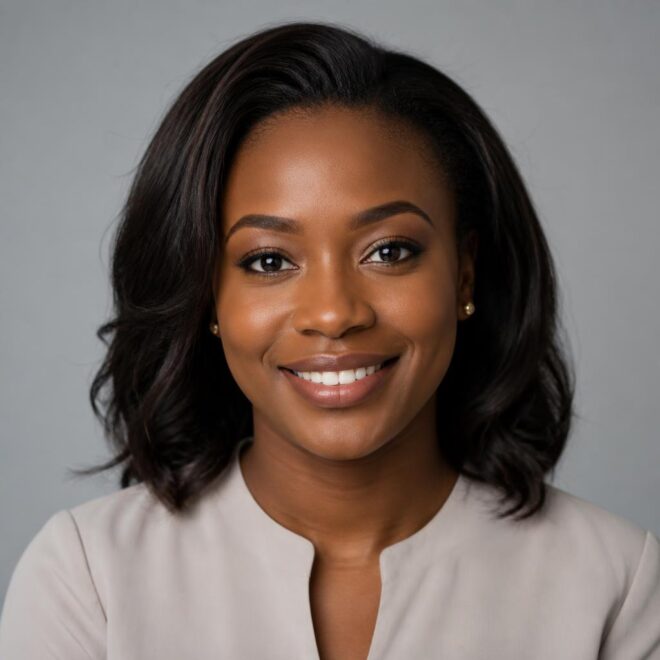


Fine hair has a reputation for being difficult, but the real issue is often the styling choices we make. When you have fine hair, every heavy layer or excessive styling product drags the hair down, leaving it flat against your scalp by afternoon. Fine hair refers to the thickness of each individual strand, not the total number of hairs on your head. This means it can easily look stringy or sparse when over-styled or subjected to heavy silicones.
Minimalist hairstyles prioritize clean lines, minimal manipulation, and precise cuts that work with your natural texture rather than fighting it. I have spent years testing hairstyling methods, working with stylists who specialize in fine hair, and analyzing how different shear techniques affect hair weight. The secret to styling fine hair does not lie in a dozen volumizing sprays. It lies in the structural integrity of the cut itself.
You do not need complicated routines to make your hair look full. By choosing styles that build density at the perimeter and avoid weighing down the roots, you can achieve a look that is both effortless and sophisticated. Let’s look at the specific minimal hairstyles that build structural fullness and maintain a clean, modern aesthetic without requiring hours of styling.
1. Blunt Bob with a Razor-Cut Edge
A blunt bob cut with a razor-cut edge offers a thick perimeter that makes the ends of fine hair look dense and healthy. Unlike traditional shears, which can sometimes create a perfectly straight, blocky edge that lacks movement, a razor can bevel the very tips of the hair slightly inward. This creates natural swing and keeps the ends from splaying out throughout the day.
The Power of a Heavy Perimeter
When hair is cut completely blunt, all the hair strands end at the exact same horizontal line. This maximizes the visual density of the hair, making it look twice as thick as a heavily layered cut. The razor edge is applied only to the bottom eighth of an inch, removing just enough weight to encourage the hair to curve under naturally without thinning the overall bulk of your hair.
Step-by-Step Styling
- Wash your hair with a lightweight, protein-infused shampoo to strengthen the strands.
- Towel-dry gently, pressing the moisture out rather than rubbing the cuticle rough.
- Apply a dime-sized amount of lightweight blowout cream from the mid-lengths to the ends.
- Blow-dry with a flat brush, keeping the nozzle pointed downward to maintain a smooth surface.
Keep the heat setting on medium to prevent heat damage from thinning out your ends.
2. Classic French Twist with a Minimalist Claw Clip
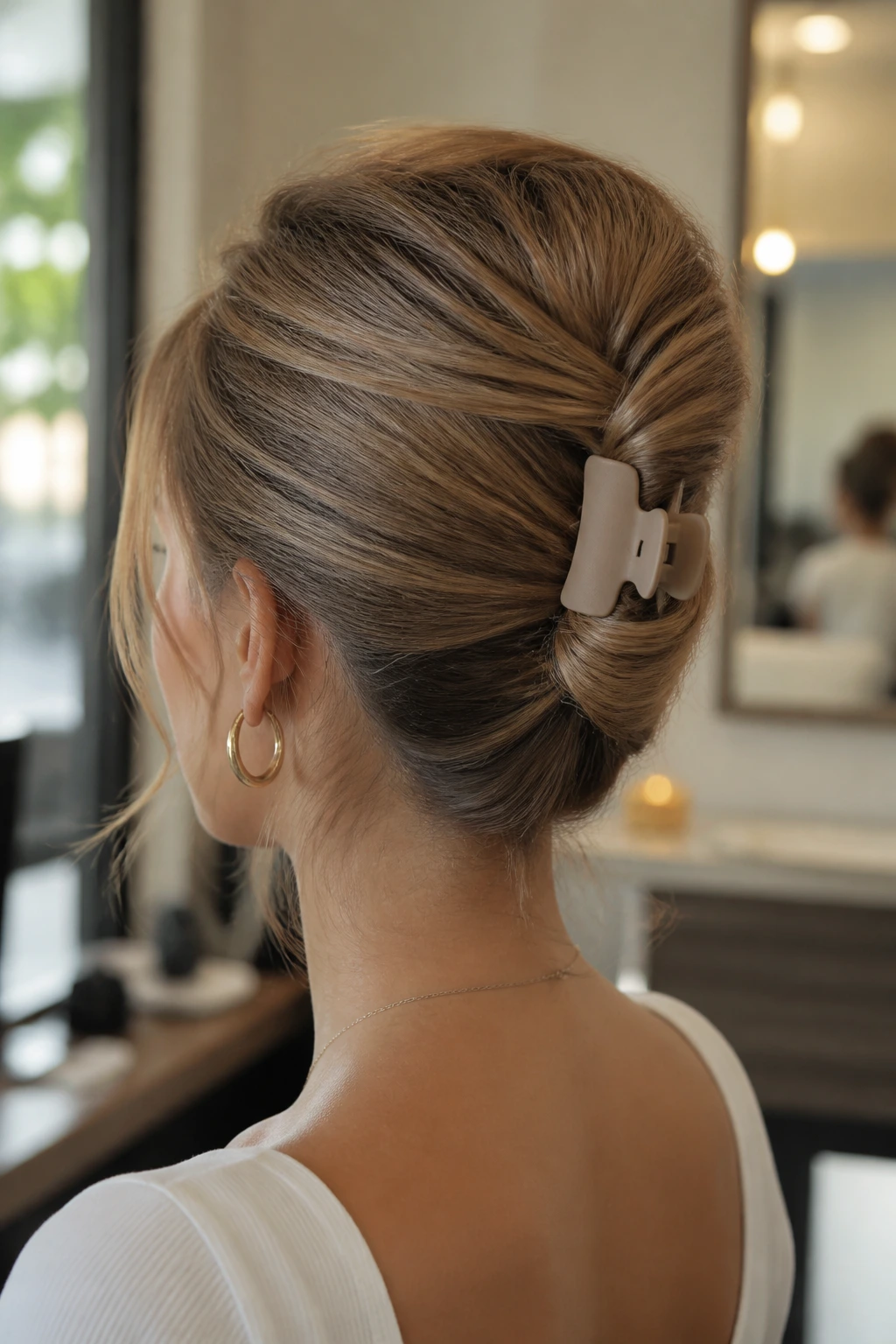
Heavy hair accessories are the enemy of fine hair, but a classic French twist secured with a lightweight, matte-finish claw clip works with your natural texture. Fine hair actually holds a twist better than thick, slippery hair because it packs down tightly and stays anchored without needing dozens of heavy bobby pins. The secret is choosing a clip made of lightweight acetate or hollow plastic rather than heavy metal, which will slide down your head within minutes.
To style this, gather your hair at the nape of your neck, making sure your hands are dry. Twist the hair upward into a firm column, tucking the loose ends inside the fold as you reach the crown. Secure the middle of the twist with the claw clip, ensuring the teeth grab both the twisted hair and the hair anchored flat against your scalp. Let a few wispy pieces fall naturally around your ears to keep the style soft and unstructured.
3. Low Sleek Ponytail with a Hair Wrap
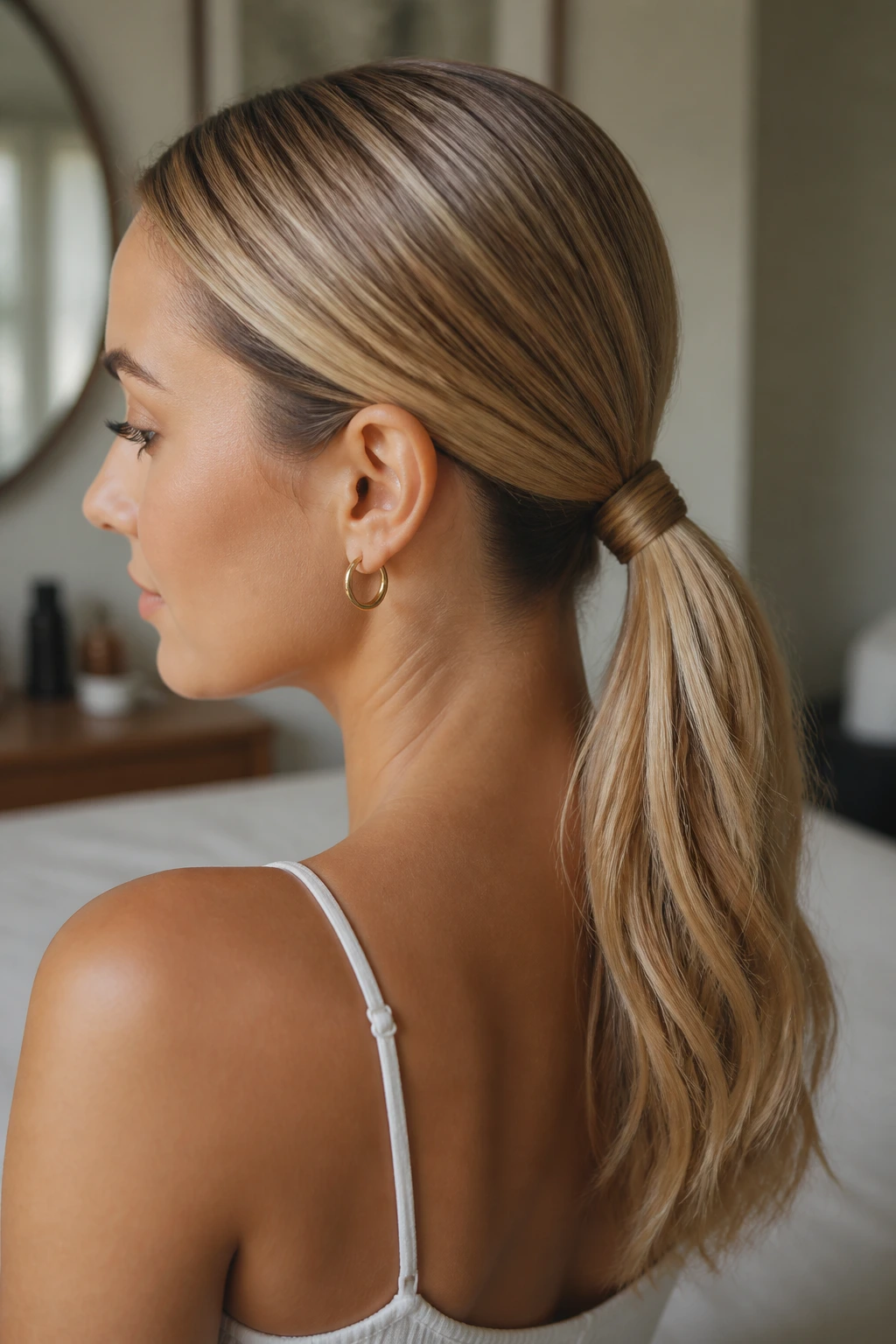
Why does a sleek low ponytail with a hair wrap look so thick compared to a standard ponytail? When you wrap a small section of hair around the elastic band, you hide the thinness of the ponytail base and create a solid focal point. This simple detail tricks the eye into seeing more volume at the crown while keeping the styling clean and polished.
The low ponytail also keeps your hair from pulling flat against your head, which often happens with high ponytails. By positioning the base of the ponytail at the nape of your neck, you allow the natural weight of your hair to distribute evenly. This maintains a small amount of lift at the top of your head without requiring backcombing or heavy hairsprays.
Styling Guidelines for Best Results
To secure this style, use a small clear elastic band that will not slip. Pull out a half-inch section of hair from the underside of the ponytail, wrap it tightly around the band until the elastic is fully covered, and secure the end with a small bobby pin pushed upward into the base of the pony. Spritz the wrapped section with a tiny amount of flexible-hold hairspray to lock the hair wrap in place without making the rest of your hair stiff.
4. Softly Layered Pixie Cut
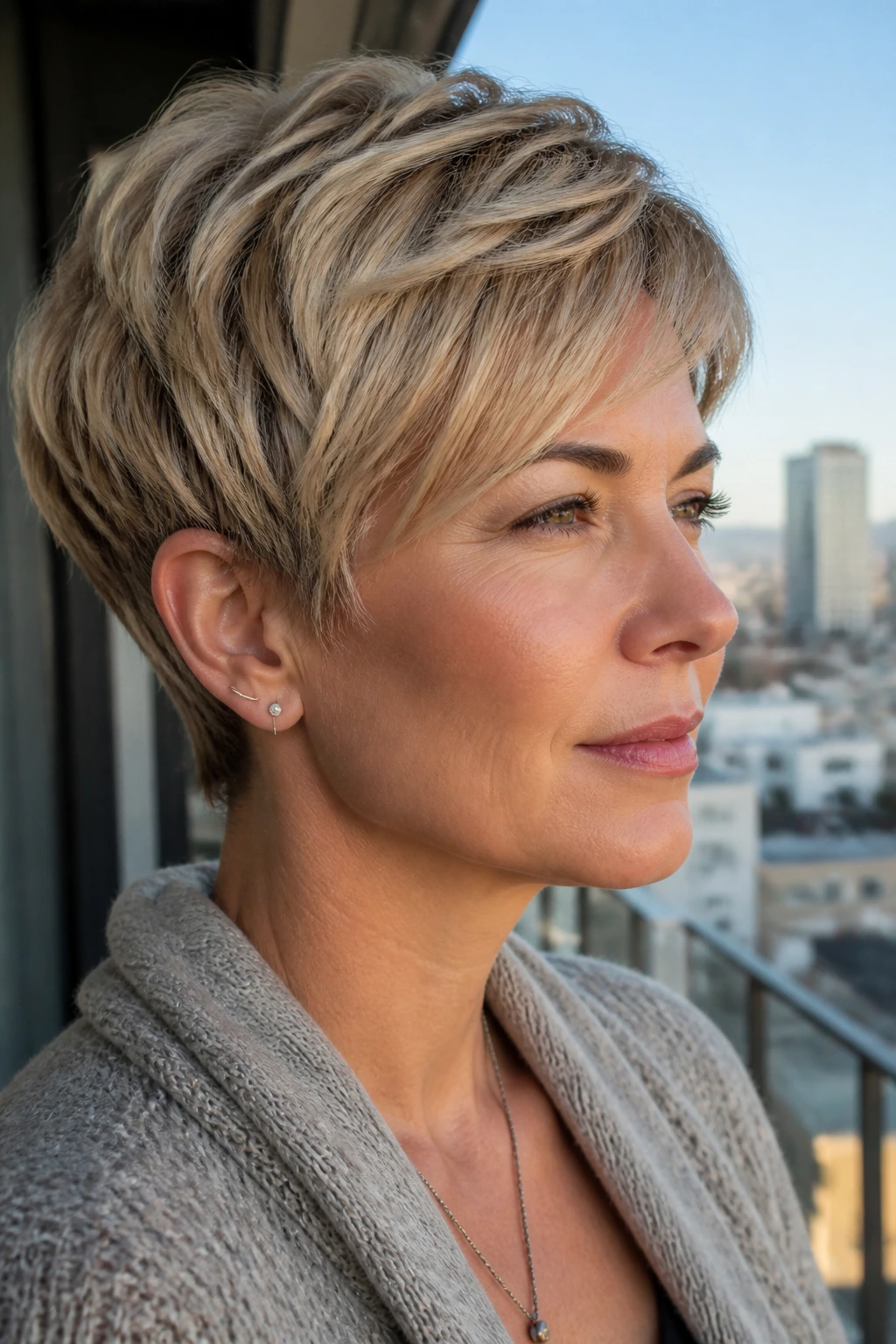
Picture walking out of a salon with a pixie cut, only to realize that without three styling products, it looks flat and lifeless. A softly layered pixie cut solves this problem by using short, strategic layers that support each other. Because fine hair is lightweight, cutting it short allows the natural bounce of the hair to lift the roots, creating height without the need for styling clays.
The mechanism behind this cut is called structural graduation. Shorter pieces underneath support the longer pieces on top, acting as a natural scaffold. When the breeze moves your hair, the soft layers fall back into place instead of separating into stringy sections.
Key Structural Details
- The perimeter should be kept soft and tapered around the ears and nape.
- The top sections should remain slightly longer to allow for movement and styling options.
- Avoid heavy pomades; opt for a dry texture powder instead.
- Keep the layers soft and blended rather than disconnected.
The result is a wash-and-go look that maintains its shape for six to eight weeks between trims.
5. Deep Side-Parted Blunt Lob
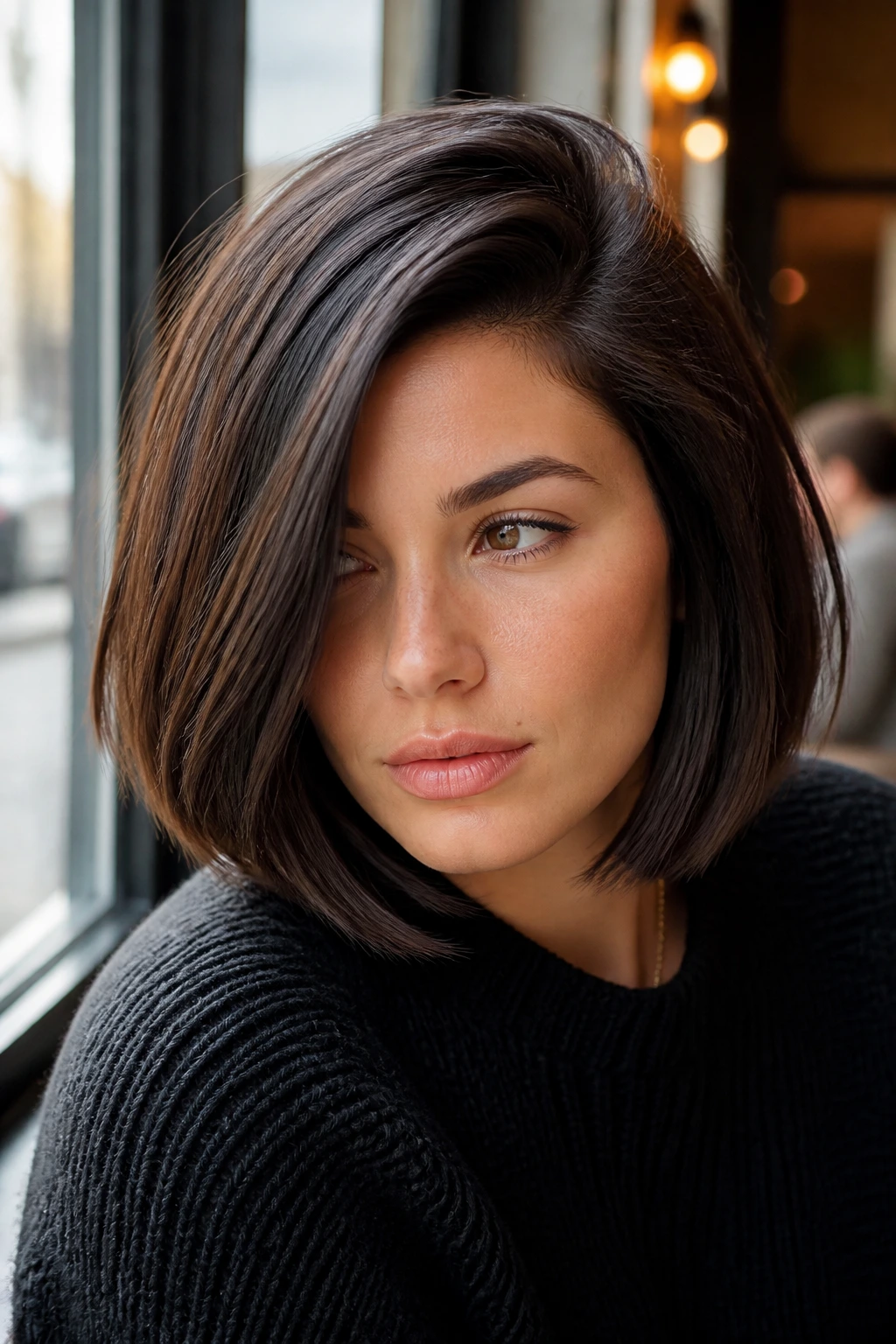
A deep side part on a blunt lob instantly shifts the bulk of your hair to one side, creating the optical illusion of double the volume. Fine hair can look sparse when split directly down the middle, as the scalp shows more prominently. By shifting the part two inches to the left or right, you stack the hair on top of itself, lifting the roots and hiding the scalp line.
To make this style work, the lob must be cut with a completely blunt perimeter at the collarbone. Any texturizing should be limited to the internal hair rather than the ends, which must remain solid. This solid line creates a strong horizontal barrier that frames your shoulders and makes your neck look longer.
When styling a deep side part, blow-dry the hair in the opposite direction of how it will ultimately lay. If your part is on the right, blow-dry your hair to the left first. Once the hair is dry, flip it back over to the right. This simple drying technique builds lasting volume at the root without a drop of styling mousse.
Finish the style by tucking the shallower side of the part behind your ear. This exposes your jawline and creates a beautiful contrast between the sleek, tucked side and the voluminous, sweeping side. It is a clean, minimal look that works for professional environments and casual weekends alike.
6. The Half-Up Topknot with Clean Sections
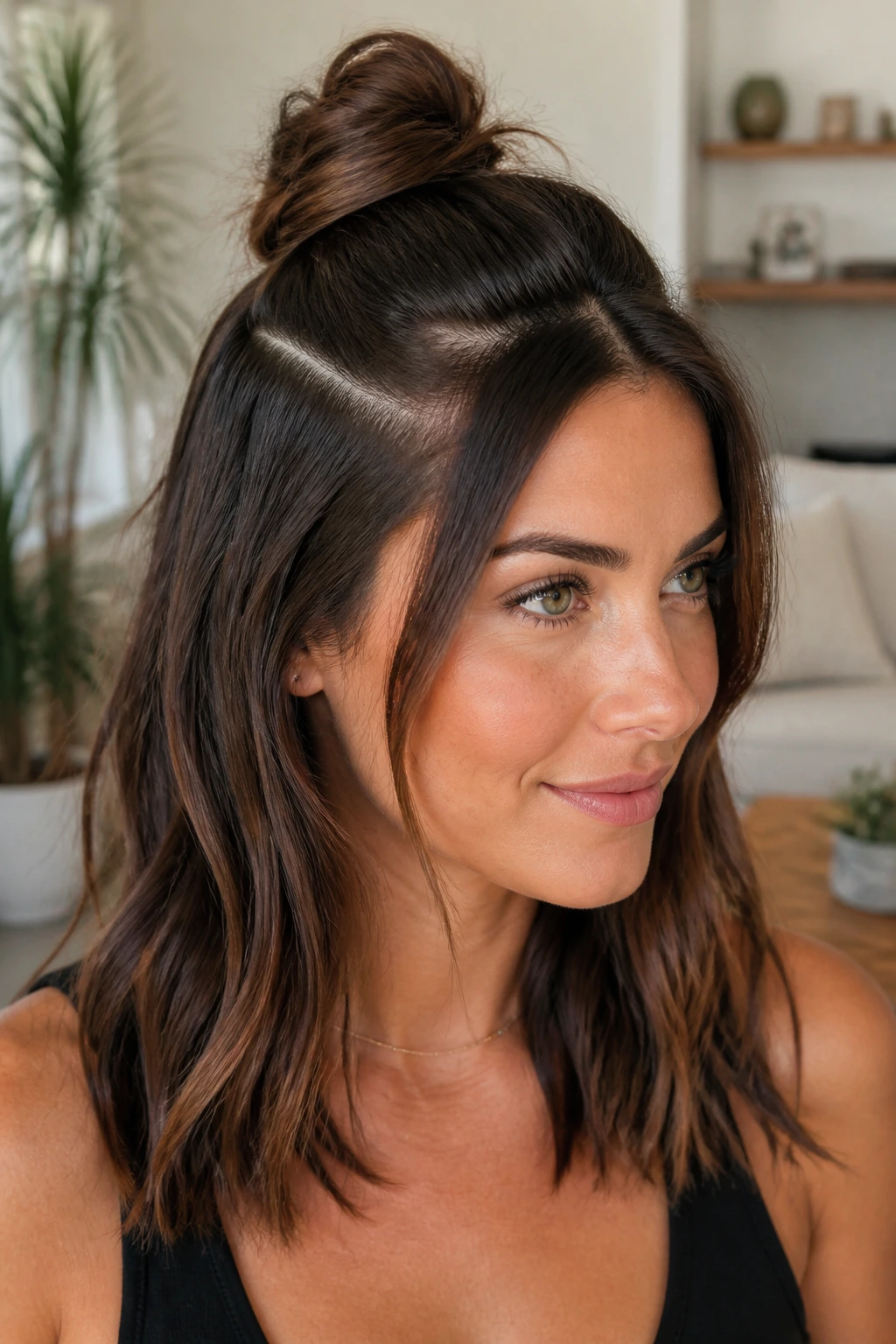
Unlike high bun styles that require a donut pad or heavy padding to look substantial, the half-up topknot with clean sections uses only the top third of your hair. This makes it much easier to create a full, proportionate bun without leaving the rest of your hair looking thin. By separating the hair into clean, distinct sections, you keep the style looking intentional rather than messy.
This hairstyle is different because it leaves the bottom two-thirds of your hair free to frame your face and neck. For fine-haired individuals, showing the shoulders through loose hair actually makes the hair look thicker, as the solid background of your skin or clothing highlights the outline of the cut.
This look is best for those with straight or slightly wavy fine hair that tends to get flat on top but has decent length. It keeps the hair out of your face while maintaining a stylish, modern look.
I recommend using a small silk scrunchie to secure the topknot. Silk reduces friction on fine, fragile hair strands, preventing breakage around the crown where new hair growth is most vulnerable.
7. Textured Crop with Micro-Bangs
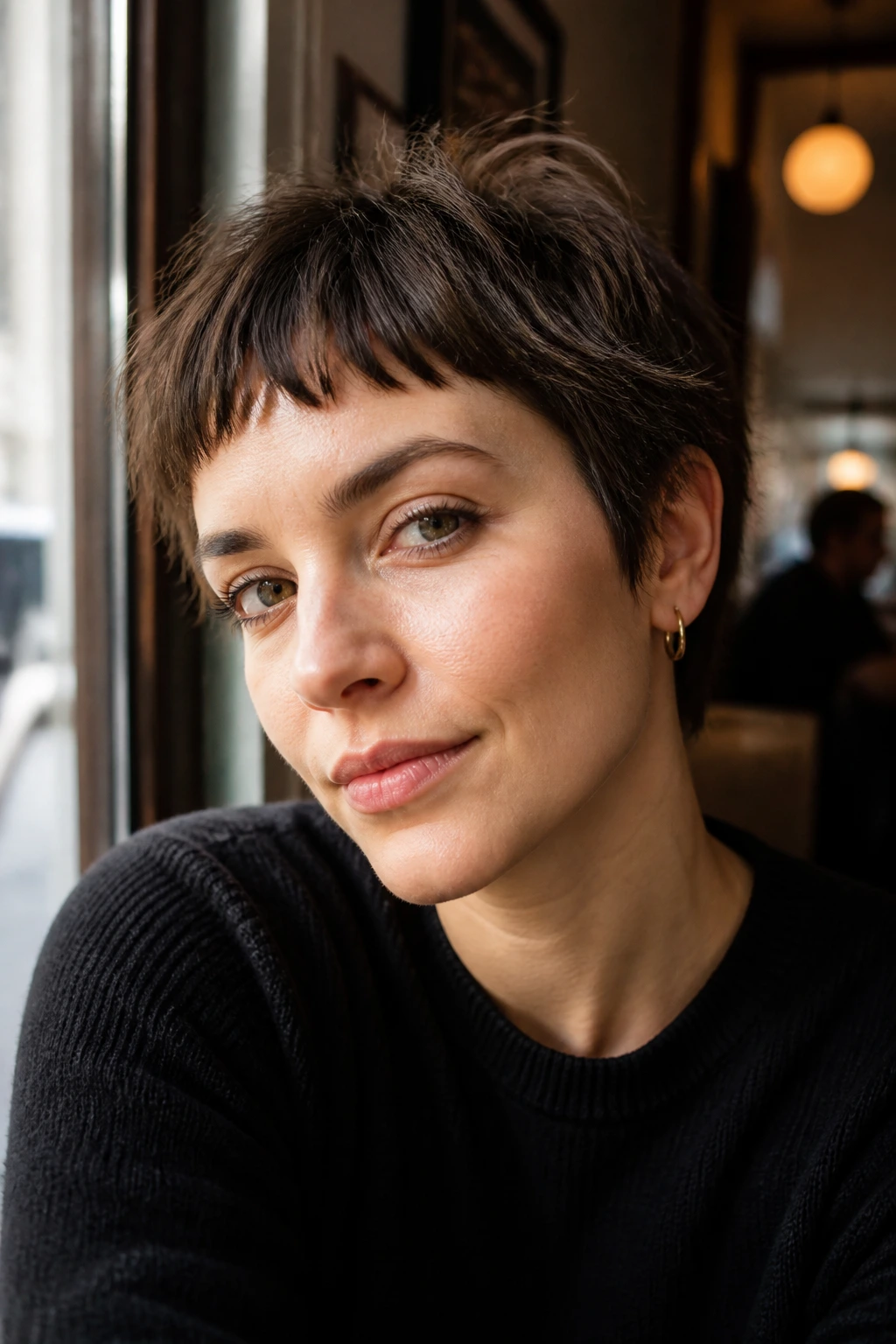
A textured crop with micro-bangs is a bold, minimal hairstyle that works exceptionally well for fine hair because it embraces the hair’s natural lightness. Micro-bangs—fringes that end an inch or more above the eyebrow—draw attention upward toward the eyes and forehead, distracting from any lack of density at the sides of the head.
Why Short Fringe Works
By keeping the fringe short and light, you avoid using up too much hair from the crown to create the bangs. This leaves more density for the rest of the head. The textured crop uses point-cutting on the ends to create a feathered, piecey look that does not require heavy styling products to maintain.
Quick Styling Checklist
- Apply a tiny pinch of dry clay or styling paste to your fingertips.
- Warm the product by rubbing your hands together until it is invisible.
- Pinch the ends of the micro-bangs to define the pieces.
- Tousle the crown gently to create separation.
Always apply product to the back of your head first, moving forward to avoid overloading the fringe.
8. Wispy Shag with Face-Framing Tendrils
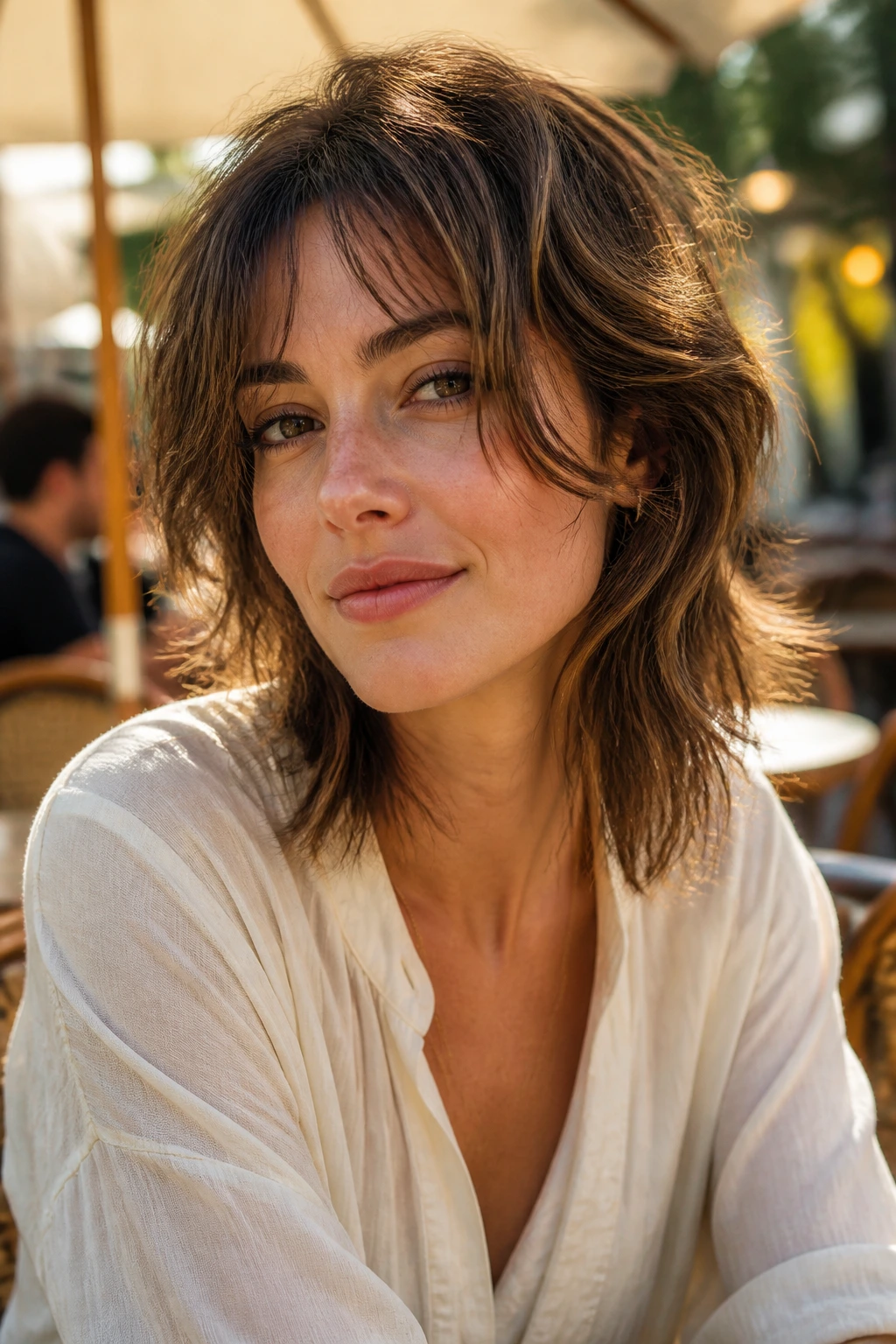
Many people believe that shag cuts are only for thick hair, but a wispy shag with face-framing tendrils is highly effective for fine hair when executed correctly. The key is to avoid heavy layers on the top of the head, which can make the bottom look thin and see-through. Instead, the layers should be concentrated around the face and the very outer canopy of the hair.
This structure allows the weight to remain at the bottom while creating movement and softness around the face. The face-framing tendrils can be tucked behind the ears for a clean look or left down to soften the jawline. This versatility makes it a perfect minimal cut for those who want movement without losing their length.
9. Italian Bob with Tucked-Behind-the-Ear Styling
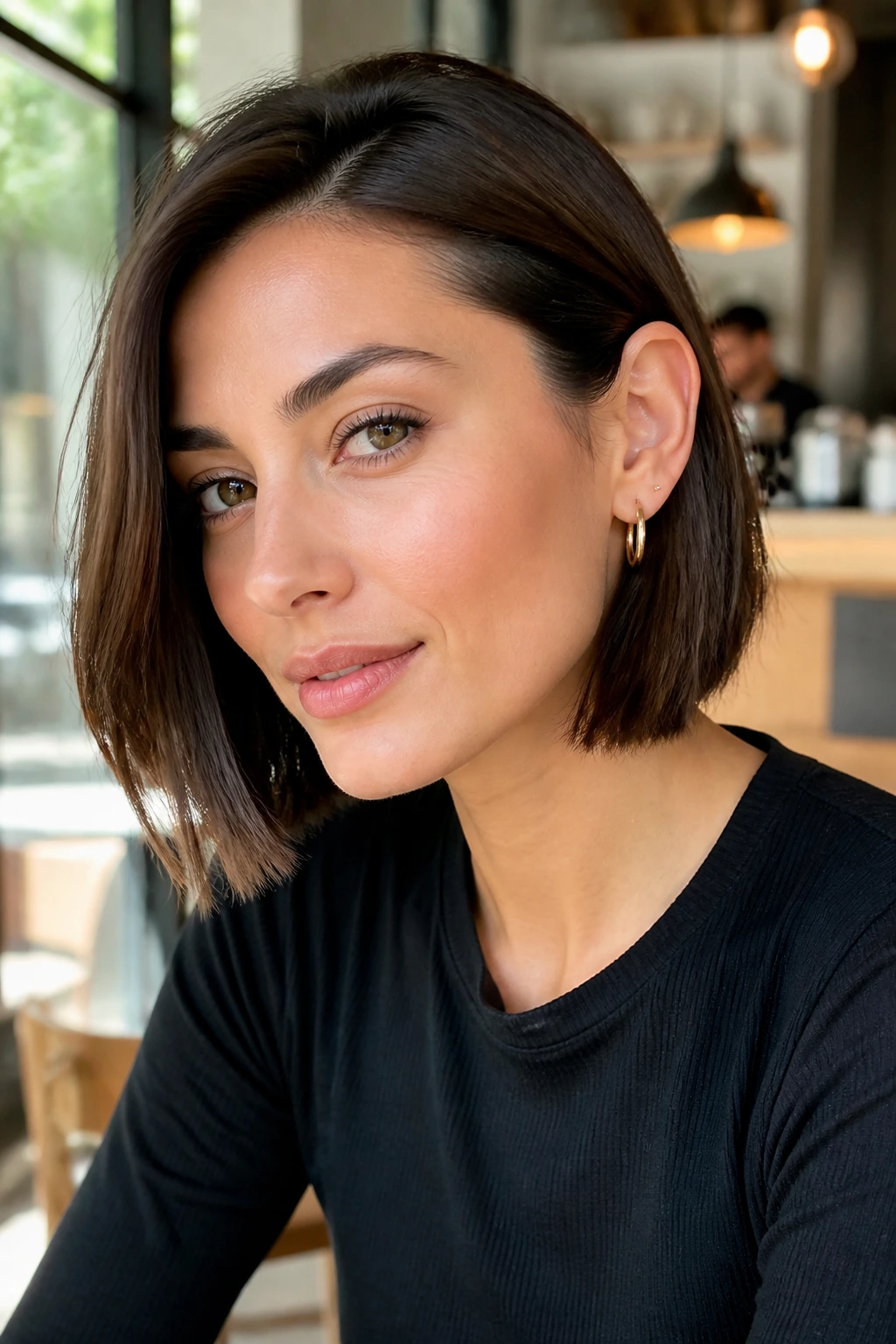
Why choose an Italian bob over a classic French bob? The Italian bob is cut slightly longer, usually grazing the bottom of the neck, and features thick, blunt ends with minimal layering. This weight at the bottom allows the hair to swing naturally and gives it a luxurious, dense appearance that fine hair often lacks.
The magic of this style happens when you tuck one or both sides behind your ears. This action pushes the hair forward, creating a natural wave of volume right at the cheekbones. It also shows off your bone structure while keeping the hair out of your face.
How to Style the Italian Bob
To get the most out of this cut, blow-dry your hair using a large round brush. Focus on lifting the roots straight up from the scalp, then curl the ends slightly under. Once dry, run your fingers through the hair to break up the shape, and tuck one side behind your ear, securing it with a tiny bobby pin hidden beneath the hair if your strands are particularly slippery.
10. Slicked-Back Low Bun with a Center Part
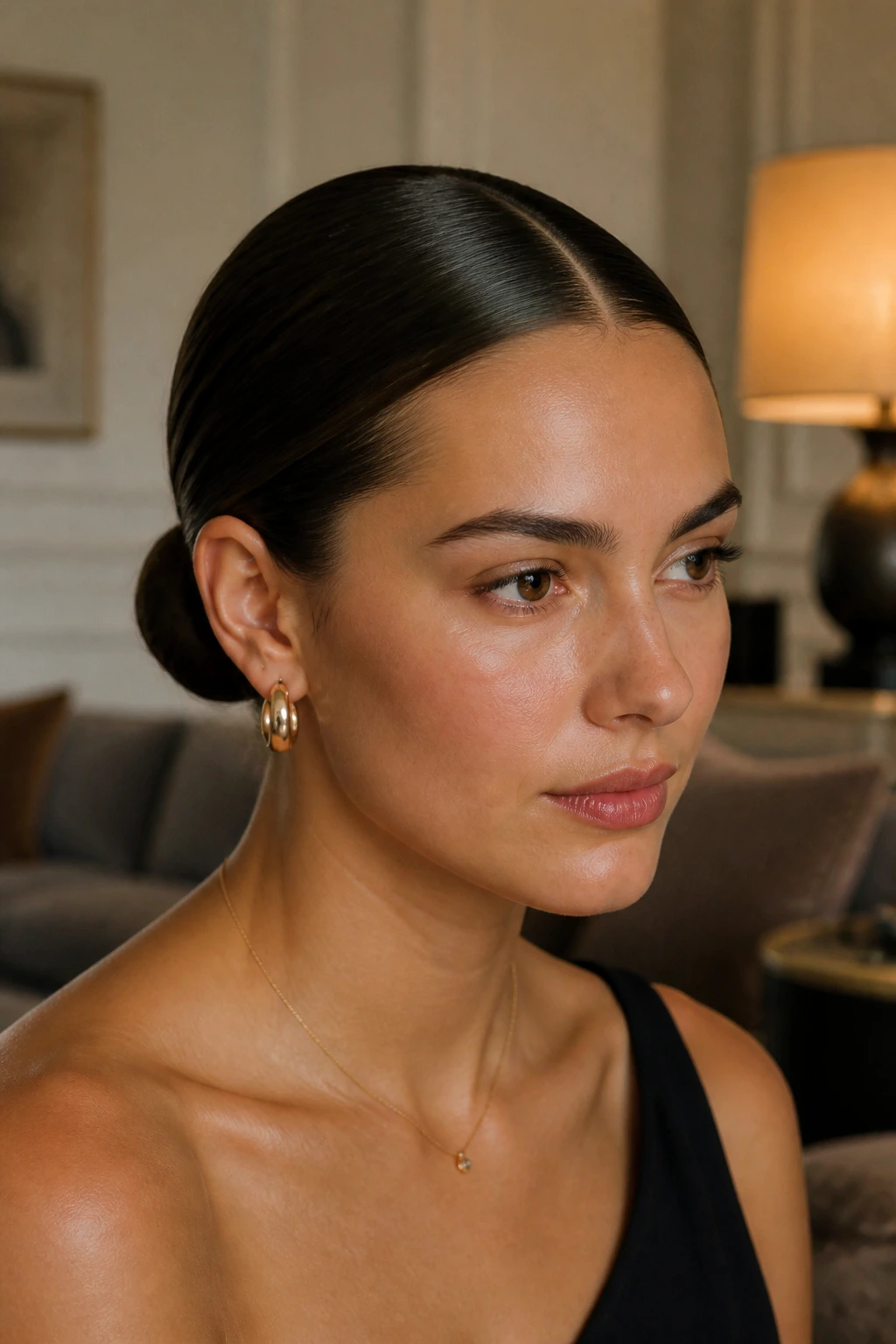
When you cannot get your fine hair to hold volume, stop fighting it and embrace a sleek, high-shine style. A slicked-back low bun with a center part is a classic look that works because it turns the natural flat tendency of fine hair into a design choice. This style is incredibly clean and sophisticated, making it suitable for both formal events and daily wear.
The center part must be perfectly straight to make this look work. Use a metal rat-tail comb to create a clean line from the forehead to the crown of the head.
The Slick-Back Process
- Dampen the hair slightly with a fine-mist water bottle.
- Apply a small amount of lightweight hair oil or water-based pomade from the roots to the mid-lengths.
- Use a soft-bristle boar brush to smooth the hair flat against the scalp, working toward the nape of the neck.
- Secure the hair into a tight low ponytail, then twist the ponytail into a small, neat bun and secure with u-shaped hairpins.
This style keeps your hair protected from environmental damage and does not require constant adjustments throughout the day.
11. Asymmetrical Pixie with a Tapered Nape
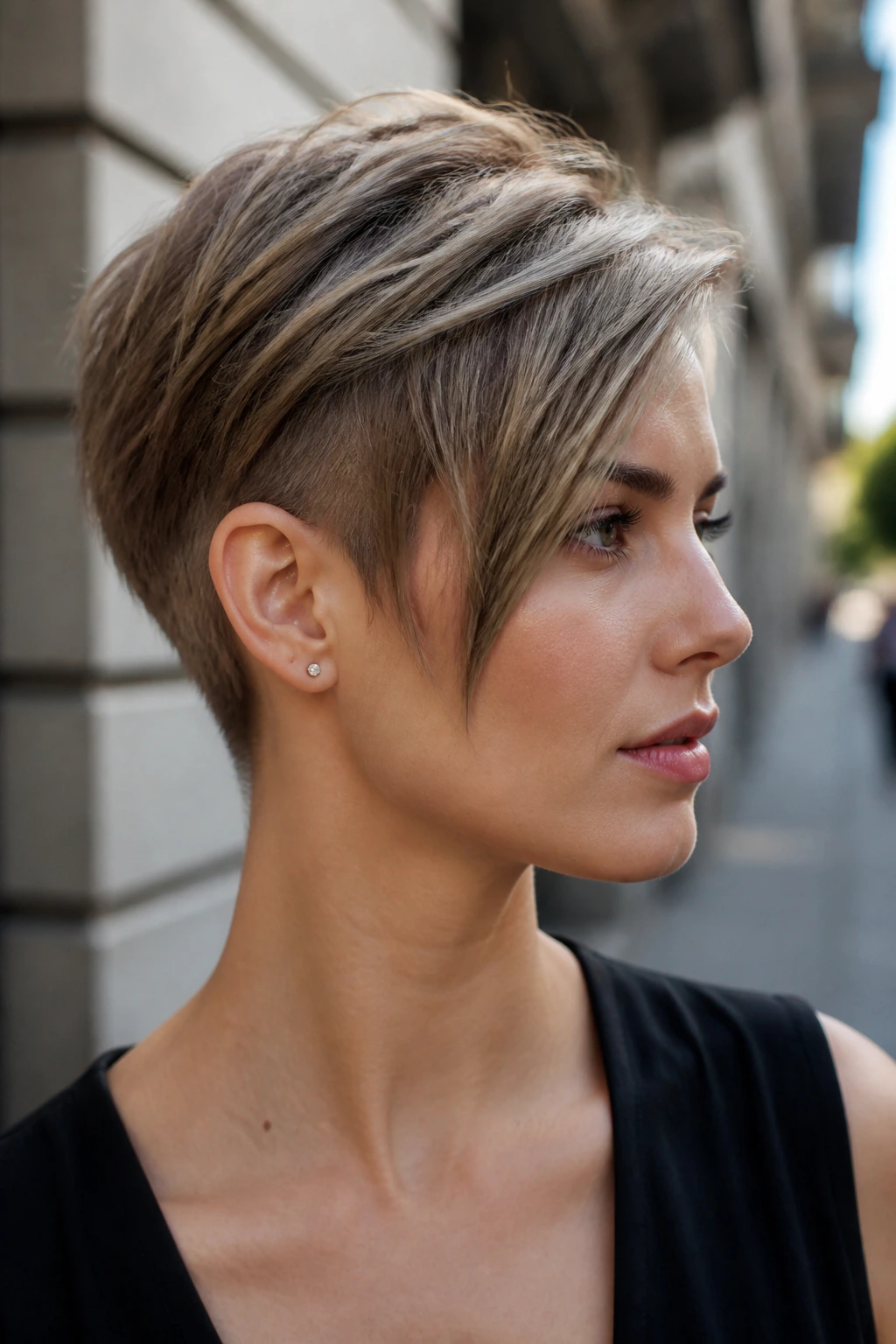
An asymmetrical pixie with a tapered nape is an excellent choice for fine hair because the asymmetry creates a dynamic line that keeps the eye moving. By keeping one side of the cut significantly shorter and tapering the nape of the neck tightly, you concentrate the weight of the hair on one side. This makes the longer side look remarkably thick and voluminous.
The tapered nape also creates a clean neck line, which visually lifts the entire head and makes you look taller. This cut is highly manageable, requiring only a quick blow-dry with your fingers and a touch of texturizing paste on the longer side to define the ends.
Because the weight is distributed unevenly, you do not need to worry about your hair looking flat or parting down the middle. It is a modern, architectural style that showcases your features while making the most of fine strands.
12. The Collarbone Cut with Soft Internal Layers

Unlike traditional layers that are cut on the outer surface of the hair and can make the ends look thin, soft internal layers are cut underneath the canopy. This technique, often called slide cutting or under-cutting, removes small amounts of weight from the interior of the hair. This creates space for the remaining hair to bounce and move, giving the illusion of volume without sacrificing a thick perimeter.
The collarbone cut is the ideal length for this style because it is long enough to feel feminine but short enough that the weight of the hair does not pull it flat. The blunt ends rest on the collarbone, which acts as a shelf, pushing the hair upward and outward to create natural fullness.
This cut is best for people with straight or slightly wavy fine hair who want a low-maintenance style. It requires minimal styling—just a quick rough-dry and a touch of dry shampoo at the roots for texture.
13. Minimalist Bubble Ponytail
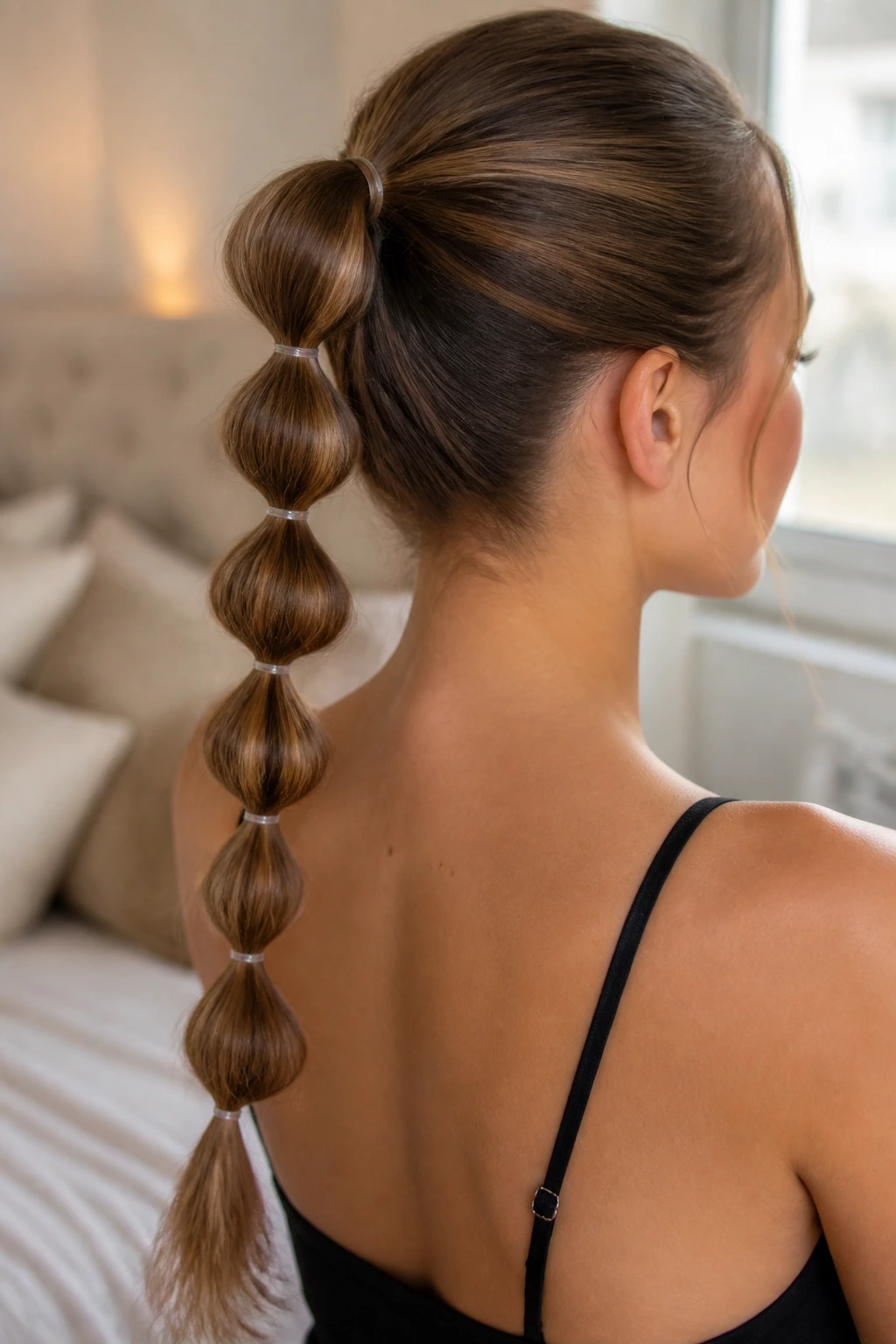
A minimalist bubble ponytail is a creative way to add volume to a thin ponytail without using extensions. By placing small elastic bands at equal intervals down the length of the ponytail and gently pulling the hair outward between each band, you create a series of “bubbles” that look thick and full.
Creating the Bubbles
This style works best on medium to long fine hair. The key to keeping it minimal is using tiny, clear elastic bands and avoiding over-fluffing the bubbles. You want a clean, geometric look rather than a messy, chaotic one.
Styling Steps
- Pull your hair into a sleek mid-height ponytail and secure with a clear elastic.
- Place a second elastic band two inches down the ponytail.
- Hold the second band with one hand, and use your other hand to gently tug the hair between the elastics outward.
- Repeat this process down the length of the ponytail, spacing the bands evenly.
Spray each bubble with a light texturizing spray to help it hold its rounded shape.
14. Double-Knot Low Bun
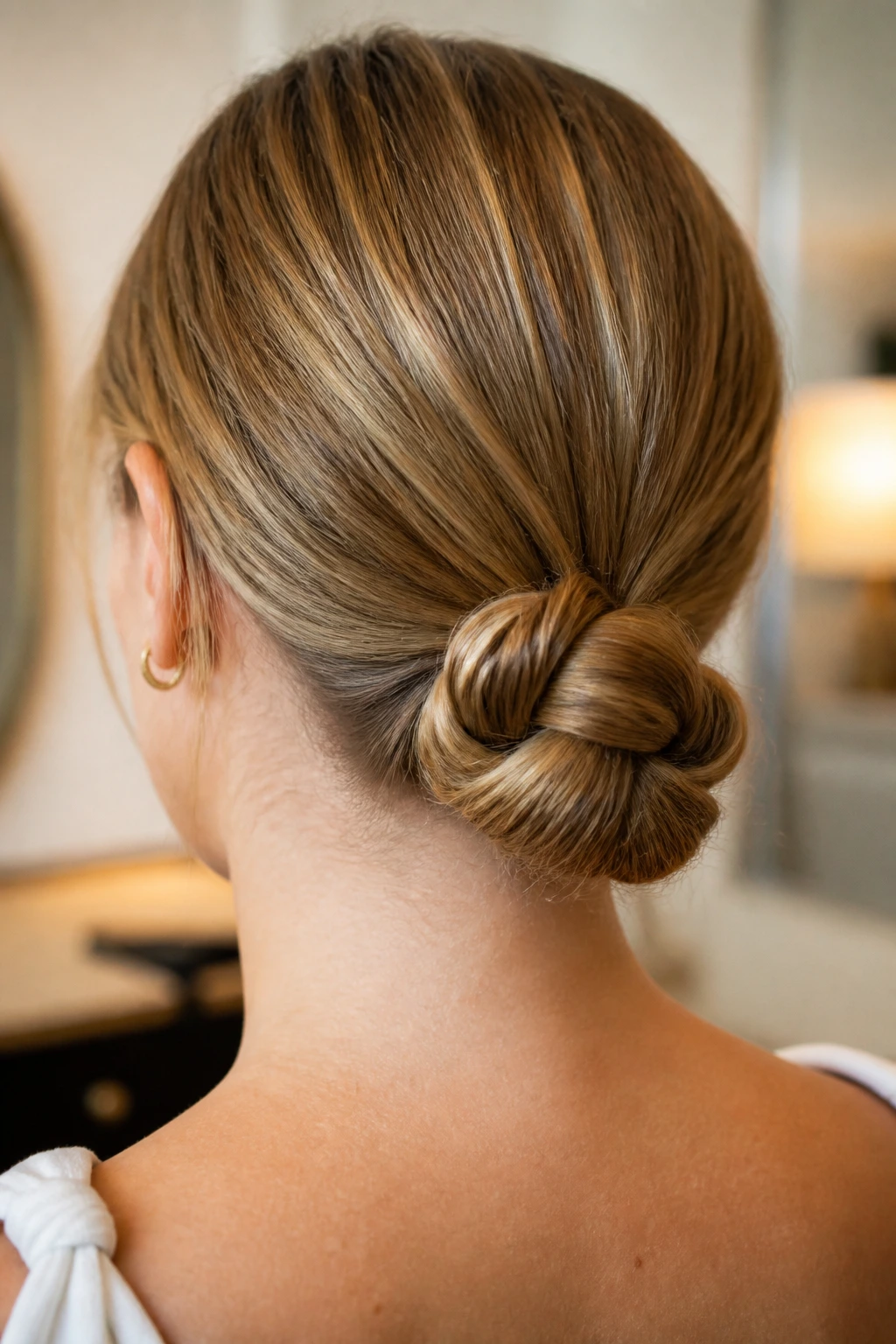
Traditional buns can look small and flat when made with fine hair, but the double-knot low bun solves this by physically tying the hair into knots to create bulk. This styling technique does not rely on teasing or padding; instead, it uses the natural length of your hair to build physical volume.
To create this style, split your hair into two equal sections at the nape of your neck. Tie the two sections together in a simple overhand knot, just like you would tie a pair of shoelaces. Tie them a second time to create a double knot, then tuck the loose ends underneath the structure and secure them with u-shaped hairpins. The result is an intricate-looking, textured bun that looks twice as large as a standard twist bun.
15. Symmetrical Center-Parted Glass Hair
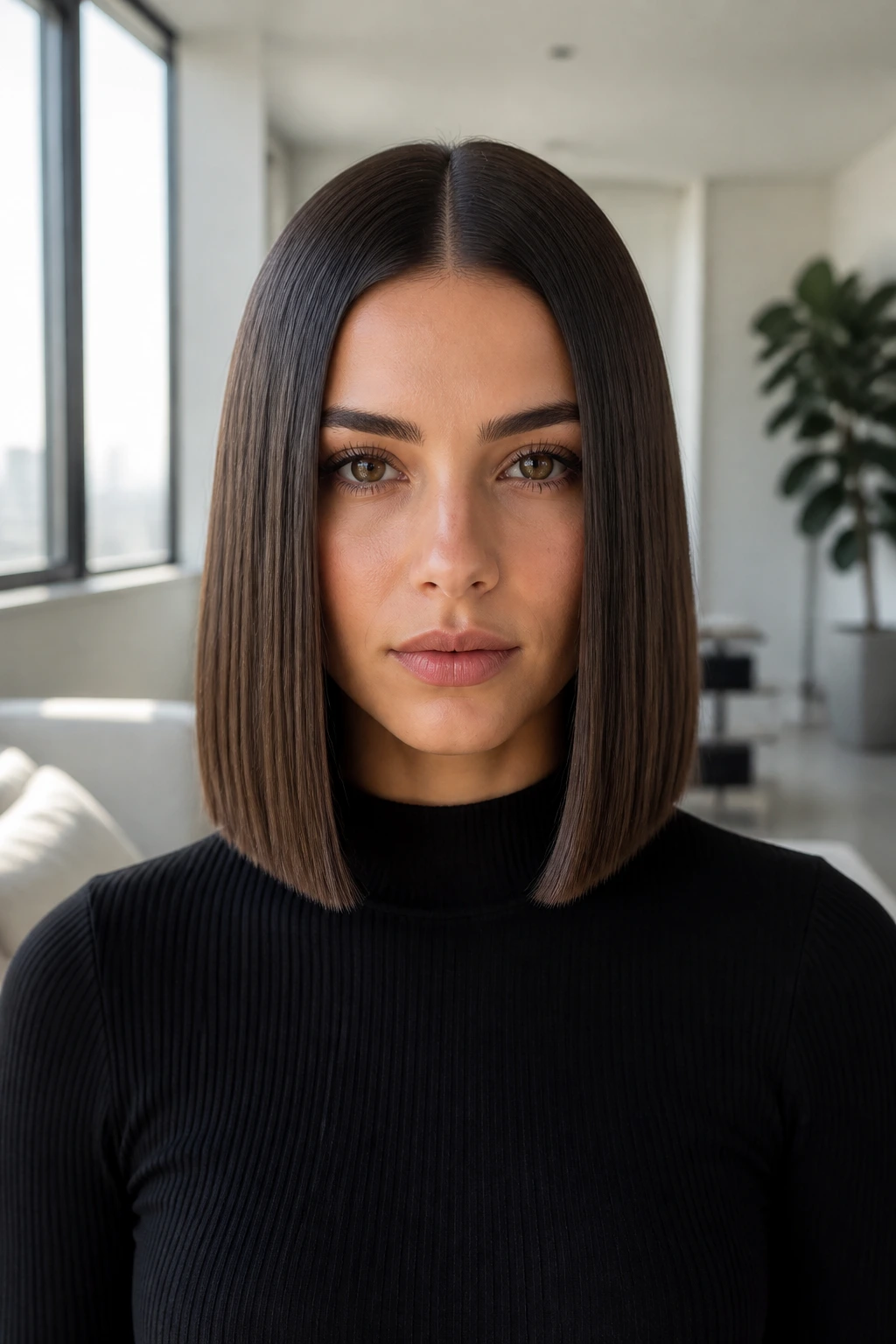
What is glass hair? It is hair that is styled so smooth, straight, and shiny that it resembles a reflective glass surface. Symmetrical center-parted glass hair is a spectacular choice for fine hair because fine hair has a naturally flat cuticle that reflects light better than coarse, textured hair.
This style relies on precision. The hair should be cut to a single length—either a sharp bob or a lob—with absolutely no layers. The center part must be perfectly aligned with the nose to create a sense of balance and symmetry.
Styling for Glass Hair Finish
To achieve this look, apply a heat-activated smoothing spray to damp hair before blow-drying. Use a paddle brush to dry the hair completely flat, then run a flat iron over small, one-inch sections. Finish with a drop of lightweight shine serum, avoiding the roots to prevent grease.
16. Shaggy Wolf Cut for Fine Hair
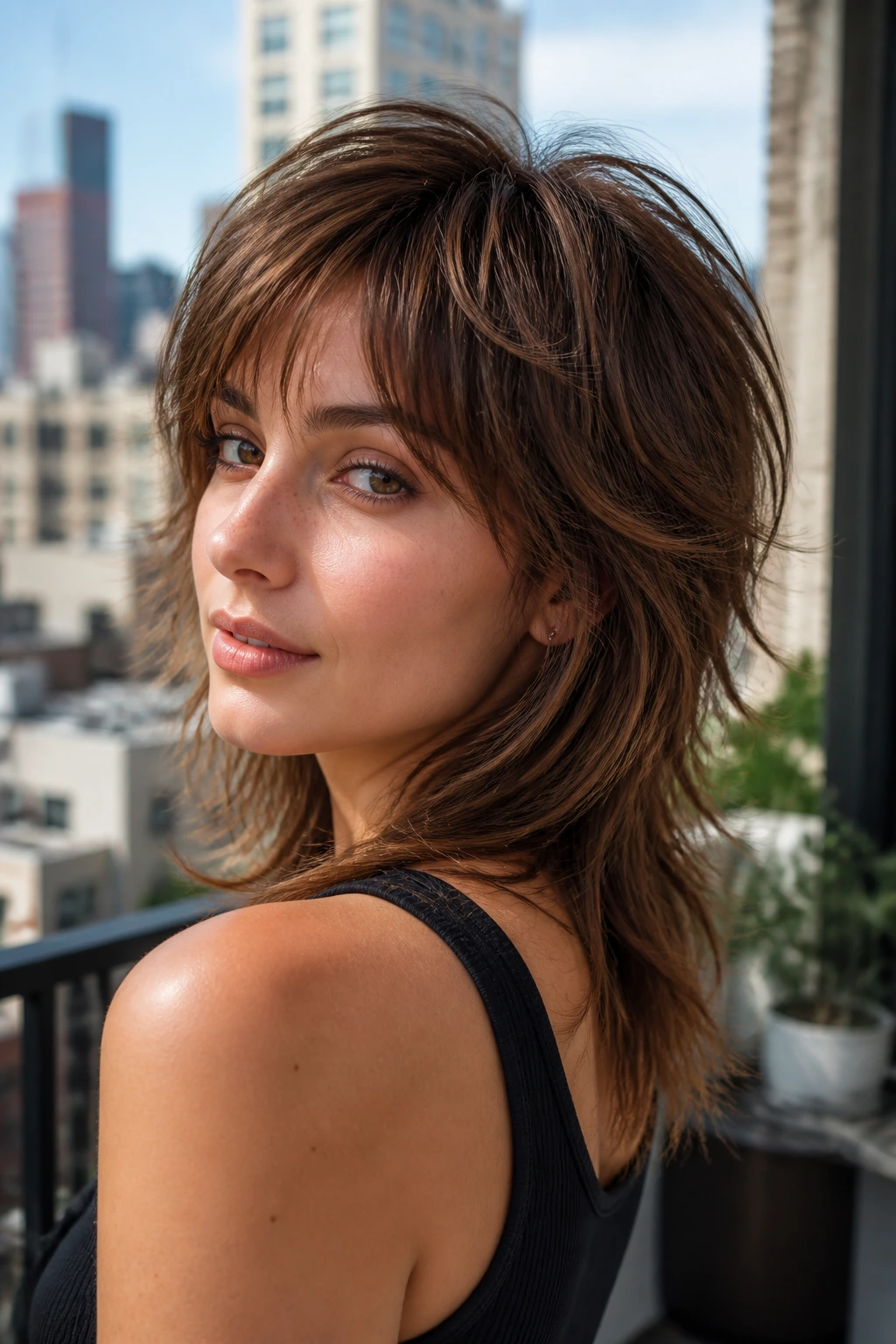
The wolf cut is a popular style that combines the retro feel of a shag with the edginess of a mullet. While it is often worn by those with thick hair, a modified version works beautifully for fine hair by focusing on soft, wispy layers on the top of the head while keeping the sides relatively solid.
The mechanism of this cut relies on the contrast between the short layers at the crown and the longer length at the back. The short layers create instant height and movement, preventing the flat-topped look that fine-haired people often struggle with.
Wolf Cut Structural Highlights
- Keep the crown layers long enough to blend smoothly into the sides.
- Use a point-cutting technique on the ends to keep them light and airy.
- Maintain a solid baseline at the back of the neck to preserve the look of density.
- Avoid heavy styling waxes; use a sea salt spray instead.
This cut is perfect for those who want an edgy, low-maintenance look that embraces natural waves or bedhead texture.
17. Braided Crown with Face-Framing Pieces
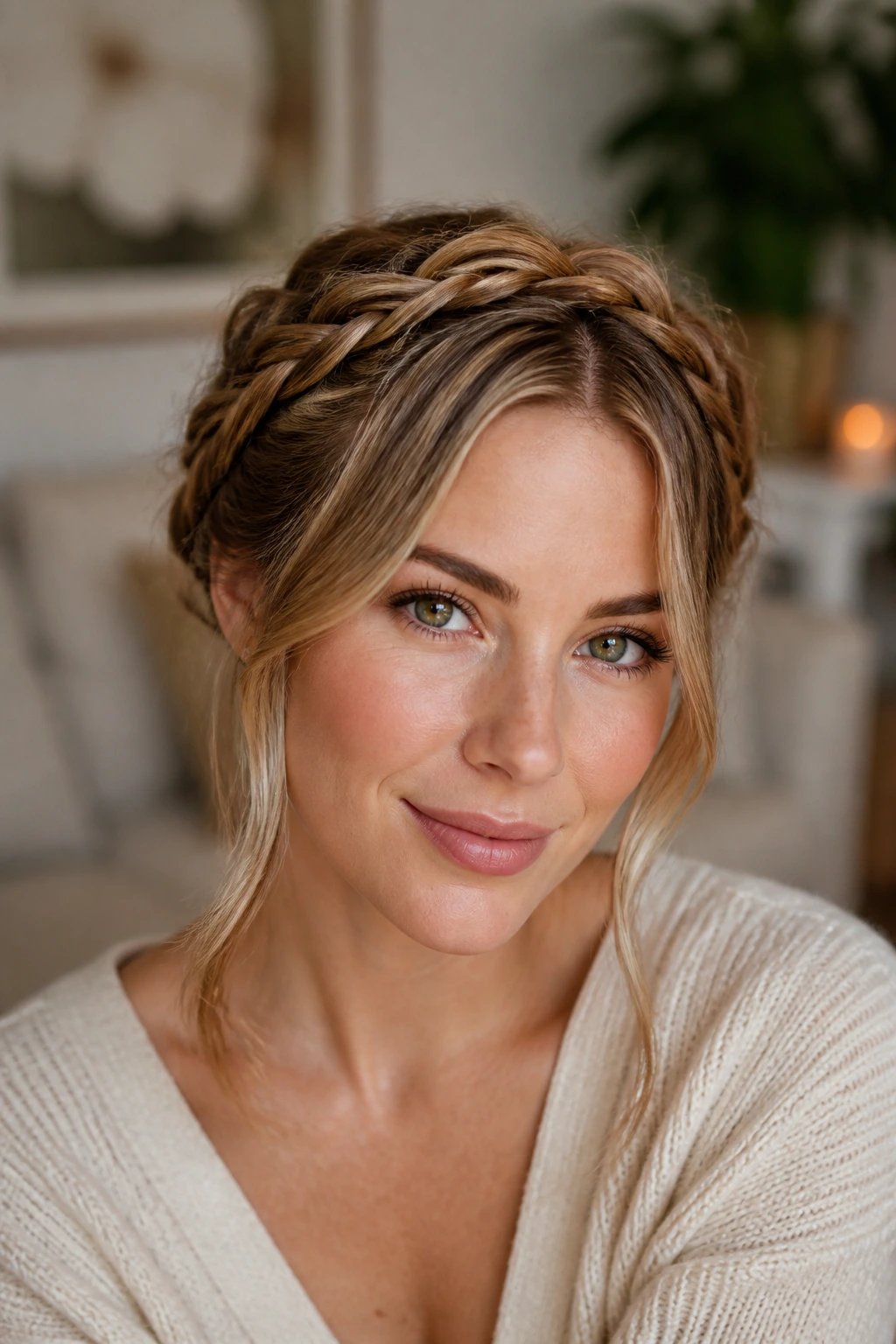
A braided crown is a beautiful, minimal hairstyle that keeps your hair secure and out of your face while creating the appearance of a thick headband of hair. By pancaking the braid—gently pulling the loops of the braid outward after securing it—you can make even a thin braid look thick and substantial.
This style is particularly good for fine hair because the braid acts as a structural element that sits on top of your head, creating height and framing your face. Leaving a few soft, wispy pieces loose around your hairline keeps the look romantic and prevents it from looking too severe or tight.
To style this, create a deep side part and French braid your hair along your hairline, moving from one side of your head to the other. Once you reach the end, secure the braid with a clear elastic, tuck the tail under the starting point of the braid, and pin it in place. Gently tug at the edges of the braid to loosen it and create volume.
18. Voluminous Pixie-Bob (Bixie)
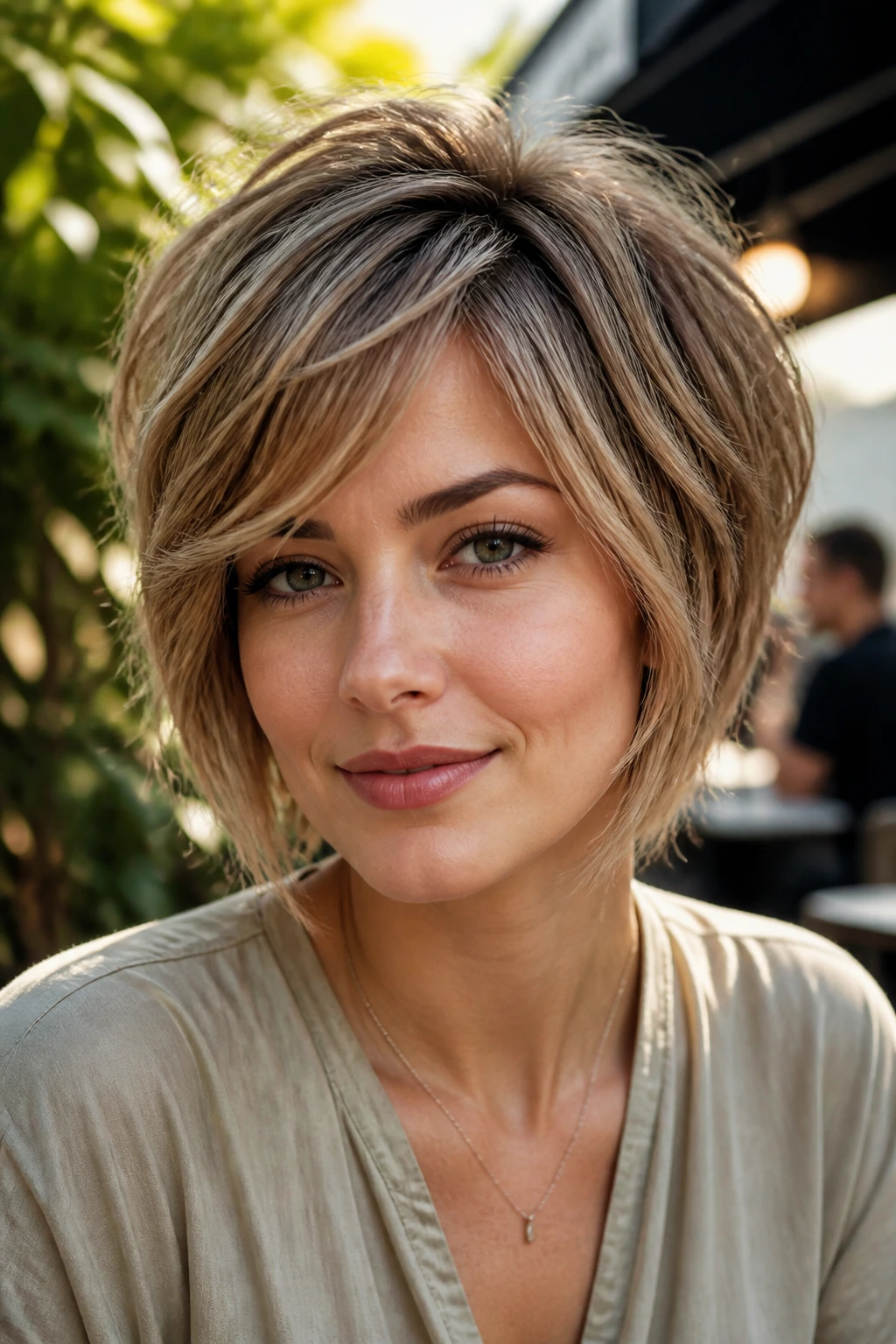
Unlike a standard pixie cut, which can sometimes feel too short, or a bob, which can feel too heavy, the voluminous bixie cut combines the best of both styles. It features the short, texturized crown of a pixie with the face-framing length of a bob. This combination is highly effective for fine hair because it allows for maximum volume at the roots while maintaining a soft, feminine frame around the face.
The bixie is different from other cuts because it distributes the weight of the hair evenly across the head. By keeping the nape of the neck short, you prevent the hair from looking stringy at the bottom, while the longer top sections can be styled with volume or tucked behind the ears.
This style is best for those with fine hair who want the ease of a short cut but still want the styling options of a bob. I recommend using a lightweight volumizing powder at the roots of the bixie to maintain lift throughout the day without weighing the hair down.
19. The Clavicle Grazing Blunt Cut
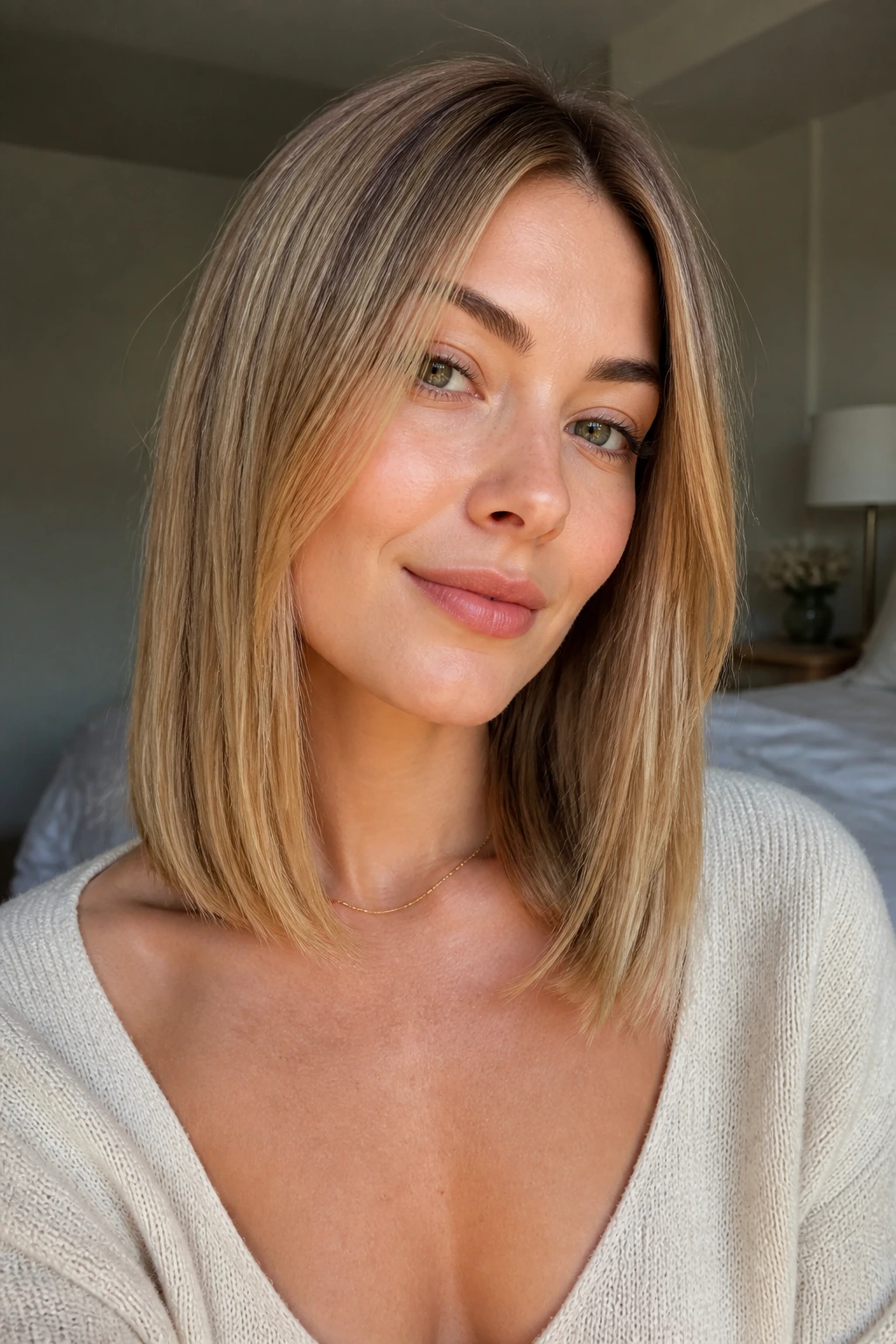
The clavicle grazing blunt cut is a highly versatile and classic length for fine hair. Cutting the hair so it just touches the clavicle (collarbone) allows it to rest on your shoulders, which naturally pushes the hair forward and makes it look fuller from the front.
The Power of the Clavicle Length
This length is long enough to pull back into a ponytail or bun, yet short enough to maintain its volume when worn down. The blunt perimeter ensures that the ends look healthy and thick, preventing the wispy, see-through look that often occurs with longer fine hair.
Styling Guidelines
- Apply a golf-ball-sized amount of volumizing foam to damp roots.
- Blow-dry your hair upside down until it is about 80% dry.
- Flip your head back up and use a round brush to smooth the top canopy.
- Finish by flat ironing only the ends to keep them sharp and clean.
Avoid flat ironing the roots, as this will destroy the volume you created by drying upside down.
20. French Girl Bob with Wispy Bangs
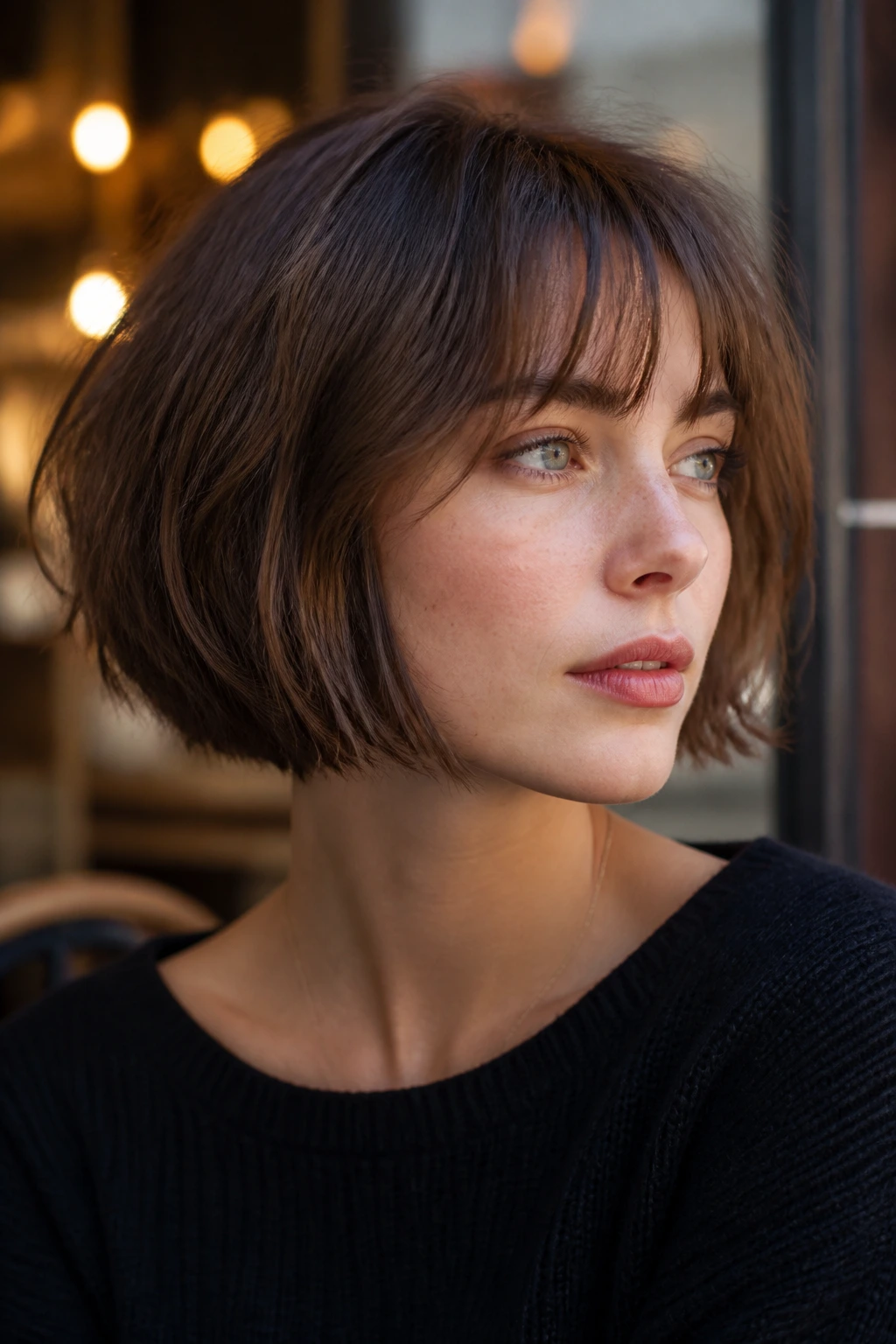
The French girl bob is a timeless, minimal hairstyle that features a chin-length cut paired with soft, wispy bangs. This style is incredibly flattering for fine hair because the short length prevents the hair from looking flat, while the wispy bangs add soft texture and movement around the eyes.
The secret to this look is that it does not require a perfect blowout. In fact, it looks best when it is air-dried and slightly messy. The natural wave or texture of your fine hair is embraced, creating a soft, lived-in look that feels effortless.
To style this, apply a small amount of sea salt spray or texturizing mist to damp hair, scrunch it gently with your hands, and let it air-dry. Once dry, use your fingers to shake out the roots and arrange the bangs. It is a chic, low-maintenance option that works beautifully for busy mornings.
21. Twisted Half-Up Halo Style
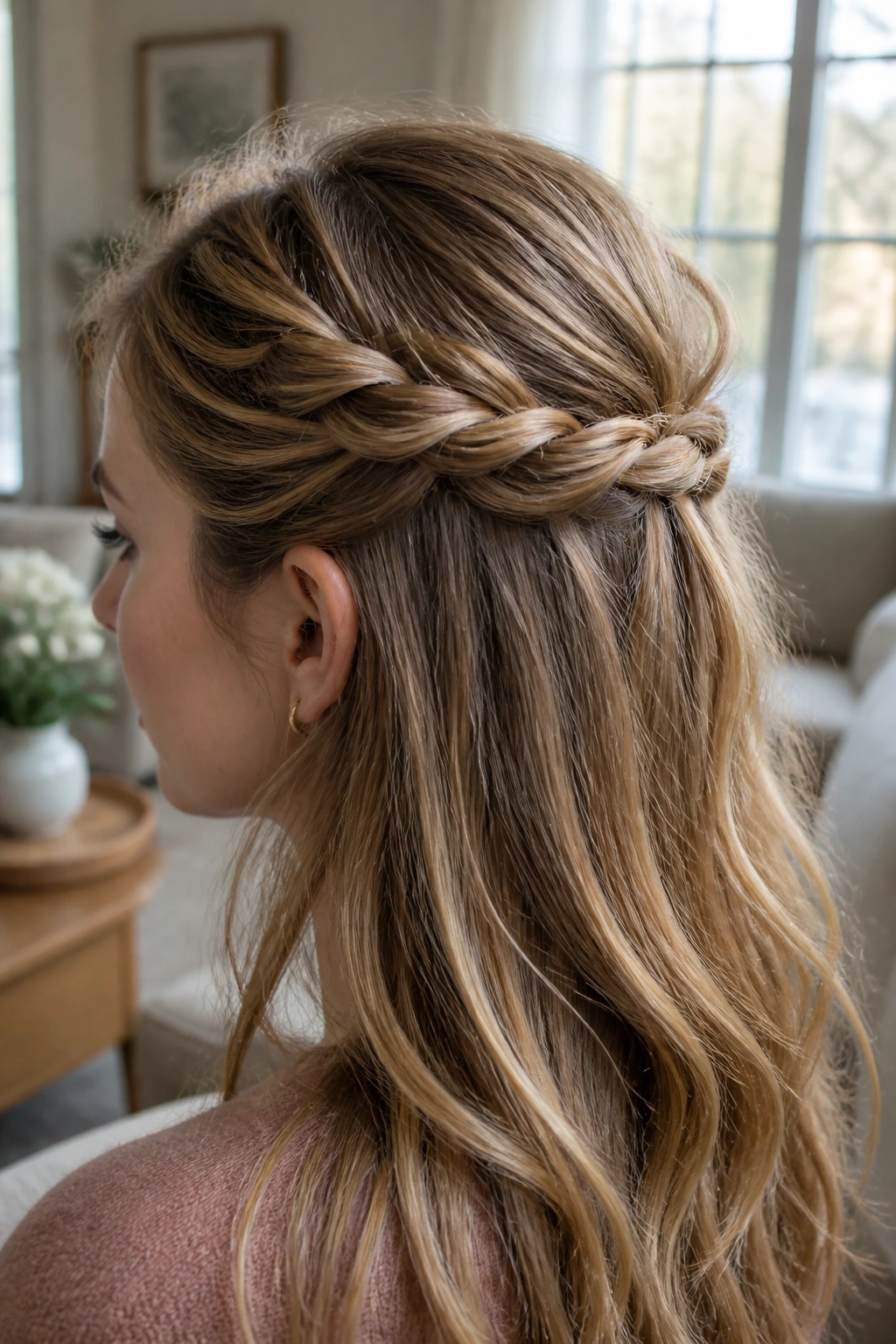
Why does the twisted half-up halo style work so well for fine hair? When you twist two sections of hair from the sides of your head and secure them at the back, you create a natural lift at the crown. This lift makes your hair look fuller from both the front and the back while keeping the face clear of loose strands.
The twists themselves also add three-dimensional texture to your hair, making it look more complex and voluminous than a simple flat style. This is a great daily alternative to a ponytail or half-up bun.
Styling the Half-Up Halo
To create this look, take a two-inch section of hair from above your left ear and twist it tightly away from your face. Repeat this process on the right side. Bring both twists to the back of your head, cross them over each other, and secure them with a small bobby pin pushed flat against your scalp. Gently tug at the twists to loosen them and create volume.
22. Sleek High Ponytail with a Hidden Hair Elastic
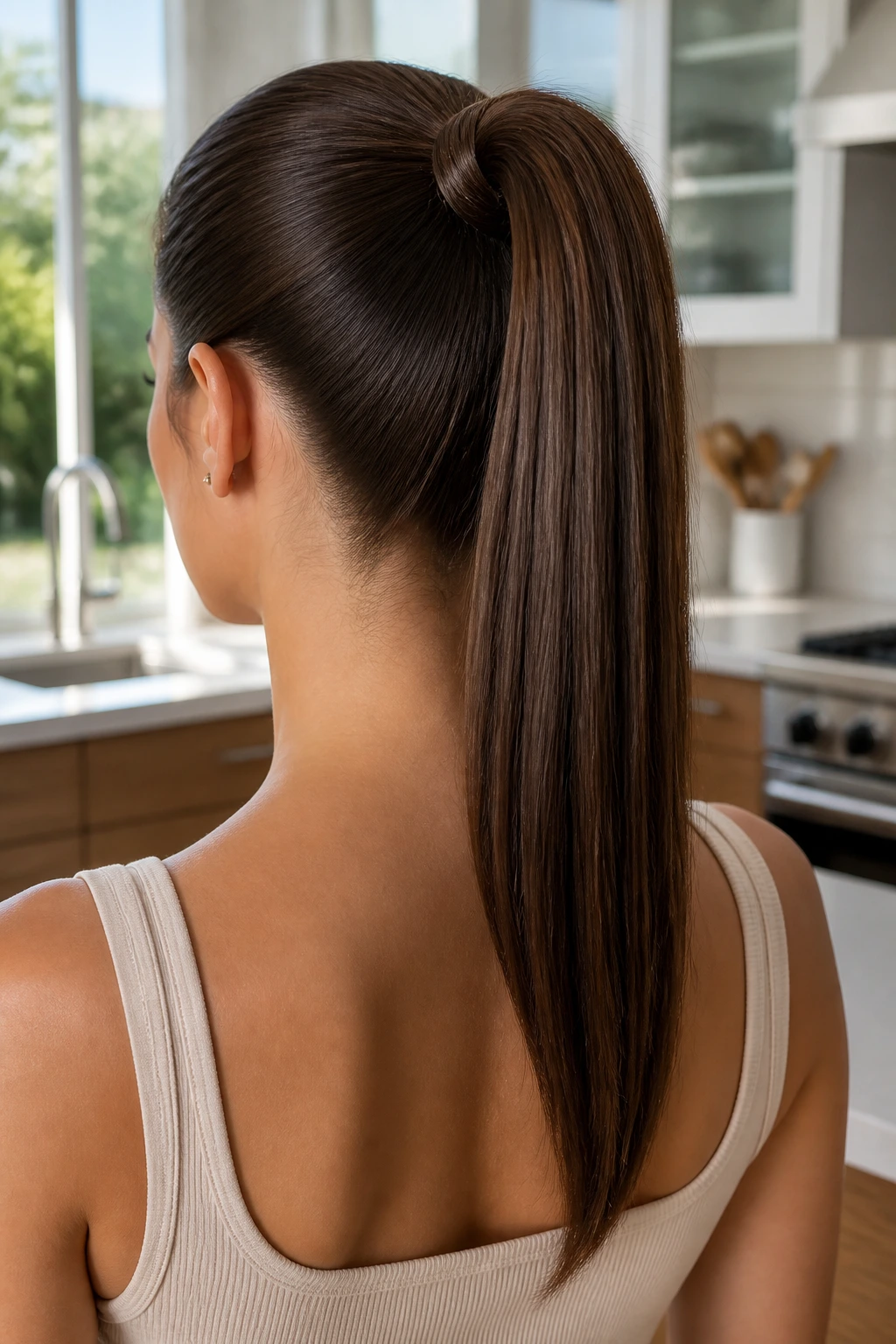
A sleek high ponytail is a classic, minimalist style that can make a powerful statement. While fine hair can sometimes make a high ponytail look thin, you can easily combat this by using a small hidden hair elastic and a specific wrapping technique to lift the base of the pony.
The key to this style is creating tension. By pulling the hair tight against the scalp, you create a smooth, clean surface that reflects light beautifully. The high placement of the ponytail also draws the eyes upward, creating an instant lifting effect.
Ponytail Volumizing Steps
- Apply a lightweight gel or smoothing cream to damp hair.
- Brush your hair upward toward the crown of your head, keeping the surface smooth.
- Secure the ponytail with a strong, thin elastic band.
- Take a half-inch section of hair from the bottom of the ponytail and wrap it tightly around the band to hide it.
- Insert two small bobby pins vertically through the underside of the ponytail elastic, pointing down toward your scalp.
This vertical pin trick acts as a kickstand, pushing the ponytail upward and outward to make it look fuller and more dynamic.
23. Side-Swept Pixie with Volume at the Roots
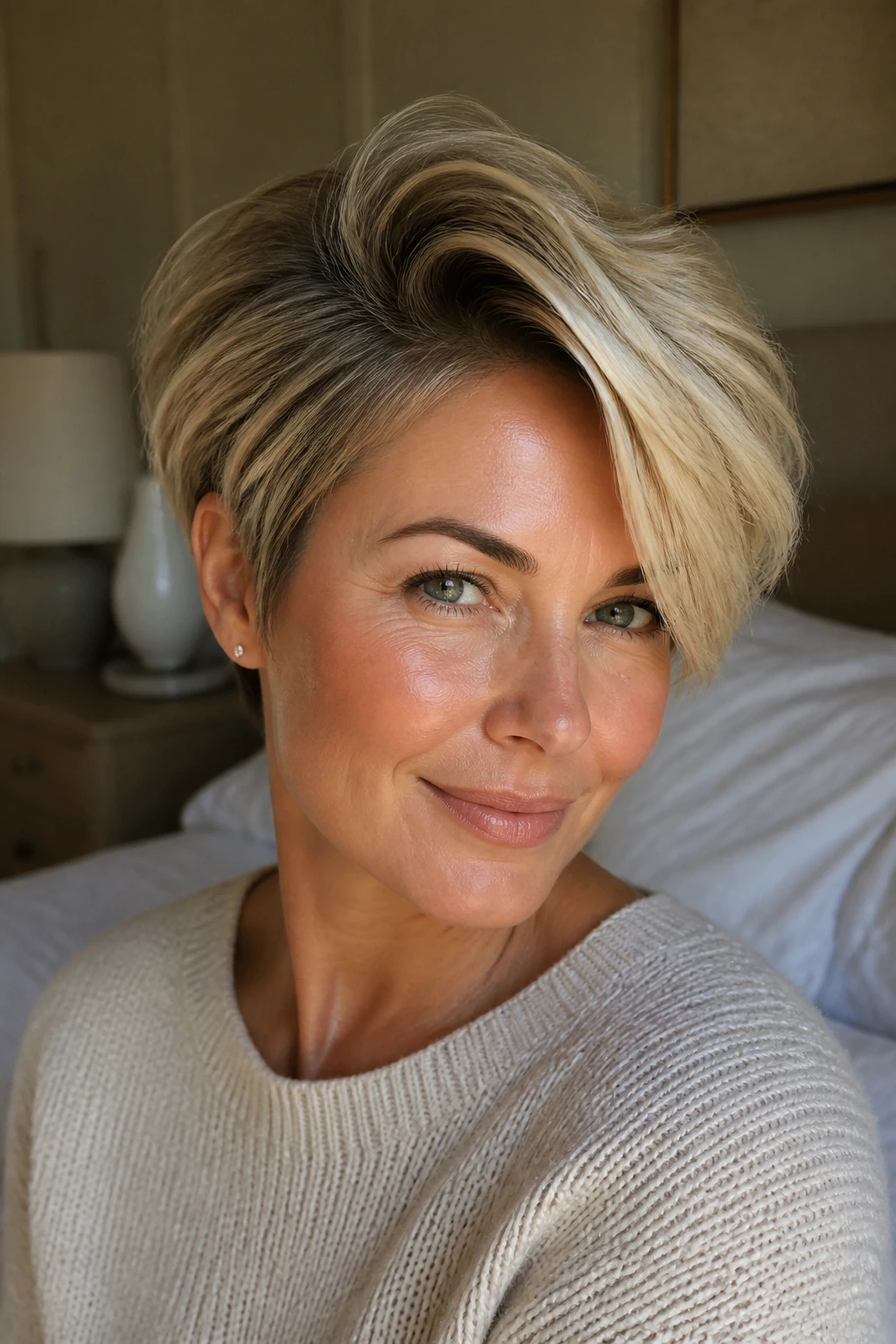
A side-swept pixie is a fantastic option for fine hair because it utilizes a deep side part to create instant volume at the roots. By keeping the sides and back of the head short and tapered, you focus all the attention on the longer, voluminous top section, which sweeps elegantly across the forehead.
This cut is highly adaptable and can be styled sleek and polished for formal occasions or texturized and messy for a casual look. The length of the top section can be customized to suit your face shape, making it a highly flattering option for many.
To maintain the volume at the roots, wash your hair with a clarifying shampoo once a week to remove any product buildup. Dry the hair by blowing it in the opposite direction of the sweep first, then flipping it back over to lock in the lift.
24. Casual Tousled Lob with Curved Ends
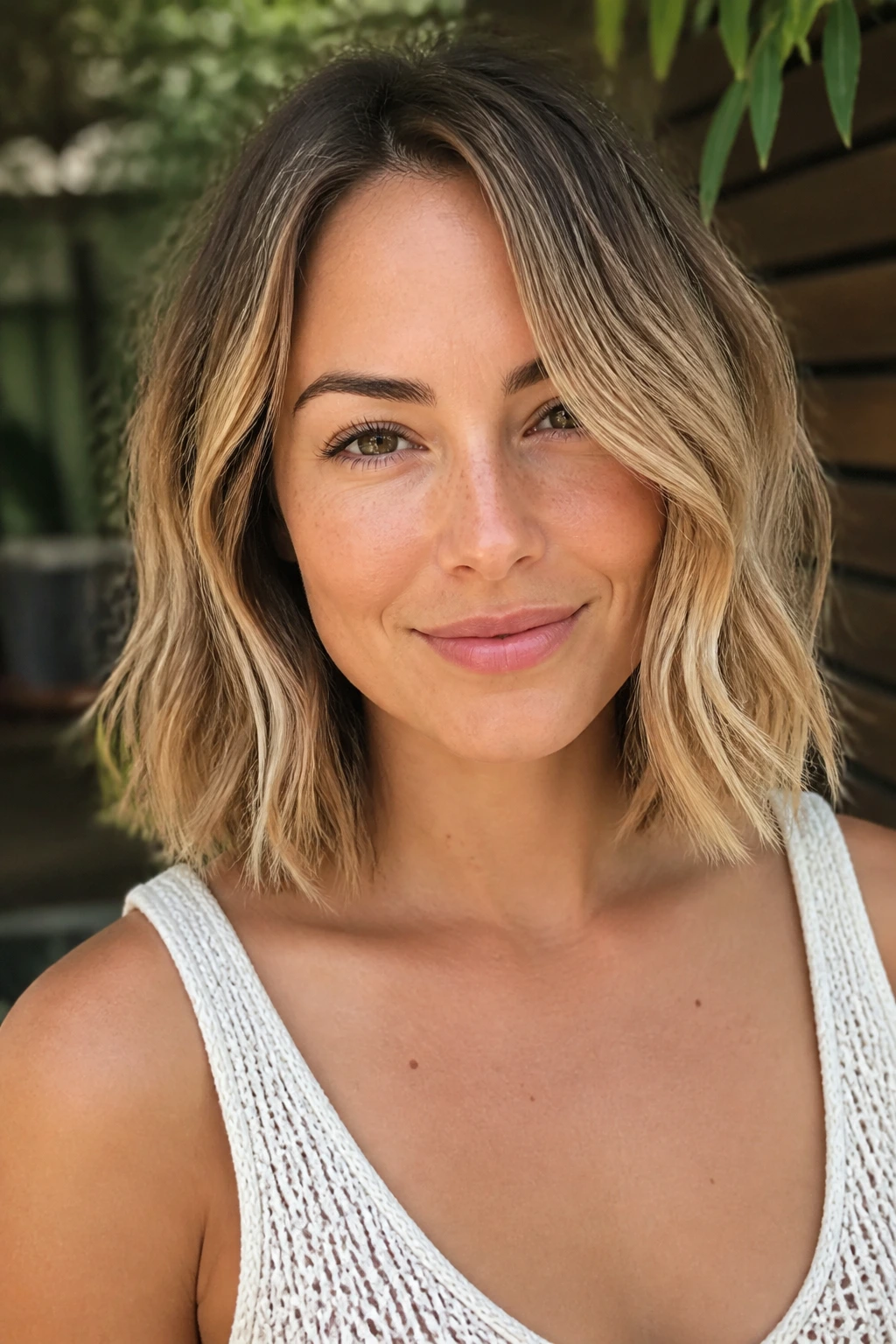
Unlike a perfectly straight lob, which can sometimes expose the thinness of your hair, a casual tousled lob with curved ends uses soft movement to create width and volume. By using a flat iron or curling wand to curve the ends of the hair in different directions, you create a textured surface that makes the hair look wider and fuller.
This style is different because it does not rely on tight curls, which can shorten the hair and make it look sparse. Instead, it uses soft, lazy waves and curved ends to create a relaxed, beachy vibe that is easy to maintain.
This look is best for those with medium-length fine hair. I recommend using a lightweight texturizing spray on the mid-lengths and ends after curling to hold the shape and keep the hair from clumping together.
25. Barely-There Waves on Medium-Length Fine Hair
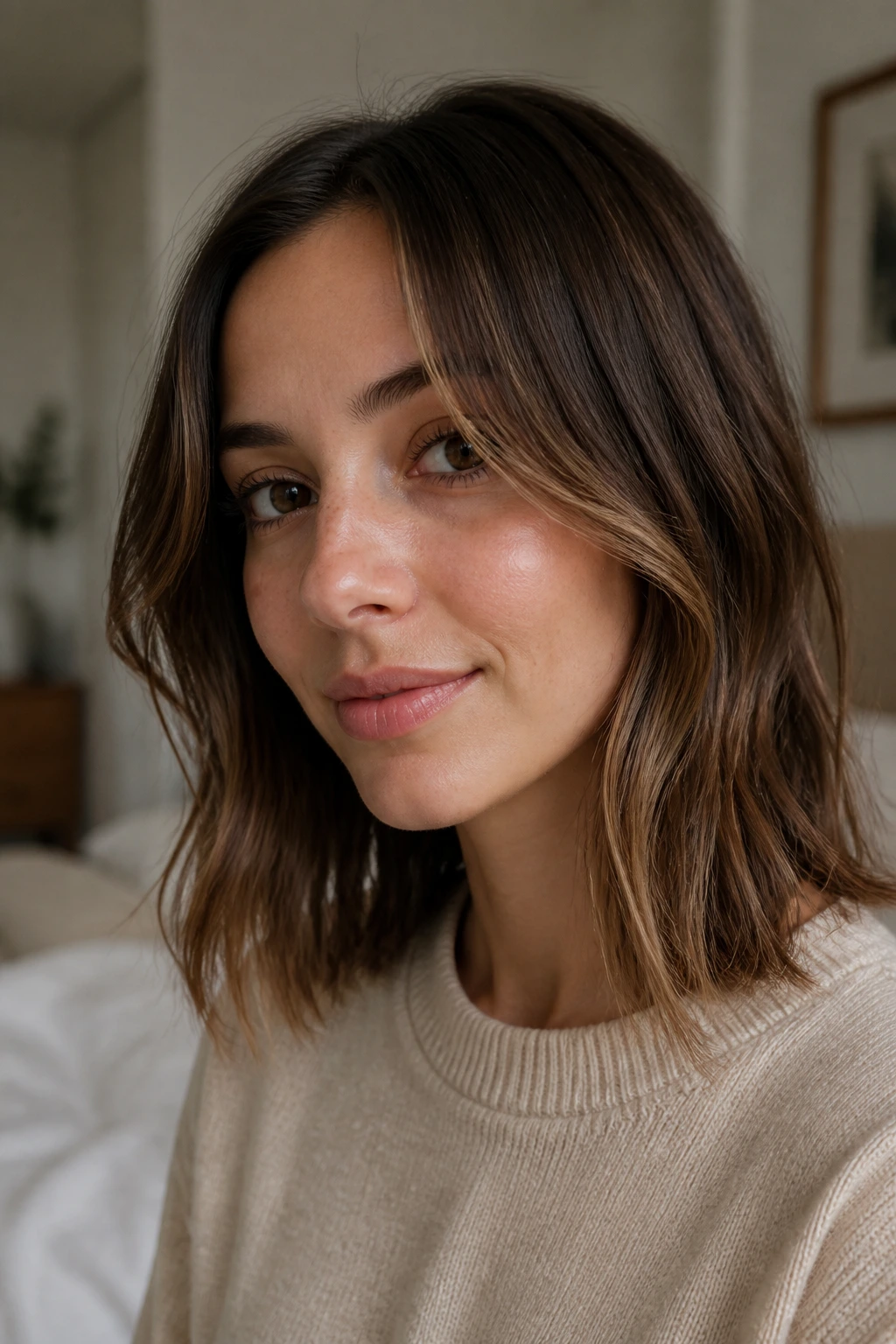
For those who prefer longer hair, barely-there waves offer a minimal, elegant style that prevents medium-length fine hair from looking flat or stringy. These waves are so soft that they look completely natural, adding just enough bend to the hair to break up the straight lines and create visual volume.
Creating Barely-There Waves
This style works best when you use a large-barrel curling iron (1.5 inches or larger) and curl only the middle section of the hair, leaving the roots and the ends completely straight. This prevents the hair from looking too retro or done-up, keeping the aesthetic clean and modern.
Step-by-Step Guide
- Prep dry hair with a lightweight heat protectant spray.
- Take large, two-inch sections of hair.
- Wrap the middle of each section around the curling iron barrel for just three seconds.
- Leave the bottom two inches of hair out of the iron.
- Let the waves cool completely, then brush them out with a wide-tooth comb.
Applying a drop of hair oil to the ends after brushing will keep them looking healthy and polished.
26. The Invisible Layer Long Cut
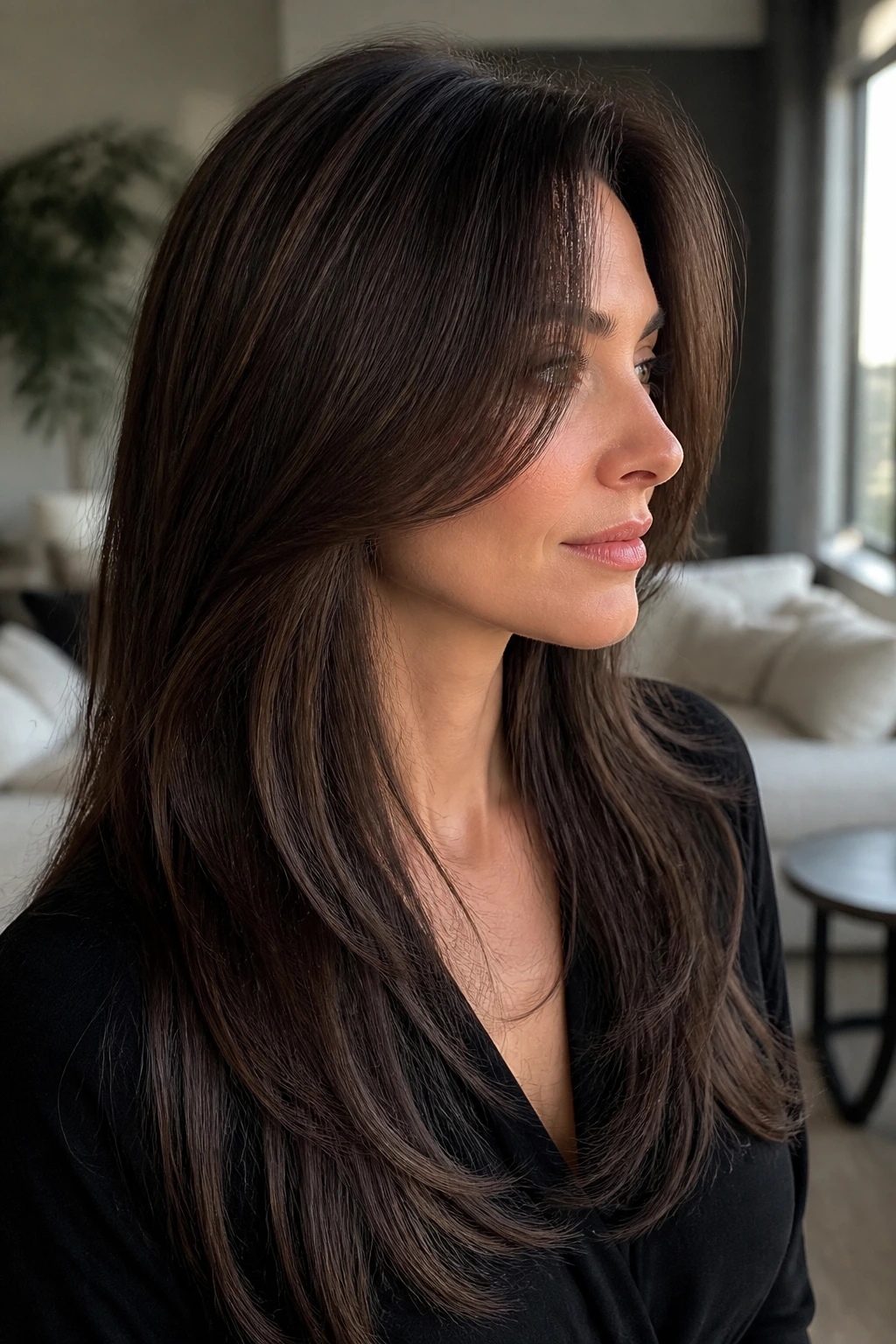
If you love having long hair but hate how flat it gets, the invisible layer long cut is your solution. This cut features long, subtle layers that are cut into the interior of the hair, usually starting below the shoulders. These layers are hidden beneath the top canopy of the hair, so they are not visible to the naked eye.
These internal layers remove weight from the bottom of the hair, allowing the roots to lift and preventing the hair from being pulled down by its own weight. The perimeter remains thick and blunt, preserving the look of density while the interior remains light and bouncy.
This cut is perfect for those who want to keep their length but need more movement and volume. It is highly manageable and looks great whether air-dried or styled with a blowout.
27. Faux Hawk Crop with Textured Styling
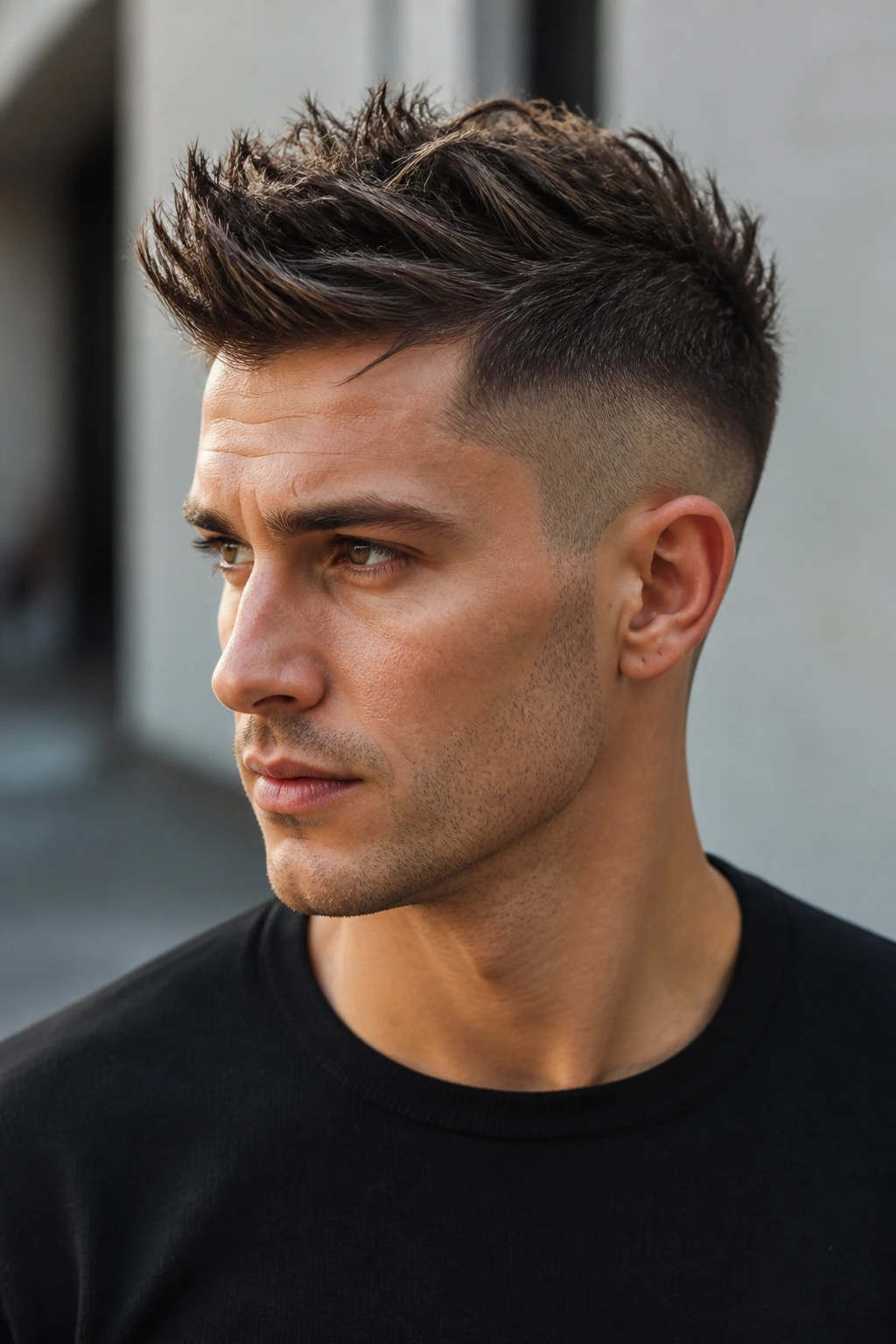
For those who want a bold, minimal hairstyle, the faux hawk crop is a striking option that works incredibly well for fine hair. This cut features short, tapered sides with a slightly longer, textured center section that runs from the forehead to the crown.
The mechanism of this cut relies on the extreme contrast between the very short sides and the longer center. This contrast makes the center section look incredibly thick and full, while the short sides keep the face looking clean and defined.
Faux Hawk Styling Elements
- Keep the sides tightly cropped or buzzed.
- Use point-cutting on the center section to create a textured, piecey look.
- Style the center upward and slightly forward using a dry clay or paste.
- Avoid using too much product; a dime-sized amount is plenty.
This style is incredibly low-maintenance, requiring only a quick styling with your fingers in the morning.
28. Clean French Braid Tucked Under
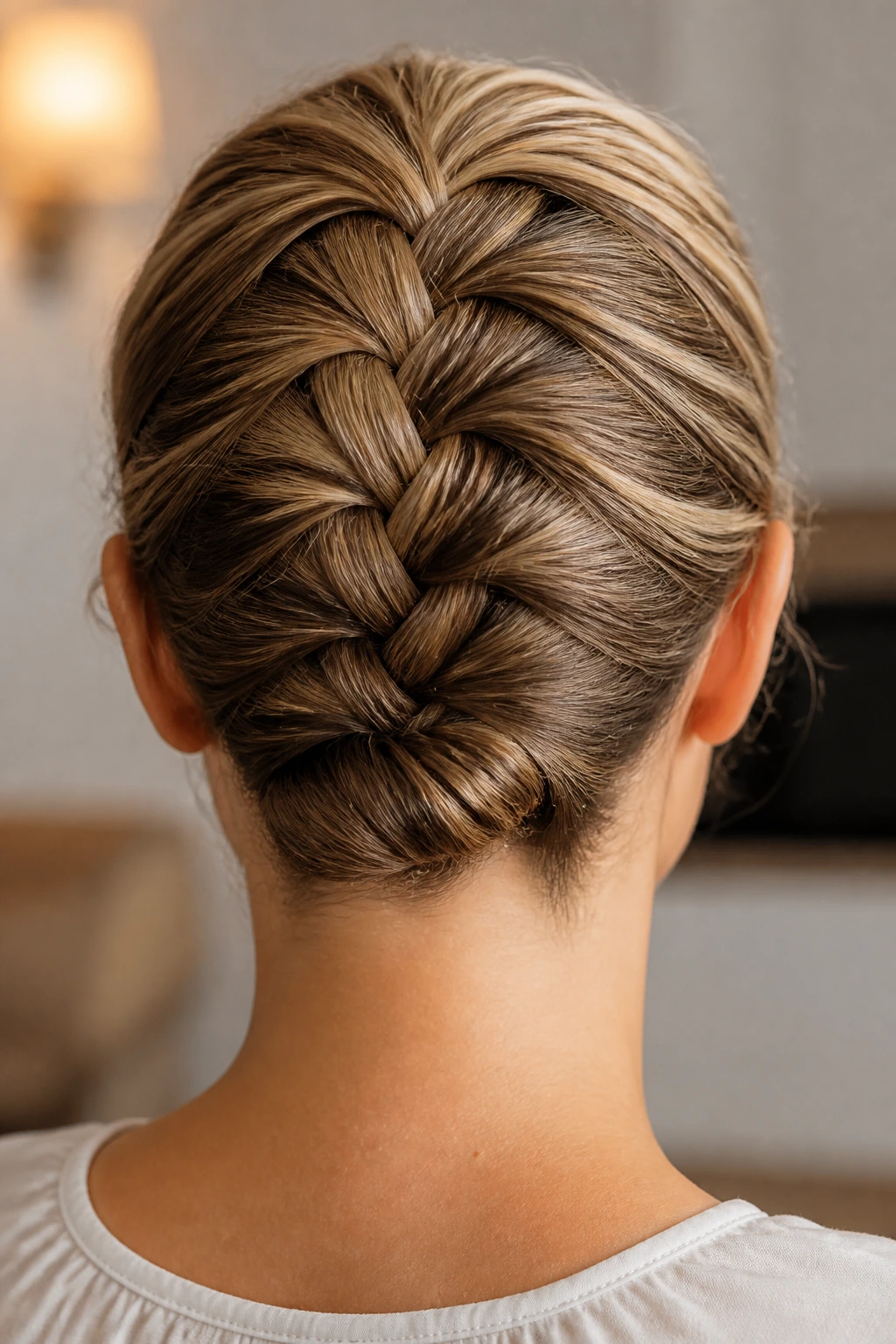
A clean French braid is a classic, minimalist hairstyle that is perfect for fine hair because it keeps the hair neat, secure, and protected. By tucking the tail of the braid under itself at the nape of the neck, you create a sleek, low-profile bun that looks incredibly chic and sophisticated.
This style is highly effective for fine hair because the braiding process creates natural texture and volume along the scalp, preventing the flat-headed look. Tucking the tail under also hides the thinness of the end of the braid, creating a clean, seamless finish.
To style this, start a French braid at the crown of your head and braid down to the nape of your neck, securing the end with a small clear elastic. Fold the tail of the braid up and tuck it into the pocket of hair at the nape of your neck, securing it with several bobby pins pushed vertically into the braid.
Wrapping Up
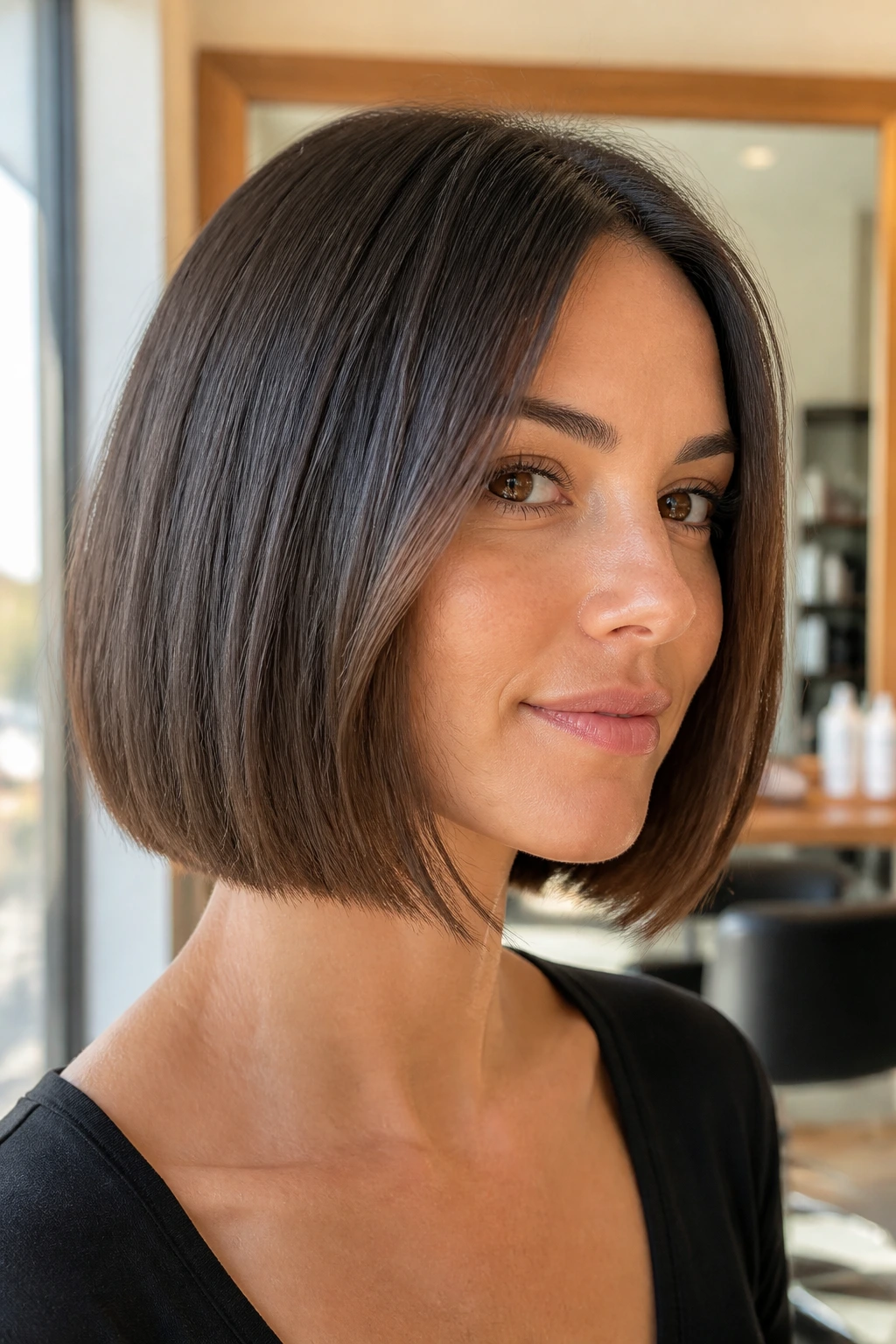
Managing fine hair does not have to be a constant struggle against flatness. The secret lies in choosing minimalist cuts and styles that work with your hair’s natural lightness rather than fighting it. Clean perimeters, strategic length choices, and lightweight styling techniques can make a massive difference in how thick and full your hair looks.
When choosing a style, consider your lifestyle and how much time you want to spend on maintenance. A blunt bob or Italian bob is perfect for those who want a classic, polished look with minimal daily styling. If you prefer a shorter style, a softly layered pixie or bixie cut offers incredible volume and ease of wear. For those who love longer hair, the clavicle grazing blunt cut or the invisible layer long cut maintains density while allowing for movement.
Remember to keep your styling routine simple. Avoid heavy silicones and oils that can weigh fine hair down, and opt for lightweight, protein-infused products and dry textures instead. By embracing clean lines and precise cuts, you can showcase your fine hair in a way that is both effortless and elegant.