

Choosing the right hairstyle to pair with a lehenga is rarely just about aesthetics; it is an exercise in structural engineering. Asian hair tends to be thicker, coarser, and heavier than many other textures, which makes gravity its greatest enemy during a long wedding celebration. When you are pinning heavy dupattas or managing intricate jewelry, your hair needs to be prepped and styled to withstand the weight and the humidity that often accompanies these events. If you have ever felt a braid unravel or a curl fall flat halfway through a ceremony, you know exactly what is at stake.
The goal is to find a balance between the elaborate nature of the outfit and the natural behavior of your hair. Some styles prioritize security, locking every strand into place with pins and product, while others lean into the natural volume and shine that often characterize Asian hair types. Regardless of the look you choose, success lies in the prep work—using the right texturizing sprays, selecting high-quality bobby pins that actually hold, and ensuring your hair has enough grip to stay styled for hours. Let’s walk through the options that work best for the unique weight and texture of Asian hair.
1. Classic Center-Parted Low Bun
The center-parted low bun is the gold standard for a reason. It creates a clean, symmetrical frame for your face, which is especially flattering when wearing heavy, ornate jewelry like a maang tikka. The key to making this work for thicker hair is managing the bulk. You want a sleek, polished finish that sits low at the nape of the neck, keeping the weight centered rather than pulling on your crown.
How to Achieve the Sleek Finish
Start with freshly washed hair that has been blow-dried straight with a smoothing cream. Use a tail comb to create a precise center part that extends back to the crown. To prevent the “poof” that often happens with thick hair, work a lightweight pomade or styling wax into your palms and smooth it over the front sections. Secure the hair in a low ponytail with a snag-free elastic before twisting it into a tight, coiled bun. Use U-pins rather than bobby pins to hold the bun; they are gentler on the hair and provide a more secure, “hidden” hold for heavier strands.
2. Voluminous Messy Side Braid
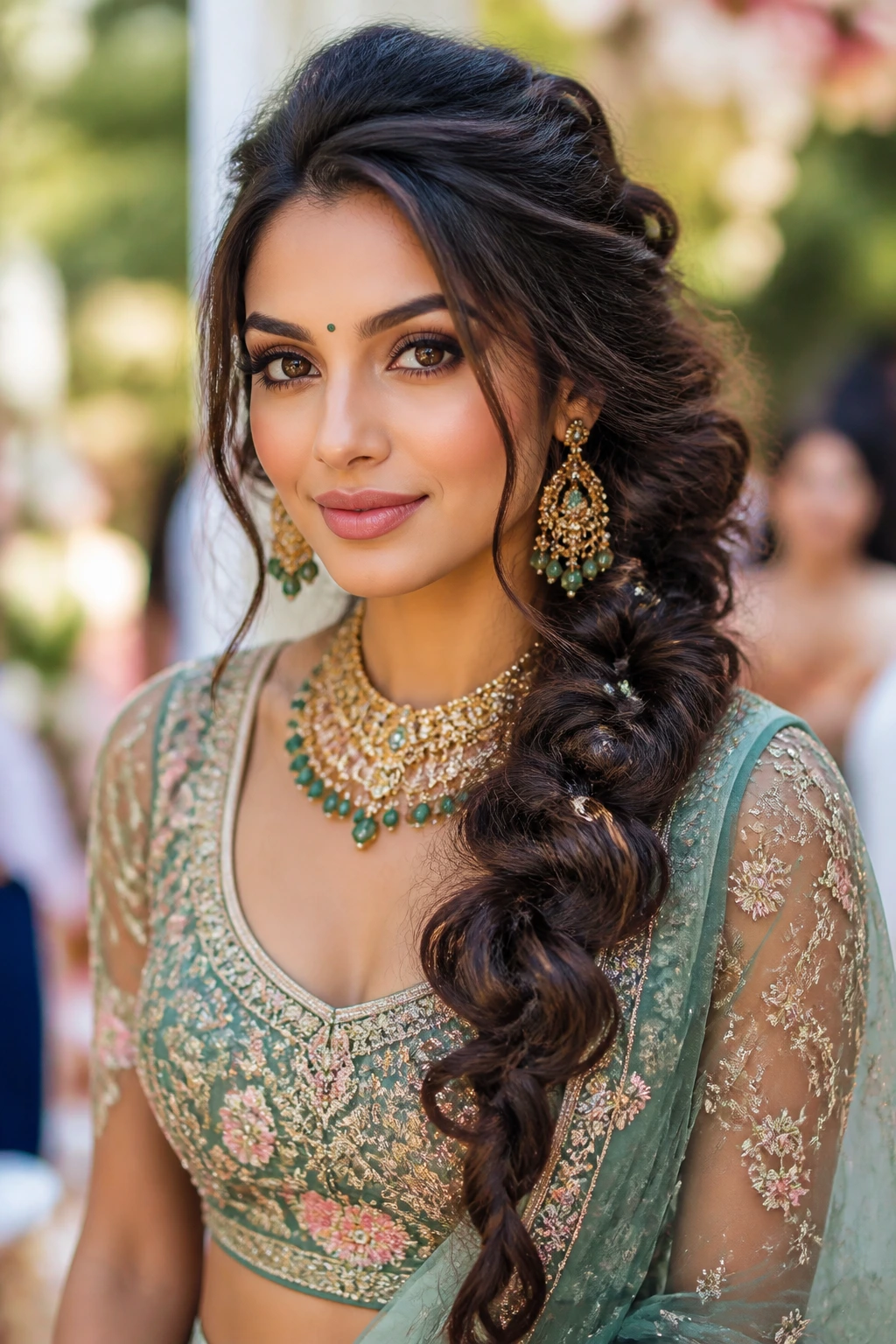
If your lehenga has a more contemporary or bohemian feel, a messy side braid is a fantastic choice. Asian hair often has a beautiful, healthy sheen, and braiding allows that texture to catch the light from different angles. By pulling the braid over one shoulder, you balance out the silhouette of your outfit, particularly if your lehenga features a heavy, embellished skirt.
Why This Style Lasts
The secret here is grit. Fresh, silky hair is too slippery for a braid that needs to stay voluminous all day. Spray your dry hair with a generous amount of dry shampoo or texturizing spray before you even begin plaiting. Once the braid is secured, gently pull on the loops to fan them out, giving the illusion of double the thickness. If you have layers, leave a few tendrils around your face to soften the look, but curl them slightly so they look intentional rather than accidental.
3. Half-Up Half-Down with Intricate Twists
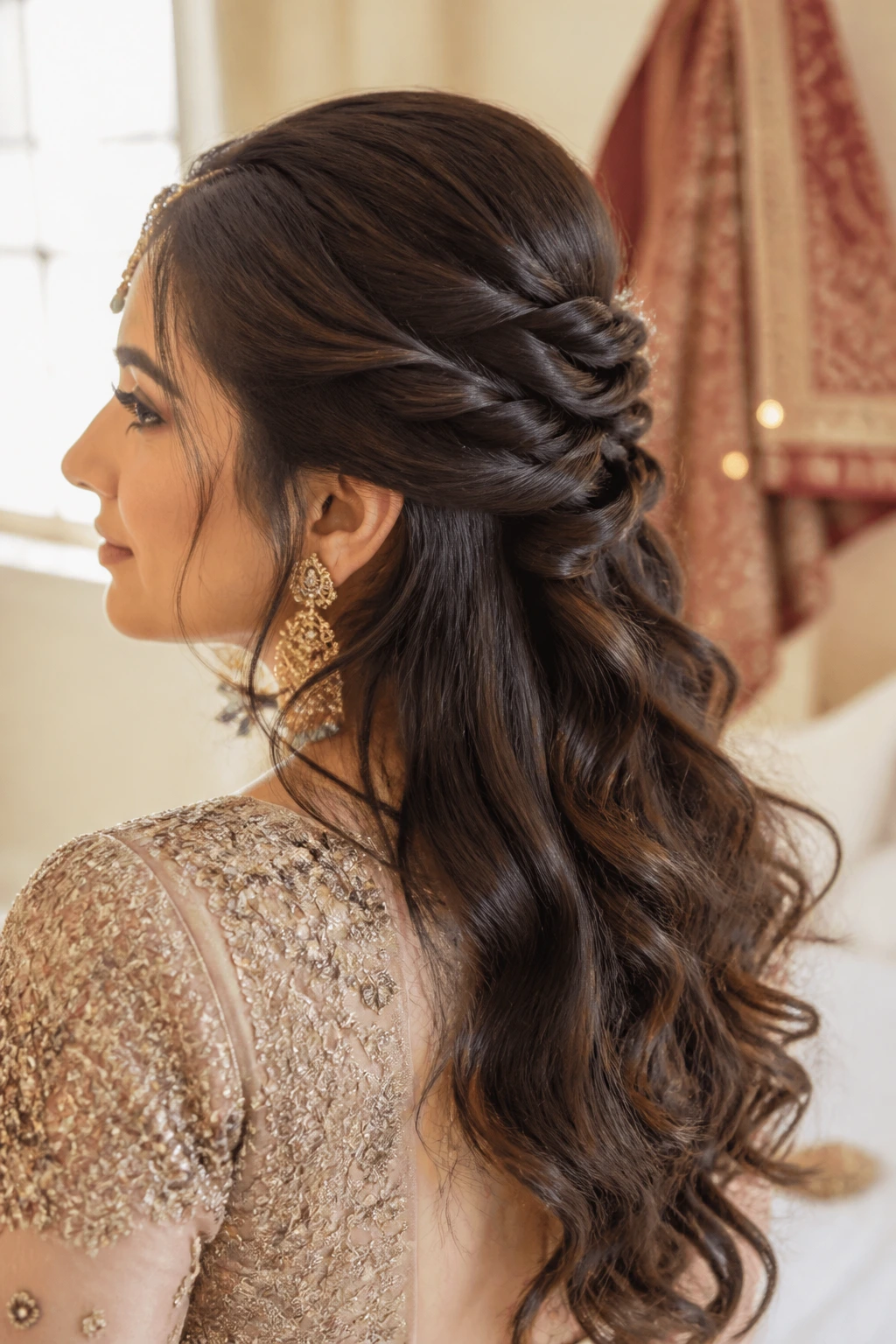
This style is the middle ground between wearing your hair down and keeping it out of your face. It is perfect if you want to show off the length of your hair but need to secure the dupatta comfortably. By creating small, twisted sections on either side and pinning them at the back, you create a natural anchor point for your headpiece.
Pro-Tip for Heavy Hair
Because Asian hair is dense, a standard elastic will often stretch out or slip. Instead, use a clear, small hair tie to secure the half-up section, then wrap a small piece of hair around the tie to hide it. Use a setting spray that provides a firm hold—not a flexible one. You need the hold to survive the heat of a crowded venue, especially when your hair is naturally heavy and tends to drop styles quickly.
4. Vintage-Inspired Hollywood Waves
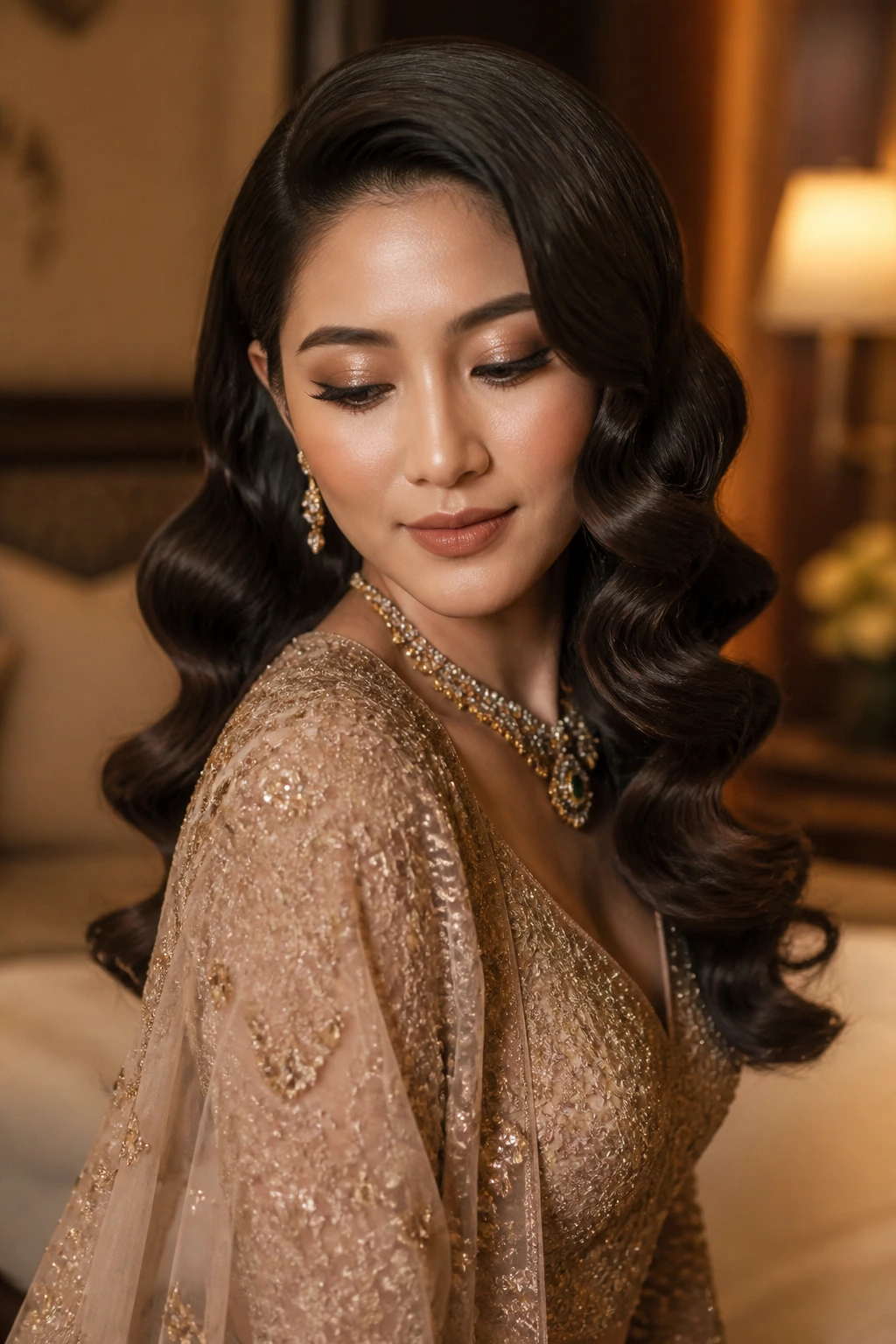
For a formal reception look, Hollywood waves are undeniably glamorous. While this style is often associated with fine hair, it looks incredibly luxe on thick, Asian hair because the curls hold their shape so well. The trick is to ensure the waves are uniform and brushed out until they turn into a singular, flowing movement of hair.
The Thermal Challenge
You will need a large-barrel curling iron to get those soft, wide waves. Make sure your hair is completely dry before applying heat; any residual moisture will lead to frizz within an hour. Once you curl a section, pin it to your head in a loop while it cools. This “pin curling” technique is non-negotiable for thick hair. It sets the curl structure firmly so that when you brush it out, the wave holds its shape rather than turning into a wild, undefined mass.
5. Sleek High Pony with Floral Embellishments
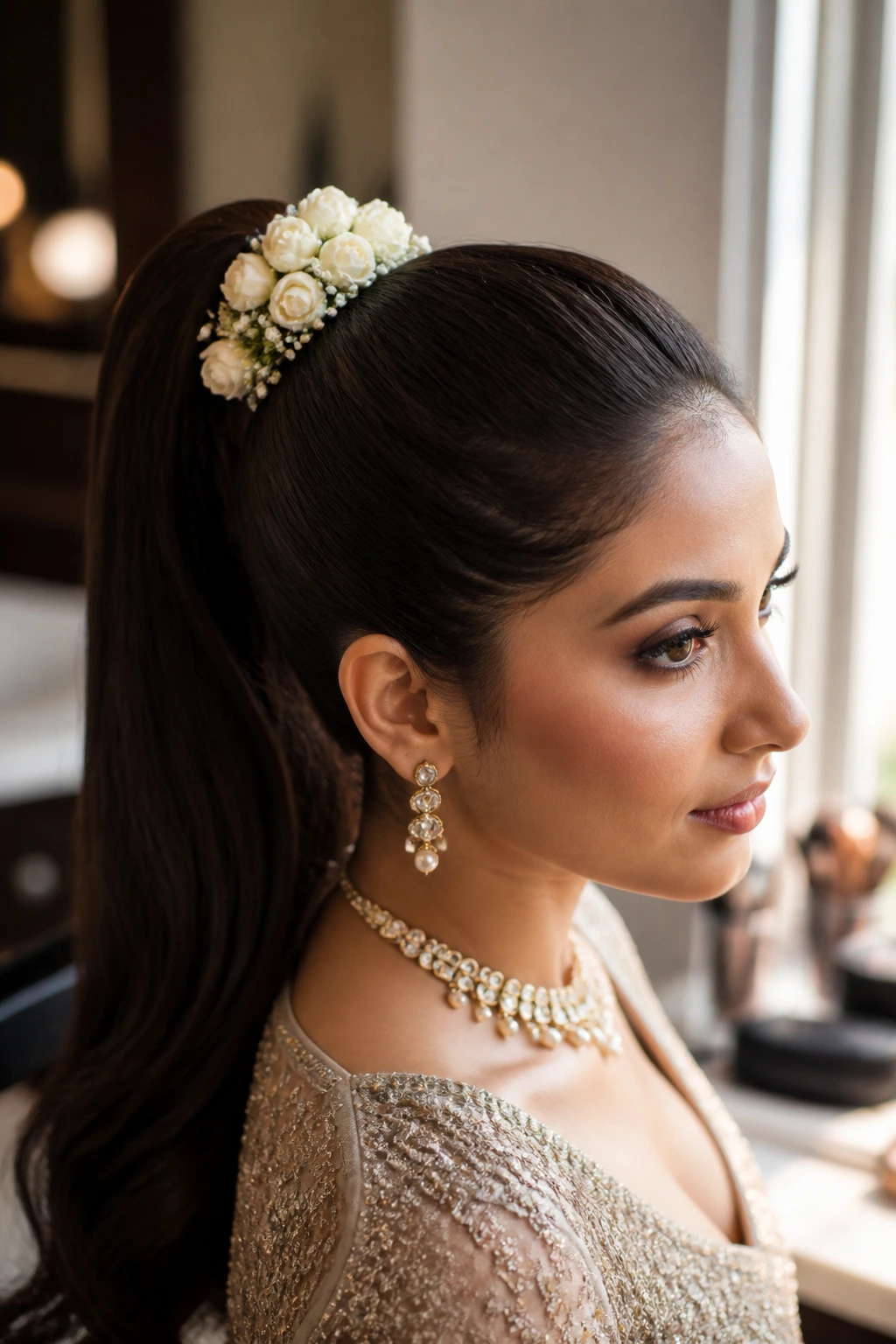
If your lehenga has a modern, minimalist blouse, a high ponytail is the perfect structural accessory. It draws the eye upward and adds a bit of sharpness to your look. For Asian hair, which tends to have a heavy root, the high pony can be a bit challenging, but it is manageable if you distribute the weight correctly.
Managing the Tension
Don’t pull the ponytail so tight that it gives you a headache. Use a heavy-duty elastic that won’t snap under the weight of thick hair. Once the ponytail is secure, take a small strip of hair from the underside of the pony, wrap it around the base to cover the band, and pin it underneath. Adding jasmine or roses around the base of the ponytail not only hides the elastic but adds a traditional touch that bridges the gap between modern style and ethnic attire.
6. Braided Crown with a Floral Garden
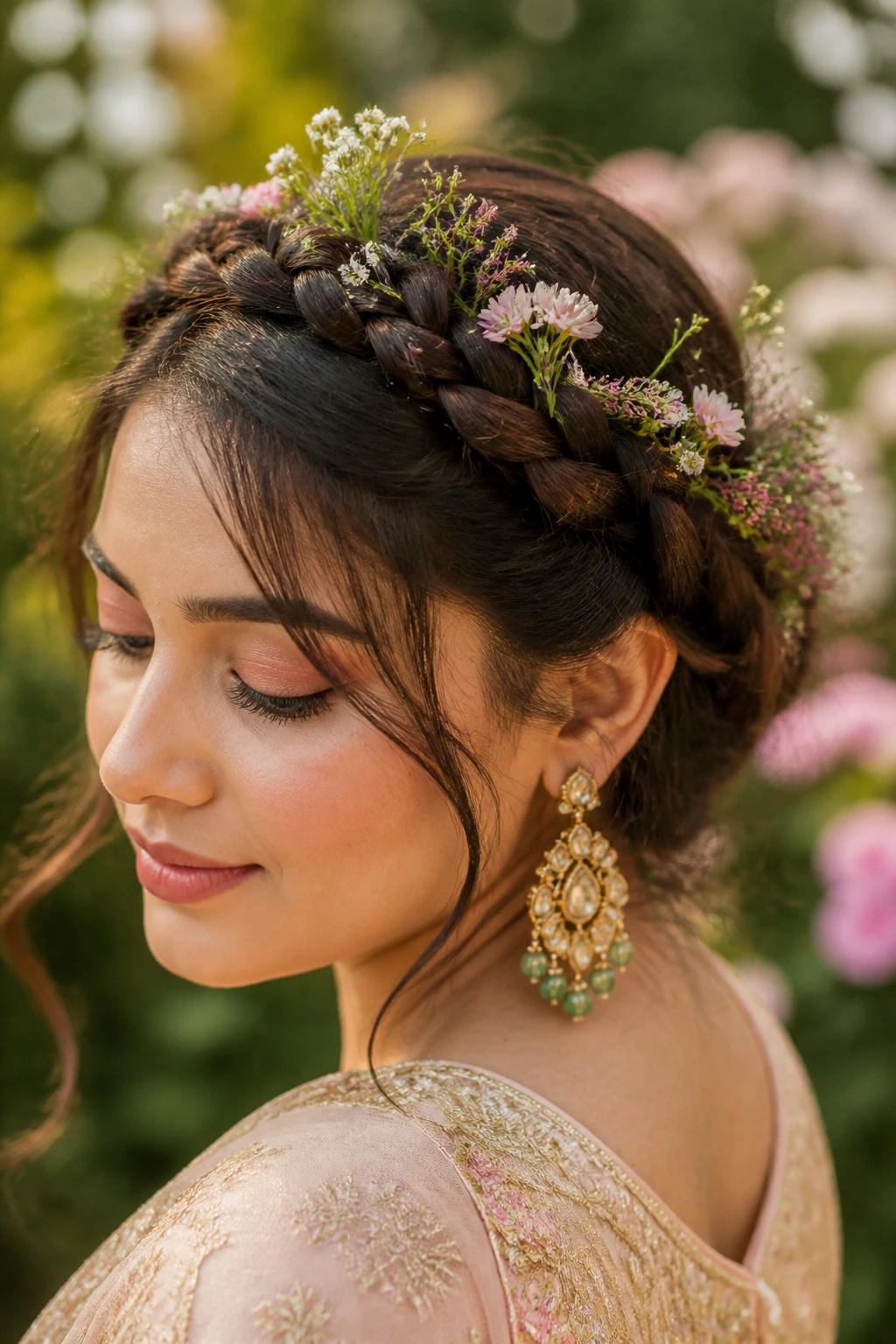
A crown braid is essentially a built-in accessory. It keeps every single strand of hair locked away, which is ideal for outdoor weddings where humidity might otherwise cause your hair to swell. It is also an excellent way to manage a heavy dupatta, as the braid acts as a stable base for pinning.
Construction Advice
Start by creating a deep side part and French braiding along your hairline, picking up small sections of hair as you move toward the back. Once you reach the center, secure it with clear elastics. If your hair is very thick, you may need to braid two separate sections and meet them in the middle rather than trying to wrap one long, heavy braid around your head. This prevents the “tightness” that can make your scalp feel pulled and uncomfortable.
7. Soft Curls with a Side-Swept Reveal
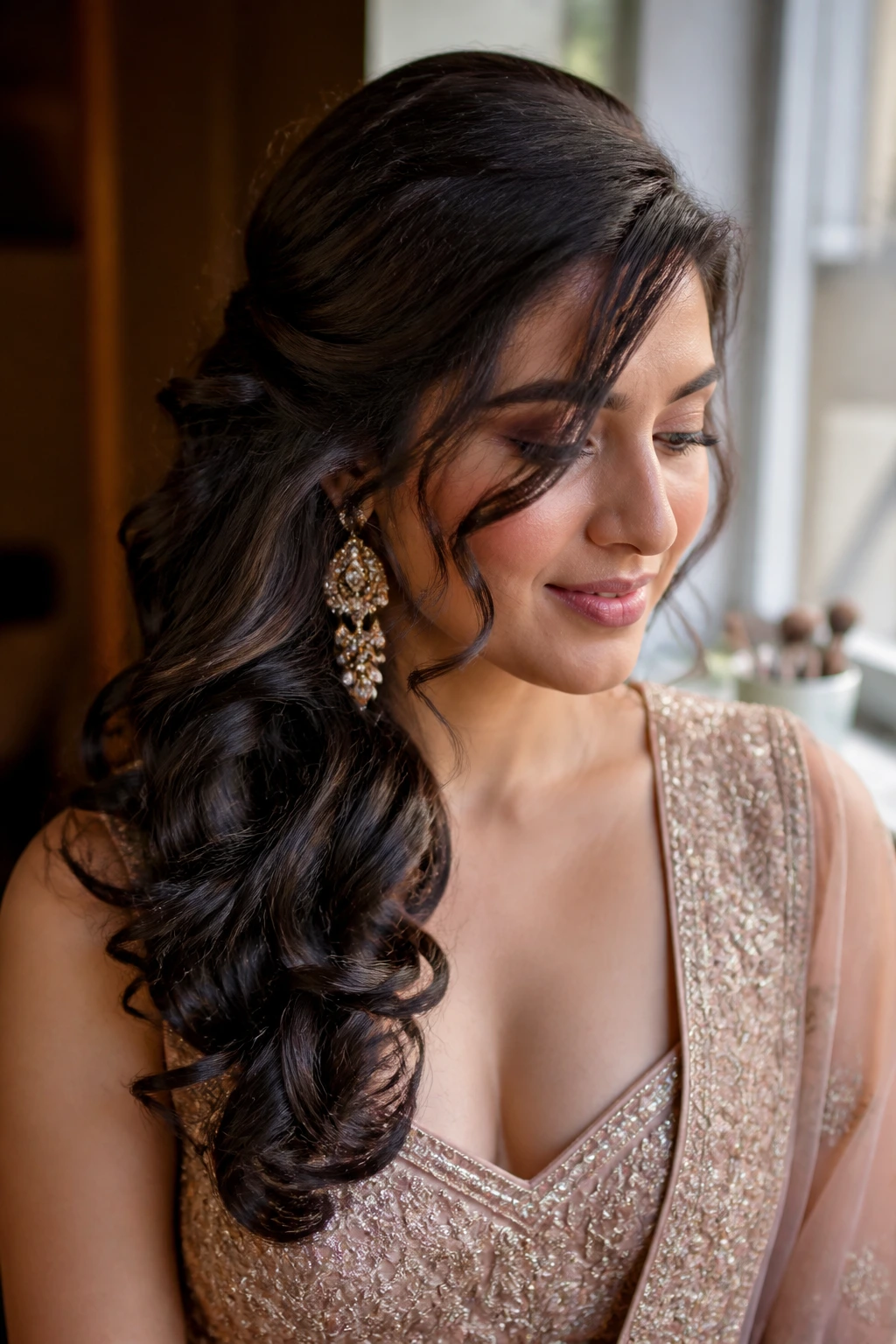
Side-sweeping your hair allows you to show off the neckline of your lehenga. It is a romantic, classic look that works exceptionally well with heavy earrings. Because Asian hair has so much body, the side-swept look appears incredibly lush and full without needing any extensions or added padding.
How to Get the Balance Right
Apply a light-hold mousse to damp hair and blow-dry using a round brush to create a smooth, voluminous base. Once dry, curl your hair in 2-inch sections away from your face. Use a paddle brush to gently combine the curls. Sweep all the hair over one shoulder and use a series of bobby pins hidden underneath the hair to pin it against your neck. This ensures that the hair doesn’t naturally fall back into the center as you move throughout the evening.
8. The Traditional ‘Juda’ with Gajra
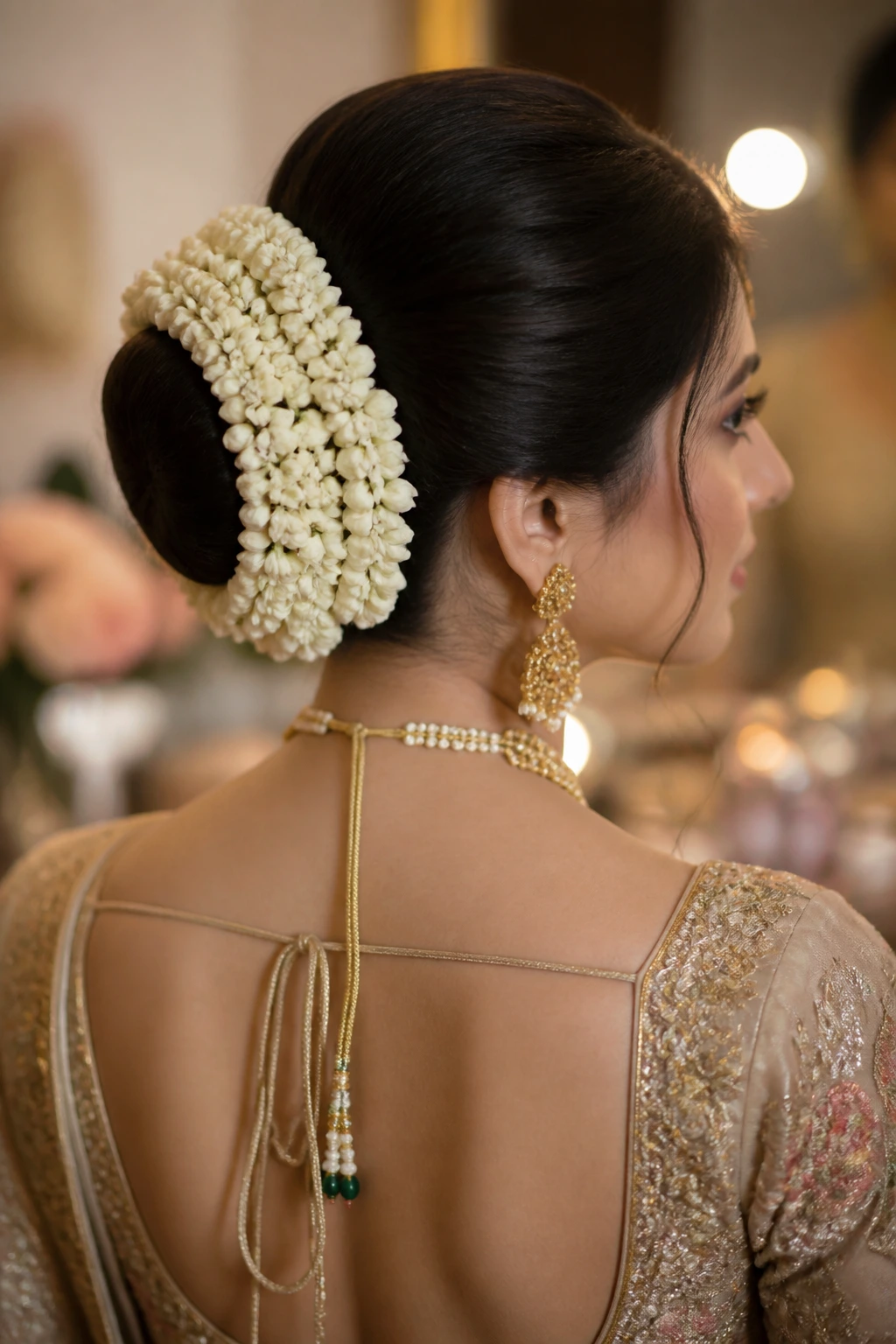
There is a timeless appeal to the traditional tight bun, or juda, wrapped in layers of fresh jasmine, or gajra. This is a highly functional hairstyle because it is virtually indestructible. Once it is pinned in place, it will not move, no matter how much dancing you do.
Why It Works for Thick Hair
The density of Asian hair creates a beautiful, large bun without the need for donut inserts or fillers. Start by smoothing the hair back with a serum to combat frizz. Use a strong-hold hairspray specifically designed for updos. When pinning the gajra, use long, sturdy florist pins rather than standard bobby pins; they will grip the hair better and support the weight of the fresh flowers throughout the day.
9. Messy Boho Bun with Tendrils
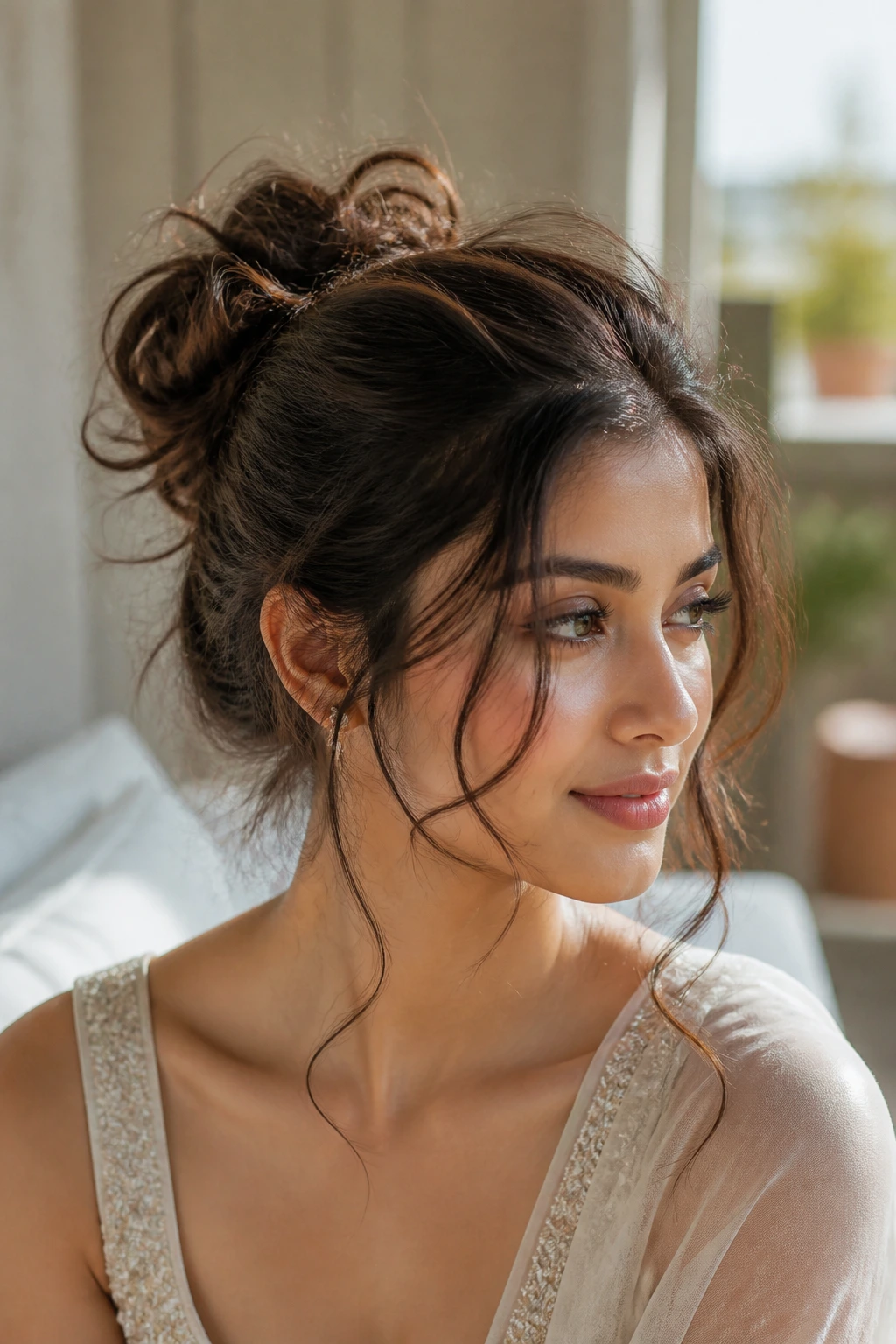
This look is all about ease. It feels effortless and soft, making it perfect for daytime ceremonies. The key is to avoid making it look too messy—there is a fine line between boho-chic and simply unkempt.
Styling the Tendrils
Start by curling your hair first to create texture, then loosely gather it into a mid-height bun. Let a few long pieces hang down around your ears and frame your face. Use a flat iron to give those tendrils a soft, “S” curve. This ensures they look styled, not just like leftover hair you forgot to pin up. A little bit of texture spray on the bun itself will keep it from looking flat.
10. Low Ponytail with Texturized Waves
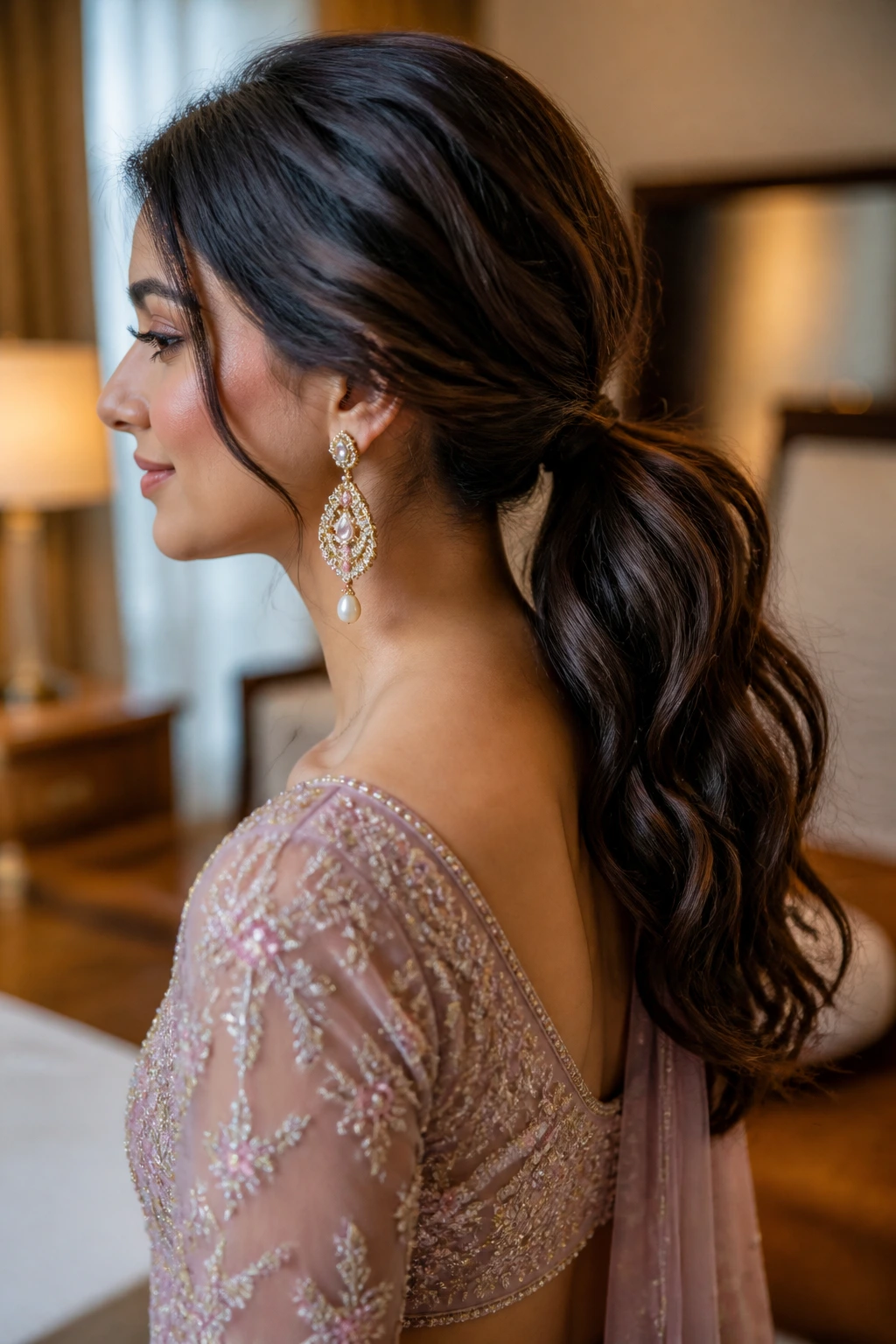
If you don’t want a bun but want to keep your hair out of your face, a low, texturized ponytail is a great alternative. It is sophisticated, comfortable, and allows you to play with jewelry. The waves add a layer of complexity that keeps the look from being too plain.
Creating the Base
Blow-dry your hair with a diffuser to enhance its natural texture, or use a crimping iron on the roots for added volume. Pull the hair into a low ponytail, but instead of smoothing it, use your fingers to create little bumps and texture. Leaving the ponytail slightly loose at the nape of the neck feels more modern and relaxed than a pulled-back, severe ponytail.
11. Waterfall Braid into Soft Curls
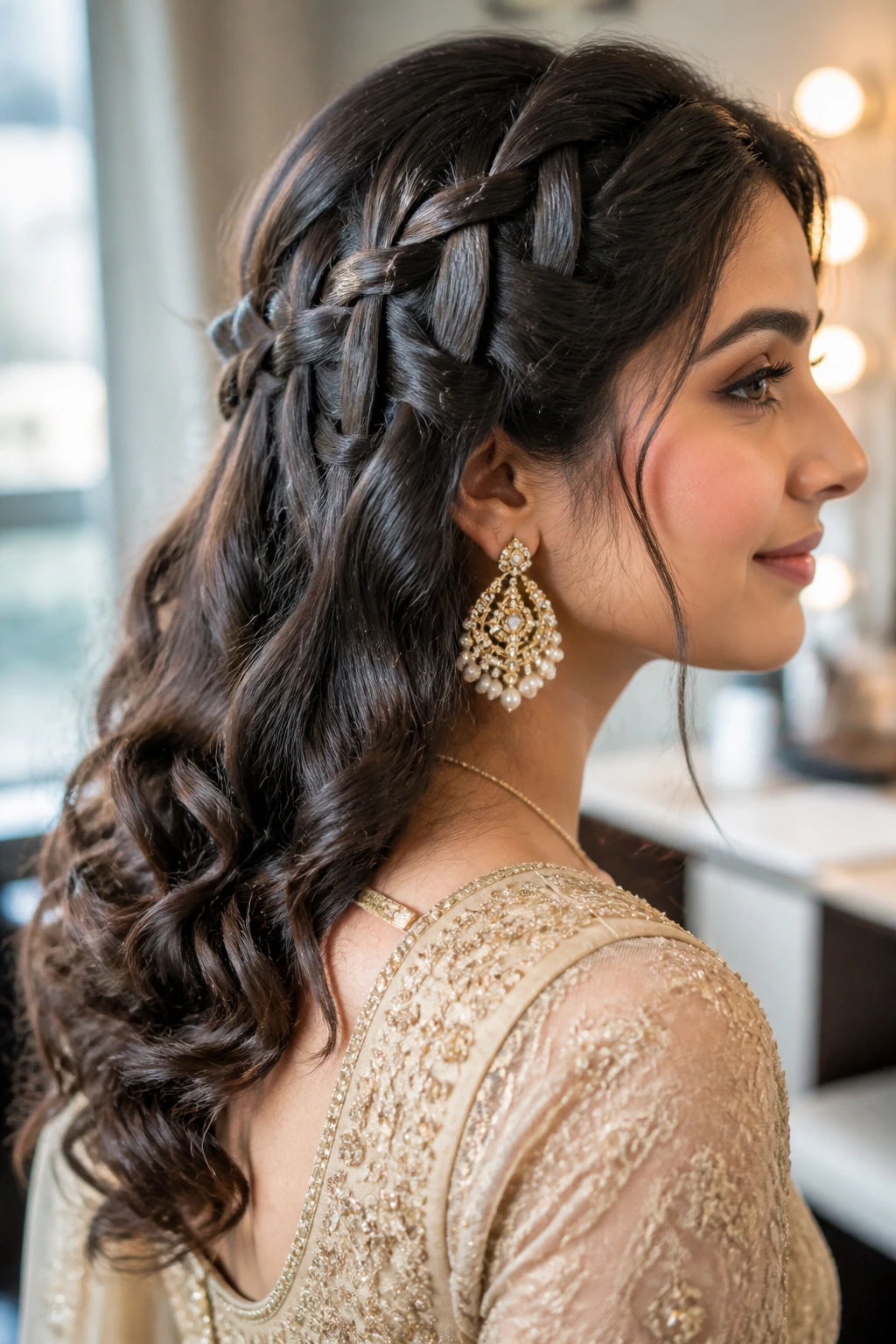
A waterfall braid is one of the most intricate-looking styles, yet it is relatively simple once you understand the technique. It incorporates your hair into the style while still letting the majority of it flow freely. It looks particularly stunning on hair that has a lot of natural thickness.
Practicality for Weddings
This is a great option if you have highlights or balayage, as the braiding highlights the dimension in your color. Because the braid secures the hair around your face, you won’t have to worry about tucking your hair behind your ears all day. Just ensure you use a bit of light-hold spray on the braid sections to keep them from sliding apart, as heavy Asian hair can sometimes work its way out of intricate plaits.
12. Sleek Center-Parted Low Pony
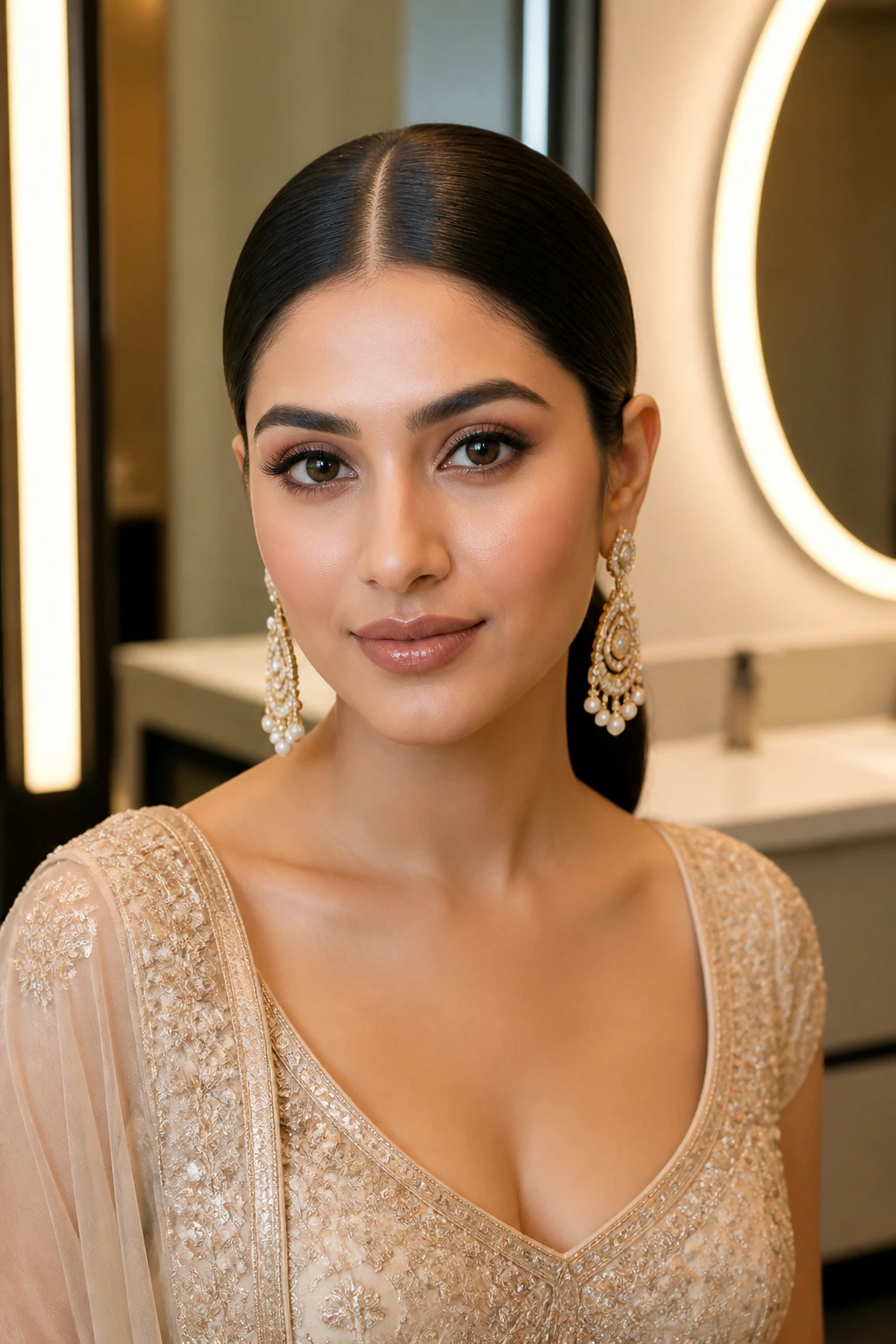
Minimalism is a growing choice for modern brides. A slick, low ponytail with a sharp center part looks incredibly high-end. It emphasizes your facial features and allows the intricate embroidery of your lehenga to take center stage without the distraction of wild hair.
The “Slick” Requirement
This style requires a high-quality styling gel. Avoid gels that get crunchy or flaky; look for a flexible-hold smoothing cream that keeps the hair damp-looking and sleek. Use a boar-bristle brush to get every hair into place. If you have any baby hairs, use a clean toothbrush sprayed with hairspray to gently smooth them back. This level of attention to detail is what makes a simple ponytail look like a deliberate style choice.
13. Bubble Braid for a Modern Twist
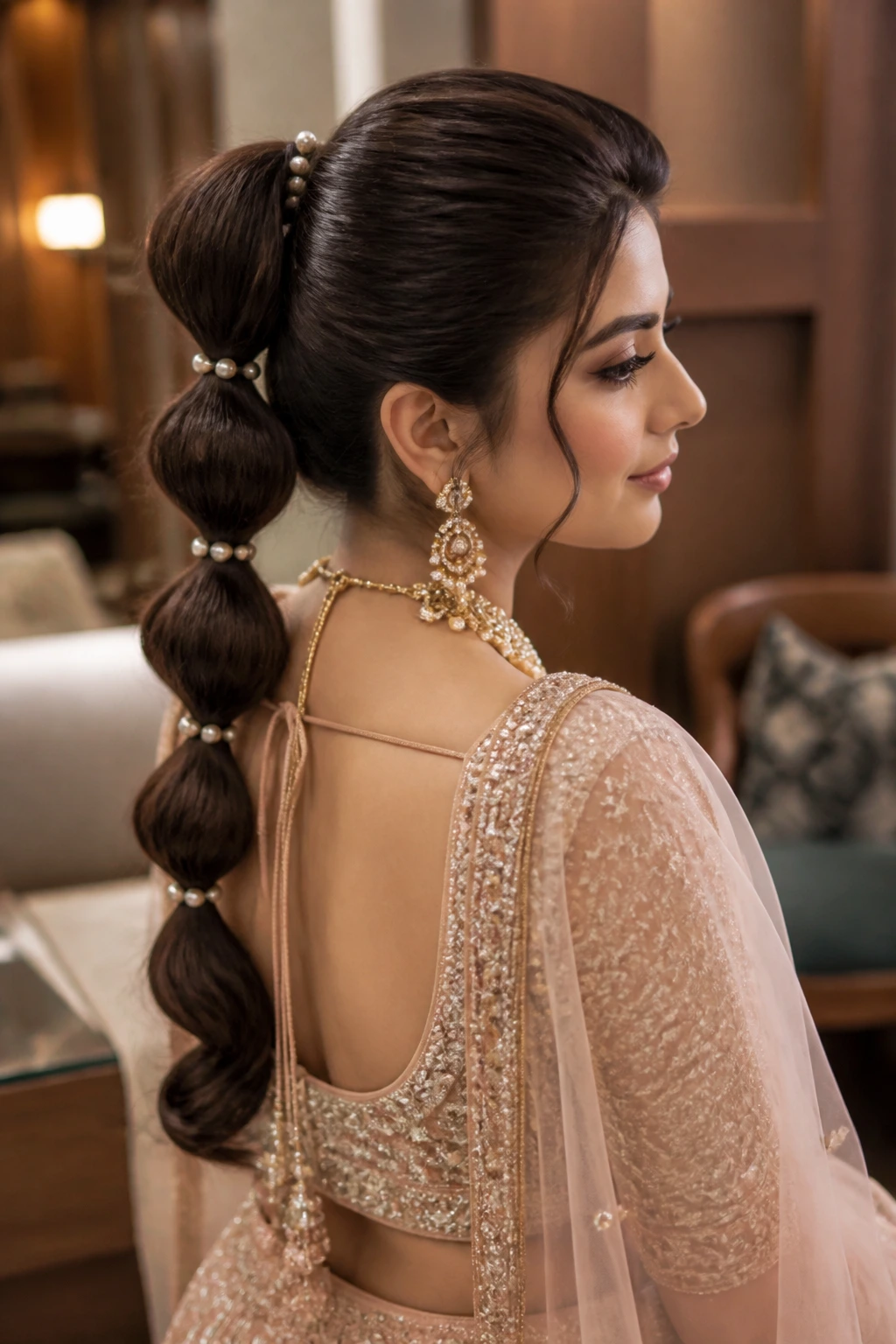
The bubble braid has gained traction as a fun, unconventional choice. It is essentially a ponytail that is segmented by small hair ties. It is excellent for thick, long hair because it controls the volume while adding a structured, architectural element to your look.
How to Create the Look
Pull your hair into a high or mid-height ponytail. Every two or three inches down the length of the pony, add another clear elastic. After securing the elastic, gently pull the hair between the ties outward to create “bubbles.” For a wedding, you can add small pearl pins or gold beads to the center of each section. It is a playful way to handle hair that might otherwise be too unruly to wear completely down.
14. Retro Pompadour Updo
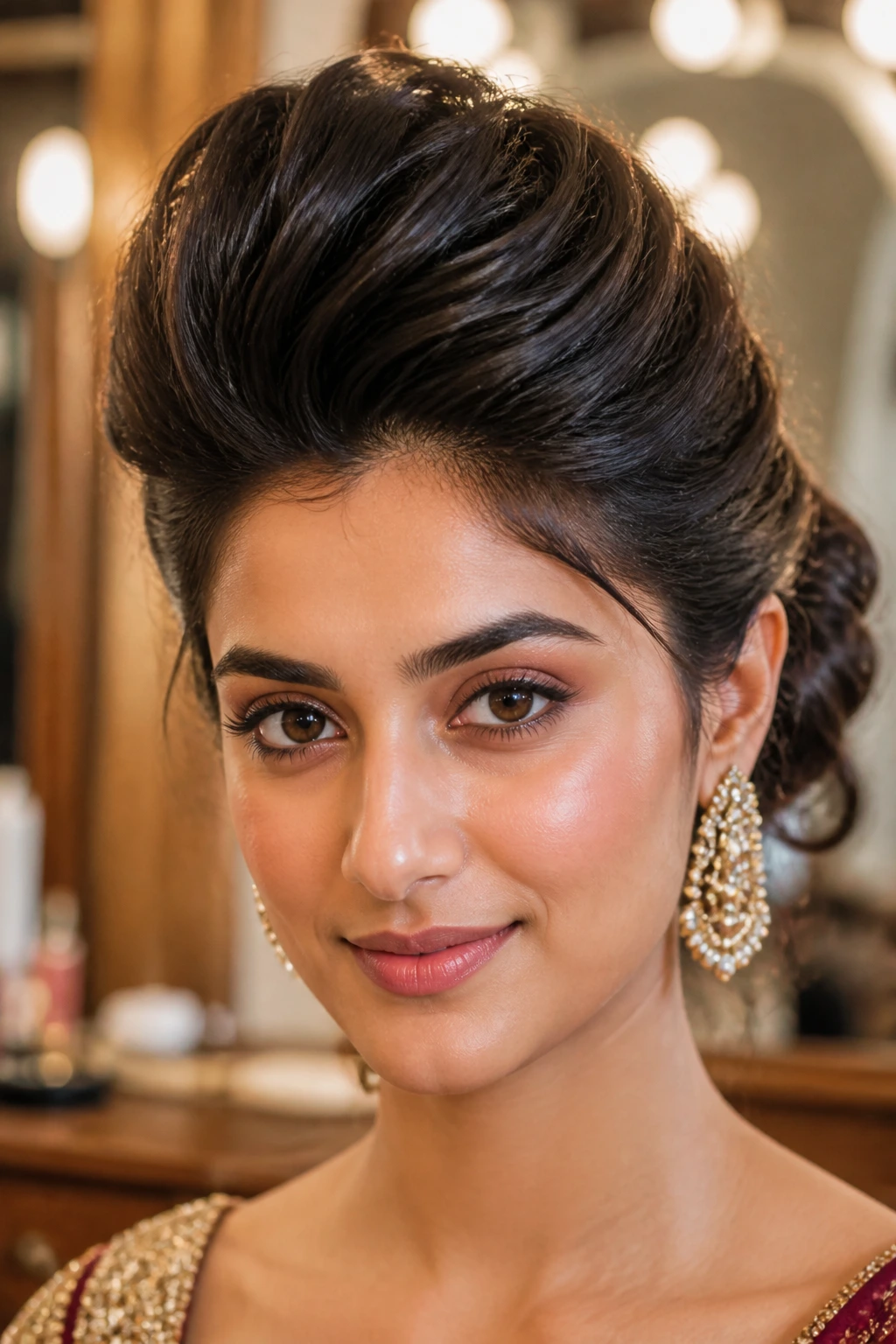
If you love volume and vintage glamour, a pompadour-inspired updo is a great way to showcase Asian hair’s natural thickness. By building volume at the crown and pinning the rest into a structured bun, you create a look that feels regal and tall.
Building the Structure
Backcomb the hair at the crown before smoothing it back into the pompadour. You need a sturdy base of hairspray here—a high-shine, strong-hold product is best. Use a teasing comb to create the lift, then carefully smooth the top layer with a fine-tooth comb so the texture remains hidden. This style is perfect if you are wearing a heavy headpiece that needs a bit of height to balance out the overall aesthetic.
15. The ‘Half-Up’ Top Knot
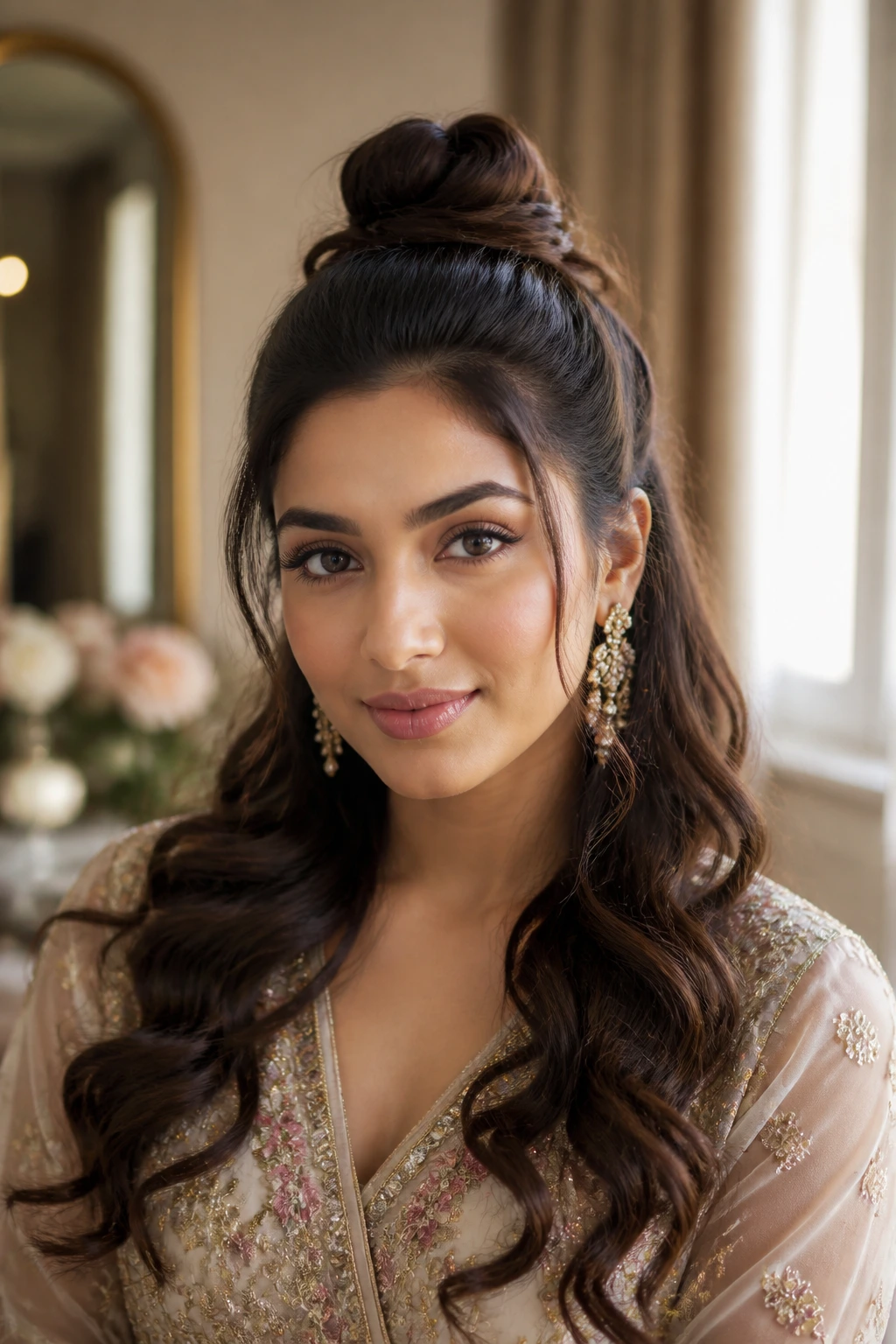
The top knot is often seen as a casual weekend style, but when done with polished, curled hair, it transforms into a trendy wedding look. It is excellent for keeping the face completely clear for photographs while still showing off your hair length.
Refinement for Weddings
Curl the bottom half of your hair in loose, beachy waves. Section off the top portion and secure it into a bun. The difference between “casual” and “bridal” here is in the polish. Ensure the transition between the gathered hair and the loose hair is smooth. Wrapping a thick piece of hair around the base of the top knot is vital. This adds elegance and makes the style look finished rather than like you just threw your hair up on a whim.
16. Floral Crown with Loose Waves
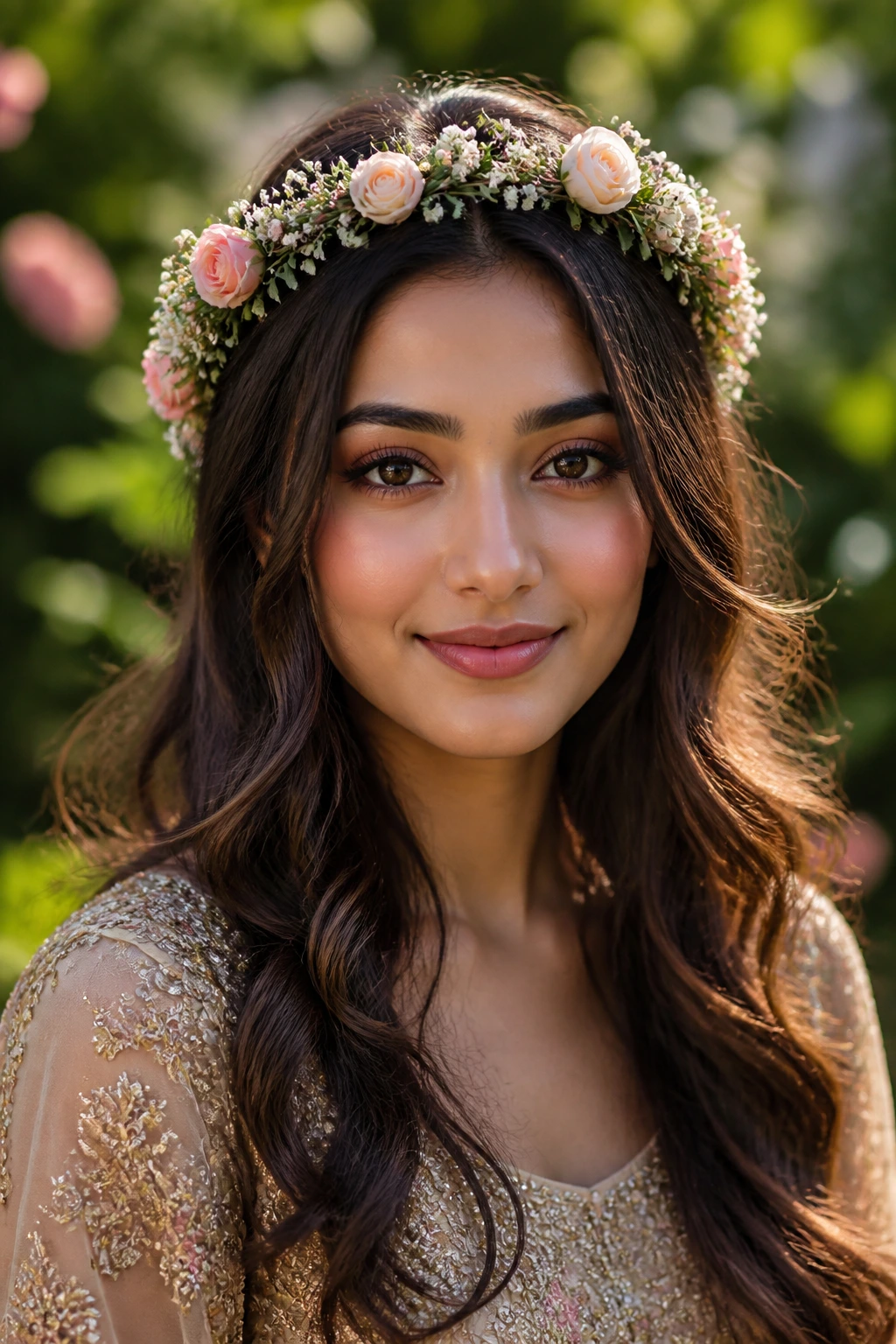
Sometimes, the best thing to do is let your hair down and let the accessories do the work. If you have naturally thick or wavy hair, embrace it. A floral crown or a series of small, pinned flowers can turn a simple hairstyle into a bridal masterpiece in minutes.
The Longevity Secret
To keep loose waves looking fresh for a full day of events, prep is everything. Use a lightweight texturizing mousse on damp hair, and once dry, use a large curling iron. Don’t brush the curls out immediately. Let them cool completely. Once you place the floral crown, use small, hidden bobby pins to secure the flowers to the braid or the hair itself. This prevents the crown from sliding off as your hair shifts throughout the day.
17. Fishtail Side Braid
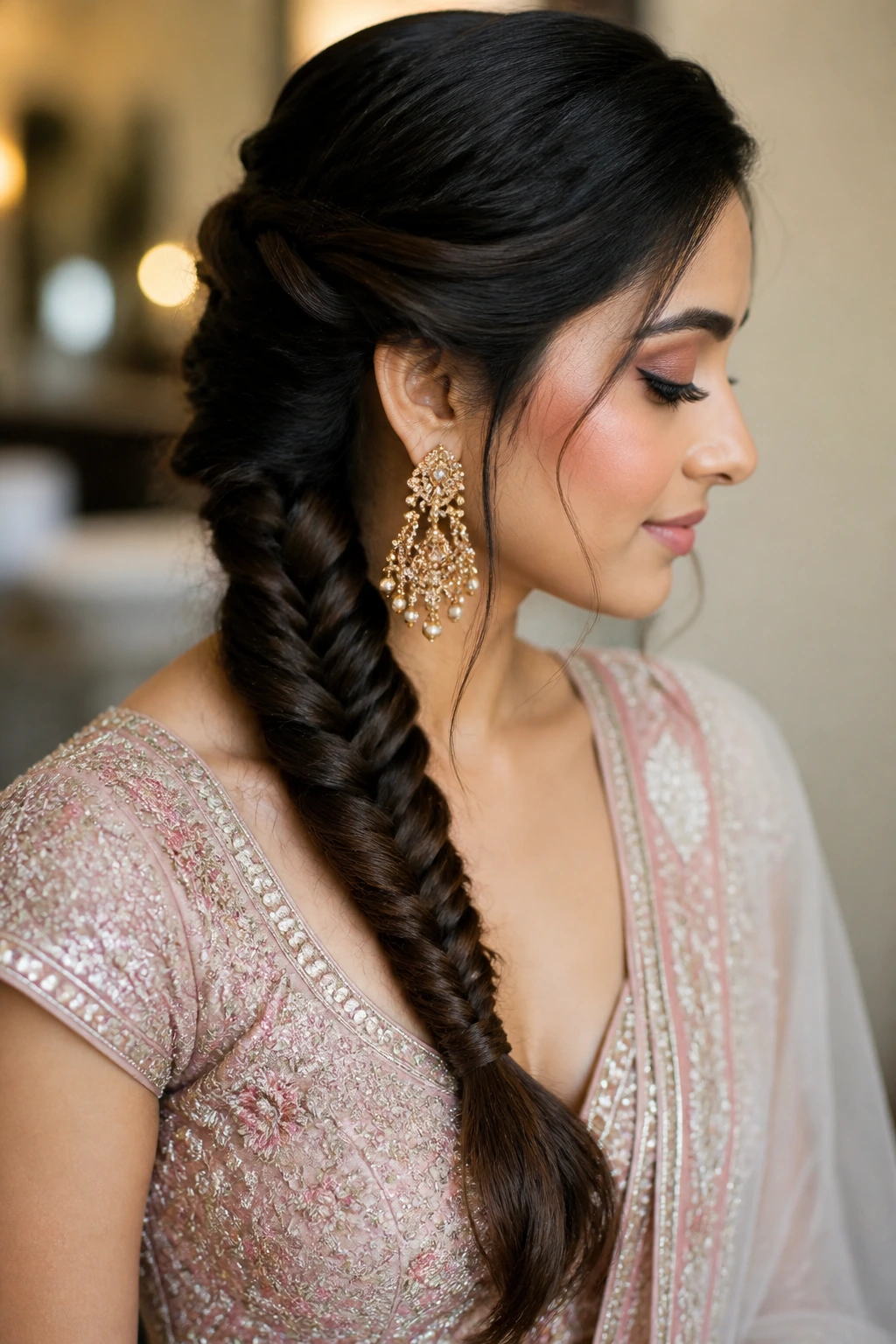
A fishtail braid is tighter and more compact than a standard plait. It holds together extremely well in thick hair, making it one of the most reliable styles for a long wedding day. It also adds a sophisticated, complex look to any outfit.
Getting the Tension Right
Fishtail braids take time to master, but they are incredibly worth it. The key is to keep the sections small. If you take large pieces, the braid loses its definition. Once you reach the end, pull on the edges of the braid to loosen it just enough to add softness. Because it is a tight braid, it handles the movement of dancing and walking perfectly, and it is narrow enough that it won’t interfere with the drape of your dupatta.
18. Tight Dutch Braid into a Low Bun
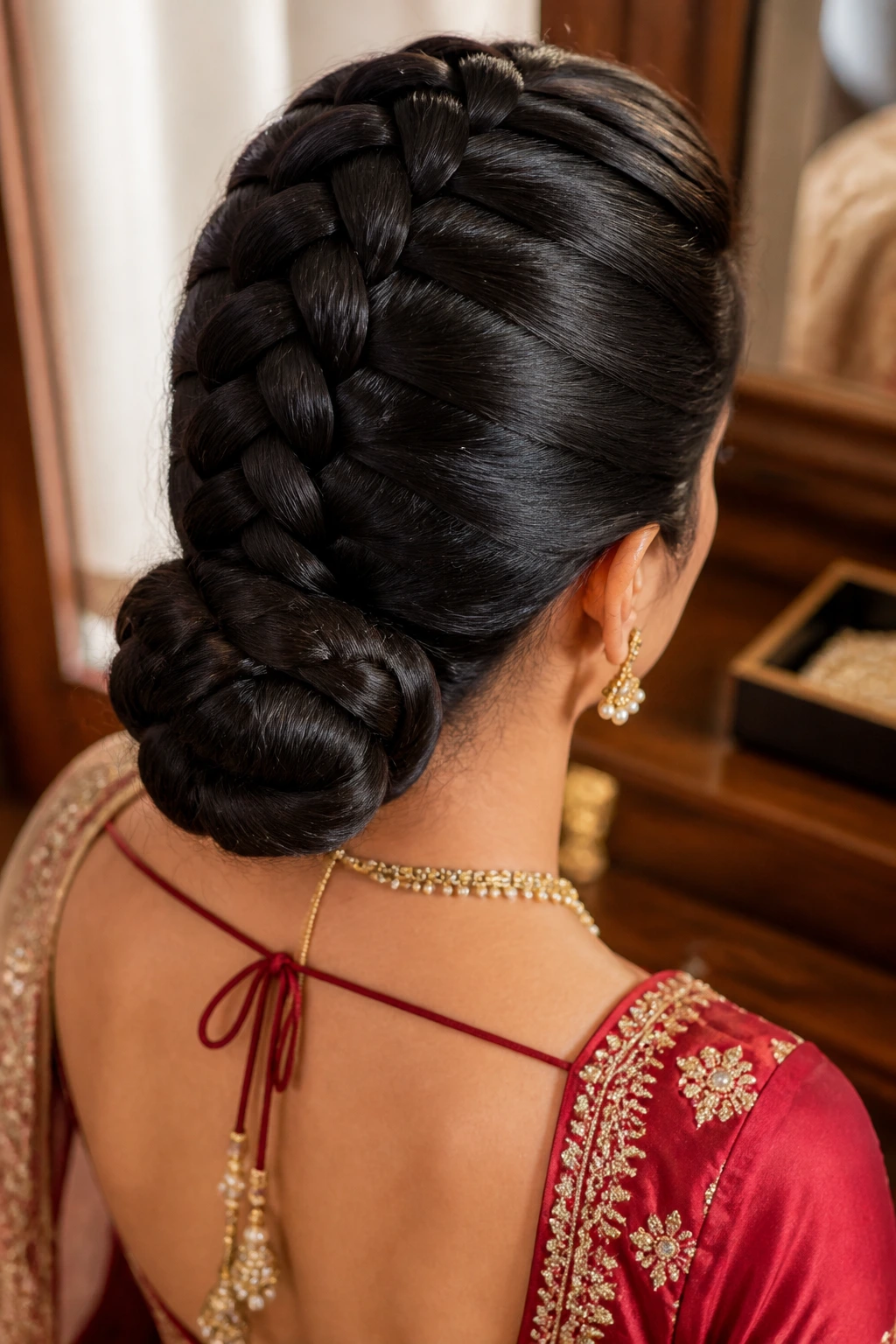
This is the ultimate “security” hairstyle. By starting with a Dutch braid—where the hair is woven under rather than over—you create a base that is locked tight against your scalp. You can then pull the remaining hair into a bun.
Why It Excels
This style is great for people with heavy hair because the braid distributes the tension across the scalp. Instead of a single heavy ponytail pulling at one point, the braid holds the weight of your hair evenly. It is a very structured, clean look that pairs well with heavy, traditional lehengas and works beautifully if you have a lot of layers that you need to keep under control.
19. The ‘Twisted Crown’ Updo
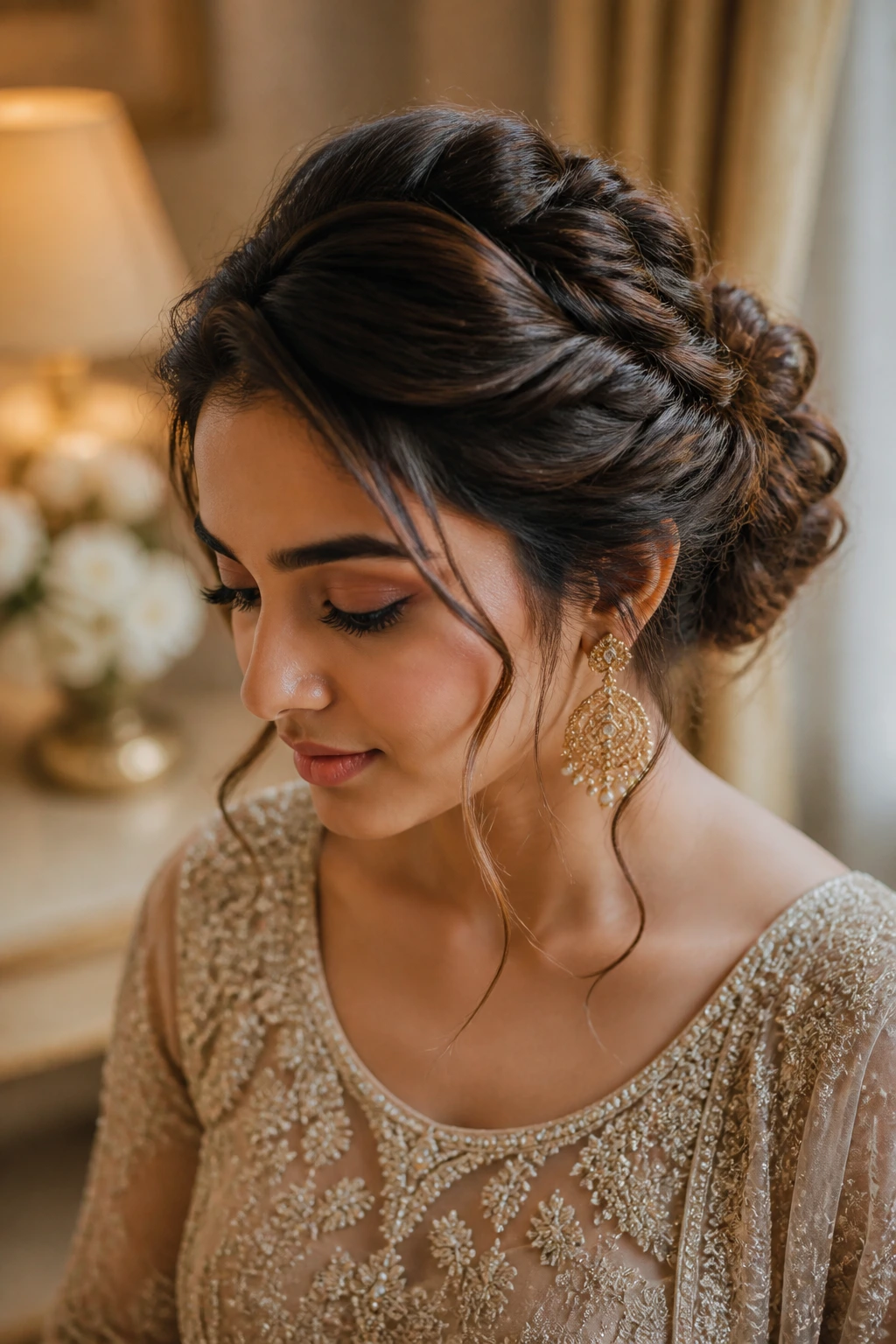
A twist is often easier to pull off than a braid and provides a softer, more rounded look. By twisting sections of hair from the front and pinning them toward the back, you create an elegant crown that feels effortless.
Avoiding Slippage
The biggest risk with twists is that they can loosen and lose their shape if your hair is very silky. Use a tiny bit of texturizing powder at the roots before you begin twisting. This gives your hair the “grip” it needs to hold onto itself. When pinning the twist, place your bobby pins in an “X” pattern to create a mechanical lock that won’t slide out as the hair moves.
20. Sleek Low Bun with Hair Jewelry
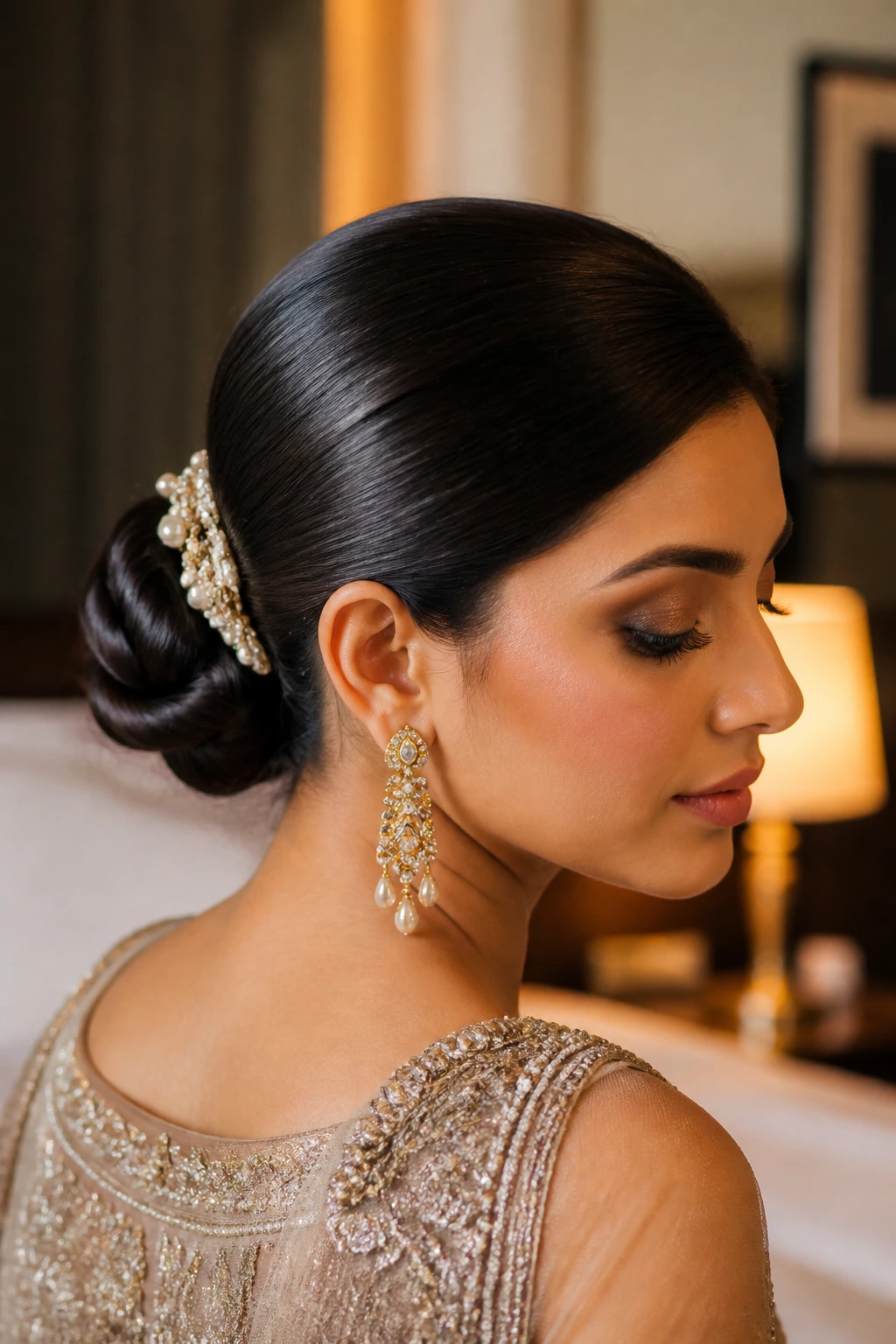
If your lehenga is heavily embellished, you might want to keep your hair simple and let your accessories make the statement. A clean, sleek low bun is the perfect canvas for hair jewelry—think gold combs, pearl pins, or silver chains that weave into the bun.
The Focus on Shine
For this look, shine is everything. Use a high-quality shine spray after you have styled the bun. Asian hair reflects light beautifully, and a sleek, dark bun looks incredibly polished with a high-gloss finish. Place your hair jewelry carefully; don’t overdo it. A single, well-placed piece of gold jewelry often looks much more sophisticated than a dozen scattered pins.
21. Side-Swept Curls with Pins
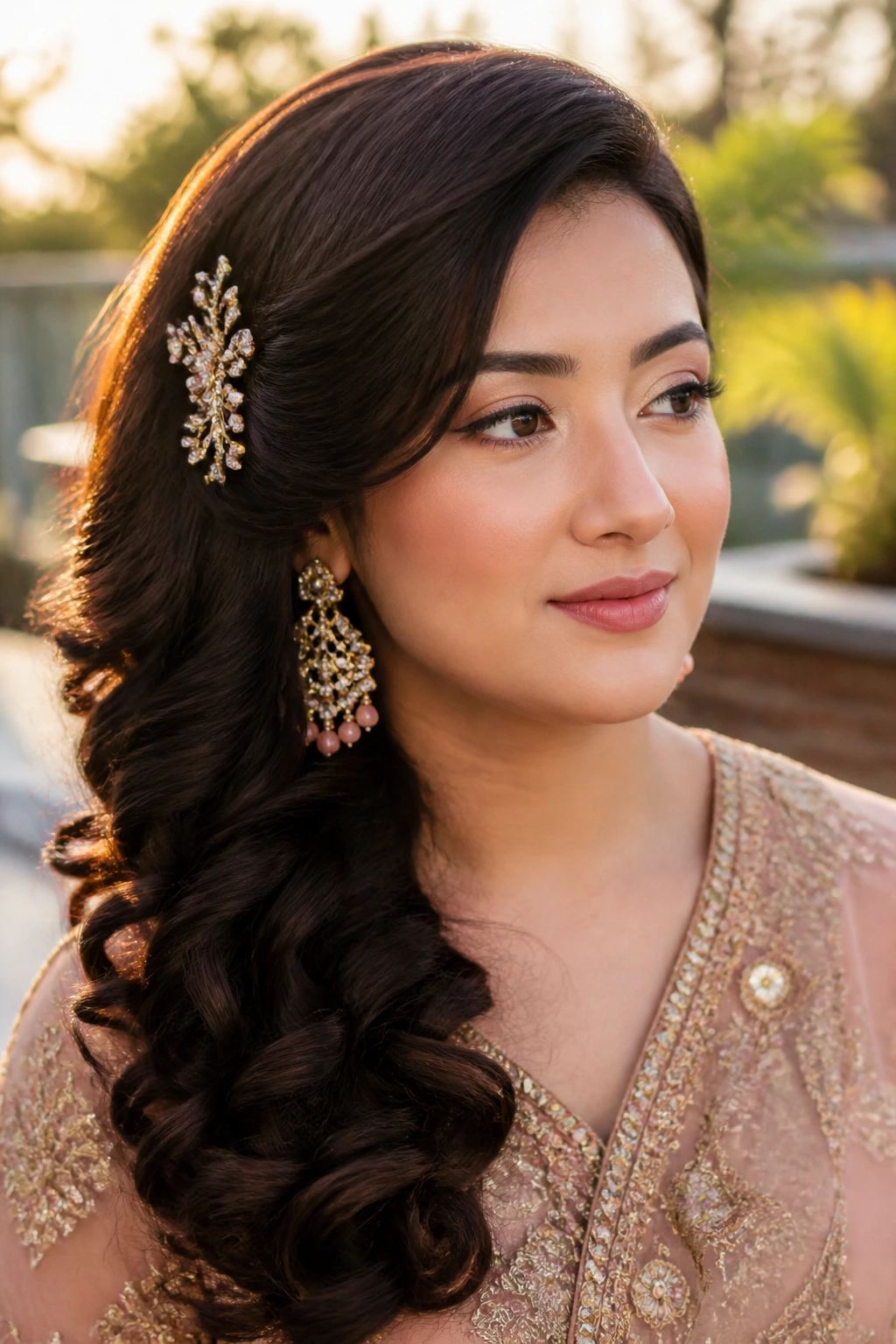
If you want to wear your hair down but need a little more structure to keep it out of your face, try pinning one side back with a beautiful decorative clip or a series of matching pins. It is a subtle change that completely alters the look.
Balancing the Weight
Asian hair can get heavy on one side if you sweep it all over. Use a bit of hairspray on the section you are pinning back to ensure the hair doesn’t puff out or sag. The pin shouldn’t just be decoration—it should be functional. Use a sturdy hair clip that has enough teeth to grip the dense section of hair, rather than a lightweight fashion pin that will fall out the second you start walking.
22. The Modern Chignon
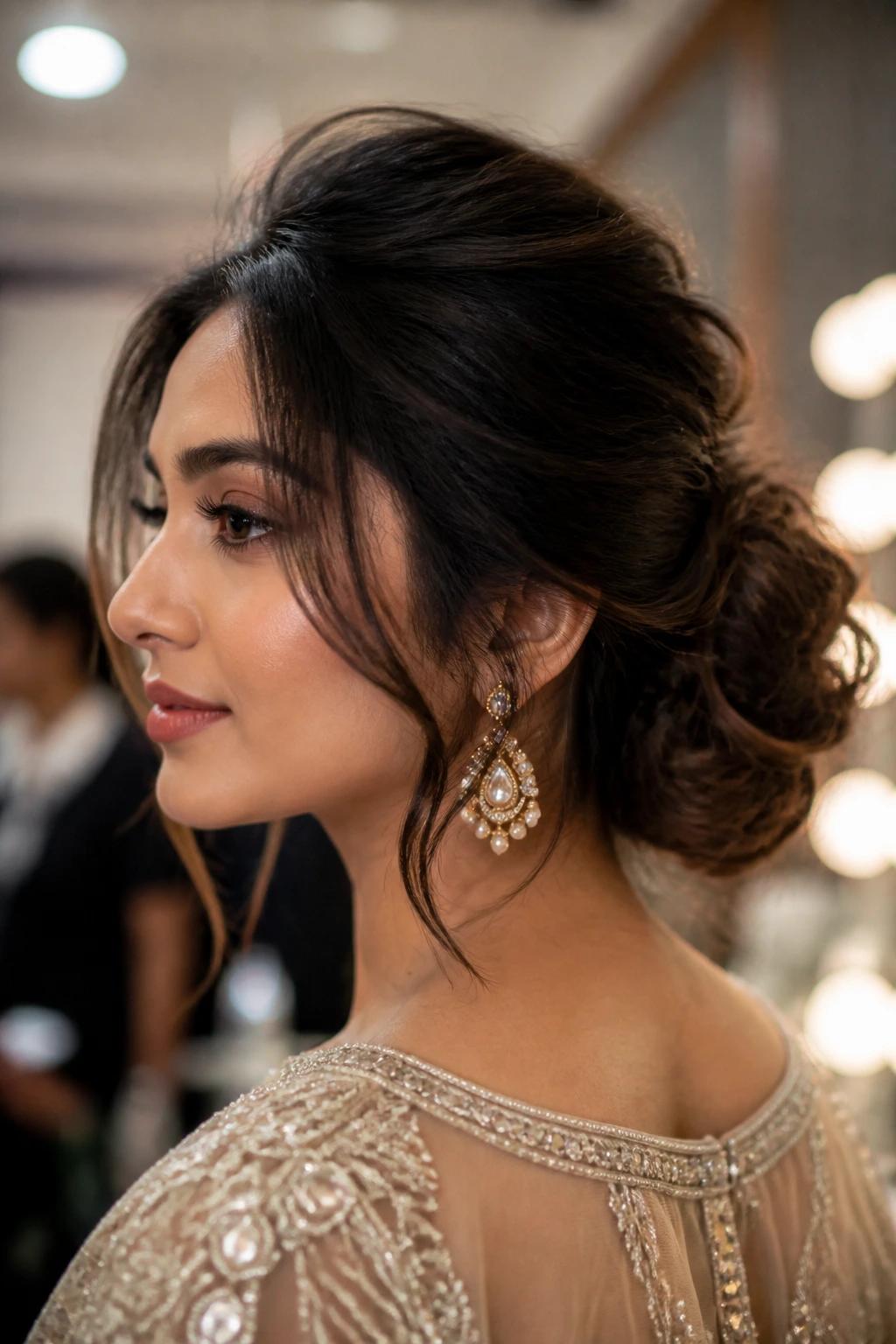
The chignon is the ultimate classic, but a modern version involves keeping it slightly loose and framing the face with soft, intentional waves. It is chic, refined, and never goes out of style.
Final Touches
To get that “modern” look, don’t pin the bun so tightly that it looks like a perfect circle. Let it have some shape and volume. Ensure the front sections are not glued to your head; give them a bit of soft volume. The beauty of this look is its simplicity, so prioritize the health of your hair—a quick pass with a flat iron to smooth flyaways goes a long way here.
Final Thoughts
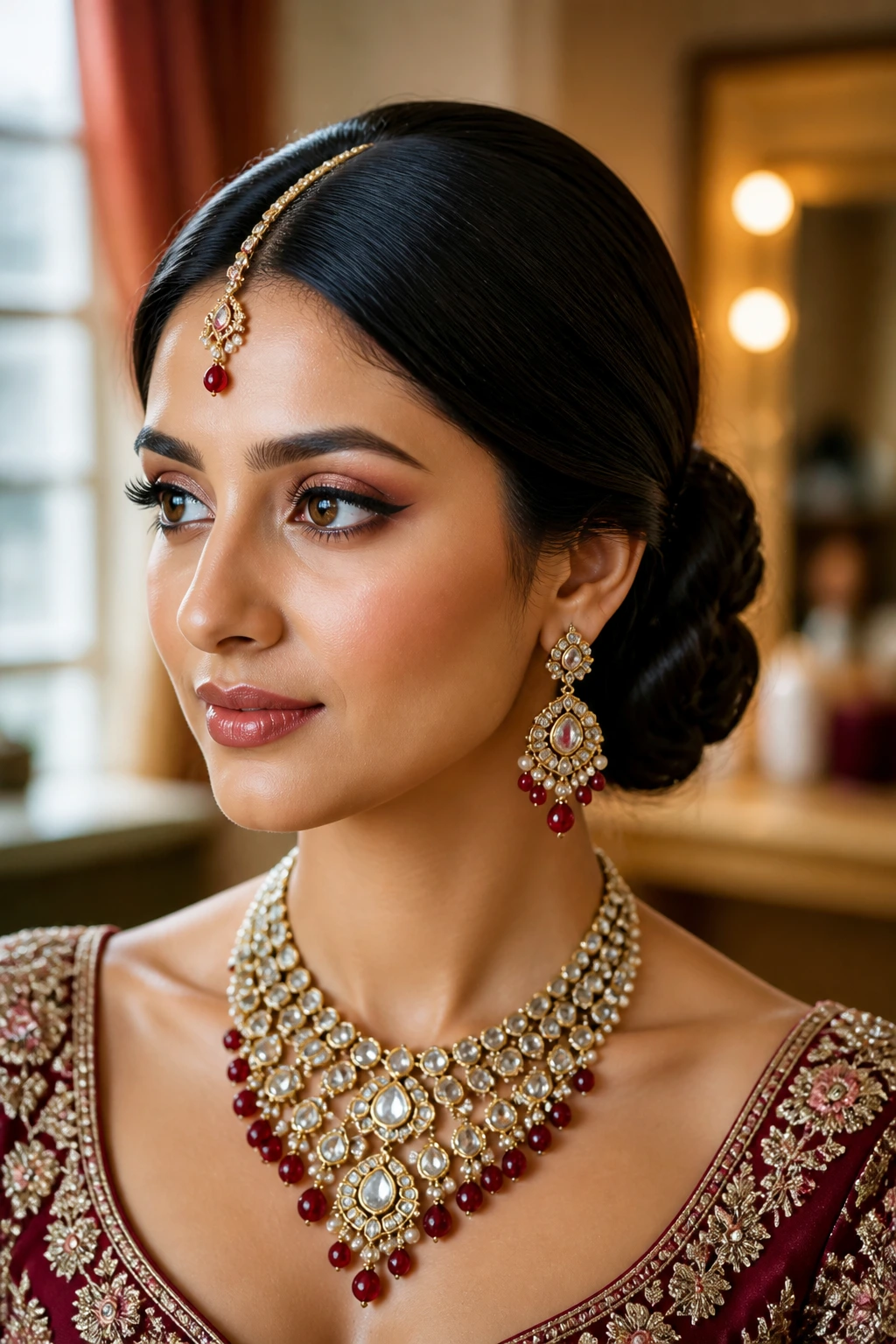
When preparing your hair for a lehenga, remember that your choice of style is as much about logistics as it is about the look. Asian hair provides a fantastic foundation of thickness and shine, but it requires specific handling—grit for braids, setting for waves, and structural anchors for buns. Do not feel pressured to choose a style that is “trending” if it doesn’t offer the support you need. The best hairstyle is the one that allows you to walk through your celebration without constantly checking a mirror or pinning loose strands.
Take the time to test your chosen style with the actual weight of the dupatta you plan to wear. If you are doing your own hair, practice the pinning technique at least twice before the event day. It is often the simplest styles, executed with precision and the right products, that end up looking the most elegant in photographs. Confidence, after all, comes from knowing your hair is going to stay exactly where you put it, leaving you free to enjoy the moment.