

Choosing the right protective style when your hair has a tight, frizzy texture is often about finding the perfect balance between tension, longevity, and aesthetics. Cornrows are arguably the gold standard for this, as they lock the hair strands into a controlled pattern that minimizes tangles and environmental damage. However, the common mistake many people make is assuming that any braid pattern will hold up on frizzy hair without significant prep work.
When dealing with hair that tends to frizz, moisture isn’t just a suggestion—it is a requirement. Before you even think about parting your hair, your strands need to be deep-conditioned and stretched. Using a high-quality leave-in conditioner or a lightweight hair butter helps smooth the cuticle, making it easier for the braider to grip each section without the hair puffing up or slipping out of the braid. If your hair is dry and brittle, the friction from braiding will likely lead to breakage rather than growth.
The following list explores intricate styles that utilize the unique volume of frizzy hair to create depth and dimension. Each design relies on specific sectioning techniques to ensure the braids remain neat and defined, regardless of the weather. Whether you want something low-maintenance for the gym or a high-fashion look for a formal event, these styles are designed to hold tight and look sharp for weeks.
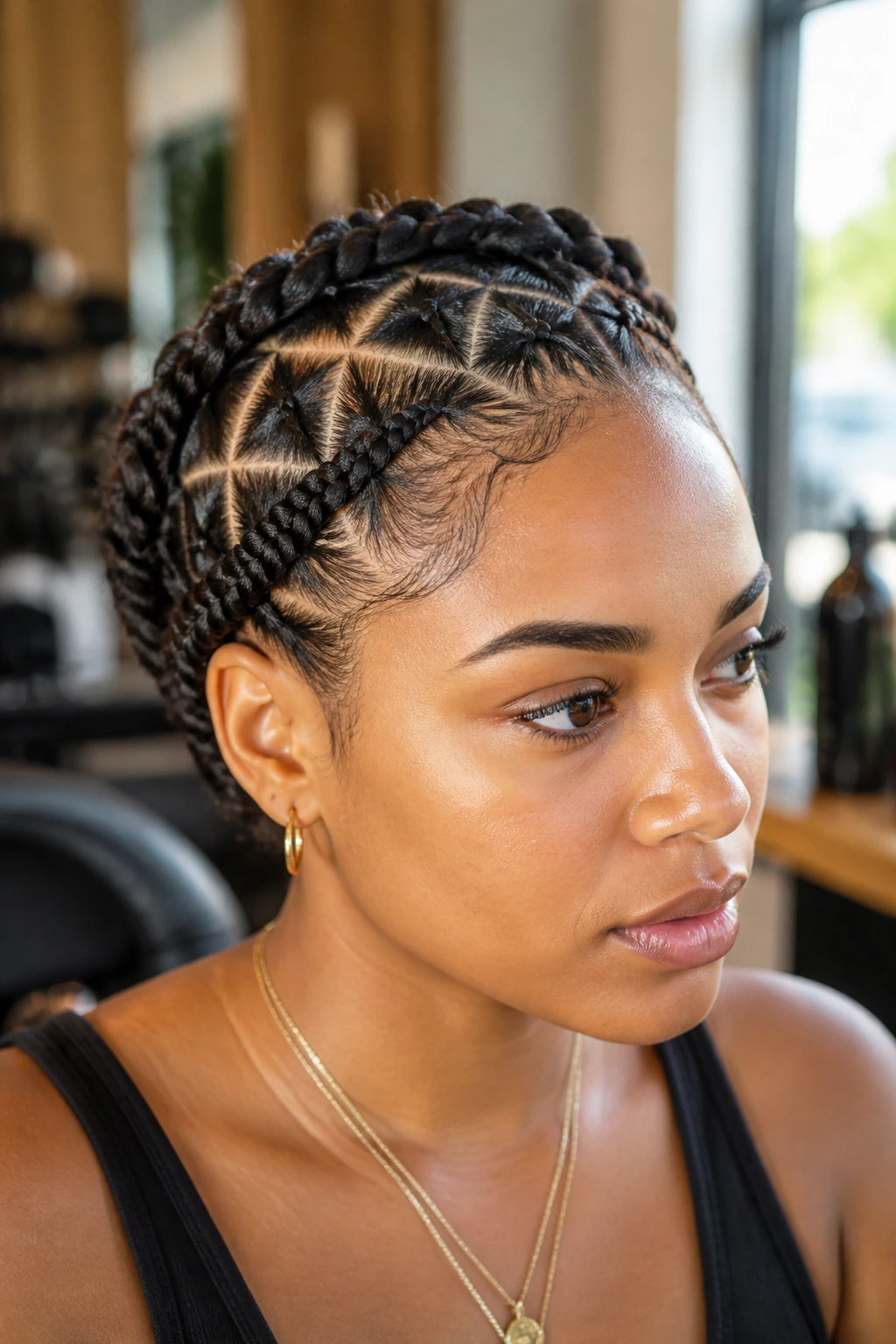
1. Geometric Crown Braids
These braids utilize sharp, angular parts that form a crown around the perimeter of the head. By creating precise diamond or triangle-shaped sections at the roots, you effectively break up the uniform volume of frizzy hair. This structure forces the hair to lay flat, preventing that “puffiness” that often occurs at the scalp line after a few days. Use a firm-hold styling pomade when parting to ensure the lines remain crisp and visible, which is the key to maintaining this style’s architectural appeal.
Why It Works for Texture
The tension created by the geometric patterns keeps the hair anchored securely to the scalp. Because the braids radiate outward from the center, the hair is naturally distributed, reducing the pull on your edges.
Maintenance Tips
- Keep your scalp hydrated with a soothing oil or mist to prevent itching under the braid pattern.
- Wrap your hair with a silk or satin scarf at night to ensure the geometric lines don’t get fuzzy from friction against your pillow.
2. Double-Sided Feed-In Braids
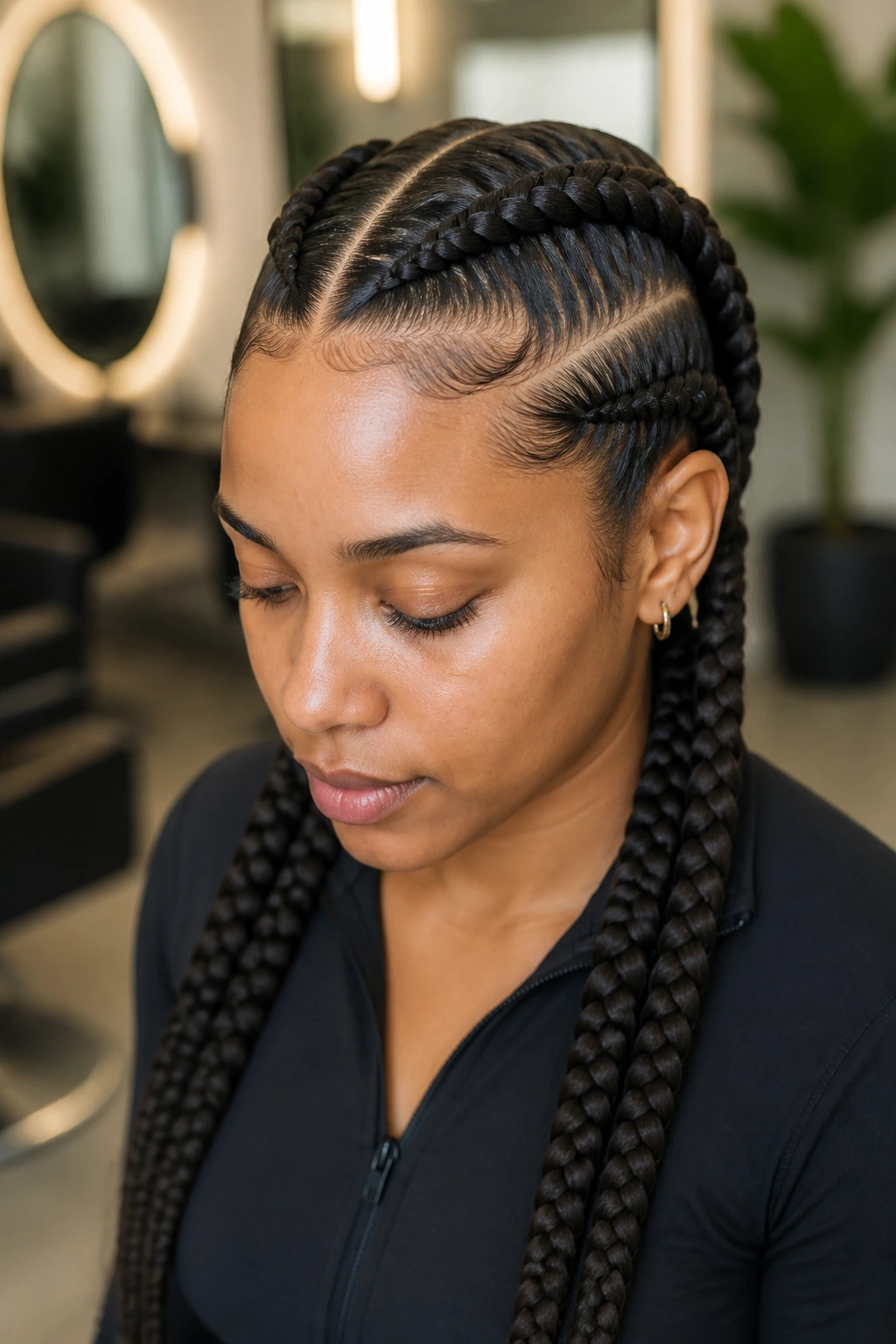
Feed-in braids are a lifesaver for those with shorter or naturally voluminous hair who want the look of long, flowing extensions. By starting each braid with your natural hair and “feeding in” synthetic braiding hair as you progress, you create a seamless transition that mimics a natural hairline. This style is particularly effective at hiding frizz because the synthetic hair acts as a barrier, encasing your natural strands and smoothing the overall look.
The Art of the Feed-In
The goal is to avoid the bulky knots that often appear at the front of the scalp. A skilled braider will ensure the braid starts very small, gradually increasing in thickness to create a realistic, tapered aesthetic that looks like it is growing directly from your scalp.
Styling for Longevity
Since this style adds weight, keep the braids relatively medium-sized to avoid excessive tension on your hairline. If the braids feel too tight, mist the scalp with a mixture of water and peppermint oil to provide instant relief.
3. Crisscross Parting with Goddess Ends
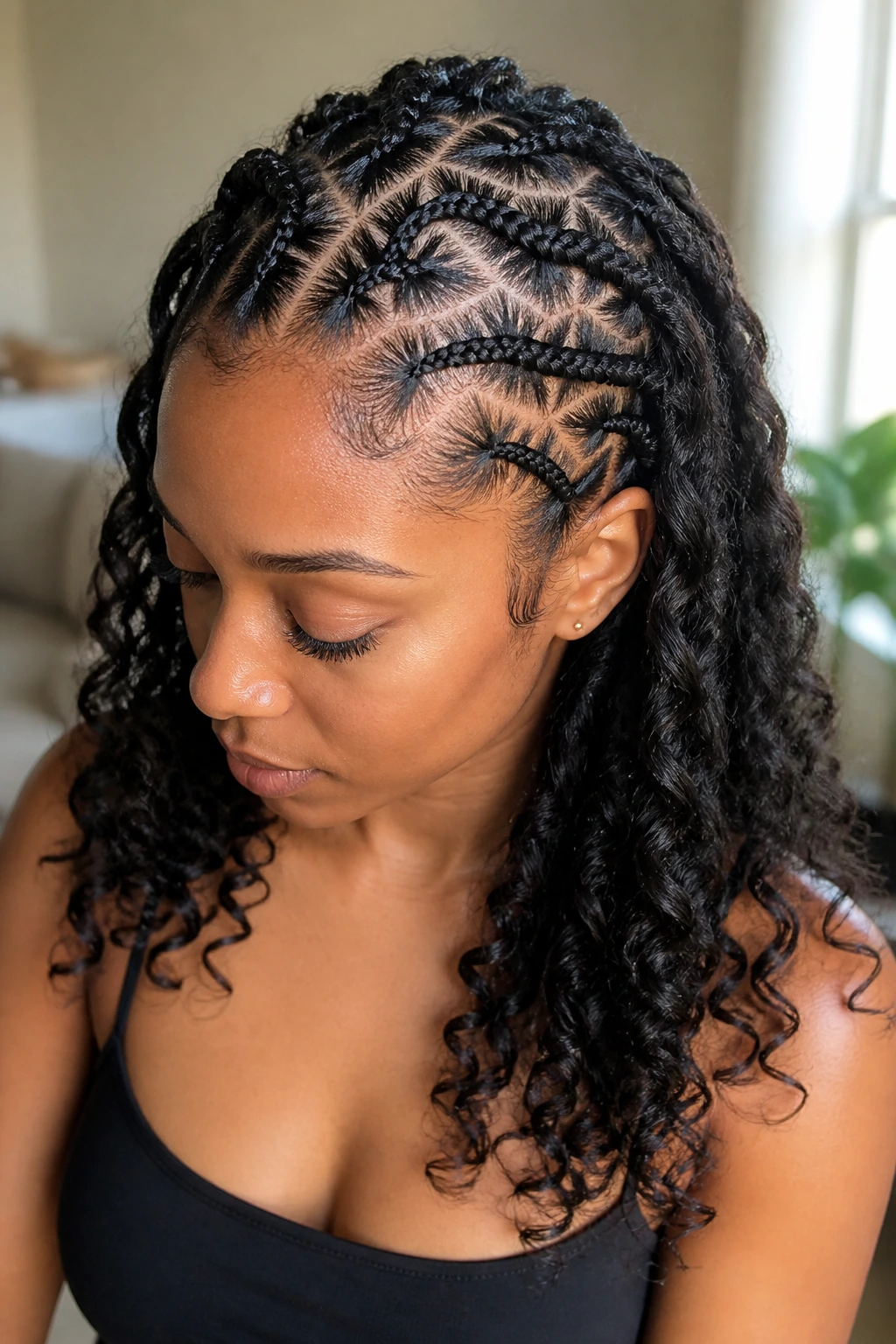
If you want to add a touch of romance to a traditional cornrow style, incorporating curly, loose ends is the way to go. These cornrows feature intricate, zig-zagging parts that weave across the head, transitioning into loose, wavy braiding hair once they clear the nape of the neck. The contrast between the tight, structured scalp braids and the bouncy, free-flowing ends provides a sophisticated look that is perfect for those who want the protection of cornrows without sacrificing the fun of loose curls.
How to Achieve the Look
- Use a flexible setting mousse on the loose ends to define the curl pattern and prevent the synthetic hair from matting.
- Apply a light-hold edge control gel to the parts to keep the crisscross design looking sharp.
4. Half-Up, Half-Down Bun Cornrows
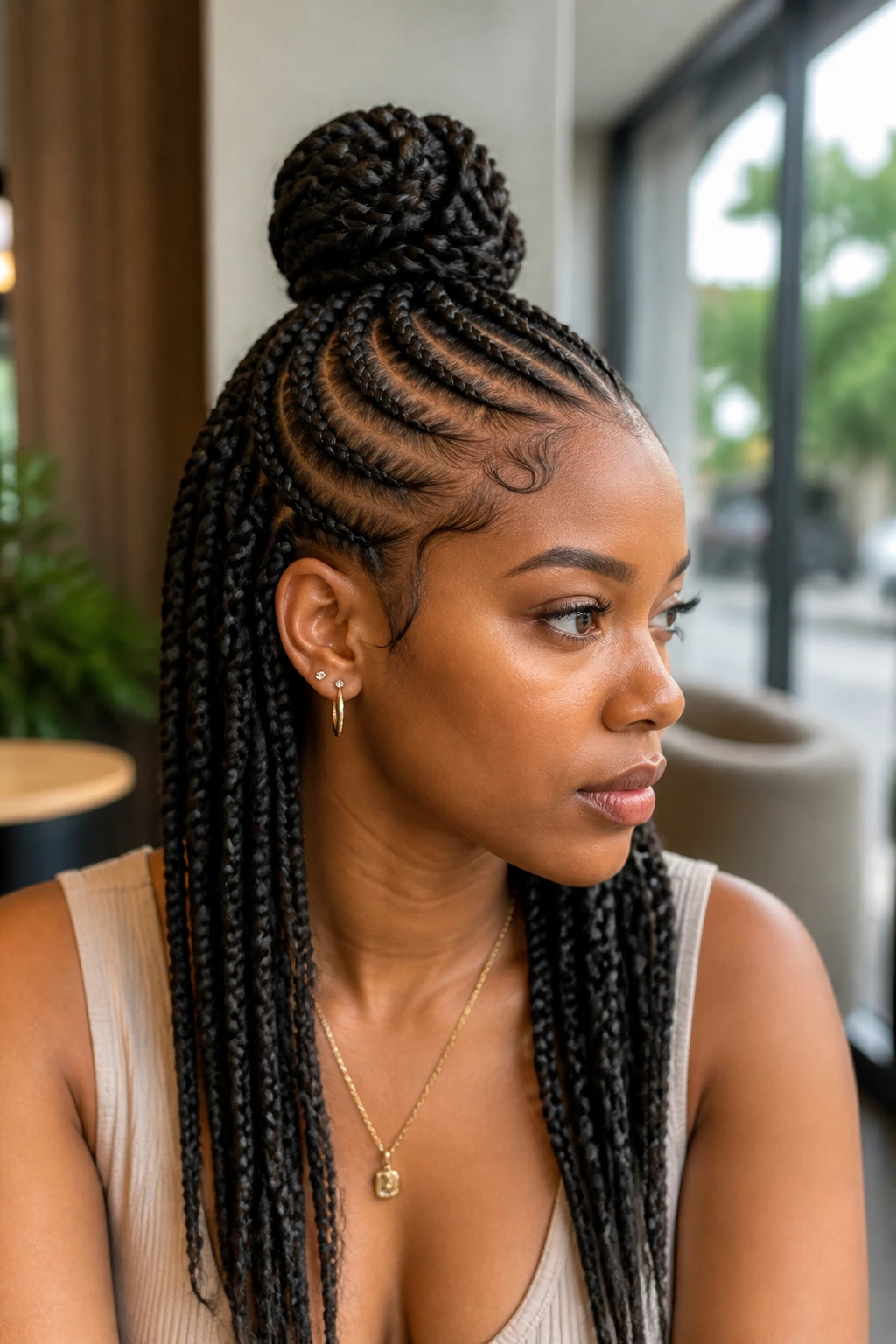
This style is remarkably versatile for people who need to keep hair out of their face but still enjoy the look of loose styling. The front and sides of the head are braided back into cornrows, which are then gathered into a high bun or ponytail at the crown. The remaining hair in the back is left either braided down or loose, depending on your preference. This configuration is fantastic for minimizing the amount of hair being pulled back at any given time, which is much better for your hairline health.
Why It’s a Practical Choice
- You can easily transition from a professional office environment to a casual weekend setting by simply swapping your hair accessory.
- It reduces the constant tugging on your temples, as the hair is gathered toward the center of the head rather than pulled from the front edges.
5. Mohawk Cornrow Pattern with Shaved Sides
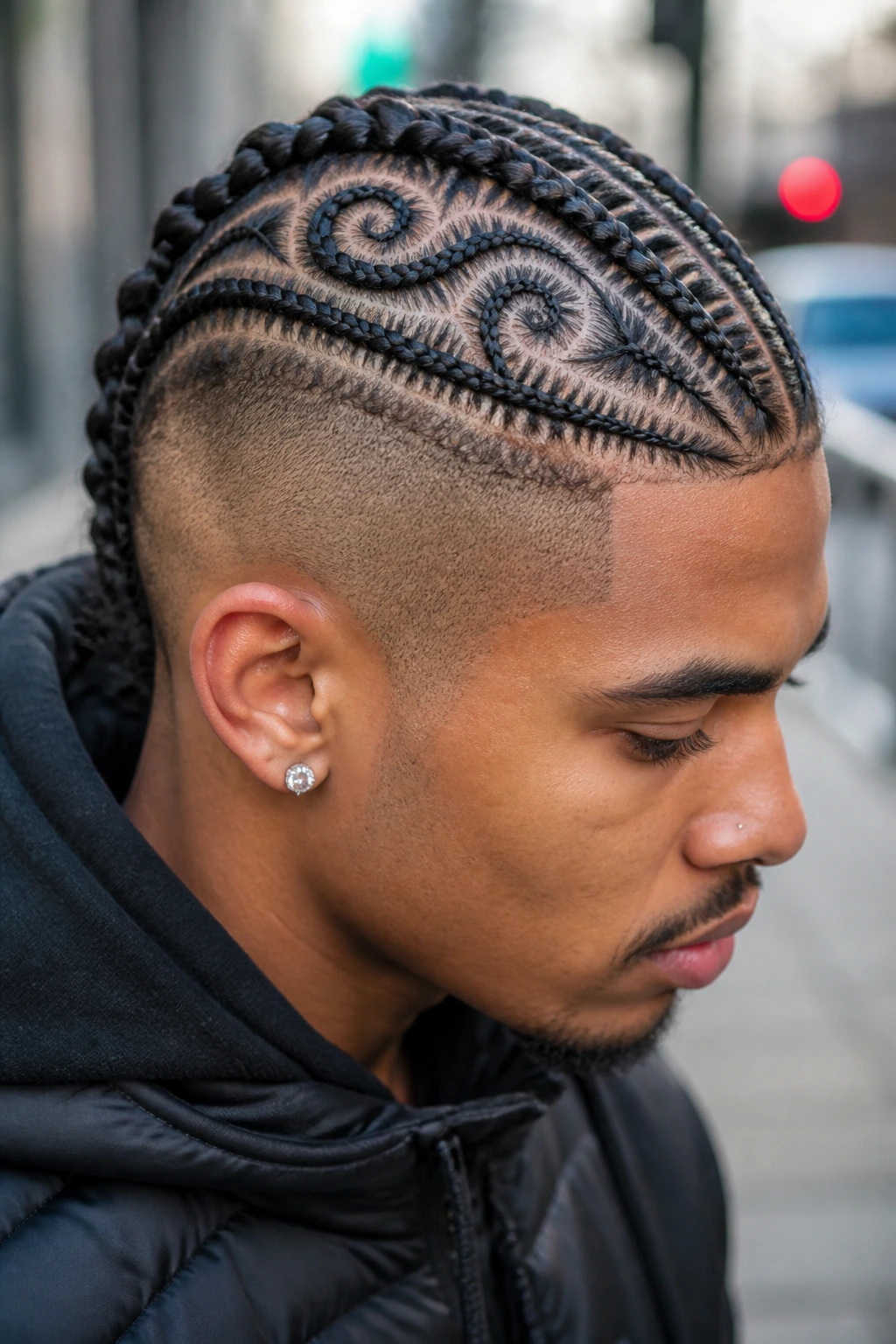
For a bold, edgy appearance, consider the Mohawk-style cornrow. This design focuses the braiding intensity along the center of the head, leaving the sides either very thinly braided or tapered with a buzz cut. Because the hair on the sides is minimized, there is significantly less surface area for frizz to develop, making this one of the most low-maintenance styles on this list.
Styling the Center Strip
The center section usually features complex designs—think swirls, S-shapes, or double-bar lines—that run from the hairline to the nape. You can even add decorative gold or silver cuffs to the center braids to add a metallic pop that draws the eye upward.
6. Butterfly Braid Cornrows
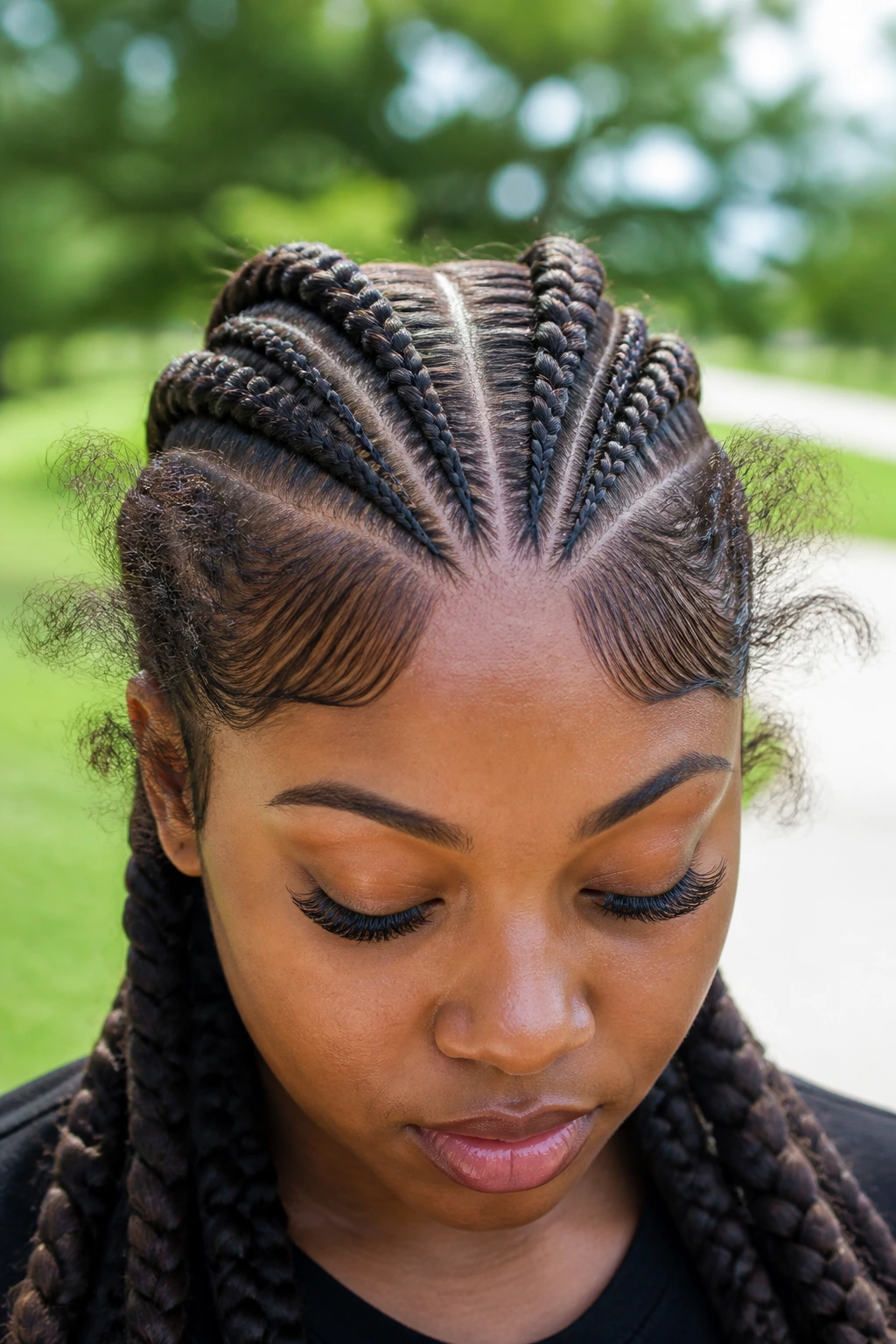
Butterfly braids are a variation of jumbo cornrows that feature “winged” or pulled-out edges. This look is intentionally messy and oversized, making it an excellent choice for hair that is naturally frizzy. Because the style celebrates volume, you don’t have to worry about your hair puffing out—the frizz actually adds to the aesthetic. The trick is to braid the main cornrow tightly and then gently pull on the loops of the braid to create the “butterfly” effect.
Critical Techniques
- Use a matte-finish styling cream to control the flyaways without making the hair look oily or weighed down.
- Pair this with a bold lip color to balance the casual, relaxed vibe of the braids.
7. Tribal-Inspired Fulani Braids
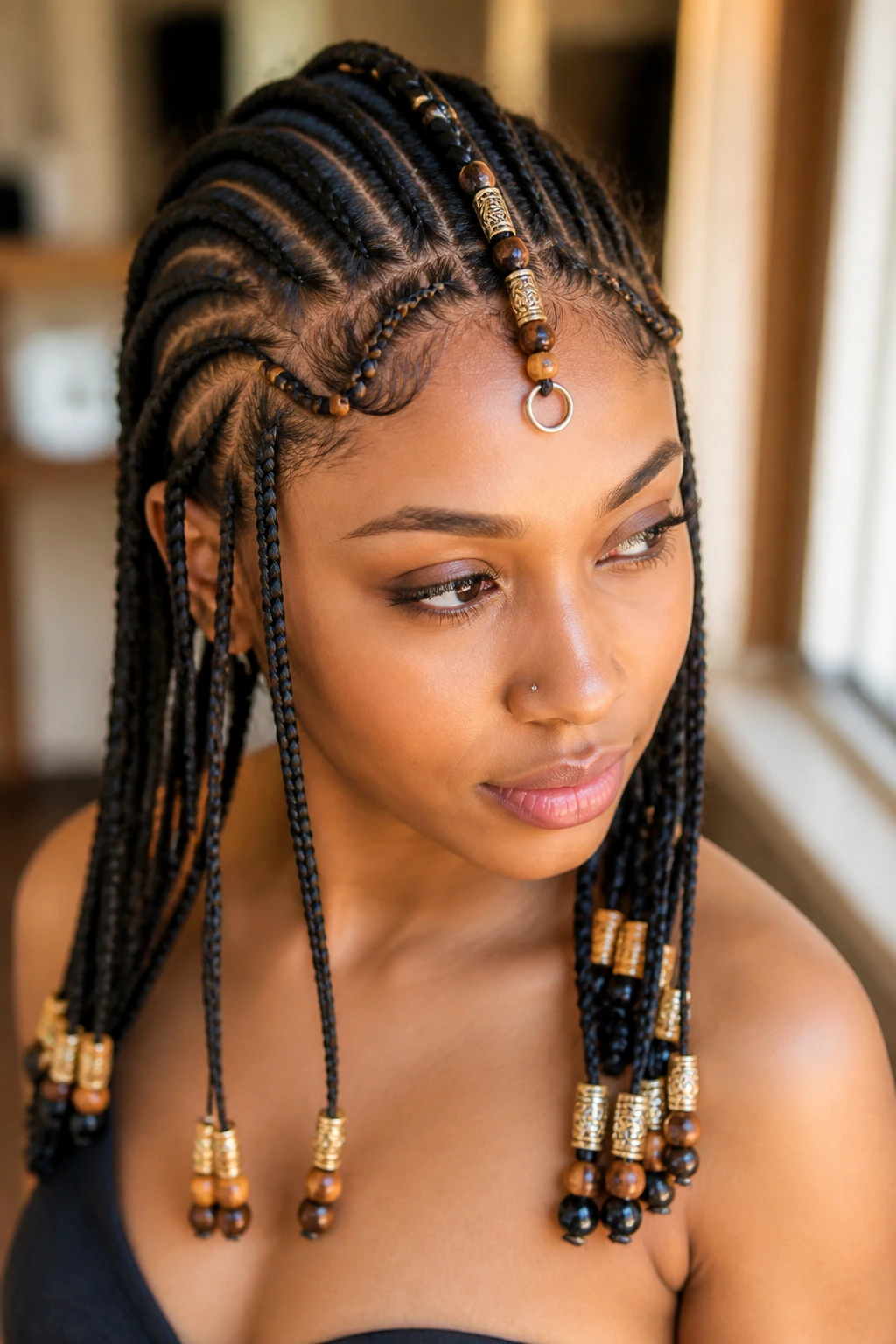
Fulani braids have become a global favorite because of their cultural roots and stunning visual symmetry. These usually include a braid running down the center of the head, braids traveling toward the front, and decorative rings or beads adorning the scalp. On frizzy hair, the key is the center part; it provides a clean anchor point that allows the surrounding braids to drape evenly.
Why This Works for Frizzy Texture
The beads and rings are not just decorative—they add weight to the ends of the braids, which keeps them from curling up or fraying prematurely. If you find your hair struggles to stay inside the braid, the added weight of these accessories will help hold the style together for a longer duration.
8. Snake Braids
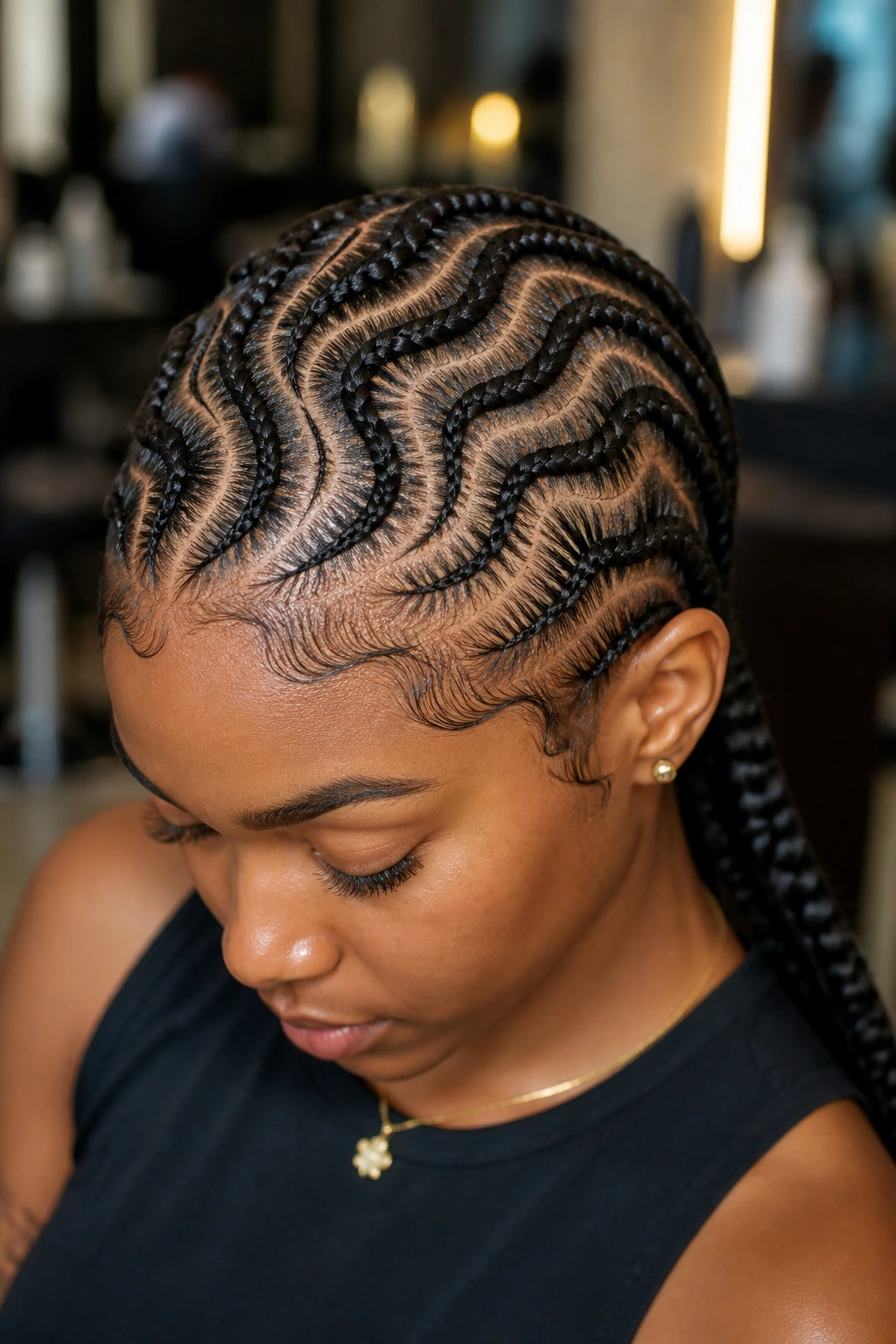
These braids move across the head in a serpentine pattern, creating a fluid, wiggly design that is anything but standard. The wavy movement of the braids breaks up the texture of your hair, masking frizz by giving the eye a busy pattern to follow. Snake braids look especially striking when you alternate thin and thick braids, adding a rhythmic complexity to the overall look.
How to Style
- Ensure your braider uses a small-tooth comb for precise parting, as any stray hairs will disrupt the snake-like flow.
- A light spritz of shine spray at the end of the session will lock in moisture and give the braids a polished, healthy look that lasts.
9. Waterfall Braids with Interwoven Extensions
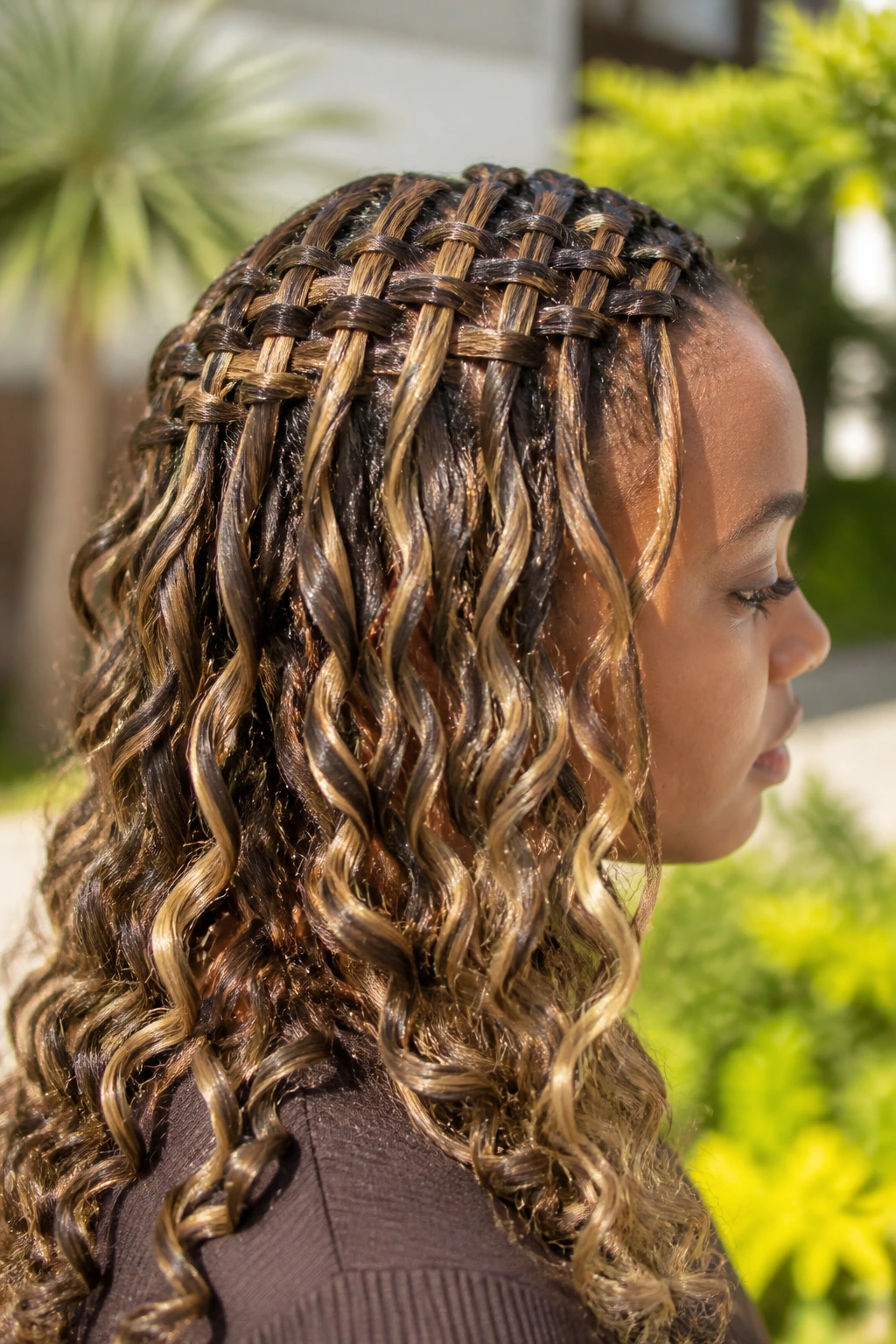
A waterfall braid involves braiding in a way that allows pieces of hair to drop out at regular intervals. When done with cornrows, this creates a layered effect where the scalp is protected by the tight braids, but the hair still has the appearance of being loose and layered. This is a great way to show off hair color, especially if you incorporate extensions in shades that contrast with your natural hair.
The Benefit of Layering
Because the waterfall technique allows more hair to hang free, it requires more maintenance in terms of detangling. However, for a special event or a summer trip, the visual payoff of the cascading layers is hard to beat.
10. Zig-Zag Parts with Box Braids
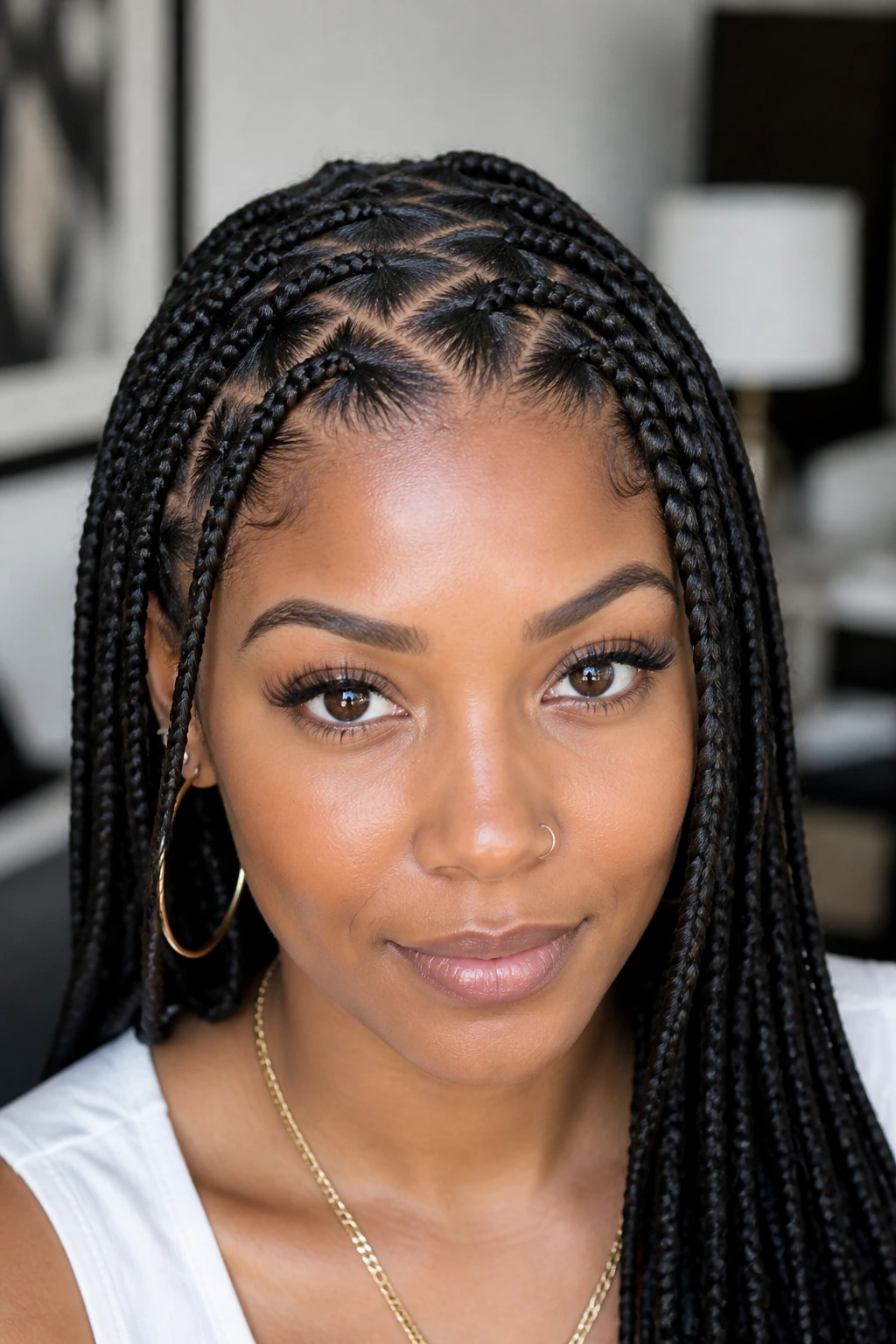
Sometimes the most intricate part of a style isn’t the braid itself, but the way the hair is partitioned. Zig-zag parts turn the scalp into a canvas, creating an interesting contrast against the hair. On frizzy hair, zig-zag parts can be tricky because the roots want to expand. To keep them looking sharp, use a heavy-duty styling gel specifically designed for braided styles—these formulas are thicker and stickier, ensuring the sections don’t blur together after a day of wear.
Pro Tips for Sharp Parts
- Apply gel to your comb while parting to seal the hair into place immediately.
- Use a small amount of concealer or foundation around the edges of the part to make the lines pop with extreme clarity.
11. Goddess Cornrows with Curly Edges
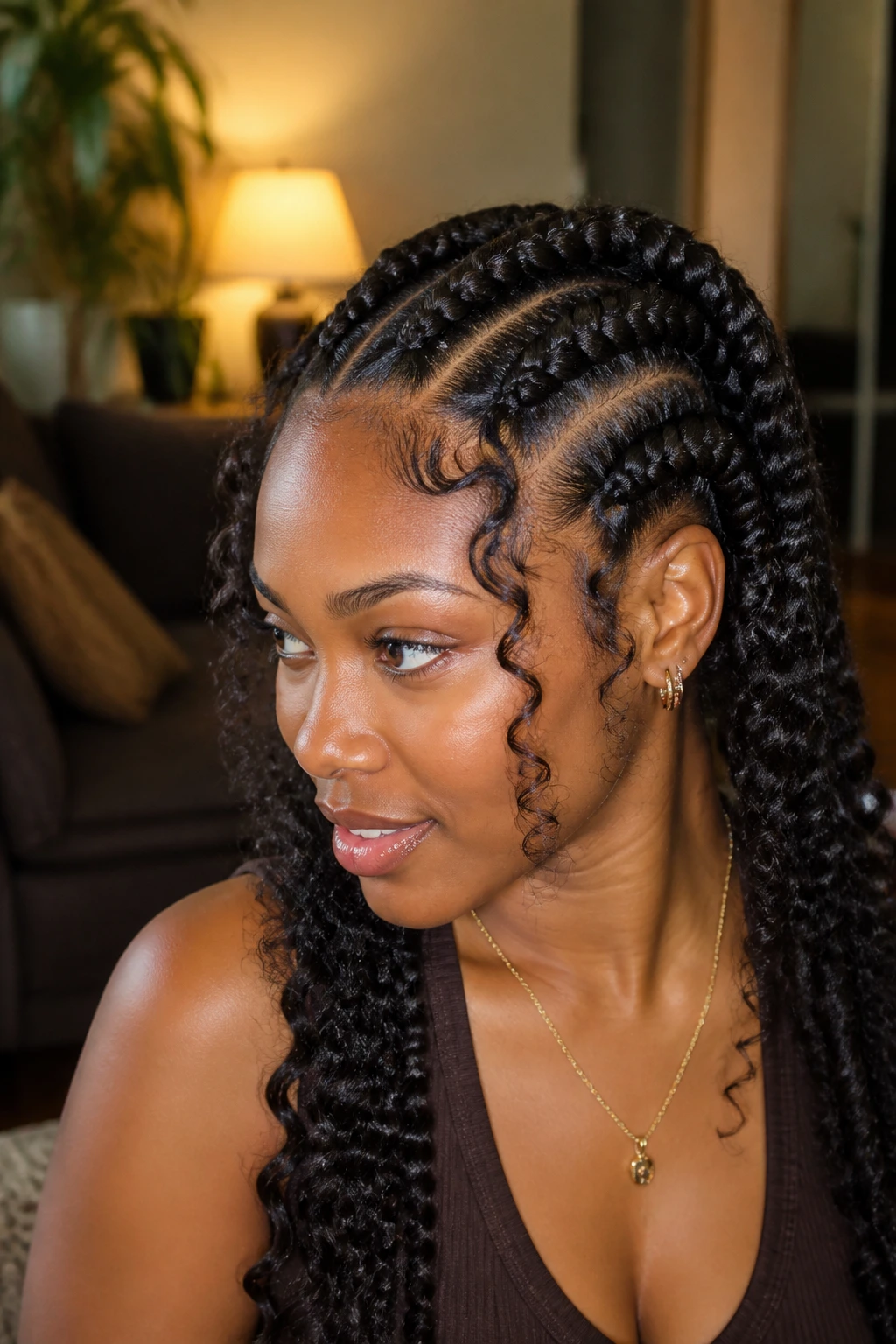
These are essentially jumbo cornrows that have been embellished with loose, curly pieces throughout the length of the braid. The curls help to soften the look, making it more feminine and playful. Since frizzy hair is naturally prone to volume, you might find that you don’t need much synthetic hair to achieve this look—your own hair can be left out in curls to blend in with the extensions.
Managing the Curls
- Keep a bottle of curl activator or water-based leave-in conditioner in your bag.
- If the curls lose their definition, dampen them and twist them with your fingers to restore the shape.
12. Halo Braids with Micro-Cornrow Details
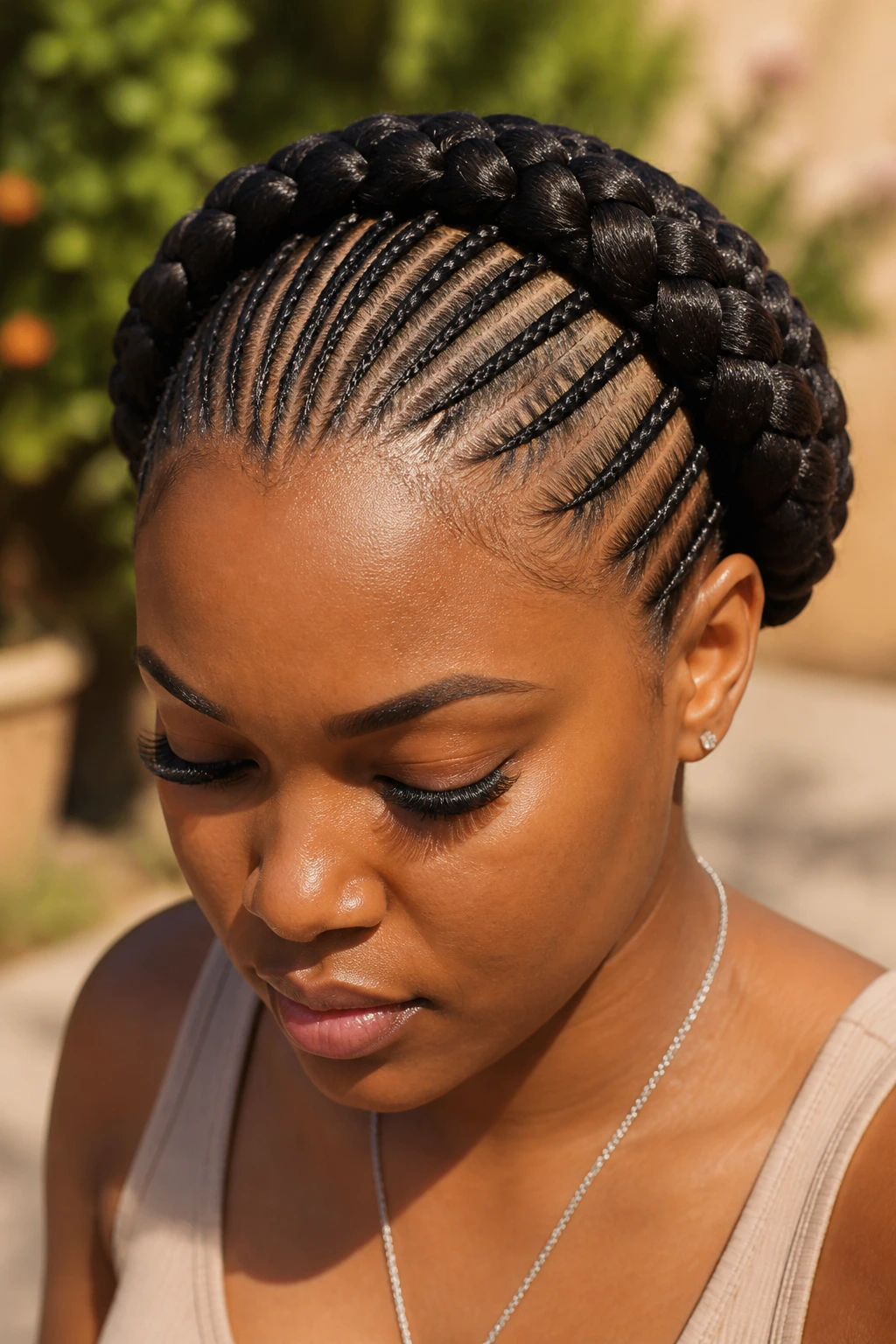
A halo braid wraps around the head like a crown, but this version adds micro-cornrows as accents along the scalp. These tiny, intricate braids add a layer of detail that elevates the style from a simple updo to a work of art. This style is particularly good for protecting the hairline, as the braids are directed toward the back of the head, keeping tension away from the delicate perimeter.
13. Double-Layered Cornrows
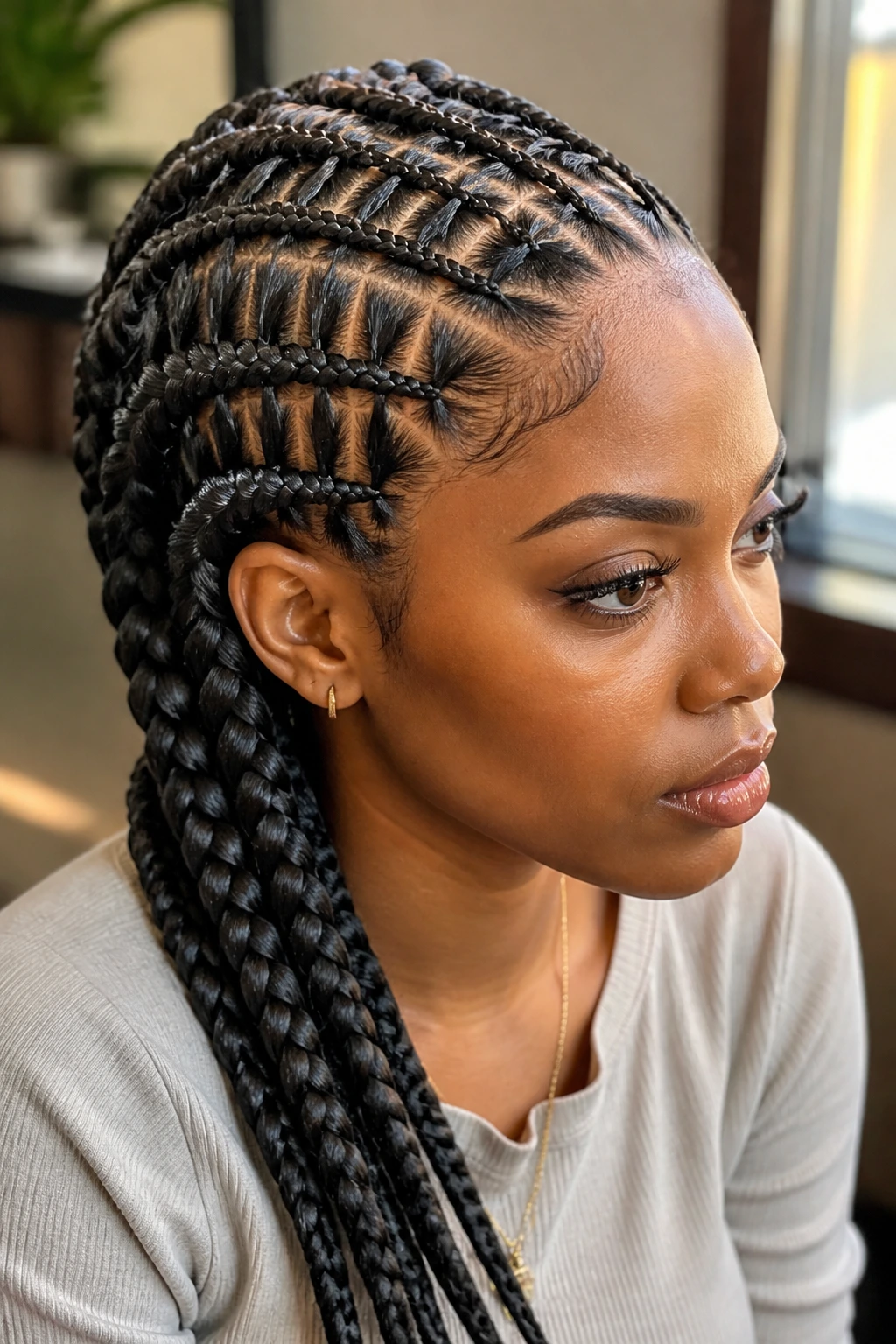
This style involves creating a top layer of thin cornrows and a bottom layer of larger, more relaxed braids. It creates a structural look that is very durable. Because the top layer acts as a net, it keeps the hair underneath pressed down, making it an ideal protective style for those who live in high-humidity climates.
How to Maintain Structure
- If the top braids start to frizz, use a small mascara wand dipped in hair gel to smooth down individual flyaways without disturbing the whole braid.
- Wrap your hair with a satin bonnet specifically sized to cover the entire head, including the nape of the neck.
14. Heart-Shaped Parting Designs
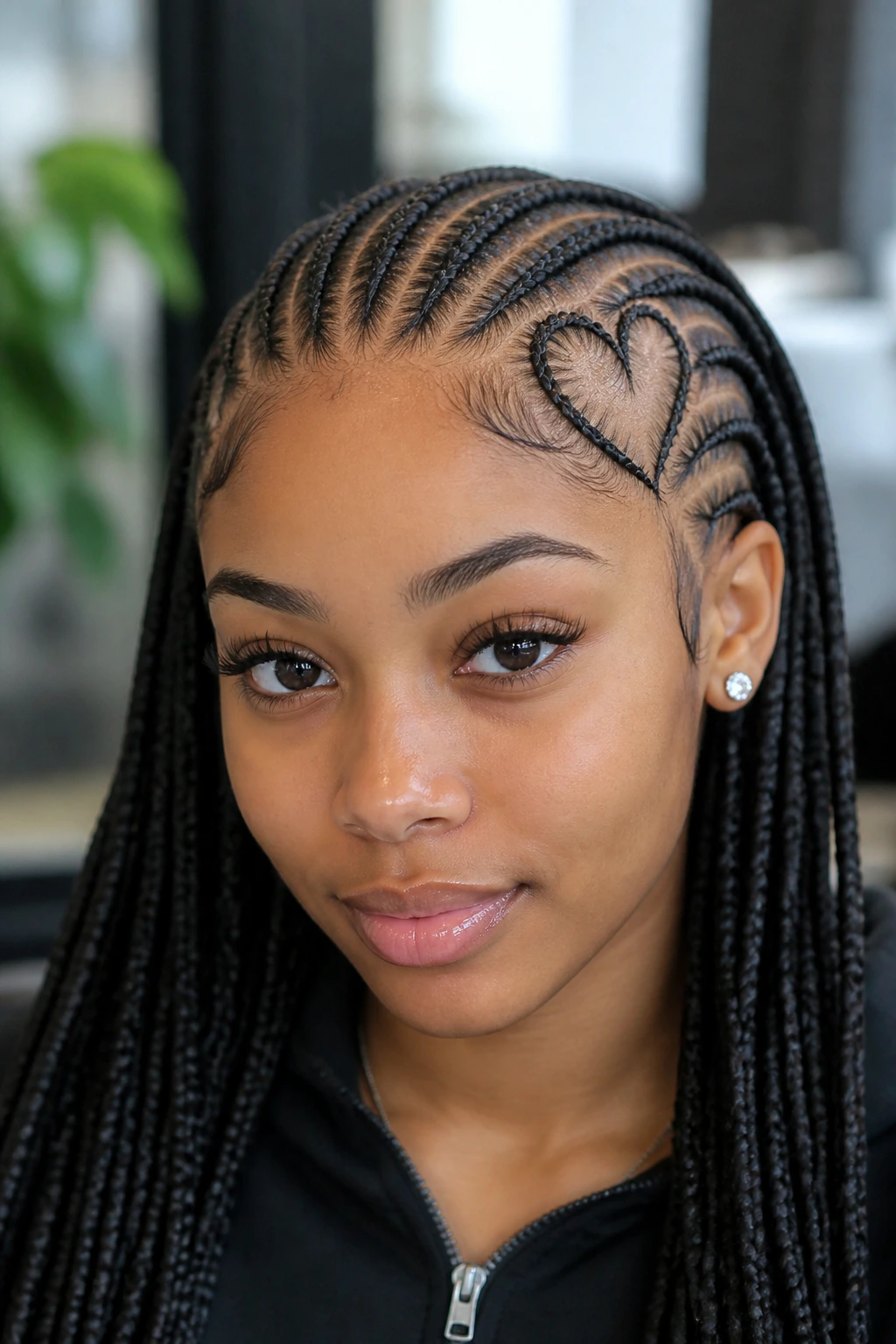
Heart designs are a playful, intricate addition to any cornrow style. By sectioning the hair into heart shapes at the temple or the crown, you immediately draw attention to the creativity of the braiding. This style is highly popular because it works well for all hair lengths and textures. On frizzy hair, hearts look best when they are bordered by very thin, tightly braided cornrows that act as a frame for the design.
Customizing Your Look
- You can place hearts on one side for an asymmetrical look or create a full-head pattern.
- Incorporate bright beads in the center of the heart to make the shape stand out against your natural hair color.
15. The “Lemonade” Style with Side-Swept Ends
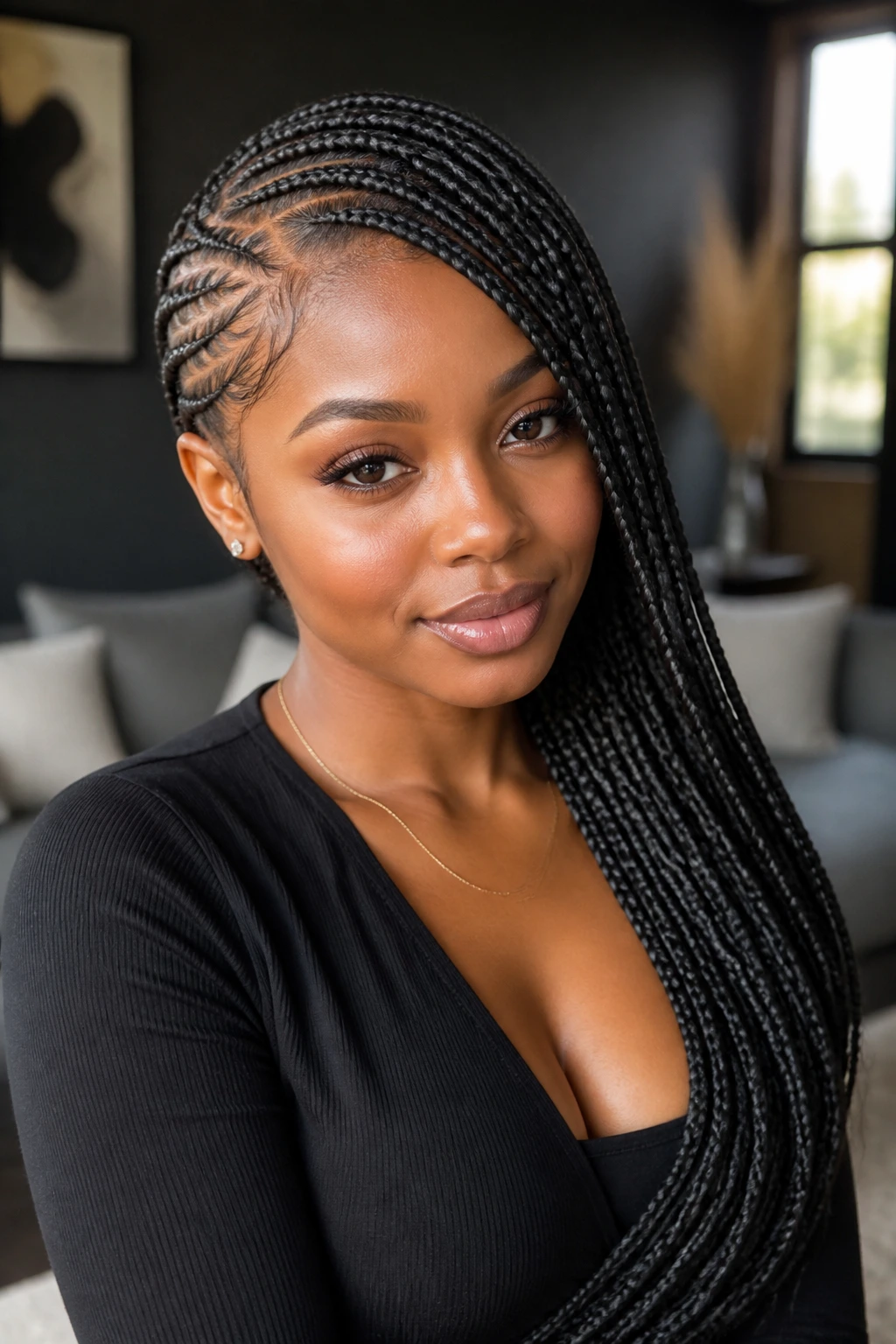
Named after its iconic association with modern pop culture, the side-swept cornrow style features braids that start at one side of the head and travel all the way to the other. This creates a dramatic sweep that is incredibly flattering on all face shapes. Because the braids all run in the same direction, they are easier to maintain; you simply wrap them in one direction at night.
Why It’s Great for Frizzy Hair
The weight of the braids moving in one direction helps pull the hair taut, which naturally fights against the tendency of frizzy hair to stand up at the roots. It is a sleek, polished style that looks intentional from the moment you wake up.
16. Chunky Stitch Braids
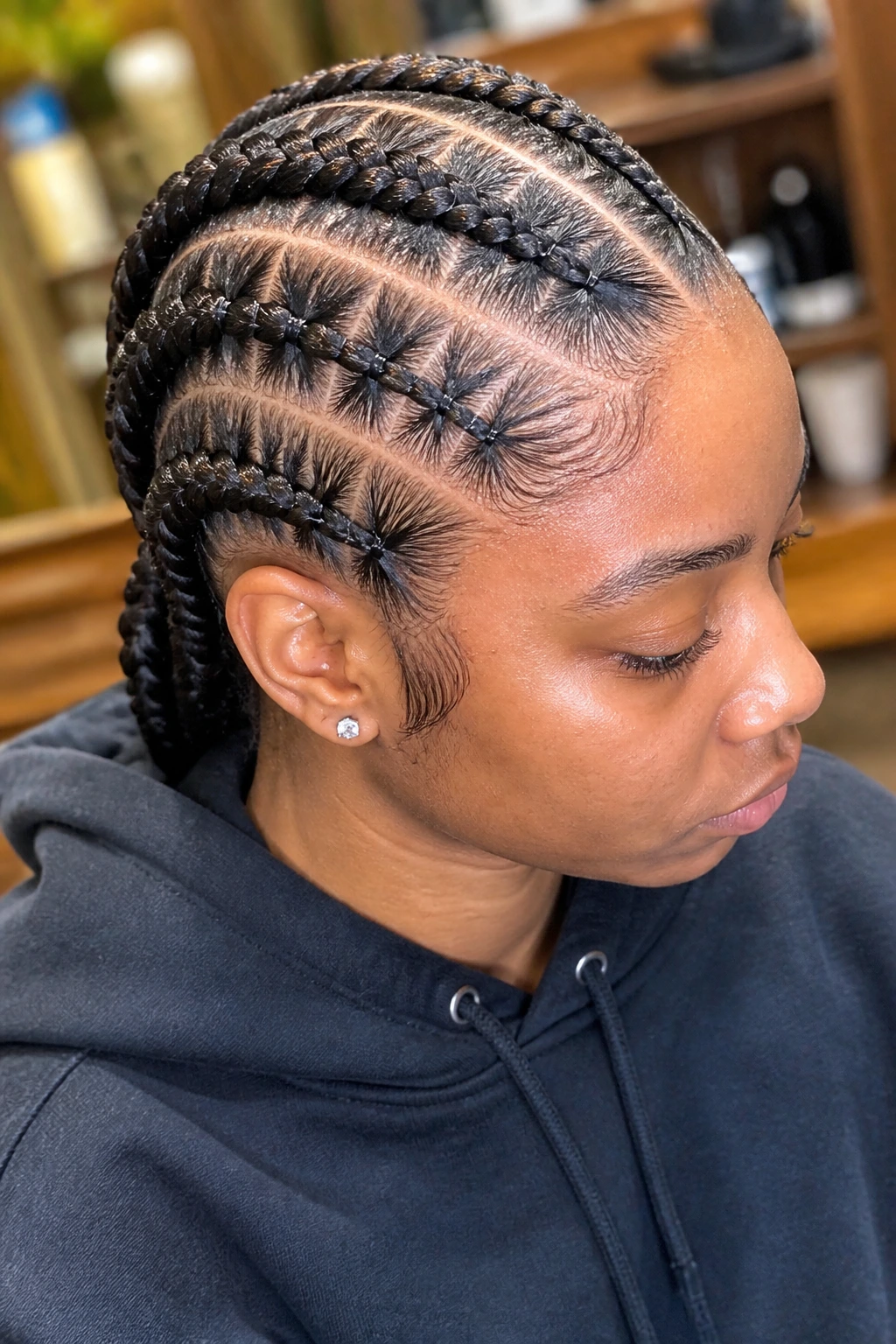
“Stitch” braids are defined by the visible, horizontal lines created during the braiding process. This technique gives the hair a clean, organized appearance that is very popular for its neatness. On frizzy hair, the “stitching” method is actually a functional advantage, as it forces the hair to lay flat against the scalp in a way that standard braiding often fails to do.
The Importance of Tension
While you want the braids to look tight and crisp, never sacrifice your scalp health for aesthetics. If you feel any pinching, ask your braider to loosen the tension around your edges immediately. A good stitch braid should feel secure but not painful.
17. High-Ponytail Cornrows
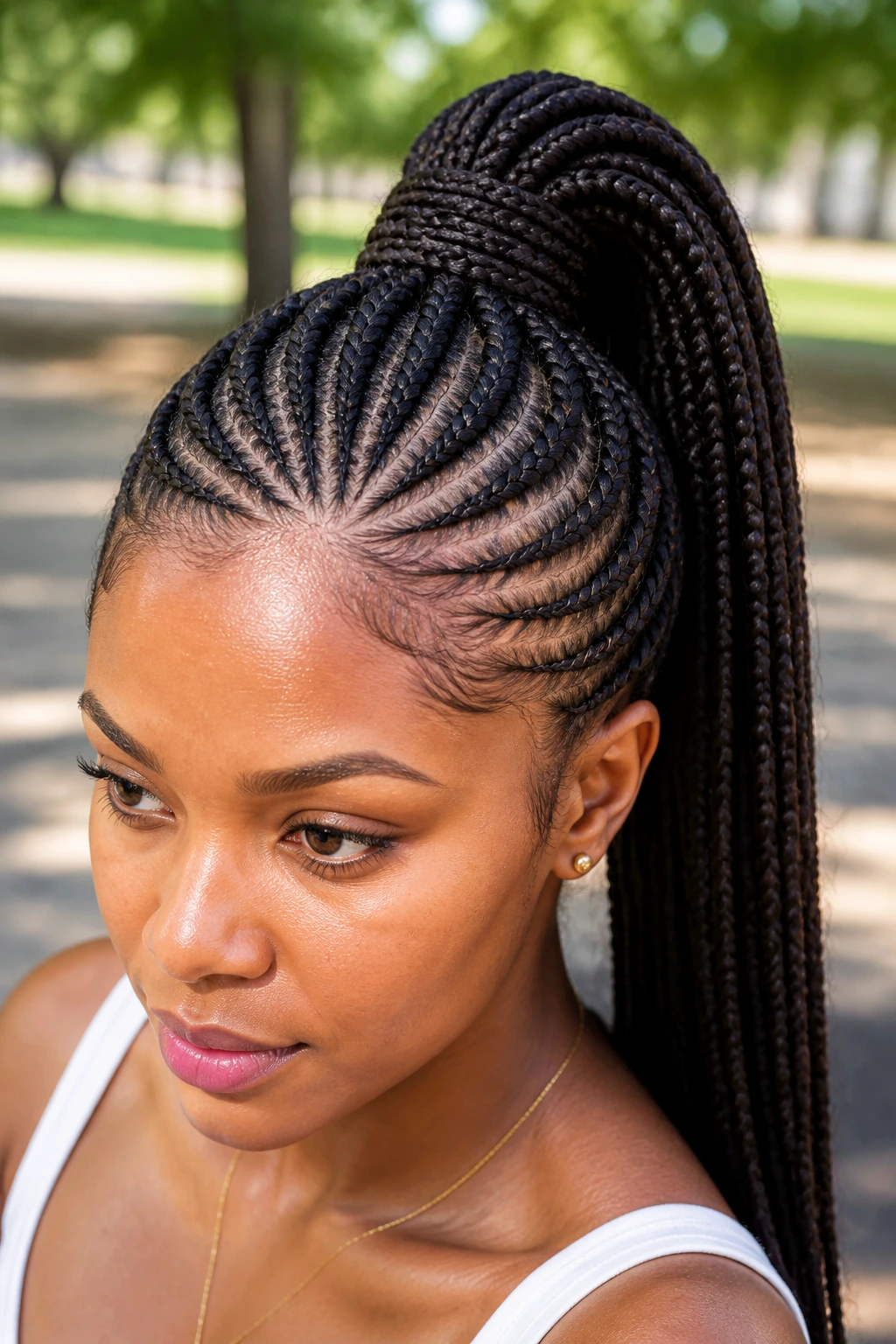
Gathering your cornrows into a high, voluminous ponytail is a classic way to manage hair length while keeping it off your neck. To make it more intricate, ensure the cornrows converge at the center of the head in a starburst pattern. This design looks complex but is highly practical for those who want to avoid the “heavy head” feeling that sometimes comes with full-head braiding.
18. Wrapped Cornrow Updo
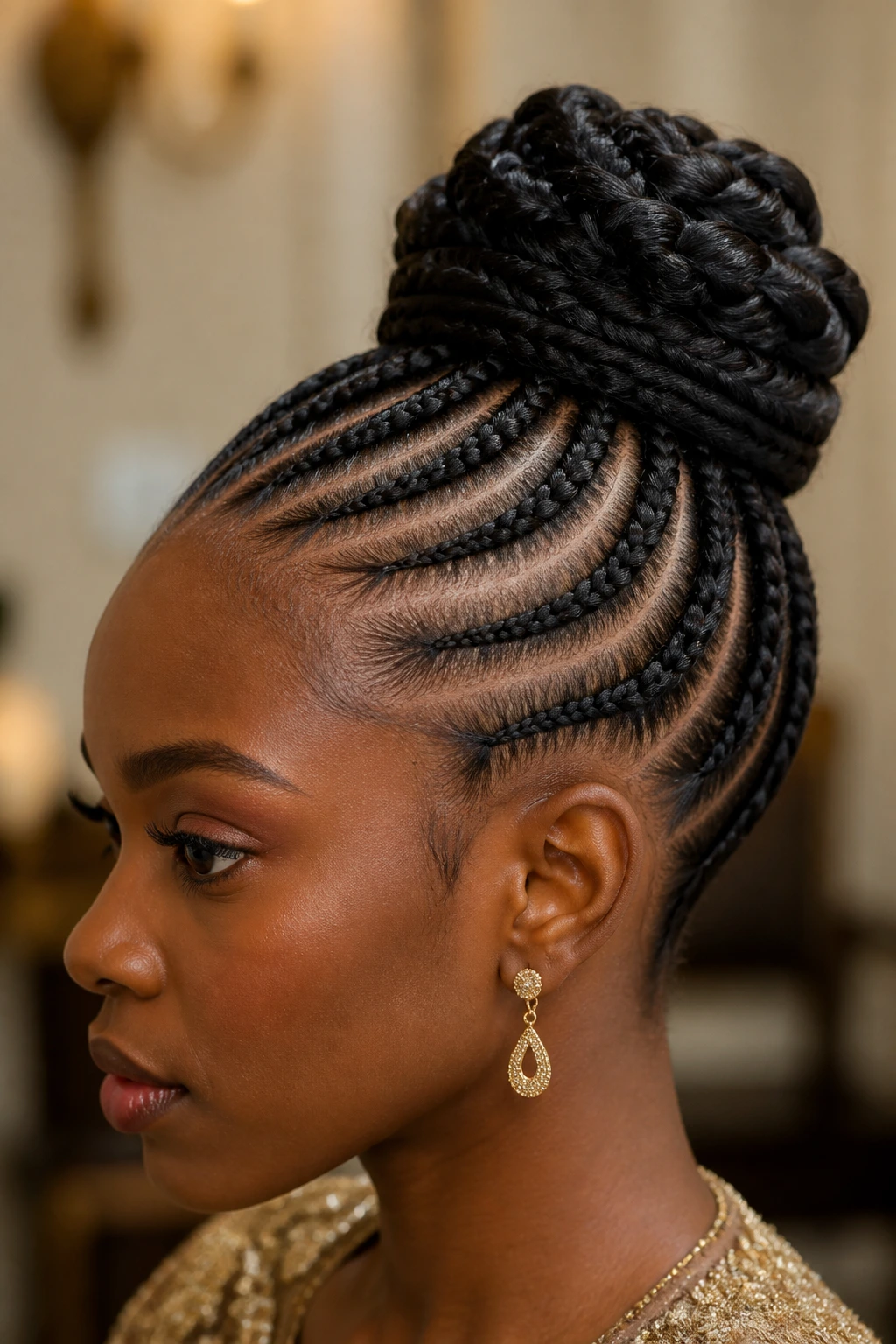
For a more formal appearance, consider an updo where the ends of the cornrows are wrapped around the base of the crown. This creates a braided bun effect that is both secure and stylish. It is an excellent choice for wedding guest attire or professional settings where you need a more buttoned-up aesthetic.
19. Intricate Swirl Patterns
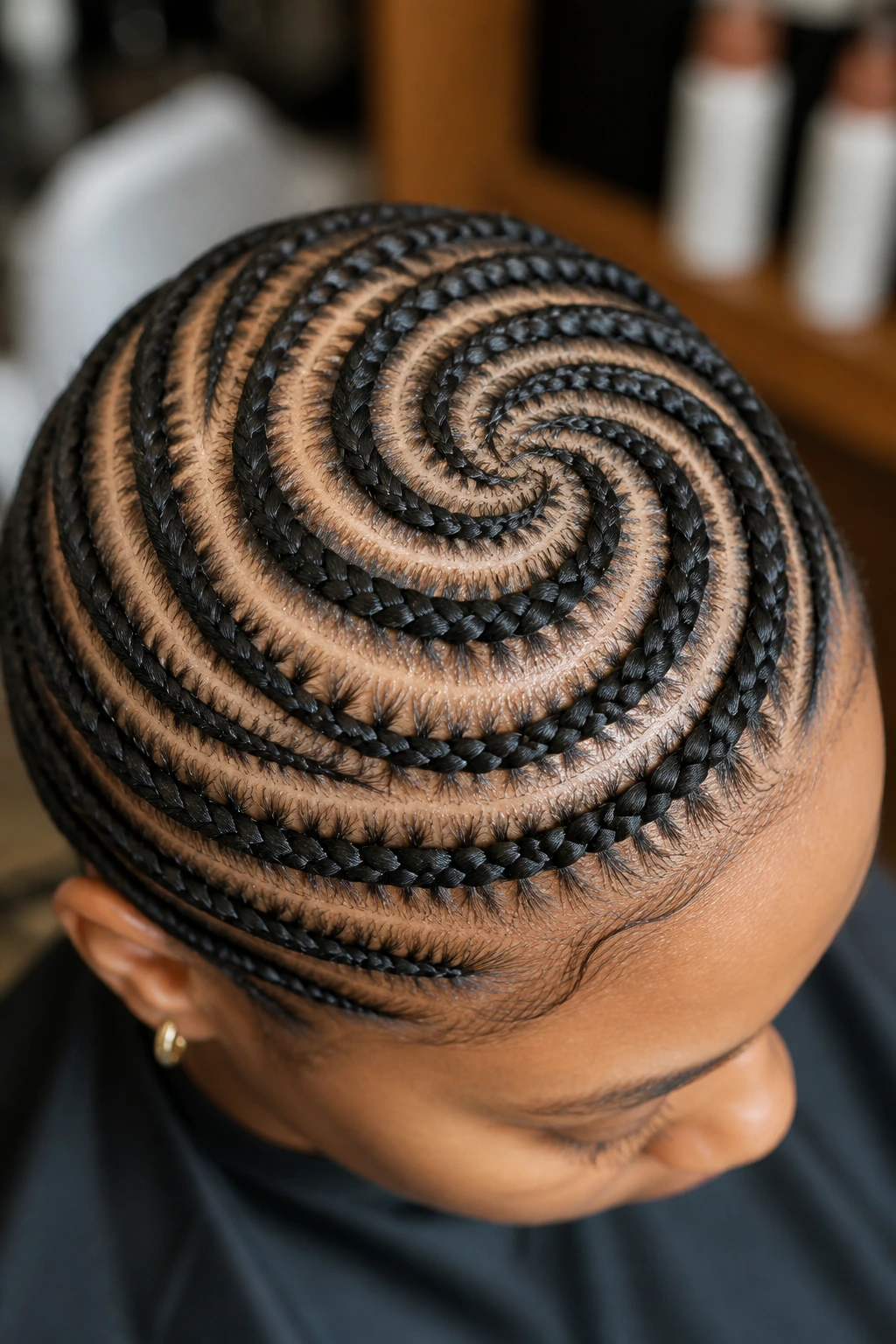
If you are looking for something that is truly custom, ask for a spiral or swirl pattern that starts from the middle of the head and winds outward. Swirls are more complex than straight-back braids, so they take more time to install, but the result is a beautiful, hypnotic design that hides hair regrowth longer than traditional rows.
20. Decorated Ends with Wooden Beads
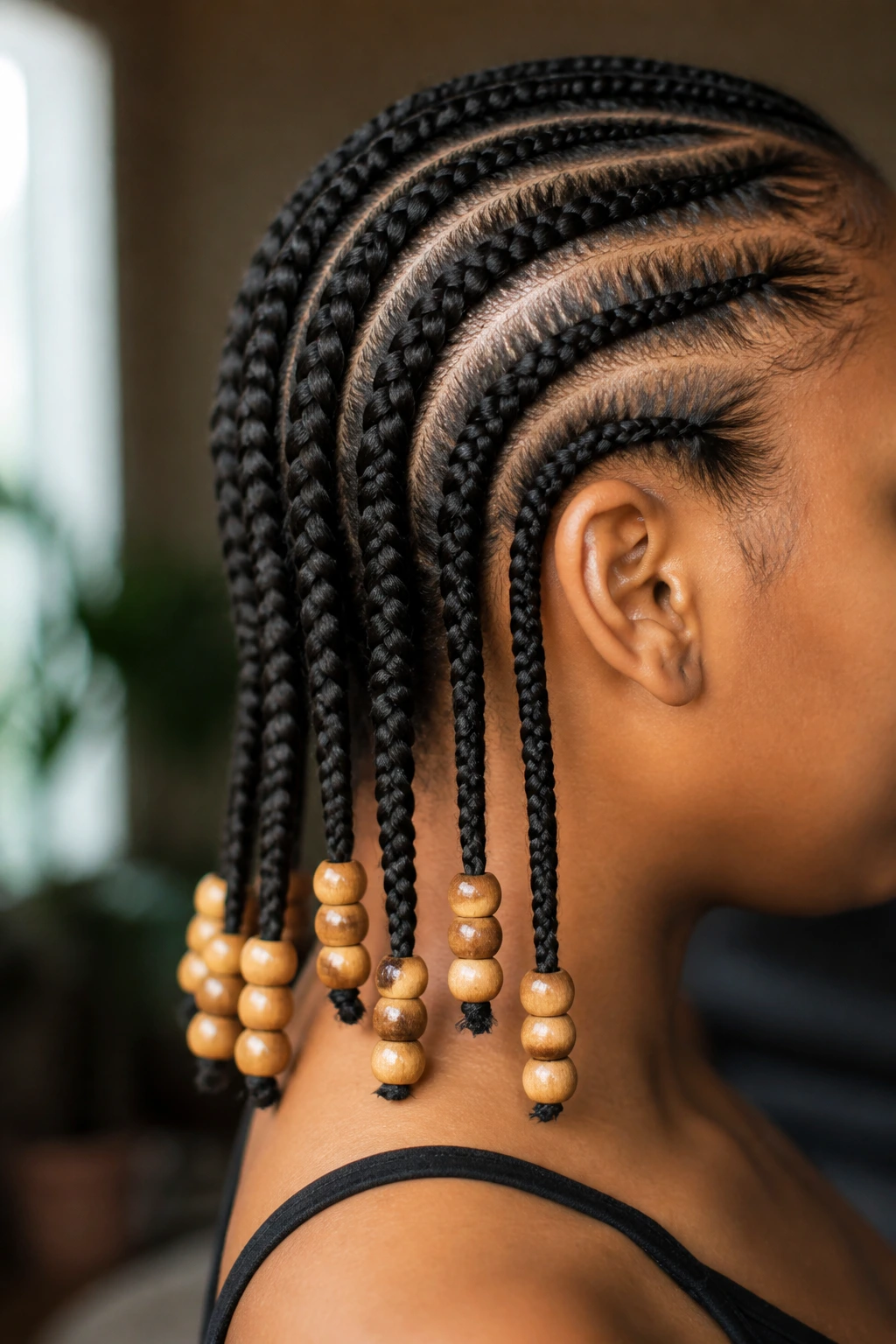
Wooden beads offer a natural, earthy contrast to the sleekness of cornrows. Because they are heavier than plastic beads, they provide excellent control for frizzy ends. They also tend to make less noise when you move, which many people find preferable for daily wear. The key to using wooden beads is ensuring they are securely fastened with a rubber band so they don’t slide off during the day.
21. Cornrows with Color-Blocked Extensions
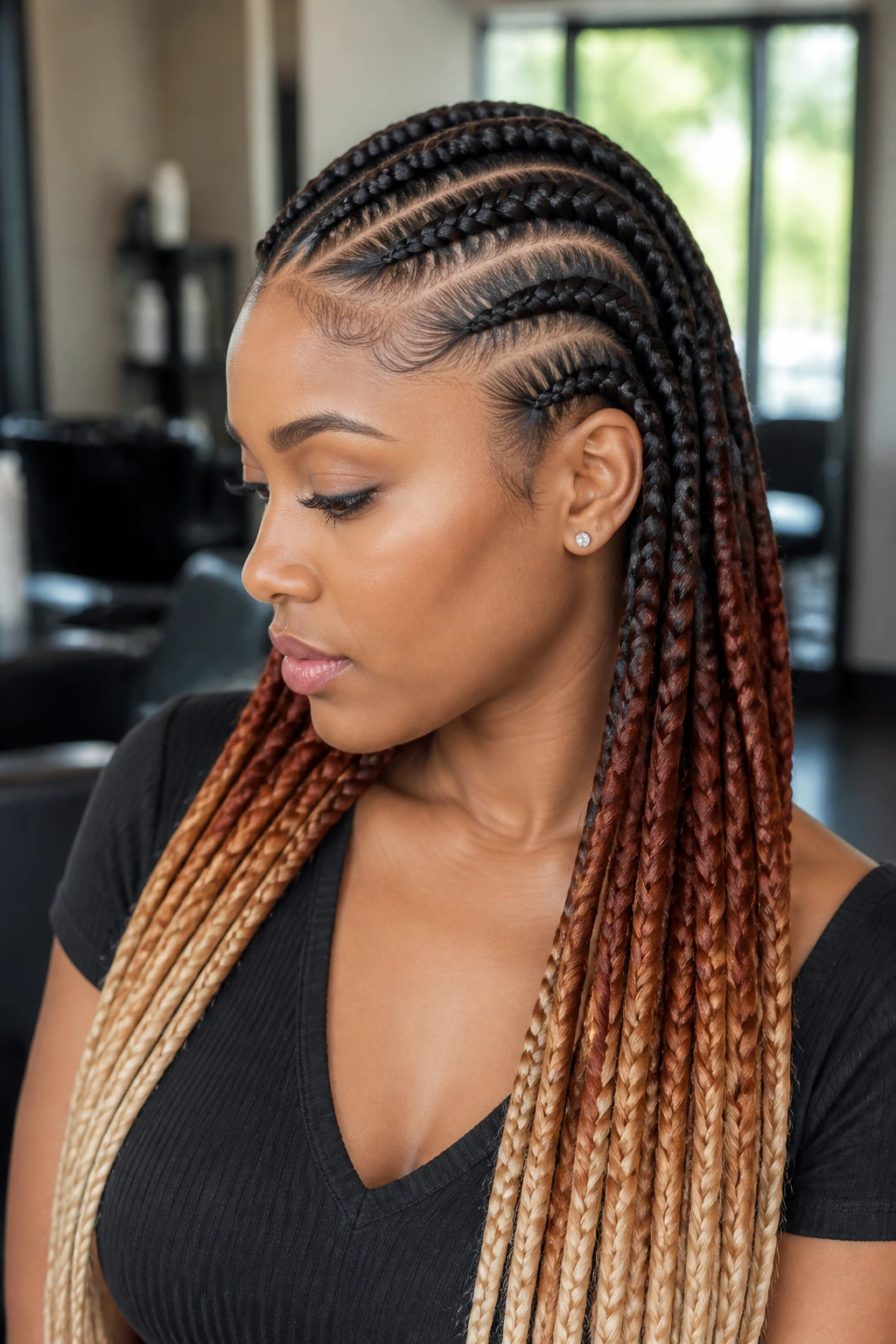
Who says cornrows have to be one color? Incorporating a pop of color—like deep auburn, honey blonde, or even vibrant blue—through the feed-in method allows you to change your look without dyeing your natural hair. By keeping the roots your natural color and adding the hue further down the braid, you create a soft, ombre-like effect that looks sophisticated and modern.
Caring for Color
- Since colored synthetic hair can be prone to dryness, use a light oil mist to keep the extensions soft.
- If you notice the ends starting to look frayed, trim them with sharp scissors to maintain the clean lines of the braids.
22. The Minimalist “Two-Braid” Look
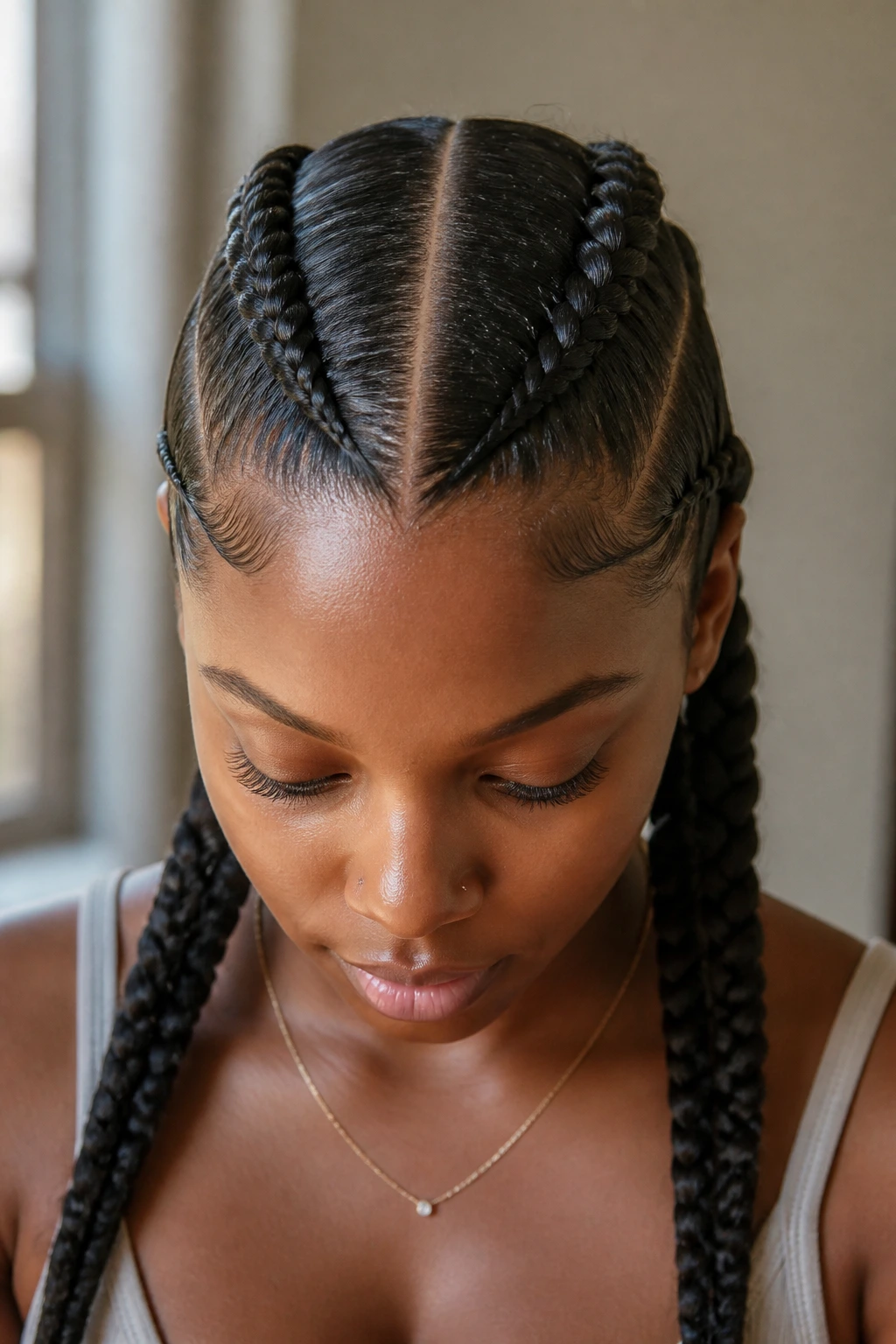
Never underestimate the power of two large, perfectly executed cornrows. Sometimes, the most intricate-looking styles are the simplest ones. Two thick braids down the center of the head require very precise parting and a lot of care to ensure the hair remains smooth from start to finish. This is the ultimate “clean girl” aesthetic and is incredibly gentle on your hair because it requires so little manipulation.
Why Less Is More
- It is the fastest style to install, meaning less time spent sitting in a chair and less physical manipulation of your fragile ends.
- It is the easiest to remove, which helps prevent breakage when it is finally time to take your hair down.
Final Thoughts
When you have frizzy hair, the goal of braiding should always be to protect the health of your scalp while managing your volume. Each of the styles mentioned above offers a different way to achieve this, from geometric parts that provide structural control to bead-laden ends that add necessary weight. Remember that the longevity of any braid style depends entirely on how you treat your hair before the installation and how you protect it during the weeks you wear it.
Always prioritize a clean, hydrated scalp, and never be afraid to communicate with your stylist about your tension preferences. If you notice your hair is feeling dry after a few weeks, use a spray bottle with a mix of rosewater and vegetable glycerin to refresh your strands. Ultimately, your braids should make you feel confident, comfortable, and ready to take on the day without constant fussing. Choose a style that matches your lifestyle, and you will find that managing frizzy hair is far less of a chore than it seems.