

Finding the right hairstyle during the teenage years is often a rite of passage. It is one of the few ways to signal a shift in identity, a move toward independence, or just a simple desire to look sharper in the mirror each morning. The transition from the “kid haircut” to a style that feels intentional—something that reflects how you actually want the world to perceive you—is a significant moment. Whether you are aiming for something low-maintenance that survives a long school day or a more polished look that holds its own at a formal event, the sheer volume of options can feel overwhelming.
We are moving away from the era where everyone gravitated toward the same uniform buzz cut. Today, the focus is on texture, movement, and cuts that work with your specific hair density and growth pattern. A great haircut isn’t just about what looks good on a social media feed; it is about how the hair falls when you wake up, how much time you are actually willing to spend in front of the bathroom mirror, and whether the shape balances your face. If you are ready to move past the default, it helps to understand what makes a cut work in the real world.
The following list explores a range of aesthetics, from the classic and clean to the rebellious and textured. None of these are “one-size-fits-all,” so look for elements you like—the taper, the volume, or the way the fringe sits—rather than trying to recreate a photo exactly as it appears. Let’s look at the variety of ways you can shape your style.
1. The Classic Taper Fade
The taper fade is arguably the most reliable foundation in men’s grooming. It creates a seamless gradient, starting longer at the top and gradually shortening toward the neckline. Because the hair is cut tight at the base, it keeps the perimeter looking sharp for weeks, even as the top grows out.
Why It Works for Daily Wear
This style is inherently practical because it removes the bulk from the sides without forcing you to commit to a skin-tight shave. It is the perfect middle ground for someone who wants a professional appearance for school or sports but still wants enough length on top to style with a bit of texture or volume.
Maintenance and Styling Tips
- Visit the barber every three to four weeks to keep the fade lines crisp.
- Use a small amount of matte clay to add structure to the top.
- Avoid using heavy gels, which can make the hair look stiff or dated. Pro tip: Ask your barber for a “low taper” if you want to keep more length on the sides, or a “high taper” if you prefer a more dramatic, exposed look around the temples.
2. Textured Crop with a Fringe
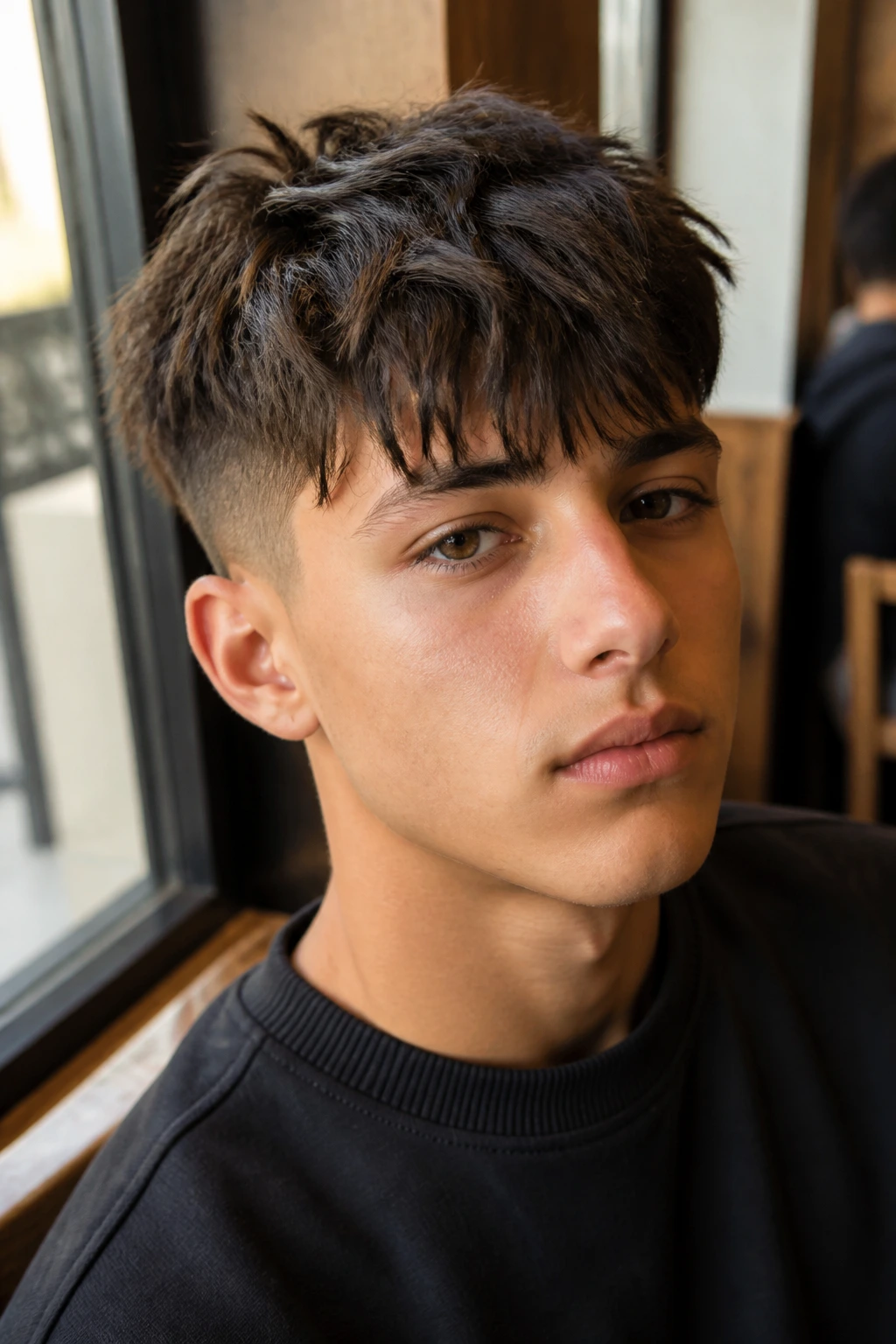
If you have straight or slightly wavy hair that tends to fall flat, the textured crop is your best friend. This style focuses on chopping into the hair with thinning shears or a razor to create jagged, uneven ends. The result is a messy, intentional aesthetic that feels effortless.
Achieving the Perfect Length
You want the sides to be short—usually a mid-fade—to make the texture on top really pop. The fringe, or the hair falling over your forehead, should be cut blunt or slightly point-cut to frame the eyes without covering them completely.
The Best Products to Use
- Sea Salt Spray: This is non-negotiable for creating that “just came from the beach” texture.
- Matte Paste: Apply a pea-sized amount to damp hair and let it air dry.
- Avoid: Any product with a high-shine finish, as this style thrives on a dry, natural look.
3. The Modern Quiff
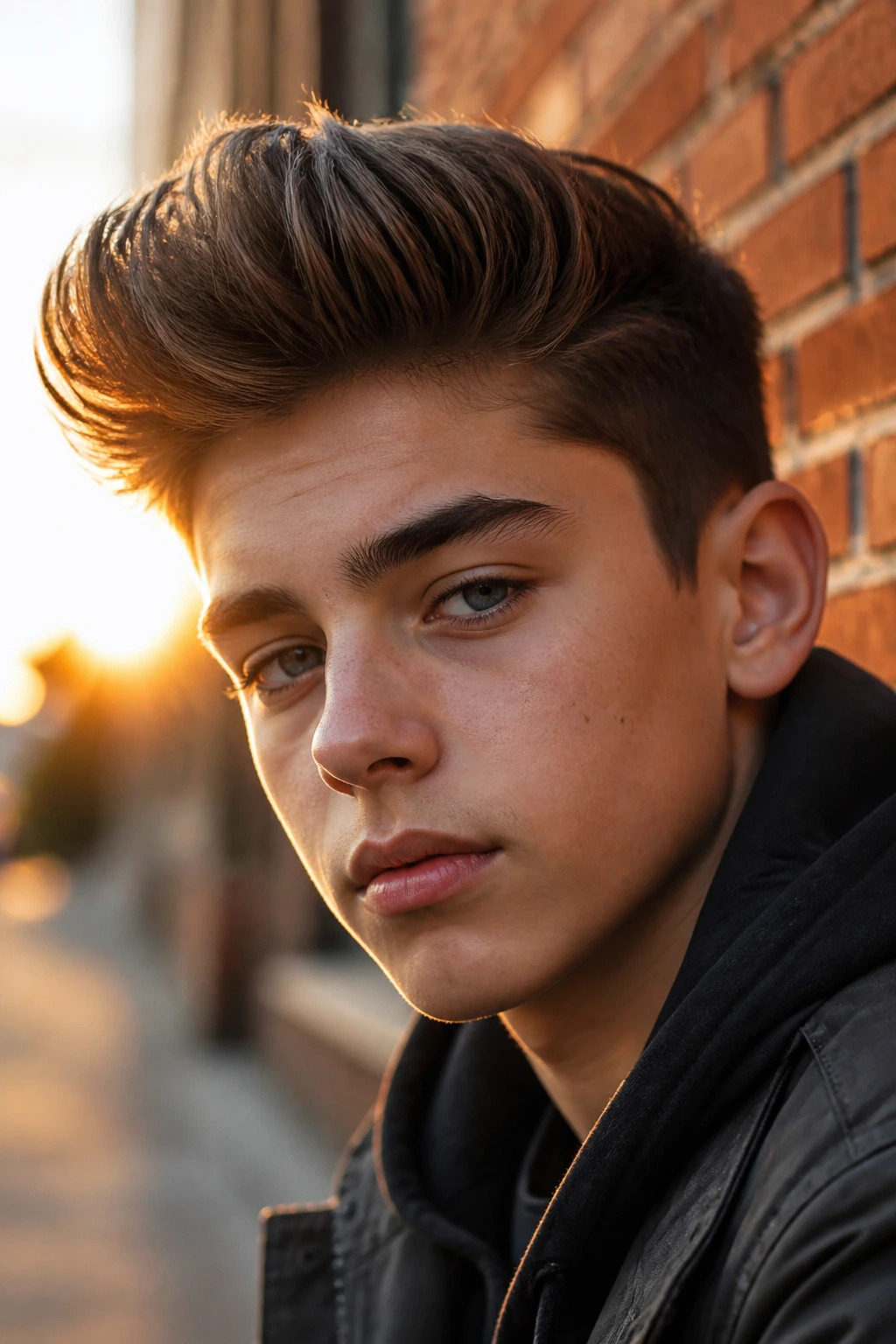
The quiff is the spiritual successor to the pompadour, but it is much more relaxed. Instead of the massive, gravity-defying height seen in vintage styles, the modern quiff features a shorter, more natural volume at the front, sweeping backward or slightly to the side.
Mastering the Volume
The secret here is the blow-dry. If you try to style a quiff with product alone, it will likely droop by midday. Use a hairdryer on a medium heat setting while using a vent brush to lift the hair upward and backward from the roots.
Who Should Choose This Style
This cut looks excellent on guys with thicker hair that has a natural wave. It balances out round face shapes by adding vertical length. If your hair is very fine or thinning, you might find that the quiff requires too much work, as it needs a decent amount of density to hold its shape.
4. The Slick Back Undercut
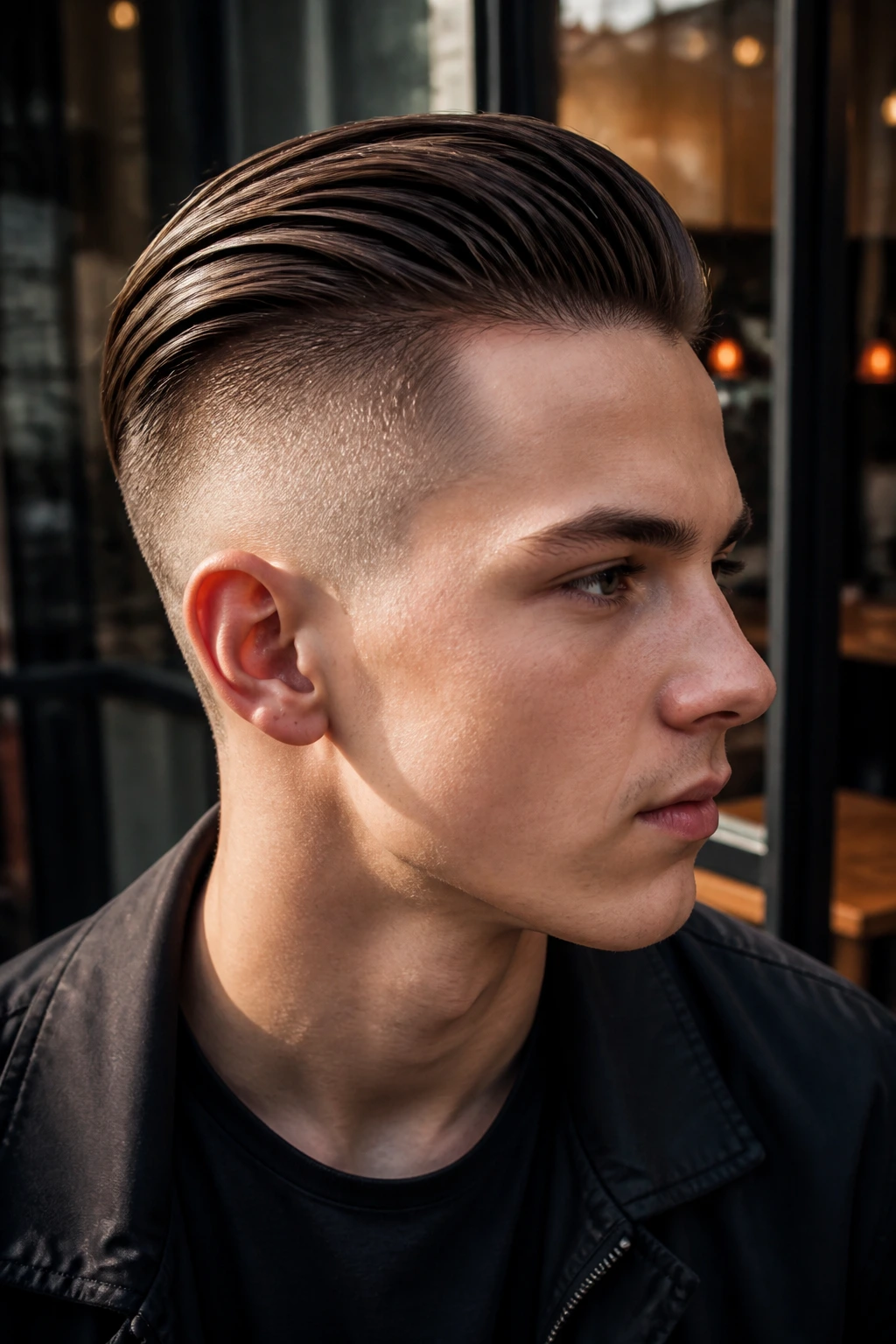
This style is high-contrast. The sides are either buzzed down to a single length or faded tight, while the hair on top is left long enough to be combed back. It is a bold, high-maintenance look that projects a lot of confidence.
Achieving the “Slick” Without the Grease
Modern slick-backs are not about using enough oil to fuel a car. You want a product that keeps the hair in place but allows for a bit of movement. A water-based pomade is ideal because it provides a strong hold and washes out easily at the end of the day.
Styling for Different Hair Textures
If your hair is naturally curly, you may need a blow dryer to straighten the hair out while combing it backward before applying the pomade. For those with stick-straight hair, you might need a light-hold mousse to provide some grip so the hair doesn’t just fall flat against your scalp.
5. The Curly Top with Fade
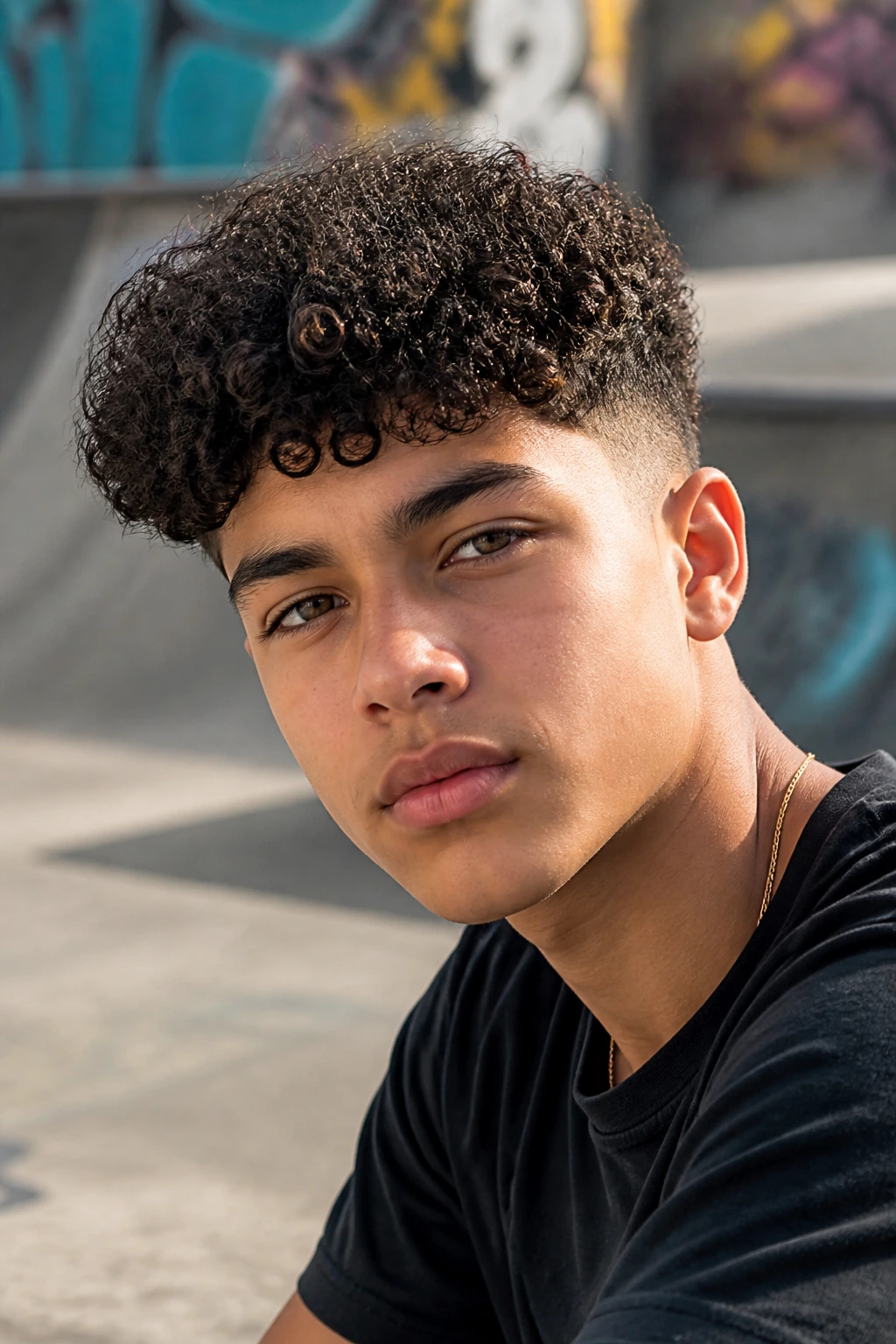
Embrace your natural coils by keeping the sides short and letting your texture take center stage on top. This is a great way to manage thick, unruly curls while still keeping the overall silhouette neat and tidy.
Managing the Volume
The key is to ask your barber to “de-bulk” the top using point-cutting techniques. This removes internal weight so your curls don’t turn into a round, puffy shape. You want individual curls to have space to breathe and separate.
Routine Maintenance
- Hydration is key: Use a leave-in conditioner to prevent the top from becoming dry or frizzy.
- Avoid over-washing: Curly hair needs its natural oils to look healthy, so limit shampooing to twice a week.
- Use a curl cream: A small amount of curl-defining cream applied to damp hair will help keep the shape consistent throughout the day.
6. Messy Bedhead with Layers
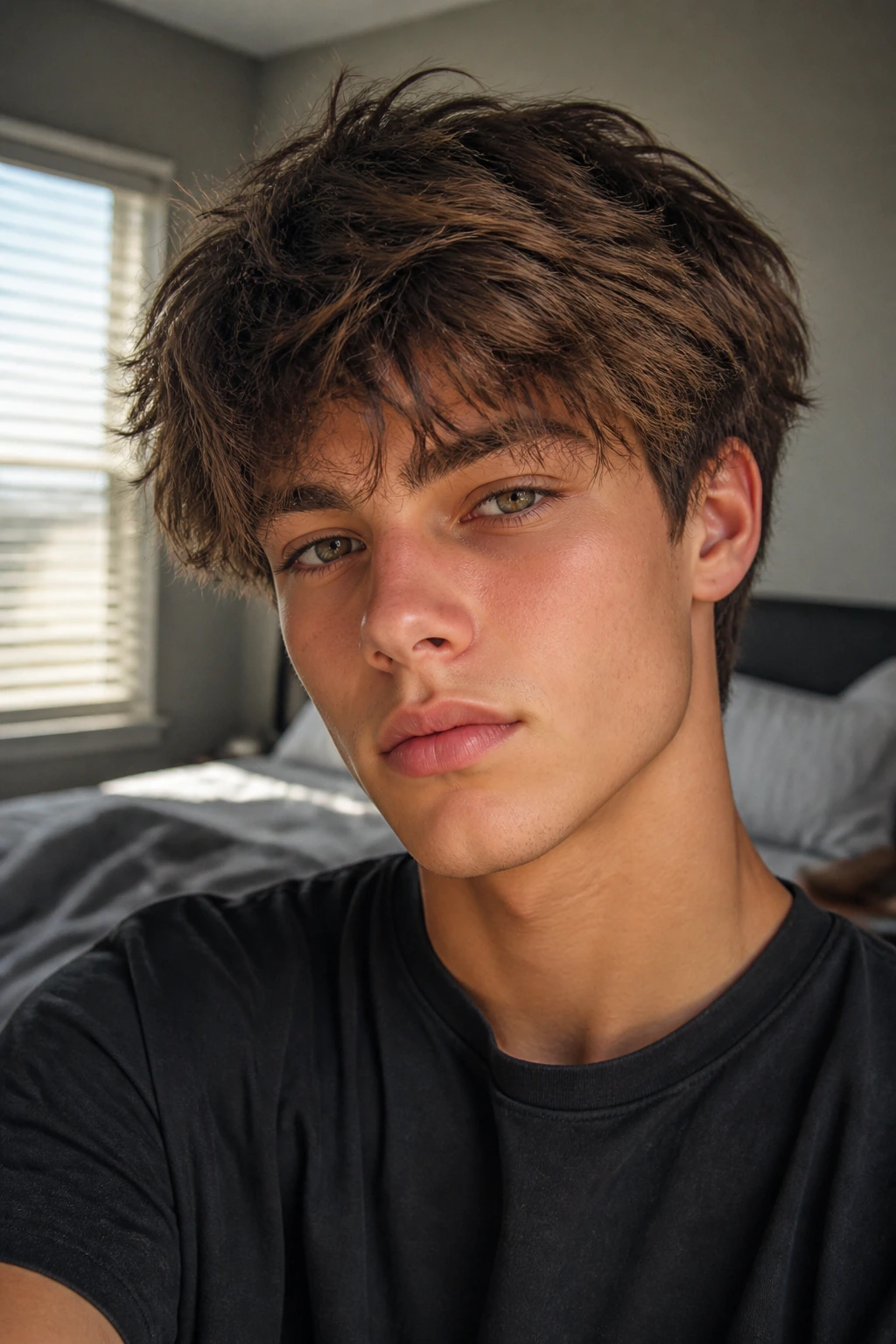
This is the “I just woke up like this” look, but make no mistake—it requires a little bit of work. The goal is to make the hair look lived-in and piecey by using layers of different lengths.
Why It Stays Popular
It is incredibly versatile. You can keep it messy for school, or use a little more product to tidy it up for an event. It works perfectly with hair that has a bit of natural wave or a rougher texture.
Getting the Look Right
- Ask your stylist for “shattered” or “choppy” layers to ensure the hair doesn’t look like a single heavy block.
- Use a bit of dry shampoo even if your hair is clean—it adds the grit and friction needed to make the hair “stick” in that messy configuration.
- Work your hands through your hair to mess it up, then lightly smooth the sides.
7. The Classic Side Part
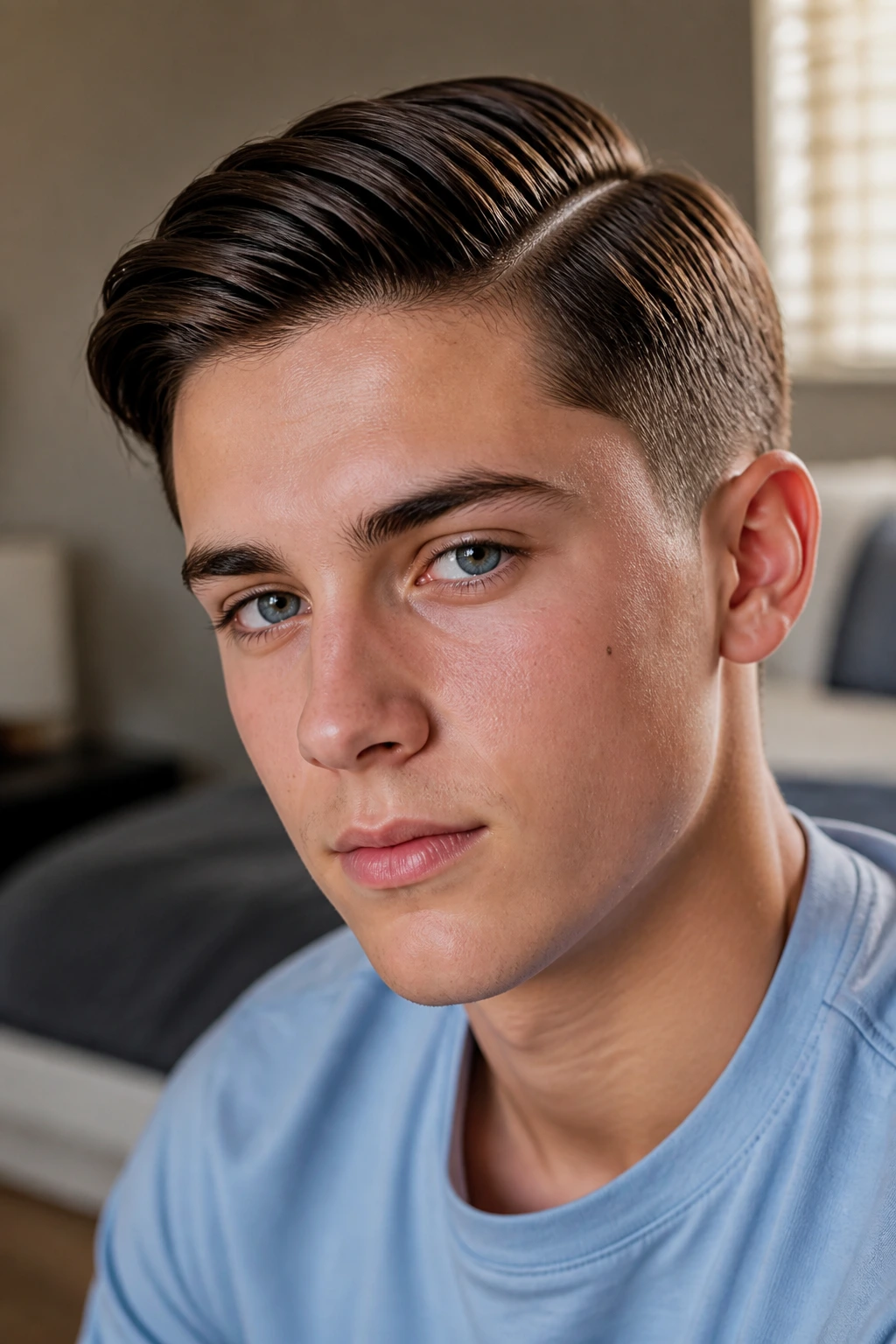
Think of the side part as the suit-and-tie of haircuts. It is clean, precise, and never goes out of style. The modern version often incorporates a slight taper or fade on the sides to ensure it doesn’t look like a throwback to the middle of the last century.
Finding Your Natural Part
Most guys have a natural growth pattern that dictates where their hair wants to separate. Don’t fight it. If you try to force a part on the wrong side, the hair will constantly want to jump back to its natural position.
Professional Tips for Styling
- Use a fine-tooth comb to create a razor-sharp line.
- Apply a medium-hold pomade to damp hair to provide a healthy, subtle shine.
- If you have an cowlick near your hairline, use a bit of hairspray to keep that stubborn piece in line.
8. The Caesar Cut
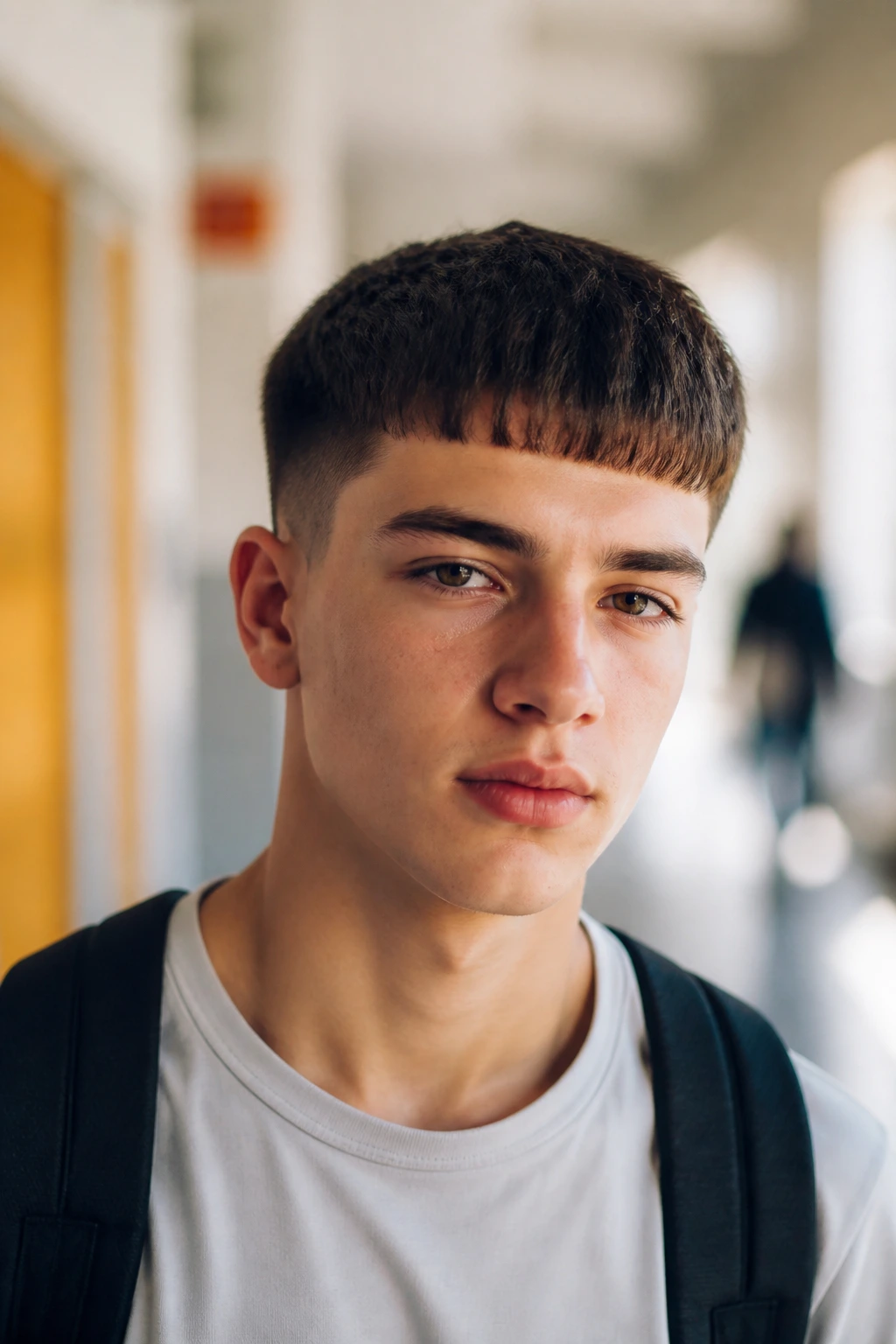
Named after the historic Roman style, this cut is defined by short, horizontal bangs that are cut straight across. It is remarkably low-maintenance and works well for guys who want a very uniform, structured look without having to style it daily.
Who Should Avoid This
If you have a very round or square face, be careful. The straight horizontal line can emphasize the roundness of your head. It is usually best on oval or heart-shaped faces where the structure of the jawline is already defined.
Why It Works for Athletes
It is practically foolproof. You can jump out of the pool, head to the gym, or run on the track, and the hair will essentially look the same. It does not require any product, making it the ultimate “set it and forget it” haircut.
9. The Bro Flow

If you are tired of short hair and want to grow it out, the “bro flow” is the perfect transition. It involves growing the hair to a medium length—usually just touching the ears or the collar—and brushing it back naturally.
Dealing with the “Awkward Phase”
Every guy who grows out their hair hits the point where it looks like a mop. The bro flow is your remedy for this stage. Keep the sides slightly trimmed or tucked behind the ears to maintain some level of control while the top reaches the desired length.
Essential Care
- You will need a better-quality shampoo and conditioner, as your hair is now long enough that the ends will start to dry out if not properly moisturized.
- Invest in a high-quality comb to prevent tangling.
- Use a tiny drop of argan oil on the ends to keep them from looking brittle.
10. The Spiky Crew Cut
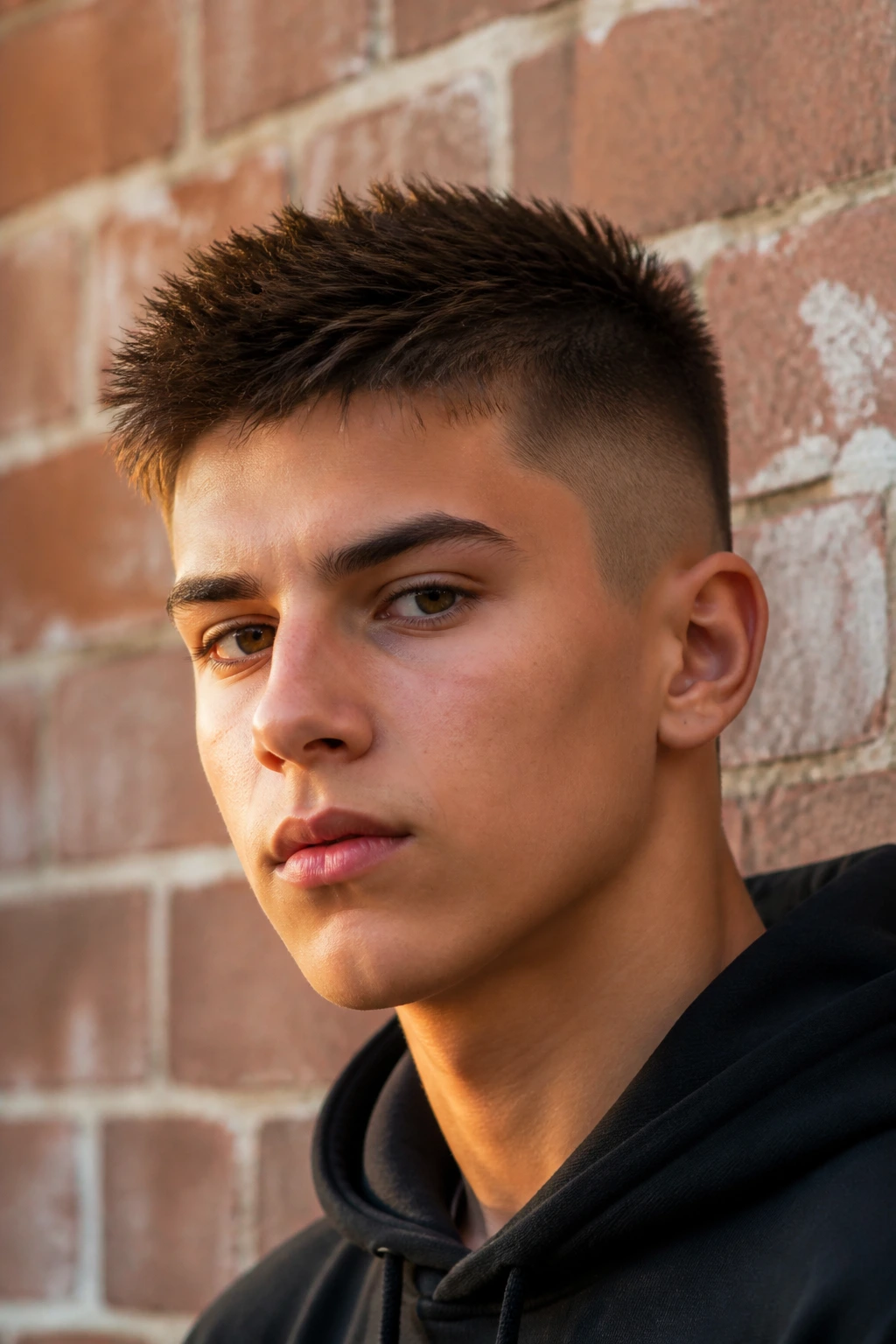
This is a classic take on the military-style crew cut, but with a bit more length left on top. By using a strong-hold gel or spiked cream, you can lift the hair into subtle, controlled spikes that add height and personality.
The Modern Spiky Approach
Forget the stiff, crunchy spikes of the past. Today, you want “texturized spikes” where the hair is grouped into clusters rather than one single, stiff mess. This creates a much softer, more modern silhouette.
Quick Styling Steps
- Rub a dime-sized amount of high-hold paste between your palms.
- Push your hands up through your hair, twisting the tips of the hair as you go.
- Use a hairdryer on low for 10 seconds to set the shape, but do not touch it afterward.
11. The Faux Hawk
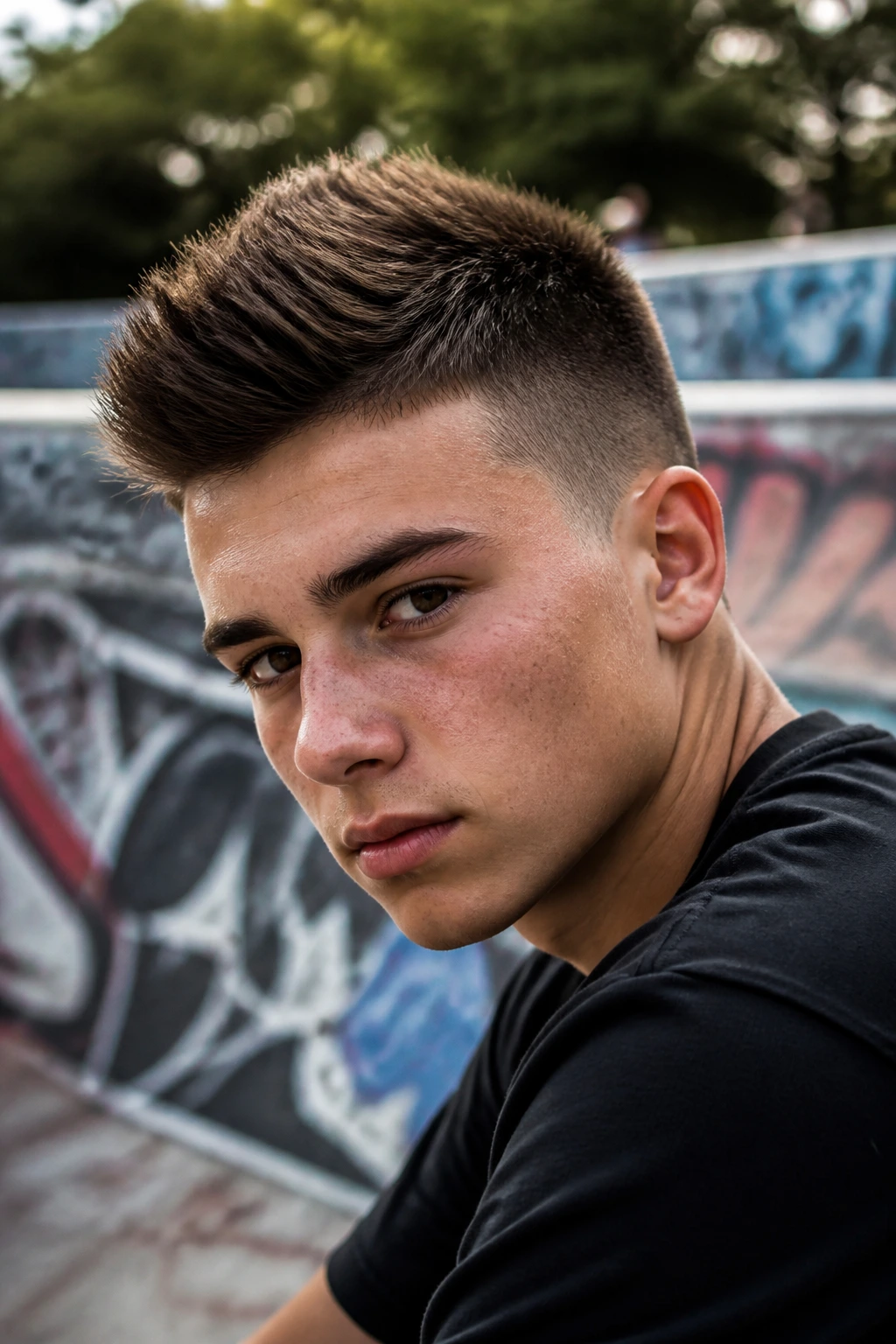
A faux hawk captures the rebellious energy of a mohawk but keeps the sides manageable. By fading or tapering the sides, the focus remains on a strip of hair running from the front hairline to the crown, which can be spiked up or pushed toward the center.
Making It Wearable
The trick is to avoid going too high. A “faux” hawk should look like a natural ridge of hair, not a vertical wall. It is sophisticated enough for school but feels edgy enough for the weekend.
Versatility in Styling
You can wear it messy and wide for a more casual look, or you can use a strong pomade to create a very distinct, narrow line if you are going for a bolder aesthetic. It is essentially two haircuts in one.
12. Long Layers with Volume
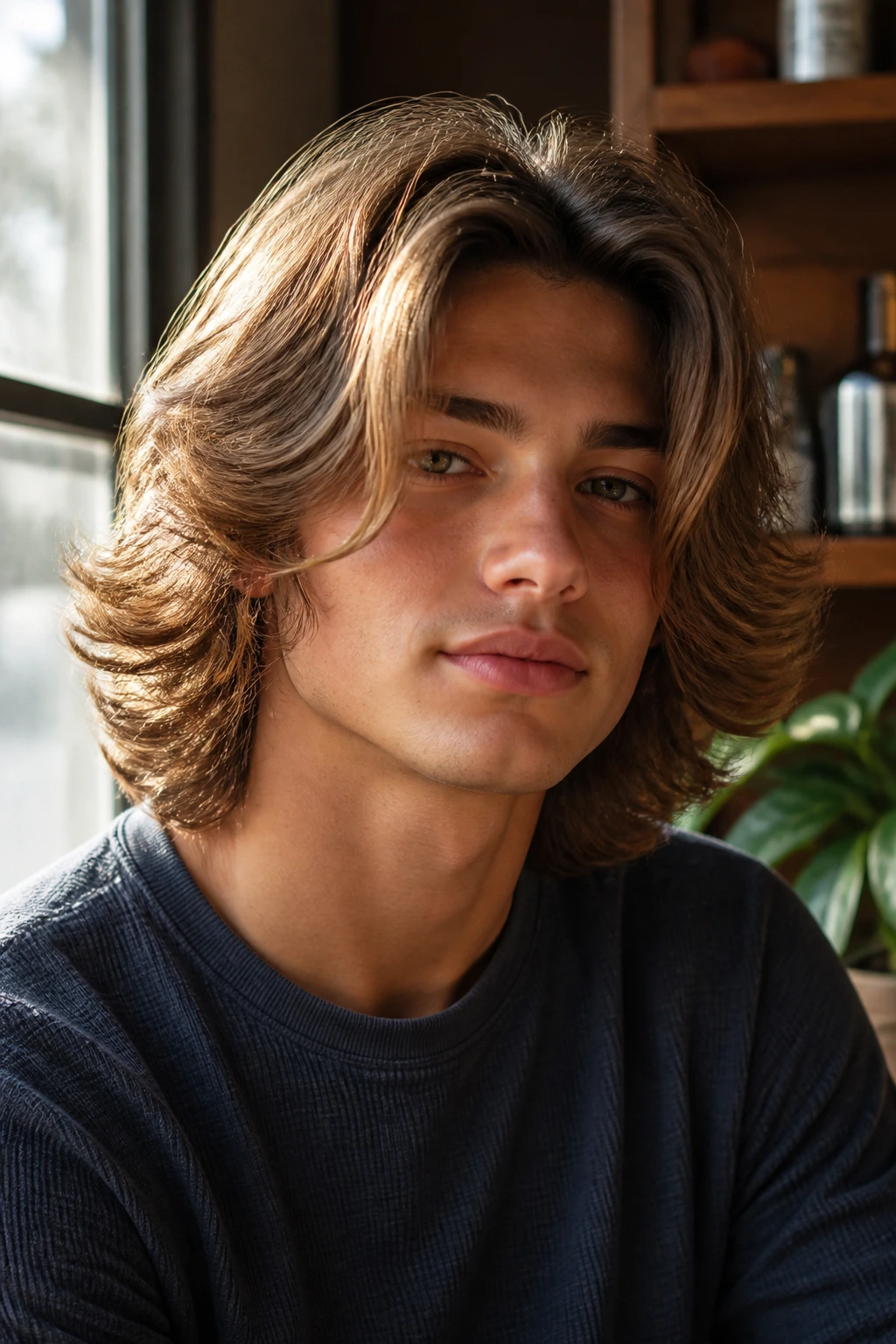
For those who have committed to longer hair, layers are the only way to prevent it from looking like a heavy curtain. Layers remove weight and encourage the hair to move, giving it a much more lively, natural appearance.
Why Layers Matter
Long hair that is all one length tends to sit flat against the scalp, especially if the hair is fine. Layers create “bounces” and visual interest. Ask your stylist for “internal layers” if you don’t want to lose the overall length but want more volume.
How to Style It
- Avoid heavy waxes or gels, which will weigh your hair down.
- A light sea salt spray or a volume-enhancing mousse is all you need.
- Air-drying is usually the best approach to keep the hair looking healthy and avoiding heat damage.
13. The Pompadour Fade
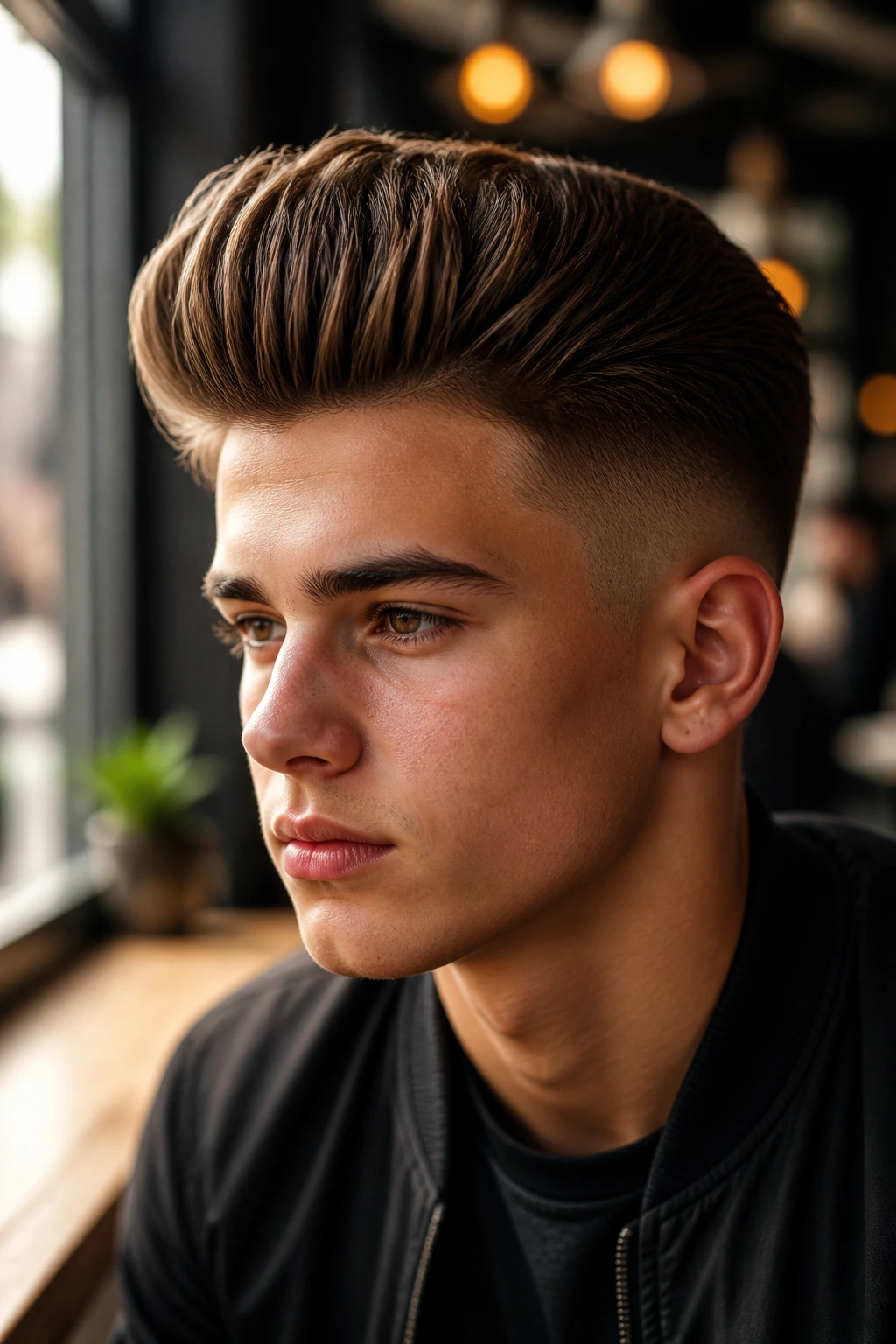
This style brings the drama. It features a voluminous top that is swept high and back, paired with a clean, sharp fade on the sides. It is a bold, refined choice that commands attention in any room.
The Engineering of the Pompadour
You need density and length on top to make this work. If your hair is too short, the front will simply flop over. You need at least four to five inches of length on top to achieve that iconic sweep.
Critical Styling Advice
- You must blow-dry this style if you want it to last.
- Use a round brush to pull the hair at the roots to create the base lift.
- Finish with a strong-hold hairspray to lock the shape, as the height will fight gravity all day long.
14. The Man Bun
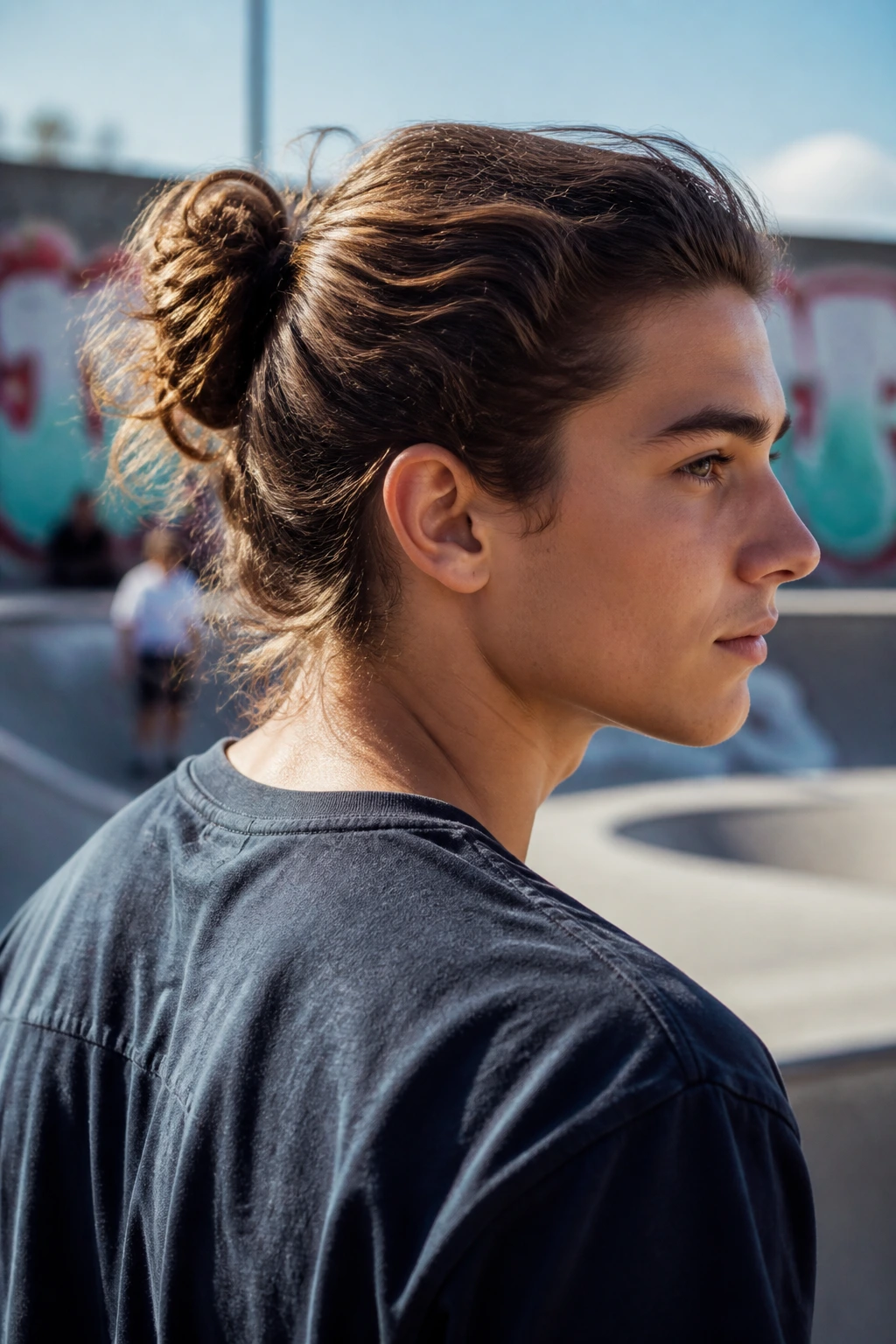
While it has been around for a long time, the man bun remains a functional favorite for guys with long hair who need to keep it out of their face during sports or studying. The key to a good bun is the tension; don’t pull it so tight that you get a headache or strain your hairline.
The “Half-Up” Alternative
If you aren’t ready to put all your hair up, try a half-bun. Tie just the top section of your hair, leaving the back and sides loose. It looks a bit more relaxed and is perfect for guys with medium-length hair who want the benefits of a bun without needing the full length.
Avoid the “Slicked” Look
The most modern way to wear a bun is with a bit of volume around the hairline. Pulling it back with your fingers rather than a brush creates a softer, more intentional look that isn’t too severe.
15. The Burr Cut
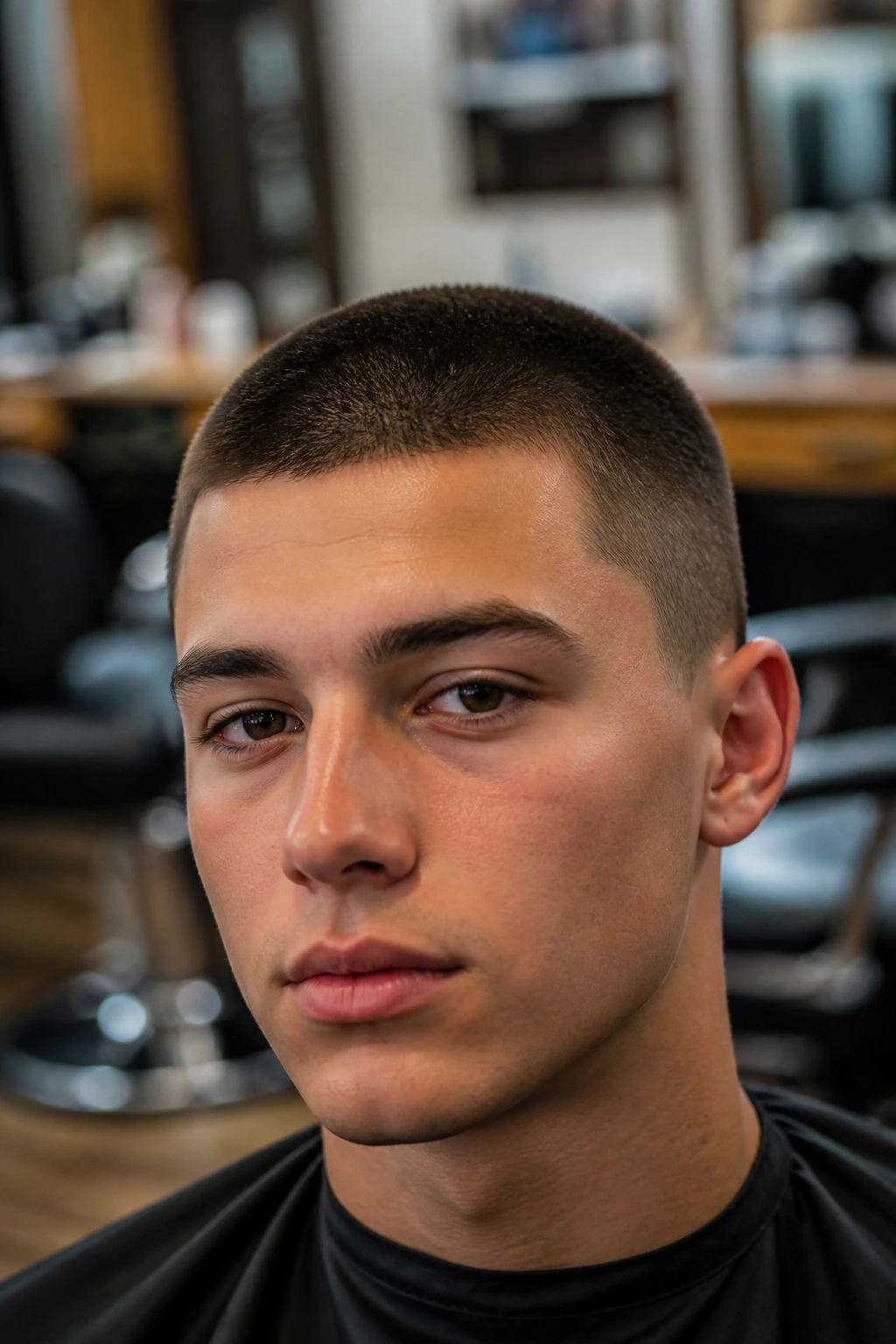
When you want the absolute lowest maintenance possible, the burr cut—a very short, uniform buzz—is the answer. It is sharp, clean, and incredibly masculine. It highlights the jawline and the eyes, as there is no hair to distract from your features.
Why It’s Not Just a Buzz Cut
A true burr cut is slightly longer than a skin fade but shorter than a crew cut. It is usually done with a number 1 or 2 guard on the clippers, providing just enough coverage to see the color of the hair while keeping it neat.
Occasional Touch-ups
This style shows regrowth quickly. If you want to keep that “fresh haircut” feeling, you will need to trim it every two weeks. It is one of the easiest cuts to maintain at home if you have a decent pair of clippers and a steady hand.
16. The Bowl Cut Revival
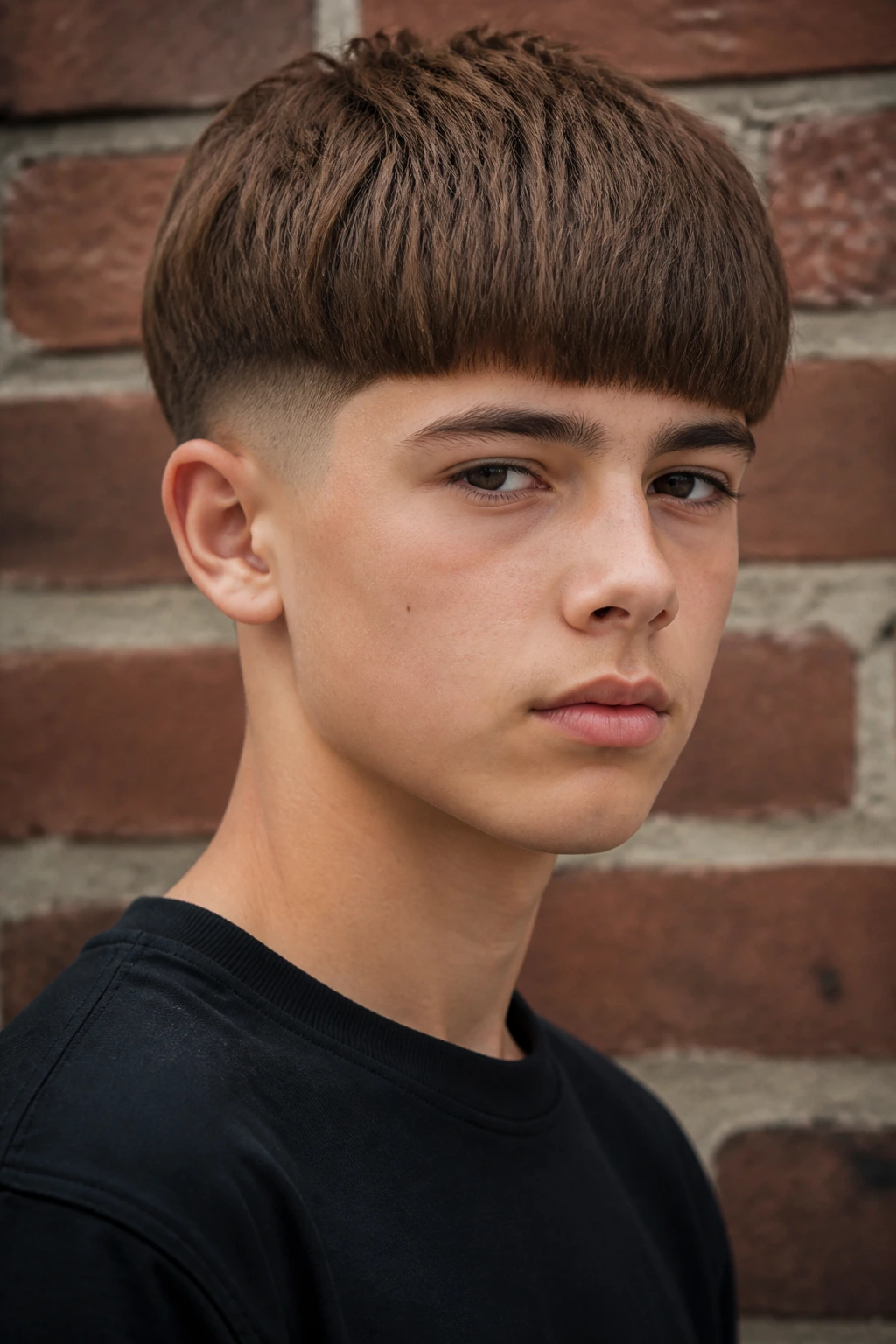
Yes, the bowl cut is back, but it looks nothing like the one you had in elementary school. The modern version features sharp, disconnected sides or a fade, with the top section cut into a clean, geometric line that blends into the fringe.
Who Can Pull This Off
This is for the fashion-forward teen who doesn’t mind a bit of a retro edge. It works best on straight hair where the geometry of the cut can really shine. If you have tight curls, a bowl cut will just turn into a sphere, which is a very different vibe.
Styling the Line
You need to keep the hair around the forehead very precise. Use a flat iron if necessary to ensure the fringe is perfectly straight and sits just above the eyebrows. This look is all about lines and angles.
17. The Hard Part Undercut
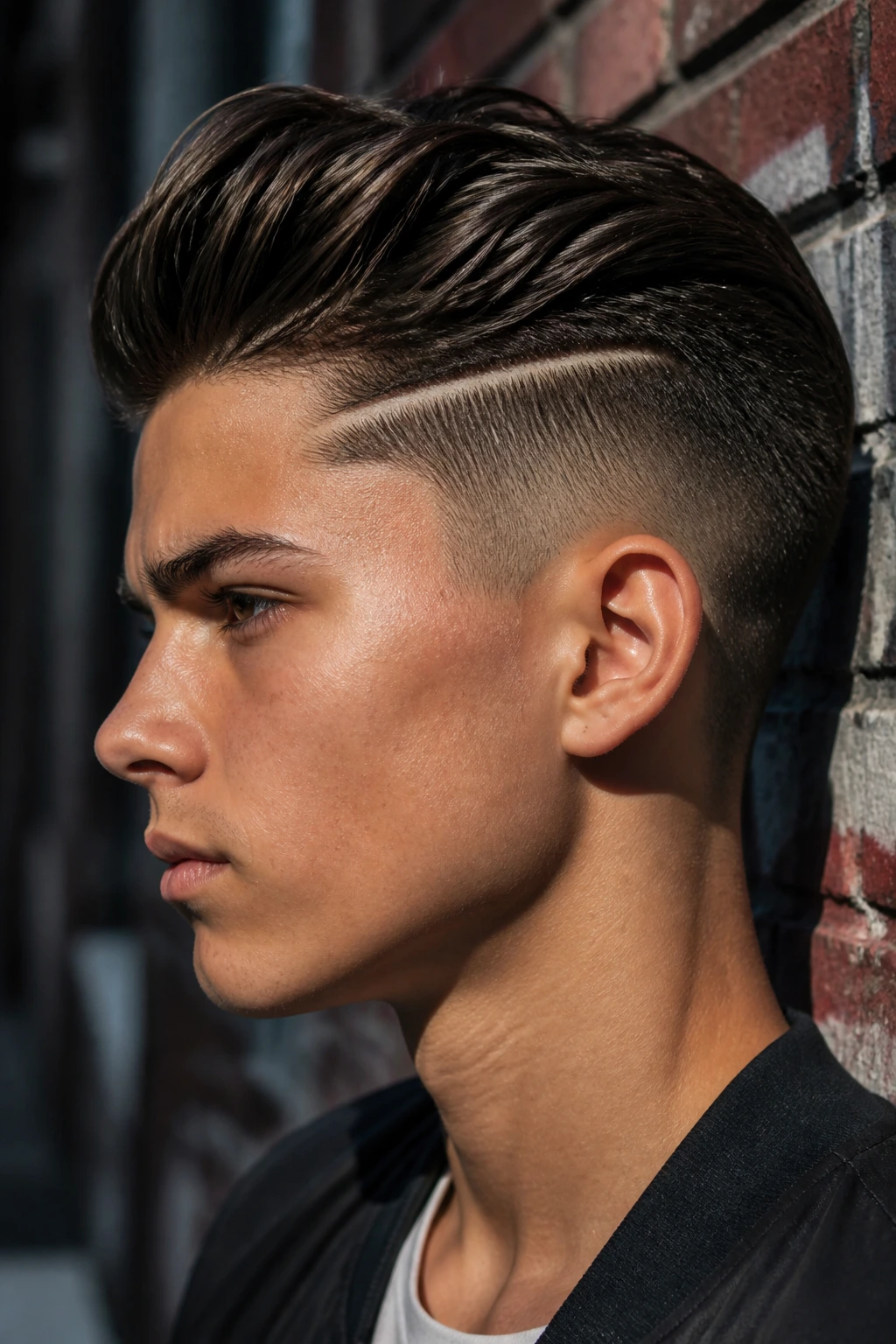
A hard part is a line shaved directly into the scalp where your side part would naturally be. It creates a permanent division, meaning you never have to guess where to comb your hair. It adds a layer of aggression and precision to a standard undercut.
The Skill Factor
This is not a DIY job. You need a barber with a steady hand and a fine-blade trimmer. Once you get a hard part, you have to keep up with it, or it will look awkward as the hair grows back over the shaved line.
Balancing the Boldness
Because the hard part is such a loud style element, try to keep the rest of your hair somewhat classic. A clean side-sweep or a simple comb-back works better with a hard part than a chaotic, messy style.
18. The Wavy Fringe
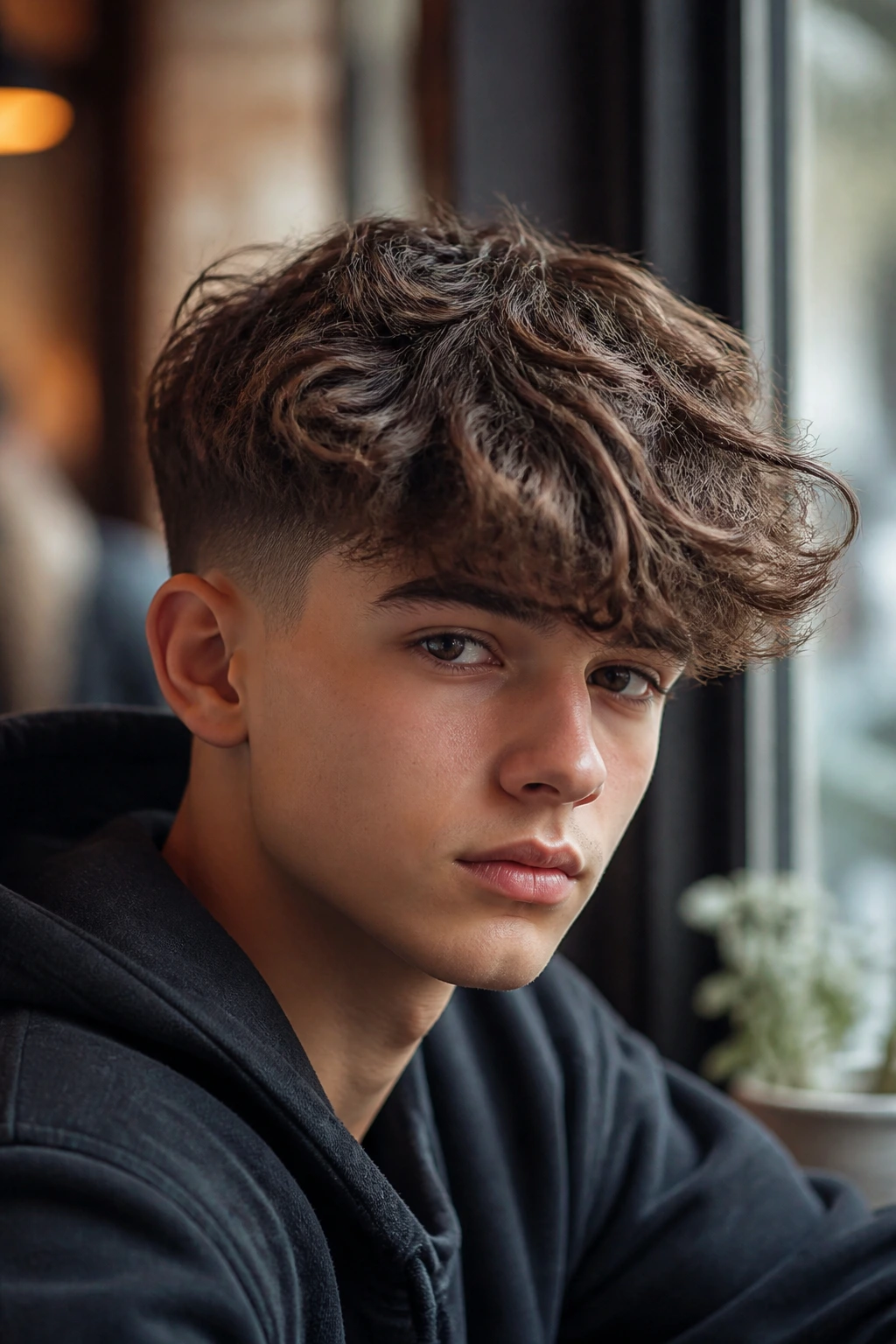
If you have naturally wavy hair, stop trying to straighten it. The wavy fringe allows your natural texture to create volume and a messy, bohemian appearance that looks great with a mid-fade on the sides.
Why Texture Is Your Friend
Waves create natural volume that straight-haired guys have to fake with hours of blow-drying. Lean into it. Use a sea salt spray to enhance the wave pattern, and let the fringe hang slightly over your forehead for a relaxed, approachable look.
Preventing Frizz
The biggest challenge with wavy hair is frizz. Use a light, hydrating cream to keep the waves defined rather than puffy. Avoid touching your hair once it starts to dry, as this is when the frizz usually starts to form.
19. The Mohawk Fade
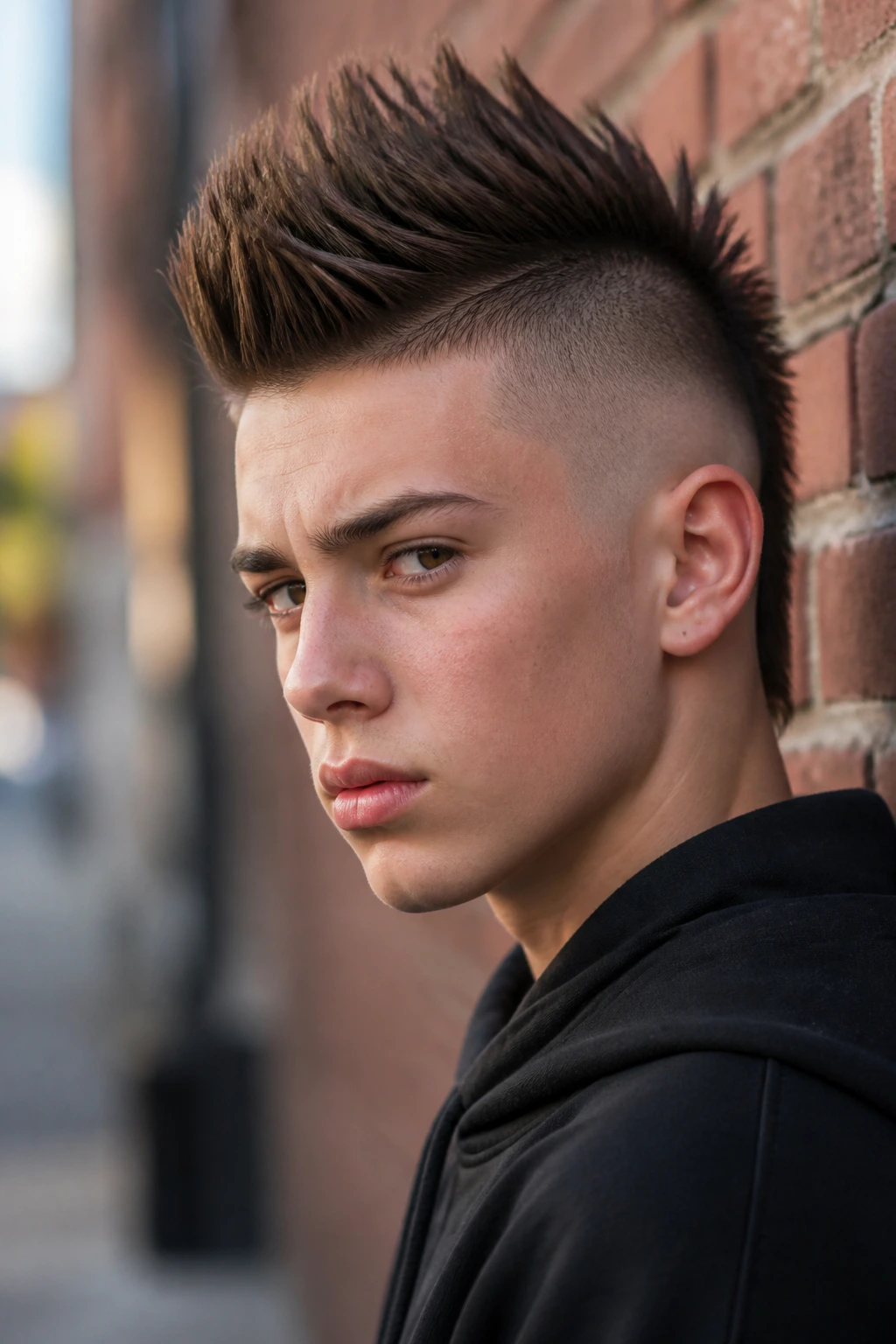
The mohawk fade brings the height of a traditional mohawk down to a more manageable, everyday length. The sides are faded down to the skin, while the hair on top is kept in a distinct, raised strip.
Creating the Strip
You can ask your barber to create a wide or narrow strip depending on how bold you want to be. A wider strip is easier to style because it has more support, whereas a narrow strip requires more product and effort to keep upright.
Styling for Stability
You will need a high-hold clay or a spiking glue. Apply it to the hair while it is slightly damp, and push the hair toward the center to create that ridge effect. It is a high-energy style that pairs perfectly with streetwear.
20. The Disconnected Undercut
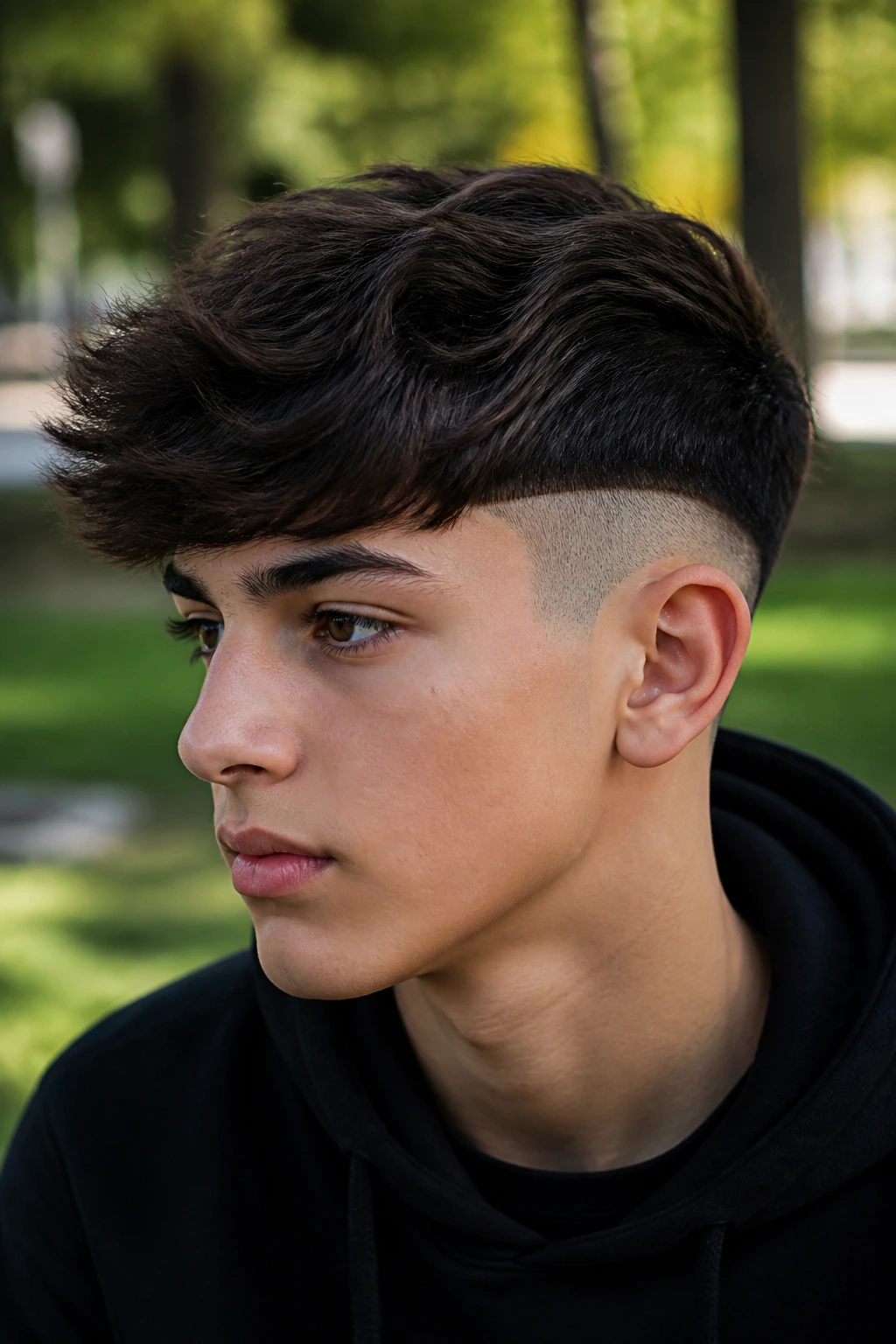
In this style, there is no transition between the sides and the top. The sides are buzzed short, and the top is left long, creating a literal “disconnected” look where the top hair hangs over the shaved sides.
The Contrast Effect
This is a high-contrast style that emphasizes the volume on top. Because the top isn’t blended into the sides, you get a much sharper silhouette. It is a very architectural way to style hair.
Who Needs This
Guys with thick, heavy hair benefit the most from this. The disconnection takes away a massive amount of weight from the head, making the hair feel lighter and easier to manage throughout the day.
21. The Textured Ivy League

An Ivy League cut is essentially a longer crew cut that is short enough to be low-maintenance but long enough to style. Adding texture to the front—by point-cutting the ends—makes it look more youthful and modern.
The “All-Occasion” Cut
This is the ultimate multipurpose haircut. It is conservative enough for a family dinner or a job interview, but with a bit of texture paste, it can look relaxed enough for the weekend.
Why It’s Often Overlooked
Many guys think this style is “boring,” but it is actually the hardest haircut to do well. The blending has to be perfect, and the length on top must be precisely balanced. Find a barber who specializes in classic scissor-over-comb techniques.
22. The Surfer Shag
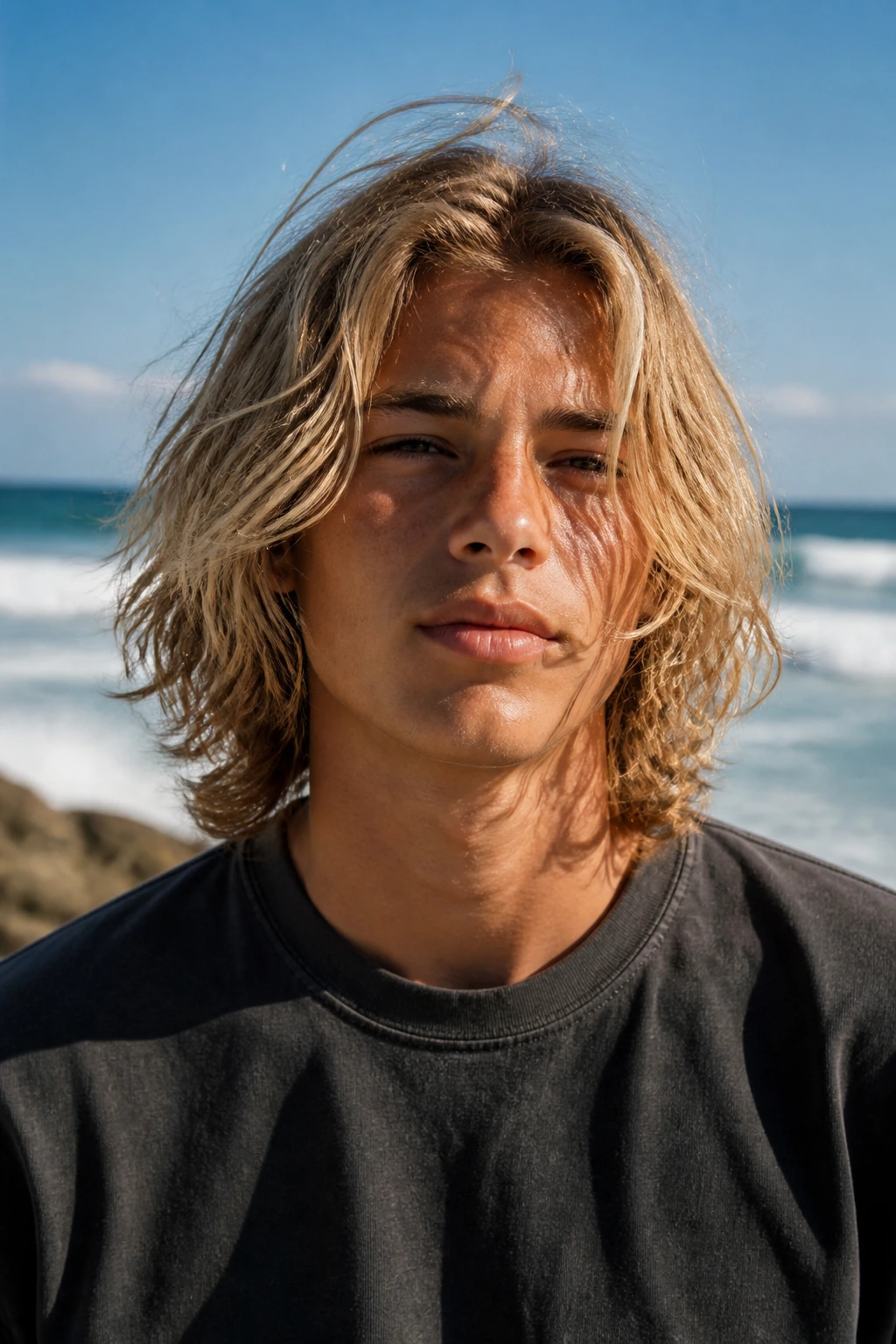
This cut is all about long, sun-bleached layers that look like they were styled by the ocean breeze. It is a long, layered cut that usually falls past the chin and has plenty of movement.
Achieving the “Lived-In” Look
The key is to avoid blunt ends. Every section of hair should be textured so that the ends look soft and feathered. This is what gives the “shag” its signature flow.
Maintaining Health
Long hair is prone to split ends. Even if you want to grow it out, you need to get the ends “dusted”—a very minor trim—every three months to keep the hair looking fresh and healthy.
23. The High and Tight
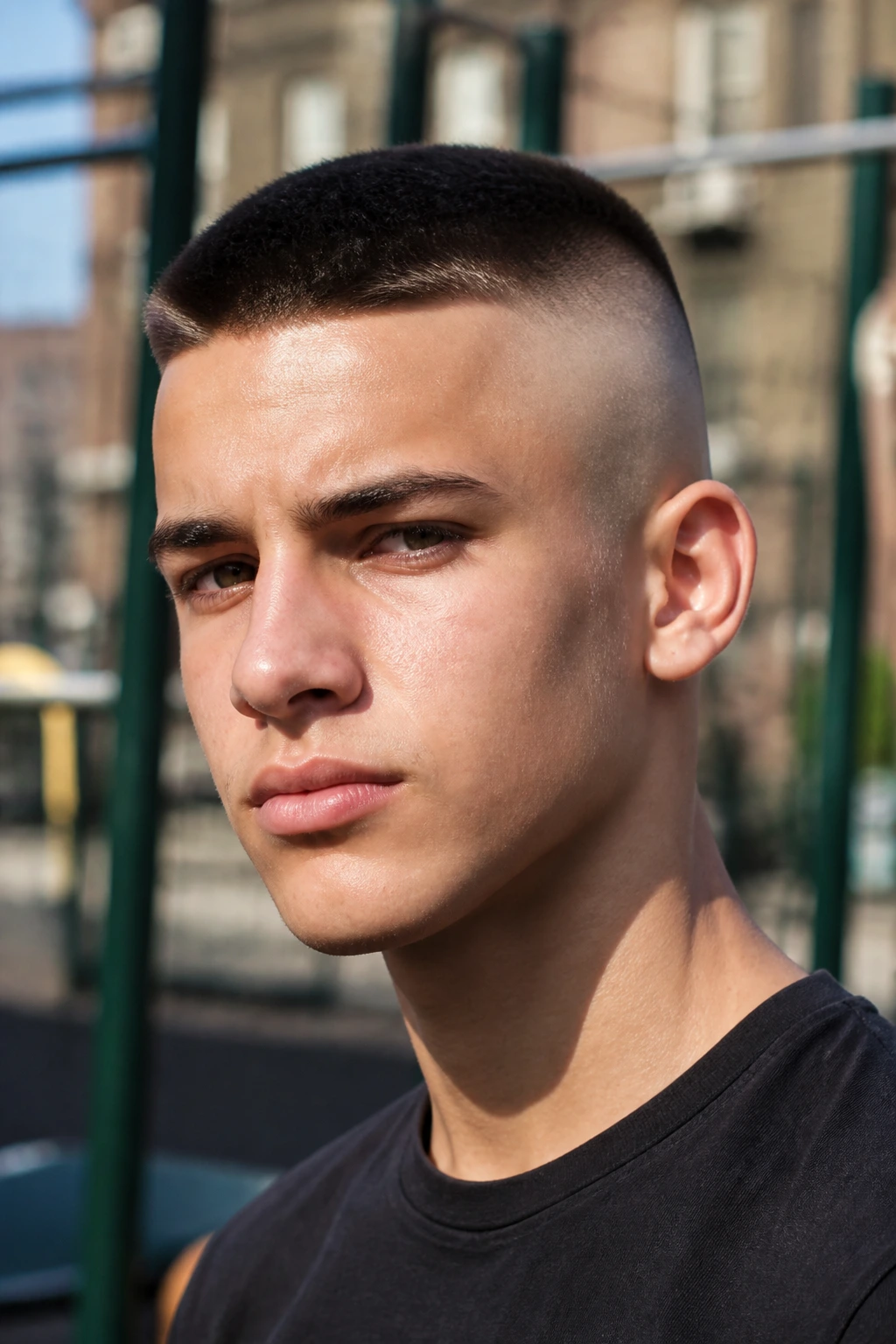
Originating in military culture, the high and tight involves shaving the sides and back very high up the head, leaving only a small amount of hair on top. It is the definition of clean.
The Shape of the Head
Because this style exposes so much of the scalp, you should consider the shape of your head. If you have any bumps or an unusual shape, you might prefer a slightly longer fade that hides the skin better.
Ease of Maintenance
You can wash this with a bar of soap if you really wanted to. It is the fastest morning routine in the world. Wake up, rub your head with a towel, and you are ready to go.
24. The Side-Swept Fade
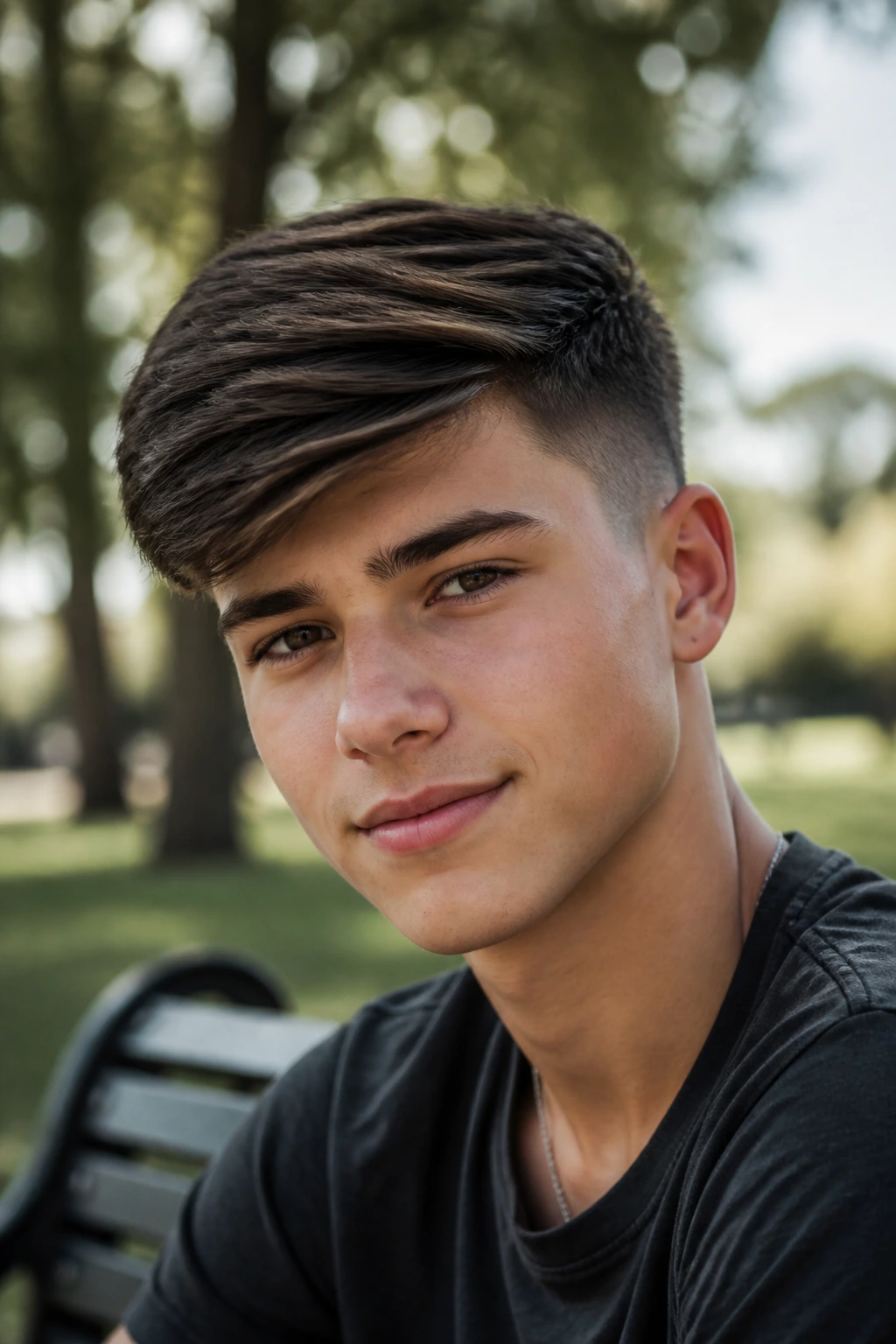
This is a softer version of the classic side part. Instead of a hard line, the hair is swept casually to the side, maintaining a bit of messy texture while the fade on the sides provides the structure.
Why It’s So Approachable
It feels less “done” than a pompadour or a hard part. It looks good on almost everyone, regardless of hair texture, and it is very forgiving if you have a bad hair day—just push it the other way.
How to Achieve the Sweep
Use your fingers to push the hair to the side while it is damp. Don’t use a comb, which can make it look too formal. Let it air dry so it retains that natural, slightly imperfect movement.
25. The Curly Fro-Hawk
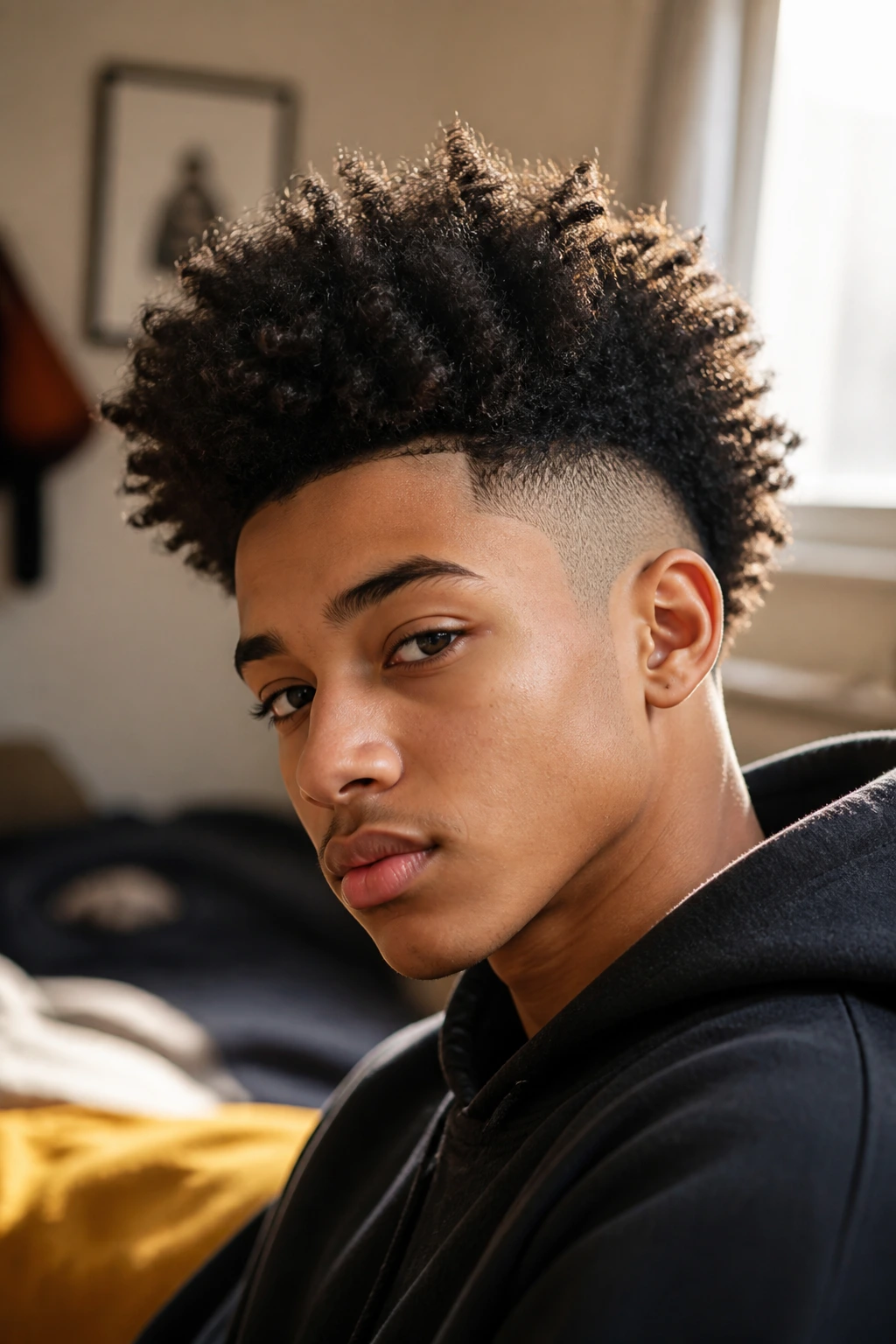
Combining a tight fade with the natural volume of an afro-textured top, the fro-hawk is a powerful statement. It uses the hair’s natural volume to create height without needing as much product as a traditional mohawk.
Managing the Moisture
Afro-textured hair needs more oil than other types. Make sure to use a leave-in conditioner or a shea-butter based product to keep the top healthy. A dry fro-hawk will eventually lose its shape and start to break.
Defining the Edges
A sharp line-up at the forehead and around the temples is what makes the fro-hawk look modern. It adds a geometric sharpness that contrasts beautifully with the softness of the curls on top.
26. The Scissor-Cut Crop
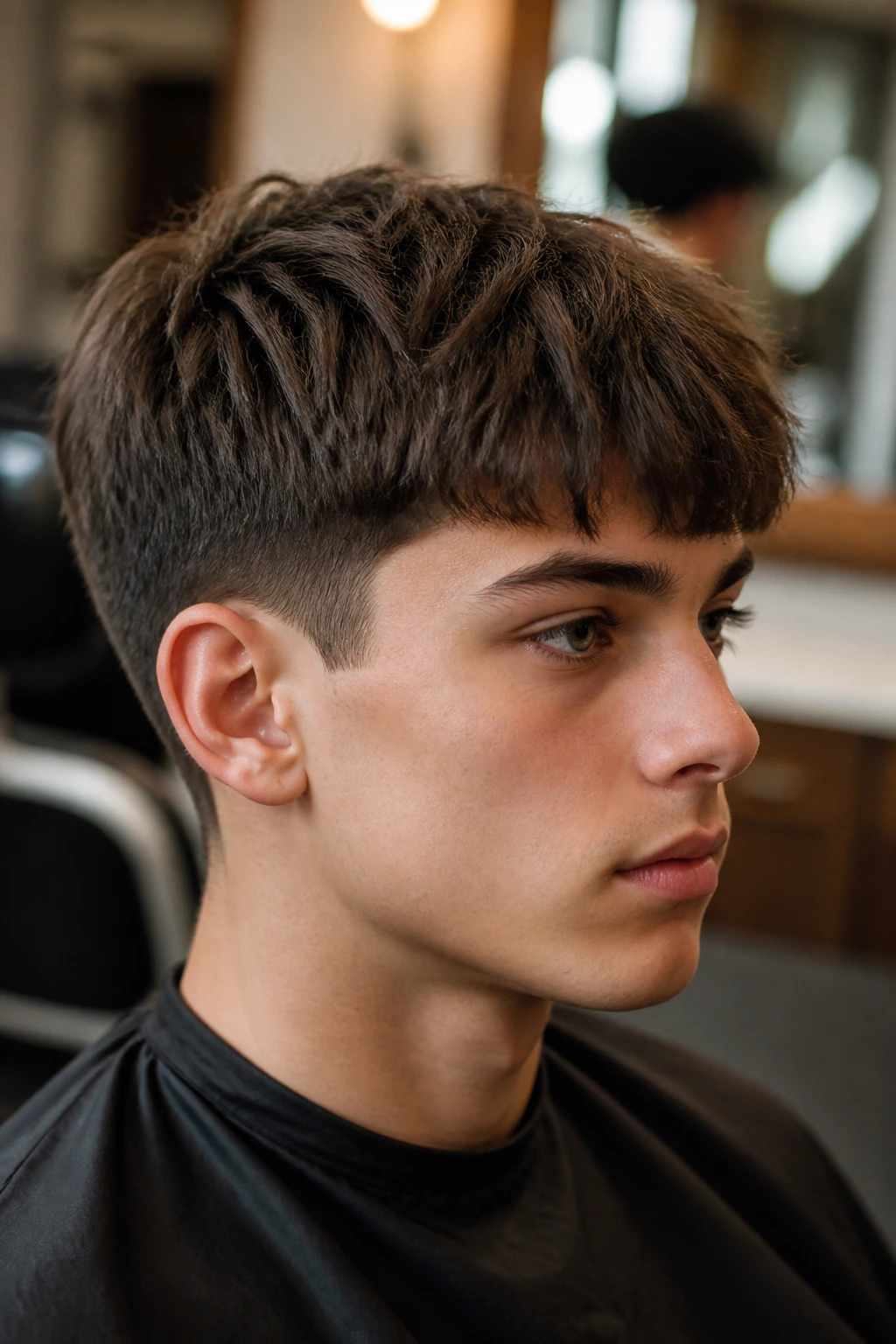
Most of the styles on this list rely on clippers for the sides, but a scissor-cut crop is entirely hand-cut. This creates a softer, more organic look that isn’t as harsh as a fade.
Why Choose Scissors
If you find that fades look too “skinny” or severe on you, scissor-cutting is the solution. It leaves the hair slightly longer at the base, creating a more natural, rounded shape around the ears and neck.
The Barber Experience
You will need to communicate clearly with your barber that you want to keep the sides “tapered with scissors only.” Not every barber is comfortable doing this, so find someone who prides themselves on classic shear work.
27. The Messy Mid-Length
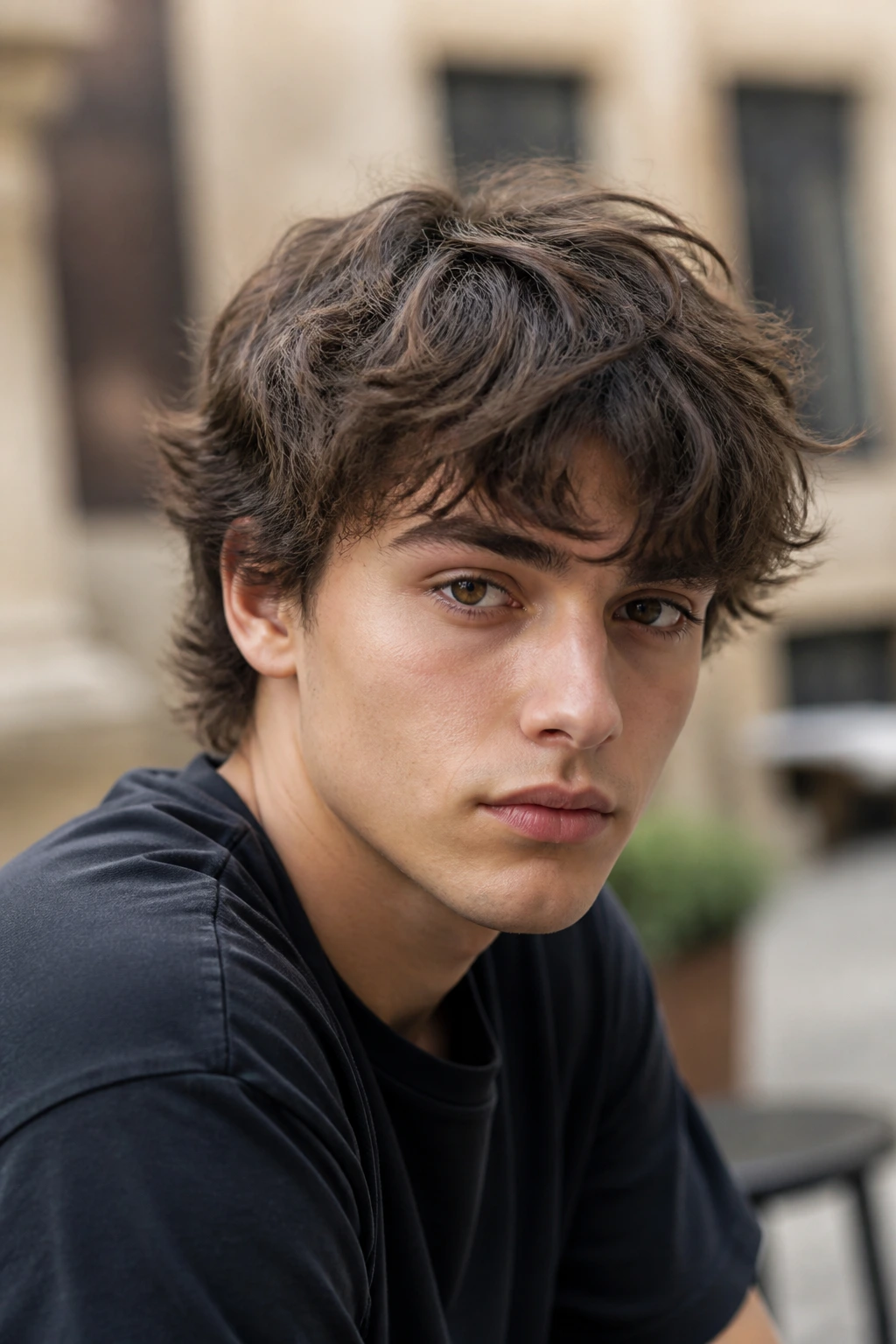
This style hits the sweet spot between short and long. The hair is kept around three to four inches all over, allowing for a messy, finger-combed look that works for almost any hair density.
The Versatility Factor
You can push it forward, push it back, or let it fall naturally. Because there is no fade involved, it grows out very gracefully. You don’t have to visit the barber every two weeks to keep it looking decent.
Styling Tip
Use a matte sea salt paste. It provides hold without making the hair feel heavy, allowing you to re-style your hair throughout the day with just a quick run of your fingers.
28. The Classic Crew Cut
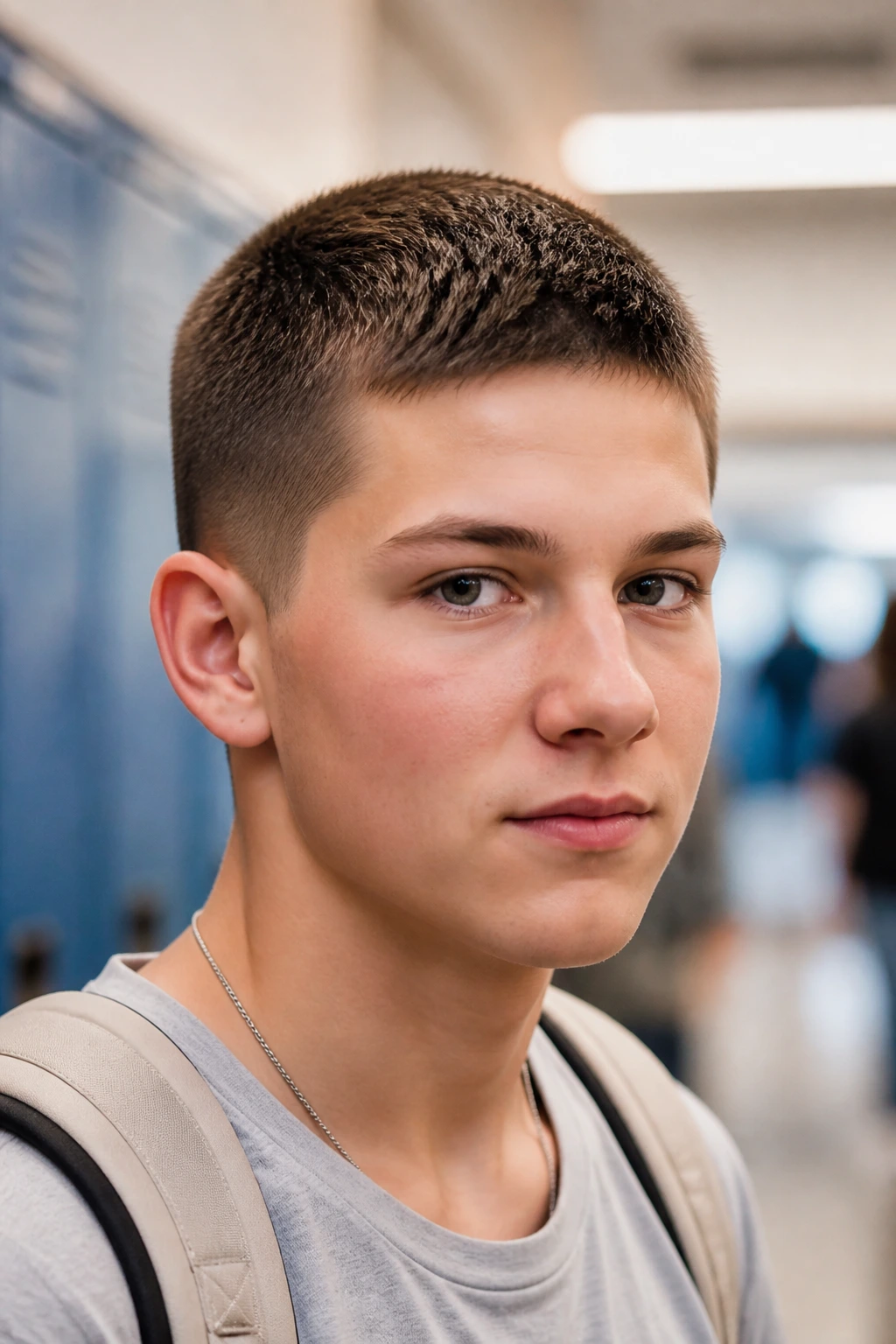
Never underestimate the power of the original. The crew cut is a timeless, slightly longer version of the military buzz, with just enough length on top to show off some texture.
Why It Remains the King of Styles
It is professional, masculine, and requires zero effort. It is the standard for a reason. If you ever feel like you are overthinking your hair or the products are becoming a distraction, strip it back to a classic crew cut.
The Small Details
The difference between a good crew cut and a great one is the neckline. Ask your barber for a “tapered neckline” rather than a “blocked” (straight) one. A blocked neckline will look messy as soon as it starts growing out, while a tapered one stays looking clean for much longer.
Final Thoughts
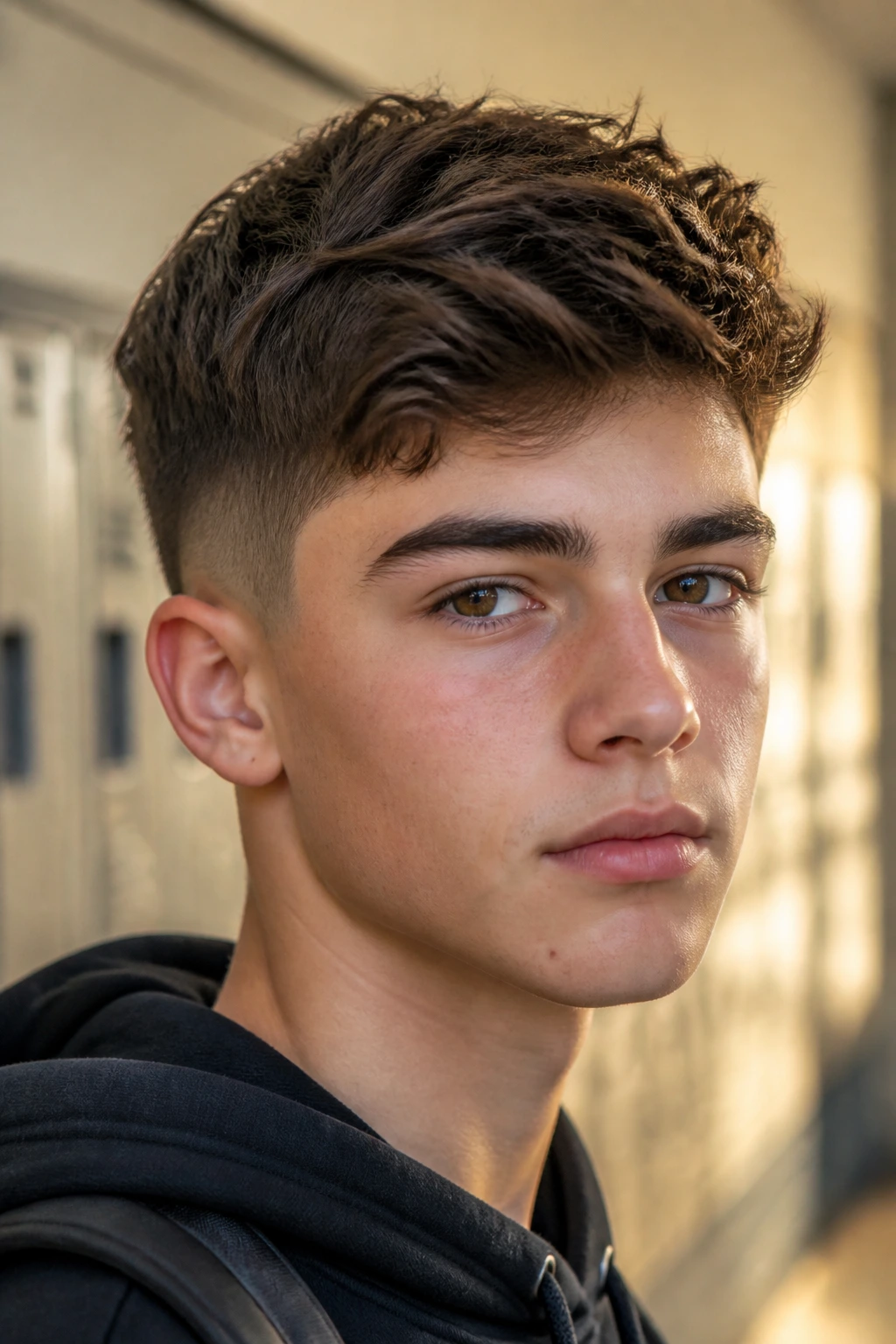
Picking a hairstyle isn’t a permanent decision, which is exactly why it is one of the best ways to experiment. The most successful cuts are the ones that make you feel like the best version of yourself, not the ones that you think you “should” have because a trend suggests it. If you have been doing the same thing for years, try something slightly shorter or ask for more texture next time. You might be surprised at how much a small change in length or shape can affect your entire look.
Ultimately, your hair is just hair. It grows back. If you try a style and it doesn’t quite fit your face or your morning routine, just let it grow for a month and reset. The best approach is to find a barber who is willing to listen and talk through what works for your hair type—not just what you saw in a magazine. Once you find that rhythm, the process stops being a chore and starts being a simple part of your day.