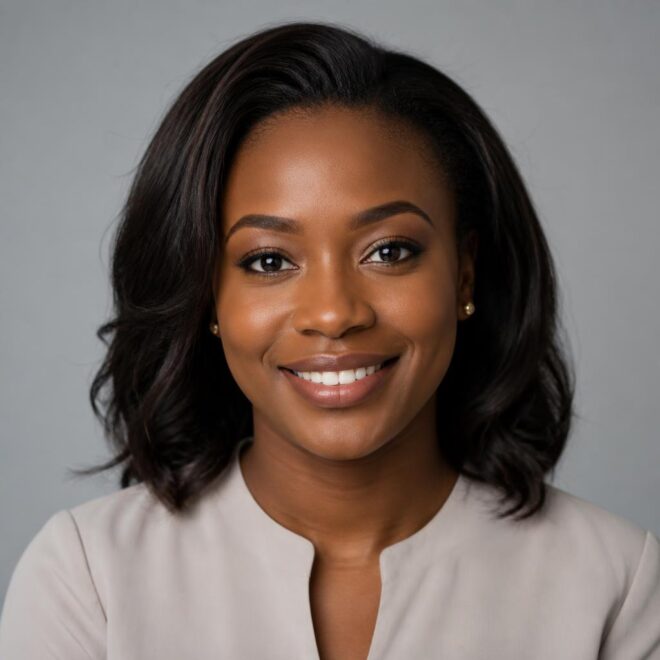


Fine hair often feels like a constant battle against gravity. You spend your morning styling, coaxing volume into existence, only to have it surrender to the humidity or the simple weight of your own locks by lunchtime. If you have fine hair, you know that the secret isn’t just in the product—it is in the shape of the cut. A strategic frame around the face can draw attention to your best features while creating the illusion of density that your strands might otherwise lack.
Length can be an enemy when hair is thin. Gravity pulls the hair straight down, flattening the root area and emphasizing any lack of thickness at the ends. When you choose a frame haircut, you are essentially asking your stylist to build structure into the perimeter. By removing weight, you allow the hair to regain its natural bounce. You want movement, you want airiness, and most importantly, you want a style that looks intentionally full rather than accidentally wispy. Let’s look at the cuts that actually work for finer textures.
1. The Blunt Jaw-Length Bob
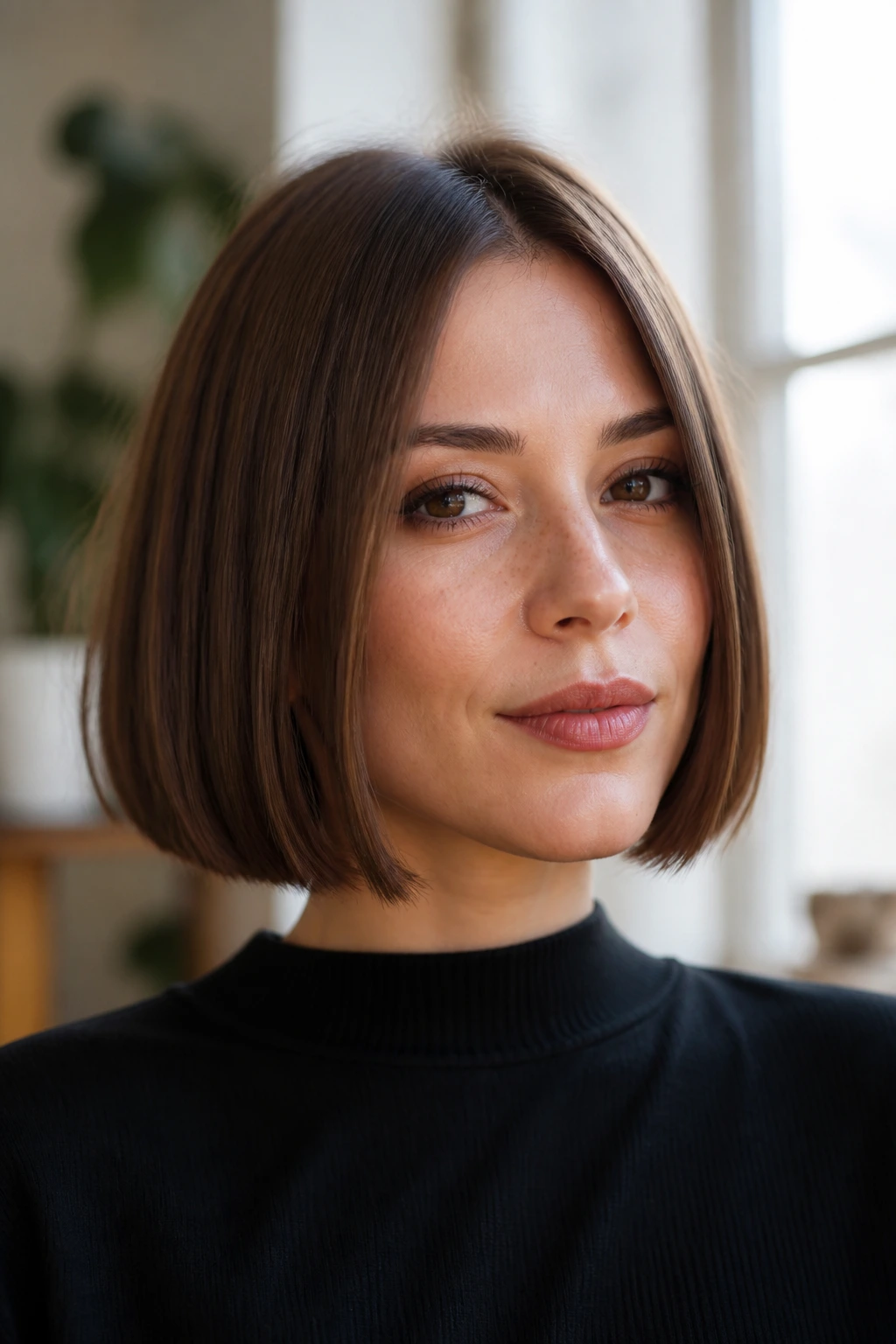
This cut is the undisputed champion for fine hair. By keeping the length strictly at the jawline with a sharp, perimeter-only blunt edge, you trick the eye into seeing more hair density than is actually there. The weight remains at the bottom, which prevents the hair from looking stringy or see-through at the ends.
Why It Works for Fine Strands
The bluntness acts as a foundational anchor. When you have fine hair, thinning or layering too much can actually make your ends look sparse. A solid, clean line creates a “cushion” effect, making the hair look healthier and thicker.
Styling for Maximum Impact
- Use a volumizing mousse on damp roots before blow-drying.
- Work with a round brush to create a slight inward bevel at the ends.
- Avoid heavy oils or waxes that will weigh the strands down and turn a sleek bob into a greasy mess.
Pro tip: Ask your stylist to use professional shears for a “dry-cut” finish. This ensures the line is as sharp as possible, which is harder to achieve when the hair is saturated with water.
2. The Textured French Bob
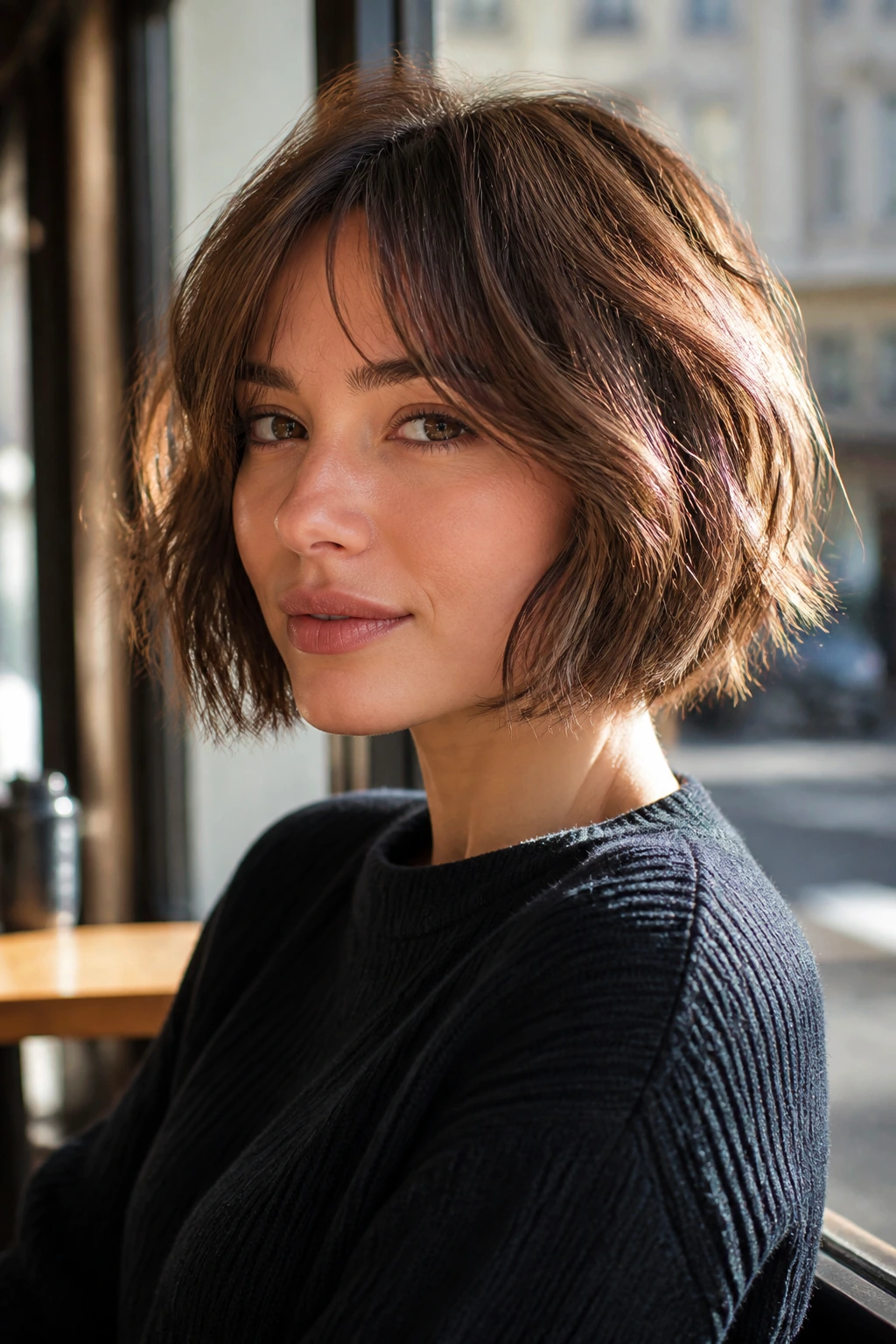
If the blunt bob feels a bit too rigid for your personality, the French bob offers a softer, more playful alternative. This cut usually lands right at the cheekbones or the mid-ear, which naturally lifts the face. It is inherently messy, meaning you do not have to worry about the perfection of your strands.
The Beauty of Intentional Texture
Fine hair often struggles to hold a style. By leaning into a textured, piecey finish, you embrace the natural movement of your hair. The shorter length removes significant weight, allowing the hair to lift off the scalp and gain natural volume.
Making It Your Own
- Pair this with a short, choppy fringe to draw even more attention to your eyes.
- Use a sea salt spray to encourage a subtle, beachy wave that adds width to the style.
- Keep the layers minimal—focus on “point cutting” the ends rather than traditional layering.
3. The Lob with Face-Framing Layers
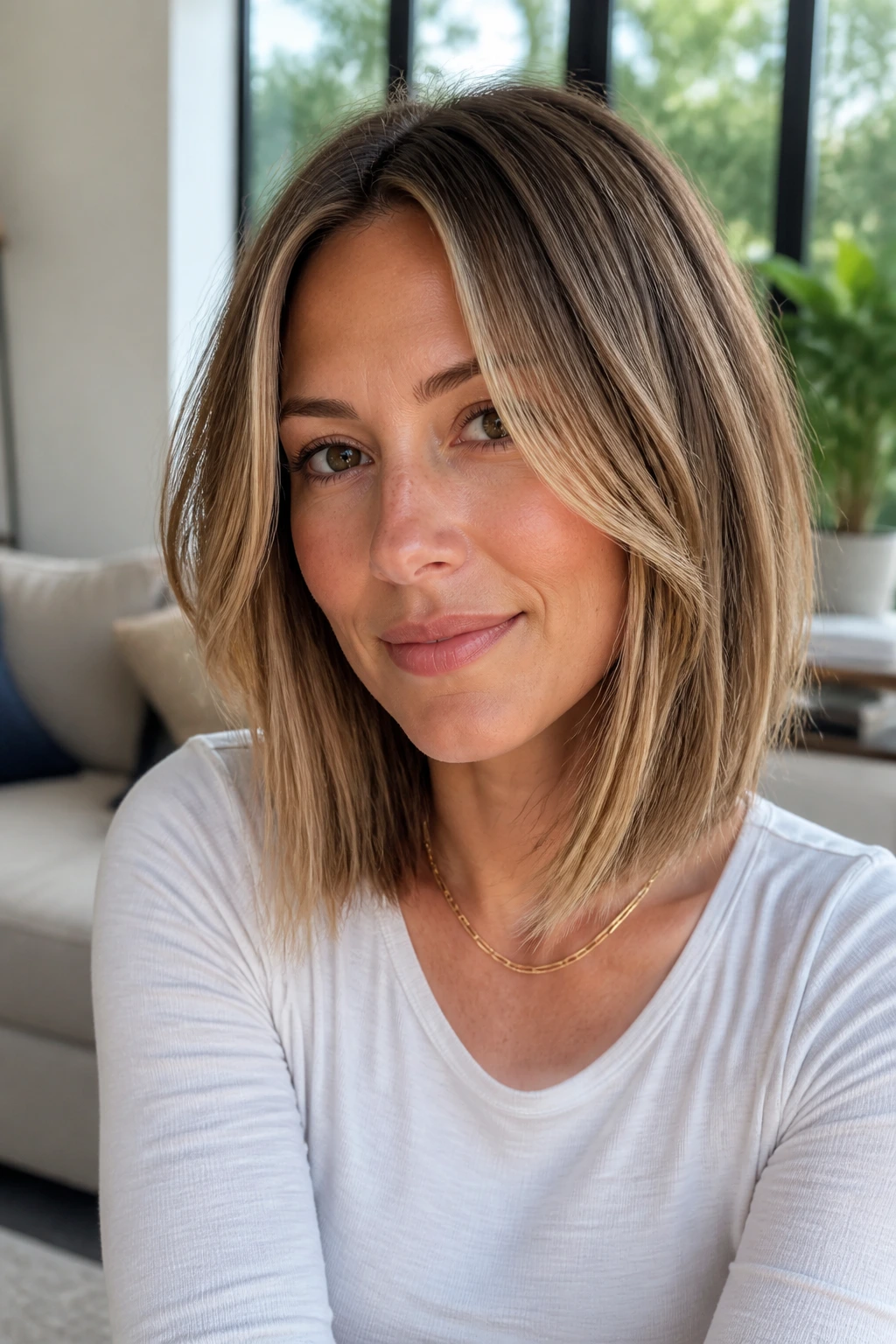
A long bob, or “lob,” is a classic for a reason. It bridges the gap between short and long, offering enough length to tie back while still being manageable. To make this work for fine hair, the secret is in the front framing. Keep the back relatively blunt, but add long, soft layers starting around the collarbone.
Creating Depth Through Framing
You don’t want layers all over, as this will deplete the volume you need at the ends. Instead, concentrate the layering around the face. This creates visual interest and softens the silhouette without sacrificing the bulk of your hair.
The Ideal Maintenance Schedule
- Visit the salon every six to eight weeks to keep the ends crisp.
- Fine hair tends to split faster; a trim is the best way to maintain the illusion of volume.
- If you notice the ends getting “whispy,” ask your stylist to take off an extra half-inch during your next visit.
4. The Deep Side-Part Pixie
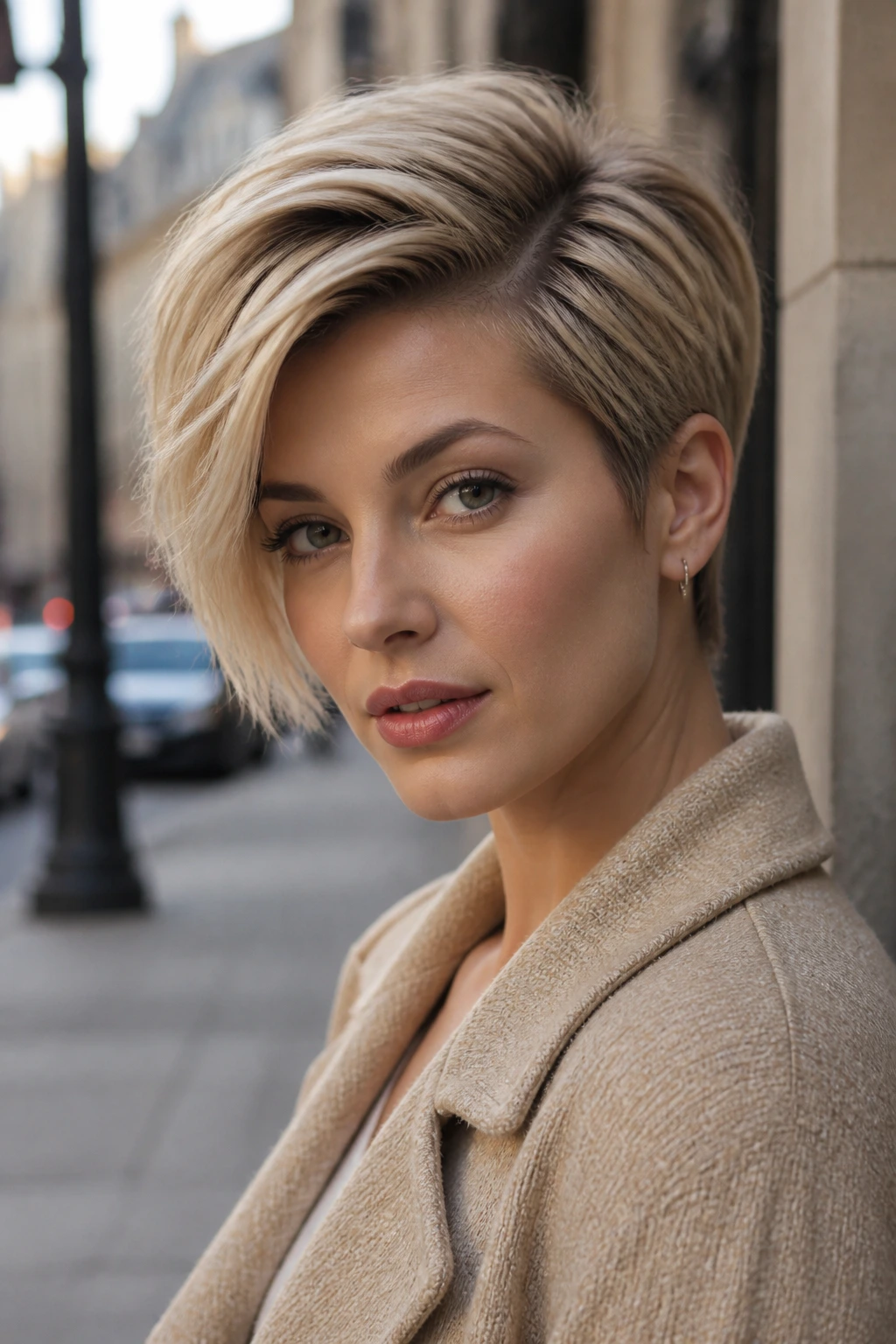
Sometimes, the best way to deal with fine hair is to lose the length entirely. A pixie cut can feel daunting, but when done with a deep side part, it creates a sweeping, voluminous bang that covers the forehead and provides immense lift.
Why Parting Matters
Moving your part from the center to a deep side creates an instant elevation at the root. Your hair is trained to lie flat when parted in the middle. By forcing it over, you push against the grain, which creates a natural, semi-permanent volume boost.
Balancing the Face
This style is particularly effective for those with heart-shaped or oval faces. The asymmetry hides the fine nature of the hair because the eye is focused on the movement of the long sweep rather than the thickness of the overall head of hair.
5. The “Shag” with Wispy Curtain Bangs

The shag is often associated with thick, unruly hair, but a modified version works wonders for fine textures. By keeping the layers longer and softer, you can build a shaggy silhouette that feels airy and light.
Achieving the Shag Look
The key here is to keep the “shag” refined. You don’t want harsh, choppy layers that leave you with thin, translucent ends. Focus on internal texture—using thinning shears sparingly only in the middle of the hair shaft—to build body while keeping the ends dense.
Why Curtain Bangs Are Essential
Curtain bangs are the ultimate hack for fine hair. They fill in the sparse areas around the temples and create a frame that makes the rest of the hair look like it has more body by comparison.
6. The A-Line Graduated Bob
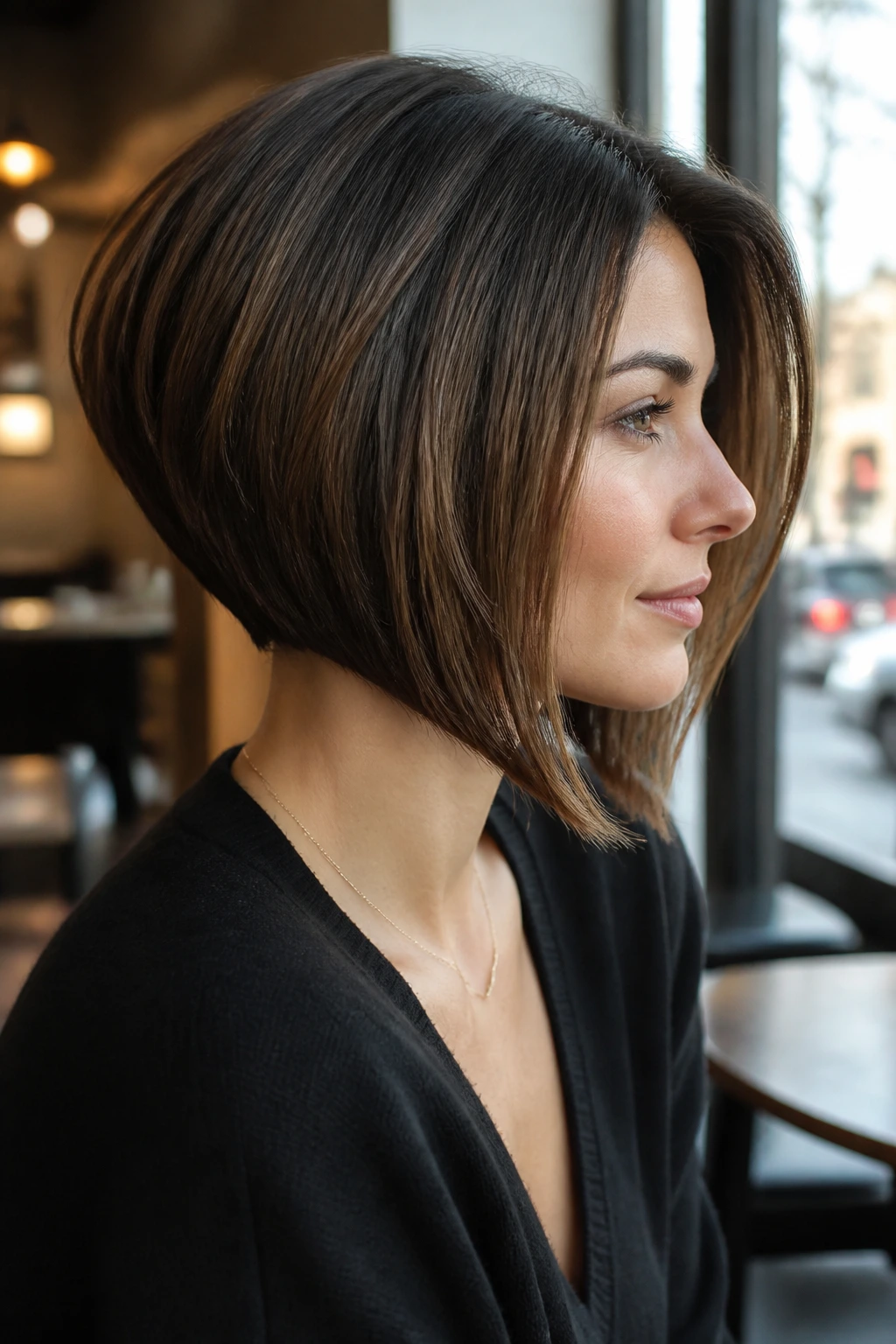
An A-line cut features hair that is shorter in the back and gradually gets longer toward the front. This is a masterclass in geometry. By keeping the back short, you prevent the weight from dragging the hair down; by keeping the front longer, you maintain a sense of style and femininity.
Geometry and Volume
The stacking in the back creates a natural roundness. Even if your hair is pin-straight and fine, the curvature of the cut itself provides a shape that doesn’t collapse.
Daily Maintenance
- A light volumizing powder at the crown is your best friend with this cut.
- Blow-dry the back area forward, then flip it into place to lock in the volume at the nape of the neck.
7. The Layered Collarbone Cut
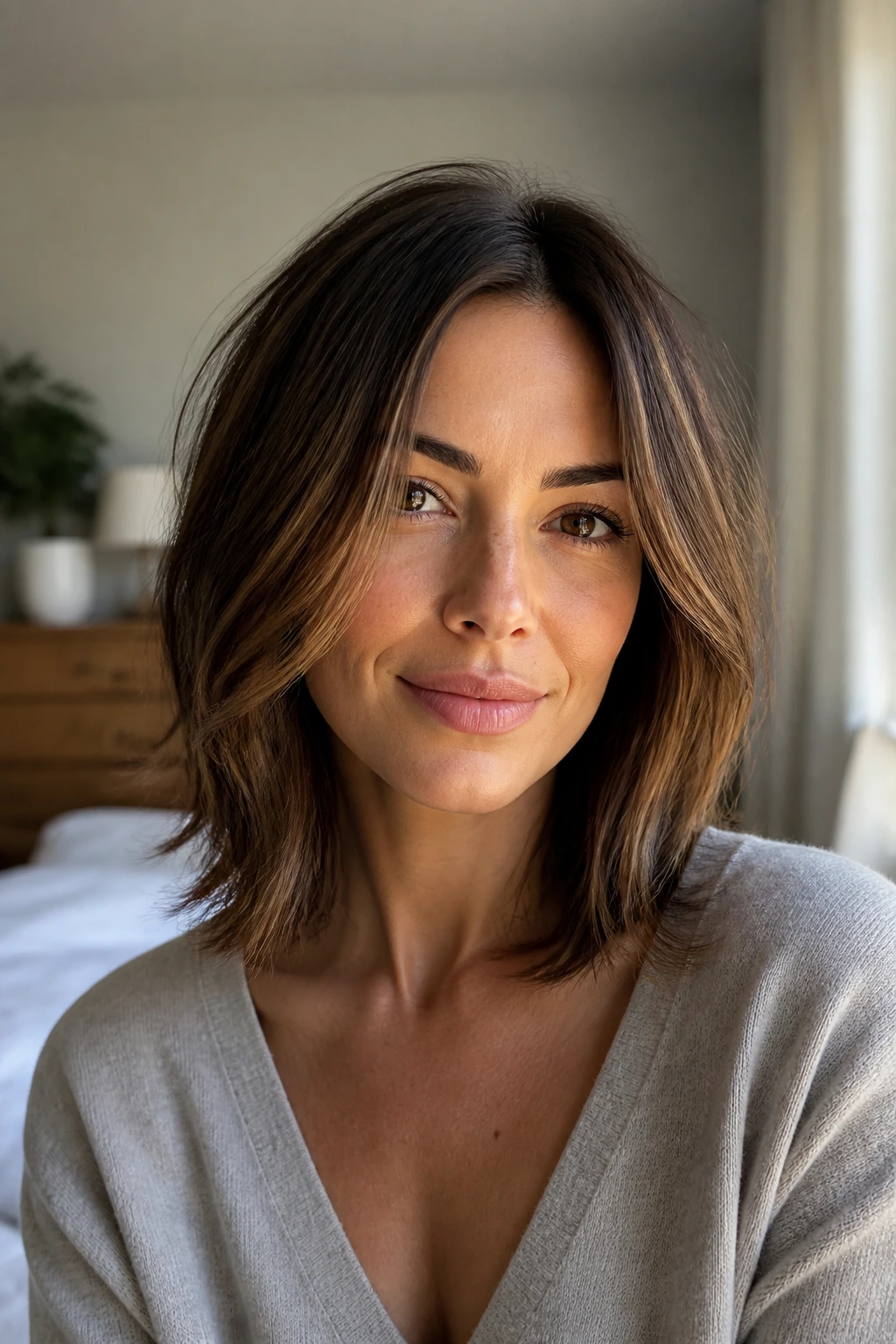
If you absolutely refuse to go shorter than your collarbone, you must ensure your layers are long. Any layer that starts above your chin will likely look too thin and wispy on fine hair. A collarbone-length cut with long, invisible layers is the safest way to maintain length while creating movement.
The Power of “Invisible Layers”
Ask your stylist for internal layering—layers that are cut underneath the top section of hair. These support the hair from below, providing a “bed” for the top layer to sit on, which helps maintain volume throughout the day.
Avoiding the “Triangle” Effect
Fine hair can sometimes look like a triangle—flat on top and wide/heavy at the bottom. The long layers in this cut help break up that blocky shape, ensuring the hair falls in a more natural, cascading fashion.
8. The Blunt Cut with Hidden Undercut Layers
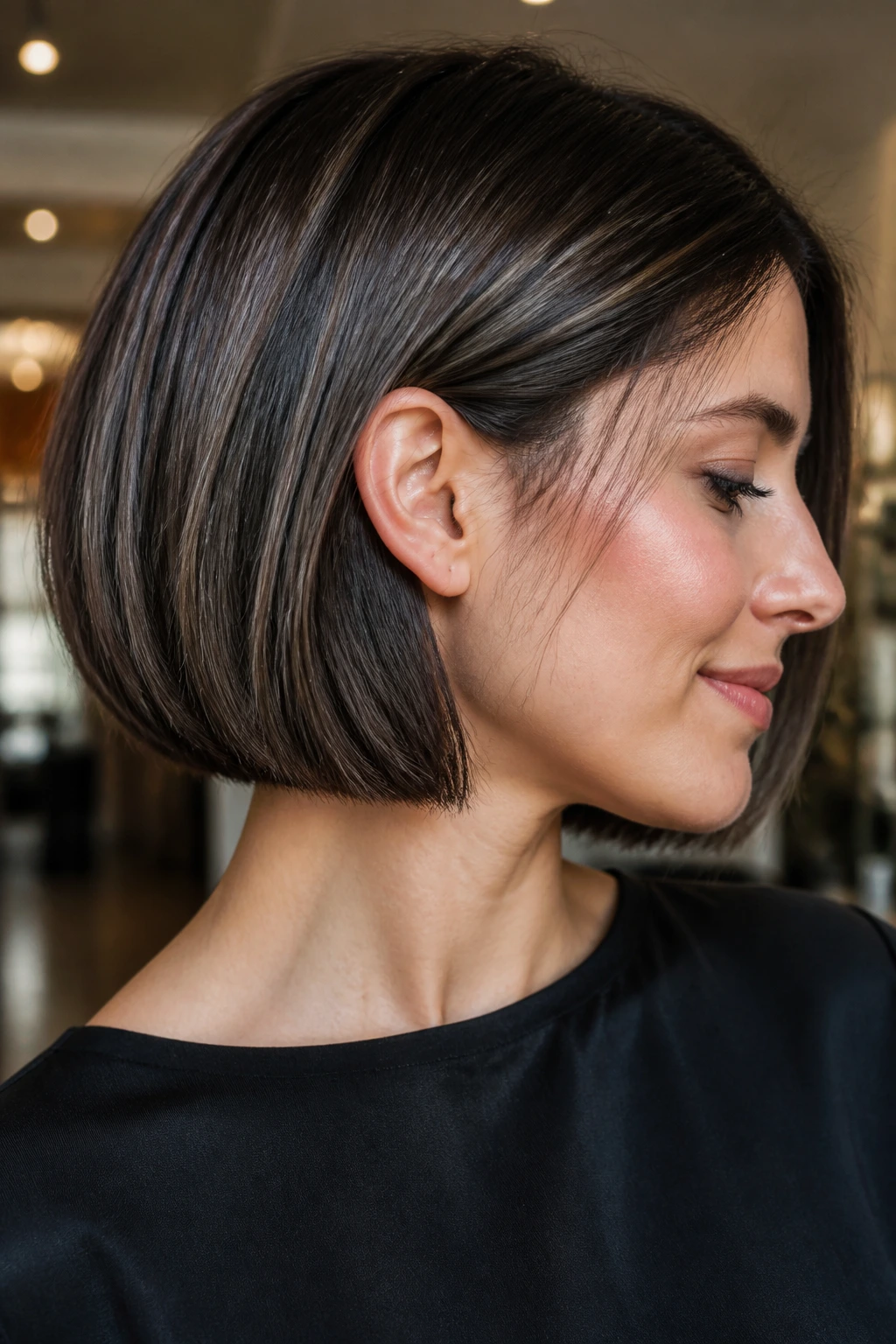
This is a technique, not just a cut. By taking the underneath section of the hair and cutting it slightly shorter than the top layer, you create a hidden “shelf” of hair. This shelf props up the top layer, giving you instant volume without needing to tease or over-style.
Who This Is Best For
This works best for those with straight, fine hair that tends to lay perfectly flat. It is an internal structural change that no one will see, but you will feel every time you run your fingers through your hair.
Preventing Damage
Be careful not to over-thin the top layer. The integrity of the top layer is what gives the haircut its shine and health. Always keep the perimeter as blunt as possible to frame the face properly.
9. The Rounded “Mushroom” Pixie
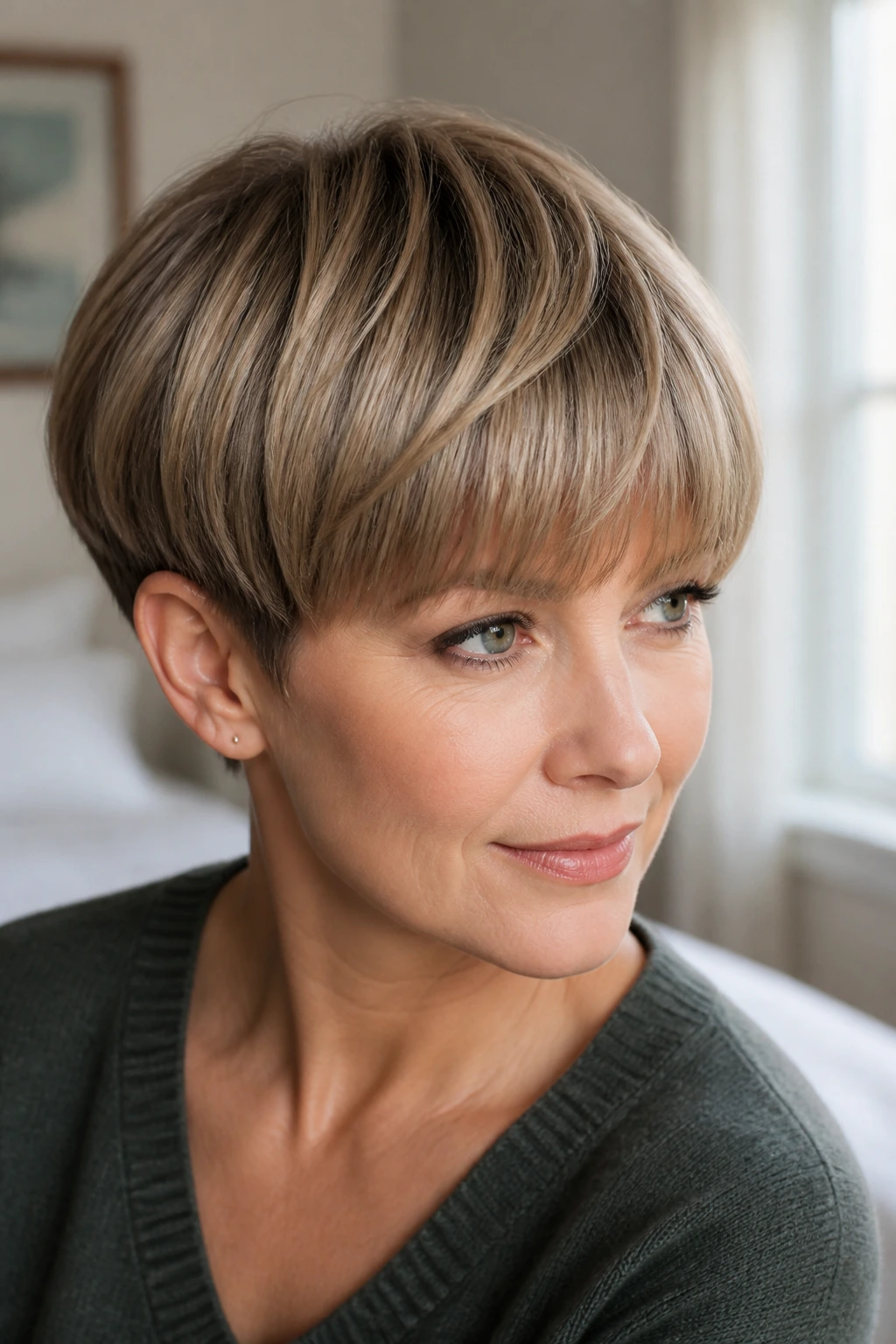
Not to be confused with the 90s bowl cut, the modern rounded pixie is a sophisticated, high-fashion choice for those with fine hair. It follows the natural curve of the skull, which creates a sense of fullness.
Embracing the Roundness
Fine hair loves to be contained. When you create a rounded, soft shape around the head, it appears as one solid, dense unit of hair. This is much more flattering than trying to force fine hair into spiky or messy styles that may expose the scalp.
Styling the Crown
Use a small round brush during your blow-dry to create maximum curvature at the crown. This adds height where you need it most, counteracting the tendency for fine hair to fall flat against the skull.
10. The Shoulder-Length Shag with Soft Layers
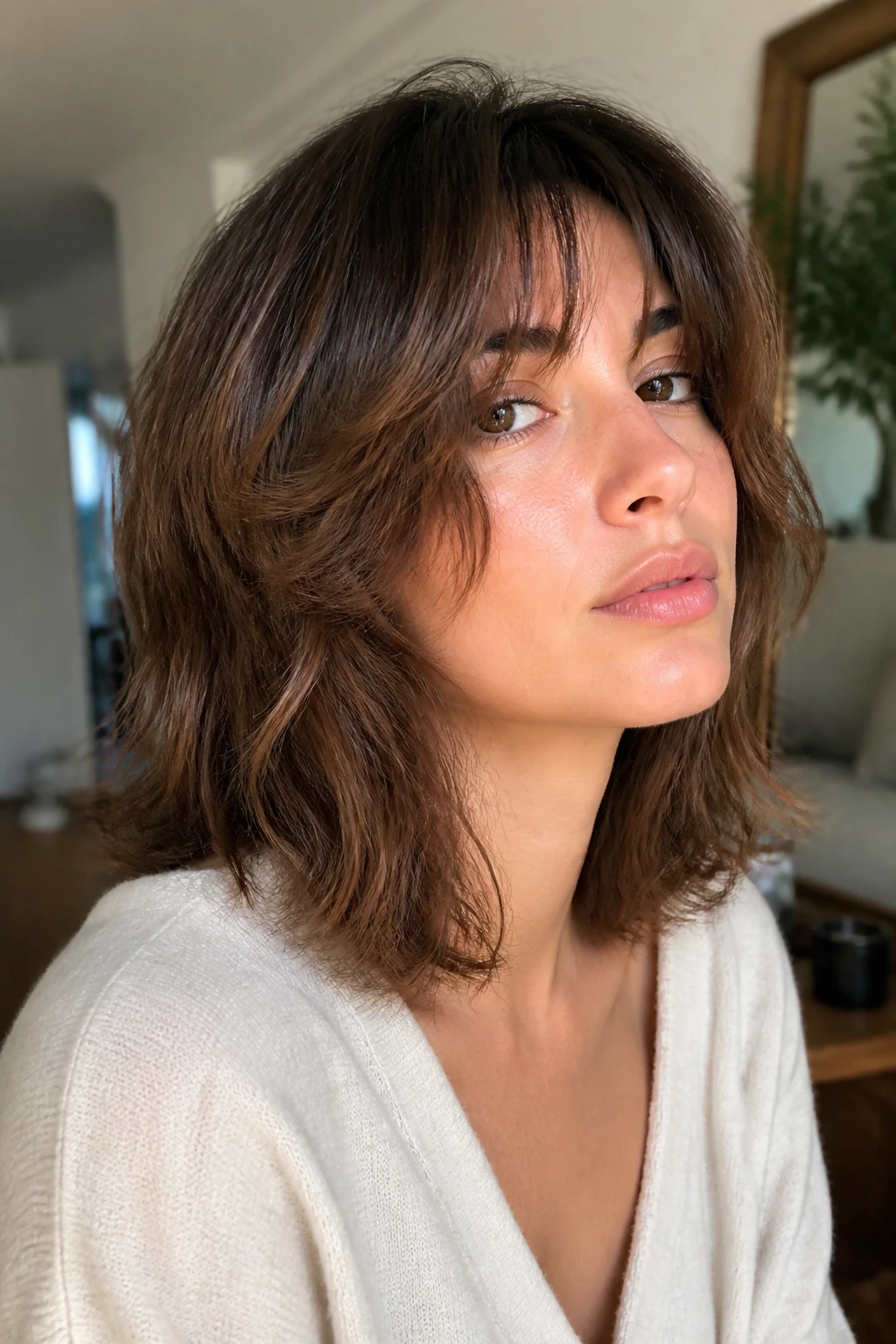
This is the “grown-out” version of the shag. It hits at the shoulders, allowing for a variety of updos and ponytail styles, but the layers are cut with a razor or point-cutting technique to keep the edges soft rather than sharp.
Why Razor Cutting Can Help
While some stylists avoid razors on fine hair, the right professional can use a razor to create feathered edges that look soft and airy. This prevents the hair from looking blunt and stiff, which can sometimes highlight how fine the texture is.
Texture Tips
- Use a dry texture spray once the hair is styled. It grips the strands and adds a “gritty” feel that mimics thickness.
- Avoid silicone-based serums, which will make fine hair look stringy.
11. The Asymmetrical Bob
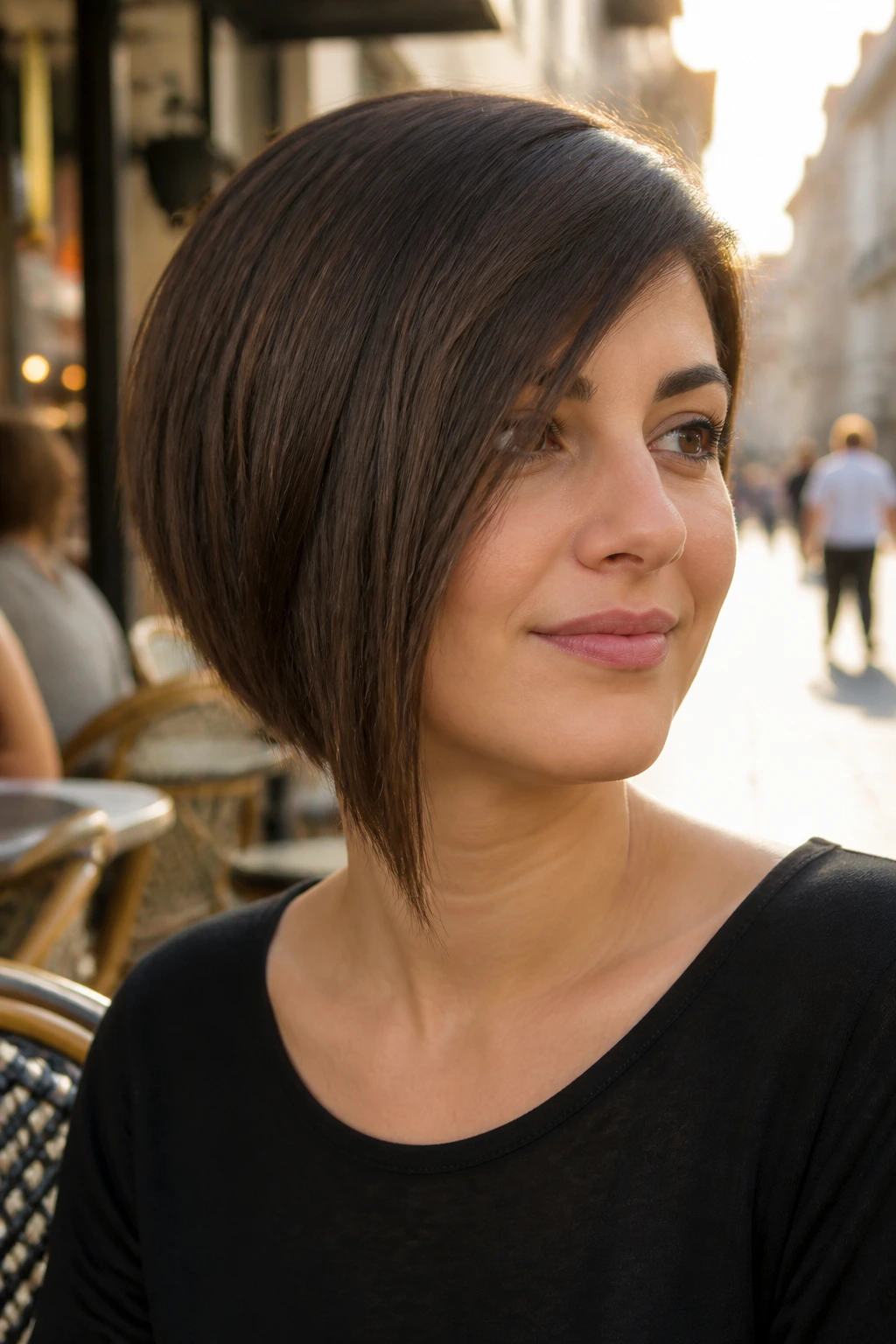
If you want to shift the focus away from the fine nature of your hair, change the shape of the cut. An asymmetrical bob—where one side is longer than the other—is a bold choice that draws the eye to the style rather than the hair density.
The Distraction Factor
Asymmetry is a visual hook. When people look at an asymmetrical cut, they see the line, the angle, and the edge. They stop looking for volume because the interest is generated by the shape itself.
Finding the Right Angle
The length difference doesn’t have to be drastic. Even a subtle one-inch difference between the left and right sides can change the entire dynamic of the frame, giving you a look that feels intentional and styled.
12. The Wispy-End Lob
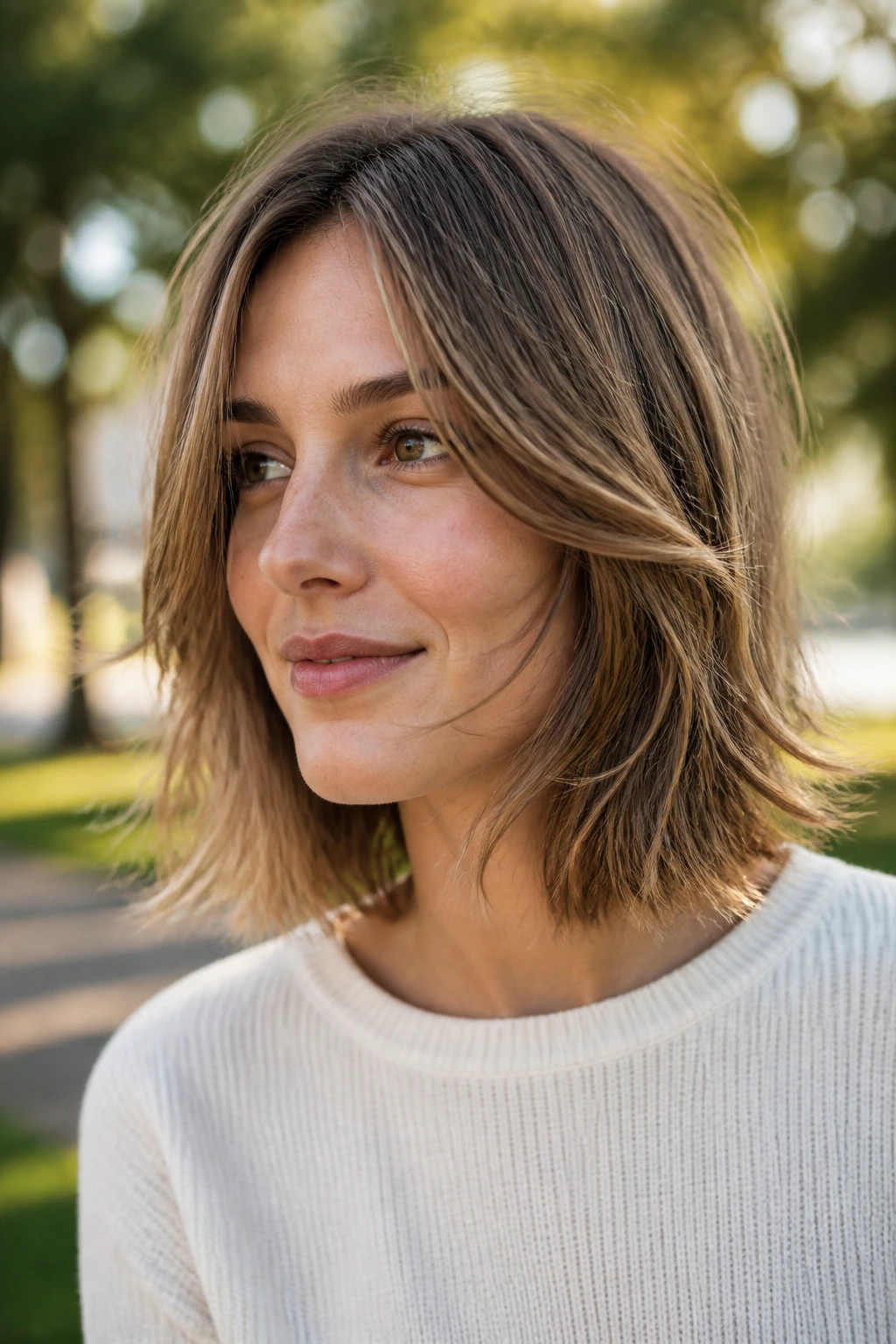
Sometimes, you want the hair to feel light and airy, even if it isn’t thick. The wispy-end lob utilizes a feathered cutting technique on the last two inches of the hair. While usually, we advise against thinning, here, it is done to give the hair a “lived-in” aesthetic.
Why This Style Succeeds
By intentionally making the ends wispy, you remove the expectation of bluntness. The hair looks like it is meant to be light and flowy, rather than looking like it is struggling to be thick.
Pairing with Color
This cut pairs beautifully with subtle highlights. The dimension in the color helps “bulk up” the visual appearance of the hair, making the wispy ends feel like a stylistic choice rather than a necessity.
13. The One-Length “Swing” Bob
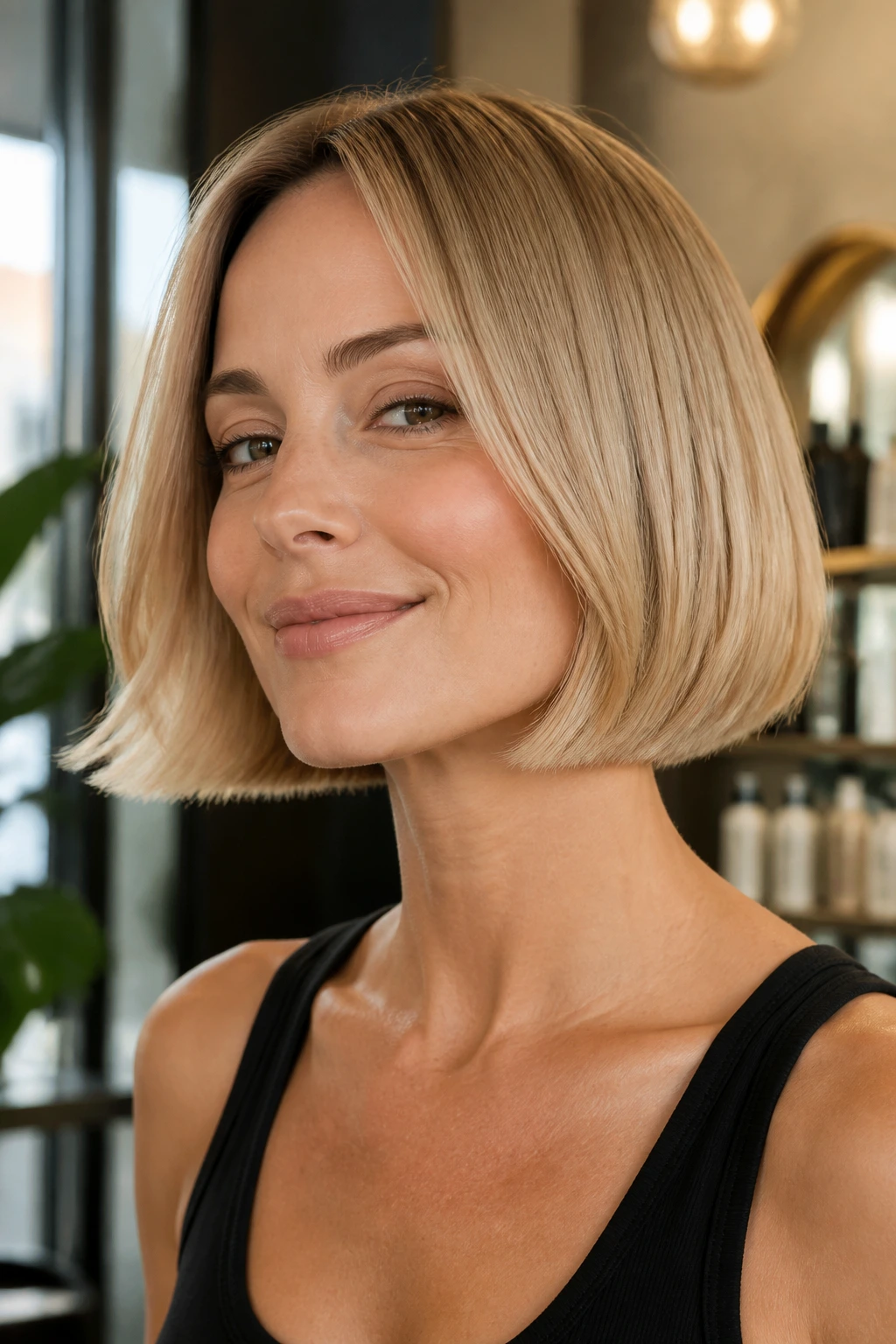
A swing bob is cut at an angle from the back to the front, but the hair is kept essentially one length throughout the process. This creates a “swinging” motion that gives the hair life. Fine hair needs life, and this cut provides it by ensuring that every strand has the same weight and length to work with.
The Power of One Length
Layers can sometimes leave fine hair feeling hollow. The one-length bob ensures that the maximum amount of hair is at the perimeter, providing the most coverage and density possible.
Styling for Motion
Use a round brush to flick the front pieces outward slightly. This creates a sense of movement that draws the eye toward your cheekbones and away from the root area.
14. The “Baby” Bang Bob
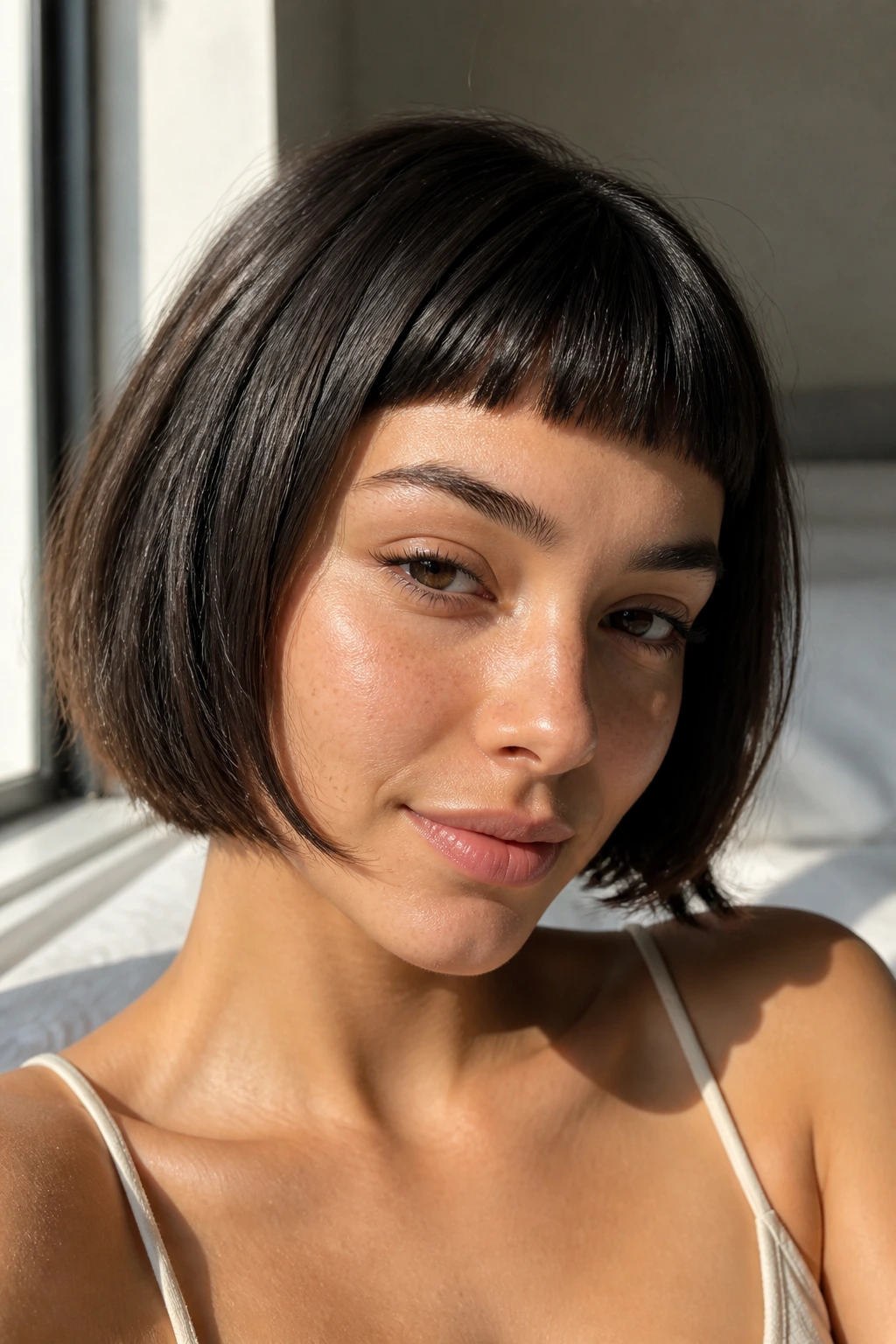
If you love your hair color and want to show off your bone structure, pair a chin-length bob with baby bangs. The short fringe frames the upper face, and the bob grounds the lower face. It is a very deliberate look that feels high-fashion and intentional.
The Role of the Fringe
Short bangs are excellent for fine hair because they stay in place better than long, heavy bangs. They require less product, which means less weight, and they add a point of focus that makes the rest of the hair look like a deliberate accessory.
Maintenance Considerations
Baby bangs grow out fast. You will need a quick trim every three to four weeks to keep the look precise. If you are not ready for that level of upkeep, opt for a slightly longer, piecey fringe instead.
15. The Mid-Length Shag with Internal Layers

If you have fine hair but want it to look “undone,” the mid-length shag is the answer. By cutting internal layers, you create volume without losing the length. It is the best of both worlds—you have the length to play with, but the internal support to stop the hair from lying completely flat.
How to Ask for This
Tell your stylist you want “invisible internal layers for volume.” They will know to take small sections of hair underneath the top layers and cut them shorter. This creates a support system that holds the top hair up, giving you a more voluminous profile.
Dealing with Humidity
Fine hair often reacts poorly to humidity. Since this cut relies on texture, use a light-hold finishing spray to keep the shape you’ve created. Avoid heavy hairsprays, as they can cause the hair to clump together and lose the “shaggy” aesthetic.
16. The Blunt Cut with a Deep Side Sweep
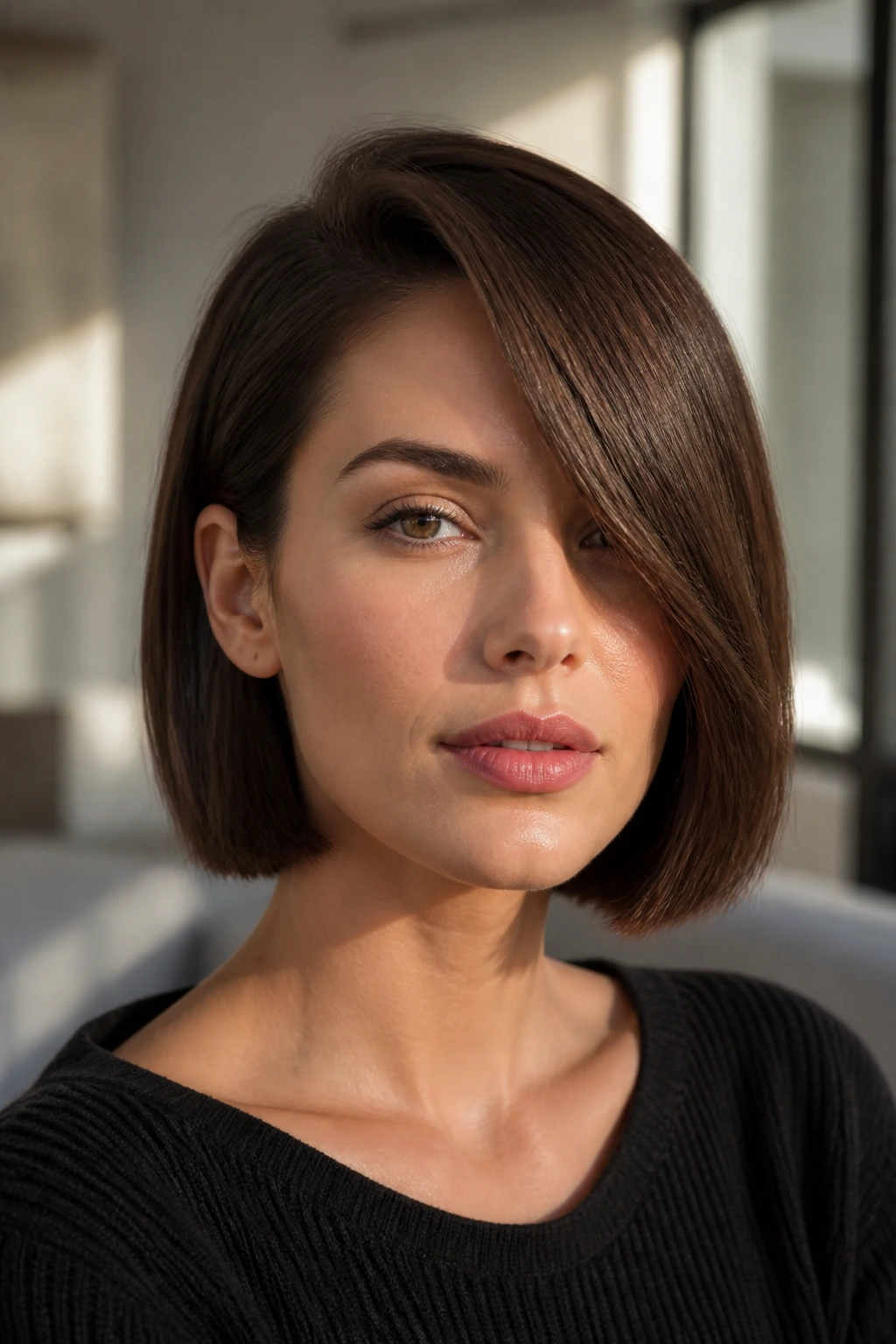
Sometimes you don’t need a complex cut; you just need a deep sweep. A blunt bob or lob combined with a very deep side part and long, sweeping bangs can completely transform your look.
The Sweep Effect
The sweep acts as a “curtain” across the forehead. Because it is one solid piece of hair shifted over, it covers a large area and appears much thicker than individual bangs would.
Framing the Face
This is perfect for someone who wants to emphasize their jawline. The sweep draws the eye down the side of the face, creating a soft, elegant frame that feels very polished.
17. The “Posh” Bob
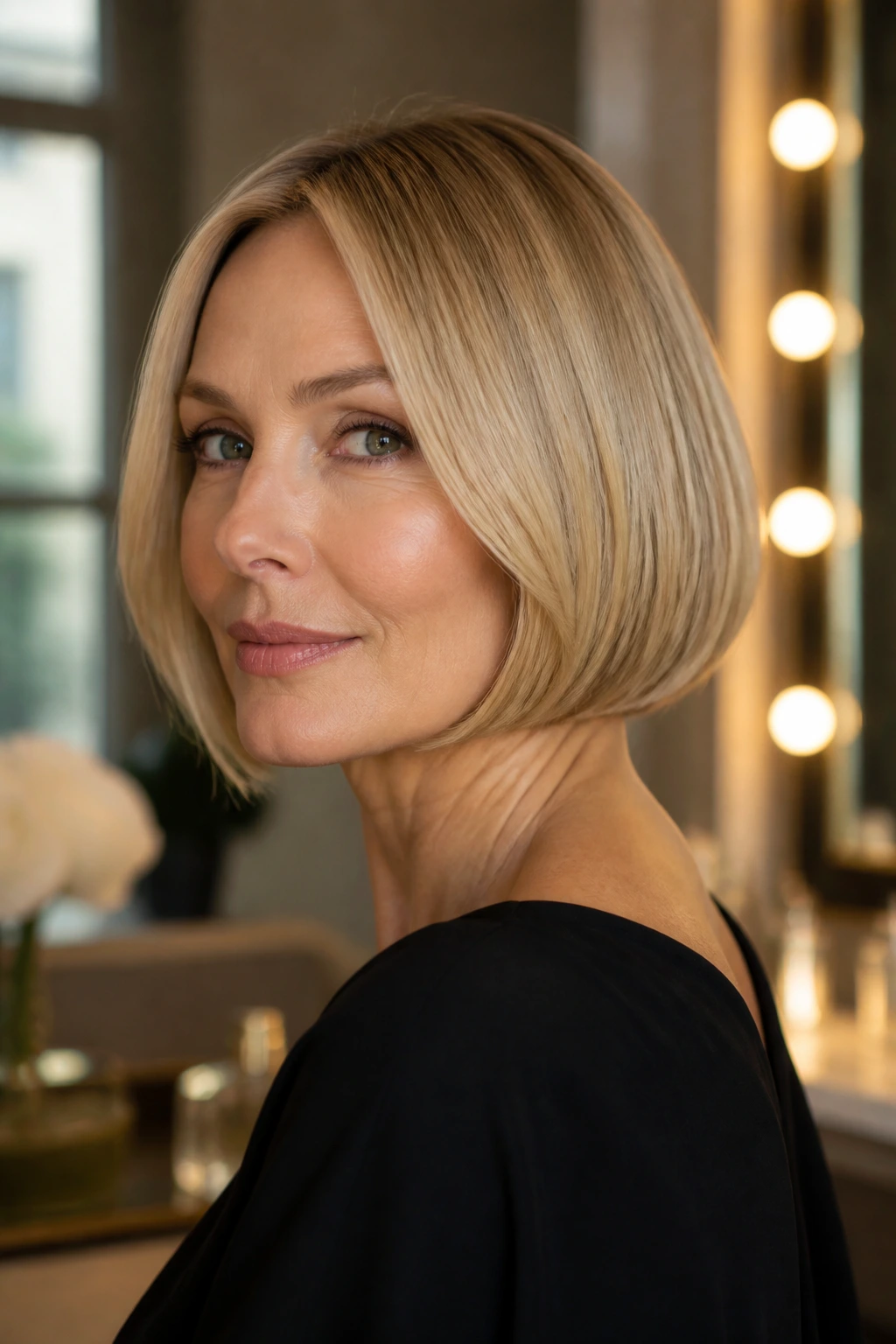
The classic Posh bob is all about sleekness and precision. It is a chin-length cut with a slight graduation in the back. For fine hair, this is the ultimate power move because it relies on quality and shine rather than volume.
Why Shine Is Key
When you have fine hair, making it look polished can be just as effective as making it look voluminous. Use a smoothing cream and a flat iron to ensure the ends are perfectly sealed and the surface is glossy.
The Polished Profile
This cut creates a very clean profile. It is a minimalist style that says you are confident in your texture and don’t need to hide it behind waves or volume.
18. The Textured Pixie with Longer Top
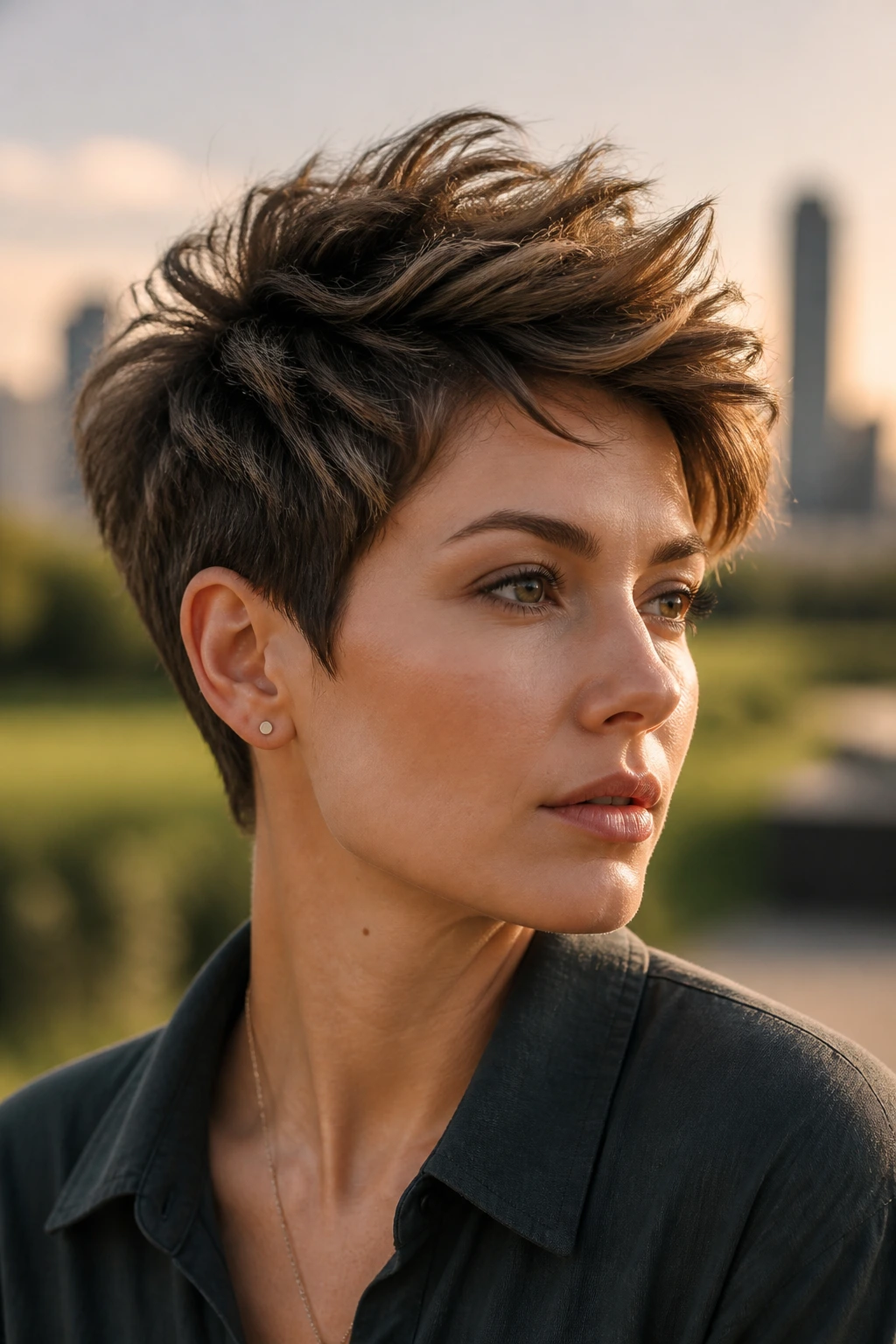
A pixie cut with a slightly longer top section allows you to play with texture. You can sweep the hair to the side, spike it up, or slick it back. The variety is what makes this cut so effective for fine hair.
Playing with Height
By keeping the top section longer, you give yourself the freedom to build height. Even fine hair can stand up if you use the right matte paste and a bit of teasing at the root.
The Back and Sides
Keep the back and sides very short. This creates a stark contrast that makes the longer hair on top look more substantial by comparison. It’s a trick of perspective that never fails.
19. The Blunt Lob with Subtle Face-Framing
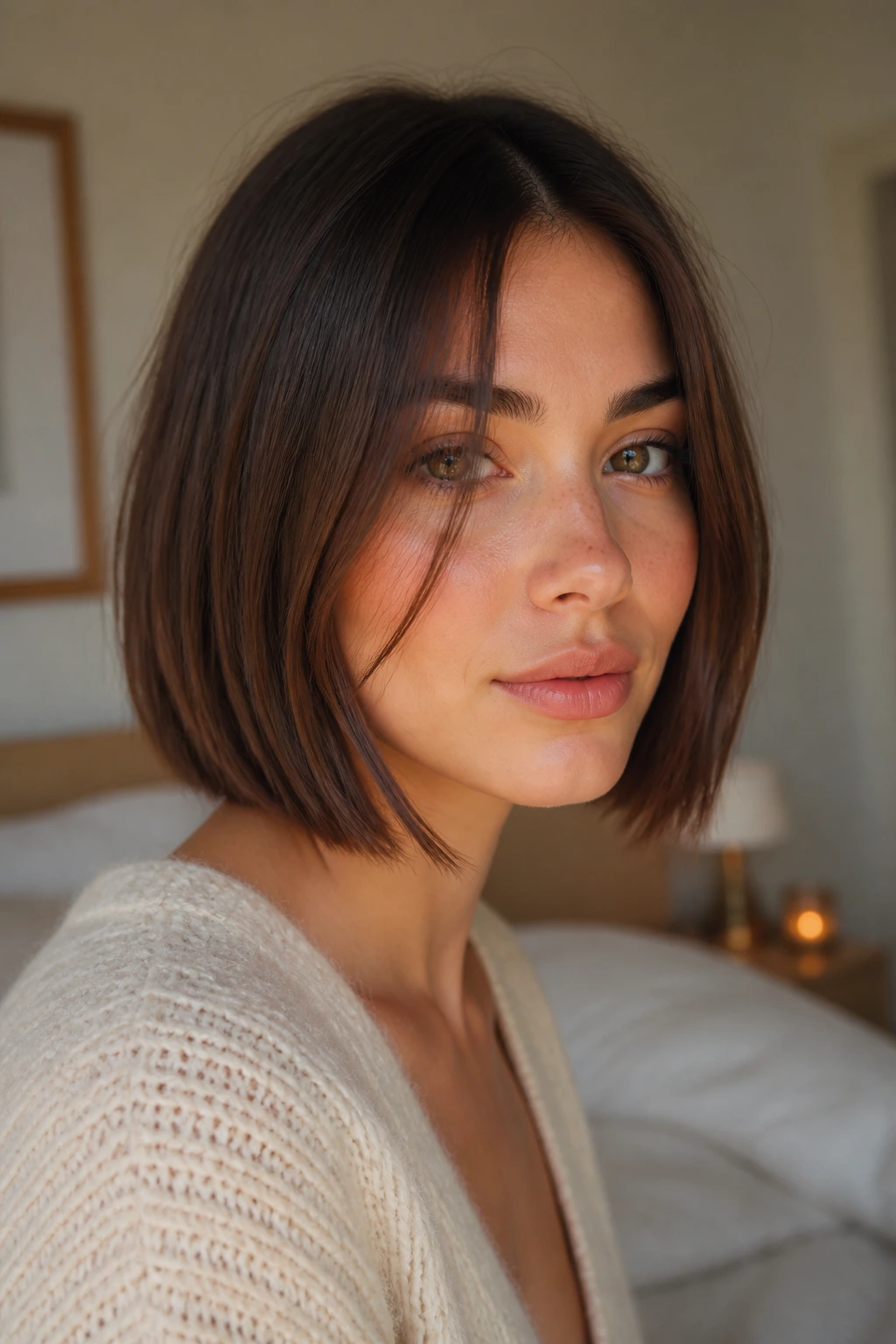
If you are nervous about short hair, the blunt lob with very subtle, chin-length framing is your safest bet. The bluntness of the main length provides the density, while the chin-length pieces provide the frame.
Minimizing Layering
Keep the face-framing pieces to a minimum. You don’t want to cut too many layers into the front, or you will lose the density you worked so hard to keep at the ends.
Styling for Softness
Use a large-barrel curling iron to add just one or two loose waves to the front framing pieces. This softens the look and adds a touch of modern, “cool-girl” texture.
20. The “Shag” Pixie
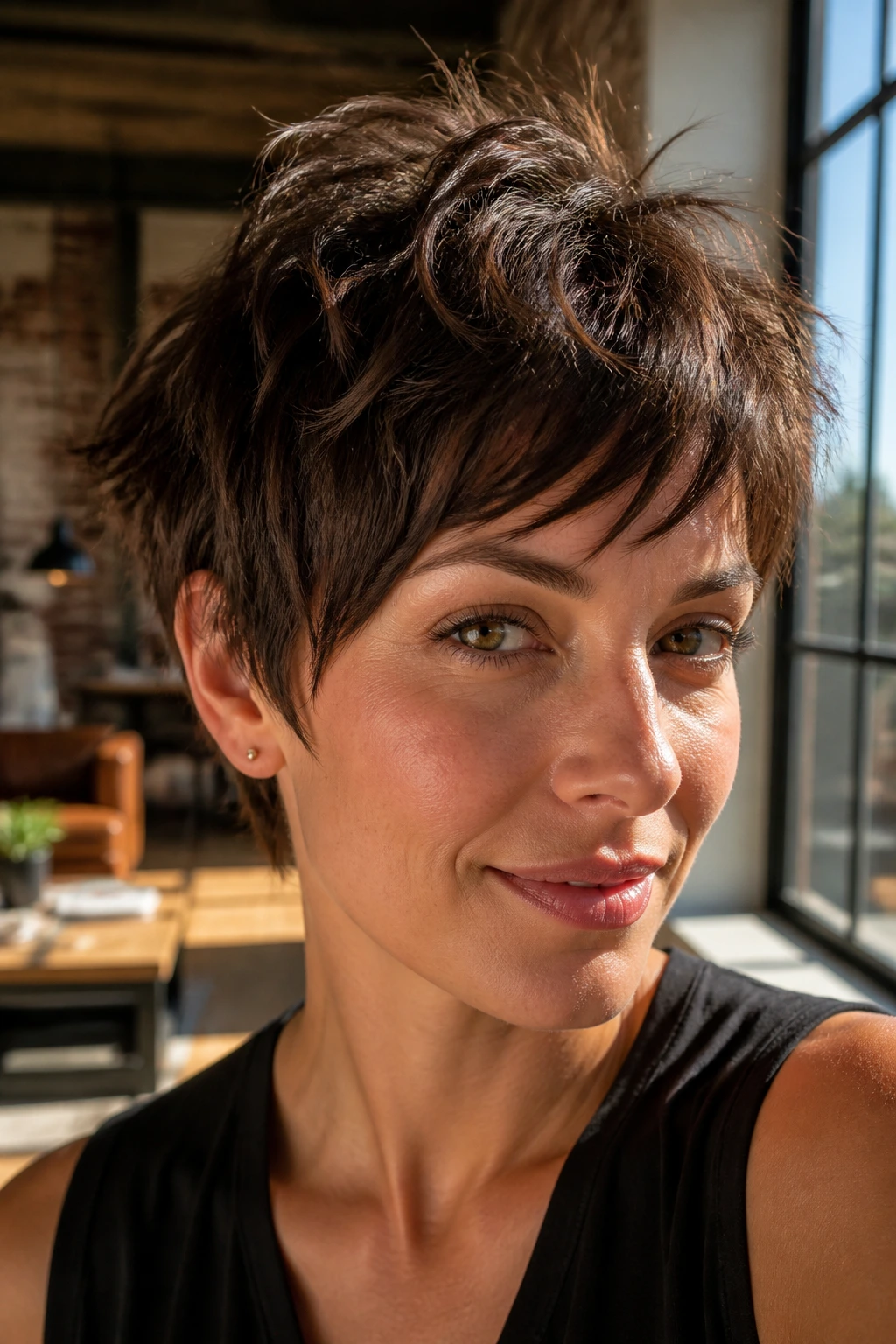
Yes, it exists. It’s a pixie cut, but with choppy, textured layers that give it a “shaggy” feel. It is youthful, energetic, and perfectly suited for fine hair because it thrives on movement.
Why This Style Is Fun
It doesn’t take itself too seriously. If your hair is fine and you’re tired of trying to make it look thick, just make it look fun. The choppy nature of this cut hides the fine strands beautifully.
Texture Is Your Friend
Use a pomade or a texture clay to define the ends of the layers. This gives the hair a bit of “weight” and character, making it look more styled and intentional.
21. The Graduated Bob with Soft Edges
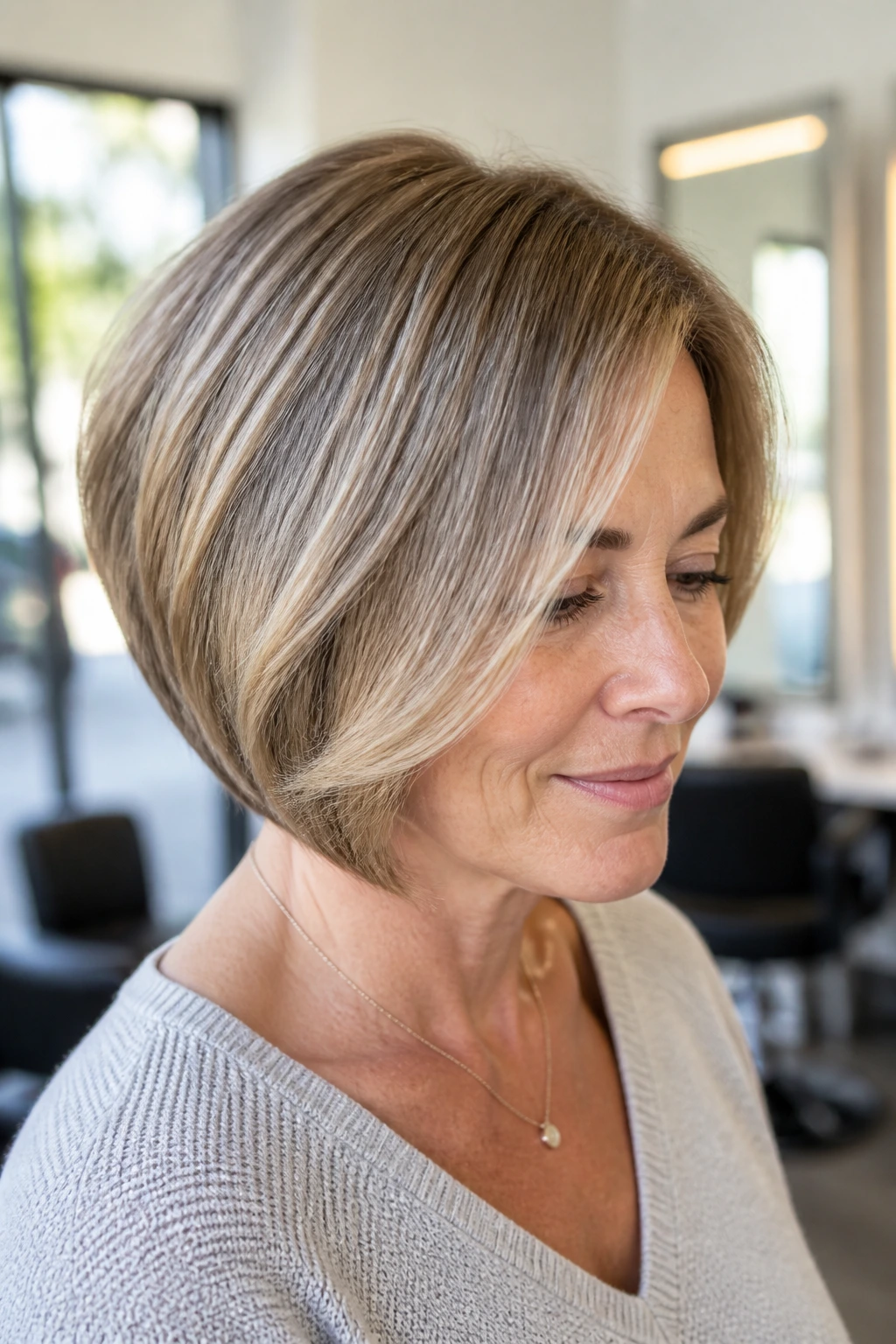
A traditional graduated bob can feel harsh. By asking for “soft edges,” you have your stylist use point cutting on the perimeter. This softens the line and makes the hair look more natural and flowy.
The Softness Strategy
Fine hair can sometimes look like a piece of paper—too sharp and stiff. Softening the edges makes the hair look more organic, which is often more flattering on finer textures.
Color Integration
This cut looks incredible with balayage or soft highlights. The color depth adds a layer of visual “thickness” that pairs perfectly with the soft, rounded shape of the cut.
22. The Modern Mullet
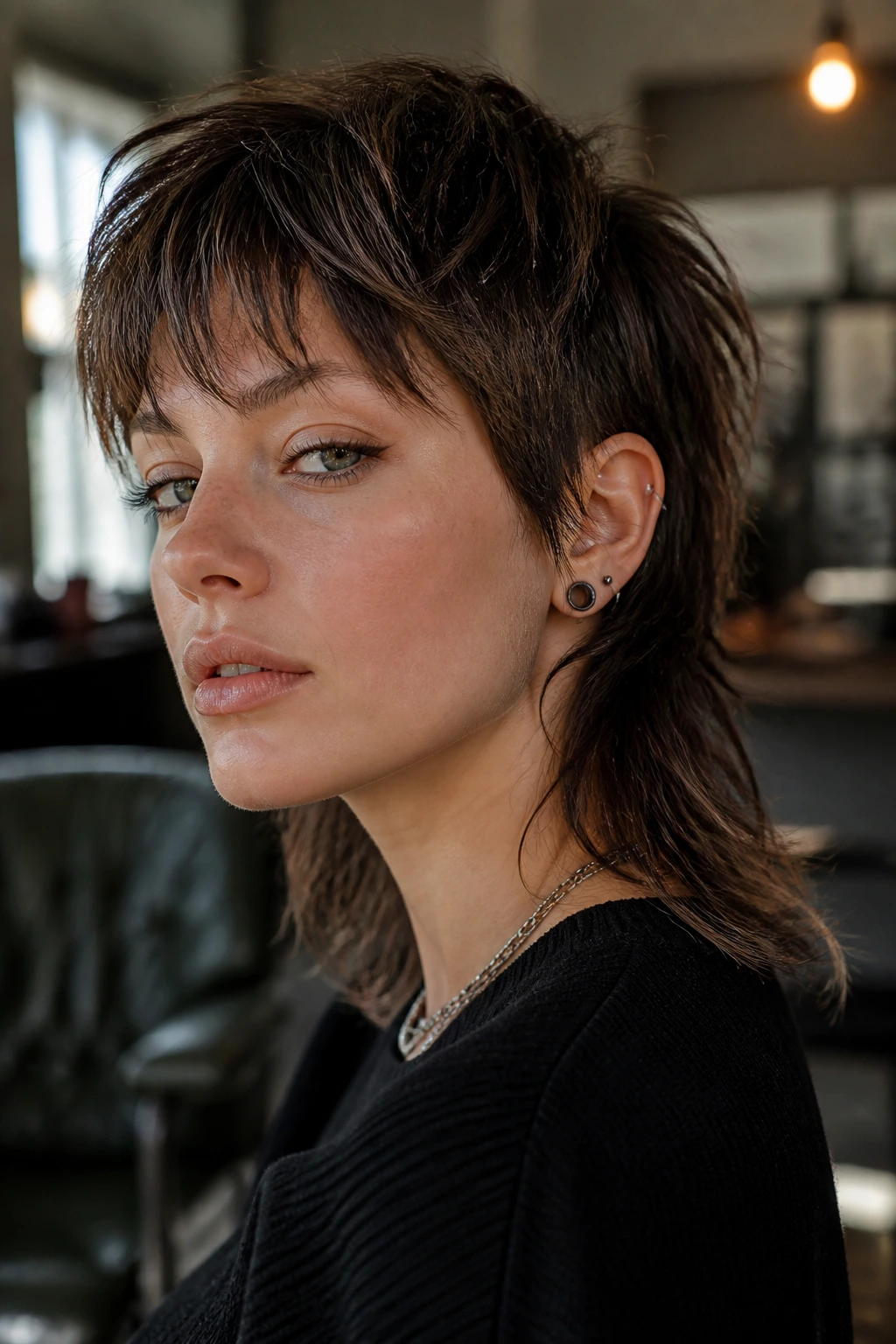
Don’t panic—the modern mullet is much softer than its 80s counterpart. By keeping the top and sides short and the back slightly longer, you create a shape that feels current and edgy.
Breaking the Rules
This cut works for fine hair because it moves the volume. You have height on top and length in the back, which creates an interesting silhouette that isn’t dependent on having thick, heavy hair all over.
Why It Works for Framing
The short, textured layers around the face serve as a natural frame that is incredibly flattering. It’s a daring cut, but for those with fine hair, it can provide a sense of style that feels completely fresh and new.
Final Thoughts
Choosing the right frame haircut for fine hair comes down to managing the weight and the shape. You are looking for a style that supports your hair rather than letting it fall flat. Whether you opt for a sharp, blunt bob or a textured, shaggy pixie, the goal is always to maximize the appearance of your natural density.
Don’t be afraid to experiment with length. While many believe long hair is the standard, shorter styles often provide the lift and bounce that fine strands desperately crave. Talk to your stylist about the density of your hair—not just the texture—and ask them which of these shapes will best highlight your bone structure while keeping your hair looking its absolute healthiest. Remember, the best cut is one that makes you feel confident the moment you walk out of the salon.