

Frizzy hair is often treated like an enemy to be flattened, smoothed, or wrestled into submission with excessive heat and chemical treatments. If you have been fighting your natural texture, you have likely discovered the hard way that friction and humidity always win in the end. The real trick to managing unruly strands is not to suppress them, but to lean into them. A textured crop is the ultimate solution for this because it works with the natural volume and erratic growth patterns of frizz-prone hair rather than against them. By strategically removing bulk while maintaining intentional, shaggy layers, you can turn what once felt like a liability into a defining stylistic feature.
1. The Classic French Crop
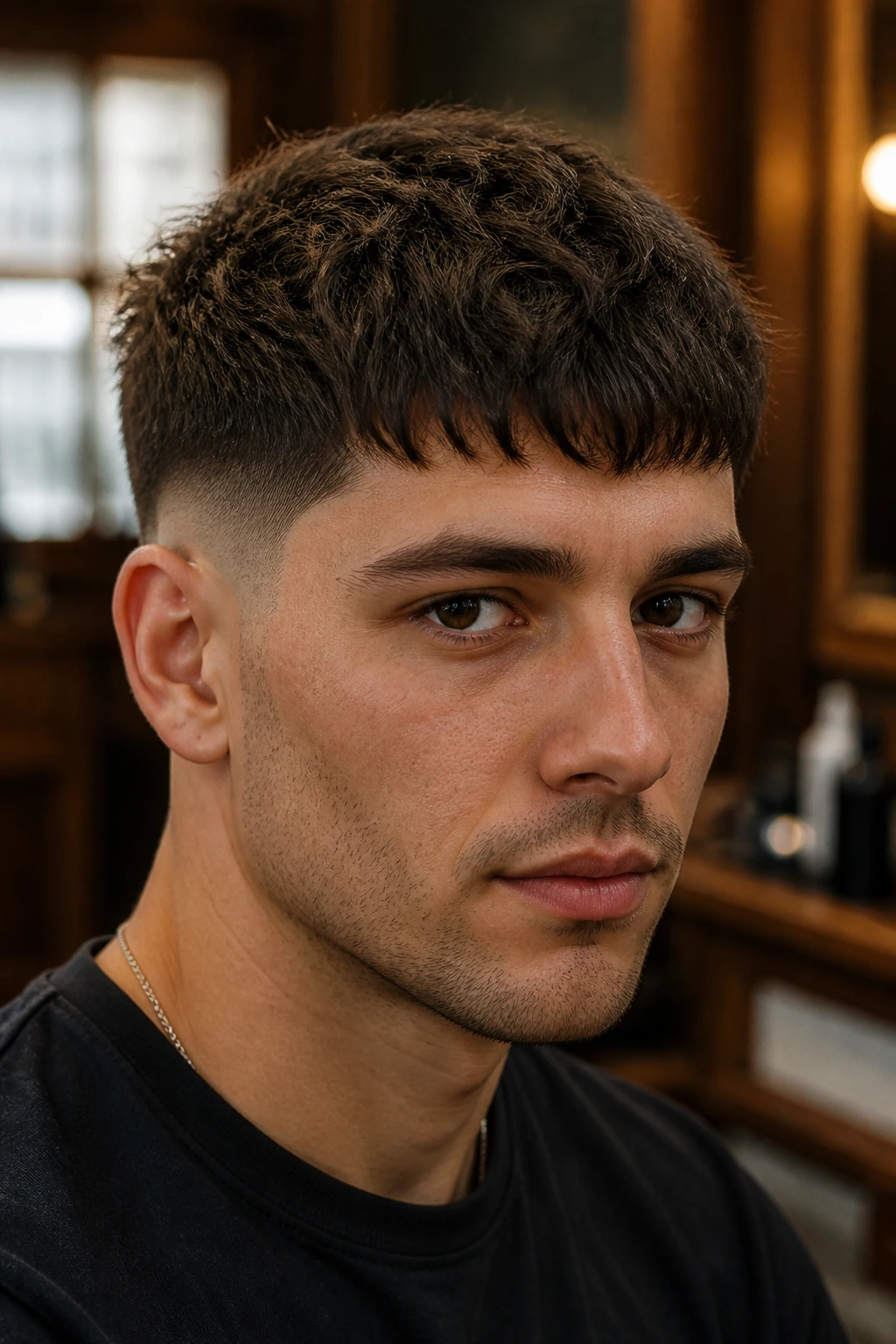
The French crop is arguably the gold standard for men and those with short hair who struggle with unruly texture. It features a shorter back and sides with a slightly longer, blunt-cut fringe that is brushed forward toward the forehead. When your hair is naturally frizzy, that forward sweep actually helps mask cowlicks and uneven hair growth.
Why This Works for Frizz
Frizz thrives when hair is dry and left to grow into an unkempt mop. By keeping the perimeter tight, you eliminate the “poof” that typically builds up around the ears and nape. The forward fringe is meant to be slightly chaotic, so if your hair has a mind of its own, this style actually looks more authentic. Use a small amount of sea salt spray while damp to encourage the natural wave pattern without weighing the hair down.
Key Maintenance Tips
- Visit the barber every three weeks to maintain the fade.
- Avoid heavy gels that can make frizz look greasy or crunchy.
- Opt for matte styling creams that provide hold without stripping moisture.
2. The Textured Ivy League Crop

If you need something that reads a bit more professional but still embraces your natural volume, the Ivy League crop is a stellar choice. This cut takes the standard short back and sides and adds a touch of length on top, specifically through the crown. You are essentially creating a structured, tapered silhouette that provides a clean outline, while the top remains loose and voluminous.
Embracing the Volume
Frizzy hair is notorious for its inability to lay flat, which is the exact opposite of what you need for a traditional Ivy League. By leaving an extra two inches on top, you allow your hair to puff up slightly, which creates a intentional, sporty silhouette rather than an accidental mess.
Styling for Control
- Use a wide-tooth comb only when wet to prevent breakage.
- Apply a leave-in conditioner to damp hair to seal the cuticle before you even think about styling products.
- Focus your product application at the roots to give the hair lift, keeping the ends free for that natural, textured look.
3. The Shaggy Undercut Crop
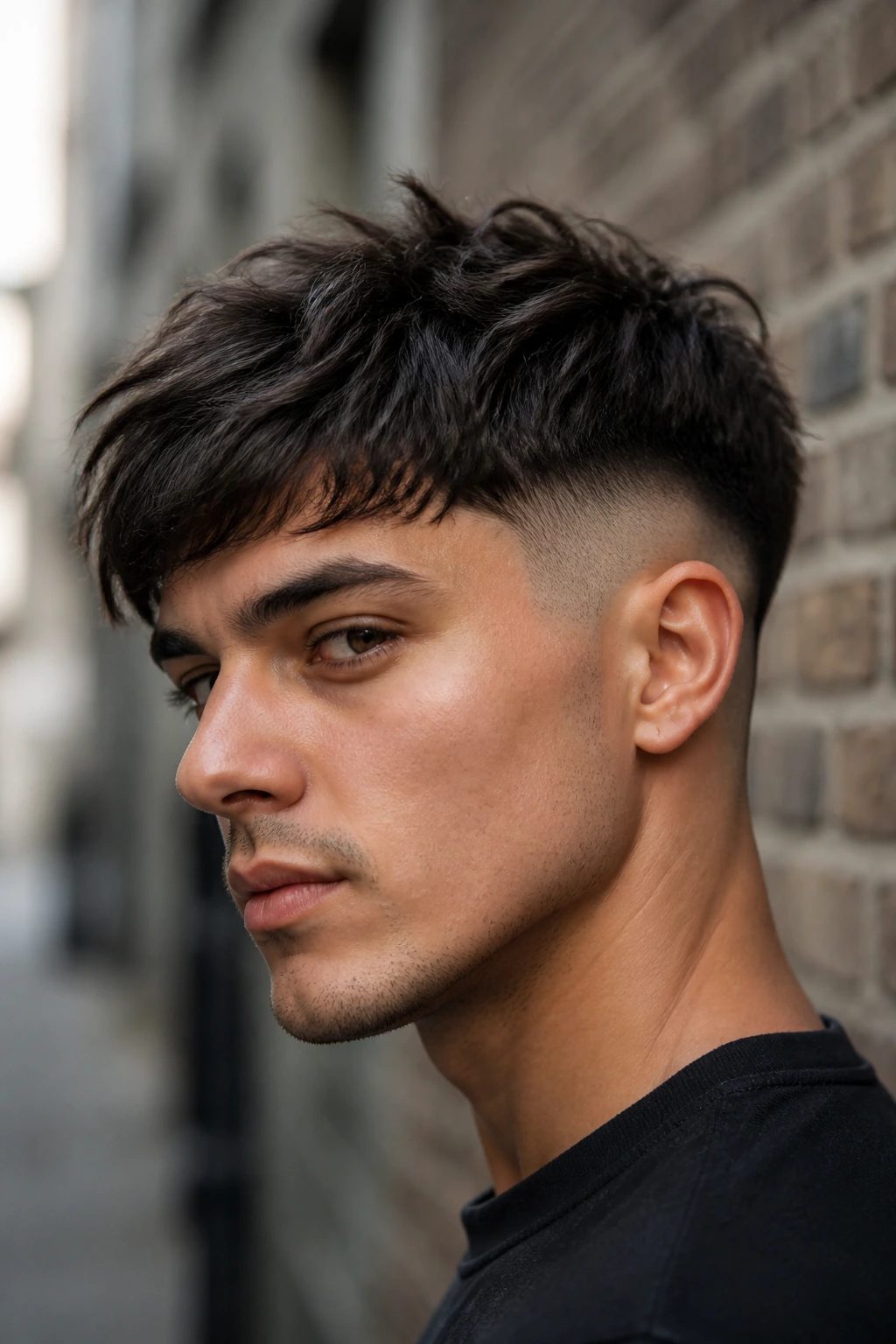
For those who want a bolder, more modern aesthetic, the shaggy undercut is where it’s at. This style disconnects the hair on the sides from the top, creating a stark contrast. The top is left long and layered, utilizing the natural frizz to create an almost punk-inspired, edgy shape that screams personality.
The Power of Disconnection
By shaving the sides to a skin fade or a very tight #1 guard, you remove the areas where frizz is most visible and bothersome. This leaves the entire focus on the crown, where you can apply a texture powder to amplify the volume. If your hair is prone to flyaways, this disconnect makes them feel like part of the design rather than a grooming error.
Why It’s a Low-Struggle Style
- You spend less time worrying about how the sides look in the morning.
- The top layer can be “scrunch-dried” to lock in the volume.
- You can go longer between haircuts since the perimeter is so short.
4. The Messy Spiky Crop
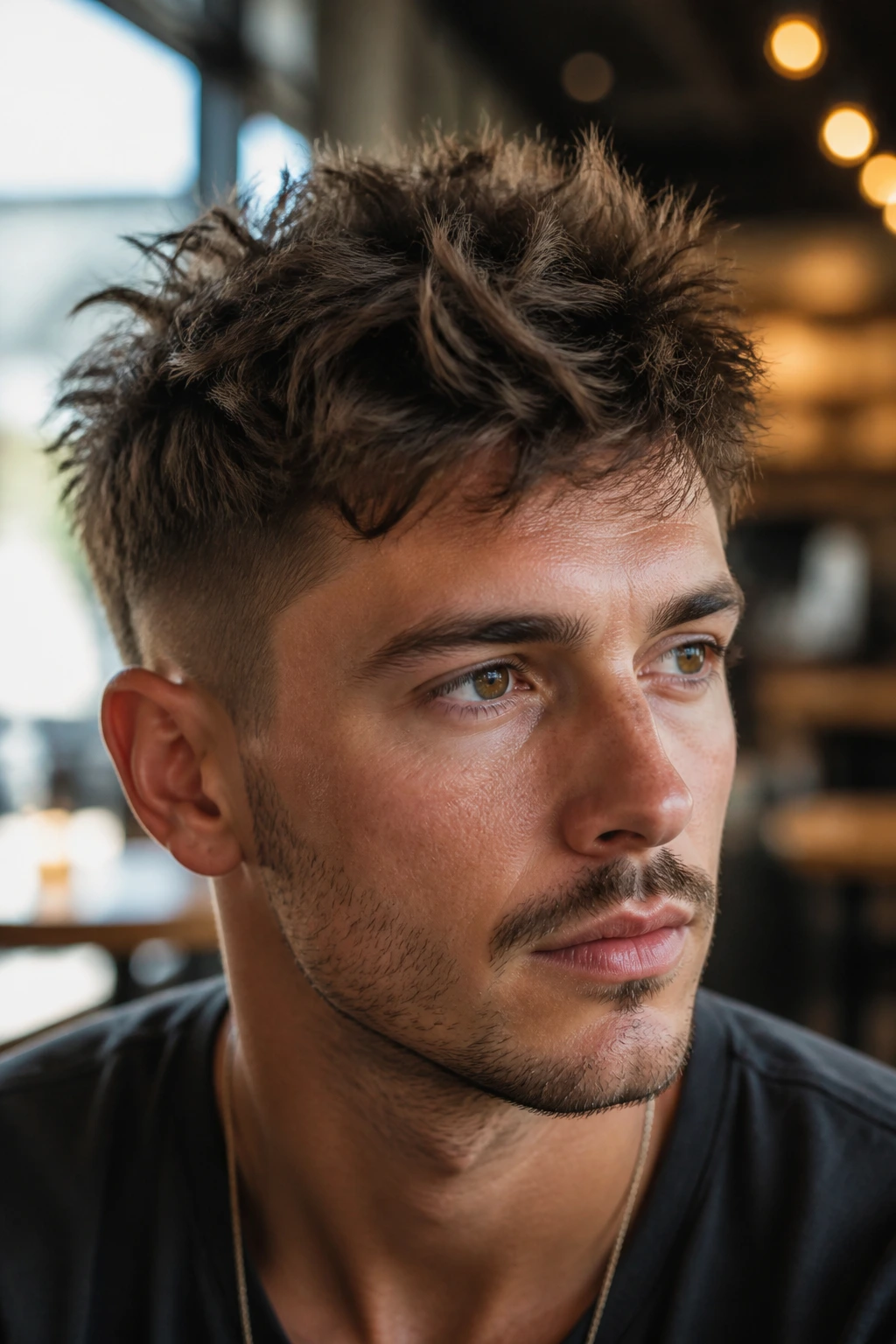
There is a misconception that spikes require pin-straight, thick hair, but the opposite is true. If your hair is frizzy and coarse, it actually has the innate structural integrity to hold a spike far better than soft, limp hair. The messy spiky crop uses shorter layers to create individual points of texture across the top.
Creating the Spikes
Instead of using a sharp wax that pulls and tears at your hair, look for a lightweight, fiber-based pomade. The fibers grab onto the individual frizzy strands and bind them together, creating a thicker, more durable spike that doesn’t collapse by midday.
What to Avoid
- Stay away from alcohol-based hairsprays that dry out the hair.
- Never blow-dry the hair bone-dry, as this increases static and frizz.
- Always aim for a “lived-in” look rather than a rigid, 90s-style spike.
5. The Tapered Fade Crop
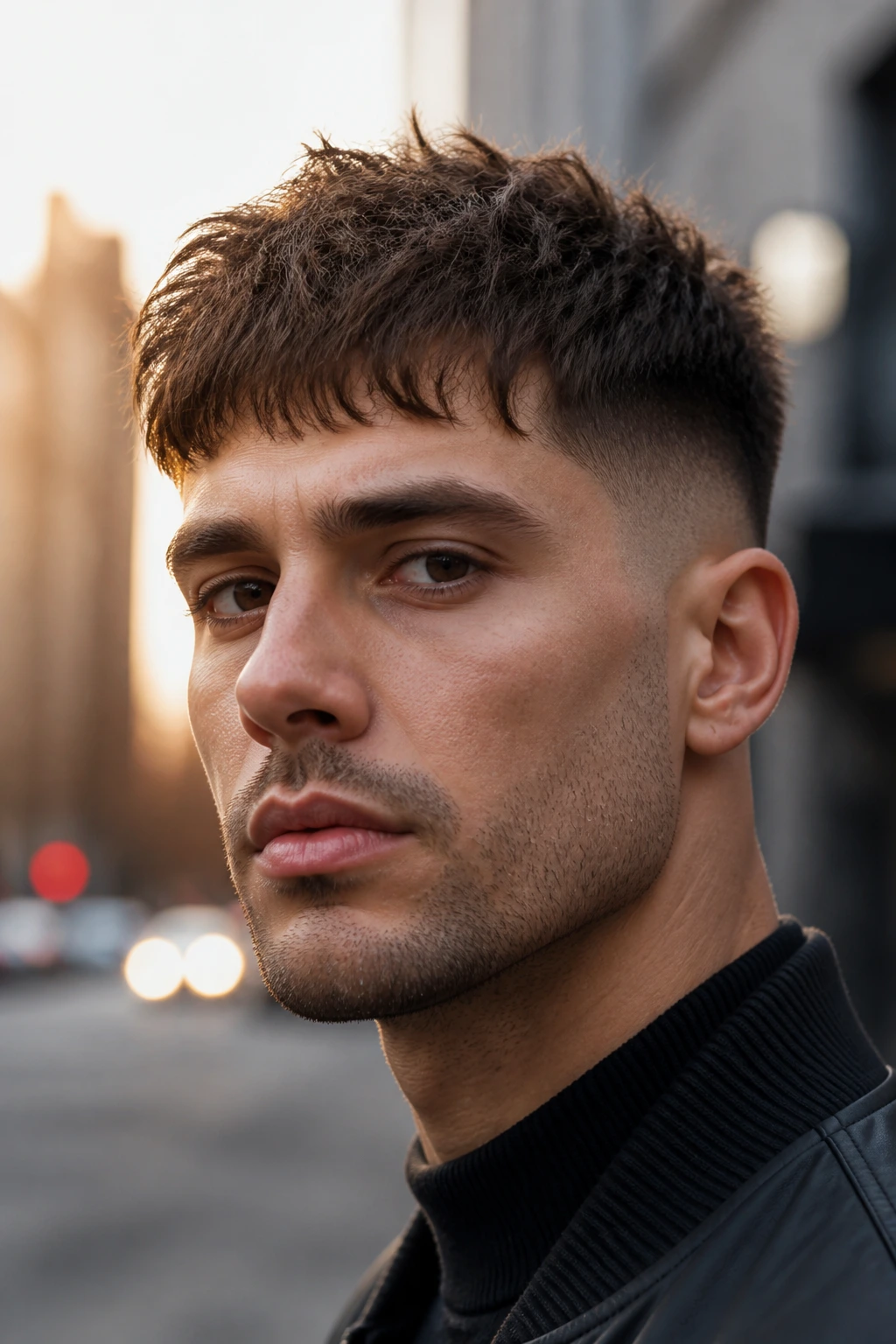
If you want something subtle that keeps the focus on your facial features, the tapered fade crop is a refined option. It keeps the hair at the nape and around the ears very short, gradually blending into slightly longer hair on top. This is the ultimate “low-maintenance” choice for someone with a busy lifestyle.
Why This Style Succeeds
Tapering creates a clean line that frames your face, making you look groomed even when the hair on top is doing its own thing. Frizzy hair often looks best when the perimeter is very neat, providing a frame for the wilder texture up top.
Daily Care Checklist
- Keep your scalp healthy with a moisturizing shampoo.
- Use a microfiber towel to gently pat your hair dry rather than rubbing it vigorously.
- A light touch of jojoba oil on the ends can prevent that “halo” effect around the crown.
6. The Choppy Fringe Crop
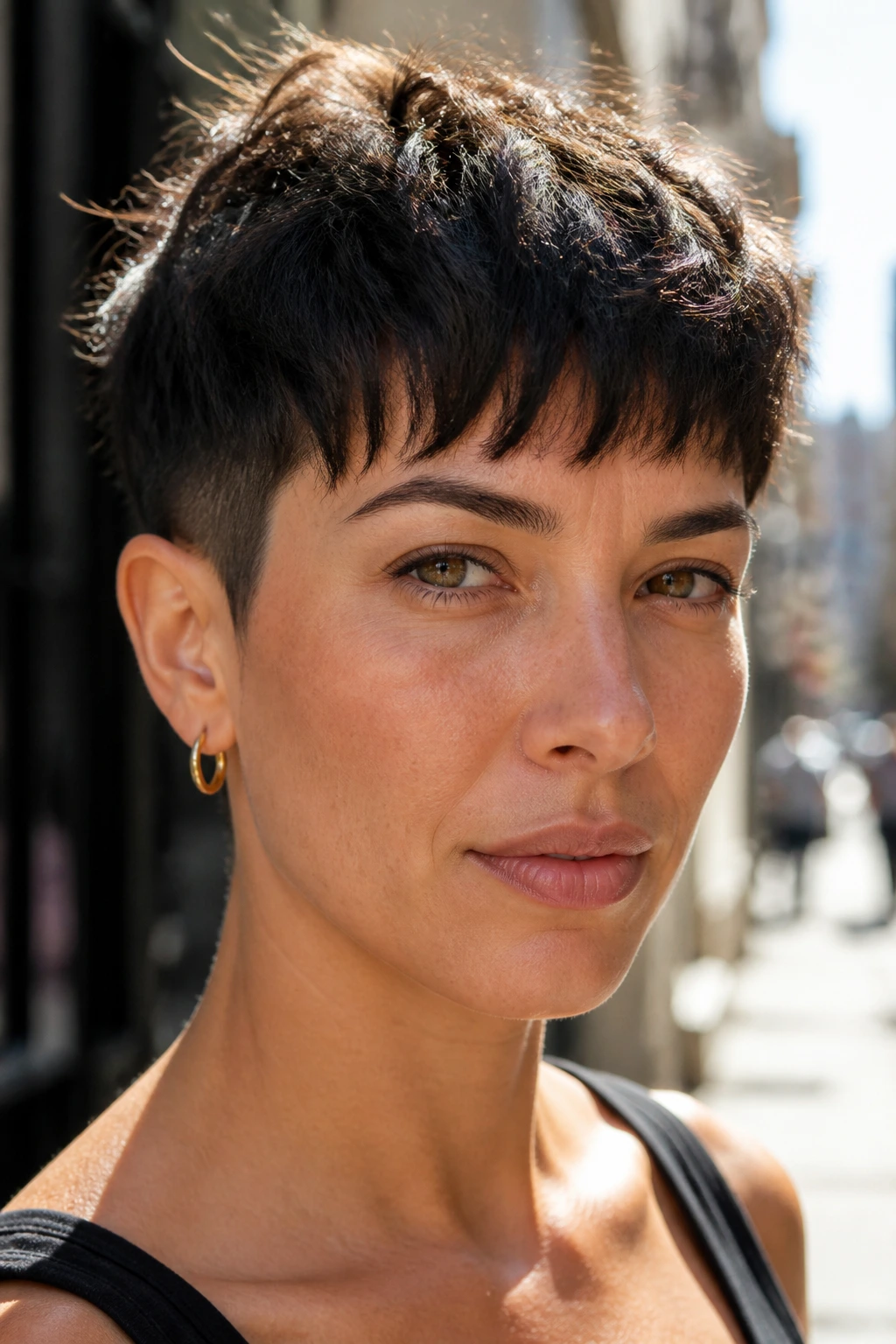
A choppy fringe is all about texture, which is a gift for those with frizzy hair. By asking your stylist for point-cutting—a technique where they cut into the hair at an angle—you get a jagged, uneven edge that creates a soft, airy look.
The Science of Point-Cutting
Point-cutting removes weight without leaving a harsh, blunt line. For frizzy hair, blunt lines are dangerous; they highlight every strand that tries to poke out. A jagged line, however, blends those stray hairs into the rest of the style.
Tips for the Perfect Fringe
- Make sure the stylist uses thinning shears sparingly, as they can sometimes make frizz worse if the hair is cut too thin.
- Aim for a fringe that sits just above the eyebrows to avoid getting hair in your eyes.
- Use a texturizing paste to define the individual “chunks” of hair.
7. The Long-Top, Short-Side Crop
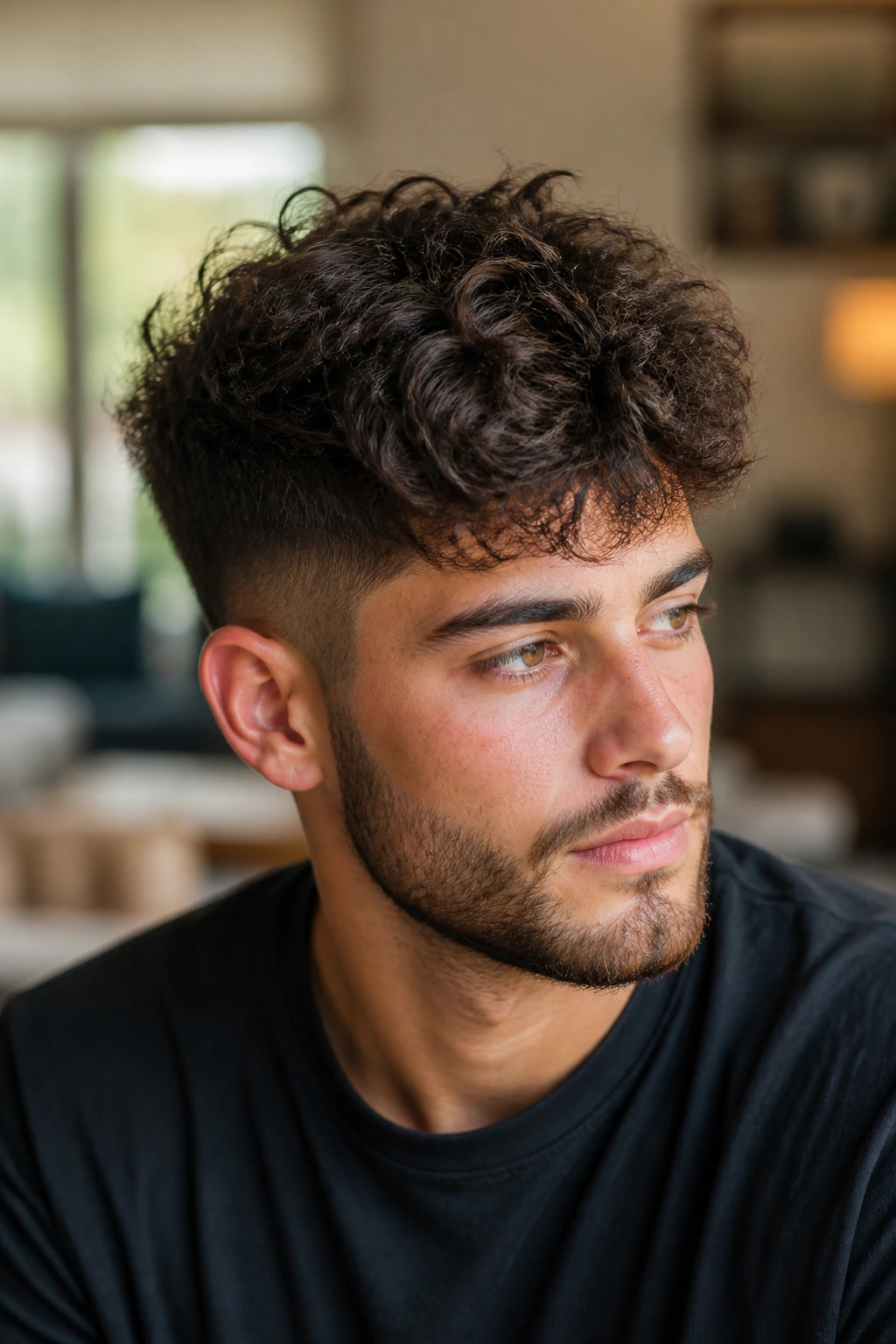
This style is effectively the “big brother” to the classic crew cut. It offers enough length to allow your natural texture to coil or wave, while the short sides provide the necessary contrast to keep you from looking like you just rolled out of bed. It is sophisticated, easy to manage, and perfectly balanced.
Why it Works for Frizzy Textures
When your hair has enough length, the weight of the hair itself begins to pull down on the frizz, smoothing out the natural curl or wave. By keeping the sides short, you avoid the dreaded “triangle” shape that often plagues medium-length frizzy haircuts.
Styling for Maximum Effect
- Work a dab of light styling cream through damp hair.
- Let it air dry to avoid heat damage.
- Use your fingers to fluff it up once it is fully dry to create volume.
8. The Textured Bowl Crop
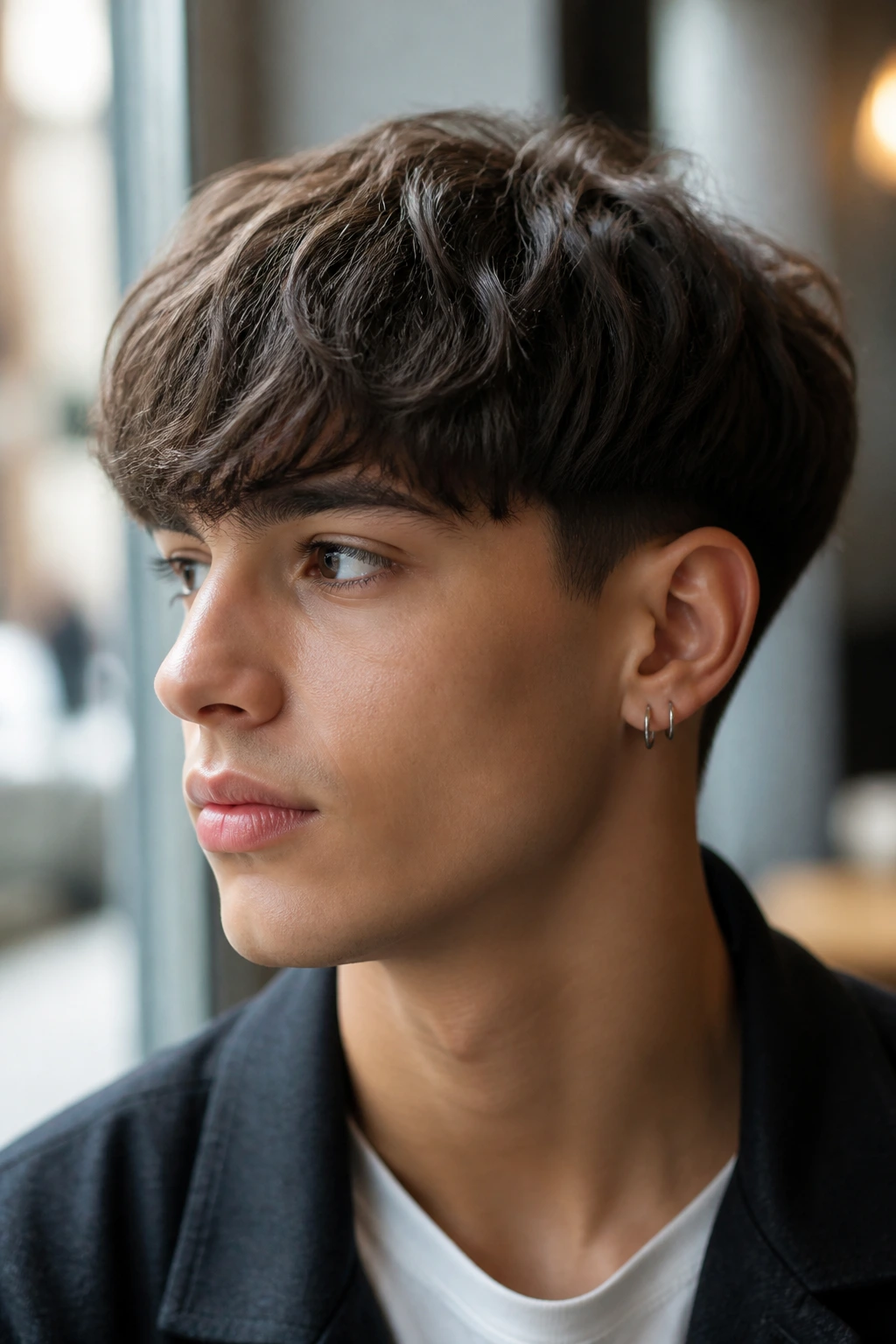
Modern bowl cuts are far removed from the kitchen-table disasters of childhood. Today’s version features a layered, textured finish that sits at mid-ear level, offering a soft, rounded shape that is surprisingly fashionable.
Softening the Frizz
Because this style relies on a rounded, soft silhouette, the natural halo of frizzy hair actually helps you achieve the shape. The slight lift and volume of your hair act as a natural structural element for the bowl cut.
Pro Grooming Notes
- This style requires a bit more frequent trimming to keep the edges looking intentional.
- Pair it with a fade if you want a cleaner, more modern contrast.
- Use a light wax to separate the layers so they don’t clump into one thick mass.
9. The Curly Crop with Hard Part
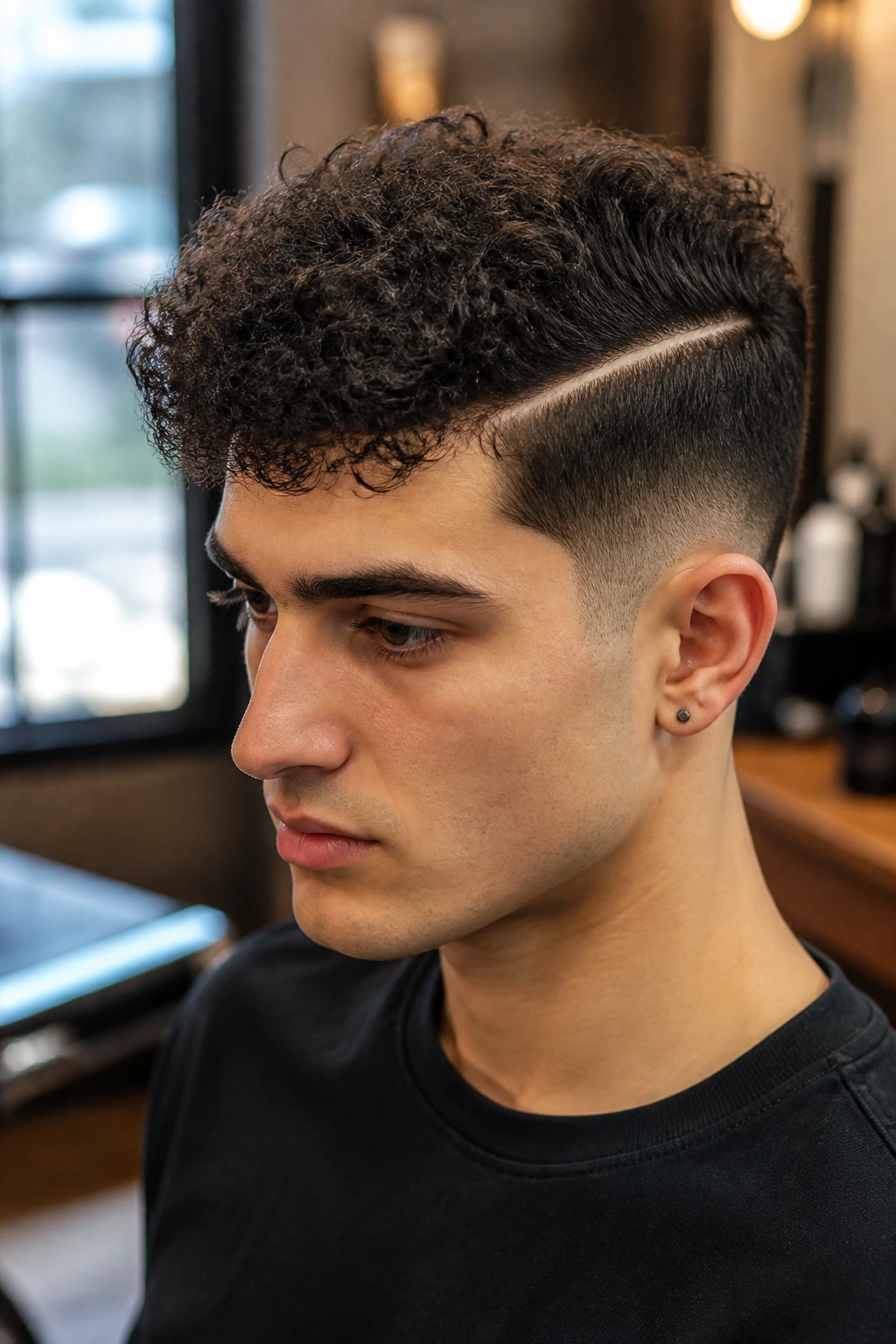
If your hair is both frizzy and curly, the addition of a hard part—a razor-etched line—can provide much-needed structure. The hard part forces the hair to fall in a specific direction, creating a sharp contrast against the softness of your natural curls.
Balancing Structure and Softness
The hard part acts as a visual anchor. It draws the eye away from the fuzziness of the ends and toward the clean, intentional lines of the cut. This is a great trick for men with rounder face shapes who want to add some angularity.
Essential Tools
- You will need a barber who is skilled with a straight razor or a sharp pair of detail clippers.
- Maintain the line weekly with a home clipper kit if you are confident.
- Always follow the part with a moisturizing curl cream.
10. The Mohawk-Inspired Crop
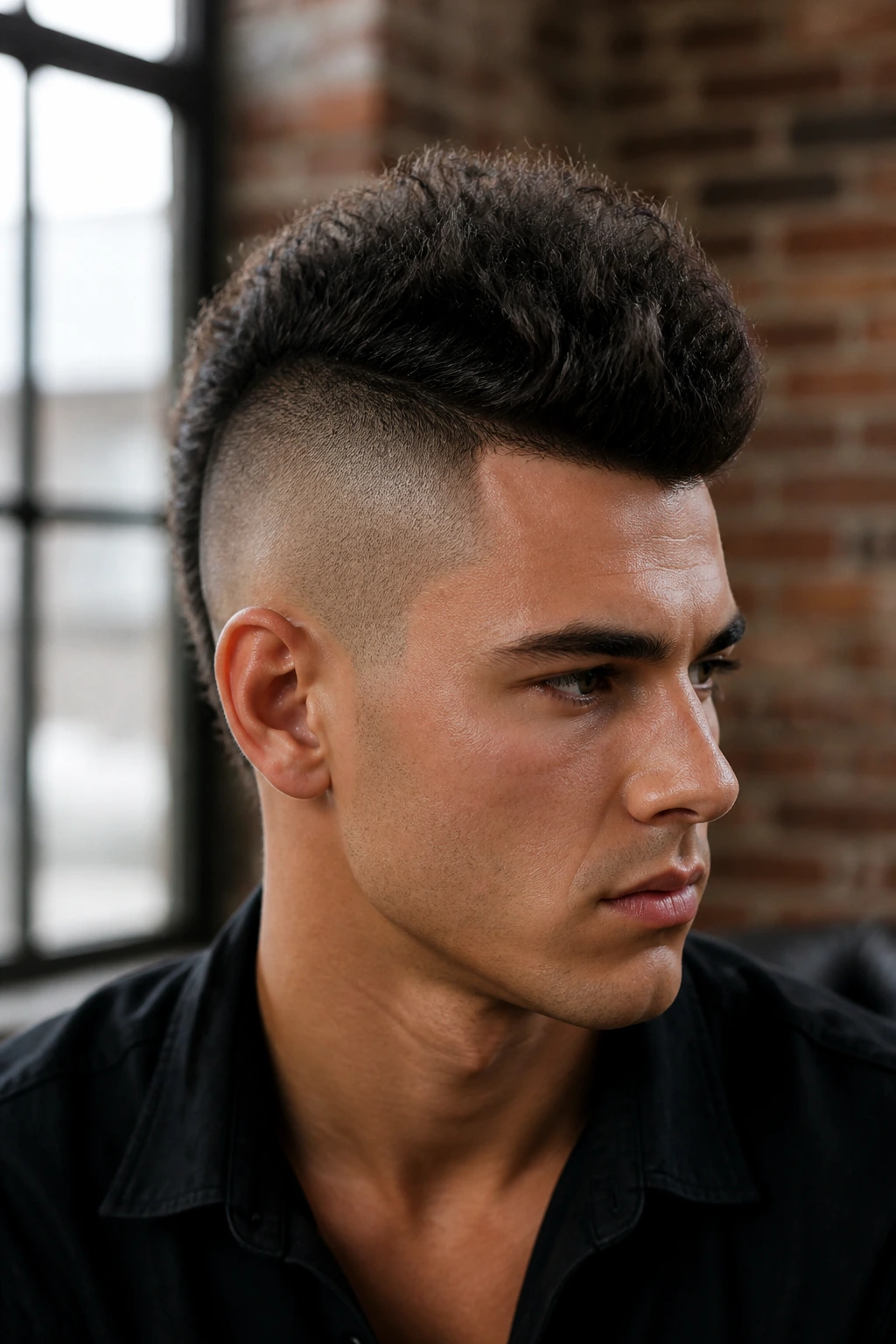
You don’t have to go full punk rock to pull off a mohawk-inspired crop. Simply ask for a taper that draws the hair toward the center of the head, leaving the longest part in a line from your hairline to your crown.
Why It’s Great for Frizz
By concentrating the hair in the center, you are effectively “taming” the sides of your head. The center strip becomes the showpiece. Since this style is supposed to be somewhat aggressive and high-volume, your natural frizz adds the perfect amount of height.
Daily Styling
- Use a high-hold clay to keep the center strip standing tall.
- You do not need to be perfect with the application; a messy center strip looks better than a stiff one.
- Blow-dry the sides with a focused nozzle to keep them flat against the scalp.
11. The Bleached-Tip Textured Crop
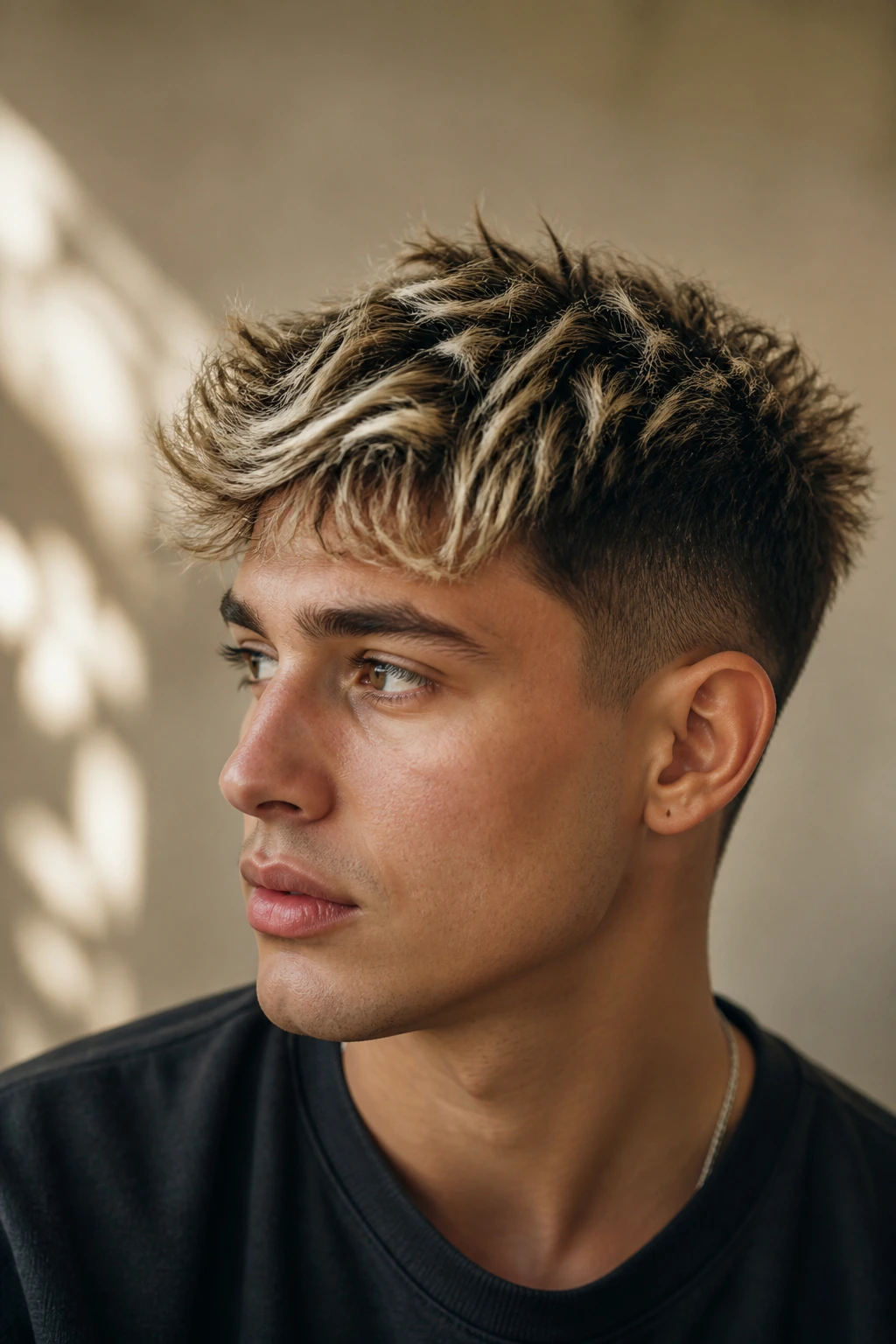
Sometimes, if you cannot hide the frizz, you should highlight it. Adding a bleached or colored tip to your textured crop shifts the focus to the color work. It makes the frizz look more like deliberate “texture” because the eye is busy processing the color contrast.
Why Color Changes Perception
Bleaching the ends of your hair does, admittedly, increase dryness. However, it also makes the hair strands feel a bit coarser, which can actually help them hold a shape better than soft, virgin hair. Just be prepared to use a deep conditioning mask once a week.
Important Hair Health Considerations
- Do not bleach your hair if it is already significantly damaged or prone to breaking.
- Use a purple shampoo once a week if you go for a platinum or ash blonde finish to keep the brassiness at bay.
- Always use a heat protectant if you use a blow dryer after coloring.
12. The Wavy Fringe Crop
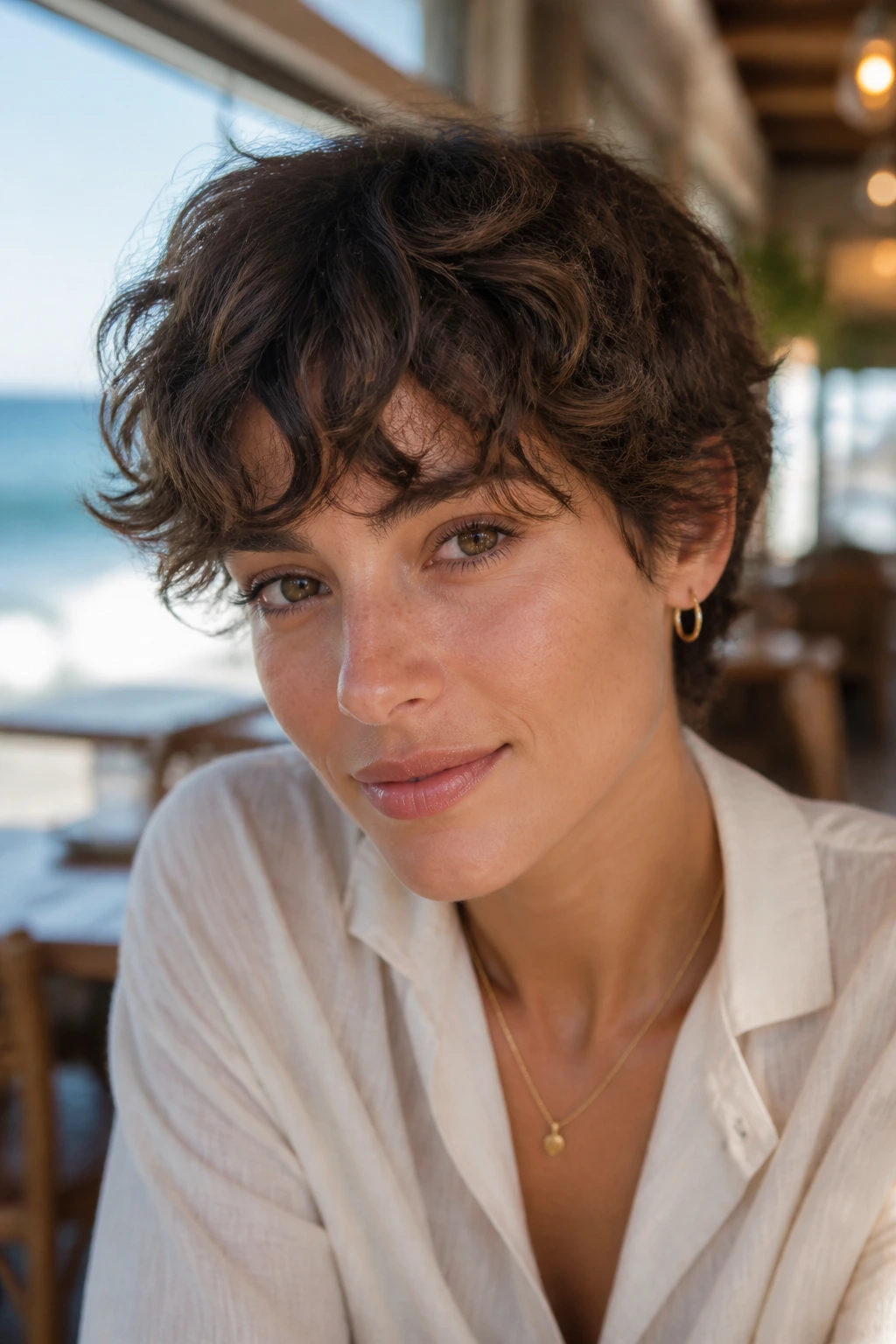
A wavy fringe crop emphasizes the natural movement in your hair. Instead of trying to smooth your waves, you encourage them. By keeping the top long enough for a wave to form and using a sea-salt product, you get a beachy, effortless look that never goes out of style.
The Role of Humidity
Unlike many styles that wilt in the humidity, the wavy fringe crop thrives in it. If you live in a damp climate, this is your best friend. The moisture in the air will actually help your waves form more distinctly, making the style look even better throughout the day.
Styling Tips
- Avoid brushes at all costs; they will turn your waves into a giant puffball.
- Use your fingers to define the waves while the hair is damp.
- Let it air dry to ensure the structure holds without artificial stiffeners.
13. The Military-Inspired High and Tight
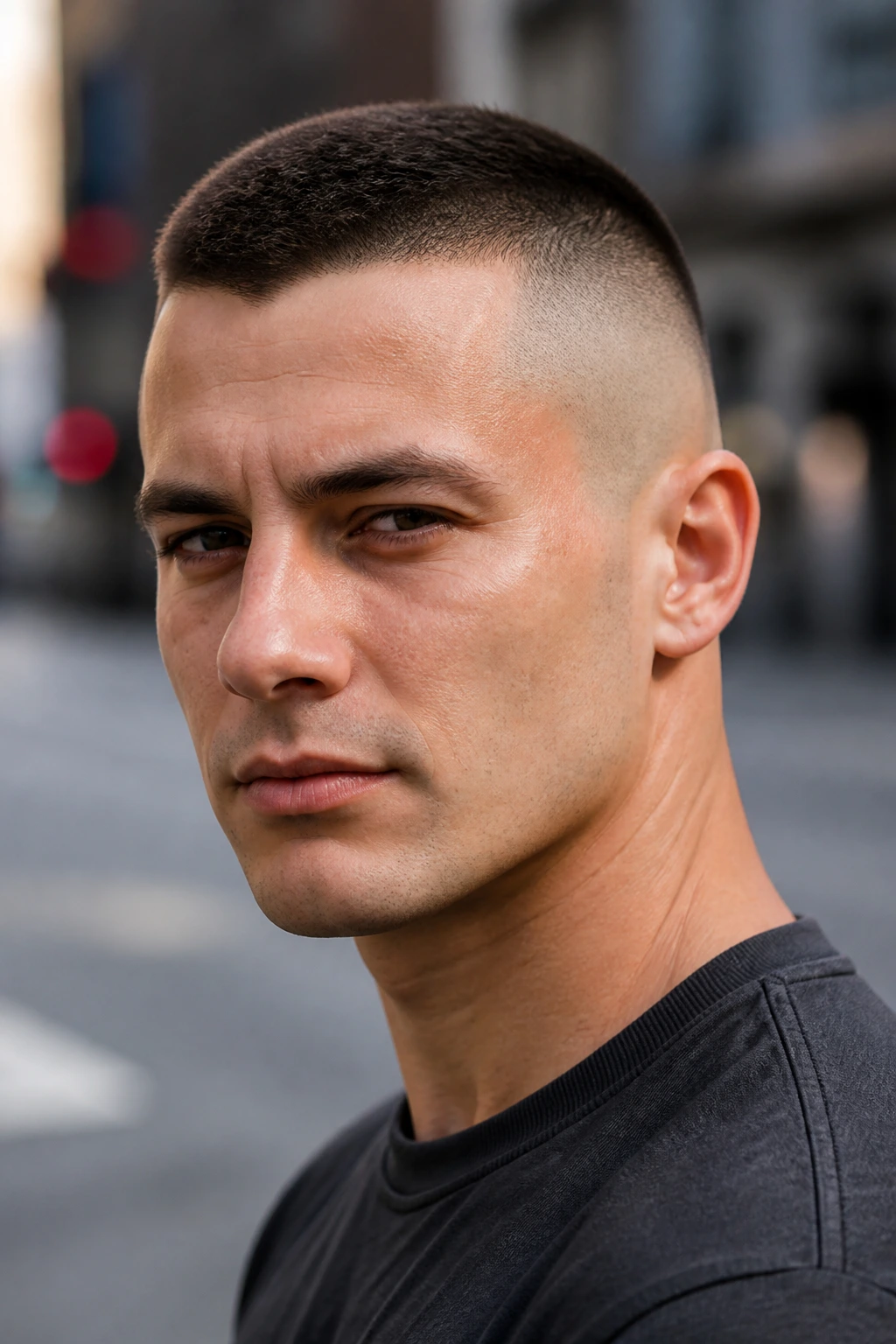
If you want zero fuss, the high and tight is the way to go. It is short, disciplined, and leaves almost no room for frizz to develop. The top is kept at an inch or less, and the sides are taken down to the skin.
Why It’s the Ultimate Taming Method
When the hair is this short, it physically cannot frizz. The strands are too short to bend, curl, or tangle. It is the nuclear option for people who are truly fed up with their hair’s natural texture.
Who Should Choose This
- People who want a sharp, low-maintenance look.
- Those who don’t want to carry styling products or use a comb.
- Men with high-intensity jobs who need to look professional at all times.
14. The Disheveled Pompadour Crop

A traditional pompadour requires a slick, polished finish, but the disheveled version is much friendlier to frizzy hair. By using a light pomade, you pull the hair up and back, but you let the ends fall into a chaotic, voluminous wave.
Achieving the Height
Frizzy hair has natural “cushion,” which makes getting volume at the roots much easier than it is for those with fine, limp hair. You don’t need a heavy product to get the lift; just a little bit of root lifting spray will do the trick.
Daily Rituals
- Use a round brush to blow-dry the roots upward while keeping the ends loose.
- Avoid over-smoothing the top section; keep it messy.
- Finish with a dusting of texture powder to lock in the volume.
15. The Layered Taper Crop
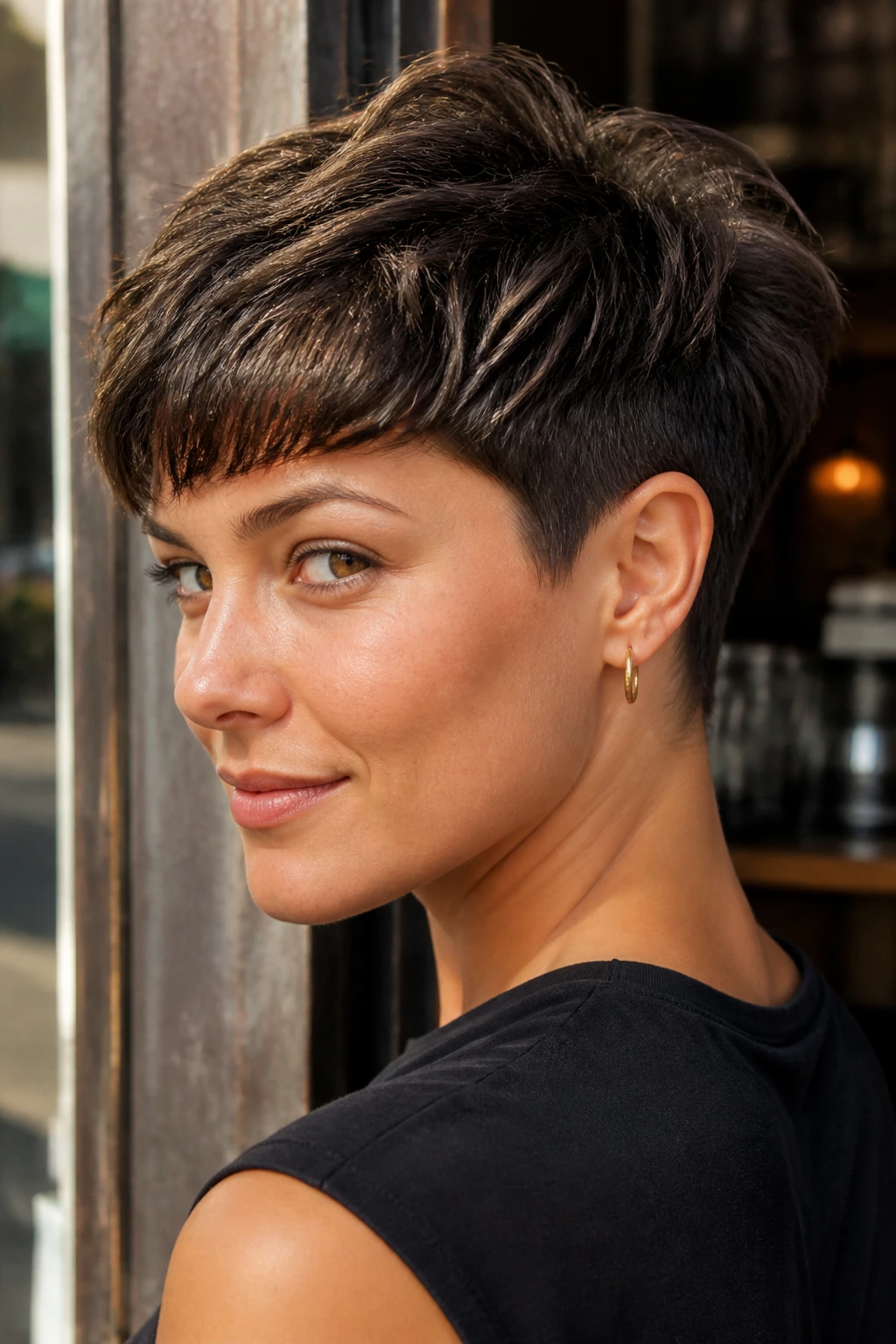
Layers are the most important part of any haircut for frizzy hair. By adding layers, your stylist removes weight and creates movement. A layered taper crop ensures that your hair doesn’t fall into a heavy block, preventing the “pyramid” effect that is the bane of many with wavy, frizzy hair.
The Art of Weight Removal
When a stylist cuts layers into your hair, they are essentially creating different “steps” for the hair to fall. This prevents the hair from clumping together. Instead, you get a separated, piecy look that is much more forgiving when a few strands decide to frizz up.
Maintenance Schedule
- Layered cuts generally grow out better than blunt ones.
- You can get away with an extra week between haircuts compared to a fade.
- Ask for “internal layering” if you want to keep the length but lose the weight.
16. The Natural Afro-Crop
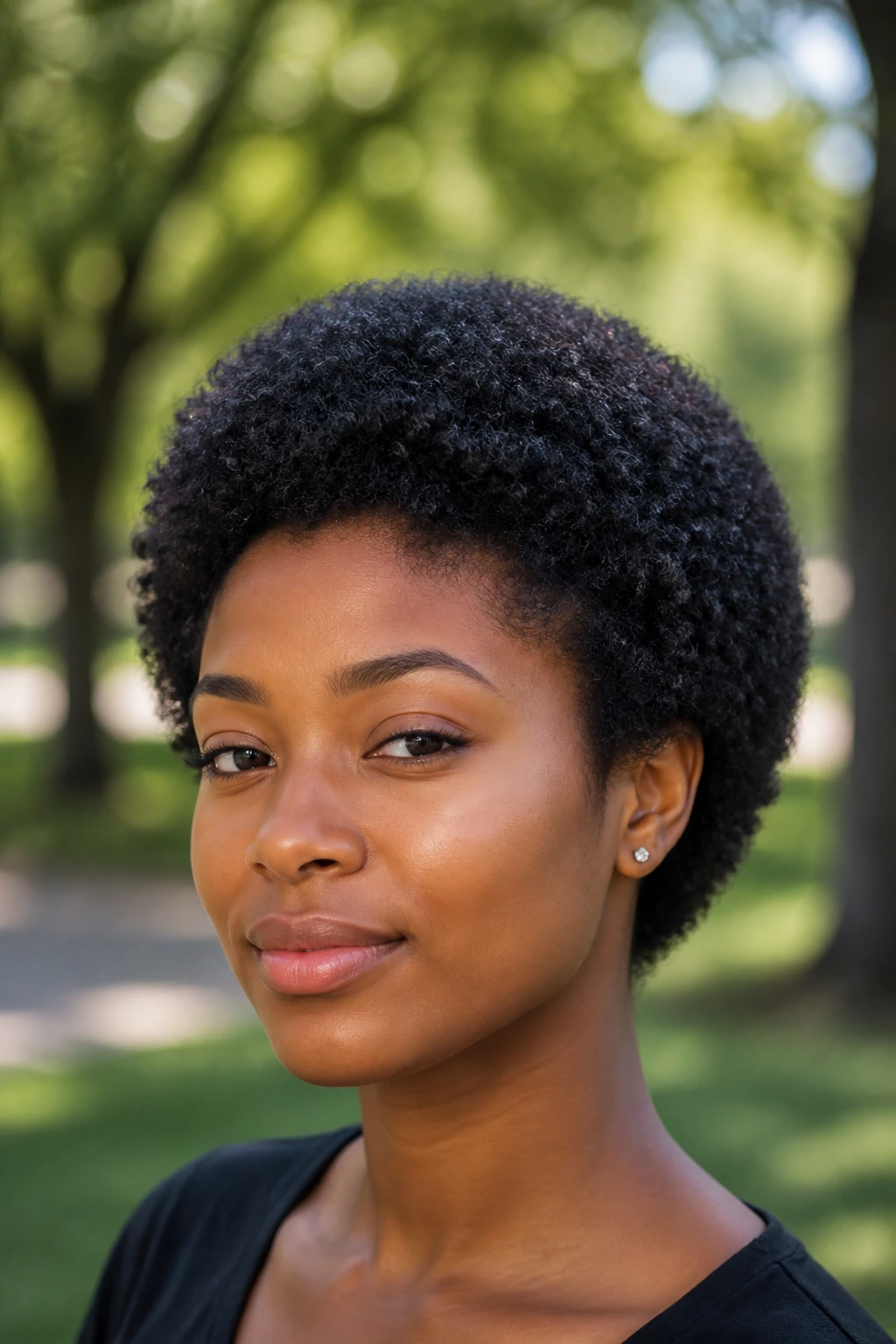
If your hair is tight-coiled and frizzy, the afro-crop is a classic that celebrates your natural texture. It keeps the hair rounded and uniform, often with a slight taper at the neck. This style is all about density and shape, rather than trying to force the hair into a straight line.
Why This Style Rocks
It is honest. It doesn’t try to hide what your hair is or how it behaves. The round shape is aesthetically pleasing, and with the right moisturizer, your frizz turns into a beautiful, hydrated halo.
Essential Moisturizing
- Use a heavy leave-in cream or a shea-butter-based product.
- Never dry comb the hair; only detangle with a pick when wet and saturated with conditioner.
- Wrap your hair at night to keep the shape consistent for the next day.
17. The Asymmetric Crop
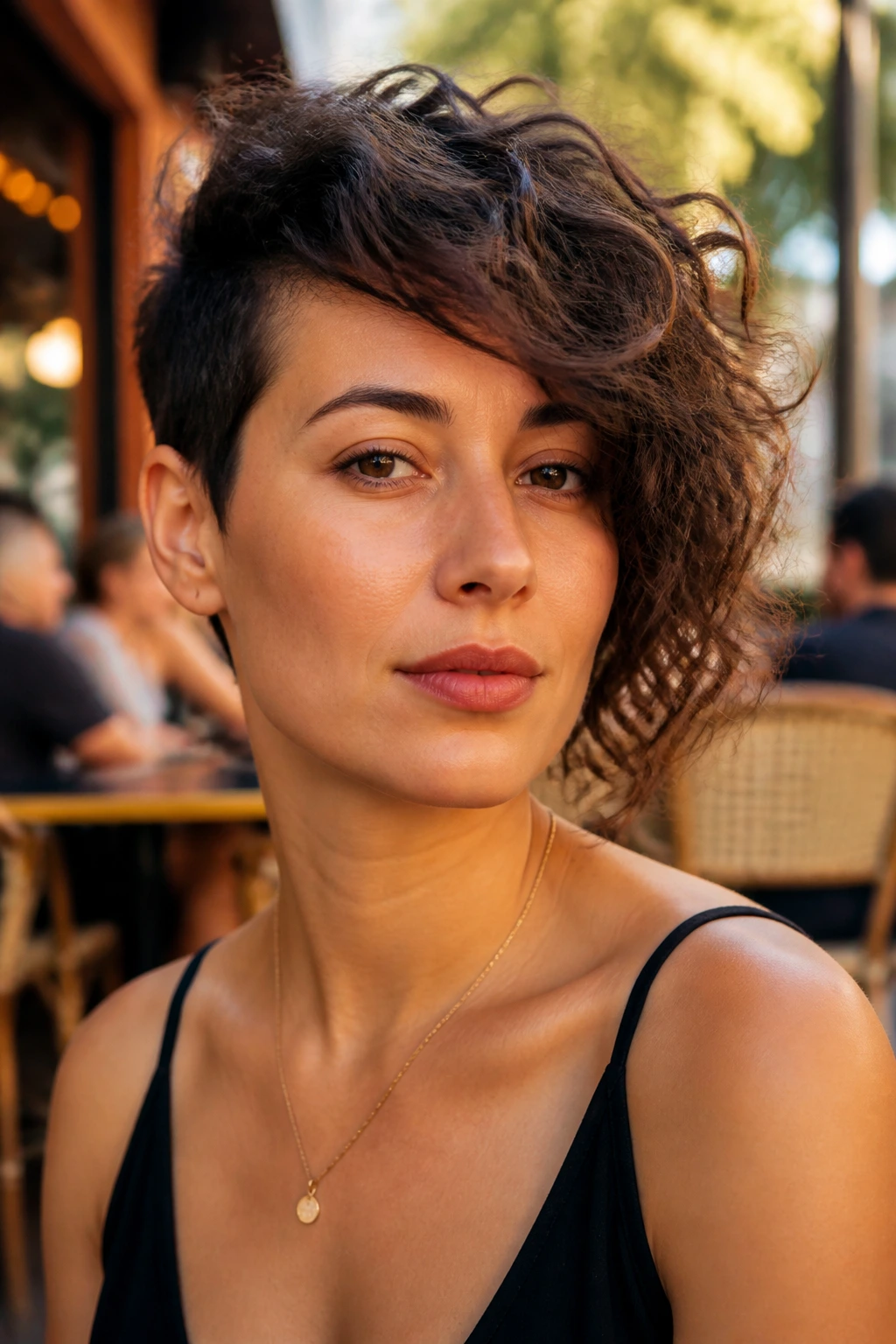
An asymmetric crop features more length on one side than the other, or a fringe that is swept diagonally across the forehead. The asymmetry itself provides a visual “distraction” from the frizz, making the haircut the focal point.
Using Geometry to Manage Texture
The human eye looks for patterns. By introducing an unusual geometric pattern, like an asymmetrical fringe, you direct the gaze toward the line of the hair rather than the texture of the hair. It is a subtle trick, but it is incredibly effective for anyone feeling self-conscious about their hair’s quality.
Stylist Tips
- Ensure your stylist knows which side of your face you prefer to show off.
- This style grows out quickly, so expect to visit the barber every 4 weeks.
- Keep the shorter side tight to maintain the contrast.
18. The Textured Crew Cut
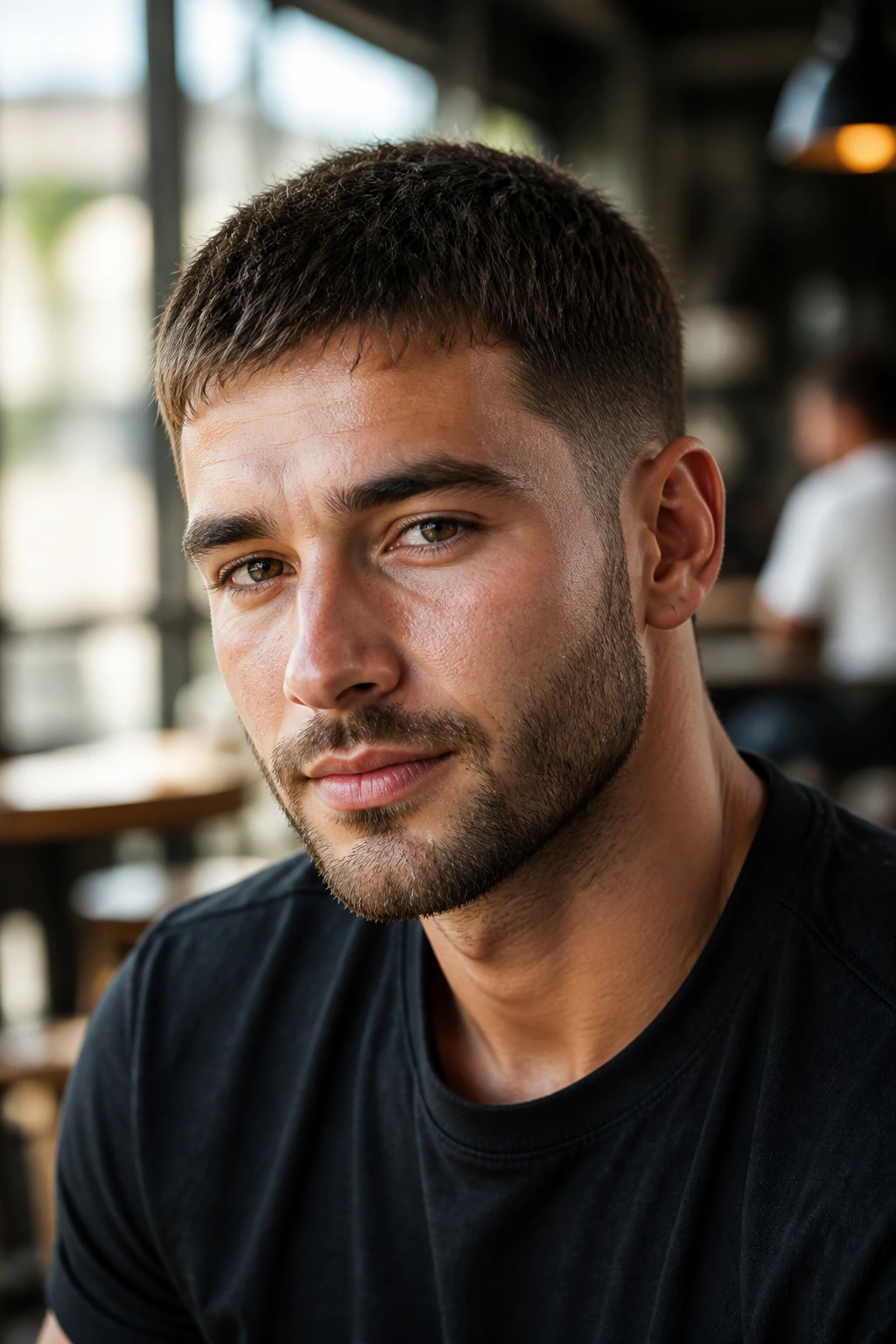
A textured crew cut is the grown-up version of the buzz cut. It leaves about an inch of hair on top and uses a razor to texture the ends, giving it a soft, “lived-in” feel. It is a fantastic bridge between a buzz cut and a longer, shaggy style.
Why It’s Perfectly Balanced
It is short enough to be managed, but long enough to show off your natural color and the texture of your hair. The texturizing razor work softens the ends, so even if they frizz, they look like soft, wispy layers rather than jagged broken ends.
Final Styling Thoughts
- Use a lightweight matte paste.
- Work it in with your hands rather than a comb for that “just woke up looking this good” vibe.
- Keep the fade clean to contrast the softness of the top.
Final Thoughts
When you have frizzy hair, you have two choices: wage a never-ending war or call a truce. Choosing a haircut that thrives on texture—like a crop—is the most liberating thing you can do for your morning routine. Most people spend precious minutes trying to flatten their hair when they could simply be highlighting the volume and movement that they already possess.
The best advice is to stop looking for products that “repair” or “flatten” and start looking for cuts that give you structure. A well-executed crop is designed to work with your hair’s natural inclination to puff and wave, not punish it for existing. Embrace the volume, find a barber who understands how to cut texture rather than just length, and stop fighting your own hair. Once you do, you will find that the very thing you were trying to hide becomes your favorite stylistic asset.