


You are in the middle of a high-intensity interval training session. Sweat is starting to bead at your hairline, your heart rate is spiking, and the last thing you want is a loose strand of hair whipping across your face or getting tangled in your athletic gear. Many women find that their usual gym hairstyles—the standard high ponytail or the messy bun—tend to lose their tension halfway through a burpee set. Tree braids offer a compelling alternative that manages to be both incredibly secure and undeniably stylish, staying put through everything from heavy deadlifts to long-distance runs.
Because they mimic the look of loose hair while maintaining the protective foundation of cornrows, tree braids provide a unique advantage for those who want their natural hair shielded from the elements. Unlike traditional box braids, which can feel heavy and cumbersome during a workout, tree braids allow for significant airflow to the scalp. This breathability is essential when you are pushing your physical limits and need to keep your head cool. Below, we look at twenty ways to style these braids for the gym, ensuring you stay focused on your personal bests rather than your roots.
1. The High-Volume Athletic Top Knot
When you need to keep your hair completely off your neck, a high-volume top knot is your best friend. This style works by gathering your tree-braided hair into a ponytail at the crown and then wrapping the lengths around the base. Because tree braids have a textured, natural feel, the knot naturally takes on a full, effortless shape that doesn’t look overly polished or stiff. It is secure enough to withstand jumping jacks and lateral movements without slipping. If you find your edges are getting frizzy, a light application of a water-based edge gel keeps everything smooth for the duration of your training.
2. Dual French-Braided Crowns
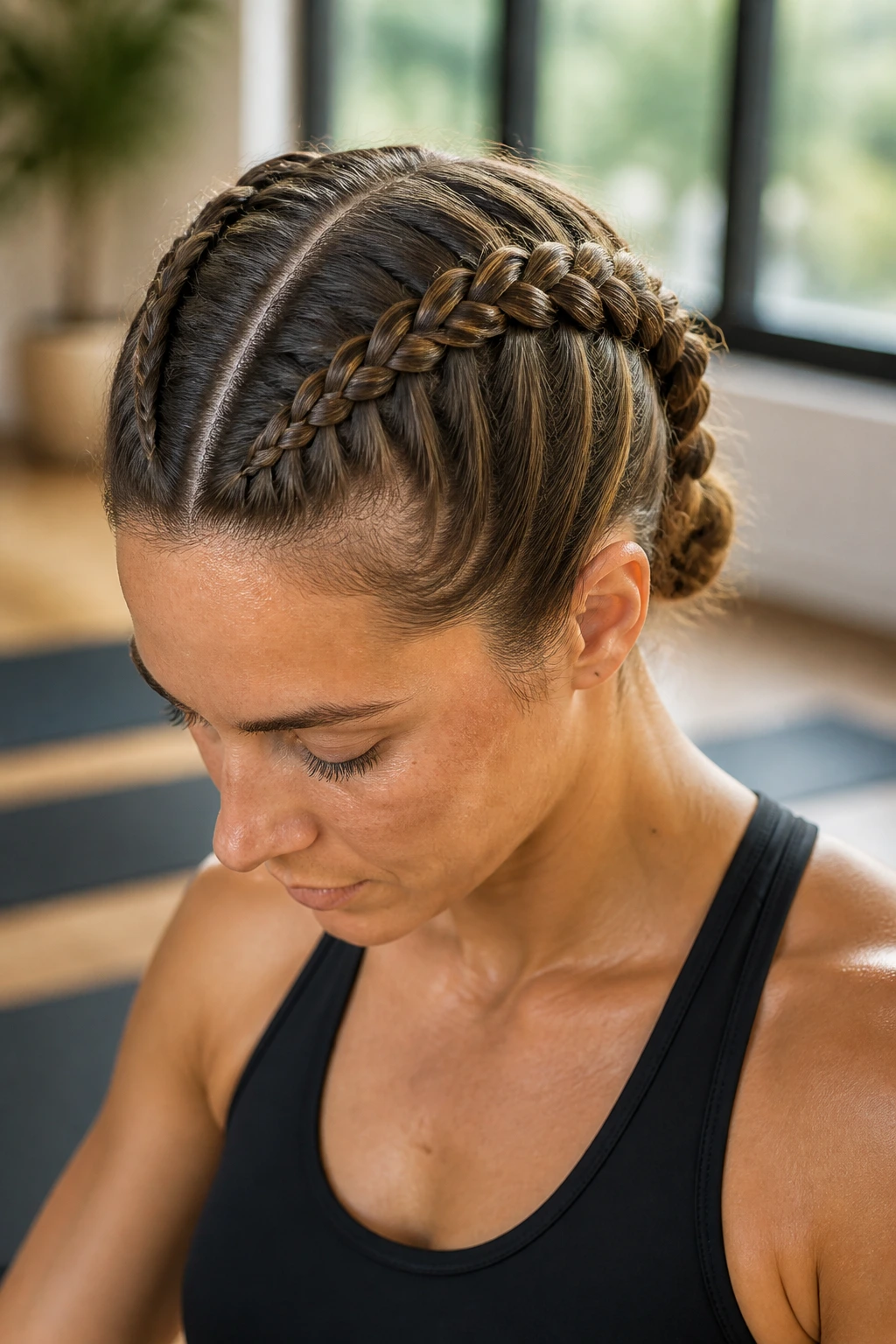
For those who prefer a style that hugs the head, dual French braids—or “Dutch” braids, if you want that raised, inverted look—are excellent for keeping your hair tightly under control. By incorporating your tree braids into two long braids that meet at the nape of the neck, you eliminate any flyaways that might tickle your ears during yoga or floor work. This style is particularly effective for high-motion workouts where you need total stability. You will find that because the base is already braided, the final product is much more durable than if you were braiding loose, un-braided hair.
3. The Secured Half-Up, Half-Down
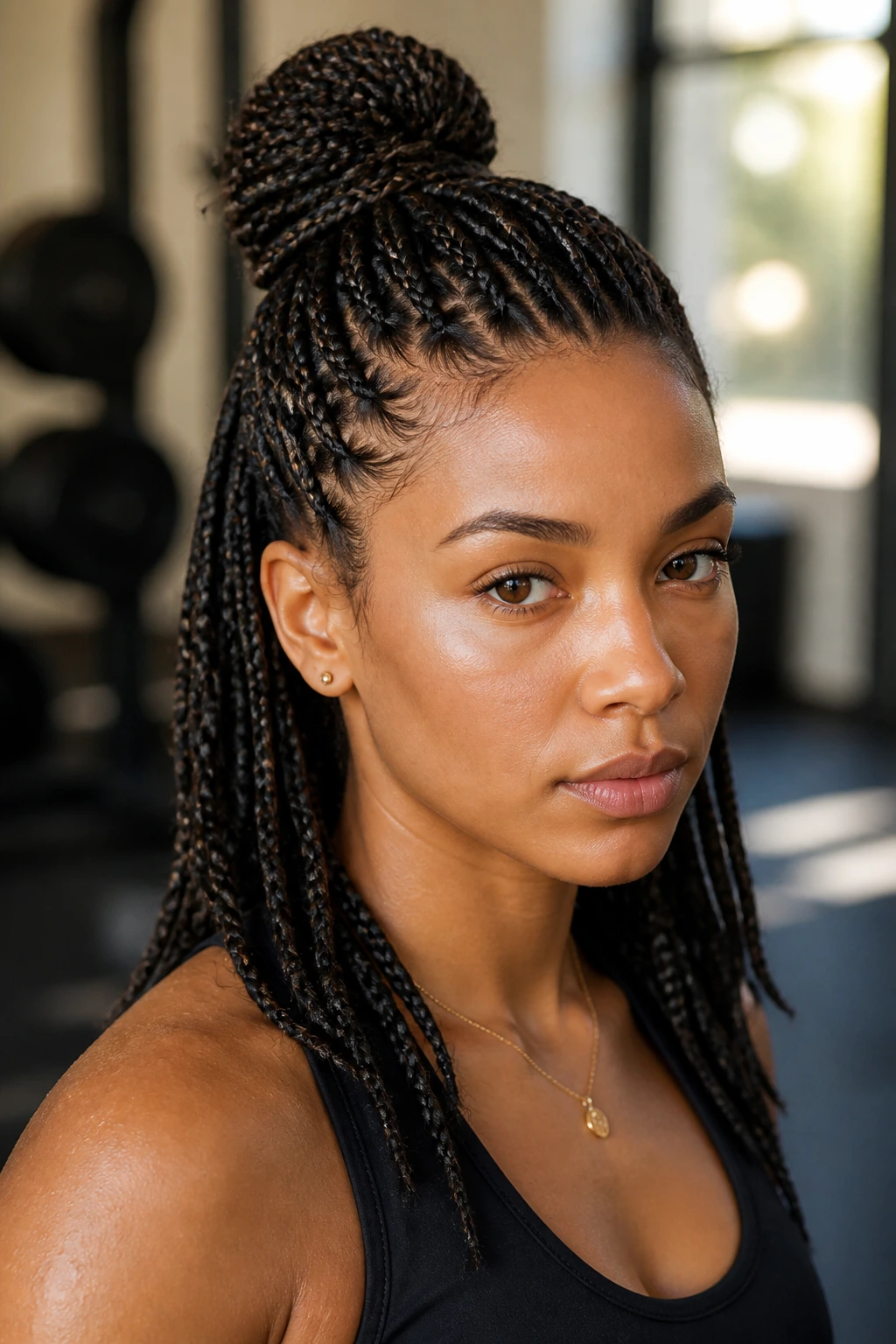
If you want to keep hair out of your face but still enjoy the look of free-flowing waves, the half-up, half-down approach is a classic for a reason. Simply gather the top third of your hair and pull it into a small bun or a sturdy scrunchie. This keeps the hair from falling forward into your eyes when you are doing planks or push-ups, while the bottom layers remain free. It is a more relaxed option for steady-state cardio or strength training where you aren’t doing excessive floor work, and it transition seamlessly into your post-workout plans.
4. The Single Swept-Back Ponytail
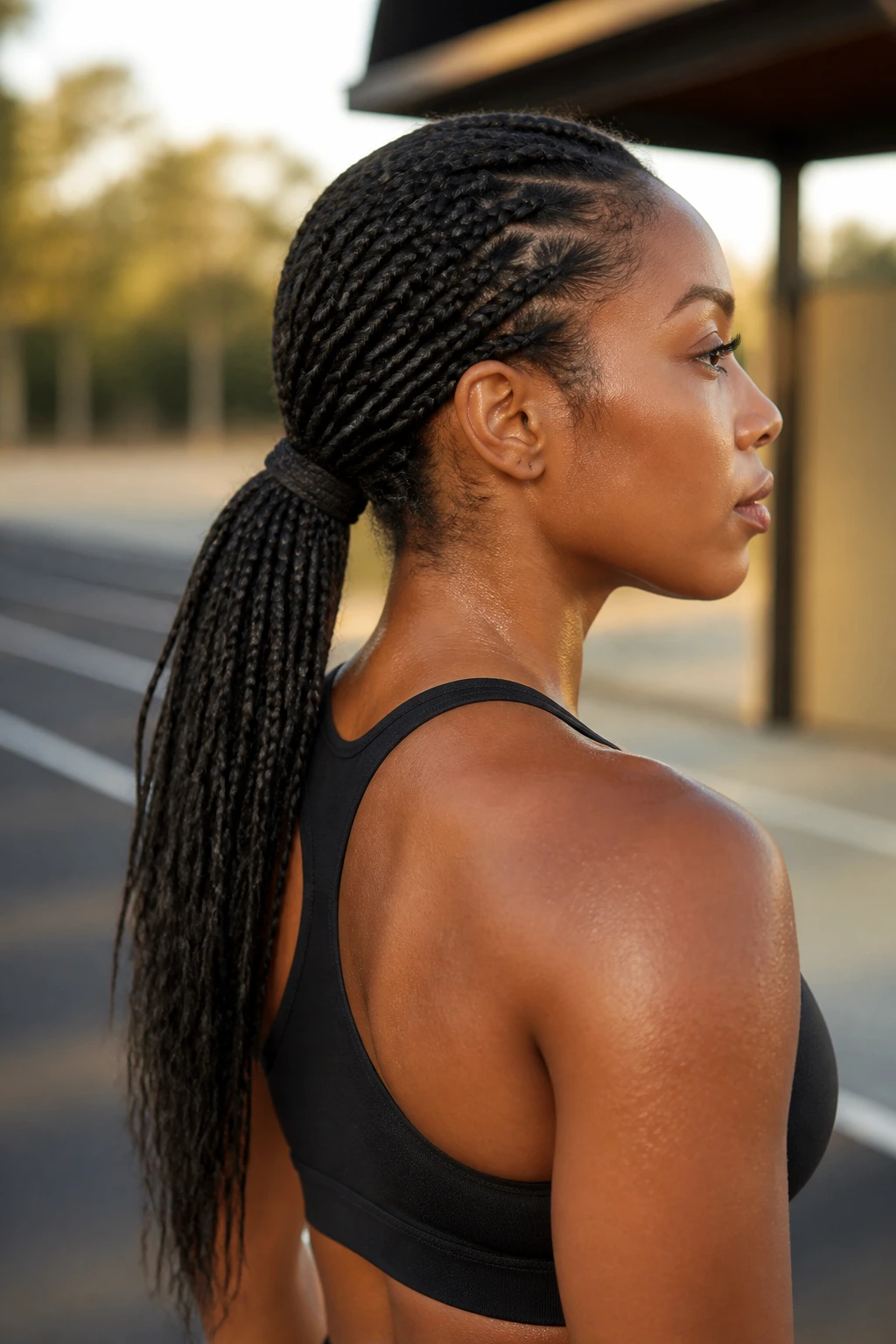
Sometimes simple is better. A single, low-positioned ponytail is often the most comfortable option for long workouts, especially if you are wearing a baseball cap or a sweatband. By pulling the tree braids back into a clean, sleek ponytail, you minimize friction against your workout clothes. To protect the hair, use a snag-free hair tie or a fabric-covered scrunchie rather than a standard rubber band, which can break the synthetic fibers over time. This style is virtually foolproof and allows you to focus entirely on your form.
5. The Braided Headband Illusion
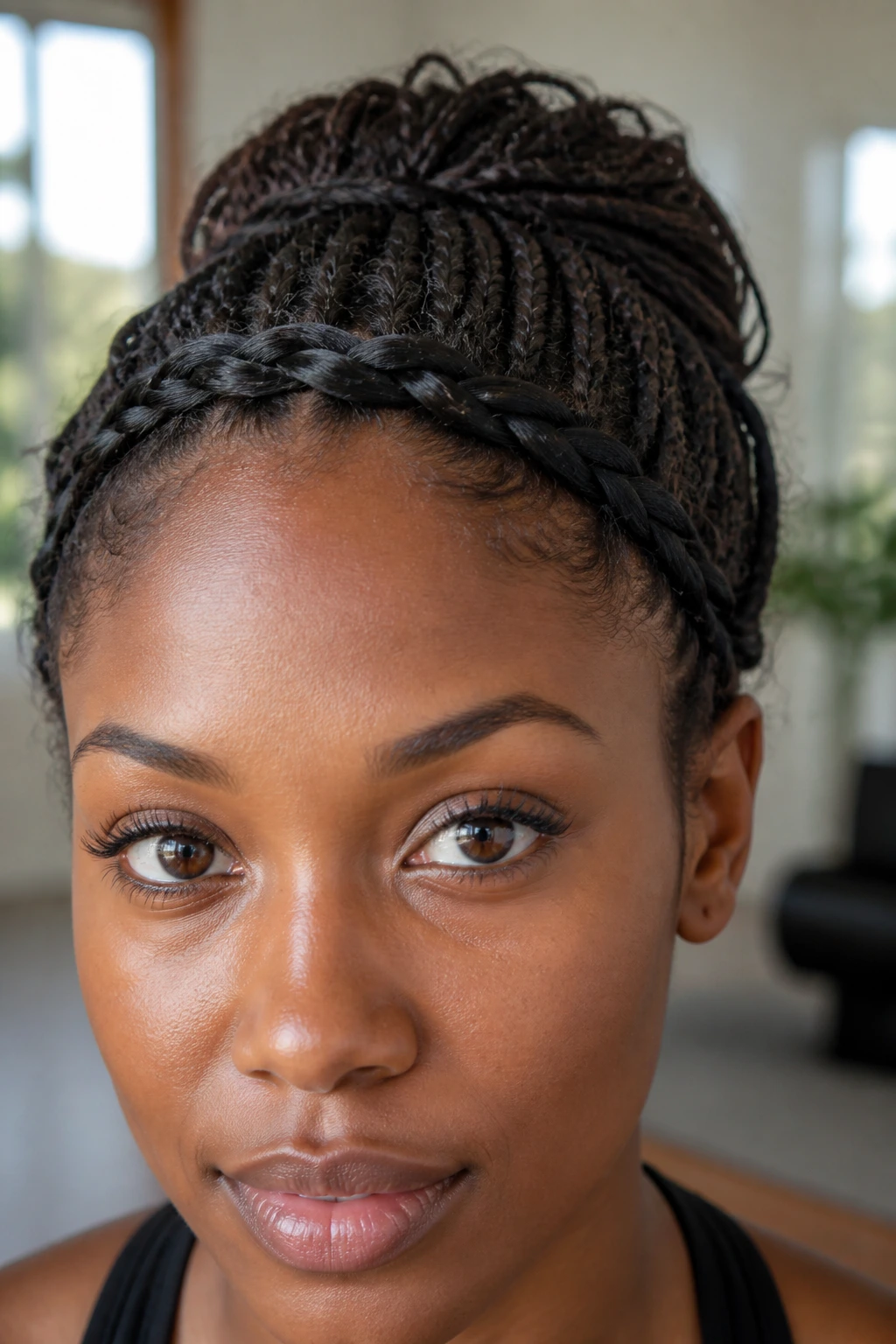
You can use a few sections of your own tree braids to create a faux-headband effect. By taking a small section of hair from near the temple and braiding it across the front, you can pin it behind your ear. This serves two purposes: it creates a cute, styled look and acts as a functional barrier that prevents loose hair from falling onto your forehead. It is a fantastic choice for low-impact workouts like Pilates or weight lifting, where you want to look put-together without the bulk of an actual headband.
6. The Low-Slung Athletic Braid
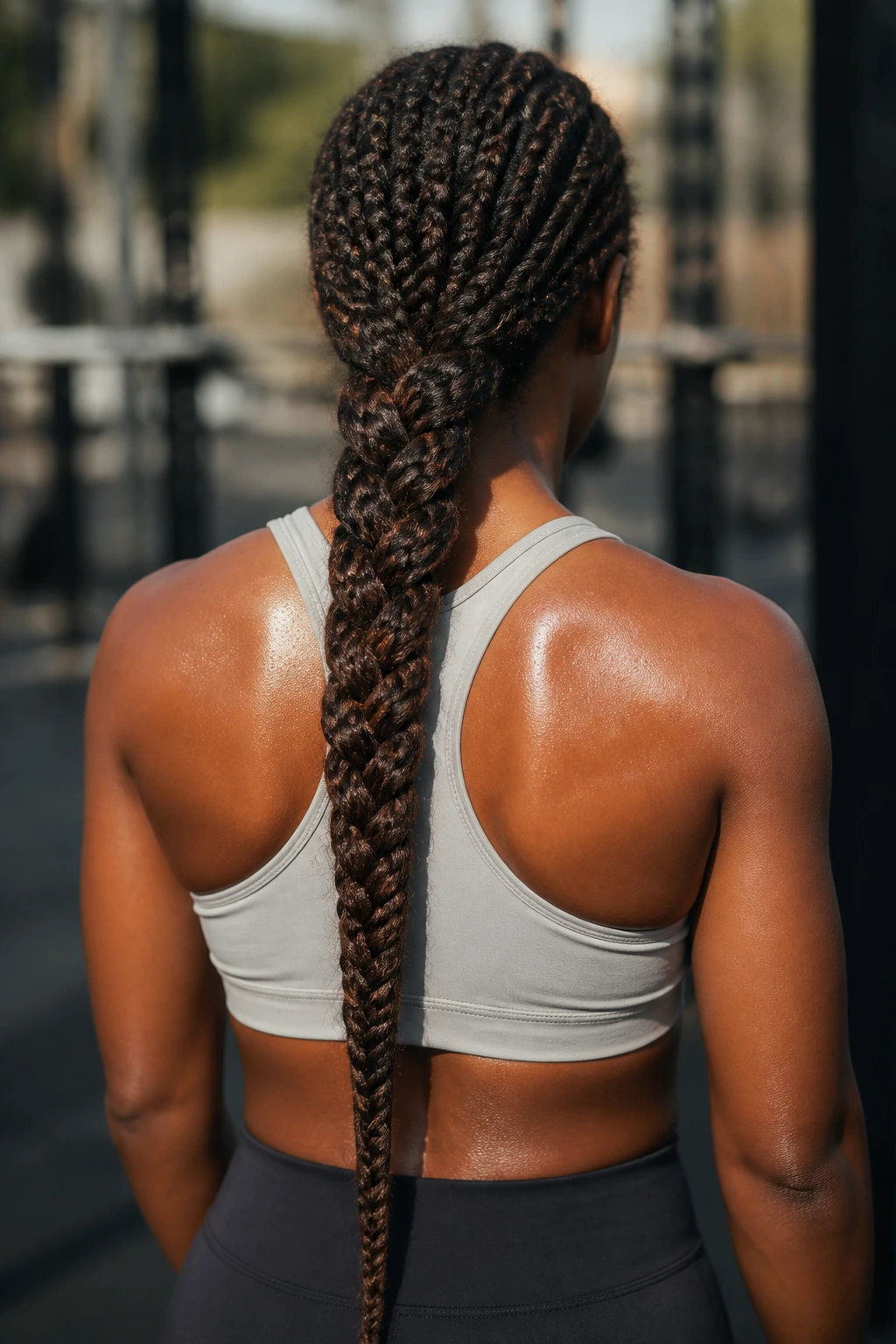
If you have long, flowing tree braids, a single thick braid starting at the nape of the neck is the ultimate way to contain them. This keeps the weight of the hair centered and balanced, preventing it from swinging around your shoulders during a workout. By starting the braid low, you avoid any tension on your front hairline, which is a common concern for those worried about traction alopecia. Use a small, clear elastic at the bottom to ensure it doesn’t unravel, even if you are doing a heavy circuit.
7. The Pineapple Bun for Texture Maintenance
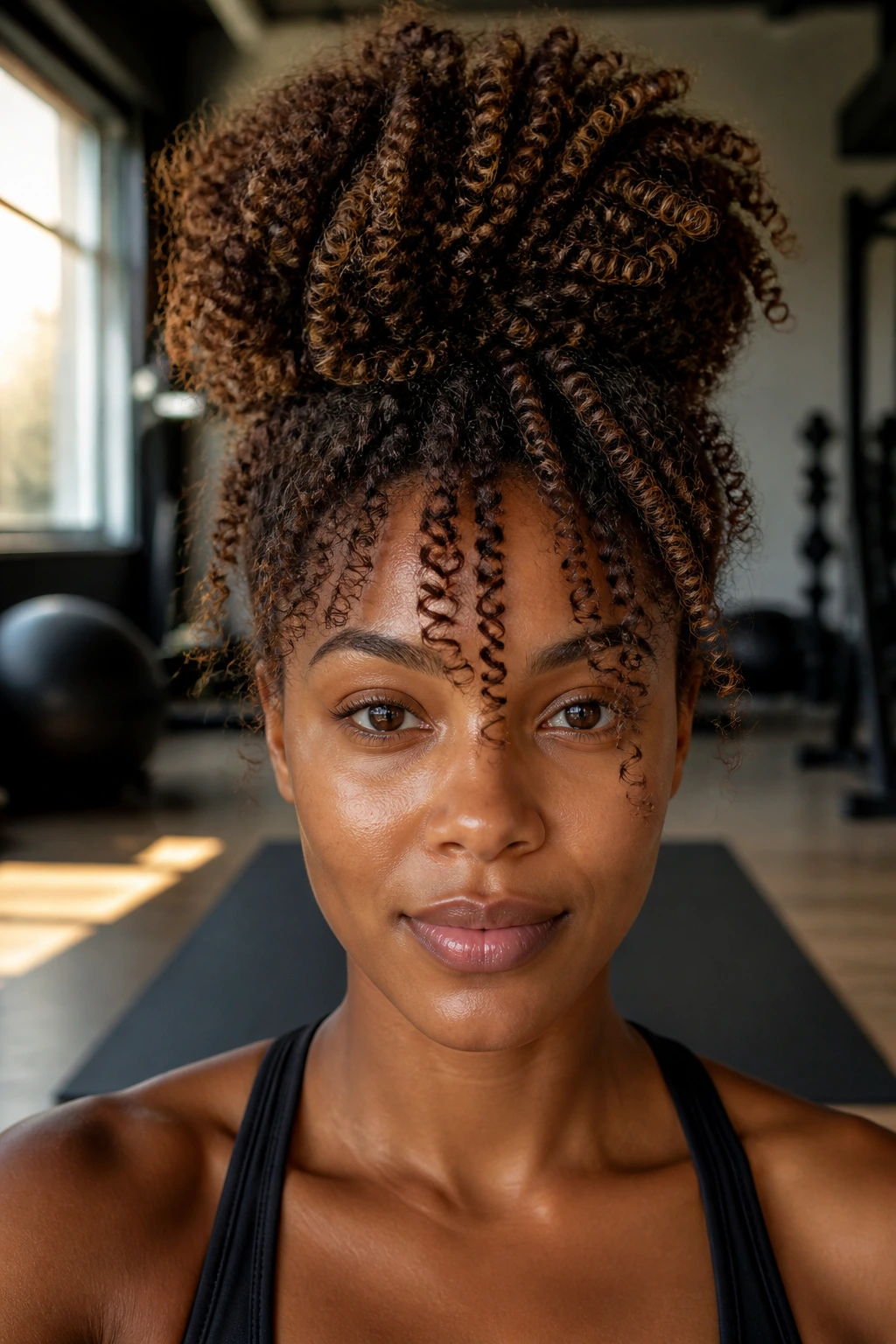
For those who want to preserve the curl pattern of their tree braids overnight or during a quick morning workout, the “pineapple” method is a lifesaver. Simply flip your head over and gather all your hair into a very high, loose ponytail at the very top of your head. Secure it loosely, and let the hair drape over your face. This prevents the hair from being crushed while you are lying on a yoga mat. It is specifically useful for longer workouts where you might be doing a lot of floor-based core exercises.
8. The Side-Parted Sleek Pullback
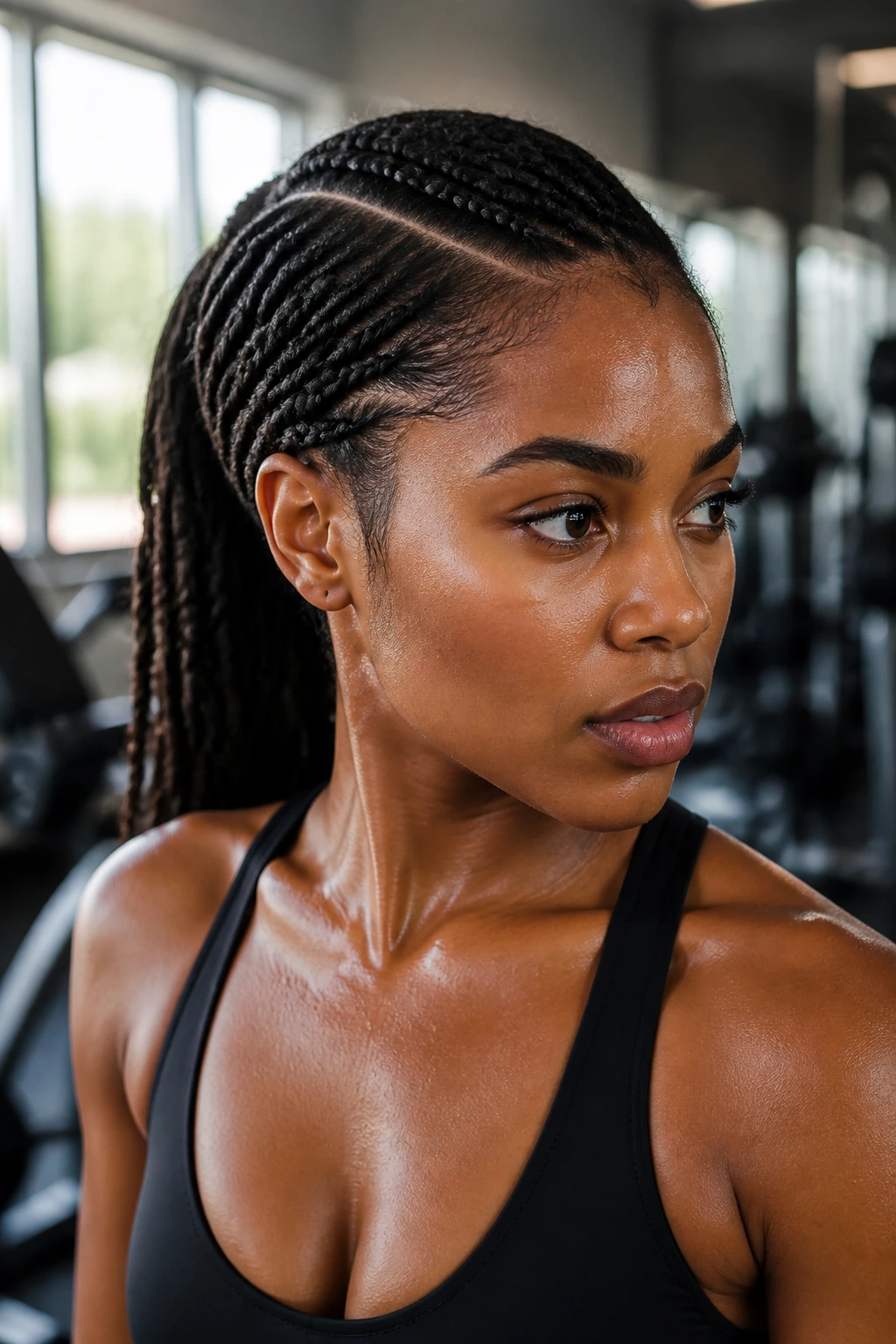
By creating a deep side part before pulling your hair into a ponytail, you can achieve a more sophisticated, intentional look even while dripping sweat. This style uses the weight of the braids to create a natural “swoop” that stays in place. If your tree braids are wavy or curly, this adds a nice bit of dimension to your face. For those who find their hair tends to look messy after a session, this pulled-back approach maintains structure and makes a quick refresh in the locker room much easier.
9. The Micro-Pigtails
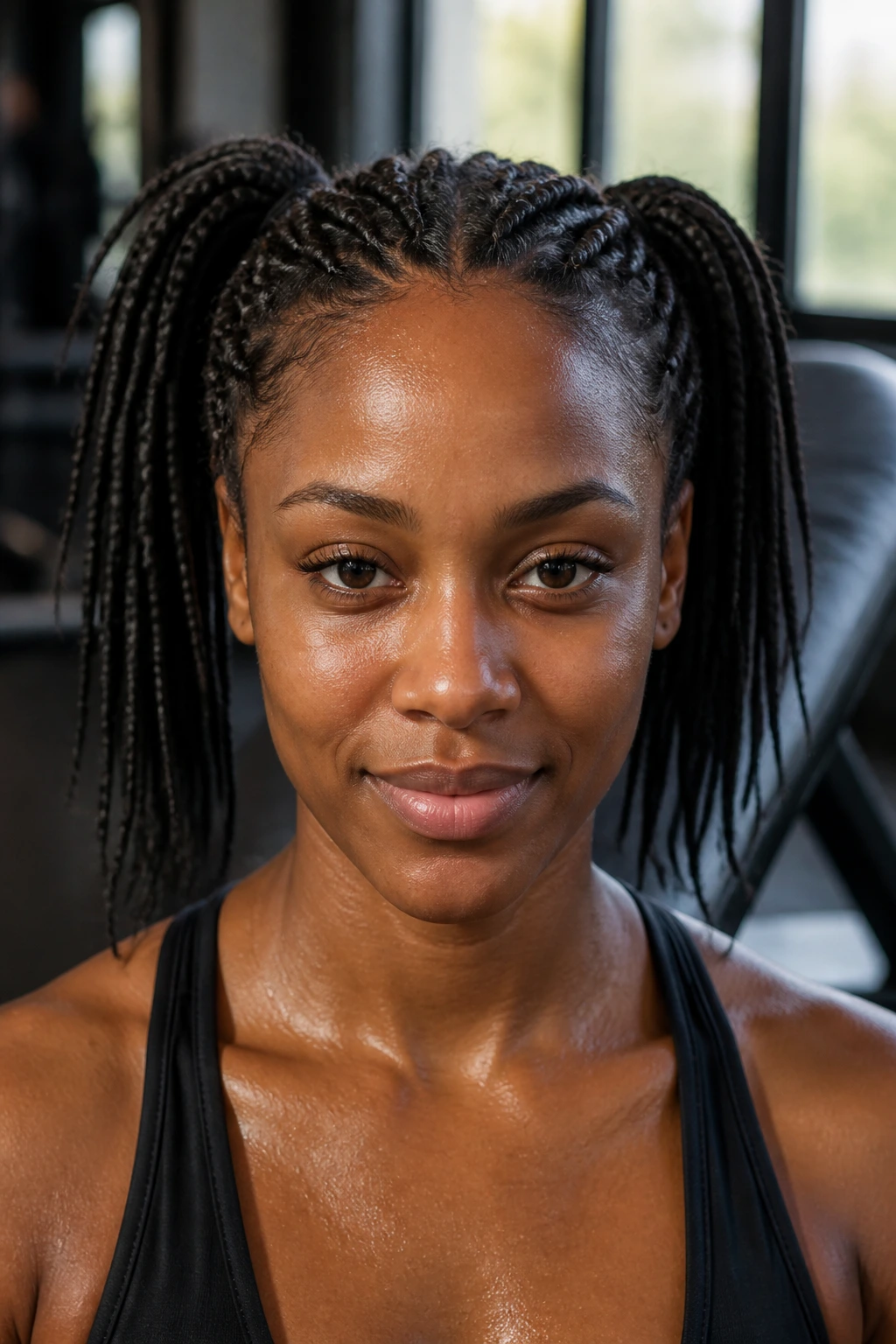
Pigtails aren’t just for children; they are highly functional for keeping hair distributed evenly on both sides of your head. By splitting your tree braids into two even sections and braiding them into small pigtails, you distribute the weight of the hair. This is particularly helpful if you have a high density of synthetic hair installed. The pigtails keep the hair off your neck entirely and provide a symmetrical balance that feels great during high-intensity aerobics or dance-based workouts where you are moving side-to-side.
10. The Wrapped High Ponytail
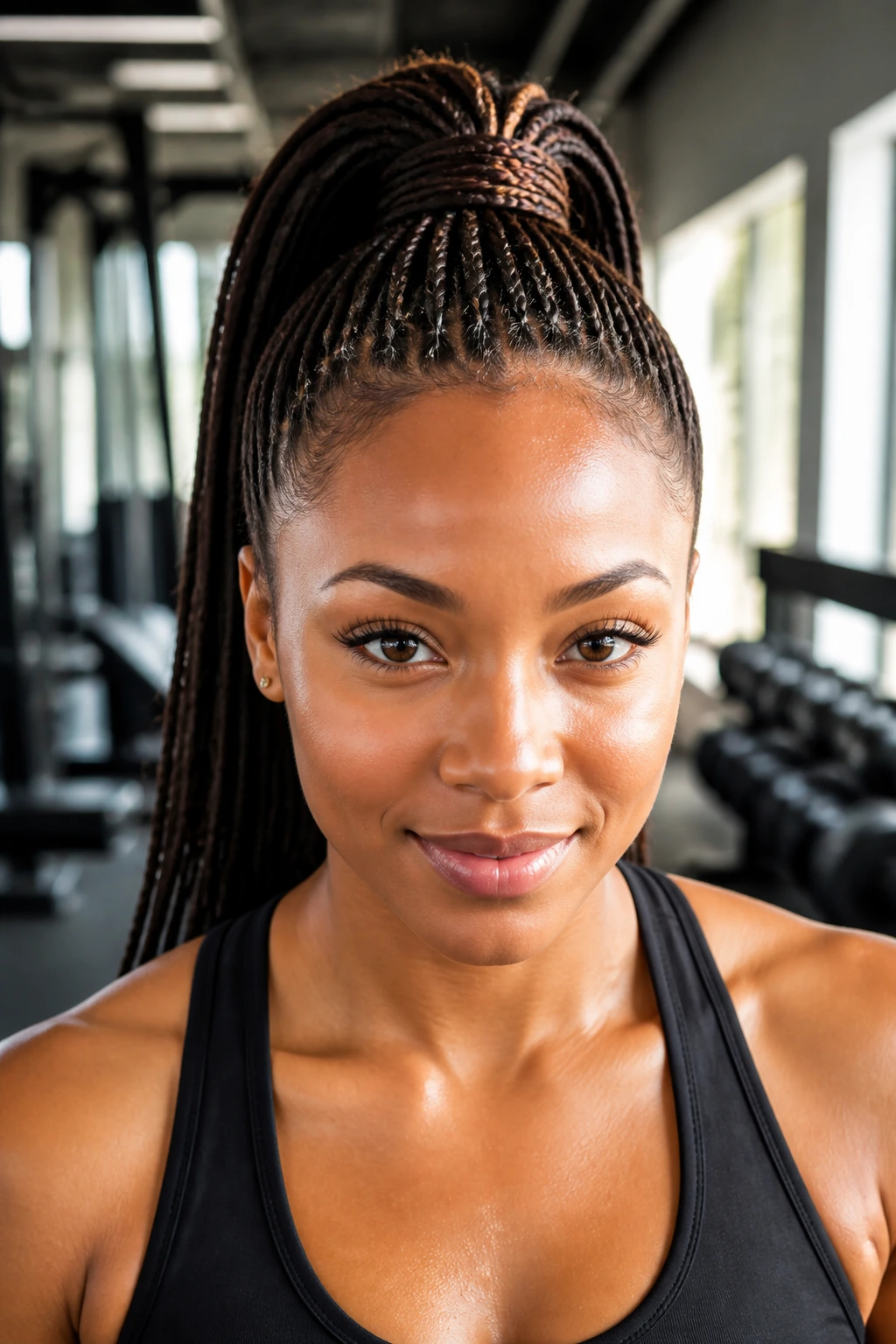
Take your standard ponytail up a notch by wrapping a single, small braid around the base of the hair tie. This hides the elastic and adds an extra layer of security. This style feels very streamlined and keeps the entire weight of the hair away from your neck and upper back. It is an excellent choice for rowing machines or cycling, where you don’t want any stray hairs catching on your gear or your skin. The wrapped base also prevents the hair from sagging as you move.
11. The Multi-Section Spaced Bun
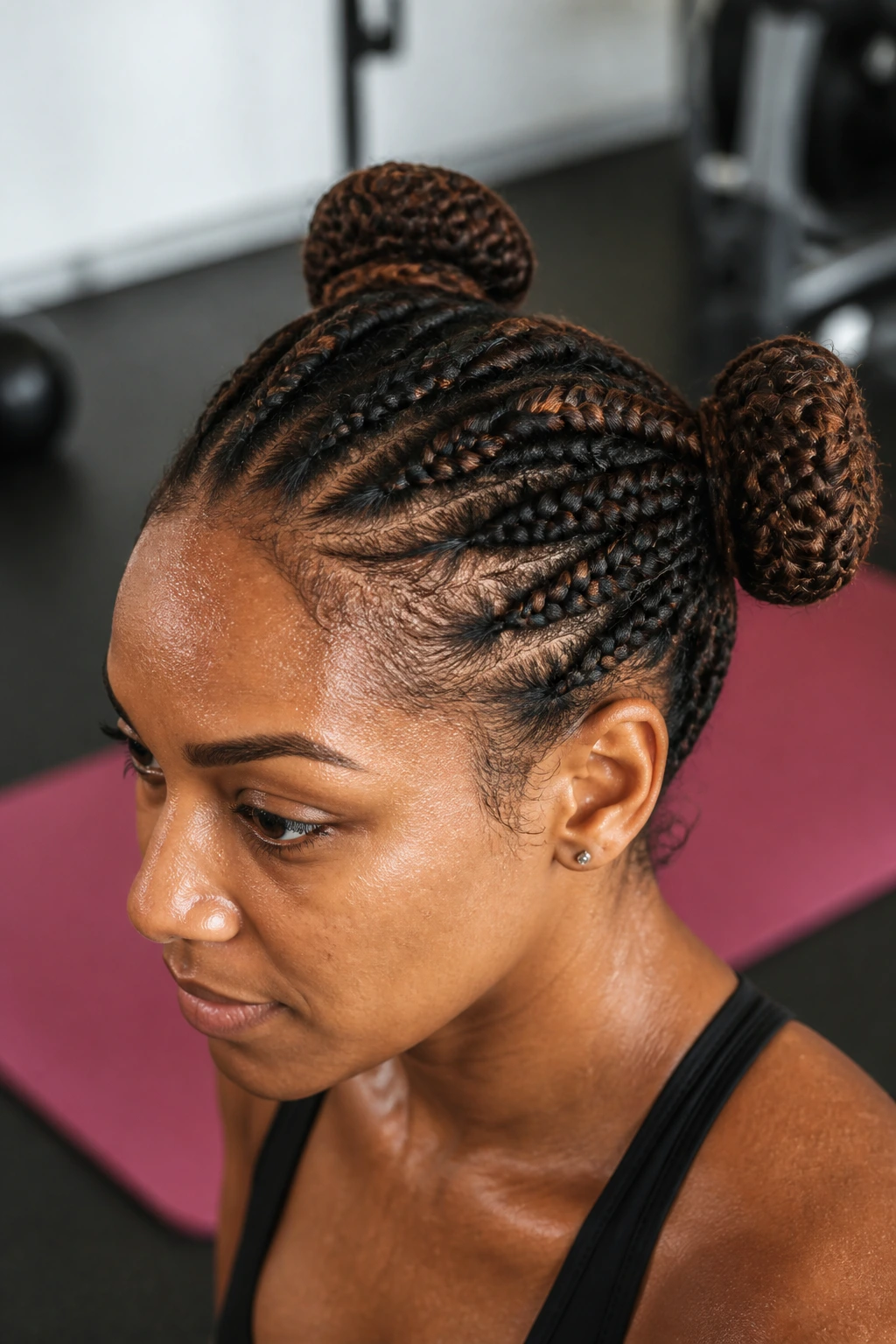
If your tree braids are particularly voluminous, a single bun might feel like a heavy anchor. Try splitting your hair into two sections—top and bottom—and creating two smaller, stacked buns. This distributes the weight more evenly across your head and provides a funky, sporty aesthetic. It keeps the hair off your neck, prevents it from falling forward, and holds up incredibly well through movements that require you to lie on your back, as the buns are positioned on the top and back-middle of your scalp.
12. The Messy Athletic Chignon
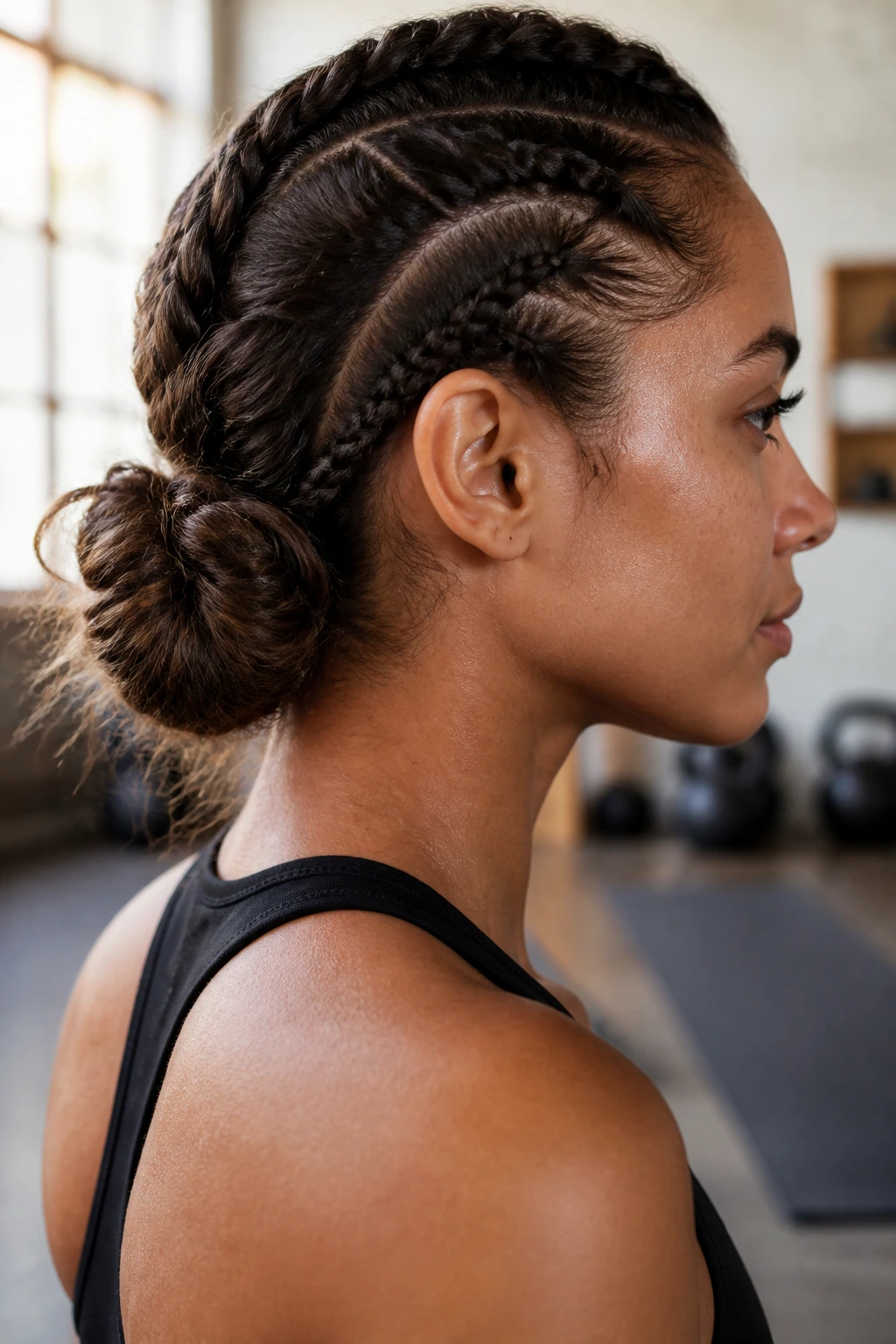
A chignon is essentially a loose, elegant bun, but you can “sport-ify” it by using a few extra hairpins or a thicker elastic. Gather your braids at the nape of your neck, twist them, and secure them into a low bun. Because tree braids have plenty of grip, you don’t need a million pins to hold it in place. It looks intentional and soft, making it perfect for light gym sessions like yoga or stretching. It also prevents the “hair-in-the-eyes” scenario that happens when you are in a downward dog position.
13. The Dutch Braid Into a Ponytail
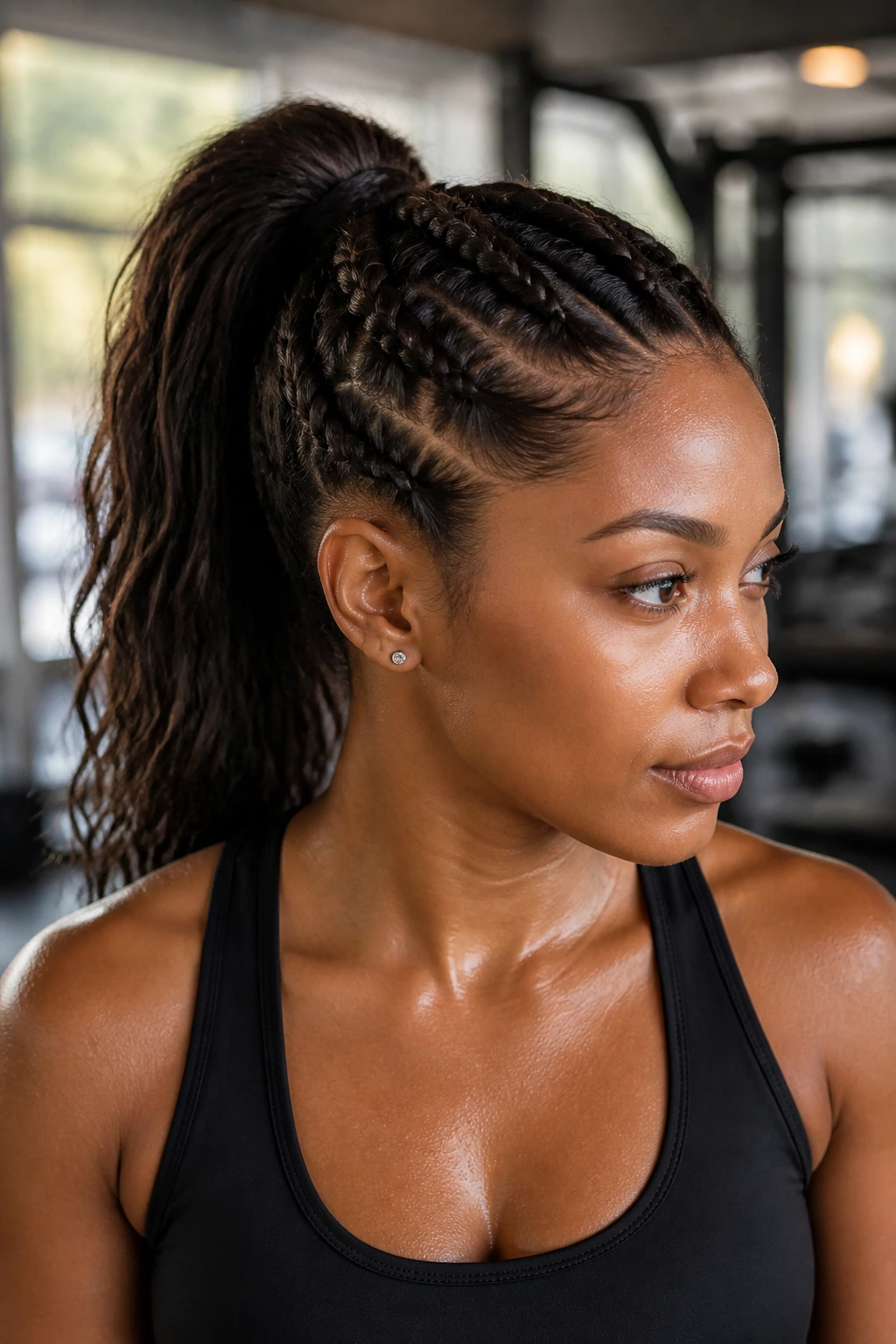
This is a hybrid style that combines a braided scalp section with a loose ponytail at the end. By braiding the front portion of your hair from the hairline toward the back of the crown, you ensure that your edges and baby hairs are securely tucked away. The rest of the hair is then gathered into a high or mid-level ponytail. This style is excellent for those who have a lot of new growth or shorter layers in the front that usually try to escape during a workout.
14. The Triple-Twisted Crown
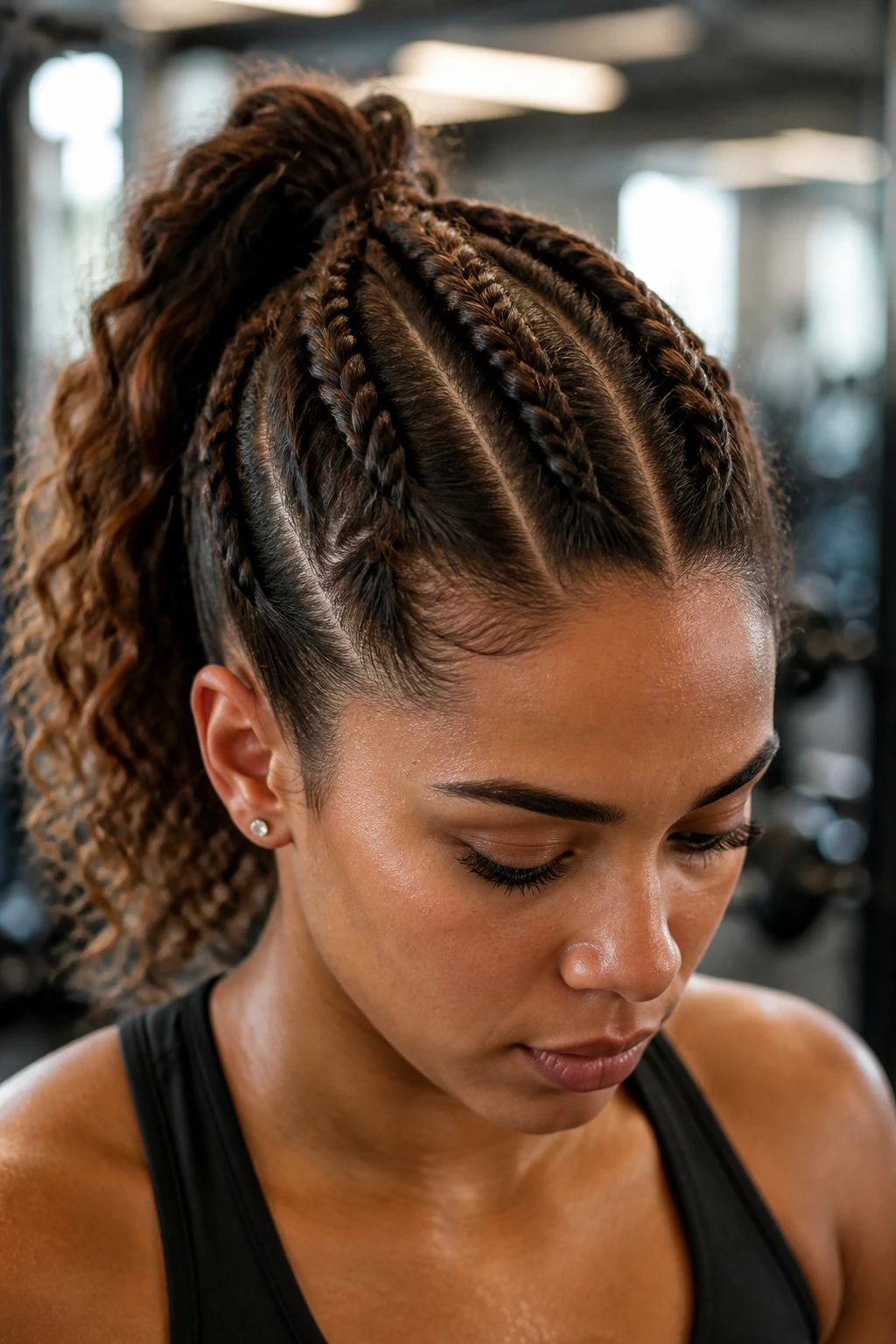
Take three medium-sized sections of your tree braids and twist them toward the back of your head. Once they meet at the crown, combine them into one secure ponytail. The twists add a decorative, geometric look that is much more interesting than a standard pull-back. This keeps the hair very tight to the scalp, minimizing any movement during vigorous exercises like running or jumping rope. The twists also help manage the volume of the hair, preventing it from feeling too puffy while you sweat.
15. The Half-French Braid Headband
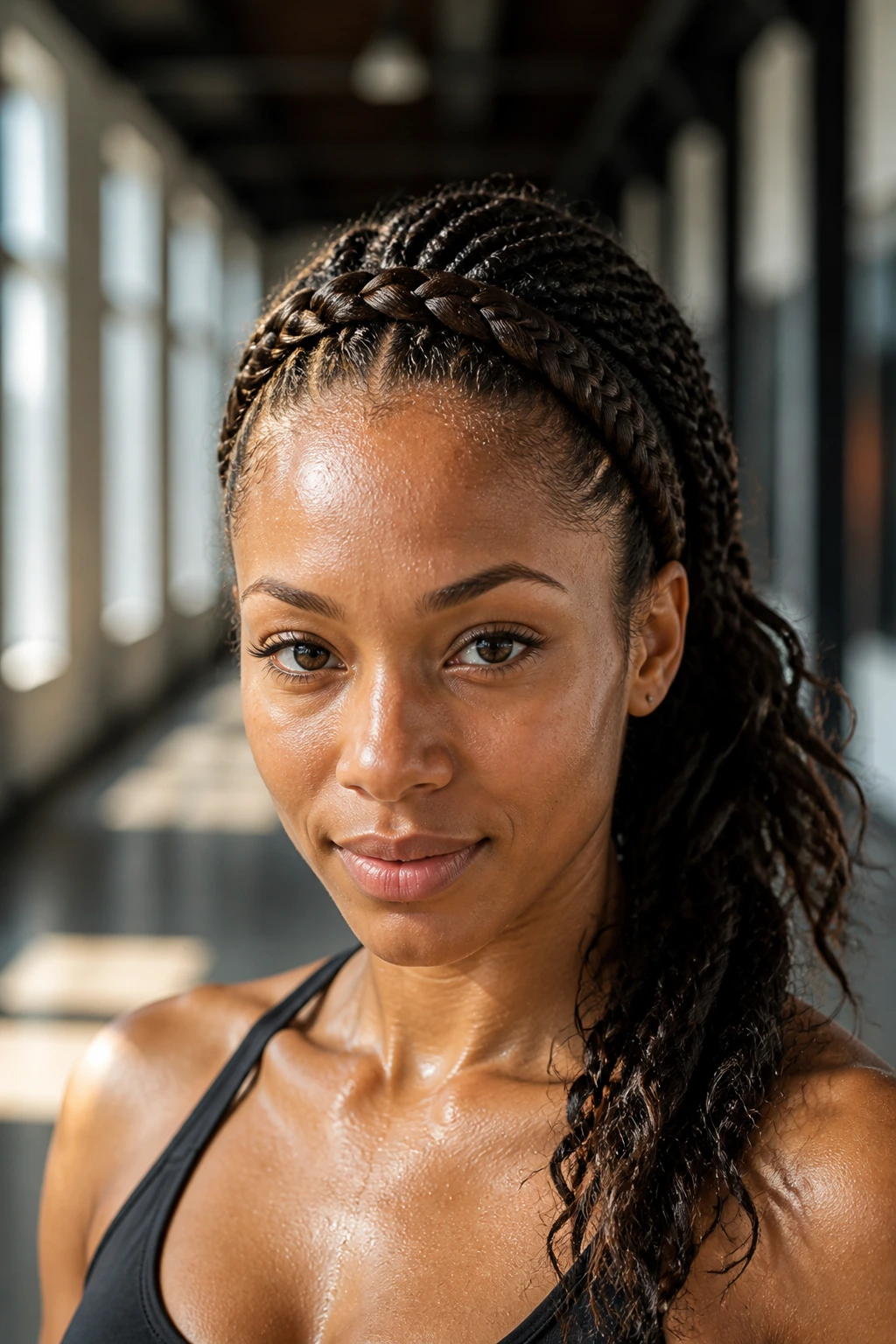
This is similar to the braided headband but uses a full French braid technique across the front of the head. By incorporating your tree braids into a braid that runs from one temple to the other, you create a built-in sweat barrier. This is highly effective if you find yourself using a cloth headband frequently; the braid serves the same function but stays perfectly in place without the need for constant adjustment. Once you cross the temple, let the remaining hair fall into a loose ponytail or a braid.
16. The Side-Braid Accent
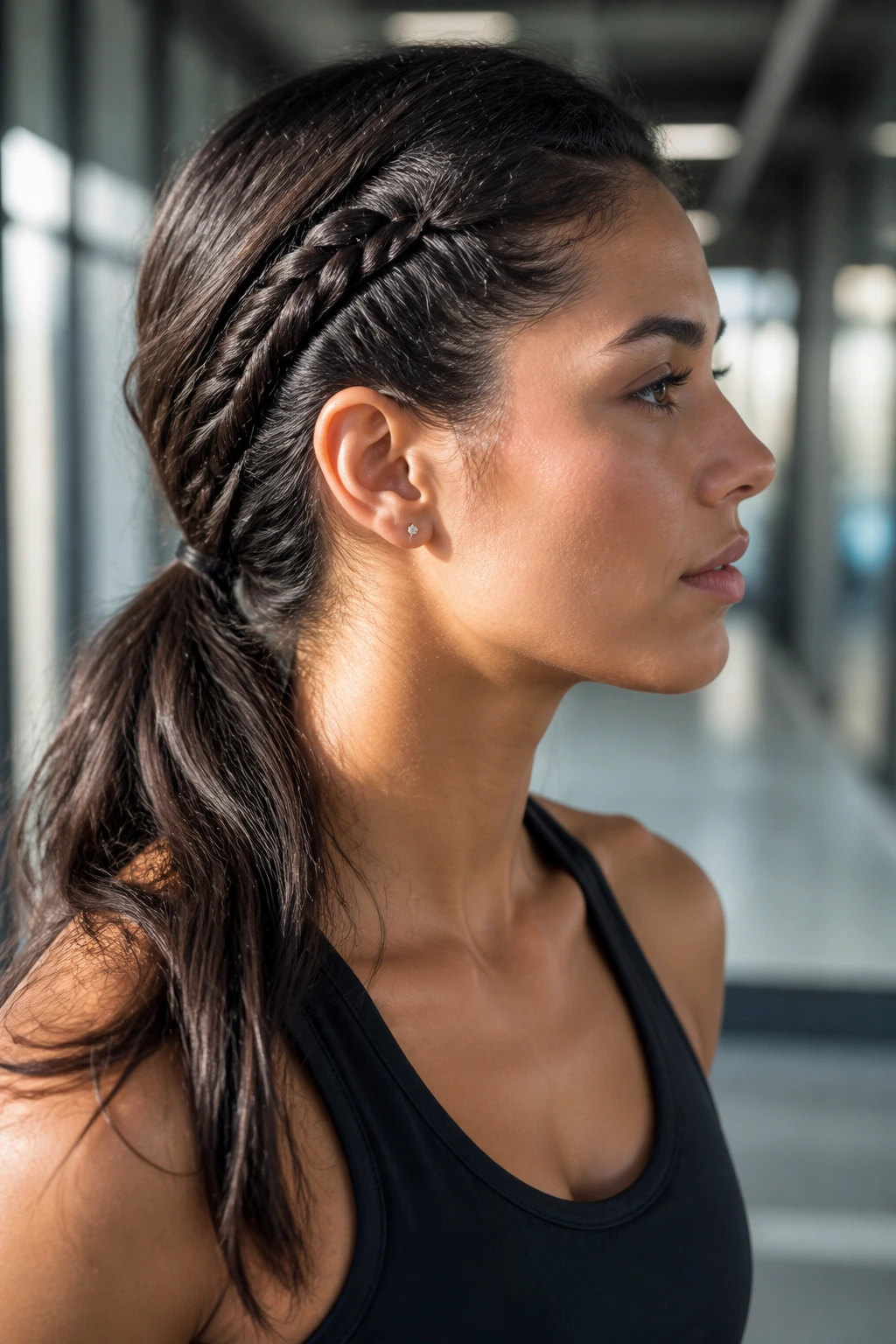
If you don’t want all your hair pulled back, try a single, thick side braid starting at the temple and running behind your ear. You can secure the end of this braid with a small, clear elastic and let the rest of your hair remain loose or in a low ponytail. This keeps the front area clear while allowing you to maintain the length of your tree braids elsewhere. It is a great compromise style for gym-goers who want to keep their hair out of their face but prefer a looser look for their overall aesthetic.
17. The Sleek Low Bun with a Silk Scrunchie
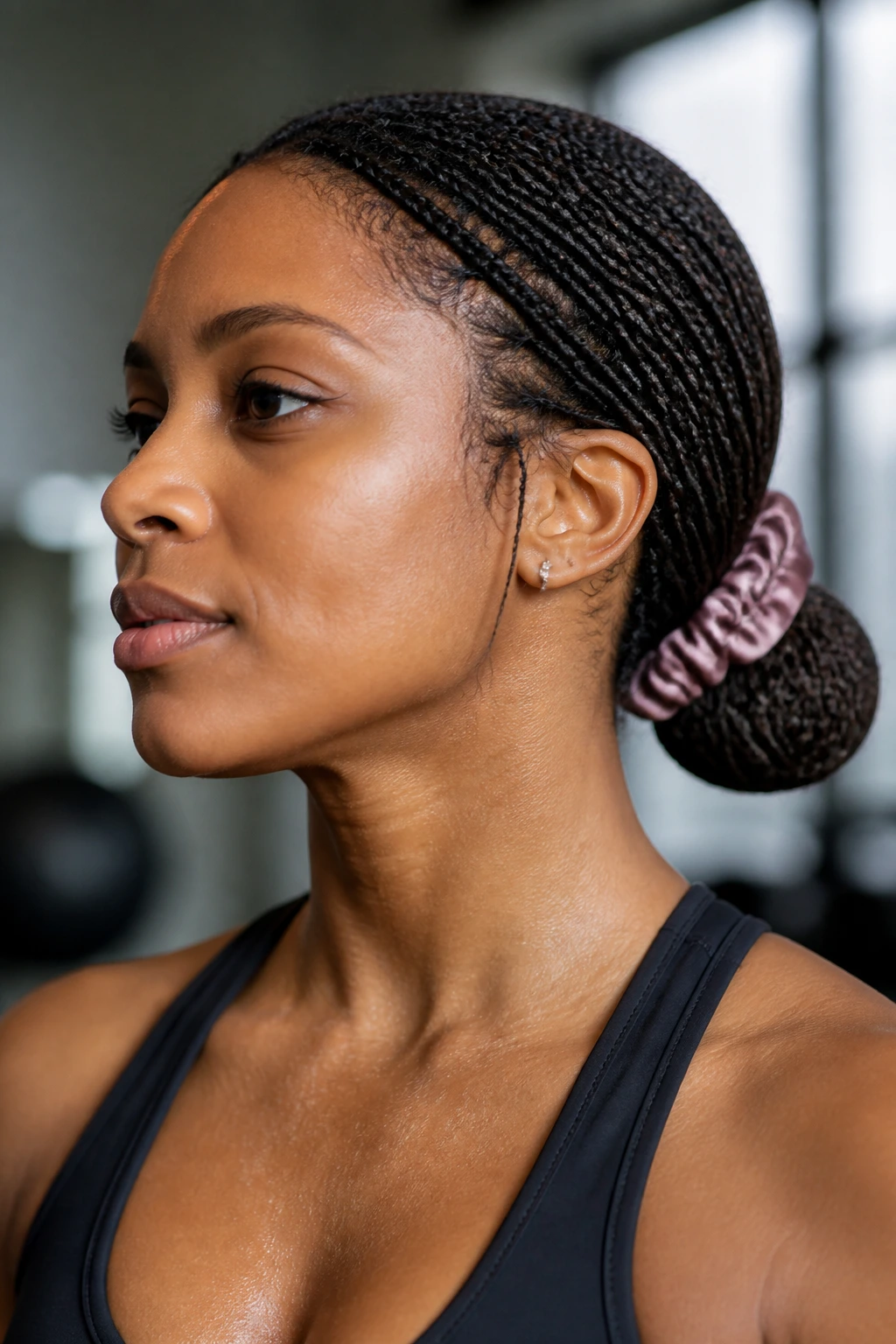
Silk or satin-lined scrunchies are essential for protecting the integrity of your tree braids, especially if you are prone to dryness or breakage. Pull your hair into a low, tight bun using a silk scrunchie, which reduces friction against the hair fibers. This style is incredibly gentle and won’t cause the “dent” in your hair that traditional elastics often do. It is ideal for long-duration workouts where you might be wearing your hair up for several hours.
18. The “Mohawk” Braid
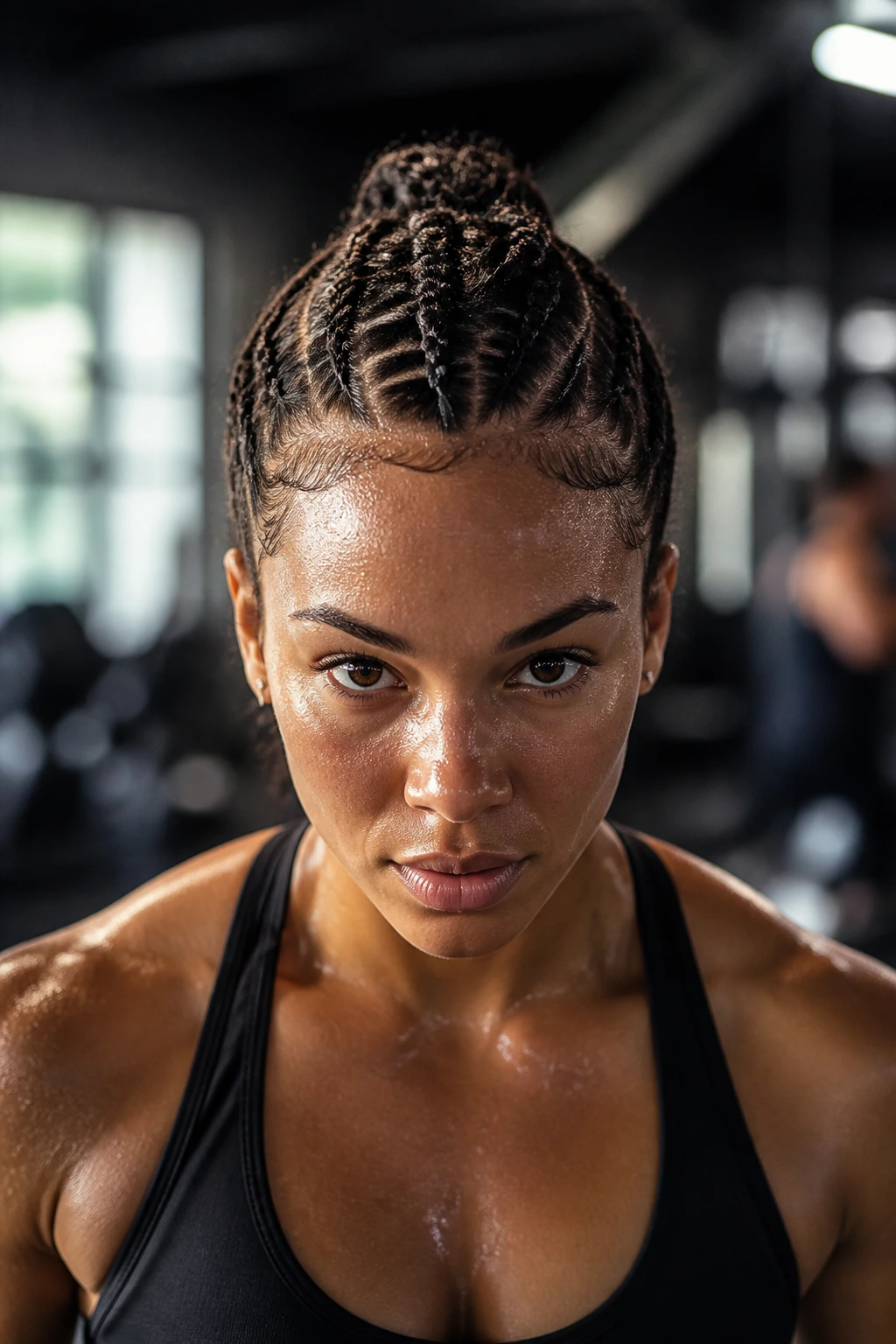
For a bold, sporty look, try sectioning the middle of your tree braids into a series of interconnected braids that run from the forehead to the nape of the neck. This creates a faux-hawk effect that keeps almost all of your hair centered and tight to the scalp. It is incredibly secure for high-impact training. Plus, it looks very intentional and modern, making it a great transition style if you have to head straight to brunch or errands after you leave the weight room.
19. The Knotted Low Ponytail
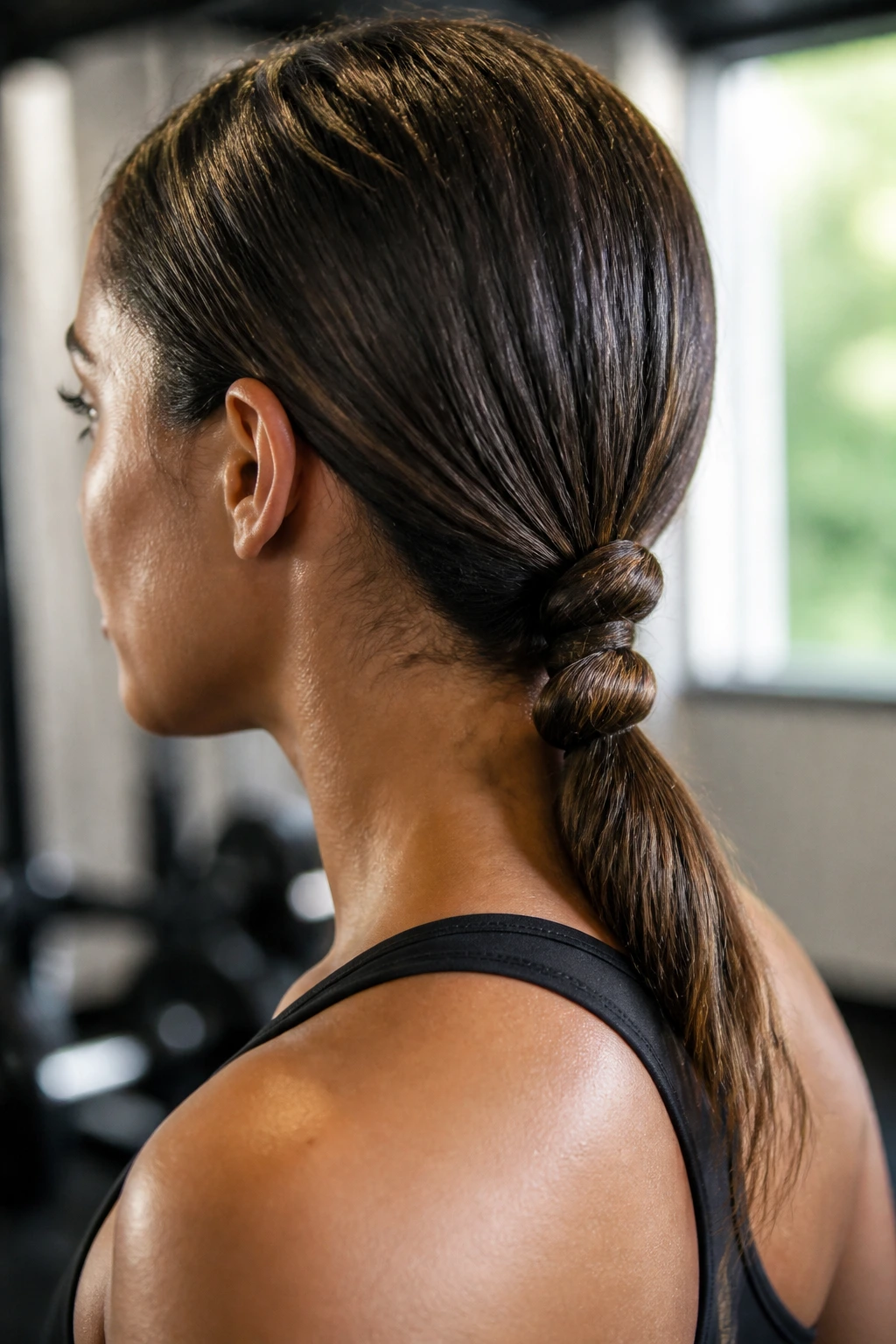
Create a more decorative low ponytail by taking two sections of your hair and tying them in a simple knot over your elastic. This adds a little bit of “designed” texture to your hair without requiring extra time or complicated tools. It keeps the hair sleek and uniform, and because the knot adds a bit of thickness around the ponytail base, it acts as a secondary anchor to prevent the ponytail from slipping down during a session.
20. The High-Volume Scarf Wrap
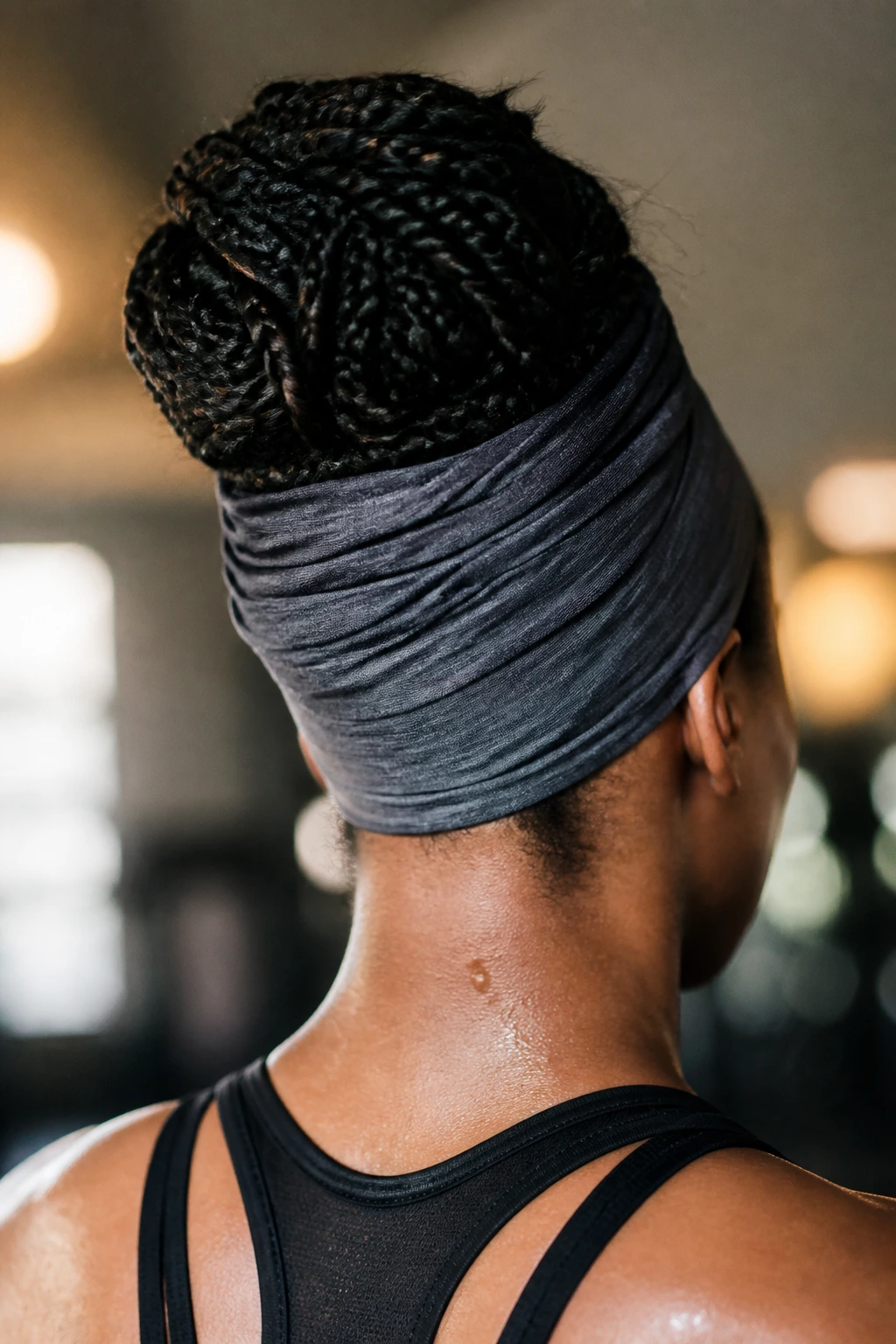
When you are doing a very sweaty workout and want to avoid any moisture absorption into your braids, a lightweight athletic scarf is a great addition. You can pull your tree braids into a high bun and then wrap a moisture-wicking scarf around your hairline and the base of the bun. This keeps your edges clean and prevents the salt from sweat from drying out your hair. It is the ultimate protective style for those who are training hard and want to minimize their post-workout hair maintenance.
Understanding Scalp Health During Workouts
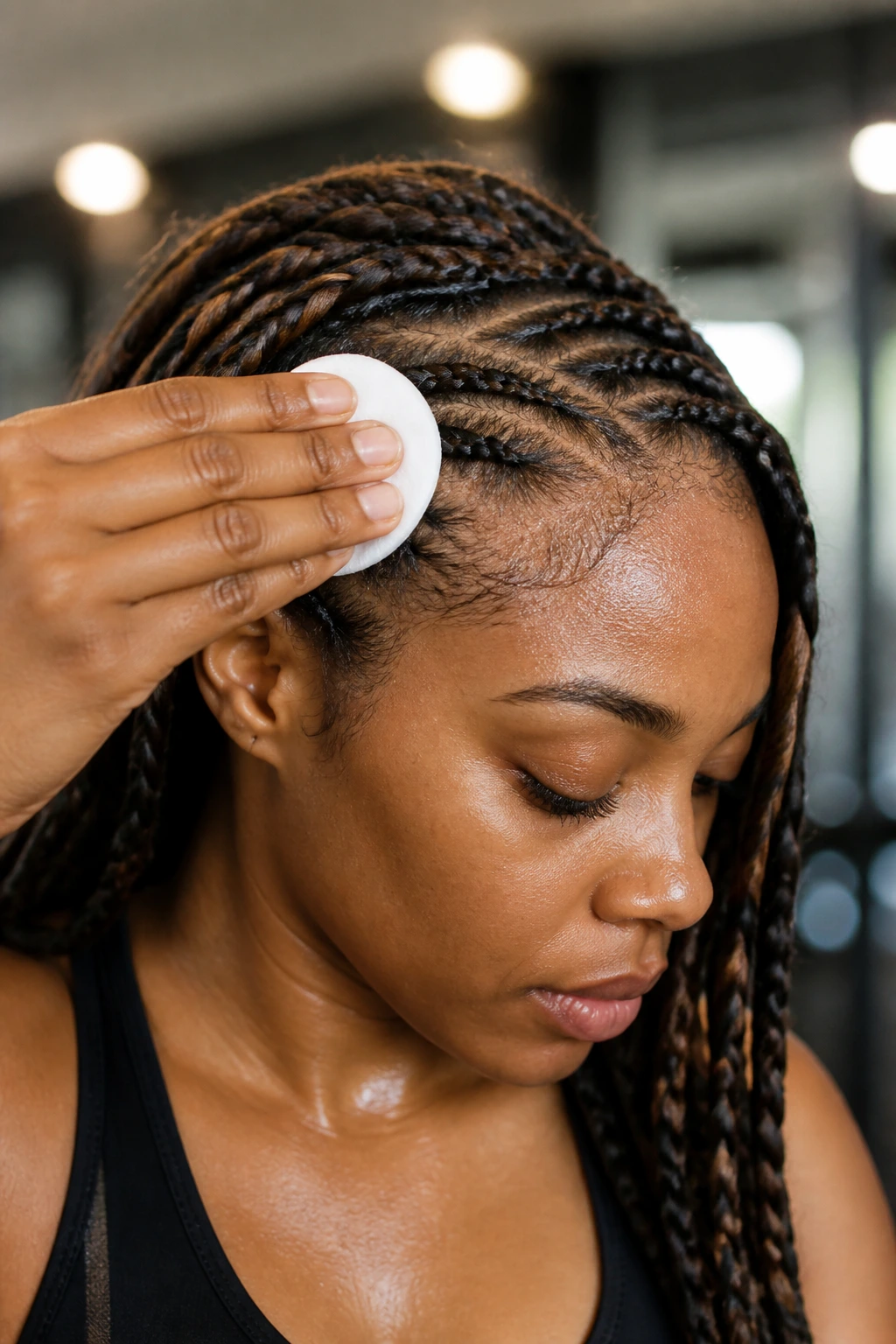
The foundation of any great tree braid style is the health of the scalp underneath. When you work out, your scalp produces sweat and oil, which can lead to buildup if not managed correctly. Because tree braids leave your cornrowed base accessible, you have a distinct advantage. Use a light astringent like witch hazel on a cotton pad to gently wipe down the cornrow parts after an intense session. This helps prevent irritation and keeps your scalp feeling fresh, ensuring your style lasts for the full duration of your installation.
Selecting the Right Elastic Materials
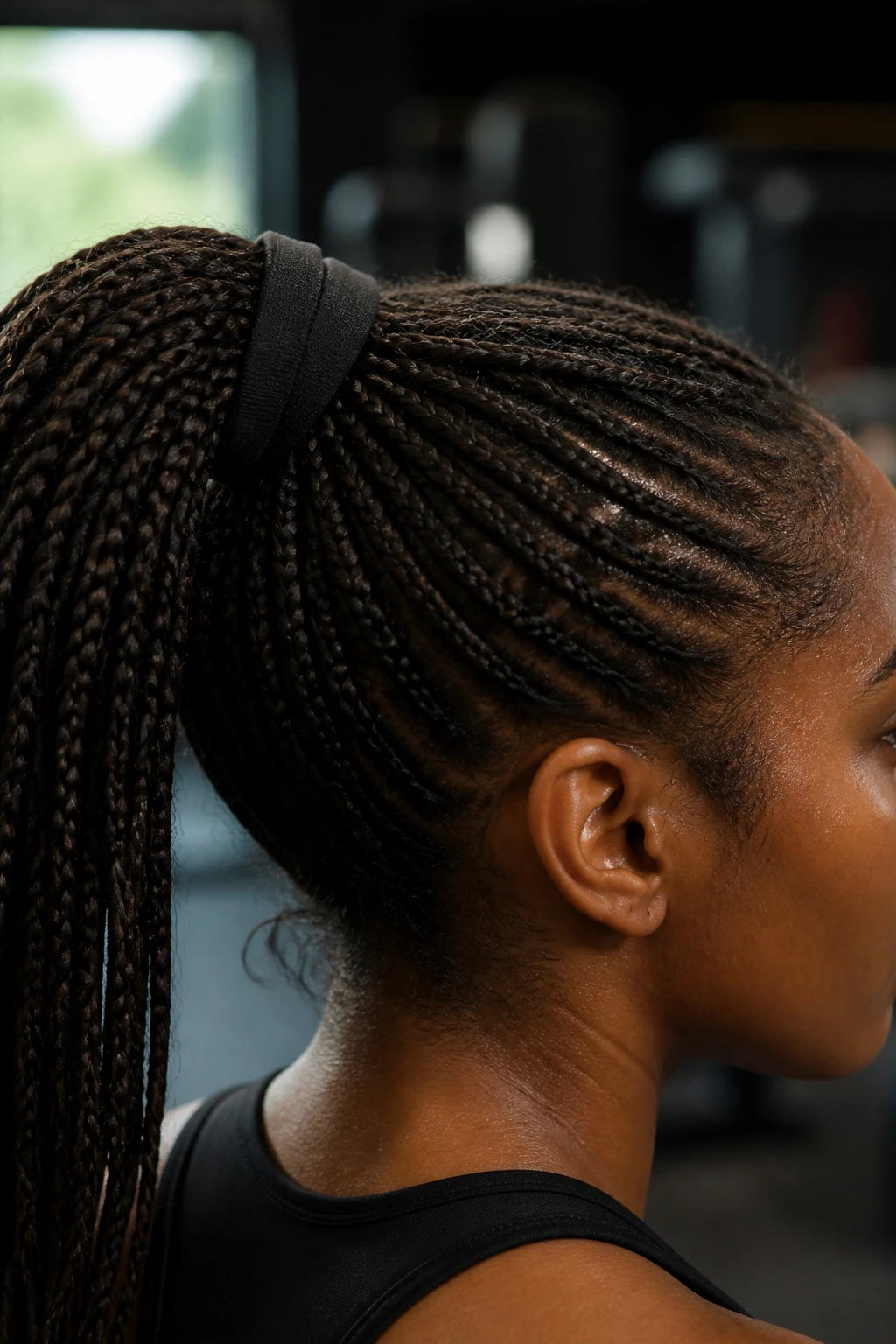
You might notice that the type of hair tie you use makes a significant difference in how your braids hold up over time. Avoid bands with metal crimps, as these are notorious for snagging synthetic hair and causing breakage. Instead, opt for seamless fabric elastics or coil-style hair ties. These options provide enough grip to keep a heavy ponytail in place without putting undue stress on the cornrow base. If you have particularly thick tree braids, you may need to double up on your elastics, but always prioritize materials that glide smoothly over the hair texture.
Protecting Your Edges
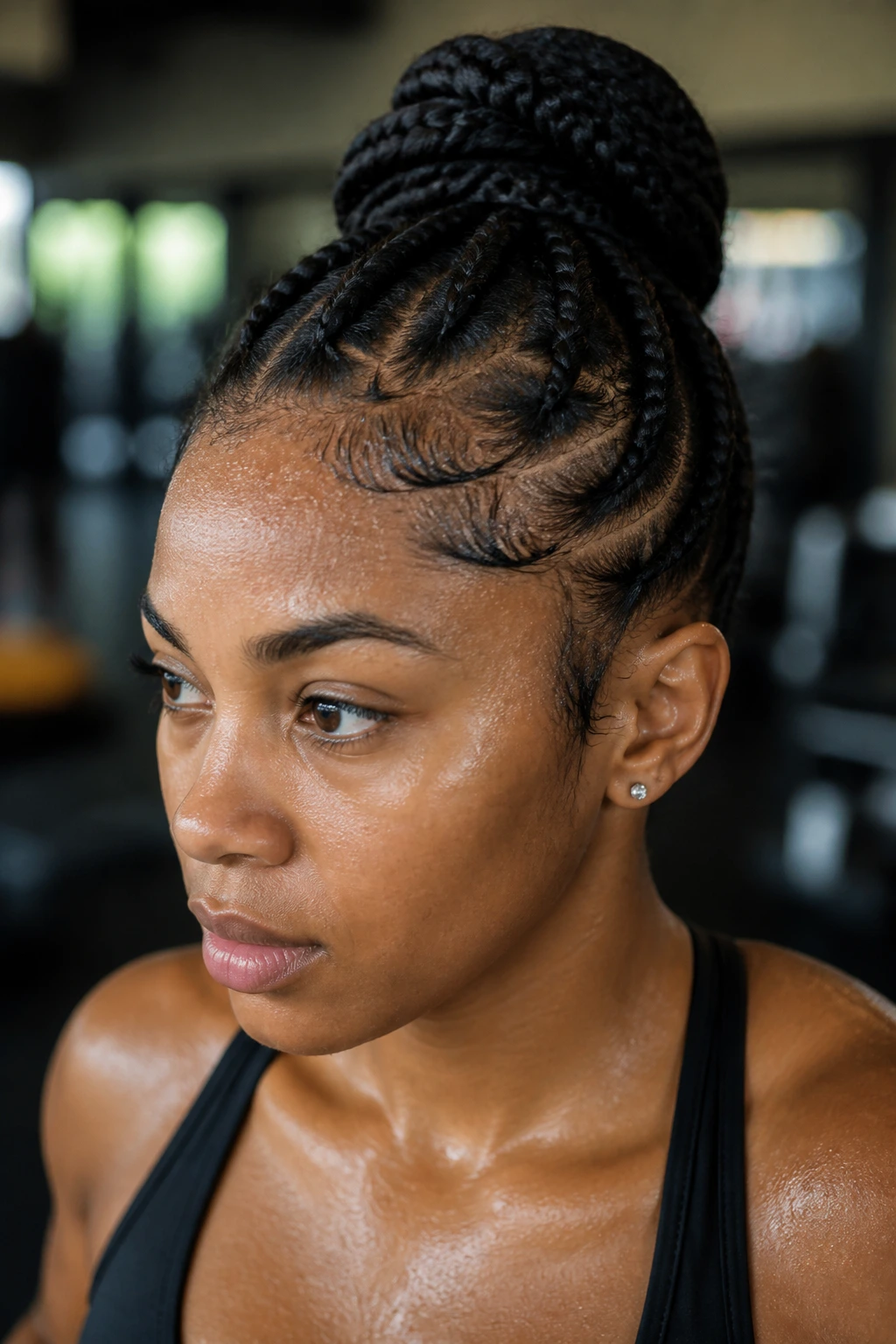
Your hairline is the most vulnerable area during a workout, especially if you are wearing headgear or sweatbands. Before you start your session, ensure your edges are lightly moisturized but not overloaded with product. Heavy gels can mix with sweat and create a sticky, uncomfortable residue. A very light, alcohol-free edge control or even a small amount of jojoba oil can keep baby hairs smooth without causing product buildup. If you notice your edges are getting wet from perspiration, use a soft microfiber towel to dab—not rub—the moisture away, which prevents the hair from frizzing excessively.
Post-Workout Care and Refreshing
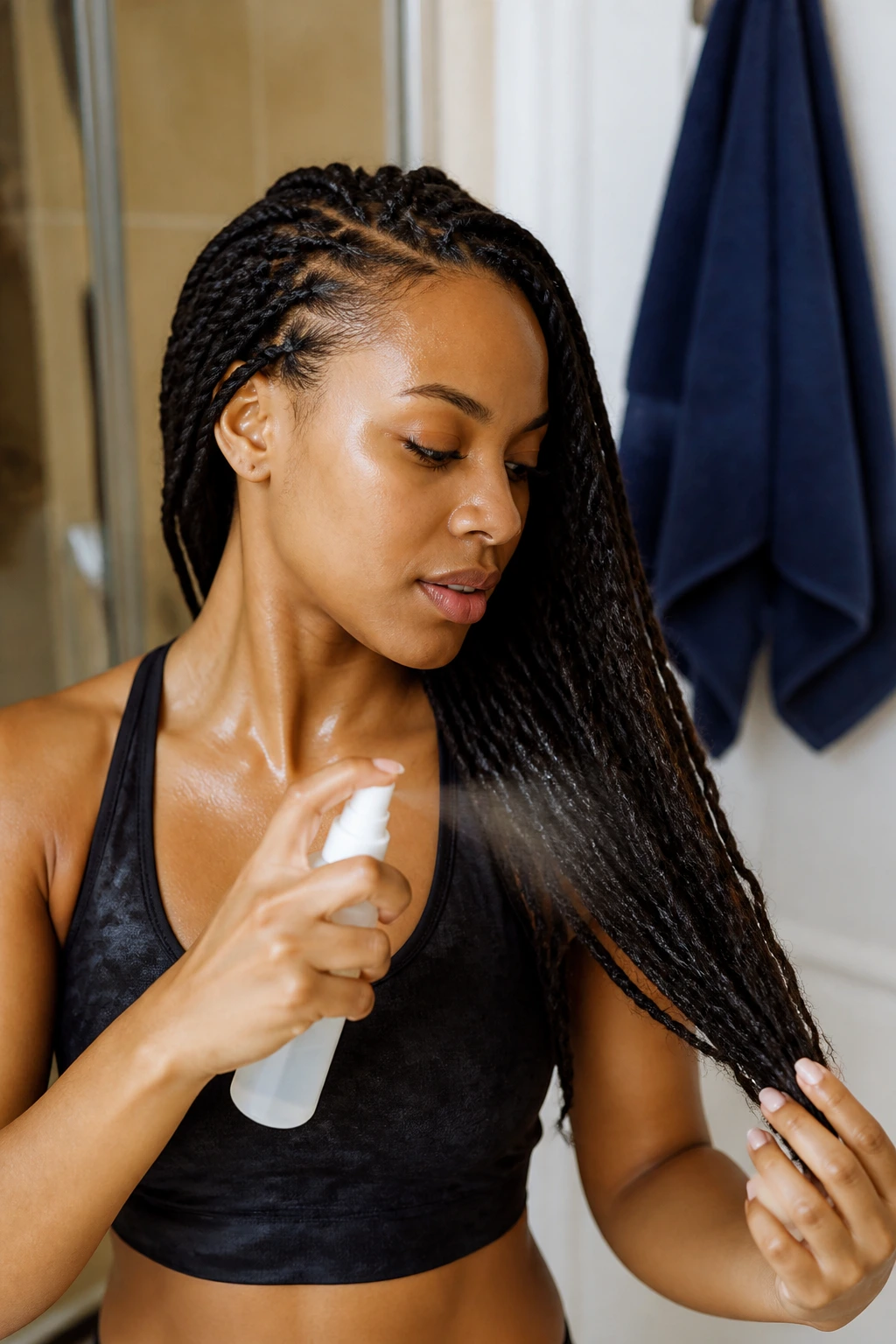
Once your workout is complete, it is important to give your hair a moment to breathe. If you have been wearing a high, tight bun, take your hair down as soon as you finish your cool-down. Allowing the hair to hang loose helps release the tension on your scalp and prevents the braids from feeling weighed down by sweat. If you plan to head out immediately, a quick misting of a leave-in conditioner—focusing only on the loose lengths of the tree braids—can help redefine the texture and tame any flyaways caused by movement. Remember that synthetic hair does not absorb oil the way natural hair does, so a little product goes a long way.
Final Thoughts
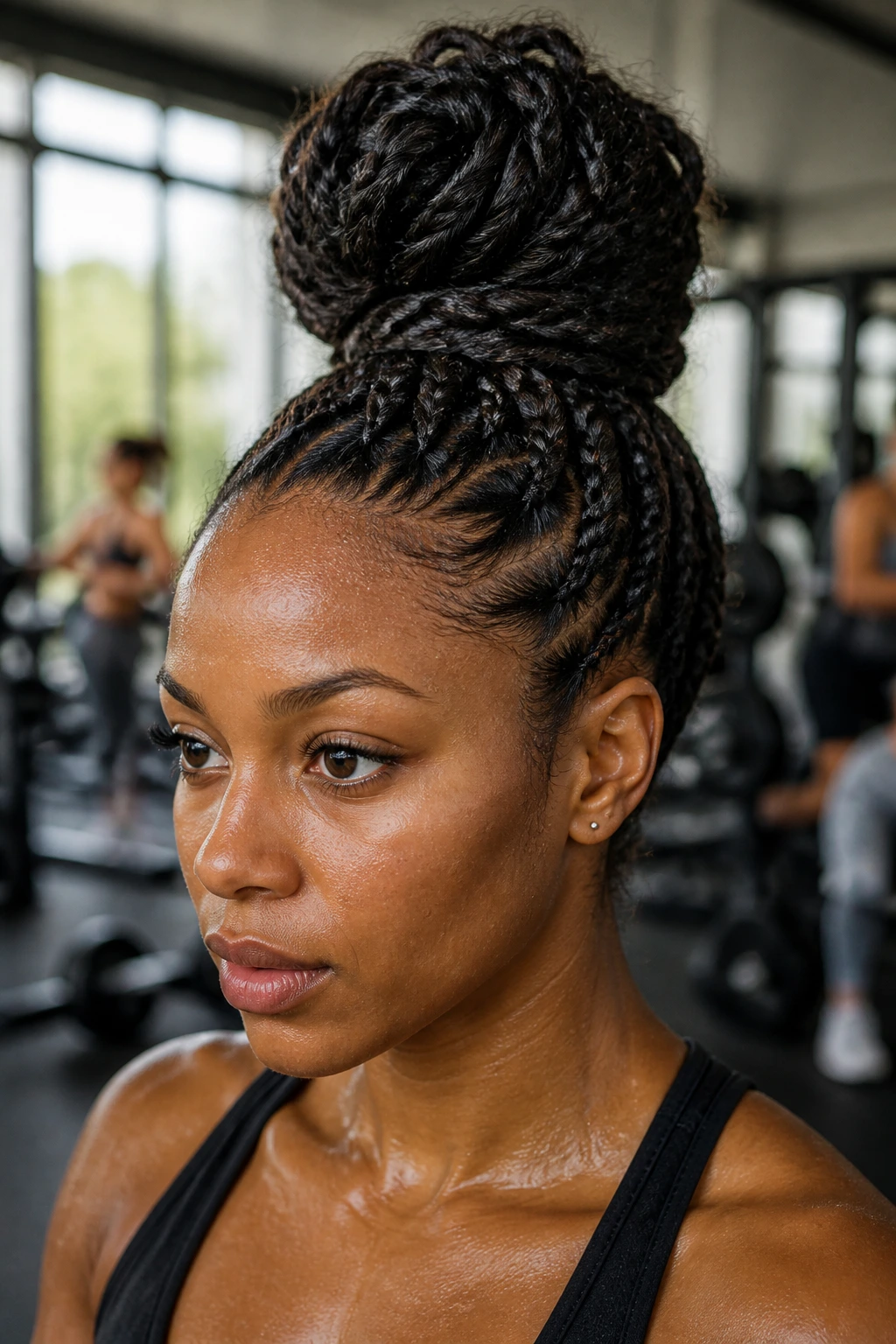
Finding the right way to manage your hair while working out is a balance of security, comfort, and style. Tree braids offer a versatile canvas that works for almost any intensity level, from low-impact mobility training to full-blown cardio circuits. By selecting styles that distribute the weight of the hair—like high buns or dual braids—you can ensure your hair stays exactly where you put it, allowing you to pour all your focus and energy into your performance.
Ultimately, the best style is the one that gives you the confidence to move without distraction. Experiment with these twenty options to see which ones feel most natural for your specific routine and hair length. With the right care and the right technique, your hair can remain a low-maintenance, high-style part of your daily fitness regimen, letting you look and feel your best at every stage of your progress.