

When you walk into a meeting room, you represent your work, your competence, and your attention to detail. Most of the focus is on your face and your posture, but as you turn to walk away or reach for your laptop, your hair becomes a statement piece all its own. For many, the “office look” often defaults to a messy bun or a basic ponytail, but the back of your hair matters just as much as the front. It is the silent communicator of your personal style.
Achieving a professional aesthetic isn’t just about smoothing out flyaways. It is about choosing a structure that holds up from your morning coffee until the final email is sent at the end of the day. A well-executed hairstyle that looks polished from behind signals that you have your life—and your deadlines—under control. If you have been looking for ways to elevate your daily routine, you have come to the right place. We are diving into twenty-one distinct ways to style your hair that work as hard as you do.
1. The Polished Low Chignon
The low chignon is the undisputed monarch of office hairstyles because it sits comfortably against your neck, making it ideal for long hours at a desk. You want to aim for a smooth, taut finish that gathers everything at the nape, eliminating the distracting “halo” of frizz that can appear under fluorescent office lighting.
Why It Works for the Office
This style keeps hair entirely off your shoulders, which is a major benefit if you are someone who tends to fidget with their hair while typing. It looks intentional, sophisticated, and remains perfectly intact even if you have to transition from a boardroom meeting to an evening networking event.
Achieving the Perfect Look
- Start by applying a light-hold smoothing cream to your damp hair before drying it.
- Gather your hair into a low ponytail and secure it with a clear elastic that matches your hair color.
- Twist the length of the ponytail into a neat coil around the base, pinning it securely with three or four U-shaped pins rather than standard bobby pins, which can pull and tear at the hair.
- Mist a light-hold finishing spray over the surface to capture any stray hairs.
2. The Sleek French Twist
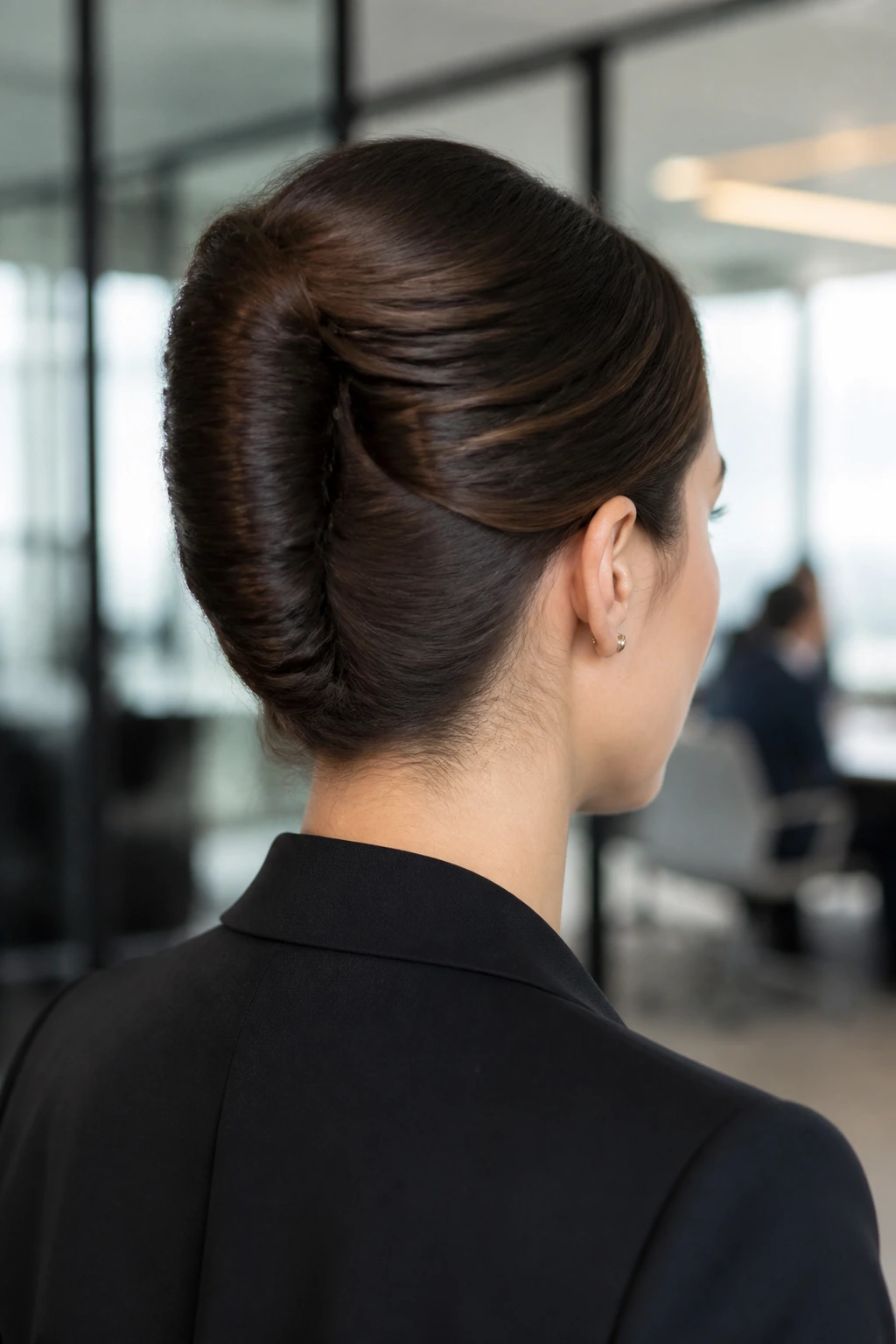
There is a timeless quality to the French twist that suggests authority and grace. While often reserved for evening galas, a tighter, more compact version of this vertical roll is incredibly practical for a corporate environment where you need a style that won’t budge.
Tips for Success
The key to a professional French twist is tension. If you pull too loosely, the weight of your hair will cause the roll to sag by midday. Aim to anchor the base of the twist with a series of sturdy, wide-set hairpins, and consider using a decorative barrette at the top if you want to add a touch of personality to your work attire.
3. The Braided Crown Wrap
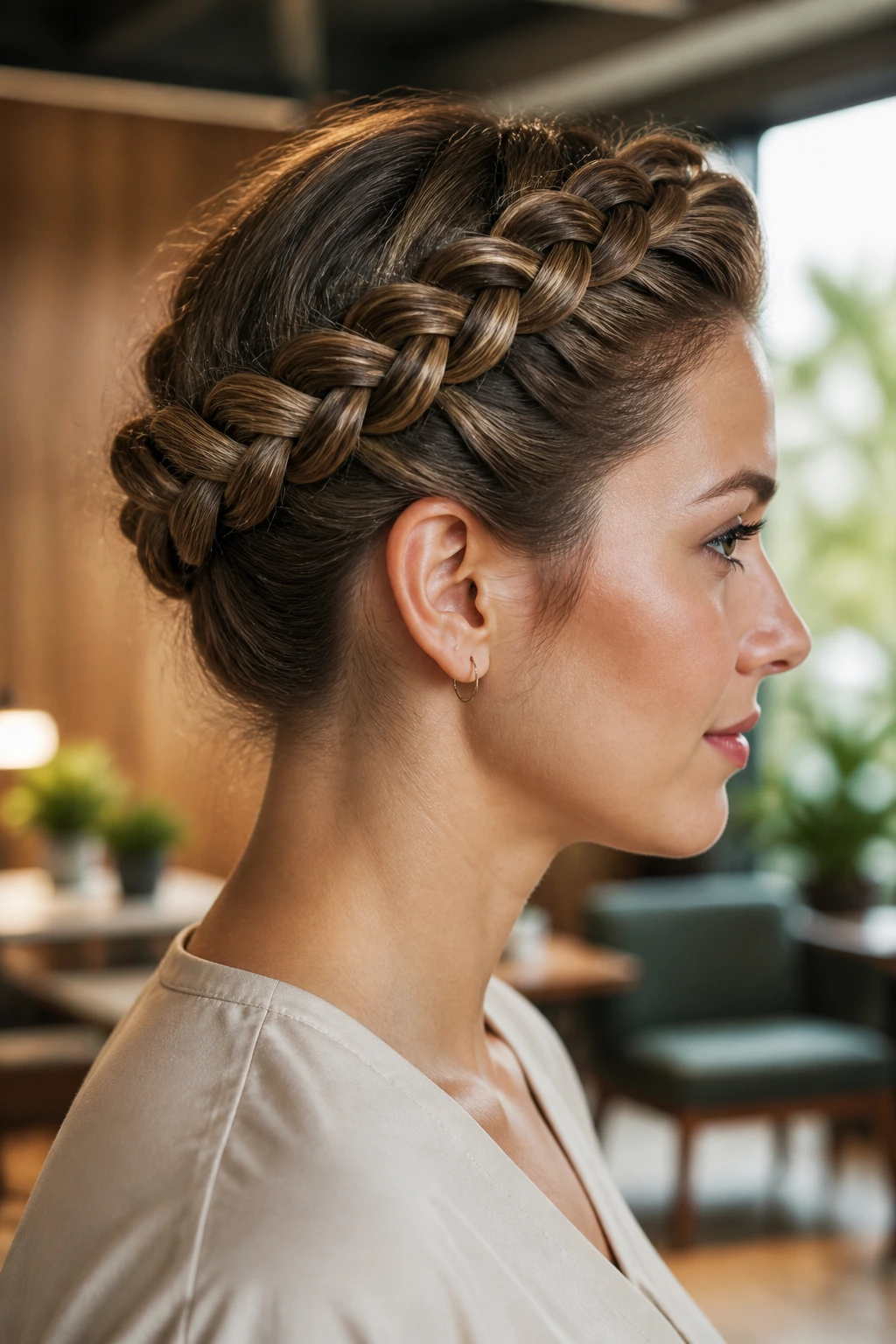
If you have longer hair and want to keep it out of your face, a crown braid is a fantastic way to distribute the weight of your hair evenly. It looks intricate enough to command attention but stays secure enough that you won’t need to touch your head once all morning.
Variations for Different Lengths
If your hair isn’t long enough to wrap all the way around, try two smaller braids starting from the temples and meeting in the center at the back. Secure them with a small, inconspicuous clip or a decorative pin. It adds a bohemian touch that remains strictly professional.
4. The Half-Up Dutch Braid
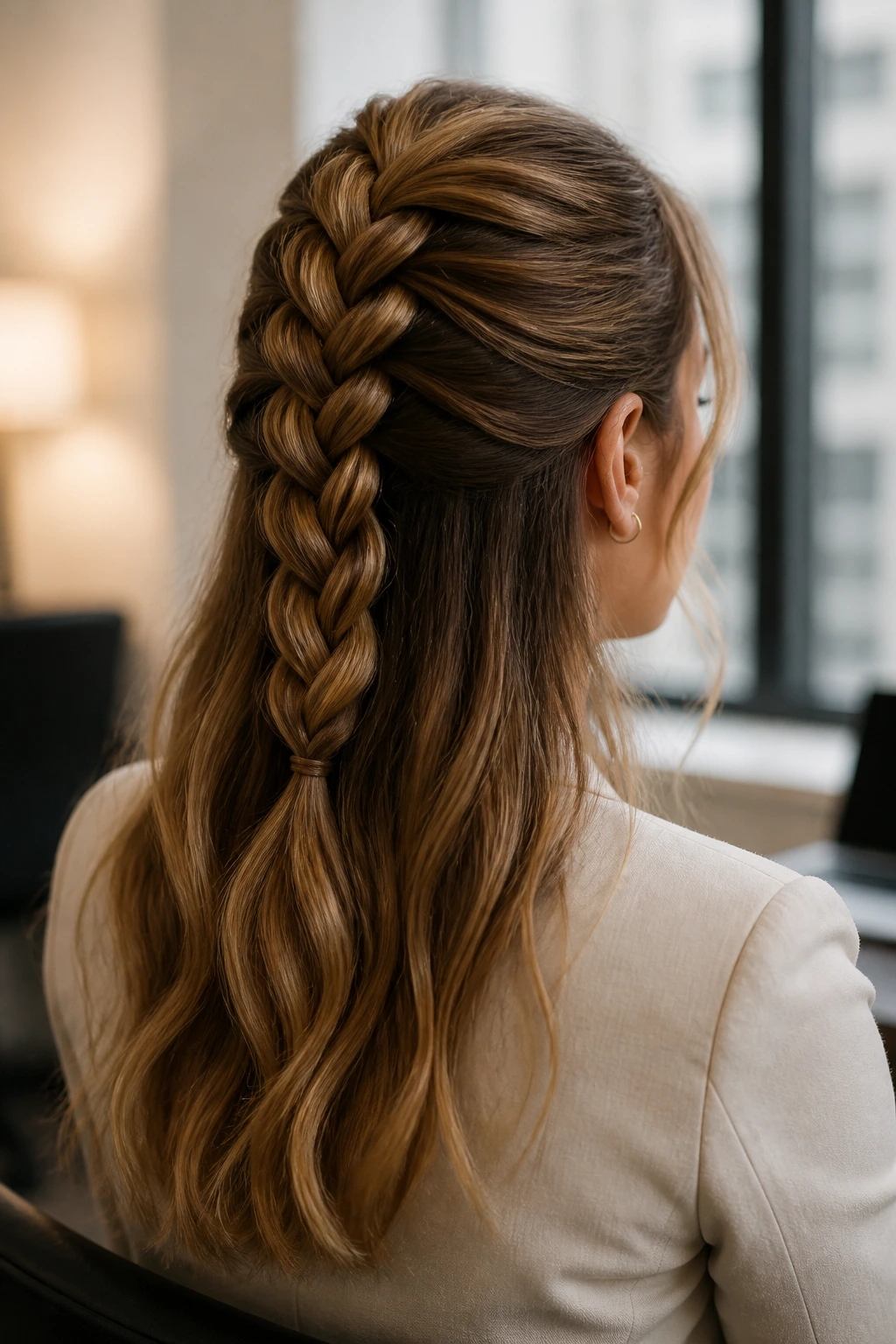
This style offers the best of both worlds—it keeps the front of your hair away from your eyes while allowing you to wear the rest of your hair down. A single, thick Dutch braid running down the center back provides a clean, structured appearance that feels more refined than a standard half-up ponytail.
How to Execute
Section off the crown and create a Dutch braid—where you cross strands under instead of over—to make the braid pop in 3D relief. Once you reach the mid-point of your head, secure it with a small elastic and let the rest of your hair flow naturally. It is a subtle way to showcase volume and texture without the mess.
5. The Messy-But-Secure Bun
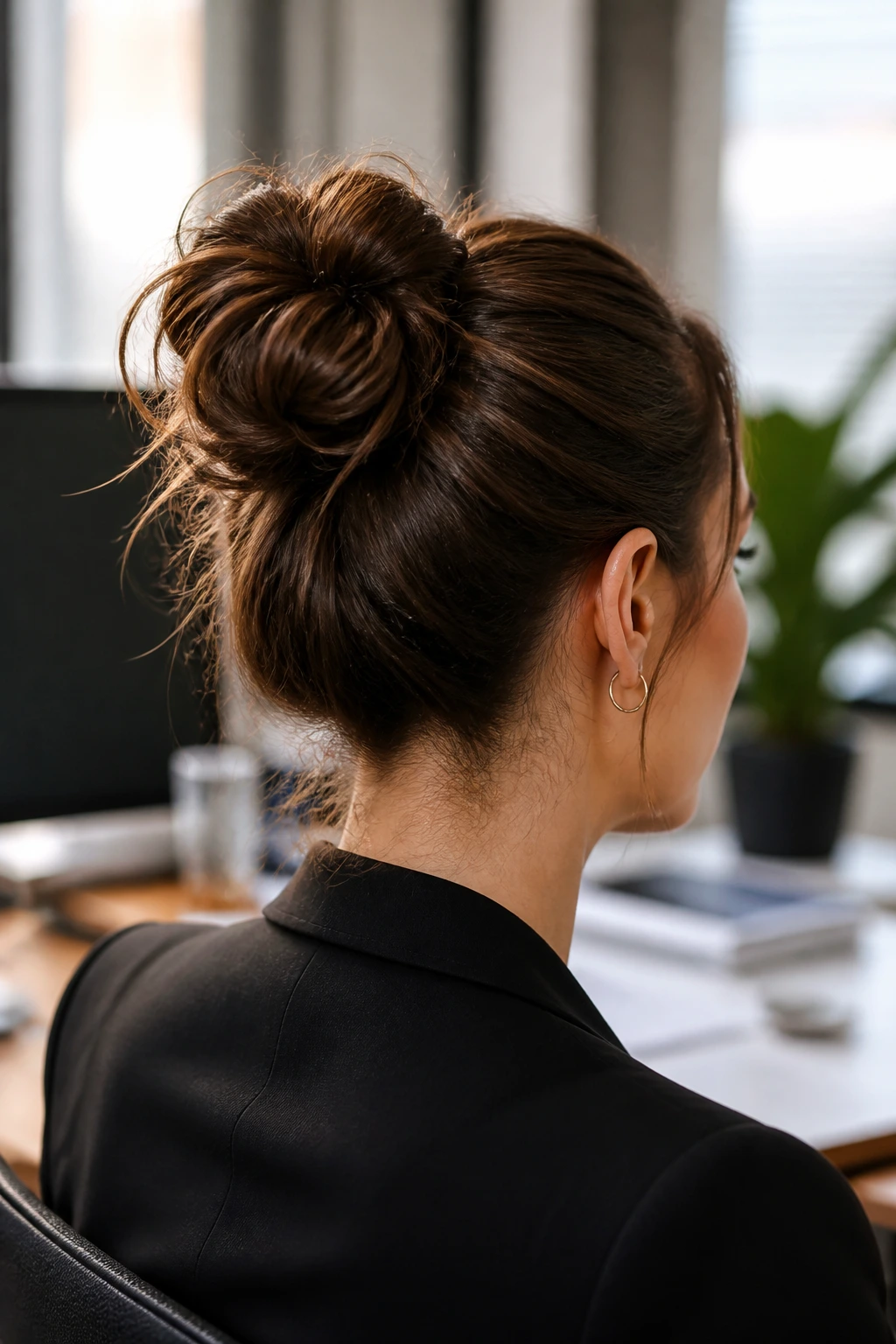
The “messy bun” is a dangerous game in an office, but a controlled version is perfectly acceptable. The goal here is to keep the bun centered and symmetrical, avoiding the “gym hair” aesthetic. Use a matte-finish hair donut to give the bun a consistent shape.
Avoiding the Gym Look
- Use a firm-hold styling mousse on your damp roots to build volume.
- Avoid loose strands falling around your face; keep the hairline crisp and clean.
- Place the bun at the crown of your head to create a more youthful, upright profile.
6. The Classic High Ponytail with a Wrap
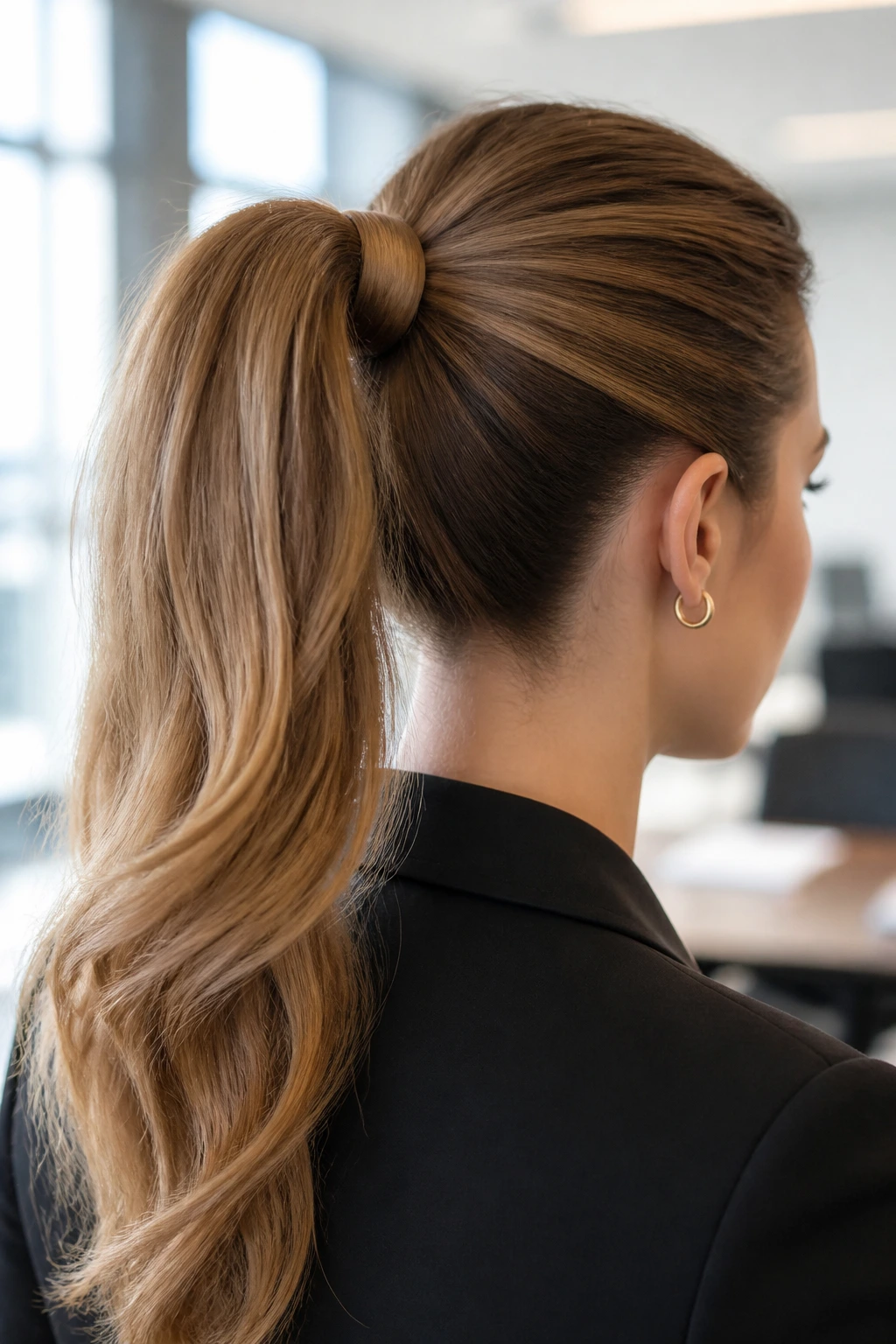
A high ponytail is efficient, but it can look like an afterthought. To elevate it for the office, take a small half-inch section of hair from underneath the ponytail and wrap it around the elastic, securing it with a hidden pin. This tiny detail makes the hairstyle look like it took twenty minutes, even if it only took two.
Pro Technique
Use a boar-bristle brush to gather your hair upward, as these brushes are superior at grabbing short flyaways and directing them toward the base of the ponytail. A clean, pulled-back look is the hallmark of a high-functioning professional appearance.
7. The Double-Knotted Low Bun
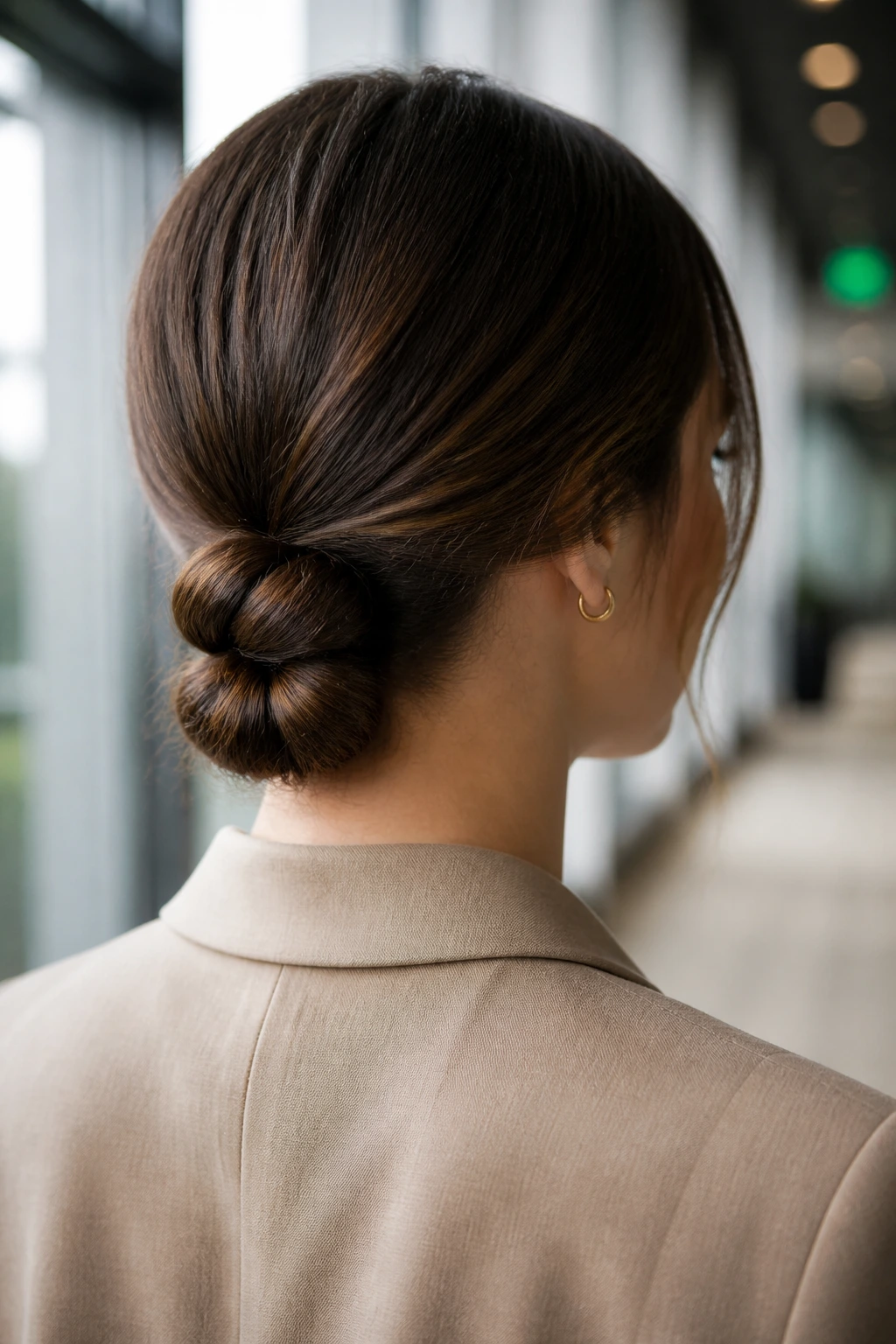
This is an incredibly modern, minimalist style that works exceptionally well on straight, fine hair. By splitting your low ponytail into two sections and tying them in a simple knot—or two—before pinning, you create a complex-looking texture that appears far more expensive than it is.
Why This Style Succeeds
It utilizes the hair itself to create volume, meaning you do not need as many heavy accessories. It is a lightweight style that puts less pressure on your scalp, which helps prevent those late-afternoon tension headaches that often come with tight high ponies.
8. The Twisted Side-Sweep
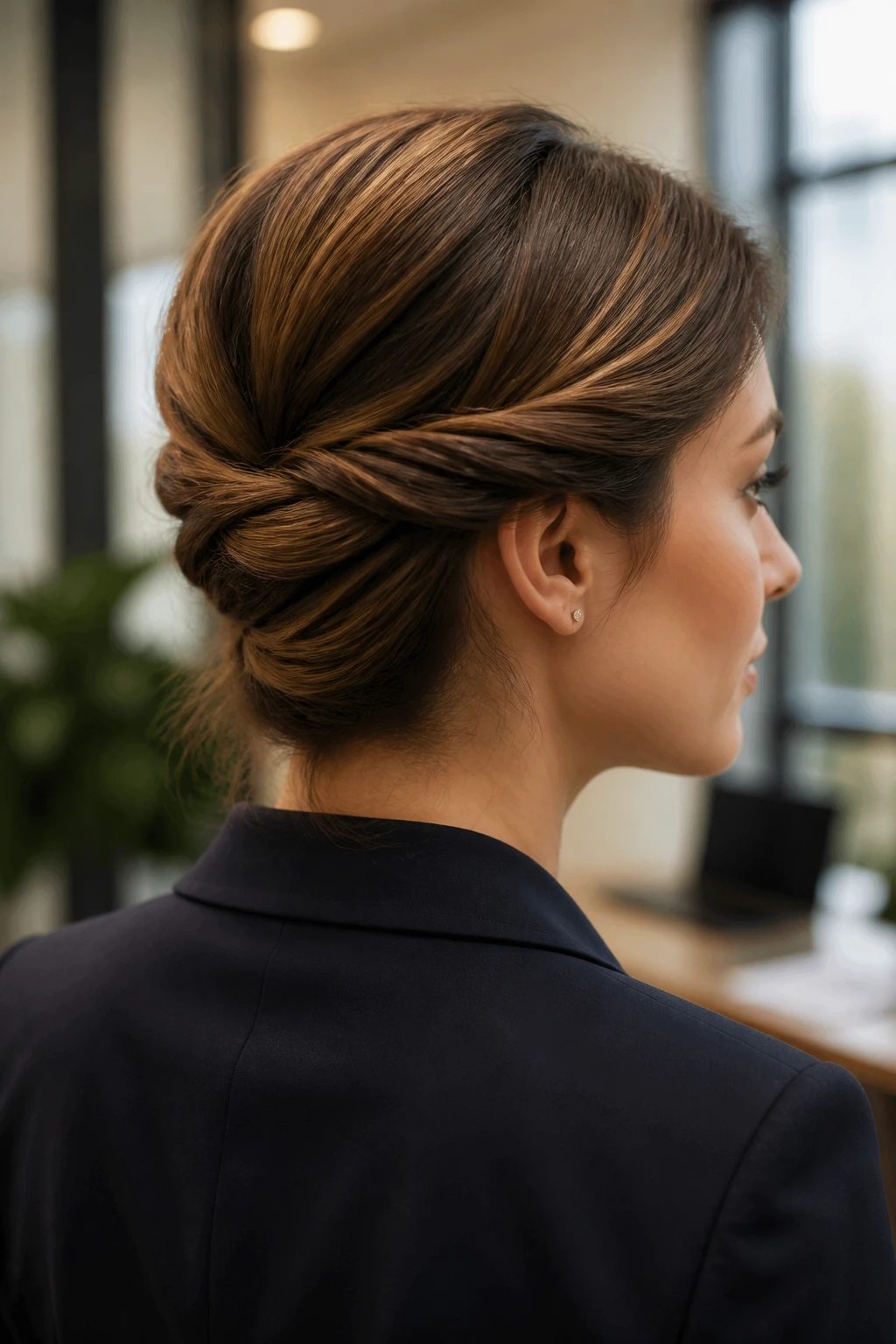
When you want to wear your hair down but keep it looking tidy, a side-sweep with a twist is the perfect middle ground. Gather a section of hair from one side of your temple, twist it loosely toward the back, and pin it near the nape.
Pairing with Professional Wear
This style looks excellent with collars or high-neck sweaters, as it directs the hair away from your shoulders, preventing it from bunching up. It is a soft, approachable look that doesn’t sacrifice professionalism for comfort.
9. The Bubble Ponytail
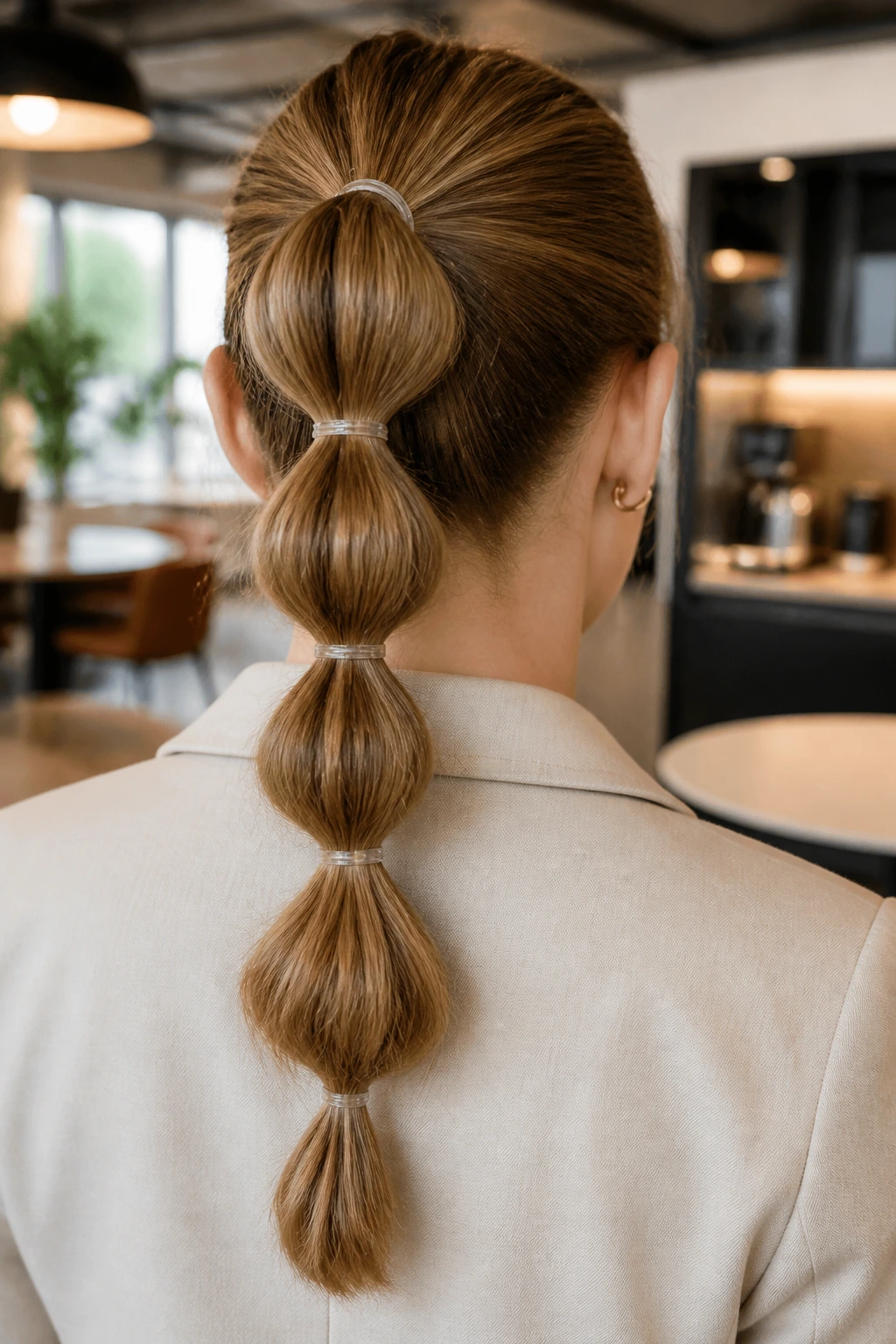
The bubble ponytail is a playful take on the standard look that remains surprisingly elegant when executed with smooth, uniform sections. By placing elastics every two inches down the length of your ponytail and gently “fluffing” the sections between them, you create a geometric shape that looks clean and architectural.
Maintenance Tips
Use clear elastics to keep the focus on the hair itself rather than the hardware. If your hair is prone to static, run a tiny amount of hair oil between your palms before smoothing each “bubble” to keep the silhouette sharp and professional.
10. The Interlocking Clip Style
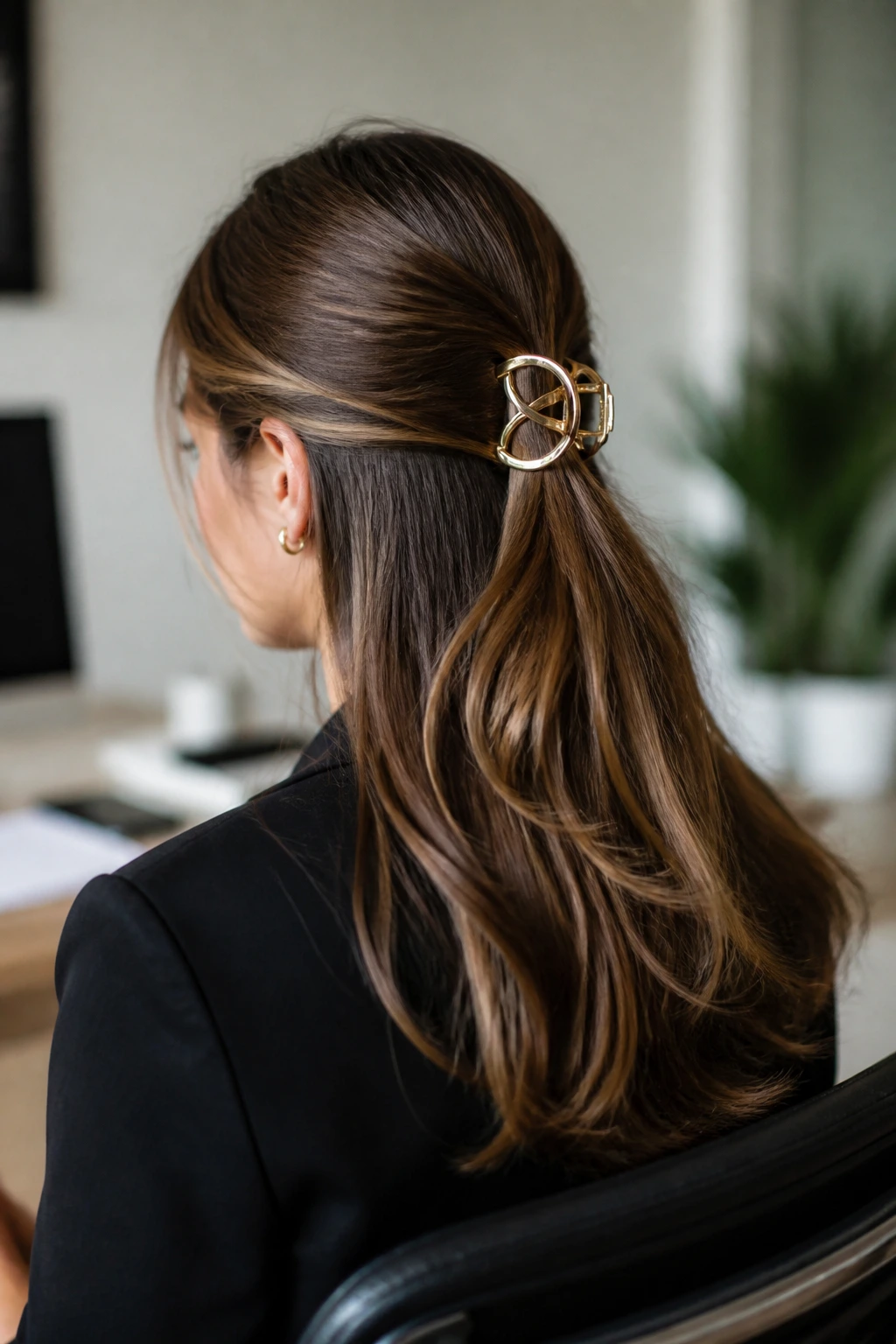
Sometimes the best styles don’t require elastics at all. A simple, large metal hair claw can be used to pull your hair back into a structured, half-up shape that is both secure and stylish. The metal finish adds a polished, office-appropriate shine that plastic clips often lack.
Selecting the Right Clip
Choose a clip that matches your hair color if you want the style to blend in, or go for a matte gold or silver finish if you want the accessory to serve as a piece of jewelry. The back view will be a clean, folded transition that keeps the hair off the nape.
11. The Wrapped Fishtail Braid
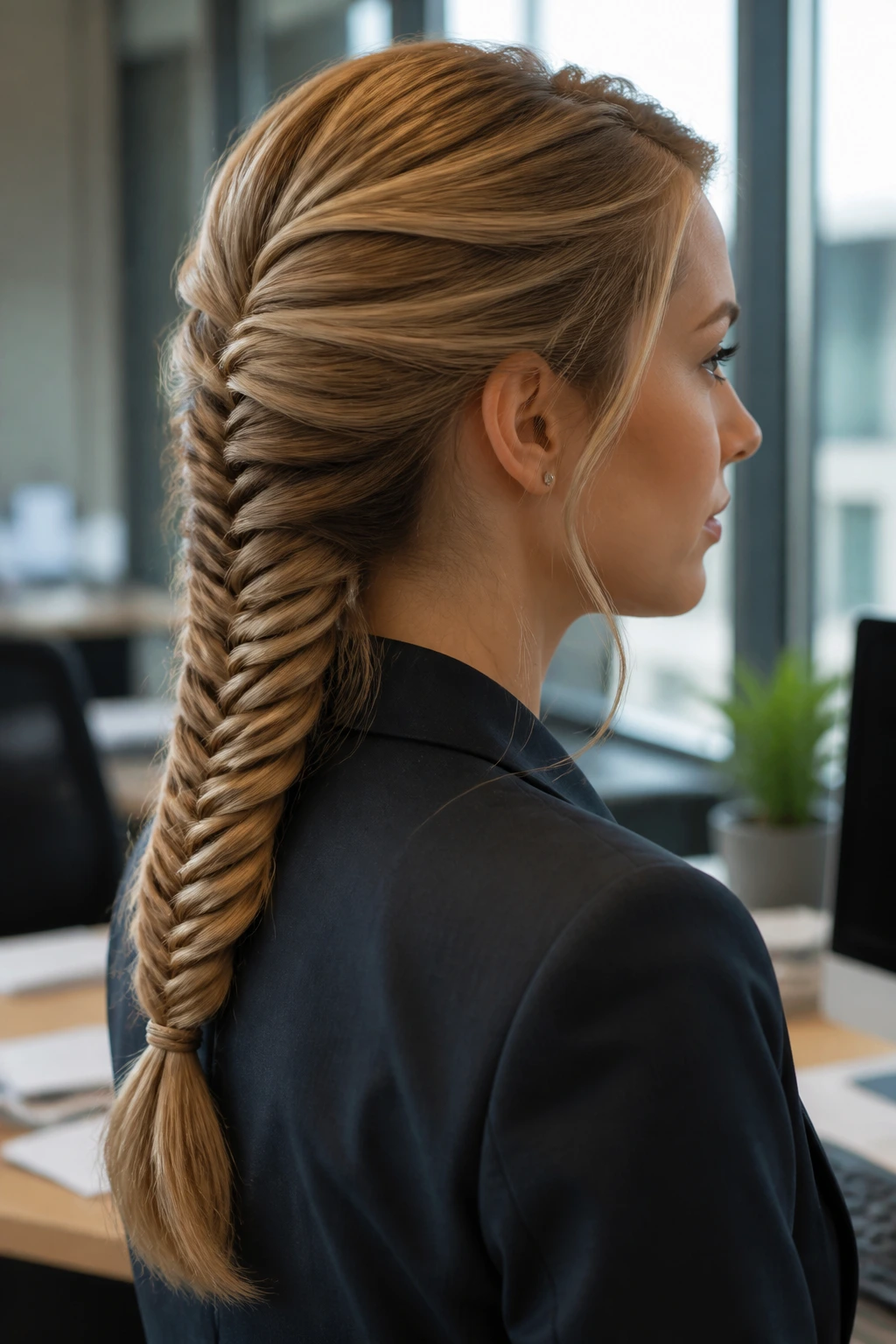
A fishtail braid can look intricate and sophisticated if it is pulled tight. To make it office-appropriate, avoid the “boho-loose” aesthetic. Keep the braid tight, uniform, and end it with a sleek finish, perhaps by using a small ribbon that matches your suit or dress.
Why Precision Matters
The fishtail is all about pattern. If your tension varies throughout the braid, it will look unkempt by the time you reach your office. Take your time to ensure each cross-over is tight and consistent; the visual payoff is a very deliberate, organized look.
12. The Tucked-Under Roll
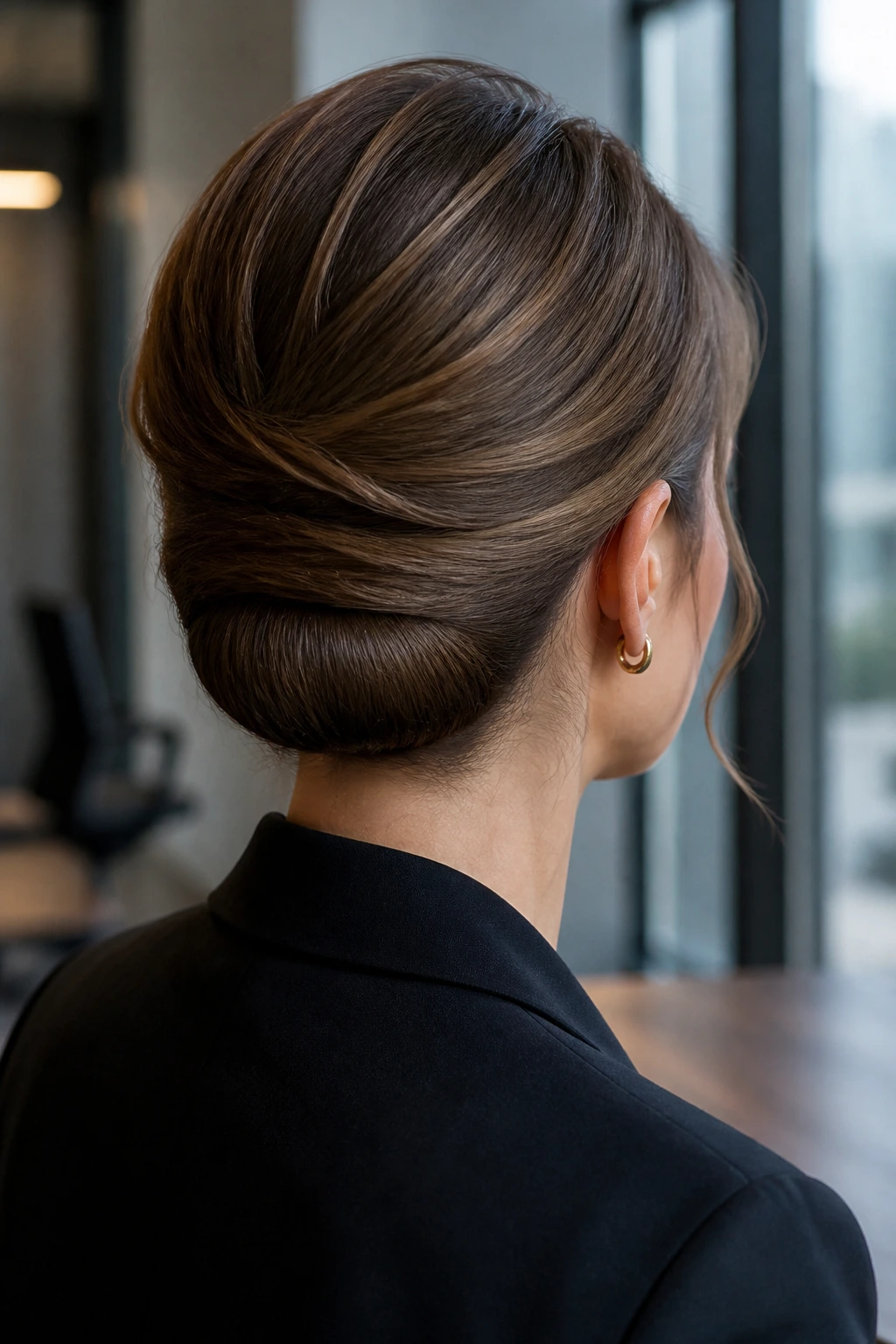
This is a sophisticated style for those with medium-length hair who want a “bob” look without the commitment. Simply gather the ends of your hair and tuck them under, securing the fold at the nape with bobby pins. It provides a crisp, finished line across the back that pairs perfectly with tailored blazers.
When to Use This Style
This is an excellent choice for a rainy or humid day when you don’t want to worry about your hair frizzing up. By keeping the ends hidden and tucked, you maintain a consistent look regardless of how the weather outside might be affecting your hair’s texture.
13. The Minimalist Low Pony with a Silk Scarf
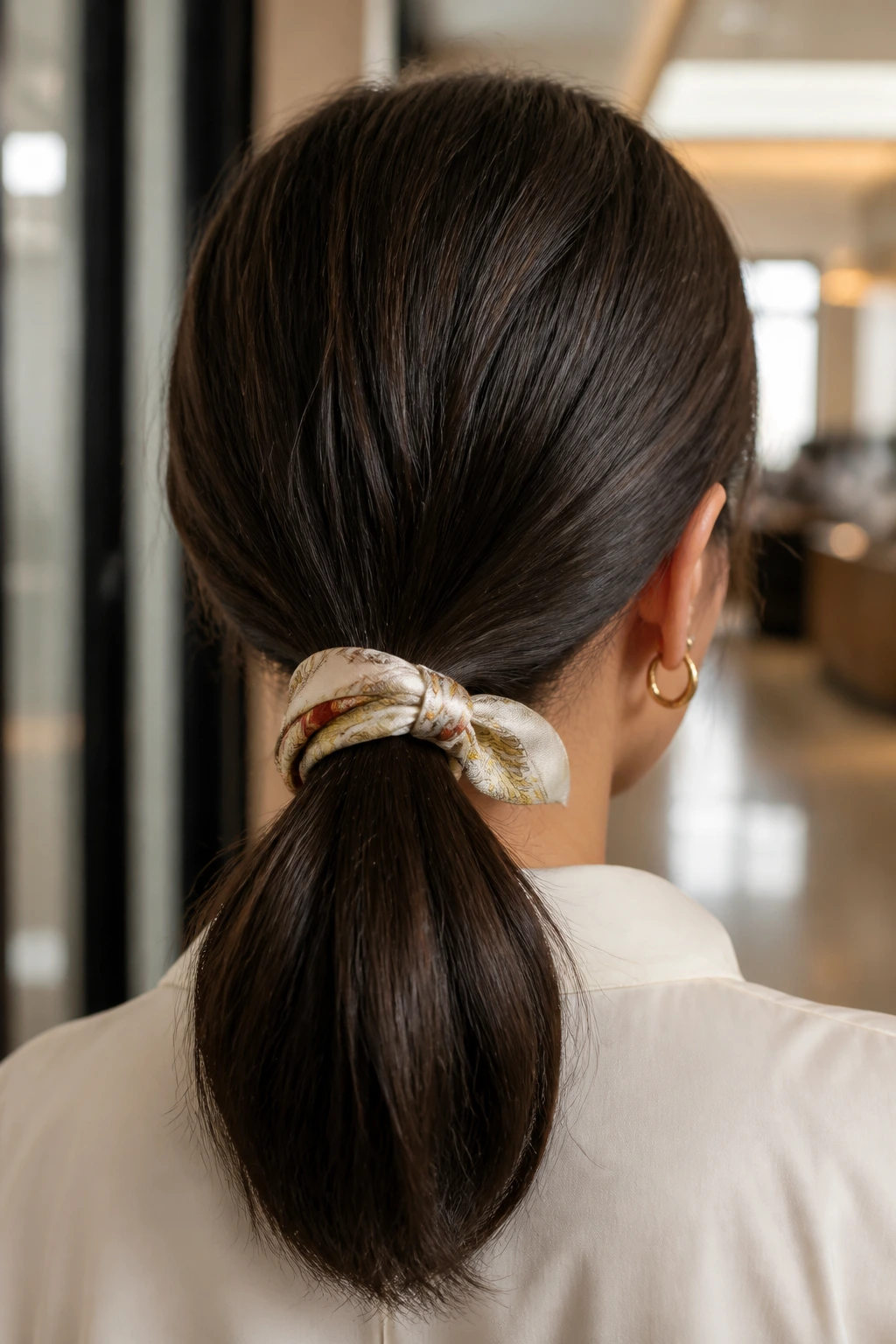
Sometimes, the back of your hair needs nothing more than a high-quality accessory. A low ponytail secured with a silk scarf adds a layer of texture and color to your office look. It hides the elastic and makes your outfit feel more curated.
Styling the Scarf
- Choose a silk scarf with a pattern that coordinates with your blouse or suit.
- Keep the knot small and tuck the ends so they aren’t distracting during a presentation.
- A silk accessory is much gentler on the hair than a standard rubber band, preventing breakage over the long term.
14. The Vertical Barrette Tuck
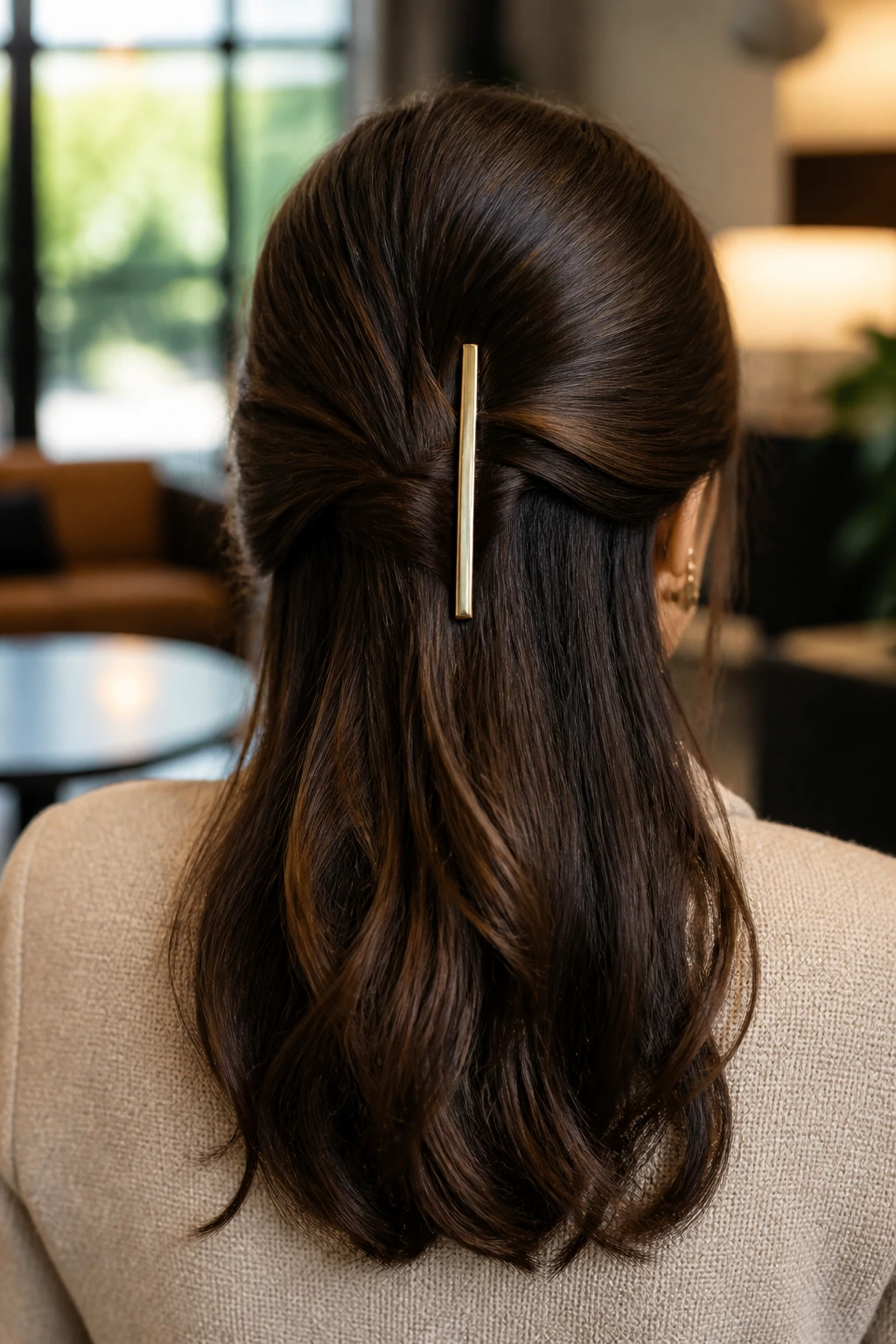
A large, slim barrette is a secret weapon for those who have a hard time managing the volume at the back of their head. Simply gather the back of your hair and slide the barrette in vertically. It creates a “half-folded” look that holds the hair away from the neck.
Choosing Your Accessories
Look for barrettes made of genuine acetate or brushed metal. Avoid anything with loud logos or cheap, glittery finishes that can take away from your professional image. The goal is to have the accessory complement your outfit rather than compete with it.
15. The Triple-Twisted Pony
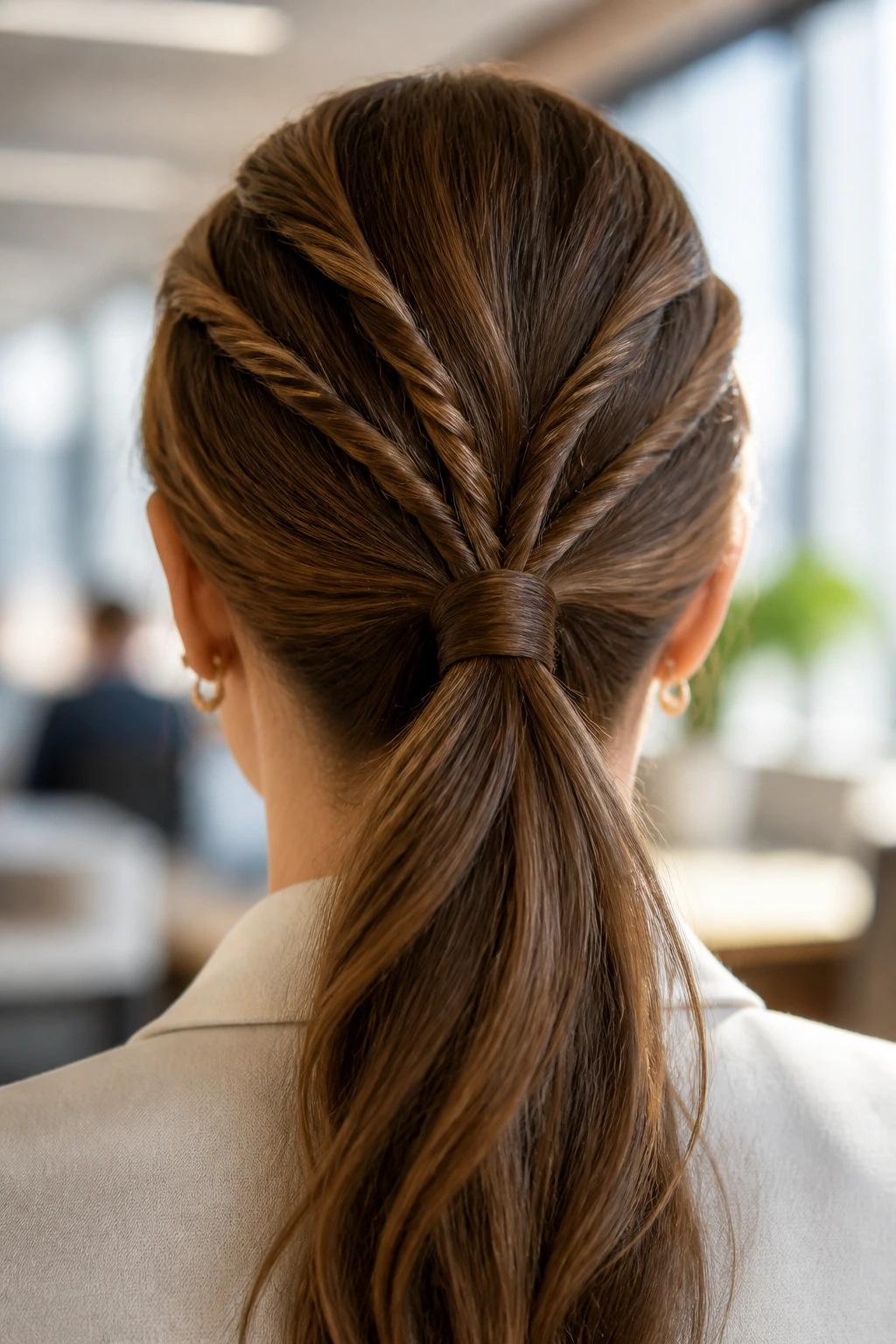
This is a fun way to upgrade a standard ponytail by adding three small twists from the front hairline that converge at the back. It adds a sense of “layered” detail to your back view, making a simple hairstyle look like a complex salon-created design.
How to Get the Texture Right
Use a bit of dry texture spray at the roots before you begin twisting. This gives your fingers something to grip, preventing the twists from unraveling as you secure them. It is a clean, structured way to keep your hair back while showing off your natural volume.
16. The Sleek Chignon with a Side Part
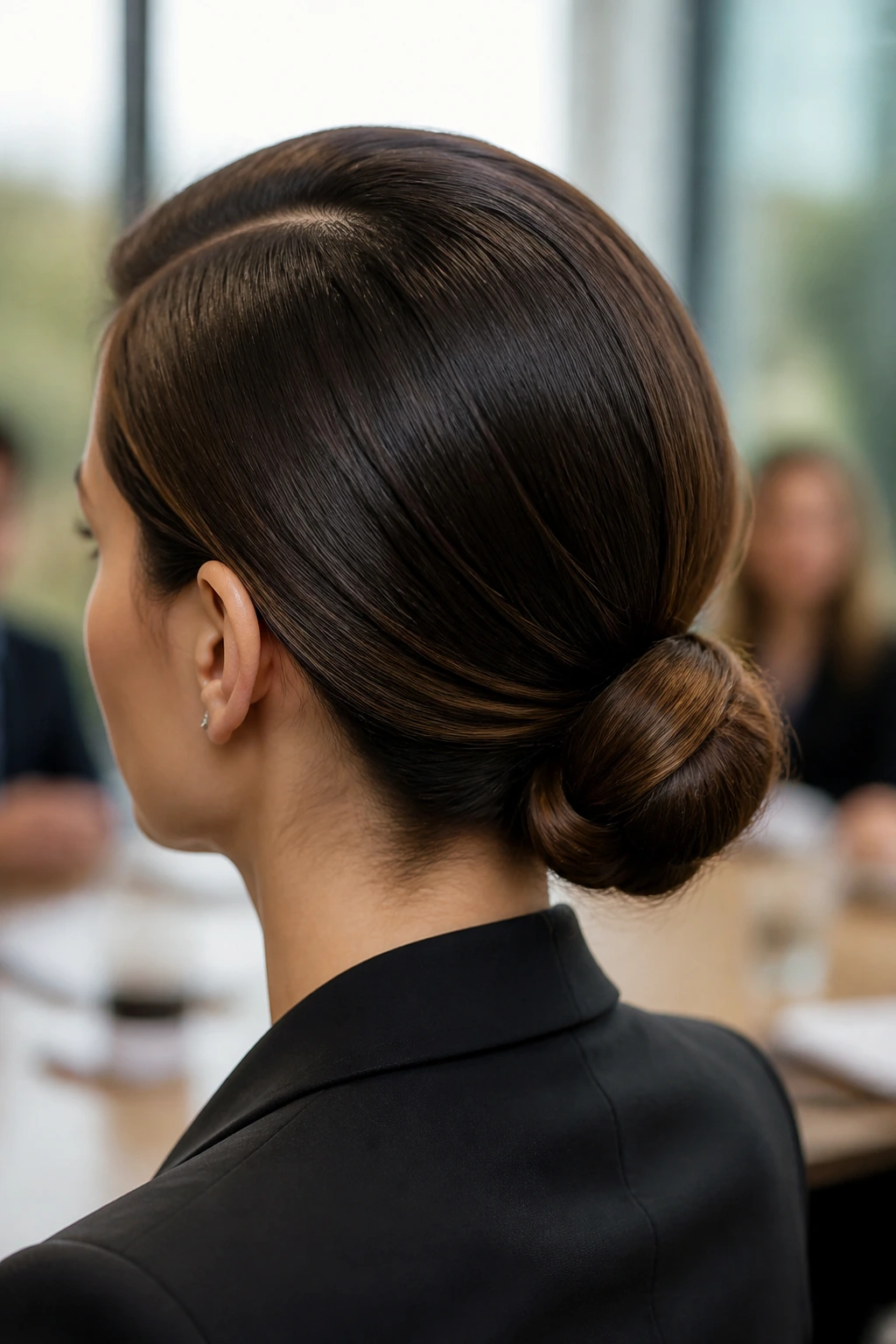
While many styles focus on pulling everything straight back, a side part with a low chignon creates an elegant, asymmetric line. It frames the face beautifully from the front, while the back remains tidy and professional.
The Power of Symmetry
The key to this look is the contrast between the sharpness of the part and the softness of the bun. If you are going into a client-facing meeting, this is often the most “trustworthy” look you can choose; it reads as polished, attentive, and very refined.
17. The Braided Bun
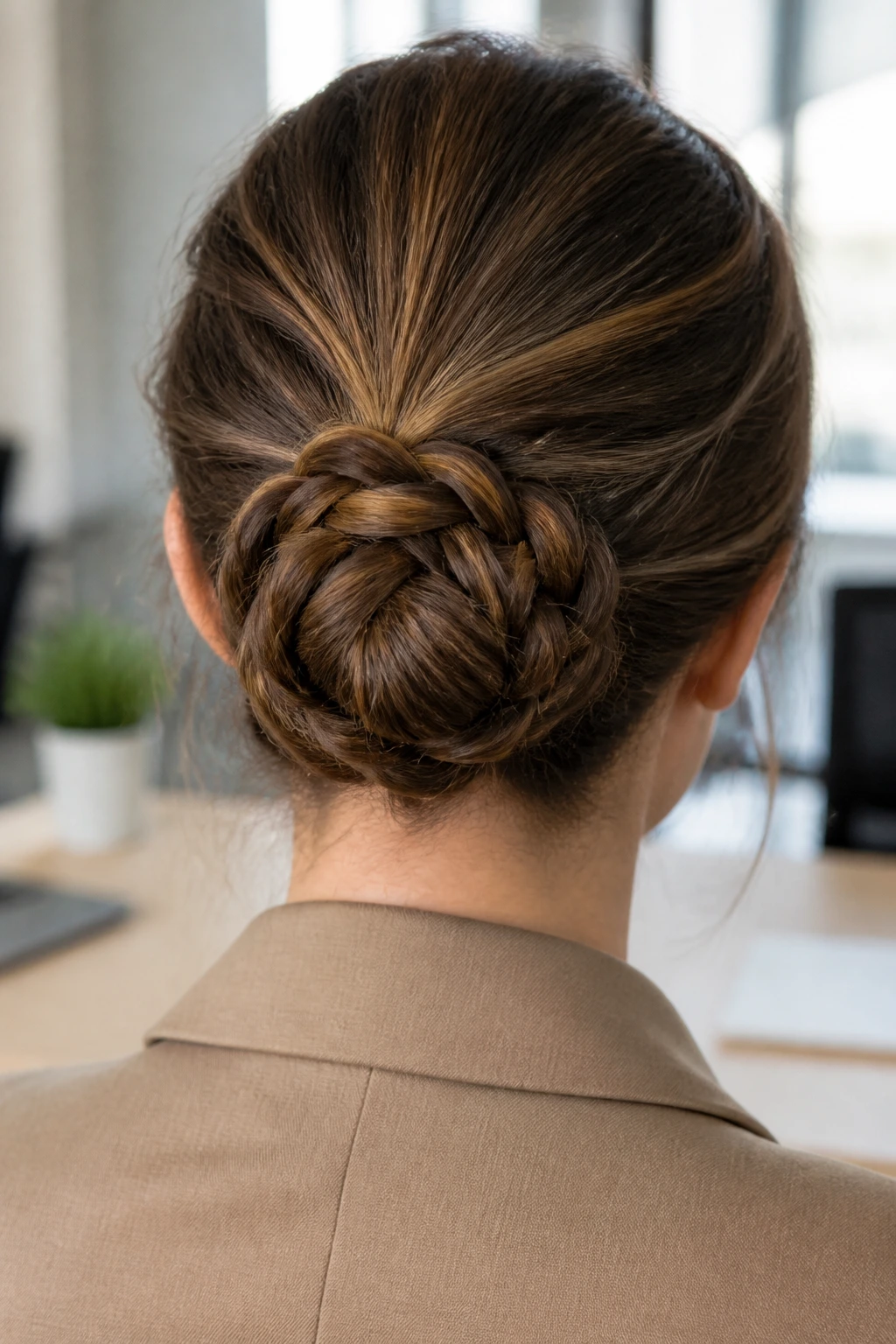
Combine the utility of a bun with the detail of a braid. After pulling your hair into a ponytail, braid the length of the hair before winding it into a bun. The texture of the braid adds incredible dimension to the back of your head that a plain bun simply cannot match.
Making It Look Professional
Keep the braid tight and ensure you pin it at the base so that the braid pattern is visible throughout the entire bun. This looks particularly elegant in professional settings where you want your hair to look like it has been carefully styled rather than just thrown up in a rush.
18. The Crown Fold
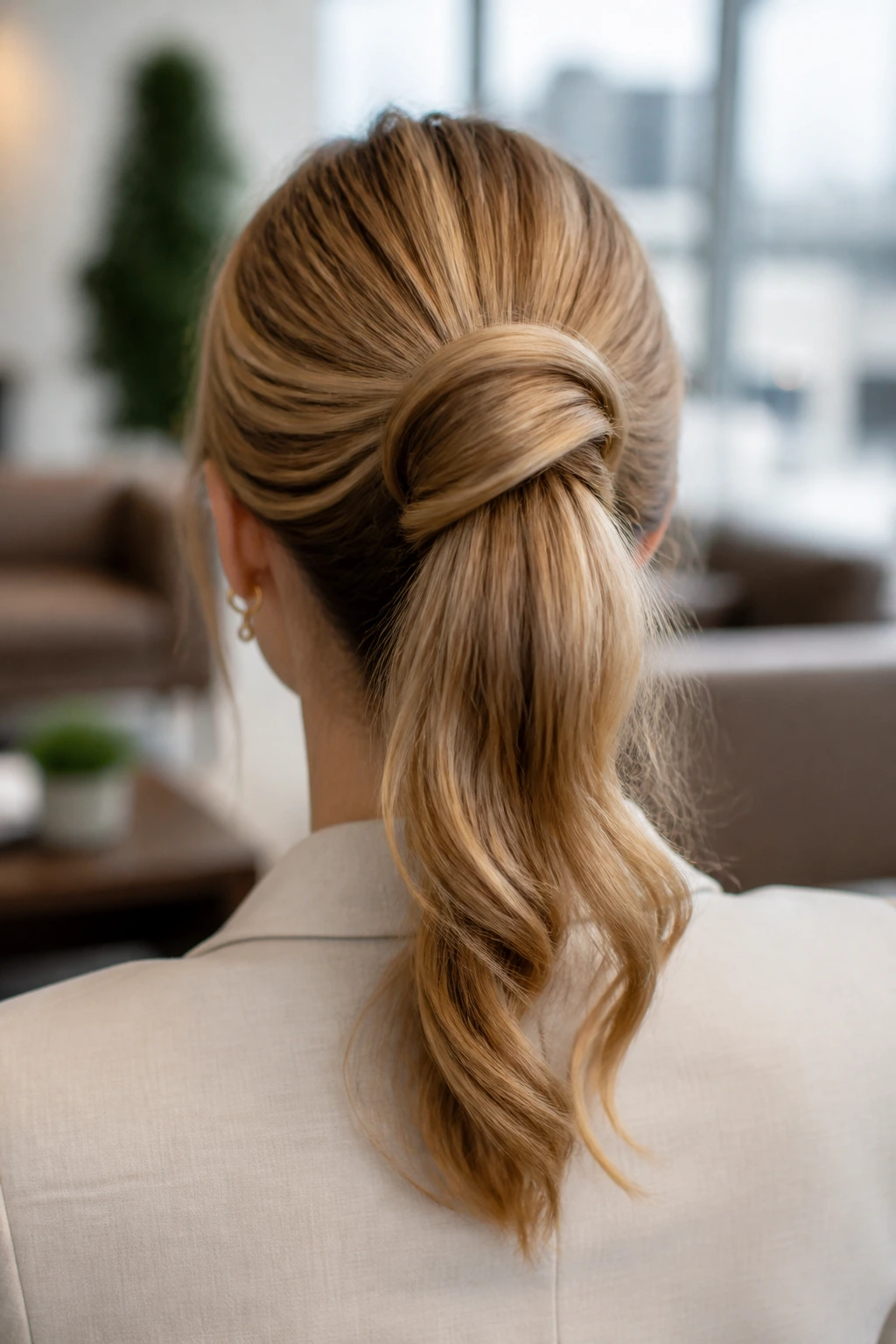
The crown fold is essentially a ponytail that has been folded back into itself, leaving the ends exposed to create a soft, voluminous effect. It’s a slightly softer look than the French twist, ideal for a more creative office environment where you want to appear approachable yet professional.
Why It Works for Busy Mornings
This style requires almost no skill—just a strong hair tie and a couple of pins. It’s perfect for those mornings when you have exactly five minutes to get out the door but still need to look like you put effort into your appearance.
19. The Smooth Half-Up Top Knot
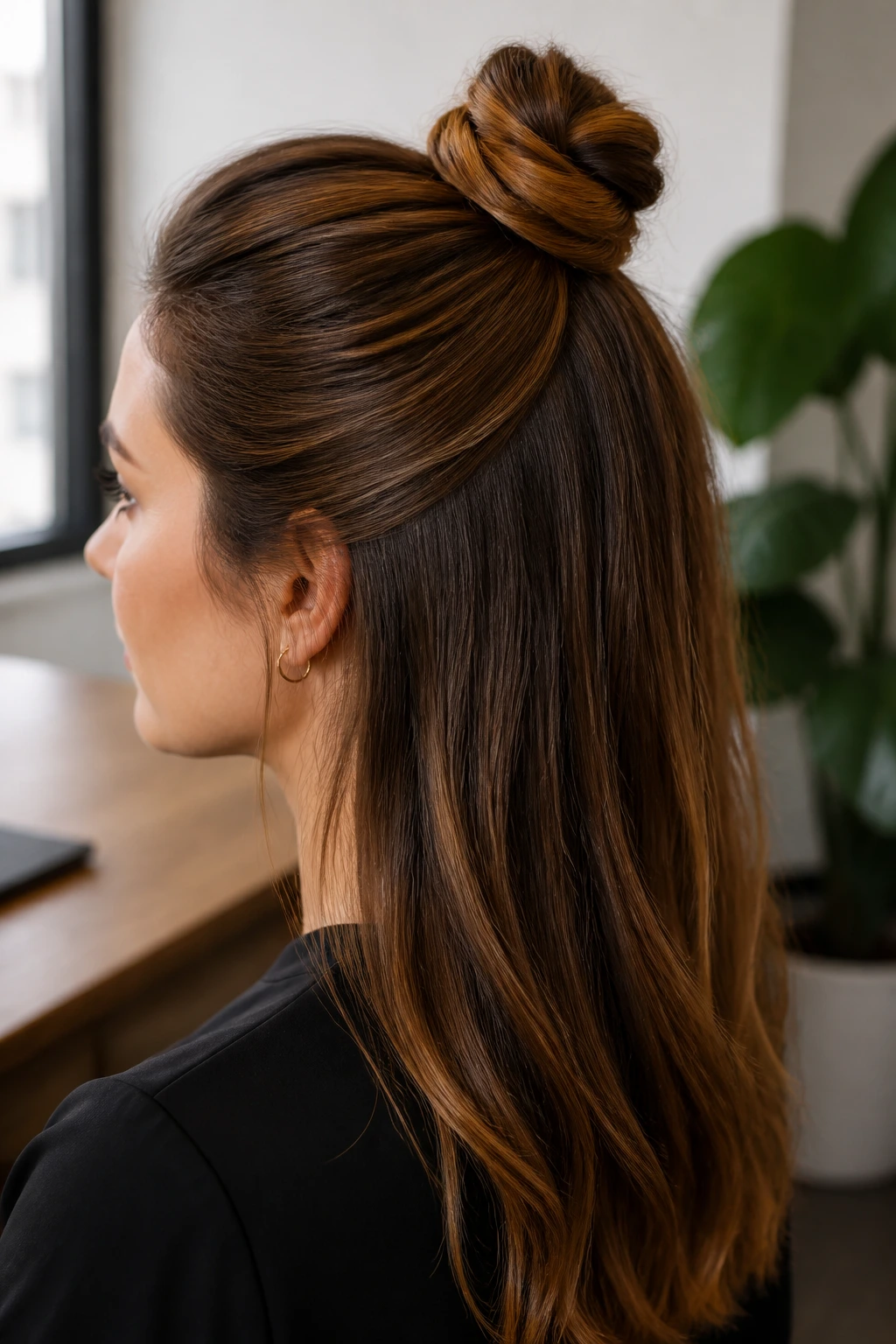
If you love the height of a top knot but want the professionalism of wearing your hair down, the half-up knot is the way to go. By gathering only the crown of your hair, you create a point of interest at the back of your head without losing the length.
Technique for Height
Tease the roots of the section you plan to knot before securing it. This adds the necessary height to make the knot stand out. A small, firm knot is much more professional than a large, loose one, so keep the hair tight as you wrap it around the base.
20. The Tucked Side Braid
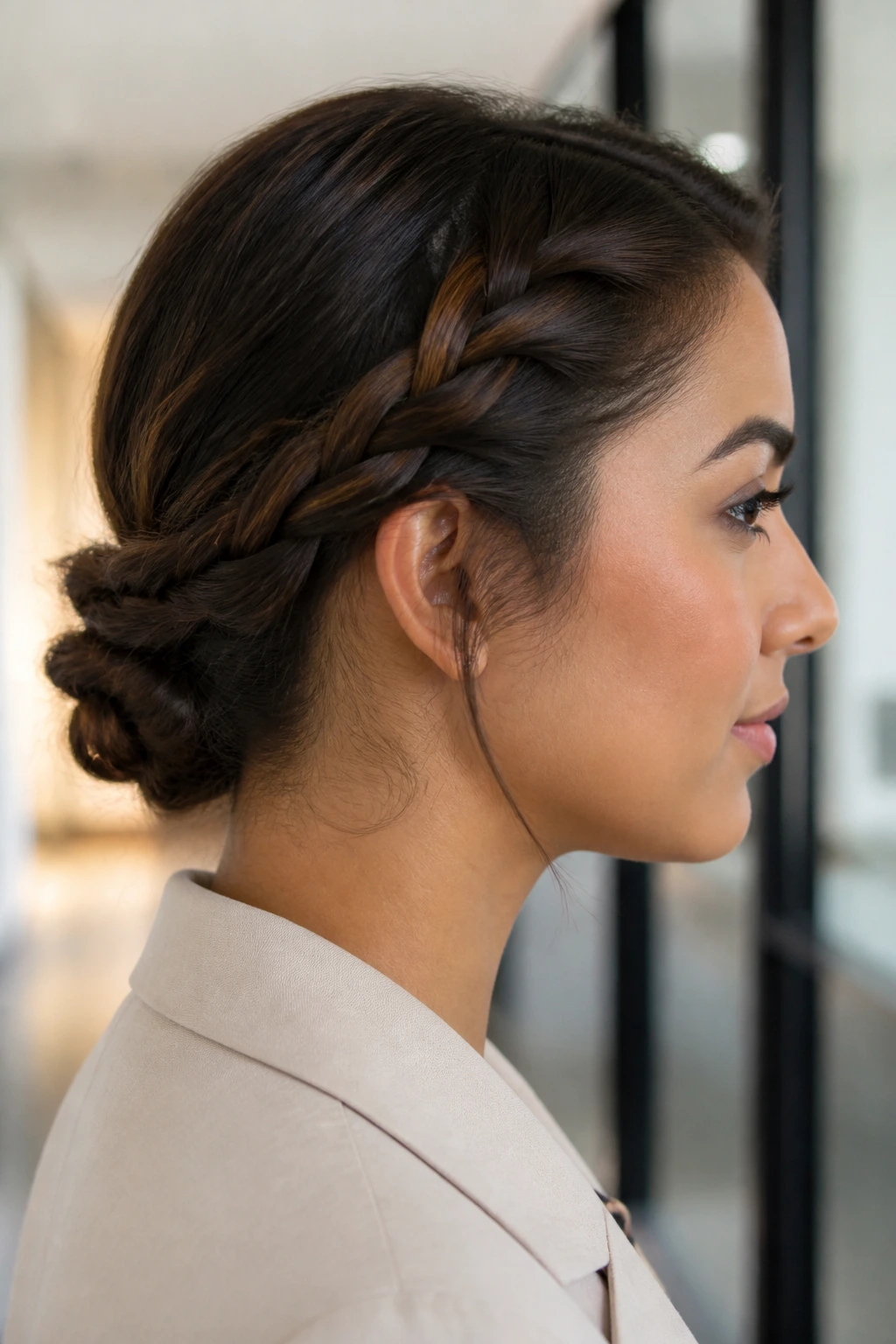
A classic braid that is tucked and pinned at the nape of the neck creates a very clean silhouette. It’s a great way to control unruly or textured hair without having to fight it with excessive heat styling.
Benefits for Texture
If your hair is naturally wavy or curly, a braid is your best friend. By braiding your hair when it is damp and letting it dry, you can then pin it into a tucked bun for a style that looks intentionally textured rather than just “frizzy.” It turns your natural texture into a professional asset.
21. The Low Ponytail with Minimalist Metal Cuffs
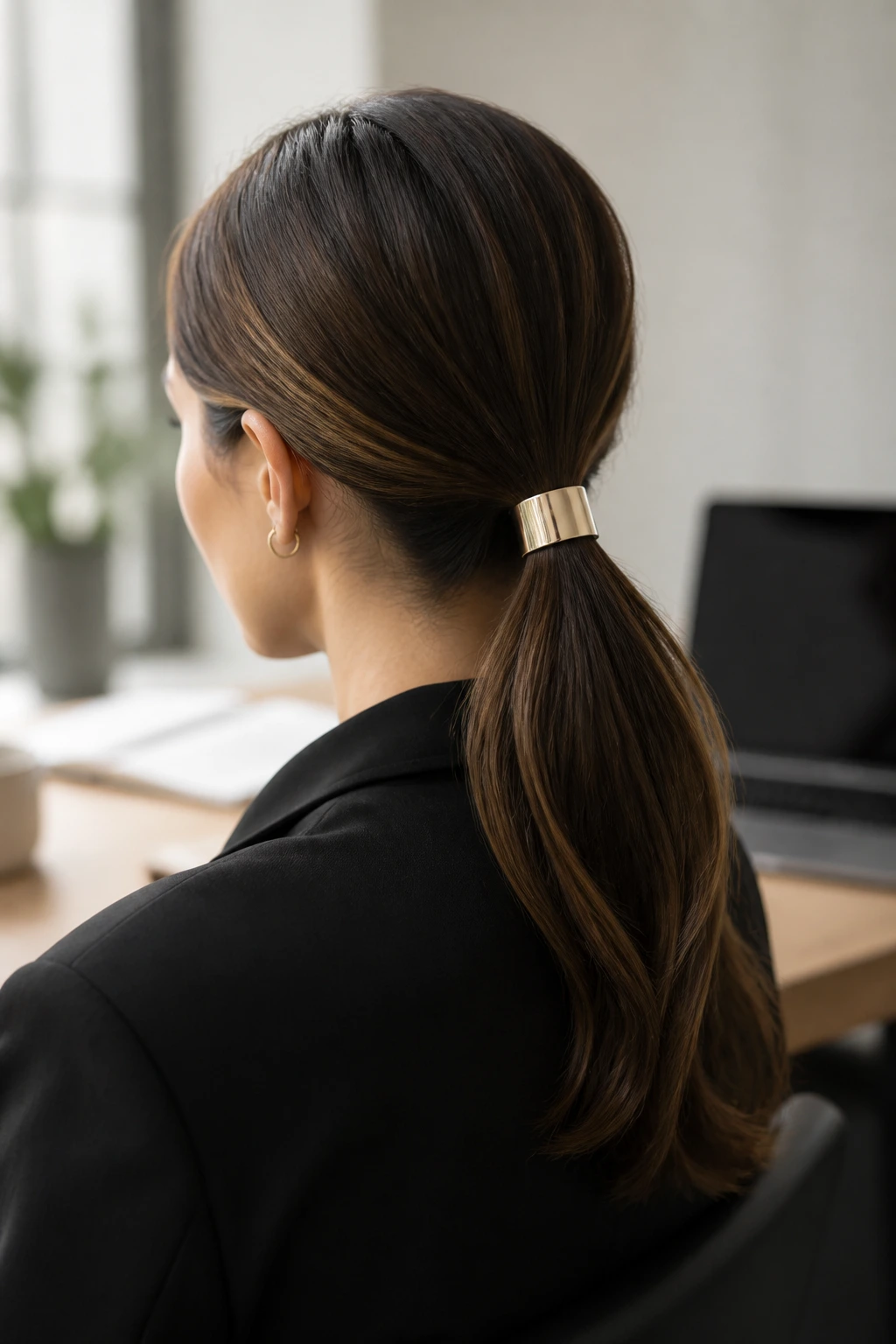
Sometimes, a standard ponytail is all you need—if you upgrade the hardware. A simple, sleek metal cuff around your hair tie transforms a basic look into something that feels like an intentional style choice.
Maintaining the Hardware
Ensure the cuff is lightweight so it doesn’t slide down your ponytail throughout the day. If you find your hair is too thin to hold a heavy cuff, try a magnetic version or one that has a small, hidden pin on the inside to keep it anchored in place.
Final Thoughts
The way you choose to wear your hair at work says a lot about how you manage your day. While it is easy to default to the same old ponytail, taking a few extra minutes to style the back of your hair can shift your entire demeanor. You don’t need to spend an hour in front of the mirror to look polished; you just need a few reliable techniques that work with your hair’s natural texture.
Consistency is usually the most important factor in a professional look. Pick two or three of these styles that you feel comfortable executing quickly, and rotate through them. You will find that when you feel your hair looks intentional and tidy from every angle, your own focus in the office tends to sharpen, too. Don’t underestimate the impact of a simple pin or a well-placed twist; sometimes the smallest adjustments lead to the biggest boost in your professional confidence.