

You are mid-squat, the weight of the barbell pressing into your shoulders, when a rogue strand of hair decides to launch a full-scale assault on your eyeballs. It is a specific kind of agony—sweat-slicked, tangled, and entirely distracting. We have all been there, clawing at our foreheads while trying to maintain form. A workout hairstyle is not just about aesthetics; it is about infrastructure. You need your hair to stay out of your face, survive the humidity of a gym session, and ideally, look decent enough that you do not have to immediately scramble for a shower before running errands.
Functionality is the baseline, but there is no reason your gym style cannot hold its own. Some people treat their hair as an afterthought, throwing it into a chaotic knot that ends up causing more breakage than a bad dye job. Others treat it like a serious engineering project. The secret is finding the intersection between tension and comfort. You want enough hold to prevent slippage, but not so much tension that you end up with a stress headache by the time you reach the cool-down.
This collection focuses on styles that actually work during high-intensity movement. We are looking at ways to secure your hair that do not rely on a mountain of hairspray or a dozen bobby pins that inevitably end up inside your sneakers. Whether you have waist-length locks or a pixie cut that just needs a little coaxing, these styles are designed to withstand the heat, the movement, and the inevitable mess of a productive workout.
1. The High-Voltage Top Knot
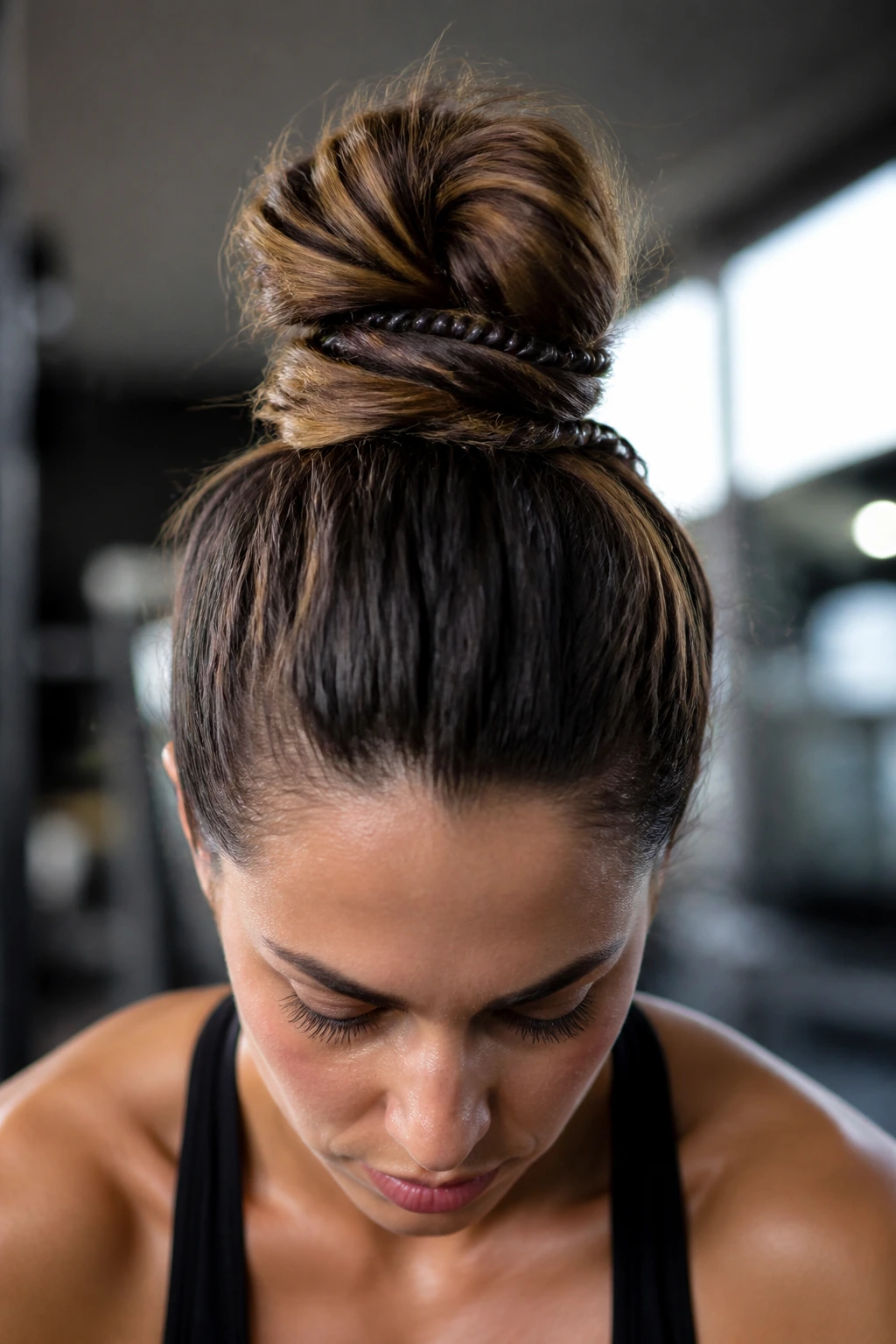
This is the gold standard for HIIT training or anything involving floor work. By moving the weight of your hair to the very crown of your head, you ensure it stays out of your neck during burpees and off your face during downward dog. The key here is to use a heavy-duty, snag-free hair tie. If you have fine or slippery hair, add a touch of texturizing spray or dry shampoo before you even start brushing.
Why This Style Succeeds
The top knot minimizes movement. Because the hair is gathered at the highest point, it creates a vertical column of tension that resists gravity, even when you are upside down. It also prevents that annoying tickle on the back of your neck when you start sweating.
How to Execute the Perfect Knot
- Start by gathering all your hair into a ponytail at the top of your head.
- Twist the length of the ponytail into a tight rope.
- Coil that rope around the base, tucking the ends under the hair tie.
- Secure with a second spiral hair tie—the plastic coils are gentler and provide a better grip than traditional cotton bands.
2. Dutch Braid Pigtails
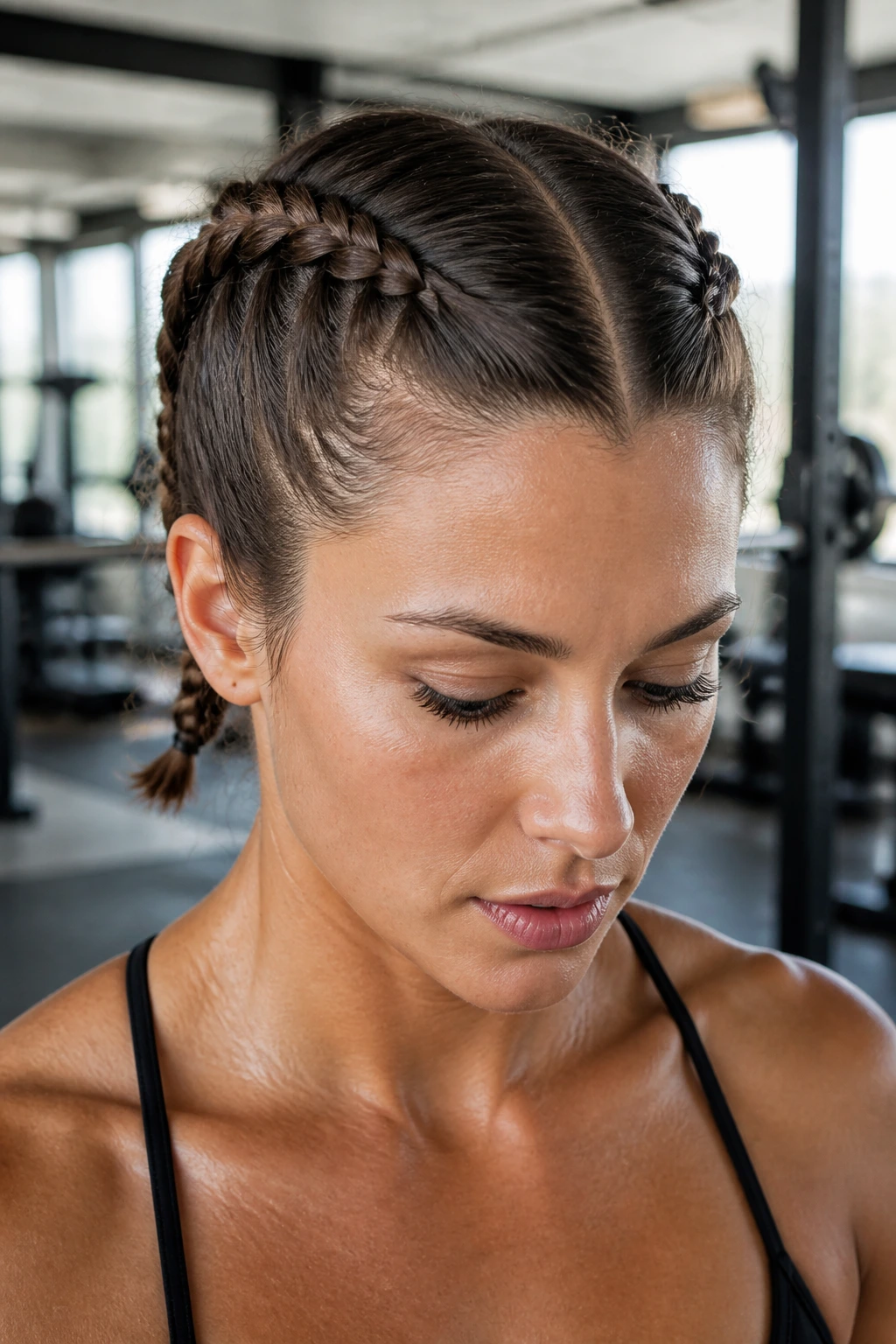
If you have ever felt like your ponytail was slapping you in the face during a run, this is your solution. Dutch braids—often called inside-out French braids—are incredibly secure because they are woven tight against the scalp. They keep every single hair accounted for, meaning you will not have to stop mid-stride to fix a stray piece.
Essential Technique Tips
The trick to a workout-ready Dutch braid is to pull the sections under instead of over. This creates a raised, 3D effect that sits proudly on top of your head. Because they are split into two sections, the tension is distributed more evenly across the crown, which prevents that pulling sensation on your hairline.
Making It Last
Before you begin, apply a light styling cream or a bit of pomade to your hands. This tames flyaways and gives the braid a little extra grip. Once finished, pancake the braids slightly—gently tugging on the outer loops—to make them look fuller. Do not skip the final step: lock the ends with mini silicone elastics that won’t slide off when your scalp gets damp.
3. The Low Messy Bun with a Scrunchie
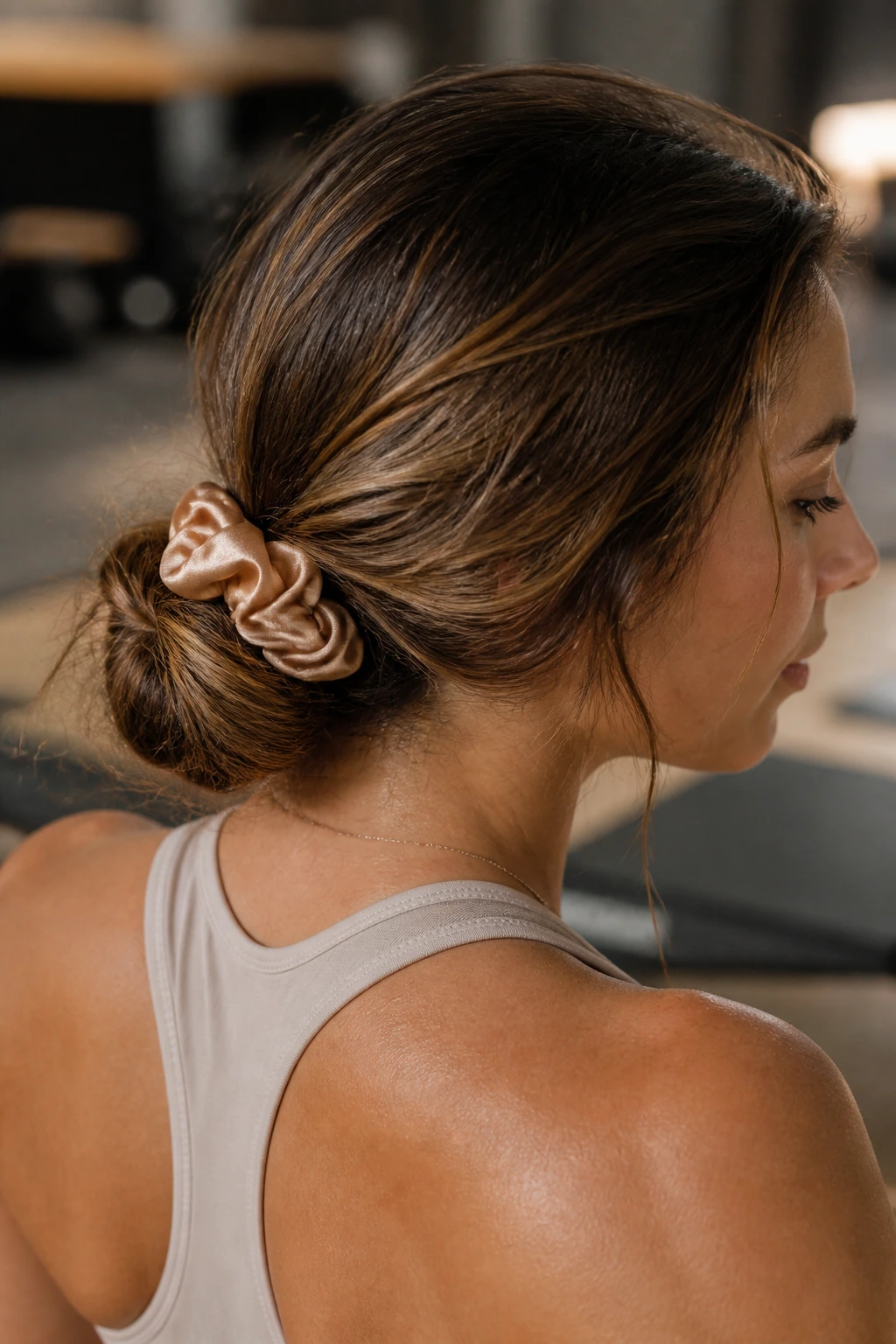
For those who prefer a less aggressive style, the low bun is a staple for weightlifting or steady-state cardio. It keeps your hair tucked away without putting unnecessary strain on your roots. Using a silk or velvet scrunchie is a must here; the fabric provides a buffer that prevents the “crease” left behind by tighter elastics.
Managing Hair Texture
If your hair is thick and heavy, a single elastic might not cut it. Use a thin, clear band to secure your base bun first, then wrap the decorative scrunchie over it for a second layer of stability. This prevents the bun from migrating down your neck during an intense session.
Strategic Placement
Place the bun slightly to the side if you plan on doing exercises that involve laying on your back, like bench presses. A bun placed directly in the center of the nape can be uncomfortable when your head is pressed into a flat bench or a gym mat.
4. The Half-Up Mini-Top Knot
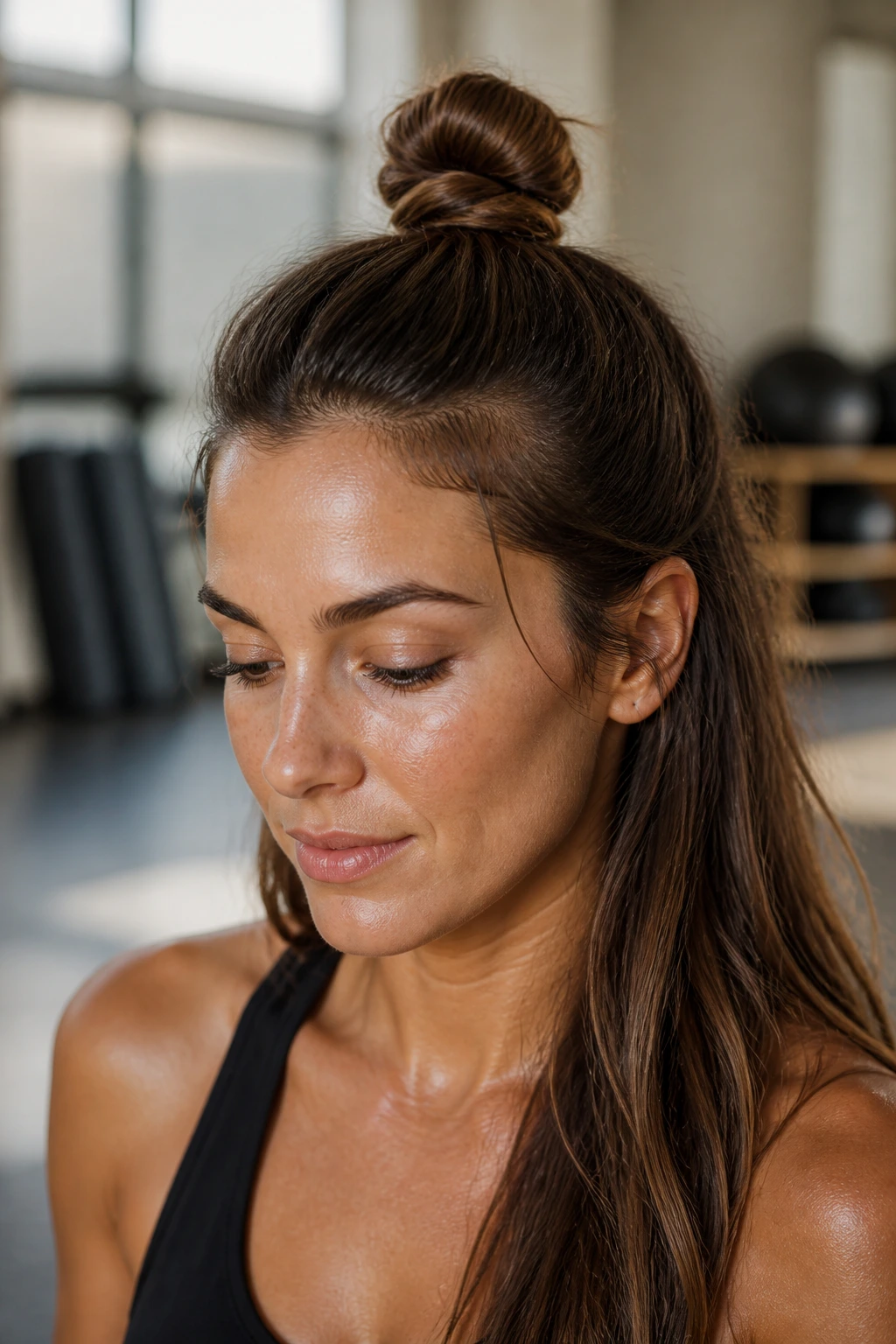
Perfect for shoulder-length hair or those who hate the feeling of their hair being completely pulled back, this style balances freedom and control. It keeps the hair at your temples under wraps, which is usually where most of the sweat-related irritation starts.
The Benefit of Half-Ups
By leaving the bottom half of your hair down, you avoid the dreaded “ponytail headache” caused by pulling back too much weight at once. This style is also great for transition days where you are heading from the gym to a social setting; it looks intentional and stylish rather than purely utilitarian.
Quick Fix Strategy
If you find your hair is constantly falling into your face, use a small, discreet barrette to pin the very front pieces back before you pull the rest of the half-top knot together. This creates a cleaner silhouette that stays put even through dynamic movements like jumping jacks.
5. The Sleek High Ponytail
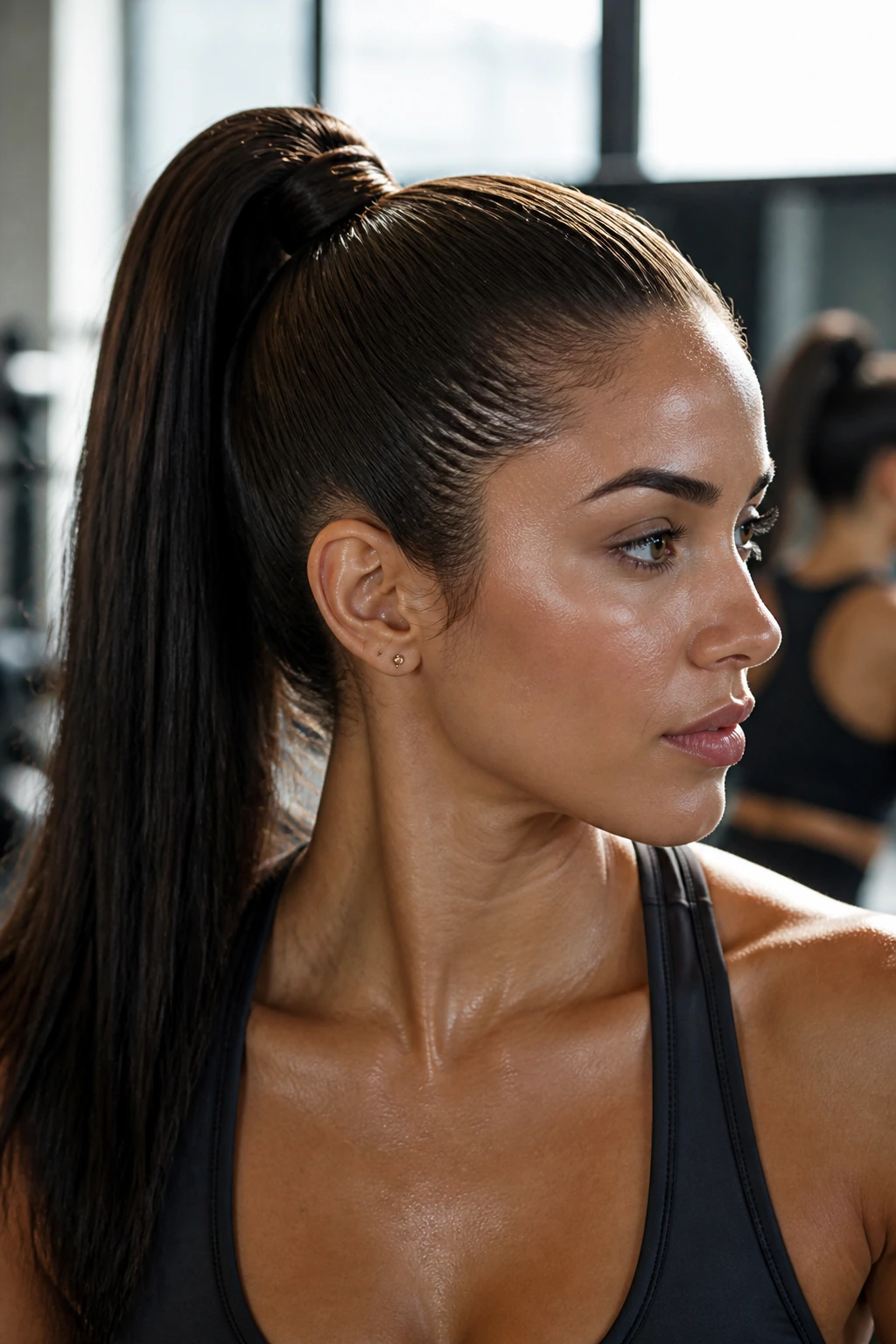
Nothing screams “business” quite like a high, sleek ponytail. This is the look for the person who wants to see their progress in the mirror without hair blocking their peripheral vision. Achieving that polished, glass-like finish requires a little bit of product, but the payoff is a style that won’t budge.
Creating the Foundation
- Use a fine-tooth comb to gather the hair, ensuring the base is perfectly smooth.
- Apply a tiny amount of smoothing serum or light-hold gel to your palms and run them over the surface of your hair to lock down static.
- Tie it high and tight.
The Secret Ingredient
For extra security, take a tiny section of hair from the bottom of the ponytail, wrap it around the base to hide the hair tie, and pin it underneath with a single bobby pin. This hides the elastic and adds a layer of professional polish to your workout gear.
6. Rope Braid Headband
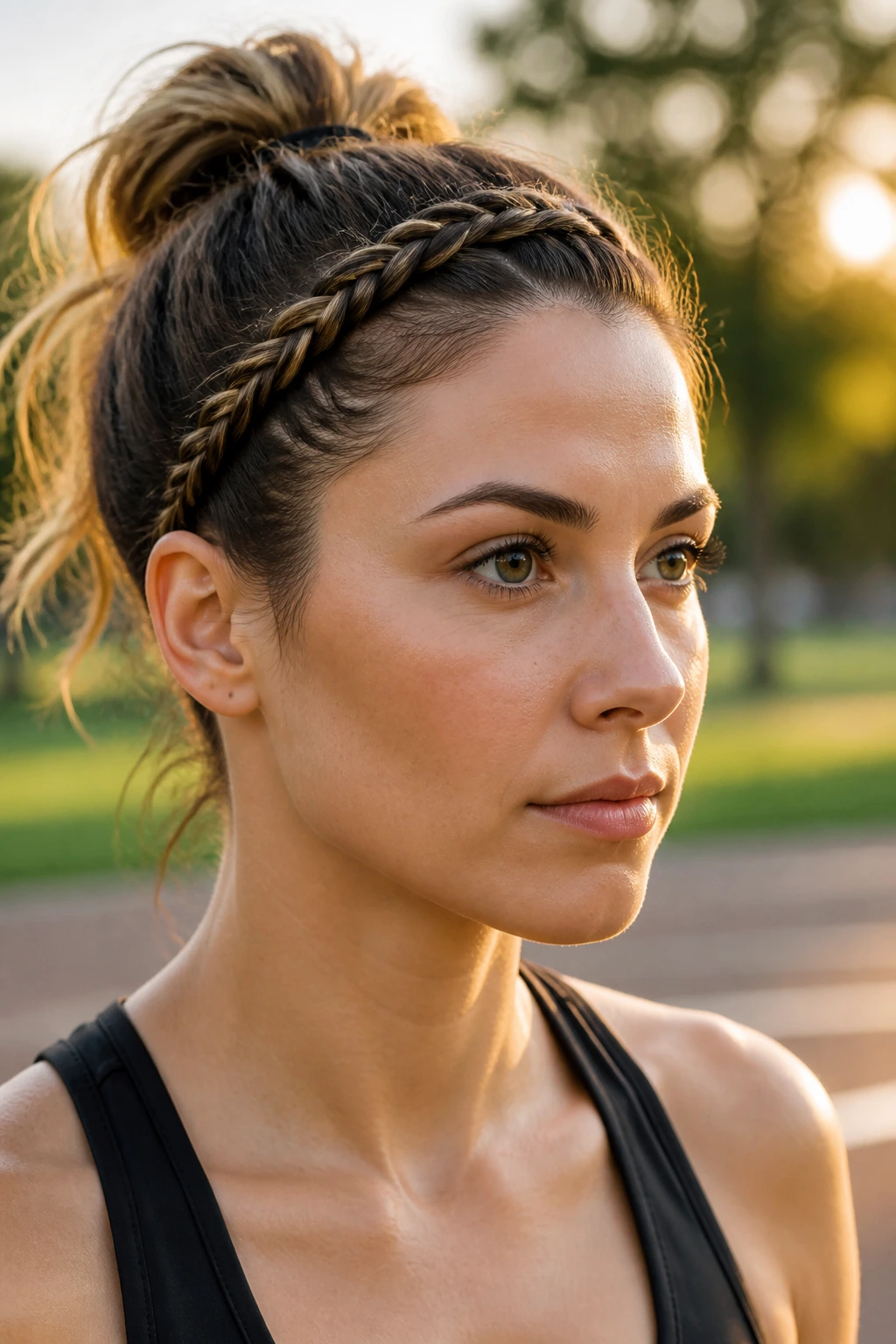
If you want to keep your hair completely off your forehead without a headband that might slide off, a rope braid is the answer. This style incorporates your bangs or front layers into a braid that runs along your hairline, acting as a natural, integrated barrier.
Execution Steps
- Create a deep side part.
- Start at the temple and begin twisting two small sections of hair, adding more hair into the twist as you work your way around the front of your hairline.
- Secure the end of the braid behind your ear with a pin.
- Gather the rest of your hair into a ponytail or bun to finish.
Why It Works for Cardio
Because the hair is essentially “locked” into a twist, it cannot escape. Unlike a loose style that might come undone after five minutes on a treadmill, a rope braid holds firm even when you are dripping with sweat. It is elegant, practical, and highly effective for long-duration activities.
7. The Double-Bubble Ponytail
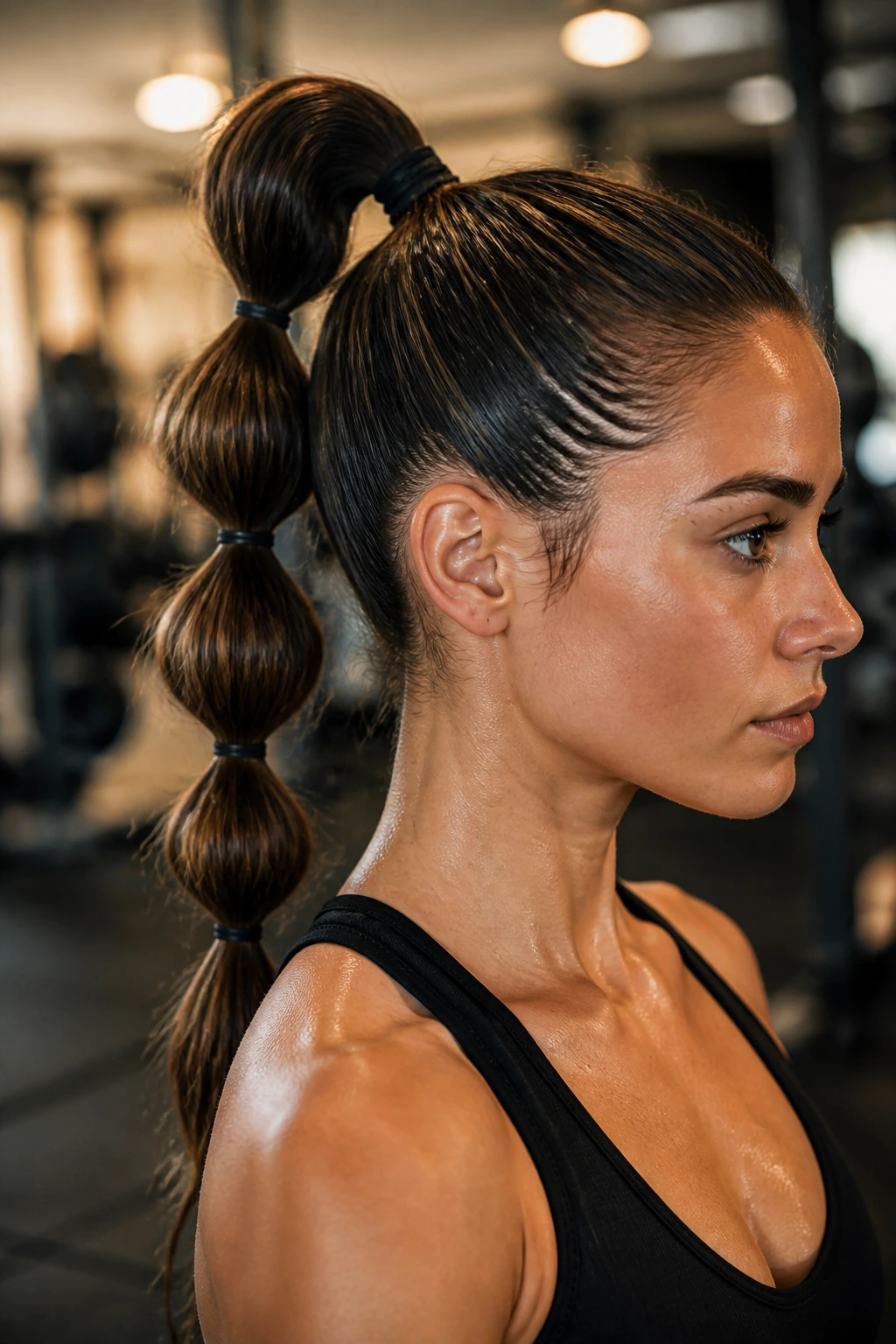
This is a fun, modern take on the standard pony. It breaks the length of your hair into segments, which prevents it from whipping around and getting tangled during high-intensity movement. It is visually interesting and surprisingly sturdy.
Step-by-Step Construction
- Secure your hair in a high ponytail.
- Place a small elastic about 2-3 inches down the length of the ponytail.
- Gently pull at the hair between the two elastics to create a “bubble” effect.
- Repeat this process all the way down to the ends.
Choosing Your Elastics
Use small, clear, or color-coordinated silicone bands. They are much easier to work with than larger elastics and won’t weigh down the bubbles. This style is excellent for long hair, as it keeps the ponytail from getting caught in your shirt straps or back equipment.
8. The Athletic Cornrow Style
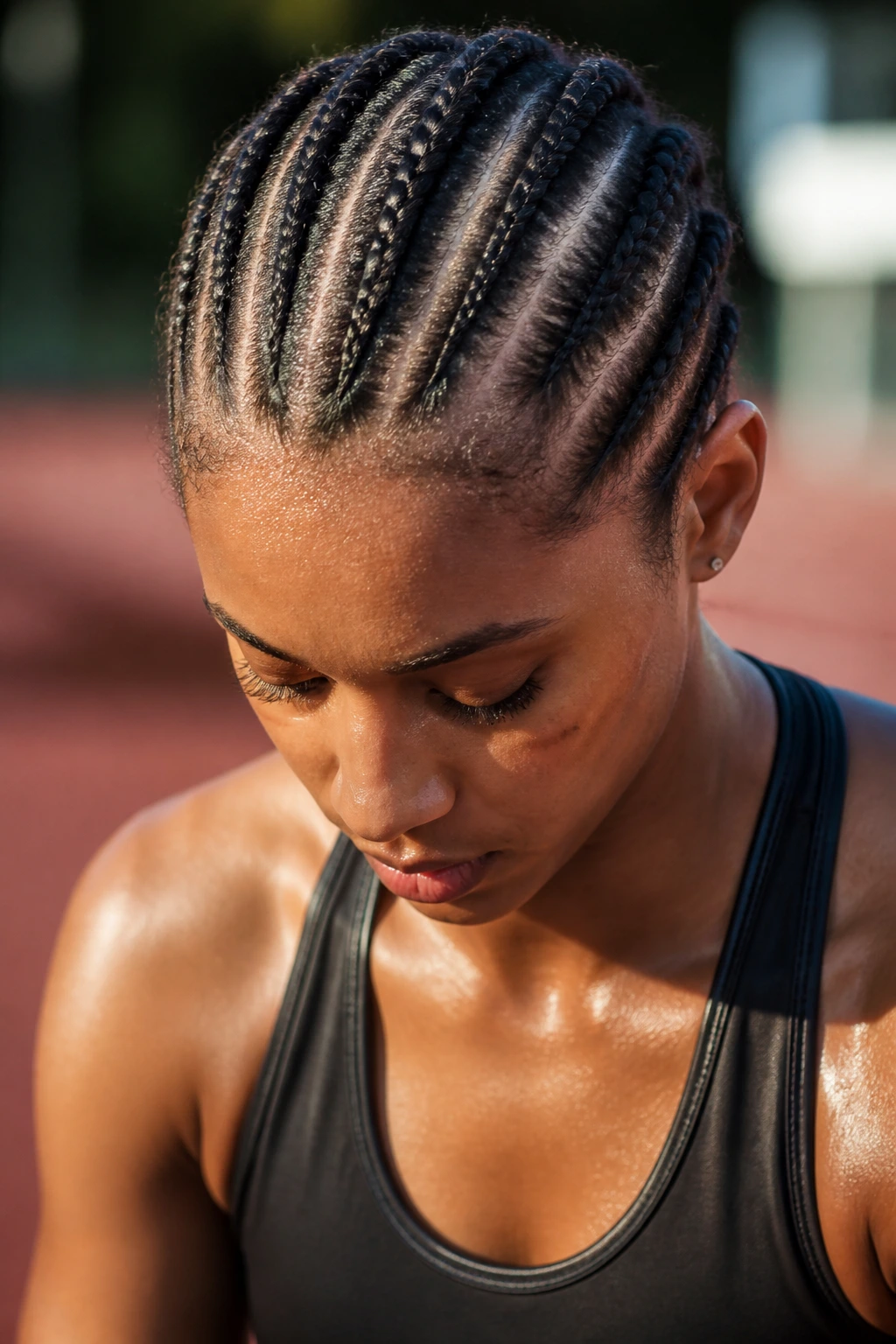
For those who prefer a protective, long-term style that can handle days of intense activity, cornrows are unrivaled. They offer maximum scalp access for cooling and keep hair tucked neatly away for days on end. You don’t have to worry about styling your hair for every single workout once this is in place.
The Advantage of Scalp Access
Cornrows allow for better airflow across the scalp. When you are pushing through a high-intensity interval session, the ability for your sweat to evaporate directly from your scalp is a major comfort factor. It prevents the moisture buildup that leads to itching and discomfort.
Maintenance Tips
Since these are designed for durability, you can lightly mist the scalp with a mixture of water and tea tree oil if you start to feel itchy. This keeps your scalp fresh and clean without having to wash your hair after every single session.
9. The Classic French Braid
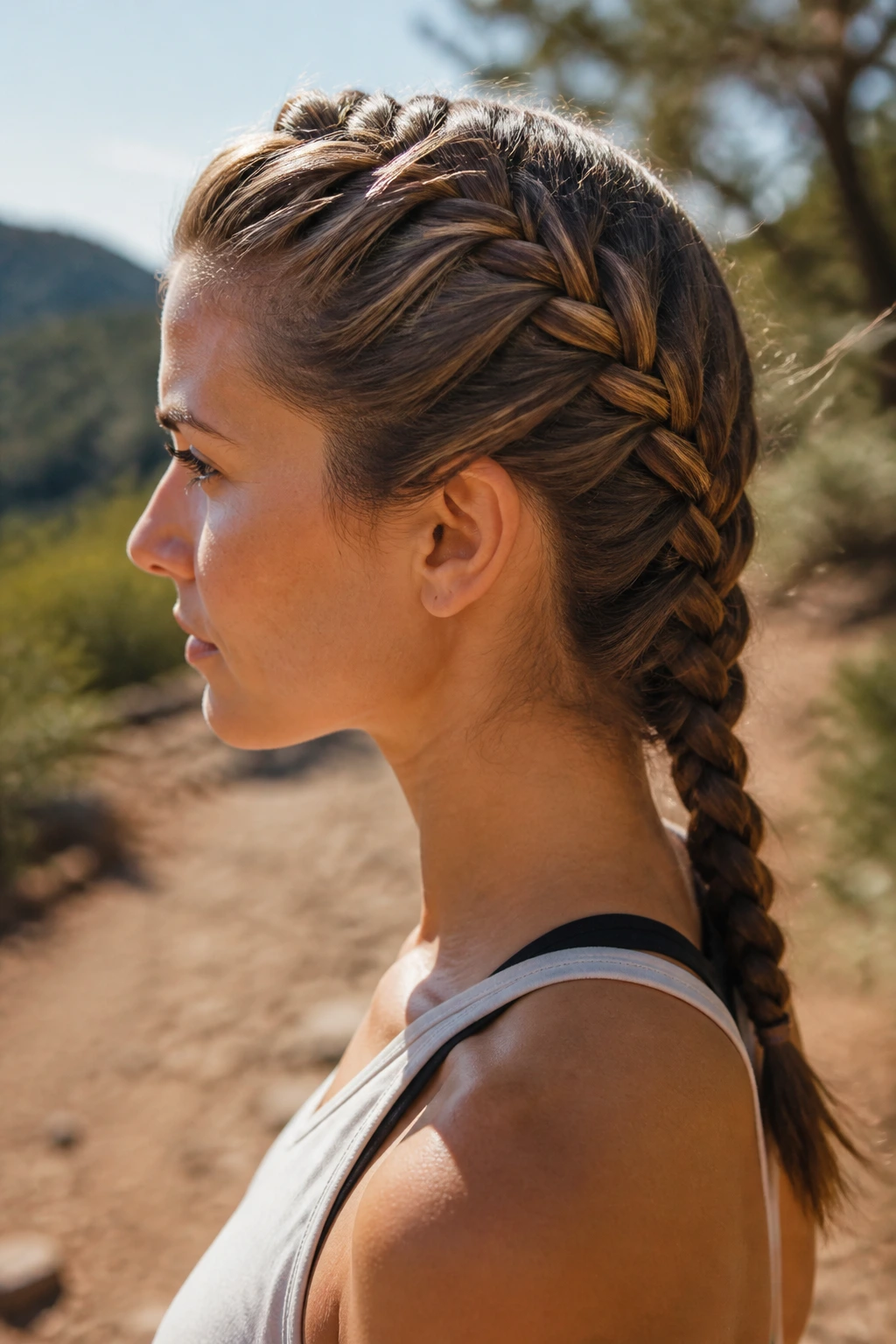
Elegant but utilitarian, the French braid is the go-to for many athletes because it manages to keep hair secure while remaining lightweight. It is the perfect choice for outdoor activities like hiking or cycling, where you want your hair kept under control but don’t want a heavy bun pulling on your head.
The Difference in Weave
A French braid is woven by taking sections over one another, which creates a softer, more integrated look than the Dutch braid. Because the braid sits flatter against the head, it is also very comfortable to wear under a helmet, making it the top pick for cyclists.
Troubleshooting Slippage
If your hair is very silky and tends to unravel, spray your dry hair with a bit of salt spray before you start braiding. This provides the “grit” necessary for the hair to hold onto itself, resulting in a braid that stays tight even if your workout lasts for two hours.
10. The Space Buns
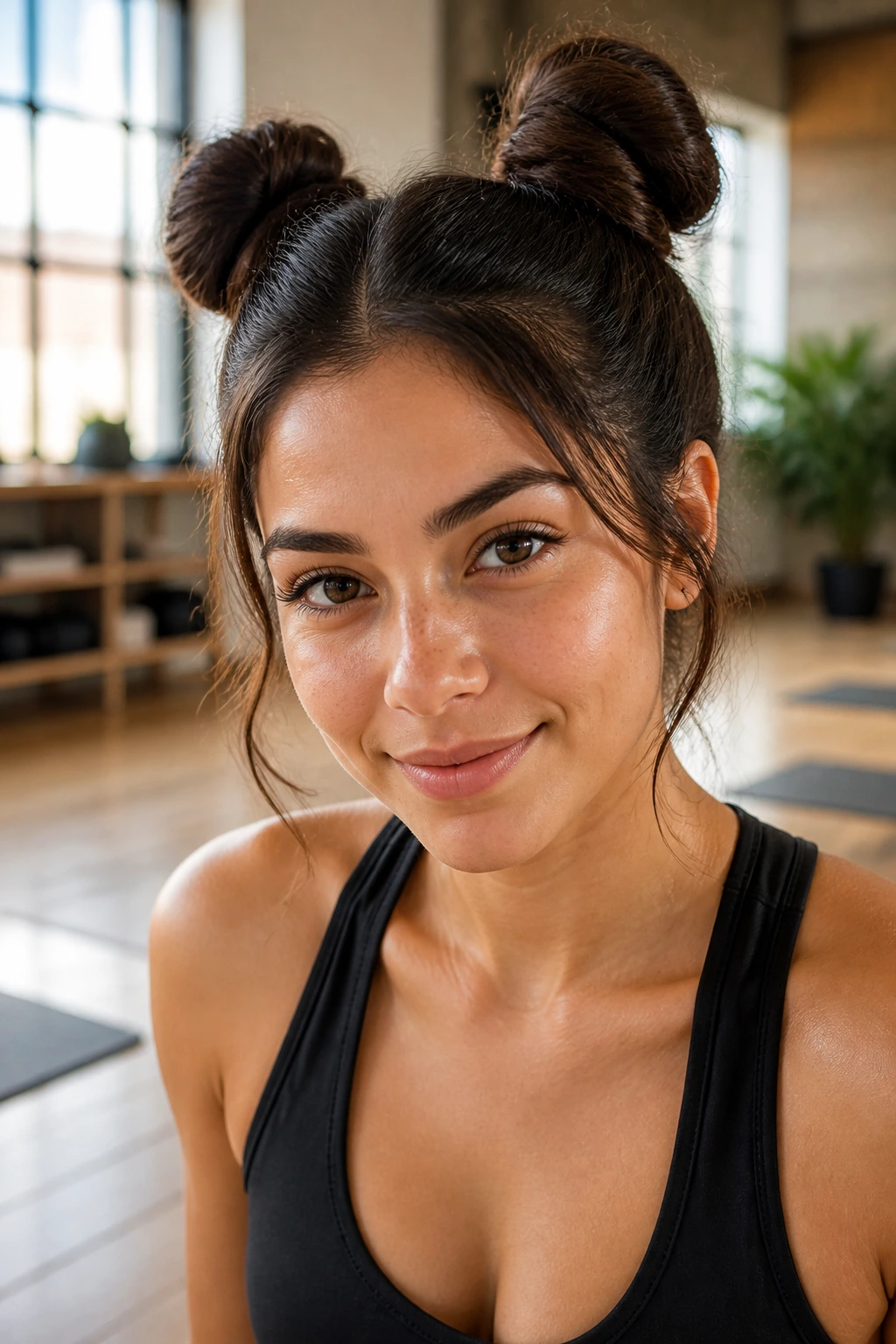
Space buns are not just for festivals; they are fantastic for workouts where you are doing a lot of floor work or yoga. By splitting your hair into two buns, you distribute the weight of your hair to the sides, leaving the center of your head free.
Practical Benefits for Yoga
When performing poses like bridge or shoulder stands, a single bun at the back of your head can feel like a hard lump. Space buns, placed strategically on the top corners of your head, keep the back of your head flat against the mat, allowing for a better range of motion and comfort.
How to Style
- Part your hair down the center from your forehead to your nape.
- Create two high pigtails.
- Twist each pigtail into a bun and secure it with a spiral elastic.
- If you have shorter layers that tend to pop out, use a light-hold hairspray specifically designed for activewear to keep those pieces tucked into the buns.
11. The Wrapped Fishtail
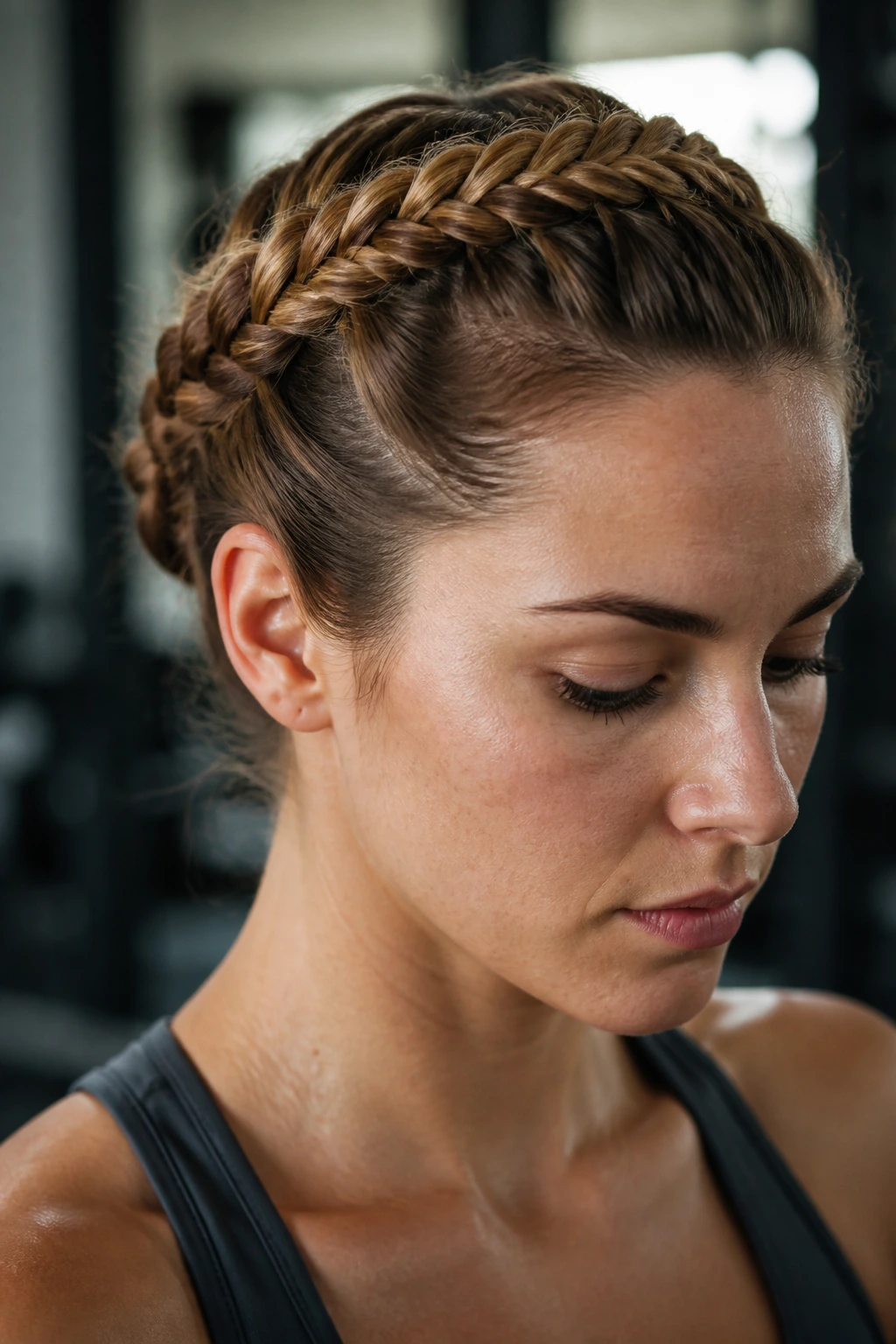
The fishtail braid is arguably the most secure of all the braiding techniques because it utilizes smaller sections of hair and creates a tighter weave. It’s perfect for long, thick hair that has a tendency to get “wiry” or frizzy when exposed to high-humidity environments.
The Physics of the Fishtail
By weaving together dozens of small strands, the fishtail creates a rope-like structure that is incredibly resistant to breaking or coming loose. It is the style equivalent of a reinforced cable. Even after an hour of heavy cardio, the integrity of the braid usually remains flawless.
Getting the Look
- Separate your ponytail into two equal sections.
- Take a tiny piece from the outer edge of the left section and cross it over to the right.
- Repeat on the other side.
- Keep the tension consistent; if you pull too loosely, the braid will sag.
12. The Headband Tuck
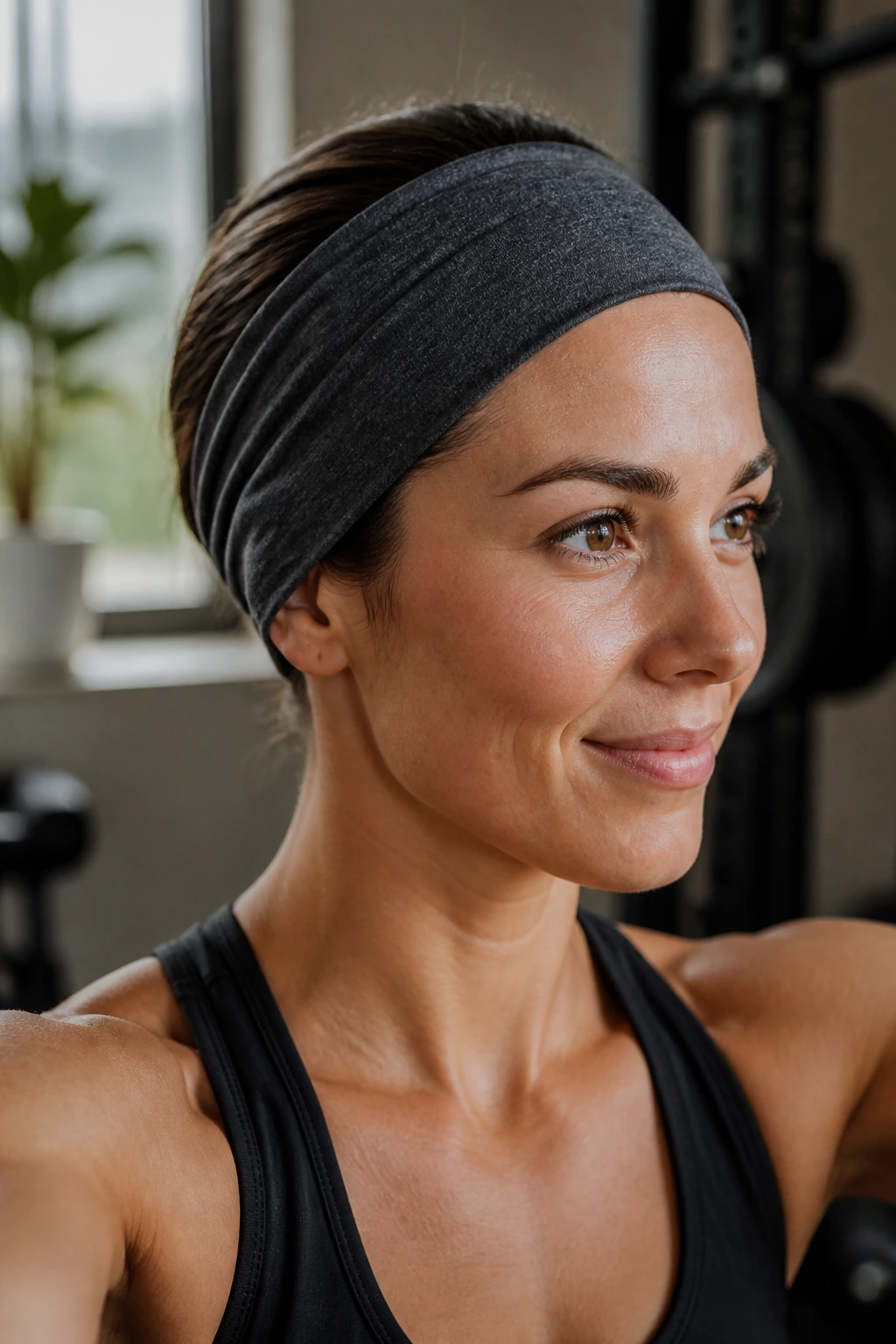
Sometimes the best hairstyle is actually a non-style. If you have medium-length hair or layers that are just too short to stay in a braid, a wide, moisture-wicking headband is your best friend. It keeps hair off your face, absorbs sweat, and protects your hairline from friction.
Why Moisture-Wicking Matters
Generic cotton headbands tend to get saturated with sweat, become heavy, and then start to slide off. Look for headbands made of synthetic performance fabrics that are specifically engineered to pull moisture away from the skin.
Styling Tip
Tuck your hair into the headband at the nape of your neck and pull it up slightly to create a “voluminous” effect around the crown. This adds a bit of style to your utilitarian headband choice and ensures that any shorter, wispy hairs are kept firmly underneath the band.
13. The Twisted Low Pony
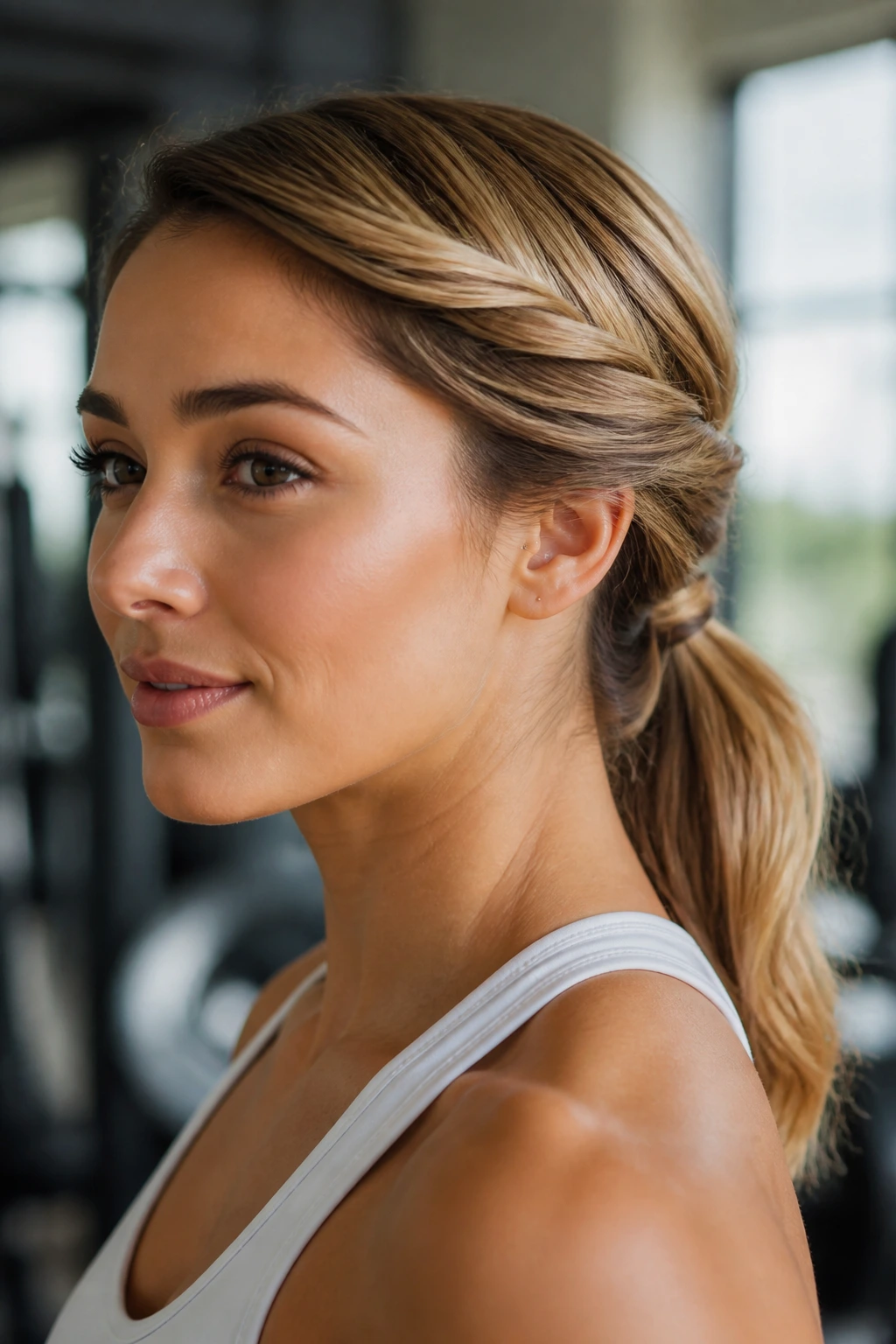
If a plain ponytail feels too boring, the twisted low pony adds a layer of visual interest while remaining extremely functional. By twisting the side sections of your hair back toward the center, you pull the hair tight enough to prevent movement while keeping it secure at the base of the neck.
How to Achieve the Twist
- Section off the front two inches of your hair on each side.
- Gather the back portion of your hair into a low ponytail.
- Take the front sections, twist them toward the center, and wrap them around the elastic of the ponytail.
- Pin these twists down for a secure, sleek finish.
When to Use This Style
This is an excellent choice for a gym session where you want to look put-together but don’t want to spend more than three minutes in front of the mirror. It’s also very effective at controlling bangs or shorter front layers that might otherwise fall into your eyes during a workout.
14. The Knotted Pull-Through Braid
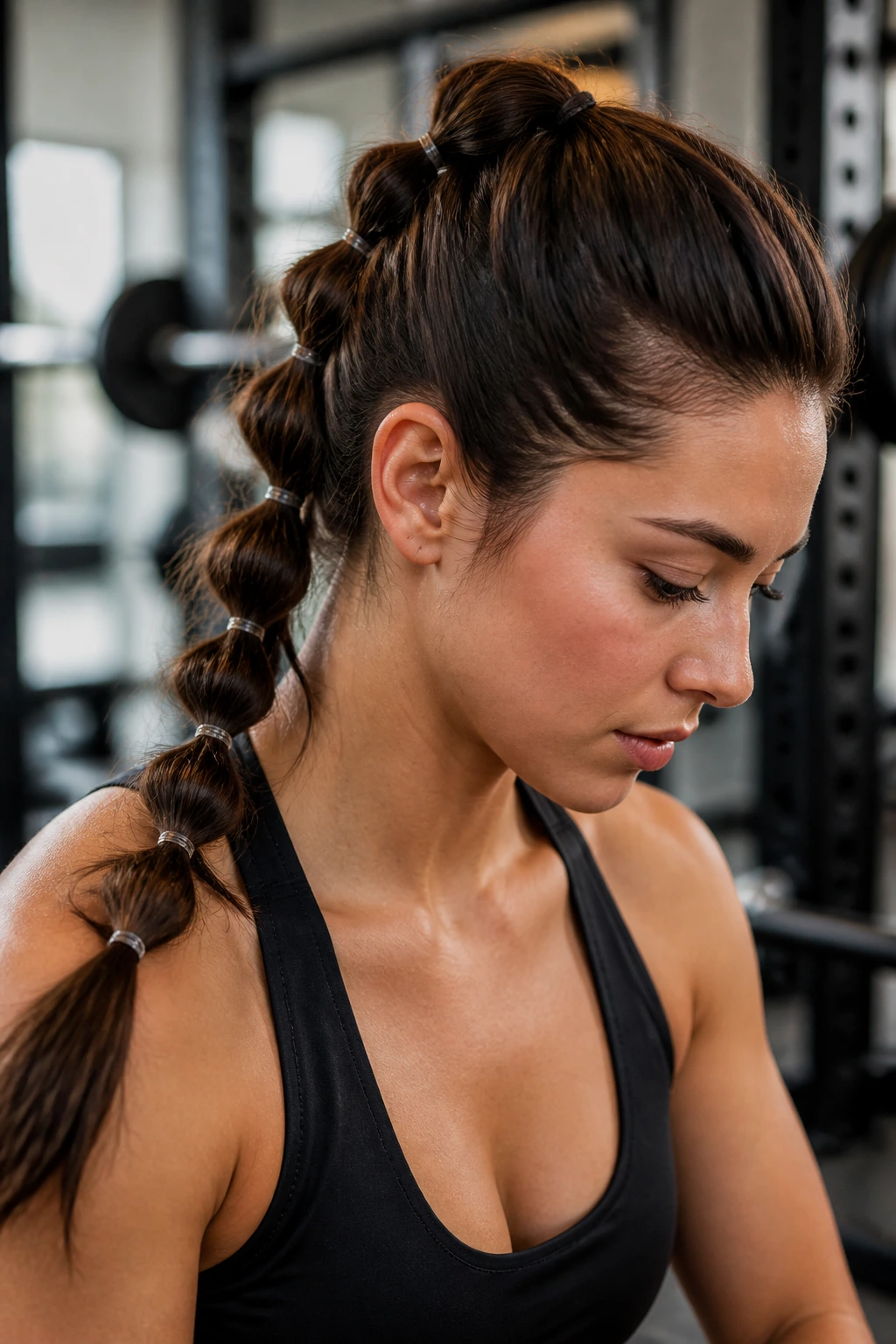
The pull-through braid looks complicated, but it is actually a series of small, connected ponytails that are pulled through one another. Because it relies on individual hair ties, it is incredibly secure, even for people with slippery or fine hair.
The Advantage of Individual Elastics
Each section is independent, meaning if one part of the braid loosens, the rest stays perfectly in place. This makes it one of the most reliable styles for long-distance running or active training where you are moving at a high speed for an extended period.
Creating the Structure
- Start with a base ponytail.
- Create a second ponytail just below the first, then split the first into two and wrap it around the second.
- Repeat this down the length of your hair, securing each section with a clear elastic.
- Once you reach the end, fluff the segments to create a thick, ropey look.
15. The “Gym-Ready” Half-Up Ponytail
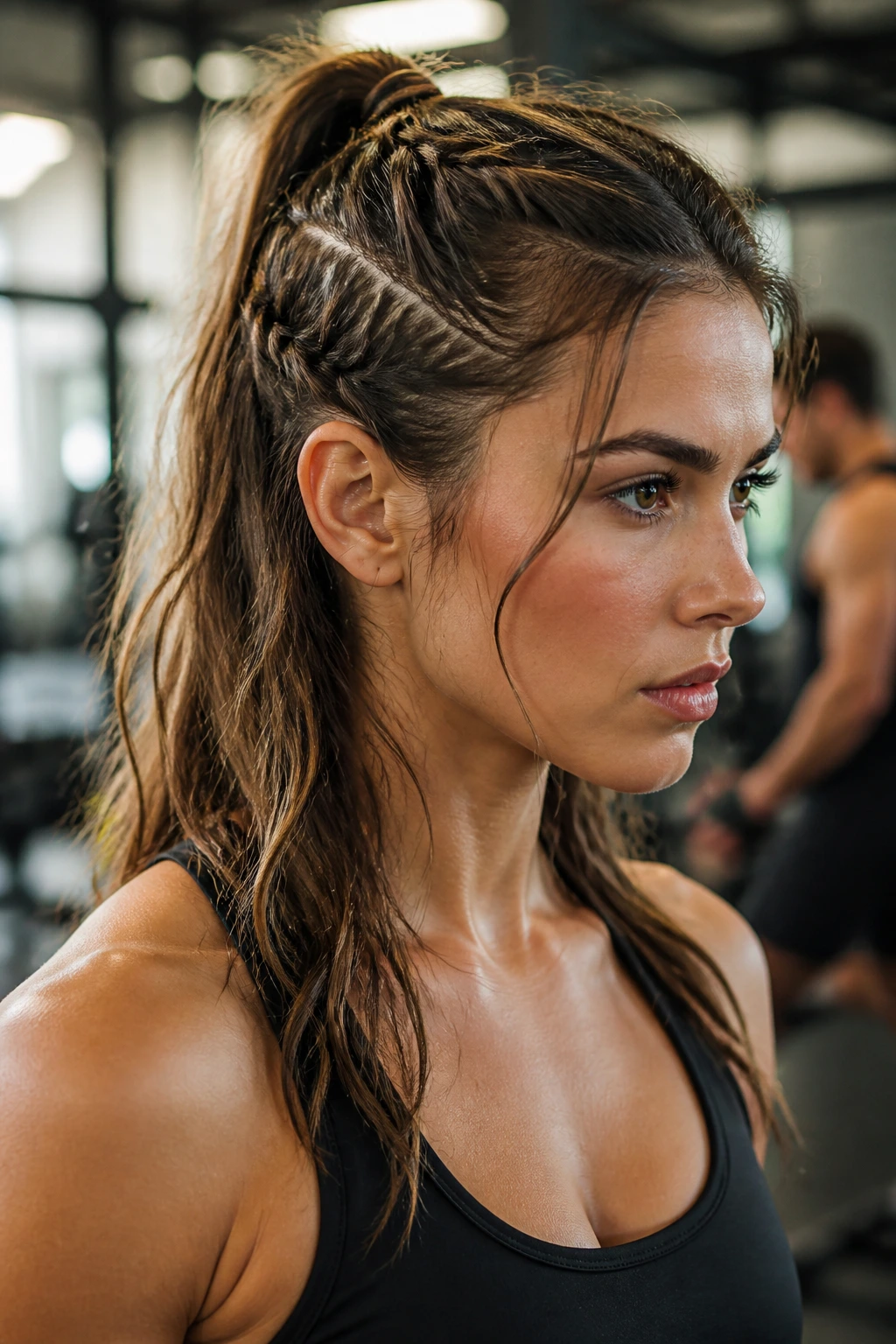
A classic half-up, half-down style, but modified for intensity. Instead of letting the bottom half hang loose, you can secure it into a loose braid or simply pull it back into a second, lower ponytail. This removes the “loose hair” variable entirely.
Why Modifications Help
If you are doing exercises that involve a lot of overhead movement, loose hair can get caught in your neck, back, or equipment. By turning the bottom half into a loose, low braid, you keep the hair gathered and tidy while retaining the relaxed, half-up look.
Softening the Look
This style is particularly flattering for those who feel that a high-tension ponytail makes their face look too severe. It provides the security of an updo while framing the face, making it a favorite for outdoor group classes or gym days where you want to keep things casual.
16. The Sleek Low Chignon
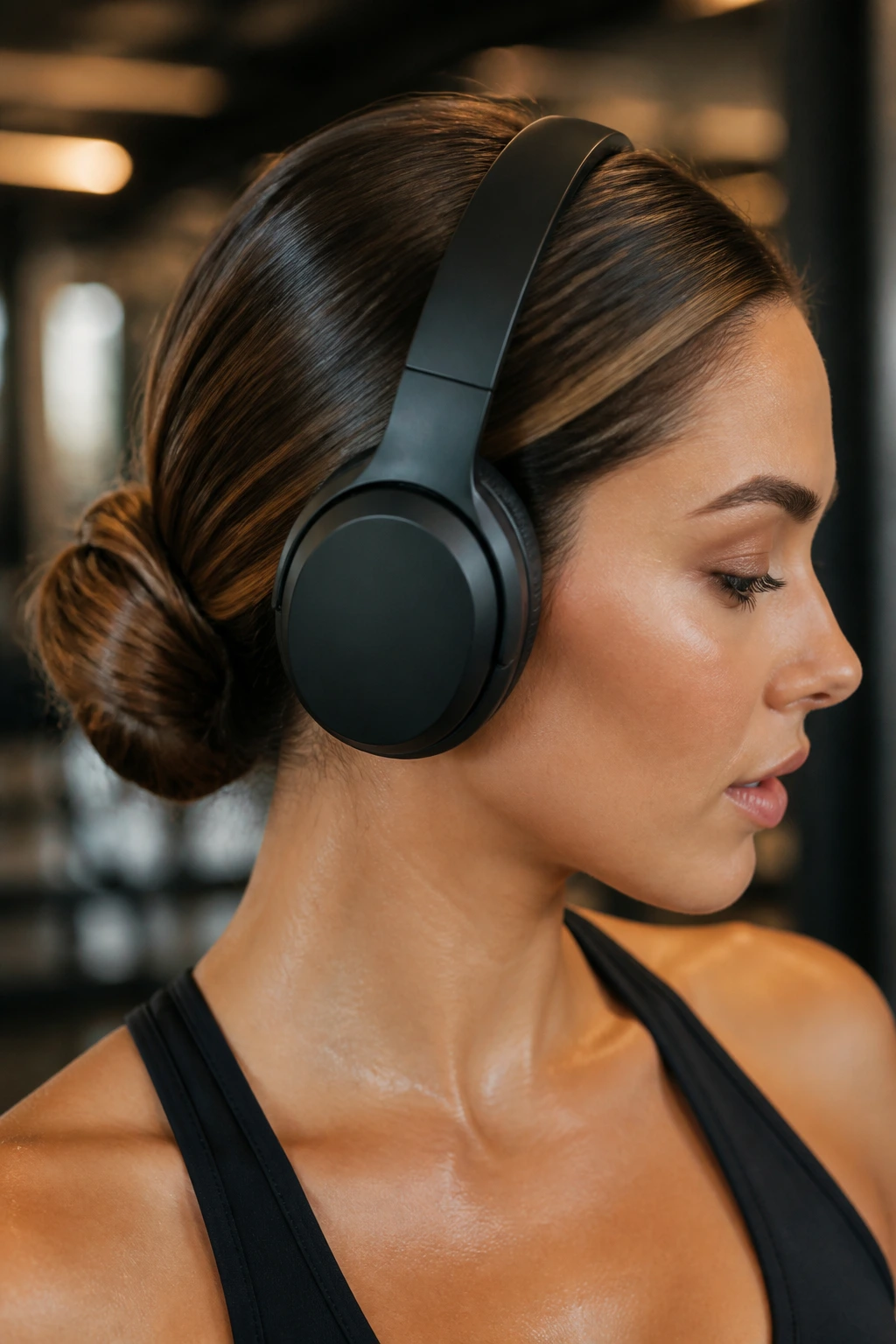
The chignon is the sophisticated cousin of the low bun. It’s elegant, stays perfectly in place, and is remarkably comfortable under headphones. If you wear over-ear headphones while you workout, a low, smooth chignon ensures you have no bulky hair-ties or braids pressing into your ears.
Focus on Smoothness
Use a boar bristle brush to gather the hair to the nape of the neck. This brush helps distribute your natural oils from the roots to the ends, giving your hair a sleek, healthy look while you sweat.
The Final Touch
Secure the bun with a high-quality hair fork or a secure hair pin rather than just an elastic. This allows you to tighten or loosen the bun throughout your workout without having to pull the hair tie out and start the whole process over again.
17. The Waterfall Braid
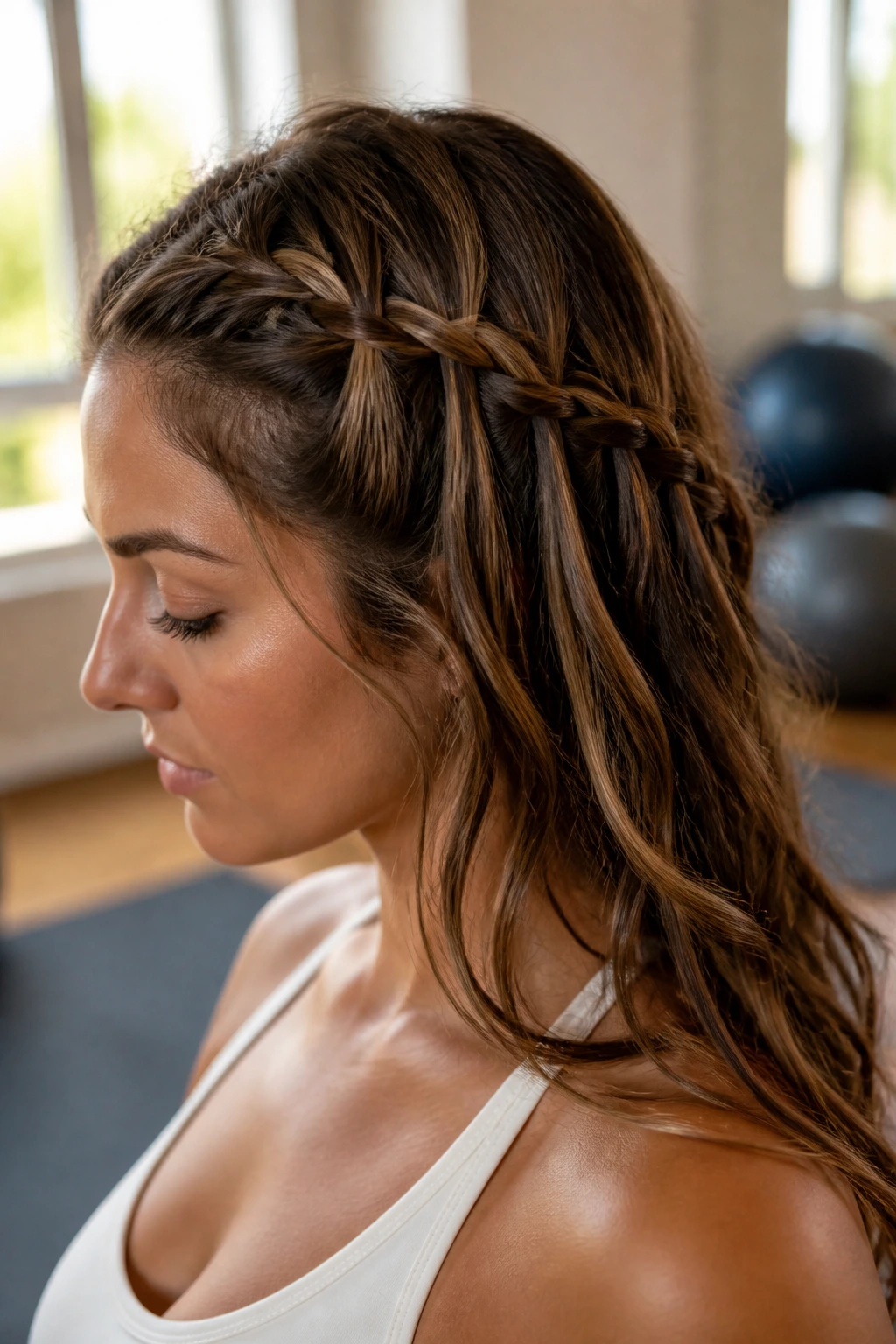
While traditionally seen as a “formal” look, the waterfall braid is excellent for keeping hair off the temples and face during workouts. By letting the strands “fall” through the braid rather than braiding them all in, you get a unique look that feels light and airy.
Performance Utility
This is a great style for yoga or Pilates, where you want your hair to feel weightless. It keeps your hair secure at the front and sides, which is essential for balance poses, but avoids the heavy “pull” of a full braid or a tight bun.
Getting the Tension Right
You must braid tightly against the scalp. If you find your hair slipping, add a bit of styling mousse to the front sections before you start. It provides just enough tackiness to hold the waterfall sections in place for the duration of a medium-intensity workout.
18. The “Undone” Mohawk Braid
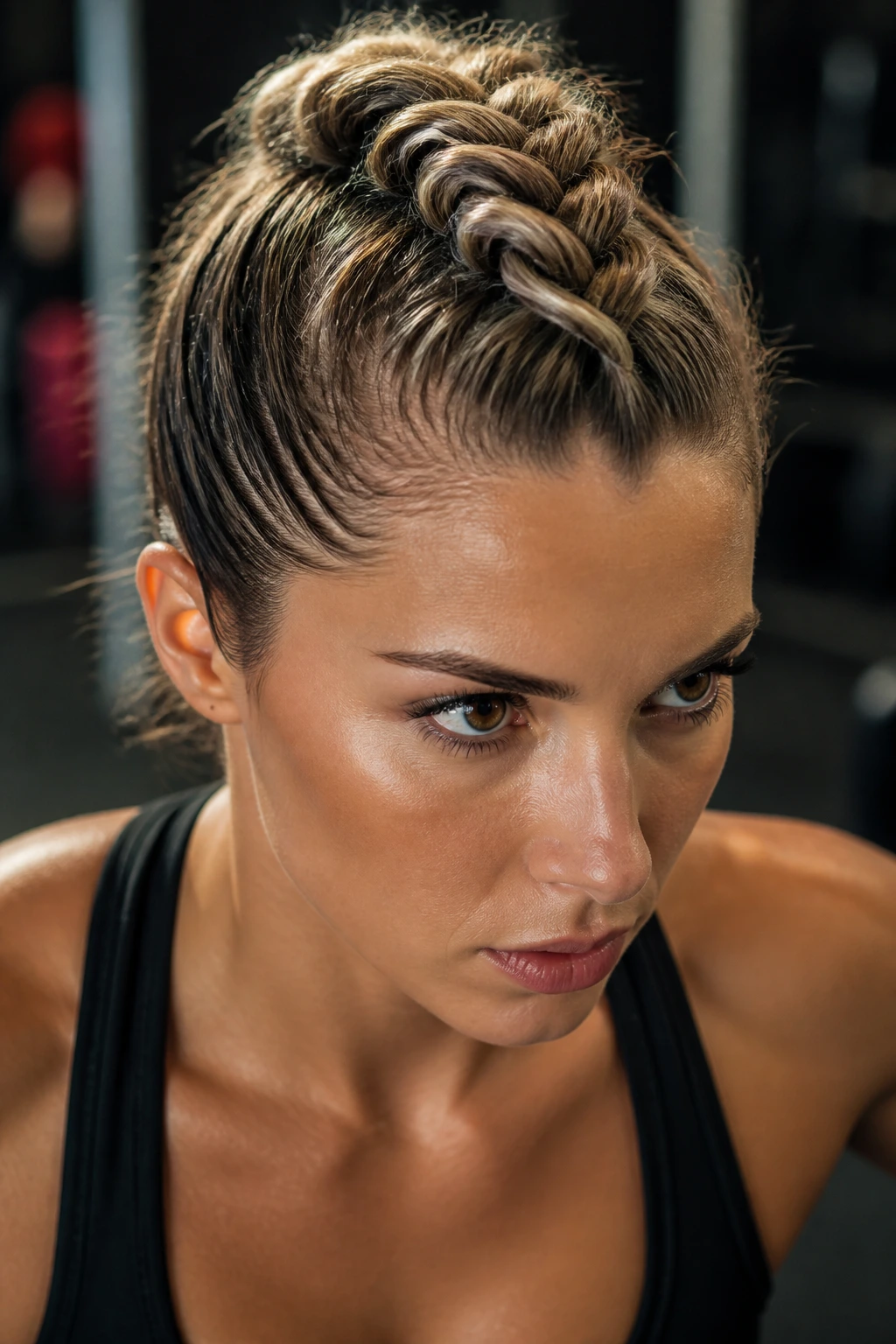
This style is for the bold. It involves a single, thick French or Dutch braid running down the center of the head, with the edges pulled slightly to create a faux-mohawk silhouette. It is secure, aggressive, and undeniably cool.
Why It’s Great for Training
By centralizing the hair, you eliminate side-to-side movement. This is the ultimate “no-distractions” style. Because it is a single, heavy braid, it provides more stability than a ponytail or space buns, especially when you are engaged in rapid directional changes.
Making It Last
This style benefits from a strong-hold hairspray. Once you have finished the braid and pulled at the loops for volume, give your entire head a light mist of spray. This keeps the shape of the “mohawk” through even the most grueling sweat sessions.
19. The Side-Swept Dutch Braid
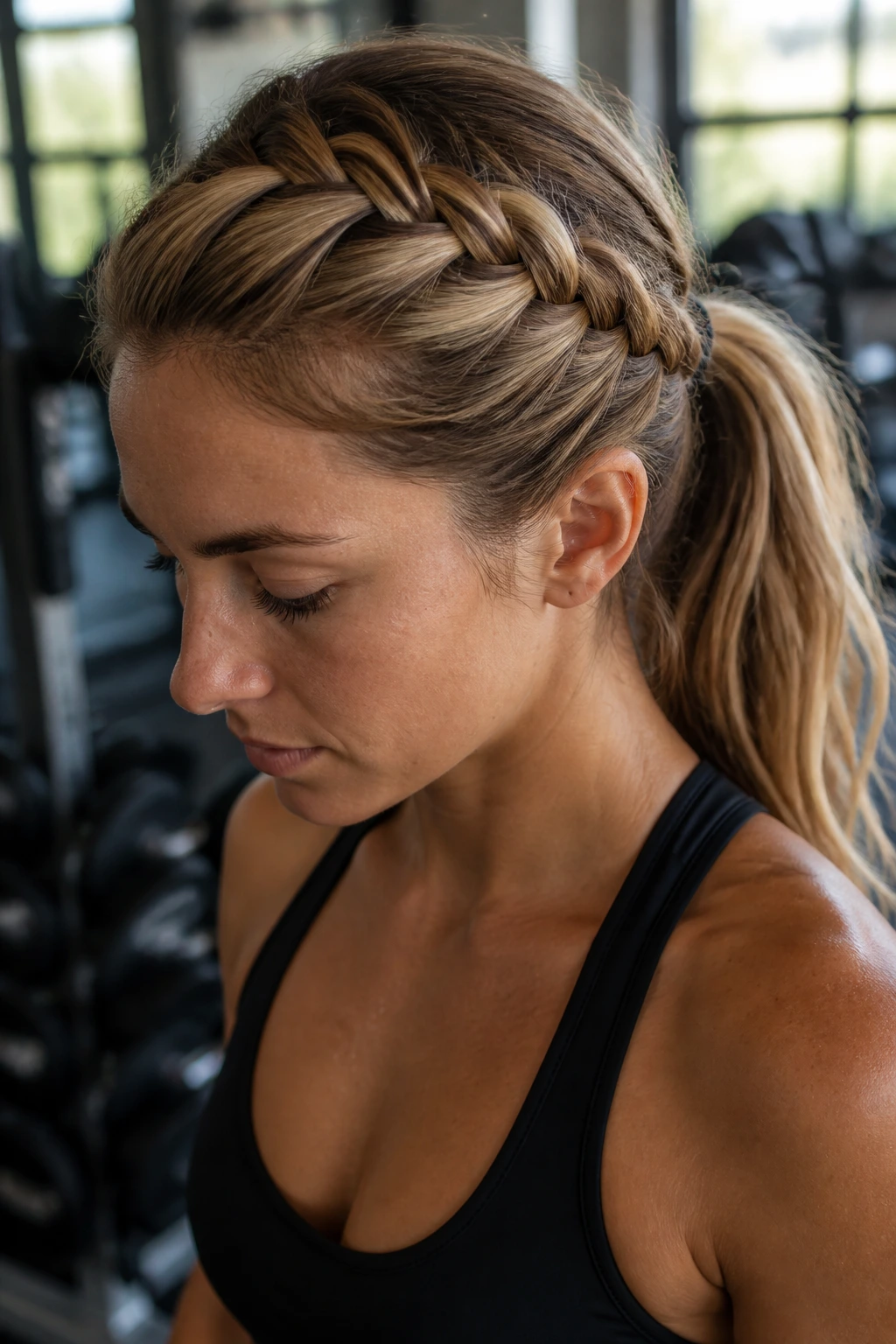
If you have a side part that you just cannot seem to get rid of, the side-swept Dutch braid is your answer. It starts at your temple and moves across the head before gathering into a ponytail. It’s an asymmetrical look that keeps everything swept away from your dominant side.
Managing the Part
This style works with your natural parting rather than against it, which means it will feel more comfortable over time. It is a fantastic option for someone who hates the “pulled back” feeling of a center-parted style.
The Practicality of the Ponytail
By ending the braid in a ponytail, you have the best of both worlds: the security of a braid and the convenience of a ponytail. It keeps the hair at the hairline totally locked down, while the ponytail remains easy to manage and adjust as needed.
20. The Tucked-In Headband Braid
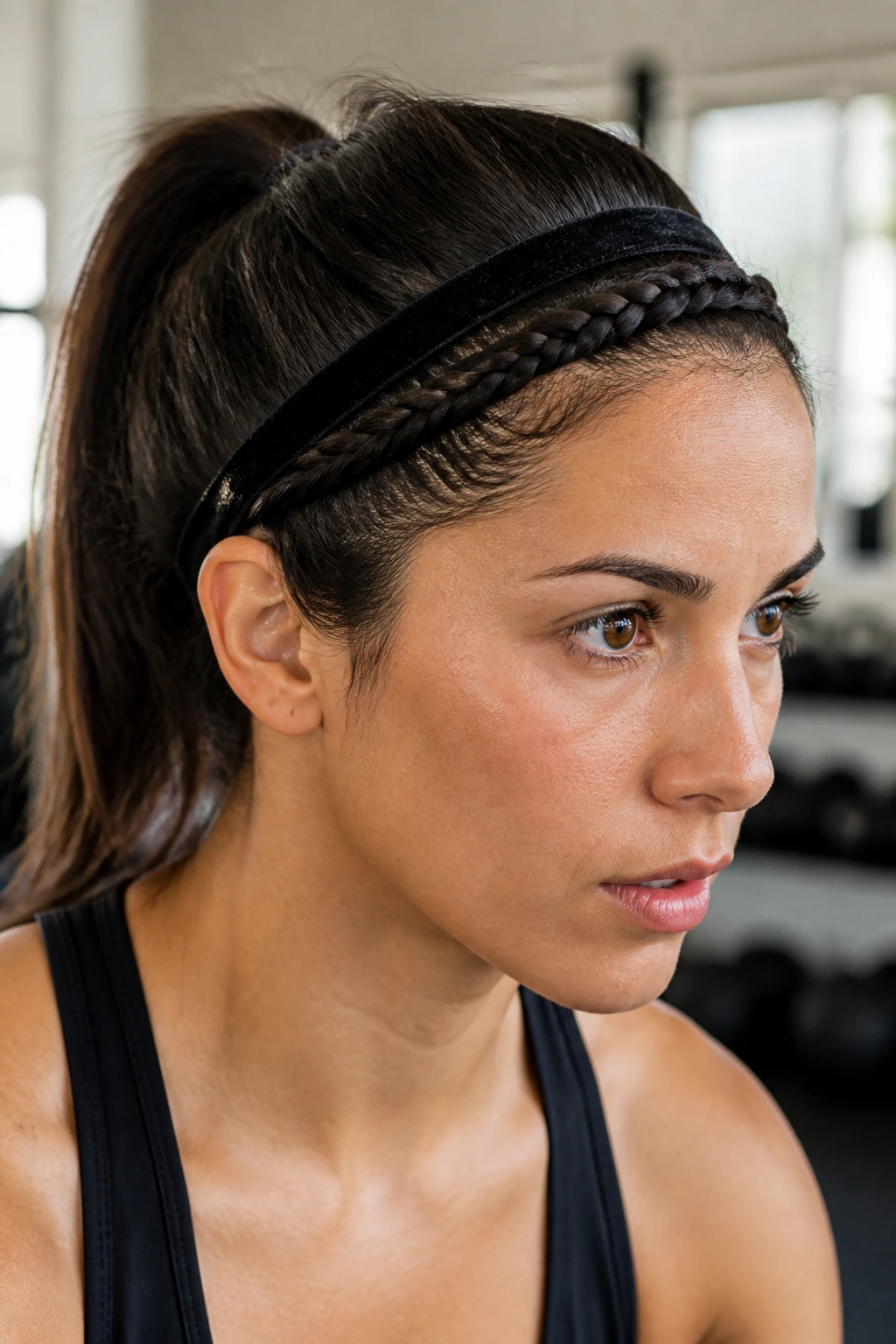
This is a hybrid style: a thin braid that runs along the forehead, which is then tucked into a headband. It provides double security for those who find that headbands alone don’t hold their hair in place.
Why It’s Indestructible
The braid acts as an anchor for the headband. Because the headband is gripping the hair in the braid, it is much less likely to slide back during a workout. It’s the ultimate solution for people who feel like their hair is “too slippery” for standard workout gear.
Styling Variation
You can use a matching velvet headband for a bit of extra grip. The texture of the velvet grabs onto the braid strands and keeps everything in place for hours. It’s a subtle style that stays put, no matter how much you turn your head.
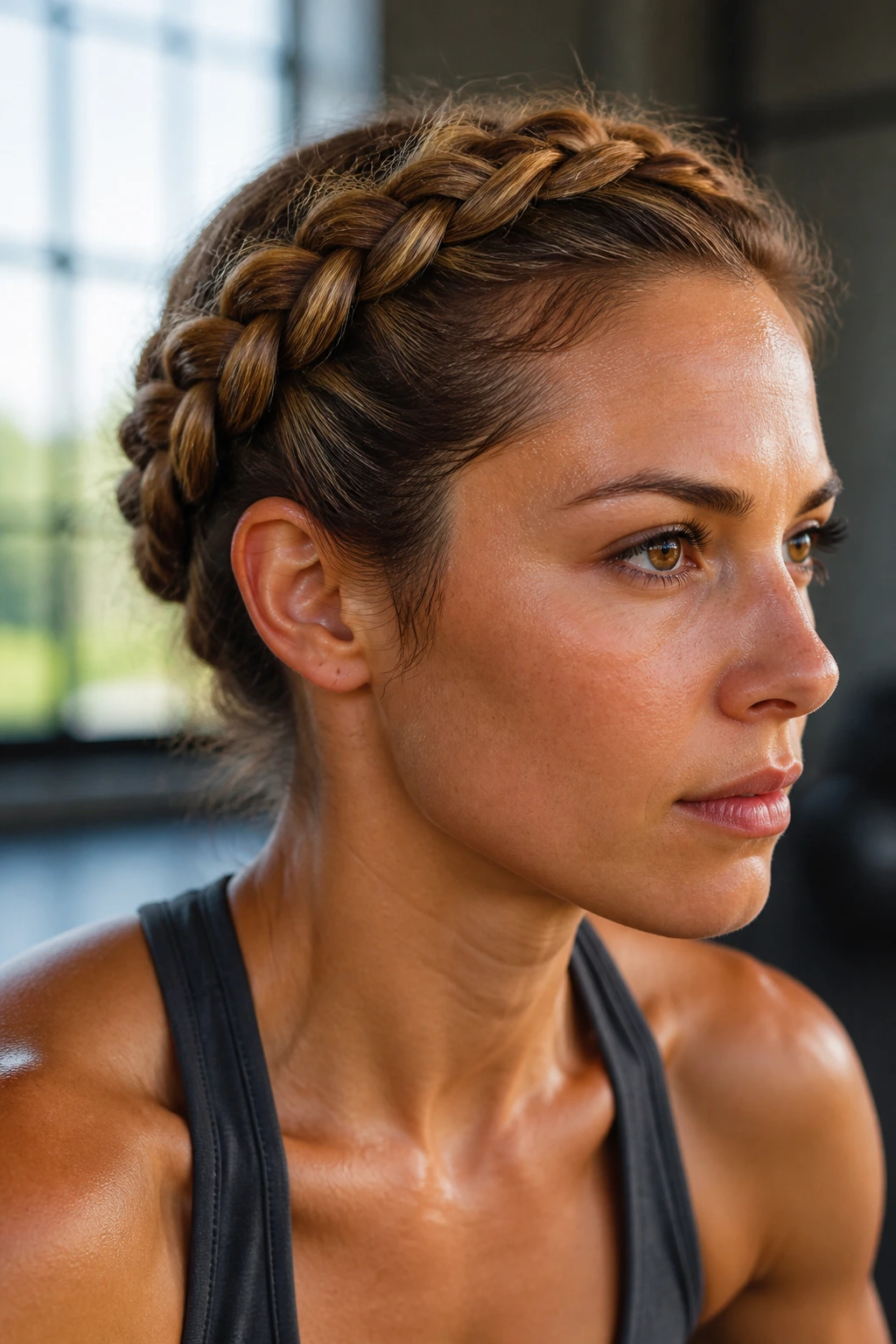
21. The Crown Braid
Commonly associated with historical styles, the crown braid is perhaps the most secure way to wear long hair during a workout. It involves braiding the hair around the perimeter of the head and pinning it in place. It is completely out of your face and nowhere near your neck.
The Stability Advantage
Because the hair is essentially “locked” to your scalp, it cannot move. There is zero bounce, zero friction, and zero chance of it falling down. It is the gold standard for high-performance activities like long-distance rowing or intense floor-based agility drills.
Difficulty and Persistence
Admittedly, this one takes a bit of practice. However, once you master the technique, you will find that it is arguably the most comfortable workout style in existence. The weight of your hair is perfectly distributed, meaning you won’t even notice you have hair after a few minutes of training.
22. The Quick-Fix Messy Bun with a Clip
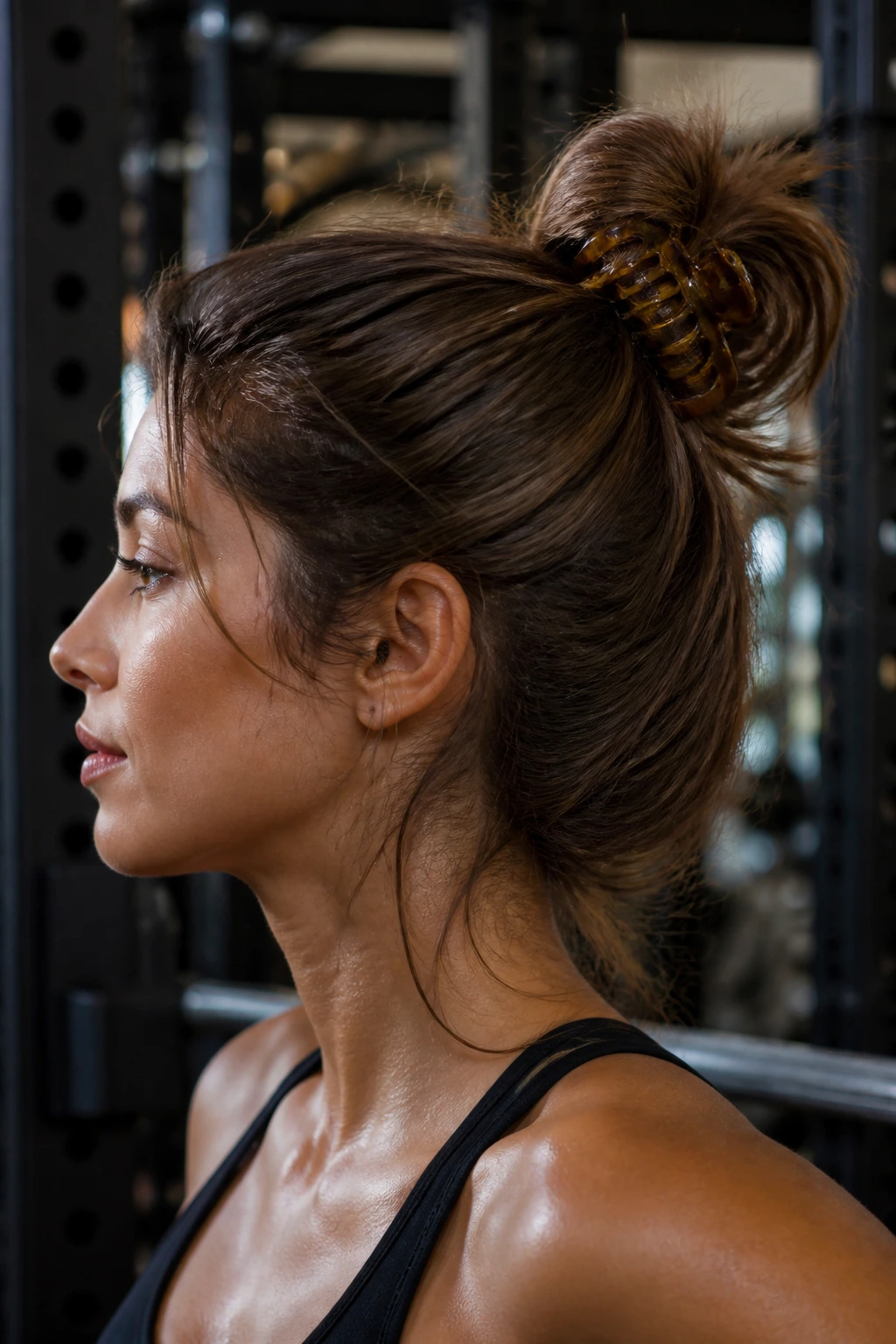
For those days when you have thirty seconds to get ready, a sturdy claw clip is all you need. The trick is to gather your hair into a high ponytail base, twist it into a bun, and secure it with a large, high-quality claw clip.
Choosing the Right Clip
Avoid the cheap plastic ones; they will shatter the first time you drop your gym bag. Invest in a clip made of cellulose acetate or a high-durability acrylic. These materials are flexible and much less prone to breakage under the stress of a workout.
Comfort Check
Make sure the teeth of the clip are rounded and smooth. Sharp, poorly finished clips can snag hair or scratch your scalp, which becomes very noticeable and very annoying during a workout. A high-quality clip should feel secure but not sharp.
Final Thoughts
Finding the right style is often a process of trial and error. Some days you might want the absolute lockdown security of a Dutch braid, while other days, a simple high pony is exactly what the routine calls for. Do not be afraid to experiment with different types of hair ties, clips, and bands to see what your specific hair texture prefers.
The most important takeaway is that your hair should support your training, not compete with it. If you find yourself constantly adjusting your style, it is time to switch tactics. Pick the style that keeps your vision clear, your neck free, and your focus entirely on the movement at hand—and leave the rest to the hair ties.