

Achieving the perfect look within the cottage academia aesthetic is all about embracing a sense of romanticized, intellectual simplicity. For those of us with Asian hair—which often features a high density of pigment, a coarser individual strand texture, and a naturally straight, sleek cuticle—this specific style can be a bit of a challenge. You are not just looking for a messy bun; you are looking for that structured yet soft, literary-inspired aesthetic that looks as if you spent the morning pressing wildflowers in an antique leather-bound journal. The key is working with the weight and natural gloss of your hair rather than fighting against it.
Cottage academia, at its heart, is a rejection of the high-maintenance, heat-styled trends that dominate mainstream beauty. It favors textures that look lived-in and styles that seem pulled together with little more than a velvet ribbon or a stray hairpin. When you have hair that is pin-straight or resistant to holding a standard curl, the goal is to lean into your natural strength: the shine and the longevity of your style. Whether you are aiming for the scholarly look of a student in a vintage library or the rustic vibe of a gardener tending to herbs, the following styles are designed to complement the specific traits of Asian hair.
1. The Classic Velvet Bow Half-Up
There is something undeniably scholarly about a simple half-up, half-down style secured with a rich, dark velvet bow. For Asian hair, this style works because it keeps the hair out of your eyes during long reading sessions while highlighting the natural smoothness of your locks. The trick is to ensure your hair is not perfectly pin-straight, which can sometimes look too severe.
Creating Texture for the Bow
Take your hair and add a very loose wave using a large-barrel iron, focusing only on the mid-lengths. You do not want tight curls; you want a soft, bent shape that provides enough volume to keep the hair from sitting flat against your scalp. Once you have a bit of movement, gather the top section of your hair—the portion above your temples—and pull it back to the center of your crown. Secure it with a small elastic before attaching your velvet ribbon.
Why This Style Works
- It provides a focal point that screams vintage academia.
- The velvet ribbon adds a soft contrast to the natural shine of darker, straighter hair.
- It is a functional style that keeps hair neat for hours of study. Pro tip: Choose a ribbon in a deep color like burgundy, forest green, or midnight blue to maintain that classic, moody atmosphere.
2. Low Messy Braids with Ribbon Ties
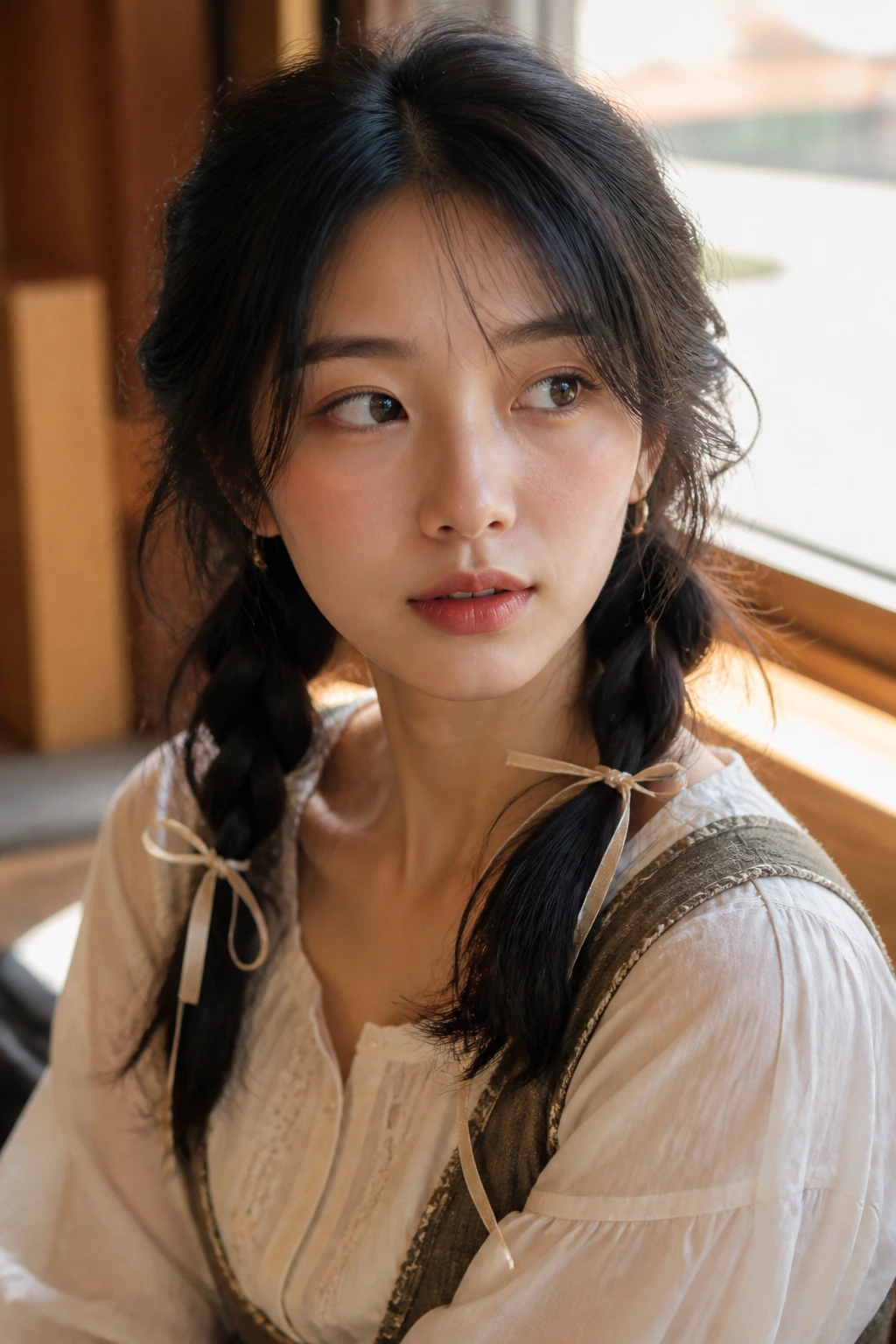
Braids are the foundation of any cottage-inspired look. However, a tight, polished braid can often feel too sporty or “gym-ready.” For an academia vibe, you want a braid that looks slightly unraveled and soft. Asian hair holds braids very well, but it can sometimes be difficult to get those loose, wispy strands to stay put.
Achieving the Soft Look
Start by prepping your hair with a light texturizing spray or dry shampoo to give the strands some grip. Divide your hair into two equal sections and braid them loosely, stopping about three inches from the ends. Once secured with a clear elastic, use your fingers to “pancake” the braid—gently tugging at the sides of each loop to pull them wider. This creates the illusion of thickness, which is a great trick for anyone with finer-strand hair.
The Finishing Touch
Instead of hiding the ends, tie a thin linen or silk ribbon around the base of the elastic. Leave the loose ends of your hair messy and slightly unbrushed to keep the rustic feel. If you have bangs, leave two small, face-framing tendrils out to soften your features and add to that “just stepped out of a poetry reading” aesthetic.
3. The Scholar’s Low Chignon
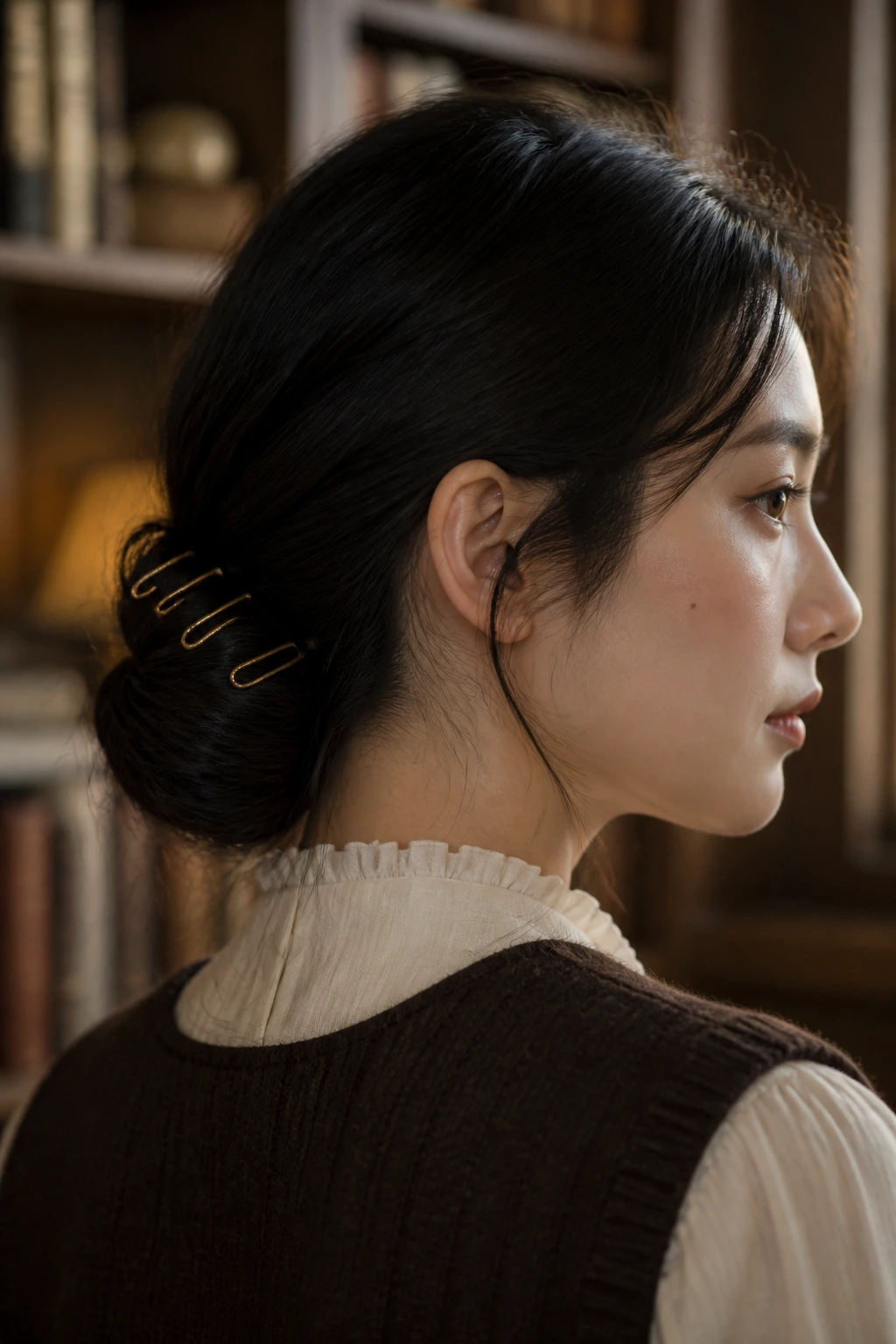
The chignon is the ultimate mark of an intellectual look. It keeps the neck clean and emphasizes the profile, making it a perfect match for high-collared shirts or oversized cable-knit sweaters. The challenge with Asian hair is that it can be slippery; if you pin it too loosely, the whole structure will unravel by midday.
Mastering the Base
Instead of using a donut or a synthetic filler, rely on a strong base bun. Start with a very low ponytail at the nape of your neck. Twist the ponytail tightly until it begins to coil on its own, then wrap it around the base. Secure it with at least three U-shaped hairpins rather than bobby pins. These pins grip the hair more effectively and are less likely to snap your strands.
Subtle Details
- Pull a few stray hairs loose around the ears.
- Use a small, ornate hair clip or a vintage-inspired pin at the base of the chignon.
- If your hair is particularly long, consider braiding the ponytail before wrapping it to add extra visual depth. Pro tip: If you find the bun is too tight, gently massage the scalp near your part to pull a tiny bit of hair out, creating a soft, relaxed silhouette.
4. Half-Up Top Knot with Dried Florals
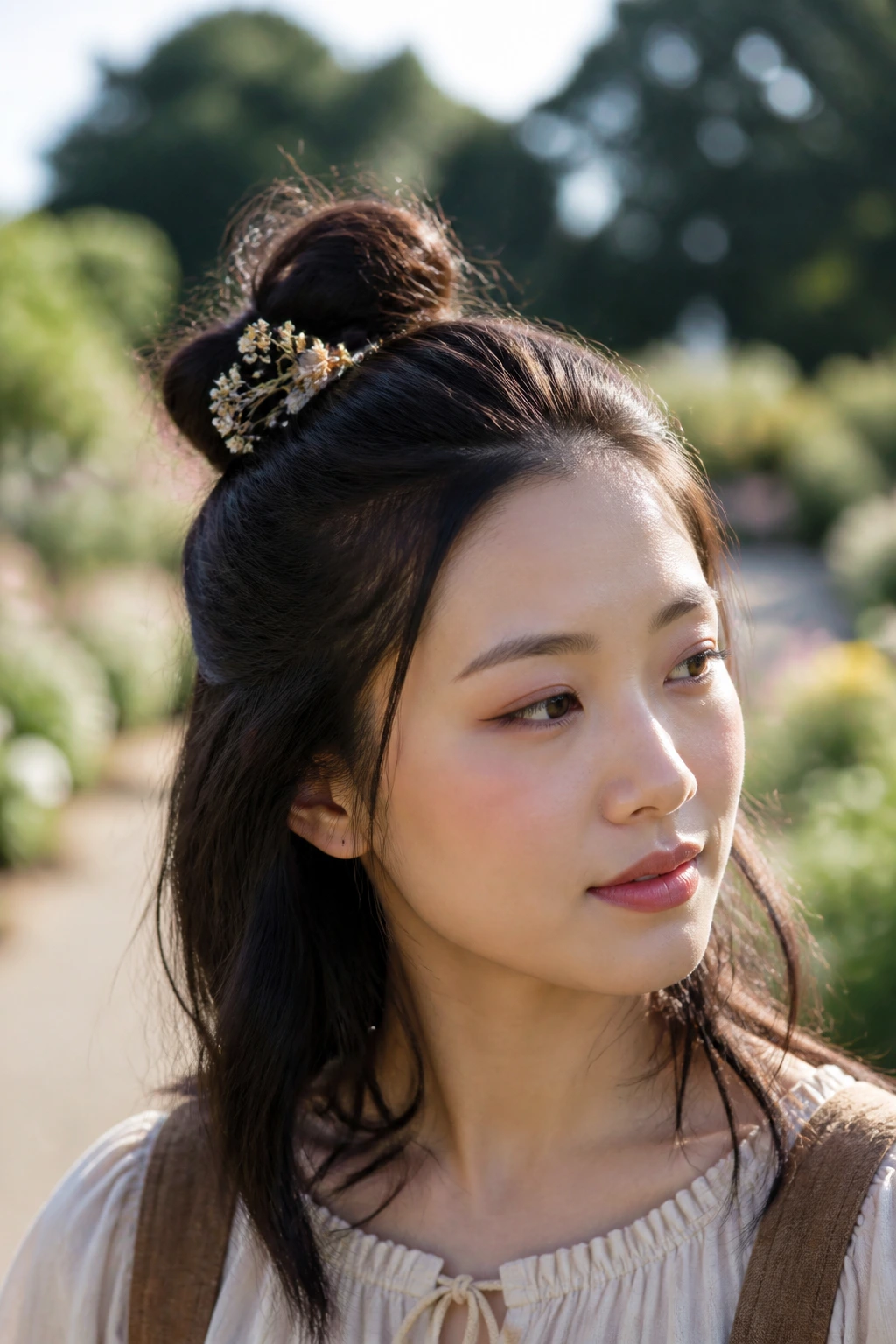
This look leans heavily into the “cottage” side of the aesthetic. It is whimsical, feminine, and surprisingly easy to execute once you have the right accessories. The key here is not perfection; it is about finding that balance between a messy top knot and a polished finish.
How to Style
Gather the top third of your hair into a ponytail at the crown of your head. Twist the length of this ponytail and wind it into a knot, pinning it securely. It does not need to be a perfect circle; let the ends stick out slightly. The magic happens when you tuck a single stem of dried baby’s breath or a small lavender sprig into the base of the knot.
Why It’s Perfect for Asian Hair
Because Asian hair is naturally dense, you do not need much hair to create a substantial top knot. The weight of the hair will hold the bun in place, while the contrast of the dried flower against dark, shiny locks creates a striking visual. This style is ideal for long afternoons spent outdoors or visiting a local botanical garden.
5. The Headband-Secured Tucked Roll
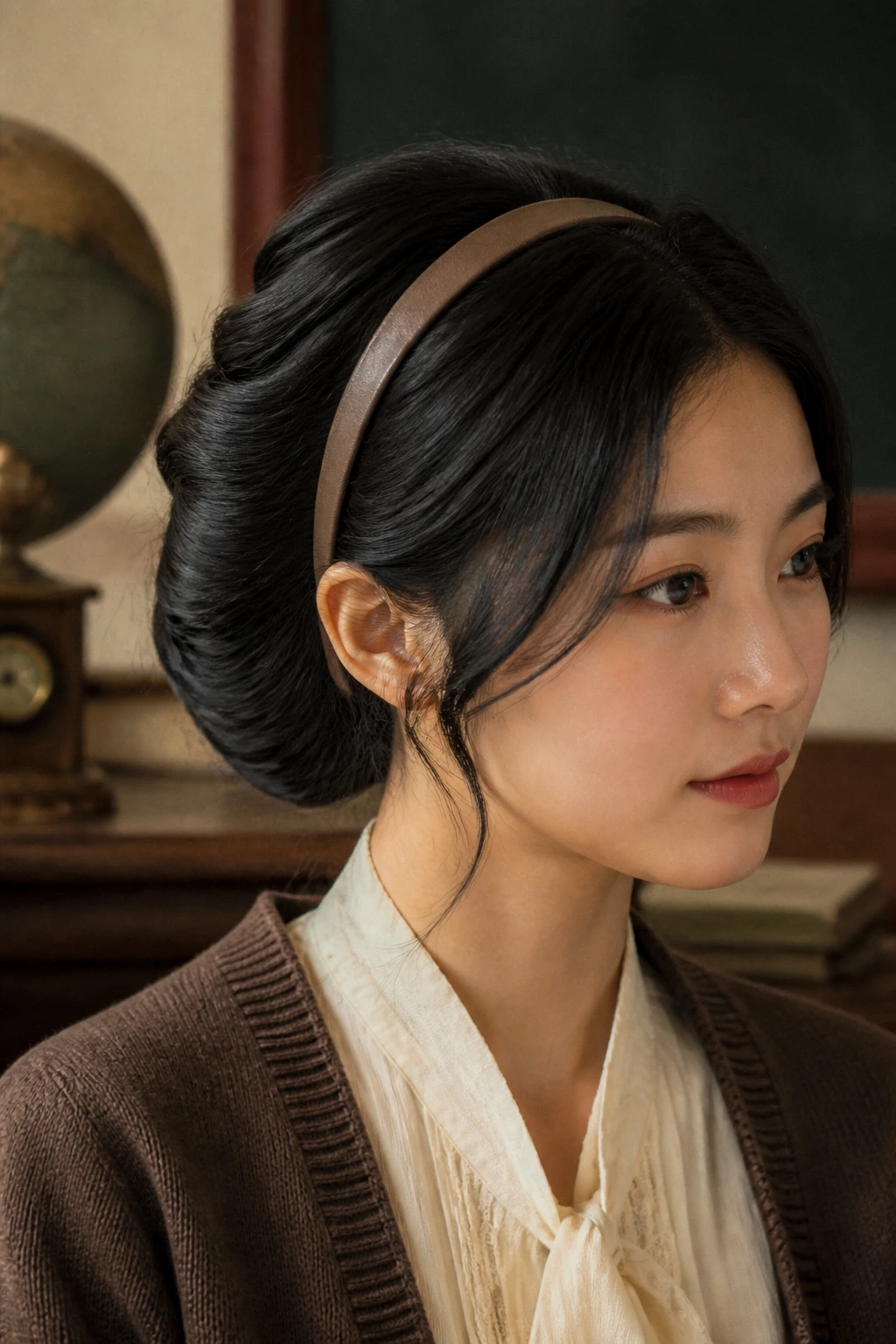
This is a classic 1920s-inspired look that fits perfectly into the academic canon. It involves using a headband to roll your hair toward your neck, creating a soft, voluminous look that frames the face entirely. It is a brilliant way to handle hair that refuses to hold a curl.
The Rolling Technique
Place an elastic headband over the top of your head, sitting over your hair rather than under it. Starting at the front near your temples, take small sections of hair and tuck them up and over the headband, pulling them through the loop. Repeat this moving toward the back. Once you reach the center, tuck the remaining hair into the headband until the entire back looks like a soft, rounded roll.
Why This Style Succeeds
- It requires no heat and no damaging styling tools.
- It protects your ends from breakage while keeping them neatly tucked.
- It creates a very romantic, period-piece silhouette that works well with vintage dresses.
6. Loose Side-Braid with Pressed Flowers
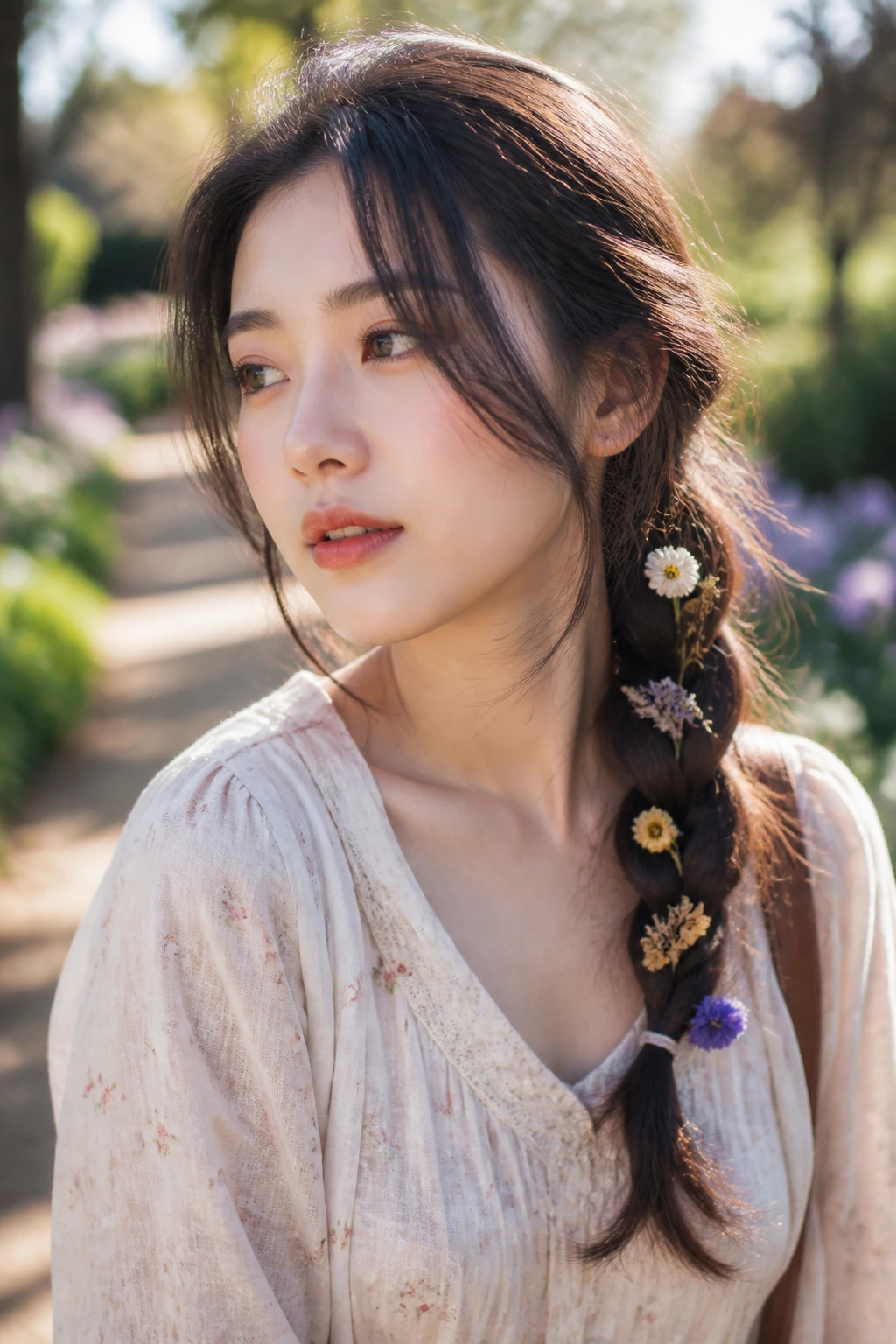
For a softer, more romantic approach, a single loose braid draped over one shoulder works wonders. This style is inherently gentle and suggests a life of quiet contemplation. It is a fantastic option if you have layered hair, as the shorter pieces will naturally pull out and frame your face.
The Prep Work
Before you start braiding, make sure you have a handful of small, pressed, or faux flowers ready to go. Braid your hair loosely to the side, ensuring the tension is low. You are aiming for a braid that looks like it is about to fall apart but stays just barely intact.
Adding Floral Accents
Once the braid is secured, take your floral pieces and gently tuck them into the woven loops. Do not overdo it; three or four small flowers are enough. The goal is to make it look as though you were walking through a garden and accidentally caught some blooms in your hair. This is a very popular look for weddings or outdoor literary events.
7. The Pinned-Back French Twist
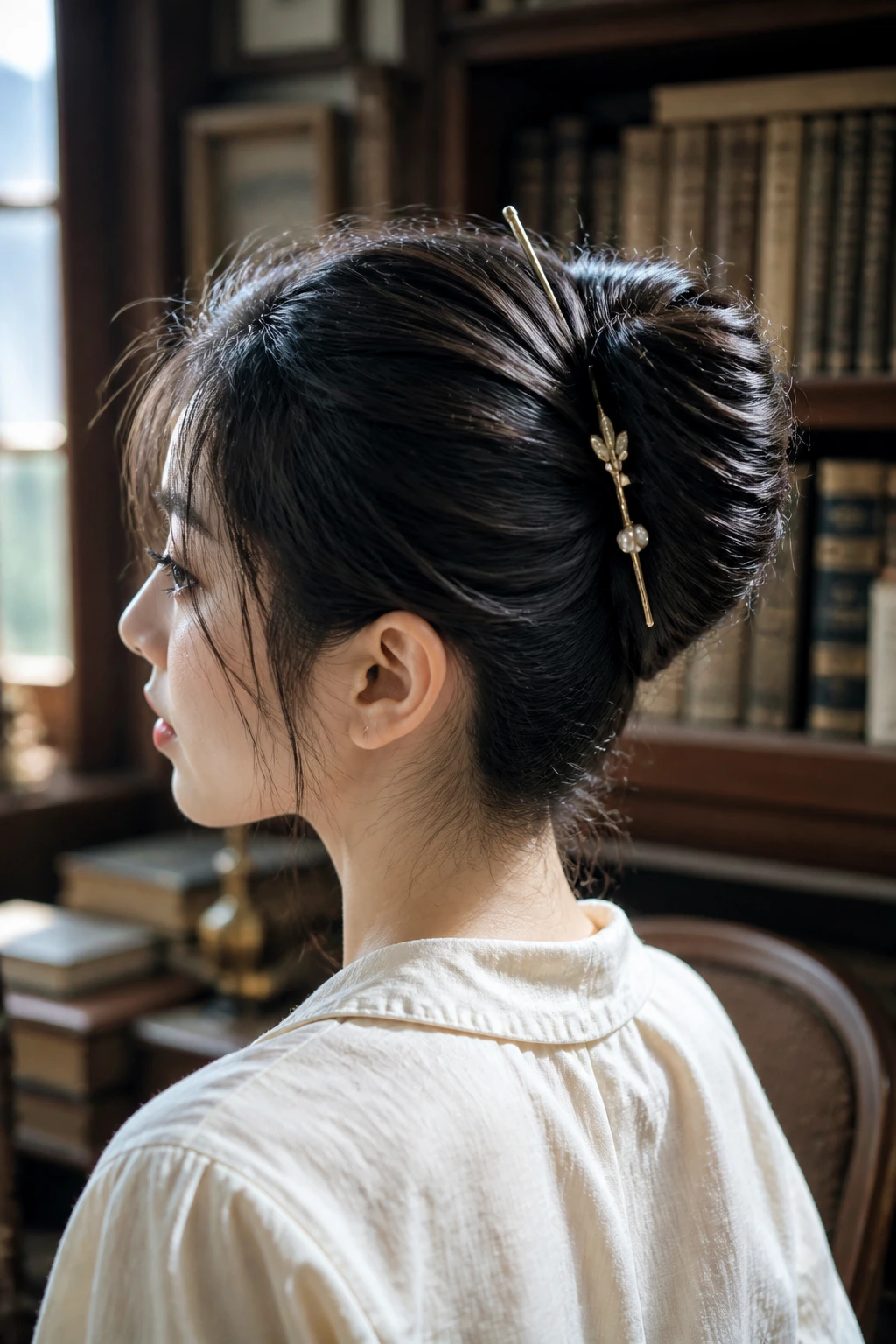
A French twist is the epitome of classic, timeless beauty, and it fits squarely into the academia aesthetic. While often associated with formal occasions, a slightly loose, “daytime” version of the French twist looks wonderful with linen trousers and a crisp button-down shirt.
Creating the Structure
To make this work for Asian hair, you must ensure you have enough grip. Use a dry texture spray to add “grit” to your hair. Gather your hair at the nape of the neck as if you are going to make a ponytail, then twist it upward. Tuck the ends of your hair into the fold of the twist and secure with several long, decorative hairpins.
Why It Works for the Academic Aesthetic
- It feels elevated and studious.
- It highlights the jawline and neck, perfect for wearing a vintage scarf or a high-collared shirt.
- It takes less than three minutes once you have the technique down, making it perfect for busy mornings.
8. Soft Waves with a Silk Scarf
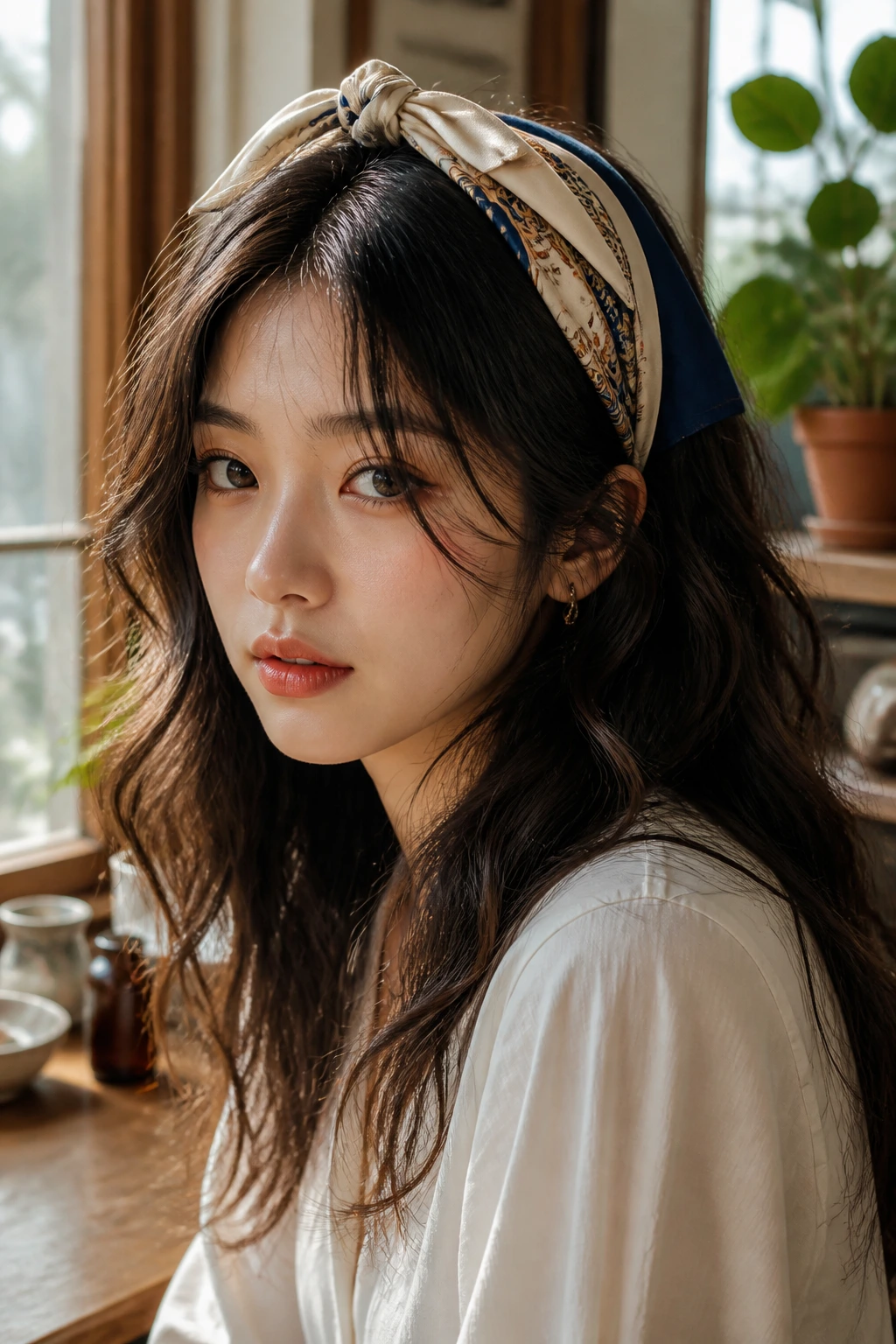
Sometimes, the best cottage academia style is simply letting your hair down and using a single accessory to change the entire tone. Silk scarves are a staple of this aesthetic, providing a pop of color or pattern against a muted outfit.
Incorporating the Scarf
Start by styling your hair with loose waves using a heat-free method, such as braiding it overnight. In the morning, brush through the waves to separate them. Take a square silk scarf, fold it into a triangle, and then roll it into a band. Tie it over the top of your head, letting the knot sit near the top. This pulls the hair back slightly, showcasing your face while keeping the volume of your natural waves.
Color and Pattern Tips
- Floral patterns work best for the “cottage” vibe.
- Solid muted tones like sage green or ochre feel more “academia.”
- Ensure the scarf is 100% silk or satin to prevent static and frizz, which can be an issue with straight hair.
9. The Twin Braided Crown
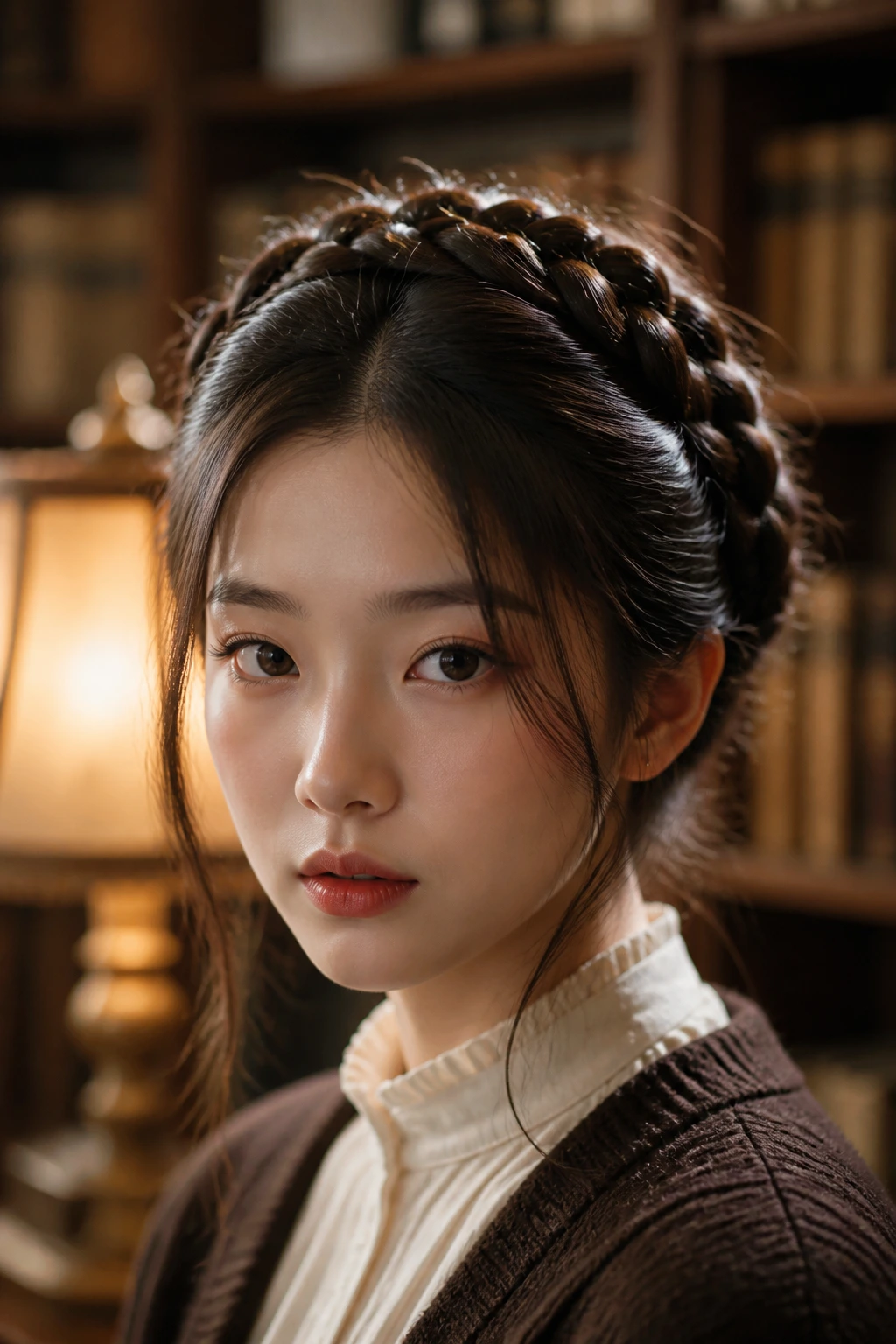
If you are looking for a style that feels like a fairy tale, the braided crown is the one. It wraps around your head like a headband, keeping every strand in its place and giving you a regal, scholarly appearance. This style is particularly effective at managing long, heavy hair.
The Construction
Divide your hair into two sections and braid each into a standard three-strand braid. Secure the ends with thin elastics. Take the left braid and wrap it over the top of your head to the right side, pinning it just behind your ear. Do the same with the right braid, crossing it over the left. You are essentially creating a halo of hair.
Maintenance
- Use as many bobby pins as you need to hide the ends of the braids.
- Tuck any flyaways underneath the braid line.
- This style is surprisingly secure and will last through a full day of classes or field work.
10. Half-Up with Small Bobby Pin Clusters
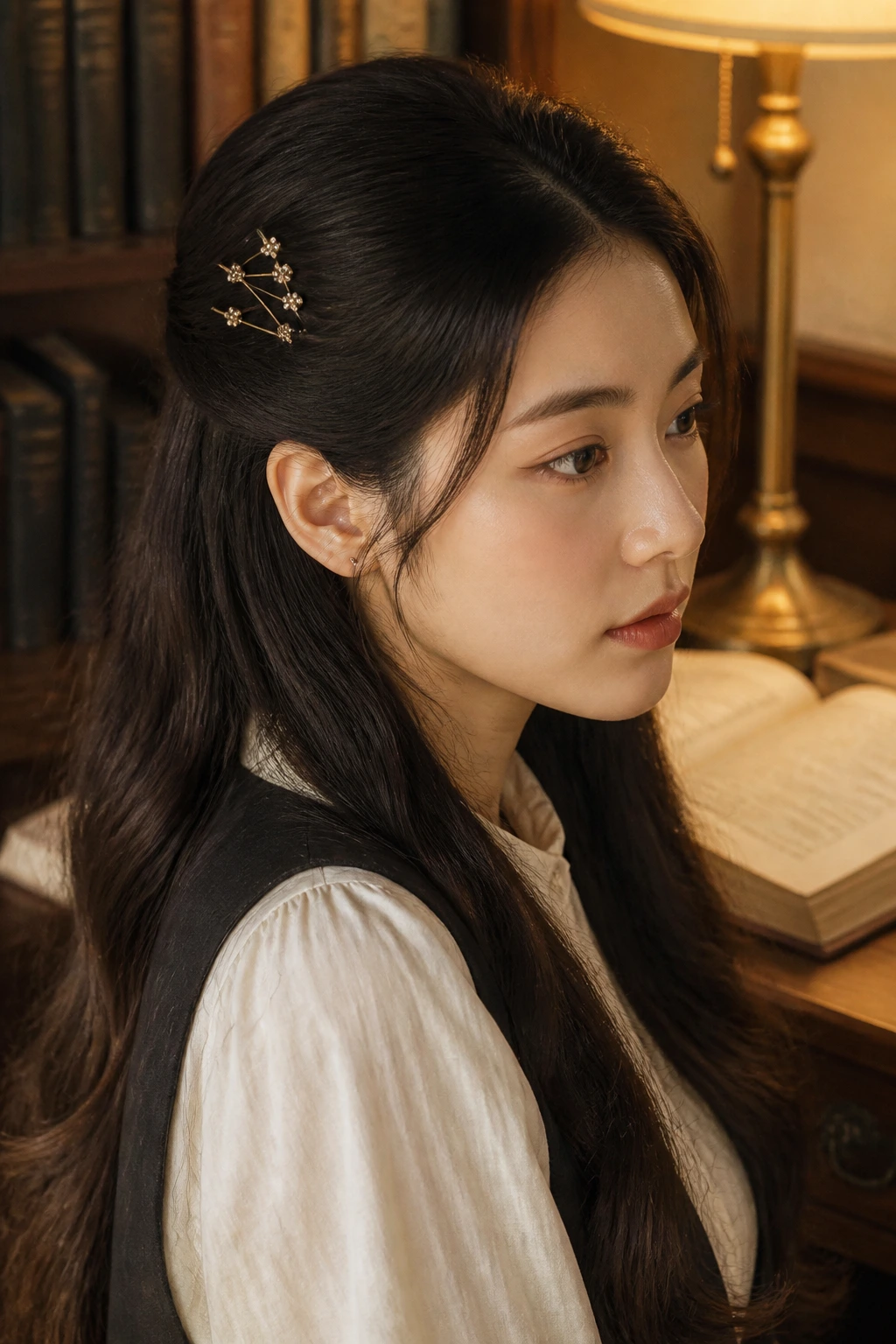
This is a minimalist approach to the cottage academia aesthetic. Instead of using a large bow or a scrunchie, you use a series of small, decorative bobby pins—perhaps with pearls or tiny brass stars—to pin back just the front sections of your hair.
Arranging the Pins
Take two small sections from your temples and pull them back toward the center. Instead of securing them with an elastic, slide a cluster of three to four decorative bobby pins into the hair to hold the sections together. You can create a fan shape or a vertical line. This is a very subtle, refined look that mimics the care one might take in curating a library shelf.
Why This Style Is Effective
- It is incredibly lightweight and won’t cause scalp tension.
- It works on hair of almost any length.
- The use of gold or brass hardware adds to the “vintage” feel of the style.
11. The Low Ponytail with a Ribbed Scrunchie
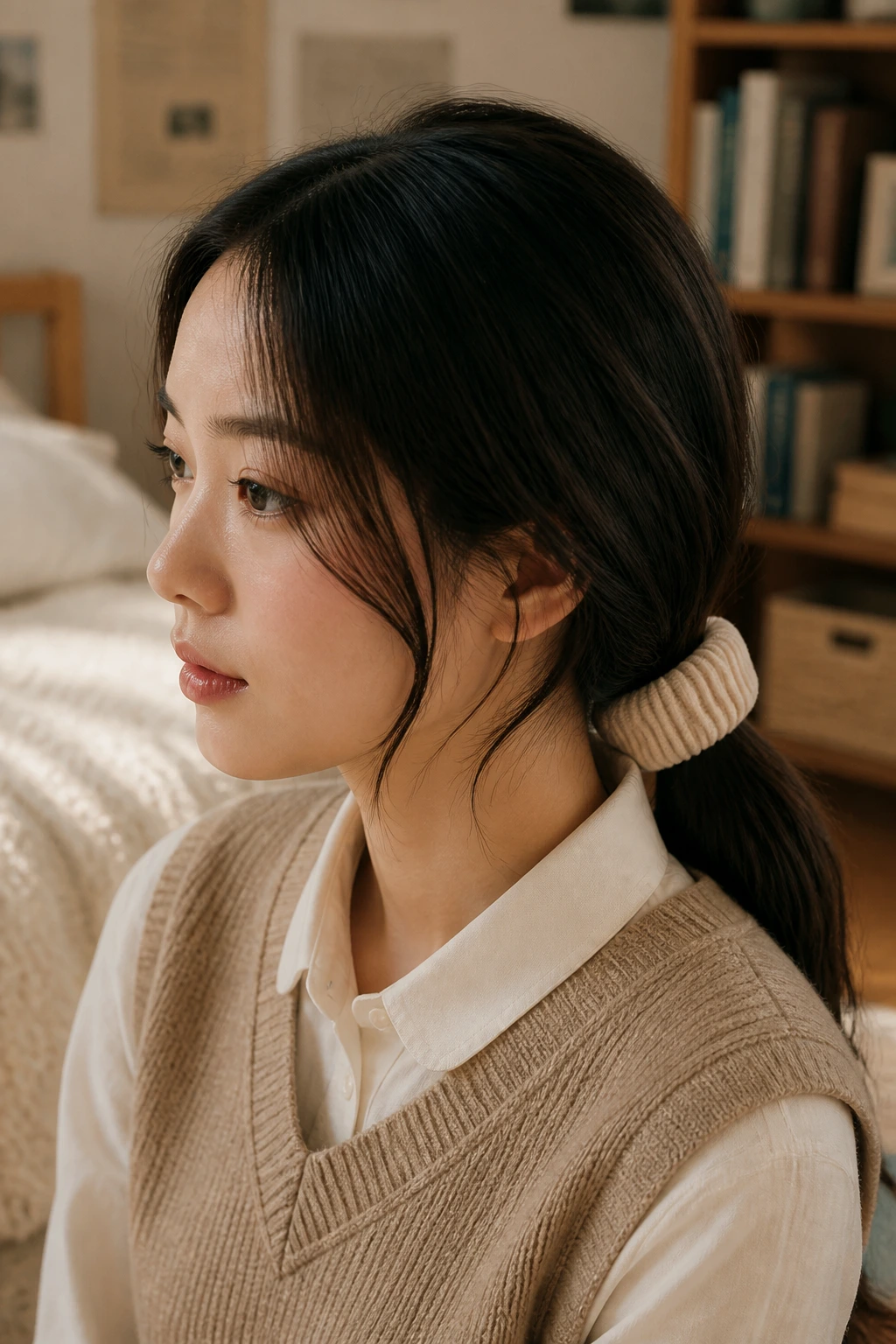
There is a humble, quiet beauty to a low ponytail. When paired with a thick, ribbed, or velvet scrunchie, it instantly evokes the image of a student in a vintage oversized wool coat. It is low-effort but high-impact.
Elevating the Ponytail
Do not just pull your hair back into a tight ball. First, part your hair in the middle or with a deep side part. Smooth it back gently, ensuring you don’t lose the natural volume at the roots. Wrap your favorite textured scrunchie around the base. To finish, pull a few strands out at the front to frame your face.
Adding Depth
- This is the perfect style for showing off statement earrings.
- If you want a bit more “cottage” flair, wrap a piece of your own hair around the base to hide the elastic before putting the scrunchie on.
- The texture of the scrunchie is everything; avoid shiny synthetics and go for matte, earthy materials.
12. Loose Fishtail with a Beret
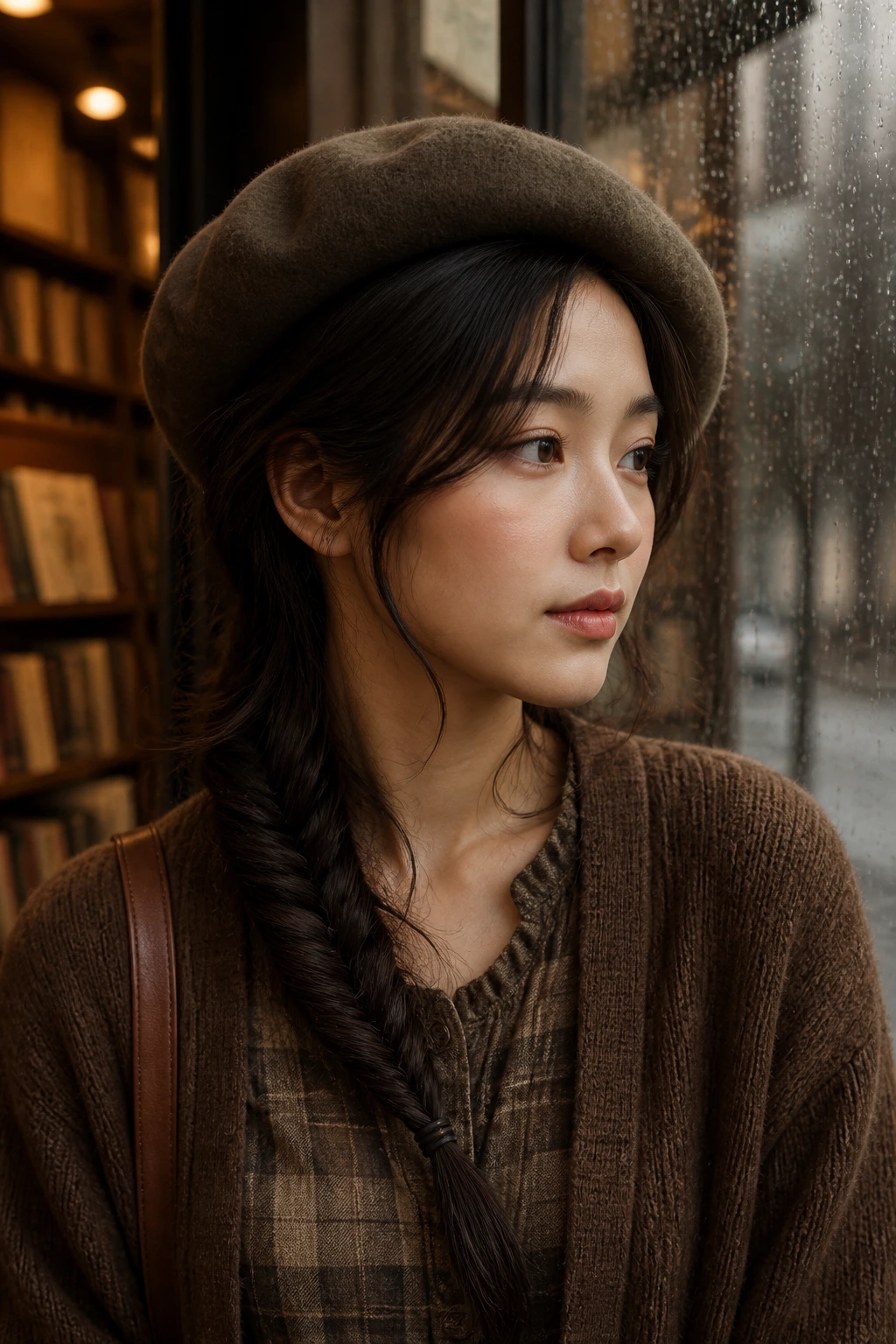
The beret is the quintessential academic accessory. When you combine a beret with a loose, side-swept fishtail braid, you have the ultimate look for a rainy day spent in a bookstore. The fishtail adds a level of complexity to the hair that is visually interesting without being overly polished.
The Fishtail Technique
A fishtail is just a series of small, cross-over sections. It takes a little longer than a standard braid, but the result is a tighter, more intricate pattern that stays beautiful all day. As you work, remember to keep the tension even. Once you reach the end, pull on the edges of the braid to loosen it up significantly.
Pairing with the Hat
Place your beret slightly to the side of your head. This isn’t just for style; it also helps the hat stay put. Let the braid drape over your opposite shoulder. This look is fantastic for Asian hair, as the sleekness of the hair strands makes the fishtail look sharp and well-defined.
13. The Half-Up “Poof”
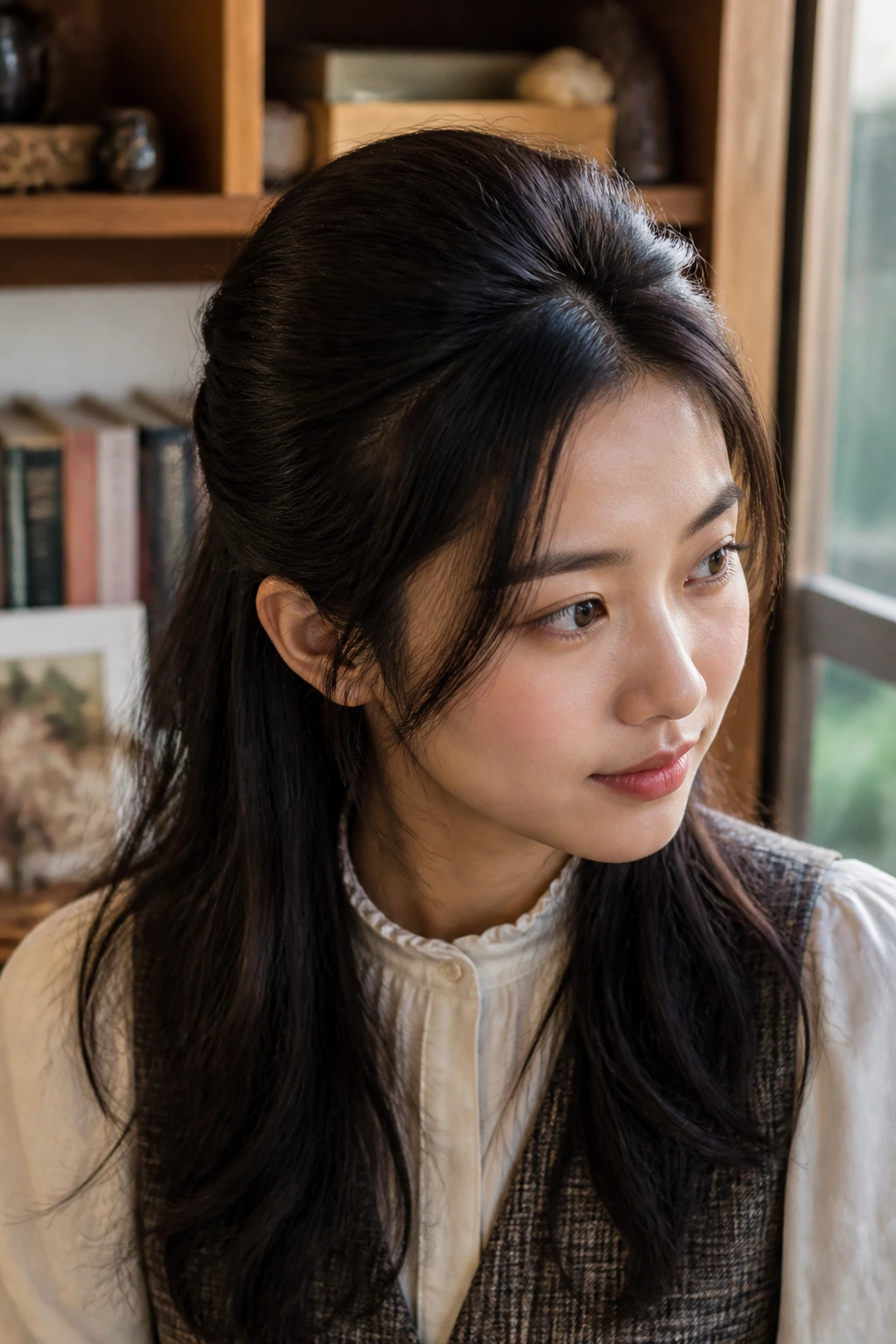
This style is all about height and softness. It is very reminiscent of the 1960s, but with a cottage twist. By gently teasing the hair at the crown before pinning it back, you create a soft, rounded shape that is very flattering.
Creating the Volume
Take a small comb and gently backcomb the hair at the very top of your head, just behind your hairline. Smooth the top layer over the teased section and secure it with a small, discreet clip. You don’t need a perfectly flat top; a little bit of height adds to the “academic” vibe.
Softening the Edges
Leave plenty of hair around the ears and neck to keep the style from looking too stiff. If you have any baby hairs, let them fall naturally. This look is perfect if you are wearing a collared blouse with a vintage cameo brooch.
14. Messy Top Knot with a Silk Ribbon
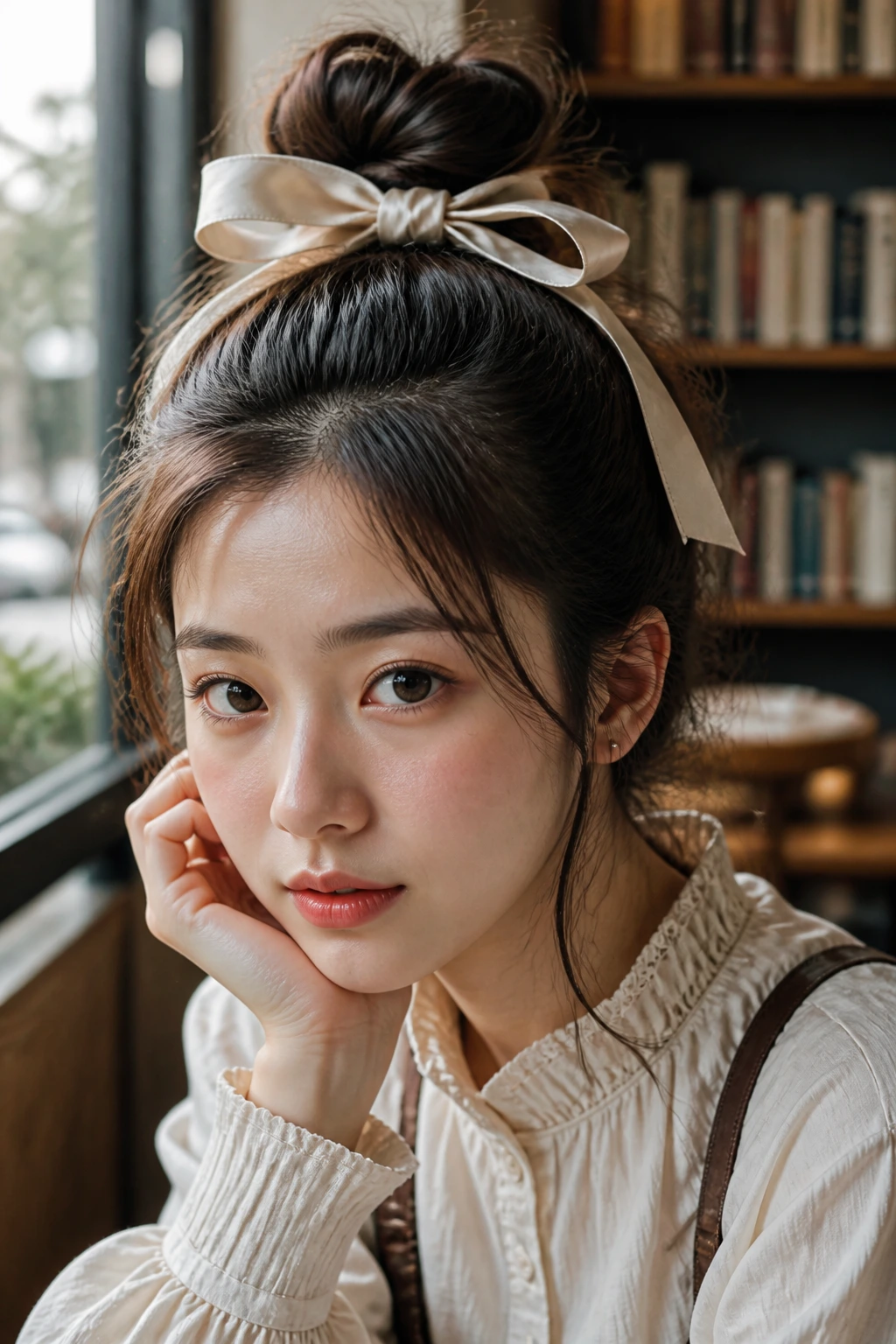
Sometimes you just need to get the hair off your neck. A top knot is the fastest way to do that, but to keep it from looking like you are just cleaning your house, you have to add a signature touch. A silk ribbon tied around the base is exactly what you need.
Executing the Knot
Flip your hair forward and pull it into a high ponytail. Instead of just twisting it into a tight bun, try a “loop” bun—pull the ponytail through the elastic only halfway, leaving the ends sticking out. This creates a messy, voluminous shape.
The Ribbon Accent
Take a long silk ribbon and tie it around the elastic in a loose bow. Let the long ends of the ribbon hang down with your hair. It adds a bit of romantic flair to a standard, utilitarian style. It is the perfect blend of practical and whimsical.
15. The “Pinned-Back” Bob
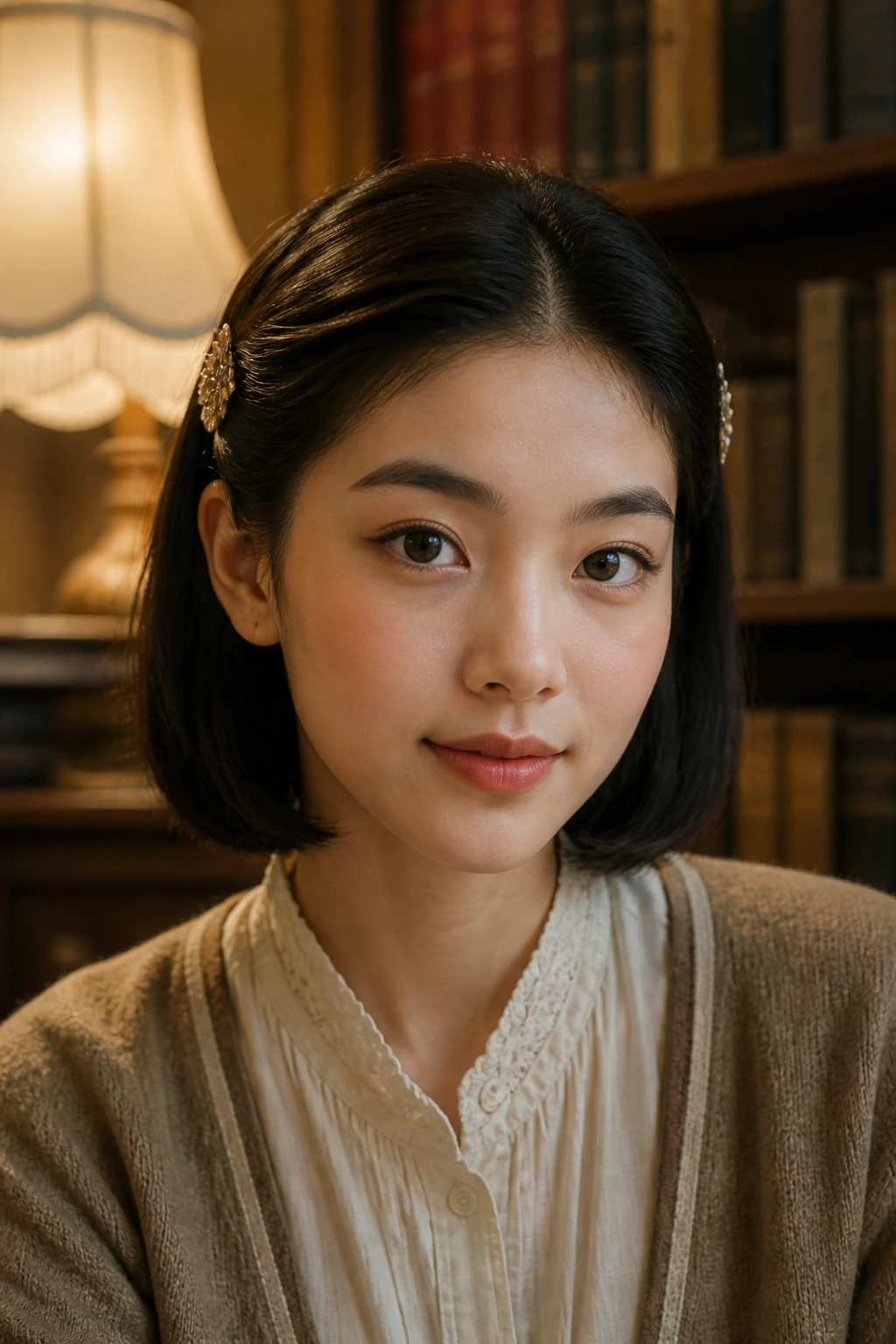
If you have shorter hair, you might feel left out of the braided styles, but you shouldn’t be. Pinned-back styles are very “cottage academia.” They are simple, clean, and look wonderful with round-rimmed glasses.
The Technique
Use two decorative vintage clips to pull the front sections of your hair back and away from your face, pinning them behind your ears. This highlights your eyes and makes the hair appear as if it is naturally falling away. It is an incredibly clean look that feels very intentional and scholarly.
Style Variations
- Use pins with dried flowers or brass leaf designs to lean into the cottage aesthetic.
- If your hair is poker-straight, tucking it behind the ears often creates a natural, soft curve that is very flattering.
- This look is the absolute best for reading, as your hair stays completely out of the way.
16. Loose Side Bun with Hairpins
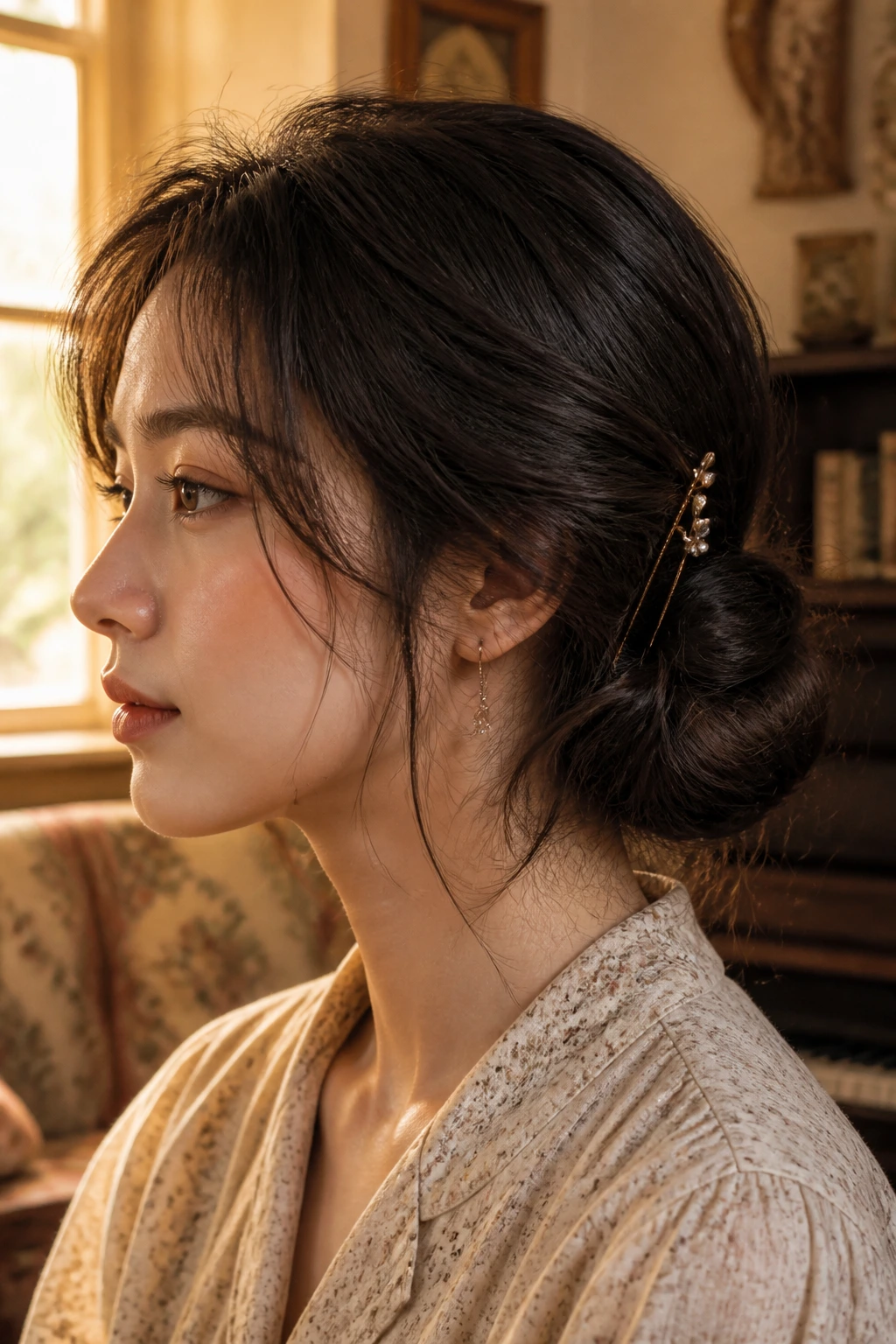
This is an asymmetrical take on the traditional chignon. It is meant to look a bit windswept, as if you’ve been walking through the moors. The key is to keep the bun low and off to one side.
Building the Side Bun
Gather your hair to one side at the nape of your neck. Secure it loosely with an elastic, then twist and wrap it. Instead of trying to keep every hair in place, let a few sections pull free. Use decorative U-pins to secure the bun in a way that feels organic rather than constructed.
Why This Style Works
- It is visually interesting from all angles.
- It pairs beautifully with oversized cardigans and scarves.
- It is very easy to adjust throughout the day—if it gets too messy, you can just tuck the loose pieces back in.
17. The “Half-Up” Braided Crown
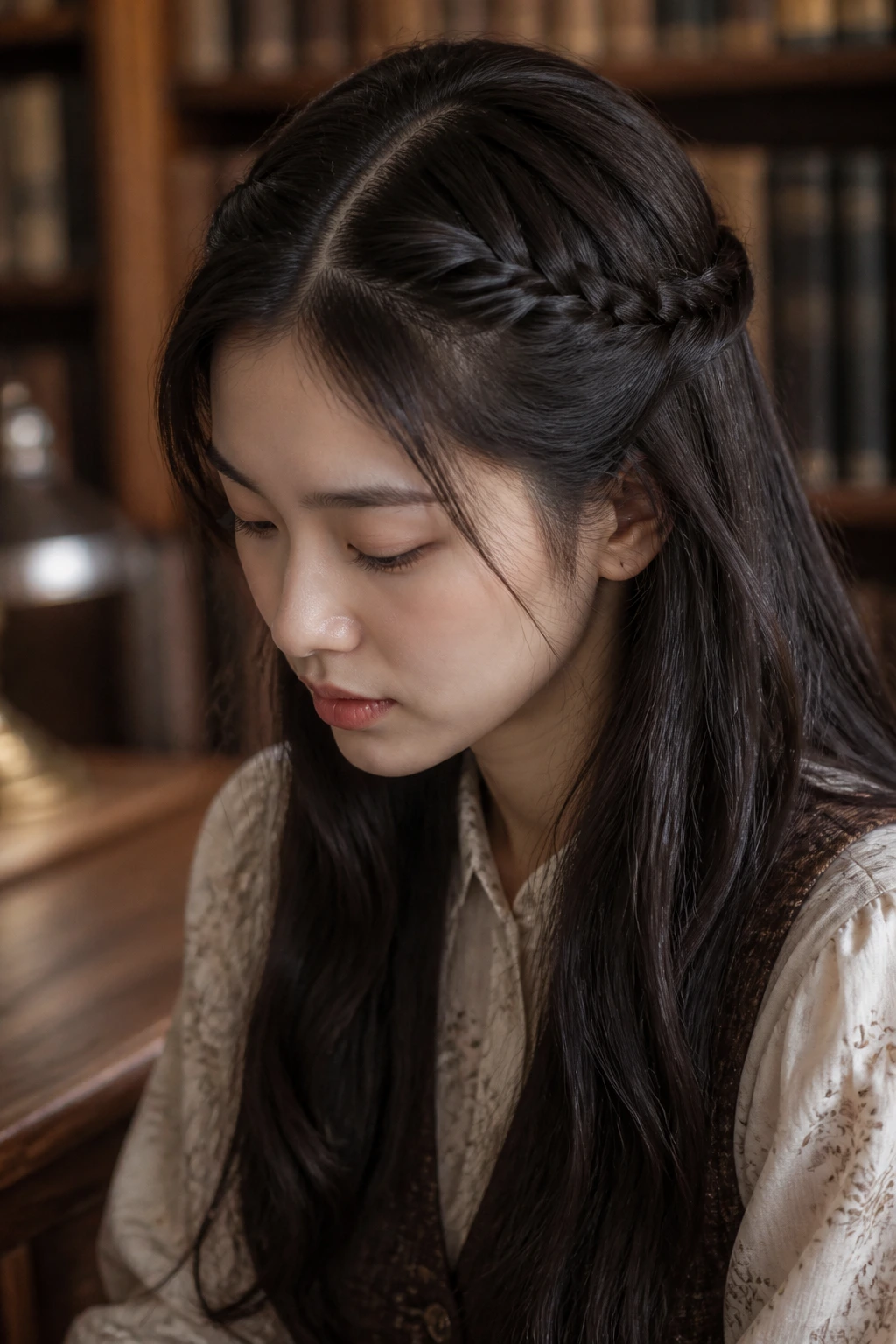
This is a hybrid between the traditional crown and the simple half-up style. You braid two smaller sections from the front, wrap them around the back, and pin them together, leaving the rest of your hair down.
The Construction
Part your hair in the middle. Take a section from each side, near the hairline, and braid them backward toward the center of your head. Once they meet at the back, pin them together with a small, flat clip or ribbon. The remaining hair stays loose and falls naturally.
Why It’s Unique
- It gives you the “halo” look without the bulk of a full braided crown.
- It’s excellent for displaying the length of your hair while keeping your face clear.
- It creates a very soft, frame-like effect that is incredibly flattering on all face shapes.
18. Braided Headband with Natural Texture
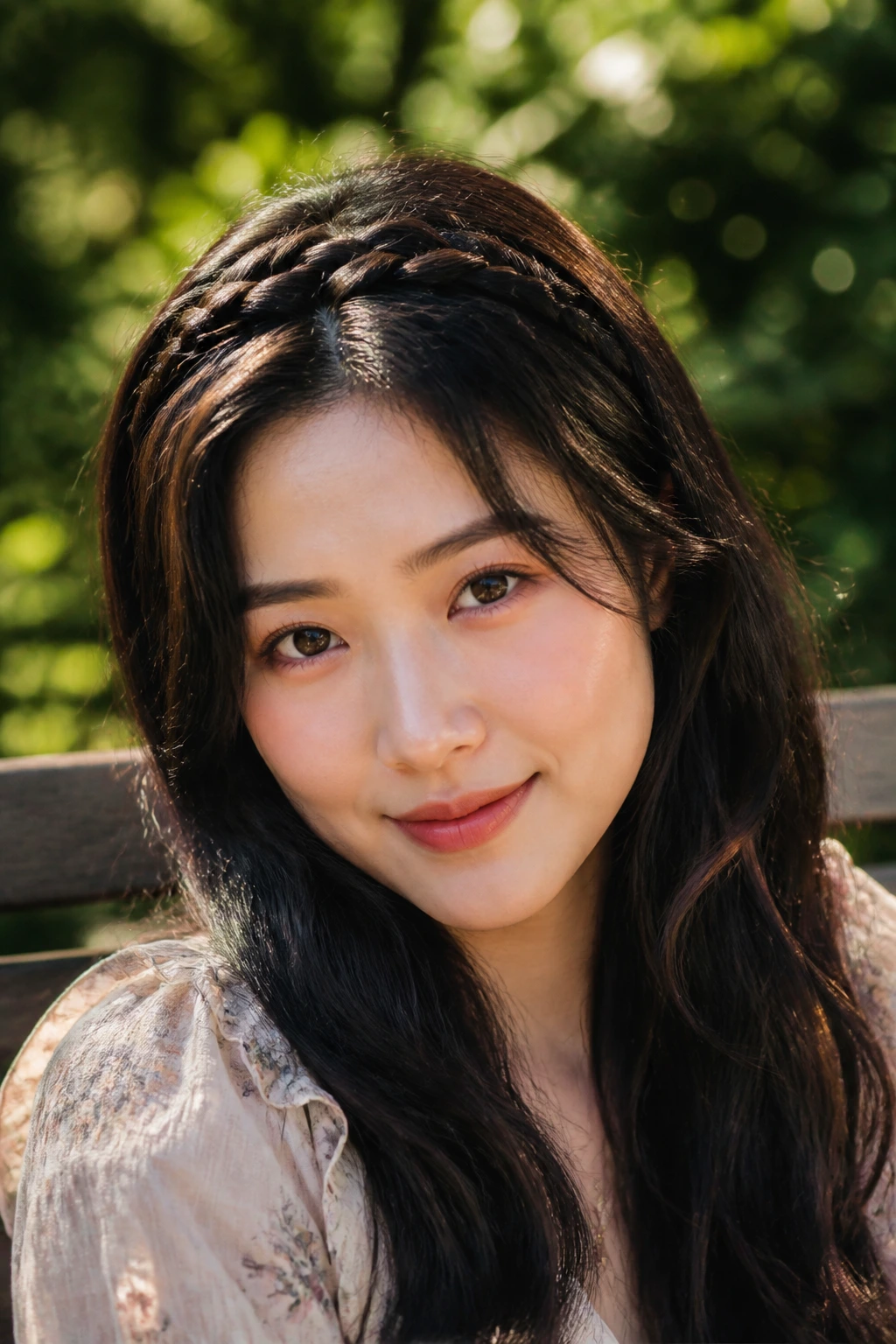
If you are skilled at braiding, a French or Dutch braid that runs across the top of your head like a headband is a stunning way to incorporate the cottage look. It is a bit more involved, but the results are durable and classic.
Creating the Headband
Start on one side of your head, near the ear. Begin a French braid, picking up new sections of hair as you move toward the other ear. Once you reach the opposite side, secure the braid with pins and tuck the end under the rest of your hair. Let the rest of your hair hang free.
The Finishing Flourish
To get the best cottage feel, pull on the loops of the braid to make them look fuller. Asian hair is great for this because it has the strength to hold the braid while you manipulate the texture. This is a very “teacher-chic” look that stands up to long hours of activity.
19. Low Ponytail with Multiple Ribbons
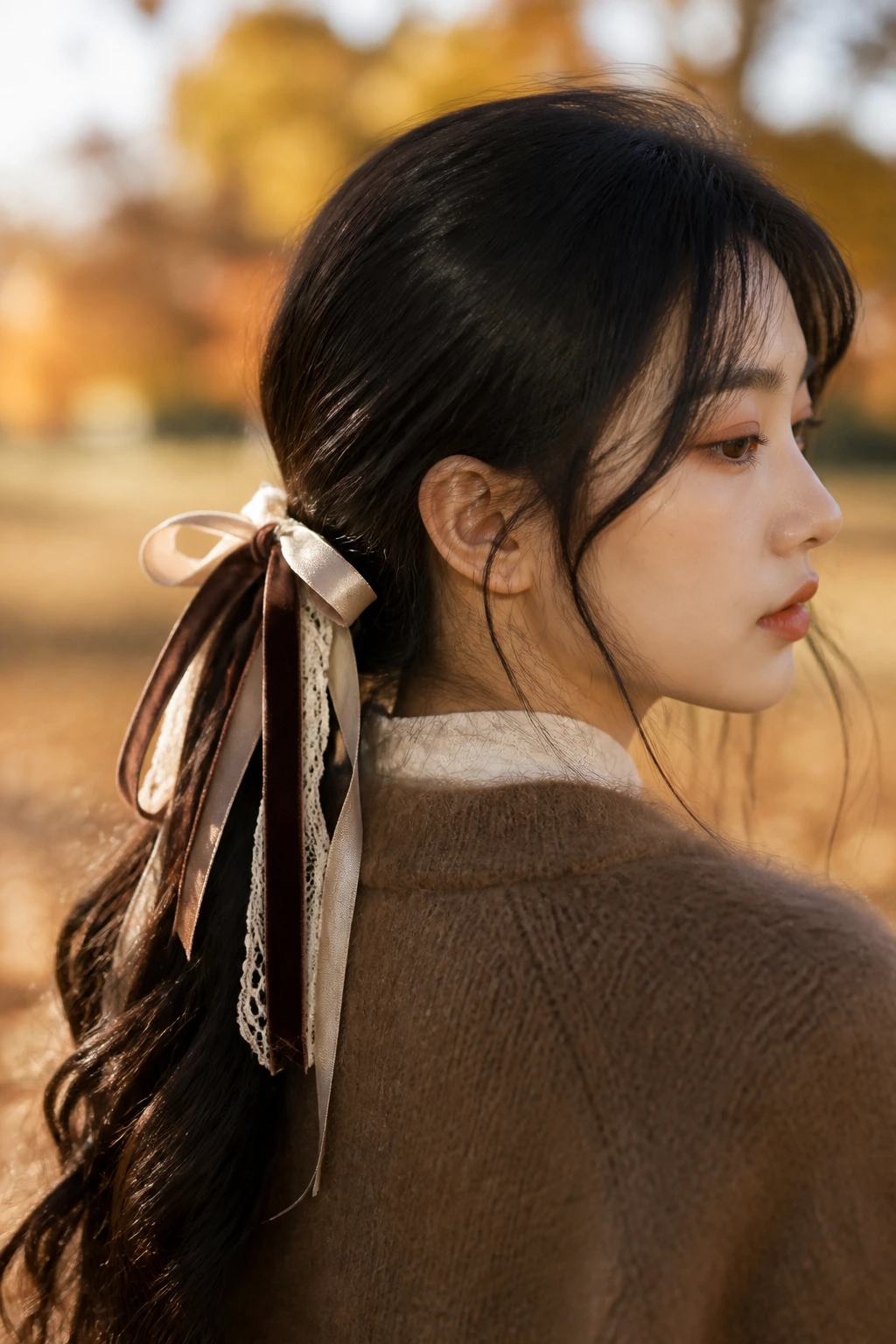
Why stop at one ribbon when you can use two or three? This look is very “bohemian intellectual.” It involves using different textures of ribbon—maybe one velvet, one silk, and one lace—to tie back a low, messy ponytail.
Layering the Ribbons
Pull your hair into a low, loose ponytail. Use a basic elastic to secure it, then layer your ribbons over the top. Tie them in a simple bow and let the ends trail down, mixing in with your hair. The different textures provide depth and interest, making the hair look much fuller than it actually is.
Styling Advice
- Stick to a cohesive color palette to keep it from looking cluttered.
- If you have thin hair, this is a great way to add “bulk” to the pony without needing heavy extensions.
- This style is wonderful for outdoor autumn picnics or visits to a local farmers’ market.
20. The “Librarian” Tuck
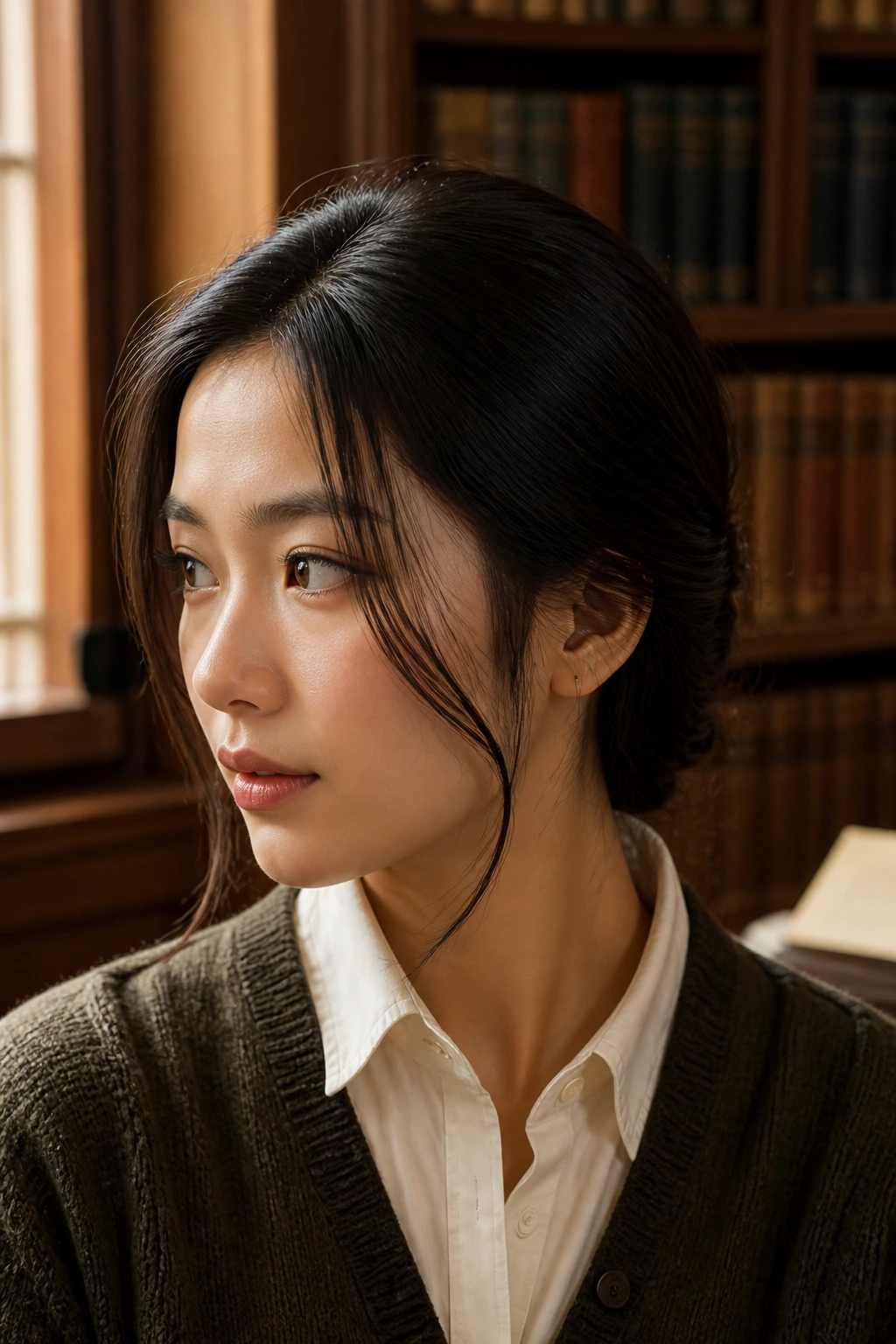
Sometimes, keeping it simple is the most intellectual choice. The “librarian tuck” is essentially just pulling your hair to the back and tucking it into the collar of your shirt or sweater. It is a classic look, favored by those who need to get to work but want to look refined.
Executing the Tuck
Put on your sweater or coat, then pull your hair back into a loose, low ponytail. Gently tuck the entire length of the ponytail into the back of your collar. Pull a few strands out at the front and let them drape naturally. It creates a faux-bob effect that is very sophisticated and entirely effortless.
Why This Is Perfect
- It is the ultimate low-maintenance style.
- It keeps your hair from getting caught in your scarf or bag straps.
- It is a subtle nod to the “preppy” side of the academia aesthetic.
21. Wispy Half-Up with Vintage Barrette
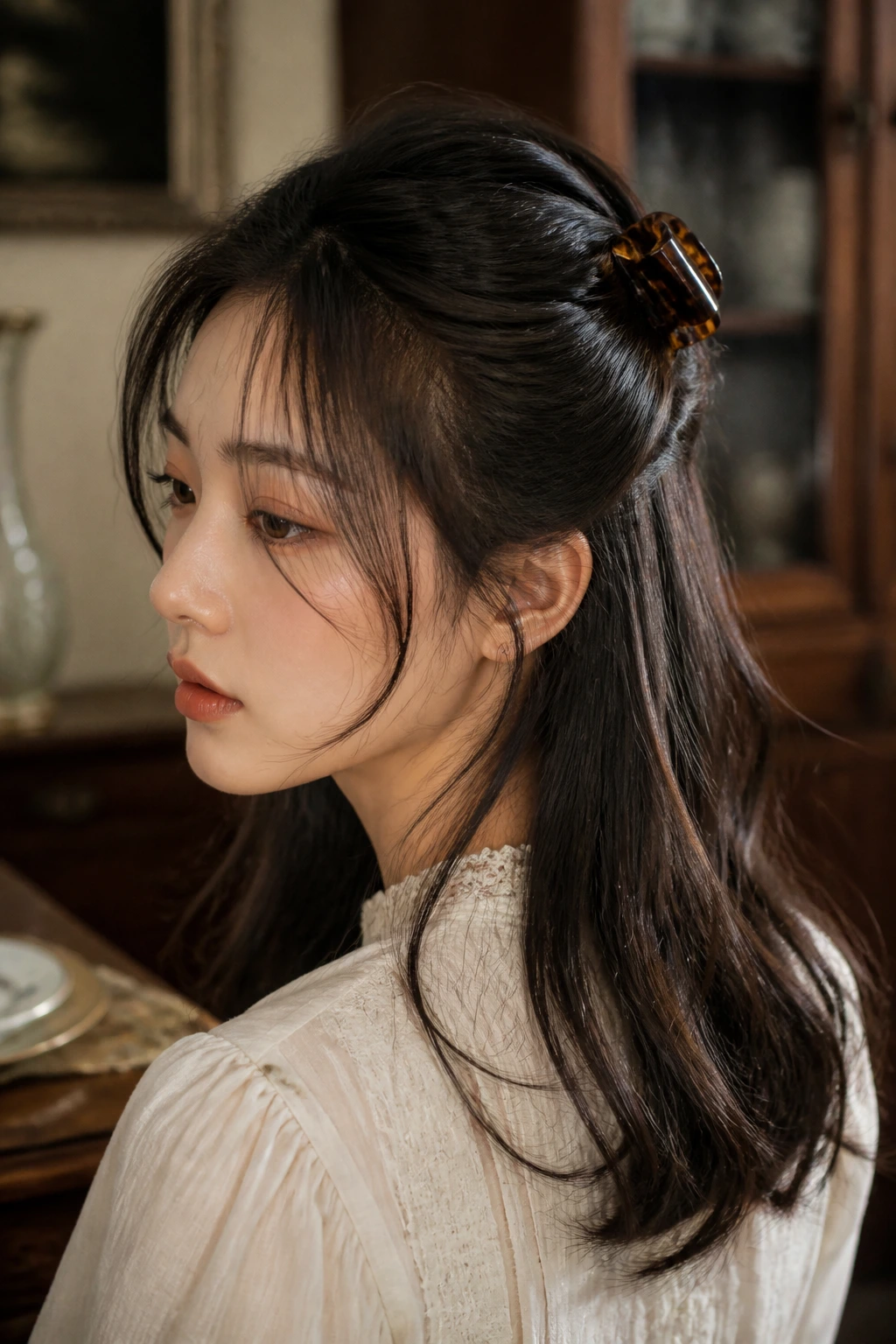
A single, large, vintage-style barrette—think tortoiseshell, brass, or ornate filigree—is enough to make a statement. Gather the top half of your hair and twist it slightly before pinning it back with the barrette.
Choosing Your Barrette
Look for barrettes that have a slightly aged or matte finish. Shiny, modern plastic barrettes won’t have the same “cottage” vibe. A brass barrette with leaf or flower details is a classic choice.
Maintaining the Style
- Because Asian hair can be sleek, ensure your barrette has a strong clasp.
- If it slips, spray a little bit of hairspray on the inside of the barrette before clamping it down.
- This style is elegant enough for a dinner date but simple enough for a day in the archives.
22. The Overnight Wave with a Side Clip
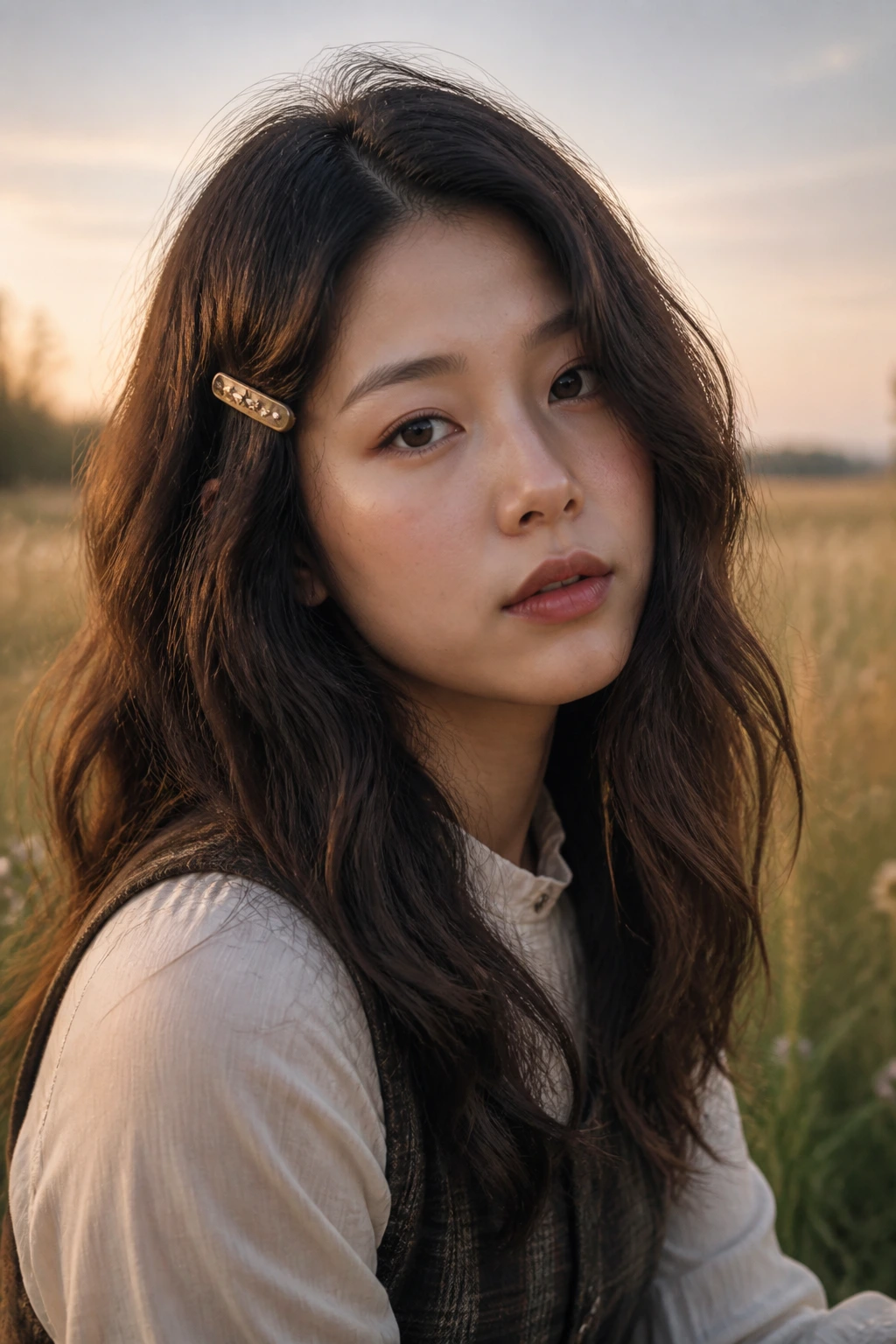
If you have naturally straight hair, the easiest way to get the cottage look is to work with the texture you get when you let your hair air-dry in a loose braid. Once you take the braid out in the morning, do not brush it. Just finger-comb it and add a single, simple side clip.
The Beauty of Imperfection
The waves will be uneven and slightly frizzy, which is exactly what you want. The side clip serves to keep the hair off one eye and adds a tiny element of polish to an otherwise wild, natural look. It suggests you spent your morning wandering through a field, not styling in front of a mirror.
Why This Style Succeeds
- It is the most authentic expression of the cottage aesthetic.
- It utilizes your natural texture rather than suppressing it.
- It is a great way to showcase a beautiful, unique piece of jewelry or a handcrafted clip.
Final Thoughts
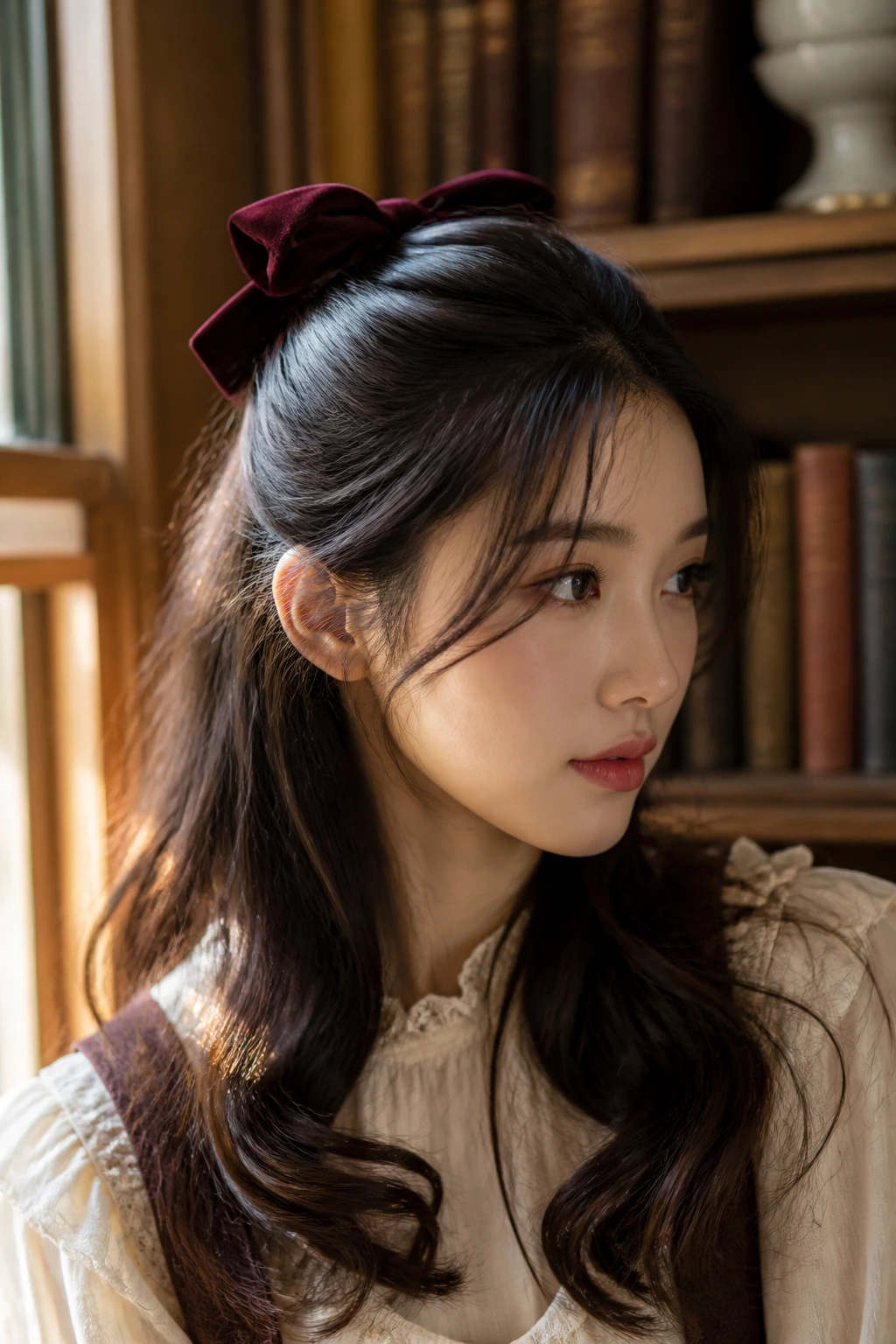
The cottage academia aesthetic is not about achieving a perfectly manicured look; it is about creating a visual language of quiet, studious romanticism. For those with Asian hair, the transition to this style is often easier than it seems. Your hair’s natural weight, shine, and durability are assets, not obstacles. By using accessories like velvet ribbons, silk scarves, and vintage pins, you can easily shift the focus of your look toward that storied, rustic, and scholarly vibe.
Remember that the most important element of this style is how it makes you feel—at ease, contemplative, and connected to a sense of timelessness. You do not need to be a professional stylist to make these looks work for you. Start with a simple velvet bow or a low, loose braid, and let the rest of your aesthetic build from there. Whether you are spending your day in a classroom, a cafe, or a garden, these hairstyles will carry the weight of your favorite stories with grace.