


Fine hair often feels like a curse of perpetual limpness, but when the calendar turns toward the darker, spookier side of the year, that same weightless texture becomes your greatest asset. While most styling advice focuses on creating volume or hiding sparseness, there is a distinct, dark aesthetic where thinness actually works in your favor. Think of the gothic literature tropes—the waif, the phantom, the Victorian ghost—whose hair is wispy, translucent, and perfectly unkempt. Fine hair holds teasing, pins, and product in a way that thick, heavy manes simply cannot, allowing you to create architectural, eerie shapes that stay put without an army of heavy-duty hairsprays.
You do not need a salon-grade blowout to lean into a more unsettling, haunted look. In fact, the “perfectly done” aesthetic is often the enemy of the creepy. The following styles embrace the natural drift of fine, straight strands, turning those tendencies toward flyaways and transparency into deliberate, macabre statements. Whether you are aiming for a classic cinematic villain, a Victorian mourning aesthetic, or something more abstract and unsettling, these looks work with your hair’s unique limitations rather than fighting against them.
1. The Victorian Mourning Updo
There is something inherently chilling about the stiff, somber aesthetics of the late 19th century. To achieve this look, you need a center part that is surgically precise. Smooth the hair tightly against the scalp using a pomade—do not aim for volume here; you want the head to look slightly severe and pulled back. Pull the remaining hair into a very low, tight bun at the nape of the neck.
How to Achieve the Ghostly Silhouette
The key is to use a fine-tooth comb to ensure there are zero bumps, creating a slick, almost wet appearance. Once the bun is secured, take a single, thin section of hair from the nape and wrap it around the base to hide the elastic. The final step involves pinning a small, black lace veil or a singular dark velvet ribbon at the base of the bun. Because your hair is fine, it will lay perfectly flat against the skull, creating that sunken-in, historical profile often seen in archival photographs of the mourning era.
2. The Spidery Wet-Look Tendrils
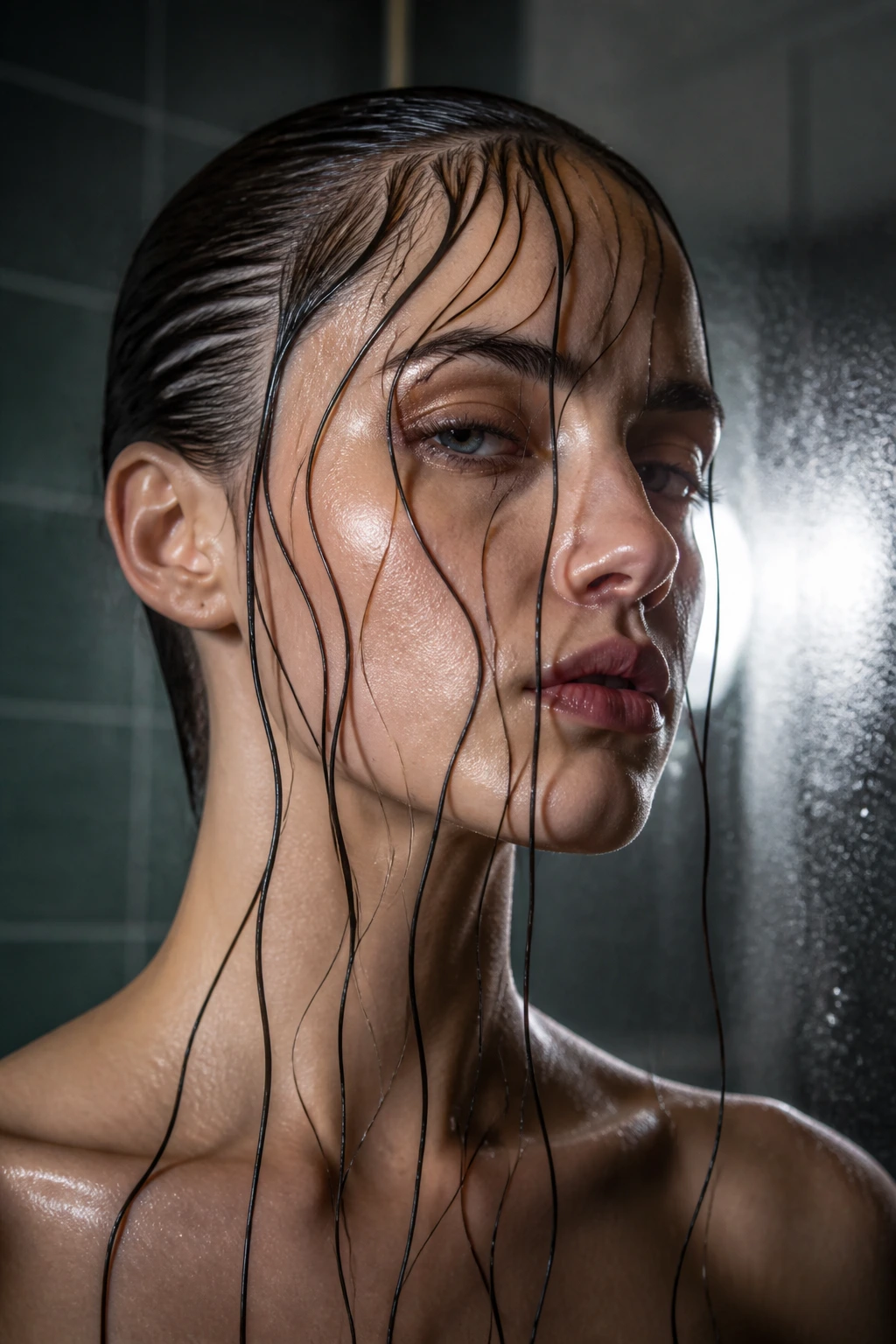
Fine hair excels at the “drowned” aesthetic because it naturally clumps together when wet, mimicking the appearance of someone who has just emerged from a murky, dark lake. Start with damp hair and apply a generous amount of high-shine gel. Use a wide-tooth comb to distribute the product, then use your fingers to pull several long, thin tendrils down across your face and neck.
Why It Works for Fine Strands
Thick hair tends to clump into bulky locks, but fine hair creates delicate, web-like strands that look fragile and sinister. The gel will keep these strands in place throughout the evening, preventing them from frizzing out as they dry. Focus the product heavily at the roots to keep the crown looking plastered down, while letting the ends remain slightly more separated. If you want to lean into the creepy factor, let a few tendrils stick to your skin—it creates a truly haunting effect.
3. The Bedraggled Ghostly Veil
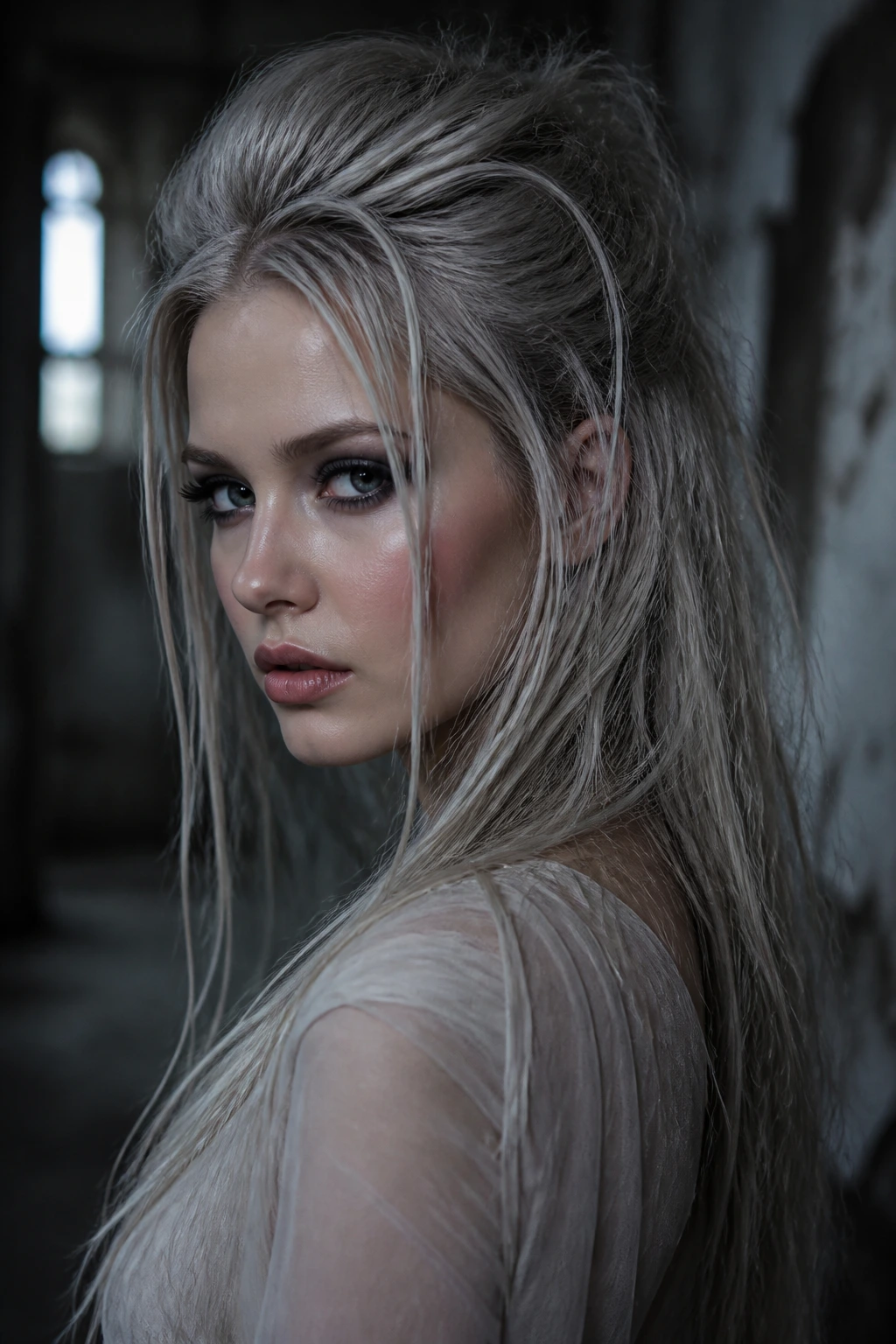
Think of the classic, long-dead spirit who has been wandering through drafty corridors. This style requires almost no effort but relies heavily on the “lived-in” quality of fine hair. Start by backcombing your hair lightly at the roots, but only just enough to prevent it from looking completely flat. Do not brush it out. Instead, mist it with a dry texture spray and use your fingers to pull sections apart.
The Art of Controlled Mess
You want the hair to look like it has been caught in a storm or trapped in a cellar. Let the ends look slightly frayed; if your hair is prone to split ends, this is the one time they are a stylistic choice rather than a grooming failure. Pull two long, thin sections to frame the face, and allow the rest to fall in a chaotic, uneven sheet down your back. If the hair looks too healthy, a light dusting of white dry shampoo can give it a dusty, aged, centuries-old appearance.
4. The Rat-Tail Braid of Doom
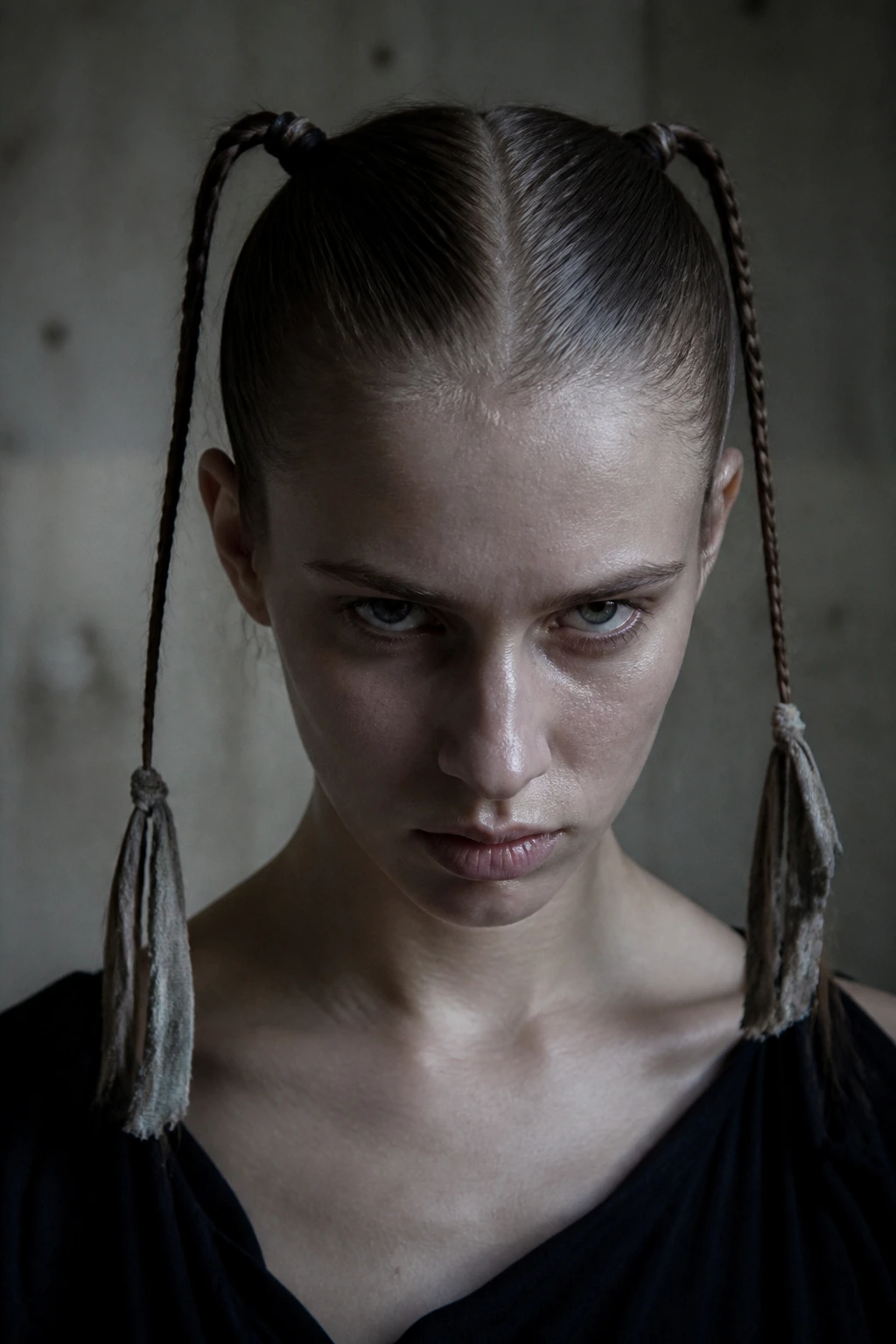
There is an undeniable creepiness to a single, thin, lonely braid. It suggests a lack of self-care and a descent into madness. Part your hair down the middle and pull it into two very tight, high pigtails. Braid each one as tightly as possible, pulling the hair so hard that your scalp feels slightly tight. The thinner the braids are, the more unsettling the look becomes.
Styling for the Unsettled Look
Stop braiding about three inches from the ends and secure them with tiny, clear elastics. Use your fingers to pull at the loops of the braid to give them a slightly “ratty” appearance, as if they have been neglected. To complete the vibe, tie a strip of dirty, graying fabric at the ends rather than a clean hair tie. This style is best paired with a look that suggests you haven’t slept in a week.
5. The Corpse-Bride Pin-Back
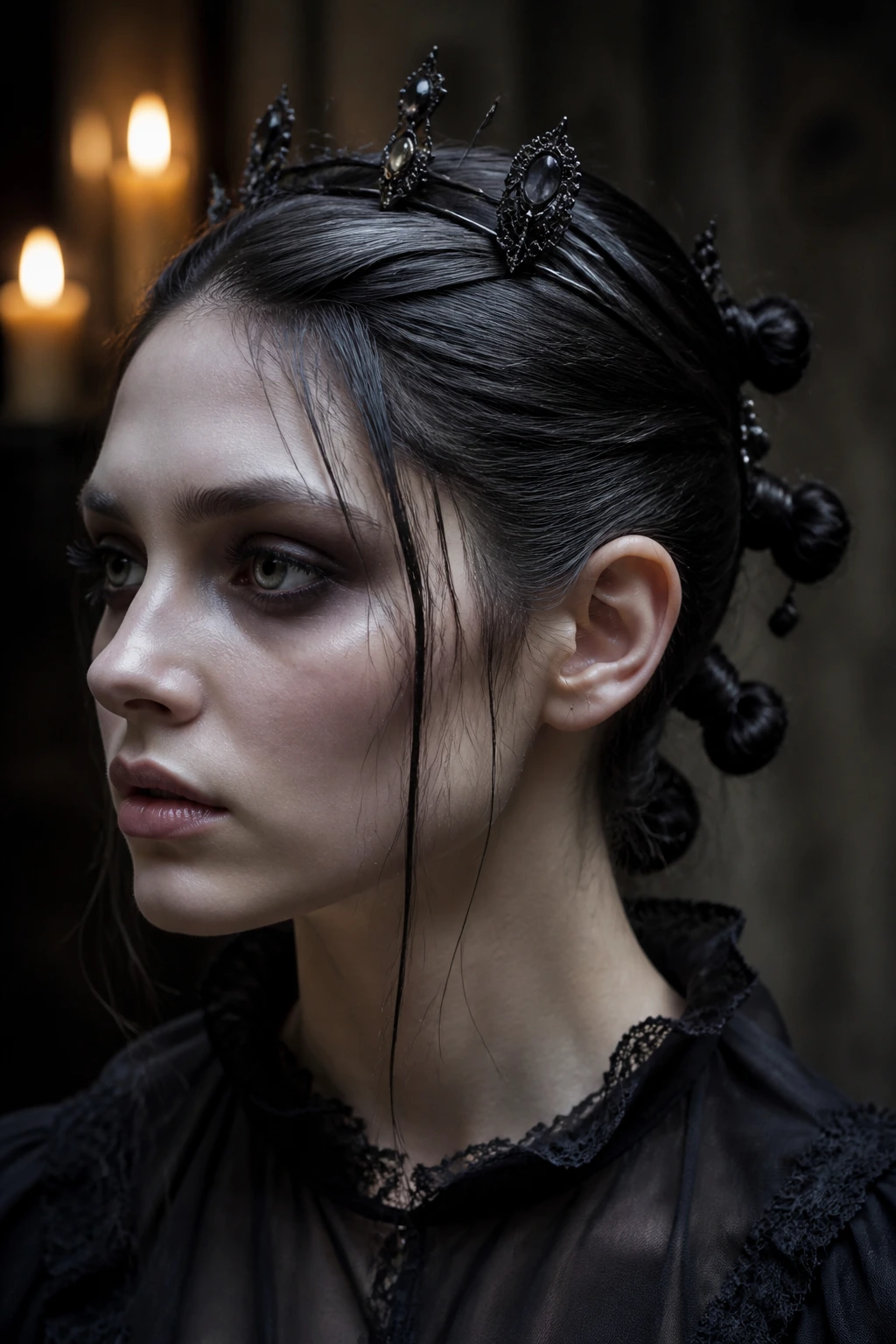
This style focuses on exposure. You want to pull all of your hair away from your face to emphasize the bone structure, making your features appear sharper and more gaunt. Use a matte wax to pull the hair back from your forehead, pinning it flat against the crown with bobby pins that match your hair color—or contrast them for a more overt, “I’m wearing pins” look.
Why Fine Hair Is the Secret Weapon
If you have dense hair, pin-backs often result in a bulky, unattractive mound at the crown. With fine hair, you can create a perfectly smooth, skull-hugging shape that looks almost anatomical. Once the hair is pinned back, take the loose length at the back and create a series of small, tight knots. Do not use elastic bands; simply tie the hair onto itself. The knots will look small, tight, and bizarrely deliberate.
6. The Salt-Stained Shoreline Waves
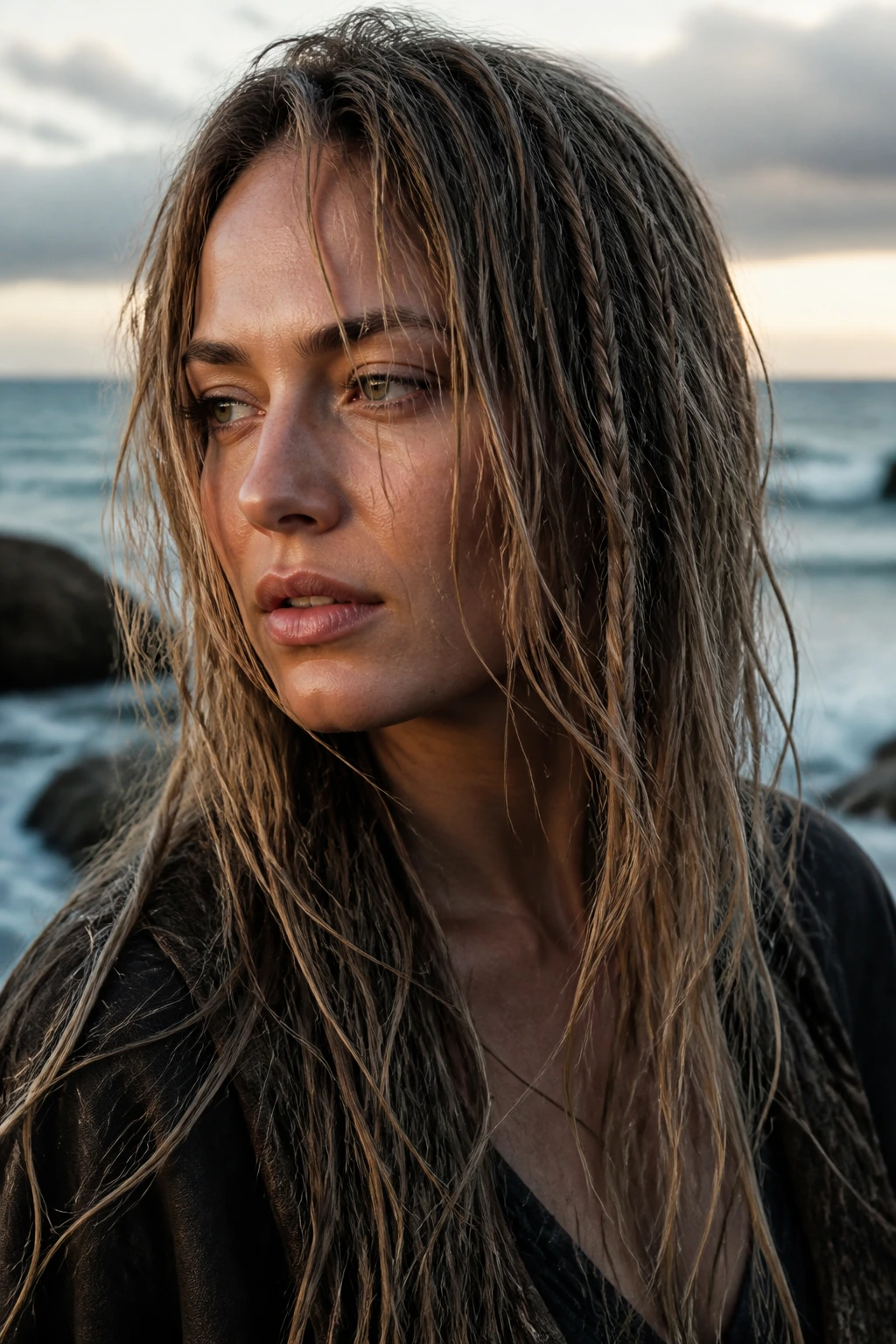
For those with a bit of natural wave in their fine hair, embrace the texture rather than straightening it out. Salt spray is your best friend here. Apply it liberally to damp hair and let it air-dry. The result should be a gritty, matte, and slightly tangled texture that feels brittle to the touch.
Creating the Shoreline Effect
The goal is to mimic the way hair looks after a long night by the ocean. Once dry, do not run a brush through it. If the hair is too uniform, take random sections and twist them tightly, then pull them apart. The thinness of the hair will ensure it doesn’t look like beachy, vacation hair; instead, it will look like the hair of a shipwrecked mariner. Add a few dead, dried twigs or small, bleached shells into the roots to complete the look.
7. The Hollow-Cheeked Finger Waves
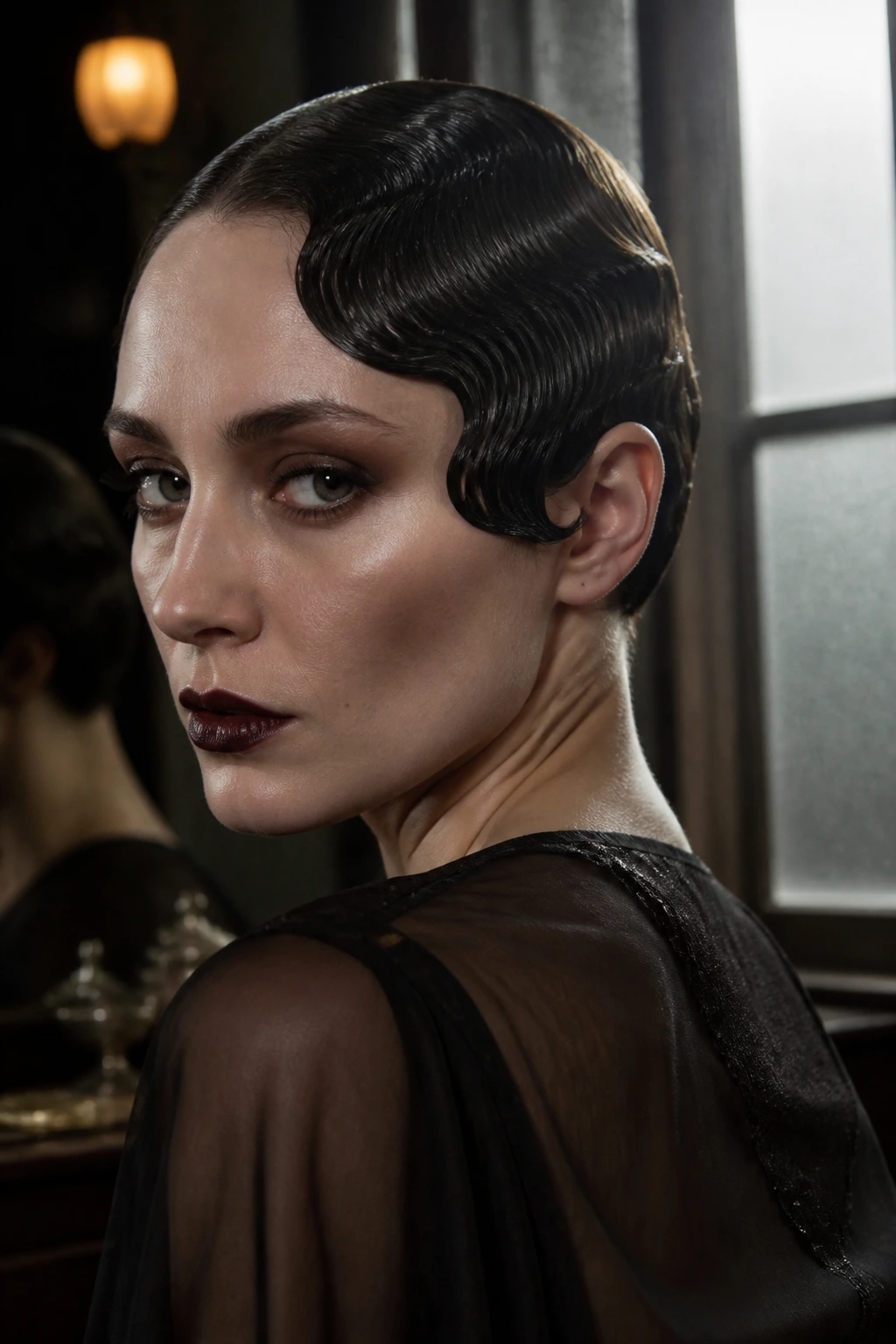
Finger waves are usually seen as glamorous, but when executed on fine hair with a matte finish instead of a glossy one, they take on a 1920s morgue-attendant aesthetic. Use a strong-hold setting lotion and a comb to create the signature S-curves. Instead of brushing them out to be soft, let them dry stiff and sculptural.
Achieving the Morbid Sculptural Look
Keep the waves pressed very close to the scalp. Because fine hair lacks the volume to “puff up” the waves, they will remain sharp and geometric. This creates a frame for the face that highlights the shadows beneath the cheekbones. It is a severe, almost frozen style that pairs beautifully with heavy, dark makeup. The lack of movement in the hair is exactly what makes it so unsettling.
8. The Cobweb-Effect Teased Crown
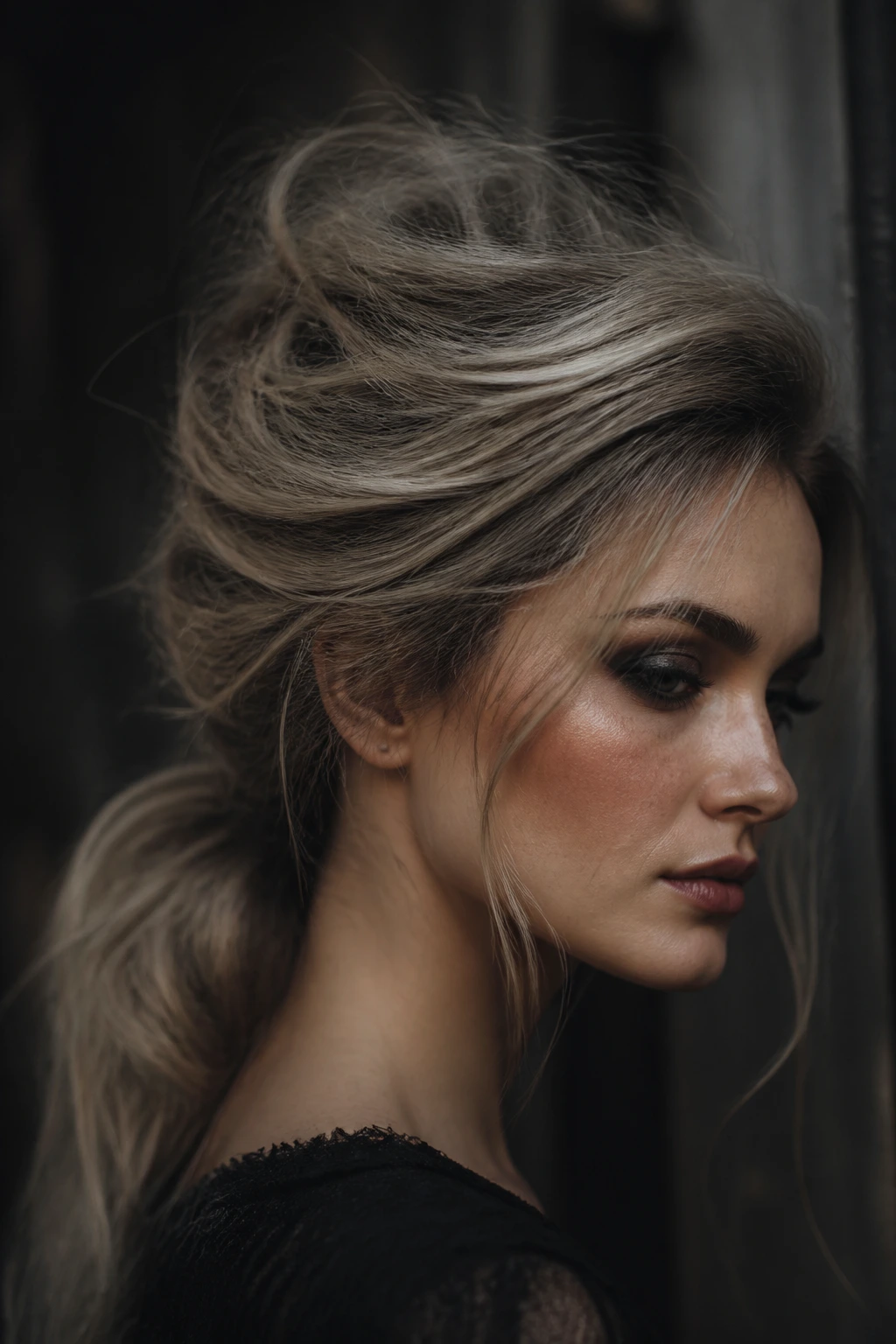
This is the ultimate way to use fine hair’s tendency to tangle against itself. Start by sectioning off the top crown of your hair. Use a fine-tooth comb to backcomb the roots until they are a knotted, chaotic nest. Do not try to smooth the surface; you want the crown to look like a thick, graying cobweb.
How to Build the Web
The trick is to use a tiny bit of hair powder or volumizing dust to give the strands “grip.” Once the crown is sufficiently teased, pull the outer layer of hair gently over the top to hide the worst of the knots, but let some of the “web” peek through. Pin the rest of the hair into a low, loose, and slightly messy ponytail. The contrast between the sleek lengths and the horrifyingly tangled crown is what makes this style stand out as truly creepy.
9. The Victorian Mourning Ribbon-Woven Braid
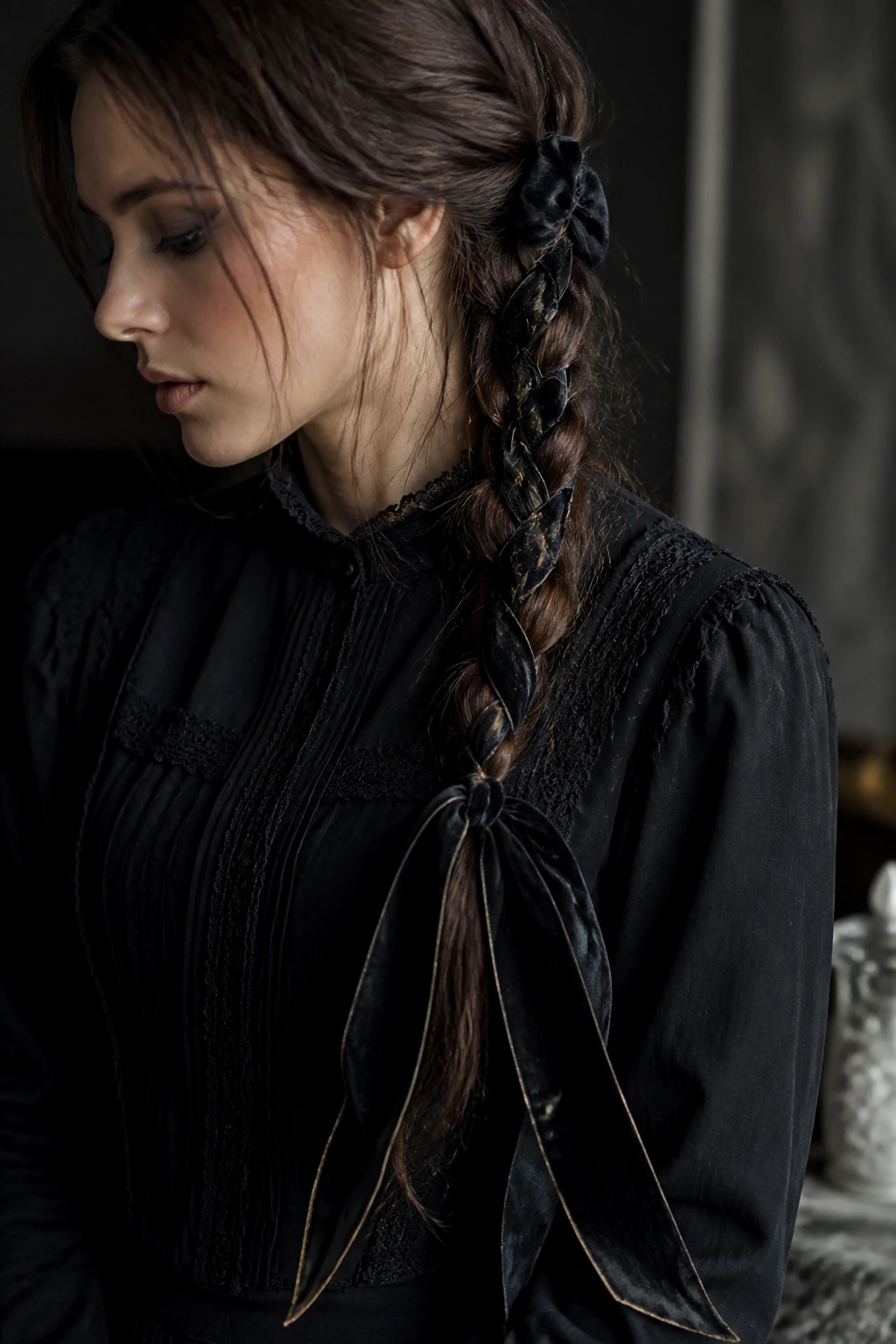
This style is about intricate, somber detail. Start with a single, long, loose braid starting from the nape of the neck. As you braid, weave in a long, dark piece of black velvet ribbon. Because your hair is fine, the ribbon will likely be thicker than your hair—this is a good thing. It makes the braid look like it is being swallowed or constricted by the material.
Refining the Gothic Braid
Ensure the braid is slightly asymmetric. As you reach the end, let the ribbon hang down longer than your hair. You can even burn the ends of the ribbon slightly to give them a charred, aged appearance. This style is surprisingly delicate, which somehow makes it feel more eerie than a large, chunky braid. It feels like an heirloom style that has been pulled from a dusty attic.
10. The Wispy, Face-Framing Curtains
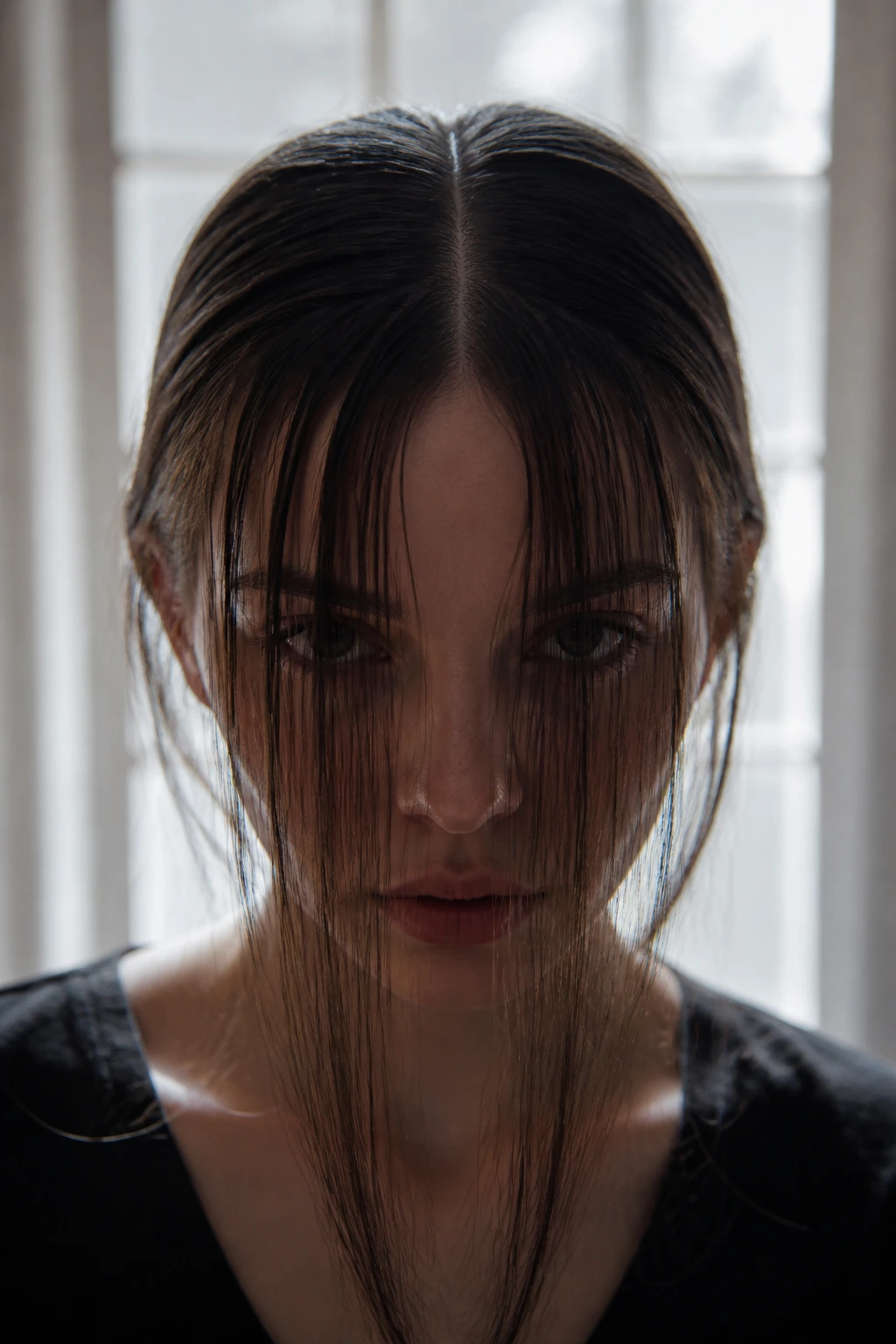
Sometimes, the creepiest look is the one that hides your identity. Let your hair grow out until the front sections are long and stringy. Use a small amount of oil—not too much, just enough to make the hair look slightly greasy—and pull two sections over your eyes, like a curtain.
Why Less Is More
Fine hair works perfectly here because it is naturally translucent. You can still see through the “curtain” of hair, which gives you a ghostly, veiled look while still being able to navigate your surroundings. It is a very effective, very simple way to transform into a figure that looks like they are hiding something. It is best done with a very stark, middle part that accentuates the symmetry of the hidden face.
11. The Severed-Style Bob
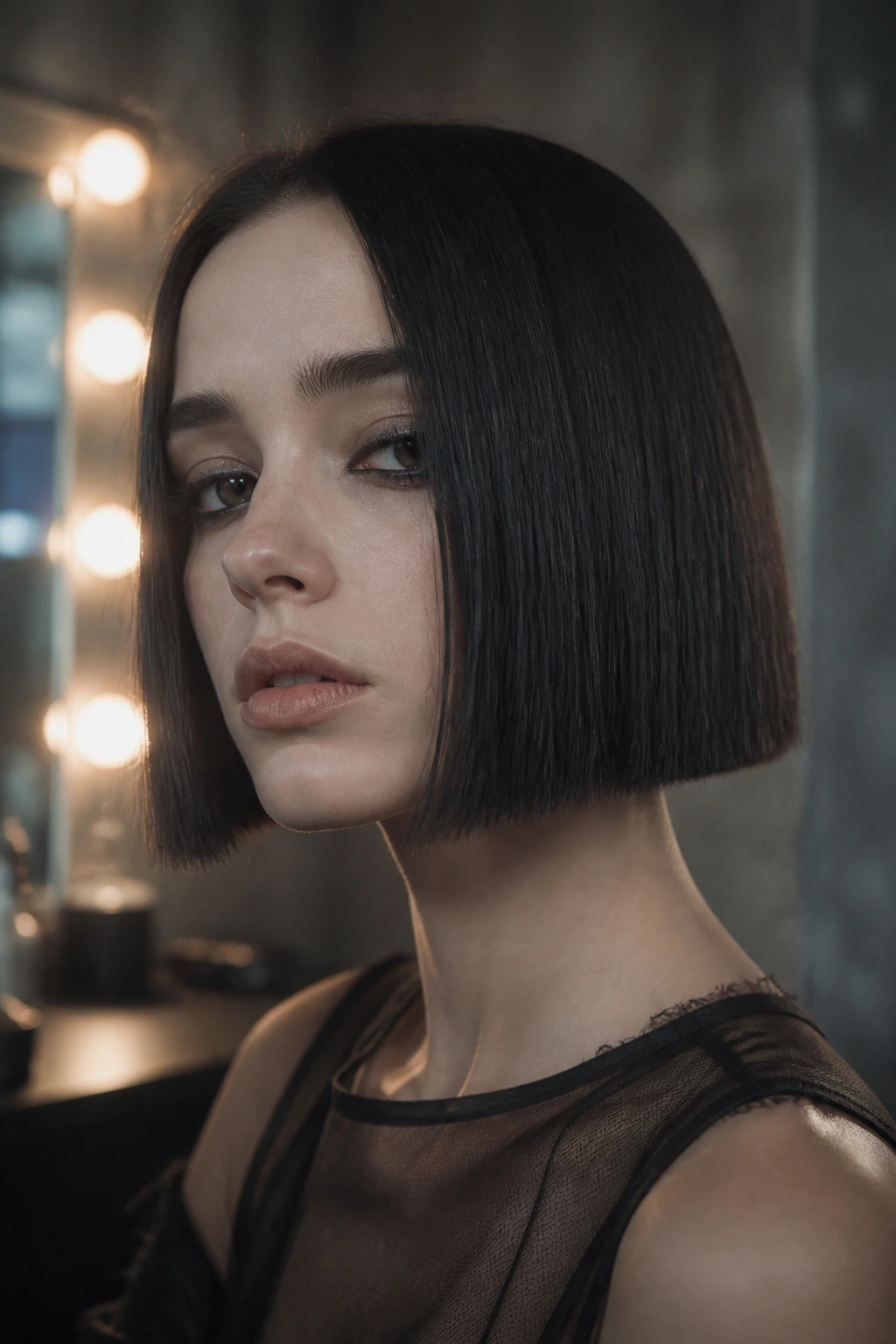
If you are willing to commit to the chop, a very blunt, chin-length bob is the classic choice for a sinister character. The secret to making it “creepy” rather than “stylish” is the lack of layering. You want the ends to be a perfectly straight, razor-sharp line.
Maintaining the Blade-Like Precision
Fine hair is ideal for this because it naturally hangs straight. Use a flat iron to get it perfectly, unnaturally smooth. When it is done, the hair should look like it has been cut with a single swipe of a blade. Avoid any rounded under-turning; the ends should point straight down toward your shoulders. This style is the epitome of clinical, cold, and calculated horror.
12. The Ghost-Light High Bun
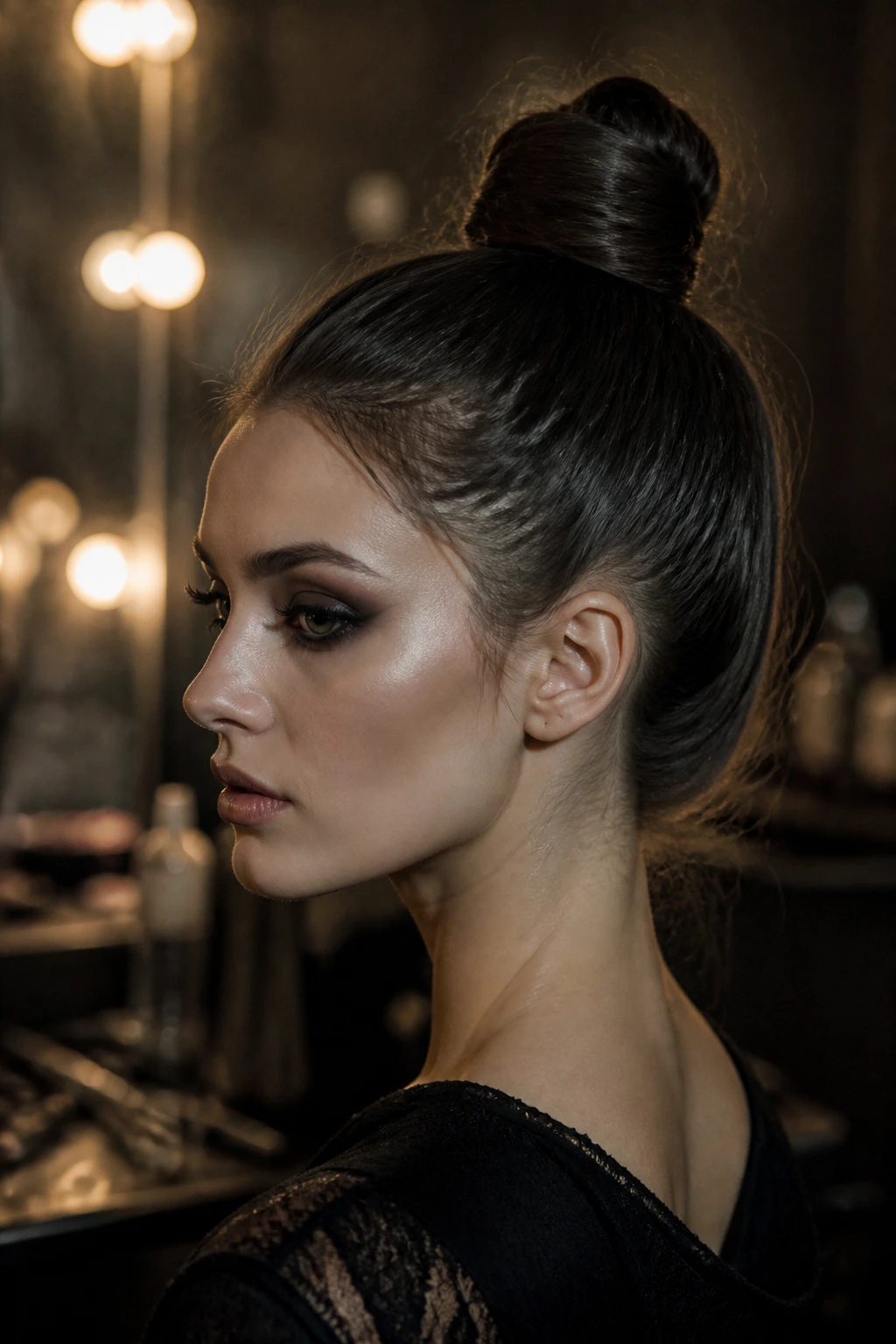
This is a high, tight, and slightly ridiculous bun that sits right at the very top of the head. It is meant to elongate the neck and make the wearer look taller and thinner. By pulling all the hair into a tiny, knot-like bun at the peak of the crown, you expose the ears and the line of the throat.
Using Gravity to Your Advantage
Fine hair allows for a very compact bun that looks more like a knob than a volume-heavy bun. If your hair is too short, use a thin, dark hair donut to add just enough structure, then pull your hair over it to hide the base. The visual effect is one of a figure that looks stretched and slightly distorted, which is a hallmark of many classic ghost archetypes.
13. The Ragged, Frozen Side-Part
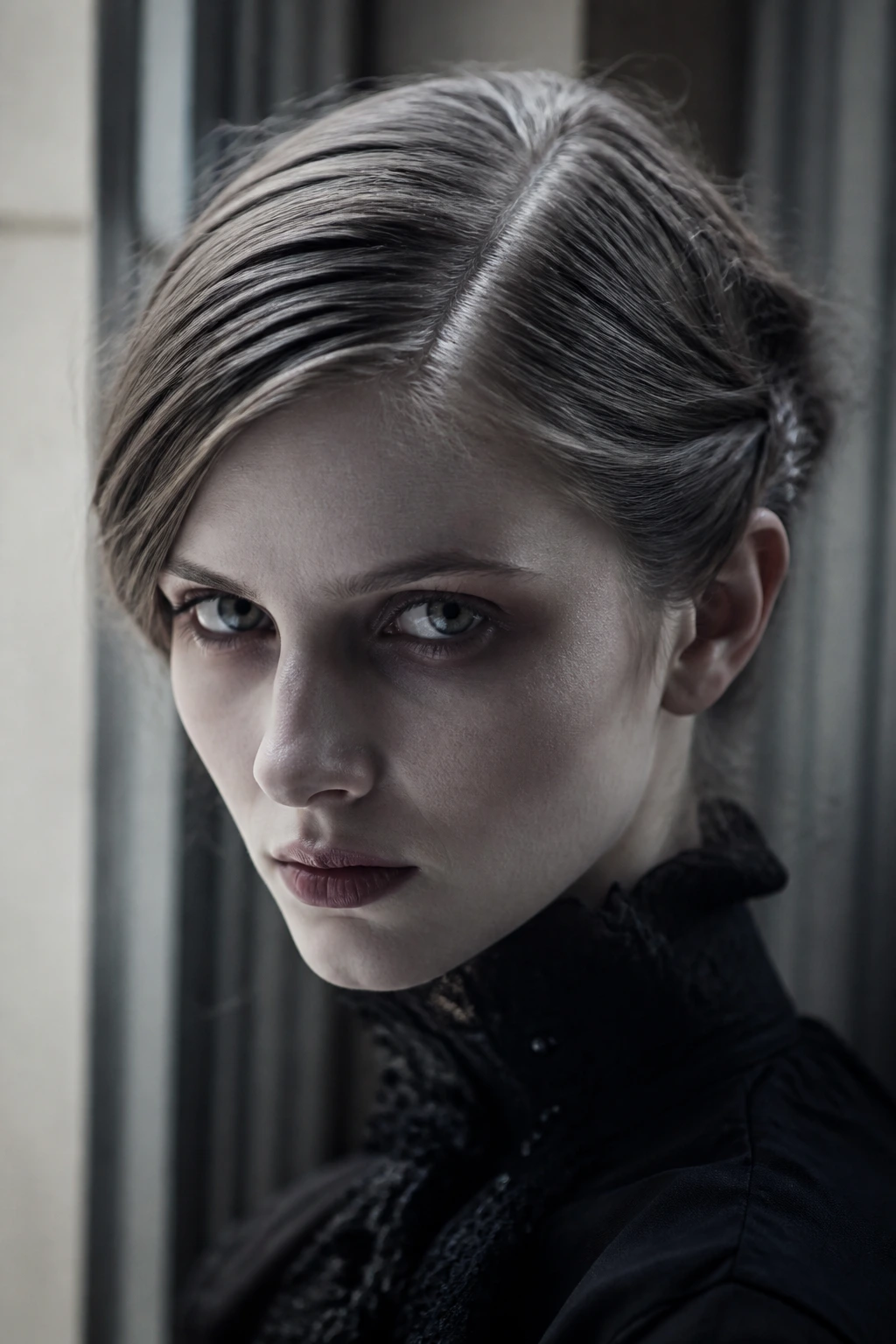
A deep side part can change the entire geometry of your face, making you look lopsided in a way that feels intentional and strange. Part your hair starting from the very outer edge of your eyebrow. Sweep the larger section across your forehead, pinning it behind one ear.
The Appearance of Rigidity
Apply a heavy, matte-finish hairspray to the top section so it stays frozen in place. The hair should look stiff, almost like it is made of porcelain. The side that is pinned behind the ear should be tucked tightly. This style creates a mask-like quality for the face. It is a look that screams “do not disturb,” and it works exceptionally well with high-collared, Victorian-inspired clothing.
14. The Tangled, Dried-Flower Wreath
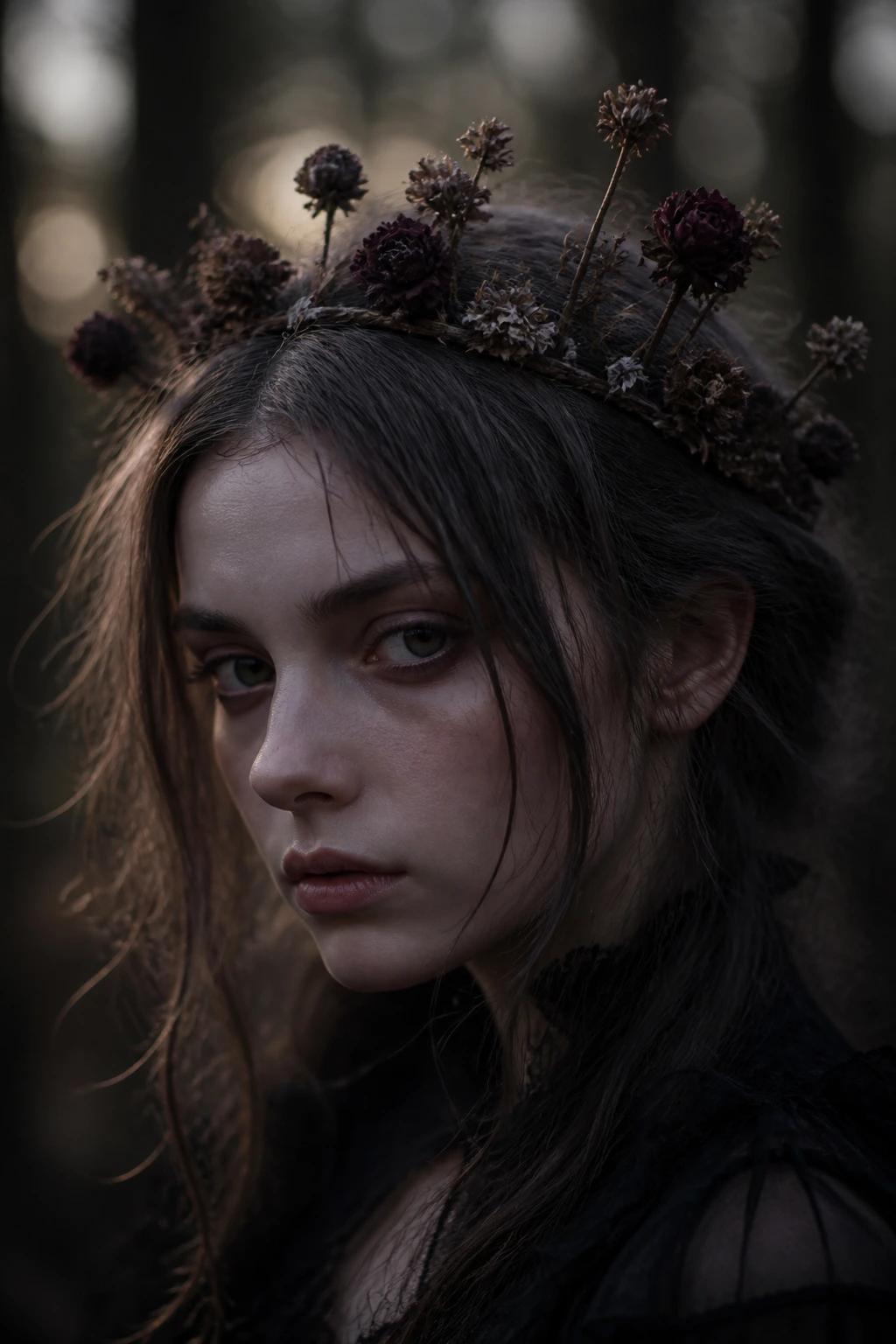
Incorporate elements of nature into your hair to represent decay. Use a simple, thin headband as your base. Take small, dark, or dried flowers—think dark red roses that have been left to wither—and hot-glue them sporadically along the band.
Placing the Decay
Do not try to make it look like a symmetrical, pretty floral crown. You want the flowers to look like they are growing out of your scalp or caught in your hair. Place them at uneven heights and angles. Because your hair is fine, the headband will sit very close to the head, preventing the “princess” look and leaning hard into the “forest spirit/haunted bride” aesthetic.
15. The Sparse, Stringy High Pony
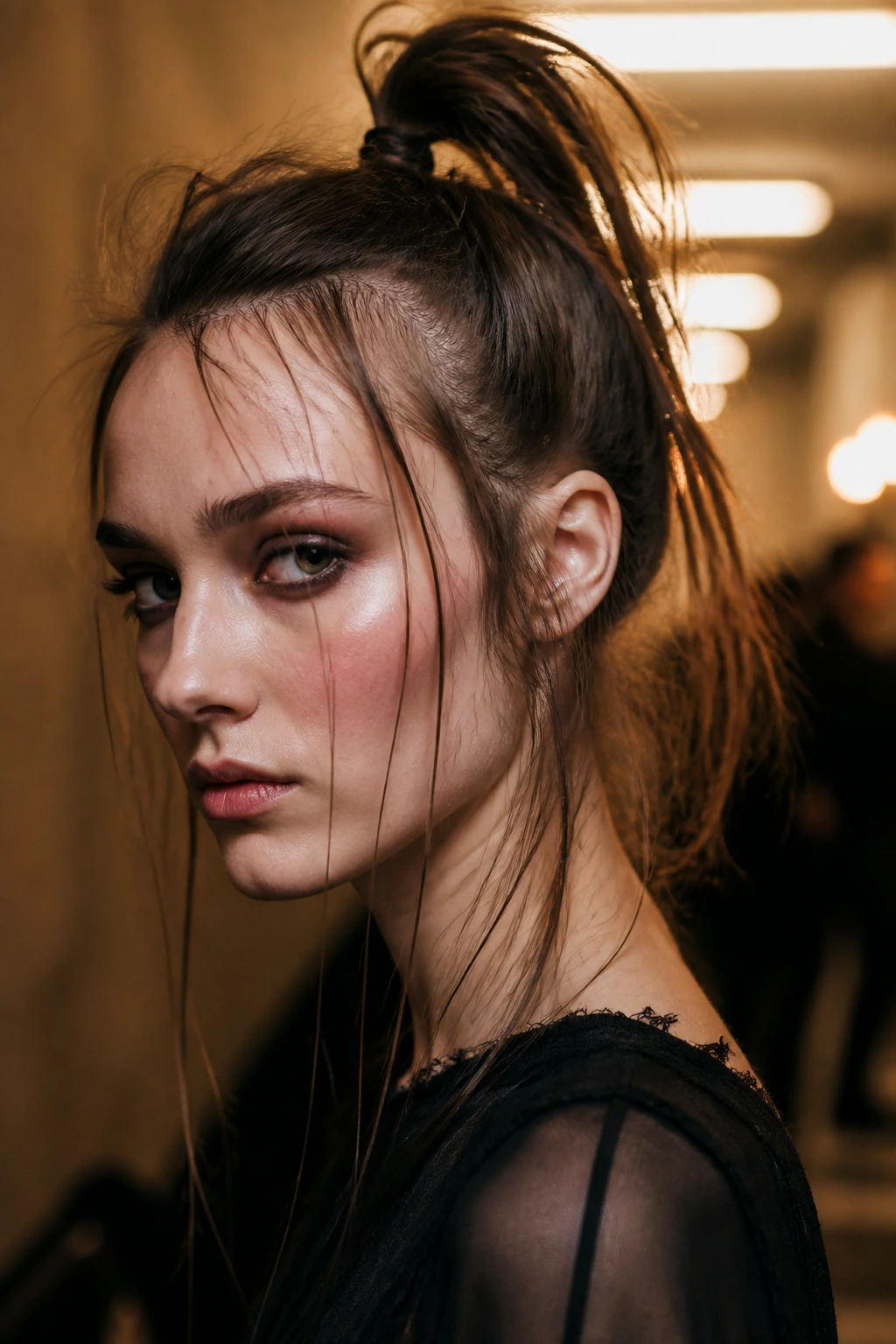
Most people try to make their ponytail look thick and full. For a creepy aesthetic, do the exact opposite. Gather your hair into a high ponytail but do not pull it tight. Let it be slightly loose, and take small sections of hair out from the sides so they hang down in thin, lonely strands.
Creating the Unsettling Gap
The goal is to have a ponytail that looks like it is falling apart. As you wear it, the natural movement of the fine hair will cause more strands to escape the elastic, making the look become progressively more distressed. It is a style that suggests you have been running through a forest and that your ponytail is the only thing currently holding your sanity together.
16. The Dark, Inky Matte Finish
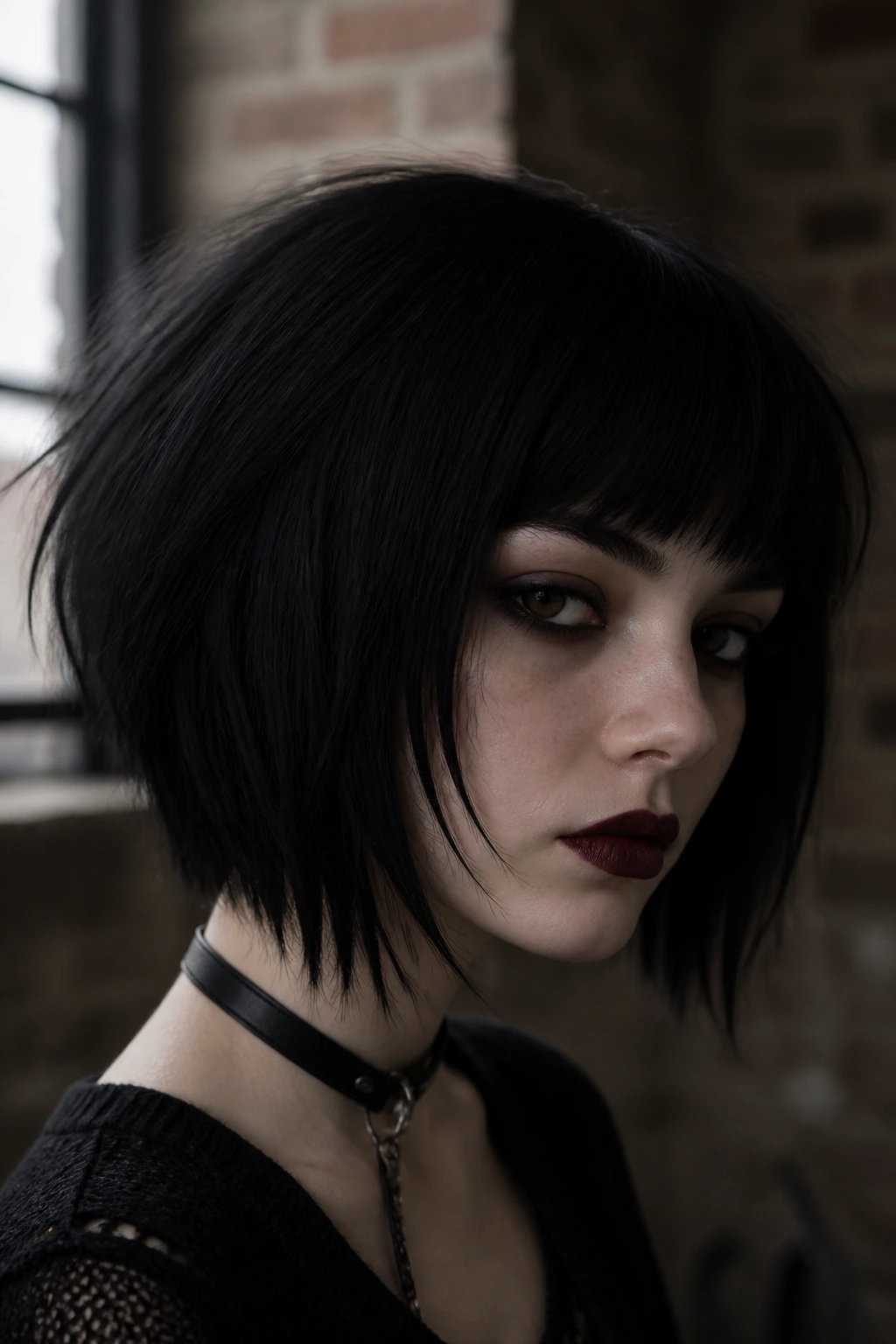
Sometimes the color is more important than the cut. Using a temporary black hair spray or a matte-finish pigment, color your hair so that it looks like a flat, non-reflective shadow. Fine hair absorbs this color perfectly, creating a look that lacks any natural shine.
Removing the Light
The absence of shine makes the hair look two-dimensional, like a silhouette. When you eliminate the highlights and lowlights that usually give hair its dimension, you end up with a shape that feels flat and unnatural. This style is incredibly jarring to the human eye, which is exactly why it is so effective for a chilling, supernatural aesthetic.
17. The Pinned-Back Ghostly Tendrils
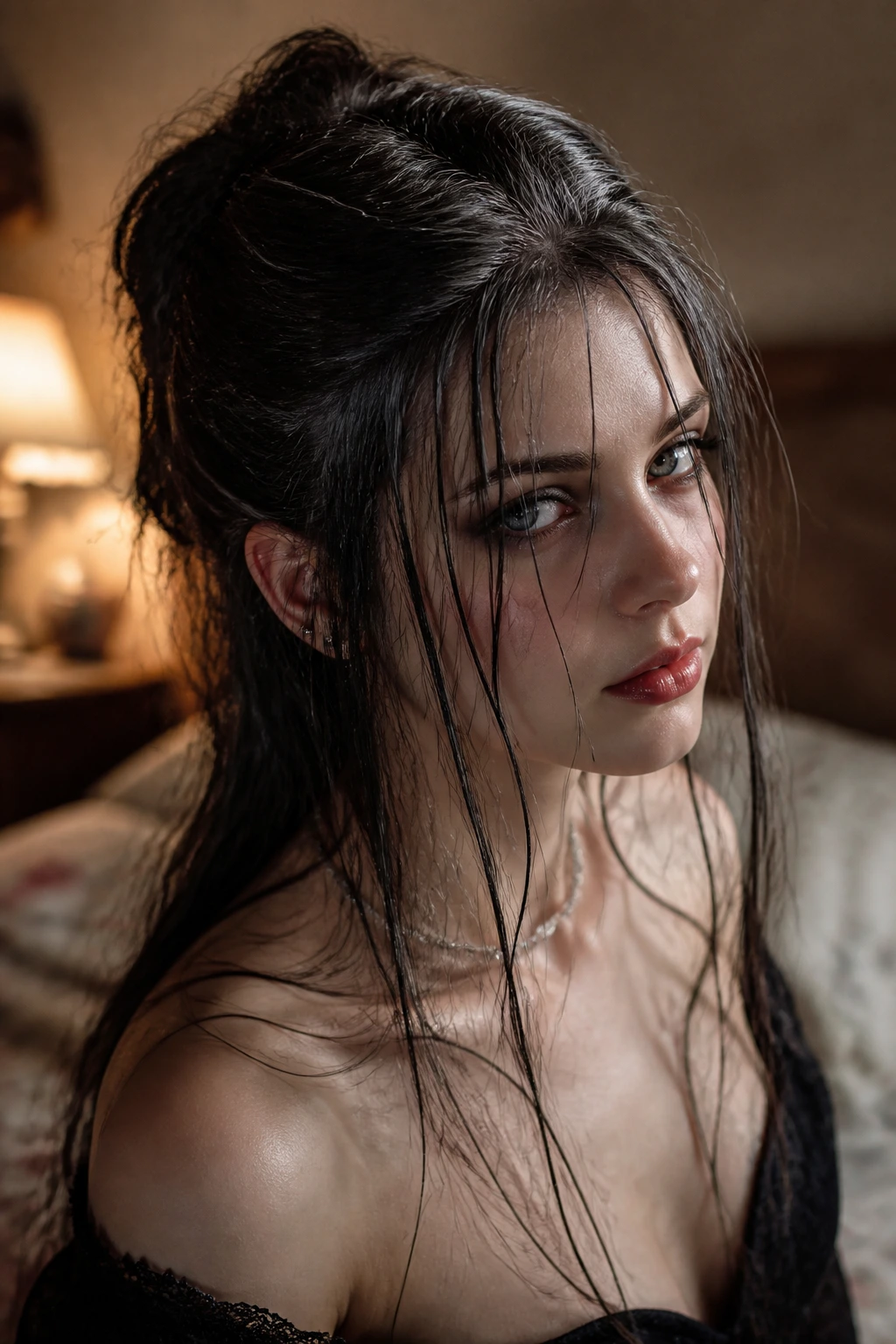
For this look, pull all the hair back as if you are going to put it in a ponytail, but instead, leave the very ends out. Pin the hair in place at the back, but let the ends—the wispiest, thinnest part of your hair—fall forward, draped over your ears and shoulders.
Why the Ends Matter
Fine hair ends are usually the weakest part of the cut, often wispy or see-through. By highlighting these sections, you are turning a common insecurity into a stylistic choice. The ends will look like fine, thin filaments of fiber. If you spray them with a bit of starch, they will hold their shape, looking almost like the delicate legs of a spider or the fine threads of an old quilt.
18. The Symmetrical, Dead-Straight Part
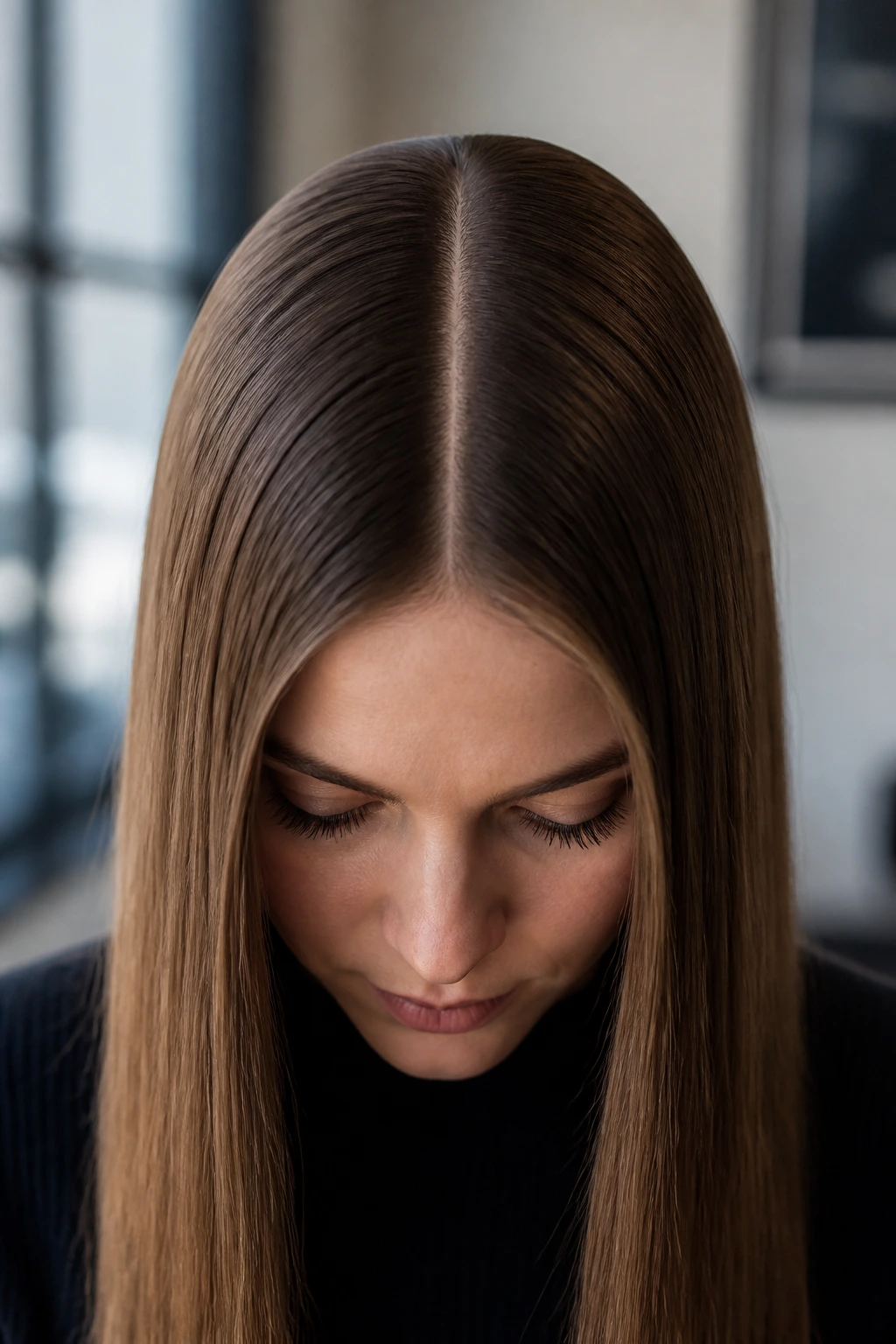
There is something deeply disturbing about perfect symmetry. Use a tail comb to draw a line from the center of your hairline to the nape of your neck, effectively splitting your head into two distinct halves. Ensure the part is absolute, with not a single stray hair crossing the line.
Why Symmetry Is Unsettling
Humans are naturally asymmetrical; we are used to seeing hair that moves, drifts, and parts unpredictably. By forcing your hair into a perfectly bifurcated state, you create an almost synthetic, mannequin-like appearance. It suggests a level of control that feels robotic or cold. This style works best with hair that is all one length, emphasizing the starkness of the divide.
19. The Knotted, Neglected Mess
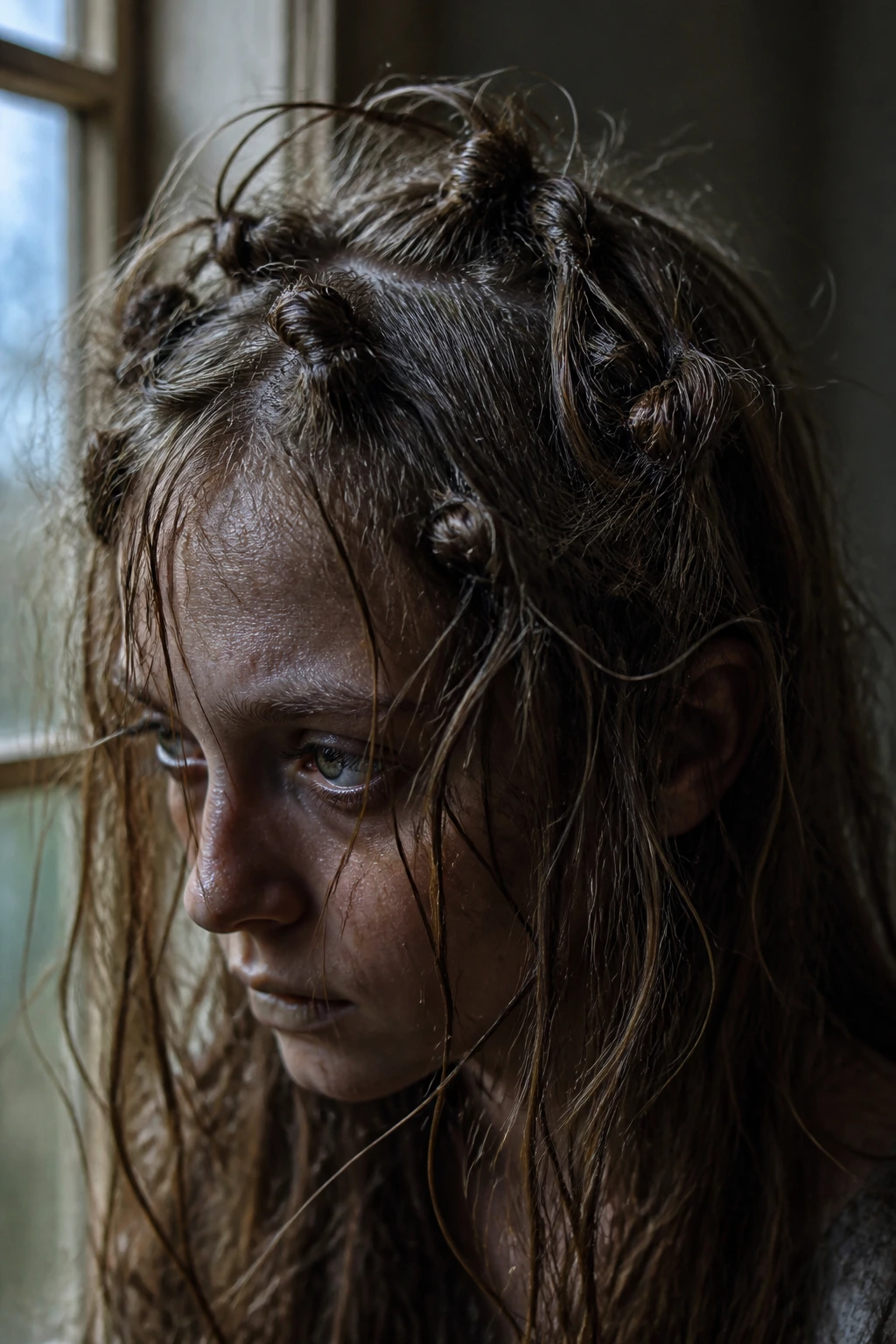
Take small, random sections of hair all over your head and tie them into small, tight, individual knots. Do not worry about uniformity; the more random the placement, the better. The result should look like your hair has been through a struggle and is now knotted into a chaotic, unmanageable clump.
Making the Knots Stay
Use a tiny dab of tacky hair wax on each section before knotting it. This will prevent the fine hair from slipping out of the knots. The final effect is strange and slightly aggressive—it is not a style meant to look pretty, but one designed to look like a character who has been trapped or forgotten for a very long time.
20. The Clumpy, Rain-Soaked Texture
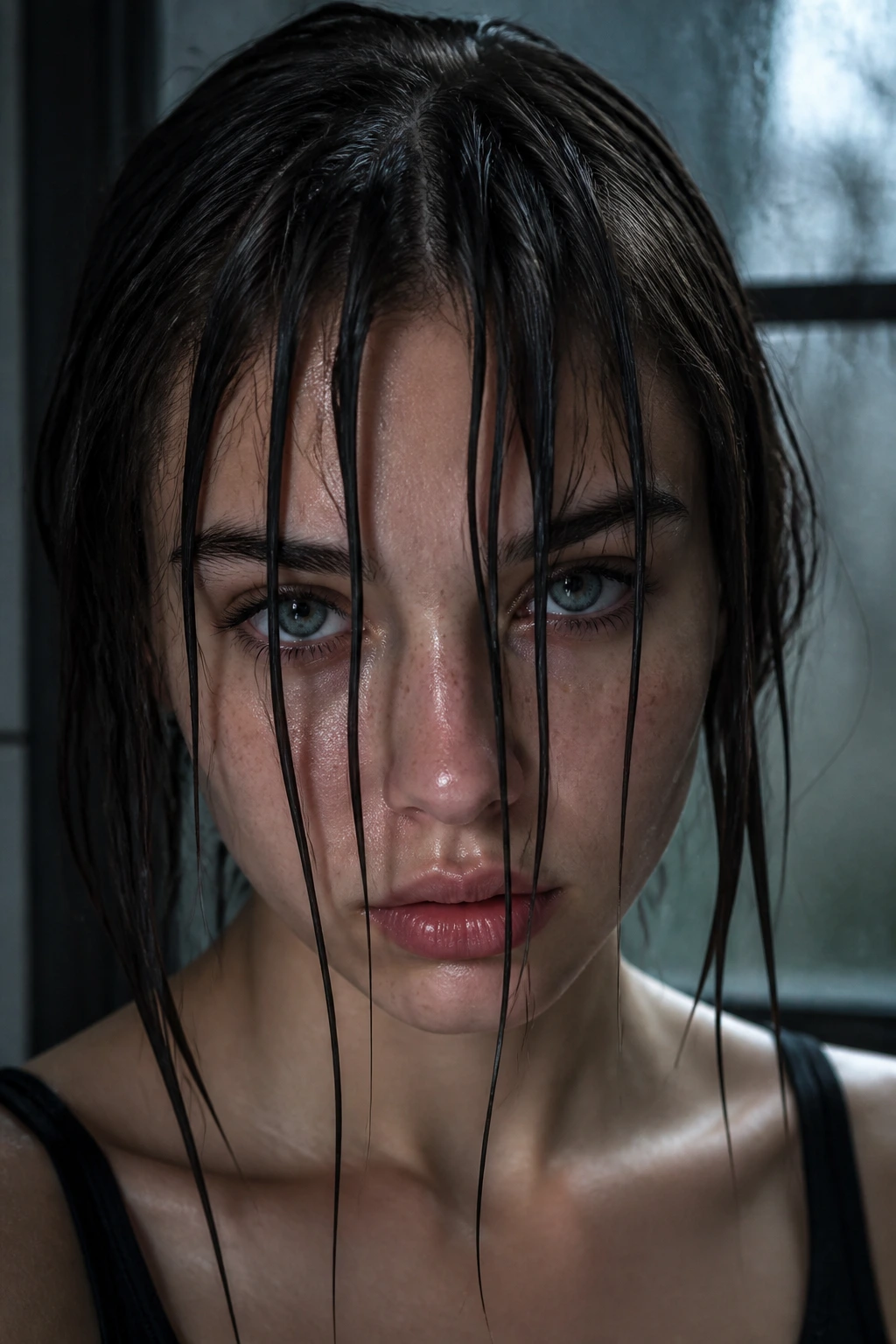
This style is for when you want to look like you have been walking through a thunderstorm. Use a combination of water and a medium-hold pomade to create “clumps” of hair. You want the hair to separate into distinct, oily-looking vertical lines.
Defining the Clumps
Instead of combing the hair through, use your fingers to pinch small sections together. Because the hair is fine, these clumps will be thin and stringy. They will naturally drape against your face and neck, creating a look that is dark, damp, and deeply uncomfortable to look at—which is the point of a creepy aesthetic.
21. The Extremely High, Tight Chignon
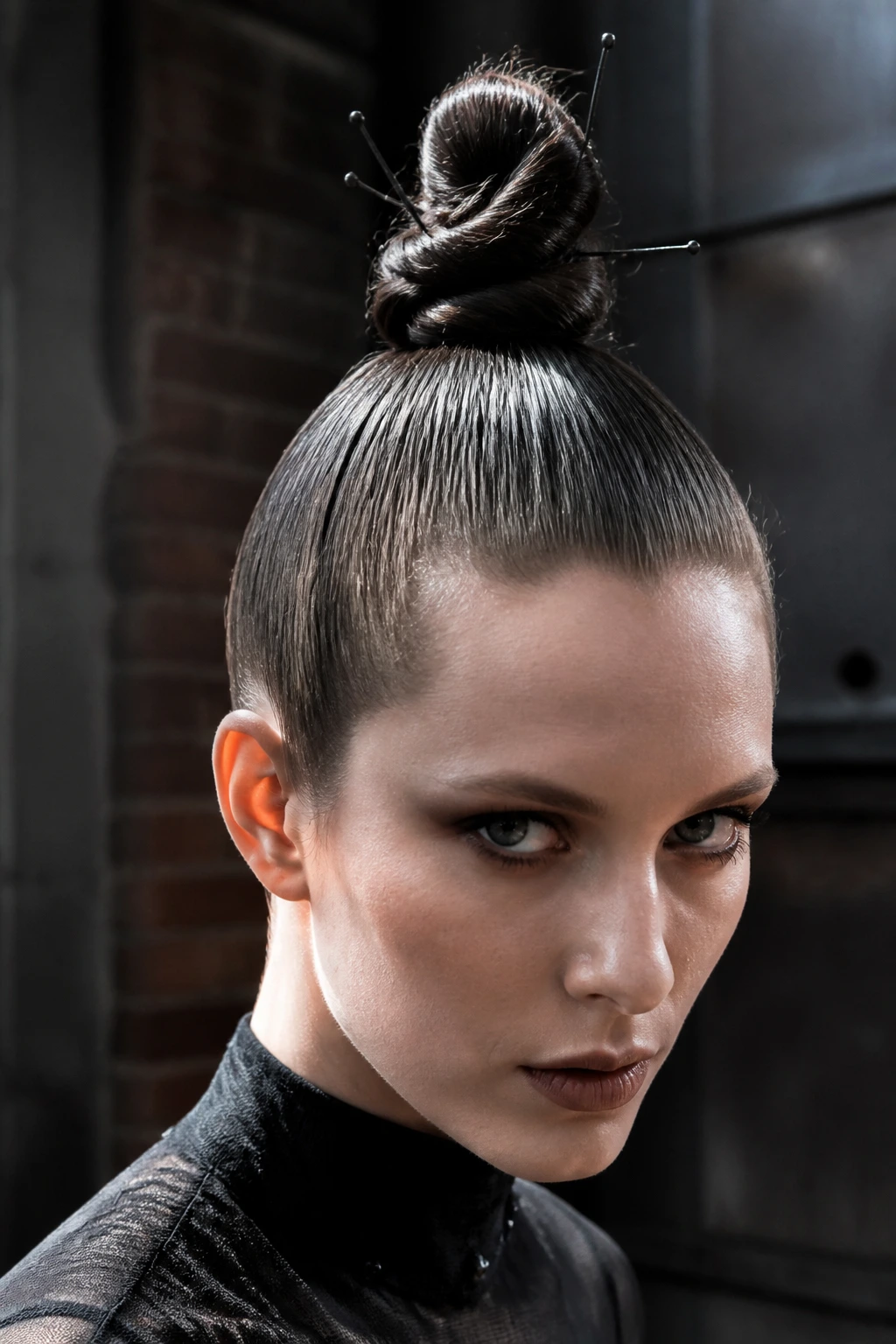
A chignon is usually soft and elegant, but by keeping it tightly coiled and very high, it becomes an architectural feature that feels slightly “off.” Start by pulling the hair into a very high ponytail at the crown. Instead of wrapping it into a messy bun, twist the ponytail into a tight, thin rope and coil it around the base until it forms a small, hard knot.
Achieving the Compact Profile
Pin the knot with metal pins that you don’t hide. Let the ends of the pins show. This adds a sense of “industrial” creepiness, as if you have used whatever was available to secure your hair in place. The smallness of the chignon relative to the rest of the head creates a jarring visual scale that is quite eerie.
22. The Greasy, Flat-Ironed Lengths
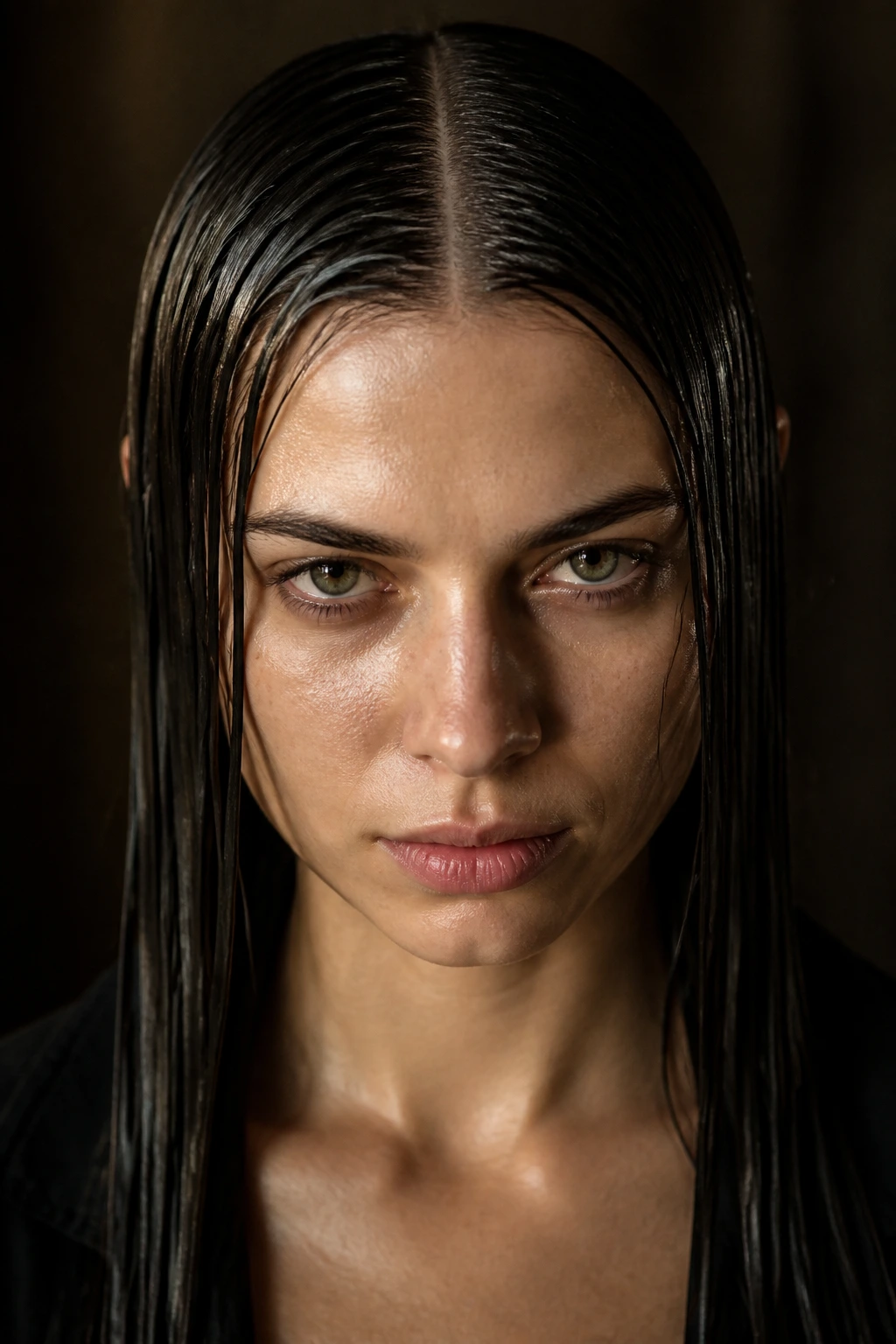
While most styles for fine hair focus on creating volume, this one is about the absolute suppression of it. Use an oil-based serum to coat the hair from roots to ends, then use a flat iron to press the hair into a perfectly flat, heavy sheet.
Why the Weight Matters
By adding weight to fine hair, you force it to lose any natural lift. The hair should look almost painted onto your skull. It is a look that feels oppressive and dark. It works particularly well for characters who are meant to look like they are fading away or being consumed by a shadow. It is a look of absolute submission to gravity.
23. The Frayed, Split-Ended Statement
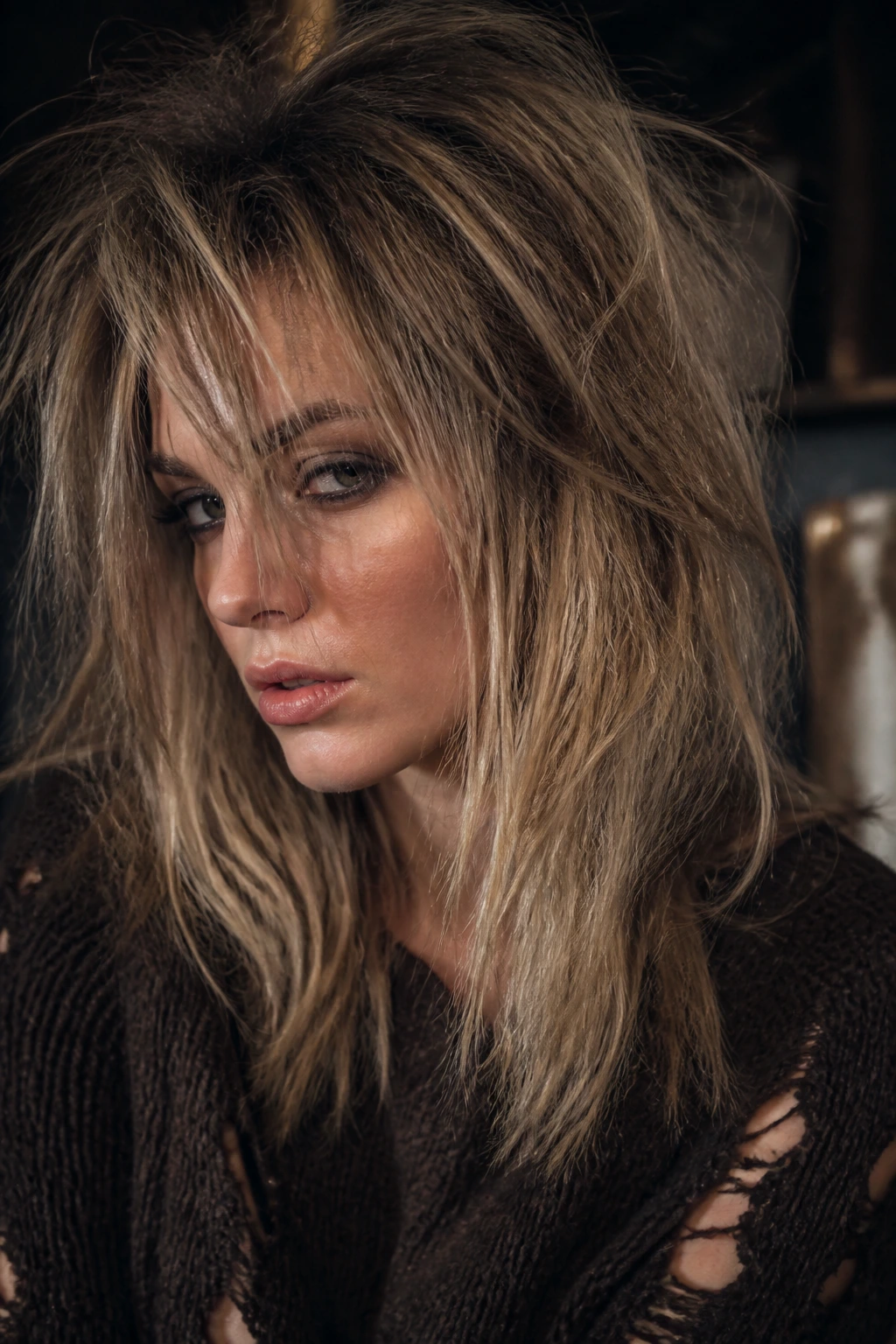
If you have been neglecting your hair, this style is for you. Embrace the frizz and the fraying. Take a brush and backcomb the hair at the mid-lengths, specifically targeting the areas where your hair might be a bit damaged.
The Beauty of Decay
The texture you create should feel dry and straw-like. Use a texturizing powder to remove the natural oils, making the hair feel brittle. It is a look that evokes an image of someone who has not left their home or cared for themselves in years. It is a very specific type of “distressed” look that leans into the macabre, suggesting a slow decay of the physical form.
24. The Tight, Scalp-Exposing Braids
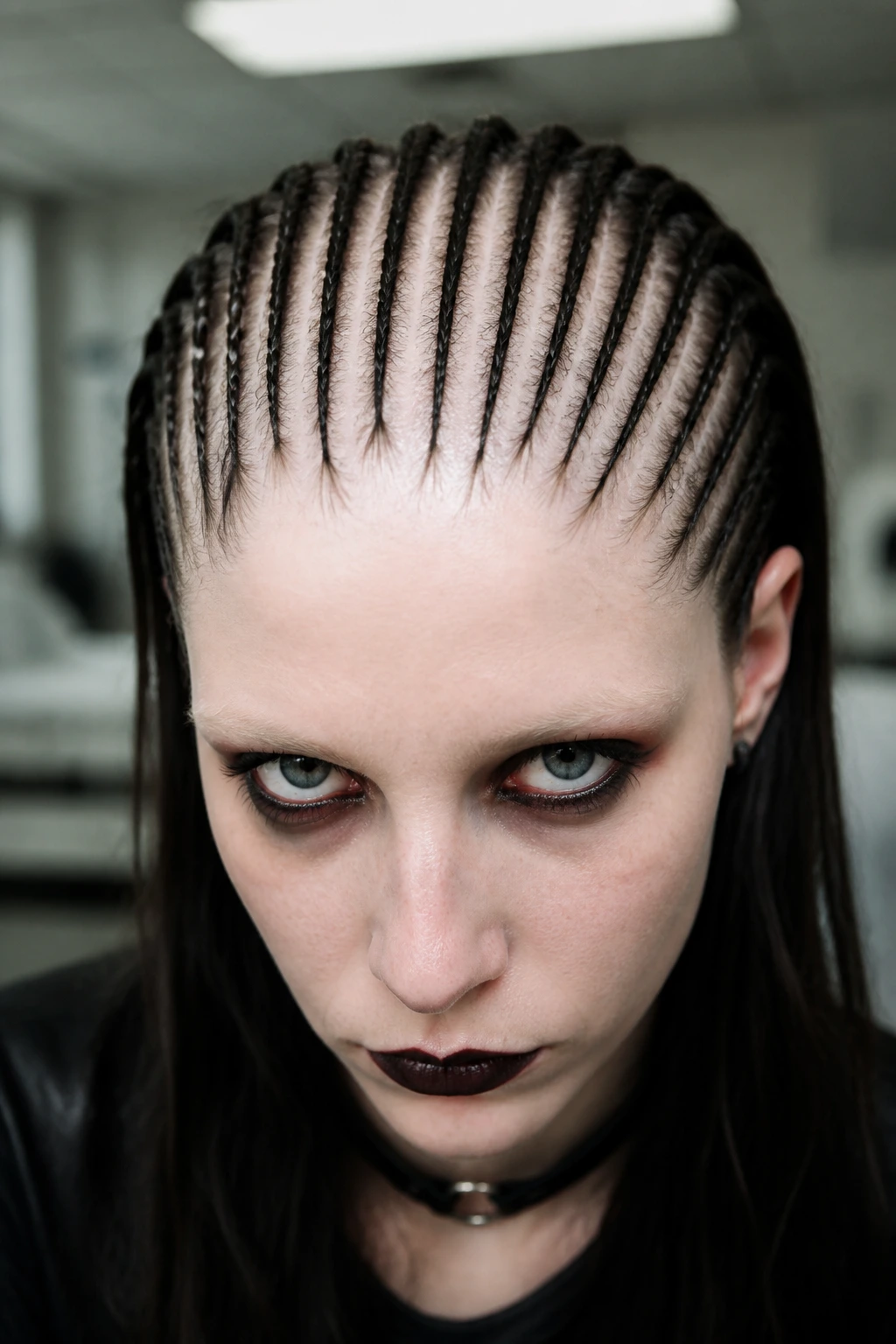
Create a series of extremely thin, tight braids starting from the forehead and going back, but do not braid to the ends. Stop halfway and secure them with tiny elastics, letting the rest of the hair hang loose.
Why the Exposure Is Effective
When you braid fine hair tightly, it pulls the skin of the scalp taut, exposing the pale skin beneath. This creates a high-contrast look that is very effective for horror aesthetics. The loose ends hanging down provide a stark contrast to the rigid, geometric nature of the braids. It is a style that looks intentionally unhinged.
25. The Dark, Veiled Sidesweep
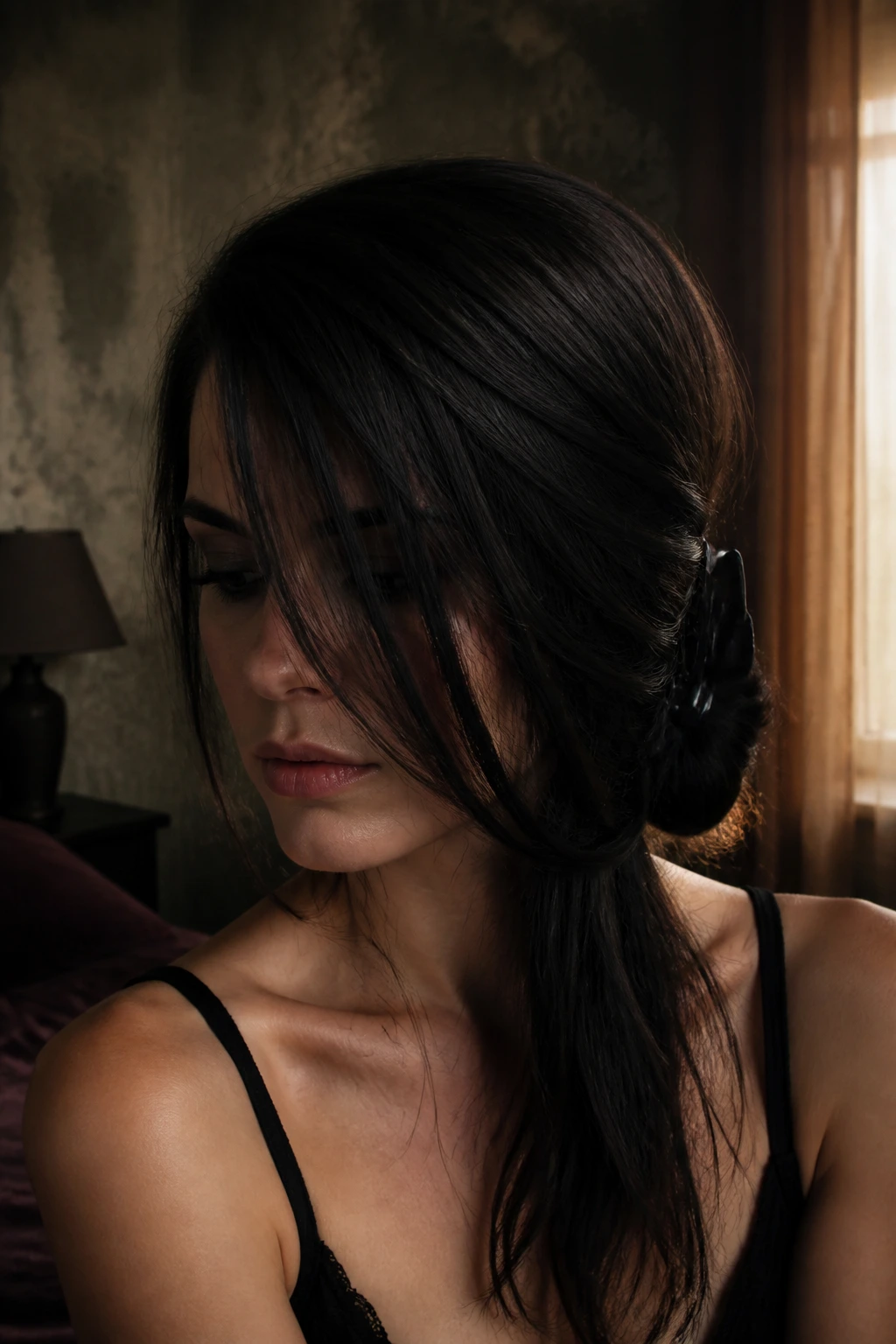
Take all of your hair and sweep it to one side of your head. Secure it at the nape of the neck with a dark, heavy clip. Let the hair fall over your shoulder and across the front of your face.
The Illusion of Obscurity
This style effectively hides half of your face. By forcing all the hair to one side, you create a heavy, weighted effect that feels slightly unbalanced. It is a classic move for characters who are hiding a scar, a secret, or a supernatural origin. The drape of the hair should look intentional and fixed, not like a hairstyle that just happened to fall that way.
26. The Sharp, Triangle-Cut Fringe
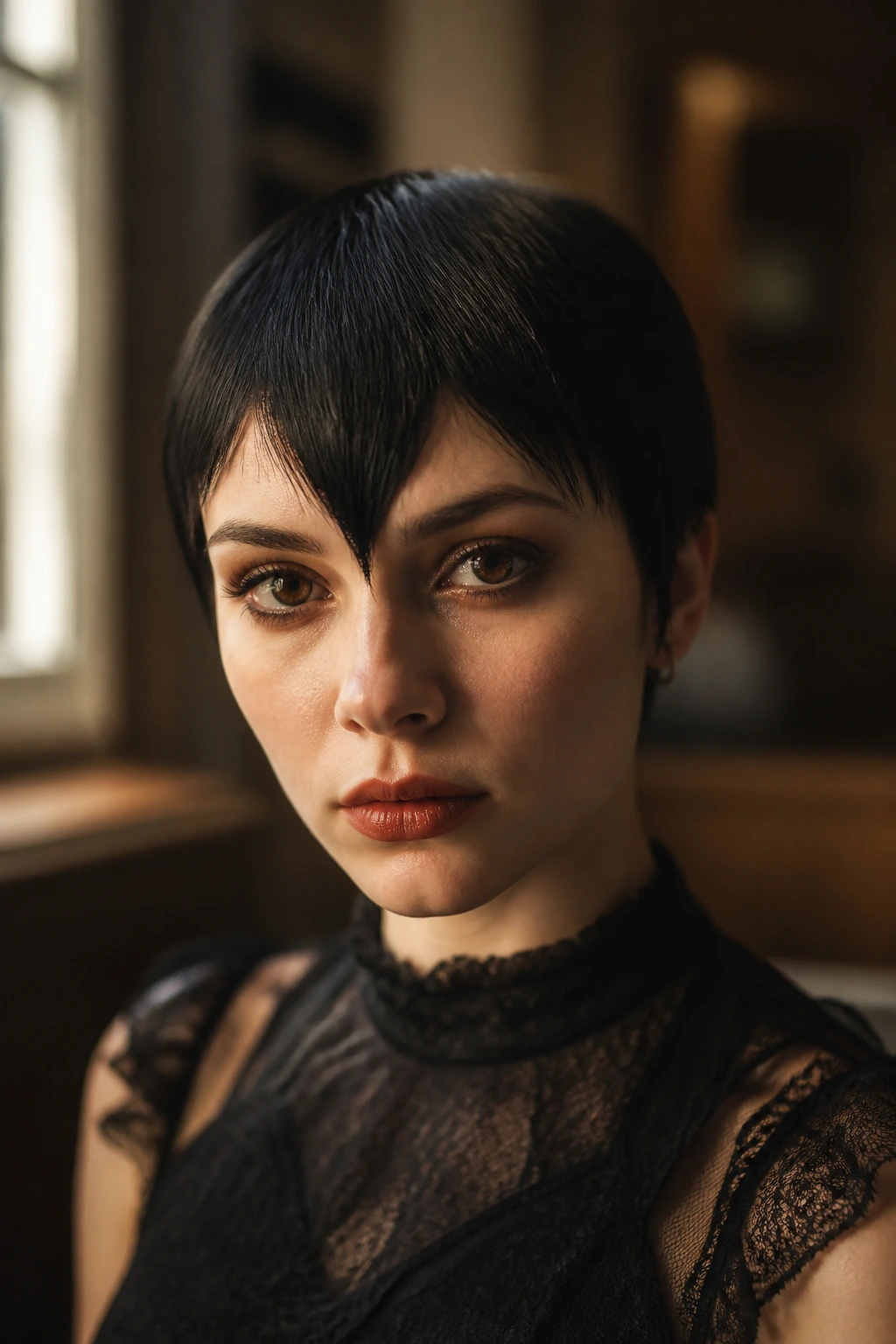
If you have a fringe, cut it into a sharp, pointed triangle. Instead of a soft, eyebrow-skimming bang, go for something that is short and angled, pointing down toward the bridge of your nose.
Defining the Shape
Fine hair is perfect for this because it won’t bounce or wave; it will sit exactly where you place it. Use a bit of hair wax to define the point of the triangle. This look is inherently unsettling because it defies the soft, framing nature of traditional bangs and turns the hair into a sharp, aggressive weapon. It is a style that feels very modern and very menacing.
27. The Ghostly, Unraveling Bun
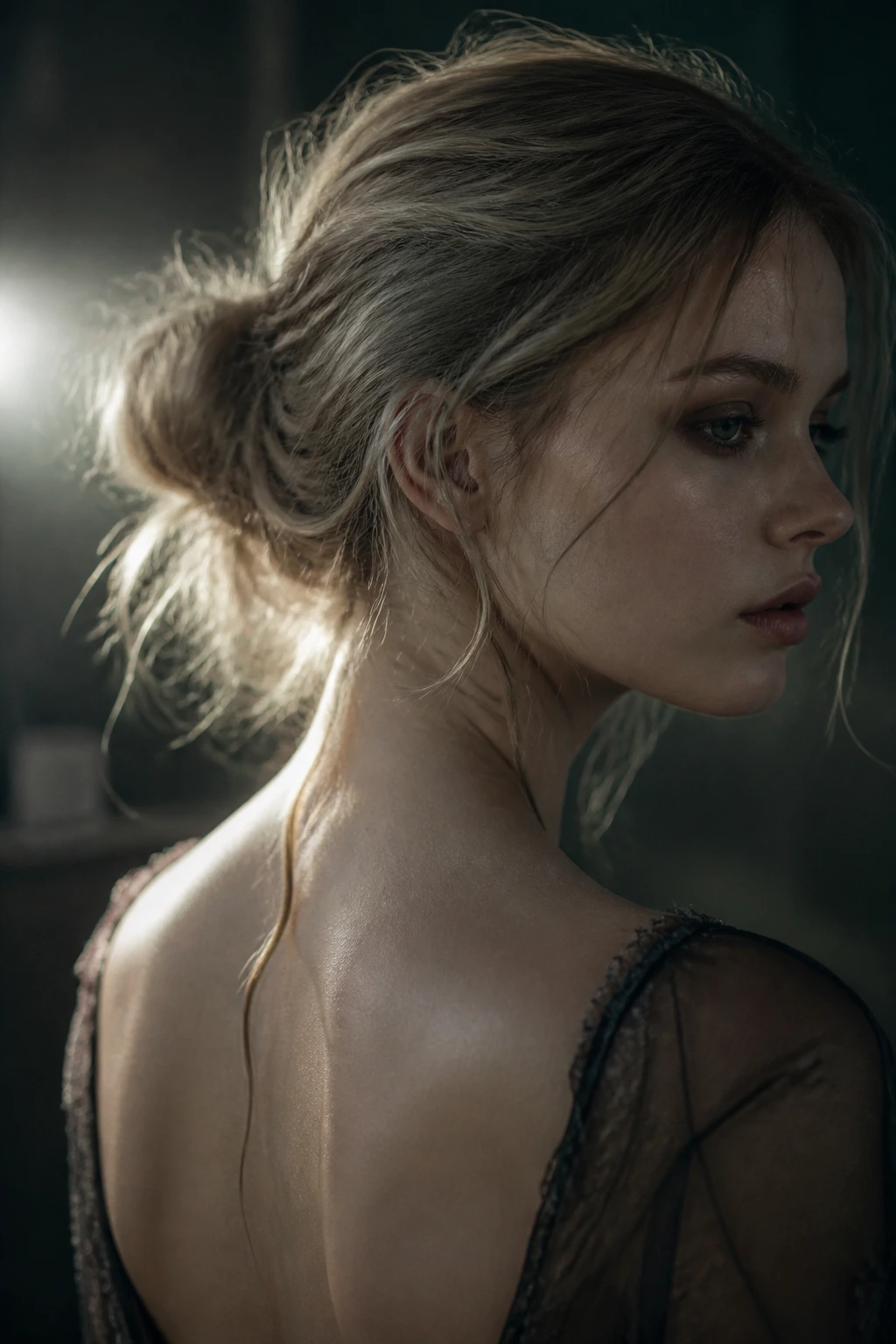
Create a bun at the back of your head, but do it carelessly. Take a random section of the hair and leave it out, letting it trail down your neck like a long, thin tail.
The Unfinished Aesthetic
The look should feel as though you started to put your hair up but were interrupted. This sense of “interruption” is key to a creepy vibe; it suggests that something stopped you, that you were in a hurry, or that you have lost your grip on the task at hand. It is a simple, effective way to make your hair look like part of a larger, scarier story.
28. The Static-Cling Effect
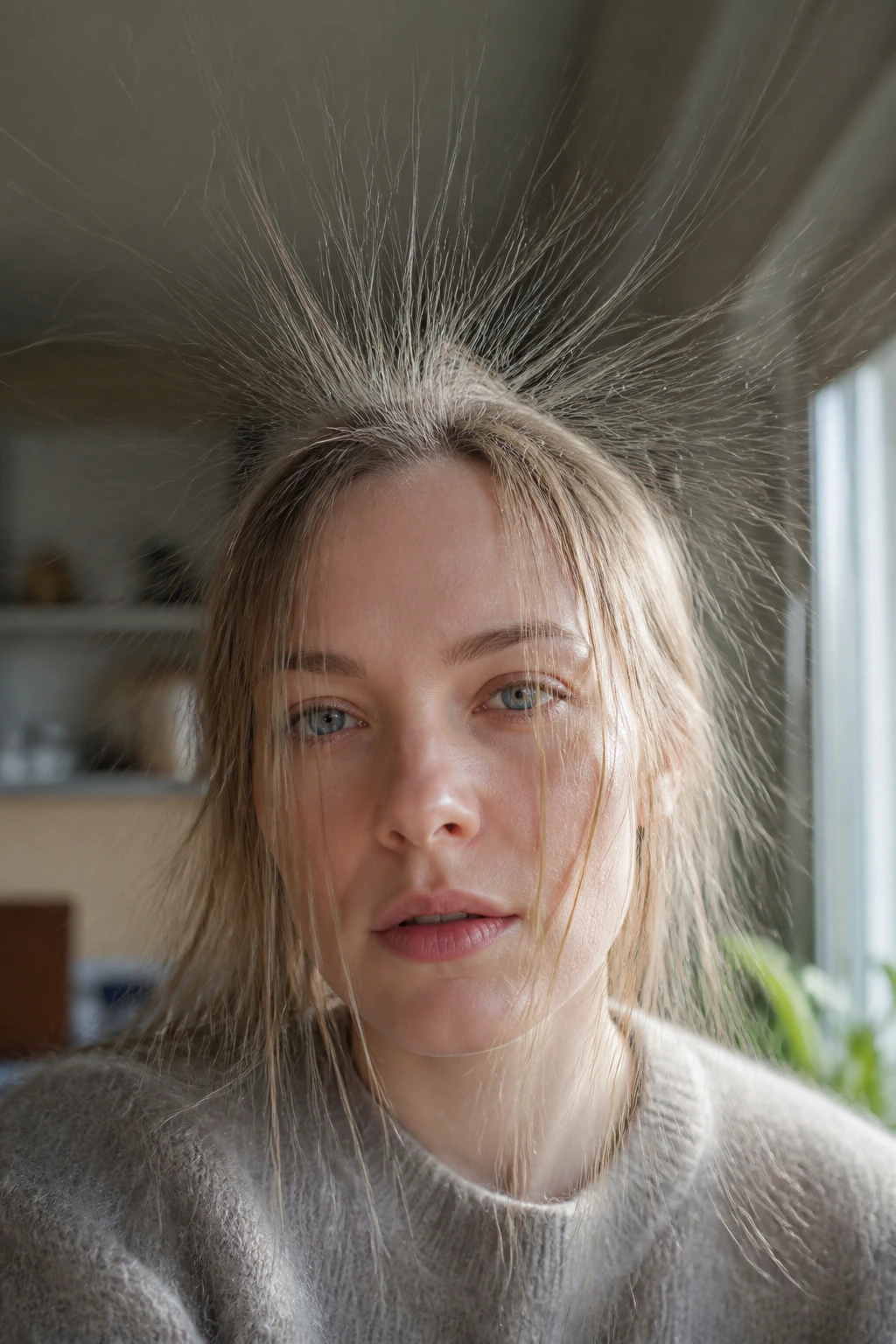
This is a bold, almost absurd choice. Intentionally build up static electricity in your hair by rubbing it with a balloon or a plastic comb. You want the fine hairs to fly up, sticking to themselves and to your face.
Embracing the Chaos
Fine hair is incredibly prone to static. By making it the centerpiece of the look, you are creating a “charged” appearance. It looks like you are under the influence of a supernatural force, or that you are so deeply unnerved that your very energy is affecting the world around you. It is a bizarre, memorable look that is guaranteed to stop people in their tracks.
Final Thoughts
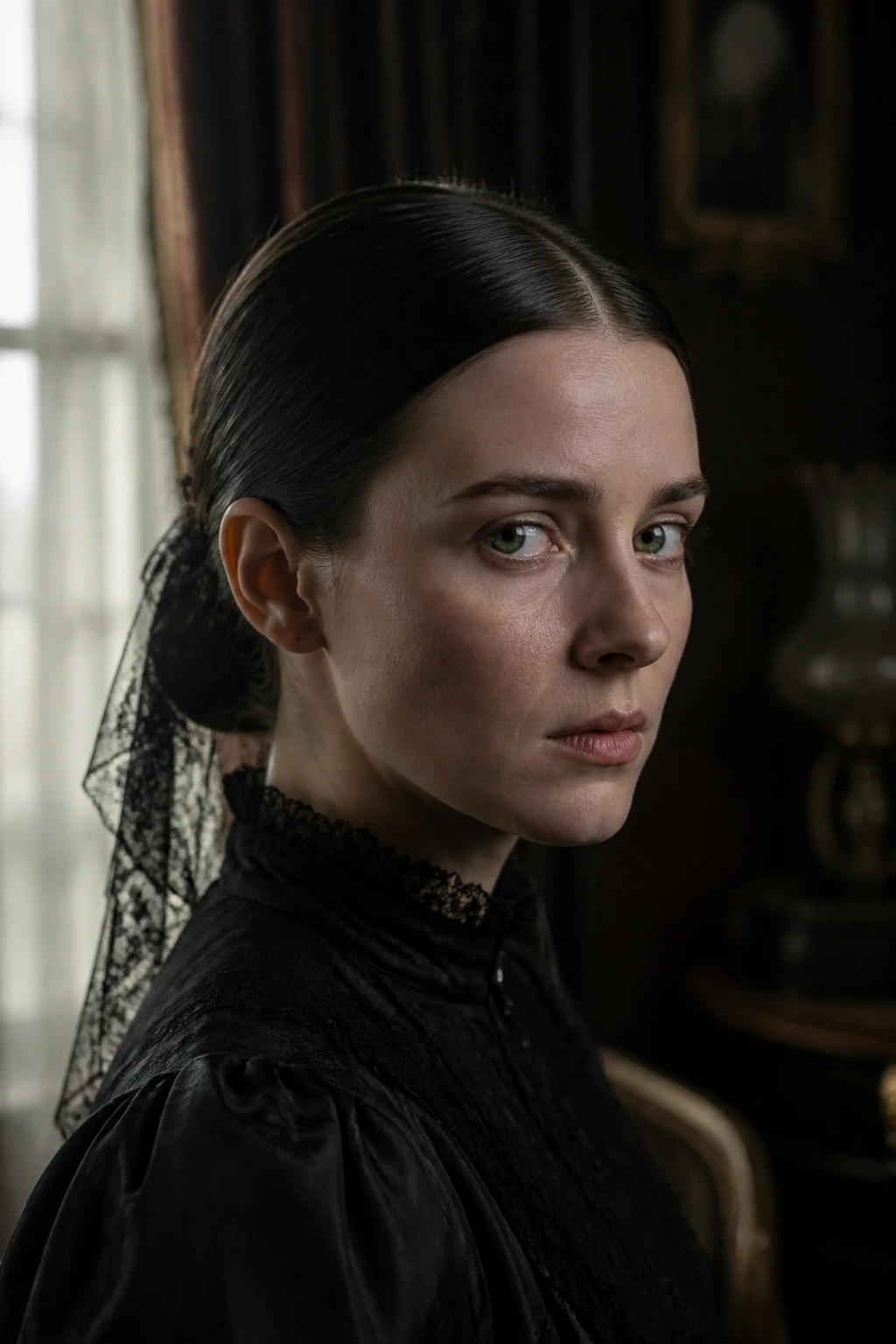
Working with fine hair in a creative, dark, or macabre context is actually a liberating experience. When you stop chasing the impossible goal of “full, bouncy volume” and start looking at your hair as a material that can be manipulated, sculpted, and distressed, you open up an entire world of stylistic choices. The very traits that usually annoy you—the tendency to go flat, the way it sticks to skin, the translucency—are exactly the tools you need to build an authentic, ghostly, or unsettling persona.
Remember that with these styles, imperfection is not a bug; it is the primary feature. If a bobby pin shows, let it show. If a section of hair goes limp or flat, that is likely the desired effect anyway. The most chilling looks are always the ones that feel slightly wrong, slightly neglected, or fundamentally uncanny. Whether you are prepping for a character piece, a performance, or just a shift in your own aesthetic, the best way to handle fine hair for a creepy look is to stop trying to make it “behave” and start letting it reflect the darkness you want to project.