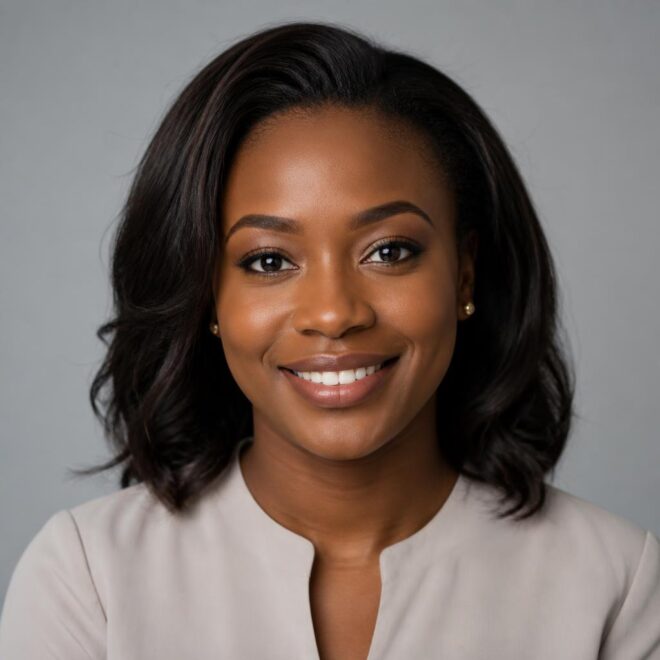


The inverted bob is often misunderstood as a severe, precision-cut style reserved for those with stick-straight hair. If you have spent your life battling the frizz or managing the unique volume of curls, you might have been told that a steep angle would turn your head into a pyramid. That advice is outdated. When handled with the right technique, the graduated layers of an inverted bob can actually provide the structure your curls have been craving.
The secret lies in the graduation—the way the hair transitions from shorter at the nape to longer at the front. With curls, this graduation needs to be soft, often achieved through point-cutting or interior layering, to prevent the “shelf” look that so many fear. By reducing the bulk at the back and allowing the curls to stack naturally, you can gain a style that feels lighter, bouncier, and significantly easier to manage than a long, weighed-down mane.
Whether you are looking for a dramatic, razor-sharp edge or a soft, lived-in aesthetic, there is a version of this cut that works for your specific curl pattern. Let’s break down twenty-five ways to wear this silhouette, keeping in mind that curl health and product placement are just as important as the shape itself.
1. The Asymmetrical Deep-Side Part
The asymmetrical cut is a brilliant way to introduce a modern edge to a curly inverted bob. By cutting one side significantly shorter—tucked behind the ear or falling just above the jawline—you create a natural focal point that draws attention to your facial features.
Styling for Asymmetry
For this look, you want to encourage the curls to fall toward the longer side. Use a lightweight mousse while the hair is damp, then scrunch in an upward motion. When the hair is roughly 80% dry, flip your head to the side opposite of your part and gently shake the roots to create volume.
- Keep the nape tight to ensure the asymmetry remains the star of the show.
- Use a curl-defining cream to prevent the shorter side from puffing out.
- Ensure the ends of the longer side are hydrated, as they will be the most visible.
2. The Tight-Coil Stacked Nape
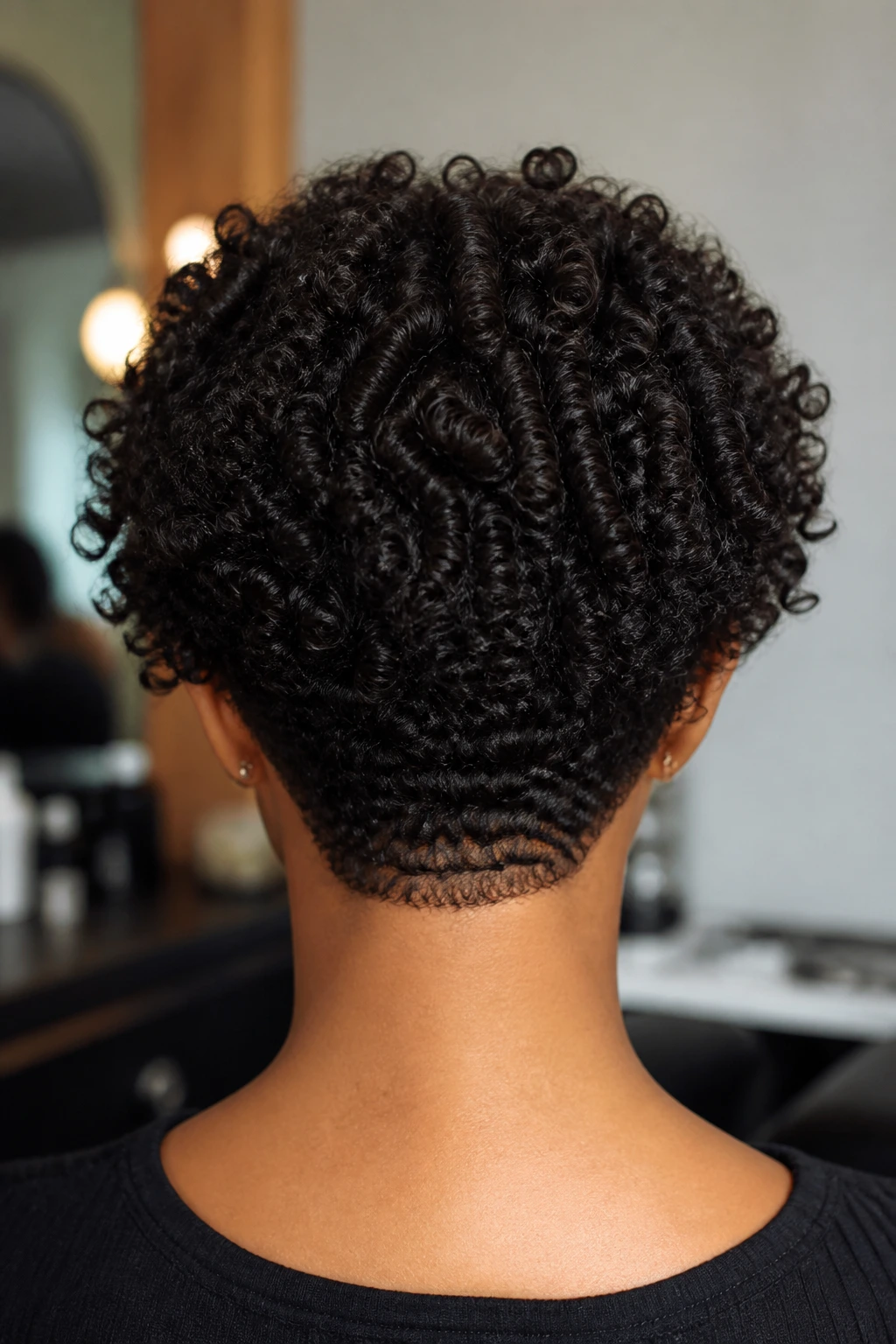
If your hair features tighter coils, a stacked nape is an essential component of the inverted bob. This cut involves internal layering at the back, which forces the coils to spring upward and outwards, creating a natural, architectural shape that doesn’t require a brush or blow-dryer to maintain.
The Role of Texture
Because tight coils naturally have so much internal volume, the stack acts as a release valve. You don’t need excessive thinning shears; instead, your stylist should use a slide-cutting technique to ensure the weight is distributed evenly so the coils don’t bunch up in one spot at the occipital bone.
- Focus on keeping the nape area moist with a leave-in conditioner.
- Avoid heavy gels that might weigh the coil down and make it lose its “spring.”
- A light oil mist at the end helps smooth the cuticles of the tighter coils for a cleaner look.
3. The Soft-Layered Romantic Bob

For those who prefer a less aggressive angle, the soft-layered bob offers a gentle graduation. This version is perfect for looser wave patterns or soft, big curls that need a bit of guidance to hold their shape.
Creating Volume without Bulk
The goal here is to keep the hair looking soft and touchable. Instead of cutting a hard line, your stylist should use a razor or thinning shears on the very ends to create a “shattered” look. This removes the bluntness and allows the curls to interlock rather than sit on top of one another.
- Use a texture spray to define individual curls.
- Avoid heavy butter-based products that might make the hair look limp.
- Let it air dry whenever possible to keep the soft, natural finish.
4. The Blunt-Cut Inverted Edge
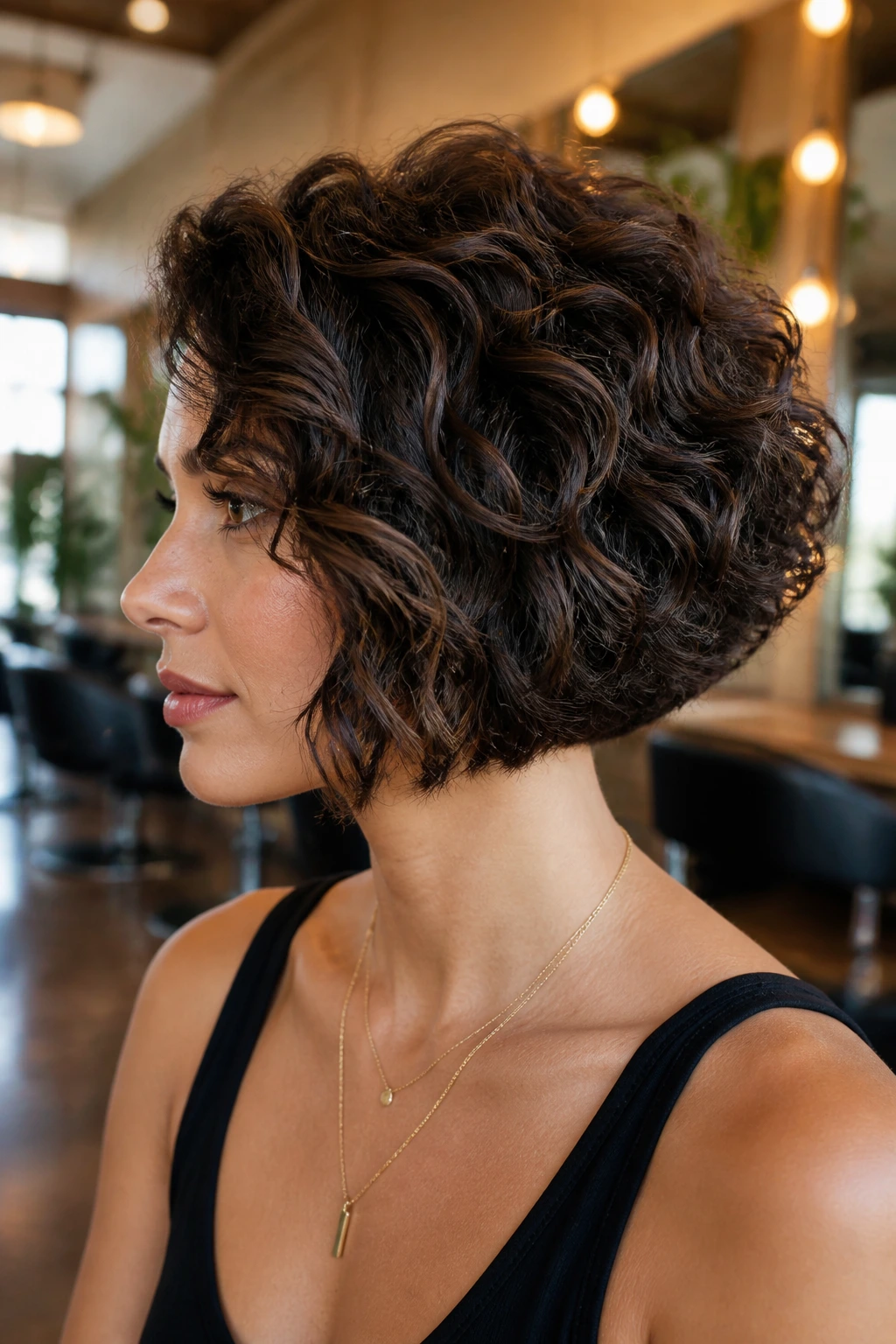
Contrast is a powerful tool in hair design. A blunt, heavy-edge inverted bob on curly hair can feel incredibly editorial and intentional. By keeping the perimeter lines solid, you frame your face with a clean geometry that sits in sharp contrast to the chaotic beauty of your curls.
Maintenance and Sharpness
A blunt cut on curly hair requires more frequent trips to the salon because the integrity of the line is easily compromised as the hair grows. You are essentially looking for a “clean” finish, which means the ends must be kept healthy to avoid fuzzy, uneven edges.
- Use a boar-bristle brush lightly only on the very ends if you need to redefine the line.
- A finishing wax can help keep those tips pointing exactly where you want them.
- This cut looks best when the curls are moisturized enough to be glossy rather than dry.
5. The Curly Lob Inversion
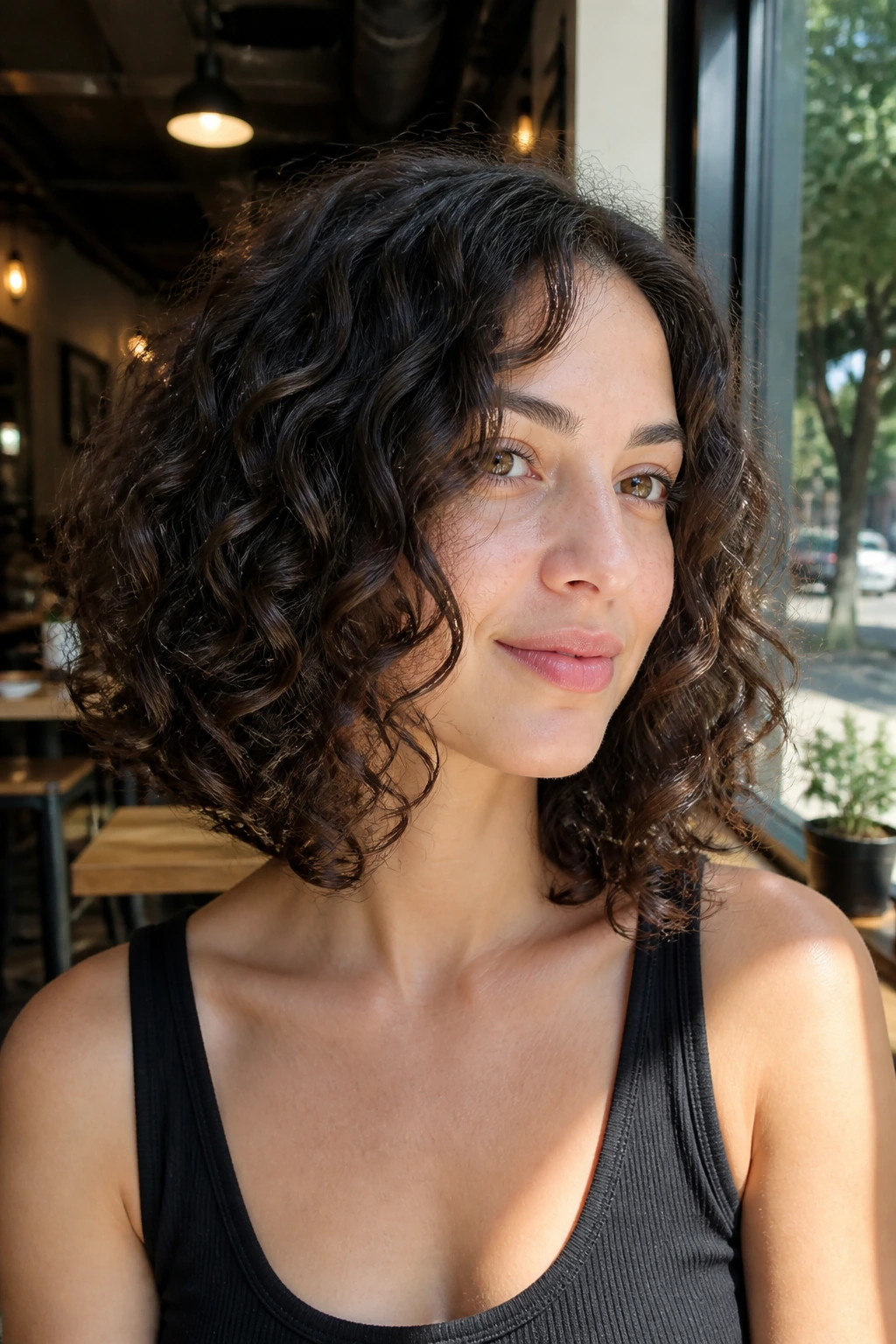
If you aren’t ready to go short, the inverted long bob (lob) provides the perfect bridge. You get the benefits of the stacked back and the angled front, but the length hits around the collarbone. It is a fantastic option for someone who wants to tie their hair back occasionally.
Styling Versatility
The beauty of the curly lob is the room it gives you to play with accessories. A headband or a silk scarf can hold back the front sections, highlighting the graduation while keeping your hair out of your eyes during busy days.
- Use a diffuser to add volume at the roots without disturbing the length.
- Focus moisture on the mid-lengths.
- Use a wide-tooth comb to detangle while the hair is saturated with conditioner.
6. The Shag-Inversion Hybrid
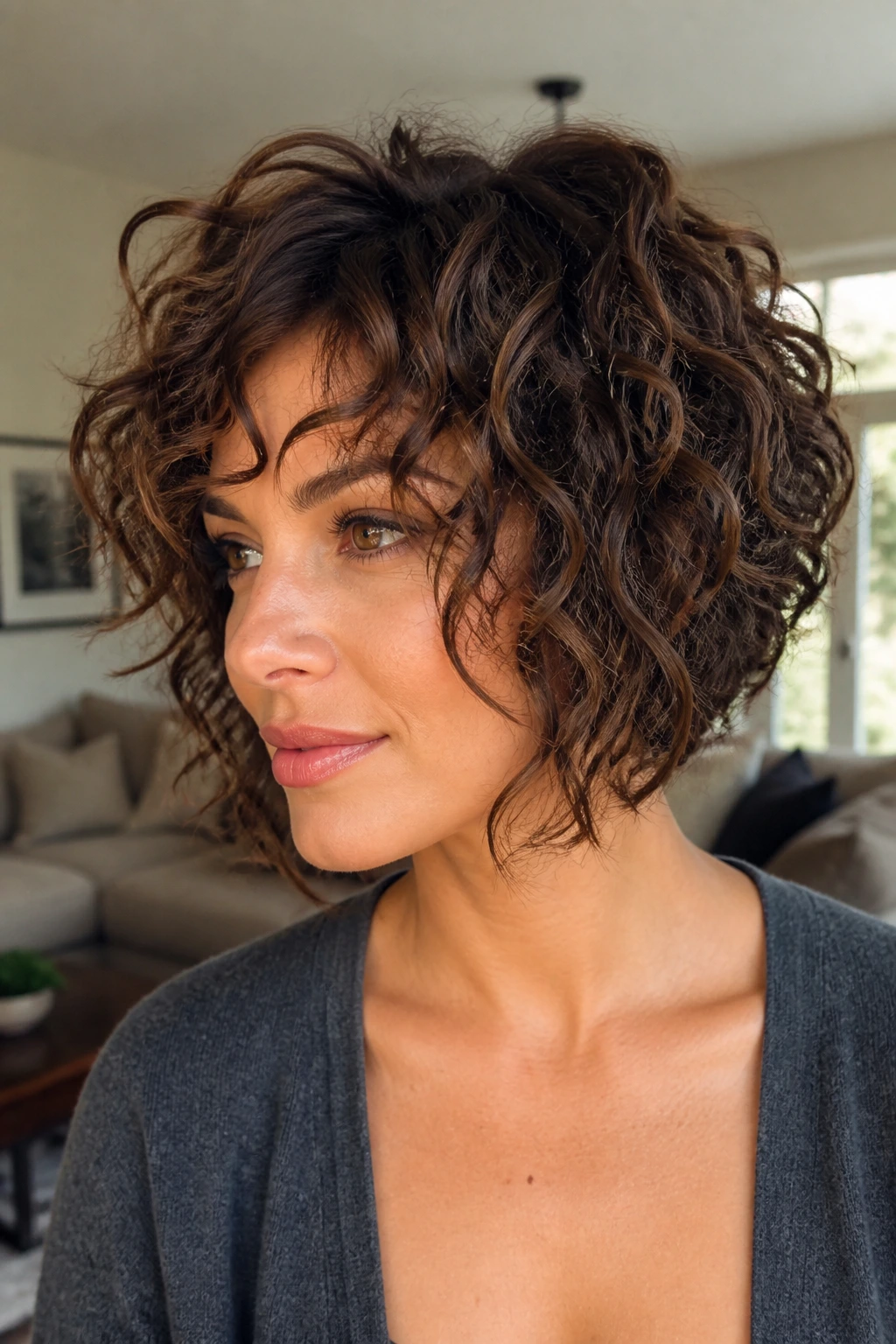
We are seeing a move toward more “lived-in” cuts, and the curly shag-inverted bob is the peak of this trend. It incorporates face-framing shaggy layers throughout the top section while maintaining the traditional inverted shape at the base.
Why It Works for Curls
The shaggy layers allow the curls to spring up in different lengths, which prevents the “triangle” shape that many people with curls fear. It makes the hair look intentional, messy in a good way, and incredibly full.
- Emphasize the layers with a sea-salt spray.
- Do not fear the frizz—embrace the volume.
- Use a pomade to pinch and define individual tendrils near your face.
7. The Deep-Parted Pixie-Bob
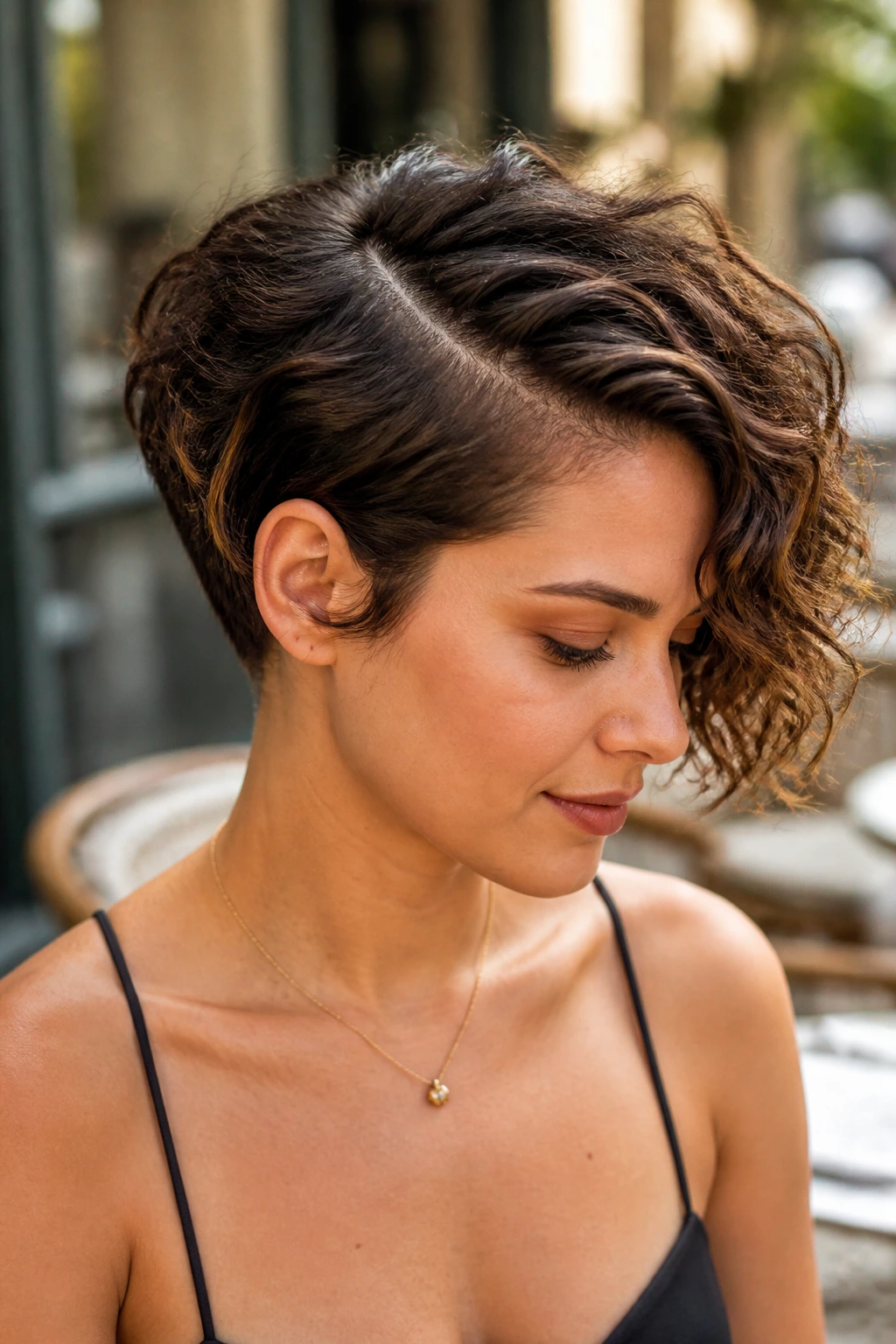
This is for the brave. It’s an inverted bob that leans so far toward the short side it feels like a pixie cut. The hair is extremely short at the nape and sweeps into a deep side part with cascading curls on one side.
Mastering the Short-to-Long Transition
The challenge is managing the transition zone behind the ears. This area often tends to stick out if not cut correctly. You want a very tight taper at the nape and a soft transition into the longer side.
- Use a strong-hold gel to secure the short side.
- Let the long side run wild with a volumizing foam.
- Keep the scalp clean, as this cut puts your scalp and hairline on full display.
8. The Brushed-Out Retro Bob
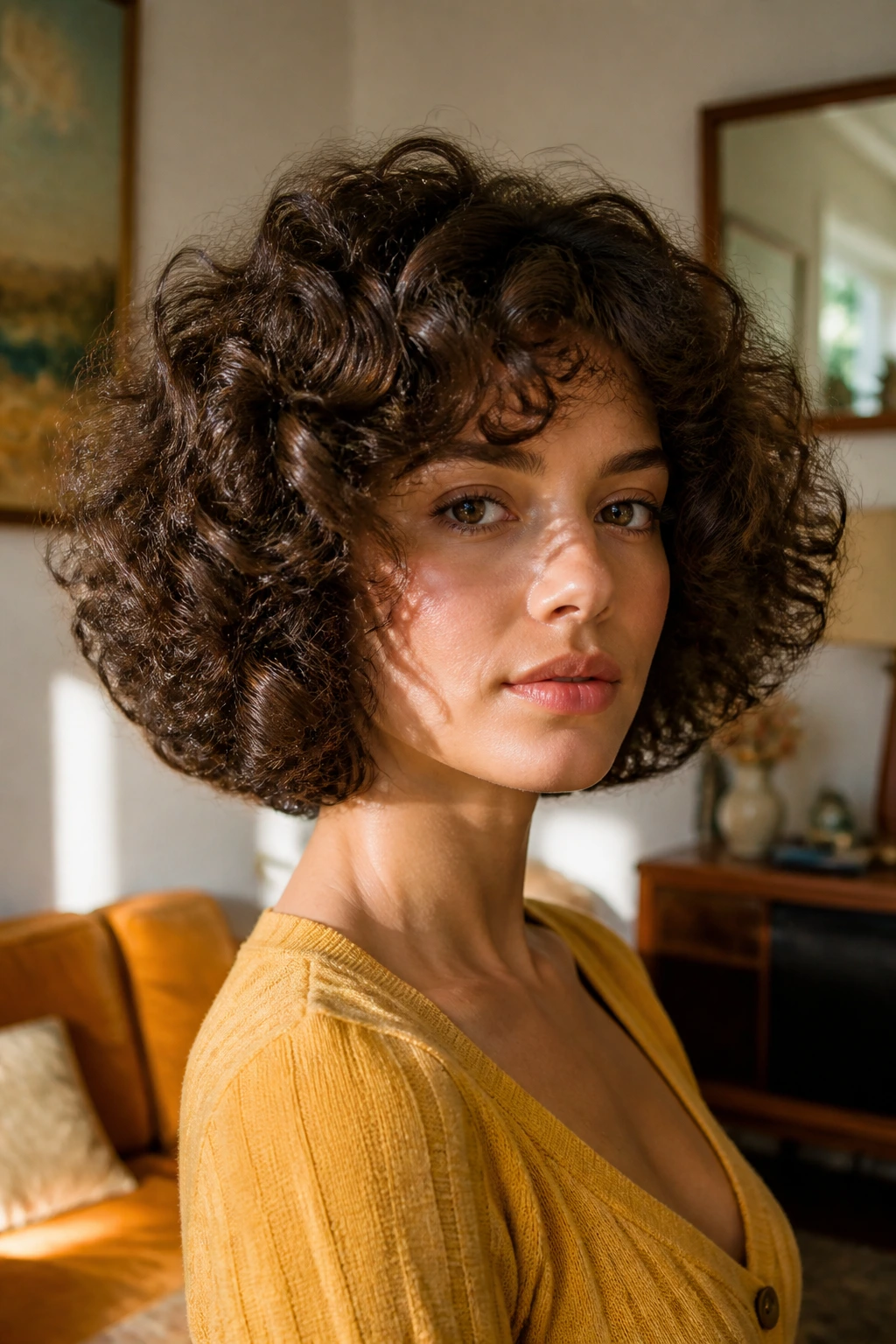
Inspired by the volume of previous decades, the brushed-out curly bob is all about glamour. You cut the hair in an inverted shape, but you style it by brushing out the curls once they are dry to create a massive, halo-like silhouette.
The Art of the Brush-Out
You cannot do this with dry, brittle hair. Your hair must be well-conditioned and strong. Use a paddle brush to break up the curl clumps once you have allowed them to set, which creates a soft, cloud-like finish.
- Apply an anti-humectant spray before brushing.
- Focus on creating a rounded shape with the brush.
- The inverted angle provides the structure that keeps the “halo” from looking like a flat mop.
9. The Minimalist Angled Cut
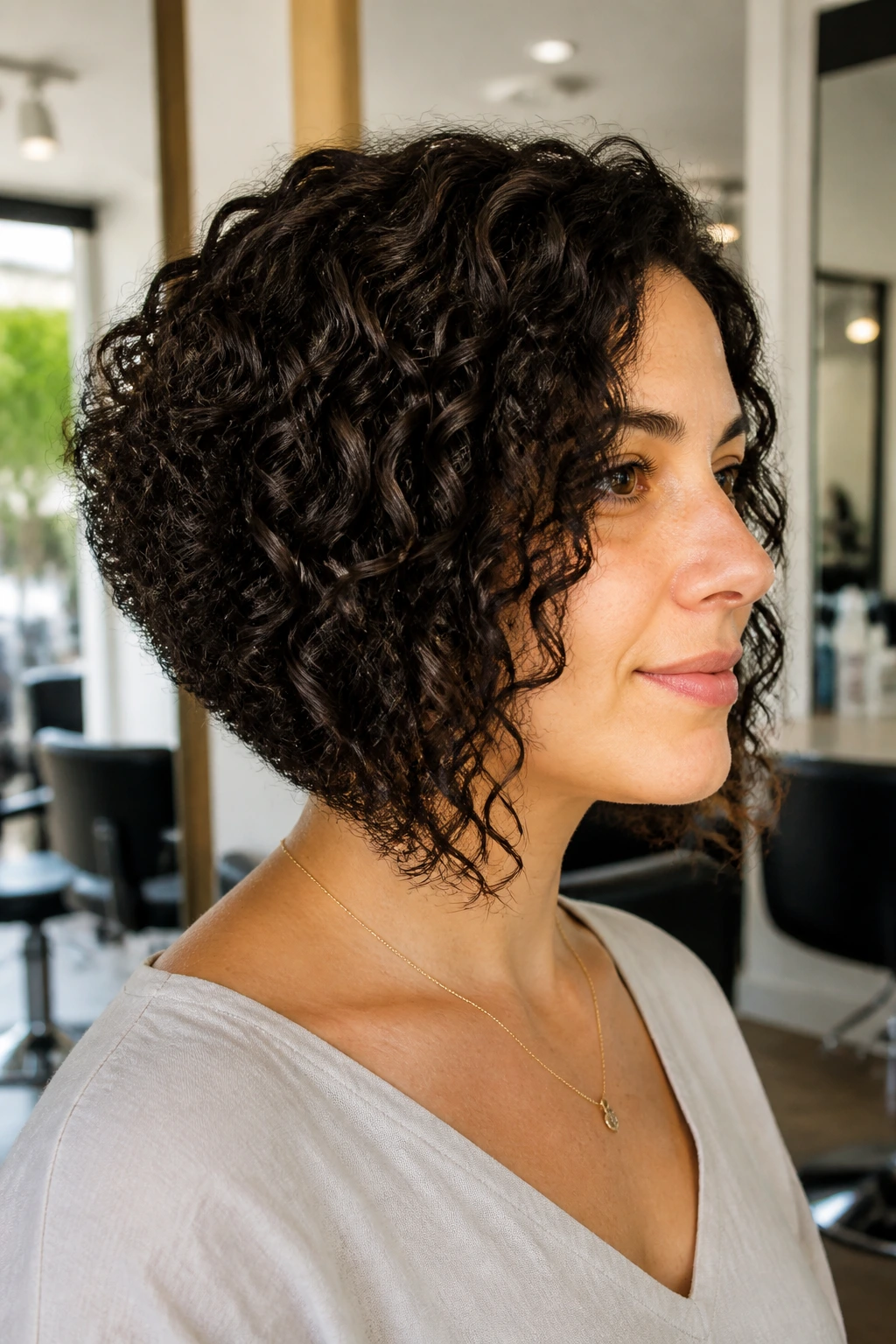
Sometimes, less is more. The minimalist bob features a clean, simple angle with no layers other than the necessary graduation at the back. It relies on the health of your curls to speak for itself.
Focus on Health
Because this cut lacks heavy layers, it can show off the texture of your hair very clearly. If your ends are split or dry, this cut will reveal it immediately. Invest in deep conditioning treatments weekly.
- Stick to a one-product styling routine, like a simple styling cream.
- Avoid heat tools entirely; let the natural curl pattern dictate the shape.
- Trim every six to eight weeks to keep the lines crisp.
10. The Pastel-Toned Inverted Bob
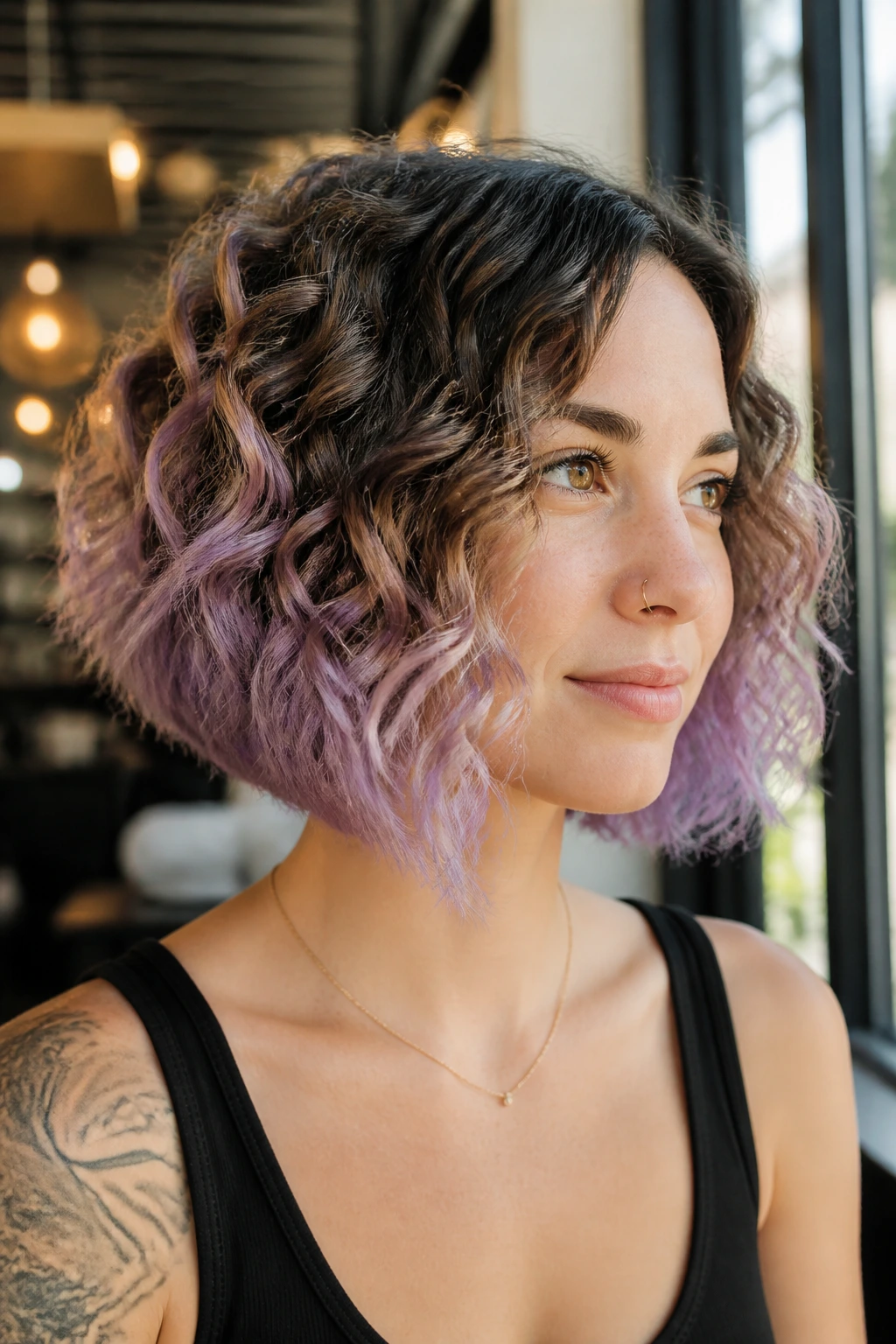
Color can change how a shape is perceived. When you have a deep, inverted bob, adding a pastel color like lavender, baby pink, or seafoam green can make the haircut look much more intricate and playful.
Keeping Color Vibrant
Curly hair is naturally more porous and drier, which means color fades faster. If you go for a fashion color, you must commit to a low-sulfate, color-safe shampoo and cold water rinses.
- Use a color-depositing conditioner to refresh the hue.
- Avoid over-processing; try a temporary color spray if you want to experiment.
- The inverted shape helps keep the color concentrated at the ends, which is usually the most fun part.
11. The Undercut Nape Bob
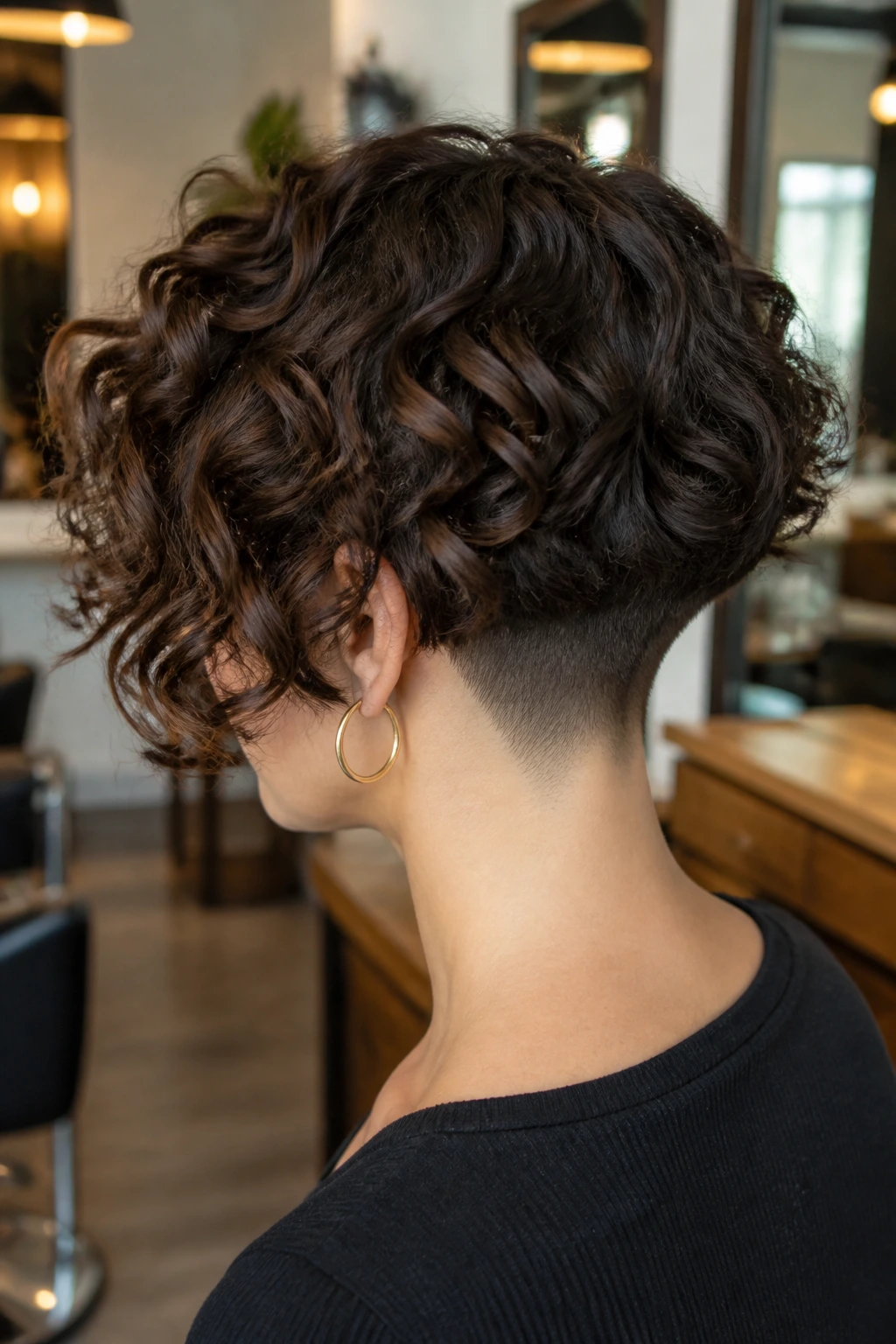
This is the ultimate practical choice. By shaving or tapering the very bottom layer of the nape, you remove massive amounts of weight and bulk. It is an ideal solution for those with thick, dense curls who want an inverted bob but hate the “poof” at the neck.
The Hidden Edge
You can have a plain shave, or you can have your stylist etch a design into the undercut. It adds a layer of personalization that stays hidden when your hair is down but looks great when you pull your hair into a half-up style.
- The undercut needs frequent maintenance—every 2-3 weeks.
- Ensure the hair sitting on top of the undercut is long enough to lay flat.
- This is a bold move that completely changes the feeling of the haircut.
12. The Wispy-End Inversion
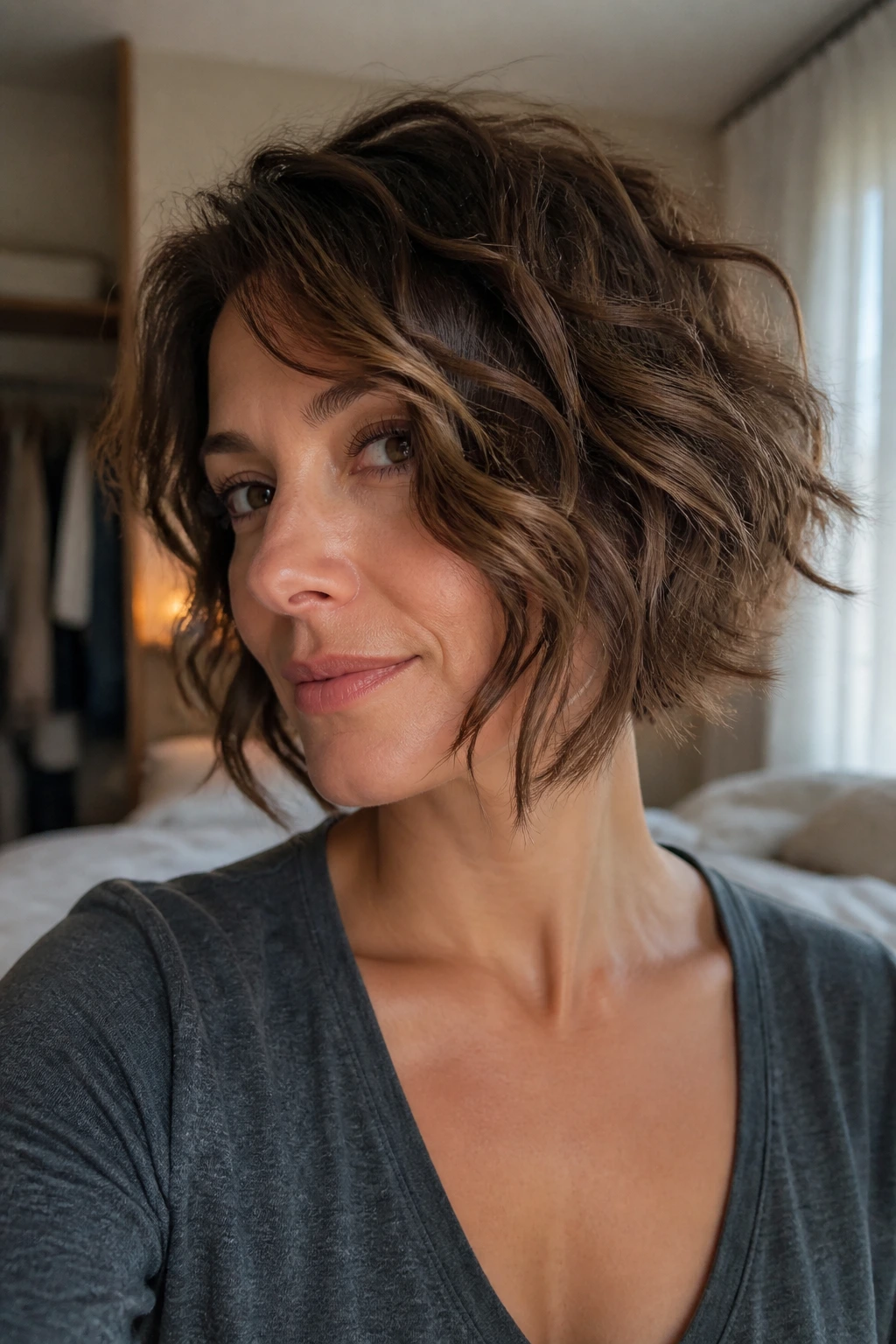
If you find that your hair feels heavy even when it’s short, ask for wispy, point-cut ends. This technique takes out the weight without changing the overall silhouette of the inverted bob.
Managing Ends
Wispy ends are beautiful, but they can be prone to tangling. Use a detangling spray every morning to keep the ends separate and light rather than clumping together in a messy knot.
- This look pairs well with a side-swept bang.
- It’s very easy to style with just your fingers.
- Focus on the ends during your deep conditioning routine.
13. The Spiral-Lock Bob
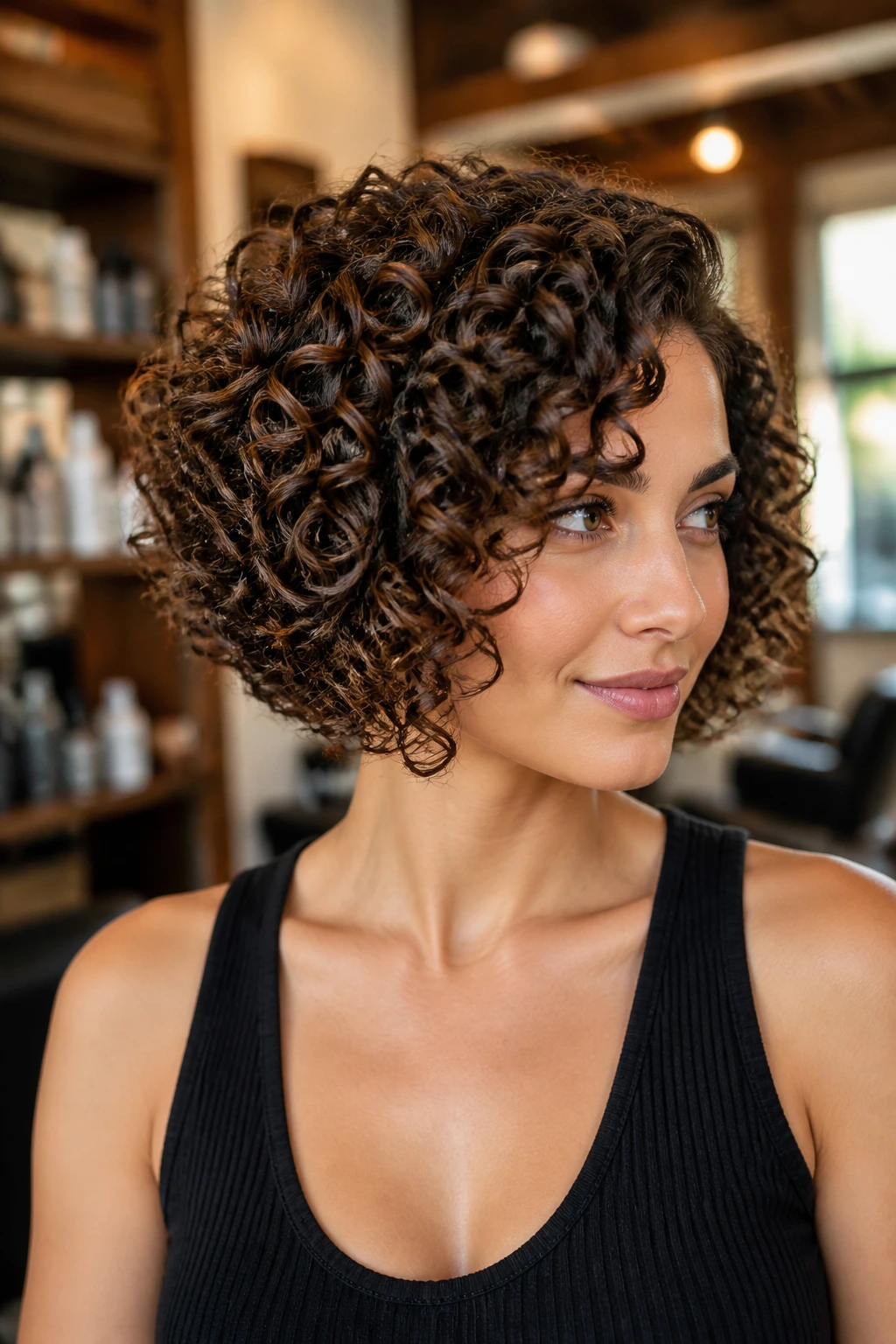
For those with tight, uniform spiral curls, an inverted bob can look incredibly intentional and clean. Because the curls have a consistent shape, the graduation of the cut is highlighted by each individual coil.
Achieving Uniformity
Consistency is key here. You want to make sure the spiral pattern is consistent across the head. Use a finger-twirling technique while applying product to ensure every coil is well-formed.
- Use a light serum for shine.
- The inverted angle is very apparent in this cut, so make sure the lines are clean.
- Don’t pull at the curls; let them shrink to their natural length.
14. The Face-Framing Fringe
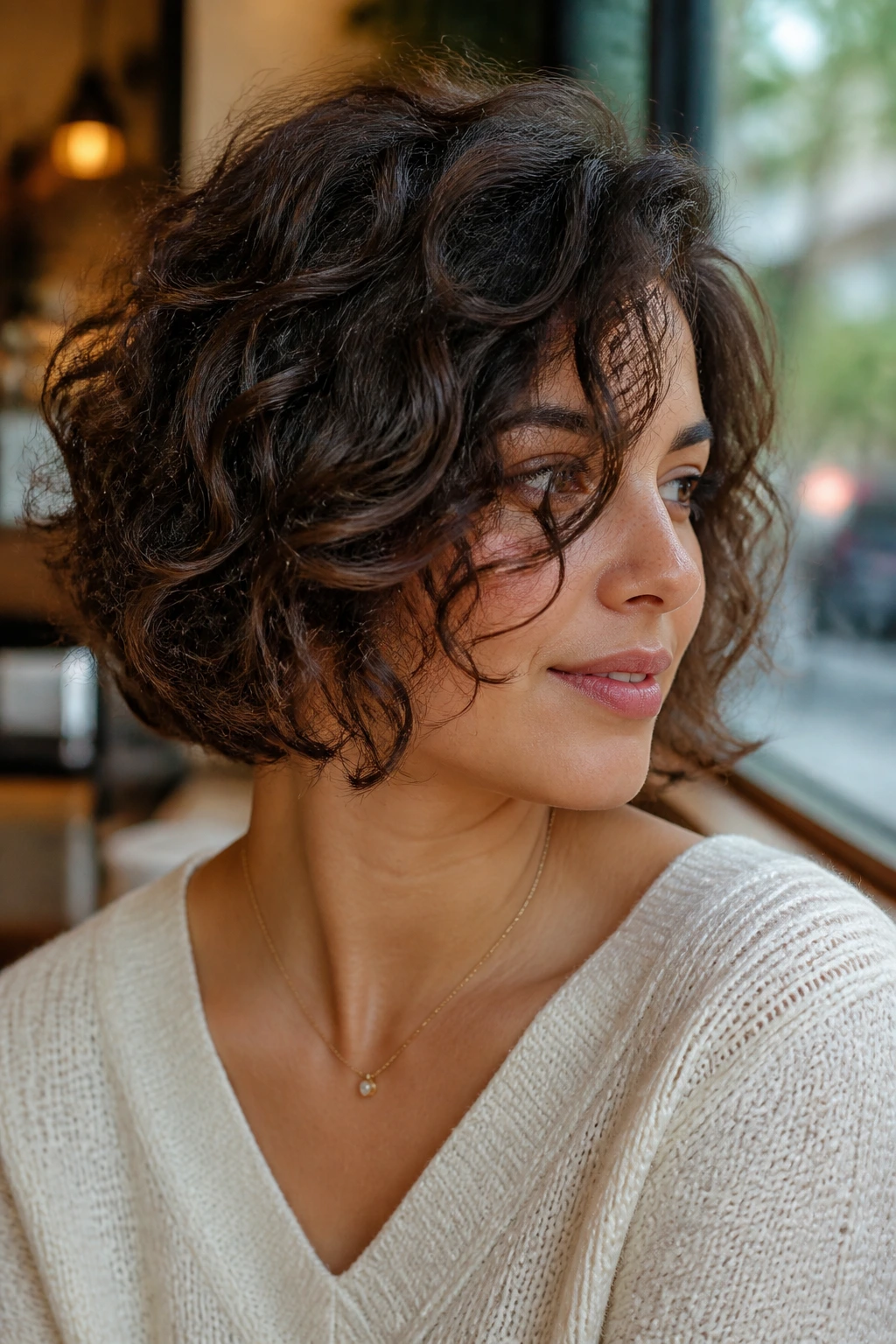
Adding bangs to a curly inverted bob is a daring but rewarding move. The key is to keep the bangs longer and looser so they don’t jump up too high when they dry.
The Bang Balance
The bangs should be cut while the hair is dry to account for the “shrink factor.” Your stylist needs to know exactly how much your curl pattern bounces up; otherwise, you might end up with bangs much shorter than intended.
- Use a small amount of gel on the bangs for definition.
- Keep them pushed to the side for a soft, blended look.
- Never use a flat iron on your curly bangs; work with the texture, not against it.
15. The Volumized Crown Inversion
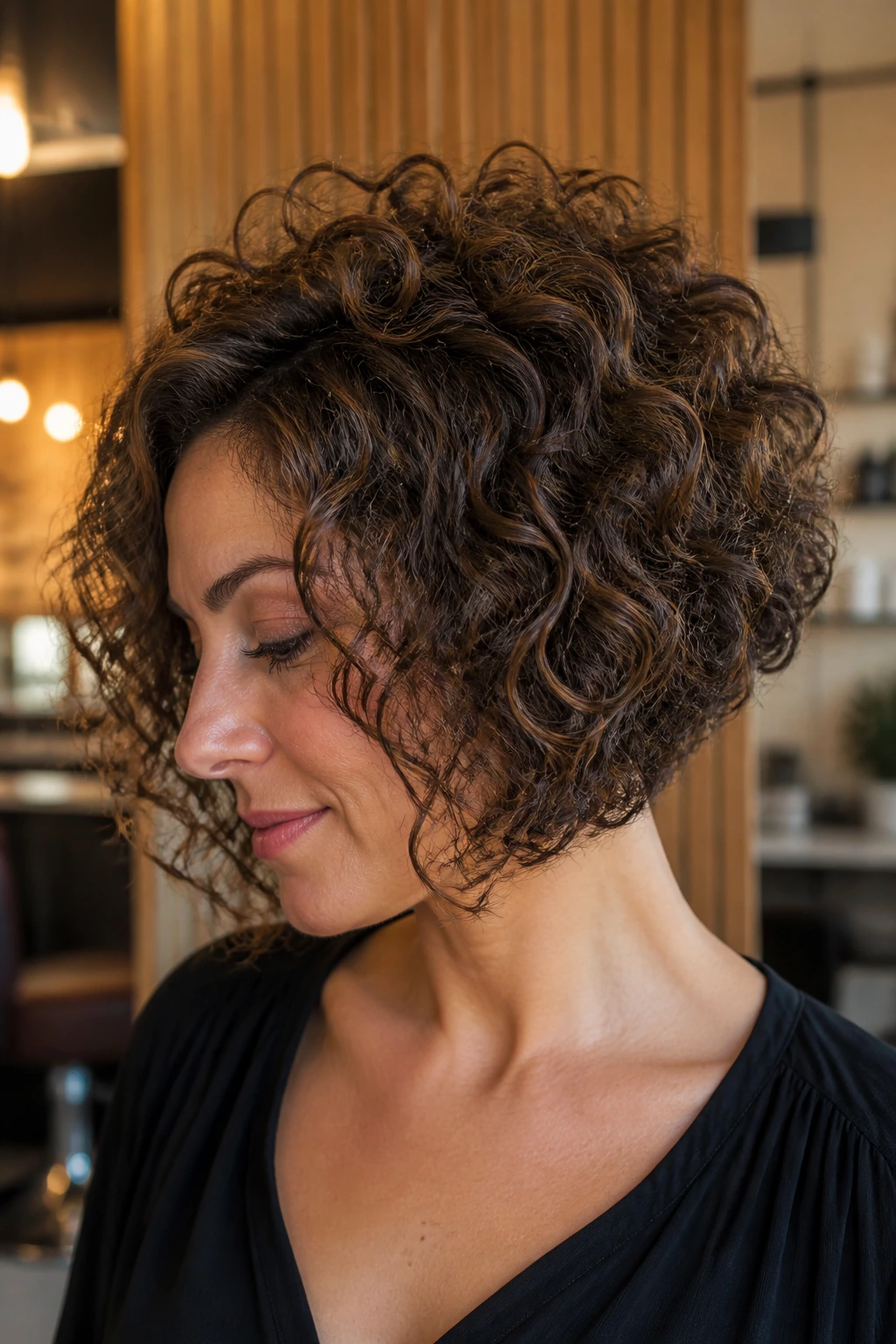
This cut involves internal layers specifically focused on the crown of the head. By adding volume at the top, you balance out the weight of the inverted bob, preventing the style from looking bottom-heavy.
Managing the Crown
The crown is the hardest place to get volume, but this cut makes it easy by removing the weight that usually pulls the hair flat. Scrunch the hair while it is wet to encourage the crown curls to stand tall.
- Use a root-lifting spray for extra support.
- Avoid parting your hair in the middle if you want more crown height.
- A light tousle of the roots throughout the day will keep the volume fresh.
16. The Sleek-to-Curly Contrast
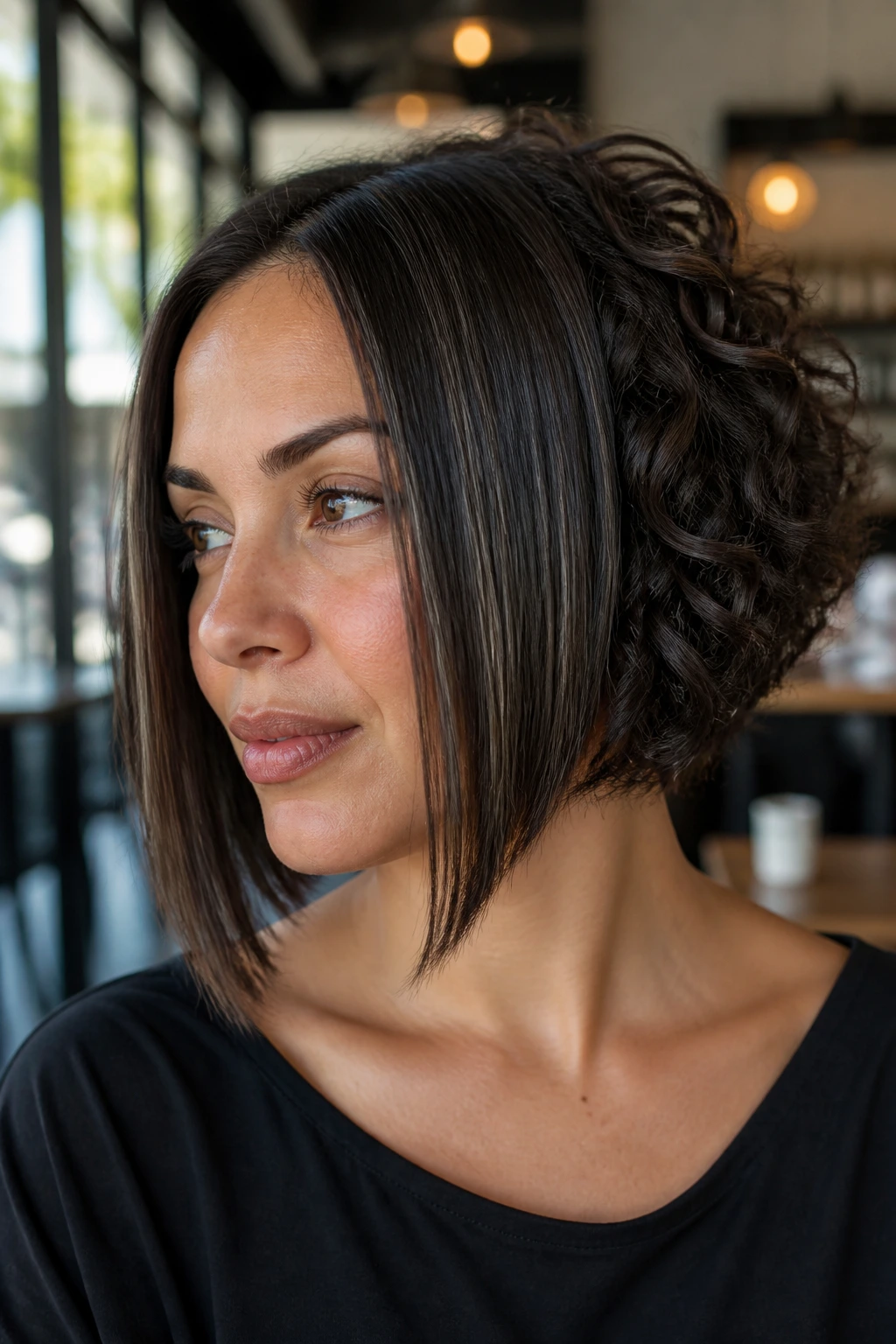
If you have a naturally wavy or loose curl pattern, you can wear your inverted bob with the front pieces slightly straightened for a polished, “city-chic” look, while letting the back remain curly.
The Versatility of the Inverted Bob
This style is great for people who like to transition between looks. The inverted shape is structured enough to look good even when you mix styling textures.
- Use a heat protectant spray even if you only use the iron on the very front.
- Focus on the contrast between the sharp front and the soft back.
- Keep the back moisturized to prevent it from looking frizzy against the sleek front.
17. The Two-Tone Inversion
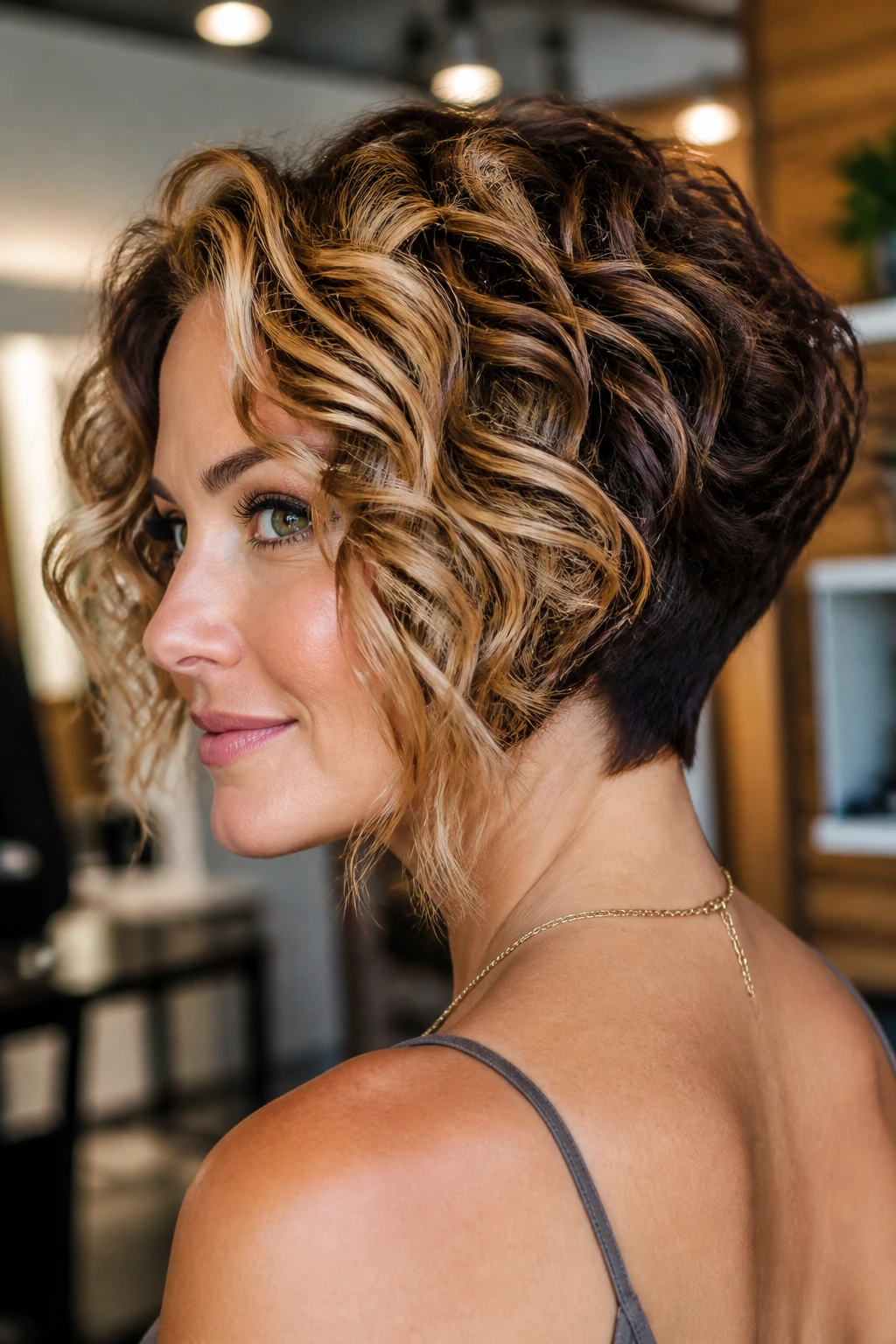
Use color to accentuate the graduation. By dyeing the shorter nape a darker shade and the longer front pieces a lighter shade, you create an optical illusion that makes the angle look even sharper than it is.
Color Placement
This requires a professional colorist. You want the graduation of the color to match the graduation of the cut. When the shades melt into each other, the shape of the inverted bob becomes the focal point.
- Ask for a “color melt” technique for a natural transition.
- The lighter front pieces need extra care, as lightened hair is naturally drier.
- This is a high-maintenance look but it pays off with massive visual impact.
18. The “Curly-Girl” Graduated Nape
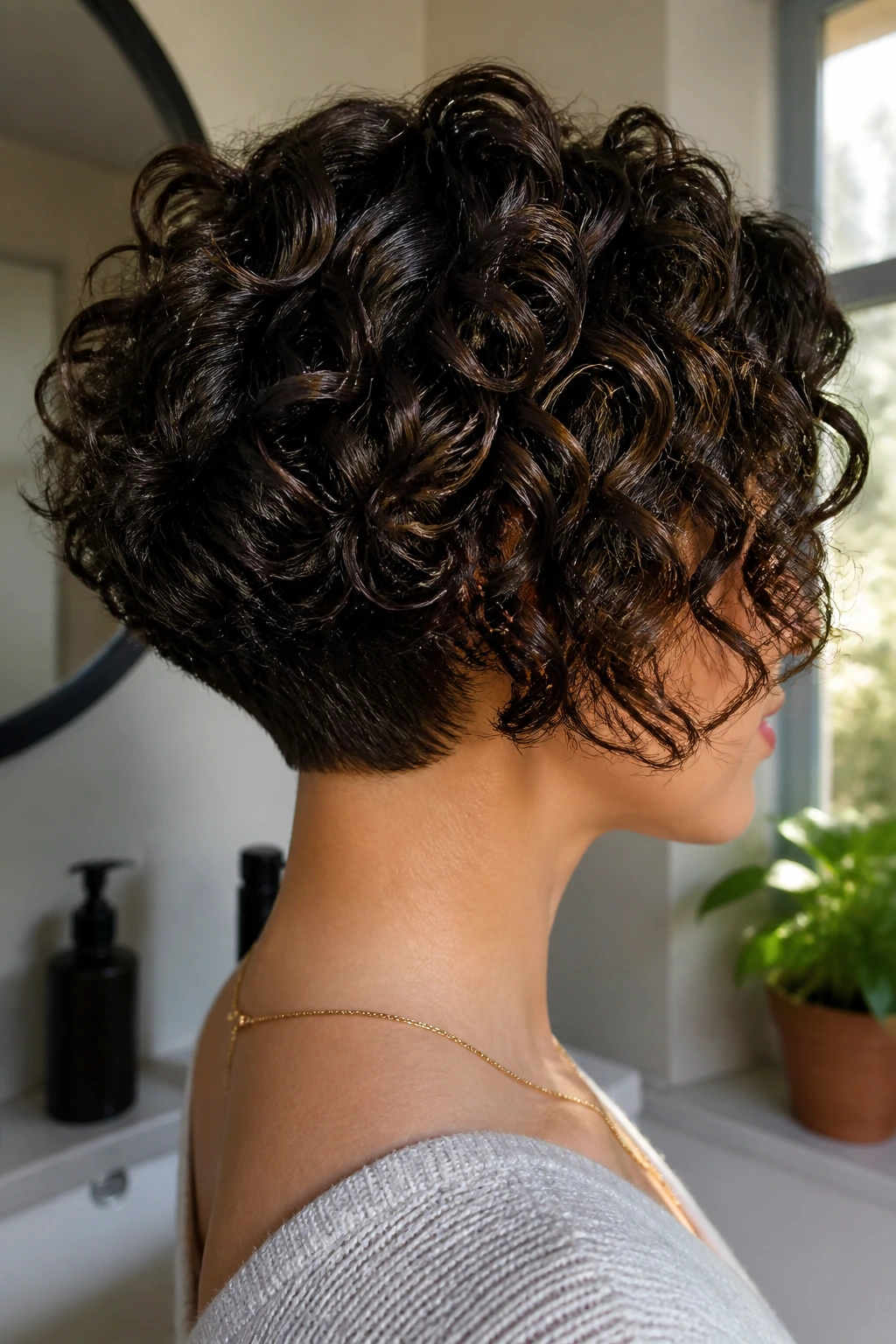
This version follows the “Curly Girl Method” philosophy: minimal manipulation and maximum hydration. It’s an inverted bob that is cut specifically to be “wash-and-go.”
The Wash-and-Go Philosophy
You aren’t looking for perfection. You are looking for a shape that grows out well and doesn’t require styling products that leave a cast. It’s about the health of the curl over the perfection of the line.
- Use a moisturizing co-wash.
- Avoid anything with harsh sulfates.
- This cut is the ultimate choice for the low-maintenance individual who loves their natural texture.
19. The Side-Swept Waterfall
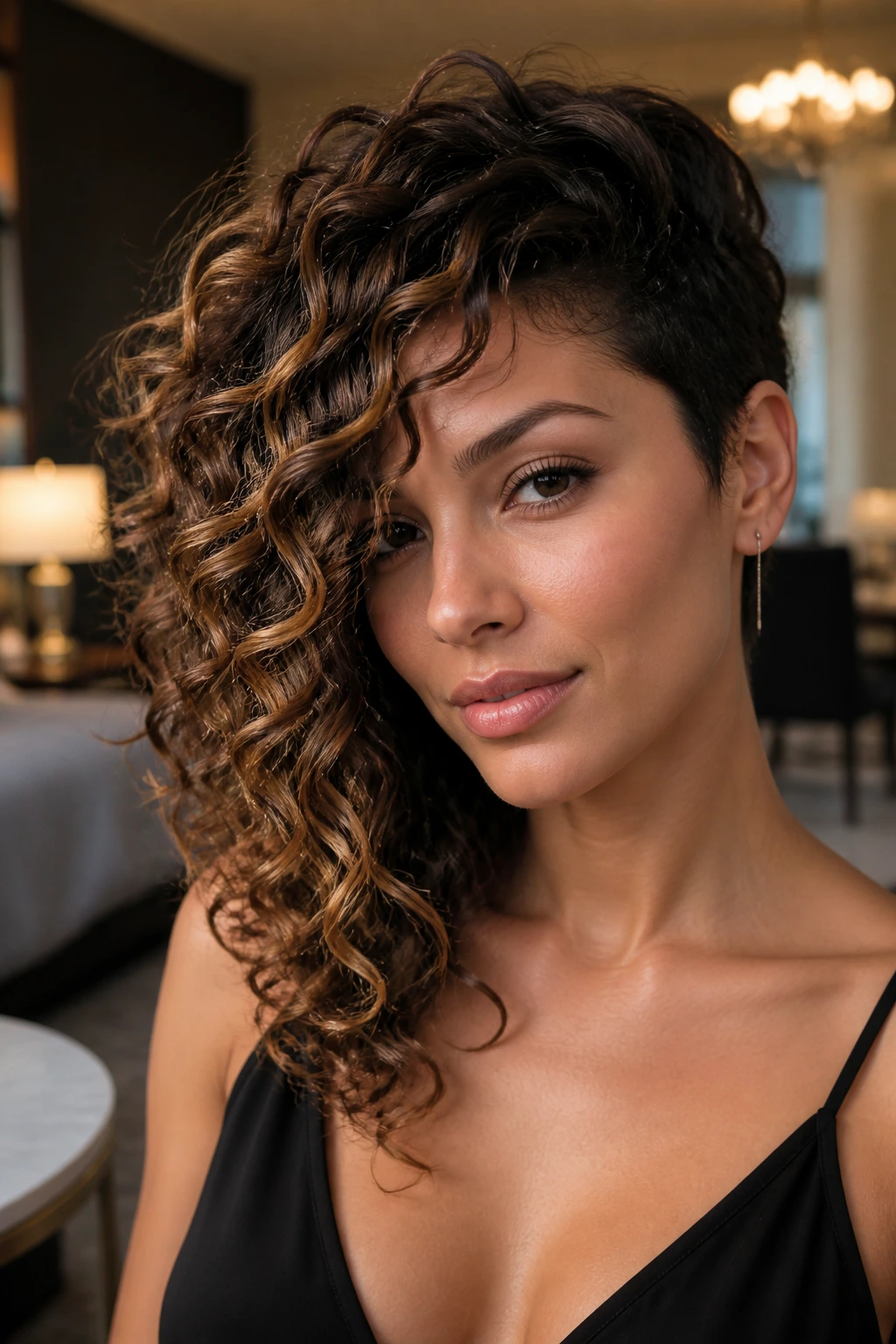
This inverted bob is designed to fall entirely to one side, creating a “waterfall” of curls. The graduation starts at the very tight nape and gets progressively longer, flowing into a massive sweep of curls.
Shaping the Waterfall
You need a lot of hair for this, or a very strategic cut. By pushing everything to one side, you create an artificial density that looks voluminous and luxurious.
- Use a light-hold mousse to allow for movement.
- Keep the roots at the nape tight to ensure the hair stays swept over.
- This is a glamorous look for special occasions.
20. The Short-Layered “Cool Girl” Bob

This cut is all about the layers in the back. By layering the short nape, you create a “flicked” effect where the curls turn outward. It is the definition of “undone” style.
Styling the Flick
The outward flick is intentional. Use a bit of hair cream on your fingers to pinch the ends of the curls at the nape and pull them slightly outward while they are drying.
- This looks amazing with a messy middle part.
- It is perfect for those who want to hide a bit of scalp at the nape.
- It’s very easy to maintain with simple air-drying.
21. The Afro-Textured Inverted Bob
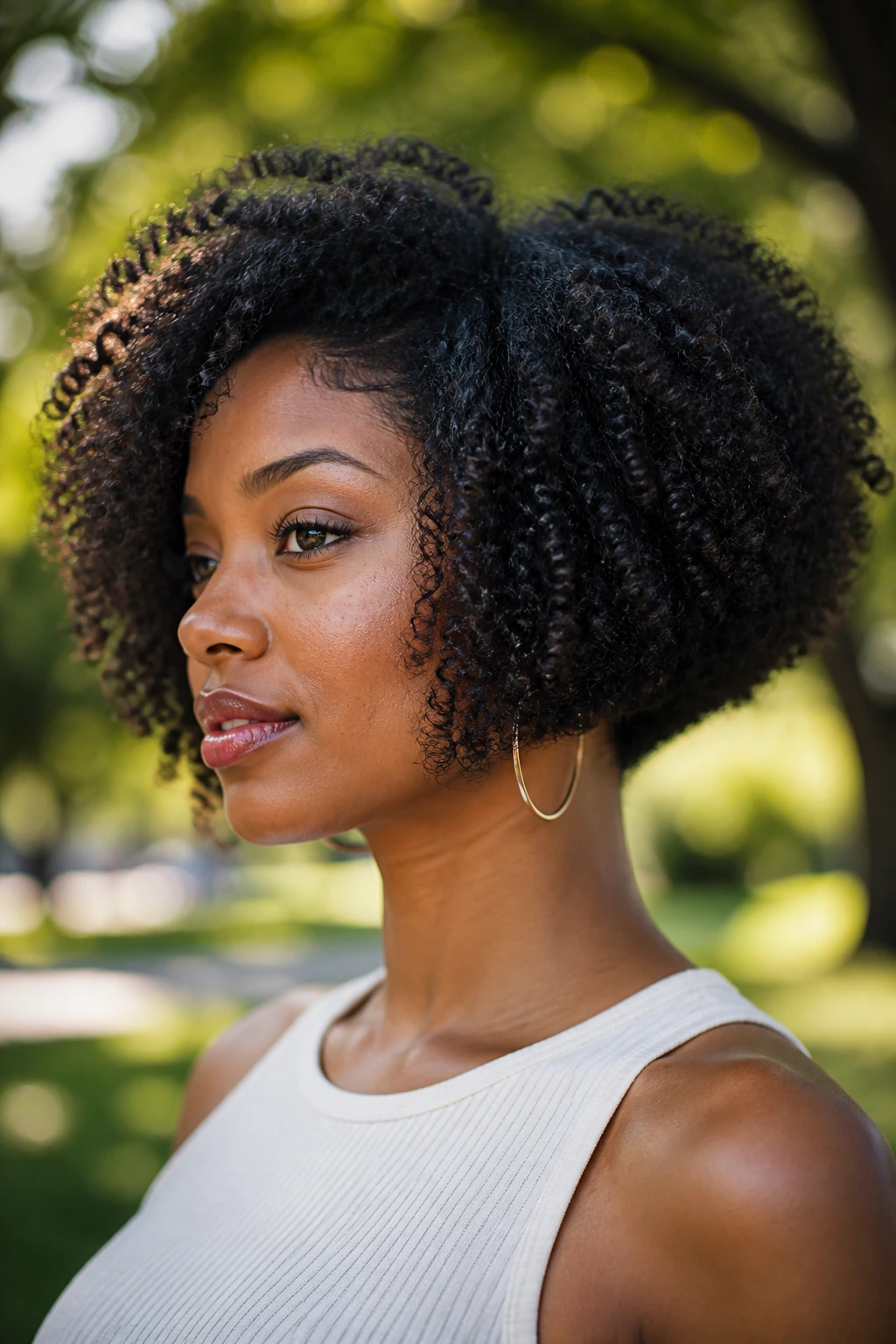
When you have highly textured hair, an inverted bob is a bold choice that commands attention. The shape of the bob works with the natural volume of your hair, creating a stunning, spherical-meets-angular look.
The Shape Evolution
As your hair grows, this cut will evolve. It isn’t a stagnant style. Embracing the growth and allowing the shape to change over time is part of the experience.
- Use heavy oils like castor or shea to maintain moisture.
- Keep the nape groomed to prevent it from growing out too messy compared to the front.
- This style is a statement of confidence and health.
22. The Modern Mullet-Bob
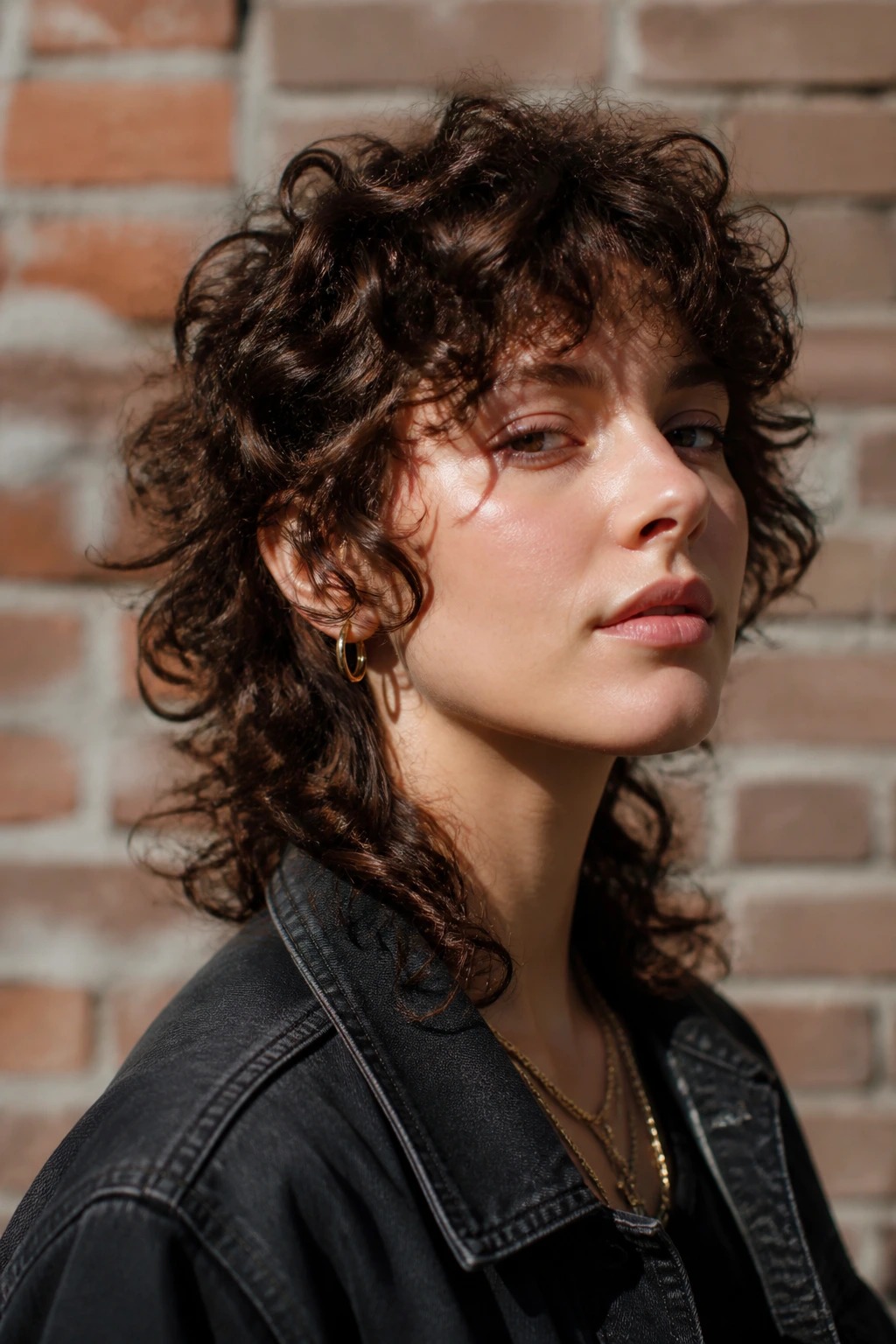
A slightly edgier take, this involves keeping the back a bit longer than a traditional inverted bob, blending the bob into a subtle mullet shape. It is a fashion-forward choice for the adventurous curly-haired individual.
Embracing the Edge
This isn’t for everyone, but for those who want something unconventional, it is a great way to showcase your curls. It feels fresh and breaks all the “rules” of what a bob should look like.
- Use a texturizing paste to keep the back piece defined.
- The front pieces should be kept classic to ground the look.
- It works best with a bit of “grit” in the hair, so don’t wash it too often.
23. The Hidden-Layer Inversion
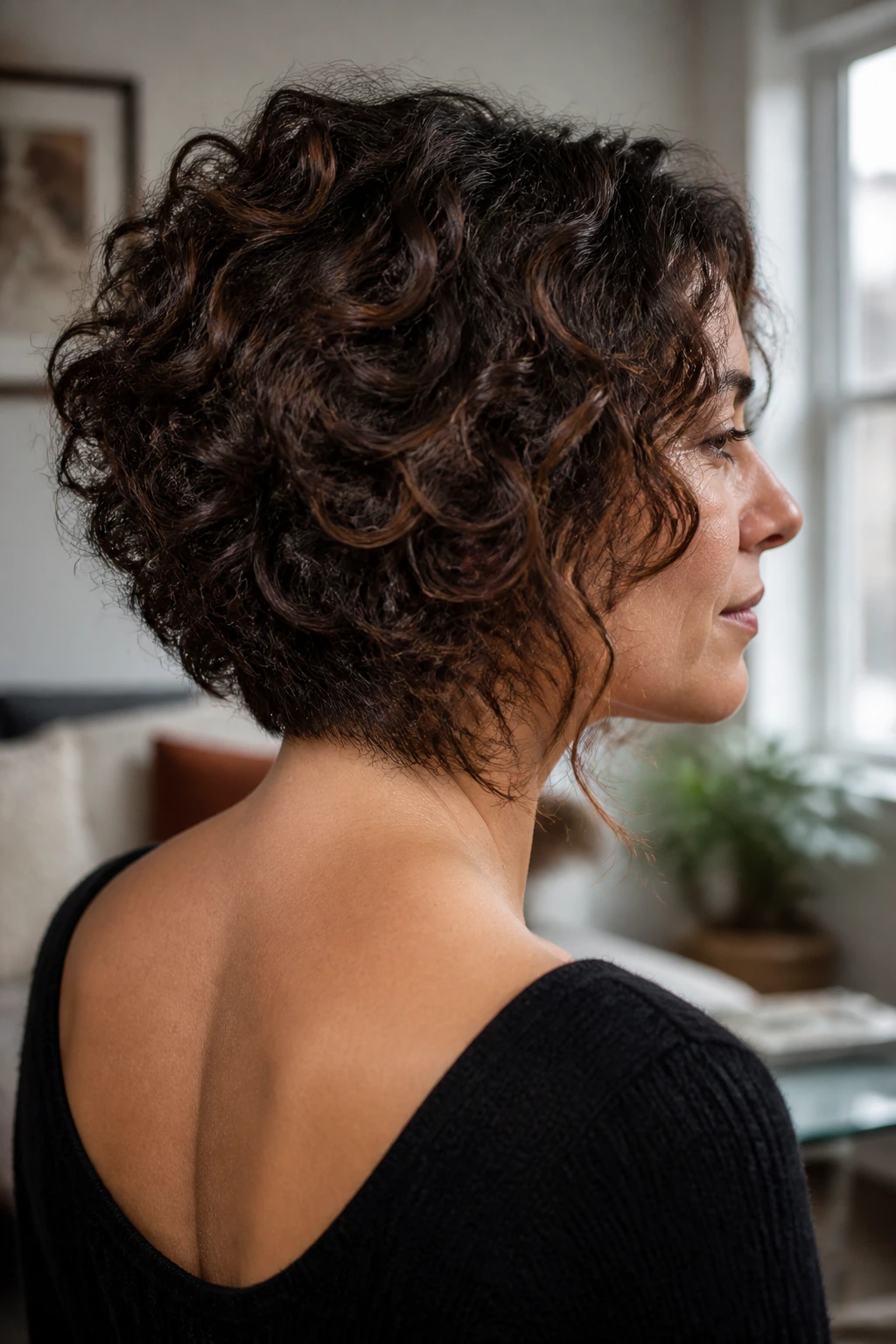
If you have massive amounts of hair, the hidden-layer technique is your savior. Your stylist cuts “hidden” layers inside the bob, which allows the hair to collapse into the desired shape rather than fluffing out.
Managing the Volume
You will feel the difference immediately. It’s about creating space for the curls to live. When the hair is dry, you won’t even see the layers—they are purely functional, working to hold the inverted shape.
- Talk to your stylist about your density issues.
- This is a technique-heavy cut, so find someone experienced with thick curls.
- The result is a much lighter, more comfortable head of hair.
24. The Curly-Bob with Baby Bangs
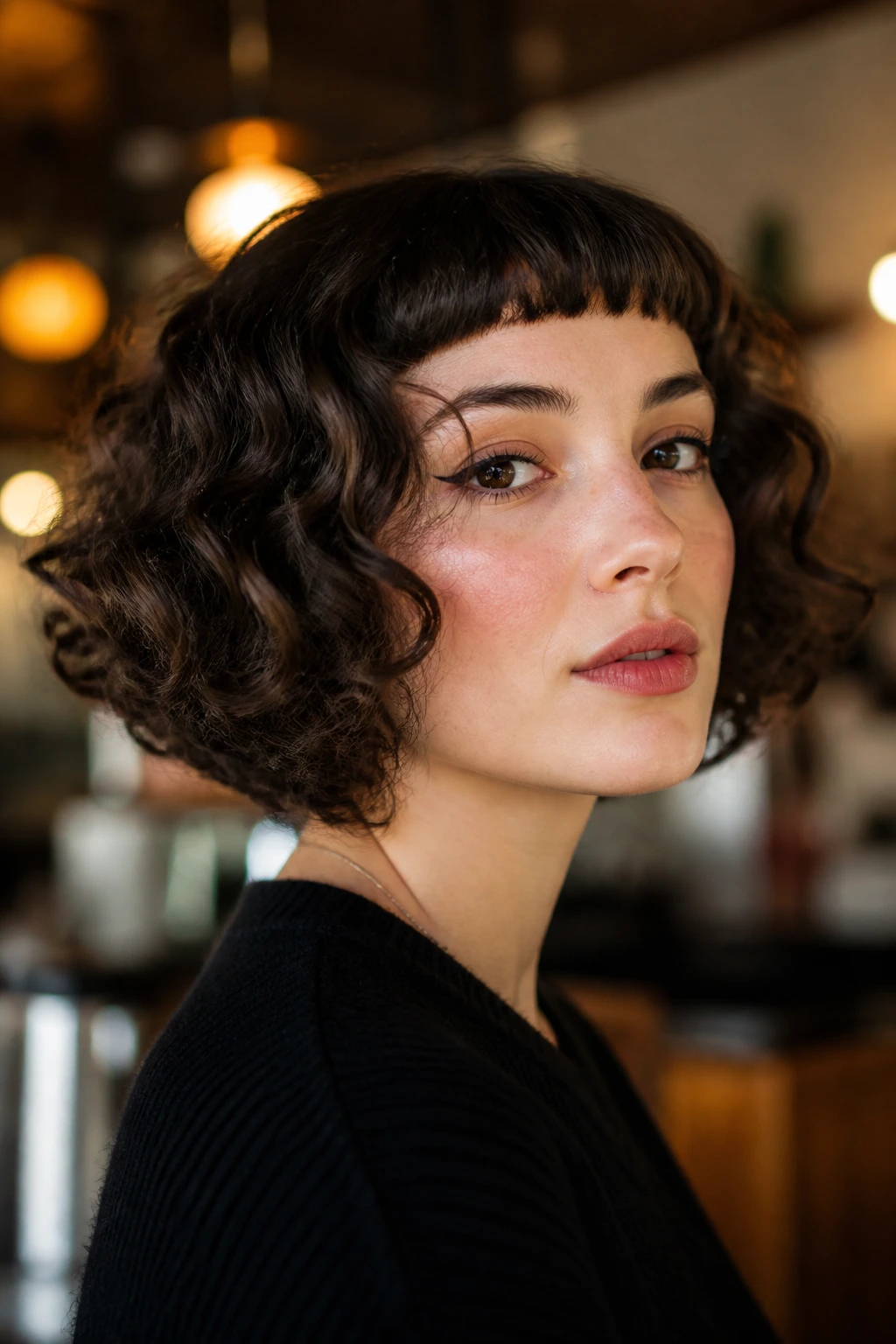
Baby bangs are short, straight-across fringes that sit well above the eyebrow. When paired with a curly inverted bob, they create a vintage, 1920s-inspired look that is incredibly stylish.
The Maintenance of Baby Bangs
These require trimming often—sometimes every two weeks. They are a commitment, but they completely change the look of your face, highlighting your eyes and brows.
- Keep the bangs slightly piecey with a touch of gel.
- The rest of the bob should be voluminous to balance the tiny bangs.
- This is a high-fashion, quirky style that works best with a bit of confidence.
25. The Textured A-Line
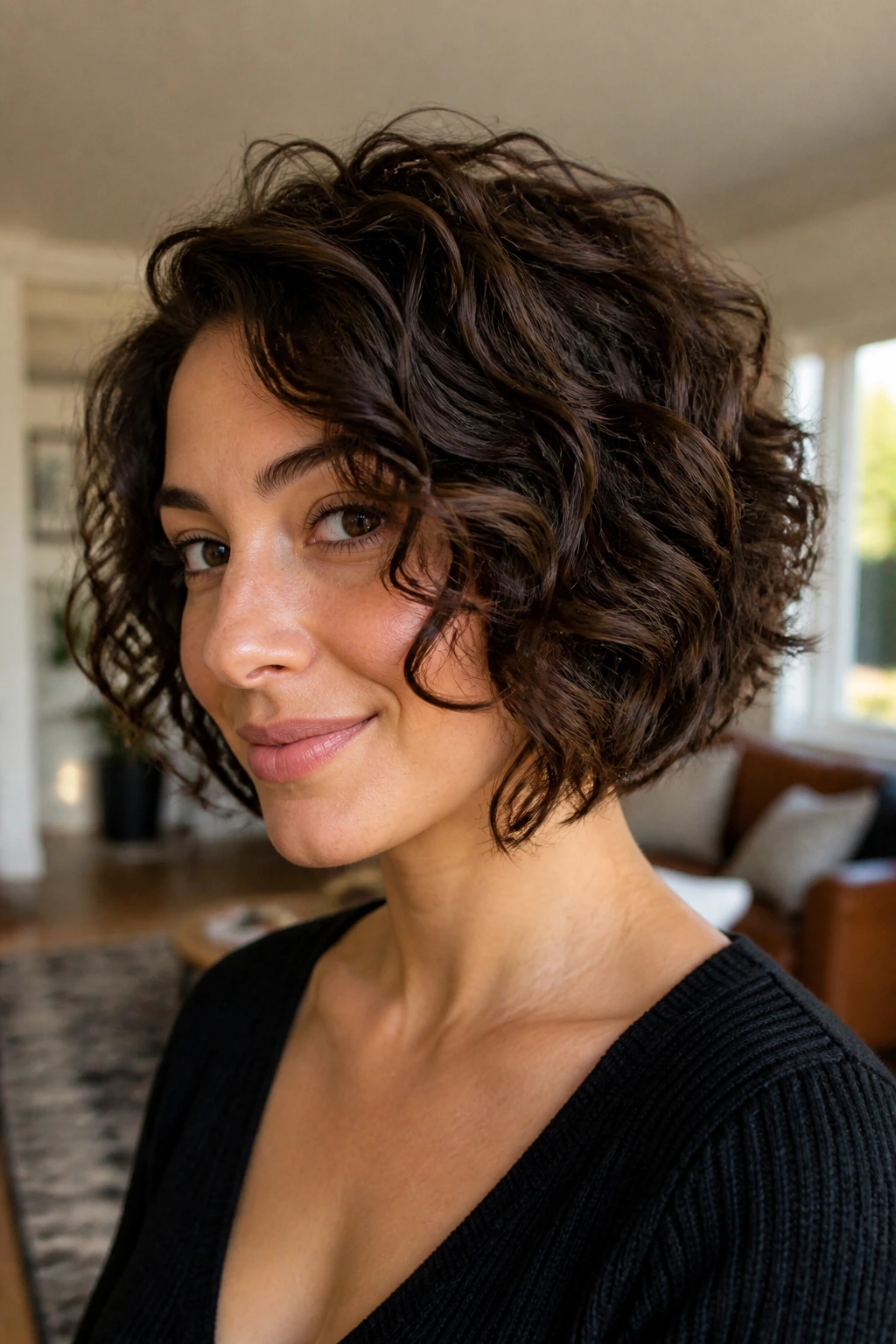
This is the classic A-line inverted bob, but with a twist: the hair is layered throughout the entirety of the A-line shape. It is the most balanced version for those who want both the sharp angle and the soft, bouncy curls.
Finding Balance
The key to this cut is the balance between the length in the front and the volume in the back. By layering the whole thing, you ensure the hair moves as one unit.
- Use a diffuser to keep the layers looking bouncy.
- The angle should be subtle, not aggressive.
- This is the “safe” but beautiful choice that works for almost any face shape.
Final Thoughts
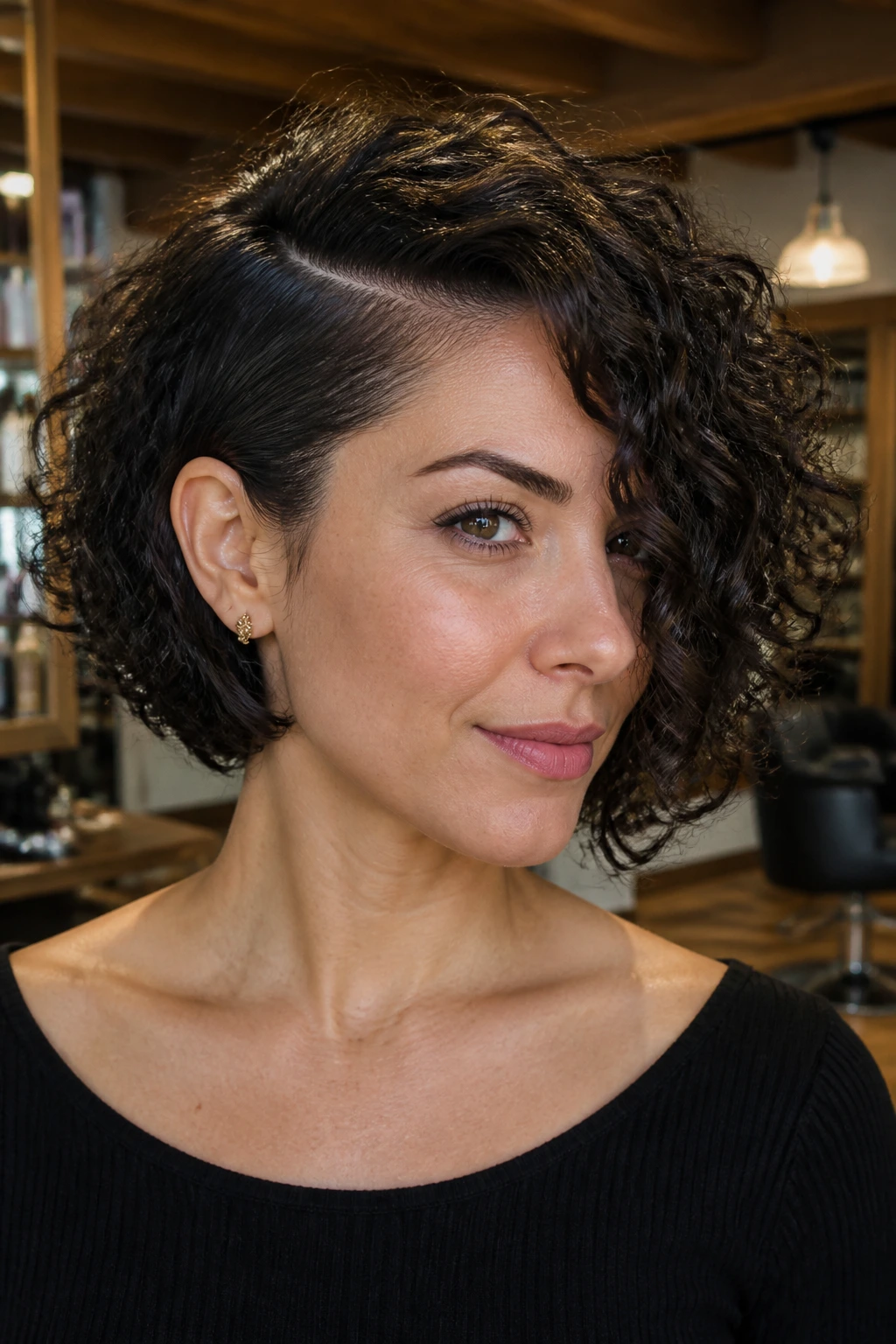
Choosing an inverted bob when you have curly hair is a commitment to embracing your natural texture while demanding a bit more structure from your style. The key to success is finding a stylist who understands that curls shrink and that graduation needs to be custom-fitted to your specific curl pattern.
Do not be afraid of the “poof” or the “triangle.” Those problems only exist when a cut is executed without considering the internal volume of the hair. With the right amount of point-cutting, interior layering, and a dedicated moisturizing routine, the inverted bob can be the most manageable, stylish cut you have ever had. Remember, the best haircut is the one that makes you feel like the most authentic version of yourself—and if that happens to involve a sharp angle and a lot of bounce, then you have found your match.