

The morning rush is a universal challenge, but when you are trying to squeeze in a workout before the day truly begins, the last thing you need is your hair whipping across your face with every burpee or downward dog. Most people settle for a basic, fraying ponytail that leaves wisps dangling into their eyes by the end of the first set of intervals. That is exactly where the French braid headband style earns its keep. It acts as a structural anchor for your hair, keeping the hairline clear while looking polished enough to carry you straight from the gym to your first meeting or morning coffee run.
Mastering this technique takes a bit of practice, but once your fingers learn the rhythm of pulling small sections into the braid as you travel across your forehead, you will find it takes less than five minutes to secure. Unlike a standard headband which inevitably slips back toward your crown during vigorous movement, a braid woven into your own hair stays put until you decide to undo it. Let us dive into the various ways you can adapt this style for different hair textures, lengths, and exercise intensities.
1. The Classic Tight Crown Braid
This version is the gold standard for high-intensity training because the tension is distributed evenly across your hairline. By keeping the braid tight and close to the scalp, you eliminate the risk of loose strands falling during jumping jacks or rapid head movements. Start at one temple and French braid along the edge of your forehead, picking up small sections of hair to feed into the braid as you move toward the opposite ear.
Why This Works for Cardio
Because you are incorporating the hair directly from the hairline, there is almost zero “slack” for your hair to work loose. I recommend spraying your hands with a tiny bit of texturizing spray or dry shampoo before you start; the added grip helps keep your fingers from losing their hold on the shorter hairs near the temple.
How to Finish the Look
- Secure the end with a clear, snag-free elastic.
- Pin the tail of the braid behind your ear using a bobby pin that matches your hair color.
- Pull the rest of your hair into a high, secure bun to ensure your neck stays cool.
Pro tip: If you have layers that like to poke out, don’t worry about them being perfectly smooth. A little bit of flyaway texture is expected when you are actually breaking a sweat.
2. The Double-Braid Sweatband
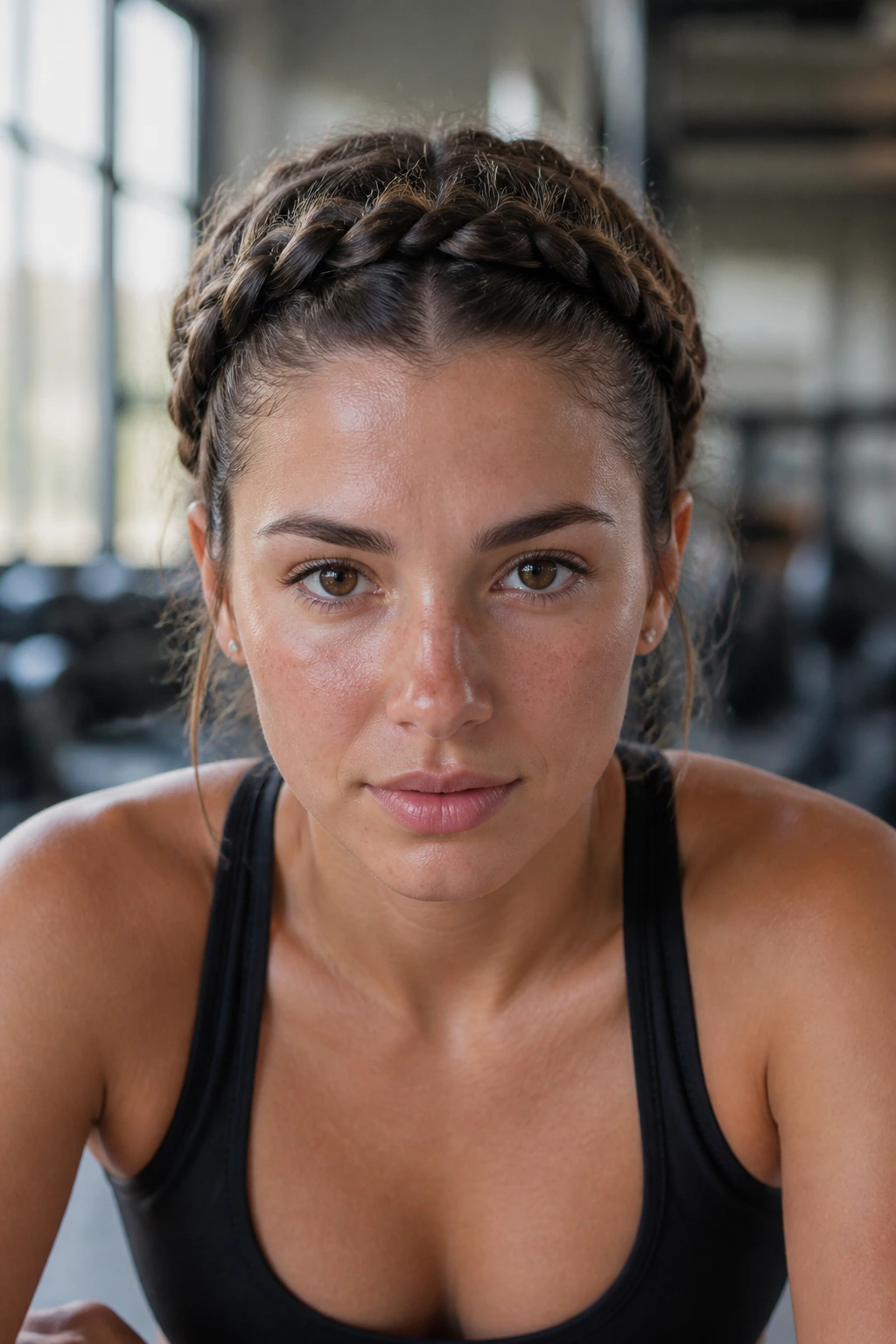
If you have thick or heavy hair, a single braid might not be enough to hold everything back effectively. The double-braid approach creates a wider “wall” of hair that prevents even the most persistent bangs from escaping. You are essentially creating two parallel French braids that sit right at the front of your hairline.
The Benefit of Dual Anchors
By splitting your front section into two smaller tracks, you reduce the weight on each individual braid, making the style feel lighter on your head. This setup is particularly effective for those who do a lot of floor work, as the braids provide a soft cushion rather than a hard plastic headband that can dig into your skin.
Maintaining Tension
Ensure that you are pulling each section of hair taut as you add it to the braid. If the braids feel loose after five minutes, they will definitely be falling apart by the time you reach the peak of your workout. Take your time during the process to keep the braid path clean and consistent.
3. The Reverse-Flip Braid
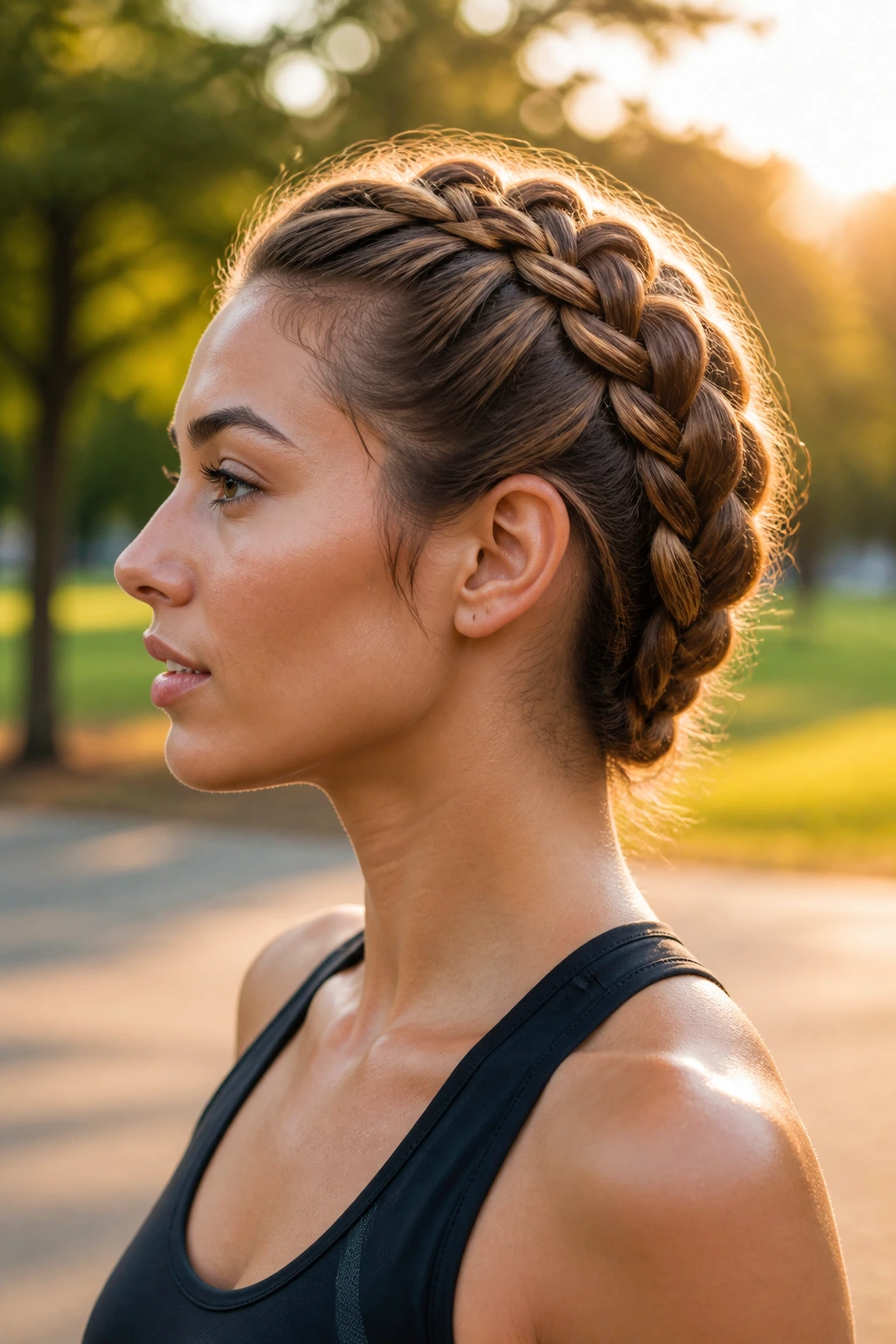
For those who prefer a more relaxed aesthetic, the reverse-flip French braid starts from behind the ear and travels up and over, rather than across the forehead. This style creates a slight volume boost at the roots, which looks great if you have a little bit of post-workout natural wave.
Creating Volume at the Root
The secret here is to add slightly larger sections of hair to the braid as you work, which prevents the hair from looking plastered to your scalp. It is a fantastic option for longer workouts where you might want to transition to a social setting afterward, as the “flip” creates a sophisticated, lifted look.
Keeping It Secure
Use a small amount of pomade on your fingertips to smooth down any stubborn baby hairs before you start the braid. This prevents the “fuzzy” halo effect that can sometimes happen when you have shorter layers trying to escape your grip.
4. The Half-Up Headband Braid
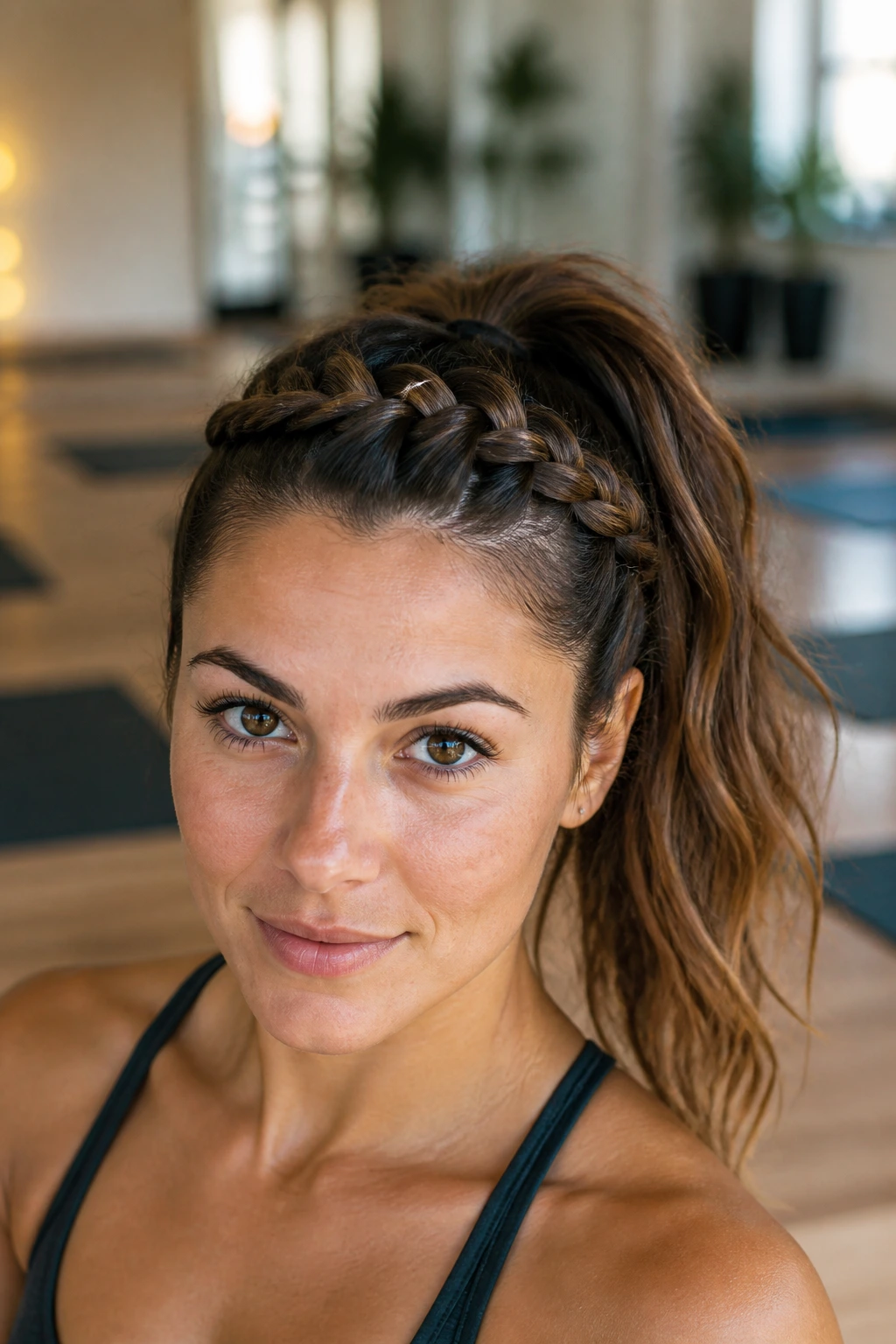
Sometimes you want the hair out of your face, but you still prefer the feeling of having some length loose in the back. This style uses the French braid to create a headband that stops at the crown of your head, where you can then tie the remainder of the hair into a half-up ponytail.
The Ideal Workout Scenario
This works perfectly for yoga or low-impact strength training where you are not moving your head rapidly. It gives you the security of a headband without the tension of pulling all your hair into a tight, slicked-back style.
Styling for Stability
- Braid from the left temple to the center crown.
- Repeat from the right temple to the center crown.
- Use a single, sturdy hair tie to join the two braids with the top half of your hair.
- This creates a structural “cage” that keeps the front section completely immobile.
5. The Messy Bohemian Braid
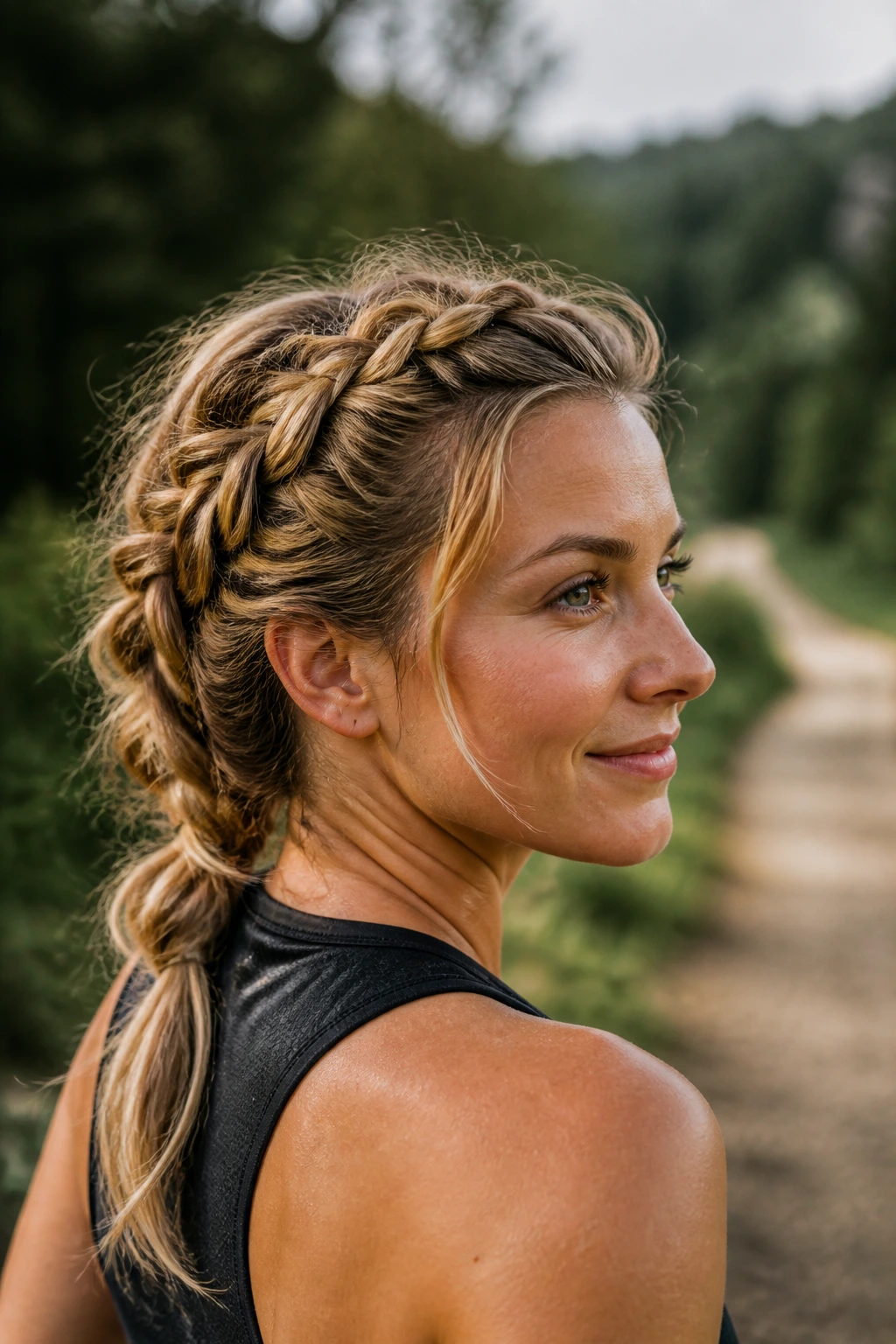
Who says workout hair can’t look effortless? This style focuses on a looser braid structure that is meant to look intentionally lived-in. It works well if you have textured, curly, or color-treated hair that doesn’t need to be perfectly slicked down to stay in place.
The “Pancaking” Technique
Once you have finished your French braid, gently tug on the edges of the loops to make them appear thicker. This is called “pancaking,” and it adds a softness to the look that hides any minor imperfections or uneven sections in your braiding.
Best Used For
This look is ideal for long, steady-state cardio sessions like hiking or cycling, where you want to feel put-together but aren’t concerned about a perfectly polished, military-tight finish.
6. The Side-Swept French Braid
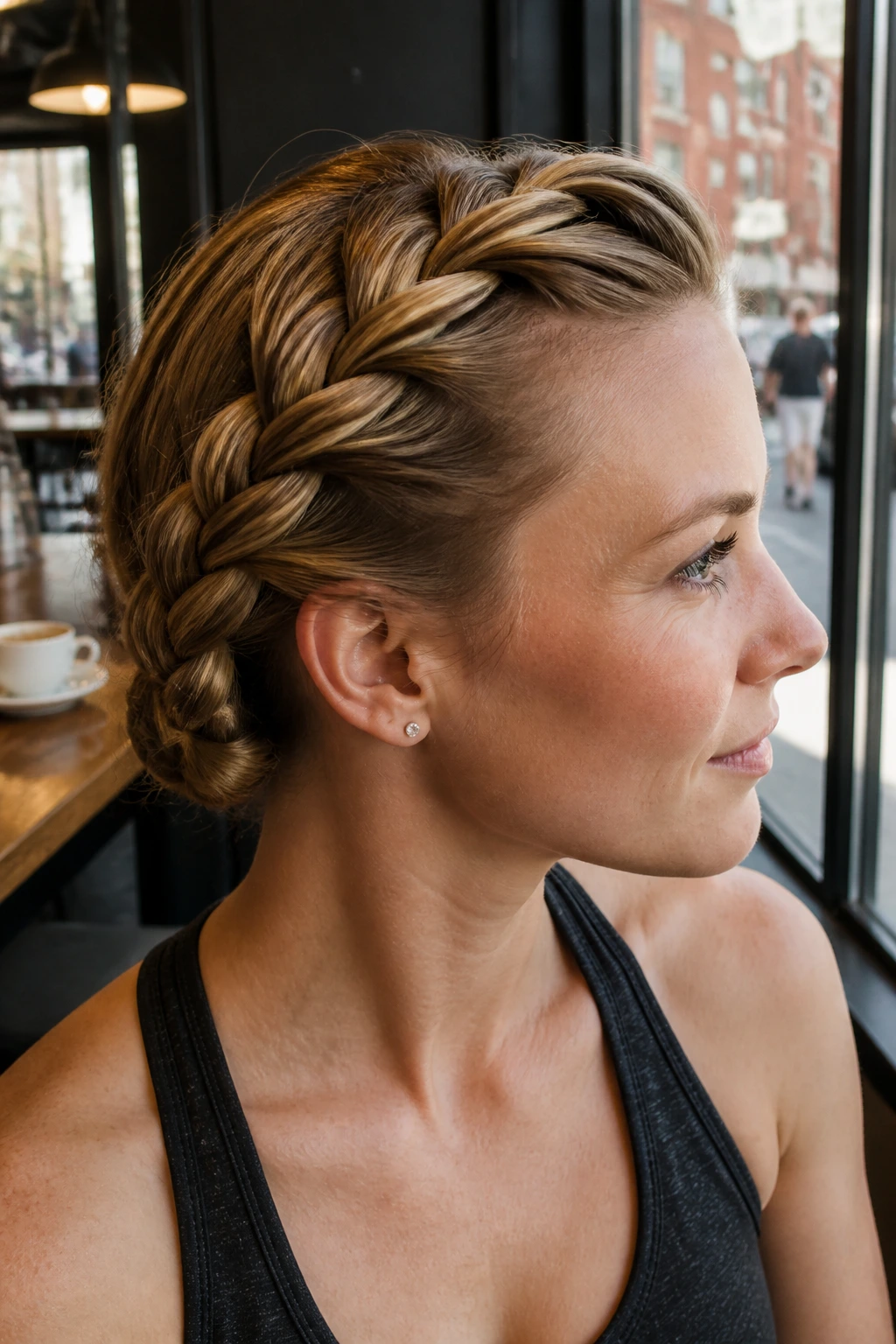
If you have long, sweeping bangs or face-framing layers, the side-swept headband is your best friend. Instead of going all the way across, you start at the side part and braid only along the side where your hair is heaviest, tucking the end behind your ear.
Why This Prevents Distraction
By anchoring the heaviest part of your fringe, you eliminate the single most annoying source of hair-related distraction during a workout. You can leave the rest of your hair down or put it in a loose ponytail, knowing that the most problematic strands are safely locked away in the braid.
Essential Tools
Keep a few matte-finish bobby pins in your gym bag. Since the braid ends behind your ear, a shiny pin might slide out with sweat or movement, but a matte version provides the friction needed to stay put for an hour or more of exercise.
7. The Mohawk-Style Headband Braid
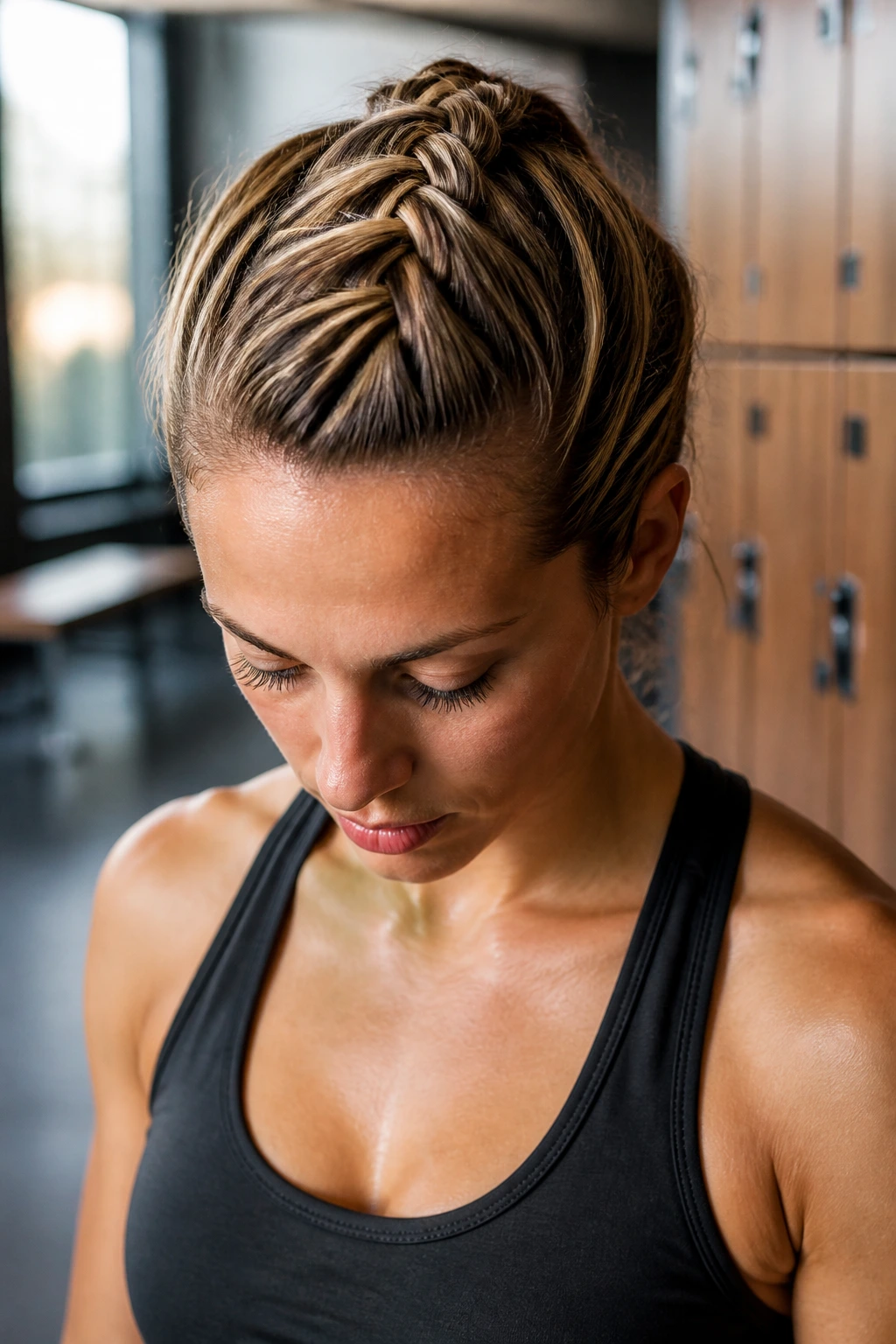
This style is bold, aggressive, and incredibly effective for high-intensity interval training or combat sports. You start at the very center of your hairline and braid straight back, but focus on keeping the French braid centered like a crest.
Creating the Visual Impact
The braid acts as a focal point, drawing attention away from the “sweaty” aspects of your workout and toward the style itself. It is a great way to feel empowered and focused when you are pushing through a difficult set.
Durability During Movement
This style handles sweat better than almost any other because the braid sits on the highest point of your head, away from the sweat-prone zones of the neck and ears. As long as you keep the sections even, it won’t budge regardless of how hard you train.
8. The French Braid into a Low Bun
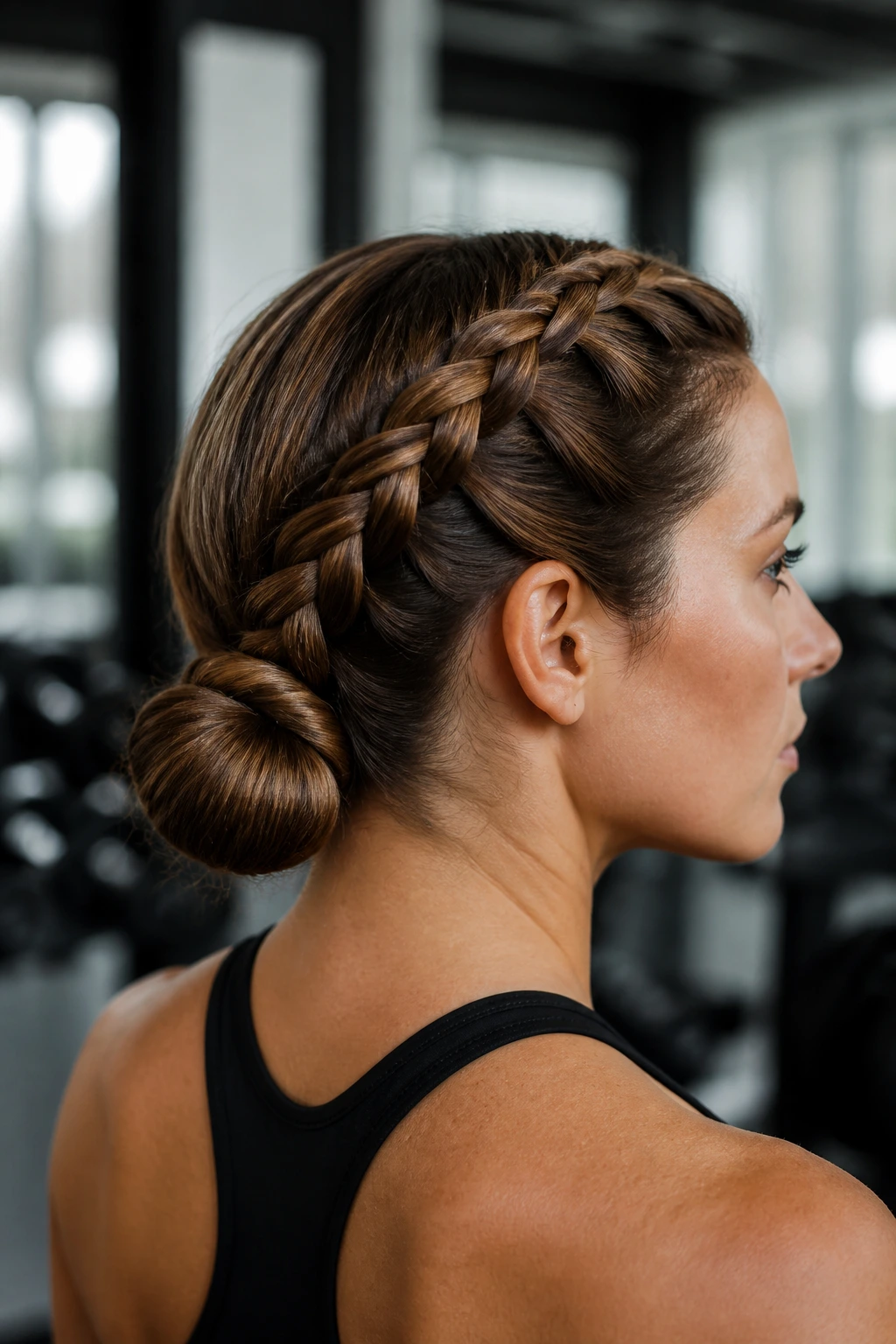
For those who want a completely “set it and forget it” solution, starting with a headband braid and transitioning it into a low, nape-of-the-neck bun is the ultimate choice. It is a look that screams “focused athlete” while remaining incredibly practical.
The Mechanics of the Transition
Begin the French braid headband as usual. When you reach the ear, continue braiding until you run out of hair, then incorporate that tail into a low ponytail. Twist the ponytail into a tight bun and secure it with a spiral pin or a heavy-duty elastic.
Why It’s Superior for Floor Work
Because the bun is located at the nape of the neck, it doesn’t get in the way when you are doing floor exercises, crunches, or bench work. Your head can rest completely flat against the mat without any interference from your hair.
9. The Wrapped French Braid
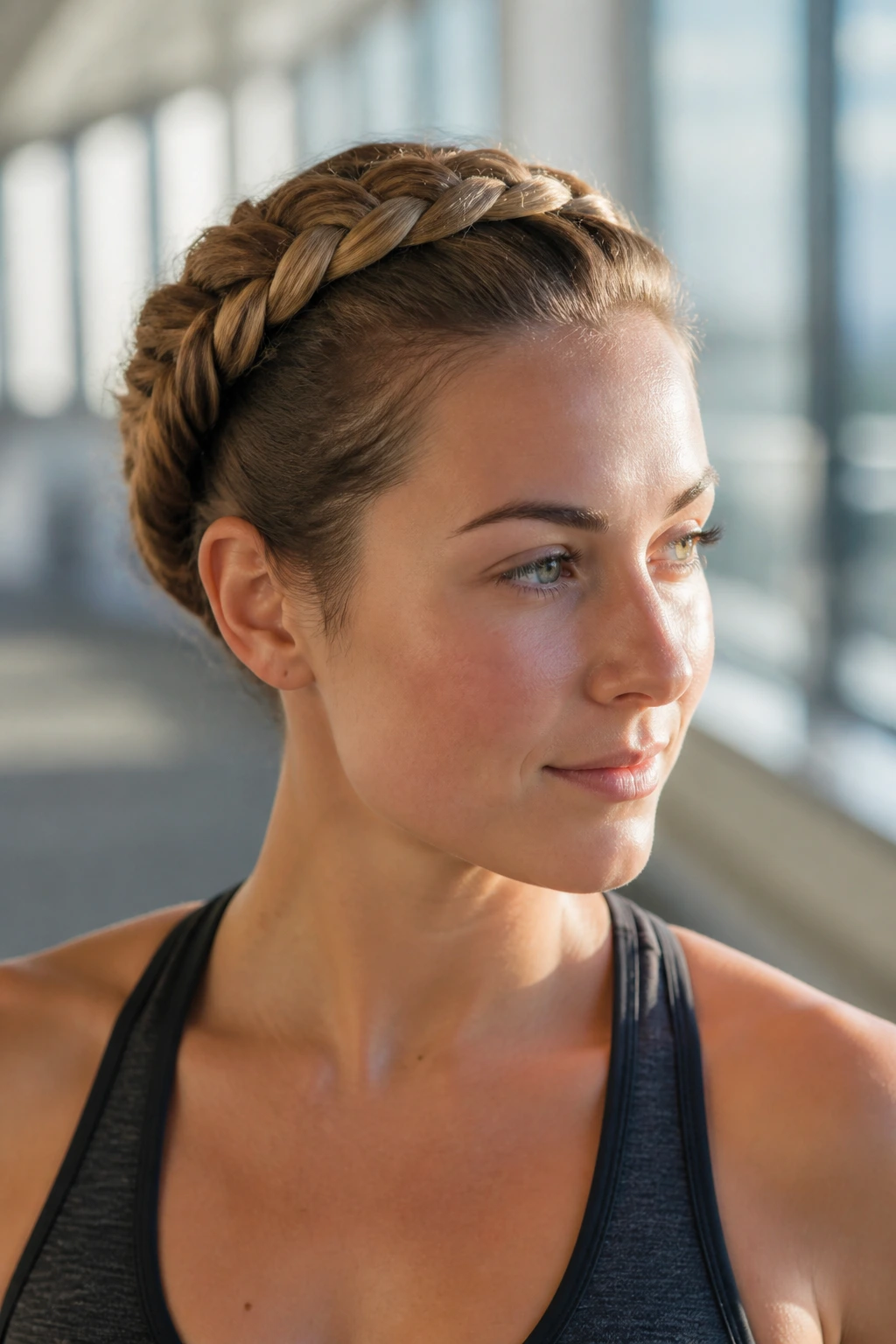
This style is specifically for those with very fine hair that struggles to hold a style. By French braiding the front section and then wrapping it around the head like a literal halo or crown, you create a structure that is practically impossible to move.
Preventing Slippage in Fine Hair
Fine hair tends to “slip” out of traditional braids. To prevent this, dampen your hair slightly with water or a light sea salt spray before braiding. The added grit gives your fingers more purchase, and as the hair dries, it locks into the braid pattern, making it stay tight for the duration of your workout.
Securing the Ends
Since the braid wraps around, you need to tuck the end securely under the start of the braid and pin it with a small, flat clip. This keeps the line clean and prevents any loose ends from flying around as you move.
10. The Cornrow-Style French Braid
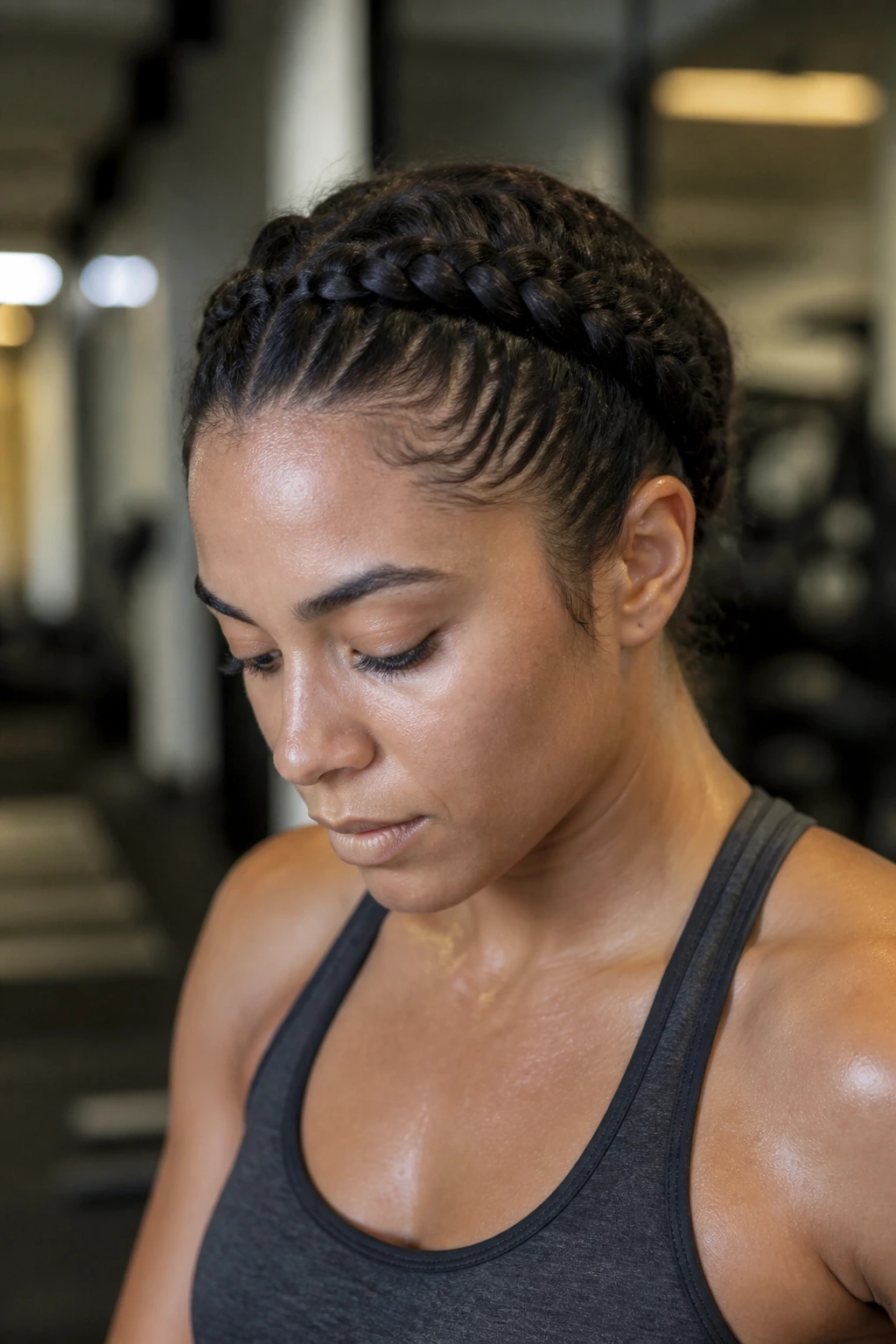
If you have a lot of time and want a style that will last through multiple workouts, this tighter, cornrow-inspired French braid headband is the way to go. It requires more precision and smaller sections, but the result is a rock-solid, incredibly tidy hairline.
The Advantage of Precision
By taking smaller, more frequent sections, you increase the number of “anchors” holding the hair in place. This is a great way to manage natural hair or thicker textures that typically expand with heat.
Longevity
This is one of the few styles that can often survive a day of work and a night of sleep, allowing you to head to your morning workout without having to redo your hair. It is the ultimate time-saver for the busy professional.
11. The Twisted French Braid Hybrid
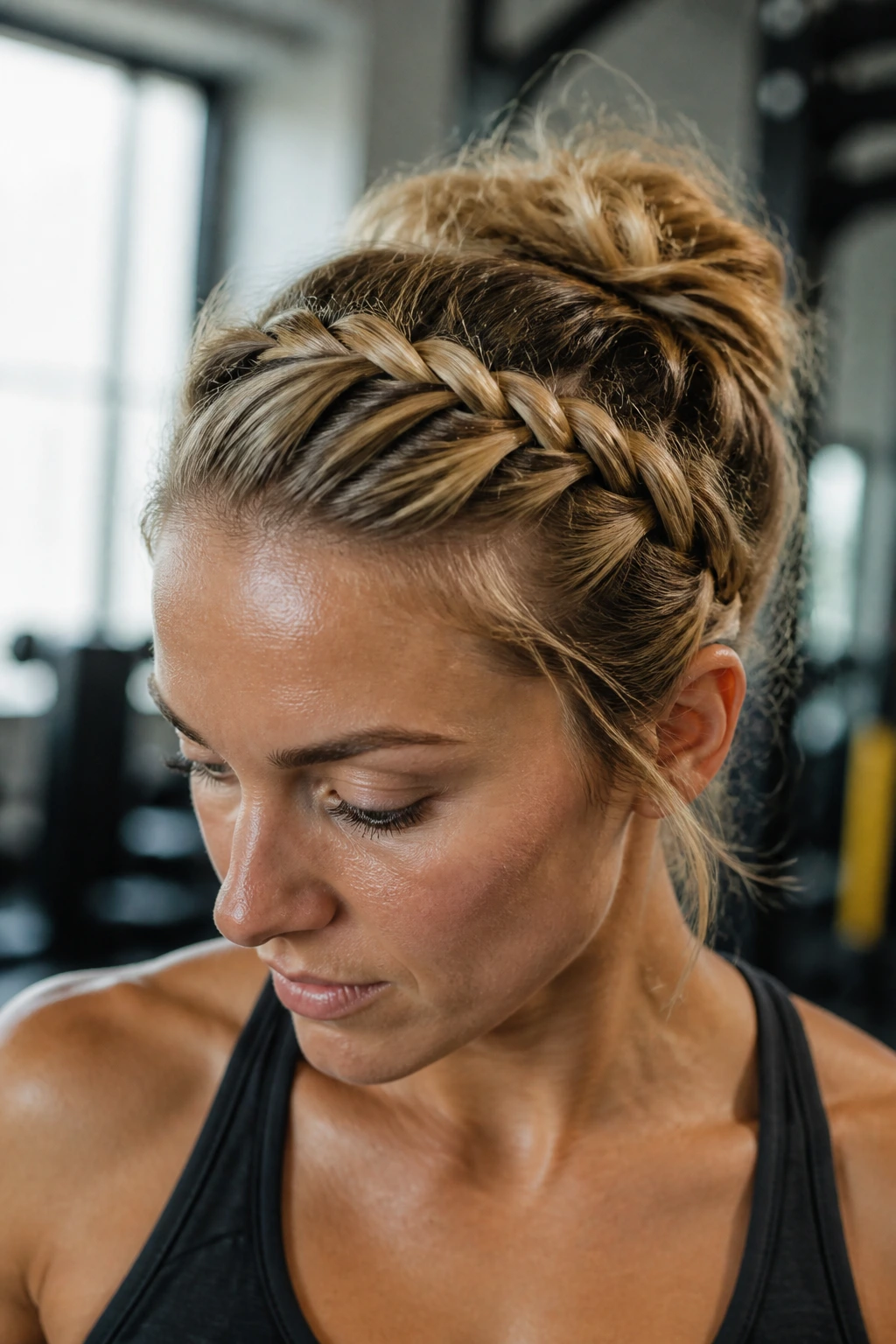
Sometimes, a standard braid can feel a bit too traditional. A twisted French braid incorporates a rope-twist technique into the headband style, creating a look that is sophisticated enough for a post-workout brunch.
How to Execute the Twist
Start as you would with a normal French braid, but instead of crossing one strand over the other, twist each section before adding it. This creates a corded, rope-like effect that is visually stunning and remarkably sturdy.
Handling Sweat
The twist method creates more surface area for the hair to grip itself. Even if you sweat heavily, the “rope” structure tends to hold its shape better than a flat, traditional weave.
12. The Braided Headband with Extensions
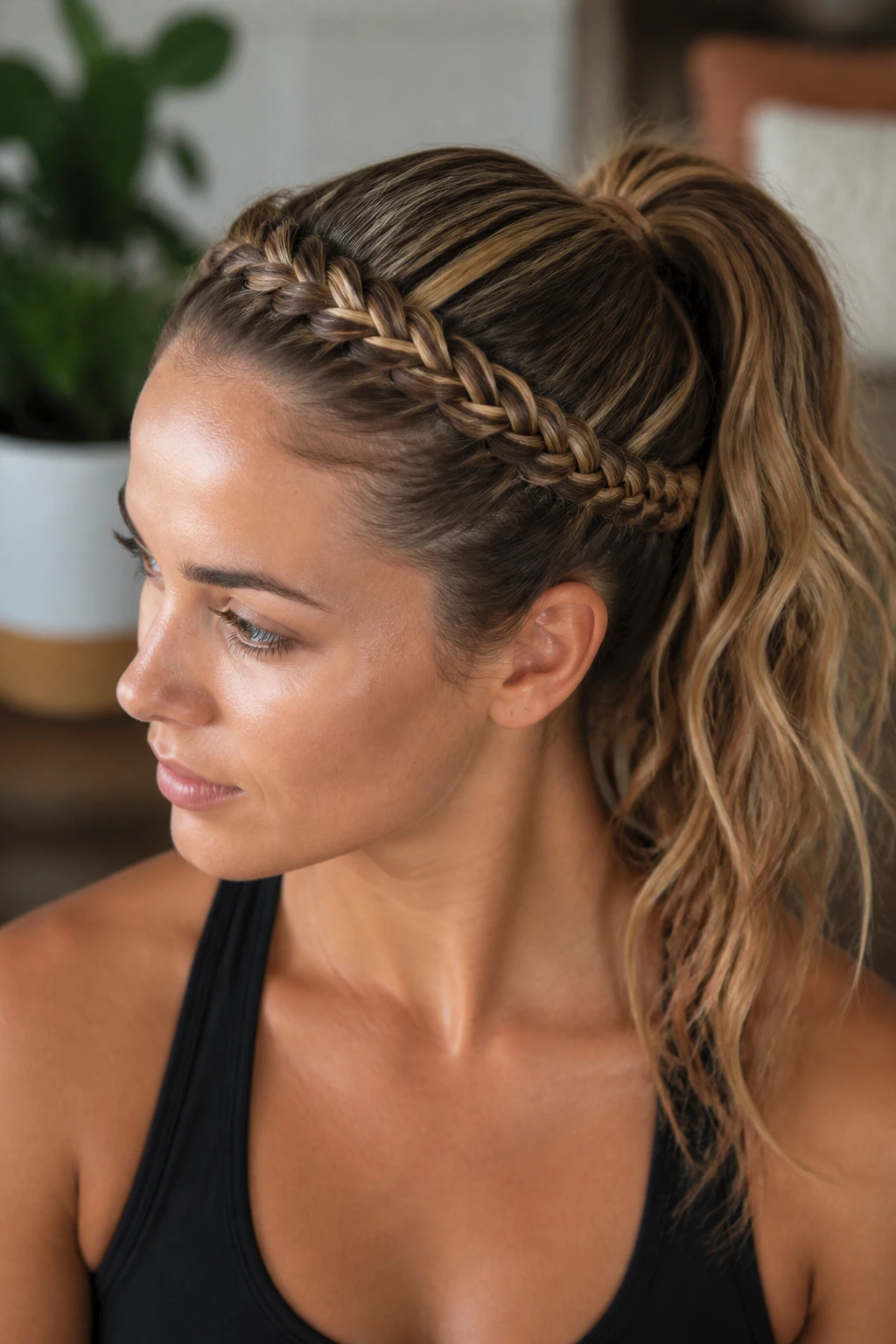
If you have shorter hair or are dealing with layers that just won’t stay in a braid, don’t be afraid to use a clip-in extension piece. You can braid your natural hair into the extension, effectively “creating” a headband where there wasn’t enough length before.
Matching Your Texture
The trick here is to ensure the extension piece matches your natural hair texture. If you have wavy hair, curl the extension slightly before you start so it blends perfectly with the rest of your hair once it’s braided into place.
Why It Helps Beginners
Extensions add volume and weight that can actually make the braiding process easier for beginners. They provide more “substance” for your fingers to grab, which can be the difference between a braid that falls apart and one that lasts the whole gym session.
13. The Side-Part French Braid
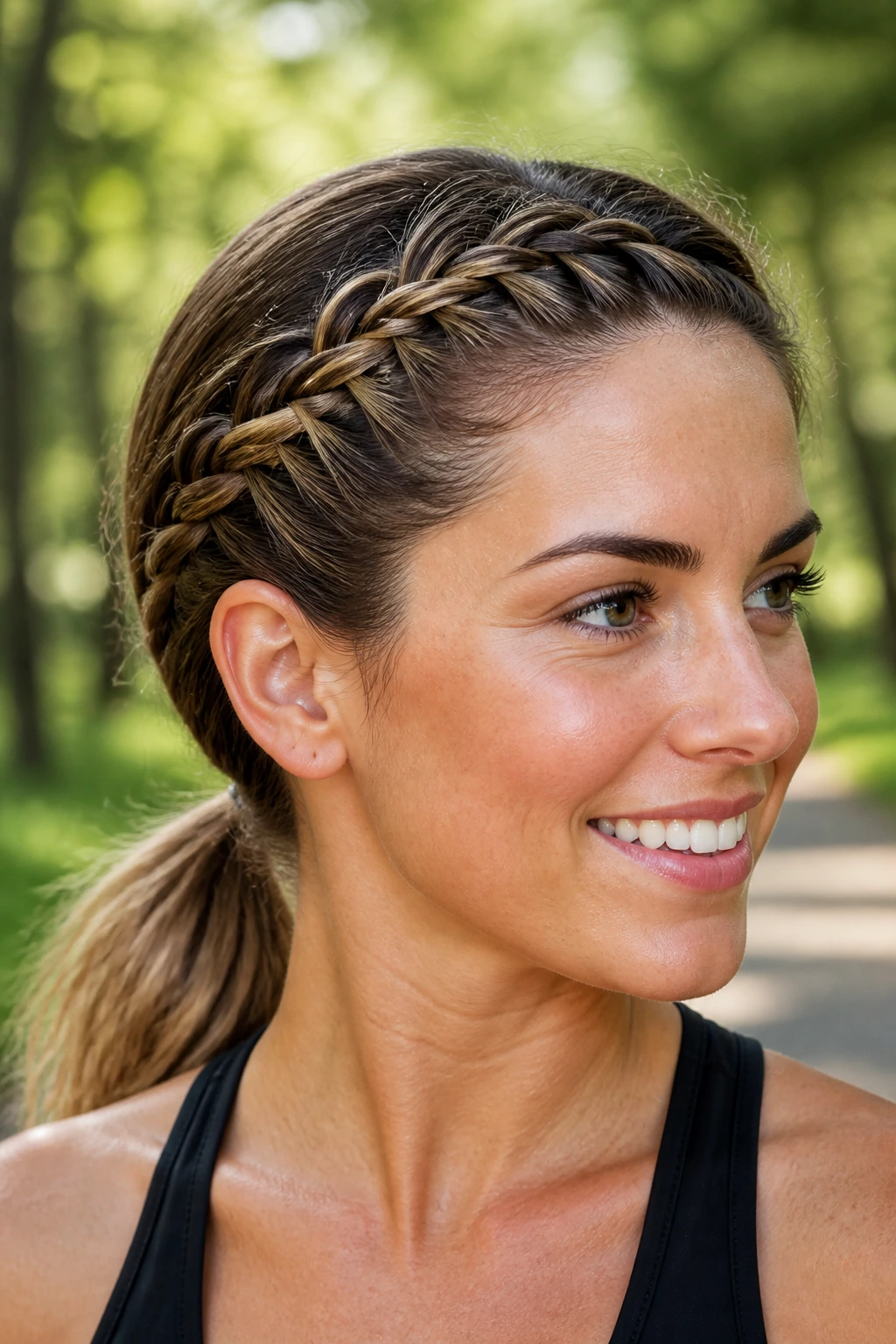
Most headband braids assume a center part or no part at all. However, if you naturally wear a deep side part, you can use that to your advantage by starting the French braid at the part and working it along the larger side of your hair.
Emphasizing Your Features
This style frames the face and highlights your bone structure. It is a great way to look “done” even when you are wearing gym clothes.
Technical Advice
When you reach the side where the hair is thinner, be careful not to pull too hard. Since there is less hair on that side, excessive tension can actually lead to pulling on the roots. Keep it gentle but firm.
14. The Triple-Threat Braid
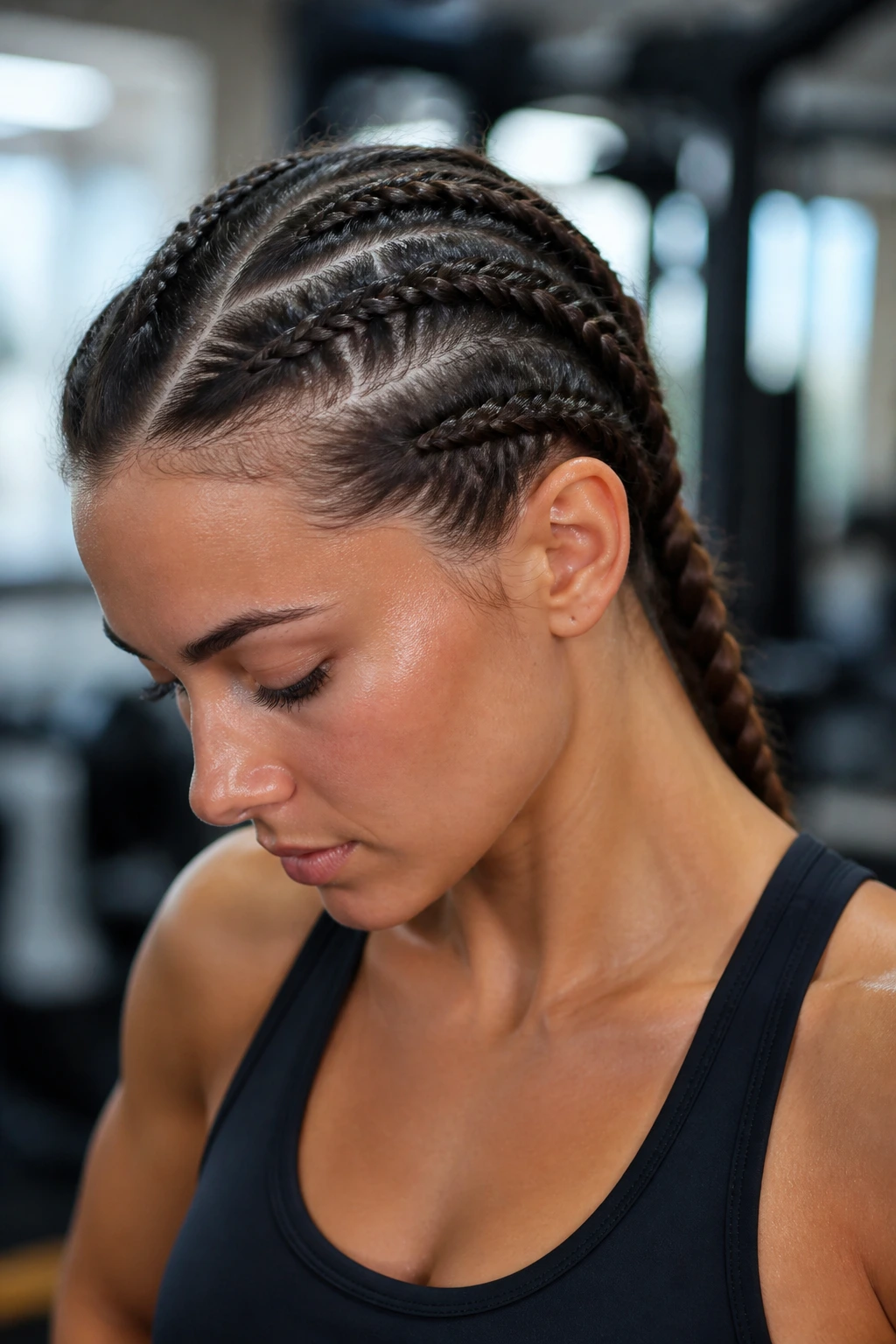
This version features three thin French braids running across the forehead, all converging behind the ear. It creates a very distinct, athletic look that is very popular in team sports and high-intensity training.
Why Three is Better Than One
Three thinner braids provide multiple points of stability. If one braid happens to loosen during a particularly intense movement, the other two continue to hold the hair back, maintaining your visibility and focus.
The Process of Convergence
Start the three braids at equal distances across the front of your hairline. As you reach the ear, combine the tails of all three braids into one thicker, single braid, and secure it. It looks complicated, but it is just three simple French braids working in unison.
15. The “Pancake and Pull” Technique
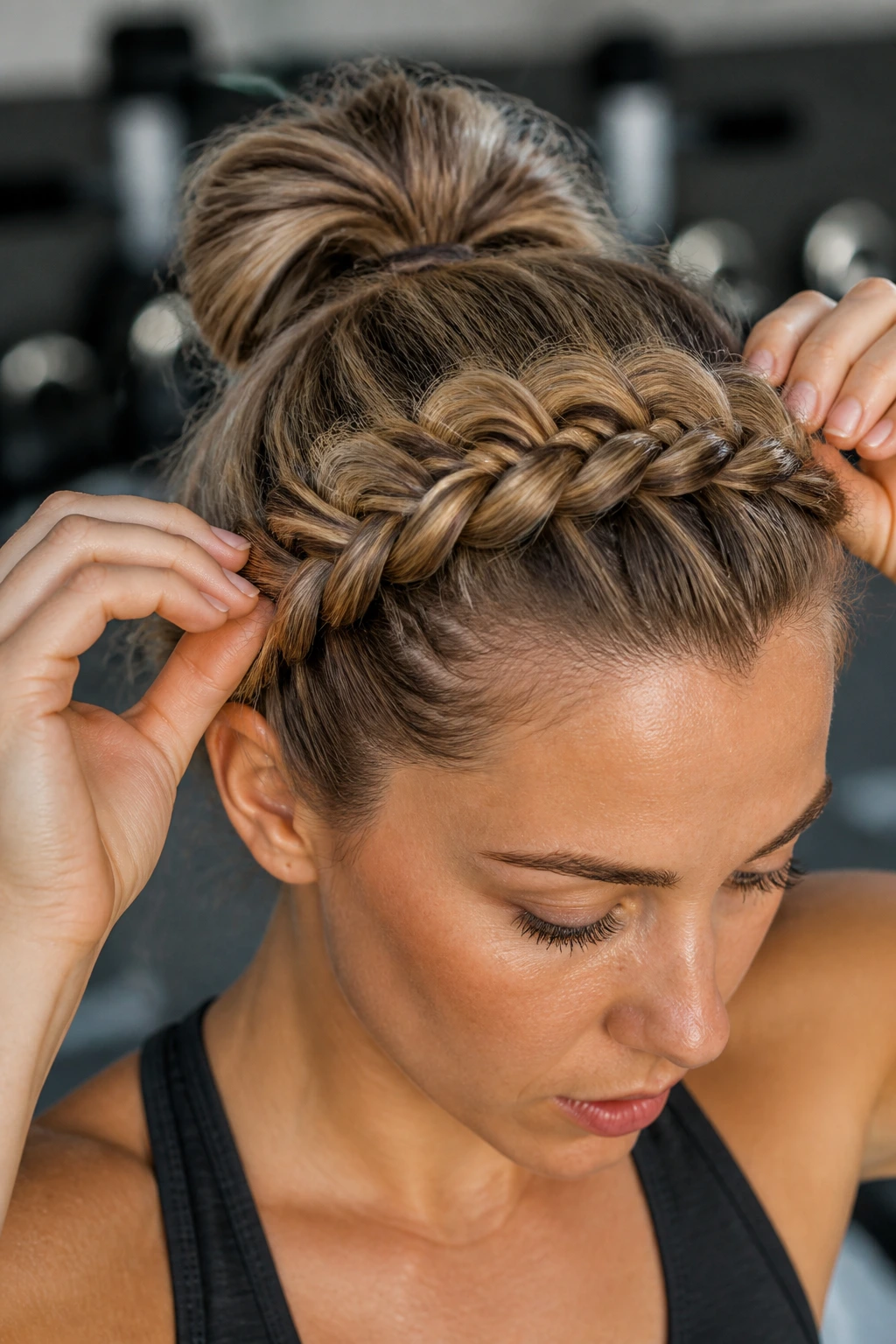
If you struggle with your braid looking “flat,” this is the adjustment you need. Start your French braid headband normally, but as you create each loop, pull it slightly upward and outward. This creates a “pancaked” effect that makes the braid look much wider and fuller.
Maximizing the Volume
By doing this as you go, you aren’t just creating a flat line—you are creating a decorative band of hair. This is particularly effective for those with thin hair who want their braids to look substantial.
Cautionary Note
Don’t pull too aggressively on the very first few loops near your temples. These are the most fragile areas of your hairline, and pulling too hard can cause unnecessary stress on the roots. Always be gentle when adjusting the braid’s volume.
16. The Reverse French Braid Headband
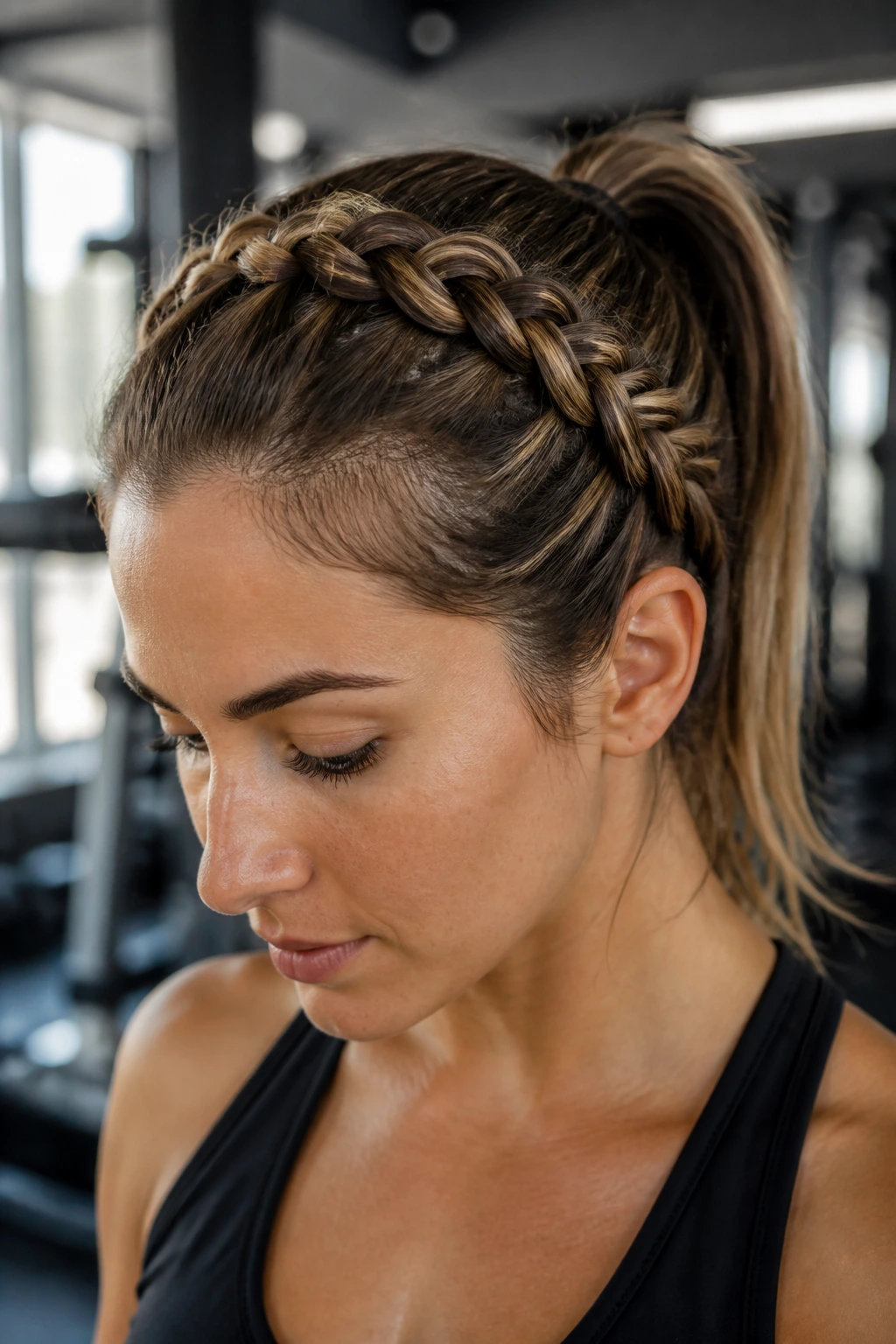
Most people are accustomed to crossing hair over the top. A reverse French braid (often called a Dutch braid) involves crossing the strands under one another. This causes the braid to sit “on top” of the hair, making it pop out visually.
The Visual Pop
Because the braid sits proud of the scalp, it is incredibly clear to see. This style looks very polished and is often preferred for social media photos or gym videos because the braid detail is so much more prominent than with a standard braid.
Durability During Movement
Because the braid is “raised,” it is actually less prone to slipping down toward the forehead. The structure is inherently more stable, which is a major advantage for high-intensity training where you are prone to sweating.
17. The High-Contrast Braid
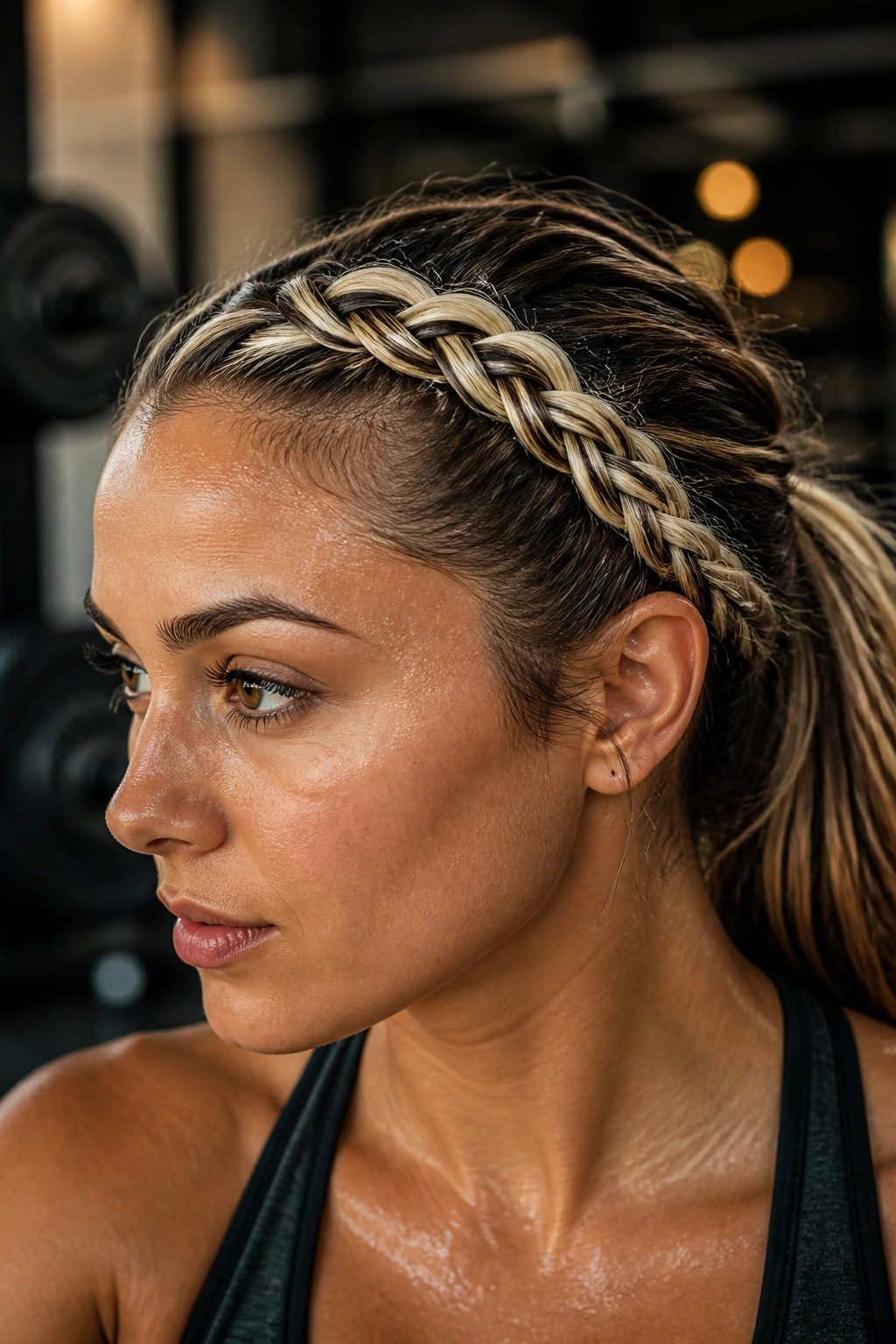
If you have highlights or lowlights in your hair, the French braid headband becomes a work of art. The way different colors weave into each other creates a striped effect that makes the braid look far more intricate than it actually is.
Highlighting Color
This is a great style for showing off your colorist’s work. The twisting action of the French braid naturally mixes different shades together, creating a depth and dimension you don’t get with a simple ponytail.
Practicality in the Gym
The beauty of this style is that it looks complex, but it functions just like a basic braid. You get all the athletic benefits of a secure hairline while enjoying the aesthetic bonus of a style that looks like it took hours to complete.
18. The “Half-Braid” for Short Hair
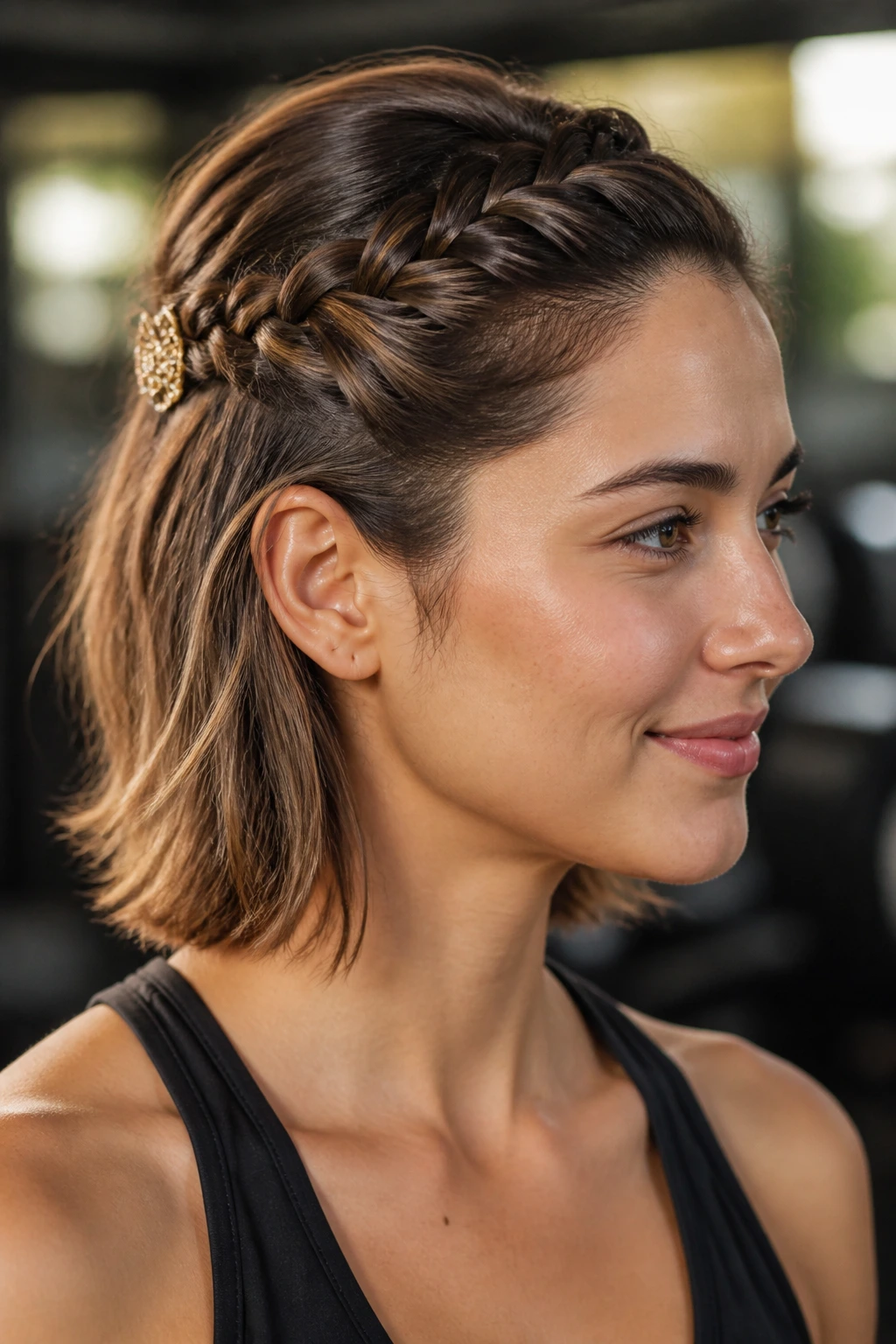
If you have a bob or a lob, you might find it difficult to braid all the way around your head. The half-braid headband is the solution. You only braid the front section and then secure the end behind your ear with a decorative clip or a small, strong barrette.
Working with Length Restrictions
This style acknowledges your length instead of fighting it. By securing the braid behind the ear, you are using the natural fall of the rest of your hair to hide the pin, making the style look seamless and professional.
Choosing the Right Clip
Since you are working with shorter hair, the braid will be under more tension. Opt for a high-quality barrette or a strong metal clip rather than a simple plastic one, which is more likely to snap or slip during an intense workout.
19. The Wet-Hair Braid
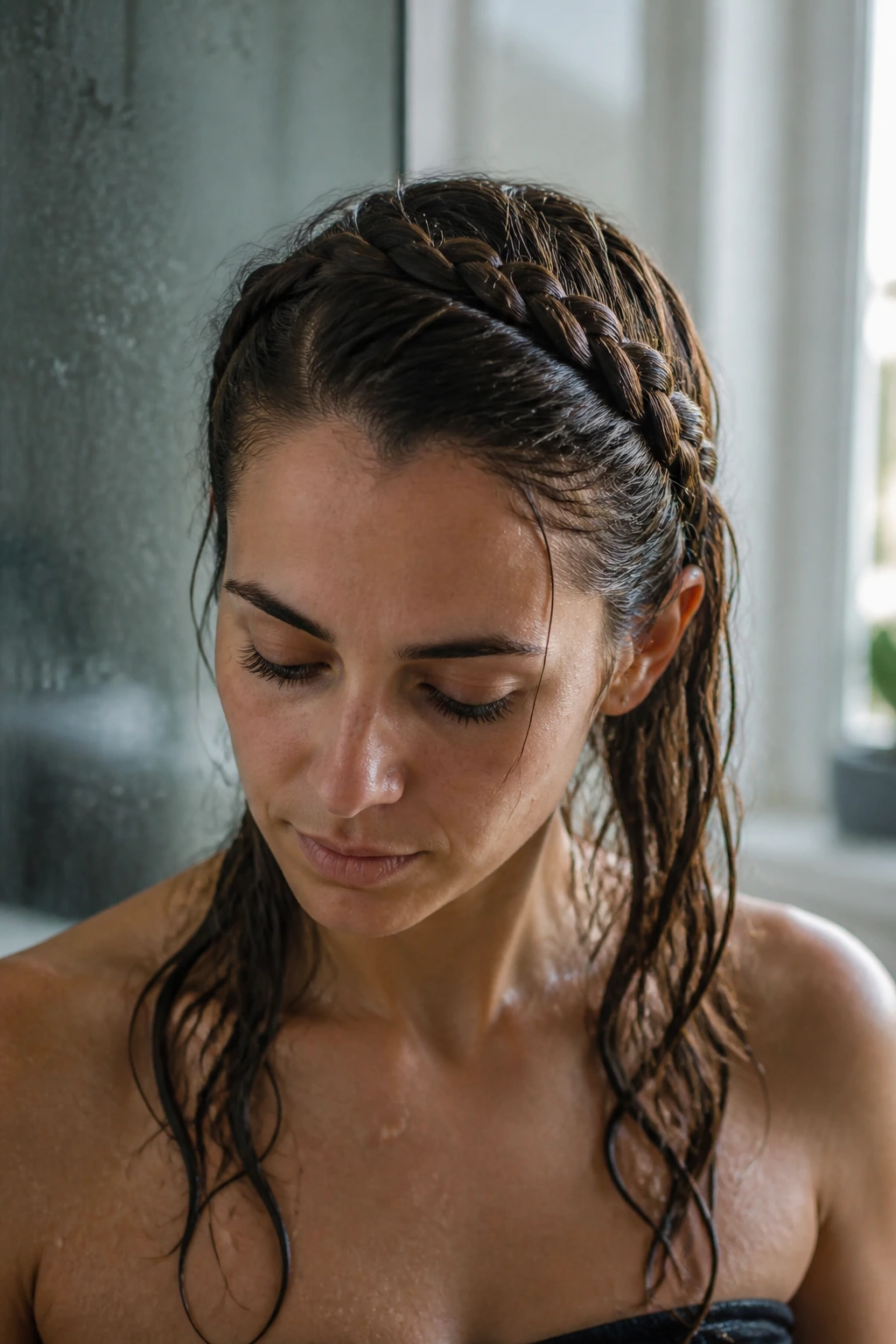
If you are someone who likes to wash their hair right before a morning workout, or if you simply apply a hair mask before hitting the gym, a French braid headband is the best way to handle damp hair.
The Benefits of Braiding Damp Hair
Braiding damp hair helps “set” the style. As your hair dries during the workout, it takes on the shape of the braid, meaning when you take it out later, you’ll have a beautiful, crimped wave pattern.
Avoiding Damage
Just be careful not to pull the hair too tight when it’s wet. Hair is at its most fragile when saturated with water, so keep the tension moderate and focus on creating a secure rather than a tight hold.
20. The Minimalist Headband Braid
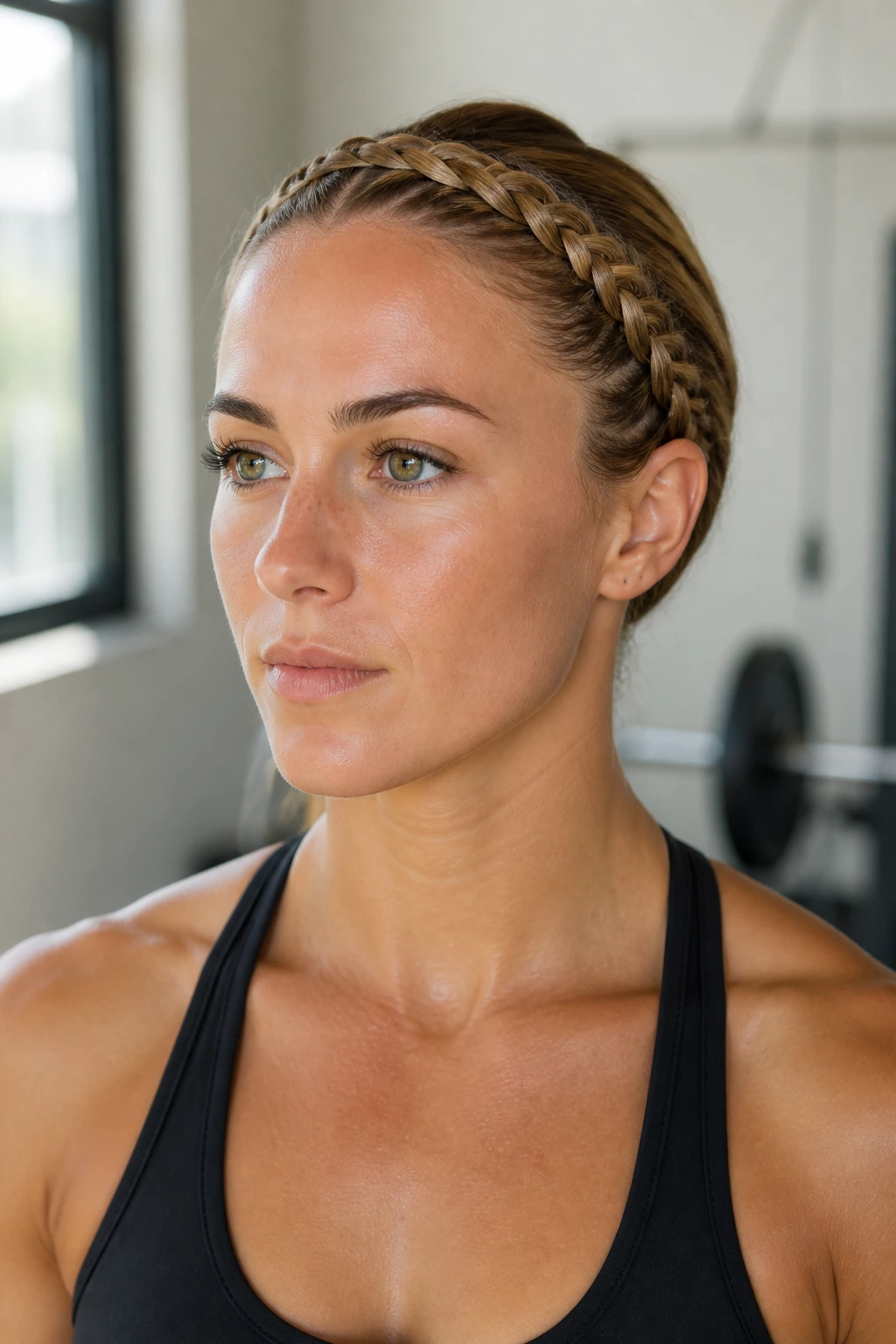
For those who prefer a clean, understated look, the minimalist braid uses very small sections and minimal “pancaking.” It is the sleekest version of the style and looks perfect with any gym outfit, from basic tees to high-tech compression gear.
Achieving the Sleek Look
Focus on using a fine-tooth comb to part your hair cleanly before you start. A crisp part makes the entire style look more intentional and polished. Use a small dab of smoothing cream on the surface of the braid to tame any flyaways and give it a glass-like finish.
When to Use This Style
This is the ultimate professional-athlete style. It doesn’t look like you spent twenty minutes on your hair; it looks like you are ready to get to work. It’s clean, effective, and completely out of your way until you decide it’s time to take it down.
Final Thoughts
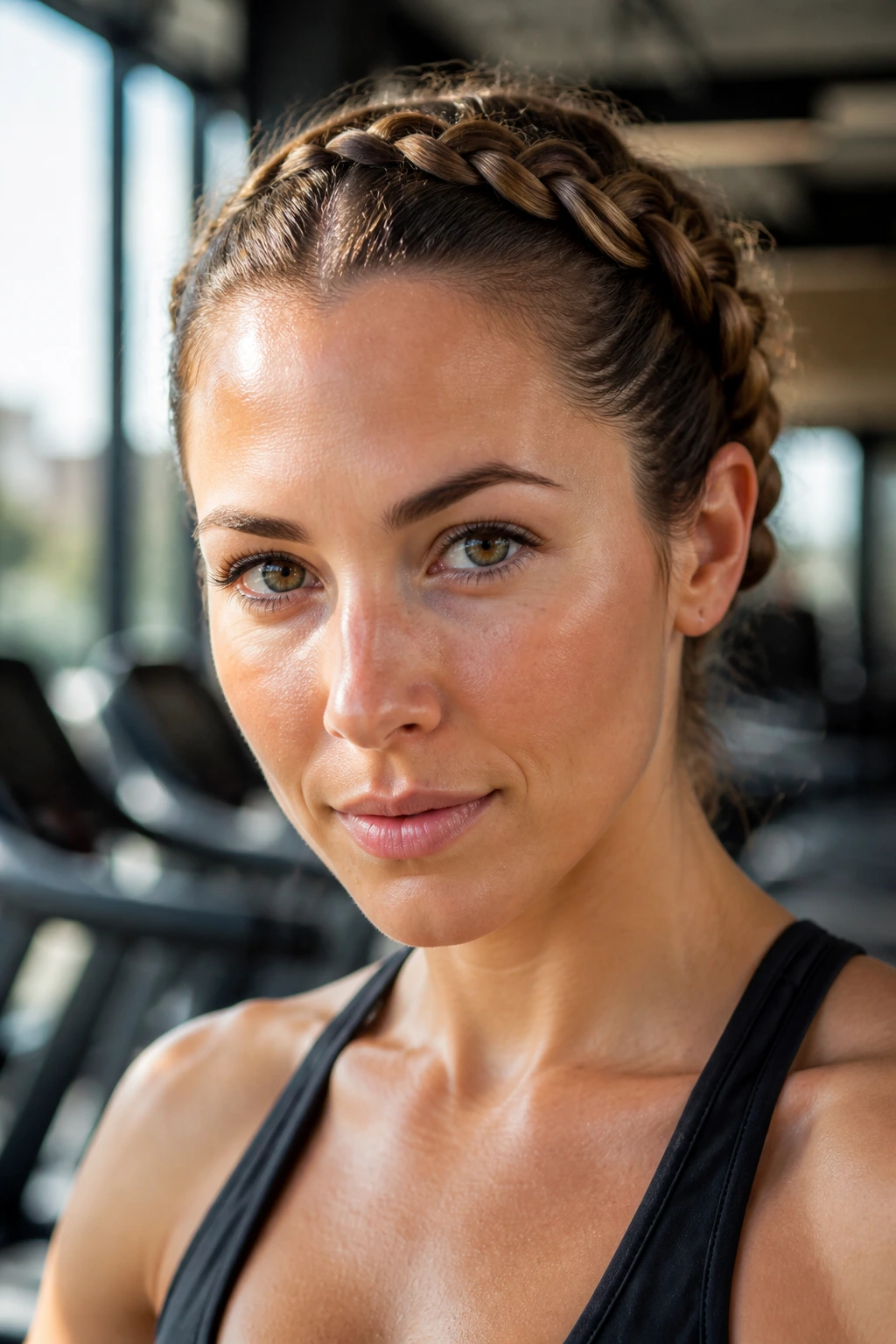
Finding the right French braid headband for your specific workout routine is less about finding the “perfect” style and more about understanding your hair’s natural behavior. Whether you have thick, heavy locks that need double-braided support or fine, slippery strands that require a bit of salt spray and a tight Dutch weave, the solution is always found in the tension.
Take a few minutes to practice these techniques in front of a mirror while you are off the clock. Once you move past the initial hurdle of keeping your fingers coordinated, you will find that these styles become muscle memory. Your hair will be the last thing you have to worry about when you are in the middle of a grueling session, allowing you to pour all that extra focus back into your performance. Don’t be afraid to experiment with different parting techniques or to mix and match the styles here; the best workout hair is simply the kind that stays exactly where you put it.