


Thick hair is a blessing and a battle all at once. You have enough volume to hold any style, yet you often find yourself wrestling with weight, tangles, and the sheer impossibility of getting a hair tie to wrap around a ponytail more than twice. When your hair has a mind of its own, braiding becomes more than just an aesthetic choice; it is a necessity for keeping those dense strands under control while showcasing the texture you’ve been given.
The secret to working with dense, coarse, or highly voluminous hair isn’t just about the braid itself—it’s about the prep work. If you try to braid thick hair while it is freshly washed and slippery, you will end up with a loose, unraveling mess within an hour. You need grit. You need texture. Most of all, you need styles that manage the weight without pulling at your scalp.
Instead of fighting the gravity of your own hair, we are going to look at twenty specific ways to translate that thickness into structured, long-lasting, and visually impressive designs. These aren’t just generic ideas; these are structural solutions for managing massive volume. Whether you are aiming for something that keeps your neck cool in the summer heat or a style that looks intentionally architectural, we have a path forward.
1. The Dutch Side-Braid for Maximum Volume
Most people with fine hair try to pull at their braids to make them look fuller. You don’t have to worry about that. A Dutch braid—where you cross strands under rather than over—creates a raised, three-dimensional effect that looks almost like a rope sitting on top of your scalp. Because you have thick hair, this braid will appear massive and intricate without you needing to do any extra tugging or “pancaking.”
Start your part deep on one side and work the braid toward the opposite ear, collecting hair as you move downward. Because your hair is heavy, you will likely need to use a clear, high-tensile elastic to secure the end. If the braid feels too heavy or starts to pull, use two or three bobby pins to anchor the braid against your head in the middle of the curve. This distributes the weight across your scalp rather than letting it all hang from the nape of your neck.
2. High Crown Rope Twist
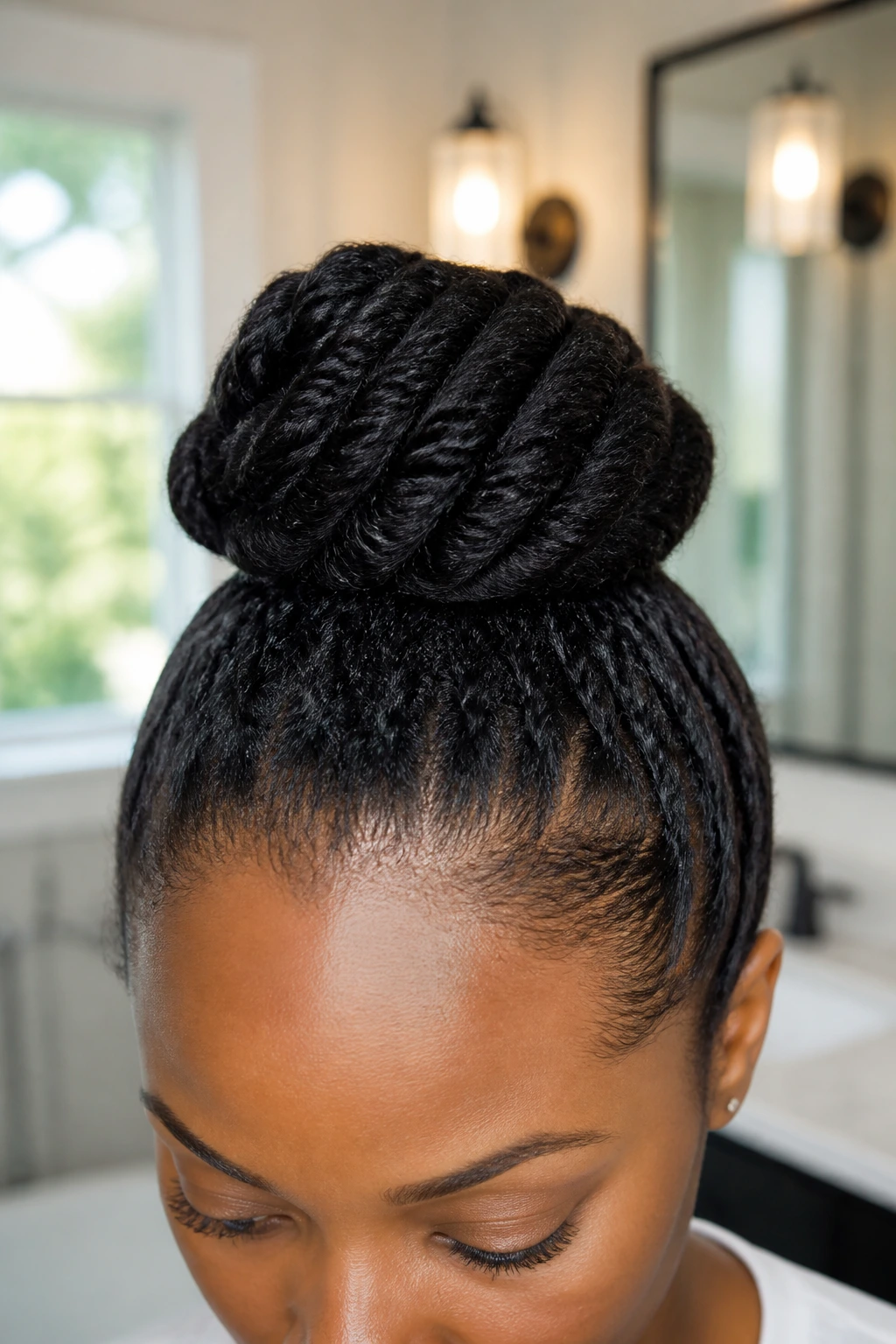
The rope twist is perhaps the most underrated tool for thick hair because it relies on two strands instead of three. Fewer strands mean less complexity when you have a massive amount of hair to divide. For a high crown style, gather your hair into a high, secure ponytail first. Split the ponytail into two equal sections.
Twist each section individually in the same direction, then wrap them around each other in the opposite direction. It sounds counterintuitive, but if you twist them left, you must wrap them right to keep the structure from unraveling. This creates a dense, heavy rope that you can coil around the base of your ponytail. It effectively turns a “too much hair” problem into an elegant, architectural bun that can handle a full day of activity without sagging.
3. The Classic Five-Strand Accent
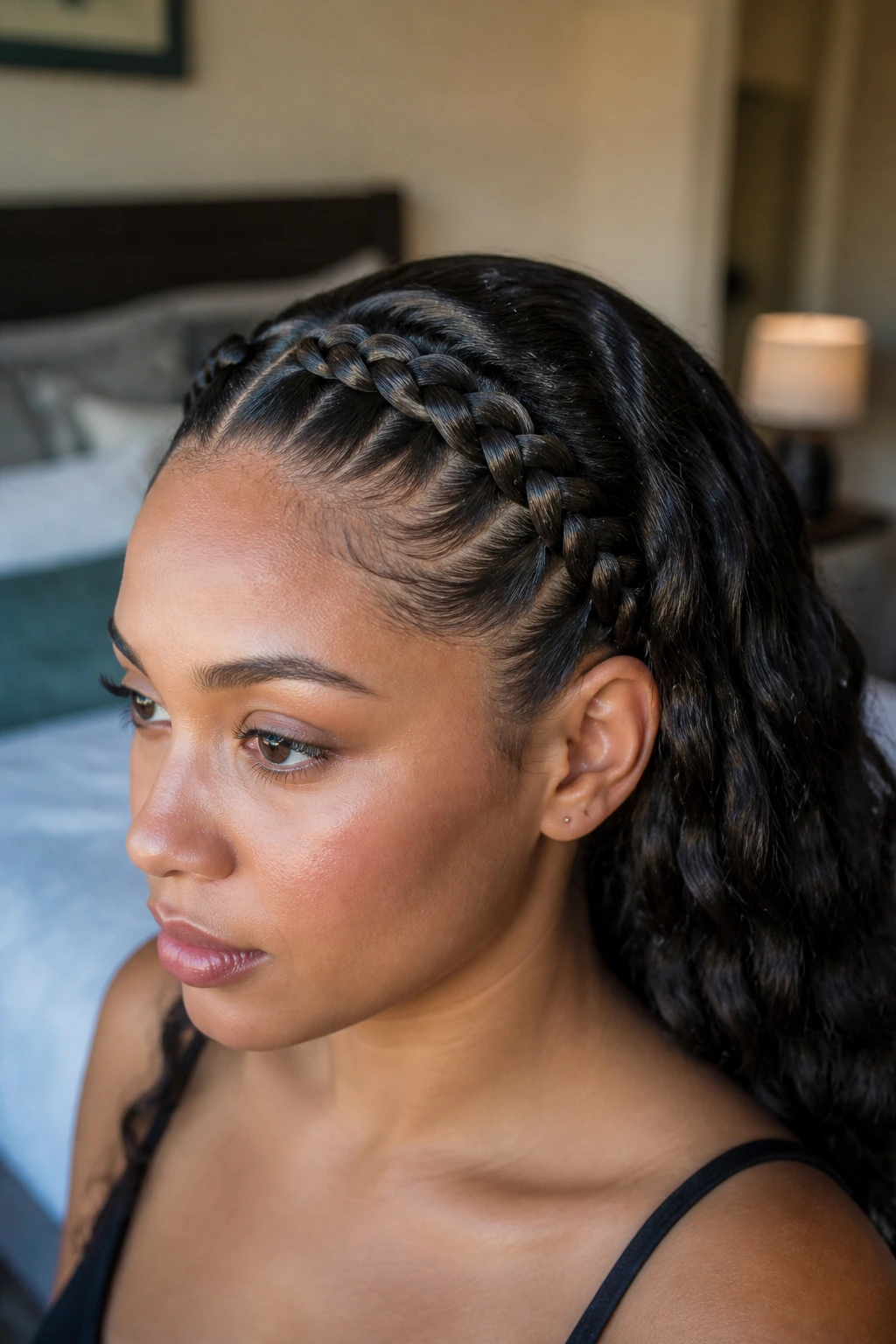
Five-strand braids can look intimidating, but on thick hair, they are actually easier to handle than on thin hair because the strands don’t lose their shape as quickly. You have enough material to work with to really see the pattern. Start by sectioning off a portion of hair near your hairline and dividing it into five equal ribbons.
When you work with five strands, think of it as weaving rather than braiding. You go over-under-over-under. With thick hair, the strands naturally want to stick together. Use a bit of texturizing spray or dry shampoo on your fingers before you start; this gives your skin enough grip to keep the middle strand from sliding out of place. It’s a bit like juggling, but once you find the rhythm, the result is a flat, wide, complex-looking braid that sits beautifully against the scalp.
4. Double-Waterfall Braid with Messy Texture
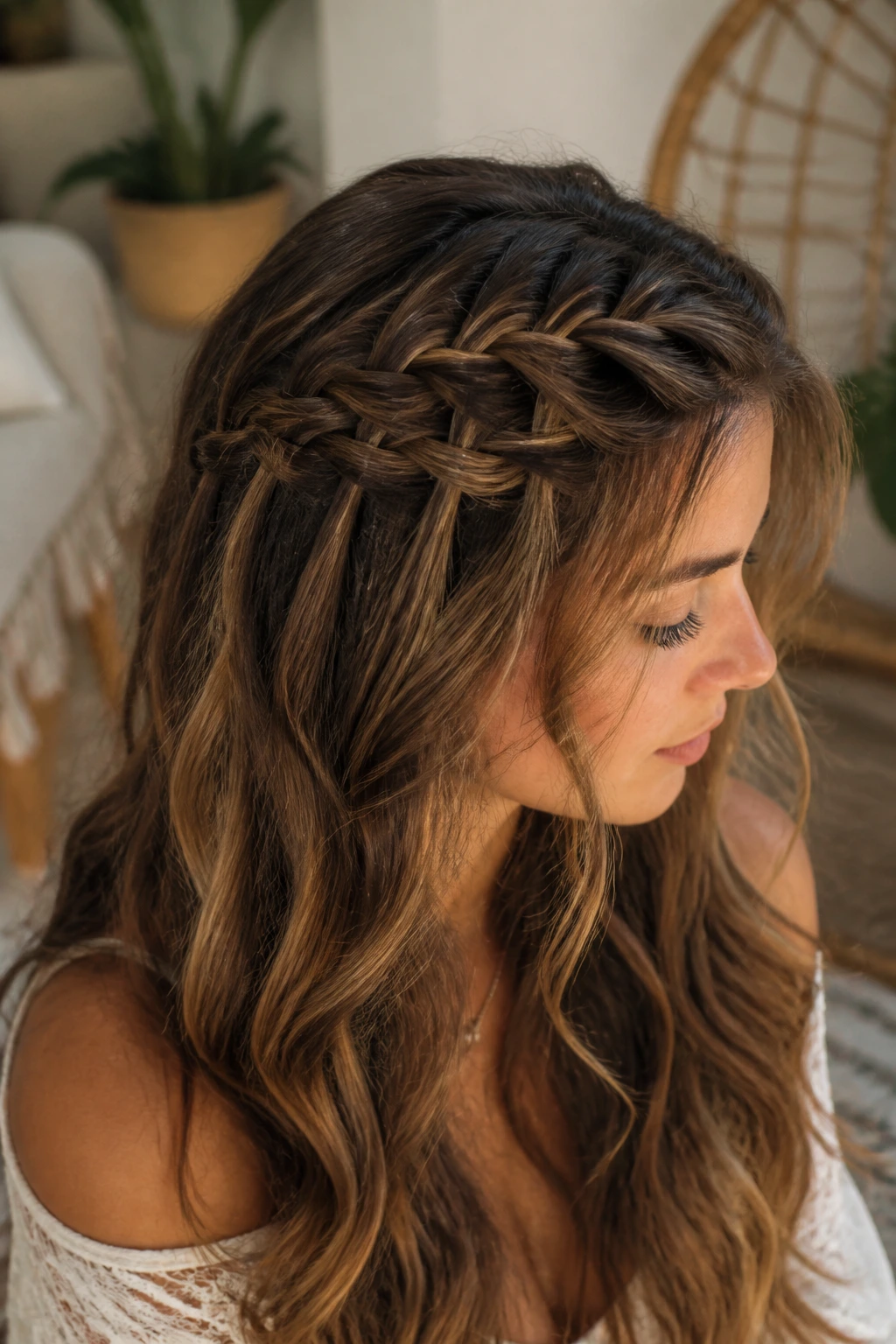
Waterfall braids are usually done to show off length, but when you have thick hair, they can become a tangle nightmare if you aren’t careful. The trick is to keep the “dropped” strands very distinct from the rest of your hair. Instead of trying to braid all your hair into the waterfall, just use the top layer.
Keep the base braid relatively tight to ensure the weight of your hair doesn’t pull the entire design apart. Every time you drop a section of hair from the braid, make sure to comb it out before you move to the next stitch. If you let those loose pieces catch on the remaining bulk of your hair, you will spend your evening untangling knots. It is a soft, romantic look, perfect for letting the rest of your thick hair flow down your back without it getting in your face.
5. The Fishtail Chignon
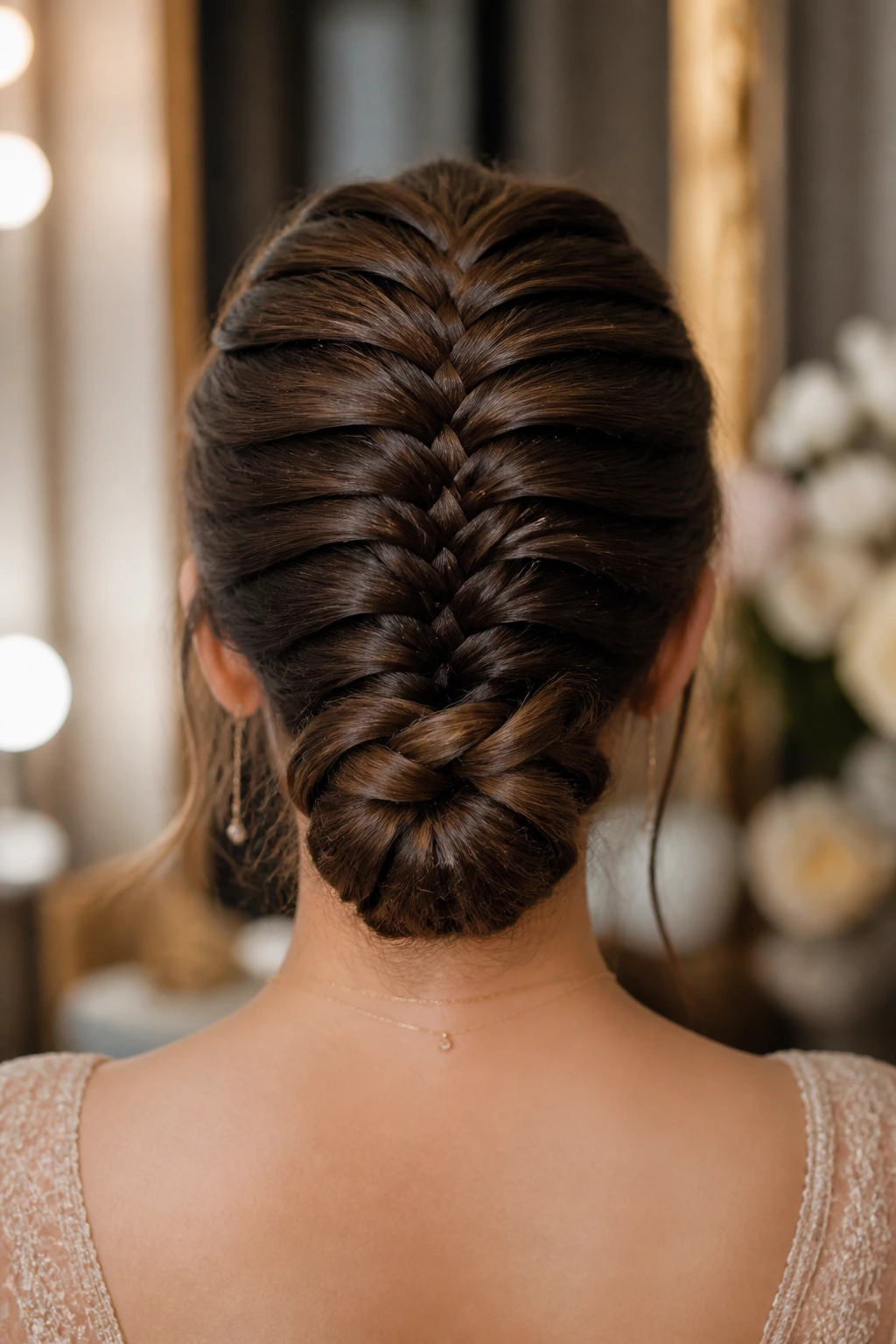
Fishtail braids are tedious on thin hair because they take forever to show any progress, but on thick hair, they are the gold standard for density. You don’t need to do a full-length braid if you don’t want to. Try a high fishtail braid that ends about four inches from your roots, then twist the remaining length into a chignon at the nape of your neck.
The fishtail pattern is tight and compressed, which acts like a corset for your hair. It keeps those unruly flyaways in check much better than a standard three-strand braid ever could. Because your hair is thick, the braid itself will look substantial, providing a great base for the chignon. Secure the final bun with a sturdy hair stick or a large U-shaped pin rather than an elastic, as the weight of the thick fishtail braid might snap a regular hair tie.
6. Loose Side-Swept Viking Braid
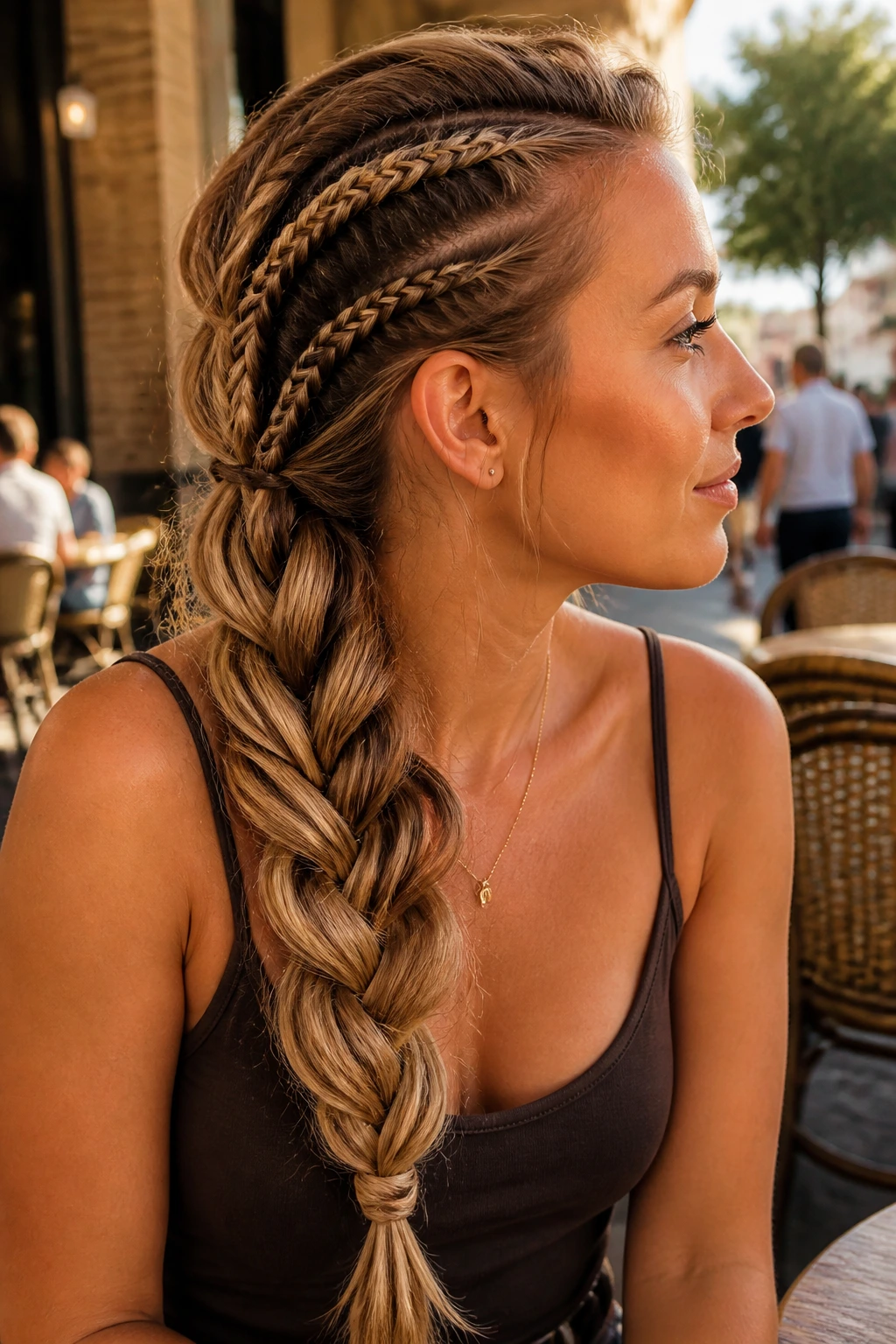
Viking-style braids are all about the contrast between the tight, cornrow-like sections at the scalp and the loose, heavy braid at the end. For thick hair, you want to focus on the scalp sections first. Do three or four smaller Dutch braids starting at your hairline and feed them into one single, massive braid as you move toward your shoulder.
The beauty here is that you don’t need extensions. Your natural density will make the braid look thick, powerful, and authentic. Don’t worry about being perfect with the sections—Viking styles look better when they have a bit of texture and slight imperfections. Use a small amount of pomade to smooth the scalp sections as you braid to ensure the scalp looks clean while the braid looks rugged.
7. The Bubble Braid Ponytail
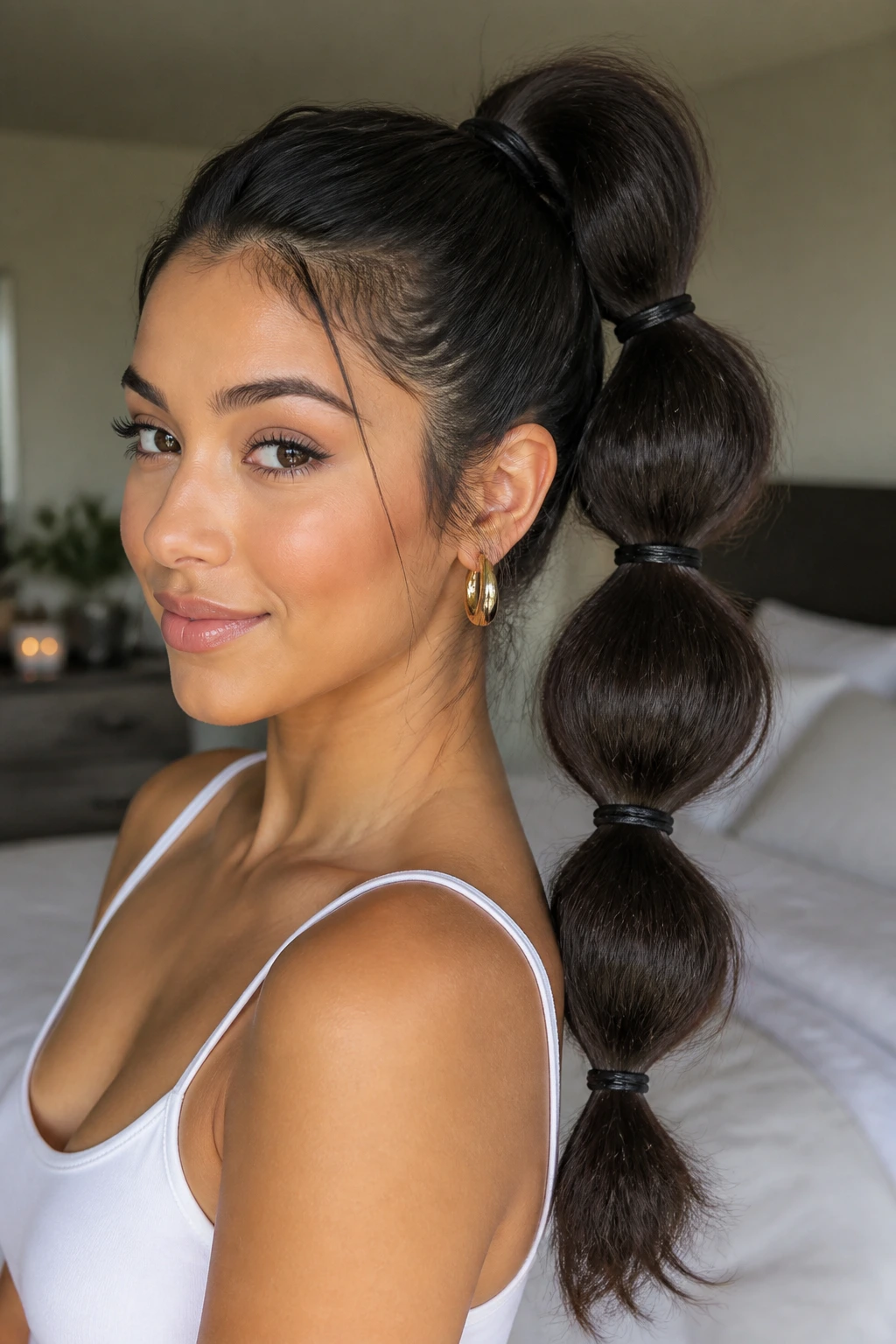
If you are tired of braiding and untangling, the bubble braid is your best friend. It’s technically a series of ponytails, but it mimics the look of a braid without the structural complexity. Start with a high ponytail, then place elastics every two or three inches down the length of your hair.
Between each elastic, pull the sides of the hair out to create “bubbles.” On thick hair, these bubbles will be naturally large and voluminous. You have to be aggressive with the “pulling” phase; if you are too shy, it will just look like a string of beads. If your hair is very heavy, you might need to use a second, hidden elastic at the base of each bubble to ensure the weight of the lower sections doesn’t slide the upper sections down.
8. Crown Braid with Hidden Pins
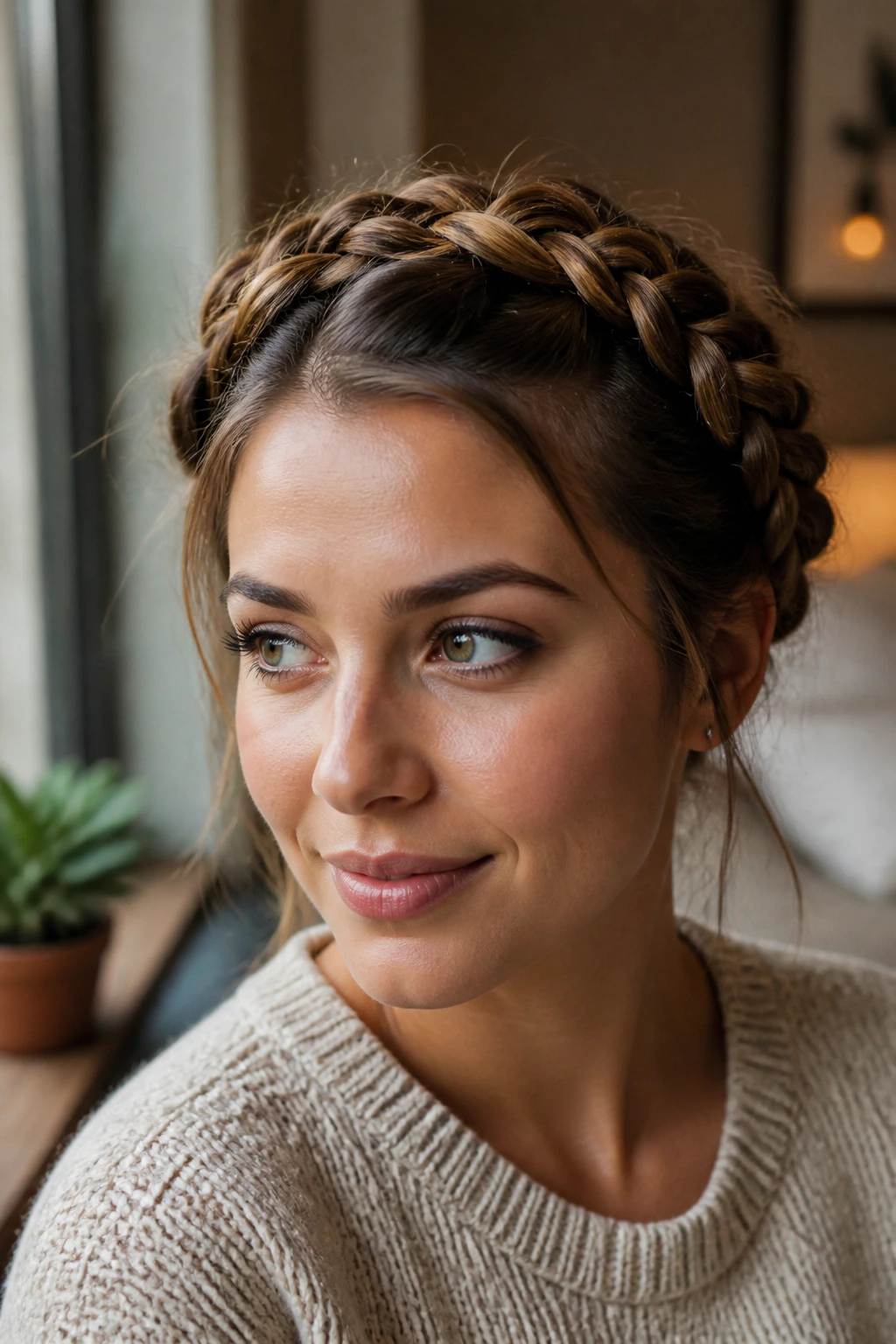
A crown braid is the ultimate way to get all that thick hair off your neck, but it often ends up looking like a massive, uncomfortable mountain on top of your head. The secret is the “hidden pin” technique. Instead of braiding one giant braid and wrapping it around, do two separate braids starting behind each ear and meeting at the top.
Use small, U-shaped hairpins to anchor the braids into your base hair rather than trying to pin them to each other. This creates a more secure hold and prevents the crown from shifting throughout the day. If you have thick hair, this style is essentially a built-in headband. It feels secure, looks intentional, and keeps your hair from getting hot and tangled while you’re out and about.
9. Interwoven Pull-Through Braid
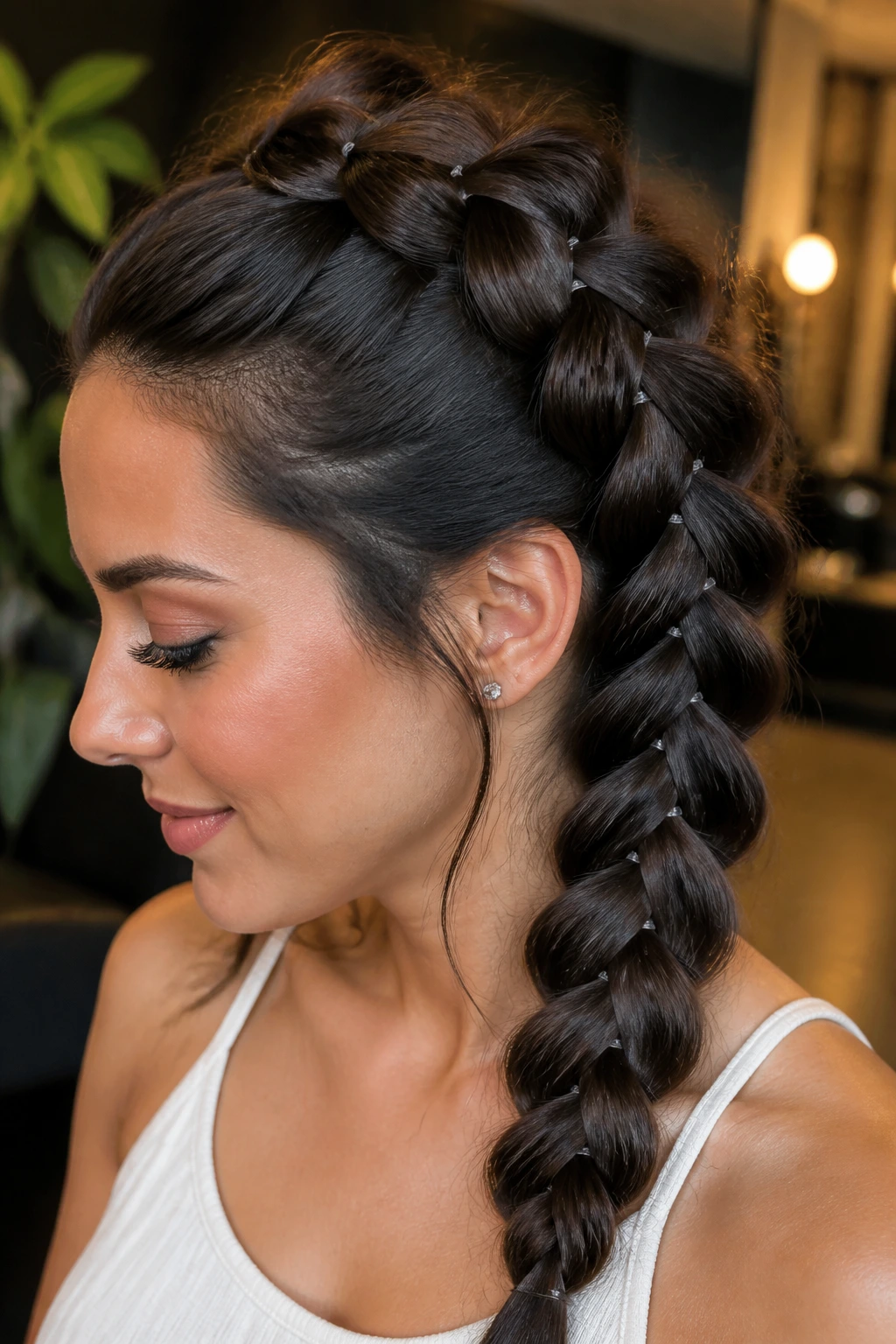
The pull-through braid is a masterclass in faking length and volume, but for those with already thick hair, it’s a masterclass in control. You use small clear elastics to “link” sections of hair together. Because you aren’t doing the traditional over-under-over movement, your arms won’t get nearly as tired.
The key to a good pull-through on thick hair is to ensure the sections are even. If one section is thicker than the others, the braid will look lopsided. Use a tail comb to section your hair perfectly before you start. Once you’ve linked all the sections, pull the outer edges of the “links” very wide. Since your hair is thick, the resulting braid will look almost like a woven piece of fabric. It’s incredibly stable and handles humidity better than almost any other style.
10. Half-Up Mohawk Braid
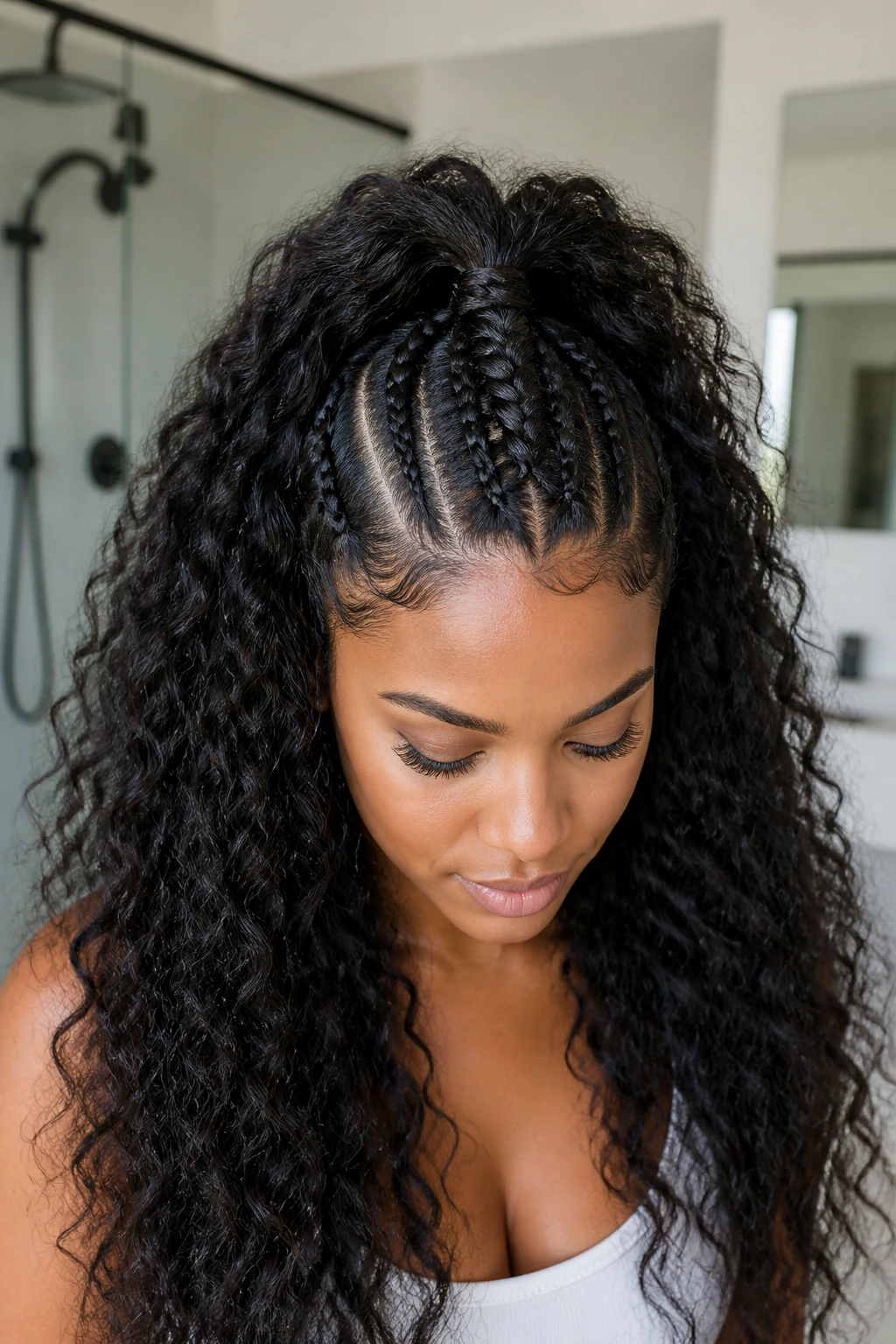
If you want to show off your length but keep the volume away from your face, the half-up Mohawk braid is the move. Gather the center section of your hair from the hairline to the crown and braid it tightly against the scalp. Stop at the crown and secure it with a hair tie, or tuck the end under the rest of your hair.
This is a great style for thick-haired individuals because it removes the “bulk” from the sides of your head, which is usually where people with thick hair feel the most pressure. It keeps your hair looking styled and polished in the front while letting the heavy volume in the back provide that luxurious, thick-haired bounce we all want. Use a bit of hairspray on your palms to tame the flyaways along the part line before you finish.
11. French-Twist Combo Braid
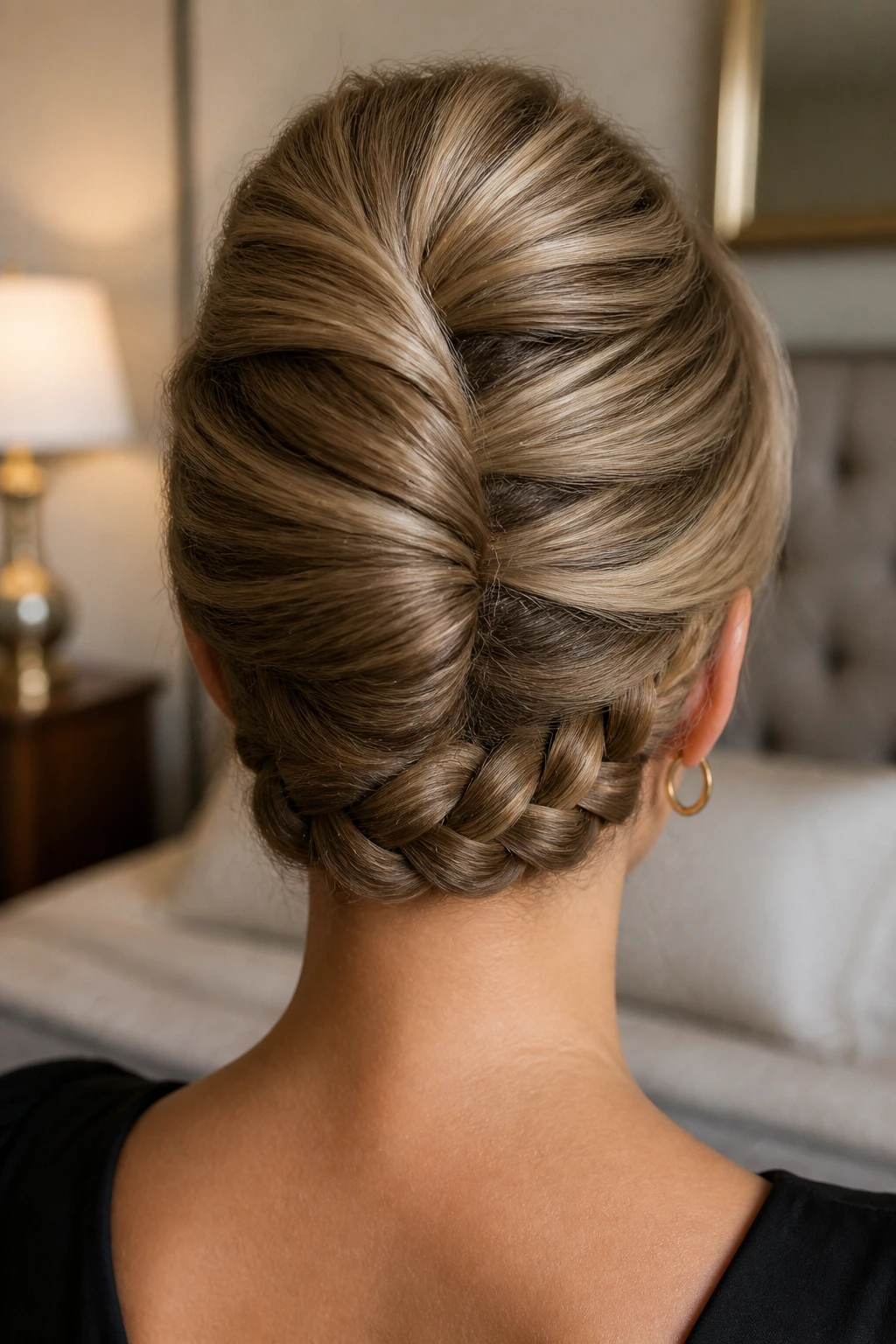
This is a sophisticated look that merges a formal twist with a casual braid. Start by doing a French twist at the back of your head, but leave the bottom third of your hair free. Braid that remaining tail into a tight three-strand braid and wrap it around the base of the twist.
It works exceptionally well on thick hair because you have enough length and weight to make the French twist look voluminous and full. The braid acts as a structural anchor. It’s much more durable than a standard French twist, which can often slide apart if your hair is too heavy. The combination of the sleek twist and the textured braid provides a nice visual contrast that elevates the whole style.
12. Fishtail Accent in a Low Bun
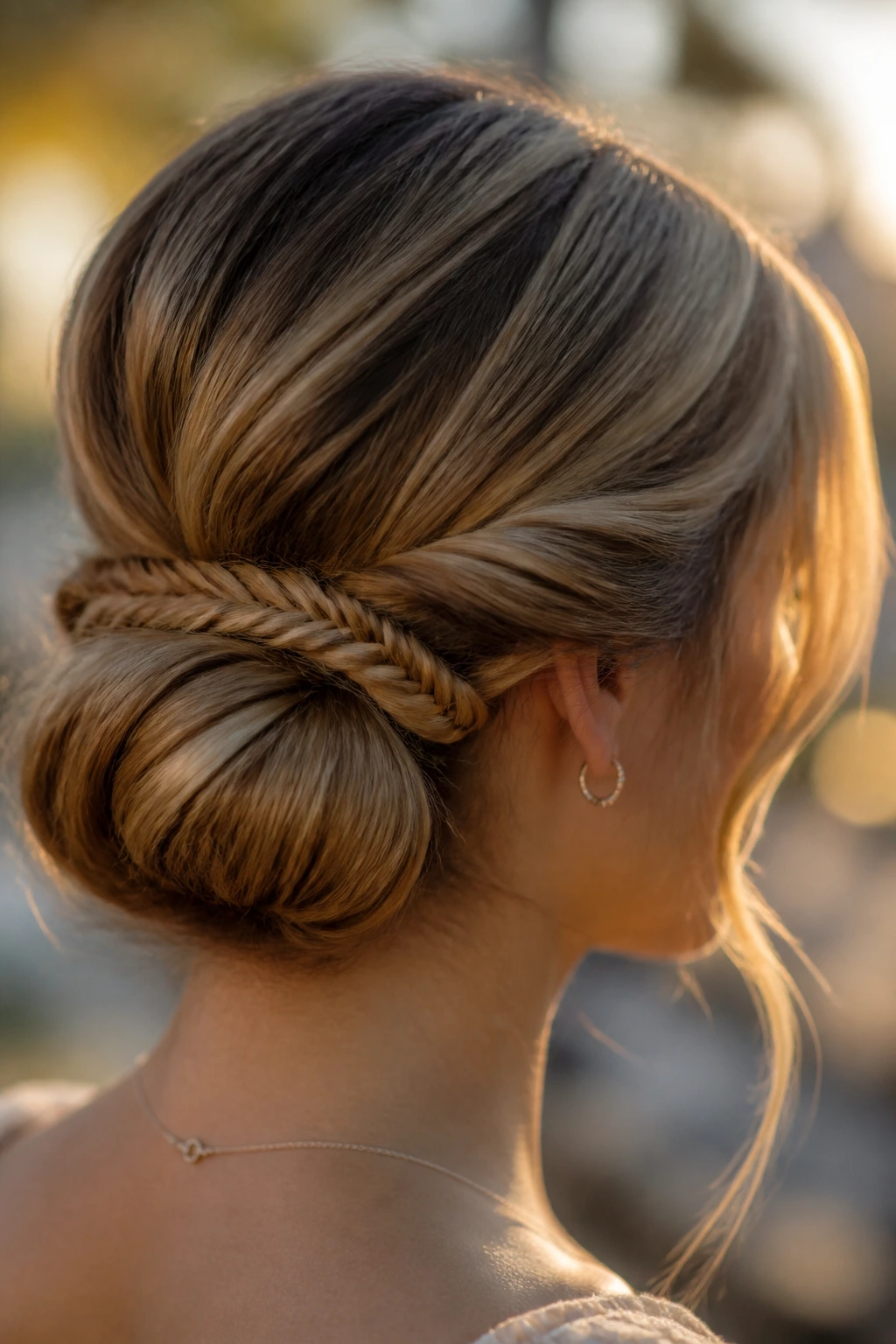
Sometimes a full braid is just too much to manage. If you are rushing, pull your hair into a low ponytail and fishtail braid just a thin section from the middle. Once the braid is done, wrap the entire ponytail into a low bun, letting the fishtail braid wrap around the outside of the bun.
It adds a layer of interest to an otherwise simple look without the heavy, weighted feel of a full braid. You get the polish of a bun with the added detail of the fishtail. Since you are only braiding a small amount of hair, you avoid the tangles that come with braiding a thick head of hair, making this an ideal “everyday” solution for those with a dense mane.
13. The Twisted Headband Braid
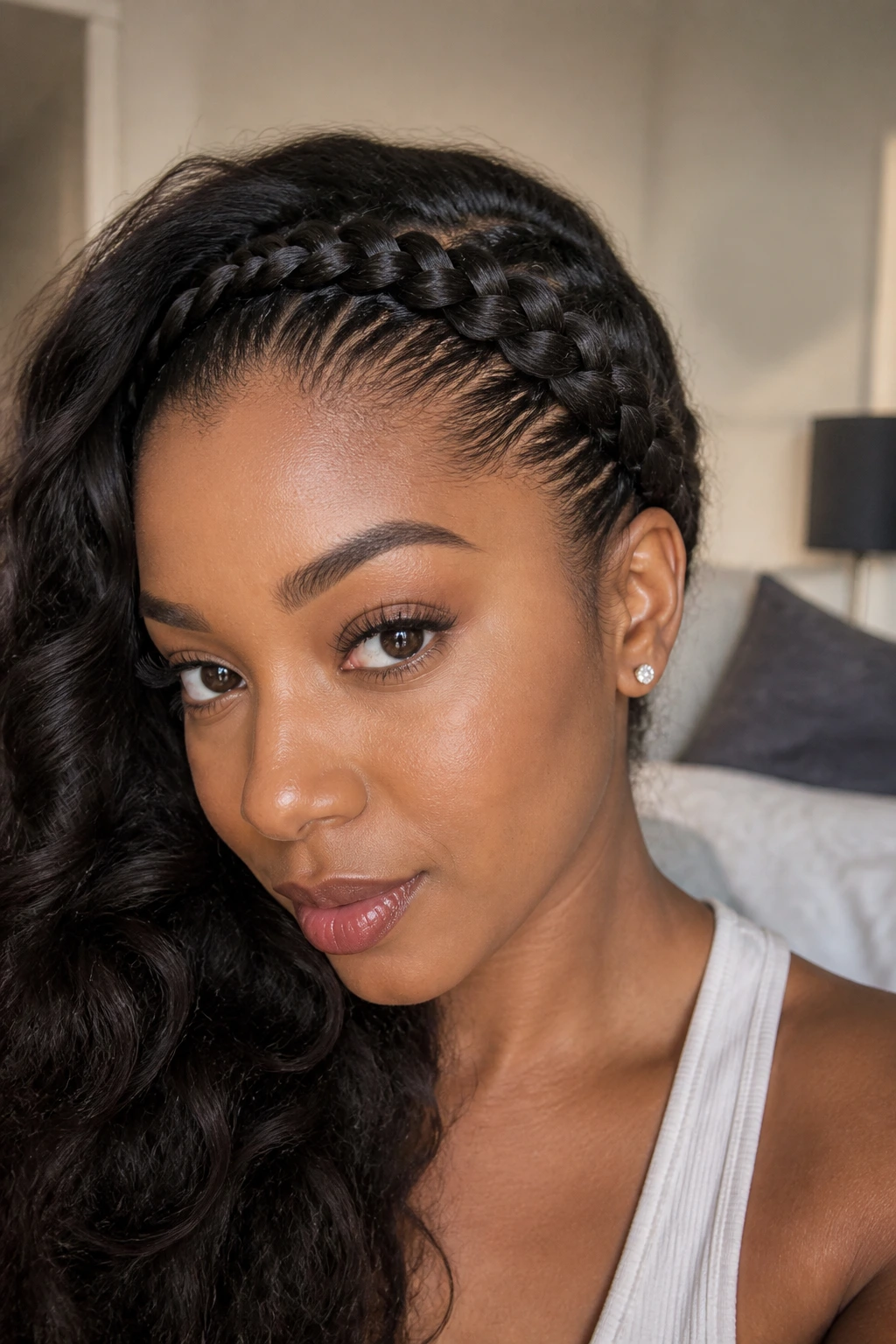
Create a deep side part and start a Dutch braid or a simple twist at the hairline, following the curve of your forehead. Keep picking up new strands as you move toward the opposite ear. This effectively acts as a braid that keeps your hair completely out of your face, which is vital if your hair is thick and tends to fall forward.
The trick with thick hair is to make sure you aren’t grabbing too much at once. Take thin slices of hair to add to the braid. If you try to add thick chunks, the braid will become too bulky and will eventually “pop” off your head. By keeping the sections small and tight to the scalp, you get a clean, polished finish that stays put for hours, regardless of how much hair you have.
14. Wrapped Multi-Braid Ponytail
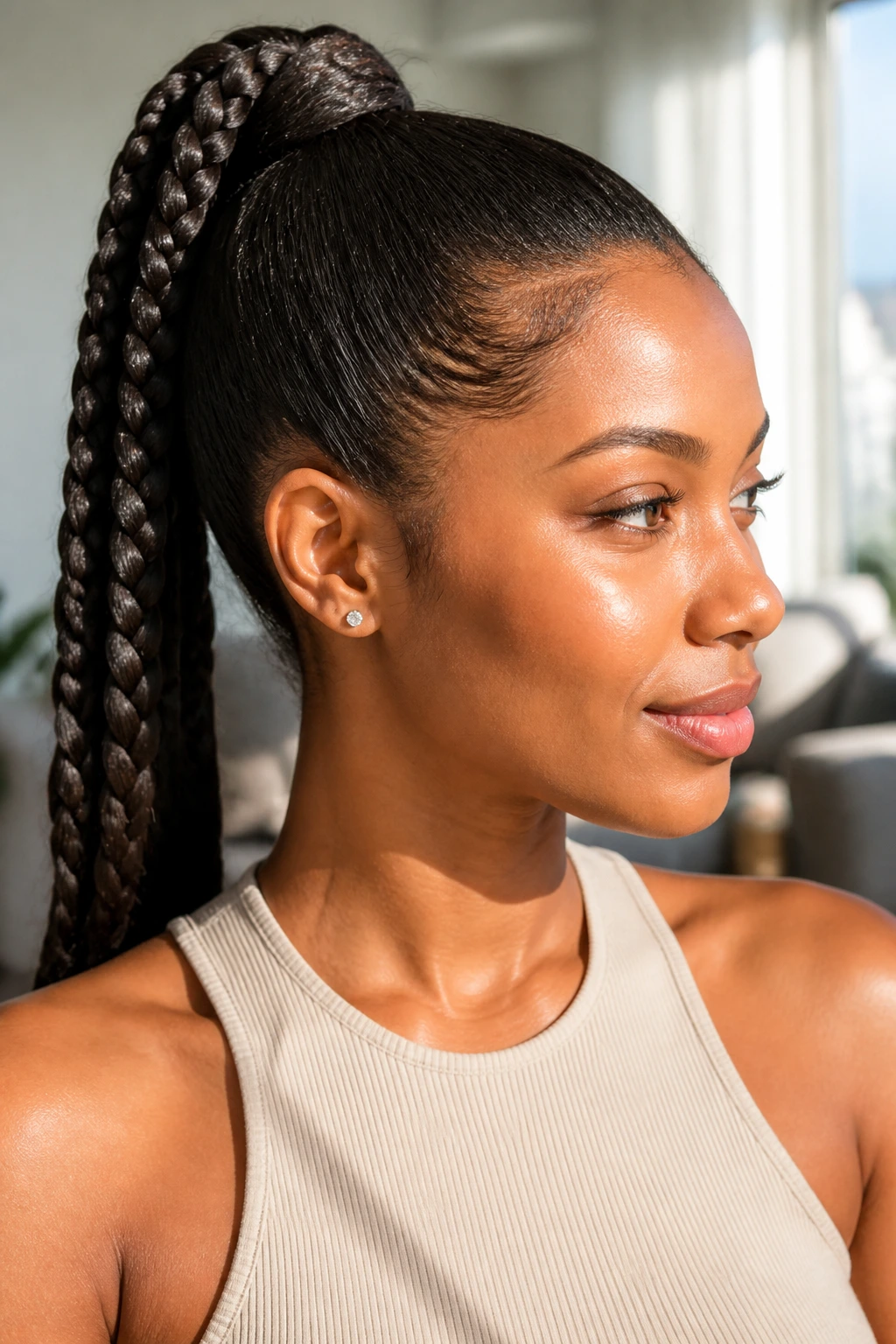
If you have a lot of hair, a single ponytail can feel like a heavy weight swinging against your back. Split your hair into three equal sections and braid each one individually. Once you have three separate braids, gather them all into a high ponytail or a low, gathered bunch.
The weight is now distributed across three separate structures, which makes the style feel much lighter. It also looks incredibly dramatic. You can wrap the ends of the braids around the base of the ponytail to hide the elastic. This is a very secure, low-maintenance look that manages density perfectly because you are breaking down one massive volume into manageable, smaller components.
15. The “Lace” Braid Wrap
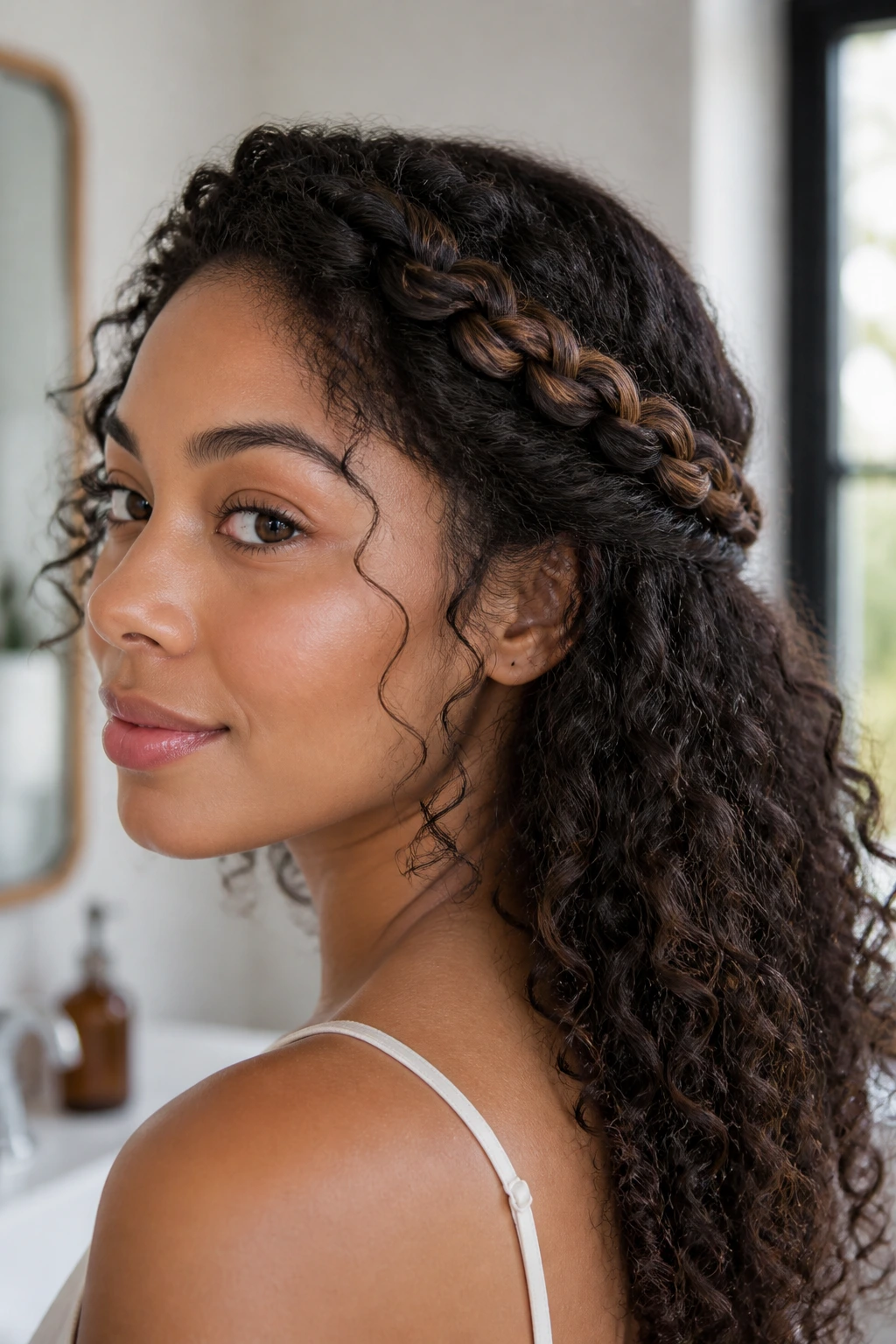
A lace braid is like a French braid, but you only add hair from one side. This is perfect for thick hair because it prevents the braid from becoming too heavy or “bumpy” against the scalp. Start at your temple and wrap the lace braid around the back of your head like a circlet.
Because you aren’t picking up hair from both sides, the braid stays smaller and more delicate. It creates a beautiful, airy halo that doesn’t feel like a heavy helmet. It’s a great way to manage the hair around your face while letting the bulk of your thick hair remain free. Make sure to pin the end of the braid discreetly under a layer of hair so the tail doesn’t dangle and ruin the seamless circlet effect.
16. The Faux-Hawk Braid
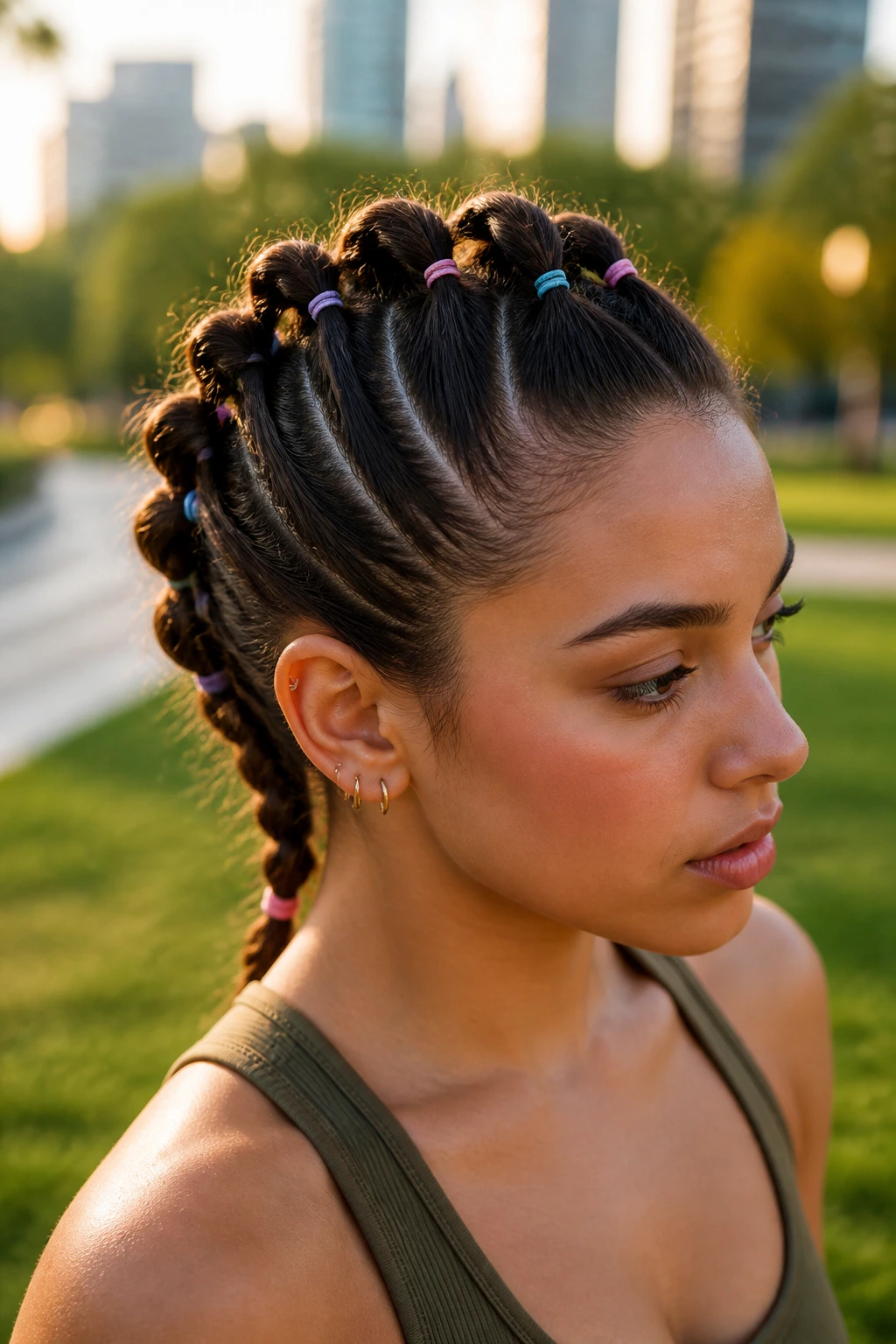
For those who want to look like they’ve spent hours styling but only have five minutes, the faux-hawk braid is the answer. You are essentially doing a series of small, tight Dutch braids or twists that run from the forehead to the nape of the neck. Instead of trying to connect them, let them stand alone.
Use small, colorful elastics to add some visual flair. Since you have thick hair, each “hawk” section will have plenty of body. You don’t need to tease or use a lot of product to get that “big hair” look—your hair naturally provides the volume. It’s a bold style that feels very secure and is perfect for keeping thick hair under total control during windy or active days.
17. The Twisted Half-Up Crown
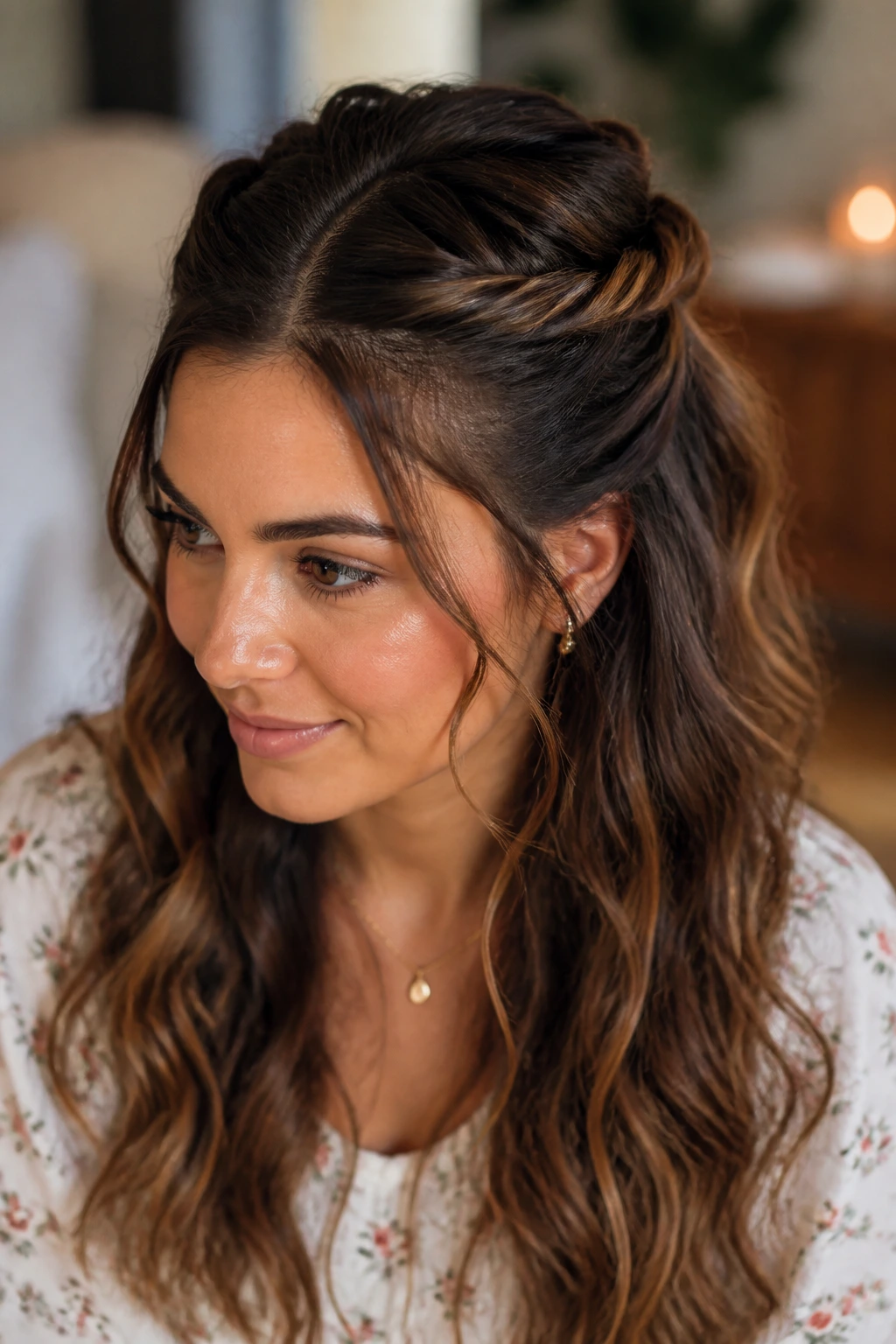
If you don’t like the feel of a braid pulling on your roots, try a twisted crown. Take two large sections from your temples and twist them tightly, pulling them back to the center of your head. Secure them with a small elastic, then take a second set of sections from just below the first and repeat.
This provides the look of an intricate braided crown but with much less tension on the scalp. Because you have thick hair, your twists will look dense and purposeful rather than thin and straggly. It’s a much more comfortable way to pull hair off your face, and the multi-layered approach ensures that your hair doesn’t sag or lose its shape as the day progresses.
18. Braided Chignon with Side-Sweep
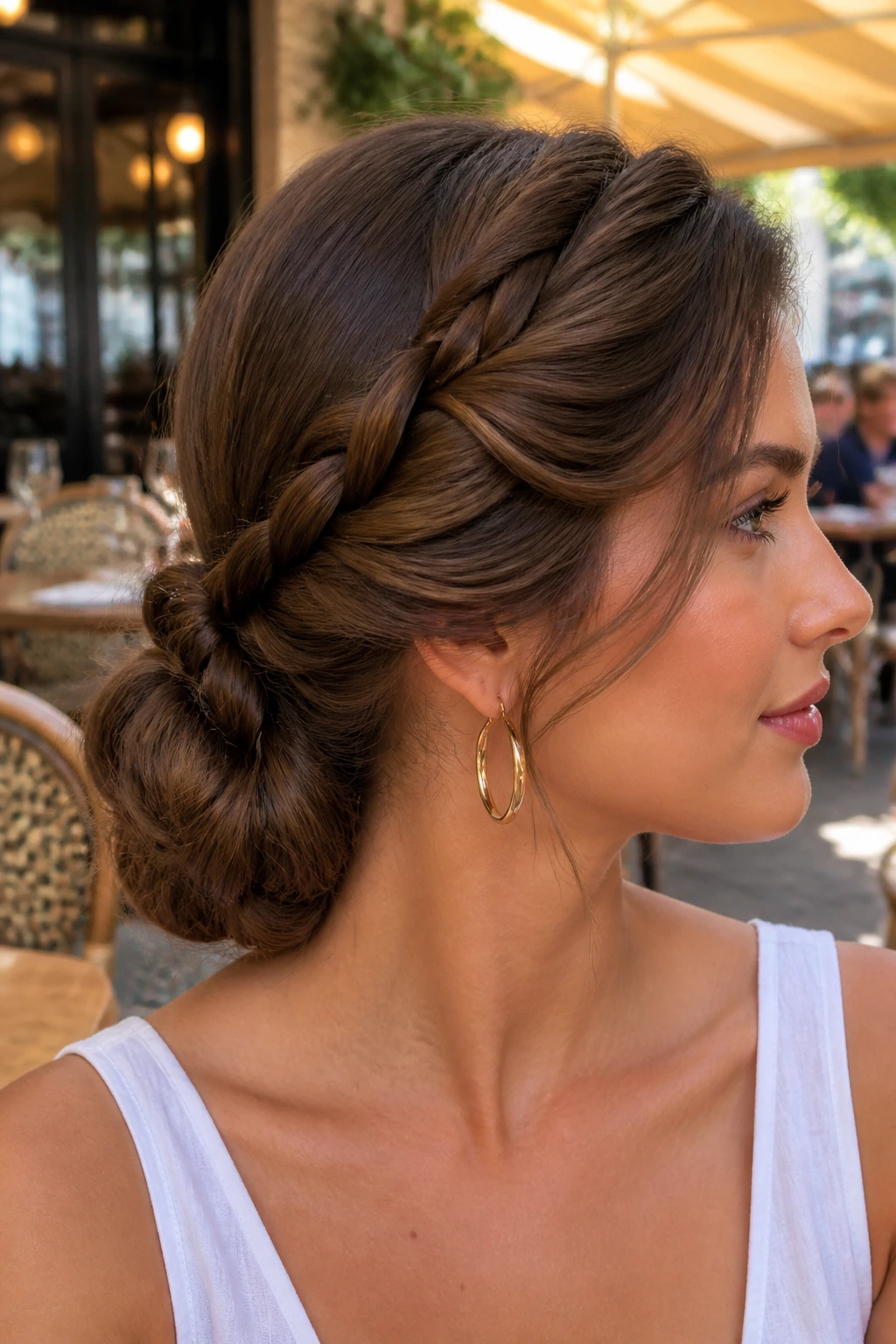
Start by sweeping your hair to one side and doing a simple three-strand braid that starts at the nape and goes down to the ends. Once the braid is secured, roll the entire thing into a low chignon. The braid provides the “spine” for the bun, making it much easier to pin into place.
Because your hair is thick, a normal chignon might feel like a loose, sagging mess. By braiding the hair first, you compress the volume. It becomes a tighter, more compact bun that holds its own weight. This is a classic, elegant style that works for almost any occasion and keeps your neck free, which is essential if your thick hair tends to get warm in the back.
19. The Knotted Braid
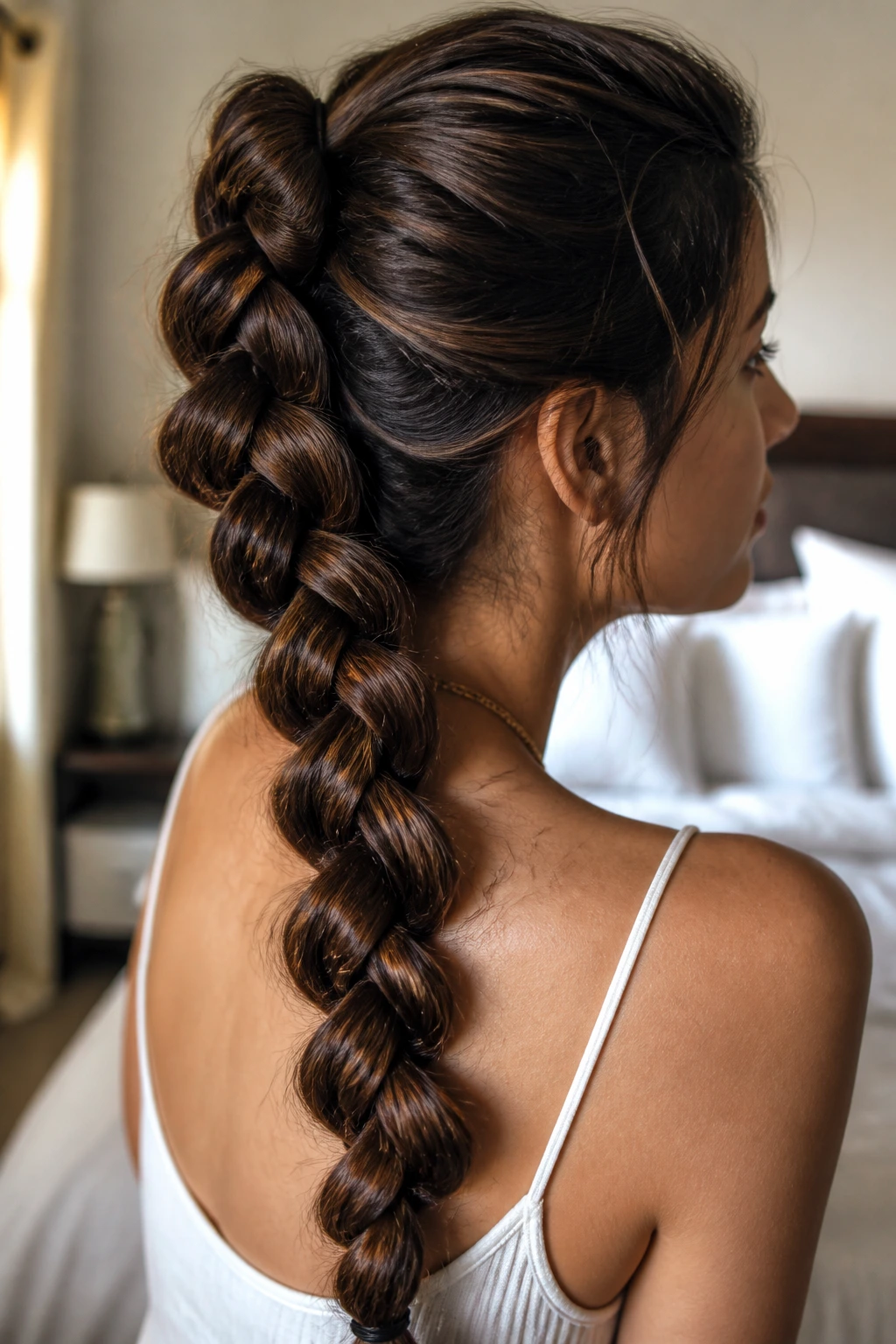
This is a unique technique where you create “knots” along the length of your hair rather than traditional braid stitches. It’s very similar to the way you might tie a rope. It takes a little practice to get the tension right, but once you do, it creates an incredibly secure and visually striking pattern.
Thick hair is actually perfect for this because the knots are more visible. With fine hair, you might need to fluff it up to see the detail, but with your hair density, the knots will stand out naturally. This style holds incredibly well and doesn’t unravel, making it one of the most durable choices for those who hate having to redo their hair halfway through the day.
20. The Bohemian Side-Braid with Volume
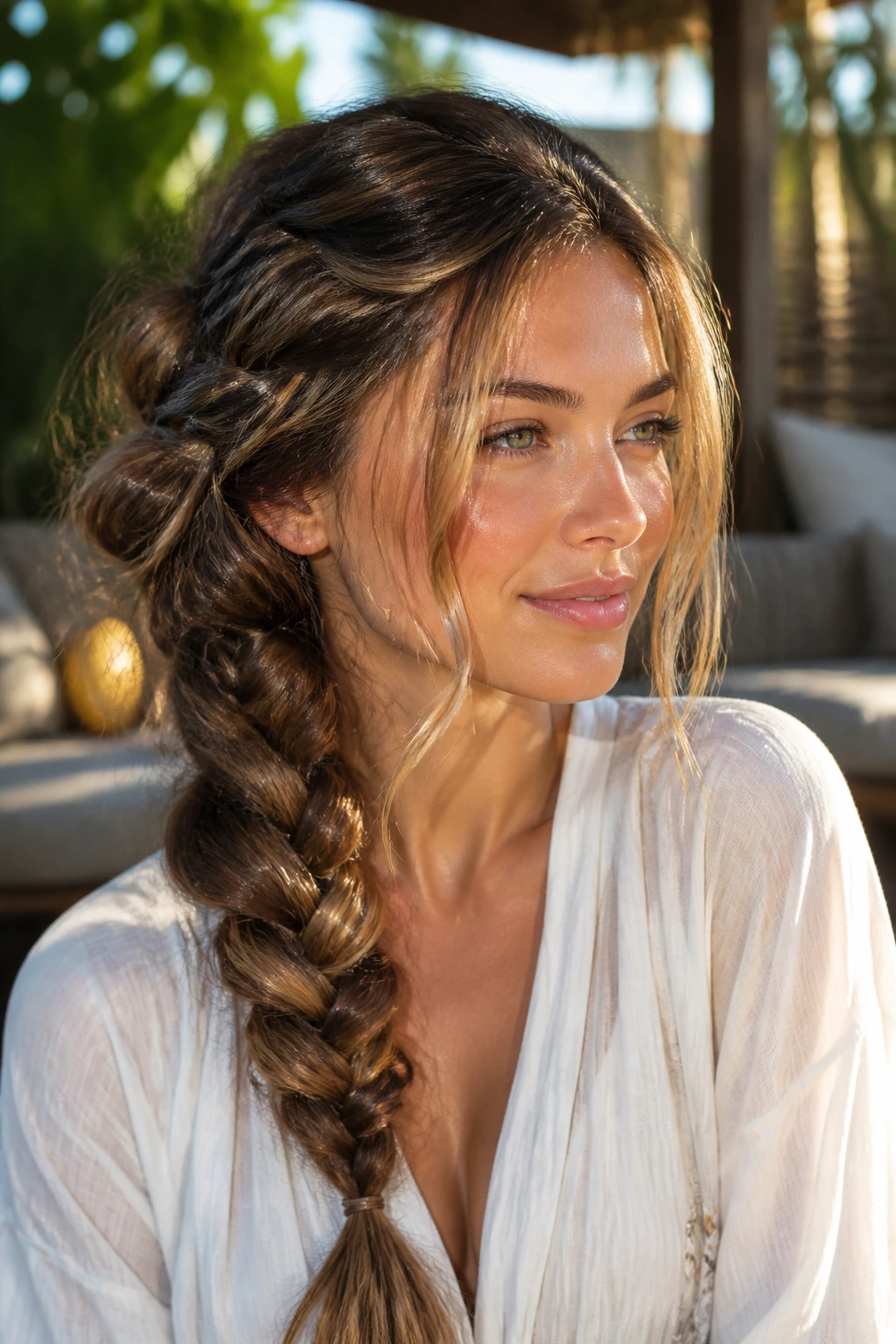
To achieve that effortless “boho” look, you need to lean into the messiness. Start a Dutch braid on one side, but keep it loose. Do not pull the stitches tight against your scalp. As you braid, add hair in slightly uneven, slightly larger chunks to give it that organic feel.
Once you reach the end, take your fingers and pull the braid apart significantly. Since you have thick hair, you don’t need to worry about the braid getting “too big”—you actually want it to look wide and soft. Finish by letting a few face-framing pieces fall out, and don’t worry about flyaways; they just add to the soft, romantic, slightly wild aesthetic that defines this style.
Final Thoughts
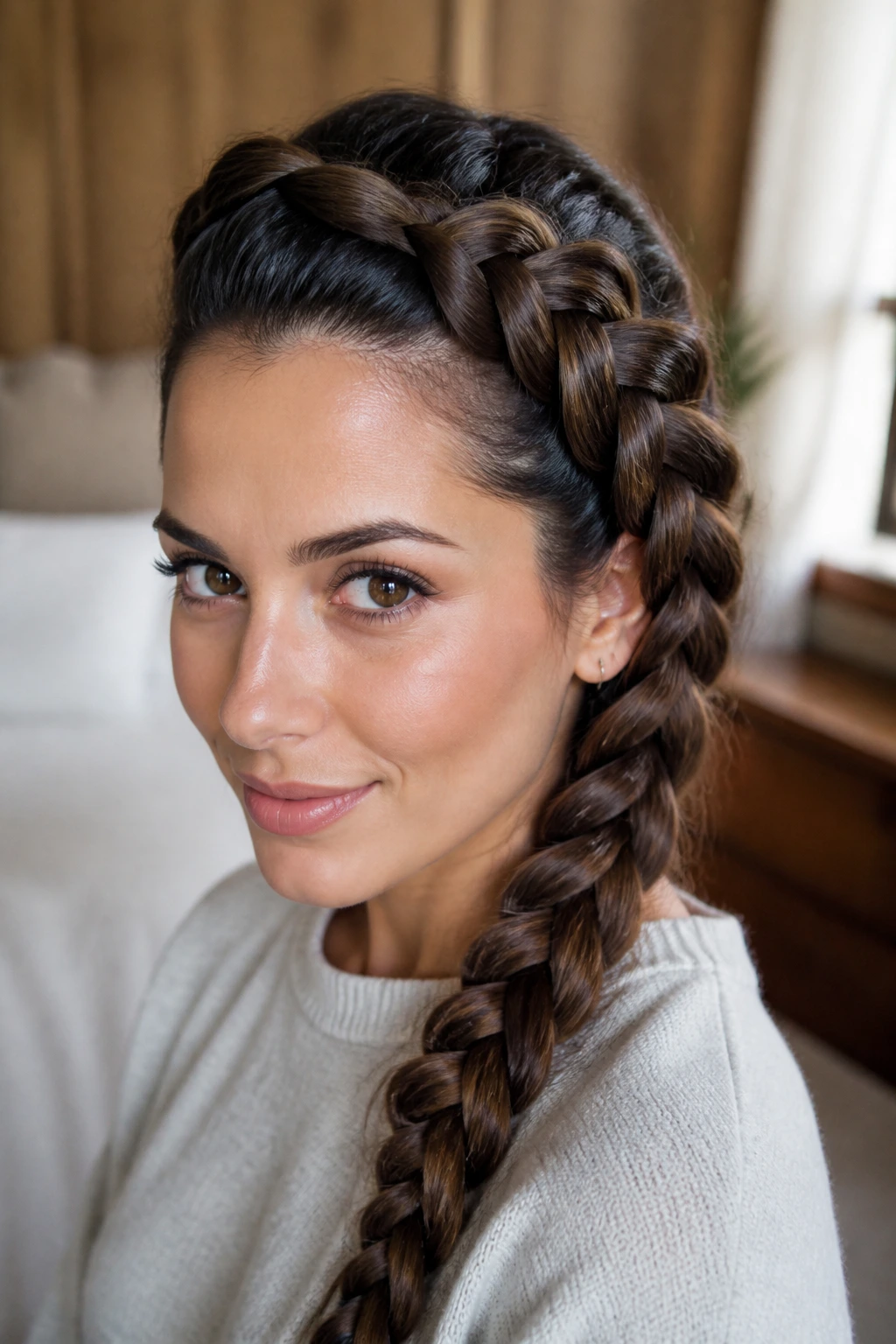
Thick hair is a structural powerhouse, and the best way to manage it is to treat it like a building material. You are looking for balance, tension, and durability. Whether you are using Dutch braids to lift the weight off your scalp or relying on rope twists to keep a bun from sliding, the key is to prioritize the mechanics of the braid before you worry about the final aesthetic.
If you struggle with the weight, always look for styles that distribute the hair across multiple points on your head, such as crown braids or multiple smaller braids fed into a ponytail. Remember that hairspray and dry shampoo are not just for styling; they are for control. Giving your hair the grip it needs will turn that morning struggle into a routine you can actually master. Your hair is an asset—once you learn how to anchor it, you’ll find that you have more styling options than almost anyone else in the room.