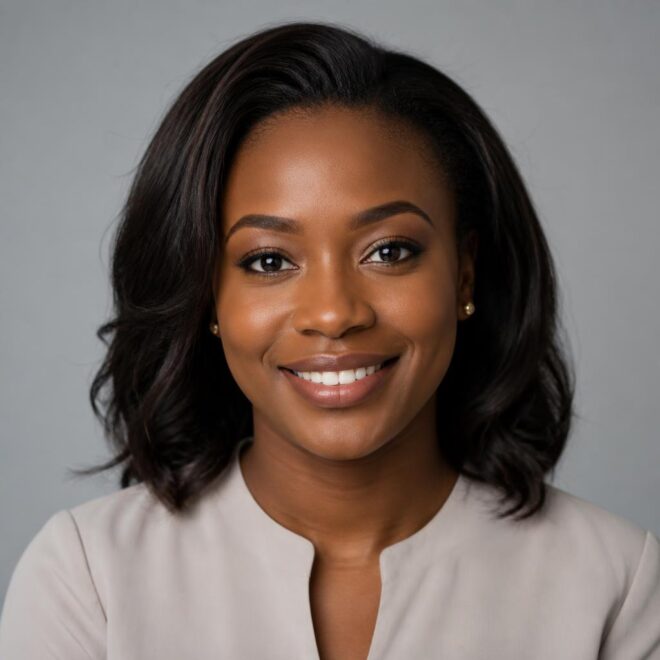


Thin hair often gets a bad reputation. You might feel limited by a lack of natural density, constantly battling the desire for volume against the reality of gravity. Many people with fine strands spend their mornings teasing, backcombing, and dousing their roots in dry shampoo, only to find the effect gone by lunchtime. The secret to living with hair that lacks natural weight isn’t to force it into styles that require a salon-grade blowout to look passable, but to choose cuts that naturally encourage movement and the illusion of fullness.
The architecture of a great haircut for thin hair relies on strategic weight removal. If you leave your ends too long and blunt, they can look straggly, pulling the entire style downward and making the hair appear even thinner than it is. Conversely, a well-placed layer or a blunt base cut at the right length can act like a foundation, providing structure where there previously was none. It is about understanding how light hits your hair and using cut patterns to build texture that sticks around.
Finding the right style is less about trends and more about math. You want a cut that mimics body. Sometimes this means blunt lines that make the hair look thicker at the bottom, and other times it means hidden interior layers that prevent the hair from lying flat against your skull. Regardless of your face shape, the following styles are engineered to maximize every single strand you have.
1. The Blunt Bob
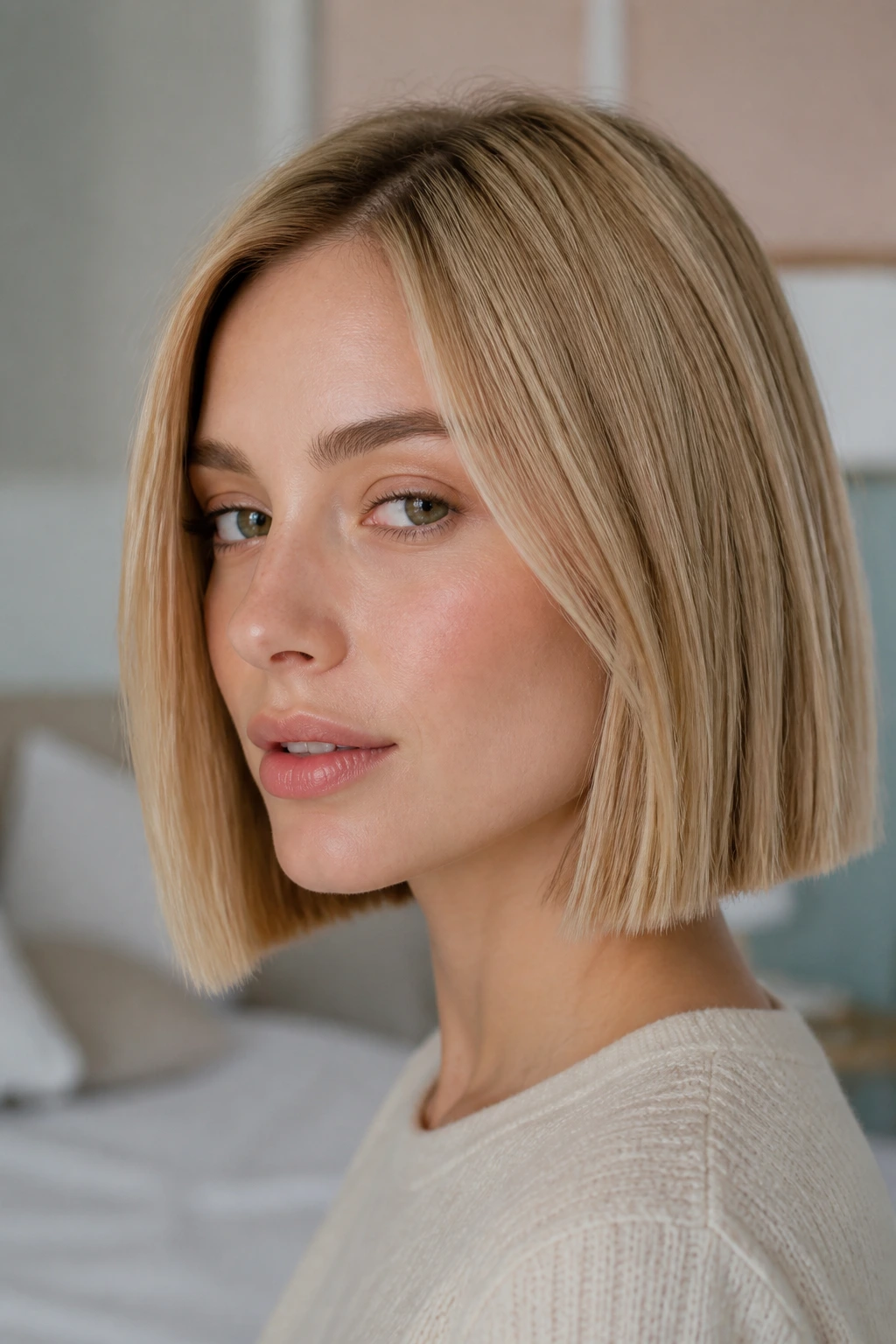
The classic blunt bob is arguably the best friend of fine hair. By cutting the ends in one crisp, horizontal line, you create the appearance of a solid, thick perimeter. It removes the wispy, thin ends that usually make fine hair look sparse, effectively “resetting” the hair so it looks denser.
Why It Works for Fine Strands
When hair is long and thin, the weight of the length pulls it flat. A bob sitting just above or at the chin keeps the hair light. Because there are no layers to thin out the ends, every strand contributes to the overall visual mass of the hair.
Styling Tips for Maximum Impact
- Use a thickening mousse on damp hair before blow-drying.
- Flip your head upside down during the drying process to encourage lift at the root.
- A light spritz of texture spray at the ends provides enough grit to keep the hair from sliding around. Pro Tip: Avoid heavy oils or serums that can cause thin hair to clump together and look stringy.
2. The Textured Lob
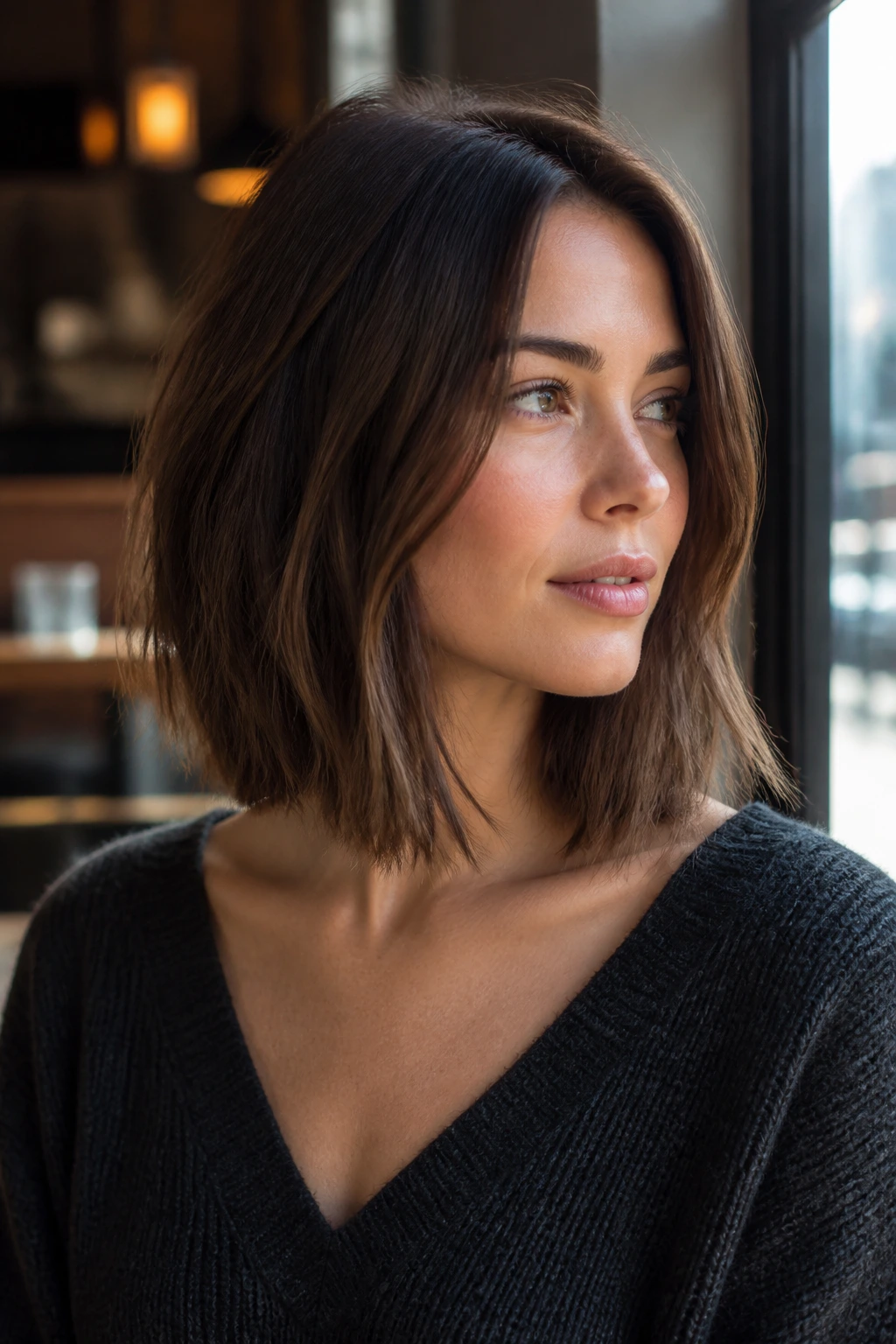
If a chin-length bob feels too aggressive, the lob—or long bob—is your middle ground. It hits around the collarbone, offering enough length to pull back into a ponytail while maintaining the illusion of a full, healthy base. This length is universally flattering and allows for a bit more styling freedom.
Creating the Illusion of Volume
The key here is subtle, long layers that start well below the chin. By adding just enough internal texture, you prevent the “triangle” shape that thin hair can sometimes take on if it’s all one length at that longer point.
Who Should Choose This
The lob is ideal for anyone who wants to hide the lack of density at the ends while maintaining a professional, easy-to-manage look. It works with almost any face shape, and because it is not overly layered, it retains the appearance of a thicker, more uniform head of hair.
3. The Wispy French Bangs
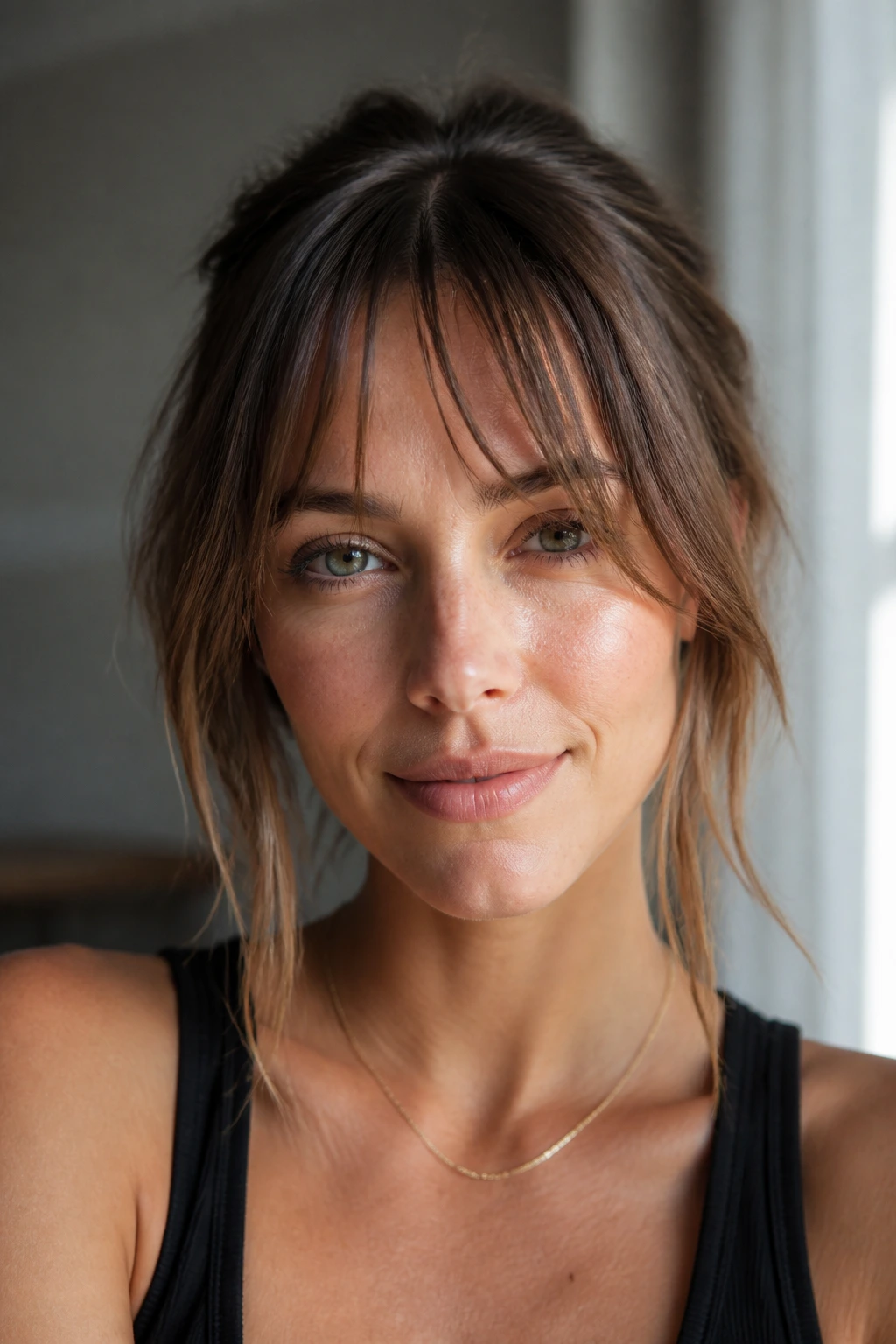
Many people with thin hair avoid bangs, fearing they will look like a curtain of sparse strings on their forehead. However, when cut correctly, French bangs—which are slightly longer at the sides and piecey in the center—can draw focus to your eyes and create a frame that makes the rest of your hair look more intentional.
The Technique That Makes It Work
Ask your stylist for “soft-point cutting.” This method ensures the edges of the bangs aren’t blunt or heavy. By removing weight from the ends of the bangs, they appear light and airy rather than greasy or stringy.
Maintaining the Shape
Because these bangs are intended to be a bit piecey, they don’t require the intense precision of a heavy, solid-block fringe. If they grow out slightly, they naturally blend into the sides of your hair, making them a low-maintenance choice for busy mornings.
4. The Deep Side Part Pixie
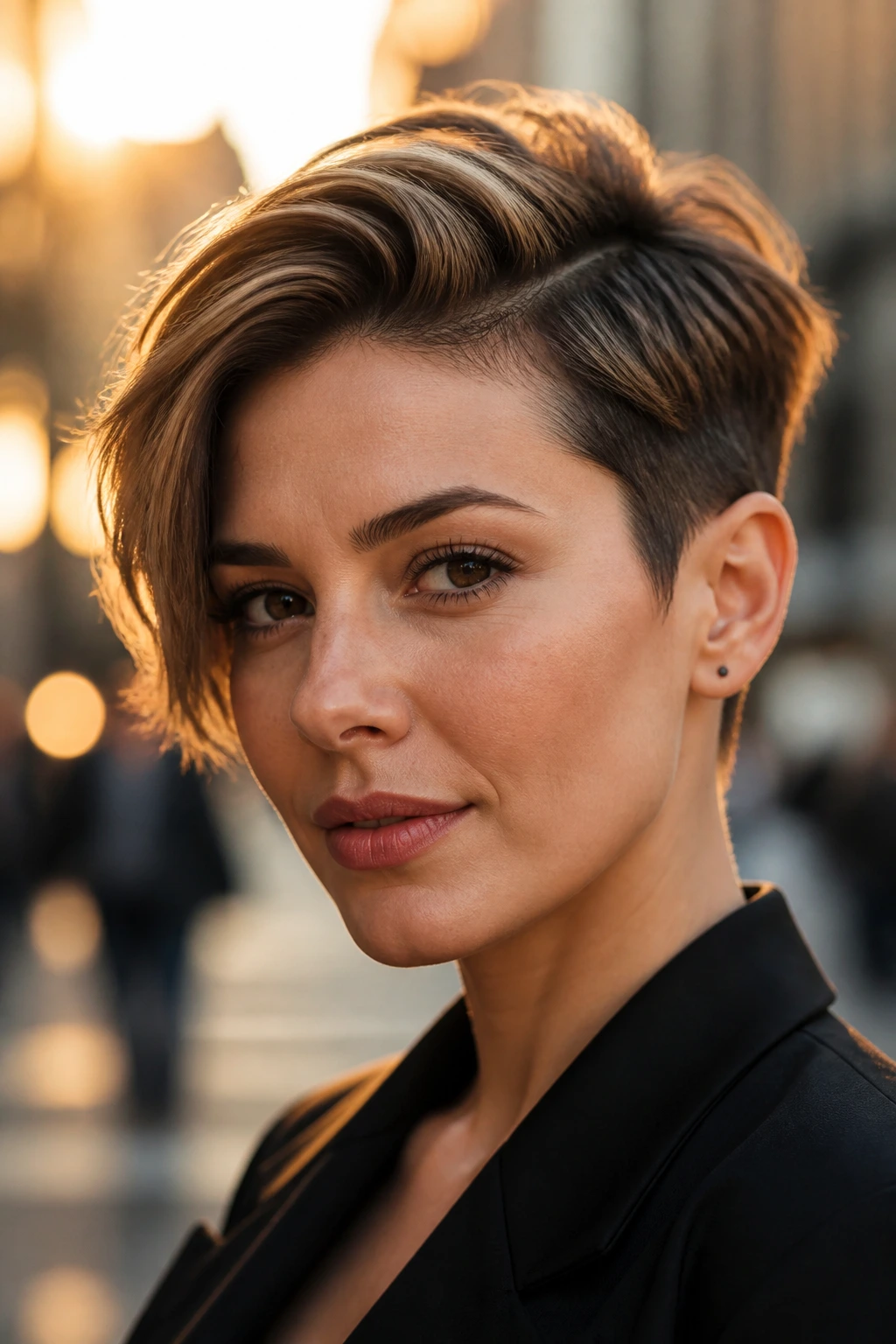
If you are feeling brave, a short pixie with a deep side part is a masterclass in faking volume. By shifting all your hair to one side, you instantly double the appearance of density on the top of your head. It creates a sweep that naturally lifts the hair away from the scalp.
Why Shifting Your Part Matters
Thin hair usually looks flattest when parted in the center, as the hair lies symmetrically against the head. A deep side part breaks this symmetry and forces the hair to stand up at the root, providing an instant volume boost that lasts through the day.
How to Style It
Work a small amount of matte styling paste into your hands and run it through the roots to keep that side-swept volume in place. The matte finish is crucial; shiny products will only make the hair look thinner by exposing the scalp.
5. The Shaggy Mullet-Inspired Cut
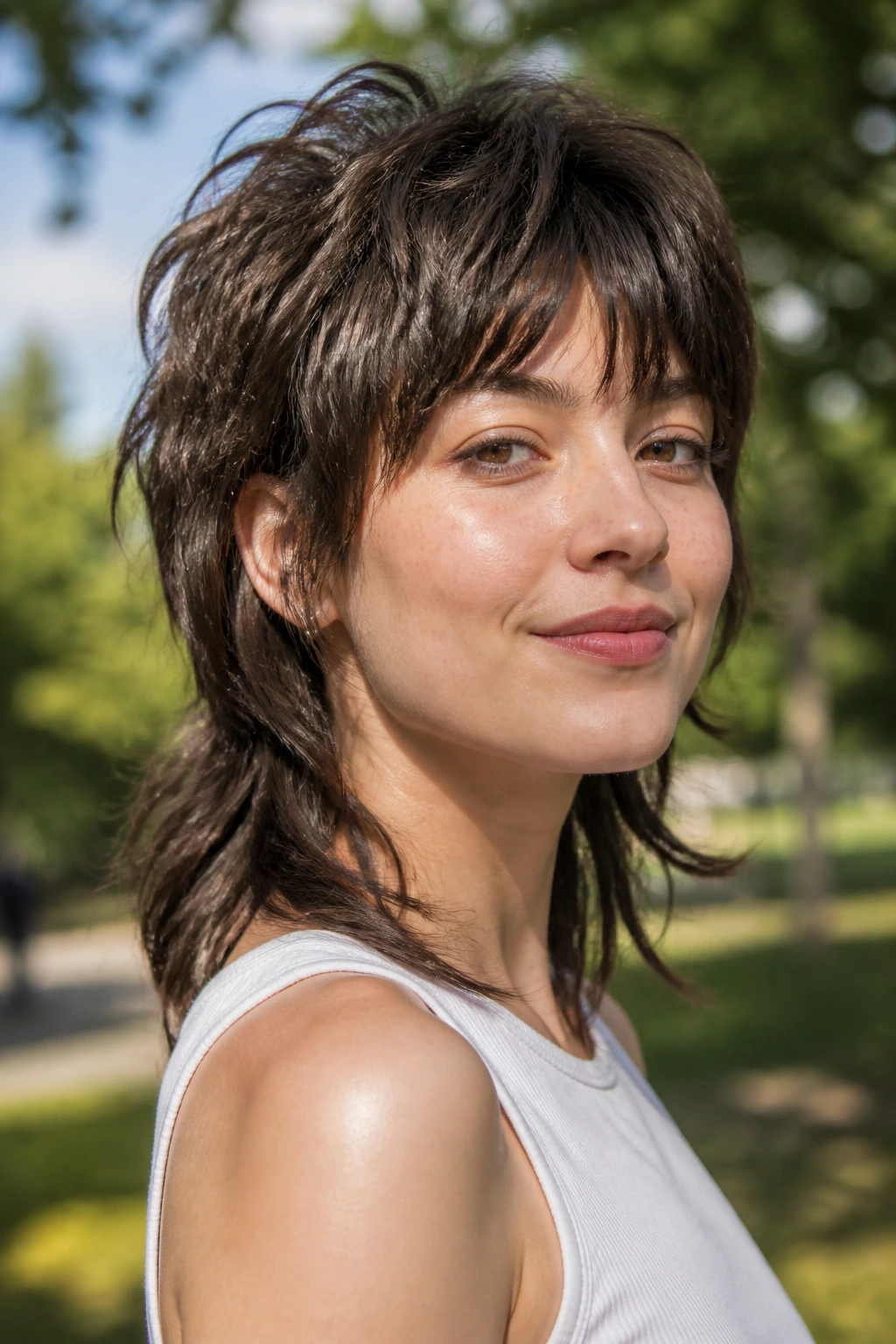
Don’t let the name scare you. Modern shag cuts are all about texture and movement, two things that are lifesavers for thin hair. By incorporating multiple layers that start closer to the crown, you can encourage hair to bend and wave rather than sit poker-straight and flat.
Building Texture from the Inside Out
The goal of this cut is to create a “messy” appearance on purpose. When the hair is naturally piecey, you aren’t fighting to make it look smooth and thick; you are embracing its natural tendency to be fine. It is an effortless look that actually thrives on a bit of grit.
Styling for the Shag
- Use a salt spray while the hair is damp.
- Let it air-dry for a natural, undone finish.
- If you have naturally straight hair, a quick pass with a curling wand on just a few random pieces can give the whole head a voluminous, lived-in feel.
6. The Blunt Lob with Hidden Interior Layers
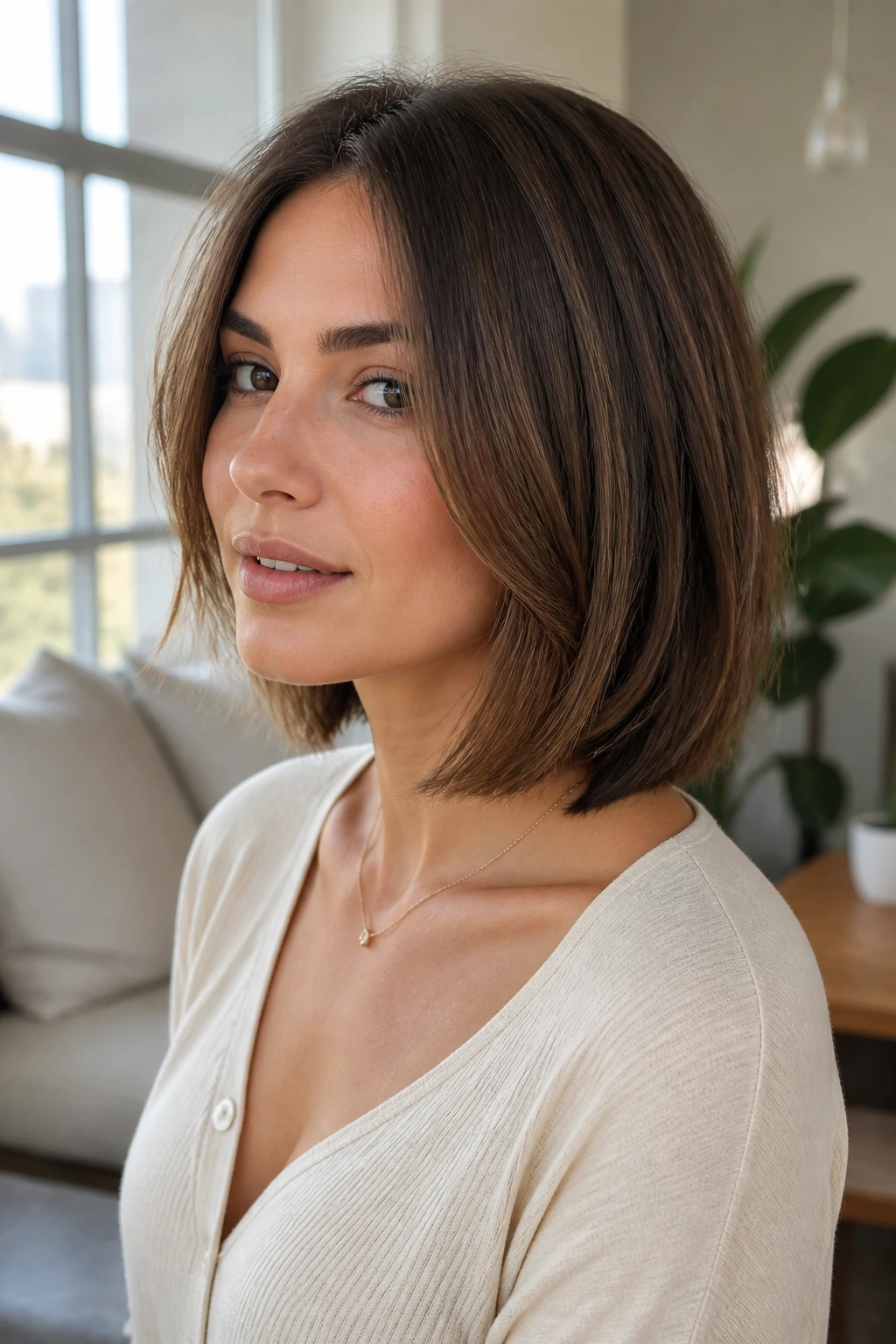
This is a sophisticated variation of the standard lob. The exterior looks perfectly blunt and thick, but the stylist cuts “invisible” layers on the inside. These hidden layers serve as a scaffold for the hair, propping up the top section so it doesn’t fall flat.
Understanding Interior Architecture
Your stylist will take sections from the underside of your hair and cut them slightly shorter. Because these layers are hidden, they don’t compromise the solid look of your length. Instead, they provide the necessary “cushion” to create lift.
Why This Is a Game-Changer
You get the benefits of a thick-looking bob with the volume of a heavily layered cut. It is the best of both worlds, and it grows out much more gracefully than traditional layers that can look ragged over time.
7. The A-Line Bob
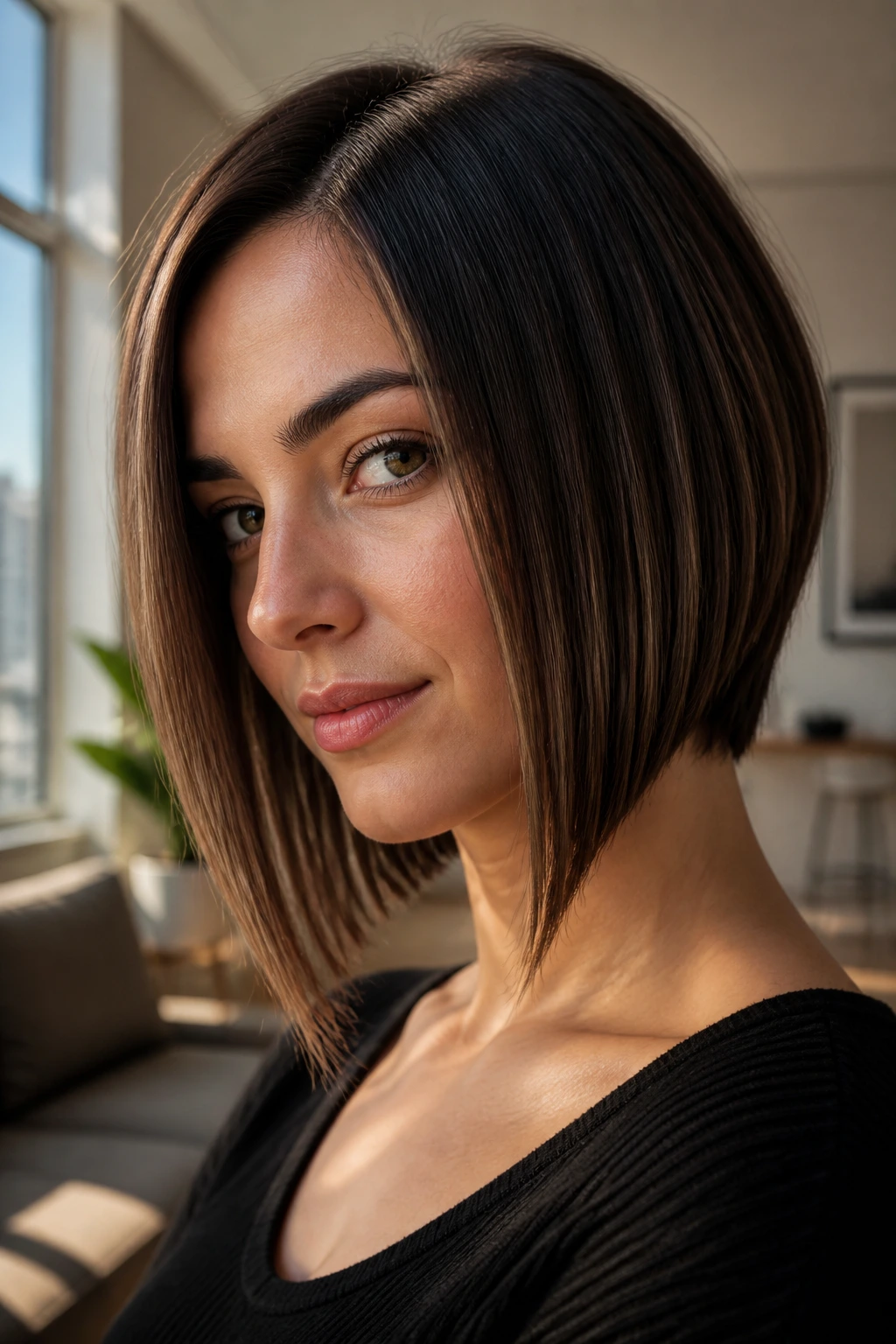
An A-line bob is shorter in the back and longer toward the front. The dramatic angle creates the illusion of more hair in the front where you can see it. It is a bold, structural cut that commands attention and makes thin hair feel deliberate and stylish.
How the Cut Influences Density
By concentrating more hair length near the face, the cut creates a heavy, blunt frame that is incredibly flattering for round or square face shapes. It also removes the bulk from the back of the neck, which is often where thin hair tends to mat or lose its shape first.
Styling for Success
Use a round brush to pull the hair slightly under as you blow-dry. This curvature adds a gentle volume that lasts longer than a flat iron-straightened look, which often results in the hair clinging too closely to the face.
8. The “Butterfly” Cut
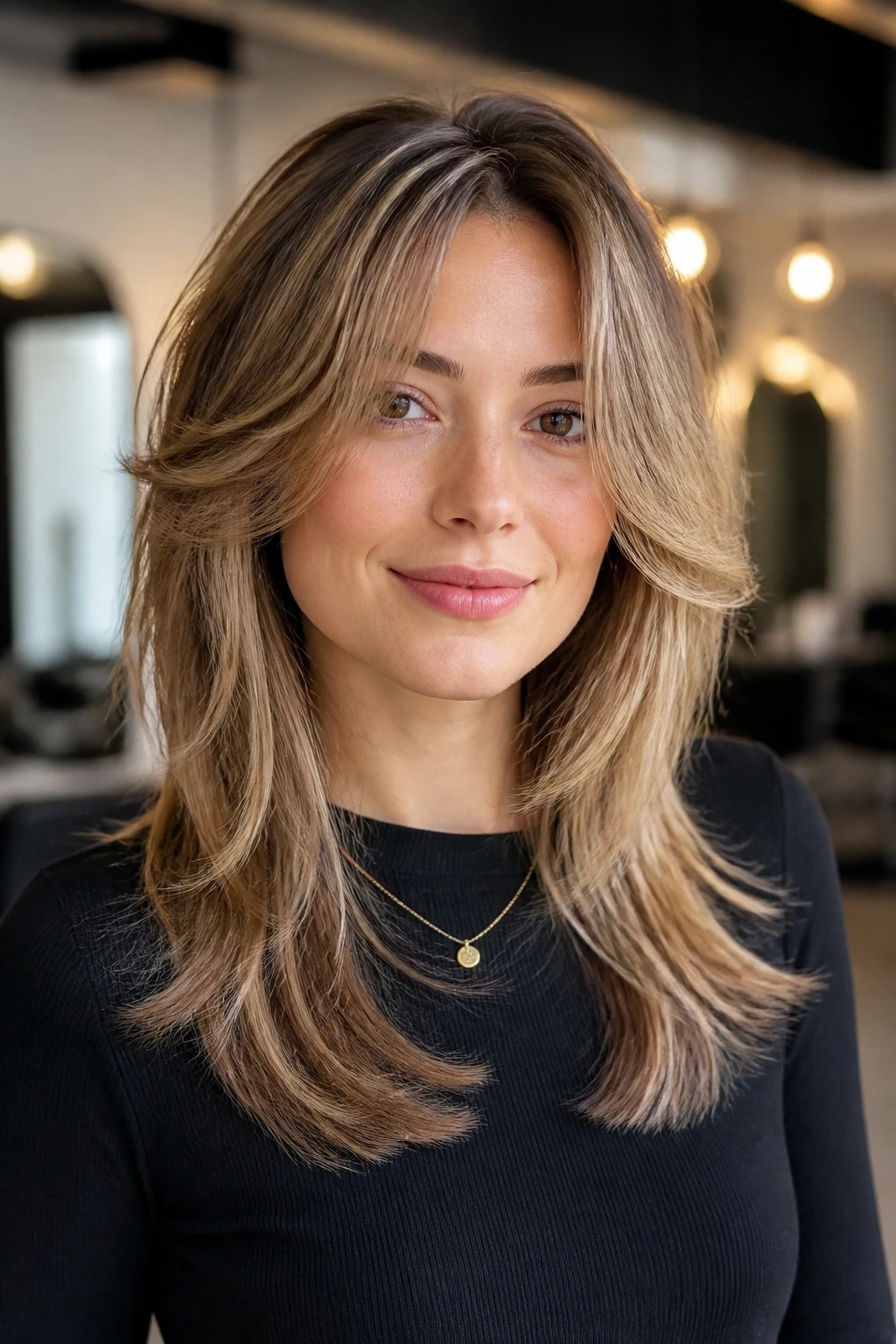
While often touted for thick hair, the butterfly cut can be adapted for thin hair by reducing the amount of layering. The idea is to have short, face-framing layers that blend into longer lengths. For fine hair, keep these layers minimal to ensure you don’t lose too much mass at the bottom.
Adapting the Trend
If you have thin hair, do not let your stylist “thin out” the bottom layers. Ask them to focus on the face-framing sections only. This gives you that “bouncy” look without turning your ends into wispy tails.
Managing Expectations
This is a longer style, so it will require more upkeep in terms of styling with a round brush or rollers. It is a fantastic option if you refuse to give up your length but need a way to make it look less stringy.
9. The Rounded Pixie
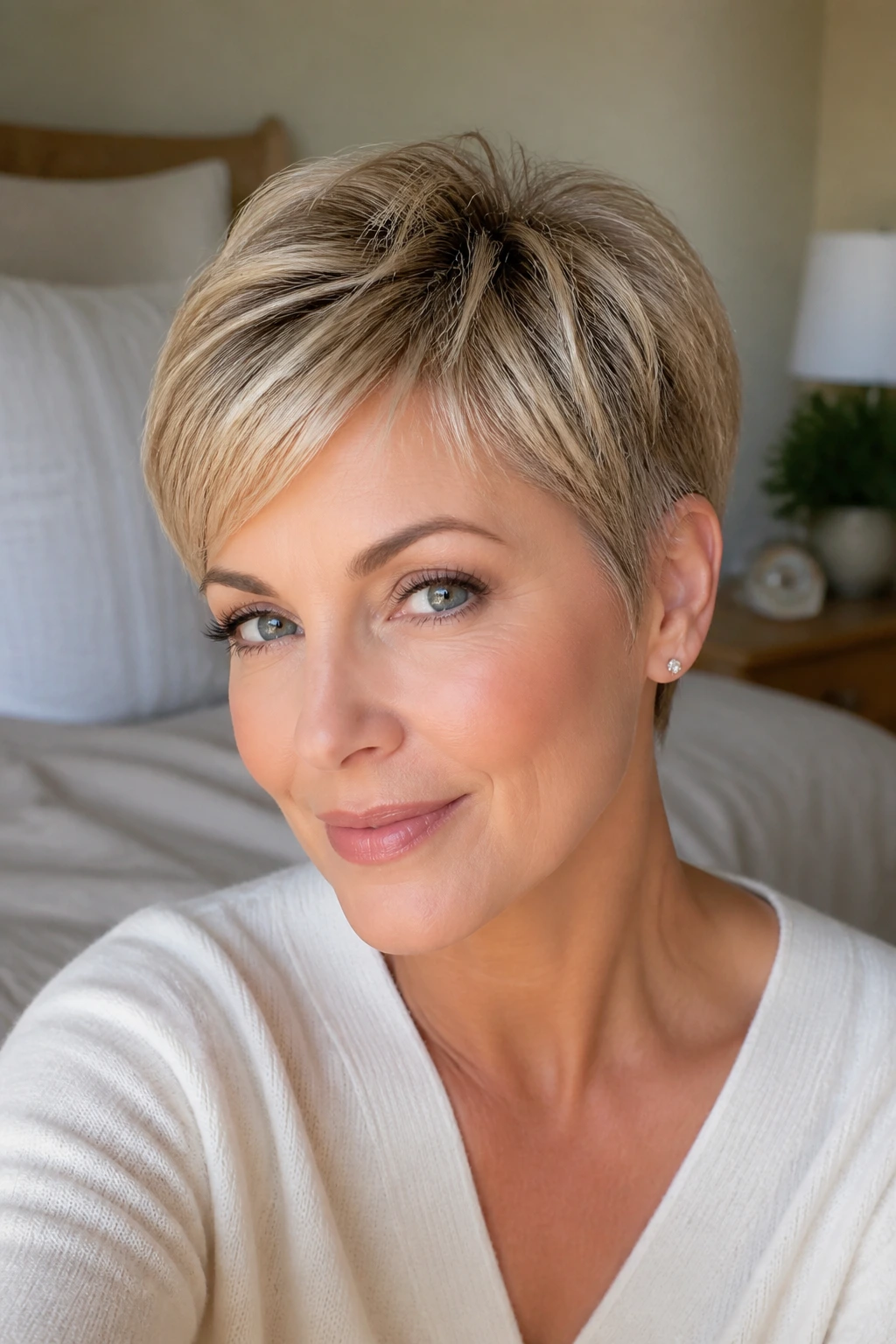
A rounded pixie cut—with a bit of height at the crown—is perfect for hiding areas of lower density. The shape is designed to be slightly longer on top, allowing you to sweep it up and over, creating a dome of hair that hides the scalp perfectly.
Why the Round Shape Matters
Hair that is cut to follow the curve of the head naturally looks fuller than hair that is cropped too tight. The extra length on top acts as a layer that covers and builds upon the hair underneath.
Product Selection
A lightweight texturizing powder is your best friend here. Apply it to the roots and fluff with your fingers. Unlike liquid sprays, powders provide grip and volume without making the hair heavy or wet.
10. The Collarbone Blunt Cut
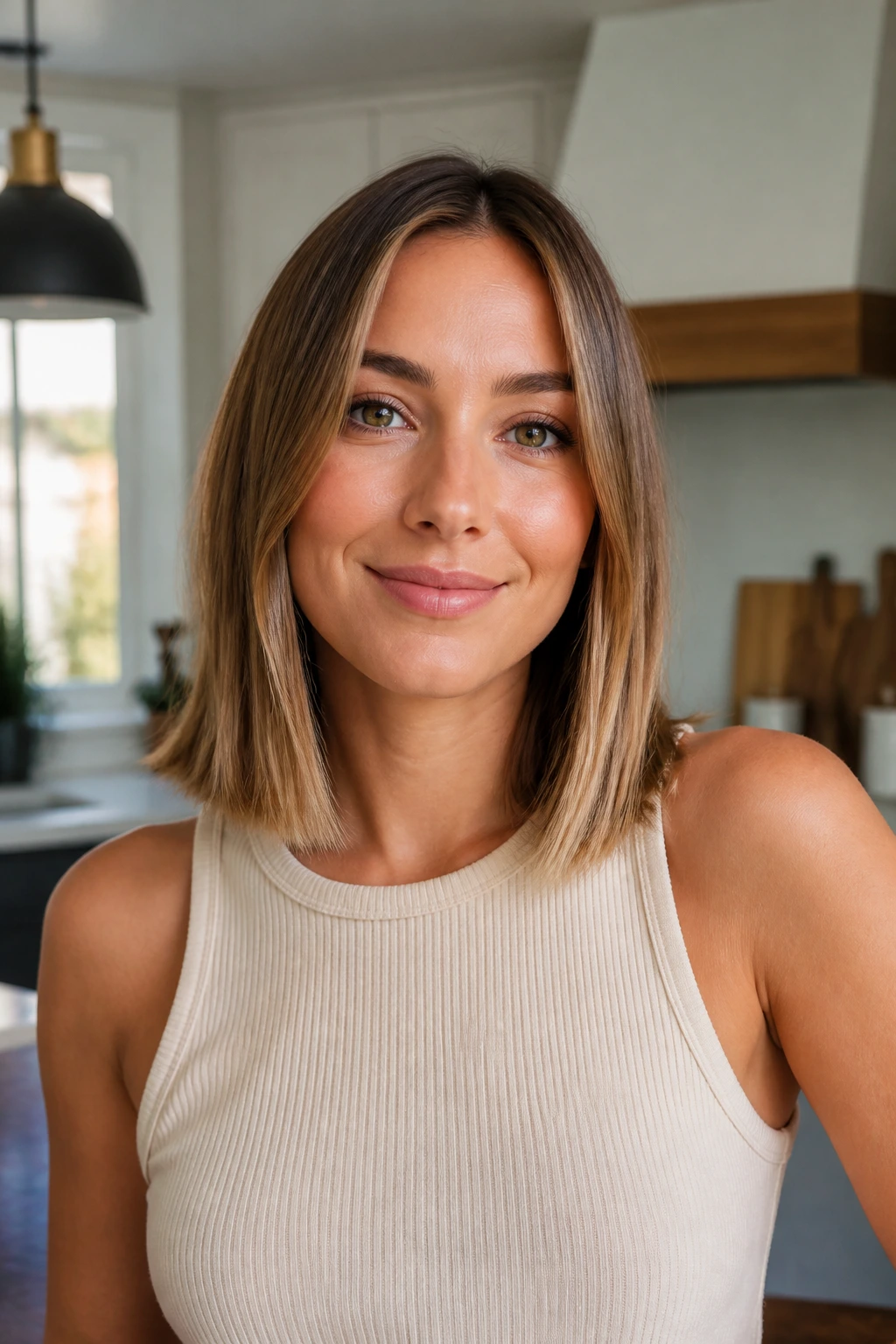
This is the “sweet spot” length for thin hair. At the collarbone, hair is short enough that it isn’t weighing itself down, but long enough to feel like you have a “style.” It is long enough to pull into a high bun or a low ponytail, but thick enough to hold a curl.
The Power of the Collarbone
Anything longer than the collarbone starts to reveal the thinness of the ends. By keeping it right at this point, you keep the strongest, healthiest part of your hair visible. It’s a very clean, polished look that needs very little styling to look intentional.
Styling Note
Keep the ends blunt. Even if you want a little movement, ask for the ends to be cut straight across with professional shears. This creates a “weighted” feel that keeps the hair looking like it has more mass than it truly does.
11. The Asymmetrical Crop
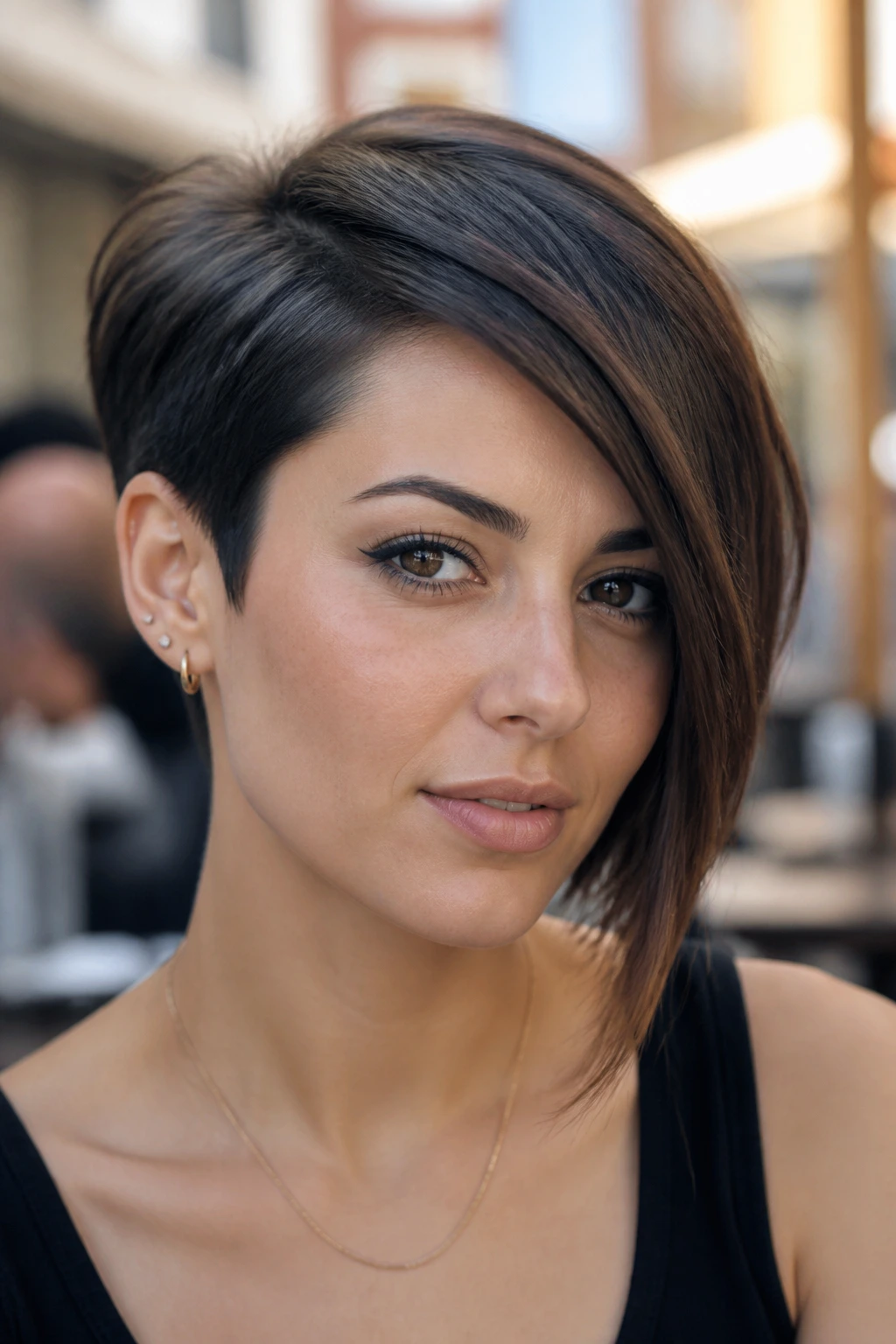
An asymmetrical cut—shorter on one side, longer on the other—is a clever way to manipulate visual interest. By having an uneven length, you distract the eye from the overall volume of the hair and lead it to the shape of the cut instead.
Using Geometry to Your Advantage
The longer side can be styled to frame the face, while the shorter side creates a sharp, defined edge. This style is incredibly modern and looks best when the hair is kept shiny and healthy.
Styling Tips
Use a shine-boosting mist. Because the cut is about geometry and edges, keeping the hair hydrated and reflective helps the lines of the cut stand out, making the style look purposeful rather than sparse.
12. The Soft-Layered Crop
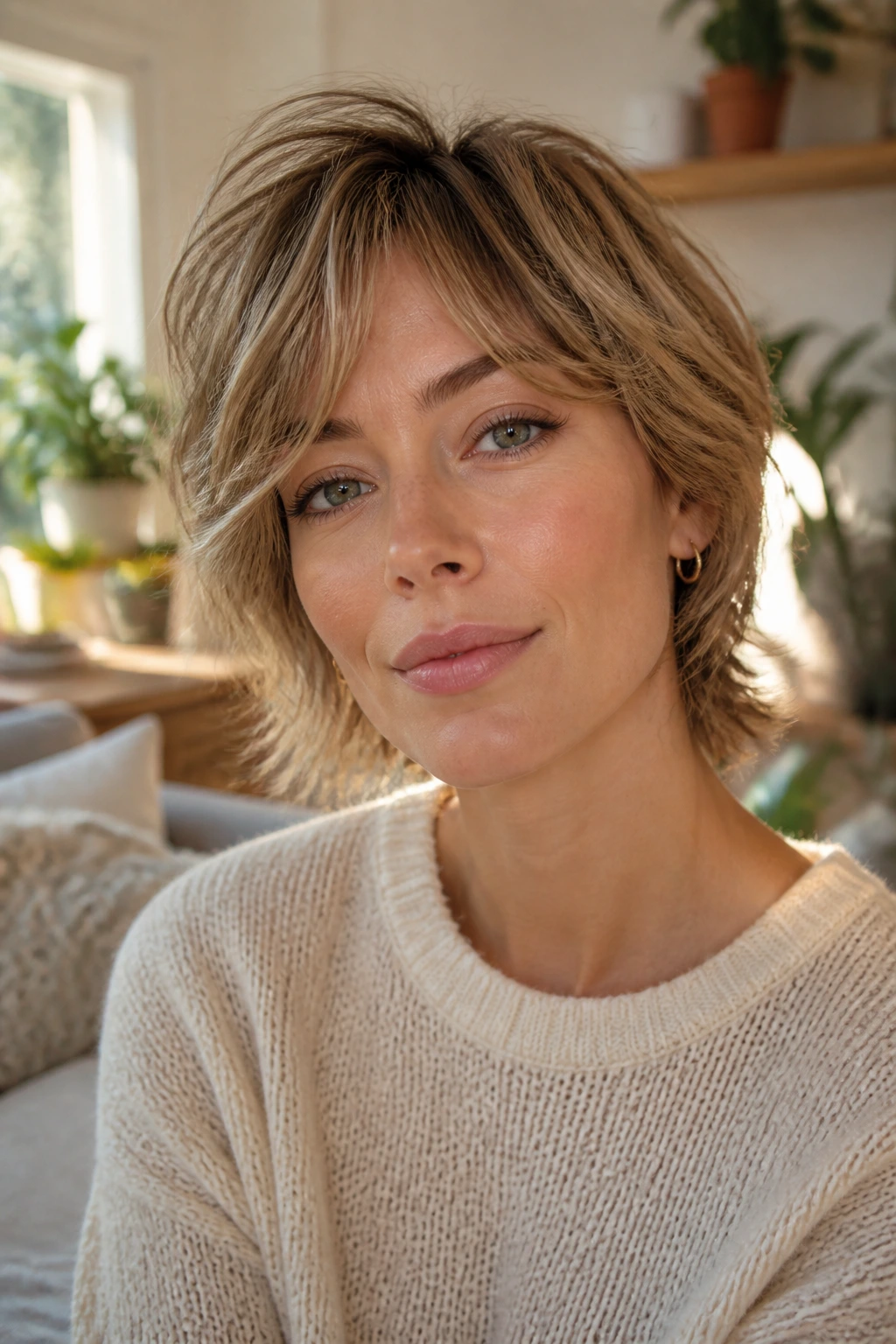
Not all layers are created equal. A soft-layered crop focuses on light, wispy layers that provide movement rather than bulk reduction. It is a feminine, playful style that works particularly well if you have a slight natural wave in your hair.
The Role of Natural Movement
If your thin hair has even a hint of a bend, a soft-layered crop will embrace it. Waves create physical space between hair strands, which is the easiest way to make a head of hair look twice as thick.
Daily Care
Embrace the air-dry. Use a light cream to define your waves and let the cut do the heavy lifting. The less heat you apply, the healthier and more “tousled” your hair will remain throughout the day.
13. The One-Length Blunt Cut with Highlights
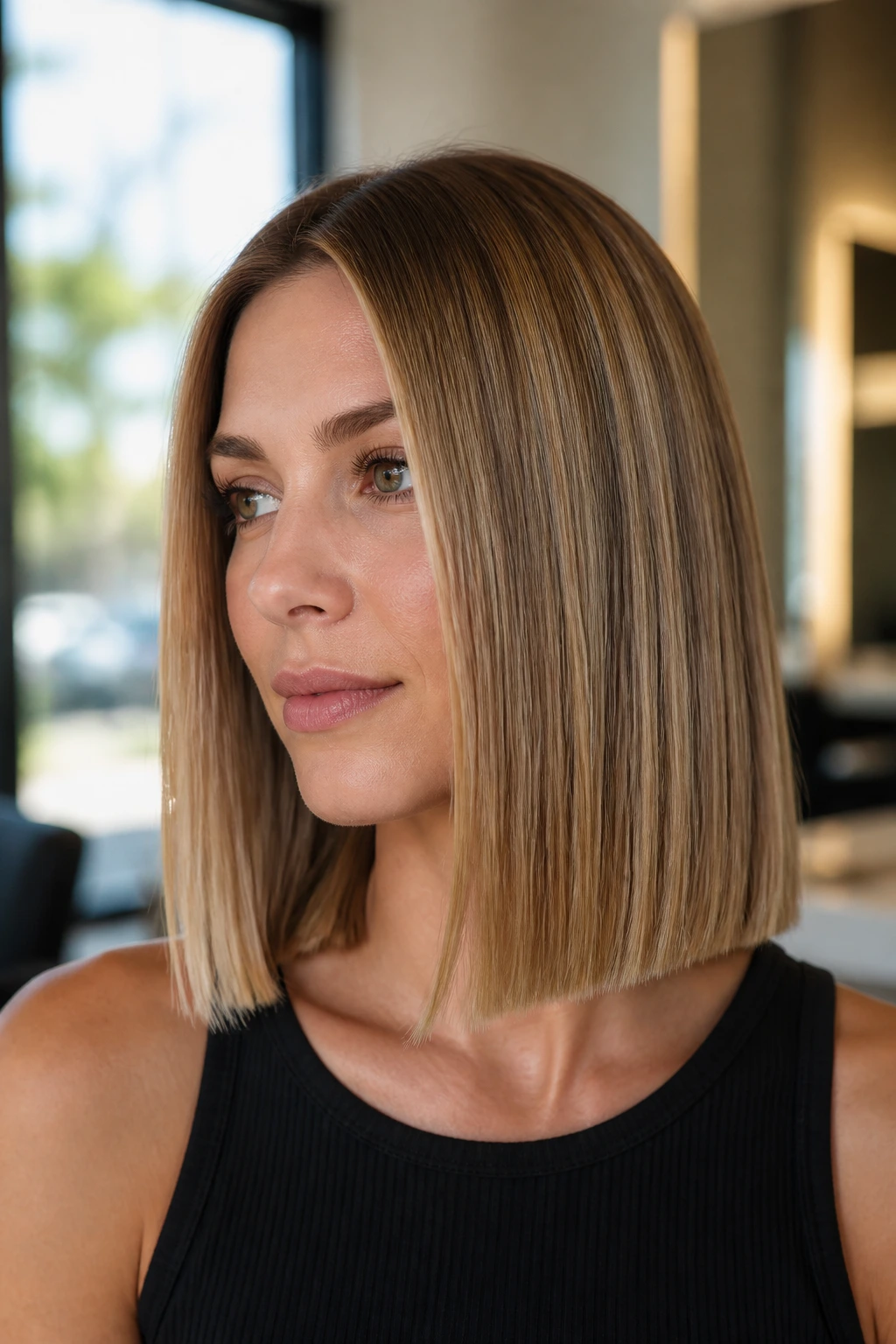
Sometimes, the issue isn’t the cut, but the color contrast. A one-length blunt cut—no matter the length—looks significantly thicker if you add dimension with highlights and lowlights. The variations in tone trick the eye into seeing more depth and texture than is physically present.
How Color Affects the Perception of Density
When hair is all one color, light bounces off it evenly, exposing the gaps between strands. When you add high-contrast highlights, you create “shadows” and “lights” that give the illusion of layers and volume without having to cut a single inch of length.
Choosing Your Tone
Work with your stylist to find tones that aren’t too far from your natural color. Over-processing thin hair can make it brittle and cause breakage, which is the opposite of what you want. Stick to subtle, multidimensional balayage.
14. The “Shaggy” Pixie
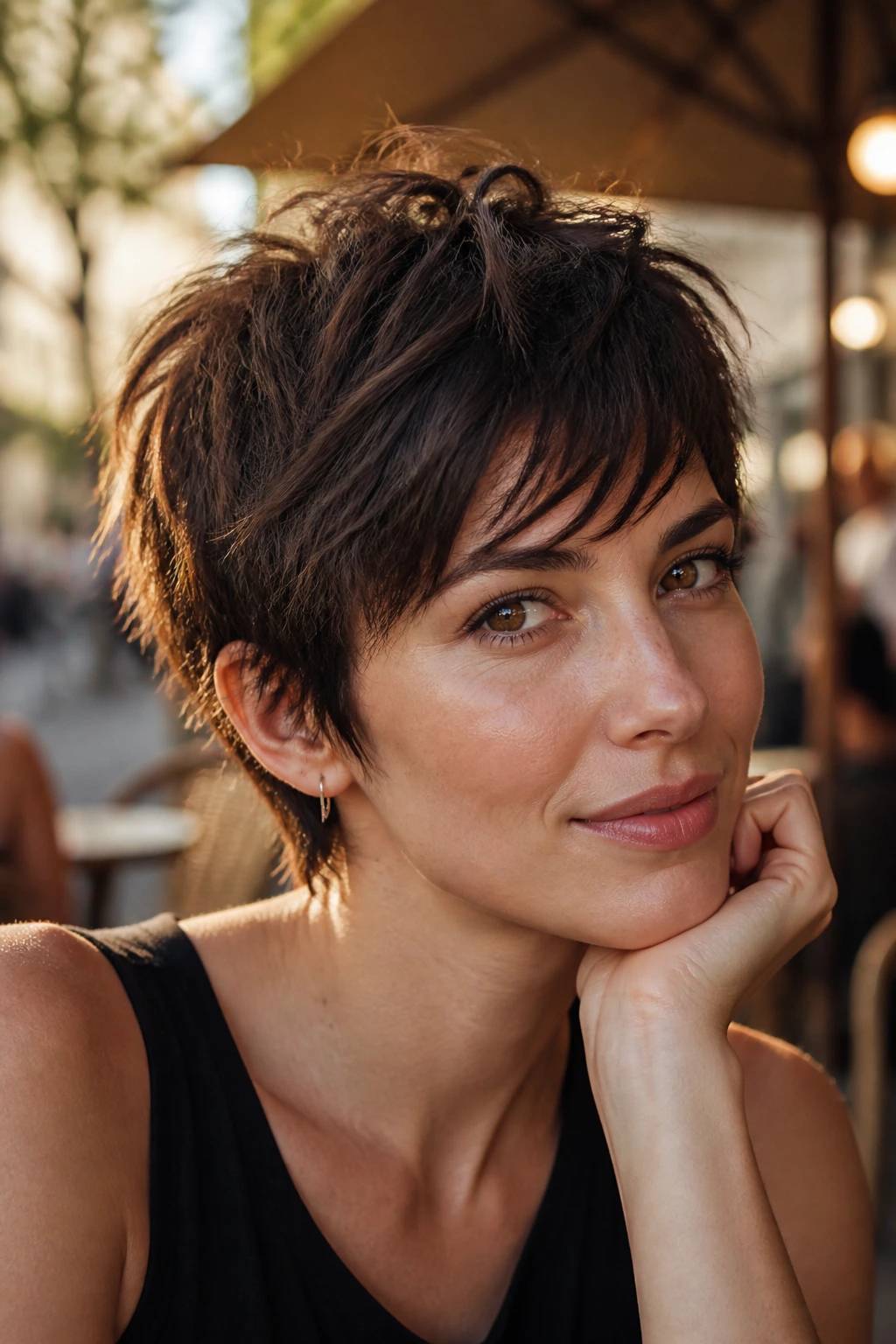
This is for those who want the ease of a pixie with the messy, bedhead texture of a shag. It involves leaving the hair a bit longer than a traditional crop, especially at the front and sides, and adding lots of choppy, textured layers throughout.
Why This Style Persists
The shaggy pixie is incredibly versatile because it doesn’t need to be perfectly coiffed. In fact, it looks better when it’s a bit messy. It hides the lack of hair density by creating a chaotic, fun shape that draws the eye toward the movement rather than the scalp.
Styling Tip
Use a matte clay. It provides the necessary “clumping” for those choppy layers to look defined. Without a bit of product, a shaggy pixie might just look like frizz, so a medium-hold clay is essential.
15. The Faux-Hawk Pixie
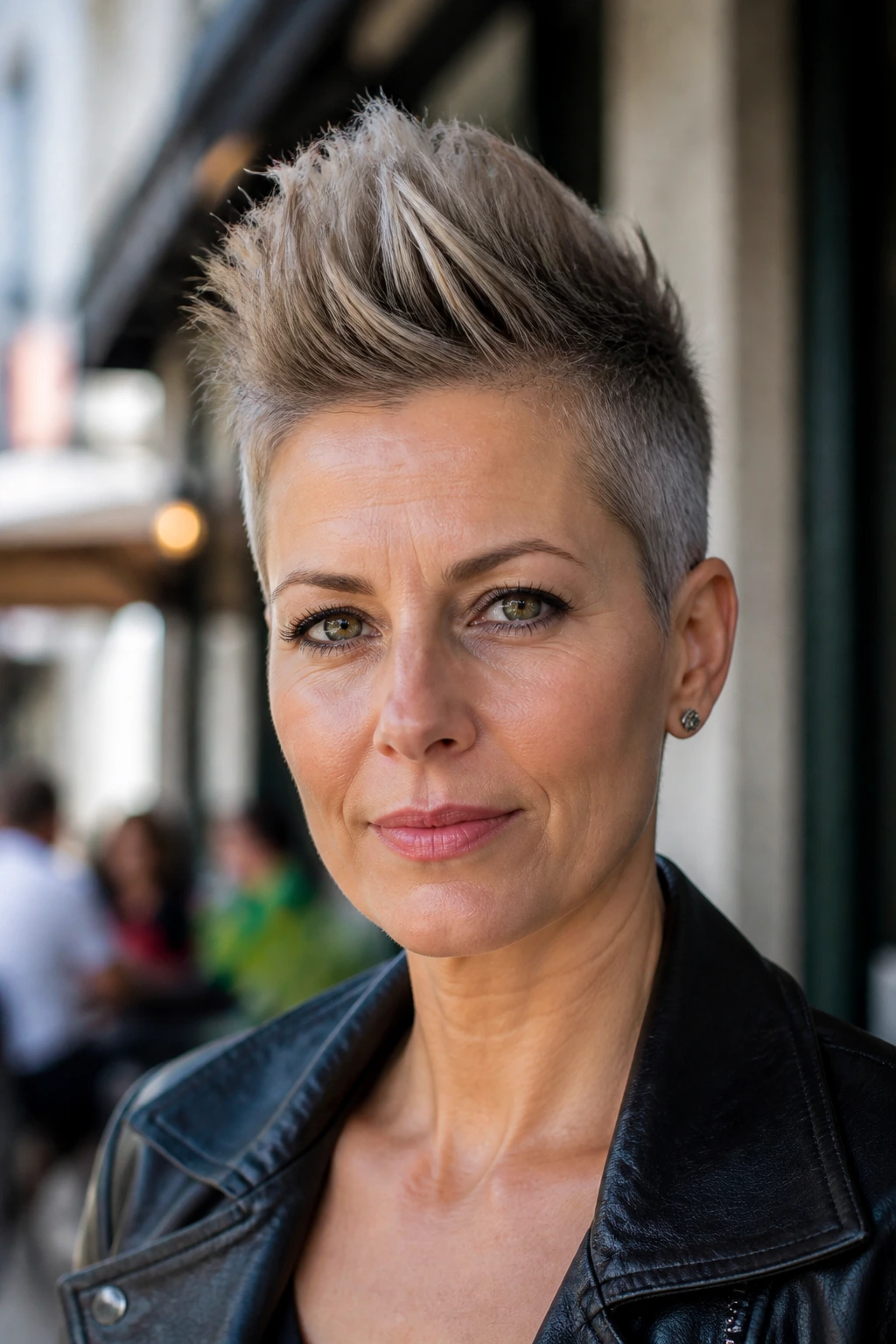
For a high-impact style, the faux-hawk pixie keeps the sides close and the top long, with lots of volume directed toward the center. This is a bold choice, but it is one of the most effective ways to create height where you are lacking it.
Building Height Where You Need It
By pulling the hair upward and toward the middle, you avoid the problem of hair laying flat against the scalp. It creates a vertical focus, which is inherently slimming for rounder faces and adds a sense of “stature” to your overall look.
How to Hold It
You need a strong-hold pomade for this style. Rub a small amount between your palms until it warms up, then push your hair into the desired position. A quick blast of finishing spray will ensure the height doesn’t collapse an hour after you leave the mirror.
16. The Blunt Chin-Length Bob with Bangs
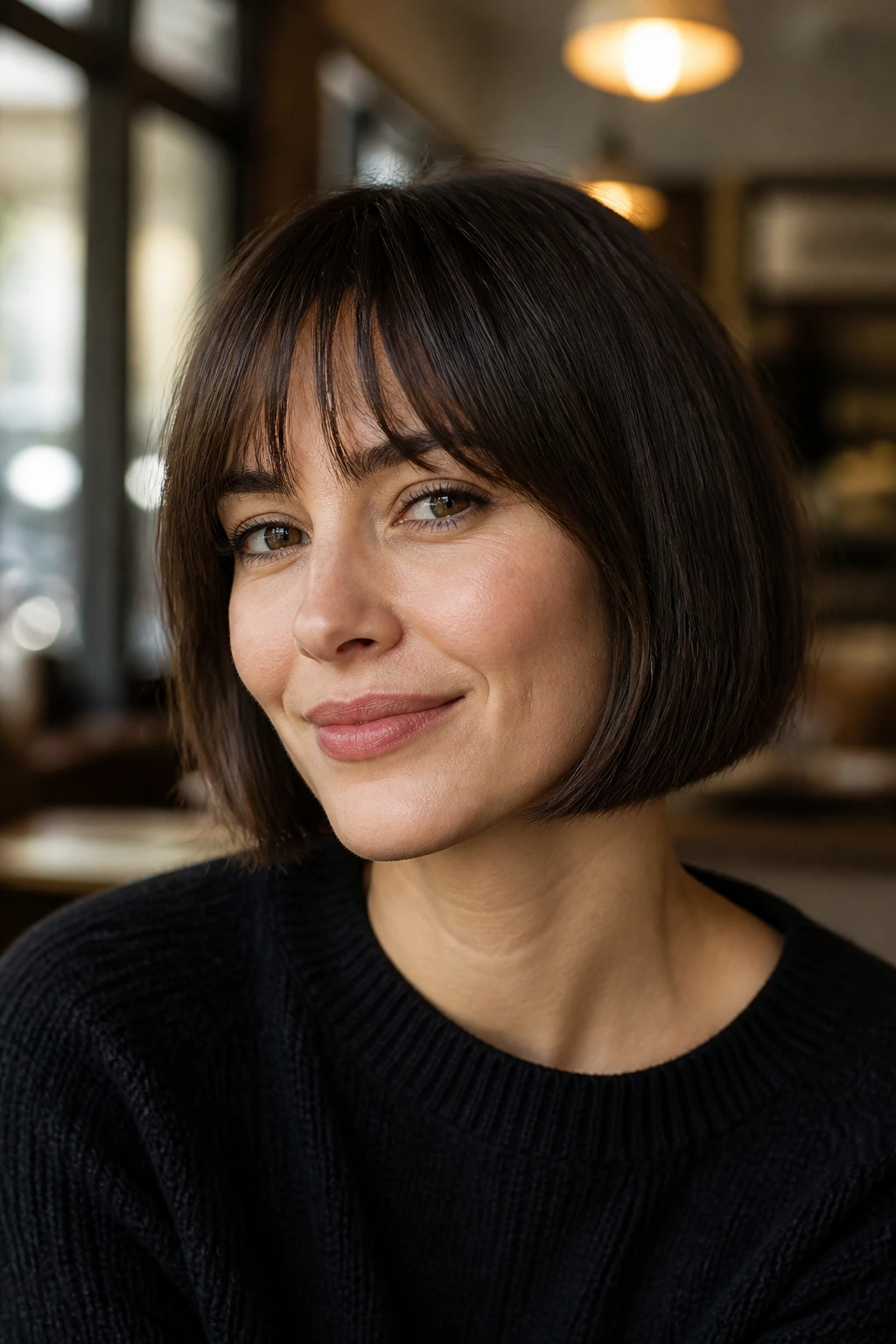
Combining a blunt bob with a set of light, wispy bangs creates a rounded frame around your face. This style is classic, chic, and very effective at hiding the fact that you might have fine hair. The bangs bridge the gap between your hair and your face, creating a seamless, thick-looking structure.
Why This Combination Wins
Bangs take a portion of your hair that would otherwise be lying flat on the sides of your face and move it to the front. This creates a thicker perimeter around your forehead and a denser-looking bob overall.
Maintenance Considerations
This cut requires a trim every four to six weeks. Because the bluntness of the ends is the key to the style, you need to keep those lines sharp. If the ends get ragged, the illusion of density vanishes.
17. The Textured Crop with Tapered Sides
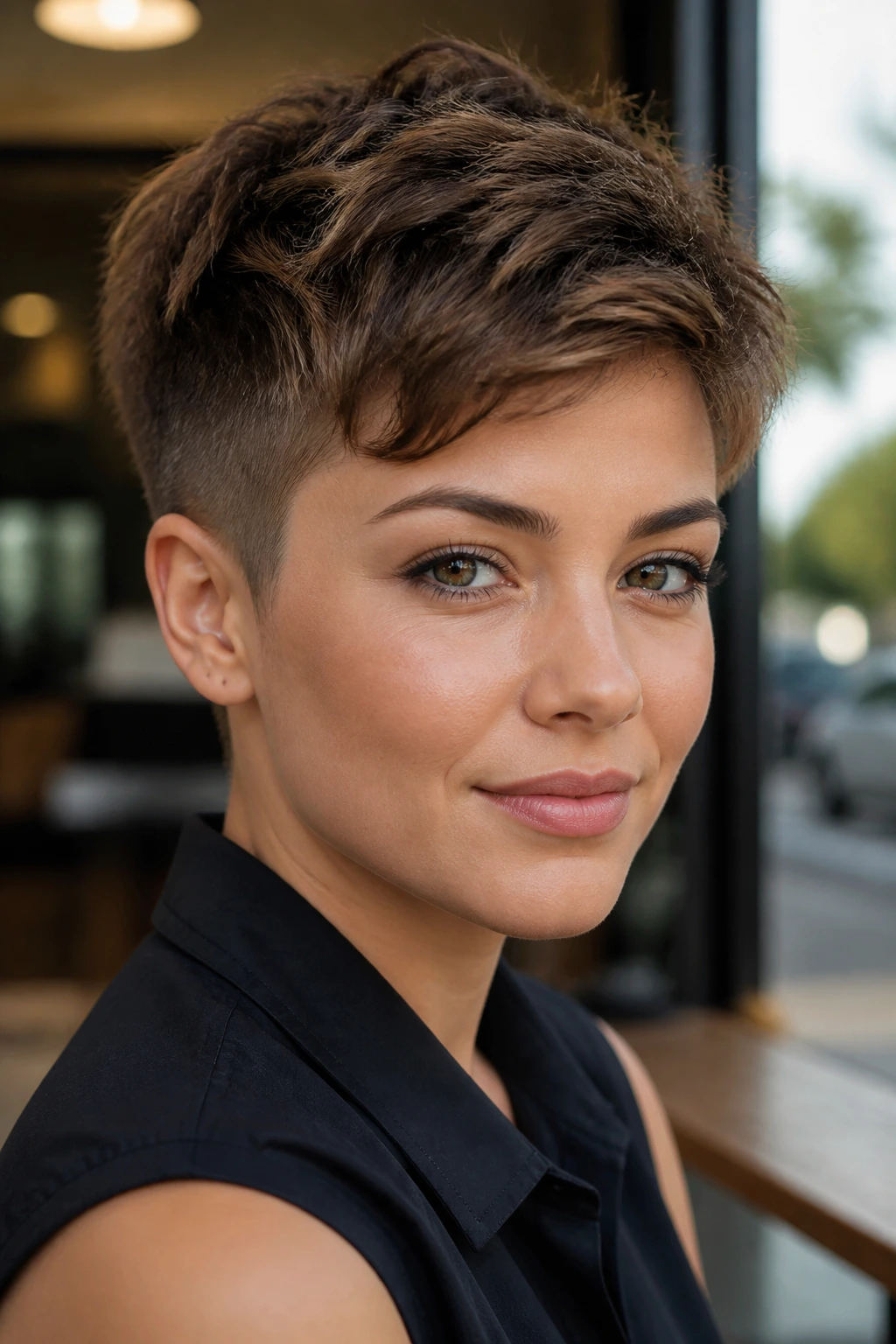
Tapering the sides of your hair is a great trick to make the top look relatively thicker. By keeping the hair very short near the ears, the hair on the crown appears to have more mass by comparison. It is an optical illusion that is standard in professional barbering.
Playing with Proportions
When the sides are kept tight, the top section looks like a distinct, substantial area of hair. This is particularly useful if you find that your hair gets weighed down easily. The less hair you have on the sides, the less overall weight you are carrying.
Choosing the Right Fade
Ask your stylist for a “soft taper” rather than a hard, shaven fade. This keeps the look feminine and avoids making the contrast too harsh, which can sometimes make the top look even thinner if the transition is too sudden.
18. The Stacked Bob
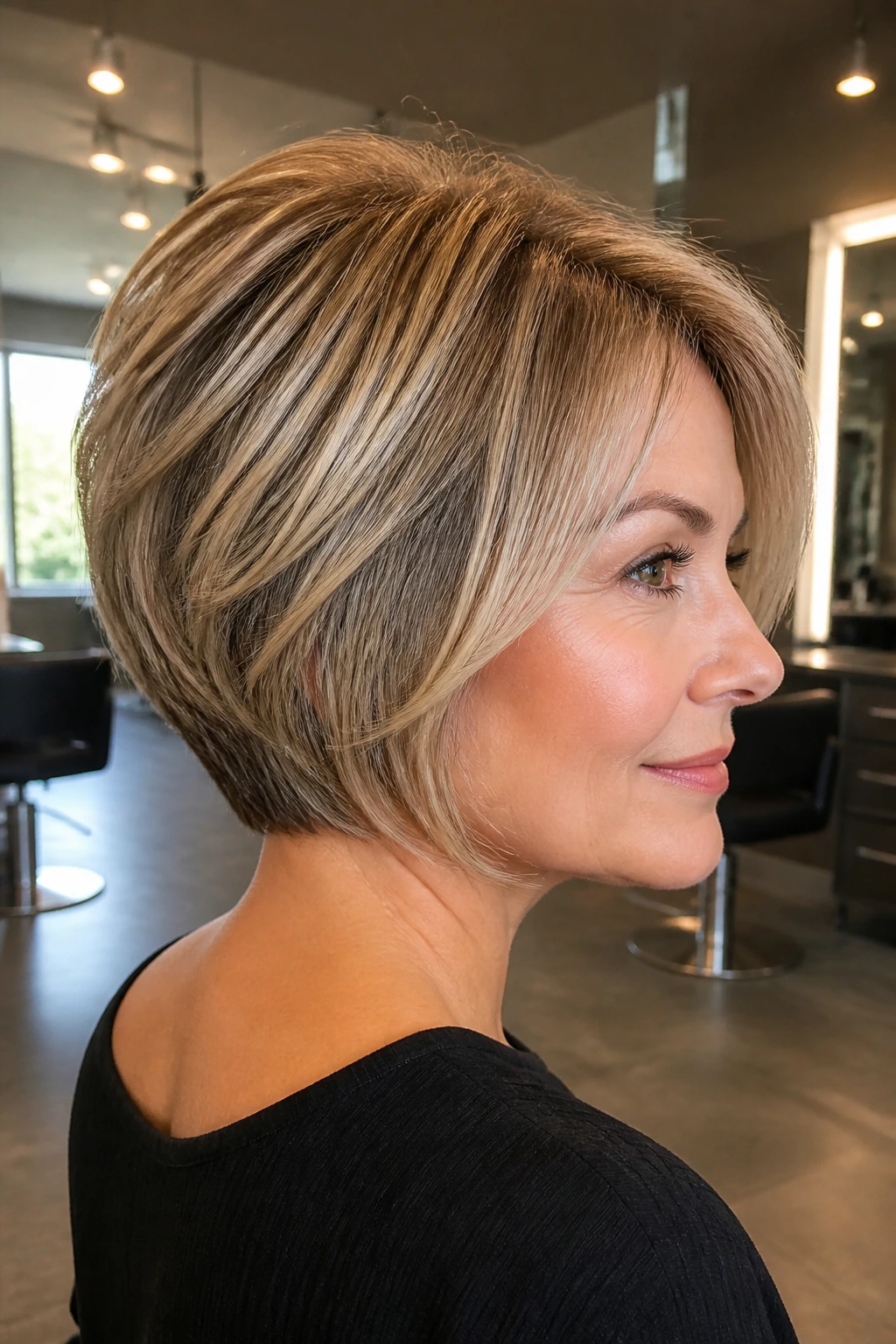
A stacked bob has layers cut in the back to create a rounded, voluminous shape. If your hair is flat at the back of your head, this cut is the answer. It creates an internal build-up of hair that forces the shape to curve outward.
The “Stack” Explained
The “stack” refers to the graduated layers at the nape of the neck. These layers are short and stacked on top of one another, which creates a natural, outward curve. This shape stays in place much better than a long, single-length cut.
Who Benefits Most
This is perfect for anyone with very straight, fine hair that lacks any natural body. It effectively “manufactures” body using the mechanics of the haircut itself, meaning you can spend less time with a blow-dryer and more time going about your day.
19. The Undercut Pixie
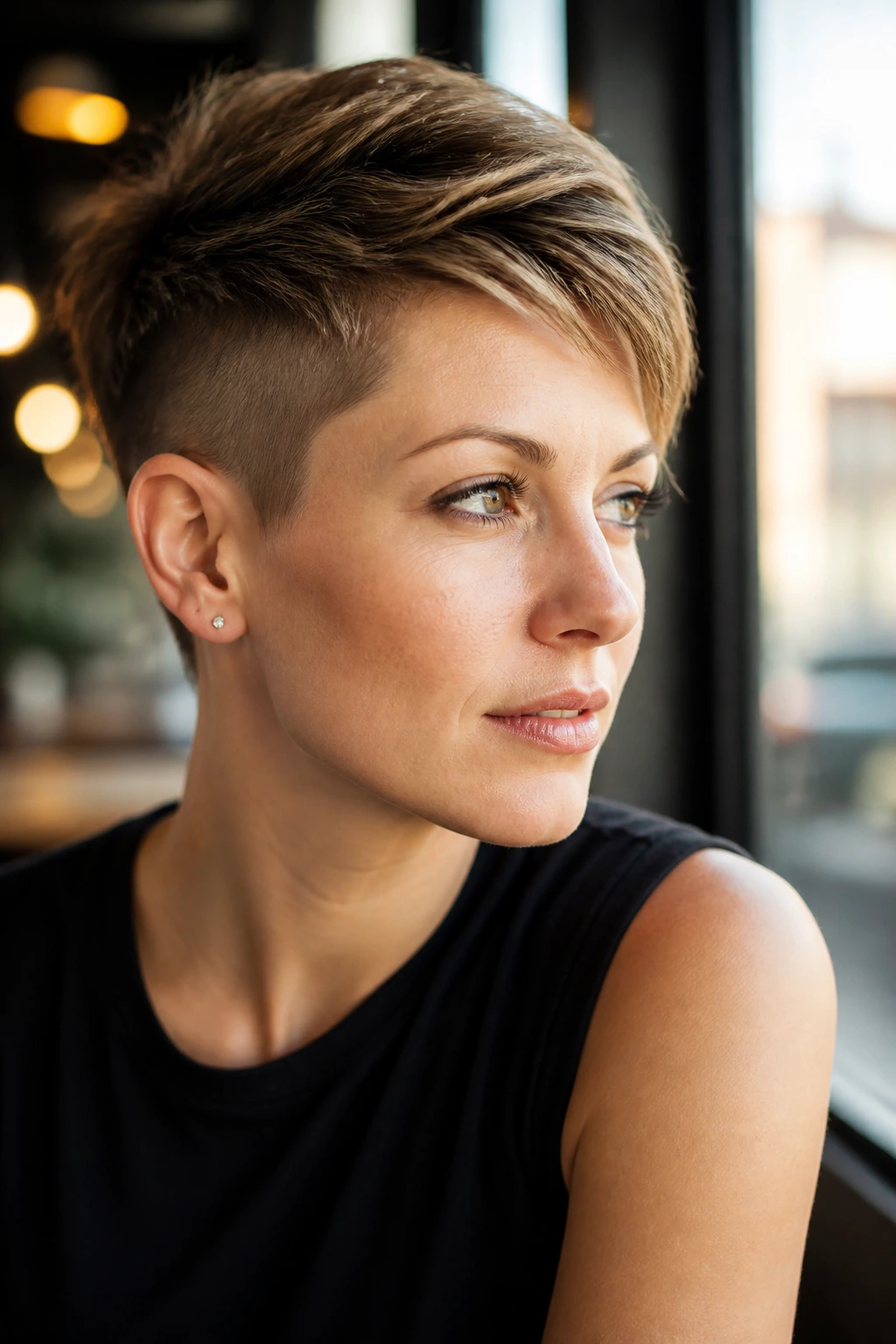
An undercut—where the hair underneath is buzzed short—can actually make the top section appear thicker by removing the straggly, thin bits that don’t add to the style. It creates a clean, intentional look that is incredibly edgy and popular for a reason.
Why Less Is More
Thin hair often lacks body because of “dead weight.” By removing the bottom-most layers, you aren’t actually losing density; you are removing the part of your hair that was never doing you any favors in the first place.
Styling for the Undercut
Keep the top section long enough to cover the undercut if you need to, or wear it sleek and pushed back to show it off. This style is the ultimate in low-maintenance, high-volume aesthetics.
20. The Blunt Shoulder-Length Cut with Subtle Layers
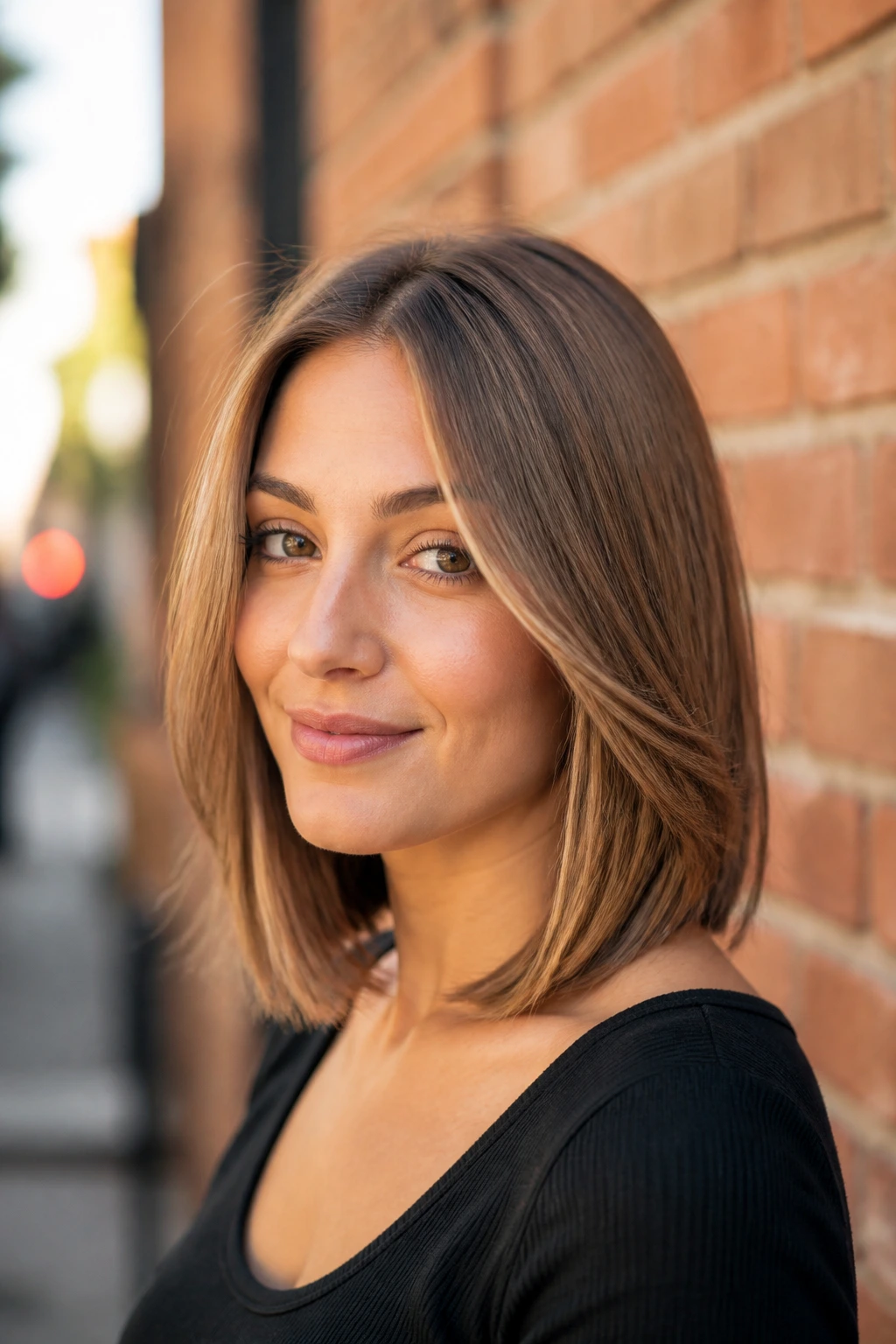
If you are hesitant to go short, a shoulder-length cut with only a few subtle layers at the very ends can be a great compromise. It keeps the weight of the hair centered at the shoulders, where it can sit comfortably and look full.
Avoiding Layer Overload
The trick here is to ensure the layers are not too high. If you start layering at the ears, you will have too much “frizz” and not enough “fringe.” Keep the layers strictly at the ends—just enough to encourage the hair to flick out slightly.
Using Hair Care to Support the Cut
Use a thickening shampoo and a lightweight conditioner. Avoid putting conditioner on the roots, as this will instantly pull the style flat. Focus the conditioner only on the ends to keep them healthy but airy.
21. The Mid-Length “Cool Girl” Shag
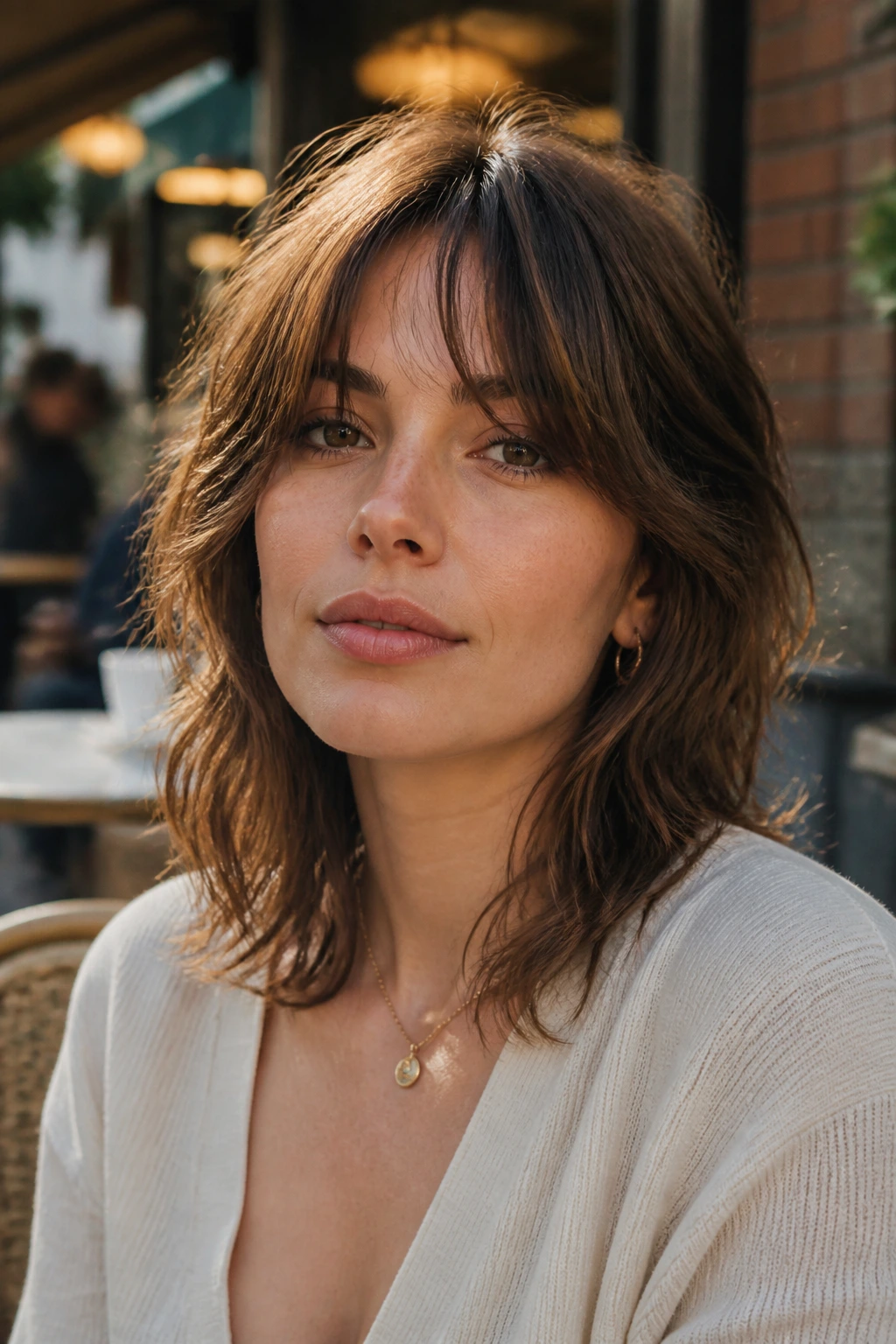
This cut sits right at the collarbone and features face-framing pieces that are cut shorter to add volume around the cheekbones. It is a relaxed, bohemian look that doesn’t try too hard, making it a natural fit for those who want their thin hair to look purposeful rather than forced.
Creating Volume Through Texture
The shagginess of this cut creates a “nest” for the hair to sit in. Instead of having long, thin strands dangling, you have a cohesive, messy, voluminous shape that frames the face beautifully.
Styling Tip
Twist damp hair into loose sections and let them air dry. This creates a natural, wavy texture that maximizes the hair’s surface area, making it look much fuller than it would if dried straight.
22. The Blunt Pixie with Long Bangs
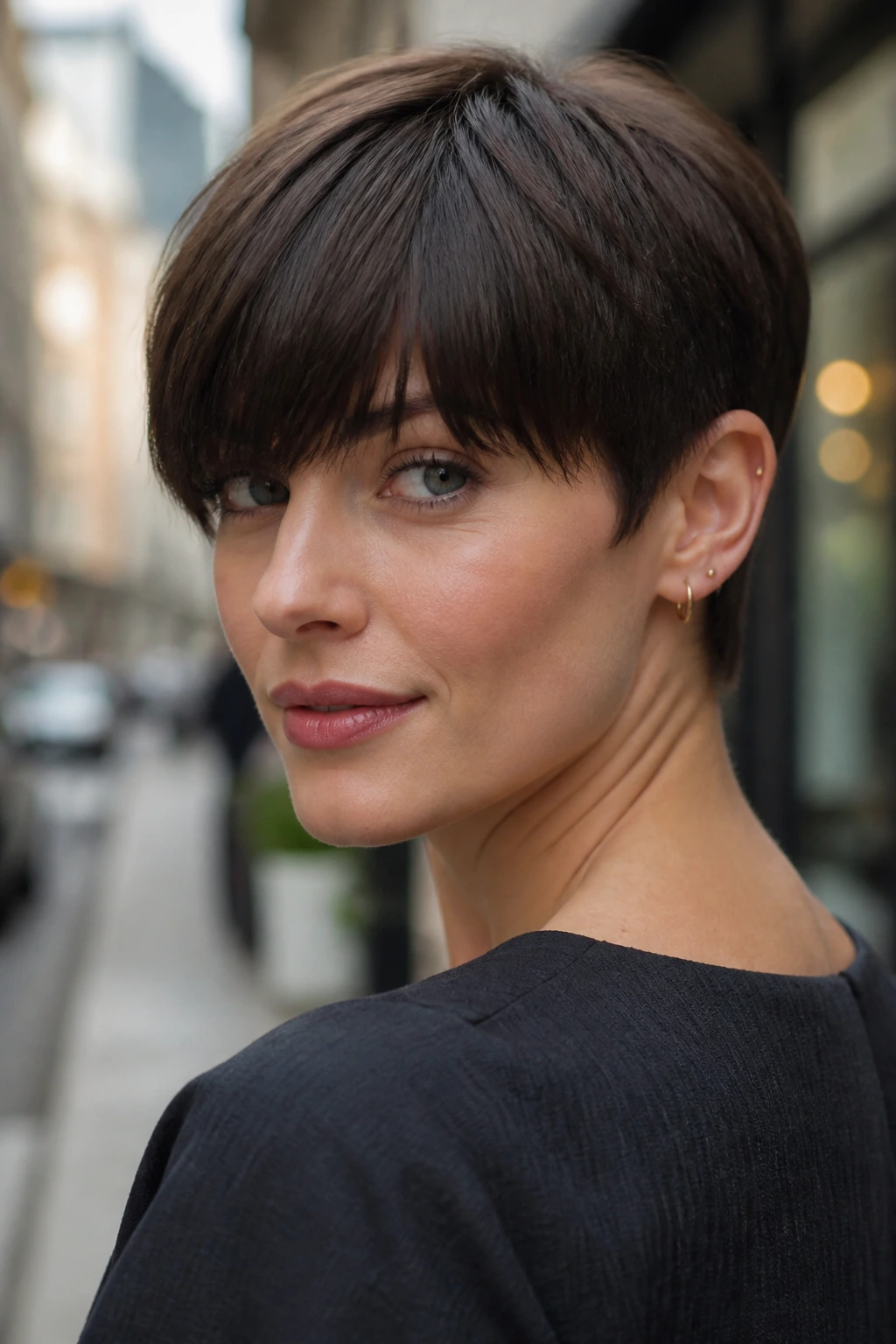
A blunt pixie with slightly longer, blunt-cut bangs is a modern take on the traditional crop. The bluntness of the bangs gives the front of the style a solid, thick perimeter, while the pixie cut keeps the overall mass of the hair light and elevated.
Why This Style Works
It focuses all the density at the front, creating a heavy, frame-like effect that distracts from the thinner areas on the sides or crown. It is a confident, artistic style that requires very little daily styling—a quick brush-through is usually enough.
Managing the Look
Because this is a blunt style, you must keep up with regular trims. Even a quarter-inch of growth can change the line of the bangs, so plan to see your stylist frequently to keep those edges sharp and defined.
Final Thoughts
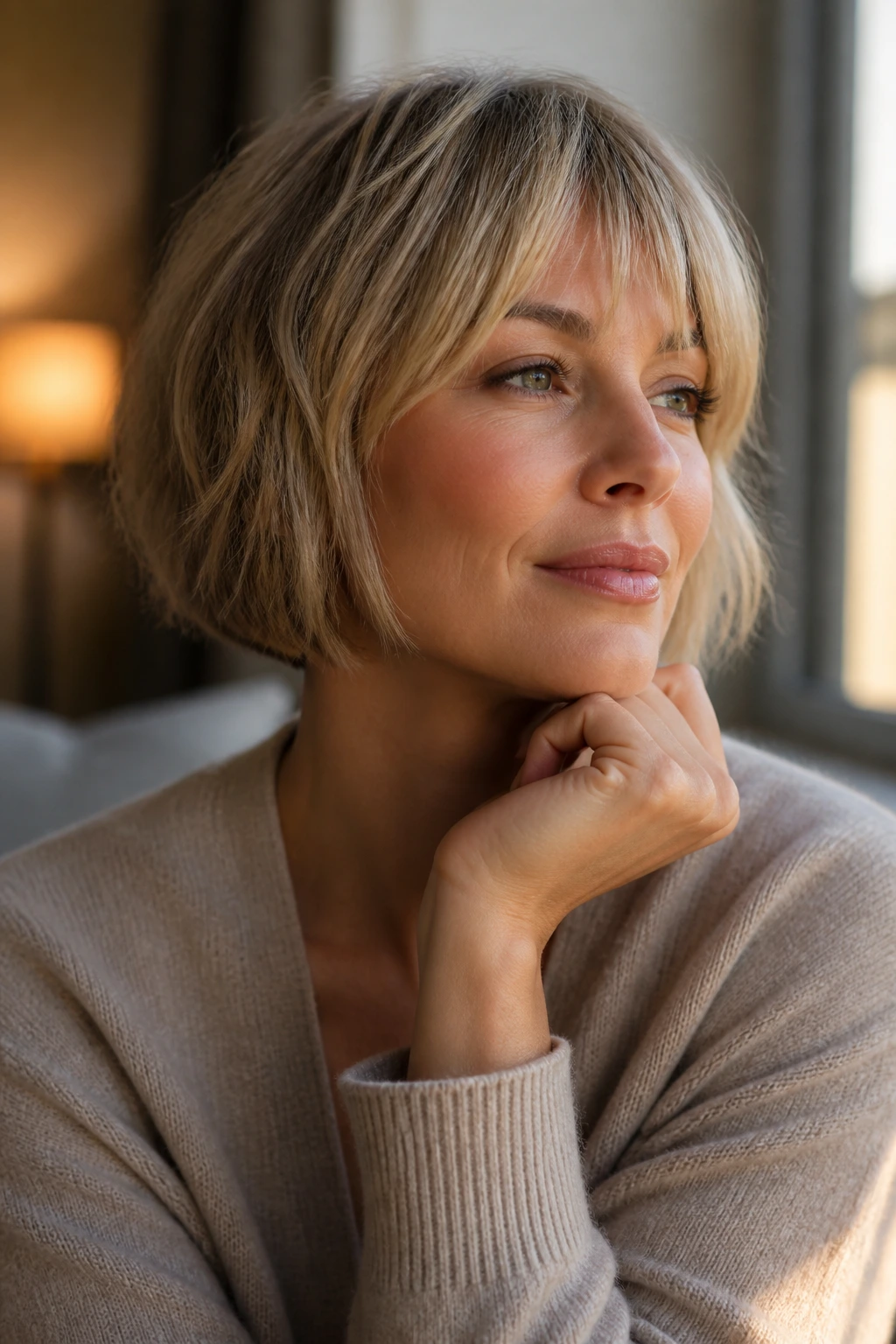
Ultimately, the best haircut for thin hair is the one that makes you feel the most like yourself. Whether you prefer the structural boldness of a blunt bob or the relaxed, wavy charm of a shag, the goal remains the same: movement and intention. Don’t be afraid to experiment with length. Often, people with thin hair hold onto long strands, thinking that length equals quantity, when in reality, a shorter, more structured cut can give you a significantly more luxurious look.
Remember that volume isn’t just about the cut; it’s about how you support it. Minimal product use, regular trims to keep the ends solid, and a willingness to embrace the natural texture of your hair will go much further than any expensive styling tool. Your hair is an asset, not a struggle—choose a shape that celebrates it.