


The ponytail has held a monopoly on gym hair for far too long. While the classic elastic band keeps hair off your neck, it often leads to that familiar, dull ache at the scalp or, worse, a permanent crease in your hair texture that is impossible to smooth out post-shower. Enter the humble hair claw. It is the unsung hero of the locker room, a tool that offers a secure hold without the tension of a traditional tie and provides a level of structural integrity that allows you to transition from a HIIT session to a coffee run without looking like you just wrestled a bear.
Whether you are hitting the squat rack, grinding through a yoga flow, or finding your pace on the treadmill, the right claw clip configuration can keep your hair locked in place for the duration of the movement. It is about understanding the grip strength of the clip, the density of your hair, and the way your specific workout routine impacts your head movement. When you master the mechanics of the claw, you stop fiddling with your hair mid-set and start focusing on the actual exercise.
The following styles prioritize performance, stability, and that elusive balance between a secure hold and a style that does not feel like you are wearing a structural cage on your head.
1. The High-Performance Secure Twist
This style relies on the “corkscrew” method, where the hair is twisted tightly before the claw is inserted. This tension is the secret to making the clip feel like a seamless extension of your head. It is perfect for steady-state cardio because it sits high enough to keep your neck cool but stays tight enough that it will not sag as your heart rate rises.
Why This Technique Works for Intensity
The twist forces the hair to wrap around itself, which significantly reduces the internal movement of the strands. By the time you fasten the clip, the hair is essentially locked in a physical knot.
How to Execute the Twist
- Gather your hair into a high ponytail base using your hands rather than a hair tie.
- Twist the length of your hair firmly until it begins to coil against the back of your head.
- Fold the twisted coil upward toward the crown.
- Clamp your largest, strongest claw clip directly over the center of the twist.
- Adjust the ends so they tuck neatly behind the clip rather than splaying out.
Pro tip: Use a matte-finish claw clip. The slight texture of the plastic offers more friction against your hair strands than smooth, shiny acrylic, preventing that dreaded “clip slide” when you begin to sweat.
2. The Gym-Ready Half-Up Half-Down
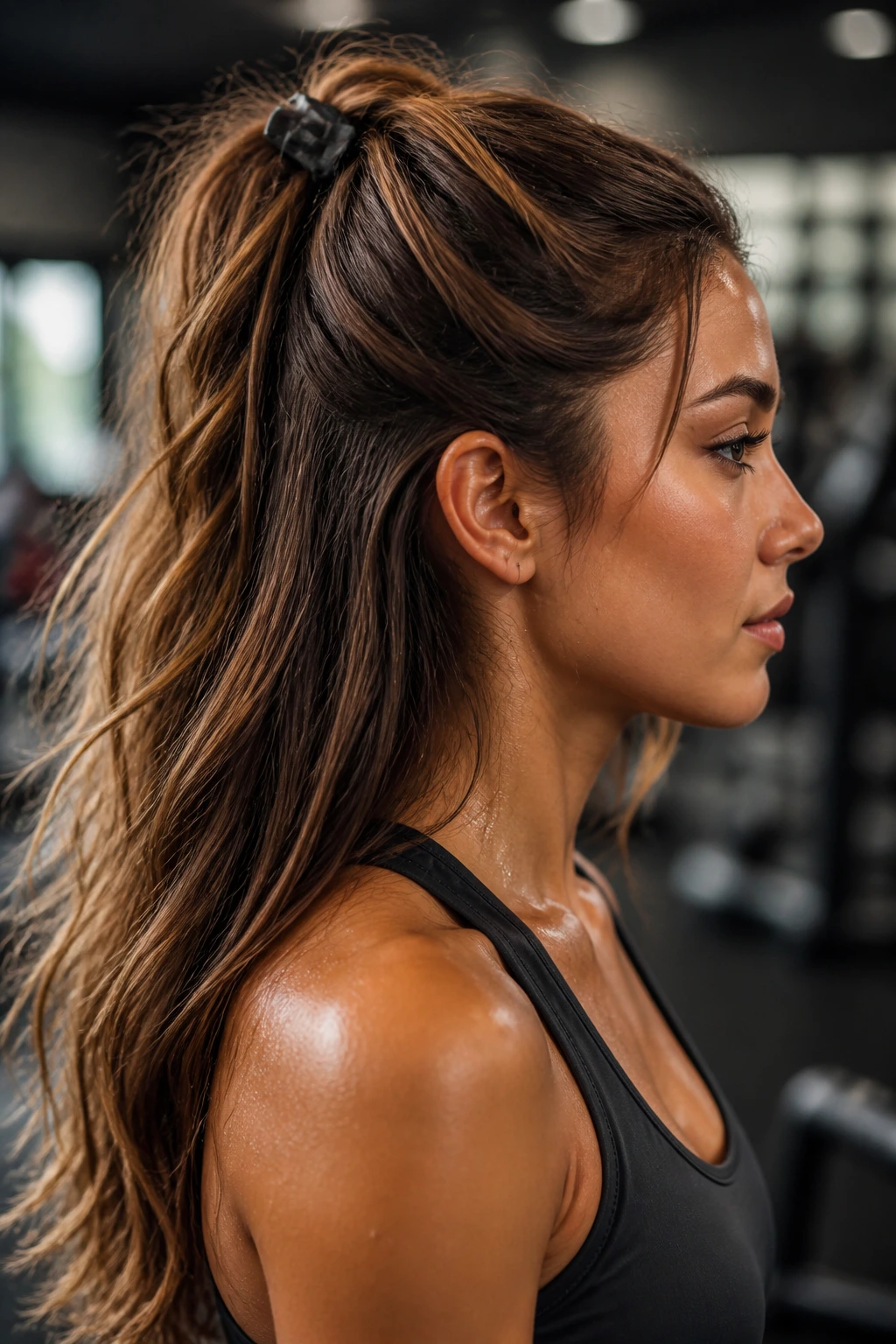
Not every workout requires total containment. If you are doing light lifting or a low-intensity Pilates session, a half-up style is often more comfortable and prevents the hair from falling forward into your face while still allowing you to wear your hair down for the rest of the day.
Stability Factors to Consider
The key here is sectioning. If you grab too much hair, the clip will lose its grip and slide downward. Aim to grab only the hair above your temples to keep the weight distribution balanced.
Best Uses
- Yoga and floor-based stretching where you spend time on your back.
- Strength training that does not involve overhead movements.
- Light cycling where air circulation around the neck is more important than total containment.
3. The Low-Nape Twisted Bun
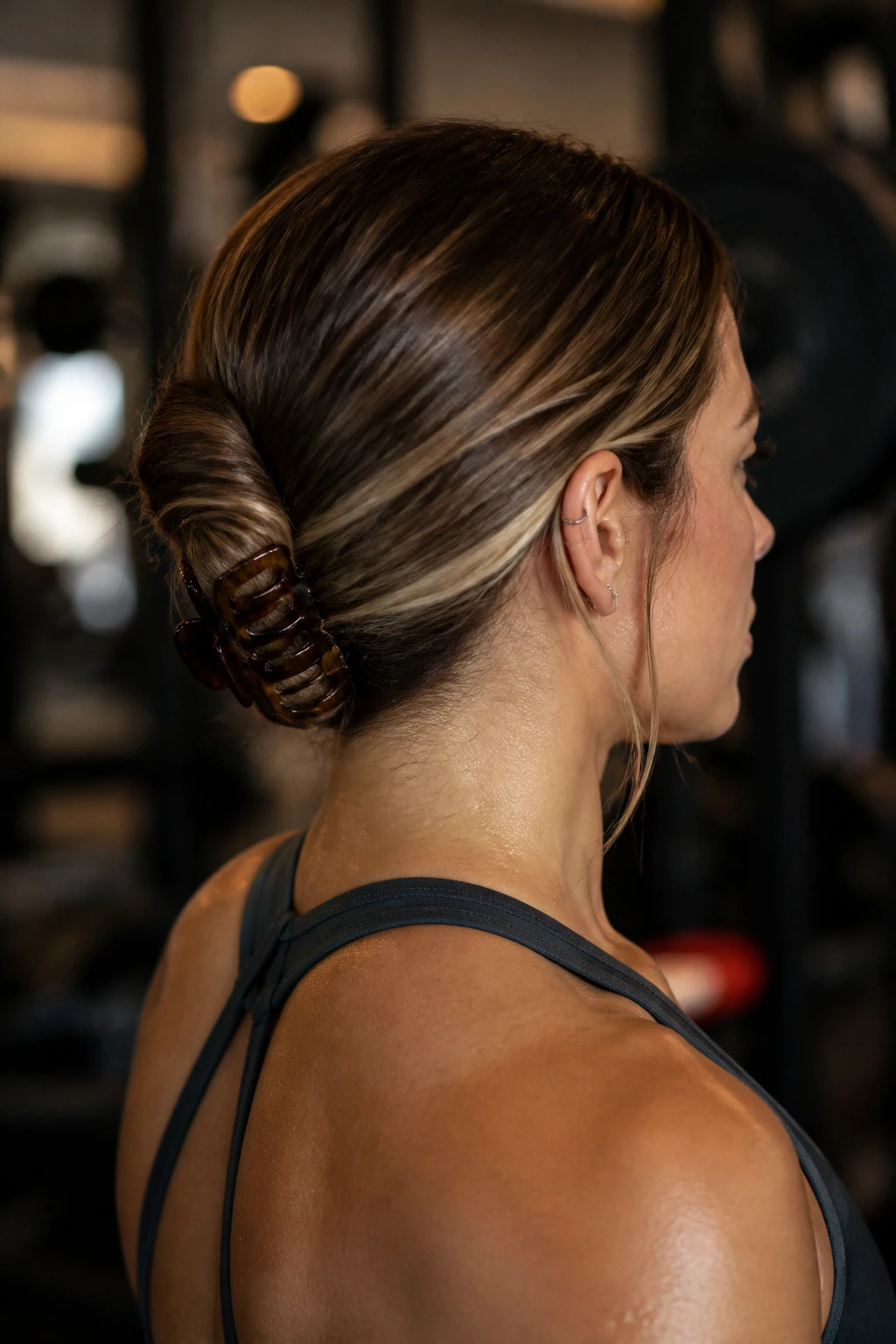
If you are doing heavy compound movements like overhead presses, you need a style that clears your neck completely but avoids interfering with the barbell. The low-nape bun is the solution. It sits flat against the back of your head, ensuring it never touches the equipment.
Why It Excels for Heavy Lifting
Because the bun is positioned low, it provides a stable base that does not shift when you lean back against a bench. It feels grounded and secure through every rep.
Technical Adjustments for Success
If your hair is particularly long or thick, you may need a medium-sized claw clip rather than a large one to ensure the grip is tight enough. A clip that is too large for the volume of hair being held will wiggle loose during intense exertion.
4. The Double-Claw Crown Braid
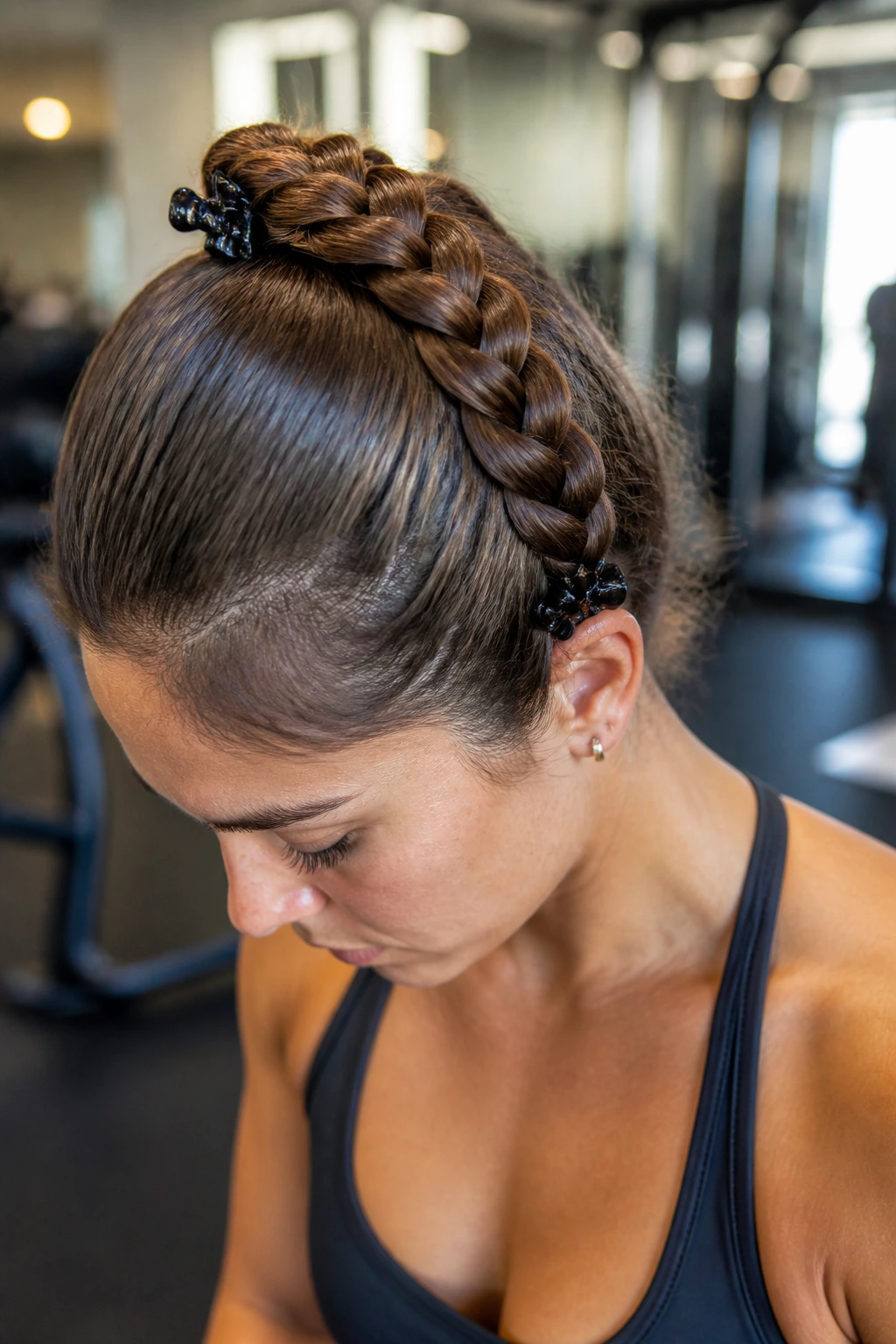
Sometimes, one clip is not enough. This style involves taking two smaller, high-tension claws to secure different sections of a braided base. It is arguably the most secure option on this list, making it ideal for high-impact workouts like box jumps or rowing.
The Mechanics of the Double Hold
By anchoring two separate points on your scalp, you prevent the entire weight of your hair from pulling on a single point. This distribution of weight eliminates the “tightness” headache that usually follows a high-intensity session.
Steps for the Double-Claw Hold
- French braid your hair from the hairline toward the middle of the head.
- Secure the end of the braid with a small elastic, then tuck the braid under itself.
- Place a small, sturdy claw clip at the top of the bun to anchor the bulk of the hair.
- Place a second claw clip near the base of the neck to catch any stray layers and keep the hair flat against your skin.
5. The Messy Sweat-Proof Topknot
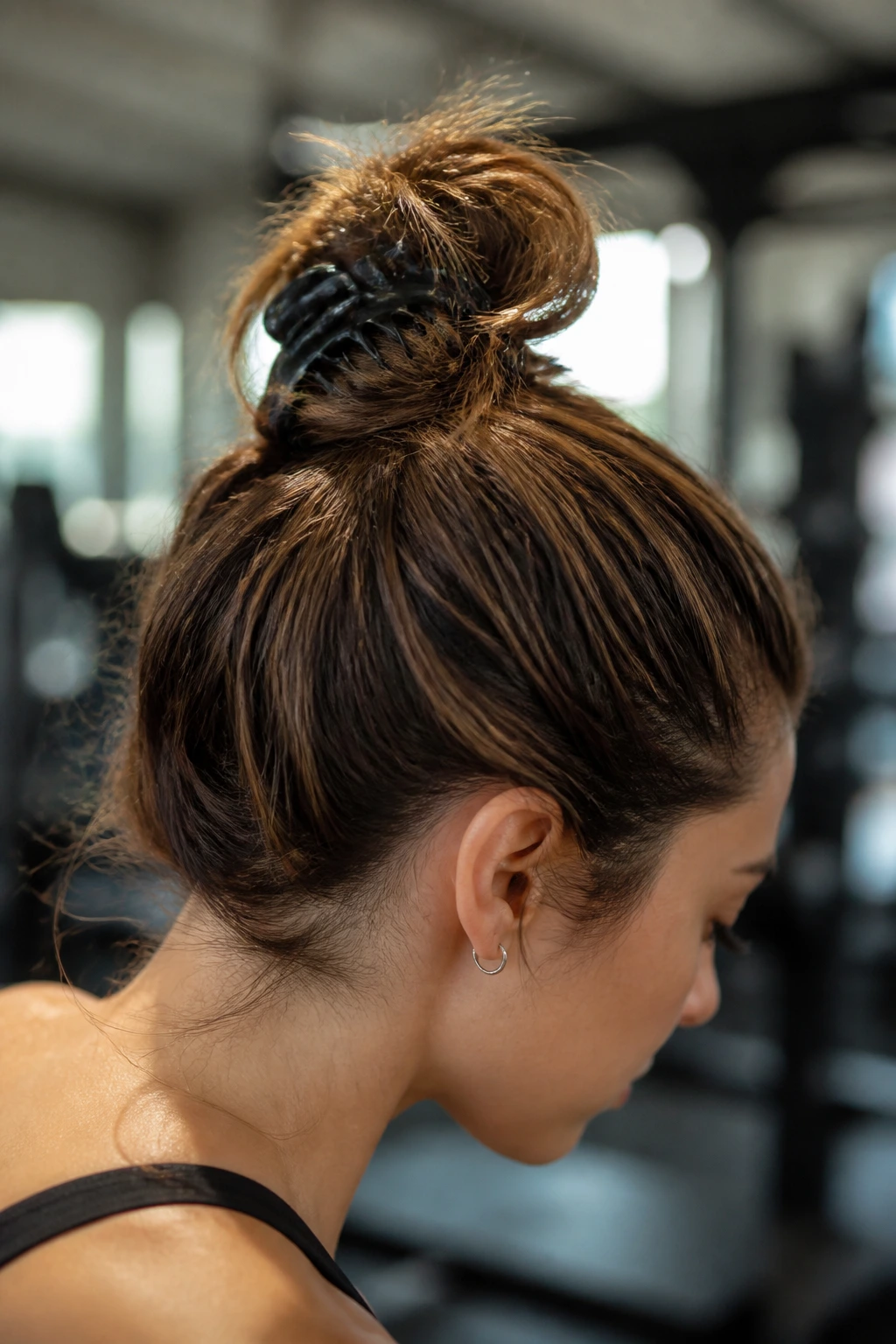
This is the ultimate “set it and forget it” hairstyle. It is intentionally loose, which is ideal if you are prone to headaches from pulling your hair too tightly, yet it uses the claws to ensure that the volume stays at the top of the head.
The Benefit of the Messy Finish
An overly polished bun requires constant adjustment. By leaving the ends loose and tucking them in only partially, you create a style that adapts to your movement rather than fighting against it.
Why It Resists Slippage
The weight of the bun is concentrated directly on the crown. As long as your claw clip has deep, serrated teeth, the weight of the bun will actually pull the teeth tighter into the hair, creating an even more secure hold as you move.
6. The Side-Swept Twisted Pony
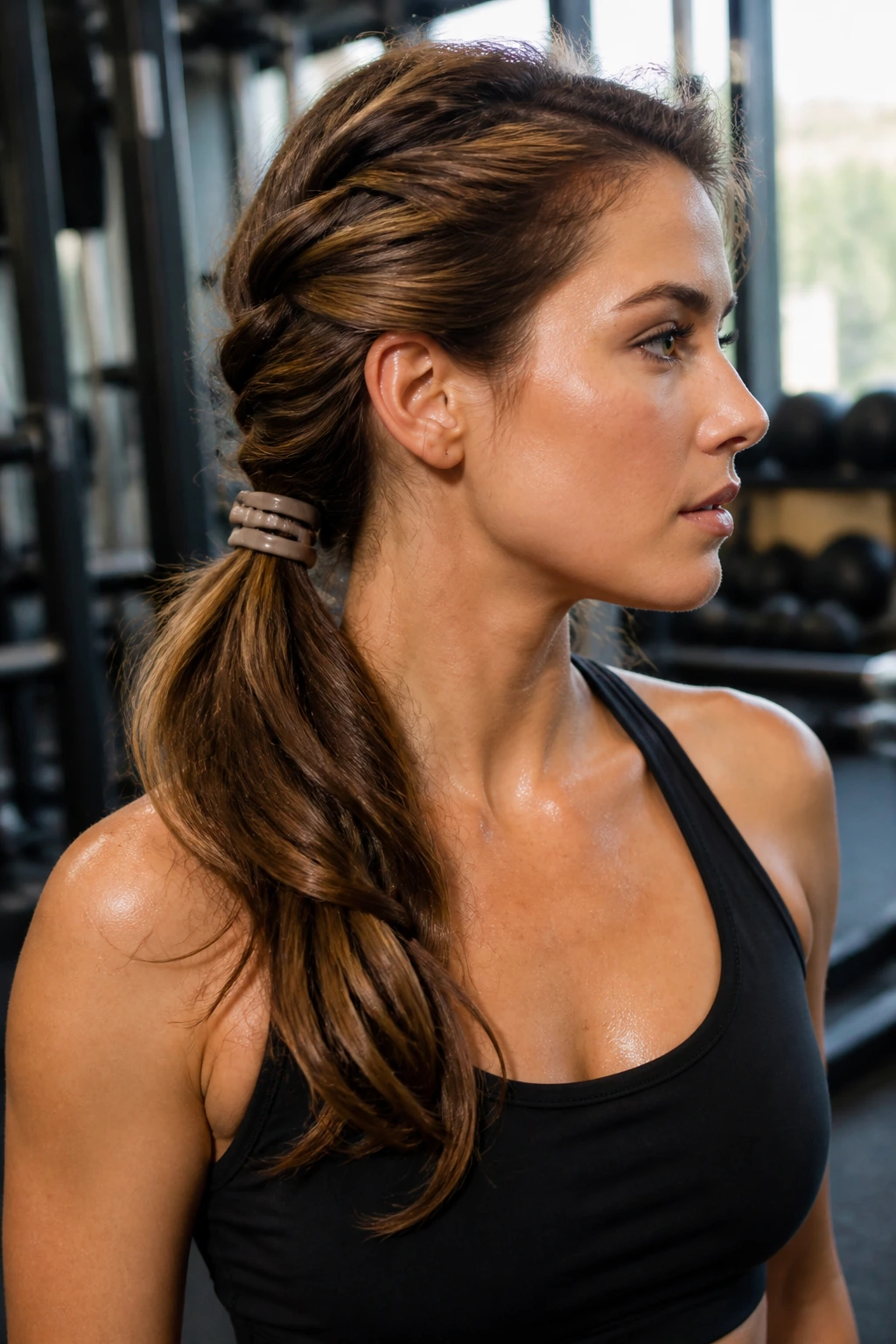
If you are doing a workout that involves constant side-to-side motion, a centralized bun can sometimes feel unbalanced. The side-swept twist keeps the weight off-center, which can feel surprisingly natural during dynamic movements like lateral lunges or skating drills.
Why It Is Great for Lateral Training
The weight remains distributed across the side of your skull, preventing that feeling of a pendulum swinging behind your head. It is also incredibly easy to fix mid-workout if a single strand escapes.
Tips for Hair Texture
If you have very fine or slippery hair, spritz a small amount of texturizing spray before you twist. This gives the clip something to “bite” into, ensuring the style holds through even the most aggressive lateral drills.
7. The Stacked Claw Layering
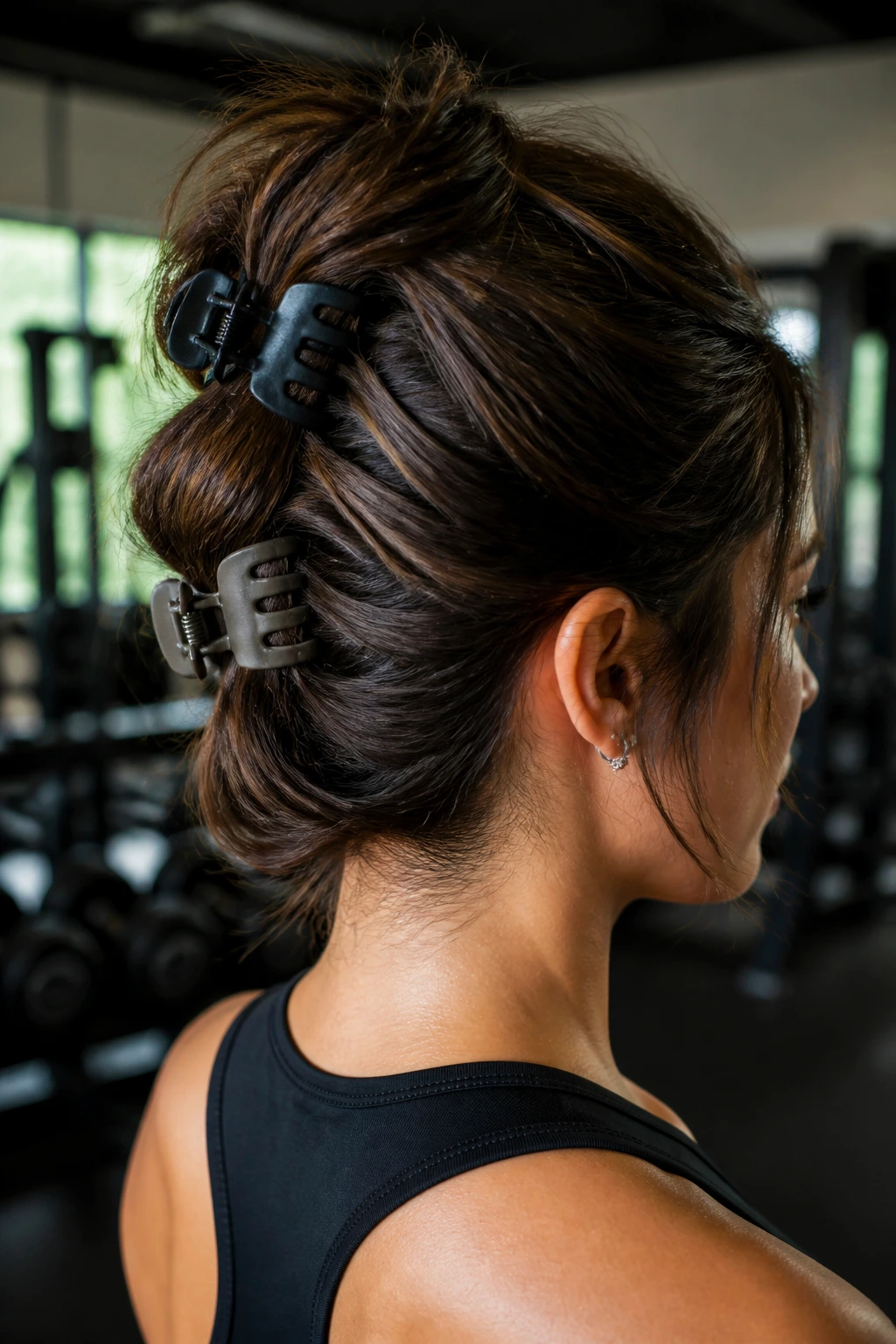
For those with extremely thick hair, one clip often fails. The stack method involves using two clips in a vertical line to share the load. It looks a bit unconventional, but the stability is unmatched.
Distributing the Weight
By segmenting your hair into two distinct zones—one at the mid-crown and one at the upper-nape—you stop the heavy weight of your hair from sliding down the back of your head. It is essentially creating a structural foundation for your hair.
How to Stack Properly
- Section the top half of your hair and twist it loosely, securing it with the first claw.
- Gather the bottom half of your hair and twist it upward toward the base of the first clip.
- Secure the second clip so that it sits just beneath the first one, essentially bridging the two sections together.
8. The Pull-Through Claw Chignon
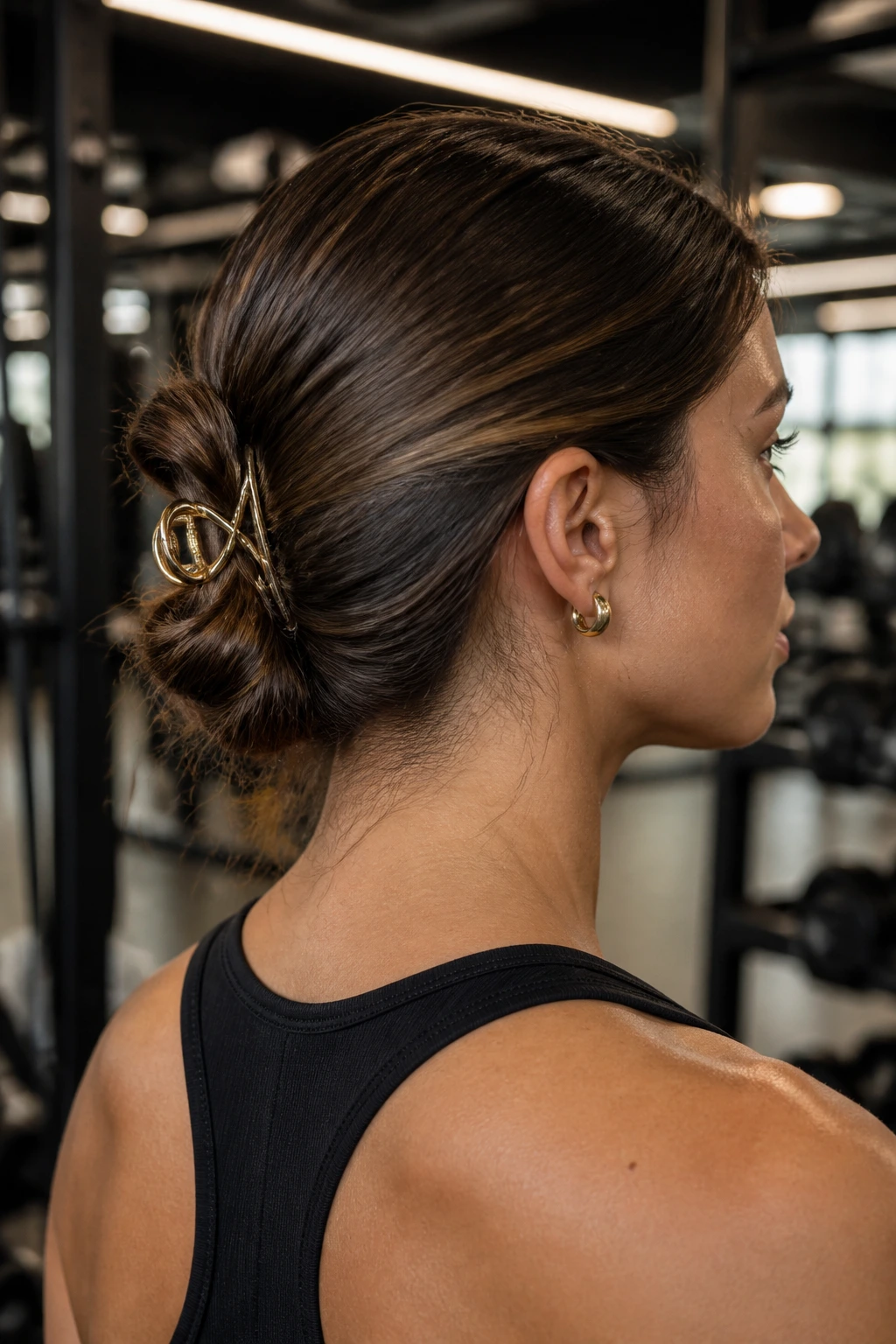
This style creates a polished look that actually functions like a military-grade hold. It involves pulling the hair through a center loop before clamping the clip, which provides a level of grip that no single-twist method can replicate.
Performance Benefits
The pull-through loop acts as a shock absorber. When you jump or run, the tension is absorbed by the loop rather than being transferred directly to your scalp. It is perfect for anyone who finds that their hair “tugs” during high-impact exercise.
Maintenance During the Workout
One of the best things about this style is that it is self-correcting. Because the loop is held by the clip, you can simply press the clip down if it feels loose, and the tension will reset automatically.
9. The Waterfall Claw Cascade
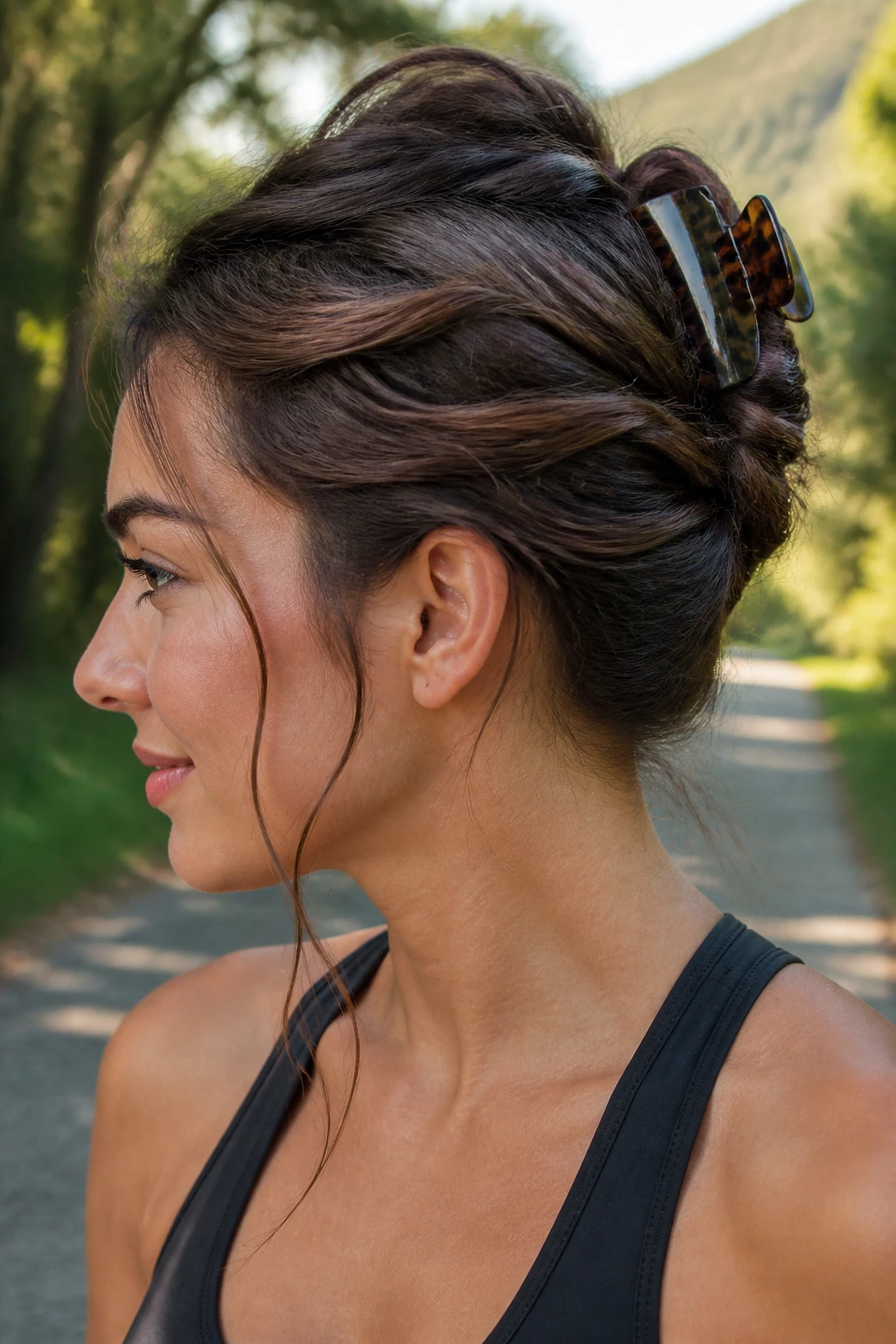
This is a softer style that works well for low-impact activities like walking or light jogging. It allows for more airflow, which is a significant advantage during warmer months when you need to keep your head cool.
Why It Promotes Cooling
By keeping the hair twisted but slightly loose, you expose more of the scalp to the air. This natural ventilation helps regulate body temperature, making it a favorite for outdoor exercise.
Strategic Clipping
To ensure it stays in place, place your claw clip at an angle rather than perfectly horizontal. This creates a diagonal tension that is much harder for hair to slip out of during natural walking movements.
10. The French Twist for Weightlifting
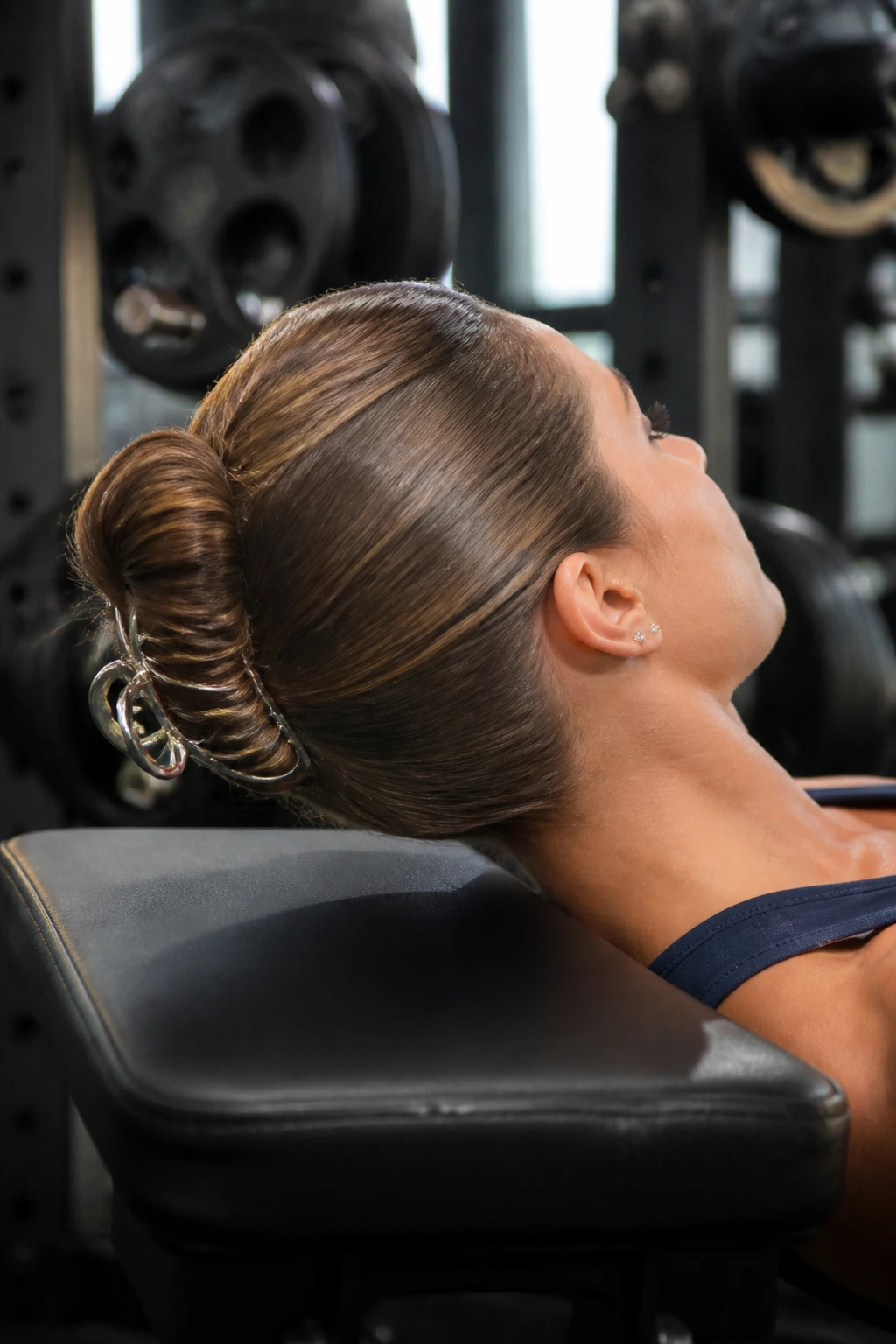
Think of this as the elegant cousin of the gym ponytail. The classic French twist is surprisingly stable when executed with a heavy-duty metal claw. It keeps the hair sleek, flat, and completely away from your neck.
Stability During Bench Press
Because the hair is laid flat against the head, you will not have any bulky knots digging into your skull when you lie on a flat bench. It is a favorite for powerlifters who need to keep their head position stable and clear.
The Metal Advantage
For this specific style, try to use a metal claw rather than plastic. The thinner, sharper teeth of a metal clip can hold tighter to flat-laid hair, ensuring that the twist stays crisp from the first set to the last.
11. The Braided Halo Claw
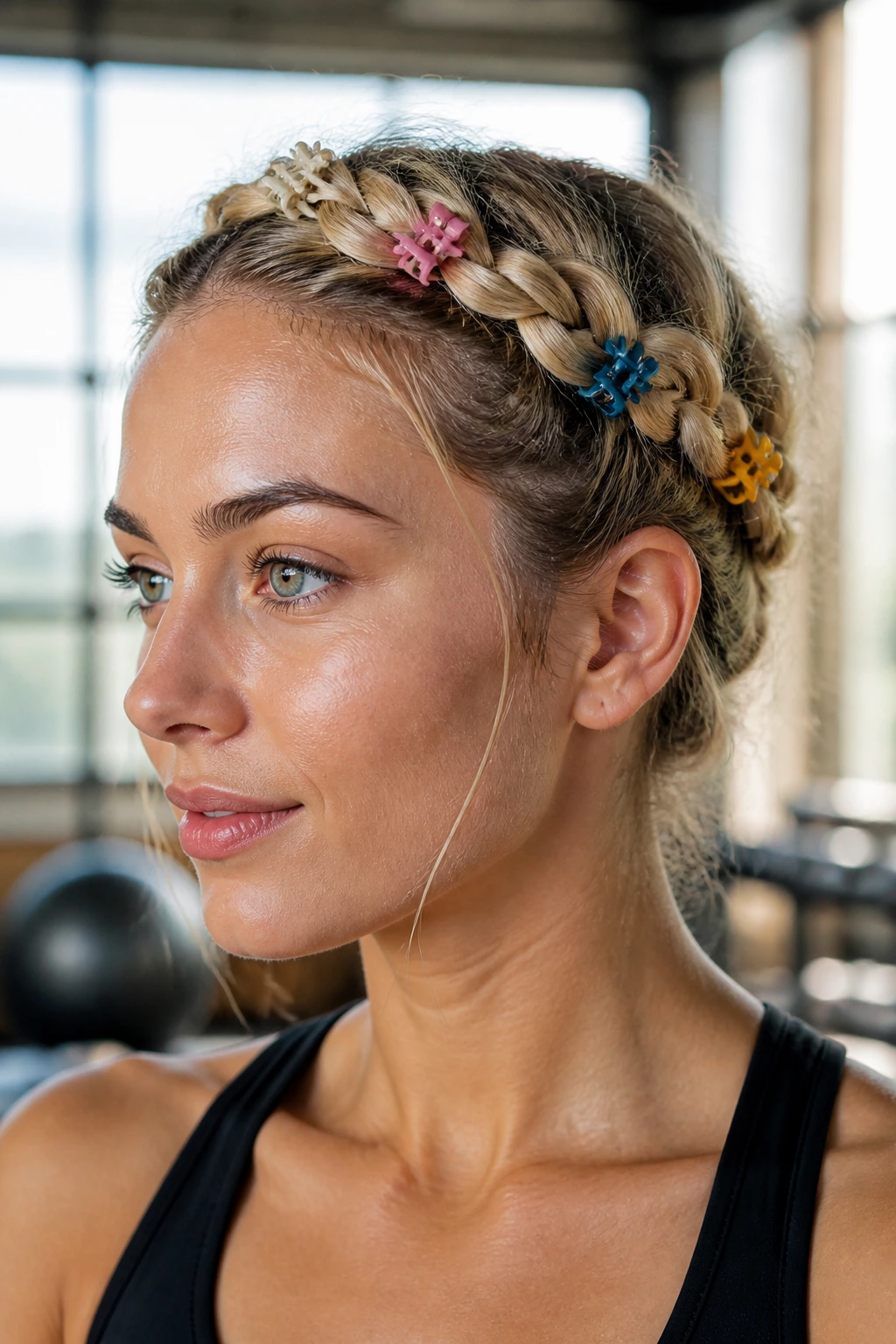
If you enjoy braiding, this is a beautiful way to keep hair secure while adding a touch of personality to your gym look. It involves wrapping a braid around the head and pinning it with a series of small, colorful claws.
Why It Stays Put
The braid itself creates a high-friction surface. When you clamp the claws into the braid, they are locked into the weave, making it nearly impossible for the clip to fall out even during intense floor work.
Color Coordination
Using smaller, high-visibility claws makes the style look intentional rather than utilitarian. It turns your workout hair into a feature rather than a compromise you just have to live with.
12. The Multi-Claw “Cage” Braid
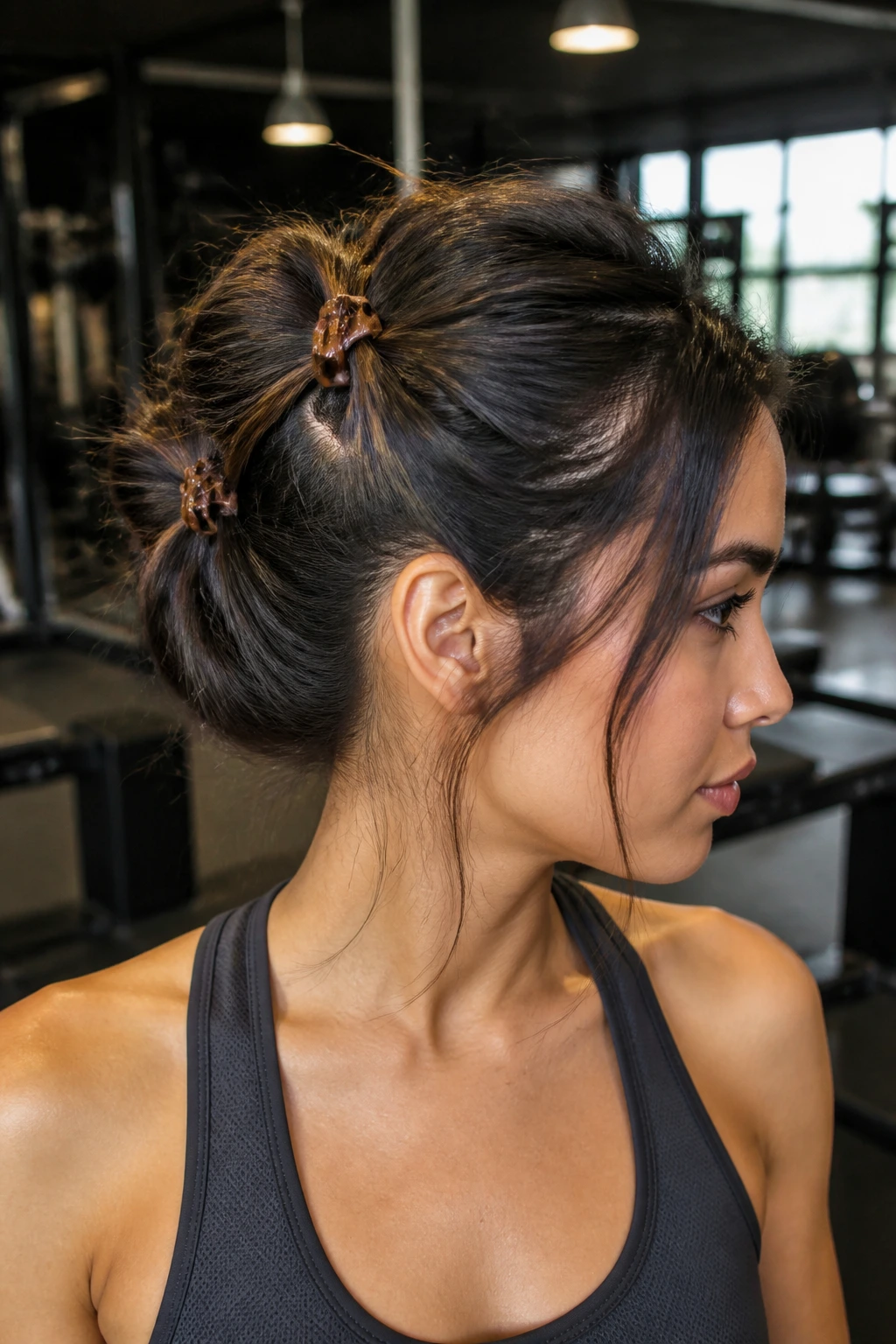
For those who have a lot of layers, keeping everything contained is the biggest challenge. The “cage” technique uses three small claws placed in a triangular pattern to anchor the various lengths of your hair.
Managing Layers
Small clips are significantly better at grabbing short layers than one large clip. By using three points of contact, you ensure that even those annoying wispy pieces around your neck are locked in.
The Strength of Triangulation
When you pull your hair up and secure it at three different points, you create a tension grid. If one clip wiggles, the other two keep the structure intact, preventing the whole style from collapsing.
13. The Pinned-Up Fringe
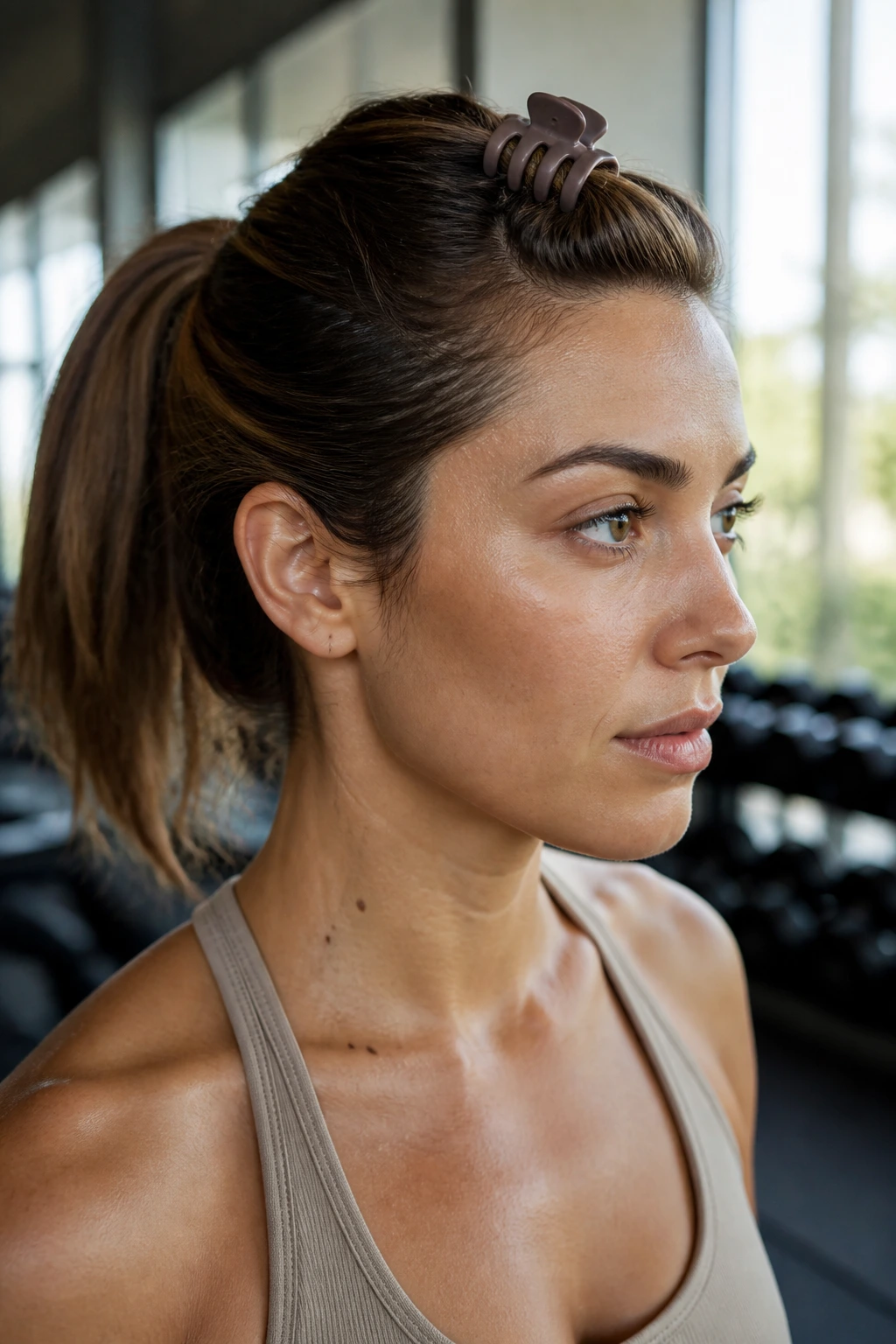
If you are worried about your bangs or front layers falling into your eyes mid-workout, you do not have to pull all of your hair back. You can use a single, medium-sized claw just to pin back the front section while leaving the rest in a secure ponytail or bun.
Preventing Mid-Workout Distractions
There is nothing more frustrating than having to stop a set because hair is stuck to your sweaty forehead. Pinning the front section back provides instant relief and allows for a clear line of sight.
Comfort Considerations
Use a clip with rounded teeth for the front of your head. Since this area is more sensitive than the back, you want to ensure the grip is secure but not sharp enough to cause discomfort during your workout.
14. The High-Volume “Octopus” Bun
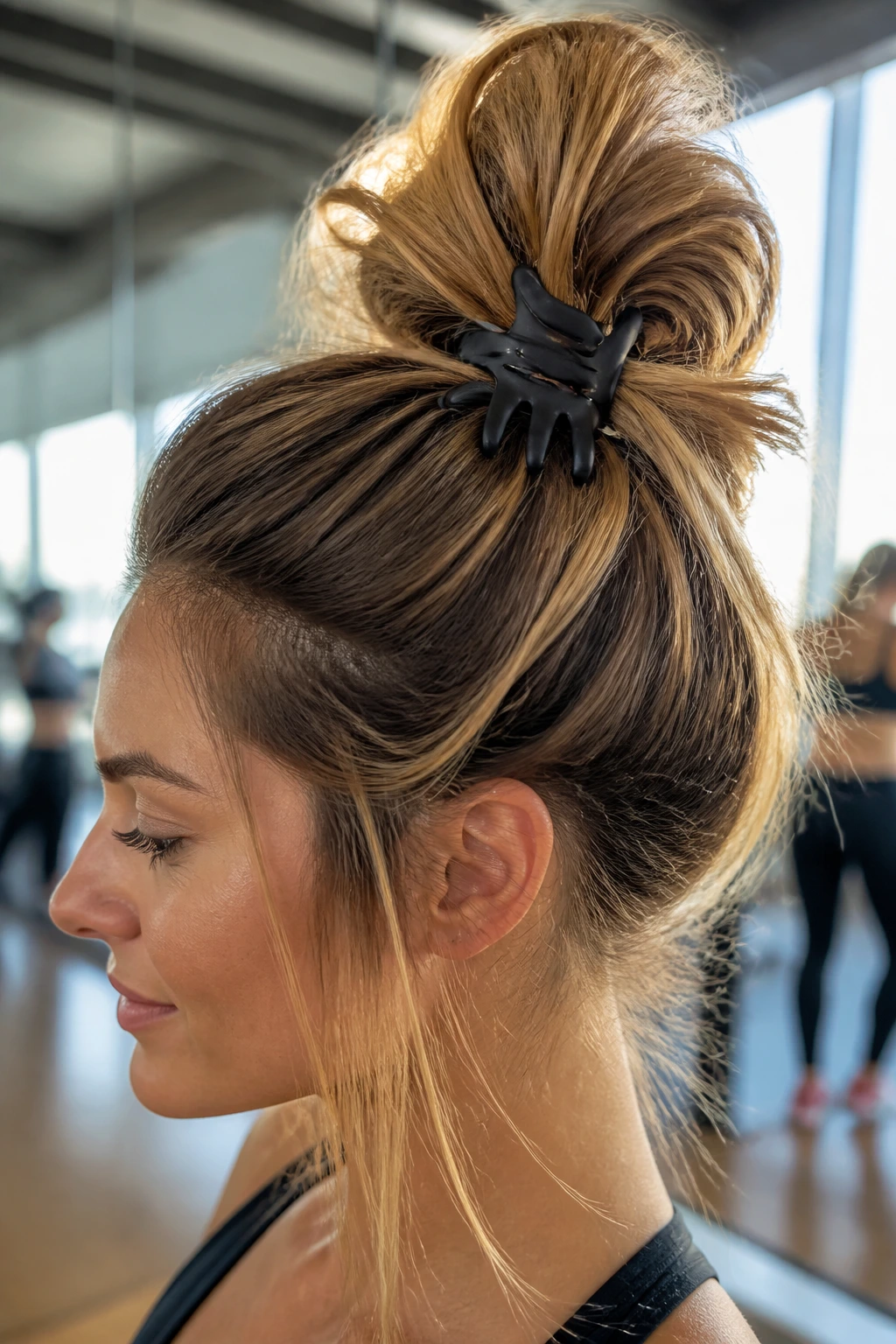
This style uses a special type of claw clip with wider, more spread-out teeth that resemble an octopus. It is specifically designed to create volume while holding a massive amount of hair in a high, bouncy bun.
Why It Is Good for Aerobics
This style feels incredibly light. Because it distributes the hair outward rather than twisting it into a tight knot, there is less pulling at the roots. It is ideal for high-energy classes where you want your hair to move with you.
Achieving the Perfect Bounce
- Pull your hair into a very high ponytail.
- Gather the hair as if you were making a messy bun.
- Clamp the “octopus” clip over the base so that the teeth extend out through the hair.
- Allow the ends to cascade out over the top of the clip for a full, voluminous look.
15. The Undercut-Style Twist
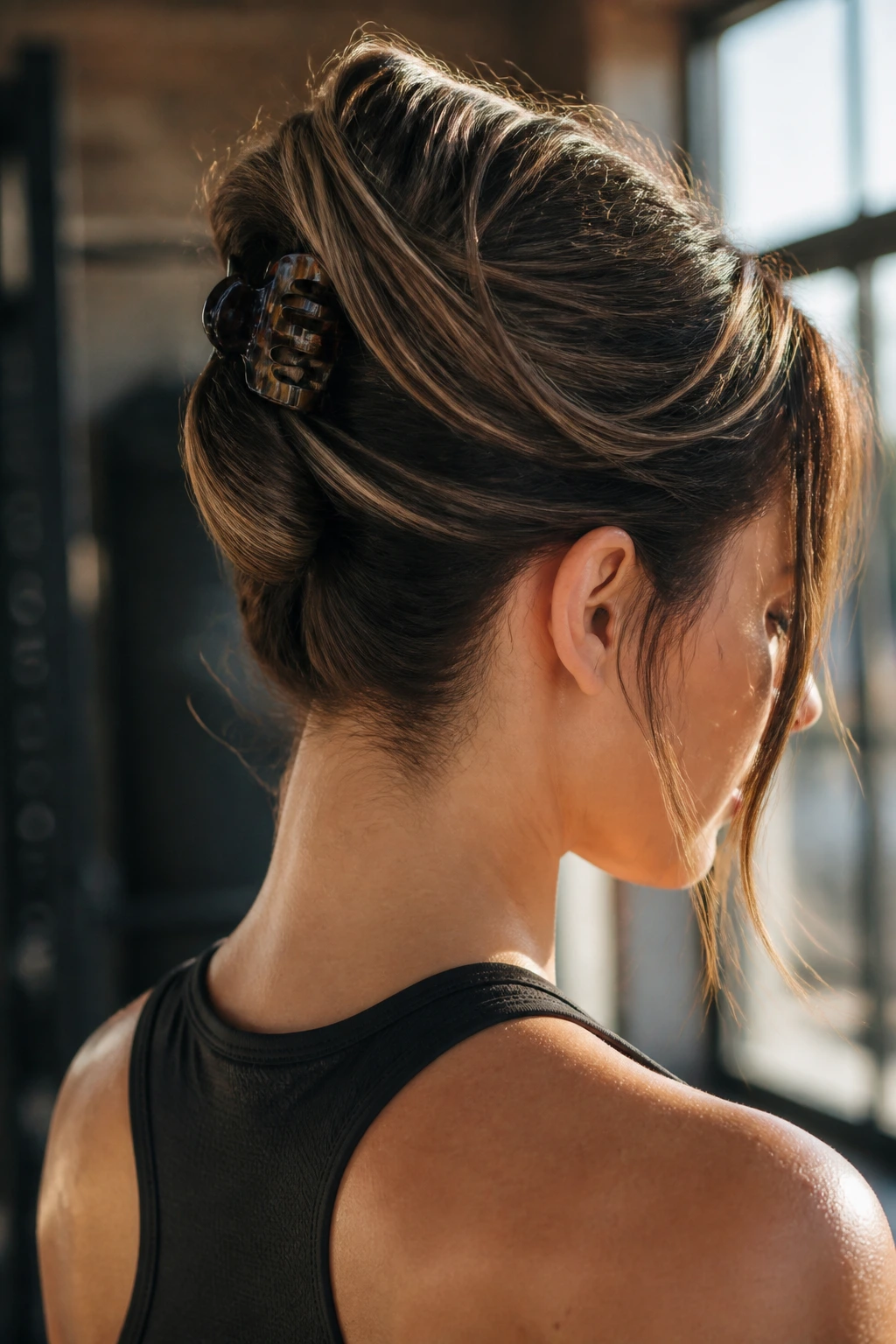
If you have thick hair but want to avoid the “heavy” feeling of a full bun, you can twist the bottom half of your hair upward and secure it with a claw, leaving the top half to cascade over the clip. This hides the clip and creates a sleek, professional look.
Cooling the Nape
This style exposes the nape of the neck completely, which is the most important area to keep cool. It is a fantastic compromise for those who want the hair-down aesthetic but need the performance of an updo.
Testing for Security
Do a quick “shake test” before you head out. If the clip moves significantly, tighten the twist at the base. The weight of the hair above the clip should actually press the clip closer to your head.
16. The Sleek Low-Center Tuck
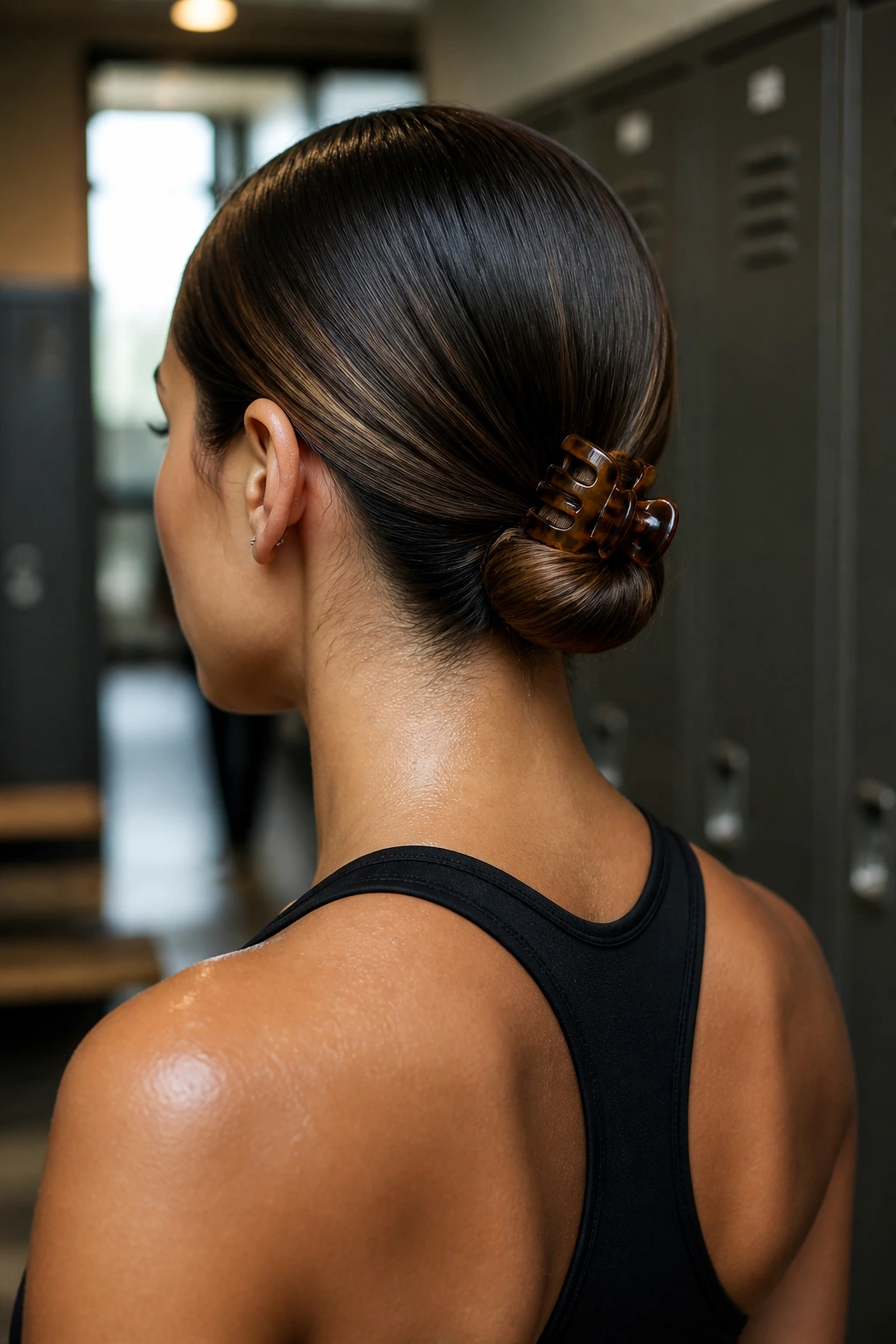
Sometimes, you just need to get the job done quickly. This is a simple, no-fuss method of rolling the hair inward and securing it with a single, reliable clip at the center of the nape.
Efficiency for Busy Mornings
This style takes less than ten seconds to execute. If you are rushing to a morning workout and do not want to spend time on complex braiding or twisting, this is your go-to.
Choosing the Right Clip Material
Go for a reinforced nylon or resin clip. These materials have a slight flex to them, which prevents snapping when you are pulling your hair tightly into that center tuck.
17. The Textured Half-Twist
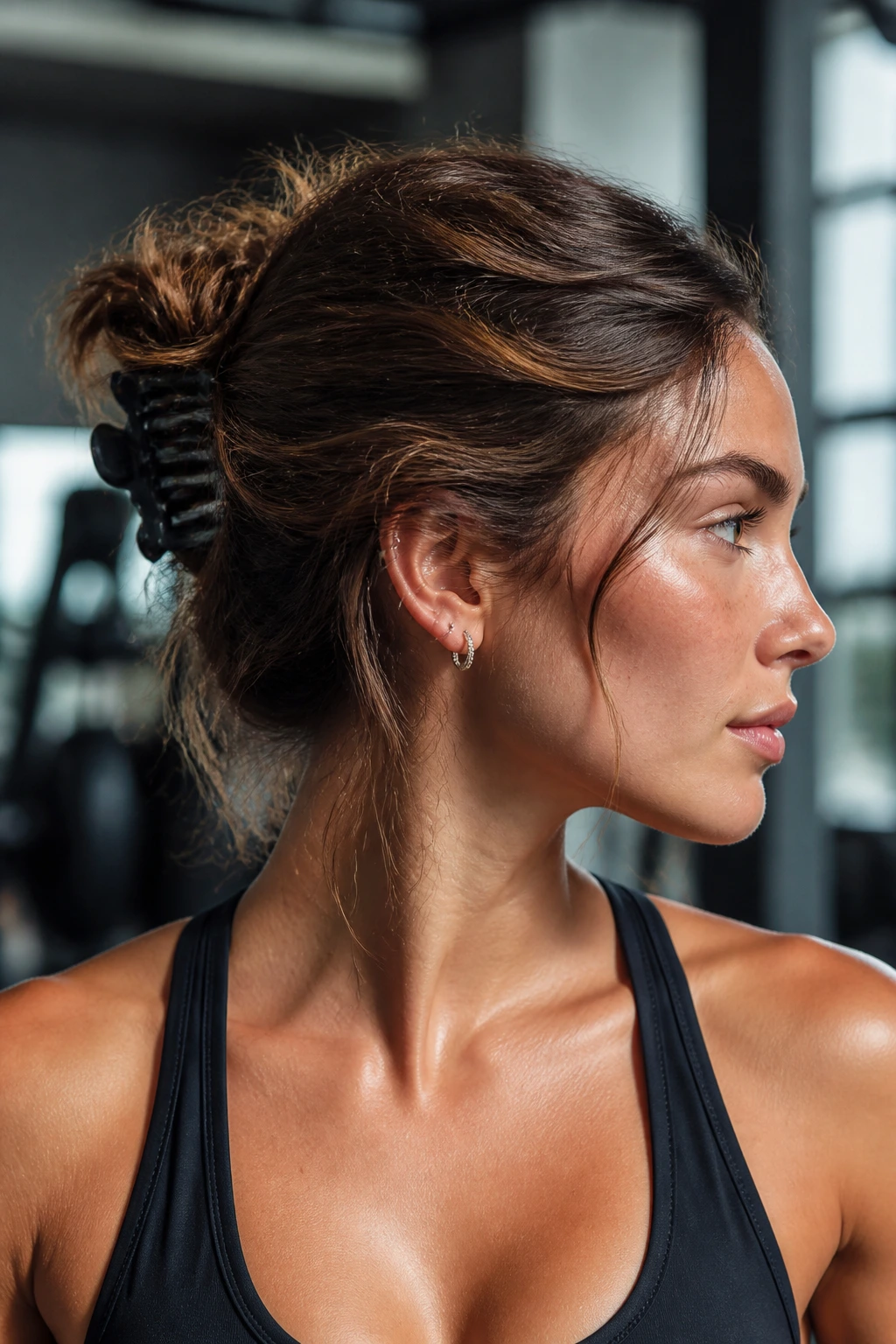
By taking the hair from just above the ears and twisting it back into a mid-level claw, you create a style that stays out of the way of your shoulders but feels less formal than a full bun.
Dynamic Movement
This style is excellent for rowing or elliptical machines where your shoulders are constantly in motion. It prevents the hair from rubbing against your shoulders, which can be irritating during long cardio sessions.
Adding Volume
If your hair is flat, pull small sections of hair at the crown upward after securing the clip. This creates a “lifted” look that prevents the hair from sticking to your scalp, keeping your head cooler throughout the workout.
18. The “Locked-In” Fishtail Updo
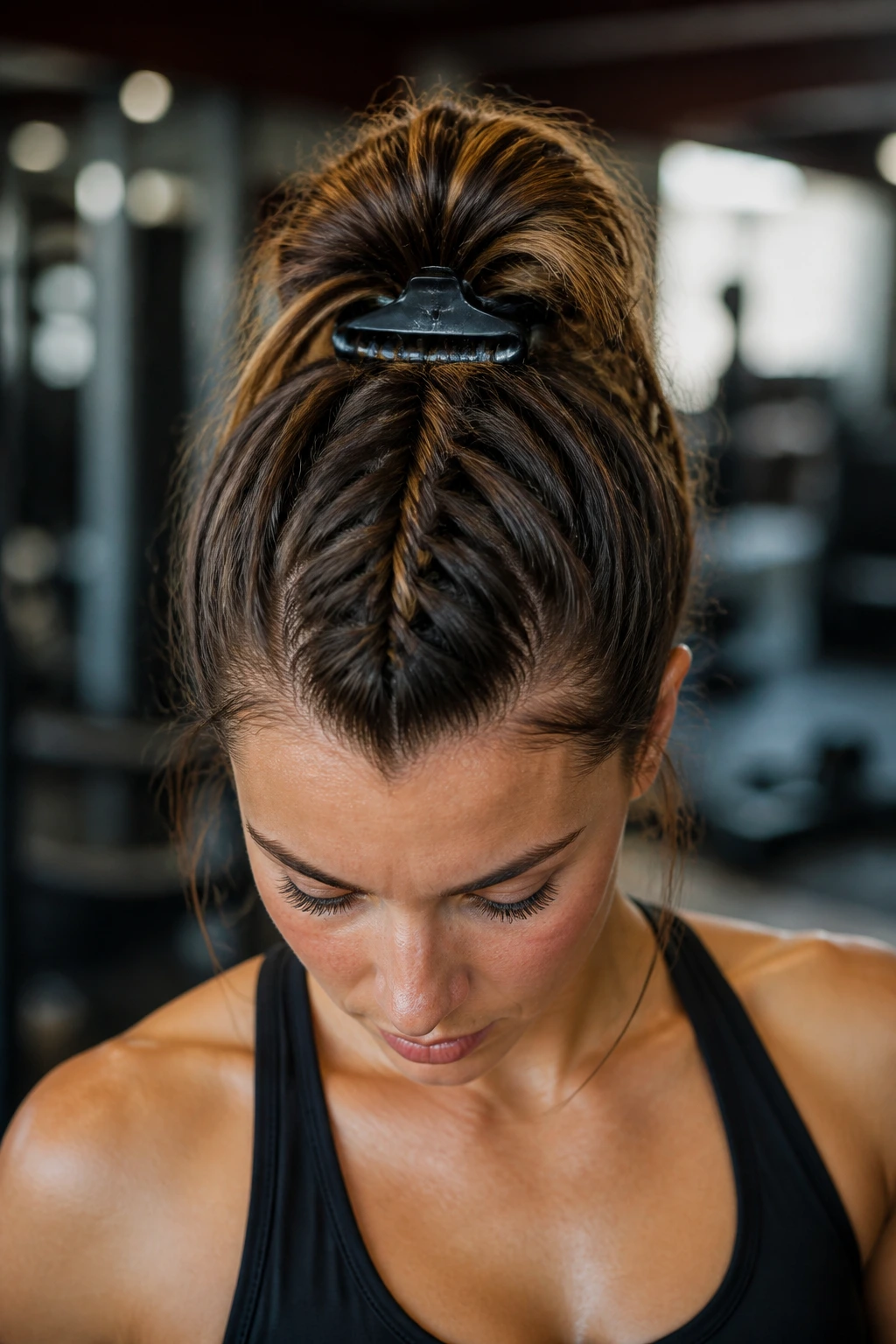
This is the most advanced style, combining a fishtail braid with a claw clip anchor. The braid adds texture that acts as a natural stabilizer, while the claw clip provides the anchor point at the top.
Unparalleled Stability
The braid itself holds the hair together, meaning the clip does not have to do the heavy lifting of keeping every individual strand in place. It is the ultimate style for long workouts where you want zero maintenance.
When to Use This Style
Save this for your longest sessions—like a two-hour hike or a long-distance run. Once you lock this into place, it is not going anywhere until you decide it is time to take it out.
Final Thoughts
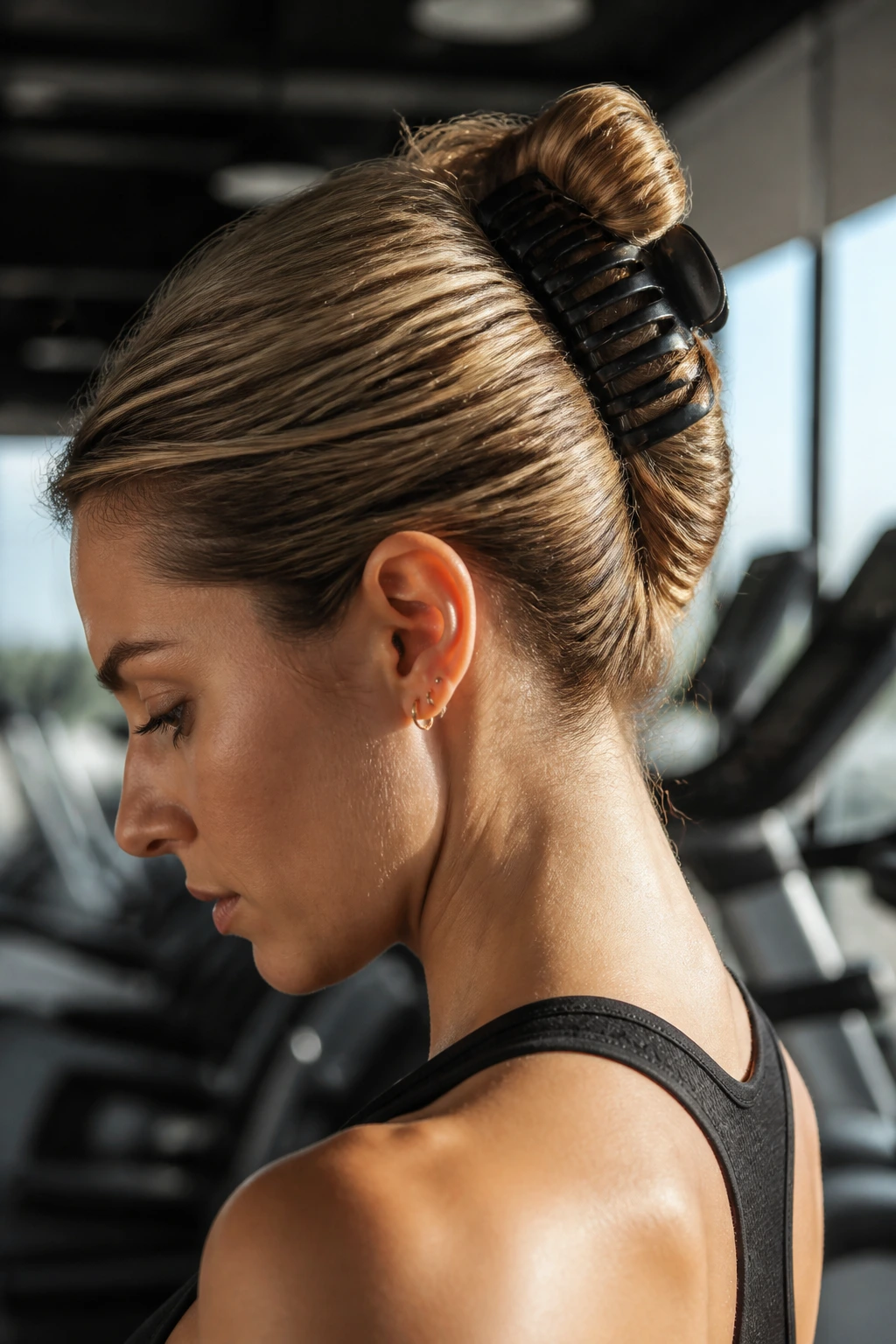
The transition to using claw clips for exercise is about unlearning the habit of the tight, pulling ponytail. Once you embrace the fact that you can achieve a secure hold through twisting, sectioning, and proper clip placement, your relationship with gym hair will change. You stop fighting your hair and start appreciating the way these clips keep you cool, comfortable, and focused.
Do not be afraid to experiment with different sizes and materials. What works for a heavy lifting day might be overkill for a yoga session. Keep a variety of clip sizes in your gym bag—a few large, high-tension clips for the serious stuff and some smaller, reinforced ones for those days when you just need to keep your layers back. Eventually, you will find that the claw clip is not just a tool for your morning routine, but a essential part of your active lifestyle.