

Thick hair is a blessing and a burden all at once. If you are reading this, you probably know the specific struggle: the weight, the unruly volume, and the way your hair seems to have a personality—and a schedule—of its own. You might feel like you are constantly fighting to keep it tamed, or perhaps you are looking for a way to embrace the density without looking like a 1980s music video star. The key to managing thick hair is not just about length; it is about shape.
When the hair is dense, it behaves like a heavy fabric. If you cut it bluntly, it forms a triangle, expanding at the bottom and flattening at the crown. To avoid this, we look for cuts that distribute weight intelligently. Through careful layering, strategic thinning, and deliberate graduation, we can transform that mass into something manageable, elegant, and effortlessly stylish. Let’s look at twenty-two specific shapes that work with your hair, not against it.
1. The Long Layered Shag
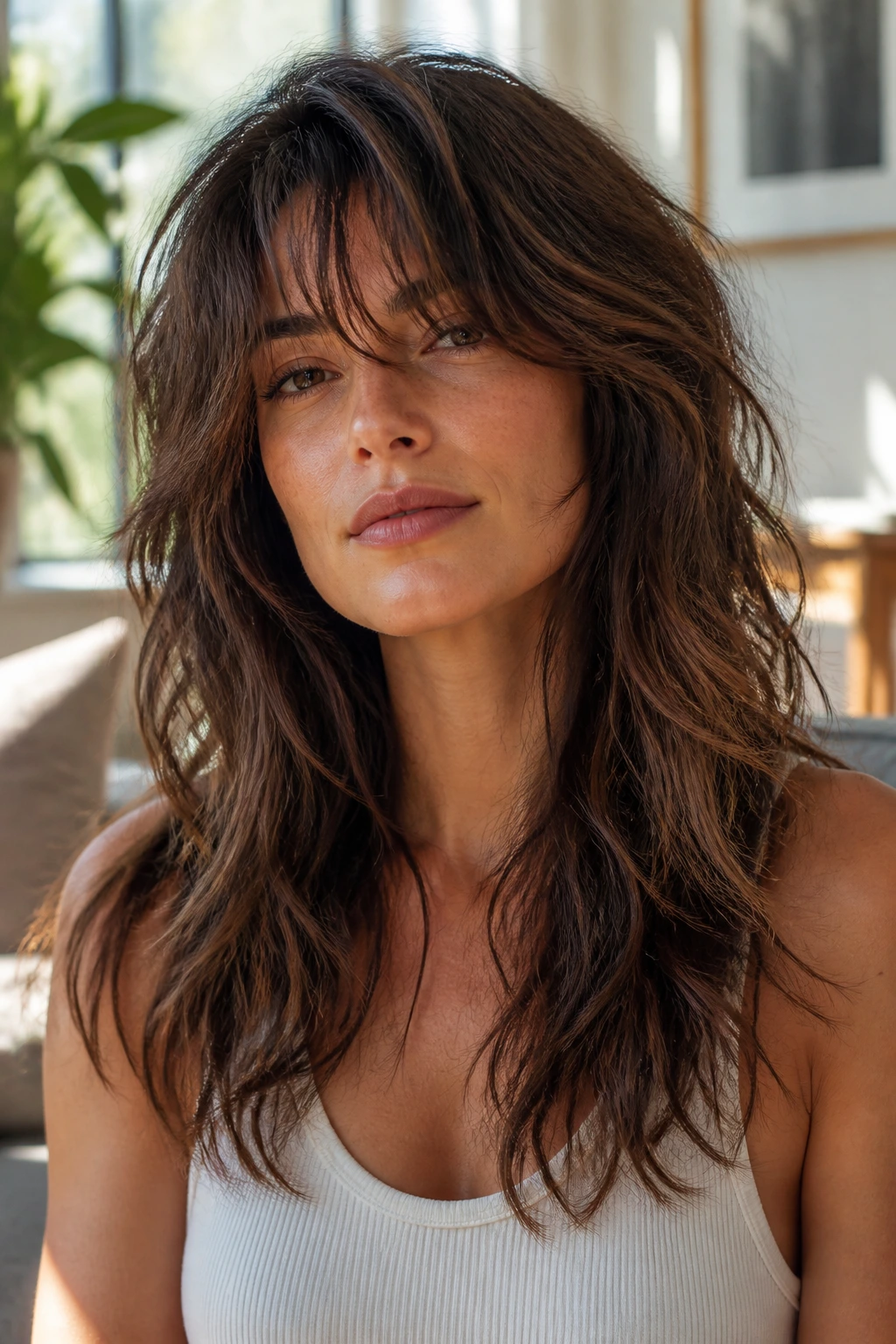
The shag is a masterclass in weight distribution. By cutting shorter layers around the crown and mid-lengths, we remove the “bulky” feeling that often sits just above the shoulders. The shape is inherently messy, which is perfect for thick hair because it masks the natural urge for your hair to grow outward rather than downward. It gives you that effortless, lived-in texture that actually looks better on day two or three.
2. Rounded Internal Layers
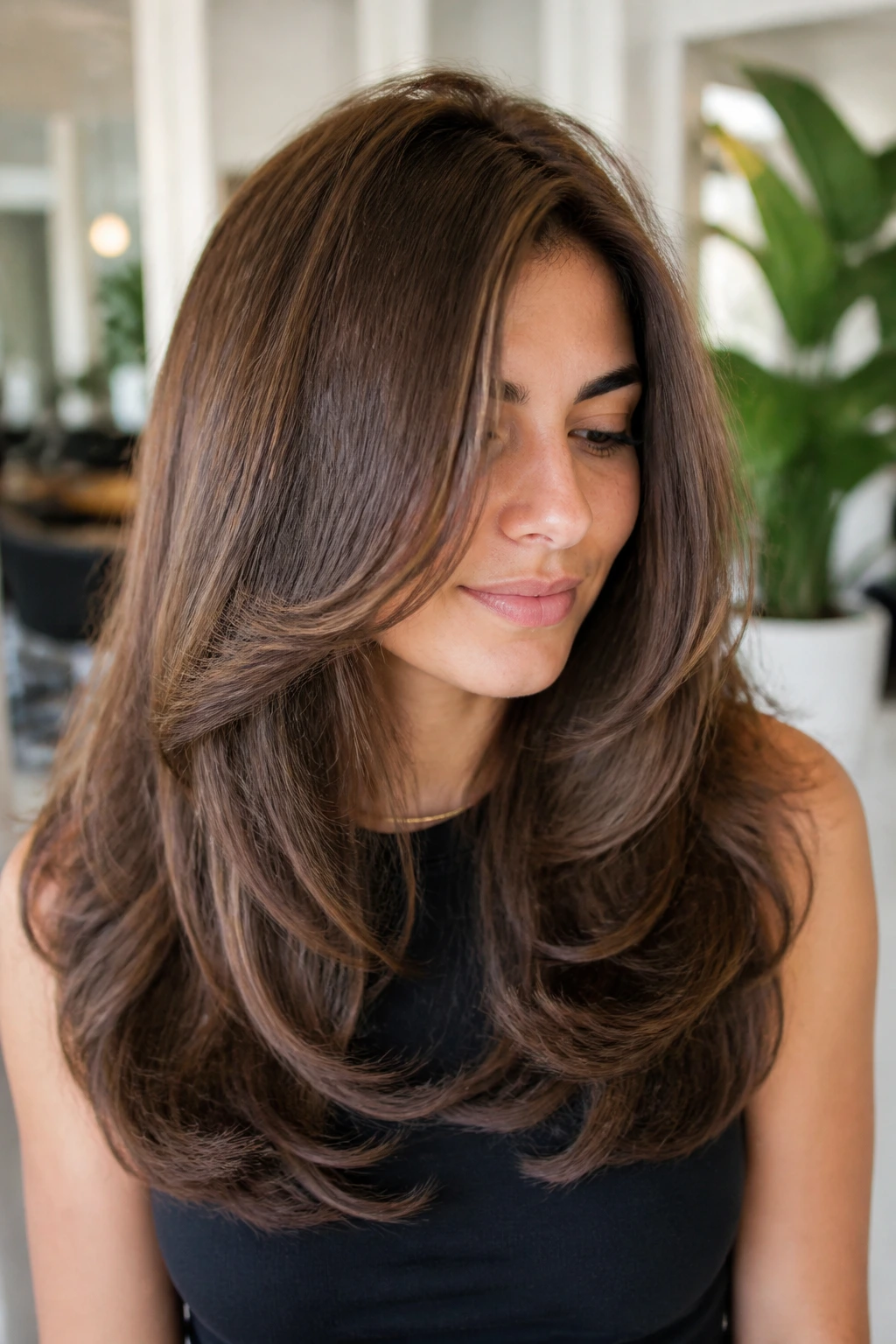
If you prefer a more classic, professional aesthetic, rounded layers are your best friend. Unlike choppy layers that create obvious steps, internal layers are cut underneath the surface to reduce volume without sacrificing the length or the soft, sweeping look of your ends. This creates a soft, voluminous silhouette that feels light and airy rather than heavy and dense. It moves beautifully when you walk, providing that quintessential “bounce” that thick hair owners often crave.
3. The Precision Blunt Bob
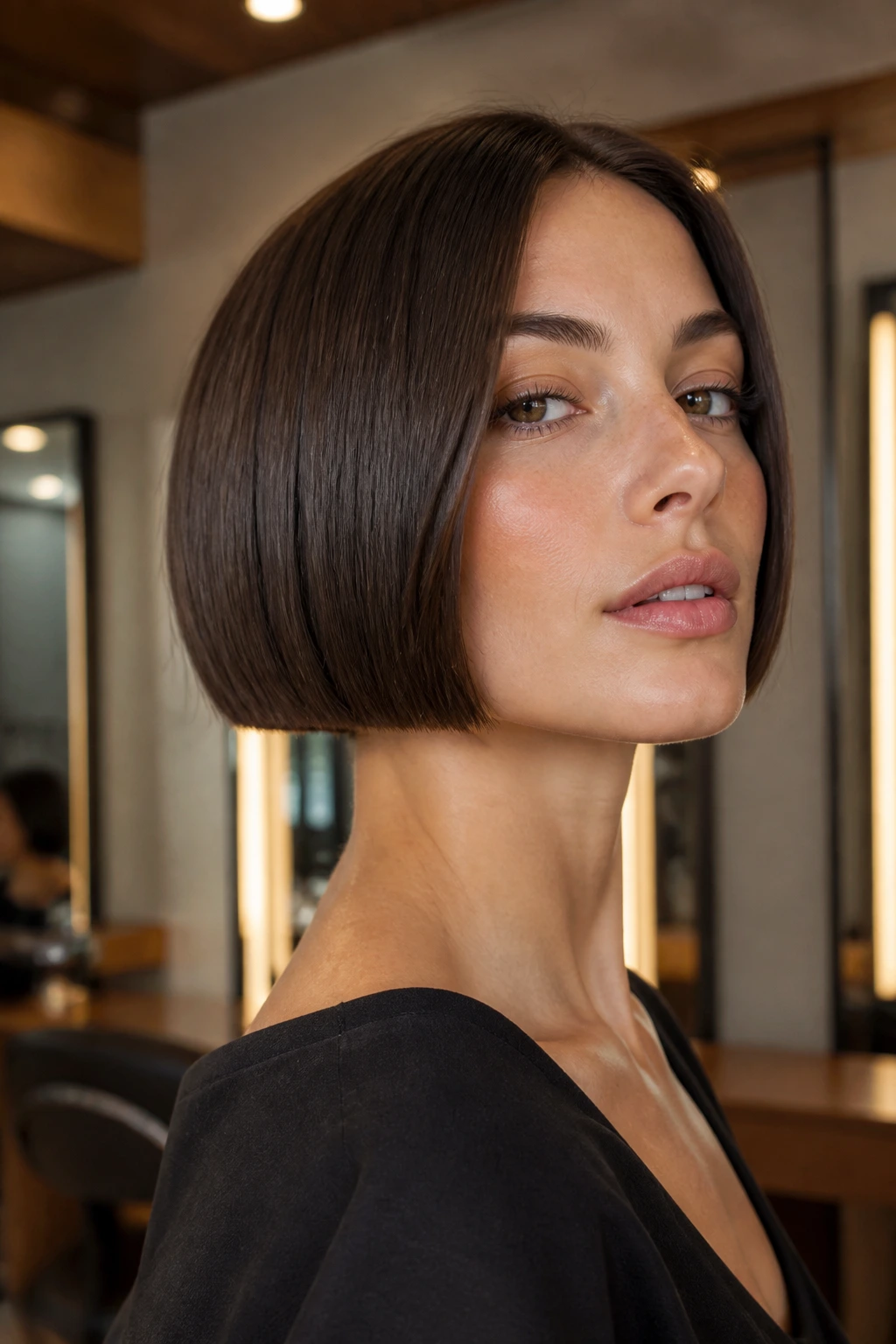
There is something deeply satisfying about a perfectly crisp bob. For thick hair, the blunt edge is essential because it anchors the hair, preventing the “poof” that can happen with textured ends. The secret here is a subtle “undercut”—where the hairstylist thins out the hair at the nape of the neck. This keeps the bob sleek and close to your face, stopping the hair from ballooning out at the chin. It is a bold, high-fashion statement that highlights the richness of your hair’s natural texture.
4. The Softly Tapered Lob
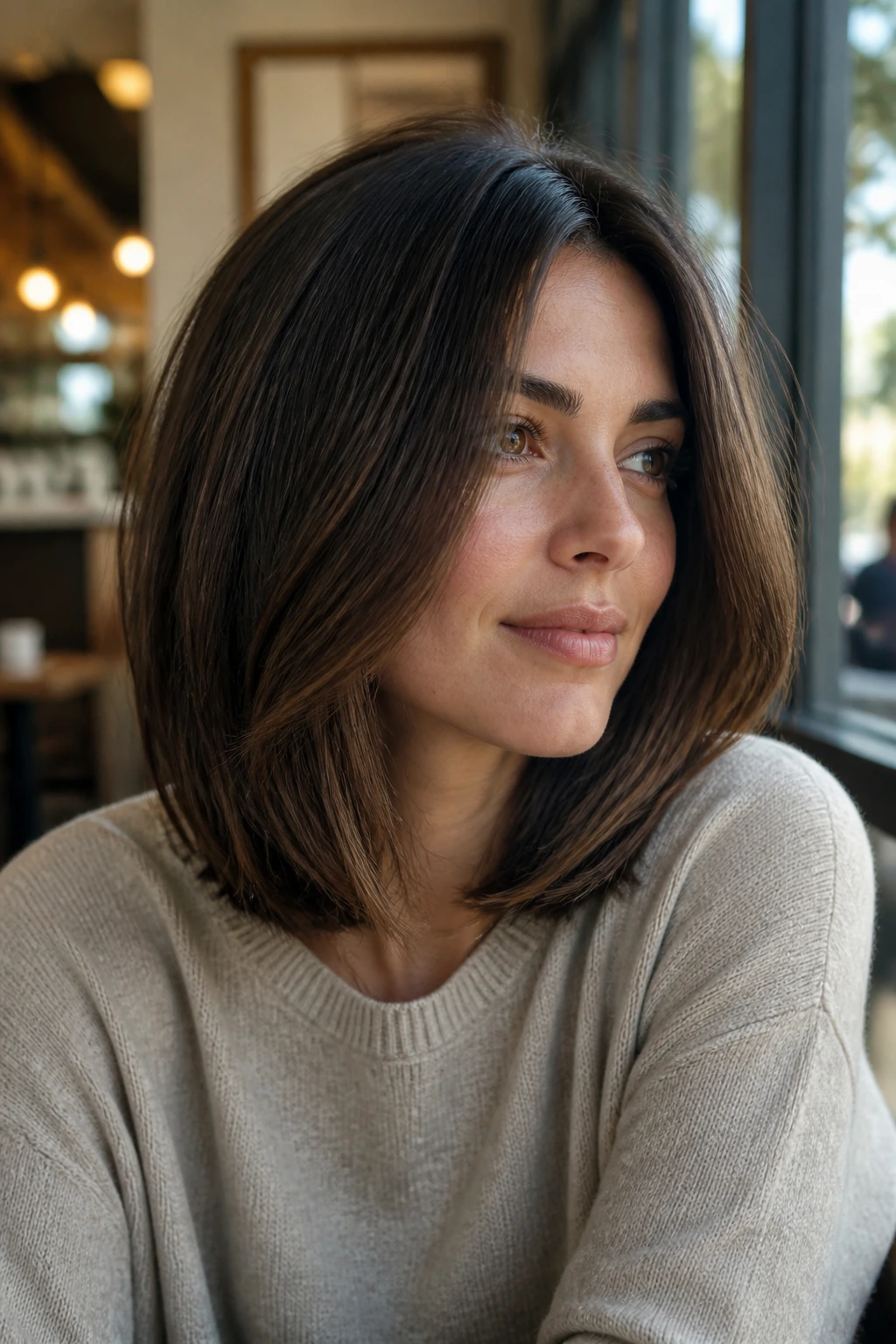
A long bob—or “lob”—that is slightly shorter in the back creates a beautiful, graceful arc. Because your hair is thick, this tapered shape helps the front sections frame your face without overwhelming it. By adding a gentle, invisible layer through the middle, the hair is encouraged to flip inward, giving you a polished finish that stays put throughout the day. It is a fantastic option if you want to keep enough length for a ponytail while still feeling like you have had a “real” haircut.
5. The Curtain-Fringed Mid-Length
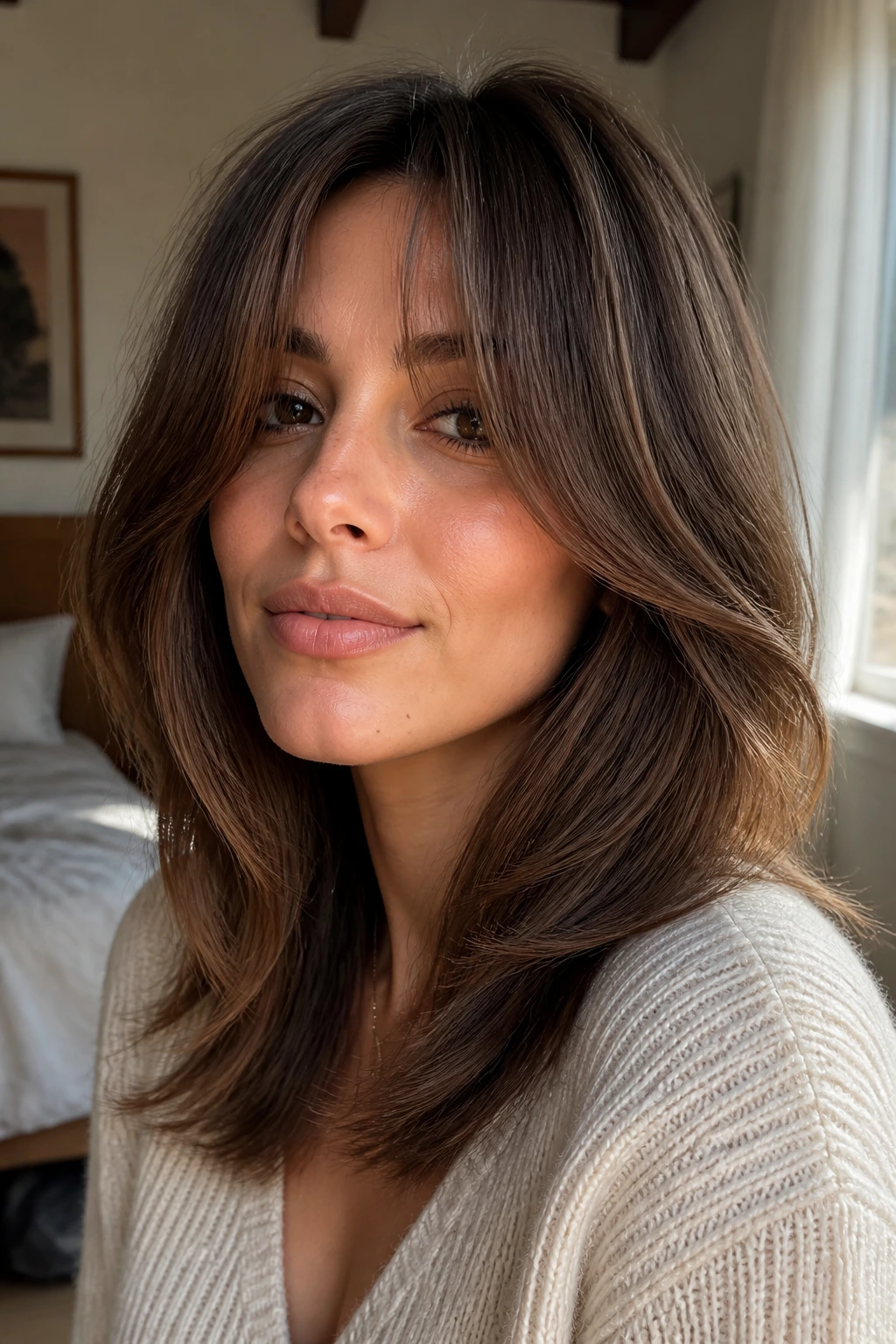
Many people with thick hair fear bangs, fearing they will become a thick, unmanageable wall across the forehead. However, the curtain bang is a different beast entirely. It is long, sweeping, and designed to blend into the rest of your hair. When cut into a mid-length style, these bangs act as a weight-balancing mechanism for the rest of your hair, drawing attention to your cheekbones while the rest of your mass stays controlled and structured.
6. The Textured Pixie
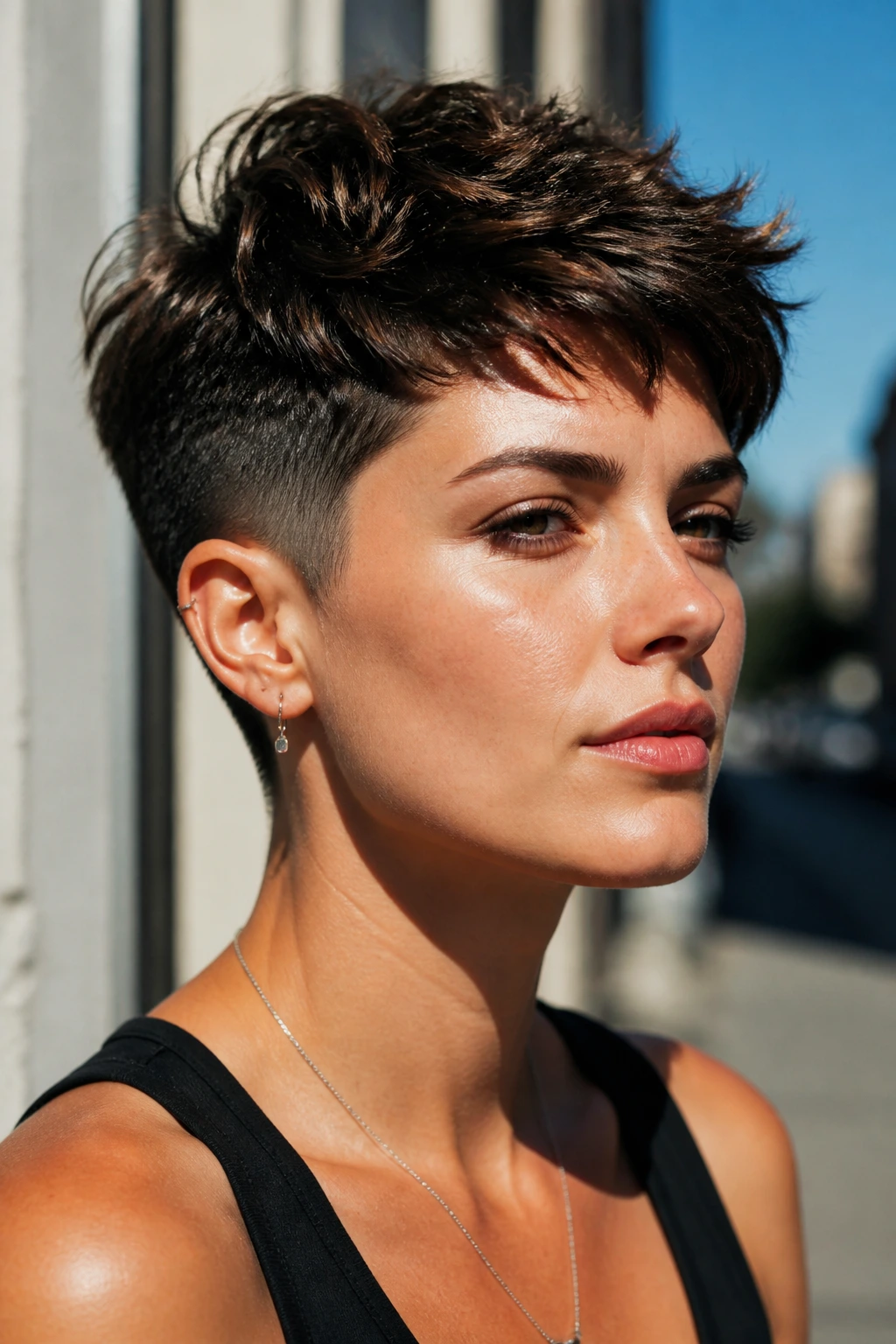
Yes, you absolutely can pull off a short cut with thick hair. In fact, a pixie cut on thick hair often looks thicker and healthier than it does on fine hair. The trick is to keep the sides and nape tight and close to the skin, while leaving more length on top for texture. Using a razor or thinning shears to create “gaps” in the top layer allows the hair to interlock rather than pile up, resulting in a chic, low-maintenance shape that defies gravity.
7. The Face-Framing ‘Rachel’ Variation
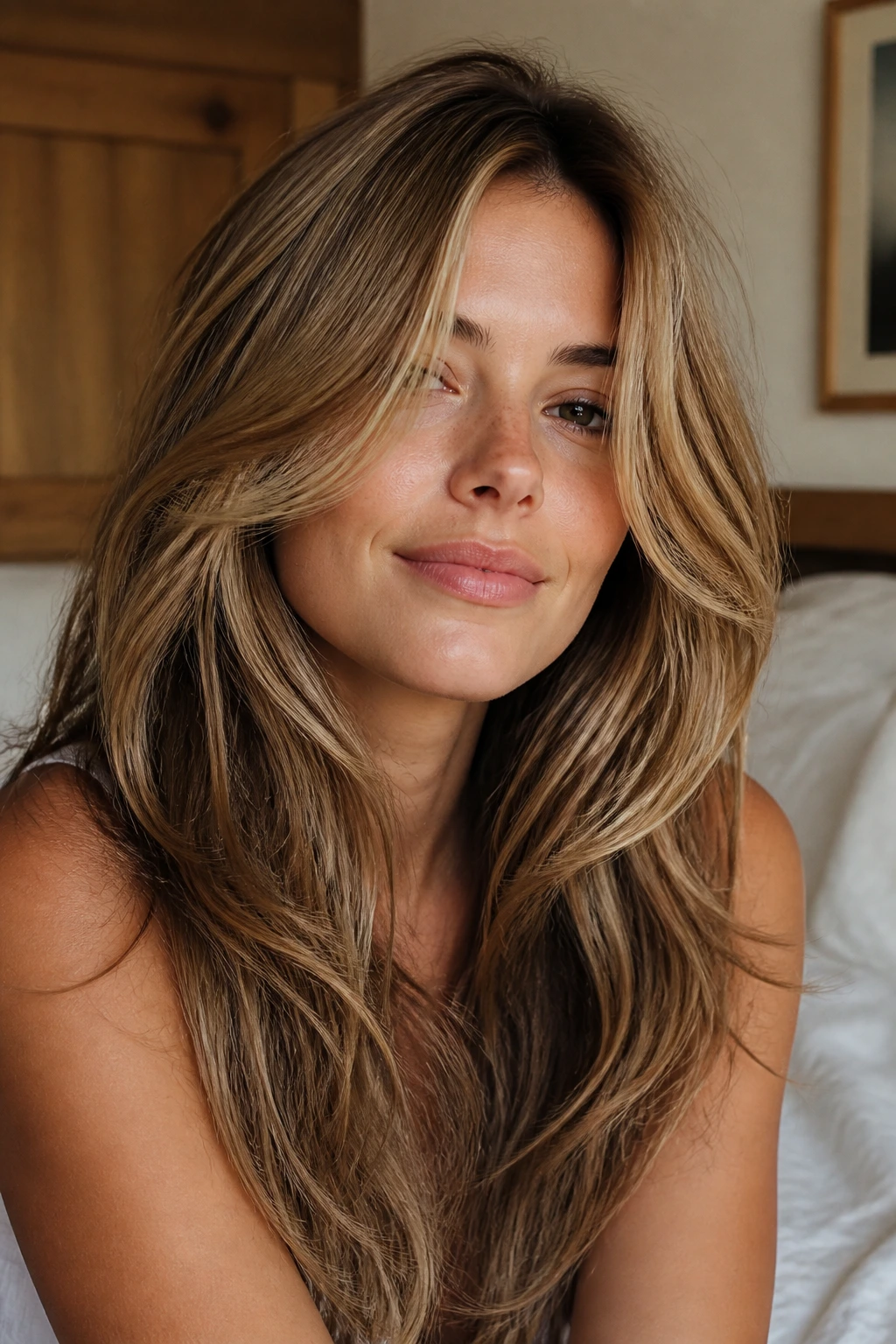
The 90s-style face-framing layer is back, and it is a gift for thick-haired individuals. By starting the layers around the chin or jawline, you are essentially “opening up” the front of your face. This prevents the hair from hiding your features. For thick hair, these should be long, sweeping layers that feel like a curtain, rather than short, choppy pieces that could end up looking frizzy or undefined.
8. The Deep Side-Parted Wave
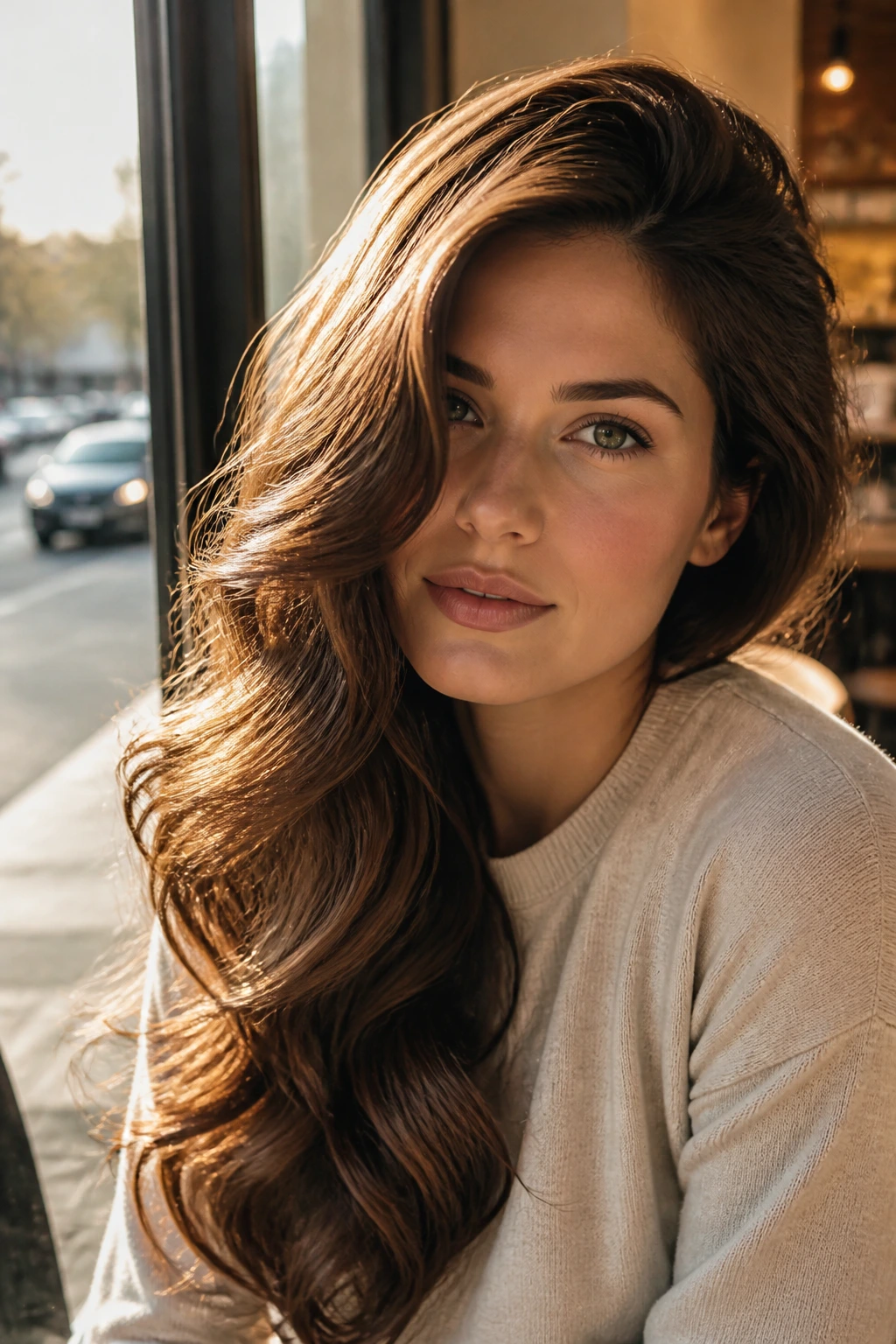
Shape is as much about how you style it as it is about the cut. A deep side part is a simple way to redistribute the weight of thick hair instantly. By forcing the majority of your hair to one side, you gain height and volume at the root, which helps balance the width of the hair elsewhere. It creates a glamorous, asymmetric shape that looks intentional and sophisticated, especially if you add a gentle wave with a wide-barrel curling iron.
9. The Graduated Stacked Bob
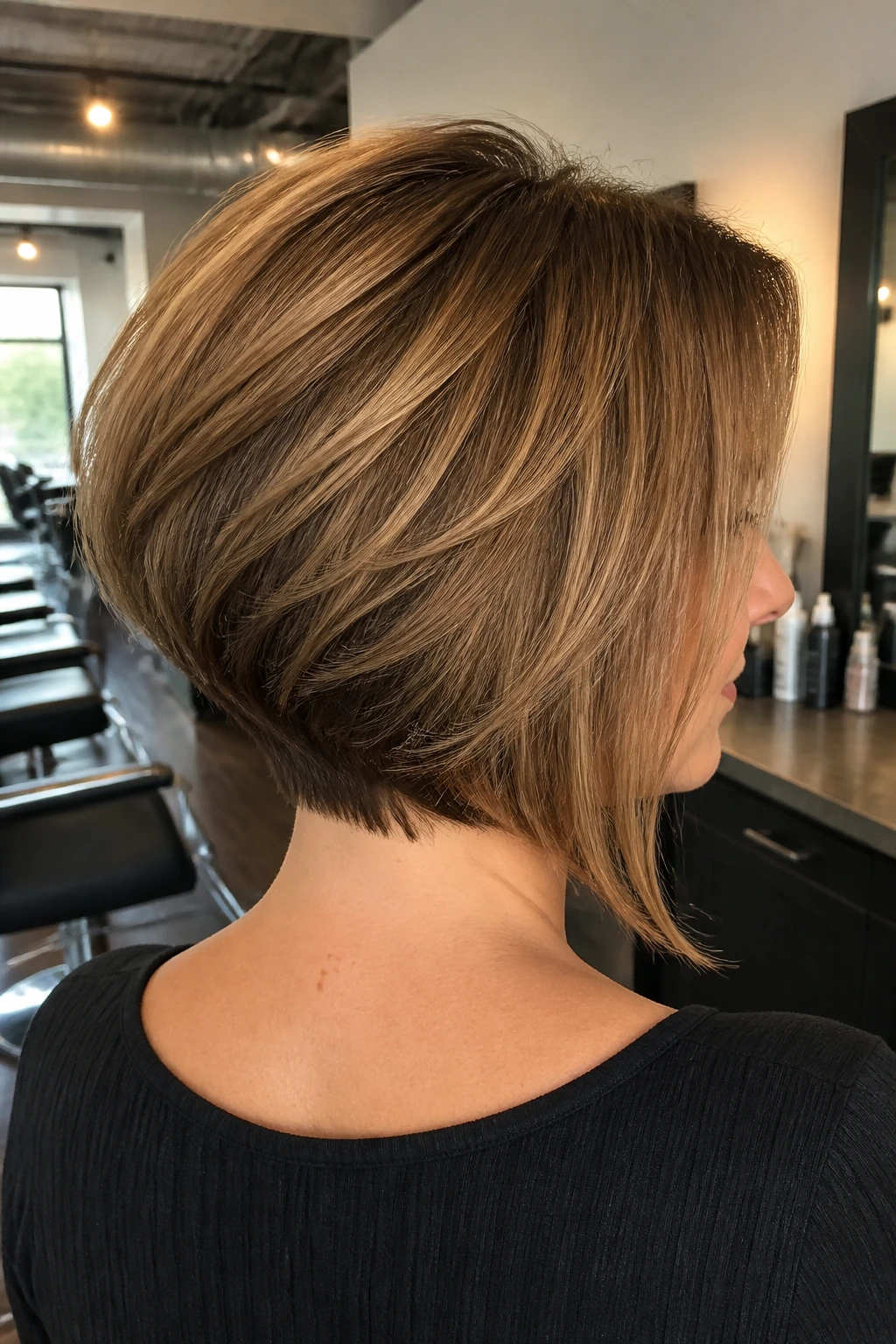
This is the ultimate problem-solver for the “triangular” hair issue. The back is cut shorter, with layers that “stack” on top of each other, while the front remains longer. This design naturally pulls the hair forward and down, keeping the nape of the neck tight and controlled. The silhouette is sleek, refined, and significantly reduces the daily struggle with volume at the bottom of the cut. It is a high-maintenance cut—you will need trims every six weeks—but it is unmatched for shape control.
10. The V-Cut Layers
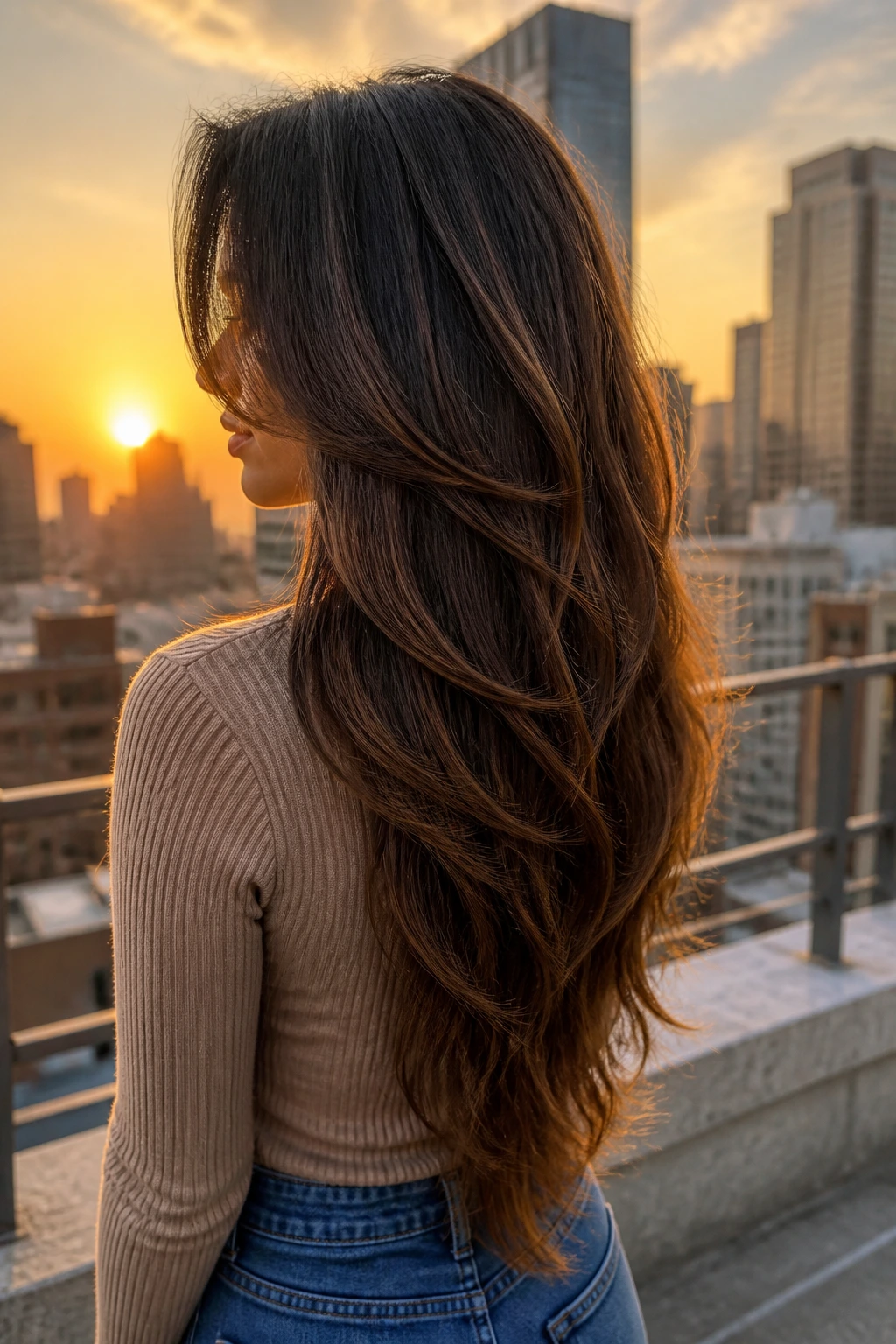
If you have long, thick hair, the V-shape cut is a classic way to manage density. By cutting the ends into a point rather than a straight line, you reduce the sheer amount of hair at the ends of your length. This keeps the hair from feeling like a heavy blanket on your back. The layers follow the V-shape, meaning the shortest pieces are by your face and the longest are in the back, creating a beautiful flow and plenty of movement.
11. The Modern Shag-Lob Hybrid
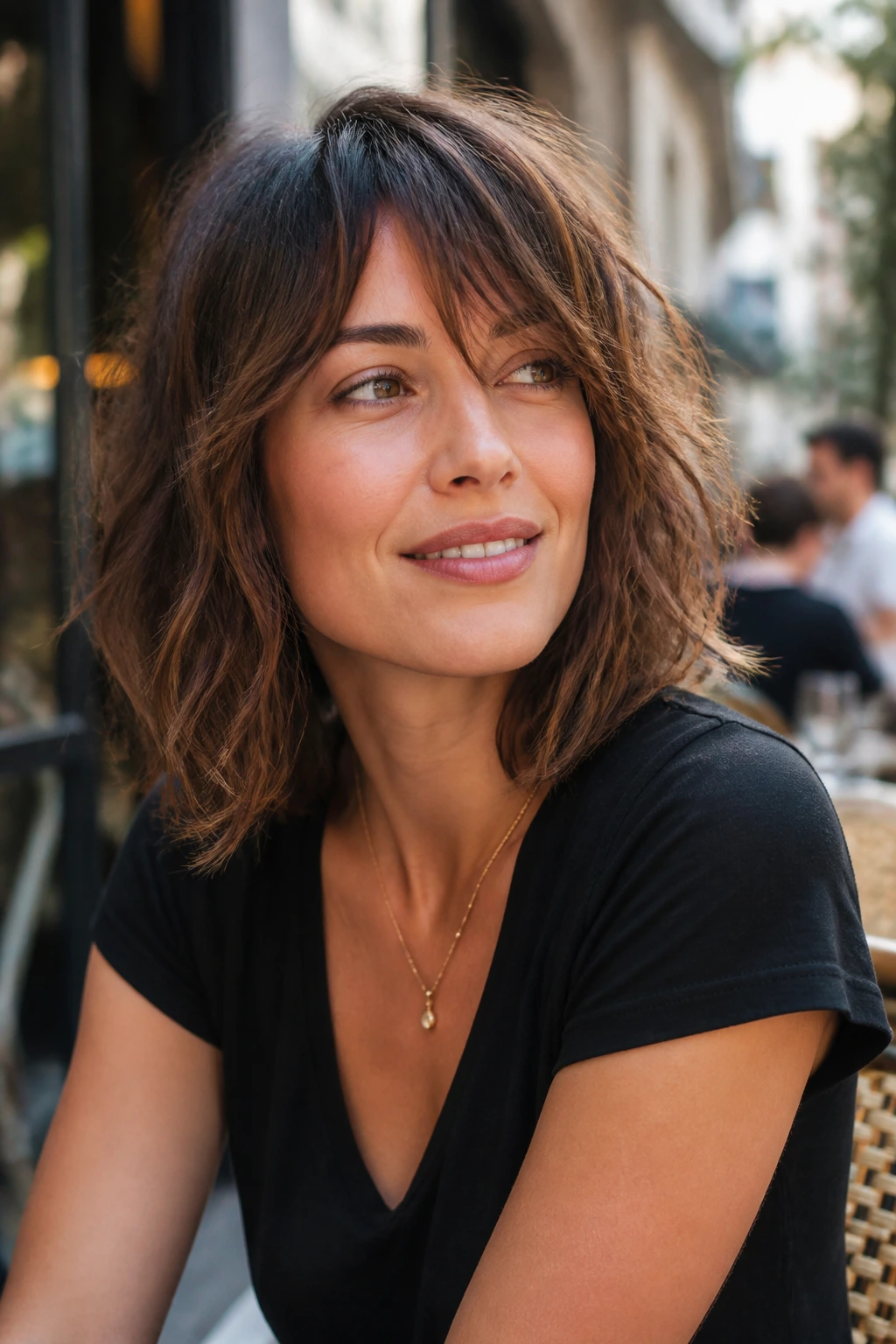
Imagine the messiness of a shag combined with the structure of a lob. This look utilizes choppy, uneven layers throughout, but keeps the overall length hitting at the collarbone. It is perhaps the most “forgiving” cut on this list. If you wake up and your hair is doing its own thing, this cut just absorbs the chaos and turns it into style. The high volume is expected, so you stop fighting it and start working with it.
12. The Wispy-End Butterfly Cut
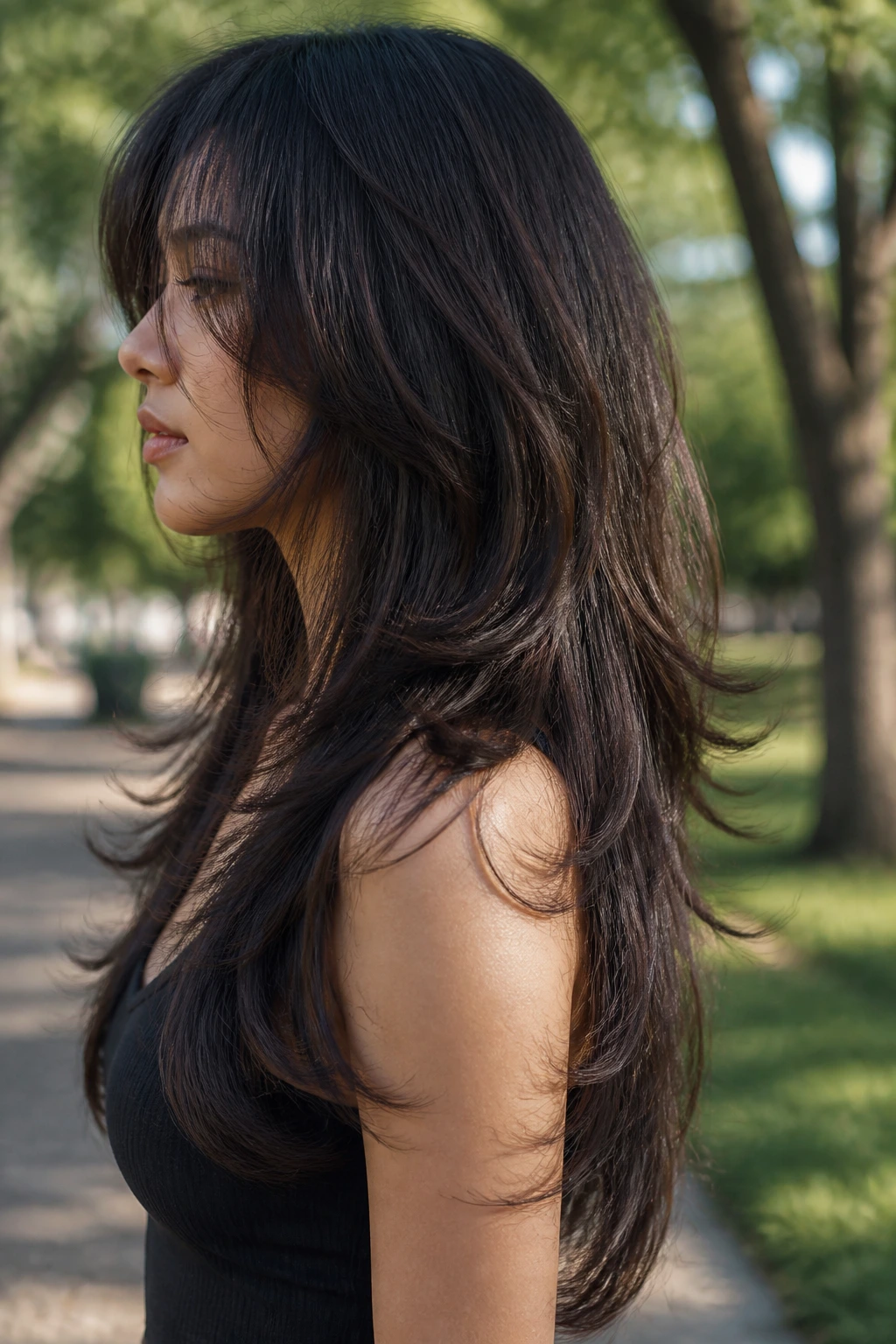
The butterfly cut is designed to make thick hair look like it has wings. It focuses on very short layers at the top and very long, disconnected layers at the bottom. The “wispy” ends are the secret—by thinning out the very bottom inch or two of your hair, you keep the bulk where you want it (at the mid-lengths for volume) and remove the heavy, “heavyweight” feeling at the base. It gives you the look of a blowout that lasts for days.
13. The One-Length Heavy Bob
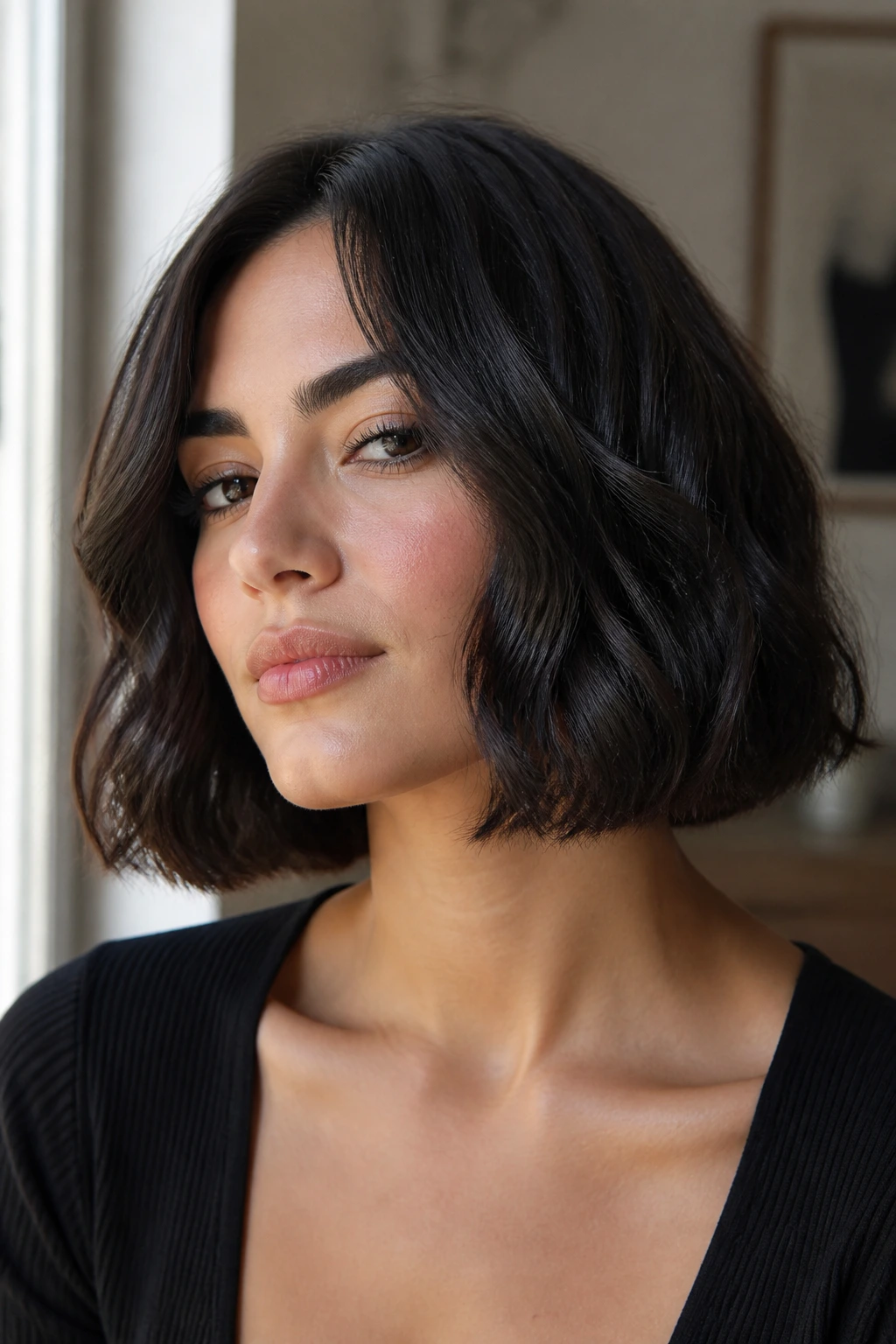
If you have extremely thick, wavy hair, sometimes the best shape is no shape at all. A one-length bob hitting just below the jawline lets the weight of the hair do the work, naturally pulling the waves down and keeping them from turning into a puffball. You will need to use a serum to keep the cut looking sleek, but the geometry of a perfectly straight, thick line is arguably one of the most powerful looks in existence.
14. The Blunt Cut with Hidden Undercut
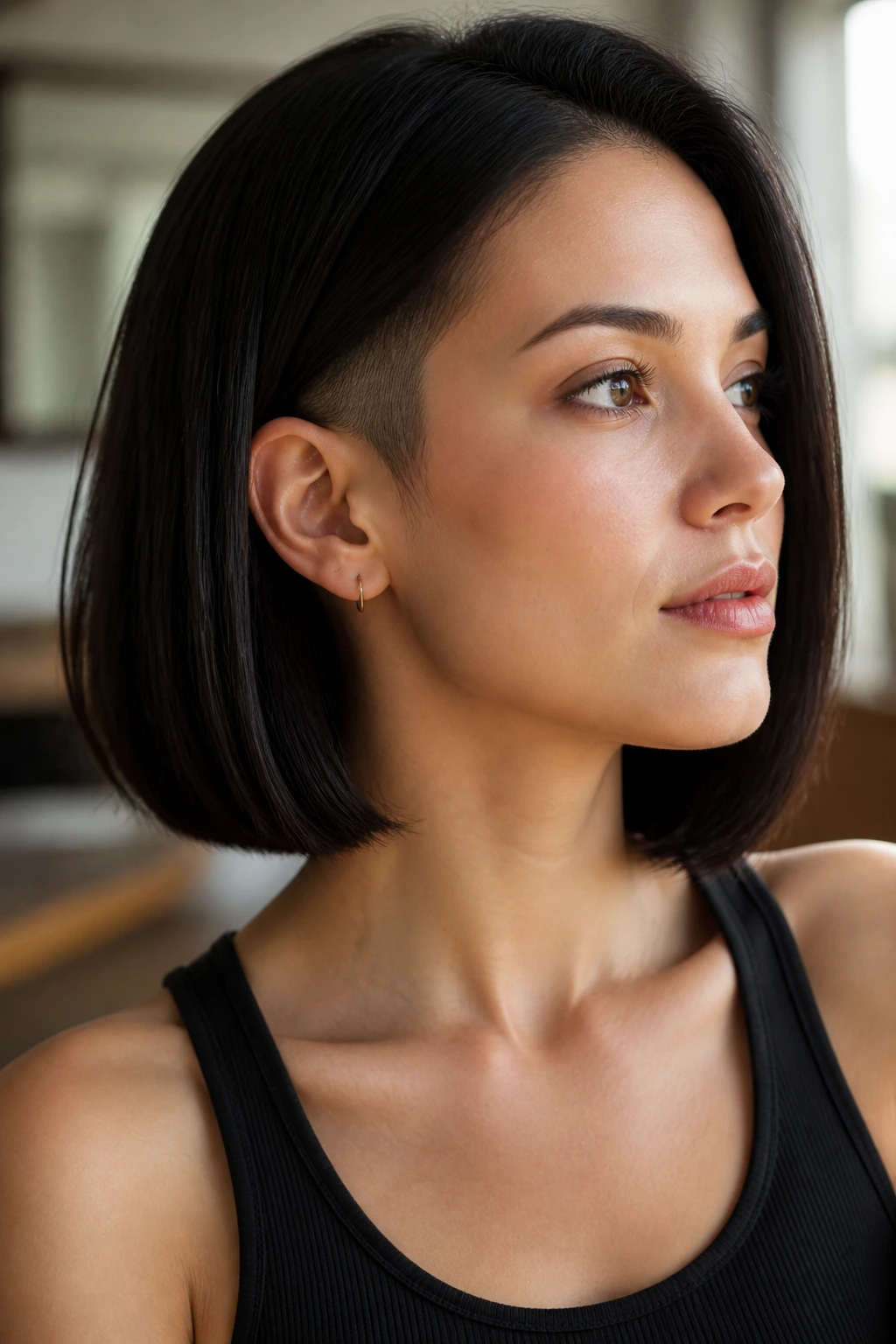
We mentioned the undercut before, but it deserves its own spotlight. You can have a thick, heavy, blunt-cut look while secretly removing half the density underneath. By shaving a small section at the nape of the neck, you remove a massive amount of weight. This allows your outer layers to fall perfectly flat against your neck. No one will know it is there unless you put your hair in a high ponytail, but your scalp will thank you for the extra airflow.
15. The Softened Feathered Cut
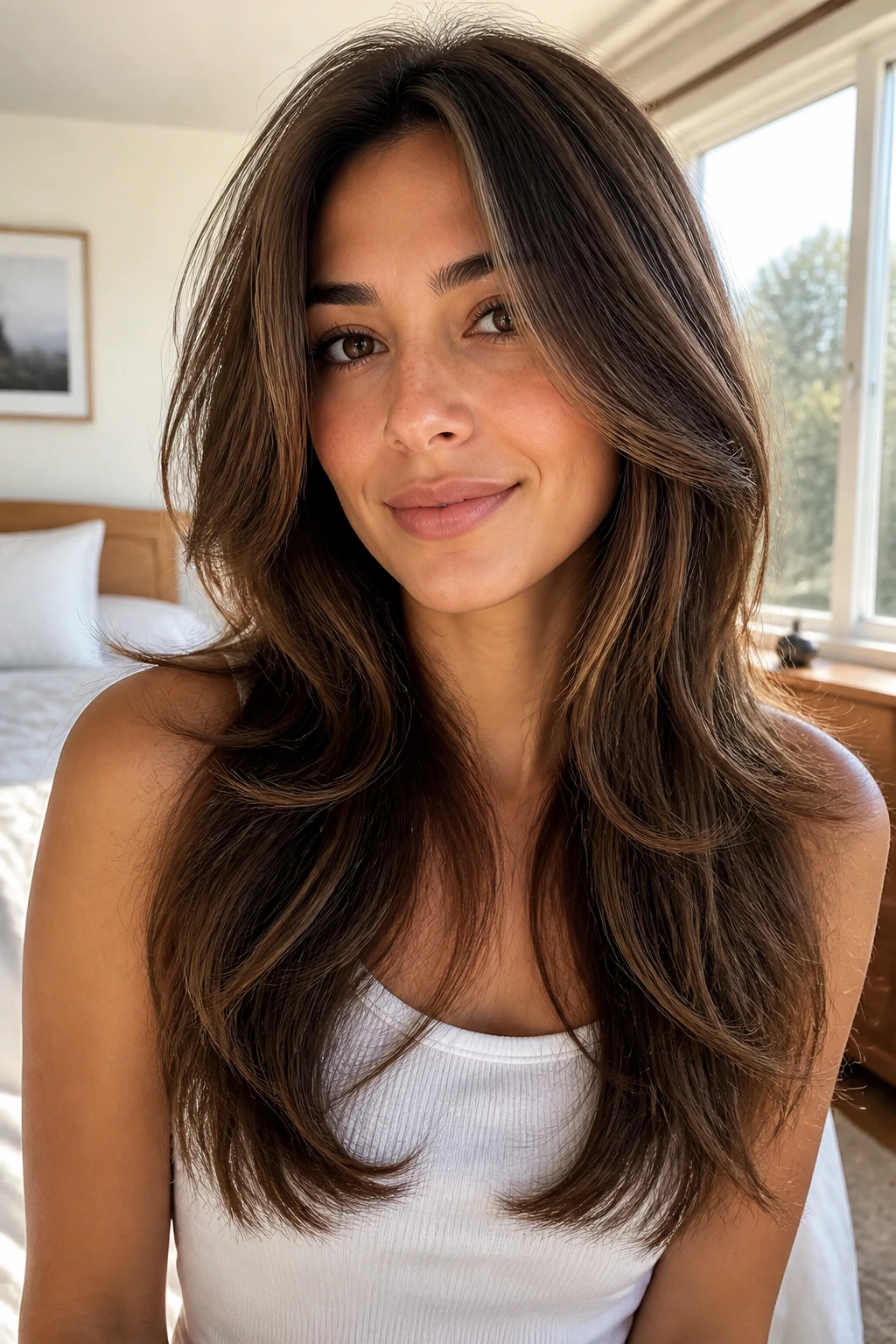
Feathering is often misunderstood as “outdated,” but when done with a modern eye, it is fantastic for thick hair. It involves cutting the hair at an angle, creating long, soft transitions. Because thick hair is dense, it holds the “feathered” shape well. It looks incredibly polished when styled with a round brush, giving you that salon-blown-out finish that usually requires hours of work for others.
16. The Curly-Focused Round Cut
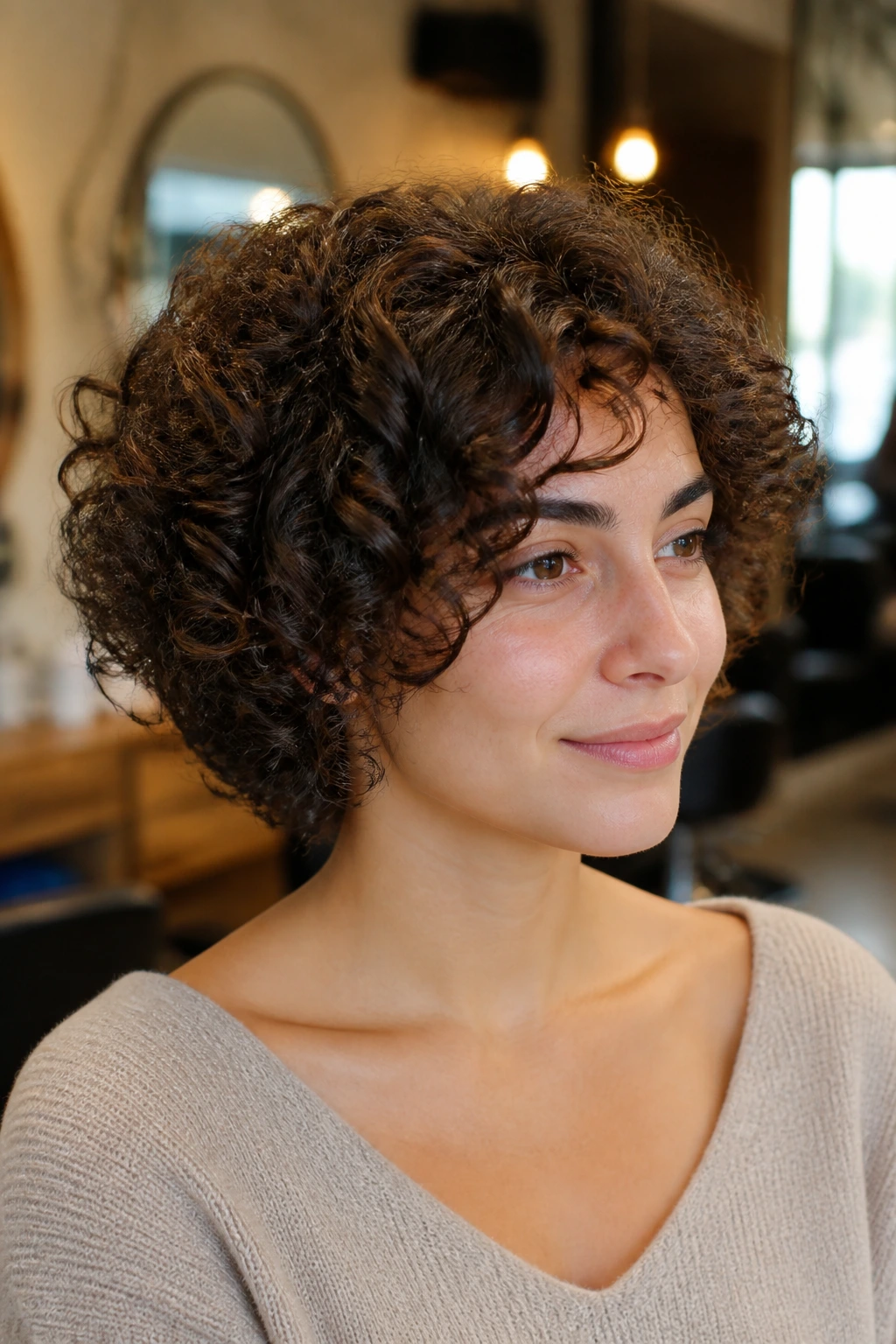
If your thick hair is also curly, you need a round cut. This cut follows the natural shape of your head, ensuring your curls are distributed evenly all around. Instead of having a flat top and wide sides, a round cut encourages curls to pile up and outward in a deliberate way. You want your stylist to cut your hair dry for this, as it allows them to see exactly how your curls shrink and group together.
17. The Asymmetric Pixie-Bob
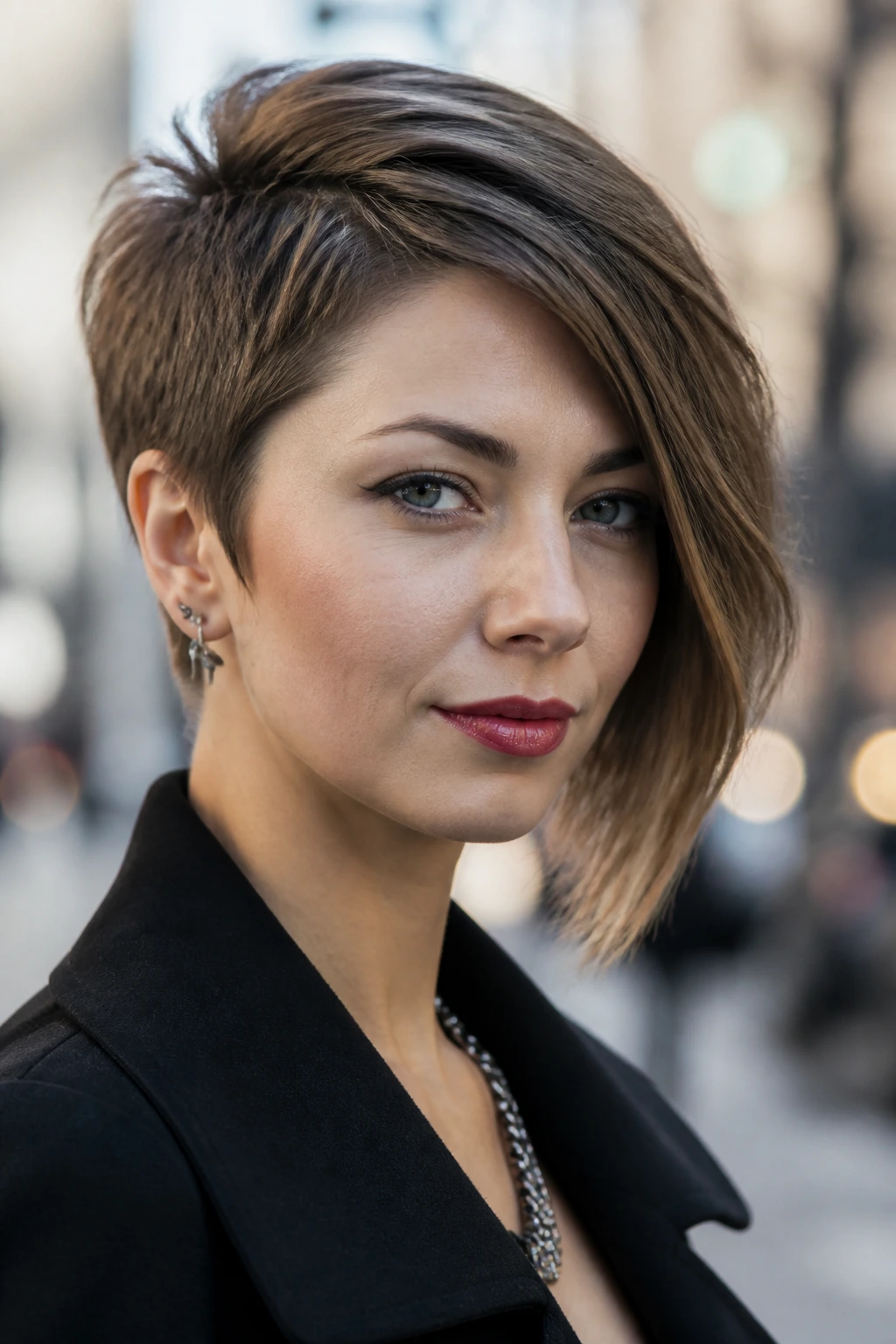
This is for the person who wants to be noticed. One side is kept short and cropped, while the other side is long and angled, sometimes even reaching the chin. The contrast in weight makes the hair much easier to manage. Because the short side is so sparse, it effectively “hides” some of the thickness of the long side by creating an imbalance that looks like high-fashion engineering.
18. The Heavy-Fringe Shag
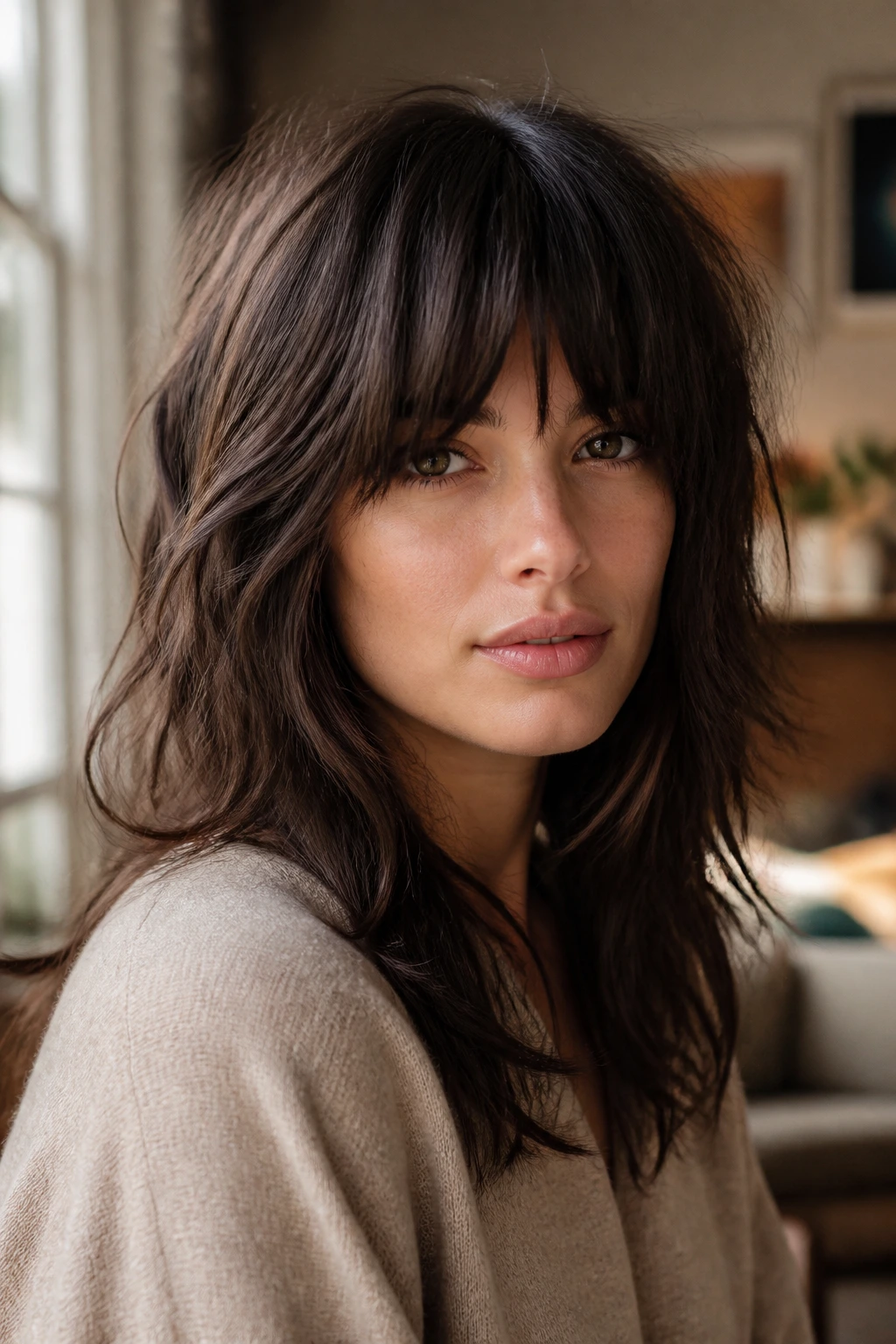
If you have thick hair and you love a fringe, go for a heavy, full bang—but keep the rest of the hair intensely layered. The heavy bang provides a focal point, and the layers underneath take the pressure off the rest of the head. It is a look that radiates cool energy and works exceptionally well with natural textures. It is important to keep the bangs slightly longer, hitting just below the eyebrows, so they do not look like they are floating above your face.
19. The Sleek High-Ponytail Cut
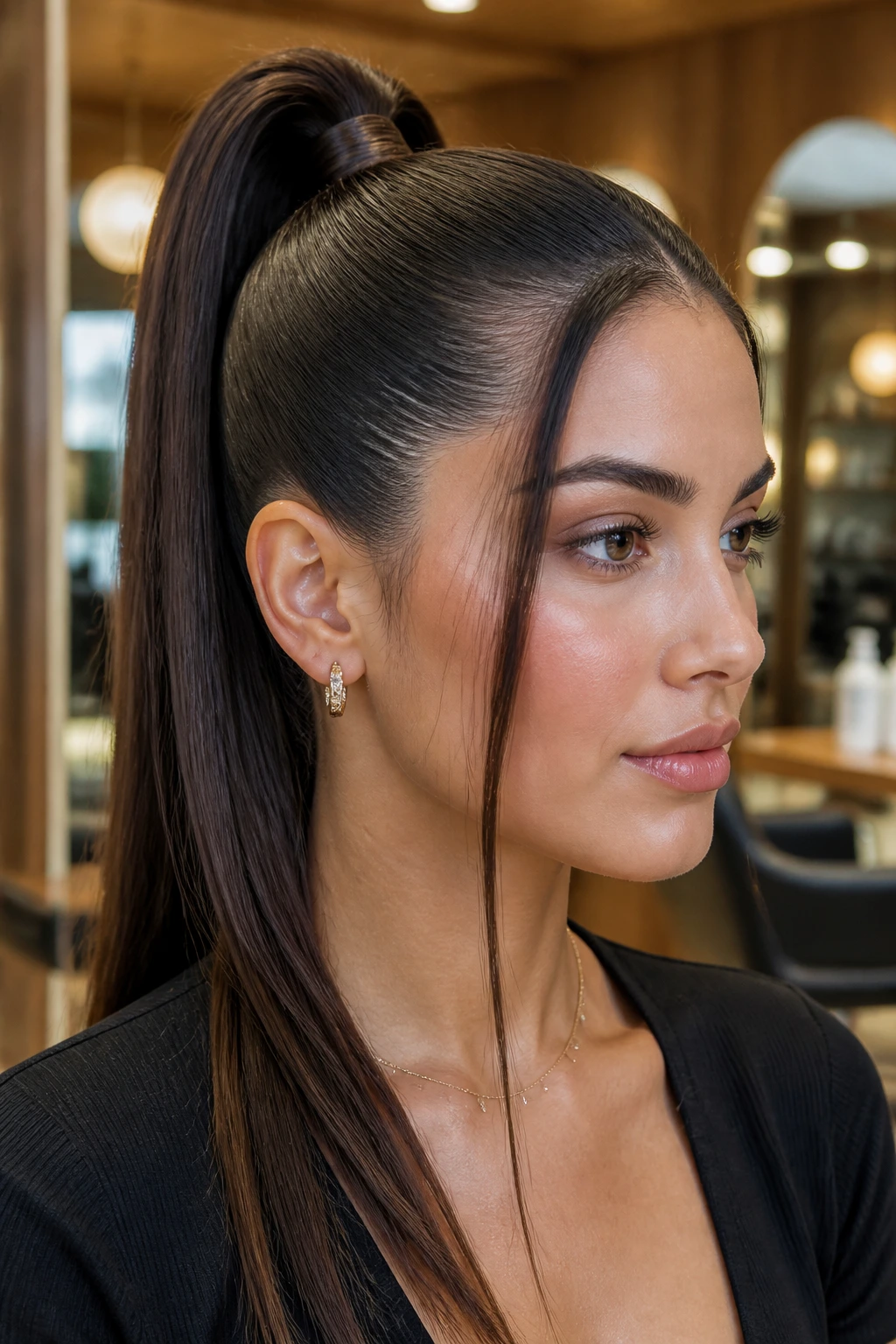
Sometimes, the goal isn’t just about how the hair looks when it’s down; it’s about the shape when it’s up. A cut with long, continuous face-framing pieces ensures that even when your hair is pulled back, the shape remains interesting. Ask your stylist for “money pieces” or long layers that aren’t quite bangs. They will soften the look of the hairline and make a high ponytail look much more intentional.
20. The Long-Layered ‘U’ Shape
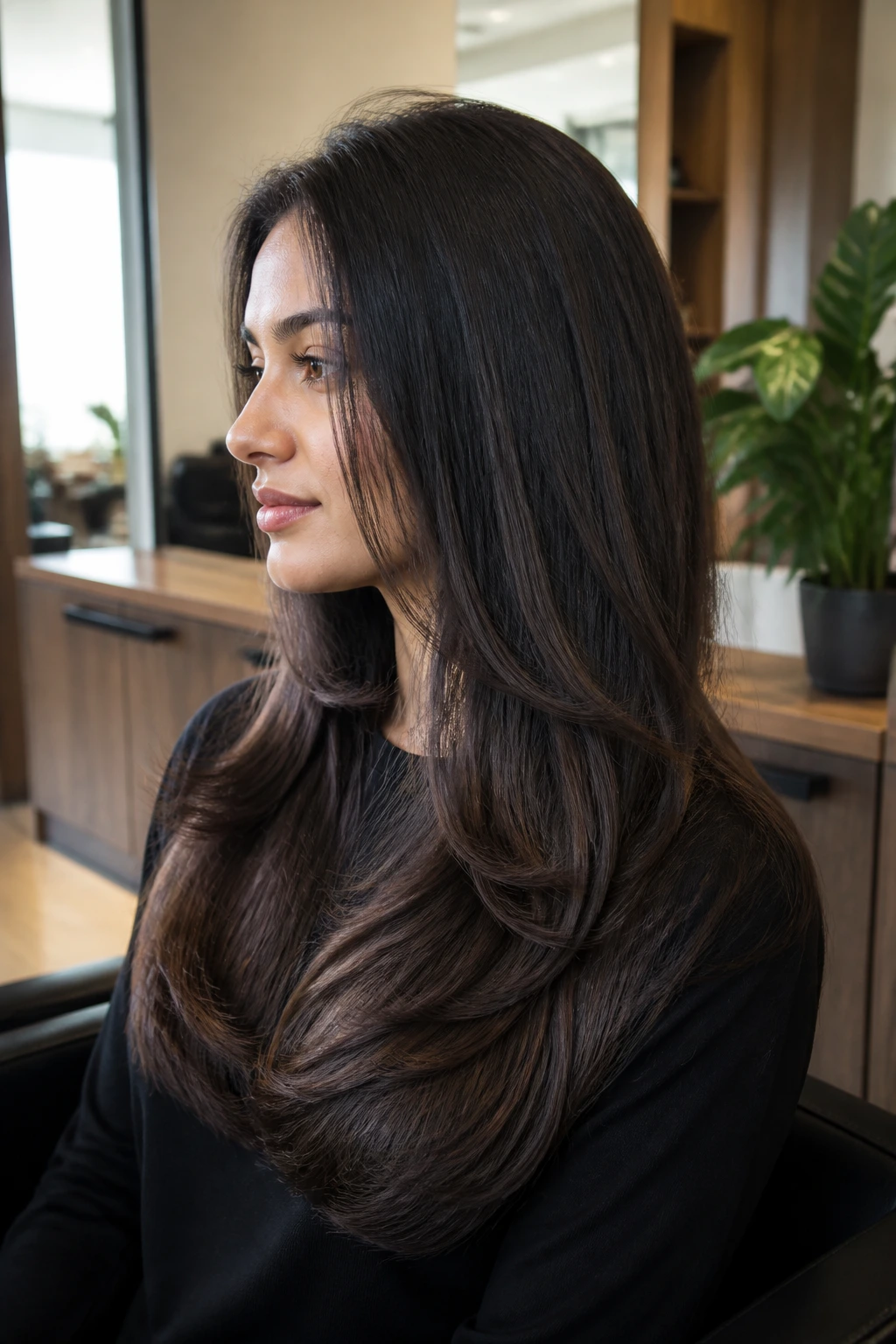
The U-shape is similar to the V-cut, but it is much softer and less aggressive. It keeps the hair at a more even length, meaning you don’t lose as much volume at the bottom, but the slight curve helps the hair look more groomed. It is the perfect shape if you love long, luscious hair but hate how “heavy” it feels at the ends. It balances the density evenly across your back.
21. The Textured Crop
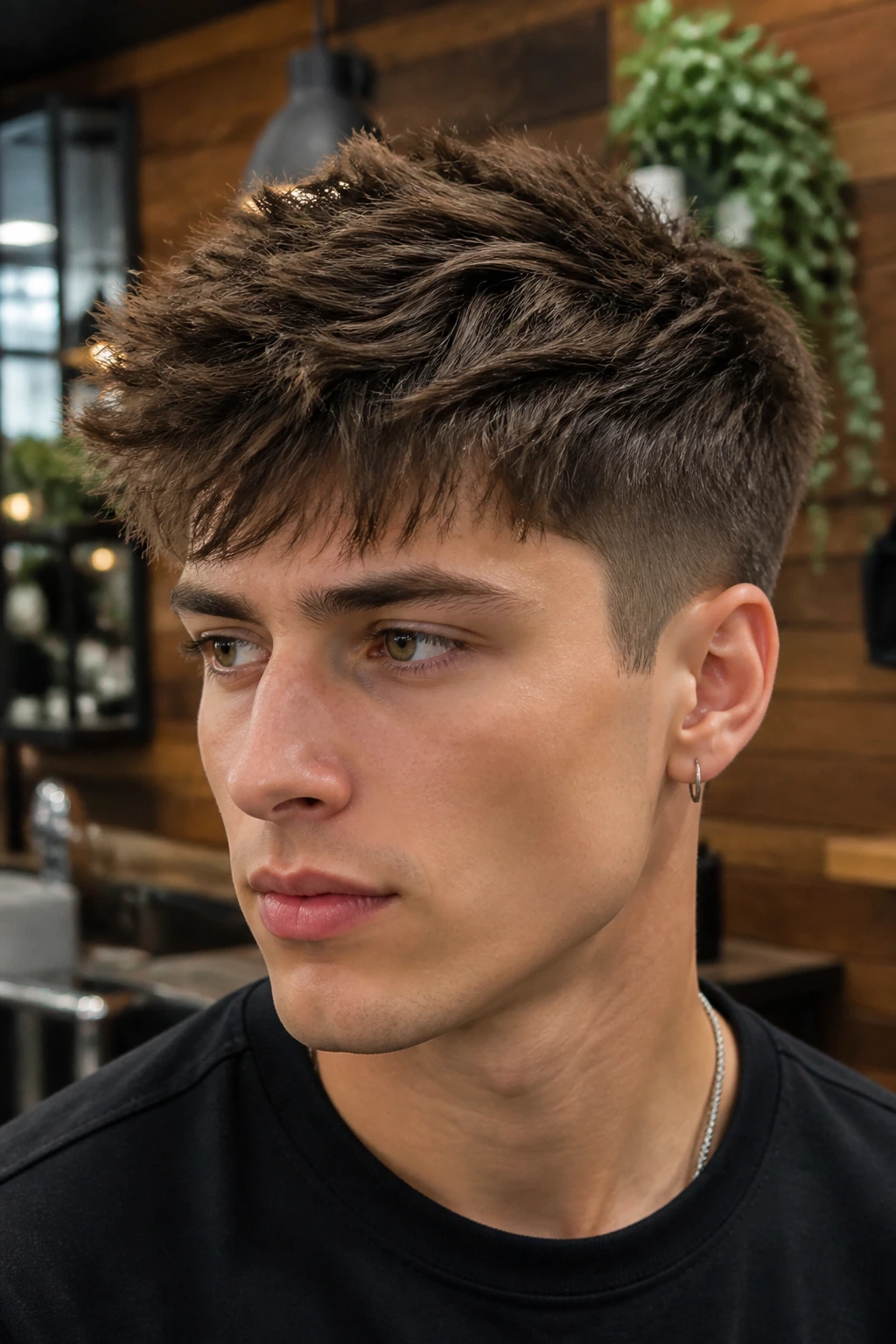
Think of this as the slightly more overgrown version of the pixie. It has a bit more length to play with, allowing you to use waxes or pomades to create messy, spiked textures. Because your hair is thick, these spikes will hold their shape without needing a gallon of hairspray. It’s an edgy look that feels youthful and fun while keeping the “thick hair” problem completely under control.
22. The Long-Layered ‘Invisible’ Trim
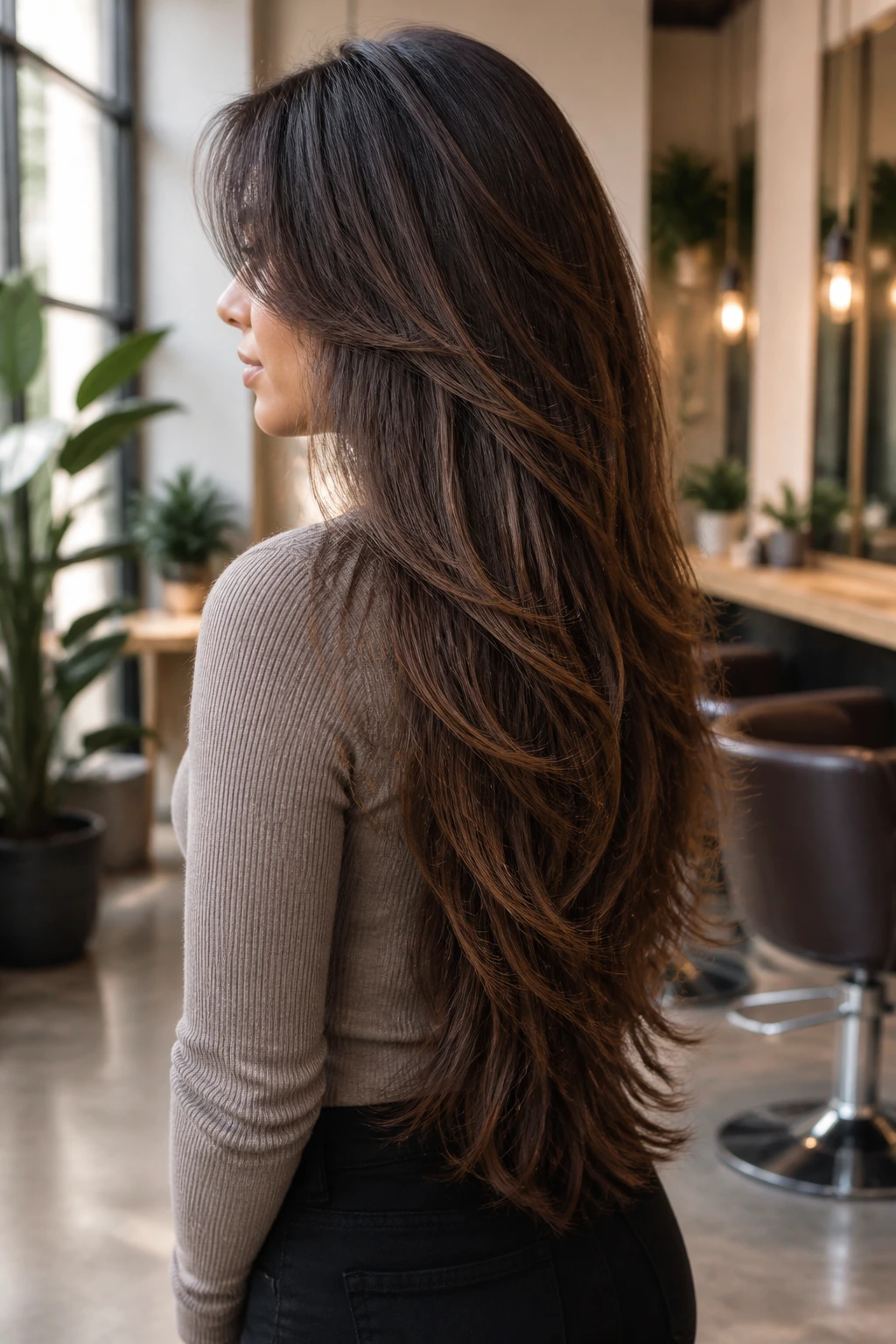
If you are terrified of losing length, ask for an “invisible” trim. This isn’t a single shape, but a technique where the stylist cuts tiny, micro-layers throughout the inner mass of the hair. You won’t see the layers, but your hair will suddenly feel 30% lighter and easier to style. It is the ultimate secret for those who love long hair but are tired of the strain it puts on their neck and shoulders.
Understanding Your Texture vs. Density
It is important to remember that density and texture are two different things. Your hair can be coarse or fine, but if you have a lot of follicles per square inch, you have high density. The shapes mentioned here are designed to address the density, but your texture will dictate how they move. A blunt bob on thick, straight hair will behave very differently than the same cut on thick, curly hair.
Always look for a stylist who is willing to spend time thinning your hair correctly. There is a huge difference between “thinning” and “chopping.” You want the weight removed from the interior of the hair, not the surface. If you see short, choppy hairs sticking out of your top layer, that is a sign of poor thinning technique. The hair should feel lighter but still look smooth and cohesive when you run your hands through it.
The Role of Styling Products
Once you have the right shape, the products you use change the game. For thick hair, moisture is usually the best defense against frizz, which can make a cut look “poofy” instead of structured. Use a high-quality leave-in conditioner to keep the hair pliable and heavy—yes, heavy is good for thick hair, as it keeps the strands from flying away. Avoid volumizing mousses unless you are specifically looking to go for a “big hair” look; you already have enough natural volume.
Instead, reach for smoothing creams or light oils. A tiny amount of argan oil on the ends can help them sit together, creating that sharp, intentional look that many of these cuts rely on. If you are struggling with your hair growing “out” rather than “down,” try an anti-humidity spray before you even begin styling. It will act as a shield, keeping your shape intact throughout the day.
Maintenance and Trim Cycles
With thick hair, your “shape” will grow out faster than someone with fine hair because the weight of the hair pulls everything down as it grows. Most of these cuts require a refresh every six to eight weeks. If you wait too long, the layers will lose their integrity, and the hair will start to feel like a “heavy curtain” again. Schedule your trims in advance so you are not left scrambling when your hair starts to feel out of control.
If you ever feel like your hair is getting too unmanageable, don’t be afraid to ask for a “de-bulking” session. Many salons offer this as a quick, stand-alone service. It is essentially a haircut focused entirely on removing internal density without changing the length or the outer shape of your cut. It can make a world of difference during warmer months when the weight of thick hair can become stifling.
Final Thoughts
Finding the right shape for thick hair is an act of liberation. Once you move past the idea that you have to “hide” your hair or keep it tied back in a messy bun, you can start to enjoy the density. Thick hair is a dream for many, and when it is cut into a shape that suits your face and lifestyle, it becomes a major accessory.
Remember that these suggestions are just starting points. Communication with your stylist is the most important part of the process. Bring photos, but more importantly, talk about how your hair feels—tell them if it feels heavy on your shoulders or if you struggle with the triangle effect. A great stylist will see your density as a puzzle to be solved, not a problem to be avoided. Embrace the volume, trust the cut, and enjoy the transformation.