

Nothing ruins a solid workout faster than hair constantly whipping across your face or sticking to the back of your sweaty neck. Most of us default to a messy bun held together by sheer willpower and a single stretched-out hair tie. But midway through a set of jump squats or a challenging run, that bun slips, pulls at your scalp, and inevitably collapses. It is a frustrating cycle that leaves you distracting yourself from your form just to fix your hair.
You do not have to sacrifice style for utility when you head to the gym or the yoga studio. The ideal workout hairstyle should distribute weight evenly across your scalp to prevent tension headaches, keep every stray strand secured, and look put-together when you head out for a post-workout coffee. Achieving this balance requires understanding how different hair textures behave under sweat and movement, and matching your style to your specific workout.
Over the years, testing various braiding patterns, pin placements, and elastic types has revealed that the best active styles rely on structural tension rather than tight squeezing. By using smart sectioning and the right anchor points, you can keep your hair entirely out of your way while keeping it looking neat and intentional.
Let’s look at the most reliable, elegant ways to secure your hair for any level of movement, ranging from low-impact mobility work to high-intensity conditioning.
Preparing Your Hair for High-Impact Movement
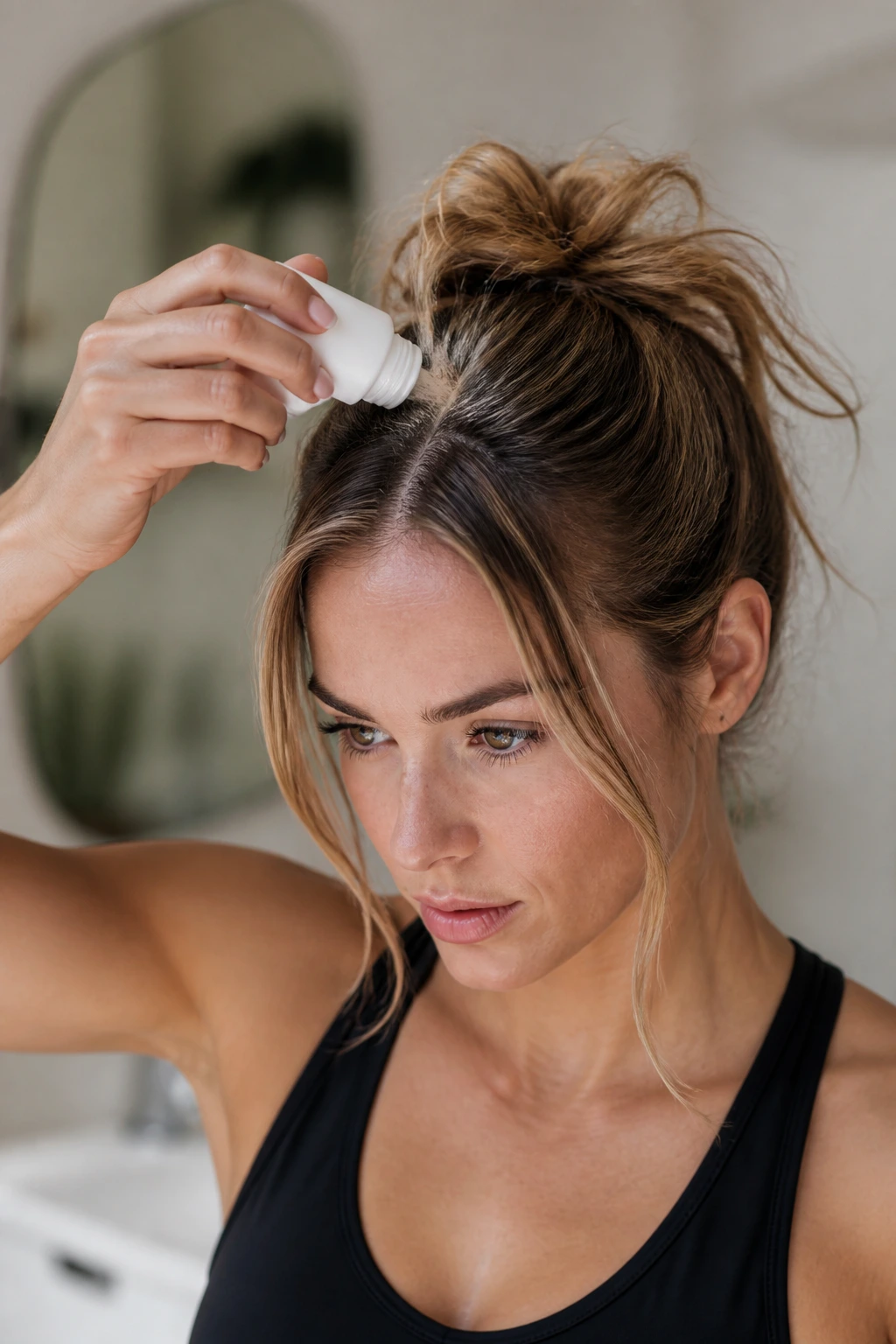
Before twisting your hair into any of these styles, setting up a solid foundation makes a massive difference in how well the style holds. Running or lifting with freshly washed, slippery hair is usually a recipe for slippage. If your hair is clean, a light dusting of texturizing powder or a dry volume spray will give your strands the grip they need to stay locked in place.
Never use heavy gels or alcohol-laden hairsprays before a sweaty workout. When mixed with perspiration, these products melt down your forehead, clog your pores, and sting your eyes. Instead, apply a lightweight hair oil or a leave-in conditioning cream to your mid-lengths and ends before styling. This protects your hair from friction damage against your collar or sports bra while locking in moisture.
Your choice of hair tie also matters more than you might think. Standard elastic bands with metal clasps slice through the hair cuticle under the friction of repetitive movement. Switch to seamless nylon bands, silicone elastics, or spiral cord ties that grip the hair without pulling. For buns and twists, spiral hair pins—often called spin pins—provide ten times the holding power of standard bobby pins without digging into your scalp.
1. The Triple-Banded Bubble Ponytail
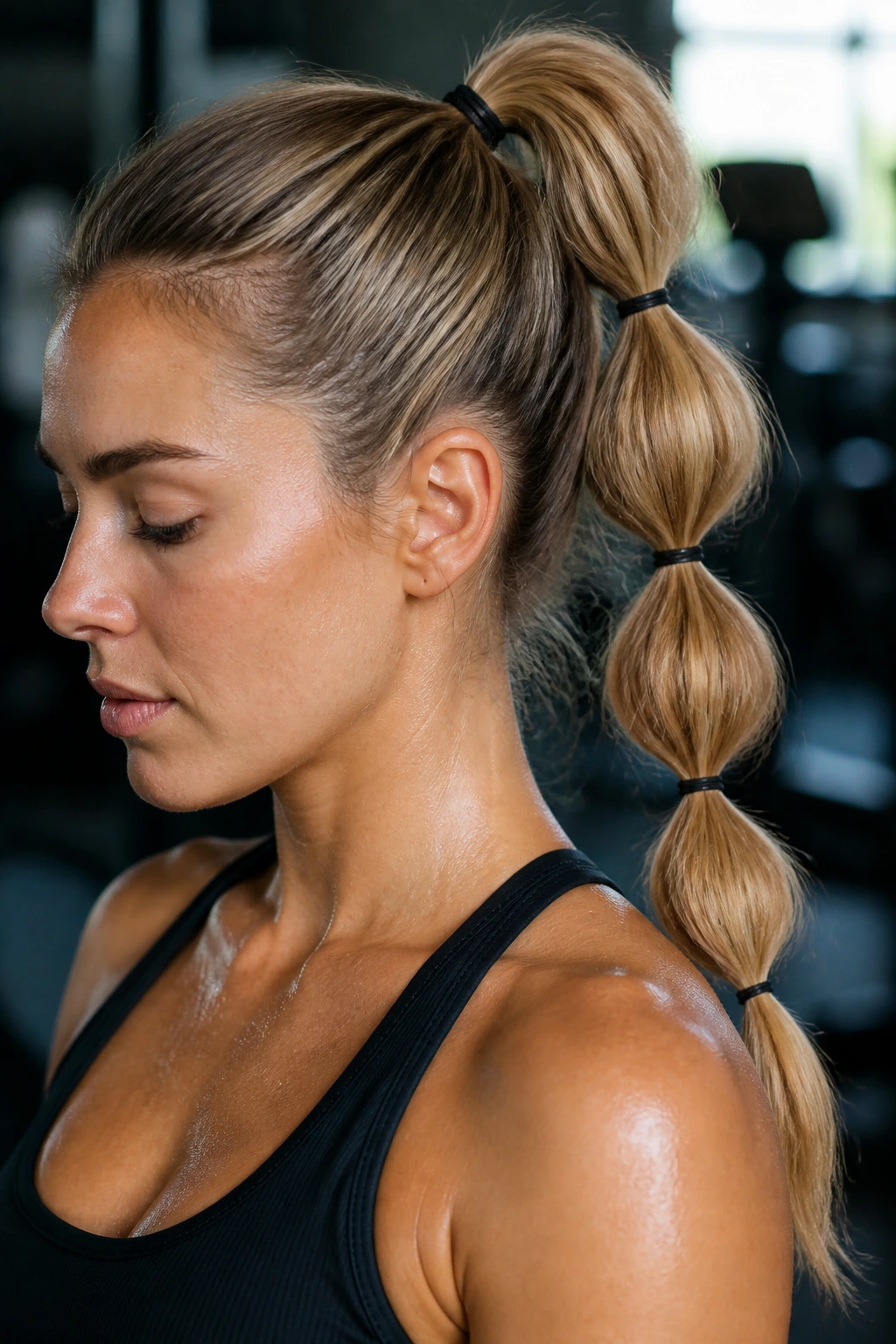
Many active runners struggle with long ponytails that whip around, tangle, and snag on clothing during longer runs. This segmented variation keeps the length of your hair completely contained while distributing the weight along the length of the ponytail, reducing tension on your hair follicles.
Why Bubble Sectioning Prevents Tangling
Unlike a standard ponytail that swings freely and knots up from wind and sweat, the triple-banded bubble ponytail constricts the hair at regular intervals. Each section acts as a barrier, preventing individual strands from wrapping around one another during high-velocity movement.
Quick Hair Facts
- Ideal Hair Length: Medium to very long
- Required Tools: One thick base hair tie, three to five small silicone elastics, and a texturizing spray
- Best Hair Texture: Straight, wavy, or relaxed hair that tends to tangle easily
- Prep Time: Less than four minutes
Pro tip: Pull gently on the outer edges of each bubble section to puff them out slightly, which conceals any unevenness and makes the style look much thicker.
2. The High-Crown Dutch Braid
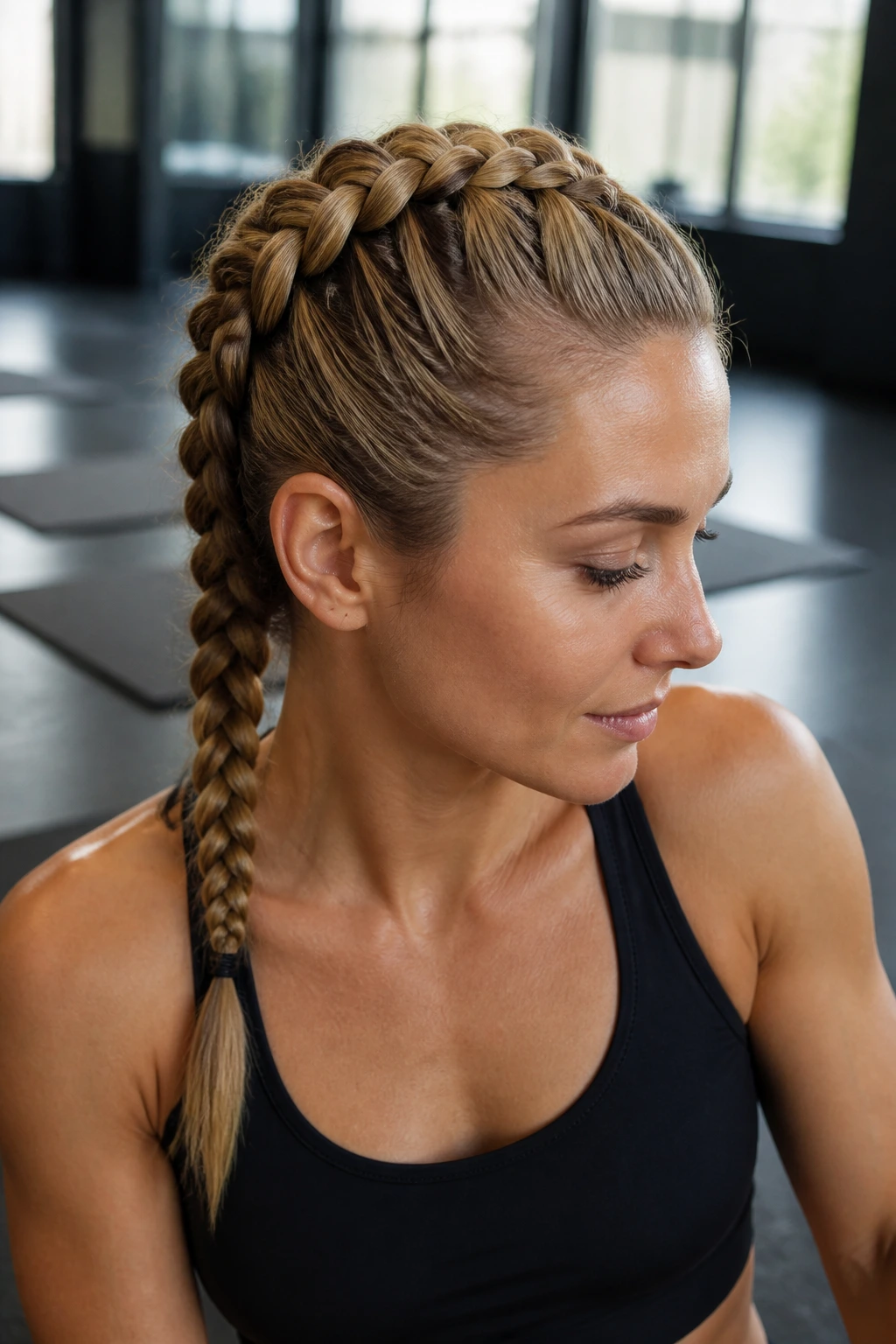
The Dutch braid is structurally superior to the French braid for high-impact workouts because of how the strands sit on the scalp. By crossing the hair sections under each other rather than over, the braid sits raised on the head, creating a self-supporting ribbon of hair that locks shorter layers in place.
This style is perfect for floor work like Pilates or core training because there are no bulky knots or ties at the back of your head to dig into your skull when you lie down. The tension is distributed evenly across your forehead and crown, meaning you will not get that familiar, painful throbbing at your temples halfway through your session. Secure the tail with a small, clear elastic band, tucking it under if you want to keep the ends off your neck entirely.
3. The Double-Folded Chignon
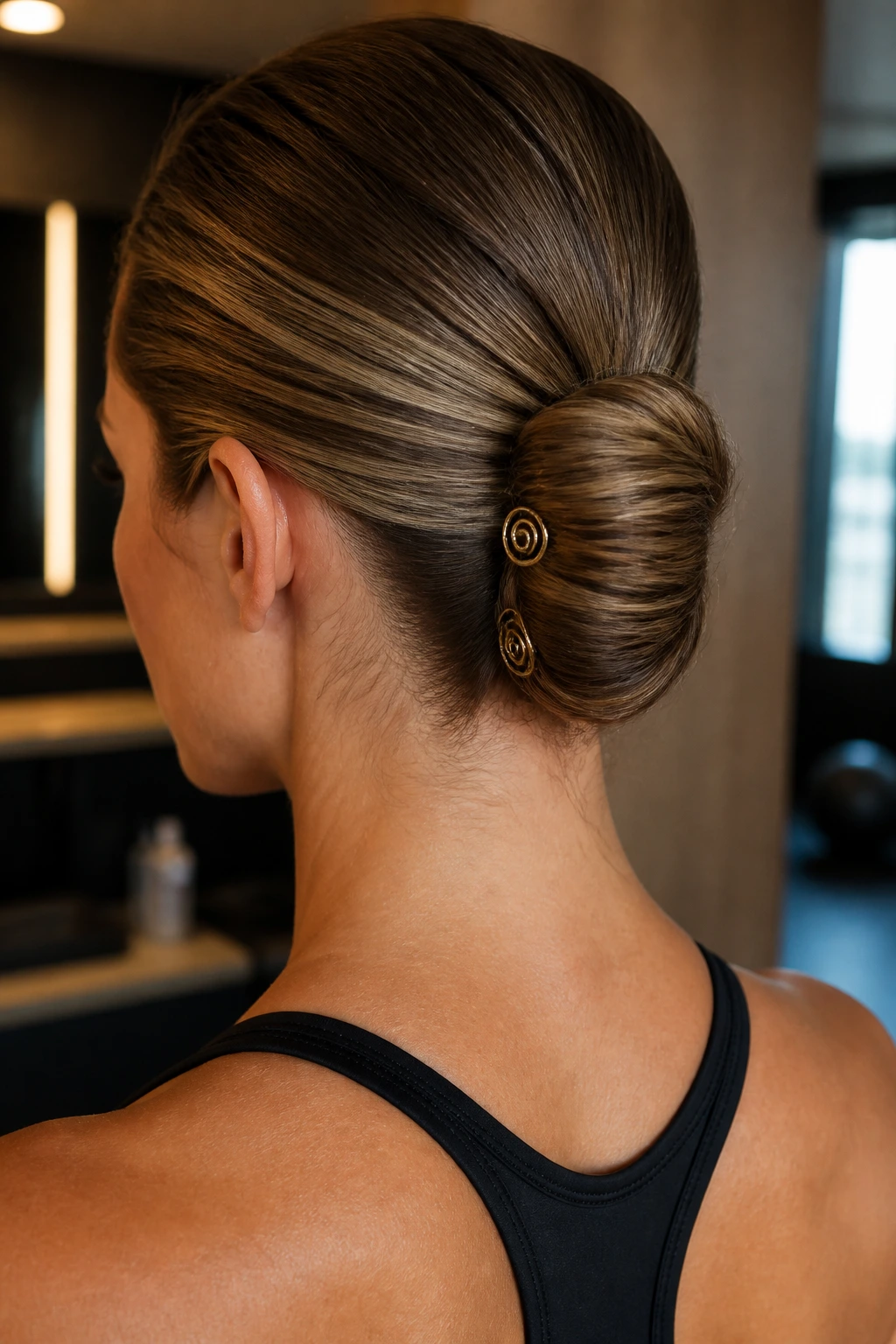
Can an elegant chignon actually survive a round of burpees or a heavy lifting session?
Yes, but only if you abandon traditional bobby pins and use a folding technique secured by spiral metal pins. This style works exceptionally well for thick, heavy hair that usually snaps hair ties or sags within minutes of starting a workout.
How to Lock the Chignon in Place
To make this style indestructible, start by securing your hair into a low, firm ponytail at the nape of your neck. Fold the ponytail upward, tucking the ends back down toward the hair elastic to create a neat, vertical loop.
Step-by-Step Security
- Split the ponytail into two equal sections before folding to make tucking easier if your hair is exceptionally thick.
- Twist the folded loop clockwise once to tighten the structure against your head.
- Screw one spiral spin pin down from the top of the bun, and a second one up from the bottom, ensuring they intersect in the middle.
- Gently tug the sides of the folded loop to widen the chignon, giving it a classic, soft finish that hides the structural pins underneath.
4. The Fishtail Accent Topknot
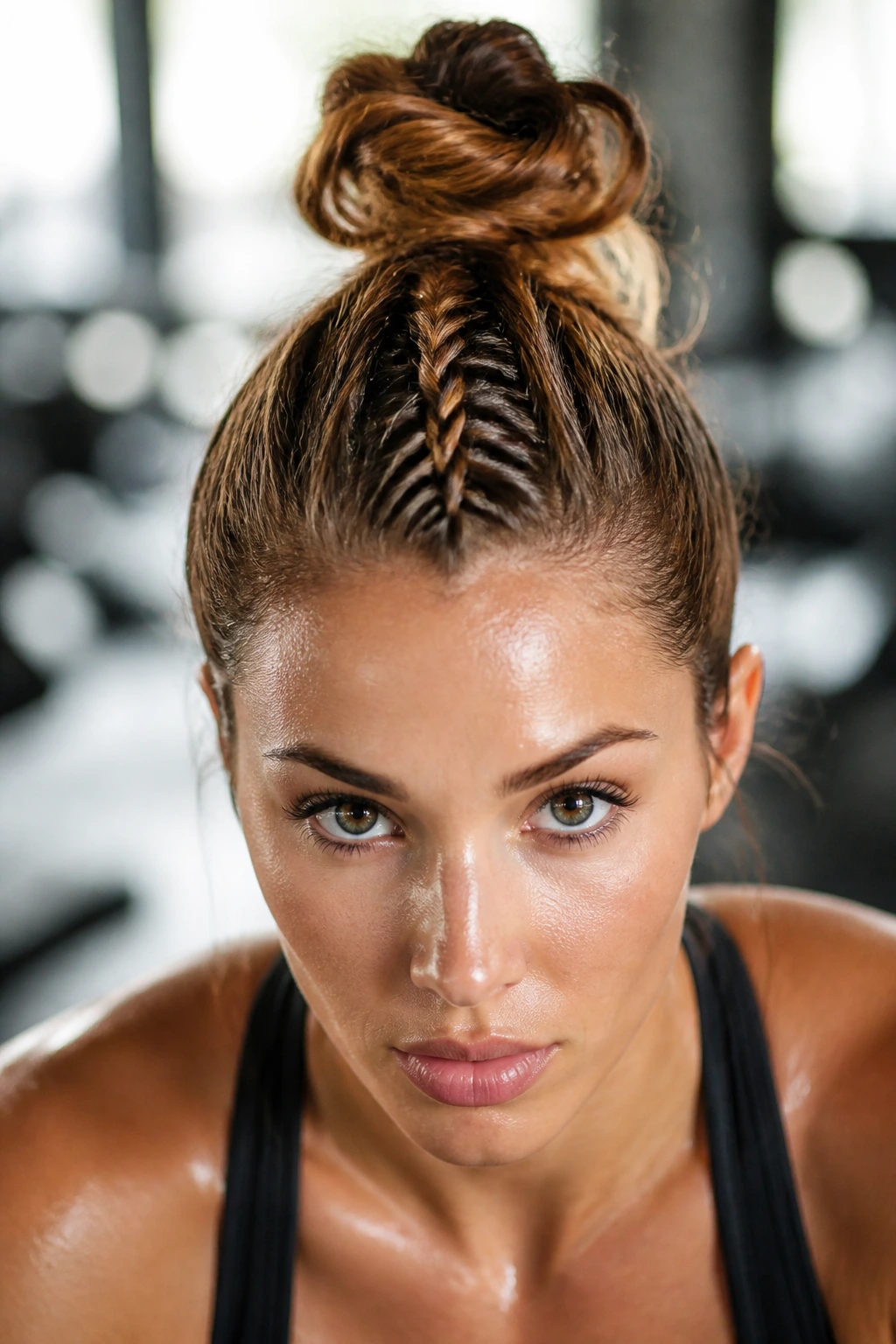
The morning of a hard workout often brings unruly baby hairs and flyaways around the hairline that refuse to stay flat. This style solves that issue by incorporating a tight, flat fishtail braid right along your parting line, feeding directly into a secure topknot.
The Physics of the Accent Braid
By braiding the front portion of your hair before pulling the rest into a bun, you anchor those short, annoying layers around your forehead. The tight pattern of the fishtail braid acts as a net, catching flyaways and holding them secure without requiring sticky hairsprays or heavy gels.
Key Structural Details
- Friction Resistance: High; perfect for boxing, dance, or gymnastics
- Required Tools: One fine-tooth comb, one small elastic, one large hair tie, and two bobby pins
- Placement: The braid should start right at the hairline and stop exactly at the crown of your head
- Hold Duration: Easily lasts through a two-hour high-intensity interval session
This style keeps your forehead completely clear of hair, allowing sweat to evaporate quickly rather than trapping moisture against your skin and causing breakouts.
5. The Sleek Low Ballet Bun
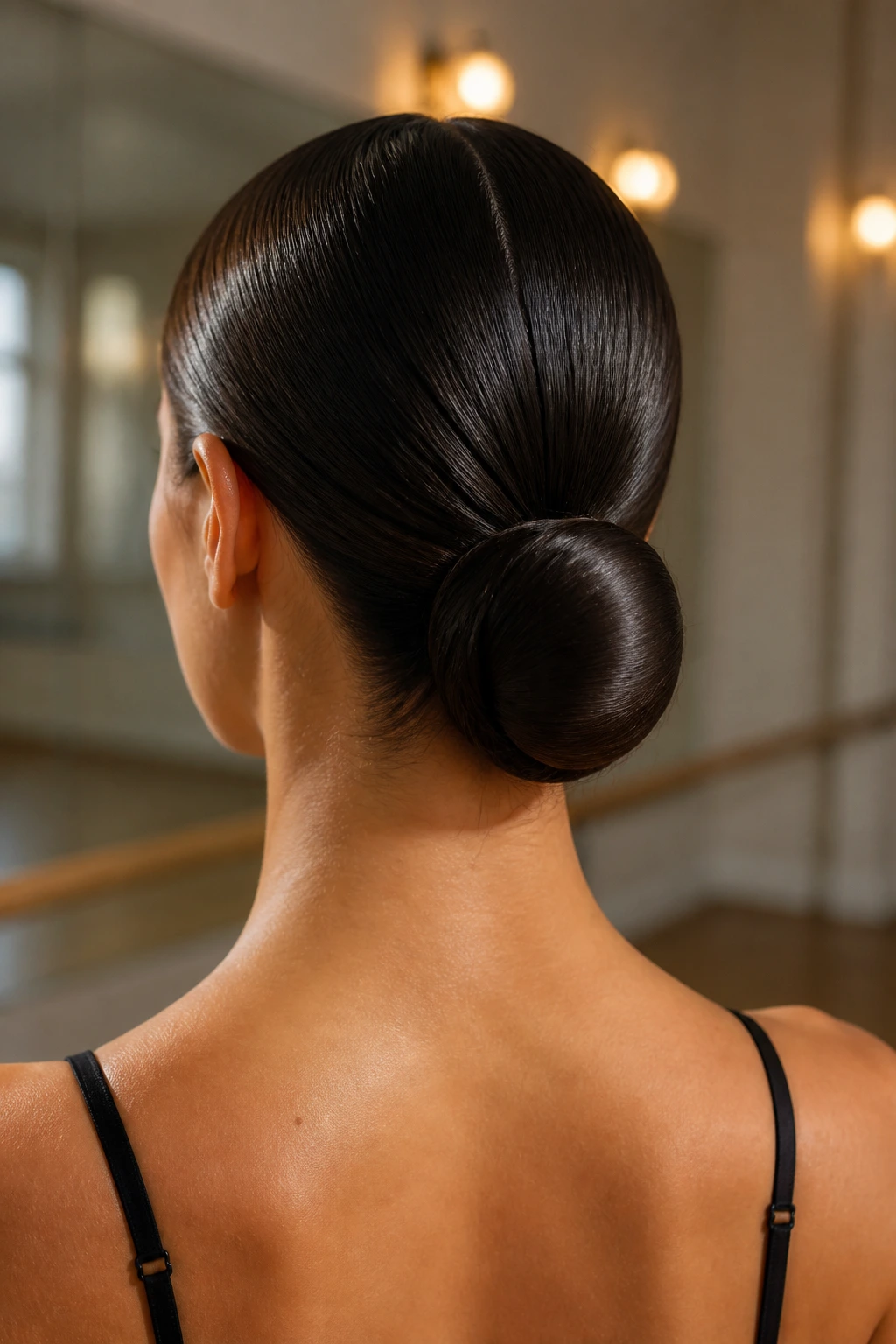
There is a reason professional dancers rely on this exact style for hours of intense physical activity. It sits low enough to avoid gravity pulling it down, and its compact shape keeps the hair secure.
To make this look elegant rather than severe, start by creating a clean center part using a rat-tail comb. Apply a small amount of lightweight hair oil or conditioning cream from your roots to your ends to flatten any flyaways and add a natural sheen. Gather the hair at the very nape of your neck, twisting the length tightly into a rope before wrapping it clockwise around the base of your ponytail.
Secure the perimeter of the bun with four heavy-duty U-shaped hairpins, pushing them inward and then downward to lock the bun against your head. This classic style transitions effortlessly from a hot yoga class to an afternoon business meeting with zero adjustment needed.
6. The French Braid Ponytail Hybrid
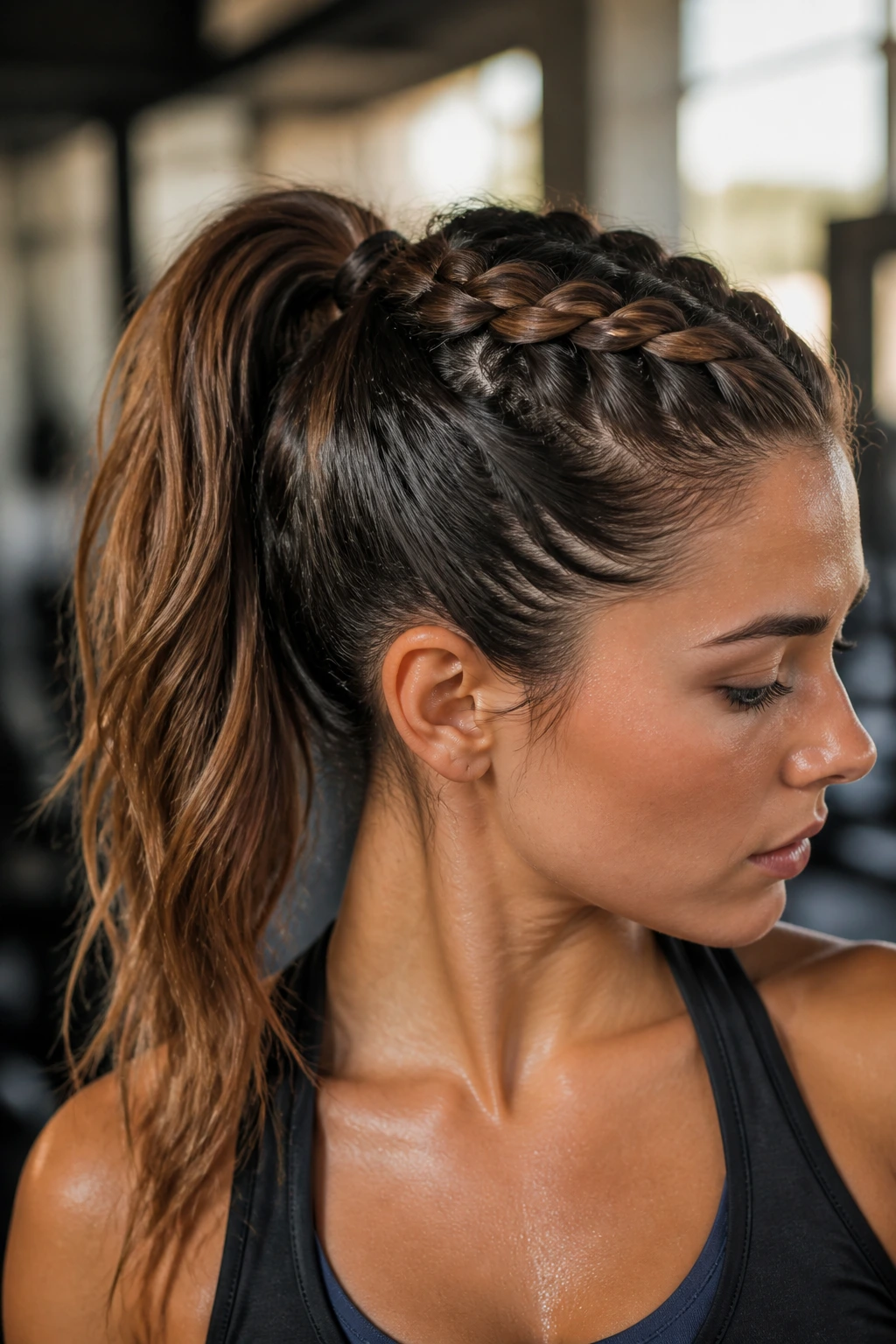
Unlike a standard French braid that can look a bit flat or a simple ponytail that swings wildly, this hybrid style offers the best of both worlds. It gives you the secure, scalp-hugging fit of a braid across your crown, combined with the movement and style of a high ponytail.
This combination is perfect for spin classes or indoor rowing where you want your hair up high, away from the equipment, but still want a dynamic style. The braided section keeps your bangs and layers flat against your head so they do not fall out when you lean forward.
If you have fine hair, this hybrid style is especially helpful because the braided top section adds instant texture and height, preventing your hair from looking slicked-down or thin when pulled back. It is a highly practical choice that looks incredibly athletic and sharp.
7. The Low Twisted Rope Braid
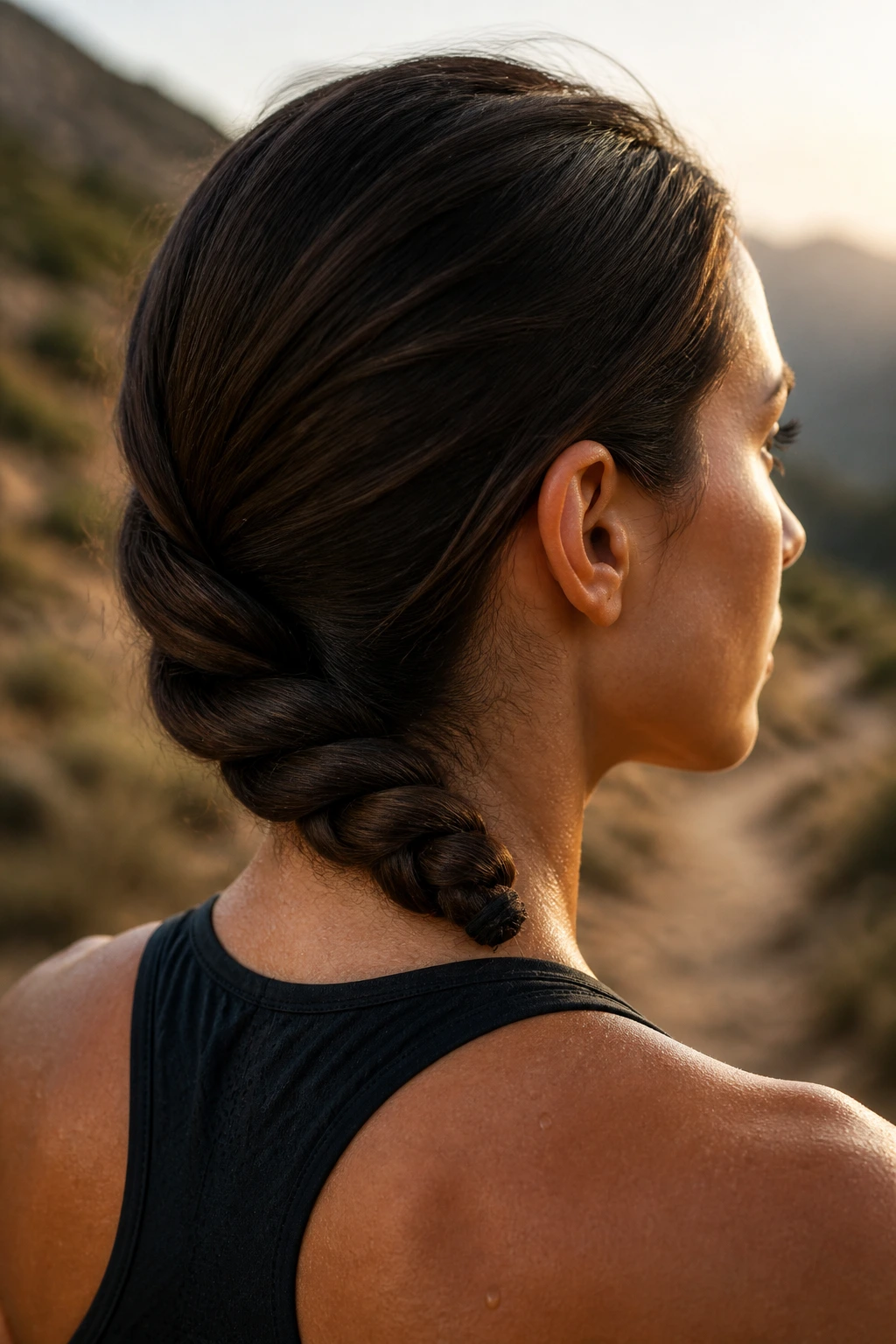
For those who find traditional three-strand braids boring, the two-strand rope braid offers a clean, architectural alternative that is incredibly easy to assemble. It is an excellent choice for hiking, climbing, or low-impact strength training.
Understanding the Counter-Twist Principle
The secret to a rope braid that does not unravel the second you start moving is the direction of your twists. You must twist the two individual strands in one direction, but wrap them around each other in the opposite direction. This opposing tension locks the braid naturally.
Rope Braid Essentials
- Technique: Twist both strands clockwise, then cross them counter-clockwise over one another
- Best Hair Type: Long, blunt-cut hair without too many short layers
- Security Level: Medium-high; stays put during steady-state cardio
- Preshaping: Apply a light serum to prevent the rope from looking frizzy as you twist
Pro tip: Secure the very bottom of the rope braid with a silicone elastic, leaving about an inch of hair loose at the bottom to give the style a polished finish.
8. The Crossed-Section Low Ponytail
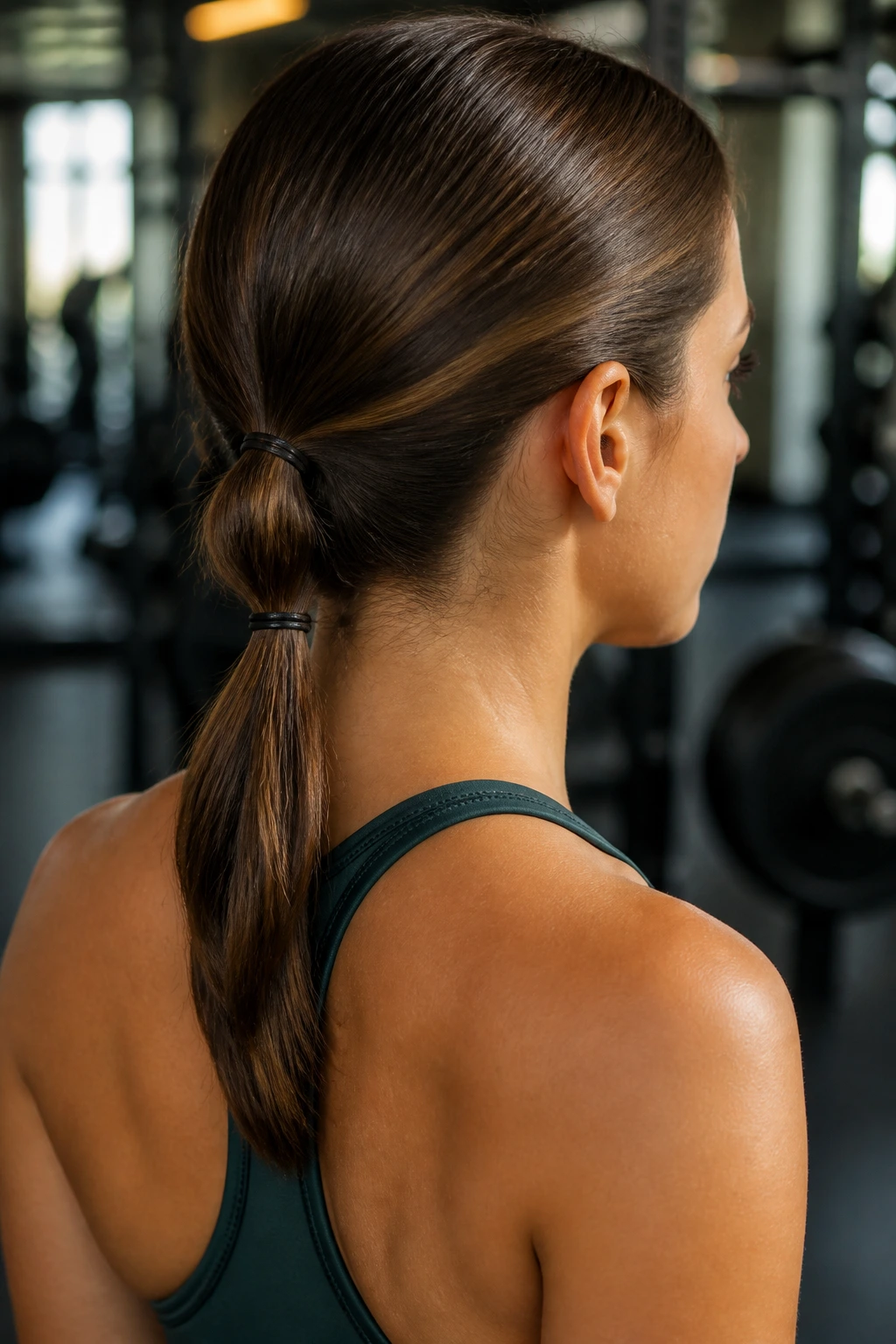
This style looks like an intricate piece of origami, but it actually takes less than three minutes to put together once you understand the sectioning. It is designed specifically to prevent that saggy, baggy look that low ponytails get after you have been moving for thirty minutes.
By splitting your hair into three horizontal sections, you build a support structure where each section anchors the next. The top section goes into a half-up ponytail, which is then split in two and crossed under the middle section before all of it is gathered into the final low ponytail at the nape. This layered approach prevents the hair tie from sliding down your neck, no matter how much you run or jump. It is a brilliant design that keeps the hair sleek and close to your head.
9. The Wrapped Jasmine Ponytail
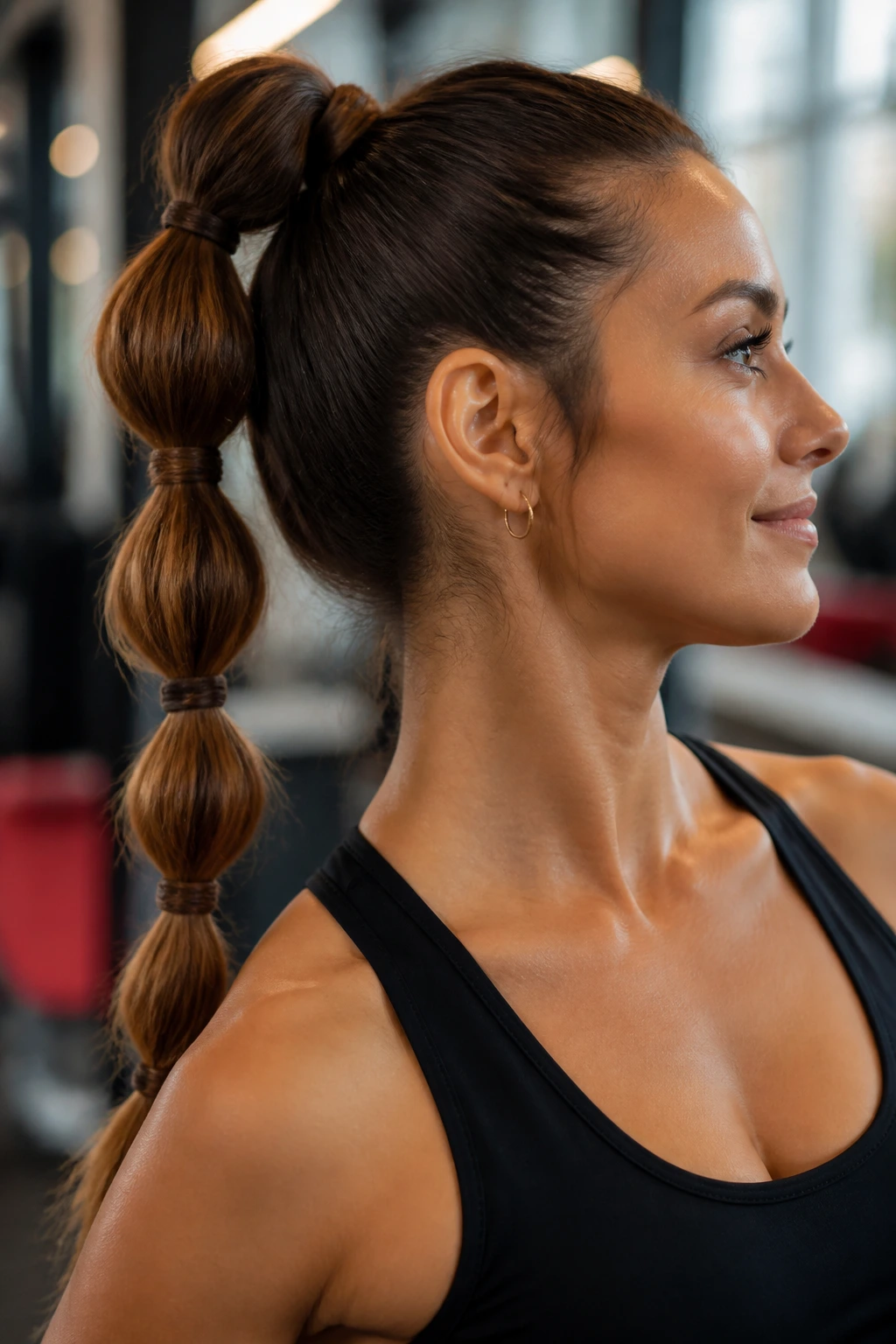
If you want a look that feels highly styled and elegant but requires zero braiding skills, this segmented ponytail is your best option. It is particularly striking on thick, dark, or textured hair.
Why It Holds Up to Sweaty Sessions
Because the hair is bound tightly at multiple points along the shaft, sweat cannot penetrate the inner core of the ponytail. This keeps your natural wave or curl pattern protected from moisture-induced frizz while you exercise.
How to Style It
- Pull your hair into a high, secure ponytail at the crown and smooth down the sides.
- Wrap a thin section of hair around the main hair tie to hide it, securing the end with a small hairpin.
- Move down three inches and place a small silicone elastic around the ponytail.
- Gently pull the hair between the two bands outward to create a rounded, bulbous shape.
- Repeat this down the length of your hair, wrapping each elastic with a thin strand of hair for a clean look.
10. The Crown Braid Halo
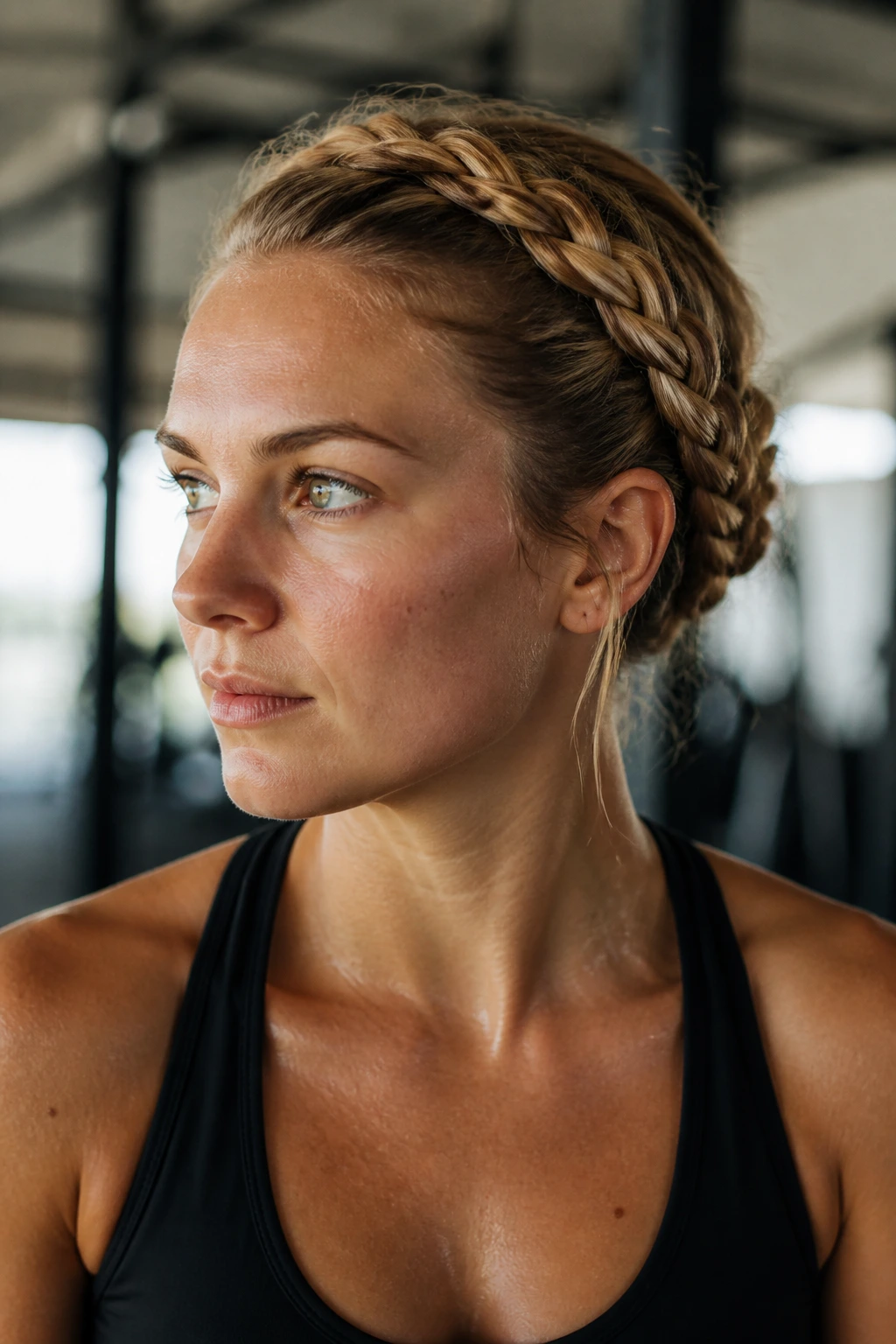
For completely distraction-free workouts, nothing beats a classic crown braid that circles the top of your head like a halo. This is the ultimate defensive hairstyle for high-intensity training, wrestling, or hot outdoor runs.
The Shielding Effect of Crown Braids
With your hair woven flat against your skull, there is absolutely no loose hair to trap heat against your neck or forehead. This allows your body’s natural cooling system to work efficiently while keeping your hair completely safe from sweat and friction.
Structural Milestones
- Longevity: Can easily last for twenty-four hours without needing to be redone
- Required Hair Length: At least collarbone length to wrap fully around the head
- Prep Work: Work a small amount of styling wax into your fingers to keep the braid clean
- Removal: Carefully snip the anchoring elastics rather than pulling them to avoid breakage
This style is also exceptionally elegant for post-workout plans. Once you take the braid down after your hair dries, you are left with beautiful, heatless waves that require minimal styling.
11. The Inside-Out Topsy Tail Bun
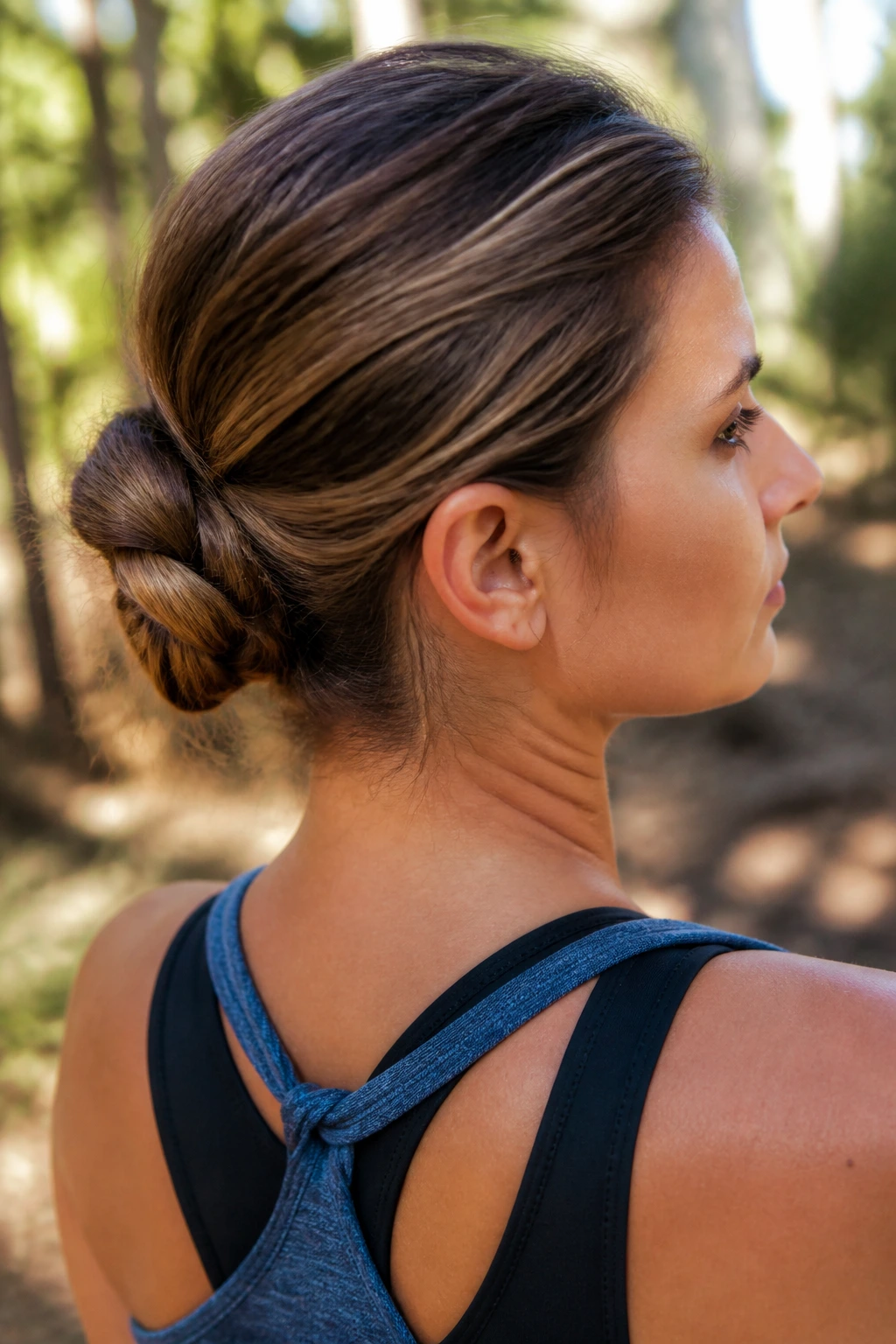
The topsy tail was a staple of past decades, but its utility for active sports remains unmatched when converted into a low bun. By looping a ponytail back through its own base, you create a natural pocket that hides and secures the ends of your hair.
This style works wonderfully for mid-length hair that is just a bit too short for a secure classic bun. The looping action creates a beautiful, rolled texture along the sides of your head that looks incredibly intricate. Because the bulk of the hair is tucked inward, there is no loose ponytail to bounce around or get caught under your backpack straps if you are trail running or hiking. It is low-profile, highly secure, and flatters almost every face shape.
12. The Triple French Braid Bun
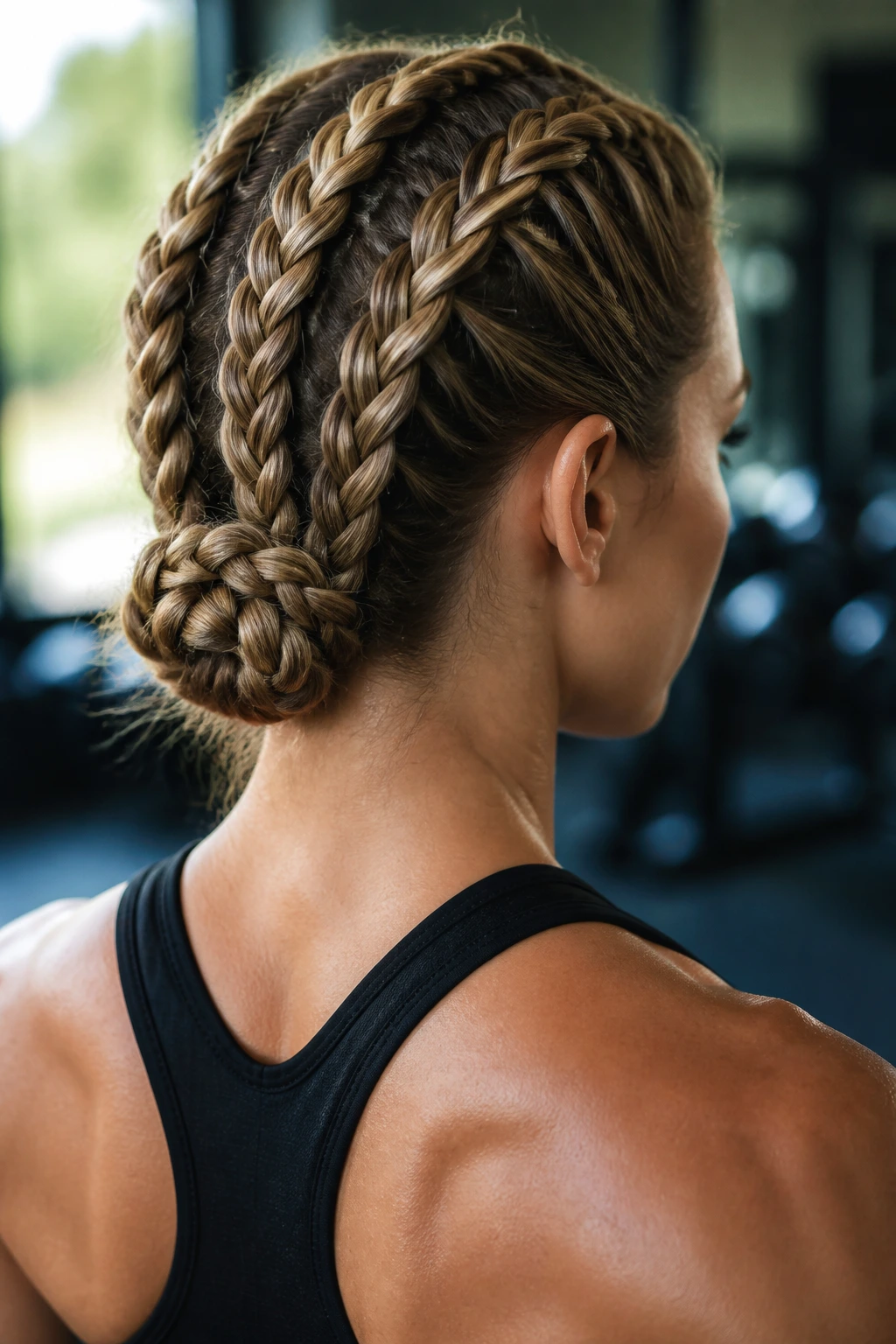
Unlike a single French braid that can slide from side to side during agility drills, three smaller braids distribute the tension across your scalp far more effectively. This is a favorite style for athletes who require complete concentration and zero hair movement.
The smaller braids hug the scalp tightly, making it nearly impossible for shorter layers or baby hairs to work their way loose. This style looks incredibly sharp and professional, showing off the natural highlights and dimensions of your hair.
When you gather the three braids at the nape of your neck and roll them into a compact bun, you create an incredibly secure anchor point. Even the most vigorous jumping, flipping, or running will not budge this style.
13. The Knotted Low Chignon
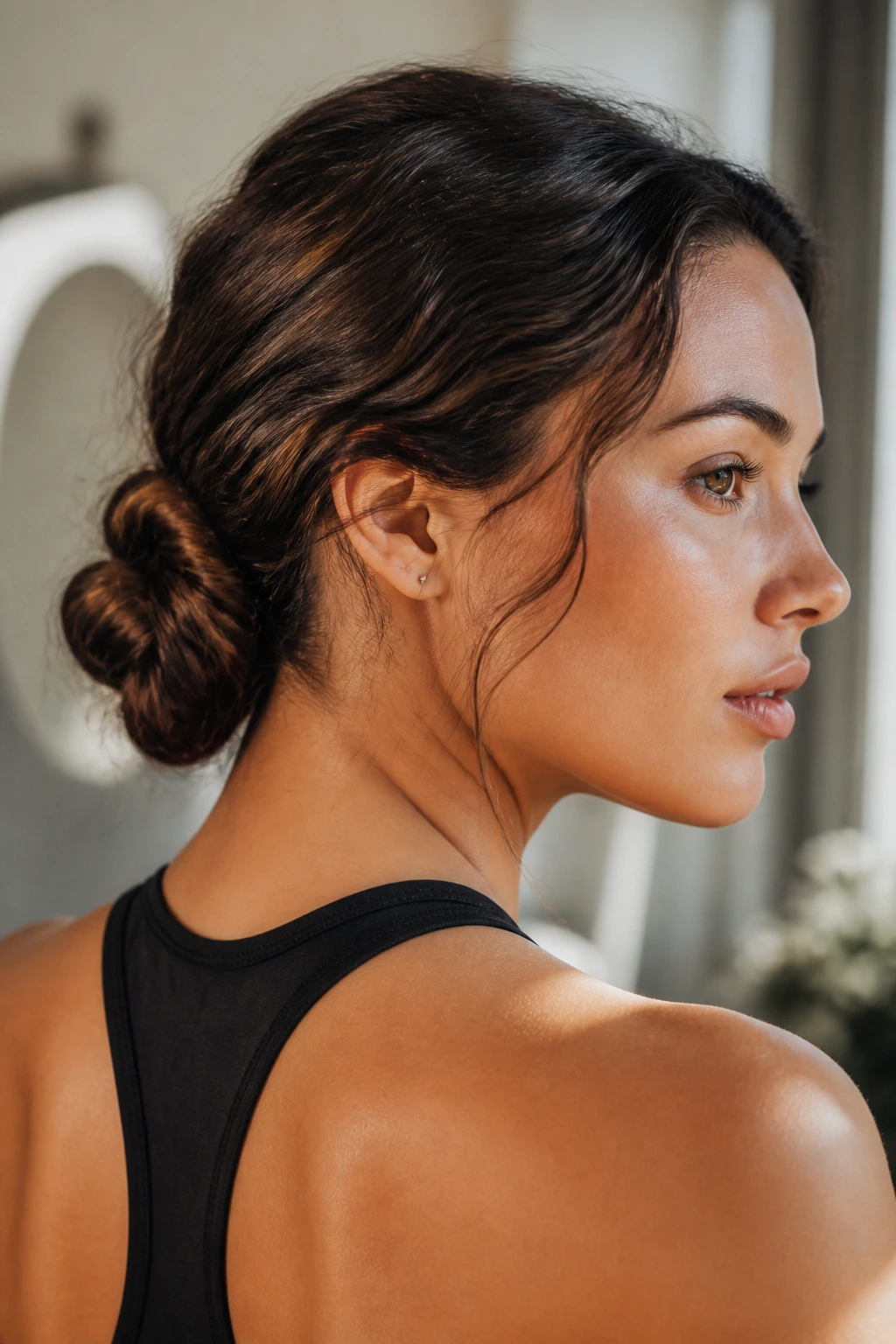
This style uses the hair itself to create a series of simple knots that lock the style in place without relying heavily on pins or clips. It is soft, modern, and highly elegant.
The Self-Locking Knot System
By tying two sections of your hair into a simple overhand knot—just like tying a pair of shoelaces—you create a secure, flat base. This base sits flush against your head, preventing the style from bouncing or loosening.
Quick Style Facts
- Ideal For: Wavy or curly textures that have natural grip and volume
- Tools Needed: One hair tie, two long bobby pins
- Slickness Level: Low; looks best with a slightly textured, natural finish
- Comfort: Excellent; no hard plastic or metal pressing into your scalp
Pro tip: If your hair is very fine or slippery, spray the sections with a dry texturizer before tying the knot to prevent it from sliding out of shape.
14. The Side-Swept Dutch Fishtail
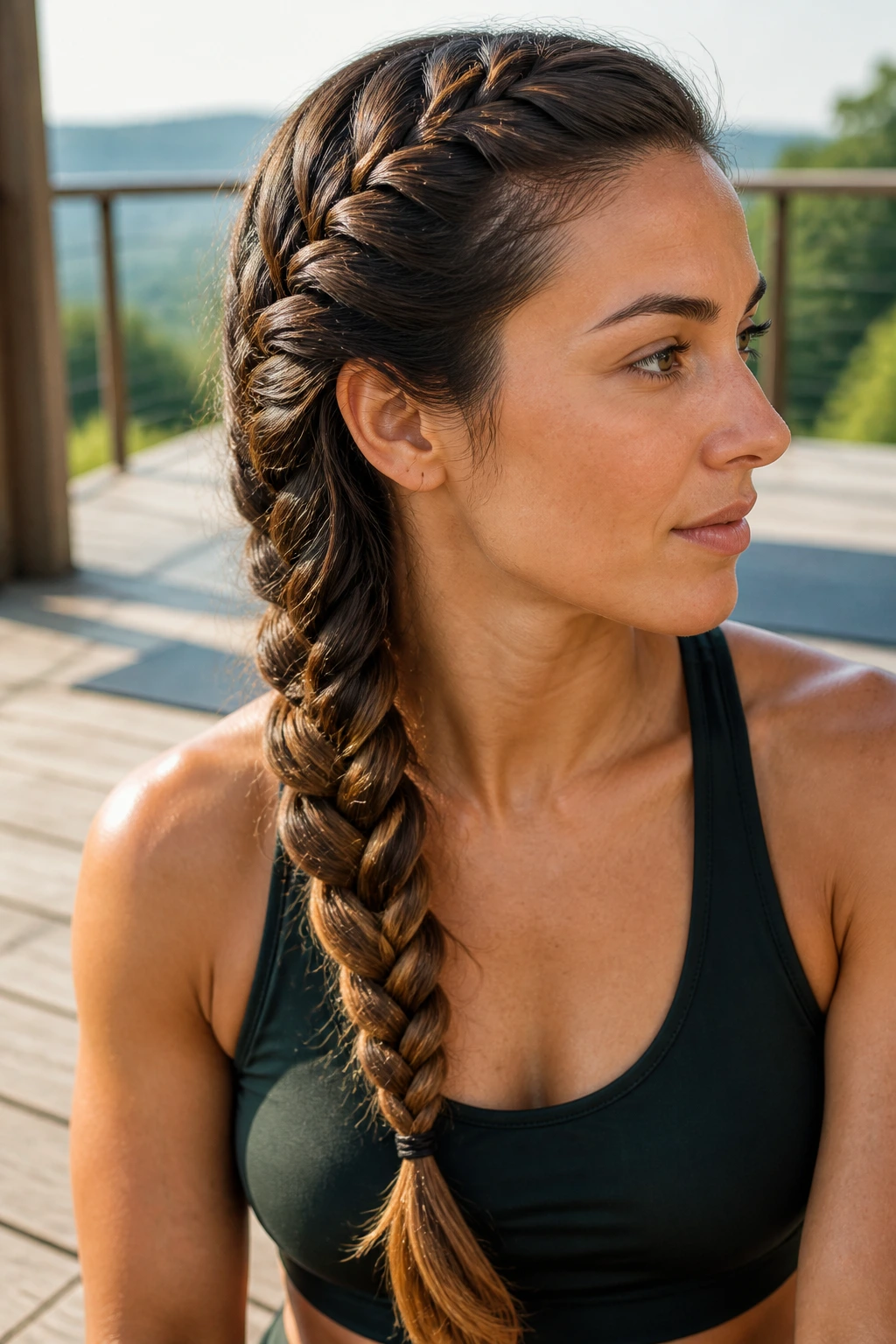
For low-impact workouts like barre, weight training, or stretching, a side-swept braid offers a soft, feminine look that keeps your hair controlled without being pulled tight against your scalp.
This style sits over one shoulder, keeping the back of your head completely clear for floor mats or weight benches. By using a Dutch fishtail technique—braiding under and using only two strands—you get a braid that looks incredibly thick and detailed. It is a fantastic option if you have long hair and want to look polished during your workout, but still want something comfortable enough to wear while lying down for stretching or recovery work.
15. The Folded Loop Bun
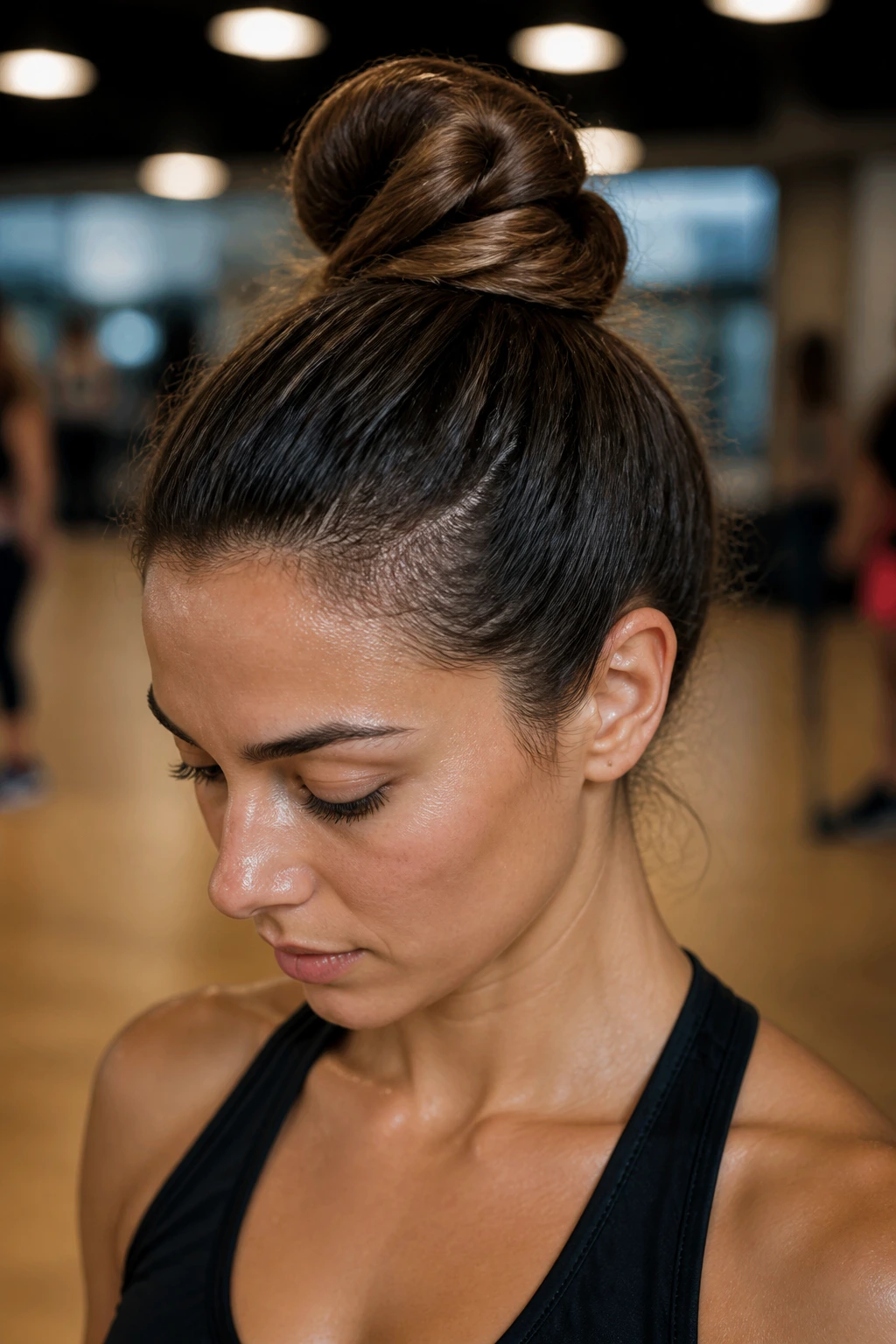
This is the ultimate quick-fix style for when you have exactly sixty seconds to get your hair up and secure before a class begins. It is far more secure than a standard messy bun but requires no extra tools.
Why the Folded Loop Resists Slipping
A standard bun often fails because the hair tie is wrapped around the bulky center of the bun. The folded loop bun solves this by securing the hair tie around a thin, folded base, leaving the loop of hair to sit securely on top without putting weight on the elastic.
Step-by-Step Styling
- Pull your hair into a high ponytail, but on the final wrap of the hair tie, only pull the hair halfway through to create a loop.
- Take the remaining tail of hair and wrap it around the base of the loop to cover the elastic band.
- Tuck the very end of the tail into the elastic band underneath the bun.
- Fan the loop out slightly, pinning the edges to your head with two bobby pins for a wider, more elegant silhouette.
16. The Half-Up Topknot with Braided Base
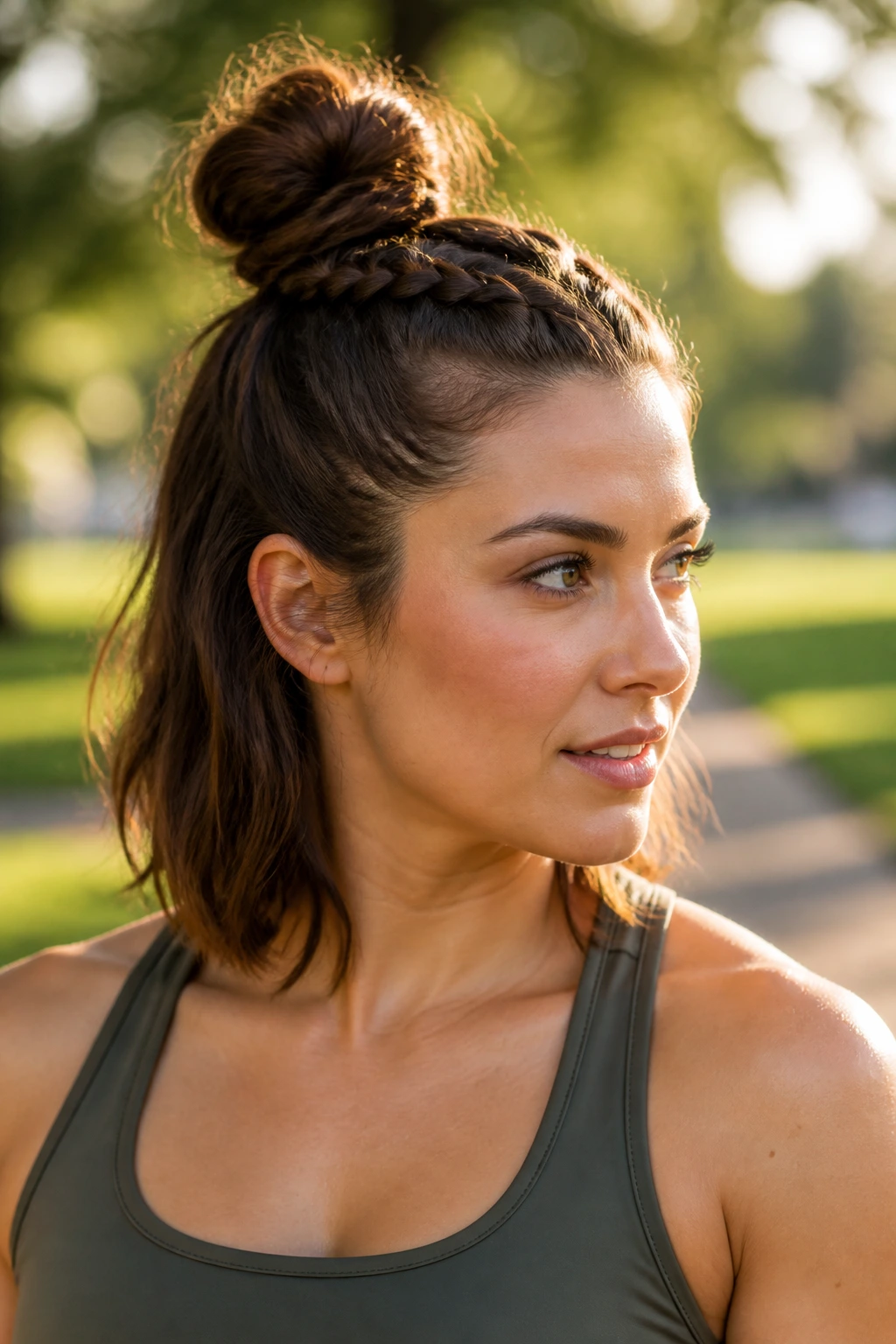
If you have short hair, like a bob or a lob, pulling all of your hair into a single bun or ponytail is often impossible. The bottom sections always fall out, requiring a small army of hairpins to keep them in place.
The Short-Hair Savior Style
By focusing only on the top half of your hair, you keep the strands that actually fall into your eyes secure. The bottom half can hang loose, as it is usually too short to cause any distraction during your workout.
Style Profile
- Best For: Short cuts, bobs, and layered hair
- Activity Match: Weight lifting, cycling, or power walking
- Visual Appeal: Athletic, modern, and youthful
- Hold Power: High for the upper face area; keeps bangs completely secure
This style is incredibly practical for those with bangs or face-framing layers who want to keep their forehead clear without having to use uncomfortable headbands that slip backward during exercise.
17. The Bubble Braid Pig Tails
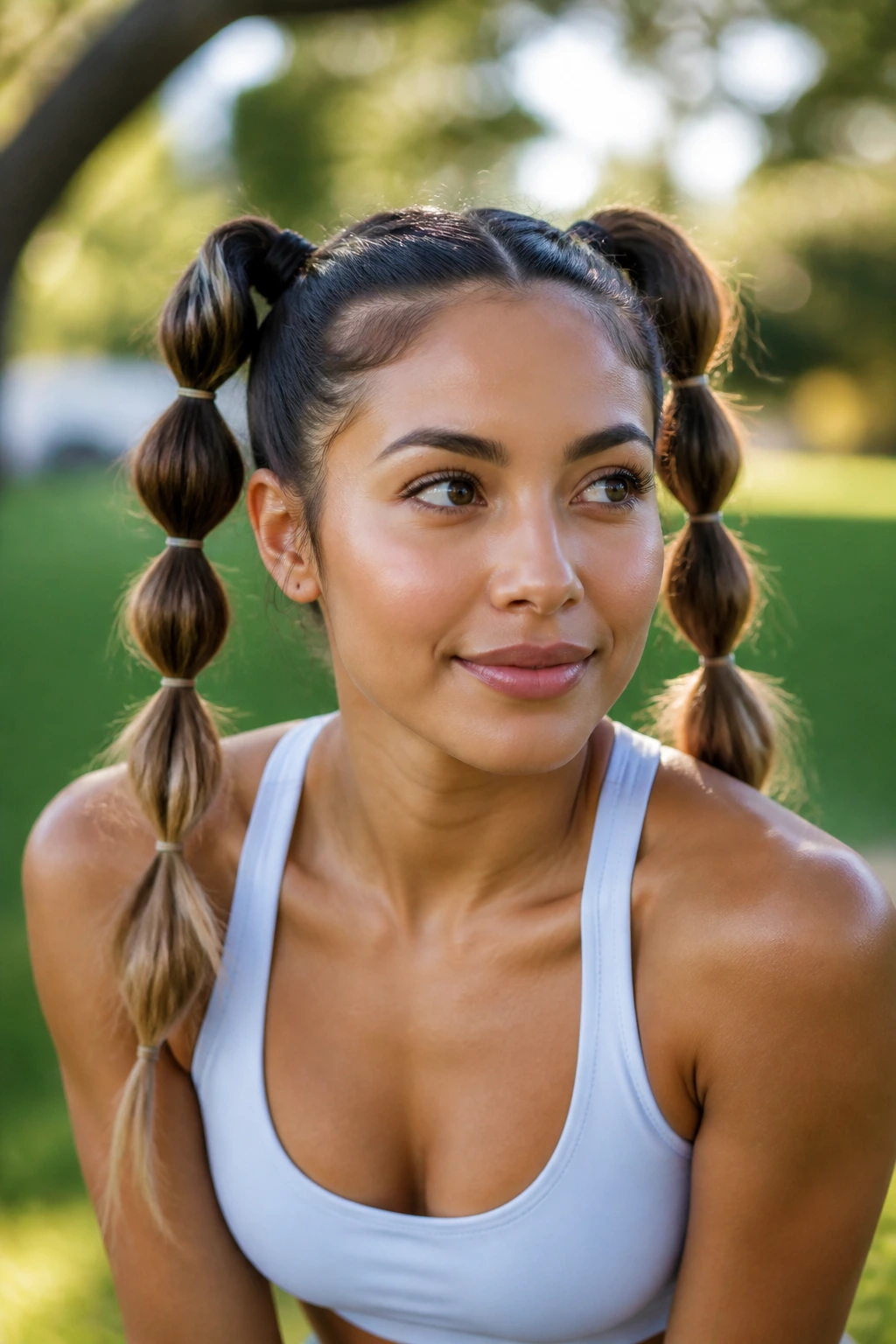
For a playful, high-energy style that offers incredible hold, double bubble braids are a fantastic alternative to classic pigtails. They are perfect for outdoor workouts, obstacle courses, or beach volleyball.
By dividing your hair into two equal sections, you halve the weight of the hair on each side of your head. This makes the style incredibly comfortable to wear, even if your hair is extremely long or thick. Each segment is secured with a small elastic, ensuring that even if one section comes loose, the rest of the style remains perfectly intact. It is a durable, fun look that handles wind, water, and intense sweat with ease.
18. The Crossed Elastic Low Bun
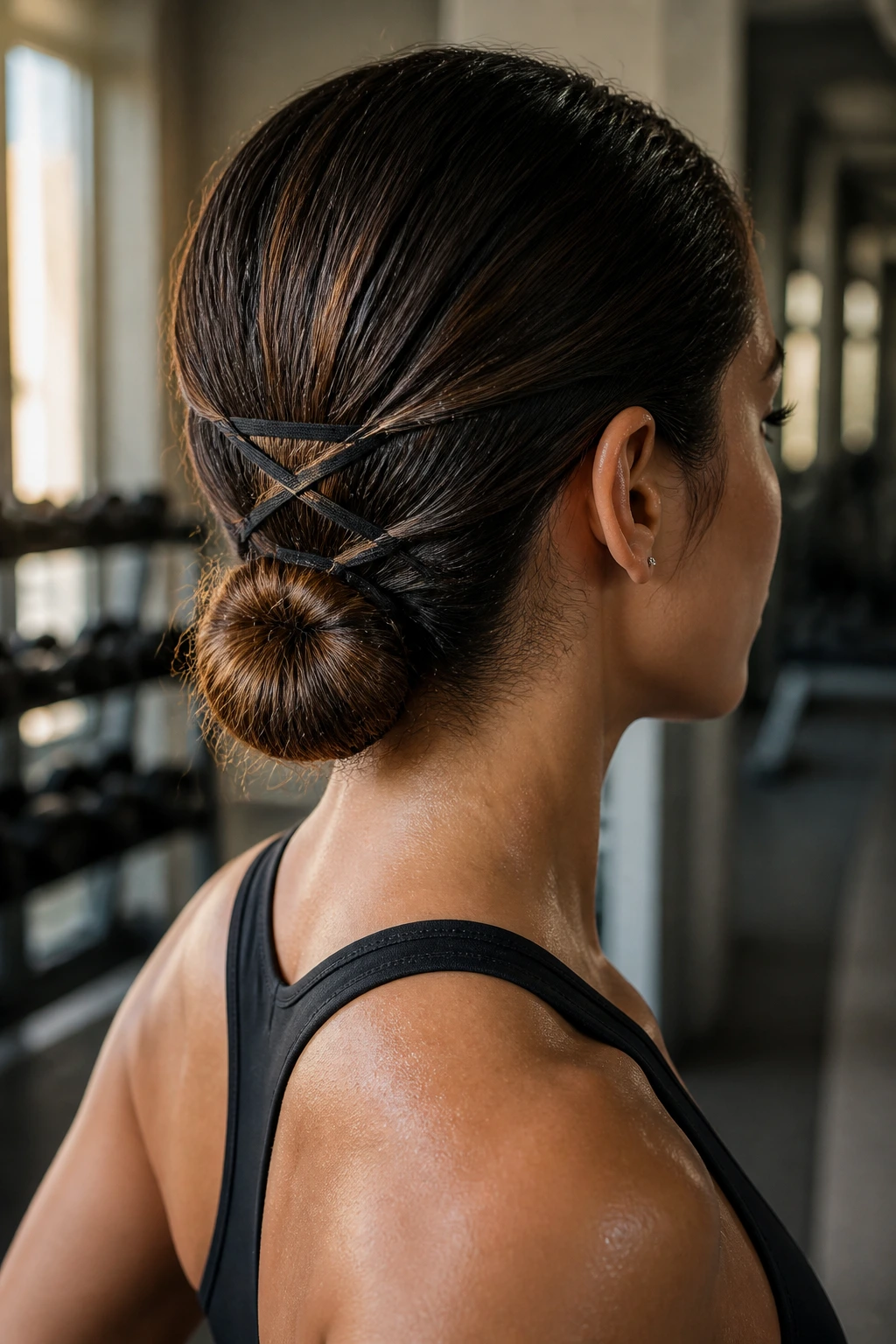
This style looks incredibly complex and modern, resembling something you would see on an athletic runway. It uses a series of intersecting hair bands to create a geometric pattern across the back of your head.
By anchoring different sections of hair with small, flat bands before gathering them into the final bun, you create an incredibly secure network of tension. This prevents any single section of hair from sagging or pulling. It is an excellent choice for dance, acrobatics, or any movement where your head is frequently upside down. The flat elastics sit comfortable against your skull, making it highly functional.
19. The Classic French Twist with Spiral Pins
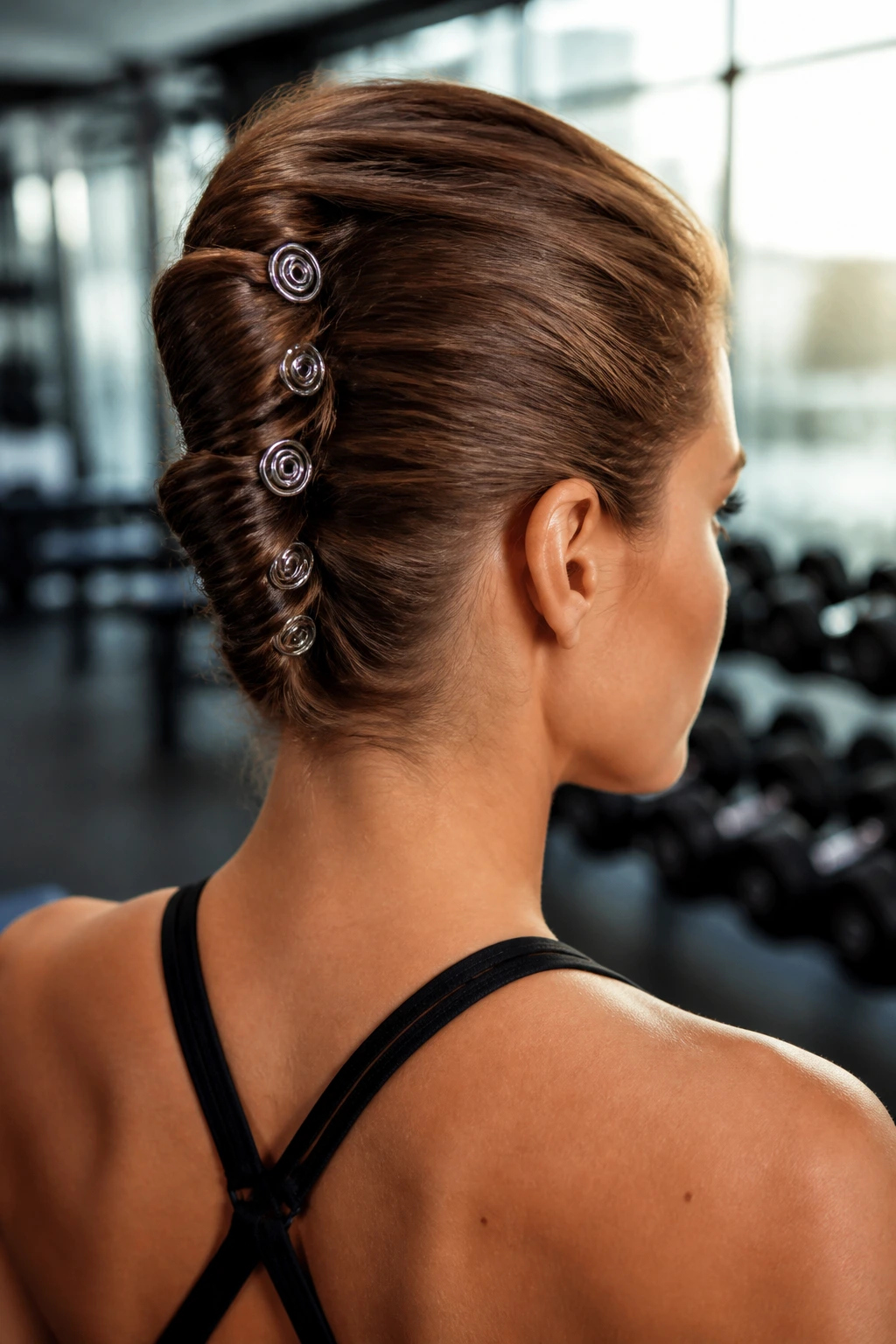
While a French twist is usually reserved for formal evenings, it is actually one of the most secure ways to hold medium-to-long hair flat against your head during low-to-medium impact exercise.
The Hidden Strength of the Twist
By rolling the hair tightly inward along the back of your head, you compress the volume of your hair into a neat, vertical column. This column has very little wind resistance and cannot swing or bounce while you move.
Twist Essentials
- Pin Strategy: Use three medium-sized spiral pins instead of twenty bobby pins
- Sleekness: High; apply a light gel to the sides for a clean look
- Comfort: Excellent for upright workouts; avoid if doing floor work on your back
- Required Skill: Medium; requires getting the tension tight before pinning
Pro tip: Tuck the ends of your hair completely inside the top of the twist before inserting the final spiral pin to prevent them from popping out while you move.
20. The High-Volume Pineapple with Silk Wrap
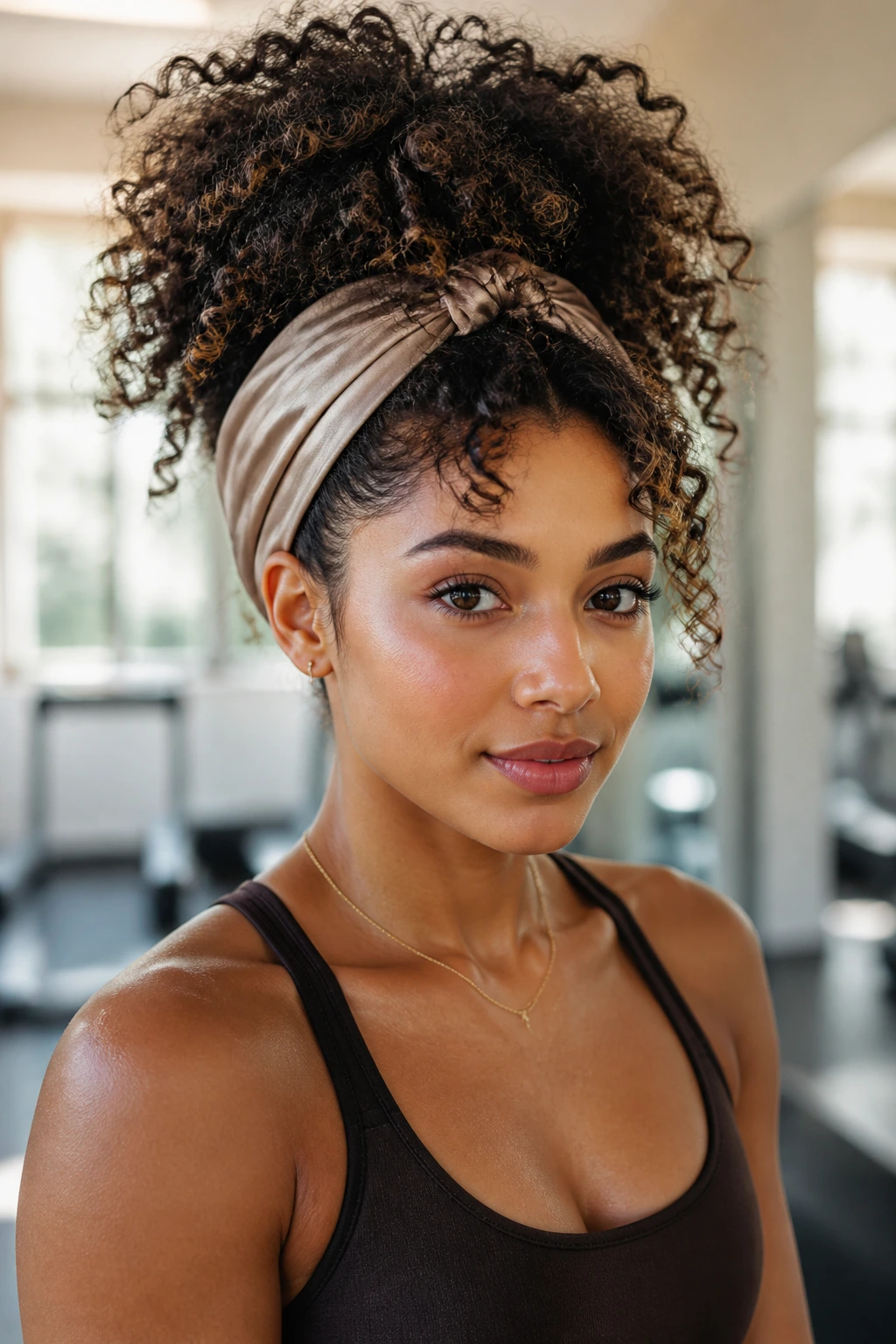
For those with natural curls, coils, or deep waves, pulling the hair too tight can damage the delicate curl pattern and cause breakage along your hairline. The “pineapple” style is the gold standard for protecting these textures.
This style gathers all your curls at the very top of your head, letting them cascade forward gently. Because the hair tie is wrapped loosely—usually only once or twice with a silk scrunchie—there is no tension on your scalp. To keep the back and sides secure during your workout, wrap a wide silk or satin scarf around the perimeter of your head. This protects your edges from sweat and friction while keeping your curls beautifully defined.
21. The Braided Space Buns
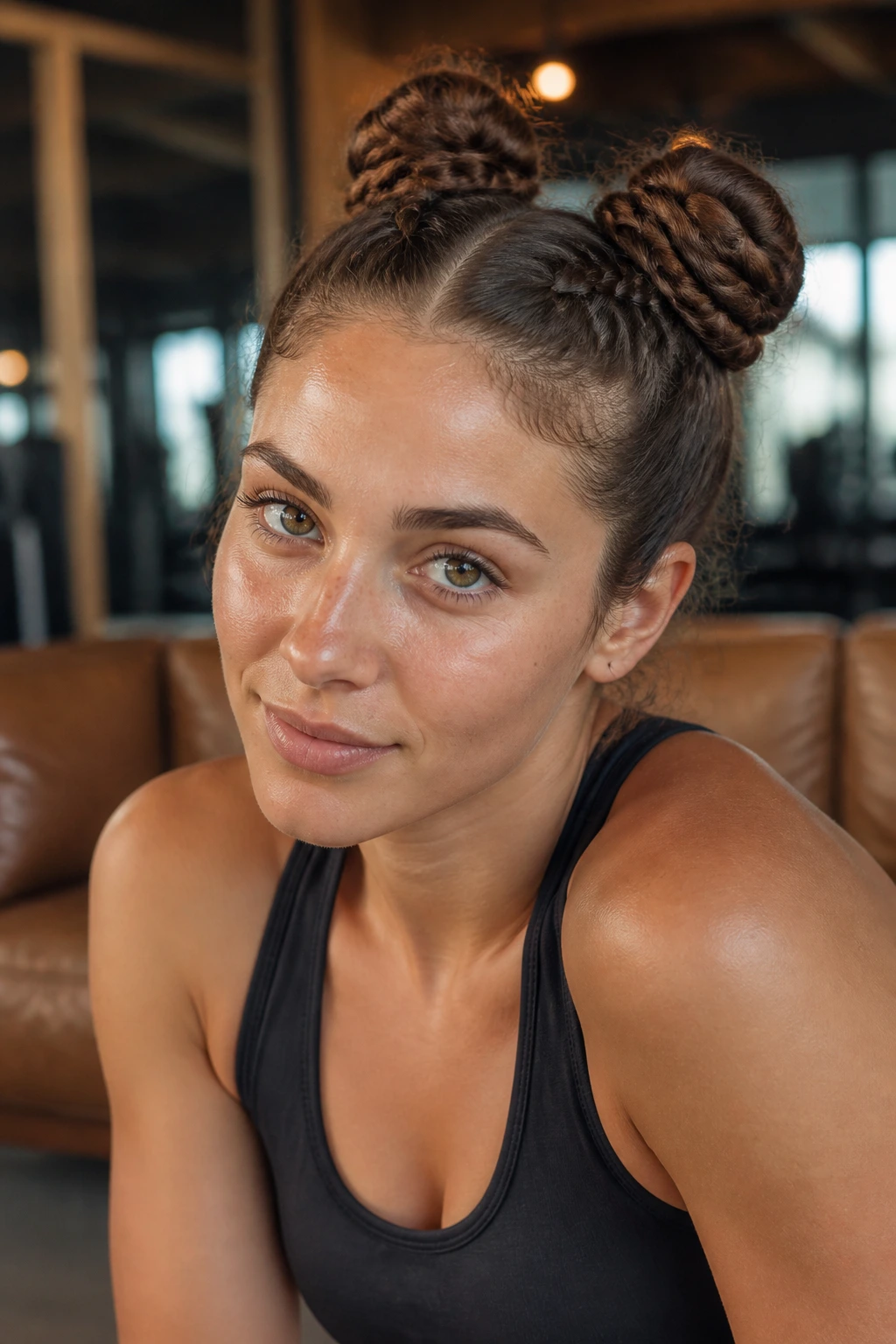
If you want a style that is incredibly secure, balances the weight of your hair perfectly, and looks great in photos, double braided space buns are a fantastic option.
Start by parting your hair down the center into two equal sections. Pull each section into a high ponytail on either side of your crown, then braid each ponytail to the very end. Wrap these braids tightly around their bases, securing them with a few hairpins or a second elastic. Because the hair is braided before being wrapped, the buns are incredibly compact and will not unravel, making them ideal for long runs or intense cardio.
22. The Segmented Pull-Through Braid
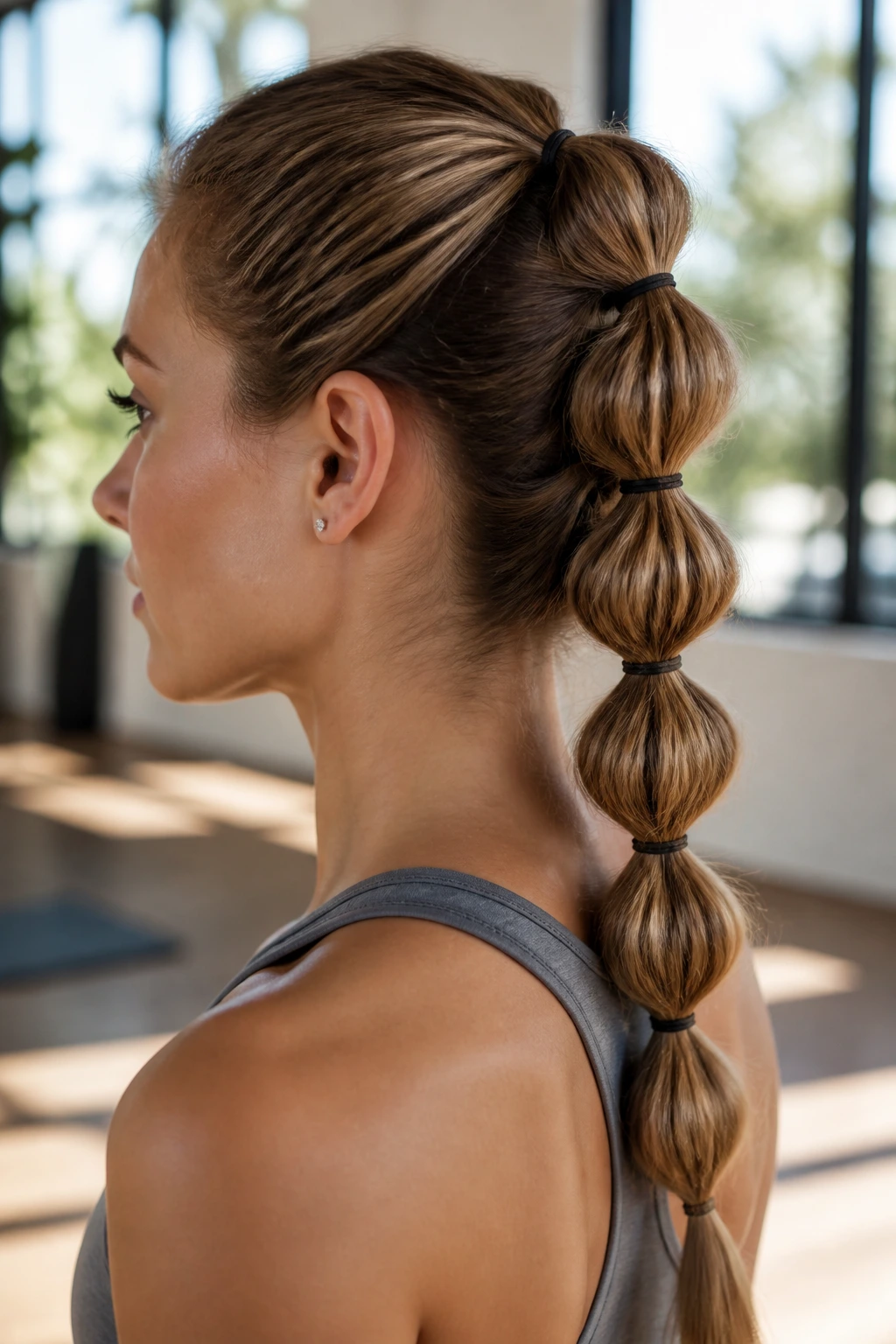
The pull-through braid is not actually a braid at all; it is a series of interconnected ponytails that look like a massive, thick braid. This is the ultimate style for anyone with fine hair who wants to create the illusion of thick, voluminous hair for their workout.
Because every single section is held in place by its own elastic band, this style is virtually indestructible. If one section of hair slips, the rest of the style holds it in place. It is a fantastic choice for high-impact sports, obstacle races, or any activity where you want your hair to look incredible from the first minute to the last.
Post-Workout Hair Recovery Without Washing
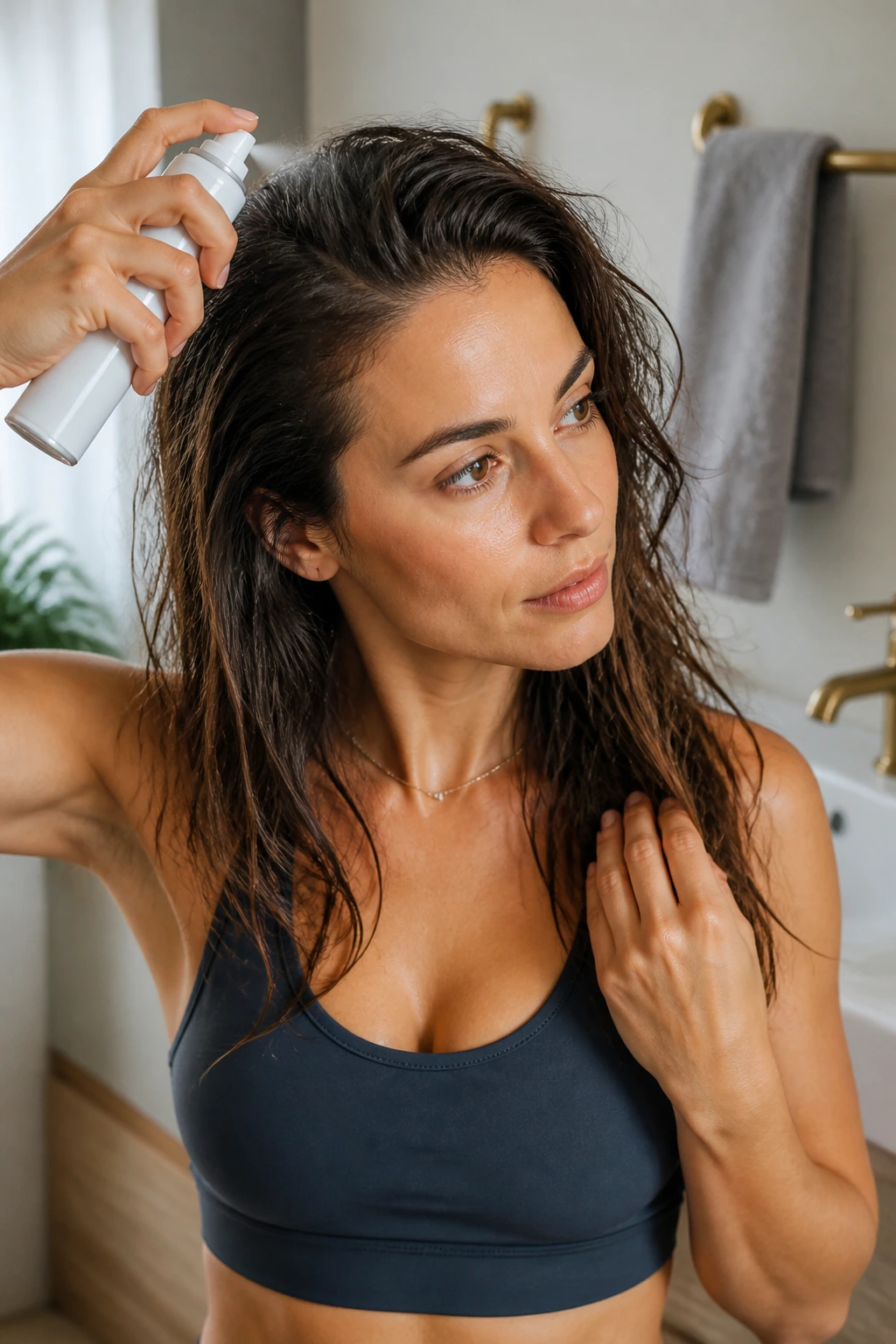
If you do not have time to wash, dry, and restyle your hair after every single workout, you are not alone. Daily washing strips your scalp of its natural oils, leading to dry, brittle ends and an overproduction of oil at the roots.
Always let your hair dry completely before brushing it after a workout. Wet hair is highly elastic and incredibly fragile; brushing it while it is damp from sweat will stretch and snap the shafts, leading to severe halo frizz along your parting.
Instead, blow-dry your roots on a cool setting for two minutes to evaporate any remaining moisture. Once your scalp is dry, apply a starch-based dry shampoo directly to your roots, letting it sit for three minutes to absorb the sweat’s salt and oil before massaging it in with your fingertips. Finish with a quick drop of hair oil on your ends to restore shine and softness, and your hair will look as fresh as it did before you started your workout.