

Long hair has a reputation for being high-maintenance, elegant, and somewhat static in its styling potential. We often think of it as a singular look, but integrating an undercut—a section of hair buzzed or shaved close to the scalp—completely flips that script. It isn’t just about making a rebellious statement; it’s about controlling volume, reducing the weight of heavy tresses, and adding a hidden layer of texture that only reveals itself when you want it to. Whether you are aiming for a subtle nape shave or a bold temple design, long hair with an undercut offers a sophisticated contrast that bridges the gap between classic length and modern, edgy precision.
1. The Subtle Nape Undercut
If you aren’t quite ready to commit to a major change, the nape undercut is the perfect point of entry. By shaving only a small triangle or semi-circle at the very base of your hairline, you keep the vast majority of your length intact. When your hair is down, no one will know it’s there. The magic happens the moment you pull your hair into a high ponytail or a top knot.
Why It Works for Beginners
This placement is strategic because it doesn’t drastically change the look of your hair when it is worn loose. It acts like a secret accessory. You can maintain your professional appearance while enjoying the airflow and lightness that an undercut provides.
Maintaining the Line
- Use a small, handheld mirror to check the growth line every two weeks.
- Keep the area clean-shaven or buzzed to a 1/8-inch guard to prevent unsightly stubble overlap.
- If you have long, thick hair, this reduction in bulk at the neck can significantly decrease the feeling of heat buildup during warmer months.
2. Intricate Geometric Temple Designs
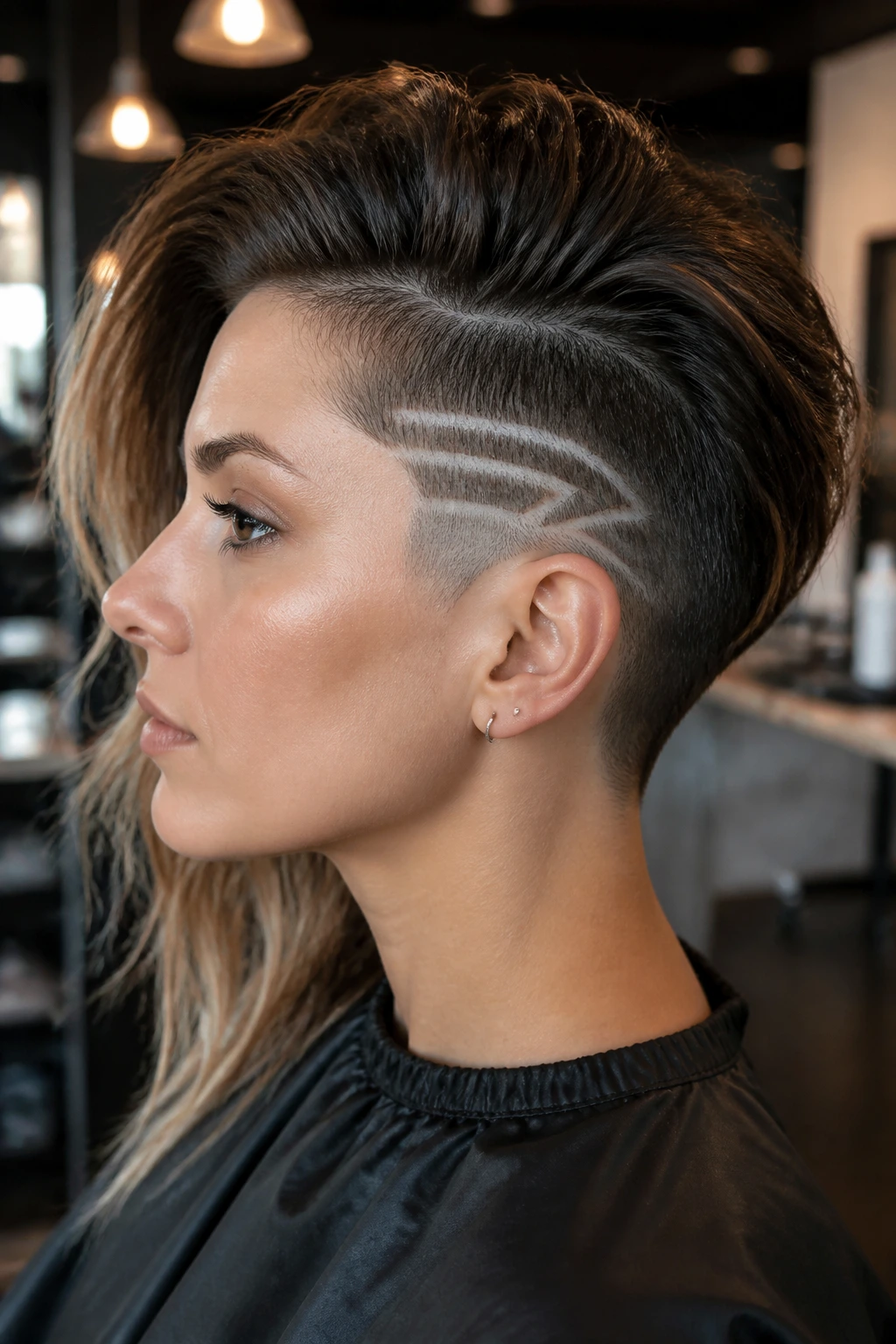
For those who prefer a more artistic approach, temple undercuts offer a canvas right above the ears. These designs are often sharp, clean, and intentional. You might choose a series of parallel lines or a minimalist arrow that draws the eye toward your cheekbones.
Designing the Look
Geometric shapes look best when kept precise. You will want to visit a barber or stylist who specializes in crisp lines because the scalp is sensitive and the hair there grows quickly. Consistency is key here; if you let the design grow out for too long, the sharp geometry will lose its intended impact.
How to Style Around It
When you wear your hair in a deep side part, you expose the design beautifully. If you want a more reserved look, simply brush the hair over the temple area. This flexibility makes it a great choice for those who love high-fashion edges but have to navigate a standard office environment.
3. The Full-Length Undercut for Thick Hair
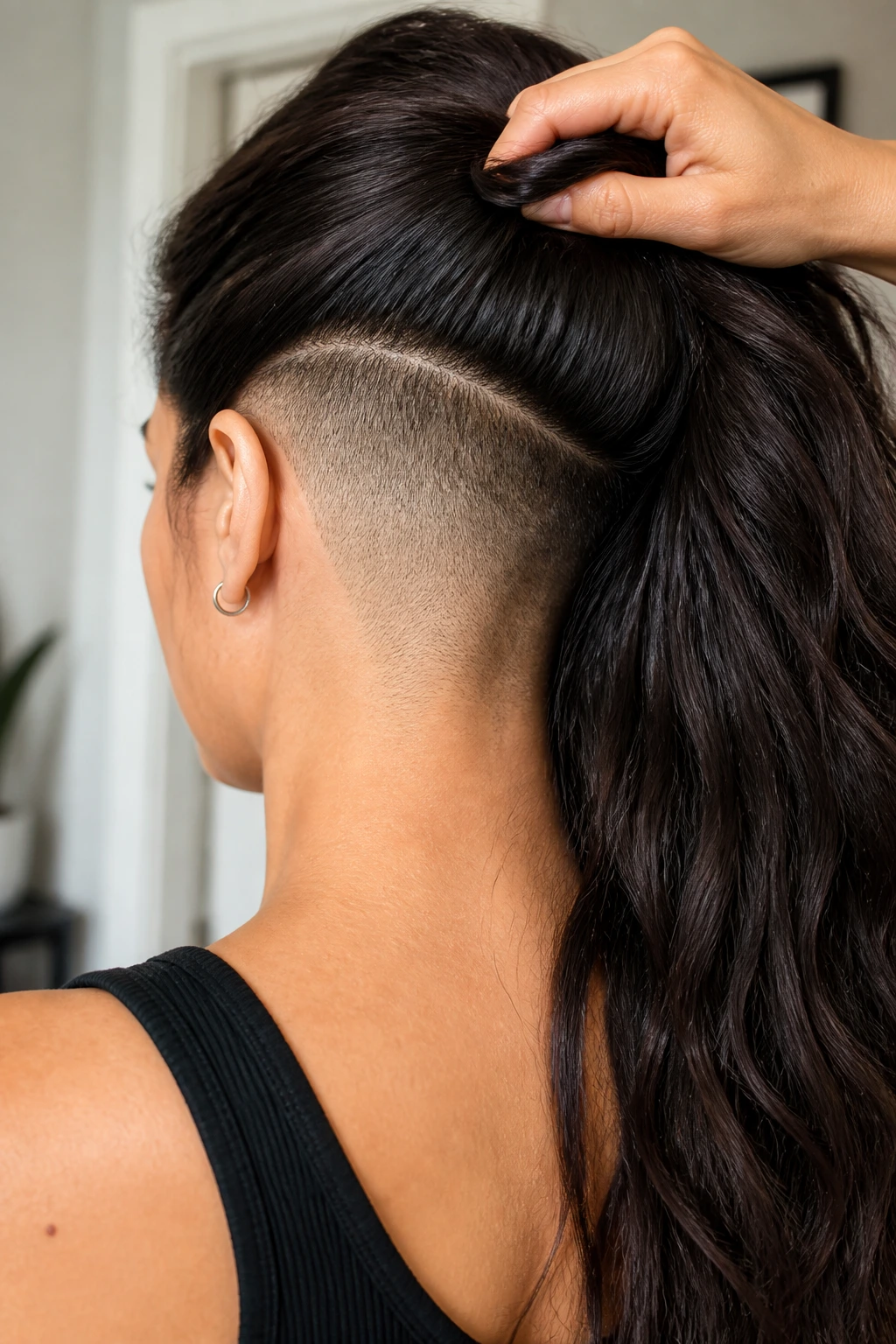
Many people with exceptionally dense, heavy hair struggle with the sheer weight of their locks. A full-length undercut—running from the nape of the neck up to the mid-occipital bone—can remove literal pounds of hair. This isn’t about design; it’s about relief and manageability.
The Benefits of Bulk Removal
When you remove the bottom half of the hair’s density, your remaining length gains more movement. It’s less likely to feel like a heavy curtain and more like a fluid, bouncy style. This is a game-changer for anyone who finds that their hair gives them headaches or feels overly dense in humid climates.
Everyday Practicality
- Expect your drying time to be cut in half.
- You will notice that hats and beanies fit much more comfortably.
- Ensure that the top section of your hair is long enough to cover the shaved area completely, even when it’s tied back, if you prefer to keep the undercut hidden.
4. The Half-Head Side Shave
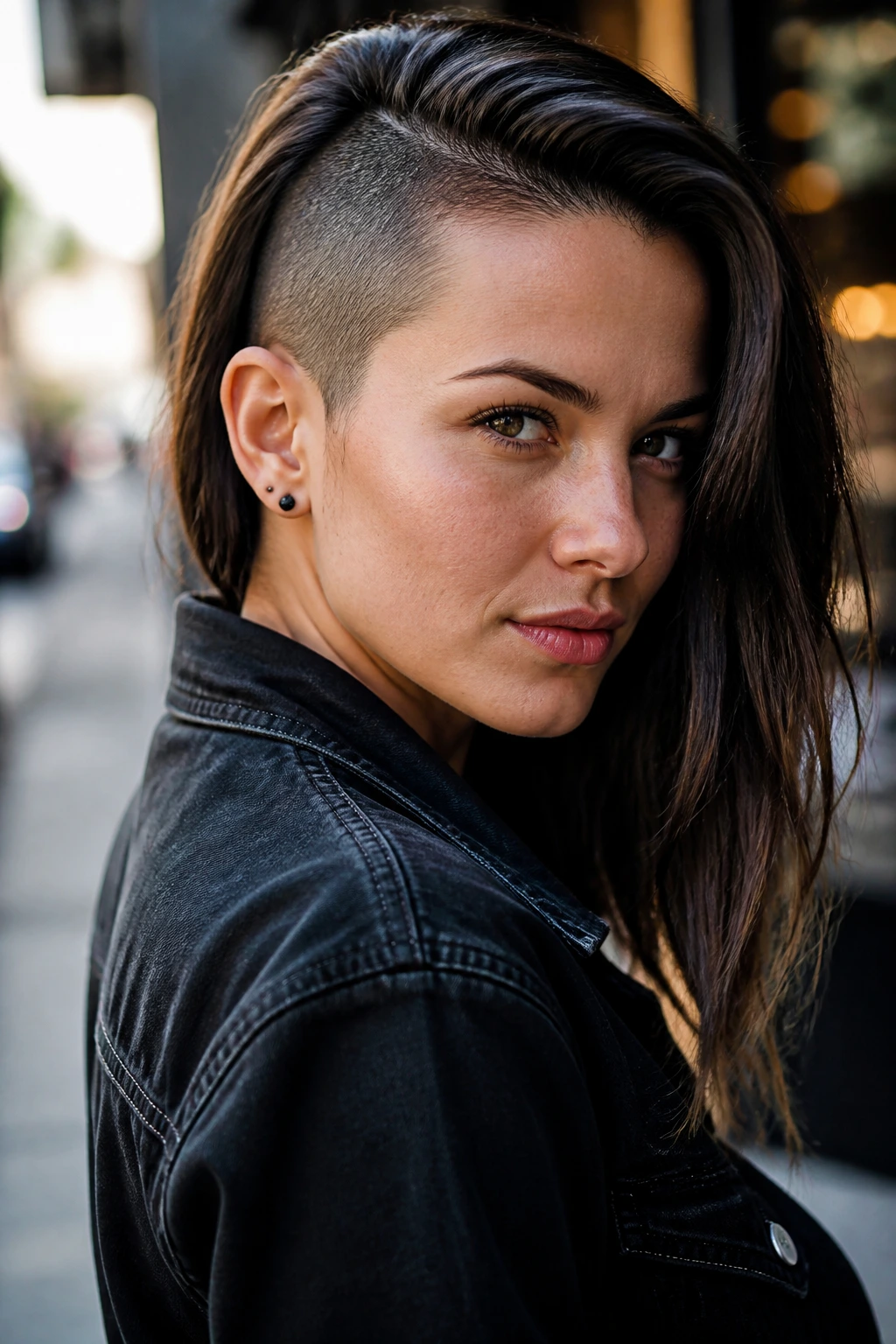
This is the classic, bold aesthetic that comes to mind when we think of undercuts. It involves shaving one full side of the head, starting from the temple and extending down behind the ear. It provides an immediate sense of asymmetry that is inherently stylish.
Balancing the Asymmetry
Because this style is so dominant, the rest of your hair should be styled to complement the shaved side. A deep side part is the go-to way to frame the face. Alternatively, a loose braid that runs along the side of the head can highlight the clean shave while keeping the top section contained.
Who Should Try This
This look is for the person who is ready to lean into a more “alternative” aesthetic. It pairs exceptionally well with bright hair colors or blunt cuts. Keep in mind that growing this out is a significant commitment—the transition phase will require some patience and strategic styling.
5. The Hidden Mandala Design
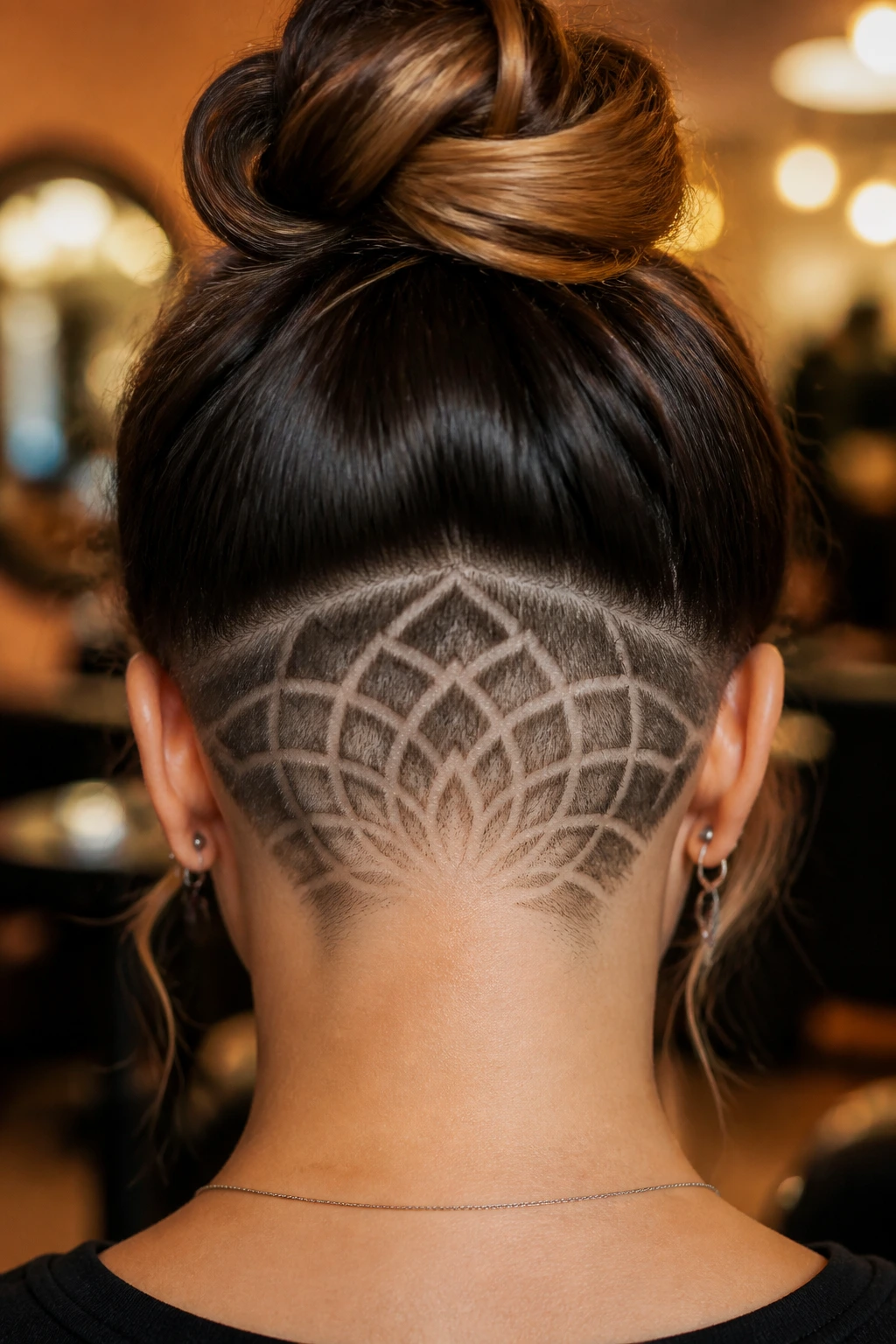
If you are skilled with a trimmer or have a partner who is, you can graduate from simple lines to complex, artistic patterns. The mandala is a popular choice for the nape area because it offers a circular, symmetrical balance that looks intentional and bohemian.
How to Achieve the Detail
You cannot achieve a intricate mandala using a standard trimmer at home. You need a professional-grade detailer with a fine blade. Sometimes, stylists will use a small amount of dark pigment or hair chalk to fill in the design if you are heading to a special event and want the pattern to pop against your skin.
Maintaining the Art
- Don’t wash the scalp area with harsh, stripping shampoos, which can cause flaking.
- Moisturize the skin after every shave to prevent irritation.
- Remember that the hair here will grow back in quickly, usually requiring a touch-up every 10 to 14 days to keep the pattern visible and sharp.
6. The Floral Cutout
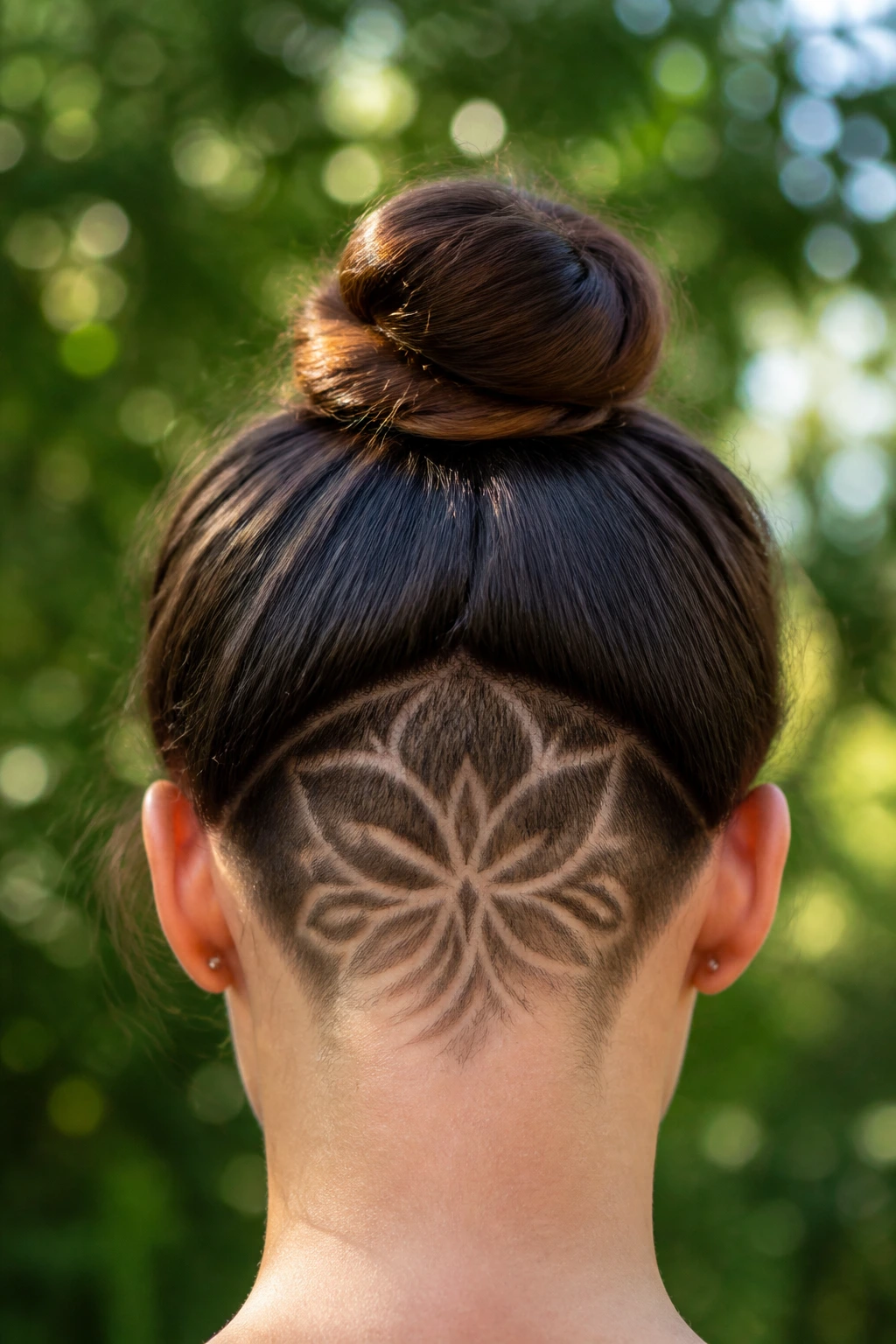
Florals are surprisingly elegant when shaved into the nape. A single rose or a simple leafy vine adds a delicate touch to an otherwise edgy haircut. It brings a softness to the look that contrasts beautifully with the severity of a buzzed scalp.
Styling for Elegance
This works wonderfully for weddings or formal occasions. Pull your hair up into a loose, messy bun to allow the design to peek through. It becomes a conversation piece that feels both rebellious and romantic.
Pro Tip for Visual Clarity
If your natural hair color is dark, the contrast against your skin will make the design very visible. If you are blonde, you may need a slightly closer shave—perhaps using a straight razor—to make sure the pattern stands out clearly.
7. The Layered Undercut
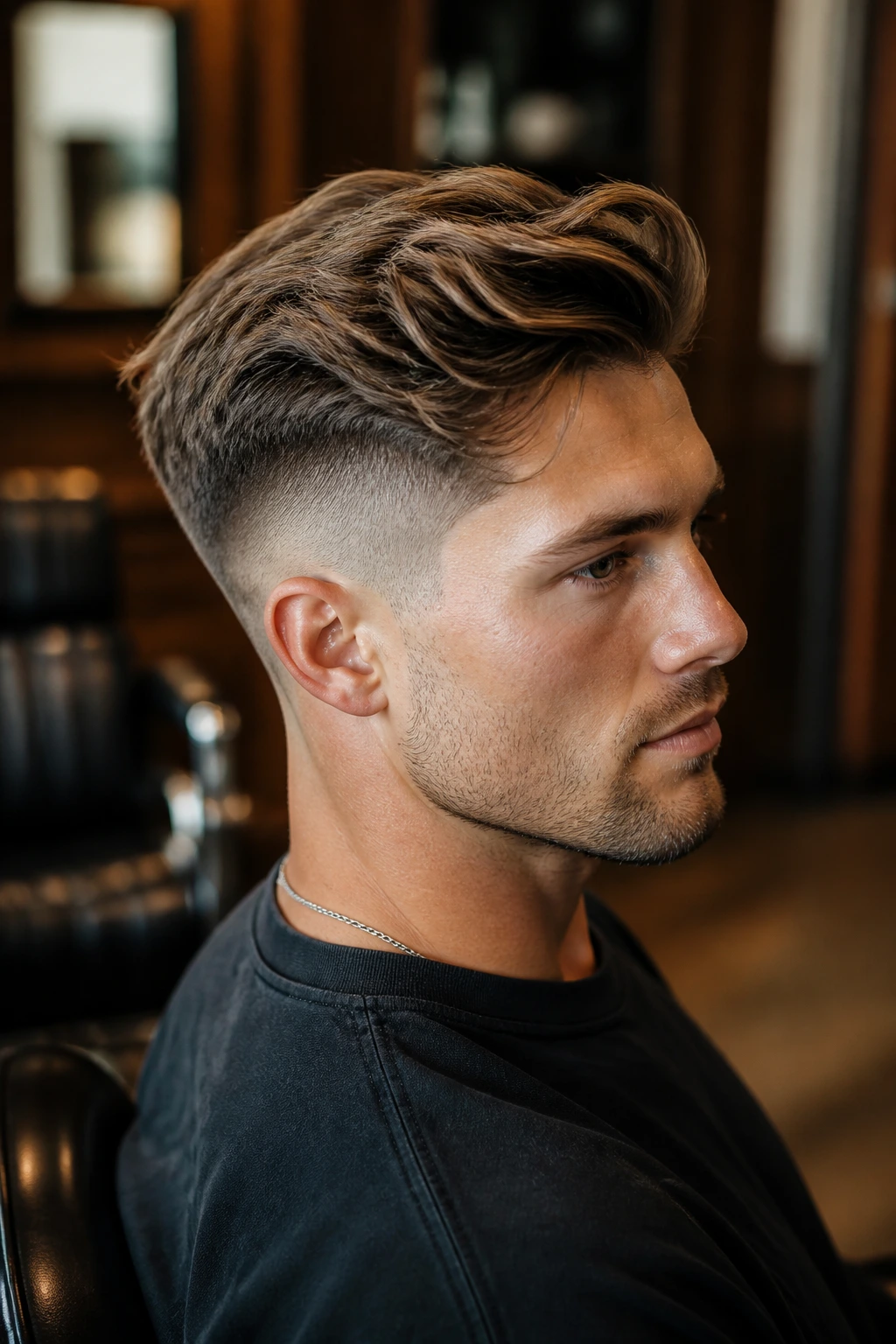
Unlike a standard undercut where the buzz is one length, the layered approach uses guard numbers to create a fade. You might start with a #1 guard at the very bottom and transition to a #3 guard as you move upward toward the crown.
Why Fading Matters
A fade creates a seamless transition that looks more finished and professional than a single-length buzz. It mimics the look of a high-end men’s haircut, which adds a level of structural sophistication to long hair. It feels intentional, rather than like you simply decided to shave a chunk of hair off on a whim.
Maintaining the Fade
- This requires more frequent trips to the salon or barber.
- You will need to maintain the fade at least once every three weeks.
- Use a high-quality beard oil on the shaved section to keep the skin healthy and the hair soft as it grows back in.
8. The V-Shape Nape
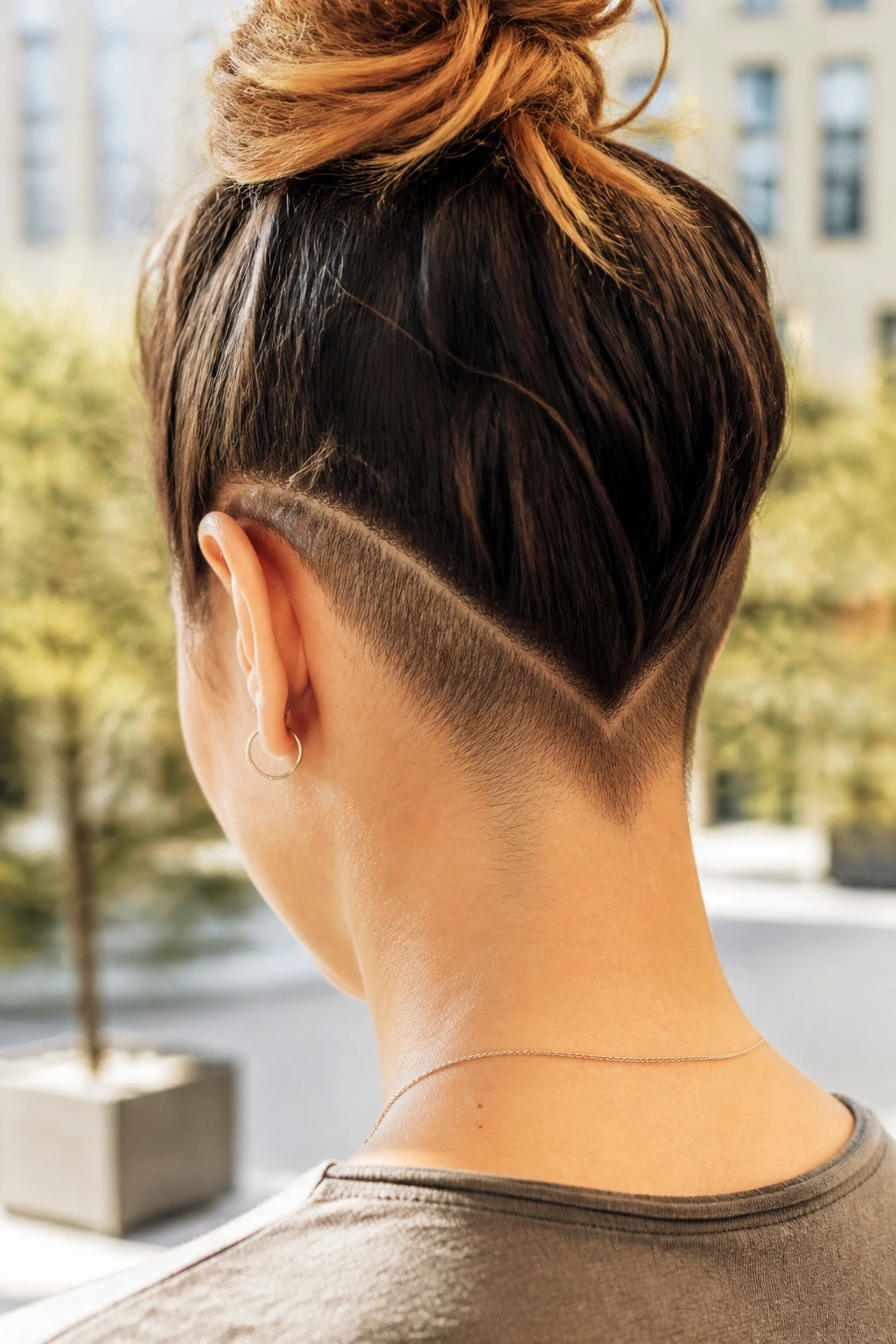
The V-shape is a timeless classic. It naturally contours to the shape of the neck, making the hairline look cleaner and more deliberate. This shape works for almost every hair texture, from pin-straight to tightly coiled.
Contouring the Neckline
A sharp V-shape draws the eye downward, which can actually help create the illusion of a longer, more slender neck. It provides a structured foundation for long hair that might otherwise look a bit messy at the base.
Pairing with Updos
If you frequently wear your hair in high ponytails, the V-shape is the ultimate choice. It looks sporty and sharp. Because the shape is relatively simple, you can easily maintain the outline yourself with a steady hand and a hand-held mirror, saving you from constant professional visits.
9. The Twin Temple Shaves
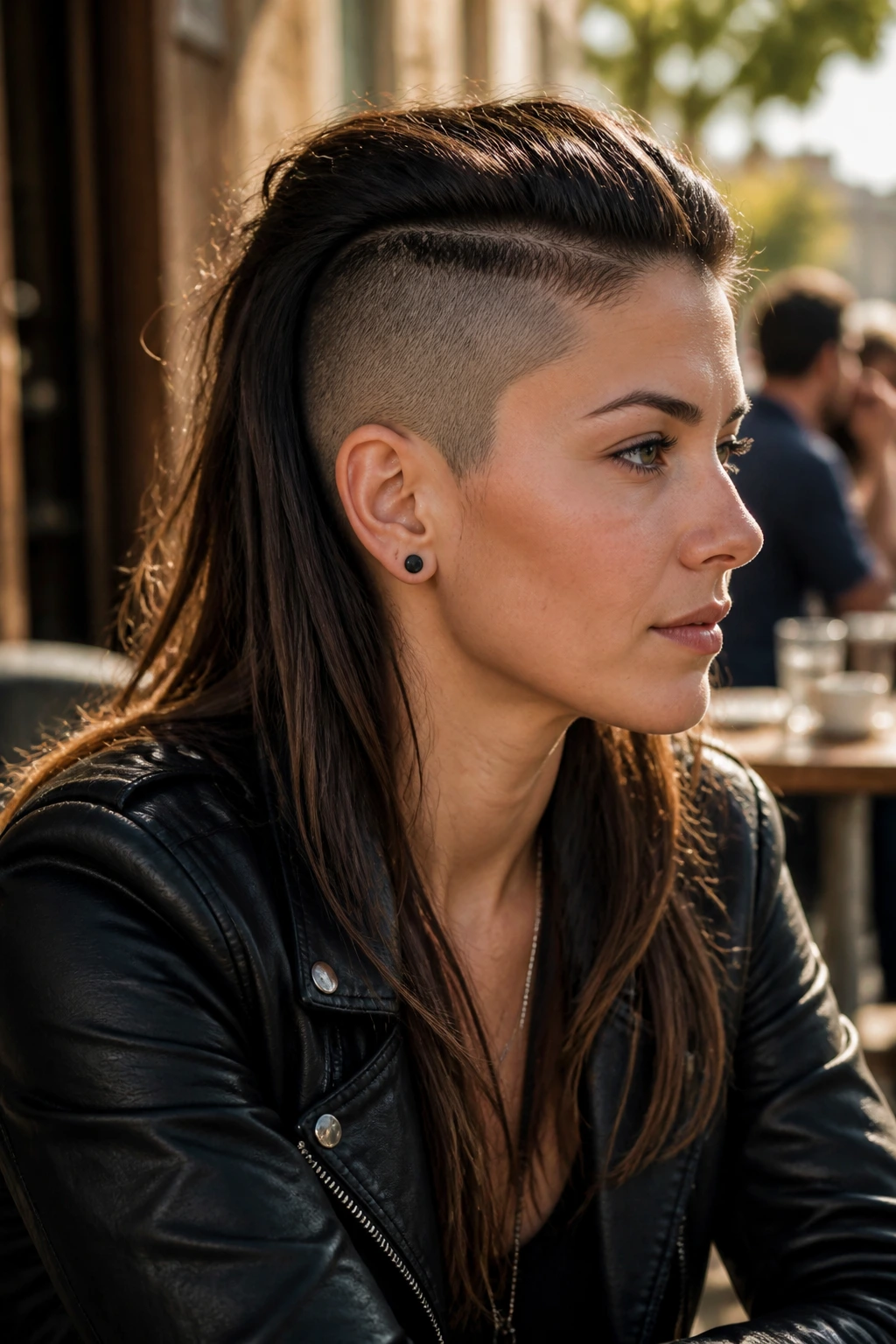
Why settle for one side when you can do both? Twin temple shaves create a “Mohawk-adjacent” look, even when the hair is worn down. It keeps the weight off the sides of your head and creates a sleek profile.
Why Symmetry is Strong
This look is very grounded. It frames the face in a way that feels balanced and bold. If you have a rounded face shape, this can actually help by creating vertical lines that lengthen your silhouette.
Style Versatility
- Try a “half-up, half-down” style to showcase both shaves.
- Use a texturizing spray on the longer hair to create a messy, voluminous look that contrasts with the tight, clean shaves on the sides.
- This style is surprisingly easy to hide; just keep your hair parted in the center to maintain full coverage over the temples.
10. The Starburst Pattern
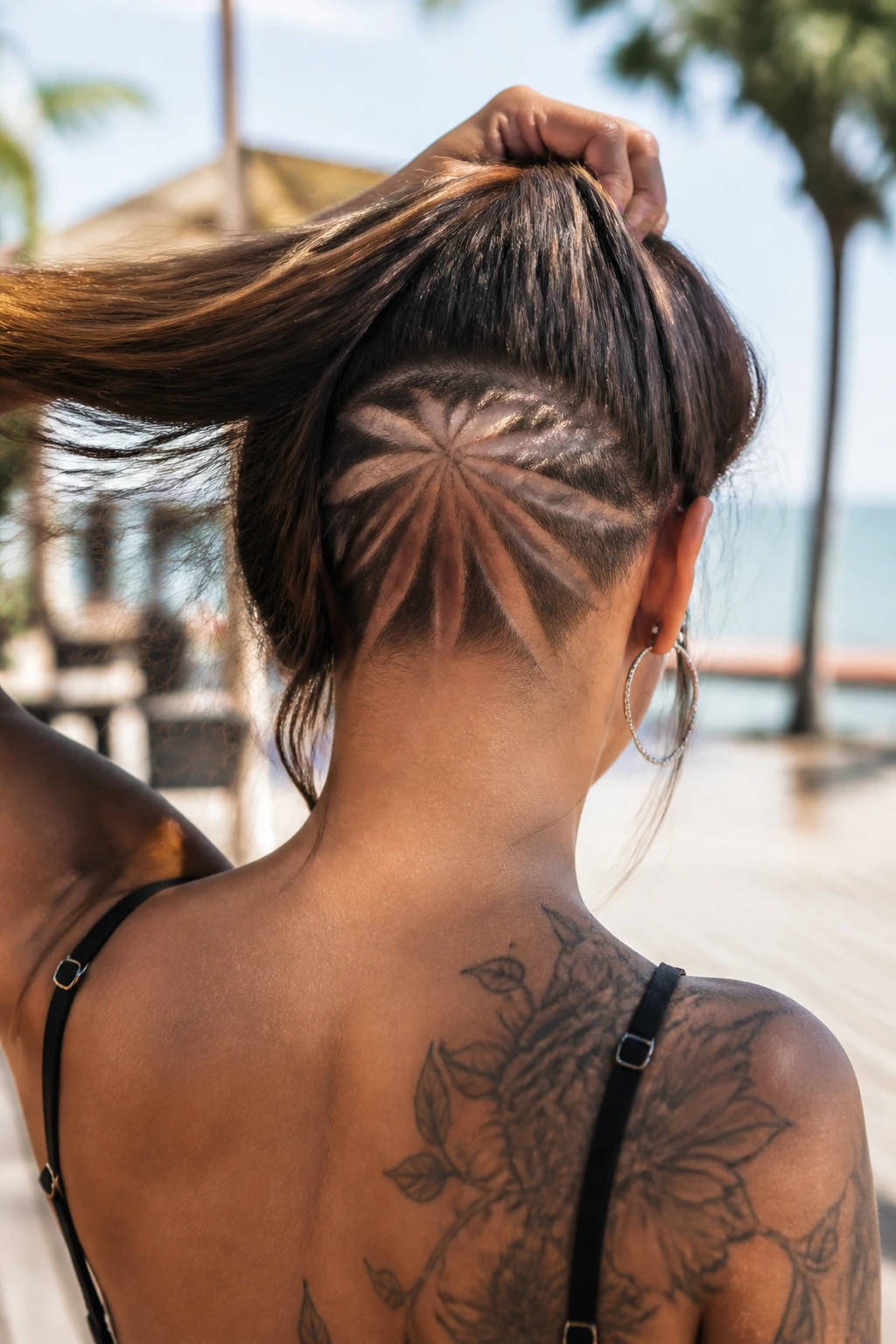
If you want something bold and dynamic, a starburst pattern radiating from the center of the nape is hard to beat. It feels energetic and modern, perfect for those who want their haircut to represent a sense of movement.
Achieving the Radiance
This requires significant precision. The lines must be perfectly spaced to create the illusion of rays. It is an excellent choice for summer, as it looks great when the hair is tied back for beach days or outdoor events.
Complementing the Look
Because this design is visually busy, keep the rest of your hair simple. Sleek, straightened hair allows the pattern to be the centerpiece. If your hair is naturally curly, you may need to use a strong-hold pomade to keep the long hair away from the nape so the design stays visible throughout the day.
11. The Peek-a-Boo Color Contrast
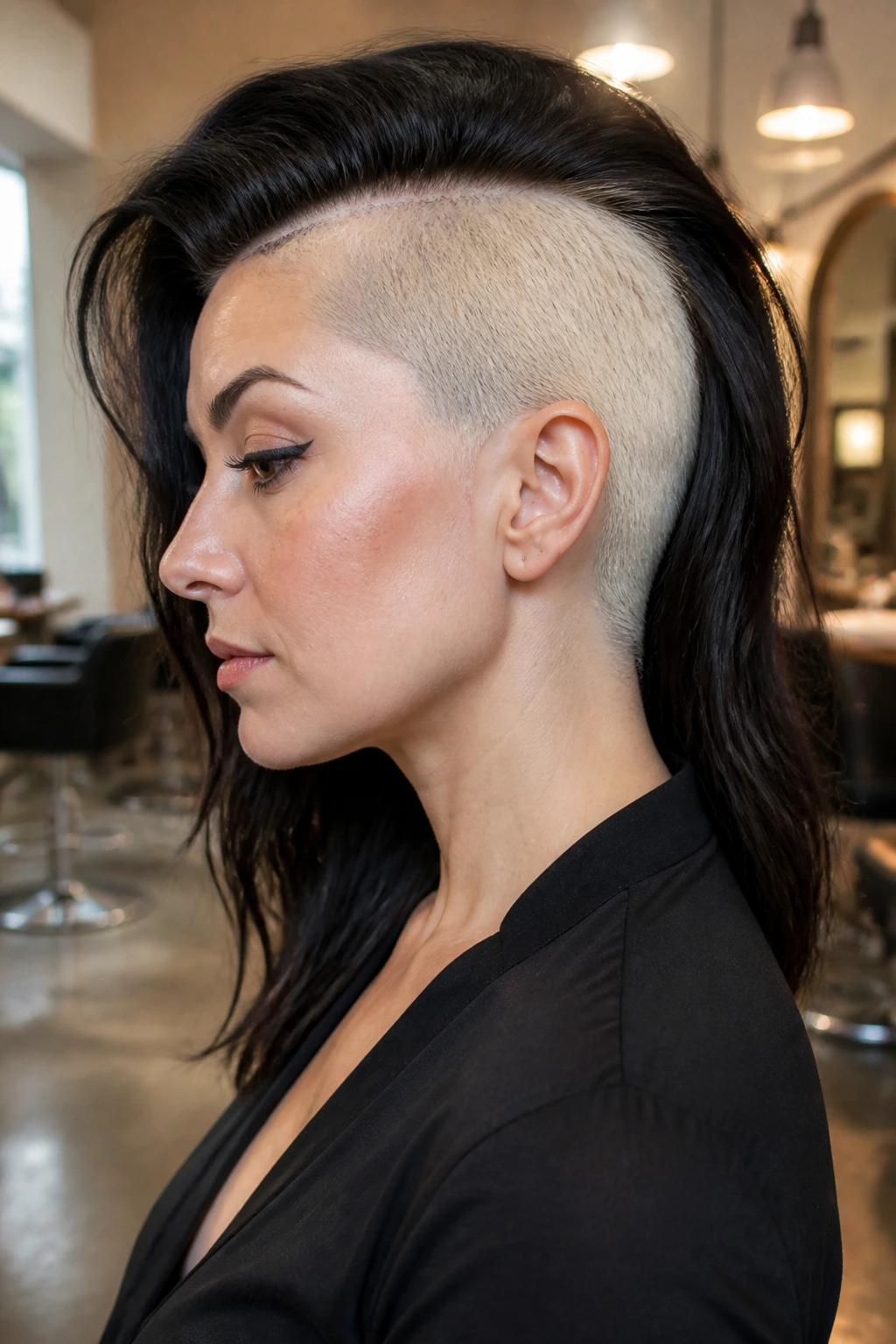
The undercut doesn’t have to be just about the shave; it can be about the color of the stubble. If you have dark hair, bleaching the shaved area to a platinum blonde creates a stunning visual contrast.
How to Protect the Scalp
- Bleach can be harsh. Ensure you are using a professional-grade scalp protector before applying any lightener.
- Once the hair is blonde, it will grow out with a visible dark root, which can look cool or messy depending on your aesthetic preference.
- Keep the blonde hair toned with a purple shampoo to prevent it from turning brassy, which can make the design look unkempt.
Highlighting the Texture
The contrast of light hair against a dark scalp makes even the simplest line designs stand out. This is a high-maintenance look, but the visual impact is undeniable for anyone looking for a truly modern edge.
12. The Wavy Line Design
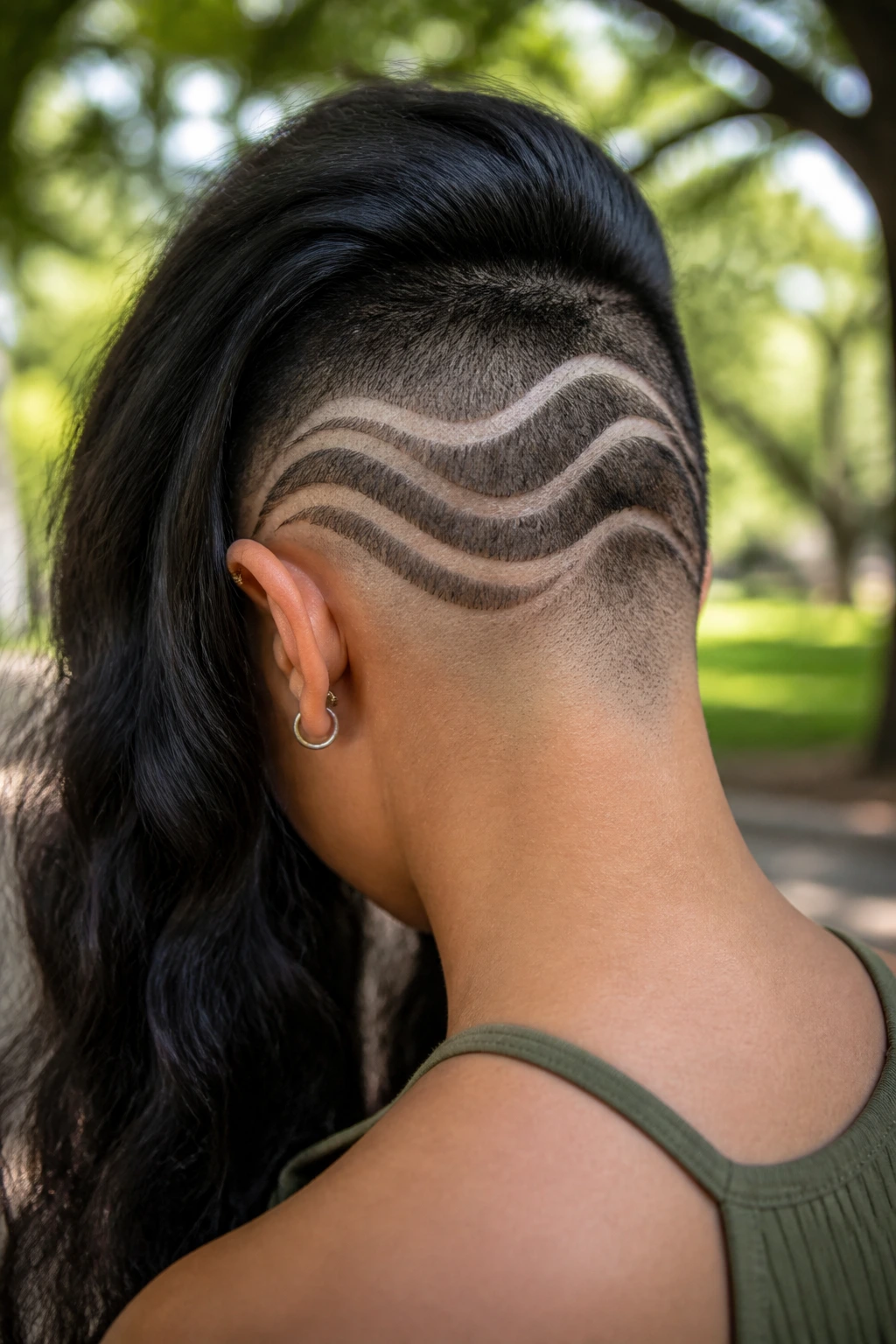
Not every design has to be straight. Wavy lines—resembling wind, water, or sound waves—offer a more organic, fluid aesthetic. They are less aggressive than straight geometric lines and feel more like an extension of your own movement.
Creating Fluid Motion
Wavy lines look best when they follow the natural curve of your skull. They shouldn’t be too dense; spacing them out allows the skin to show through, which creates a lighter, more delicate look.
Keeping the Lines Soft
Because these designs are curved, they are more forgiving as they grow out. They don’t look as “broken” as a straight line would when the hair begins to fuzz over. This makes it an ideal style for those who can’t get to a barber every two weeks.
13. The Full Crown Undercut
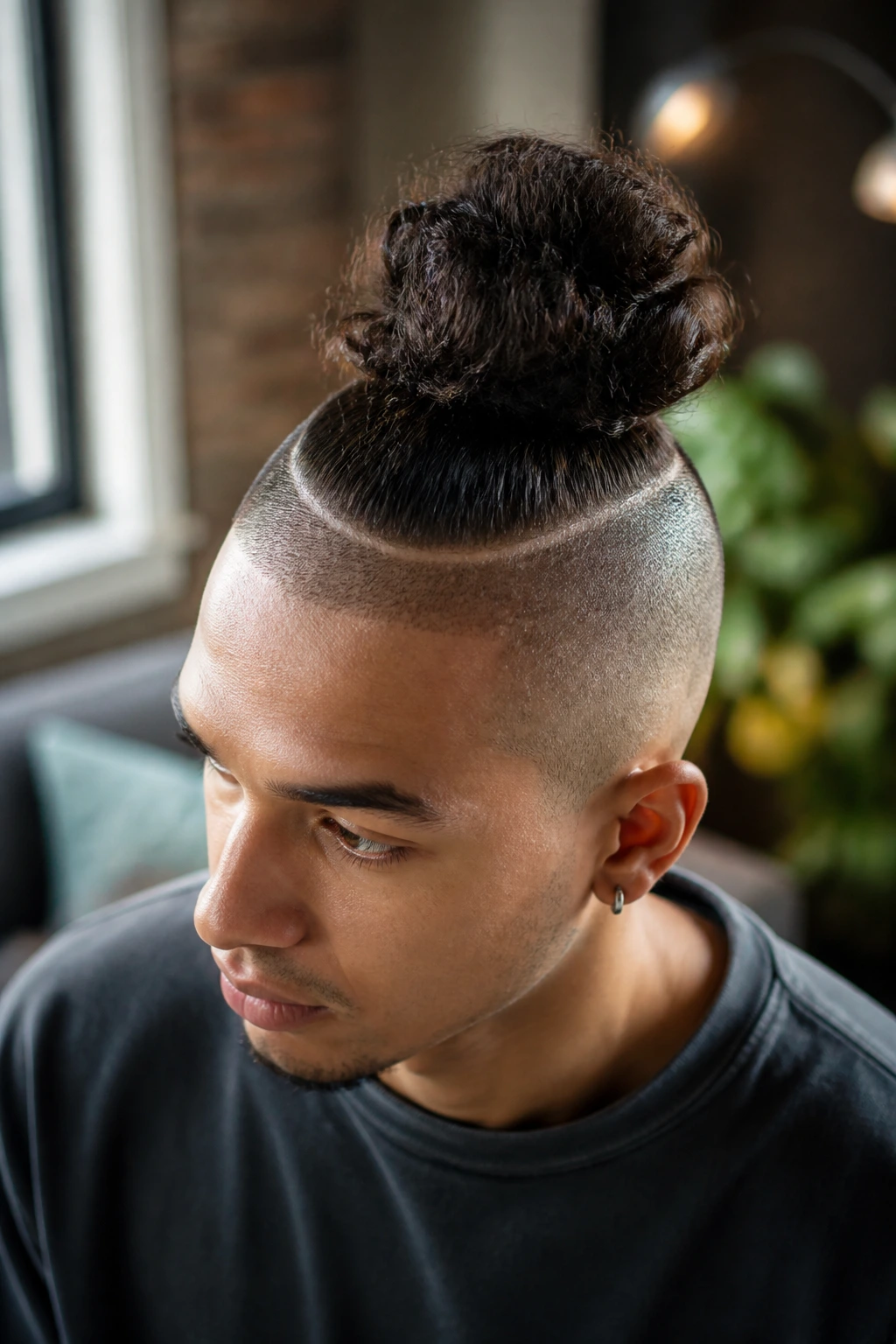
This is for the truly daring. A crown undercut involves shaving the hair in a circle around the top of the head, leaving a long “top knot” or “pony” of length in the center. It’s a very specific, high-fashion silhouette.
Managing the Proportions
The key to this style is the ratio of shaved area to the remaining length. You need to ensure that the remaining section is thick enough to look intentional, not like you’re suffering from sudden hair loss. This often works best with very thick or textured hair.
The Maintenance Factor
This style grows out very noticeably. You will need to be prepared for the “awkward phase” where the shaved crown begins to blend into the longer hair. Many people opt to keep this style for a long period because the upkeep of growing it out can be quite a process.
14. The Lightning Bolt Trim
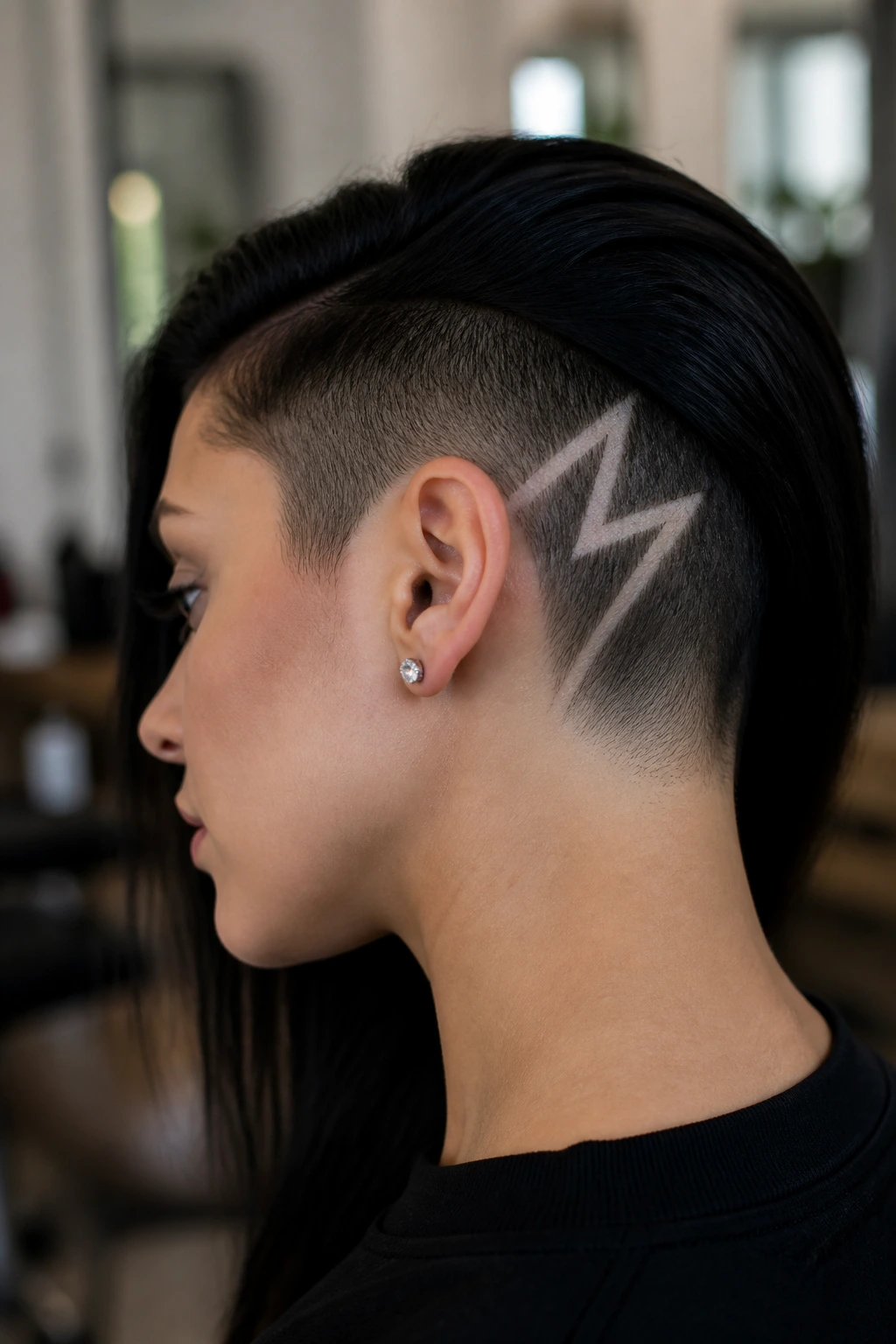
For a pop-culture-inspired look, the lightning bolt is a classic graphic shape. It’s angular, sharp, and instantly recognizable. It feels playful and youthful, making it a great choice for those who don’t want their hair to feel too serious.
Where to Place the Bolt
Placement matters. A bolt behind the ear is subtle; a bolt running from the nape up to the middle of the skull is much more aggressive. Think about how you wear your hair most often before deciding on the final location.
Tips for Sharp Edges
- Your barber should use a straight edge razor for the final clean-up to make the bolt “pop.”
- Avoid over-shaving the center of the bolt, which can cause skin irritation.
- Keep the area moisturized; a lightning bolt on a red, dry scalp is never the desired outcome.
15. The Minimalist Nape Stripe
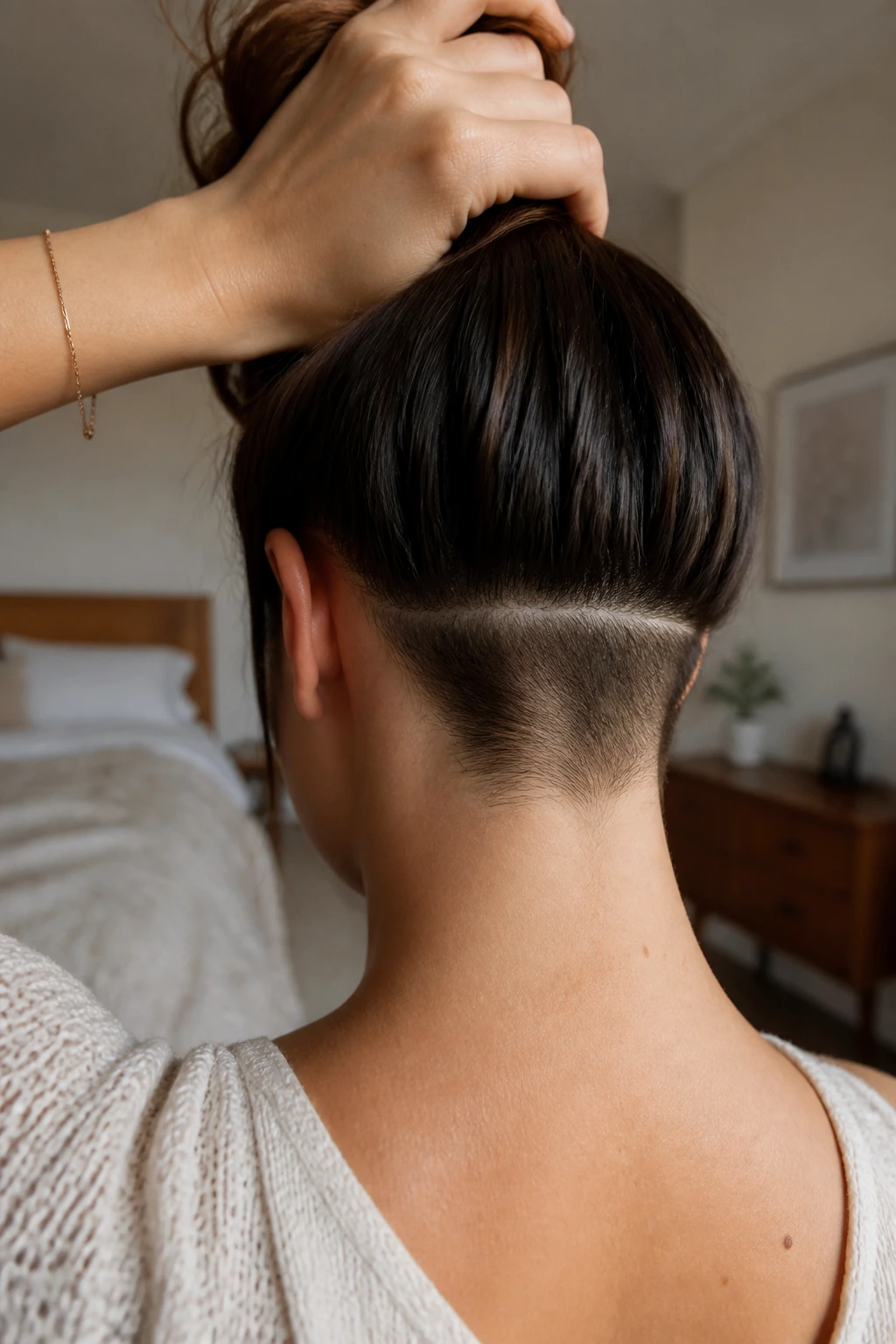
If you want to keep it simple but want a bit of personality, a single horizontal stripe at the nape is clean and sophisticated. It doesn’t scream for attention, but those who notice it will see a level of detail that feels very intentional.
Why Less is More
Minimalism is often more versatile than complex designs. You can pair a single stripe with a professional blazer or a leather jacket with equal ease. It fits into every facet of a modern lifestyle.
Styling for Focus
Wear a high, sleek ponytail to show off the stripe. It’s a clean, athletic look that highlights the line perfectly. If you ever get tired of it, it’s the easiest design to grow out because it doesn’t leave behind weirdly shaped patches of hair.
16. The Triangle Nape Cut
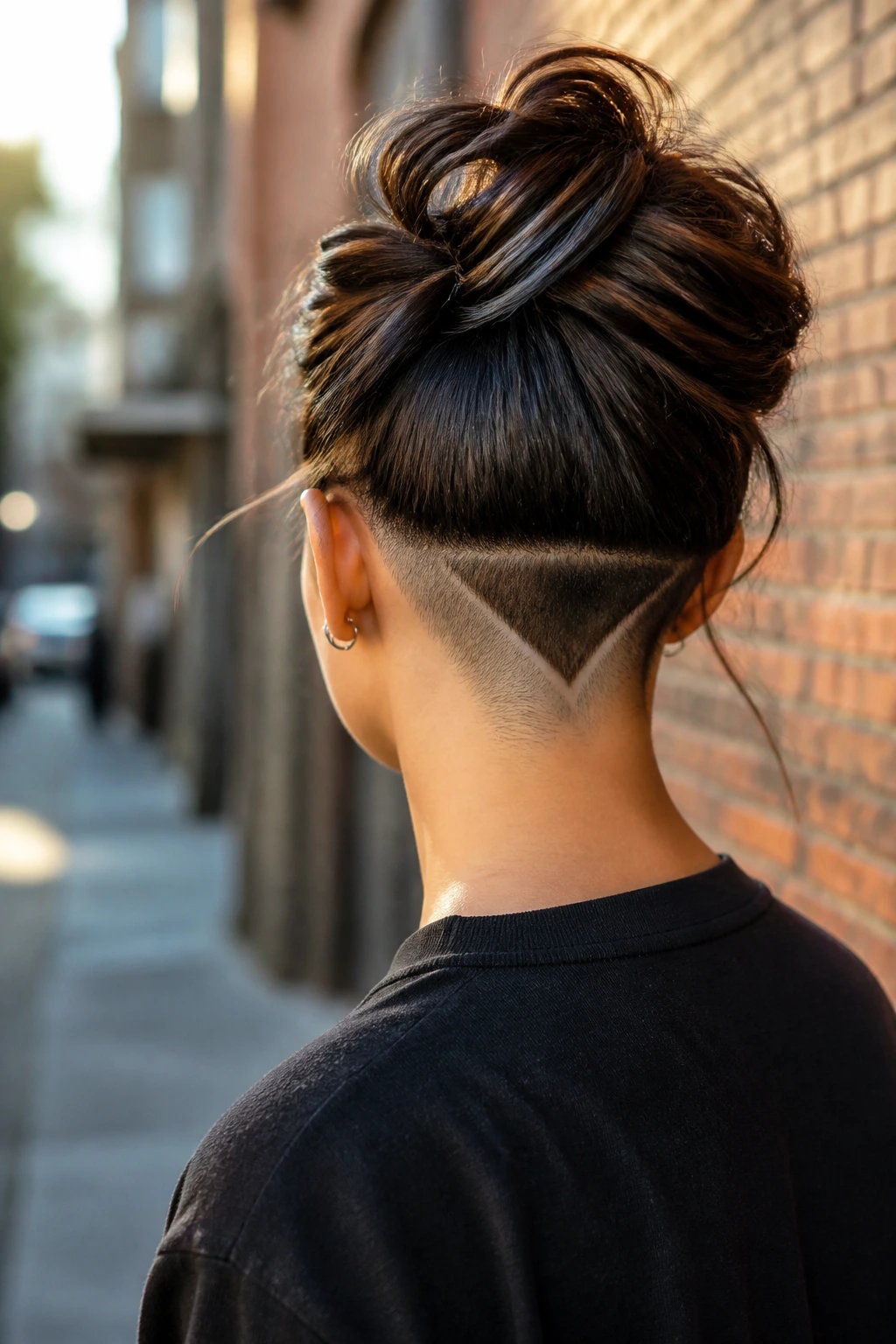
A clean, inverted triangle is an excellent way to frame the neck. It offers a sharper geometry than a circular shave but is still very easy to maintain. It creates a structural point of interest that draws the eye upward toward the main volume of your hair.
Structural Integrity
This shape is great for people with fine hair who still want the undercut experience. It doesn’t remove a massive amount of volume, so your hair won’t feel suddenly thin, but it does add a modern, geometric flair.
Keeping the Angles Sharp
- Use a stencil if you are trying to cut this yourself at home.
- A slight taper at the edges of the triangle makes it look more professional.
- Ensure the base of the triangle lines up with your natural hairline to prevent a jagged appearance.
17. The Two-Tone Shave
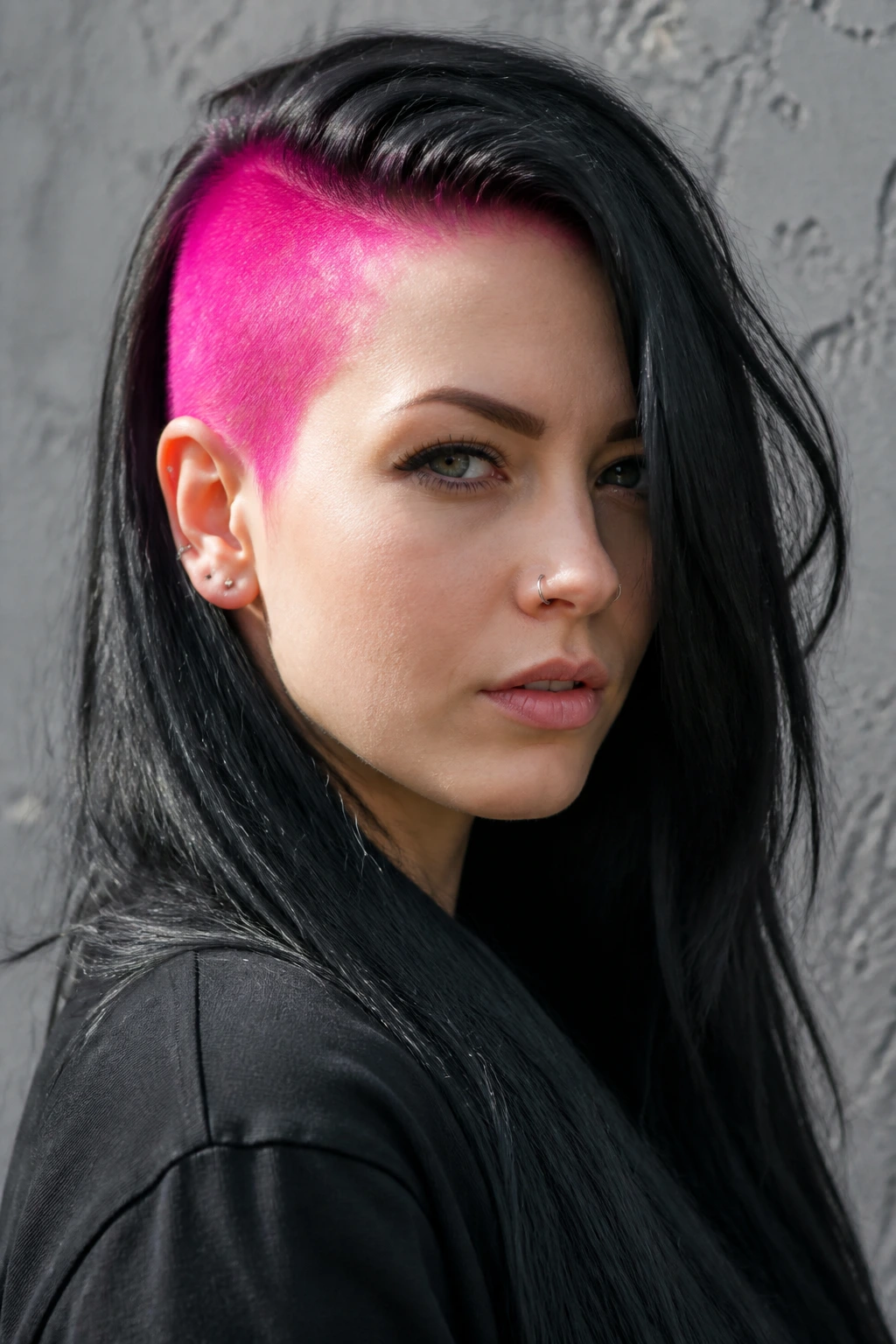
If you want to combine an undercut with a bold hair color, try dyeing the shaved hair a different color than the long hair. A neon pink undercut against jet-black long hair creates a high-contrast look that is vibrant and fun.
Color Commitment
- Be prepared for the color to fade quickly on the short, stubbly hair.
- You will need to re-touch the color frequently to keep the contrast bright.
- Semi-permanent dyes are best here, as they are gentle on the skin and allow you to switch up colors whenever the mood strikes.
Choosing Your Contrast
Black and platinum, neon green and dark brown, or fire-engine red and blonde—the combinations are endless. Just ensure that the color you choose for the undercut doesn’t stain the skin, which can sometimes happen with deeply pigmented blue or purple dyes.
18. The “Undercut Bob” Transition
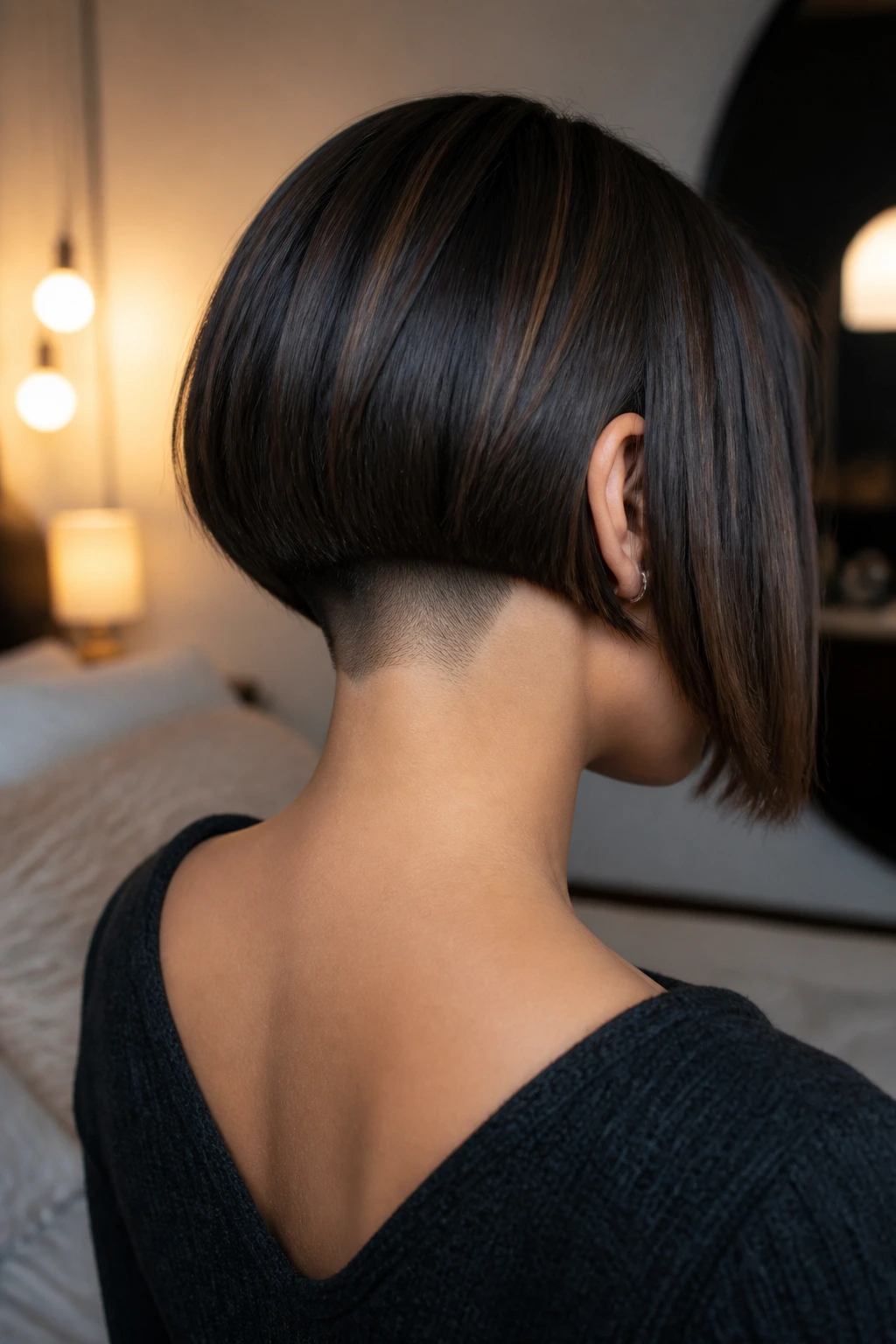
Maybe you are growing out an old undercut and want to turn it into a style. If your hair is long enough, you can keep the undercut and style the rest of your hair into a sleek, long bob (lob). The contrast between the short nape and the straight, blunt ends of a bob is incredibly modern.
Creating the Silhouette
The blunt edge of the bob should sit just above the start of the undercut. This creates a “tiered” effect that adds visual interest to the back of the head. It’s a very architectural look that feels very intentional.
Why This Style Succeeds
It solves the problem of “growing out” an undercut. Instead of hiding the awkward length, you incorporate it into a deliberate shape. It turns a temporary style into a structured, long-term haircut.
19. The Hidden Scrollwork
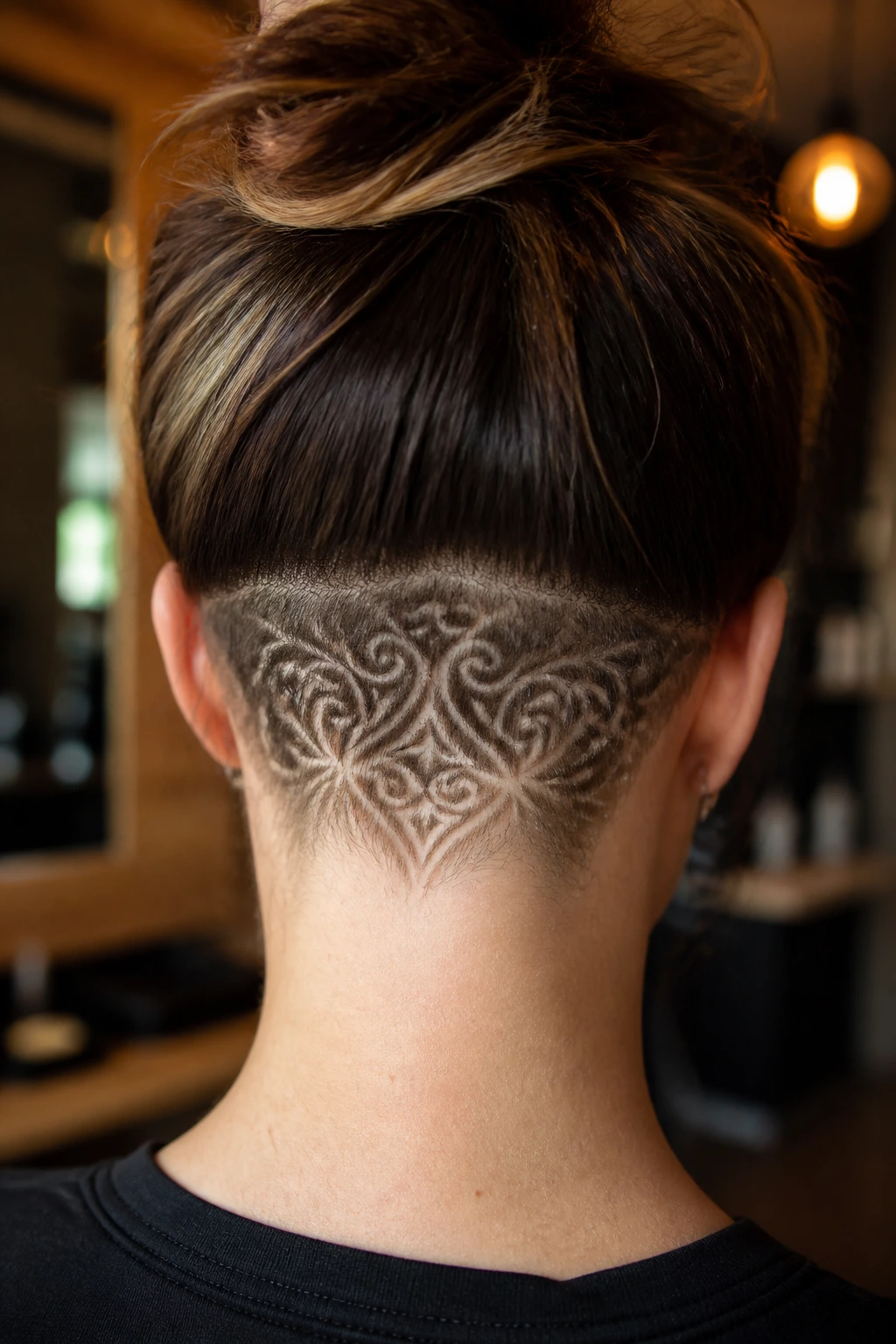
For those who want to push the boundaries of hair art, scrollwork—a series of curved, flowing lines—is the way to go. It looks like lace or vines etched into the back of your head. It’s intricate, feminine, and undeniably beautiful.
The Art of Detail
This is a task for an experienced artist, not just a standard stylist. It requires a steady hand and a fine-toothed trimmer. It’s the kind of design that looks best when kept very close to the skin—the closer the shave, the clearer the “lace” appears.
Daily Care for Artistry
This requires constant upkeep. Because the lines are so close together, as soon as the hair starts to grow back, the design will become muddy. If you choose this, commit to a bi-weekly maintenance schedule, or prepare to let it grow out into a clean-shaved nape once the novelty wears off.
20. The Braided Undercut Accent
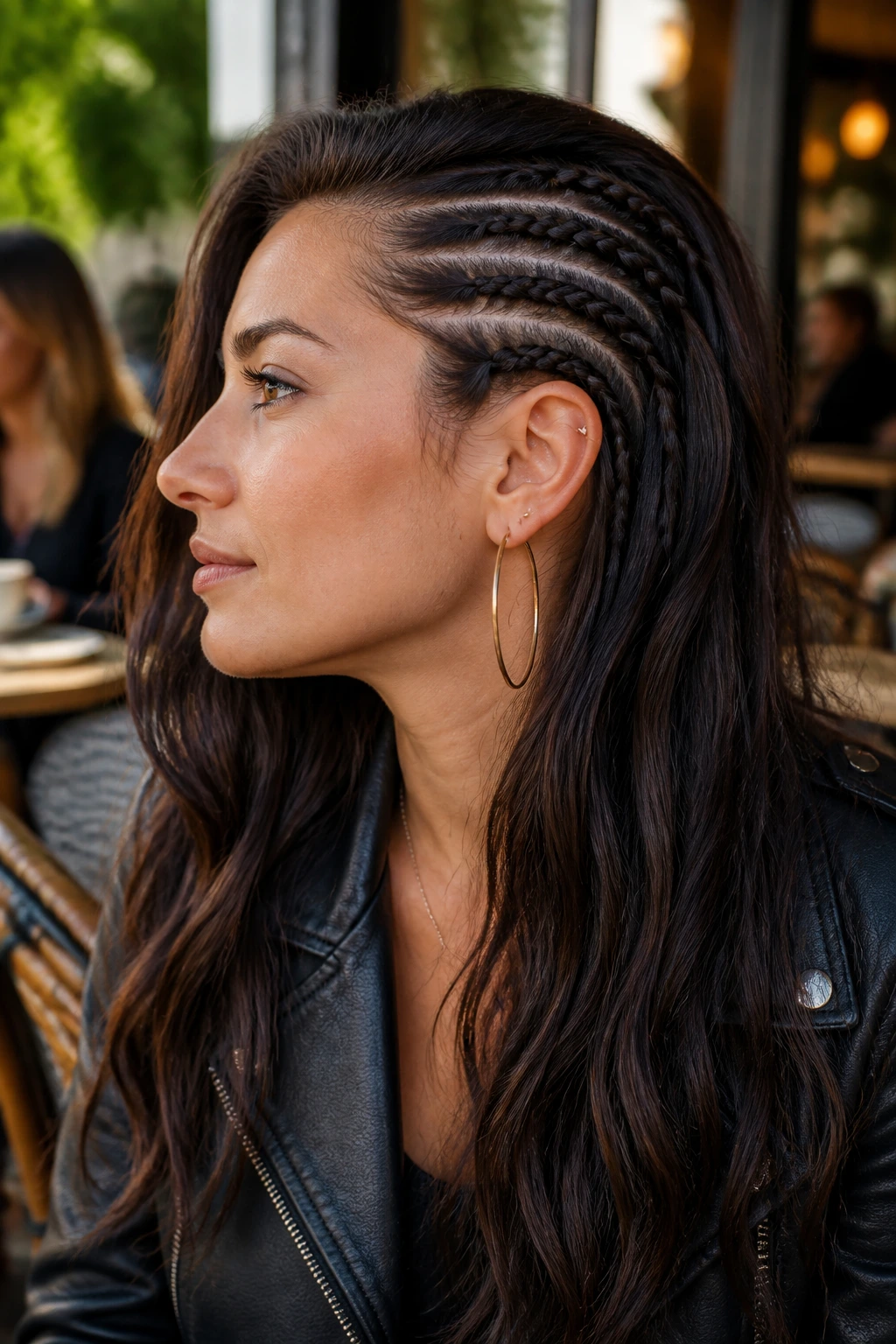
If you don’t want to commit to a permanent shave, you can fake an undercut using tight French or Dutch braids along the side of your head. It mimics the look of a temple shave while keeping your hair fully intact.
How to Achieve the Look
- Section off the hair you want to “shave” and dampen it with a strong-hold pomade or gel.
- Braid the hair tightly against the scalp.
- The tightness of the braid pushes the hair flat against the head, creating the sleek, scalp-hugging appearance of a real undercut.
The Temporary Advantage
This is the only style on this list that has zero risk. If you have a formal event or a job interview where a shaved head isn’t appropriate, you can simply take the braids out and have your full length back.
21. The Square-Off Nape
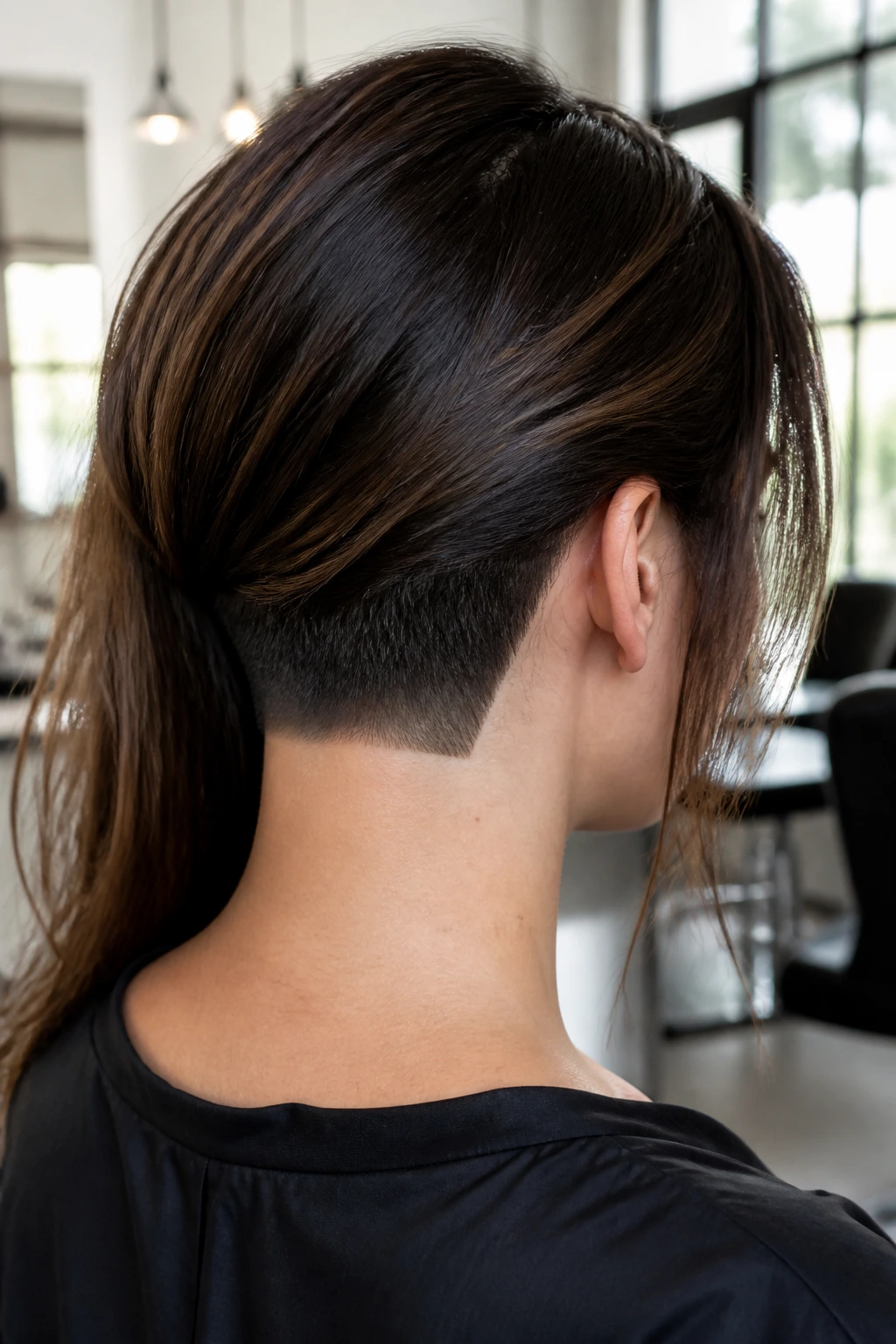
The square-off is a classic barbering technique usually reserved for short hair, but it works beautifully for long hair as well. It provides a sharp, boxy contrast to the softness of long, flowing tresses.
Why Precision Matters
The square-off is all about the angles. The corners should be clean and perpendicular to the neckline. It’s a very masculine-inspired touch that looks surprisingly elegant on a long-haired person.
Maintaining the Box
You can easily maintain this yourself. Just use a mirror and a pair of professional clippers. It is the lowest-maintenance design on the list because it doesn’t require complex patterning, just a clean line-up every two weeks.
22. The Floral Inlay
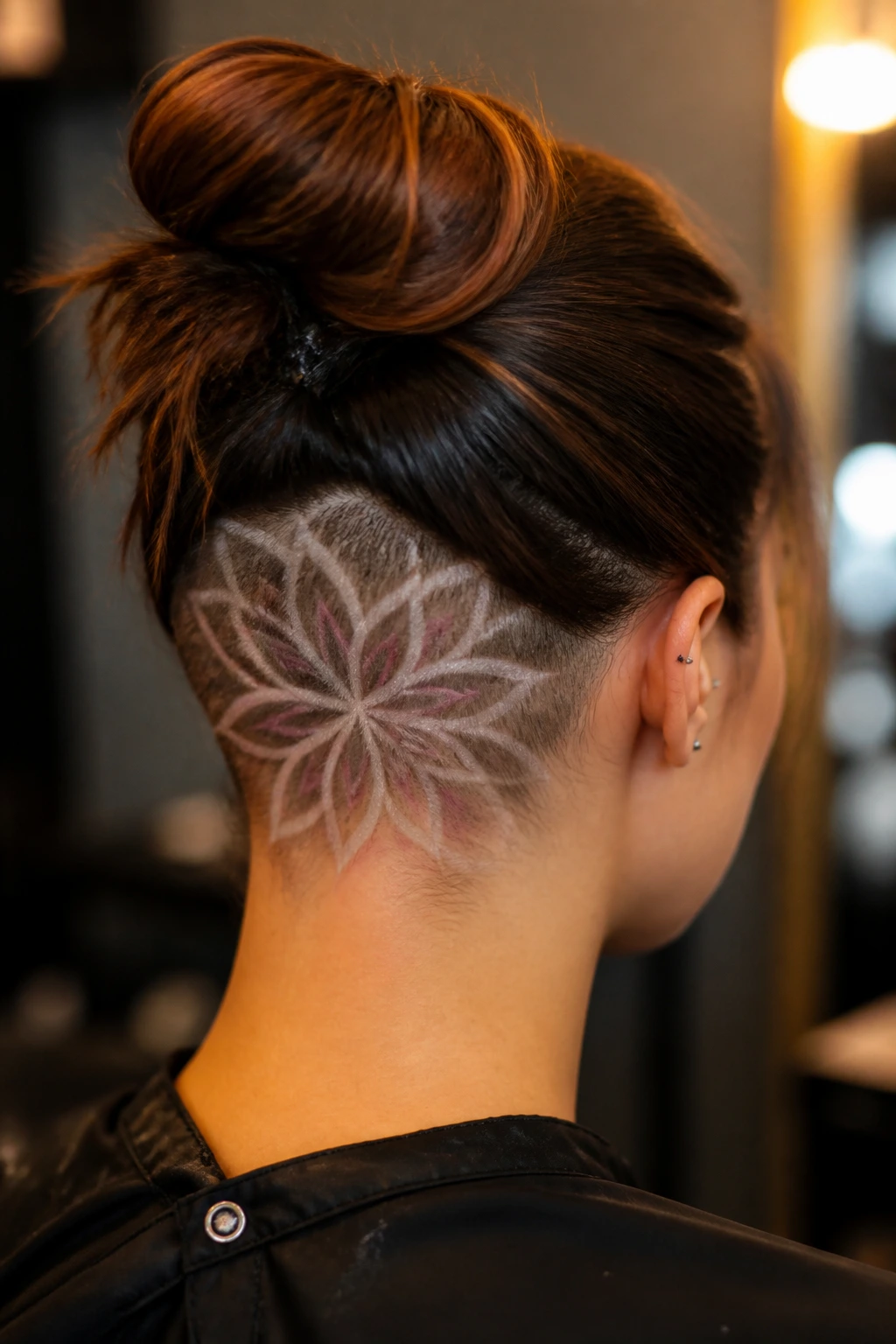
If you are very dedicated, some stylists can incorporate tiny bits of color or even shaved “petals” around a central point. It turns the back of your head into a literal garden. This is high-level artistry that is best reserved for those with a high tolerance for salon time.
The Visual Pop
When combined with a bit of hair wax to define the “petals,” the design becomes three-dimensional. It’s a stunning way to customize your undercut. It’s not for everyone, but for those who see their hair as a medium for self-expression, it’s a masterpiece.
A Note on Commitment
This is a “lifestyle” haircut. It requires being in the salon chair every 10 days without fail. If you aren’t ready for that kind of dedication, stick to the nape stripe or the simple V-shape.
Final Thoughts
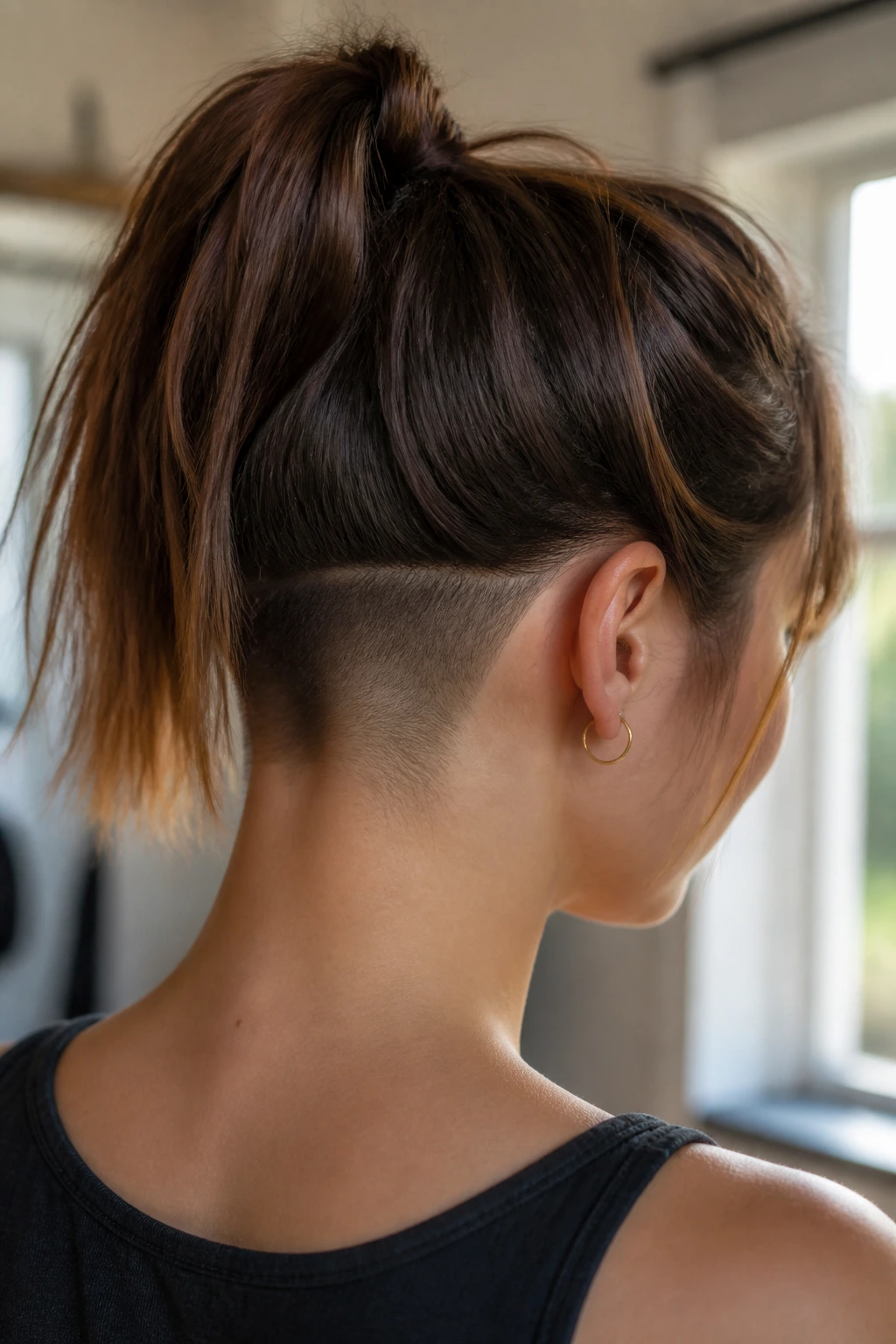
The beauty of the undercut is its hidden nature. It allows you to experiment with shapes and textures that are usually reserved for much shorter hairstyles, all while keeping the length you love. Whether you choose to go for a simple nape shave or an intricate temple design, the most important part is feeling comfortable with your choice. Start small, perhaps with a subtle nape shape, and see how it feels to have that extra airflow and lightness. If you fall in love with the look, the options for customization are truly limitless. Just remember that sharp lines require sharp maintenance; keep your trimmers ready and your scalp moisturized to keep your style looking fresh, clean, and intentional.