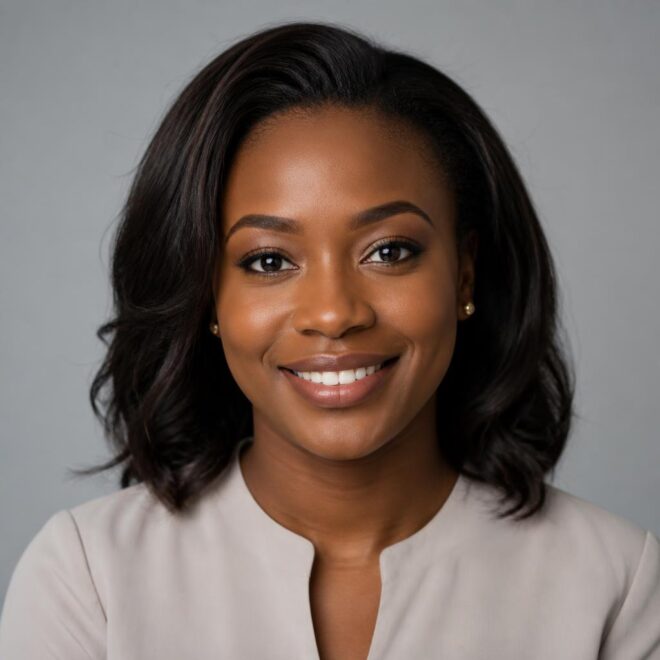


Chocolate brown hair holds a unique place in the beauty world. It’s not the edgy platinum blonde that screams for attention, nor the fire-engine red that announces your arrival. It’s subtler. Warmer. It’s the shade you choose when you want to look effortlessly polished — the kind of color that makes people think you were born with it, even if your natural base is a mousy dishwater blonde or a faded black.
What makes chocolate brown so endlessly wearable is its depth. Unlike a flat, single-tone brown, true chocolate color has dimension. It catches the light in a way that reveals hidden undertones — sometimes golden, sometimes mahogany, sometimes a whisper of copper. That’s the richness everyone chases. And getting it right isn’t just about picking a box color. It’s about layering highlights, lowlights, and glosses until the hair looks delicious. Literally.
If you’ve ever held a piece of dark chocolate up to the sun, you know it’s not just one color. There are flecks of amber, deep burgundy shadows, even hints of bronze. The best chocolate brown hair mimics that complexity. It’s a blend, not a single note. And because it’s so customizable, it can work on nearly anyone — fair skin with cool undertones, olive complexions, deep ebony skin. The trick is tweaking the balance of warm and cool pigments to suit your specific coloring.
But let’s be honest: walking into a salon and saying “I want chocolate brown hair” is like walking into a bakery and saying “I want a pastry.” Sure, they’ll give you something, but it may not be what you envisioned. That’s why having a specific idea — and maybe a photo — makes all the difference. These 23 chocolate brown hair ideas are distinct, personality-driven, and loaded with the kind of rich warmth that turns a basic brunette into something you can’t stop looking at.
1. Classic Solid Chocolate Brown
A single-process all-over chocolate brown might sound simple, but the right shade is anything but boring. This is the color you get when you tell your colorist you want a uniform, glossy brunette with no visible highlights or lowlights. The payoff is a glass-like finish that looks almost liquid under light.
Choosing the specific level is where it gets personal. A level 4 dark chocolate leans cool and dramatic, almost black in dim lighting but unmistakably brown in the sun. A level 5 milk chocolate sits right in the middle, with enough warmth to brighten your complexion without reading brassy. And if your natural base is already a medium brown, a single all-over color can amp up the richness and blend away any dullness from sun damage or old color.
Maintenance here is straightforward: root touch-ups every four to six weeks, a color-safe shampoo, and a clear gloss every couple of months to keep the shine from going flat. Ask your stylist to add a few drops of a warm gold additive into the formula if your skin has yellow or olive undertones — it prevents the color from looking muddy. For cooler skin tones, ask for an ash-free neutral chocolate that doesn’t pull red.
One unexpected perk of a solid chocolate brown? It makes hair look noticeably thicker. Without contrasting highlights breaking up the silhouette, the eye reads more density. That alone keeps this option perpetually popular.
2. Sun-Kissed Chocolate Brown Balayage
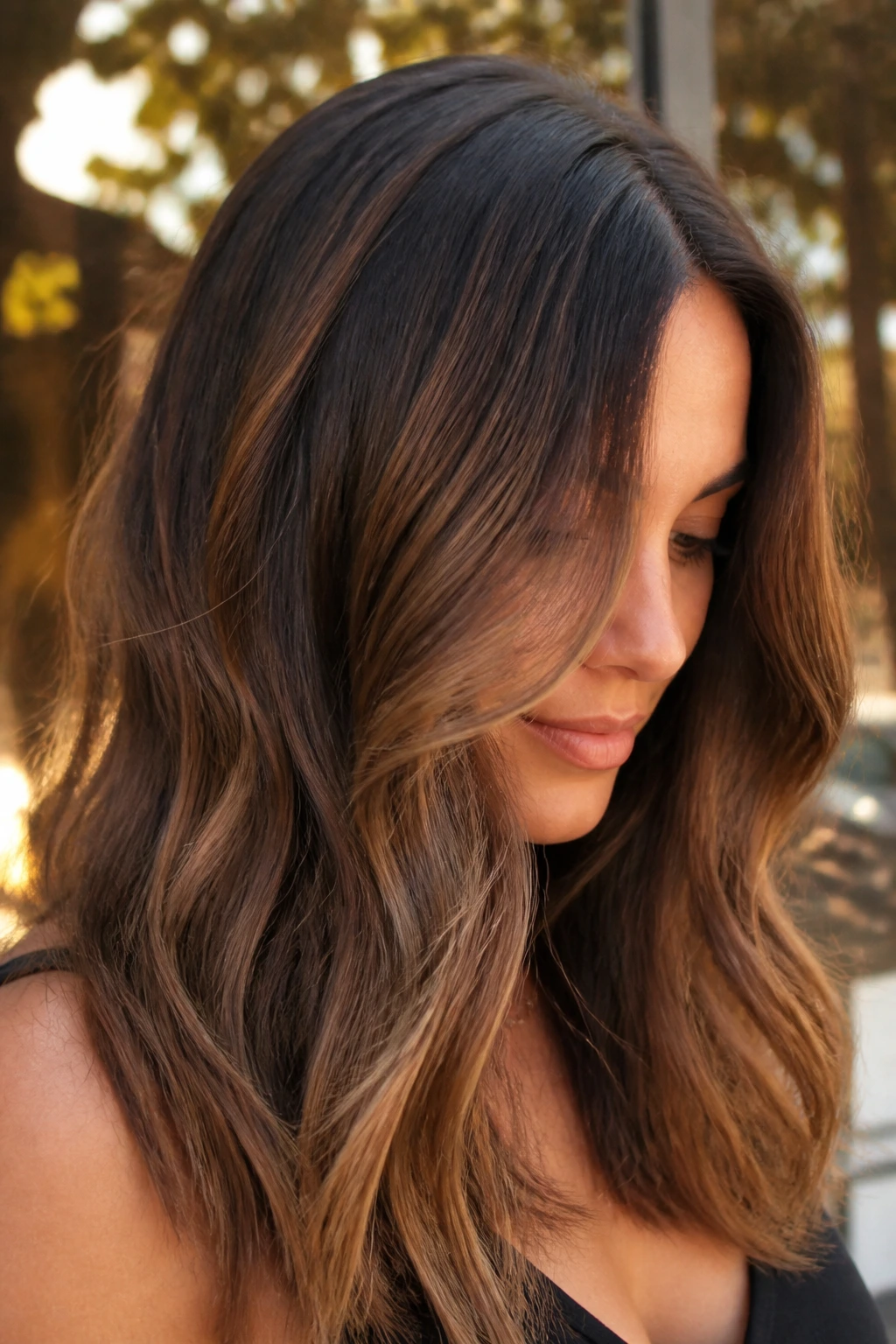
Balayage and chocolate brown are a match made in low-maintenance heaven. Instead of uniform highlights, the colorist hand-paints lighter pieces through the mid-lengths and ends, leaving the root area untouched. The result is a soft, grown-out glow that looks like you spent a summer in the Mediterranean — not a half day in a salon chair.
The real magic of chocolate balayage is how the lighter tones are chosen. You’re not just getting generic blonde streaks. A skilled colorist will weave in ribbons of caramel, honey, or soft amber that blend seamlessly into the chocolate base. The transition should be so smooth that you can’t pinpoint where one color stops and the next begins.
Because the root stays dark, regrowth is practically invisible. You can stretch appointments to three or even four months without obvious lines. This makes balayage a smart pick for anyone who wants dimension but hates the every-six-weeks touch-up grind.
One thing to watch: if your natural base is very dark, the lightened pieces may pull orange during the lifting process. A post-lightening toner in a cool or neutral beige is non-negotiable to keep the balayage reading caramel rather than brass. Book a gloss refresh at the eight-week mark to keep the whole look intentional.
3. Dark Chocolate Espresso
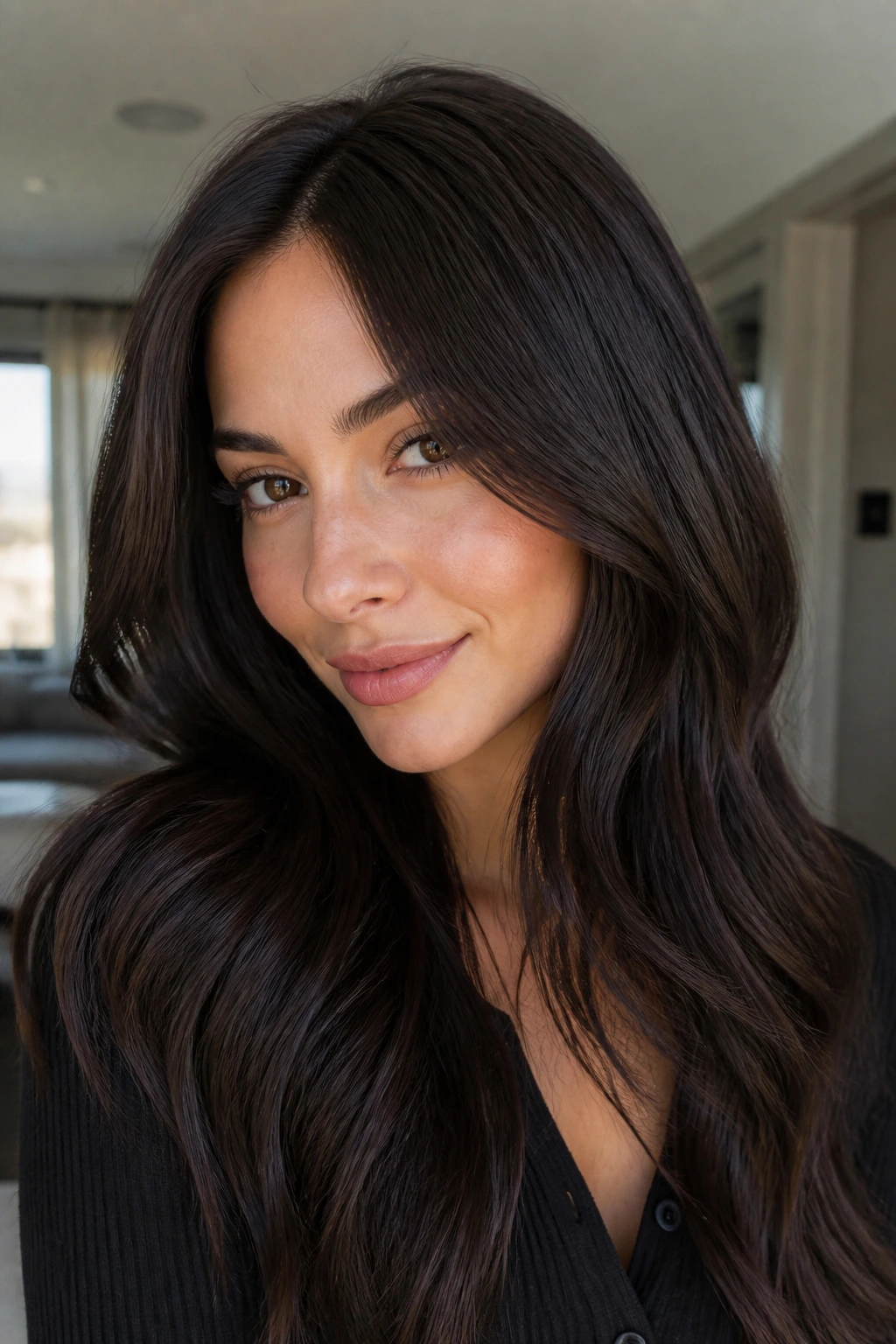
Some version of dark chocolate espresso sits at the deepest end of the brown spectrum. It’s a shade that reads almost black indoors, but under direct light, it reveals a rich, cool-toned brown with subtle depth. Think of a freshly brewed espresso shot held up to a window — that’s the color.
This shade works especially well on people with naturally dark hair who want to add polish without changing their base level dramatically. It’s also a smart route for anyone who’s spent years bleaching and wants a low-maintenance way to restore the health of their hair. Dark chocolate espresso covers old highlights seamlessly and gives a reset that looks intentional, not corrective.
Your skin’s undertones matter here more than you’d think. On olive or neutral skin, this color reads sophisticated and sharp. On very fair skin with pink undertones, it can sometimes feel too heavy — but adding the faintest hint of mahogany to the formula balances that out beautifully.
For upkeep, a blue-based shampoo is your best friend. Dark brown hair has a tendency to throw off orange tones as it fades, and a blue-tinted shampoo neutralizes those without depositing any purple that could muddy the espresso color. Also, a gloss treatment every six weeks keeps the dimension from going flat and murky.
4. Milk Chocolate with Caramel Money Pieces
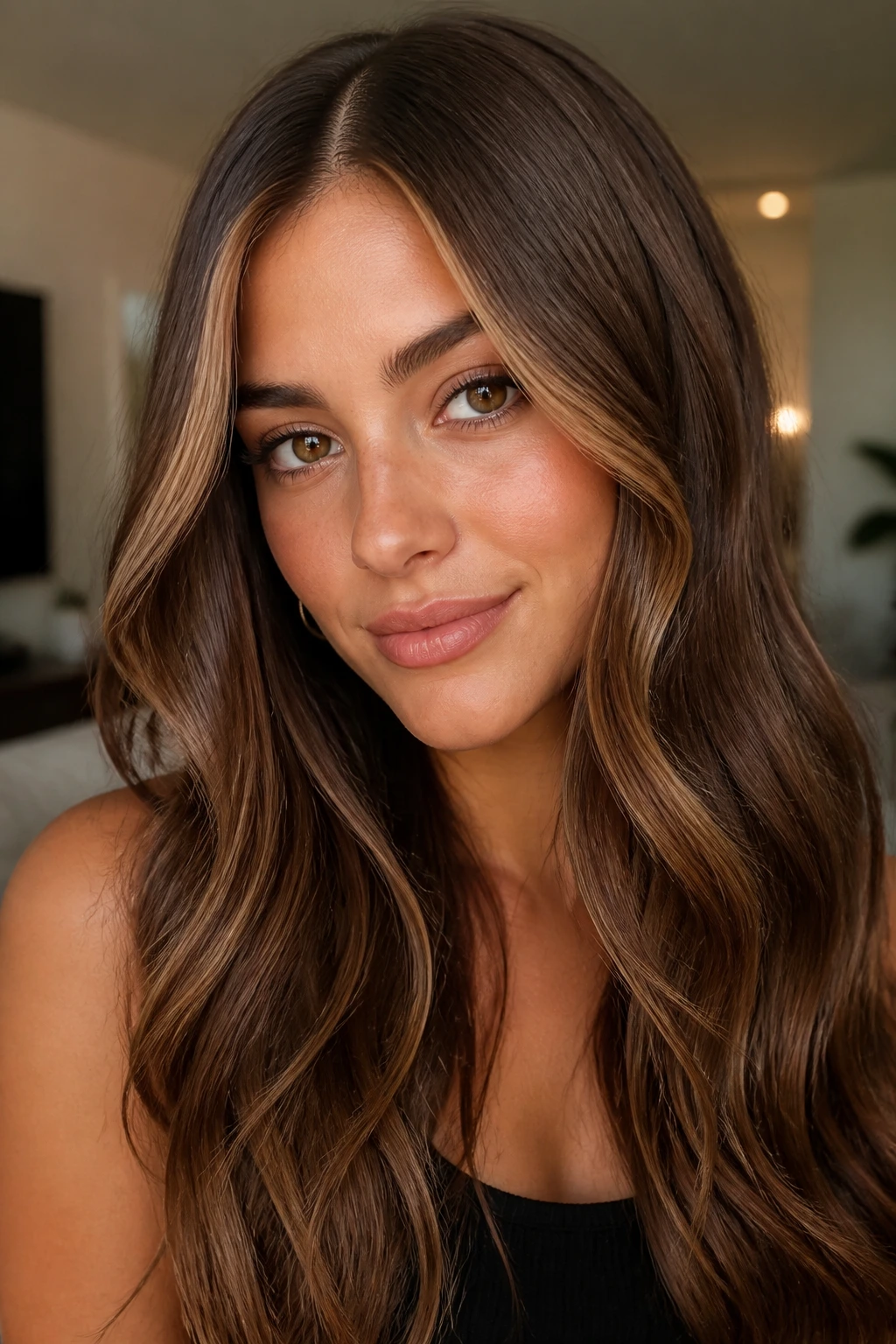
Money pieces — those face-framing strands of lighter color near the front — are one of the most effective ways to brighten your whole face without a full highlight service. When the base is a creamy milk chocolate brown and the money pieces are a soft caramel, the contrast is warm, wearable, and surprisingly natural.
The key to making this work is restraint. The front pieces should be painted no more than an inch or two deep from the hairline, and they should be blended into the darker base rather than sitting as a stark stripe. When done correctly, the caramel catches light right around your cheekbones and eyes, essentially acting as a built-in contour.
Ask your colorist to hand-paint the money pieces freehand rather than using foils. Foils can create a harder line, while balayage-style painting gives you a softer, more diffused regrowth. The caramel shade should sit about two levels lighter than your milk chocolate base — anything brighter veers into blonde territory and loses the butteriness that makes this combo so rich.
A purple shampoo once a week prevents the caramel from veering yellow. And if you heat-style daily, a leave-in thermal protectant is non-negotiable; those face-framing pieces take the most abuse from curling irons and round brushes.
5. Rich Chocolate Ombré
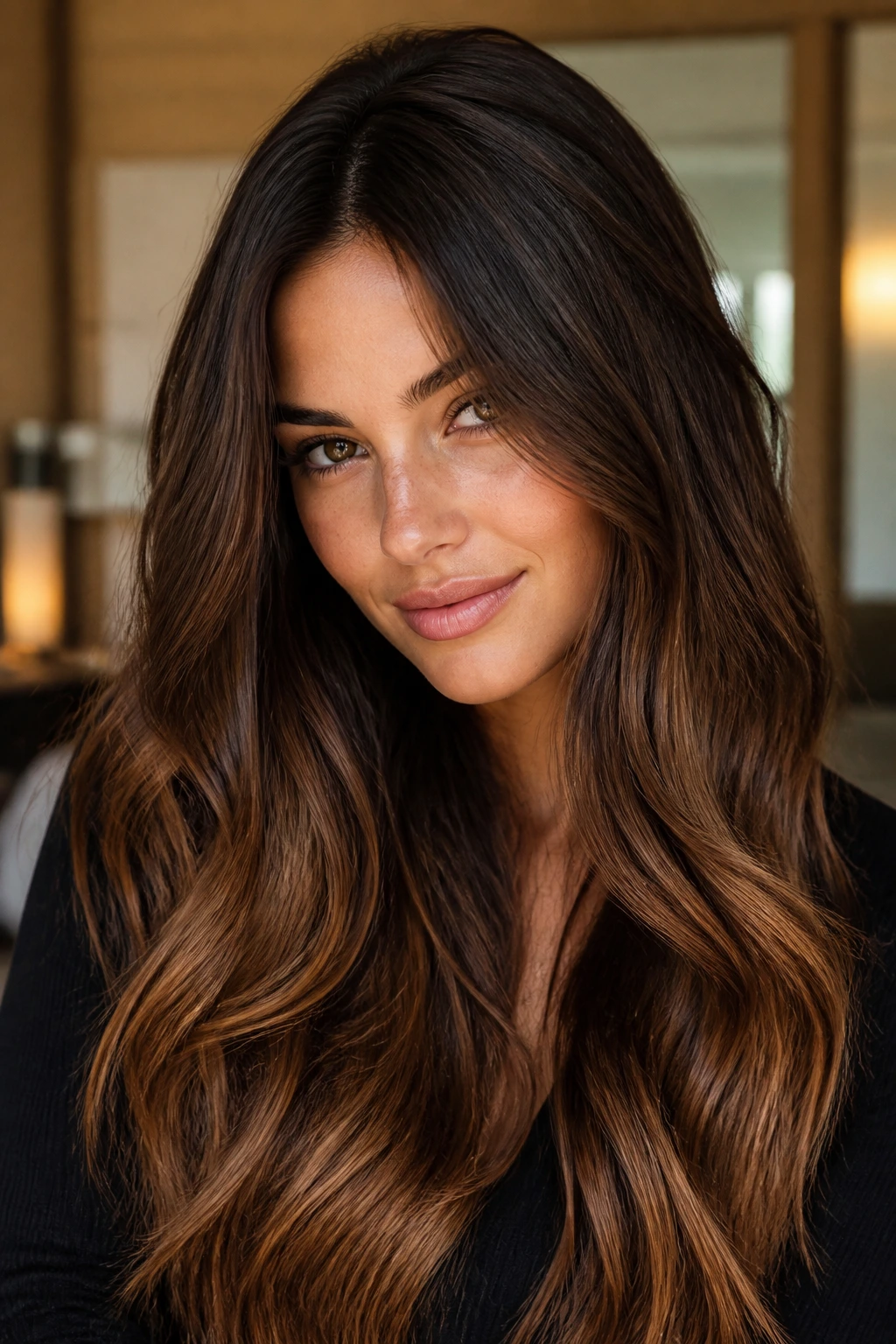
Ombré had its peak moment years ago, but a modern chocolate ombré is a far cry from the harsh, dip-dyed look that saturated Instagram. Today’s version is all about a slow, smoldering gradient — dark chocolate roots that deepen into a lighter, warmer milk chocolate or caramel at the ends.
The trick to keeping a chocolate ombré from looking dated is to avoid a clear line of demarcation. Ask for a “rooted ombré” or a “color melt” where the transition begins around eye level and gradually lightens over the next several inches. The ends should be the lightest, but they should never look bleached — they should look like the color was gently washed out over time by the sun.
This style particularly flatters long hair with layers or soft waves, where the lighter ends can dance around the shoulders. On shorter cuts, ombré can work if the transition is compressed into a smaller space, but the effect is always more dramatic on length.
Maintenance is easier than a full highlight because the roots are deliberately dark. Every three to four months, you can go in for a toner refresh on the ends — they’ll gradually lose their warmth and turn brassy, so a glaze brings them back to that buttery, light chocolate state.
6. Golden Chocolate Brown
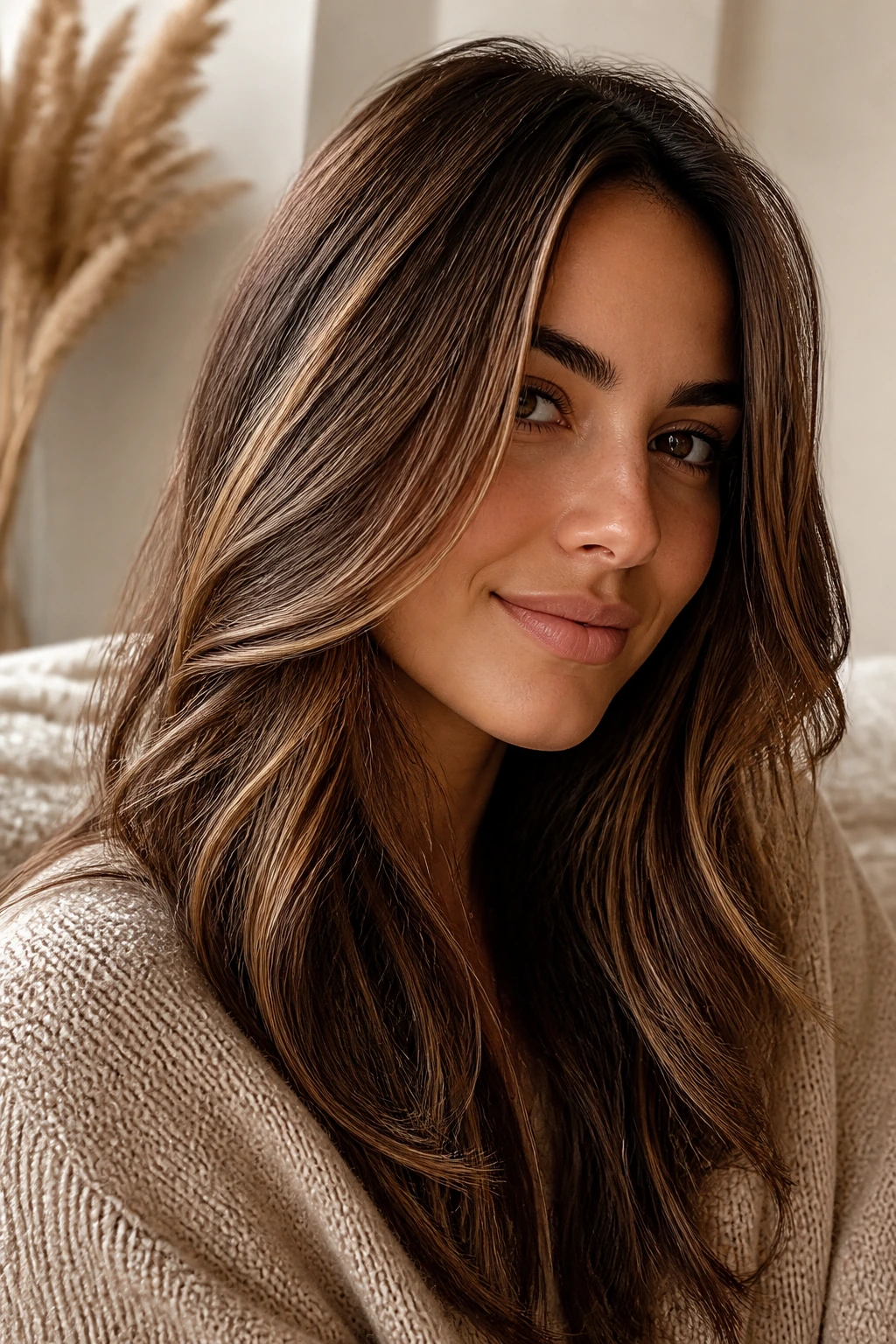
Some chocolate brown shades lean red, some lean ash, and then there’s the golden version — the one that looks like it has actual flecks of gold leaf stirred into it. Golden chocolate brown works by combining a neutral brown base with fine, champagne-gold babylights that catch the light and give the whole head a lit-from-within warmth.
It’s a particularly good choice for people with warm or neutral skin undertones, because the gold notes pick up the natural warmth in your complexion rather than fighting it. If your skin has prominent yellow or peach undertones, a golden chocolate brown will harmonize rather beautifully.
The colorist will typically start with a level 5 or 6 base, then weave in ultra-fine babylights in a shade like “honey beige” or “warm gold.” The babylights are too thin to read as individual streaks — instead, they create an overall effect that your hair is just brighter and softer than you remember.
To keep golden tones from dulling, swap your regular conditioner for a color-depositing golden brown mask once a week. And skip the blue shampoo — it can neutralize the very warmth you’re paying for. Instead, use a sulfate-free wash and rinse with cool water to seal the cuticle and lock in the golden glow.
7. Chocolate Cherry Mahogany
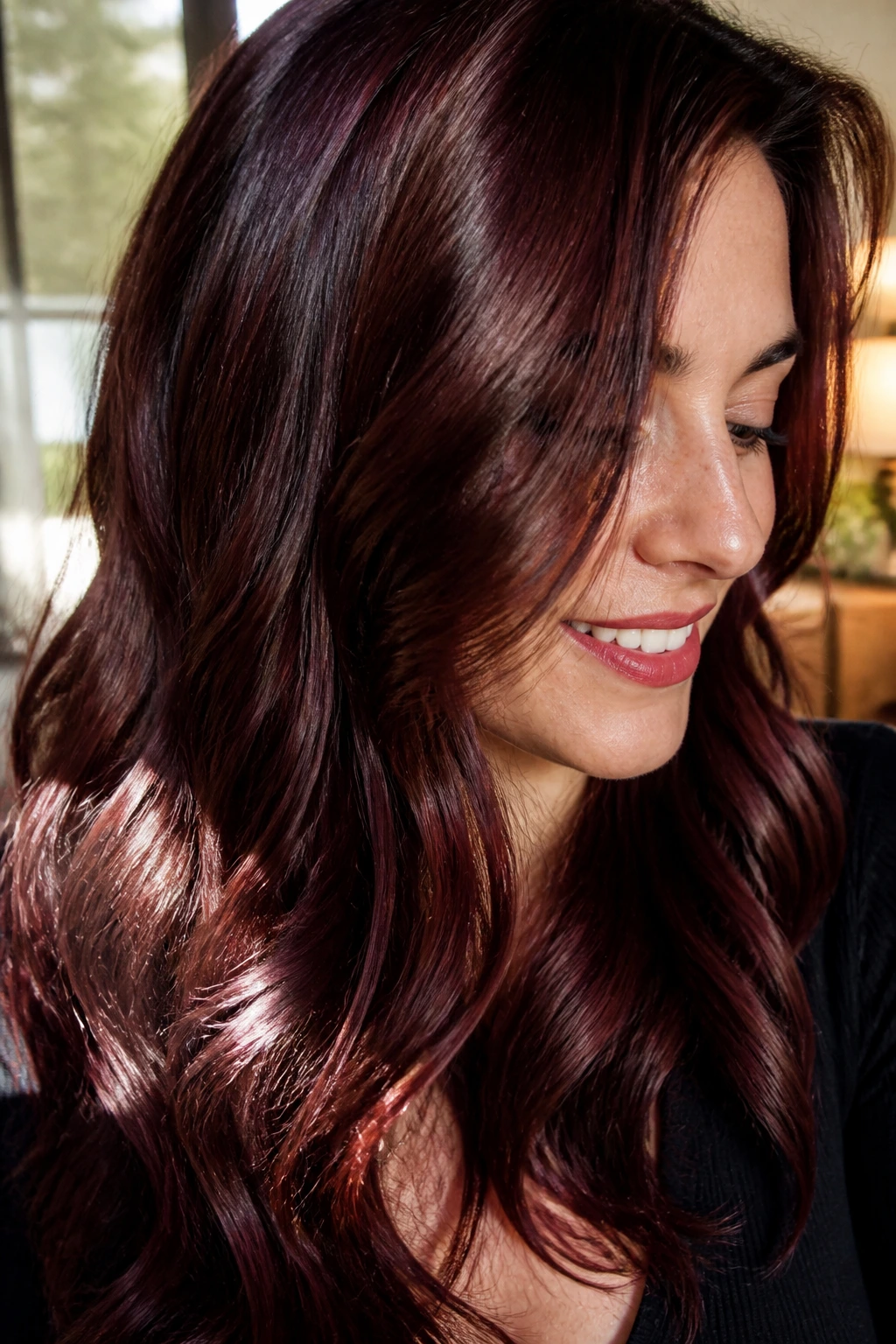
There’s a category of chocolate brown that flirts with red without fully committing. Chocolate cherry mahogany sits right in that sweet spot — it’s a deep brown with a burgundy undercurrent that peeks through in sunlight and under warm interior lighting. The effect is moody, romantic, and surprisingly versatile.
Getting the balance right is delicate. Too much red and you’re in auburn territory. Too little and it just looks like a flat dark brown. A stylist will typically mix a level 4 or 5 brown with a red-violet concentrate, adjusting the ratio based on your natural color and how much punch you want.
This shade absolutely glows on people with cool skin tones. The violet-red undertones counter any sallowness and make the skin look brighter and more even. But it can also work on warmer skin if the red leans more toward copper than blue-red.
A heads-up: red molecules are larger and slip out of the hair shaft faster than brown ones. That means chocolate cherry fades faster than a straight brown and can turn a dull auburn after a few washes. Color-depositing conditioners with a mahogany tint are essentially mandatory to keep the cherry alive between appointments. And limit hot water washes — it’s the fastest way to send that red pigment straight down the drain.
8. Chocolate Brown with Honey Babylights
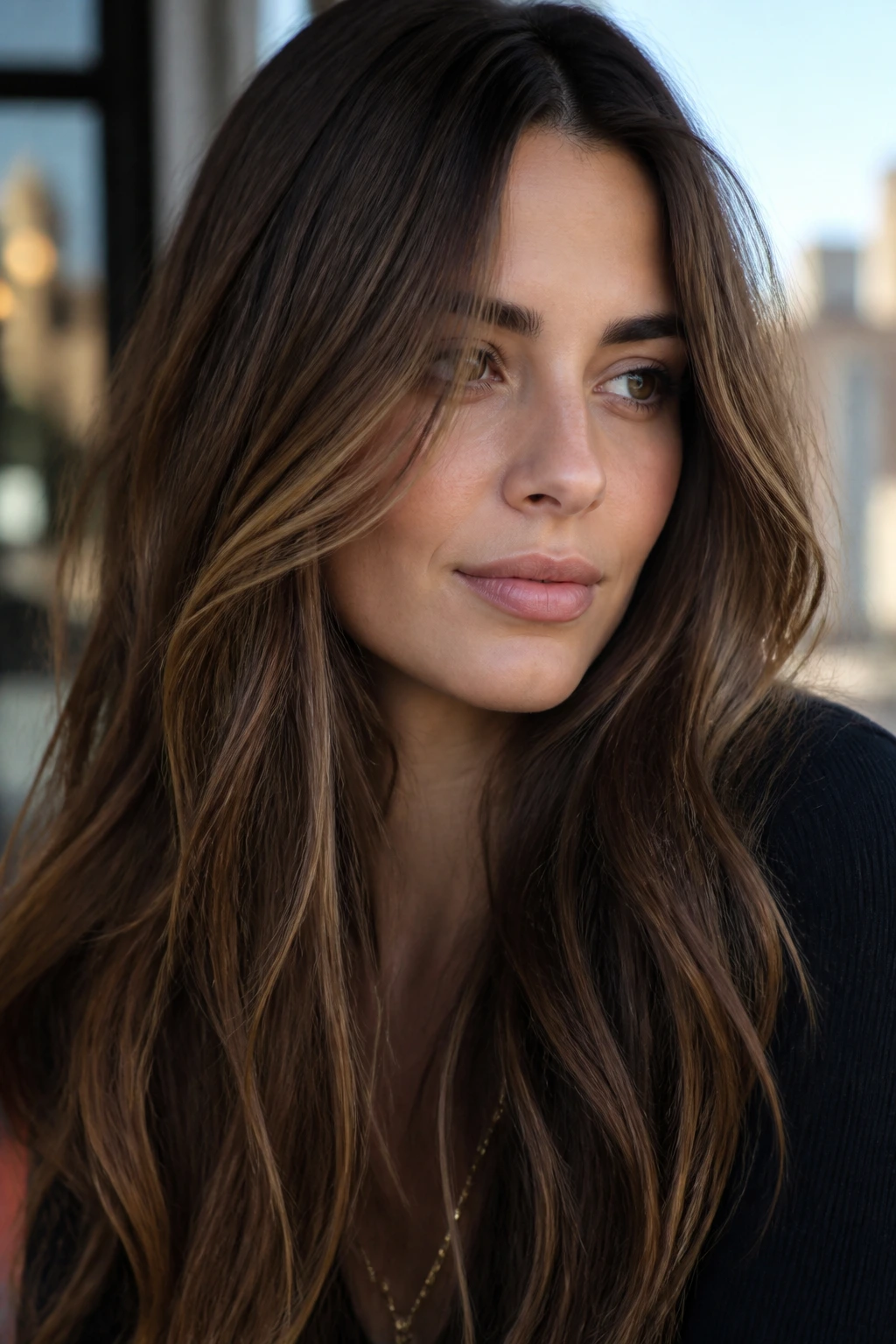
Babylights are not highlights. They’re the next level of subtle — strands so fine they mimic the natural, sun-bleached variations you’d see on a child’s hair. When painted onto a chocolate brown base, honey babylights add a gentle, all-over warmth without any visible contrast between light and dark.
This is the technique for someone who wants their hair to look simply “lighter” without looking “highlighted.” Because the strands are micro-fine, they blend into the chocolate base so thoroughly that you can’t tell where one ends and the other begins.
The honey tone is key. It should be a golden, amber blonde — not platinum, not ash. That warmth harmonizes with the chocolate base and prevents the overall color from looking flat or ashy. Your colorist will likely use a combination of foil and open-air painting to place the babylights evenly from root to tip on the top layer, while leaving the underneath section darker to create depth.
The grow-out is effortless because there are no harsh lines. You can go months without a touch-up, and when you do sit back in the chair, you can ask to shift the honey slightly warmer or cooler depending on the season. Ask for a “babylight and tone” service rather than a full highlight to maintain the sublety.
9. Chocolate Brown with Cinnamon Spice Highlights
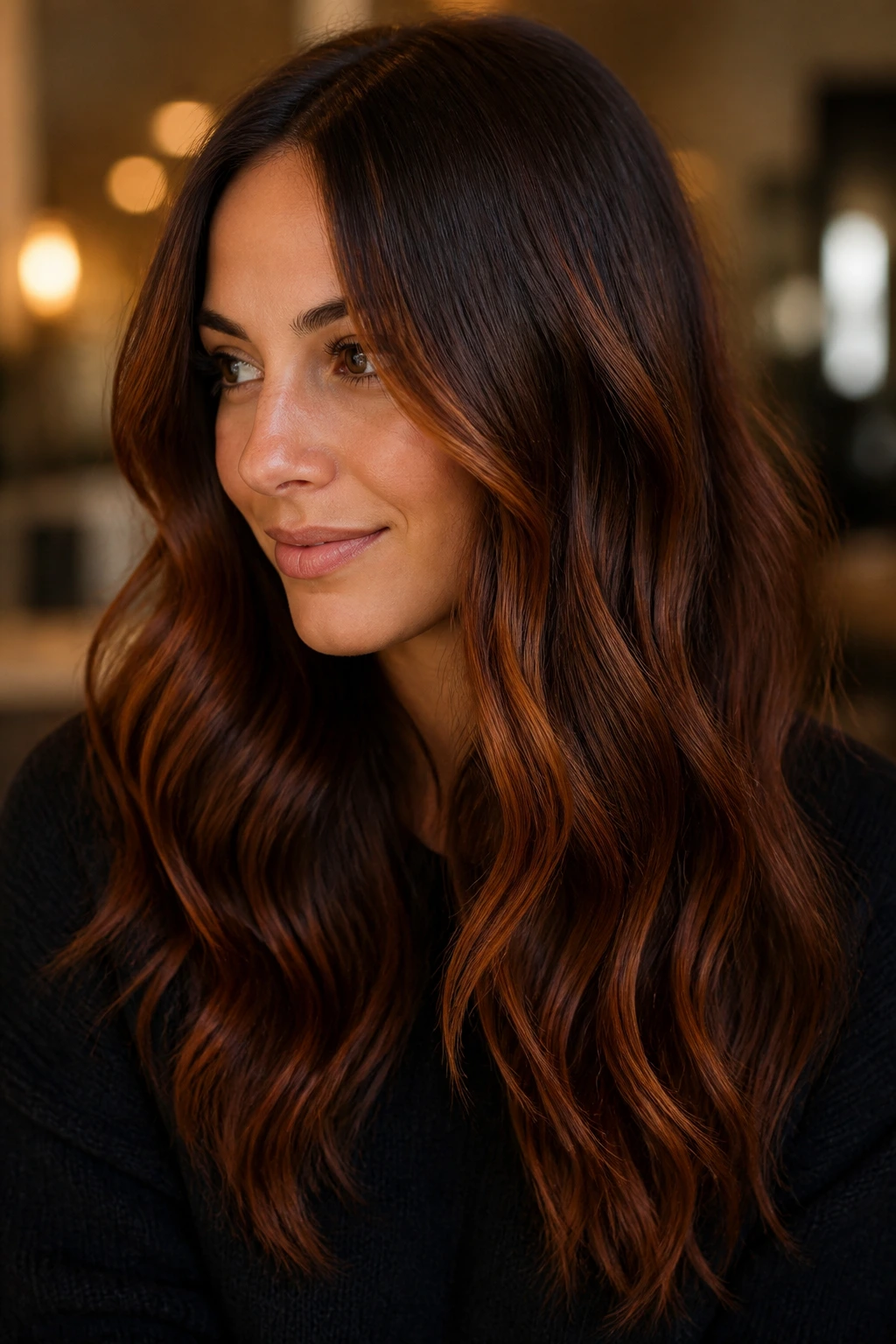
If golden honey feels too predictable and cherry mahogany feels too red, cinnamon spice might be your perfect middle ground. These highlights have a warm, coppery-cinnamon tone — slightly red, slightly brown, entirely cozy. Against a chocolate brown base, they add a flicker of heat that’s especially striking in the fall and winter months.
The highlights should be concentrated through the mid-lengths and ends, with just a few pieces around the face to tie the look together. Because cinnamon is a fairly intense pigment, you don’t need a lot of it to make an impact. Even five or six painted sections in the crown area can transform the whole look.
Red-adjacent colors fade notoriously fast, and cinnamon is no exception. You’ll notice the brightness softens within the first two weeks, settling into a more muted coppery brown. That’s actually a plus if you prefer a lived-in look. If you want to preserve the initial pop, use a sulfate-free shampoo, wash in lukewarm water, and apply a copper color-depositing mask every two weeks.
One thing: cinnamon highlights can bring out any redness in your skin, for better or worse. If you have rosacea or easily flushed cheeks, test a small strand first or lean toward a more neutral-toned chocolate variation instead.
10. Chocolate Brown with Auburn Ribbons
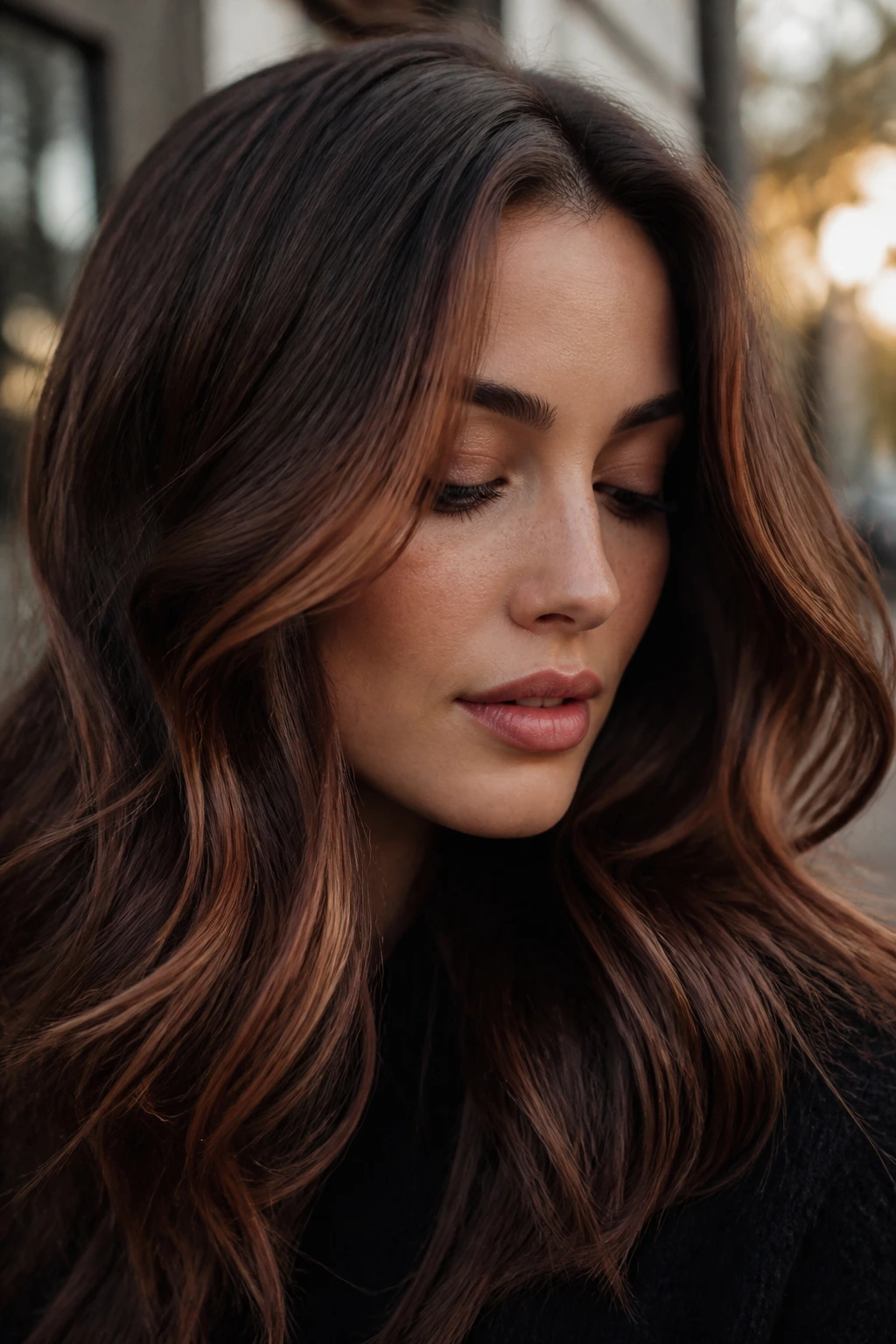
Auburn ribbons woven through chocolate brown hair create a multi-dimensional effect that reads as richer and more complex than either color alone. A true auburn has equal parts red and brown — it’s not orangey copper, and it’s not burgundy. It’s a deep, earthy red-brown that looks almost lit from within.
The “ribbon” placement is deliberate. Unlike babylights, which are scattered everywhere, auburn ribbons are painted in thicker, more visible sections — typically on the surface layer and around the face. The contrast is meant to be seen, especially when the hair moves or is styled in waves. When the light hits, the auburn glints through the chocolate like embers.
This pairing works exceptionally well on people with green or hazel eyes, because the red undertones make those eye colors pop. It’s also a softer introduction to red hair for anyone who’s been exclusively brunette for years.
One important note: auburn fades toward a brassy orange faster than most browns. To slow the fade, avoid clarifying shampoos, heavily chlorinated pools, and excessive heat styling. A demi-permanent gloss in auburn every six weeks will keep the ribbons from turning strawberry blonde over time.
11. Dimensional Chocolate With Lowlights
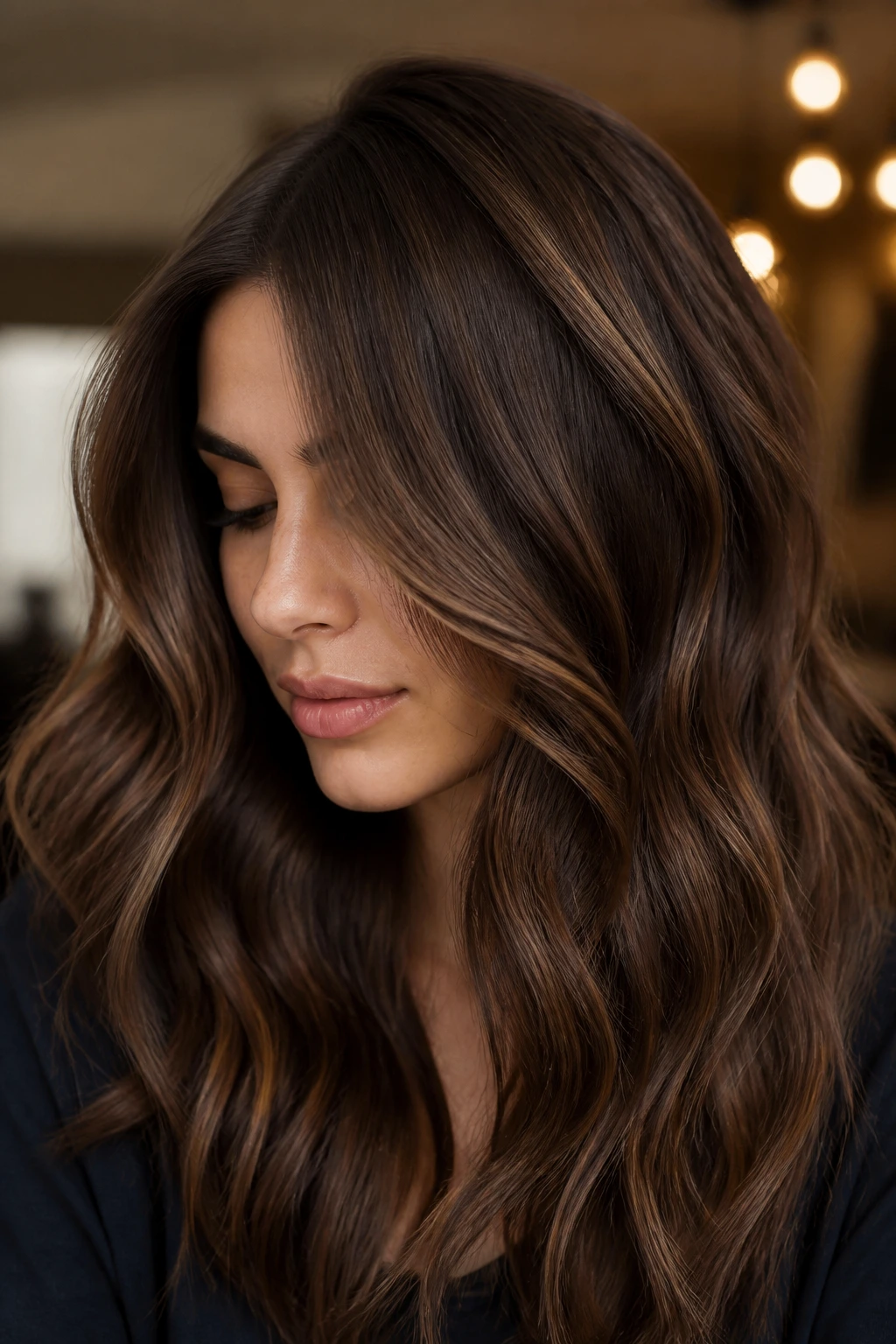
Highlights get all the attention, but lowlights are what give hair that expensive, layered look. A dimensional chocolate brown with lowlights means the colorist takes thin sections of hair and colors them one to two shades darker than the base, then weaves in a few lighter pieces for contrast. The overall effect is a deeply textured, multi-tonal brunette that never looks flat.
Lowlights are especially helpful if you’ve over-highlighted in the past and lost some depth, or if your natural color has lightened from sun exposure at the ends. They essentially rebuild the shadow and structure that makes hair look thick and healthy.
The key is keeping the lowlights soft. They shouldn’t be so dark that they look like stripes. A cool dark brown or espresso is typically used, because cool tones recede visually and create depth, while the lighter warm tones advance and catch the eye.
Because lowlights are darker, they fade less obviously than highlights, so maintenance is minimal. You might only need them refreshed every four months. And if you’re already getting a balayage, ask your stylist to drop in a few lowlights at the same appointment — it takes an extra 15 minutes but transforms the finished result.
12. Chocolate Brown on Curly Hair
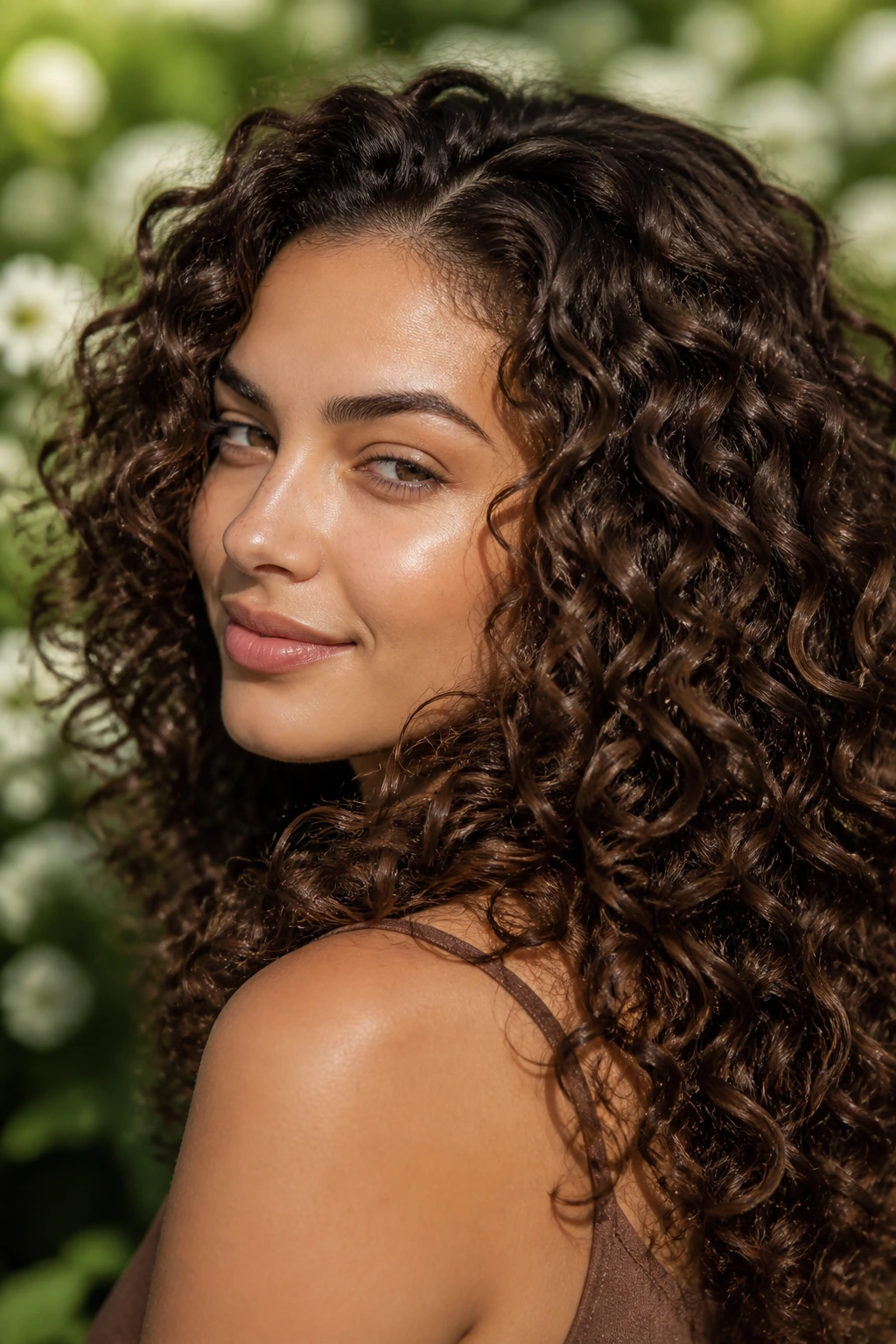
Curly hair changes the way chocolate brown color behaves. The bends, coils, and spirals of curl patterns catch light on multiple planes, making any dimensional color look more dynamic. A solid chocolate brown on curls can look almost like a different shade depending on how the curls are styled — tighter curls concentrate the color and make it appear deeper, while looser waves allow the light to dance across the surface and reveal hidden warmth.
For curly-haired clients, placement needs to be adjusted. Traditional foil highlights can create a uniform pattern that looks unnatural on curls. Instead, a skilled colorist will use a technique called “pintura” or curly-specific balayage, painting color onto individual curl clumps in a way that follows the natural pattern. This avoids the dreaded “zebra stripe” effect where the light pieces all land in unnatural rows.
If you’re adding highlights to curly chocolate brown hair, ask for a blended root so there’s no harsh regrowth. Curls hide regrowth better, but a soft root shadow ensures the grow-out phase is invisible for months.
Color care for curly hair also means extra moisture. The lightening process can loosen curl patterns temporarily, so deep conditioning treatments are non-negotiable. A weekly mask with shea butter and protein keeps curls bouncy and the chocolate tone rich.
13. Chocolate Brown with Bronze Babylights
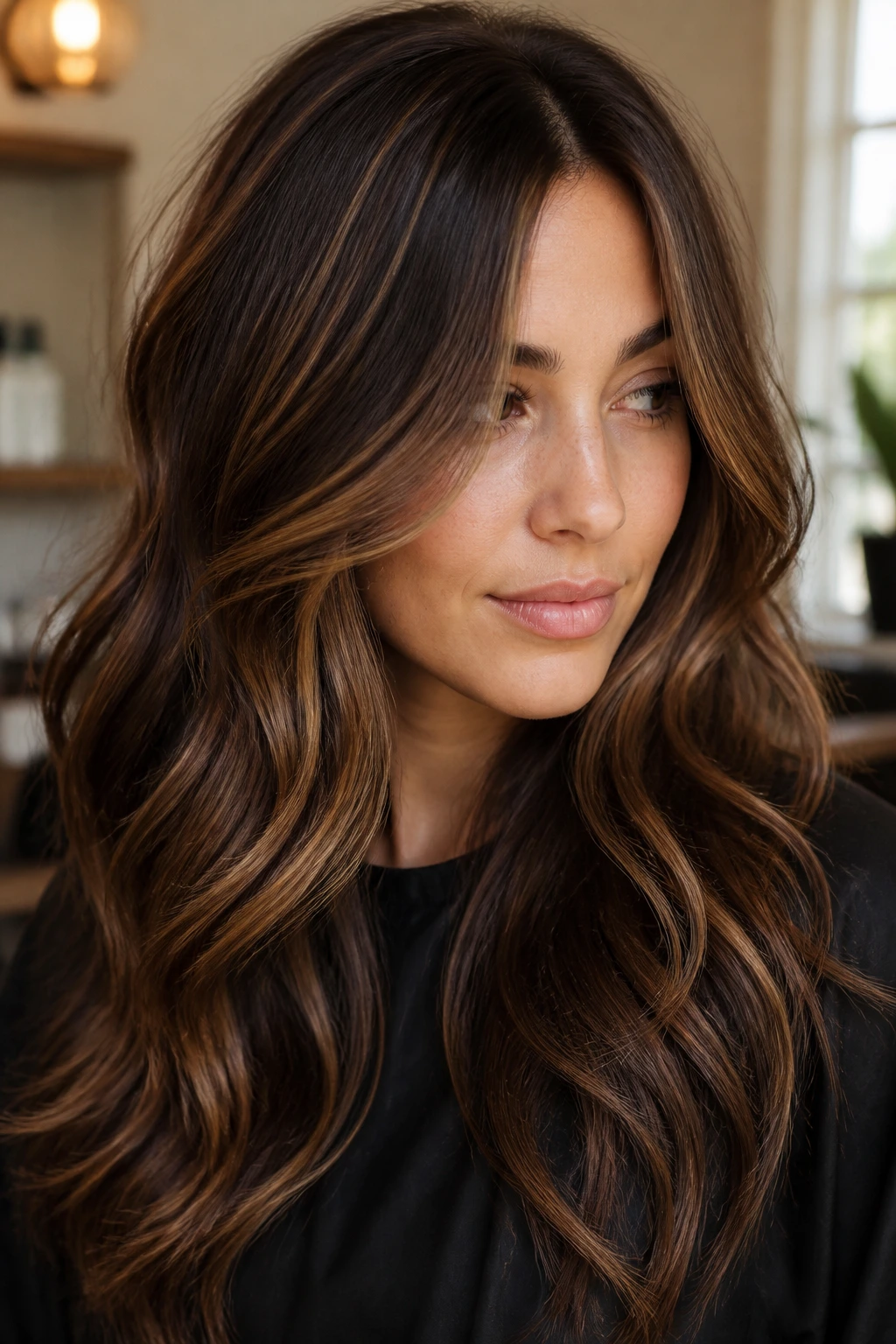
Bronze is one of the most under-used accent colors in brunette hair — and it’s a crime. Bronze babylights are a touch warmer than honey, a touch softer than copper, and they blend into chocolate brown like they were always meant to be there. The shade sits somewhere between gold, amber, and light copper, and it has a metallic reflectiveness that makes hair look almost illuminated.
Because bronze is a mid-tone shade, it works well on natural bases from level 4 to 6. On a dark chocolate base, the bronze babylights add a noticeable but not stark lift. On a milk chocolate base, they create a monochromatic warm blend that reads as one seamless color from a distance.
The babylight technique keeps the strands whisper-thin, so the overall color effect is a soft radiance rather than visible stripes. You can ask for a mix of bronze and slightly lighter gold babylights for even more dimension — the two tones together mimic the way the sun naturally brightens different sections of hair.
To maintain bronze’s warmth without tipping into brass, use a sulfate-free shampoo with color-protecting ingredients and avoid heavy oils that can oxidize the color prematurely. A gloss refresh at eight weeks is enough to keep the bronze glinting.
14. Chocolate Brown Root Smudge
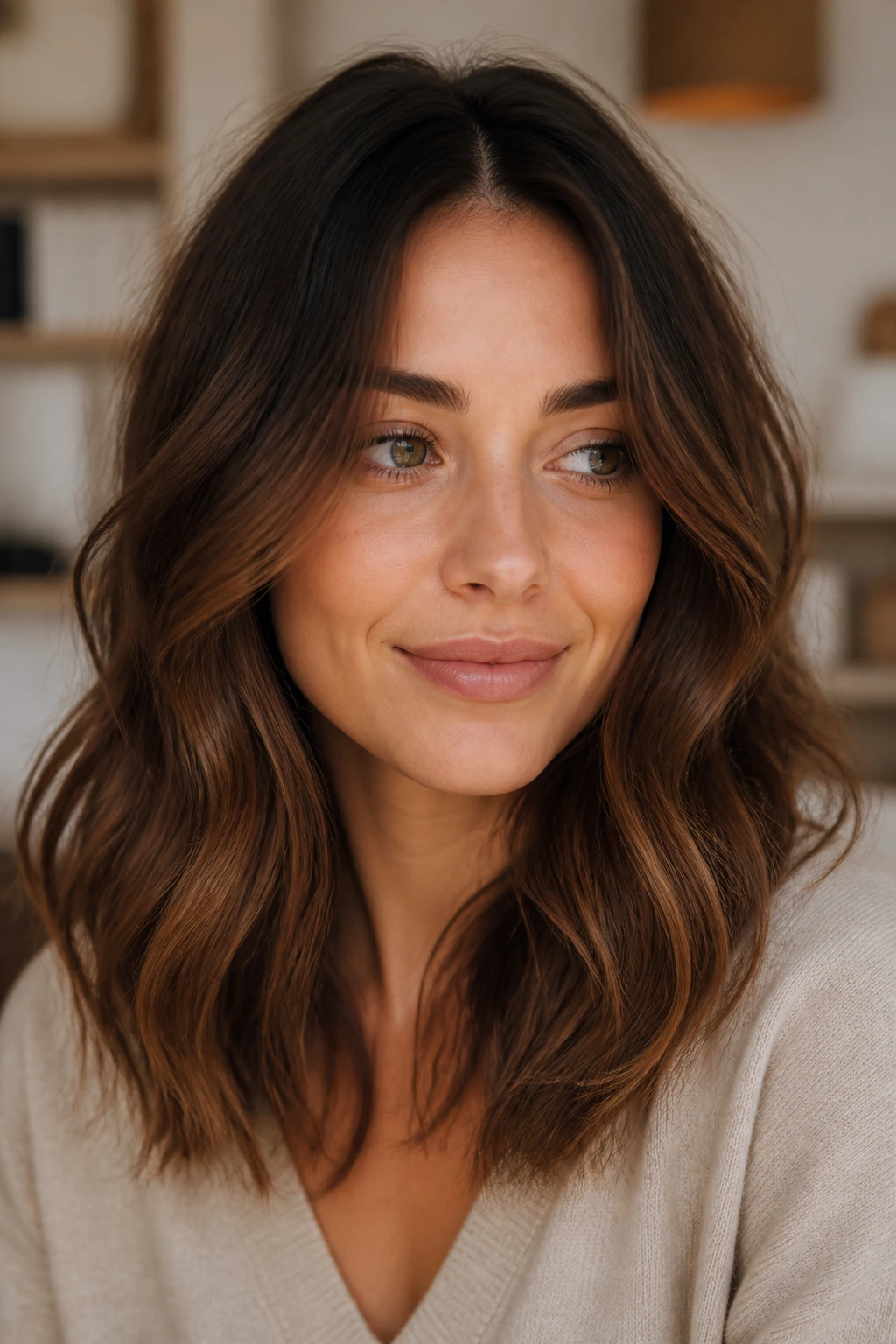
Root smudge, also called a root shadow, is the secret handshake of low-maintenance brunettes. Instead of painting color right up to the scalp, your colorist applies a darker shade at the root and then blends it downward, creating a soft, lived-in transition. For chocolate brown hair, this is often paired with lighter ends or highlights to create the illusion of a slow, natural grow-out.
The beauty of a root smudge is that it deliberately blurs the line where your color starts and your natural hair begins. If your natural base is a level 3 or 4, a smudge means you can go months between appointments without anyone noticing roots. The line — if there even is one — is part of the design.
A chocolate brown root smudge works especially well with balayage or ombré. The darker root grounds the look and prevents the lighter ends from washing you out, while the smudge technique softens the transition so there’s no band of color. It also adds depth at the crown, which is flattering for almost every face shape because it draws the eye up.
Ask for a demi-permanent root smudge rather than permanent color. Demi fades more gracefully and doesn’t leave a stark line as it grows out. And you only need to refresh it every 8 to 12 weeks.
15. Chocolate Brown with Subtle Rose Gold Tones
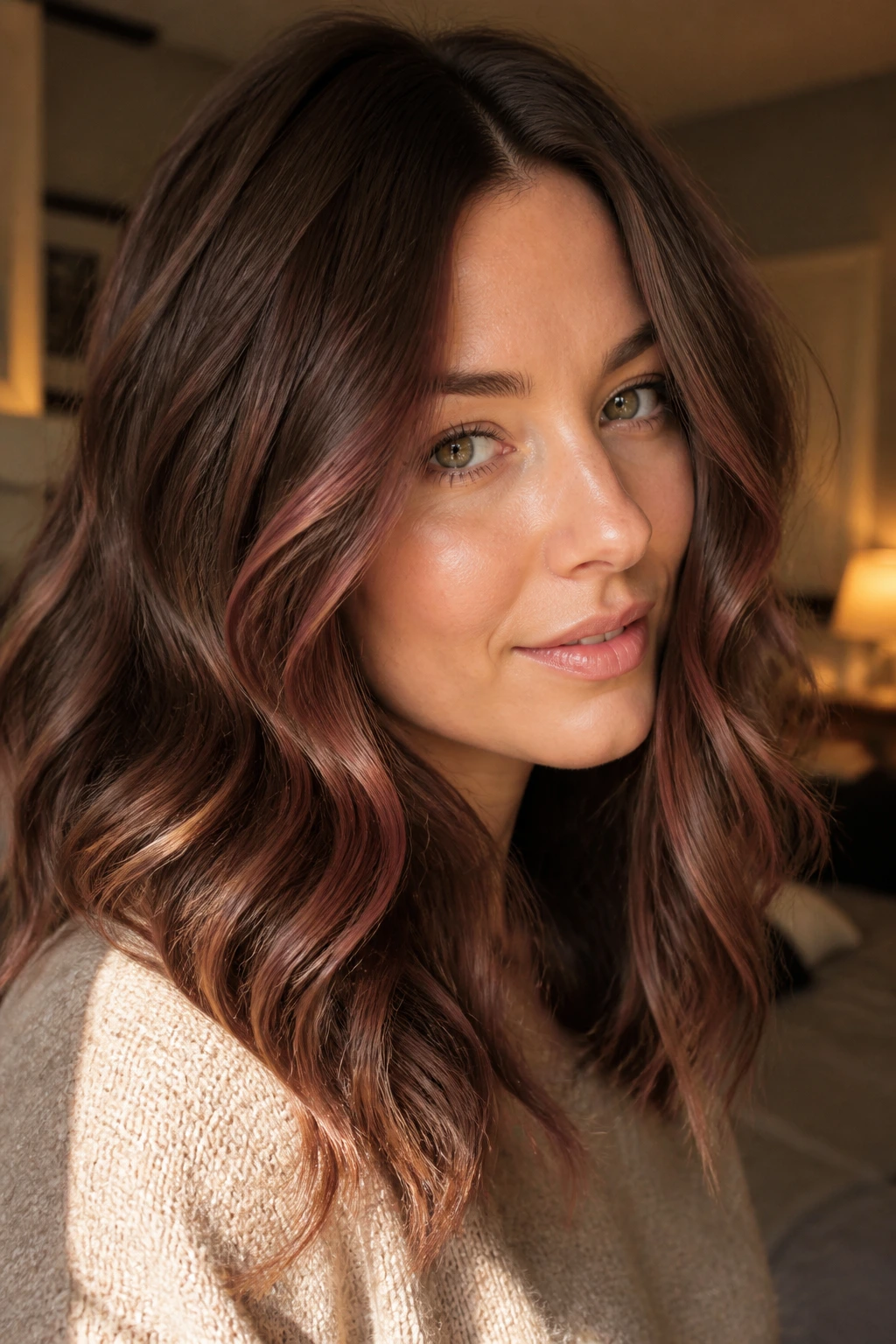
Rose gold isn’t just for blondes and pastel lovers. When diffused through a chocolate brown base as an ultra-subtle accent, it adds an unexpected warmth that shifts between pink, copper, and peach depending on the light. The effect is barely there — just enough to make people wonder what’s different about your hair.
This works because the rose gold pigment is applied as a sheer gloss or as whisper-thin balayage pieces on the surface layer. It doesn’t cover the whole head, and it doesn’t overwhelm the brown. Instead, it peeks through when the light hits the hair at certain angles, giving the overall color a blush-like softness.
To get this right, your colorist will lift a few sections just enough to deposit the rose gold, then apply a customized toner of pink and beige. The base brown stays untouched. The key is keeping the rose gold sheer — anything too pigmented looks costume-y against brown.
Maintenance mirrors any fashion shade: the pink fades within a few washes. To extend it, use a color-depositing rose gold conditioner once a week and wash with cold water. It’s a perfect seasonal experiment, because when it fades out completely, you’re left with a slightly lighter warm brown that still looks lovely.
16. Chocolate Brown Sombre
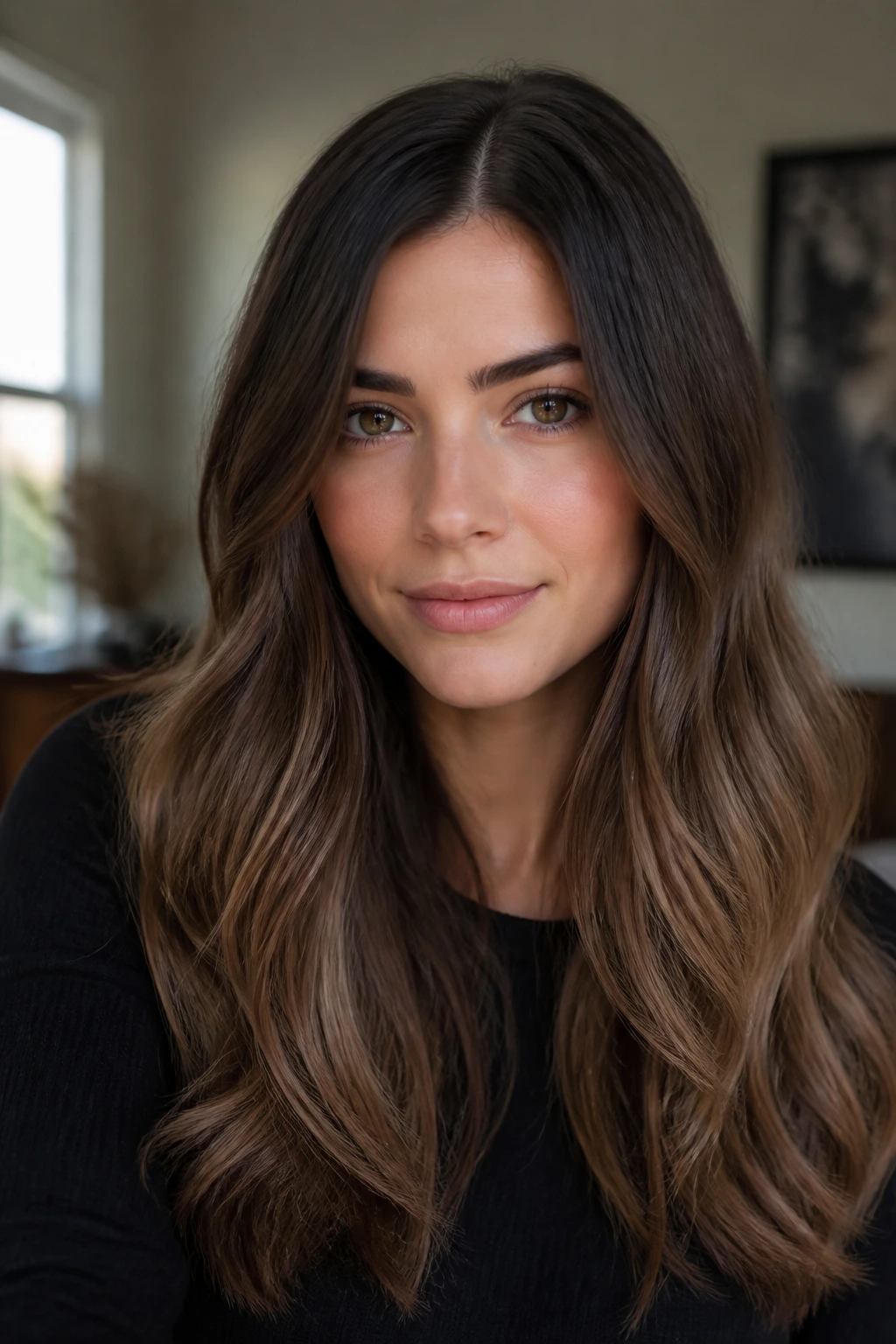
Sombre — soft ombré — takes the ombré concept and dials it all the way back. Instead of a clear dark-to-light gradient, a chocolate brown sombre features an almost invisible transition from a darker root to only slightly lighter ends. The difference between the root and the tip might be just one or two levels.
The result is hair that looks naturally sun-lightened, like you’ve spent a summer outdoors without ever setting foot in a salon. It’s the ultimate “no-makeup makeup” of hair color: it enhances what’s already there without announcing itself.
For a chocolate sombre, the base is typically a warm level 5 or 6, and the ends are lifted to a level 7 golden or caramel tone. The transition starts around the collarbone and gradually lightens, with no harsh line. Because the change is so subtle, it works on any length and almost any hair texture.
Grow-out is a non-issue, and you can get away with touching up the ends just twice a year. A clear gloss every three months will keep everything blended and shiny. If you’re new to color treatments, a chocolate sombre is one of the lowest-stakes ways to start.
17. Chocolate Brown with Toffee Ends
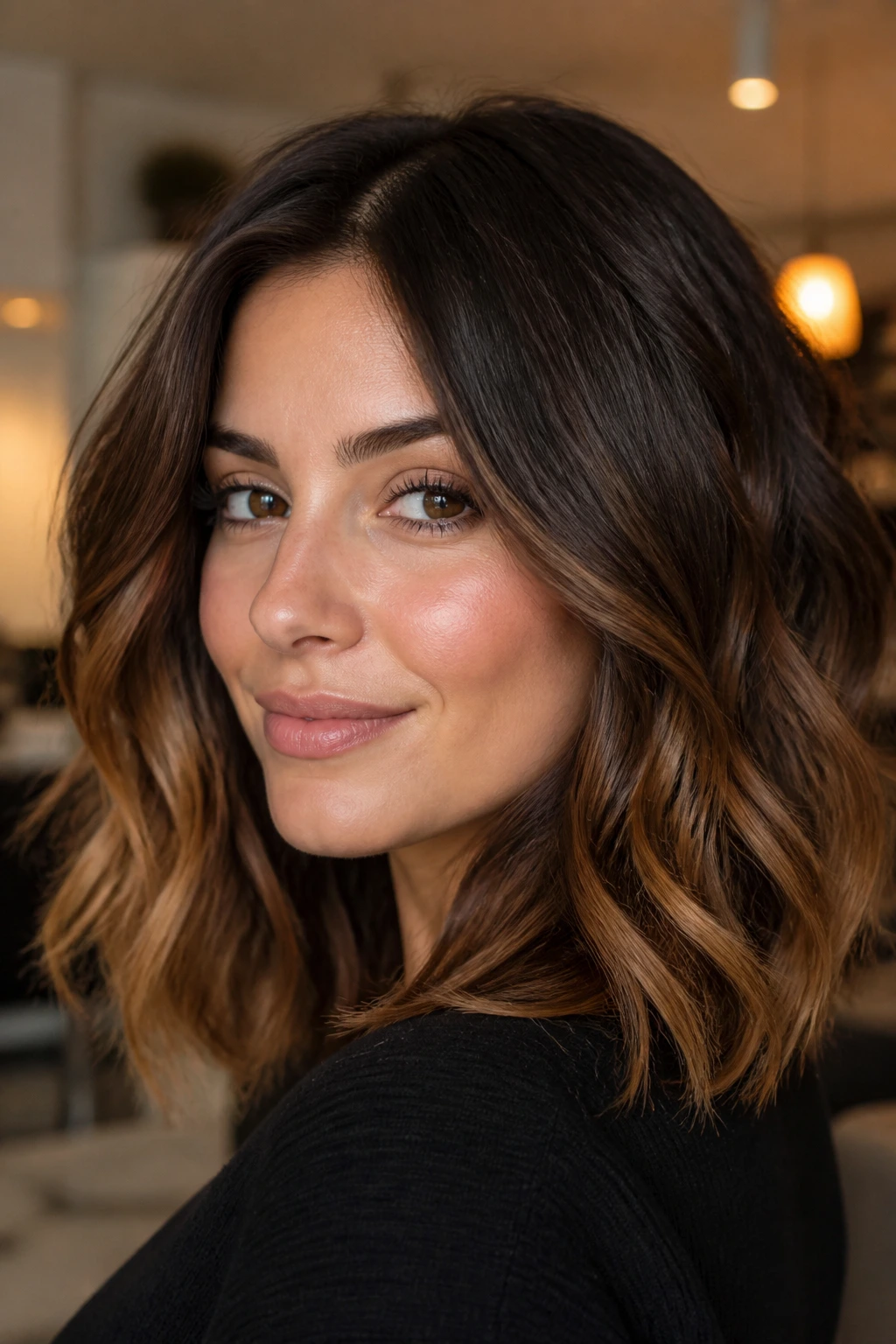
If the sombre is the whisper, chocolate brown with toffee ends is the slightly louder conversation. Here, the ends are deliberately lightened to a warm, buttery toffee tone — a shade that’s richer than caramel and softer than blonde. The contrast is visible, but not dramatic, because the transition begins high enough that the color looks graduated, not chopped.
Toffee ends look especially striking on lobs and shoulder-length bobs, where the lighter color frames the jawline. On longer hair, the toffee tips act like a border, outlining the silhouette and making the hair look longer and more fluid. Wearing this style in soft waves shows off the color variation best, as each curve catches the light differently.
Application typically involves balayage on the bottom half of the hair, with the mid-lengths left mostly dark. A glaze in a golden or toffee tone is applied to the ends afterward to seal the color and add reflective shine.
Because the toffee sections are porous from lightening, they’ll soak up anything in your water or products. Use a filter on your showerhead if you have hard water, and apply a leave-in conditioner to the ends daily to prevent them from drinking up buildup.
18. Chocolate Brown with Caramel Swirl
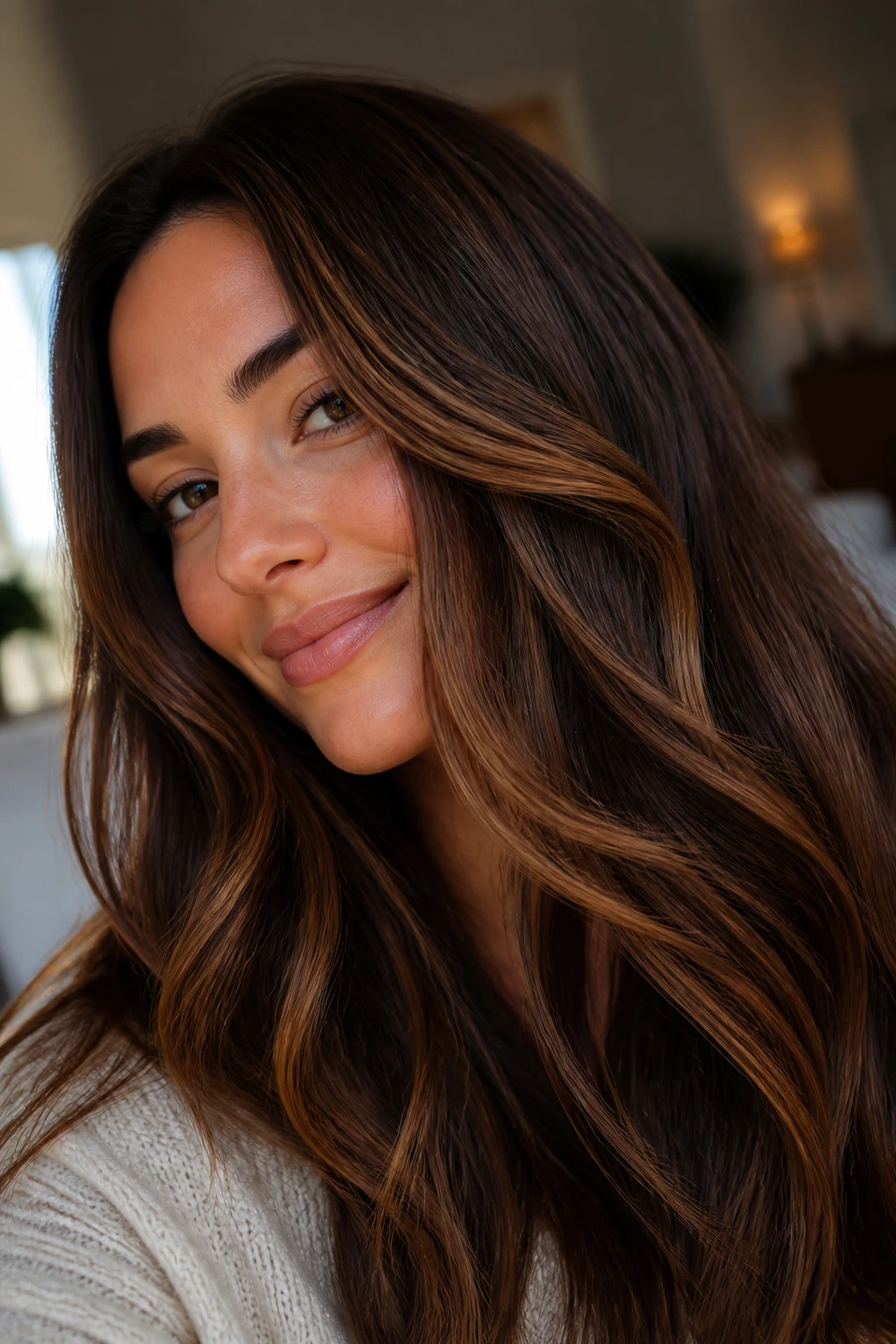
A caramel swirl takes the concept of highlights and blends them into the dark base so thoroughly that no individual strand looks highlighted. The caramel color is hand-painted in sections that twist through the chocolate like a ribbon, creating a marbled or swirled effect rather than a striped one.
This is a go-to for people who want noticeable warmth but hate the linear look of foils. Because the caramel is applied in a freehand, painterly way, it follows the natural fall of the hair. When you move or turn your head, the caramel sections flow with the dark ones, giving the whole style a cohesive, organic movement.
The caramel shade can range from a golden butterscotch to a deeper amber, depending on how much warmth you want. For a more neutral take, ask for a beige-caramel; for something richer, a honey-caramel works beautifully.
Because the technique is similar to balayage, the touch-up schedule is relaxed. You’ll need a toner refresh every 8 to 12 weeks to keep the caramel from turning brassy, but the root area stays untouched.
19. Chocolate Brown with Copper Infusion
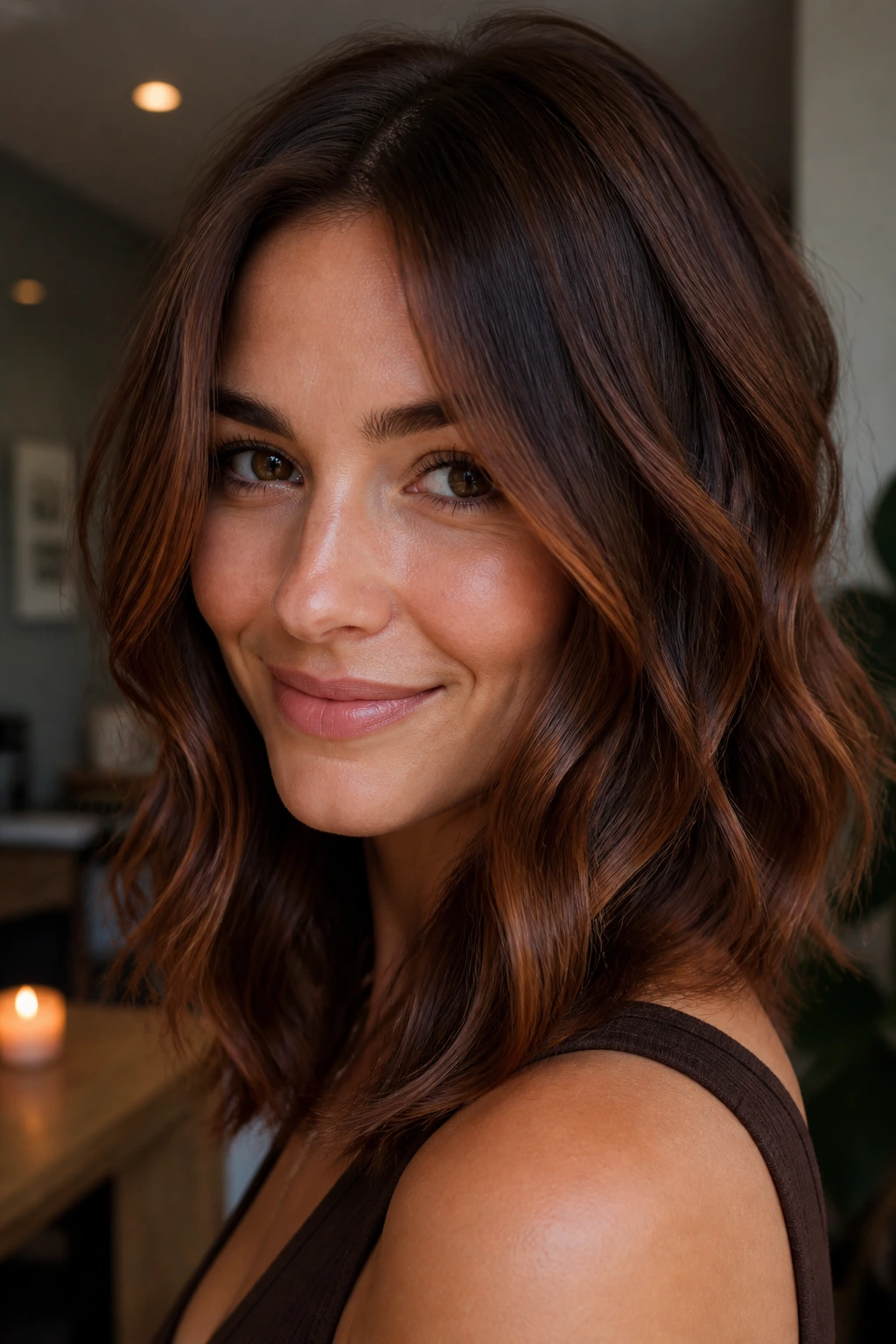
A copper infusion isn’t a full set of highlights — it’s more of a tonal shift. Instead of creating contrast, copper tones are blended into the chocolate base to give the whole color a warm, fiery glow. The hair looks like chocolate brown, but warmer, as if someone turned up the saturation by 15 percent.
This is an excellent way to warm up a complexion that tends to look washed out with pure brown. The copper adds life and energy. It’s also a great transitional color for natural redheads who want to go darker without losing their warmth entirely.
Your colorist will likely apply an all-over demi-permanent gloss with copper undertones over your existing brown, or they might foil in a few subtle copper slices before glossing everything together. The effect is an overall copper-kissed brunette rather than a brown base with identifiable copper pieces.
The fade on copper is predictable: it shifts toward a softer auburn after a few weeks, then gradually back to the underlying brown. Use a color-protecting shampoo and a copper-tinted conditioner if you want to stretch the warmth. And if you swim, wet your hair and apply a leave-in conditioner before you get in — chlorine nukes copper in record time.
20. High-Gloss Liquid Chocolate
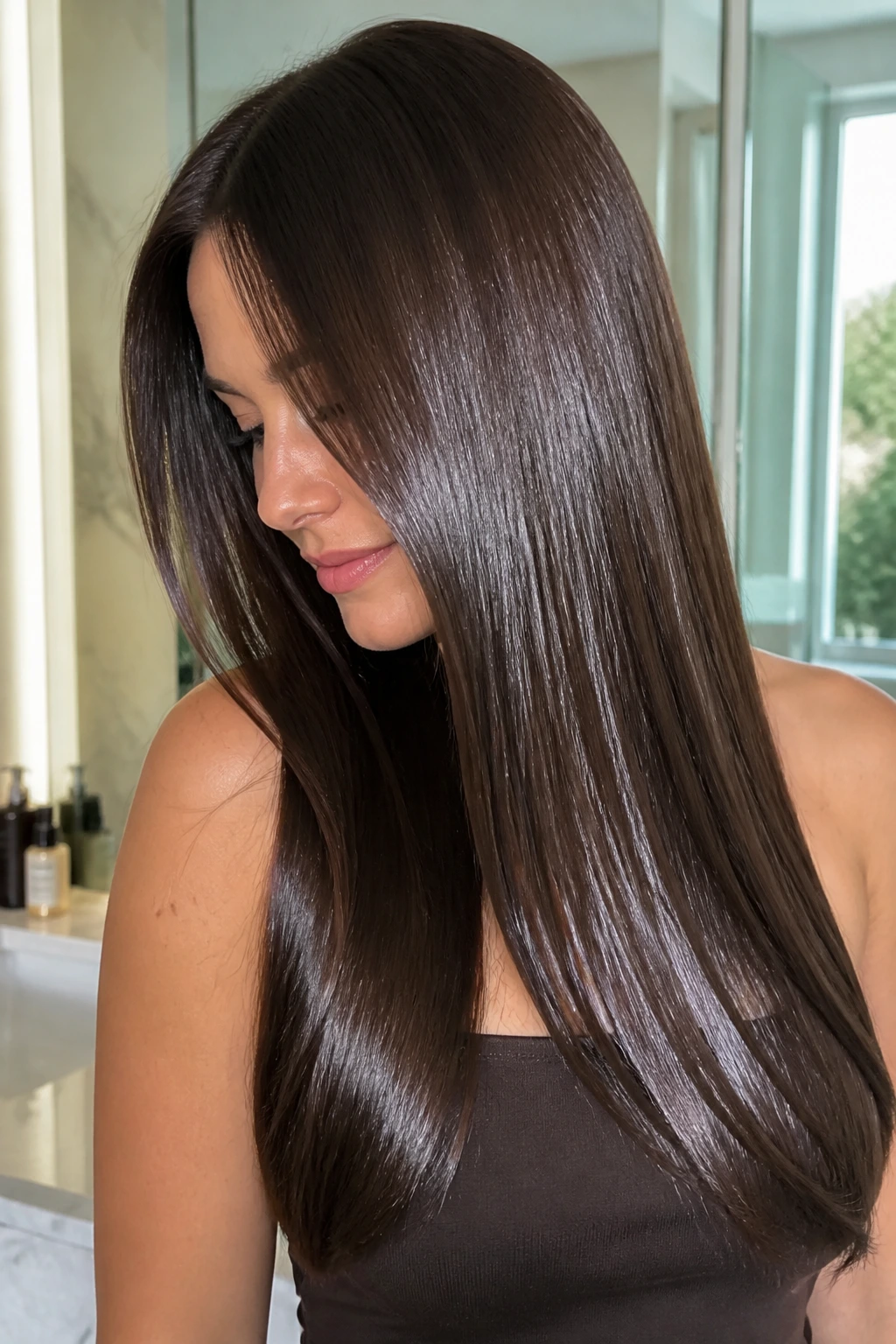
Color is half the story; finish is the other half. High-gloss liquid chocolate is less about a specific dye formulation and more about the treatment on top. This is chocolate brown hair that looks wet, reflective, and impossibly smooth — like a mirror glaze on a cake.
The gloss itself is a demi-permanent or clear gloss treatment applied after the color processes. It seals the cuticle, evens out porosity, and adds a lacquered shine that lasts for weeks. Even a simple solid brown can look spectacular with a high-gloss finish, because the light reflection creates the illusion of depth and movement.
In the salon, a gloss is often a quick add-on service that takes 20 minutes. You can choose a clear gloss for pure shine, or a tinted gloss in a matching shade to refresh any fading chocolate tones. At home, you can maintain the effect with a clear gloss treatment every two weeks — many brands make color-depositing conditioning masks that achieve a similar result.
Healthy hair holds gloss better, so regular trims and protein treatments are part of the equation. Split, frayed ends scatter light instead of reflecting it, so no amount of gloss can fake what a healthy cuticle does naturally.
21. Chocolate Brown with Soft Auburn Melt
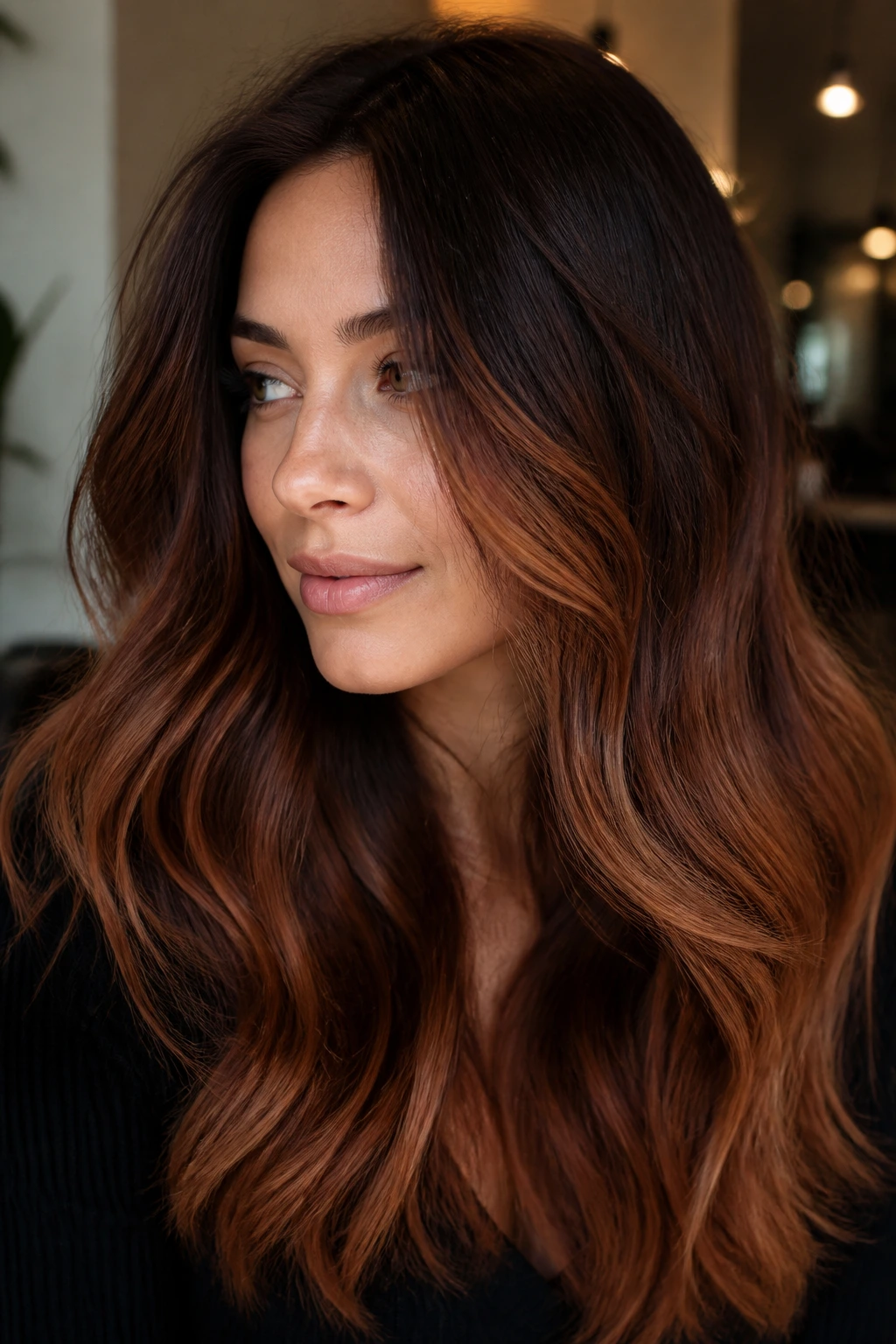
A color melt is exactly what it sounds like: two or more colors blended together so seamlessly that you can’t tell where one ends and the next begins. A chocolate brown with soft auburn melt begins with deep brown roots, melts into a warm auburn mid-length, and often ends with a lighter golden-auburn tip. The result is a slow gradation of earthy warmth.
This approach works wonders on layered cuts, because each layer exposes a different part of the melt, creating a three-dimensional effect as you move. It’s also a forgiving option for growing out a previous red or copper shade — instead of fighting the residual warmth, the melt incorporates it.
The key to a successful melt is the blending zone. There should be at least three to four inches of overlapping tones where the chocolate and auburn mix. If the transition is too short, it reads as a block. If it’s too long, the colors blur into a single muddy middle. An experienced colorist will know how to feather the application for a flawless gradient.
To maintain the warmth, a color-depositing auburn conditioner is your best friend. Apply it mainly to the mid-lengths and ends every week or two, and use cooler water to rinse to preserve the pigment.
22. Chocolate Brown with Face-Framing Highlights
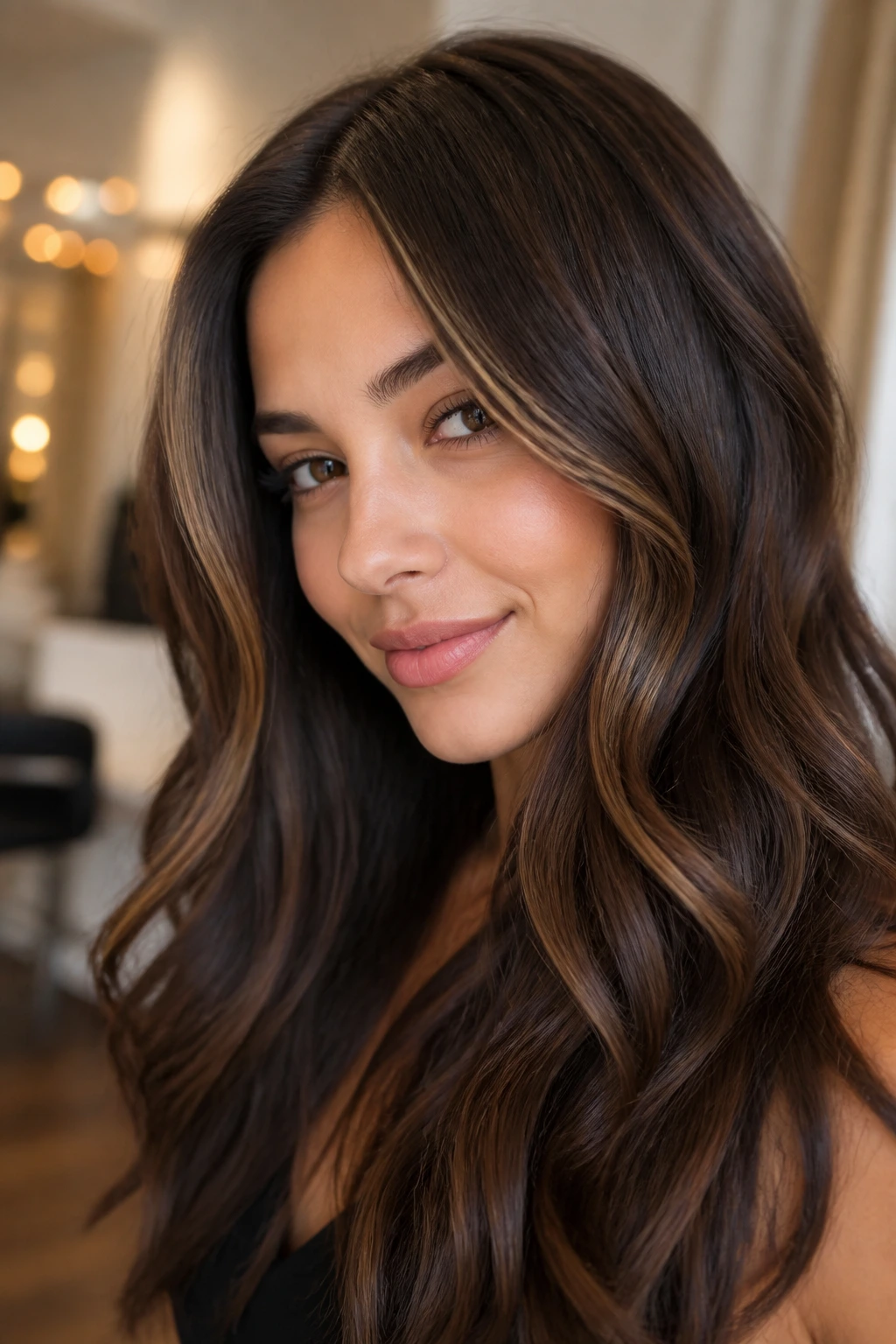
Sometimes, a full head of highlights is overkill. If all you want is to brighten your face and soften your features, a few well-placed face-framing highlights on a chocolate brown base are enough. The rest of the hair stays dark, rich, and low-maintenance, while the front pieces catch the light right where you want it.
The placement is strategic. Your stylist will select the sections around your hairline — typically starting from the temple and moving toward the cheekbone — and lighten them one to two levels above your base. The highlights shouldn’t start right at the root; a quarter-inch of shadow is left to keep the look natural and prolong the grow-out.
The color can vary widely. Caramel, honey, toffee, even a soft golden blonde all work, depending on your skin tone. The important thing is that the highlights are painted in a V-shape or diamond section so they blend into the sides of your hair without looking like two disconnected chunks.
This is one of the fastest, most affordable ways to add dimension to your color. Touching up the face frame every eight weeks is usually enough to keep the brightness, and the rest of the hair can go months without fresh color. Style with a slight bend or curl around the face to maximize the light-reflecting effect.
23. Chocolate Brown with Golden Underlights
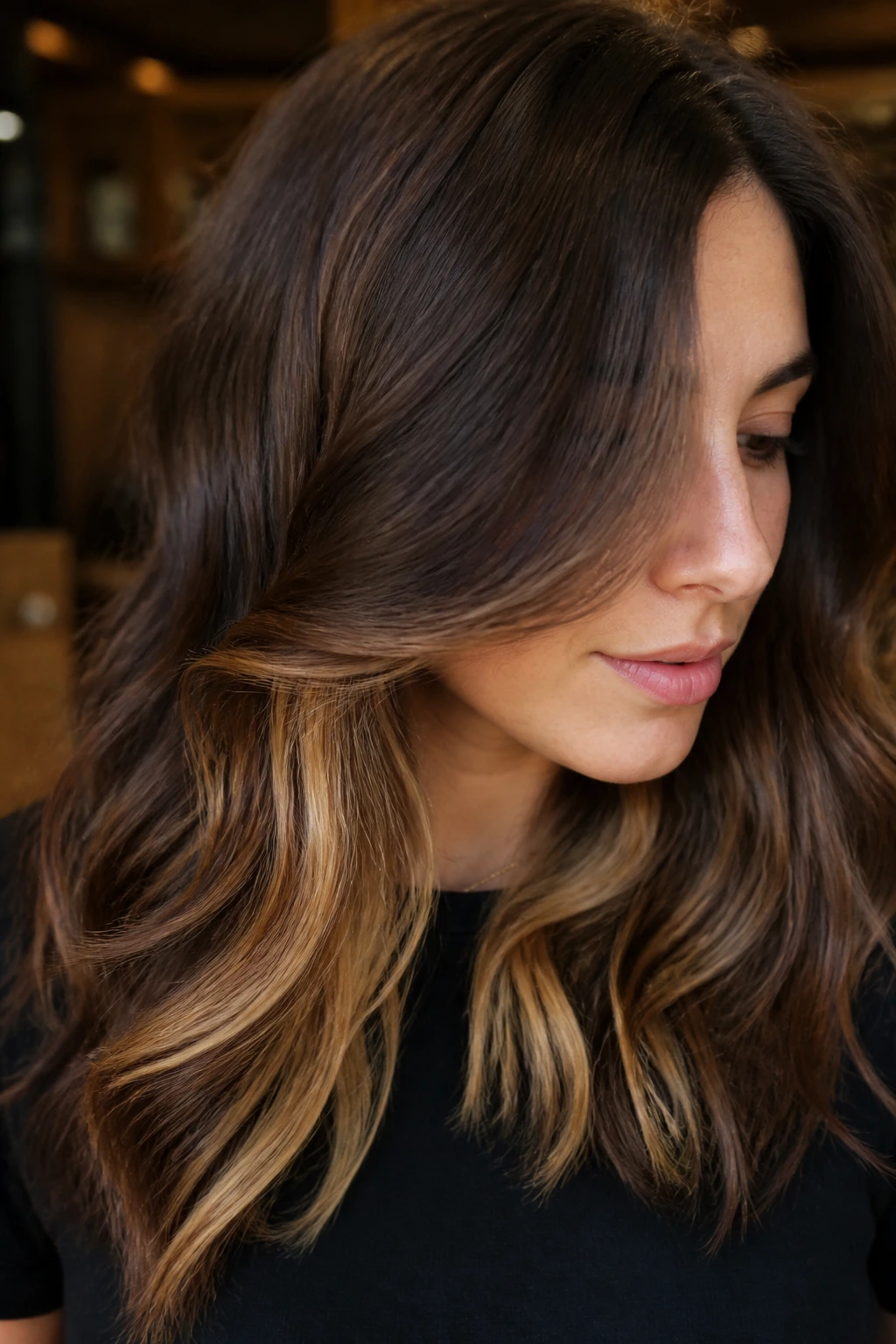
Underlights — also called peekaboo highlights — are the hidden secret of dimensional brunette hair. Instead of painting lighter color on the top layer, the stylist applies golden highlights on the bottom layers, so the warmth peeks through only when the hair moves or is pulled up. On a chocolate brown base, this creates a flash of surprise gold that’s both playful and elegant.
The placement means you get all the warmth of traditional highlights without any of the root maintenance. Since the lighter pieces are underneath, regrowth is completely hidden. You can go six months without touching up if you want.
Golden underlights are especially fun for anyone who wears their hair half-up or in ponytails often. Every time you sweep your hair back, the gold appears. It’s also a clever way to experiment with bolder blonde or golden tones without committing to a full head of color.
To keep the underlights vibrant, you still need to protect them from brassy tones — a purple shampoo applied only to the lightened sections every other wash will do it. And when you go in for a refresh, your stylist can simply touch up the same hidden sections without altering the outer layer at all.
The Bottom Line
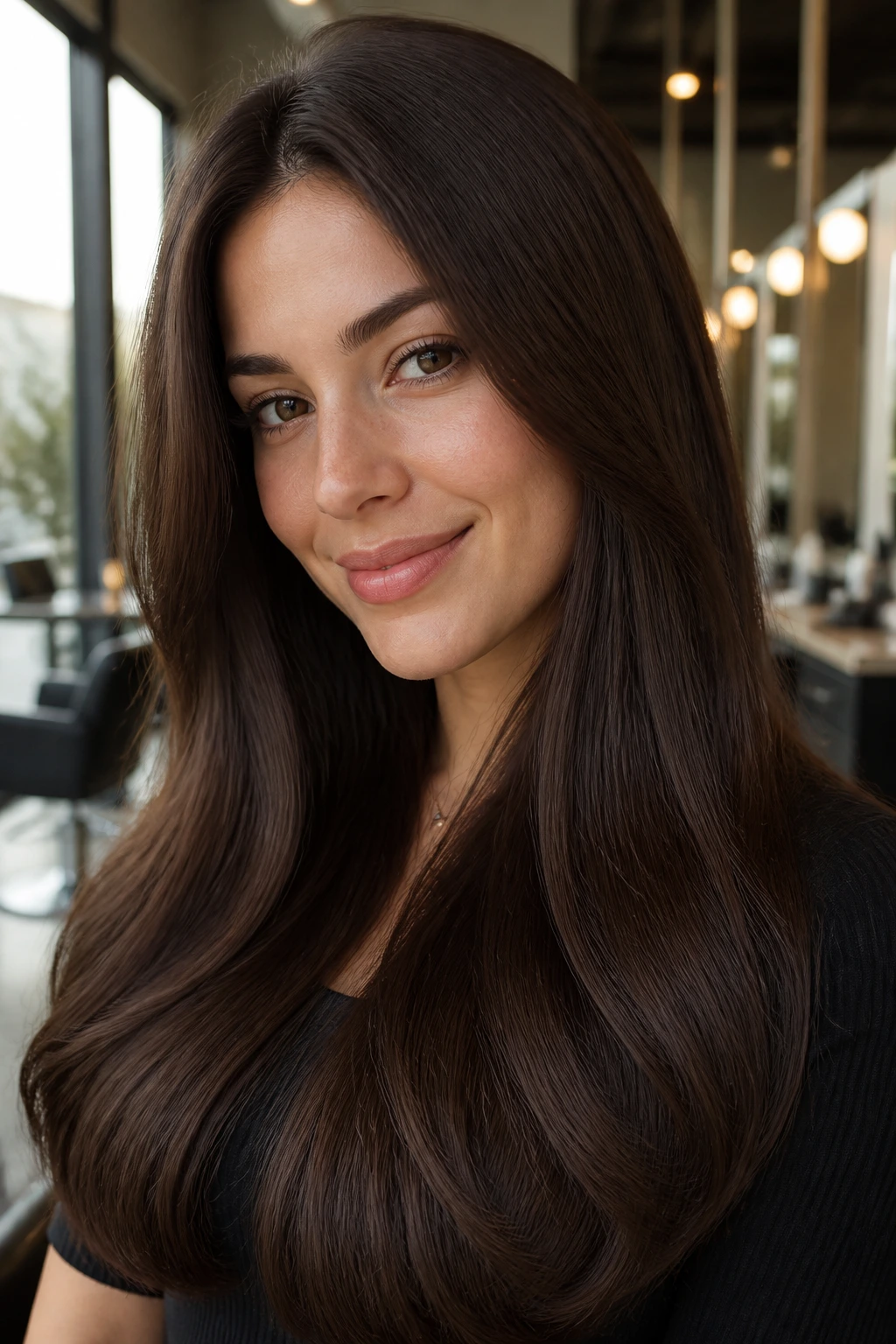
Chocolate brown hair isn’t one color. It’s an entire palette of warm, rich, dimensional shades that range from deep espresso to golden caramel, from glossy solids to softly painted balayages. What ties them all together is a sense of effortless luxury — the kind of hair that feels just as at home with a cashmere sweater as it does with a silk gown.
Choosing the right version comes down to two things: your lifestyle and your skin’s undertones. If you’re a wash-and-go person, a root smudge with a solid chocolate base or a subtle sombre will be your lowest-maintenance ally. If you enjoy the ritual of salon visits and at-home glosses, then something like a chocolate cherry or a copper infusion might scratch the itch for something worth tending to. These are shades that reward effort — and they look extraordinary for it.
The real question is simpler than it sounds: does the color make your skin look better? Does it bring out your eyes, smooth your complexion, make you look like you slept well even when you didn’t? If the answer is yes, you found your chocolate brown. There are 23 starting points above — and every one of them has the potential to be the right one.