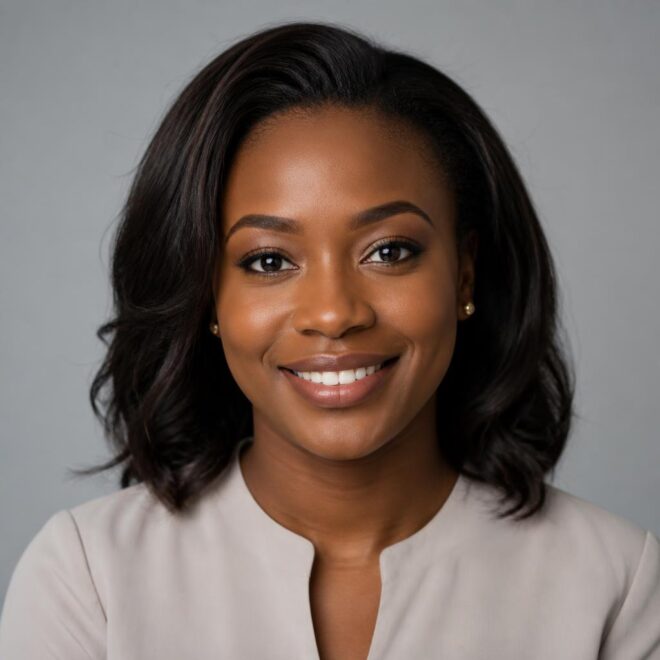


Fine hair is often misunderstood. It is frequently confused with thin hair, but the two are quite different. Fine hair refers to the diameter of the individual strand, while thin hair—or low-density hair—refers to the number of follicles per square inch on your scalp. Many people struggle with both simultaneously, leading to a constant battle against gravity. When your hair lacks the density to support its own weight, it tends to lie flat against the scalp, clinging to your face in a way that feels limp and uninspired.
Finding the right cut is about managing expectations and utilizing geometry to your advantage. A well-executed haircut can create the illusion of fullness by removing weight where it drags you down and adding structure where you need it most. It is not about hiding your hair; it is about choosing shapes that complement your texture and maximize the volume you do have.
The following list explores twenty-eight classic styles designed to bring life, movement, and a sense of volume to hair that feels sparse. Each of these cuts focuses on different ways to manipulate length and layering, proving that you do not need thick, coarse locks to achieve a style that looks intentional and full of body.
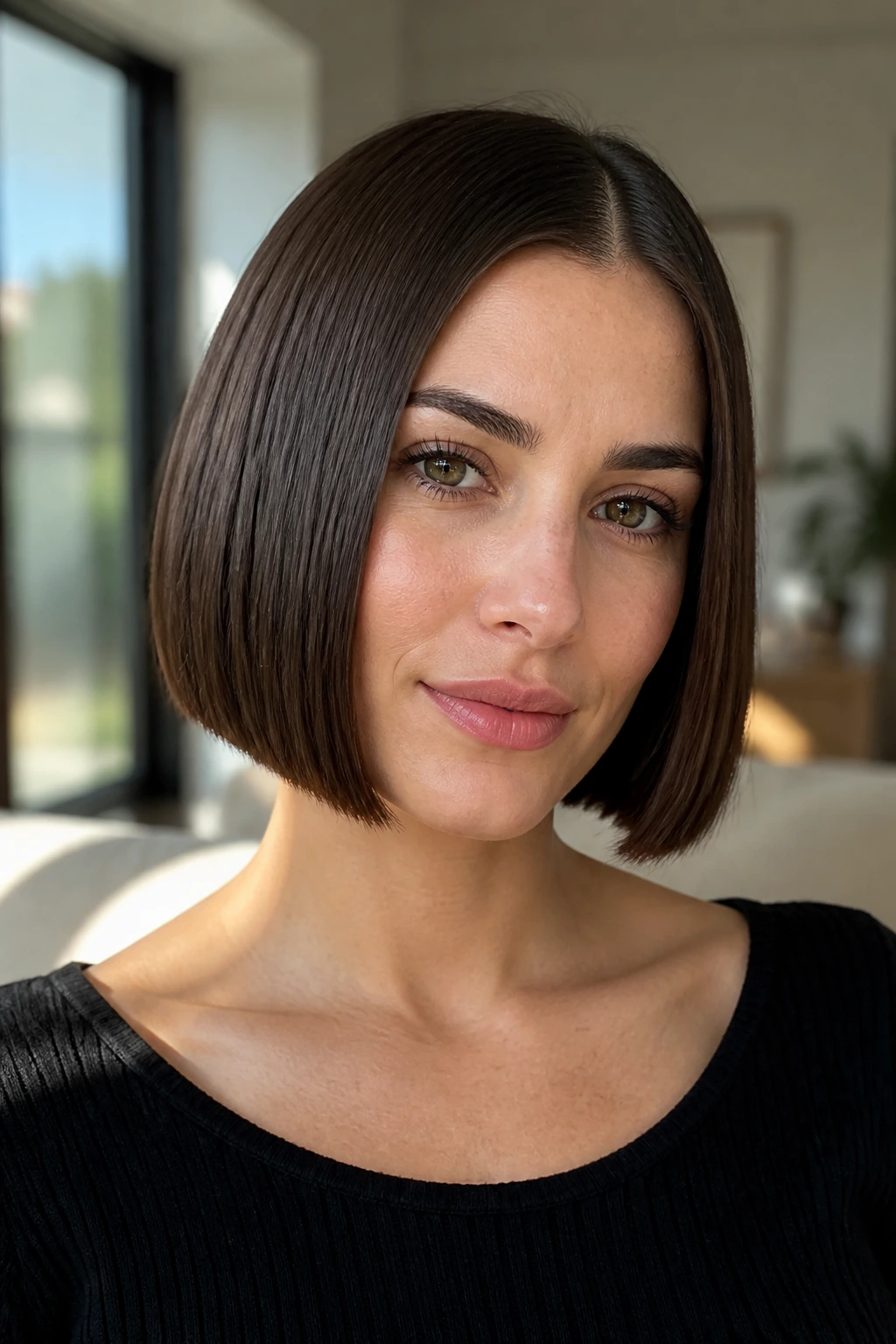
1. The Precision Blunt Bob
The blunt bob is the gold standard for those who want their ends to appear as thick as possible. By cutting the perimeter in one sharp, perfectly horizontal line, you eliminate the wispy, thinning ends that often plague lower-density hair.
Why It Works for Thin Hair
When you add layers, you technically remove volume from the ends of the hair. A blunt cut keeps the weight at the very bottom, creating a solid, dense foundation. This makes the entire head of hair look uniform and substantial.
Styling for Maximum Impact
Use a high-quality smoothing serum and a paddle brush while blow-drying to ensure the line stays crisp. You want that glossy, “finished” look that emphasizes the strength of the cut itself.
2. The Textured Lob
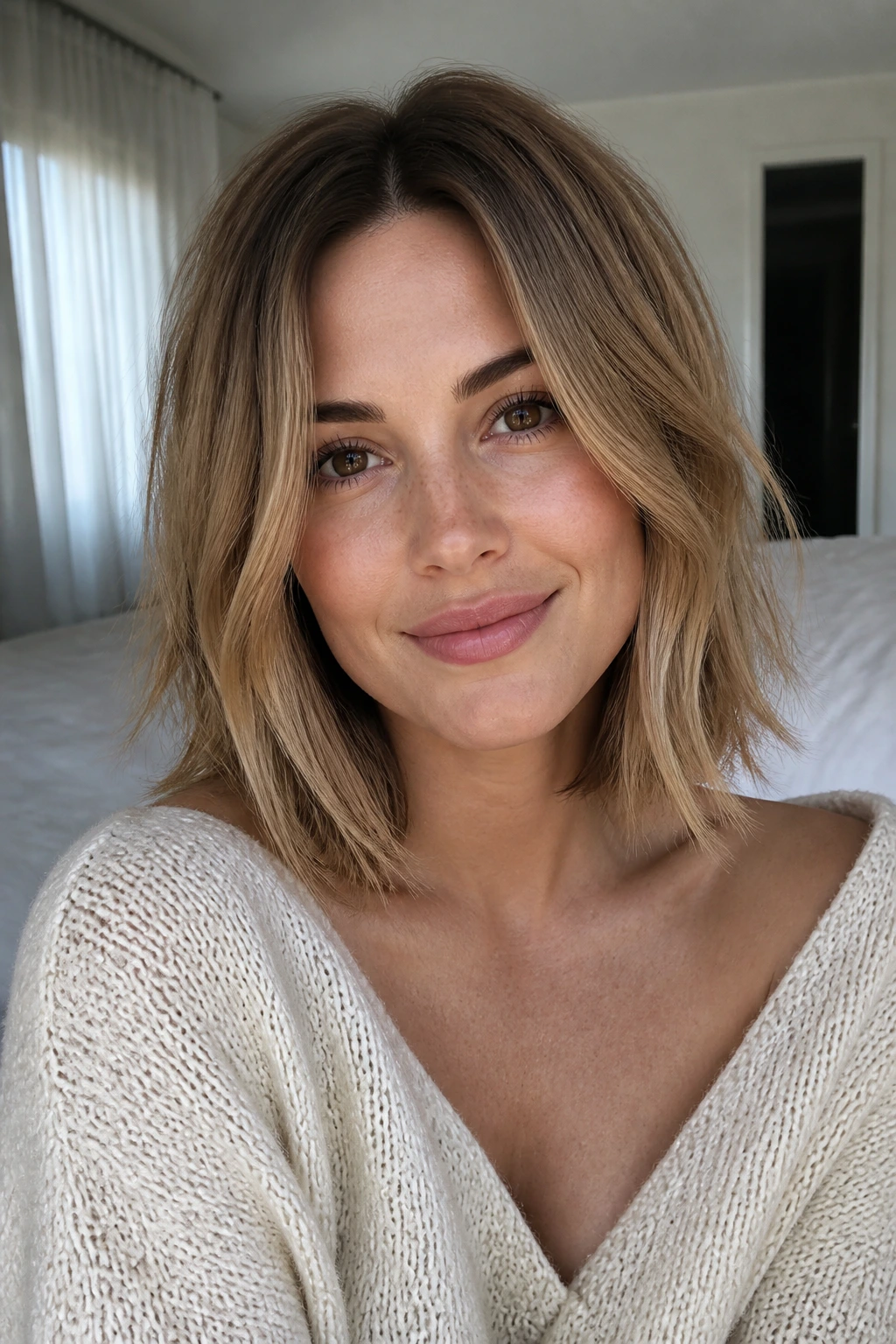
A lob—or long bob—is a versatile option for anyone not ready for a drastic chop. The secret to making it work for thin hair is the addition of subtle, internal texture rather than heavy, choppy layers.
Managing the Weight
You want to ask your stylist for “point cutting” at the ends. This technique removes the harshness of a blunt line without actually taking away the density of the bottom edge. It allows the hair to bend and fold onto itself, which creates the appearance of thicker, wavy volume.
Pro Tip
Add a bit of texturizing spray once the hair is dry. This helps the strands catch on one another, preventing them from sliding back into a flat, straight drape.
3. The Classic Pixie with Side-Swept Bangs
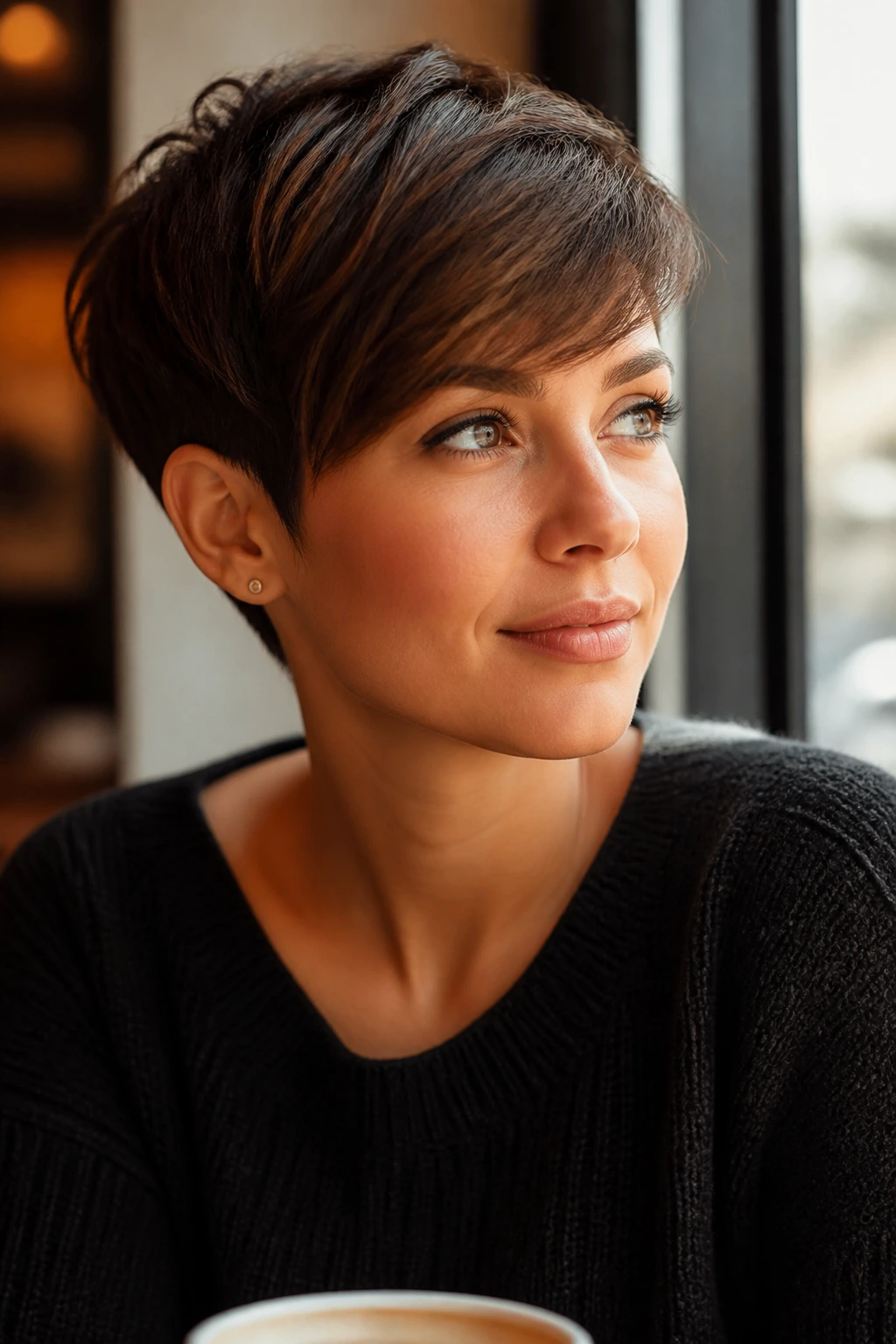
If you are open to a short cut, the pixie is incredibly effective at hiding a lack of density. By keeping the sides and back tight and close to the head, you create a contrast that makes the hair on top look much fuller by comparison.
Why Bangs Matter
The side-swept bangs provide a focal point that draws attention to the eyes and cheekbones, effectively shifting the focus away from the scalp area. They also allow you to create a deep side part, which is one of the easiest ways to manufacture instant root volume.
Maintenance Notes
This cut requires regular trimming, usually every four to six weeks, to maintain that sharp, tailored shape.
4. The Softly Layered Shag

The shag has made a massive comeback, and it is a gift for those with fine or thin hair. Unlike traditional layering that can leave the ends looking stringy, a modern shag focuses on volume at the crown and mid-lengths.
Building Volume Through Layers
The layers in a shag are disconnected, which means they are cut to create movement without thinning out the base. This provides a messy, deliberate volume that looks effortless and cool, rather than forced.
What to Avoid
Do not over-thin the ends with razor cutting. Stick to scissors for your layers to ensure the texture stays crisp and the hair doesn’t lose its structural integrity.
5. The Collarbone-Grazing Blunt Cut
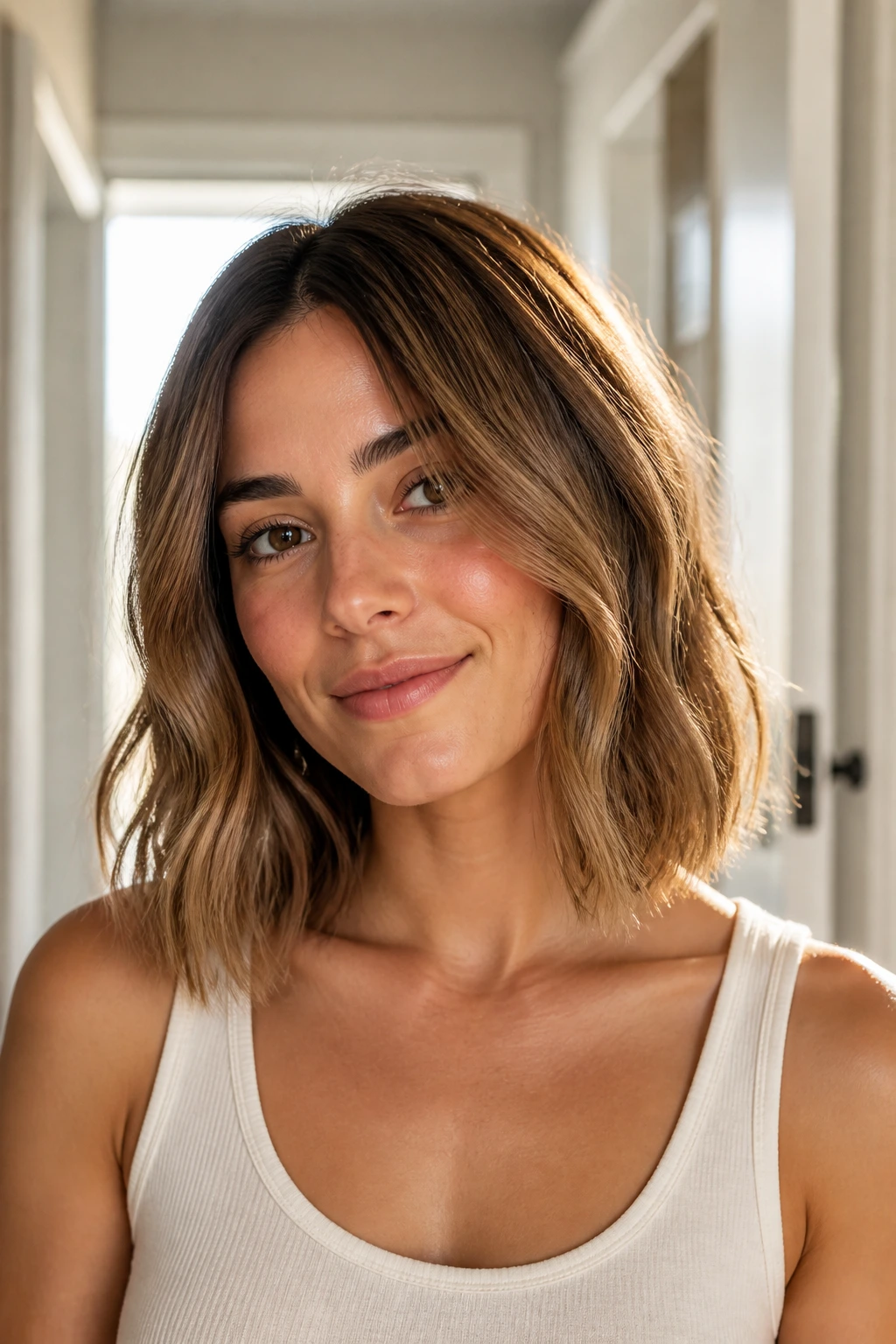
Stopping your hair exactly at the collarbone is a strategic choice. It is short enough to avoid the “weigh-down” effect that happens when hair grows past the shoulders, but long enough to still be pulled into a ponytail or a small bun.
The Psychology of Length
Hair that reaches the middle of the back is almost always going to look thinner simply because gravity has more surface area to act upon. By pulling the length up to the collarbone, you are effectively forcing the hair to maintain more of its natural bounce and volume.
Pairing with Texture
Soft, beachy waves look best with this length. Because the ends hit the collarbone, the hair will naturally flip slightly, which adds extra visual interest and width to the style.
6. The Deep Side-Parted Bob
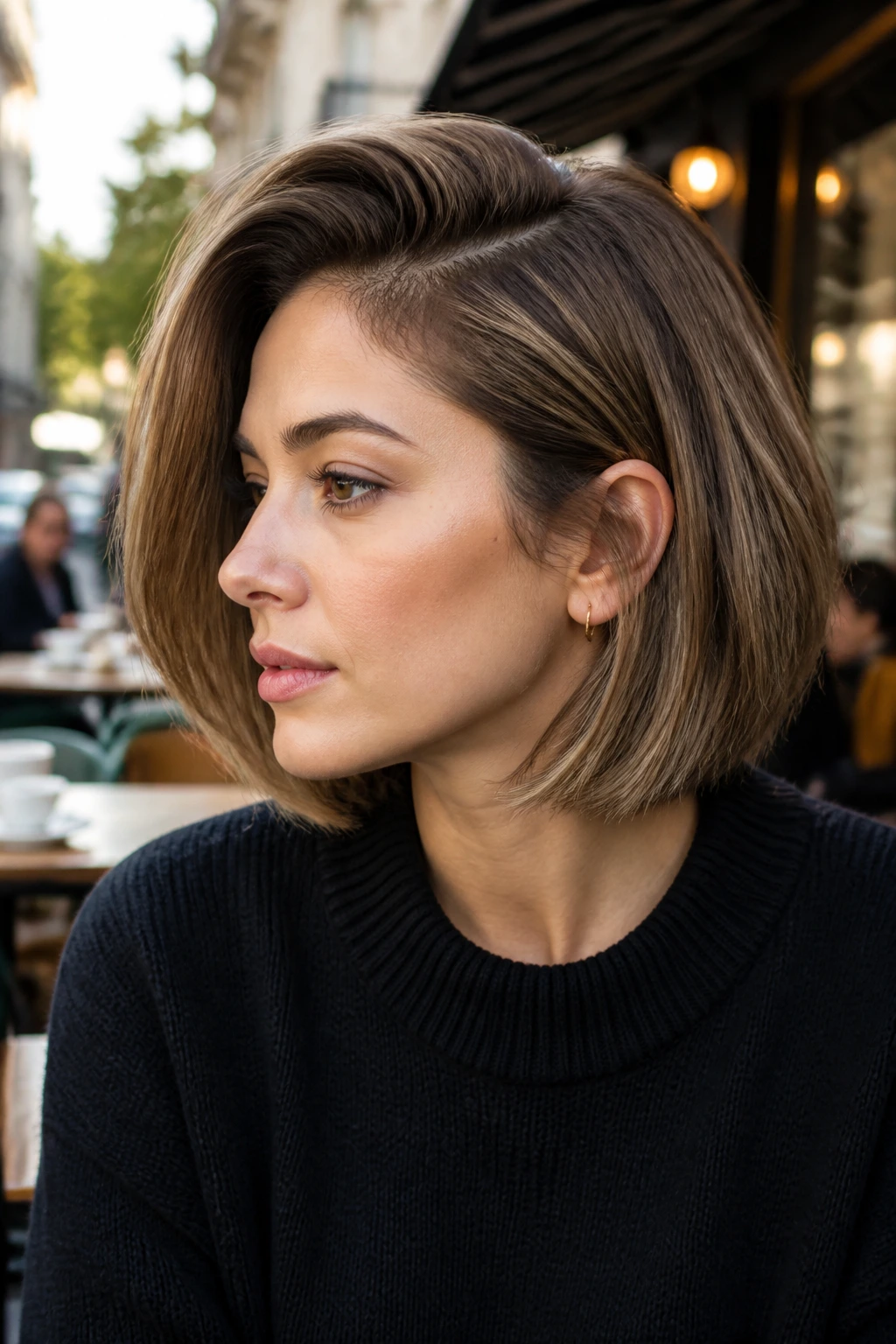
Sometimes the cut itself is less important than how you style the part. A deep side part is a simple structural hack that instantly adds height to the roots on one side of the head.
Creating the Optical Illusion
When you sweep the majority of your hair over to one side, you are essentially doubling the density on that specific portion of the scalp. It creates a lush, cascading effect that masks any areas where the scalp might be more visible.
Essential Tools
Invest in a rattail comb for a perfectly straight, crisp part line. A bit of root-lifting mousse applied to damp hair before drying can lock that side-sweep into place all day.
7. The Stacked Graduated Bob
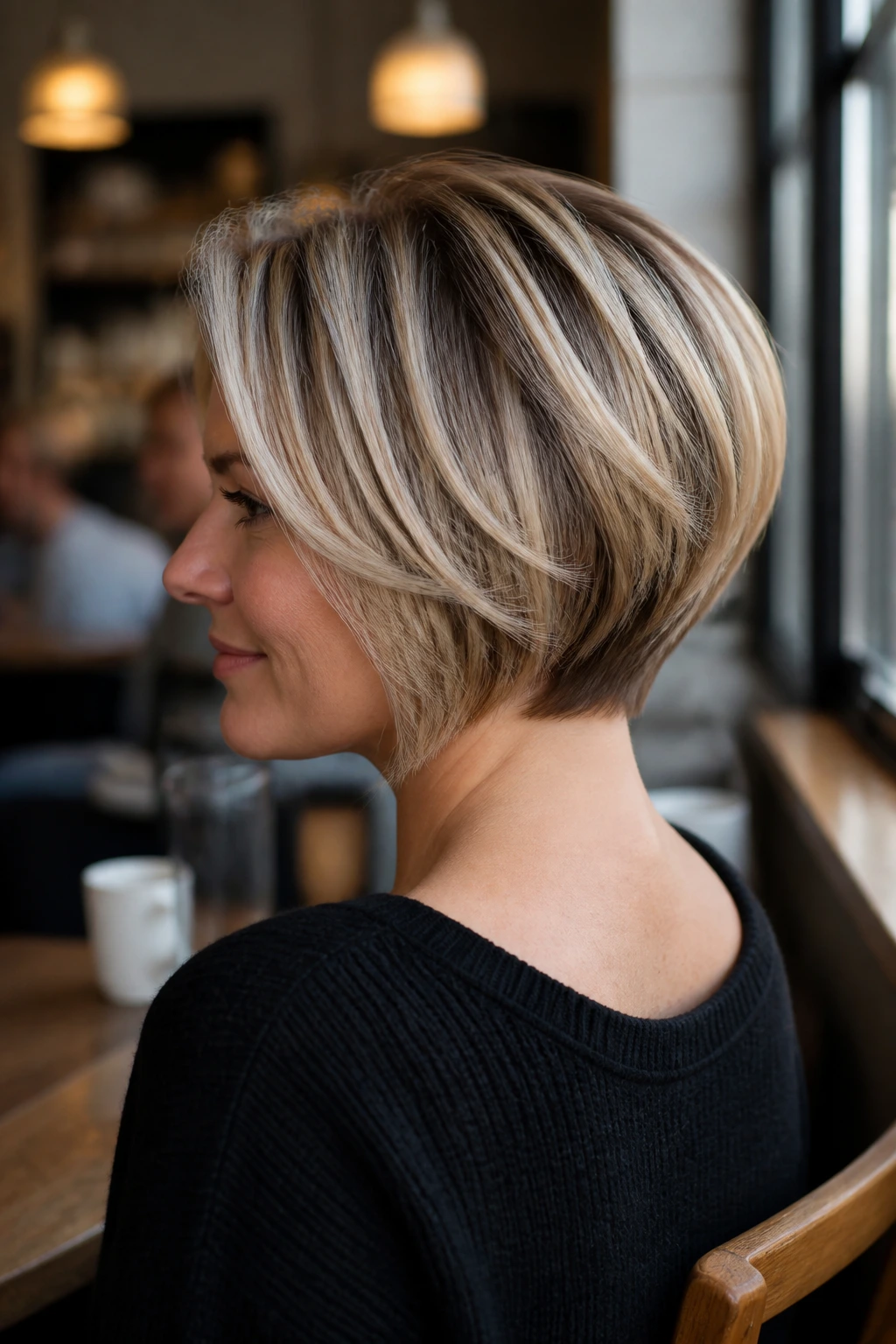
A stacked bob features shorter, layered hair at the nape of the neck that gradually gets longer toward the front. This is an excellent way to build internal support at the back of the head.
The Mechanics of the Stack
The shorter layers in the back act like a scaffolding, propping up the hair above them. This builds a rounded, voluminous shape at the crown, which is often where thin hair falls the flattest.
Who Should Choose This
If you have a flat crown or struggle with hair that “cowlicks” at the nape, a stacked bob provides the necessary weight and structure to keep your hair looking uniform.
8. The French-Girl Bob with Fringe
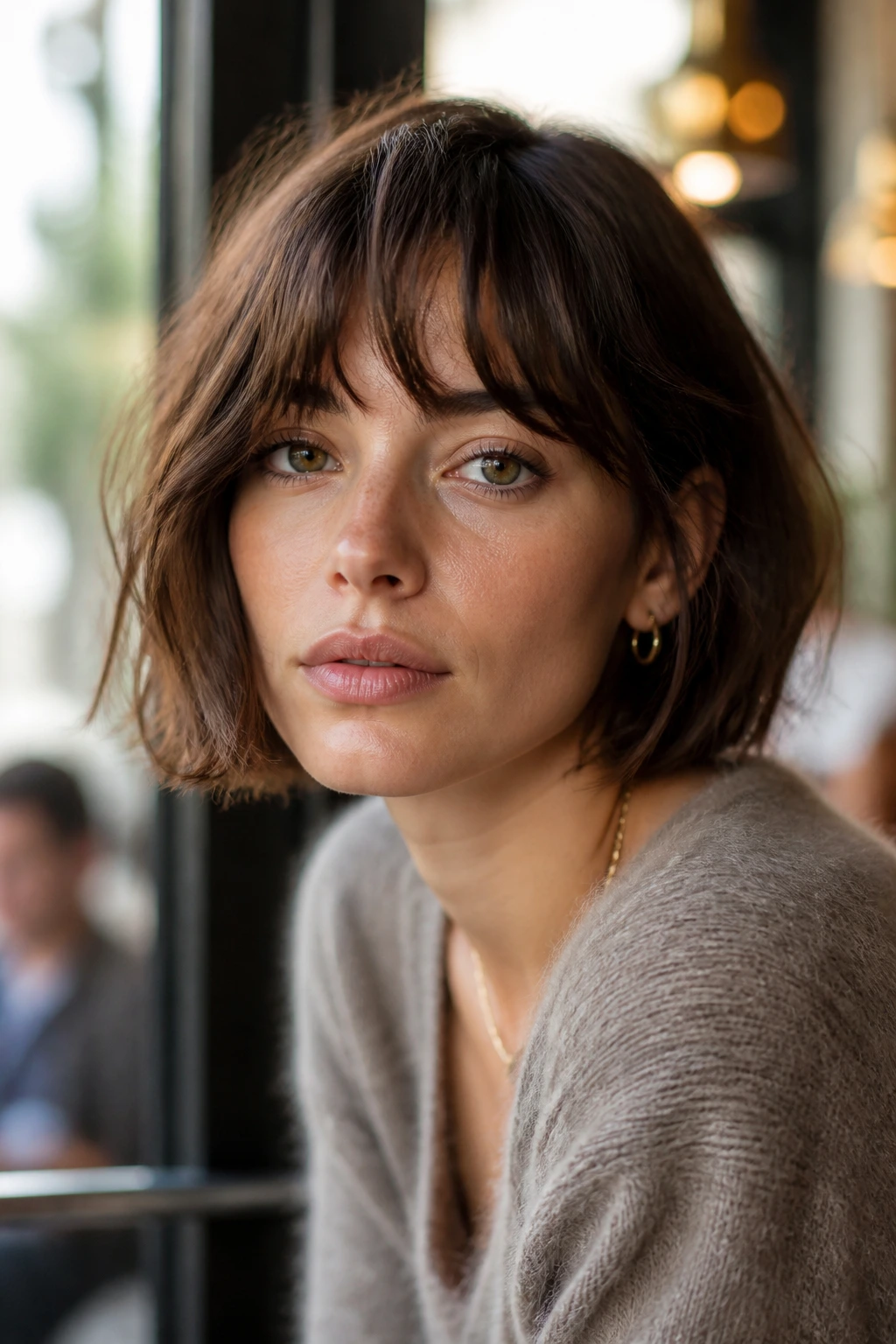
French-girl style is synonymous with “effortless,” which is exactly the vibe you want for thinner textures. This cut is usually a bit shorter, hitting around the mouth or chin, and includes wispy, eye-skimming bangs.
Why Bangs Are a Secret Weapon
Fringe cuts are brilliant for thin hair because they utilize the hair from further back on the head to create the bangs. This makes the front area look much denser and fuller than it would if you pulled all the hair back.
The “Bedhead” Aesthetic
The goal here is not perfection. Use a light sea salt spray to encourage natural air-drying. The slight messiness prevents the hair from looking too limp or “stuck” to the head.
9. The Blunt Cut with Face-Framing Pieces
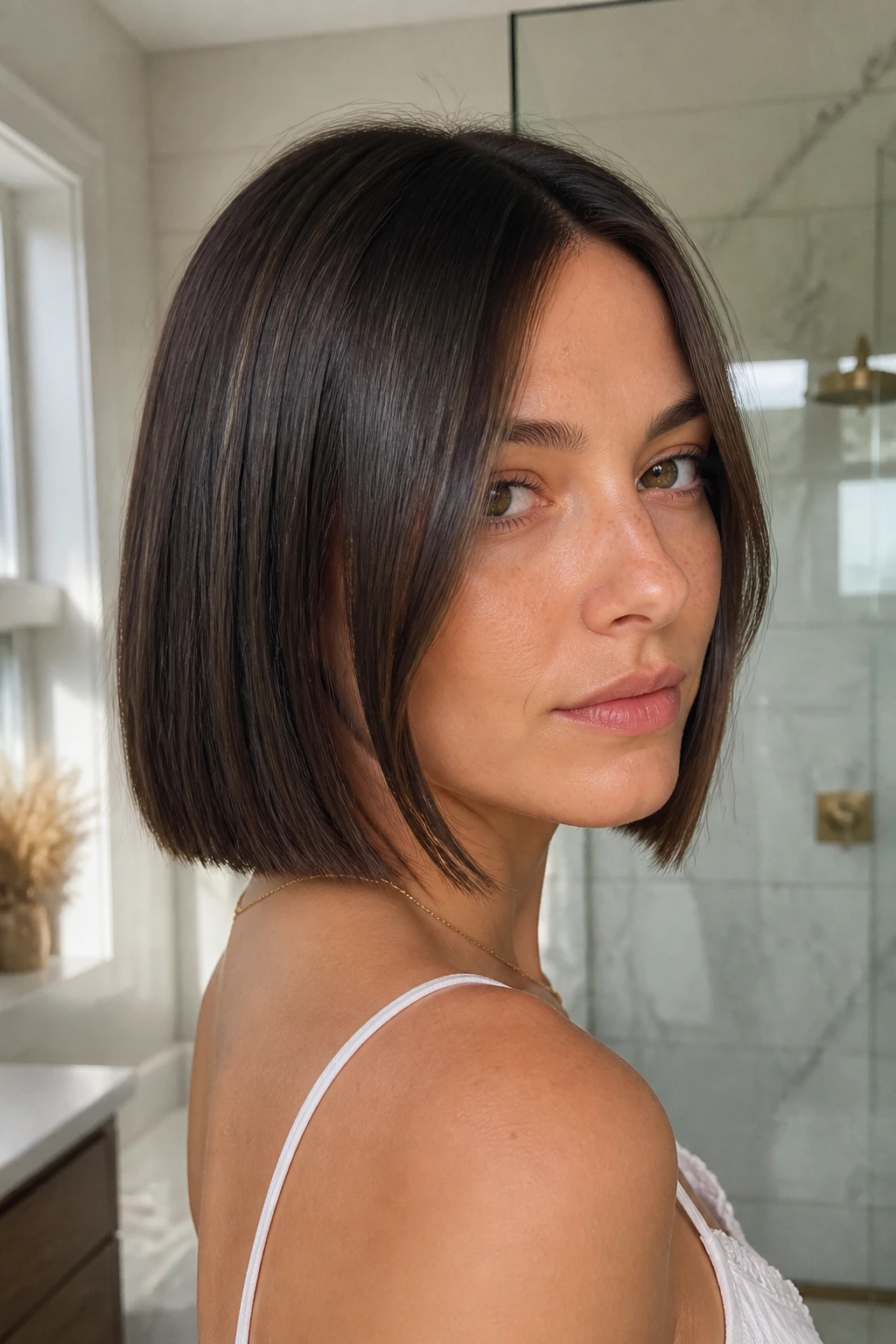
If you love your length but need a refresh, adding two distinct, shorter face-framing pieces can change everything. These pieces act as a frame, drawing the eye toward your features while keeping the back of the hair long.
The Illusion of Depth
By keeping the back blunt, you maintain that dense, healthy-looking line. By keeping the front pieces slightly shorter, you introduce movement without sacrificing the volume of the main body of hair.
Styling Tip
When you style your hair, focus on using a round brush to give these front pieces a gentle bend toward your face. It adds a “styled” look that makes the whole head feel more put-together.
10. The Asymmetrical Pixie
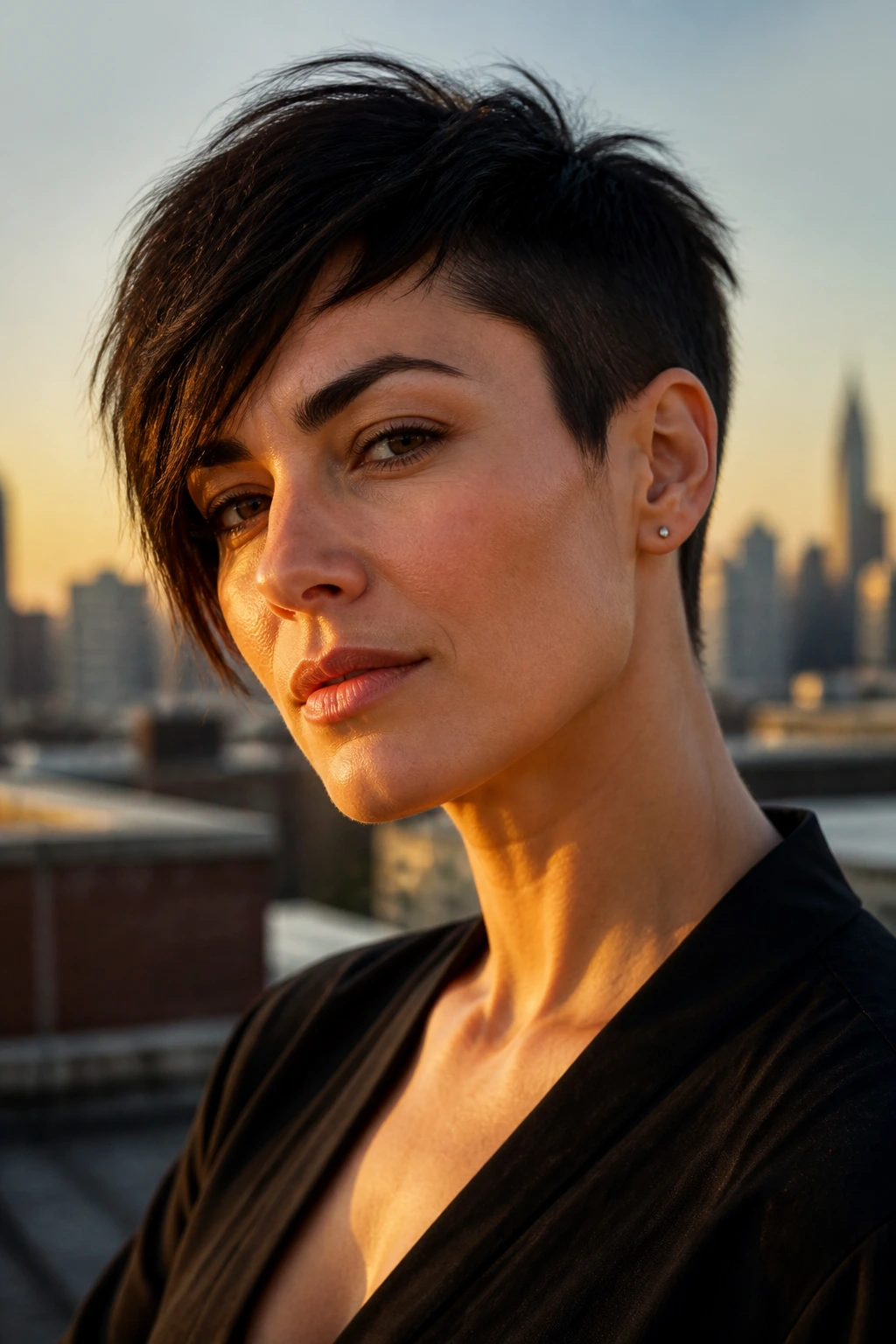
Asymmetry is your best friend when you have thin hair. By making one side significantly shorter than the other, you create a dynamic, modern silhouette that looks high-fashion and intentional.
How Asymmetry Helps
It distracts the eye. Instead of the viewer focusing on the density or texture of the hair, they are looking at the interesting lines and the boldness of the cut. It is a confident way to wear shorter hair that feels very purposeful.
Maintenance Considerations
Because the cut relies on distinct lengths, you need to visit the salon every few weeks. If it grows out even a little bit, the asymmetry loses its punch.
11. The Textured Curly Pixie
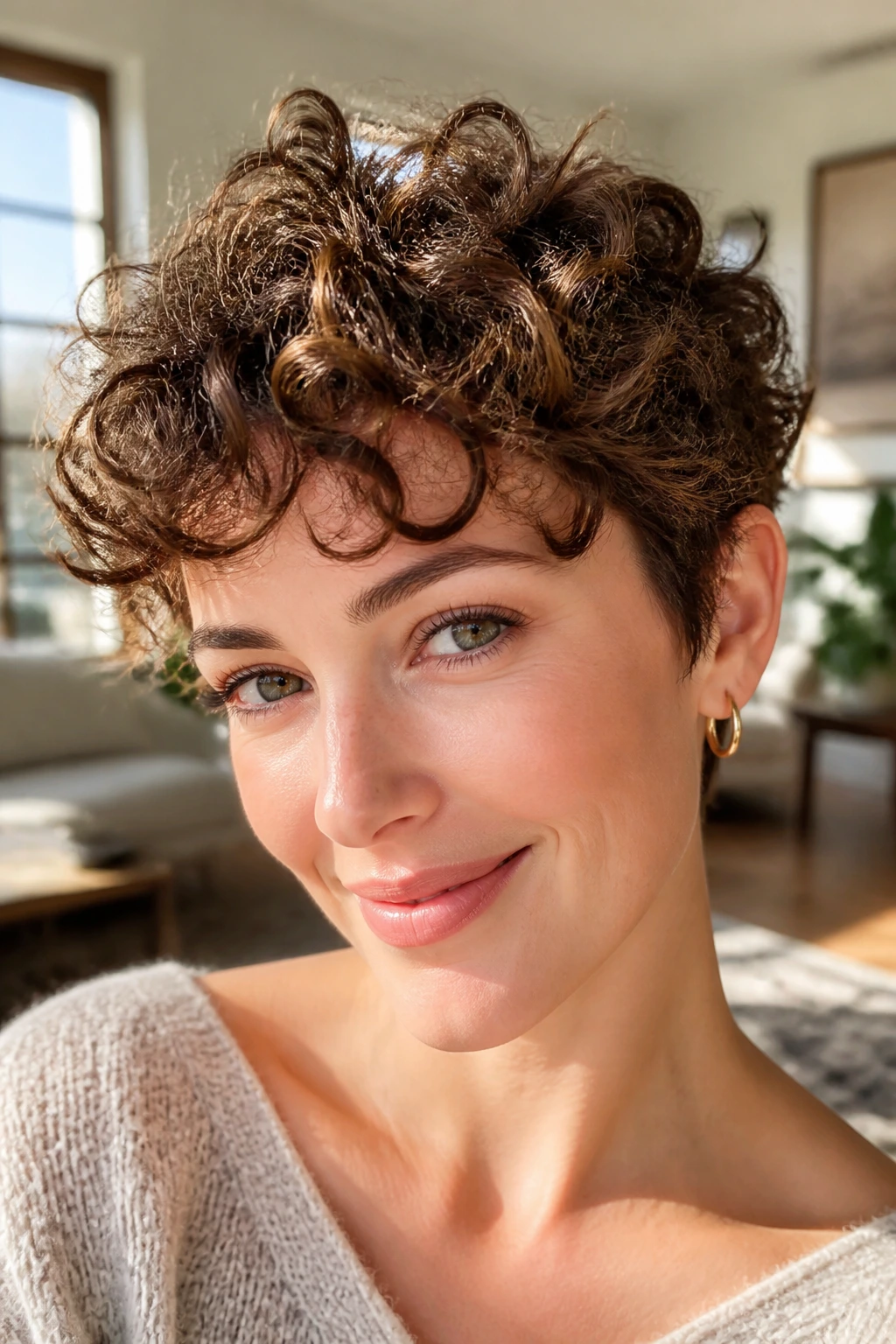
If your hair is thin and has a bit of wave or curl, do not straighten it to death. Lean into the texture. A curly pixie uses your hair’s natural tendency to bunch up and create volume to your advantage.
Using Curl to Build Volume
Curls naturally lift away from the scalp. By keeping the hair short, you ensure that these curls do not stretch out under their own weight. This is the easiest way to get maximum volume with zero effort.
Essential Products
Use a curl cream or a light mousse to define the ringlets. Avoid heavy gels, which can cause thin hair to clump together and look stringy rather than fluffy and full.
12. The Wispy Shag with Curtain Bangs
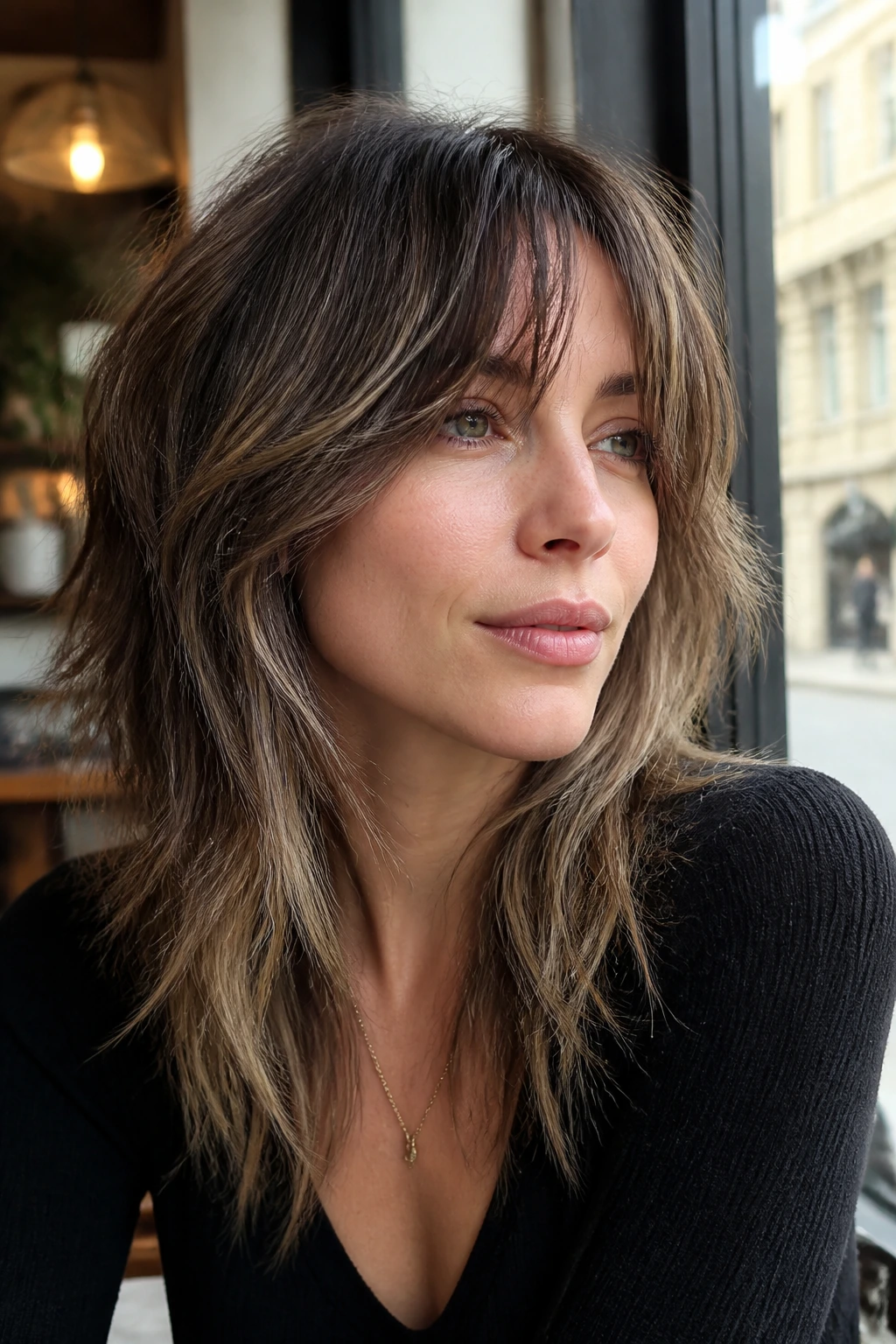
Curtain bangs are universally flattering and work incredibly well for fine hair because they don’t require the same “thickness” that a heavy, blunt fringe does. They frame the face and bridge the gap between the scalp and the lengths.
Designing the Transition
These bangs should be cut into the layers of the hair, creating a seamless transition that adds volume around the cheekbones. This is a very “lived-in” look that thrives on movement.
Daily Styling
A quick pass with a round brush away from the face is all you need. The wispy ends make the hair look airy and light rather than heavy and sparse.
13. The Rounded Pageboy Cut
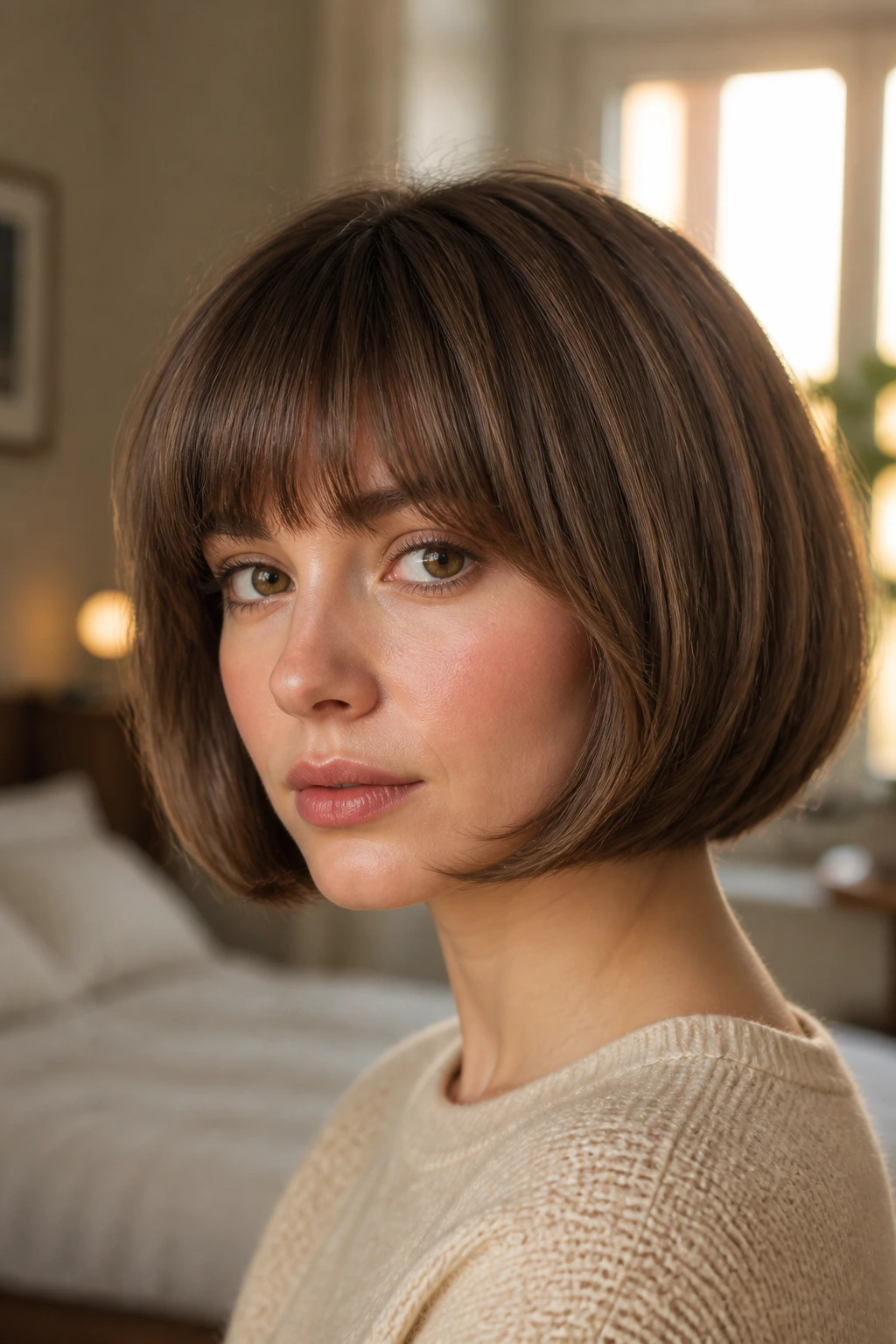
The pageboy is a retro classic that is making a quiet return. It is essentially a bob that is cut to curve under at the chin, often with a fringe.
Creating a Rounded Shape
The key here is the “c-shape” ends. By curling the hair slightly inward, you add width to the face, which provides the illusion of a denser silhouette. It’s all about creating curves rather than allowing the hair to hang dead-straight.
Equipment You’ll Need
A medium-sized round brush is essential. You want to focus the tension at the ends during the drying process to get that perfect, bouncy curve.
14. The Undercut Pixie
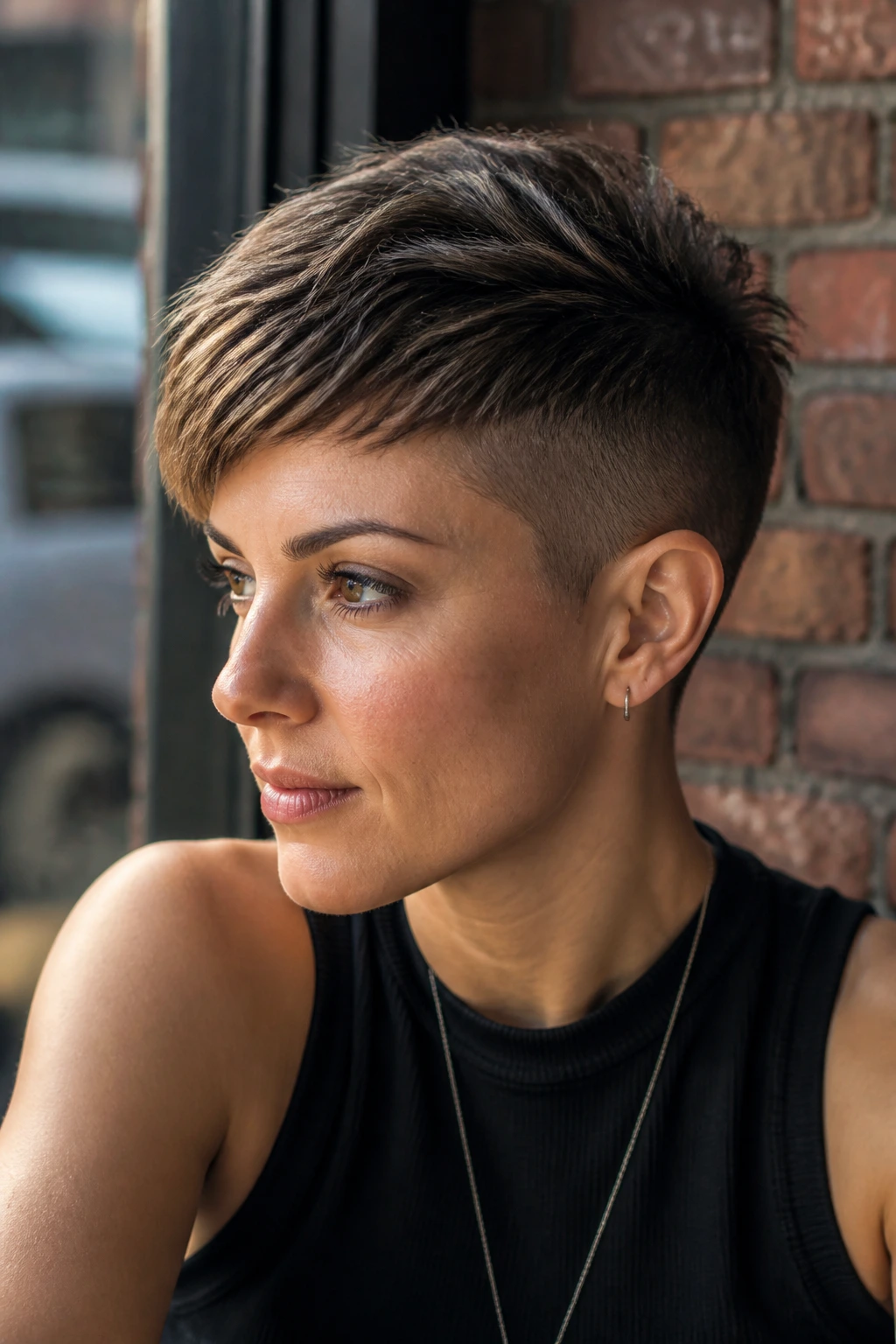
If you are feeling bold, an undercut—where the sides and back are buzzed close to the head—can be an incredible way to highlight the length and volume of the hair left on top.
The Contrast Effect
When the hair on the sides is virtually non-existent, the hair on the top of your head looks massive by comparison. It is a visual trick that makes fine hair look like it has the density of a much fuller head.
The Style Profile
This is definitely for those who want a lower-maintenance, edgy look. It’s great for highlighting piercings or statement jewelry.
15. The Long Layered “V” Cut
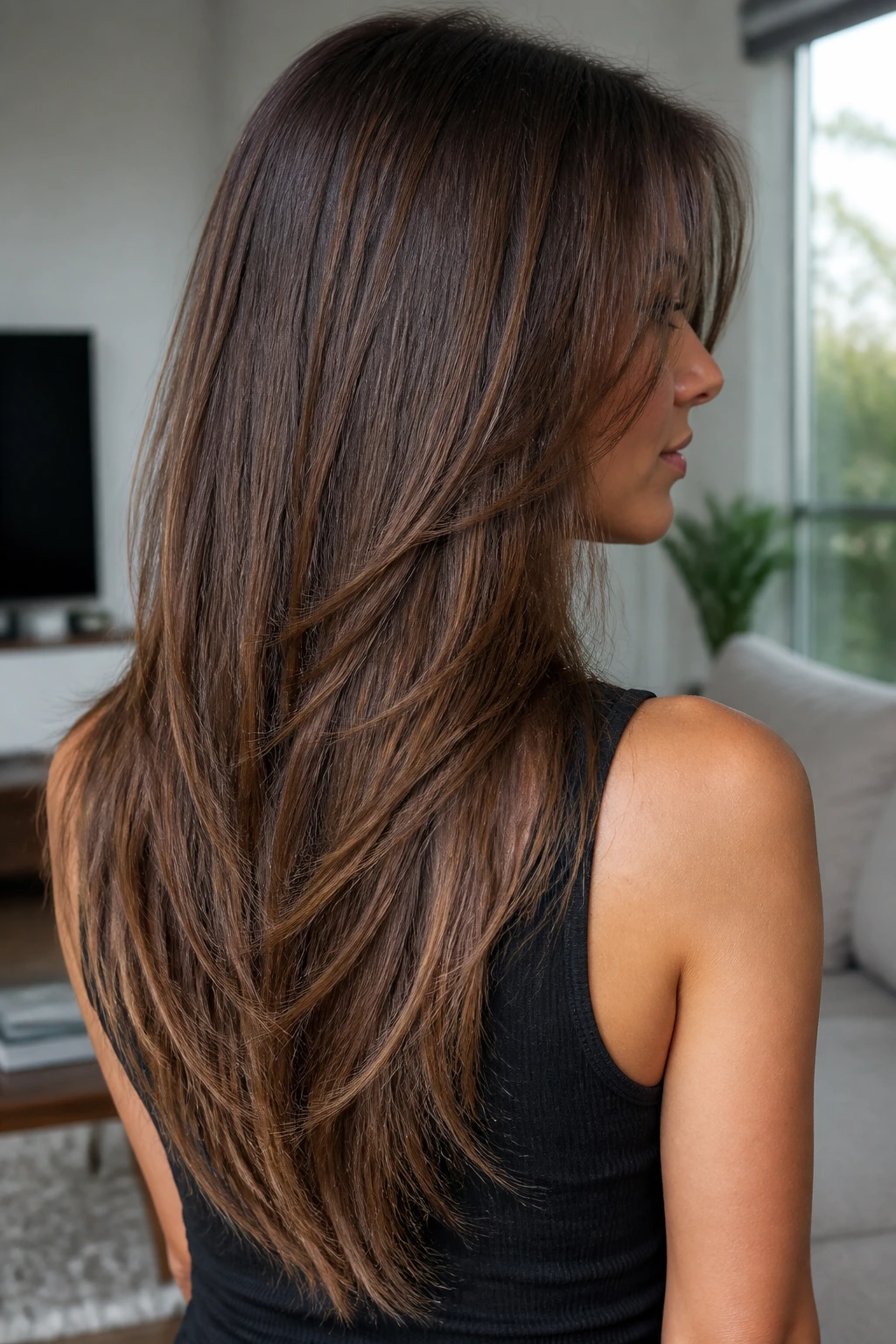
If you absolutely refuse to part with long hair, ask your stylist for a V-shape cut. This involves keeping the back layers the longest while the sides gradually shorten toward the front.
The Benefit of Shape
A V-cut eliminates a huge amount of weight from the sides and ends, which helps the hair maintain a bit of lift. It also ensures that the ends don’t look like a thin, singular sheet of hair.
Maintenance Advice
You will need regular trims to ensure the “V” stays sharp. If the tips get ragged, the whole effect falls apart.
16. The Sleek “Glass” Bob
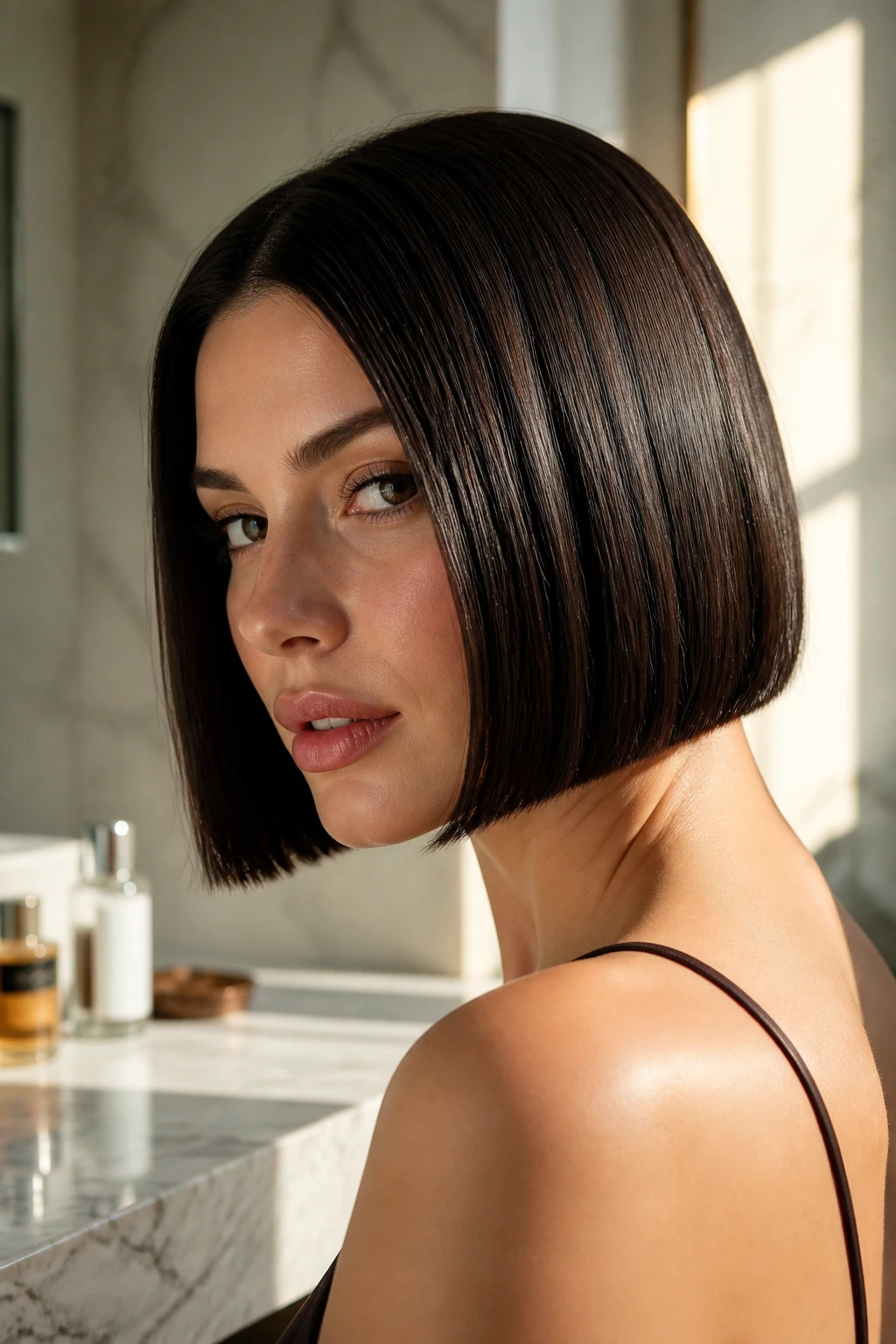
The “glass hair” look—where the hair is so shiny and smooth it looks like a single sheet of glass—is best achieved on shorter lengths. When done on a short, blunt bob, it looks incredibly chic.
Why It Works
It plays into the strength of thin hair. Because your hair isn’t battling massive amounts of volume, it’s easier to get that mirror-like shine. When the hair is smooth and perfectly blunt, it looks deliberate, not thin.
Pro Technique
Use a flat iron on the lowest heat setting after blow-drying. The heat seals the cuticle, making each strand look slightly thicker and much more reflective.
17. The Feathered Bob
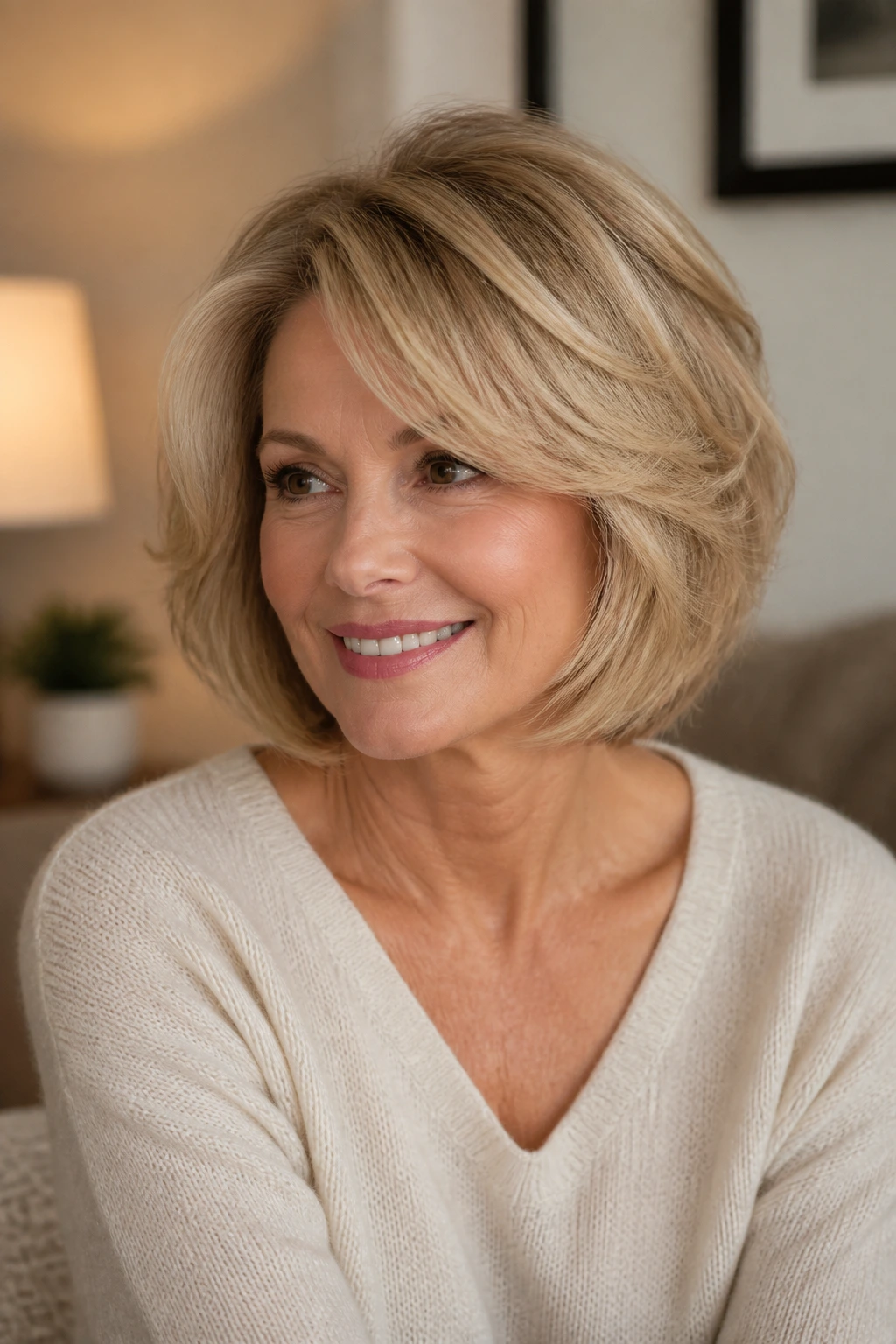
Feathering is a technique where the hair is cut in very light, overlapping layers. It creates a soft, airy finish that is very forgiving if your hair is thinning in specific spots.
Managing the Texture
This cut is all about softness. It removes the “stiff” feeling that can sometimes come with a blunt bob, making the hair look more playful and mobile.
Who It Suits
If you have a rounder face, the softness of a feathered bob can be very flattering, as it doesn’t create harsh lines that might emphasize the roundness of the jawline.
18. The Modern Bowl Cut
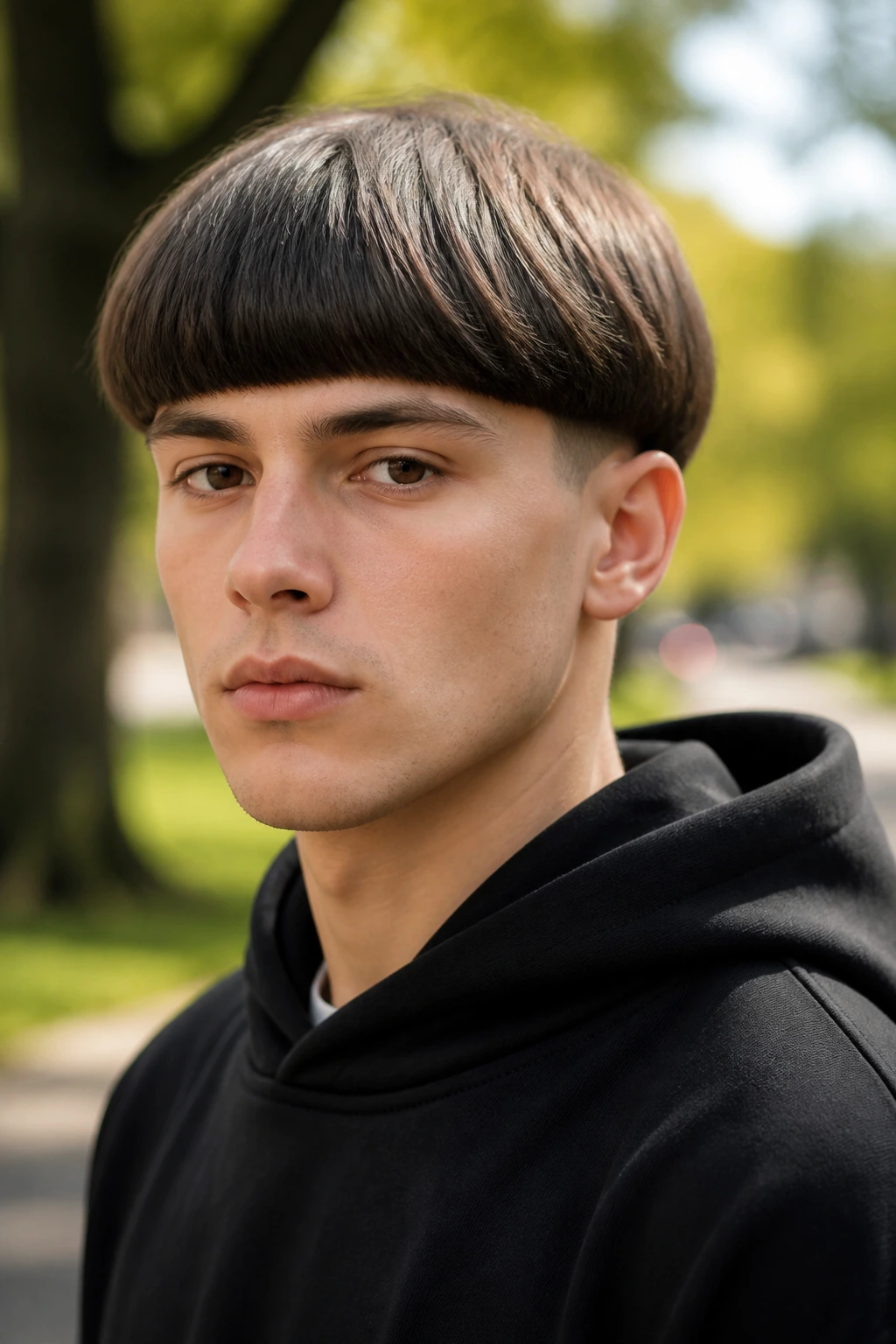
The modern bowl cut is a high-fashion, statement look. It features an even, rounded shape around the head with a strong, solid fringe.
The Power of the Line
By keeping the entire circumference at the same length, you create a solid, thick-looking structure. It’s almost like wearing a frame. This is a very precise cut that requires a skilled stylist, but it pays off with a very clean, modern aesthetic.
Styling Needs
Keep the hair very straight. Any frizz will ruin the “solid” look of the bowl, so use a light anti-frizz serum as a finishing touch.
19. The Short, Choppy Pixie
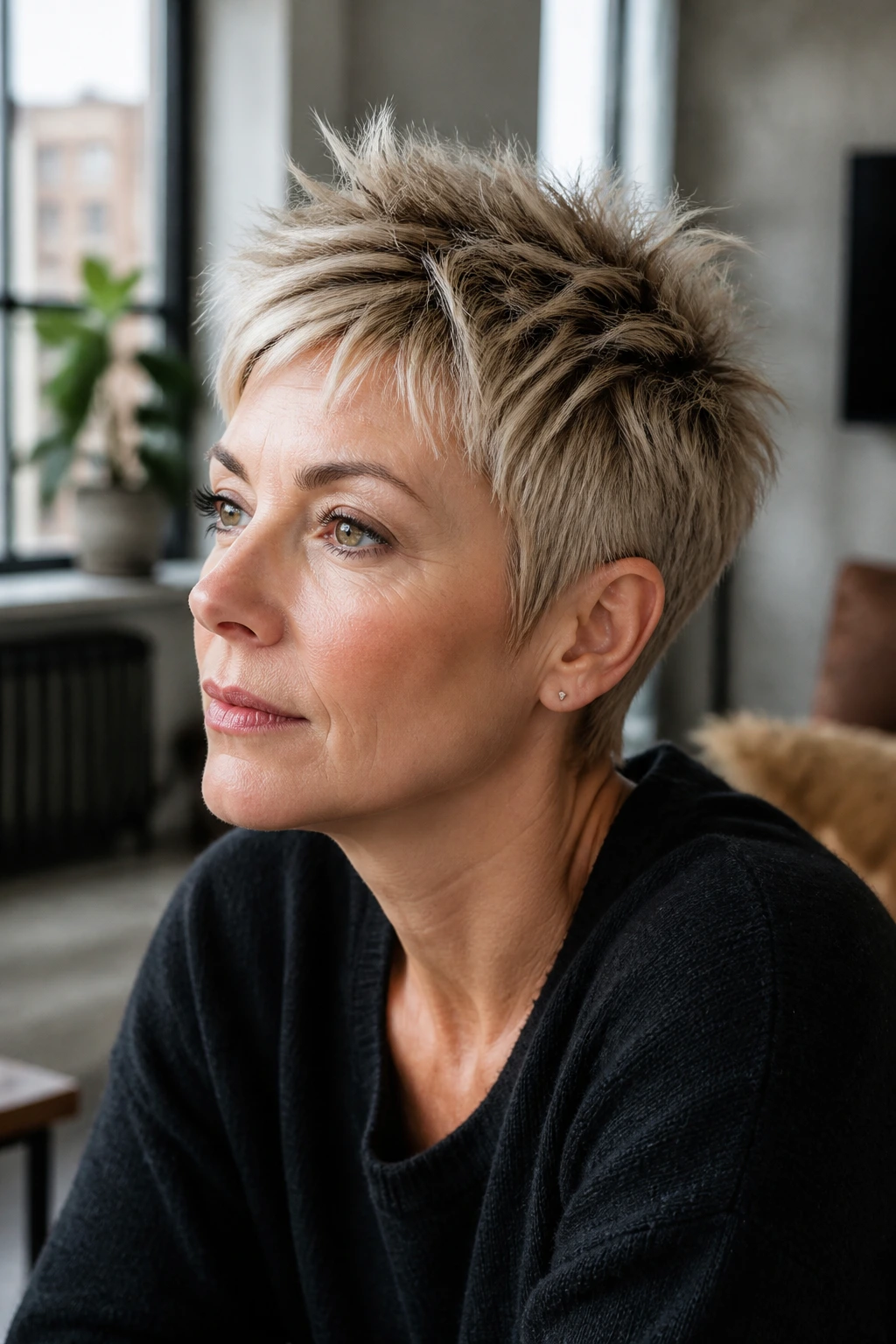
Unlike the classic, smooth pixie, the choppy version uses texture paste to create spikes and separated strands. This “tousled” look is excellent for thin hair.
The “Volume via Separation” Rule
When you use a texturizing product to separate your hair into individual, piecey bits, you are creating tiny pockets of air between each strand. This is a fantastic way to make your hair look much more voluminous.
Product Selection
Look for a matte clay or a dry wax. Avoid anything too greasy, which will just weigh the hair down and make it look like you haven’t washed it.
20. The Flipped-Out Lob
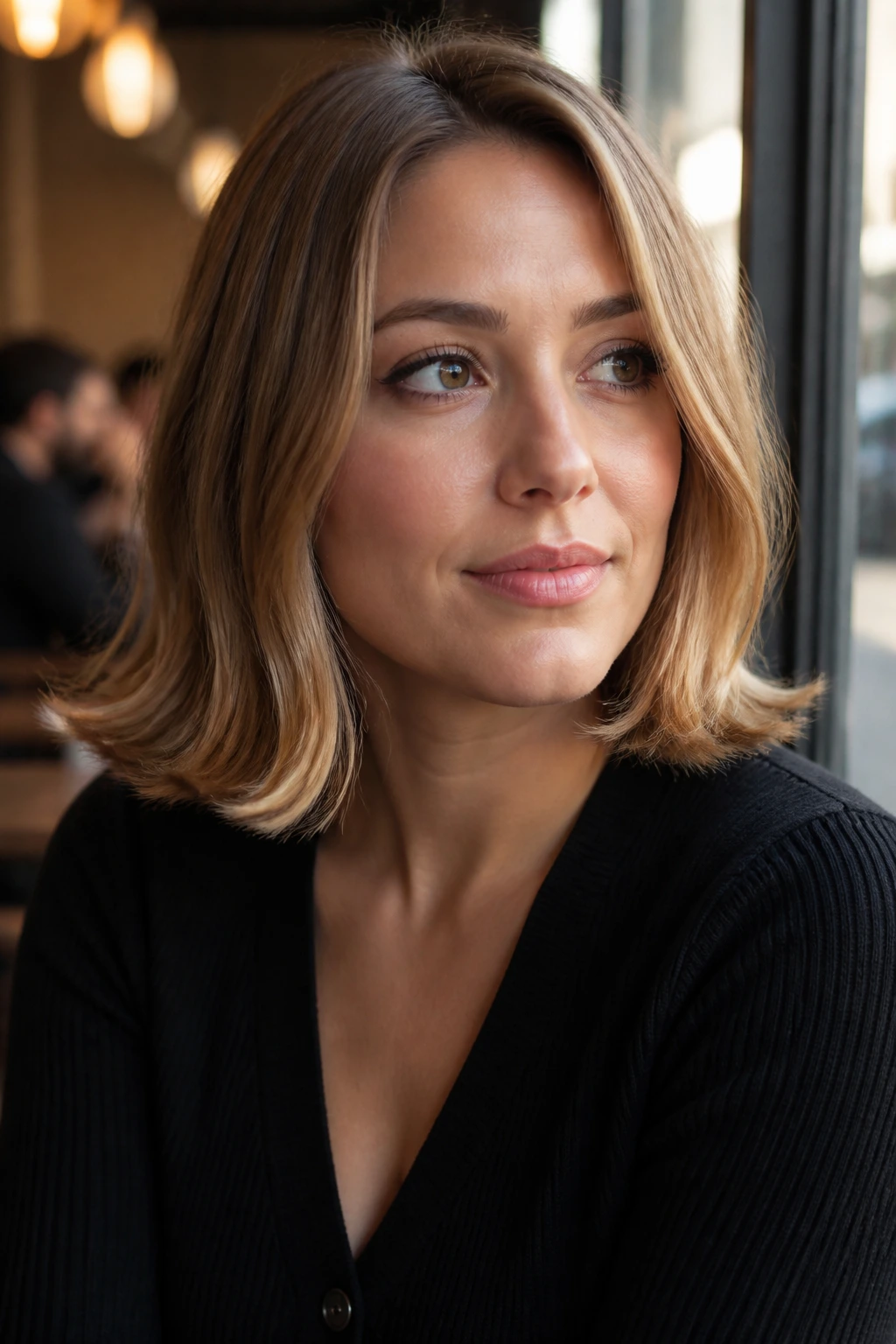
This is a fun, vintage-inspired look where the ends of the hair are flipped out using a round brush or a flat iron.
Why It Helps
Flipping the ends out creates horizontal width. Since thin hair often lacks width, this is a great way to “cheat” the system and make your head of hair look wider and fuller.
Styling for Stability
Make sure to set the flip with a light-hold hairspray. If the ends start to drop, the look loses its intended shape, so keep a travel-sized spray handy.
21. The Mid-Length Blunt Cut with “Invisible” Layers
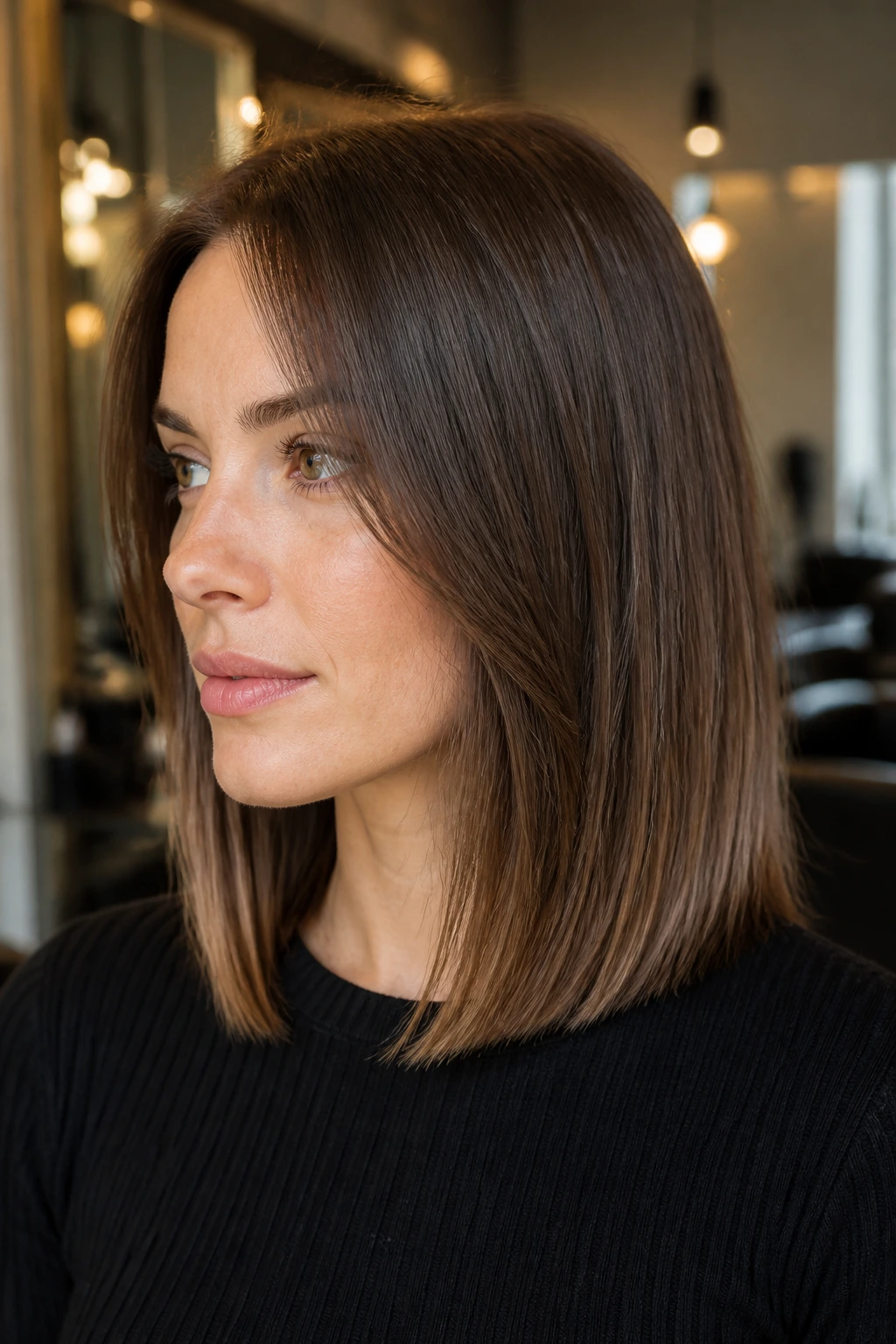
Invisible layers are cut into the interior of the hair. They aren’t visible as layers on the surface, but they provide the “lift” that the hair needs to not lie flat against the head.
The Secret Support
Because these layers are internal, they hold up the longer top layers, giving you a bit of a “poof” at the crown without making the hair look chopped up.
Who Should Ask for This
Ask your stylist if they have experience with internal texturizing. It’s a very specific skill, but it’s a total game-changer for people who hate the look of visible layers.
22. The Blunt Bob with Micro-Bangs
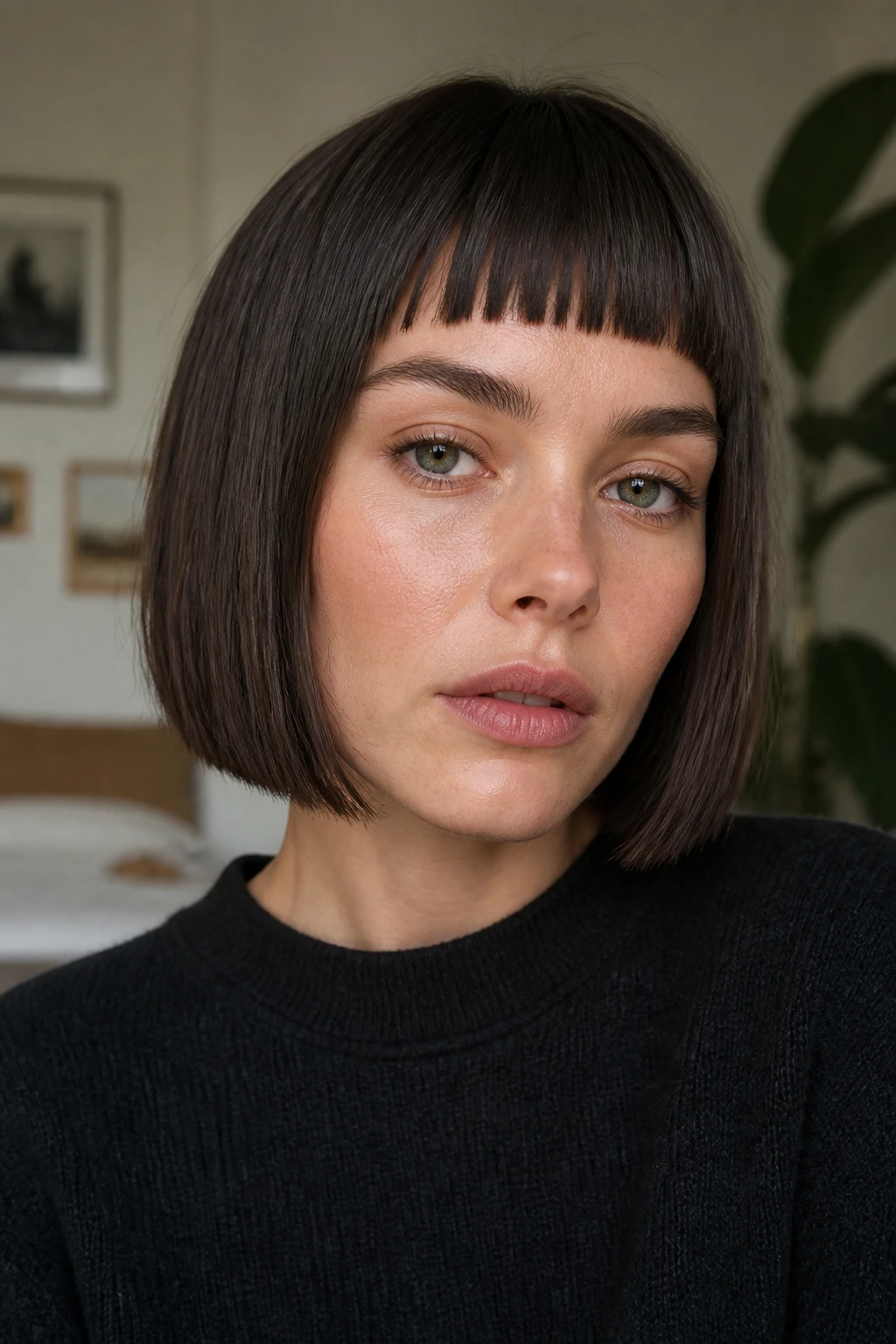
Micro-bangs are a bold, short fringe that sits well above the eyebrows. They add a lot of character and are very low-maintenance once they are styled.
The Benefit for Density
By taking a section of hair from the very front to create these bangs, you are essentially concentrating the density in the most visible area of your face. It draws the eye to your brows and eyes immediately.
Styling Tip
Use a tiny dab of hair wax to define the individual strands of the bangs so they don’t look like a solid, thin block, but rather a curated, deliberate fringe.
23. The Long Bob with a Hidden Undercut
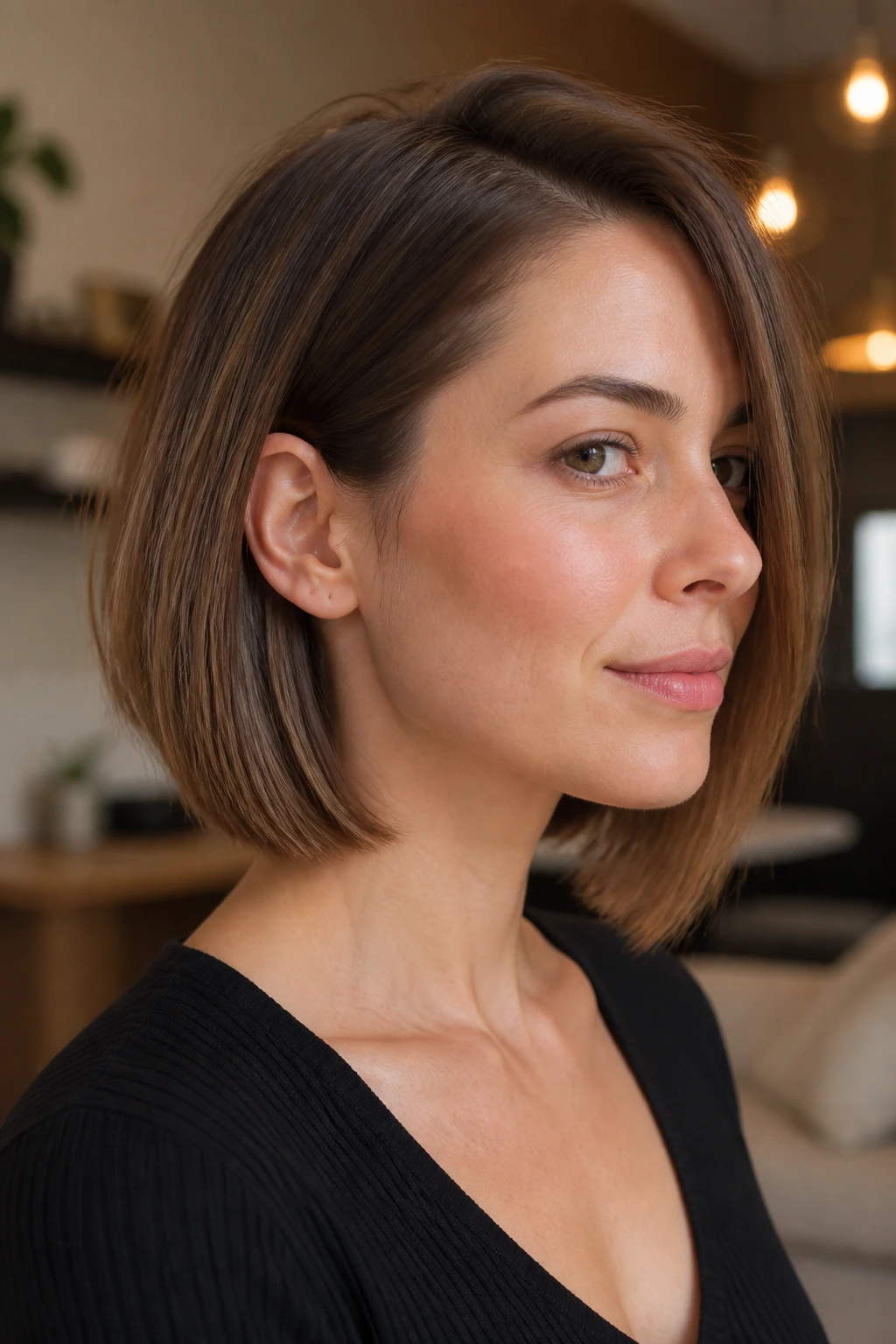
If you love having long hair but find that the underneath layer looks stringy, consider shaving or closely clipping the hair at the very nape of your neck.
Removing Dead Weight
The hair at the nape is usually the thinnest and least noticeable. By removing it, you lose the “tail” that makes long hair look thin. The remaining hair will sit flatter and look more blunt and substantial.
Why This is Clever
Nobody sees the undercut when your hair is down, but you get the benefit of a much cleaner, more uniform line at the bottom of your hair.
24. The Pixie-Bob Hybrid
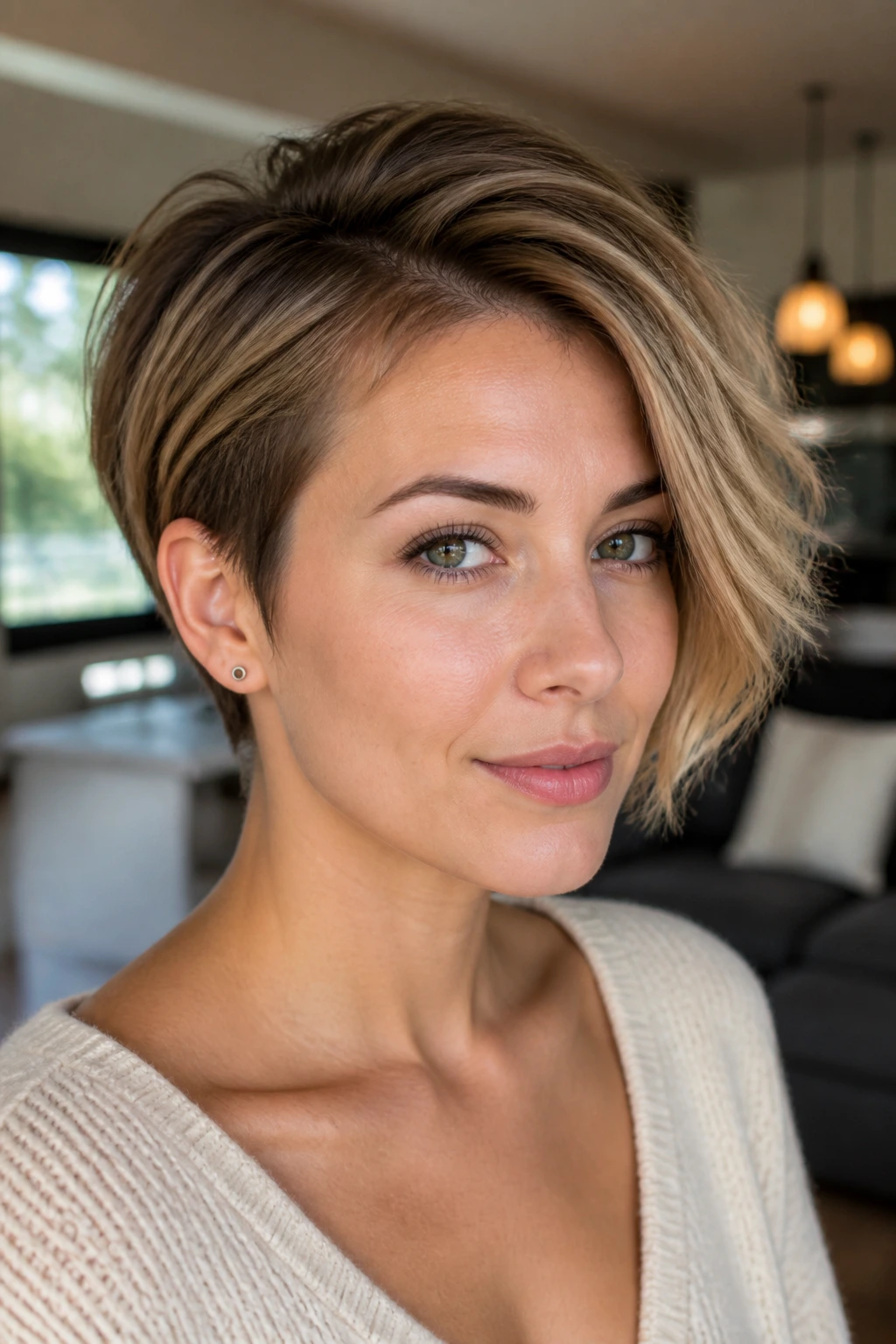
This is the “in-between” stage cut. It’s longer than a traditional pixie but shorter than a bob. It features a lot of length on top that is swept to one side.
The Multi-Tasking Cut
It gives you the ease of a short cut while providing enough length to play with styling. You can wear it smooth and professional for work or tousled and messy for the weekend.
Versatility
This cut is perfect for those who are currently growing out a very short cut and are stuck in that awkward transition phase.
25. The Blunt Cut with “Peek-a-Boo” Color
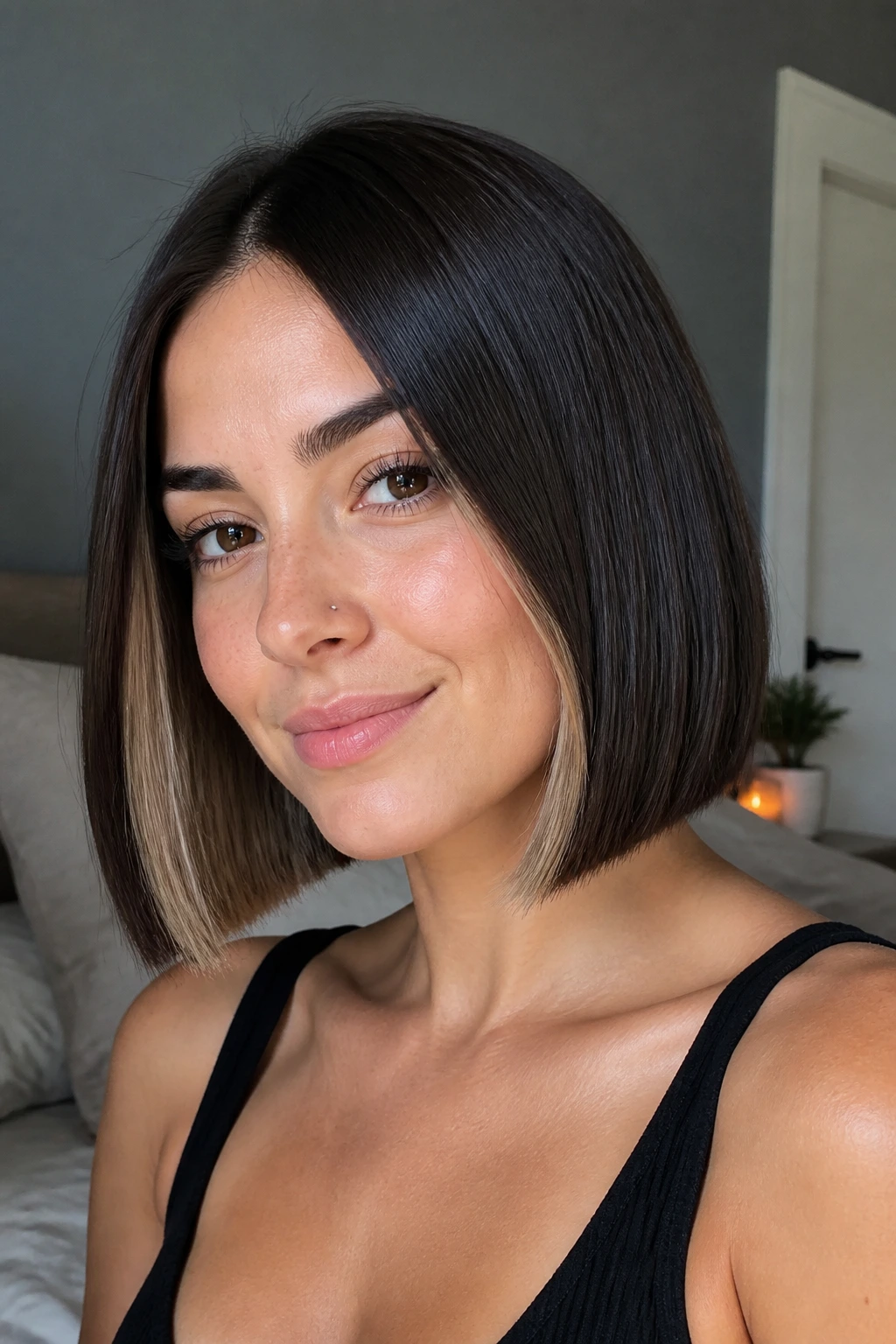
Color is a fantastic tool to create the illusion of thickness. By adding lighter highlights or darker lowlights, you create visual depth that mimics the appearance of density.
The Science of Color
Uniform color can look flat, which makes thin hair appear even thinner. By mixing two or three tones, you trick the eye into seeing shadows and highlights, which gives the impression of multiple layers of hair.
What to Ask For
Ask for “babylights.” These are very fine, subtle highlights that blend seamlessly into your natural base color. They add dimension without being high-maintenance.
26. The Textured Top-Knot Base
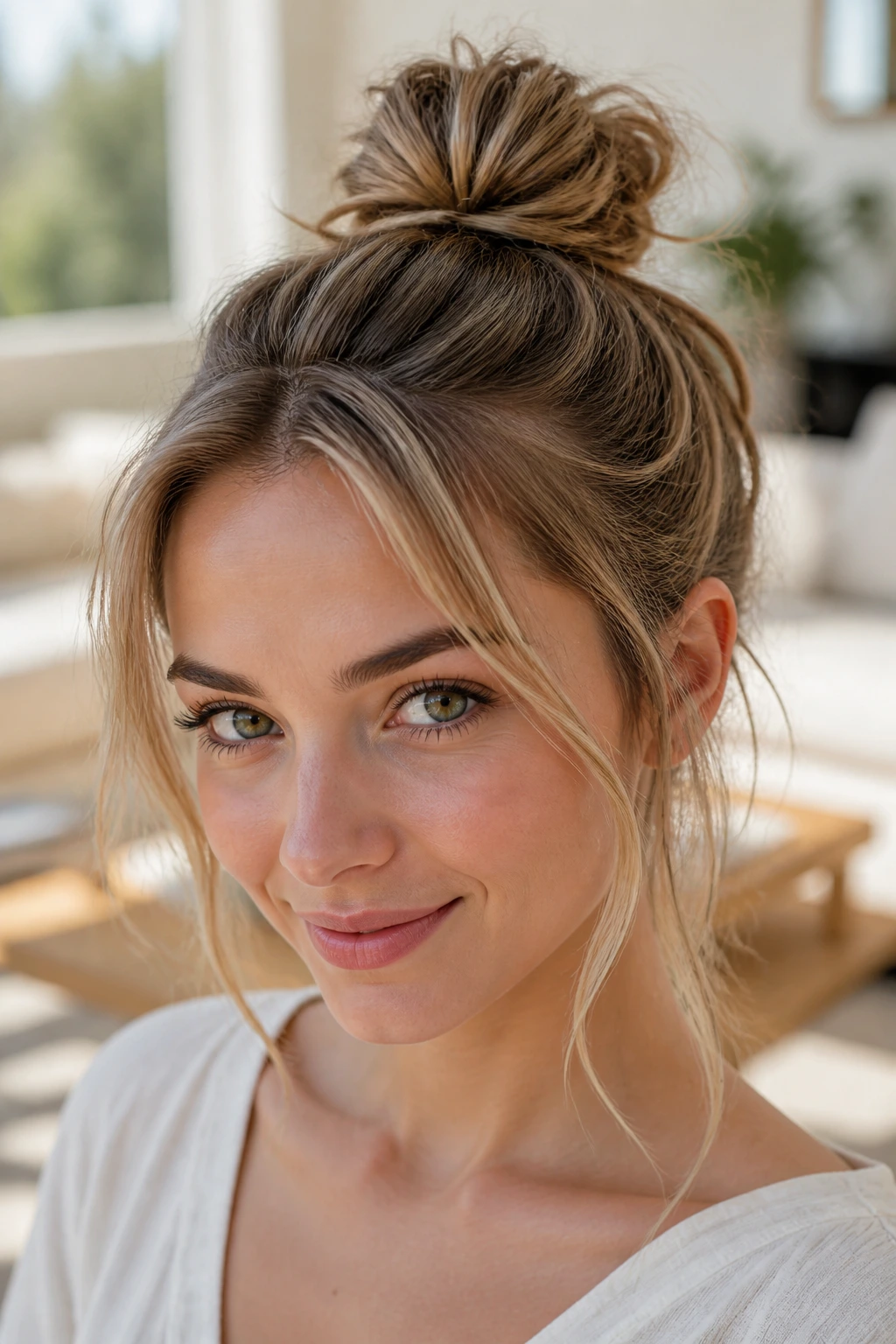
Sometimes the best cut is one that prepares your hair to be styled into an updo. A lob with shorter pieces around the face is ideal for this.
The Foundation for Styling
When you have shorter face-framing pieces, you can leave them out when you pull the rest of your hair into a top-knot. This creates a soft, romantic look that draws attention to the face and away from the density of the bun itself.
Pro Tip
Use a clear elastic to pull your hair into a bun, then use a tail comb to gently tug at the roots around your crown to create a bit of a “messy” lift.
27. The Blunt “A-Line” Bob
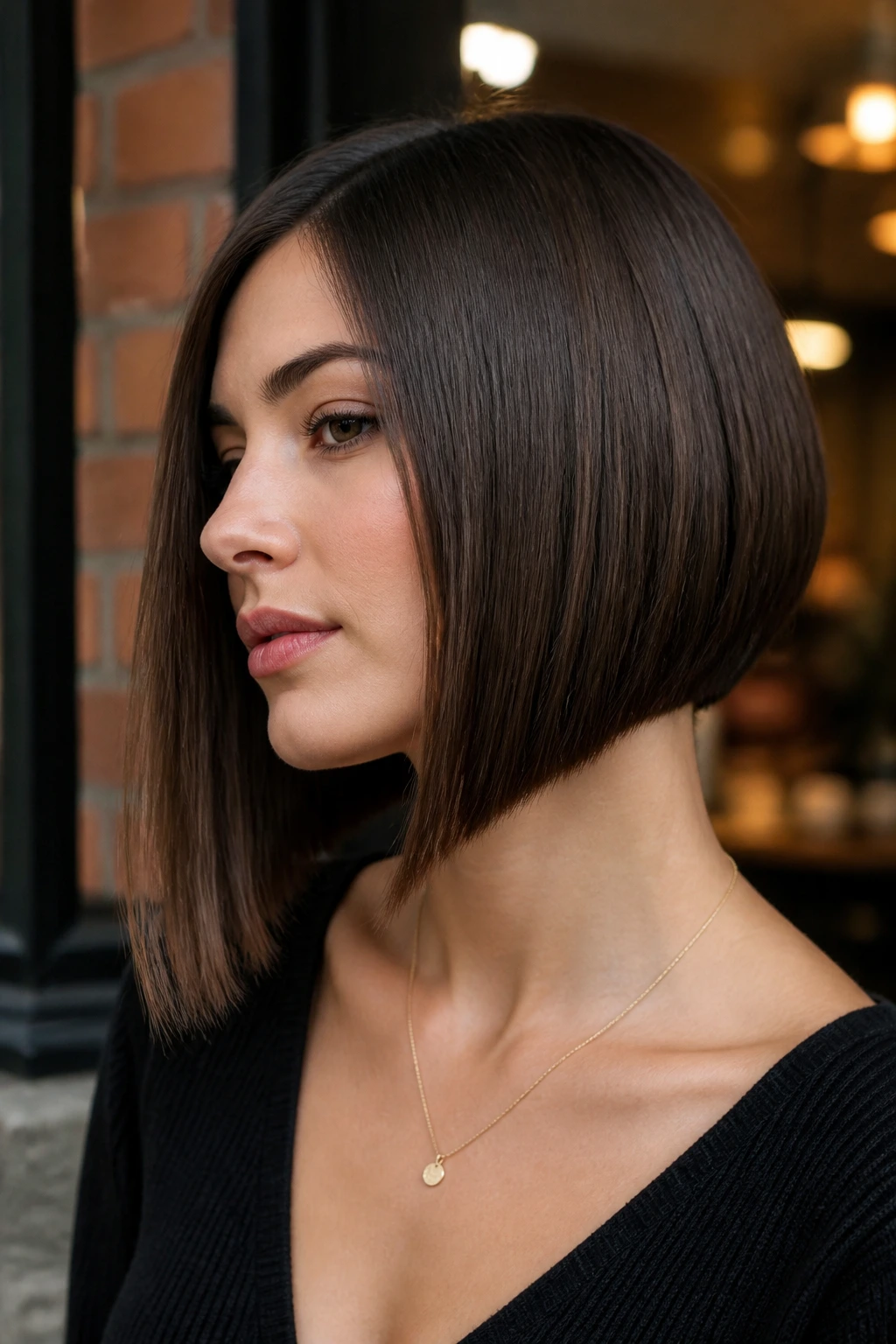
An A-line bob is shorter in the back and gets gradually longer toward the front. It’s a classic that never goes out of style and is perfect for fine hair.
The Shape of Sophistication
The angle of the A-line creates a sharp, modern line that is very flattering. Because it is longer in the front, it frames the face beautifully, providing a sense of weight where you need it most.
Maintenance Note
This cut looks best when it’s perfectly smooth. A good quality heat protectant is a must, as you’ll likely be using a flat iron to keep the lines sharp.
28. The Natural “Wash-and-Go” Shag
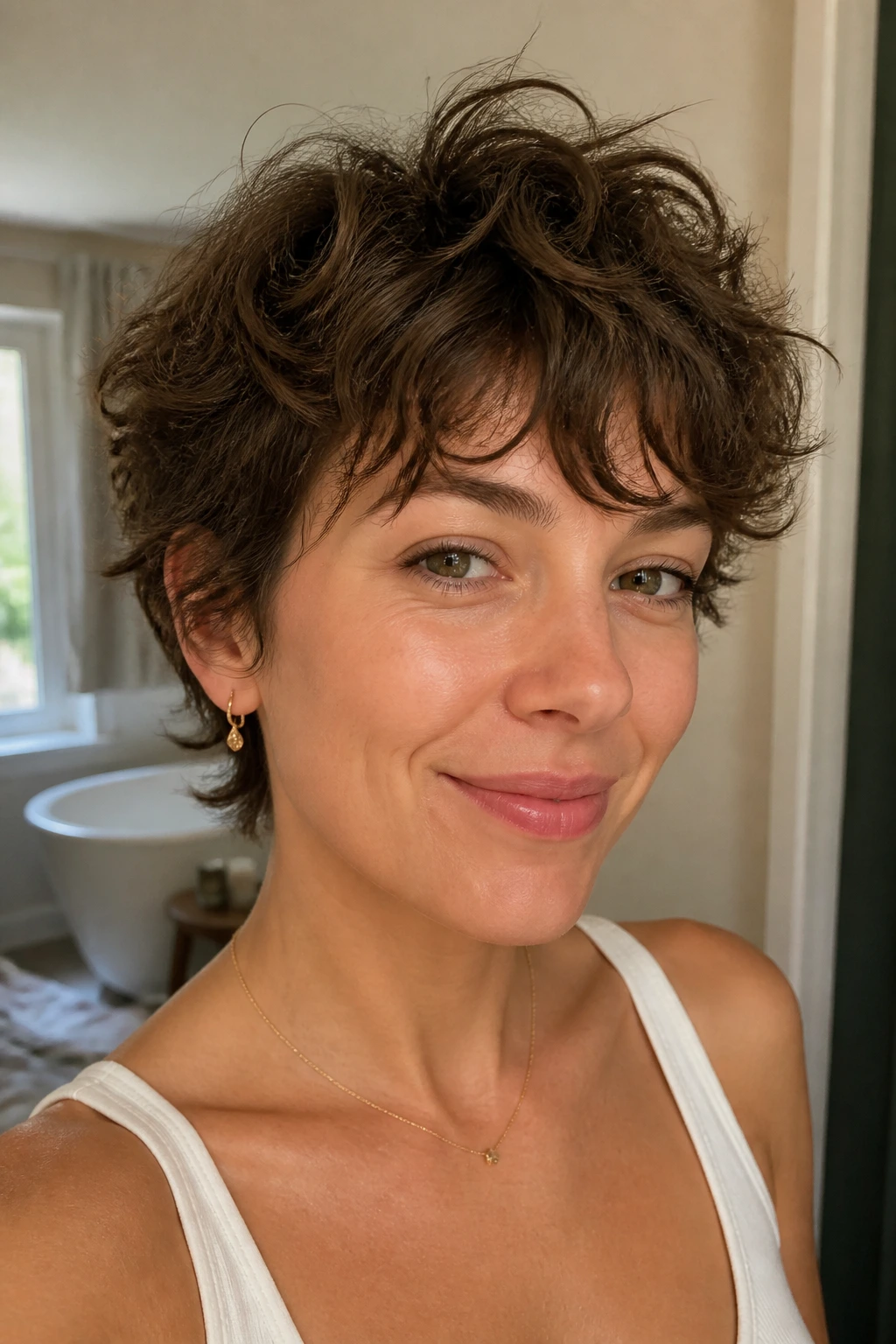
If you really want to embrace your hair’s natural texture, a slightly grown-out, shaggy pixie is a great choice. It’s a bit longer than a standard pixie, allowing for more natural movement.
The “Less Is More” Approach
With this cut, you are doing very little styling. You let your hair air-dry, maybe working in a little bit of texture cream, and you leave it alone.
Finding the Confidence
The key to this look is confidence. It’s meant to look a little bit lived-in, a little bit messy, and entirely your own. It is the ultimate style for those who are tired of fussing over their hair every single morning.
Final Thoughts
The most important takeaway for anyone with thin hair is that your haircut should serve your lifestyle and your natural texture. Do not feel pressured to choose a style because it looks thick on someone else; choose it because it brings out your best features and makes you feel comfortable.
Experimenting with your hair is part of the fun. If you start with a long bob and find it’s still not quite the volume you want, don’t be afraid to go shorter. The beauty of hair is that it grows, and a well-executed cut is almost always an improvement on a style that no longer fits your needs. Trust your stylist, talk to them about your specific concerns, and remember that volume is often just a matter of the right cut and the right perspective.