

The butterfly cut has become a defining shape for those who want the drama of layers without losing the overall length of their hair. If you have been looking for a style that mimics the airy, feathered wings of a butterfly—hence the name—you are likely chasing that specific blend of short, face-framing layers and long, flowing ends. It is a look that feels undeniably throwback, pulling inspiration from the blowout-heavy styles of the nineties, but with a modern, piecey edge that makes it feel fresh and relevant regardless of the season.
Choosing a long butterfly cut means you are trading in the uniform, blunt-cut weight that drags your hair down for something much more kinetic. The magic lies in the transition zones where the shorter layers sit around your chin and collarbone, while the remaining bulk stays long enough to pull into a ponytail or drape over your shoulders. This architecture creates an illusion of volume even for those with naturally fine or thinning hair, and for those with thick, heavy manes, it acts as a relief valve, removing the excess density that usually makes a haircut feel like a heavy cloak.
1. Classic Feathered Butterfly Layers
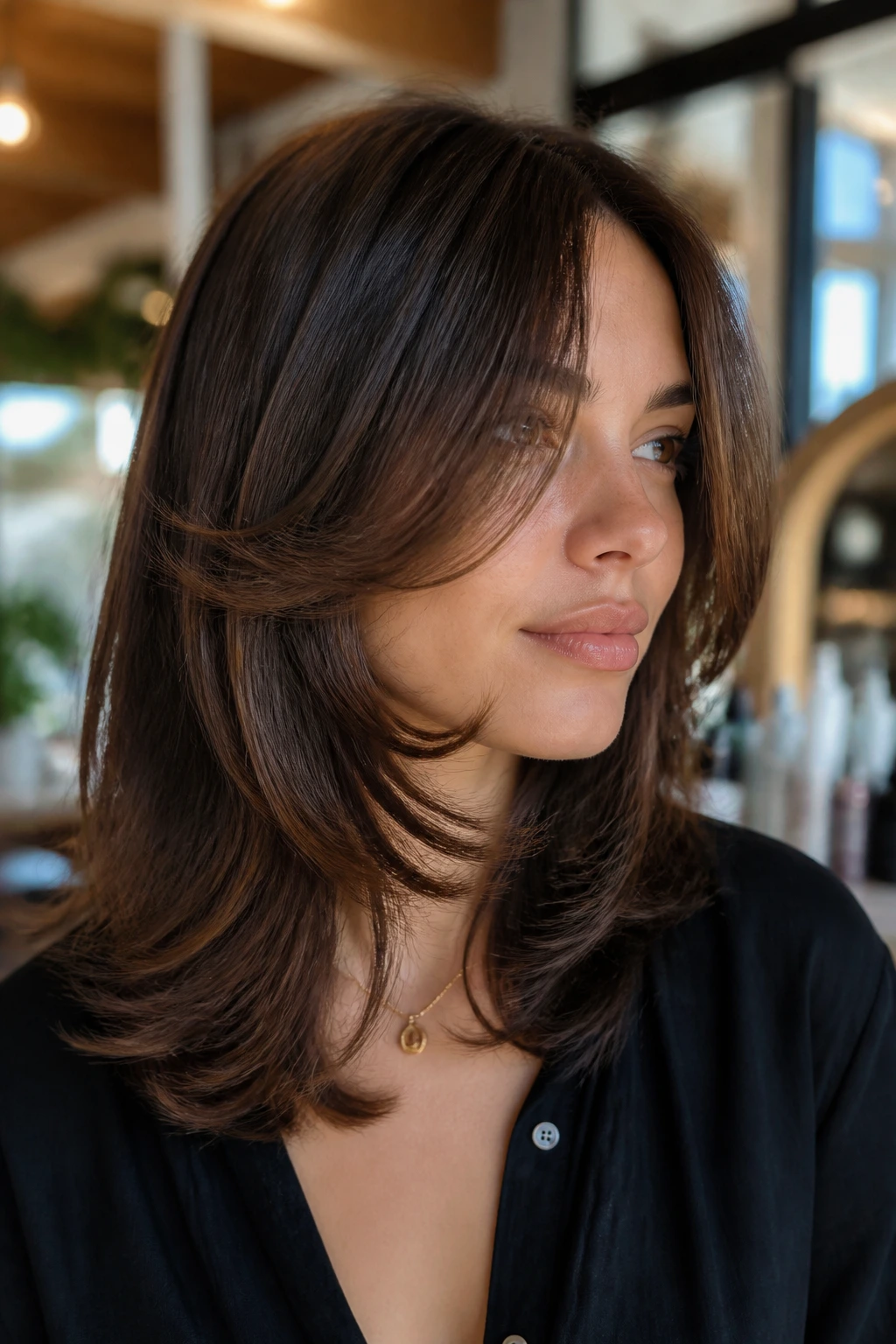
This style is the quintessential version of the look, focusing on high-contrast layering that starts right around the jawline. You want the layers to be distinct and slightly disconnected, which creates that iconic winged effect when you blow it out. It is a fantastic choice if you spend time with a round brush and a hairdryer every morning, as the shape is designed to hold a voluminous curl or flip.
The Mechanics of the Feather
- The shortest layers are cut specifically to hit the cheekbones or the jaw.
- The mid-section layers transition gradually toward the back to blend into the length.
- The ends remain soft, almost razored, to keep the overall silhouette from looking too blocky or blunt.
Pro tip: Use a light-hold volumizing mousse on damp hair before you begin your blowout to ensure the feathered ends actually lift instead of falling flat by midday.
2. Face-Framing Butterfly with Bottleneck Bangs
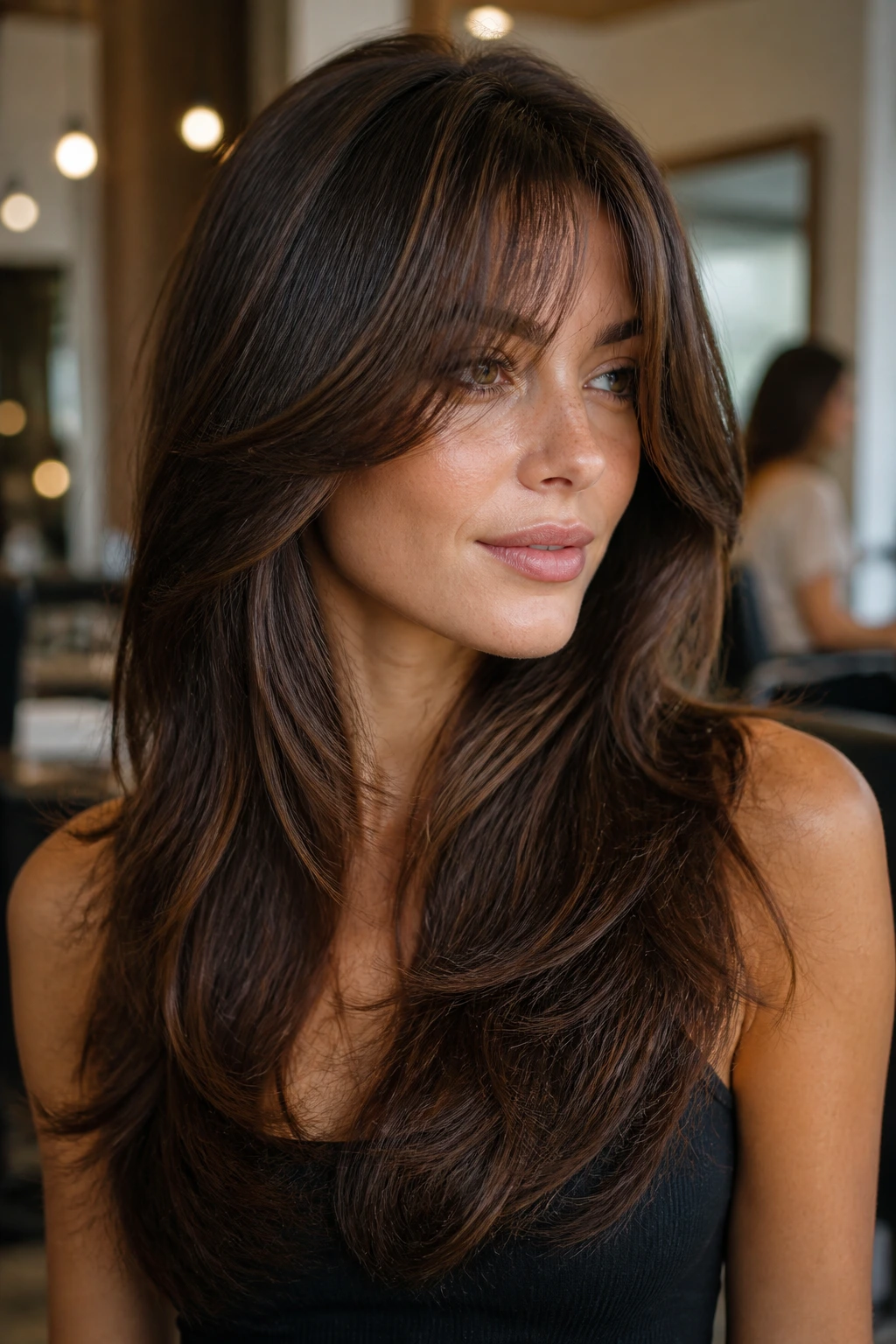
If you are worried about the butterfly cut looking too “disconnected” at the front, adding a soft bottleneck bang is the smartest way to bridge the gap. These bangs start shorter at the center of the forehead and curve down into the longest layers of the cut, effectively framing the face and drawing attention to the eyes. It softens the entire look, making the jump between the chin-length layers and your long hair feel intentional and seamless.
Styling for Softness
This specific variation leans into a more romantic aesthetic. By using a medium-barrel curling iron, you can encourage the bangs to sweep backward, creating a curtain effect that blends perfectly with the rest of the winged layers. It is an ideal shape for anyone who wants to hide a wider forehead or simply wants their haircut to have a bit more “cushion” around their features.
3. High-Volume Blowout Butterfly Cut
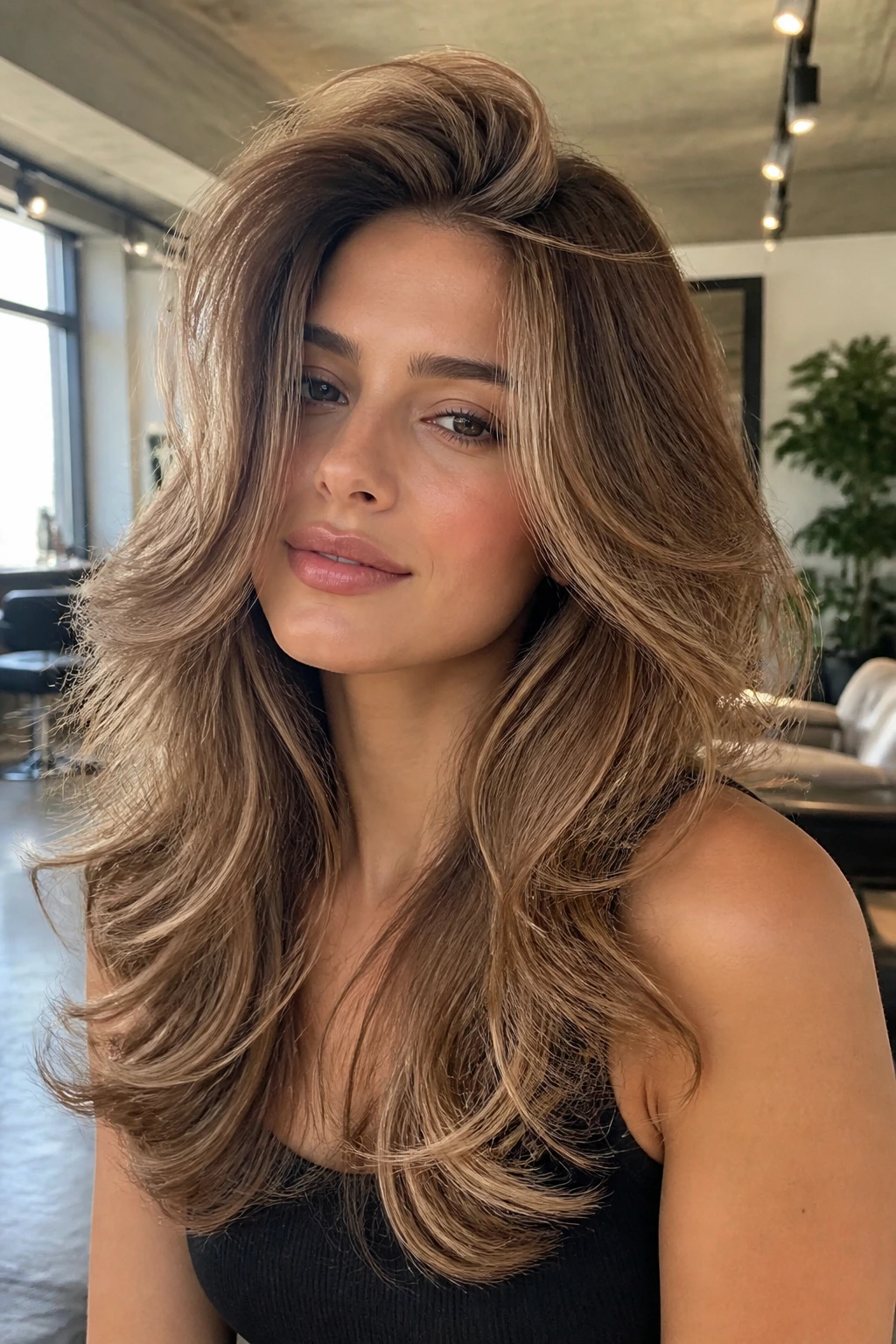
This is the look that has dominated social media feeds for a reason—it is pure volume. The butterfly cut is inherently built for height, but this style takes it to the next level by focusing on over-directing the hair at the roots while drying. You aren’t just wearing your hair; you are styling an architectural statement.
Achieving the Maximum Lift
- Focus your blow-drying efforts on the crown of the head, pulling hair straight up to maximize lift.
- Once the hair is 90 percent dry, roll the layers around large hot rollers to set the shape.
- Allow them to cool completely for at least 15 minutes before brushing out the curls into soft, airy waves.
Avoid this mistake: Do not apply heavy silicone-based serums near the roots, as they will weigh down your volume and ruin the airy quality that makes this cut special.
4. The Beach-Wave Butterfly Variation
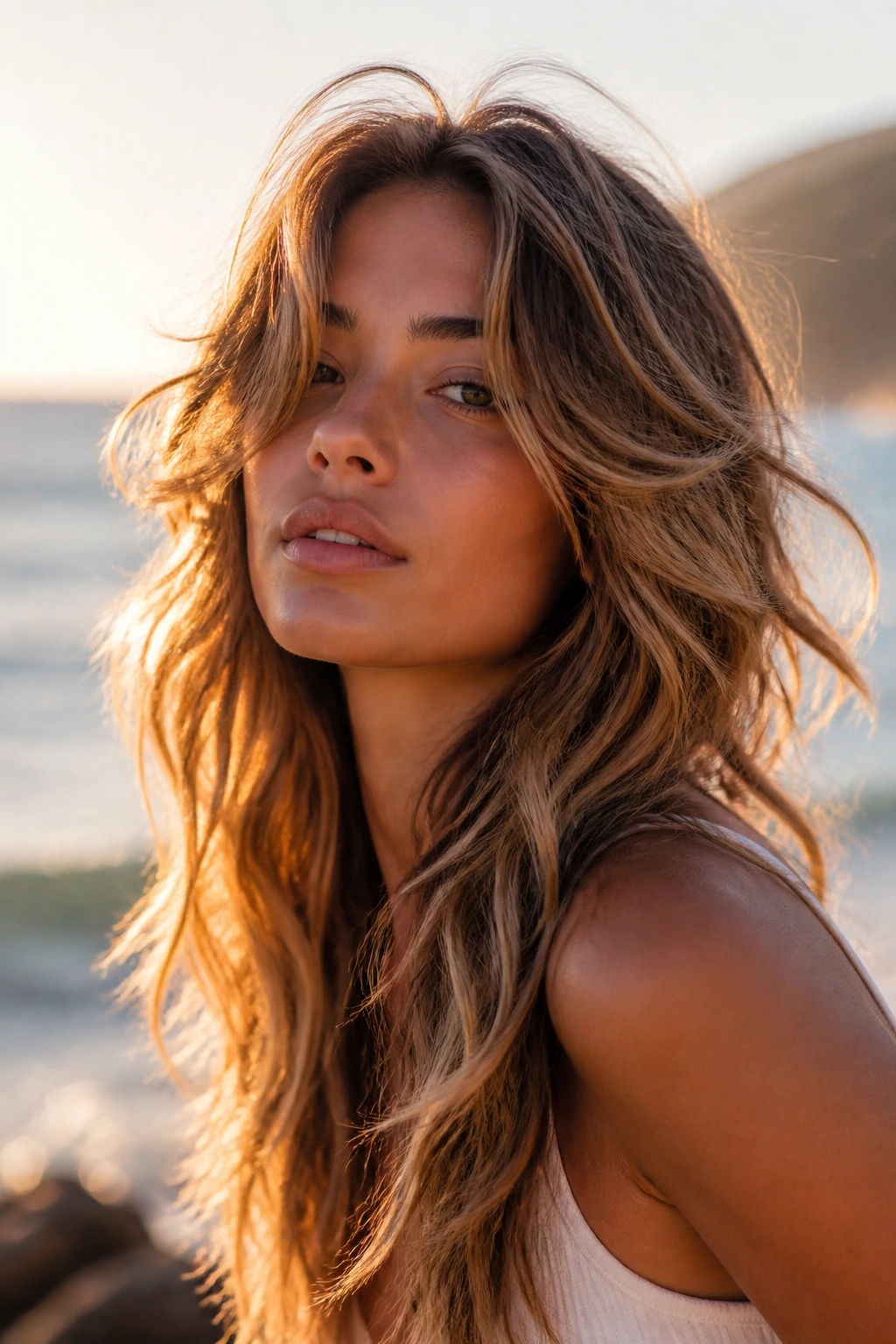
Not everyone wants a polished, salon-style blowout. If you prefer a more lived-in, effortless aesthetic, the beach-wave butterfly cut is your best bet. Because the cut is already heavy on internal layers, you don’t need to do much work to get texture; the hair naturally wants to move and bend.
Texturizing Your Layers
To enhance the movement, reach for a sea salt spray or a dry texturizing spray. Instead of a round brush, use a triple-barrel iron or a standard wand to create loose, irregular waves. The short, choppy layers will naturally spring up, creating a tousled, “just woke up in paradise” appearance that looks great on day two and day three without a wash.
5. Sleek and Straight Butterfly Layers
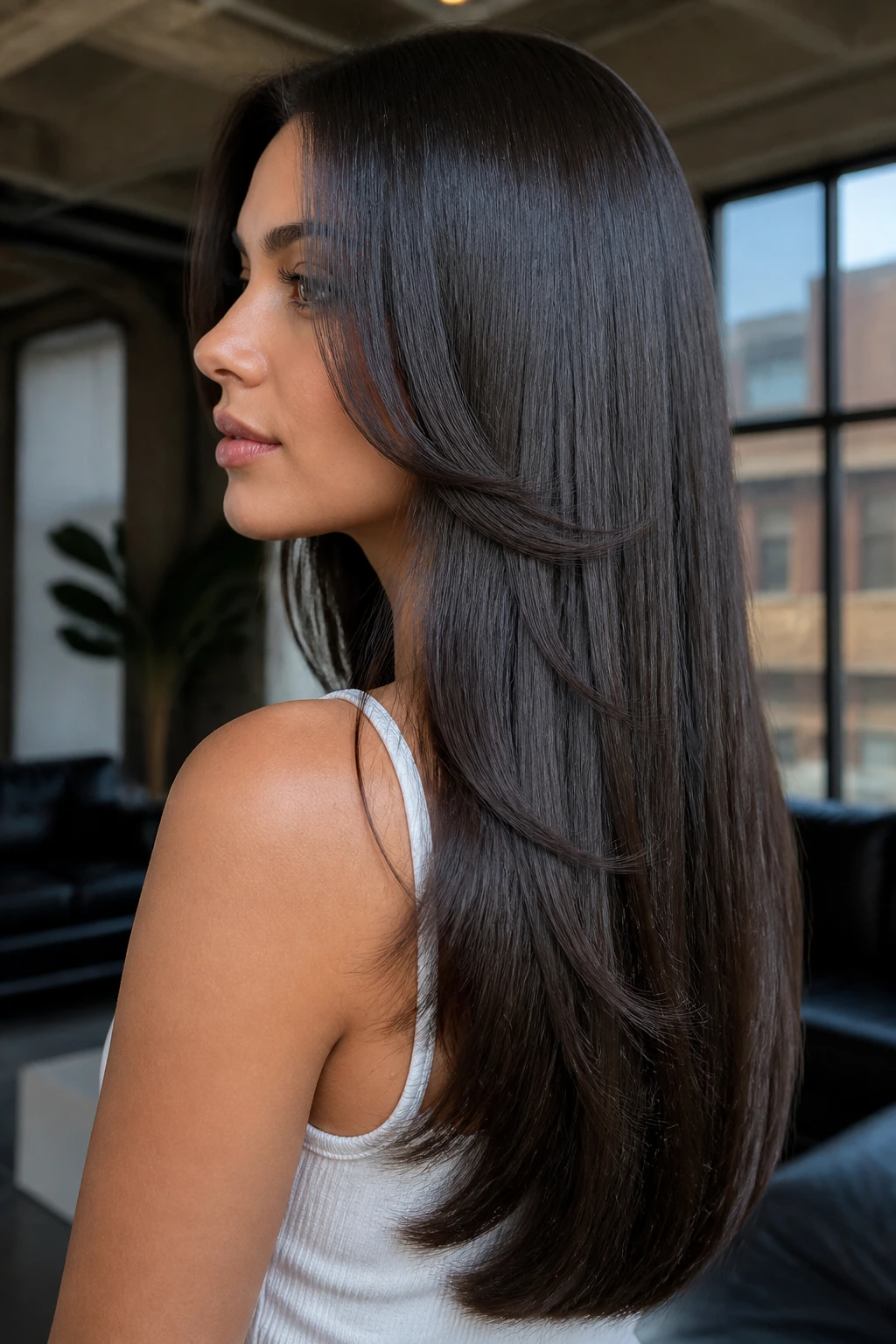
People often assume that the butterfly cut must be worn curled or flipped, but it looks incredibly sophisticated when worn poker-straight. In this version, the layers are cut with more precision so they look like distinct “steps” of hair cascading down the back. It highlights the cut’s geometry rather than trying to hide it in curls.
How to Keep It Polished
You will need a high-quality flat iron and a heat protectant spray with a slight shine enhancer. Start by smoothing the top layers, then use a small amount of lightweight oil on the ends to keep them from looking frizzy or dry. This is a very sharp, polished way to wear the cut for professional settings or formal events.
6. Butterfly Cut with Face-Framing Highlights
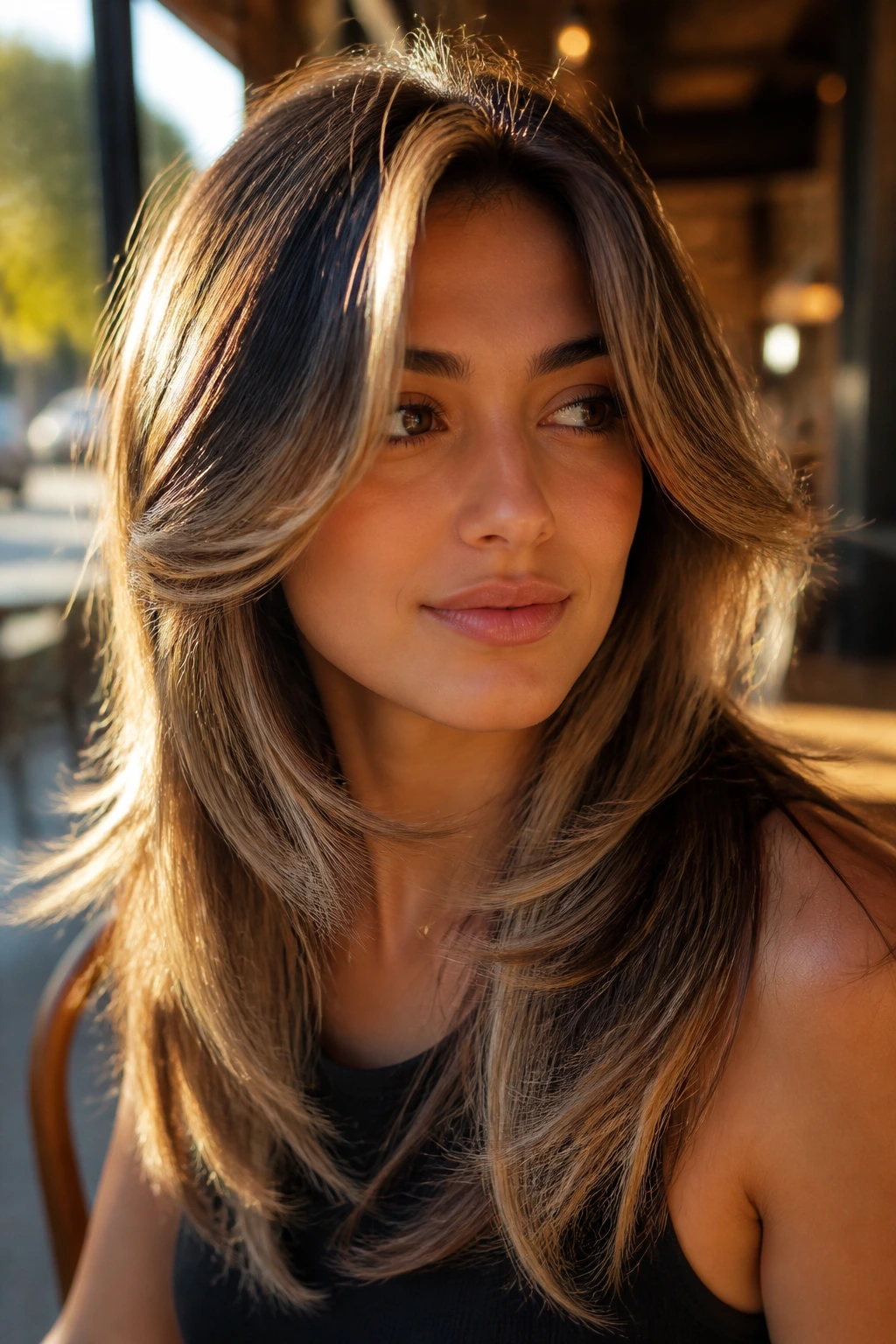
The layers of a butterfly cut naturally draw attention to your face, so why not accentuate that with strategic color? Placing brighter highlights around the chin-length layers creates a spotlight effect that makes your hair look even more dimensional. It breaks up the color and makes the “wings” stand out against the darker, longer sections of your hair.
Choosing Your Color Placement
- Ask your stylist for “money pieces” that hit exactly where your shortest layer begins.
- Add micro-lights throughout the mid-length layers to provide texture even when the hair is pulled back.
- Keep the ends slightly deeper in tone to maintain a natural, sun-kissed look that grows out gracefully over time.
7. The Layered Butterfly Shag
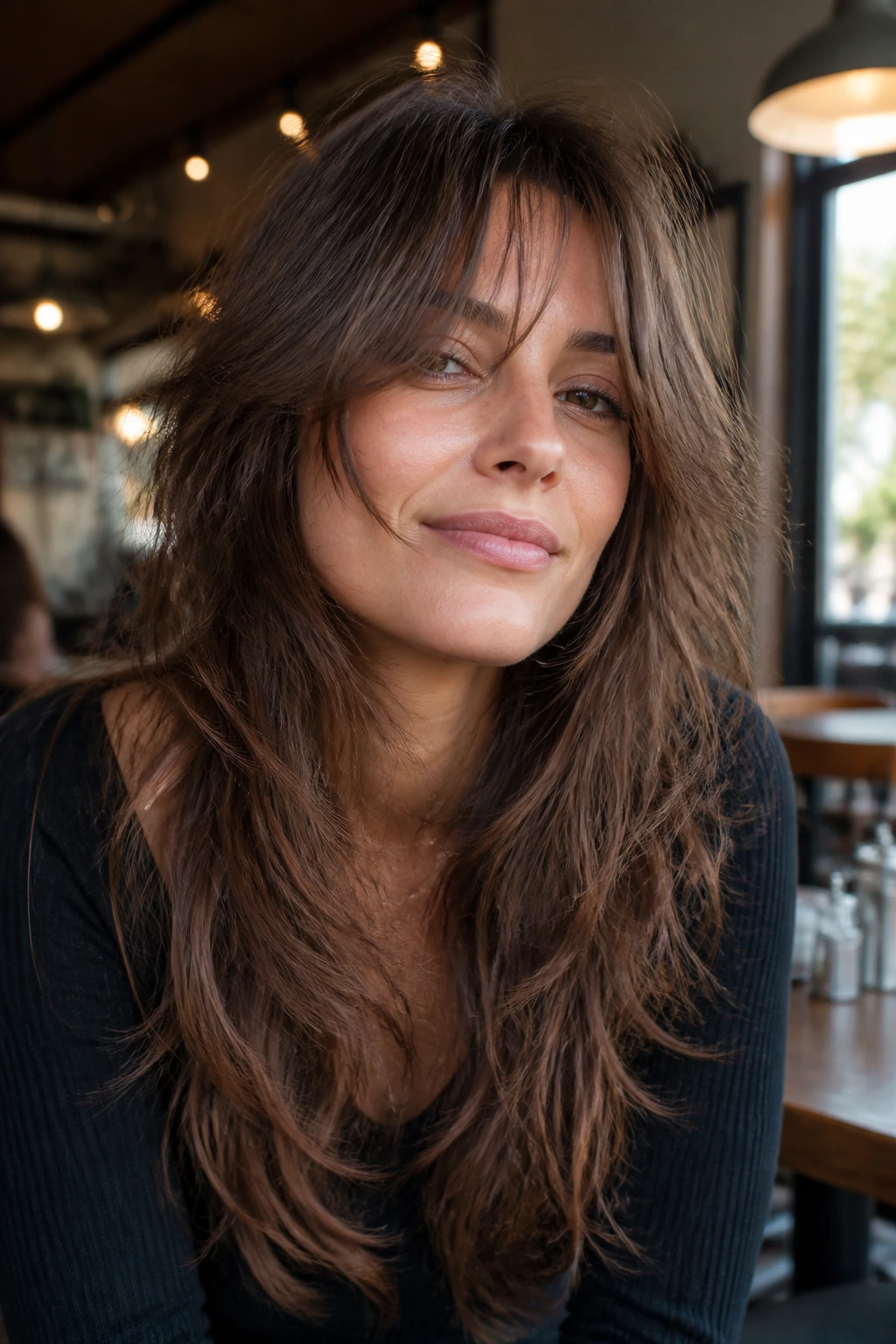
If you want to lean into the retro, grunge-inspired side of the butterfly cut, the shaggy variation is the answer. It is a bit messier and relies more on razored ends and interior texturizing to create that wild, windblown movement. It removes a significant amount of weight, making it a dream for people with thick, unruly hair that usually feels like a burden.
Characteristics of the Shaggy Butterfly
- Heavily textured ends for a “piecey” feel.
- Shorter, more visible layers at the crown that add height without the need for product.
- Works best when air-dried with a little bit of wave-enhancing cream, allowing the hair to do its own thing.
Pro tip: This cut is about embracing the natural wave pattern of your hair, so ditch the straightener and let the razored layers define themselves.
8. Butterfly Cut for Fine, Straight Hair
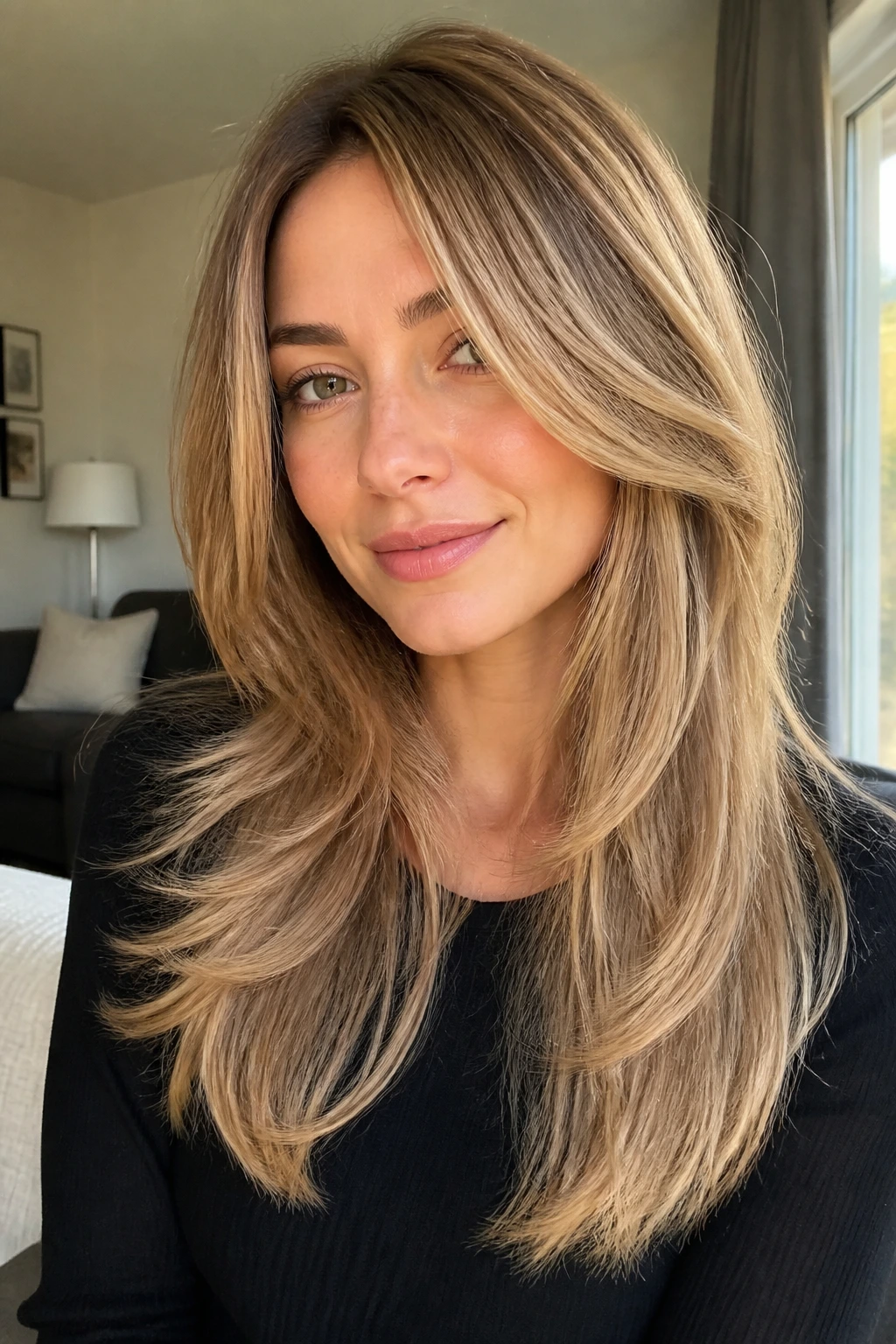
Fine hair usually suffers from looking thin at the ends when left too long. The butterfly cut is a secret weapon here because it creates the appearance of density. By cutting those shorter face-framing layers, you are essentially creating a mini-haircut at the front, while keeping the length at the back to maintain the feeling of long hair.
Boosting the Volume
- Stick to a shorter layer length, starting just below the chin.
- Use a lightweight mousse or root-lifting spray to keep the hair standing away from the scalp.
- Focus on regular trims—every six to eight weeks—to ensure the ends of the longer layers don’t become wispy and see-through, which can ruin the illusion of fullness.
9. Butterfly Cut with Blunt Perimeter
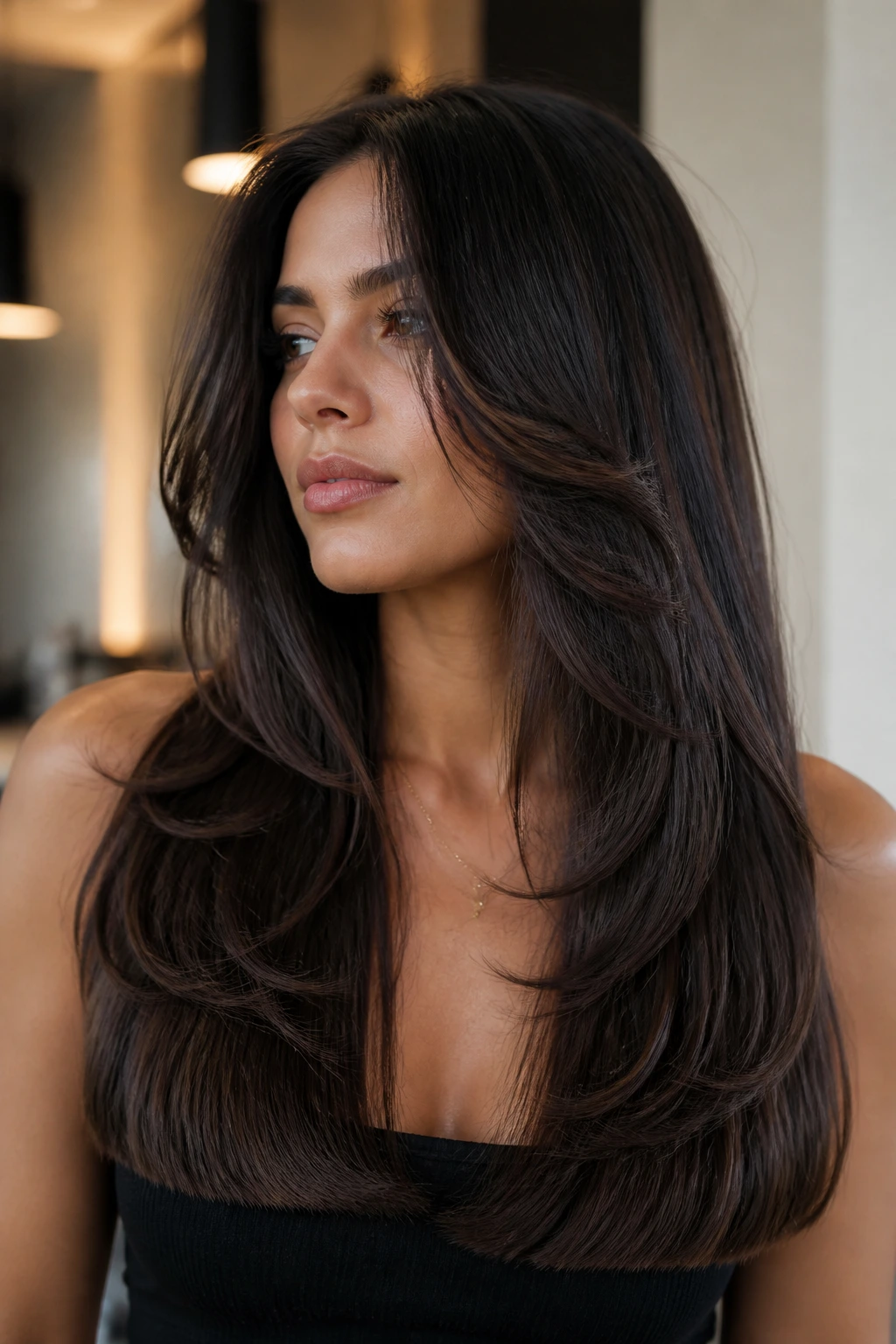
While most butterfly cuts feature soft, wispy ends, you can opt for a blunt, heavy perimeter at the bottom to provide a bit of grounding. This creates a fascinating visual contrast between the chaotic, bouncy movement of the top and the solid, heavy line at the bottom. It feels modern and a bit edgy.
Who Should Choose This
This works exceptionally well for those with naturally thick or coarse hair who want the benefits of a butterfly cut without sacrificing the feeling of having a thick head of hair. It keeps the weight at the bottom, which prevents the hair from looking too airy or “flyaway,” while giving you all the face-framing fun at the front.
10. The Soft-Layer Butterfly for Wavy Hair
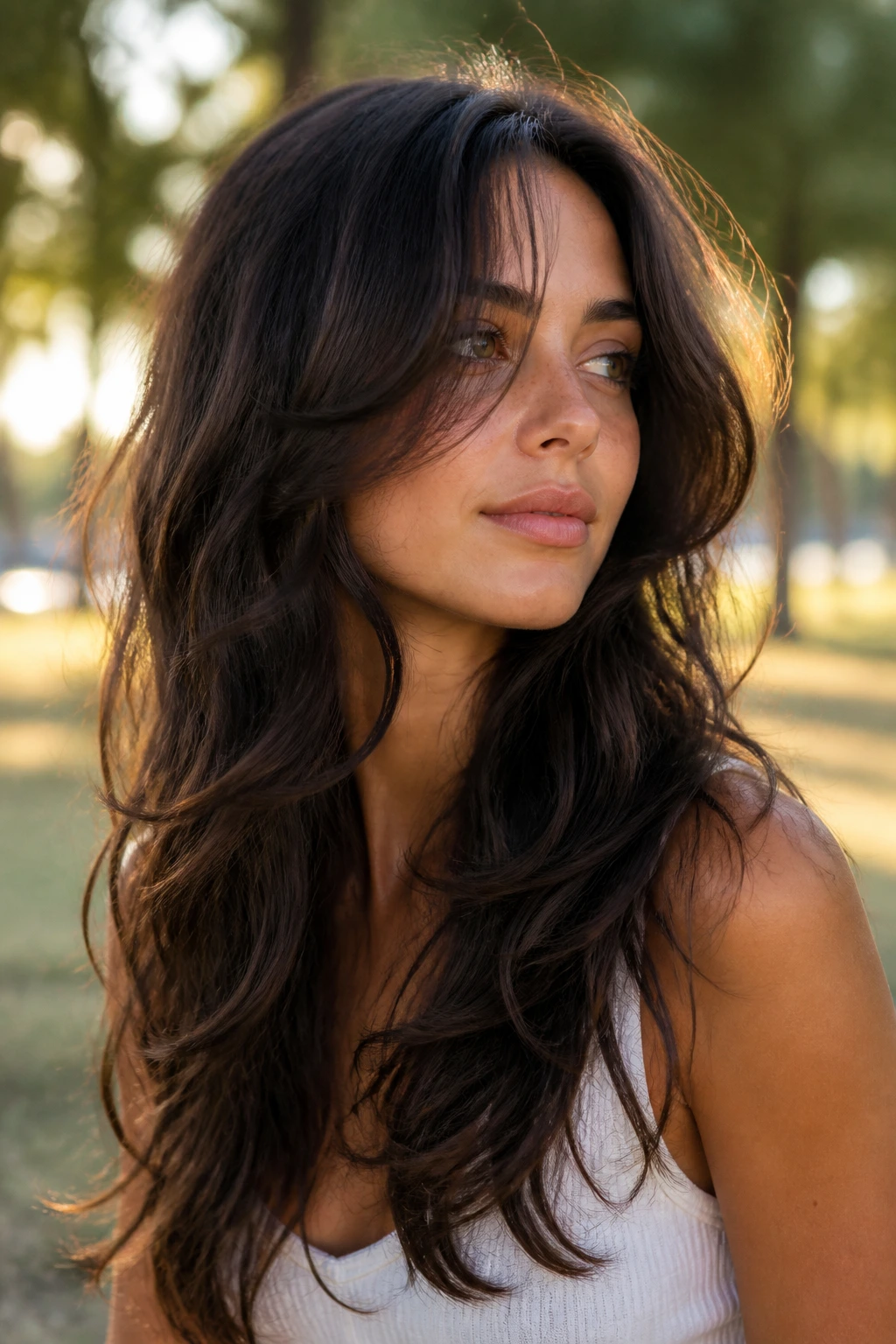
Wavy hair types often struggle with layers that are cut too short, as they can quickly turn into a triangle shape. With this cut, the layers are kept slightly longer and blended into the length more gradually, allowing your natural wave to maintain its structure without ballooning outward.
Care for Wavy Textures
- Ask your stylist to use a cutting method that encourages wave clumps rather than breaking them apart.
- Apply a leave-in conditioner while your hair is soaking wet to lock in moisture.
- Use a diffuser attachment on your hairdryer to gently dry the hair, keeping the air flow low so you don’t blow the waves into a frizz-fest.
11. Butterfly Cut with Deep Side Part
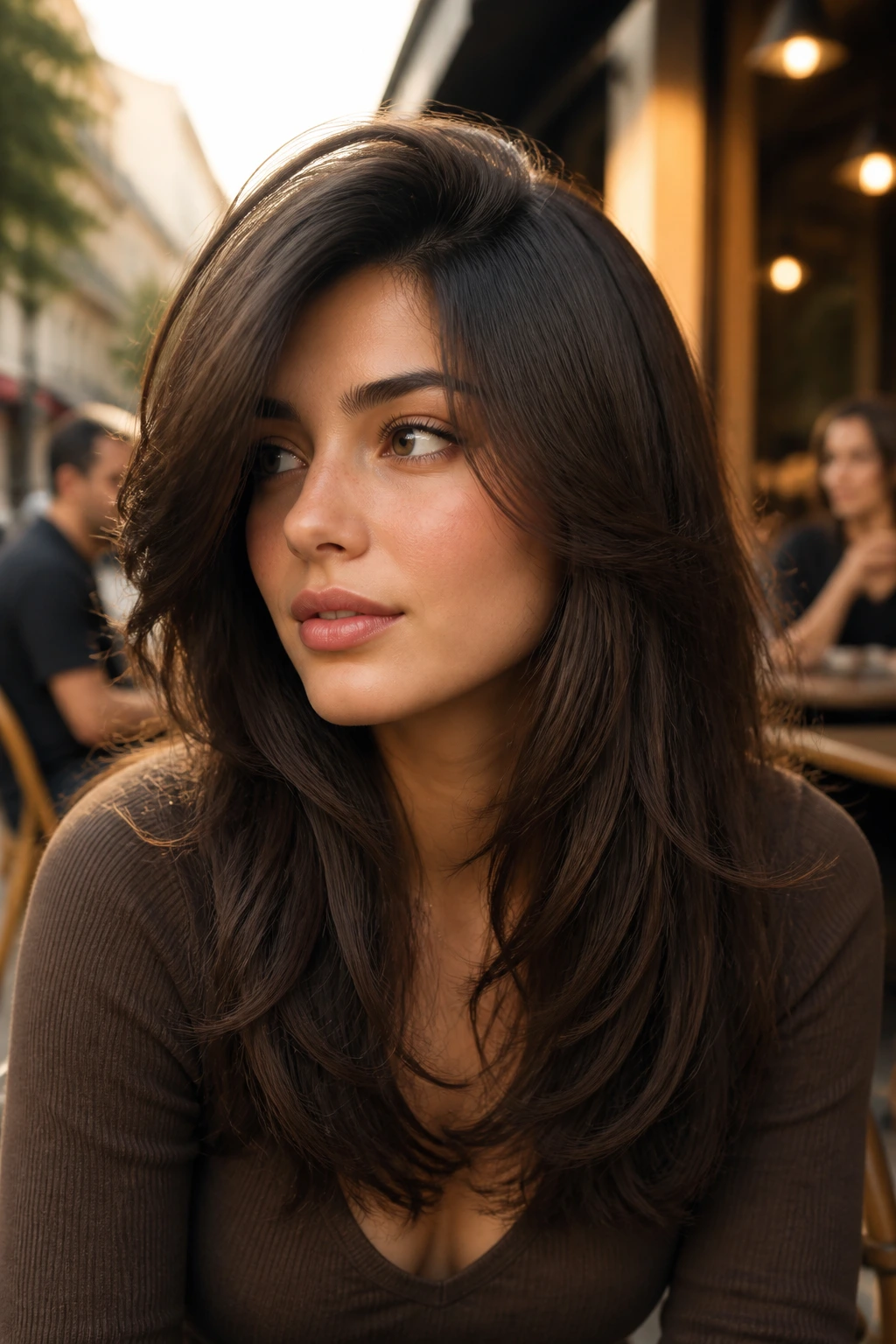
There is something inherently dramatic about pairing a butterfly cut with a deep side part. It pushes the volume to one side of the face, creating a sweeping, movie-star aesthetic that looks particularly stunning in photos. It’s an easy switch-up if you are used to a center part and want to change your look without cutting a single strand.
Styling the Sweep
When you blow-dry, use a round brush to push the hair across the forehead and up toward the roots before pulling it to the side. This ensures that even on the “flat” side, you have enough volume so the look doesn’t feel lopsided. It creates a beautiful arc over your brow bone that perfectly highlights the face-framing layers.
12. The Wispy-End Butterfly Cut
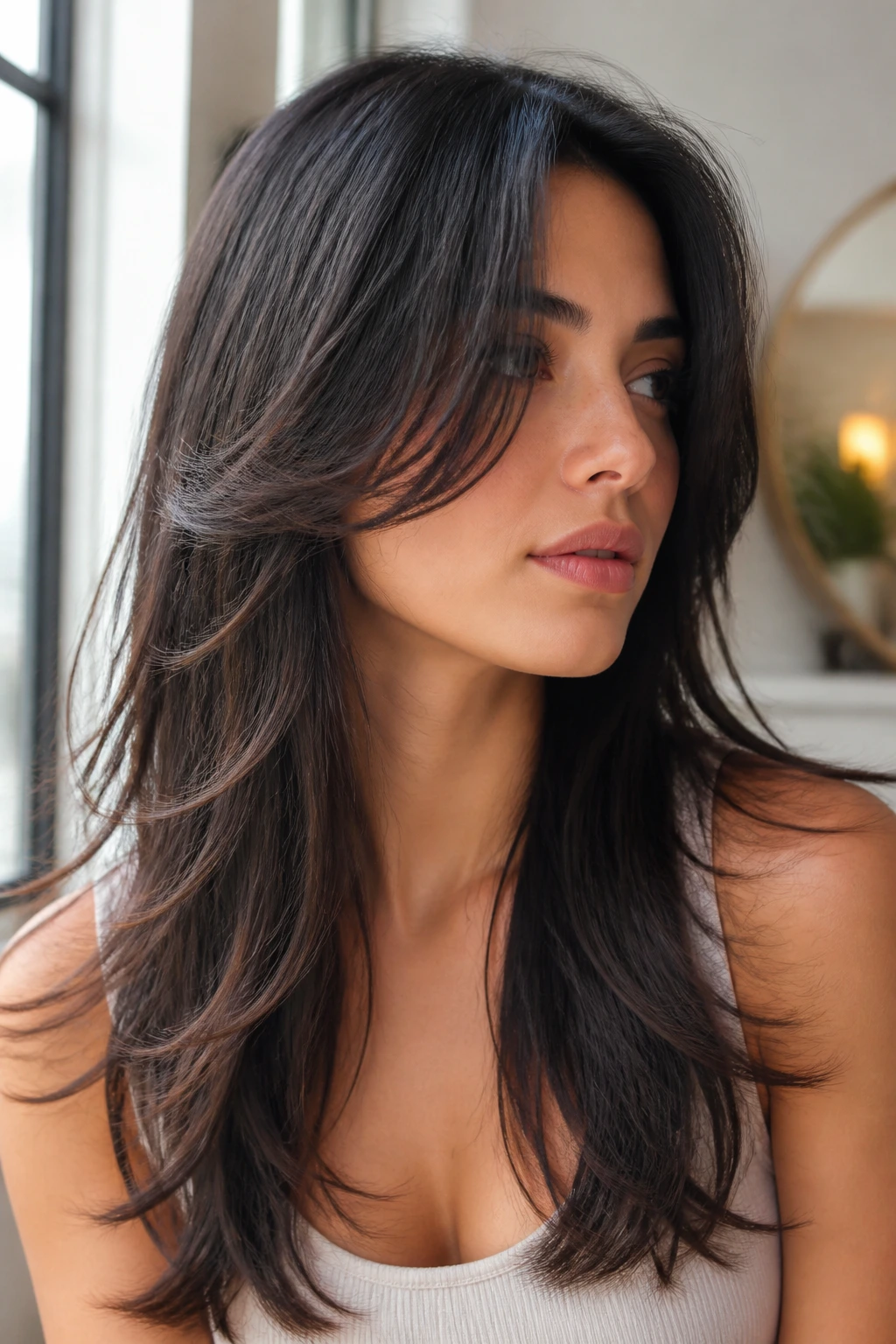
If you prefer a look that is light as air, the wispy-end variation is perfect. Instead of using blunt shears to create the layers, your stylist should use point-cutting or thinning shears to ensure the ends of every layer are tapered and soft. It makes the hair look ethereal and almost like it is floating around your shoulders.
Managing the Texture
Because the ends are very thin, you have to be careful with heat styling. Too much heat can make these wispy sections look fried or brittle. Use a lower heat setting on your tools and prioritize moisturizing hair oils to keep the ends looking healthy and pliable.
13. Butterfly Cut with Curly Texture
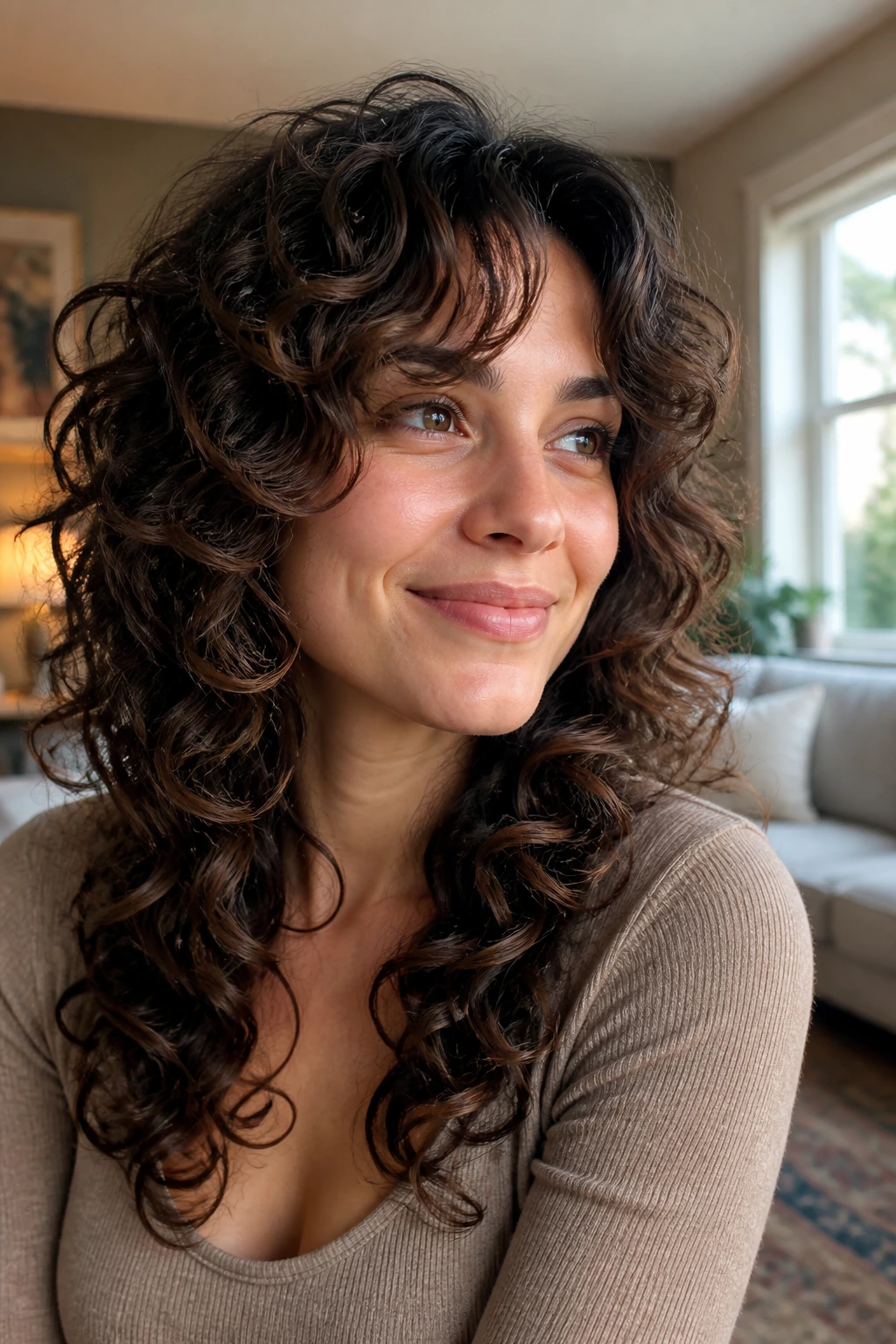
Curls and layers are a match made in heaven. In a butterfly cut, the layers help to distribute the weight of your curls, preventing them from being weighed down at the roots and helping the curls at the top of your head bounce. It results in a beautiful, rounded silhouette that feels very intentional.
Curly Care Guidelines
- Avoid over-layering at the very crown, or you might end up with a “poodle” effect.
- Use a cream-based styler rather than a gel, as you want the curls to be soft and touchable rather than crunchy and defined.
- Be prepared for the layers to shrink—make sure your stylist cuts for your hair’s natural spring factor, not its length when pulled straight.
14. Mid-Length Butterfly Transition
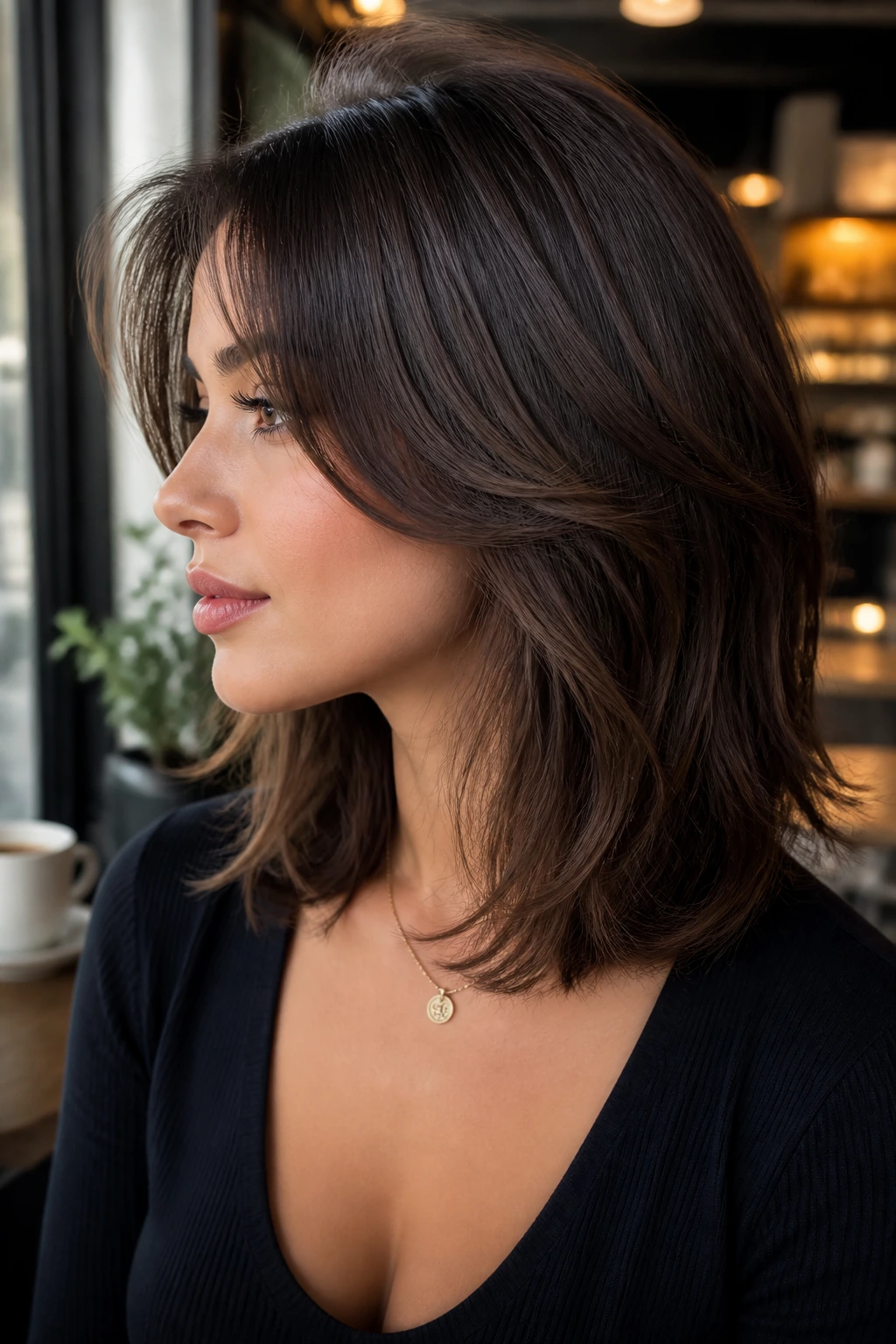
If you are worried that “long” hair might be too much work, you can opt for a collarbone-length butterfly cut. It still gives you all the movement and face-framing layers of the traditional long butterfly, but it is much easier to manage in the morning. It is a great bridge between a short shag and a long, flowing style.
The Ease of Styling
This length is just short enough to easily dry with a round brush in under ten minutes, yet long enough to pull back into a ponytail when you’re in a rush. It hits that sweet spot of being low-maintenance but still looking like you put significant effort into your hairstyle.
15. The “Effortless” Air-Dried Butterfly
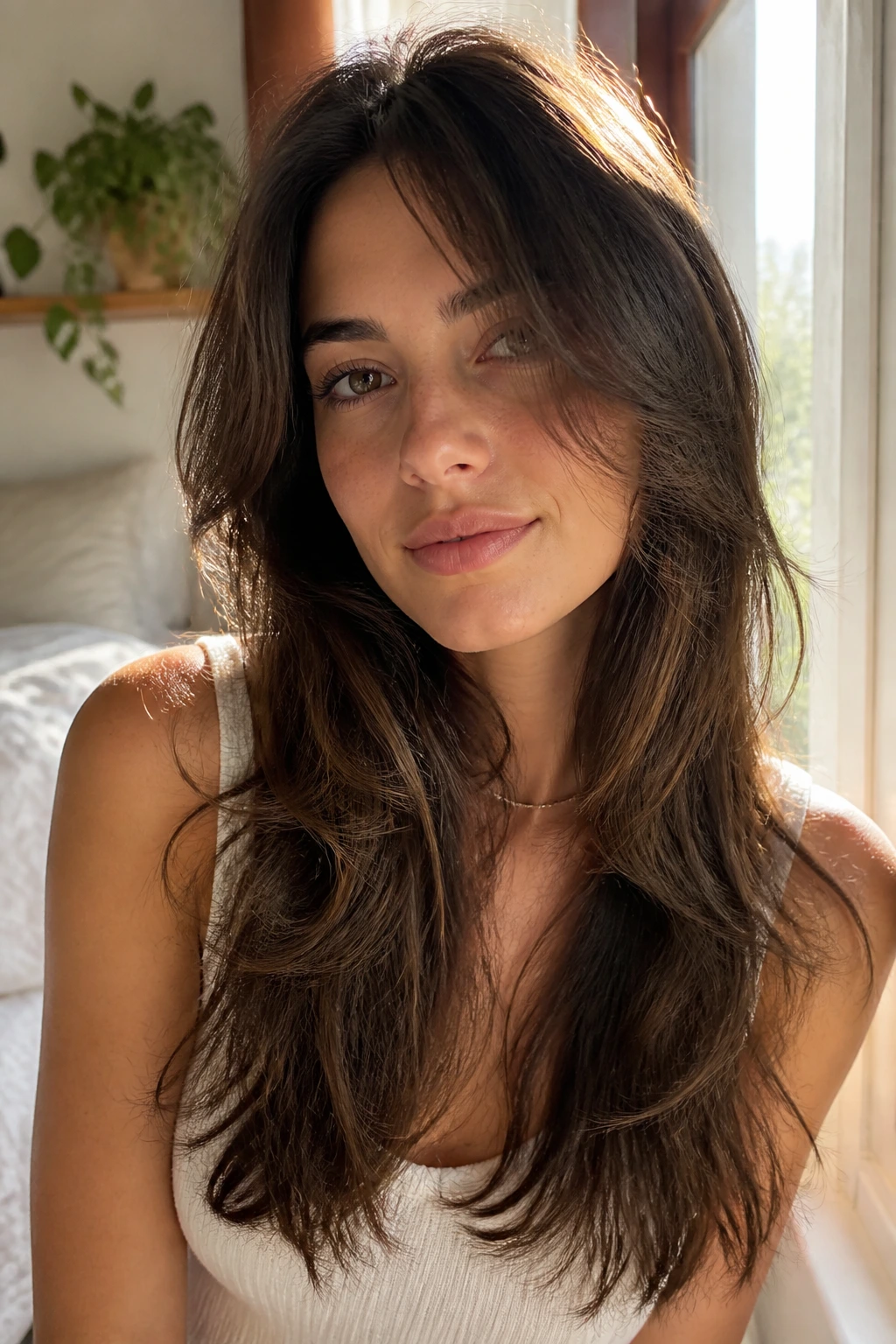
There is a specific charm to a haircut that doesn’t require styling tools. The butterfly cut is one of the few layered styles that looks good even when air-dried, provided you have the right hair texture. The layers do the work for you, providing shape even when the hair is slightly unruly or imperfect.
The Air-Dry Routine
- Start with a towel-dried base, applying a light-hold styling cream from mid-length to ends.
- Scrunch the hair upwards, emphasizing the layers you want to spring.
- Let it dry naturally, and avoid brushing or combing it until it is 100 percent dry to prevent frizz.
16. Butterfly Cut with Hidden Lowlights
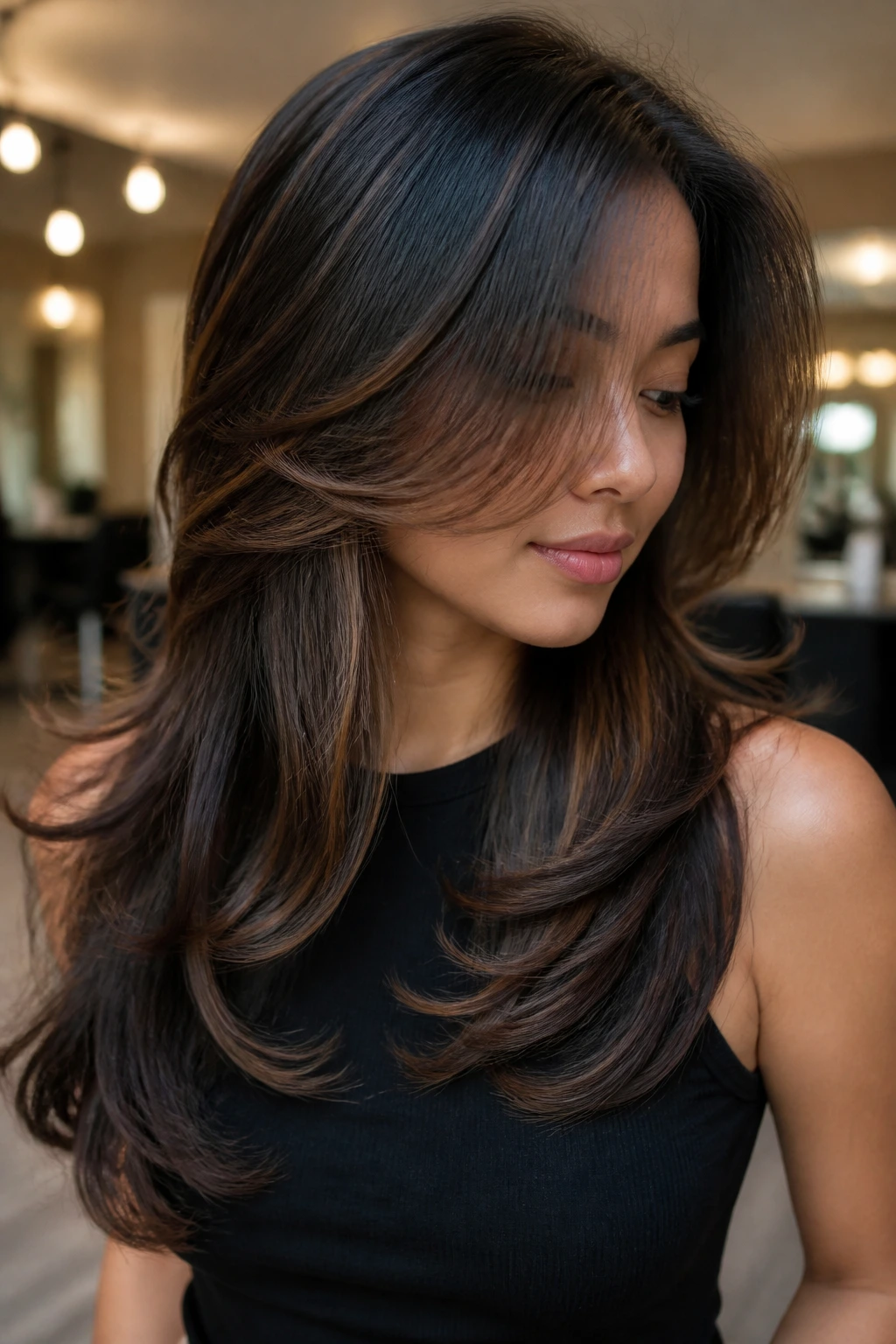
If you have a blonde or light brown base, adding hidden lowlights underneath the top layers creates a sense of depth and shadow. As your hair moves and the butterfly layers flip, these darker tones peek out, giving the hair a more multi-dimensional, high-end appearance that looks great in any lighting.
Why This Works
The butterfly cut creates a lot of movement, and movement exposes the interior sections of your hair. By placing lowlights in the interior, you are adding an element of surprise. It makes the hair look thicker and more “expensive” because it breaks up the monotony of a single-tone color.
17. The Retro-Influenced Butterfly
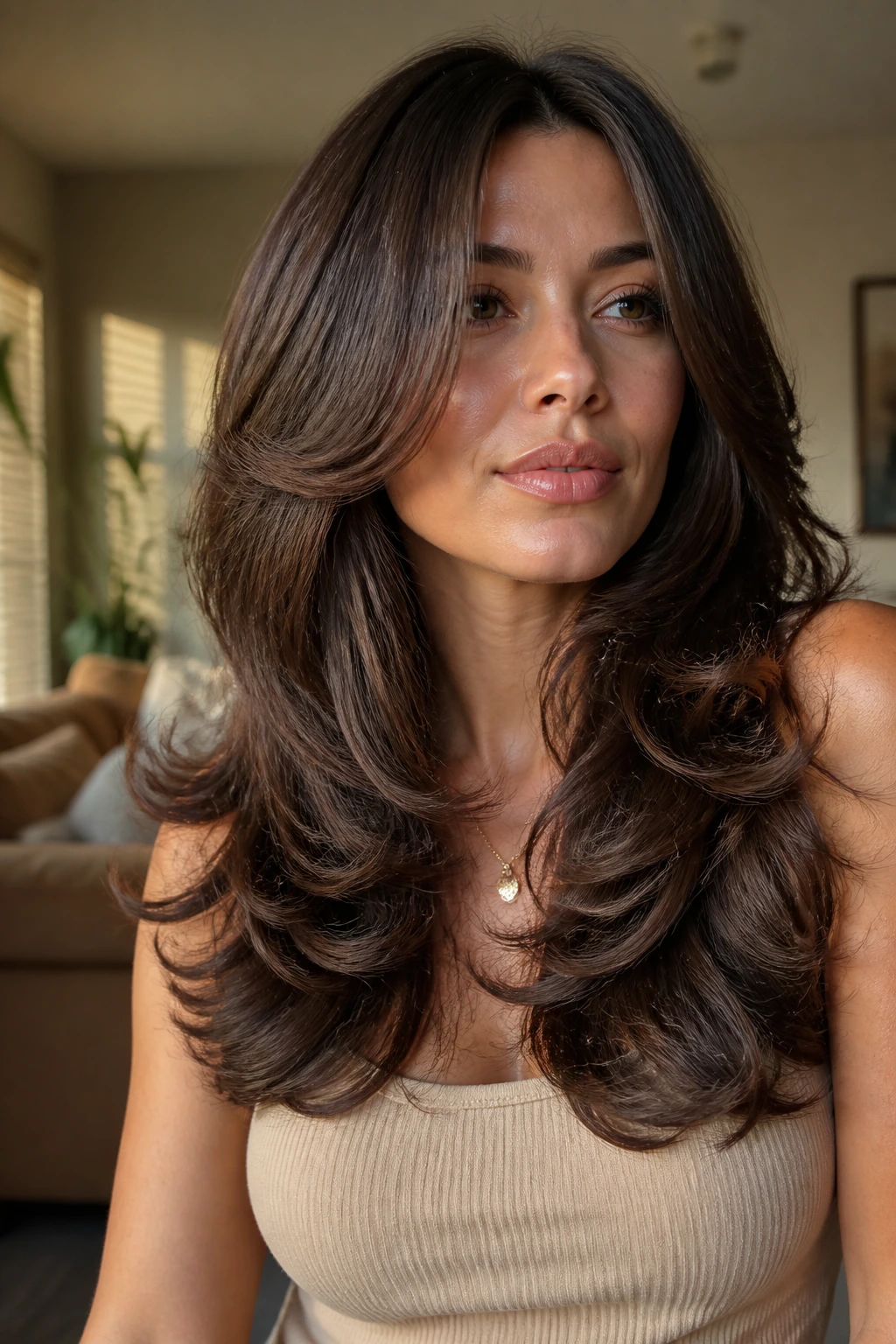
Think of the seventies blowout—large, airy, and full of bounce. This variation of the butterfly cut leans into that era by keeping the layers slightly longer and focusing on massive volume. It pairs exceptionally well with feathered bangs and a middle part, capturing that iconic, sun-drenched, carefree vibe.
Getting the Vintage Look
- Use a volumizing spray at the roots before blow-drying.
- Use a very large-diameter round brush to pull the hair outward as you dry.
- Focus on creating a soft, rounded bend at the very ends of the layers rather than a sharp flip.
18. Long Butterfly with Curtain Bangs
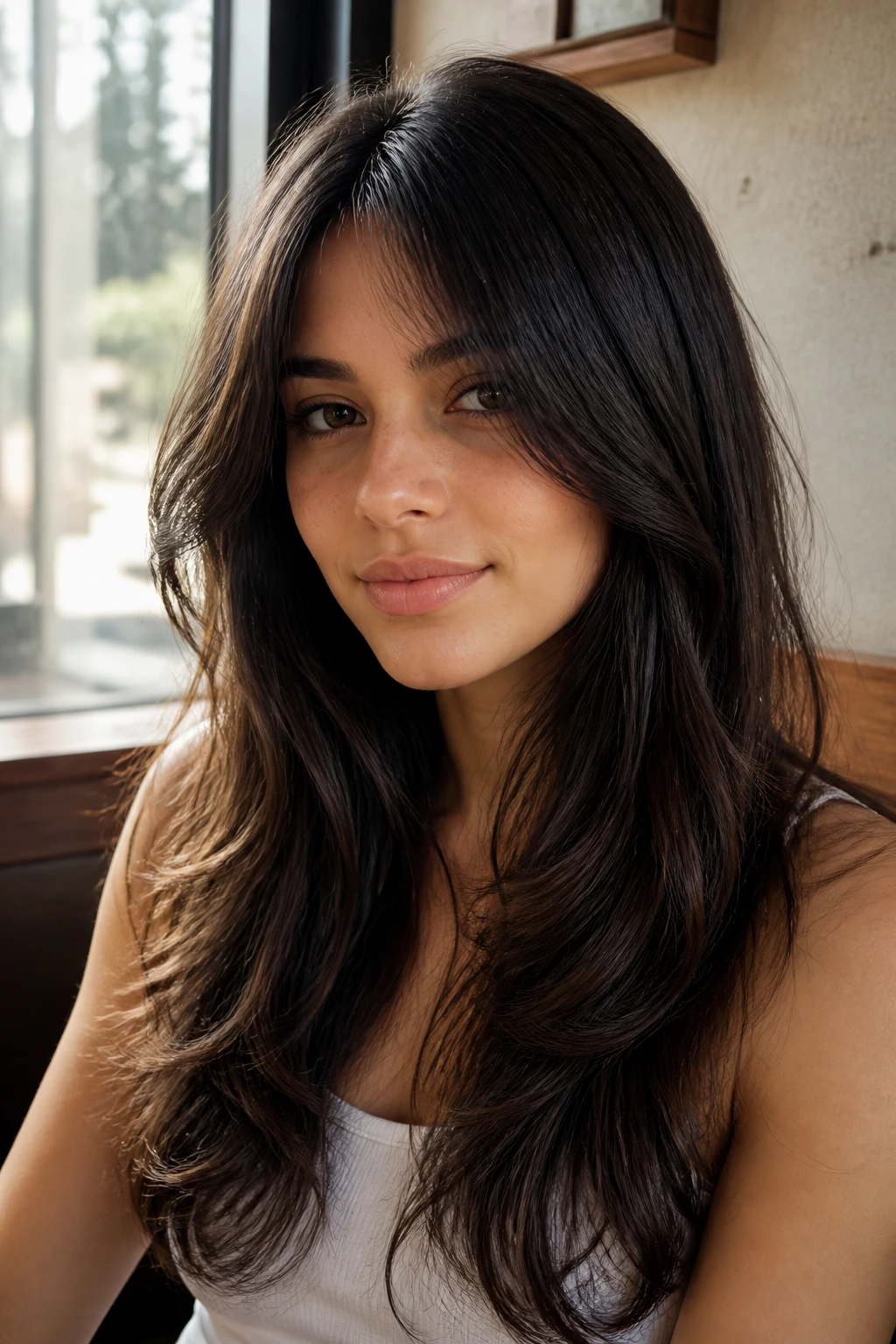
If you are not ready for full-on, brow-length bangs, the long-curtain-bang approach is a safer, more elegant option. The bangs start near the cheekbones and blend into the shortest layers of the butterfly cut. It creates a beautiful frame that highlights your cheekbones and jaw without the daily maintenance of trimming bangs.
Maintenance and Growth
One of the best things about this version is how well it grows out. Because the bangs are already long enough to tuck behind your ears, you won’t experience that awkward “growing out” phase that short bangs require. It is a timeless, low-effort way to get the face-framing benefits of a butterfly cut.
19. The “Liquid” Butterfly Cut
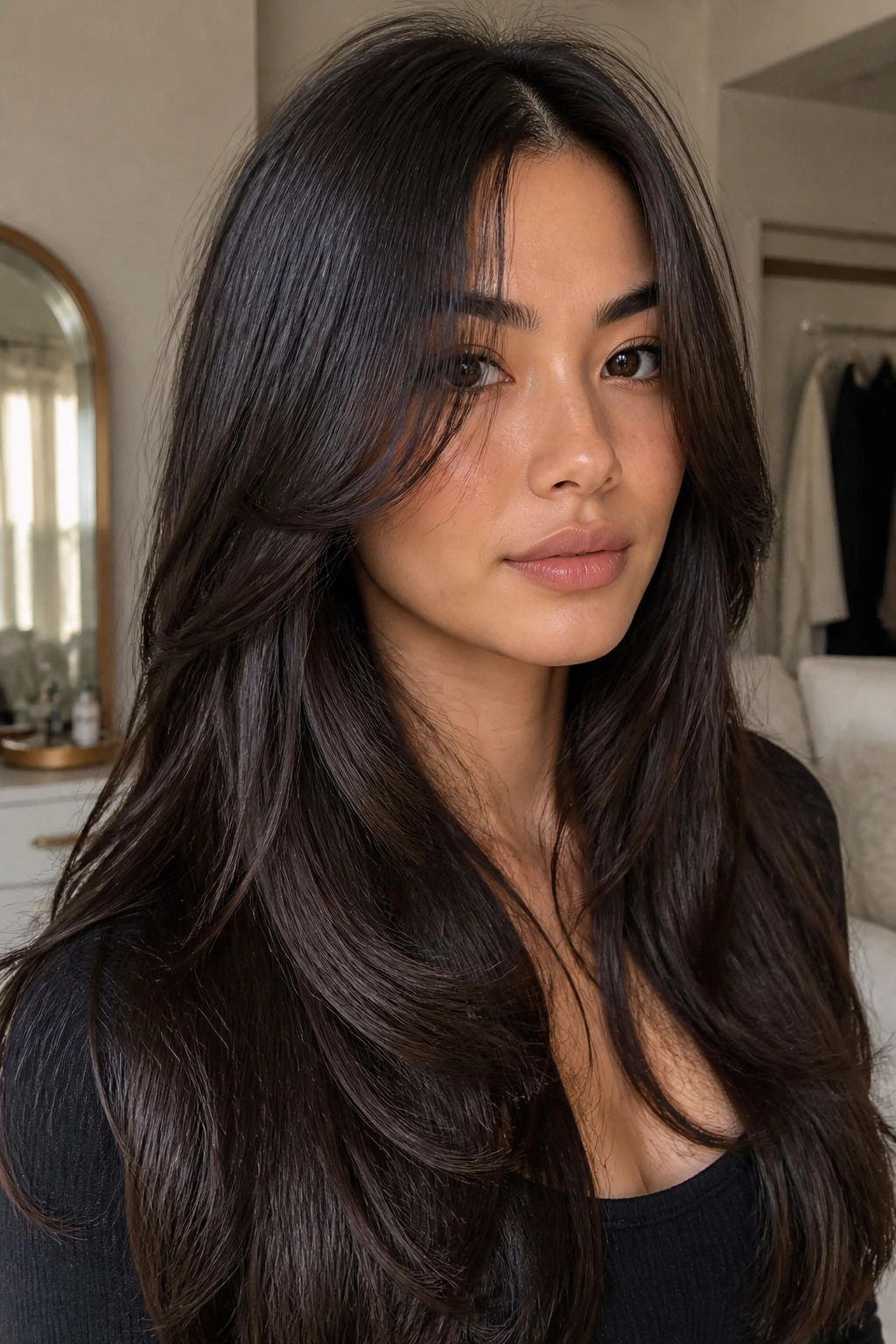
This is for those who love the “liquid hair” aesthetic—high shine, sleek, and healthy. In this style, the butterfly layers are subtle, almost hidden within the long strands, but they still provide the necessary bounce. It is all about the condition of the hair; you want it to look like a sheet of silk that just happens to be shaped into a butterfly silhouette.
The Shine Secret
- Use a gloss treatment once a month to seal the cuticle.
- Always use a paddle brush while blow-drying, followed by a quick pass with a flat iron.
- Use a lightweight hair gloss spray as the final step to eliminate any stray flyaways.
20. The Bohemian Braided Butterfly
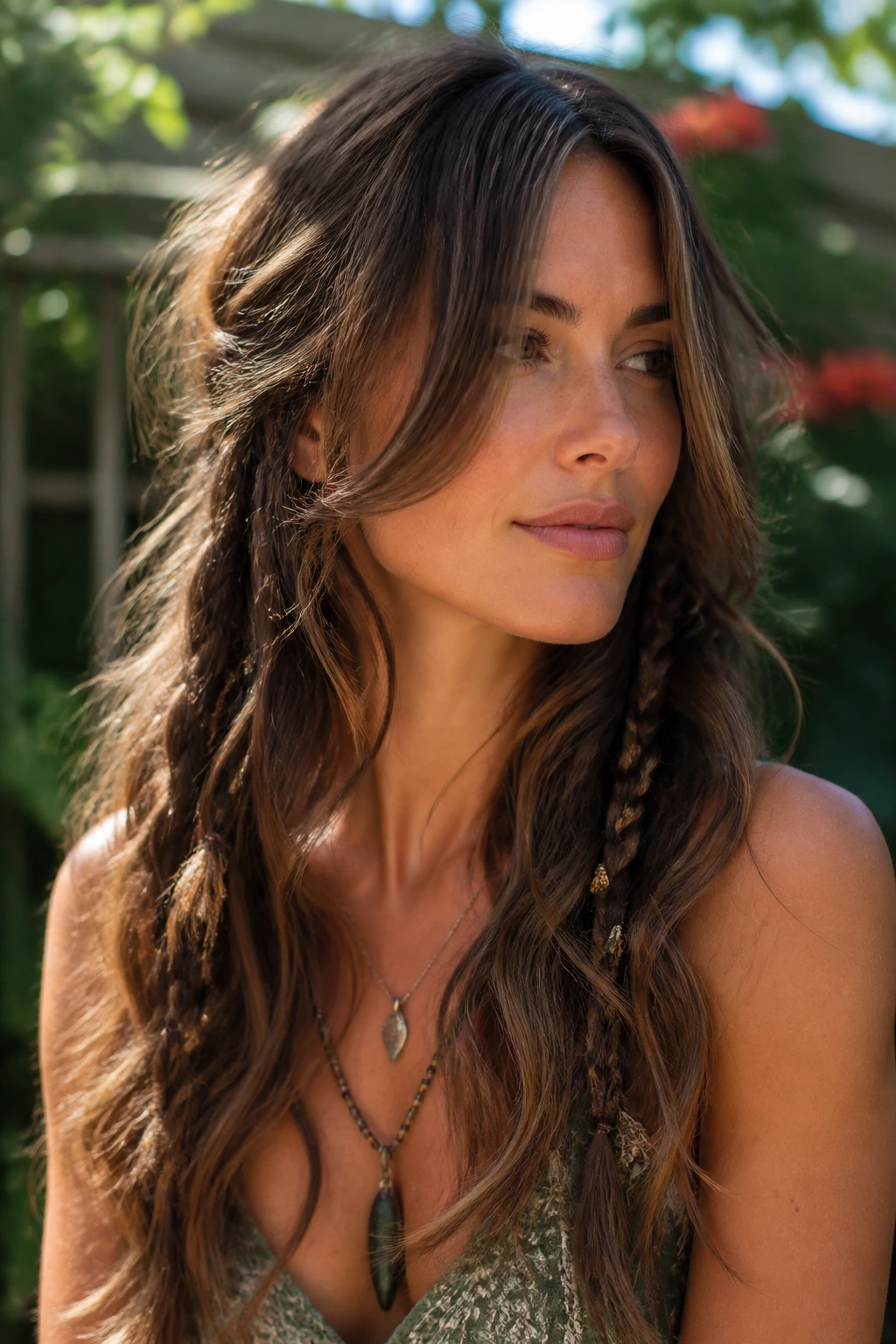
Because the butterfly cut has short, face-framing layers, it is perfect for bohemian styles. You can leave the short layers loose while braiding the longer back sections, or use the short layers to frame a crown braid. The versatility here is unmatched compared to blunt, one-length haircuts.
Style Ideas
- Use the short layers to frame the face when you pull the rest into a messy bun.
- Braid the side sections, pulling in the short layers as you go, to create a textured, halo-like effect.
- The layers add natural volume to any braid, making them look thicker and more detailed.
21. Butterfly Cut with Peek-a-Boo Colors
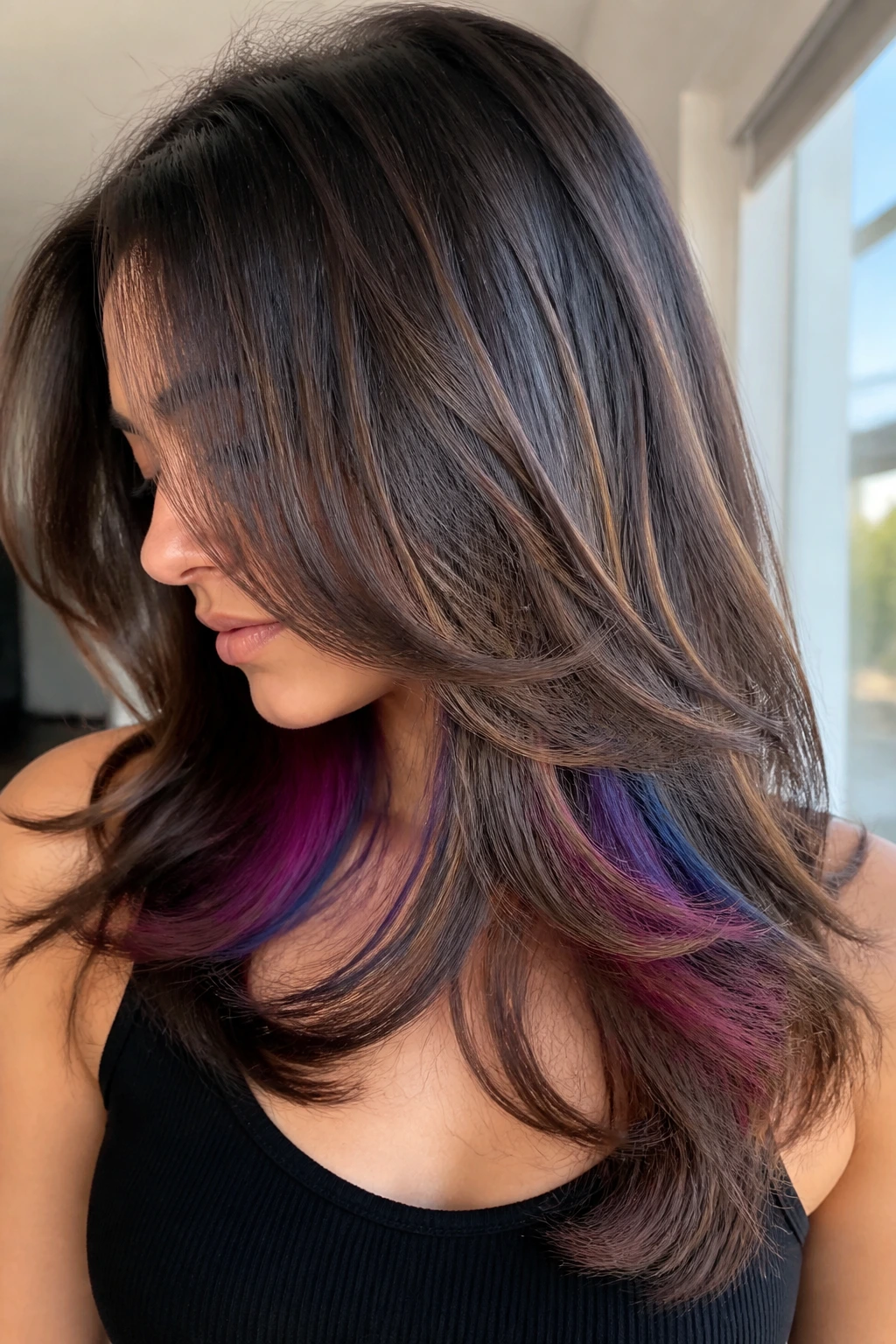
If you are feeling adventurous, the layers of a butterfly cut are the perfect place to hide vibrant fashion colors. Because the layers flip and move, the color will only be partially visible, creating a dynamic, shimmering effect as you walk or turn your head. It is a subtle way to incorporate bold color without committing to an all-over dye job.
Choosing Your Color Placement
- Hide the colors in the nape of the neck and on the undersides of the mid-length layers.
- Stick to one or two shades that complement your natural base color for a sophisticated, artistic look.
- Be aware that fashion colors fade quickly, so plan for frequent touch-ups if you want to keep the effect vibrant.
22. The Modern Mullet Butterfly
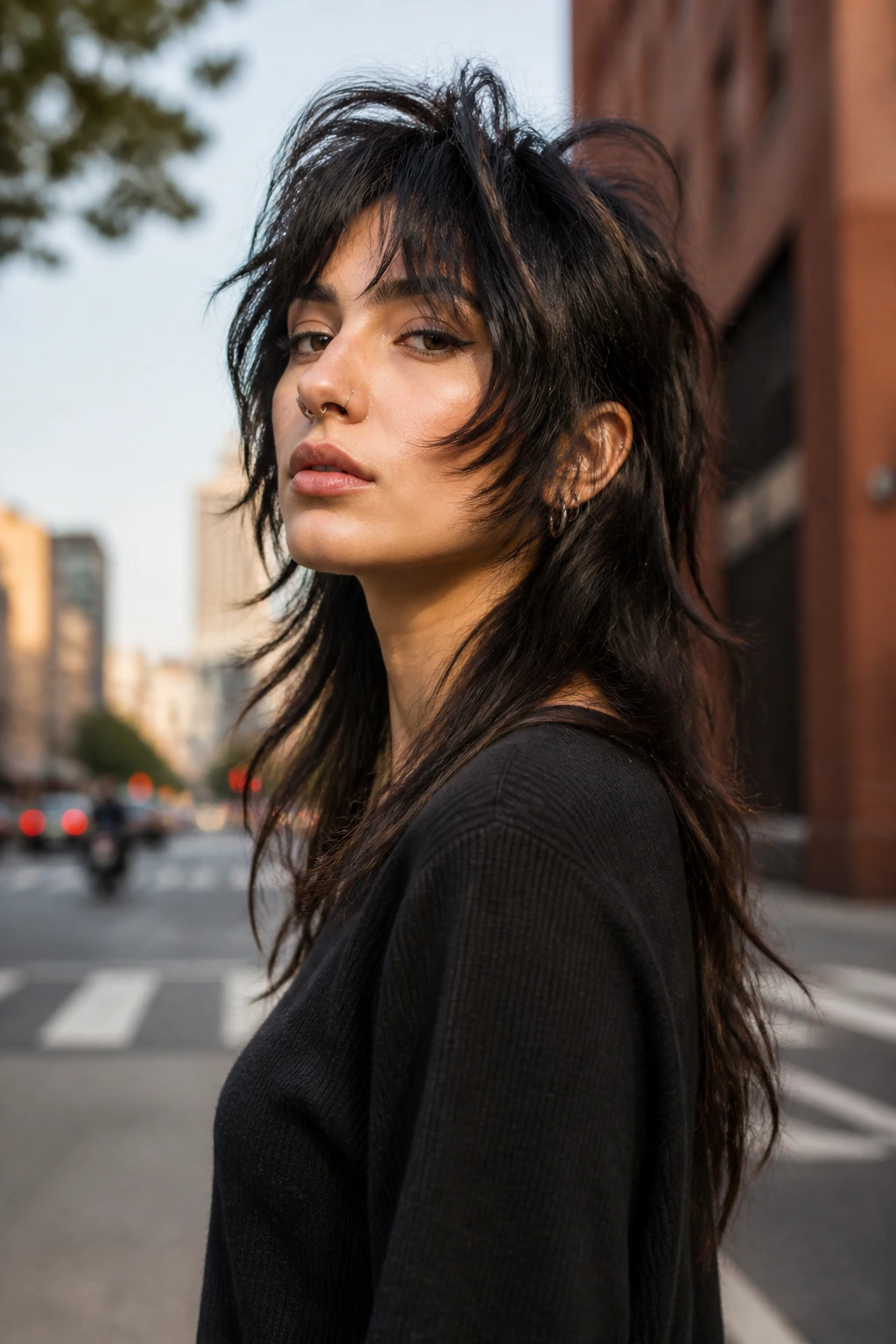
For those with a bolder sense of style, the modern mullet-butterfly hybrid is an edgy, high-fashion choice. It keeps the butterfly layering at the front and sides, but leaves the back longer and more disconnected, creating a striking profile. It is a style that commands attention and works best on those with confident personal style.
Who Can Pull This Off?
This cut is excellent for people who want a dramatic change. It works particularly well for those who have a strong jawline and aren’t afraid of a bit of chaos in their hair texture. It is a departure from the “polished” look, trading it for something more rebellious and untamed.
23. Long Butterfly for Coarse Hair
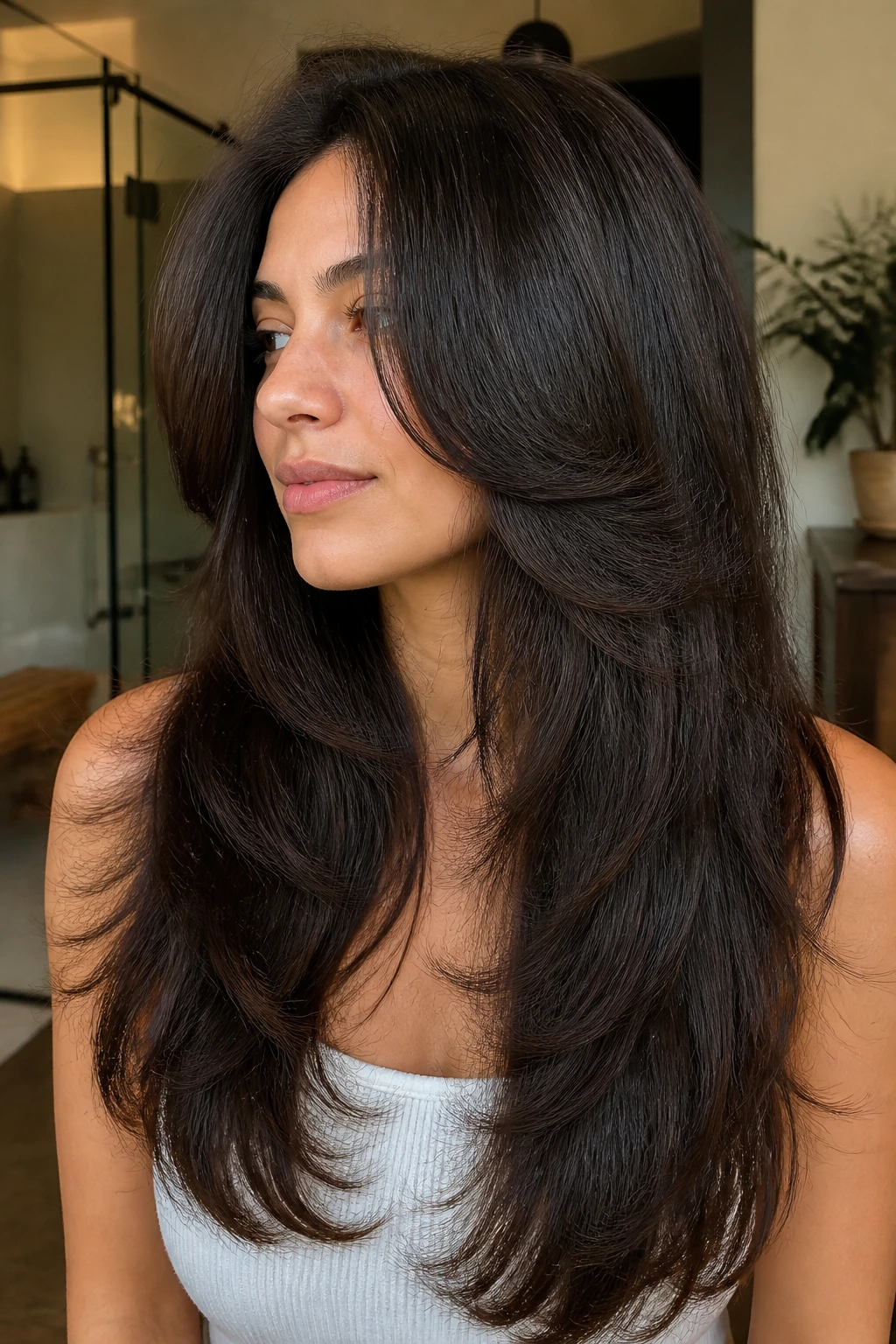
Coarse hair can be difficult to manage with layers, as the individual strands are thick and don’t like to blend. The key to making a butterfly cut work on coarse hair is to focus on texturizing the interior of the hair, rather than just chopping the ends. This removes weight and allows the hair to sit flatter, preventing that bushy look.
The Importance of Thinning
- Ask for interior layers that lighten the load without creating wispy ends.
- Use a heavy-duty conditioning mask once a week to ensure the coarse strands remain soft and manageable.
- Avoid cutting the layers too short, as coarse hair has a tendency to spring up and create a bulky shape if the layers are not long enough to be weighed down.
24. The Layered Butterfly Ponytail
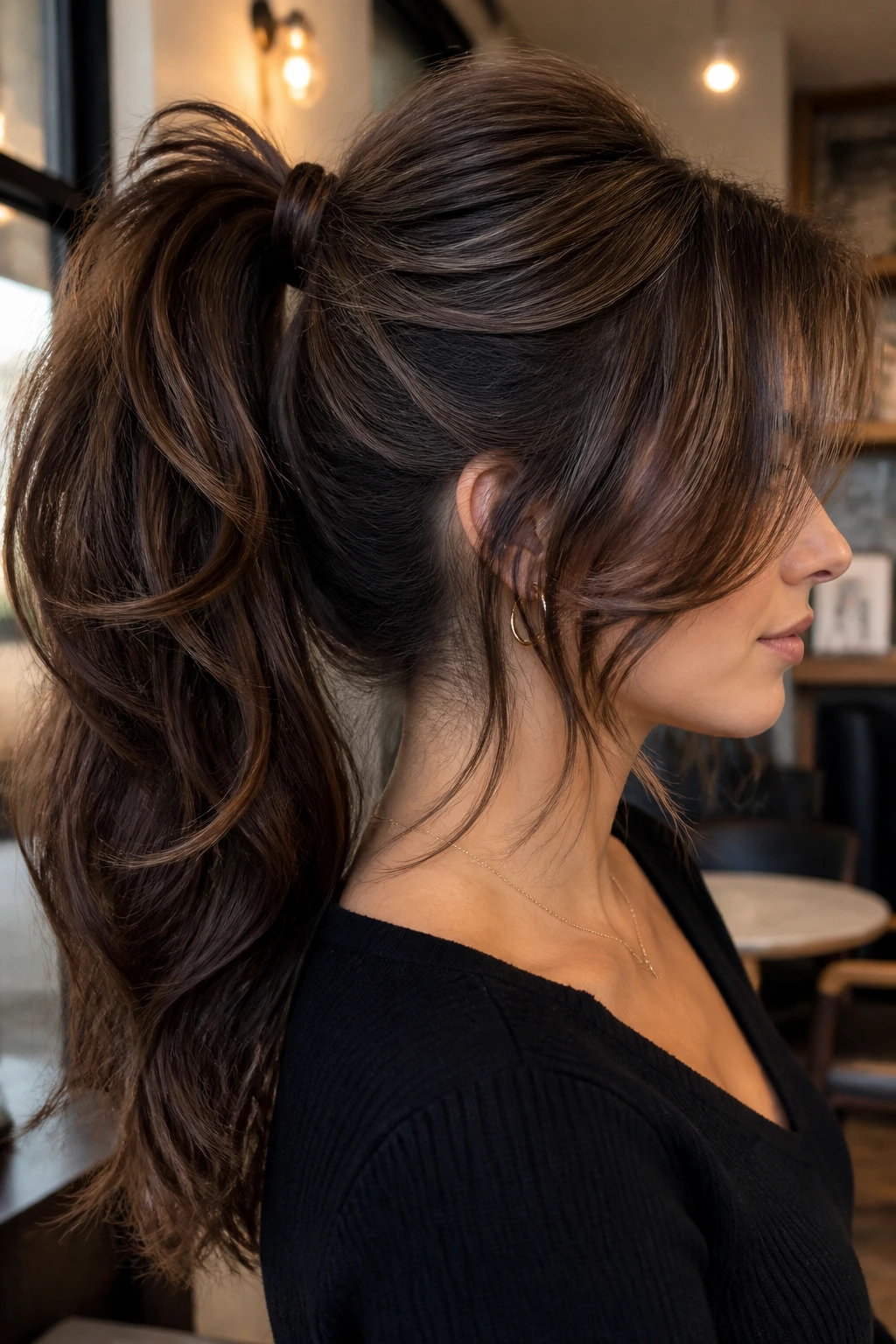
If you are a ponytail person, this haircut is going to be a game-changer. When you tie your hair up, the short, face-framing layers naturally fall out, creating a soft, intentional style that doesn’t require extra effort. You can leave a few pieces around the ears and chin for a relaxed, chic look.
Ponytail Styling Tips
- Wrap a small piece of hair around the hair tie to hide it.
- Use a texturizing spray on the ends of the ponytail to make the layers pop.
- Don’t pull the hair back too tightly; a slightly loose ponytail complements the soft, airy nature of the butterfly cut much better than a severe, slicked-back look.
25. The Glamour-Blowout Butterfly
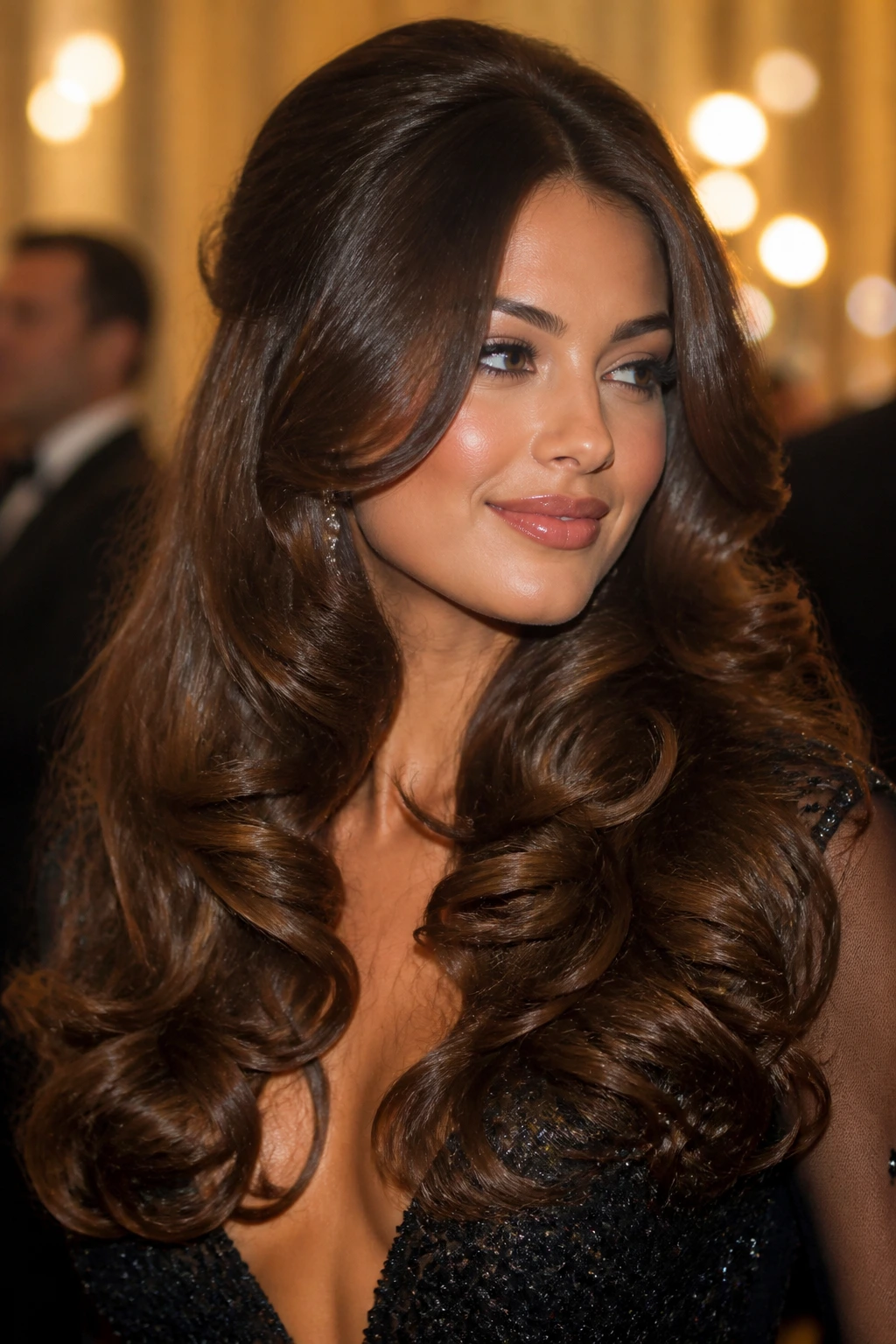
Think red-carpet style. This version of the butterfly cut uses massive, bouncy curls that are pinned and set to achieve a high-glamour look. It is ideal for weddings, galas, or any time you want to feel like a movie star. The butterfly layers provide the structure for these large curls to cascade perfectly around your shoulders.
The Set-and-Cool Technique
- Always use a setting lotion or a firm-hold spray on each section before curling.
- Pin each curl to your head while it cools to lock in the shape.
- Once completely cool, brush out the curls using a boar-bristle brush, which helps to smooth the cuticles and add incredible shine.
26. Butterfly Cut for Square Face Shapes
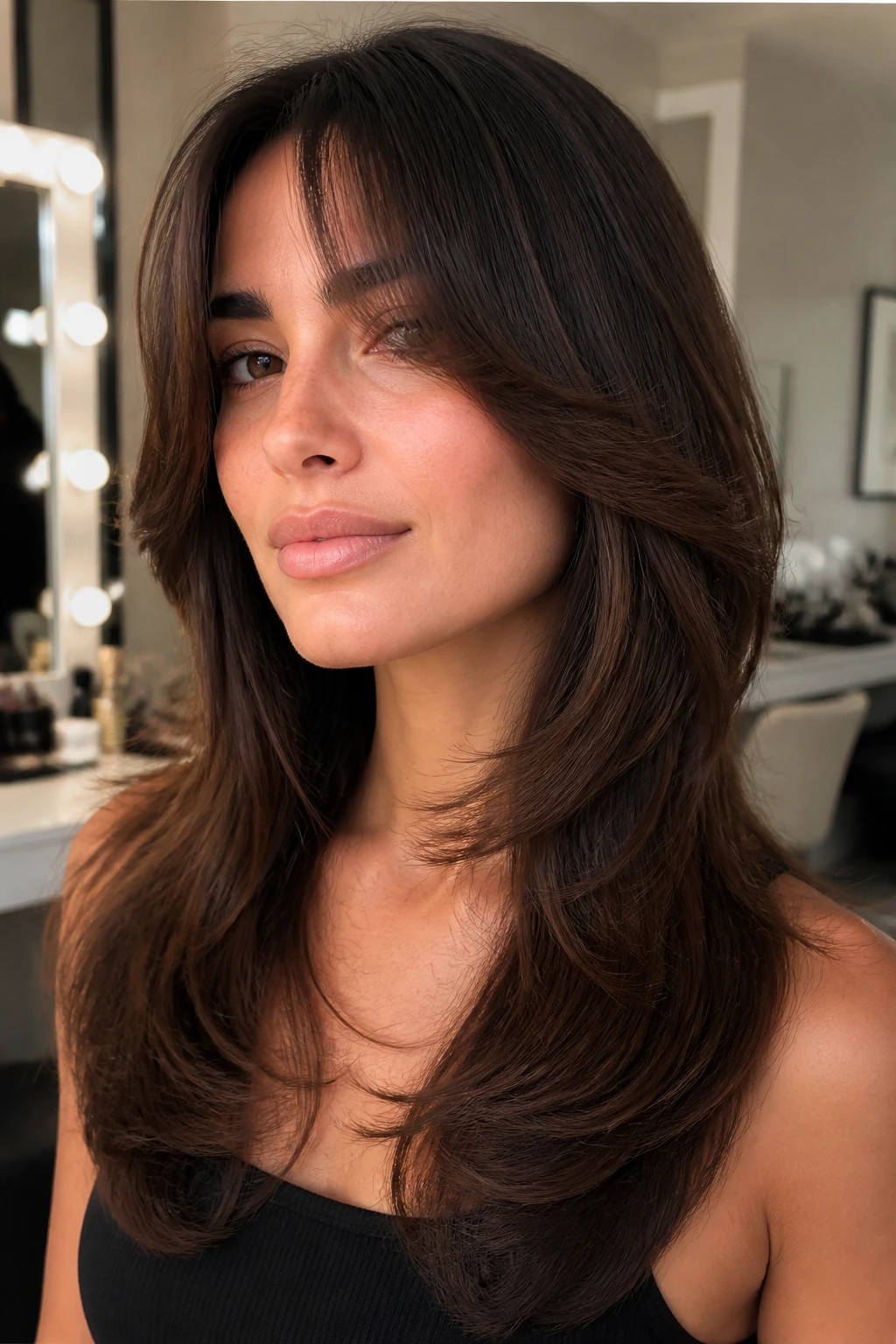
If you have a square face shape, you want to soften your jawline. The butterfly cut is perfect for this because the layers hit right at the jaw and sweep away, creating a rounded frame. Avoid heavy, straight-across bangs, which can emphasize the squareness of your face; instead, stick to the soft, layered fringe that characterizes the butterfly cut.
Softening the Angles
- Focus on keeping the layers soft rather than jagged.
- Part your hair slightly off-center to create a diagonal line that breaks up the symmetry of the face.
- Let the shorter layers curve inward toward your chin, which naturally creates a more rounded, feminine profile.
27. Butterfly Cut with Balayage
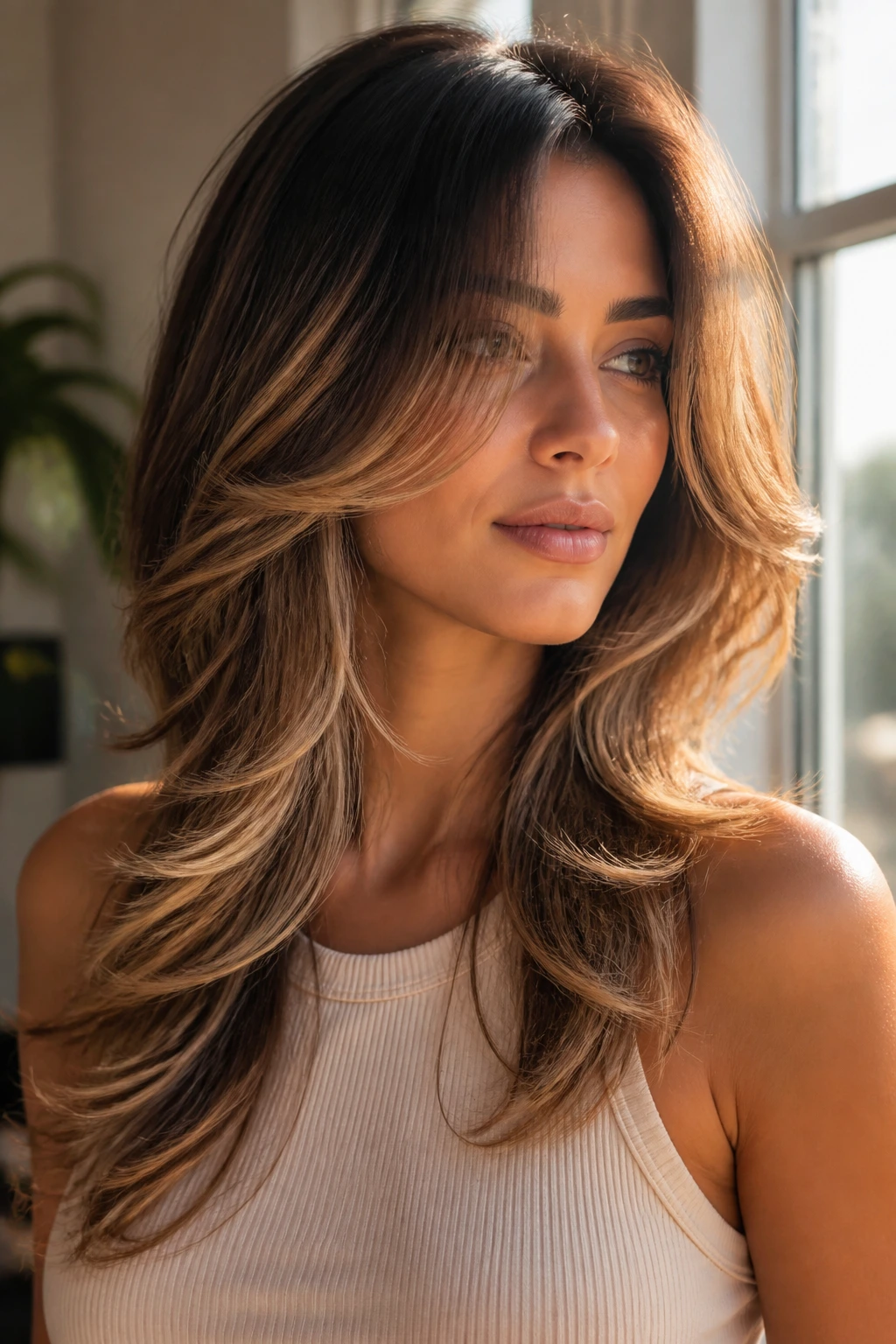
Balayage is the perfect partner for the butterfly cut. Because the hair is heavily layered, the painted-on color looks like it is naturally catching the light, regardless of how you move. The transition from your darker roots to your lighter ends flows through the layers, emphasizing the movement of the cut.
Why This Combination Succeeds
It is a low-maintenance color technique that grows out beautifully. Since the butterfly cut already demands a bit of styling, having a natural-looking color means you don’t have to worry about harsh roots ruining the effect. It provides that sun-kissed, expensive look that is the hallmark of modern, high-end haircuts.
28. The Airy, Minimalist Butterfly
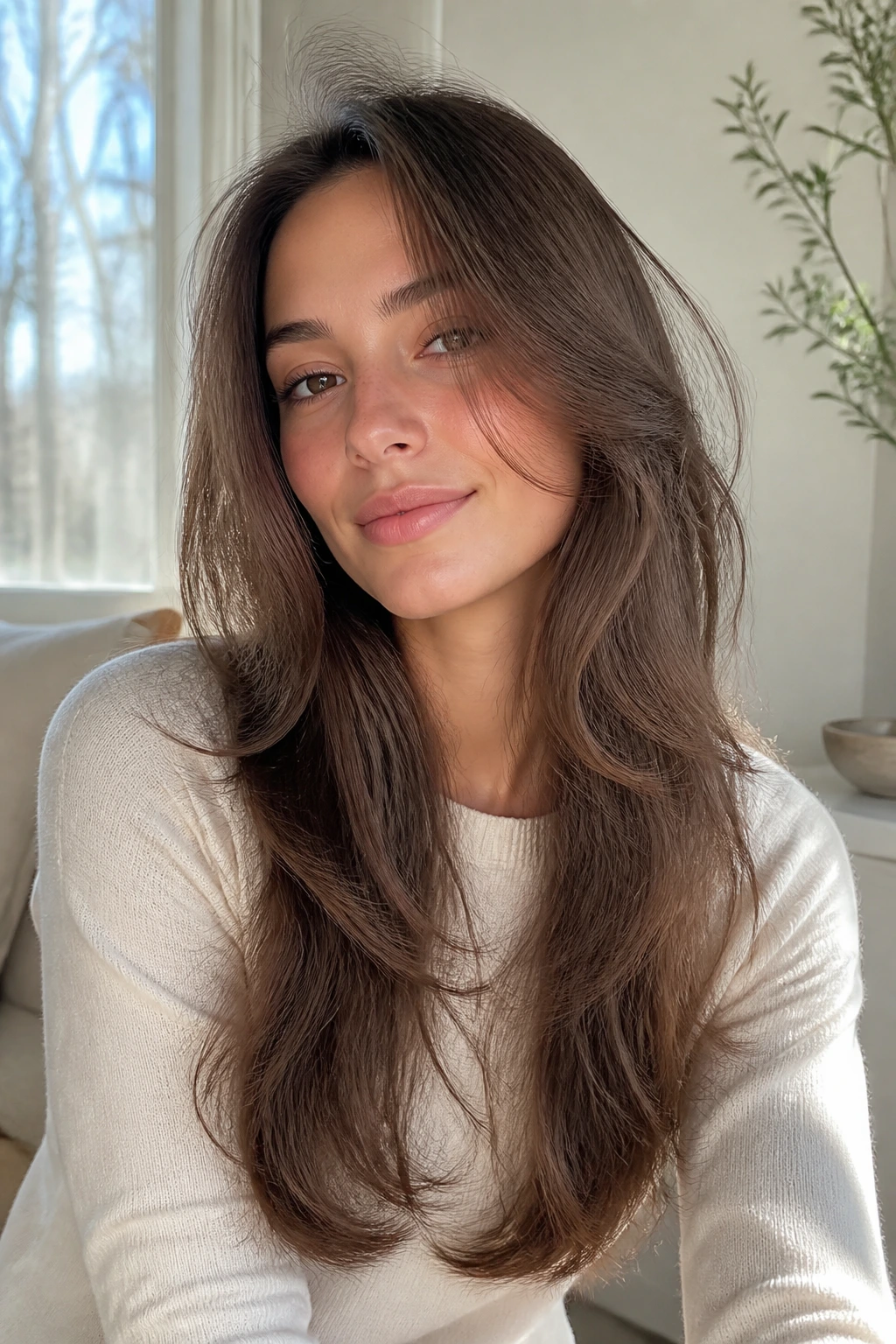
For the ultimate “clean girl” aesthetic, this version keeps the layers long, soft, and minimal. It is less about the “winged” drama and more about the healthy, bouncy movement of long hair. It is perfect if you are intimidated by too many layers and just want a subtle upgrade to your current length.
How to Request This
Ask your stylist for “long, invisible layers” that start below the collarbone. It will give you the movement of the butterfly cut without the choppy, high-contrast look that defines the traditional style. It is the perfect entry point for anyone nervous about committing to a full butterfly shape.
Final Thoughts
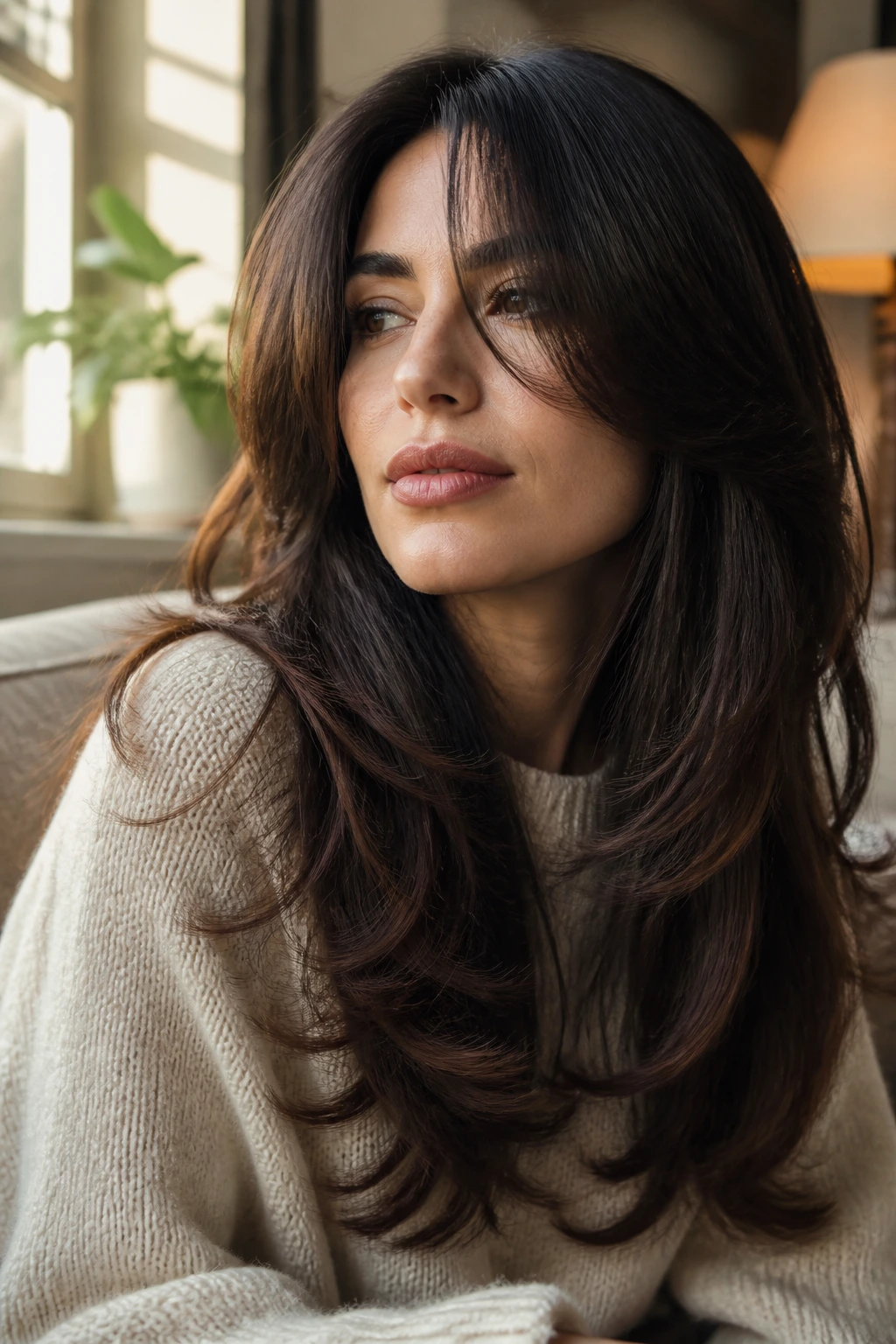
The butterfly cut is a masterclass in balance, proving that you do not have to choose between length and volume. By incorporating strategic layers that frame the face while maintaining a foundation of long hair, you gain a hairstyle that feels both intentional and incredibly versatile. Whether you are aiming for a high-glamour blowout or a messy, air-dried vibe, the architecture of this cut does the heavy lifting for you.
Ultimately, the best version of this cut is the one that works with your specific texture. If you have fine hair, look for more layering to boost volume; if you have thick hair, prioritize internal weight removal to stop it from feeling heavy. Talk to your stylist about where you want your shortest layers to hit, as this is the most critical detail for ensuring the cut compliments your specific face shape. Once you get the proportions right, you will find that your hair feels lighter, bouncier, and easier to style than ever before.