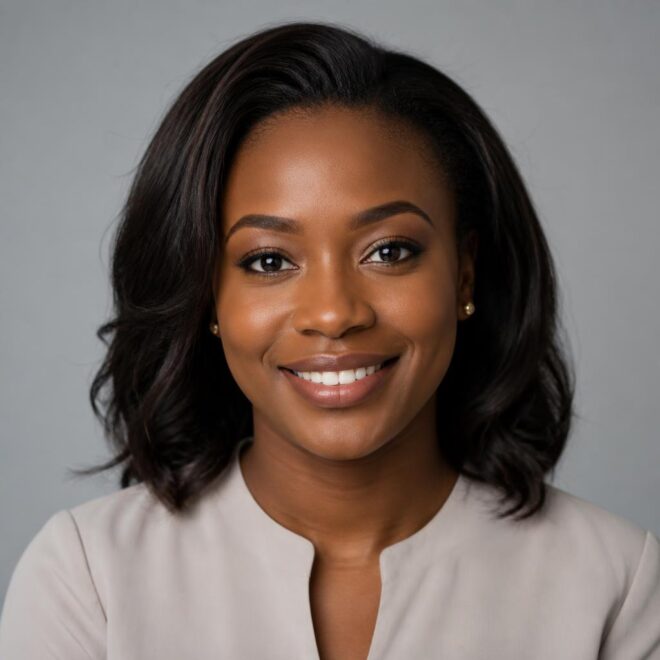


When you have naturally curly hair, the struggle is rarely about finding a style—it is about finding the right cut to manage the volume and keep your hair looking healthy from the roots to the very ends. A “dunner” or thinning-out technique, when executed correctly, is the secret weapon for those who feel their curls are becoming too heavy, triangle-shaped, or simply unmanageable. This approach is not about removing your natural density but about strategically removing bulk where it doesn’t serve the shape of your cut, allowing your curls to spring back into their true, defined patterns.
It is easy to get caught up in the idea that more hair is always better, but volume without structure often leads to frizz and tangled ends. Working with a stylist who understands the physics of a curl—and knows exactly how to use thinning shears or point-cutting techniques—can entirely transform your daily routine. You want your curls to have room to breathe, bounce, and move rather than sitting in a dense, heavy heap around your shoulders.
Choosing the right look depends on your curl pattern, the thickness of your individual strands, and how much time you are willing to spend styling every morning. Whether you are aiming for a structured bob, a long layered look, or something short and edgy, there is a way to tailor the thinning process to highlight your best features. Let us look at twenty-eight distinct ways to handle that extra weight while keeping your hair looking vibrant and full.
1. The Deva-Cut Bob with Strategic Thinning
The classic curly bob is a staple for a reason, but it can quickly become boxy if your hair is thick. By focusing the thinning work on the mid-lengths, you keep the perimeter thick while creating enough space for the curls to interlock properly. This creates a rounded shape rather than a flat, triangular one. It is a perfect choice if you want to keep your hair away from your neck while showcasing a beautiful, voluminous silhouette that still feels lightweight.
2. Long Layers with Internal Weight Removal
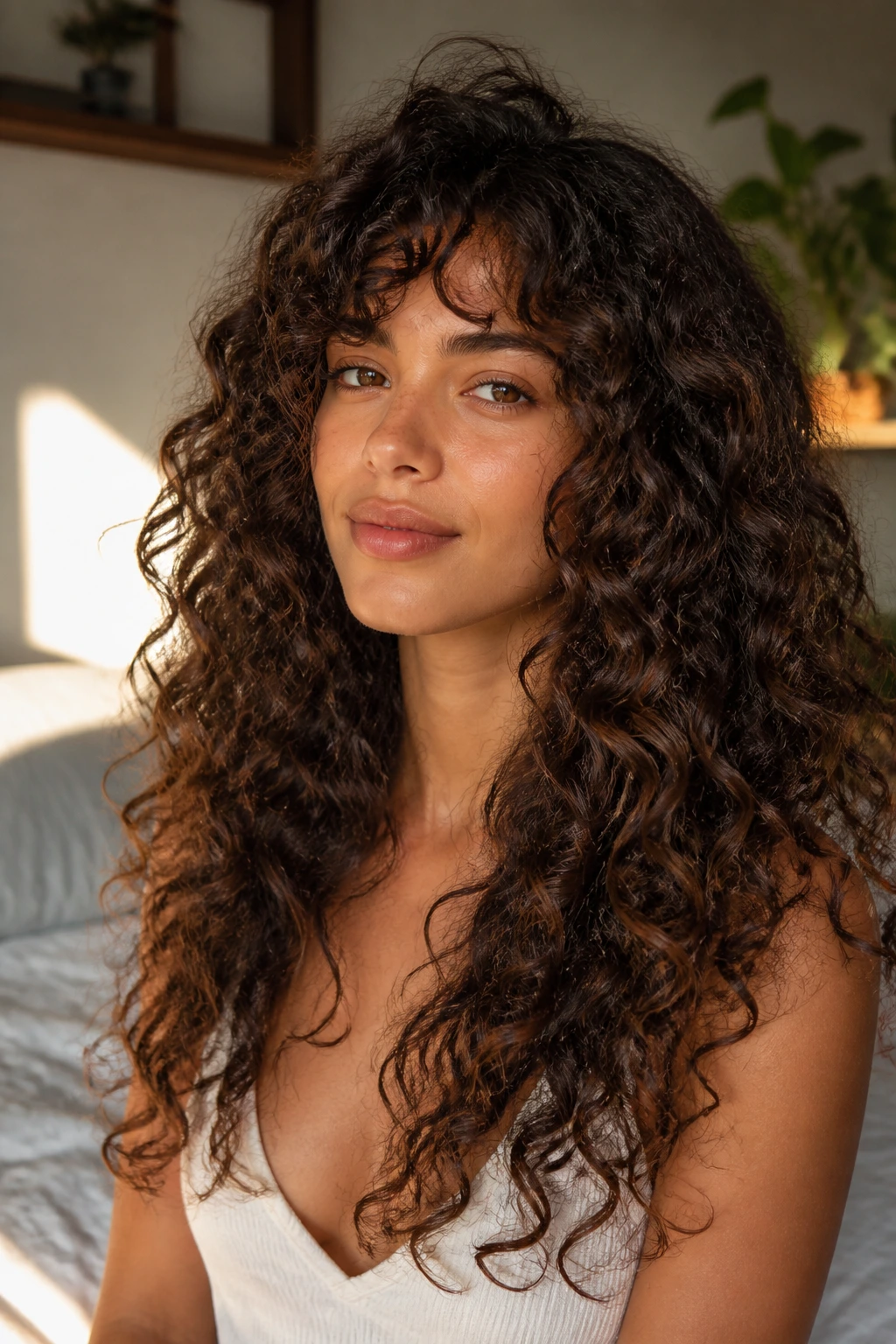
If you have length but find that your hair feels like a heavy curtain, internal thinning is your best friend. A stylist can cut into the layers—specifically in the areas where the hair pools—to remove bulk without changing the length or the silhouette from the outside. You get all the length you want with a fraction of the weight, which often results in your hair drying faster and holding its natural curl definition for longer.
3. The Textured Shag with Point Cutting
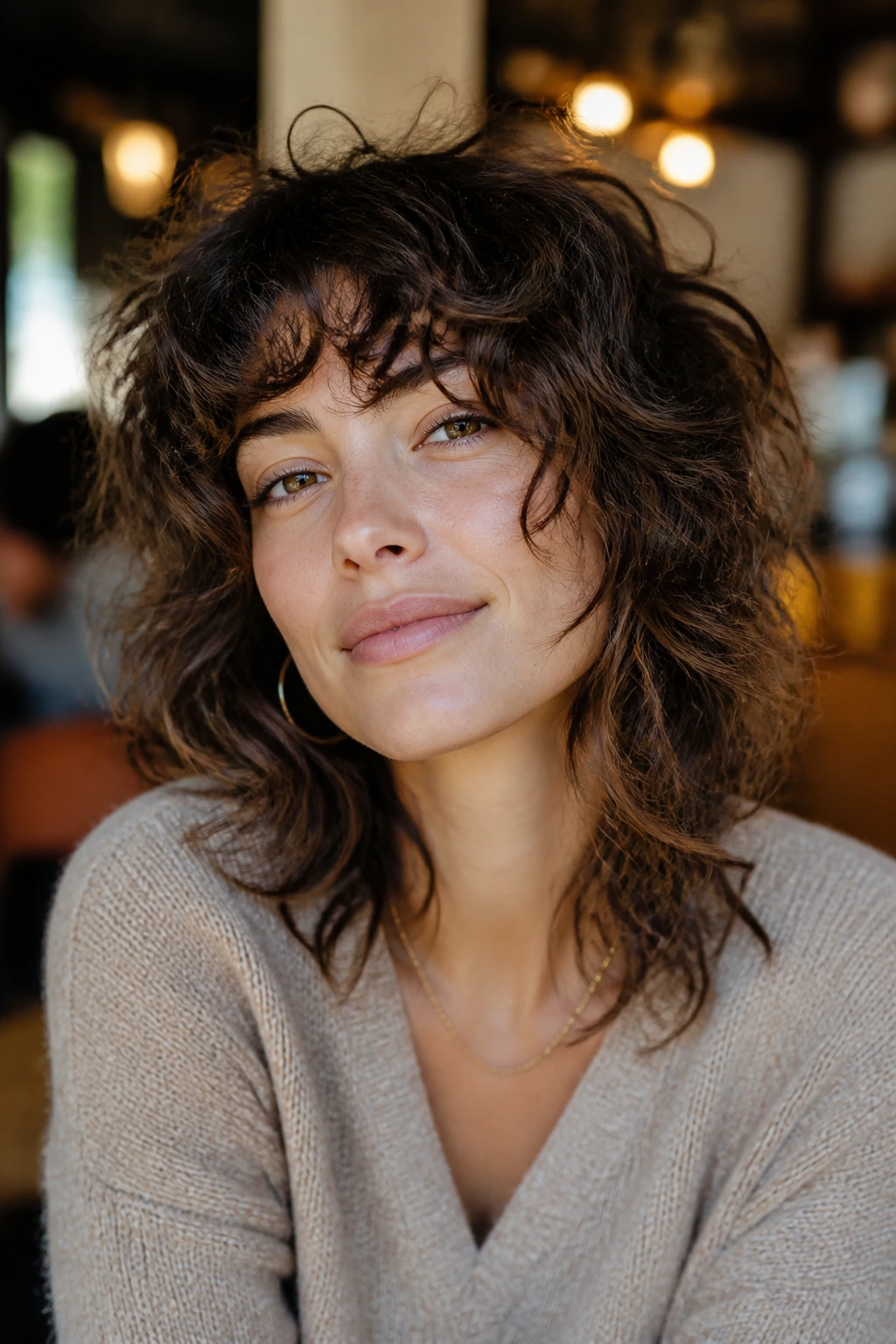
A modern shag works beautifully with curls because it is designed to be messy and layered. Point cutting the ends is essential here; it breaks up the heavy, blunt line that thick hair often produces. Instead of a thick, weighted-down end, you get a wispy, bohemian finish that allows each curl to separate cleanly. It is an ideal look if you want something that feels effortless and stays stylish even as it grows out.
4. Short Pixie with Tapered Sides
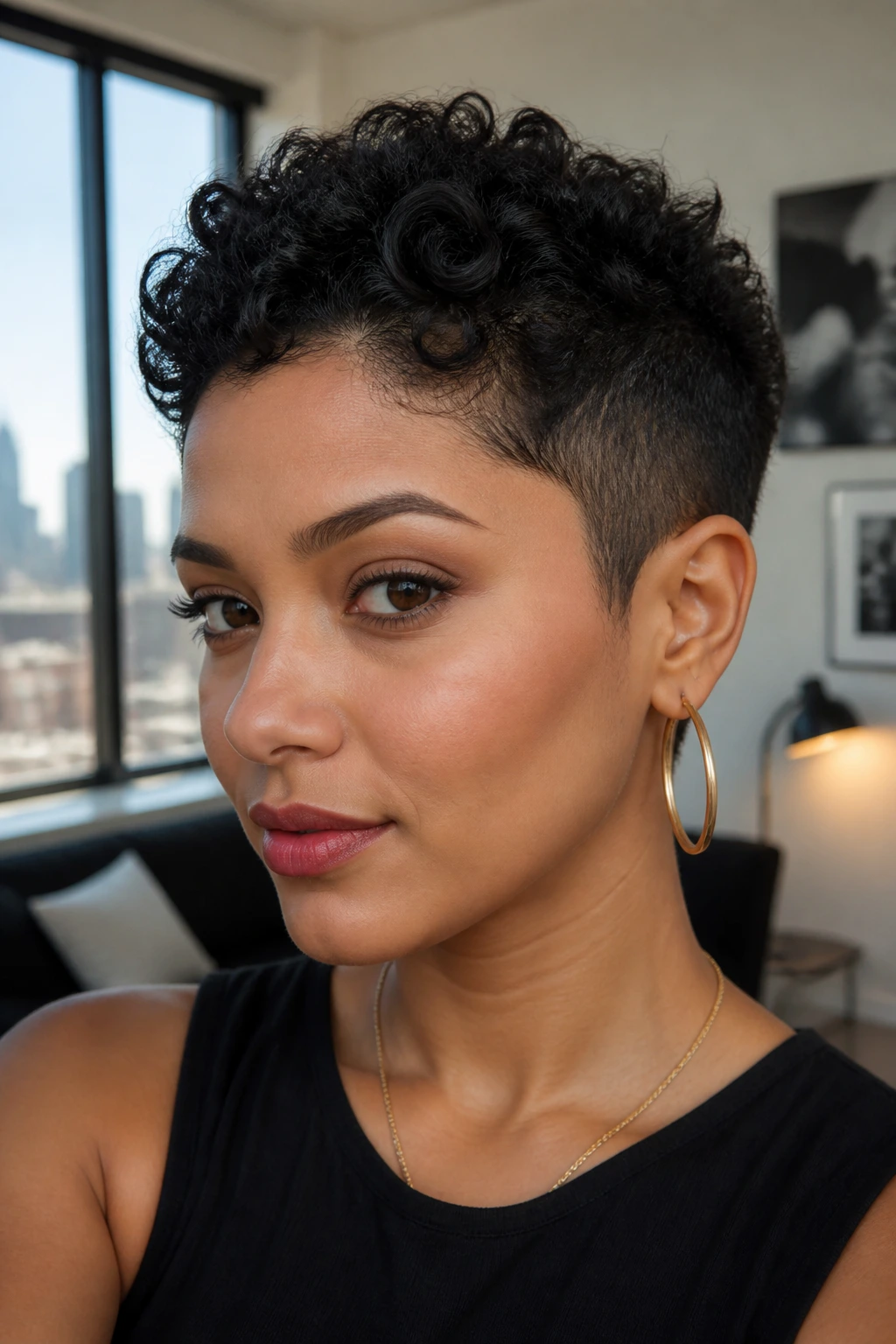
Not everyone wants long locks. A short, curly pixie is incredibly chic, but it requires a very specific approach to thinning. Tapering the sides tightly while leaving the crown longer creates a beautiful contrast. The thinning work is concentrated on the top to prevent a “poodle” effect, ensuring the curls lay flat against the head in a way that feels polished. This is a low-maintenance, high-impact style for the bold.
5. The Rounded Mushroom Cut
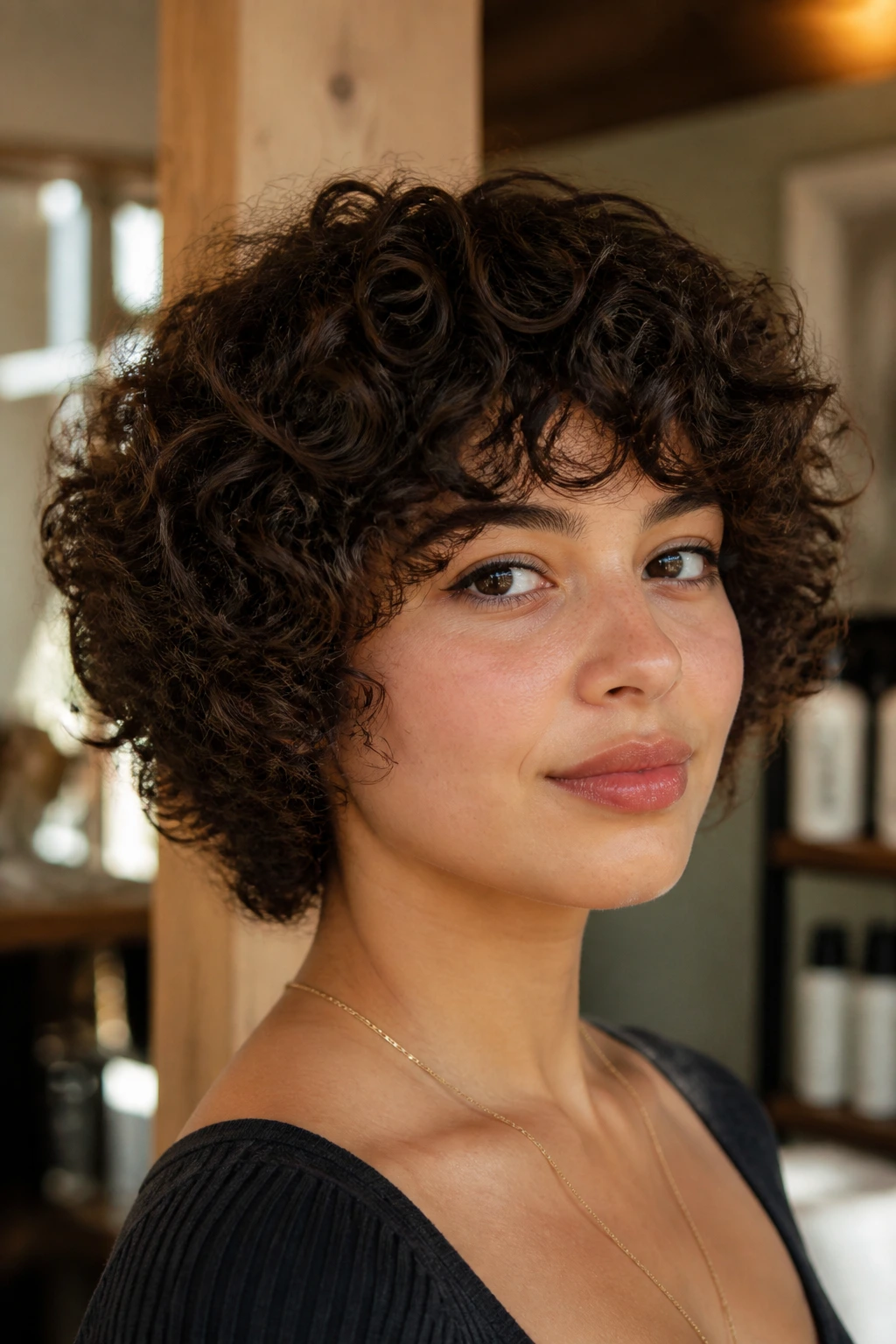
Sometimes, going for a rounded, voluminous shape is the exact right move. This style uses thinning shears to soften the edges of the cut so the hair transitions smoothly from short to long. It is a deliberate take on the classic 70s shape, updated for modern curls. Because the weight is removed from the interior, the hair creates a soft, cloud-like dome that frames the face elegantly without feeling heavy or stiff.
6. Shoulder-Length Layers with Face-Framing
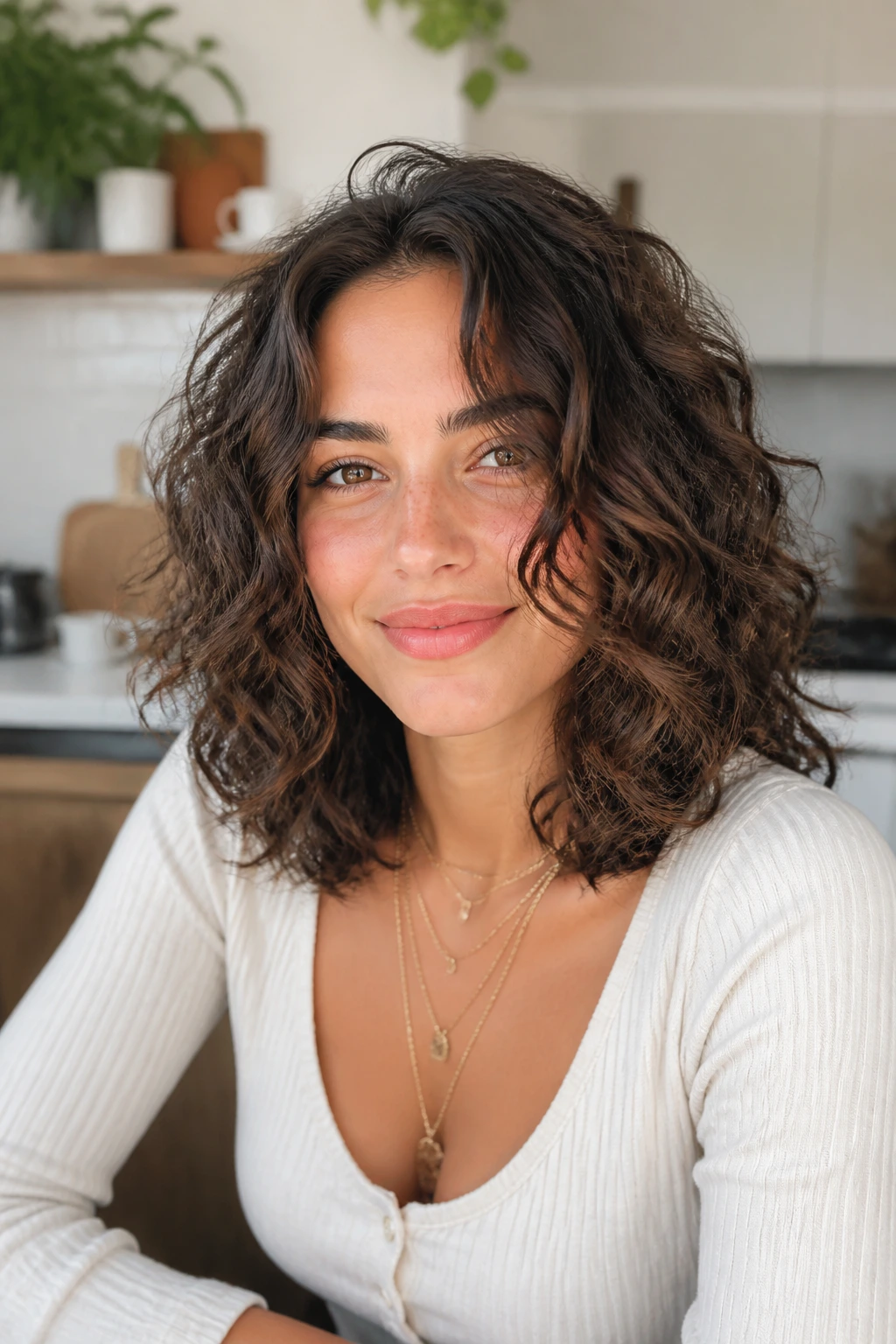
Focusing the bulk removal around the face is a game-changer. By keeping the curls slightly shorter near the jawline and thinning out the layers that hit the shoulders, you create a natural “U” shape that opens up your face. This prevents the hair from dragging your features down. It is a balanced, approachable look that works for almost every curl type, from tight coils to loose, beachy waves.
7. The Asymmetrical Lob
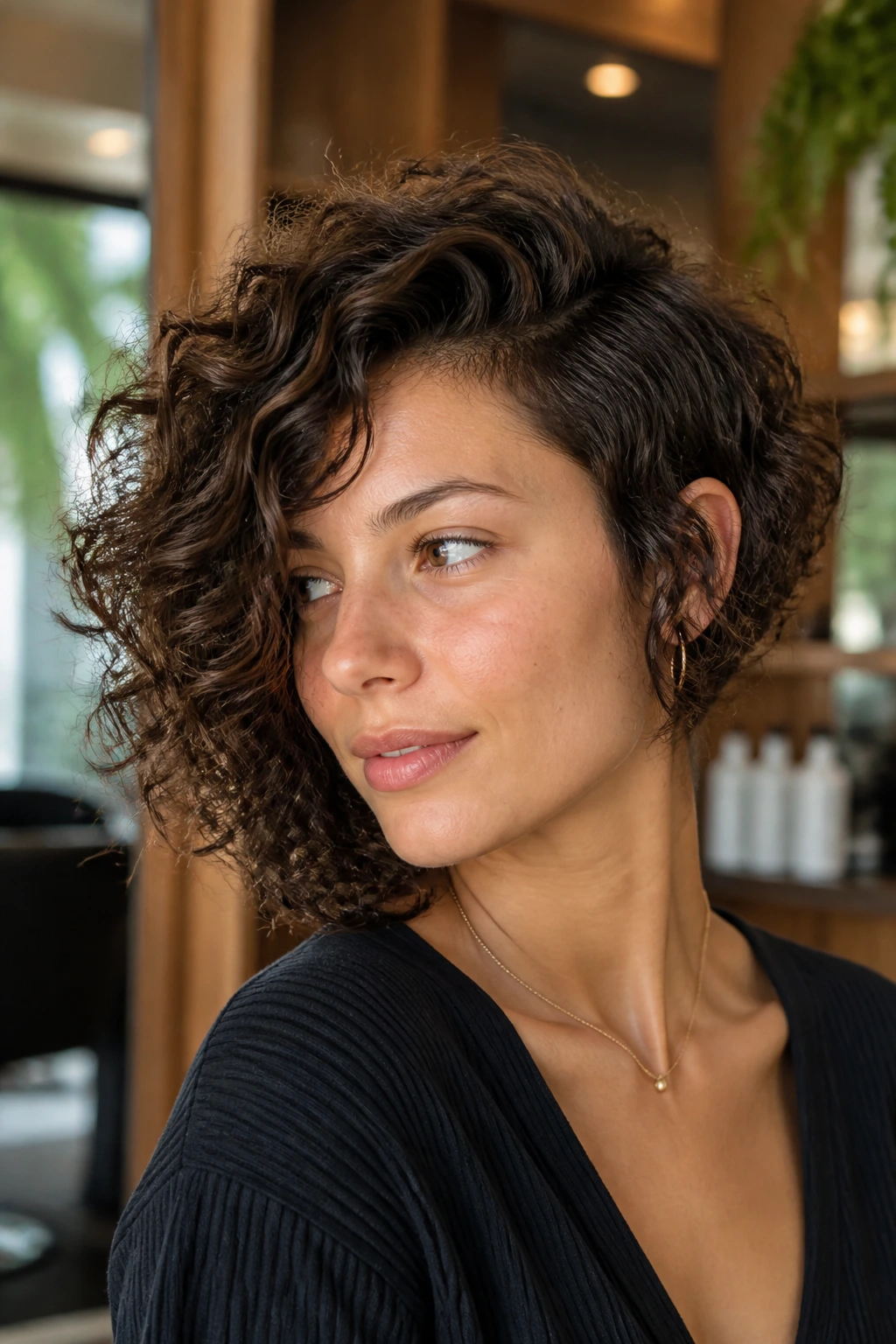
An asymmetrical long bob, or “lob,” adds an edge to curly hair that is hard to beat. Because one side is shorter, the weight distribution is naturally different, which helps with management. You can use point cutting throughout the longer side to ensure the curls don’t clump together in a way that looks lopsided or messy. This style is all about movement and keeping the curls from sitting too flat against the nape of your neck.
8. Curly Bangs and Long Layers
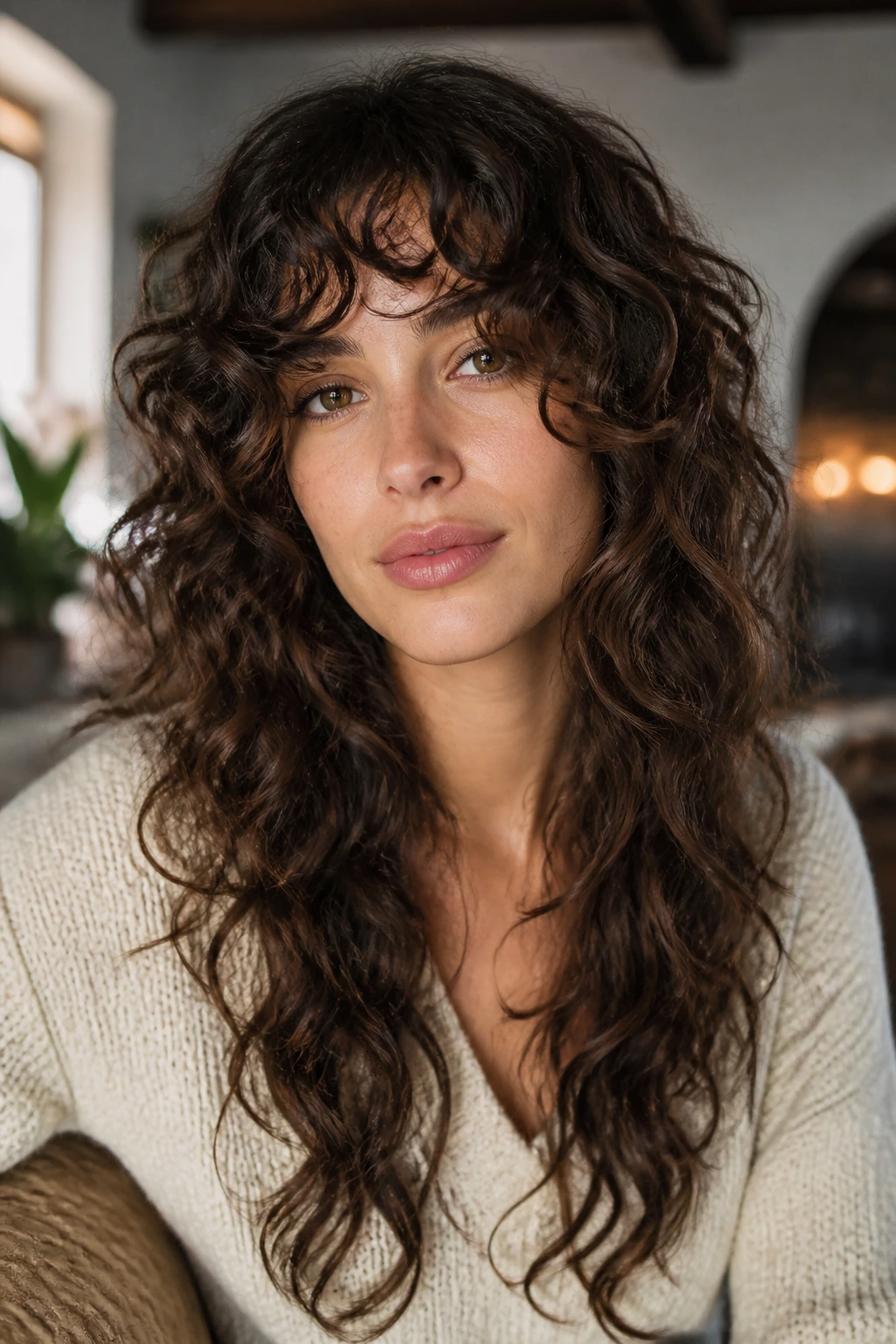
Bangs are often intimidating for curly-haired people, but the secret is in how you thin them. Instead of a thick, blunt fringe, go for a piece-y, shaggy bang that is heavily point-cut. This allows them to feather across your forehead rather than creating a solid block. When paired with long, internally thinned layers, it creates a cohesive, vintage-inspired look that is both sophisticated and soft.
9. The Undercut Bob
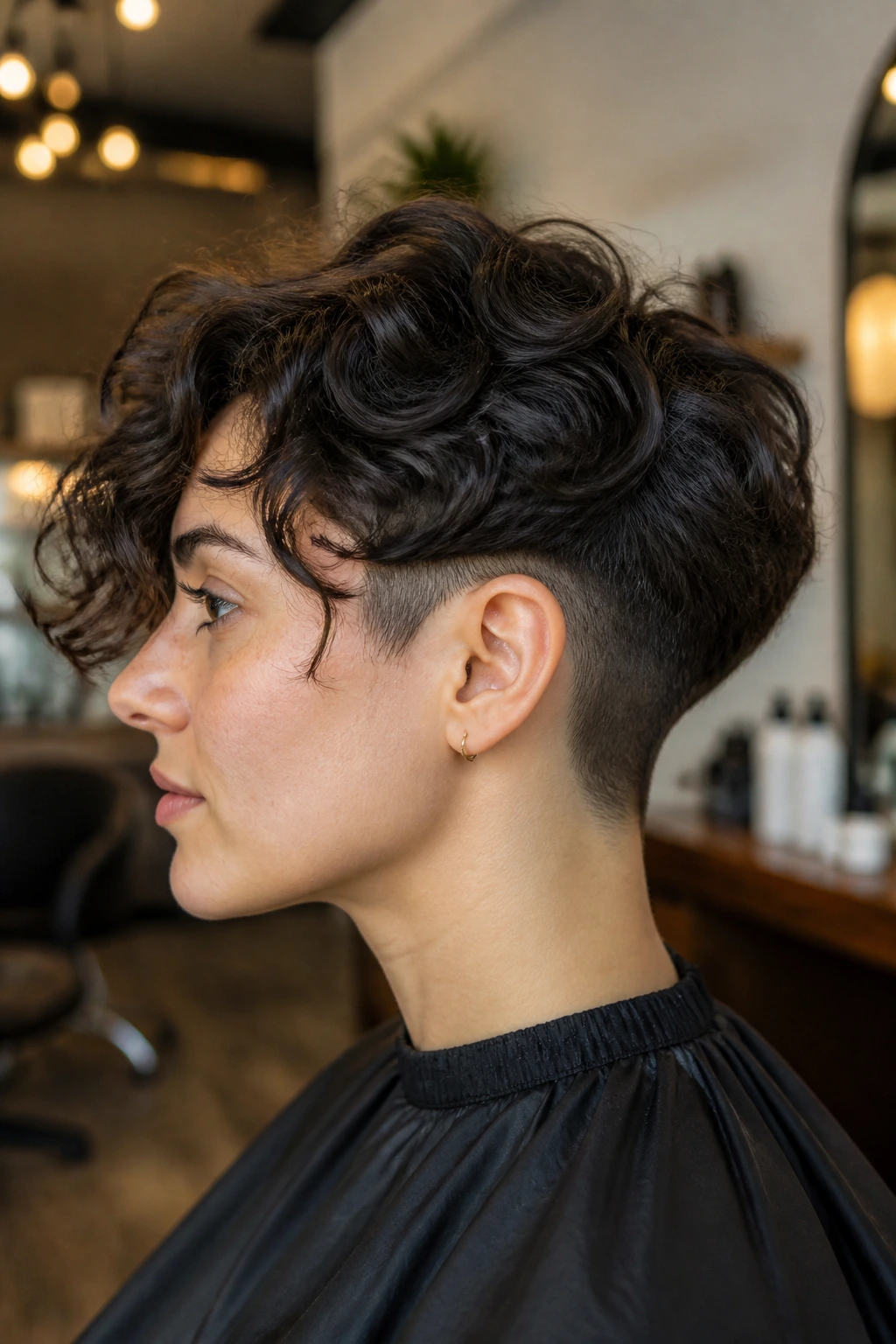
For those who really struggle with a massive amount of hair, an undercut at the nape of the neck is the ultimate thinning solution. You shave or buzz a small section at the very bottom, effectively removing 20% of your total volume without touching the visible hair. The top layer falls over the shaved section, meaning you get the benefit of a thinned-out style while keeping the appearance of a full head of curls.
10. The Deep Side-Parted Afro
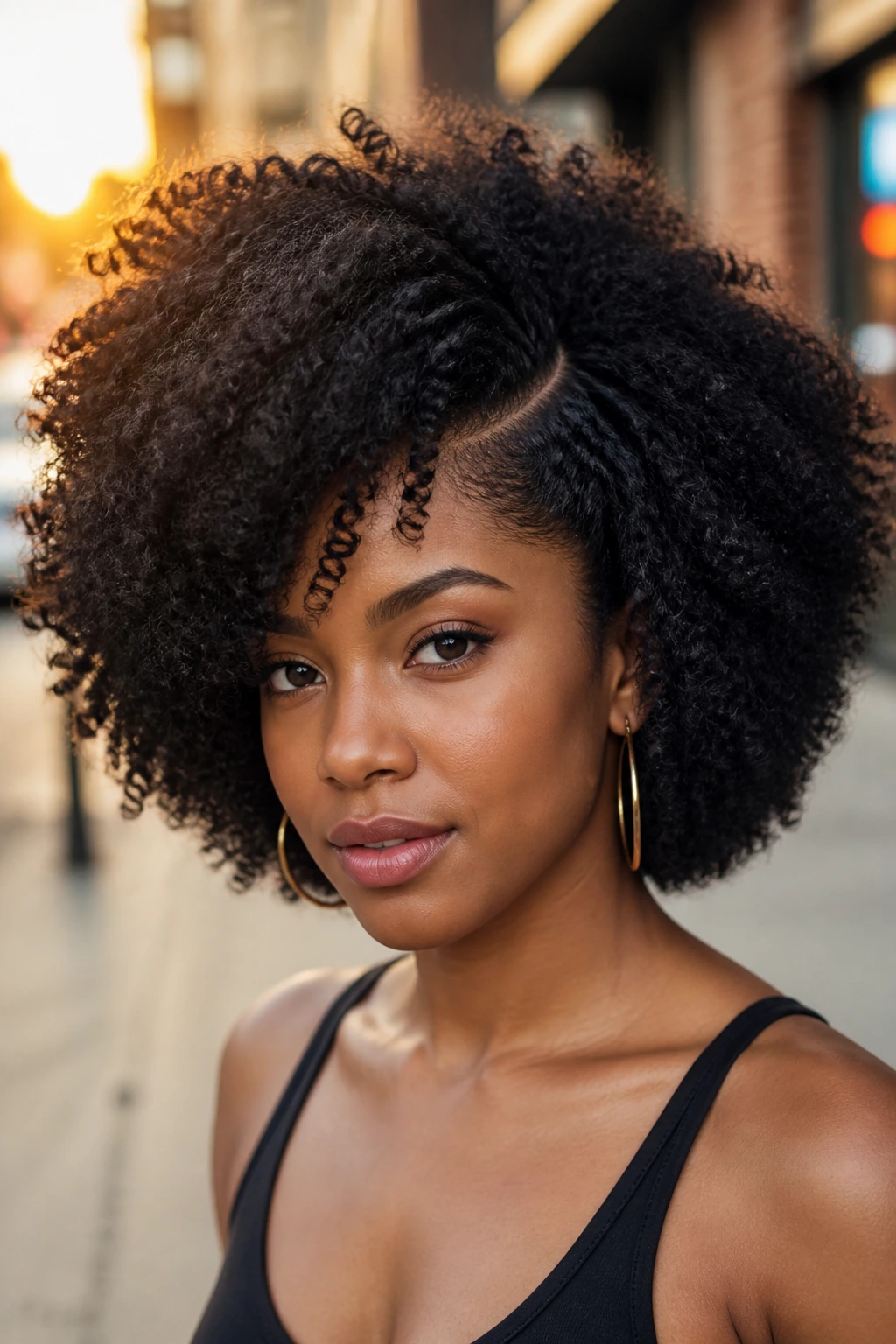
If you have tight coils, thinning can be tricky, but it is necessary for maintaining shape. A deep side part creates instant volume and drama, and by thinning the hair at the roots of the shorter side, you ensure it lies tight to the head. This emphasizes the height and shape of the longer side. It is a stunning, high-fashion look that relies on contrast rather than just letting the hair grow out evenly.
11. Choppy Ends with Thinning Shears
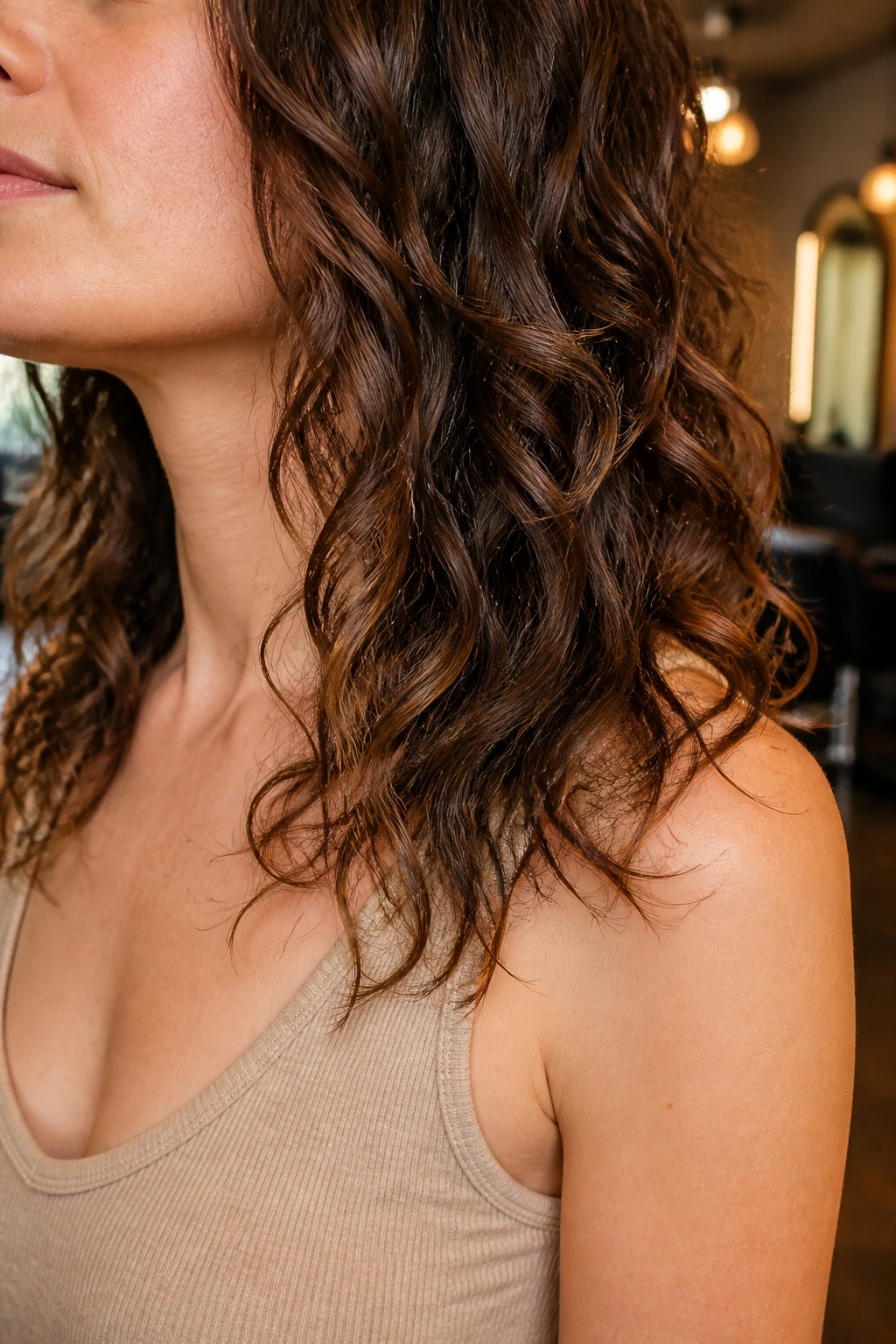
Sometimes the weight problem is localized entirely at the ends. If your hair is healthy at the root but feels like a heavy broom at the bottom, your stylist should use thinning shears specifically on the last two inches of your hair. This creates a “soft edge” that allows curls to taper off naturally rather than ending in a thick, blunt line that looks like a carpet. It’s the easiest way to modernize a basic trim.
12. The Cascading Waterfall Layers
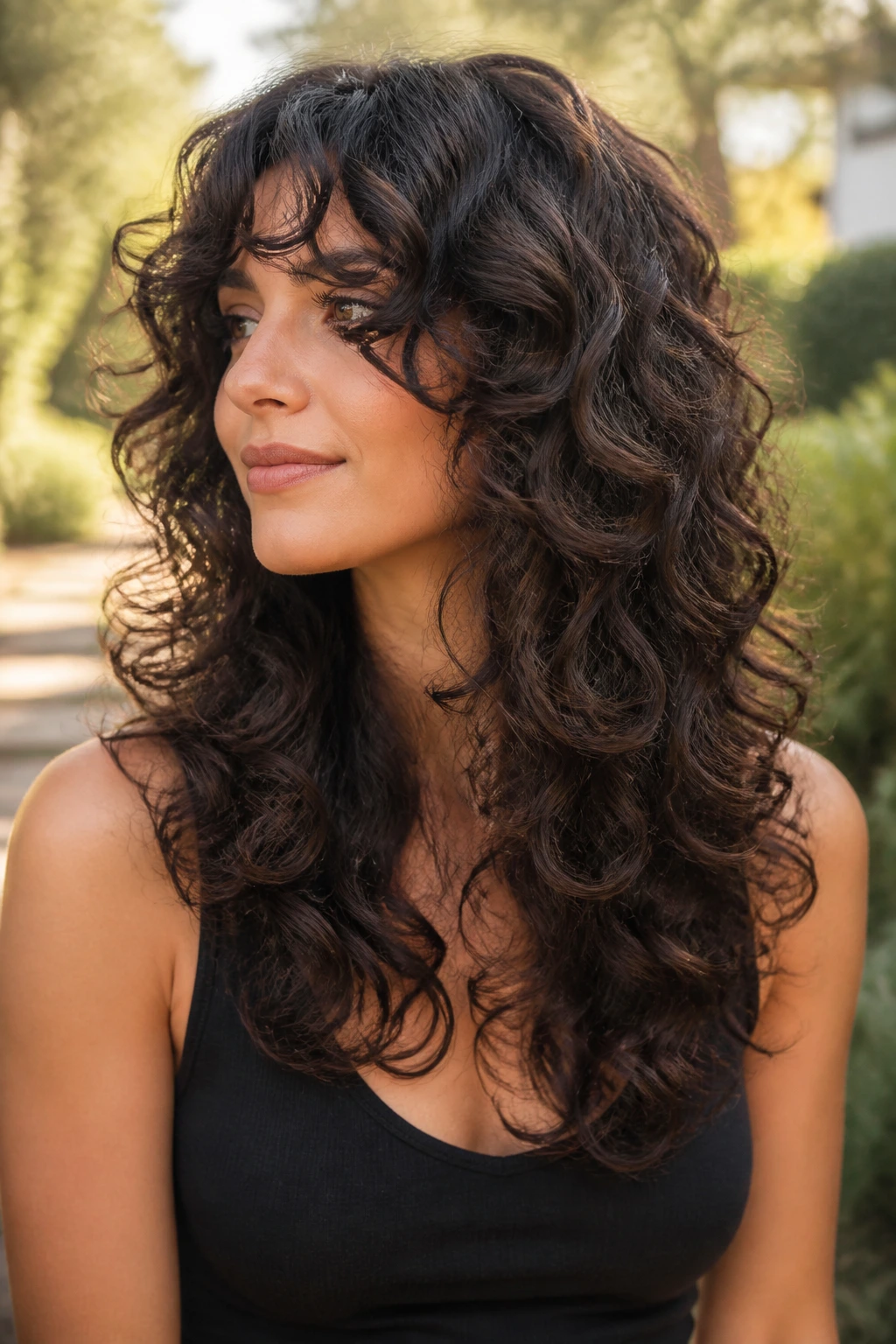
Waterfall layers are cut in a way that they tumble down the head in distinct sections. Because this style involves a lot of layering, it is naturally thinner than a one-length cut. However, to keep the “waterfall” effect from becoming a tangled mess, the internal bulk must be removed. This ensures that every individual tier of curls can be seen clearly, giving you that enviable, multi-dimensional look that moves beautifully when you walk.
13. The Mid-Back Shag
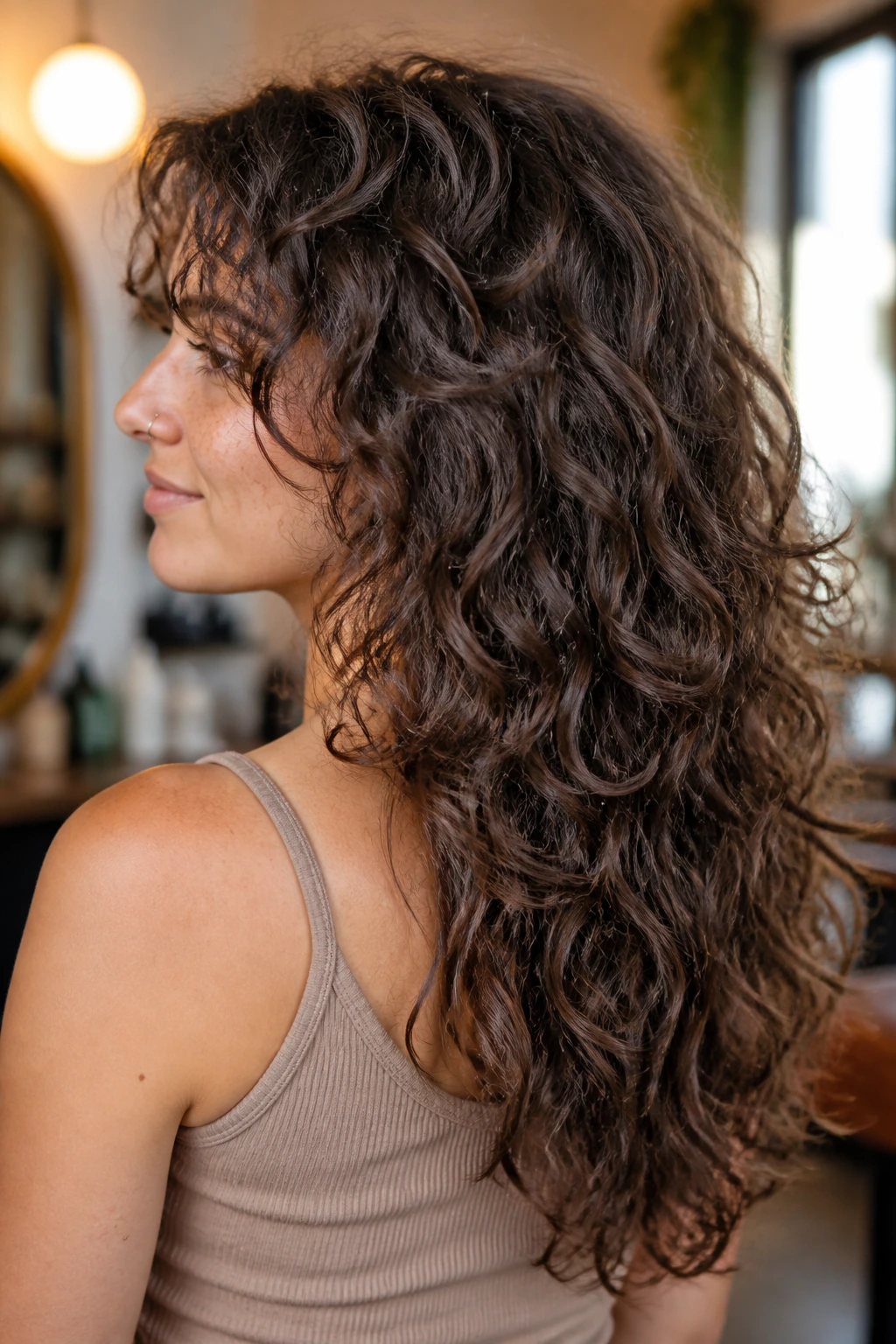
Think of this as a longer, more dramatic version of the standard shag. It focuses on heavy layering through the back and top, with significant weight removal at the mid-shaft. It’s excellent for those who have a lot of hair but don’t want to go short. The result is a wild, free-spirited style that manages its own volume, making it much easier to style with just a bit of leave-in conditioner and a diffuser.
14. Graduated Bob for Tight Curls
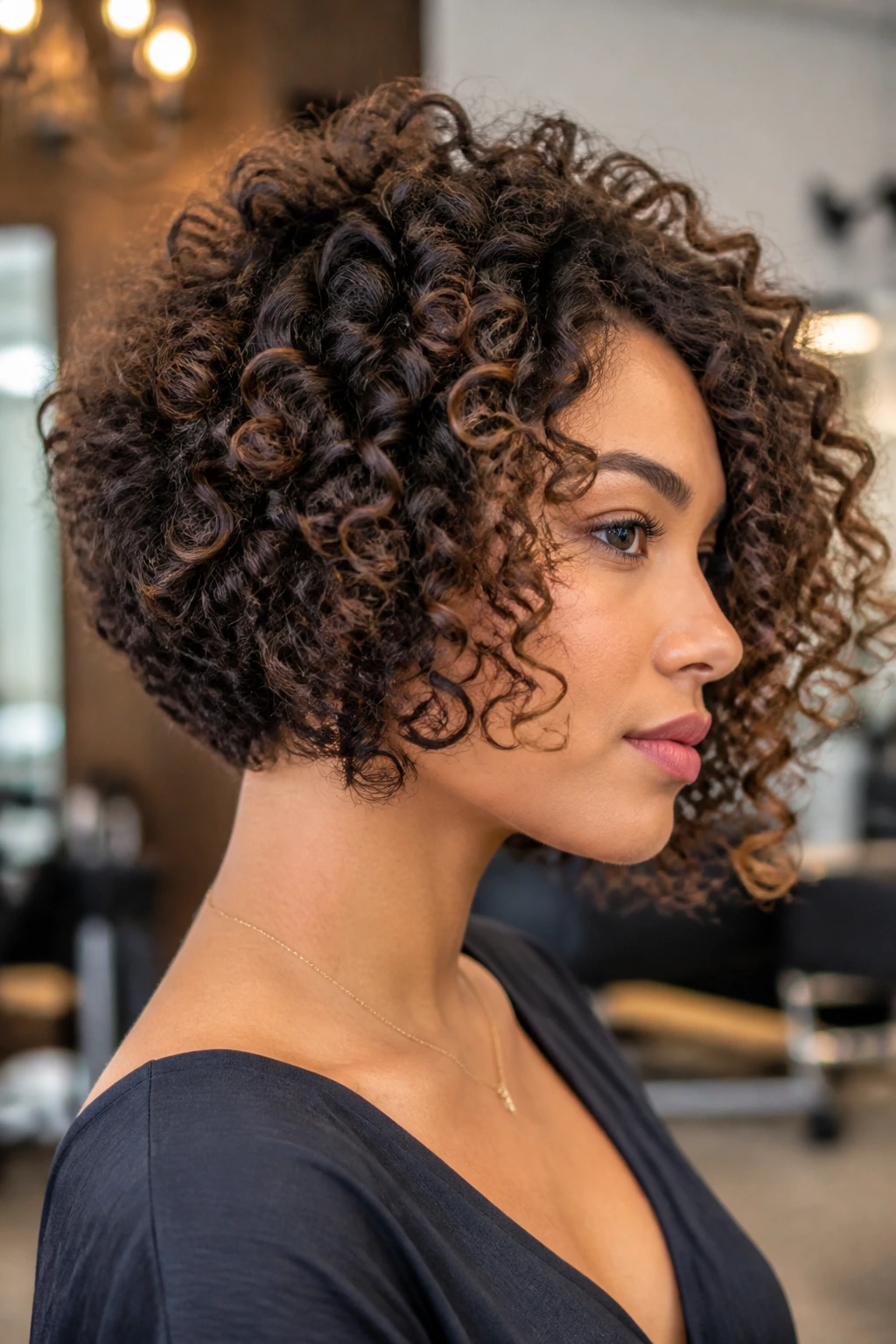
A graduated bob is shorter in the back and longer in the front, which naturally pulls weight forward. For curly hair, this means the back stays tidy and compact while the front gets to express its full personality. By thinning the back section, you ensure it doesn’t poof out too much near the neckline. This is a very clean, structured look that feels incredibly professional and put-together.
15. The “Wolf Cut” Adaptation
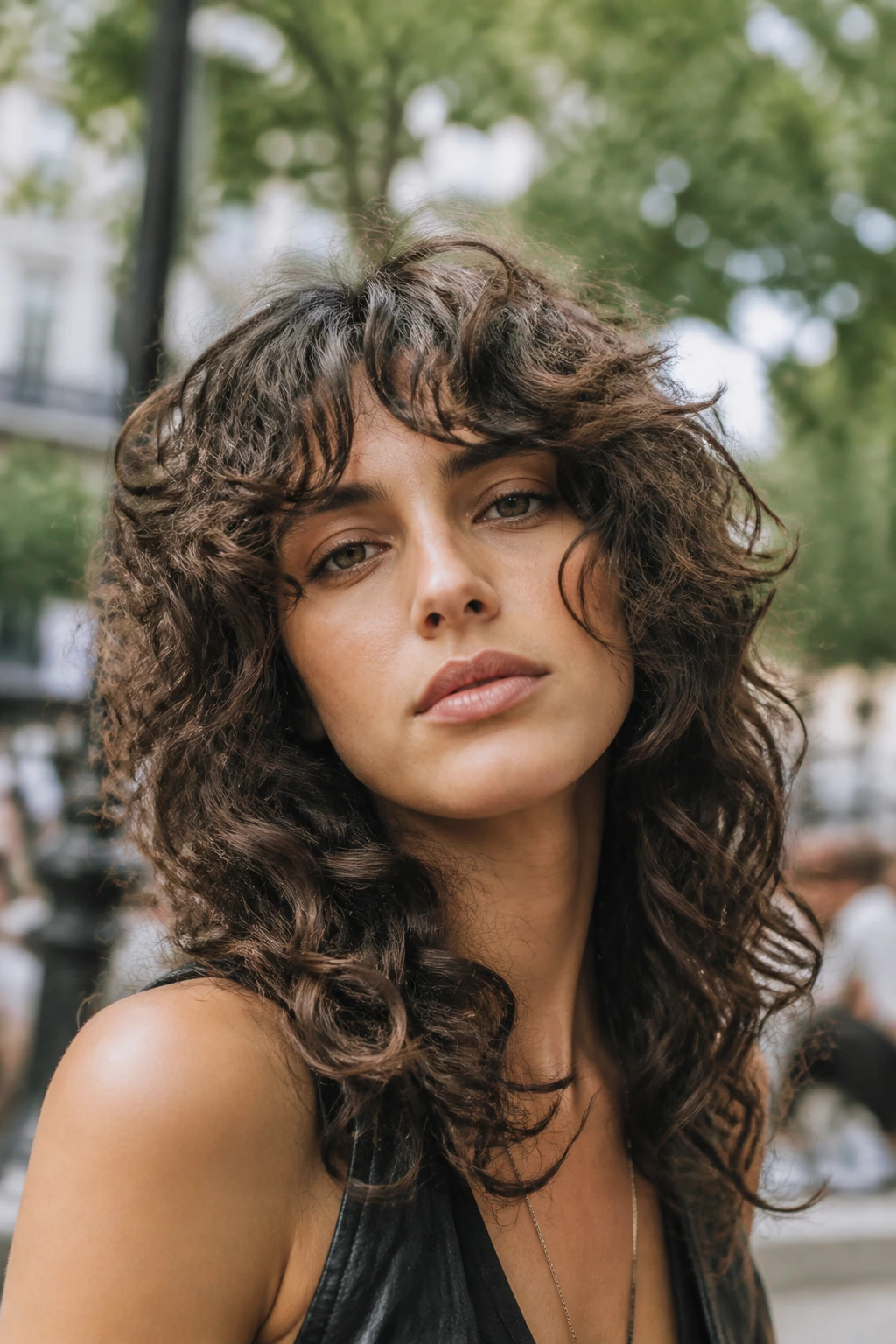
The wolf cut has taken over because it combines the best of the 70s shag and the 80s mullet. For curly hair, this means a lot of choppy layers on top and thinned-out, wispy ends. It’s a very high-texture style that doesn’t need to be perfectly neat. The thinning is what allows the layers to mesh together without looking like a helmet, providing a fun, youthful vibe that is perfect for anyone wanting a dramatic change.
16. Soft Tapered Curls with Side Part
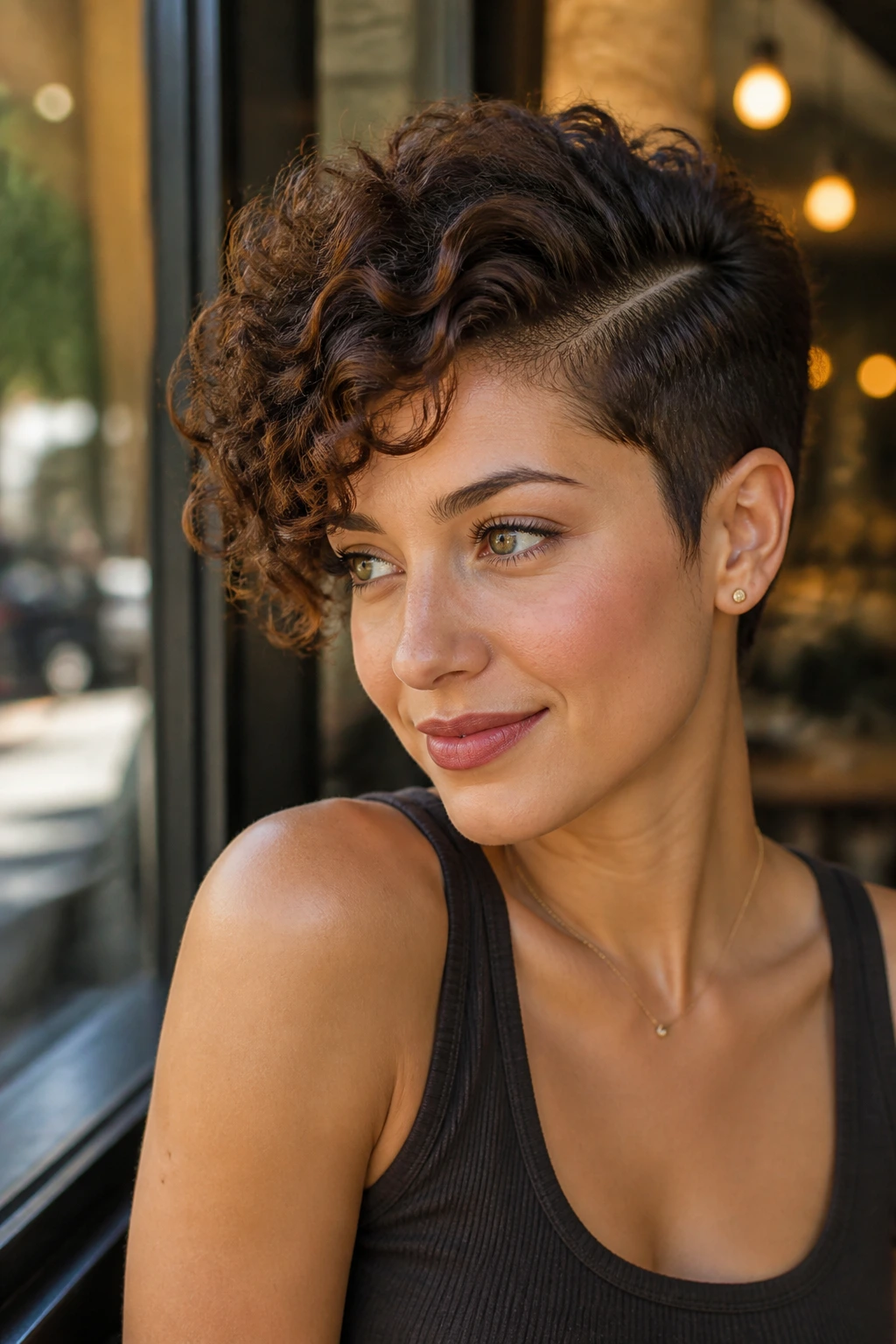
If you prefer a shorter length but want something that feels feminine and soft, consider a taper. The sides are shorter and thinned out, while the top is left long enough for the curls to form. This removes the “bulk” from around the ears and neck, which is where most heavy curls start to feel restrictive. It’s an airy, light look that keeps the focus on your eyes and cheekbones rather than the width of your hair.
17. The Blunt Bob with Hidden Thinning
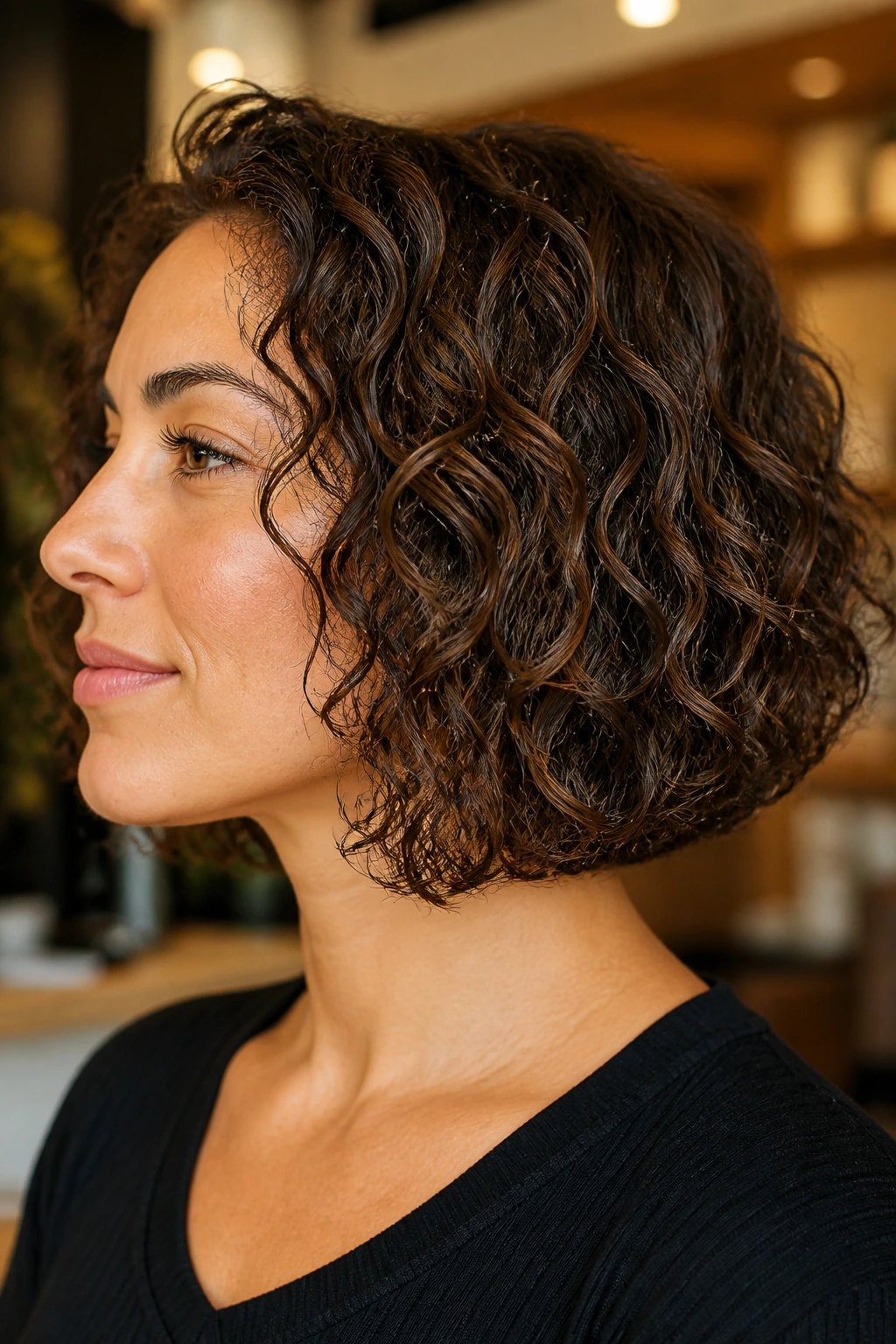
Do you love the look of a solid, blunt bob but hate the “triangle” shape it forces on your curls? The solution is hidden thinning. A skilled stylist can thin the hair from the inside, starting about three inches from the root and stopping two inches from the end. This keeps the perimeter appearing thick and healthy while removing the weight that pushes the curls into a bulky, flat-bottomed shape.
18. Faux-Hawk with Tapered Sides
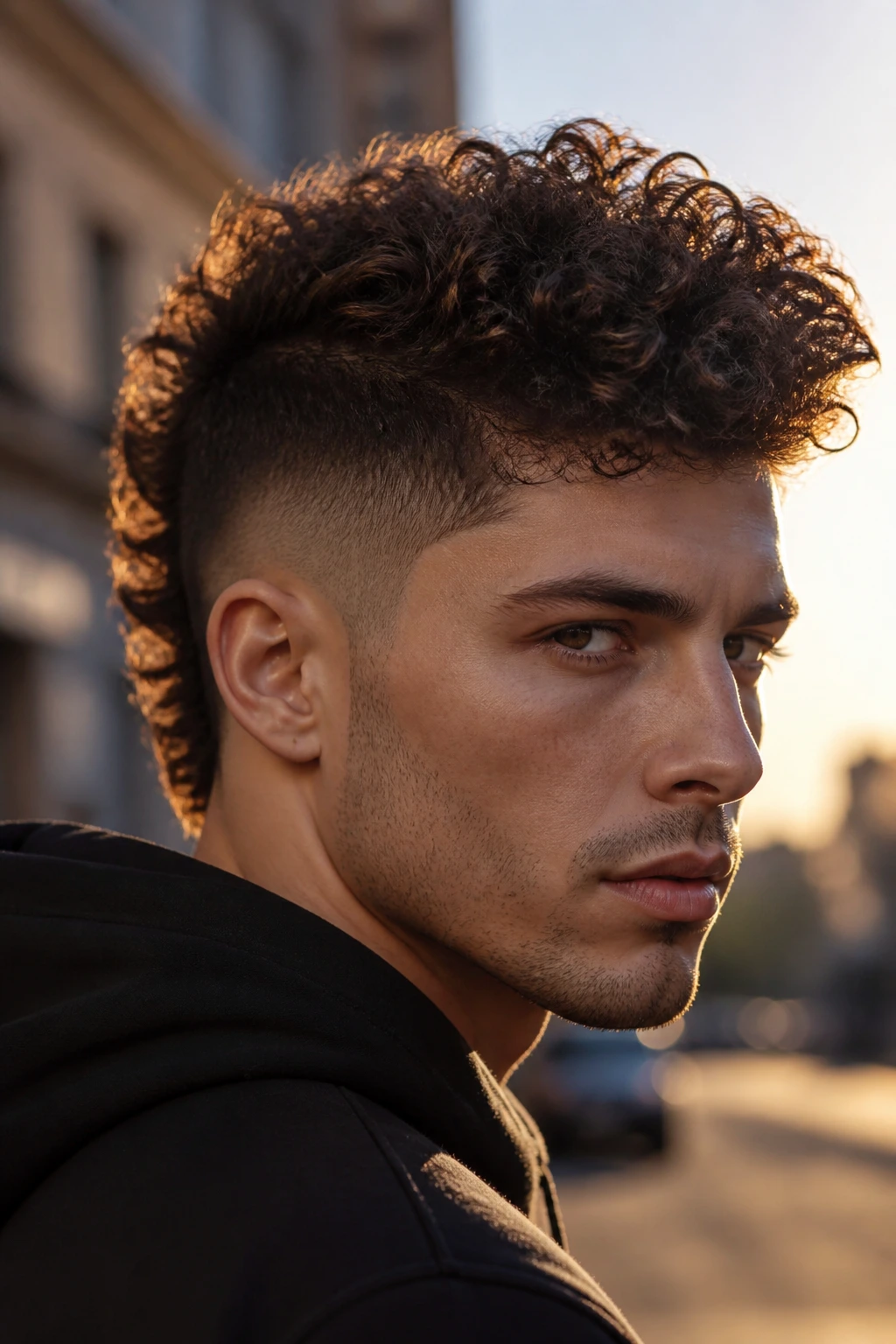
For those who want something edgy, a curly faux-hawk is a fantastic choice. The sides are kept tight, and the thinning is focused on the center strip to ensure the curls stay upright and defined. Because you have removed so much weight from the sides, the hair on top doesn’t feel heavy, allowing it to stand up on its own with very little product. It’s a bold look that is surprisingly easy to maintain.
19. Layered Pixie with Long Fringe
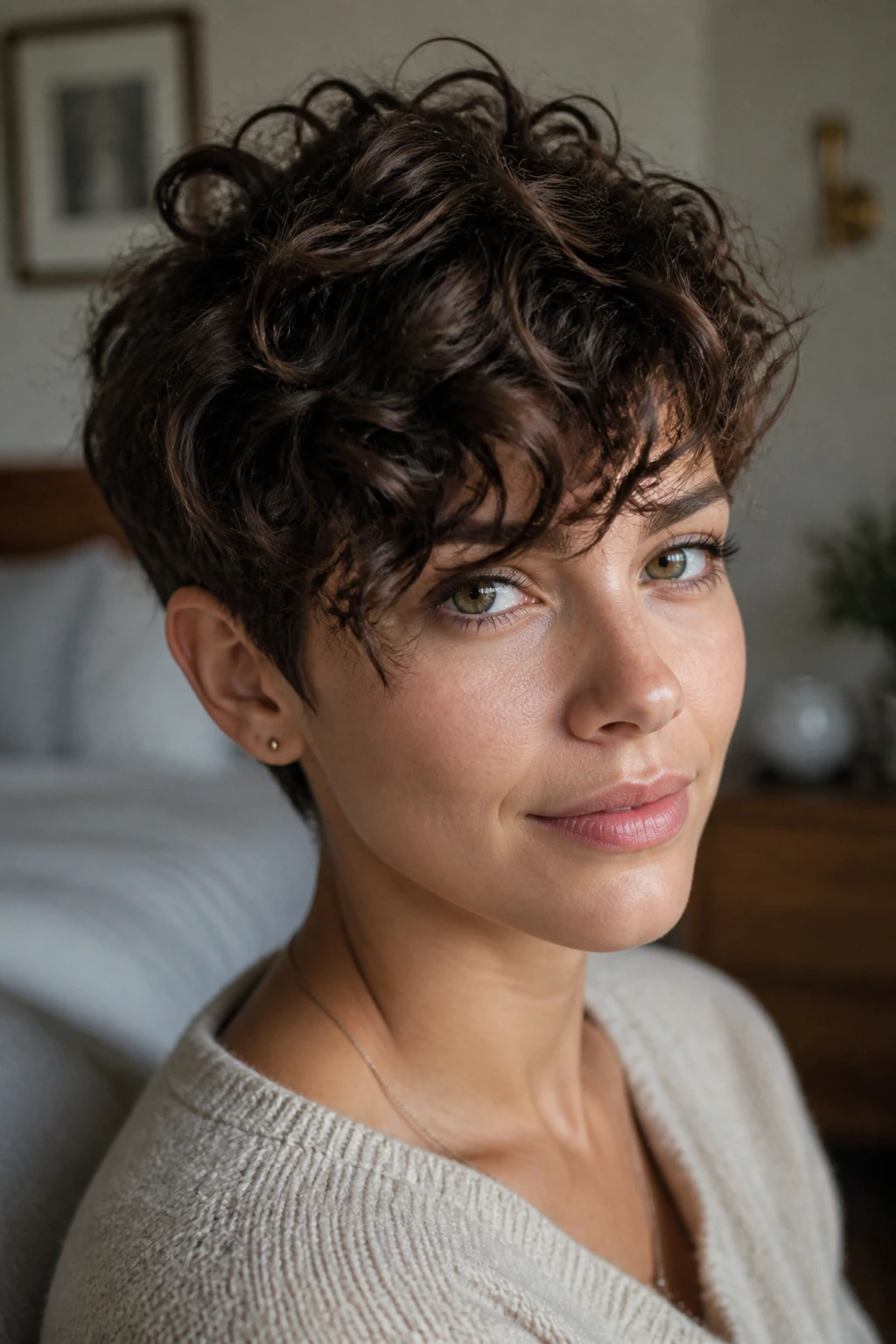
A pixie doesn’t have to be uniform. Leaving the fringe area longer and heavily point-cutting it allows it to frame your forehead and face in a soft, wispy way. Meanwhile, the back and sides can be kept short and thinned to ensure they hug the head. This provides a balance between the fun, curly texture of the bangs and the sleek, manageable nature of the rest of the cut.
20. The “Curly Bowl” Update
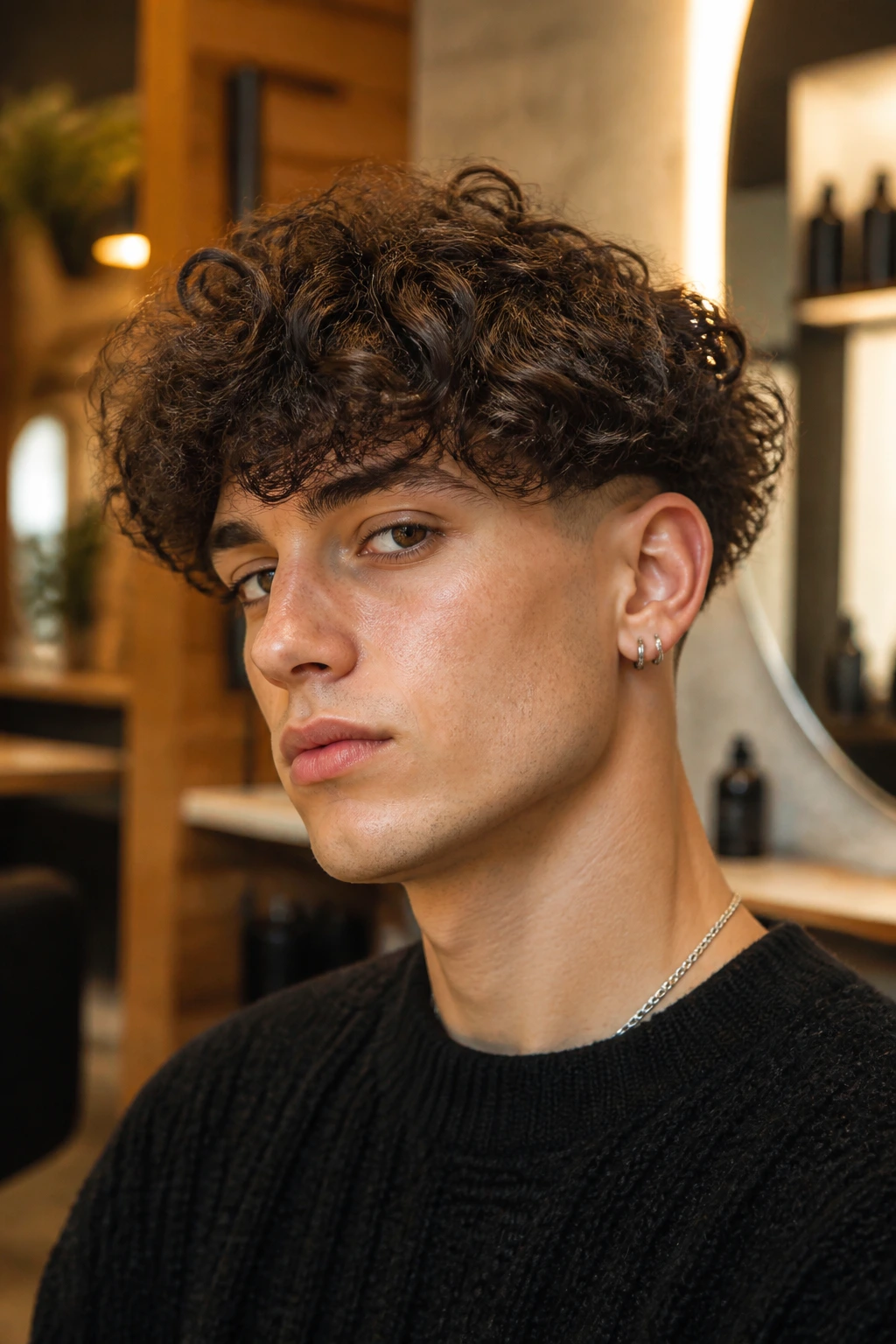
The bowl cut is making a comeback, but don’t worry—it’s much cooler this time around. By using thinning shears to create a textured, uneven edge rather than a blunt line, you create a look that is soft and modern. The thinning also ensures that the hair doesn’t sit too heavy on the head. It’s a very artistic, high-fashion style that looks incredible on those with tighter curl patterns who want a signature silhouette.
21. Wispy Layers for Thin-Stranded Curls
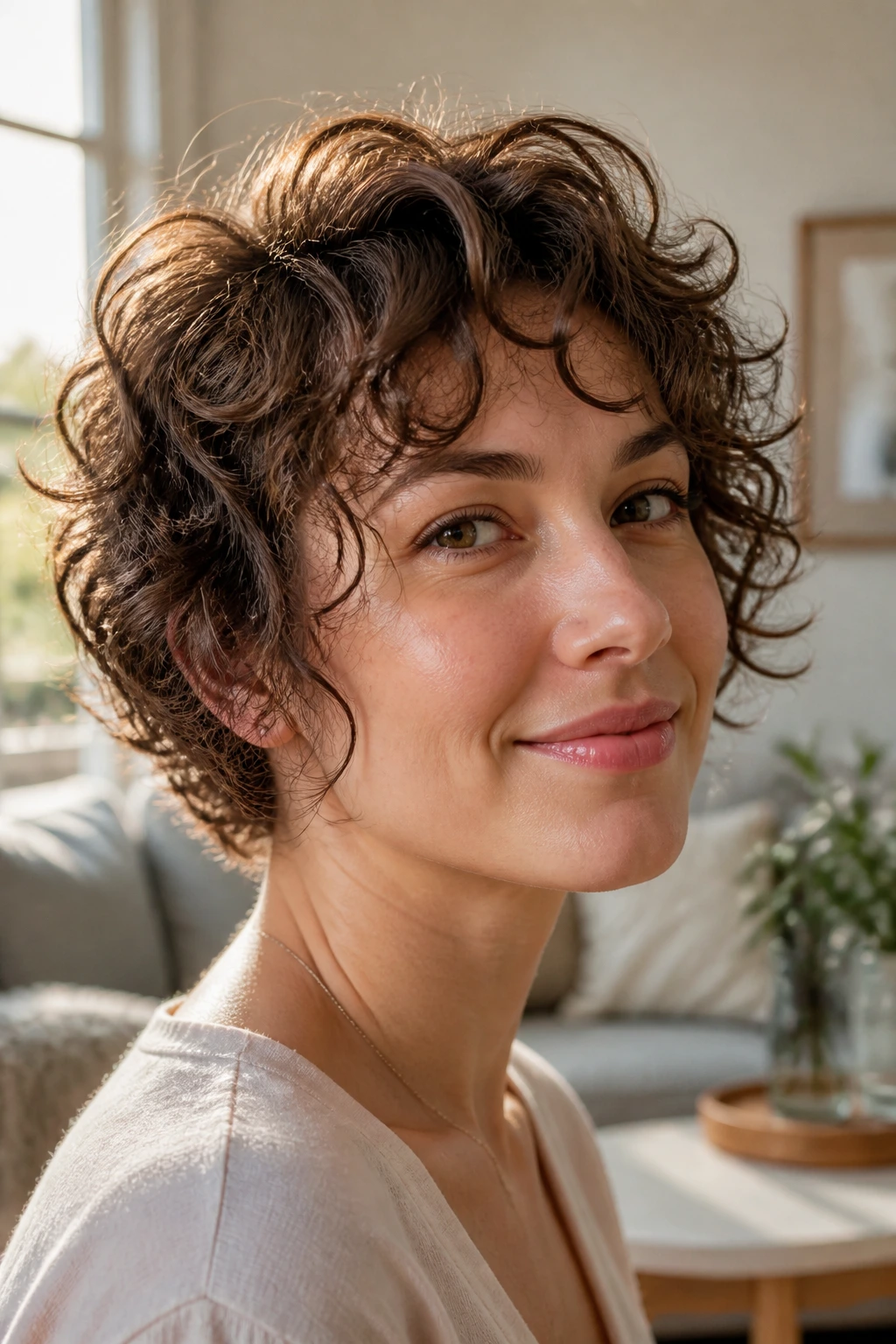
Sometimes your curls aren’t thick, but you have a lot of them, and the weight still drags them down. For this hair type, you don’t need heavy thinning shears; you need delicate point cutting. This creates “wisps” of hair that move freely, adding volume at the root while keeping the ends light. It’s about creating texture rather than just removing bulk, which prevents the hair from looking stringy.
22. The Modern Shaggy Bob
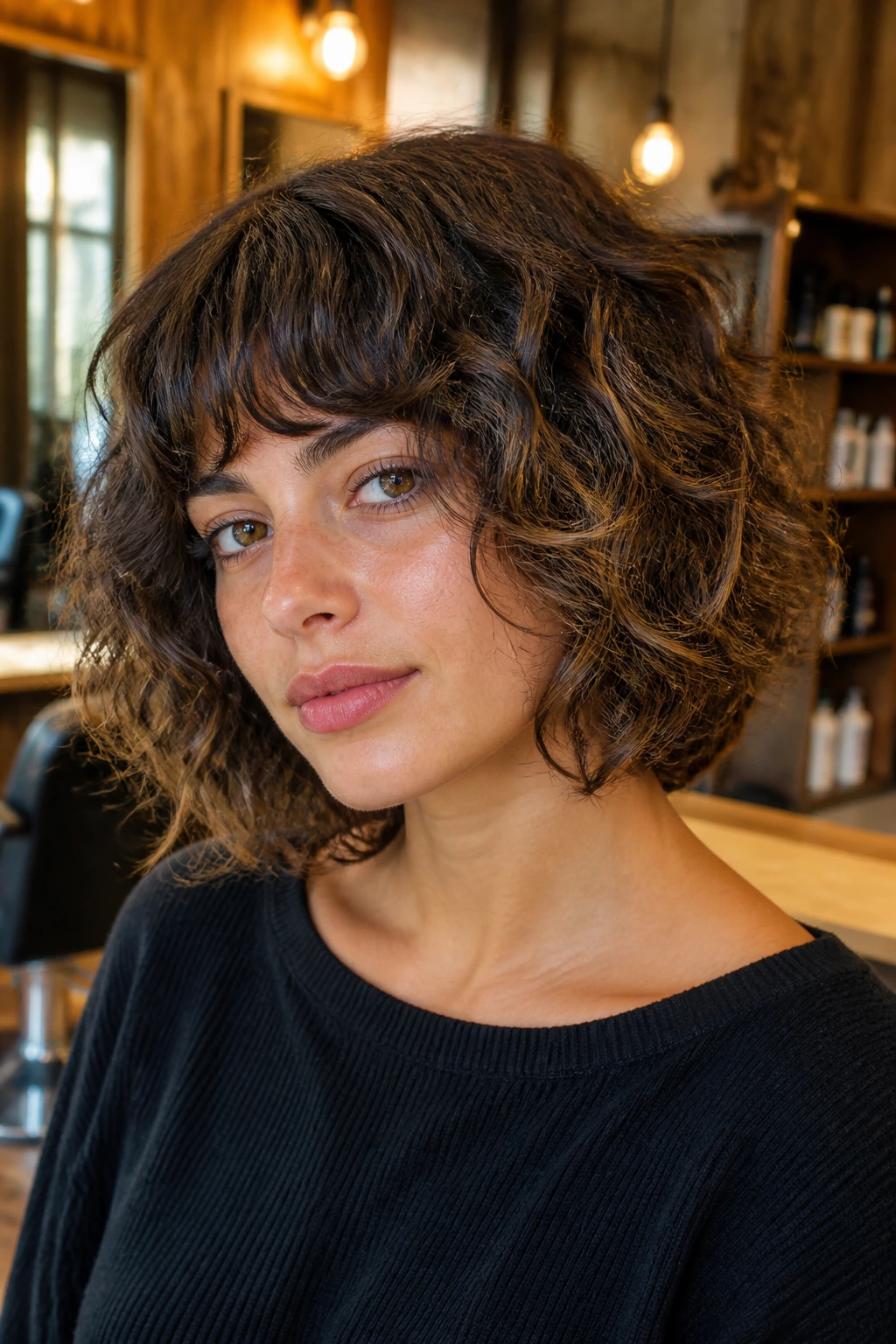
This combines the length of a bob with the layering of a shag. It’s arguably the most popular curly cut today because it is incredibly forgiving. The thinning work is done throughout the interior to create “seams” in the hair, where one layer meets the next. This prevents the “tiered cake” effect and instead creates a seamless flow of curls from root to tip. It is easy, breezy, and very low maintenance.
23. Tapered Back with Longer Top
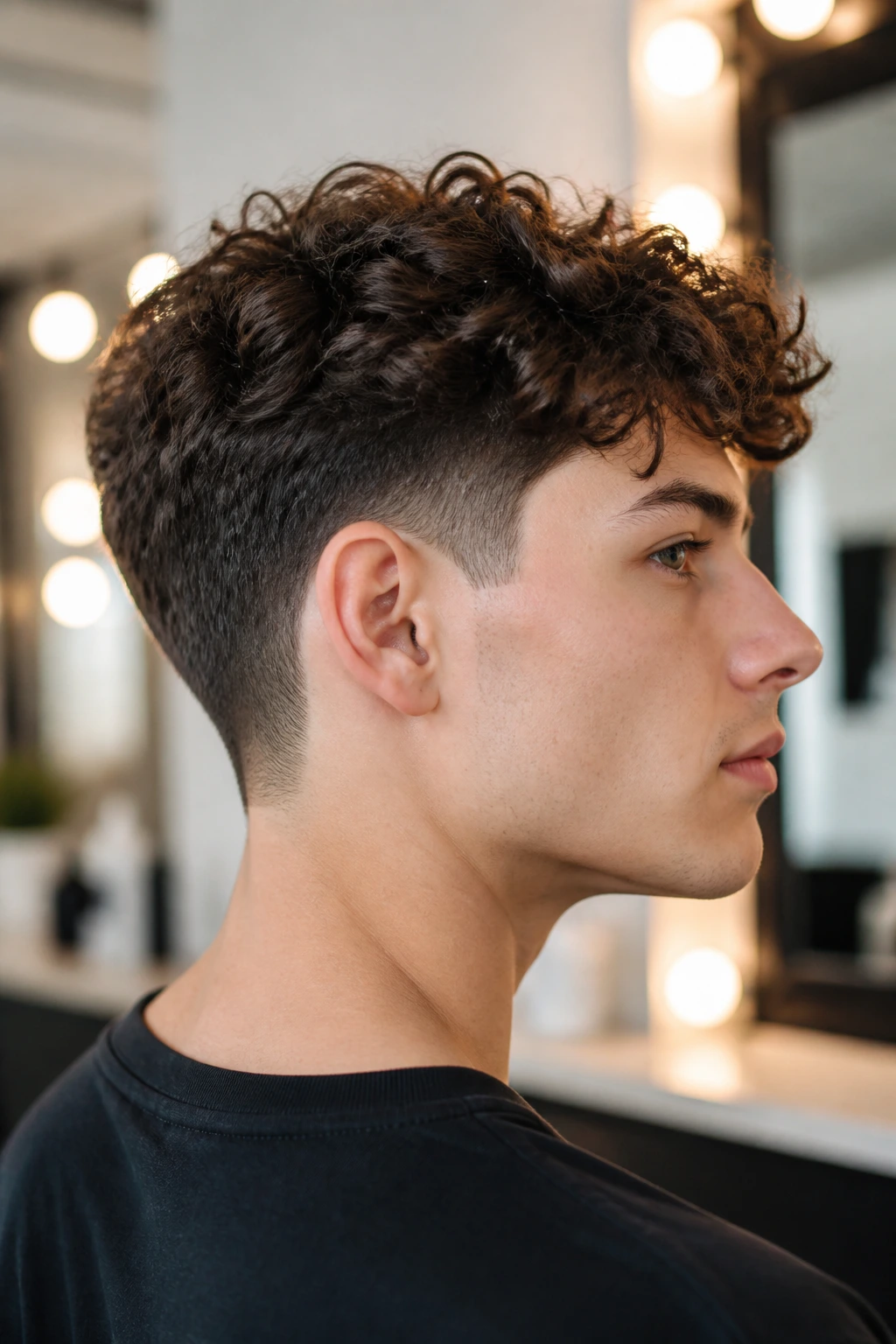
This style is all about creating a clean line at the neck, which is a massive relief if you struggle with sweaty, tangled hair in the summer. By tapering the back and thinning out the transition zone, you ensure a smooth look that grows out gracefully. The top is left long, providing enough hair to play with and style in different ways, from pulled back to fully diffused.
24. Bohemian Long Layers with Face Framing
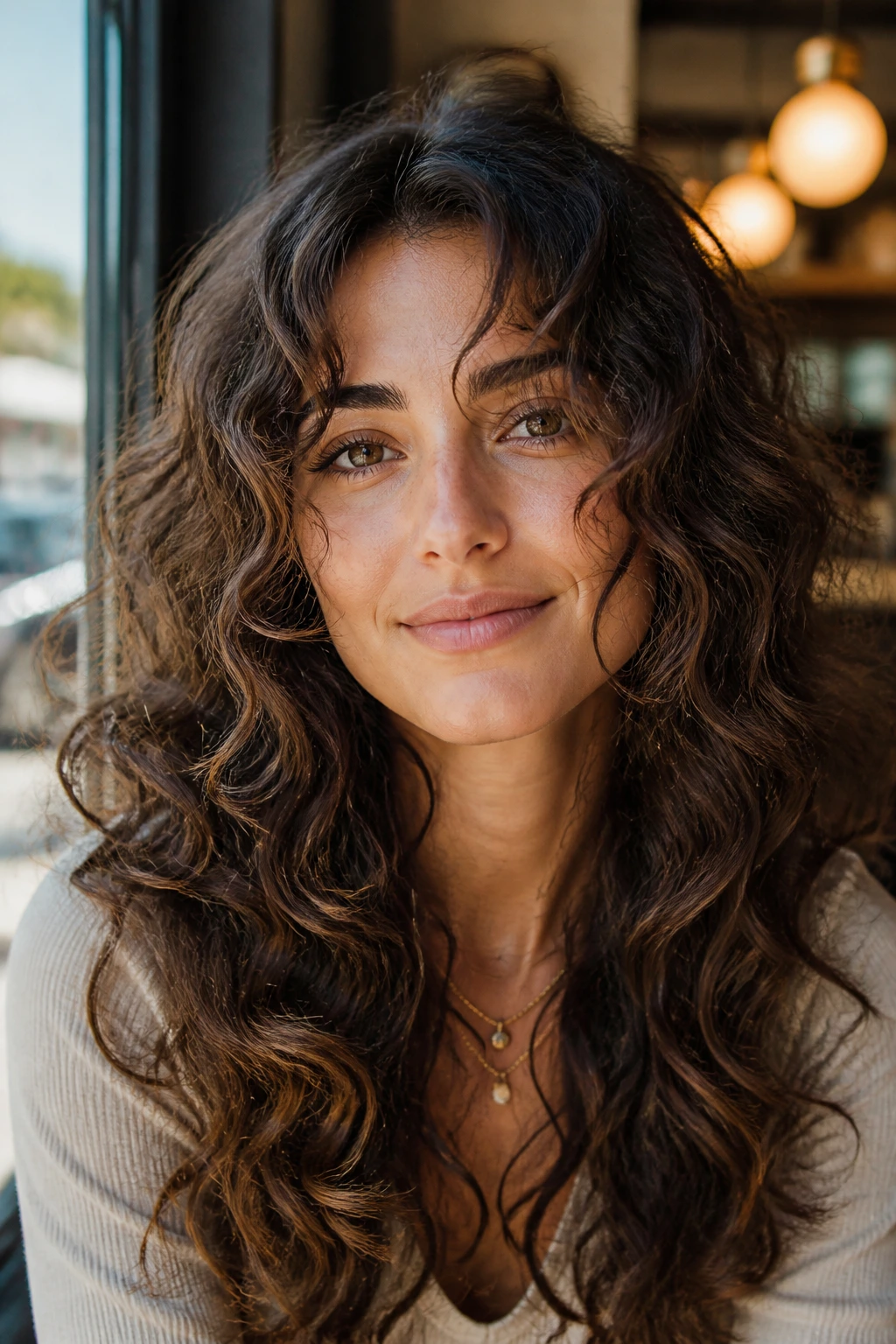
If you want to keep your length but hate the weight, this is the gold standard. The key is in the framing. By cutting shorter, thinned-out layers that start at the chin, you allow the curls to bounce and swirl around your face. This draws the eye upward and breaks up the wall of hair that can sometimes feel overwhelming. It’s a classic look that will never go out of style.
25. The Textured Pixie with Soft Sides
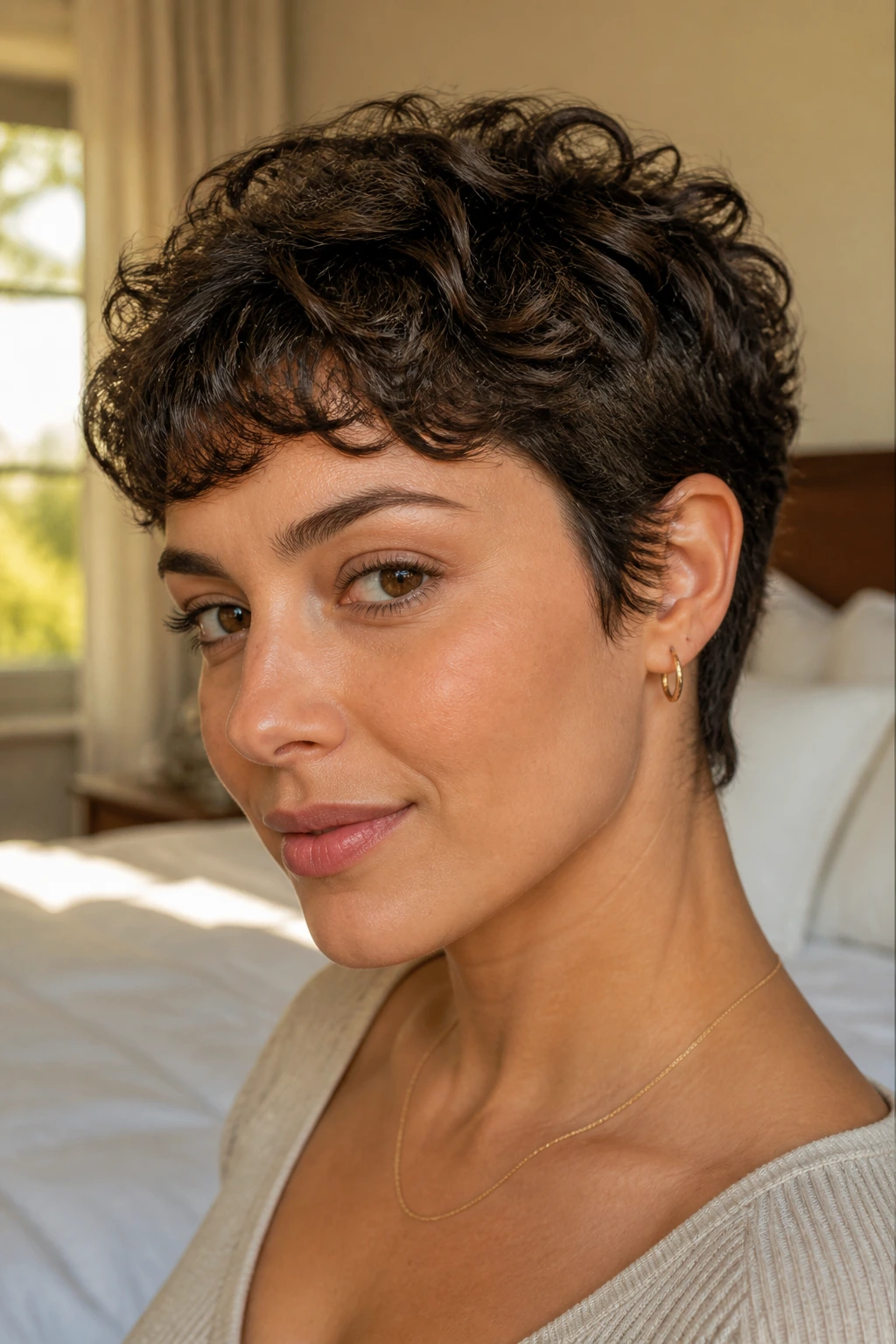
This is a more feminine, softer version of the pixie. Instead of a tight taper, the sides are cut short but left just long enough to curl. The thinning shears are used to soften these short curls so they don’t stand straight out. The top is left slightly longer, and the whole look is kept very light. It’s perfect for someone who wants to embrace their natural texture while keeping the styling time to almost zero.
26. Curly Shag with Curtain Bangs
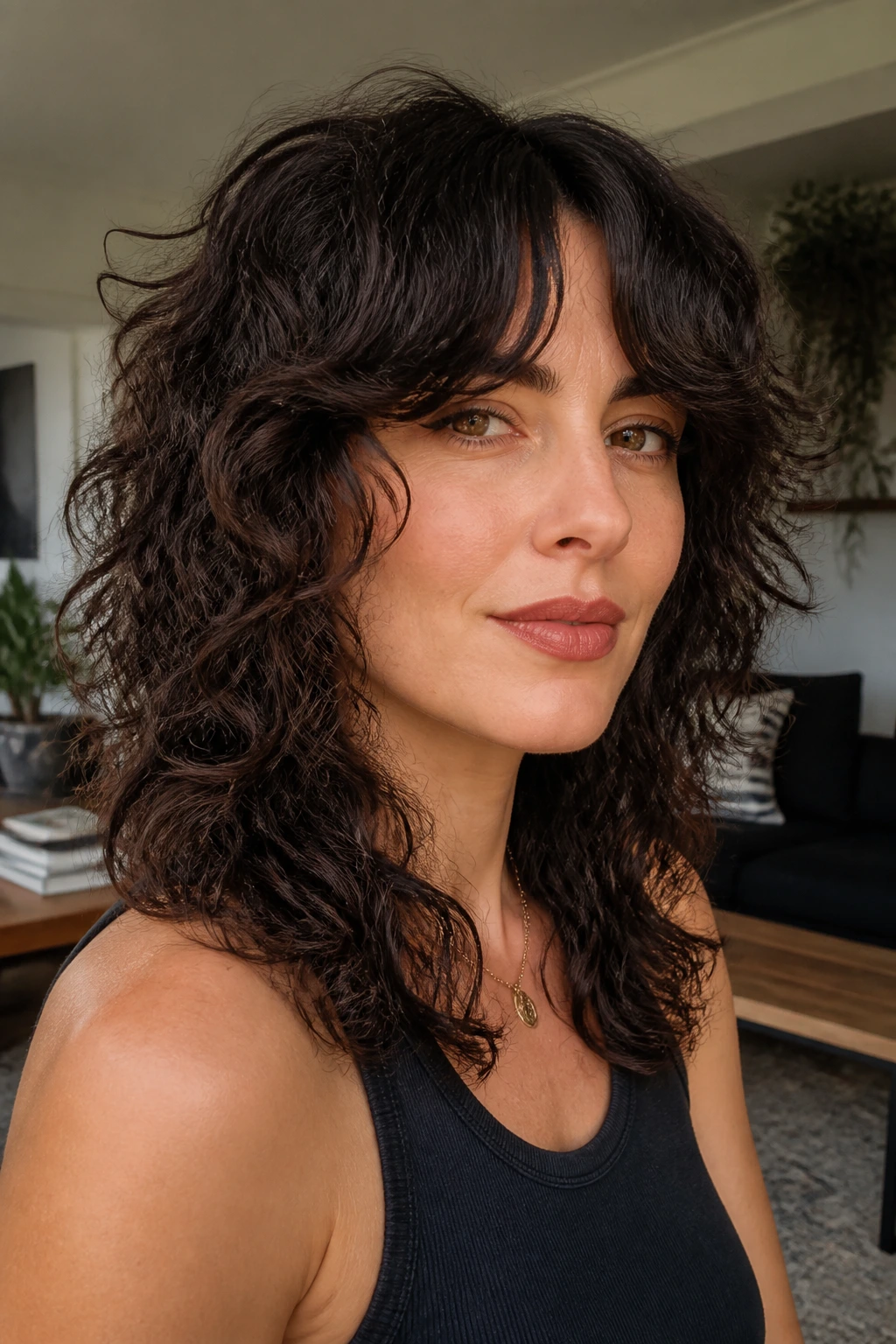
Curtain bangs are perfect for curly hair because they grow out into face-framing layers. When paired with a heavily thinned shag, they blend into the rest of the cut effortlessly. The thinning keeps the bangs from becoming a heavy curtain, allowing light and air to pass through them. This makes the entire style look lighter and more romantic, even if you have naturally coarse or dense hair.
27. The Layered Lob with Blunt Ends
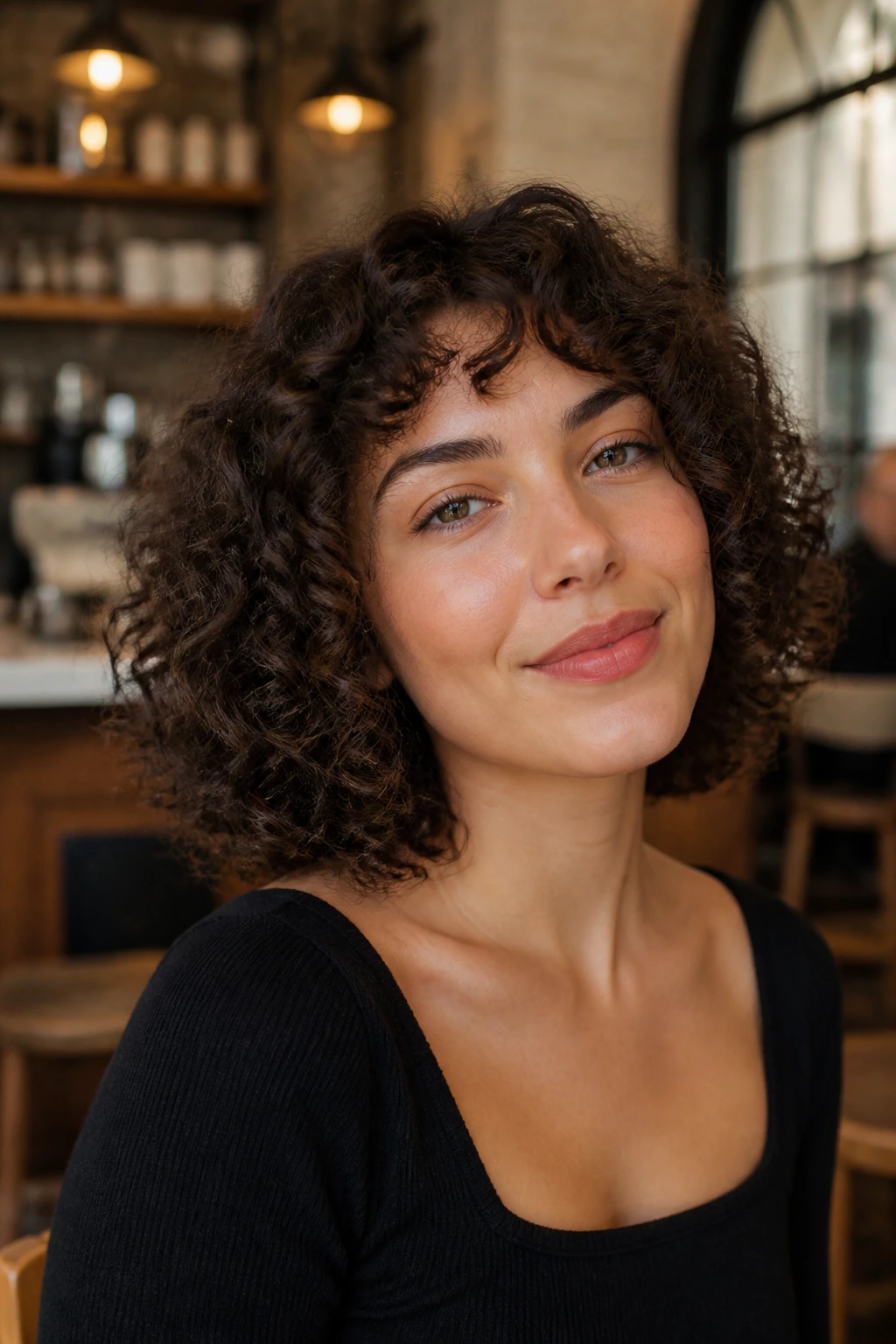
This is a sophisticated, “grown-up” version of the curly cut. The layers provide the movement, while the blunt ends provide the structure. The thinning is kept strictly to the mid-lengths, ensuring that the curls have room to expand without causing that awkward “bulk” in the middle of your head. It’s a great style for work environments where you want to look polished but still rock your natural texture.
28. The Rounded Afro with Tapered Neck
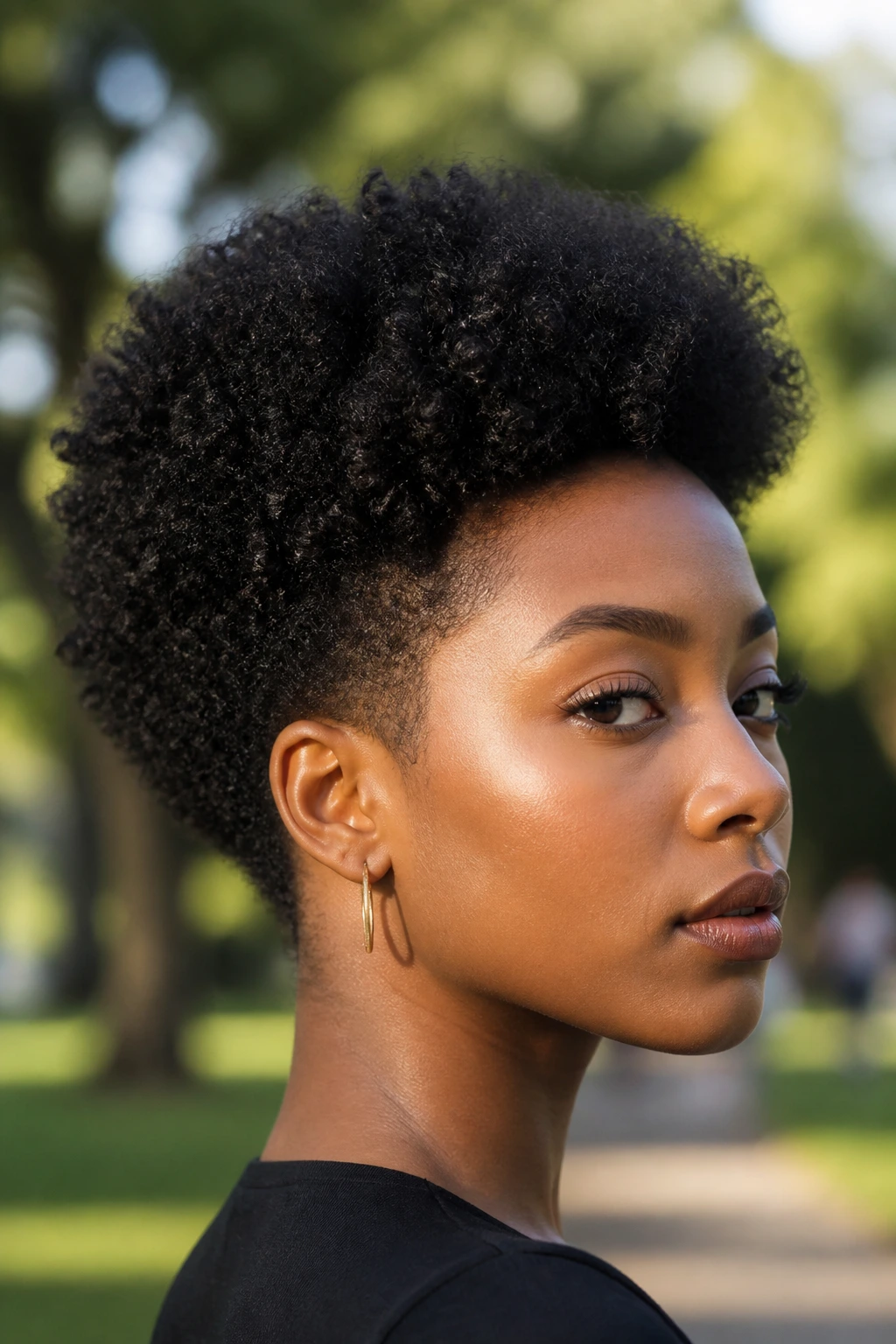
For those with very tight coils, a rounded Afro is iconic. To keep it from growing too wide, the neck area is often tapered, and the sides are kept slightly tighter than the top. This gives the style a clean base, allowing the volume to exist where you want it most: at the crown. Thinning at the roots on the sides can prevent the hair from becoming overly wide, ensuring a perfect, sculptural shape.
Choosing the Right Approach for Your Curl Pattern
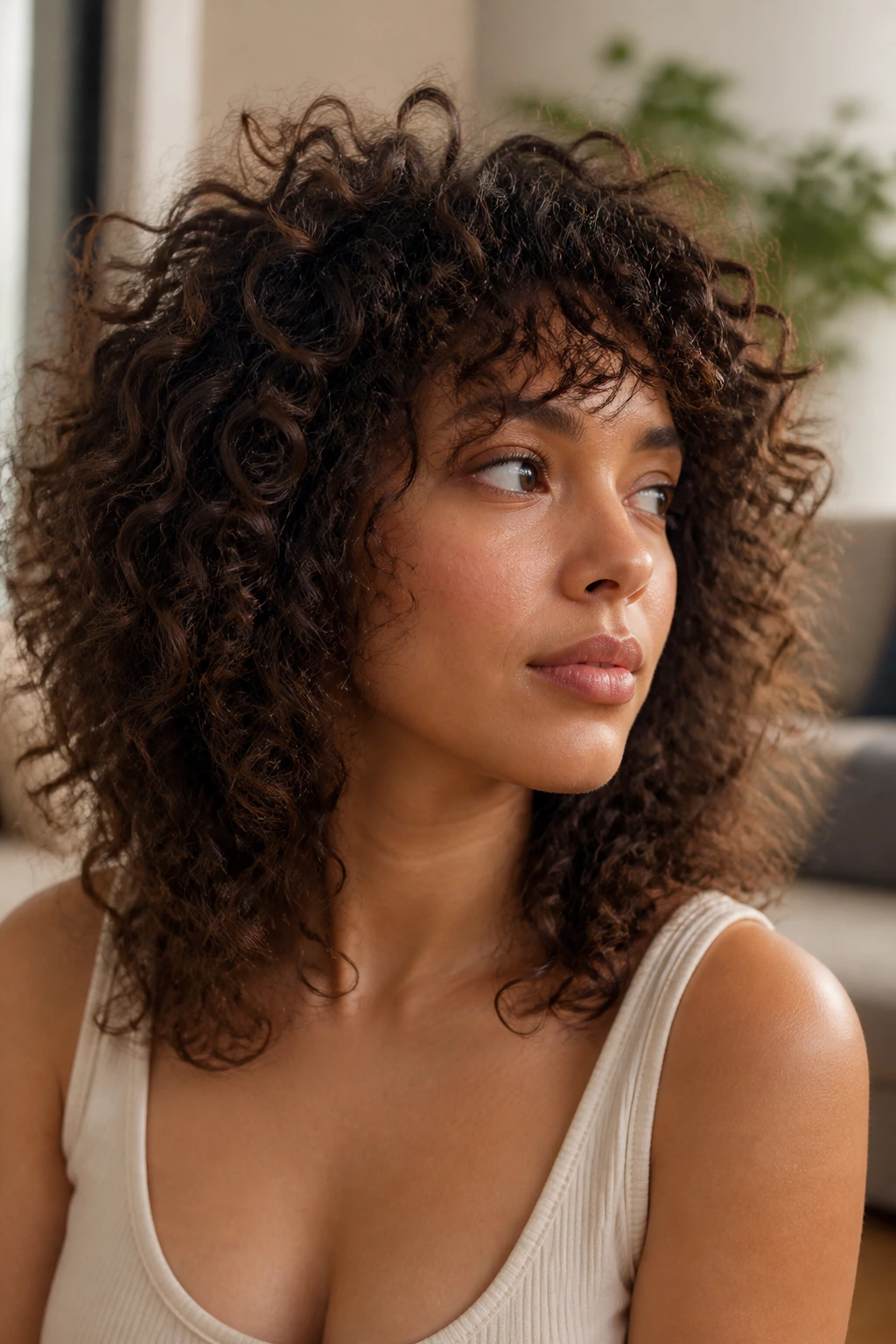
When you walk into the salon, the most important conversation you can have is about your hair’s weight distribution. Not all curls react the same way to thinning shears. If you have fine, loose waves, heavy thinning can make your hair look sparse or stringy. In that case, you want to focus on light, strategic point cutting to encourage movement rather than removing actual volume.
For those with coarse, dense coils, standard thinning shears might actually cause the hair to frizz if used too aggressively. Your stylist should instead look at “internal layering”—taking out small, invisible pieces from the bottom layers of each section. This creates “hidden” space for your curls to spring up, effectively reducing the overall footprint of your hair without sacrificing the healthy look of your outer layer.
Always ensure your stylist is working on your hair while it is dry. Curly hair changes its length and volume significantly when wet. A stylist who tries to thin your hair while it is saturated with water is essentially guessing where the weight is. By cutting your hair dry, they can see exactly where the curls are bunching up and target those specific zones with precision. It is the only way to ensure the final result is balanced.
Maintaining Your Shape at Home
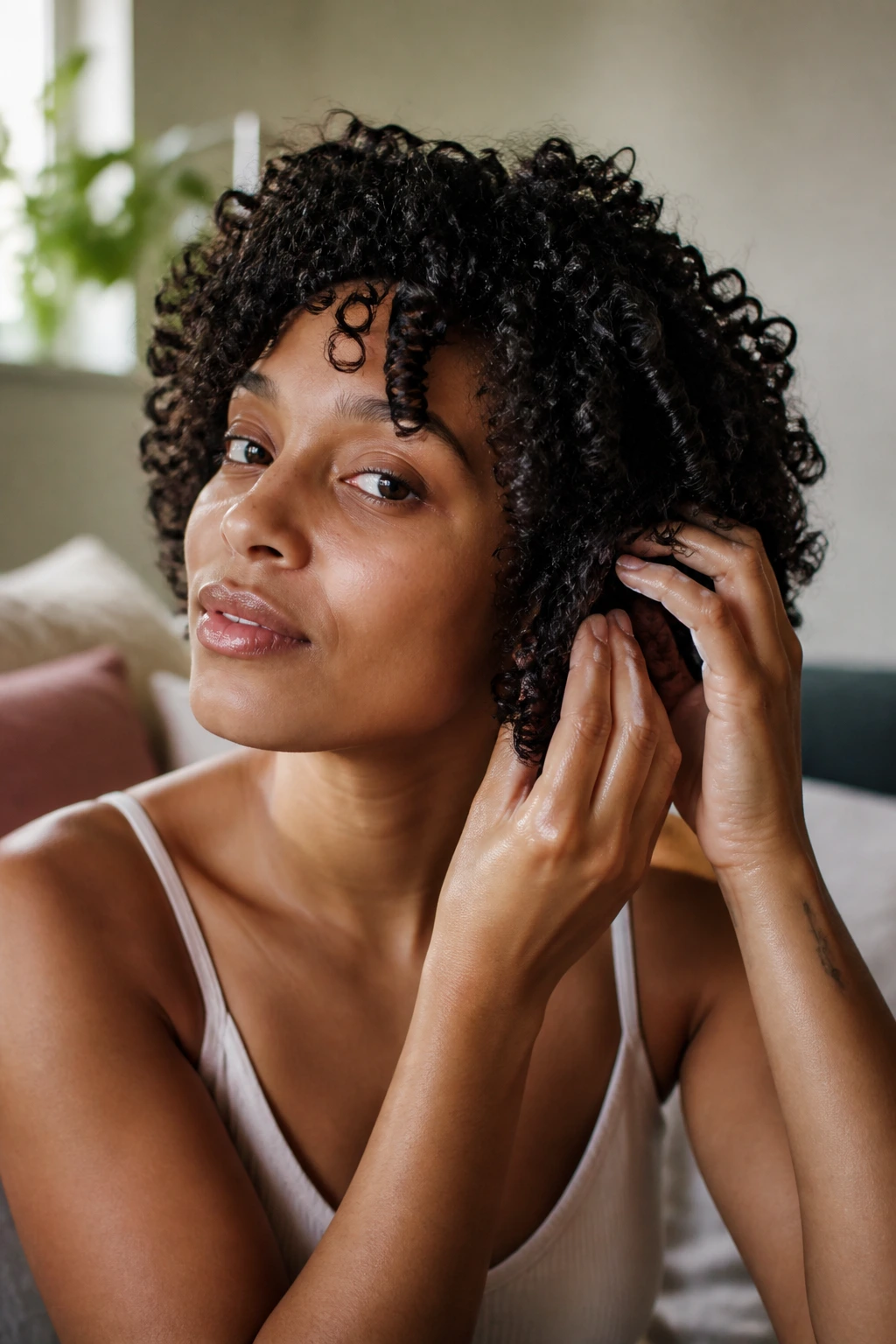
Once you have the perfect thinned-out cut, your goal is to keep those layers from becoming tangled or frizzy. Because a good cut often creates more separation between curls, it is essential to use a quality leave-in conditioner to keep them hydrated. When individual curls have room to move, they are more susceptible to the elements, so a light hold gel or cream is your best defense against humidity.
Sleeping on a silk or satin pillowcase is another non-negotiable for anyone with layers. Cotton pillowcases cause friction, which leads to the dreaded “triangle head” that thinning shears were meant to fix. By protecting your hair at night, you ensure that the shape your stylist created lasts well into the next week. You want to maintain the integrity of those layers so that your next haircut is just a trim, not a rescue mission.
If you find that your hair starts to feel heavy again after a few months, it is usually because the internal layers have grown out and are sitting on top of each other. This is natural. It does not mean your hair is “too thick” again; it just means the weight distribution has shifted. A quick refresh, where your stylist goes back in to “clear out” those interior zones, is usually all you need to get that bounce back.
When to Ask for a Refresh
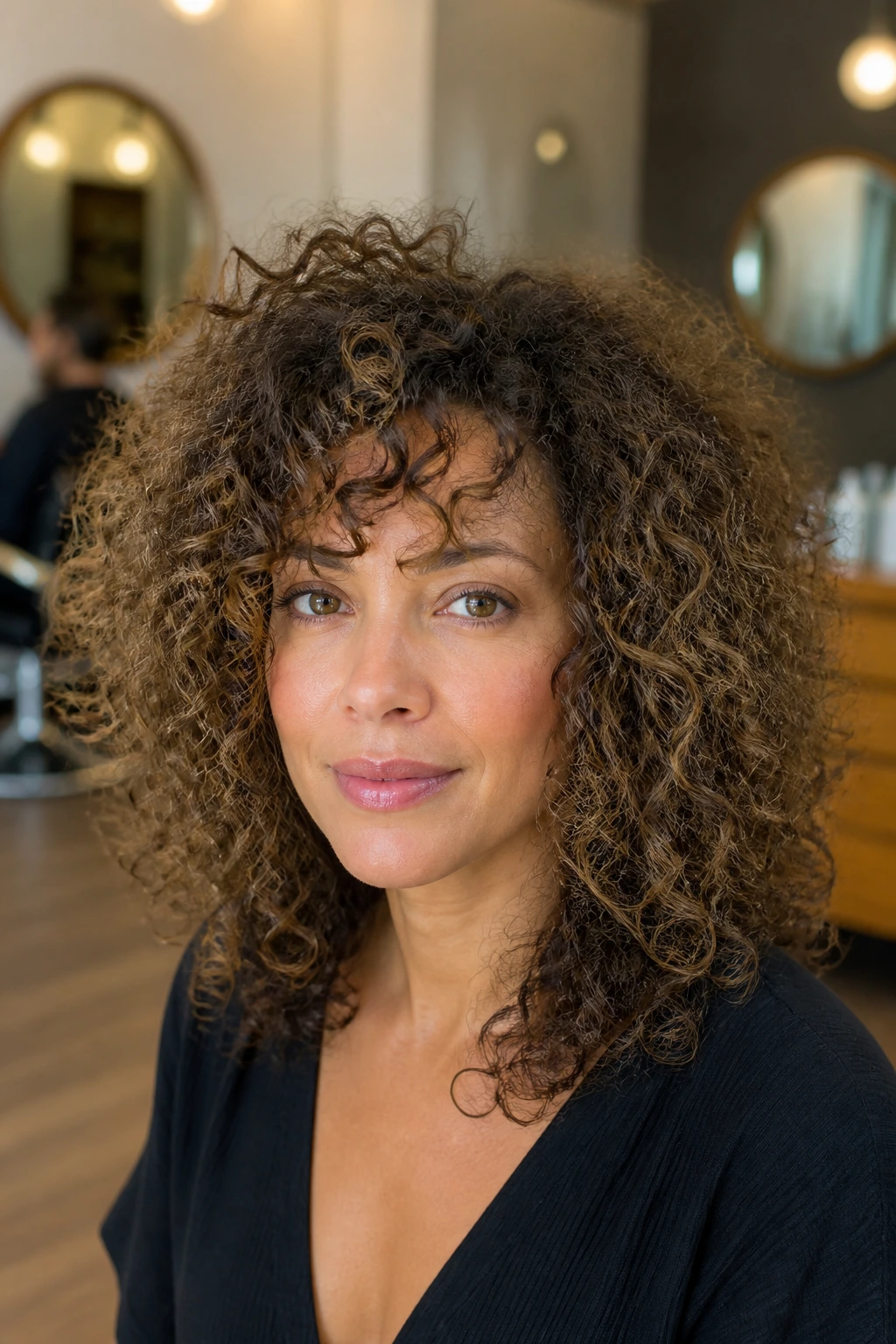
Pay attention to how your hair behaves when you wash it. If your roots are taking significantly longer to dry than your ends, it is a sign that the hair is too dense to allow for proper airflow. This is when the mildew-like smell can start, and it is a clear indicator that your hair is struggling to breathe. A refresh is not just about aesthetics; it is about the long-term health of your hair.
Don’t be afraid to take photos of your hair when it is at its best. If you find a style you love, show your stylist. Sometimes, the difference between a cut you love and a cut you hate is just half an inch of thinning in the right spot. Being able to point to specific areas—like the back of the neck or the crown—helps them understand exactly where you feel the most “trapped” by your hair.
Above all, remember that your curls are meant to move. If you feel like your hair is a stiff, unmovable object, you are likely missing that crucial layer of weight removal. A great curly cut should feel like you have nothing on your head at all. Embrace the thinning process as a way to liberate your natural texture, and you will find that your daily styling routine becomes a joy rather than a chore.
Final Thoughts
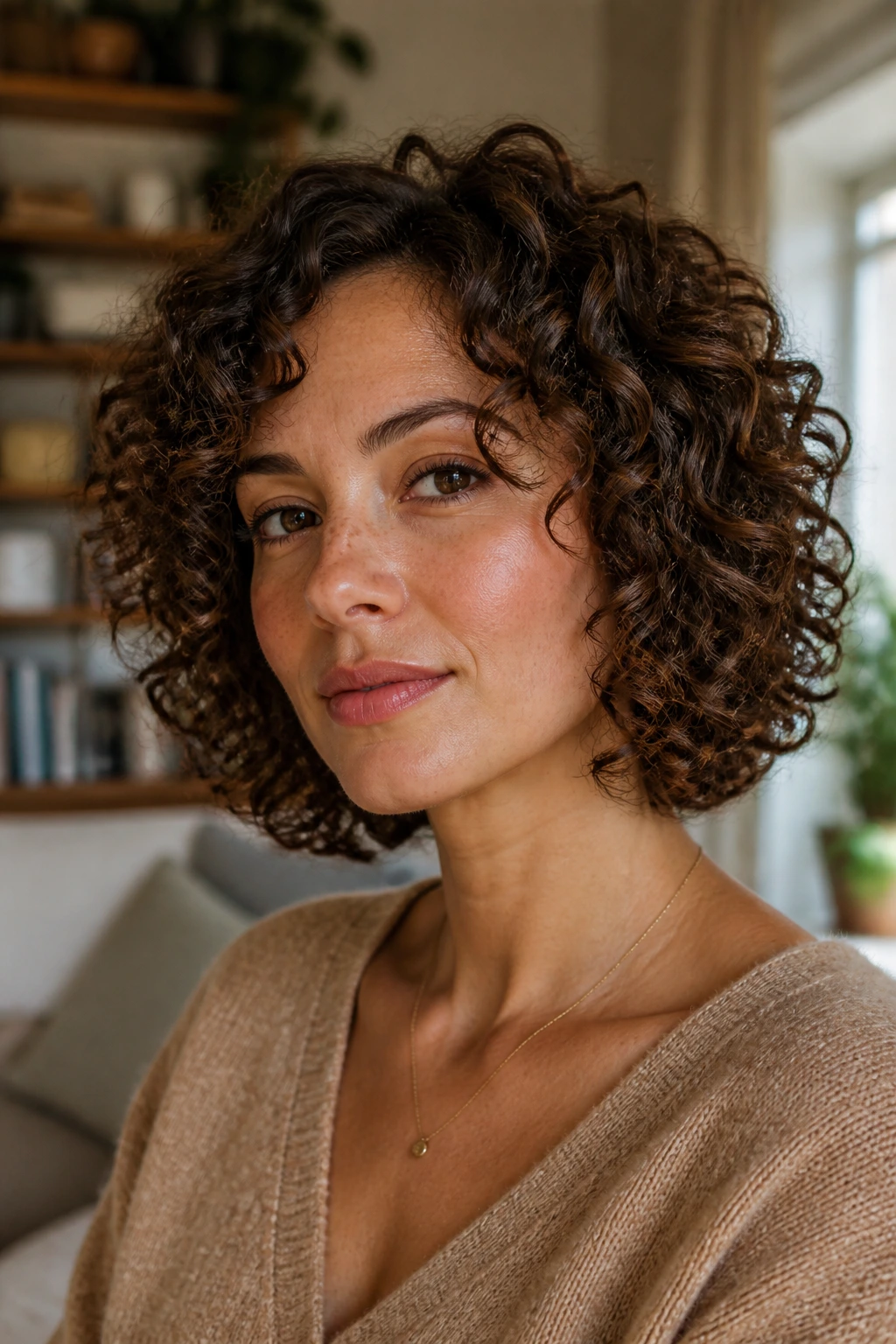
The journey to the perfect curly haircut is rarely a straight line, but mastering the art of weight management is the most significant step you can take. Whether you choose a dramatic shag, a structured bob, or a simple layered look, the goal is always the same: to create a shape that honors your natural curl pattern while giving you the freedom to move.
It is helpful to view thinning as an investment in your daily peace of mind. When your hair is properly balanced, the amount of product you need decreases, the time you spend diffusing is cut down, and the overall longevity of your style improves. You are not losing hair—you are gaining a style that actually behaves the way you want it to.
Take your time finding a stylist who truly listens to your concerns about weight and volume. When you find someone who understands how to cut curly hair with intention, hold onto them. The right cut, combined with a little bit of care, is all you need to keep your curls looking their absolute best for years to come.