

Curls have a personality all their own. If you have ever watched a coil spring back into place or observed the way a ringlet catches the light, you know that curly hair isn’t just a texture—it is a three-dimensional architecture. Adding color to that structure changes everything. It can highlight the individual ribbons of hair or provide a uniform sheen that makes the entire halo look intentional and defined. Whether you are dealing with loose, beachy waves or tight, springy corkscrews, the way light interacts with your strands changes the moment you apply pigment. But color is more than a aesthetic choice. It is a chemical process that alters the integrity of the hair cuticle, and when you are working with curls—which are already prone to dryness and structural fragility—you have to be smarter than the average salon client.
1. The Low-Maintenance Allure of Balayage
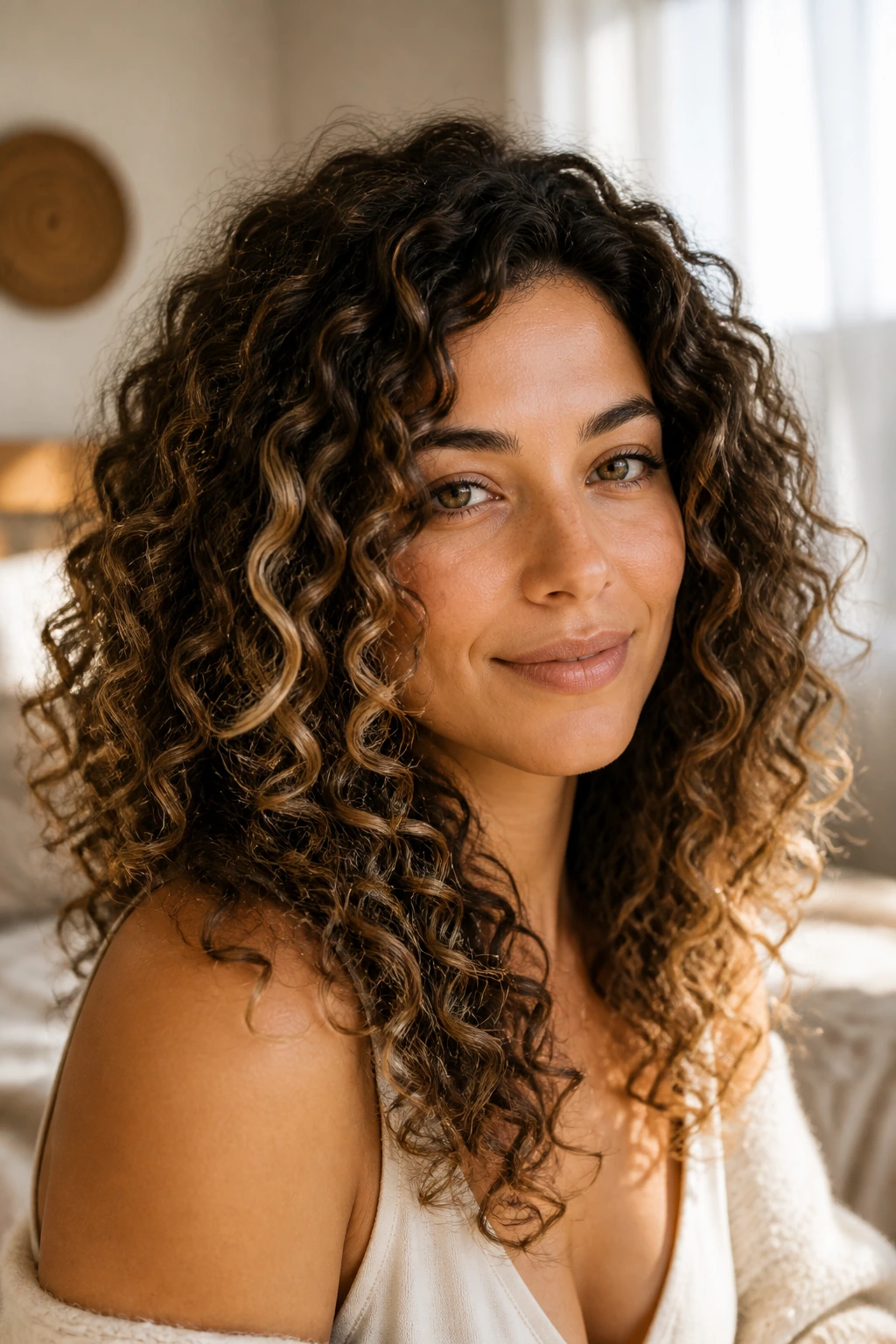
Balayage remains the gold standard for curly hair because it mimics the way the sun naturally lightens strands. Instead of harsh lines of demarcation, you get a soft, hand-painted transition that grows out gracefully. For someone with tight curls, this is a massive win. You do not have to worry about retouching your roots every four weeks. The goal here is to paint the outer surface of your curls, leaving the underside closer to your natural shade. This creates incredible dimension. When your curls move, they reveal flashes of that lighter color, giving the illusion of volume even if your hair is fine.
Why Balayage Works for Texture
- It avoids the “striped” look that can happen with traditional foils.
- You can customize the placement to frame your face specifically.
- Because it starts away from the scalp, your natural growth pattern won’t clash with the color as quickly.
- It is significantly easier on your hair health than a full bleach-out process.
Pro tip: Ask your colorist for “surface painting.” They should be looking at how your curls naturally clump together and painting only those top-most clumps to ensure the light hits the right spots.
2. Rich Espresso Glazes for Depth
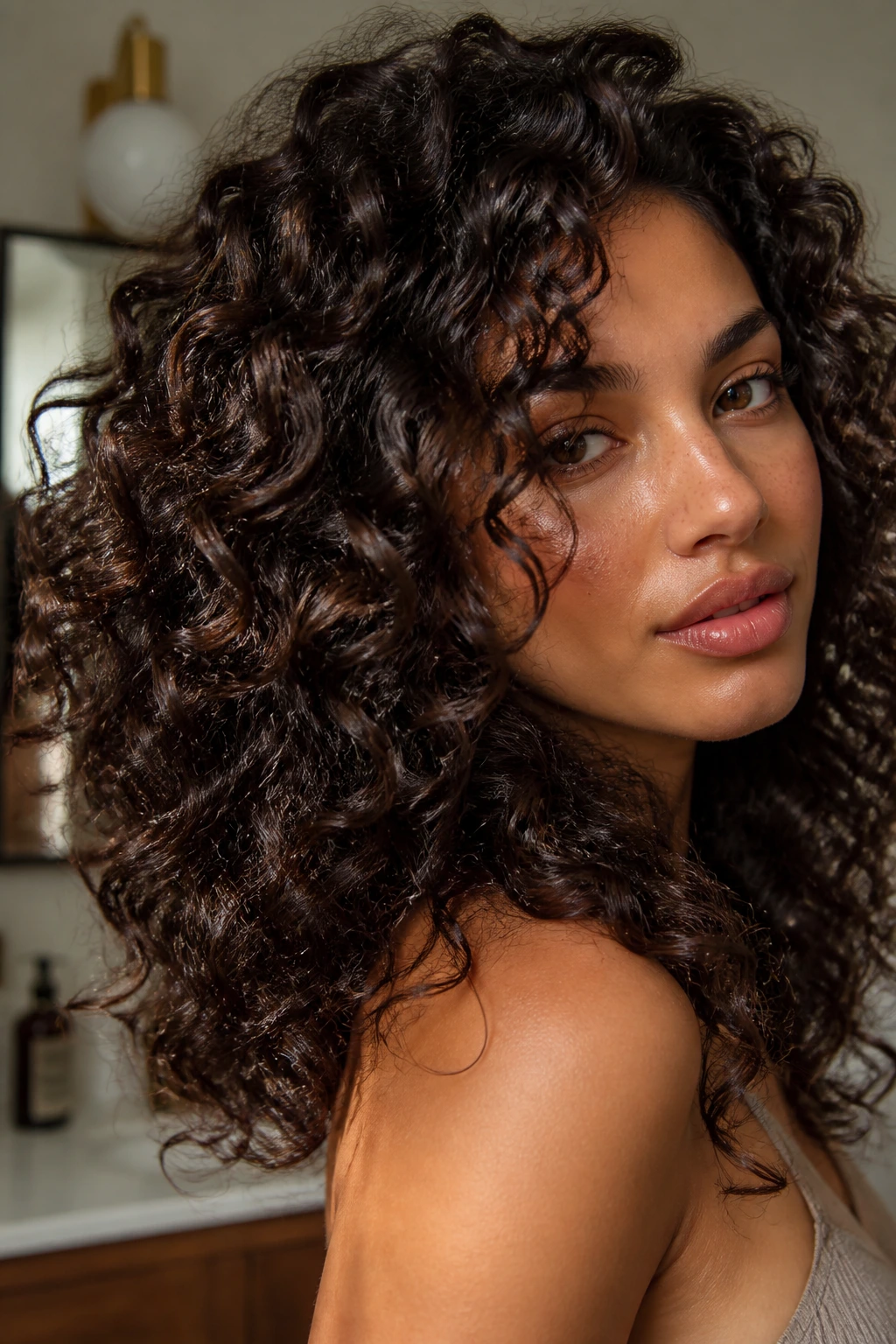
Sometimes you do not need to lift your natural color at all. If you have deep, dark curls, a semi-permanent espresso glaze can add a level of shine that makes your hair look liquid. A glaze works by depositing pigment onto the outer layer of the hair shaft rather than stripping the cuticle open. It is effectively a conditioning treatment with color added in. It smooths down the cuticle, which is key for curly hair, as a smoother surface means more shine and less frizz. If your curls have been looking dull from the summer sun or harsh water, this is the quickest way to refresh them.
3. Honey-Gold Ribbons on Deep Brown Curls
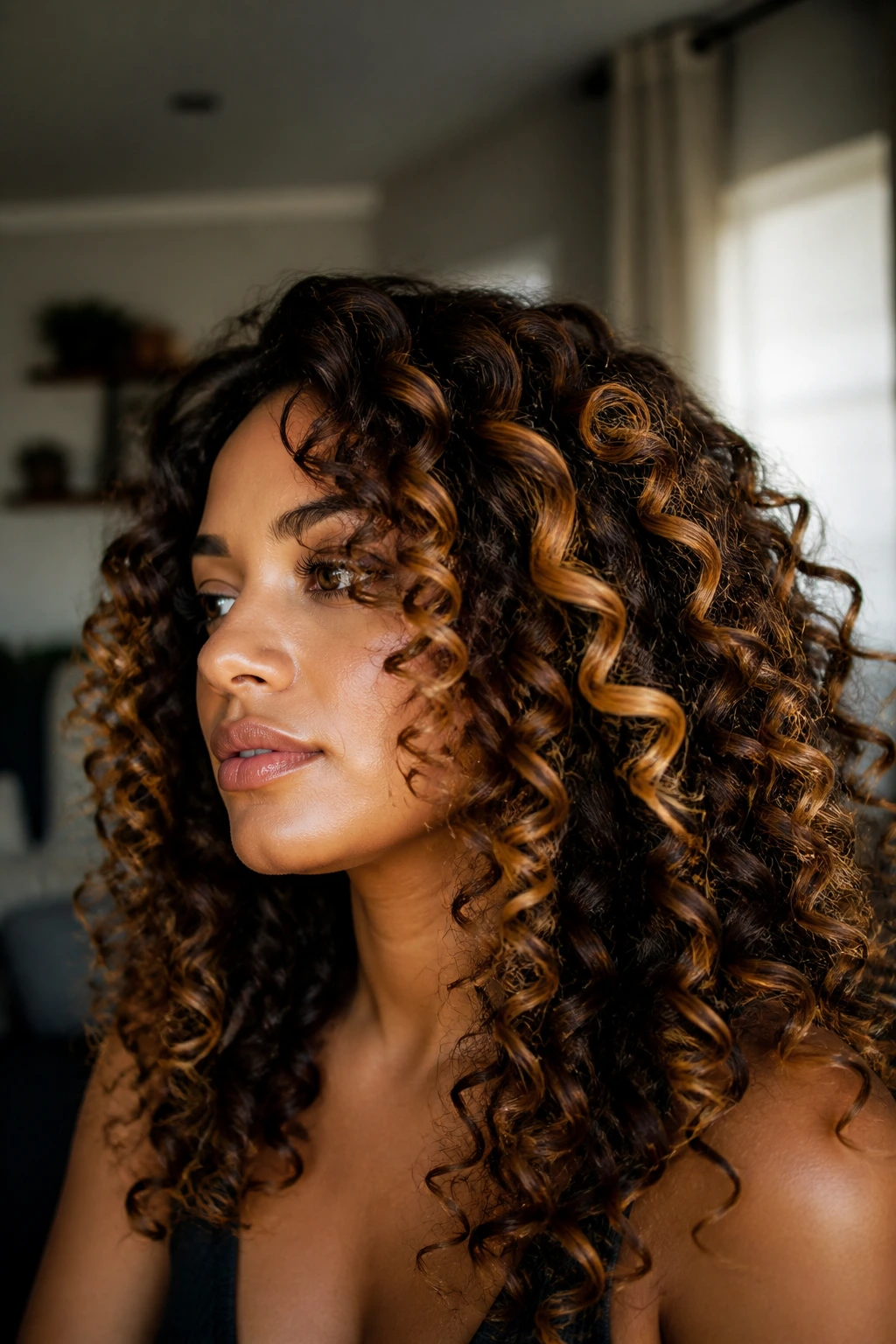
There is a specific kind of magic that happens when you weave warm, honey-toned highlights into dark brown curls. The contrast is high, but the warmth keeps it feeling natural. Think of these as “ribbons” rather than thin, traditional highlights. You want wider sections of color so that when the curl forms, the honey tone is visible as a solid block of color within the ringlet. This technique is often called “teasy-lights” because the colorist will tease the root section before applying color to create a soft, blurred effect. It is a high-impact look that screams luxury, provided you keep your hair hydrated enough to handle the lifting process.
4. The Modern Interpretation of Deep Copper
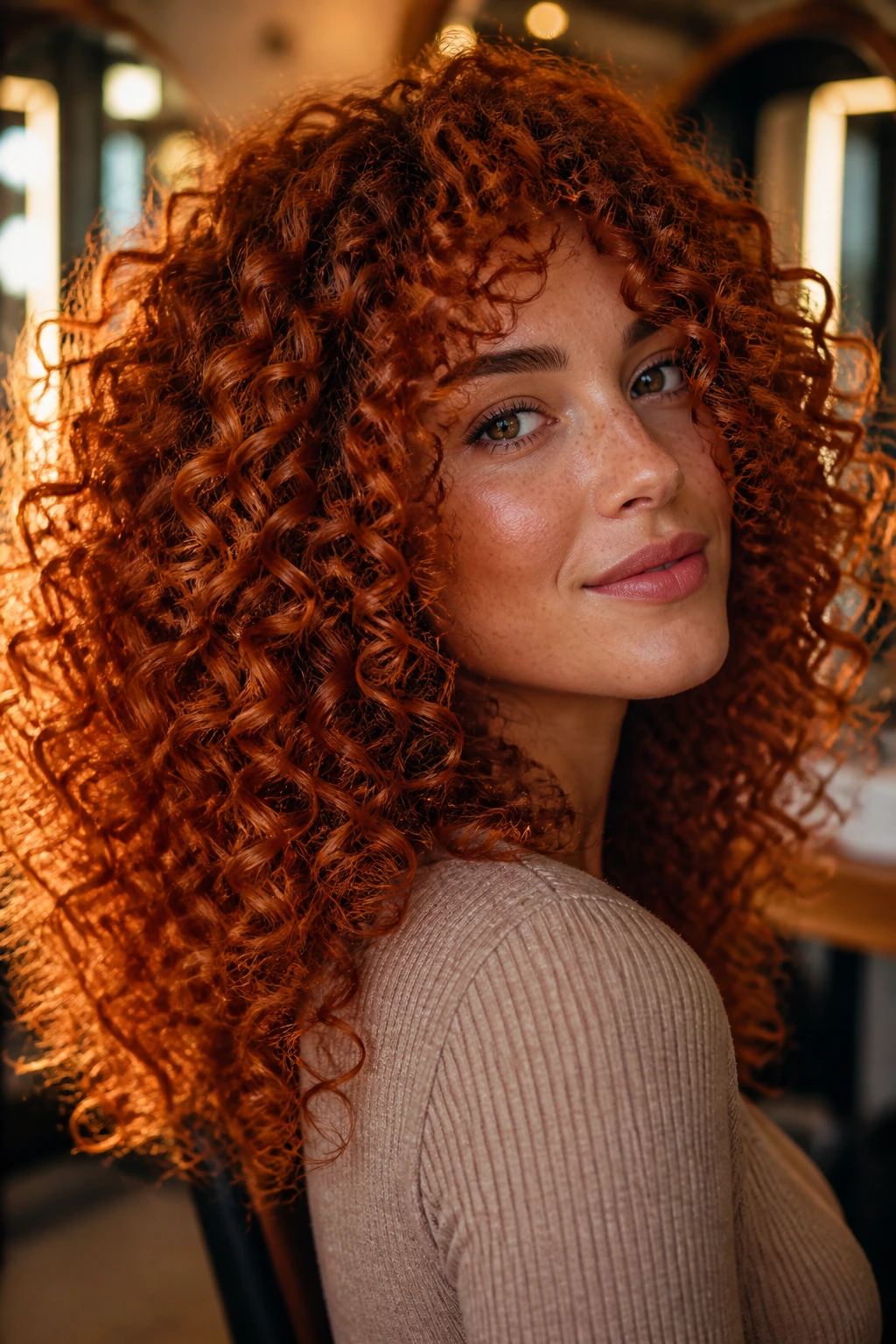
Copper is a notoriously difficult color to maintain, but on curly hair, it is absolutely stunning. When light hits a copper coil, the color seems to vibrate. To pull this off, you need to go for a “burnt” or “rusty” shade rather than a bright, artificial orange. This tone looks best on people with warm undertones in their skin. Because copper pigments are large, they tend to fade faster than browns, so you must commit to a color-depositing conditioner. Using a copper-tinted shampoo once a week will keep the vibrancy alive without needing to head back to the salon every six weeks.
5. Subtle “Money Piece” for Curl Definition
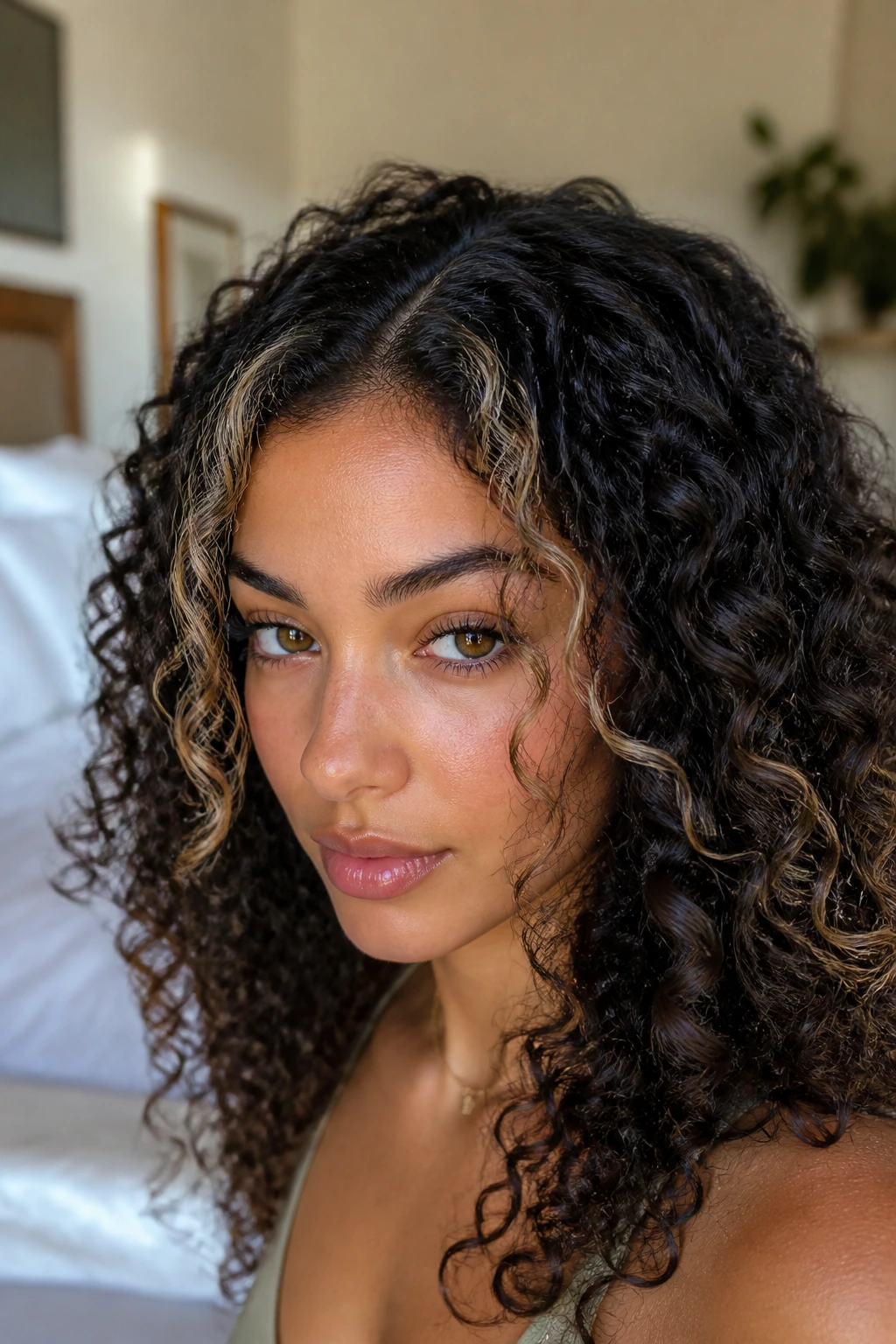
The “money piece” trend is usually associated with straight hair, but it can be adapted beautifully for curly textures. Instead of framing your face with two solid, bold strips, think about adding a few strategically placed lightened curls around your hairline. These highlights should be slightly lighter than the rest of your hair to brighten your face immediately. The key difference here is the density. You want the highlights to be fine, almost like a dusting of gold, so they don’t overpower your features. It is a minimalist approach to color that frames your face while keeping the rest of your mane looking rich and dark.
6. Ashy Mushroom Brown Tones
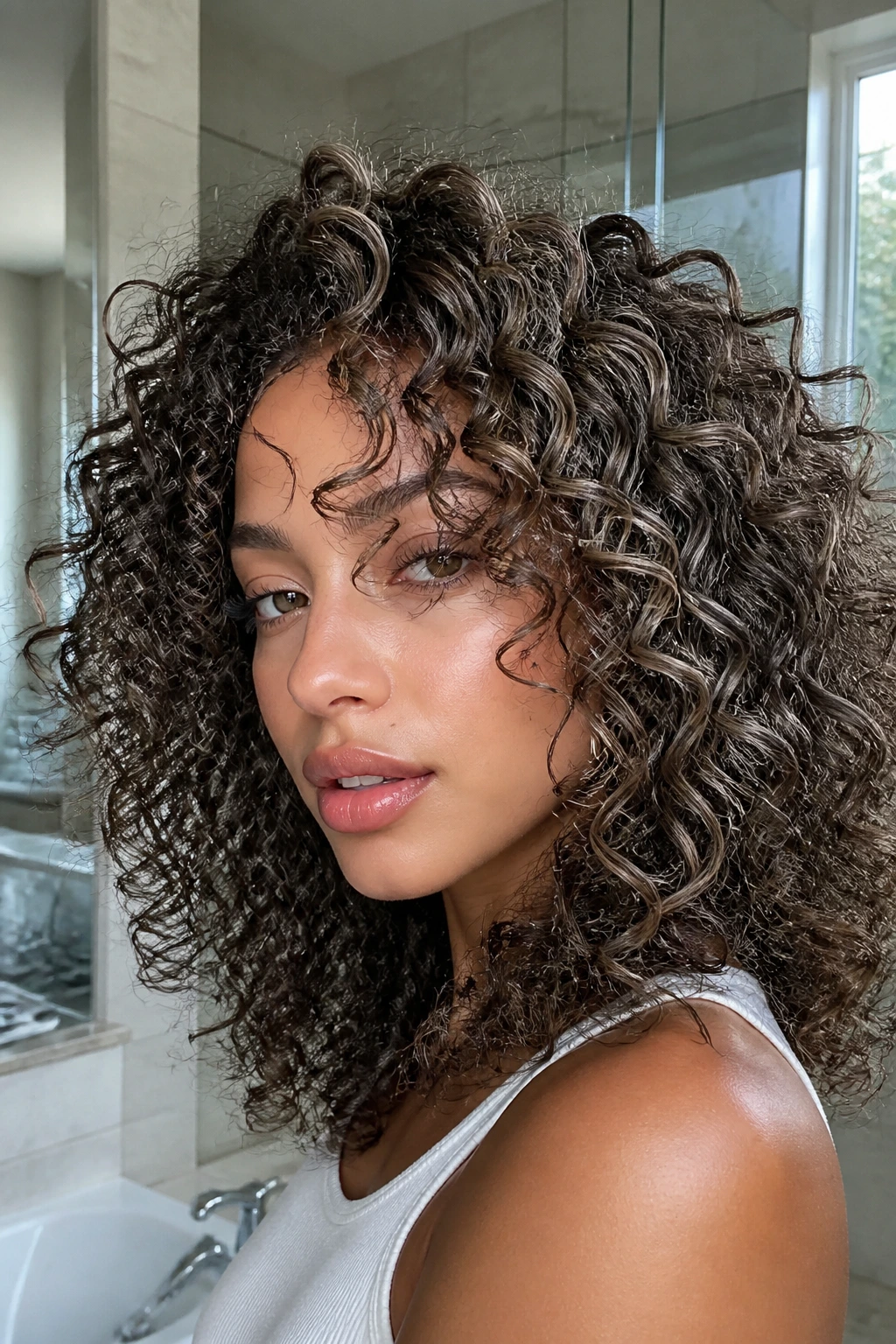
If you are tired of the constant battle with brassiness, ash-based mushroom brown is your best friend. This color sits in that cool, neutral space between blonde and brown. It feels sophisticated and muted. For curly hair, this tone can be tricky because “ash” often means cool, and cool tones can sometimes make curls look slightly dull if the hair isn’t healthy. You must pair this color with a high-gloss topcoat. The shine is what makes the mushroom tone pop. Without it, the color can look flat, like dust on a dark surface. Ensure your stylist uses a bond-builder like Olaplex or K18 during the lifting process to keep those ash tones from turning murky.
7. Deep Plum and Burgundy Undertones
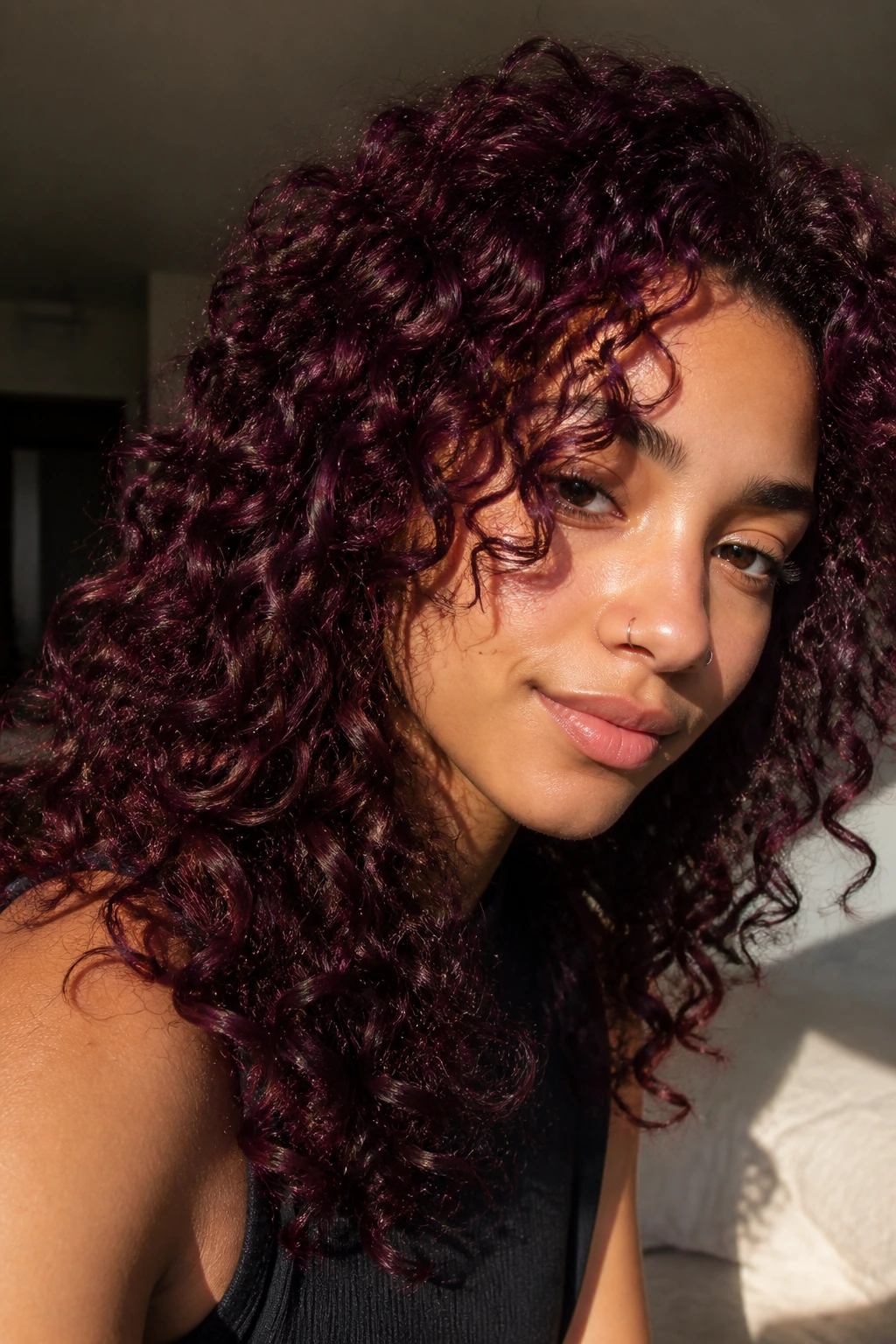
Dark, rich purples and burgundies are a fantastic way to experiment with color without going full “fashion shade.” These colors are dark enough to look professional, but under direct sunlight, they reveal a deep, jewel-toned glow. What makes this special for curls is how the shadow and light interact with the pigment. Since curls have so much natural shadow in their folds, a deep plum can hide in the recesses of the hair and then “pop” as a bright violet when it hits the light. This provides a dynamic, shifting color experience that you simply cannot get with straight hair.
8. Soft Caramel Balayage for Beachy Waves
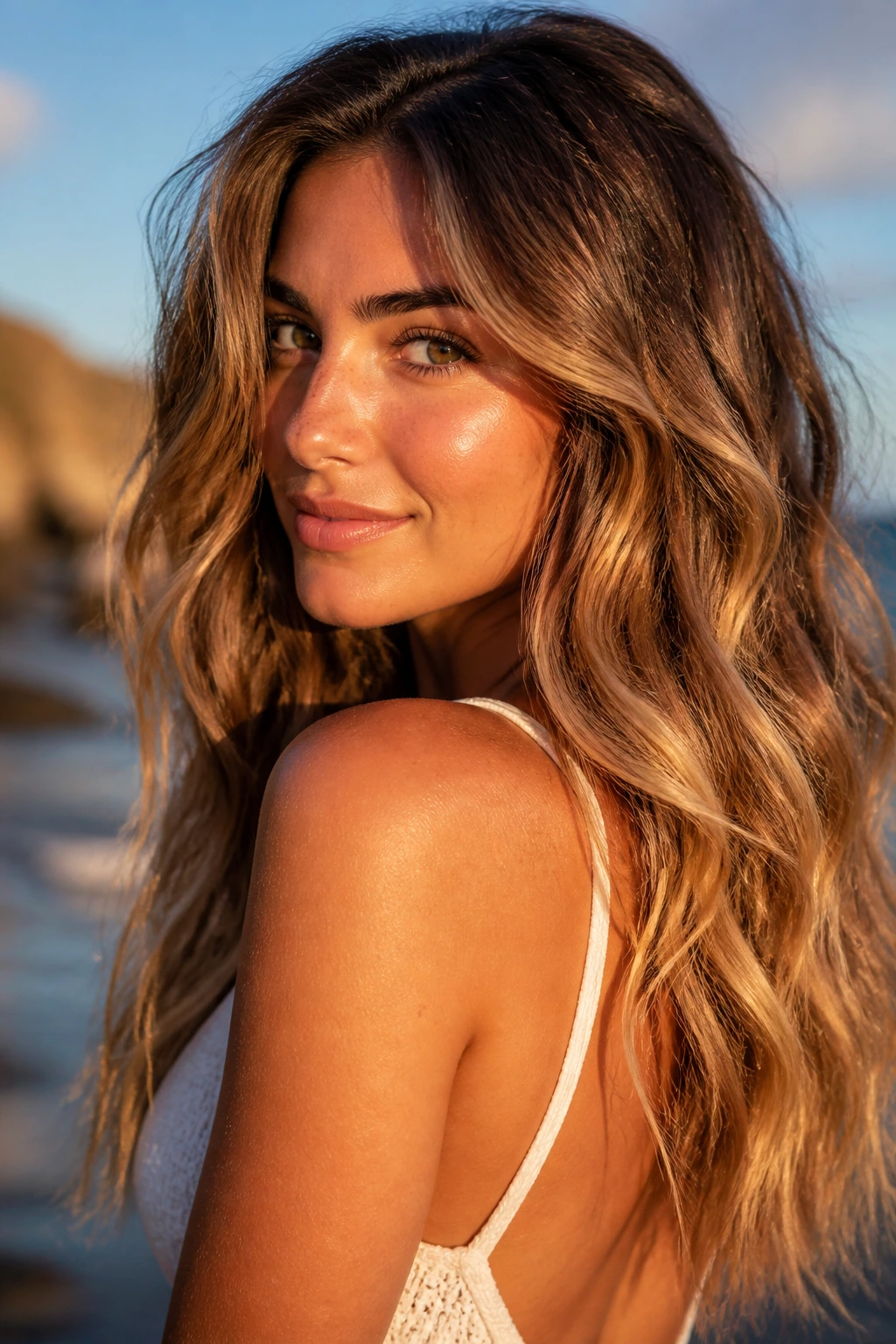
Caramel is the universal color of warmth. It is sweet, it is inviting, and it rarely goes wrong. If you have loose, beachy waves, caramel balayage can make your hair look like you just spent a month on a tropical vacation. The trick is to keep the caramel tone close to your natural base color. If you are a level 3 or 4, you want your caramel to sit at a level 6 or 7. Any lighter and it might look too contrasty or “stripey.” Focus the color from the mid-lengths down to the ends to ensure that your face remains framed by your natural shade, which is often more flattering for your skin tone.
9. Platinum Curls with Dark Roots
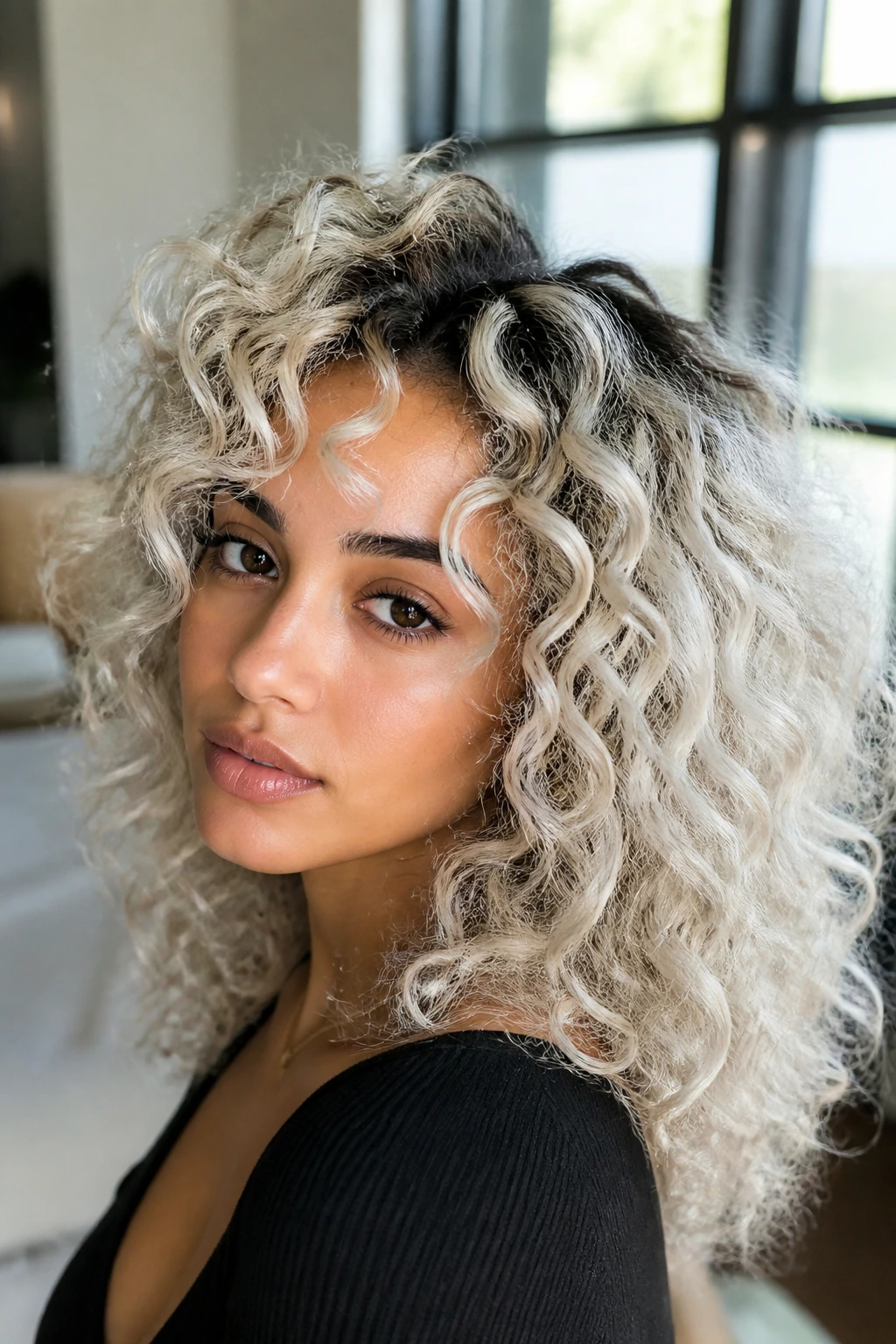
This is the “high risk, high reward” option. If you have the patience and the hair health to sustain it, platinum curls are incredibly striking. The contrast between deep, dark roots and an icy, near-white shade creates an architectural look. Because bleaching to platinum is extremely damaging, this is not a one-session process. You might spend months slowly lifting your hair to get there. You will also need a strict protein-moisture balancing routine. If you skip a week of deep conditioning, your platinum curls will quickly turn into a brittle mess. But when they are done right? They are the ultimate statement.
10. Natural-Looking “Sun-Kissed” Strawberry Blonde
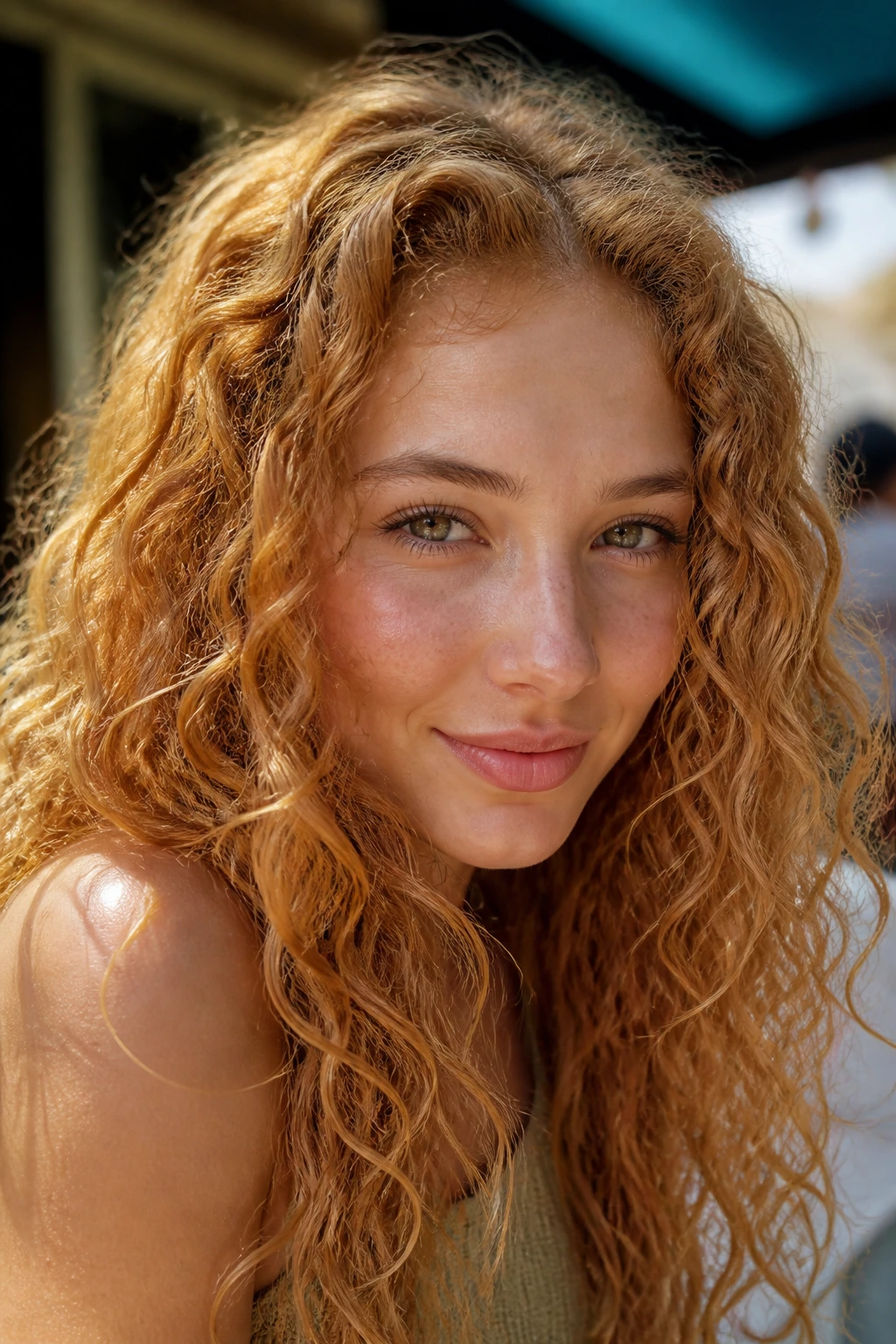
Strawberry blonde is not just for fair skin. It can be adapted to medium and olive skin tones by adjusting the ratio of gold to red. For curls, this color adds a soft, ethereal quality. It feels very bohemian and light. Because strawberry blonde is a complex mix of warm tones, it doesn’t suffer from the same fading issues as pure copper. It looks “lived-in” from the day you leave the salon. If you want this look, bring photos that show the color in different lighting conditions. You want to ensure the stylist understands that you want the warmth to be visible even when you are indoors under fluorescent office lights.
11. Jet Black with Indigo Glaze
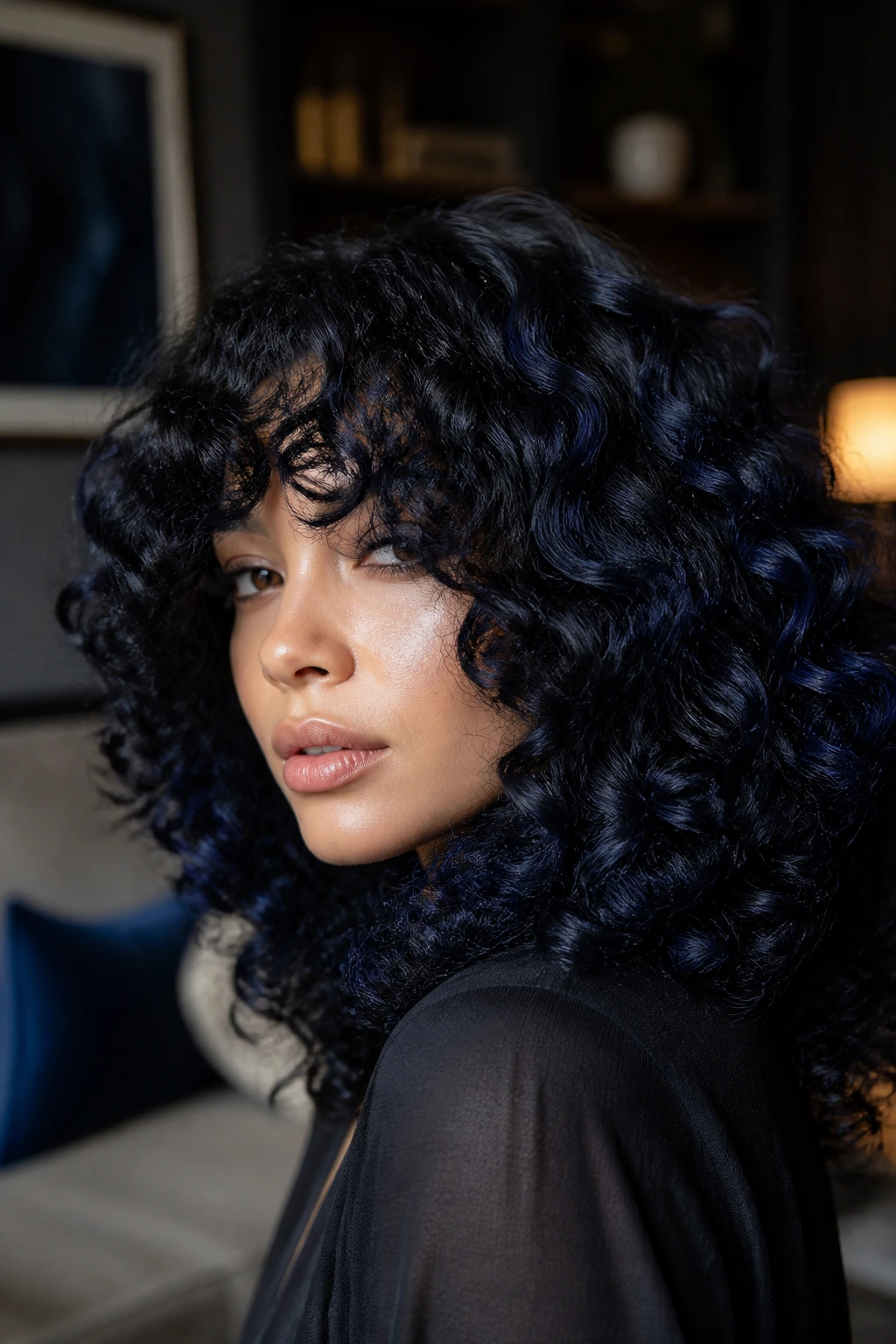
Sometimes the most powerful move is to go darker. Jet black hair can look incredibly healthy and shiny, especially on curls. Adding a subtle indigo or blue-black glaze on top creates an “oil slick” effect. When your curls move, you catch glimpses of deep, midnight blue. It is mysterious, edgy, and surprisingly low maintenance. Since you are likely depositing color rather than lifting it, this is one of the safest options for your hair’s structural integrity. It is perfect for those who want to enhance the health of their curls while adding a bit of personal edge.
12. Soft Rose Gold for Fine Curls
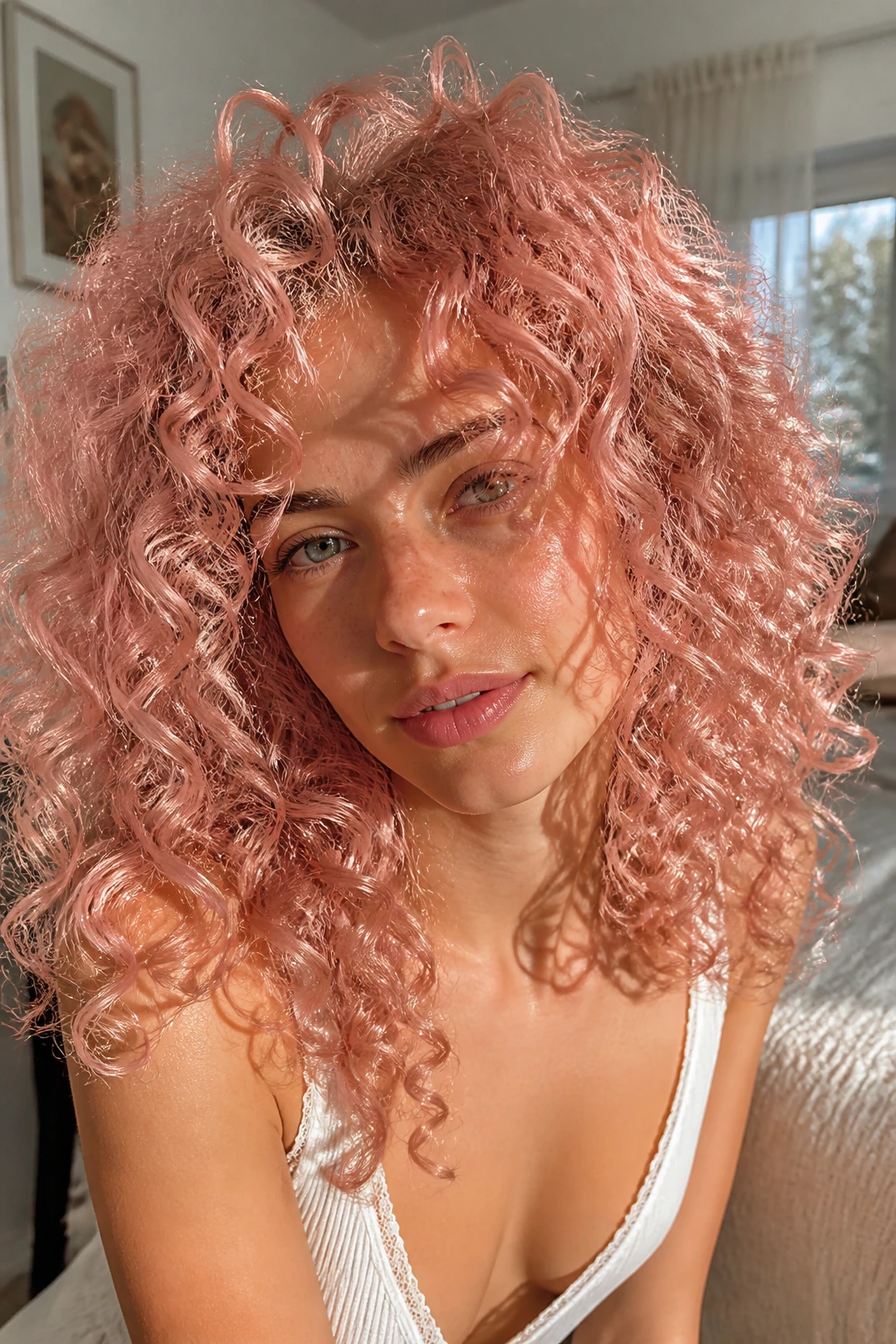
Rose gold is a playful way to dip your toes into pastel territory without the commitment of a vibrant, neon color. It is a pink-toned metallic that looks surprisingly natural on many skin tones. For curly hair, rose gold needs to be handled carefully because it is a very light shade. If your hair is naturally dark, you will have to lift it quite a bit to get the pink to show up. Use this shade if you want a soft, feminine look that changes throughout the week as the pigment slowly fades. It is a fleeting, lovely color that feels like a temporary celebration of your hair.
13. The “Babylights” Technique for Maximum Density
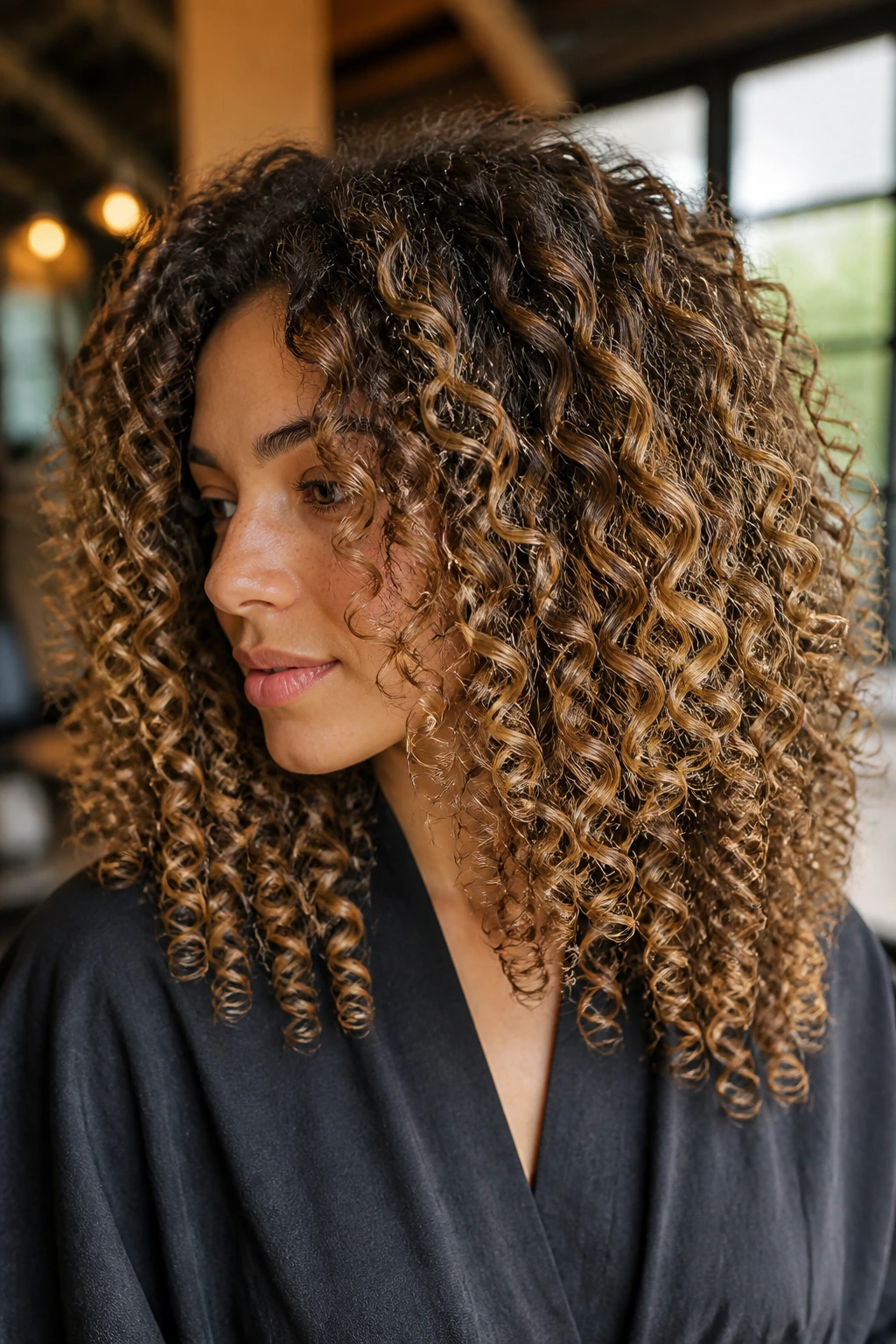
If you want to keep your hair looking mostly natural but still feel “blonde,” babylights are the way to go. These are incredibly fine, woven highlights that blend seamlessly into your base. For curly hair, they are excellent because they create a soft halo of color without the heavy look of a full bleach. You are basically sprinkling light throughout the hair. This technique is labor-intensive, so expect to sit in the chair for a while. However, the payoff is a multidimensional look that feels like your hair has been naturally lightened by years of sunshine.
14. Chocolate Cherry Tones
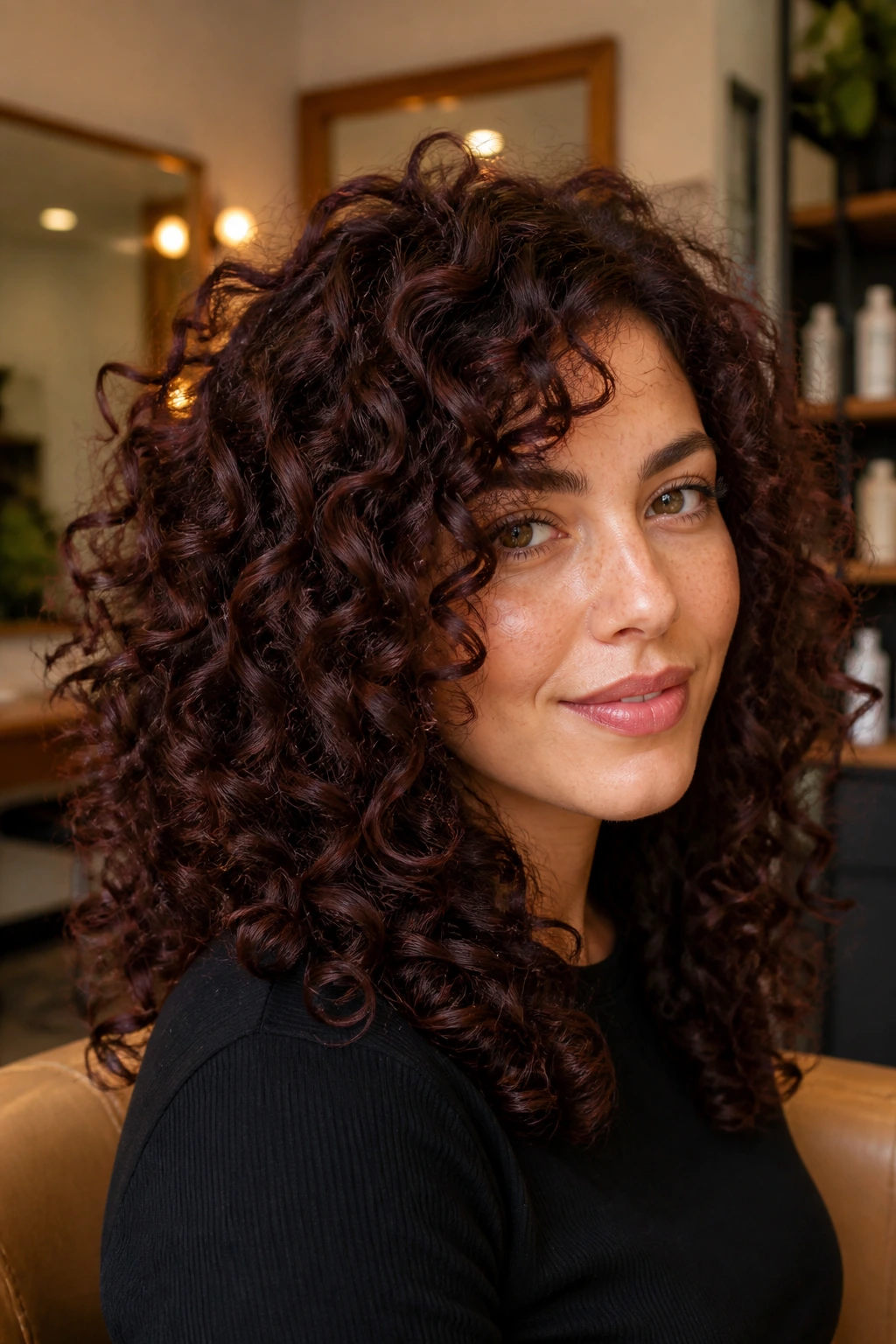
This is a sophisticated blend of dark chocolate brown and deep, muted red. It is a color that works for almost everyone. The cherry undertone gives the brown a life and vibrancy that prevents it from looking “mousy.” On curls, this color creates a deep, romantic texture. It looks particularly good during cooler months when people tend to lean toward warmer, richer palettes. The best part? It is incredibly easy to maintain. Since the tones are dark, you won’t have the bright, brassy roots that plague lighter blondes.
15. The Boldness of a Dip-Dye or “Ombre”
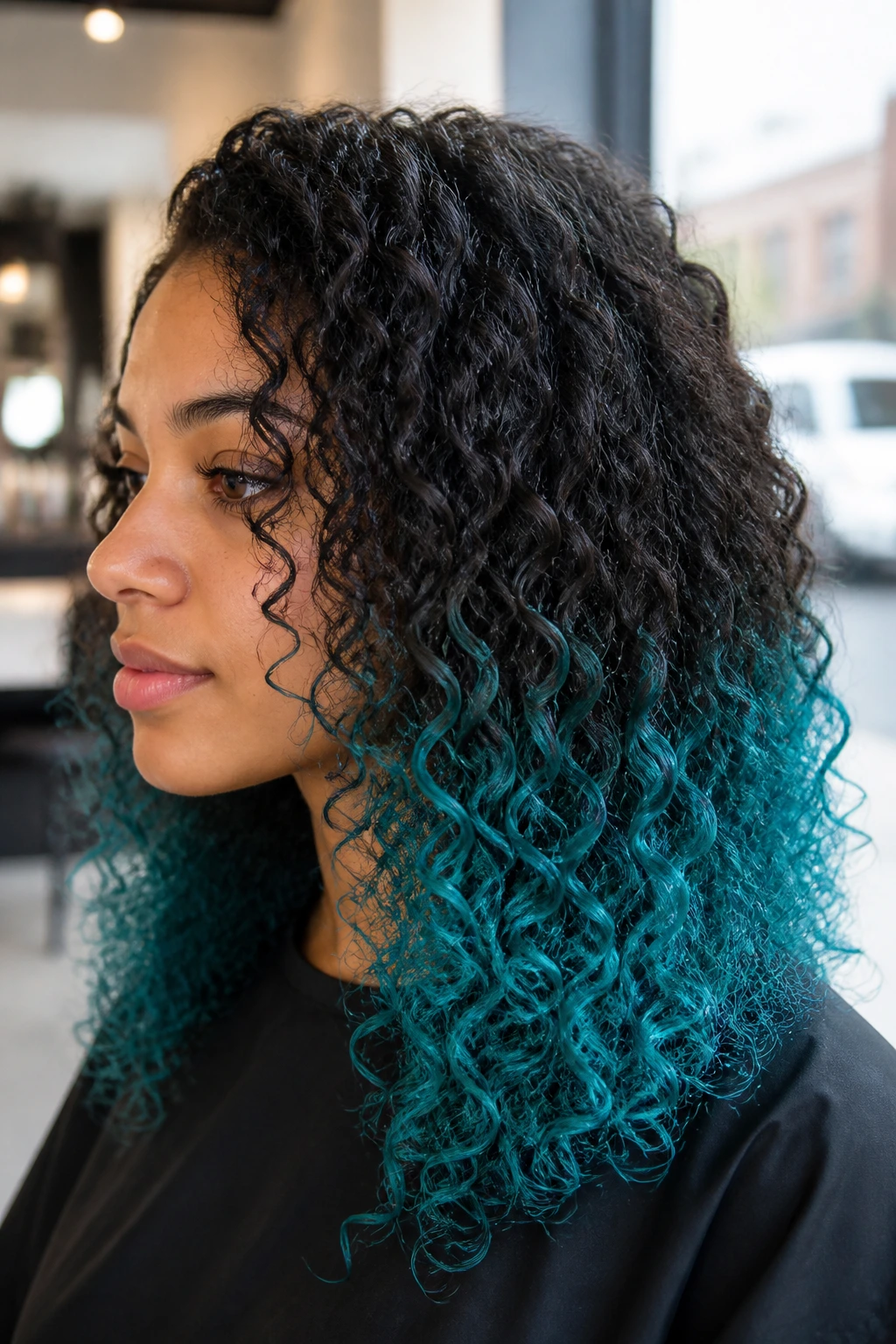
If you are feeling adventurous, a clear, sharp line of color at the ends of your curls can be a fantastic look. This is common in a dip-dye or a deliberate ombre. Because curly hair has so much internal volume, the weight of the color at the ends can actually help “stretch” the curls slightly, changing their shape in a flattering way. Choose a color that makes you happy—whether that is a vibrant teal, a hot pink, or a deep violet. Just remember that the ends of your hair are the oldest and most fragile; ensure they are in good condition before subjecting them to a heavy bleaching process.
16. Cinnamon Spice Highlights
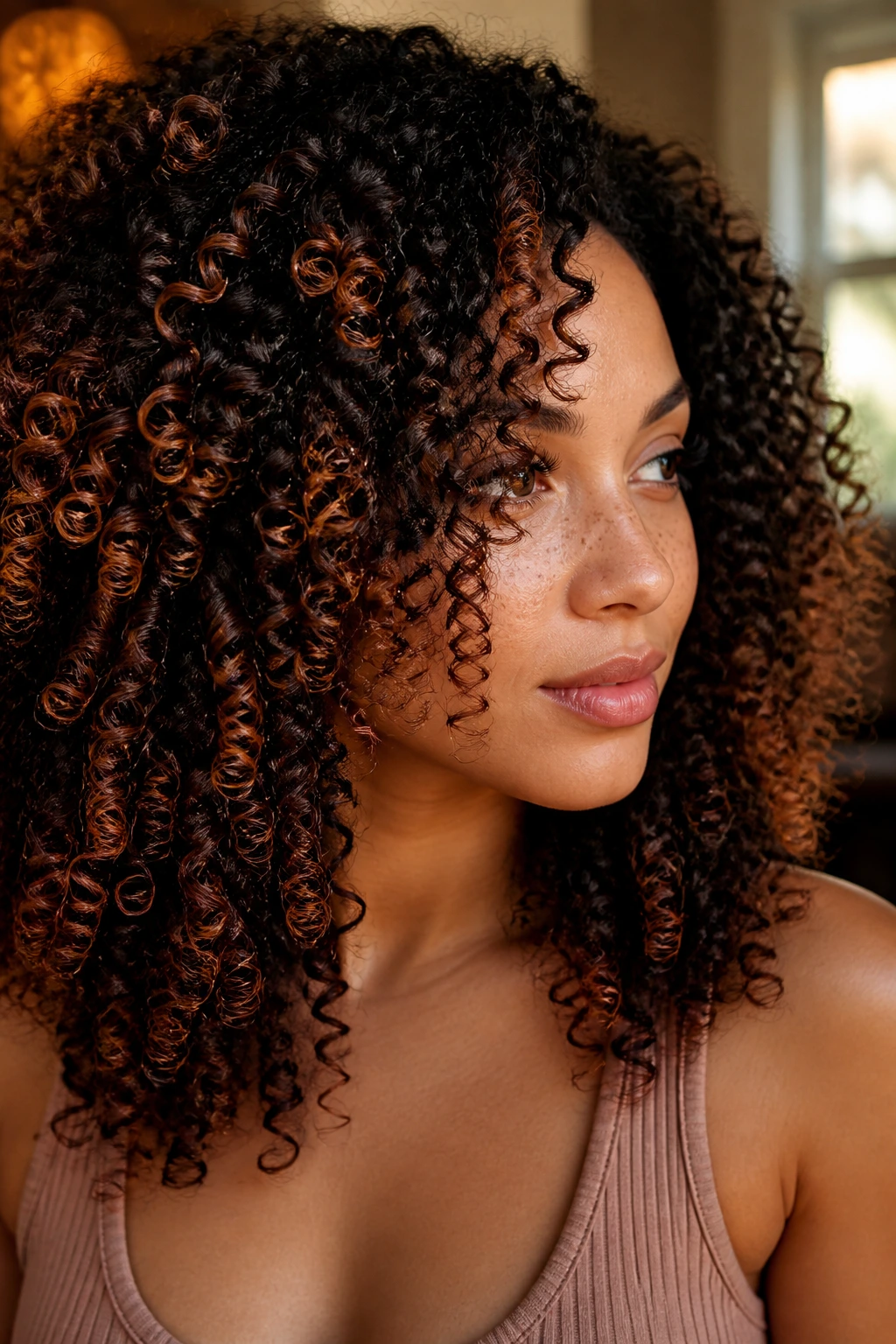
Cinnamon is a warm, spicy brown-red that is less intense than pure copper but warmer than plain brown. It is a fantastic bridge color. If you are currently dark-haired and want to lighten up but are afraid of turning orange, ask for cinnamon highlights. They act as a neutralizer, bringing out the warmth in your skin and giving your curls a “lit from within” glow. It looks particularly striking on type 3C and 4A hair types, where the tightness of the coil makes the cinnamon highlights look like a continuous swirl of color.
17. The Naturalistic “Grays” and Silver
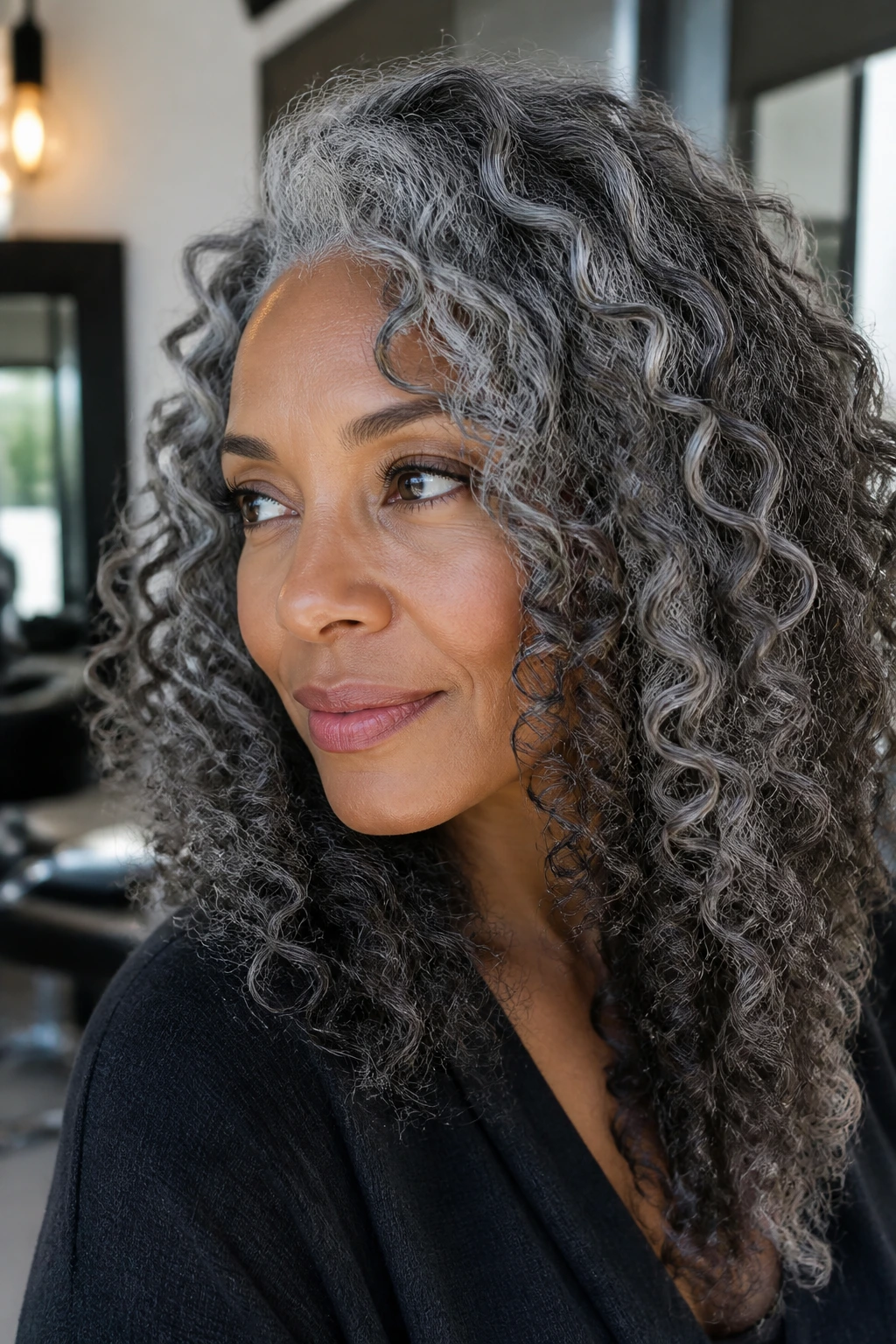
Grey and silver are no longer “hidden.” They are being embraced as a style statement. If you are starting to see natural greys, don’t rush to cover them. Instead, lean into them. You can work with a colorist to turn your natural salt-and-pepper hair into a intentional silver-and-black masterpiece. Using a gloss can make those silver strands shine like metal. It is a bold, confident look that saves you the trouble of constant root touch-ups. Plus, white and silver hair is often stronger and more resilient than hair that has been bleached repeatedly.
18. Golden Blonde with Lowlights
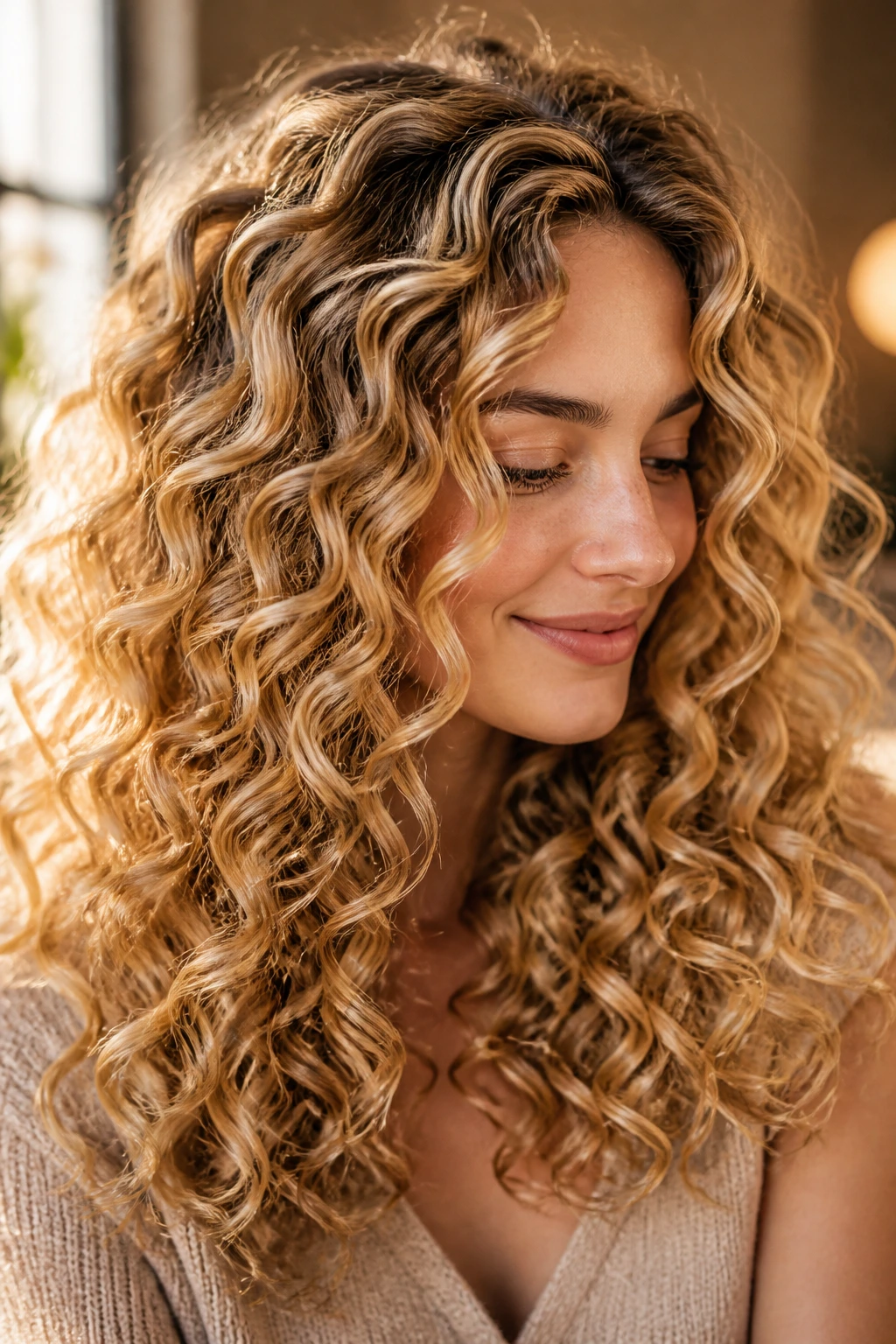
If you are already a blonde but find your hair looks a bit flat, adding “lowlights”—streaks of darker color—is the cure. This is especially important for curls. A solid head of blonde can hide the definition of a curl. By weaving in lowlights, you add shadows back into the hair, which makes the curls pop and look more defined. It is a subtle change that makes a huge difference in the “readability” of your hairstyle. You want the lowlights to be a sandy brown or dark blonde, not black, to ensure they blend well.
19. The “Frosted” Tips Look
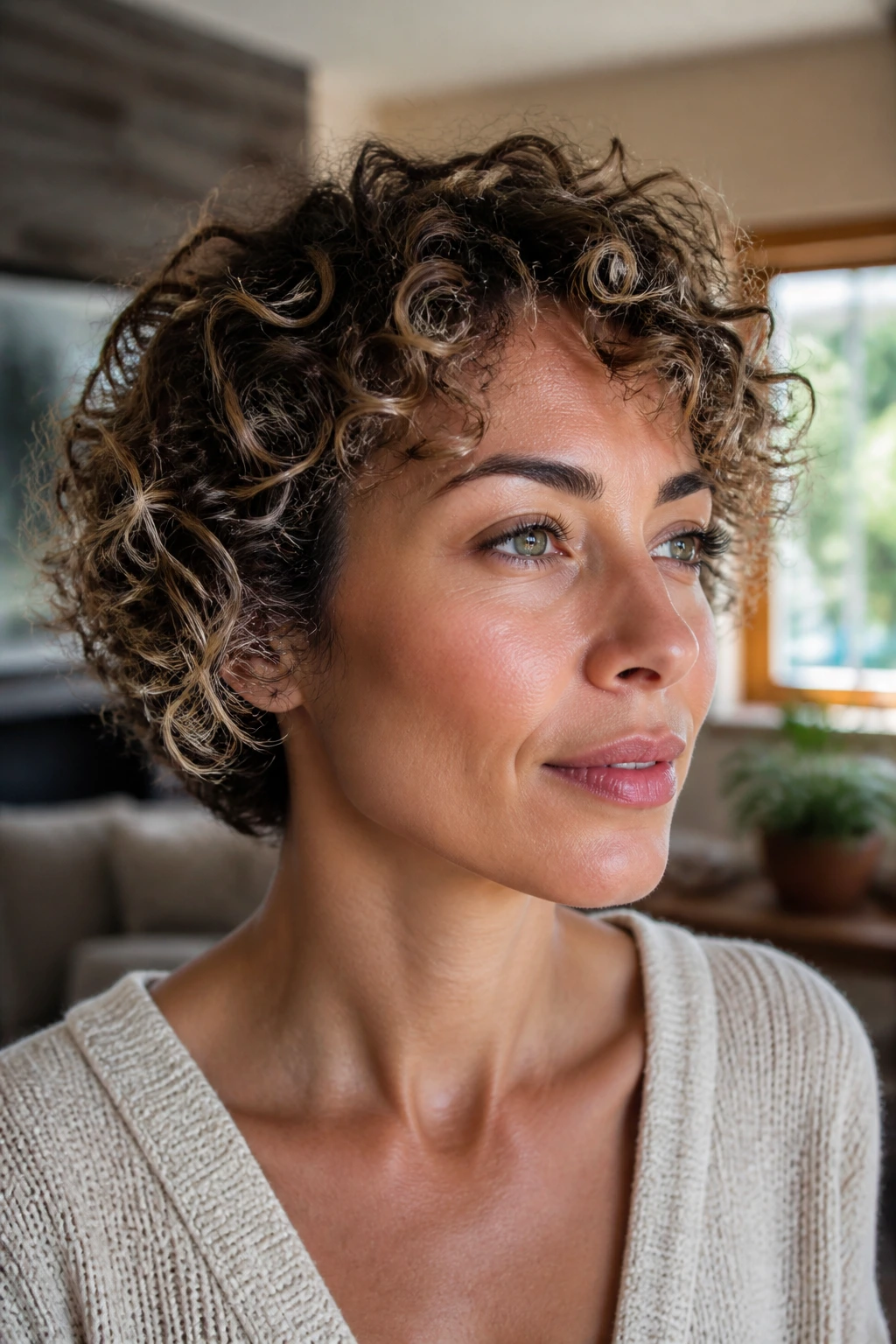
Yes, the 90s are having a comeback, but in a much more sophisticated way. Today’s frosted tips are not white-out blocks of color. They are hand-painted, subtle lighter ends that emphasize the bounce of your curls. This is a great way to experiment with lightening your hair without the maintenance of root color. If you don’t like it, you can just trim the ends off. It is the ultimate low-commitment color experiment, and it works particularly well for short, cropped curly styles where you want to highlight the shape of the cut.
20. Cool Slate or “Denim” Blues
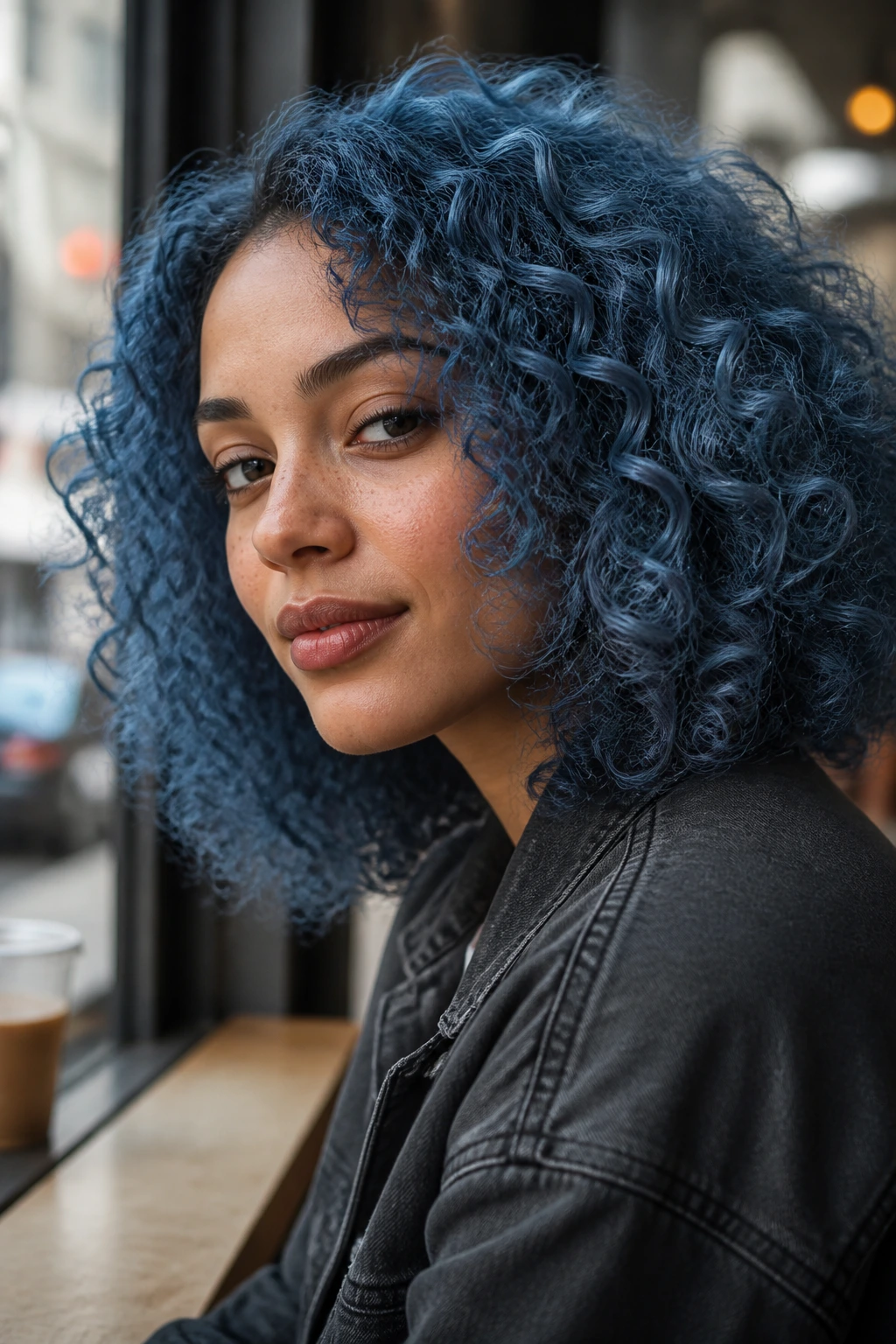
If you want to move into fashion colors but feel like purple or pink is too much, cool slate or denim blue is the way to go. It is a muted, greyish-blue that feels very modern and urban. On curls, this color acts as a neutral. It isn’t as loud as a bright blue, so it feels more like a chic accessory. Because this color is best achieved on pre-lightened hair, ensure your stylist builds a bond-repair treatment into the service. Blue pigments can be stubborn, so be prepared to have this color in your hair for a few washes—it won’t fade away overnight.
21. Walnut and Mocha Highlights
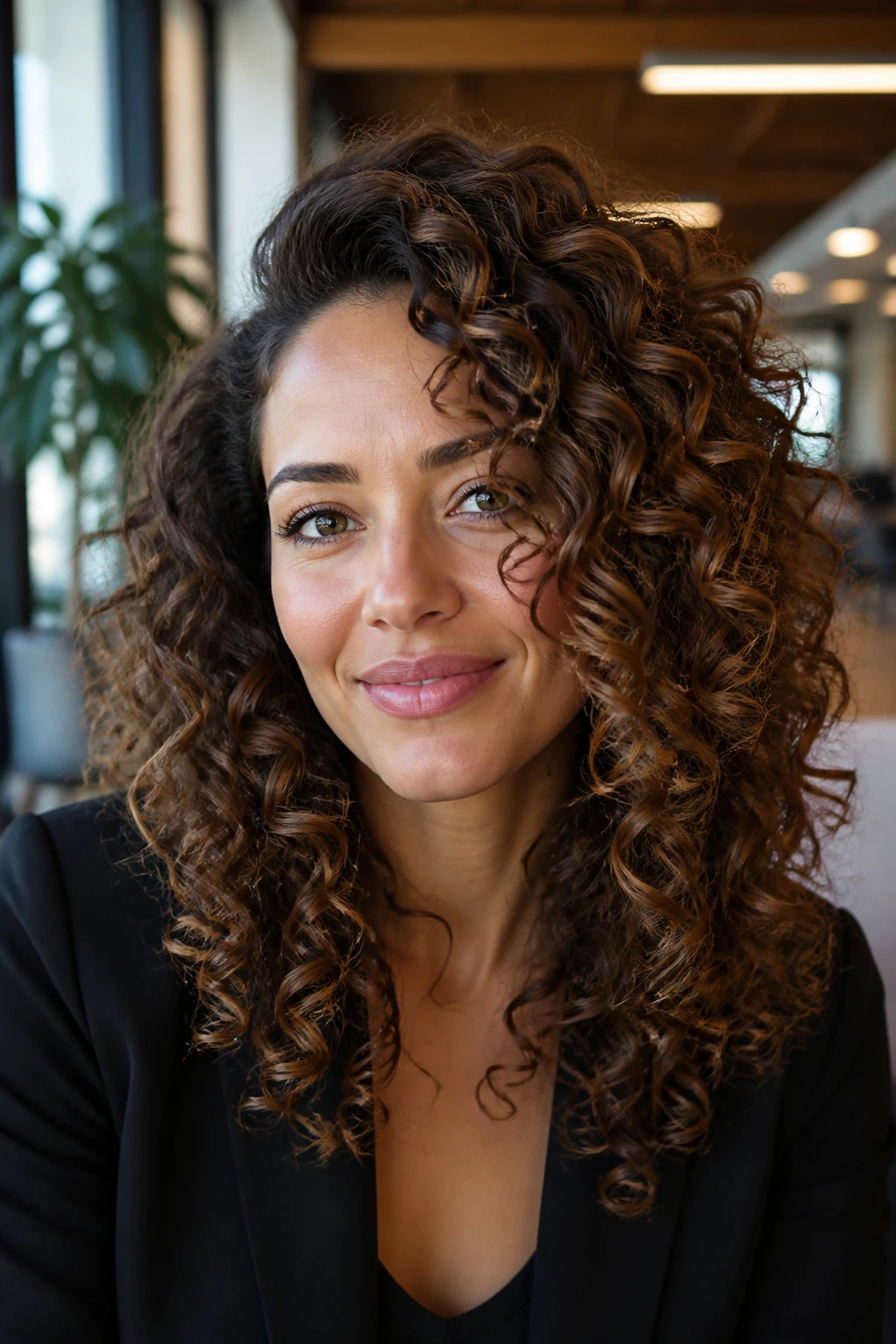
For those who want to keep things firmly in the “natural-looking” zone, walnut and mocha highlights are the answer. These are low-contrast highlights. They are only one or two shades lighter than your natural color. Why do this? To create texture. If you have fine curls that tend to lay flat, the subtle color difference tricks the eye into seeing more depth and dimension. It is a classic, “quiet luxury” approach to color that is perfect for professional environments where bright colors might be frowned upon, but you still want your hair to look fresh and styled.
22. Iridescent “Oil Slick” Panels
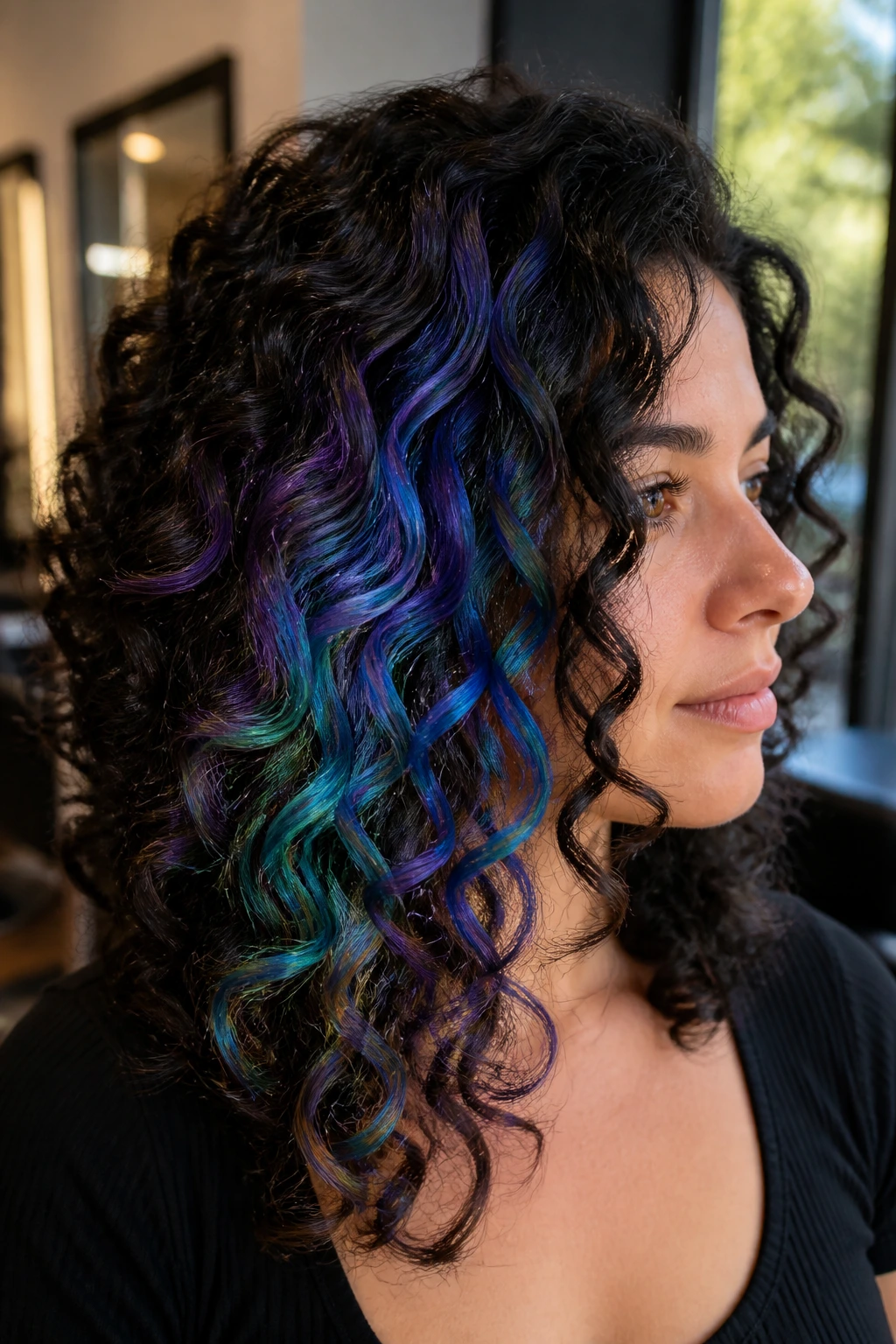
If you want to be creative, don’t color the whole head. Color a single panel—perhaps underneath the crown or just on one side. This is called “peekaboo” color. You can use an iridescent, multi-tonal dye that shifts from blue to green to purple depending on how the light hits it. It is incredibly fun for curly hair because the curls themselves shift and turn, constantly changing which color is most visible. It is a dynamic, living piece of art. Because you are only coloring a small section, you don’t have to worry about widespread damage, and you can change the color easily whenever you get bored.
Final Thoughts
Choosing the right color for your curls is a journey, not a destination. You must prioritize the health of your hair above all else. Curly hair is inherently drier than straight hair because the natural oils from your scalp have a harder time traveling down the coiled shaft. When you add chemical color—especially bleach—you are essentially removing the protective barriers of the hair. This means your routine must become more focused on moisture and protein.
Always consult with a professional who specifically mentions “curly hair” or “texture” in their portfolio. A colorist who specializes in straight hair may not understand how light hits a ringlet or how much lift your specific curl pattern can safely handle. Listen to their advice if they tell you that a color will take multiple sessions to achieve. Pushing your hair too hard in one day is the fastest way to lose your curl pattern. If your curls start to lose their bounce or feel like straw, that is your hair telling you it needs a break.
Finally, remember that color is temporary. It is a form of self-expression that changes with the season or your own mood. Whether you opt for a deep mocha glaze or a high-contrast platinum lift, the most important thing is that you enjoy the process. Your curls are a unique canvas—give them the care they deserve, and they will shine with whatever color you choose to embrace.