

Long, heavy hair is a striking canvas, but managing it for an evening out can feel more like an engineering project than a beauty routine. If your hair is thick, dense, and prone to weighing itself down, you know the struggle: you spend an hour styling it, only for the gravity of your own hair to pull the volume flat before you even make it to the restaurant. Getting it right for a date night requires a different approach than the one you would use for a quick workday ponytail. It’s about building a structure that can support that weight while still looking soft, romantic, and touchable.
We often default to sleek, pin-straight styles when we feel overwhelmed by the volume of our hair, but that rarely captures the best movement. Instead, think about styles that embrace the density while controlling the shape. Whether you are dealing with coarse, wavy strands or a sleek, straight mane that just happens to be incredibly thick, the key is preparation—what you do in the shower and immediately after matters more than the actual styling at the end.
1. The Undone Textured Braid
For many people with heavy hair, a standard braid can end up looking too tight, stiff, or even sparse if the braid itself doesn’t have enough hair to work with. The secret here is to start with a salt spray on damp hair to build grit and volume. Instead of pulling your hair tight, aim for an “undone” aesthetic where the braid sits slightly loose against the scalp.
Building the Base
Before you even begin the braid, use a root-lifting mousse. Heavy hair needs help staying off the scalp to avoid that “glued-down” look. Once the hair is about 80% dry, work in a texturizing paste from mid-lengths to ends. This provides the friction necessary to keep the braid from slipping or loosening unevenly throughout the night.
The Finishing Touches
- After securing the braid, gently pull at the loops to widen them.
- Leave two or three tendrils around the face to soften the look.
- Use a flexible-hold hairspray rather than a strong-hold one; you want the braid to move, not to be encased in plastic. Pro tip: If you find the braid is pulling too hard on your hairline, use a few hidden bobby pins to anchor it to the base of your skull before you begin the loosening process.
2. Low-Slung Romantic Chignon
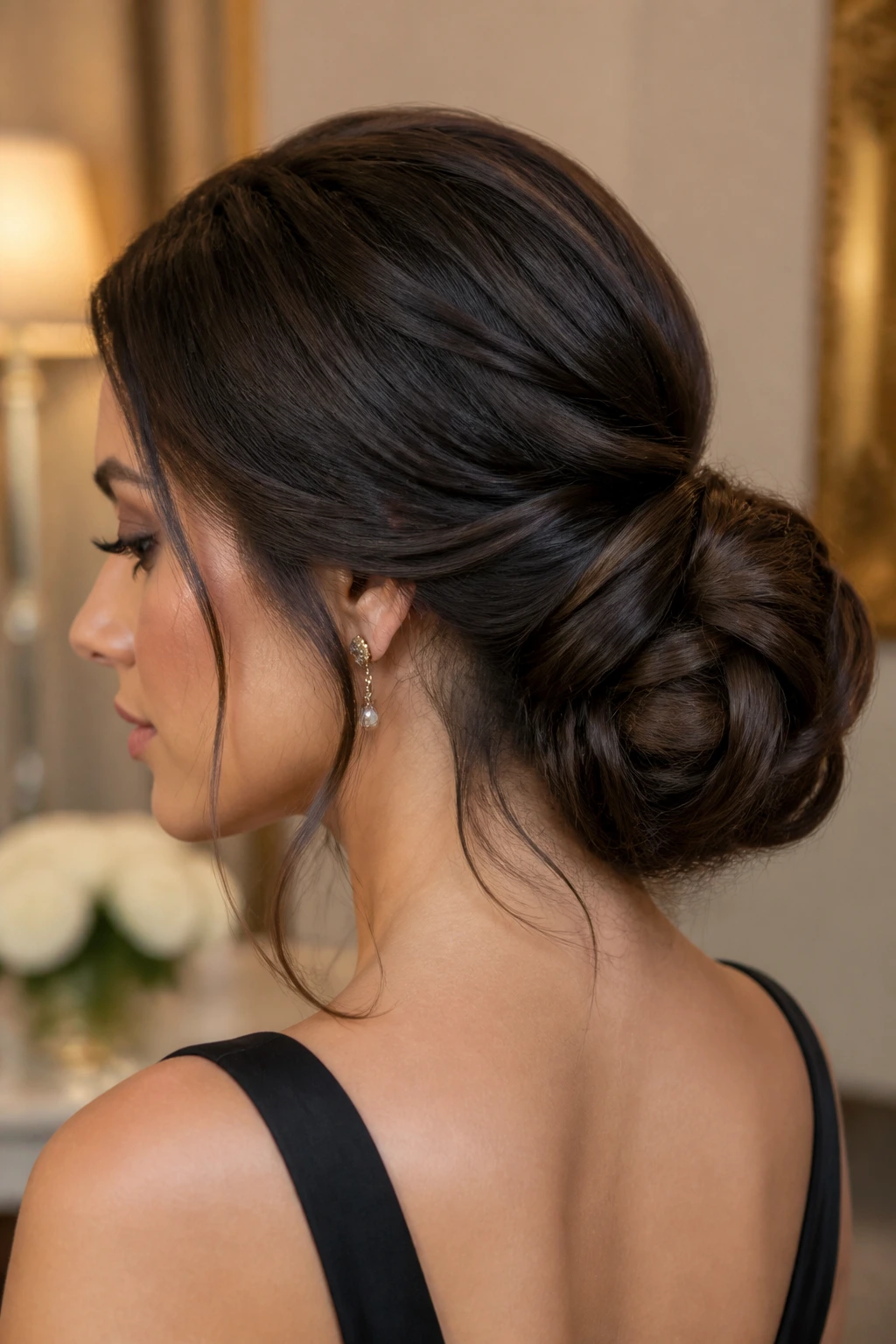
A low chignon is arguably the most elegant way to handle heavy hair because it utilizes the length and weight to create a voluminous, substantial bun that doesn’t require a dozen hidden sponges or inserts. The trick is to keep the nape of the neck clean and secure the mass of your hair with a strong, multi-pronged fork or a heavy-duty claw clip that matches your hair color.
Why This Style Succeeds
Heavy hair provides the necessary “meat” to make the bun look full and intentional. Unlike fine hair, which often requires a bun doughnut or hair padding to look substantial, your hair can naturally fill that shape. The weight actually helps the bun stay in place, provided your anchor is solid.
How to Execute the Look
- Start by gathering your hair into a low ponytail, but don’t tighten it completely against the neck; keep it slightly loose.
- Twist the length of the ponytail into a rope, then coil it around the base.
- Secure the bun with U-shaped pins rather than standard bobby pins; they hold much more weight and are far easier to remove at the end of the night.
3. The Half-Up Cascading Wave
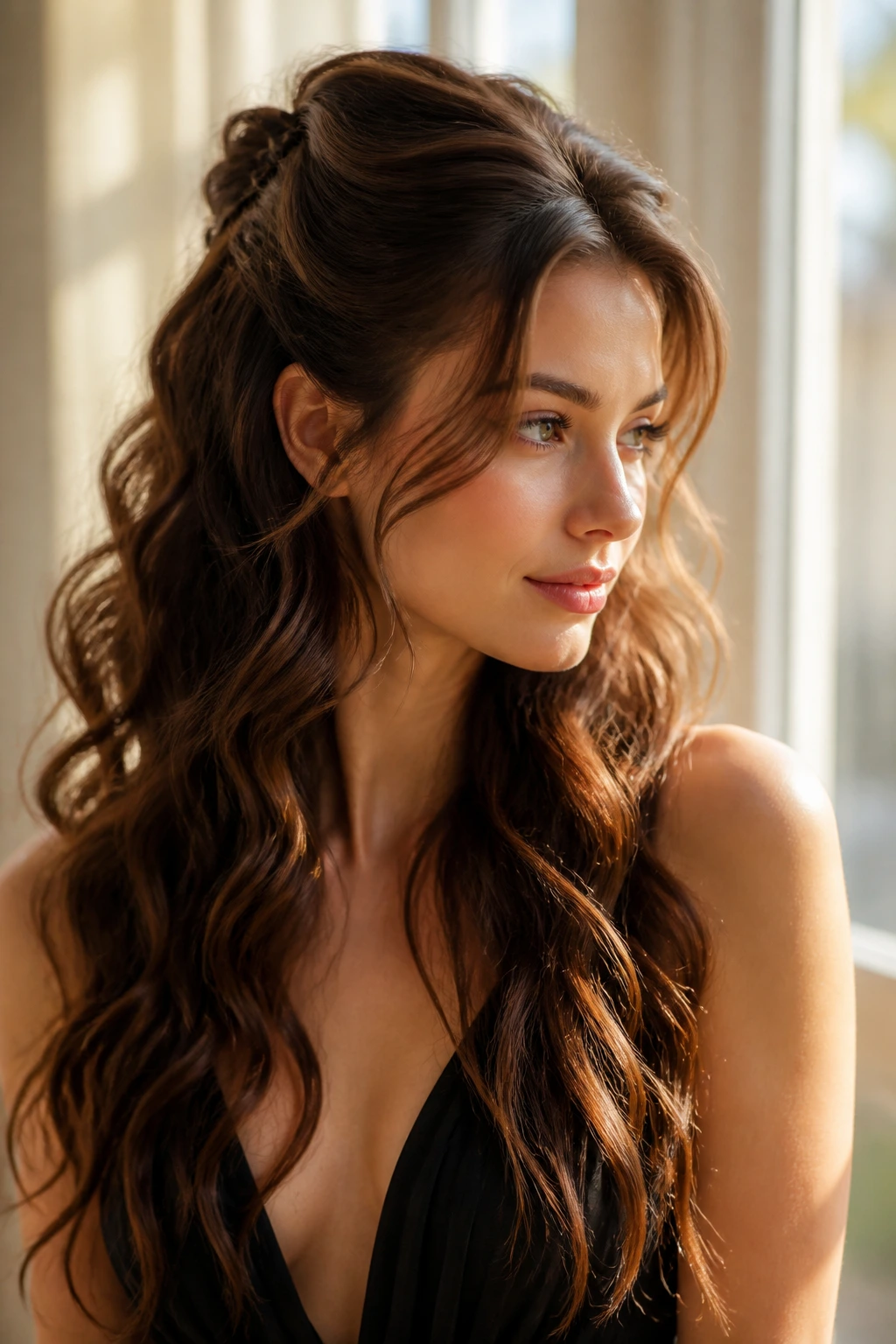
If you want to keep the length visible but need to get it out of your face for dinner, the half-up style is your best friend. It draws attention to the eyes and cheekbones while letting the rest of your hair drape beautifully over your back. The challenge with heavy hair is the “sagging” that happens after an hour or two.
Managing the Volume
Use a wide-barrel curling iron (1.5 inches or larger) to create loose, soft waves. You are not looking for tight ringlets here—you want relaxed movement. When you pin back the top section, avoid using a single hair tie, which will inevitably create a heavy “lump.” Instead, use two or three smaller bobby pins or a small decorative clip to secure the section.
Structural Considerations
Distributing the weight is the primary goal here. If you grab too much hair for the top section, the remaining hair underneath will look too thin. Aim for a 60/40 split, keeping the majority of the volume down to frame your face and shoulders.
4. Sleek High Pony with a Twist
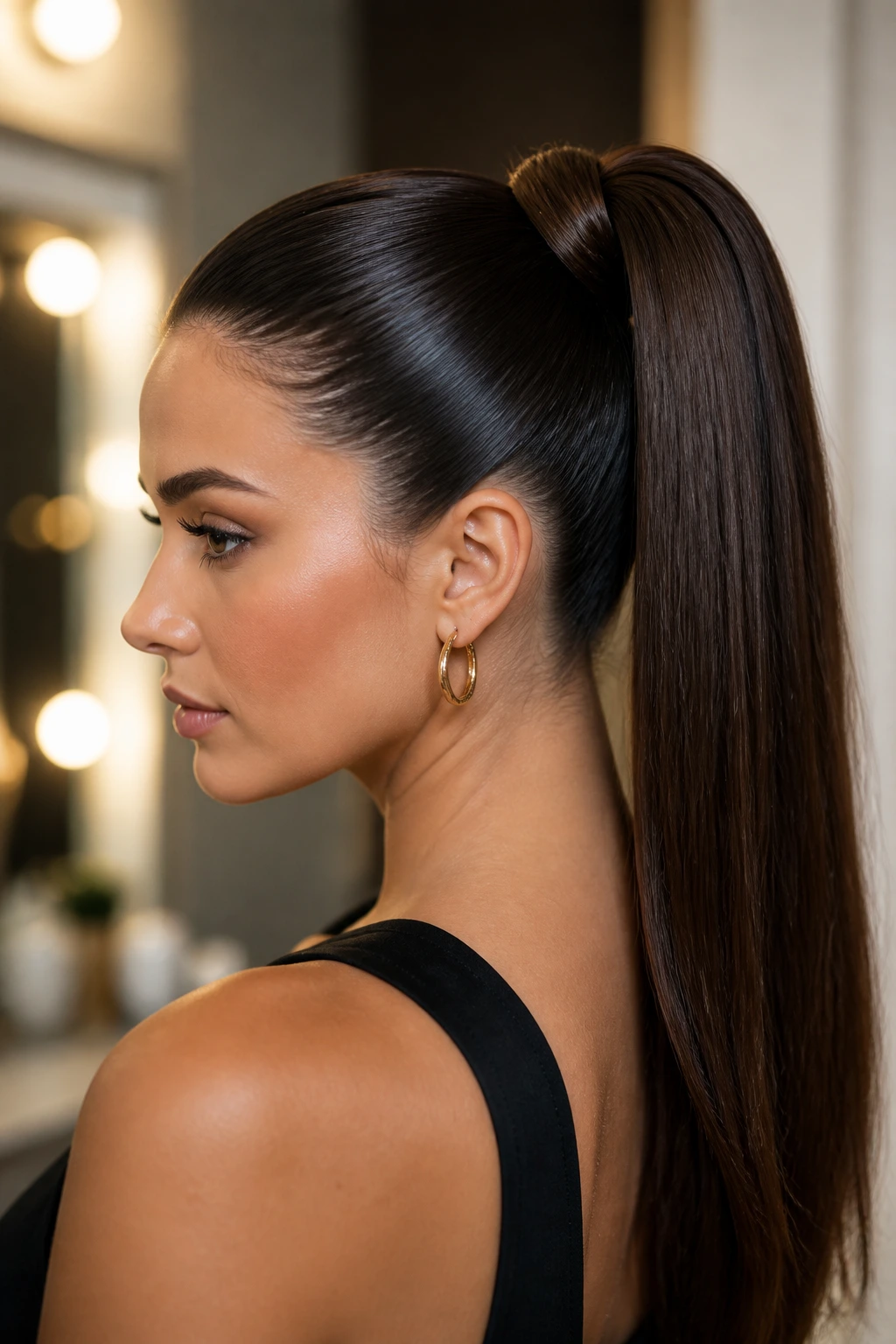
There is nothing quite as sharp as a high, polished ponytail, but it can be a nightmare for heavy hair. The tension can cause actual headaches, and the weight can cause the ponytail to droop within minutes. To prevent this, you need to trick the structure of the hair.
The Double-Anchor Method
- Section your hair into two halves—top and bottom—before pulling it up.
- Secure the bottom section with a clear elastic, then incorporate it into the top section to create the main ponytail.
- This creates two anchor points, which distributes the weight across more surface area of your scalp.
- Wrap a small strand of hair around the base of the elastic to hide it; use a single bobby pin to tuck the end of that wrap underneath the elastic.
Why It Holds
By splitting the weight, you stop the ponytail from pulling on your hairline. This method feels much more secure and prevents the dreaded “sag” that usually forces you to constantly re-adjust your hair throughout the night.
5. The Messy Top Knot
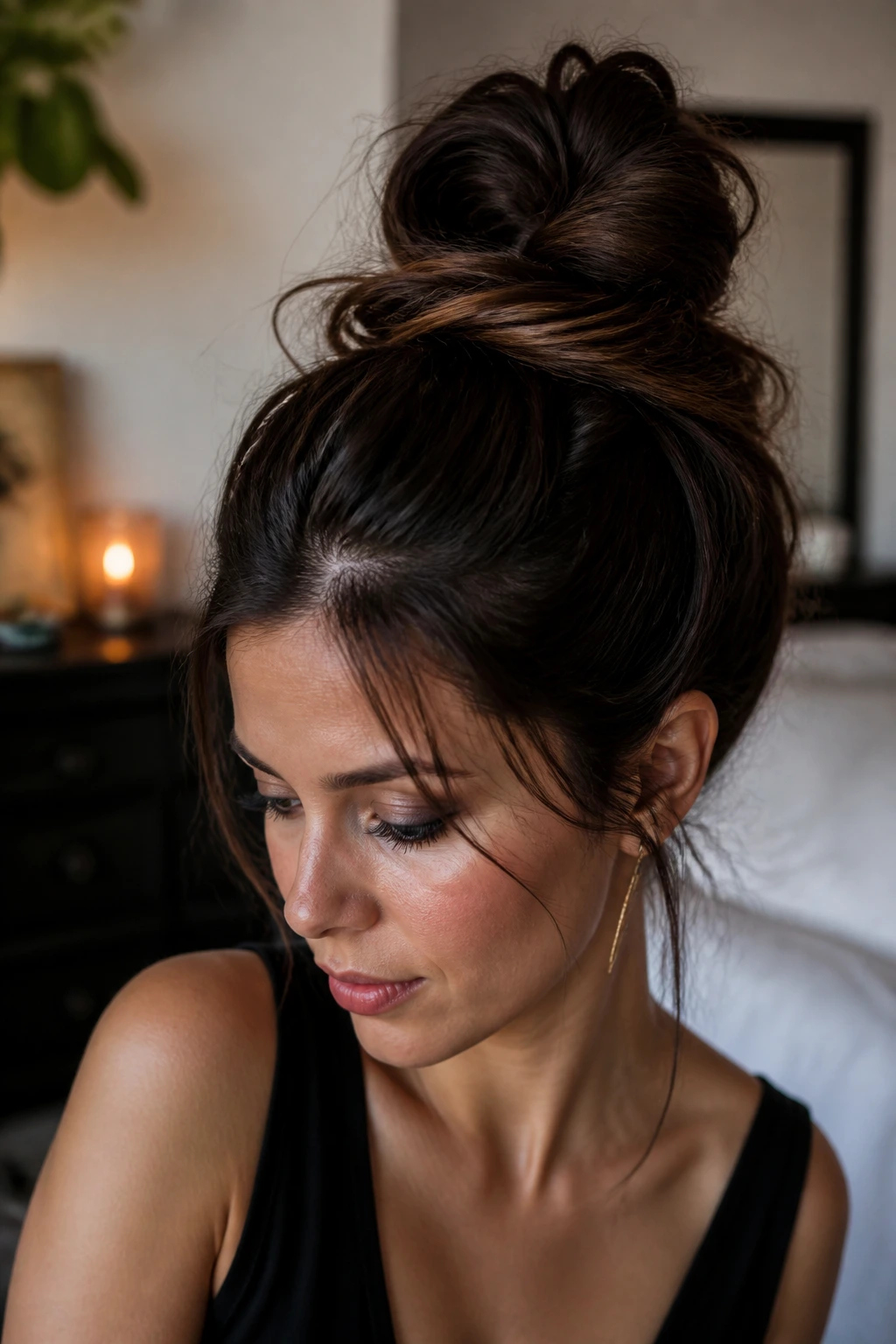
A top knot is the ultimate date night style if you are heading somewhere casual or if you simply want to show off statement earrings or a nice neckline. The key for heavy hair is making sure it doesn’t look like a mountain on top of your head.
Achieving Proportion
- Flip your head upside down and gather your hair to the crown.
- Instead of twisting the hair into a single tight coil, create two or three smaller sections and twist them loosely around each other before pinning.
- This creates a wider, more natural-looking knot that doesn’t feel like it’s going to topple over.
- Soften the perimeter by pulling out short, wispy pieces near the ears and the base of the neck.
6. Old Hollywood Deep Side Part
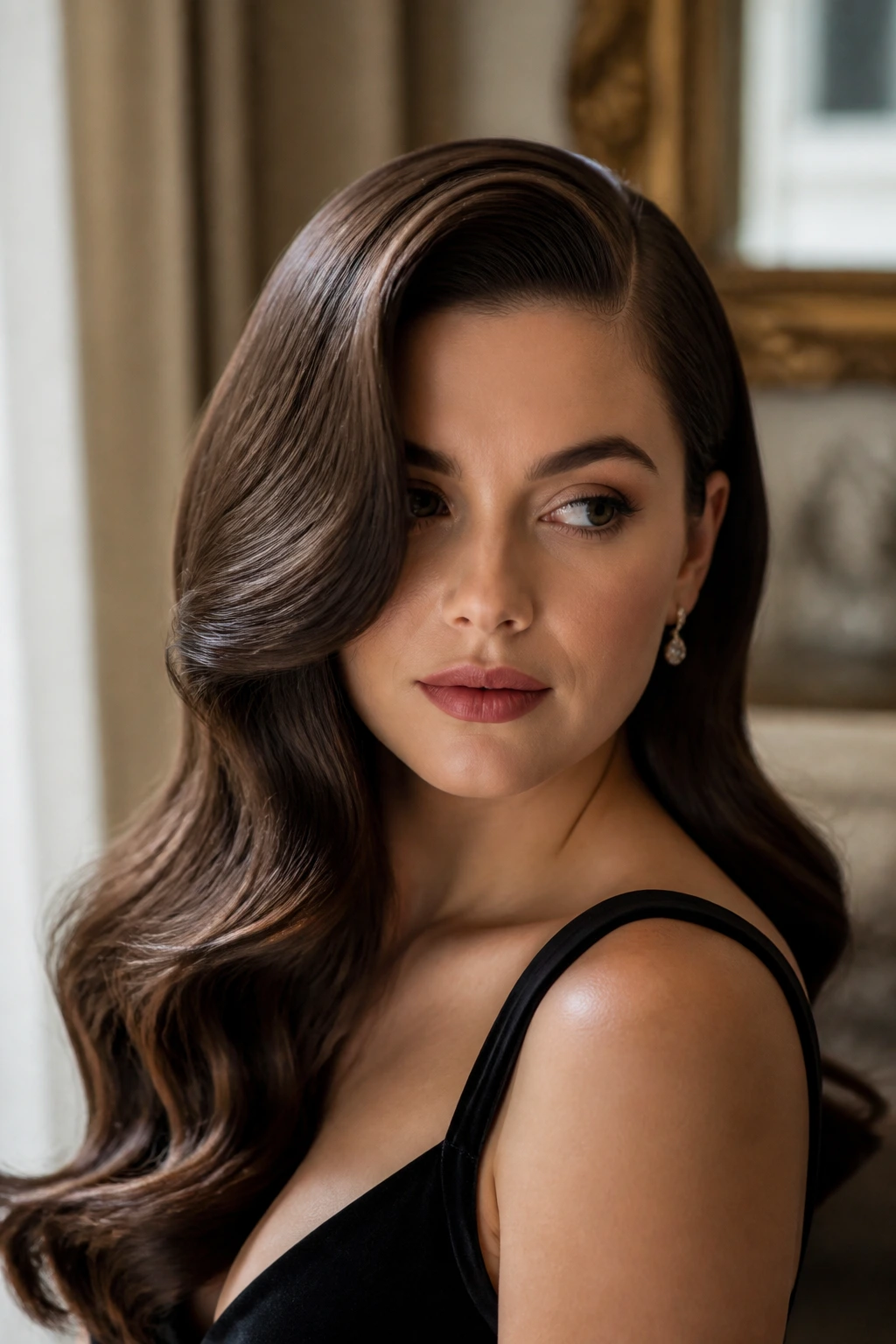
Sometimes the simplest approach is the most effective. A deep side part combined with smooth, large-scale waves creates an instant feeling of glamour. With heavy hair, the deep part forces all the volume to one side, which looks incredibly intentional and dramatic.
Getting the Smooth Finish
- After washing, use a smoothing balm while the hair is damp to control any flyaways.
- As you blow-dry, use a large round brush to lift the roots at the part; this is vital because heavy hair will naturally want to lay flat against the head.
- Use a light-hold pomade on your palms to smooth the shorter side back behind your ear, securing it with a small pin hidden under your hair.
7. The Victorian-Inspired Crown Braid
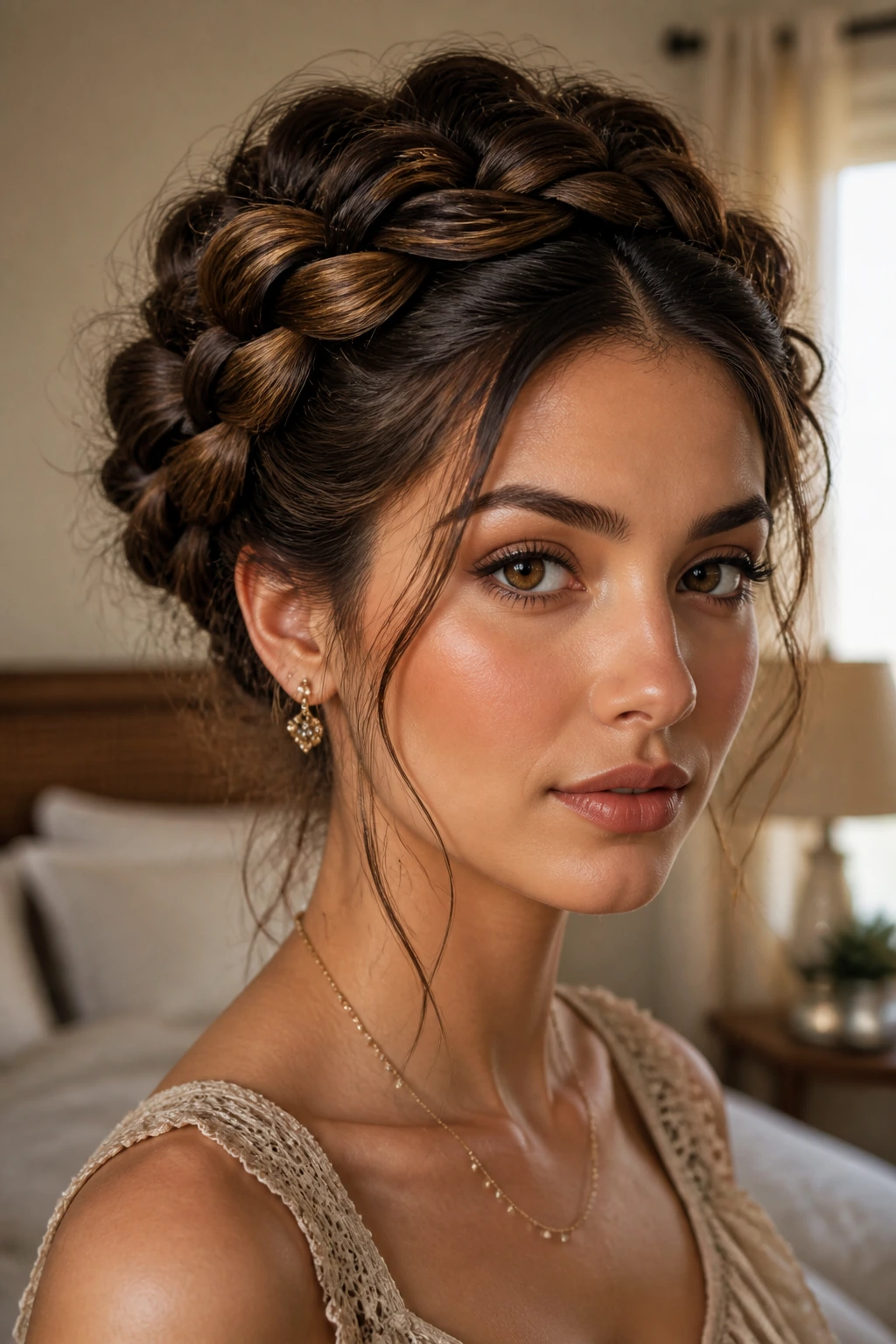
If you have significant length and density, a crown braid is manageable and keeps every single strand contained. It is surprisingly durable for long dates, as there is nowhere for the hair to fall once it is woven into the scalp.
Proper Tension
The main mistake people make with crown braids is pulling the hair too tight. You want the braid to look somewhat soft and ethereal, not rigid. As you feed the hair into the braid, give it a tiny bit of slack so the braid has room to expand and look thicker.
Tips for Success
- Use a bit of dry shampoo at the roots before you begin; it creates a “sticky” base that prevents the braid from sliding around.
- If you find your ends are too thin to look good in a braid, give them a quick wave with an iron before you start weaving them in.
8. Soft French Twist
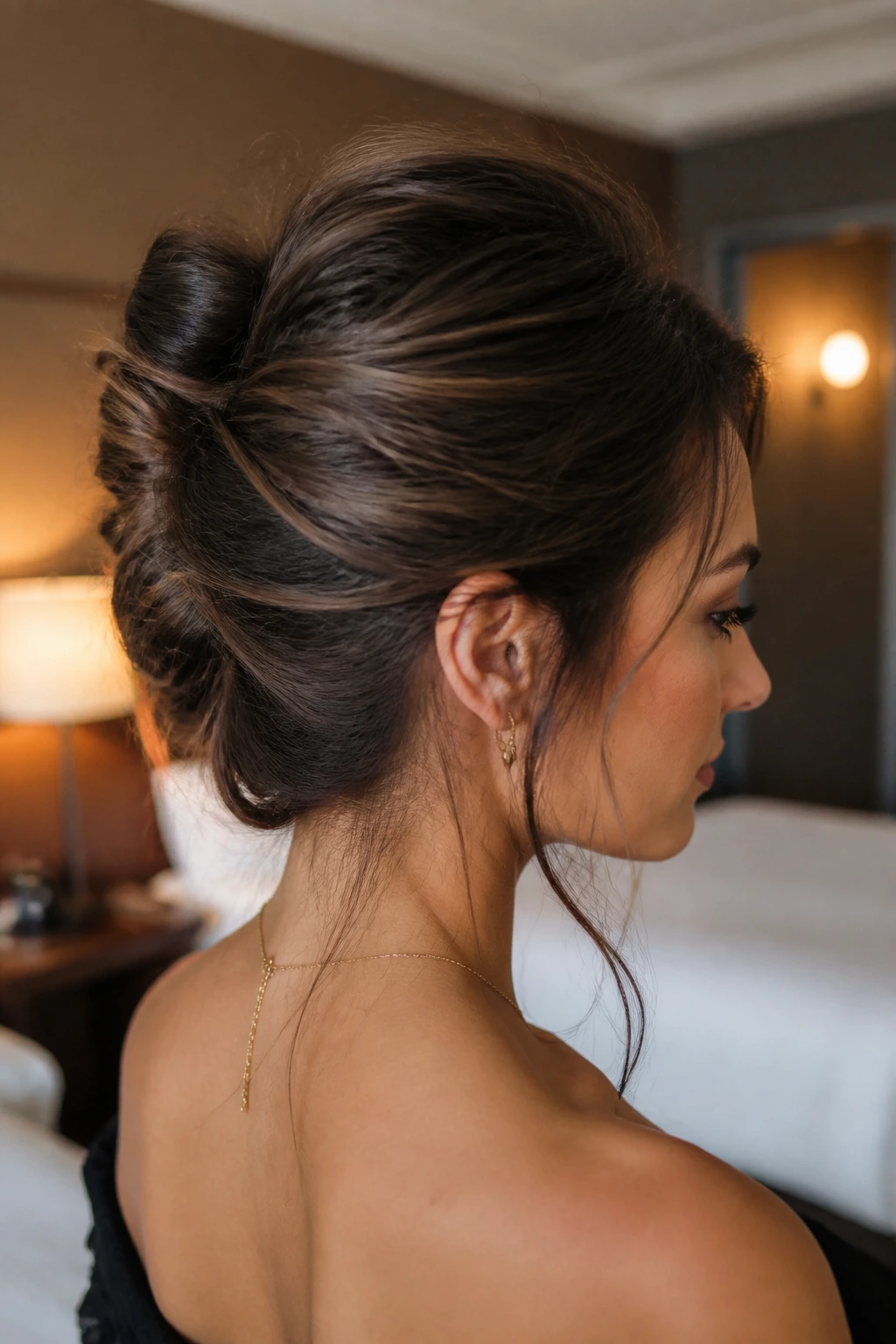
The French twist is a classic, but it often gets a reputation for looking too “stiff” or corporate. To make it ready for a date, keep the texture of the hair soft rather than polished.
The Texture Secret
Avoid brushing your hair into a perfectly smooth surface before pinning. Run your fingers through it to create natural separation. When you twist the hair upward, don’t pin it tight against your head—leave a little bit of volume at the crown and sides so it feels more like a deliberate, artistic shape.
Securing the Style
- A large, high-quality hair comb is essential for heavy hair.
- Insert the comb at an angle against the direction of the twist to ensure it “locks” into the hair rather than just sitting on top.
9. Waterfall Braids with Loose Waves
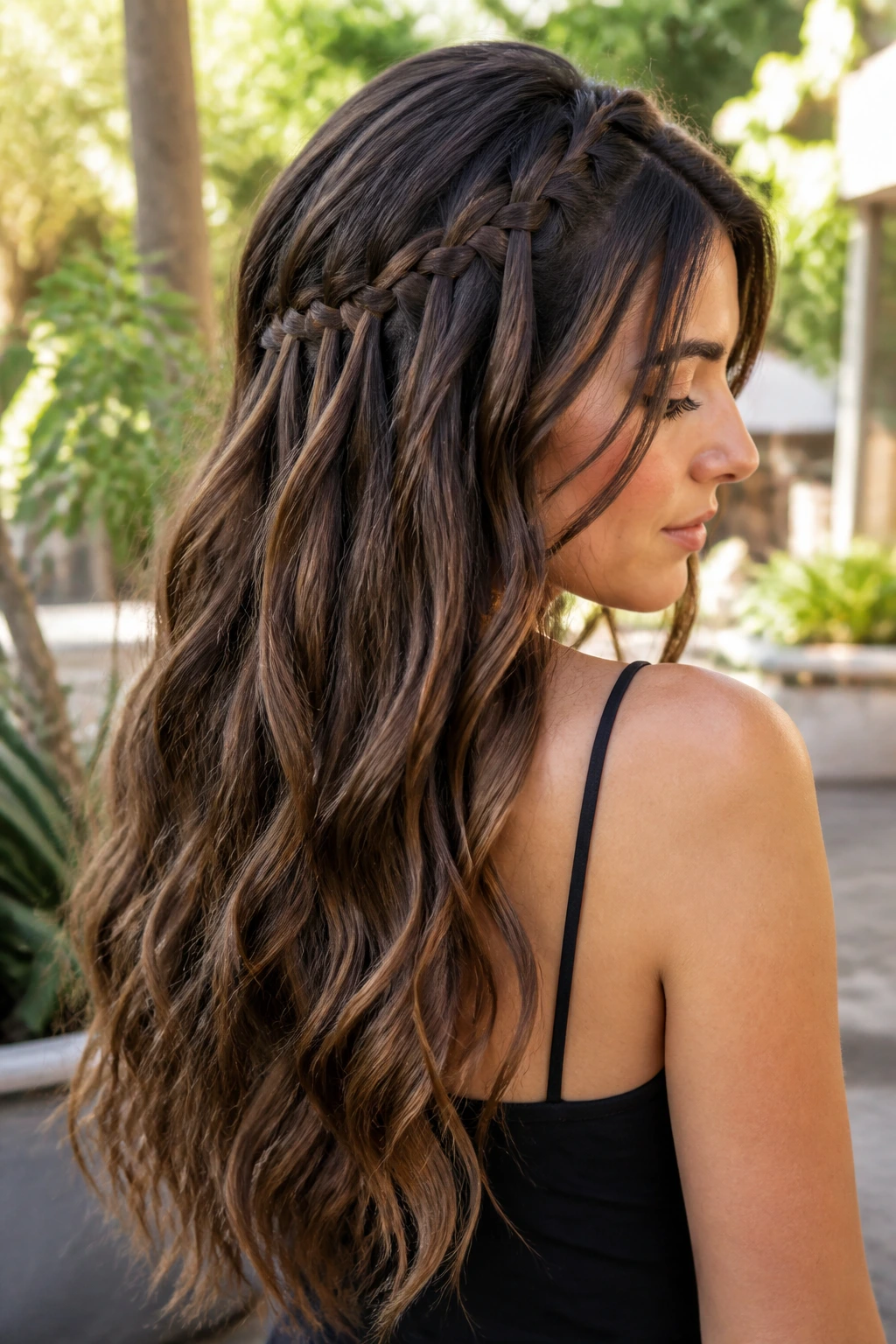
A waterfall braid is lovely because it combines the benefits of a half-up style with the intricacy of a braid. Because your hair is heavy, the individual “strands” that fall through the waterfall will appear thick and substantial, which looks much better than it does on thinner hair types.
Working with Density
- The trick is to braid loosely.
- Because your hair has so much weight, you don’t need to braid tightly to get it to hold.
- Keep the braids horizontal across the back of the head so they can carry the weight of the hair beneath them effectively.
10. The Bubble Ponytail
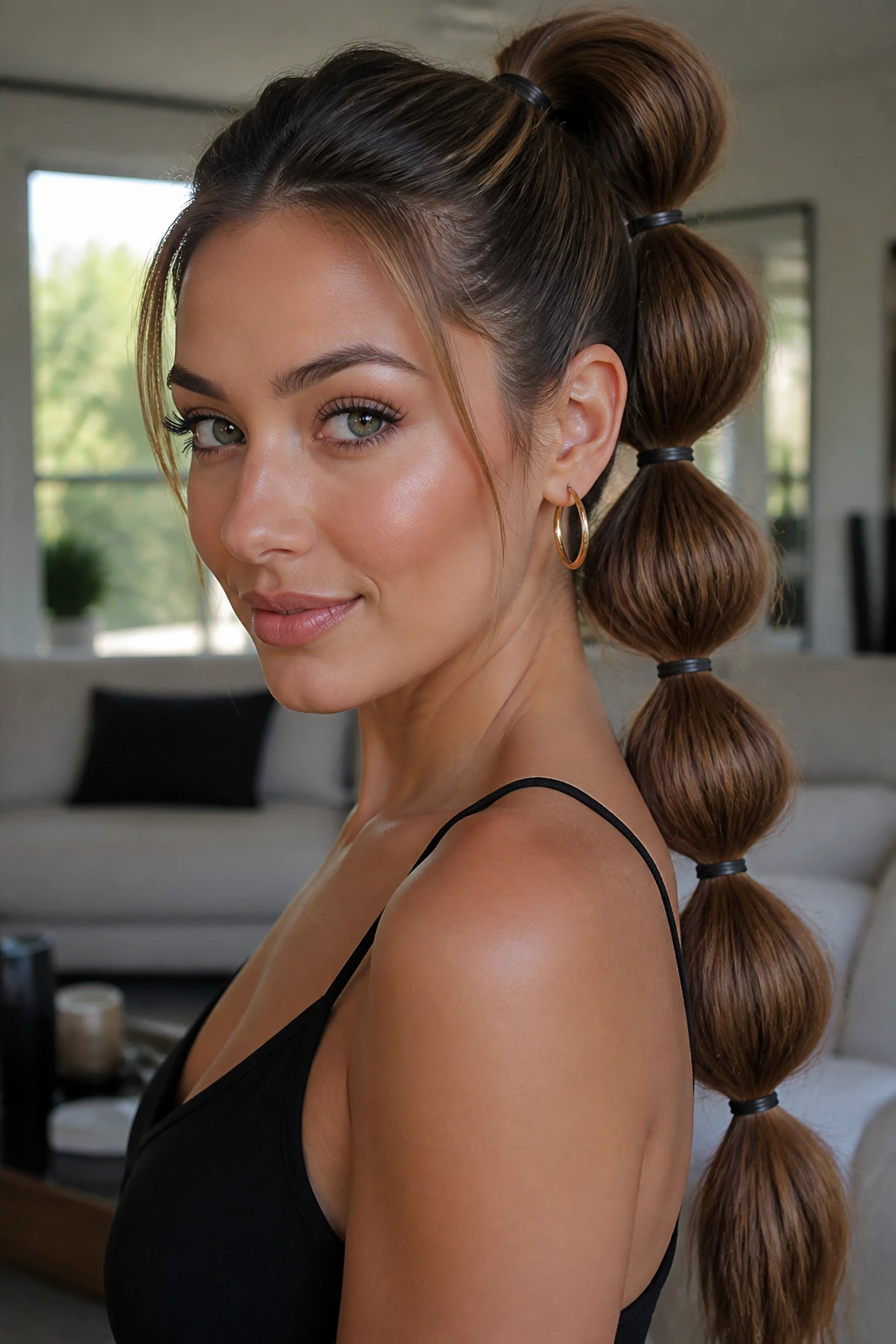
This is a playful, modern take on the ponytail that works exceptionally well for thick, heavy hair because the “bubbles” look naturally round and full. It is essentially a series of ponytails stacked on top of one another, which is a great way to manage density.
Managing the Bubbles
- Use small, clear elastic bands to separate sections of your ponytail.
- After securing each section, tug gently at the sides of the hair between the elastics to pull it out and create the rounded “bubble” shape.
- If your hair is very heavy, add a small bobby pin underneath each elastic to help support the weight of the section below it.
11. Low Braided Bun
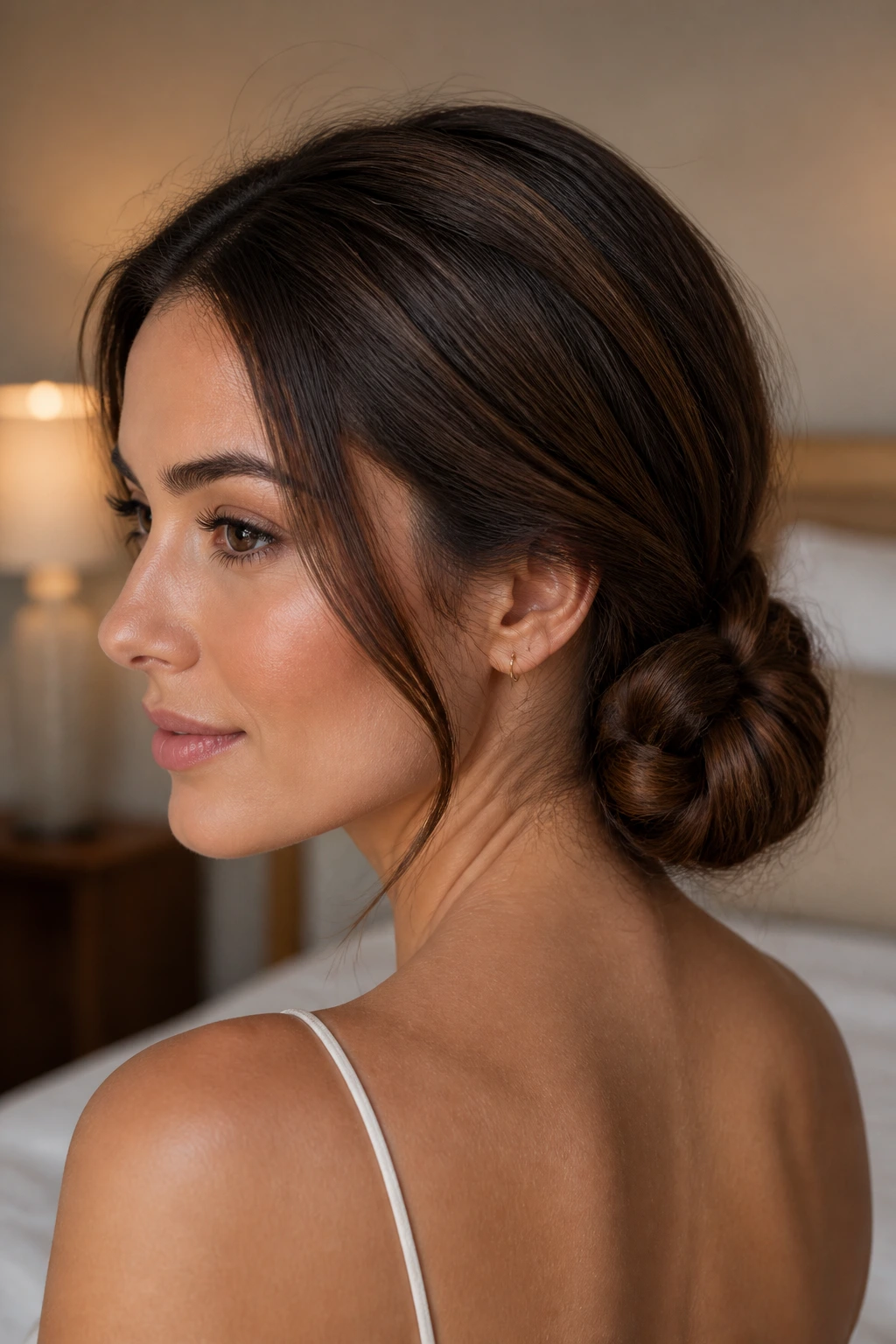
This style takes the best of both worlds: the security of a braid and the elegance of a low bun. By braiding the hair before twisting it into the bun, you distribute the weight much more evenly than if you were to just coil a mass of loose hair.
Construction Steps
- Start by creating a loose three-strand braid beginning at the nape of the neck.
- Once you reach the ends, roll the braid up into a bun.
- The texture of the braid adds a level of visual interest that a smooth bun simply cannot provide, and the internal structure keeps the hair from “slumping” as the hours pass.
12. Half-Up Top Knot
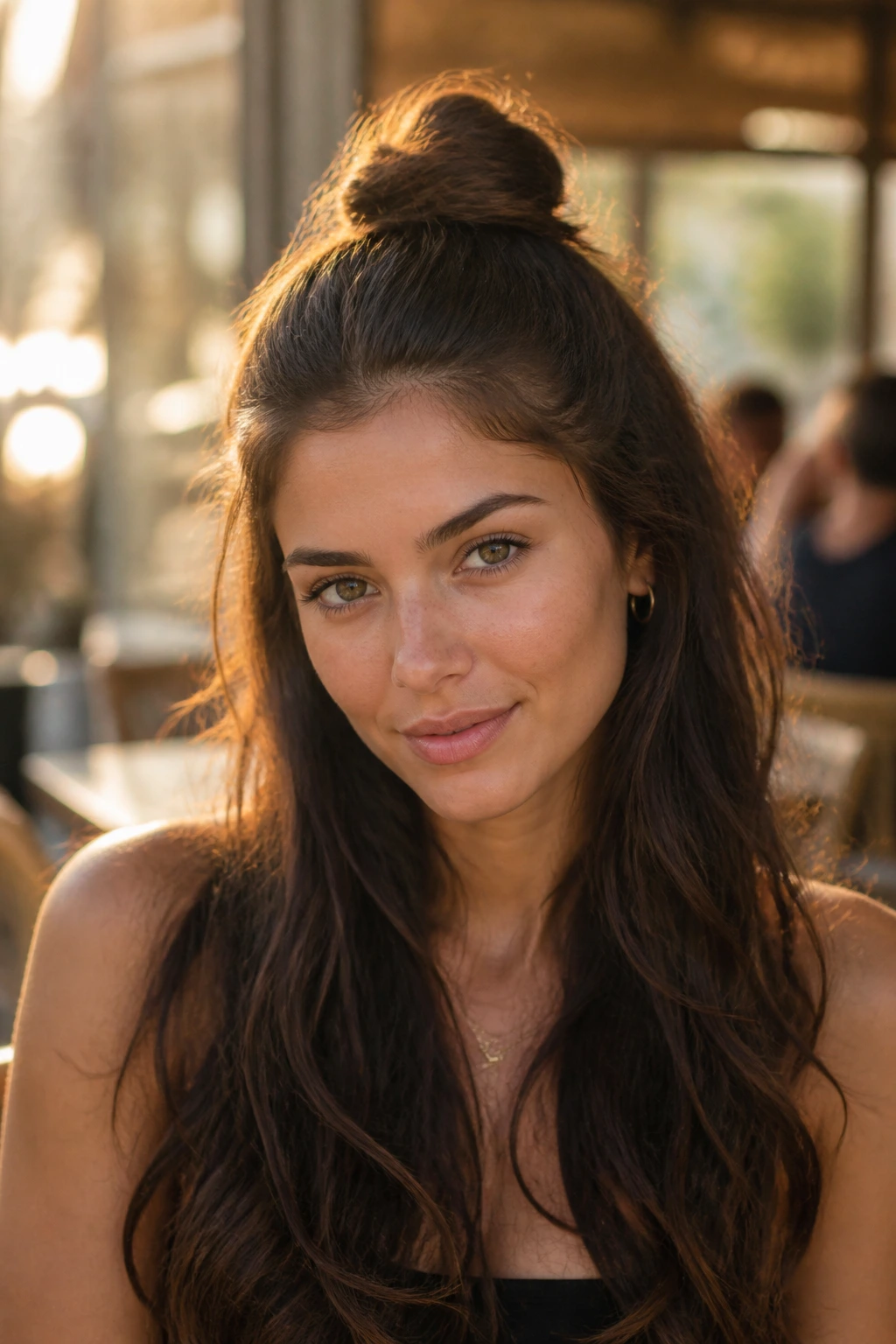
If the full top knot feels like it’s too much hair for one style, take just the top section and create a smaller, looser knot. This keeps the volume off your face while allowing you to show off the length and waves of your hair.
Achieving Balance
- Gather only the hair from the temples to the crown.
- Twist it into a small bun, but make it very loose.
- The key is to keep the remaining hair down, which balances the overall silhouette of your head and shoulders.
13. Braided Headband with Down Hair
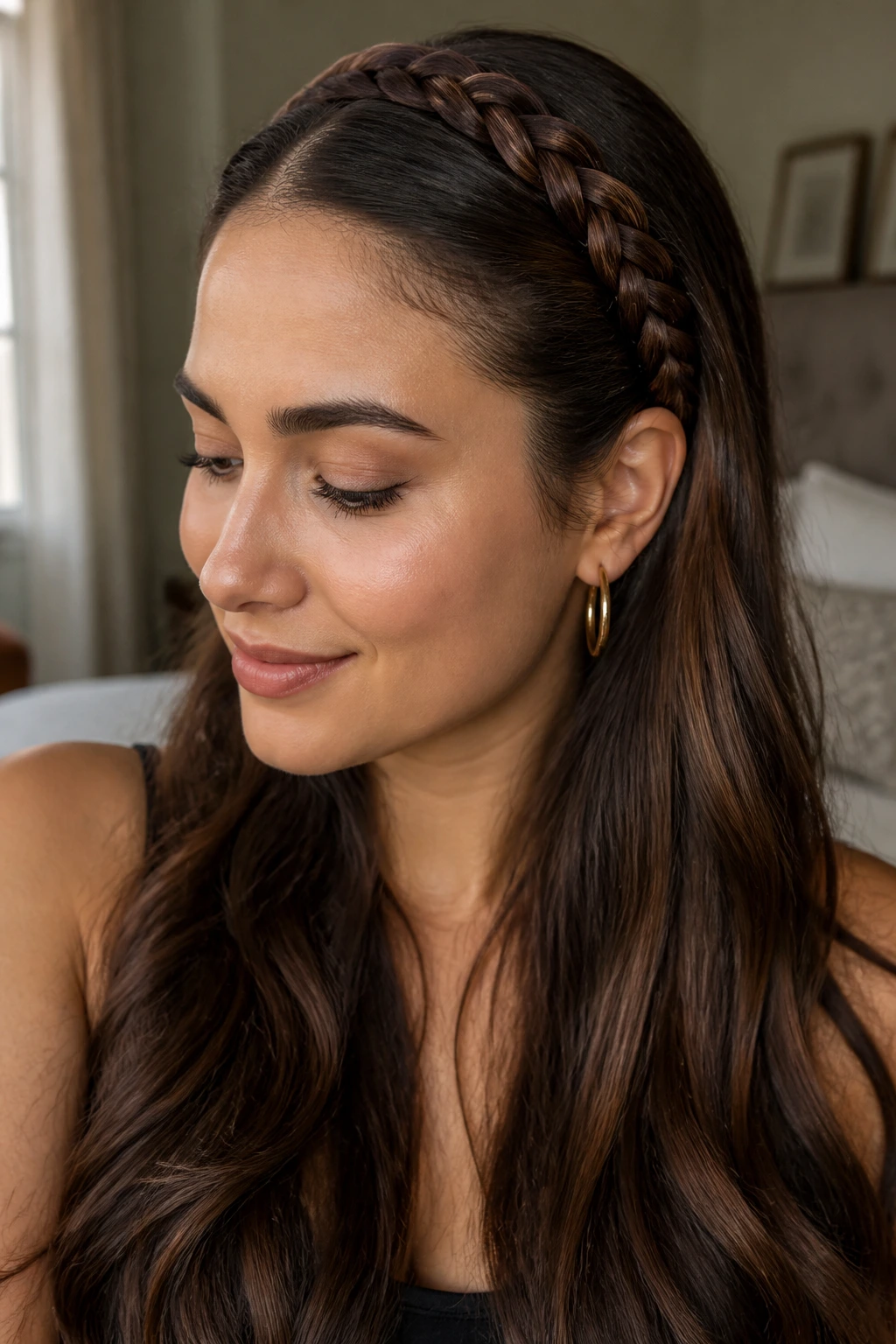
For those with long, heavy hair who want to keep it down, a braided headband is a great way to manage the hair around the face while letting the bulk of your hair remain loose. It effectively mimics the look of an accessory, but it’s made entirely of your own hair.
The Technique
- Take a two-inch section of hair from behind your ear.
- Braid it tightly toward the front and pin it behind the opposite ear.
- Because the braid is anchored securely, it will stay in place all night, holding your bangs or front layers back effortlessly.
14. Retro Pompadour Half-Up
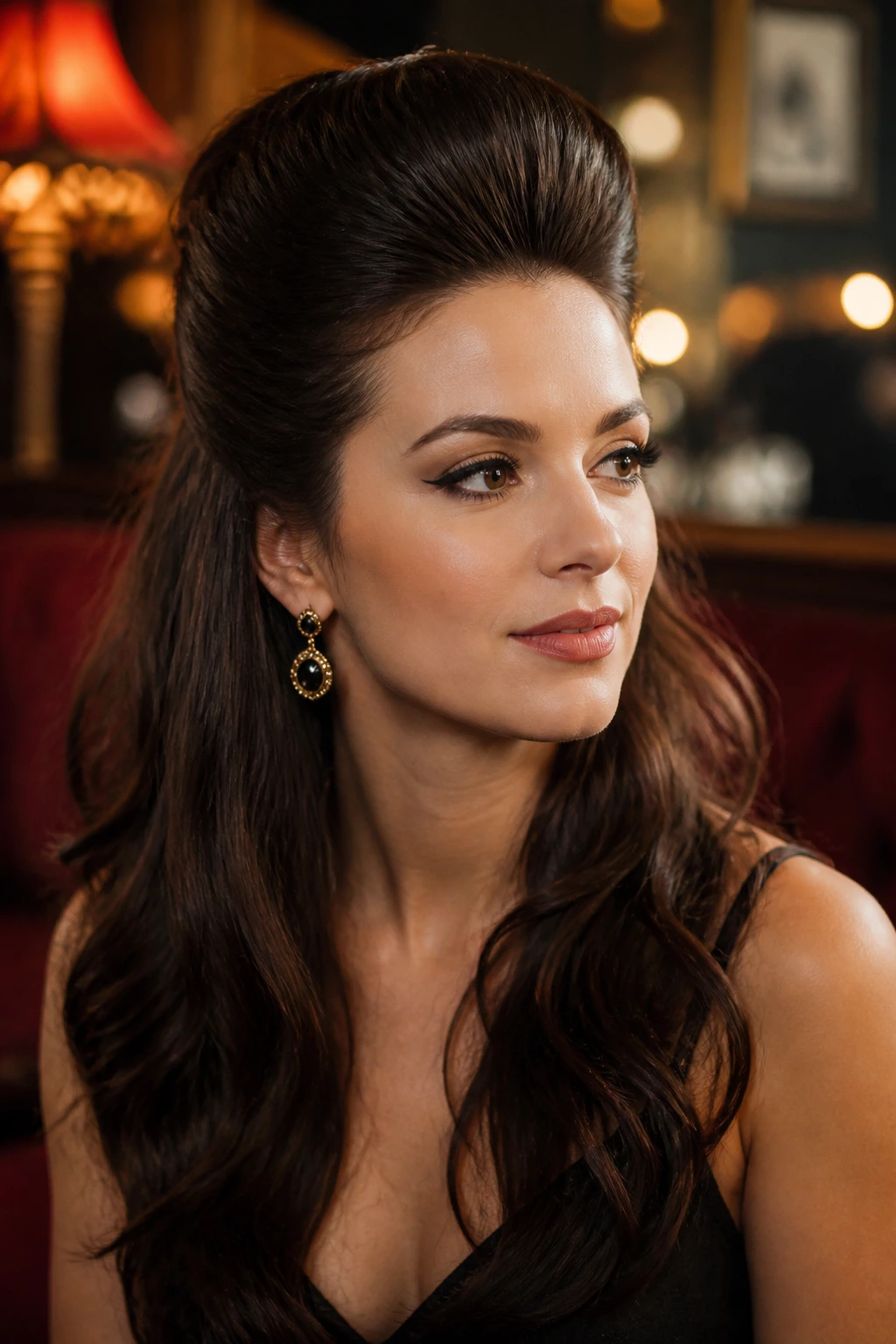
This style is all about height at the crown. It’s perfect for a dramatic evening look. You are effectively teasing the front section of your hair and pinning it back to create a vintage, elevated silhouette.
Teasing the Roots
- Use a fine-tooth comb to tease the underside of the hair at the crown.
- Smooth the top layer over the teasing to hide the “messy” part, and then pin it back.
- This height creates a lovely balance against the weight of the long hair left hanging down, drawing the eye upward and making the style feel less heavy.
15. The Low Knot with Silk Ribbon
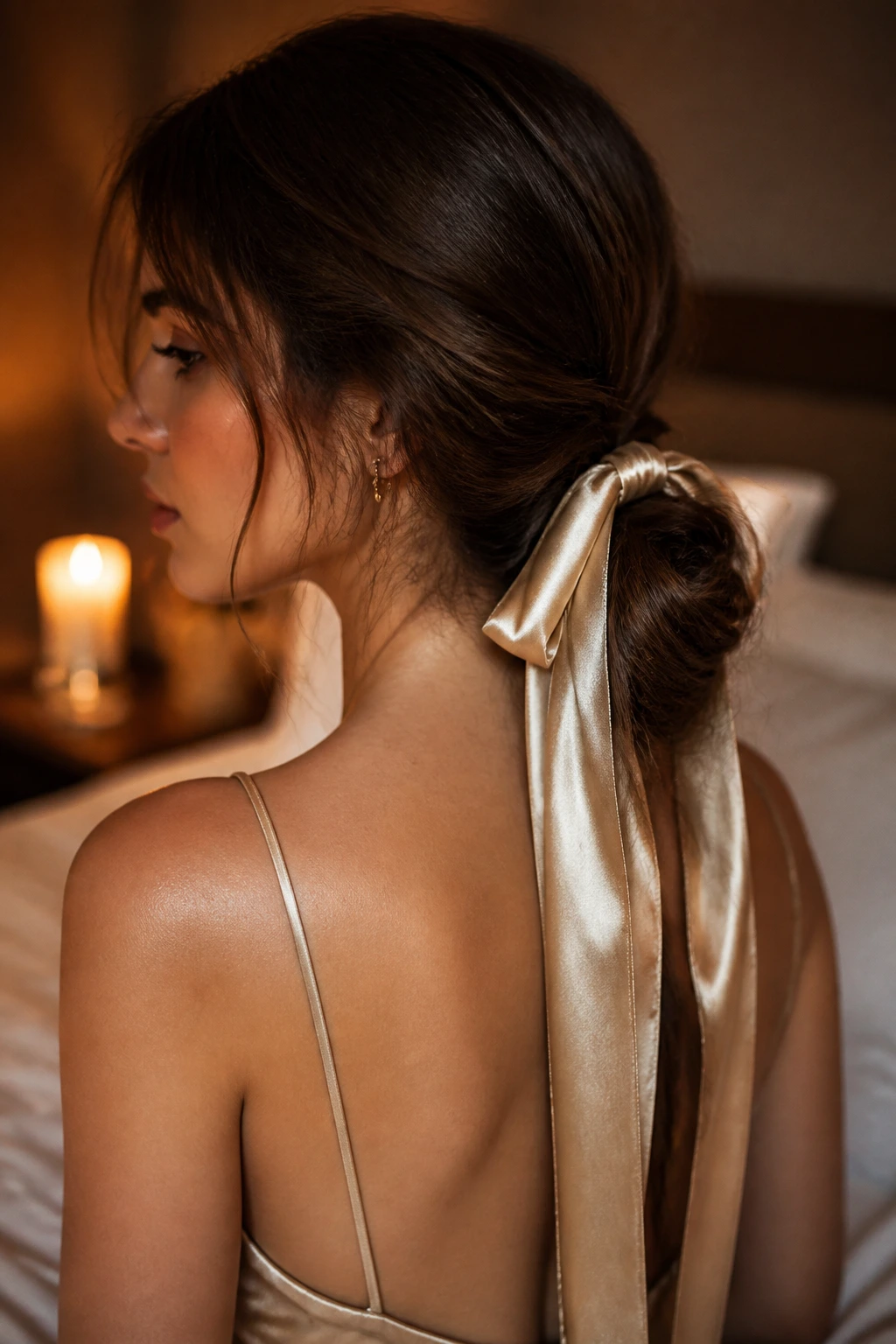
Sometimes, the best way to handle heavy hair is to simply embrace the weight and tie it back with a beautiful accessory. A long silk ribbon tied around a low, loose knot at the nape of the neck is incredibly romantic and perfectly suited for a date night.
The Power of Accessories
- Use a thick, high-quality ribbon; thin ribbons tend to get lost in heavy hair.
- Tie the ribbon once the hair is already secured with a discreet hair tie, ensuring the ribbon drapes down with the hair.
- It’s a low-effort, high-impact style that doesn’t rely on heat tools, saving your hair from extra damage while still looking put-together.
Practical Tips and Common Mistakes to Avoid
Managing heavy hair is all about understanding the relationship between tension and volume. One of the most common mistakes is trying to use too many hair products. When your hair is dense, adding heavy serums or thick creams will only accelerate the “flat” look by increasing the total weight of each strand. Stick to lightweight texturizing sprays and dry shampoos to add the necessary friction without the extra burden.
Another common pitfall is the reliance on cheap hair ties. If your hair is heavy, you need structural integrity. Invest in silicone-covered elastics or fabric-covered ties that don’t have metal bits, which can snag and break thick hair. A broken hair tie in the middle of a date is a recipe for a frustrated evening. If you struggle with the weight, always prioritize styles that use multiple anchor points rather than relying on a single, tight elastic at the base.
Variations and Adaptations
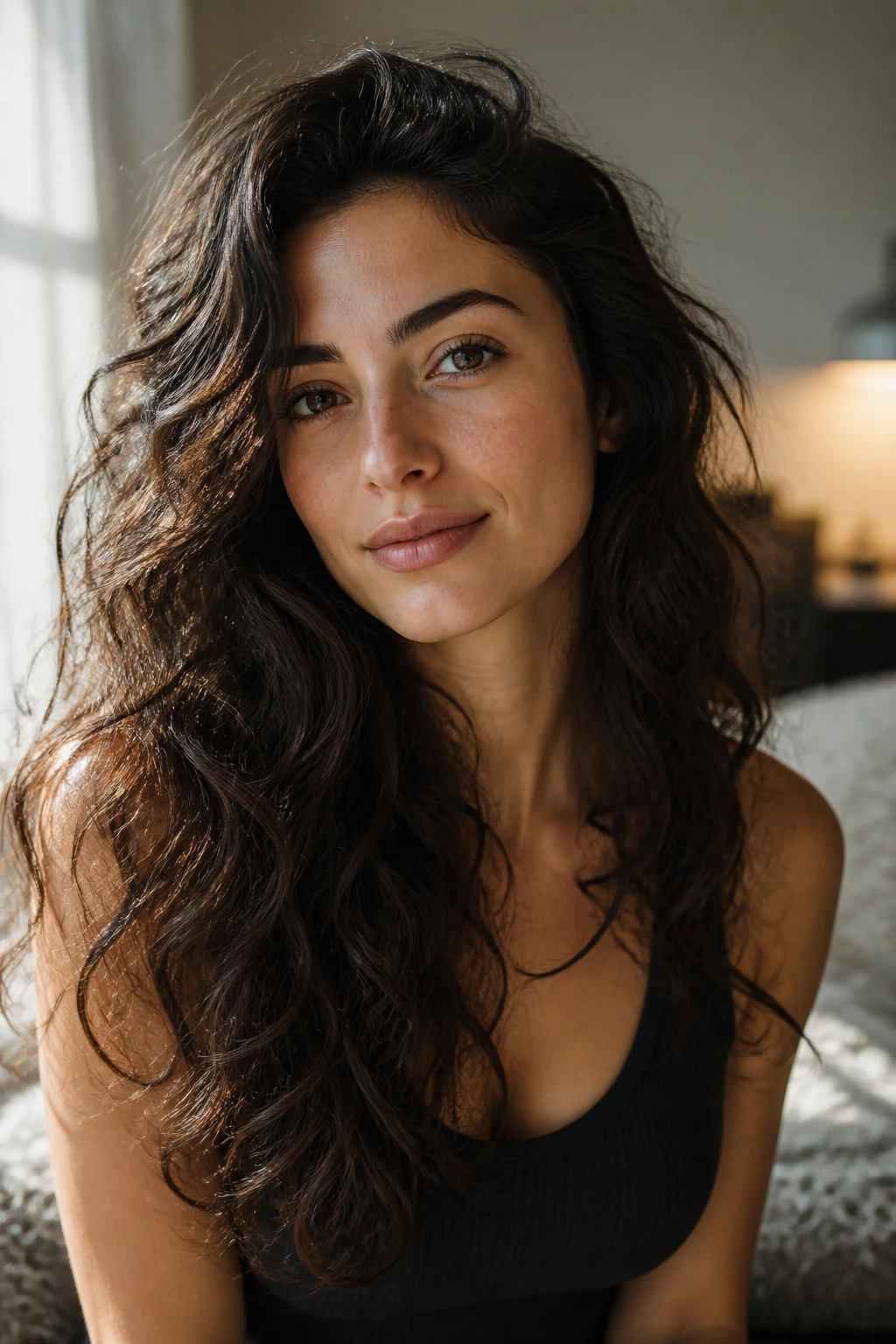
If your hair is naturally curly or wavy, you have a distinct advantage: your texture already provides the volume you need, so you can focus on controlling the shape. For those with bone-straight, heavy hair, the focus should be on building “grit.” Do not try to style your hair right after washing it; the strands are too slippery and will refuse to hold any shape. Aim to wash your hair the night before or at least four hours before you start styling. This allows the natural oils to settle, giving the hair the grip it needs to hold a braid or a bun for the duration of your evening.
If you are dealing with layers, work with them rather than trying to suppress them. If you have face-framing pieces, let them stay out of your updos. They aren’t just “messy bits”—they are a deliberate design choice that prevents the hair from looking like a singular, heavy helmet. Use a small curling iron to add a slight bend to those pieces so they have a defined shape rather than just hanging limp.
Storage and Make-Ahead Guidance
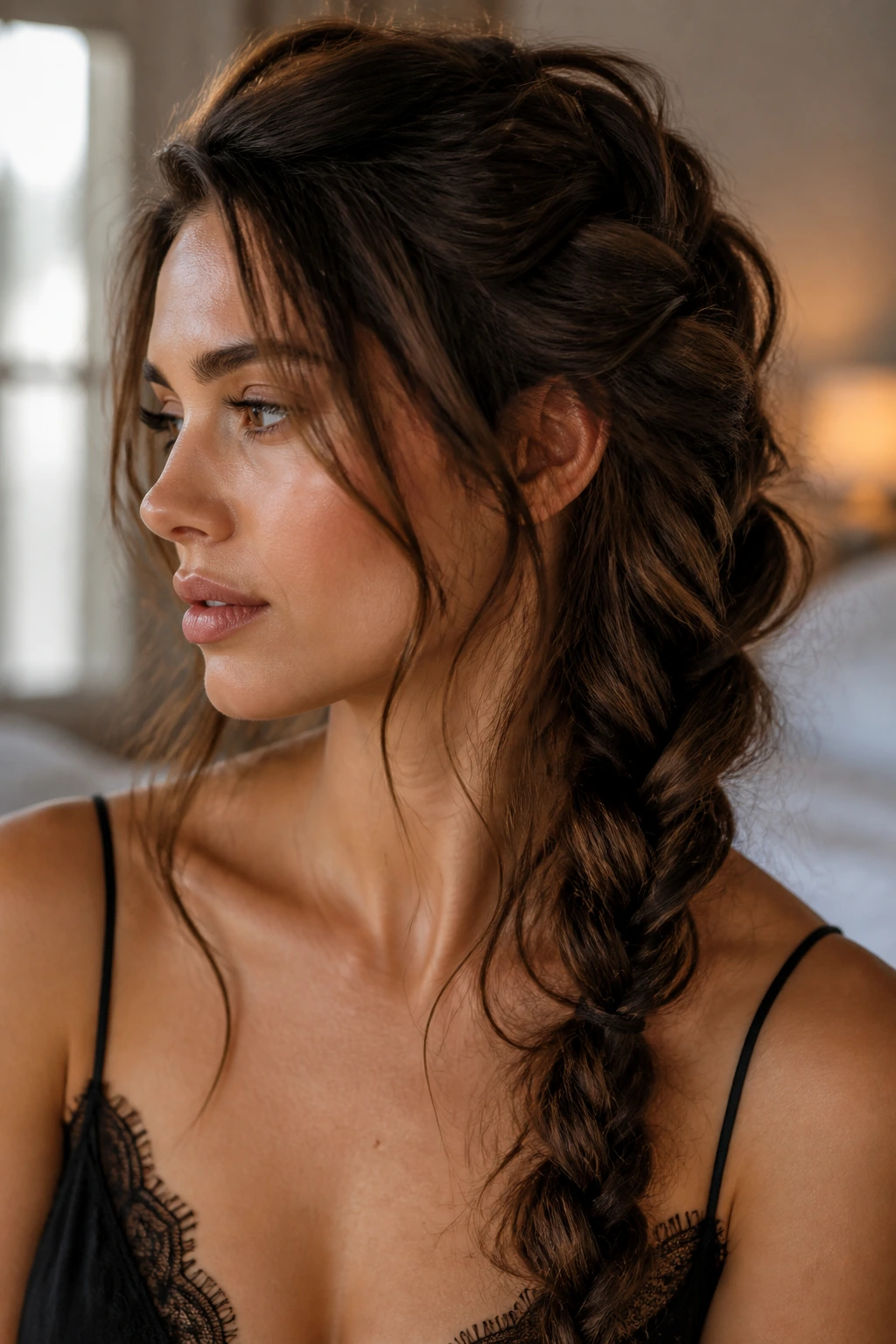
For many of these styles, the “day-two” hair is actually superior. If you know you have a date in the evening, try to style your hair earlier in the day or even the night before. Many braids and buns actually look better after the hair has had a chance to “settle” into the shape. If you are doing a style that requires heat, like waves, be sure to let them cool completely before you start pinning; if you pin warm hair, the shape will “set” in a way that is hard to fix.
If you are traveling to your date or need your hair to last through a long dinner, carry a small travel-sized bottle of dry shampoo. A quick spritz at the roots midway through the night can revive the volume if you feel the weight of your hair starting to pull things flat. It is a quick, invisible trick that ensures you don’t spend your evening checking the mirror for sagging.
Serving Suggestions and Pairings
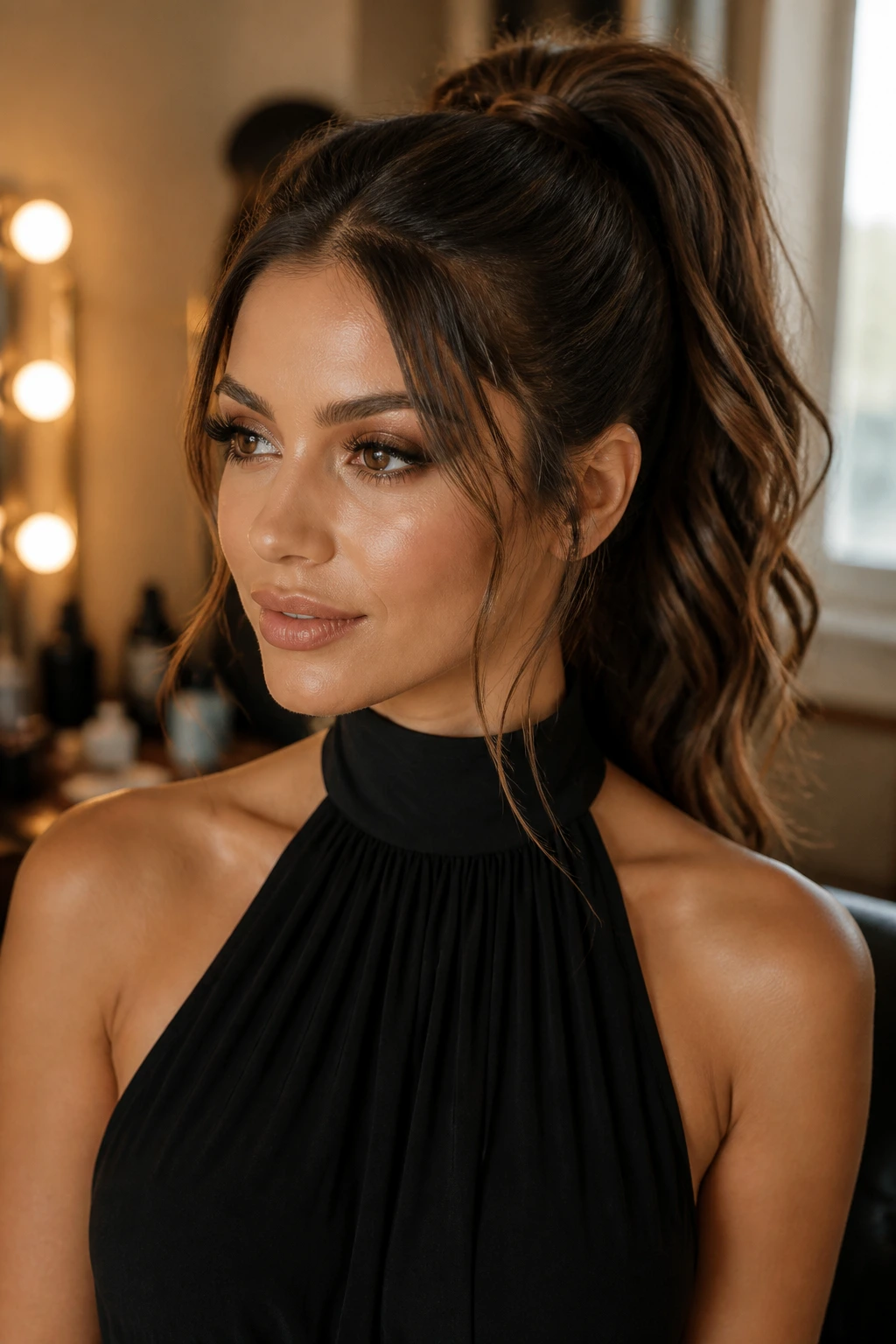
The best way to “serve” a hairstyle is to let it interact with your outfit. If you are wearing a high-neckline dress, a low chignon or a high ponytail is best to show off the structure of the garment. If you are wearing something with an open back or a plunging neckline, leaving the hair down in soft, structured waves creates a beautiful frame that feels romantic and balanced.
When it comes to makeup, think about how the hairstyle frames your face. If you have chosen a style that pulls everything back, you have more freedom to play with bold eyes or lips, as the hair won’t be competing with your features. If you are wearing your hair down and loose around the face, opt for a more balanced makeup look so that the hair and face don’t feel cluttered together. Ultimately, the best date night hair is the style that allows you to stop thinking about your hair and start focusing on your date.
Final Thoughts
When you have long, heavy hair, the goal is never to fight against the volume, but to direct it. Whether you are aiming for the clean, sharp lines of a high ponytail or the soft, romantic appeal of an undone braid, remember that the structure underneath is what keeps the style alive.
Don’t be afraid of using extra bobby pins or double-anchoring your hair. Sometimes the most beautiful styles require a bit of invisible work behind the scenes to keep everything where it belongs. Once you find the balance between hold and movement, you will find that your hair is not just an accessory—it is the best part of your look.