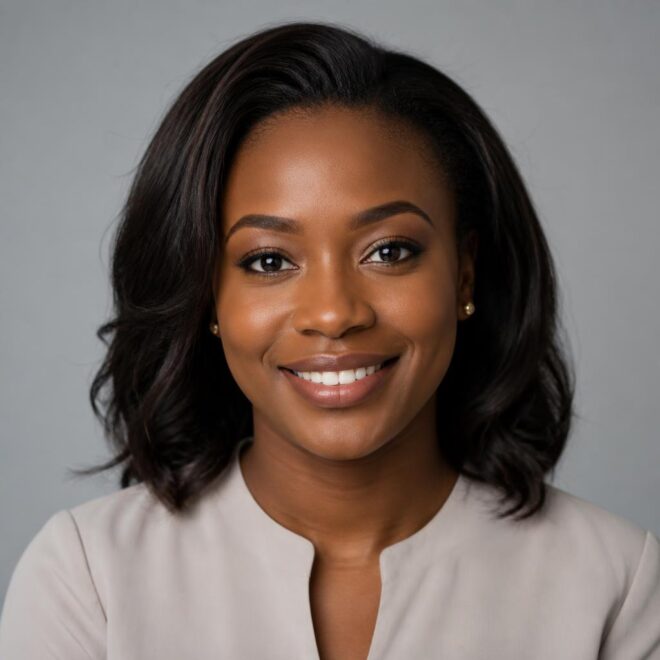


Finding a haircut that adds volume to fine, thin hair is often a balancing act between length and weight. When hair lacks density, dragging it out toward the shoulders usually just highlights the lack of thickness. That is exactly why the long bob—the classic “lob”—with bangs is such a compelling choice. It offers the illusion of fullness while maintaining enough length for versatility, and the right fringe can create the frame your face needs to look balanced and intentional.
Cutting thin hair requires a different philosophy than cutting thick, coarse hair. You aren’t just shaping the silhouette; you are managing the weight of every individual strand to encourage lift at the root and texture at the ends. By incorporating bangs, you shift the visual focus away from the thinning crown and toward your eyes and cheekbones, effectively distracting from the areas where density might be lacking.
This isn’t about hiding your hair; it’s about choosing a cut that behaves in a way that makes your hair look its best. Whether you have straight, wavy, or slightly textured locks, there is a specific configuration of length and fringe that will breathe new life into your style. Let’s break down the best ways to pair a long bob with bangs to maximize the volume and personality of your hair.
1. The Blunt-Cut Lob with Soft Curtain Bangs
The blunt cut is the ultimate secret weapon for thin hair. By ensuring that every single strand ends at the exact same horizontal line, you create the maximum possible weight at the perimeter. This makes the bottom of your hair look significantly denser than it would if it were layered or thinned out.
Why It Works for Thinness
When you cut thin hair with a razor or deep point-cutting shears, you often inadvertently remove the “heft” that makes the hair look full. A sharp, precision-cut baseline at the collarbone or slightly below creates a clean, intentional line. Pair this with soft, face-framing curtain bangs, and you soften the geometry of the cut while keeping the focus on your facial features rather than the hair’s texture.
Styling for Maximum Impact
- Use a volumizing mousse on damp hair before blow-drying.
- Avoid heavy oils or serums that will weigh down the ends and undo the blunt effect.
- Use a round brush to gently flip the curtain bangs back and away from the face for an airy, lifted look.
Pro tip: Ask your stylist to keep the ends “blunt-cut” without using thinning shears. You want that solid line to act as a visual anchor.
2. The Textured A-Line Lob with Wispy Fringe
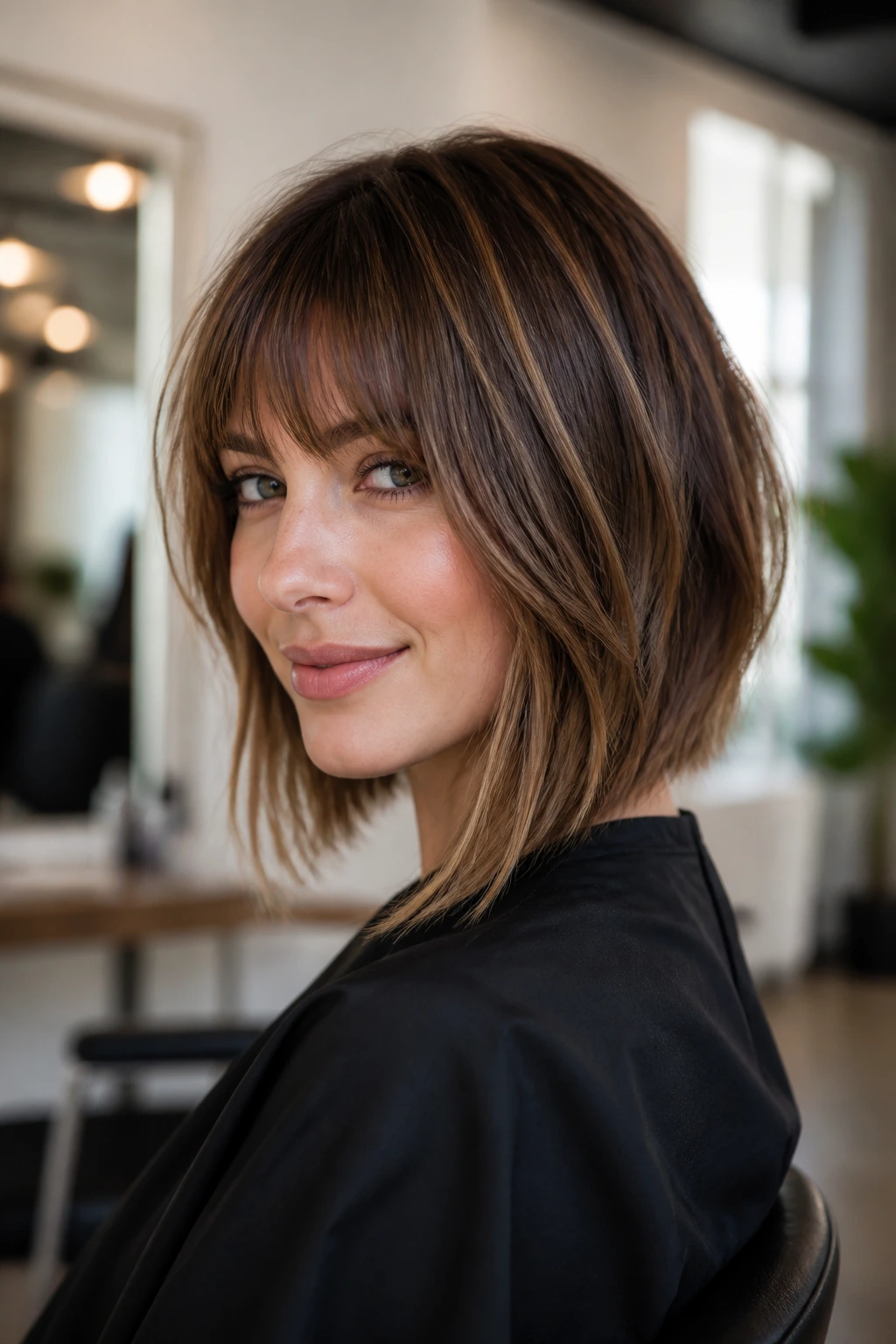
An A-line cut—where the hair is slightly shorter in the back and longer in the front—naturally builds internal volume. By shortening the hair at the nape of the neck, you reduce the weight that tends to pull hair flat against the scalp, allowing the hair to lift more easily.
The Power of Wispy Bangs
Wispy bangs are ideal for thin hair because they don’t require you to pull a large portion of your hair forward to create the fringe. If you have thin hair, pulling too much hair to the front for heavy, full bangs can make the rest of your head look sparse. Wispy bangs provide the style without sacrificing your overall density.
How to Maintain the Shape
- Visit the salon every 6 to 8 weeks to keep that A-line angle sharp.
- Use a root-lifting spray applied directly to the crown after washing.
- Let your hair air-dry until it is 80% dry, then finish with a light blast of a blow dryer to lock in volume.
3. The Beachy Wavy Lob with Side-Swept Bangs
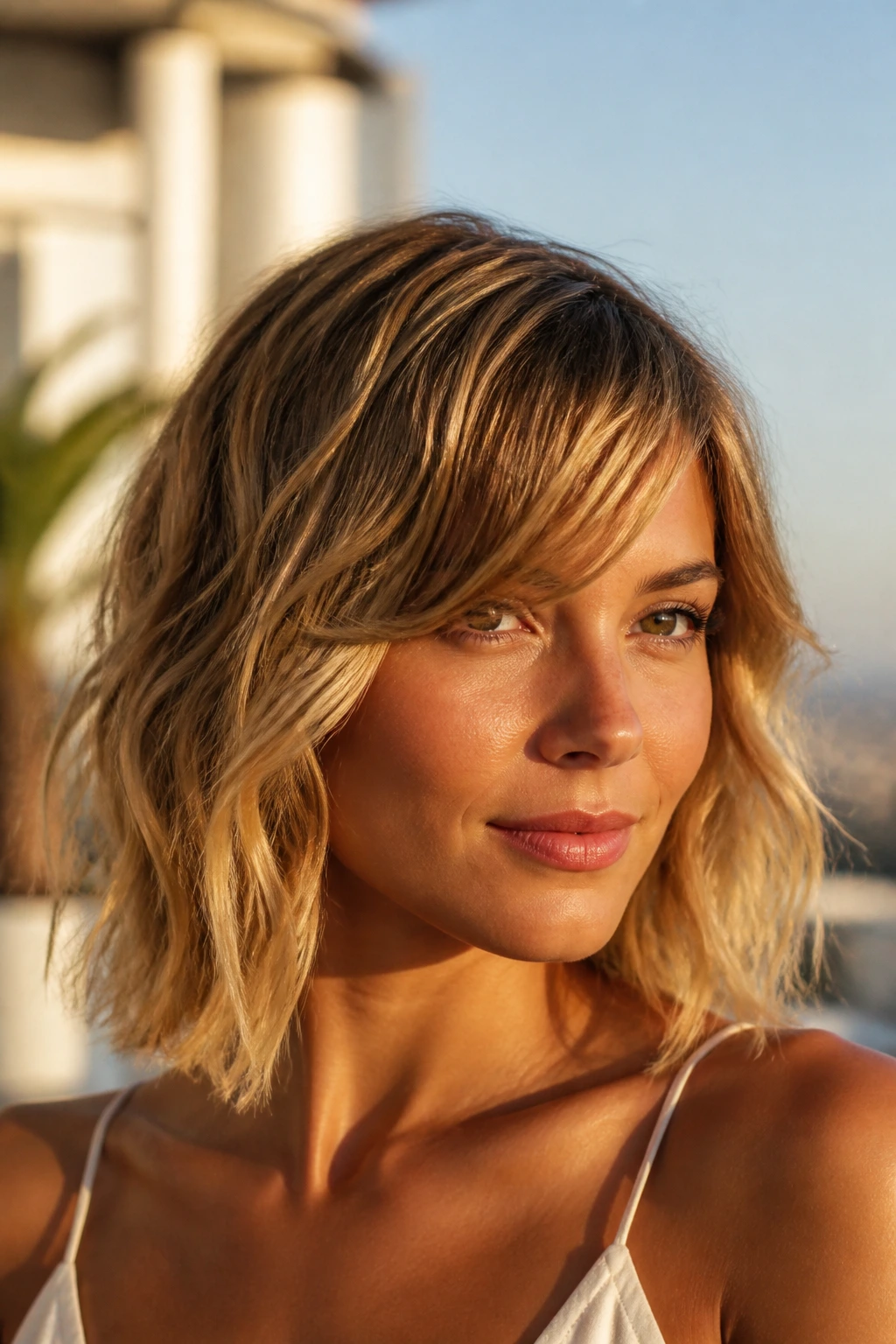
If your hair has even a hint of natural wave, you are in luck. Wavy texture is the natural enemy of flat, limp hair. The bends in the hair strand occupy more space, creating a voluminous, lived-in aesthetic that is effortless and stylish.
Integrating Side-Swept Bangs
Side-swept bangs are incredibly forgiving. They don’t require the commitment of a full forehead fringe and they integrate beautifully into the longer layers of a lob. For thin hair, a side-swept bang creates an asymmetrical balance that draws the eye across the face, which can make your hair look thicker by comparison.
Why This Style Succeeds
- It relies on texture rather than length for volume.
- It is highly adaptable for both professional settings and casual weekends.
- It hides the “flatness” often associated with thin hair at the crown.
4. The Layered Lob with Shaggy Fringe
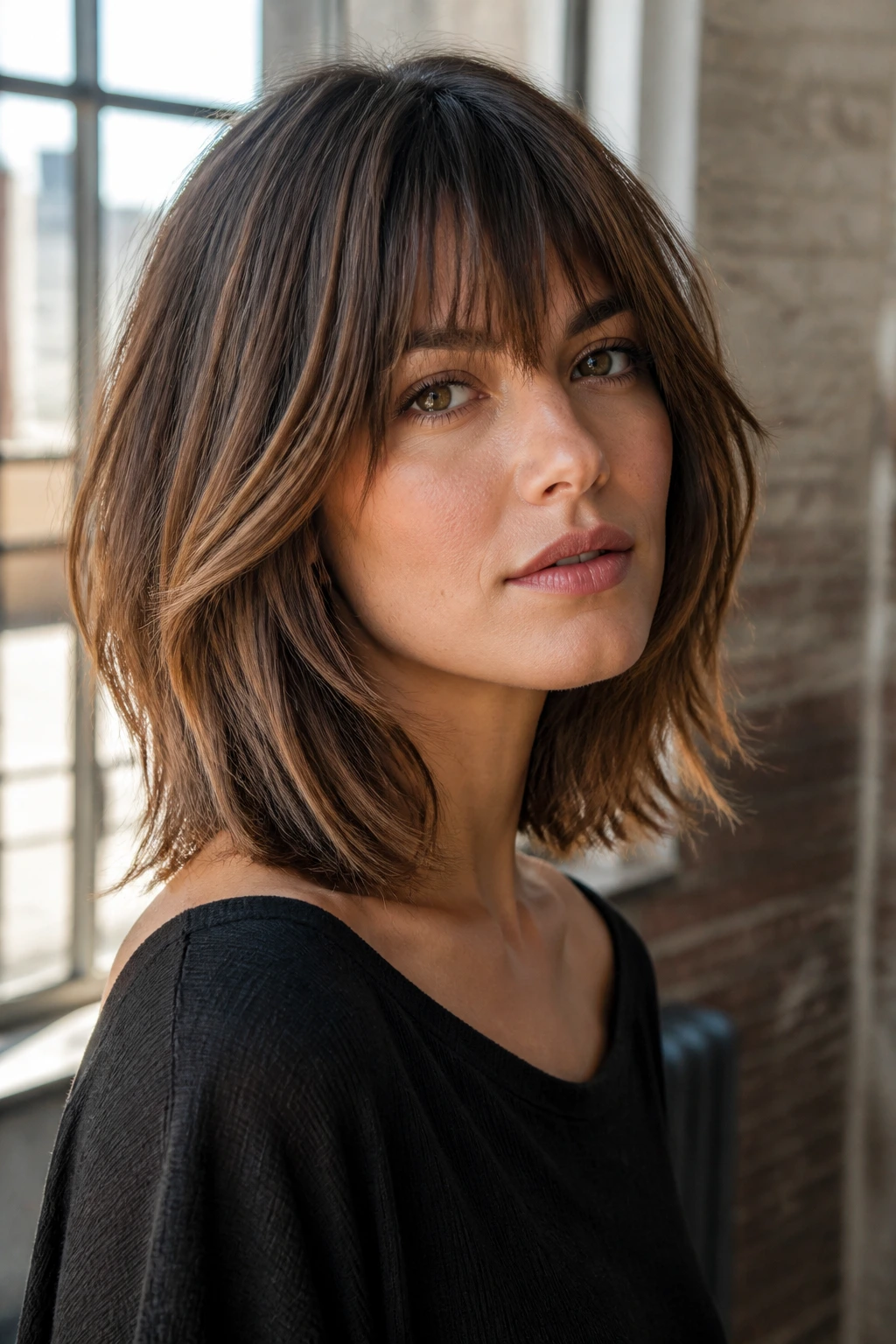
Layers are often a double-edged sword for thin hair. Too many short layers can make the hair look stringy. However, long, strategically placed layers—especially when paired with a shaggy, textured fringe—can create a “bedhead” volume that looks purposeful and chic.
The Role of the Shaggy Fringe
A shaggy fringe isn’t about precision. It is about piecey, textured strands that move independently. When you pair this with a long bob that has been lightly layered throughout the mid-lengths, you get a cohesive look that feels much fuller than a single-length cut.
Essential Maintenance
- Invest in a high-quality sea salt spray to enhance natural movement.
- Use a light texturizing powder at the roots to maintain lift throughout the day.
- Avoid excessive heat styling, which can make thin hair look brittle or thin at the tips.
5. The One-Length Lob with Heavy Brow-Skimming Bangs
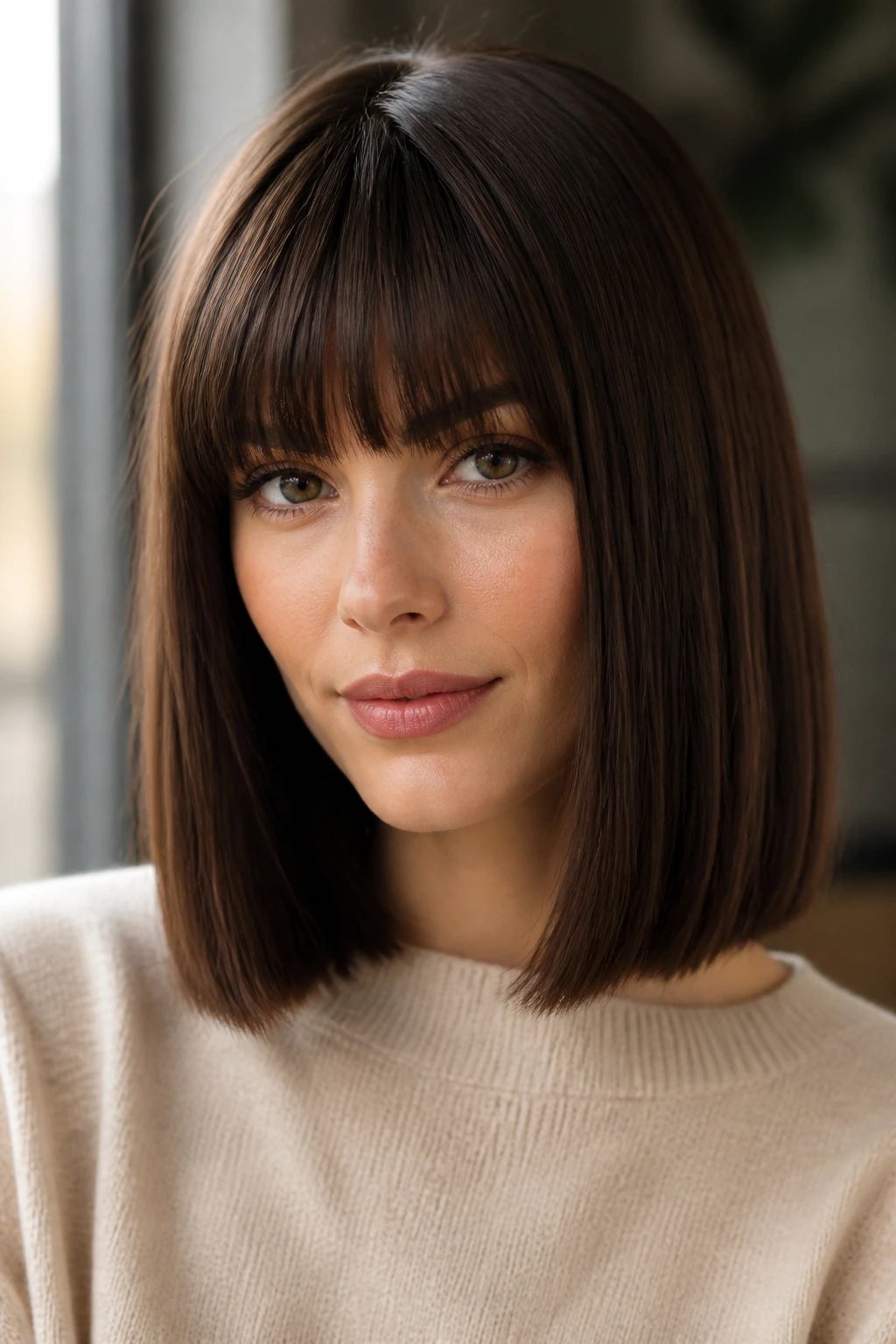
If you prefer a classic, polished aesthetic, the one-length lob with a heavy bang is a powerful option. While we generally warn against taking too much hair for bangs, a heavy, brow-skimming fringe can be a total game-changer if you have a high forehead or simply want a bold frame.
Achieving Density at the Ends
Because you aren’t cutting into the hair with layers, you maintain the full volume of your hair at the ends. The trick to keeping this style from looking heavy or “triangular” is to ensure the bob isn’t too long. Keeping it right at the chin or just grazing the top of the shoulders ensures that gravity doesn’t take over and pull the hair flat.
Who Should Choose This
- People with very straight, fine hair that holds a style well.
- Those who want a low-maintenance morning routine.
- Individuals with heart-shaped or oval face structures who look great with a strong horizontal line across the brows.
6. The Choppy Lob with Baby Bangs

This is a modern, edgy take on the lob. Baby bangs (or micro-bangs) are short, hitting well above the eyebrow. Because they are so short, they don’t consume much hair, leaving more density for the rest of your bob.
Why Choppy Ends Matter
When you keep the ends of your lob “choppy”—meaning they are cut with varied lengths through the bottom—you prevent the hair from looking like a flat, uniform slab. This “undone” quality creates the appearance of more individual strands of hair, which is exactly what you want when dealing with thinning or fine hair.
Styling Considerations
- Keep your hair slightly messy; perfection is not the goal here.
- Use a dry shampoo even on clean hair to add a gritty, voluminous texture.
- This style requires frequent trims for the bangs, as they will look unkempt once they grow past the mid-forehead.
7. The Asymmetrical Lob with Side Bangs
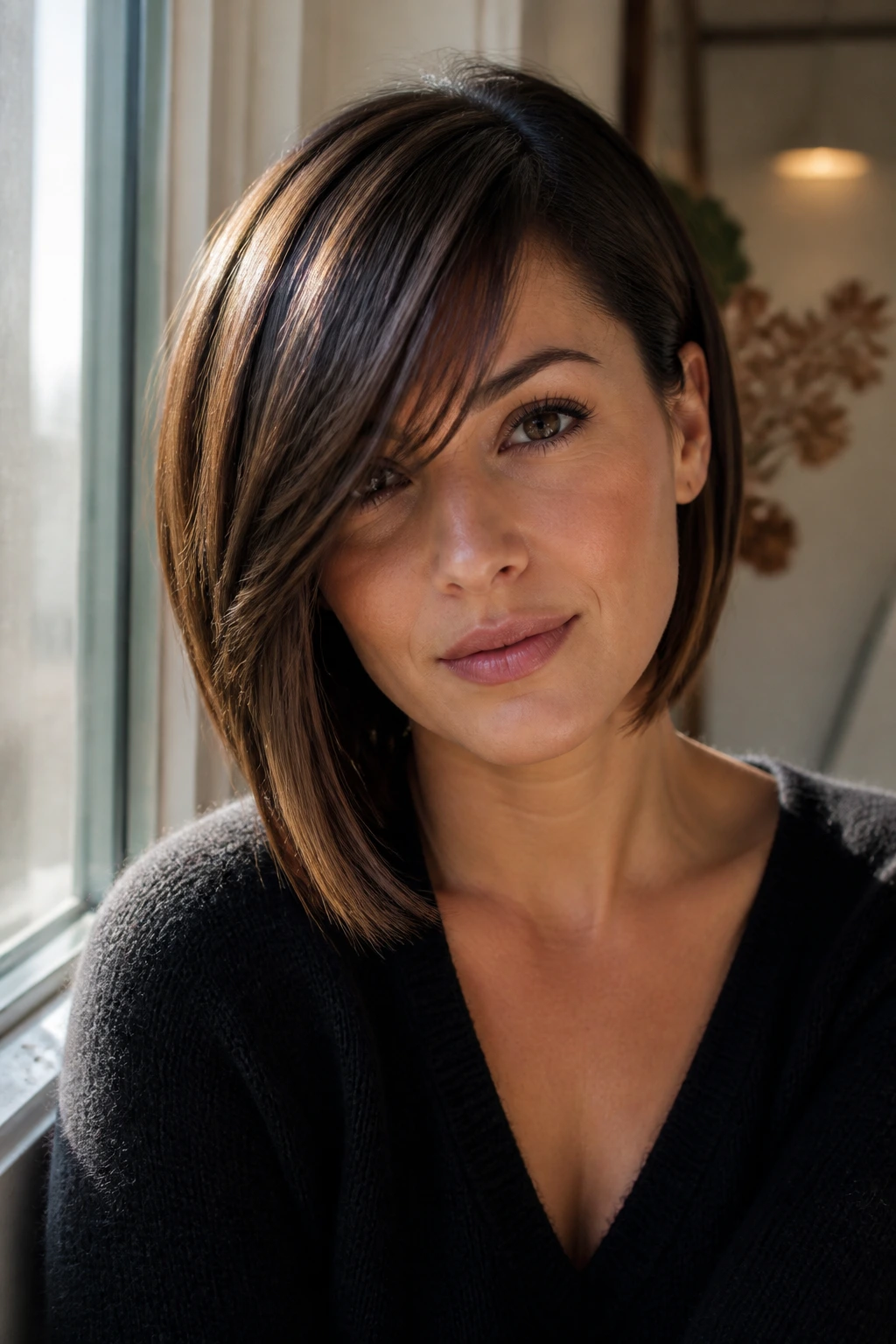
Asymmetry is a visual trick that works wonders for thin hair. By having one side of your bob cut slightly shorter or angled differently, you create a dynamic movement that makes the hair appear thicker because it isn’t hanging in a static, predictable way.
Pairing with Side Bangs
The side bang serves as the perfect companion to an asymmetrical lob. It carries the lines of the cut across the face and reinforces the sense of movement. This style works exceptionally well for those who feel their hair lacks “personality” or “bounce” when cut into a traditional, symmetrical bob.
Key Benefits
- Dramatically minimizes the appearance of thin patches.
- Looks sophisticated and fashion-forward.
- Extremely versatile—you can tuck one side behind your ear to change the volume profile instantly.
8. The Feathered Lob with Curtain Bangs

Feathering is a technique where the stylist cuts into the ends to create a soft, whisk-like texture. Unlike layering, which can reduce mass, feathering creates movement while keeping the volume concentrated toward the ends of the hair.
Why It Pairs Well
When you combine feathered ends with curtain bangs, the entire haircut feels light, airy, and expensive. It is a very “French girl” aesthetic that feels effortless. For someone with thin hair, this look provides the volume of a bigger hairstyle without the weight of heavy, thick locks.
Maintenance and Care
- Use a lightweight volumizing foam to help the ends “flutter” rather than clump together.
- Avoid heavy styling waxes or pomades.
- Focus on keeping the bangs clean; curtain bangs tend to pick up face oils quickly, which can weigh them down.
9. The Blunt-Cut Lob with Center-Parted Bangs
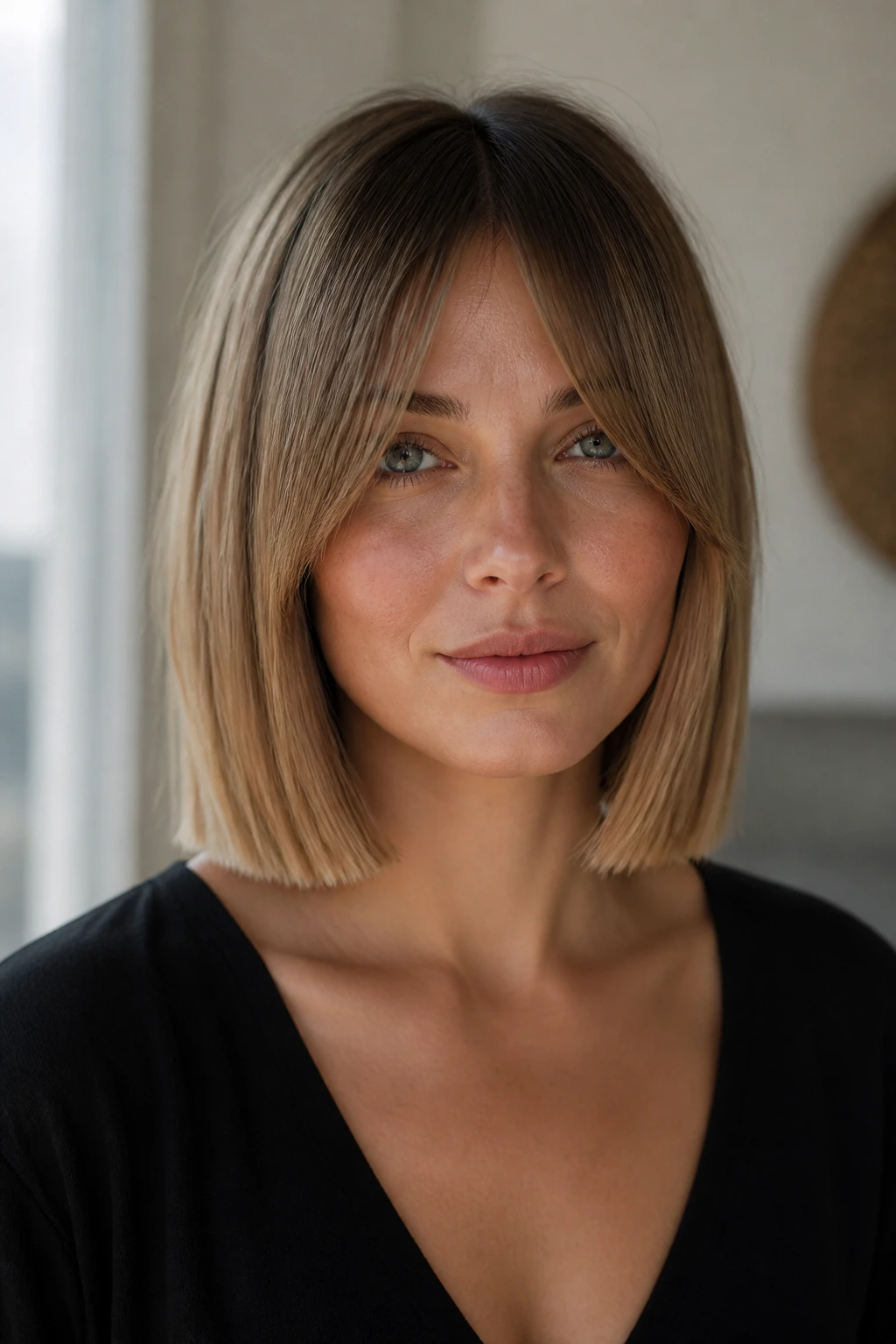
The center part is a classic choice for framing the face, but when paired with long, blunt-cut lobs, it creates a very distinct, sharp look. By parting the hair in the center and allowing the bangs to fall away from the bridge of the nose, you distribute the volume equally on both sides.
Managing the Part
If your hair is thin, a center part can sometimes reveal the scalp. To avoid this, use a root-boosting spray and lift the hair slightly at the part line with a round brush during the drying process. This creates a small “bridge” of volume that hides the scalp while keeping the face-framing effect of the bangs intact.
How to Enhance the Shape
- Use a flat iron to keep the ends perfectly straight and glossy.
- Keep the bangs slightly longer, grazing the cheekbones, to add more weight to the front.
10. The Inverted Lob with Piecey Bangs
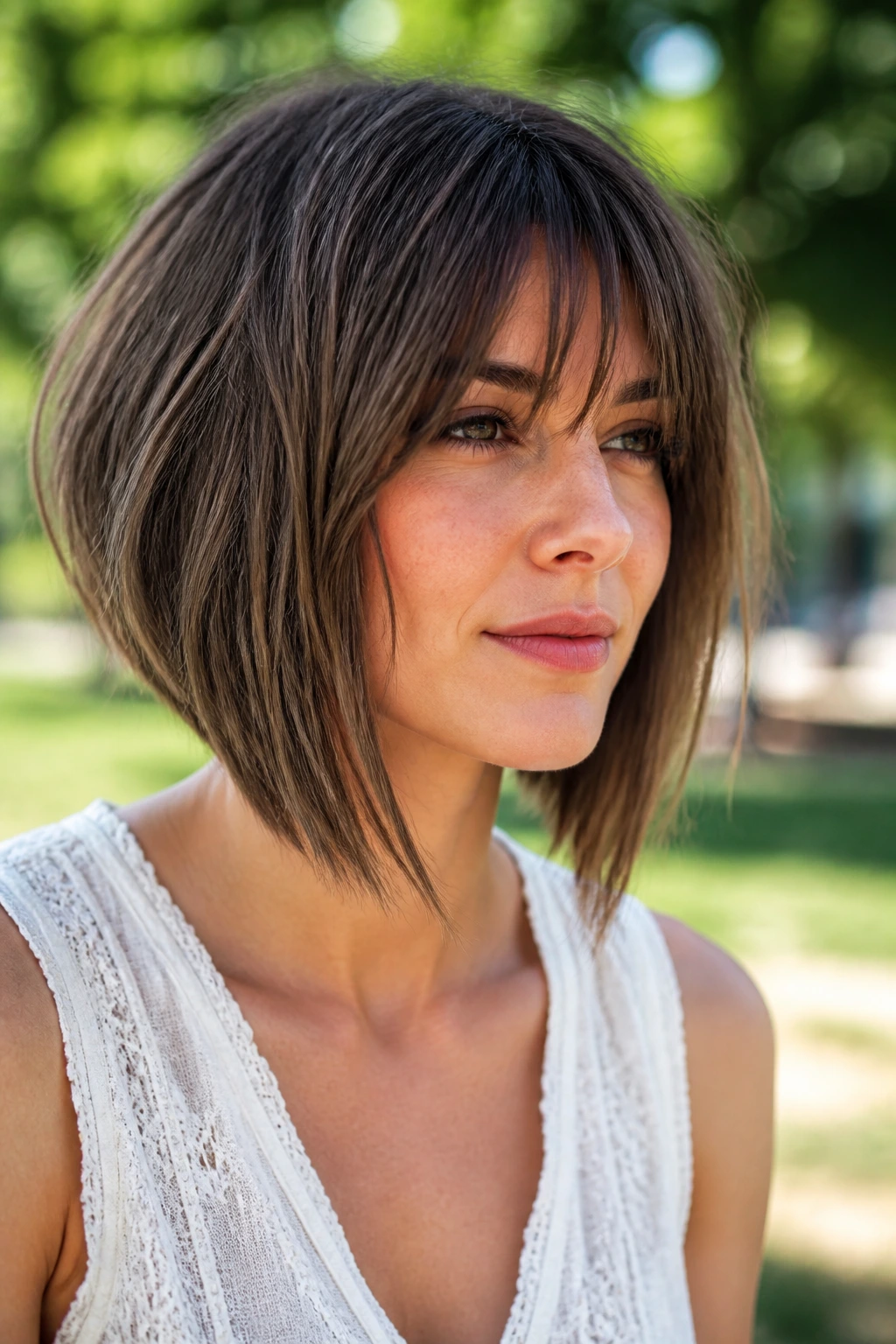
The inverted lob is a classic for a reason. By keeping the hair shorter at the back and graduating it longer toward the front, you naturally build up volume at the crown and the back of the head.
Defining the Piecey Bangs
Piecey bangs—those that have distinct, separated sections rather than one solid block—add an element of texture that makes the hair seem more voluminous. For thin hair, a piecey fringe is far superior to a heavy one because it allows for more space between the strands, preventing the “clumping” effect that can highlight thinness.
Styling Tip
- Apply a texturizing spray before you start styling.
- Use a small curling iron to add just a slight bend in the mid-lengths, then finger-comb to blend.
11. The Layered Lob with Long, Face-Framing Fringe
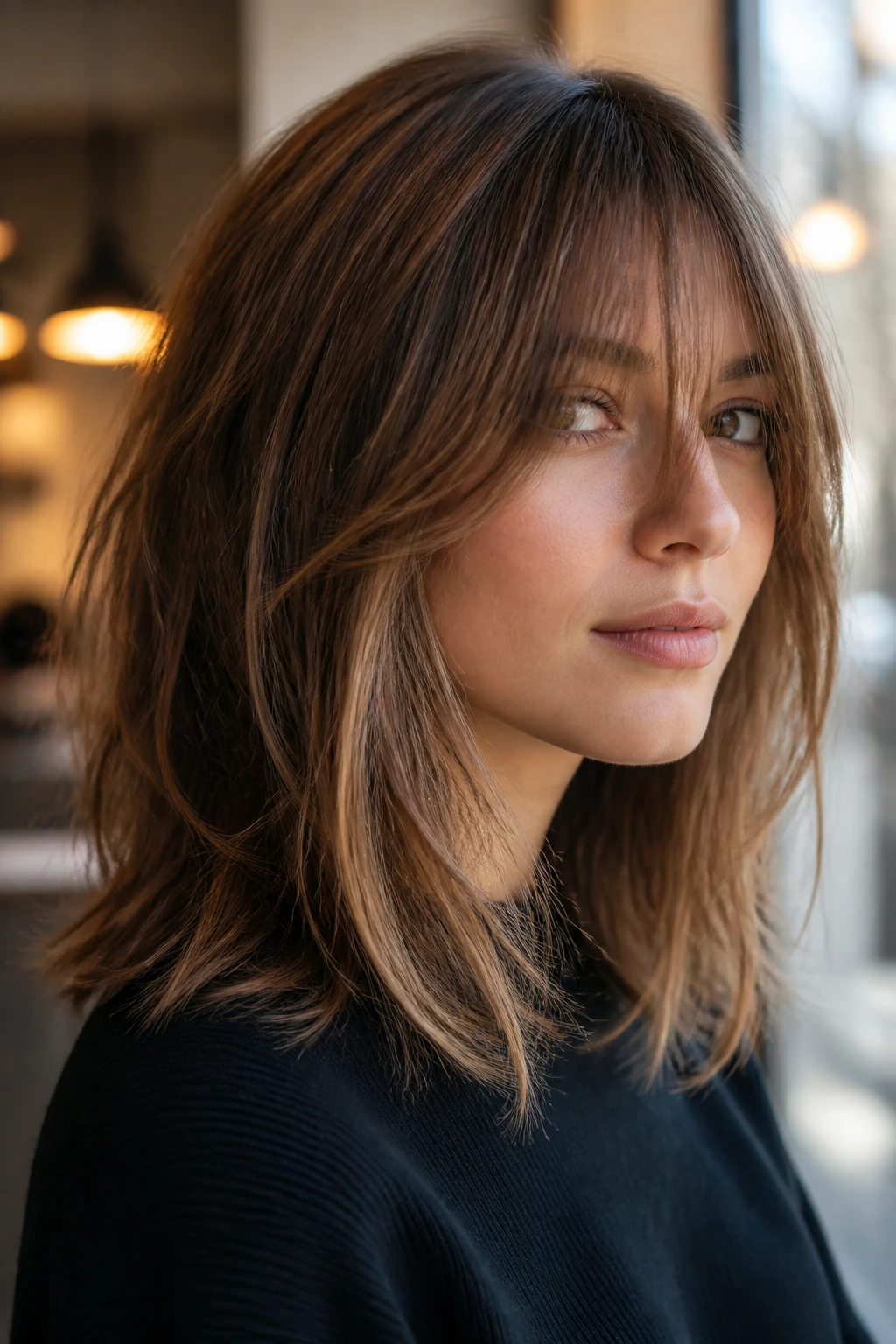
If you are wary of short bangs, a long, face-framing fringe is the perfect bridge. These are bangs that start around the cheekbones or the chin and blend seamlessly into the rest of the lob.
Why This Adds Volume
Because you are keeping the “bangs” long, you have more hair to work with. You aren’t removing density from the front of your hairline. Instead, you are adding structure to the front of the cut, which creates a shadow and depth that makes the overall hair appear denser.
Essential Style Advice
- Always dry these bangs forward first to build volume at the root.
- Don’t tuck them behind your ears immediately, or they will lose their shape.
- Use a round brush to create a soft curve that frames the jawline.
12. The Wavy Lob with Blunt Bangs
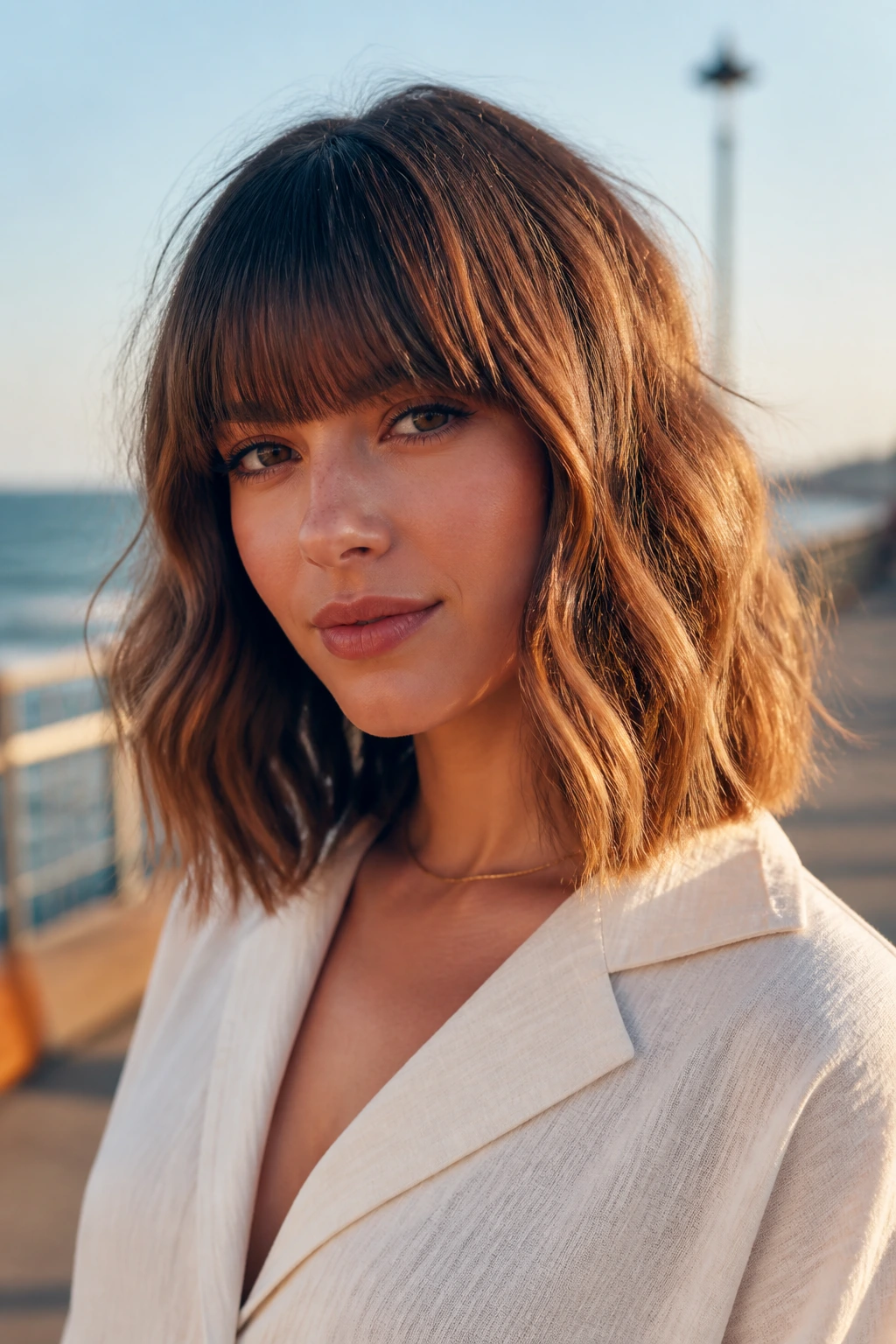
This is a high-contrast style that looks incredibly trendy. The blunt, heavy bangs provide a straight, solid line at the brow, while the rest of the lob is styled with loose, beachy waves.
Dealing with Thinness in Waves
If your hair is thin, you might find that waves make your hair look frizzy rather than voluminous. To avoid this, use a moisturizing curl cream that adds weight and definition to each wave. This turns “frizzy” into “defined,” making the hair look intentionally thick and styled.
Achieving the Contrast
- Use a flat iron for the bangs and a wand for the rest of the hair.
- Focus on creating a few large waves rather than many small, tight ones.
13. The Sleek Lob with Baby Bangs
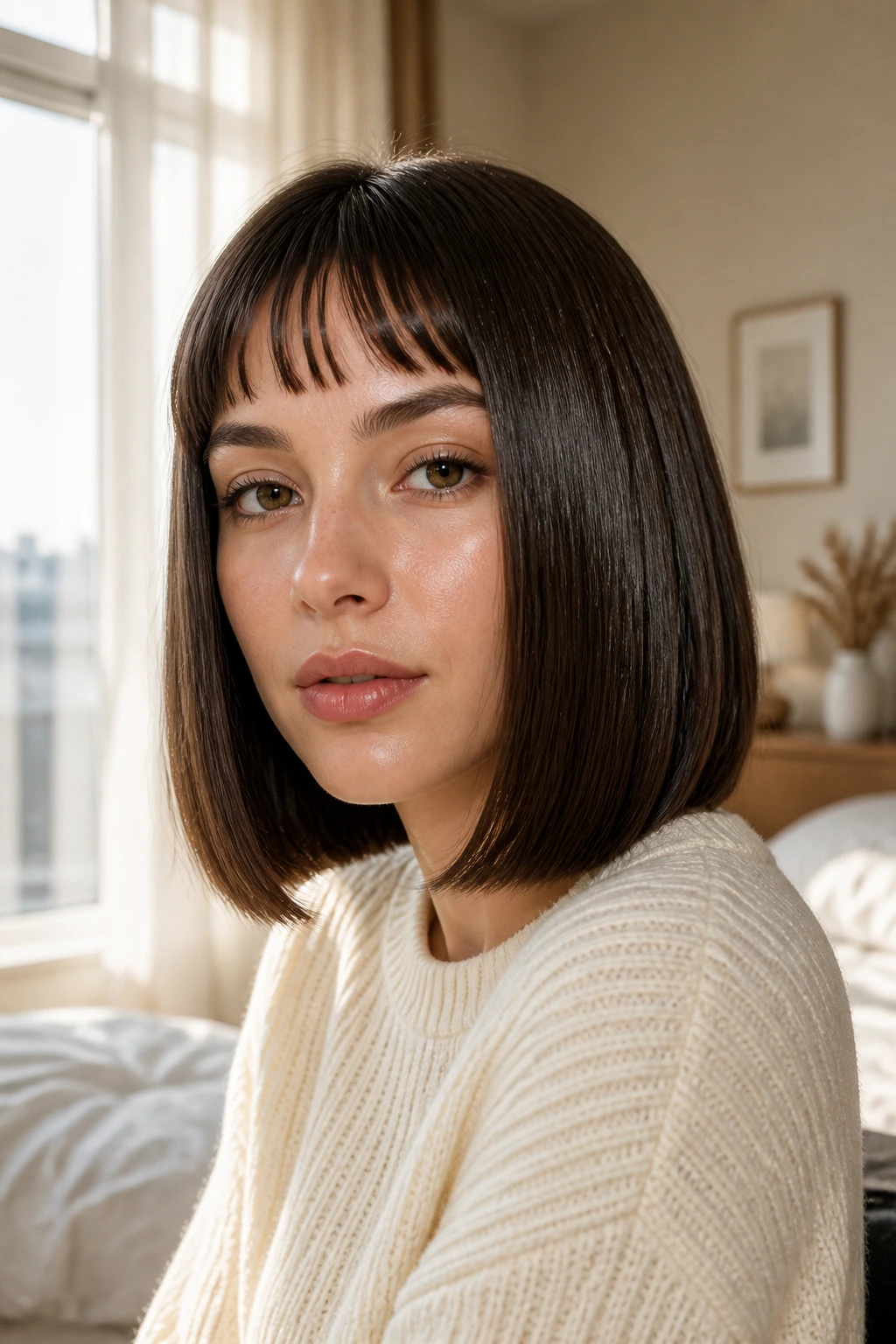
For a look that screams high-fashion, the sleek, straight lob paired with baby bangs is difficult to beat. This look is all about precision and shine.
Maintaining the Shine
On thin hair, the biggest challenge is making it look healthy. A sleek lob with baby bangs requires a glass-like finish. Use a light shine spray and ensure you are using a heat protectant every time you pick up a straightener.
Why This Works
The baby bangs draw attention to the eyes, and the bluntness of the lob ensures the hair looks as thick as possible at the bottom. It is a minimalist cut that relies on the quality of the hair rather than the volume of the hair to make a statement.
14. The Shaggy, Multi-Textured Lob
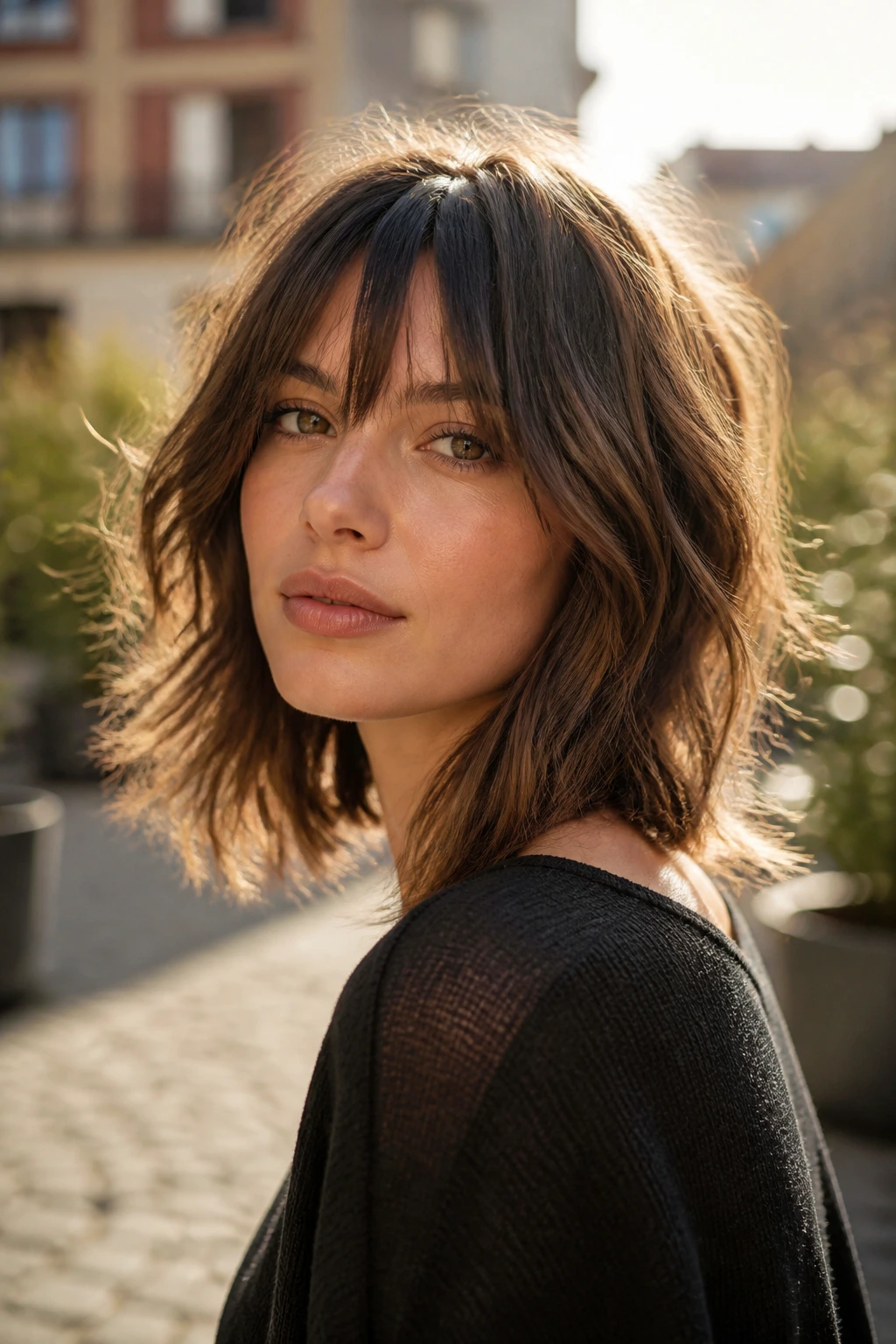
If you want to move away from the “perfectly polished” look, the shaggy lob is your go-to. This cut uses different lengths and “choppy” techniques throughout the entire head to create a messy, high-volume silhouette.
The Benefit for Thin Hair
Thin hair often lies flat because it lacks the “friction” that keeps strands separated. A shaggy cut creates its own friction. By cutting into the hair at various heights, you are essentially forcing the hair to stand up and move, which builds volume naturally.
How to Get the Look
- Use a pomade or texturizing paste to separate small pieces of hair.
- Avoid the temptation to smooth your hair out; the more chaotic, the better.
15. The “Lob-let” with Curtain Bangs
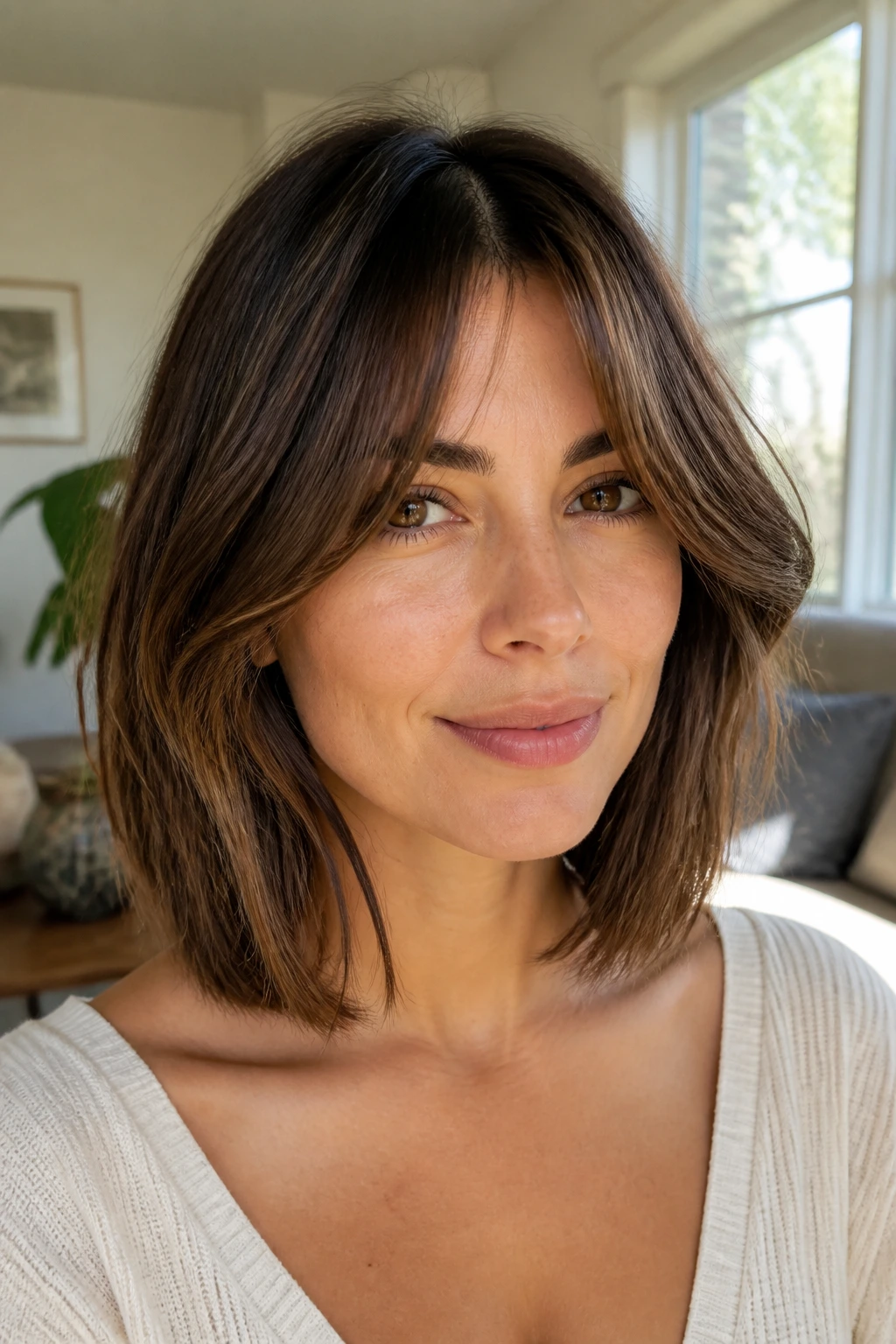
A “lob-let” is essentially a slightly shorter version of a long bob, hitting just around the collarbone. It’s the perfect transition length for those who find the standard lob too long and the traditional bob too short.
Why It’s Great for Thin Hair
The shorter the length, the less gravity pulls the hair down. By keeping the lob-let at this specific length, you keep the hair bouncy and light. When you add curtain bangs, you retain the softness around the face that makes the shorter length feel feminine and accessible.
Recommended Products
- A root-volumizing powder is your best friend with this cut.
- Use a small-barrel curling iron to flick the ends of the curtain bangs outward for an extra boost of volume.
16. The Rounded Lob with Side-Swept Fringe

This style is a throwback to the classic “rounded bob,” but kept at a longer length. It uses soft, internal layers to create a curved silhouette that hugs the face.
The Volume Trick
The curve of this cut is where the volume lives. Because the hair is cut to naturally fall inward, it creates a sense of fullness around the cheeks and jaw. When you pair this with a soft, side-swept fringe, you get a rounded, soft look that is very flattering for anyone with a square or angular face.
Styling Tip
- You will need a round brush to style this.
- Dry the hair by pulling it forward, then tuck it under with the brush to set the shape.
17. The Textured A-Line with Blunt Bangs
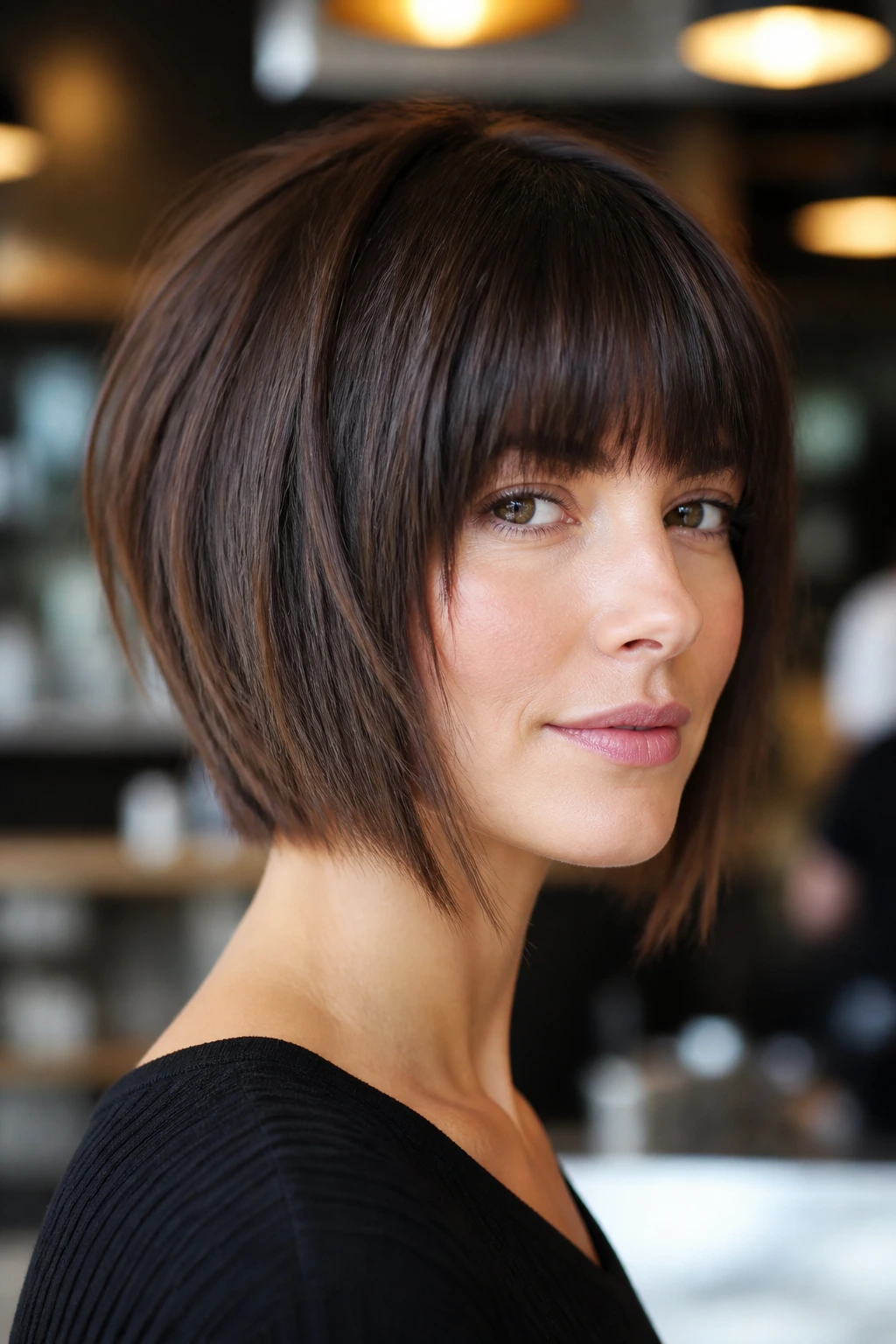
This is a combination of two powerhouse techniques: the A-line angle to build height, and the blunt bangs to add bold, thick framing.
The Best of Both Worlds
You get the lift at the back and the sleekness in the front. This is a very structured, sophisticated look that makes fine hair look like it has been professionally styled every day of the week.
Final Maintenance Advice
- Keep this cut sharp. It is not a “low-maintenance” style; it requires regular visits to the salon to maintain the geometry.
- Use a clear gloss treatment every few weeks to keep the hair looking as dense and healthy as possible.
Final Thoughts
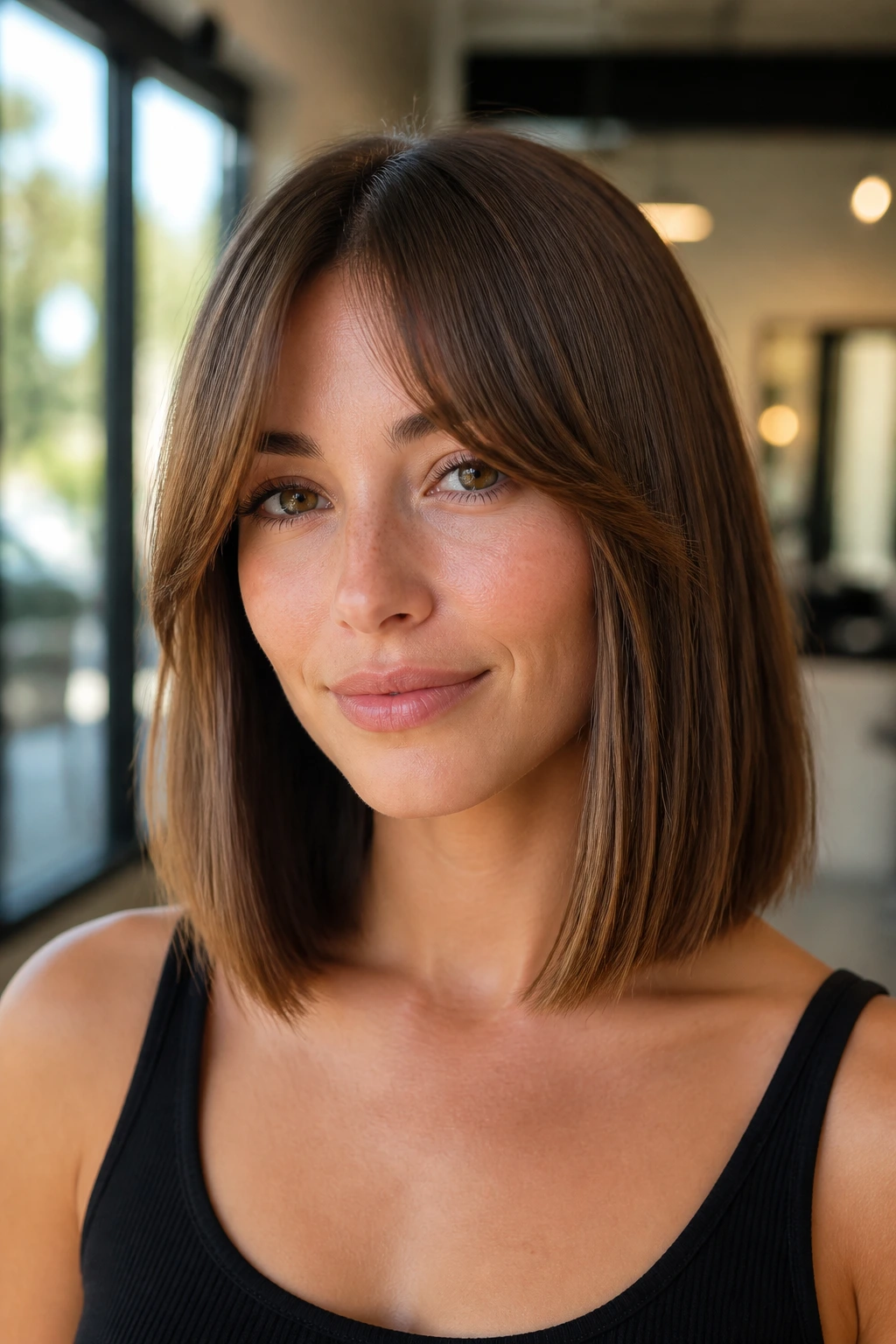
The key to choosing the right lob for thin hair is understanding your own texture. If your hair is straight, embrace the blunt cuts that emphasize thickness at the bottom. If you have some natural wave, lean into the shaggy, textured styles that create volume through movement. Never underestimate the power of a fringe to transform a cut—by shifting the focus to your eyes and cheekbones, you remove the pressure from your hair to provide all the drama.
Finding the right stylist is as important as picking the right picture from a magazine. Look for someone who specializes in precision cutting and is willing to work with your natural growth patterns. A great haircut doesn’t require hours of styling; it should fall into place with minimal effort, especially when you are working with finer, thinner strands.
Always remember that density is an illusion created by angles, length, and texture. Don’t be afraid to experiment with your part or the way you style your bangs. Sometimes, a tiny shift in how you blow-dry your fringe can be the difference between a flat, lifeless look and a bouncy, voluminous style that lasts through the day. Trust your hair’s potential, keep your ends healthy, and don’t be afraid to go a little shorter to gain a lot more height.