

Oval faces are often cited as the gold standard of facial symmetry, but that doesn’t mean they don’t benefit from a little calculated disruption. When you have an oval-shaped face, your length is roughly one and a half times your width, with a forehead slightly wider than the jawline. This balance means you can pull off almost any style, but it also creates a risk of looking “too perfect” or predictable. That is where asymmetrical haircuts come in. By introducing deliberate, off-center lines, you break up the uniformity, draw attention to specific features like high cheekbones or a sharp jaw, and inject a sense of movement into a static silhouette.
A well-executed asymmetrical cut isn’t just about a steep, dramatic angle. It is about how the weight is distributed, how the hair reacts to natural texture, and how it frames the face. For someone with an oval face, the goal should be to maintain that inherent balance while showcasing a bit of individual personality. Whether you are leaning toward a sharp, graphic bob or a softer, layered shag, the placement of the “long side” versus the “short side” dictates which part of your face takes center stage.
1. The Razor-Cut Asymmetrical Lob
The long bob, or lob, is the ultimate entry point for those wanting to try asymmetry without losing too much length. By using a razor rather than traditional shears, you create ends that are soft, feathered, and full of natural movement. The key here is the transition from the shorter side to the longer side, which should be subtle enough to grow out gracefully.
Why This Works for Oval Shapes
Because oval faces handle length so well, you do not have to worry about the hair dragging your features down. The razor texture adds a relaxed, lived-in feel that prevents the cut from looking too rigid or severe. It frames the face by creating a diagonal line that naturally leads the eye toward your chin.
Styling Tips for Texture
- Apply a lightweight salt spray to damp hair to encourage the razor-cut layers to piece together.
- Use a small-barrel curling iron to create random, soft bends throughout the hair, leaving the ends straight for a modern, slightly messy finish.
- Avoid heavy pomades, which can clump the ends and ruin the airy, piecey aesthetic of the razor work.
2. The Deep Side-Parted Pixie
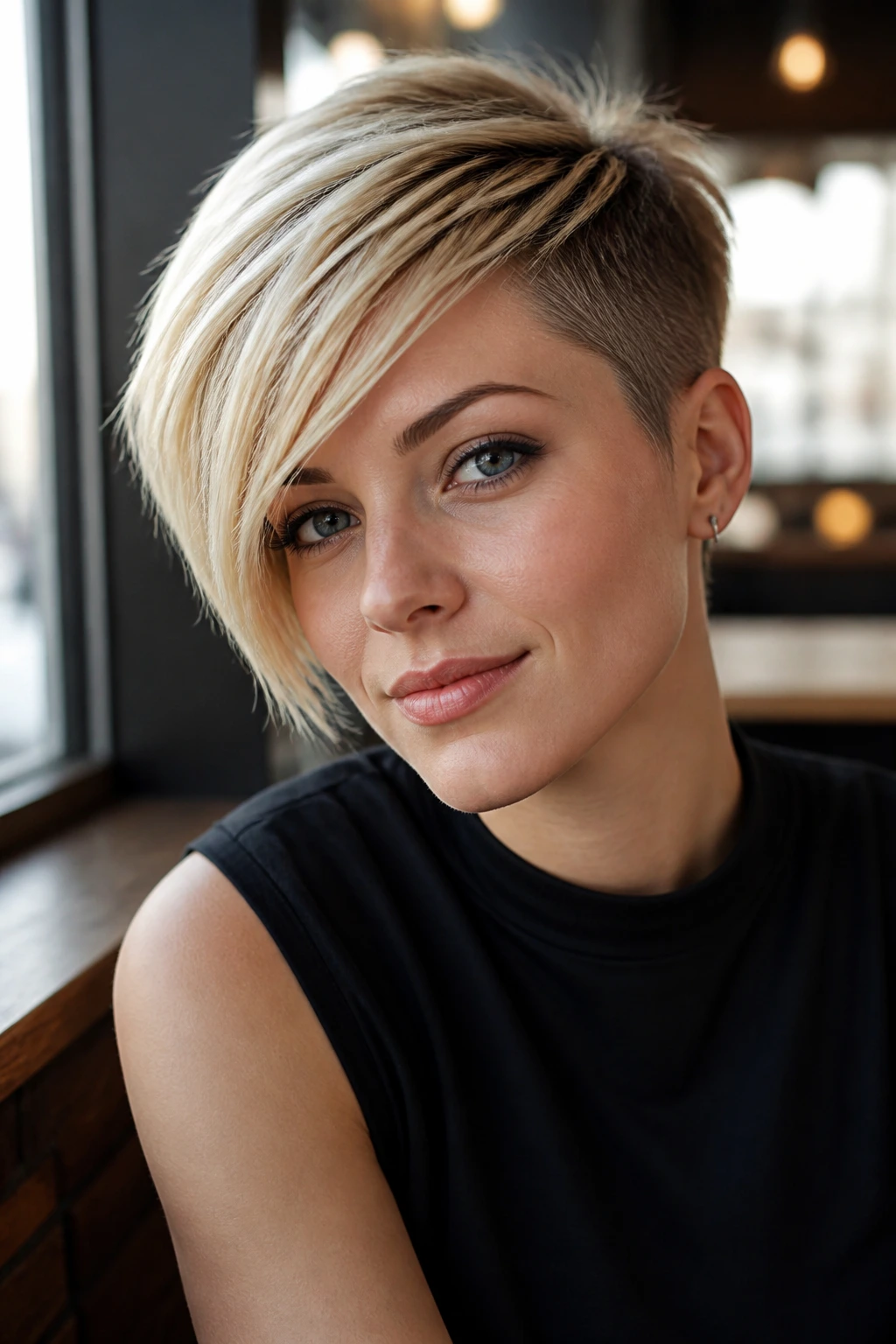
This is a bold, uncompromising look that highlights the structure of an oval face better than almost any other style. By keeping one side extremely short—often tapered or even faded—and leaving the other side long enough to sweep across the forehead, you create an architectural masterpiece that demands attention.
Balancing the Proportions
The drama of this cut lies in the contrast. For an oval face, the long, sweeping fringe serves to soften the forehead, while the shorter side exposes the jawline. If you have particularly striking eyes, this cut is a perfect vehicle to frame them.
Maintenance Reality Check
- You will need a trim every four to five weeks to keep the shorter side looking sharp and intentional.
- Invest in a high-quality styling wax that offers a matte finish, which will allow you to control the direction of the longer fringe without adding greasy shine.
- If your hair grows quickly, be prepared for a “grow-out” period that may require a bit of creative styling around the three-week mark.
3. The Angled Bob with Blunt Ends
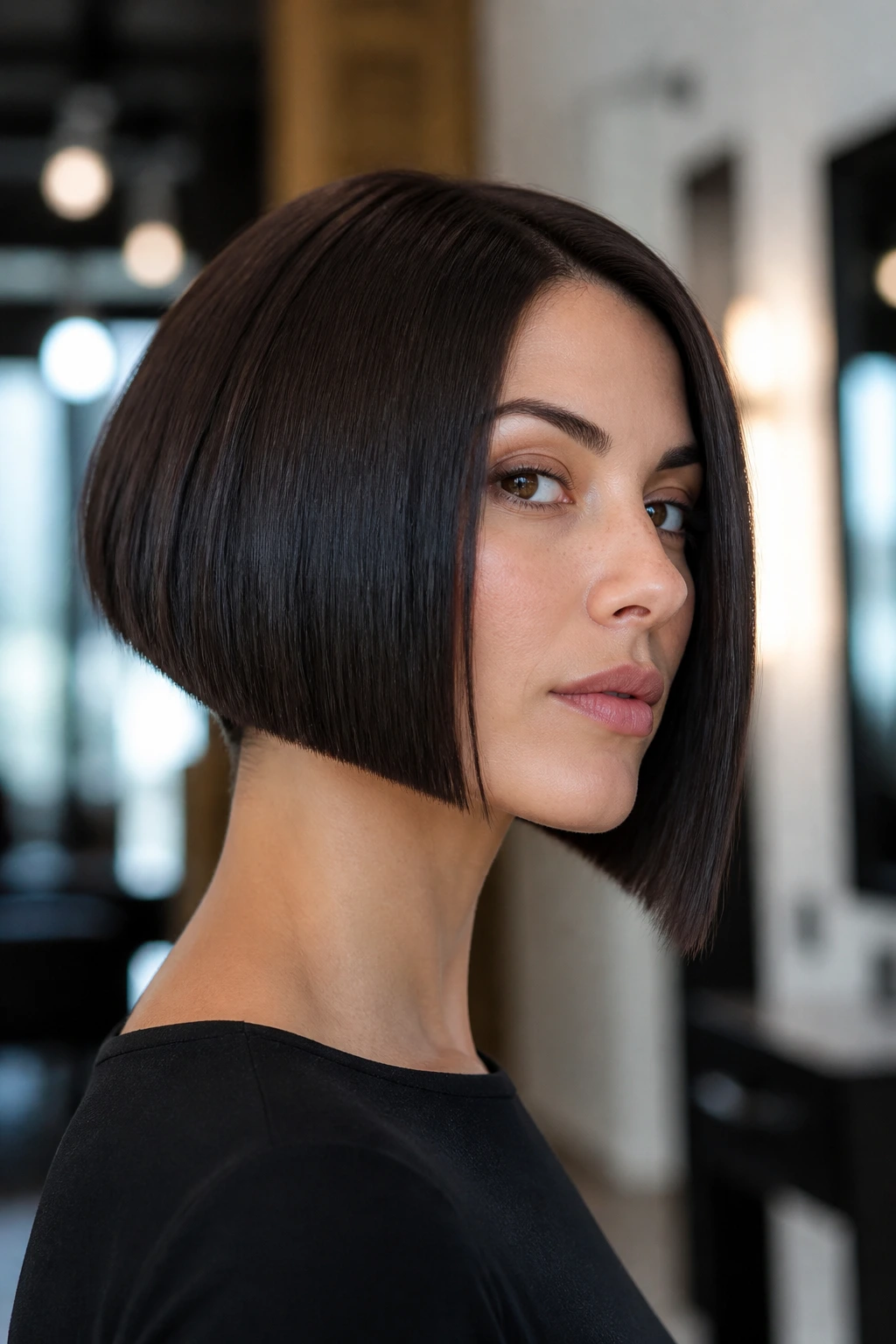
For those who prefer a clean, polished appearance, a sharp-angled bob is hard to beat. The back is cut short, graduating into longer, face-framing pieces at the front, with one side left noticeably longer than the other. This look is all about precision; you want the edges to be razor-sharp.
Creating the Visual Line
The diagonal line created by this cut is the star of the show. It acts like a spotlight on the neck and jawline. Because oval faces possess a balanced profile, this geometric sharpness does not overpower your features but rather enhances the clean lines of your chin and neck.
The Importance of Tension
- When cutting this style, your stylist must maintain consistent tension. Any variation in how the hair is held will cause the lines to look uneven rather than intentionally asymmetrical.
- This style is best suited for straight or slightly wavy hair textures; if your hair is extremely curly, the internal structure of the bob can become difficult to maintain without daily flat-ironing.
4. The Soft, Asymmetrical Shag
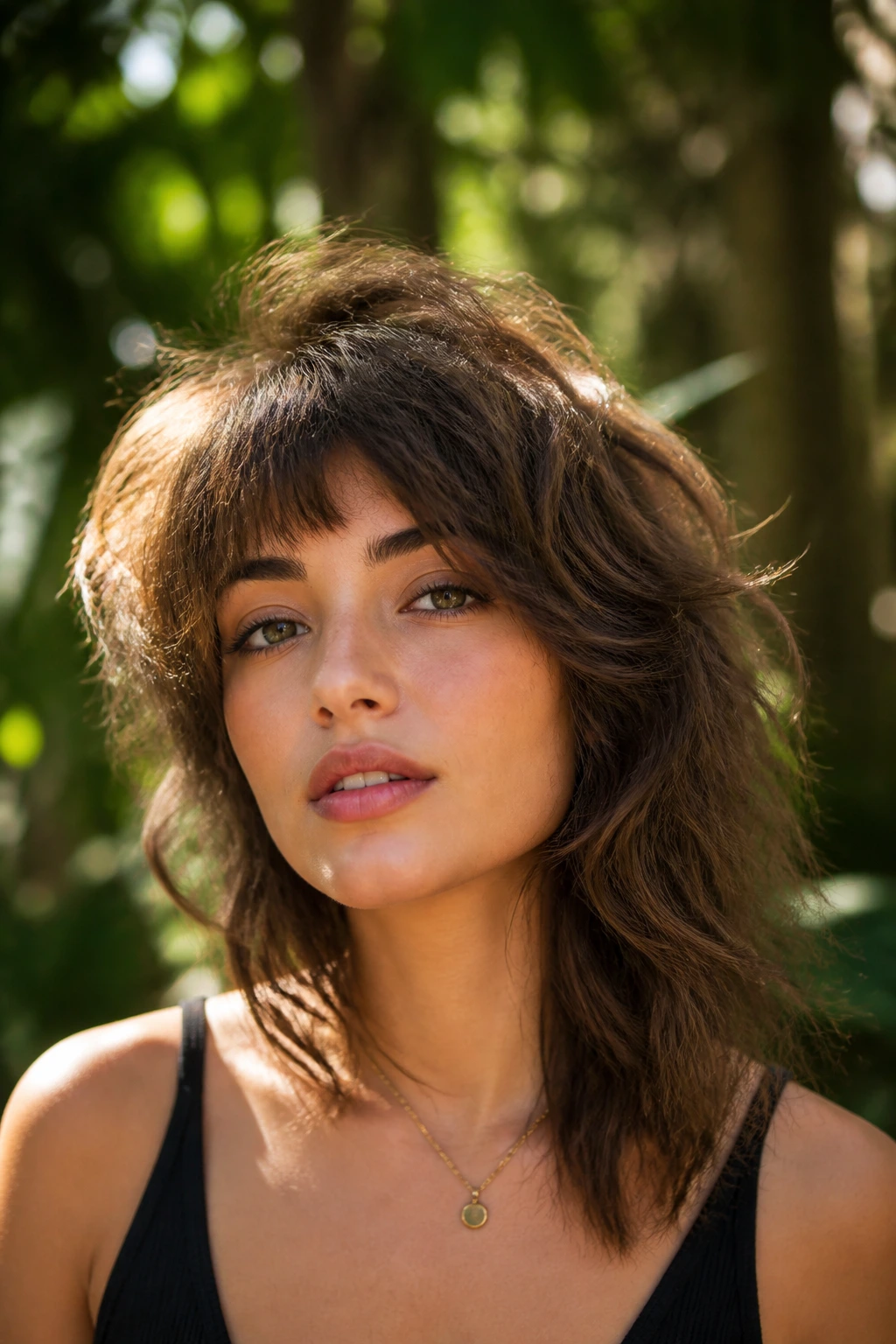
Not all asymmetrical cuts have to be edgy or severe. The modern shag focuses on movement, layers, and a bit of playful chaos. By keeping one side slightly longer and incorporating choppy, face-framing layers, you get a look that feels effortless and cool.
The Role of Internal Layers
- Internal layers remove bulk and allow the hair to sit in a way that feels organic.
- On an oval face, these layers can be concentrated around the eyes and cheekbones to emphasize those areas, while the asymmetric length keeps the hair from feeling too round or “poofy.”
Daily Styling
This is a “wash and go” style if your hair has a slight natural wave. If your hair is straight, use a texturizing powder at the roots to give it the lift required to make the layers pop. The goal is to avoid anything that looks too styled or “done.”
5. The Undercut Asymmetrical Bob
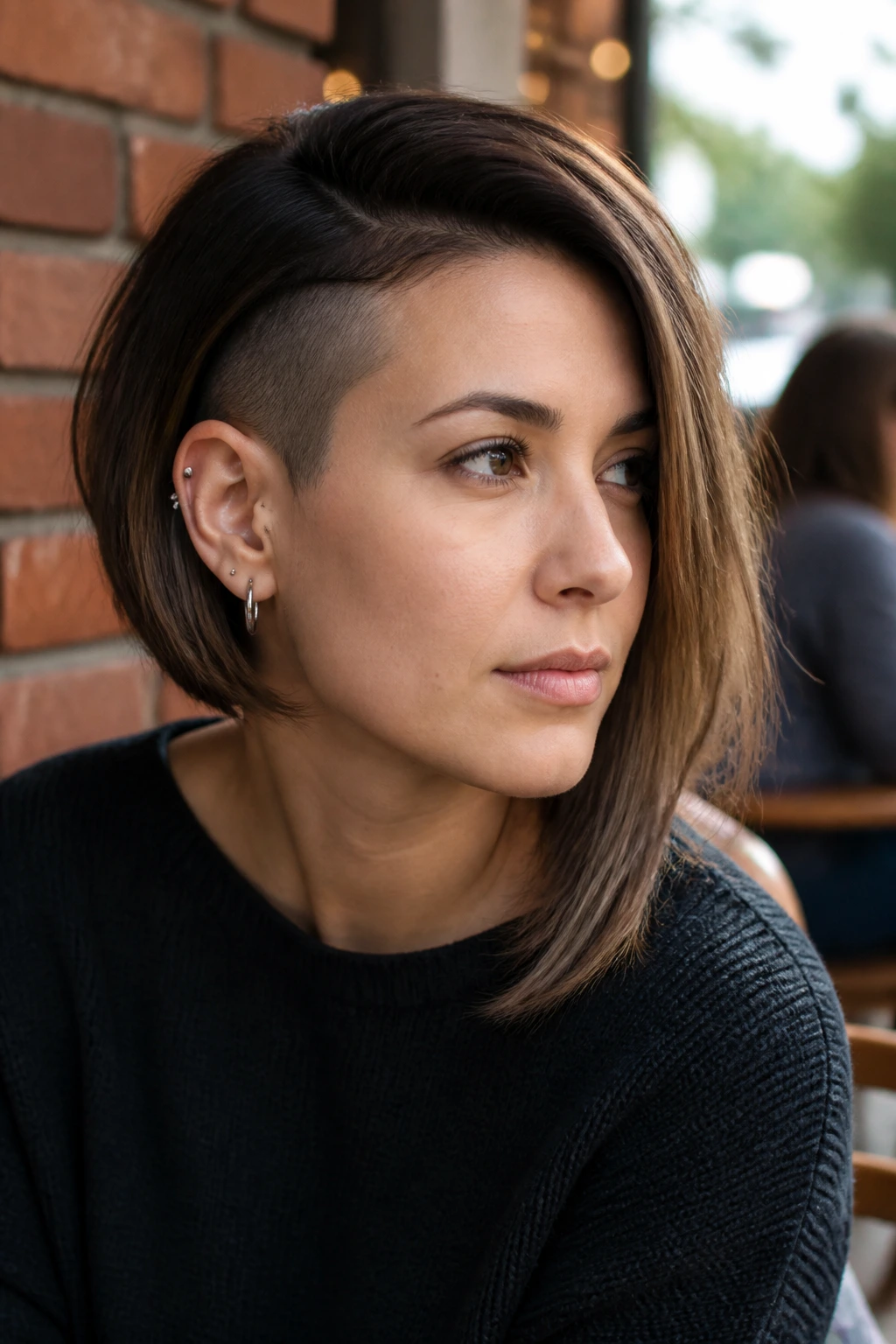
If you want to marry femininity with a bit of rebellion, an undercut on one side of an asymmetrical bob is a fantastic option. The hair is kept bob-length on top, but the area above the ear on the shorter side is buzzed close to the scalp.
Why the Undercut Matters
The hidden nature of the undercut means you can reveal it when you want by tucking your hair behind your ear, or hide it for more conservative settings. It provides an immediate weight reduction on that side, allowing the hair to flip and flow with more ease.
Stylist Consultation Tips
- Ask for a “tapered undercut” rather than a harsh buzz. This creates a smoother blend between the skin and the longer hair above it, which is much more forgiving as it starts to grow out.
- Ensure the weight distribution is managed so the “long” side of the bob doesn’t feel significantly heavier than the “short” side.
6. The Choppy, Asymmetrical Pixie-Mullet
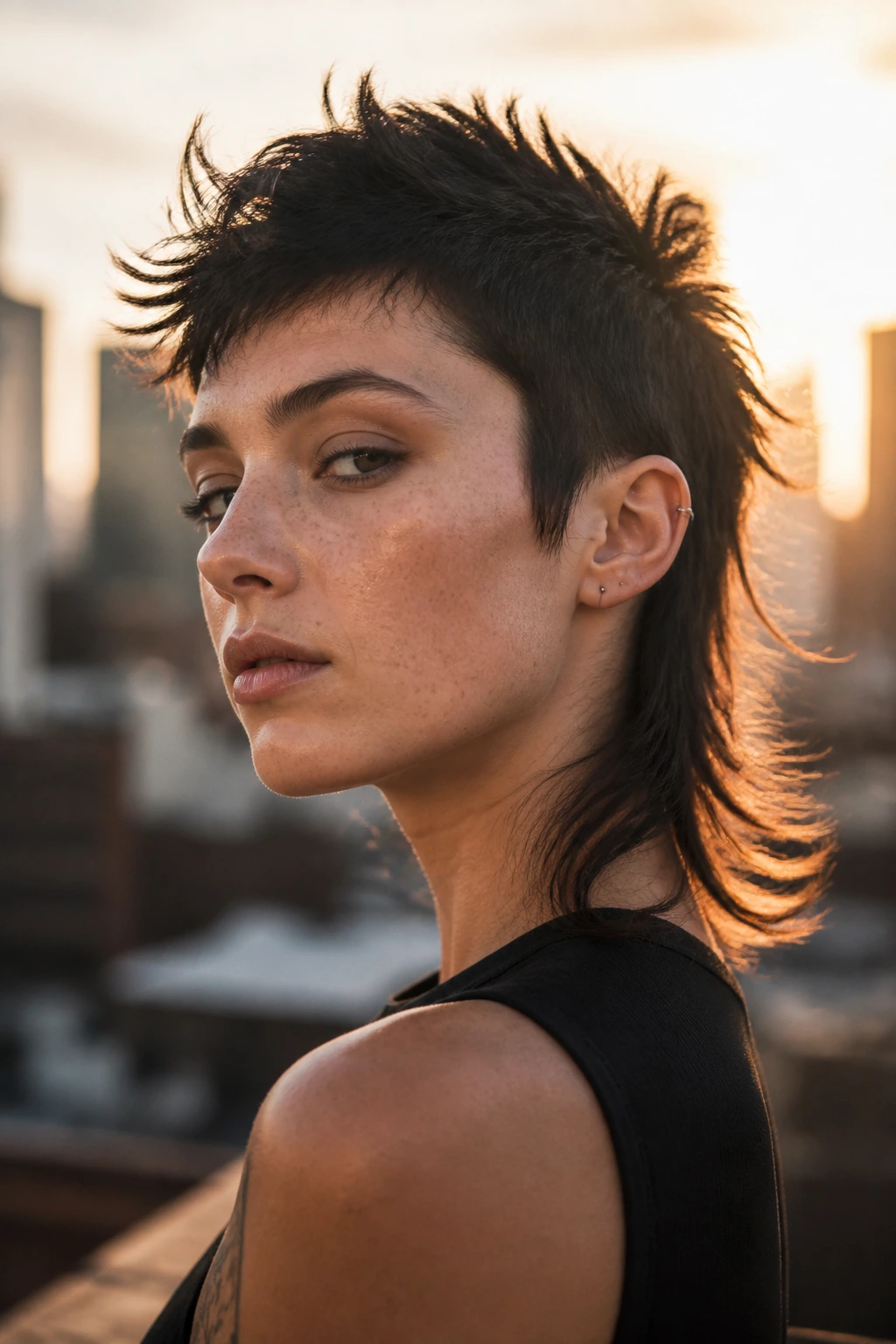
The mullet revival is in full swing, and when combined with an asymmetrical pixie, it becomes something truly unique. You have a short, tight pixie on one side, transitioning into a longer, textured back and a sweeping bang.
Working with the Flow
The beauty of this style is its fluidity. The asymmetry isn’t just side-to-side; it is front-to-back. Oval faces have the versatility to handle the unconventional shape of a modern mullet without it appearing “costumey.”
Making It Your Own
- Keep the bangs slightly longer to soften the forehead.
- Use a sea salt spray to give the back section a bit of grit and texture, making the transition from the short side to the long back look intentional and cohesive.
7. The Long, Side-Swept Layered Cut
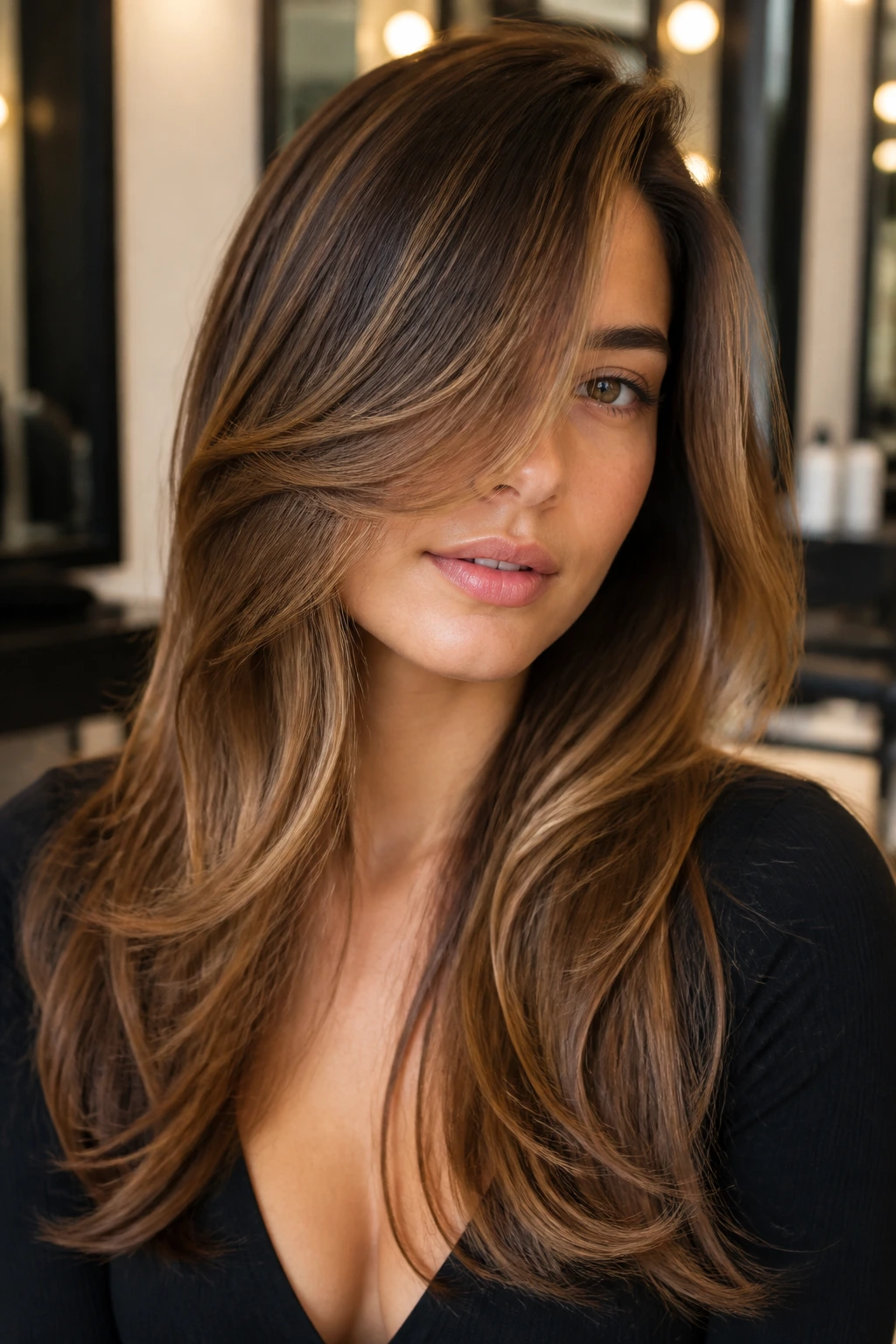
Sometimes, asymmetry shouldn’t be about the base length but about the way your hair is layered. A deep side part combined with long, cascading layers on one side creates an asymmetrical effect without requiring a “big chop.”
The Effect of Weight
By cutting more layers into one side of the face, you force the hair to fall in a specific, dramatic direction. This creates a natural curtain that drapes over one eye or cheek, which can be incredibly alluring and sophisticated.
Ideal Hair Types
This style is best for those with medium-to-thick hair. If your hair is too thin, excessive layering might make the ends appear scraggly. For finer textures, keep the layers blunt but focus the asymmetry on the part and the sweep.
8. The Modern Asymmetrical Pompadour
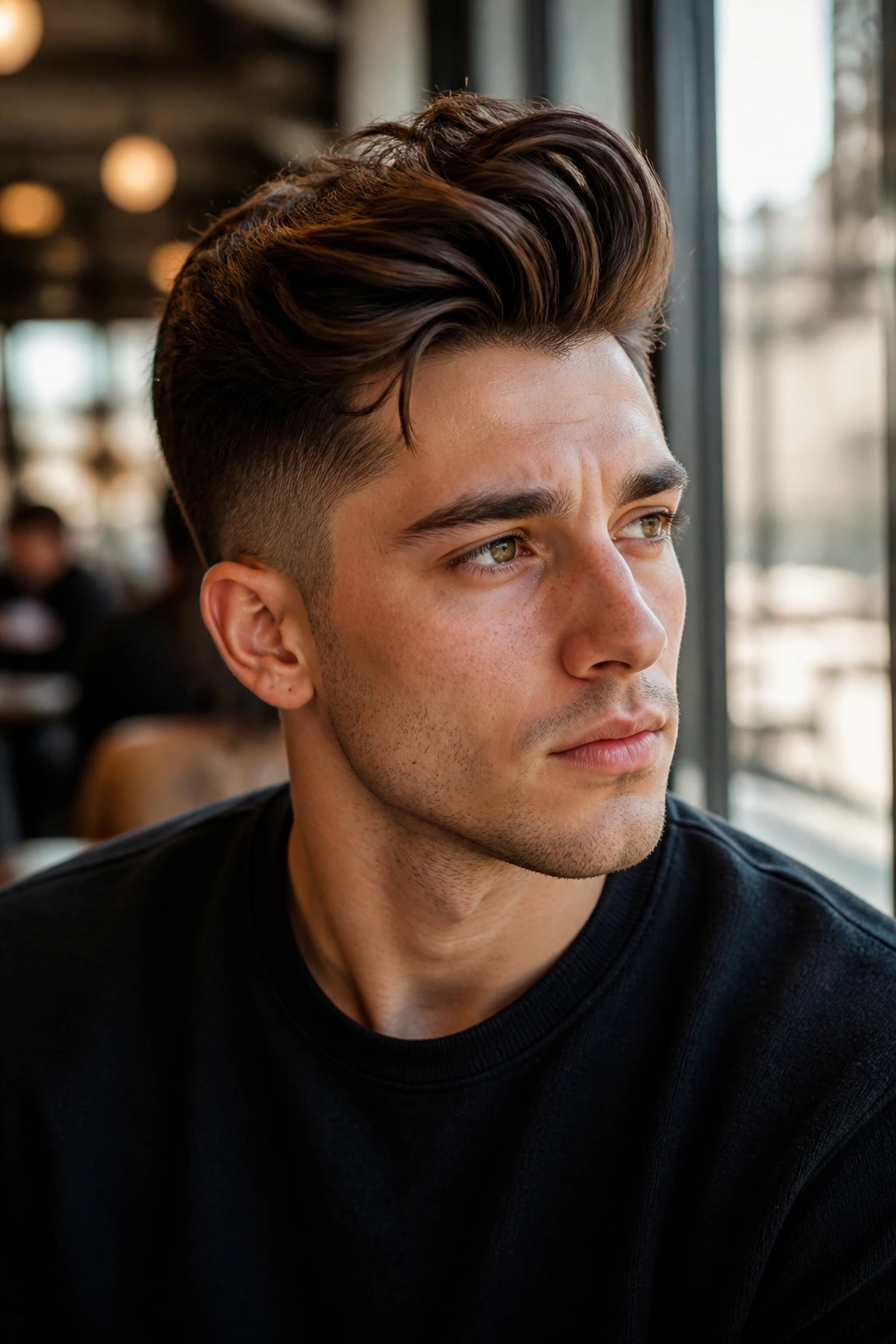
For the bold at heart, the asymmetrical pompadour offers volume and height. By keeping the sides tight and sweeping the front section up and to one side, you create a look that is both vintage-inspired and undeniably modern.
Balancing the Height
Because oval faces have a natural length to them, you have to be careful not to make the pompadour too tall, as it can elongate the face further. Keep the height moderate and focus the sweep to the side to create visual interest.
Tooling Requirements
- You will need a strong-hold pomade or a firm-hold styling cream.
- A boar-bristle round brush is essential to get the necessary lift and to smooth the hair as you blow-dry it upward and toward the side.
9. The Blunt, Graduated Asymmetrical Bob
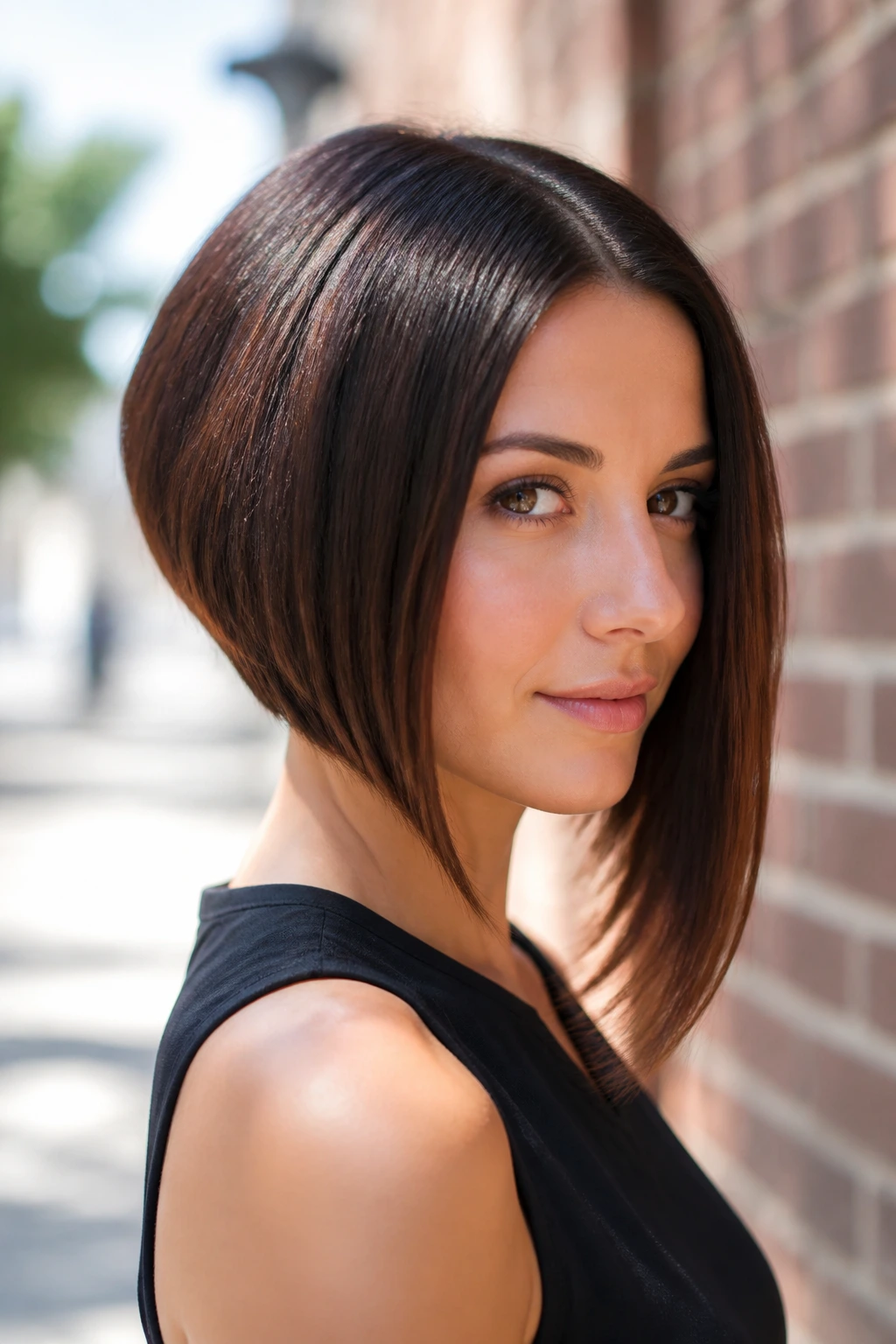
This cut involves a back that is cut in a straight line, which then tilts downward at an angle as it moves toward the front. On one side, the angle is slightly more pronounced, creating a subtle but impactful asymmetrical silhouette.
Precision as a Feature
This is a cut that thrives on perfect edges. A blunt cut shows off the health of your hair, as there are no layers to hide split ends. For an oval face, this creates a frame that is incredibly flattering and requires very little maintenance once you have the right cut.
The “Sleek” Factor
- To make the asymmetry pop, use a flat iron for a bone-straight finish.
- Apply a tiny drop of lightweight hair oil to the ends to ensure they look healthy and sharp, as this style tends to attract attention to the very ends of the hair.
10. The Pixie with an Architectural Side-Bang

A pixie cut with a long, sweeping, asymmetrical bang can completely change your look. The bangs are left much longer than the rest of the cut, allowing you to style them across the forehead or tuck them behind your ear.
Framing the Face
The key for an oval face is to ensure the bangs don’t cover the entire face. You want to show off your features. By sweeping the bangs to one side, you create an asymmetrical line that mimics the curve of your cheekbone, making the entire face look more defined.
Daily Styling Routine
- Blow-dry the bangs using a vent brush to create volume at the root.
- Use a light-hold hairspray to ensure the bangs stay in place throughout the day without looking crunchy or stiff.
11. The Textured Asymmetrical Lob with Curtain Bangs

Curtain bangs are inherently soft, but when paired with an asymmetrical lob, they gain a bit of an edge. By keeping the hair longer on one side, you draw the eye down, while the curtain bangs keep the upper half of the face framed beautifully.
Why It Works for Ovals
This is perhaps the most “forgiving” of the asymmetrical cuts. The curtain bangs soften the transition between the forehead and the rest of the face, while the asymmetrical length keeps the style from feeling too classic or predictable.
Adding Depth with Color
- Consider adding subtle, face-framing highlights around the shorter side to draw even more attention to your facial features.
- A lived-in balayage color technique works wonders with this cut, as it enhances the texture of the waves and layers.
12. The Geometric Asymmetrical Wedge
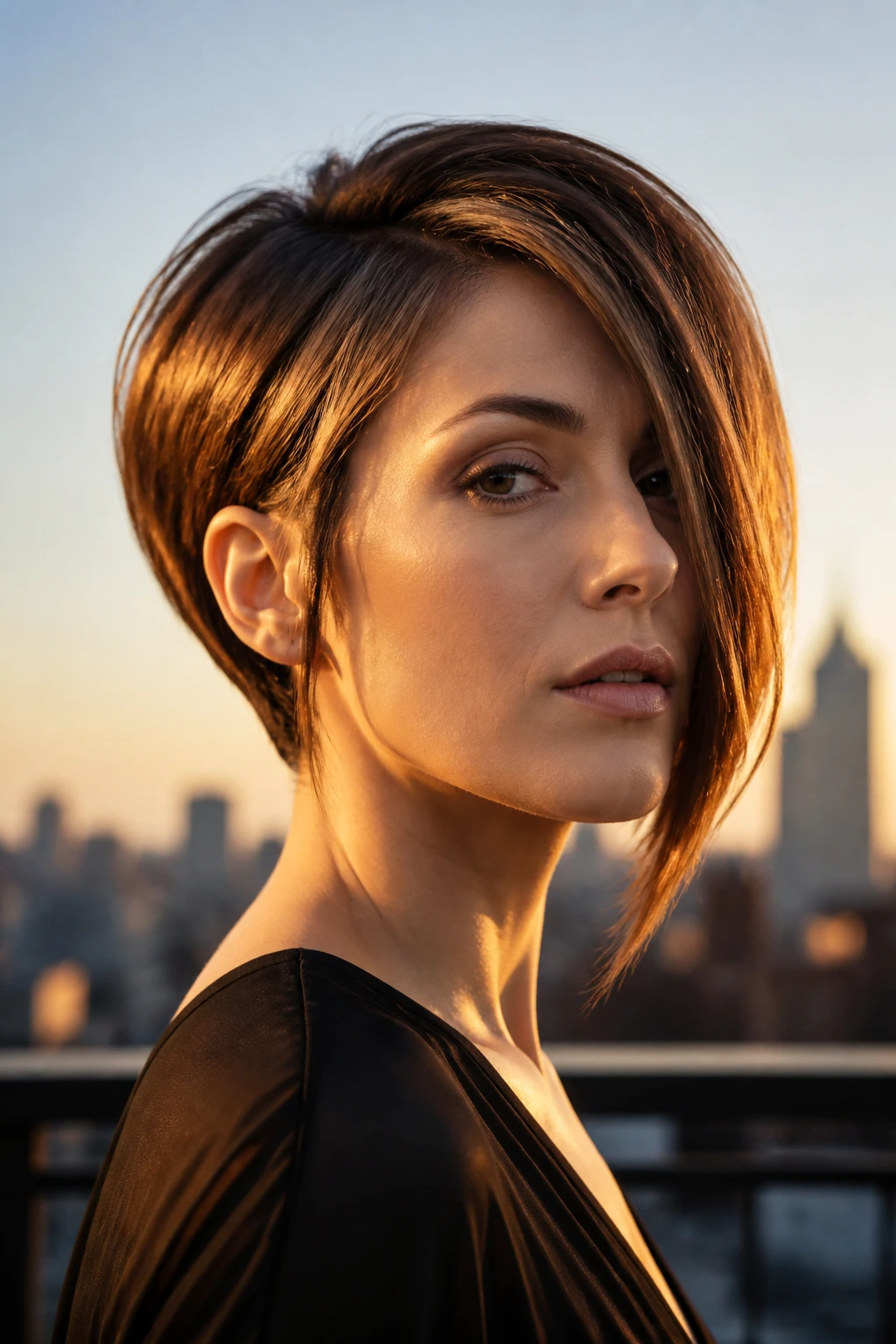
The wedge cut is a high-fashion, high-volume style. It features a short, stacked back and long, sweeping layers that create a rounded, voluminous shape. When you make the wedge asymmetrical—leaving one side longer and sharper—it moves from a retro style to something avant-garde.
Managing the Volume
The wedge is all about weight and lift. On an oval face, you want the volume to be centered so it doesn’t overwhelm your proportions. Keeping the sides tight and the volume on top helps maintain that ideal balance.
Who Should Avoid This
- If your hair is extremely fine or lacks natural volume, this cut might be difficult to maintain, as it relies on the hair “holding” its shape.
- Those with very tight curl patterns may find the “stack” hard to control without significant heat styling.
13. The Wavy, Asymmetrical “Lob”

If your hair has a natural texture, stop fighting it and embrace it. A long bob with asymmetrical length allows your natural waves to dictate how the hair falls. By cutting one side slightly longer, you create a “cascading” effect that looks intentional but relaxed.
Embracing the Natural Pattern
- Let your hair air-dry with a bit of curl-defining cream.
- The asymmetry doesn’t need to be sharp or geometric here; it can be soft, where the hair simply looks like it has been pushed to one side.
The “Piecey” Finish
A little bit of pomade applied to your fingers can help you pull out a few “pieces” of hair to frame your face on the shorter side, adding to the lived-in, cool-girl vibe.
14. The Undercut Bob with Graphic Designs
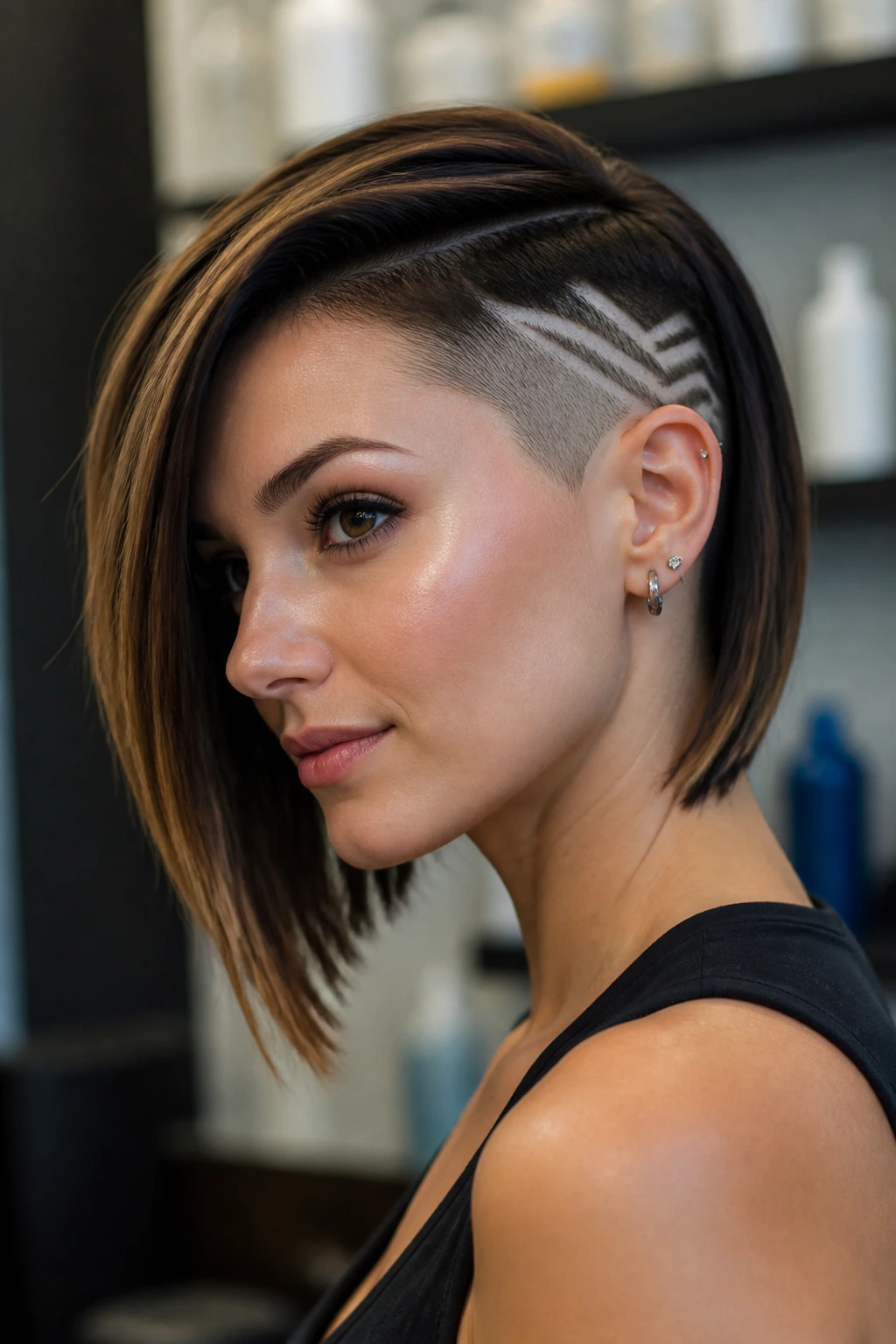
For those who really want to lean into the asymmetrical trend, a small shaved design on the undercut side of a bob can be the ultimate statement. A simple line or a geometric pattern turns your haircut into art.
Artistic Expression
This is the most personal of all the styles listed. It allows you to express your personality in a way that is hidden until you tie your hair up or tuck it behind your ear.
Maintenance Considerations
- If you opt for a design, you will need to head back to your stylist every two to three weeks, as these patterns lose their definition very quickly as the hair grows back.
- Keep the scalp healthy; a clean scalp ensures that the growth pattern remains uniform and the design stays sharp.
15. The Deep-Parted, Super-Long Bob (The “Lob” Tail)
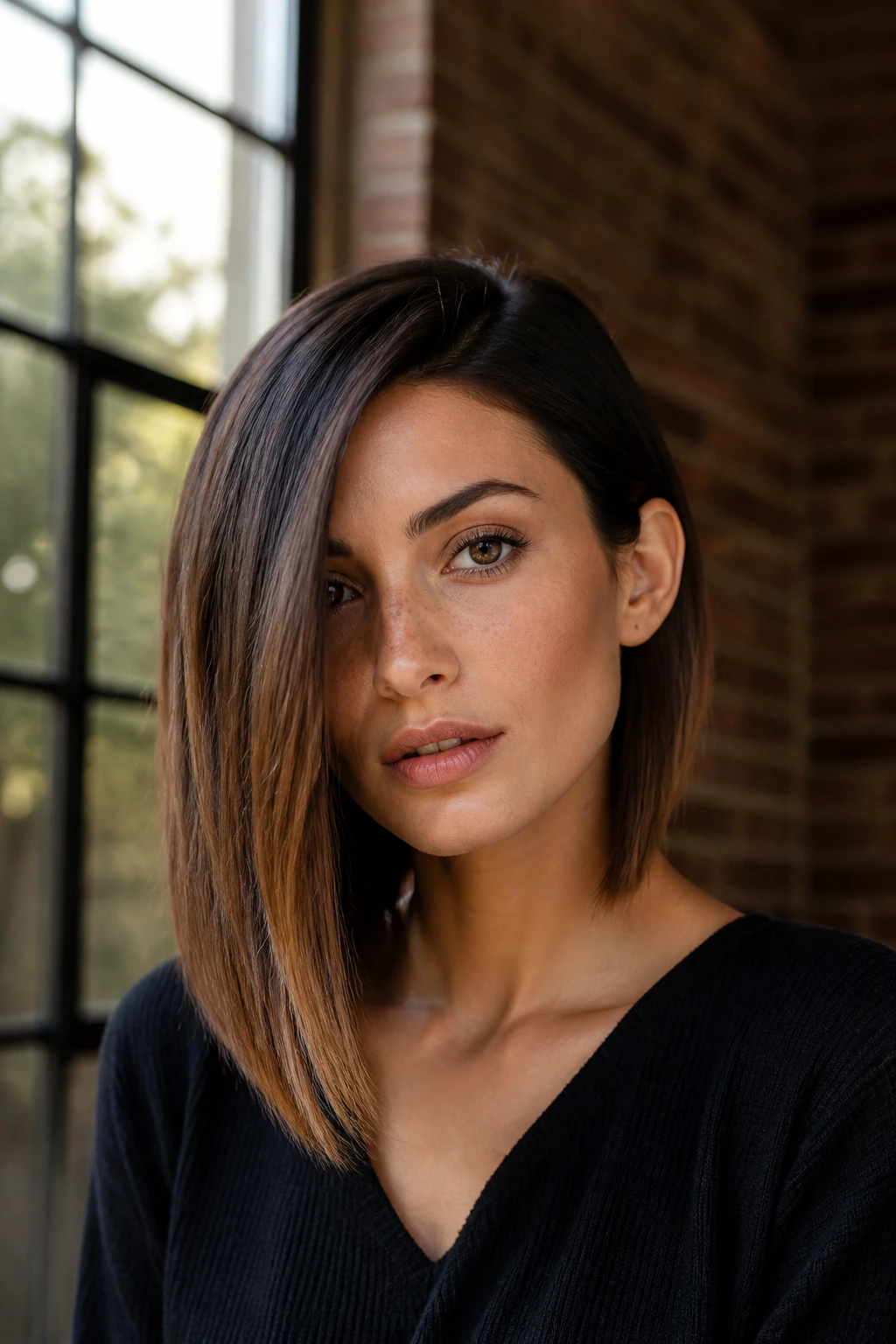
This look features one side that grazes the collarbone while the other side hits the chin. The length difference is dramatic, and it requires a deep side part to really showcase the asymmetry.
Creating the Illusion of Length
Because your face is oval, you can handle the extreme length difference on one side without it pulling your face down. It adds a modern, fashion-forward element that is perfect for those who want a change but don’t want to go “short.”
Styling for Drama
- Use a large-barrel curling iron to add loose, polished waves.
- A deep side part is non-negotiable for this look; use a tail comb to ensure the part is crisp, as a messy part can make the length difference look accidental rather than stylized.
16. The Sleek, Asymmetrical Blunt Cut with Baby Bangs
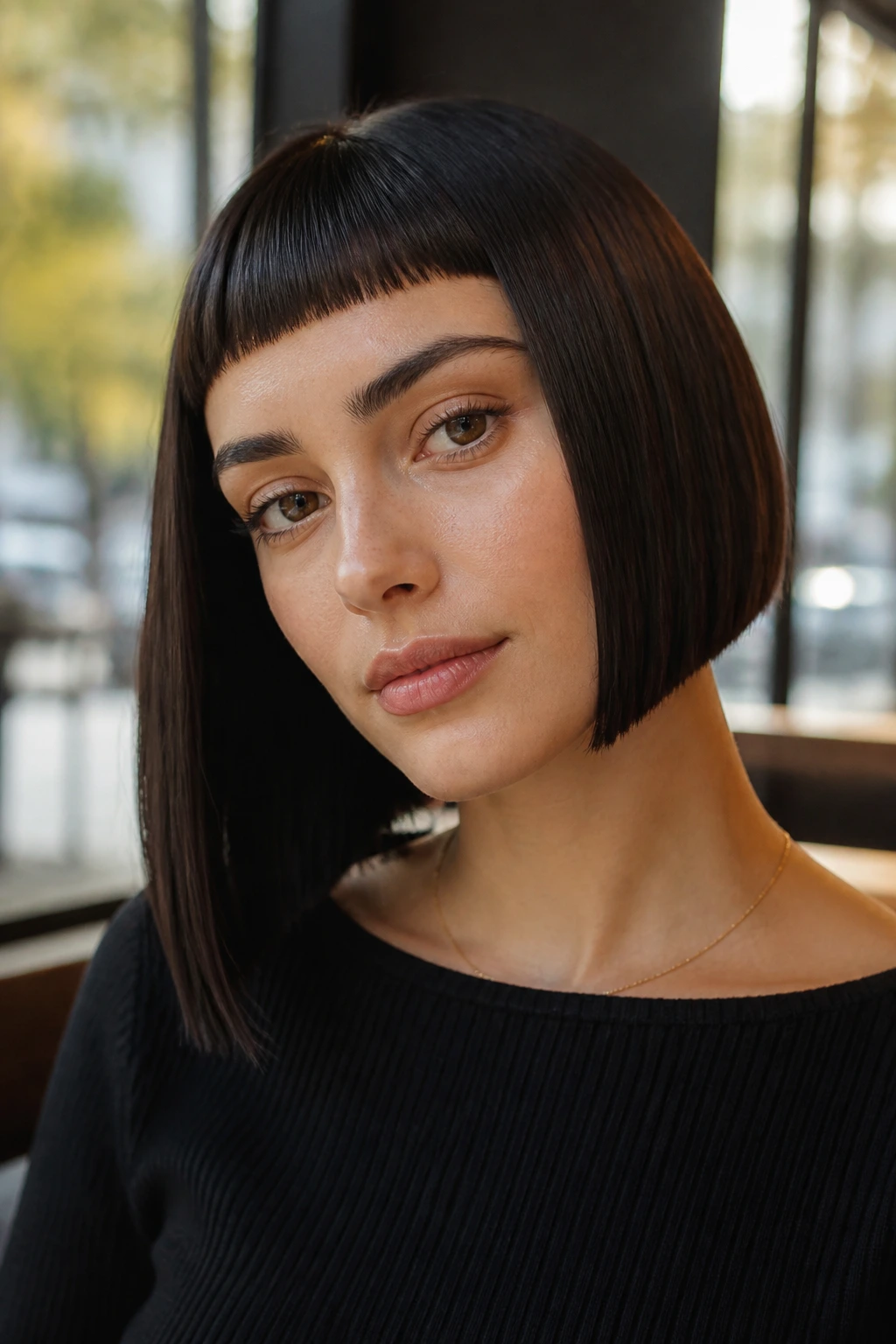
Micro-bangs, or baby bangs, are a bold choice. When combined with an asymmetrical, blunt-cut bob, they create a high-fashion, edgy look that works particularly well on oval faces.
The Power of Bangs
Oval faces are among the few that can carry micro-bangs without the face looking shortened or boxy. By keeping the rest of the hair blunt and asymmetrical, you create a perfect balance of “sweet” and “tough.”
Maintenance of the Bangs
- Baby bangs grow out fast and look messy quickly. Be prepared to trim them yourself or visit your stylist every two weeks.
- Use a small flat iron to keep the bangs smooth and straight, as any cowlick will stand out immediately against the blunt line of the cut.
17. The Textured Asymmetrical Pixie-Bob
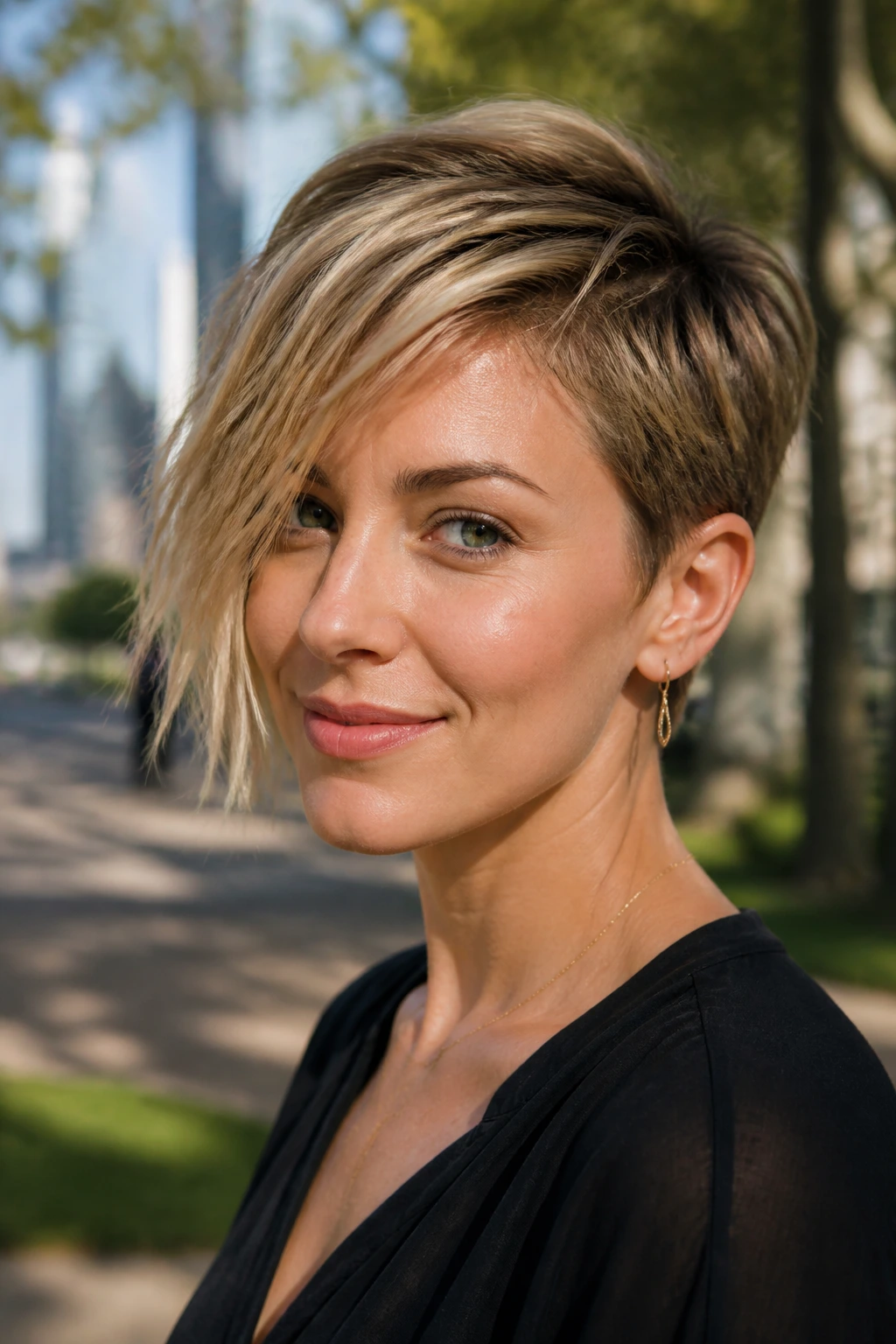
This is the “middle ground” cut. It is shorter than a bob but longer than a pixie. It features a mix of choppy, textured layers that are longer on one side, allowing you to wear it as a side-swept style or tucked behind the ears.
Adapting to Growth
This cut is excellent for those growing out a short pixie. As the hair gets longer, you can maintain the asymmetrical shape, which makes the “grow-out” phase look like a deliberate style choice rather than a chore.
Styling Versatility
- You can use a curling wand to create waves for a softer, more romantic look.
- Alternatively, you can use a bit of grit spray and tousle it for a messy, rocker-chic aesthetic.
18. The Asymmetrical “Butterfly” Cut
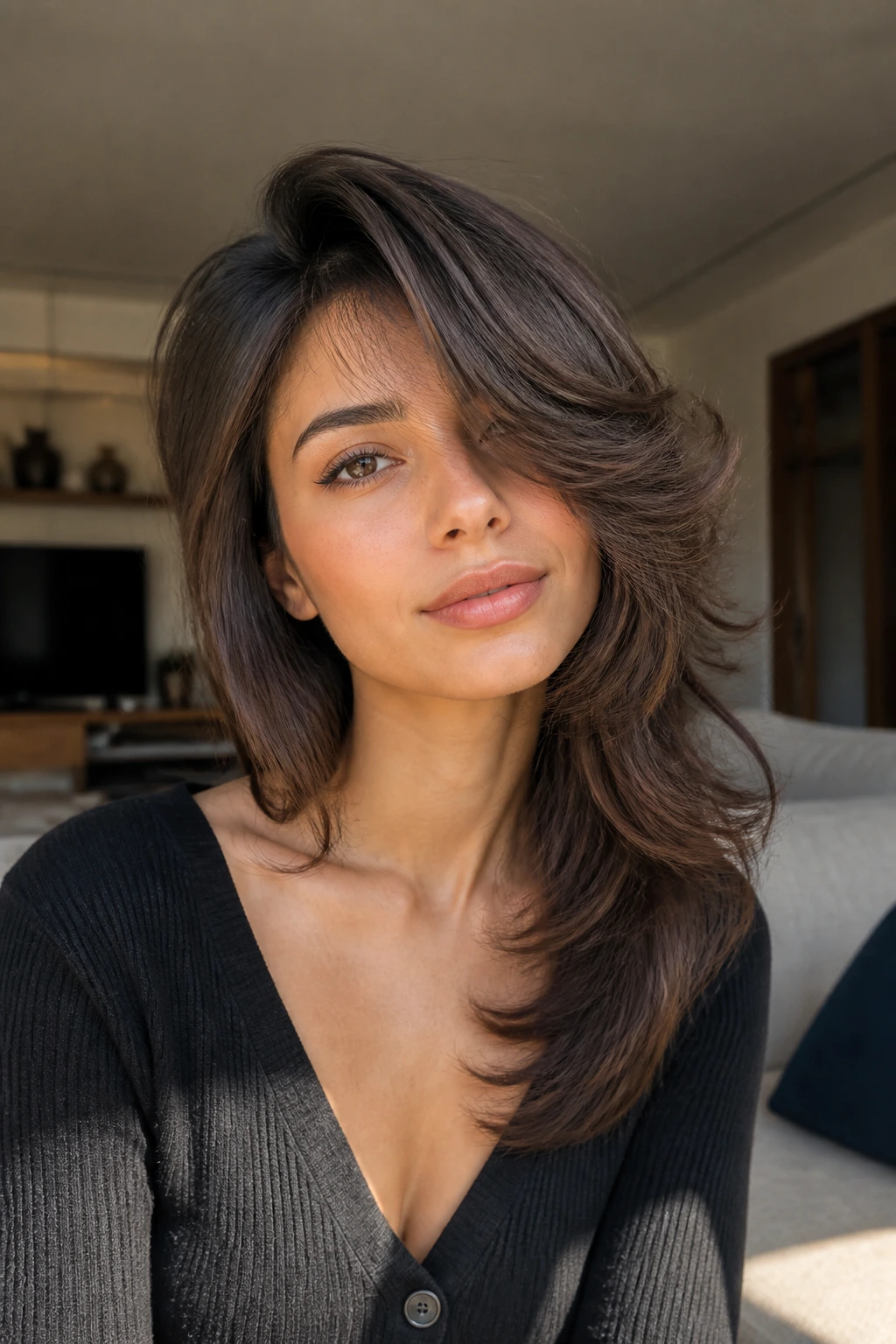
The butterfly cut focuses on heavy layering around the face. When you combine this with an asymmetrical base, you get a style that is incredibly voluminous and full of movement.
Layers that Frame
The layers in a butterfly cut are designed to flip outward. On an oval face, these layers can be placed to accentuate the jawline. By keeping one side slightly longer, you create a dynamic look that doesn’t just sit flat against the face.
Round Brush Mastery
- You must be comfortable with a round brush and a blow-dryer to achieve the “flip” that makes the butterfly cut iconic.
- Use a setting spray to help the layers hold their shape, as the weight of the hair will naturally try to pull them straight throughout the day.
19. The Soft, Asymmetrical “Lob” with Face-Framing Fringe
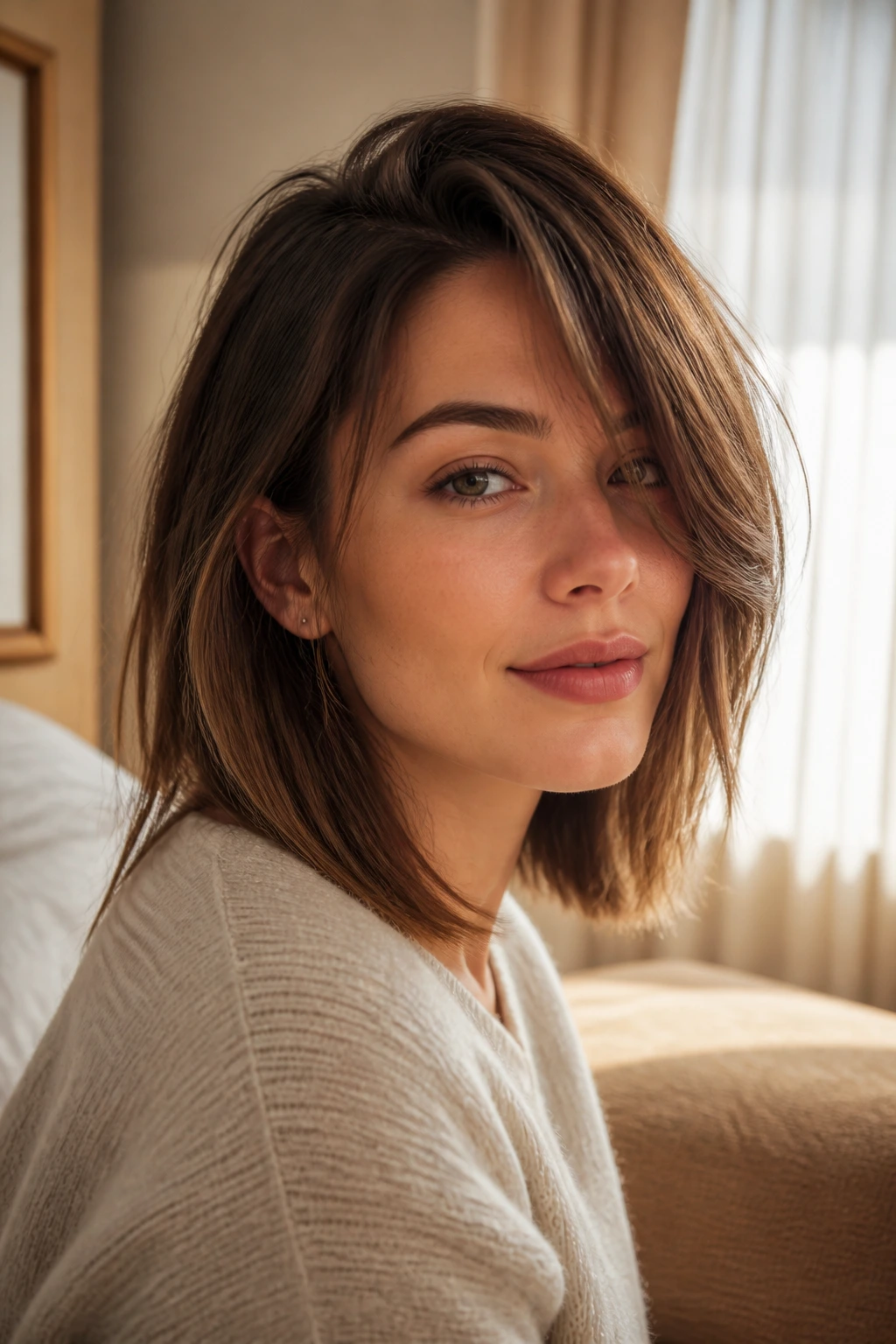
If you want the benefits of a fringe but don’t want the commitment of blunt bangs, go for a long, asymmetrical face-framing fringe. It creates a soft “curtain” on one side, drawing attention to your cheekbones.
Softening the Angles
The asymmetry of the fringe adds a gentle sweep across the forehead, which is particularly flattering if you have a slightly taller forehead. It balances the face perfectly, keeping it open and bright.
Low-Maintenance Styling
- You don’t need a lot of product for this style. A simple blow-dry with a large round brush is usually enough to get the fringe to sweep perfectly to the side.
- It is a great way to “test” how your face looks with shorter hair around the eyes before committing to a full-on bang.
20. The Dramatic, High-Volume Asymmetrical Curl
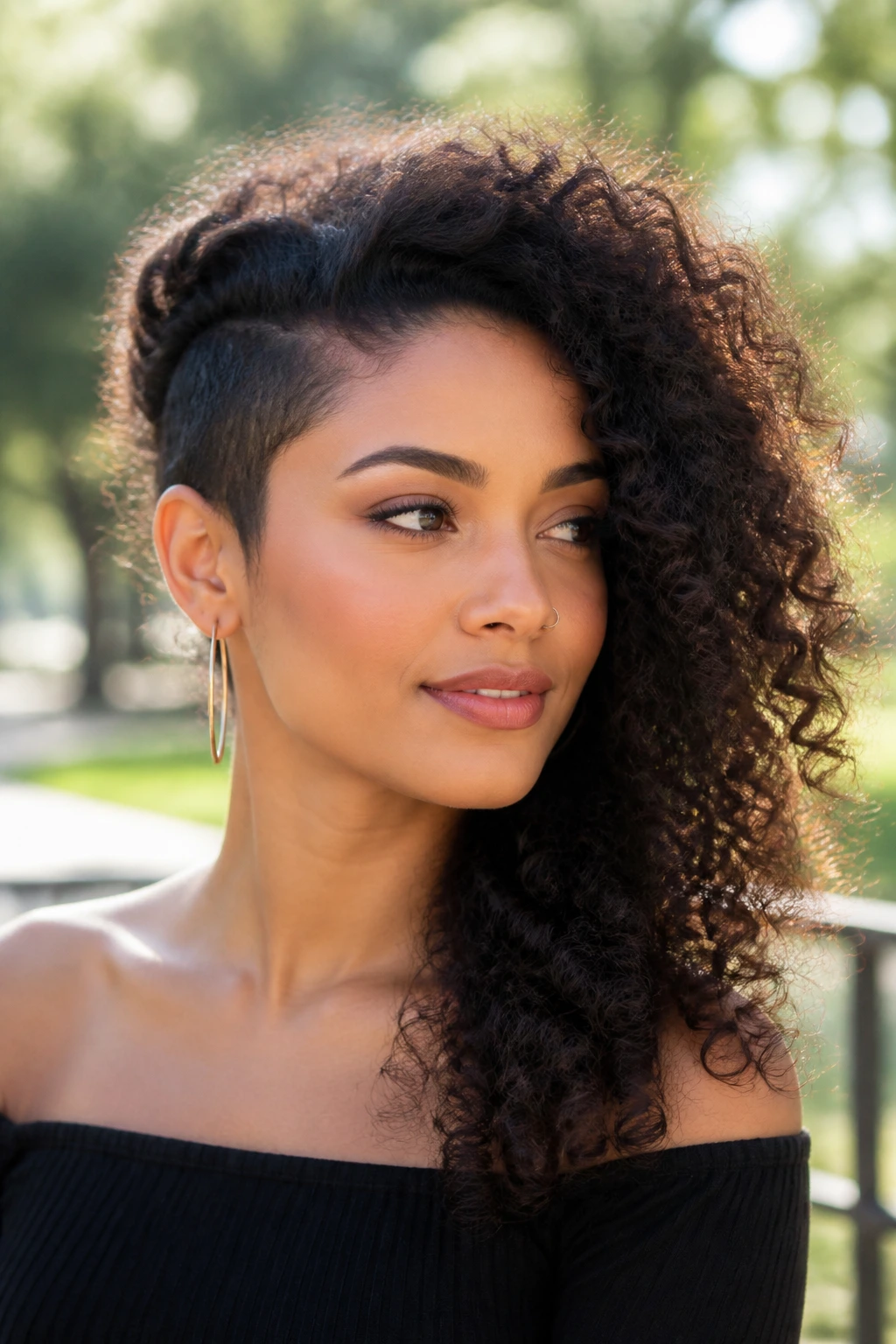
If you have naturally curly hair, asymmetry is your best friend. A cut that keeps the hair shorter on one side allows the curls to pop and creates a beautiful, cascading shape on the other side.
Managing Curl Tension
Curls have their own “shrinkage” factor. When your stylist cuts your hair, they need to account for how much the curl will spring back. On the shorter side, the curls will look tighter and bouncier; on the long side, they will show off their full length.
Moisture is Key
- Never skip the leave-in conditioner. Curls that are dry will become frizzy, which destroys the crisp shape of an asymmetrical cut.
- Use a diffuser attachment on your hair dryer to give the hair lift at the roots, which will make the volume look more even across both sides of the cut.
Final Thoughts
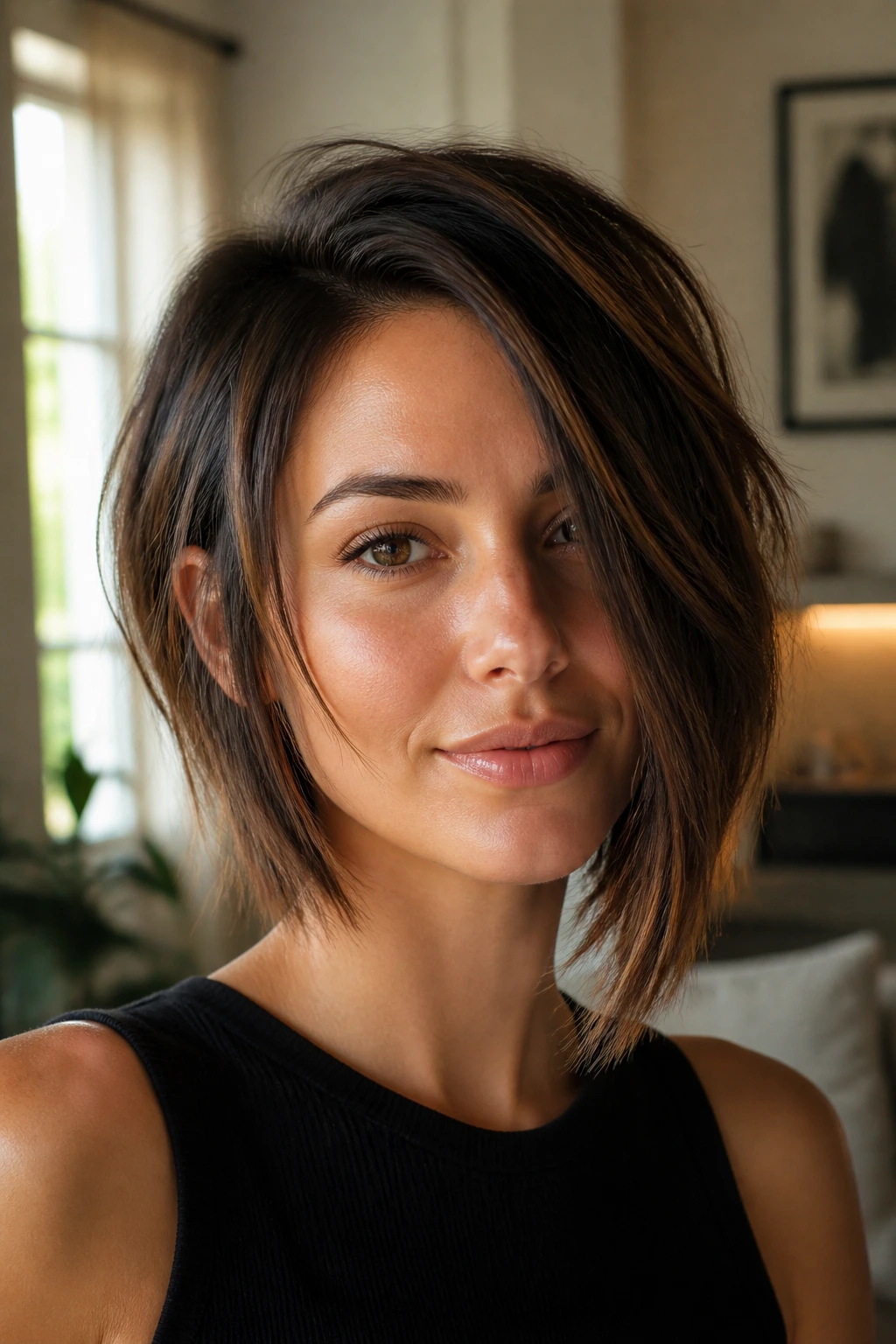
Choosing an asymmetrical cut for an oval face is essentially about embracing the fact that you have the freedom to experiment. Because your face shape doesn’t require “corrective” cutting to create balance, you can focus entirely on the style that makes you feel most like yourself. Whether you opt for a severe, geometric bob or a soft, layered shag, the “asymmetry” is really just an invitation to step away from the mirror and worry less about perfect alignment.
Hair should move, change, and grow. The best haircuts are the ones that survive the transition from the salon chair to your daily life. If you feel like your current look has become too static or predictable, a shift in length on one side might be exactly the refresh you need. Remember that asymmetry grows out faster in terms of “feeling” different; as the lines blur, you often find new ways to style your hair that you hadn’t even considered when the cut was fresh. Start small if you are hesitant, but don’t be afraid to let your stylist lean into the geometry of the cut. An oval face is a canvas—don’t be afraid to put a little artistic movement on it.