

Finding the perfect shade of pink for thin hair is an exercise in both color theory and structural strategy. Milky baby pink is, by nature, a low-saturation, high-lightness pastel. It demands a pristine, level-10 platinum base, which means the conversation about “milky pink” isn’t just about the dye—it’s about how that dye interacts with the fragile, delicate strands that define fine hair. When you are working with thin hair, the goal is to create the illusion of density while maintaining a soft, ethereal aesthetic that doesn’t wash out your skin tone.
Many people make the mistake of going too neon or too saturated, which can actually highlight the scalp through the hair. Milky shades, however, offer a diffused light reflection that actually blurs the scalp line, making the hair look fuller and more intentional. If you have fine hair, you aren’t just choosing a color; you are choosing a treatment. You need to balance the chemical requirements of the lightener with a tonal application that adds depth rather than stripping it away. Let’s look at how to achieve these specific looks while keeping your strands healthy.
1. The Blended Milky Pink Root Shadow
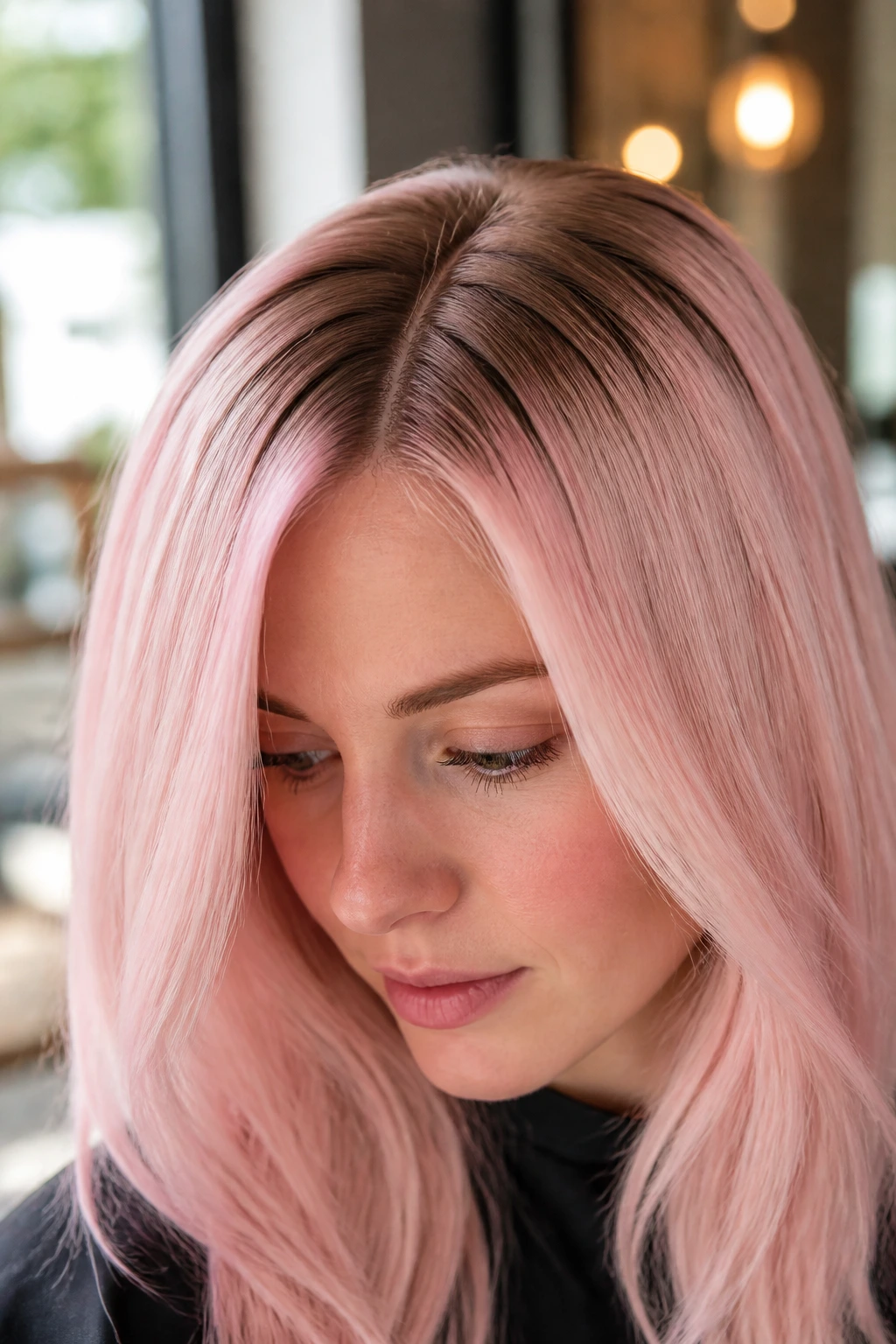
For those with thin hair, a stark, singular block of color can often make the hair look flatter. A root shadow is the single most effective way to add visual depth to a fine mane. By keeping the base of your hair a slightly deeper, warmer natural shade—or a dusty, muted rose—you create a shadow that pushes the lighter milky pink forward.
Why This Adds Volume
The optical illusion of a deeper root suggests that the hair is denser, similar to how natural shadows work in art. When the roots are darker, the hair appears to have more weight. You aren’t just applying pink; you’re sculpting the profile of your head. This technique also extends the time between salon visits, as you don’t have to deal with a harsh, glaring regrowth line that can make fine hair look sparse.
How to Maintain the Depth
- Use a color-depositing conditioner once a week.
- Keep the root section cool-toned to avoid brassiness.
- Avoid heavy, oily styling products that pull the root shadow down.
2. Face-Framing Milky Pink Curtain Bangs
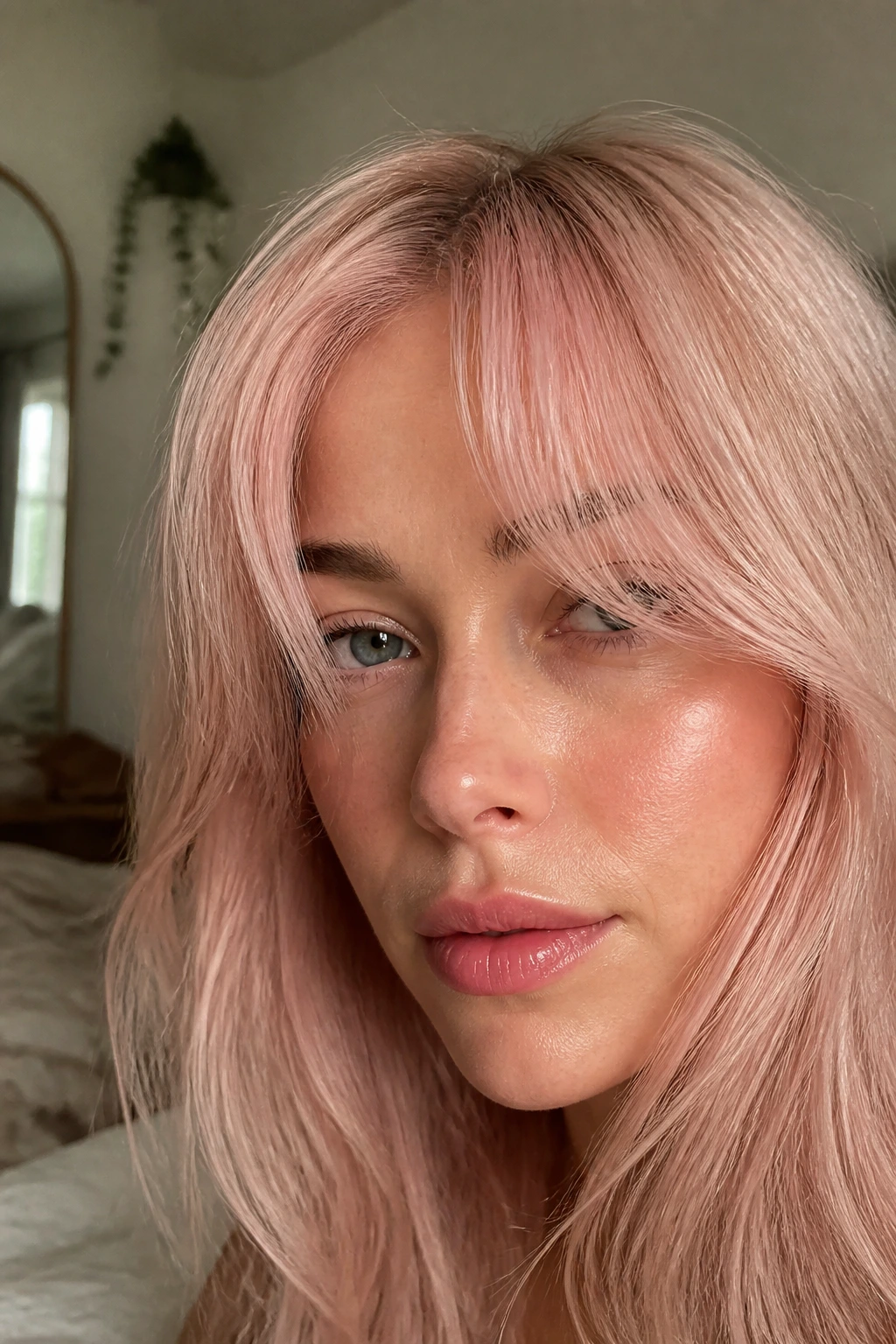
If you want to experiment with pastel pink without coloring your entire head, focus on the pieces that frame your face. For thin hair, curtain bangs provide an excellent opportunity to add texture around the temples and jawline. Milky pink works particularly well here because it creates a soft, hazy boundary around the face rather than a harsh frame.
The Benefit for Fine Strands
Curtain bangs, when cut with slight layering, add movement. Because thin hair lacks the bulk to create thick, heavy bangs, the “wispy” nature of baby pink suits the texture perfectly. It looks deliberate and airy. If you have a rounder face, the softness of the color helps break up the lines of the cheeks, adding a gentle contour that feels very modern and fresh.
Styling Tips for Texture
- Use a small round brush to blow-dry the bangs outward.
- Apply a tiny amount of dry texture spray to add “grit” to the fine strands.
- Avoid flat irons; the heat will make the hair look even thinner.
3. The Soft Peachy-Pink Pastel Bob
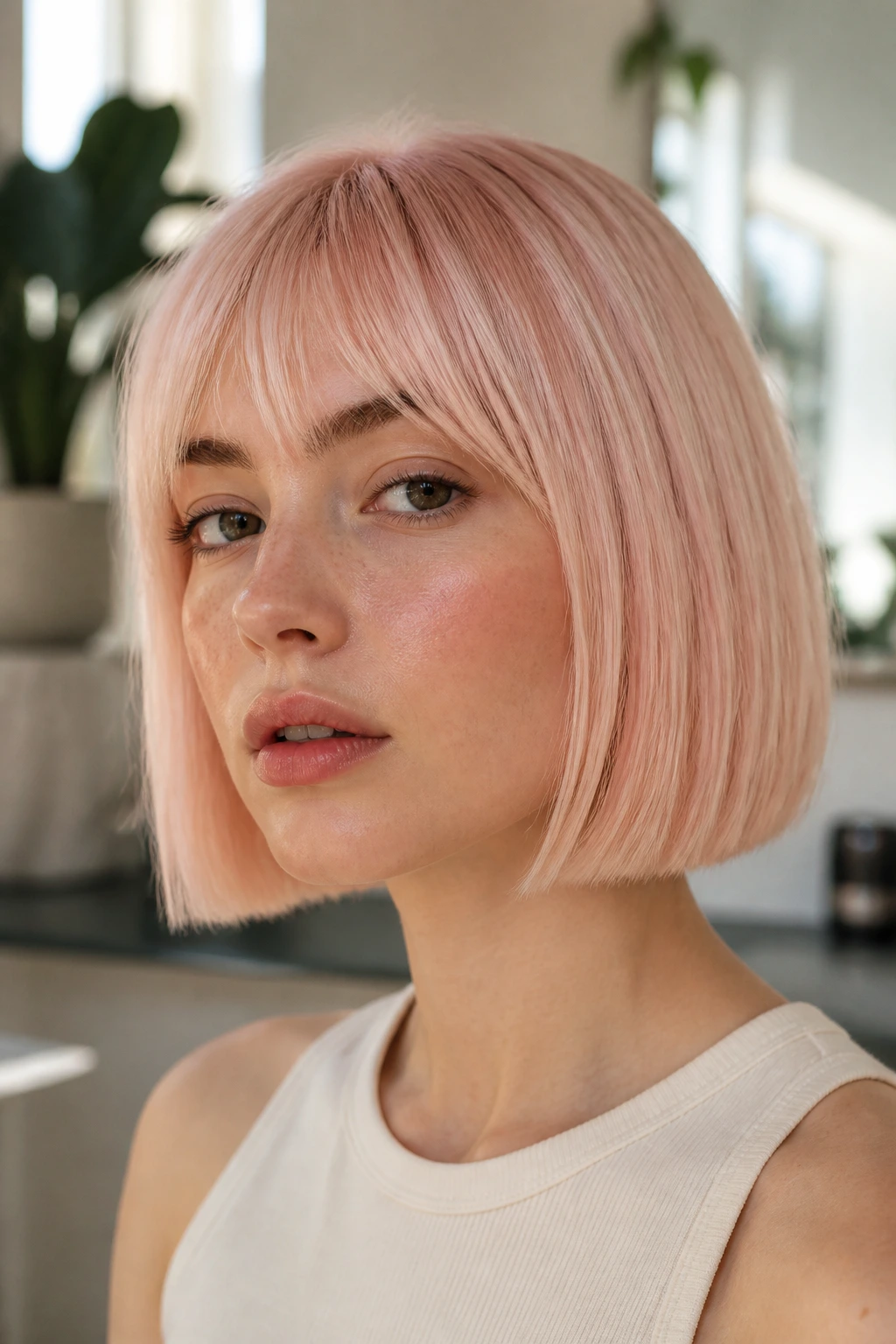
A blunt bob is the gold standard for thin hair, and when you combine that structure with a milky peachy-pink, you get a look that is both edgy and incredibly refined. The peach undertones add a bit of warmth that keeps the milky pink from looking flat or overly cool, which can sometimes make pale skin look tired.
Why the Blunt Cut Matters
Thin hair thrives with blunt lines because they eliminate wispy, straggly ends. When you cut your hair into a clean, sharp bob, you are effectively “thickening” the appearance of your ends. Adding a milky pink color gives this structured cut a playful, unexpected twist. It’s the difference between a severe haircut and a style that feels like an intentional design choice.
Maintaining the Shape
- Get a trim every 6 to 8 weeks to keep the blunt edge crisp.
- Use a light-reflecting serum to give the hair a healthy, glass-like shine.
- Keep the ends well-moisturized to prevent split ends, which are highly visible on pastel shades.
4. Ashy Milky Pink Balayage
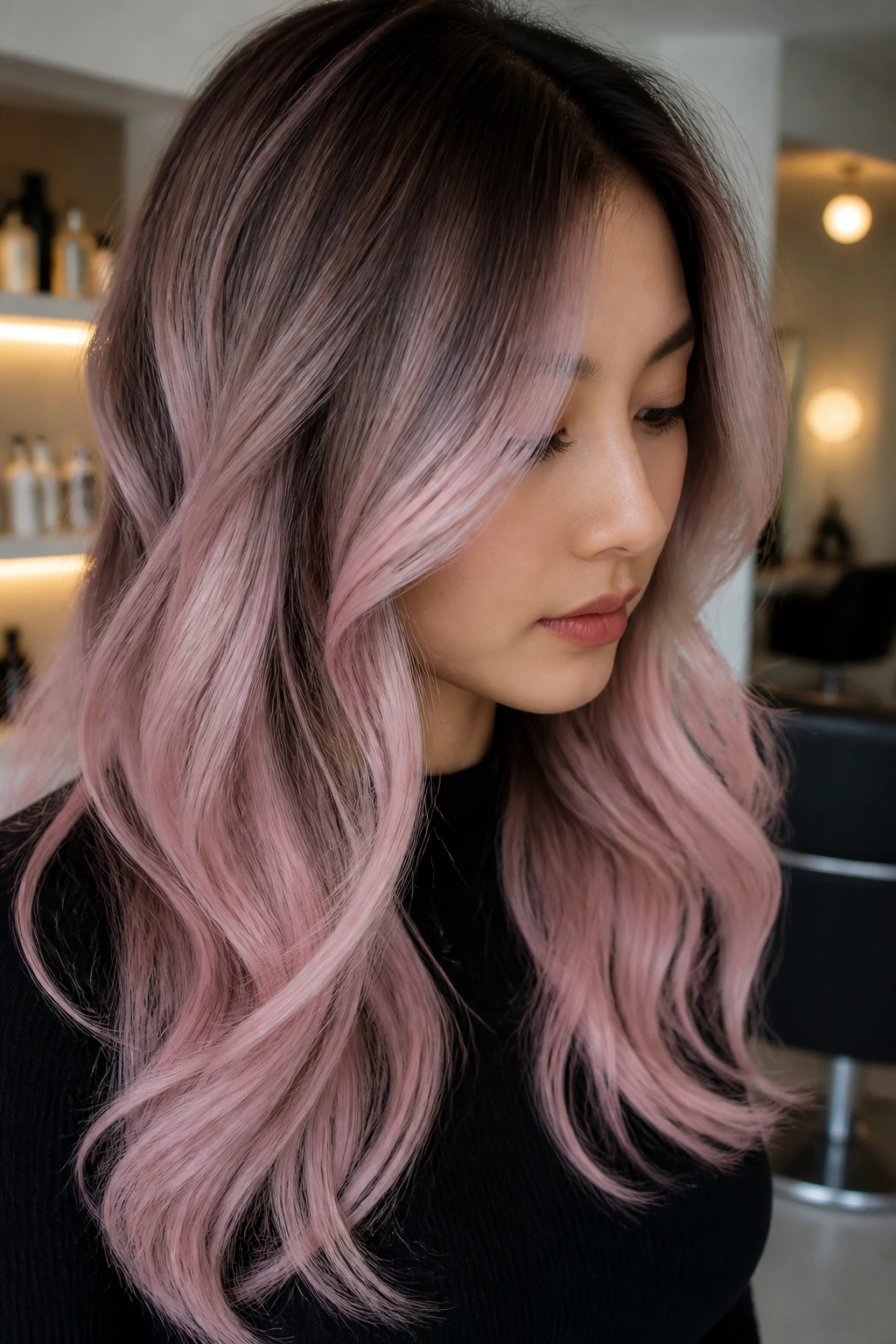
Balayage is typically associated with blondes or brunettes, but applying a soft, ashy milky pink through a balayage technique is a brilliant way to add dimension to thin hair. By leaving some of your natural color at the nape of the neck or underneath the top layers, you create a dimensional effect that makes the hair look like it has more layers than it actually does.
The Dimension Secret
In thin hair, contrast is everything. If the hair is all one color, the lack of volume is obvious. By weaving in strips of milky pink against your natural base, you create “movement” through color placement. The ashy tones serve to ground the pink, making it look more sophisticated and less like a candy-coated wig.
Important Considerations for Fine Texture
- Ensure your stylist uses a bond builder during the lightening process.
- Don’t go too light with the highlights; fine hair breaks easily.
- Ask for “teased” balayage to ensure there are no harsh, blocky lines.
5. The Messy Milky Pink Top Knot
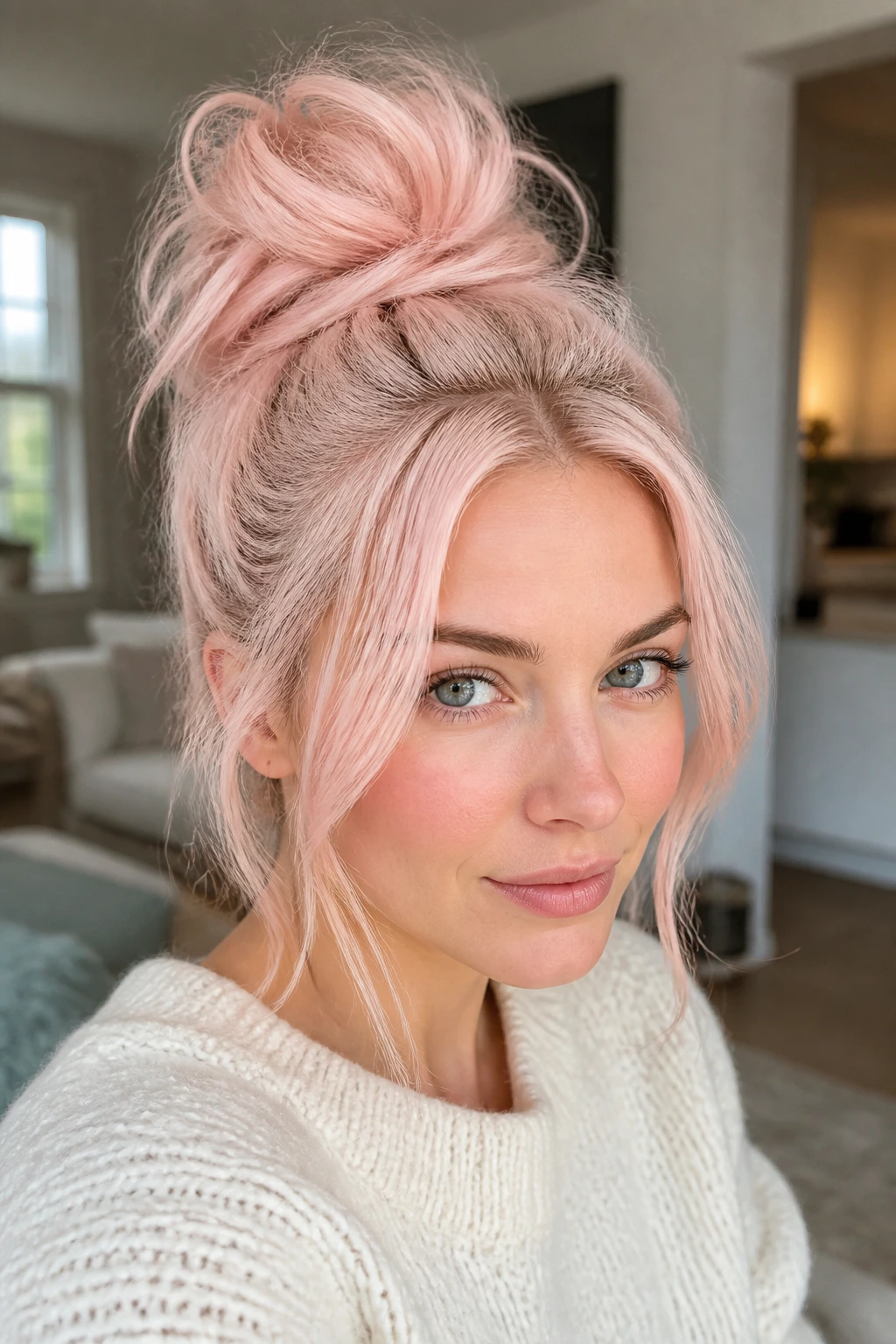
Sometimes, the best way to deal with thin hair is to embrace the “undone” aesthetic. A top knot in a milky baby pink looks intentional rather than messy. The lightness of the color makes the bun look large and airy, especially if you pull out a few face-framing strands to soften the style.
Why This Style Works
When you have thin hair, a tight, sleek bun often emphasizes how little hair you actually have. A messy, soft, light-colored bun creates more surface area. The milky pink shade adds a sense of volume because of how it catches the light, making the entire “puff” of the bun look more substantial.
Styling Elements
- Use a silk scrunchie to minimize breakage.
- Loosen the hair at the crown before securing the knot.
- Use a fine-tooth comb to gently tease the hair inside the bun for extra volume.
6. Milky Pink Highlights with Lowlights
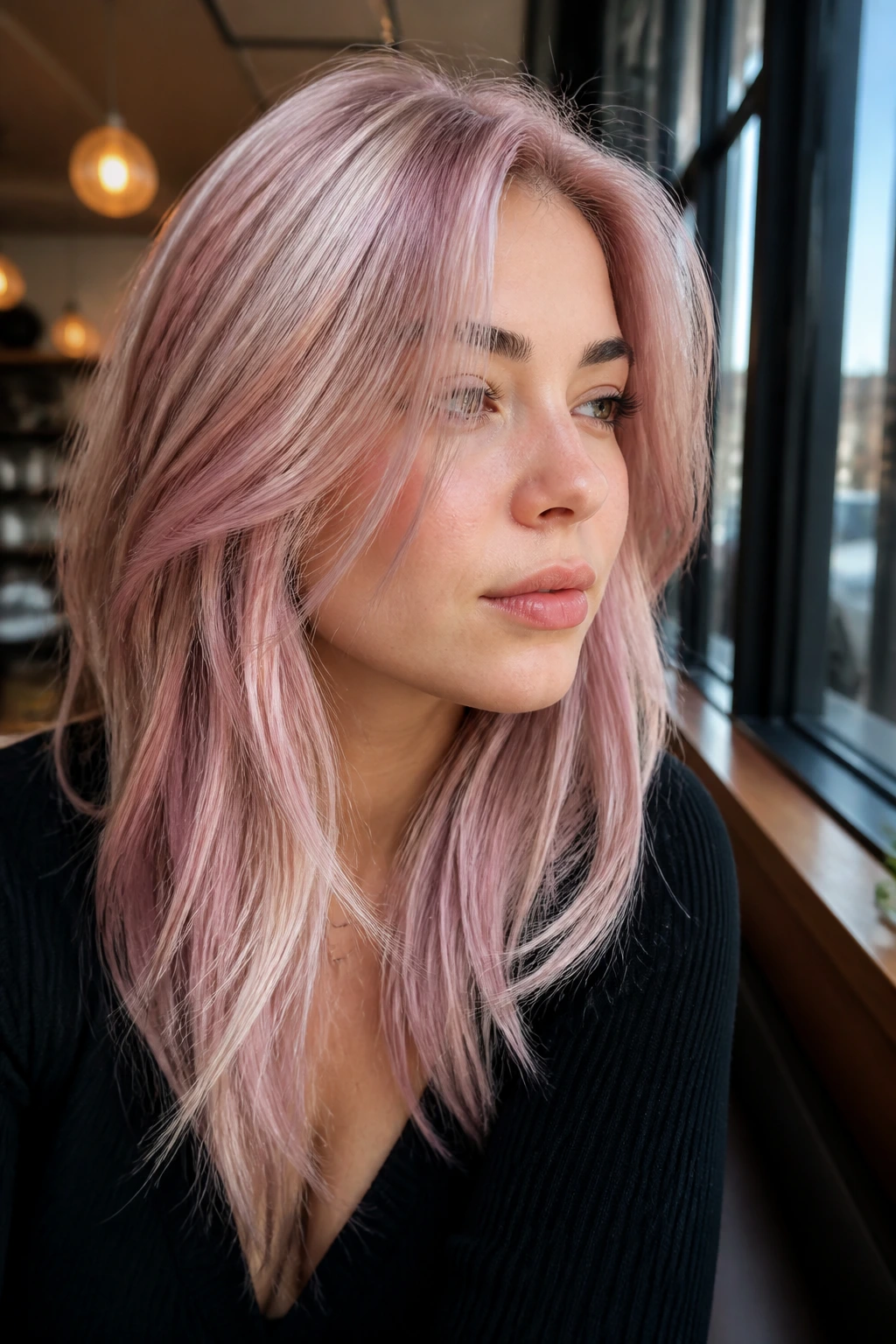
If you are hesitant to commit to an all-over pink, try a mix of milky pink highlights and darker rose-gold lowlights. This is a classic color strategy for thin hair: adding depth through lowlights while adding brightness through highlights. It provides the “density” that thin hair often lacks.
The Role of Lowlights
Lowlights are the anchor. Without them, light pink can make the hair look almost transparent. By adding a shade or two of deeper rose or dusty pink, you give the hair an internal structure. It’s a trick that stylists use to make fine hair appear to have a fuller, more complex texture.
Choosing Your Shades
- Match the lowlights to your natural undertones.
- Keep the highlights concentrated around the top and front.
- Aim for a 2:1 ratio of highlights to lowlights for a balanced look.
7. The Layered Shag in Milky Pink
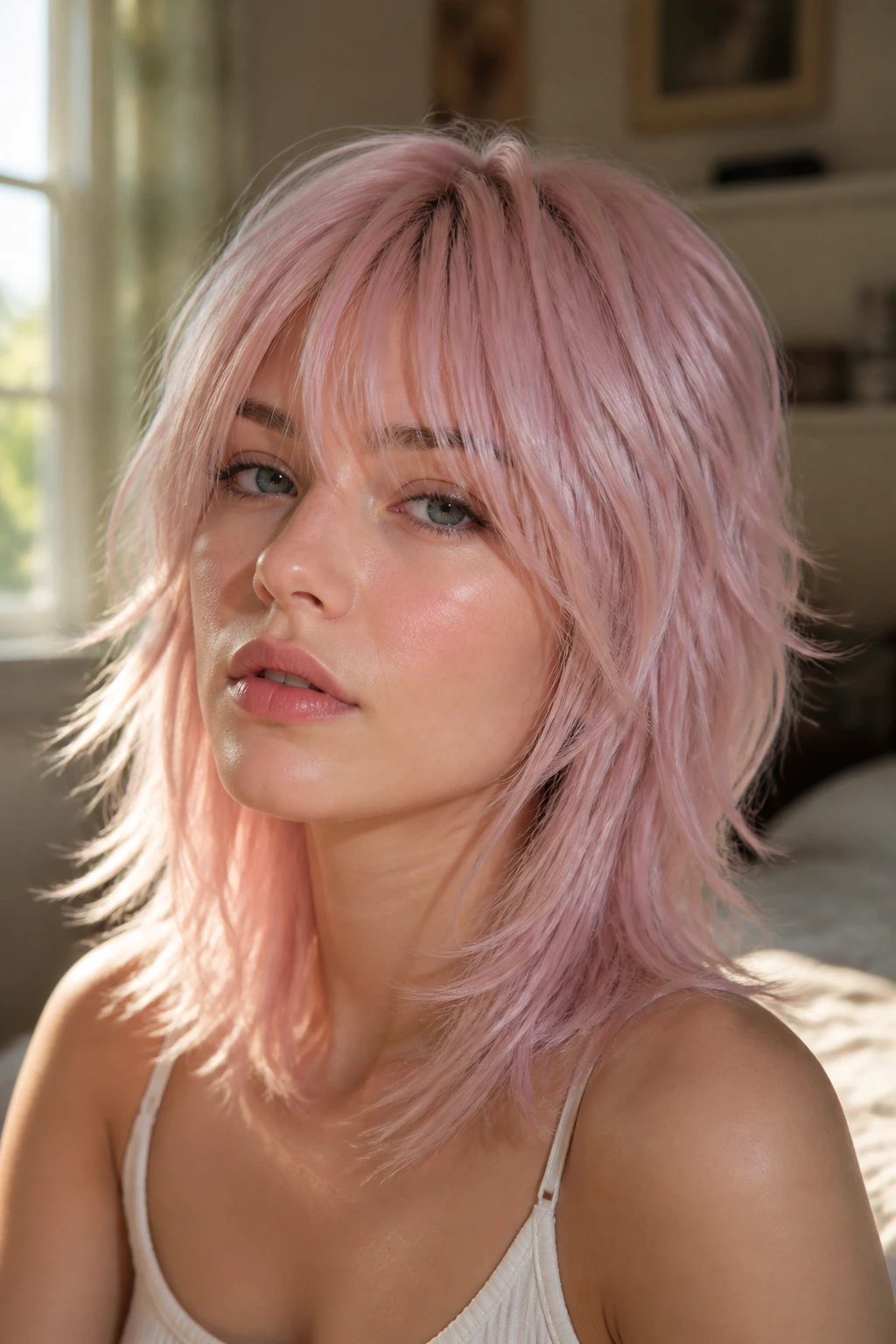
A modern shag, with its choppy, face-framing layers, is excellent for fine hair because it encourages natural texture. When colored in a soft, milky pink, the layers become visible and distinct, which highlights the fact that there is hair moving in different directions.
Why Layers Help
Layers remove weight, but they also create height. On thin hair, this height is crucial. The pink color enhances the visibility of these layers. It’s a very tactical way to style your hair; instead of trying to make your hair look thicker by leaving it long and blunt, you use the cut and the color to create an illusion of volume and texture.
Styling the Shag
- Use a sea salt spray for a matte, beachy finish.
- Avoid heavy gels that clump fine strands together.
- Use a diffuser attachment on your blow dryer to enhance the natural wave.
8. Milky Pink Ombré with a Natural Base
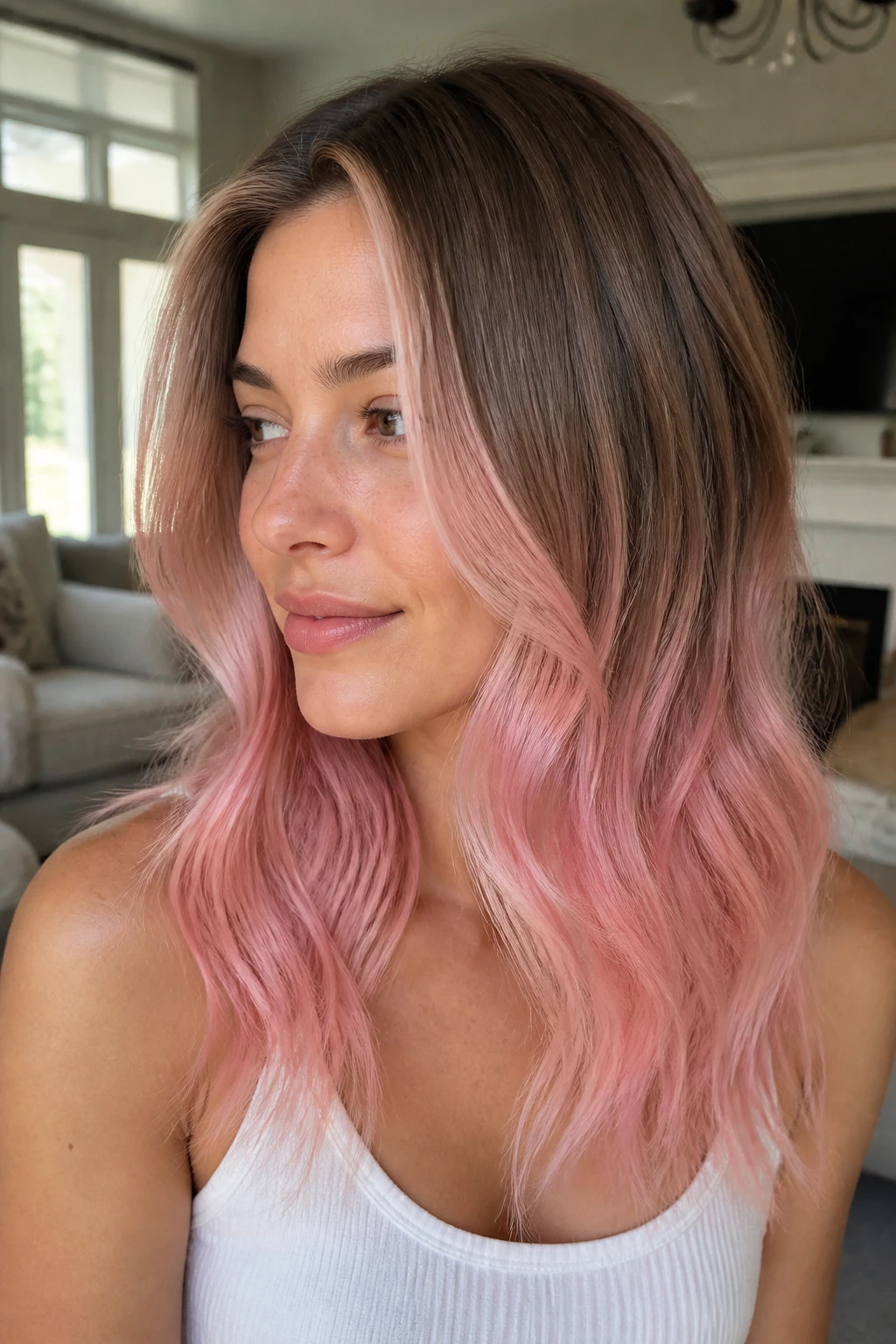
An ombré—fading from your natural root color down to a milky pink at the ends—is a low-maintenance way to wear the color. This technique works for thin hair because the concentration of the color is on the ends, which are often the most fragile part of the hair anyway.
Managing the Transition
The key to a successful ombré on fine hair is the “melt.” You want the colors to blend seamlessly. If the line of demarcation is too sharp, the eye is drawn directly to the point where your hair starts to look “thin.” A soft, blurred melt creates a continuous line that suggests length and health.
Protecting the Ends
- Use a heavy-duty leave-in conditioner specifically for colored ends.
- Trim the ends regularly, as they are the oldest and most processed part of the hair.
- Avoid excessive heat styling on the ombre section.
9. The Pixie Cut with Pastel Pink Roots
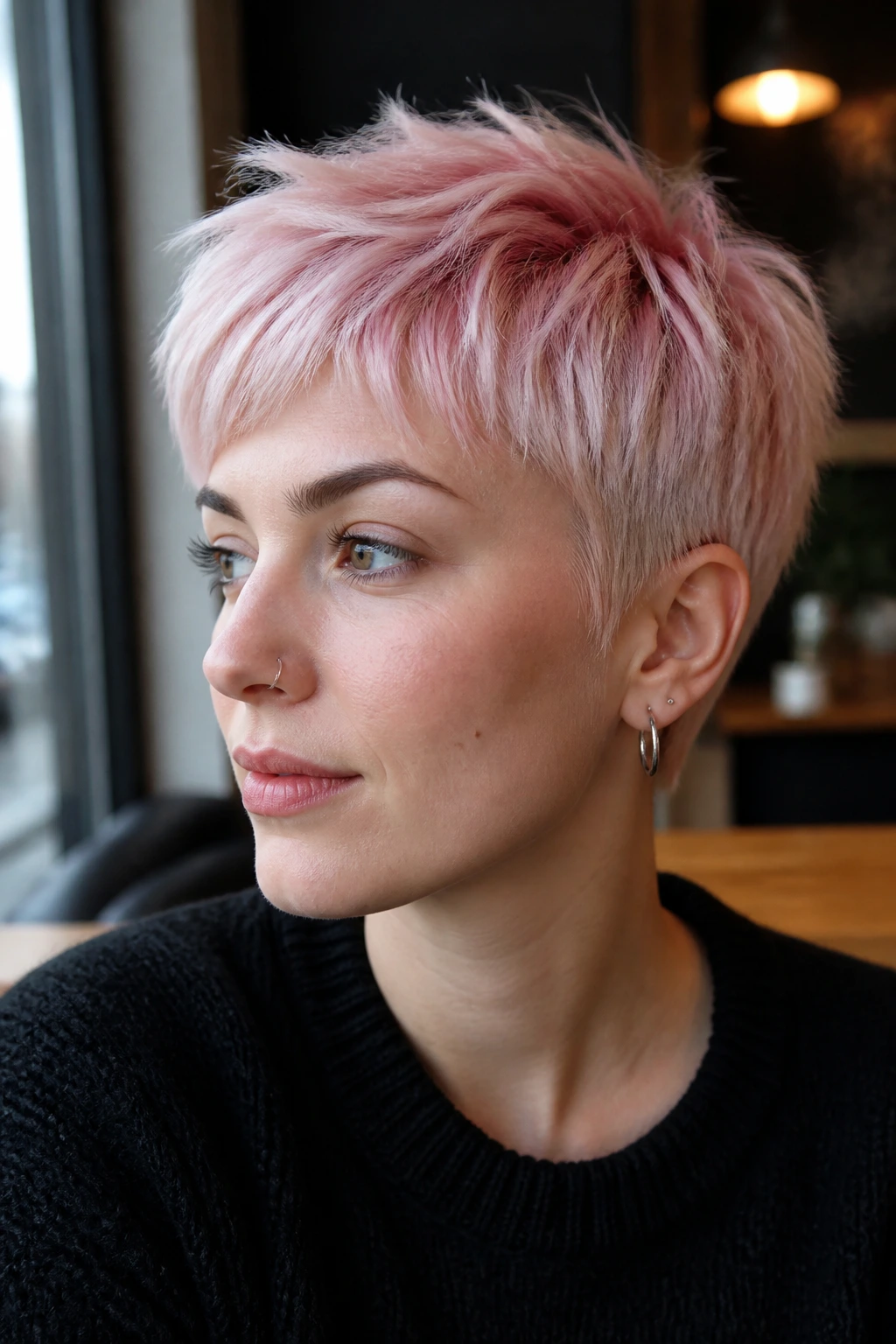
If you have very thin hair, a shorter, more aggressive cut like a pixie can be much more flattering than long, stringy layers. A pixie cut in milky pink, with slightly deeper roots, is a bold, high-fashion statement that doesn’t rely on hair volume to look great.
Why Pixies Work for Thin Hair
Length is often the enemy of thin hair. By going short, you minimize the appearance of breakage and maximize the “bounce” of the hair. Adding a pale pink hue turns the cut into a piece of art. It’s a style that feels intentional and well-maintained, regardless of how much hair you actually have on your head.
Maintaining the Pixie
- Use a pomade or wax to define the layers.
- Consider a semi-permanent gloss to keep the pink fresh.
- Expect to visit the salon every 4 weeks for a shape-up.
10. Milky Pink with Silver Underlights
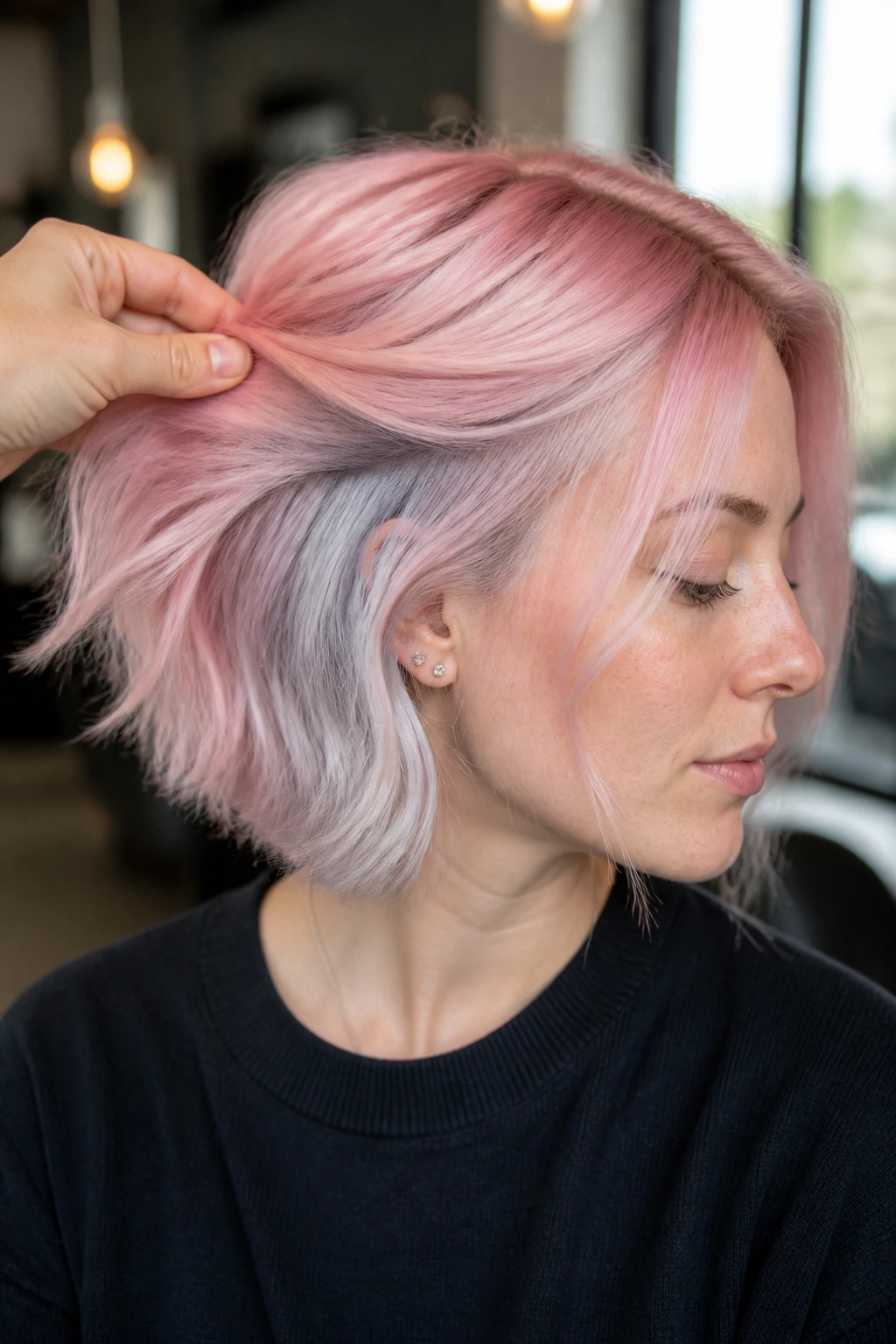
Underlights—where the color is hidden beneath the top layer of hair—are perfect for those who want to play with milky pink but keep a professional appearance. For thin hair, this also prevents you from having to bleach the entire head, saving the integrity of your most visible top layers.
The Benefit of Underlights
You only need to lighten the section underneath, which preserves the health of your scalp-covering hair. When you pull your hair up into a half-up style, you reveal the pink, creating a peek-a-boo effect. It’s a way to enjoy the trend without compromising the overall texture or density of your hair.
How to Style
- Try a “half-up, half-down” look to maximize visibility.
- Use a straightener to smooth the top layer over the pink for a sleek effect.
- Experiment with braiding the hair to show off the contrast between the natural color and the pink.
11. The Braided Milkmaid Crown
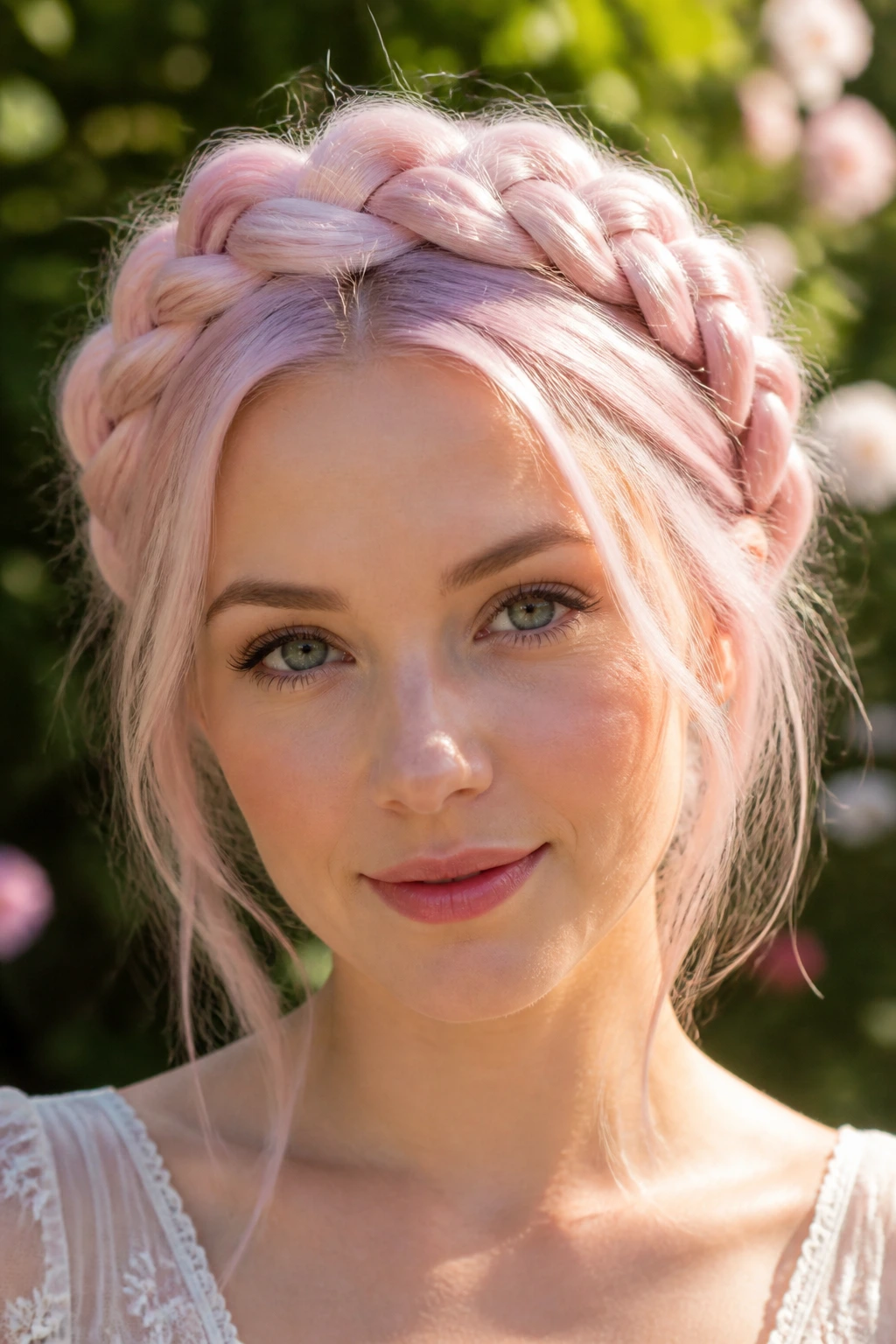
Braiding is a classic way to manage thin hair, and when you do it with a milky pink color, it looks like a soft, whimsical halo. The lightness of the pink allows the details of the braid to stand out, which is often difficult with darker hair colors.
Adding Volume to Braids
For thin hair, the trick is to “pancake” the braid. Once you’ve secured the braid, gently pull at the loops to make it look wider. The milky pink shade creates a beautiful, soft texture that mimics the appearance of a much thicker, more voluminous braid. It’s a perfect style for events or just a day when you want to feel a bit more elevated.
Braid Maintenance
- Use a light-hold hairspray to prevent flyaways.
- Avoid hair ties that pull or rip the strands.
- Section your hair carefully to ensure even tension throughout the braid.
12. Soft Milky Pink Waves
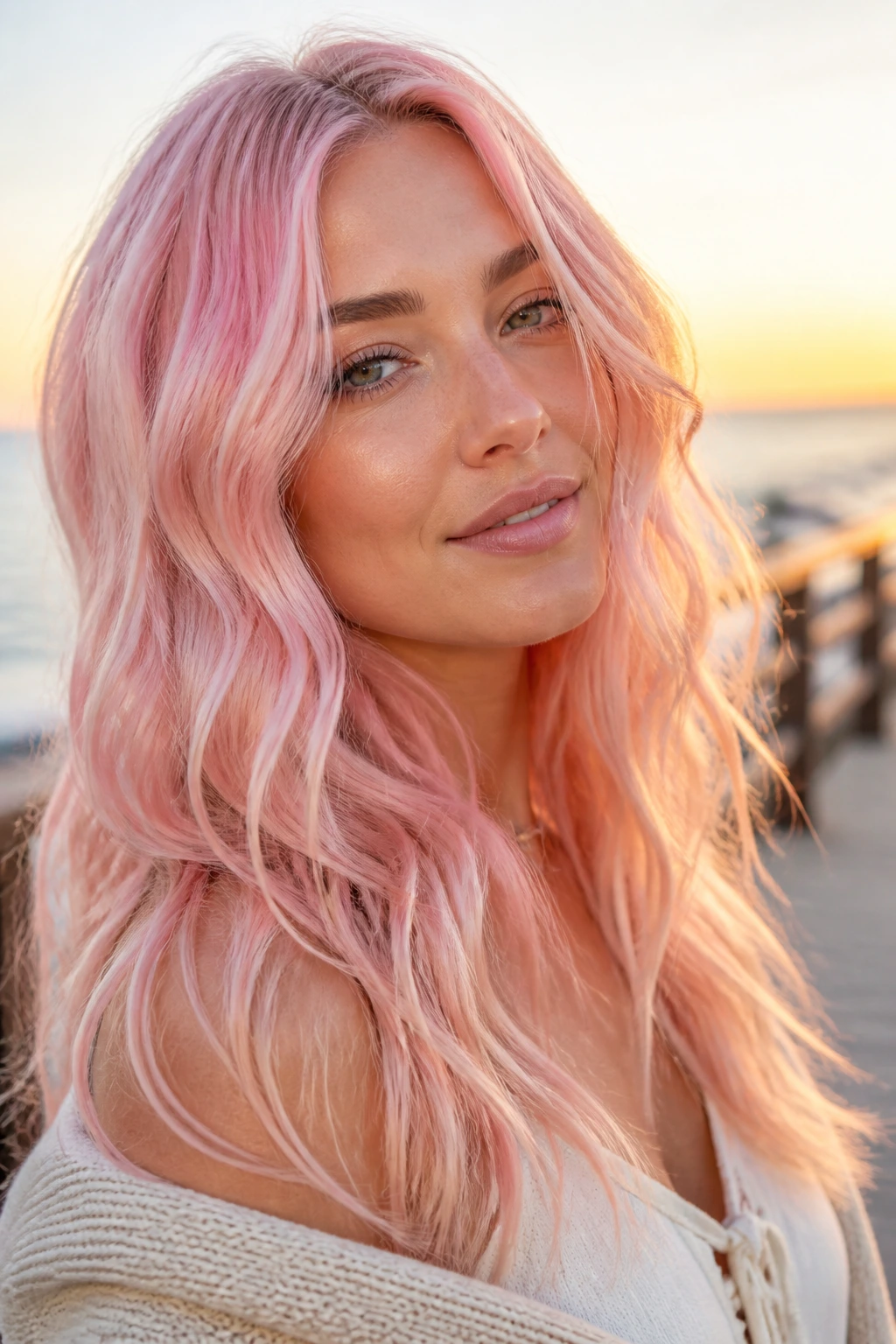
Using a wide-barrel curling iron to create loose, soft waves is a classic way to add volume to thin hair. When you combine this with a milky pink color, you get a look that is soft, feminine, and airy. The waves create physical space between the strands, making the hair look significantly thicker.
The Strategy for Fine Waves
Do not over-curl. You want the waves to look like a natural bend in the hair. Use a heat protectant spray—this is non-negotiable for anyone with color-treated thin hair—and work in smaller sections to ensure the wave holds. The pink color will reflect light off the curve of the waves, adding a shimmer that makes the hair look full of life.
Styling Tips
- Start the curl mid-shaft to avoid weighing down the roots.
- Let the curls cool completely before brushing through them.
- Finish with a very light texturizing mist.
13. The Sleek High Ponytail
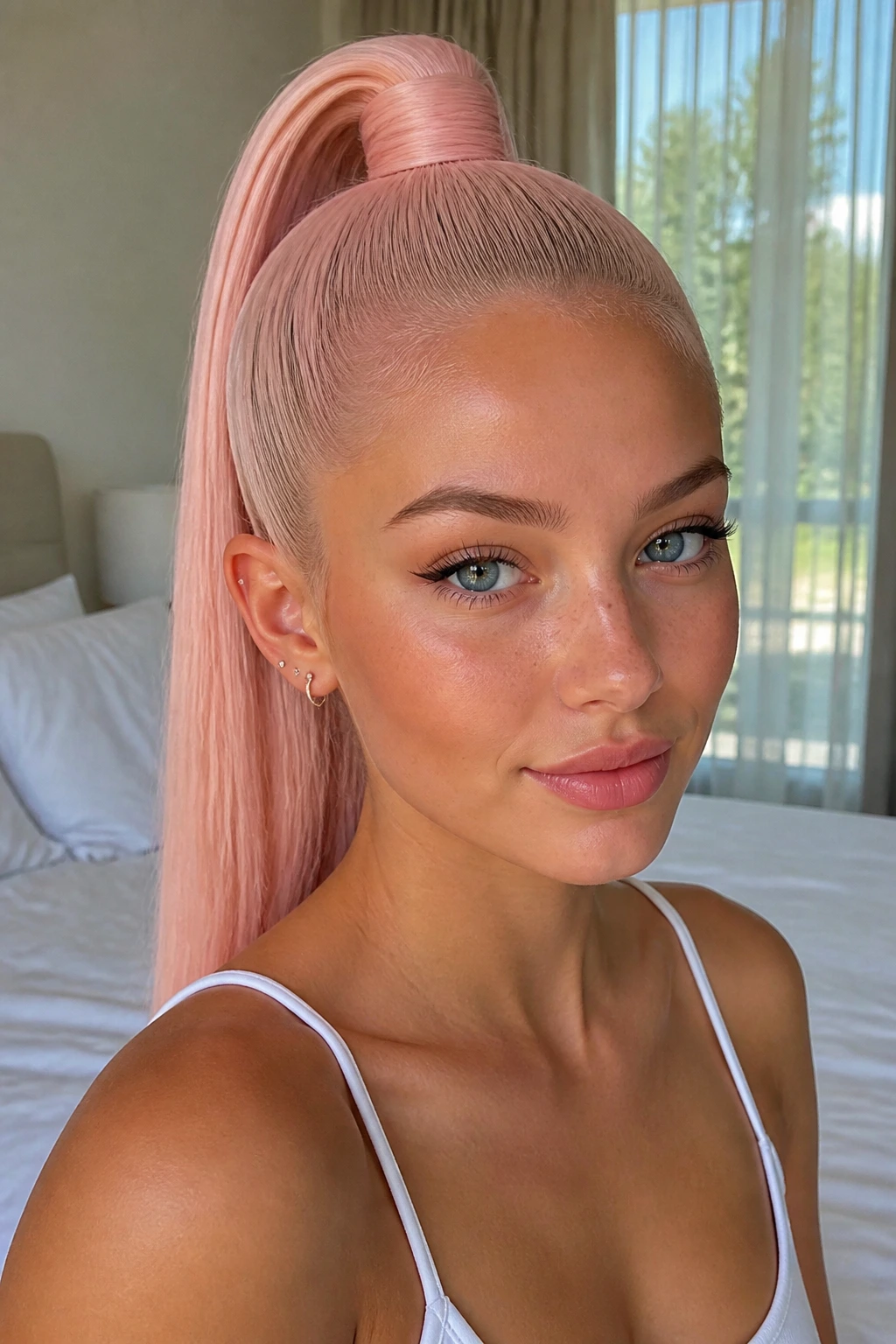
A tight, sleek ponytail is a classic look, but for thin hair, it can sometimes reveal too much scalp. To make this work with milky pink, focus on creating a “wrapped” ponytail, where you use a small section of your hair to cover the elastic band.
Why This Works
The pink hue adds a layer of visual interest to the sleekness, drawing the eye to the color rather than the thickness of the ponytail. To add more body, you can tease the hair at the base of the ponytail, or use a small “donut” insert if you really need extra volume. The milky pink makes the ponytail feel like a styled choice rather than a necessity.
Pro Tips for Ponytails
- Apply a bit of dry shampoo to the roots before tying it up.
- Use a silk ribbon to add an extra layer of style and coverage.
- Keep the ends sharp and well-trimmed.
14. Retro Milky Pink Victory Rolls
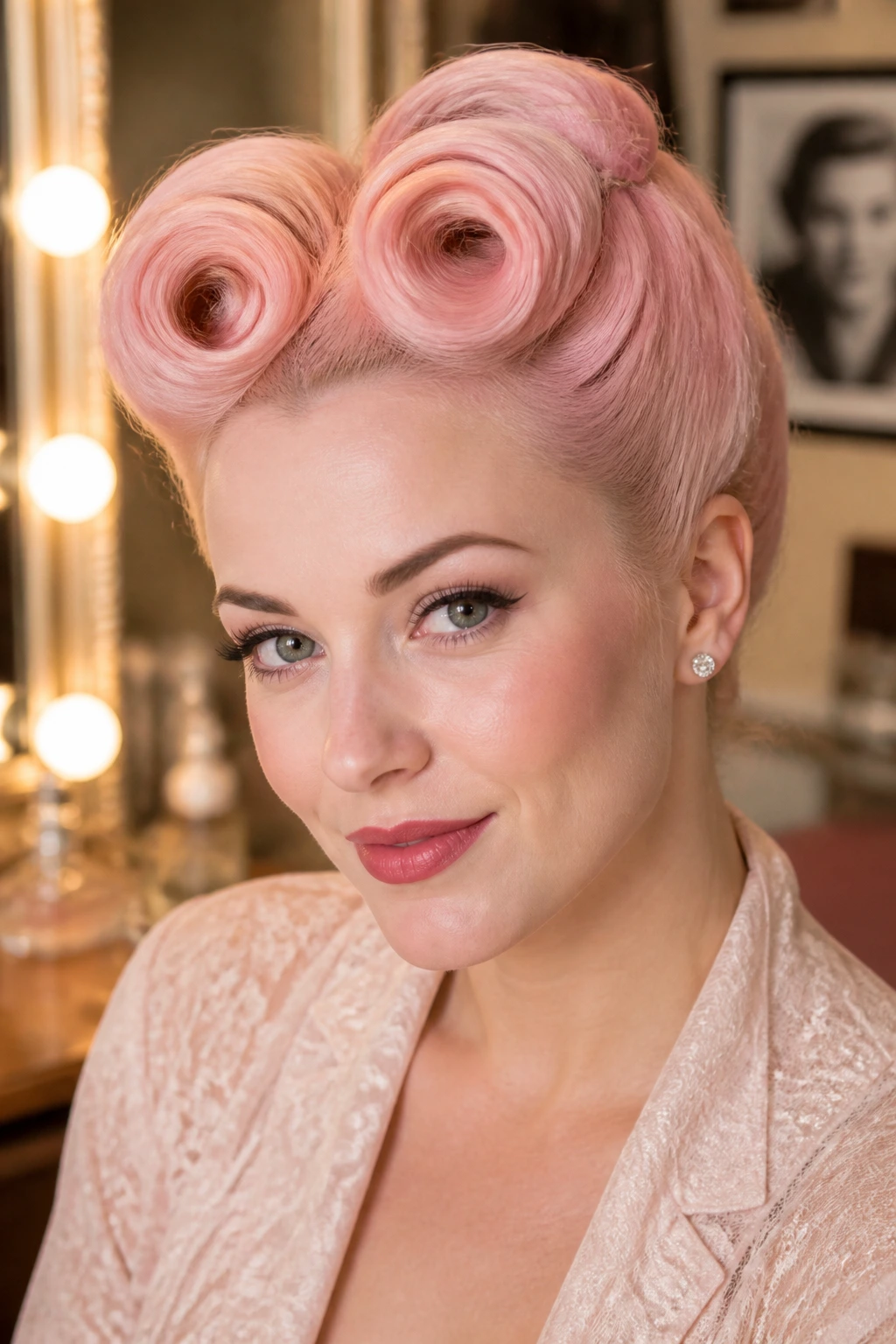
If you enjoy vintage aesthetics, victory rolls are a great way to add volume to thin hair. These structured, rolled styles use a significant amount of the hair’s surface area, making the hair appear much denser than it would if left hanging loose.
Achieving the Look
The milky pink color adds a playful, modern twist to the 1940s-inspired look. Because thin hair is easier to manipulate and roll, it’s actually quite well-suited to this style. Just make sure to use enough pins to secure the rolls, and consider using a little bit of root volumizer to give yourself a solid base to work with.
Styling Requirements
- Use a firm-hold hairspray to keep the rolls in place.
- Don’t worry about perfect symmetry; slight variations add character.
- Keep the hair well-conditioned, as this style can be taxing on the ends.
15. Half-Up Twist with Milky Pink Accents
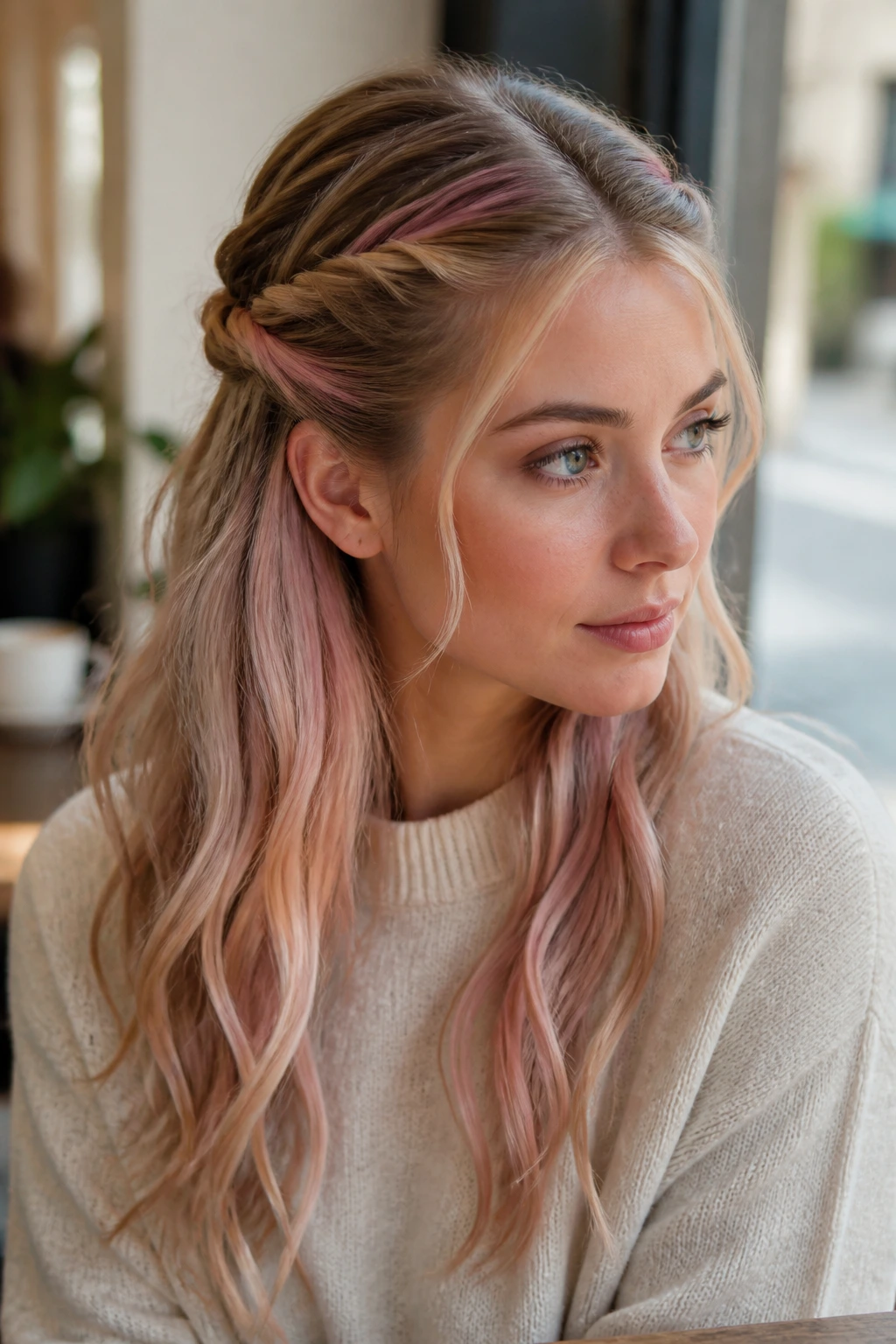
A simple half-up, half-down twist is the perfect everyday style. When you add a bit of color in the form of balayage or highlights, the twist highlights the variation in color, making the hairstyle look more complex and substantial than it really is.
Enhancing the Twist
The key here is the “twist.” Instead of just pulling the hair back, twist two front sections and pin them together. This adds volume at the sides of the head, which is exactly where fine hair tends to look flat. The milky pink peeking through the twist makes the whole style look like a professional, Pinterest-worthy creation.
Daily Maintenance
- Use small, clear elastic bands to keep the twist tight.
- Pull gently on the twisted hair to add extra volume.
- A light touch of hair oil keeps the pink looking glossy, not dull.
16. Milky Pink Curtain Fringe with Layers
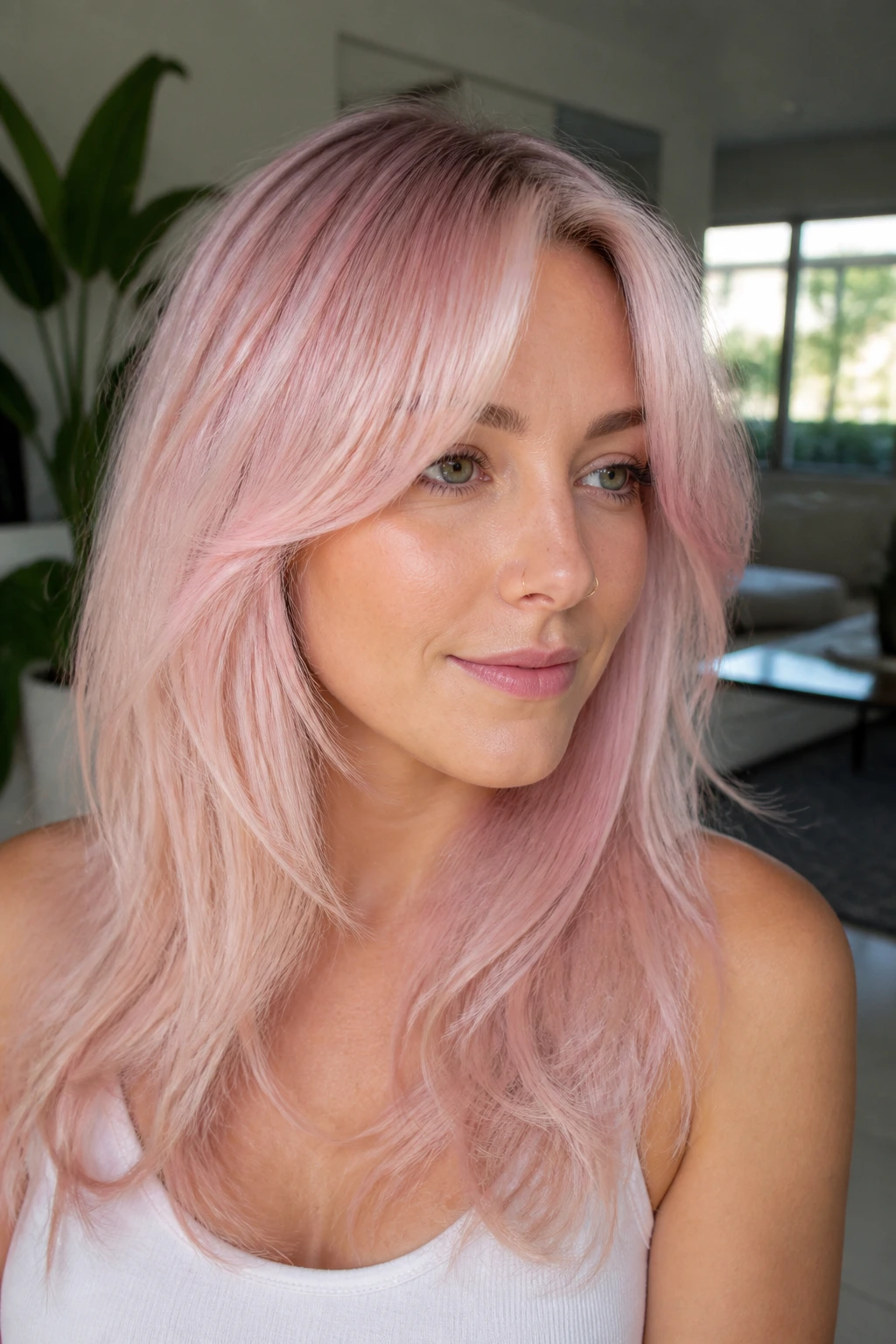
We mentioned curtain bangs earlier, but a full-head layer cut that integrates a curtain fringe is the best way to get movement throughout your hair. This is essentially a “soft shag.” The pink color acts as a highlighter, showing off where each layer sits.
Why Layers and Pink Go Together
Thin hair relies on the visual of layers to prove it has volume. When the color is a light, milky pink, the eye can track the light as it moves over those layers. It creates a dynamic visual experience that obscures the fact that the actual density of the hair might be thin.
Layering Strategy
- Ask for “invisible layers” that add volume without removing too much bulk.
- Make sure the fringe is cut to blend with your cheekbones.
- Regularly trim to keep the layers distinct.
17. The Textured Milky Pink Bob with Deep Roots
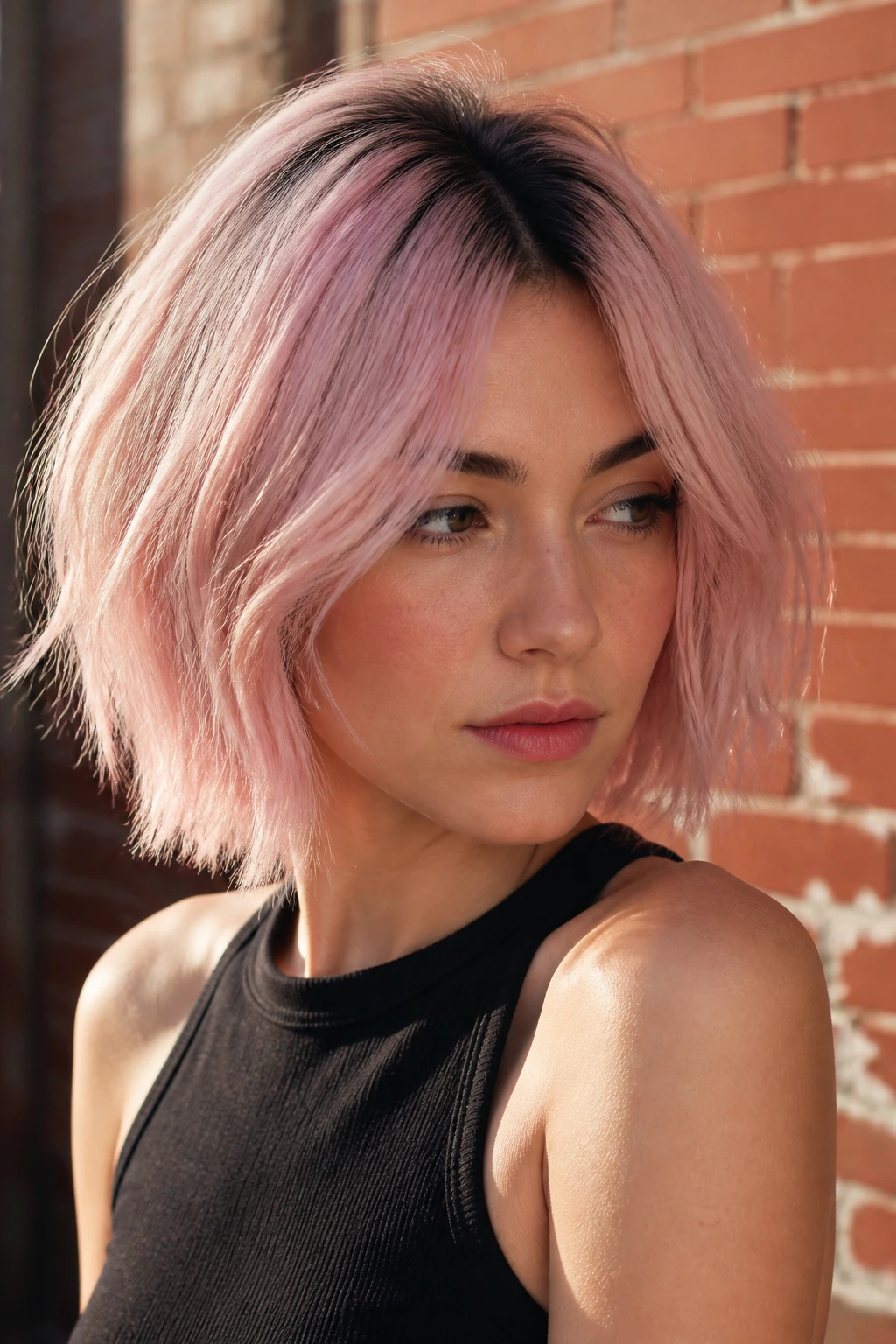
A bob is a classic, but adding a slightly darker root shadow—a “smudged” look—is the modern way to style it for fine hair. This approach combines the structure of a blunt cut with the visual depth of a shadow root.
The “Smudge” Effect
A root smudge is a technique where the stylist blurs the color transition at the scalp. For thin hair, this creates a soft, hazy look that masks the scalp. It takes the focus off the hair’s thickness and puts it squarely on the artistic color application.
Care for the Smudge
- Use sulfate-free shampoo to preserve the color transition.
- Avoid over-washing, which fades pastel pinks very quickly.
- A gloss treatment every 4 weeks will keep the milky pink looking rich.
18. Milky Pink Braided Updo
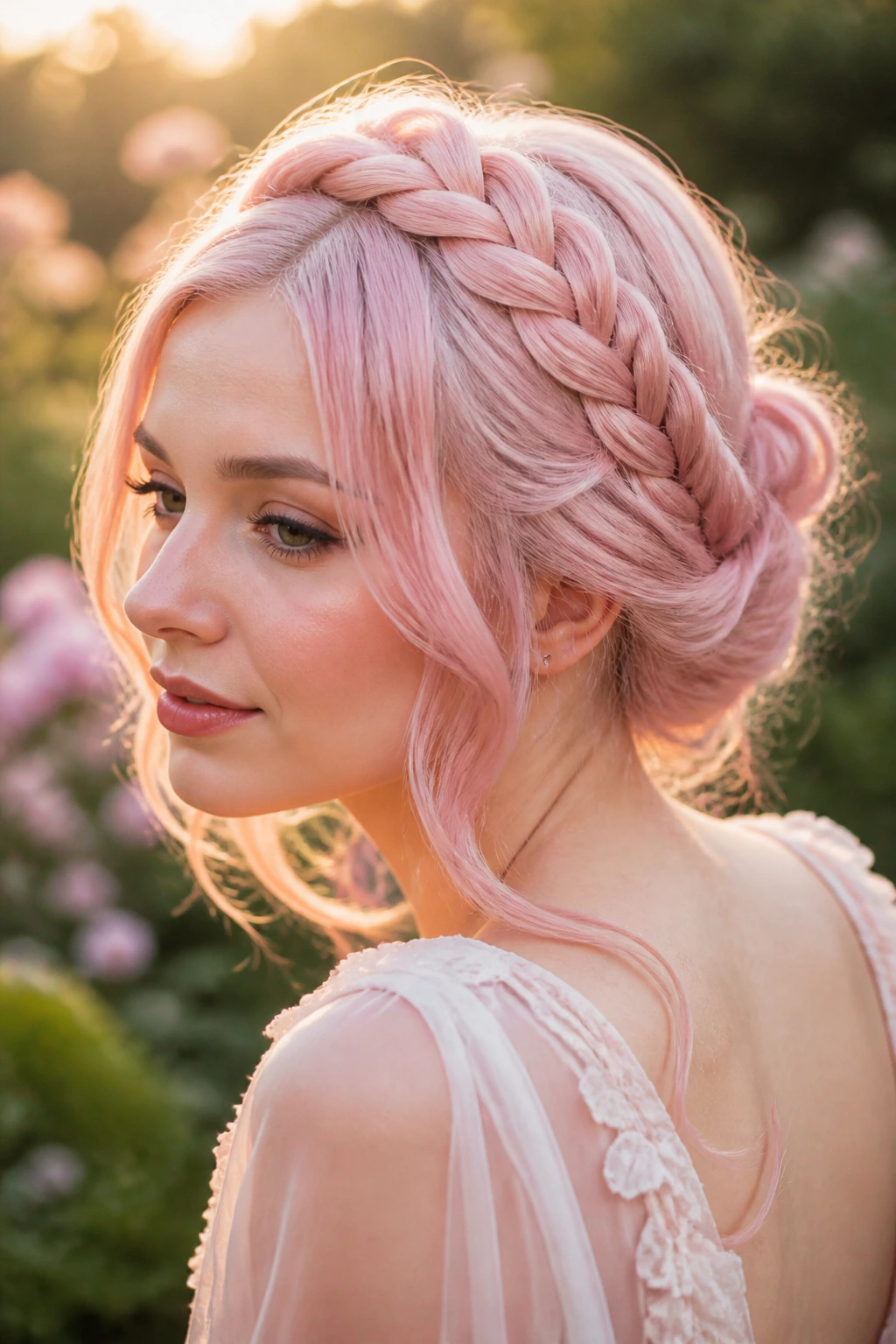
For a formal occasion, a braided updo is a great choice for fine hair. By pinning sections of the hair into a textured crown, you are essentially creating a support structure for your hair. The milky pink color makes the braid look soft, delicate, and intentionally romantic.
The Strength of the Updo
Braids are incredibly forgiving. They hide the fact that there isn’t a lot of hair to work with by creating a “web” of texture. The pink color adds to the aesthetic, making the style look like something out of a fairytale. It is a fantastic way to handle thin hair on a day when you need it to look and stay put.
Securing the Style
- Invest in high-quality hairpins that won’t slide out of fine hair.
- Use a bit of texture paste to ensure the hair has enough grip.
- Start with dirty, day-old hair if possible; it holds a braid much better.
19. The Deep Side Part with Milky Pink
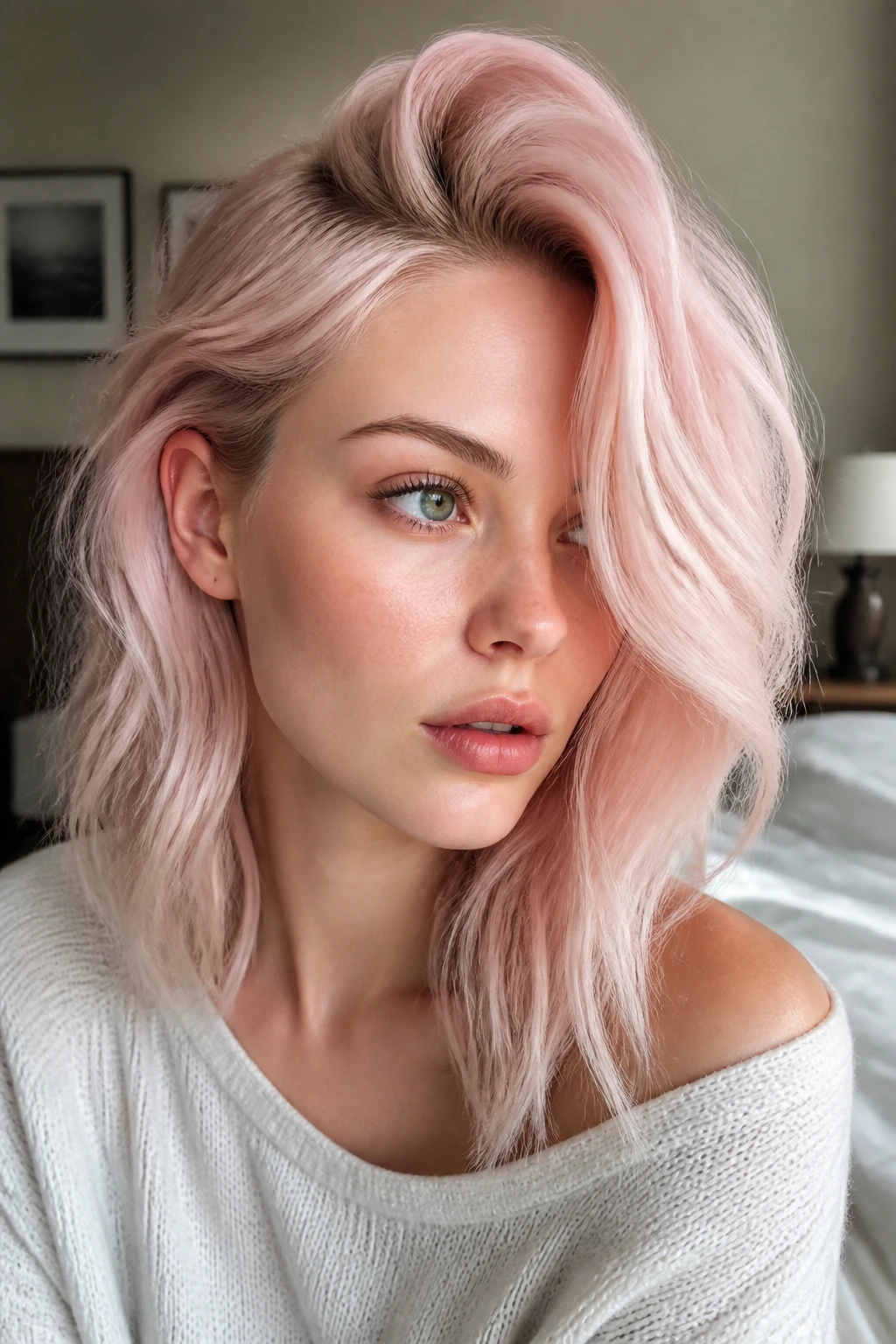
Sometimes, simply changing your part is enough to change your hair game. A deep side part instantly creates more volume at the crown. When paired with a milky pink color, it looks intentional, stylish, and high-maintenance—even if it took you two minutes to style.
Maximizing the Part
The deep side part creates a “sweeping” effect, which is perfect for fine hair. The extra weight of the hair pushed to one side creates an illusion of density. The pink color ensures that the side sweep looks like a deliberate style choice. It’s a small change that offers a big visual payoff for those struggling with hair volume.
Parting Tips
- Use a fine-tooth comb to get a razor-sharp part line.
- A little root lift spray at the crown will keep the side sweep from falling flat.
- Don’t be afraid to switch sides every few days to prevent training your hair to lay flat in one direction.
20. Milky Pink Peek-a-Boo with Dark Natural Base
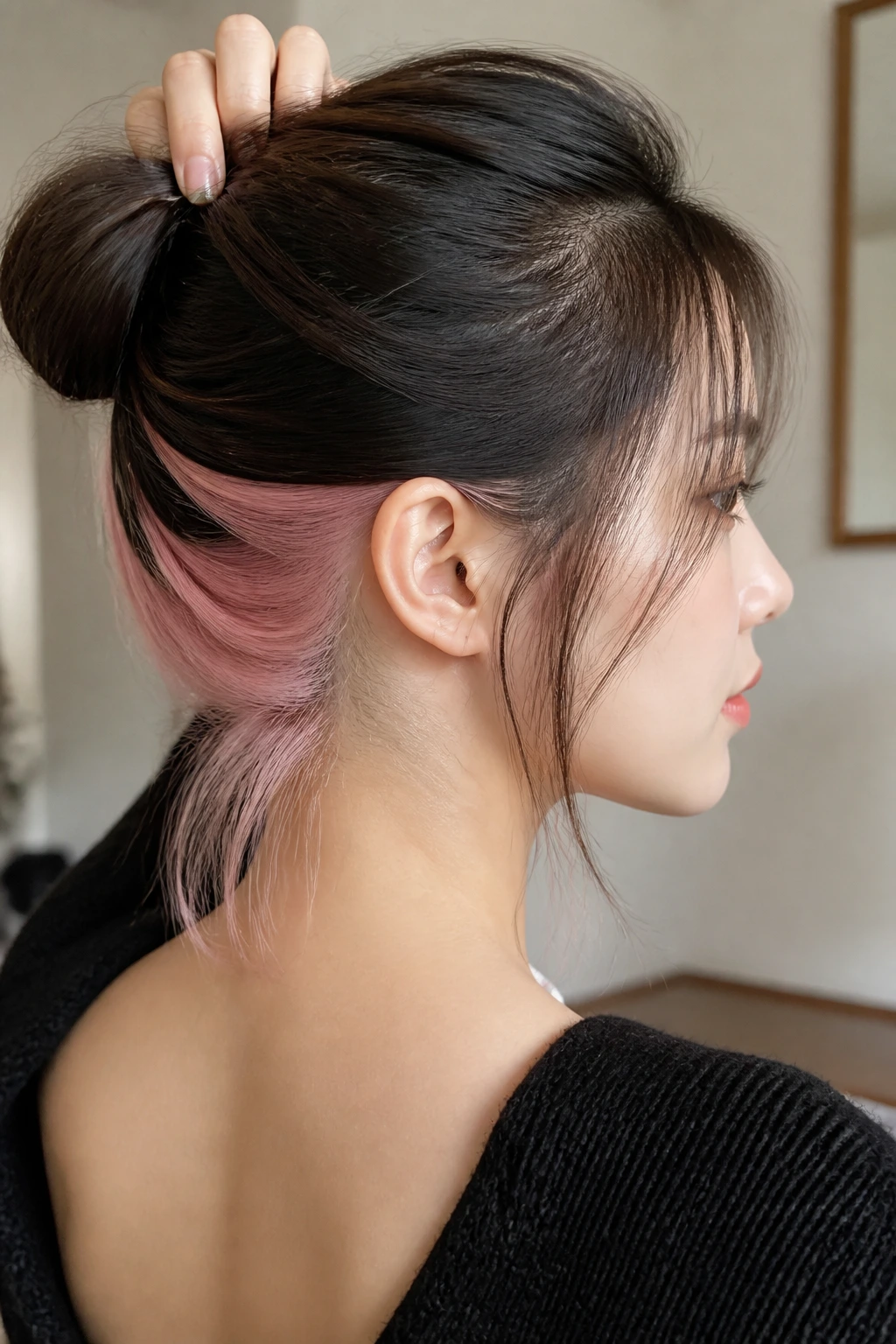
If you really want to protect your hair, consider a peek-a-boo style where you only color the nape of the neck. For thin hair, this is the ultimate compromise. You get the fun, vibrant color of milky pink, but the majority of your hair remains its natural, stronger, untreated self.
Managing the Contrast
The secret here is ensuring your natural base is healthy. If you have a dark base, the contrast between the natural color and the milky pink is striking. It makes the pink look even brighter and more “milky” by comparison. This is a very low-stress way to experiment with color.
Long-Term Strategy
- You only need to bleach the nape section, keeping the rest of your head safe.
- It’s very easy to cut off if you decide you don’t like it.
- It allows for easy touch-ups since the color is confined to one area.
Final Thoughts
The journey to finding the right hairstyle when your hair is on the thinner side is entirely about embracing cut, color, and texture. Milky baby pink is not just a trend; it is a versatile, light-reflecting color that, when applied with the right techniques—like shadow roots, balayage, or strategic blunt cuts—can actually enhance the appearance of your hair rather than highlighting its thinness. The goal is to work with the natural properties of your hair, using these styles to create movement, depth, and volume where it doesn’t naturally exist. Whether you choose a bold pixie, a classic bob, or simple face-framing layers, remember that the healthiest version of your hair is always the most beautiful. Treat your locks with gentle products, minimize high-heat styling, and lean into the soft, ethereal beauty that this specific shade of pink provides.