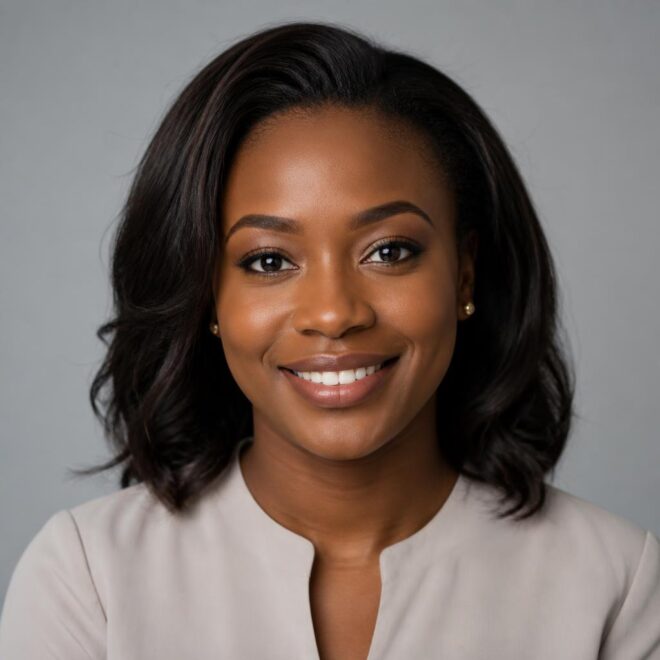


A strong, square jawline is a striking, beautiful feature. Think of the sculptural strength, the sharp definition, and the unmistakable presence it brings to a face. But when you are sitting in a salon chair staring at the mirror, finding a haircut that celebrates those angles without making your face look like a strict, heavy block can feel incredibly frustrating.
Traditional styling advice often tells you to hide your jawline under heavy curtains of hair. That is a massive mistake. It looks heavy, dated, and does nothing to highlight your natural bone structure.
Japanese hairstyling takes a completely different path. Salons in Tokyo focus heavily on creating soft textures, adding movement, and using light, airy layers to gently frame the bone structure. Stylists do not just cut length; they sculpt weight using techniques like slide cutting and point cutting to create negative space around the face. This softens sharp corners while showcasing your strong features.
By incorporating specific Japanese cutting styles, you can find a look that flatters your square face while feeling incredibly light and modern. Let’s look at the most effective Japanese haircuts for square faces, focusing on how these styles break up strong horizontal lines and bring a sense of weightless movement to your hair.
1. The Airy Mashu Shag with Feathered Whisps
The Mashu shag gets its name from its rounded, mushroom-like volume at the crown, which then flows into highly texturized, feathered ends. This style works exceptionally well for square faces because the rounded top counteracts the sharp, horizontal lines of a strong jaw. The weight is kept high, pulling the eyes upward and elongating the neck.
Softening the Jawline Through Shifting Weight
By placing the bulk of the layers around the temples and ears, the haircut creates an illusion of a more oval shape. The ends are heavily thinned out with slide scissors, making them wispy and light. When the hair moves, these feathered tips dance around the collarbone, diffusing the hard edge of the jaw.
Quick Style Elements
- Crown volume: Built through short, internal layers that support the top section.
- Feathered perimeter: Highly texturized ends that prevent any blunt weight lines.
- Wispy fringe: Bangs that are textured at the center and get progressively longer toward the cheekbones.
Pro tip: Use a lightweight styling cream on damp hair and pinch the ends to define the feathered pieces, ensuring they stay light rather than clumping together.
2. See-Through Bangs with a Soft Lob
A blunt bob cut straight at the jaw is the worst enemy of a square face. It acts like a literal underline, drawing a harsh frame right around your jaw. Elongating that shape into a lob (long bob) that lands two inches below the jaw changes the dynamic completely.
When you pair this longer bob with classic Japanese see-through bangs (shisuru banku), you get an incredibly flattering balance. The see-through fringe allows your forehead to peep through, which visually stretches the upper half of your face.
The sides of the lob are cut with a slight forward graduation. This means the hair naturally hugs the cheekbones, gently slicing across the sharp corners of the jawline. It is a simple, clean look that does not require hours of daily styling.
3. The Wolf Cut with Face-Framing Okurege
Why does the Japanese wolf cut work so well on a strong jawline? The magic lies in the dramatic contrast between the short, highly layered top and the longer, wispy back. It breaks up the square silhouette by creating diagonal movement.
The secret weapon of this cut is the okurege—the loose, delicate strands of hair left out around the ears and jawline. In Japanese salons, stylists carefully carve out these pieces even when the rest of the hair is meant to be tied up. For a square face, these pieces are textured to curve inward, hugging the jawline and softening the sharpest angles of the face.
How to Style the Soft Wolf
To get the most out of this cut, you want to avoid a flat, lifeless look. Focus your styling efforts on the crown and the face-framing layers.
- Apply a volumizing mousse to your roots while the hair is damp.
- Blow-dry the crown using a medium round brush, pulling the hair upward to build height.
- Use a flat iron to gently curve the face-framing okurege strands inward toward your chin.
- Finish by flicking the longer, back layers outward with a touch of styling wax for a playful texture.
4. Layered Hush Cut with Texturized Ends
Walking into a Tokyo salon, you might notice stylists cutting hair while it is completely dry. This is how the iconic Japanese hush cut is born. By cutting dry, the stylist can see exactly how the hair falls against your face in real life, allowing them to customize the layers to your specific jawline.
The hush cut is all about whisper-light layers that drape around the face like a veil. The weight is distributed so that the hair near the jaw is incredibly sparse, preventing any bulkiness that would widen the lower half of your face.
Key Details of the Cut
- Seamless transitions: No harsh steps between the short layers and the main length.
- Airy texture: Ends are point-cut to remove weight without losing length.
- Versatile styling: Works beautifully whether worn completely straight or with a soft wave.
This style is particularly great if you have thick hair that often feels too heavy or boxy around your ears.
5. The French-Japanese Rounded Bob
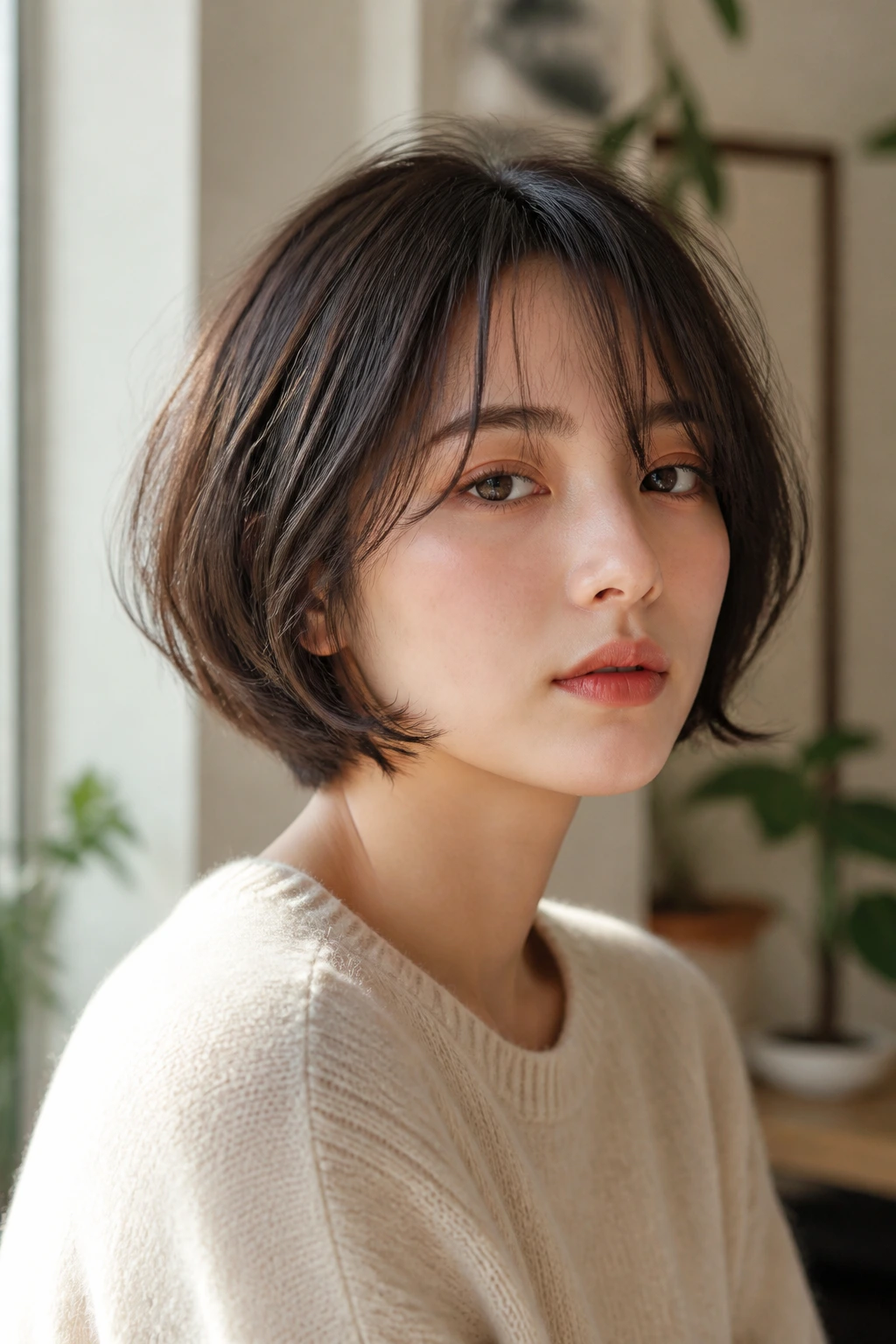
This cut combines the classic, chic shape of a French bob with the soft texturizing techniques of Japanese styling. Instead of the traditional blunt, sharp edge of a French bob, this version features heavily textured, point-cut ends that curve gently inward.
The length of this bob is critical. It must land either slightly above the jawline or well below it—never right on it. By keeping the length slightly shorter, around the lip line, and rounding the shape, you draw the eye to your cheekbones and eyes, completely bypassing the jaw.
The interior of the hair is thinned out using thinning shears in a vertical motion. This prevents the hair from poofing out at the sides, which would otherwise make a square face look wider.
It is a low-maintenance cut that embraces your hair’s natural texture, giving off a relaxed, lived-in feel.
6. Asymmetric A-Line Bob with Softened Edges
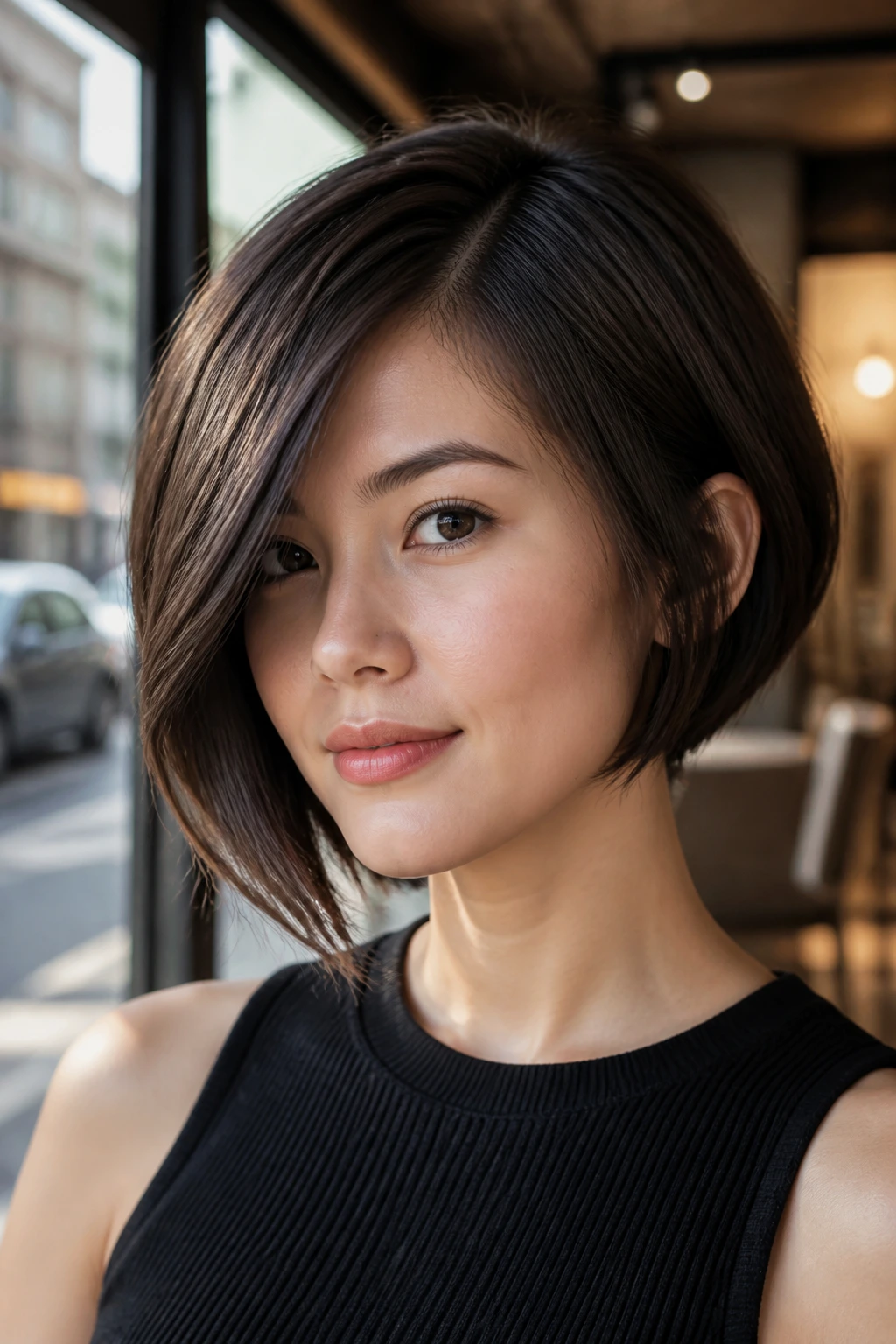
Unlike standard symmetrical bobs that act like a frame highlighting a square jaw, an asymmetric cut breaks up the facial symmetry. By having one side slightly longer than the other, you create a diagonal line across the face. This diagonal line trick is incredibly effective at distracting the eye from a prominent jaw.
The back of the hair is slightly shorter, sloping gently forward into longer front pieces. Because the edges are heavily textured rather than cut straight, they drape softly against the collarbone.
This cut is best for those with straight or slightly wavy hair who want a modern, professional look that still has plenty of movement. To style it, a simple blow-dry with a paddle brush is all you need to keep the lines clean but soft.
7. Wispy Center-Parted Curtain Layer Cut
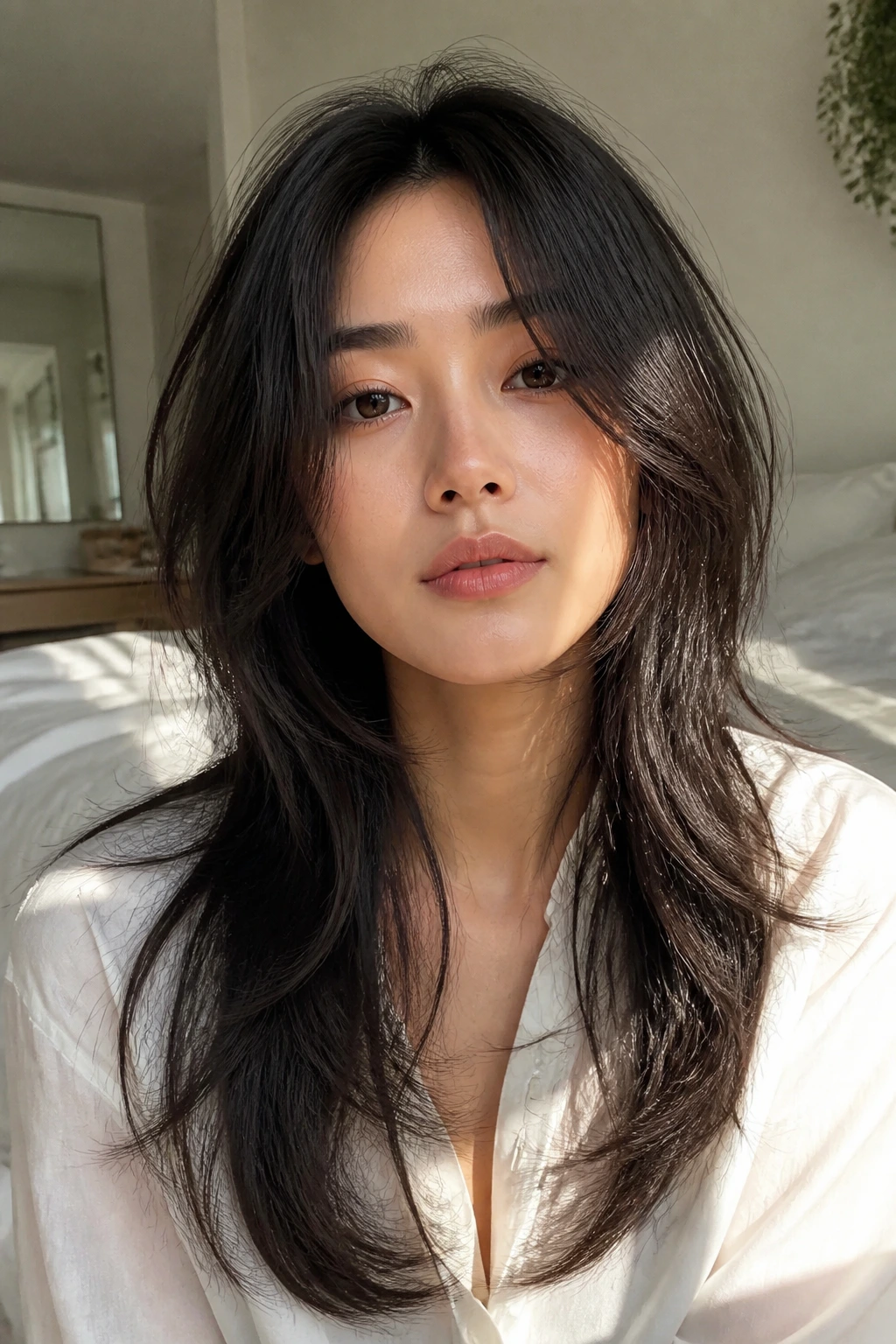
If you prefer to keep your hair long, you need layers that start right below the chin. A wispy, center-parted cut with long curtain layers is an excellent way to break up the width of a square face.
Breaking Up Width with Vertical Lines
The center part creates a strong vertical line that visually splits the face, making it appear narrower. The curtain layers start just below the jawline and cascade downward, drawing the eyes vertically rather than horizontally.
Key Features of the Cut
- Chin-length start: The shortest layers begin just below the chin to lead the eye downward.
- Slide-cut layers: Layers are cut using a sliding motion to ensure they blend seamlessly.
- Center parting: Keeps the focus on the center of the face, minimizing the prominence of the jaw corners.
Pro tip: When blow-drying, use a large round brush to roll the curtain layers away from your face, creating a soft “S” wave that opens up your cheekbones.
8. The Airy Pixie Mull with Side-Swept Fringe
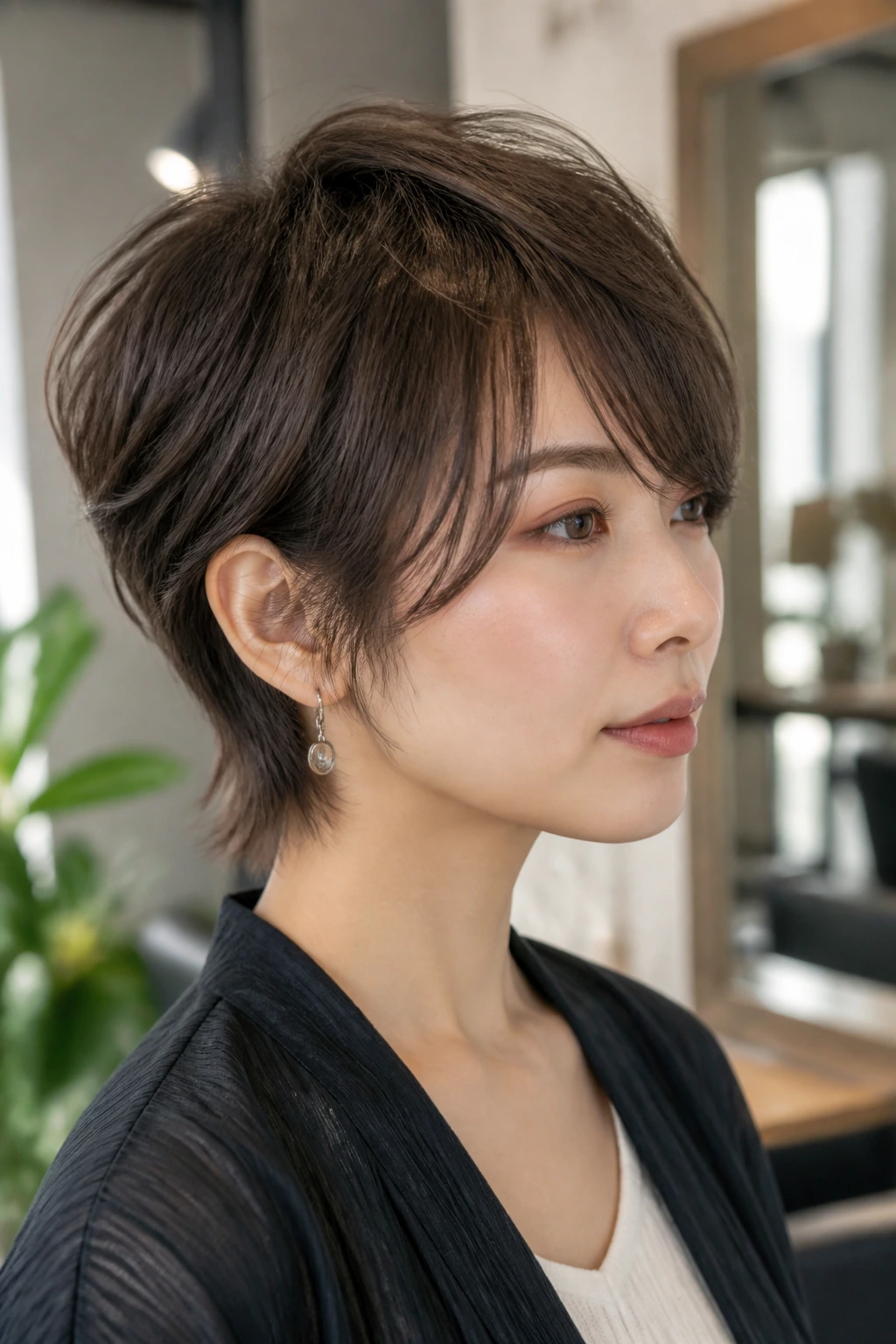
Short hair does not make a square face look masculine, provided you get the crown volume and the side pieces right. The pixie mull (a hybrid of a pixie and a soft mullet) is a fantastic option for those who want to go short while keeping things feminine and flattering.
The key to this look is keeping the sides thin and close to the head while building significant texture and height at the crown. The back is left slightly longer, resting softly against the nape of the neck.
By styling the fringe to the side, you break up the squareness of the forehead. The wispy sideburn pieces are left long enough to hug the front of the ears, softening the transition to the jaw.
9. One-Length Bob with Wispy Internal Layering
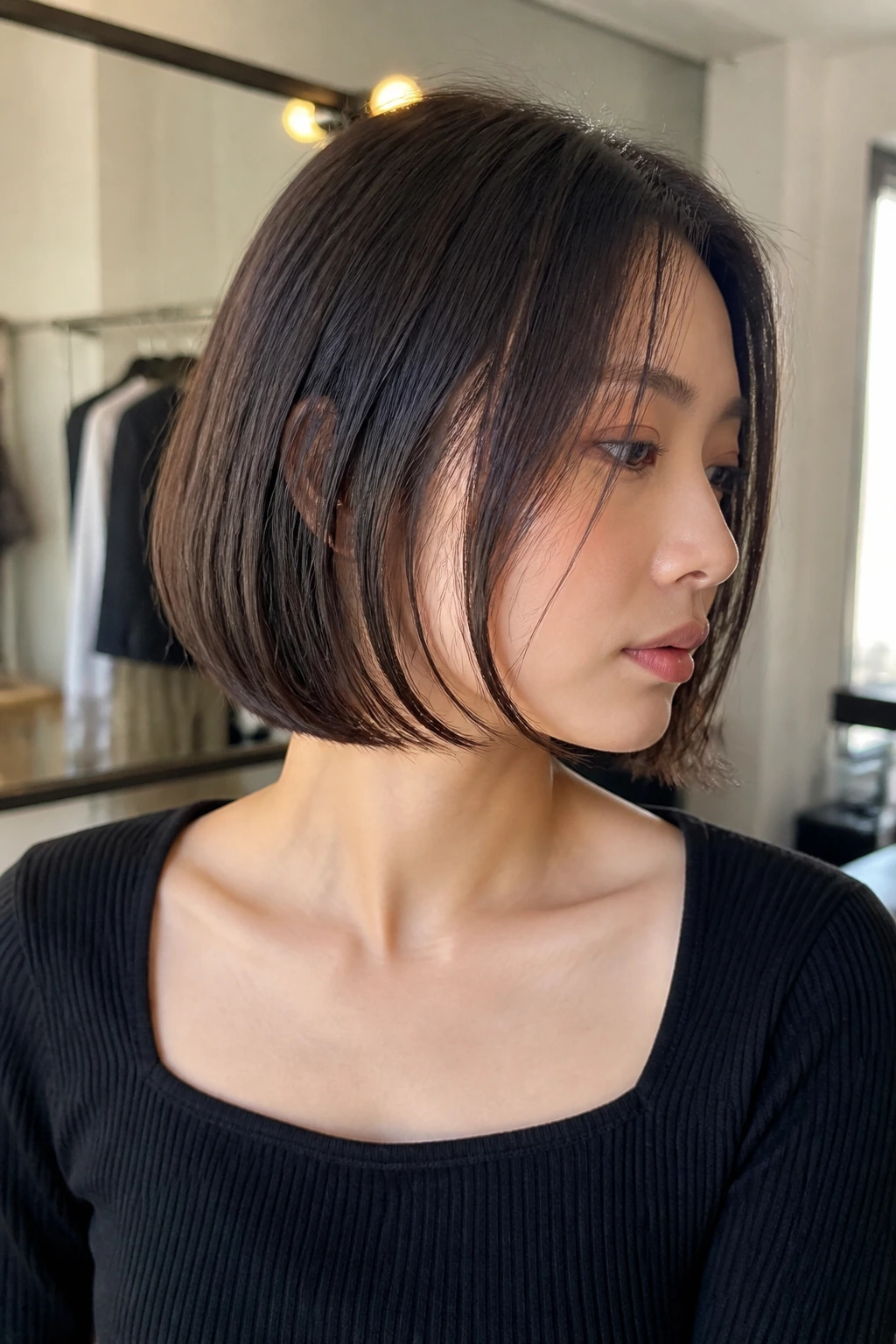
Can you actually wear a straight, one-length bob with a square face? Yes, but only if you use the Japanese technique of internal thinning (suku). To the untrained eye, this looks like a classic one-length bob, but underneath, it is a completely different story.
Stylists remove a significant amount of weight from the interior of the hair, particularly around the back of the neck and behind the ears. This allows the outer layer of hair to drape softly without being pushed outward by the hair underneath.
How to Maintain Internal Movement
Without this internal thinning, a one-length bob on thick hair will puff out into a triangle shape, making a square face look incredibly wide.
- Use a lightweight hair oil on dry hair to keep the ends sleek and close to the neck.
- Avoid heavy styling gels that can weigh down the internal layers and make the hair look flat.
- Get a trim every six to eight weeks to keep the internal weight distribution balanced.
10. The Hime Cut with Softened Side Steps
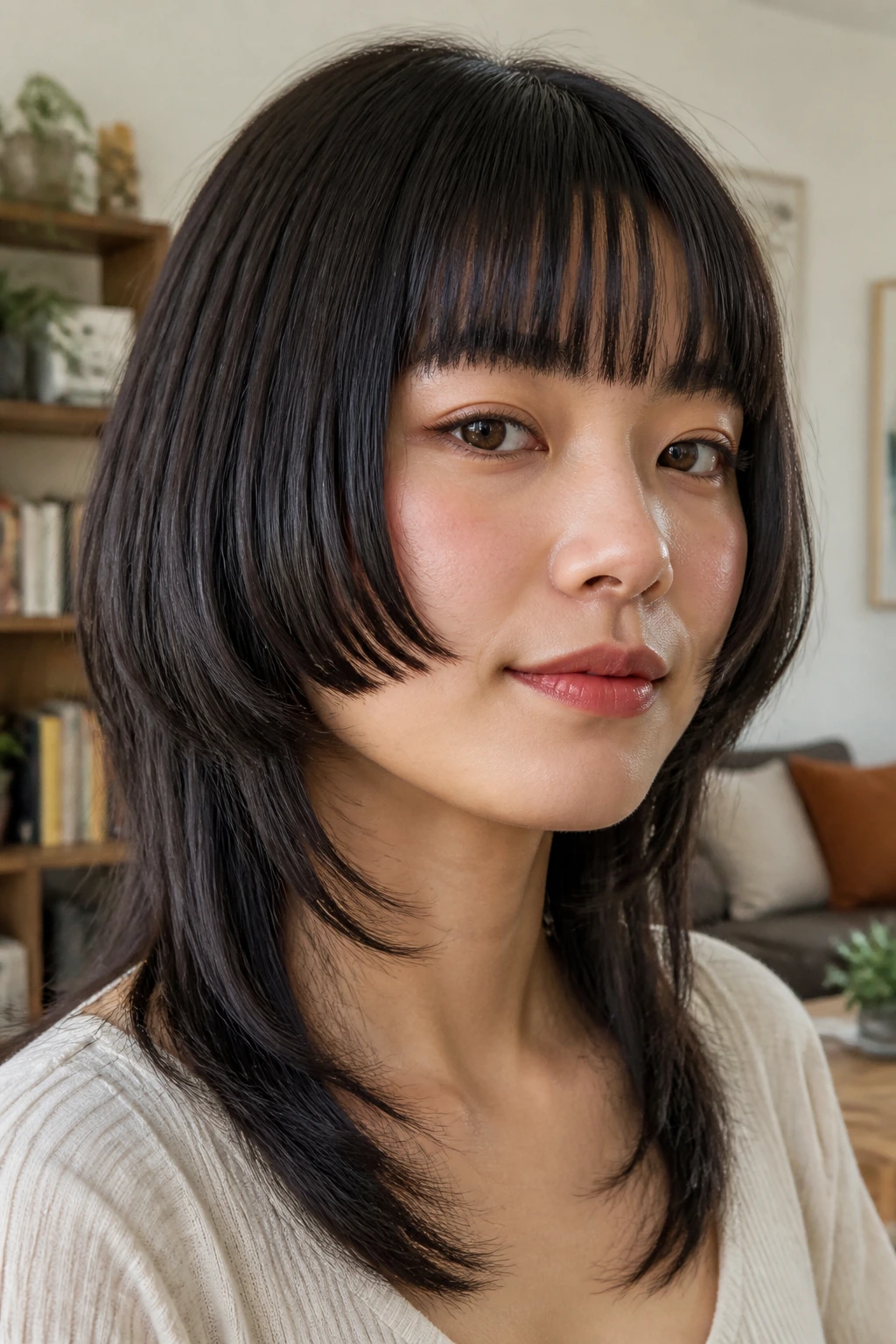
The traditional Japanese Hime (princess) cut features stark, blunt blocks of hair cut right at the cheekbones, paired with long straight hair. While the traditional version can make a square face look very boxy, the modern, softened version does the exact opposite.
Instead of a blunt, straight horizontal cut at the cheeks, modern stylists use point cutting to create a soft, diagonal step. These steps start at the cheekbone and angle downward toward the mouth.
Crucial Measurements for the Step
- Width: The side steps should not be too wide; they should only cover the outer third of the cheek.
- Angle: Cut at a slight angle rather than a flat, horizontal line.
- Texture: The ends of the steps are feathered to prevent a heavy block appearance.
This creates a beautiful, nested frame that softens the cheekbones and draws attention to the lips, completely bypassing the sharp corners of the jaw.
11. Jelly Perm Shag with Curly Face Frame
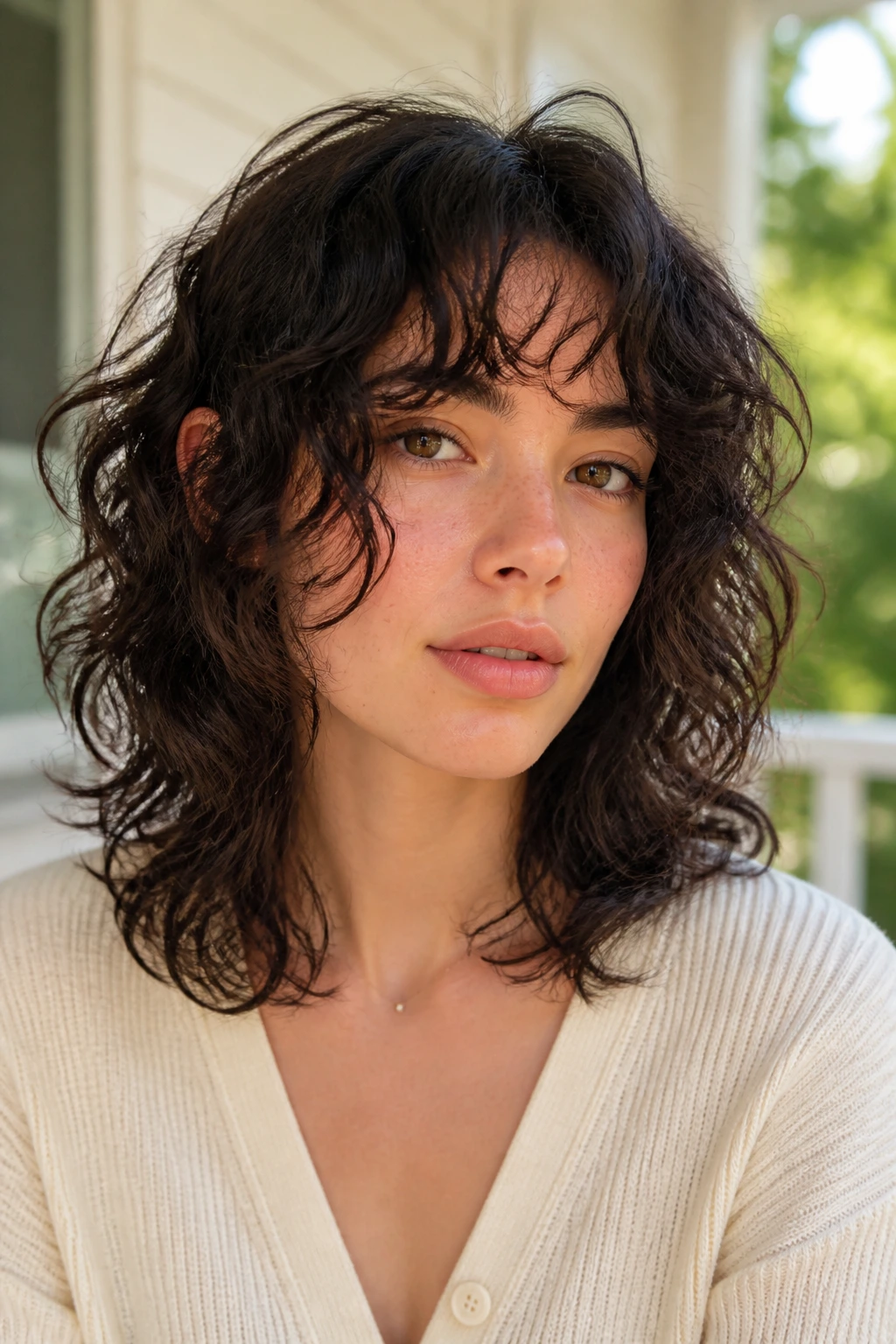
Perms are incredibly popular in Japanese salons for adding movement and volume to naturally straight hair. The jelly perm—a soft, wet-look wave—is perfect for adding roundness and bounce around a square face.
The curls break up the straight, hard lines of the jawline with organic, soft shapes. By adding layers throughout the shag, the curls are distributed evenly, preventing the hair from looking bottom-heavy.
The face-framing curls are styled to bounce lightly against the cheekbones and jaw, diffusing the sharp angles. It is a highly textured, fun style that looks best when styled with a diffuser and a touch of curl cream.
12. Long Layered Uruna Shag with Point-Cut Ends
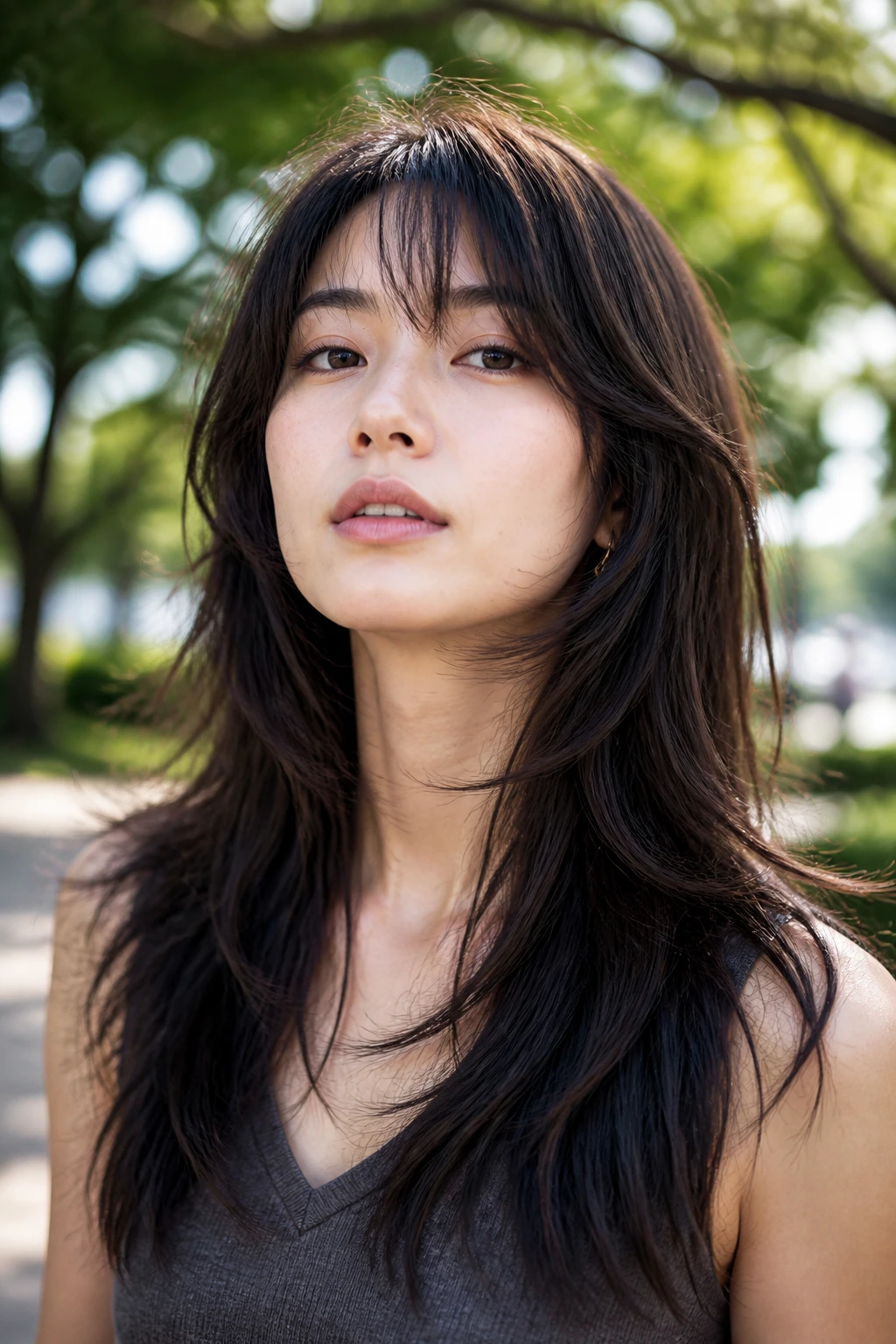
Unlike the heavy, blunt long hair often seen in some Western styles, the Japanese Uruna shag is incredibly light and full of air. The layers start around the nose level and continue all the way down to the chest.
This cut is designed to create a lot of movement. Because the ends are point-cut rather than bluntly trimmed, they do not create a solid line across your back or chest. Instead, they look light and wispy.
For a square face, this lightness is essential. It ensures that there is no heavy mass of hair sitting next to your jaw, which would otherwise make your lower face look broader. It is a fantastic option for those who love long hair but hate the weight that comes with it.
13. The Neo-Wolf Cut with Texturized Crown Volume
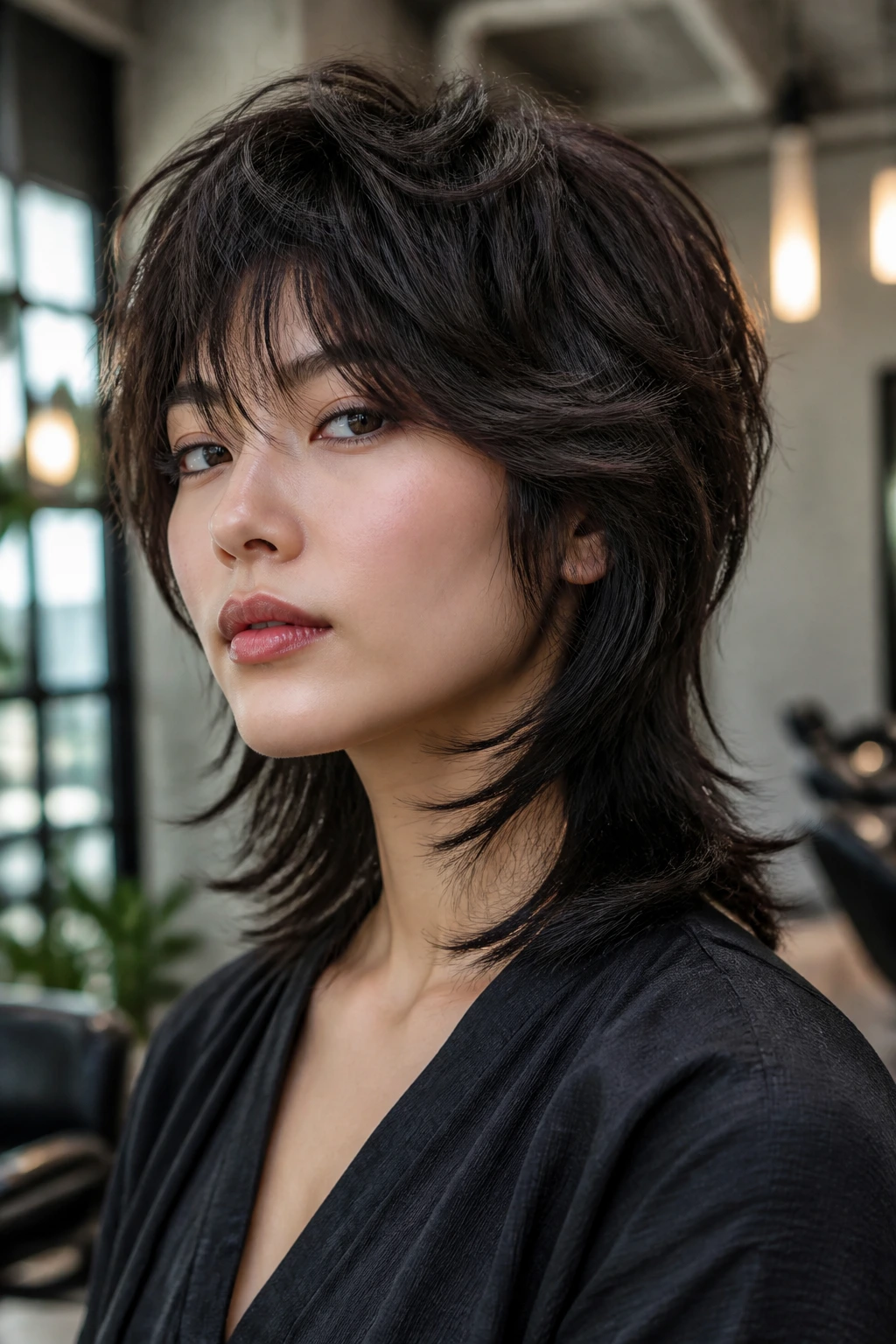
The Neo-Wolf is a more wearable, subtle version of the classic wolf cut. It tones down the extreme difference in length between the top and the bottom, making it perfect for a professional setting while still retaining all the face-flattering benefits.
Elevating the Crown to Elongate the Face
By keeping a moderate amount of layers at the crown, the style lifts the visual focus upward. The face-framing layers are cut to curve gently around the cheekbones, creating a soft parenthesis shape around the eyes and nose.
Key Attributes
- Subtle layers: Blended transition from the crown to the length.
- Soft face-framing: Layers sweep backward from the face, opening up the eye area.
- Tapered ends: Keeps the neck area looking slim and elongated.
Pro tip: Apply a small amount of styling wax to your fingertips and pinch the crown layers upward to enhance the height and texture.
14. Shoulder-Grazing Flip-Out Lob with Tapered Ends
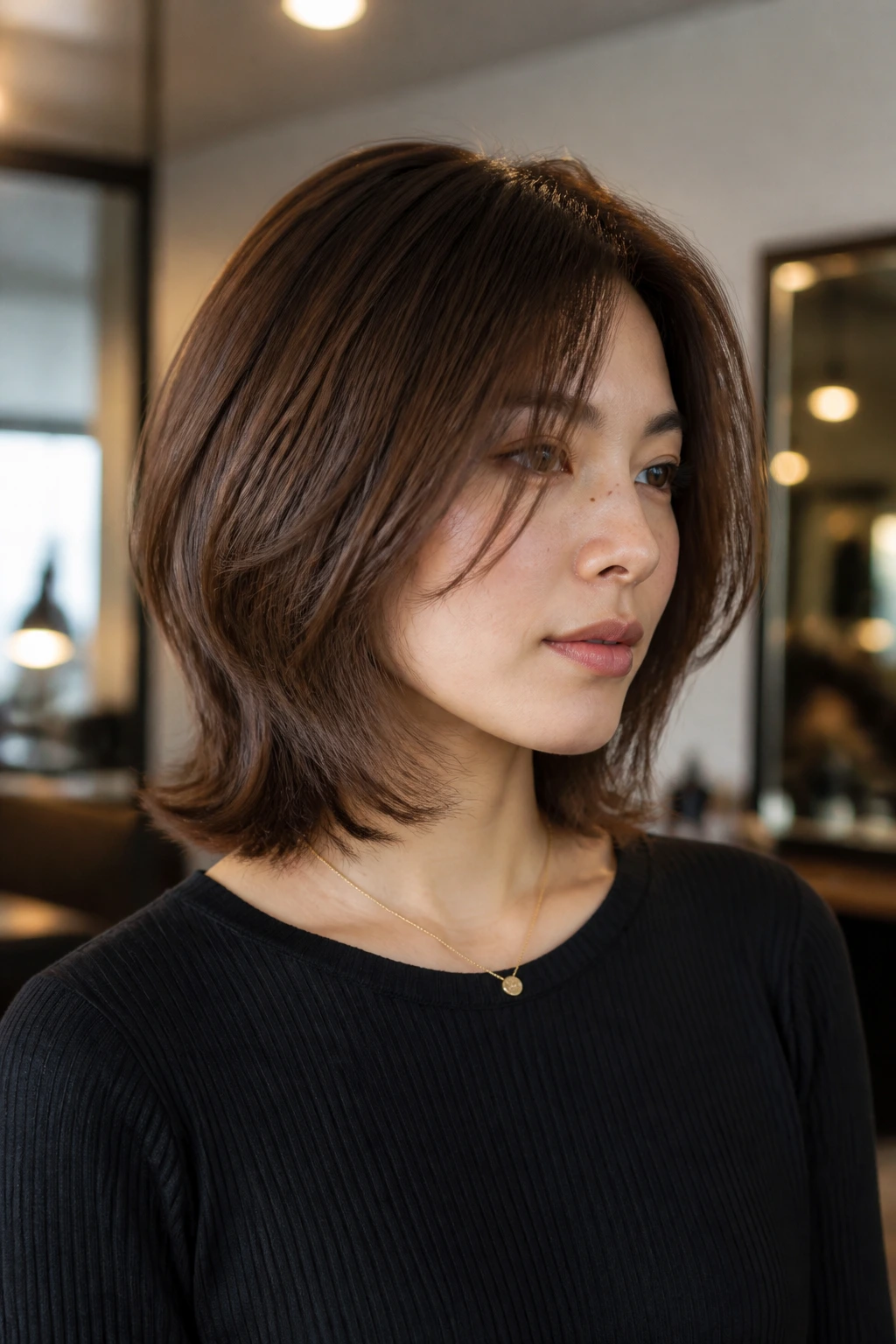
Flipping the ends of your hair outward might seem counterintuitive when trying to soften a jawline, but in practice, it works incredibly well. This style, known as soto-hane in Japan, utilizes an outward flip at the shoulders to draw the eye away from the face.
The hair is cut to graze the shoulders, with the ends heavily texturized and thinned. When blow-dried or styled with a flat iron to flip outward, the hair creates a wide, flared base.
This flared base makes the jawline look much narrower by comparison. It is a playful, energetic style that looks sleek and polished without feeling too stiff.
15. Micro-Bangs with Softly Graduated Collarbone Cut

Will micro-bangs make a square face look even boxier? Not if they are cut with a curve and paired with the right length. In Japan, baby bangs or micro-bangs are often paired with a softly graduated collarbone-length cut to create a unique look.
The micro-bangs are cut in a soft arch, being shortest in the center of the forehead and curving downward at the temples. This arch mimics the natural curve of the eyebrows, softening the upper face.
From the temples, the hair graduates down to the collarbone in soft, face-hugging layers. This graduation creates a long, diagonal line that slims the sides of the face.
Styling Tiny Bangs Correctly
To keep micro-bangs looking soft rather than blocky, avoid using heavy styling products.
- Blow-dry the bangs immediately after washing, brushing them from side to side to eliminate any cowlicks.
- Use a tiny drop of lightweight hair oil to piece them out, allowing some of your forehead to show through.
- Let the side graduation pieces fall naturally forward to hug your cheeks.
16. The Airy Volume Short Bob with Curved Jawline Frame
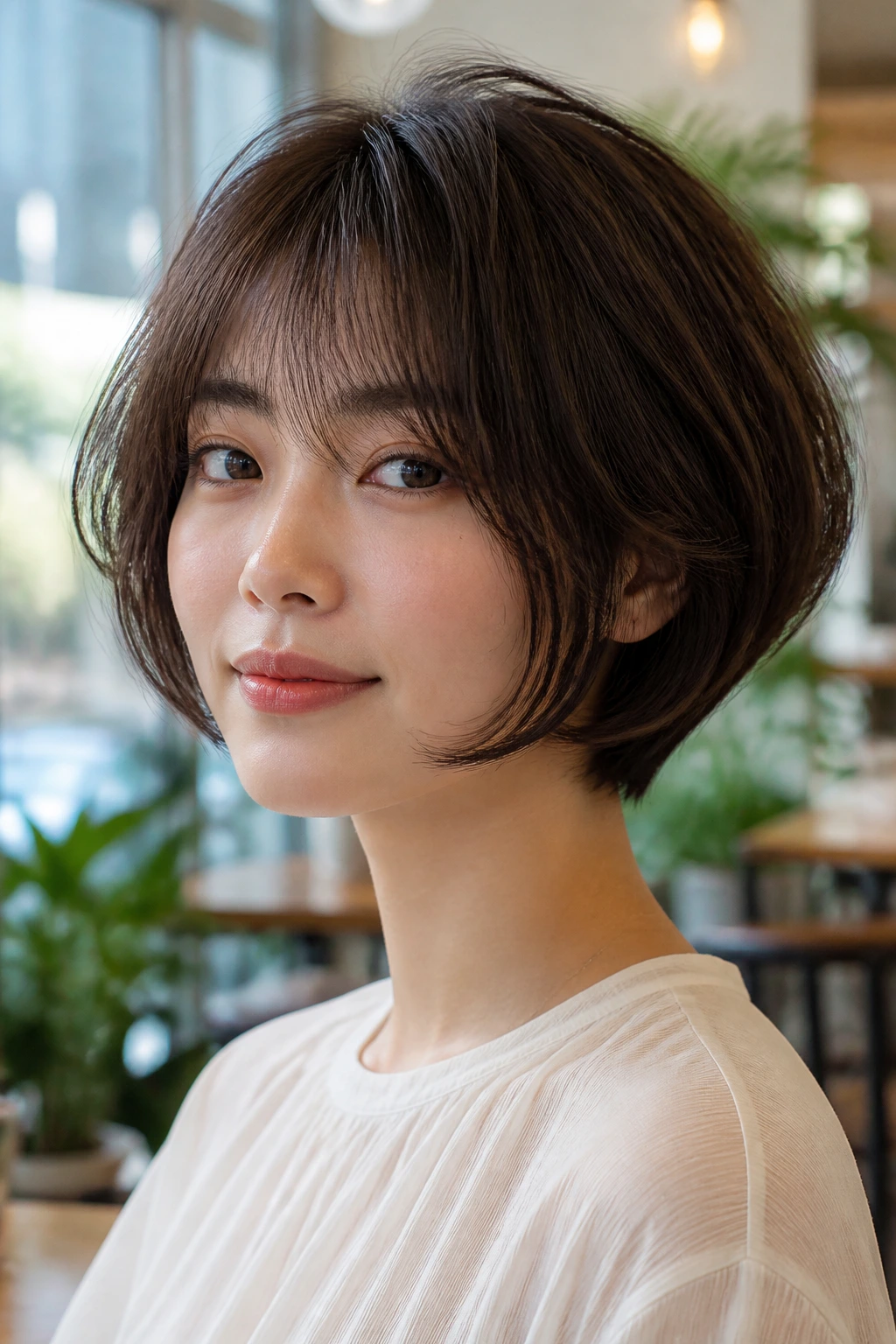
If you love a classic short bob but worry about your jawline, this Japanese curved bob is the answer. The haircut features a rounded back that builds volume at the occipital bone, creating a beautiful profile.
The side pieces are cut with a gentle forward curve, designed to sweep toward the chin. Because the hair is textured internally, it naturally curls inward under the jaw, acting as a soft, physical frame that hides the sharpest angles.
Structural Checkpoints
- High weight line: The heaviest part of the cut is at the back, level with the ears.
- C-curve sides: Side sections are cut to bend naturally toward the face.
- Beveled ends: Stylists cut the hair at an angle so it curls inward without the need for heavy styling.
This look is clean, elegant, and exceptionally flattering for those with fine to medium hair textures.
17. Face-Framing Layered Long Wave
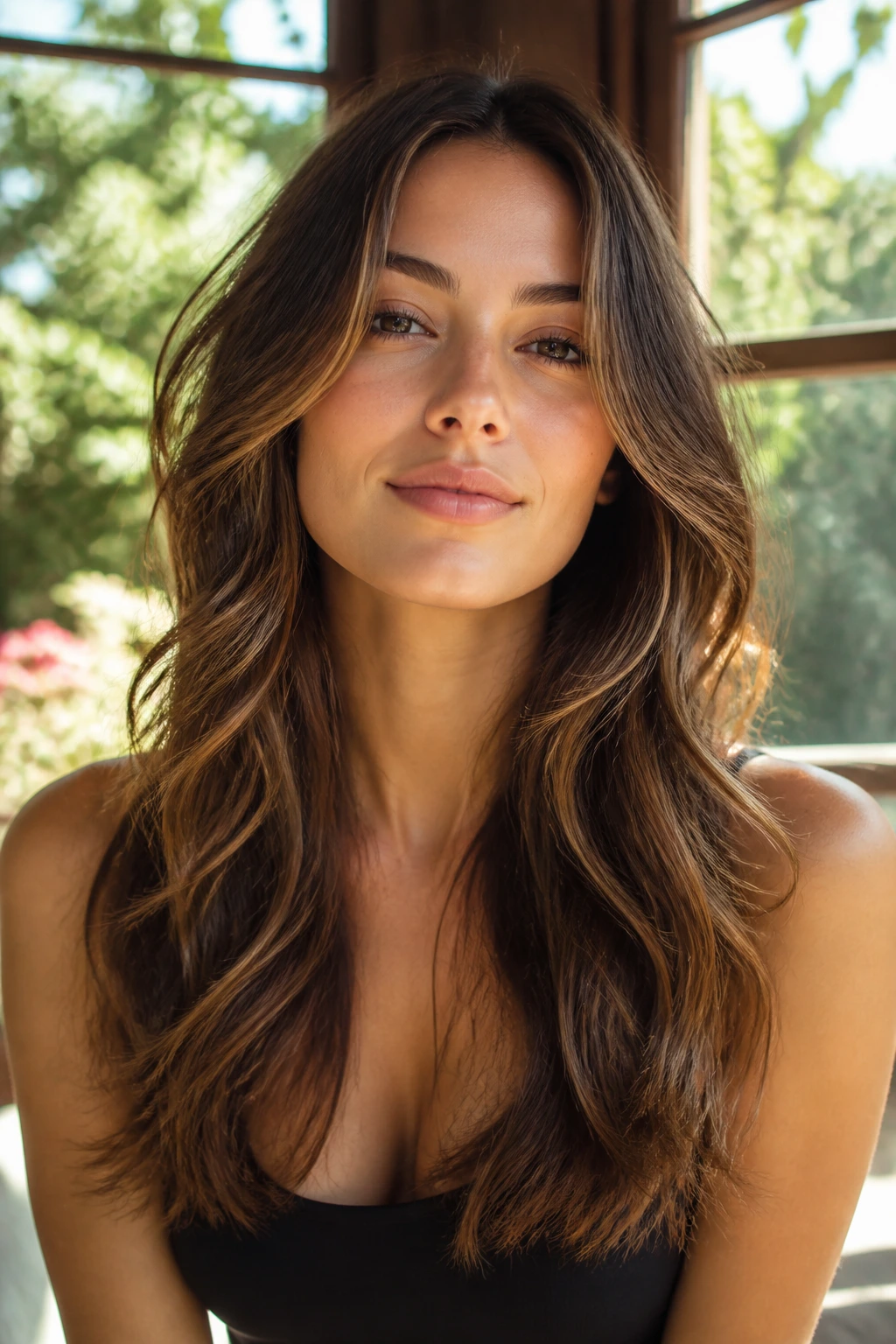
For those with long, wavy hair, the Kaminari (thunder) wave style offers a dynamic way to soften a square face. The haircut features long layers starting from the collarbone downward, with the face-framed sections cut slightly shorter to highlight the lips.
The waves are styled to start at the eye level, waving outward at the temple and then curving inward at the jaw before flowing outward again at the shoulder. This continuous “S” pattern completely breaks up the vertical and horizontal lines of a square face.
By keeping the wave pattern loose and airy, the hair feels full of life and motion. It is a highly romantic style that looks incredibly natural and effortless.
18. High-Layered Medium Cut with See-Through Bangs
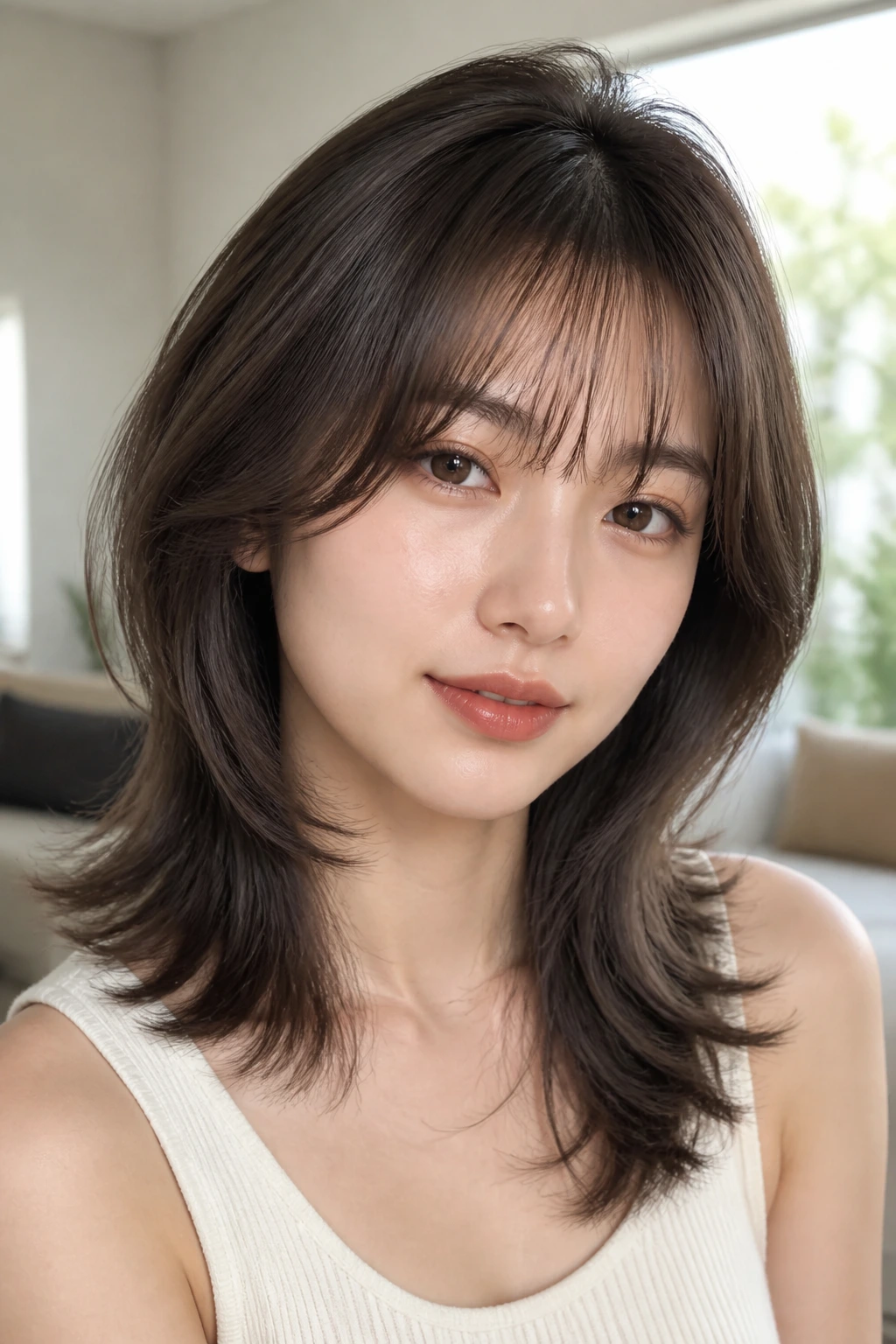
When it comes to medium-length hair, high layers can make a world of difference for a square face. High layers start much higher up on the head than standard layers, usually around the temple area.
Unlike low graduation, which keeps the weight at the bottom, high layers distribute the volume throughout the mid-shaft of the hair. This prevents the “dog-ear” effect where hair puffs out at the sides of the jaw.
Paired with see-through bangs, this cut keeps the entire head looking light and balanced. It is an excellent choice for those who want a haircut that air-dries beautifully with plenty of natural texture.
19. The Wet-Look Bob with Razor-Cut Tips
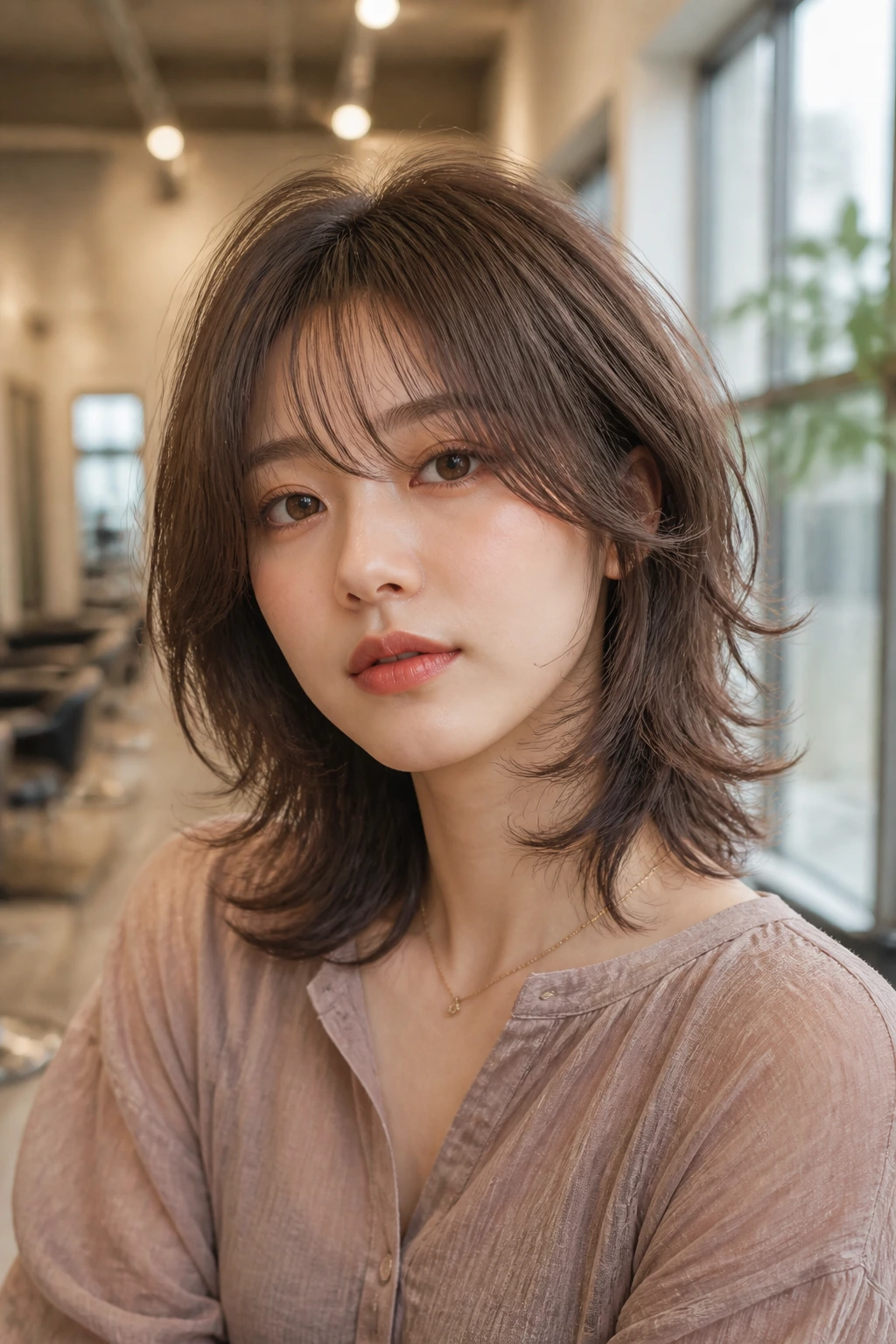
The wet-look (nure-kami) styling trend is a staple in Japanese hair culture. When applied to a razor-cut bob, it creates a highly modern, edgy look that works wonders for square faces.
The hair is cut using a razor rather than shears, which gives the tips an incredibly fine, tapered point. When styled with a wet-look product, the hair clumps together into defined, wispy strands.
Clumping Hair to Reveal Negative Space
By creating these gaps of negative space within the hair, you break up the solid, heavy frame of a traditional bob.
- Use a dedicated Japanese hair oil or styling gel on damp hair.
- Focus the product on the mid-lengths and ends, avoiding the roots to keep some volume at the top.
- Let the razor-cut tips piece out naturally around your neck and jawline.
This style is perfect for those who want a high-fashion look that is actually incredibly easy to style on a daily basis.
20. Feathered Collarbone Shag with Curving Side Locks
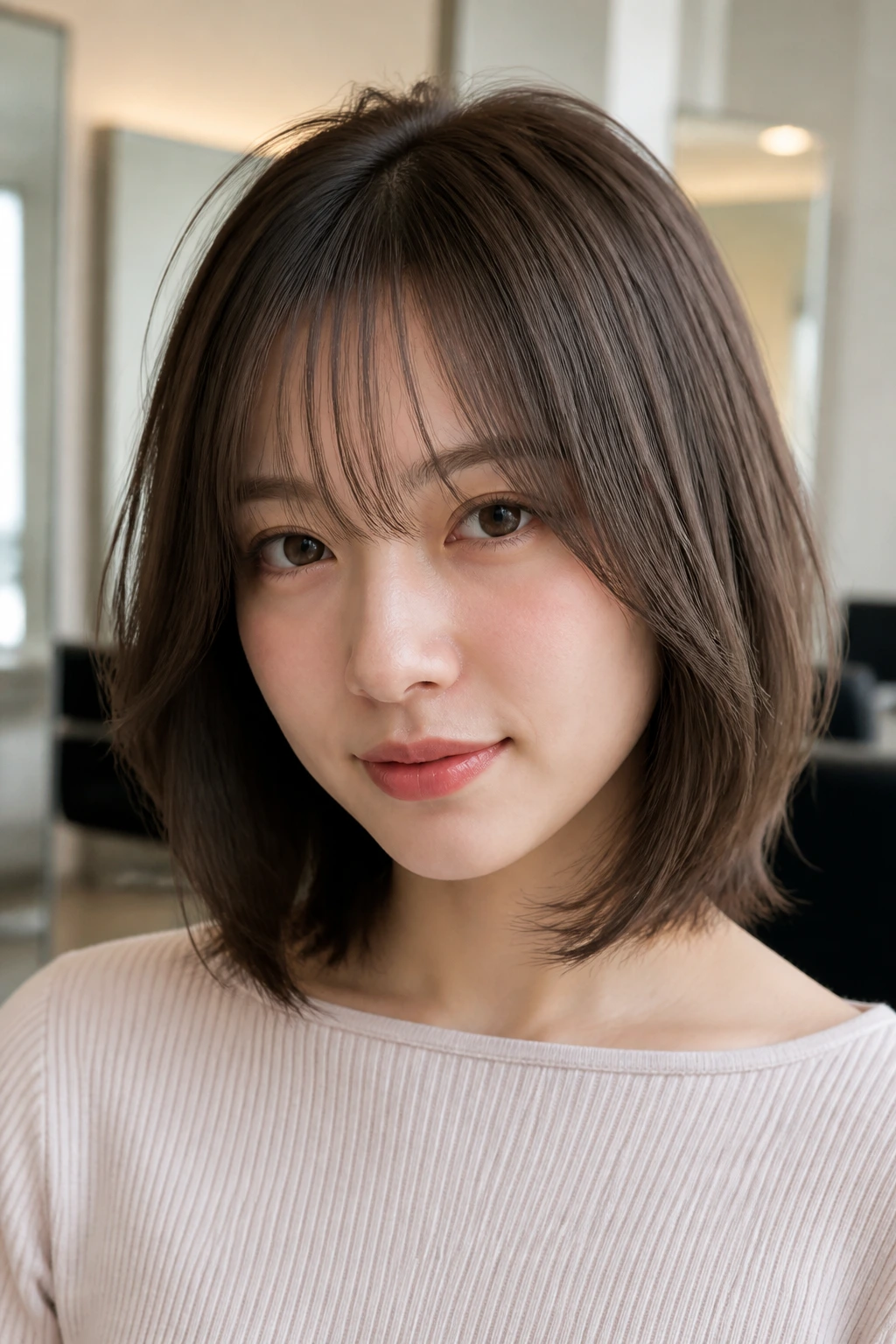
A shag cut that lands exactly on the collarbone is one of the most universally flattering lengths for angular faces. This feathered version uses layers to create a diamond-shaped silhouette.
The widest part of the diamond sits at the cheekbones, while the hair tapers inward at the jawline and then flares out slightly at the collarbone. This shape naturally mimics the ideal oval face structure, balancing out the width of a square jaw.
The side locks are feathered to curve gently inward, kissing the jawline as they pass. It is a soft, touchable style that looks best when worn with a bit of natural texture and movement.
21. Low-Graduation Bob with Soft Internal Thinning
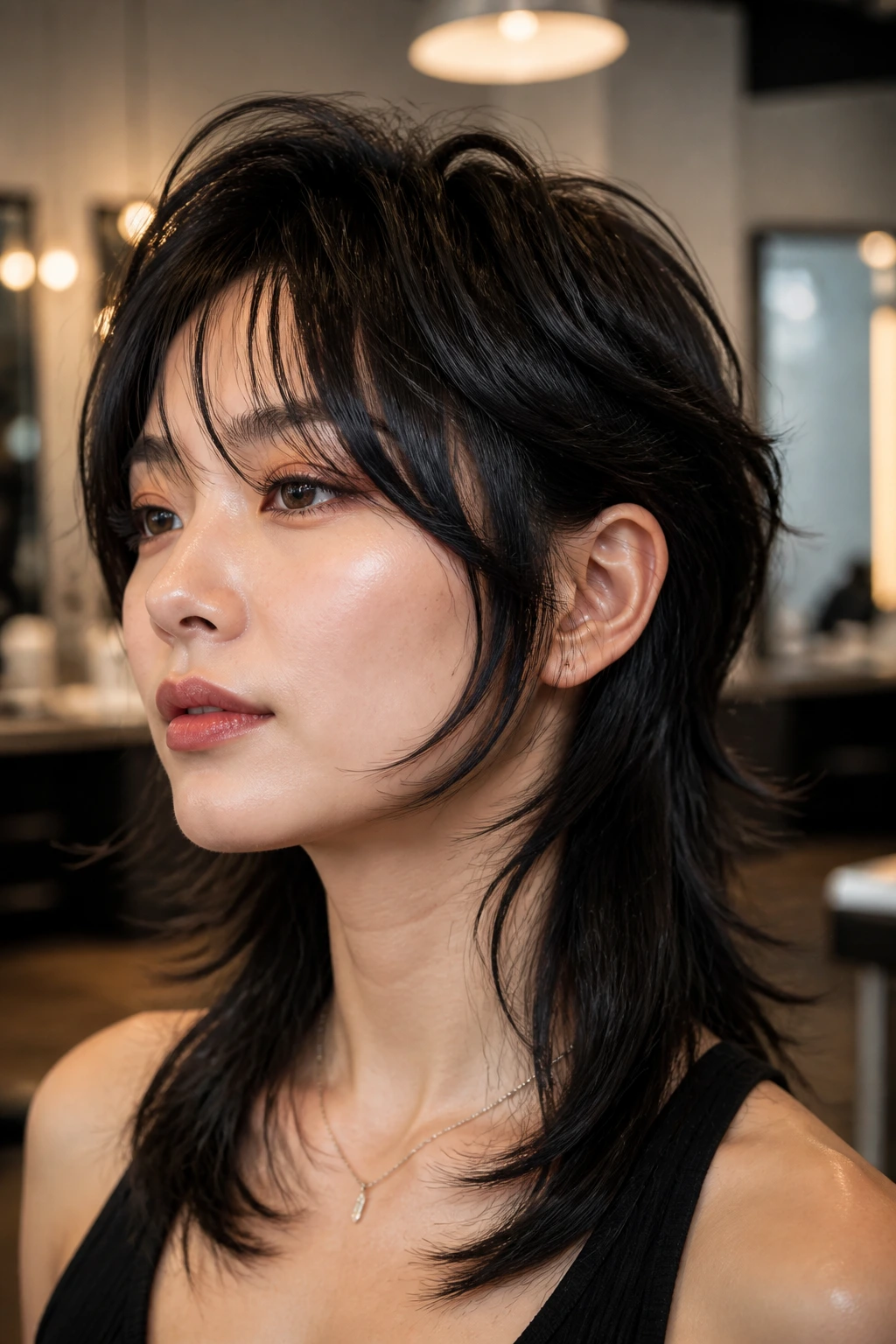
For those who prefer a more classic, solid-looking bob, a low-graduation cut with soft internal thinning is a beautiful way to wear the style without widening your face.
Unlike a blunt bob, low graduation features a very slight stack at the back, which lifts the hair off the neck and shifts the weight upward. The interior of the hair is then thinned out using slide shears to remove bulk.
Working with Thick Hair Textures
If you have thick, coarse hair, this cut is a lifesaver. It allows you to have the clean, structured look of a bob without the heavy, triangular shape that usually plagues square faces.
- Keep the length at least an inch below the jawline to help elongate the neck.
- Use a flat iron to smooth the top layers, allowing the textured ends to bend softly inward.
- Regular maintenance is key; a quick trip to the salon every six weeks keeps the graduation looking sharp and clean.
Wrapping Up
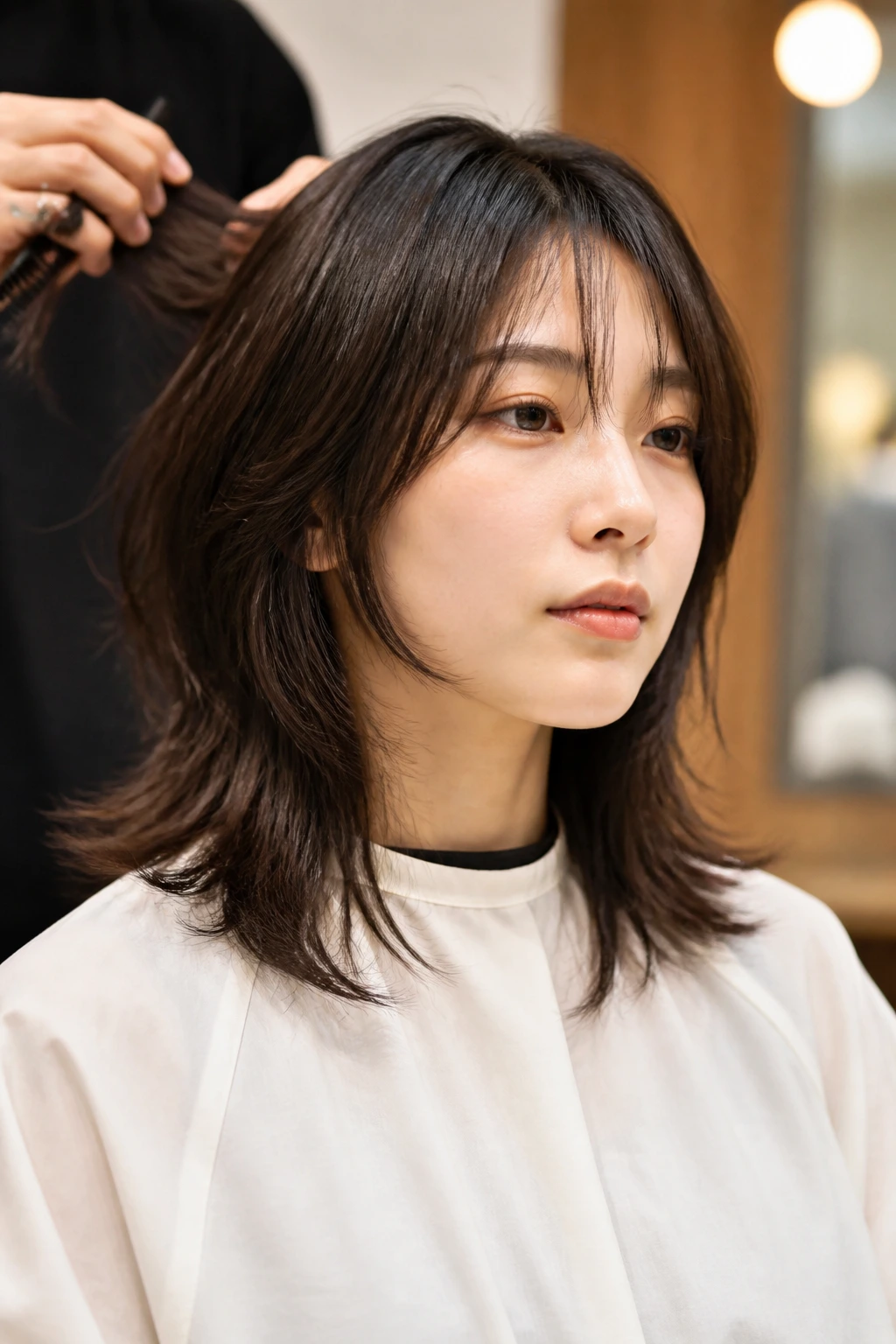
Finding the perfect haircut for a square face is not about hiding your features. It is about choosing styles that work with your natural bone structure, using texture, volume, and smart layering to create balance.
Japanese hairstyling offers a wealth of techniques designed to bring lightness and movement to your hair. Whether you prefer a short, edgy pixie mull or long, cascading waves, the key is to avoid blunt, heavy lines that compete with your jaw. Look for cuts that build volume at the crown, feature wispy, face-framing layers, and keep the ends light and textured.
When you head to the salon, ask your stylist about dry cutting and point cutting techniques. These methods allow them to customize the layers to your unique face shape, ensuring that your hair drapes beautifully and flatters your strong, striking angles. Embrace the texture, play with movement, and find a look that makes you feel confident and comfortable in your own skin.