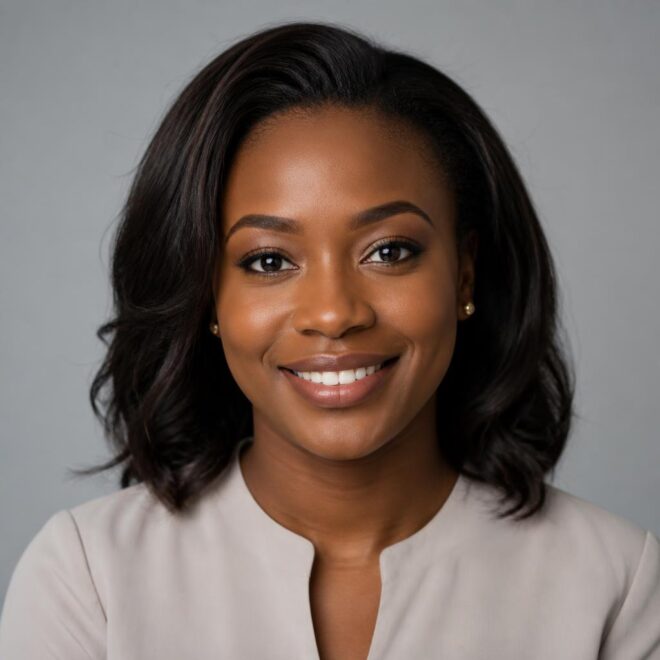


Straight hair gets a reputation for being simple, almost default. But anyone who actually wears it knows the truth: it is the most unforgiving canvas in cosmetology. When your hair lacks bend, wave, or coil, every single millimeter of the cut is on display. There are no shadows or texture patterns to hide a jagged scissor line, a poorly blended layer, or a split end. It demands absolute precision.
Over the years, many people have fallen into the trap of thinking straight hair means one-dimensional hair. They grow it out to a single length, let it hang, and call it a day. That is a missed opportunity. When done right, a great cut transforms straight hair from a flat curtain into a dynamic, architectural frame that highlights your cheekbones, jawline, and collarbones.
Choosing the right shape means understanding how your specific hair density and thickness behave when gravity takes over. Fine, straight hair needs structural support to avoid looking limp, while thick, straight hair requires meticulous weight removal so it doesn’t balloon into a triangular block. It is all about how the weight is distributed. Let’s explore the cuts that actually work for this hair type, from sharp, blunt edges to heavily textured, lived-in shapes.
How Hair Density Affects the Fall of Straight Lines
Straight hair is not a single category. The way a cut behaves depends almost entirely on the relationship between individual strand thickness (fine, medium, coarse) and overall density (the number of hairs on your head). If you have high density but fine strands, your hair will react differently to layers than someone with low density and coarse strands.
For low-density or fine straight hair, the goal of any cut is to build weight. You want to avoid heavy slide-cutting or razor work, which can leave the ends looking frayed and thin. Instead, blunt, horizontal lines are your best friend. A sharp perimeter tricks the eye, making the entire hair profile appear thicker than it actually is.
On the flip side, high-density or coarse straight hair requires strategic weight suspension. Without it, the hair can feel heavy and stiff, moving as a single, rigid sheet rather than individual, fluid strands. Stylists achieve this movement through internal layering, point-cutting, or channeling. These techniques remove bulk from the mid-lengths and ends without sacrificing the clean, straight appearance of the outer canopy.
Crucial Shears Techniques for Precision Straight Cuts
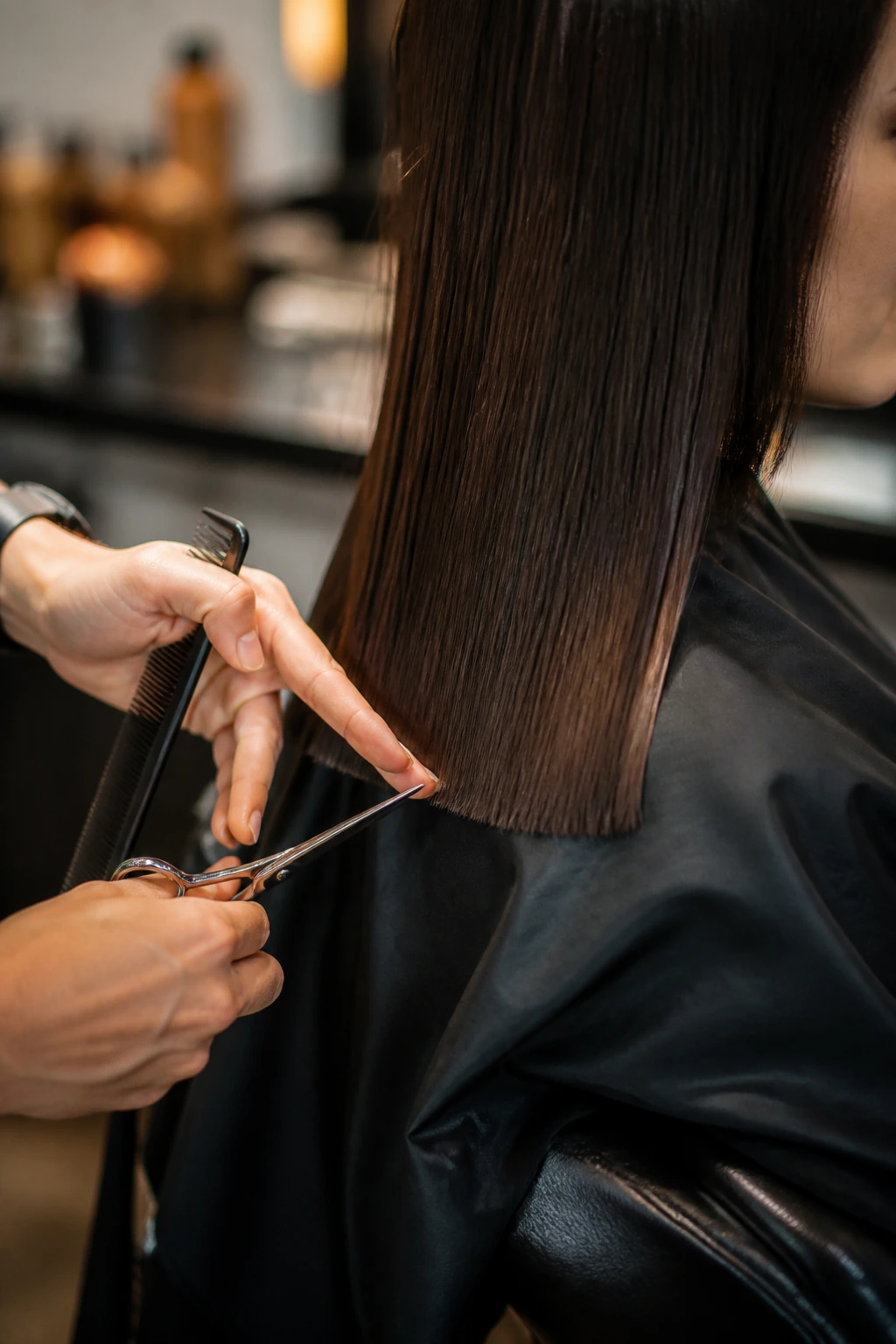
The tools and techniques your stylist uses will make or break your straight haircut. If a stylist approaches straight hair with the same high-tension techniques used for wavy or curly hair, the results can be disastrous. Straight hair expands and behaves differently when dry than when wet, making the dry-cutting phase of a haircut absolutely critical.
Tension is the enemy of a perfect straight cut. When a stylist pulls a section of wet hair tight between their fingers and cuts it, that hair bounces up once it dries. Because straight hair has different growth patterns and cowlicks around the ears and crown, uneven tension leads to an uneven hemline. Many expert stylists prefer to cut the baseline of straight hair with zero tension, letting the hair fall naturally against the skin and using the shears to trim the perimeter.
Point-cutting is another essential technique. Instead of cutting straight across the hair shaft, the stylist angles the shears upward into the hair. This creates a soft, textured edge rather than a harsh, blunt line. For straight hair, point-cutting prevents the ends from looking like they were chopped with kitchen scissors, giving even the bluntest bobs a touch of soft, natural movement.
1. Classic Blunt Lob
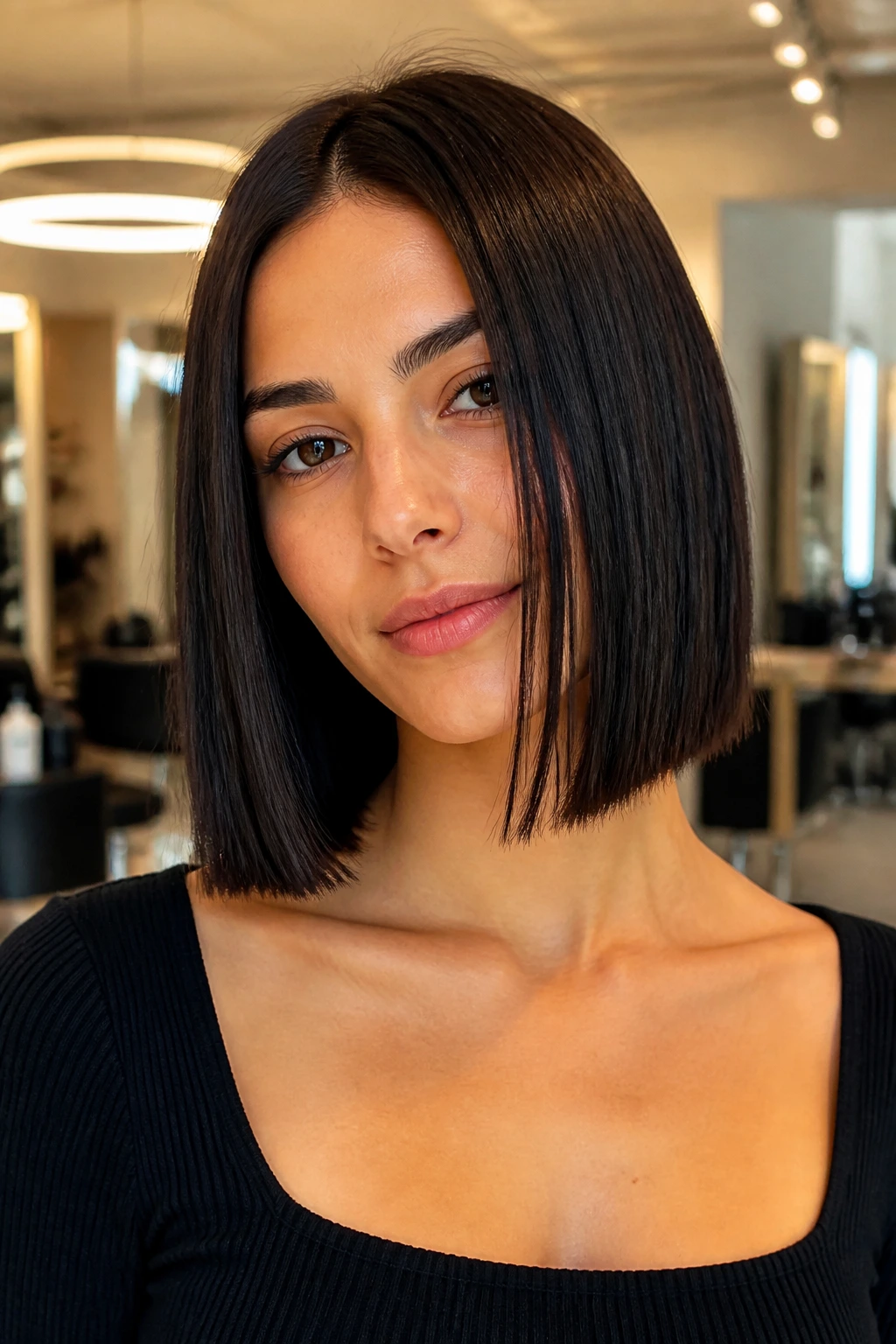
The collarbone blunt lob is a masterclass in structural hair design. By eliminating all layers, this cut focuses the visual weight at the very bottom of the hair profile, creating a dense, healthy-looking line that rests right at the collarbones. It is a particularly striking choice for those with fine or medium hair densities, as it maximizes the natural volume of the hair.
The Architecture of the Blunt Edge
To get this cut right, your stylist must cut the hair with minimal tension, ideally while your head is tilted slightly forward. This ensures that the under-layers do not peek out from beneath the top canopy when you look straight ahead. The length should sit just above the collarbone when dry, allowing the hair to swing freely without buckling on your shoulders.
Quick Facts for the Blunt Lob
- Best Face Shapes: Round, oval, and heart-shaped.
- Ideal Hair Density: Fine to medium.
- Maintenance Level: Low to medium; requires a trim every six to eight weeks to keep the line pristine.
- Styling Method: Blow-dry with a paddle brush, finishing with a flat iron on the bottom inch to lock in the bluntness.
Pro tip: Ask your stylist to slightly bevel the very inside layers of the perimeter shorter than the outside layers to encourage the hair to naturally curve inward.
2. Razor-Cut Shag with Curtain Bangs
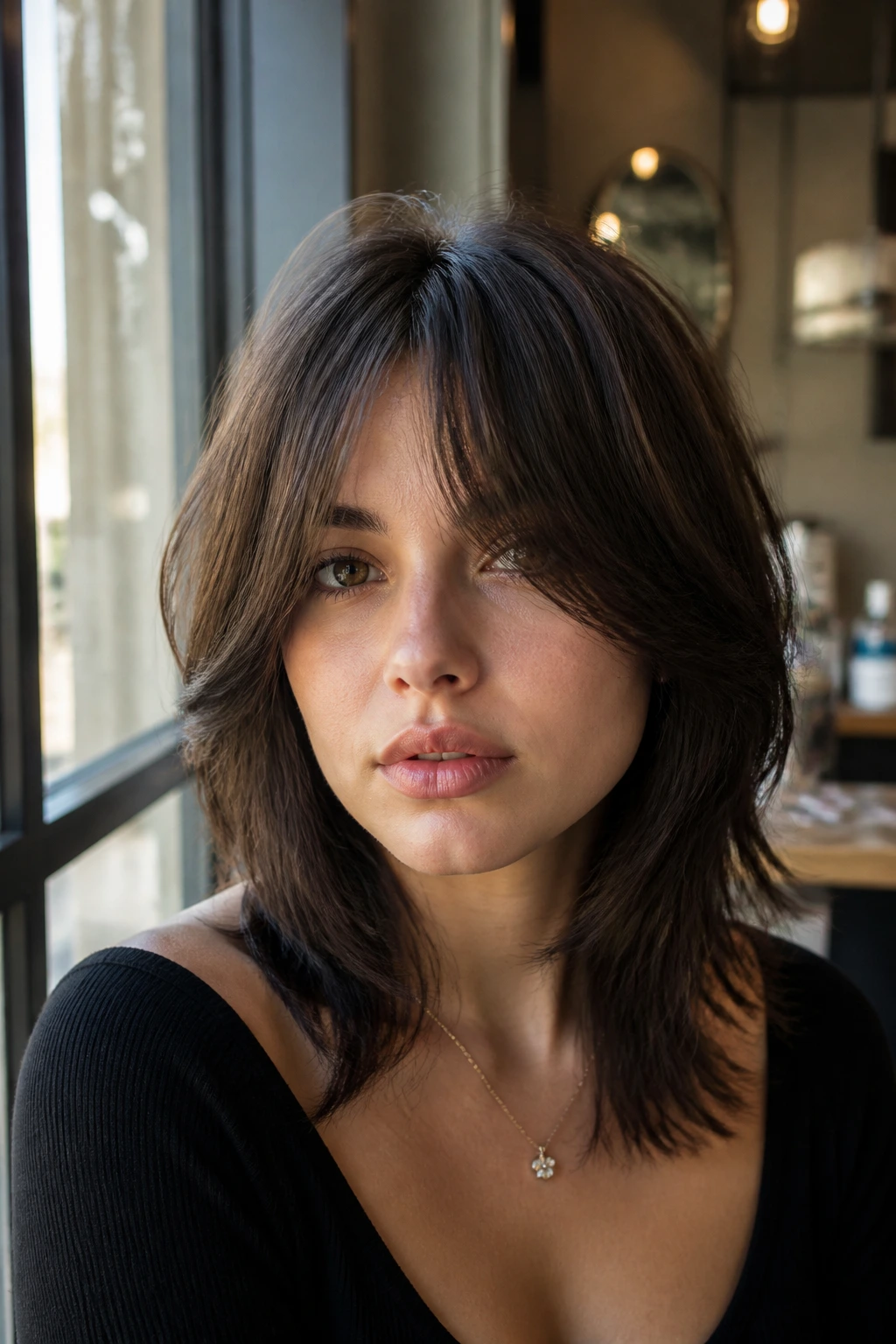
Many people assume a shag requires natural wave to work, but a razor-cut shag on bone-straight hair is incredibly striking. This cut relies on a highly textured crown and steep, cascading layers that break up the solid weight of straight hair. It offers a lived-in, effortless feel that contrasts beautifully with the naturally polished texture of straight strands.
Using a carving razor allows the stylist to slide down the hair shaft, creating tapered, wispy ends that flick and move. The curtain bangs should start shorter near the bridge of the nose and sweep outward toward the cheekbones, blending seamlessly into the shorter crown layers. This prevents the shag from looking like a mullet and keeps the focus on the eyes and cheekbones.
To style this, you want to lean into texture. Avoid the flat iron here. Instead, apply a lightweight texturizing spray or sea salt mist to damp hair and rough-dry with your fingers, twisting sections as they dry to encourage soft, organic separation.
3. Sharp A-Line Bob
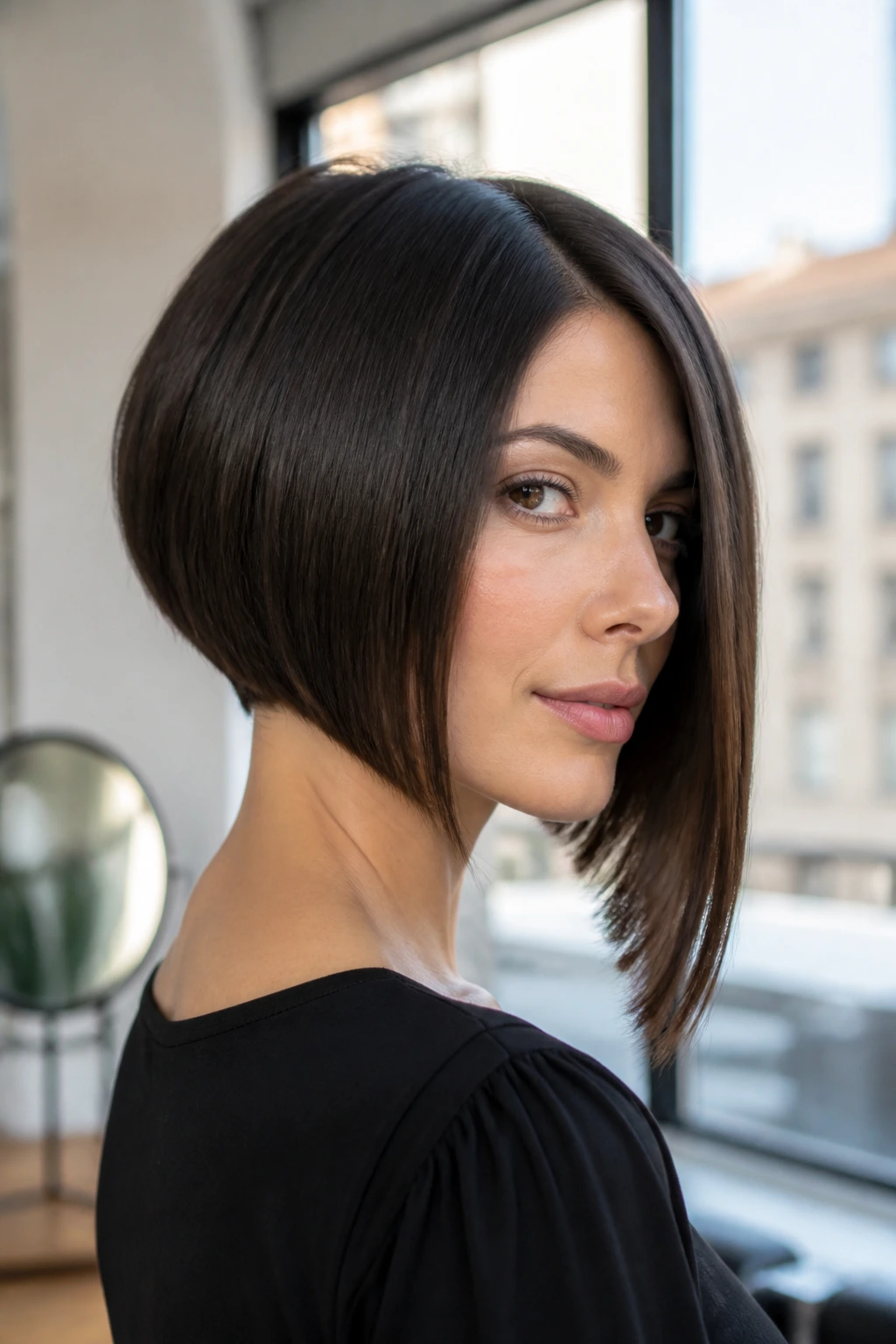
Why does the angled A-line bob work so exceptionally well on straight hair? The answer lies in the clean, sloping line that starts short at the nape of the neck and gradually lengthens as it moves toward the collarbone. Straight hair acts like a magnifying glass for this geometry, showcasing the gradient with absolute clarity.
Maintenance and Styling
This is not a low-maintenance cut. Because the back is cut close to the hairline, regular neck clean-ups are necessary to keep the look sharp. When styling, the goal is to emphasize the diagonal line.
- Apply a heat protectant blowout cream from mid-lengths to ends.
- Section the hair horizontally, starting at the nape.
- Use a small round brush to blow-dry the back, pulling the hair down and slightly inward.
- Switch to a paddle brush for the longer front sections, blowing them straight down to preserve the length.
- Run a flat iron through the ends, pulling the iron forward toward your chin to highlight the angle.
4. Softly Layered Long Cut
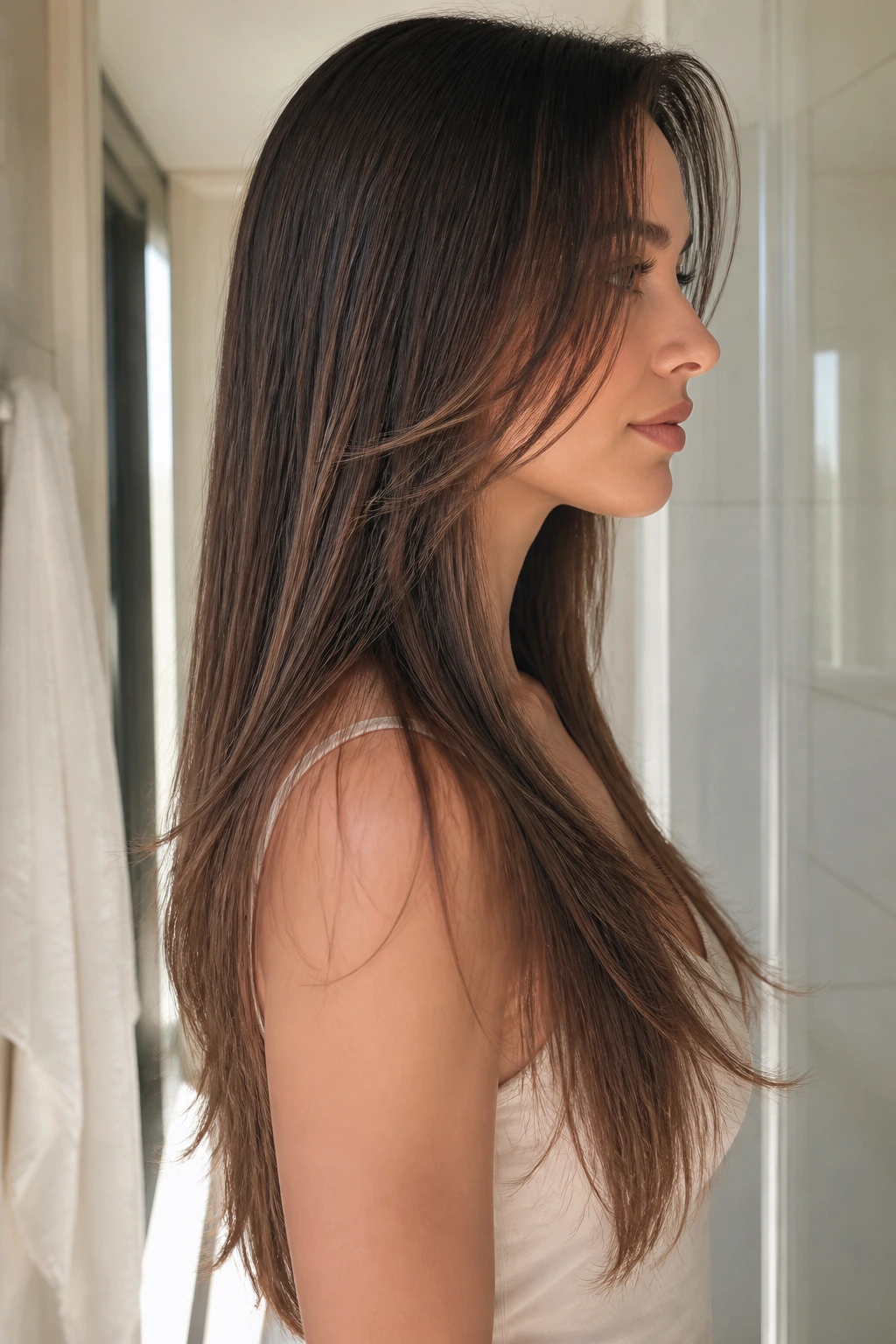
If you love your length but hate the weight that comes with it, long, invisible layers are the solution. This cut preserves the solid look of a one-length style from the back while incorporating long, slide-cut layers that start just below the chin. It is a fantastic option for thick, heavy hair that needs a boost of movement.
The secret to this cut is the slide-cutting technique. The stylist opens and closes the shears gently while sliding down the interior of the hair, removing weight without creating visible “steps” or shelf-like layers. The result is a fluid, lightweight canopy that sways when you walk.
Key Details for Long Layers
- The Perimeter: Keep it slightly rounded rather than completely square to complement the soft layers.
- The Interior: Focus the weight removal on the middle sections of the hair back, leaving the bottom two inches dense.
- The Styling: Use a large-barrel round brush to create soft, outward-facing sweeps at the ends of the layers.
This style is incredibly versatile, allowing you to wear it sleek and straight or pull it back into a high ponytail where the shorter layers fall out to frame your face.
5. Pixie Cut with Side-Swept Fringe
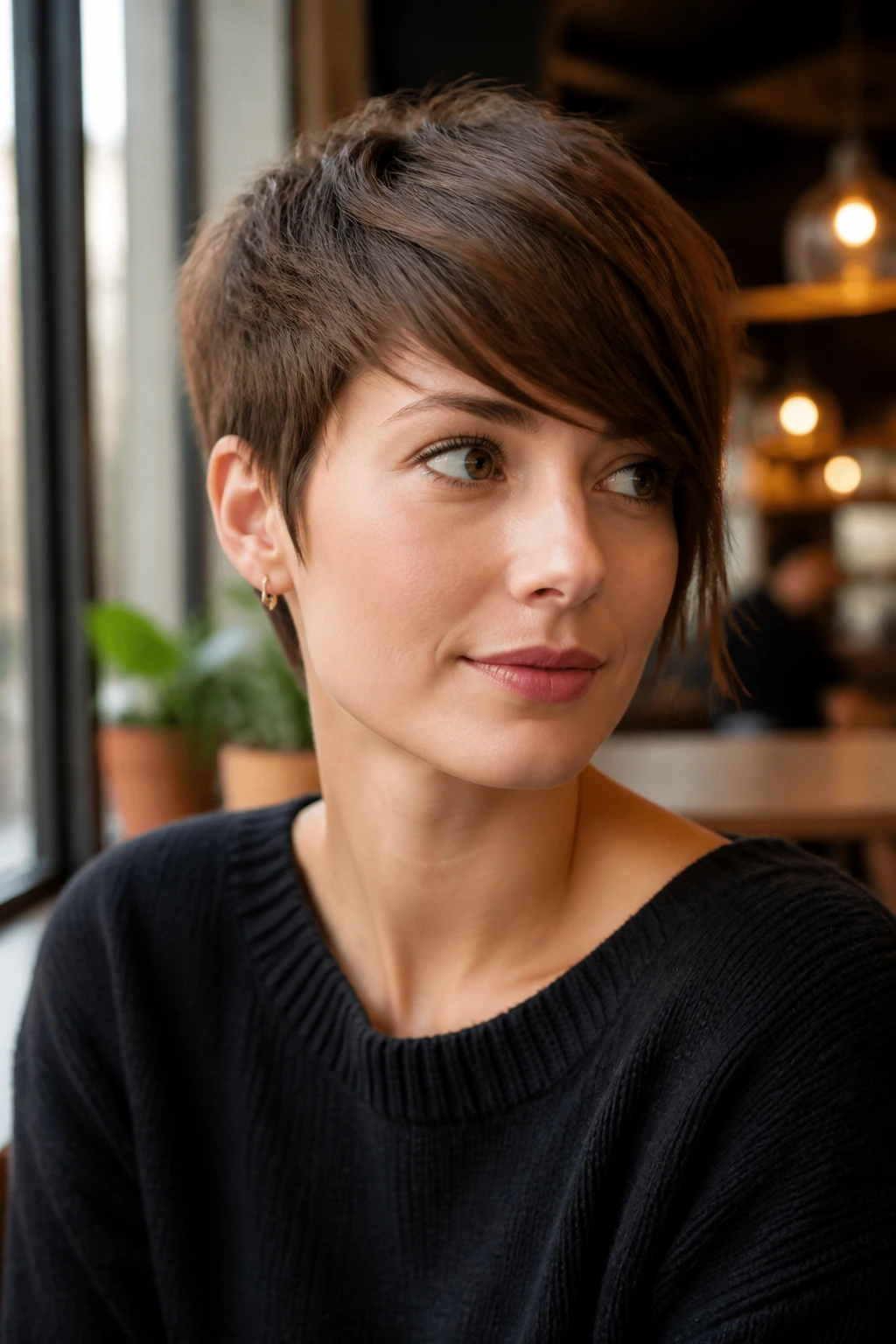
Short hair on straight strands is bold, clean, and incredibly chic. A pixie cut with a long, side-swept fringe relies on the natural drape of straight hair to create a smooth, polished canopy over a closely cropped back and sides. It is a cut that highlights the eyes and jawline with dramatic effect.
The key to keeping this cut feminine and soft is the texturizing of the perimeter. The hair around the ears and the back of the neck should be point-cut into soft whispers rather than shaved with hard clipper lines. This softens the transition between the bare skin and the hair.
For daily styling, a tiny dab of matte pomade run through the top layers is all you need. Use your fingers to piece out the fringe, pushing it to one side. The natural shine of straight hair will keep the cropped style looking sophisticated without needing constant heat styling.
6. Asymmetrical Collarbone Cut
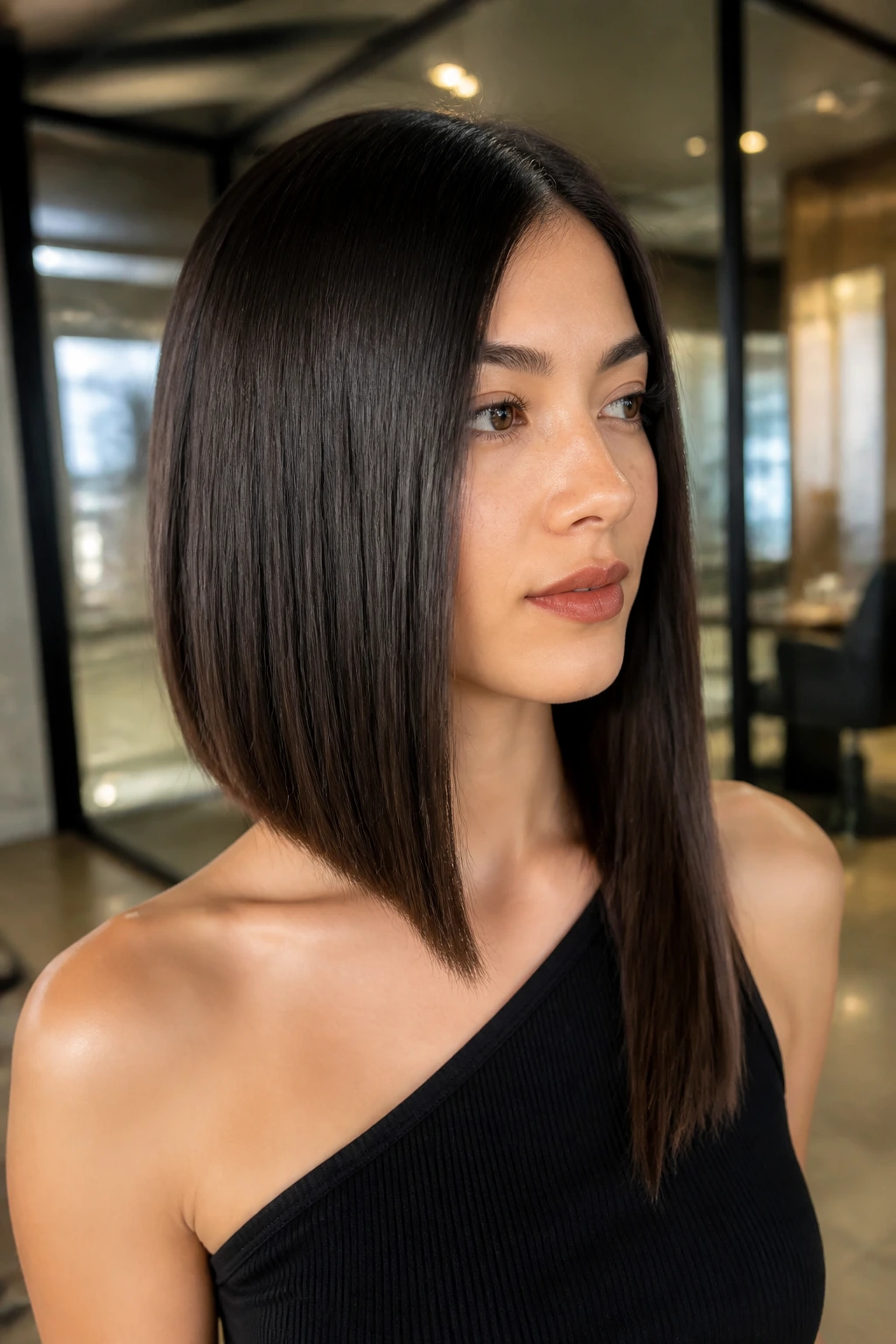
Unlike symmetrical cuts that rely on perfect balance, the asymmetrical collarbone cut uses contrast to create visual interest. One side of the hair is cut to graze the collarbone, while the other side is kept one to two inches longer. On straight hair, this difference in length is graphic and intentional.
This cut is best suited for those who naturally wear a deep side part. The parting should align with the shorter side, allowing the longer side to sweep dramatically across the face. It is an excellent way to break up the symmetry of an oval or square face shape.
We recommend keeping the styling as simple as possible. A high-shine serum applied to damp hair before a smooth blow-dry will make the asymmetrical line look like a piece of polished glass.
7. French Girl Bob with Brow-Grazing Bangs
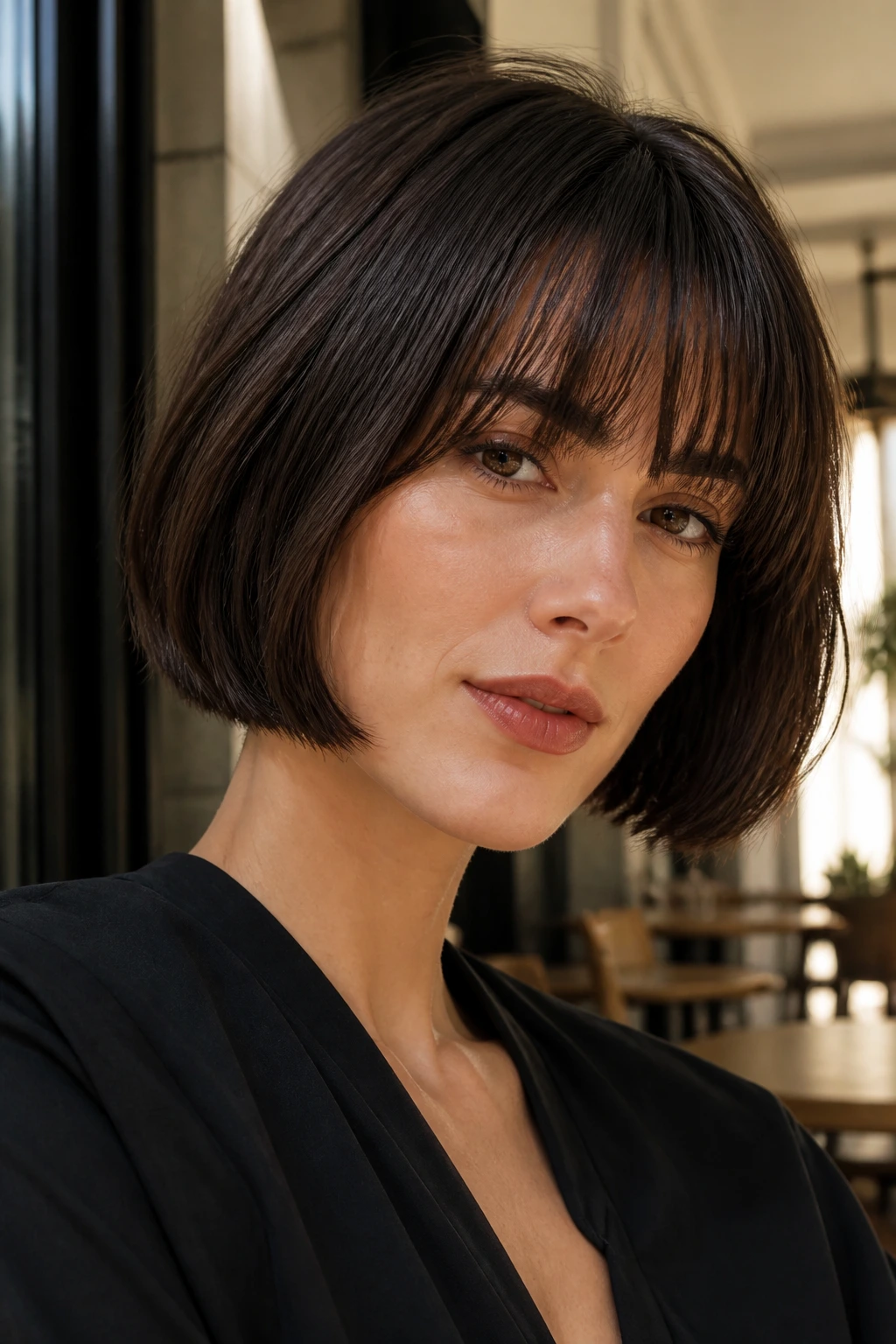
The classic French bob is usually associated with messy waves, but the straight-haired variation is equally stunning, offering an editorial, almost cinematic quality. This cut sits right at the mouth line or jawbone, paired with a full, thick fringe that rests just below the eyebrows.
Nailing the Fringe Tension
The trickiest part of this cut is getting the bangs right. Straight hair can lay flat against the forehead, so the fringe must be cut with a very slight point-cutting technique to add pieceyness.
Quick Facts for the French Bob
- Best Face Shapes: Oval, heart, and angular jawlines.
- Ideal Hair Density: Medium.
- Maintenance Level: High; bangs need trimming every three weeks, and the bob length needs monthly upkeep.
- Styling Method: Air-dry with a tiny bit of styling cream, or wrap-dry the bangs with a paddle brush to prevent them from looking too round.
Pro tip: Avoid using a round brush on the bangs of a French bob; you want them to lay flat and straight, not bubbled out like a retro fringe.
8. Choppy Lob with Face-Framing Layers
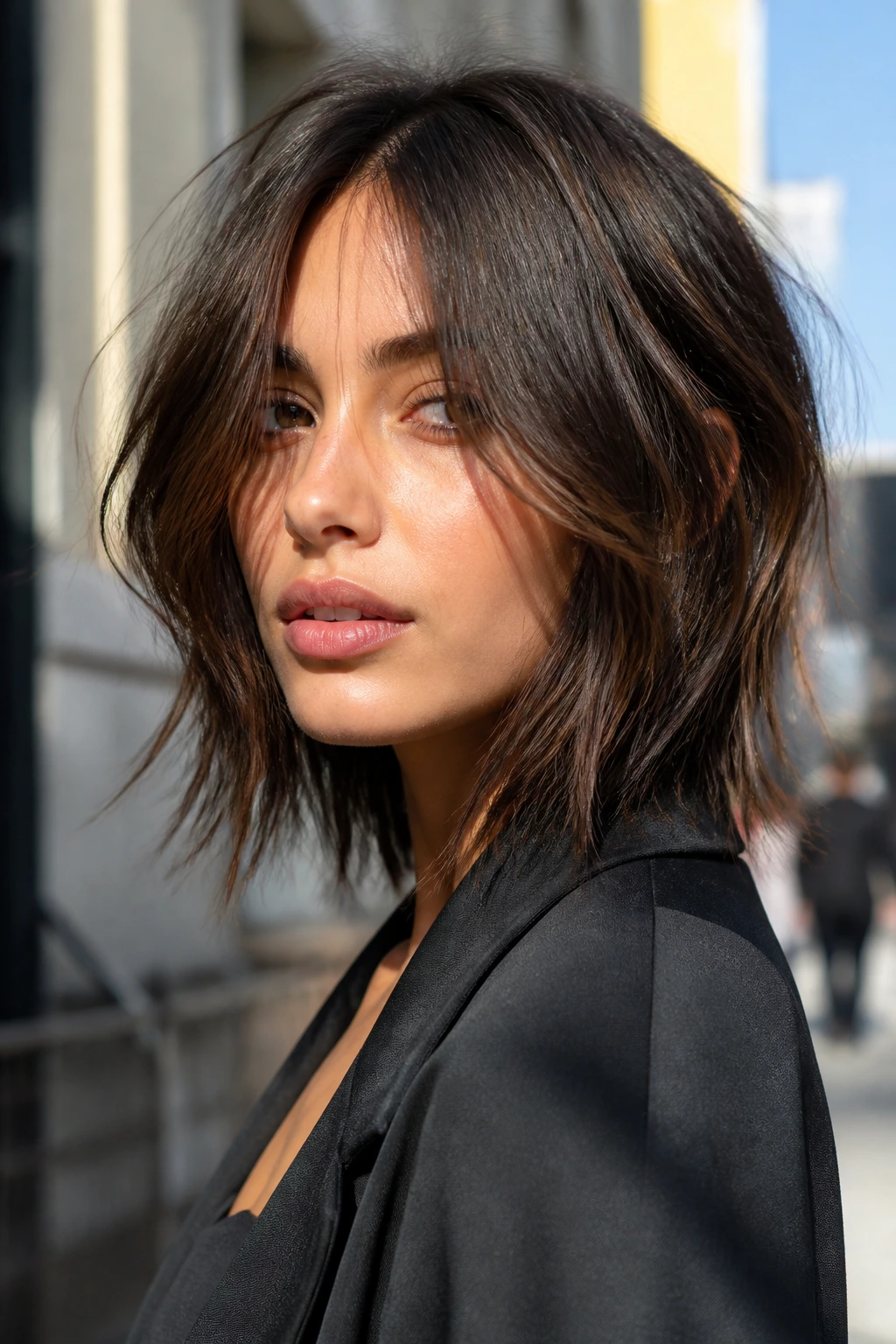
For a look that is modern and full of attitude, a choppy lob with textured ends is a fantastic path. This style takes the traditional shoulder-length lob and breaks up the bottom perimeter with deep point-cutting and slide-cut face-framing layers that start around the lips.
The beauty of this cut lies in its imperfection. Instead of a solid, heavy line at the bottom, the ends are piecey and uneven in a controlled, artistic way. This removes the “news anchor” stiffness that sometimes plagues straight, shoulder-length cuts.
Styling is incredibly fast. Work a nickel-sized amount of texturizing paste into your palms, rub them together, and scrunch the ends of your dry hair to create messy, lived-in separation that lasts all day.
9. V-Cut Long Layers
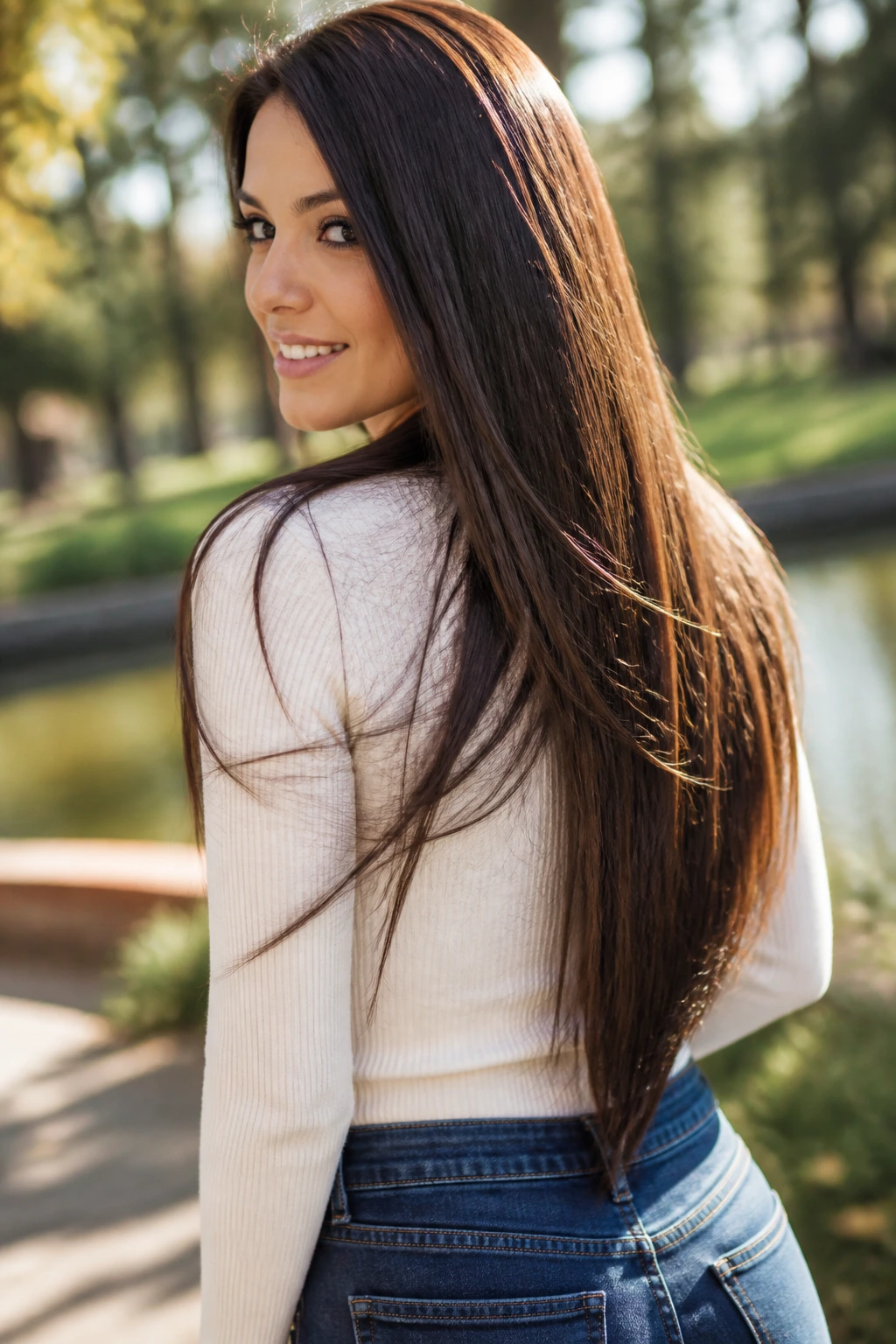
How does a V-shape change the movement of long, straight hair? Unlike a traditional straight-across or U-shaped hemline, a V-cut tapers dramatically toward a central point in the back. This removes a massive amount of weight from the sides, allowing long hair to drape beautifully over the shoulders.
This cut is a lifesaver for people with thick, heavy straight hair who want to keep their length but find that their hair pulls flat at the scalp due to the sheer weight of the ends. By angling the perimeter into a V, the hair feels lighter, moves more dynamically, and has a natural bounce.
Keeping the Points Sharp
- The Technique: The stylist will pull all the hair forward to the front of the shoulders and cut it on a steep angle, creating the V-shape when the hair is tossed back.
- The Maintenance: Split ends will show up first at the very tip of the V, so regular dusting of the ends is essential.
- The Styling: Blow-dry the ends wrapping slightly inward to emphasize the cascading angles of the V.
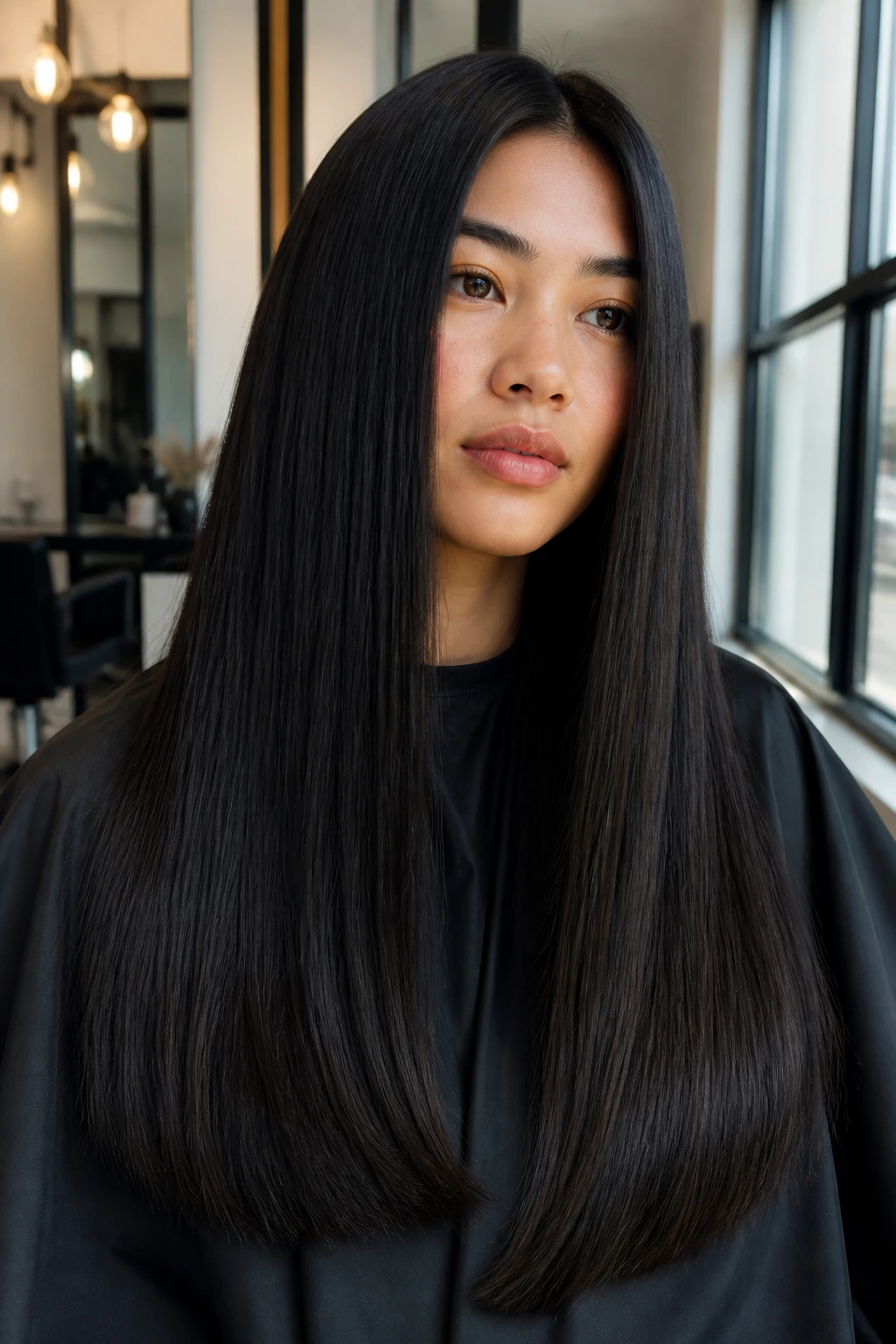
10. Sleek One-Length Waist-Grazing Cut
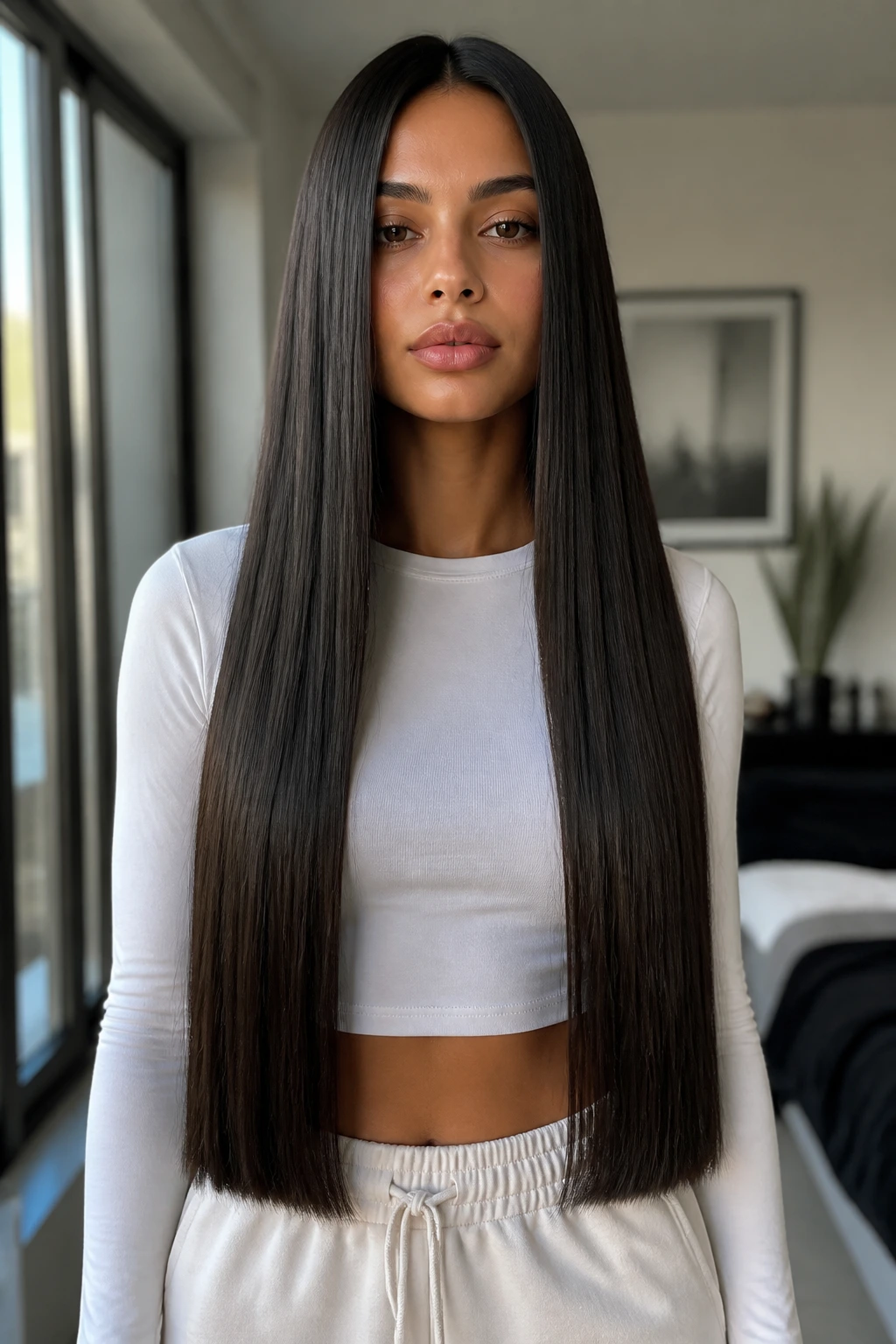
There is something undeniably striking about ultra-long, pin-straight hair that is cut perfectly straight across at the bottom. This waist-grazing style is the ultimate showcase for hair health and shine, turning your length into a dramatic style statement.
This cut requires a dedicated commitment to hair care. Because there are no layers to blend away damaged ends, every split end will stand out. The perimeter must be cut with absolute precision, often using a clippering technique on dry, flat-ironed hair to ensure a perfectly level line.
Quick Facts for the Waist-Grazing Cut
- Best Face Shapes: Round, oval, and oblong.
- Ideal Hair Density: Medium to thick.
- Maintenance Level: Medium; requires less frequent cuts but high daily care (deep conditioning, silk pillowcases, and minimal high heat).
- Styling Method: Apply a lightweight oil to the bottom half of the hair, blow-dry straight down, and use a wide-plate flat iron to lock in the glassy finish.
11. Textured Crop with Micro Bangs
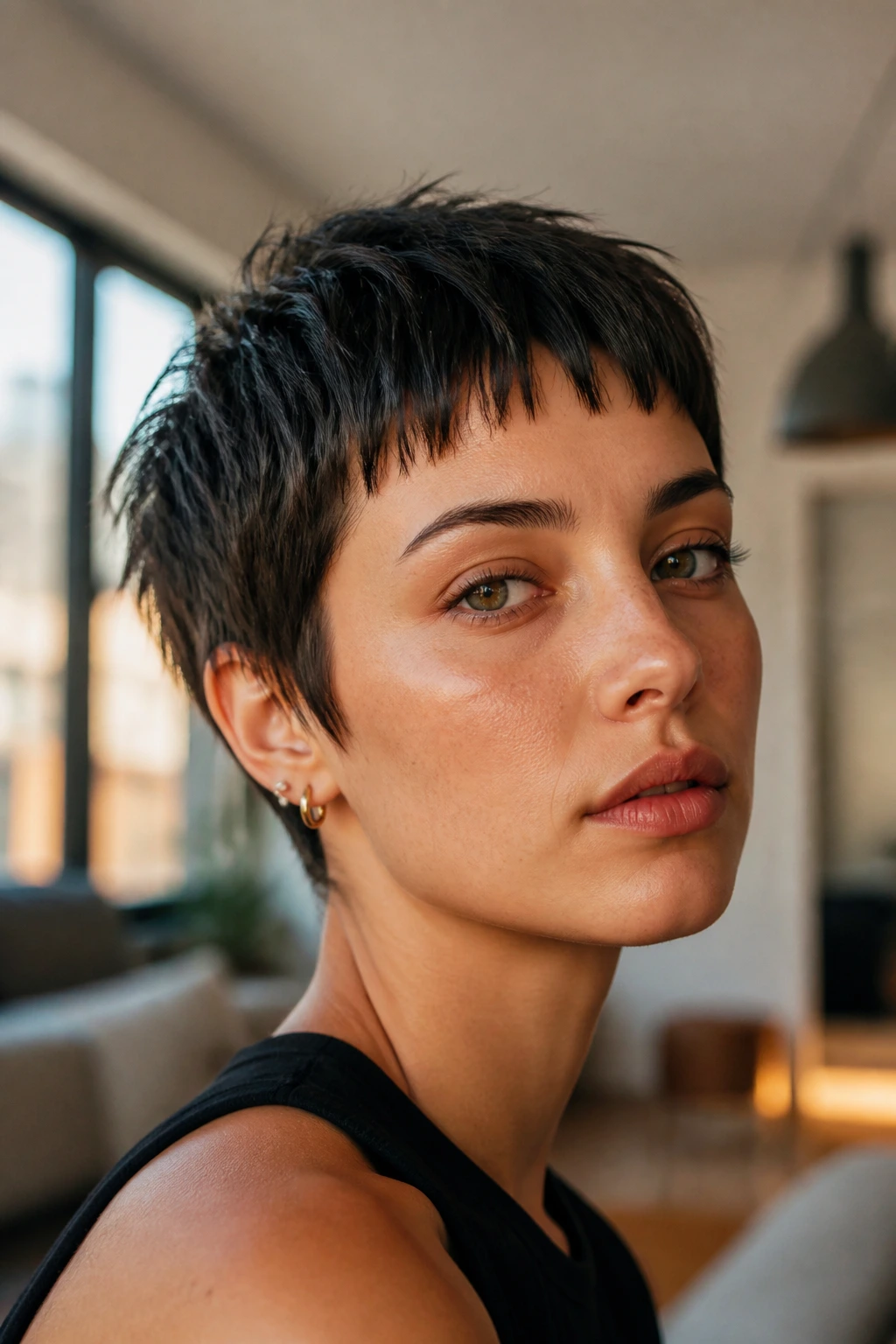
If you want to step away from traditional feminine shapes, an ultra-modern textured crop with baby bangs is an incredible option. This style features a short, textured crop around the head, with the crown left slightly longer and styled forward into micro bangs that sit an inch or more above the eyebrows.
Straight hair is ideal for micro bangs because they lay flat without requiring daily straightening. The stylist will use point-cutting on the bangs to create a jagged, wispy edge, preventing them from looking like a bowl cut.
This style looks best when it has a slightly matte, lived-in texture. A quick blast of dry shampoo or a touch of clay pomade worked through the top will give you that effortless, street-style aesthetic.
12. Wispy-Layered Mid-Length Cut
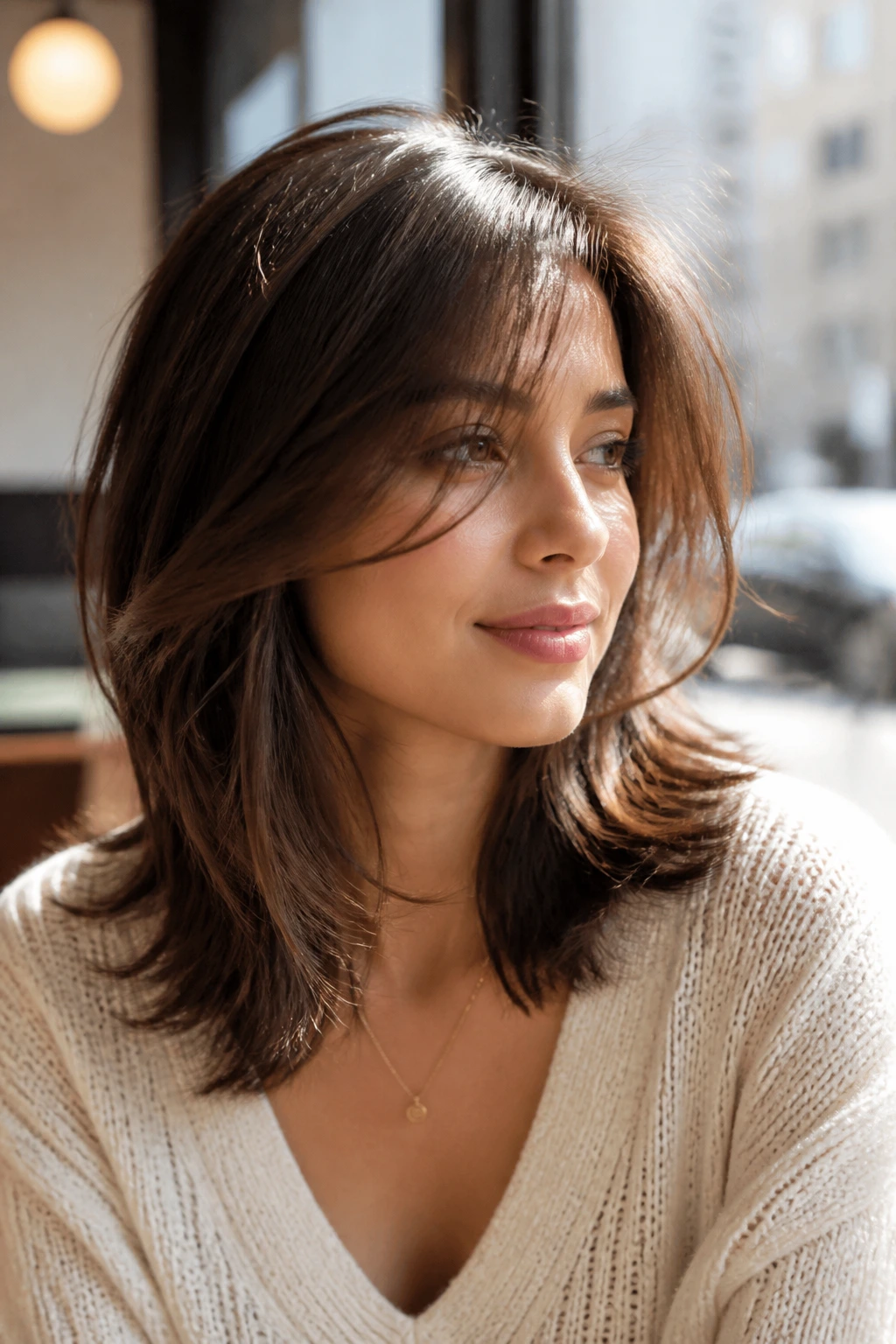
Falling just past the shoulders, the wispy-layered mid-length cut is the epitome of soft, airy movement. It relies on very light, feathered layers throughout the bottom few inches of the hair, creating a breezy perimeter that responds to the slightest movement.
This cut is perfect for those who find blunt cuts too harsh or heavy. It softens the jawline and neck, making it a very romantic and flattering option for almost any age. The layers are kept long and blended, so they don’t look choppy or disconnected.
To style, apply a volumizing mousse to the roots and blow-dry your hair upside down until it is about 80% dry. Then, use a large paddle brush to smooth the top layers, leaving the wispy ends to air-dry for a soft, natural finish.
13. Under-Cut Bob
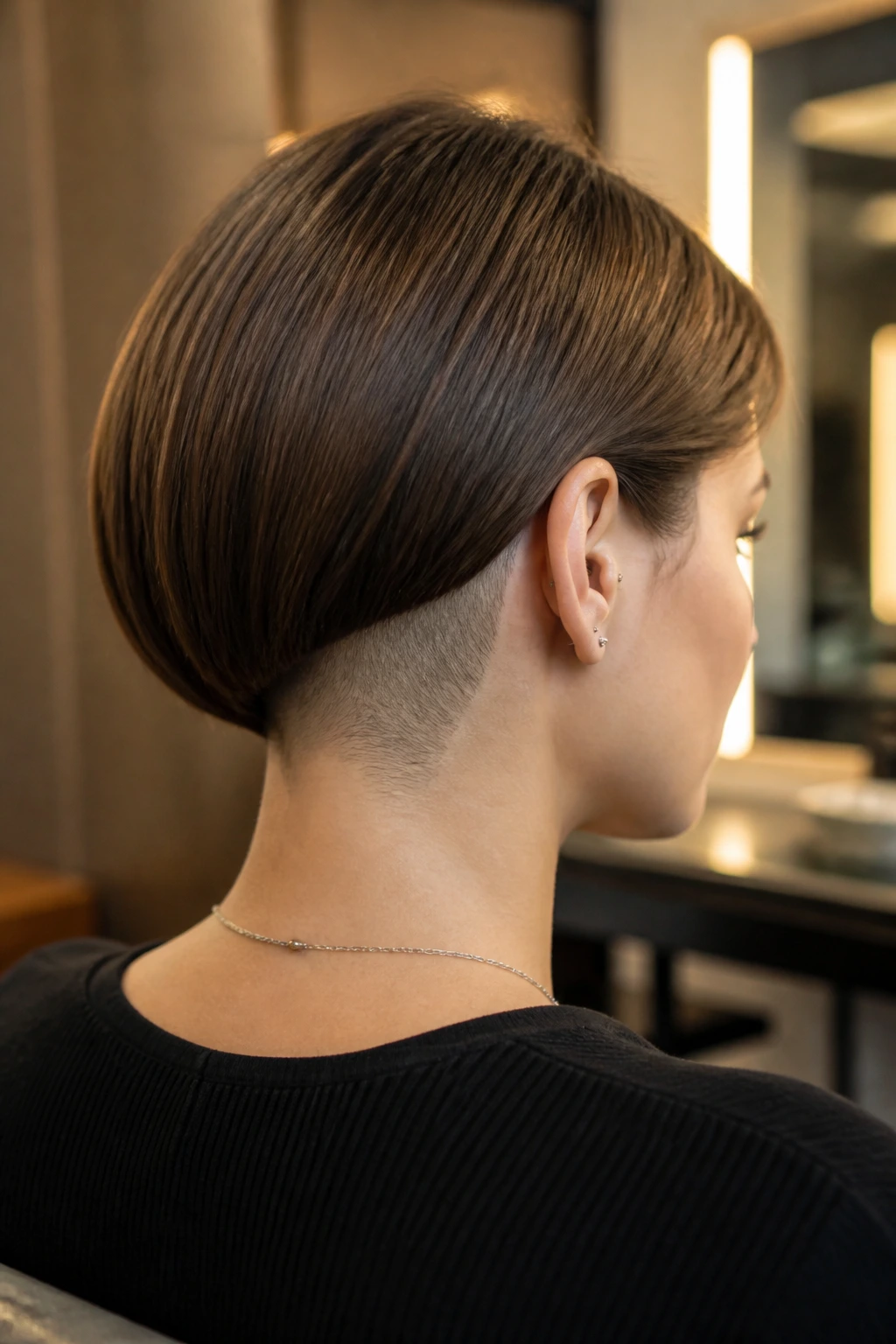
A bob on thick, straight hair can often end up looking like a helmet. The hair pushes outward, creating a triangular shape that can be frustrating to manage. The under-cut bob solves this issue through hidden geometry.
The Mechanics of the Hidden Under-Cut
By shaving or cutting the bottom one to two inches of hair at the nape of the neck very short, the stylist removes the bulk that pushes the bob outward. The longer top layers fall over this shaved section, collapsing the silhouette into a sleek, hugging shape that curves naturally inward toward the neck.
[Top Layer of Bob - Falls Smoothly]
                   /
          [Void]  /  <-- Bulk removed underneath
        _________/
         [Nape] <-- Shaved or cropped short
This hidden under-cut not only makes the bob look sleeker, but it also slashes your blow-drying time in half. It is a brilliant design trick for those with dense, stubborn hair.
14. Feathered Rachel Cut
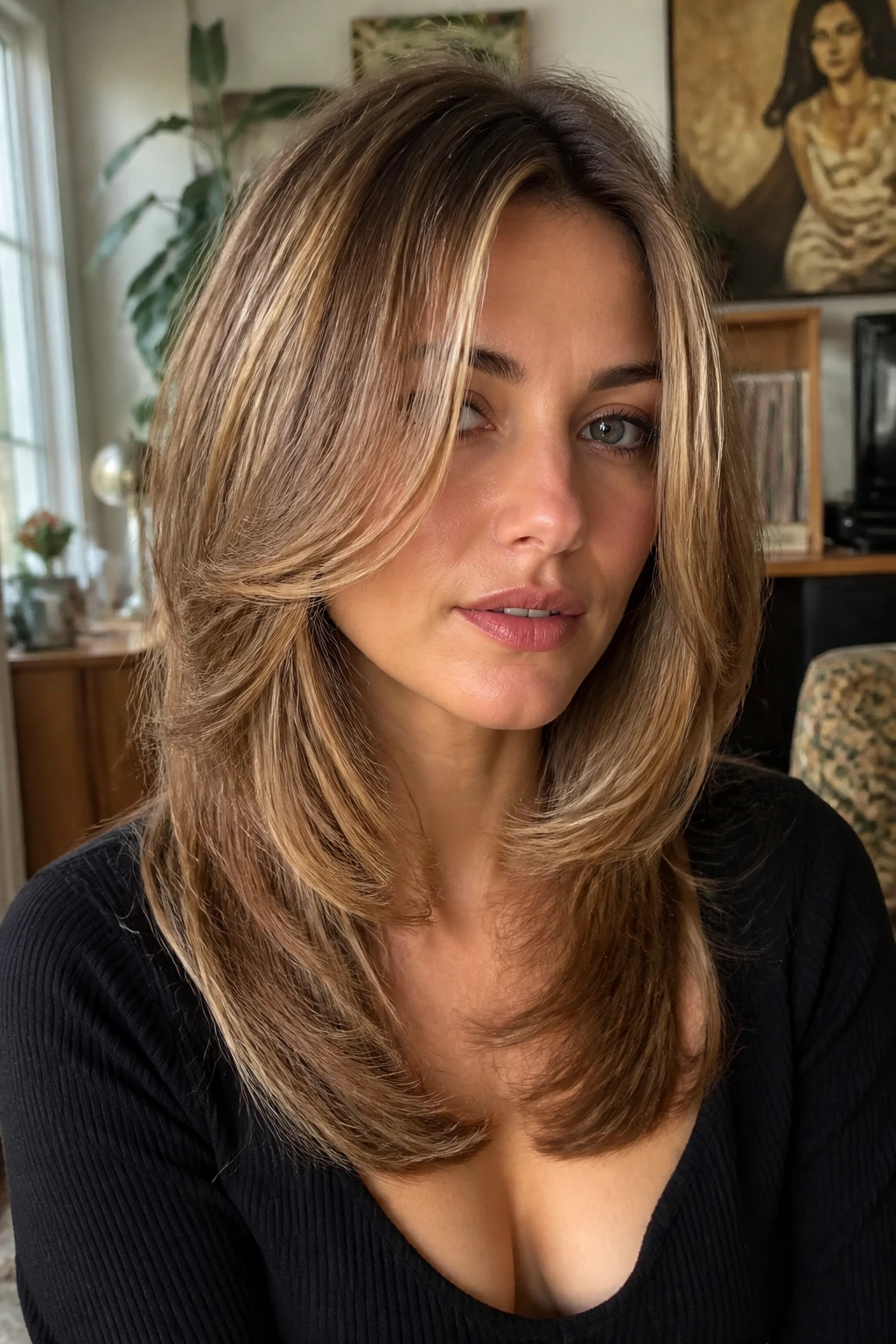
The nineties-inspired feathered cut is back, and it looks spectacular on straight hair. This style features heavy, face-framing layers that are cut at a steep angle, starting around the cheekbones and cascading down to the collarbone.
The key to this cut is the forward over-direction. The stylist pulls the hair forward to the face while cutting, which creates a soft, feathered edge that curls inward toward the jawline. It is a fantastic cut for adding volume and framing the face.
To style, you must use a round brush or a hot roller set. Blow-dry the face-framing layers inward toward your chin, and blow-dry the crown layers upward and backward to get that iconic, bouncy, voluminous look.
15. Italian Bob with Flipped Ends
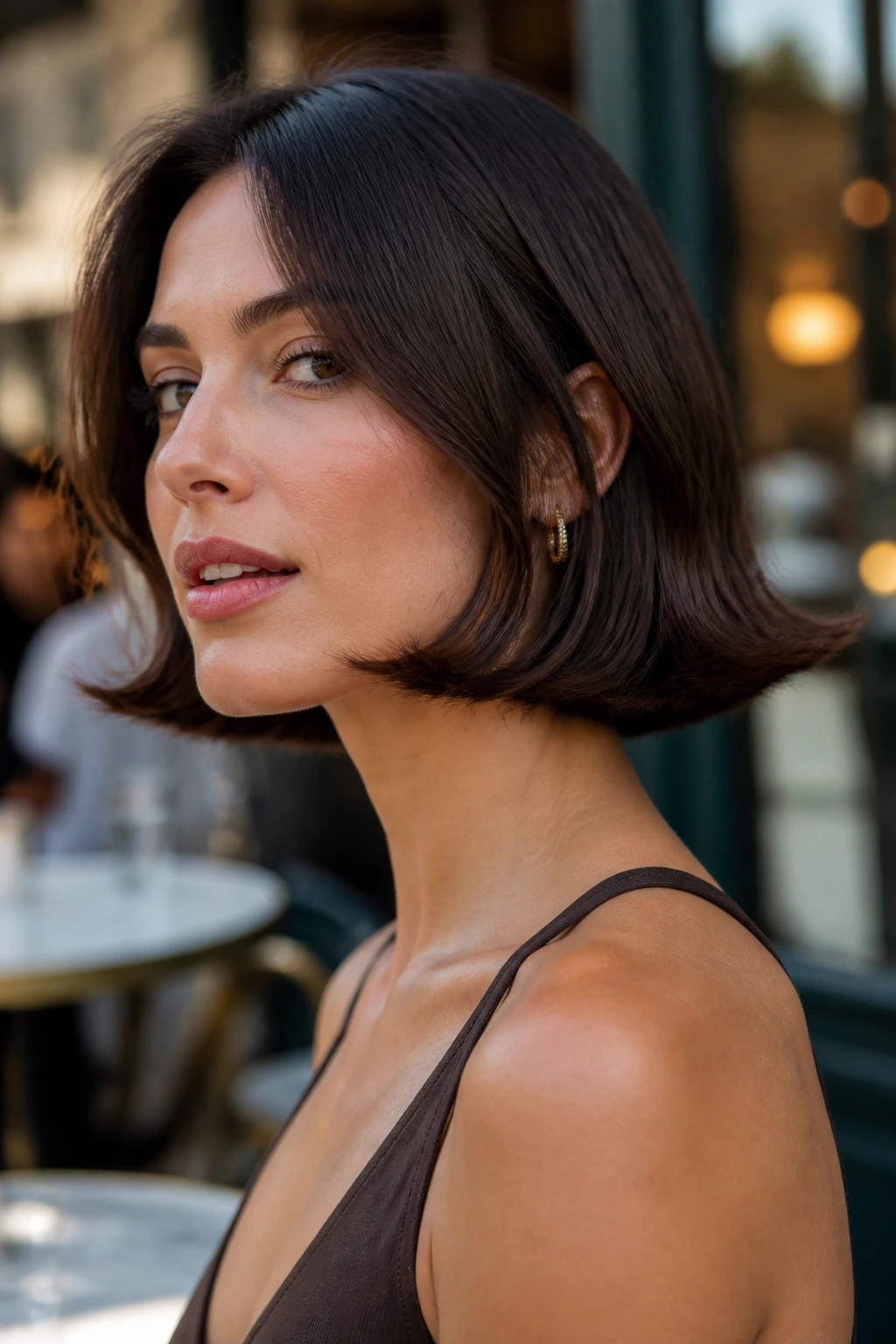
The Italian Bob differs from its French counterpart by being slightly longer, heavier, and more luxurious. It is cut bluntly to graze the neck, and it is designed to be tossed from side to side with ease. On straight hair, this cut has a polished, sophisticated weight.
Styling the Flip
The hallmark of the Italian Bob is the way the ends can be styled to flip outward slightly, creating a playful, retro silhouette.
- Apply a styling primer to damp hair.
- Blow-dry using a medium round brush, pulling the brush down and then curling it outward at the very ends.
- Use a flat iron on the bottom half-inch, twisting your wrist upward at the end of the stroke to lock in the flip.
- Set with a flexible-hold hairspray.
This cut is incredibly versatile; you can wear it tucked behind the ears for a clean, minimalist look, or part it deeply to one side for instant volume.
16. Long Cut with Blunt Horizontal Bangs
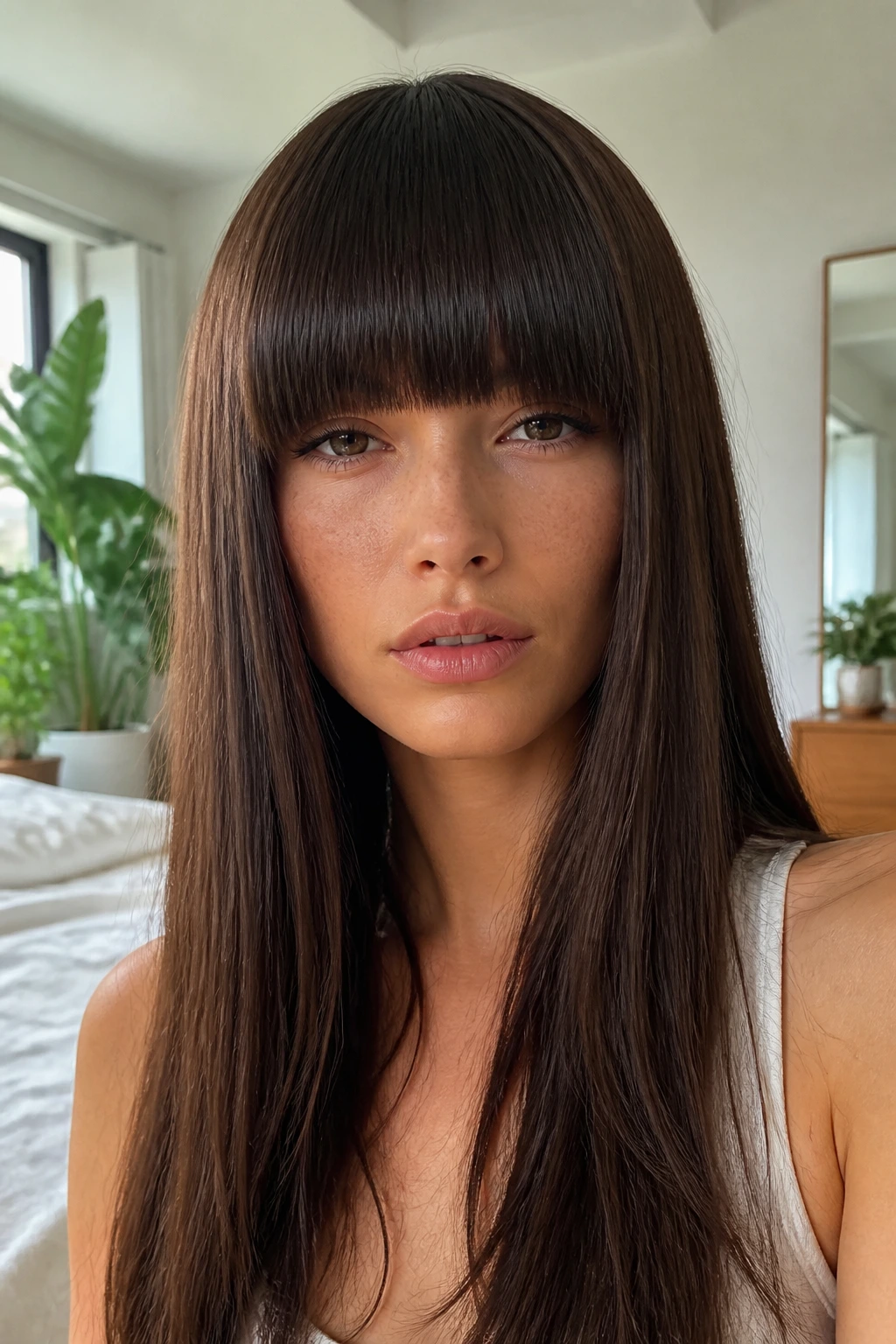
There is a striking contrast created when you pair long, flowing straight hair with a thick, blunt, straight-across bang. It is a high-fashion look that frames the eyes and adds a structural element to long hair.
The bangs should be cut from the high crown to ensure they have enough density to lay flat without parting. The sides of the bangs should meet the temple area, creating a clean frame for the face. The rest of the hair is left long and blunt, echoing the horizontal line of the fringe.
This cut does require daily bang maintenance. Keep a small flat iron on hand specifically for your fringe, and always blow-dry your bangs immediately after washing before they have a chance to air-dry into any natural cowlicks.
17. Tapered Lived-In Shag
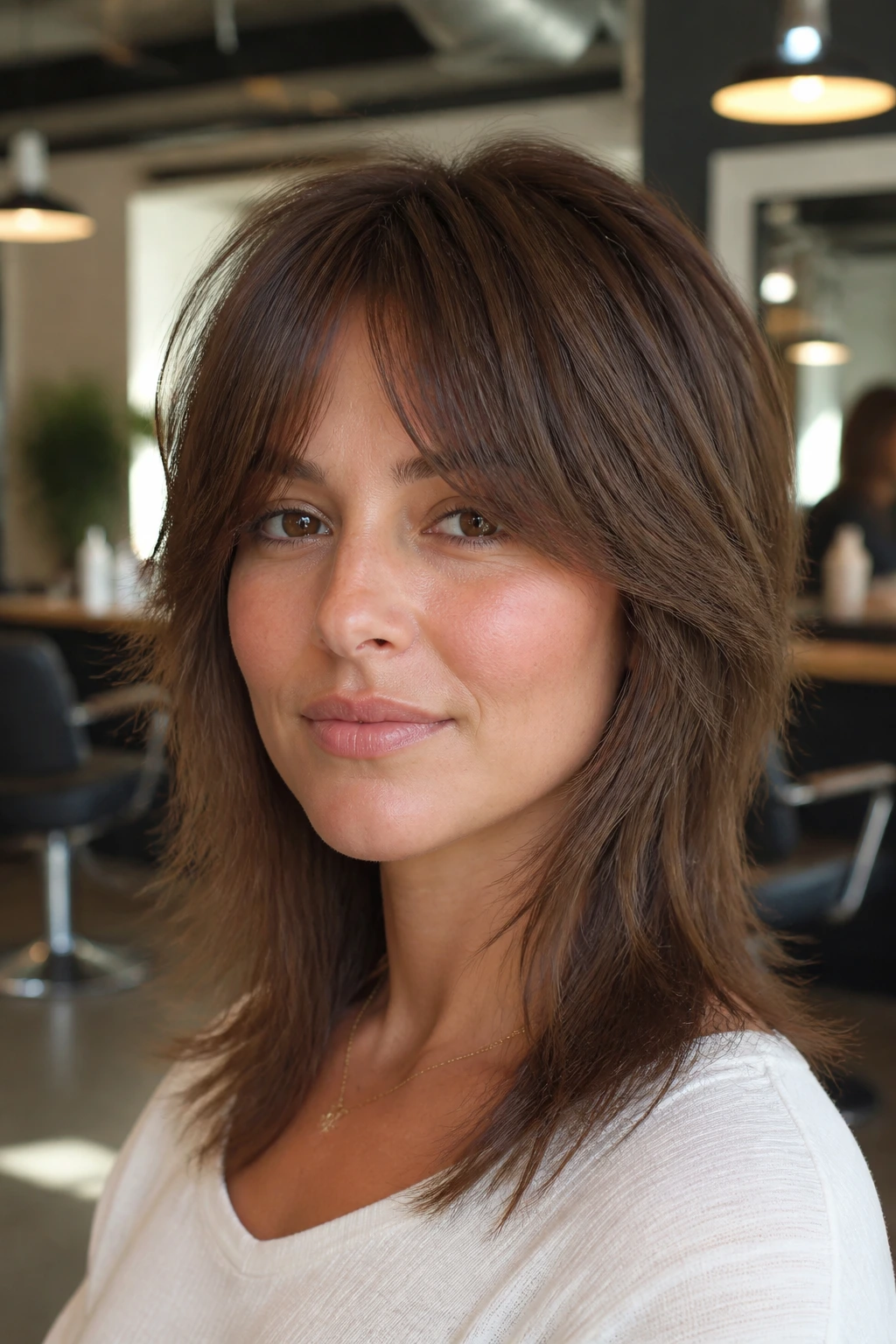
For those who want a shag but have very fine, straight hair, the tapered shag is the ideal compromise. Instead of heavy, choppy layers that can make fine hair look thin, this cut uses very light, tapered layers around the crown and face, preserving the thickness of the perimeter.
The stylist will use thin shears to blend the layers seamlessly, ensuring there are no harsh lines. This creates a soft halo of volume around the top of the head while the rest of the hair falls smoothly to the shoulders.
To style, use a small amount of volume powder at the roots. Massage your scalp with your fingertips to activate the powder, creating instant, lived-in lift that doesn’t feel heavy or sticky.
18. Butterfly Cut for Straight Hair
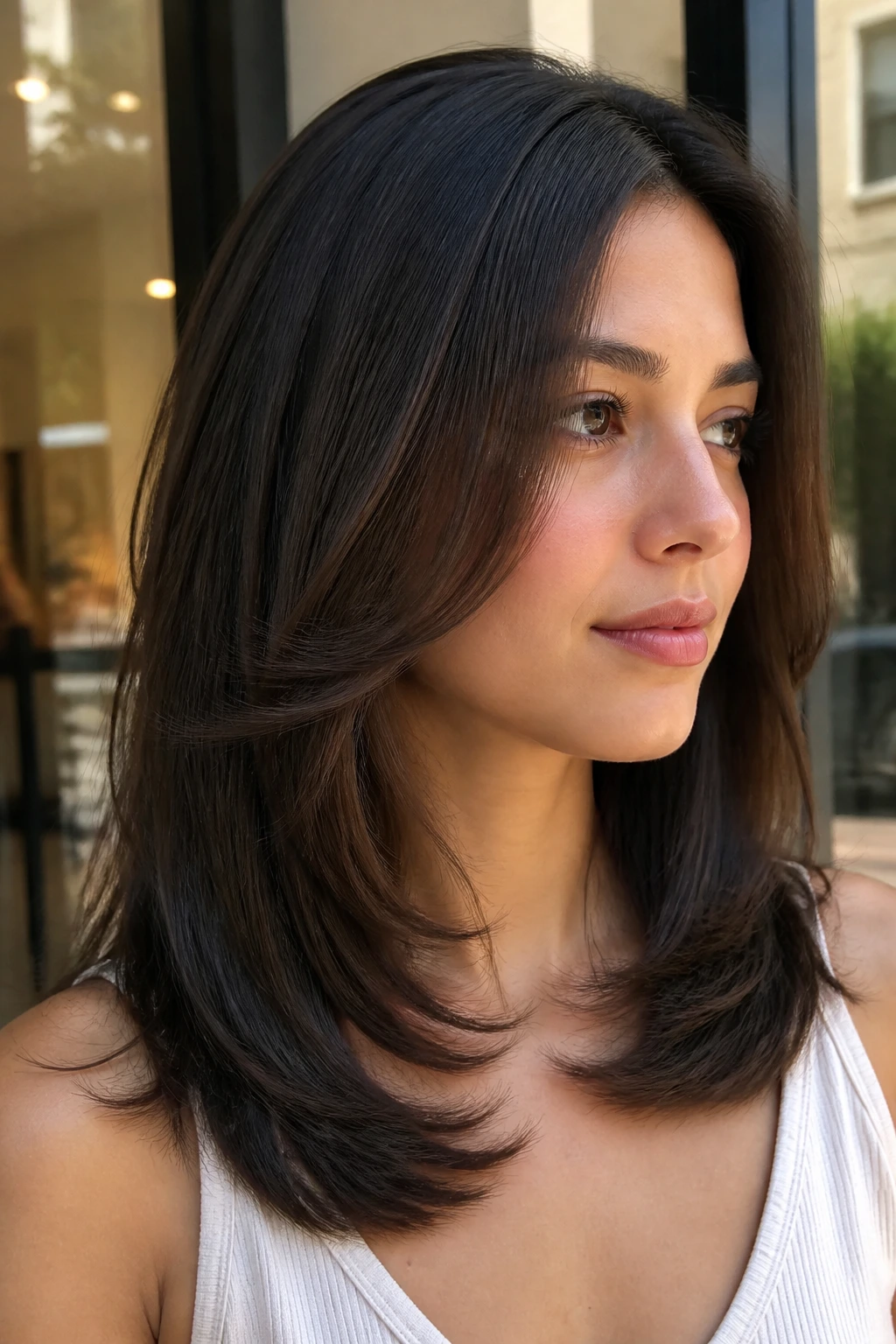
The butterfly cut is famous for its cascading, wing-like layers. While it is often shown on wavy hair, it looks incredibly elegant on straight hair, creating a waterfall of layers that start at the chin and sweep downward.
Because straight hair won’t naturally hold the “winged” shape on its own, this cut relies on the styling process to bring it to life. The long layers are cut to allow the hair to be styled away from the face, mimicking the sweep of a butterfly’s wings.
Use a large round brush or a blow-dry brush, wrapping the layers away from your face. Once the hair cools, shake it out; the layers will cascade down your back and shoulders in beautiful, fluid sweeps.
19. Angled Shoulder-Length Lob
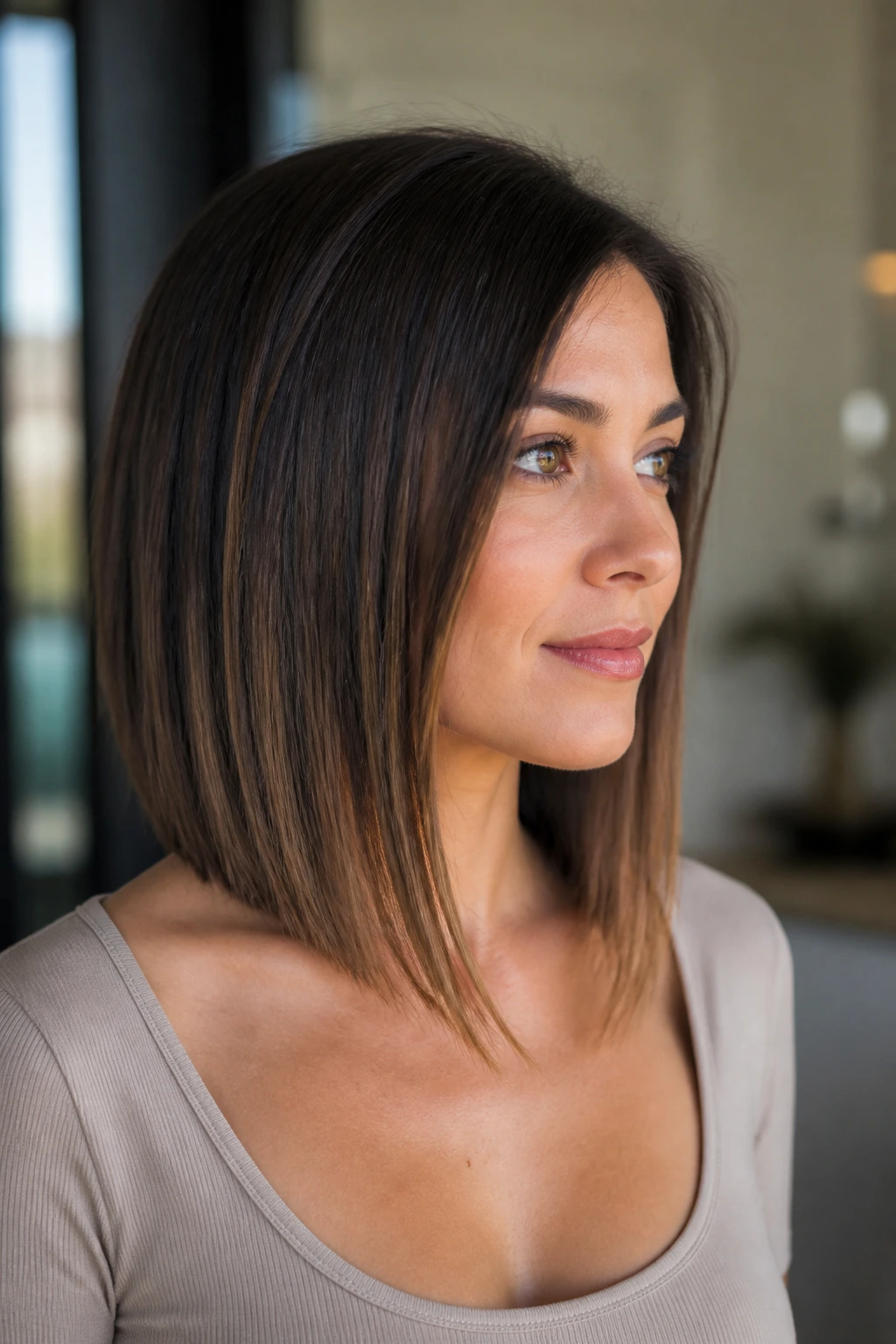
Sitting right at the shoulders, this lob features a gentle slope from the back to the front. The back is cut slightly shorter to sit off the collar, while the front panels extend down to rest on the clavicle.
Getting the Angle Right
The angle should be subtle, not aggressive. A gentle gradient of about one inch from back to front is highly flattering and keeps the cut looking modern.
Quick Facts for the Angled Lob
- Best Face Shapes: Square, round, and heart-shaped.
- Ideal Hair Density: Medium to thick.
- Maintenance Level: Low; grows out beautifully without losing its shape.
- Styling Method: Blow-dry with a paddle brush, keeping the back flat and using a flat iron on the front pieces to emphasize the forward slope.
This is one of the most practical cuts for straight hair, as it is long enough to tie back into a low bun but short enough to stay off your neck on hot days.
20. Soft Curve C-Cut
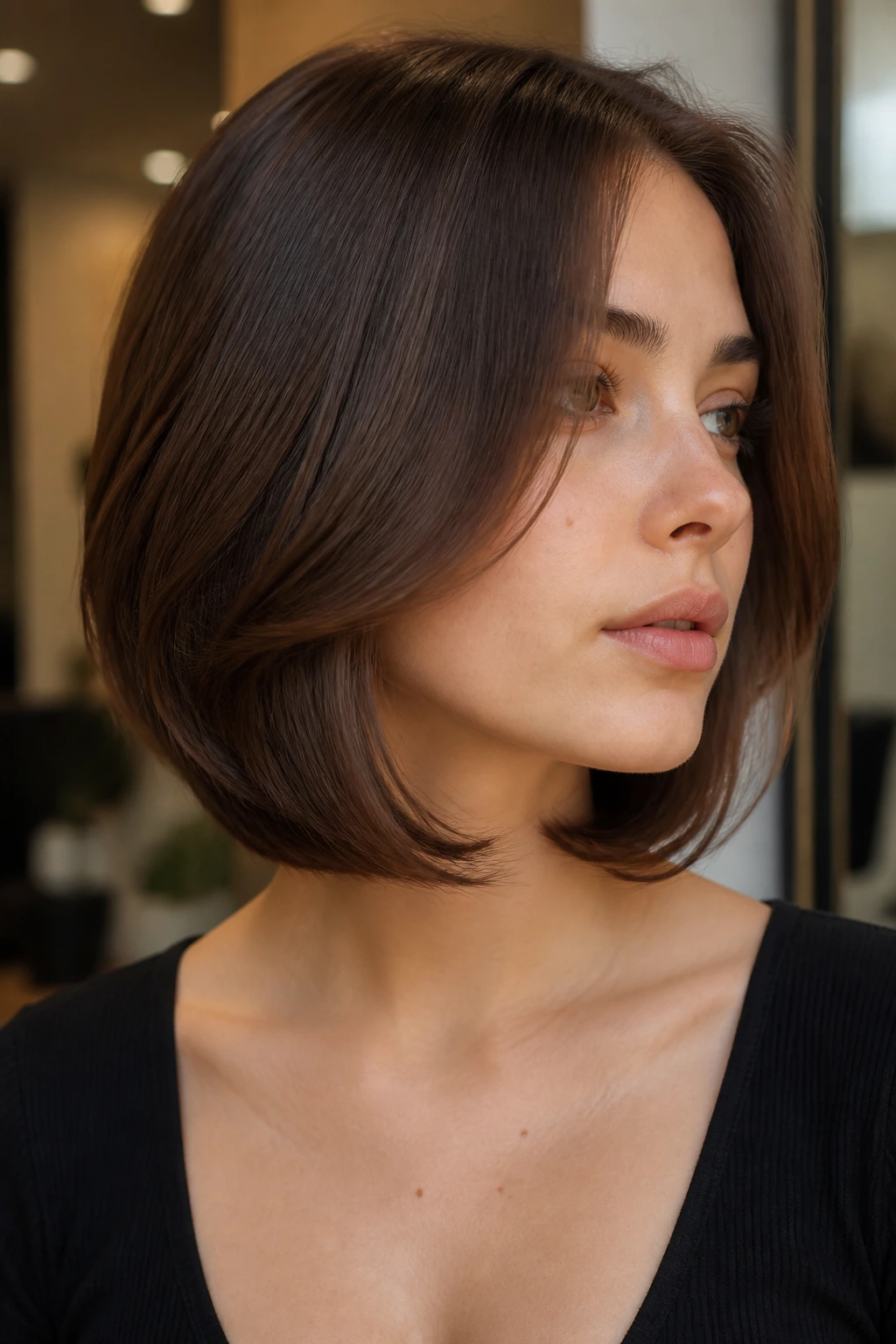
The C-cut features continuous, soft layers that curve inward toward the face, forming a gentle “C” shape from the chin down to the ends. It is a beautiful, classic cut that removes the harshness of straight lines and replaces them with soft, face-hugging curves.
This cut is achieved by slide-cutting around the face frame while holding the hair forward. When the hair falls back naturally, the layers cup the jawline and neck, creating a highly flattering, soft-focus frame.
To style, simply use a medium round brush to sweep the face-framing sections inward toward your mouth and neck. The rest of the hair can be dried straight, letting the curved layers take center stage.
21. Ultra-Short Boy Cut with Wispy Layers
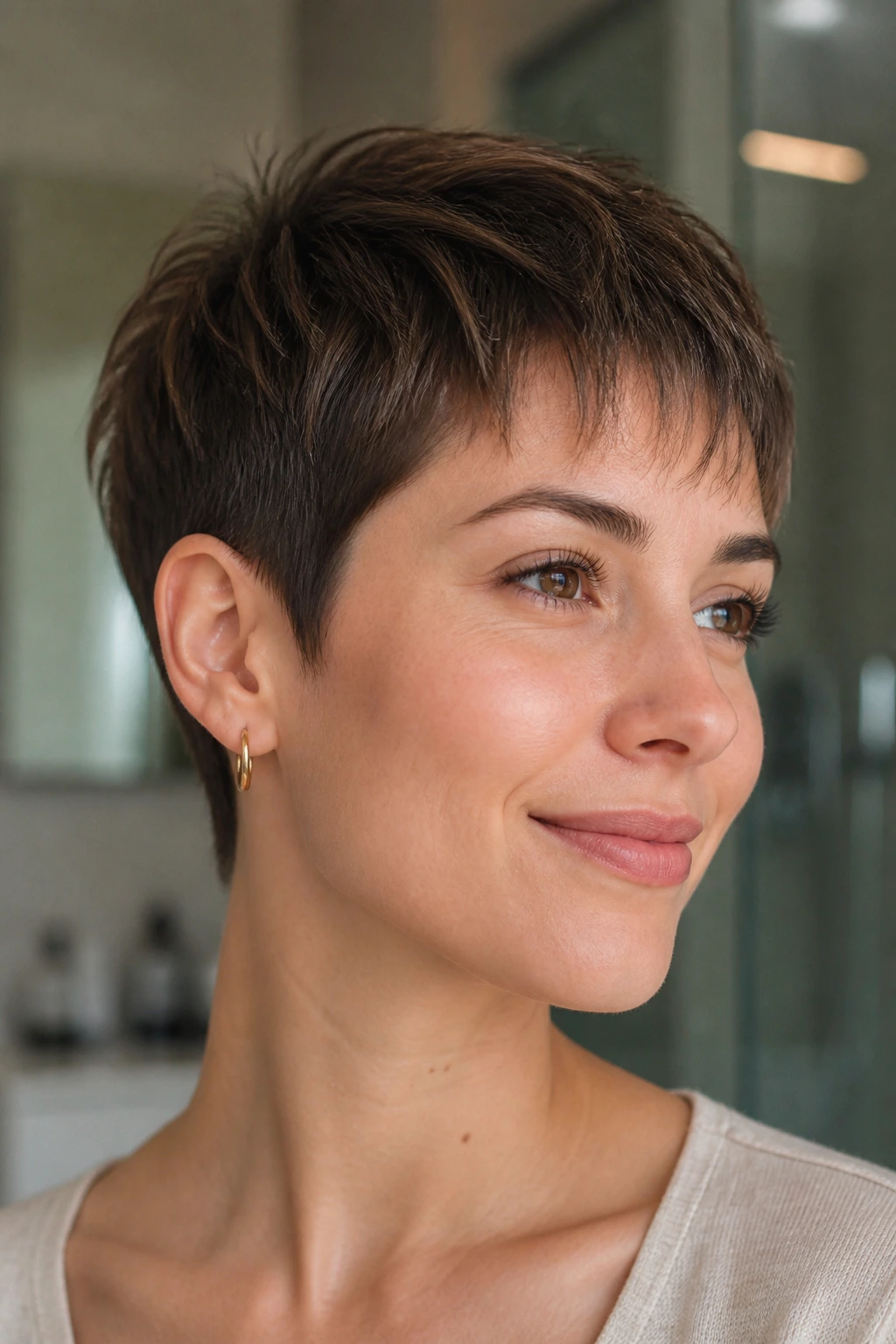
For the ultimate minimalist look, the ultra-short boy cut is clean, modern, and incredibly low-maintenance. This cut features a short crop with tapered sides and a feathered, wispy top that can be styled forward or swept to the side.
Straight hair is perfect for this cut because it lies flat and smooth against the scalp, creating a very clean, sleek silhouette. The wispy layers on top prevent the cut from looking too flat or severe, adding a touch of softness.
Styling takes less than two minutes. A tiny amount of hair oil or light cream run through the ends with your fingertips is all you need to add definition and shine.
Essential Maintenance Rules for Sharp Perimeters
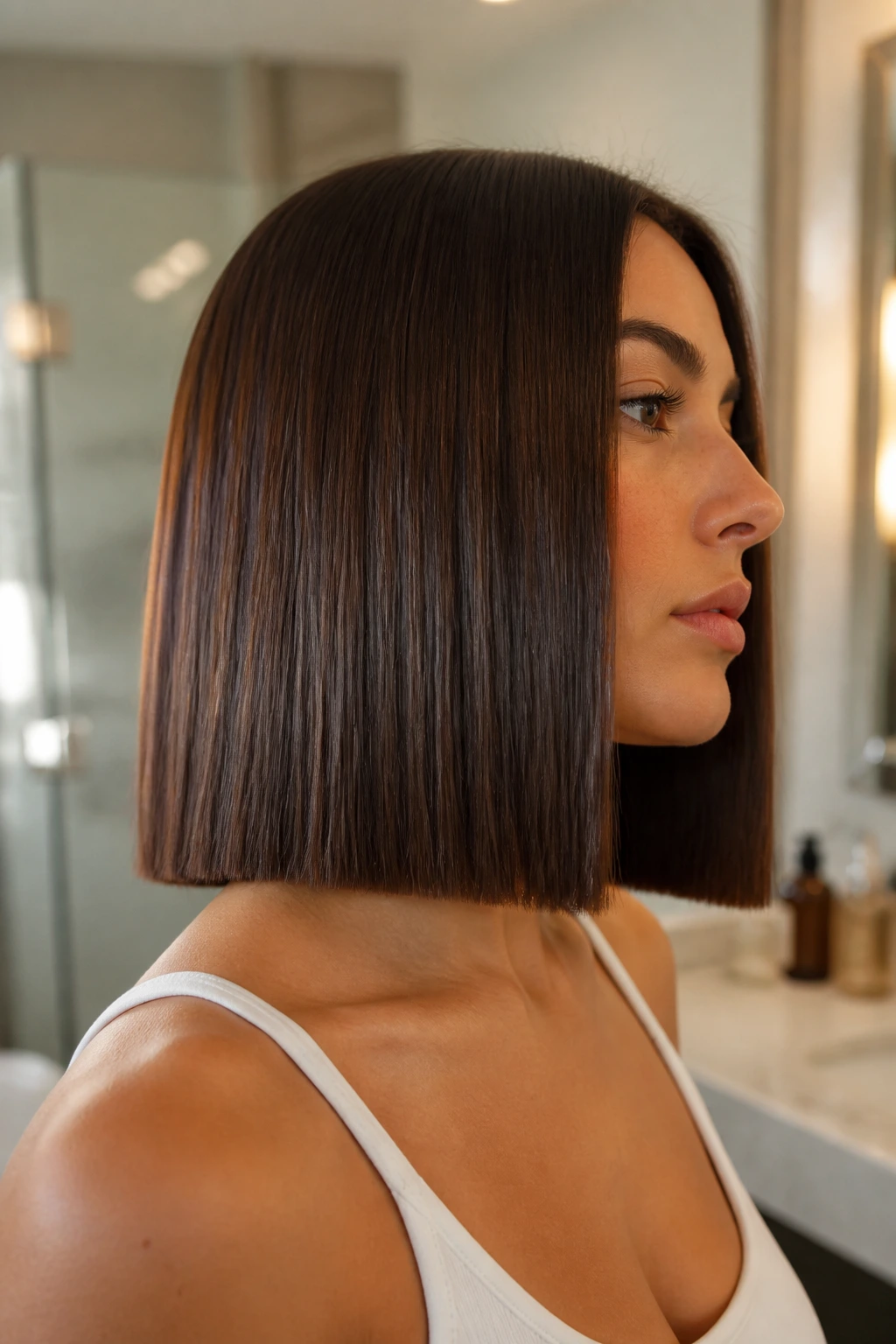
Straight haircuts, especially blunt ones, require consistent care to keep them looking sharp. Because there are no curls or waves to hide split ends, keeping your ends healthy is the single most important factor in maintaining the look of your cut.
First, invest in regular “dustings.” A dusting is a very minimal trim—usually less than a quarter of an inch—that targets only the split ends while preserving your length. If you have a blunt cut or a bob, scheduling a dusting every six weeks will prevent your ends from fraying and keep that perimeter line looking incredibly clean.
Second, protect your hair from heat. Straight hair is highly reflective, which is why it looks so shiny. However, high heat from flat irons and blow dryers damages the cuticle, causing it to rough up and lose its reflective quality. Always use a high-quality heat protectant before styling, and try to keep your styling tools set to a medium heat level (around 350°F or 175°C) rather than the maximum setting.
Finally, think about how you sleep. Cotton pillowcases can cause friction as you toss and turn, leading to tangles and micro-damage on the hair shaft. Switching to a silk or satin pillowcase allows your straight strands to slide smoothly across the surface, reducing morning frizz and helping to preserve the polished shape of your cut overnight.
The Bottom Line
A great straight haircut is a partnership between precision cutting and healthy hair. Whether you choose the sharp, graphic lines of a blunt bob or the soft, sweeping layers of a feathered cut, the key is to work with your hair’s natural density and movement. By selecting a cut that respects your hair’s unique behavior, you can transform your straight strands from a simple, default style into a powerful, intentional design statement.