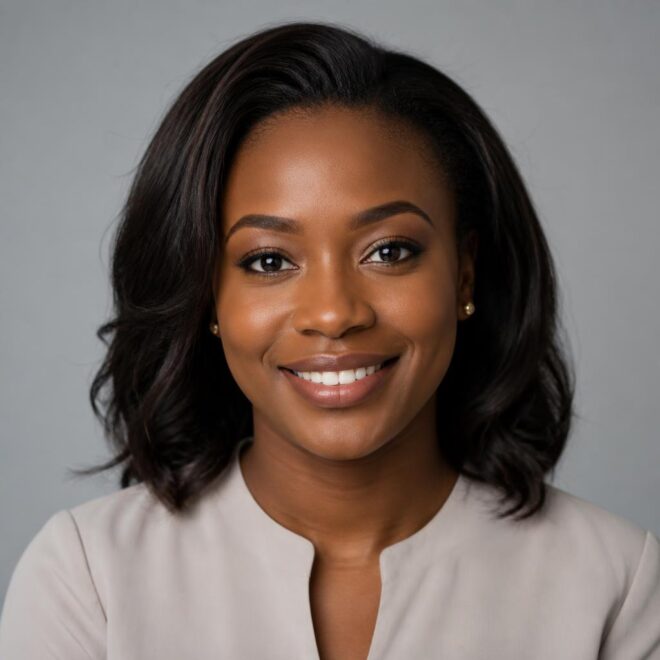


Wavy hair is often misunderstood as the unruly middle child of the hair world. It sits somewhere between the predictable structure of straight strands and the high-maintenance volume of tight curls. When you cut it too short without accounting for its natural bounce, you risk a permanent “pouf” that defies gravity. However, when you pair the right cut with the natural movement of a wave, you get an effortless, lived-in texture that feels intentional and entirely sophisticated. A bob on wavy hair isn’t just a haircut; it’s an embrace of texture that requires far less heat styling than you might think.
Many people fear the bob because they believe it will force them into a daily battle with a round brush and a flat iron. In reality, the best wavy bob cuts are designed to work with your hair’s natural tendency to bend. By thinning out the weight at the ends or adding strategic internal layers, you can create a shape that practically styles itself after a quick air-dry. Whether your hair is fine and wispy or thick and prone to frizz, there is a specific configuration of length and layering that will make your morning routine feel like a relief rather than a chore.
Let’s look at the cuts that are currently dominating the salons, not because of social media trends, but because they genuinely solve the common issues that wavy-haired people face. These styles prioritize shape, movement, and the kind of low-effort maintenance that lets you walk out the door with nothing more than a bit of sea salt spray or a light cream.
1. The Chin-Length Blunt Bob
The classic blunt bob has a reputation for being severe, but when cut at the level of your jawline on wavy hair, it takes on a surprisingly chic, Parisian aesthetic. This cut is all about the perimeter. By keeping the ends perfectly horizontal and free of thinning shears, you create a solid foundation that prevents the hair from looking wispy at the bottom. The waves add the softness that a blunt cut usually lacks, creating a beautiful contrast between the sharp line and the organic texture.
Why It Works for Waves
- It provides weight at the bottom, which helps pull the waves down just enough to prevent excessive frizz.
- It is incredibly easy to style; a simple middle part creates a frame that highlights your bone structure.
- The bluntness makes fine hair appear thicker because there are no feathered ends to break up the volume.
Pro Styling Tip
Use a matte texturizing clay on damp hair and scrunch it upward to encourage the wave pattern. Once it dries, you want the texture to feel piecey and slightly undone rather than perfectly polished.
2. The Textured Lob with Soft Layers
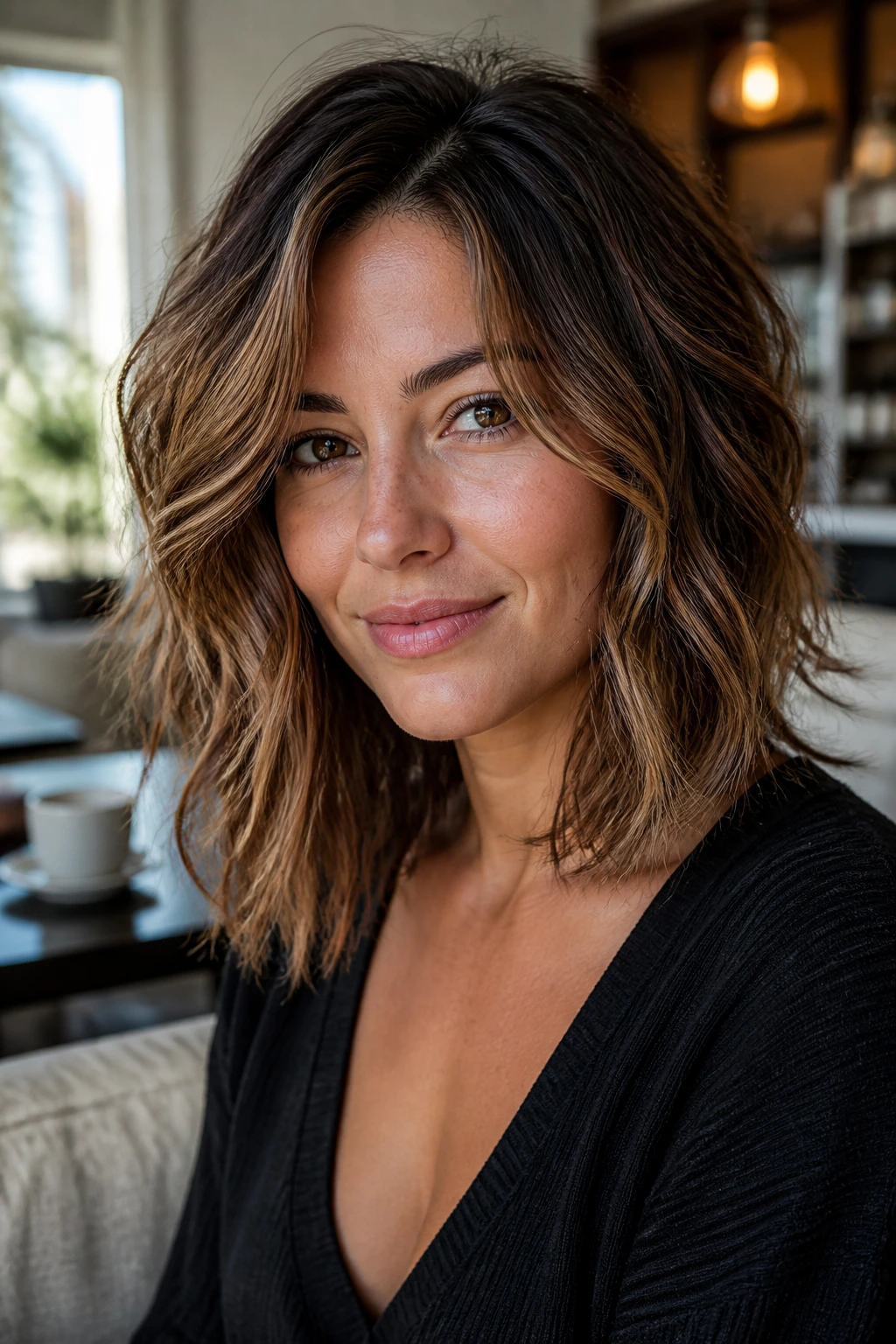
If you aren’t quite ready to commit to a shorter length, the lob—or long bob—is your entry point. This version utilizes long, sweeping layers that start around the chin area, allowing your waves to stack on top of each other without creating that dreaded triangular shape. The length should hit comfortably at the collarbone, giving you enough room to tuck it behind your ears or throw it into a loose clip when the temperature rises.
The Anatomy of the Cut
Layers are usually the enemy of thick wavy hair if they are cut too short, but here, the length is key. By keeping the layers long and blended, the hair maintains its weight, which is the secret to managing volume. The result is a seamless transition between the shorter pieces around the face and the longer lengths at the back. It is arguably the most versatile haircut for someone transitioning from long hair to something more manageable.
3. The French-Girl Shaggy Bob
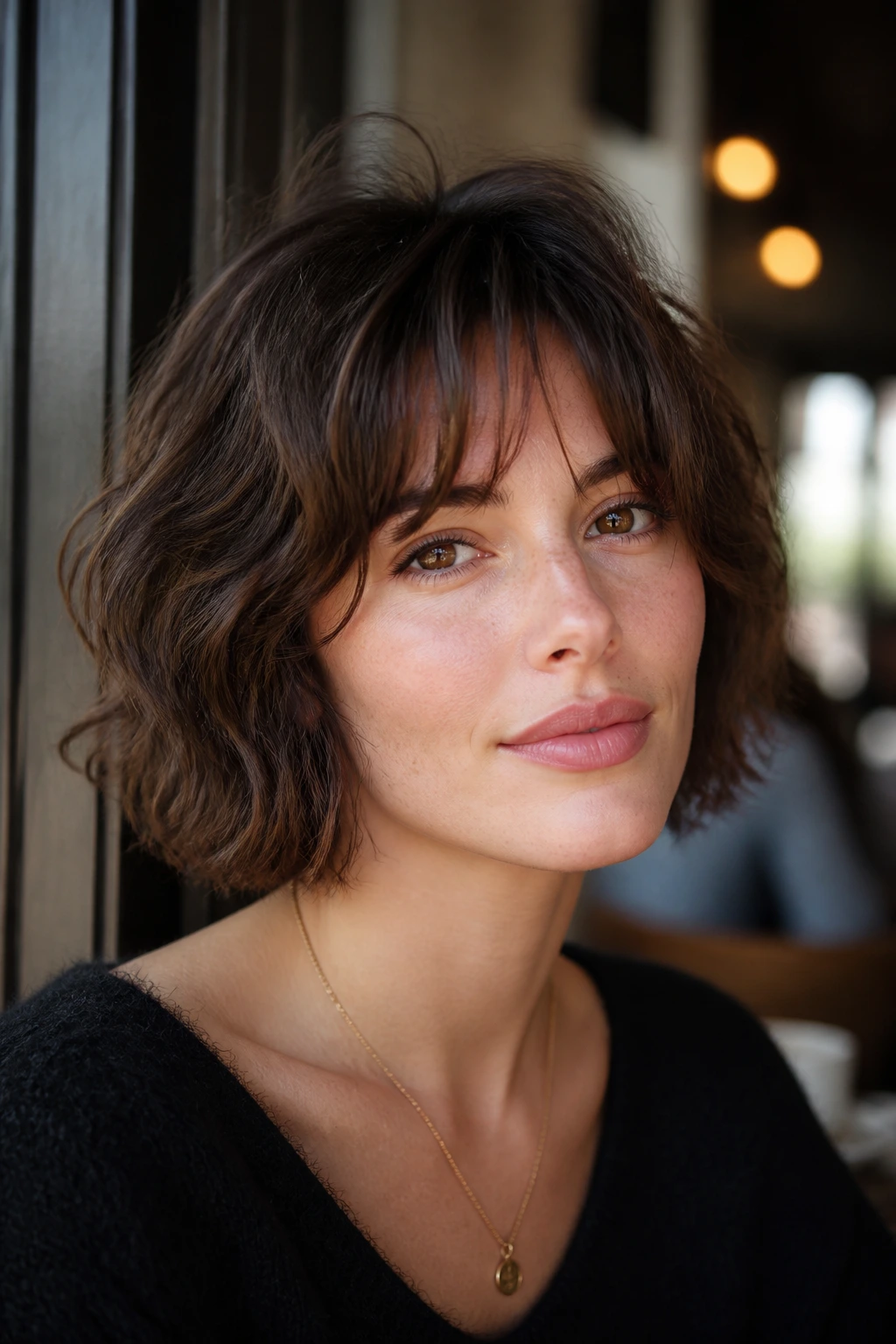
There is something undeniably romantic about a bob that looks like you just woke up in a cafe in Le Marais. This style features shorter, choppy layers throughout the crown, which encourages volume where you need it most. It is specifically designed for wavy hair that tends to fall flat at the roots. The fringe is almost always part of this equation—a curtain bang or a wispy, brow-skimming bang ties the whole look together.
How to Achieve the Look
- Start by asking your stylist for “internal layering” to remove weight without creating short, choppy tiers.
- Ensure the bangs are cut slightly longer at the sides to blend seamlessly into the rest of the hair.
- Apply a leave-in conditioner while the hair is soaking wet to lock in moisture before the wave pattern sets.
- Avoid touching the hair while it dries. Let the air do the work to prevent the disruption of the wave clumps.
4. The Angled Stacked Bob
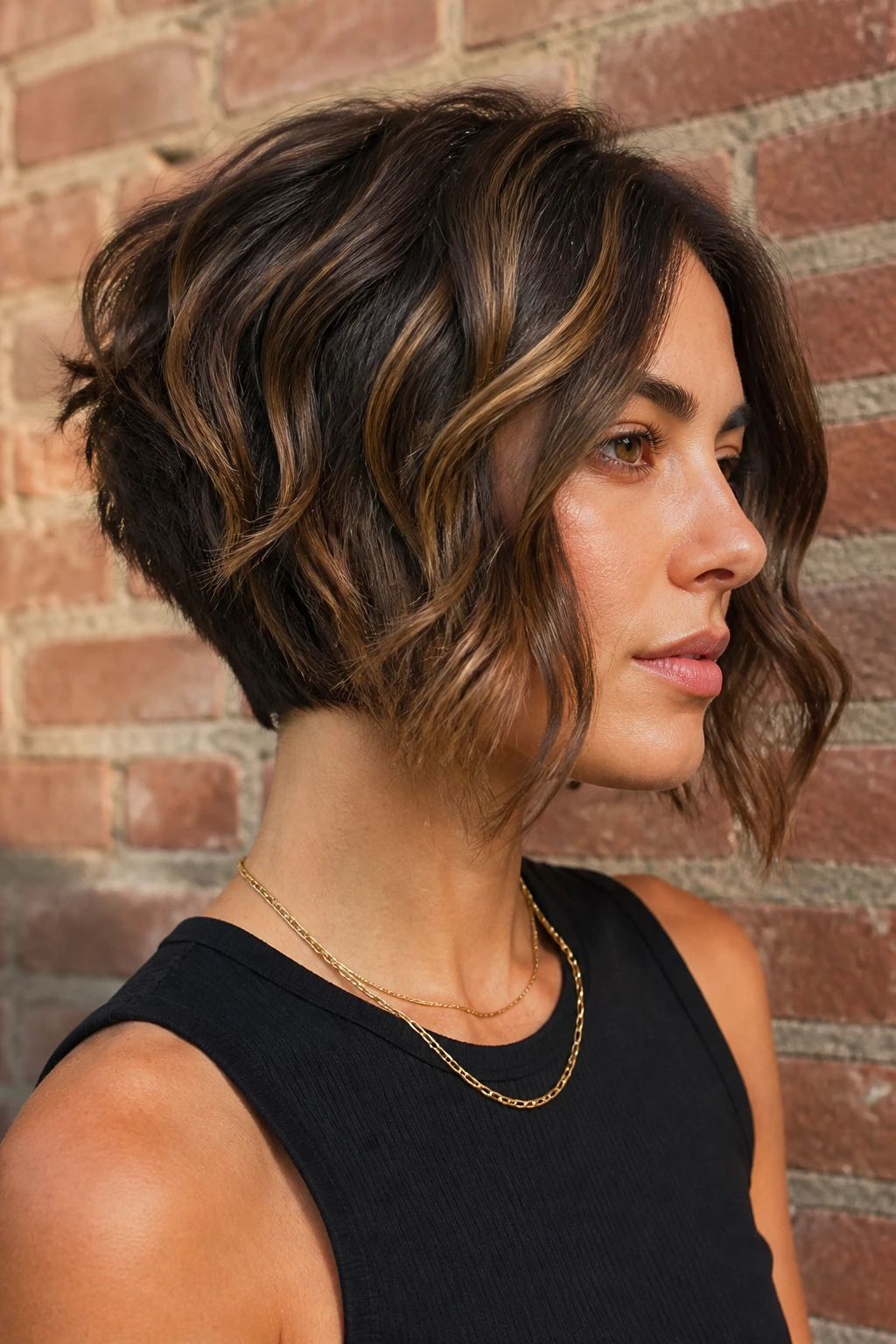
For those who want a dramatic silhouette, the angled bob is a timeless choice. It is shortest in the back, typically hitting right at the nape of the neck, and gradually lengthens toward the front. The “stacked” portion in the back involves small, precise layers that create a rounded, voluminous shape. This is particularly effective for wavy hair because the natural texture adds a touch of softness to the otherwise sharp, geometric lines of the cut.
Who Should Avoid This
If your hair is extremely thick and tends to spiral tightly when short, be wary of the stacked back. It can become very difficult to manage if the hair at the nape of your neck has a different, tighter curl pattern than the rest of your head. Stick to a more subtle angle if you are unsure how your hair will react to the shorter cut.
5. The Curly-Cut Shag Bob
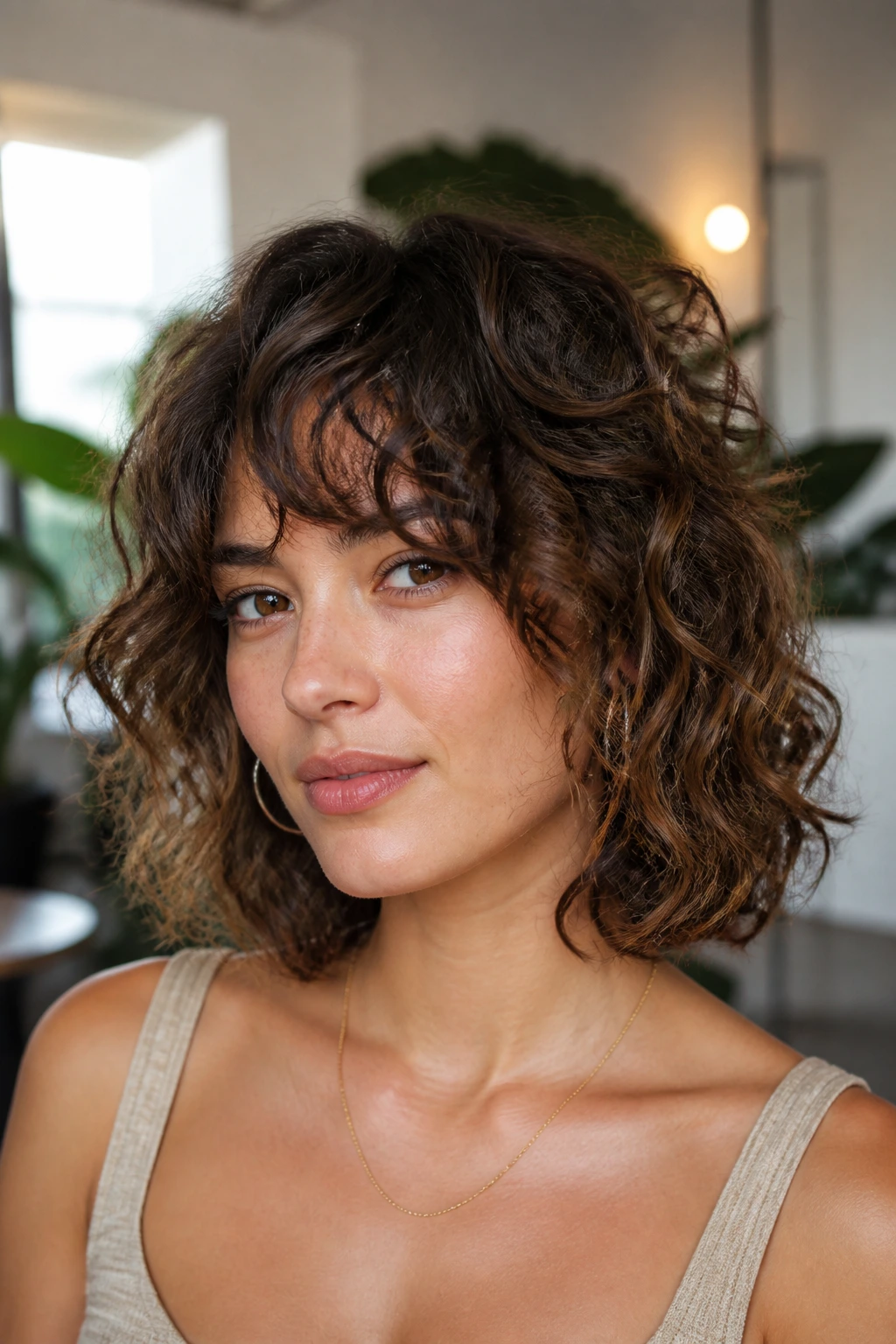
This isn’t just for straight hair; the shag is actually a revelation for waves. By cutting “deconstructed” layers, the stylist creates space for the hair to move and breathe. It looks incredible on hair that has a loose S-wave pattern. The key is to cut the hair while it is dry, which allows the stylist to see exactly where each wave wants to sit on your head.
The Benefits
- It reduces the “shelf” effect that often happens when you have a one-length bob.
- You can go longer between salon visits because the style is meant to look slightly grown-out and messy.
- It works exceptionally well with natural highlights, as the layers catch the light in different directions.
6. The Side-Parted Swept Bob

A deep side part can completely transform a basic bob into something sophisticated and red-carpet ready. On wavy hair, the side part naturally pushes more volume to one side, creating a beautiful, asymmetrical sweep across the forehead. This is an excellent way to balance an oval or heart-shaped face. It is also the easiest way to give your hair a “new” look without taking off a single inch of length.
Maintenance Tips
- Switch your part occasionally to prevent the hair from becoming too flat on one side.
- Use a dry texture spray at the roots on the side with less volume to maintain an even, lifted look throughout the day.
- Keep the ends trimmed regularly, as a side-swept look highlights the condition of your tips more than a centered style does.
7. The Bottleneck Bob
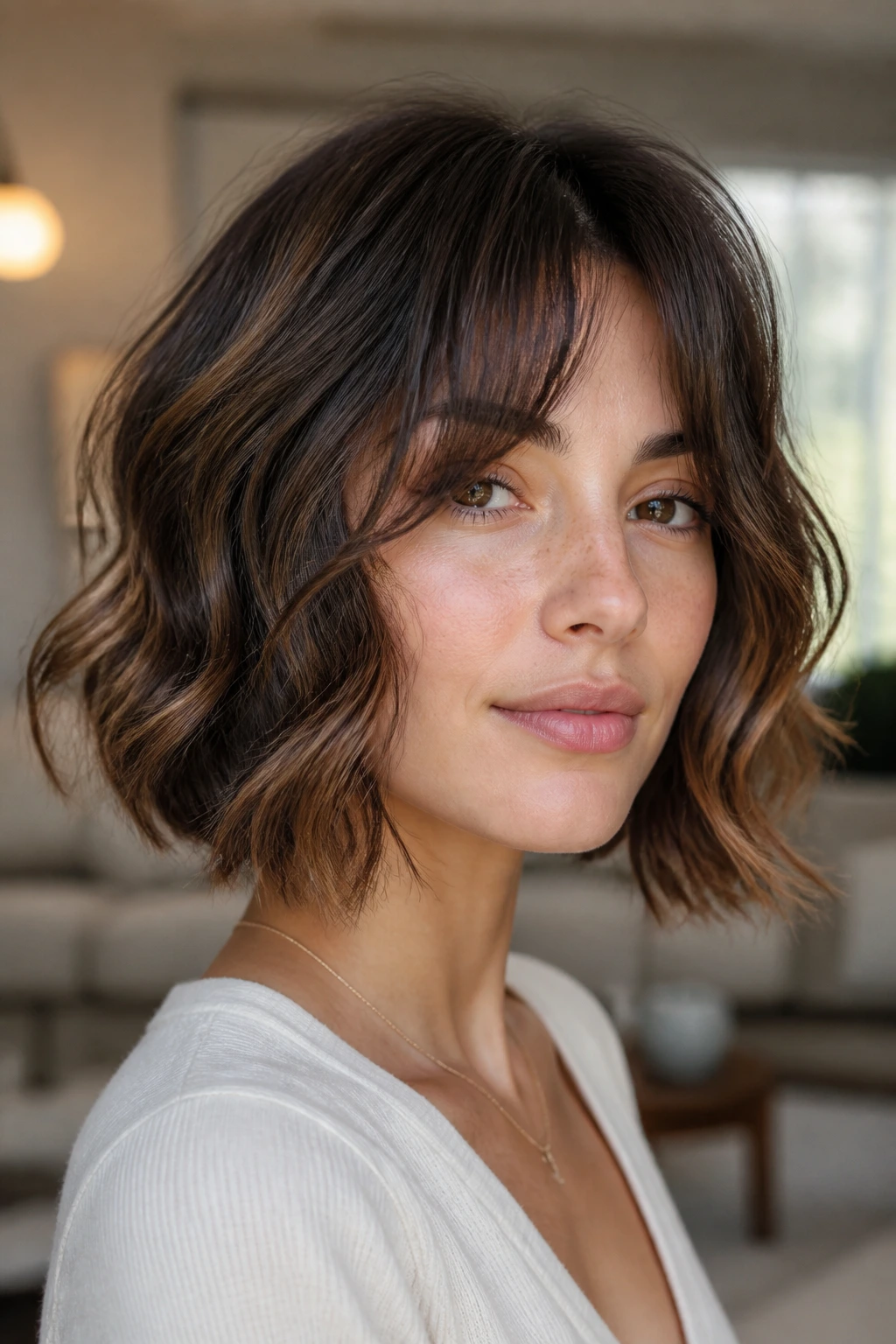
The “bottleneck” refers to the way the bangs are cut: shorter in the middle and longer on the sides, mimicking the neck of a bottle. This is arguably one of the most flattering styles for wavy hair because it creates a soft frame around the eyes and cheekbones, which are often hidden by heavy, one-length cuts. It’s a modern, playful take on the classic bob that feels very grounded in current aesthetics.
Why It’s Unique
It provides all the benefits of a fringe without the maintenance of a straight-across blunt bang. Because the sides are longer, you can easily pull them back or tuck them away, and if you get tired of them, they grow out into face-framing layers effortlessly.
8. The Wavy A-Line with Hidden Undercut
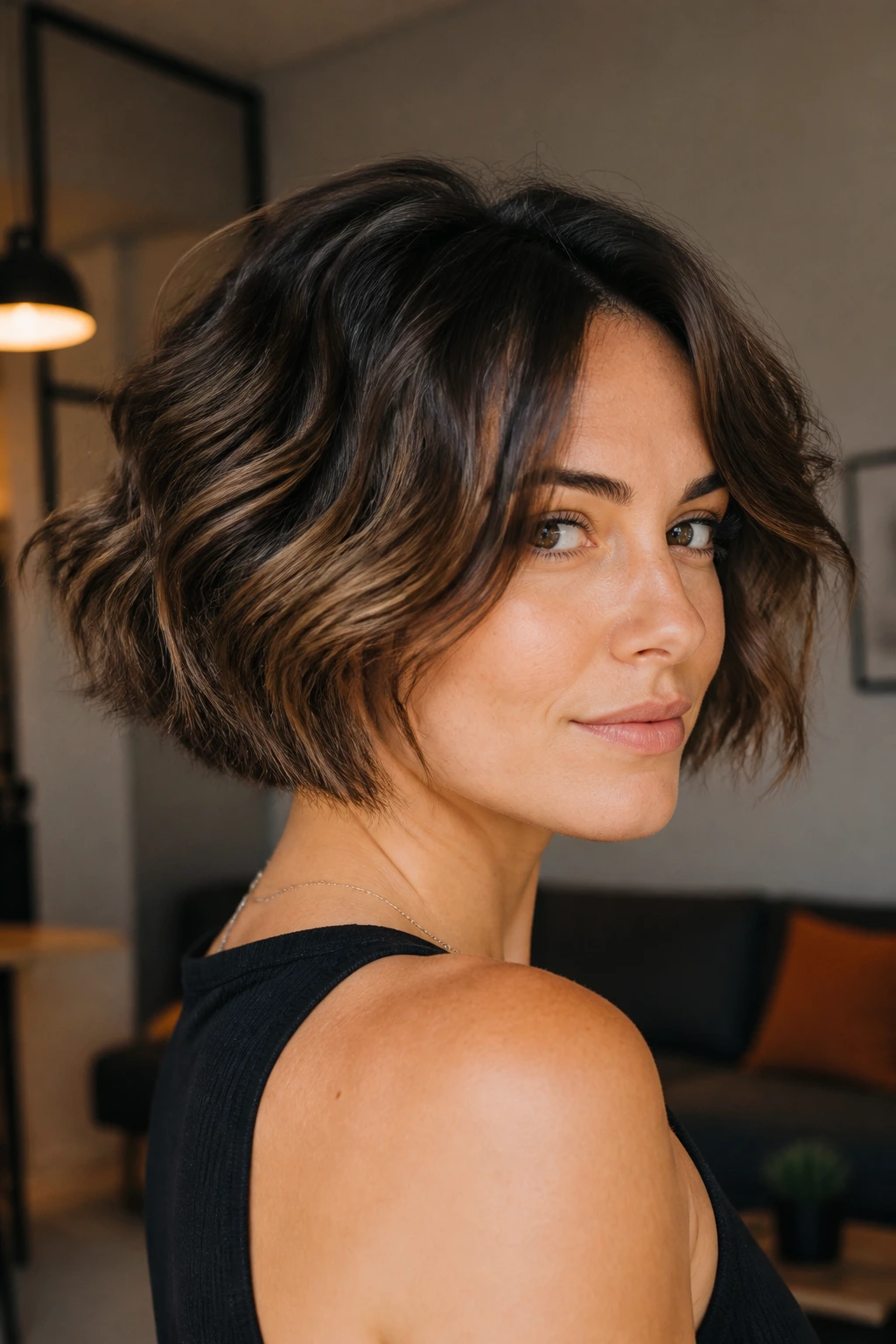
If you have massive amounts of hair that feels too heavy for a short bob, an undercut is your secret weapon. By shaving or tapering a small section at the very nape of the neck, you remove a significant amount of weight and bulk. This allows the remaining hair to lay flatter against the neck, preventing that flared-out look that can happen with thick, wavy hair when it is cut into a bob.
Is It Right for You?
- You need to be prepared for the maintenance of the undercut area if you want it to remain perfectly faded.
- It is best for people who live in warmer climates where neck-sweat and heavy hair become a daily burden.
- You can keep it completely hidden when the hair is down, making it a “secret” style that only reveals itself when you wear your hair in a ponytail or bun.
9. The Rounded “Bowl” Bob
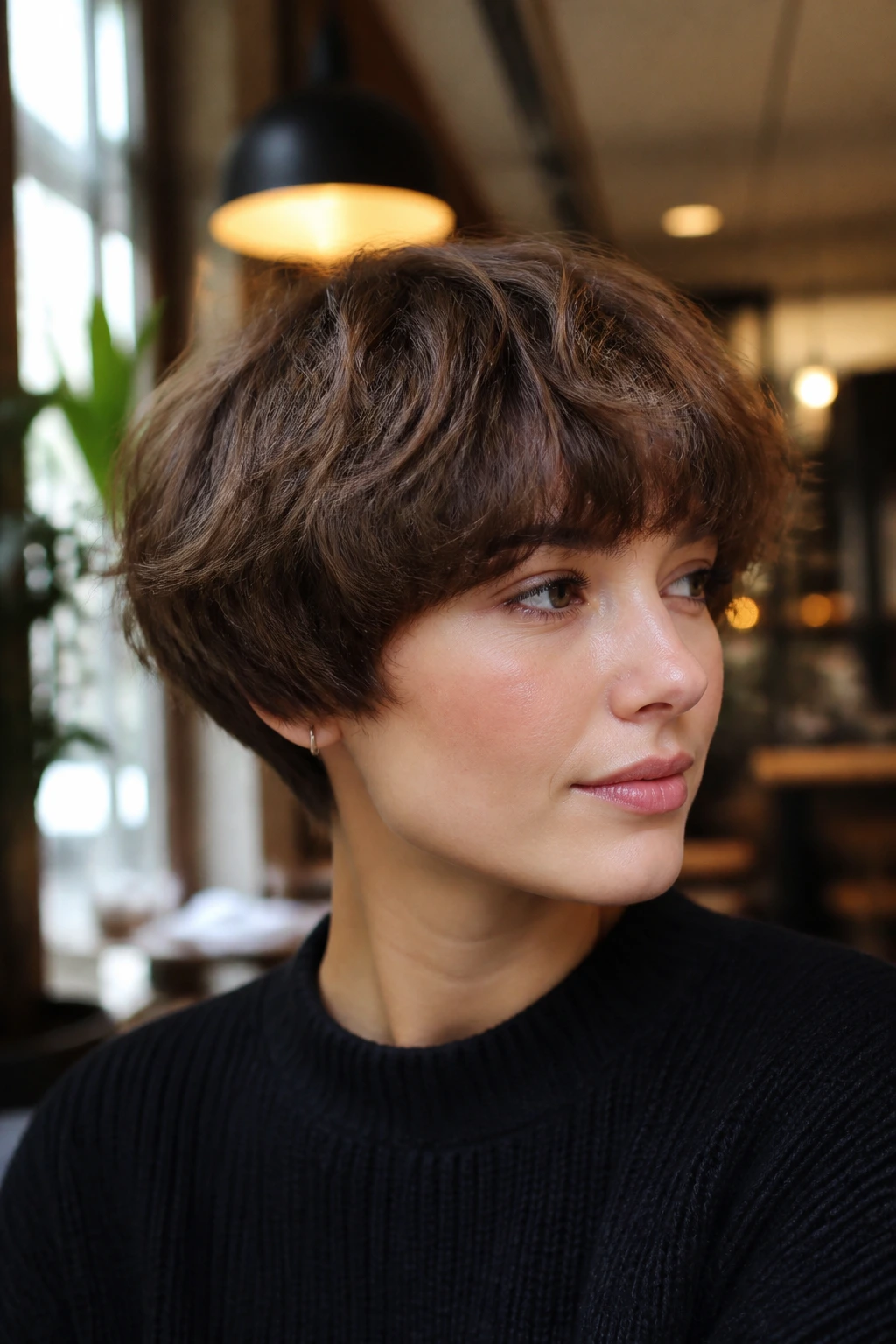
Before you dismiss this as an outdated concept, consider how it’s being done now. This isn’t the jagged bowl cut from your childhood; it’s a soft, rounded shape that hugs the head and emphasizes the waves. It’s very high-fashion and requires a confident, edgy personal style to pull off. The waves give the structure a fuzzy, soft-focus quality that makes it look modern and intentional.
10. The Deep-Parted Wavy Pixie-Bob
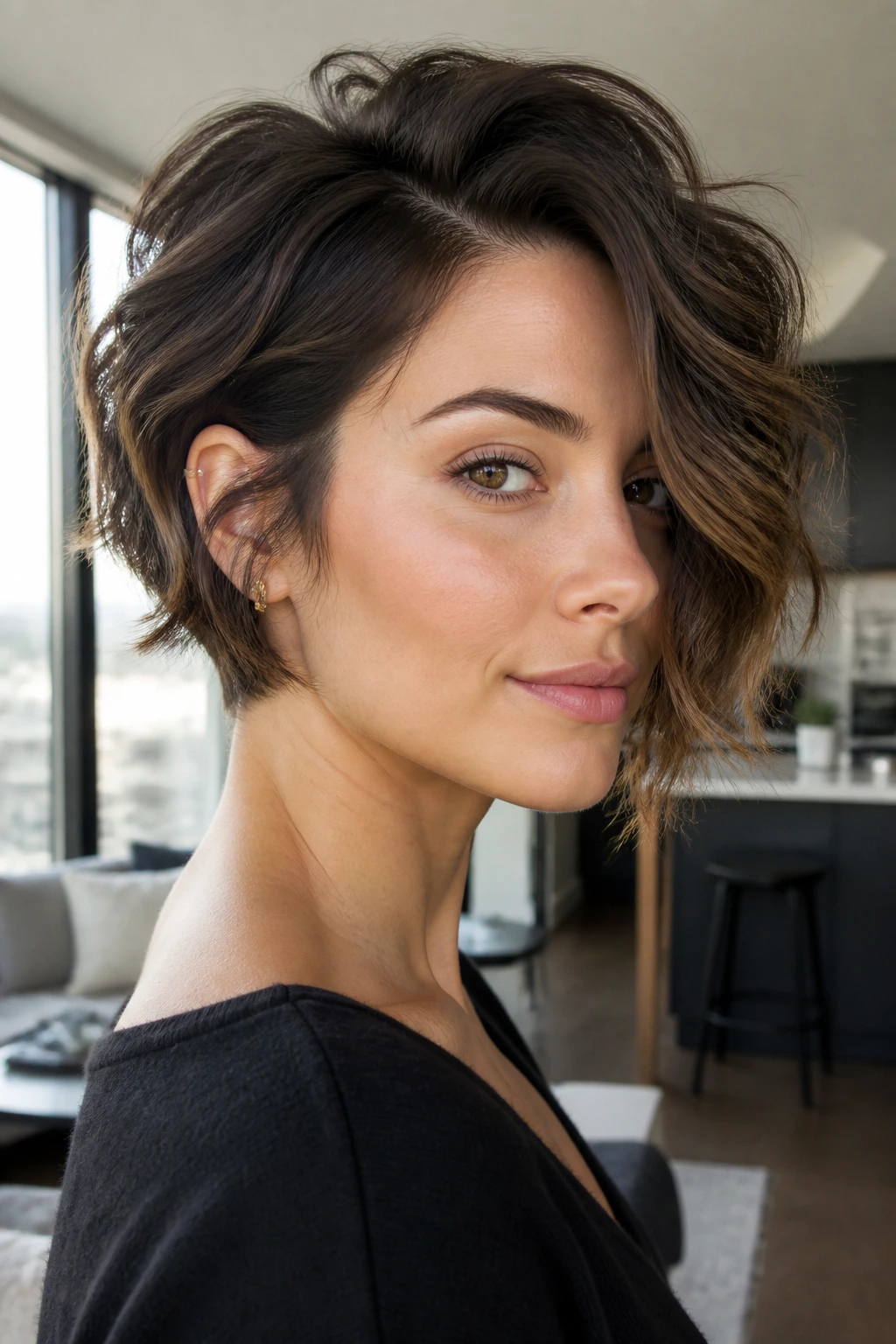
This is the bridge between a pixie cut and a bob. It has the length of a short bob in the front but is cropped much tighter near the ears and the back of the neck. It is incredibly sharp and highlights the jawline and neck beautifully. For wavy hair, the key is to keep the front pieces long enough so that the wave has room to form, which prevents the hair from just standing straight up on your head.
11. The Soft-Layered French Bob

A French bob usually sits right at the mouth line. When you add soft, long layers, you get a version that doesn’t feel quite as “severe.” This is perfect for fine, wavy hair that needs a bit of help in the volume department. The layers provide the lift, while the short length prevents the hair from dragging itself down.
Why It’s Timeless
It never looks out of place, whether you are at the office or a casual weekend brunch. It feels very intentional and high-maintenance, even if it’s actually quite simple to style.
12. The Mid-Length Shag Bob

This cut sits right between the chin and the shoulders. It is the ultimate “low-maintenance” option for wavy hair. Because the length is right at the shoulder, the hair will naturally flip out a bit as it hits the fabric of your clothes. Instead of fighting this, a shag bob embraces the flip, making it look like a purposeful style choice.
13. The One-Length Wavy Lob
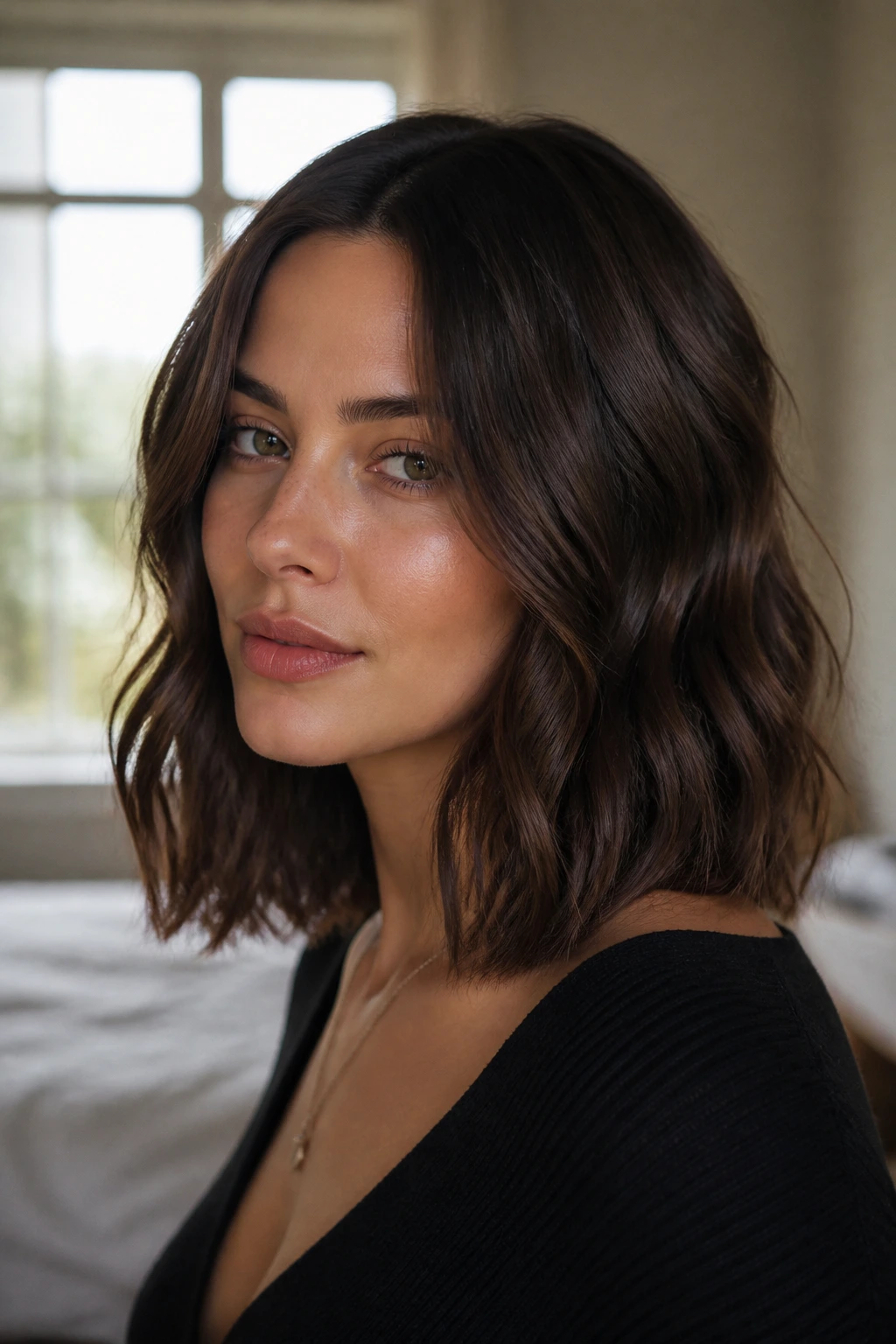
Sometimes, the simplest approach is the best. A one-length cut provides the most weight, which is excellent for controlling frizz in wavy hair. The lack of layers means there are no “fuzz” points where the hair might want to frizz up. It is sleek, elegant, and looks fantastic with a center part.
14. The Face-Framing Curtained Bob

If you want to keep the length but change the look, focus on the front. By cutting face-framing layers that start at the bridge of the nose and sweep down to the chin, you create movement right where the eye naturally lands. This is very flattering for round faces, as it draws the eye downward and elongates the look of the jaw.
15. The Asymmetrical Wavy Bob
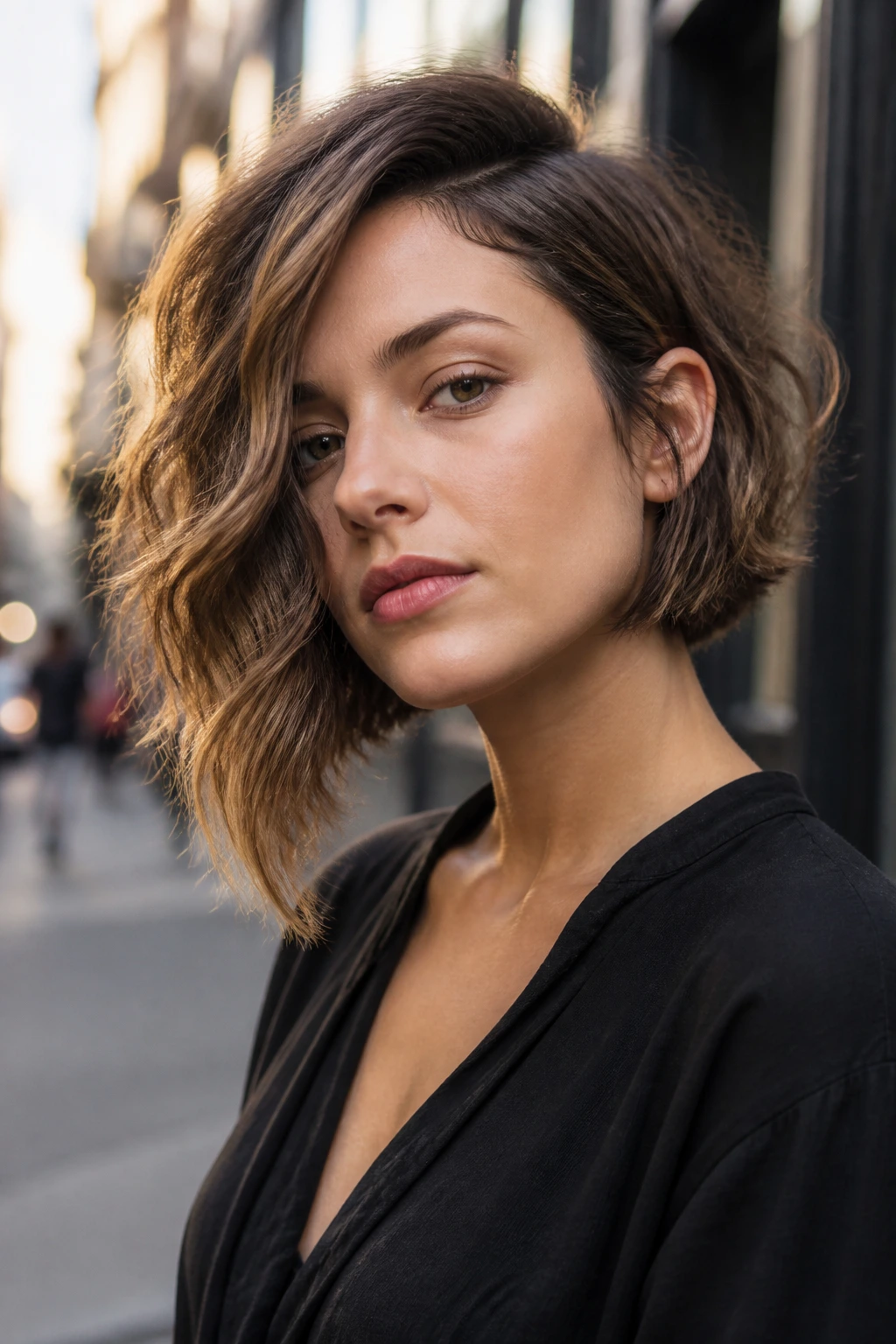
Go for a dramatic difference in length between the two sides. One side can hit just below the ear, while the other grazes the collarbone. It is an artistic, bold look that works particularly well with wavy hair because the texture hides the harshness of the cut, making it look a bit more “lived-in” and less like a salon experiment.
16. The Blunt Bob with Piecey Bangs
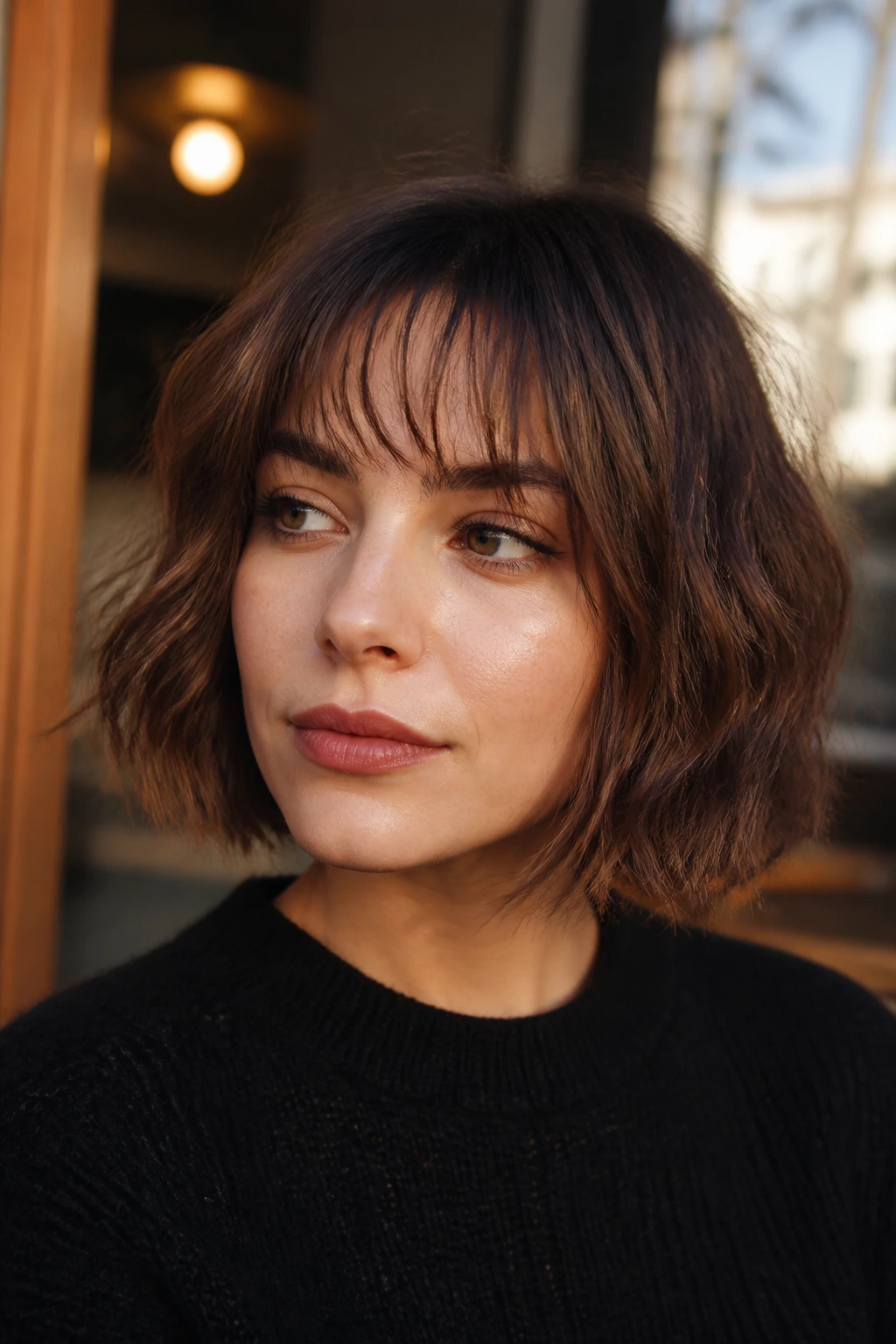
Pairing a blunt perimeter with thin, textured bangs is a great way to update a classic. The bangs should be “see-through,” meaning you can see your forehead through them. This lightens up the whole look and ensures your wavy hair doesn’t look too heavy around the face.
17. The Curly-Root Bob

For those whose hair is wavy at the ends but straight near the root, a bob is the perfect way to force the roots to have a bit more life. The lack of length takes the weight off the crown, allowing the hair to lift more easily. A bit of root-lifting spray is all you need to keep that volume going throughout the day.
18. The “Clavicle-Grazing” Wavy Cut
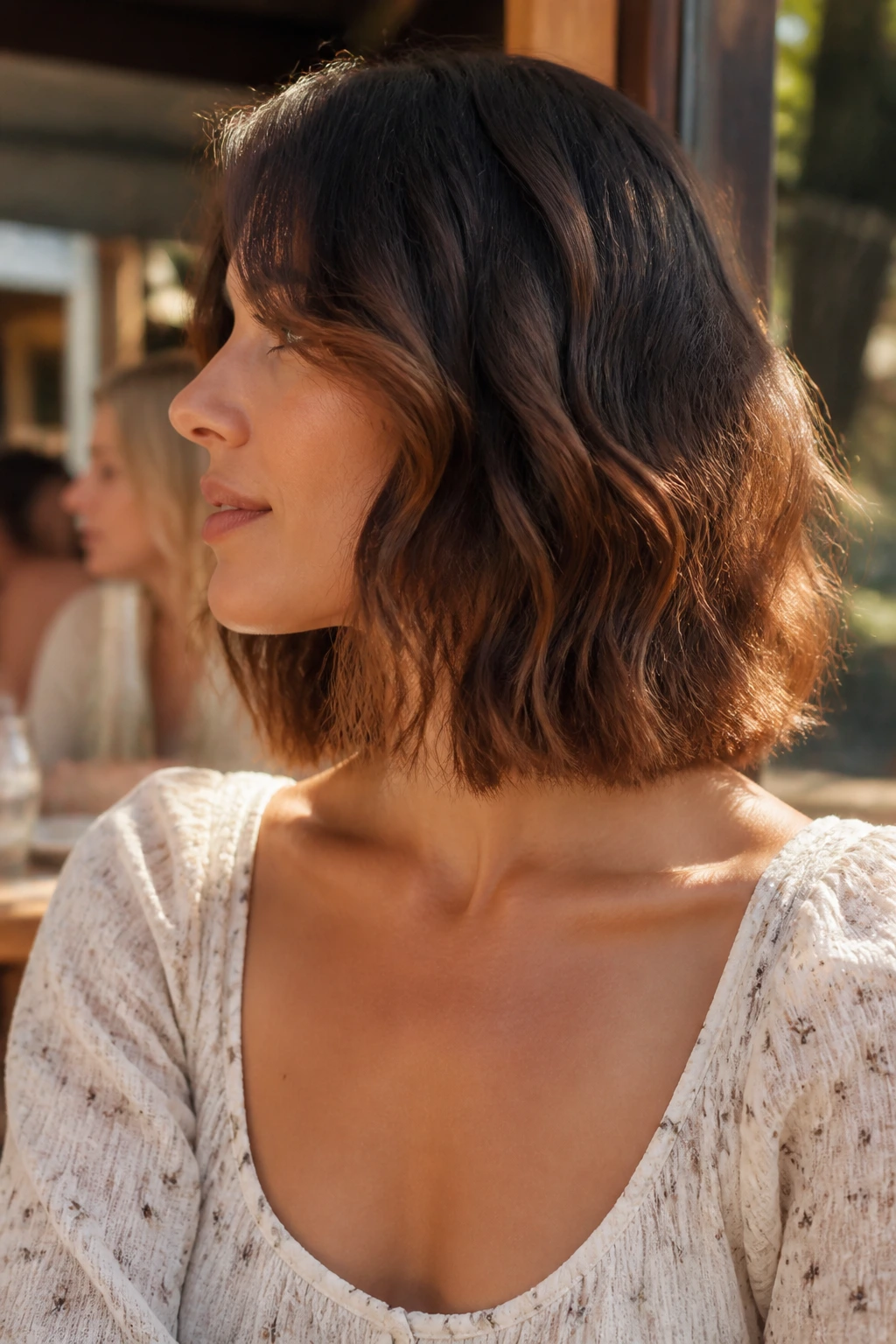
This is the sweet spot for many people. It’s a bob that is long enough to feel like a hairstyle you can play with, but short enough to feel like a change. It hits the clavicle perfectly, providing a very flattering frame for the neck and shoulders.
19. The Choppy, Texturized Bob
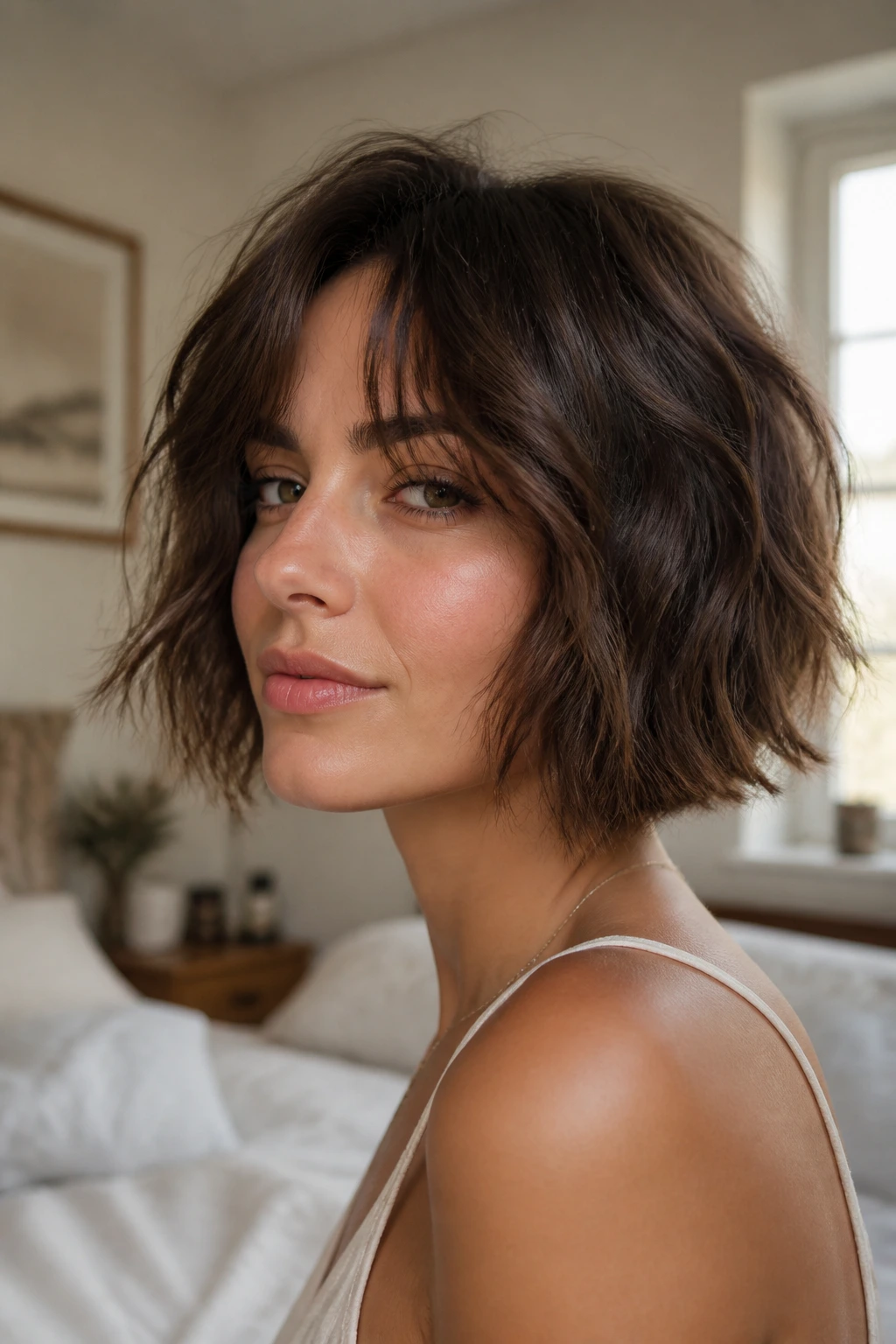
If you have fine, thin wavy hair, this is your best friend. The choppy ends create the illusion of thickness and density. You aren’t cutting away hair; you are just manipulating the ends so they don’t look transparent. Use a light sea salt mousse to define these ends and you are ready to go.
20. The Ear-Tucked Bob

This is less about the cut and more about the styling, but it’s a major trend. A bob that is slightly longer in the front allows you to tuck one or both sides behind your ears. This reveals the jawline and gives the hair a very clean, modern look. It works best with a bob that is cut slightly longer in the front than in the back.
21. The Natural-Texture Wavy Shag
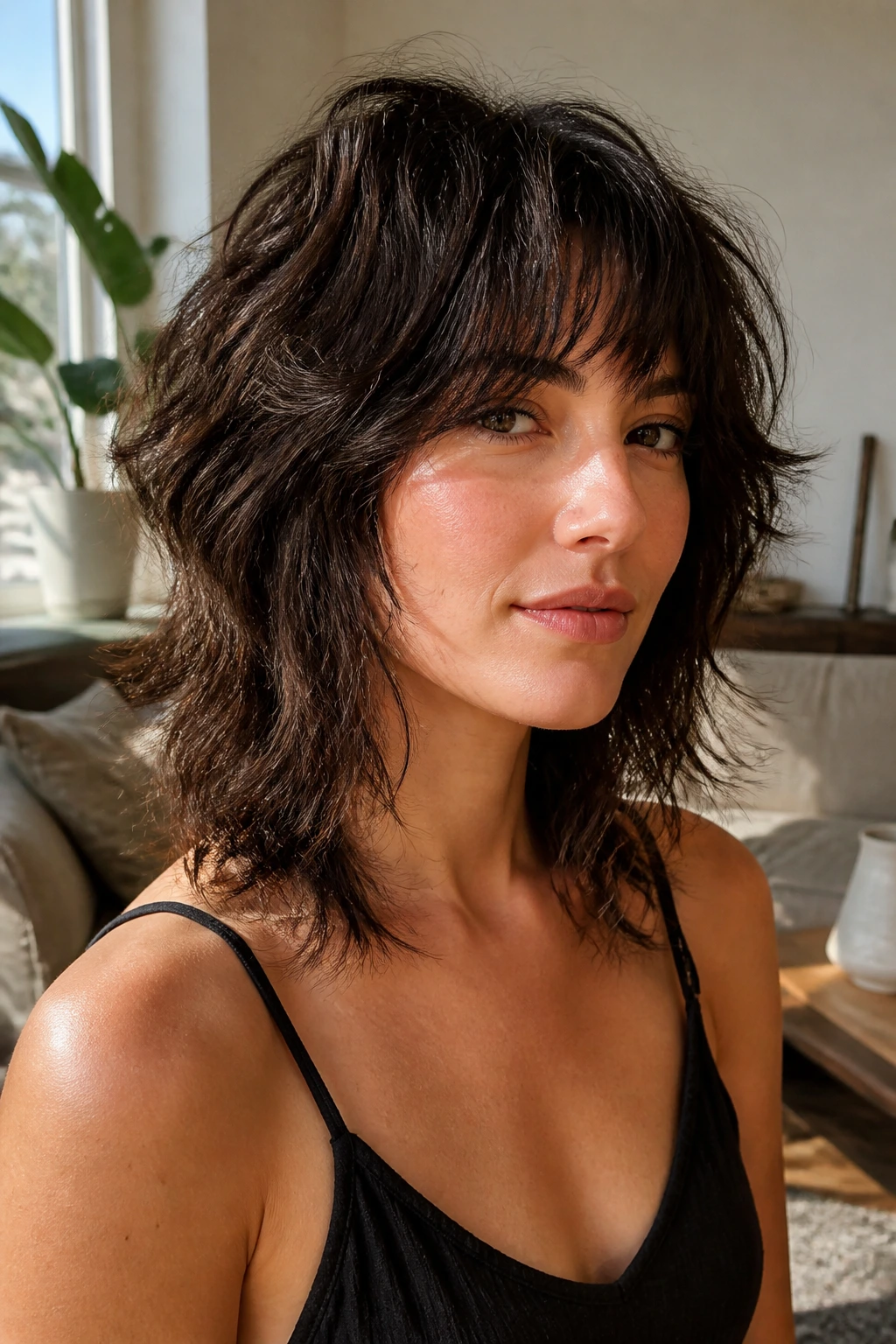
The final entry on our list is the most relaxed of them all. This is a haircut that is meant to be grown out. It’s messy, it’s layered, and it’s entirely dependent on the natural way your hair moves. You don’t use a brush; you use your fingers to rake through it while it’s wet, and then you leave it alone. It is the ultimate expression of hair freedom.
Understanding Your Wave Pattern
Before choosing, you must look at how your hair naturally behaves. Do you have “S” waves that are very loose, or do they tighten up into “2C” style waves? If your hair leans toward the latter, avoid very short, blunt cuts, as they will expand significantly. If your waves are looser, you can get away with the sharper, shorter cuts.
Managing Frizz with the Right Products
Wavy hair is often thirsty. Because the natural oils from your scalp don’t travel down the hair shaft as easily as they do with straight hair, you need to supplement that moisture. Use a cream-based leave-in conditioner rather than an oil if your hair is fine, as oil can weigh down the waves and kill the volume.
The Role of Heat Styling
The goal of all these haircuts is to minimize heat styling, but there are days when you might want a bit more polish. If you need to use a curling iron to fix a few unruly pieces, do not wrap the hair all the way to the ends. Leaving the ends straight makes the hair look significantly more modern and prevents the “beauty pageant” curl look that can easily ruin a cool, edgy bob.
Choosing the Right Salon Professional
Not every stylist knows how to handle wavy hair. Look for someone who specializes in “dry cutting” or “deva-style” cutting techniques. They will understand the way your hair springs up when dry, preventing the shock of losing three extra inches of length because the stylist assumed your hair would behave like straight hair.
Final Thoughts
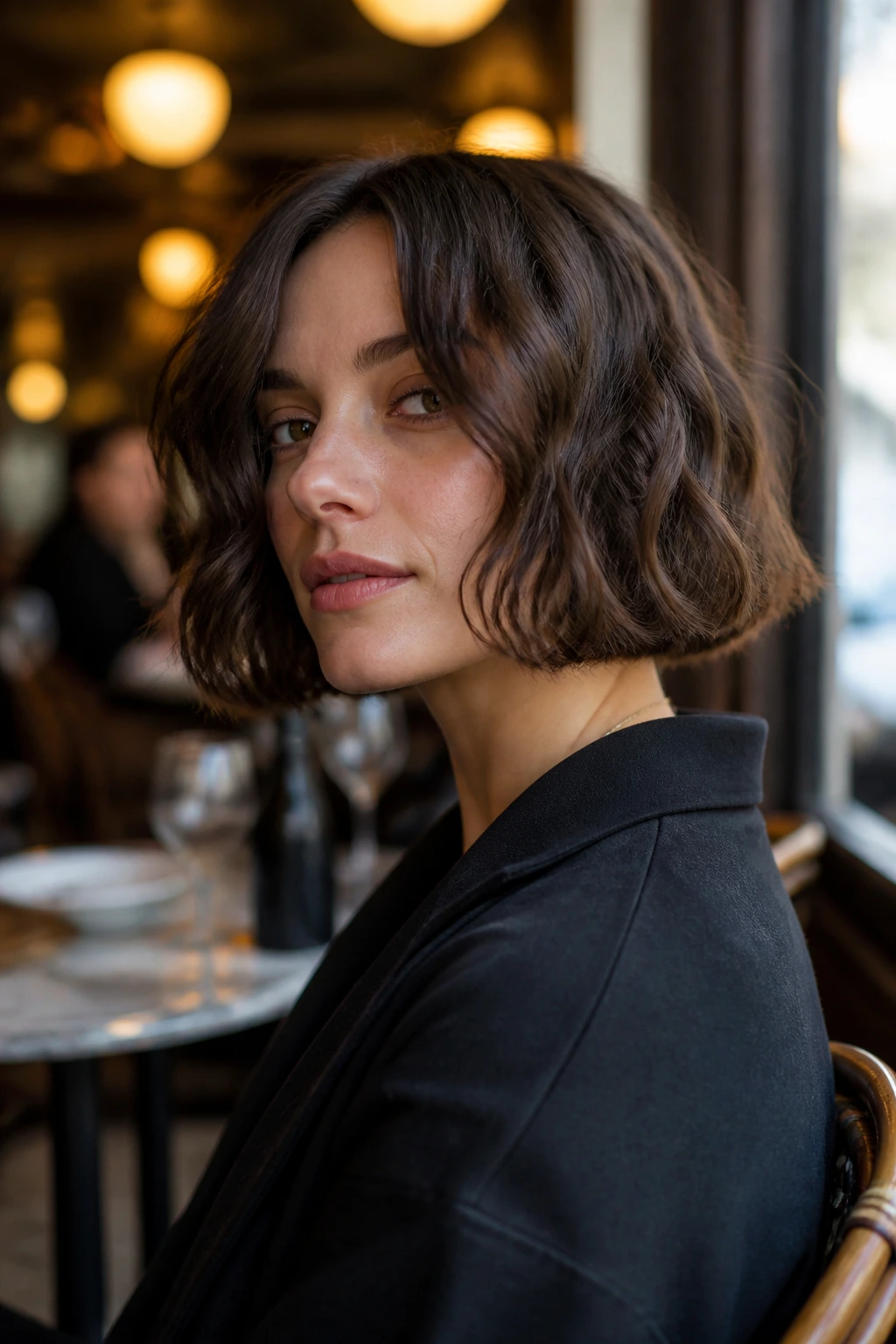
A bob is not a one-size-fits-all solution; it is a framework that you adapt to your lifestyle. When you stop fighting your waves and start giving them the space to move, you might find that you actually love your hair for the first time in years. The secret isn’t in the product you use, but in the shape you choose.
Whether you go for the sharp, blunt edge of a jaw-length cut or the messy, layered aesthetic of a modern shag, remember that the most important thing is that you can manage it on a Tuesday morning. Keep the layers thoughtful, keep the hair hydrated, and enjoy the ease of a shorter, lighter look. Your hair wants to be wavy—let it.