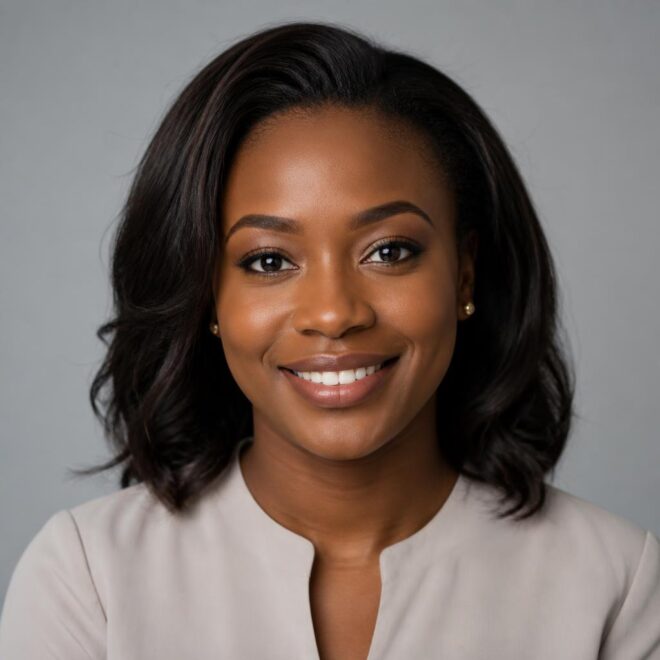


Thick hair is a blessing and a challenge all at once. You have enough volume to hold any style, but you also have the kind of density that makes bobby pins snap, hair ties stretch to their breaking point, and blow-drying sessions feel like a full-body workout. When you have this much hair, the secret is not just finding a style that looks good, but finding a style that actually behaves. The right cut or updo shouldn’t fight your natural texture; it should lean into that heaviness to create shapes and silhouettes that fine-haired people spend hours trying to mimic.
Whether you are looking to take the weight off your neck during humid weather or you want to showcase the natural, cascading beauty of your mane, the goal is control without suffocation. We are talking about styles that distribute volume evenly, layers that soften the bluntness of a heavy hemline, and updos that actually stay in place for more than an hour. If you have been hiding your hair in a messy, strained bun for months, it is time to look at some options that actually celebrate the volume you have.
1. The Long Layered Shag
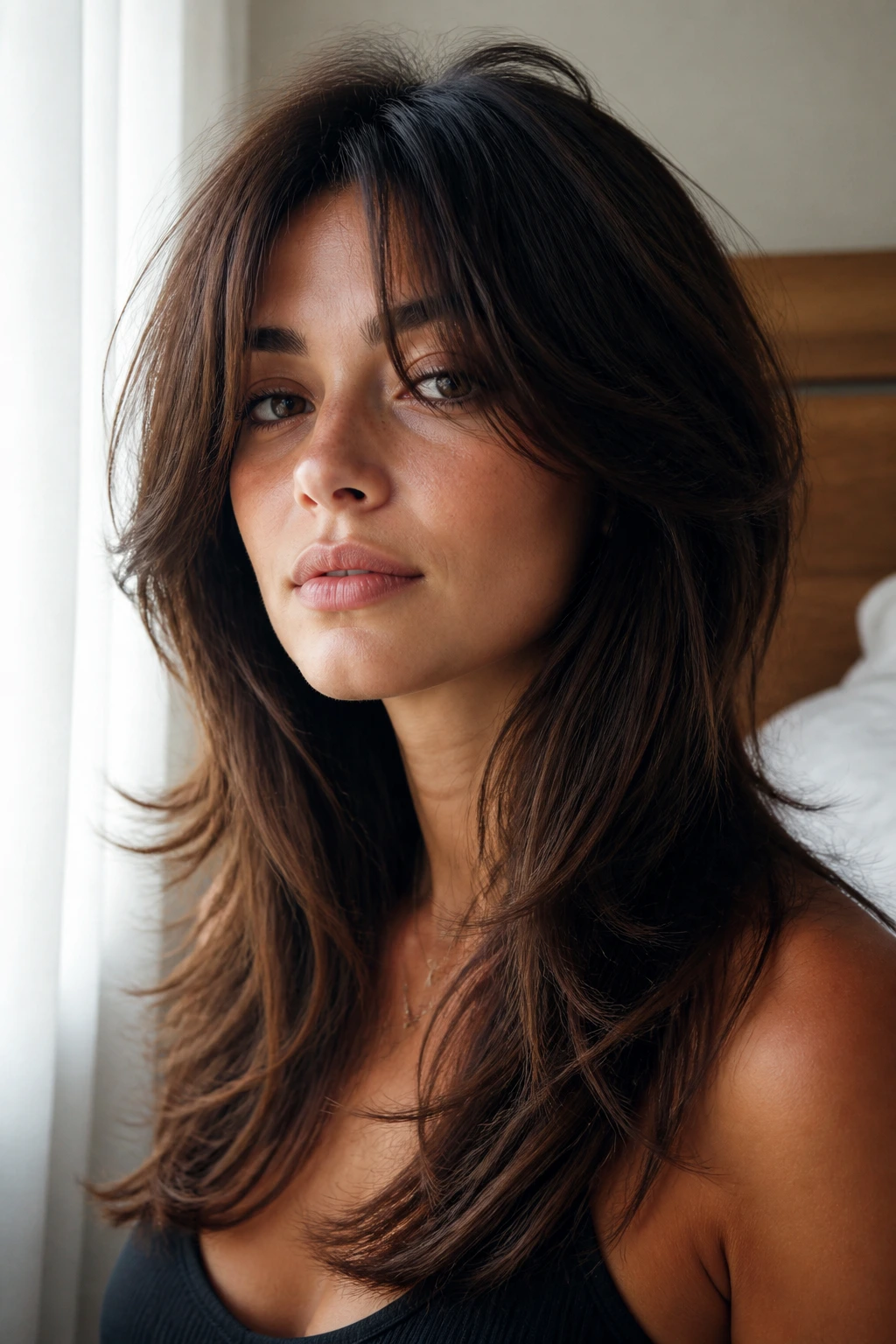
This cut is the ultimate antidote to the dreaded “triangle” shape that thick hair often takes when left in a single, blunt length. By incorporating choppy, razor-cut layers throughout the mid-lengths and ends, you remove significant weight without losing the length. The curtain bangs that usually accompany a modern shag frame the face and break up the density around your cheekbones, making the whole style feel airy rather than heavy.
Why It Works for Density
- It forces hair to move rather than sit like a solid curtain.
- Shorter layers at the crown create natural lift.
- The razor-cut ends prevent the hemline from looking frayed or blocky.
Pro tip: Use a light texturizing spray on your damp hair before drying; it helps the layers sit piecey and defined rather than turning into a giant puff.
2. The Sleek Low Chignon
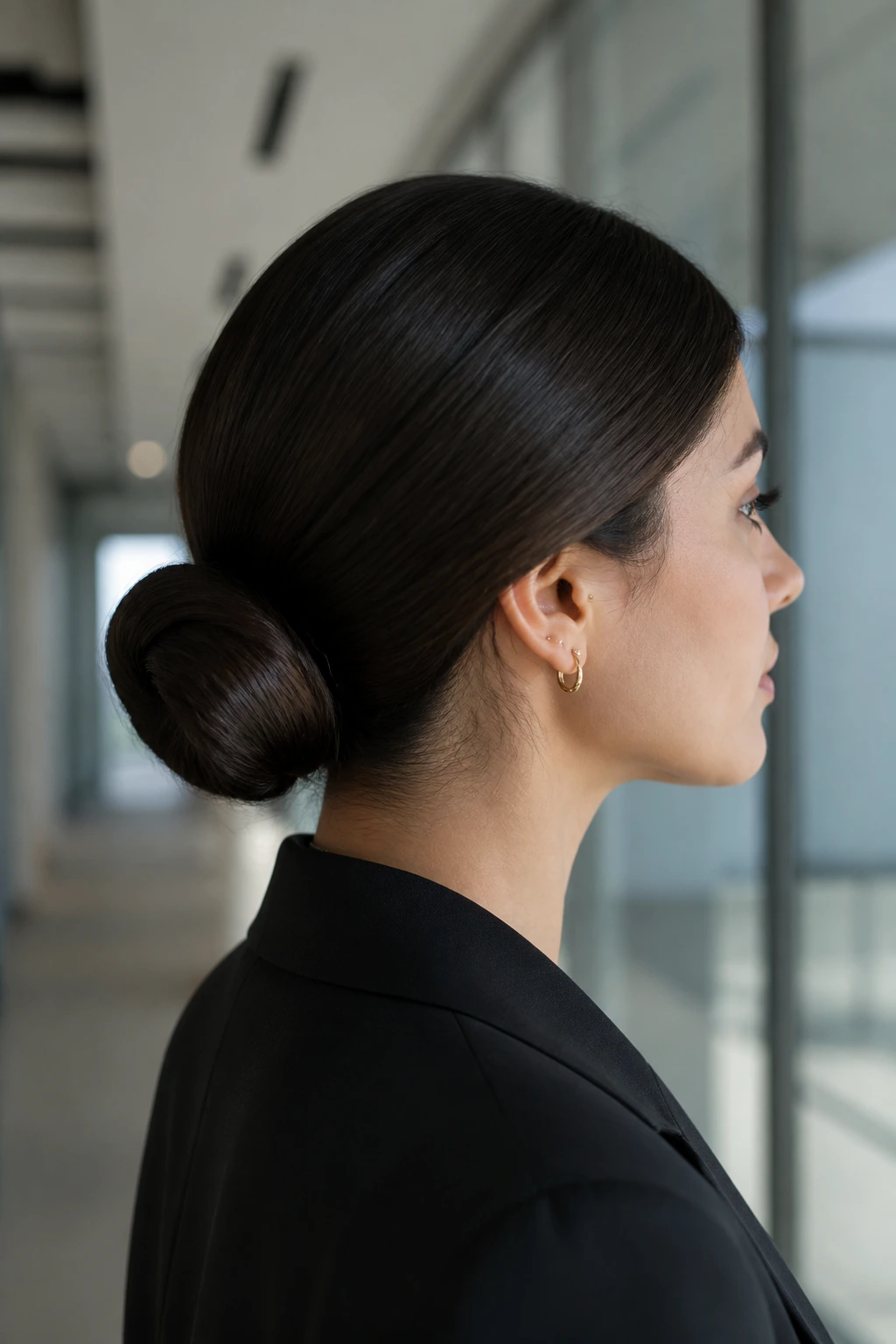
When you need to look polished for a professional setting, a low chignon is your best friend. The weight of thick hair actually helps keep this style anchored, as the hair has enough “girth” to hold a bun shape without requiring an excessive amount of backcombing or filler. You can part it down the center for a minimalist look or go for a deep side part if you want to soften your features.
Technique for Success
To get this look, prep your hair with a smoothing cream while it is still damp. Brush it into a tight, low ponytail at the nape of your neck, secure it with a sturdy hook-style elastic, and then wrap the ponytail around the base. Instead of using dozens of bobby pins, use one or two large, heavy-duty hair pins that can pierce through the center of the bun to hold it securely against your scalp.
3. The Face-Framing Butterfly Cut
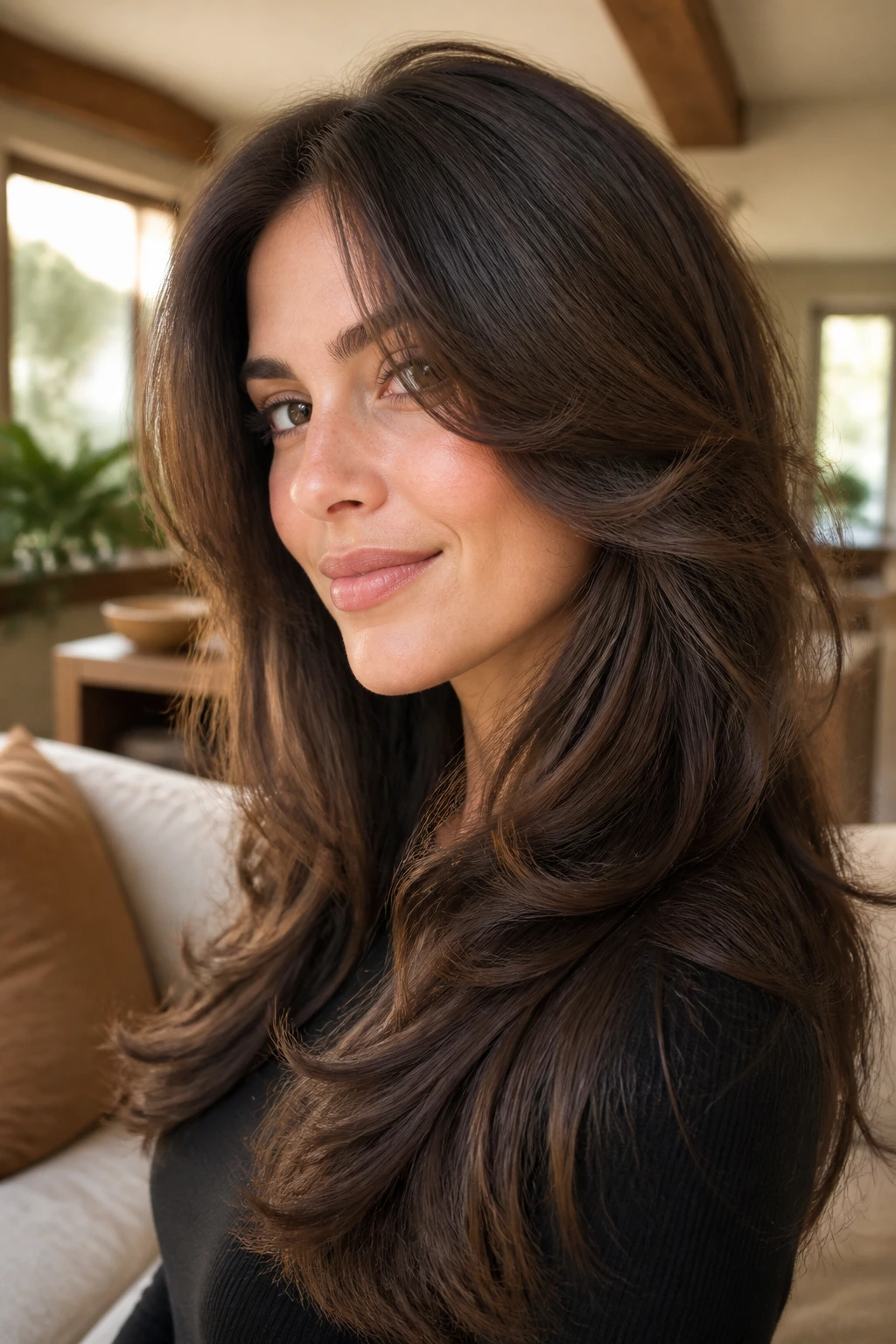
If you have seen this style circulating lately, it is because it is genuinely effective for managing thick strands. The butterfly cut relies on a technique where the front is cut much shorter—resembling a fringe or face-framing layers—while the back retains its length. It creates an illusion of shorter hair from the front, but you still get the satisfaction of long hair cascading down your back.
Styling for Maximum Volume
This look is all about the blowout. Use a large round brush to flip the front layers outward, away from your face. Because you have thick hair, you do not need much product to hold the shape; the sheer weight of your strands will keep the style in place for hours. If your hair is prone to frizz, finish with a tiny drop of lightweight oil on the ends to seal the cuticle.
4. The Half-Up Top Knot
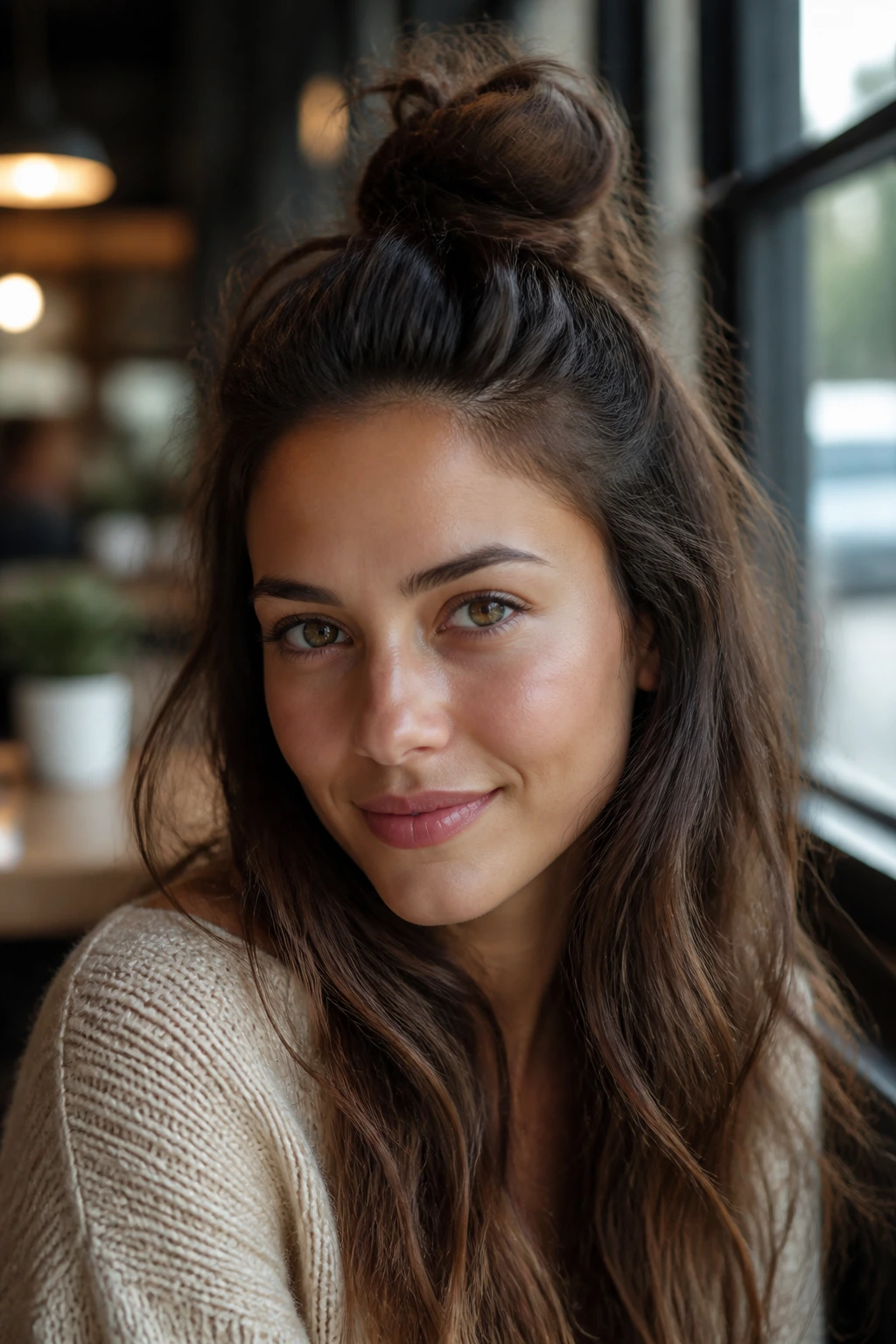
There is a specific struggle that comes with putting all of your thick hair up at once—the headache. By pulling only the top section into a high knot, you get the benefit of an off-the-face look without the intense pressure on your hairline. This style works exceptionally well with wavy or curly textures, as it lets the rest of your hair hang loose and show off your natural ringlets.
How to Achieve Balance
Gather the top third of your hair from the temples upward, pulling it toward the crown of your head. Twist it into a knot and secure it with a fabric-covered scrunchie. The secret here is to gently tug at the hair near your hairline to create a bit of volume, so it doesn’t look like you’ve pulled everything back with military precision.
5. The Deep-Tapered Lob
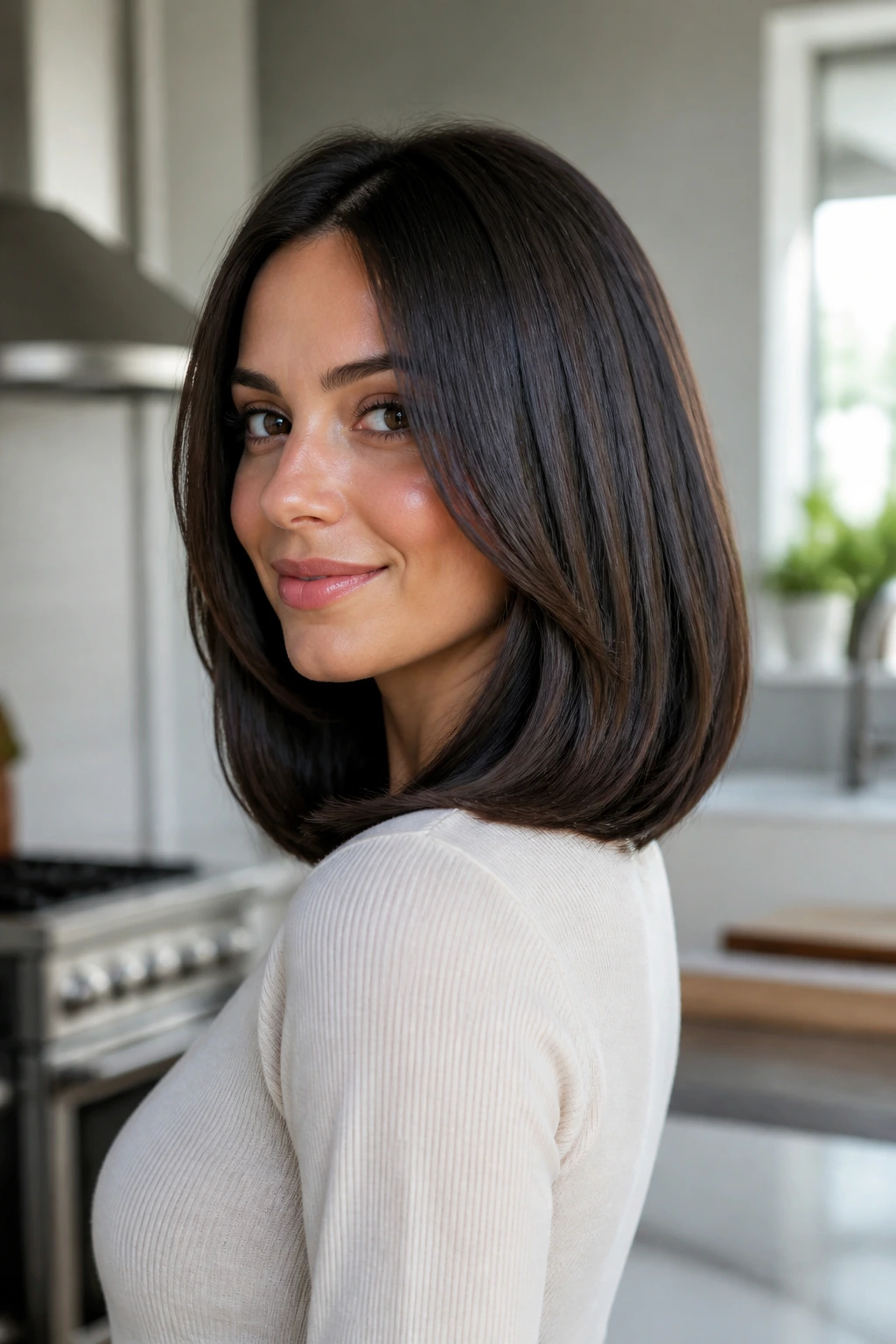
A long bob, or “lob,” is a classic, but for thick hair, it needs a little modification. Ask your stylist for a deep taper at the ends. This means they will use thinning shears or a razor to graduate the length, making the bottom edges soft and wispy rather than blunt and heavy. It gives you that chic, short-hair aesthetic while leaving you with enough length to tuck behind your ears or tie back when necessary.
Daily Maintenance
A lob on thick hair often tends to flip out at the shoulders. To prevent this, use a flat iron to slightly curl the ends under as you reach the bottom of your hair. This small movement prevents the “fanning” effect that happens when thick, shoulder-length hair hits your shirt collars.
6. The Classic Braided Crown
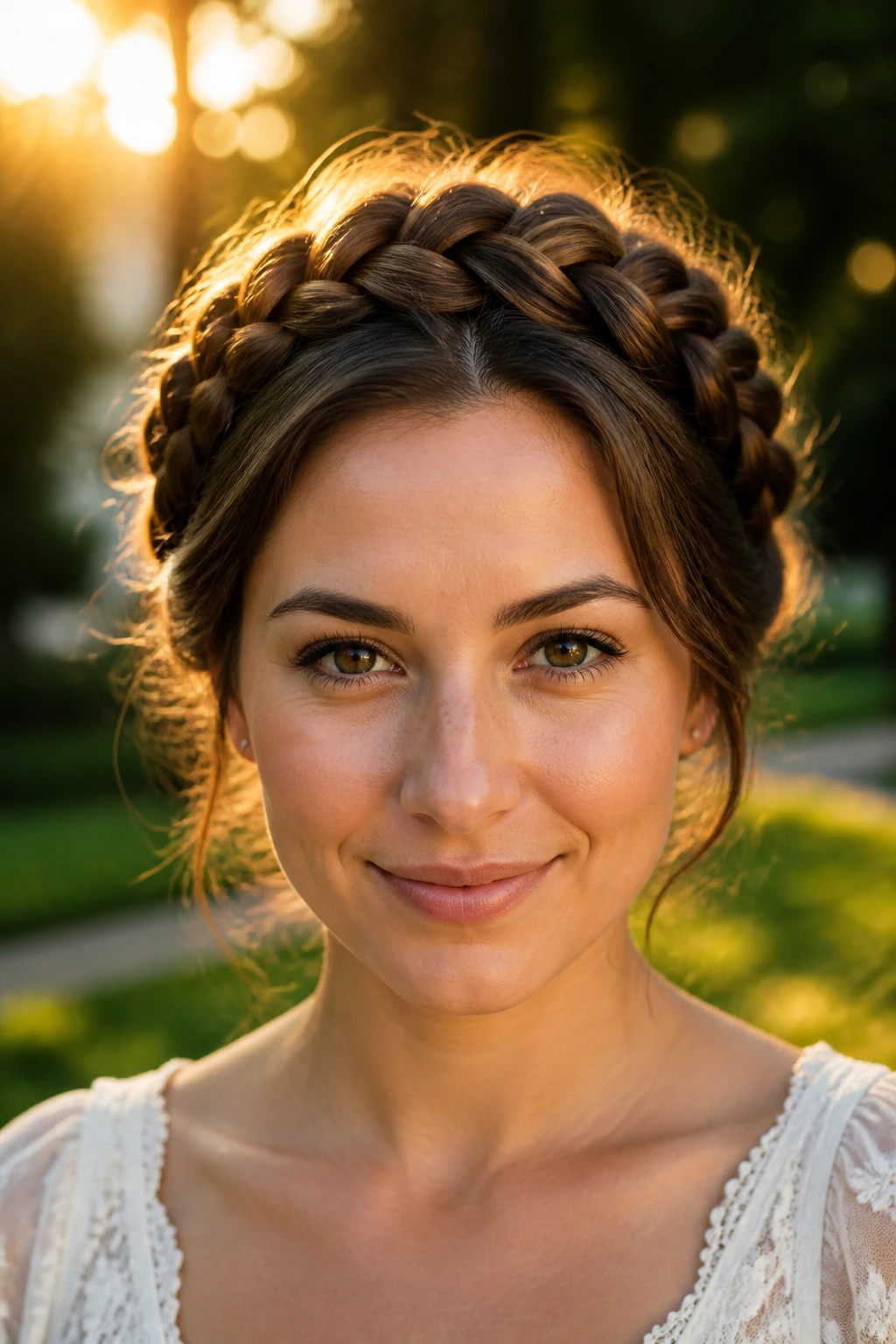
Thick hair is the ideal candidate for a braided crown because you have enough volume to make the braid look substantial and intricate. Fine hair often requires extensions or messy loosening to achieve a “full” braid, but your hair will do it naturally. This style is perfect for those days when you haven’t had time to wash your hair and need to disguise oil at the roots.
The Construction Process
Start by parting your hair down the middle or on the side. Create two large Dutch braids, one on each side, starting near your temples and working your way back. Bring them together at the nape of your neck and pin them under each other. The result is a regal, secure style that keeps every single strand out of your eyes throughout a long day.
7. The Textured Pixie
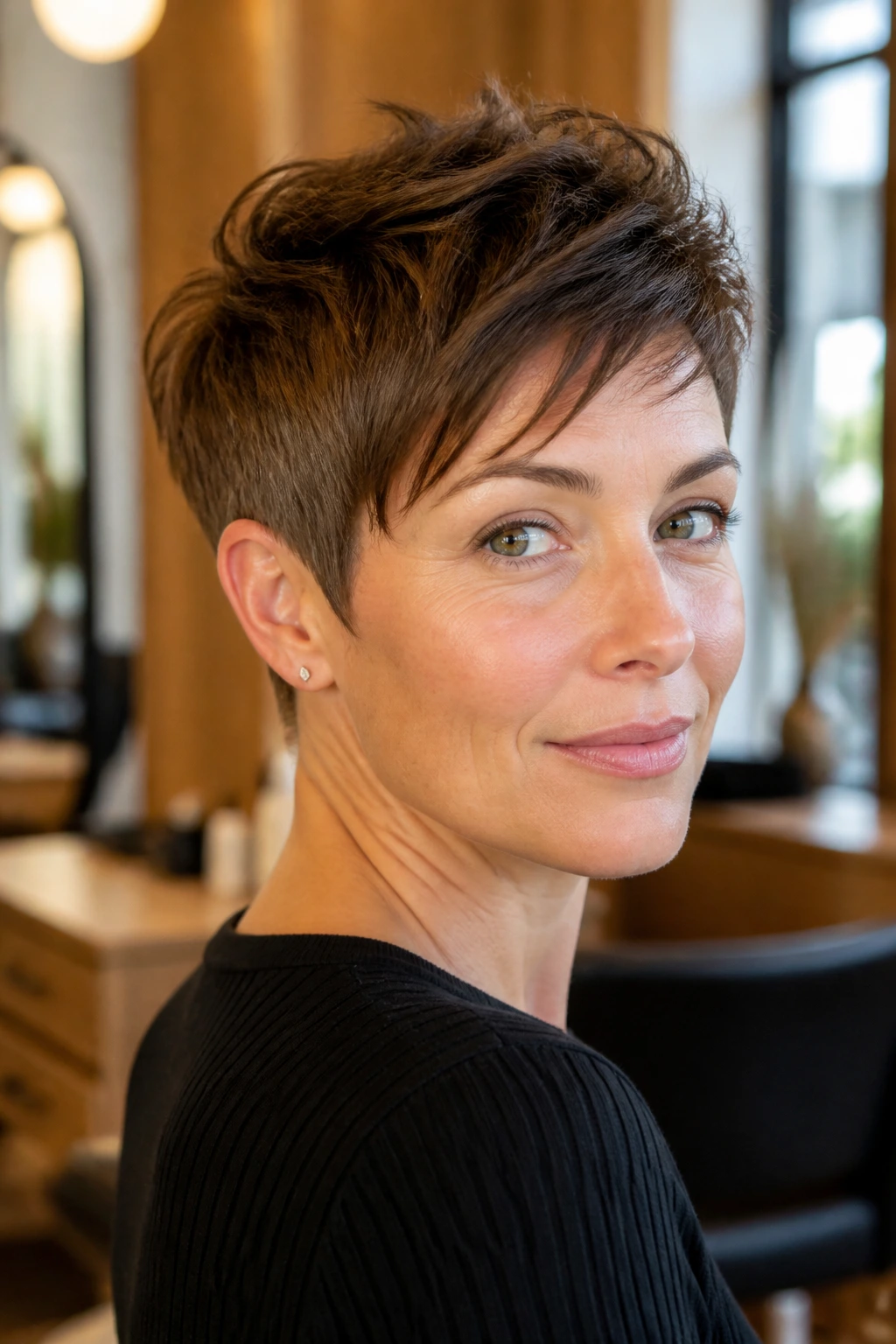
Cutting thick hair into a pixie might seem intimidating, but when executed with the right amount of internal layering, it is incredibly easy to manage. The key is to keep the sides and back tight and tapered, leaving the top long enough to be swept over or textured with a clay product. It creates a sleek, modern look that actually takes less time to dry than long hair.
What to Ask Your Stylist
Specify that you want “internal texturizing.” This is a process where the stylist cuts into the interior of the hair sections to remove weight without affecting the surface layer. It allows your hair to lay flat against your skull while still having plenty of movement on top.
8. The High-Volume Ponytail
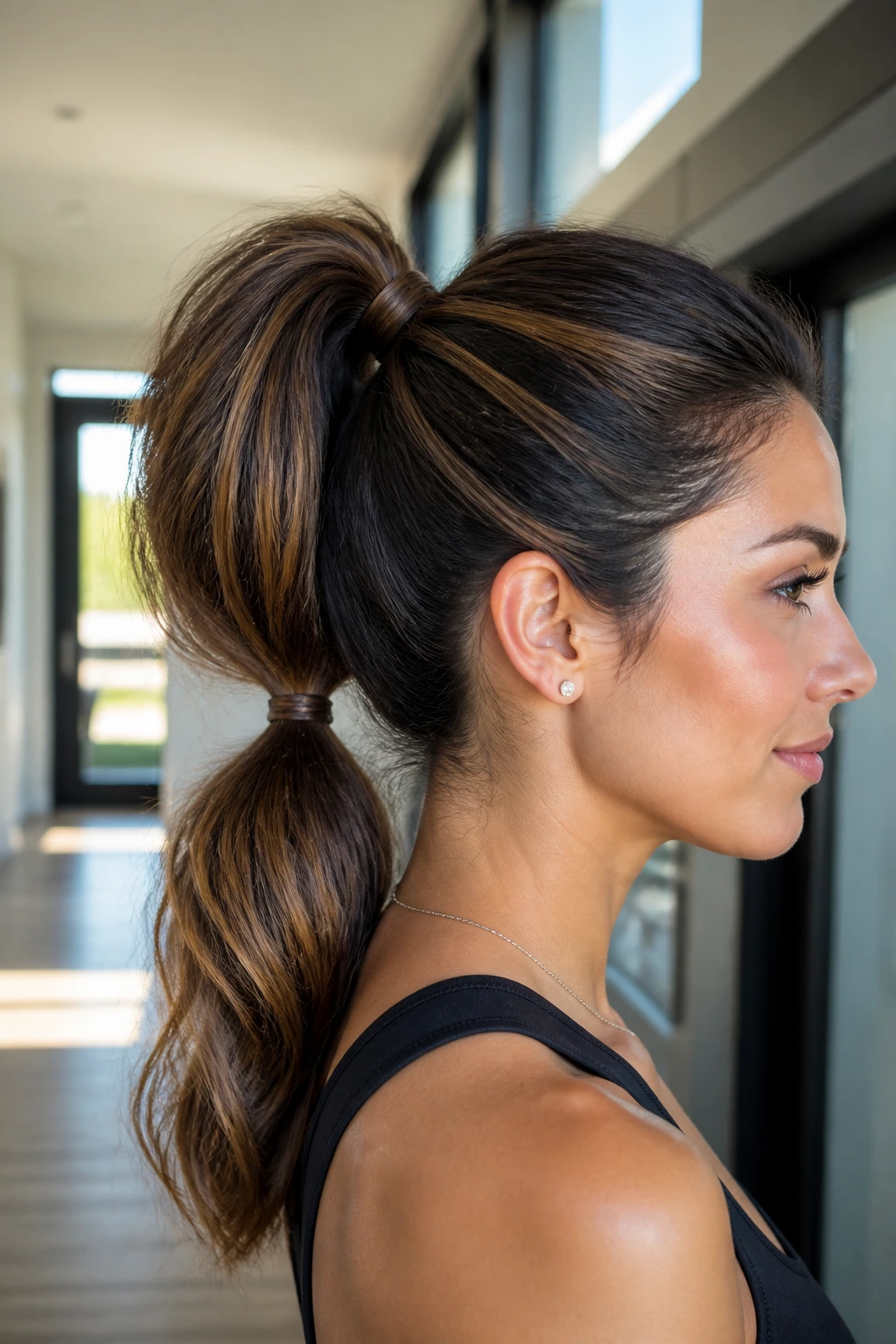
The standard ponytail can be a disaster with thick hair; it often droops, sags, and causes the elastic to snap. For a high-volume look, split your hair into two sections—a top horizontal half and a bottom horizontal half. Secure the bottom section first, then gather the top section and pull it over the first, securing them both with a single, larger elastic. This stacked effect gives your ponytail the height and bounce of a professional styling session.
The Secret Weapon
If you want that extra “wow” factor, take a small sliver of hair from the underside of your ponytail, wrap it around the elastic, and pin it underneath. It looks like a high-end, editorial hairstyle, and it provides extra support to keep the weight of the ponytail from dragging the whole thing downward.
9. The Blunt-Cut Bangs
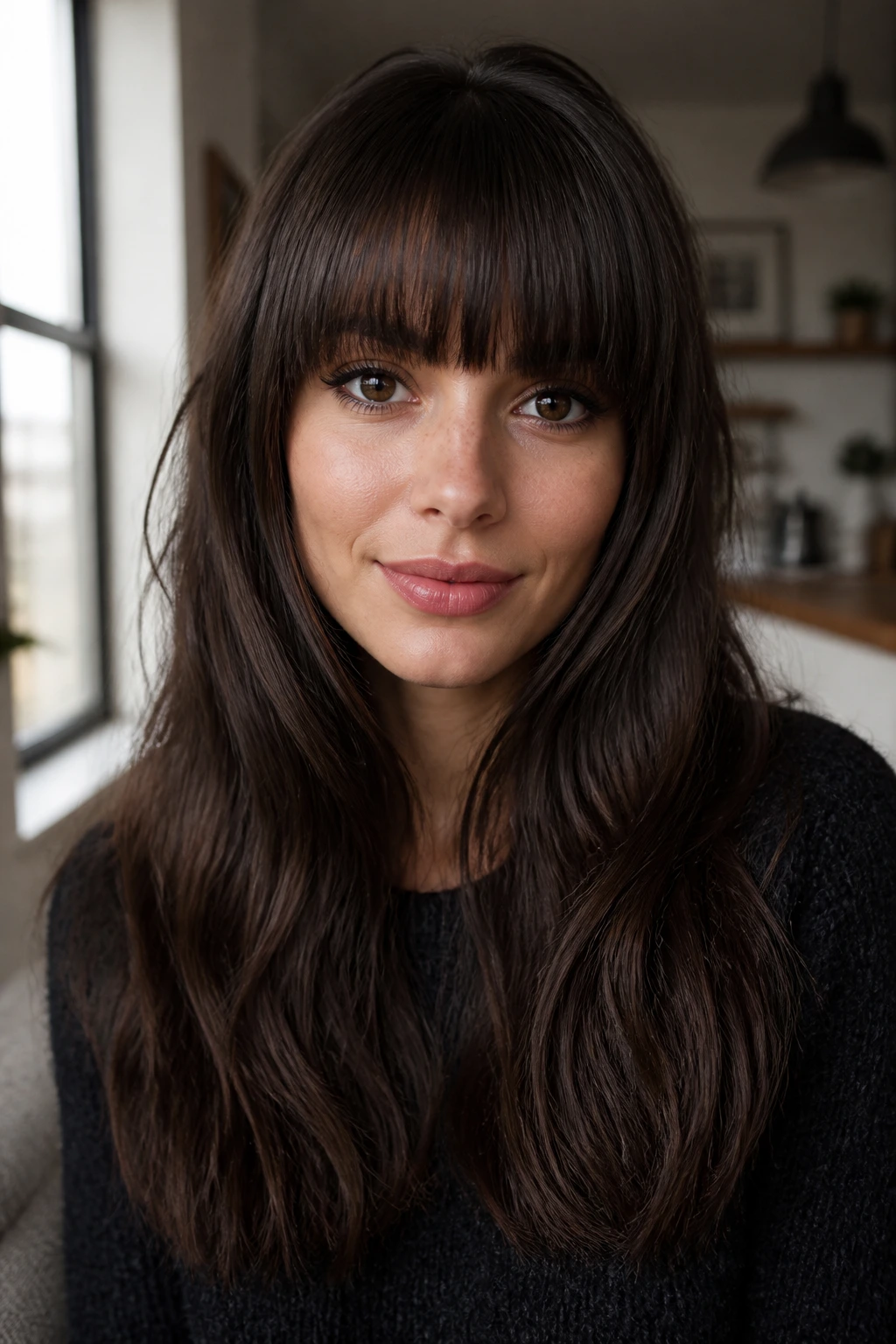
Bangs on thick hair are a commitment, but they are a high-reward look. Because your hair is dense, you can get those thick, heavy, blunt-cut bangs that look incredibly stylish with a dark hair color. Avoid wispy or “see-through” bangs, as they will just look thin and oily against your dense, healthy locks. Go full, go wide, and make sure they start far enough back on your crown to get the density you need.
Why They Work
When you have thick hair, you have enough volume to support a bang that won’t separate or look sparse. You can wear your hair in a high bun or a simple ponytail, and the bangs instantly make the look appear intentional and styled. Just remember: you will need to trim these every three to four weeks to keep them out of your eyes.
10. The Waterfall Braid
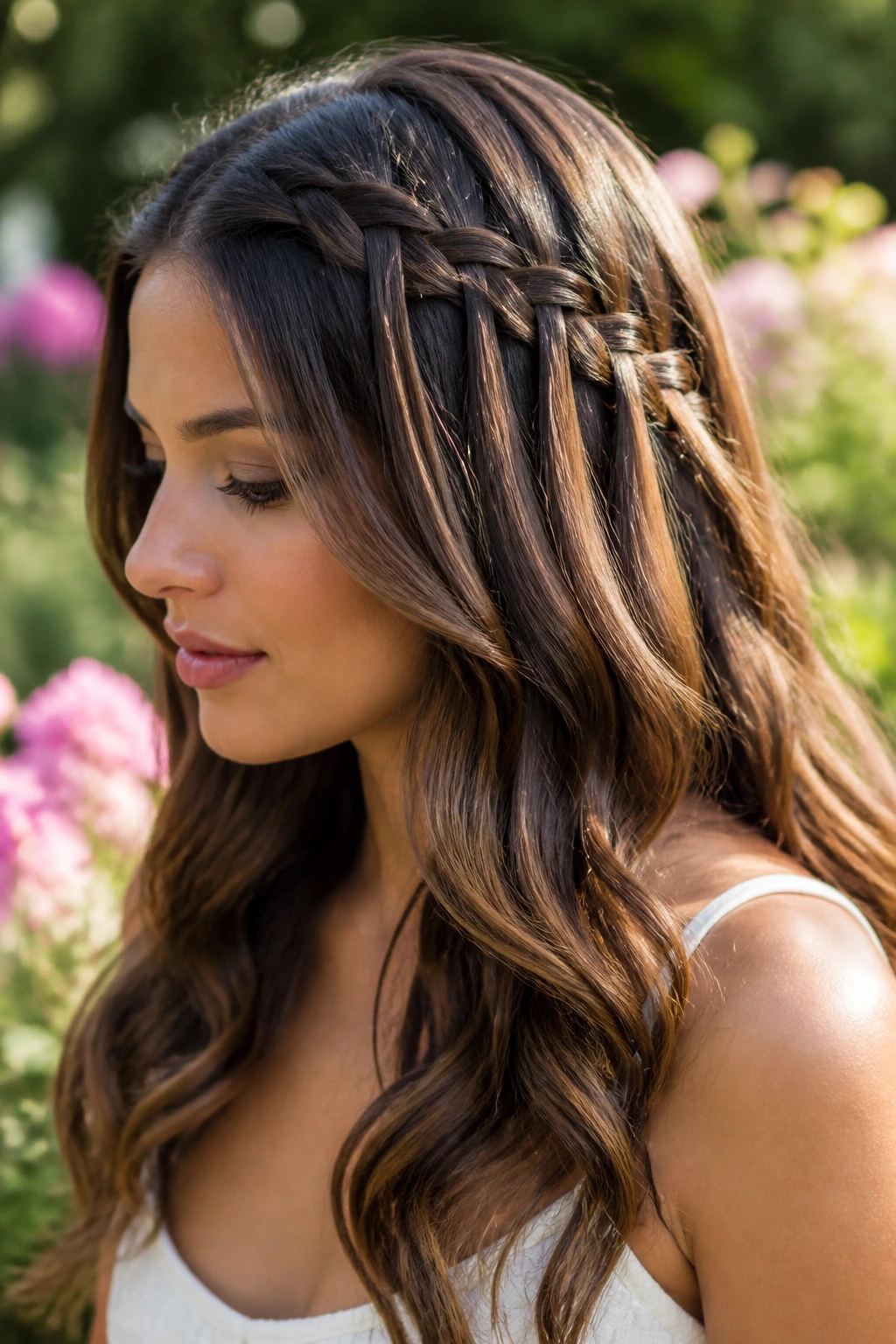
This style looks like you spent an hour on your hair, even if you only spent ten minutes. A waterfall braid is essentially a French braid where you drop the bottom section after each cross-over, letting it fall freely. It is a fantastic way to show off the thickness of your hair while still keeping the front sections controlled and neat.
Style Pairing
Pair this with loose, large waves. Because your hair has so much weight, those waves will stay defined without needing a ton of hairspray. It is a soft, romantic look that works just as well for a casual weekend as it does for a wedding or formal event.
11. The Undercut Bob
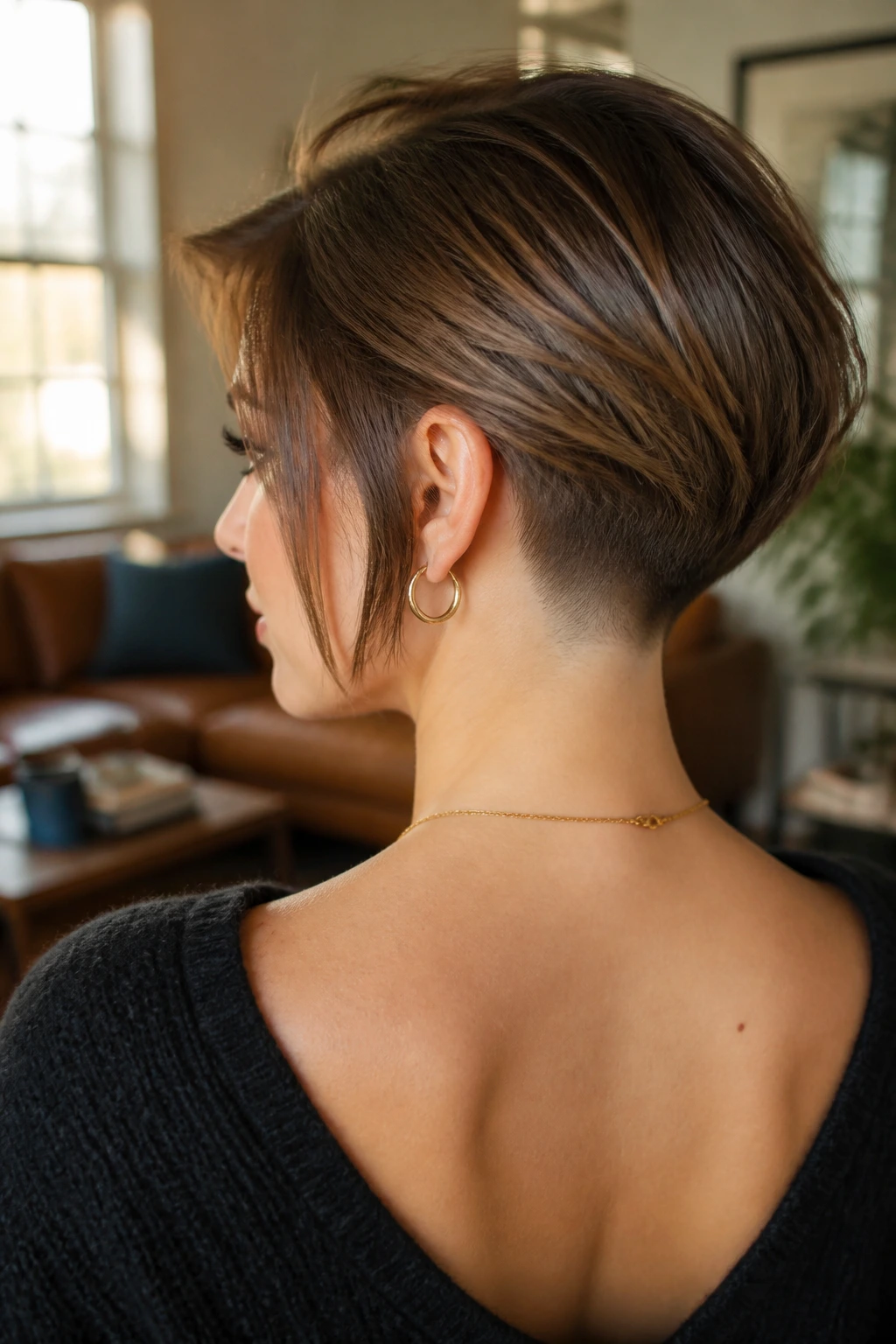
For those who want to commit to something truly bold, an undercut at the nape of the neck is the ultimate weight-relief system for thick-haired individuals. A section of hair at the very bottom is shaved short, completely hidden by the longer hair above it. It removes that “bulk” that sits right at the nape of the neck, which is usually the hottest and heaviest part of the head.
The Practical Benefit
You won’t believe how much cooler you feel in the summer heat with an undercut. It is a secret you share with your hair. When you wear your hair down, nobody knows it is there, but when you pull your hair up into a high ponytail, you reveal a sharp, clean, edgy design that adds a level of complexity to your look.
12. The Soft Beach Waves
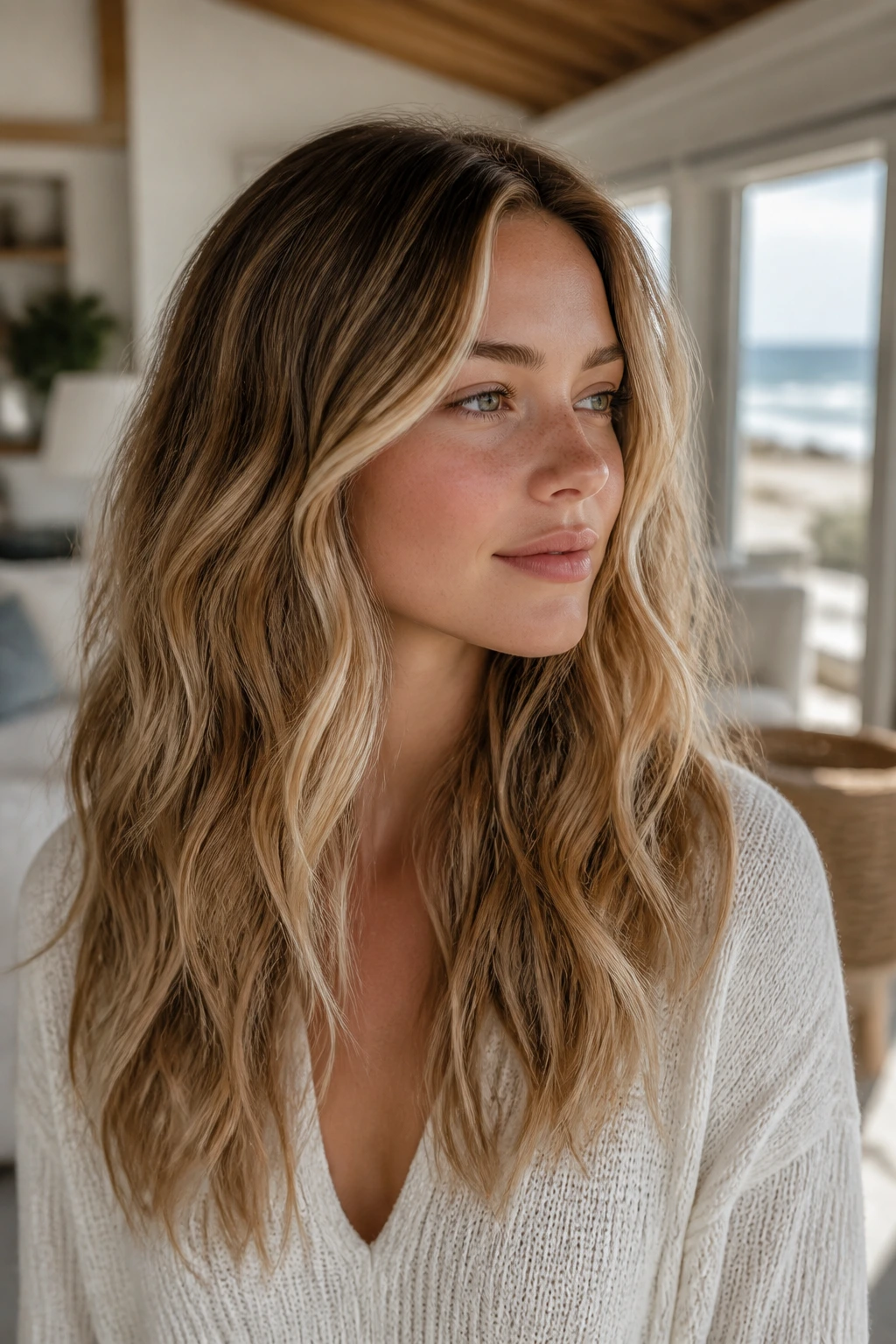
Thick hair often holds a curl very well, but it can quickly look like 1980s prom hair if the curls are too tight or structured. The key here is to use a large-barrel curling iron—at least 1.5 inches in diameter—and to leave the very ends of the hair straight. By not curling the last two inches of your hair, you create a modern, “undone” beach look that prevents the hair from looking too poofy.
Heat Protection
Because you have so much hair, you will be using your hot tools for a while to finish the whole head. Never skip a heat-protecting spray. Since you have a large surface area of hair, work in at least four sections, starting from the bottom up, to ensure you don’t miss any spots and to avoid re-heating the same sections over and over.
13. The Half-Braided Headband
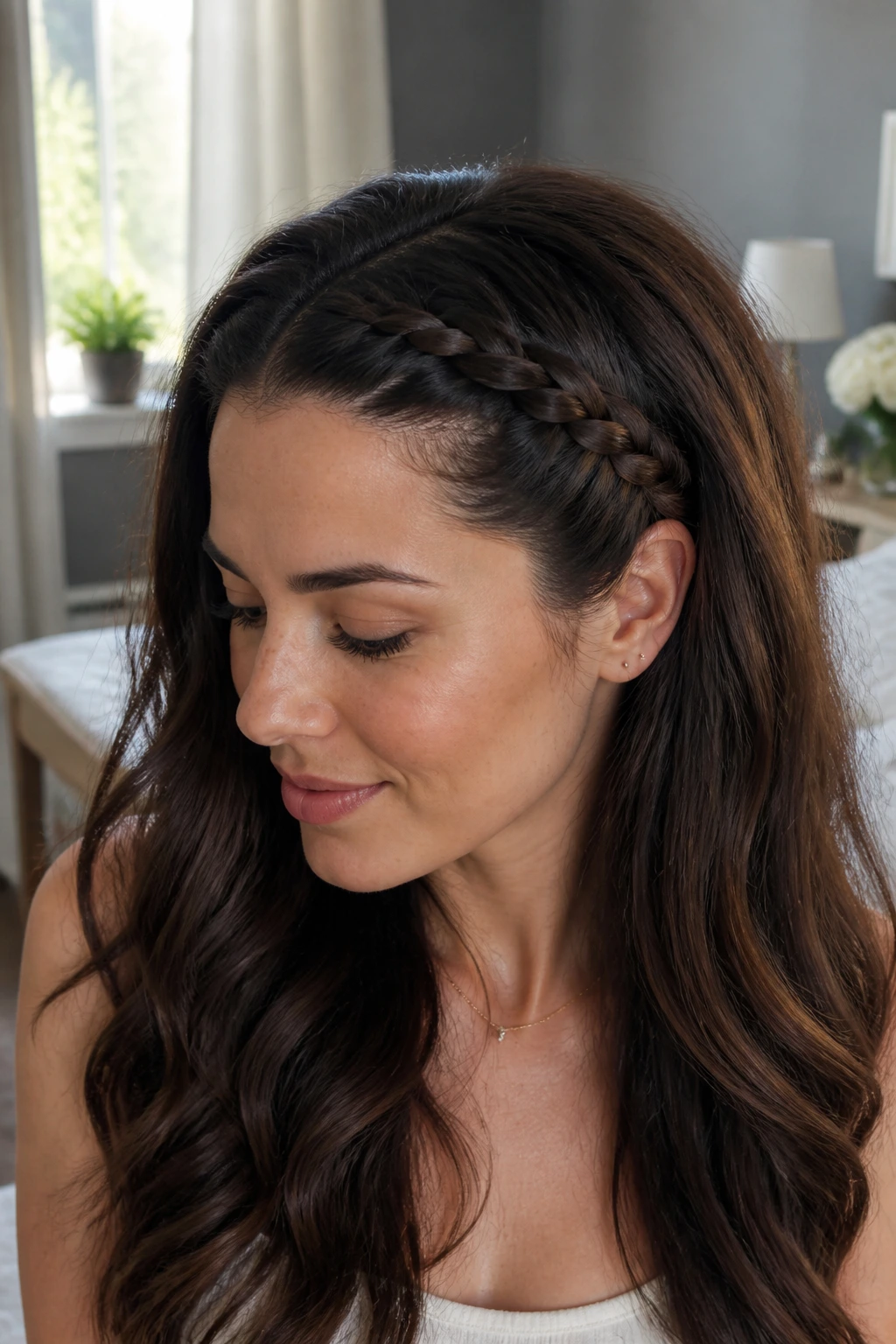
This is a sophisticated take on the traditional headband. Instead of buying a plastic accessory that might snap under the tension of your thick hair, create a headband out of your own strands. Start at one temple, French braid a section along your hairline, and finish behind the opposite ear. It keeps your hair out of your face, creates a lovely textured detail, and stays in place all day without slipping.
Styling Tip
If your hair is particularly straight, braid it while it is slightly damp or use a little bit of texturizing paste to give your fingers something to grip. If you have layers, you might have some ends poking out of the braid—simply tuck them under and secure them with a small, clear elastic or a tiny bobby pin that matches your hair color.
14. The Low Side-Swept Braid
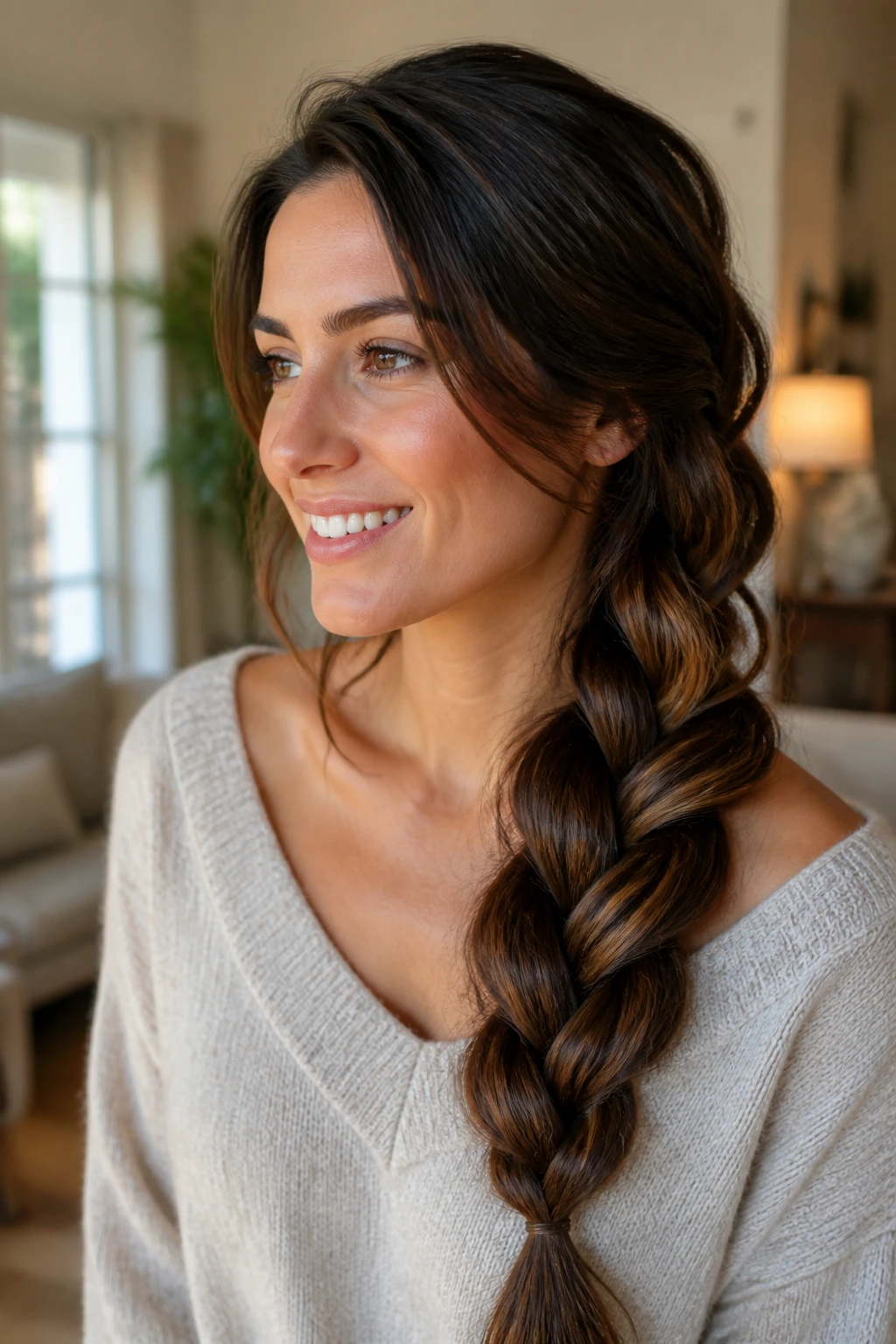
A single, long side braid is incredibly beautiful when you have thick hair because the braid itself ends up being about the width of a small rope. Start with a side part and pull all your hair over one shoulder. Create a simple three-strand braid, but pull the outer loops of the braid outward as you go to make it look even wider and more voluminous.
Why It’s Effective
This is one of the lowest-stress styles for thick hair. It utilizes the natural weight of your hair to keep the braid pulled down and smooth. It is an excellent choice for second-day hair, where the natural oils provide a bit of slip and texture that makes the hair hold together even better than it did when it was freshly washed.
15. The Deep Side-Part Pony
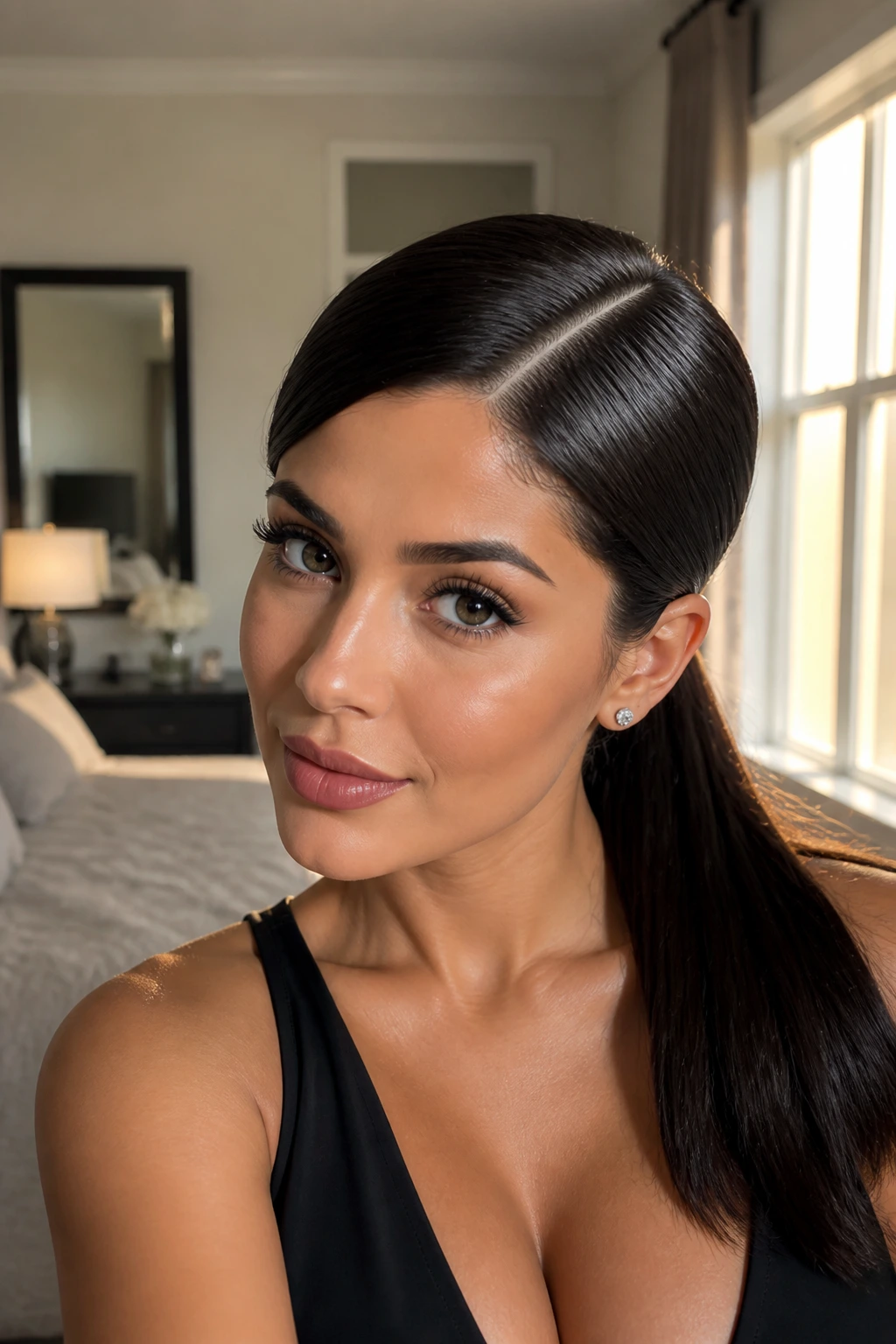
Sometimes the simplest tweaks make the biggest difference. Changing your part from the middle to a deep side part immediately creates more volume at the roots. For thick hair, this helps to shift the center of gravity, making your hair look even fuller without any extra products. Combine this with a low, smooth ponytail for a classic, red-carpet-ready finish.
Refined Finishing
Take the time to use a flat iron on the top section of your hair before pulling it back. This ensures that the hair lying flat against your head is perfectly smooth, contrasting beautifully with the natural volume that thick hair brings to the ponytail itself. A tiny bit of shine serum on the top section will finish the look with a polished, healthy gleam.
Final Thoughts
Managing thick hair is all about balance. The goal is to distribute the volume in a way that feels comfortable and looks intentional. Whether you are cutting, pinning, or braiding, remember that your hair’s density is a feature, not a flaw. Once you stop trying to flatten it into submission and start using its natural weight to your advantage, you will find that a world of styles suddenly becomes accessible.
Try shifting your approach toward textures that celebrate density rather than fighting it. Sometimes, the difference between a frustrating style and a perfect one is as simple as adding a few well-placed layers or switching to a heavy-duty hair pin. You have the raw material for some of the most dramatic and beautiful styles out there—you just need the right techniques to harness it.