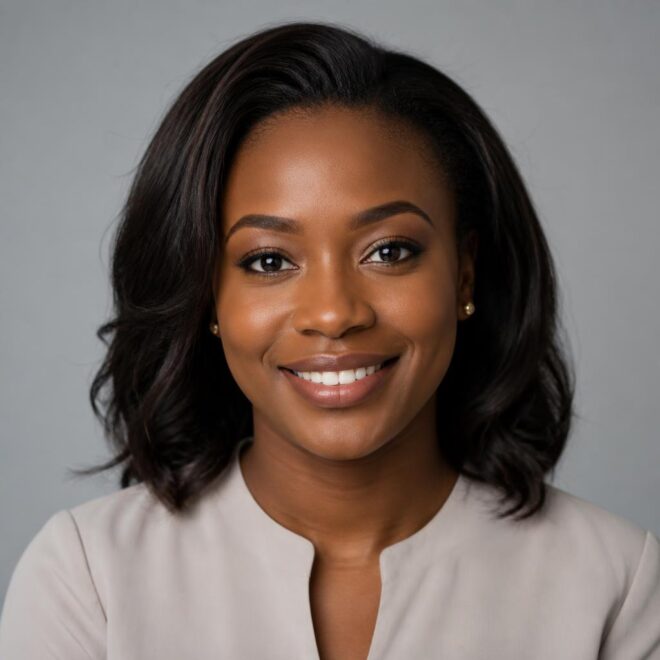


Finding the perfect haircut when you have a square face shape is a balancing act of geometry. You possess a strong, angular jawline, a wide forehead, and a cheekbone structure that could cut glass. These are classic features often associated with timeless beauty, but they can be tricky to frame. When you add eyewear into the mix, the game changes. A pair of glasses adds its own set of lines to your face, and the right hairstyle should soften those angles rather than repeating them. It is about creating a dialogue between the sharpness of your jaw and the curves or shapes of your hair.
Whether you wear thick, bold-rimmed acetates or delicate wire frames, your hair should act as a buffer. The goal is to introduce movement, layers, and softness where you might otherwise look too “box-like.” If you wear glasses, your hair is no longer just hair—it is a companion to your frames. You need styles that don’t compete with your lenses but rather complement them by drawing the eye toward your eyes or cheekbones instead of just your chin.
Softening the Jawline With Long Layered Waves

The most effective way to counteract the sharp geometry of a square face is to introduce soft, sweeping lines. When you have glasses, especially those with rectangular or cat-eye frames, long hair that falls in loose, face-framing waves creates a beautiful contrast. These waves break up the straight lines of your jaw, making the entire face appear more oval and elongated.
Why Waves Work for You
Waves introduce roundness. Think of it as adding “texture” to a “structured” canvas. When the hair falls around the sides of your face, it obscures the sharpest points of your jawline, creating a gentle, romantic aesthetic that balances out the sternness of a heavy frame.
Tips for Styling
- Use a large-barrel curling iron to create loose, beachy texture.
- Avoid tight, corkscrew curls, which can look too busy against decorative frames.
- Keep the layers starting around the collarbone to ensure they don’t add too much bulk right at the cheek level, which would only widen your face further.
Pro tip: A bit of sea salt spray applied to damp hair provides just enough grip to hold these waves in place all day, preventing them from going limp against your glasses.
The Asymmetrical Lob for Dynamic Balance

If you have a square face, a perfectly symmetrical haircut can sometimes backfire by highlighting the rigid equality of your jaw width. Enter the asymmetrical long bob, or “lob.” By keeping one side slightly longer than the other, you force the eye to follow a diagonal line rather than a straight horizontal one. This is a subtle trick that adds interest and detracts from the squareness of the face.
Framing Your Frames
Because glasses draw a horizontal line across the center of your face, adding a vertical or diagonal element with an asymmetrical cut prevents the “box” effect. It’s an incredibly modern, sophisticated look that pairs exceptionally well with thin, minimalist metal frames.
How to Execute This Cut
You want the back to be slightly shorter, perhaps grazing the nape of the neck, while the front pieces sweep down toward the collarbone. This length is universally flattering because it doesn’t drag the face down, yet it provides enough coverage to soften the area around the jaw.
Wispy Curtain Bangs for a Softer Forehead
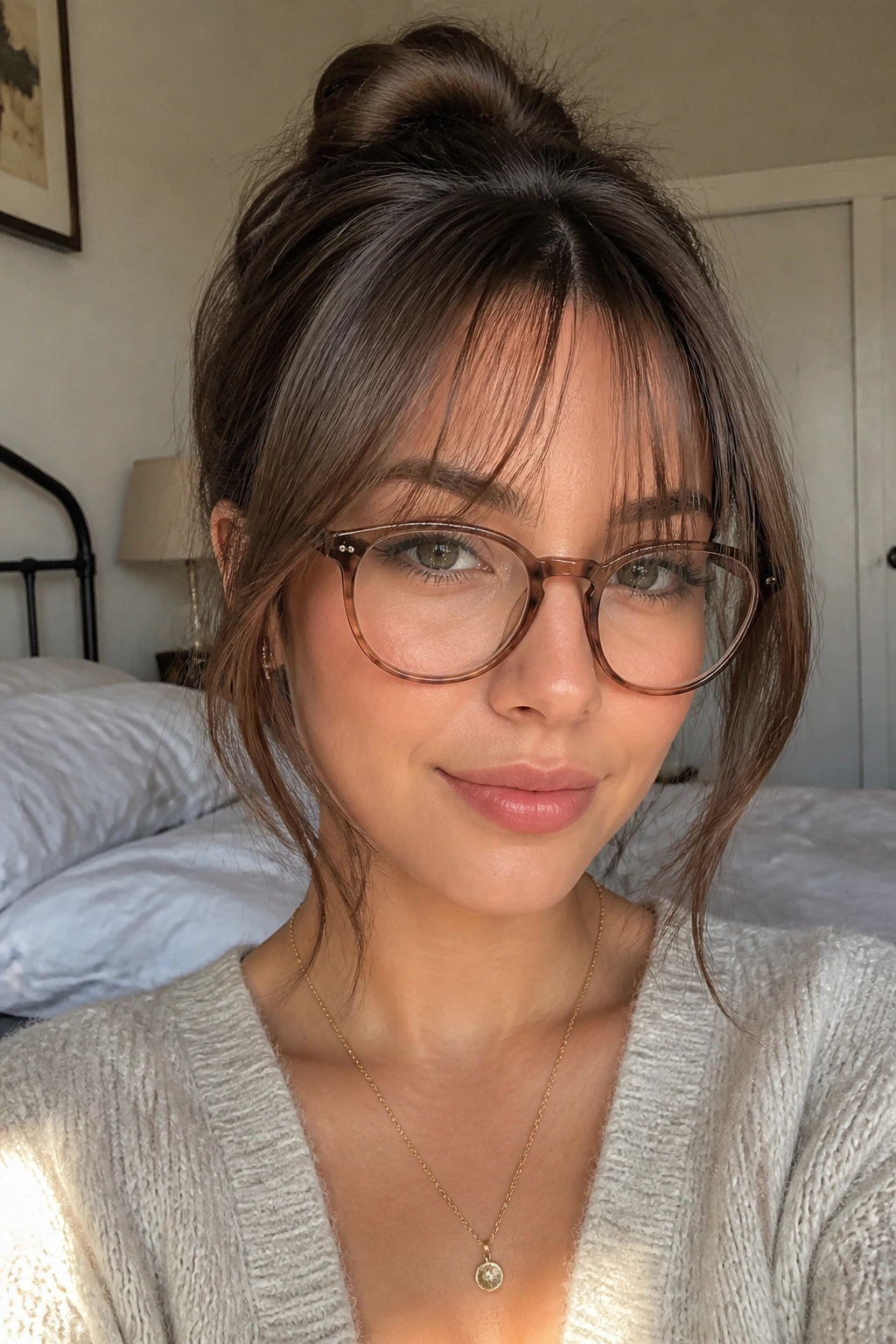
Many people with square faces worry about their forehead appearing too wide. While a blunt, heavy bang can make this worse by cutting off your face and squaring it further, curtain bangs are a different story. These bangs are parted in the middle or slightly off-center, framing the eyes and cheekbones before blending into the rest of your hair.
The Interaction With Eyewear
Curtain bangs act like an arrow pointing toward your eyes. Since your glasses are already drawing attention to this area, the bangs amplify the effect, creating a cohesive, polished look. They add a softness to the upper third of your face that balances the strength of your lower jaw.
Stylist Advice
- Ask for “feathered” ends rather than blunt cuts.
- Ensure the longest part of the bang hits just at the cheekbone to draw attention upward.
- If you wear oversized frames, keep the curtain bangs slightly longer so they don’t get tangled in the temples of your glasses.
Sleek High Ponytails to Elongate the Face
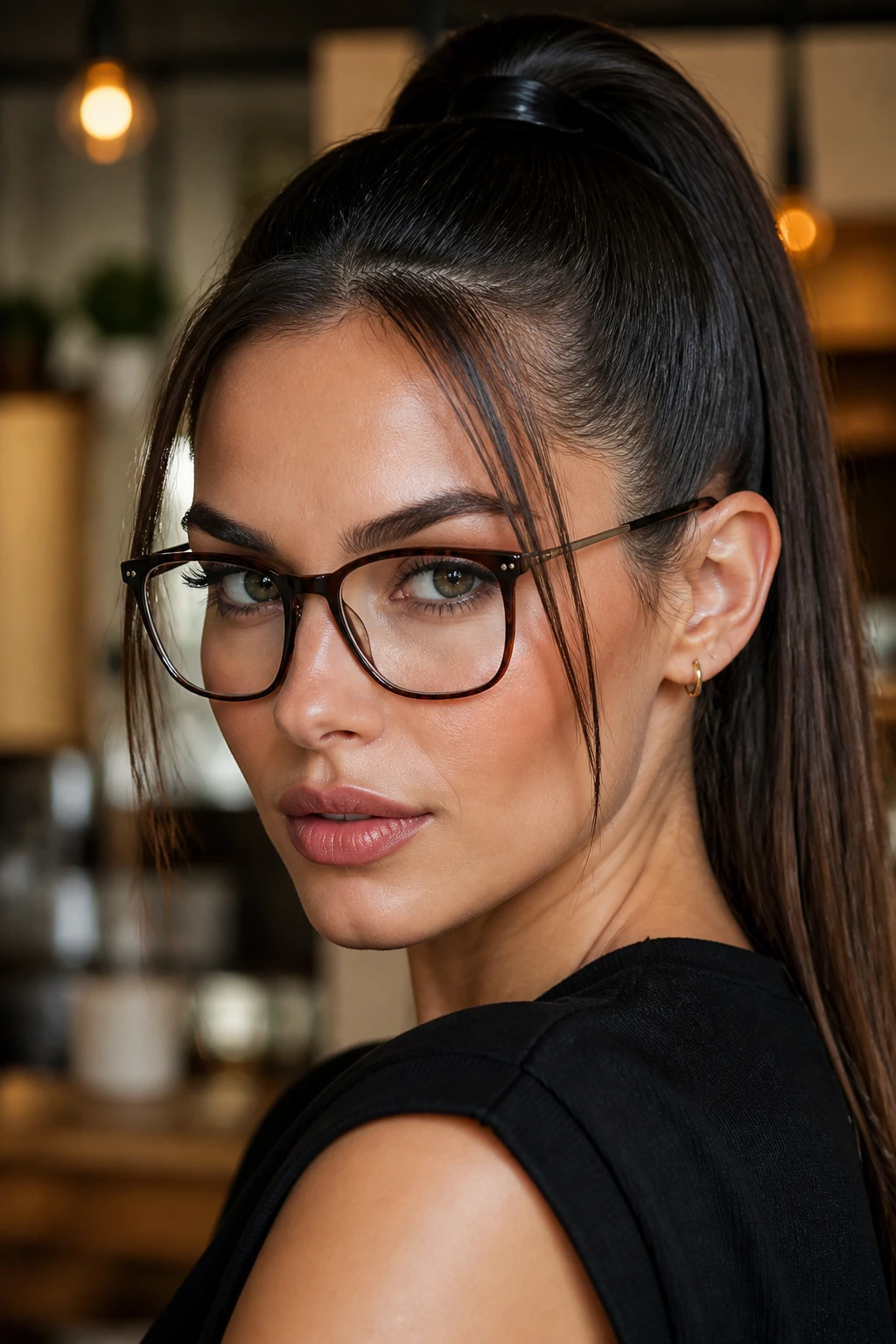
Sometimes, you need to own your structure. A sleek, high ponytail is a bold choice that pulls hair away from the face, exposing your cheekbones and jawline entirely. While some might think this exposes the “squareness,” it actually provides a clean, architectural look that mimics the bold design of modern eyewear.
Why This Works with Glasses
When your hair is pulled back, your glasses become the primary focal point of your face. This works best if your frames have a distinct color or pattern, like tortoise shell or a deep jewel tone. The tension of the ponytail lifts the features, providing a natural “facelift” effect that looks intentional and chic.
Achieving the Perfect Tension
- Use a boar-bristle brush to get the hair perfectly smooth as you pull it up.
- Wrap a small piece of hair around the elastic to hide it for a more professional finish.
- Leave two small, soft tendrils out at the front to frame the eyes; this adds a touch of casual movement to a formal style.
Deep Side Parts for Instant Asymmetry
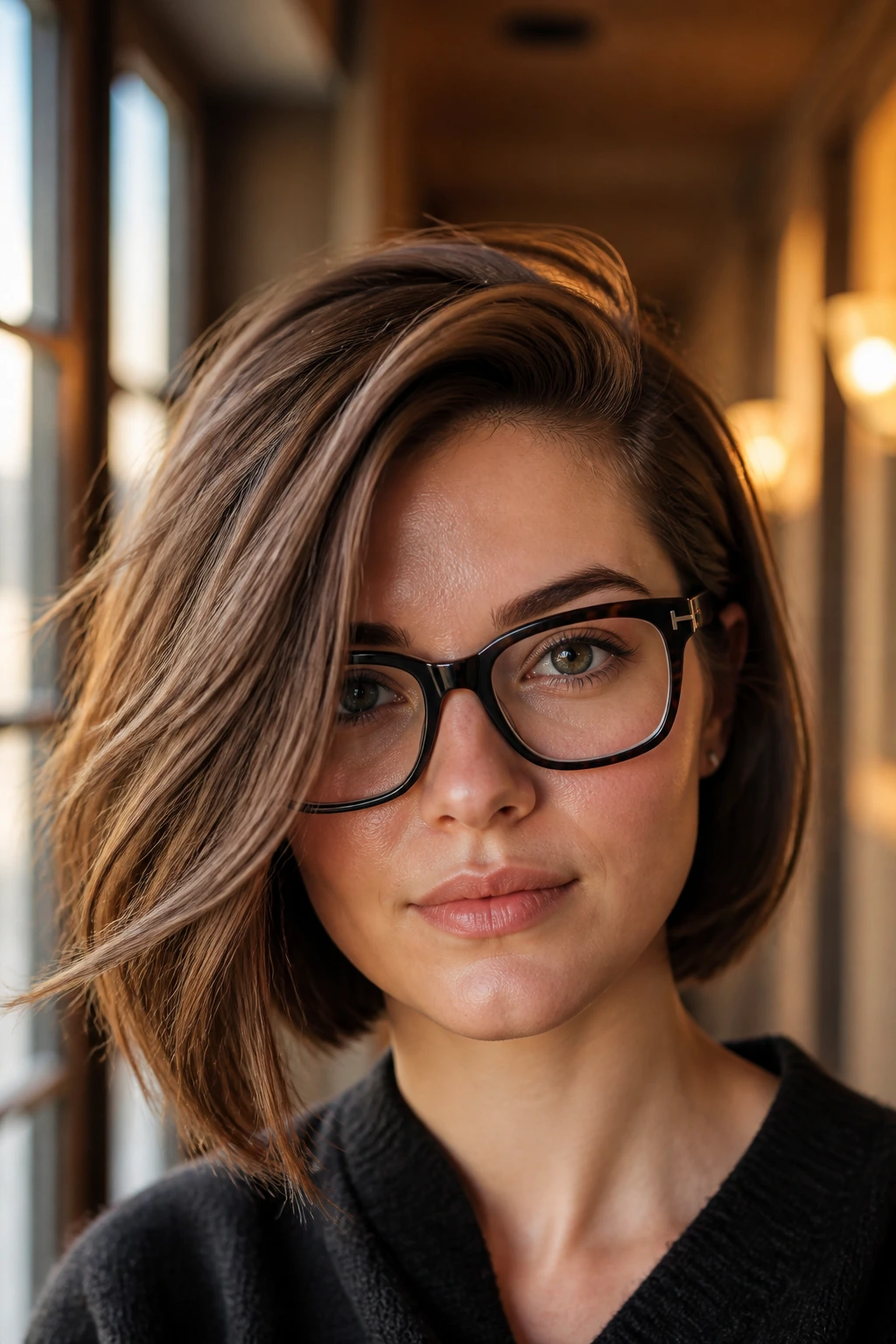
If you aren’t ready to commit to a major chop, changing your part is the simplest way to update your look. A deep side part creates an instant diagonal line across the face, which breaks up the symmetry of a square jaw. It is perhaps the most effective “instant fix” for people who feel their face looks too blocky with a middle part.
Why It Pairs with Eyewear
Glasses frames, by definition, sit on the bridge of your nose and create a line across your face. A side part creates a secondary line that offsets the frames, preventing the face from looking too divided into two equal halves.
Styling Strategy
- Flip your hair to the side while it is still damp to encourage the root to set that way.
- Use a lightweight volumizing mousse to ensure the hair doesn’t fall flat, which can make the face look tired.
- If your glasses are thick-rimmed, a deep side part keeps the overall aesthetic from becoming too heavy or “librarian-like.”
Textured Pixie Cuts for Bold Confidence
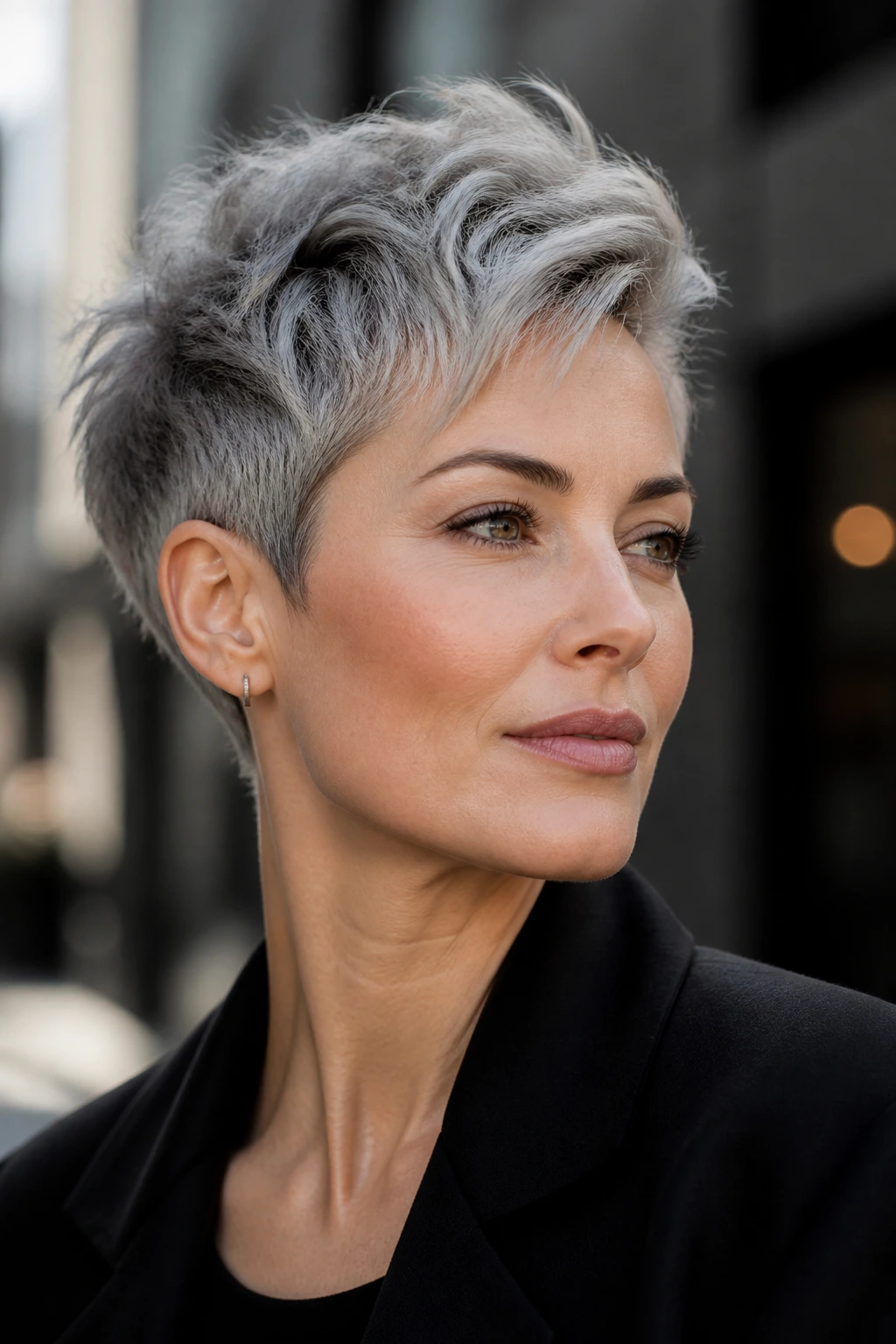
Who says short hair isn’t for square faces? A textured, layered pixie cut can look incredibly elegant. The key is to keep the top long and piecey, allowing for plenty of height and texture. This draws the eye upward, away from the jawline, and focuses all the attention on your eyes and the glasses you choose to wear.
The Role of Height
Height is your best friend when wearing glasses with a square face. By adding volume at the crown, you elongate the face, turning that “square” shape into more of an oval. A pixie with soft, wispy sides that hug the temples prevents the hair from looking too severe.
Who Should Try This
If you have a strong, defined jawline and you aren’t afraid to highlight it, a short, cropped pixie is a statement. It makes your glasses look like an intentional fashion accessory rather than a necessity.
Shaggy Layers for a Modern, Edgy Vibe

The shag is back, and it is a gift for those with square faces. With its choppy, layers throughout the crown and length in the back, the shag provides a chaotic, lived-in texture that is inherently soft. The layers sit at different points around the face, which helps to break up the harsh angles of the jawline naturally.
Why It Works with Glasses
The messy nature of the shag complements the “nerdy-chic” aesthetic that many glasses wearers embrace. It looks great with almost any frame style, from wire-rimmed vintage sets to chunky, modern plastic frames.
Maintenance and Styling
- Apply a texturizing paste to the ends to emphasize the layers.
- Do not aim for perfection; the point of the shag is that it looks slightly messy.
- Avoid having the shortest layers hit right at the jawline, as this will only draw more attention to the width of the face.
Face-Framing Highlights to Soften the Edges
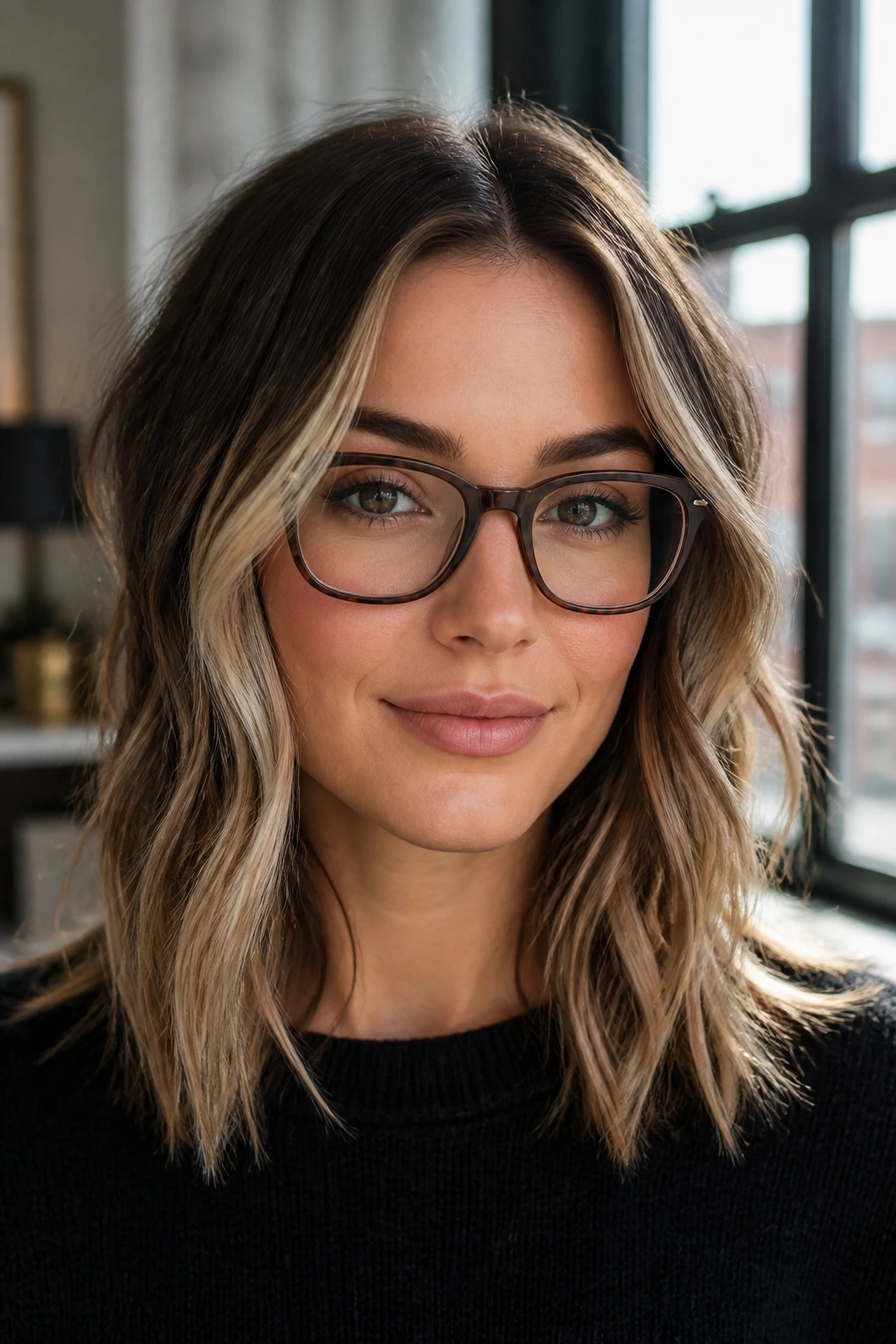
Sometimes, the color of your hair is just as important as the cut. If you want to soften your features, strategic highlighting—specifically “money piece” highlights—can draw the eye forward. By placing lighter shades around the eyes and cheekbones, you create a soft halo that distracts from the angularity of the jaw.
The Glasses Connection
The highlights should be positioned so they frame your glasses, not compete with them. If you wear black or dark frames, cooler-toned highlights like ash blonde or platinum can provide a nice contrast. If you wear warm-toned frames like gold or tortoise, honey or caramel highlights are the way to go.
Tips for Highlighting
- Keep the highlights subtle; you don’t need a heavy bleach job.
- Focus the brightness around the temples and the eyes.
- Ask your stylist for “ribbon” highlights that blend naturally rather than stark streaks.
The Blunt Bob With an Unexpected Twist
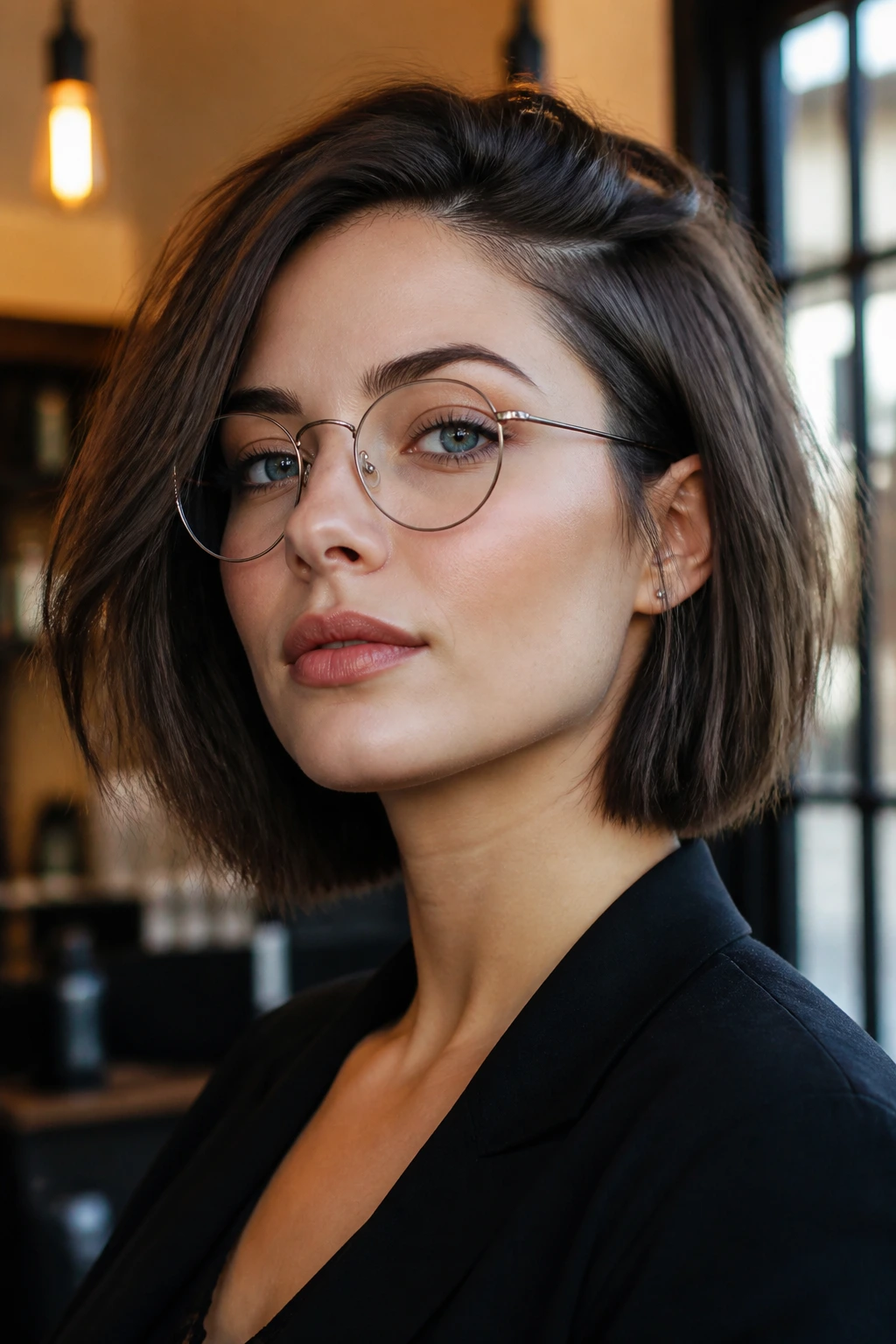
A classic, chin-length blunt bob can sometimes be a trap for square faces, as it ends right at the jawline and emphasizes its width. However, if you add a slight undercut or texture at the back, or if you wear it with an off-center part, you can make the classic bob work.
Modifying the Classic
If you love a bob, keep it slightly longer than the jaw—either an inch above or an inch below. This small adjustment makes a massive difference in how the cut frames your face.
Pairing with Frames
This style is very minimalist and pairs exceptionally well with thin, wire-rimmed glasses. It’s a clean, sharp look that screams “architectural chic.”
Loose Updos With Soft Tendrils
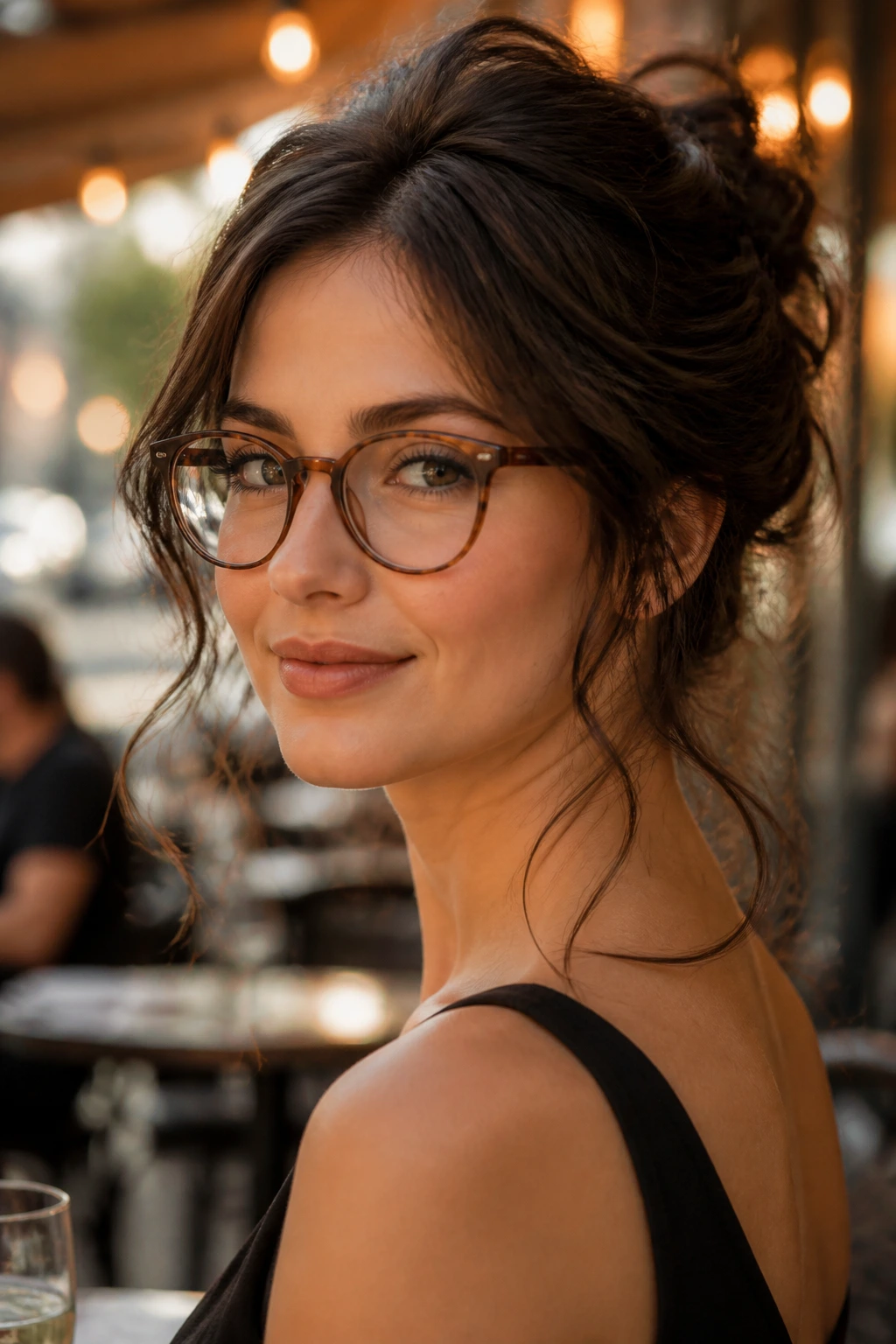
For those nights out when you want to wear your hair up, a tight, severe bun might highlight the boxiness of your face. Instead, go for a loose, romantic updo. Leave plenty of wispy pieces around the temples and jawline to soften the frame.
The Softness Factor
The loose pieces act as a curtain, breaking up the straight lines of the face. When combined with glasses, this creates a look that is both intellectual and approachable.
Technique for Success
- Use a curling wand on the pieces you intend to leave out.
- Don’t pull the hair too tight; allow for some volume at the top of the head.
- Secure the rest of the hair in a low, messy knot at the nape of the neck.
Side-Swept Bangs for a Softer Silhouette
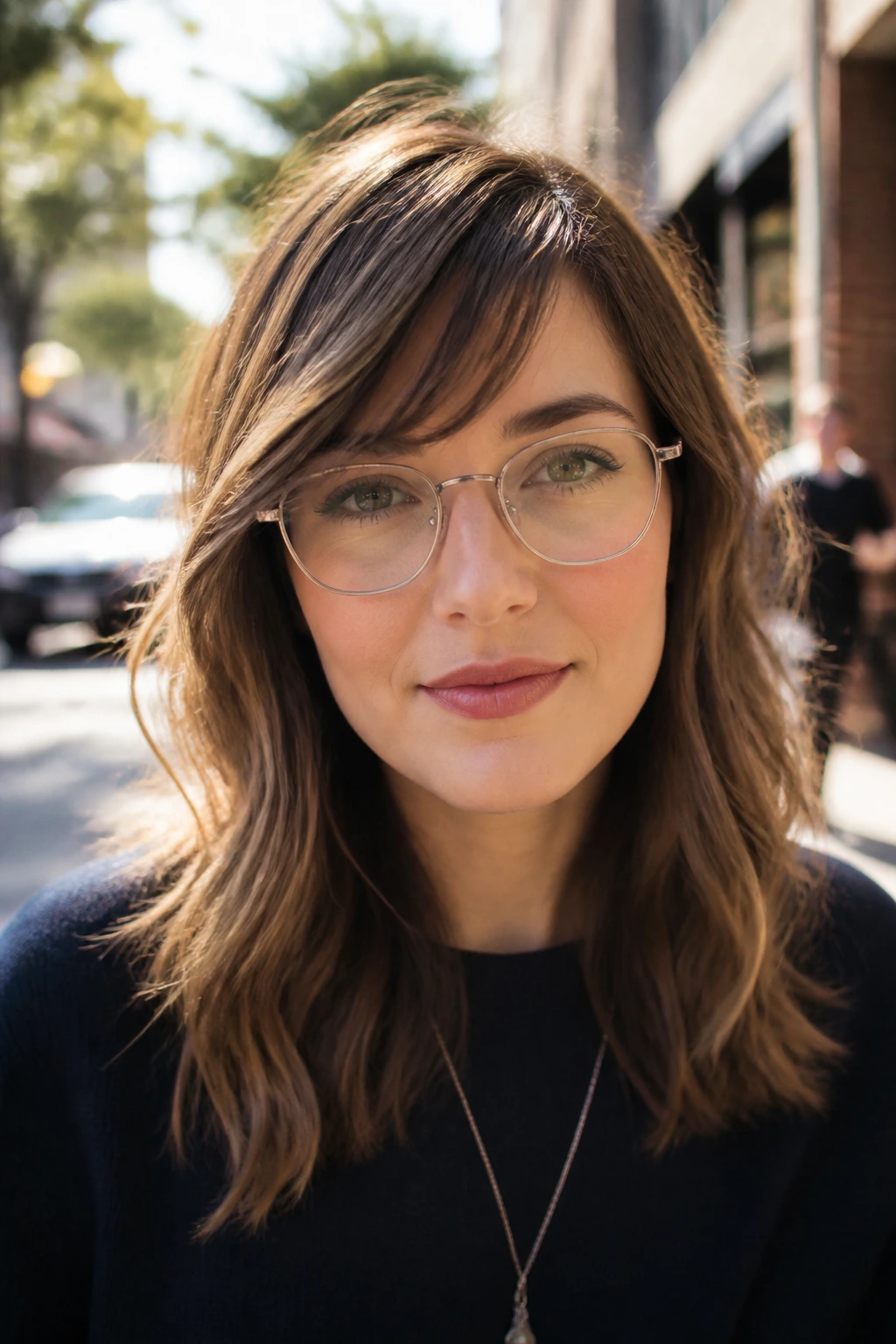
Side-swept bangs are the ultimate classic for a reason. They create a diagonal line across the forehead, which effectively masks the width of the forehead and breaks up the square shape.
The Interaction
Because the side-swept bang is asymmetrical, it plays well with glasses. It provides a soft, feminine contrast to the structured frames. You’ll find that this style balances the heavy brow-line often found in glasses.
Styling Needs
- Keep them light and airy; if they are too thick, they can become a burden and look dated.
- Ensure they are trimmed regularly to avoid interfering with your vision through your lenses.
- A quick blow-dry with a round brush is usually all you need to keep them swept perfectly to the side.
Layered Mid-Length Cuts With Volume
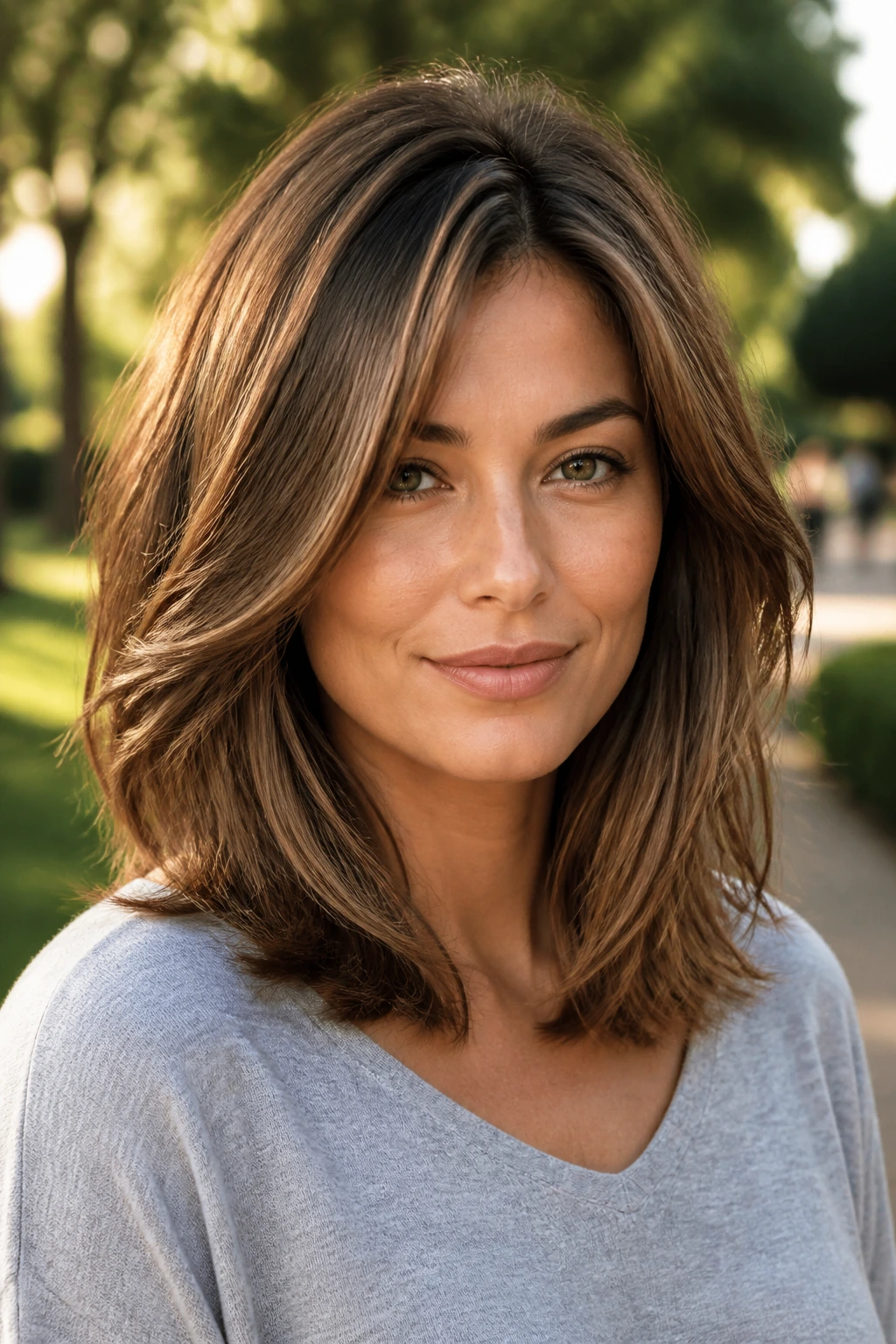
If you prefer to keep your hair mid-length—the “Goldilocks” length that hits just past the shoulders—layering is essential. Without layers, mid-length hair can hang flat, which only accentuates the squareness of the face.
Adding Volume
You need volume at the roots and mid-lengths. Use a volumizing shampoo and a light mousse to give the hair some lift. This creates a rounded silhouette that counteracts the angularity of your jaw.
Why This Works
The layers allow the hair to frame the face rather than just hanging straight down. It creates a soft, approachable frame that balances out even the most intense, thick-rimmed glasses.
Final Thoughts
The secret to choosing a hairstyle when you have a square face and wear glasses is simply finding the right balance of softness. Your face shape is already strong, and your glasses add a layer of structure, so your hair should provide the grace and the curves. Whether you opt for a textured shag, long waves, or a sophisticated lob, prioritize styles that introduce movement and avoid overly rigid, symmetrical lines.
Ultimately, your hair should feel like a frame for your glasses and your face, not a barrier. Experiment with parts, bangs, and textures to see what makes you feel most confident. The best style is one that makes you forget about the “rules” of face shapes and just allows you to enjoy how you look when you put your frames on in the morning. Focus on what makes your eyes pop, and you will find that your glasses and your hair can be the best style partnership you’ve ever had.