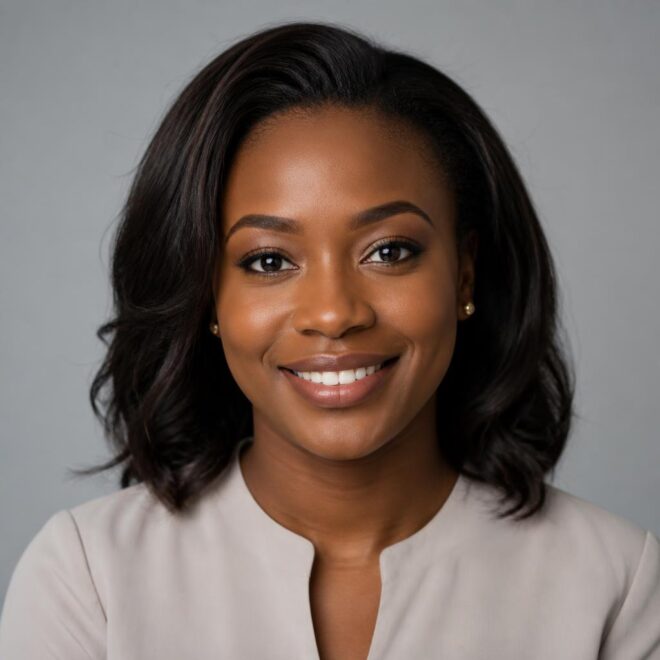


Thick hair is both a blessing and a daily workout. Anyone blessed with a dense mane knows the routine: the endless blow-drying sessions, the snapped hair ties, and that heavy, helmet-like feeling that sets in when your layers grow out. It often feels like you are carrying a heavy wool blanket on your head, especially when the weather warms up. Finding a haircut that preserves your hard-earned length while stripping away that suffocating weight can feel like a search for something that does not exist.
Enter the butterfly cut. This specific cutting technique has redefined how we manage heavy, dense hair textures. By combining short, face-framing layers that mimic the shape of butterfly wings with longer, weight-reducing layers throughout the back, it offers the ultimate compromise. You get the bounce, movement, and lightness of a short haircut without actually sacrificing your overall length. When you tie the back section up, it even looks like a chic, short bob from the front.
This approach works exceptionally well because it targets the bulk of the hair from the inside out. Instead of simply thinning the hair with texturizing shears—which can often lead to frizzy, split ends on coarser hair—a proper butterfly cut uses precise sectioning to carve out weight lines. The result is a highly dimensional shape that moves naturally when you walk, rather than sitting like a solid block of weight on your shoulders.
If you are ready to make your hair feel pounds lighter while keeping your long, flowing style, there are several ways to tailor this cut to your specific texture and daily routine. Let us look at the best variations of this style, specifically tailored for those of us with thick hair.
The Anatomy of a Successful Butterfly Cut on Thick Hair
Before sitting in the stylist’s chair, it helps to understand exactly what makes this cut succeed on thick hair. Many haircuts fail dense textures because they do not account for where the bulk sits. A generic layered cut often leaves a harsh “shelf” where the short layers end and the long hair begins. The butterfly cut avoids this by using a continuous slide-cutting technique that connects the shortest face-framing pieces to the longer perimeter.
The Weight-Removal Strategy
The real secret to this haircut lies in the interior layers. Your stylist should not just cut the surface; they must work through the mid-shaft to create hidden pockets of airiness.
By lifting the hair at a 180-degree angle and cutting from the inside, the stylist removes the heavy bulk that sits at the back of the crown. This creates that signature lift and bounce. The hair at the nape of the neck remains long, while the hair on top is cut short enough to spring upward, creating the illusion of two distinct haircuts in one.
Slide-Cutting vs. Point-Cutting
For thick hair, the tools and techniques used are just as critical as the sectioning. Slide-cutting with a sharp, dry shear allows the stylist to carve out weight gradually, ensuring a soft, blended transition.
Point-cutting, which involves cutting into the ends of the hair vertically rather than horizontally, softens the tips of the layers so they do not look blunt or blocky. If your stylist pulls out thinning shears with comb-like teeth, ask them to use them sparingly. On coarse or thick hair, those shears can create a fuzzy surface texture that is incredibly difficult to smooth out during styling.
1. Classic Long Butterfly Cut with Feathery Layers
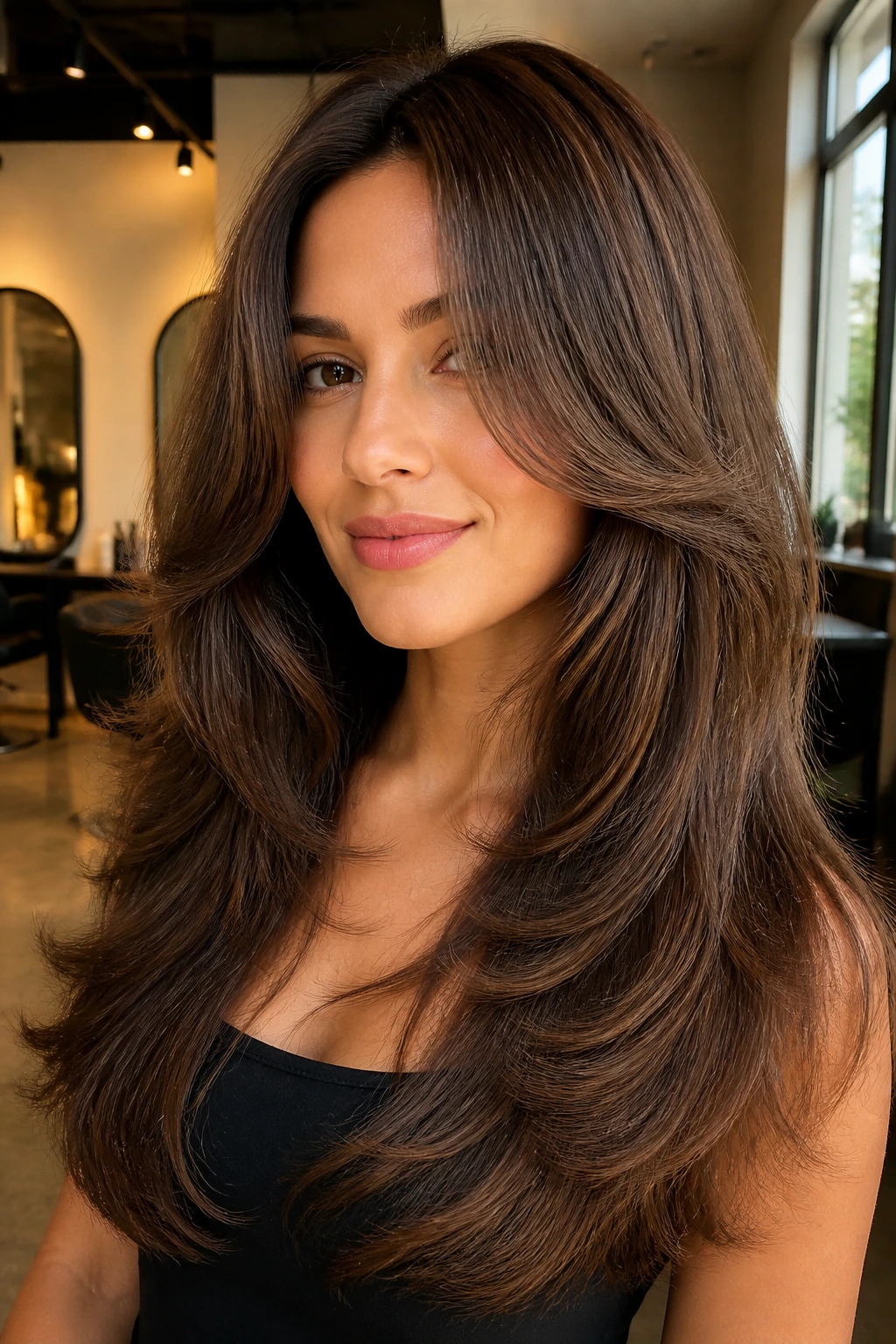
This is the standard-bearer for the style, designed for those who want maximum drama and movement without losing an inch of their length. The layers start just below the chin, cascading down in soft, sweeping steps that frame the face beautifully before blending into the longer lengths.
Why It’s a Top Pick for Thick Hair
This version works because it addresses the weight at the front of the head. By removing bulk around the jawline and collarbone, the hair gains instant bounce. The layers are cut at an angle that coaxes the hair to curve outward, mimicking the natural flutter of a wing.
Quick Hair Facts
- Ideal Hair Density: Medium to ultra-thick
- Styling Effort: Moderate (requires a large round brush or hot rollers)
- Maintenance Level: Low (grows out seamlessly over twelve to sixteen weeks)
- Best Face Shapes: Oval, round, and heart-shaped
Styling tip: Focus your styling efforts on the shortest layers around your face, wrapping them away from your face with a two-inch round brush to create that classic retro swoop.
2. Shoulder-Grazing Butterfly Lob
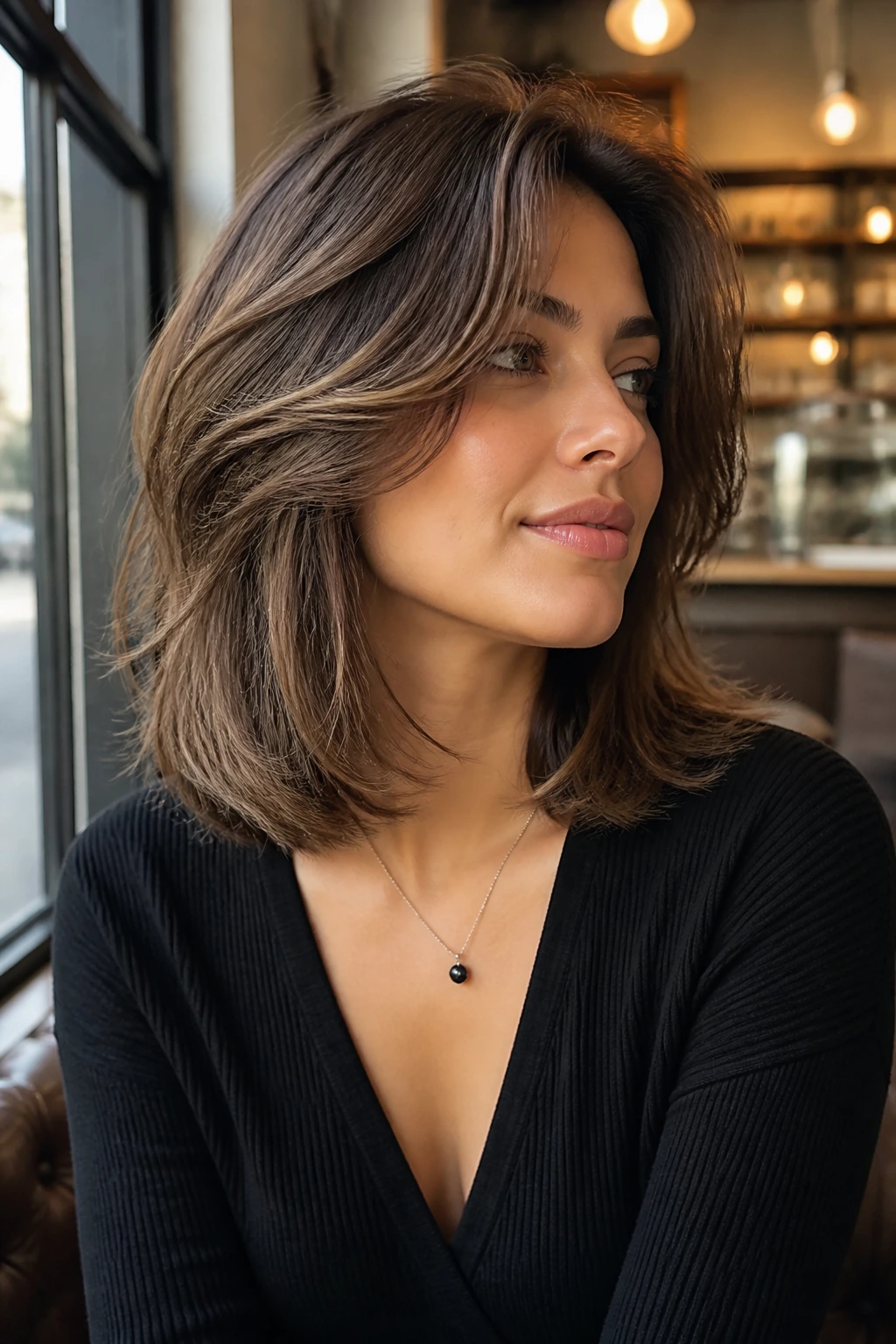
You do not need waist-length hair to make this technique work. A long bob, or lob, that sits right at the collarbone can be beautifully transformed by incorporating these signature wings.
The weight of thick hair often drags a traditional bob down, making it look triangular. This cut solves that problem entirely. By short-layering the top section and leaving the perimeter intact, you get a playful, swingy style that feels incredibly light and airy.
To style this effectively, use a lightweight volumizing mousse on damp roots. When blow-drying, lift the crown sections straight up to maximize the separation between the top and bottom layers. This creates a gorgeous, full-bodied silhouette that looks polished but never stiff.
3. Butterfly Cut with Curtain Bangs
What Makes This Style Different
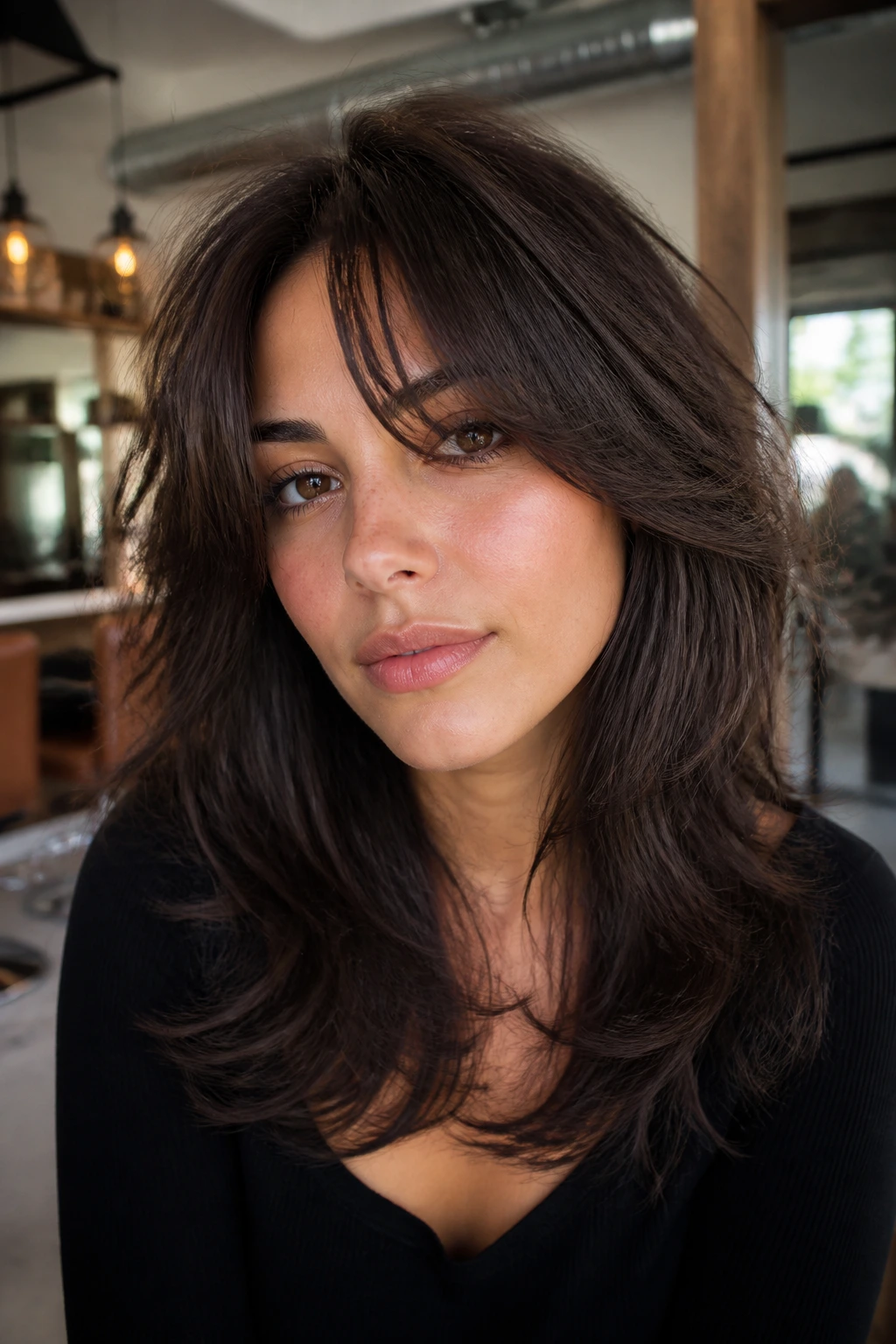
Unlike the classic version which starts its shortest layers at the chin, this variation integrates a soft, parted curtain bang that blends directly into the cheekbone-length layers.
How to Style It
- Start with wet hair and apply a coin-sized amount of lightweight blowout cream from the mid-shafts to the ends.
- Use a small round brush (about 1.5 inches in diameter) to dry the curtain bangs, pulling them forward and then rolling them back away from your face.
- Switch to a larger three-inch ceramic brush for the remaining sections, pulling each layer upward and outward to set the volume.
- Set the style with a quick blast of cool air from your hair dryer to lock in the shape.
The transition from the short curtain bang to the mid-length layers creates a beautiful, continuous frame that highlights your eyes and cheekbones while keeping the bulk of your thick hair away from your face.
4. Texturized Butterfly Cut with Internal Thinning
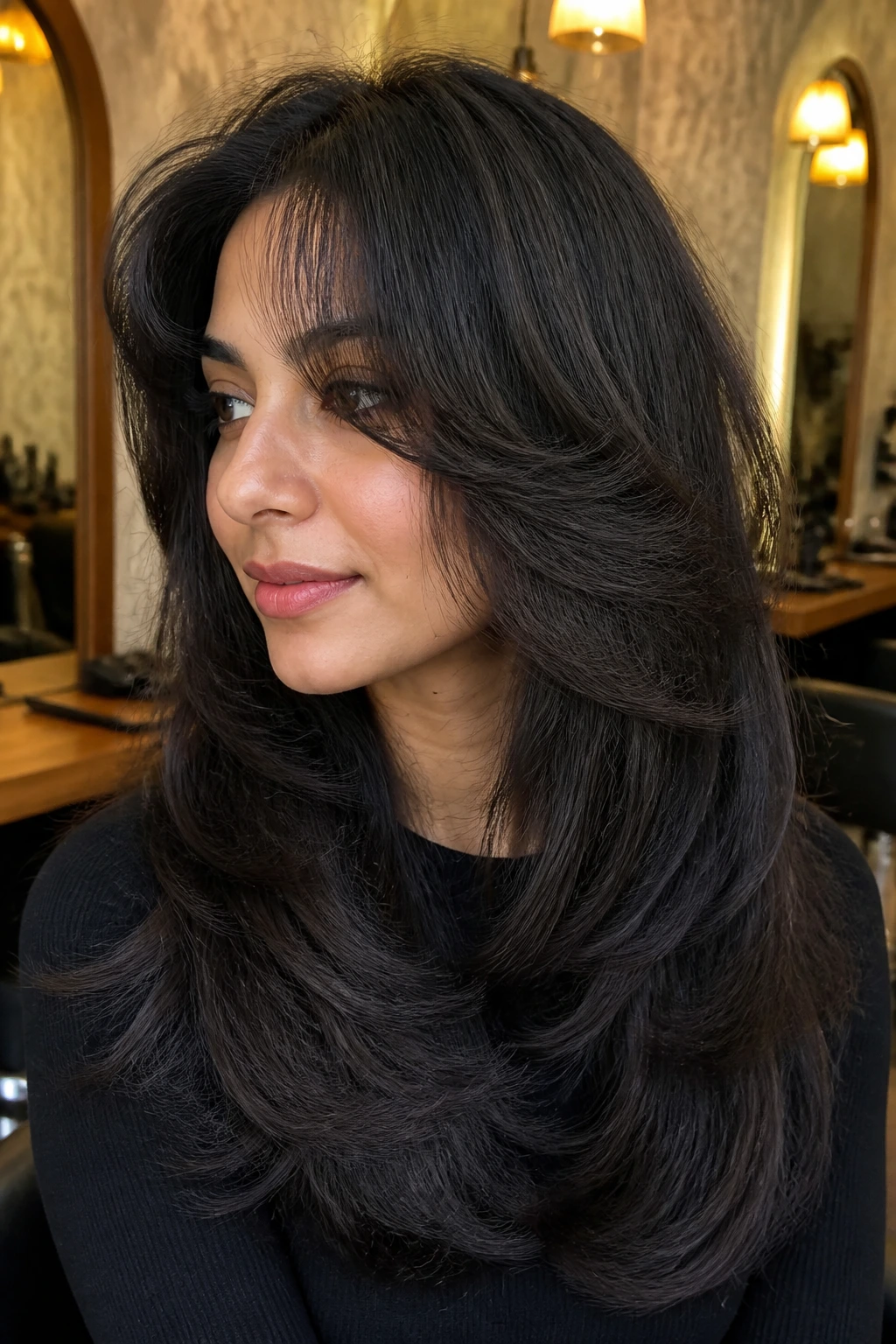
This variation is designed specifically for those with incredibly dense, coarse hair that tends to feel heavy and hot. It looks like a classic butterfly cut on the outside, but it features specialized texturizing work underneath.
Key Structural Details
- Seamless blending: The stylist uses deep point-cutting to prevent any harsh lines.
- Under-cutting weight: Small, strategic sections of hair at the crown are slightly shortened underneath to support the longer layers on top.
- Shattered ends: The tips of the hair are left slightly piecey rather than perfectly uniform.
- Internal movement: Weight is carved out from the mid-lengths to allow individual sections to move independently.
This approach ensures that your hair does not look like a solid helmet of hair. It creates gaps and valleys within the dense structure, letting air flow through and giving your style a lived-in, effortless feel.
5. Butterfly Cut on Dense Coils and Curls
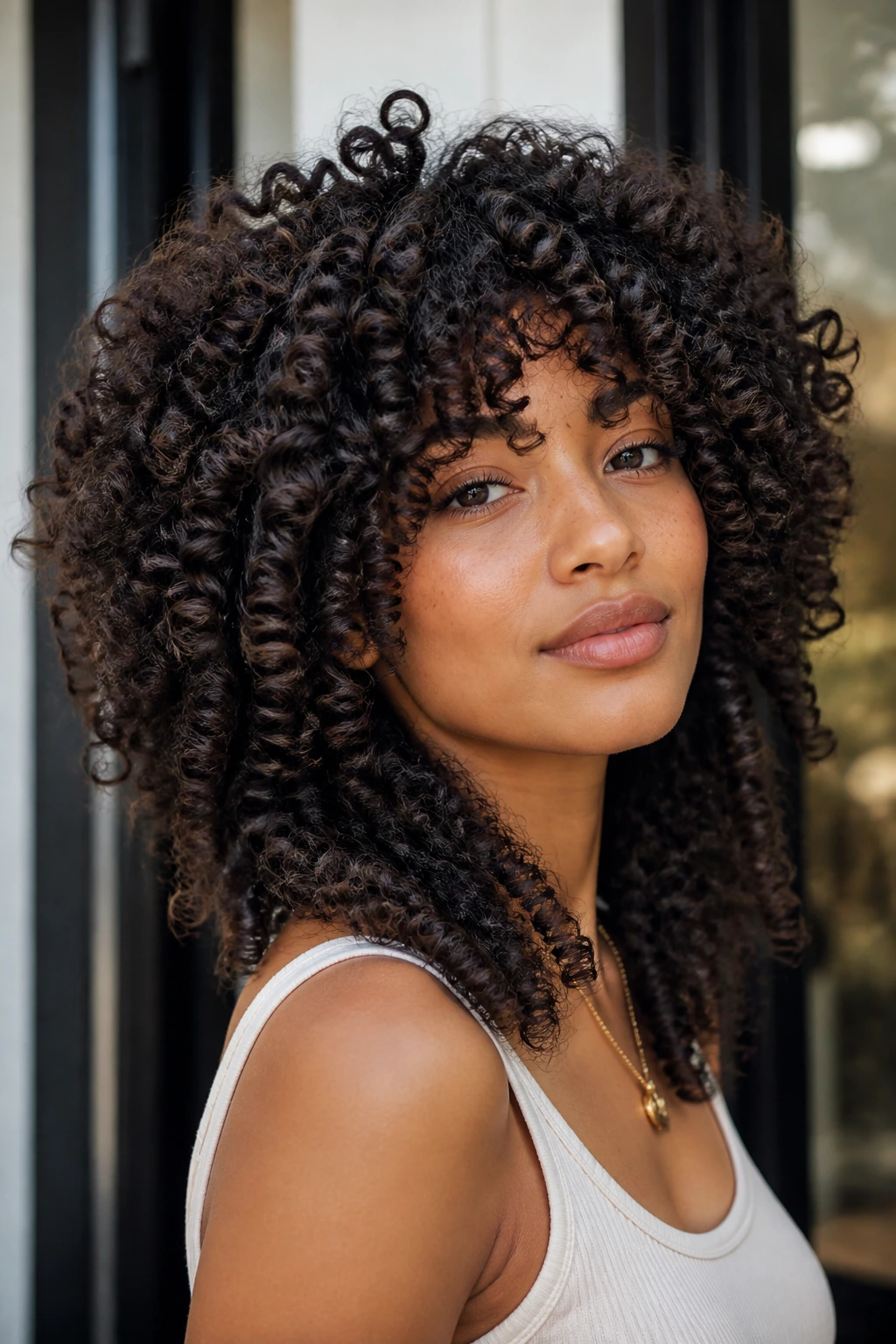
There is a common misconception that this cut only works on straight or blowout-style hair. In reality, thick, curly hair textures can benefit immensely from this specific shape.
When curly hair is cut in standard layers, it often forms a classic pyramid shape. By utilizing the butterfly technique, the stylist carves out weight from the sides of the head while maintaining volume at the crown and length at the back. This gives curly hair a gorgeous, rounded silhouette that frames the face without overwhelming it.
If you have tight curls, ensure your stylist performs this cut on dry hair in its natural state. This allows them to see exactly how each curl springs up, preventing any accidental shrinkage that could make the top layers look too short.
6. Razored Butterfly Cut for Ultra-Thick Hair
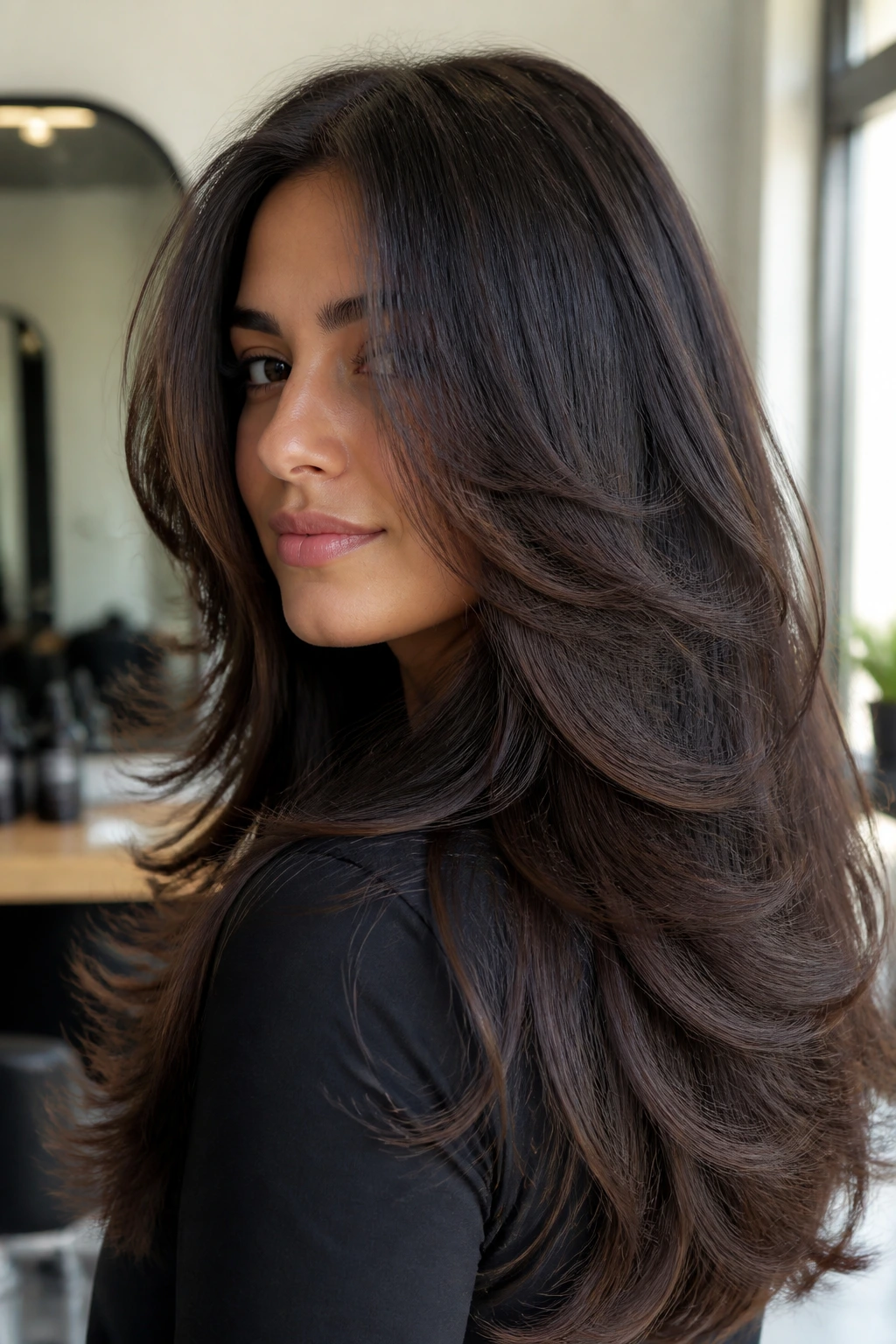
The Razoring Edge
Unlike shears, which cut the hair in a clean, straight line, a professional styling razor slices the hair shaft at an acute angle. This creates an incredibly soft, tapered end that sits perfectly flat against the surrounding strands.
Who It’s Best For
This variation is best suited for those with thick, straight-to-wavy hair that resists traditional layering. If your hair is prone to frizz or has a tight curl pattern, stick to shear-cutting, as the razor can sometimes disrupt the cuticle and cause unwanted fluffiness.
If you are a good candidate, the razored approach delivers a highly texturized, slightly edgy finish. The layers melt into each other without any visible separation, creating a fluid, water-like movement every time you turn your head.
7. Medium-Length Butterfly Cut with Wispy Ends
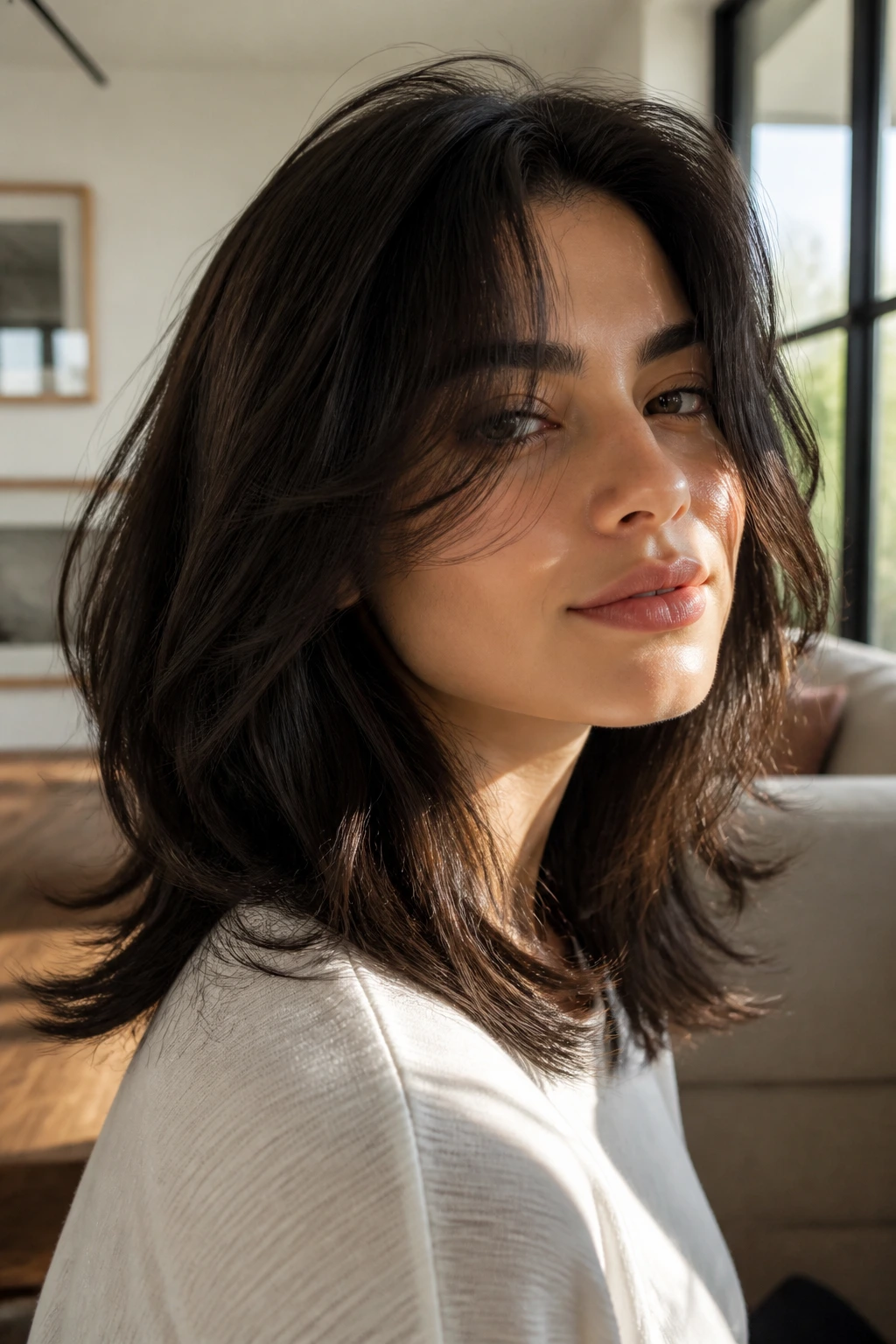
For those who prefer a softer, less dramatic look, this variation keeps the face-framing layers highly texturized and wispy while retaining weight at the bottom.
Why It Works for Medium Lengths
It prevents the hair from looking too bottom-heavy. When thick hair sits around the collarbone, it can easily look bulky at the ends. By thinning out the tips of the layers, the hair falls in a soft, romantic pattern rather than a solid line.
Quick Maintenance Facts
- Ideal Hair Density: Medium to high
- Styling Effort: Low to moderate (works well with air-drying or quick rough-drying)
- Trim Schedule: Every eight to ten weeks to keep the wispy ends looking fresh
- Best Face Shapes: Square, rectangular, and long face shapes
Styling tip: Apply a touch of hair oil or defining pomade to the very tips of your layers after styling to emphasize the wispy, separated texture.
8. Butterfly Cut with Blunt Perimeter Weight
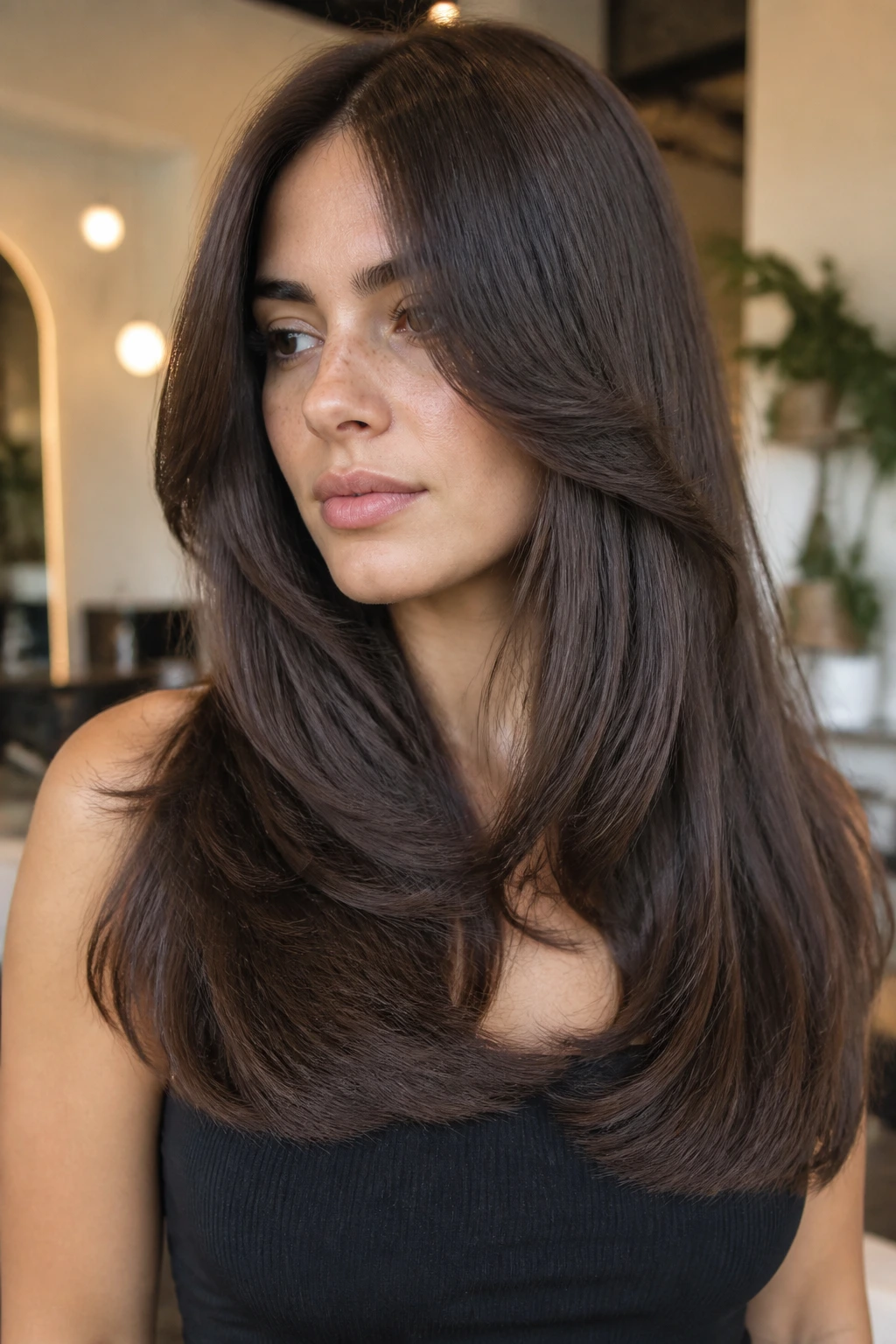
Many people with thick hair worry that heavy layering will make their ends look thin and straggly. This variation completely eliminates that concern by pairing the bouncy interior layers with a thick, blunt perimeter line.
The perimeter of the haircut—the very bottom length—is cut completely straight across or in a gentle, heavy U-shape. Only the top canopy of the hair is subjected to the heavy butterfly layering. This creates a beautiful contrast: you get all the volume and face-framing benefits of short layers, but when your hair hangs forward, the bottom looks incredibly thick, healthy, and solid.
This is a fantastic option for anyone transitioning from a solid, one-length cut who is nervous about losing too much thickness from their ends. It gives you the best of both worlds.
9. Voluminous Blowout Butterfly Cut
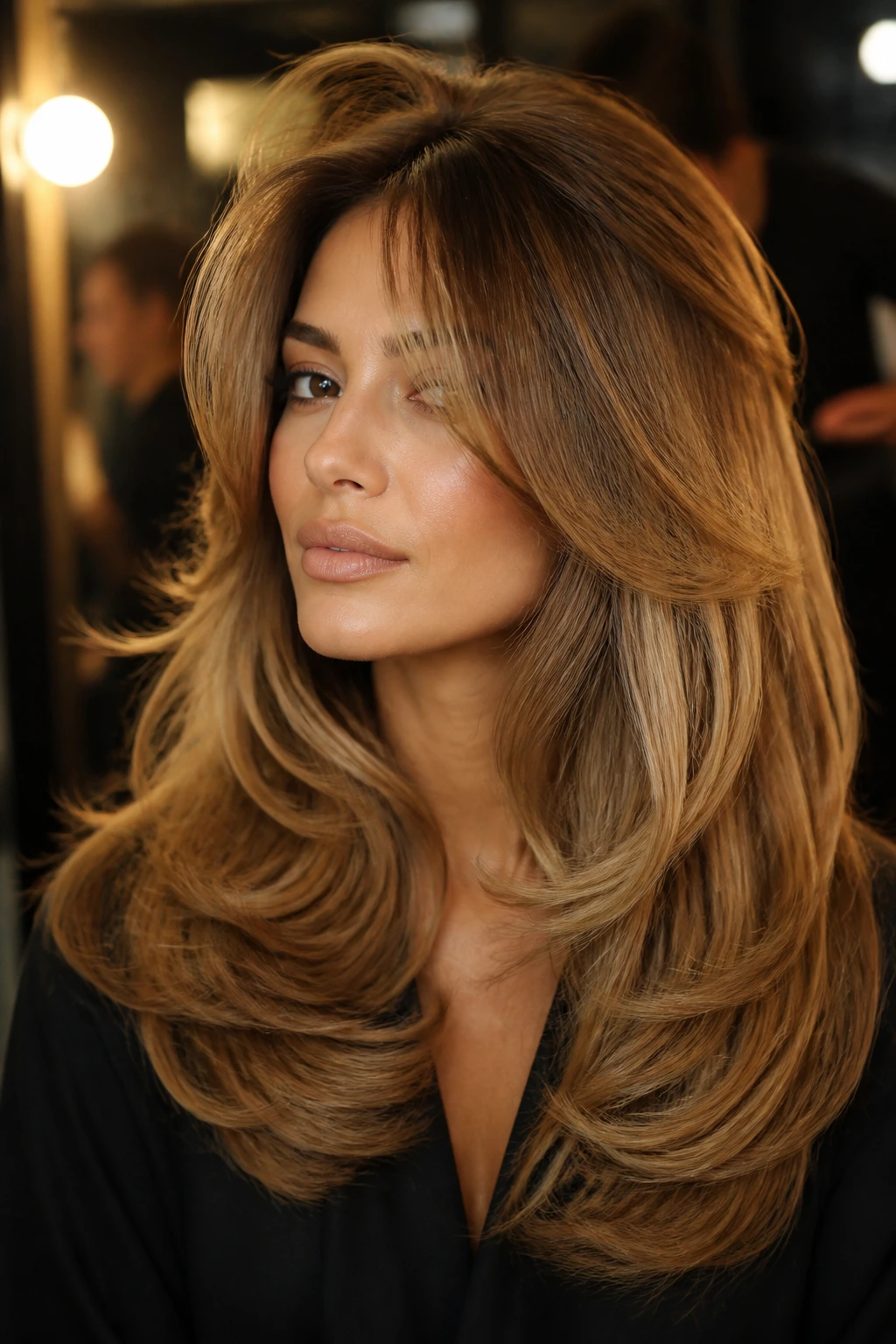
The Ultimate Glamour Look
This style is for anyone who loves the look of a classic, bouncy blowout. The layers are cut specifically to react to tension and heat, springing upward into voluminous curves when styled.
How to Achieve the Perfect Blowout
- Prep wet hair with a high-quality volumizing spray at the roots and a heat protectant through the ends.
- Rough dry your hair until it is about 80% dry, focusing on lifting the roots upward with your fingers.
- Section your hair into three main tiers: bottom, middle, and top.
- Using a large ceramic round brush, dry each section by pulling the hair up toward the ceiling, rolling it down to the scalp, and letting it cool completely before releasing.
- Finish with a light mist of flexible-hold hairspray for long-lasting bounce.
The result is a show-stopping, bouncy style that looks like you just stepped out of a high-end salon. The thick texture of your hair actually helps support this style, keeping the volume locked in far longer than fine hair ever could.
10. Shaggy Butterfly Cut with Crown Volume
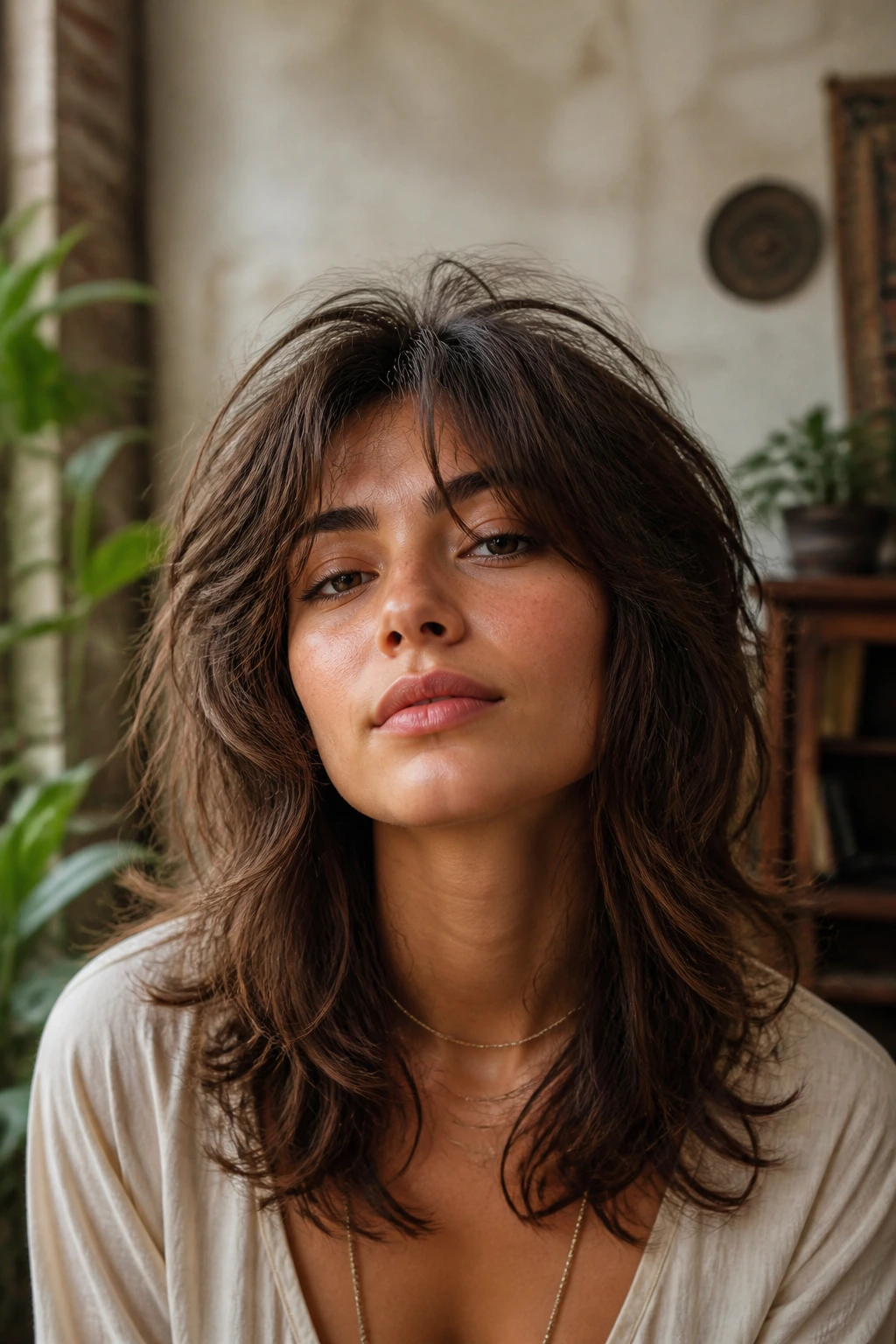
If your personal style leans a bit more bohemian or rock-and-roll, you can easily combine the butterfly shape with a traditional shag.
Structural Blueprint
- Short crown layers: The layers at the very top of the head are cut shorter than usual to create natural height.
- Disconnected feel: There is a slight, intentional gap in length between the face-framing pieces and the long back layers.
- Choppy texture: Point-cutting is used aggressively to create definition.
- Heavy face-framing: The layers wrap tightly around the eyes and cheekbones.
This style is incredibly forgiving when it comes to styling. It actually looks better when it has a bit of texture and dishevelment, making it perfect for anyone who wants a low-maintenance morning routine.
11. Butterfly Cut with Subtle Face-Framing Tendrils
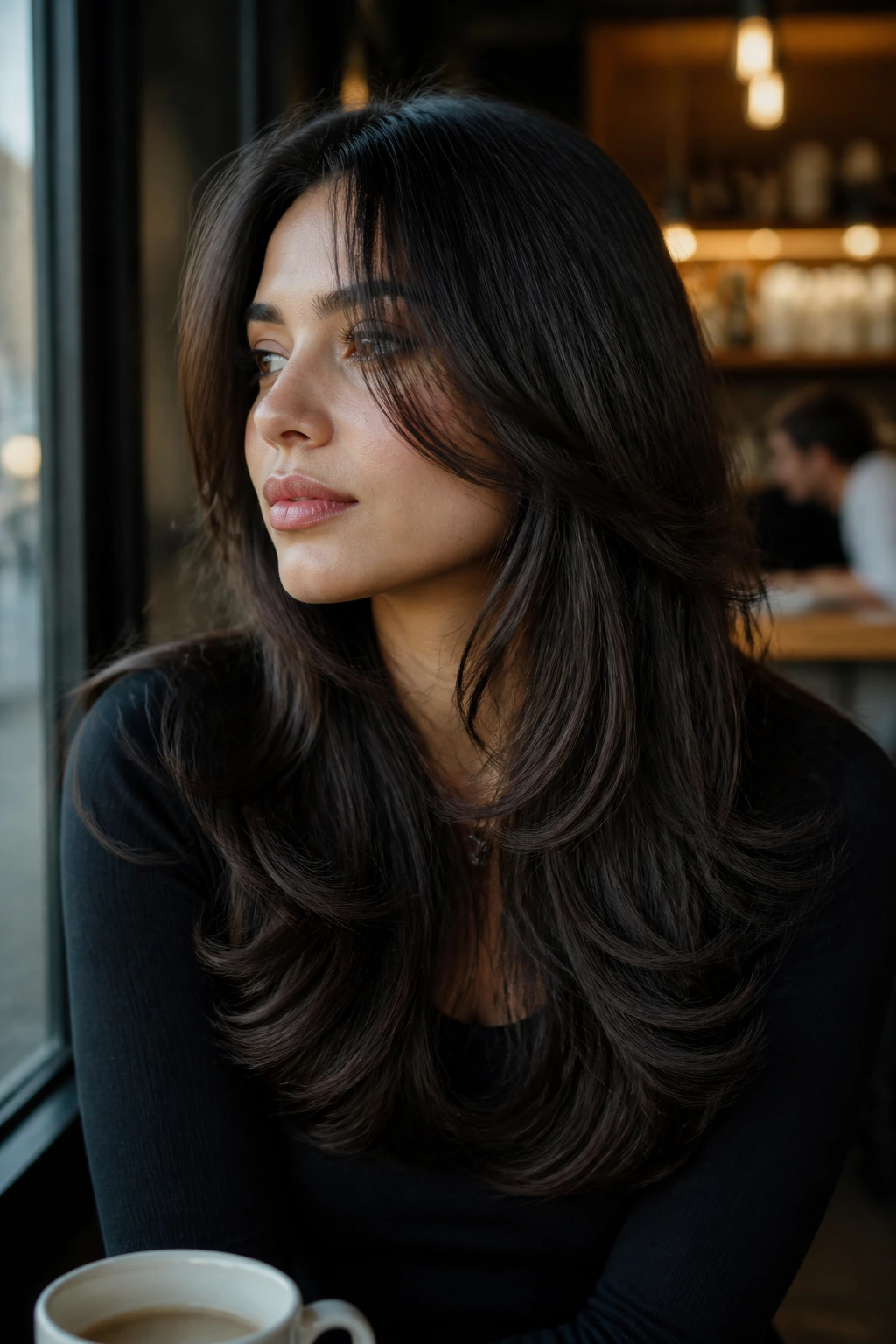
Not everyone wants heavy, sweeping wings of hair constantly falling into their eyes. This variation scales back the drama of the classic cut, opting instead for thin, strategic layers right around the face.
The bulk of the layering is hidden in the back and sides of the head, removing weight where you need it most while leaving the front looking relatively long and cohesive. Only a few delicate pieces are cut short around the cheekbones and jawline to soften your features.
This is an exceptionally professional and polished version of the cut. It is easy to tuck behind your ears when you need to focus, but it still offers that beautiful, lightweight feel when worn down.
12. Asymmetrical Butterfly Cut
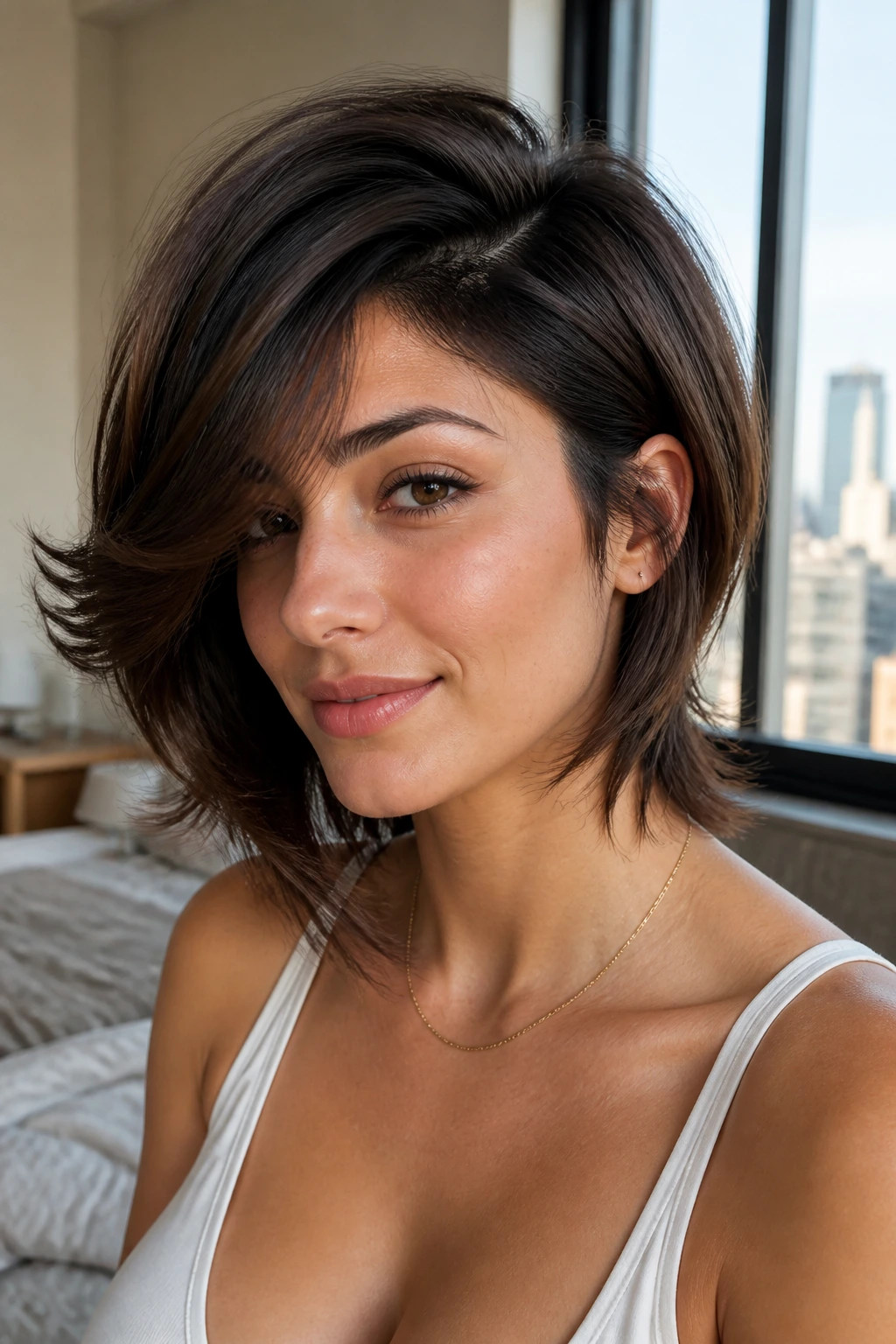
A Modern Editorial Twist
For a contemporary look, this variation features layers that are cut slightly shorter on one side of the face, or a deep side part that shifts the volume to one side.
Who It’s Best For
This style is perfect for those who love to experiment with parting their hair in different ways. By shifting your part from the center to the deep side, you can completely change how the layers drape around your face, creating instant drama and asymmetry.
The asymmetrical bounce of this cut draws attention to your jawline and collarbone, making it an incredibly flattering option for those who want to highlight their bone structure.
13. Butterfly Cut on Soft Waves
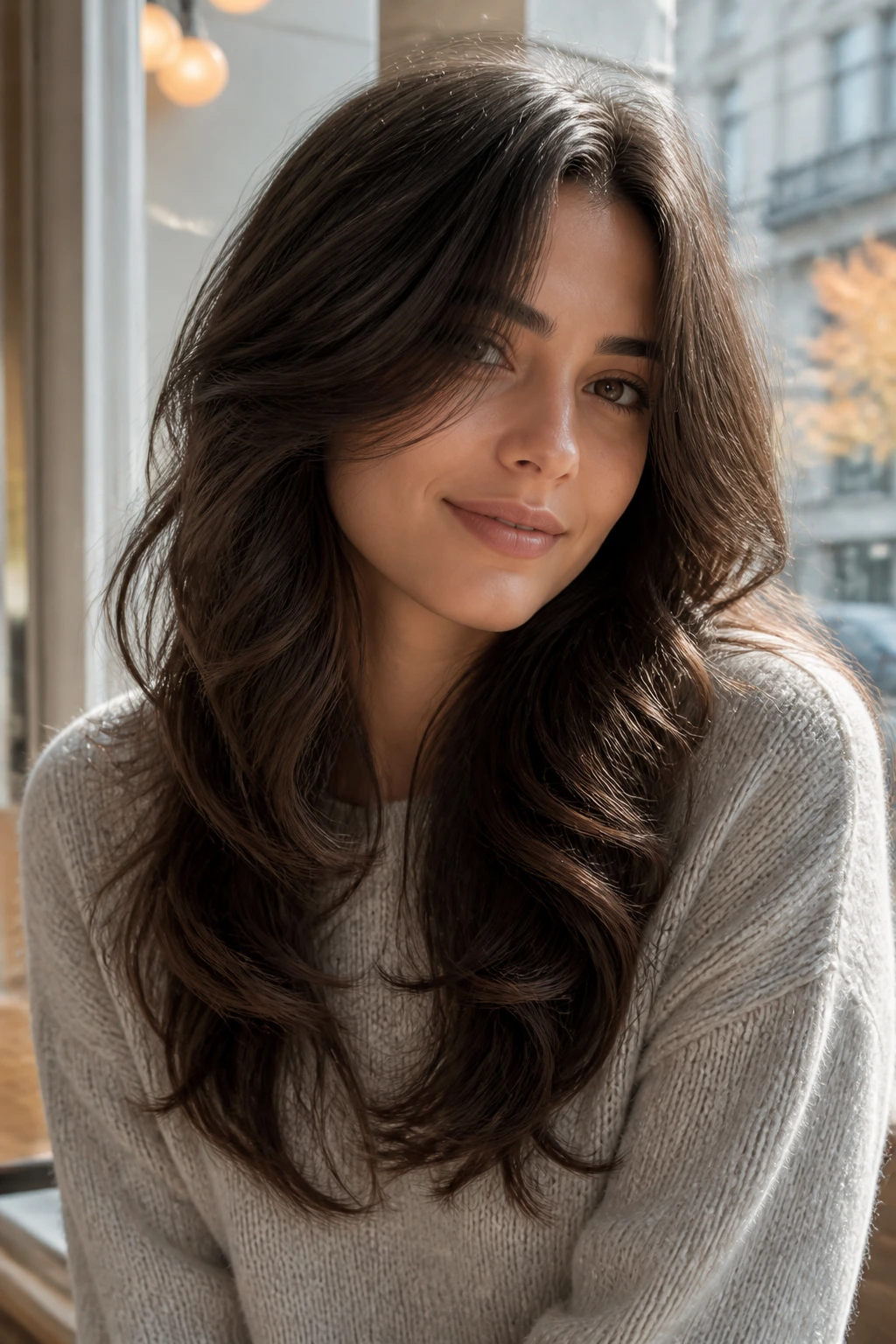
If your hair has a natural, lazy wave to it, the butterfly cut can help define that texture without the need for constant heat styling.
Coaxing Out Your Natural Wave Pattern
When thick, wavy hair is kept at one length, the weight of the hair pulls the waves out, leaving the top flat and the ends frizzy. Removing that heavy bulk allows your natural wave pattern to bounce back.
Quick Styling Steps
- Prep: Apply a curl-defining cream or sea salt spray to damp hair.
- Scrunching: Gently scrunch the hair upward from the ends to the roots to encourage wave formation.
- Drying: Use a diffuser attachment on your hair dryer, keeping the heat low and avoiding touching the hair too much to prevent frizz.
- Finish: Once dry, shake out the roots with your fingers for effortless volume.
Your waves will naturally clump into beautiful, wing-like shapes that frame your face, giving you a gorgeous, beachy look with minimal effort.
14. Heavy-Fringe Butterfly Cut
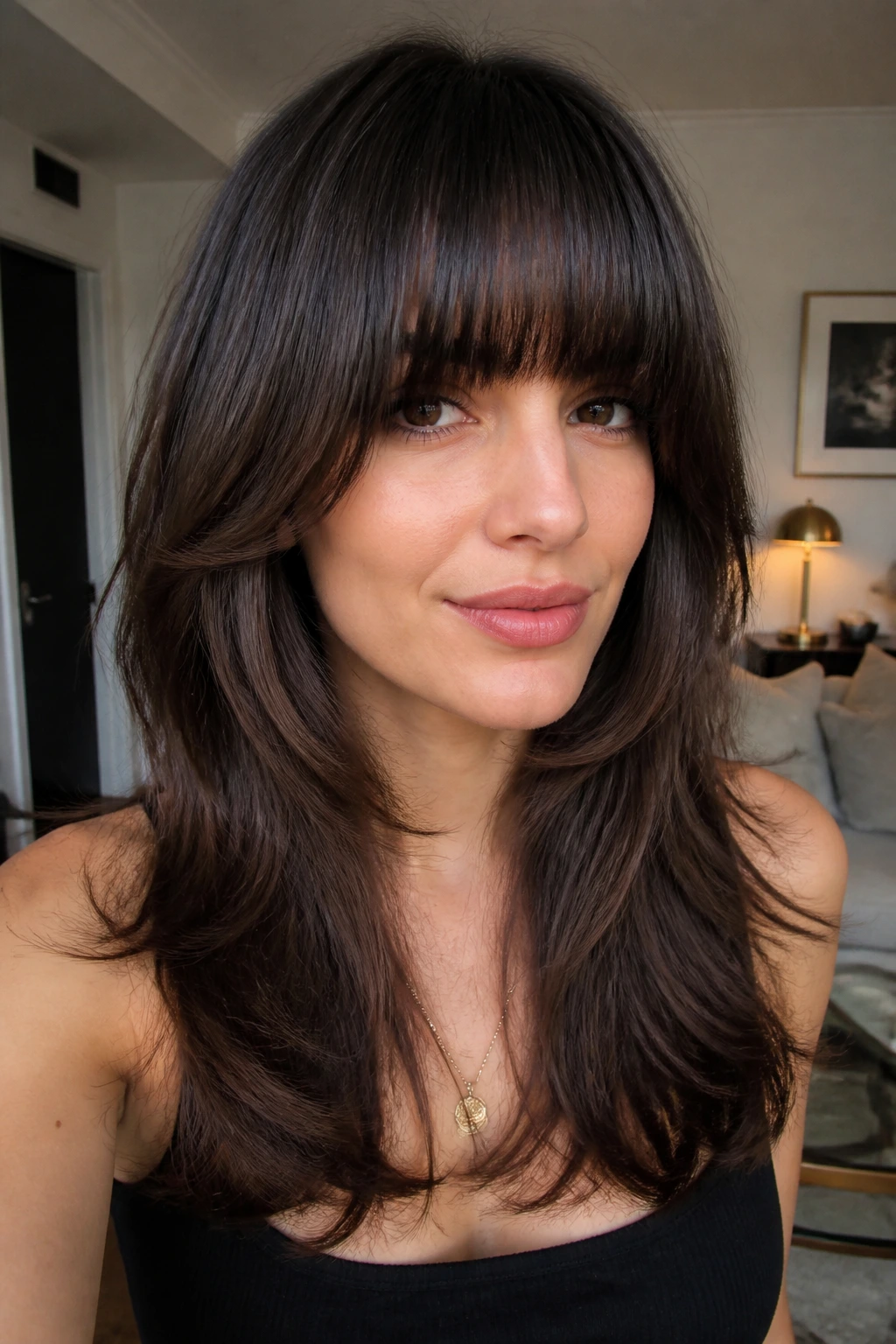
Pairing the soft, airy layers of a butterfly cut with a full, blunt eyebrow-grazing fringe creates a striking, high-contrast look that is incredibly stylish.
The heavy bangs break up the length of your face, while the sweeping layers on the side soften the transition from the forehead to the shoulders. This is an exceptional choice for anyone with a larger forehead or an oblong face shape, as it beautifully balances your facial proportions.
Be prepared for slightly more maintenance with this look. While the body of the butterfly cut grows out gracefully, your bangs will need a quick trim every three to four weeks to keep them sitting comfortably above your eyes.
15. Butterfly Cut for Coarse Hair Textures
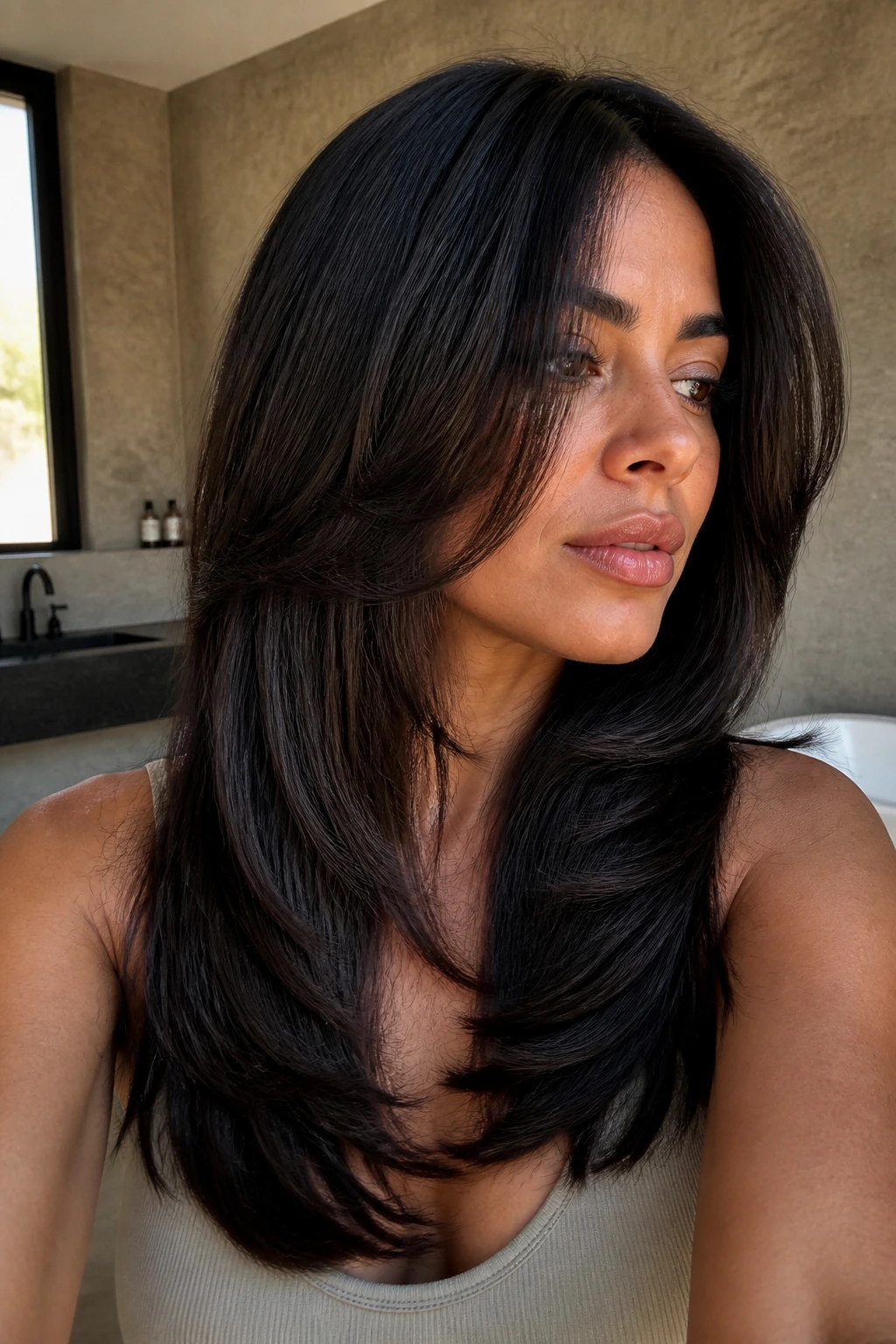
Coarse hair—where each individual strand is thick and strong—requires a very specific approach to layering to prevent the hair from sticking straight out.
The Coarse Hair Strategy
The stylist must focus on long, sweeping slide-cuts rather than short, choppy layers. By keeping the layers longer and more fluid, the weight of each section helps pull the hair downward, ensuring it lays smoothly against the head.
Using a rich, moisturizing leave-in conditioner or hair oil is essential for this look. Coarse hair tends to be drier than other hair types, and keeping the cuticle hydrated is the key to achieving that soft, touchable butterfly flutter.
16. V-Shaped Back Butterfly Cut
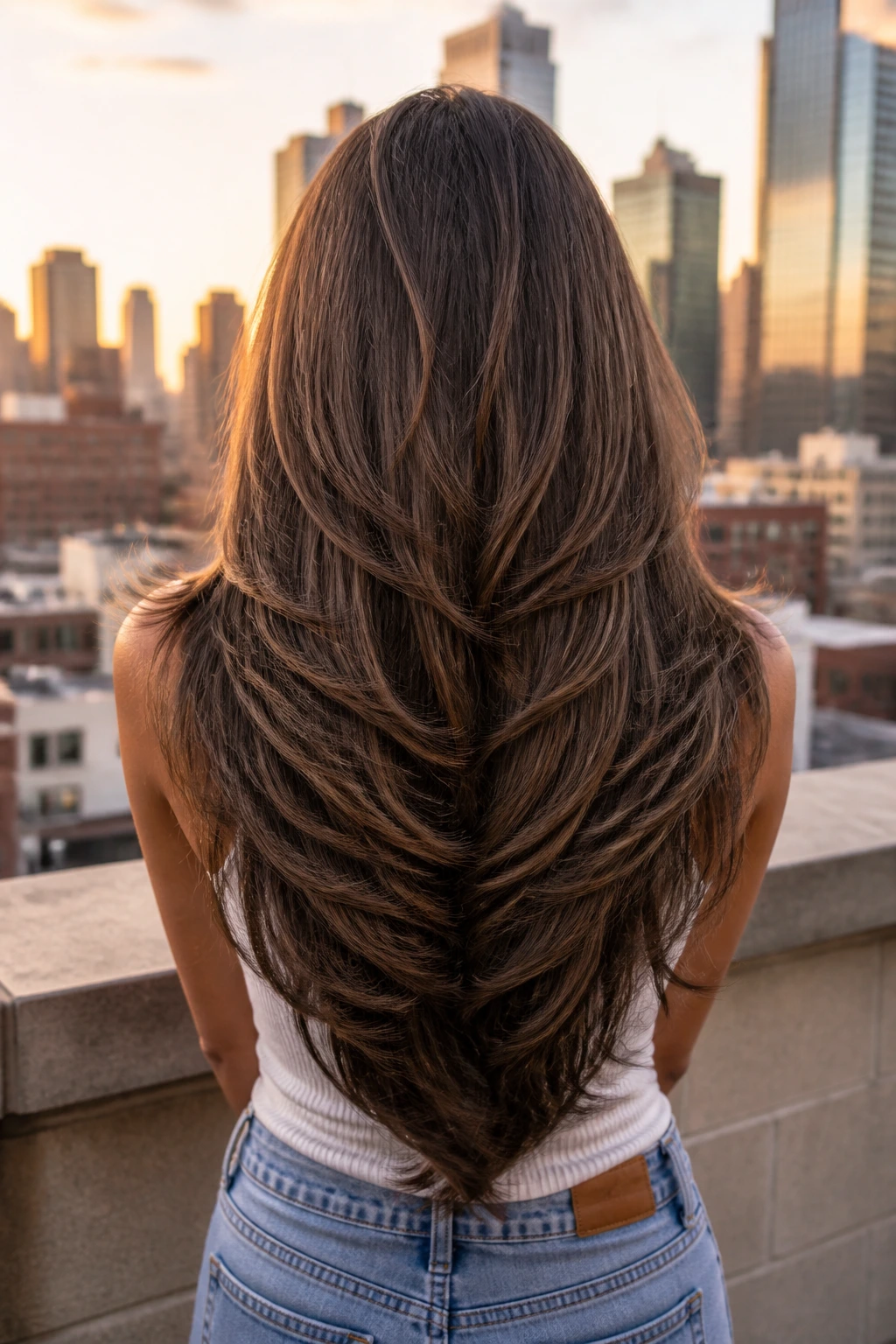
When viewed from behind, a classic butterfly cut can be shaped in a few different ways. The V-shape is by far the most dramatic and flattering for thick hair.
The Rear View
- Tapered length: The hair is cut to come to a distinct point in the center of your back.
- Cascading layers: The layers step down gradually from the shoulders to the center point.
- Massive weight reduction: By cutting away the hair at the outer corners, you remove an immense amount of bulk from your shoulders.
- Sleek silhouette: It creates a beautiful, cascading waterfall effect when viewed from behind.
This shape is incredibly dynamic. When you walk, the hair sways beautifully from side to side rather than sitting like a heavy cape on your back.
17. Butterfly Cut with Seamless Interior Layers
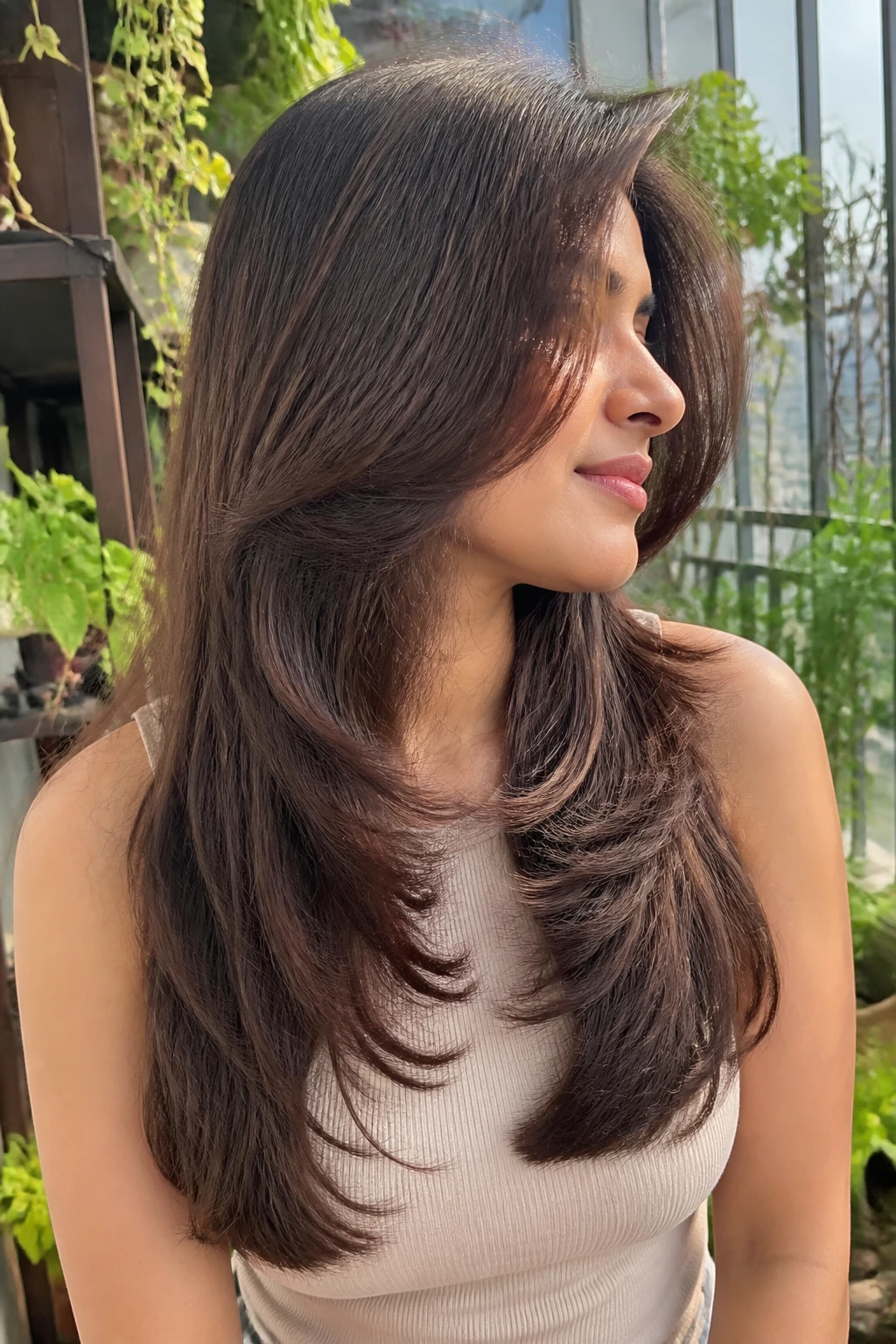
If you dislike the look of visible, choppy layers but still want the weightless feel of a layered cut, this variation is the answer.
The stylist uses a highly precise, slide-cutting technique that blends each layer perfectly into the next. There are no harsh steps or visible lines of demarcation. The hair looks like one continuous piece, but it has been heavily thinned out from the inside to provide incredible lightness.
This is an excellent option for straight hair textures, where any mistakes or harsh lines in a haircut are immediately visible. It delivers a incredibly clean, elegant finish.
18. Pixie-Butterfly Fusion (The Butterfly Shag)
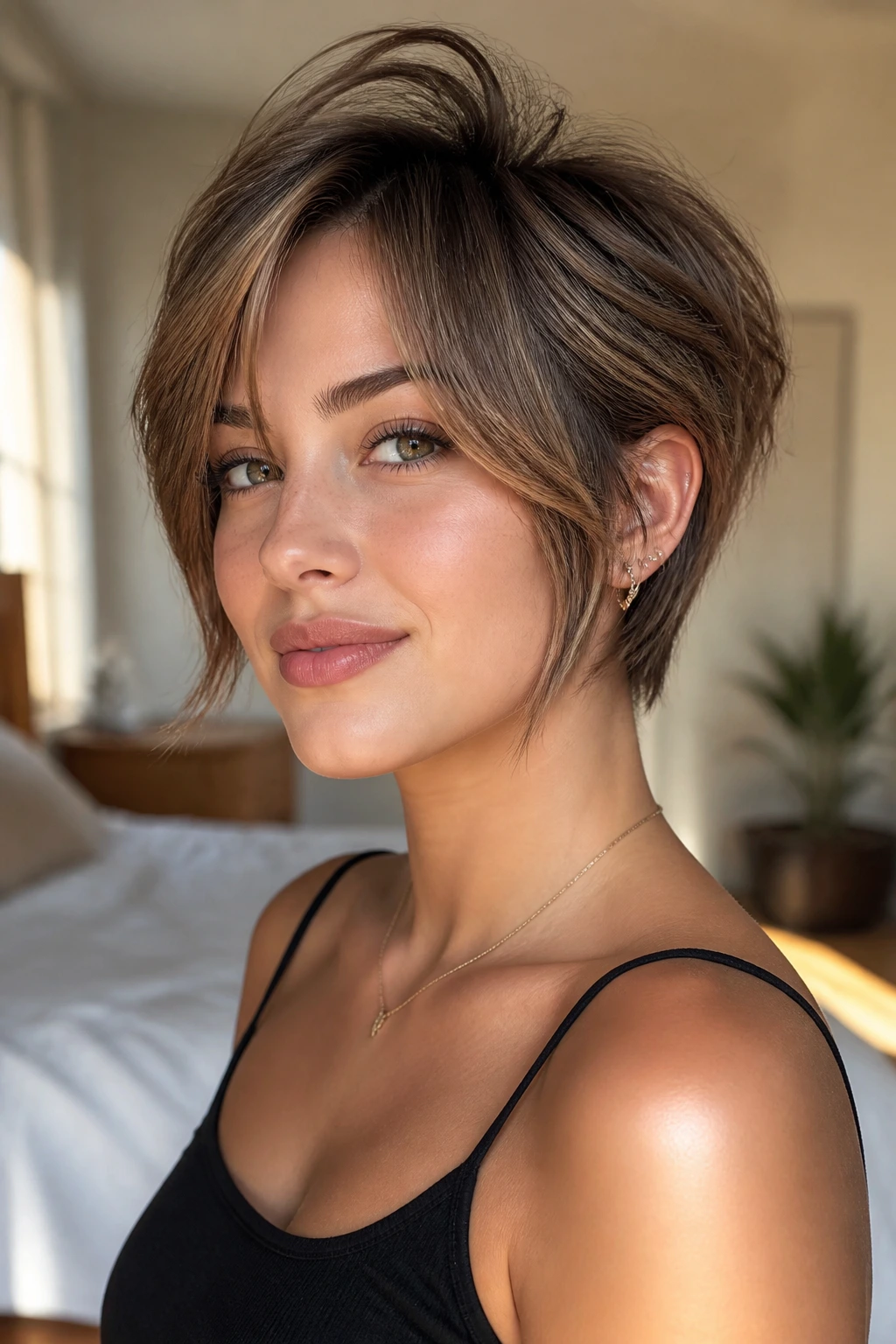
The Shortest Variant
For those who want to go short but are terrified of losing the softness around their face, this hybrid cut combines a short pixie or shag back with long, wispy face-framing layers.
Why It’s a Bold, Practical Choice
It completely eliminates the heat and weight at the back of the neck while keeping that beautiful, feminine frame around your face. It is a highly editorial, stylish look that requires very little styling time.
Simply wash, apply a bit of texturizing paste to the short layers at the back, tuck the long front pieces behind your ears, and you are ready to go.
19. Butterfly Cut with Caramel Balayage Accents
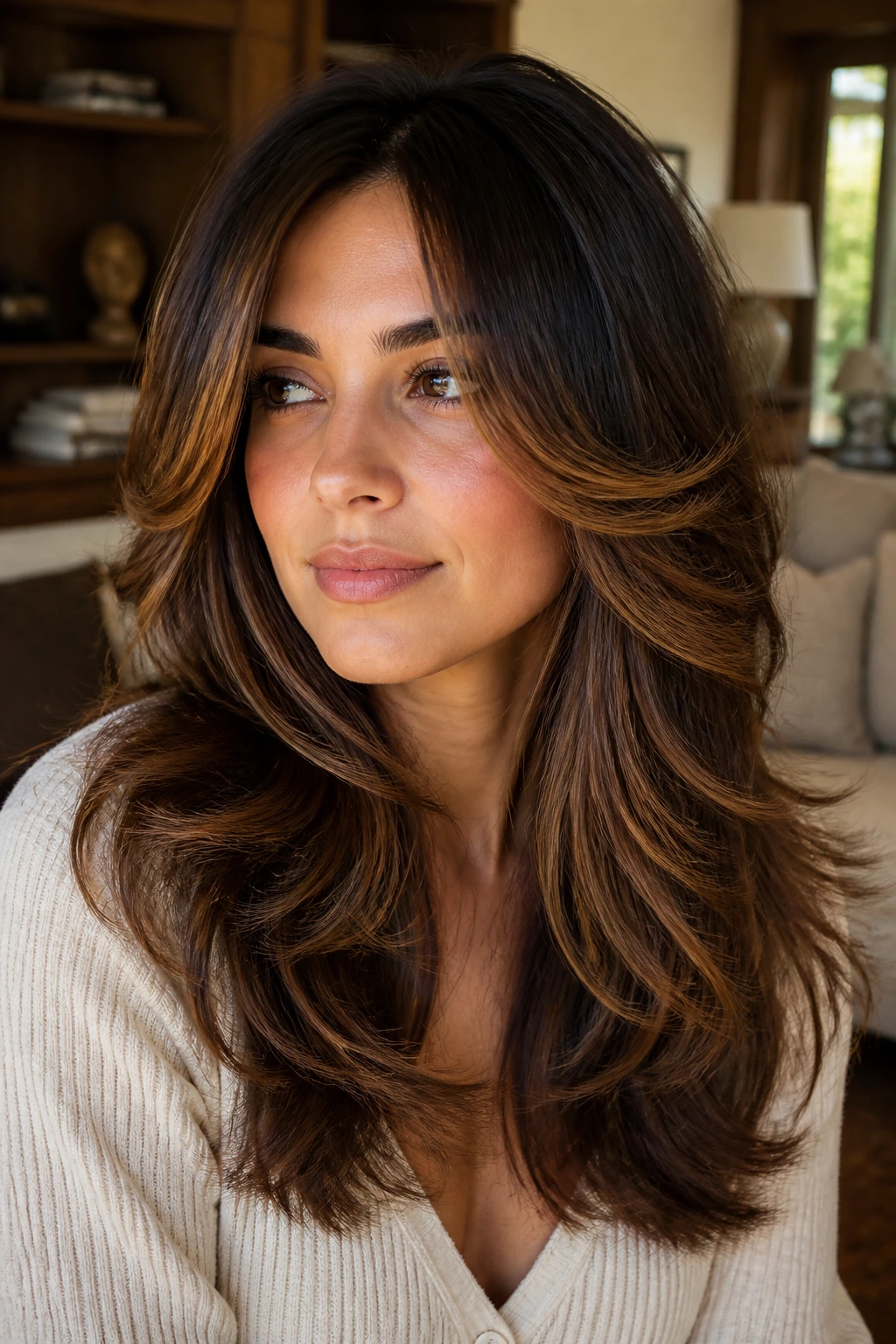
Color can play a massive role in how your haircut looks. Adding soft, hand-painted caramel highlights to a dark base can emphasize the movement of your butterfly layers.
The Dimension Booster
The lighter color is painted onto the very edges of the layers, catching the light as your hair moves. This makes the individual layers pop, giving the illusion of even more depth and volume.
Because balayage is painted on by hand, it grows out incredibly naturally. You will not have to worry about harsh root lines, making this a very low-maintenance way to elevate your new haircut.
20. Double-Tiered Butterfly Cut
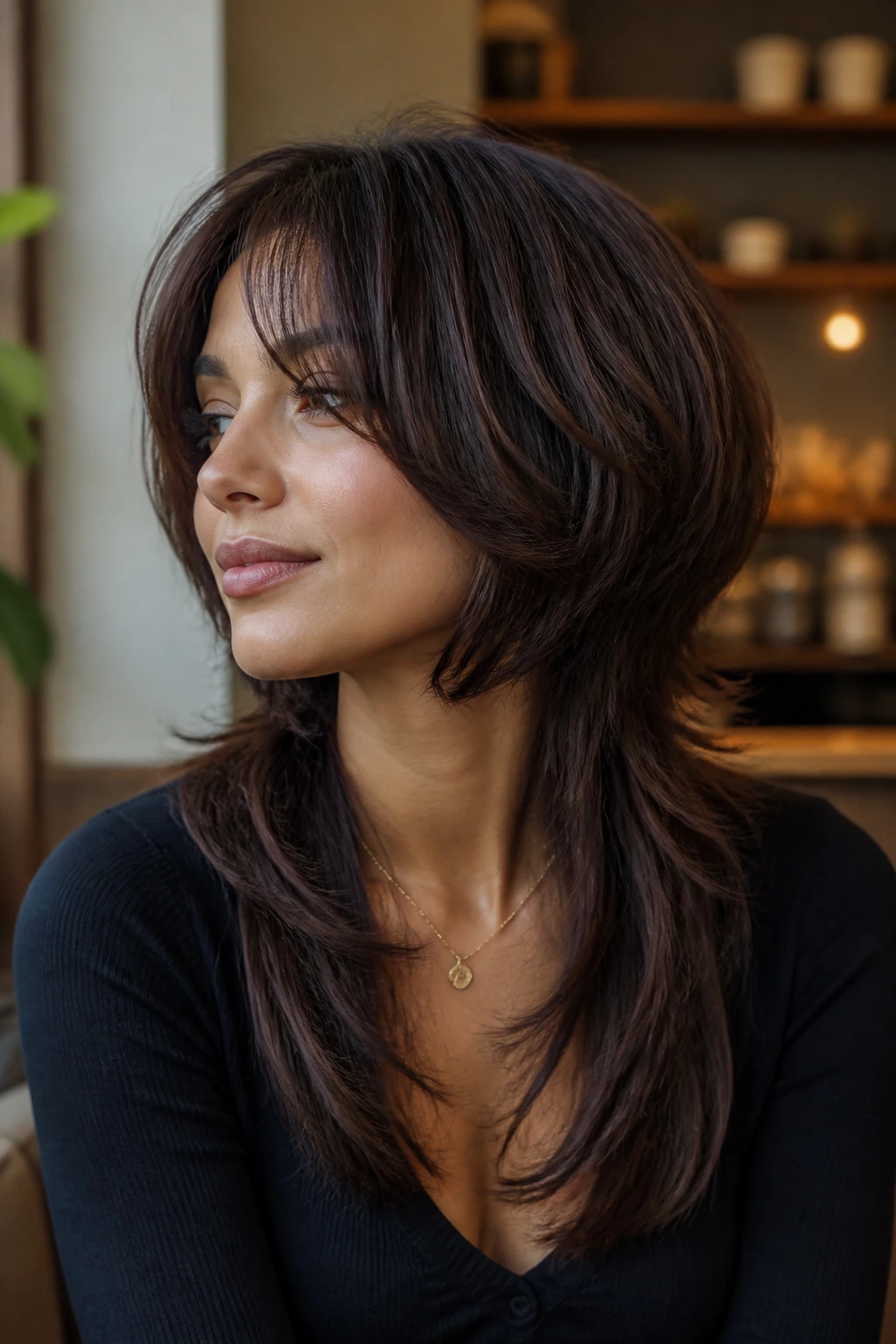
For the ultimate “two-in-one” haircut experience, the double-tiered variation features a very distinct separation between the top and bottom sections.
The top layer is cut into a rounded, voluminous bob shape that ends right at the jawline. The bottom layer is left long, cascading down past the shoulders. When styled, the contrast between the short, bouncy top and the long, flowing bottom is incredibly striking.
This is the perfect cut for anyone who loves to play with updos. If you pin the long bottom section up, you can easily fool everyone into thinking you have cut your hair into a chic, Parisian bob.
21. Wet-Look Texturized Butterfly Cut
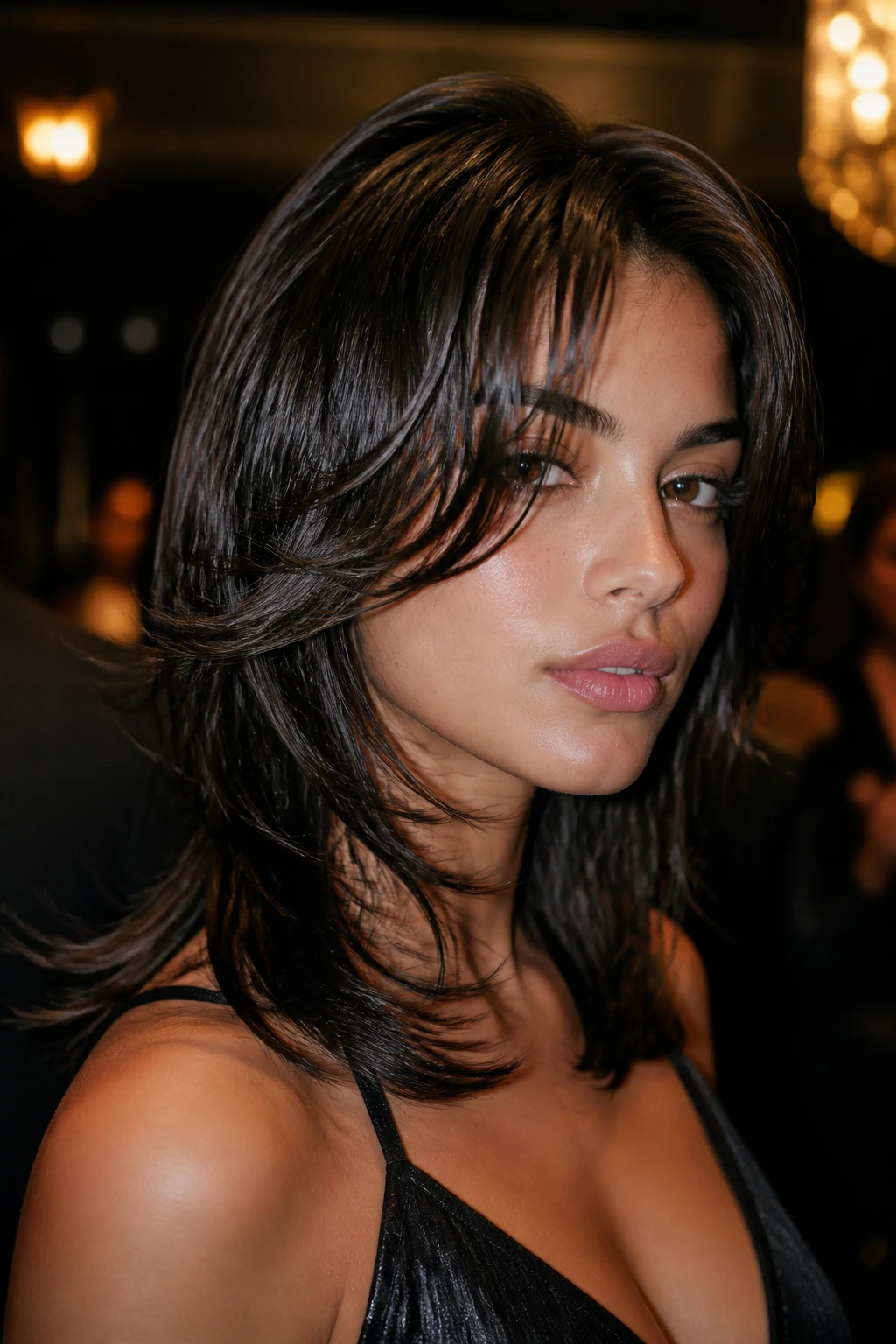
A High-Fashion Alternative
This styling variation is perfect for nights out or special events. It uses products to create a sleek, damp appearance that shows off the separation of your layers.
How to Style It
- Start with damp, towel-dried hair.
- Mix a generous amount of leave-in conditioner with a lightweight hair gel in your palms.
- Apply the mixture evenly from your roots to your ends, using a wide-tooth comb to distribute it.
- Allow your hair to air-dry completely without touching it.
- Once dry, scrunch the hair gently to break any stiff cast, leaving behind a beautiful, glossy, wet-looking texture.
This approach defines each individual layer, creating a highly dimensional, textured look that is incredibly modern and chic.
22. Air-Dried Butterfly Cut for Everyday Wear
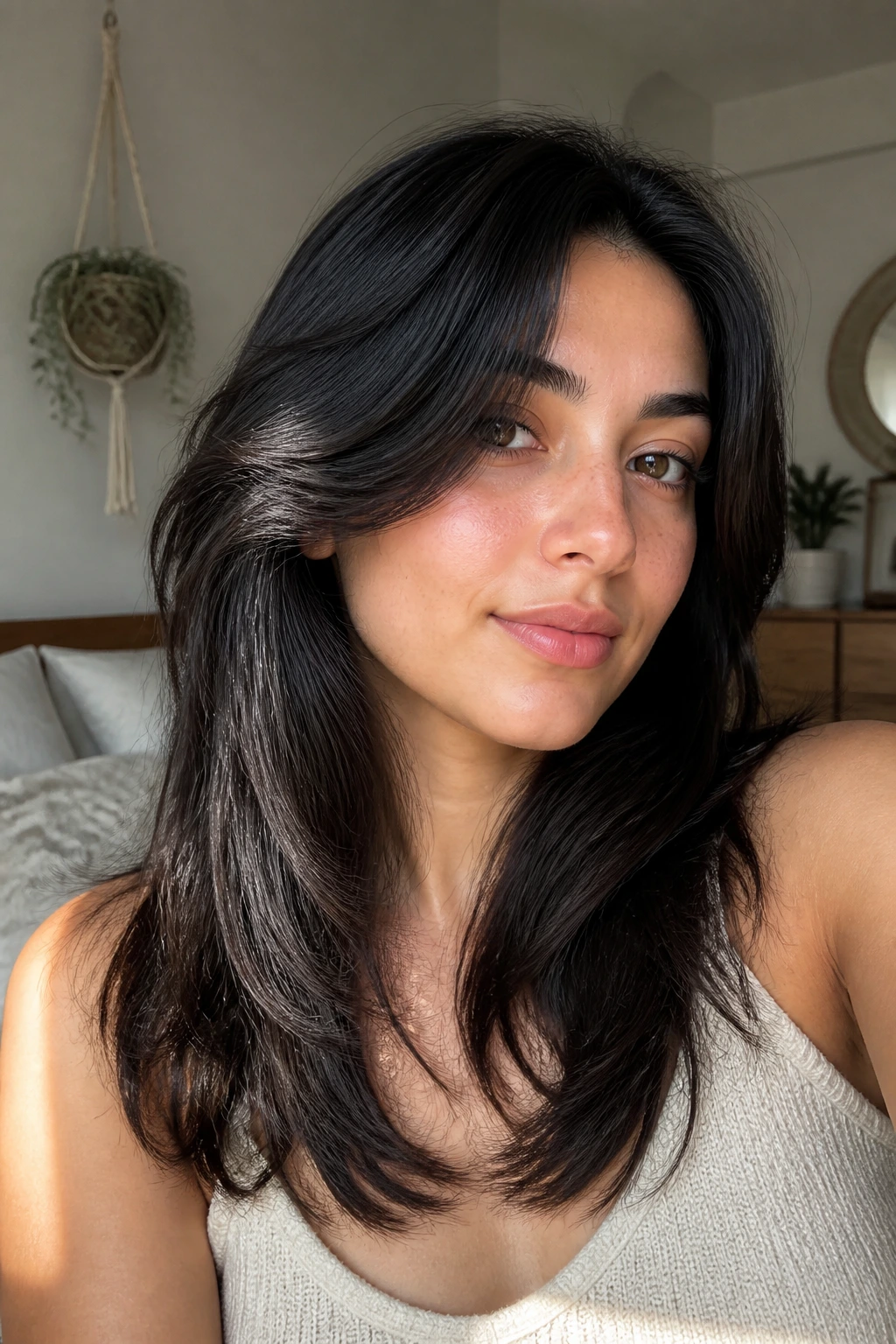
If your daily routine does not allow for a thirty-minute blowout session every morning, this variation is designed to look fantastic with zero heat styling.
The layers are cut slightly longer and heavier, using the natural weight of your thick hair to keep them sitting flat against your head rather than springing outward. This prevents the hair from looking frizzy or unruly when air-dried.
Simply apply a touch of air-dry cream to damp hair, comb it through, and let your natural texture do the work. It is an effortless, lived-in style that looks beautiful in its natural state.
How to Maintain and Style Your Butterfly Cut at Home
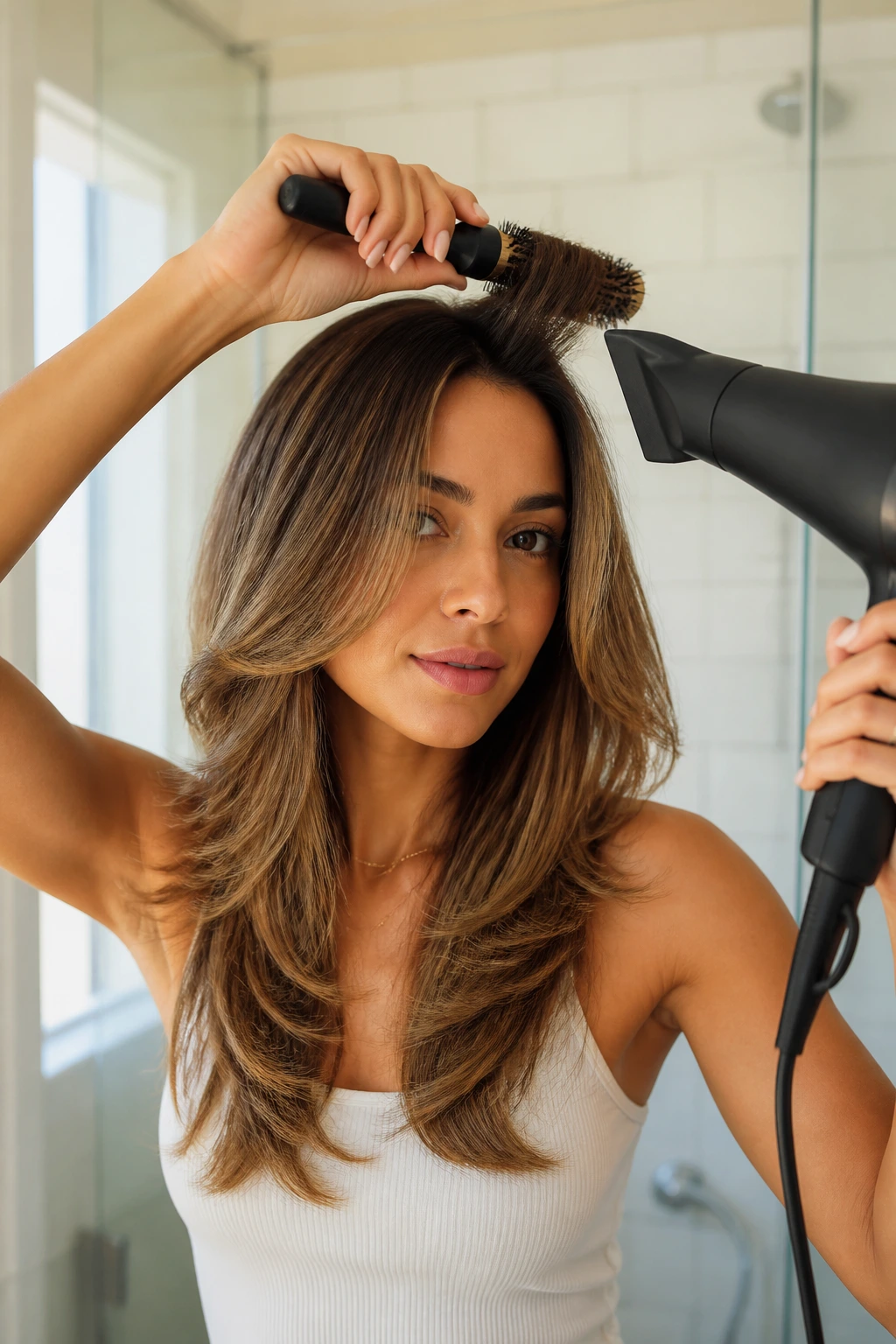
Once you have walked out of the salon with your gorgeous new cut, the real work begins. While the butterfly cut is incredibly forgiving, keeping those layers looking bouncy and defined does require a bit of regular care. Thick hair has a natural tendency to settle over time, so your main goal is to keep the roots lifted and the ends hydrated.
The Essential Tool Kit
To get that classic, airy movement at home, you will want to invest in a few key styling tools. A high-quality blow dryer with a concentrator nozzle is essential for directing airflow down the hair shaft, which keeps frizz to a minimum.
You will also want a variety of round brushes. A larger three-inch barrel is perfect for smoothing out the long lengths, while a smaller two-inch brush is ideal for coaxing those face-framing pieces away from your jawline.
If round brushing feels like too much of a workout for your arms, hot rollers are an incredible, low-effort alternative. Simply rough-dry your hair until it is completely dry, pop six to eight large rollers into your layers, let them cool while you do your makeup, and roll them out for instant, long-lasting volume.
Product Selection for Thick Hair
When shopping for products, look for formulas that offer hold and volume without being too heavy. Thick hair is easily weighed down by heavy oils and silicones, which can turn your bouncy layers into flat, greasy strands by the end of the day.
- Volumizing mousse: Apply a palm-sized amount to wet roots before blow-drying for crucial lift at the crown.
- Heat protectant spray: A absolute necessity to shield your layers from heat damage, especially on the delicate face-framing sections.
- Lightweight hair oil: Use a tiny drop on your ends after styling to add shine and prevent your layers from looking dry.
- Texture spray: Spray dry hair from mid-shaft to ends while shaking your head upside down to create that effortless, lived-in separation.
Wrapping Up
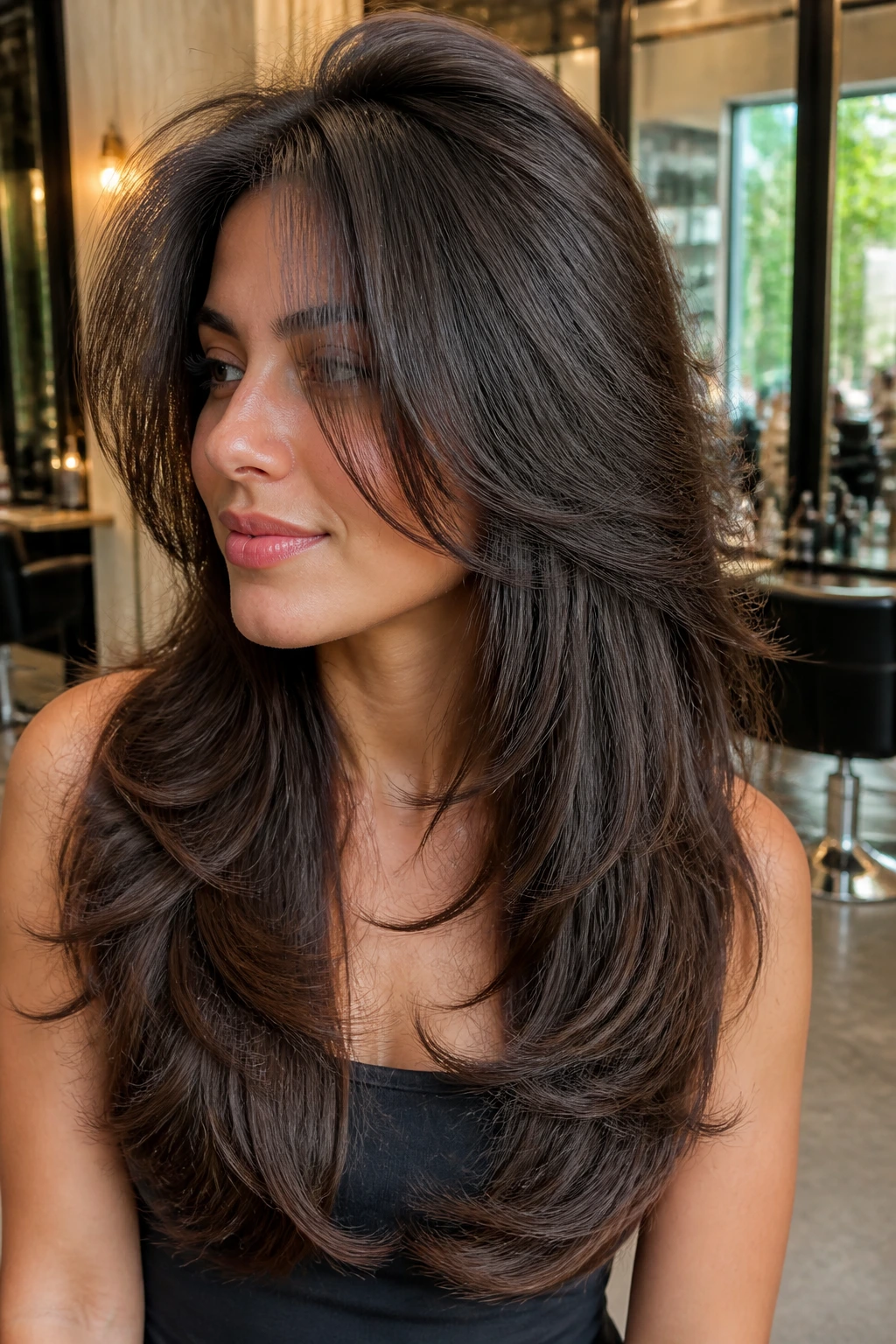
The butterfly cut is far more than a passing style choice. For those of us with thick hair, it is a highly practical, beautifully engineered solution to a lifelong struggle with hair weight and manageability. By strategically removing bulk from the interior while preserving your length, it allows you to enjoy the best of both worlds.
Whether you opt for the dramatic, bouncy blowout version or a soft, air-dried wavy style, the key is finding a stylist who understands how to customize the technique for your specific density and texture. Bring photos, talk openly about your daily styling habits, and do not be afraid to customize the layers to suit your lifestyle. With the right shape, your hair will finally feel as light, free, and full of life as it was always meant to be.