

The richness of dark, glossy Asian hair provides a unique canvas that many other hair textures simply cannot replicate. While lighter hair colors often require aggressive levels of pre-lightening that can leave strands feeling like straw, the natural density and pigment-rich structure of Asian hair allow for a depth of color that makes purple tones look particularly vibrant and luxurious. Achieving the perfect shade of violet or lavender is not just about picking a box off a shelf; it is about understanding how cool and warm pigments interact with your specific base. Whether you are aiming for a subtle midnight plum that only catches the light in the sun or a high-contrast electric grape that demands attention, the key lies in the preparation and the maintenance.
1. Deep Midnight Plum Balayage
A subtle entry point for those who want a change without committing to a full-head bleach job is the midnight plum balayage. This style relies on the contrast between your natural, dark roots and the rich, burgundy-leaning purple ends. Because the bleach is applied sparingly—focused mostly on the mid-lengths and tips—you preserve the structural integrity of the hair near your scalp. The plum tone acts as a bridge, making the transition from jet-black to purple feel organic rather than jarring.
Why This Style Works So Well
- It is incredibly low-maintenance, as the grow-out phase is seamless.
- The warm undertones of a dark plum flatter warmer skin tones often found in Asian complexions.
- It provides a sophisticated look suitable for professional environments.
Pro tip: Ask your colorist for a “melted” application to ensure there are no harsh lines where the natural hair ends and the plum color begins.
2. Electric Violet Peekaboo Highlights
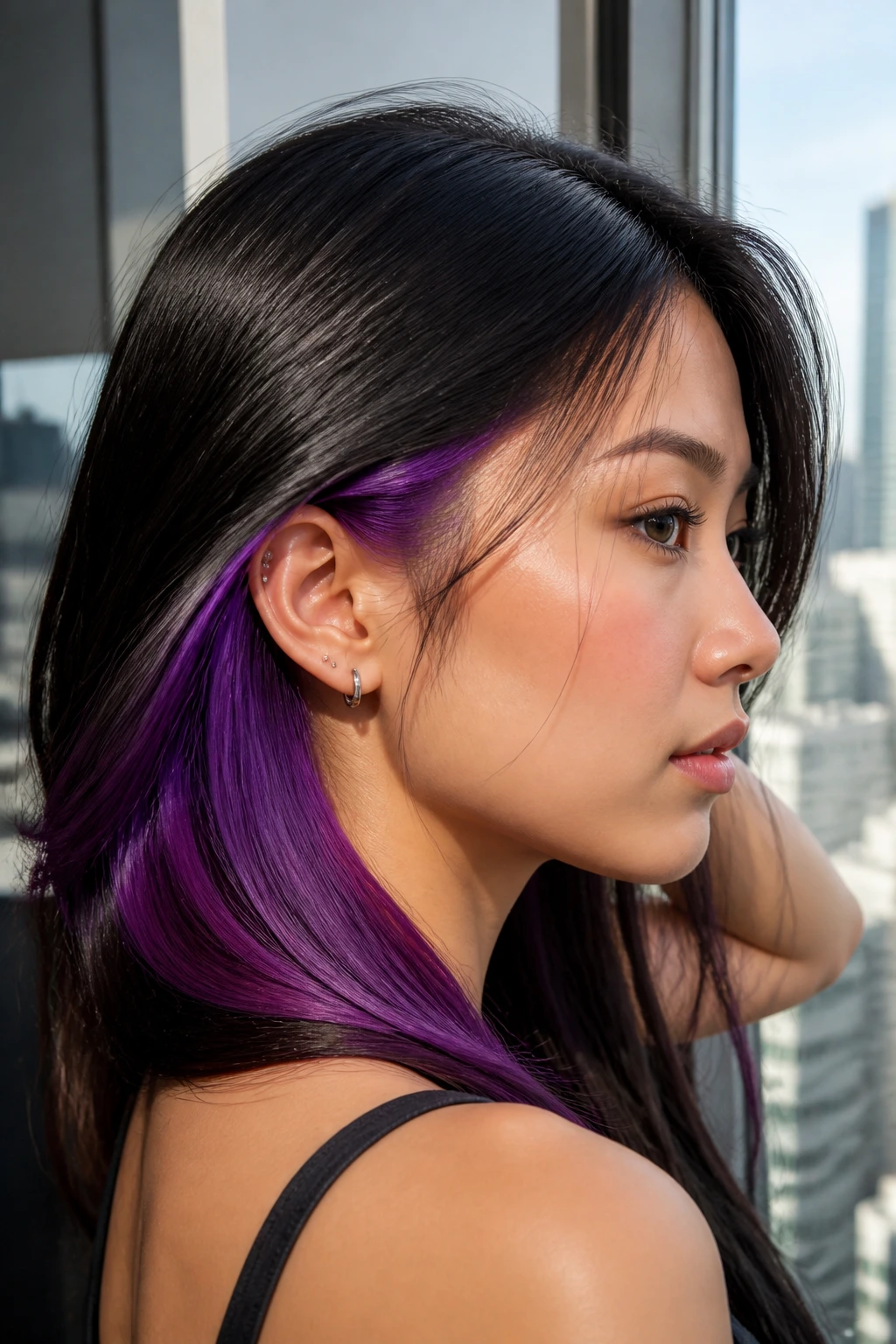
Peekaboo highlights are a playful way to integrate intense color without the fear of it dominating your look. By placing the purple underneath the top layer of your hair, you create a hidden surprise that only appears when you move, tie your hair up, or style it in a half-up knot. On straight, thick Asian hair, these pops of color look like ribbons of light running through the dark strands, creating a visually dynamic effect that feels custom-made.
How to Style for Maximum Visibility
To really showcase the violet ribbons, use a flat iron to straighten your hair, which allows the layers to sit perfectly flat against one another. If you prefer volume, a loose, texturized wave will cause the peekaboo sections to twist and turn, catching the light from various angles. Always use a heat protectant spray—especially on the bleached sections—to keep the vibrancy locked in.
3. Smoky Lavender Ombré
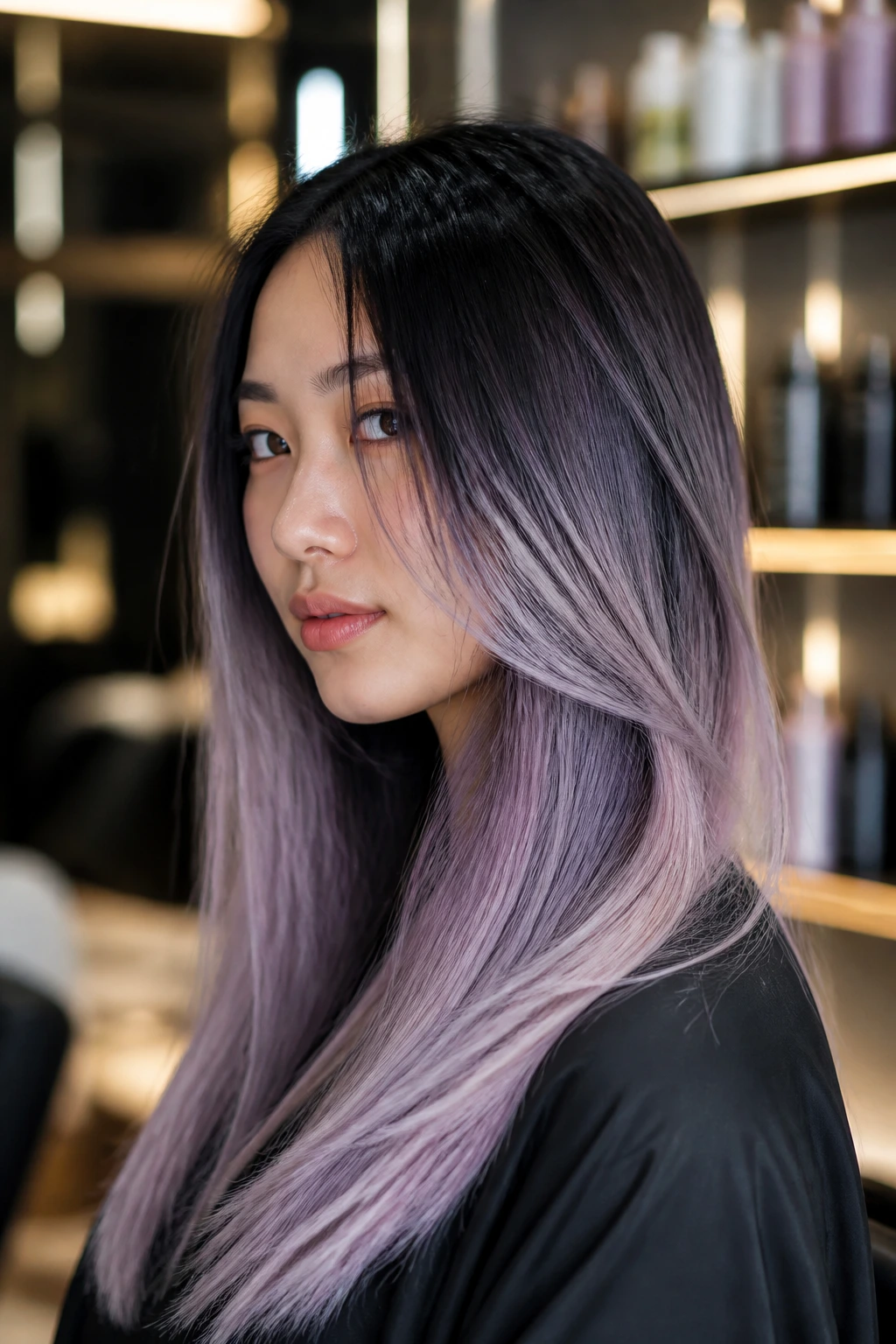
Moving toward the lighter, cooler end of the spectrum, a smoky lavender ombré is a striking choice for those who love an ethereal aesthetic. Lavender requires a very pale base to appear truly pastel, which means your hair will need to be lifted to a level 9 or 10. Once you have reached that near-platinum stage, applying a dusty, muted lavender toner creates a soft, foggy effect that looks incredibly chic against dark, porcelain-toned skin.
Maintaining the Pastel Shade
Lavender is notoriously difficult to keep long-term because the cool tones fade into a brassy yellow quickly. You must use a high-quality purple shampoo at least once a week to neutralize any unwanted warmth that begins to peek through. Without this, your lavender will turn into a dull, muddy grey within two washes.
4. Rich Magenta-Purple Blend
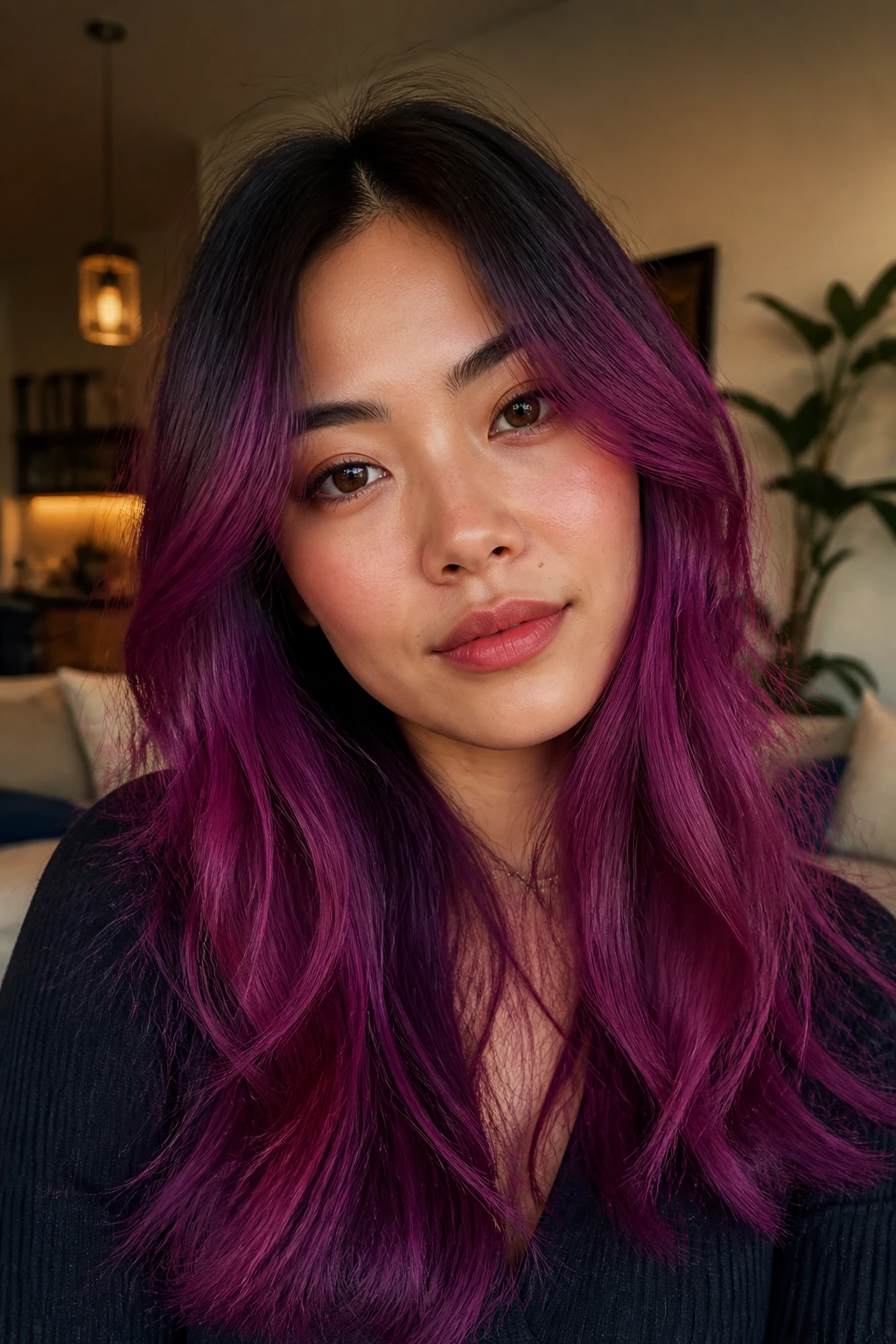
If you find that pure purple feels too cooling for your complexion, a magenta-purple blend—often referred to as “boysenberry”—is the perfect compromise. This shade leans heavily into the red side of the spectrum, which means it plays exceptionally well with the natural red/orange undertones often found in Asian hair. It is a bold, energetic, and highly saturated look that feels less like a fashion color and more like a statement of intent.
The Benefit of Saturated Color
Because this style is so pigment-heavy, it actually masks some of the damage caused by bleaching. Saturated colors fill the hair cuticle, giving it a glossier, healthier appearance than lighter, ashier shades. If your hair has a history of heat damage, a magenta-purple blend is much more forgiving than a delicate lilac or lavender.
5. Black Cherry to Purple Gradient
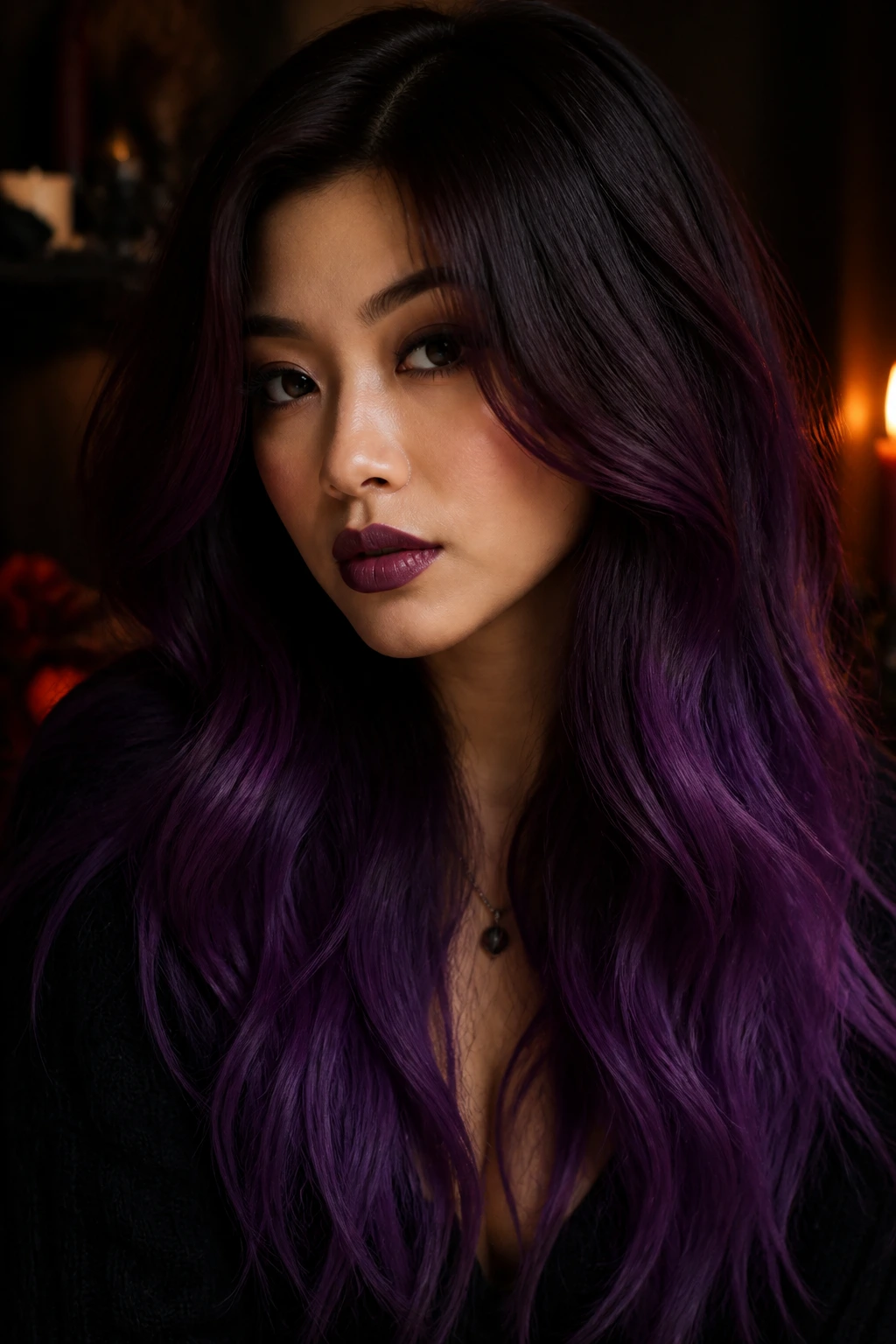
This is a classic “vampy” aesthetic that leans into the natural darkness of your hair. By starting with a black cherry base—a deep, blackened red—and transitioning into a violet tip, you create a gothic-inspired gradient that feels very intentional. It is a dark, moody combination that looks excellent in winter months or for evening events where the light is lower.
What to Look For in a Dye
Make sure to select semi-permanent dyes that are labeled as “deep” or “intense” rather than neon. Neon dyes tend to look transparent on dark hair, whereas deep violet dyes are opaque enough to sit on top of the darker base without needing to be lifted to a white-blonde stage first.
6. Lavender-Grey “Oil Slick” Effect
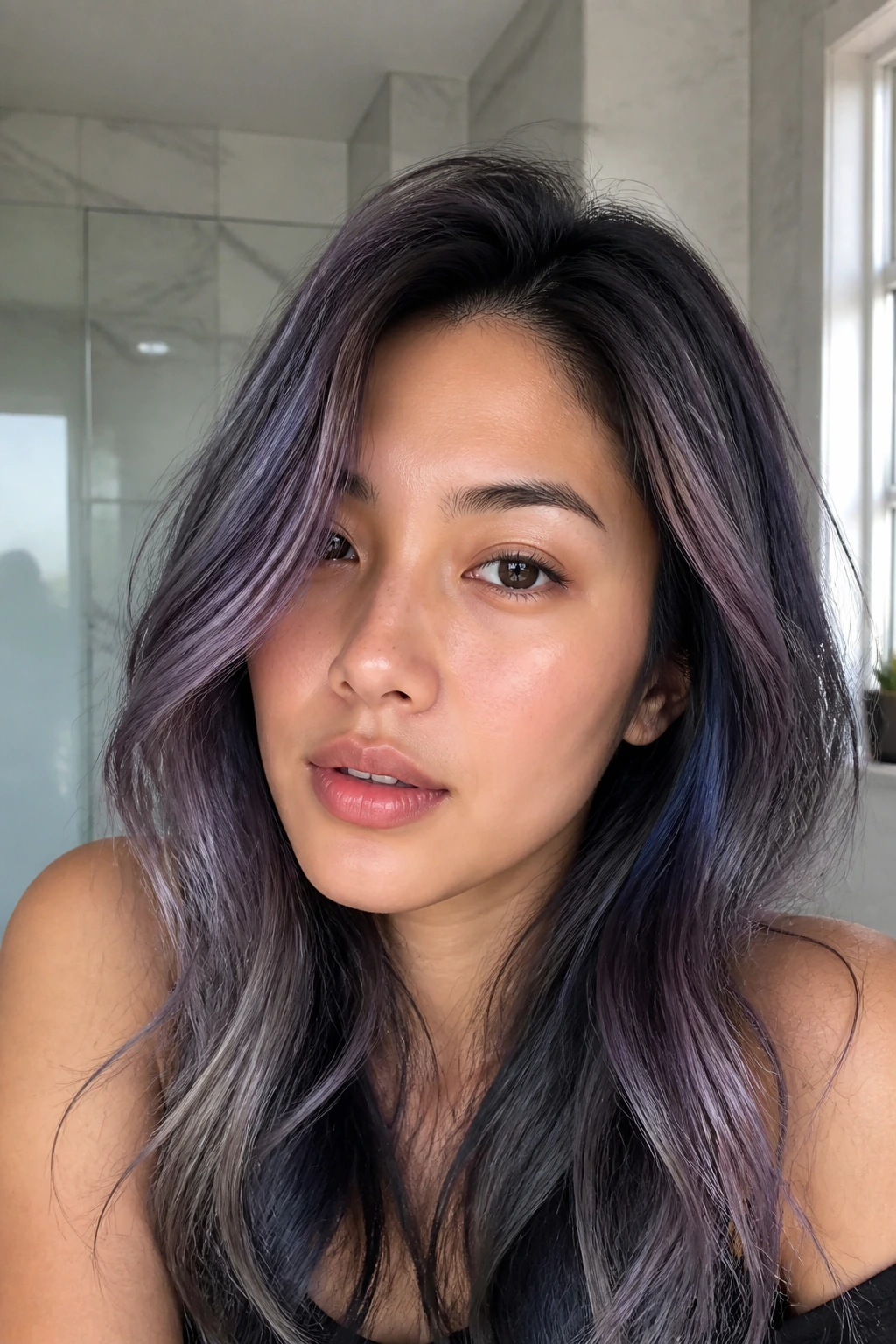
The oil slick technique is one of the most interesting color processes for dark hair. It involves applying multiple dark, metallic shades—in this case, lavender, charcoal, and dark blue—directly onto dark hair, often with minimal bleaching. The colors sit against each other like an oil spill on wet pavement, creating a multi-dimensional, shimmery look that is unlike any traditional highlight method.
The Role of High-Shine Gloss
The key to the oil slick look is the finish. Because the colors are dark and metallic, your hair needs to be intensely shiny to prevent it from looking like a flat, dry mess. Invest in a high-gloss finishing spray or a weekly hair mask that contains silicone or argan oil to ensure your hair reflects light back properly.
7. Frosted Grape Highlights
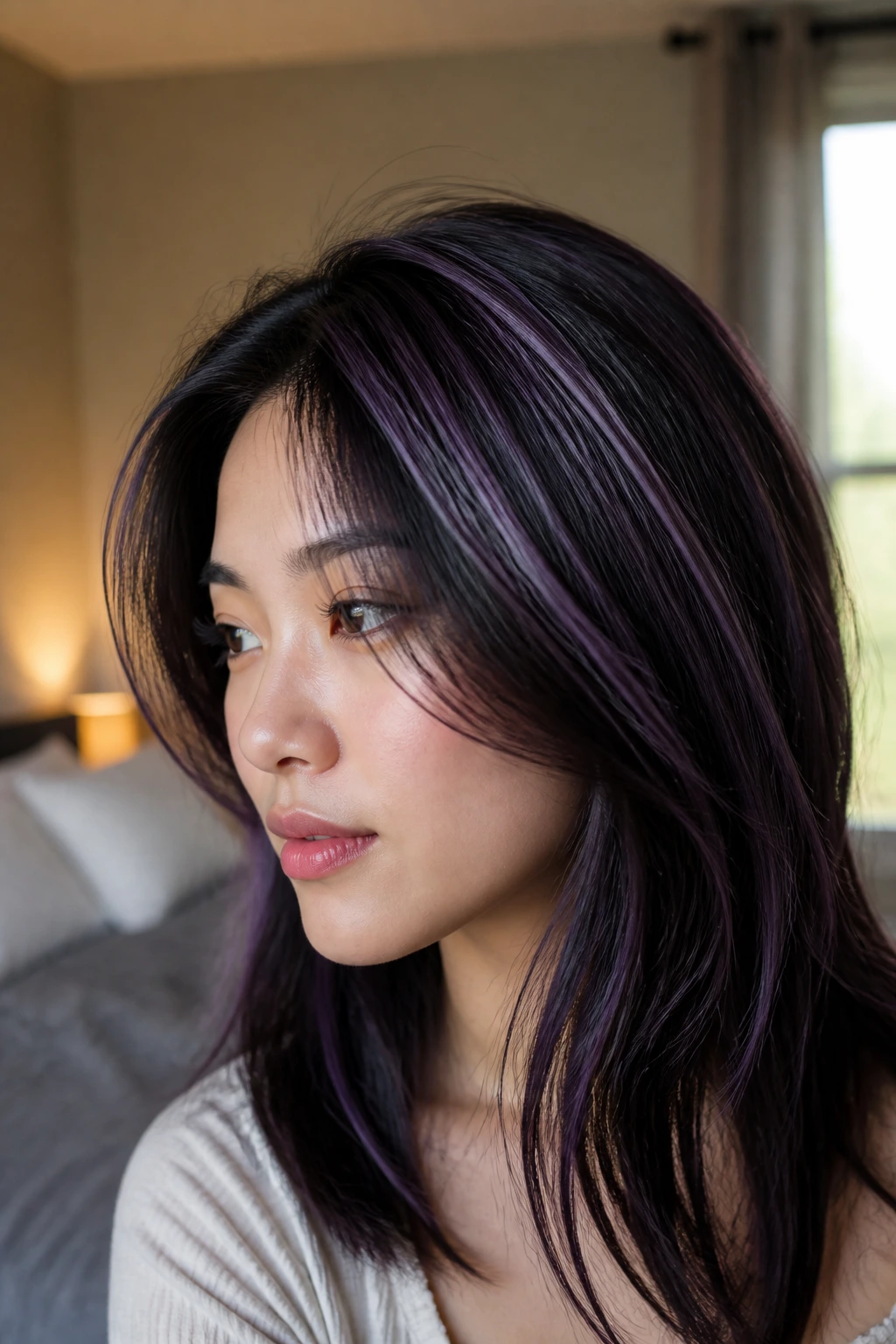
Thin, delicate highlights are making a major comeback. Known as “babylights” or “frosted” pieces, these are tiny, strategically placed strands of light purple woven throughout the crown of the head. This technique mimics the way the sun naturally lightens hair, but with a vibrant twist. It adds volume to fine hair and creates an illusion of depth that makes your hair look thicker than it actually is.
Why This is Ideal for Fine Hair
Heavy bleaching can break fine Asian strands, but thin, sparse highlights are much easier on the hair. You get the impact of the purple color without compromising the structural integrity of the entire head of hair. It is a high-reward, low-damage approach that keeps your ends healthy.
8. Burgundy-Violet Split Dye
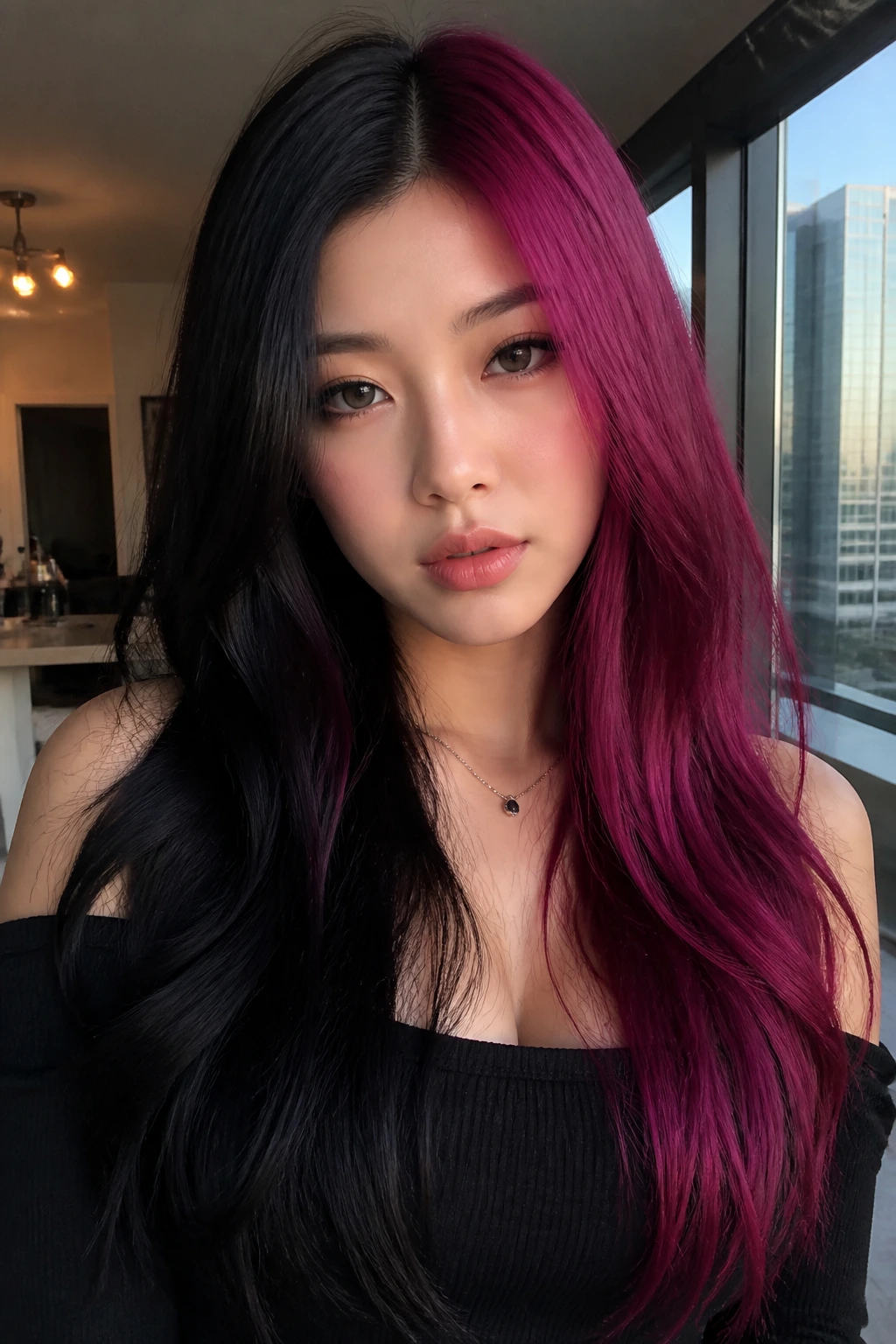
Split dye, or half-and-half hair, is for those who are truly committed to the aesthetic. One side is kept a deep, natural black, while the other is a vibrant, neon-leaning violet or deep burgundy. This look is dramatic, asymmetrical, and looks fantastic when styled in a center part. It is a daring choice, but it frames the face beautifully and highlights the sharp angles of the chin and cheekbones.
Dealing with Color Bleed
The biggest challenge with split dye is preventing the purple dye from bleeding into the black side during the rinse. To avoid this, always wash your hair with cold water and, if possible, wash the two sides separately for the first few sessions. Apply a thick conditioner to the black side before you rinse the purple side to act as a barrier against potential staining.
9. Metallic Amethyst Balayage
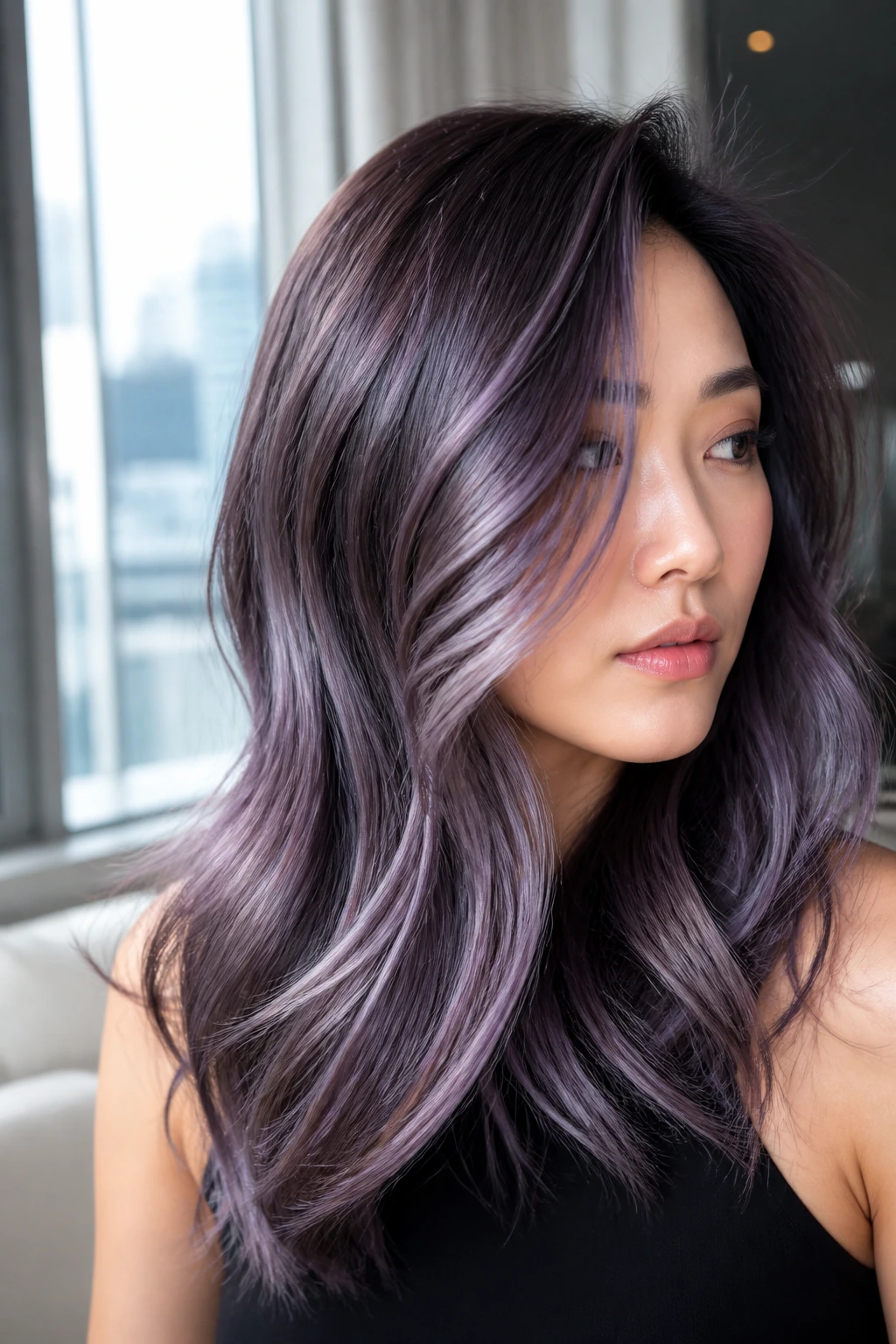
Amethyst is a shade that sits right in the middle of red-purple and blue-purple. When you add a metallic, silver-like sheen to it, you get a cool-toned, futuristic hair color that looks high-end. This is a great choice if you have a cool, pale skin tone. It creates a sleek, icy look that pops against darker features.
Enhancing the Metallic Sheen
Metallic colors often fade fast. To keep that “sheen,” consider getting a clear gloss treatment at your salon once every four to six weeks. A clear gloss smooths down the cuticle, which is the secret to getting that light-reflecting metallic look that stays vibrant until your next touch-up.
10. Ultra-Violet Roots
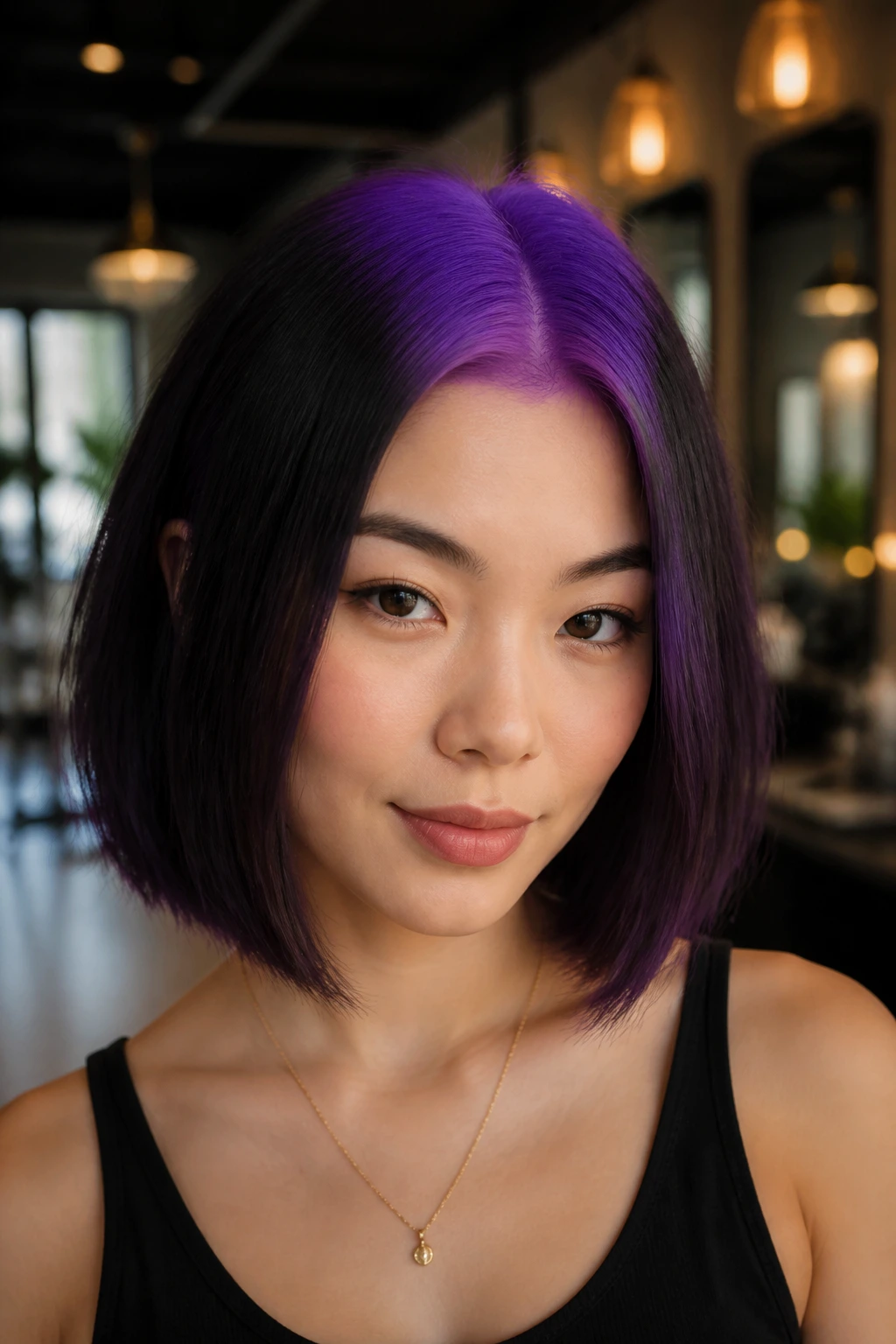
Reverse balayage, or “root shadow” with a twist, involves keeping your lengths a natural black or dark brown while dying your roots an intense, neon ultra-violet. It is the opposite of the traditional trend and is extremely edgy. This is a bold look that acts almost like a crown of color.
The Maintenance Reality
You will need to touch up your roots every three to four weeks as your natural dark hair grows in. Because the purple is right against the scalp, you can’t really hide the roots, so this is a commitment. However, if you are a fan of short, blunt cuts like a bob or a lob, this style looks particularly sharp and intentional.
11. Indigo-Purple Face-Framing Pieces
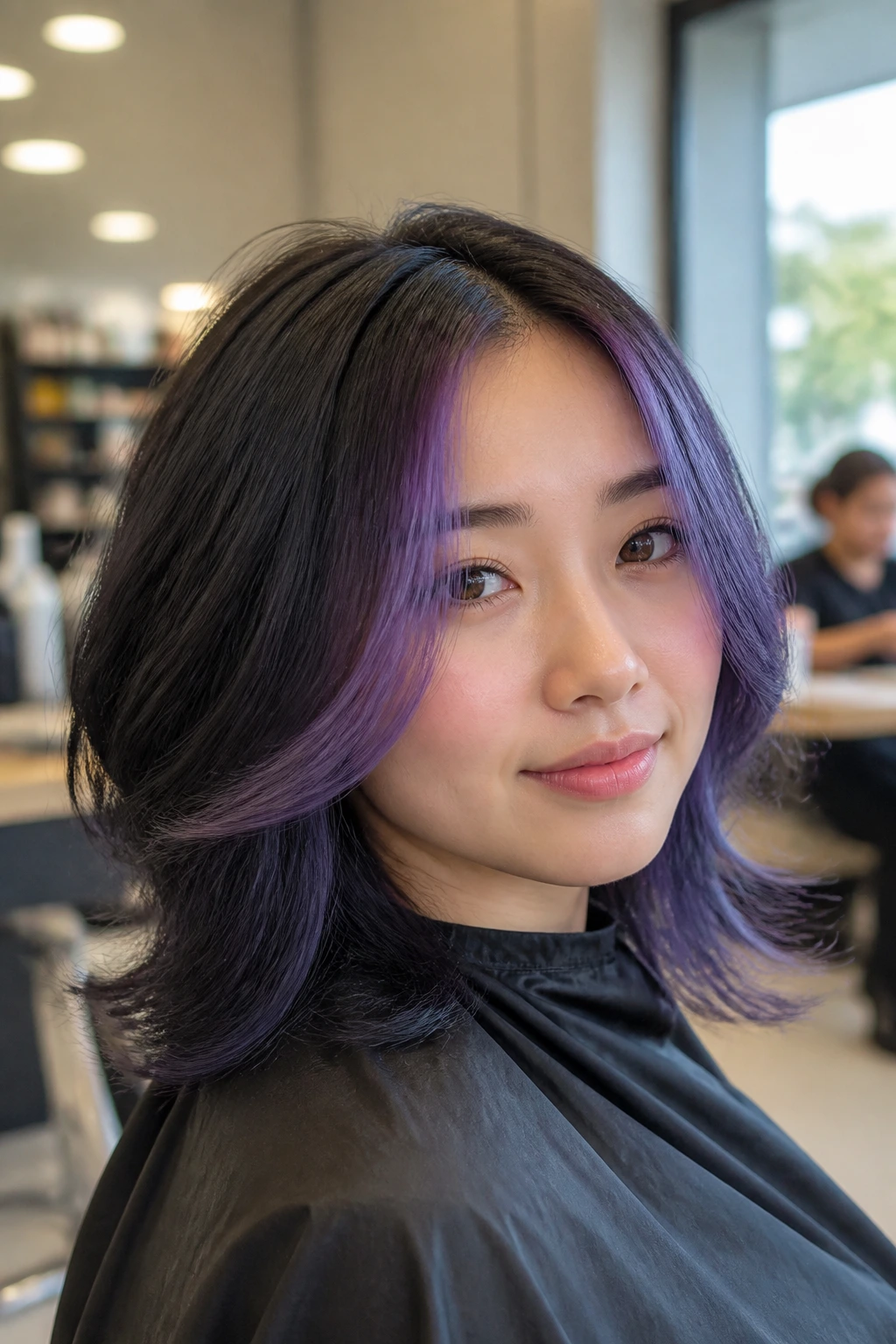
Inspired by the “money piece” trend, this involves isolating the two front strands of your hair and coloring them a vivid indigo-purple. This draws immediate attention to the eyes and is incredibly flattering for Asian facial structures, especially those with rounder or softer features. It’s a low-commitment way to test the waters with purple hair.
Styling the Front Pieces
To make the face-framing pieces look best, keep them styled away from your face with a round brush during a blowout. This allows the color to catch the light and create a bright halo effect around your features, effectively acting like a natural highlighter for your face.
12. Dusty Grape Root Melt
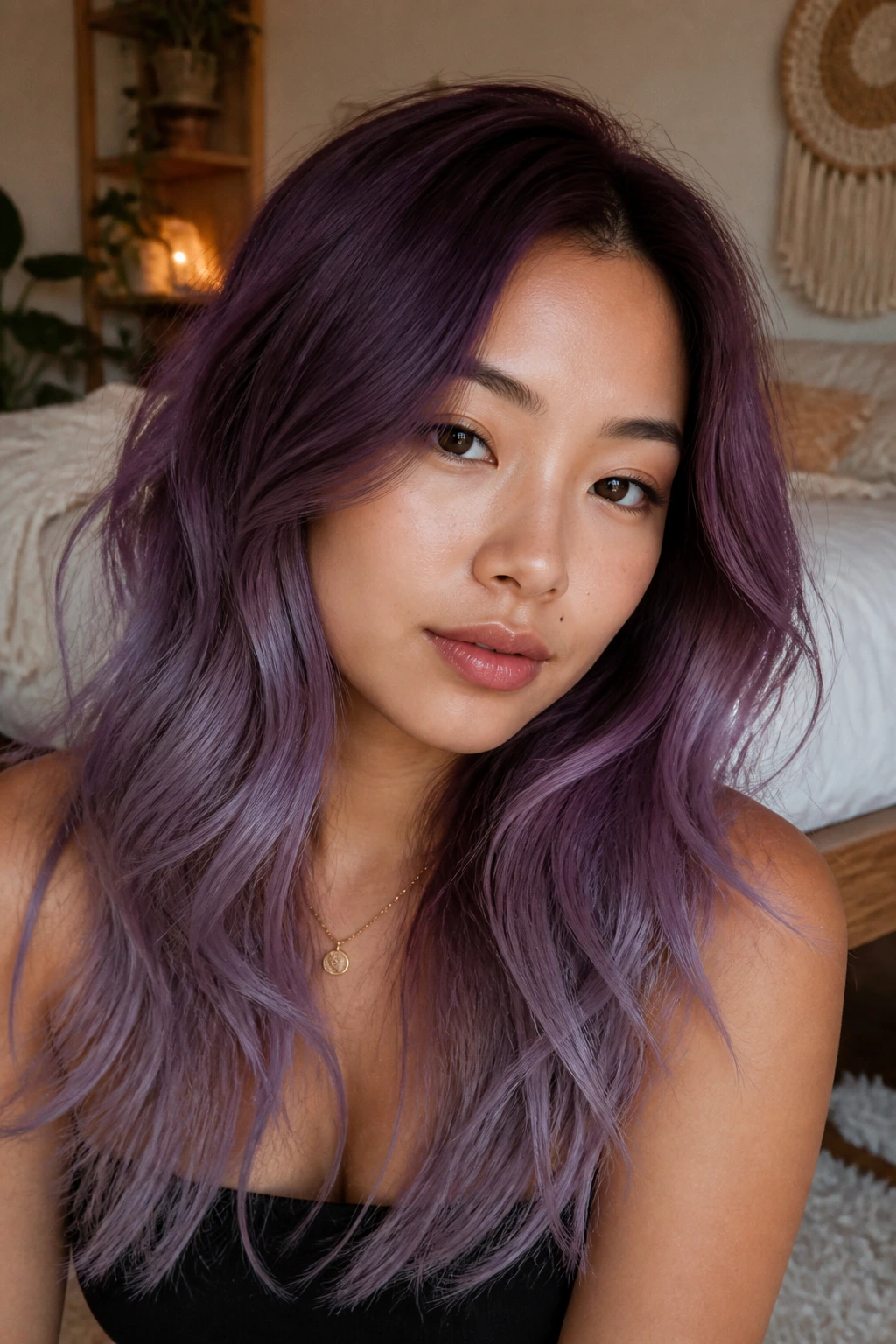
A root melt is a technique where the stylist blends a darker shade at the roots into a lighter shade toward the ends, creating a smoky, graduated effect. A dusty grape root melt uses a dark plum at the root that blends into a soft, powdery lavender at the tips. It’s a very romantic, feminine, and soft look that feels much more natural than a solid, one-dimensional dye job.
Why This Style Ages Gracefully
Because the roots are blended, you don’t have a harsh “re-growth line.” This is the best choice if you are someone who only wants to visit the salon three or four times a year. It transitions gracefully from a fresh salon look to a more lived-in, bohemian style over several months.
13. Deep Eggplant Layered Cut
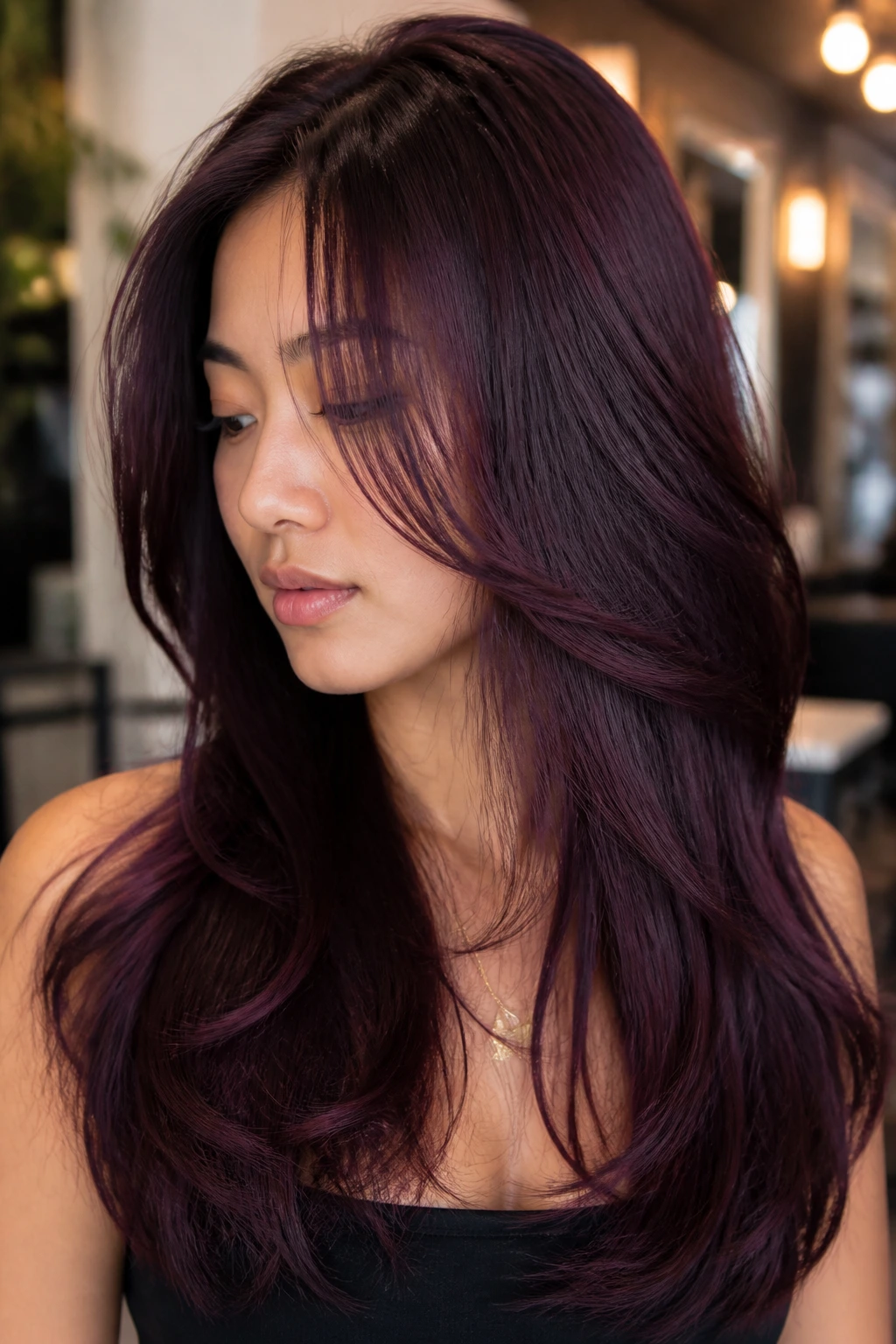
If you have a layered cut—like the popular “butterfly” cut or long, face-framing layers—a deep, monochromatic eggplant shade can emphasize the texture of the cut. Eggplant is a sophisticated, dark purple that contains hints of mahogany. It is professional enough for an office but interesting enough to stand out in a crowd.
Texturizing Your Layers
To make the eggplant shade pop, use a sea salt spray or texturizing mousse on your layers. Purple colors often look best when the hair has a bit of movement, as it allows different shades of the purple to become visible as the layers shift. A flat, poker-straight style might hide the complexity of the eggplant tone.
14. Neon Orchid Braided Styles
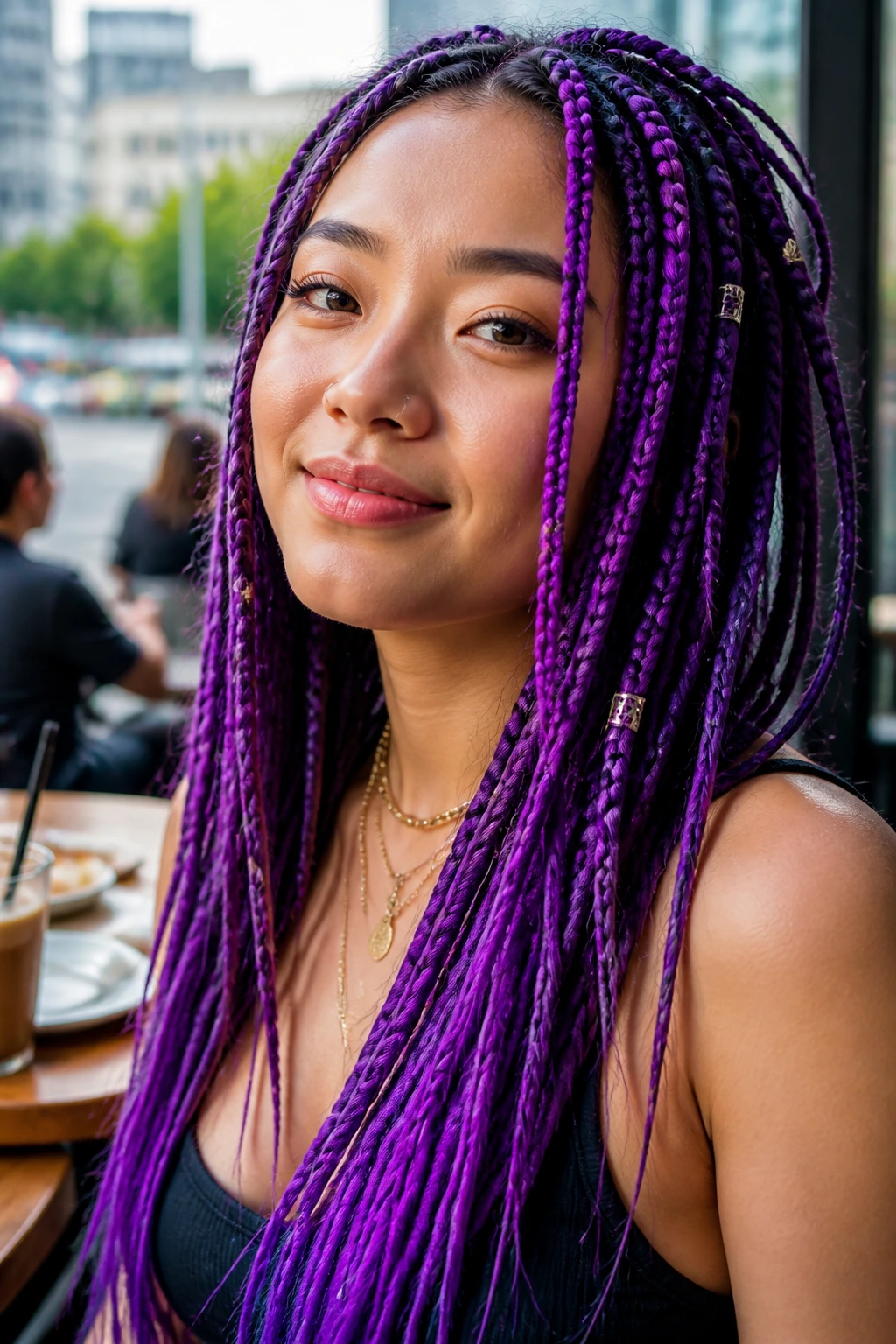
If you love protective styles like box braids, passion twists, or cornrows, consider using purple hair extensions. Incorporating a neon orchid shade into your braids is a fantastic way to experiment with color without bleaching a single strand of your natural hair. You can weave in beads or gold cuffs to further accentuate the vibrant purple hues.
Choosing the Right Extensions
Look for high-quality synthetic fibers that are pre-stretched to avoid tangling. When buying purple extensions, look for “color-blocked” bundles that have a mix of lavender and deep violet. A blend of tones in your braids will look much more natural and expensive than a single-toned, flat purple synthetic fiber.
15. The “Blackberry” Lowlights
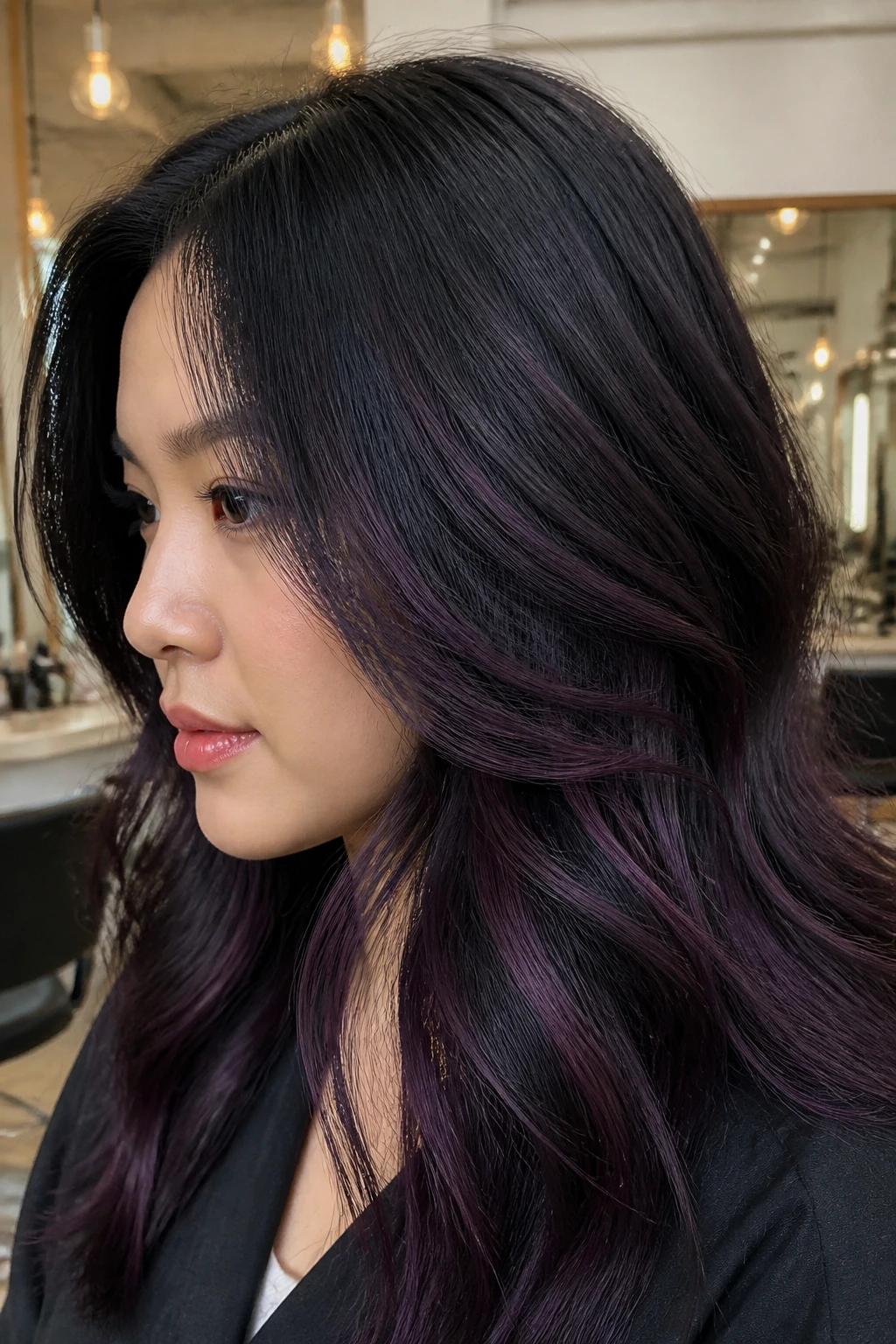
Sometimes, you don’t need all-over color. Lowlights are the secret weapon for adding thickness to fine hair. By adding deep purple and blackberry-toned lowlights into a dark base, you create an illusion of density. It adds a shadow effect that makes the hair look fuller and healthier.
Why Lowlights Are Often Overlooked
Everyone focuses on highlights, but lowlights are what give hair its “weight.” By adding these dark, purple-toned strands, you break up the monotony of jet-black hair and give your head a more sculpted, three-dimensional look. Ask your stylist for “ribboning” lowlights that follow the natural flow of your hair.
16. Violet-Brown “Bronde” Transition
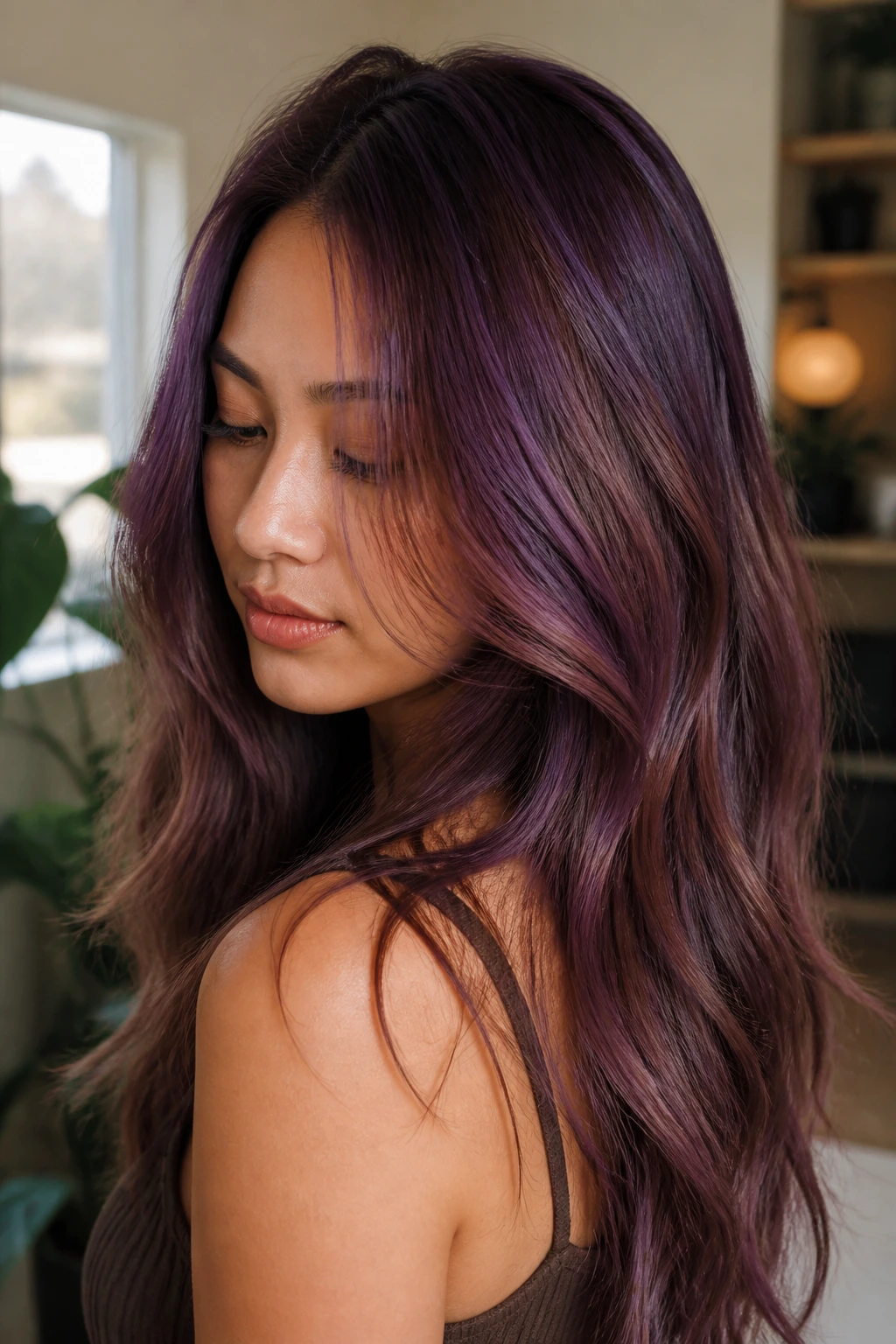
This is an excellent option for those who want to be purple but still want to feel “natural.” By mixing a violet tone with a soft, chestnut brown, you create a “violet-bronde.” It is subtle, warm, and very flattering for those with medium-toned skin. It looks like a natural color that has been enhanced by the sun and some creative salon work.
Using Semi-Permanent Glazes
For this style, ask for a semi-permanent glaze rather than a permanent dye. Glazes add color and shine without damaging the cuticle. They are perfect for achieving this soft, hybrid color, and they wash out cleanly after about six to eight weeks, giving you total flexibility.
17. Lavender-Blue Holographic Stripes
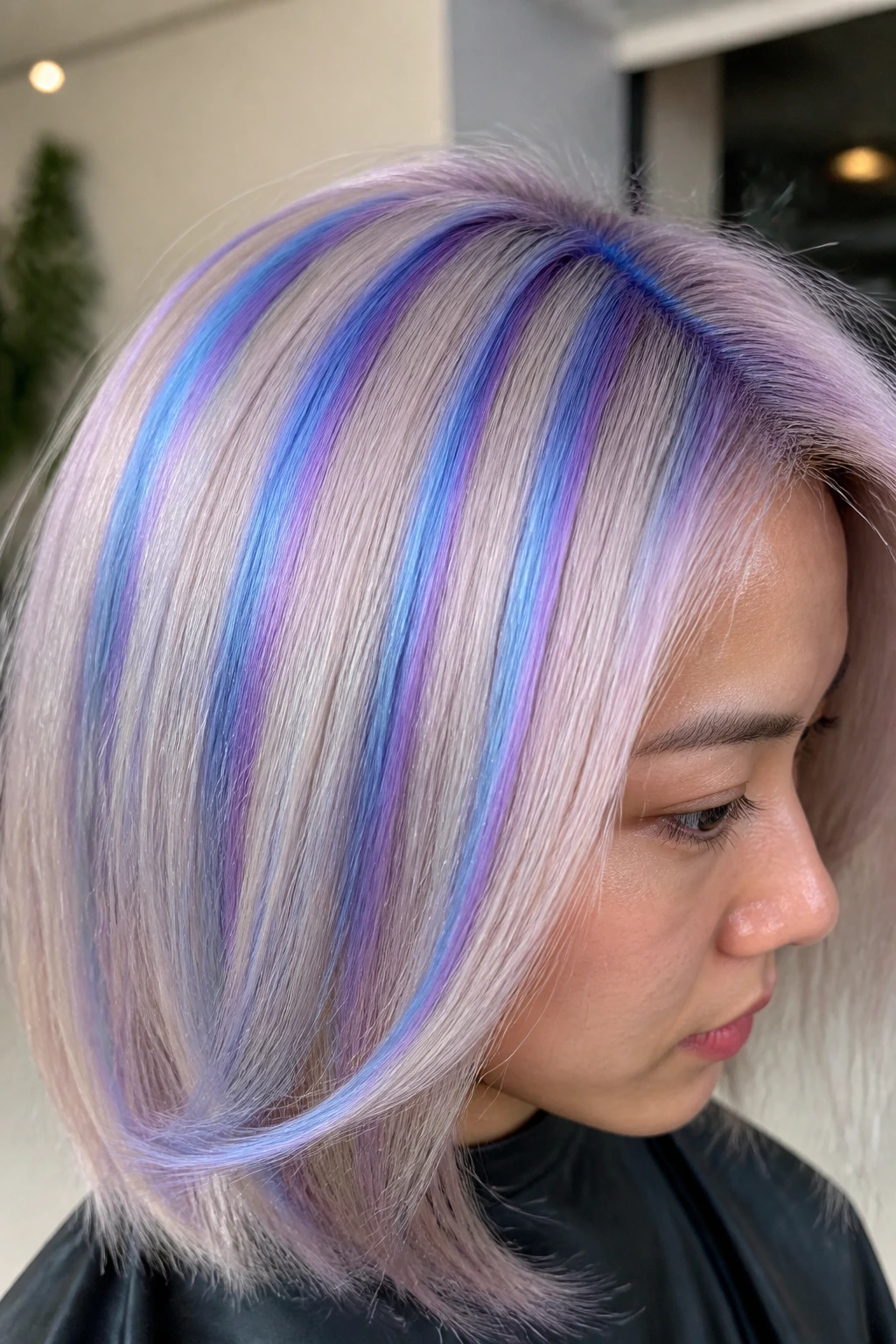
Holographic hair is a trend that mimics the appearance of a hologram. It involves using multiple shades of pastel and cool-toned purples and blues to create a shimmering, color-shifting effect. It is a highly technical service that requires an experienced colorist, but the results are undeniably futuristic.
Keeping the Holographic Tones Bright
This style is high maintenance. You must avoid hot tools whenever possible, as heat will strip the pastel pigment from the bleached sections almost instantly. If you must use heat, always use a low setting and a heat-shielding serum that is specifically designed for colored hair.
18. Burgundy-Wine Peekaboos for Short Hair
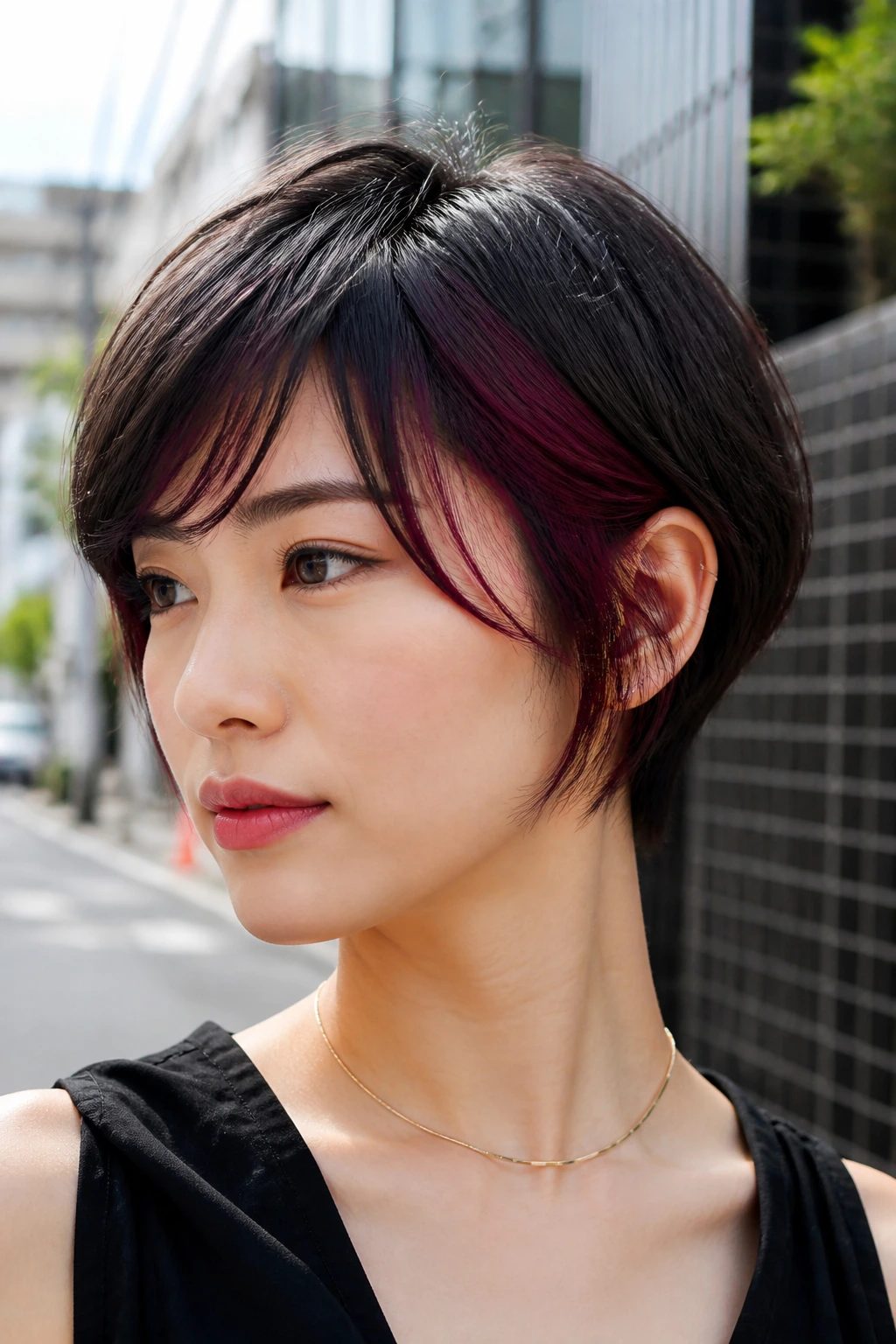
For those rocking a pixie cut or a super-short bob, peekaboo purple highlights provide a great contrast against the sharp lines of the cut. Using a burgundy-wine shade is better than a bright violet for short hair because it feels more mature and sophisticated. It highlights the texture of your hair and makes the cut appear more deliberate.
Styling Short Hair with Color
Short hair shows off color in a unique way. Because the ends are so close to the scalp, you can use a bit of pomade or matte paste to “spike” the ends of your layers, which reveals the hidden purple sections. It is a fun, punk-rock-inspired look that is surprisingly easy to style.
19. Royal Purple High-Ponytail
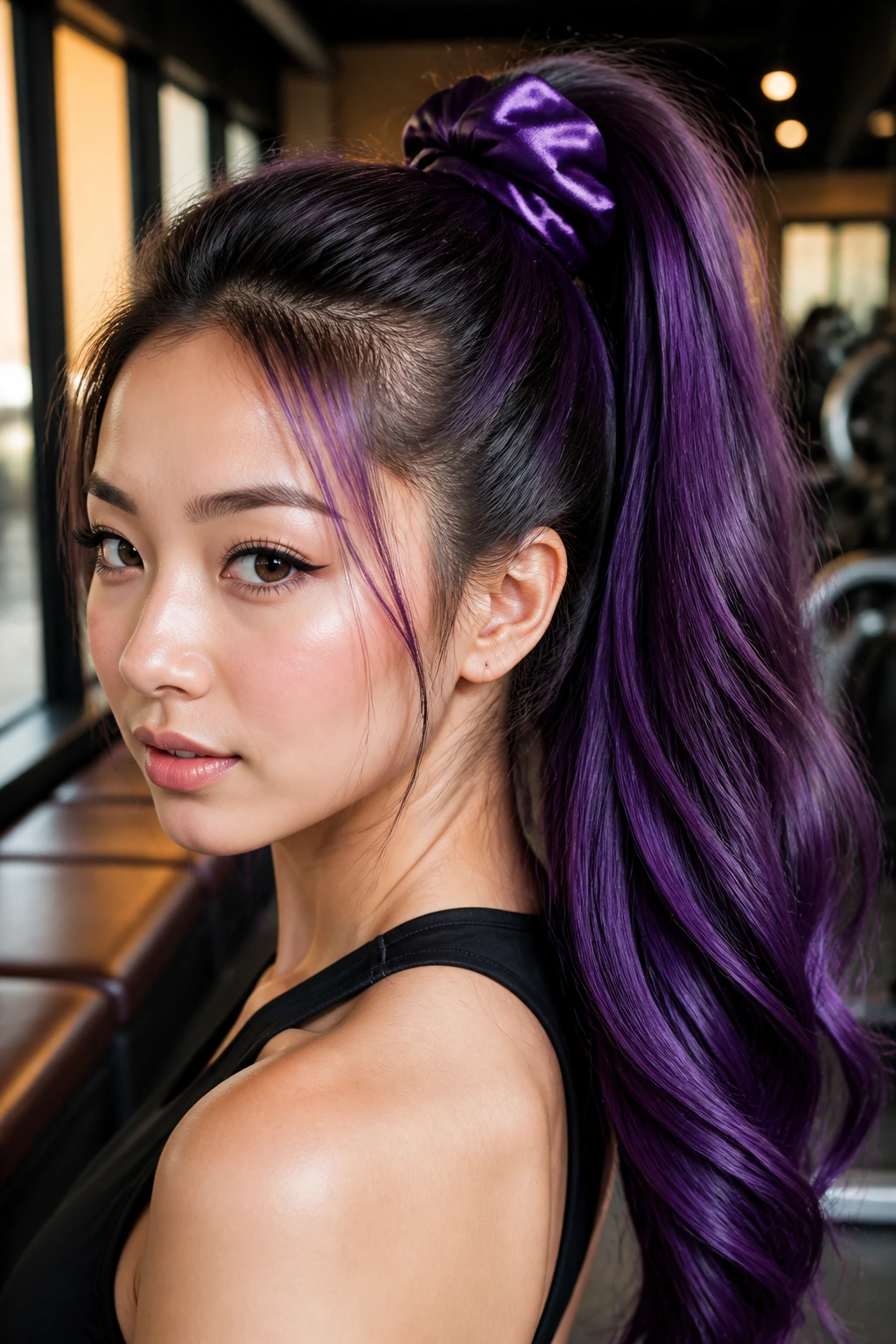
If you have long, thick hair, a high ponytail is the ultimate way to show off a purple color job. With a balayage or ombré application, a high ponytail causes the purple colors to gather at the base and then cascade down in a waterfall of violet. It’s a high-impact style that is perfect for events or simply making a statement during a workout.
Securing the Ponytail Without Damage
Use a silk or satin scrunchie rather than a standard rubber band. Over time, rubber bands can snap the ends of bleached, dyed hair. A silk scrunchie is much gentler and will help maintain the health of your purple-toned ends, keeping them soft and preventing breakage.
20. Soft Periwinkle Highlights
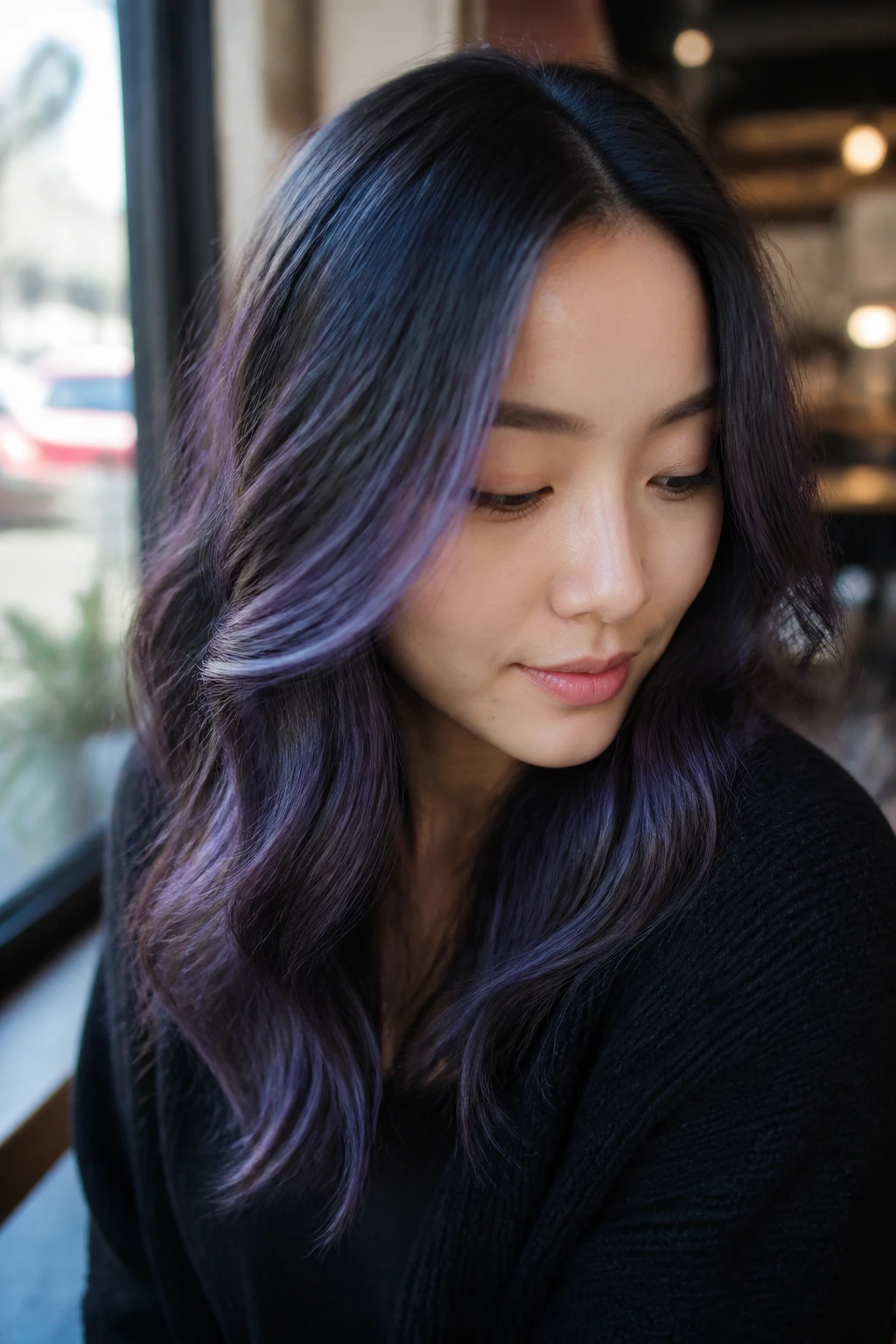
Periwinkle is a blend of blue and purple. On Asian hair, which naturally has dark, cool undertones, periwinkle can look incredibly crisp. By incorporating periwinkle highlights into a dark base, you get a clean, polished, and somewhat nautical aesthetic. It’s a very refined take on the purple trend.
Balancing the Blue and Purple
Periwinkle fades quickly into a light blue, which can look a bit “stuck in the 90s” if not handled correctly. Keep a color-depositing conditioner that has a slight purple tint in your shower. Use it once a week to keep the blue from becoming too prominent, ensuring the purple side of the periwinkle stays front and center.
21. Dark Mulberry Solid Color
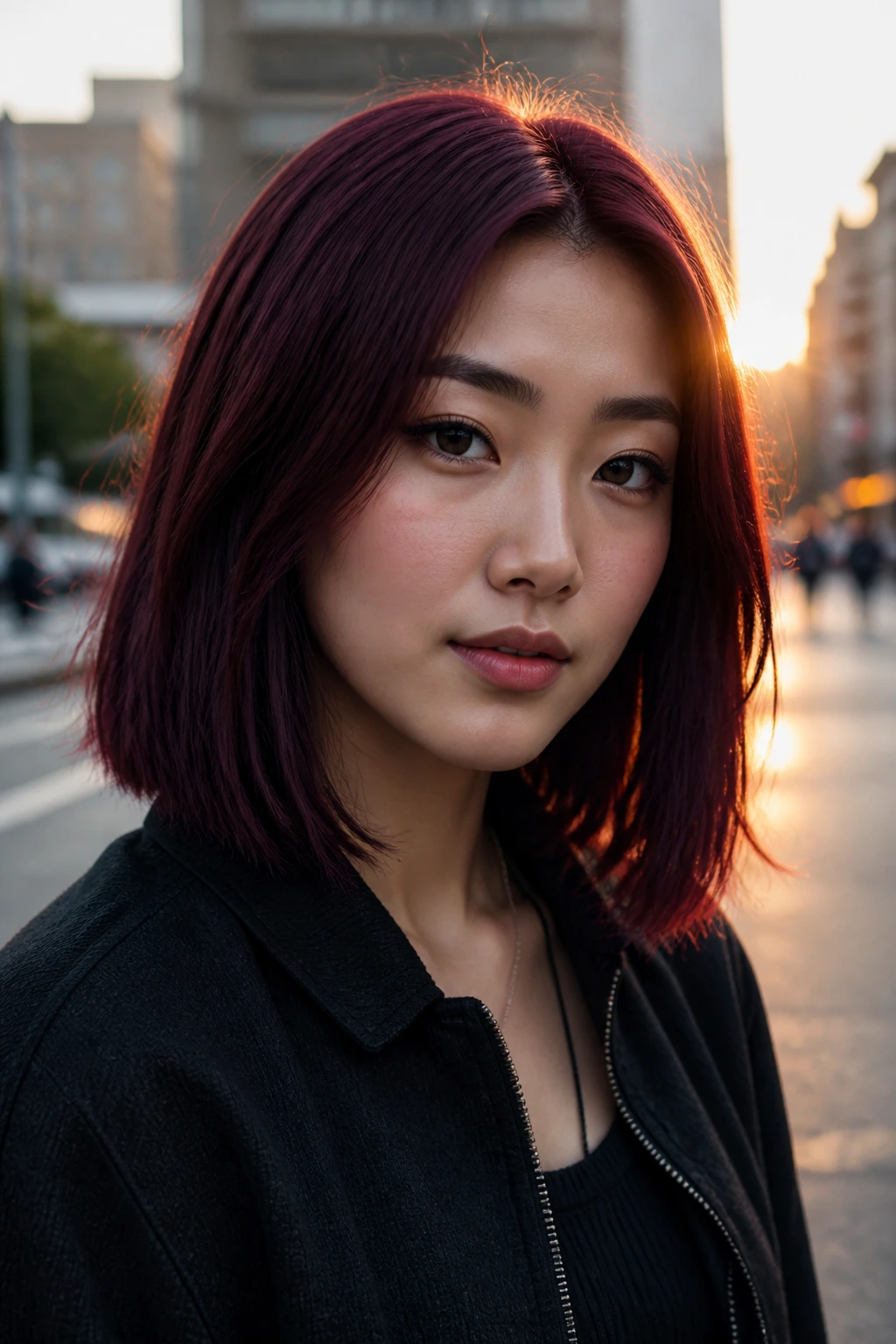
If you want to go all-in but are intimidated by neon shades, dark mulberry is the answer. It is a deep, rich, saturated purple that covers the hair completely. It looks incredible on blunt, shoulder-length cuts. It’s essentially a dark, moody alternative to black hair that looks expensive and high-fashion.
Why Solid Color Requires Expert Application
A solid color dye job is actually one of the hardest things to do well because any patchiness is immediately visible. Ensure you use an ammonia-free developer to keep the cuticle smooth. Solid color is also the best time to invest in a professional blowout, as the sleekness of the hair will amplify the richness of the purple tone.
22. Plum-Black “Peek” at the Ends
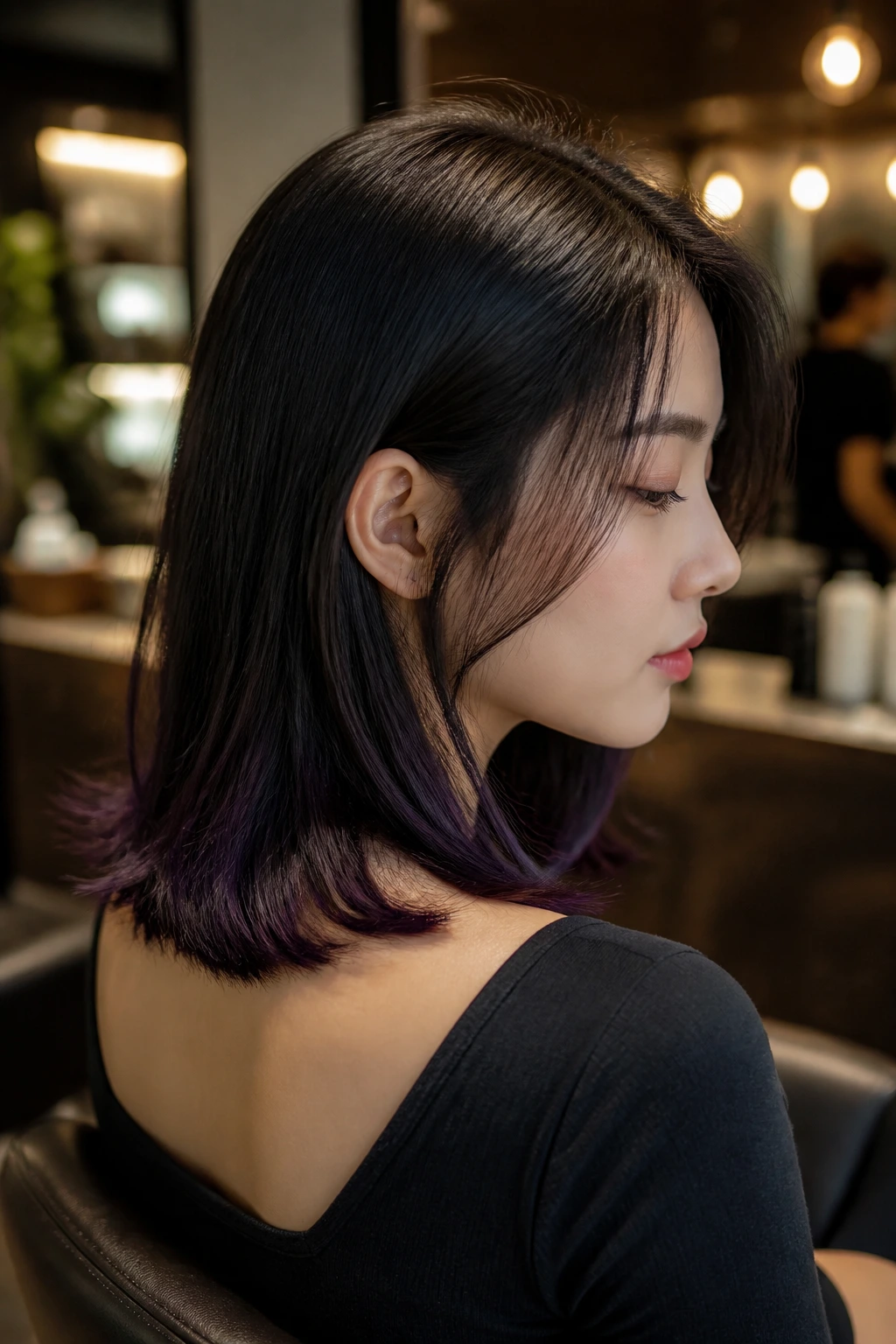
For the ultra-subtle approach, consider a “plum-black” dip-dye. This is where you only color the last two inches of your hair. It is a sophisticated way to add a bit of personality without the need for constant maintenance or root touch-ups. When you wear your hair in a ponytail, the tips appear as a soft purple flare, adding a touch of whimsy to a simple style.
Tips for Healthy Ends
Because this method only touches the very tips of your hair, you have the luxury of cutting them off if they become too damaged. Keep your ends hydrated with a high-quality hair oil, such as jojoba or almond oil. Applying oil daily will keep the color-treated ends from looking frizzy, which is the fastest way to make dyed hair look unkempt.
Final Thoughts
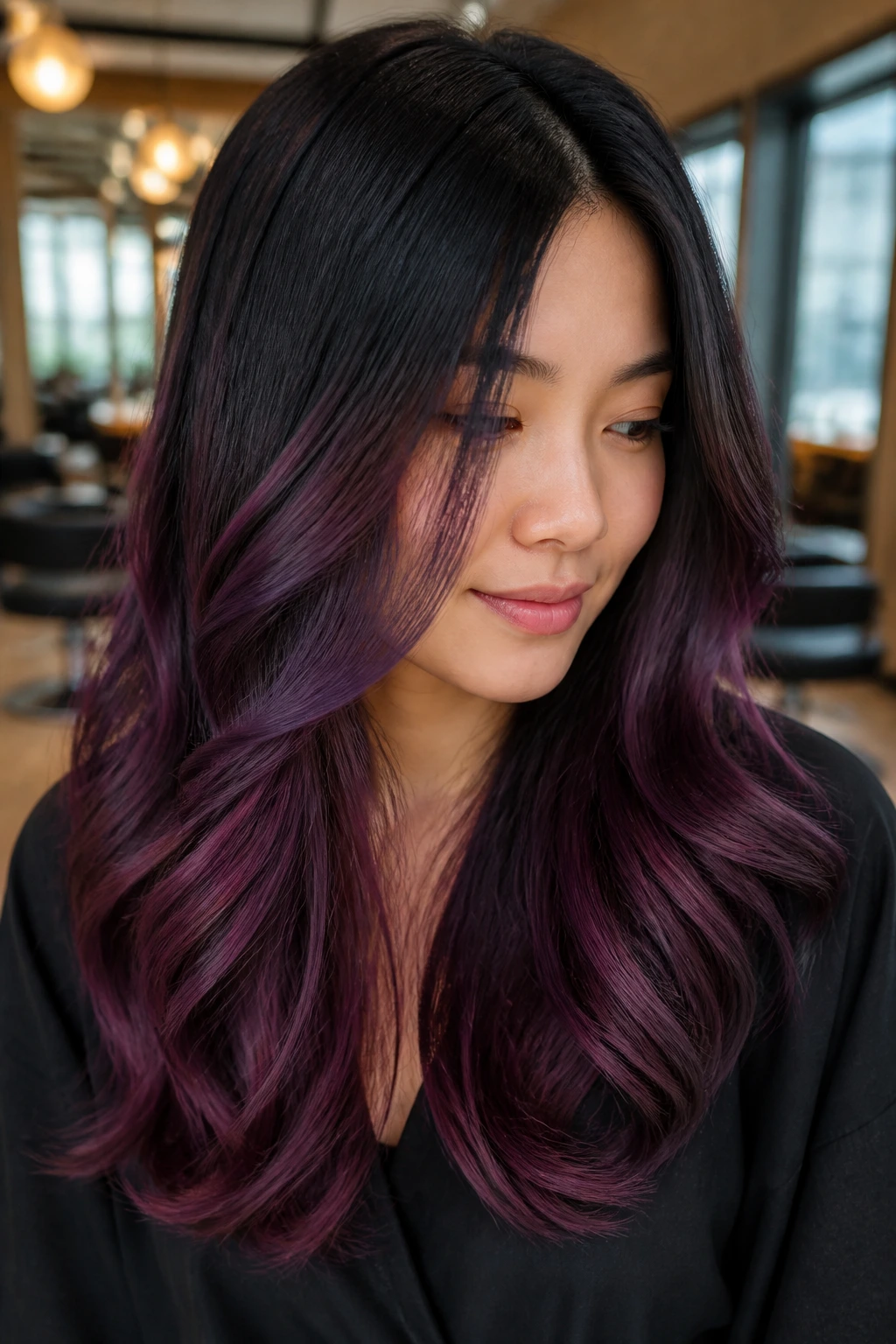
Choosing the right purple shade for Asian hair is a journey that balances personal expression with the practicalities of hair health. Because your natural base is so dark and pigmented, the “lift” process is the most critical stage of the entire transformation. Never rush the bleaching process—always choose a stylist who understands how to lift dark hair gradually to preserve the elasticity of your strands. Once you have reached your target color, the game changes to maintenance, which involves cold water rinses, high-quality color-safe shampoos, and a commitment to minimal heat styling. Whether you opt for a deep, moody eggplant or a bright, electric violet, the result is a beautiful, multidimensional look that embraces the natural strength and shine of your hair. Remember, the best color is one that makes you feel confident and ready for anything.