


Braided hairstyles often carry a reputation for requiring thick, textured, or curly locks to hold their shape, but that is a fundamental misunderstanding of what a good braid can do. When your hair is pin-straight, it tends to be slippery, prone to falling flat, and resistant to staying in a tight plait. However, the secret lies not in the natural texture of your hair, but in how you prepare it and what you use to keep it in place. Adding accessories—whether they are delicate gold cuffs, silk ribbons, or sturdy decorative pins—isn’t just about decoration. They provide necessary weight and tension that can actually help hold a slippery braid together while elevating the style from a morning chore to a sophisticated, intentional look.
If you have spent years feeling like your braids vanish into your scalp or unravel before lunch, the issue isn’t your hair type. It is likely a lack of prep work. You need to create “grit” before you even think about weaving strands. Dry shampoo, sea salt spray, or even a light dusting of texturizing powder can make straight hair behave like coarser hair, giving your fingers something to grip. Once you have that foundation, the sky is the limit. From subtle metallic accents that catch the light to bold fabric additions that hide the mechanics of a messy knot, accessories are the true equalizer for straight hair.
1. Minimalist Gold Cuff Accents
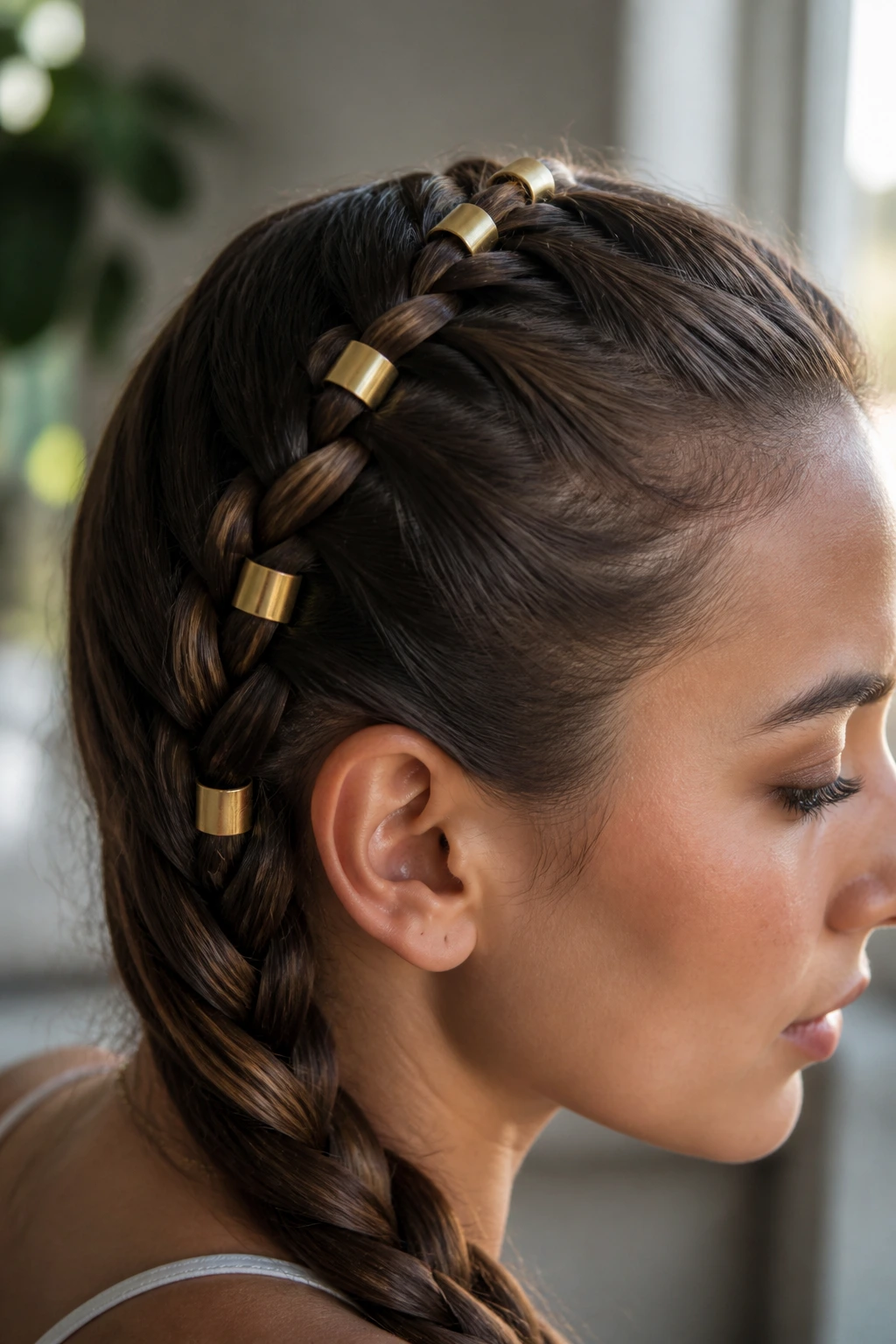
When you are working with straight hair, simplicity often prevents the style from looking cluttered. Gold cuffs are small, metal rings that snap around a finished braid, and they are perfect for this hair type because they do not tug on the scalp. You can space them out along a single French or Dutch braid to create a sleek, structured appearance that feels more like jewelry than a hair tie.
How to Style This Look
- Prep: Spray a light sea salt texturizer through the mid-lengths to prevent the braid from sliding loose.
- The Braid: Create a single, tight Dutch braid starting from the hairline.
- The Accessories: Once the braid is secured with a clear elastic, slide 3 to 5 gold cuffs into the center of the braid loops.
- Pro Tip: Choose matte gold if you want a subtle, everyday vibe, or go for a high-shine finish if you are dressing up for an event.
2. Velvet Ribbon Interwoven Plaits
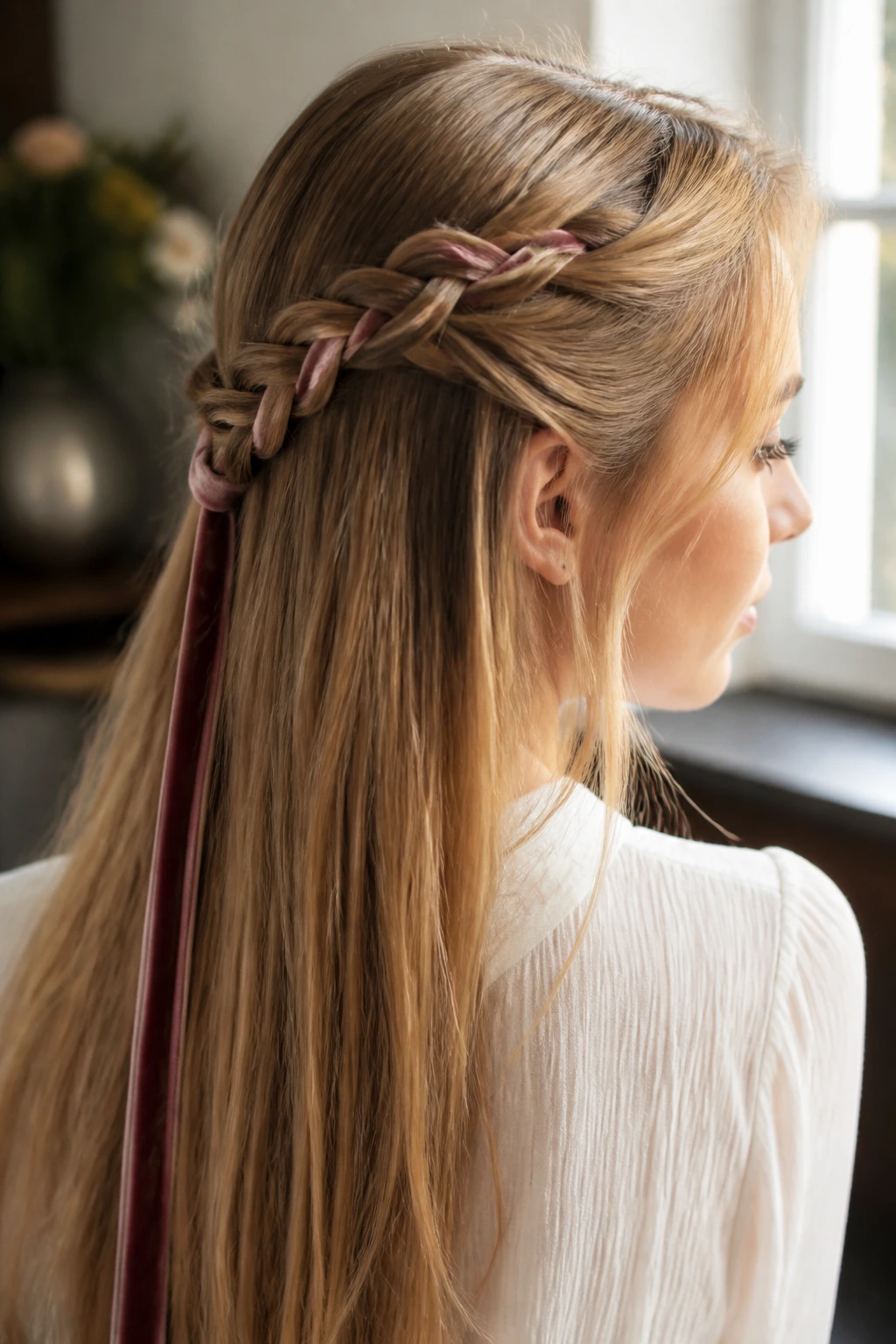
Velvet ribbon offers a luxurious weight that traditional elastic bands simply cannot provide. For straight, fine hair, the velvet texture acts as a friction agent, helping to hold the braid in place while adding a rich pop of color. This style works exceptionally well for a half-up, half-down look where the braid needs to stay tight against the head.
Why This Works for Straight Hair
The ribbon essentially replaces one of the three strands of your braid, or it can be woven through the finished style to add volume. Because it is fabric, it doesn’t slip down the hair shaft like a plastic band. It creates an illusion of thicker, fuller hair, which is a common goal for those with naturally thin or straight strands. You can match the ribbon to your outfit for a cohesive finish that looks surprisingly high-end.
3. Tiny Pearl-Studded Pins
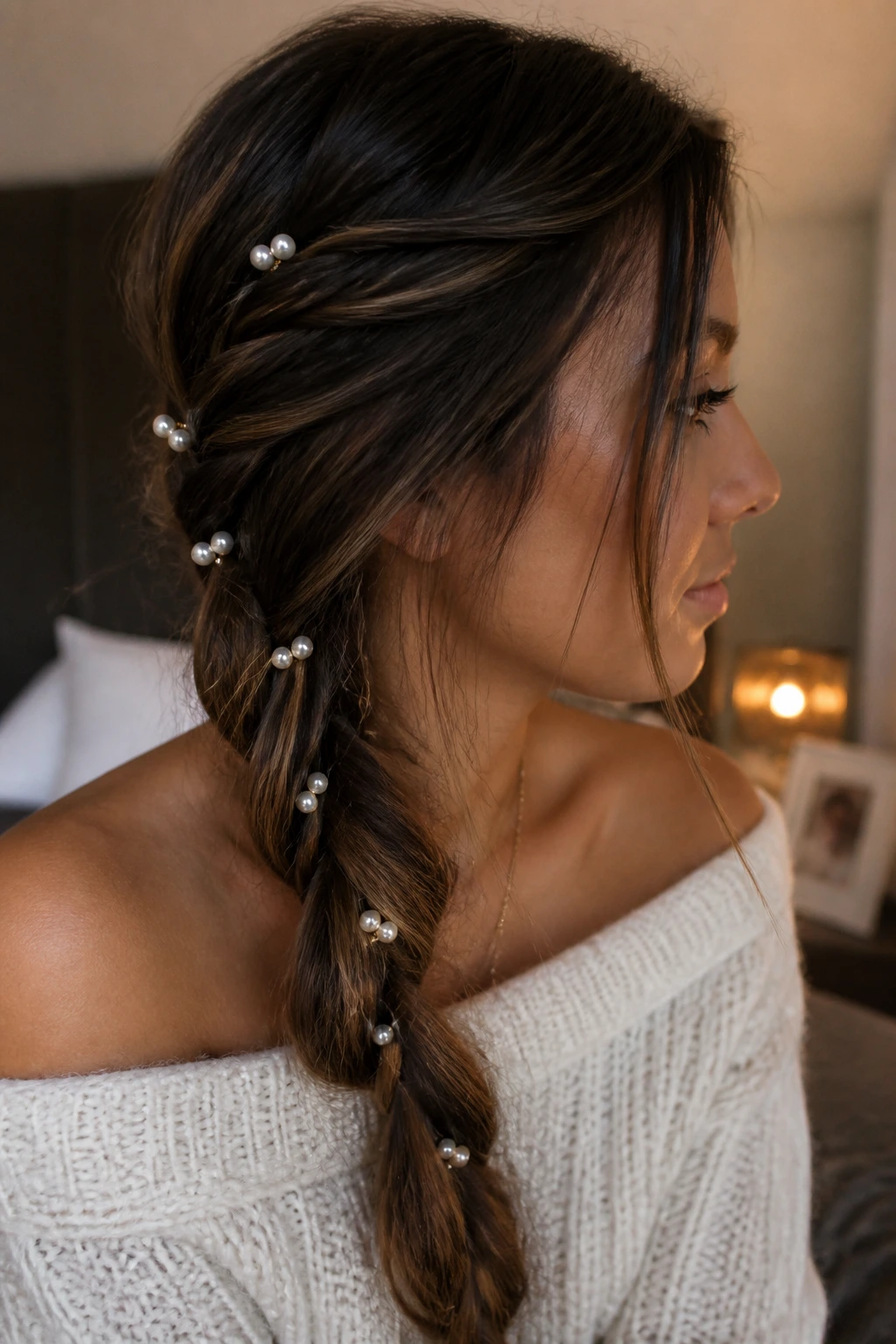
Pearls have a way of softening the sharp, sleek lines of straight hair. Instead of heavy clips that pull on your roots, look for delicate pearl pins that resemble small hair screws or snap clips. By placing them scattered throughout a messy side braid, you achieve a look that feels ethereal and polished without requiring backcombing or harsh hairspray.
4. Silk Scarf Wrapped Braids
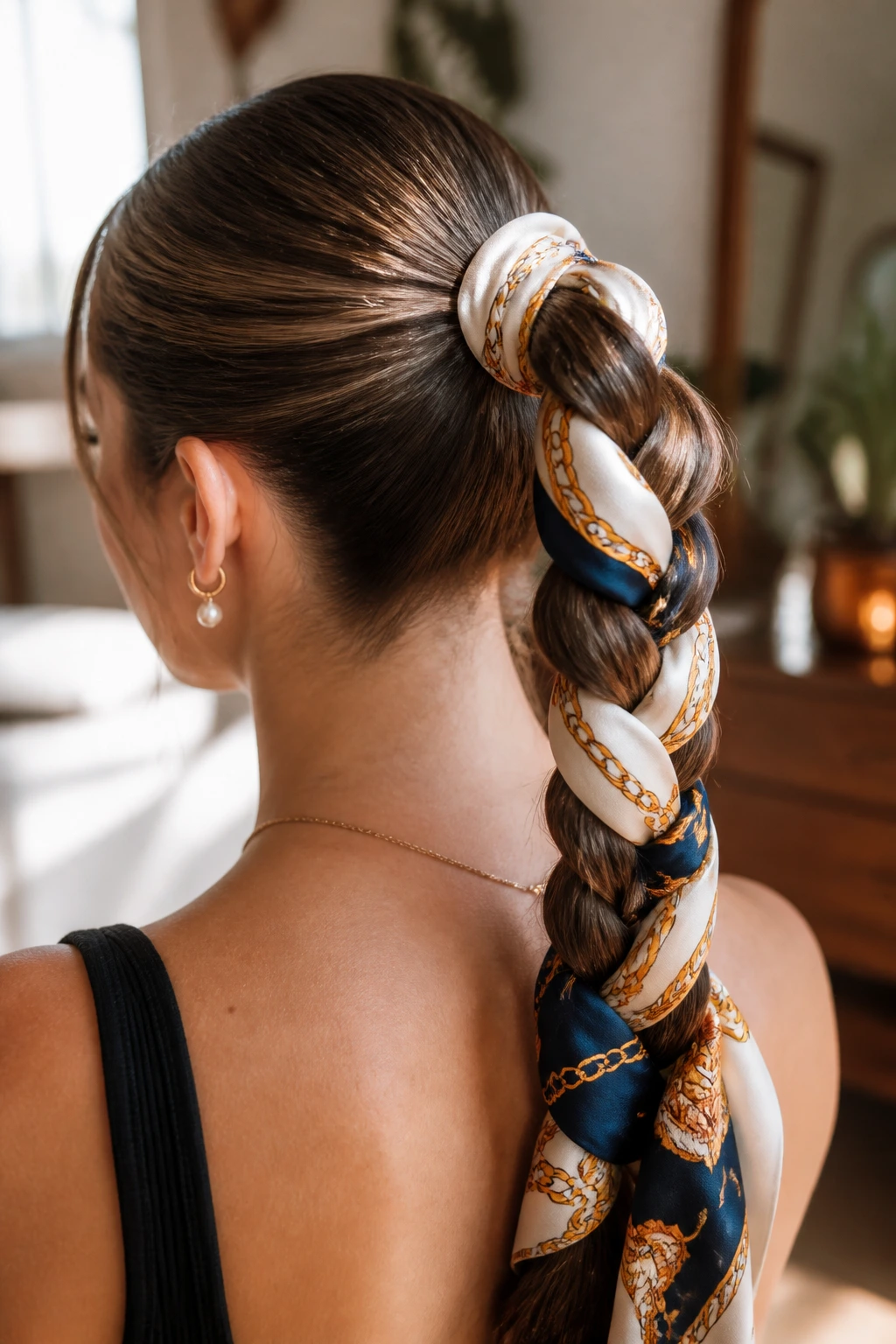
If you struggle with “pancaking”—pulling on the loops of a braid to make it look wider—a silk scarf is your best friend. A silk scarf can be tied to the base of your ponytail before you start braiding. As you plait your hair, treat the scarf as one of the three main sections. The added fabric volume makes it look like you have double the hair density you actually possess.
The Mechanics of the Scarf Braid
- Secure a silk square or long ribbon around your hair tie.
- Divide your hair into two sections, letting the scarf act as the third.
- Braid normally, ensuring the scarf stays on the outside for a bold look.
- Tie off the end with the tail of the scarf, skipping the clear elastic entirely for a more seamless finish.
5. Geometric Metal Hair Clips
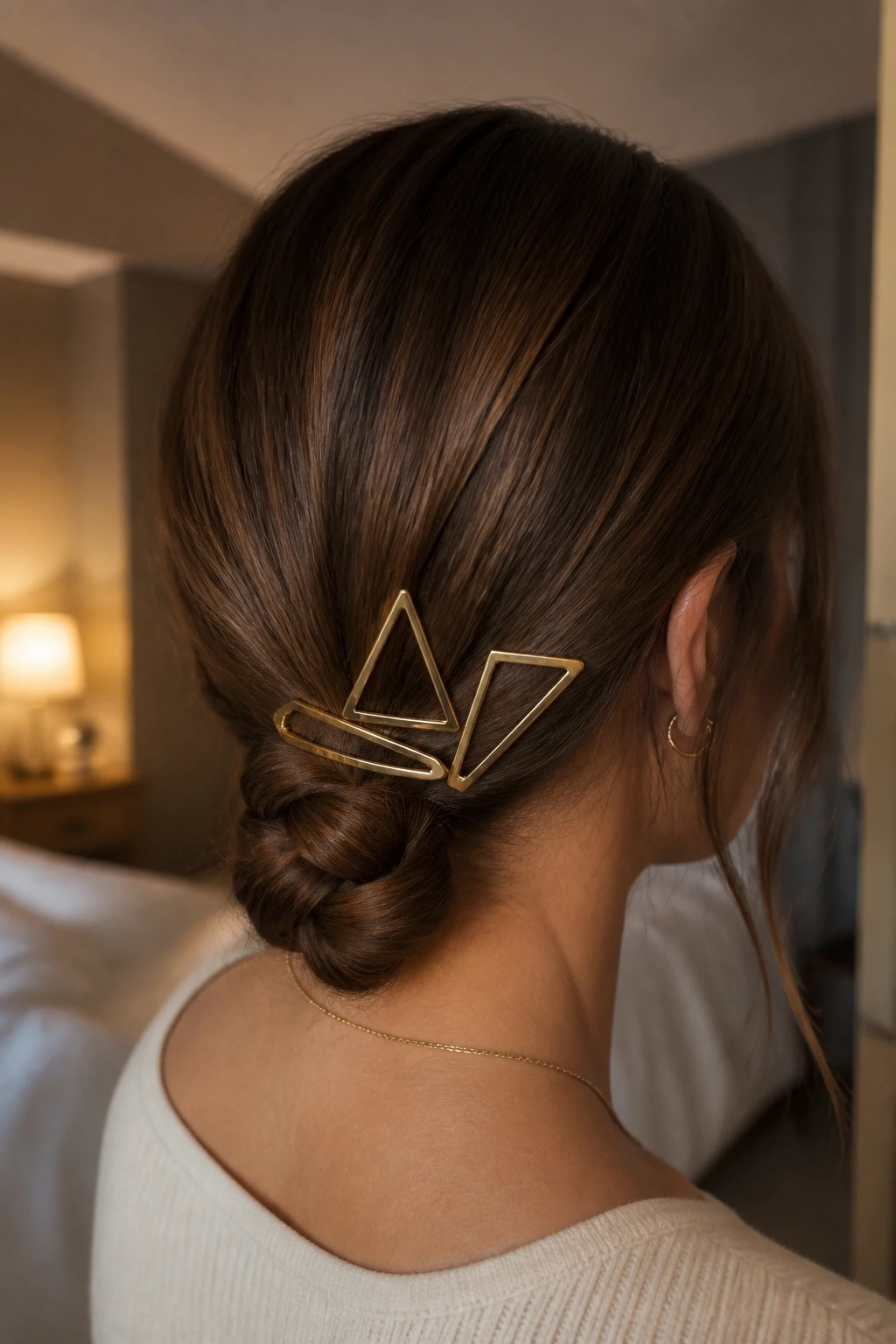
Sometimes, the best way to handle straight hair is to pin it into place rather than forcing it to hold its own weight. A geometric metal clip—think triangles, hexagons, or abstract bars—can be used to secure a loose, fishtail-inspired braid at the nape of the neck. These clips are sturdier than standard bobby pins and provide a reliable anchor point for hair that usually rebels against elastics.
6. Dried Floral Insertions
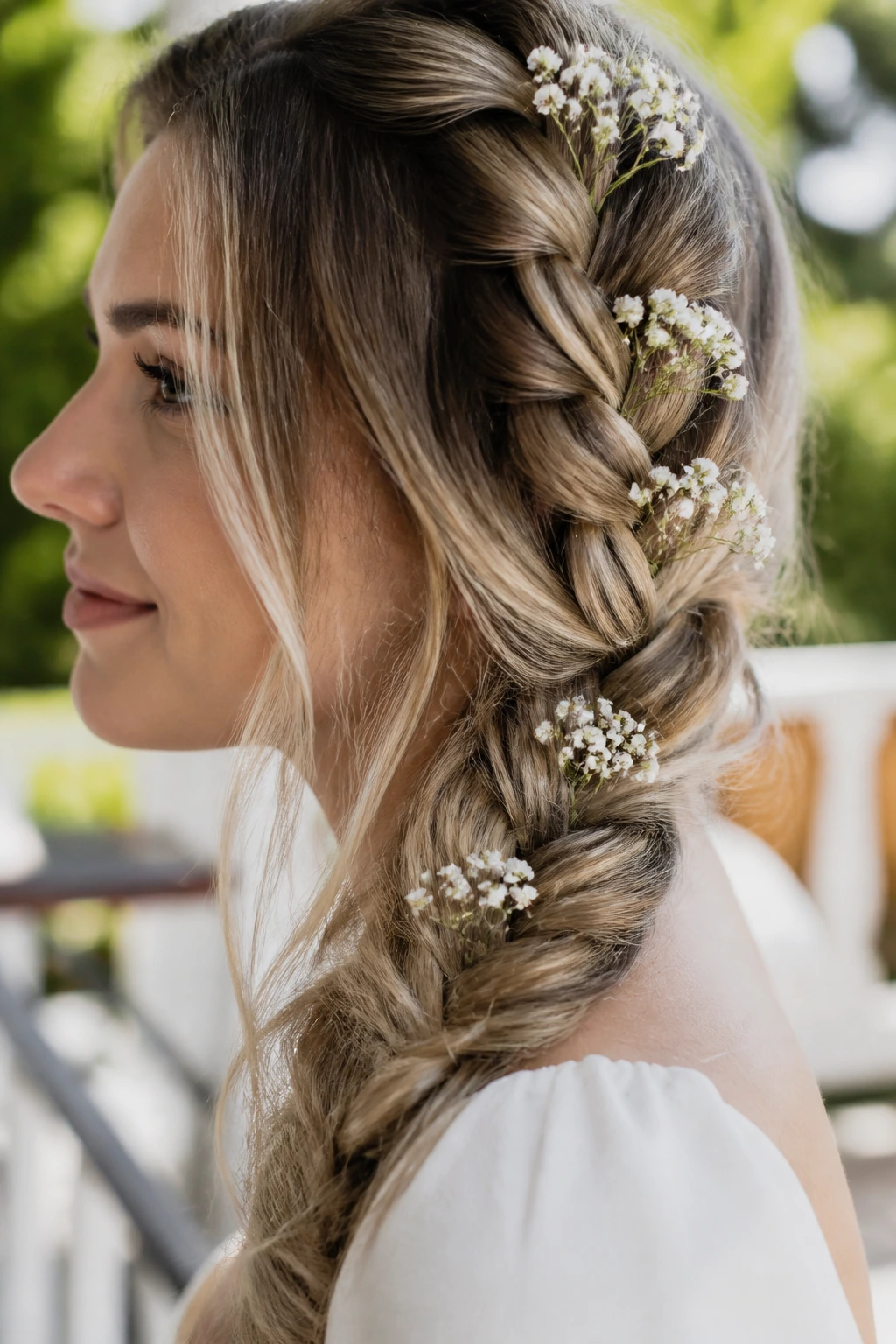
There is something inherently romantic about incorporating baby’s breath or small sprigs of lavender into a braid. For straight hair, the stems of these flowers can be tucked directly into the loops of a loose braid, held in place by a light mist of hairspray. They work best if you weave the braid slightly loosely, allowing the stems to grip the individual strands of hair without sliding out.
7. Chain-Link Braids
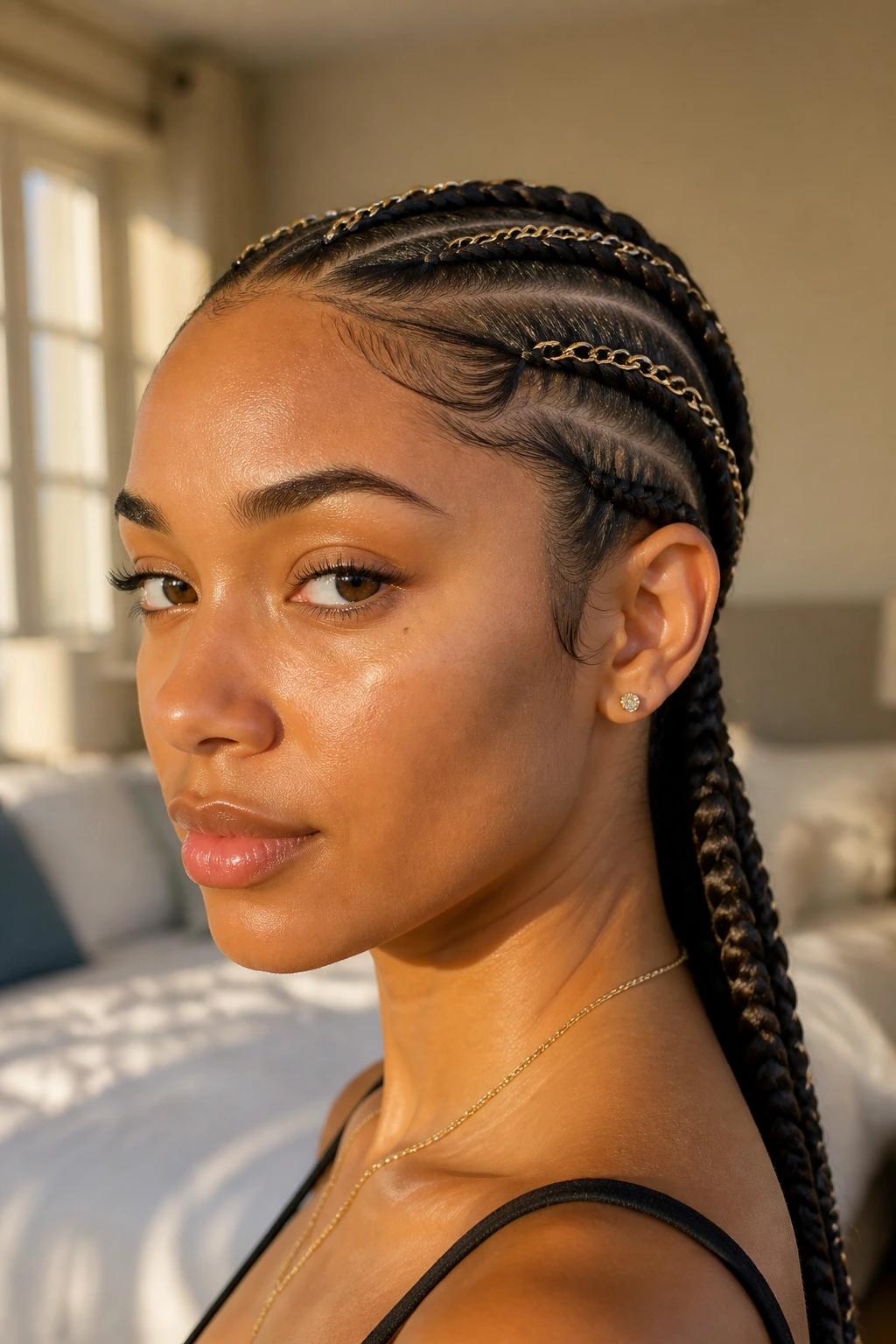
This is a bold, modern approach that treats your hair like an accessory. By using a lightweight gold or silver chain, you can weave it through a standard plait. The weight of the metal helps pull the braid taut against your head, which is incredibly helpful for straight hair that tends to get frizzy or lose its shape as the day progresses.
Steps for the Chain-Link Method
- Step 1: Braid your hair loosely for the first two inches to create a base.
- Step 2: Hook the chain into the hair tie at the start of your braid.
- Step 3: Continue braiding, wrapping the chain around one of the strands in each section.
- Step 4: Secure everything at the bottom with a small hidden knot or a clear elastic, pinning the end of the chain into the nape of your neck.
8. Leather Cord Wraps
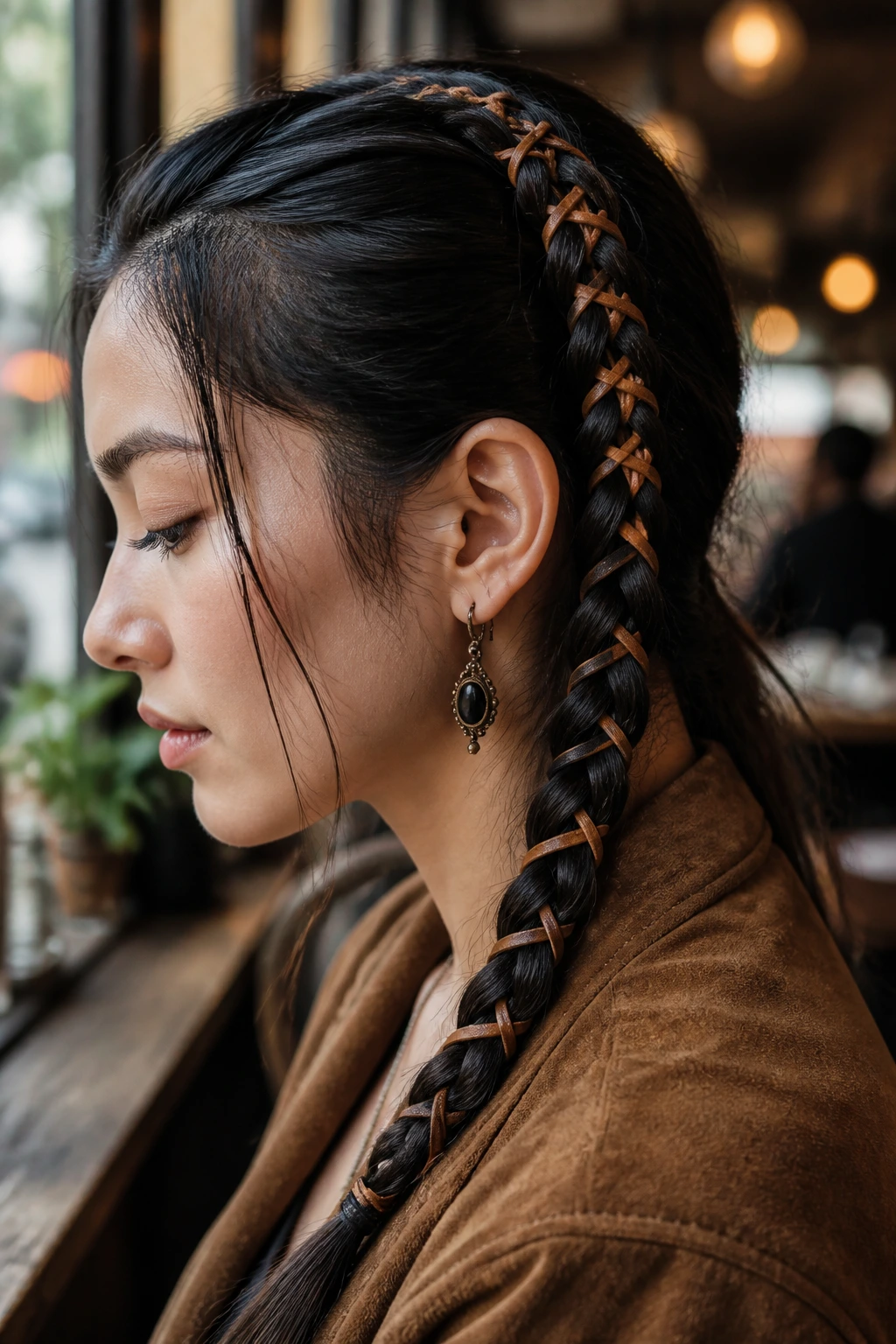
If you want a look that feels more bohemian or edgy, skip the ribbons and go for a thin leather cord. Leather is naturally grippy, which is a massive advantage for straight hair. Wrap the cord in a crisscross pattern over a tight three-strand braid, starting at the scalp and working down toward the ends. It looks best in black or deep brown, especially against lighter hair colors.
9. Scattered Rhinestone Stars
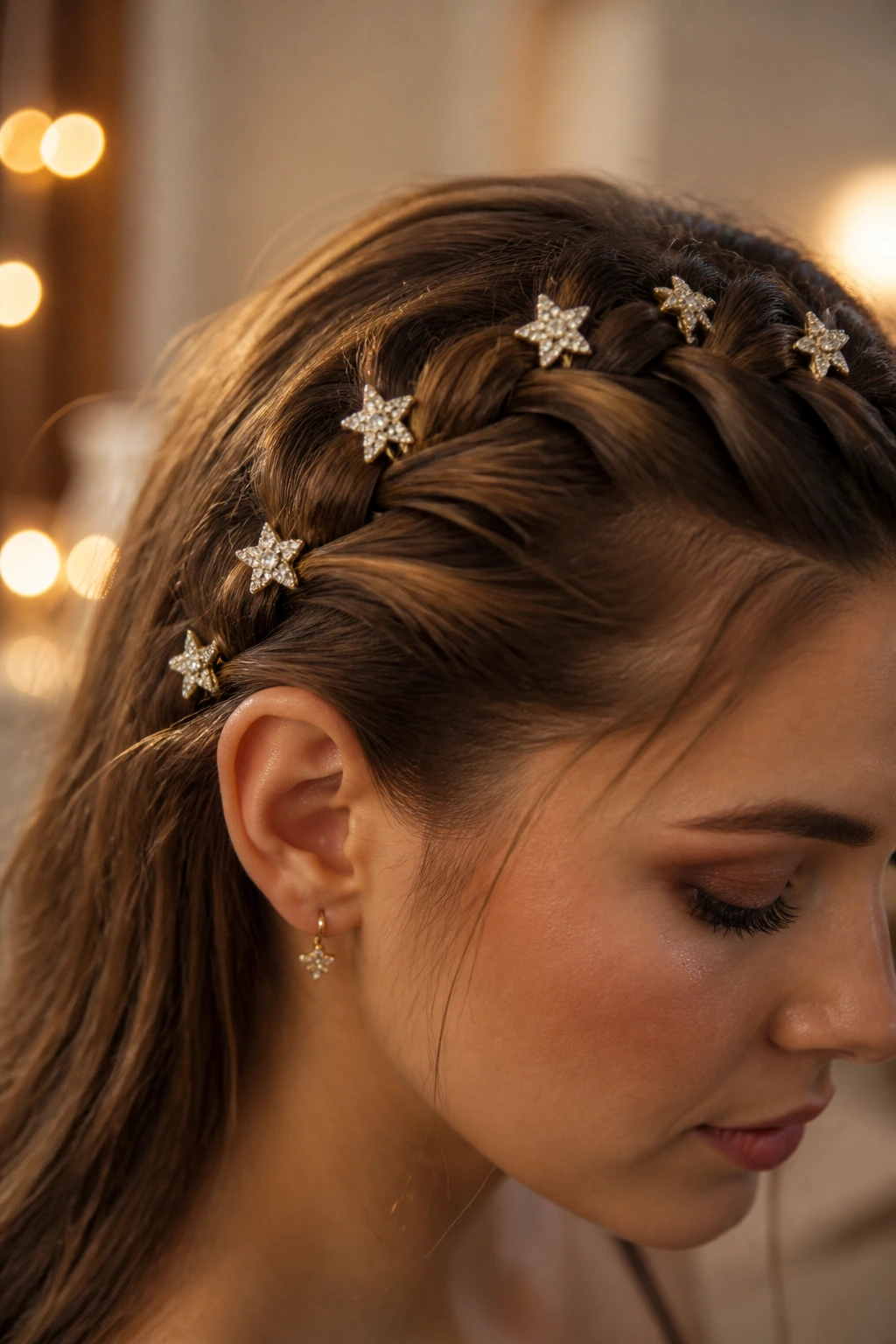
For evening occasions, rhinestone-studded pins or stars offer a way to dress up a plain Dutch braid. The trick to keeping these on straight hair is to choose pins with a textured base, rather than smooth metal. The texture helps “bite” into the straight strands, ensuring they stay put throughout the night without the need for an excessive amount of product.
10. Colorful Wooden Beads
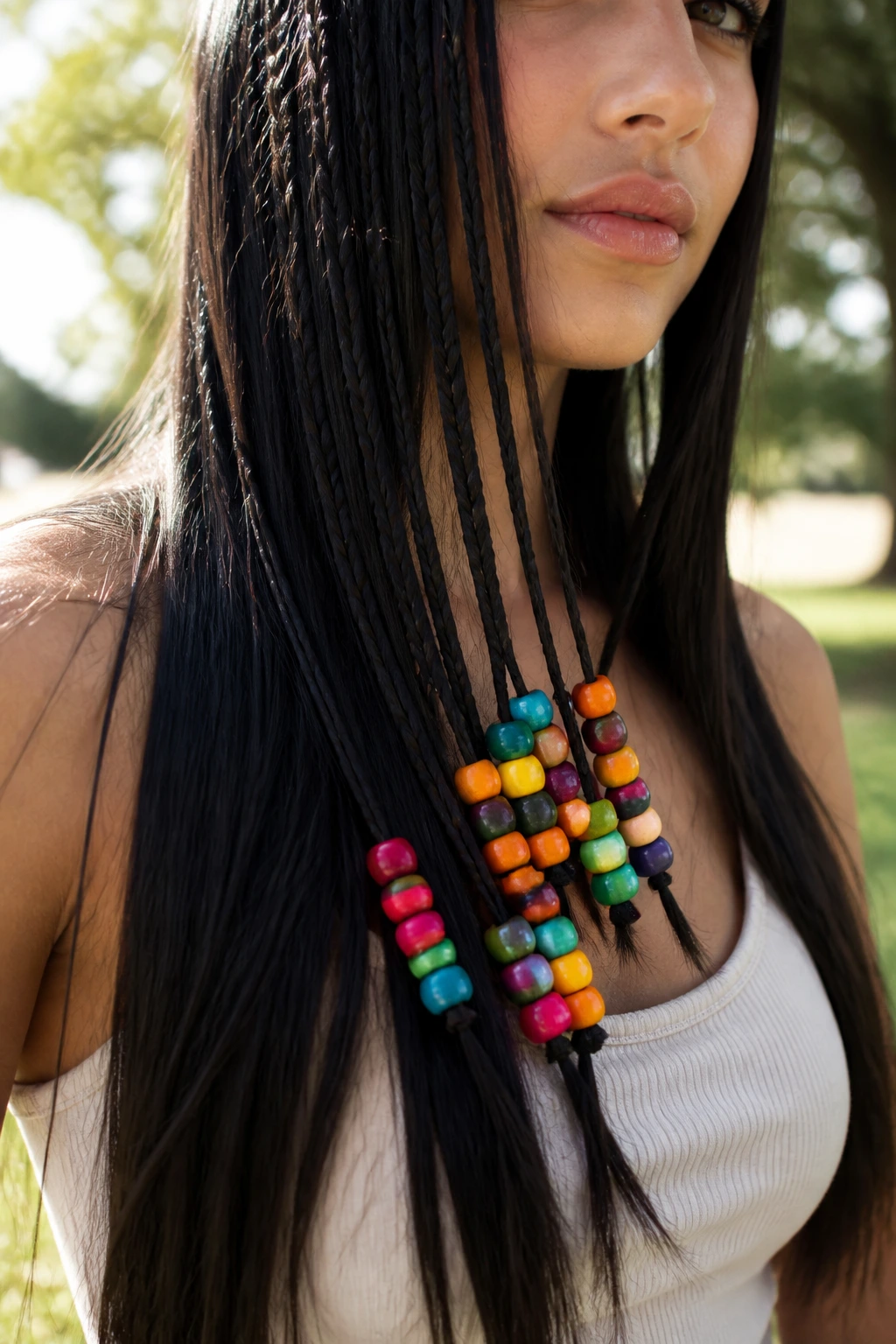
Beads are a functional accessory for braids, as they can be threaded onto the ends to provide a bit of weight that keeps the plait from unravelling. This is an excellent choice for children or for a fun, casual summer look. If your straight hair tends to be slippery, use a small dab of clear hair wax on the ends of your hair before threading the bead to prevent it from sliding off.
11. Antique Brooch Anchors
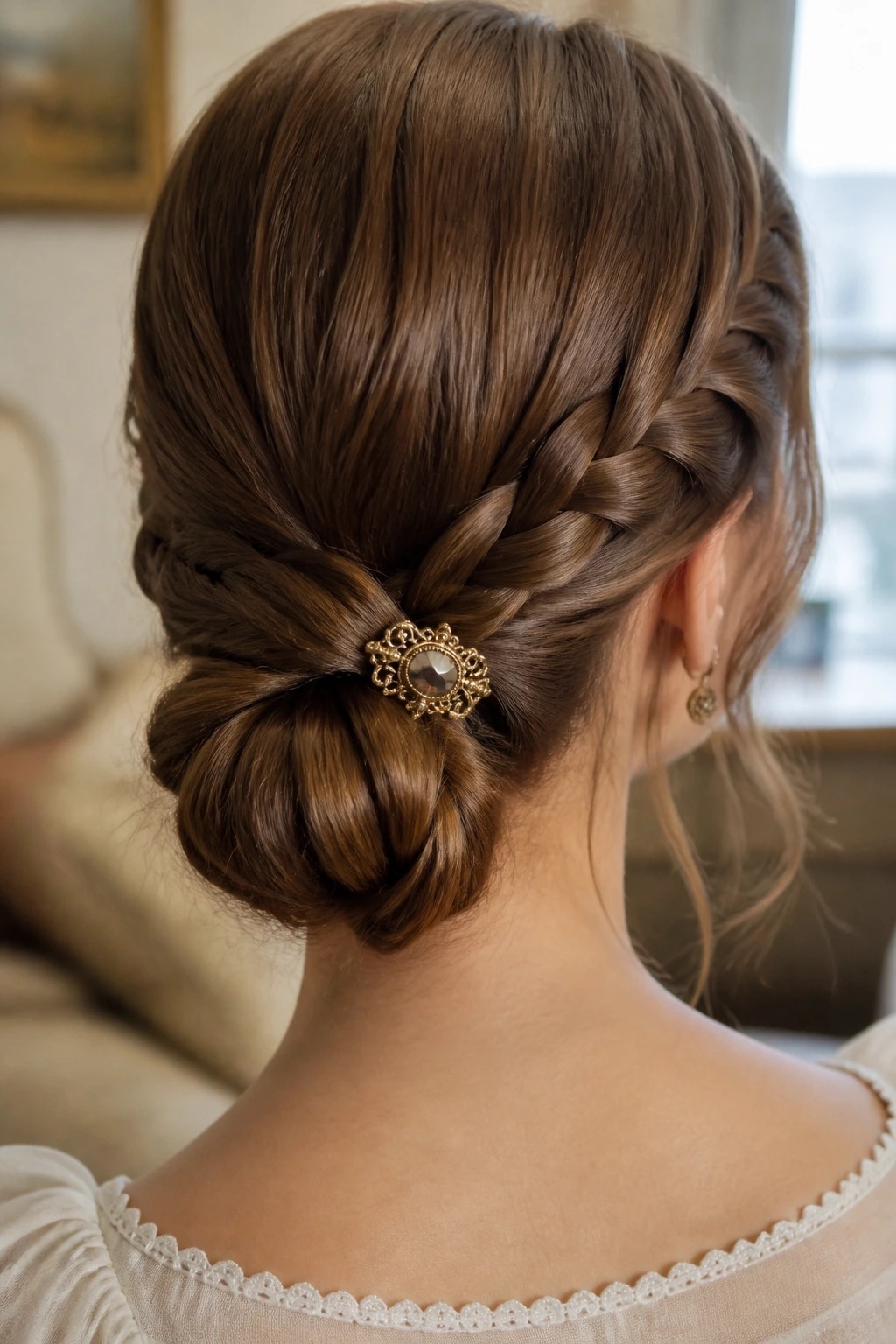
This style involves using a small, vintage-style brooch to anchor a braid that has been wrapped into a low bun or a crown style. By pinning the braid at the intersection point, you don’t just add a decorative element; you create a structural anchor that prevents the entire style from sliding or shifting. It is an ideal way to turn a simple, messy braid into an elegant updo.
12. Transparent Acrylic Clips
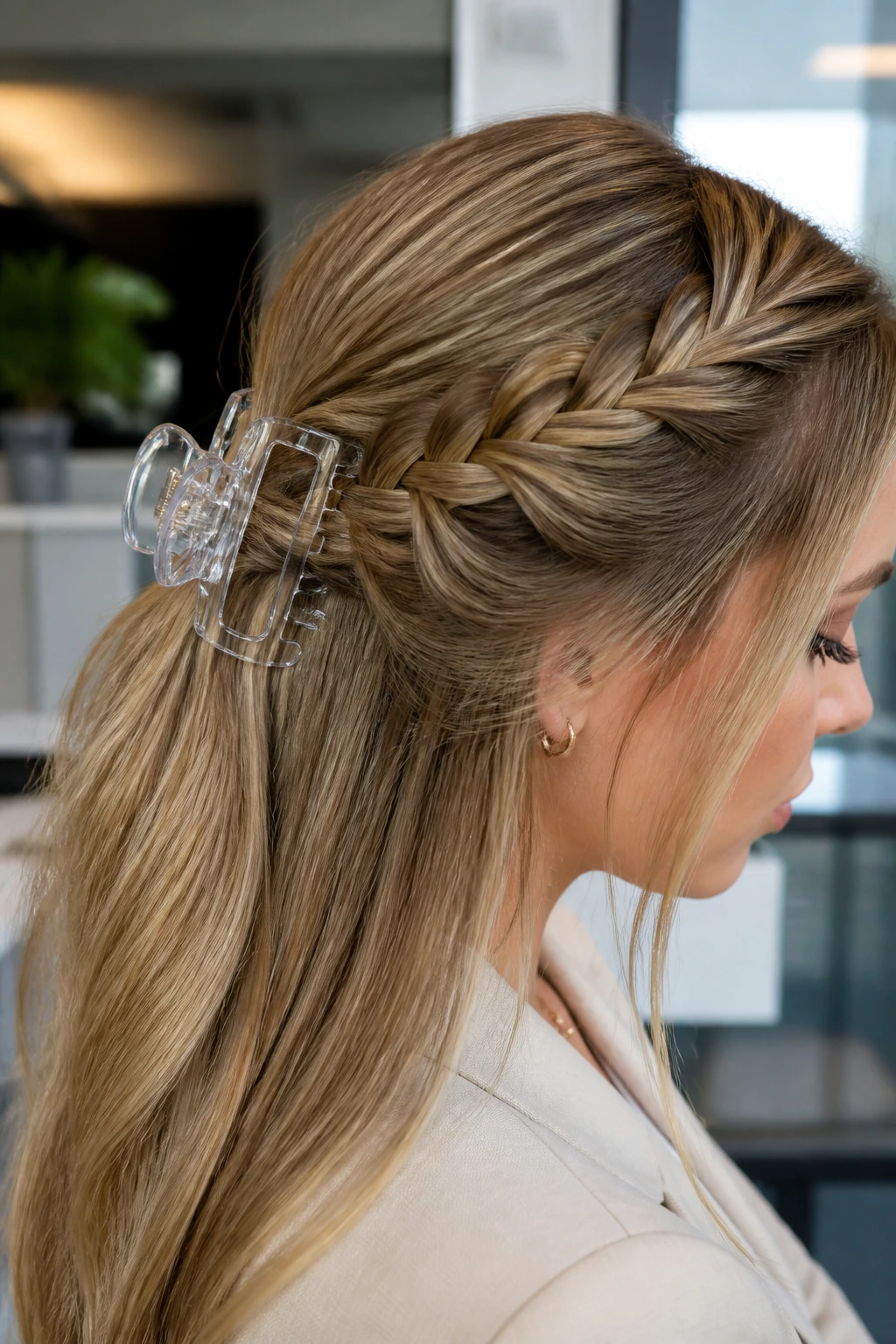
Acrylic clips have made a major comeback and are perfect for a clean, modern aesthetic. They are incredibly lightweight, meaning they won’t pull down on your straight hair, yet they are large enough to act as a statement piece. Try using a clear or tortoiseshell clip to pin back a side-swept Dutch braid for a professional, put-together look that survives long workdays.
13. Braided Leather Tassels
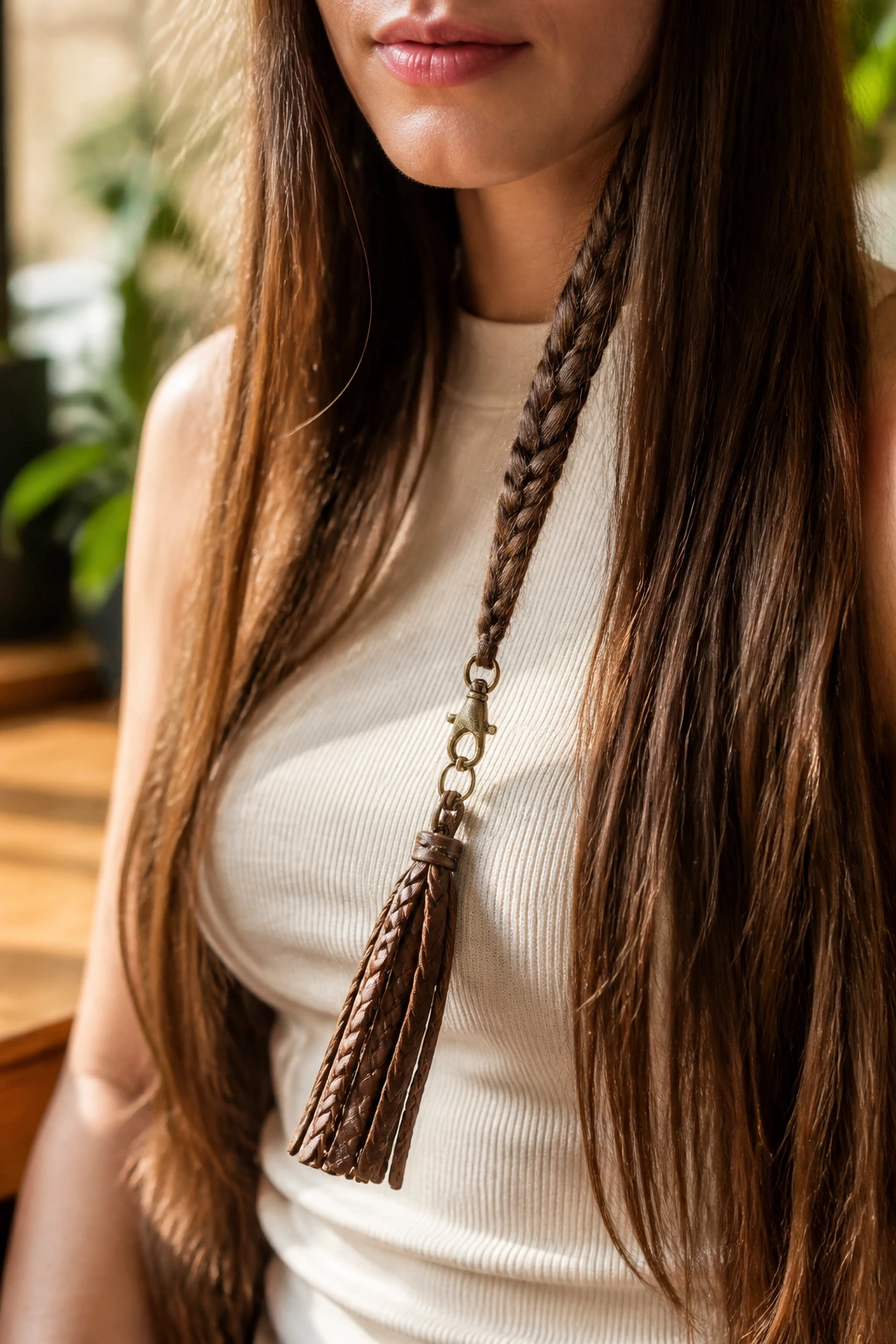
Adding a tassel at the end of a long, single braid provides a sense of movement and volume. Straight hair can sometimes look a bit static, but the swing of a leather or fabric tassel draws the eye downward and creates a beautiful silhouette. You can attach these using a simple lobster clasp that clips onto the elastic holding your braid, making it easy to swap them out depending on your outfit.
14. Bejeweled Bobby Pins
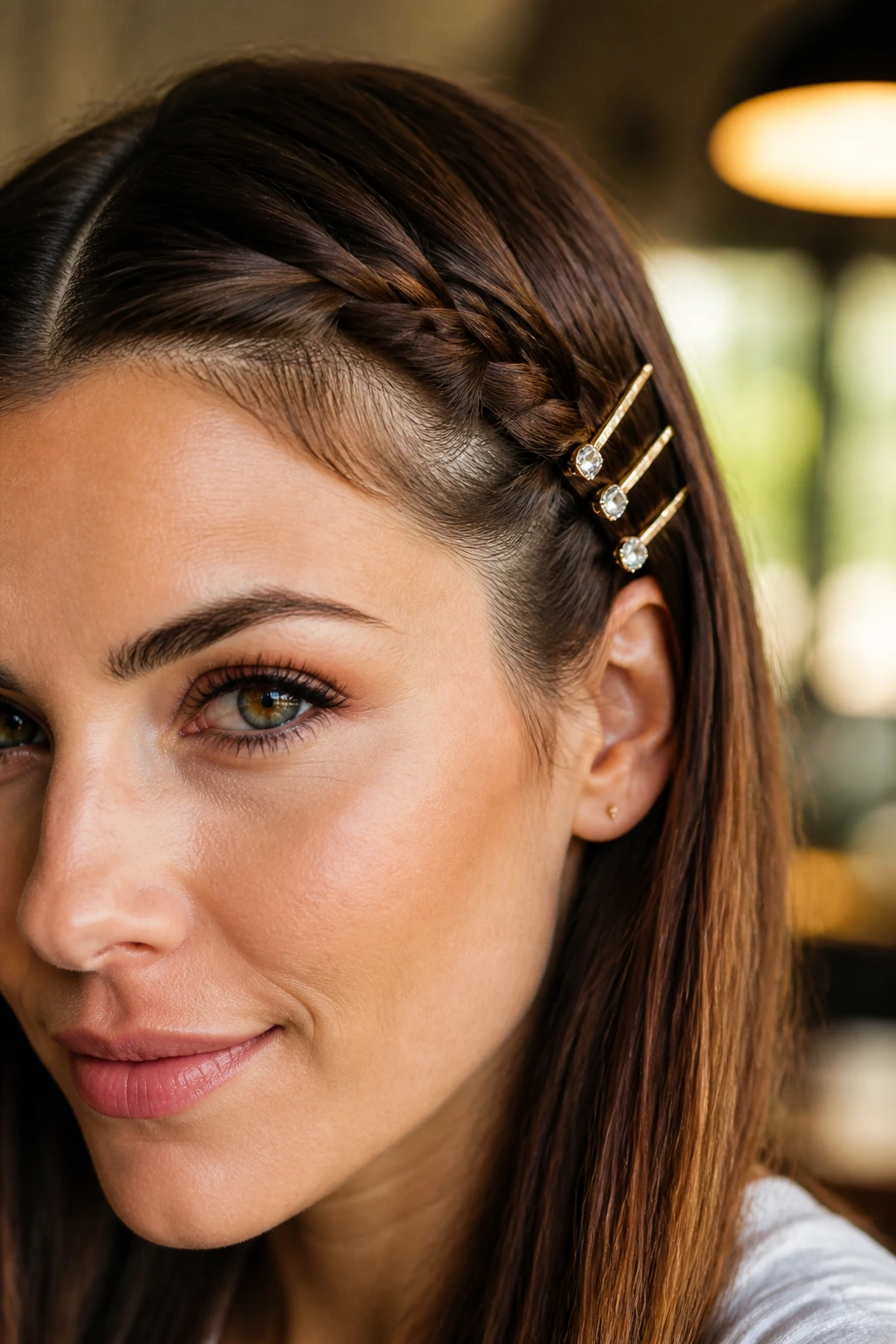
Standard bobby pins are often hidden, but decorative ones should be shown off. Use a line of three or four jeweled pins to secure the start of a braid near your temple. By grouping them, you create a focal point that keeps the hair pulled back firmly away from your face—an essential technique for those with straight hair that loves to fall into the eyes.
15. Fabric-Wrapped Elastic Cuffs
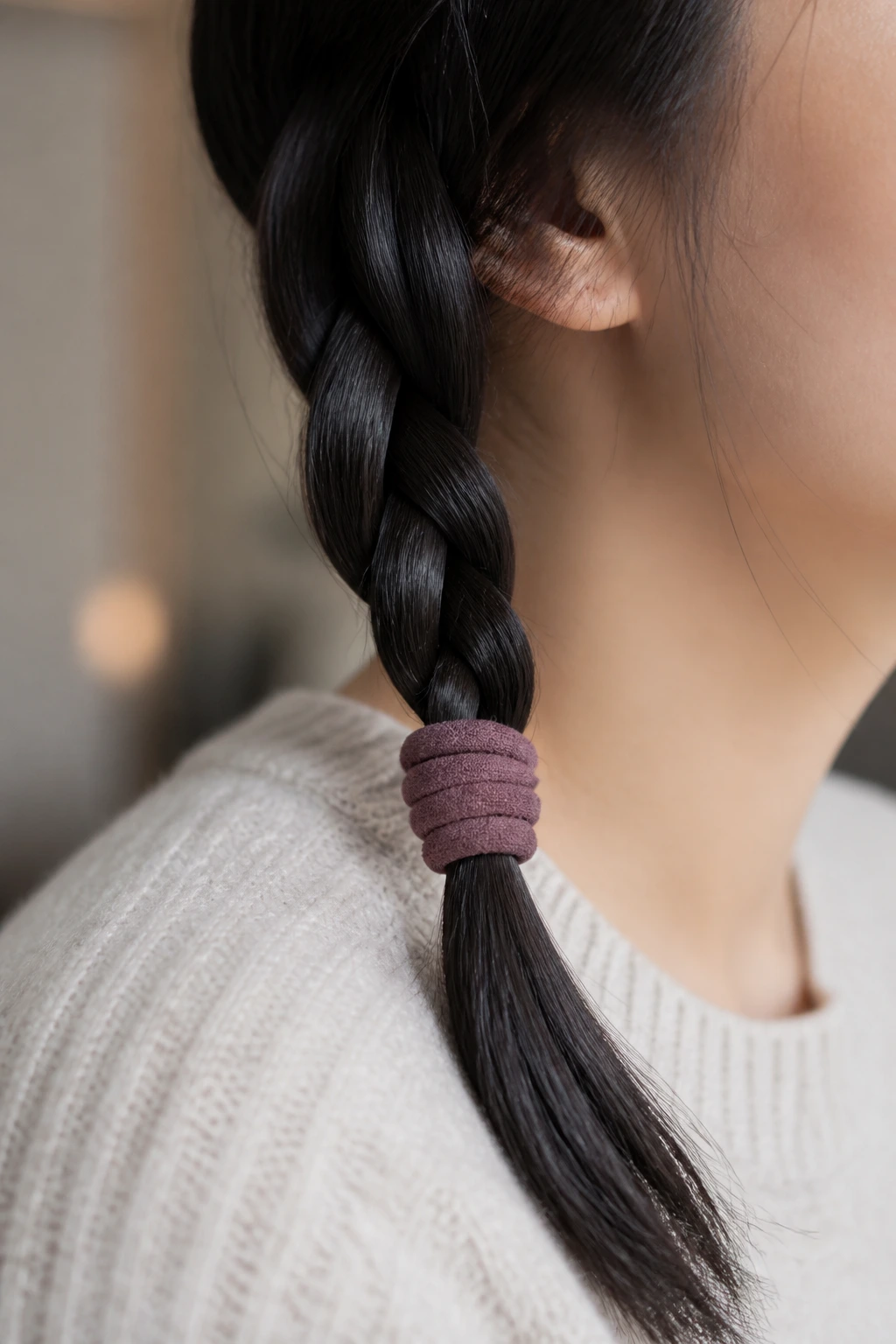
If you are tired of standard hair ties, look for fabric-wrapped cuffs that mimic the look of a solid metal cuff but are much gentler on the hair. These are perfect for hiding the end of a braid while providing a soft, finished appearance. Because they come in various sizes, you can choose one that fits the thickness of your specific braid, ensuring it won’t slip off even if you have finer hair.
16. Floral Vine Headbands
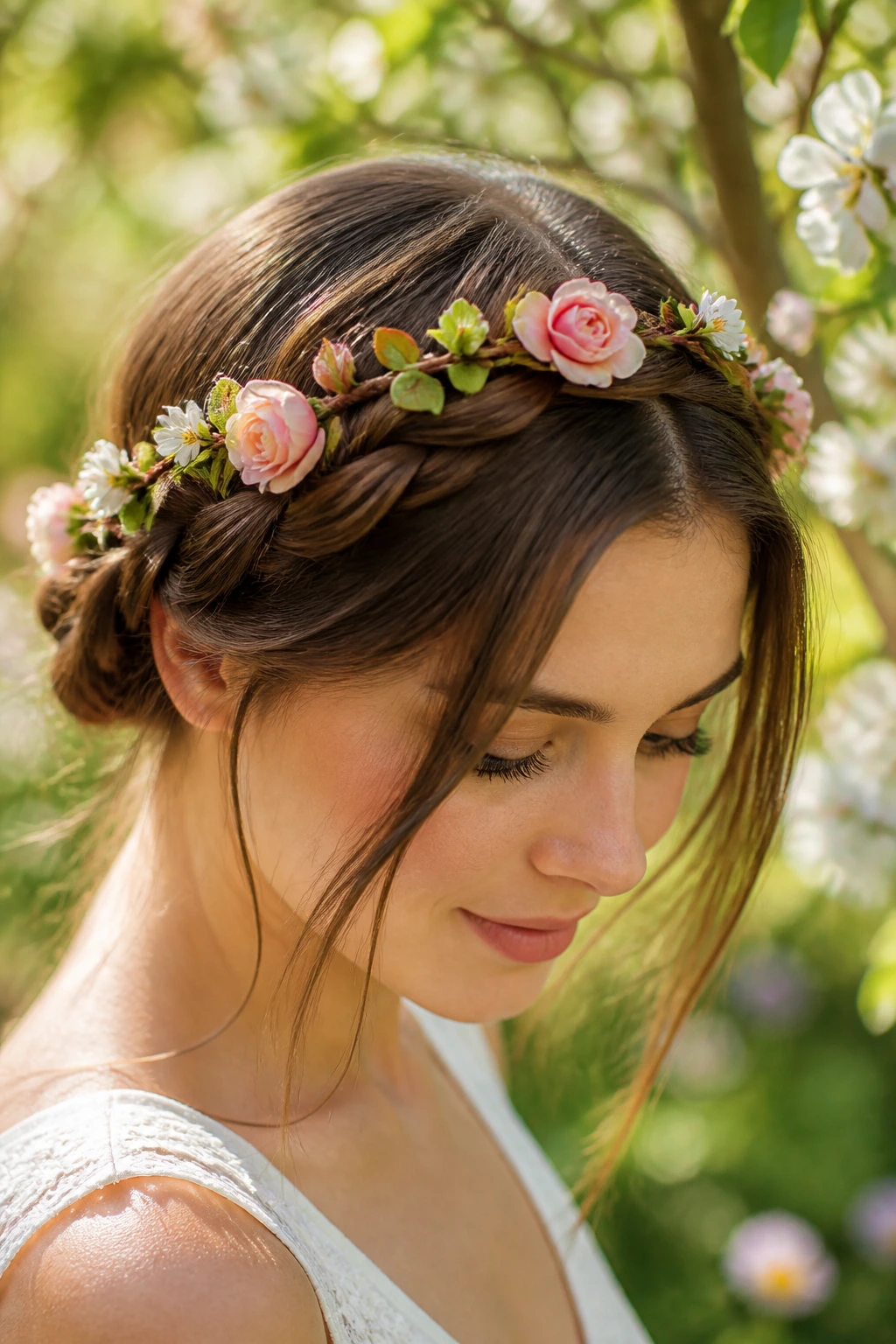
Sometimes the accessory should be the braid itself. A floral vine, which is essentially a long, flexible wire covered in silk flowers and leaves, can be woven into a crown braid. The wire is highly malleable, so you can twist it around your hair as you go. This essentially acts as a skeleton for your braid, giving it the structure and shape that straight hair might otherwise lack.
17. Delicate Silver Chain Clips
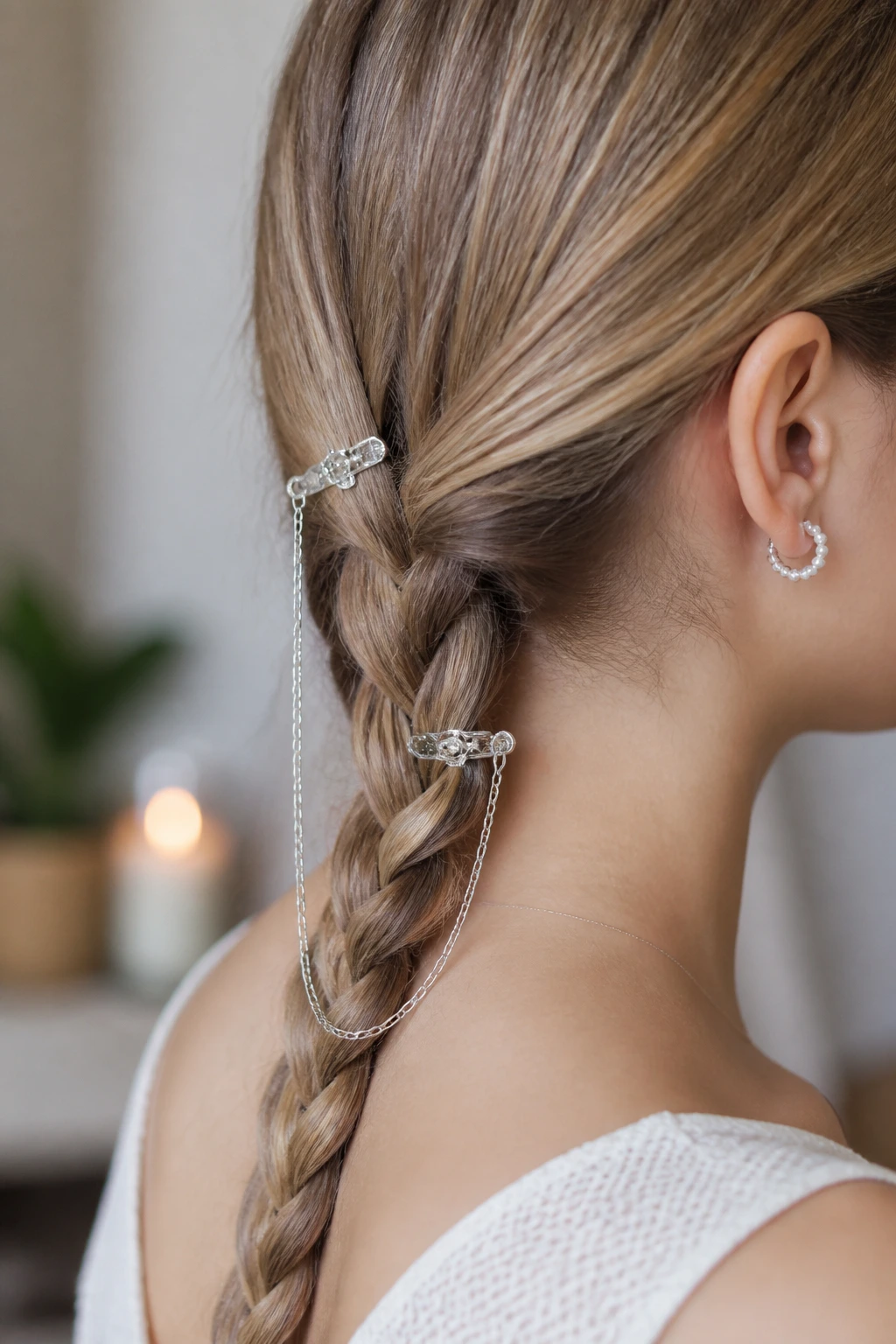
These are two clips connected by a fine silver chain. You can place one clip at the start of a braid near your forehead and the other at the back of the braid, creating a “draped” effect. This look works wonders for straight hair because it keeps the braid centered on your head, preventing the dreaded “drift” where the hair wants to fall off to one side.
18. Decorative Hair Combs
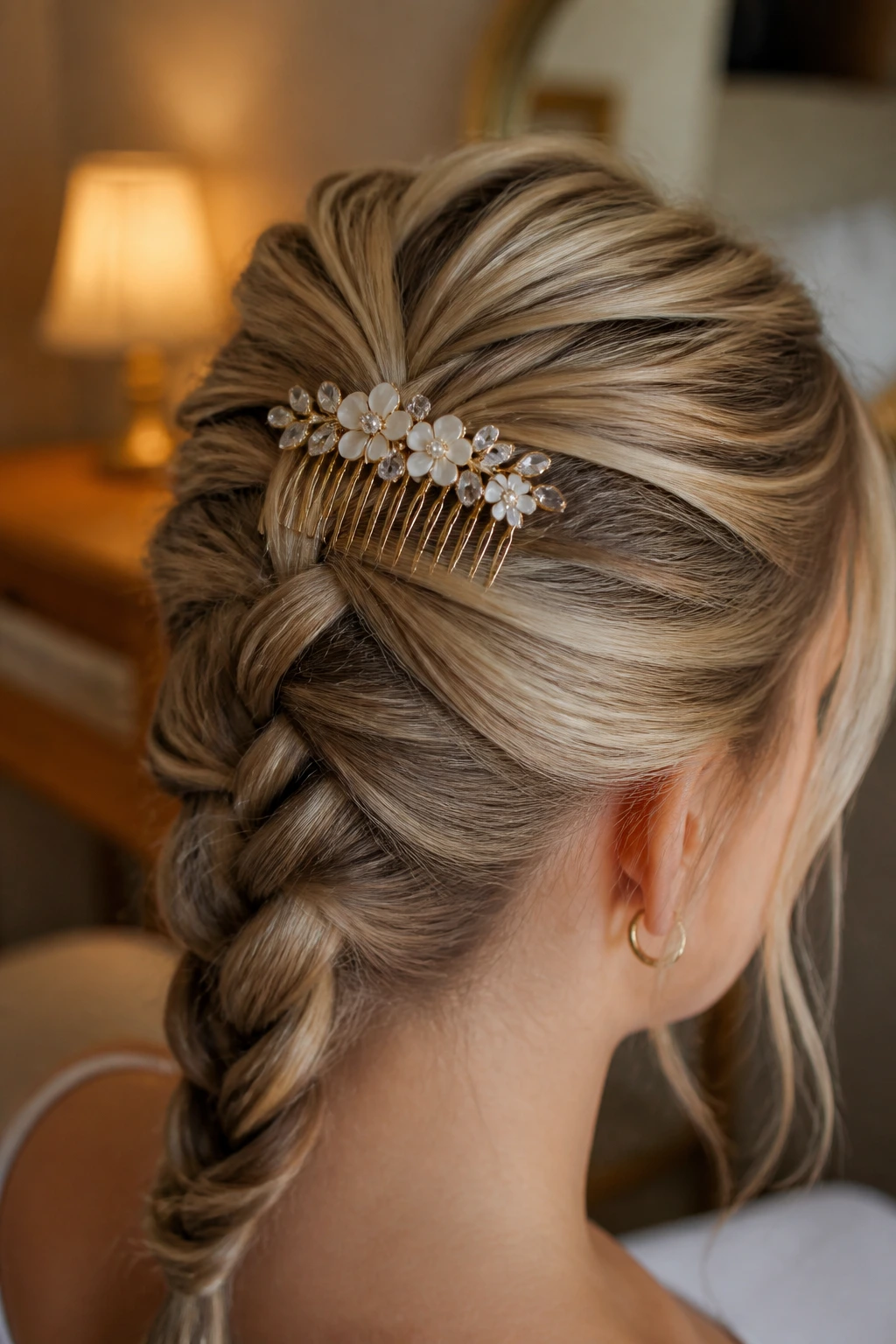
A small hair comb can be inserted into the side of a French braid to give it a little extra “oomph” near the crown. If your straight hair lacks volume, teasing the hair slightly at the root before inserting the comb will keep it from drooping. The teeth of the comb provide a secondary hold, ensuring your style stays tight and secure throughout the day.
19. Corded Tassels with Metal Beads
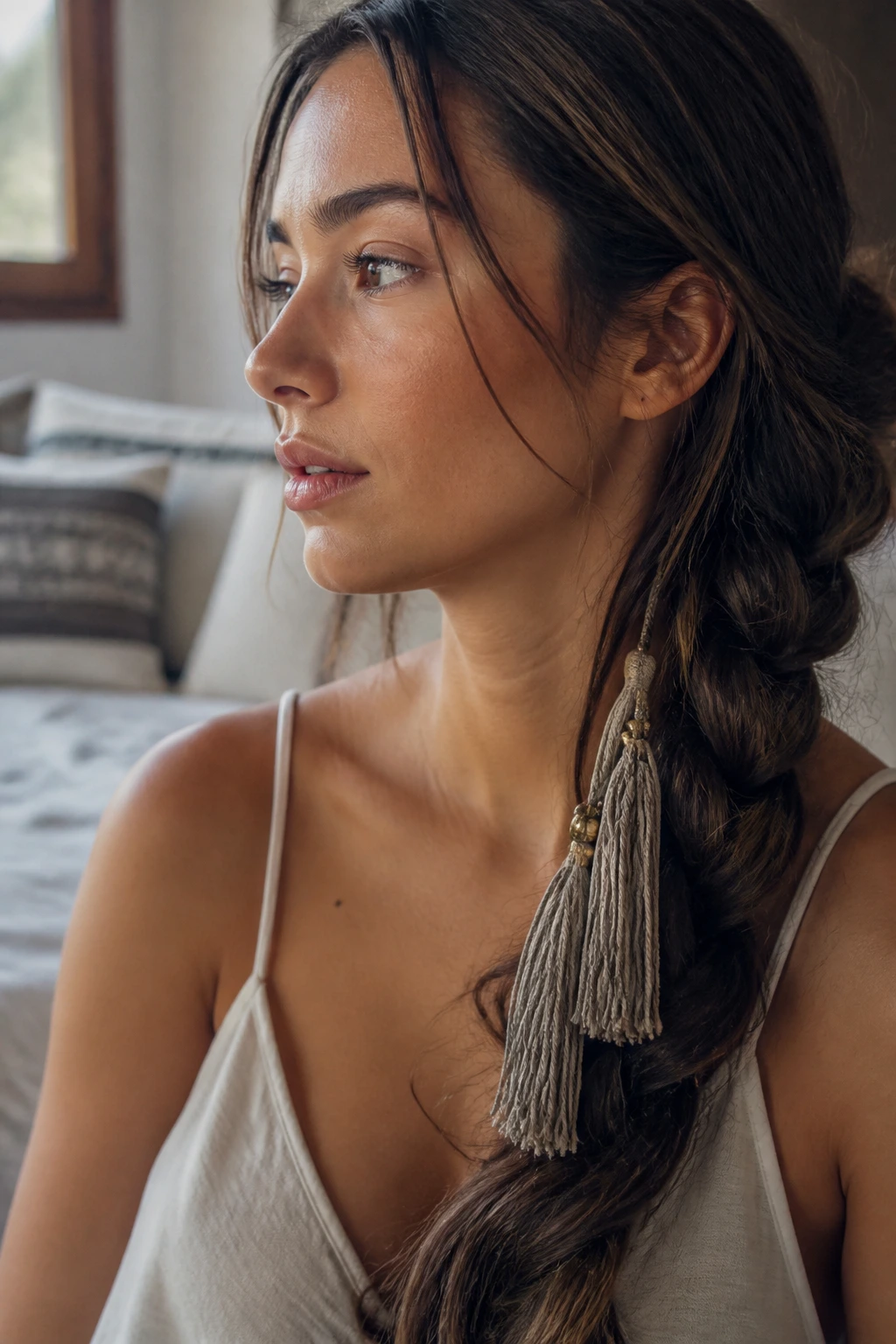
Combining textures creates depth. Using a corded tassel that features small metal beads near the attachment point adds both weight and visual interest. This is a great way to finish off a side-swept braid. The metal beads catch the light, while the soft cord adds a touch of bohemian elegance that contrasts nicely with the sleekness of straight hair.
20. Pearl Barrette Highlights
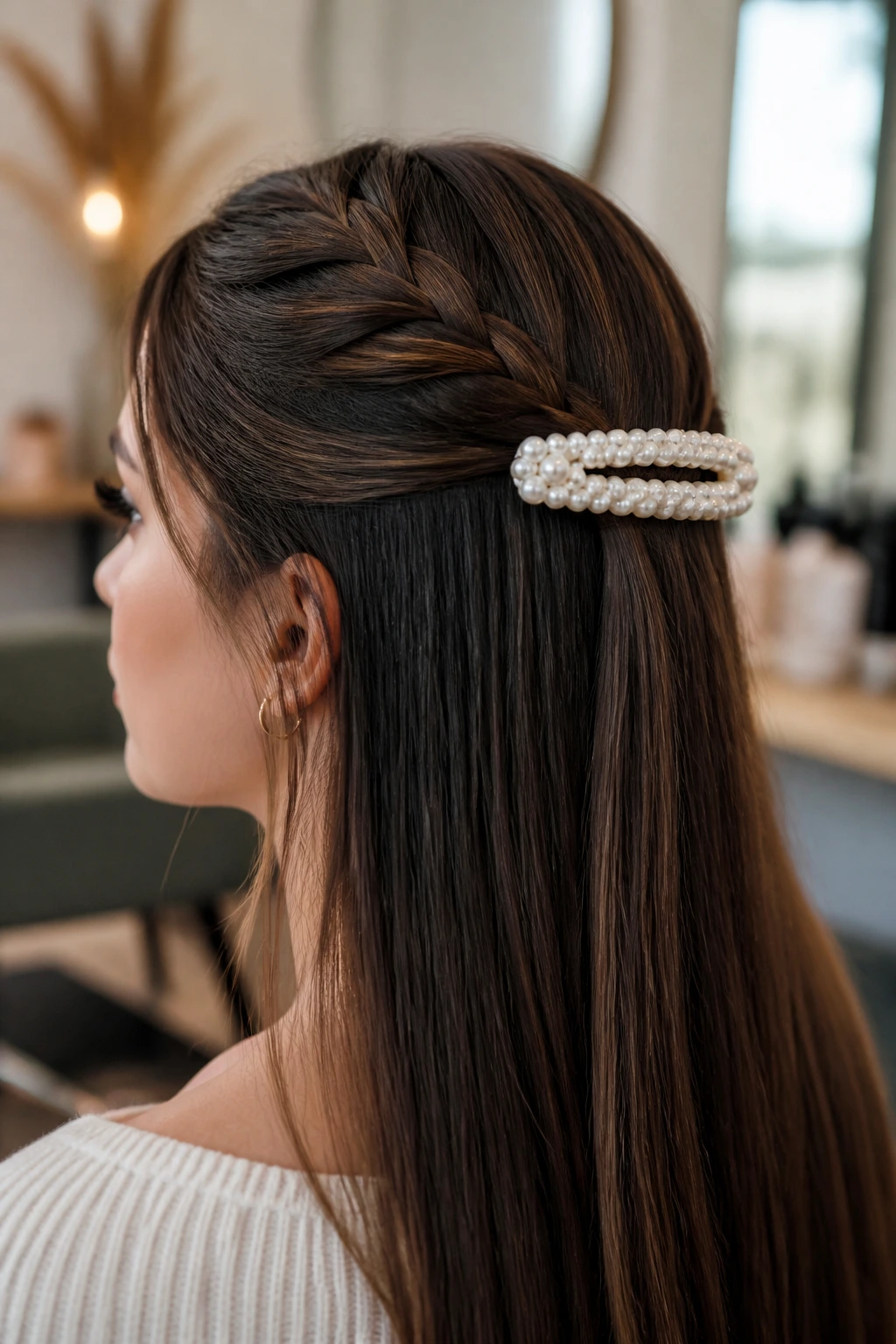
Instead of using pearls one by one, use a large barrette to secure a half-up braid. Barrettes are great for straight hair because they gather a large amount of hair at once and provide a firm, flat hold against the skull. A pearl barrette adds a classic touch, and the flat surface of the clip ensures that your hair doesn’t slip through the grip like it might with a smaller, rounder accessory.
21. Glittery Hair Strands (Tinsel)
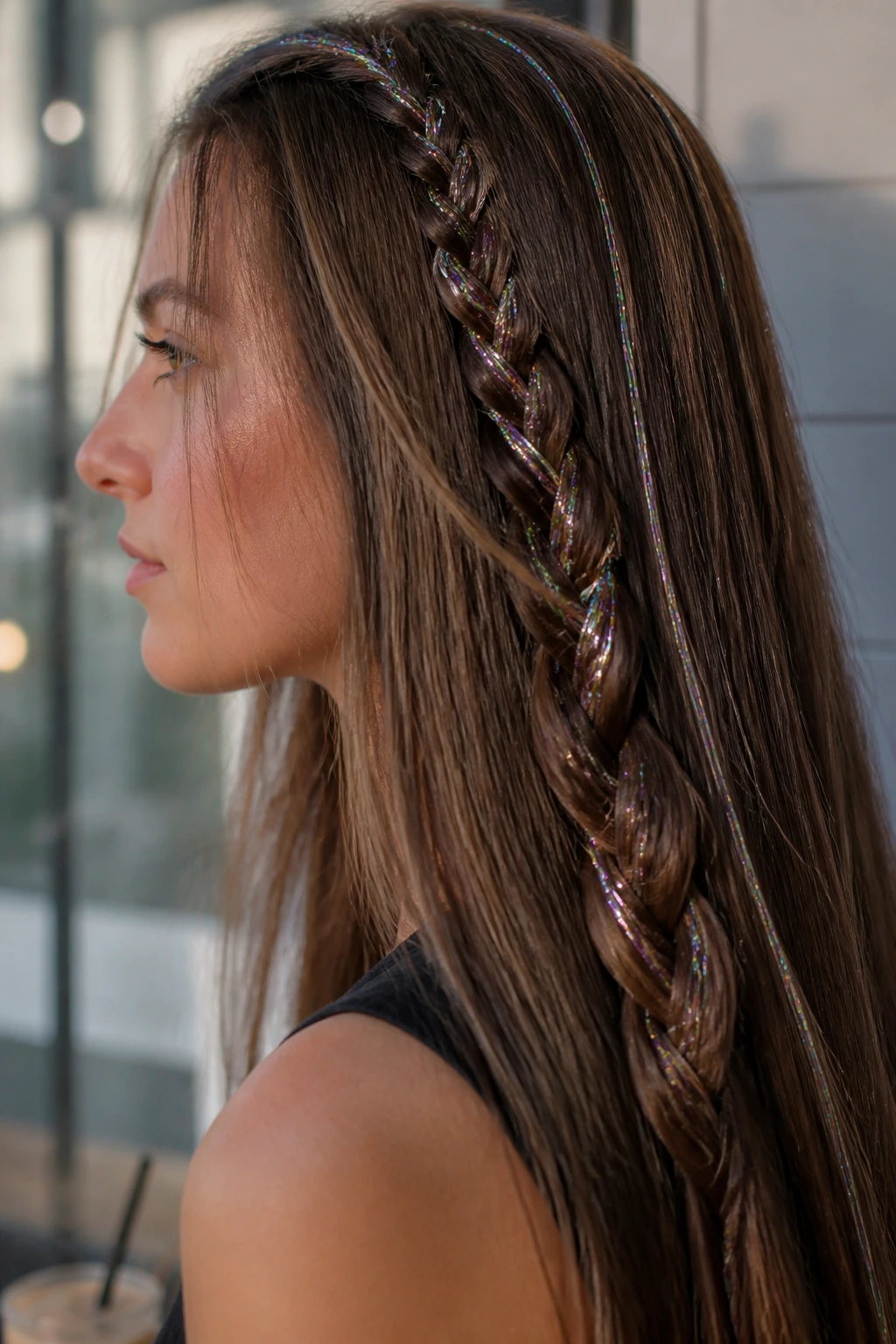
This is a fun, unconventional choice. You can weave synthetic glitter strands into your hair before you braid it. These thin, reflective fibers are virtually weightless and stay put remarkably well on straight hair. When braided in, they catch the light from every angle, making your braid look multi-dimensional and intentionally styled, even if you are just heading to a casual brunch.
22. Wrapped Metallic Thread
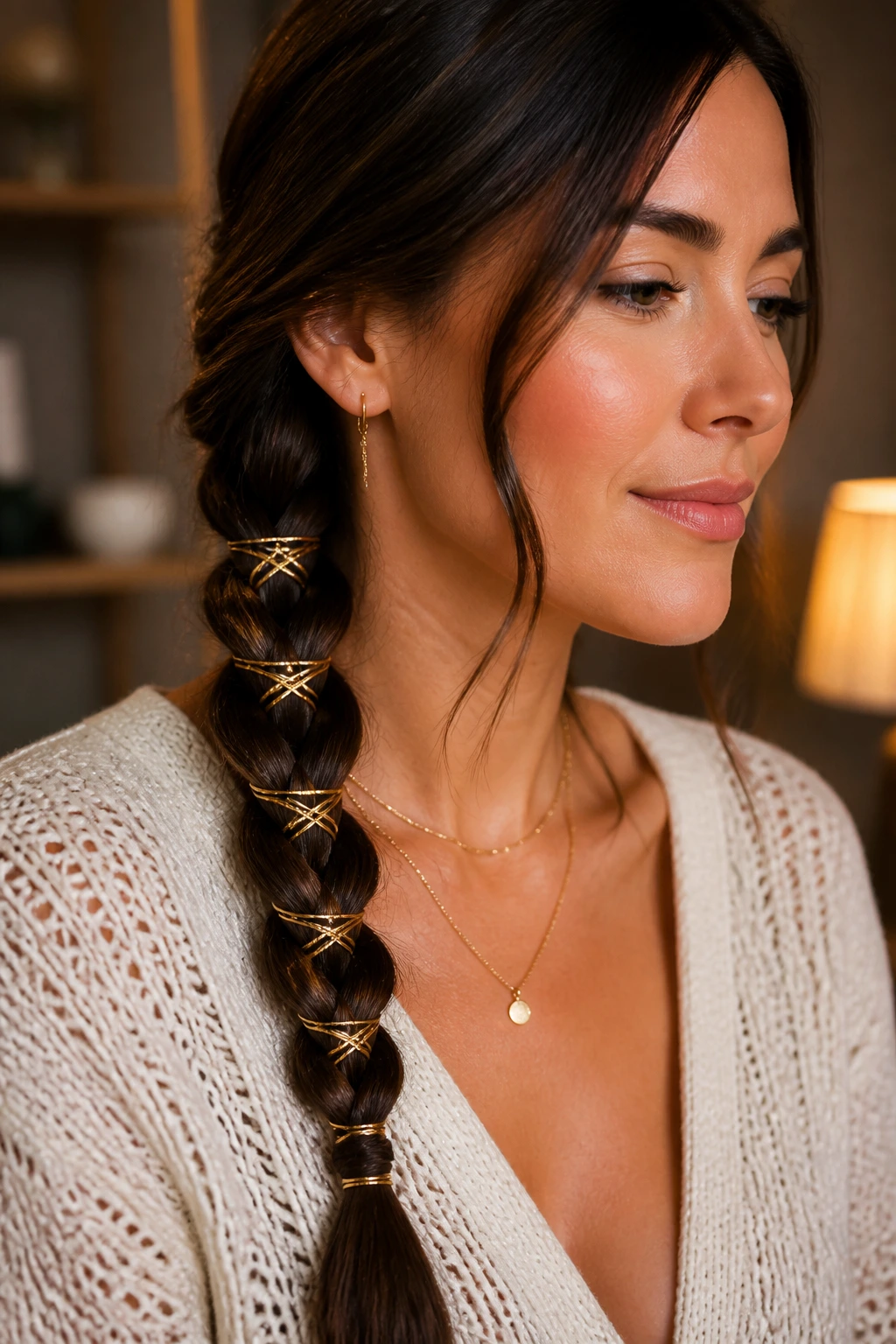
For those who want to commit to a style for a few days, wrapping metallic thread around each section of a three-strand braid creates a striking, corset-like effect. Because you are essentially tying the braid together with the thread, it becomes incredibly secure. This is an excellent technique for straight hair because it eliminates the slip factor entirely.
23. Star-Shaped Snap Clips
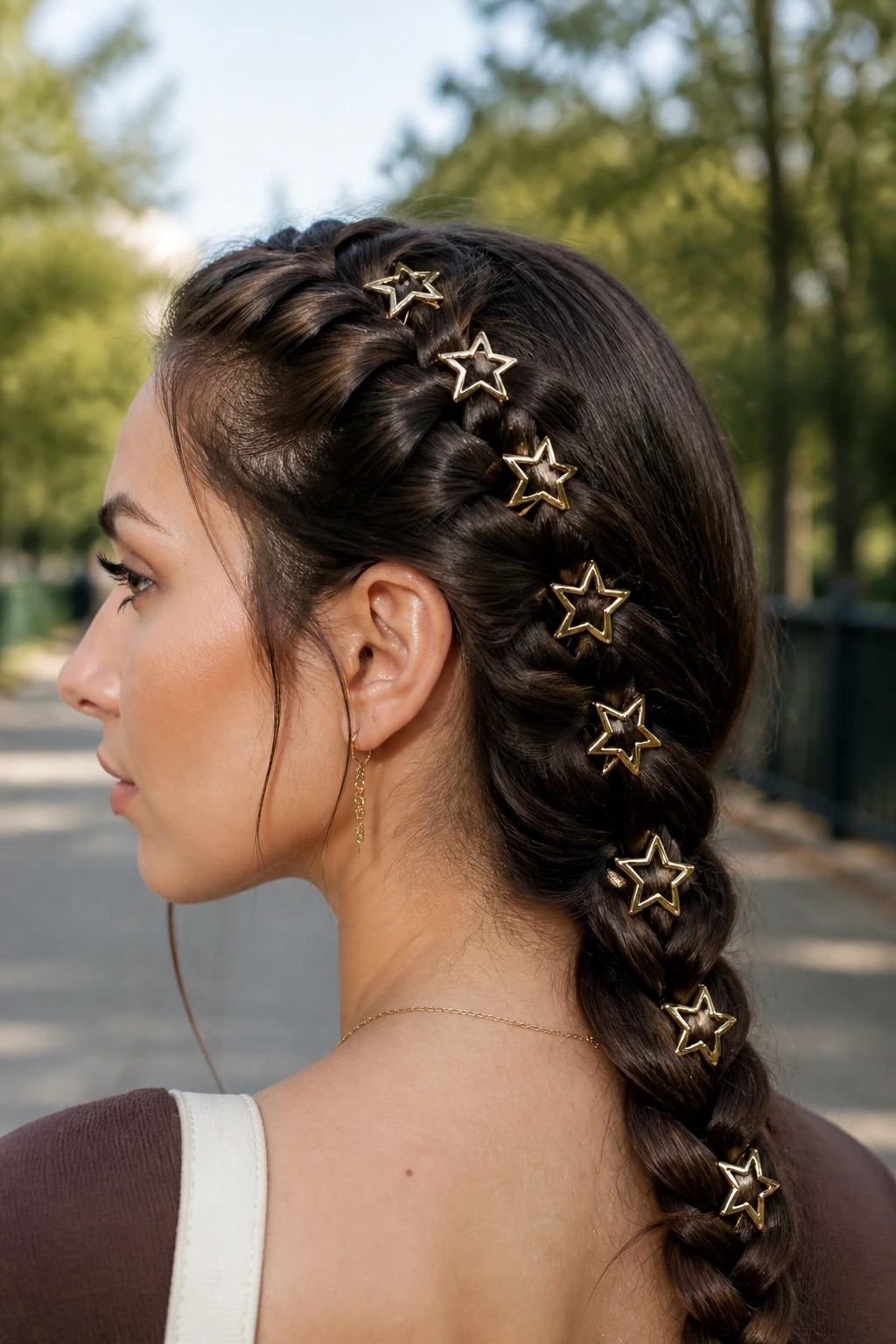
Snap clips are the most reliable accessory for fine, straight hair because they offer a definitive “lock” that doesn’t rely on hair friction. Star-shaped clips in chrome or gold can be snapped along the length of a braid to break up the pattern. They add a bit of structure to the braid loops and ensure that the braid doesn’t unravel as the day moves along.
24. Miniature Butterfly Clips
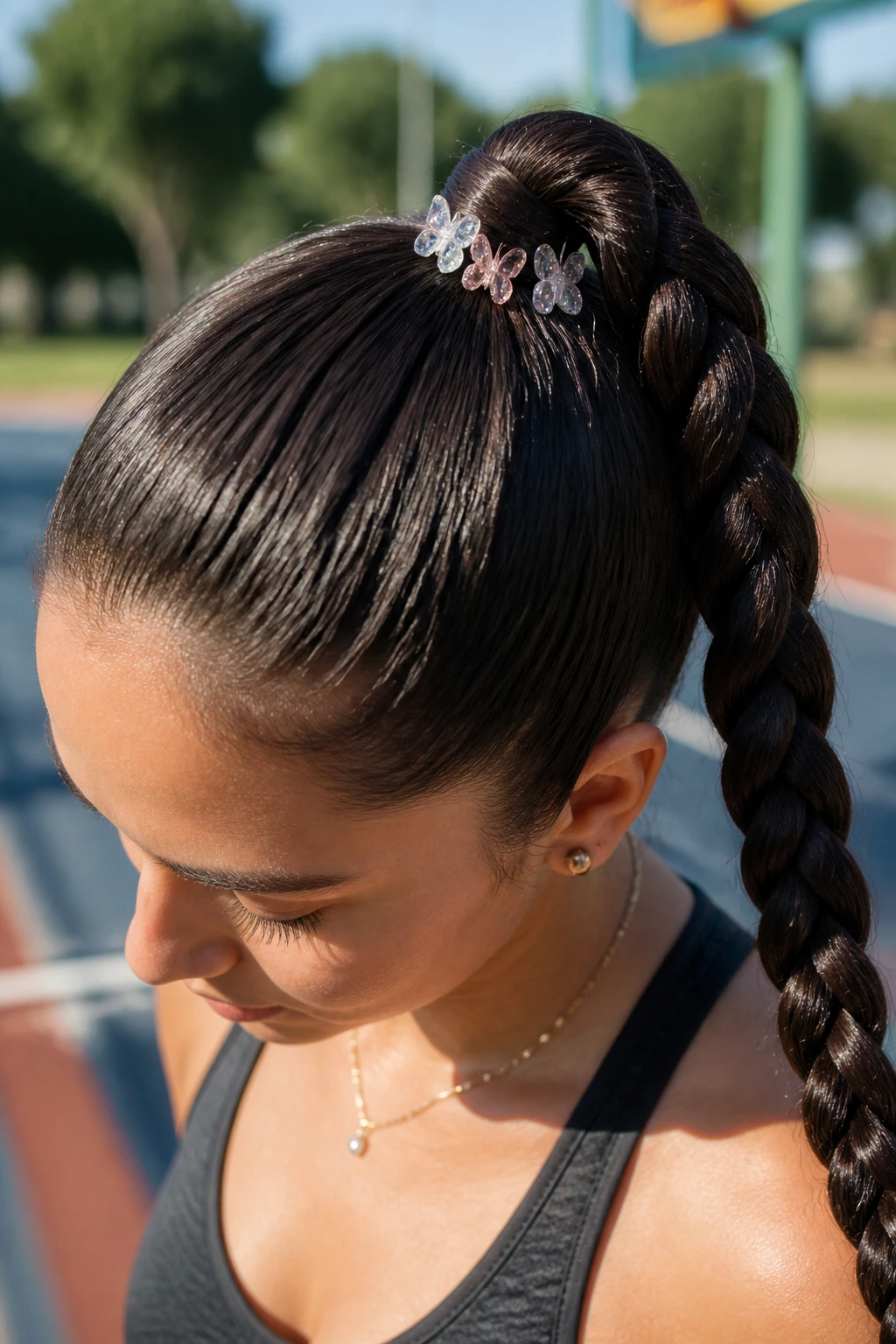
The nostalgia factor is high with this one, but they are also incredibly practical. These small, plastic clips can be used to pin back layers that want to escape from your braid. They are lightweight and provide a very secure hold on thin or straight hair. Using a few of them at the base of a high ponytail braid can turn a basic workout look into something fun and spirited.
25. Large Ribbon Bows
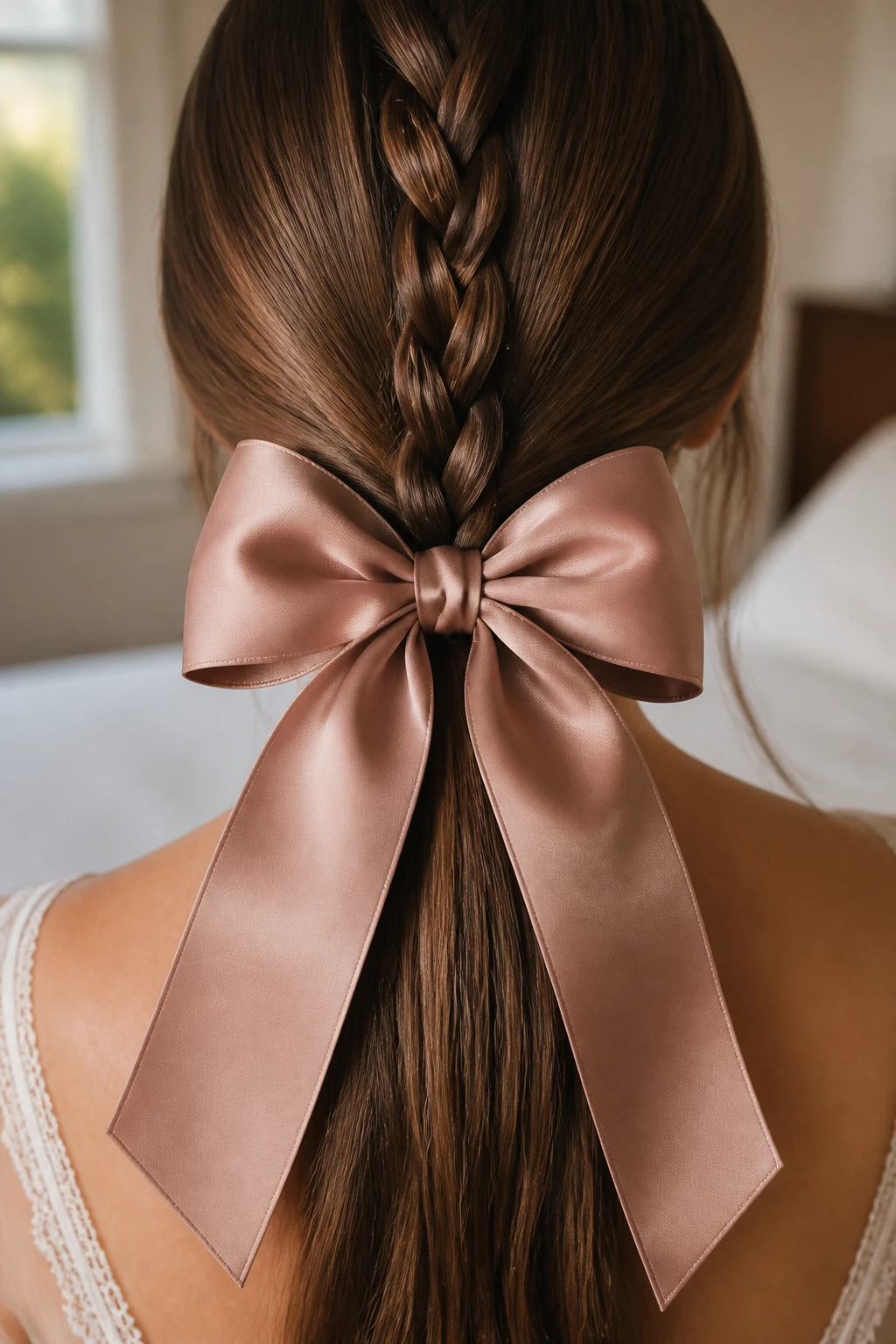
A large bow attached to a barrette is the ultimate way to finish a braid. It provides a heavy, stable base at the nape of the neck or the crown of the head. By anchoring the braid with a barrette-style bow, you prevent the weight of the hair from pulling the braid loose. It is a simple, effective solution that also happens to look timeless and elegant, regardless of the occasion.
Final Thoughts
Working with straight hair requires a shift in mindset: you aren’t fighting your hair’s texture; you are simply giving it the tools it needs to succeed. Whether you opt for the structural support of a leather cord or the delicate charm of pearl-studded pins, every accessory serves a purpose beyond mere decoration. The best approach is to experiment with different weights and textures to see what feels most secure for your specific hair density.
Remember, the goal of adding accessories is to create a style that feels like it belongs on your head all day, not one that slides out by noon. Start with the basics—a bit of texture spray and a firm elastic—and then layer on your favorite pieces. Once you find that perfect balance between style and utility, you will find that straight hair is actually one of the most versatile canvases for intricate, beautiful, and secure braided designs.