

A round face often comes with a natural, youthful glow, but it can also present a unique set of challenges when choosing a hairstyle. The goal with a bob is typically to find that perfect balance—something that elongates your features, draws the eye downward, and provides just enough edge to cut through the softness of your jawline. An inverted bob is perhaps the most effective tool in any stylist’s arsenal for achieving this. By keeping the hair shorter in the back and allowing it to graduate into longer, sharper lengths near the chin, you create a beautiful, angular frame that works with your face shape rather than against it.
Choosing the right cut is about more than just aesthetics; it is about how the hair interacts with your bone structure. If you have ever felt that a traditional, blunt-cut bob makes your face look wider, the inversion is your answer. It is the architectural shift from “soft” to “structured” that makes all the difference. Whether you want something dramatic, soft, or incredibly low-maintenance, there is an inverted look that will feel like it was tailored specifically for you.
1. The Classic Graduated Sharp Inverted Bob
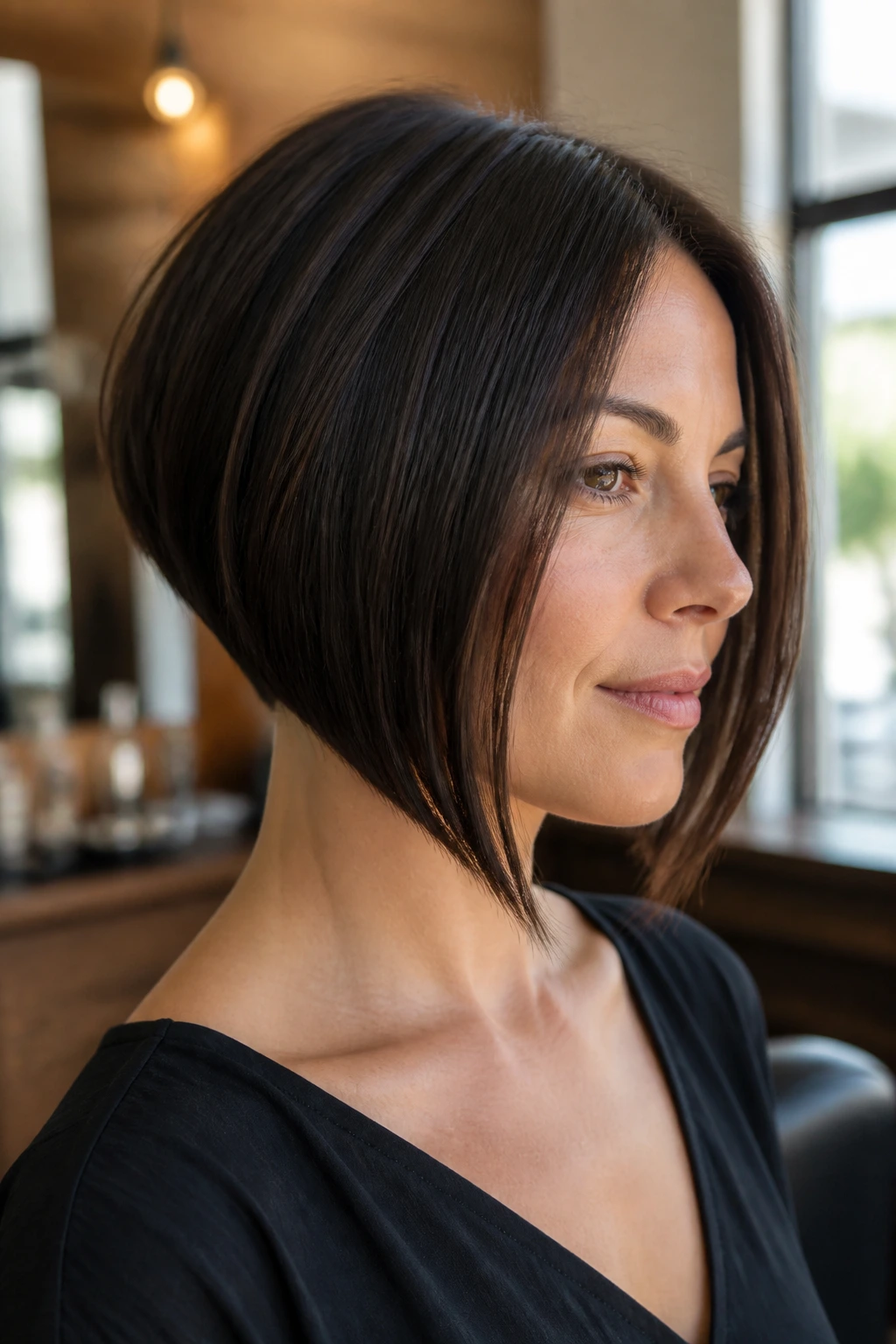
This cut relies on a steep angle that starts at the nape of the neck and creates a sharp, clean line as it moves toward the chin. The severity of this angle is exactly what provides the slimming effect you are looking for. Because the hair is significantly longer at the front, it frames your cheeks and jaw, drawing the gaze vertically.
Why This Style Works for Round Faces
The primary benefit here is the creation of a visual “V” shape. While a round face lacks sharp angles, this haircut provides them by default. When your hair hits your collarbone or jawline at an angle, it breaks up the circular periphery of your face.
Styling for Maximum Impact
- Use a high-quality smoothing cream while the hair is damp to ensure the ends look crisp.
- A flat iron is your best friend with this look; pass it over the front sections to emphasize that sharp diagonal line.
- Avoid curling the ends inward, as this can add bulk to your jawline; instead, go for a sleek, straight finish.
Pro tip: Keep the nape hair trimmed consistently—every four to five weeks—to maintain the intensity of the inversion, as growth here can quickly make the back look bulky.
2. Textured Tousled Inverted Bob
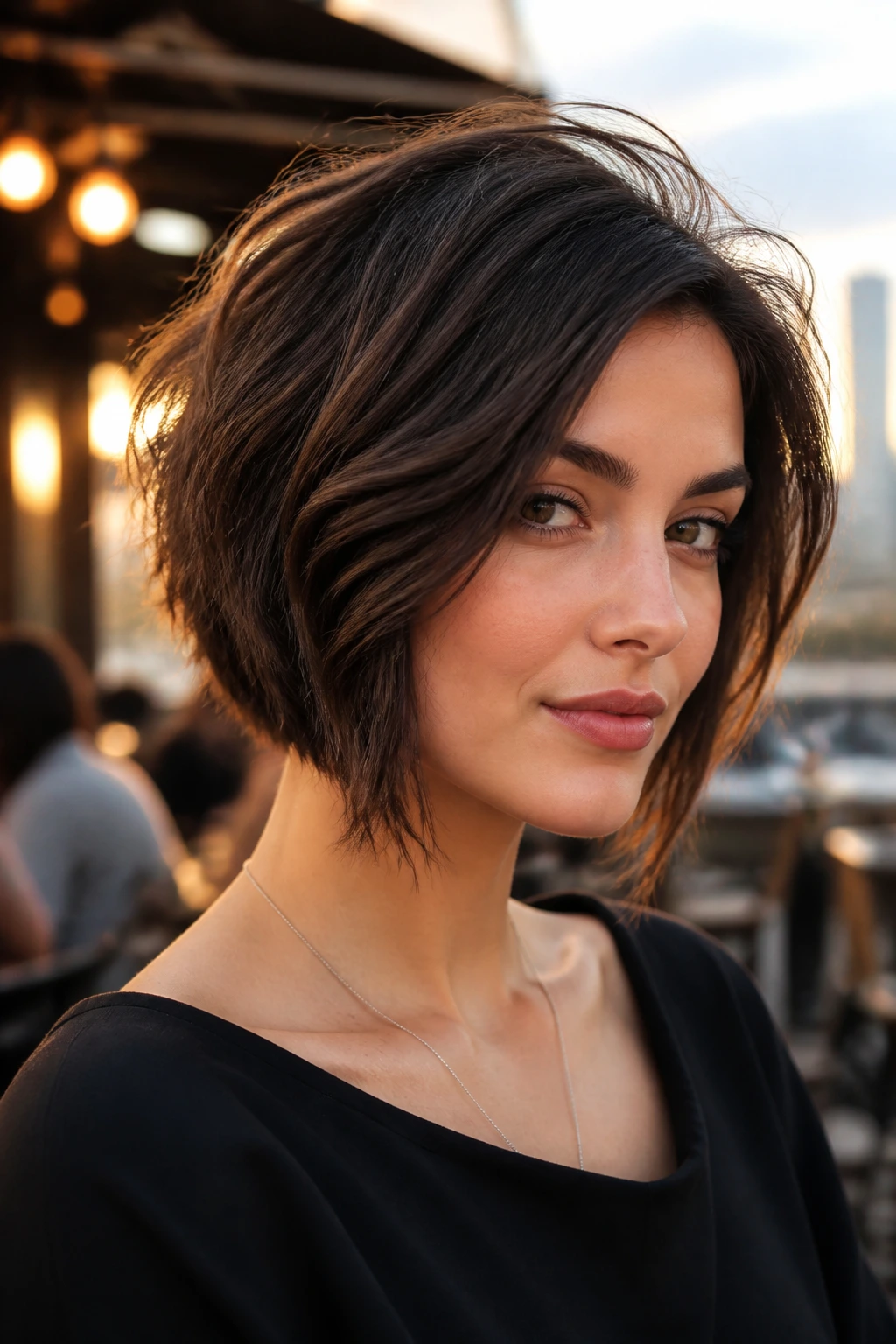
Not everyone wants a razor-sharp, polished look. Sometimes, you want movement and a bit of “undone” energy. This version of the inverted bob incorporates long layers throughout the crown, allowing the hair to fall with a bit of grit and volume.
How to Achieve the Texture
- Ask your stylist for “point cutting,” which thins out the ends without losing the structure of the inverted shape.
- Use a texturizing sea salt spray while blow-drying to encourage natural waves.
- Focus on lifting the hair at the roots to add height; height at the top of the head naturally elongates the appearance of a round face.
The Best Hair Types for This Cut
This look is particularly effective for those with wavy or medium-thick hair. If your hair is stick-straight, you might need a curling wand to add a few loose bends, but the effort is worth the breezy result. It takes the “stiffness” out of a classic bob, making it feel modern and effortless.
3. The Angled Bob With Deep Side Part
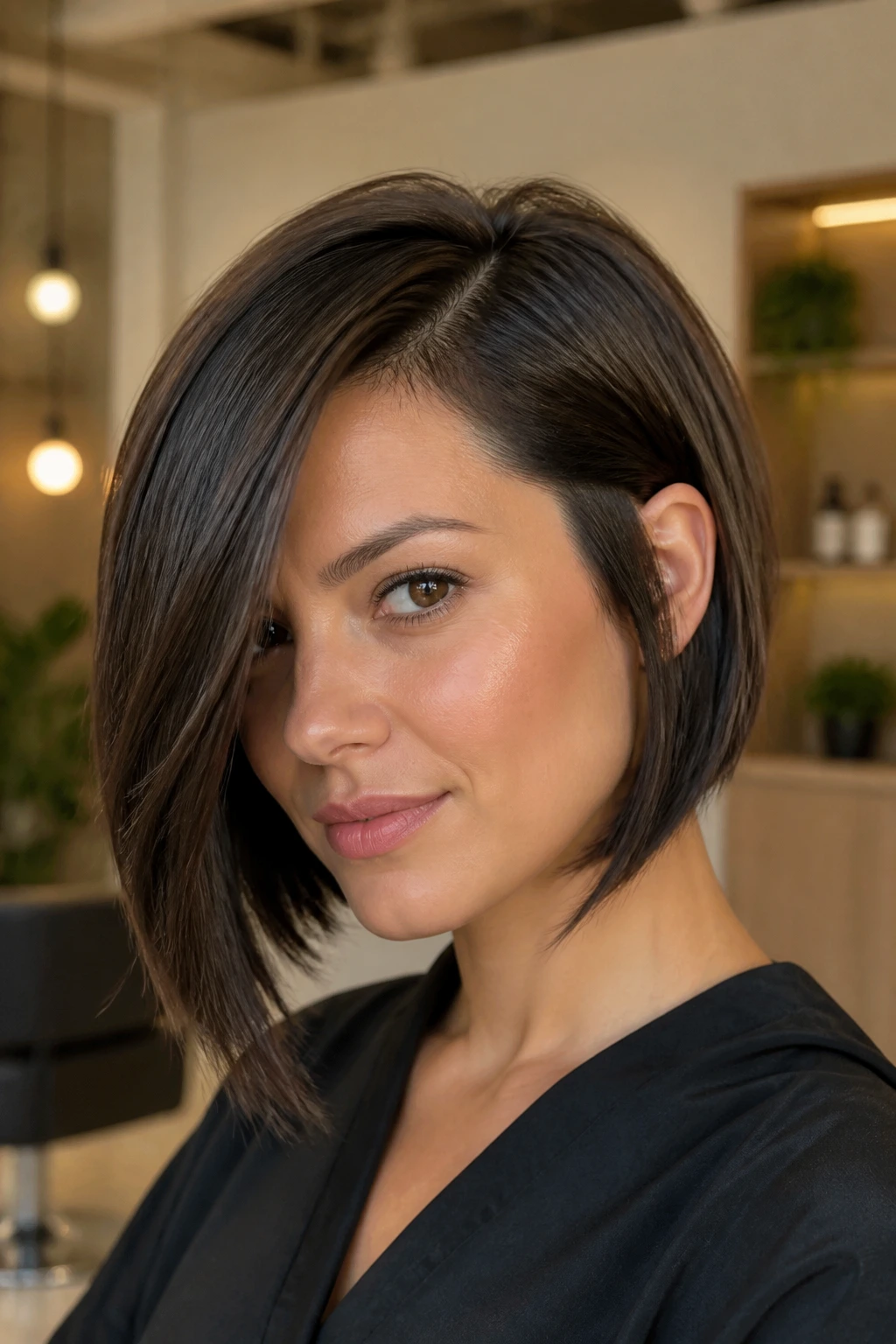
If you have a round face, the center part is rarely your friend. It tends to highlight the width of your cheeks. By shifting to a deep side part, you create an immediate diagonal line across your forehead, which interrupts the symmetry and makes the face appear more oval.
Why the Side Part Changes Everything
A side part creates asymmetry. In the world of hair styling, asymmetry is one of the most powerful ways to distract from a round face shape. When combined with the natural inversion of the bob, you get a double-dose of elongation. The longer side of the bob acts like a curtain, gently skimming over one cheekbone to narrow the appearance of the face.
Daily Maintenance Notes
- Use a tail comb to create a sharp, clean part; a messy part won’t provide the same structural benefit.
- If you find your hair flops over, use a tiny amount of root-lifting powder at the parting to give it a bit of “staying power.”
- This style pairs beautifully with bold glasses, as it doesn’t compete for attention around the eyes.
4. The Stacked Inverted Bob With Nape Undercut
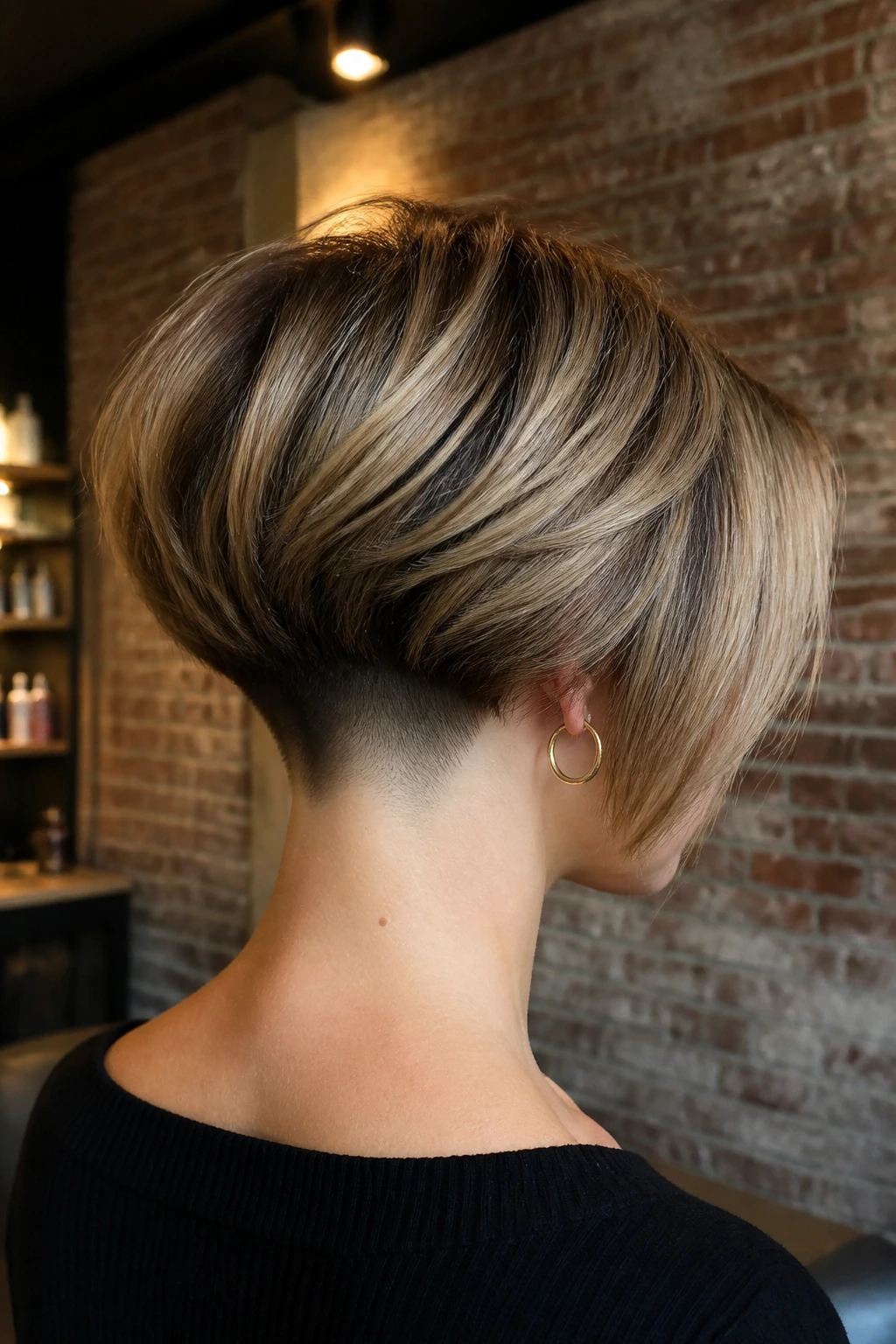
For those who want to commit to a truly architectural look, the stacked bob is the gold standard. This involves shaving or tapering the hair at the very nape, allowing the layers above to sit on top of one another. This creates a rounded “shelf” of hair in the back that provides incredible volume.
The Visual Benefit of Stacking
By creating massive volume at the back of the head, you draw the eye upward and toward the back, rather than directly at the fullness of the cheeks. It balances the face perfectly, especially if you have a slightly shorter neck, as the exposed nape provides a sense of elongation.
Important Considerations
- This style requires a stylist who is confident with clippers or fine-toothed thinning shears.
- Because of the stacked nature, your hair will need to be thick enough to support the layering; if your hair is very fine, talk to your stylist about how to fake the volume with product.
- It’s bold, it’s dramatic, and it’s arguably the easiest style to grow out because it maintains its shape so well over time.
5. Sleek Inverted Bob With Face-Framing Fringe
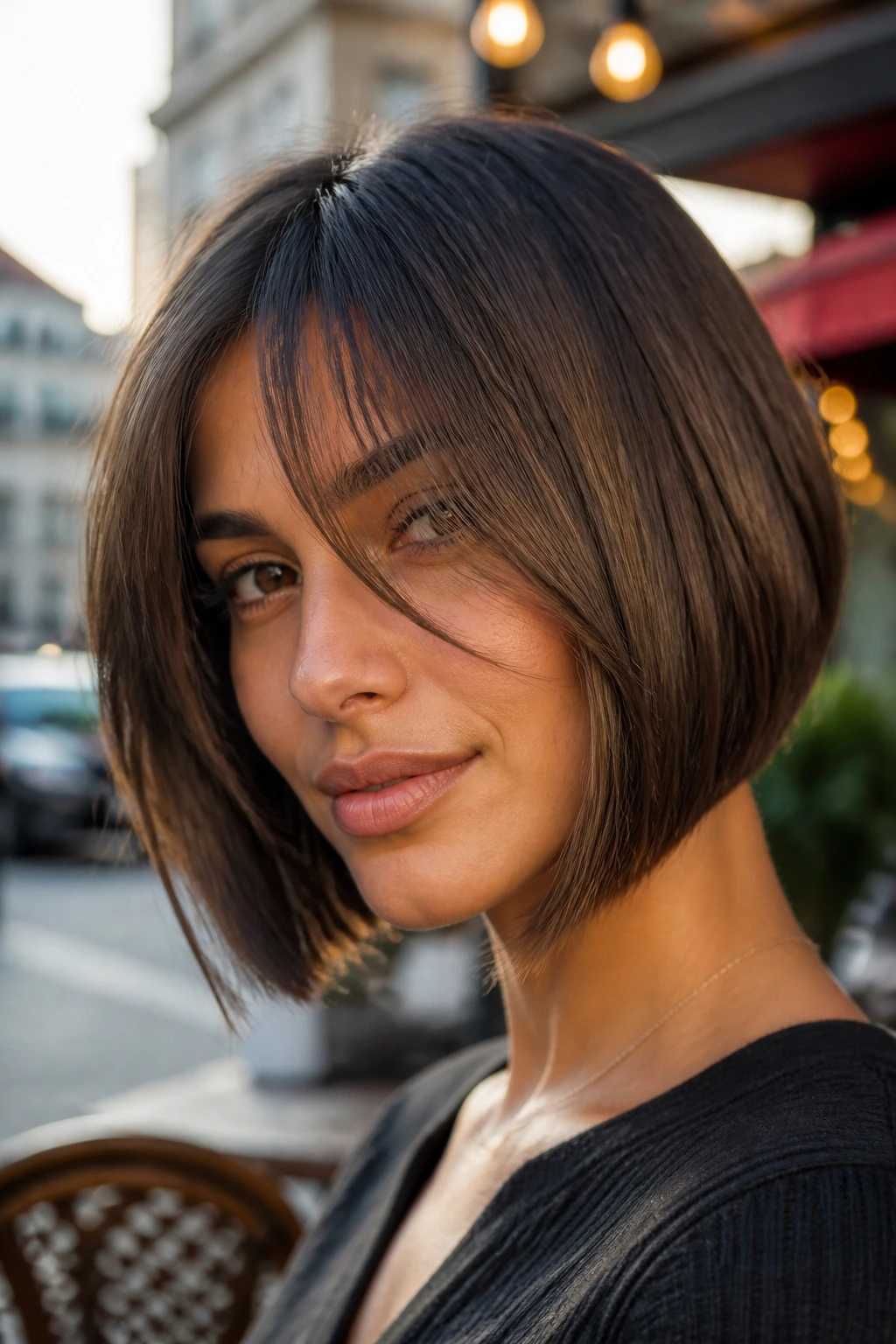
Adding a fringe to an inverted bob can be tricky, but when done right, it can be life-changing for round faces. The key is to avoid blunt, thick bangs that sit straight across the forehead—those will only shorten your face further. Instead, go for long, wispy curtain bangs that sweep off to the side.
Why Curtain Bangs Are the Solution
Curtain bangs allow for that essential diagonal line that leads the eye toward the chin. They soften the forehead while keeping the focus on your eyes and lips. When these bangs blend into the longer front pieces of your inverted bob, the effect is a seamless frame that pulls the entire look together.
How to Style Your Fringe
- Use a round brush while blow-drying, pulling the hair up and away from your face to create a “flick” effect.
- Don’t over-spray; you want your bangs to move freely with you throughout the day.
- If you have an active lifestyle, these can be tucked behind your ears, which is a great way to show off your earrings while still maintaining that face-framing length.
6. The Long Inverted Lob (Long Bob)

Sometimes you are not ready to go short. The “lob” or long bob is a fantastic middle ground. By keeping the front pieces hitting at or slightly below the collarbone, you get all the benefits of the inverted shape—the slimming, the angularity—without sacrificing the ability to tie your hair back.
Advantages of the Longer Inversion
- You have more styling versatility; you can wear it wavy, straight, or even in a half-up ponytail.
- It is much less maintenance than a chin-length cut because it grows out more gracefully.
- The weight of the longer hair helps pull your natural waves down, preventing them from puffing out too much at the sides of your face.
The “Sweet Spot” Length
Ask your stylist to keep the back just at the hairline and the front hitting about two inches below your jawline. This ratio ensures you keep the “inverted” identity without it becoming a standard long haircut. It is professional enough for an office setting but stylish enough for a night out.
7. The Razored Inverted Bob
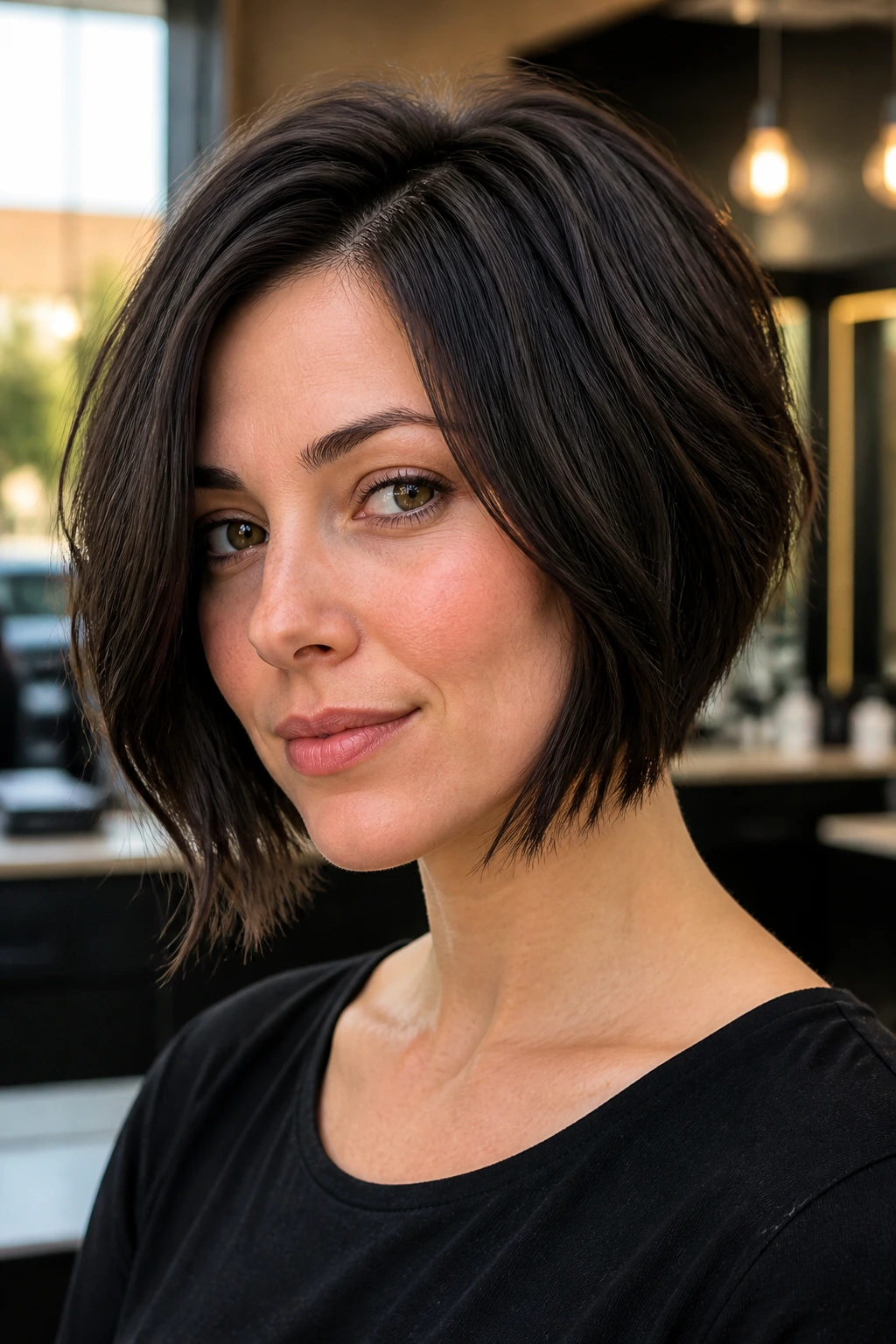
If your hair is very thick, you might find that traditional blunt bobs turn into a “triangle” shape, which is the worst enemy of a round face. A razored cut, however, removes bulk from the bottom, causing the hair to hug the jawline instead of flaring out.
How the Razor Helps
The razor creates frayed, soft ends that move naturally. Instead of a hard, flat line at the bottom of your hair, you get a textured edge. This keeps the hair closer to your neck and cheeks, which subtly narrows the width of your face. It is an excellent choice for anyone who struggles with hair that wants to poof outward.
A Note on Hair Health
- Razoring should only be done on hair that is healthy and free of excessive split ends.
- If your hair is prone to frizz, discuss this with your stylist; the razor can sometimes encourage frizz if the technique isn’t precise.
- This look works exceptionally well with “lived-in” color, like balayage, as the frayed ends make the highlights look more natural.
8. Inverted Bob With Highlights and Lowlights
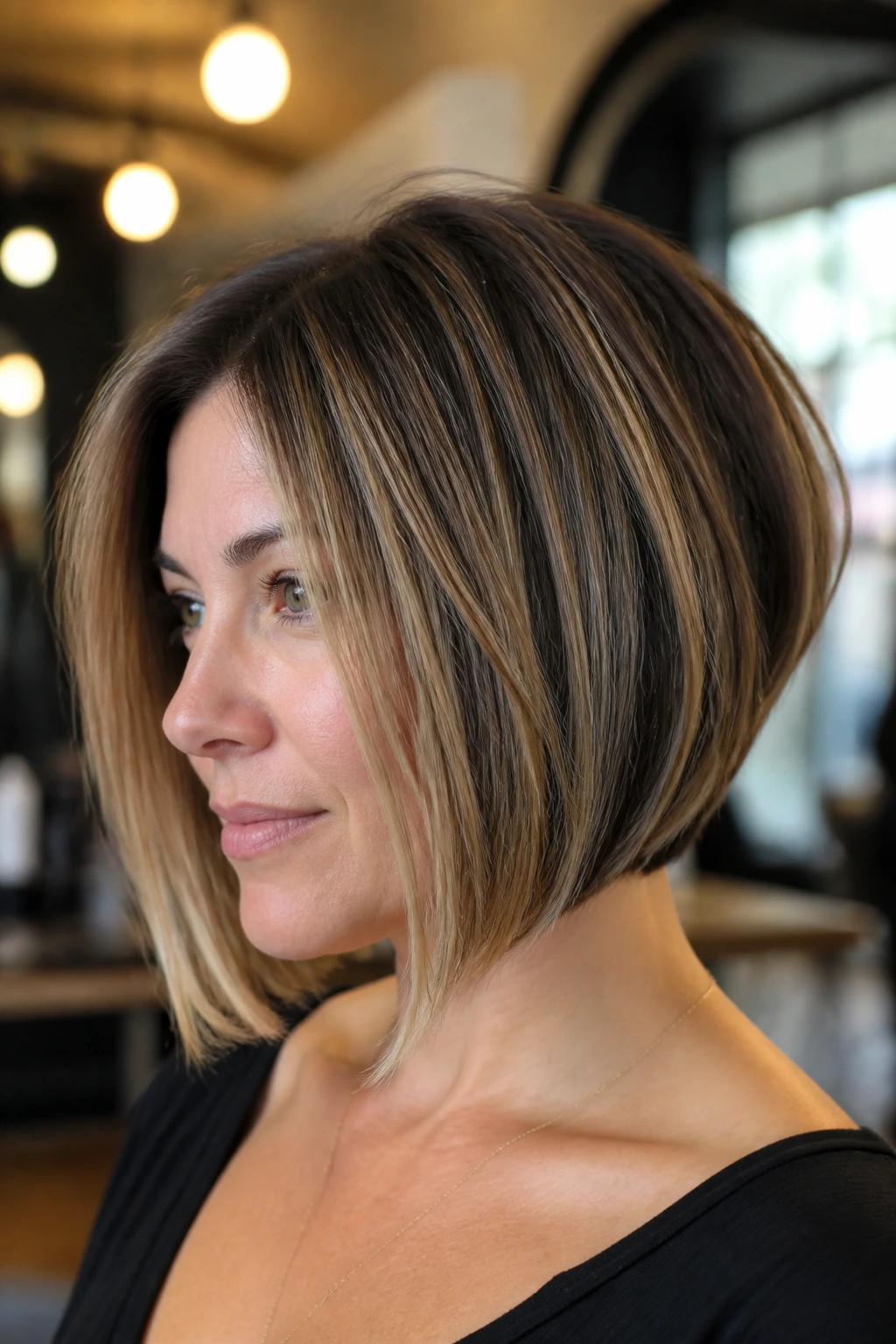
The color you choose can drastically influence how your face shape is perceived. With an inverted bob, placing lighter, face-framing pieces (often called “money pieces”) near your chin draws focus to your features, while darker tones at the roots add the depth needed to elongate the silhouette.
Strategic Placement for Round Faces
- Keep the darkest color at the nape and the roots.
- Place the brightest blonde or light brown pieces around the face, specifically starting from the cheekbone downward.
- This creates a vertical corridor of light, effectively “cutting” the width of your round face in half.
Why Color Matters
A single, flat, dark color can sometimes make a round face look like a solid mass. By adding dimension, you introduce movement and light. It tricks the eye into seeing more depth and structure in your hair, which translates directly to your face shape.
9. The Asymmetrical Inverted Bob
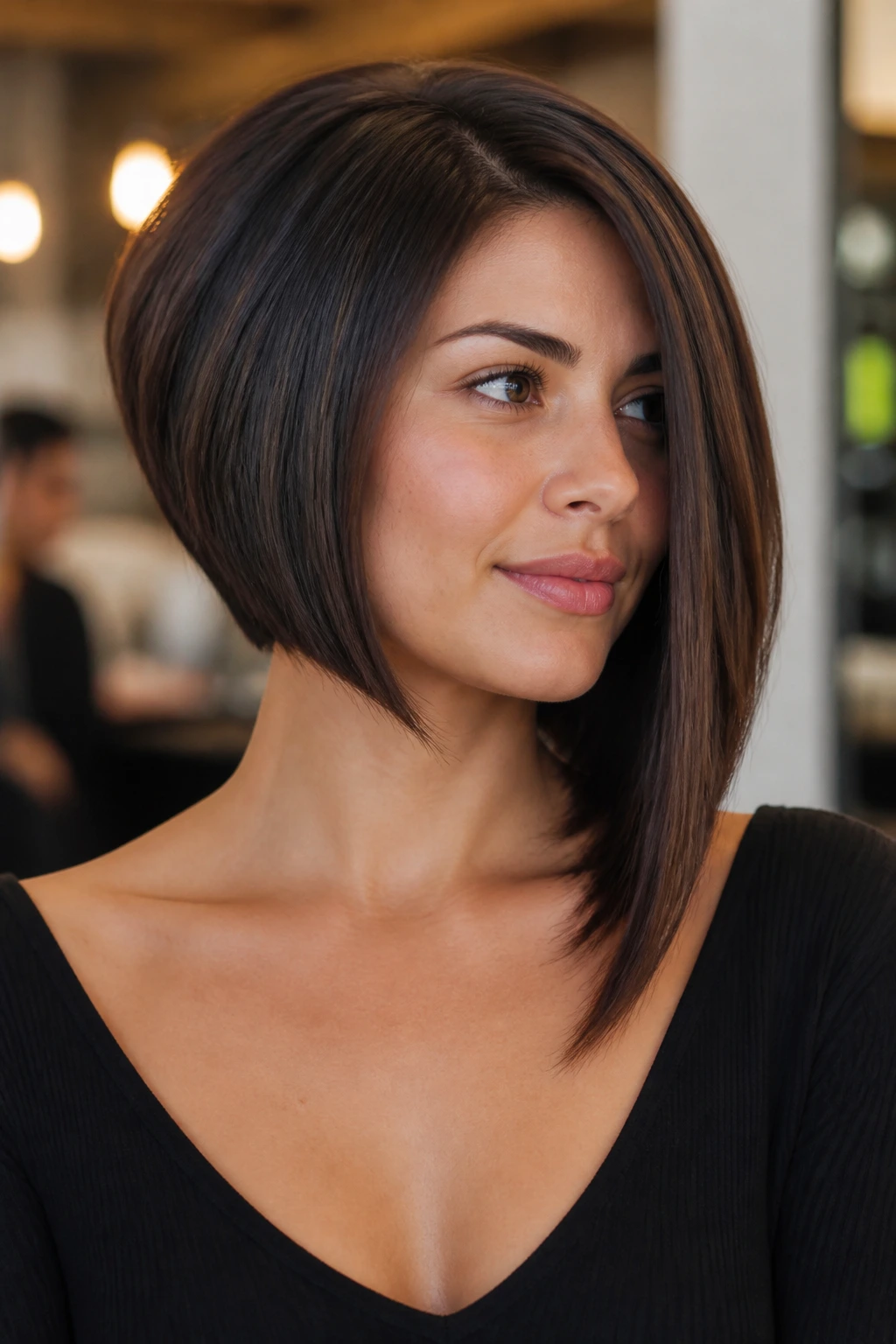
If you want to move beyond the traditional inverted look, try making one side significantly longer than the other. This creates a dramatic diagonal line that is arguably the most effective tool for making a round face look longer.
Why Asymmetry Works
The eye naturally tracks the longer side of the hair, which creates a strong sense of verticality. Because your hair is hitting at two different lengths, the roundness of your face is effectively disrupted. It is a bold, artistic choice that signals confidence and creativity.
Who Should Try This
- This is perfect for someone who is bored with traditional styles and wants a “signature” look.
- It is surprisingly easy to style because you are meant to have one side tucked behind your ear and the other left long and flowing.
- Talk to your stylist about your dominant side; most people prefer to have the longer side frame the side of their face that they prefer to photograph.
10. The Soft, Blunt-Ended Inverted Bob
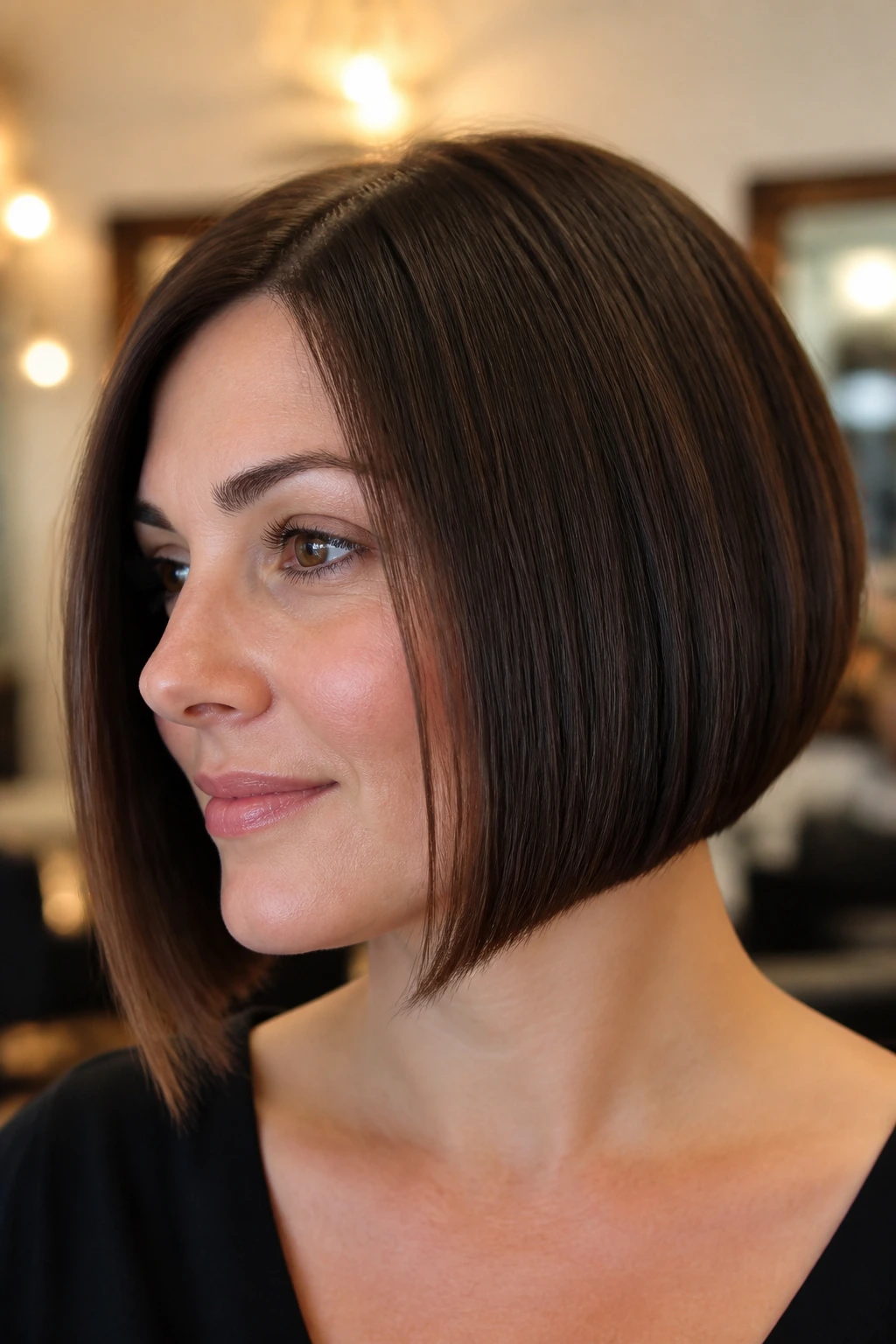
Not all inverted bobs have to be heavily layered. A blunt-ended version is incredibly chic and minimalist. It relies on the weight of the hair to create a smooth, sophisticated line.
Achieving the Minimalist Look
- Use a smoothing serum to eliminate all flyaways.
- Ensure the ends are cut with sharp, professional shears for a clean finish.
- This style is ideal for fine, straight hair that needs a bit of weight to feel substantial.
Why It’s Sophisticated
There is something undeniably timeless about a blunt, inverted bob. It looks put-together with very little effort. If you spend time styling your hair in the morning, this is the version that will look the most professional. It doesn’t rely on messiness; it relies on precision.
11. The Curly Inverted Bob
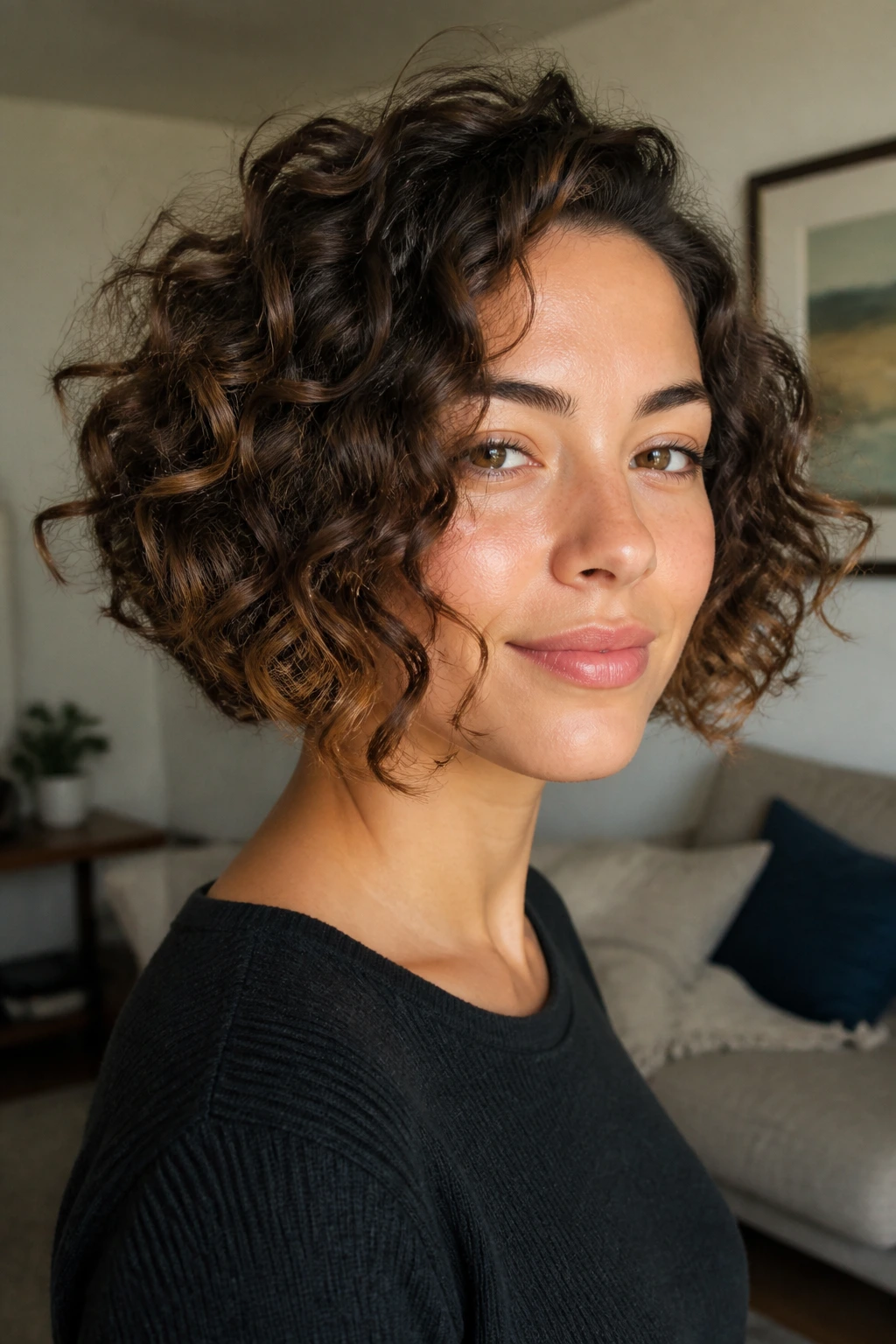
Many people with curly hair believe they cannot pull off an inverted bob, but that is a myth. The trick is to have the cut shaped specifically for your curl pattern, ensuring that the back is tight and the front has enough room for the curls to spring up without looking like a mushroom.
How to Style Curls for Inversion
- Your stylist should cut the hair while it is dry to understand exactly where each curl will fall.
- Use a diffuser to keep the volume at the roots rather than at the sides.
- Let the curls around the face hang slightly longer to create that slimming, downward-pulling effect.
Essential Curly Care
- Deep condition weekly; dry curls will expand and lose their shape, turning a beautiful inversion into an unwanted triangle.
- Use a curl-defining cream to prevent the ends from getting fuzzy; defined ends are the key to maintaining the architectural shape of the cut.
12. The Pixie-Inverted Hybrid
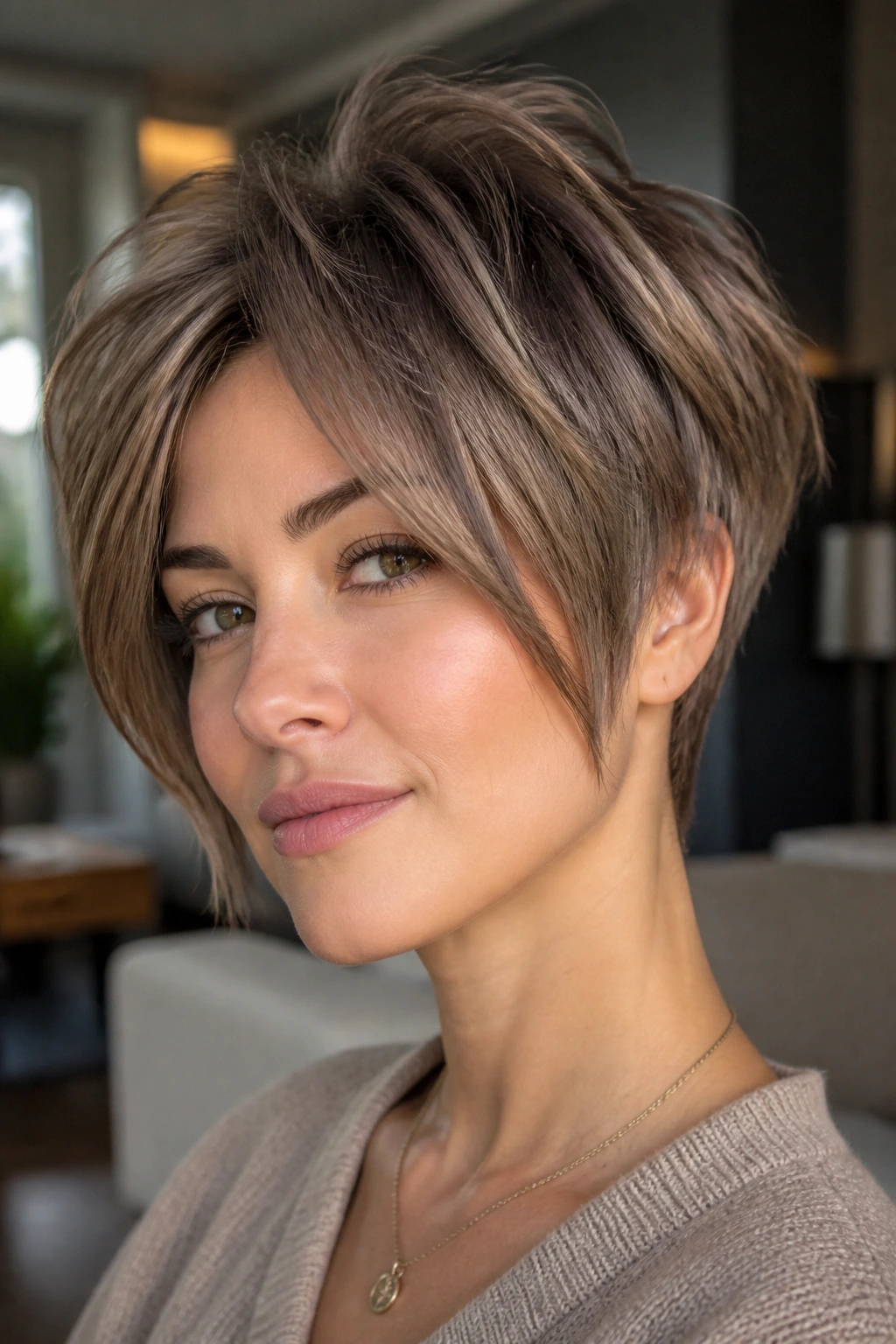
If you are really looking to chop it all off, the pixie-inverted hybrid is a stunning, bold choice. It is short at the back, just like an inverted bob, but with longer, dramatic layers on top and around the ears.
Why It Flattens the Roundness
The height on top is the secret here. By adding volume at the crown of your head, you increase the vertical dimension of your face. It draws the eye up to your eyes and forehead, completely bypassing the fullness of the cheeks. It’s a daring look, but for someone with a round face, it’s one of the most flattering short haircuts imaginable.
The Maintenance Factor
- This is a high-maintenance cut; expect to visit your stylist every 3 to 4 weeks.
- You will need a good pomade or styling paste to keep the top layers lifted and defined.
- It’s incredibly liberating, especially during warmer months, as it keeps the hair off your neck while still framing your face in a very feminine way.
13. The Wispy Inverted Bob
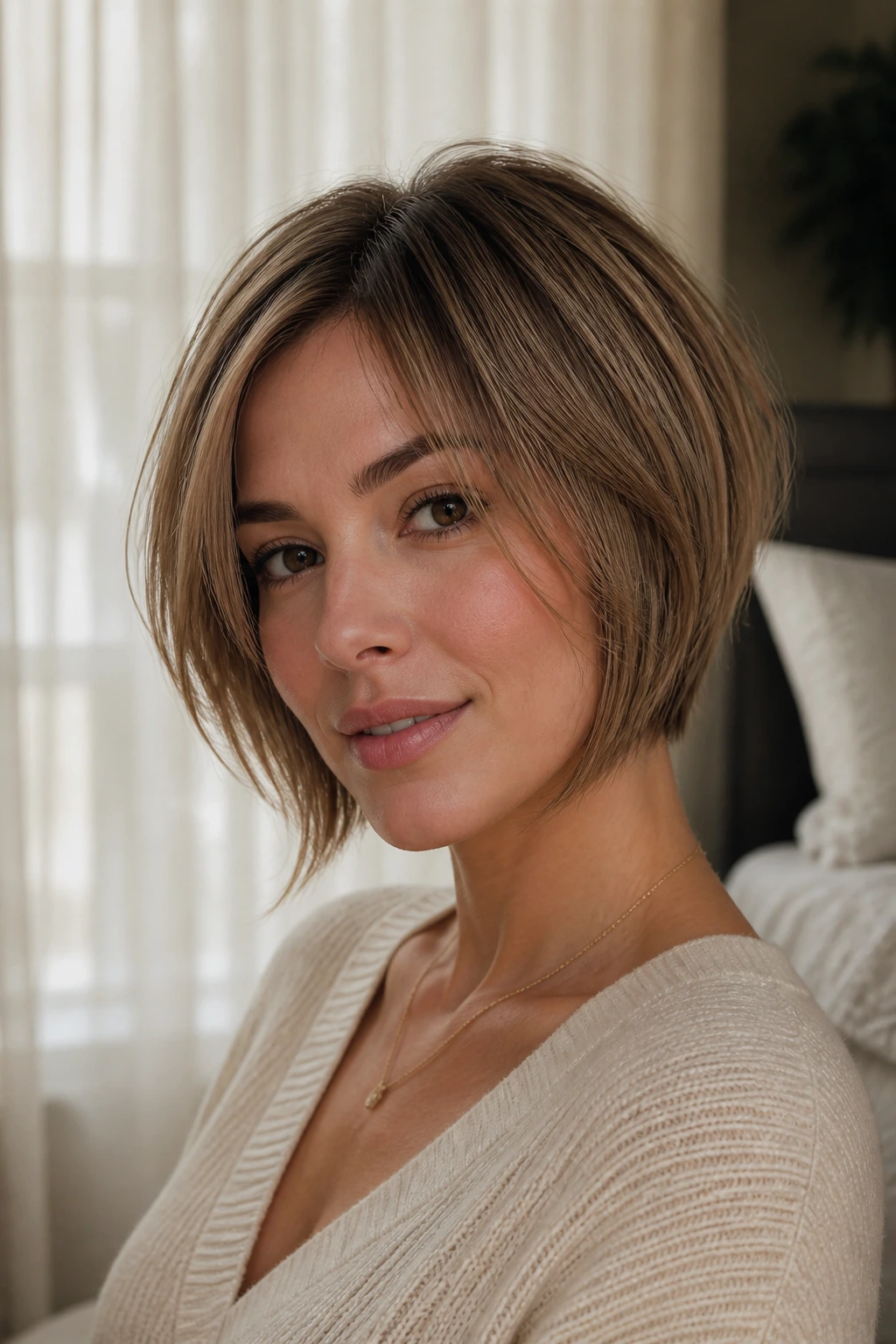
If you have very fine or thinning hair, a heavy, stacked inverted bob might be too much for your natural density. A wispy, airy version provides the structure of an inverted bob without requiring thick hair.
How to Achieve Airiness
- Ask for long, invisible layers that allow the hair to move rather than sit flat.
- Avoid heavy styling products that weigh the hair down; opt for lightweight mousses instead.
- This style should look light and ethereal, not dense and heavy.
Why This Style Works
It maintains the shape but stays soft. For a round face, this is excellent because it doesn’t create a “helmet” of hair that can sometimes make the head look wider. It feels like a natural part of your aesthetic rather than a heavy accessory.
14. The Blunt Bangs Inverted Bob
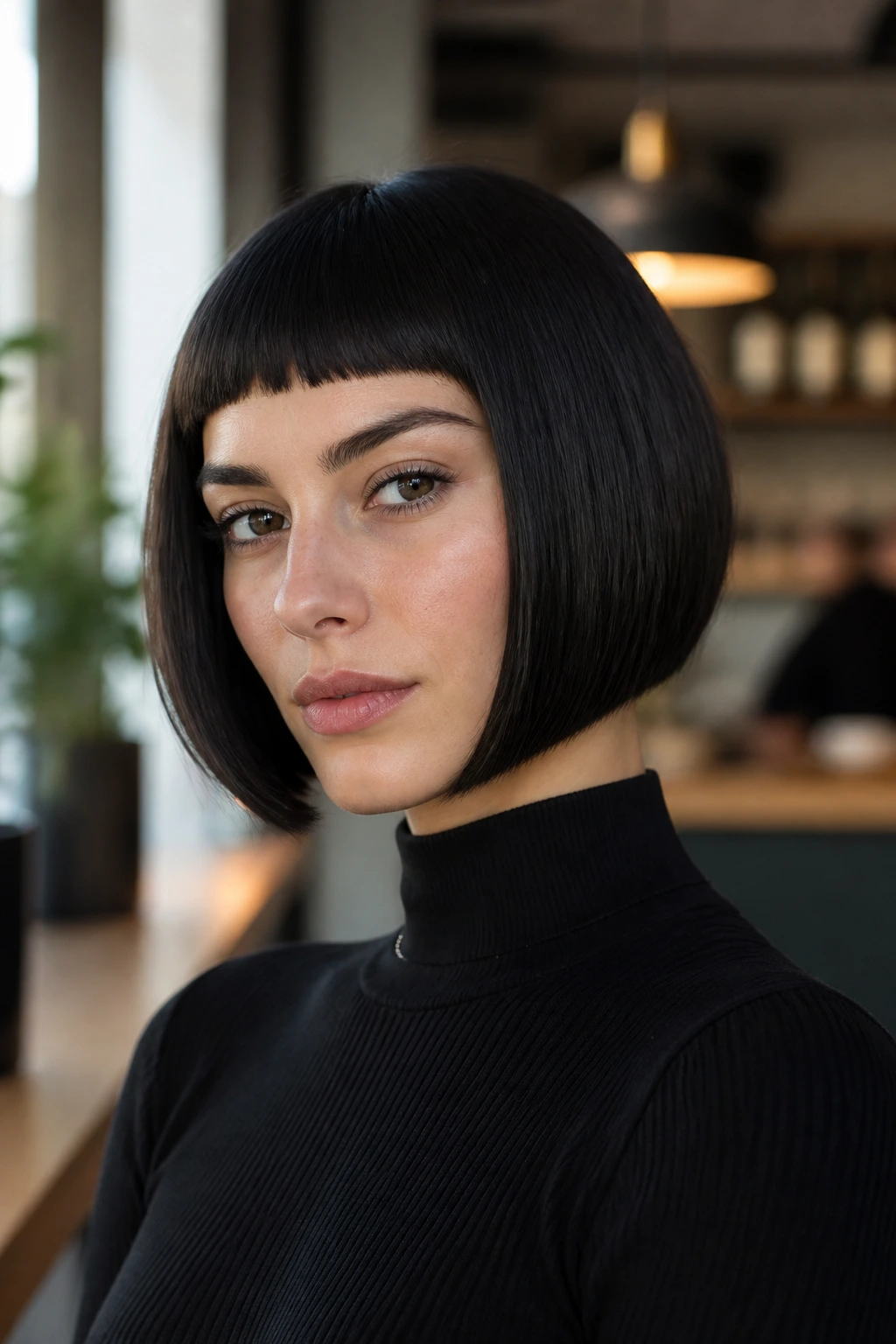
While side-swept bangs are usually recommended for round faces, there is a specific type of blunt bang that can work: the “baby bang” or micro-fringe. By exposing more of your forehead and keeping the lines very sharp, you create a very modern, fashion-forward look.
The Modern Edge
This is not for the faint of heart, but it provides a clean, geometric silhouette. Because the bangs are short and the bob is inverted, the entire look is composed of crisp, clean lines that act as a frame for your face.
Balancing the Face
- This style requires minimal styling time if you have naturally straight hair.
- Make sure your brows are well-groomed, as they will be the focal point of your face.
- It is a sophisticated look that pairs well with minimalist fashion and bold, simple jewelry.
15. The “Wet Look” Inverted Bob
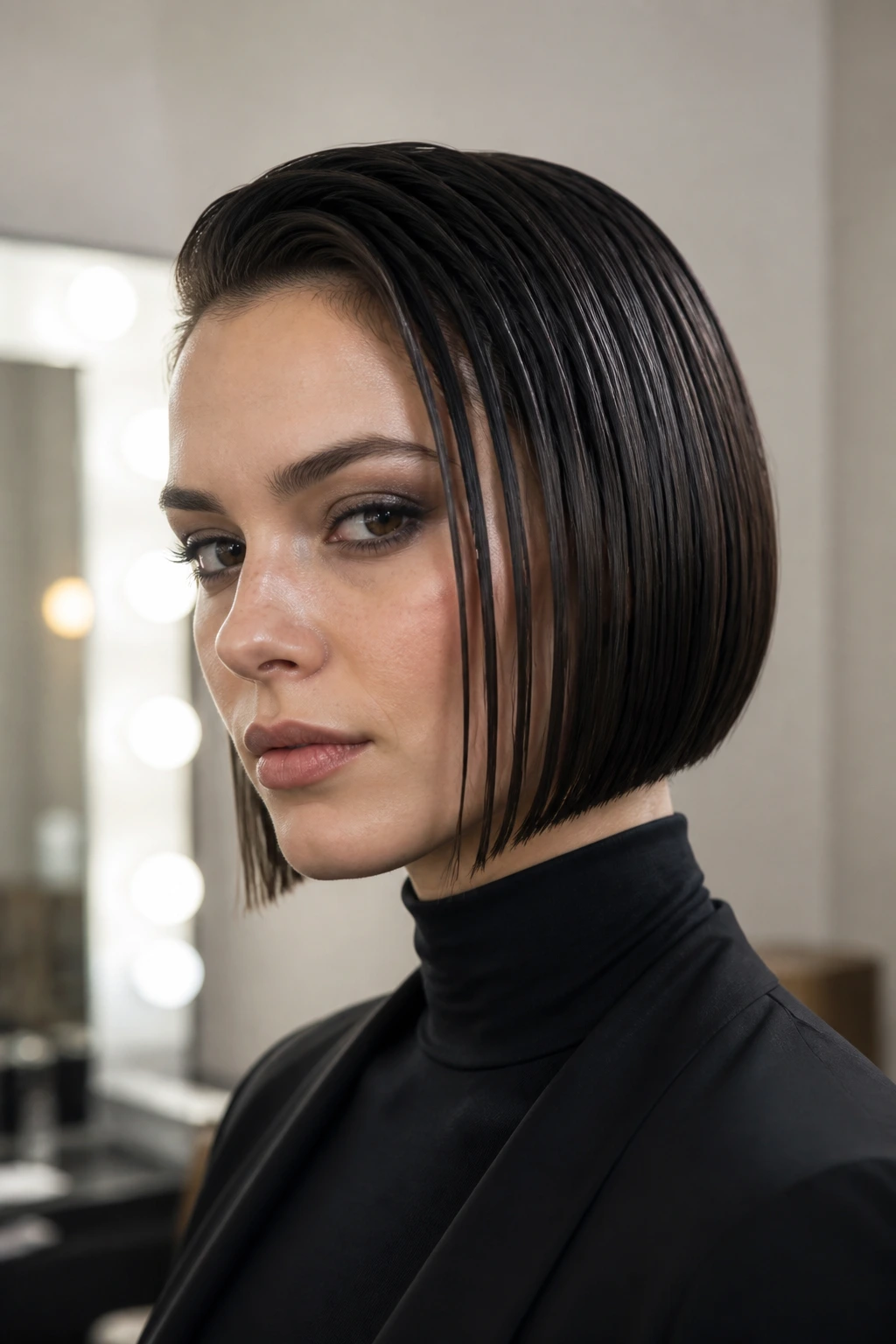
When you want to look like you just stepped off a runway, the wet-look inverted bob is the answer. It’s perfect for formal events or days when you want a sleek, polished, and very sharp silhouette.
Achieving the Sleekness
- Apply a generous amount of styling gel to damp hair.
- Comb the hair back and toward the front, ensuring the sharp angle of the inverted cut remains visible.
- The lack of volume at the sides of the head is exactly what makes this work for a round face; it clings to the head and jaw, creating a very narrow, elongated appearance.
Tips for Success
- Don’t use too much oil, as it can make hair look greasy rather than “wet.”
- This look is best paired with a high-neck outfit or a sharp blazer.
- It’s a great way to hide a “bad hair day”—the gel hides everything, and the shape is so strong that it looks like a deliberate fashion choice.
Practical Tips for Maintaining Your Bob
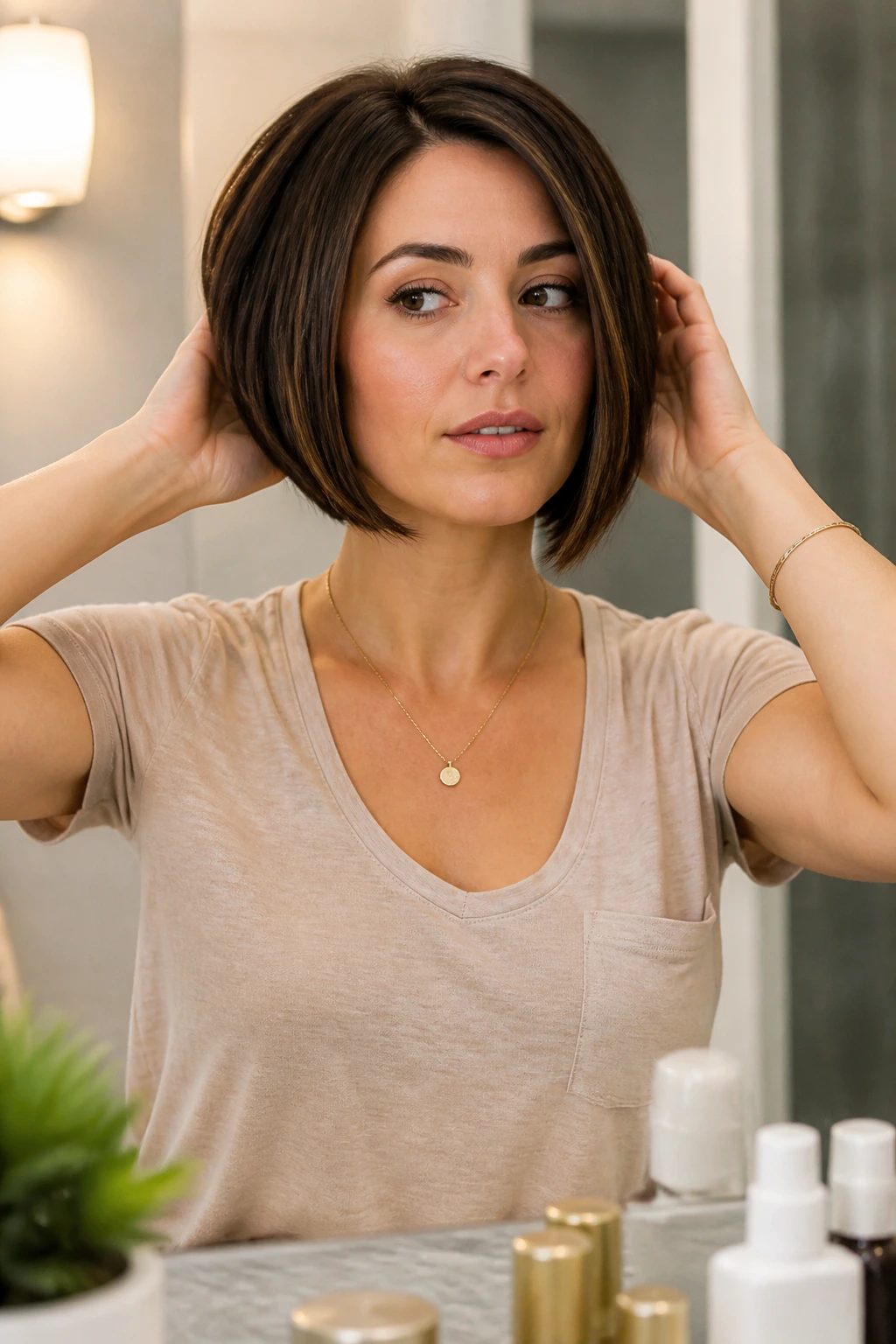
The beauty of an inverted bob is how much it changes your silhouette, but that change requires upkeep. Because of the sharp angle, the grow-out phase can look uneven. Most people find that a trim every six weeks is the baseline, though you might need to touch up the nape sooner if you opted for an undercut.
Always consider your hair texture before committing. If your hair is prone to major frizz in high humidity, an inverted bob that relies on a sharp, straight line might become a daily struggle. Discuss the texture of your hair with your stylist—not just the style you want—to ensure the final result is one you can actually replicate at home.
When styling, remember the “less is more” rule. You want to enhance the shape your stylist has created, not fight it with heavy products. A little heat protection, a good round brush, and a bit of shine spray will usually get you that polished look that defines the inverted bob.
Storage and Care for Your Look
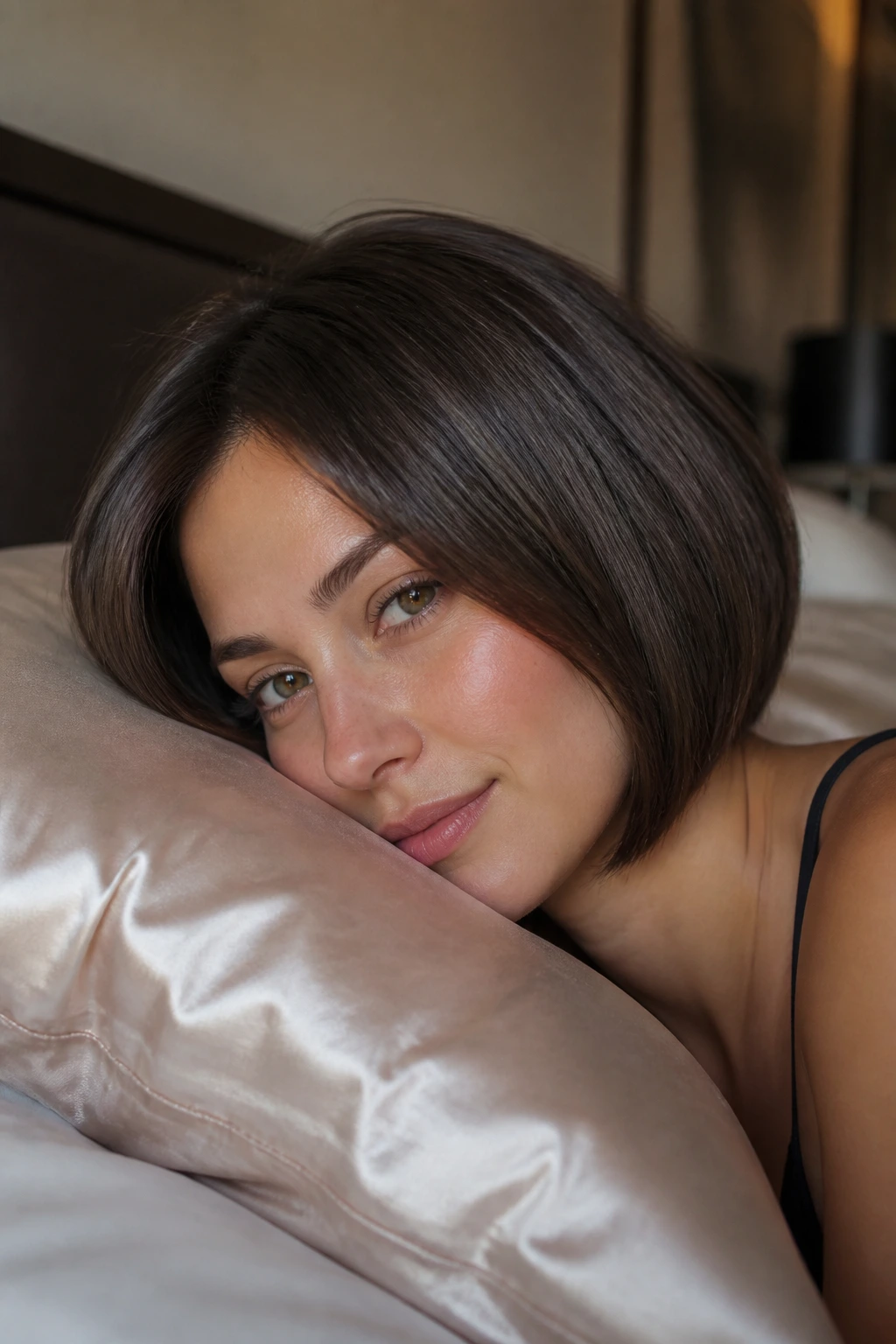
If you find that your bob loses its “swing” after a few weeks, it is likely because the hair has become too long at the nape. The weight pulls the graduation down, and the shape starts to look more like a standard bob. Don’t be afraid to ask for just a “nape dusting” in between major appointments to keep that sharp angle alive.
Invest in a silk or satin pillowcase if you are having trouble with bedhead. Because short hair doesn’t have the weight of length to keep it pinned down while you sleep, it can easily wake up in all directions. A smoother surface will help your hair maintain its polished finish, meaning you spend less time with the flat iron in the morning.
Finally, remember that the most important element of your haircut is how it makes you feel. If you are worried about your round face, try to focus on the angles. Every time you style your hair, aim for that diagonal line. Once you learn the rhythm of your specific cut, it becomes second nature, and you will find that a round face is the perfect canvas for these sharp, modern styles.
Final Thoughts
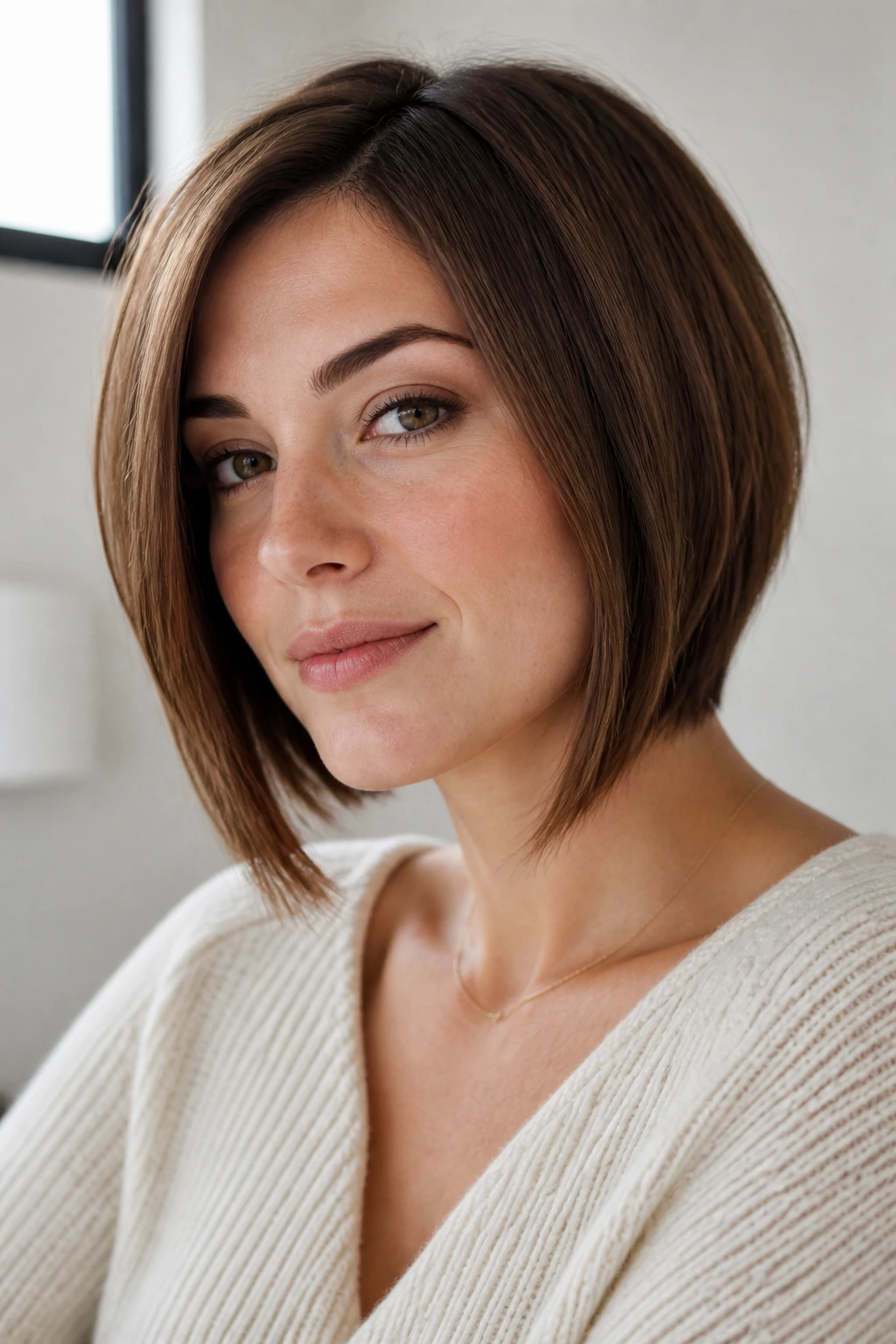
Finding the right inverted bob for your round face is really about playing with geometry. Whether you go for the extreme drama of a stacked back or the soft, sweeping elegance of a long lob, the key is the graduation. You are looking to trade that circular softness for something that frames your features, provides vertical interest, and highlights your eyes.
Don’t be afraid to experiment with your part or your color. Small tweaks—like moving your part an inch or adding a few bright pieces near your jaw—can change how your face is perceived just as much as the cut itself. Your hair is the frame for your personality, and with an inverted bob, that frame finally has the angles you need to really shine.