

Gym hair is a special kind of challenge. Most of us have been there: you spend five minutes crafting a masterpiece of a bun, only to have it unravel into a chaotic, tangled mess halfway through a burpee set. When you need a hairstyle that survives high-intensity movement without sacrificing your sanity—or your vision—you have to think about tension, friction, and hold. Standard ponytails often sag, clips dig into your scalp during floor exercises, and loose braids can turn into a frizzy disaster before the warm-up even finishes.
The key to a successful workout hairstyle isn’t just about how it looks when you walk through the gym doors. It’s about how it handles sweat, gravity, and the constant shifting of your head. You want styles that stay anchored, minimize tangles, and keep hair completely off your face and neck so you can focus on your form. Whether you have thick, curly hair that demands structure or fine, slippery strands that refuse to stay put, there is a specific configuration of pins, ties, and twists that will hold you through the most grueling sessions. Let’s look at seventeen ways to keep your hair locked down and out of the way.
1. The Triple-Stacked Top Knot
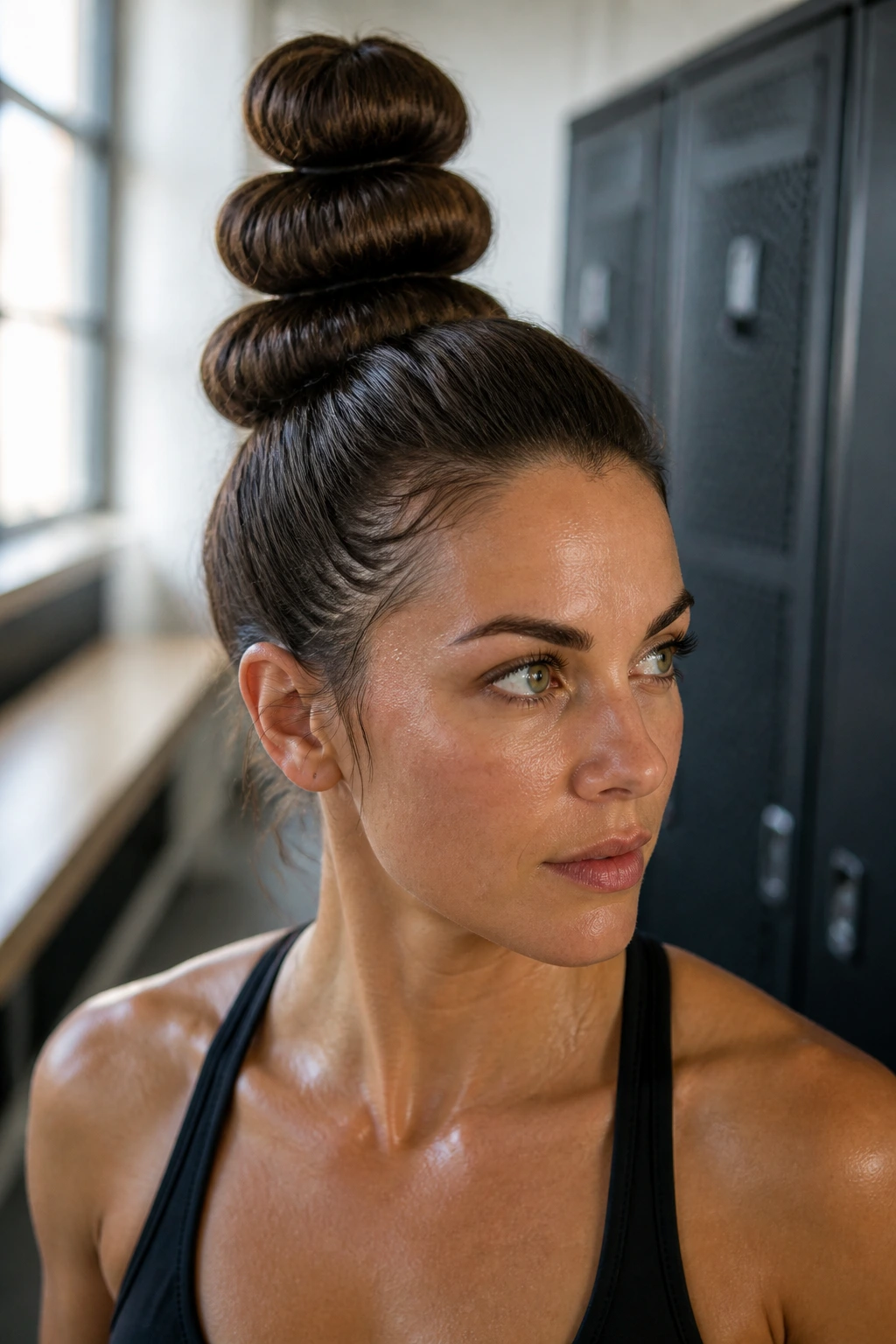
This isn’t your standard messy bun. By sectioning your hair into three distinct horizontal layers—top, middle, and bottom—you create a base that supports the weight of the hair much more effectively. Use a small, clear elastic for the top section, secure it, then pull that into the middle section, and finally incorporate the bottom.
Why It Works for High-Impact Movement
By anchoring the hair in segments, you distribute the tension across your entire scalp rather than putting all the weight on one single point at the crown. This prevents the “sagging bun” effect that happens when you only use one hair tie. Once you have your triple-secured ponytail, wrap it into a tight bun and use a spiral-style hair coil or a high-grip scrunchie to lock it in place. It’s rock-solid for sprints or jump rope.
2. Dutch Braid Into a Sport Bun
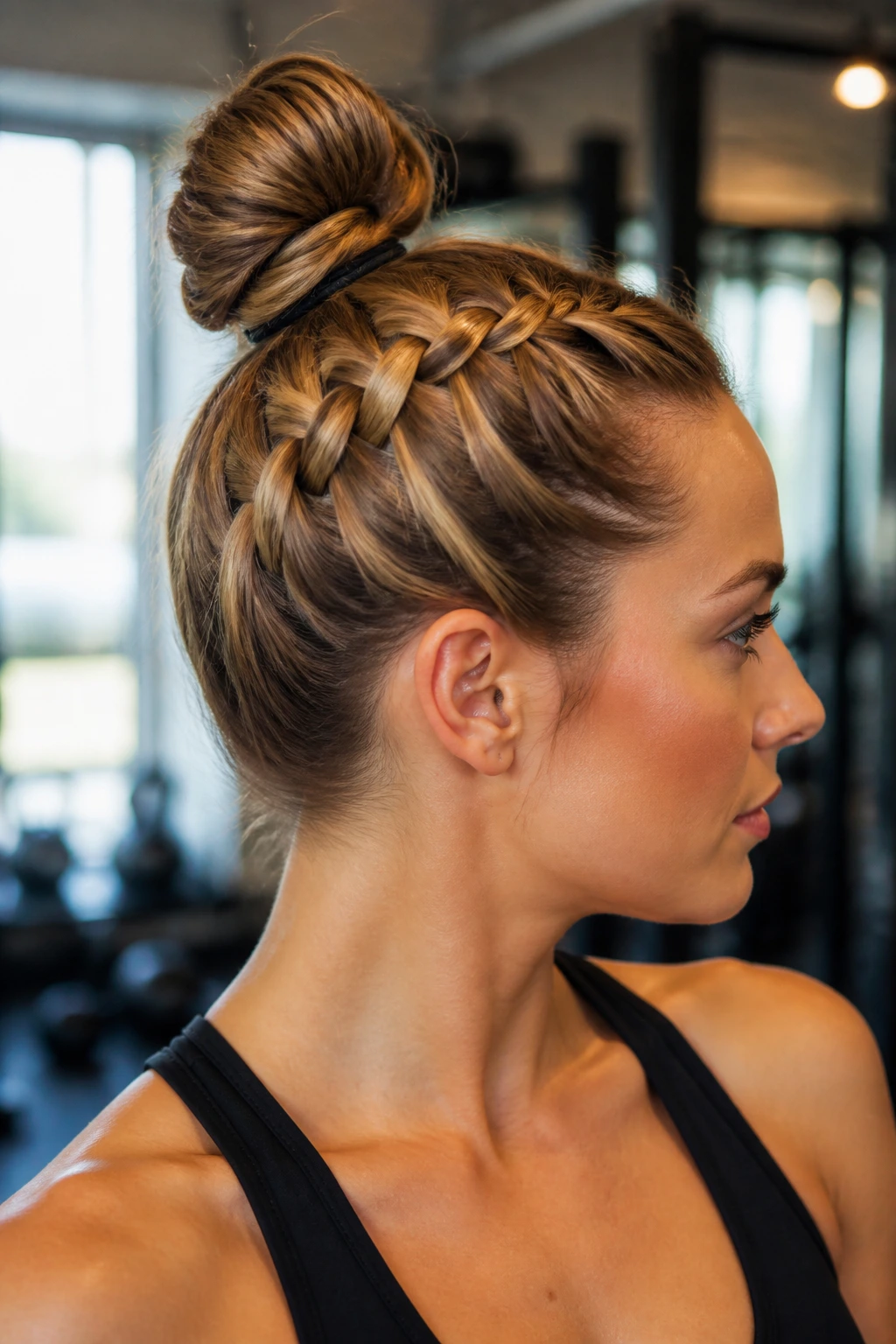
Dutch braids are arguably the most secure way to keep flyaways at bay during a workout. Unlike French braids, where the hair is tucked under, the Dutch braid sits on top of the head, creating a physical “fence” that grips your hair tightly from the hairline.
The Mechanics of the Secure Finish
Once you reach the nape of your neck, stop braiding and combine the remaining hair into a high, firm bun. Use two hair ties instead of one—this is a classic trick. Loop the first one tightly around the base, and use the second to secure the bun itself. This redundancy is what keeps the style from slipping during heavy lifting or inverted yoga poses.
3. The Double Rope Twist Ponytail
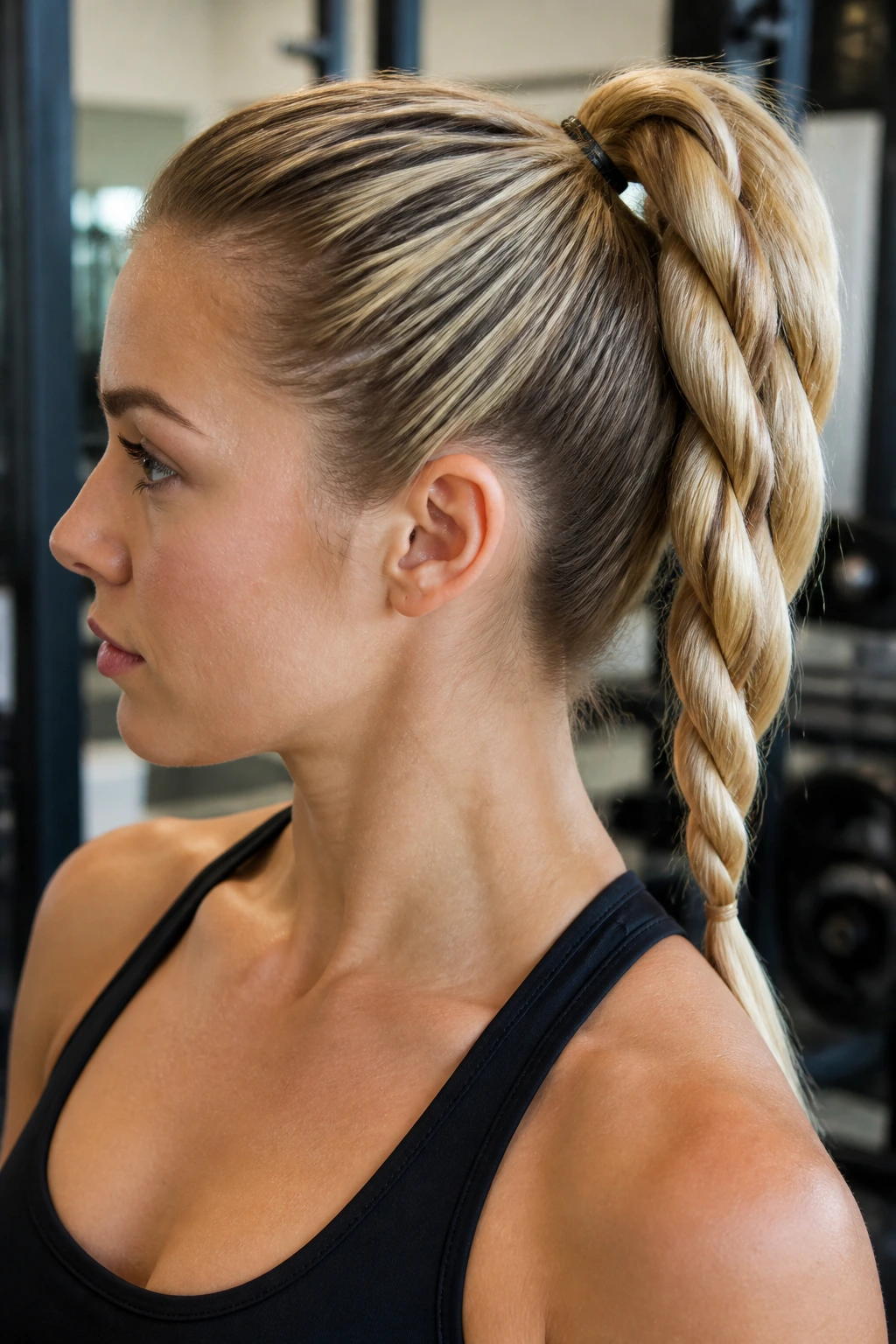
If you find traditional braids difficult to master, rope twists are your best friend. Start by pulling your hair into a high ponytail. Divide the ponytail into two equal sections. Twist each section individually in the same direction, then wrap them around each other in the opposite direction.
How to Prevent Fraying
The biggest issue with rope twists is them unraveling. To combat this, coat your hands in a small amount of lightweight styling cream or a drop of hair oil before you start twisting. This creates enough grip to keep the strands from sliding past each other. Secure the end with a snag-free silicone band, and you have a sleek, aerodynamic look that doesn’t budge.
4. Crown Braid with Invisible Anchors
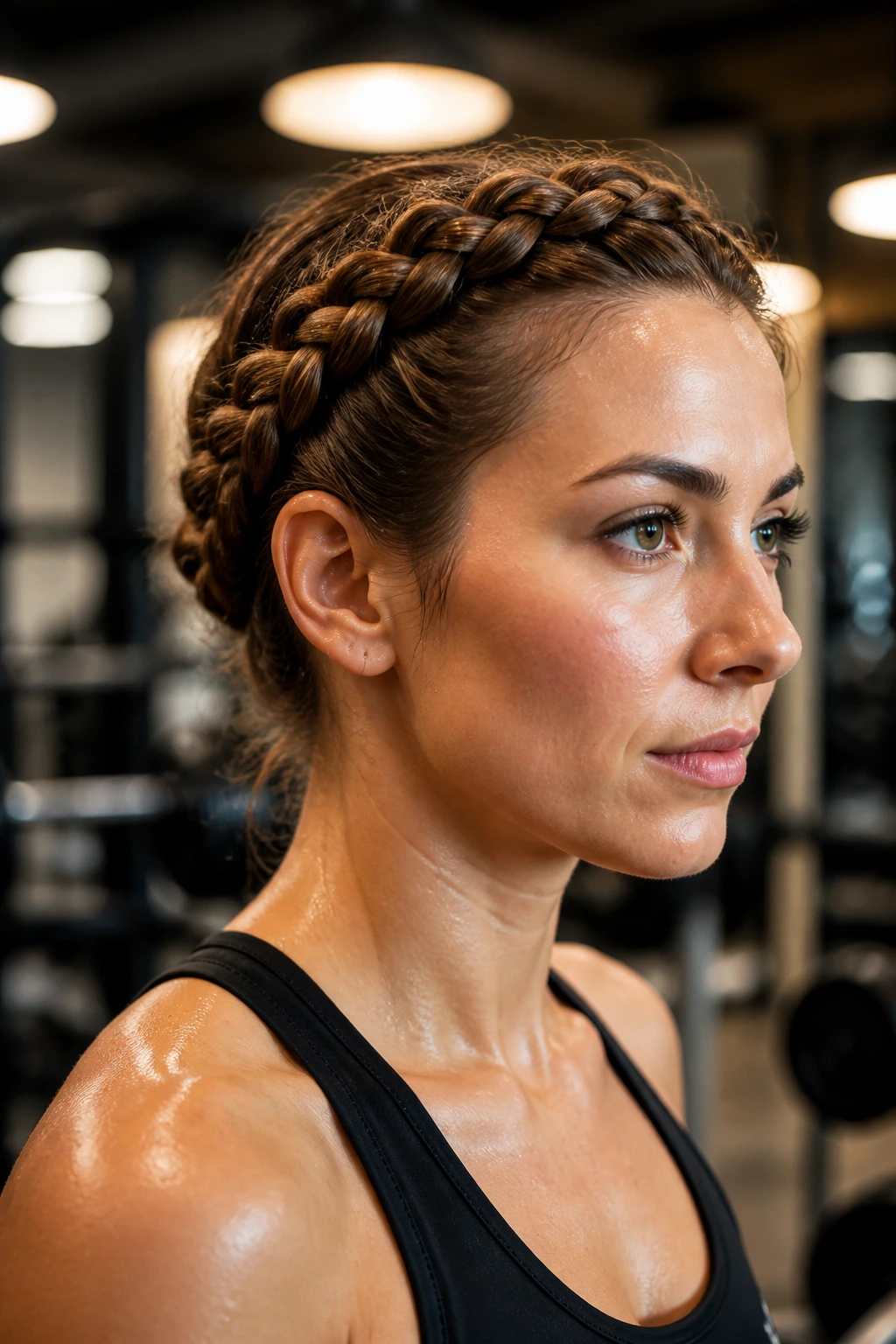
A crown braid keeps every single strand off your face, making it perfect for boxing or any activity where you don’t want hair touching your ears. Start at one temple and braid all the way around your head, incorporating hair as you go.
Tactical Pin Placement
Since your hair will move during a workout, bobby pins are not enough on their own. You need u-shaped hair pins, which grip significantly better than standard flat pins. Focus on placing these at the temples and behind the ears, where the tension is highest. If you have layers, spray the braid with a strong-hold, humidity-resistant hairspray before you start your workout to lock the loose ends in place.
5. The Criss-Cross High Pony
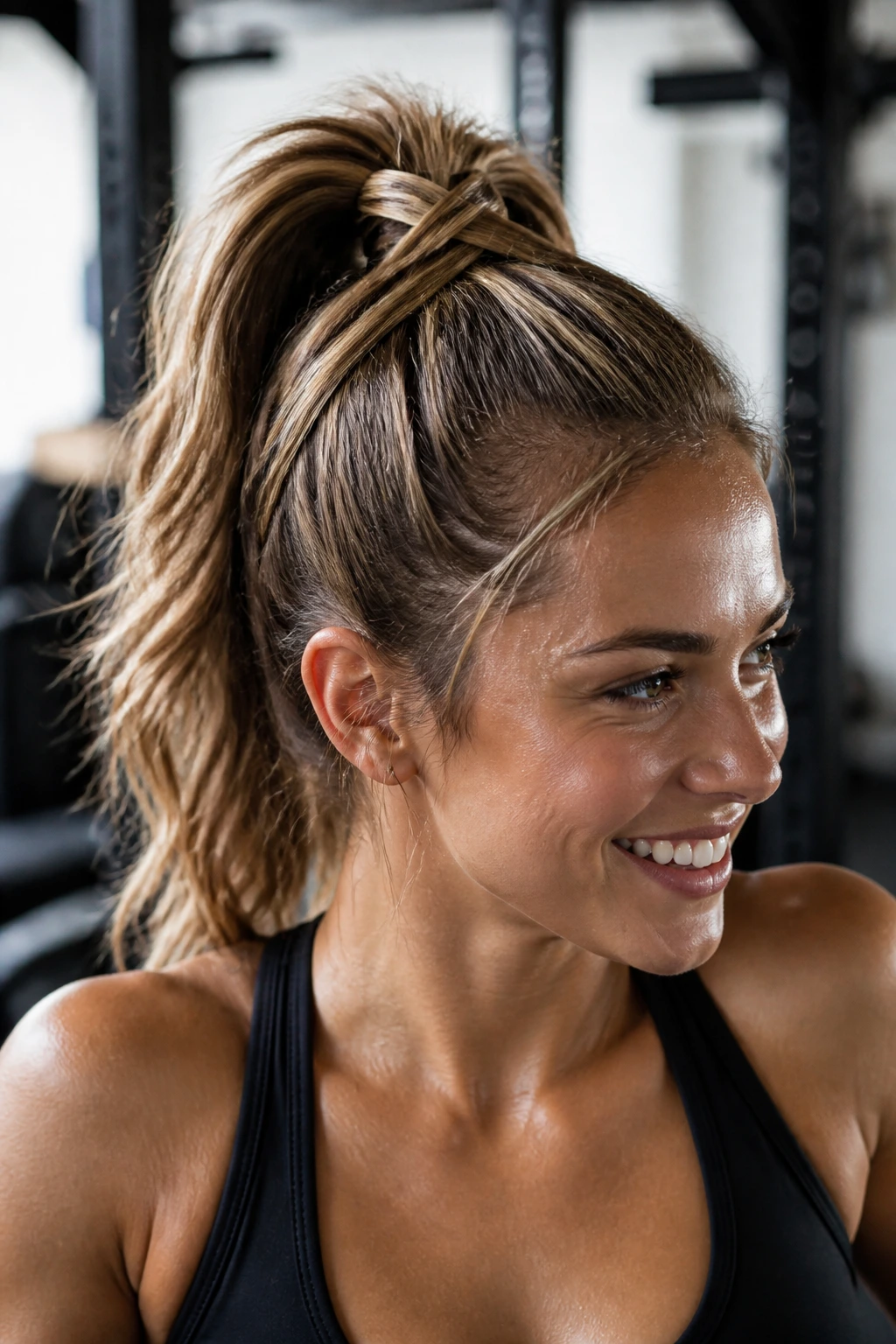
Sometimes, a single elastic just isn’t enough. This style involves pulling your hair into a high ponytail, but leaving two small sections out at the front. Cross those front sections over your ponytail and wrap them around the base before securing them with a tiny elastic.
The Benefit of Directional Tension
The criss-cross pattern effectively acts as a secondary support system. It keeps the weight of your ponytail pushed slightly upward, which prevents that annoying sliding feeling as you perform jumping jacks or mountain climbers. It also looks surprisingly intricate for a style that takes less than ninety seconds to assemble.
6. Sleek Low Braid with a Headband
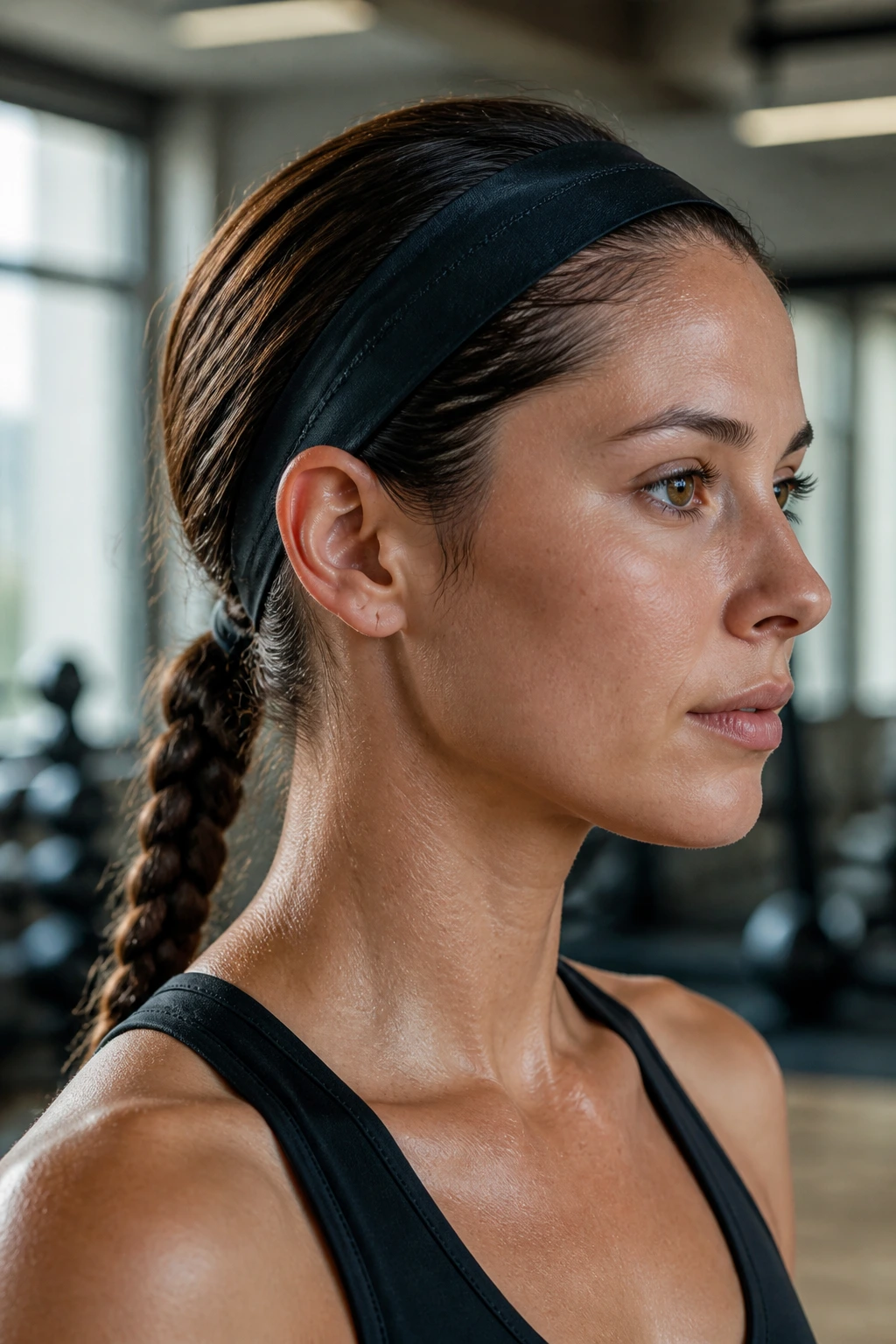
For those who prefer a lower profile, a single tight braid at the nape of the neck is a timeless solution. To ensure it doesn’t whip around during movement, you need a high-quality athletic headband to keep your front sections controlled.
Selecting the Right Headband
Do not use cotton headbands for workouts. They soak up sweat and then slide backward, taking your hair with them. Opt for silicone-lined athletic bands or performance fabrics that wick moisture. When your headband stays put, your braid stays perfectly centered, keeping your hair from getting caught under your shoulder blades during chest presses or rows.
7. The Bubble Braid Ponytail
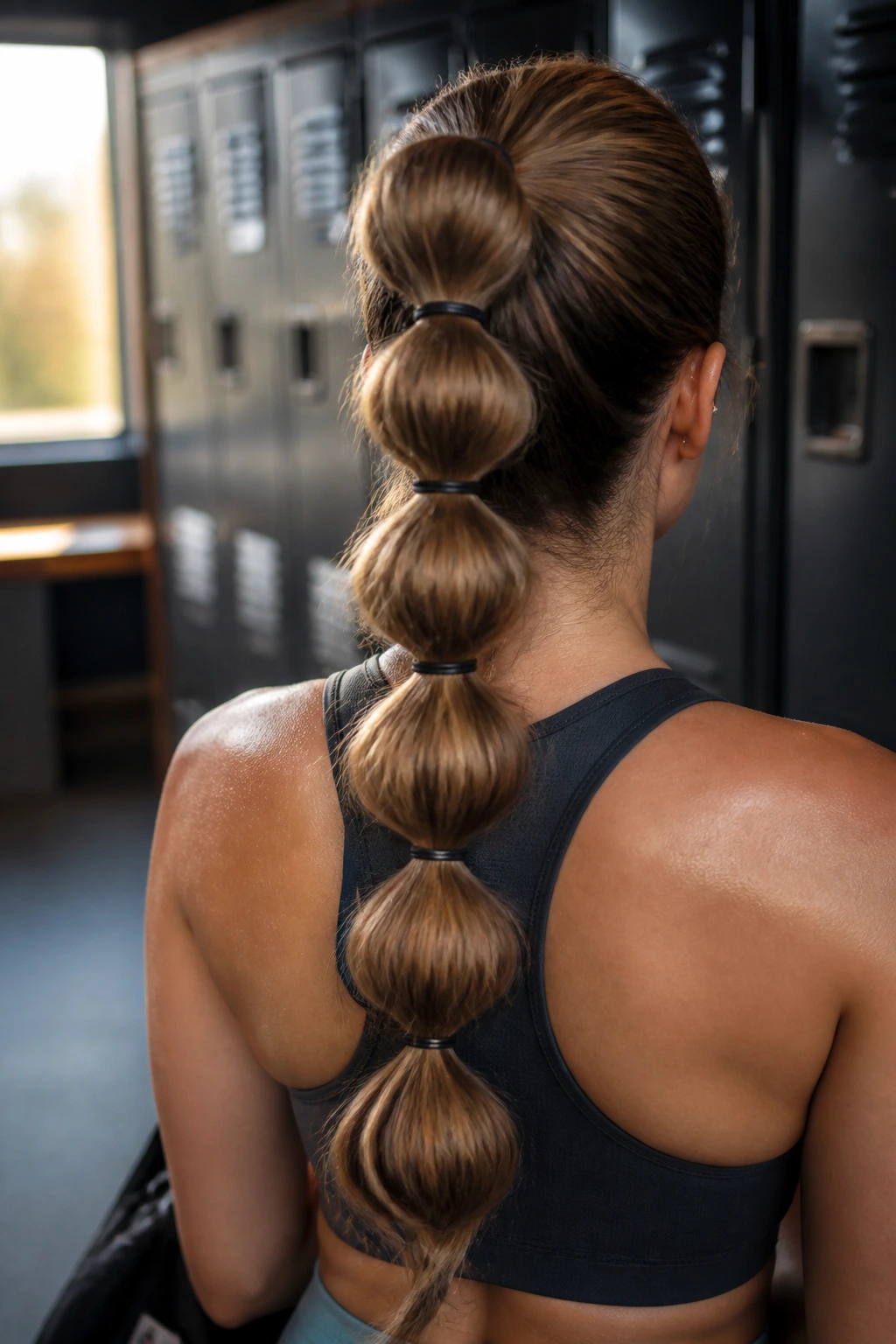
Bubble braids are essentially a sequence of small, poofy sections of hair created by placing elastics at two-inch intervals down your ponytail. They are fantastic for long hair that tends to tangle during exercise.
How to Maintain the Volume
The trick here is to “pancake” the bubbles—gently tug on the edges of each section to create volume. During a workout, the bubbles might deflate slightly, but the structural integrity remains. Because you have elastics holding the hair every two inches, the ponytail won’t whip around your head. It stays neatly down your back, no matter how fast you are moving.
8. Double-Braid Top Knot
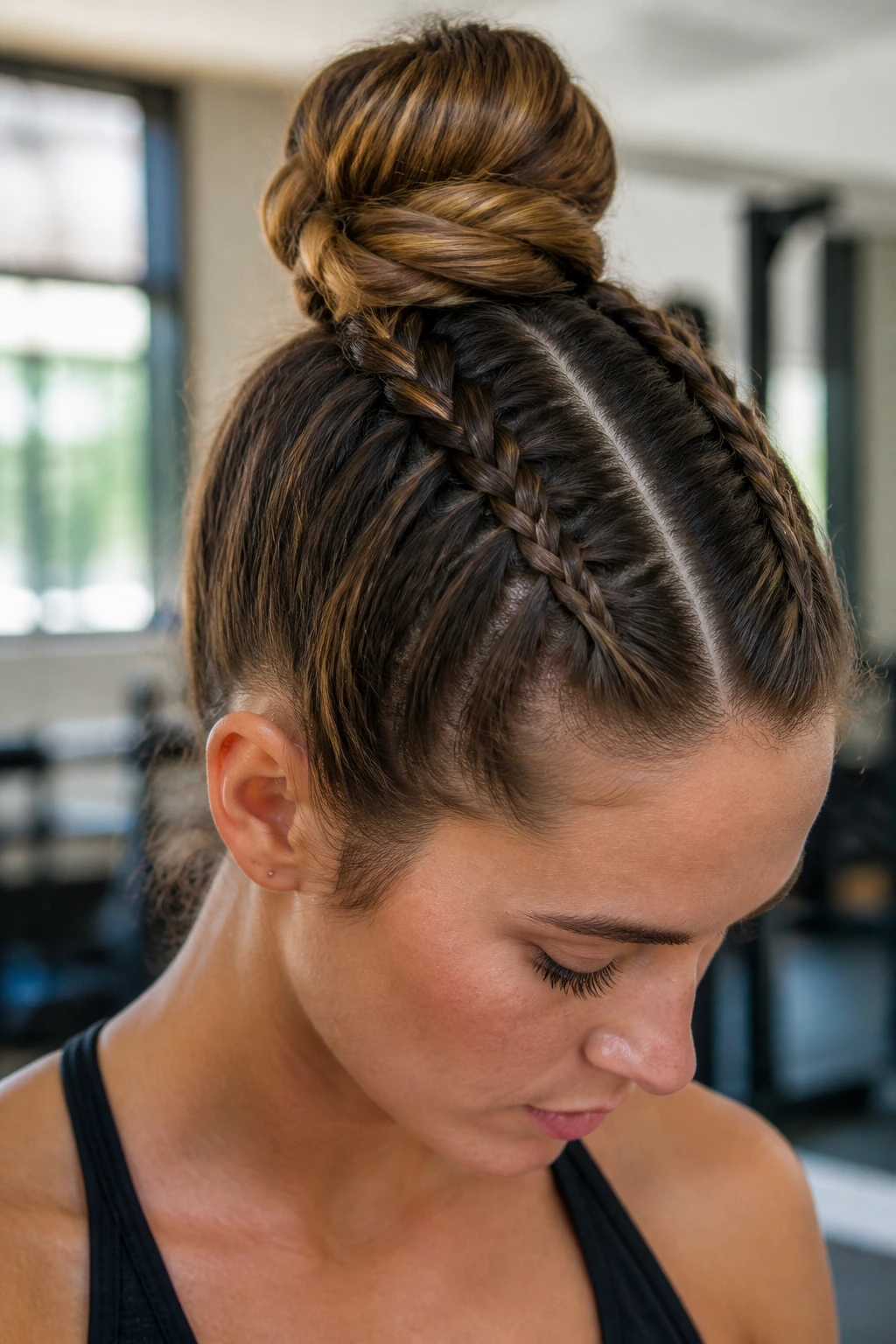
This style is for the person who needs total lockdown. Create two Dutch braids starting at the front hairline, angling them toward the center of your crown. Once you reach the mid-point of your head, stop braiding and pull all the remaining hair into a single, high, tight bun.
Why This Is Perfect for Inversions
If you spend time doing headstands or handstands, this is the superior style. By anchoring the braids at the hairline, you prevent your hair from falling forward when you flip upside down. The braids act as a cage for your scalp hair, while the top knot keeps your length secure and contained.
9. The Waterfall Half-Up
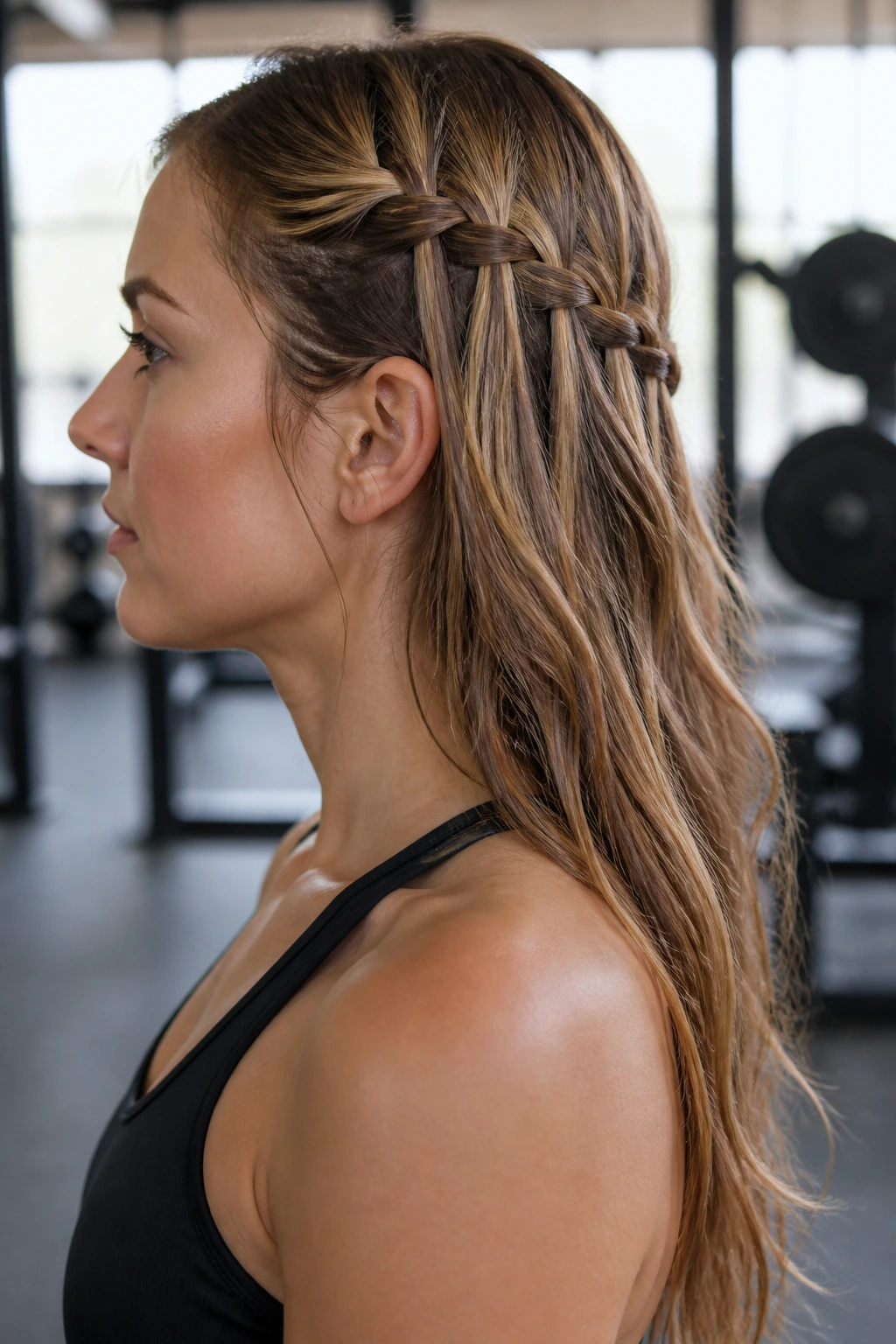
Sometimes you don’t want all your hair pulled back, but you still need it off your face. The waterfall technique involves creating a series of small, secure braids that pull the hair back from your temples, letting the rest fall naturally.
Why It’s Only for Low-Intensity Days
I recommend this only for low-intensity workouts like light yoga or stationary biking. Because the back of your hair is left loose, it can become a magnet for sweat on your neck. However, for a quick gym session where you want to look put-together, it offers a sophisticated balance between control and style.
10. The Tight Cornrow Ponytail
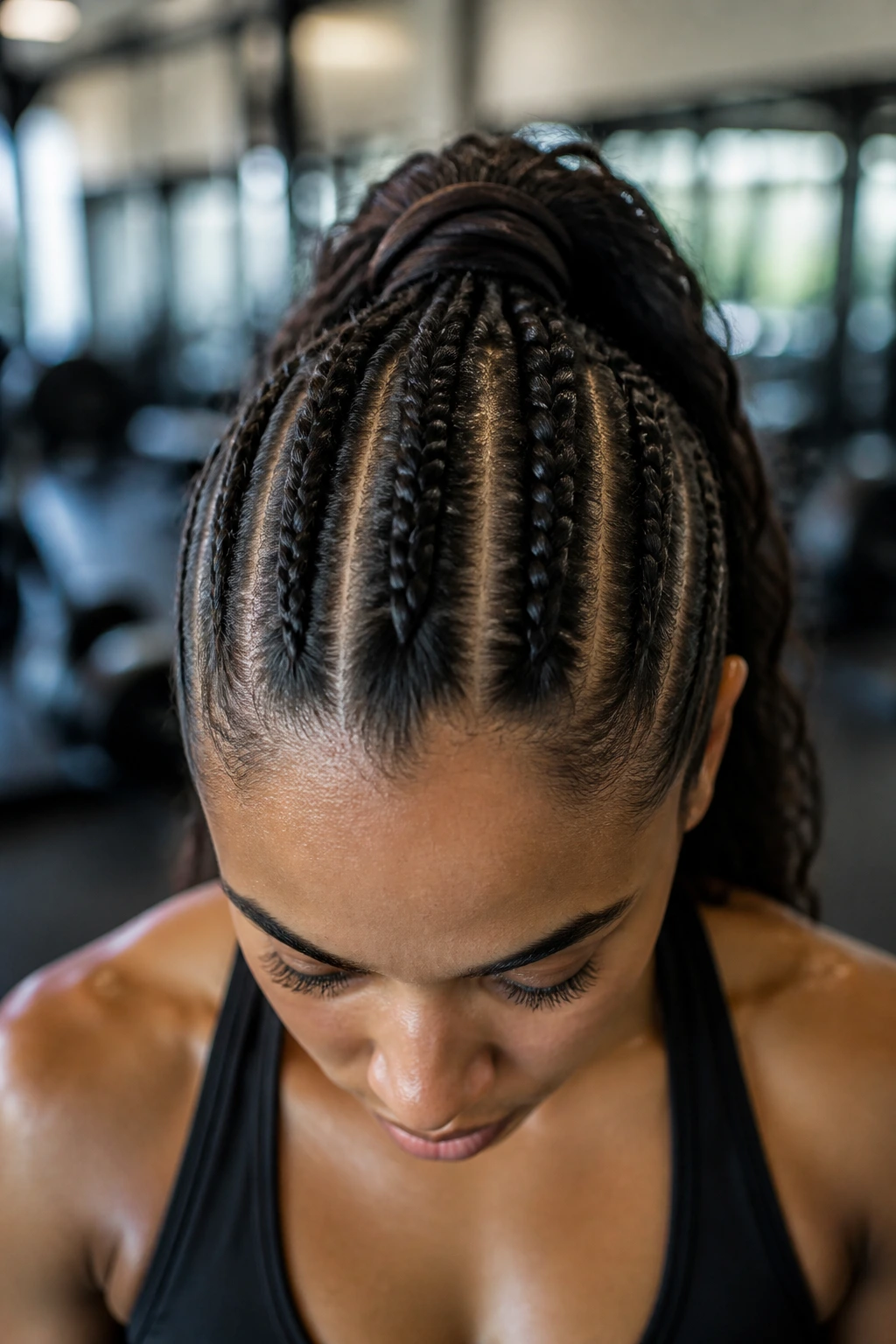
You do not need to be a master braider to pull off a simplified version of this. Create four straight-back cornrows (or as many as you can manage) from your front hairline to the middle of your head, then gather all the ends into one sturdy ponytail.
Protecting Your Scalp
If you work out daily, the friction from hair ties can lead to hair breakage. By creating these small sections, you reduce the strain on your roots. Ensure your braids are not too tight—tightness at the root causes headaches during intense cardio, which is the last thing you want when you are already pushing your physical limits.
11. The French Twist Sport Bun
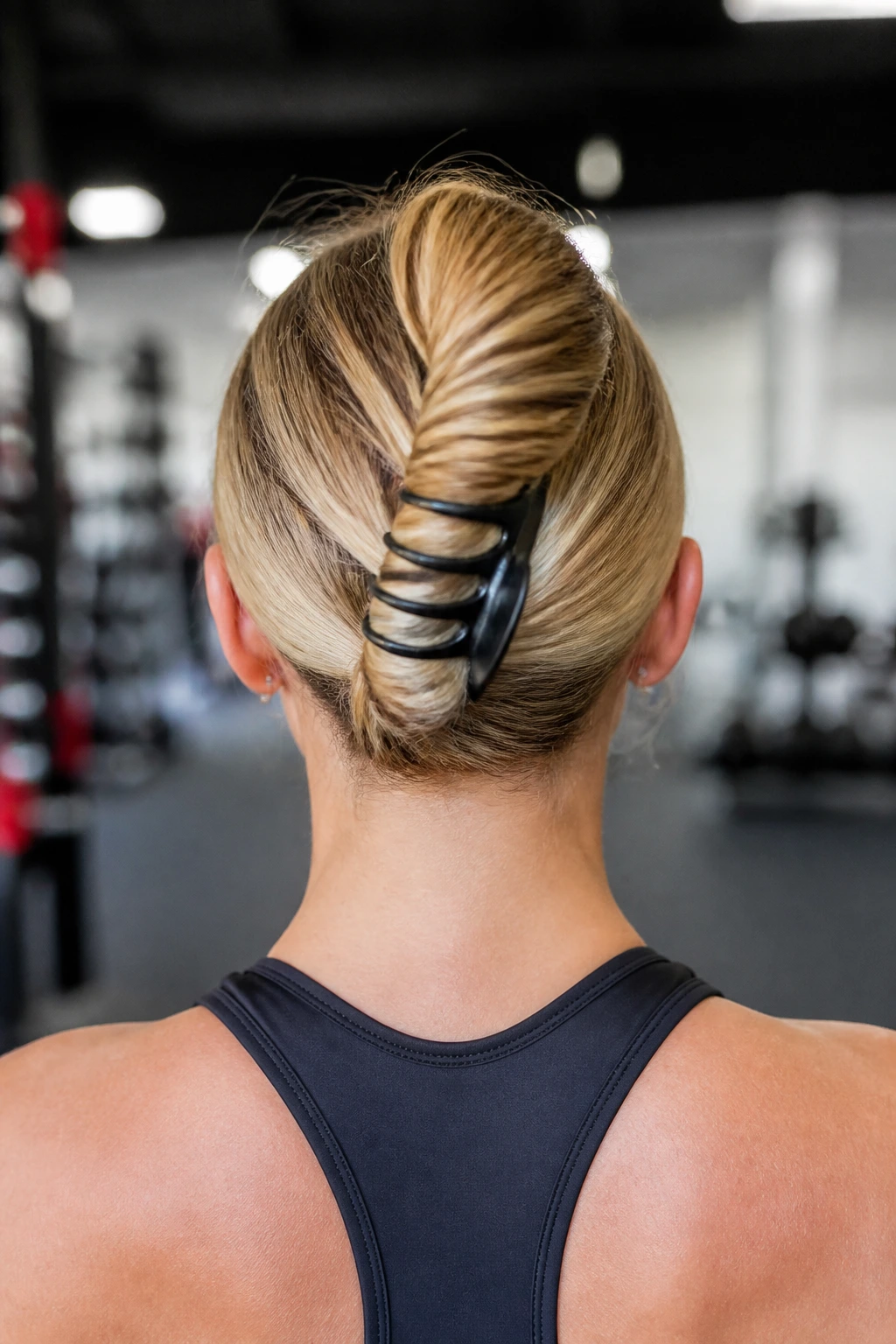
The classic French twist is usually seen as an evening look, but the sport version is incredibly efficient. Pull your hair into a ponytail, twist the length tightly, and coil it around the base. Instead of using a decorative clip, use a heavy-duty, oversized “claw” clip or a strong rubberized hair pin.
Avoiding the “Snap”
A common mistake is using cheap plastic clips that snap under the tension of a workout. Look for high-quality nylon or reinforced plastic clips that have a bit of “give” to them. If you feel the clip moving, it’s usually because your bun isn’t tight enough at the base. Wrap the hair firmly before securing the clip.
12. Fishtail Braid with Elastic Bands
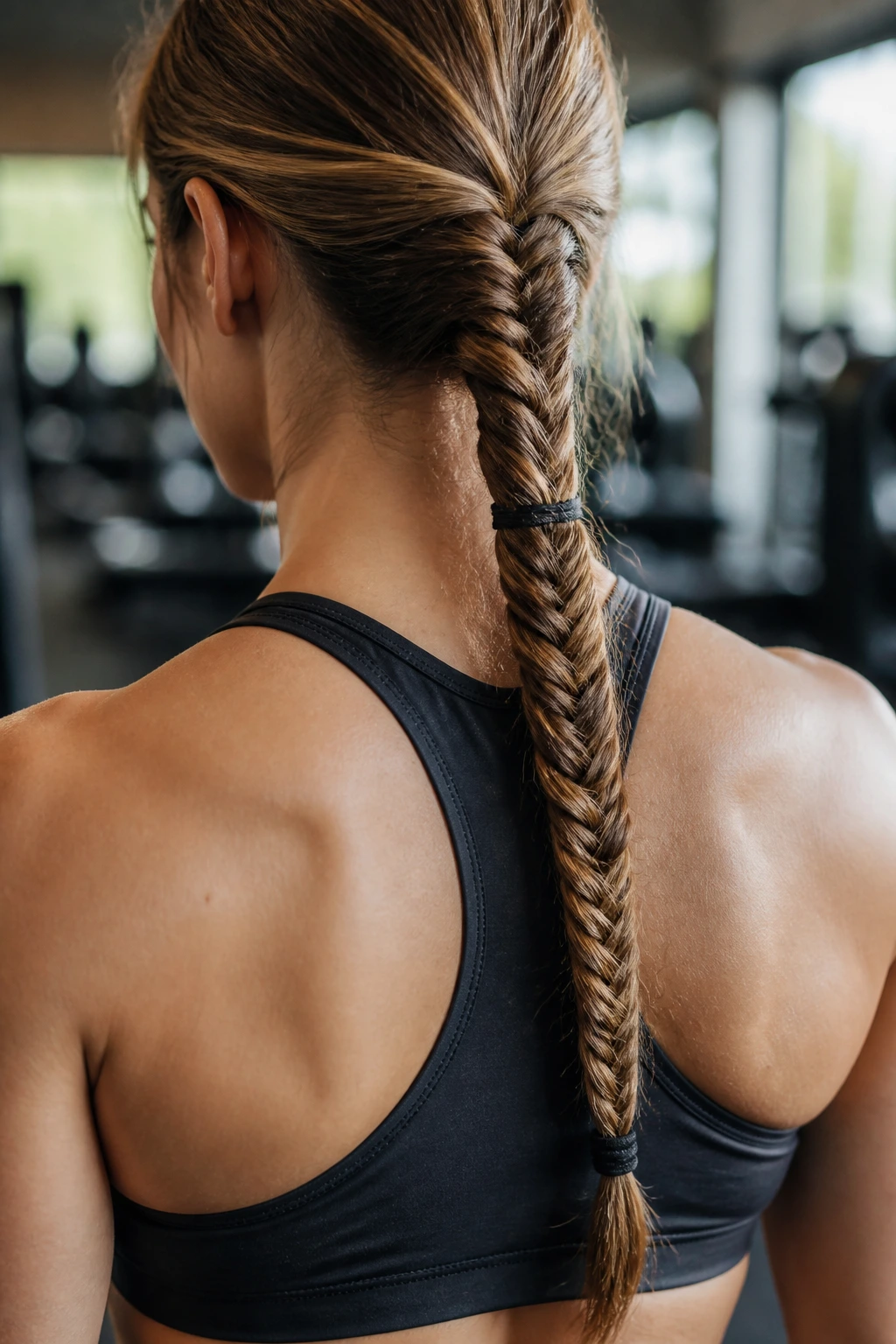
The fishtail braid is the ultimate “locked in” style. It is tighter than a standard three-strand braid, meaning it is less likely to work loose over an hour of movement.
Troubleshooting the Fishtail
If your hair is slippery, a fishtail can be frustrating to start. Try wetting your hair slightly with water or a leave-in conditioner before you begin braiding. This provides enough texture to keep the strands from sliding as you weave them. Finish the braid all the way to the very end—the extra effort of braiding down to the last half-inch is worth the security it provides.
13. The Half-Top-Knot (Hun)
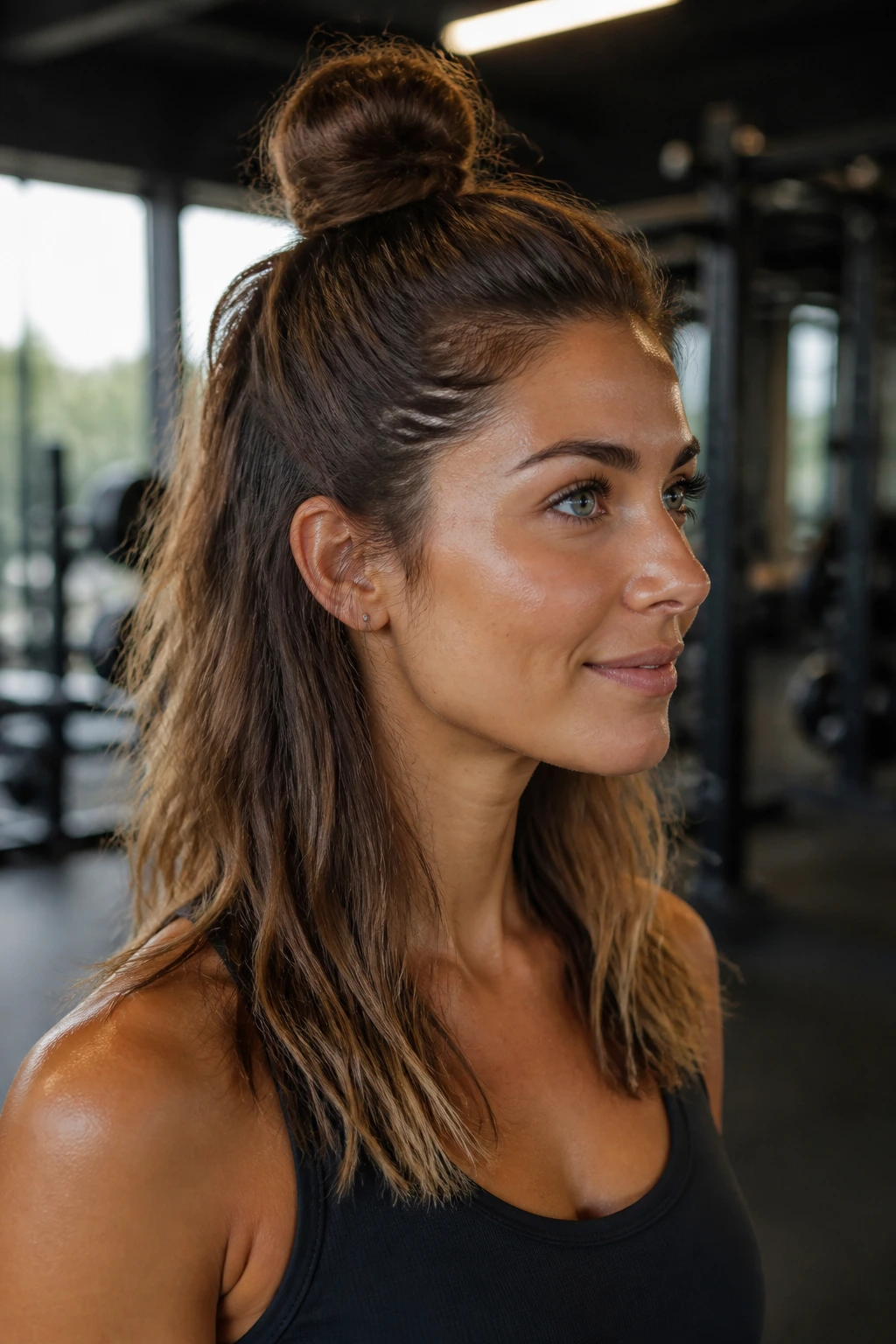
The “hun,” or half-bun, is excellent for mid-length hair. Gather the top half of your hair into a bun at the crown and leave the rest down.
Managing the Loose Bottom Section
If you have long hair and want to use this style, you run the risk of the bottom hair getting tangled in gym equipment or sticking to your back. The secret here is to apply a touch of detangling spray to the lower section before you start. It prevents knotting and makes it much easier to brush out post-workout, saving you a lot of time and potential hair loss later.
14. The Multi-Elastic Ponytail
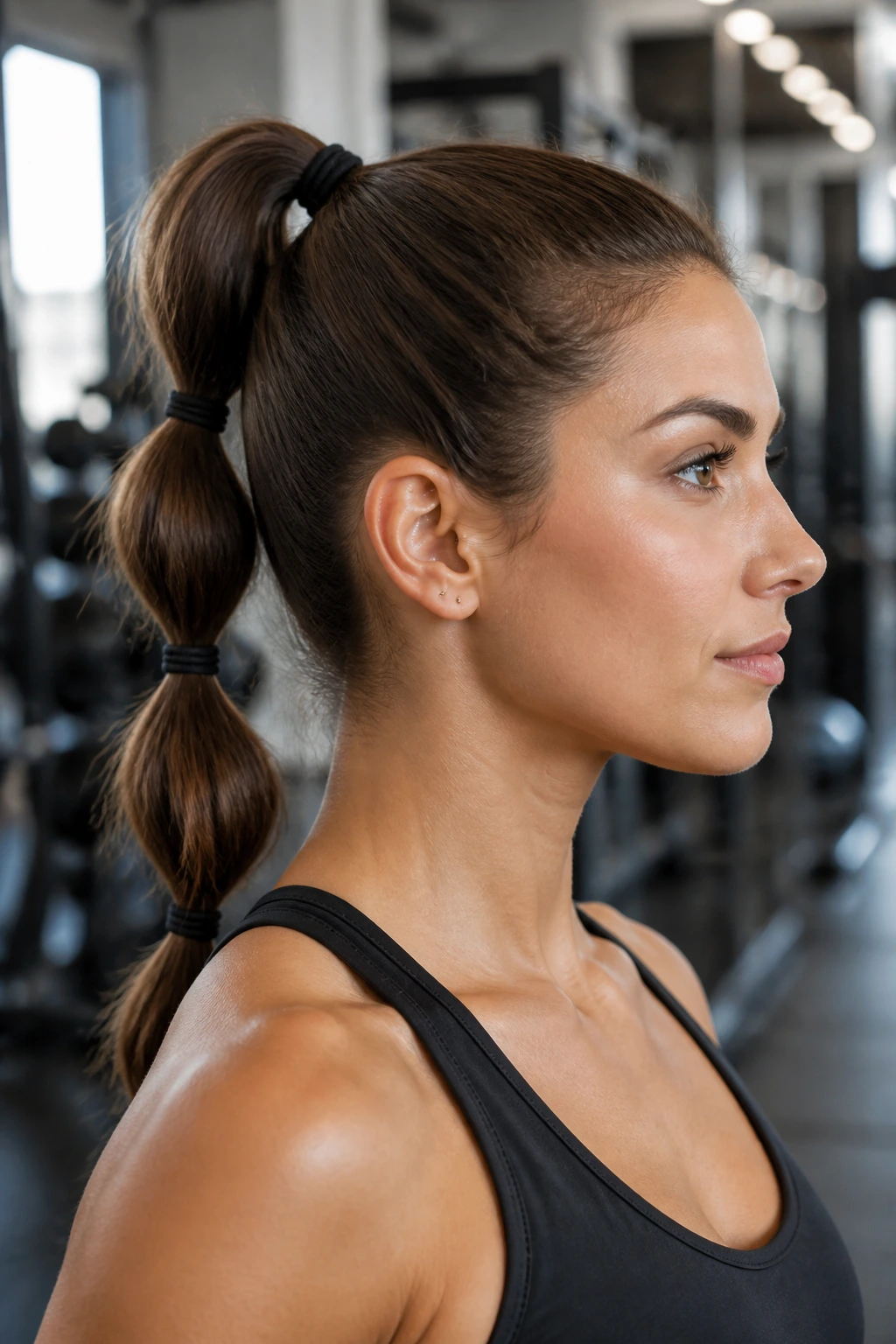
This is a “pro” trick for anyone with extremely heavy hair. Divide your hair into three horizontal sections: one at the top of the head, one in the middle, and one at the nape. Secure each one with an elastic, then gather all three small ponytails into one final, large hair tie.
The Anti-Gravity Effect
By using multiple elastics, you are effectively creating a tiered support system. It is nearly impossible for this ponytail to sag. It stays at the exact height you set it at for the entire workout. It looks technical and sharp, and it performs better than almost any other style on this list.
15. The Wrapped Braid Bun
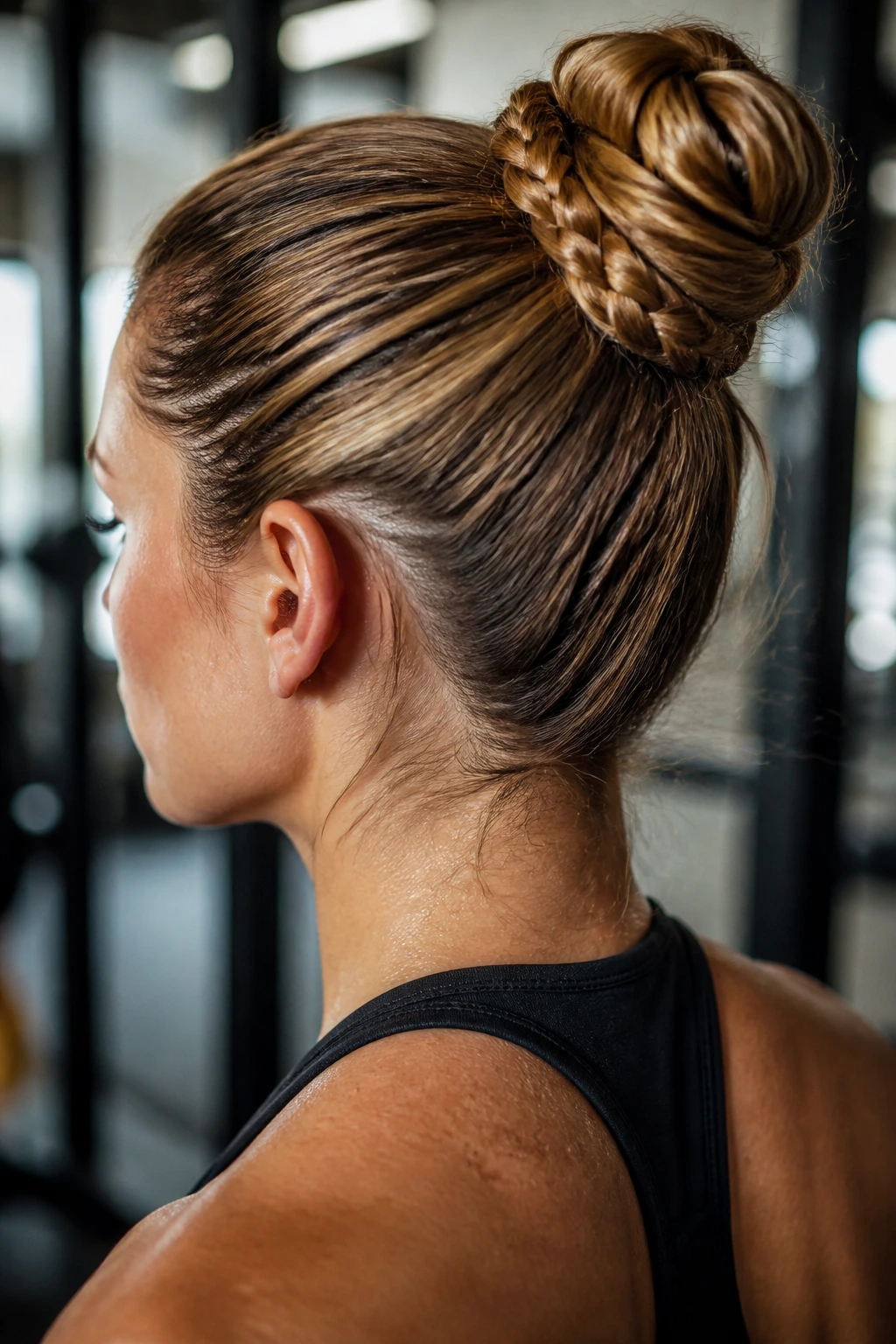
This is a more elegant way to secure a braid. Braid your entire length of hair, then wrap that single long braid around the base of your ponytail to create a bun. Use long, sturdy U-pins to secure the braid into the hair tie at the base.
Why It’s Safer for Your Ends
Because your ends are tucked into the base of the bun and pinned securely, they are protected from whipping around or snagging on bench press bars or weight plates. It is a fantastic way to keep your hair protected while you focus entirely on your lifting form.
16. The Side Dutch Braid
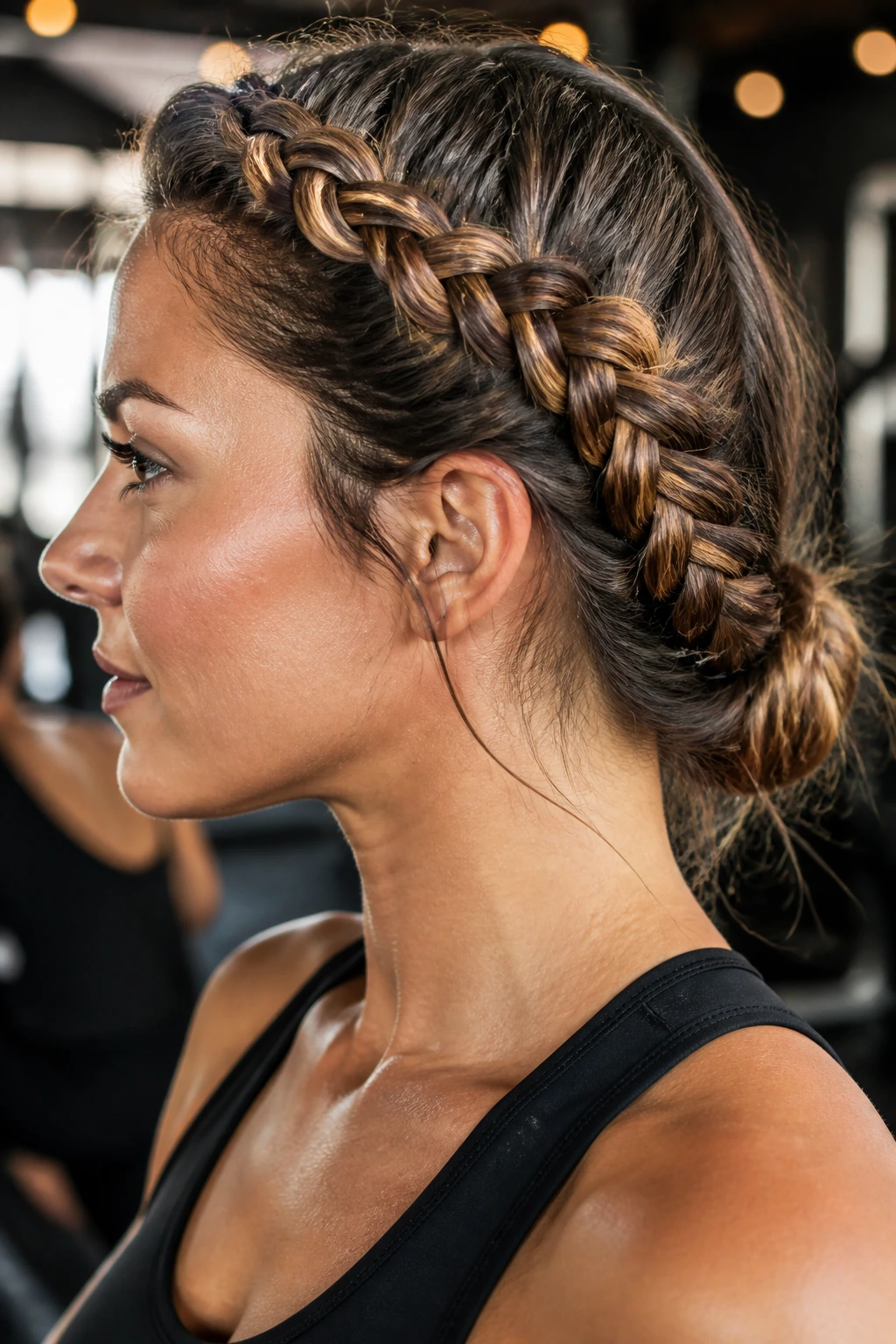
If you prefer your hair to stay out of your eyes but don’t want it all on top of your head, a side Dutch braid is a great compromise. Start at one temple and braid diagonally across the back of your head toward the opposite ear.
The Angle Advantage
The diagonal angle is more secure than a straight-back braid because it works with the natural way your hair grows. It feels less tight on the scalp while providing the same level of security. It’s a very comfortable style for long sessions where you might be lying on a mat, as there is no central bump at the back of your head to dig into your scalp.
17. The Twisted Headband Tuck
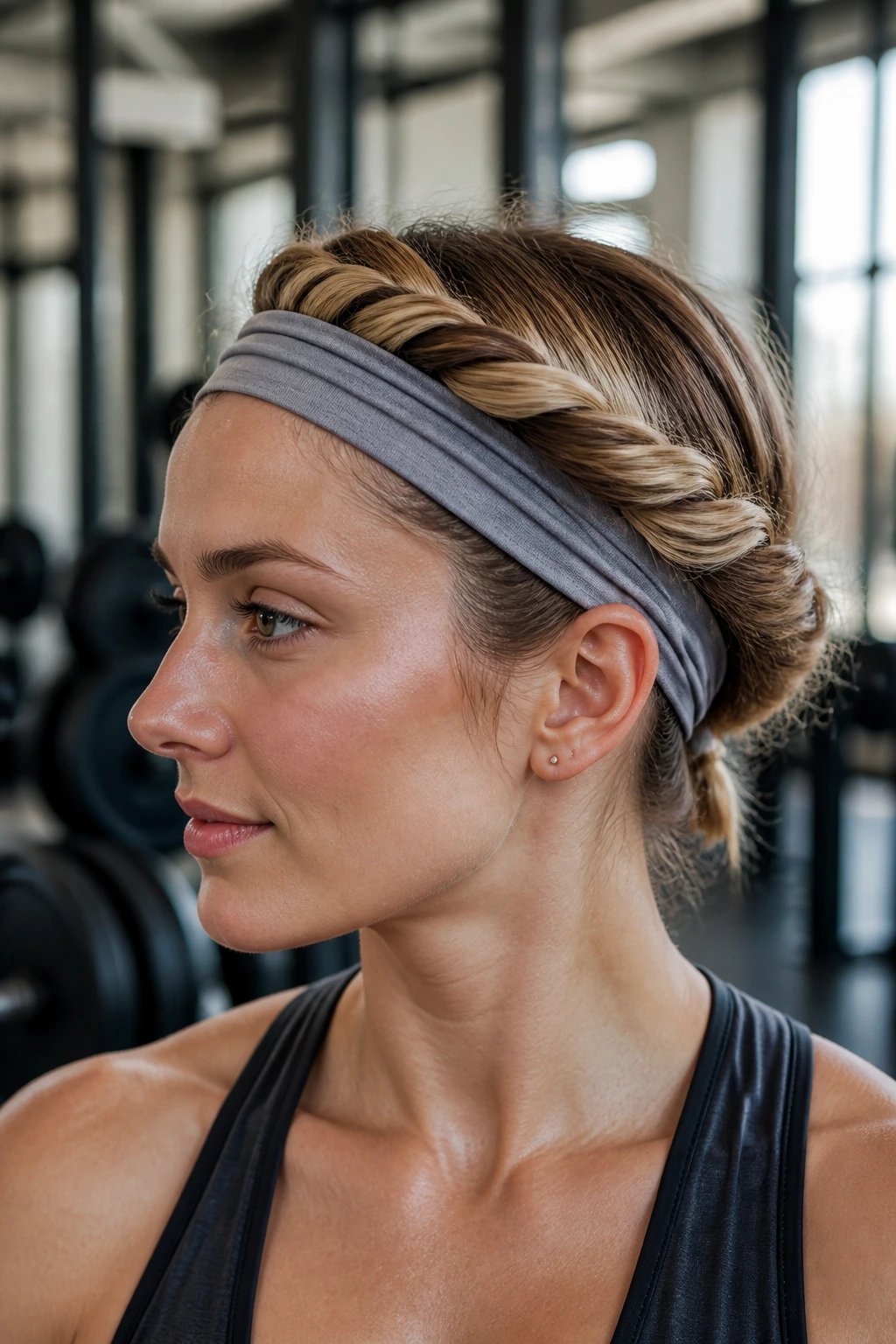
For a quick, gym-ready look that keeps everything tight, place an elastic headband around your head. Take small sections of hair and tuck them under and through the headband, working your way around the back of your head.
Finishing for Maximum Hold
Once everything is tucked, you will have a few loose strands at the nape of your neck. Simply gather those into a tiny, firm braid and pin it up. This style looks like it belongs on a runway but is surprisingly resilient for a yoga or pilates class. It keeps the hair off your neck entirely and is one of the most comfortable styles for floor-based movements.
Final Thoughts
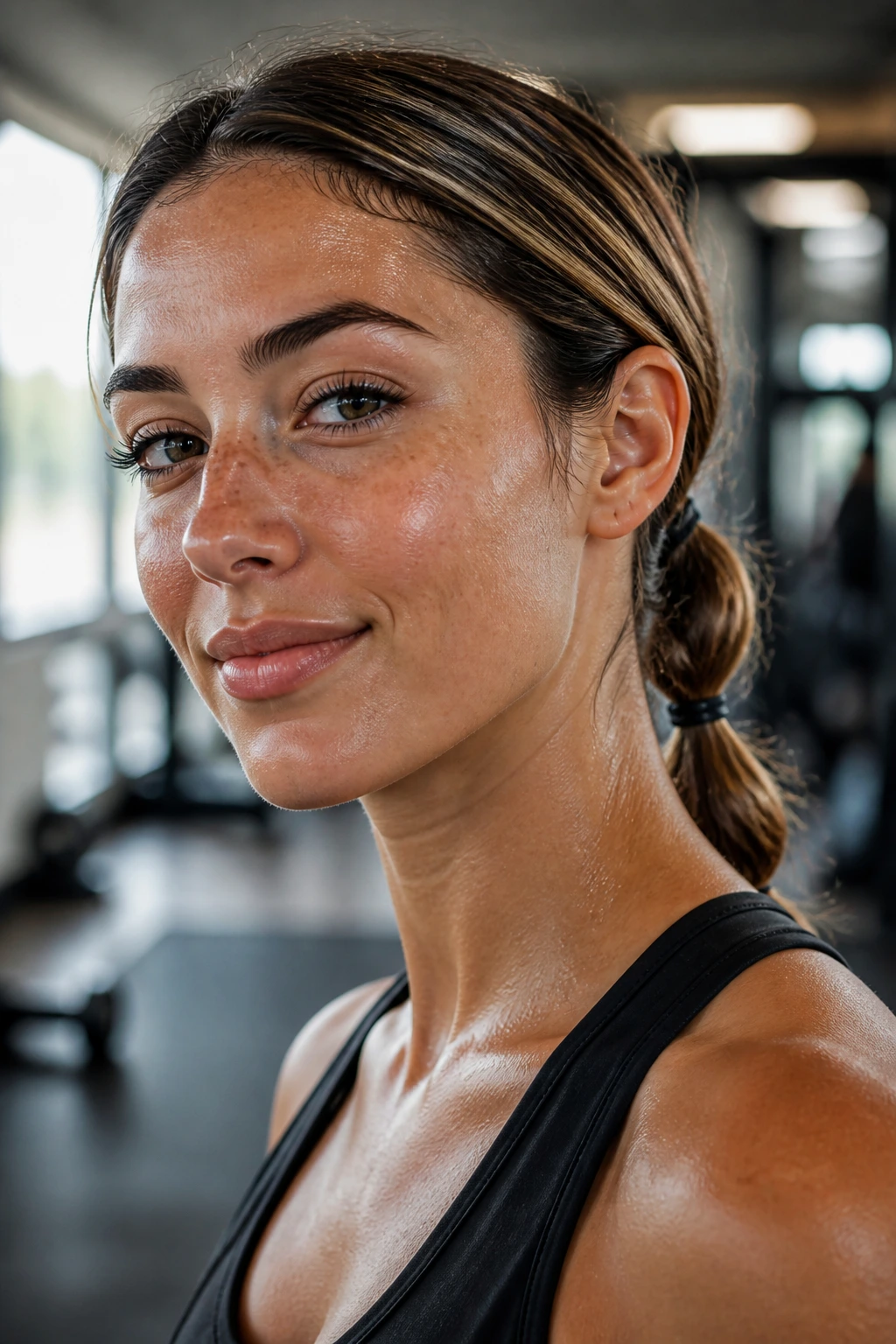
When choosing a workout hairstyle, your ultimate goal is reducing friction. The more your hair moves, the more it tangles; the more it tangles, the more it breaks. I always find that using two elastics—one to secure the base and one to secure the bun or braid—is the single most effective “hack” for any workout. Don’t be afraid to use a little product, either. A light texture spray can give fine, slippery hair the grip it needs to stay put without turning your head into a sticky, uncomfortable mess.
Experiment with these styles during your lighter training days to see which ones feel best for your hair type. Everyone’s scalp tension and hair texture are different, so a style that works for one person might feel too tight or too loose for you. Once you find the one or two that survive your favorite workout, you’ll stop thinking about your hair entirely and finally be able to put all your energy into the movement itself. Trust your gear, pin it tight, and focus on your progress.